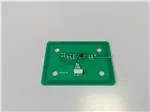
DATA SHEET
(PRELIMINARY)
Part No.
MN63Y3214N1
* The specifications are subject to change without notice since it is under development.
* This is an engineering sample to mainly check functions during development. Reliability and delivery are
not guaranteed.
Established: Jan.2015
��About this manual
■
Organization
These specifications provide important information for users of the MN63Y3214N1, including an overview and
descriptions of functions.
■
Manual Configuration
Each section of this manual consists of a title, main text, and notes. The layout and definition of each section
are shown below.
Middle title
1.1 UART
Small title
This section describes the UART specification.
1.1.1 Communication Specifications
Table 1-1 shows the UART specification of this RFID.
Table 1-1 UART Communication Specification
Data transfer
method
Data rate
Asynchronous, half-duplex (Only IRQ notification allows fullduplex)
DUMMY
1200 bps, 2400 bps, 4800 bps, 9600 bps, 19200 bps, 38400
bps
Character
transmission
LSB-first
Data (8 bits)
Start bit (1bit)
Parity bit (1bit, even)
Stop bit (1bit) See Note below.
Other
No flow control signal (RTS/CTS)
Note: In order to ensure the timing margin, when sending consequtive data from the host, use a
2-bit stop bit or set the interval between stop bit and next start bit to 1 bit or more.
■
Text
Note
This is the Note.
Please read.
Finding Desired Information
This manual provides two methods for finding desired information quickly and easily.
1. Consult the table of contents at the front of the manual to locate desired titles.
2. Chapter names are located at the top outer corner of each page, and section titles are located at the
bottom outer corner of each page.
4
��Chapter 1
Overview
Chapter 2
Pin Descriptions
Chapter 3
Memory Map
Chapter 4
RF Communication Mode
Chapter 5
Serial Communication Mode
Chapter 6
Interrupt Generation Function
Chapter 7
Tunnel Mode
Chapter 8
Annex
Chapter 9
Electrical characteristics
1
2
3
4
5
6
7
8
9
�Chapter 1
Overview
Contents
Chapter 1 Overview ................................................................. 11
1.1 Features ............................................................................................................................12
1.2 Block Diagram .................................................................................................................13
1.3 Operation Mode ...............................................................................................................14
1.4 Password Protected Communication Function ................................................................15
Chapter 2 Pin Descriptions ...................................................... 17
2.1 List of Pins .......................................................................................................................18
2.2 Pin Descriptions ...............................................................................................................20
2.3 Connection Example ........................................................................................................21
Chapter 3 Memory Map ........................................................... 23
3.1 Block Configuration ........................................................................................................24
3.2 Physical Memory Map .....................................................................................................25
3.3 System Area .....................................................................................................................27
3.3.1 Parameter Specifications ...........................................................................................27
3.3.2 Enabling System Area ...............................................................................................35
3.4 Address Correspondence .................................................................................................36
Chapter 4 RF Communication Mode ....................................... 37
4.1 RF Communication Mode Sequence ...............................................................................38
4.2 JISX6319-4 Specification ................................................................................................39
4.2.1 Communication Specifications ..................................................................................39
4.2.2 Frame Format ............................................................................................................39
4.2.3 State Transition Diagram ...........................................................................................40
4.2.4 Flow Chart .................................................................................................................40
4.2.5 Various Settings ........................................................................................................41
4.2.5.1 System Code .......................................................................................................41
4.2.5.2 PICC (Proximity IC Card) Identifier ..................................................................41
4.2.5.3 Response Time Descriptor ..................................................................................42
4.2.5.4 Anti-collision ......................................................................................................43
4.2.5.5 Service .................................................................................................................43
4.2.5.6 Block ...................................................................................................................43
4.2.5.7 Block List ............................................................................................................44
4.2.5.8 Status Flag ...........................................................................................................46
4.2.6 Command ..................................................................................................................47
4.2.6.1 REQ.....................................................................................................................48
4.2.6.2 READ ..................................................................................................................49
4.2.6.3 WRITE ................................................................................................................51
4.2.6.4 VERIFY ..............................................................................................................52
6
�4.2.7 NDEF.........................................................................................................................54
4.2.7.1 MEMORY MAP .................................................................................................54
4.2.7.2 Setup of System Code (SC) ................................................................................55
4.2.7.3 Setup of Attribute Information Block .................................................................55
4.2.7.4 NDEF FILE .........................................................................................................56
4.3 ISO/IEC14443 TypeA Specification ...............................................................................57
4.3.1 Communication Specification ...................................................................................57
4.3.2 Frame Format ............................................................................................................57
4.3.3 Protocol Control ........................................................................................................59
4.3.4 Block Control ............................................................................................................61
4.3.5 Upper Command Format ...........................................................................................62
4.3.6 State Transition Diagram ...........................................................................................63
4.3.7 Flow Chart .................................................................................................................64
4.3.8 Various Settings ........................................................................................................65
4.3.8.1 PUPI (Pseudo-Unique PICC Identifier) ..............................................................65
4.3.8.2 FWI (Frame Waiting Time Integer) ....................................................................65
4.3.8.3 WTXM (waiting time extension multiplier) .......................................................65
4.3.8.4 File System ..........................................................................................................66
4.3.8.5 Address................................................................................................................66
4.3.8.6 Data .....................................................................................................................67
4.3.8.7 Status Word .........................................................................................................68
4.3.9 Command ..................................................................................................................69
4.3.9.1 REQA/WUPA (ISO/IEC14443-3 TypeA command) .........................................70
4.3.9.2 ANTICOLLISION (ISO/IEC14443-3 TypeA command) ..................................71
4.3.9.3 SELECT (ISO/IEC14443-3 TypeA command) ..................................................72
4.3.9.4 HLTA (ISO/IEC14443-3 TypeA command) ......................................................74
4.3.9.5 RATS (ISO/IEC14443-4 TypeA command).......................................................75
4.3.9.6 SELECT (APDU command) ...............................................................................77
4.3.9.7 READ (APDU command) ..................................................................................79
4.3.9.8 WRITE (APDU command) .................................................................................80
4.3.9.9 VERIFY (APDU command) ...............................................................................81
4.3.10 NDEF.......................................................................................................................82
4.3.10.1 Memory Map.....................................................................................................82
4.3.10.2 NDEF Tag Application Selection .....................................................................83
4.3.10.3 CC File ..............................................................................................................83
4.3.10.4 NDEF File .........................................................................................................84
4.4 ISO/IEC14443 TypeB Specification ...............................................................................85
4.4.1 Communication Specification ...................................................................................85
4.4.2 Frame Format ............................................................................................................85
4.4.3 Protocol Control ........................................................................................................86
4.4.4 Block Control ............................................................................................................86
4.4.5 Upper Command Format ...........................................................................................86
4.4.6 State Transition Diagram ...........................................................................................87
4.4.7 Flow Chart .................................................................................................................88
4.4.8 Various Settings ........................................................................................................89
4.4.8.1 AFI (Application Family Identifier) ...................................................................89
4.4.8.2 PUPI (Pseudo-Unique PICC Identifier) ..............................................................89
4.4.8.3 FWI (Frame Waiting Time Integer) ....................................................................89
7
�Chapter 1
Overview
4.4.8.4 WTXM (waiting time extension multiplier) .......................................................90
4.4.8.5 File System ..........................................................................................................90
4.4.8.6 Address................................................................................................................90
4.4.8.7 Data .....................................................................................................................90
4.4.8.8 Status Word .........................................................................................................90
4.4.9 Command ..................................................................................................................91
4.4.9.1 REQB/WUPB (ISO/IEC14443-3 TypeB command) ..........................................92
4.4.9.2 ATTRIB (ISO/IEC14443-3 TypeB command)...................................................94
4.4.9.3 HLTB (ISO/IEC14443-3 TypeB command).......................................................96
4.4.9.4 SELECT (APDU command) ...............................................................................97
4.4.9.5 READ (APDU command) ..................................................................................97
4.4.9.6 WRITE (APDU command) .................................................................................97
4.4.9.7 VERIFY (APDU command) ...............................................................................97
4.4.10 NDEF.......................................................................................................................98
Chapter 5 Serial Communication Mode ................................... 99
5.1 Serial Communication Mode Sequence.........................................................................100
5.2 I2C .................................................................................................................................101
5.2.1 Communication Specifications ................................................................................101
5.2.2 Frame Format ..........................................................................................................101
5.2.3 Specifying Slave Address ........................................................................................102
5.2.4 Status .......................................................................................................................102
5.2.5 Command ................................................................................................................104
5.2.5.1 READ ................................................................................................................104
5.2.5.2 WRITE ..............................................................................................................105
5.2.5.3 RREG ................................................................................................................106
5.2.5.4 WREG ...............................................................................................................107
5.2.5.5 STATUS............................................................................................................108
5.2.6 Time Chart ...............................................................................................................109
5.2.6.1 Time Chart of Normal Access ..........................................................................109
5.2.6.2 Time Chart of Divided Command Access ...................................................110
5.2.6.3 Time Chart of Divided Response Access ....................................................111
5.2.6.4 The time constraint by INTWT setting ........................................................112
Chapter 6 Interrupt Generation Function ............................... 113
6.1 Interrupt Source .............................................................................................................114
Chapter 7 Tunnel Mode ......................................................... 117
7.1 Tunnel Mode Sequence .................................................................................................118
7.2 Communication between Reader/Writer and RFID ......................................................119
7.2.1 Using JISX6319-4 ...................................................................................................119
7.2.2 Using ISO/IEC14443 ..............................................................................................119
7.3 Communication between Host and RFID ......................................................................120
7.3.1 Communication Specification .................................................................................120
7.3.2 IRQ Notification ......................................................................................................120
7.3.3 Response to QUERY Command .............................................................................121
7.3.4 Timeout ...................................................................................................................122
8
�7.3.4.1 Wait Time for QUERY Command ...................................................................123
7.3.4.2 Wait Time for ANSWER Command ................................................................124
7.4 Command .......................................................................................................................125
7.4.1 Read in Tunnel Mode ..............................................................................................126
7.4.1.1 Read Command in Tunnel Mode (Reader/Writer to RFID) .............................126
7.4.1.2 QUERY Command (Host to RFID) ..................................................................127
7.4.1.3 QUERY Response (RFID to Host) ...................................................................127
7.4.1.4 ANSWER Command (Host to RFID) ...............................................................128
7.4.1.5 ANSWER Response (RFID to Host) ................................................................128
7.4.1.6 Read Response in Tunnel Mode (RFID to Reader/Writer)...............................128
7.4.2 Write in Tunnel Mode .............................................................................................130
7.4.2.1 Write Command in Tunnel Mode (Reader/Writer to RFID) ............................130
7.4.2.2 QUERY Command (Host to RFID) ..................................................................131
7.4.2.3 QUERY Response (RFID to Host) ...................................................................131
7.4.2.4 ANSWER Command (Host to RFID) ...............................................................132
7.4.2.5 ANSWER Response (RFID to Host) ................................................................132
7.4.2.6 Write Response in Tunnel Mode (RFID to Reader/Writer) ..............................132
Chapter 8 Annex .................................................................... 135
8.1 Exclusive Control ..........................................................................................................136
8.2 State Transition Diagram in Operation Mode ...............................................................140
8.3 Flow Chart in Tunnel Mode ..........................................................................................141
Chapter 9 Electrical characteristics ....................................... 142
9
��Chapter 1
Overview
1
Chapter 1 Overview
11
�Chapter 1
Overview
1.1 Features
MN63Y3214N1 is an LSI for RFID (Radio Frequency Identification), which features the following:
Built-in 8-Kbit non-volatile memory with fast write and low power consumption.
RF interface compliant with JISX6319-4 (212 kbps / 424 kbps), ISO/IEC14443 TypeA(106 kbps), and
ISO/IEC14443 TypeB (106 kbps / 212 kbps / 424kbps) of the 13.56-MHz contactless IC card standards.
Serial interface compatible with I2C (400 kHz)
Batteryless RF communication
Three communication modes of RF, serial, and tunnel (Tunnel mode allows communications between
reader/writer and host CPU via this LSI.)
Access Restriction function of RF communication by password.
Supply voltage range: 1.7 V to 3.6 V
12
�Chapter 1
Overview
1.2 Block Diagram
Figure 1-1 shows a block diagram.
This RFID provides RF interface for contactless communication with external reader/writer, serial interface for
contact communication with external host, control logic for command processing and various controls, 2-Kbit
transmit/receive buffer for RF communication, and 8-Kbit non-volatile memory.
Figure 1-1 Block Diagram
13
�Chapter 1
Overview
1.3 Operation Mode
This RFID provides three operation modes of RF communication, serial communication, and tunnel.
Figure 1-2 gives the overview of each operation mode.
RF communication mode
This mode is used for communication between reader/writer and RFID. Reader/writer is the master and RFID
is the slave. Key commands are read and write commands to non-volatile memory of RFID. This mode allows
batteryless operations that use only the power supplied from the antenna of reader/writer.
For more information about RF communication mode, see Chapter 4
RF Communication Mode.
Serial communication mode
This mode is used for communication between host and RFID. Host is the master and RFID is the slave. Key
commands are read and write commands to non-volatile memory of RFID. This mode requires a power supply
to the supply voltage pin (VDDEX) of RFID.
For more information about serial communication mode, see Chapter 5
Serial Communication Mode.
Tunnel mode
This mode is used for communication between reader/writer and host via RFID. Reader/writer is the master
and host is the slave. Key commands are read and write commands to host. This mode requires a power
supply to the supply voltage pin (VDDEX) of RFID.
For more information about serial communication mode, see Chapter 7
Tunnel Mode.
Additionally, for state transition diagram in each operation mode, see Section 8.2
in Operation Mode.
State Transition Diagram
RF communication mode
R/W
RFID
Master
Slave
Host
Serial communication mode
R/W
RFID
Host
Slave
Master
RFID
Host
Tunnel mode
R/W
Master
Slave
Figure 1-2
14
Operation Mode
�Chapter 1
Overview
1.4 Password Protected Communication Function
This RFID provides an access restriction function to prevent access from illegal readers/writers.
Figure 1-3 depicts its functionality in each operation mode.
With RF communication mode, it can restrict the access from readers/writers by password, and no access
restriction communications are available
Serial communication mode and Tunnel mode allows only plaintext communication.
Figure 1-3
Password Protected Communication Function
15
��Chapter 2 Pin Descriptions
2
�Chapter 2
Pin Descriptions
2.1 List of Pins
Table 2-1 shows a list of pins of this RFID and Figure 2-1 illustrates the pin assignments of this RFID.
Figure 2-2 illustrates the outside drawing of module
Caution: The dimensions of module may be changed, Please identify it on delivery specifications.
Table 2-1 List of Pins
Pin No.
Name
I/O
Output type
1
N.C.
-
-
2
VDDEX
-
Power
3
SDA
I/O
4
VSS
-
5
NIRQ
Output
6
SCL
Input
Description
Non connection
Contact power supply (Apply 1.7 V through 3.6 V.)
Open Drain Host interface (I2C: 400 kHz)
GND
Ground
Open Drain Interrupt request output
-
Host interface (I2C: 400 kHz)
Connector : BL509N series (TAIWAN SUNCAGEY INDUSTRIAL CO., Ltd.)
Figure 2-1 Pin Assignments
18
�Chapter 2
Pin Descriptions
Figure 2-2 Outside drawing of module
19
�Chapter 2
Pin Descriptions
2.2 Pin Descriptions
Ground (VSS)
A reference power supply pin. Connect to the ground of the host CPU.
Contact power supply (VDDEX)
A contact power supply pin. Apply a "high" voltage to this pin when communicating data between the host
CPU and RFID.
Host interface I2C (SDA, SCL)
I2C is an N-ch open drain pin, so should be pulled up to VDDEX externally. It is available between the
frequencies 1 kHz and 400 kHz. Start the access Constant time( tBoot ) after applying VDDEX. For more
information about tBoot, see the Product Standards.
Interrupt request (NIRQ)
An N-ch open drain pin to request an interrupt to the host and should be pulled up externally.
20
�Chapter 2
Pin Descriptions
2.3 Connection Example
Figure 2-3 gives a connection example.
This example shows that the host's GPIO controls the RFID's VDDEX. In this case, when not using serial
communication, turning VDDEX off allows the consumption current of the RFID to be turned off. In addition, it
is also possible to supply a voltage to VDDEX directly from the power supply, not from the host's GPIO.
The SDA (IO) and NIRQ pins are open-drain output. Pull up these pins to the same voltage level as the power
supply of the host.
In addition, in the figure 2-3 Connection Example, Leakage current flows by the pull-up of a NIRQ terminal.
It is not concerned with ON/OFF of VDDEX but the leakage current about below 0.1μA (actual measurement)
flows into a NIRQ terminal.
Figure 2-3 Connection Example
21
��Chapter 3 Memory Map
3
�Chapter 3
Memory Map
3.1 Block Configuration
Figure 3-1 illustrates the block configuration of 8Kbit non-volatile memory.
This LSI consists of 64 non-volatile memory blocks. The size of a block is 16 bytes.
The memory consists of two areas: user and system areas.
The system area stores RF-communication-related parameters and memory-access-control-related data, etc.
Block
Area
0
16-bytes non-volatile memory
1
16-bytes non-volatile memory
2
16-bytes non-volatile memory
3
16-bytes non-volatile memory
…
…
56
16-bytes non-volatile memory
57
16-bytes non-volatile memory
58
16-bytes non-volatile memory
59
16-bytes non-volatile memory
60
16-bytes non-volatile memory
61
16-bytes non-volatile memory
62
16-bytes non-volatile memory
63
16-bytes non-volatile memory
Type
User area
System area
Figure 3-1 8Kbit non-volatile memory Block Configuration
24
�Chapter 3
Memory Map
0xC
0xE
3.2 Physical Memory Map
Figure 3-2 presents the physical memory map.
Block Address 0x0
0x1
0x2
0x3
0x4
0x5
0x6
0x7
0x8
0
0x0000
User Area
1
0x0010
User Area
2
0x0020
User Area
3
0x0030
User Area
4
0x0040
User Area
5
0x0050
User Area
6
0x0060
User Area
7
0x0070
User Area
8
0x0080
User Area
9
0x0090
User Area
10
0x00A0
User Area
11
0x00B0
User Area
12
0x00C0
User Area
13
0x00D0
User Area
14
0x00E0
User Area
15
0x00F0
User Area
16
0x0100
User Area
17
0x0110
User Area
18
0x0120
User Area
19
0x0130
User Area
20
0x0140
User Area
21
0x0150
User Area
22
0x0160
User Area
23
0x0170
User Area
24
0x0180
User Area
25
0x0190
User Area
26
0x01A0
User Area
27
0x01B0
User Area
28
0x01C0
User Area
29
0x01D0
User Area
30
0x01E0
User Area
31
0x01F0
User Area
32
0x0200
User Area
33
0x0210
User Area
34
0x0220
User Area
35
0x0230
User Area
36
0x0240
User Area
37
0x0250
User Area
0x9
0xA
0xB
0xD
0xF
25
�Chapter 3
Memory Map
38
0x0260
User Area
39
0x0270
User Area
40
0x0280
User Area
41
0x0290
User Area
42
0x02A0
User Area
43
0x02B0
User Area
44
0x02C0
User Area
45
0x02D0
User Area
46
0x02E0
User Area
47
0x02F0
User Area
48
0x0300
User Area
49
0x0310
User Area
50
0x0320
User Area
51
0x0330
User Area
52
0x0340
User Area
53
0x0350
User Area
54
0x0360
User Area
55
0x0370
User Area
56
0x0380
User Area
57
0x0390
User Area
58
0x03A0
User Area
59
0x03B0
User Area
60
0x03C0
CONFIG
61
0x03D0
62
0x03E0
63
0x03F0
CONFIG
SC
IRQBS IRQBE
CONFIG
HWCF
IDM
RORF
ROSI
PMM
SECURITY
Figure 3-2 Physical Memory Map
26
AFI HW3
TNPRM
HW2
HW1
CONFIG
�Chapter 3
Memory Map
3.3 System Area
This section describes the system area.
3.3.1 Parameter Specifications
Each parameter of the system area is shown below.
All addresses and block numbers used in this section correspond to the physical address in Figure 3-2.
RORF (4 bytes)
RORF, SECURITY, and ACC of HW1 are an area to specify whether read/write or read-only is to be used in
accessing the block by memory access commands in RF communication mode. Table 3-1 and Table 3-2
describe ACC, RORF and SECURITY setting, and Table 3-3 describe setting bits and corresponding block
numbers. By default, all values are 0. Set all reserved bits to 0.
Table 3-1 RORF and SECURITY Setting at ACC=”0”
Value
Meaning -
SECURITY
RORF
Bef. Password
Authentication
Aft. Password
Authentication
0
0
READ/WRITE
READ/WRITE
0
1
READ ONLY
READ ONLY
1
0
Cannot Access
READ/WRITE
1
1
Cannot Access
READ ONLY
Table 3-2 RORF and SECURITY Setting at ACC=”1”
Value
Meaning -
SECURITY
RORF
Bef. Password
Authentication
Aft. Password
Authentication
0
0
READ/WRITE
READ/WRITE
0
1
READ ONLY
READ ONLY
1
0
Cannot Access
READ/WRITE
1
1
READ ONLY
READ/WRITE
Table 3-3 RORF Setting Bits and Corresponding Block Numbers
Address
0x03F0
bit7
bit6
bit5
Block16-19 Block12-15 Block8-11
bit4
bit3
bit2
bit1
bit0
Block4-7
Block3
Block2
Block1
Block0
0x03F1
Block48
0x03F2
Block56
Block55
Block54
Block53
Block52
Block51
Block50
Block49
0x03F3
Reserved
Reserved
Reserved
Reserved
Reserved
Block59
Block58
Block57
Block44-47 Block40-43 Block36-39 Block32-35 Block28-31 Block24-27 Block20-23
Note: The default value of an ACC parameter is “0”.
27
�Chapter 3
Memory Map
SECURITY (4 bytes)
For detail of SECURITY, refer to Table 3-1 and Table 3-2.
Table 3-4 shows SECURITY setting bits and corresponding block numbers. By default, all values are 0. Set
all reserved bits to 0.
Address
0x03F8
Table 3-4
SECURITY Setting Bits and Corresponding Block Numbers
bit7
bit6
bit5
Block16-19 Block12-15 Block8-11
bit4
bit3
bit2
bit1
bit0
Block4-7
Block3
Block2
Block1
Block0
0x03F9
Block48
0x03FA
Block56
Block55
Block54
Block53
Block52
Block51
Block50
Block49
0x03FB
Reserved
Reserved
Reserved
Reserved
Reserved
Block59
Block58
Block57
Block44-47 Block40-43 Block36-39 Block32-35 Block28-31 Block24-27 Block20-23
ROSI (4 bytes)
ROSI is an area to specify whether read/write or read-only is to be used in accessing the block by memory
access commands in serial communication mode. Table 3-5 describes ROSI setting, and Table 3-6 shows
ROSI setting bits and corresponding block numbers. By default, all values are 0. Set all reserved bits to 0.
Table 3-5 ROSI Setting
Value
Meaning
0
Read/Write
1
Read only
Table 3-6 ROSI Setting Bits and Corresponding Block Numbers
Address
0x03F4
0x03F5
bit7
bit6
bit5
Block16-19 Block12-15 Block8-11
Block48
bit4
bit3
bit2
bit1
bit0
Block4-7
Block3
Block2
Block1
Block0
Block44-47 Block40-43 Block36-39 Block32-35 Block28-31 Block24-27 Block20-23
0x03F6
Block56
Block55
Block54
Block53
Block52
Block51
Block50
Block49
0x03F7
Reserved
Reserved
Reserved
Reserved
Reserved
Block59
Block58
Block57
HW1 (2 bytes)
HW1 is an area to store various setting data related to the hardware of this RFID.
Table 3-7 describes the HW1 parameter.
For the setting of the ACC, see Table 3-1 and Table 3-2, for the setting of the SWTX, see
Table 3-8 and for the setting of the TYPBSPD, see Table 3-9.
For the setting of the IDMSEL, see Table 3-10, and for the setting of RFSPD, see Table 3-11, and for the
setting of RFTYPE, see Table 3-12. For the setting of the I2C_SLV, see Table3-13. Set all reserved bits to 0.
Table 3-7 HW1 Parameters
28
Address
Bit 7
Bit 6
0x03EE
ACC
SWTX
0x03EF
Reserved
Bit 5
Bit 4
TYPBSPD IDMSEL
Bit 3
PFSPD
I2C_SLV
Bit 2
Bit 1
RFTYPE
Bit 0
�Chapter 3
Memory Map
Table 3-8 S(WTX) setting
bit6
Meaning
0
S(WTX) Block invalid(default)
1
S(WTX) Block valid
Table 3-9 TYPBSPD setting
Bit5
Meaning
0
Do not set
1
Limited data rare to 106, 212, 424 kbps for ISO/IEC14443 TypeB
communication.
Note: A TYPBSPD parameter is certainly setting it as “1”.
The setting of TYPBSPD is valid when RFSPD is set to “0”
Table 3-10
IDMSEL Setting for Selecting IDM Data
Bit 4
Meaning
0
Use the fixed values (All-0) as JISX6319-4 PICC identifier or ISO/IEC14443 TypeA/B PICC.
Values written in the system area are not used. (default)
1
Use the values written in the system area as JISX6319-4 PICC identifier or ISO/IEC14443
TypeA/B PICC.
Table 3-11 RFSPD parameter
Bit3
Meaning
0
No limit data rate for ISO/IEC14443 TypeB, JISX6319-4
1
Limited data rare to 106kbps for ISO/IEC14443 TypeB, and 212 kbps for
JISX6319-4 communication (default)
Note: A RFSPD parameter is certainly setting it as “0”.
29
�Chapter 3
Memory Map
Table 3-12 RFTYPE Setting for Selecting RF Communication Protocol
Bit 2
Bit1
Bit 0
0
0
1
Use JISX6319-4 only. (ISO/IEC14443 TypeA/B interface disabled)
0
1
0
Use ISO/IEC14443 TypeB only. (JISX6319-4, ISO/IEC14443 TypeA interface
disabled)
0
1
1
Use JISX6319-4 and ISO/IEC14443 TypeB. (Automatic protocol detection,
ISO/IEC14443 TypeA interface disabled)
1
0
0
Use ISO/IEC14443 TypeA only. (JISX6319-4 and ISO/IEC14443 TypeB interface
disabled)
1
1
0
Use ISO/IEC14443 TypeA/B. (Automatic protocol detection, JISX6319-4 interface
disabled)
1
1
1
Use JISX6319-4 and ISO/IEC14443 TypeA/B. (Automatic protocol detection) (default)
Others
Meaning
Do not set
Table 3-13 I2C_SLV Setting for Specifying I2C Slave Address
Address
Bit 6 Bit 5 Bit 4 Bit 3 Bit 2 Bit 1 Bit 0
Default value
1
0
1
0
1
0
0
TNPRM (1 byte)
TNPRM is an area to store various setting data related to timeout in TUNNEL Mode.
For more information about this parameter, see Section 7.3.4 Timeout.
Table 3-14 describes the TNPRM parameter.
Table 3-14 TNPRM Parameters
Address
0x03FC
Bit 7
Bit 6
Bit 5
Bit 4
Bit 3
Bit 2
QWT
Bit 1
Bit 0
AWT
QWT
QWT specifies the maximum wait time until the RFID receives a QUERY command from the host after it
sends an IRQ to the host during tunnel mode operation.
QWT is determined using the following formula.
Maximum wait time for QUERY command = T × 2
QWT
T: Typ. 1024 μs (±33%)
QWT: 0 to 8 (default: 4; typ. approximately 16 ms)
When this field is set to a value other than 0 to 8, a default value will be applied.
AWT
AWT specifies the maximum wait time until the RFID receives an ANSWER command from the host after it
sends a response to the QUERY command to the host during tunnel mode operation.
30
�Chapter 3
Memory Map
AWT is determined using the following formula.
Maximum wait time for ANSWER command = T × 2
AWT
T: typ. 1024 μs (±33%)
AWT: 0 to 12 (default: 7; typ. approximately 131 ms )
When this field is set to a value other than 0 to 12, a default value will be applied.
Note: T includes an error of ±33%. Set the QWT and AWT values in consideration of the error.
HW2 (1 byte)
HW2 is an area to store various setting data related to the hardware of this RFID.
Table 3-15 describes the HW2 parameter. INTWT and RESWT are parameters related to timeout in I2C
communication. For the setting of IRQSEL for IRQ notification, see Table 3-16.
Table 3-15
Address
0x03FD
Bit 7
Bit 6
Bit 5
INTWT
HW2 Parameters
Bit 4
Bi t3
Bit 2
RESWT
Bit 1
Bit 0
IRQSEL
INTWT
INTWT specifies the maximum wait time between the SCL clock edges in I2C communication.
INTWT is determined using the following formula. See 5.2.6 Time Chart.
INTWT
Maximum wait time between SCL clock edge = T × 2
T: Typ. 6.16ms (±33%)
INTWT: 0 to 3 (default:2; typ. approximately 25ms )
RESWT
RESWT specifies the maximum wait time from the start of response to the command (NIRQ = L) until slave
transmission request input in I2C communication. And in addition, it is applied to the maximum wait time
between each access in divided access.
RESWT is determined using the following formula. See 5.2.6 Time Chart.
Maximum wait time for starting response = T × 2
RESWT
T:
Typ. 24.6ms(±33%)
RESWT:
0 to 3: (default:2, typ. approximately 98 ms)
Note: T includes an error of ±33%. Set the INTWT and RESWT values in consideration of the error.
31
�Chapter 3
Memory Map
IRQSEL
IRQSEL is used for IRQ notification to add the condition of generating an interrupt to the NIRQ pin.
Setting IRQSEL allows an additional interrupt to be generated in addition to a normal host command
processing complete interrupt and tunnel mode interrupt.
There are four user-selectable additional interrupt sources, reader/writer magnetic-field detection, RF
transmission completion interrupt, RF writing interrupt, or RF reading interrupt.
In addition, RF reading interrupt can set a range of access target area by IRQBS and IRQBE.
RF writing interrupt generates an interrupt when writing is started to non-volatile memory.
RF reading interrupt generates an interrupt when the response transmission for non-volatile memory access
is completed.
For more information about interrupt source, see Chapter 6
Interrupt Generation Function.
The IRQSEL settings are as follows.
Table 3-16
Bit
IRQSEL Setting
Meaning
Bit3
Generate an interrupt on RF writing. (*1)
Bit2
Generate an interrupt on RF reading (*2,*3)
Bit1
Generate an interrupt when RF transmission is completed.
Bit0 Generate an interrupt when a magnetic field is detected.
(*1) The interrupt NIRQ is generated when writing is started to non-volatile memory.
(*2) The interrupt NIRQ is generated at the time the non-volatile memory read response
transmissions is completed
(*3) The target block of non-volatile memory read out can be set by IRQBS, IRQBE
For the set value of each bit of IRQSEL, interrupt generation is disabled when setting 0 (non-selective), and
enabled when setting 1.
By default, the value of IRQSEL is 0.
SC (2 bytes)
SC is used as the JISX6319-4 system code (2 bytes). For more information about system code, see Section
4.2.5.1 System Code.
Table 3-17 SC Parameters
Address
0x03E0
0x03E1
JISX6319-4
system code (2 bytes)
D0
D1
Default
0xAA
0xFF
IDM (8 bytes)
IDM is used as JISX6319-4 PICC (Proximity IC Card) identifier (8 bytes). The PUPI (Pseudo-Unique PICC
Identifier) (4 bytes) of ISO/IEC14443 TypeA/B is shared with the lower 4 bytes of the JISX6319-4 PICC
identifier. For information about JISX6319-4 PICC identifier, see Section 4.2.5.2 PICC (Proximity IC Card)
32
�Chapter 3
Identifier, and for information about ISO/IEC14443 TypeA/B PUPI, see Section
4.3.8.1
Memory Map
PUPI.
Table 3-18 IDM Parameters
Address
0x03E2
0x03E3
0x03E4
0x03E5
0x03E6
0x03E7
0x03E8
0x03E9
JISX6319-4
PICC identifier (8 bytes)
D0
D1
D2
D3
D4
D5
D6
D7
Default
0x02
0xFE
0x00
0x00
0x00
0x00
0x00
0x00
D0
D1
D2
D3
0x00
0x00
0x00
0x00
ISO/IEC14443TypeA/B
PUPI (4 bytes)
Default
Reserved
-
-
-
-
Note: In order to validate the value written in the system area IDM, the HW parameter's IDMSEL must be set
to 1. See Table 3-10.
PMM (2 bytes)
Of the JISX6319-4 response time descriptor (8 bytes), PMM is an area (2 bytes) to specify maximum wait time
for the response to READ/WRITE commands. See Section 4.2.5.3 .
Table 3-19 PMM Parameters
Address
0x03EA
0x03EB
JISX6319-4
Response time descriptor (2 bytes)
D0
D1
Default
0xFF
0xFF
AFI (1 byte)
AFI is an area to specify AFI (Application Family Identifier) of ISO/IEC14443 TypeA/B. See Section 4.4.8.1
AFI.
Table 3-20 AFI Parameters
Address
0x03EC
ISO/IEC14443 TypeA/B
AFI (1 byte)
D0
Default
0x00
HW3 (1 byte)
HW3 is an area to specify FWI (Frame Waiting time Integer) of ISO/IEC14443 TypeA/B and WTXM (waiting
time extension multiplier).
See Section 4.3.8.2 FWI (Frame Waiting time Integer), and Section 4.3.8.3 WTXM (waiting time extension
multiplier) for WTXM
Table 3-21
Address
0x03ED
bit7
bit6
bit5
FWI
HW3 parameter
bit4
bit3
bit2
bit1
bit0
WTXM
33
�Chapter 3
Memory Map
(Default = 0x8)
(Default : 0x4)
IRQBS
IRQBS set the top block address of non-volatile memory to be interrupted, on RF reading interruption.
The value between 0x00 to 0x3F is available to be set
If other value than mentioned above is set, a default value (0x00) will be applied.
Table 3-22 IRQBS parameter
Address
0x03D5
IRQBS
D0
Default
0x00
IRQBE
IRQBS set the end block address of non-volatile memory to be interrupted, on RF reading interruption.
The value between 0x00 to 0x3F is available to be set
If other value than mentioned above is set, a default value (0x00) will be applied.
In addition, when the value to be set is IRQBE < IRQBS, the same value as IRQBS will be applied for IRQBE.
Table 3-23 IRQBE parameter
Address
0x03D6
IRQBE
D0
Default
0x3F
An interrupt on RF reading will be generated when any block of non-volatile memory set by IRQBS and
IRQBE to be readout.
HWCF
It is a system reserved area. Set reserved bits to 0x02. ( default value is 0x00)
Table 3-24 HWCF parameter
Address
bit7
bit6
0x03D7
CONFIG
See the Administrator's Manual.
34
bit5
bit4
bit3
Reserved
bit2
bit1
bit0
�Chapter 3
Memory Map
3.3.2 Enabling System Area
In order to enable parameters in the system area, CFEN and BCC (see the Administrator's Manual) of the
system area must be set to valid values. If CFEN and BCC are not set to valid values, default values defined
by each parameter will be applied.
Table 3-25 lists the setting application timings after rewriting parameters in the system area while CFEN and
BCC are enabled. New parameter setting is applied to RORF, ROSI, and SECURITY immediately after
rewriting, and applied to other parameters after turning power supply ON from OFF, or applied to other
parameters after the self-reset by the WREG command of the serial communication.
Table 3-25 Parameter Application Timing
A timing at which new parameter setting is applied after
rewriting parameters when CFEN and BCC is enabled.
RORF
Apply immediately after rewrites.
ROSI
Apply immediately after rewrites.
SECURITY
Apply immediately after rewrites.
IRQBS
IRQBE
HW1
TNPRM
HW2
SC
IDM
PMM
AFI
HW3
CONFIG
After rewrites,
Apply after turning power ON from OFF or self-reset.
After rewrites,
Apply after turning power ON from OFF or self-reset.
After rewrites,
Apply after turning power ON from OFF or self-reset.
After rewrites,
Apply after turning power ON from OFF or self-reset.
After rewrites,
Apply after turning power ON from OFF or self-reset.
After rewrites,
Apply after turning power ON from OFF or self-reset.
After rewrites,
Apply after turning power ON from OFF or self-reset.
After rewrites,
Apply after turning power ON from OFF or self-reset.
After rewrites,
Apply after turning power ON from OFF or self-reset.
After rewrites,
Apply after turning power ON from OFF or self-reset.
See the Administrator's Manual.
Note: Power OFF means power supplies from both VDDEX and RF interface are OFF.
35
�Chapter 3
Memory Map
3.4 Address Correspondence
Figure 3-3 presents the physical address and the corresponding address of each communication mode.
Physical address
Block0
Block1
RF communication mode
Serial communication
mode
JISX6319-4
ISO/IEC14443
0x0000
0x0000
D0
0x0000
0x0001
0x0001
D1
0x0001
0x0002
0x0002
D2
0x0002
0x0003
0x0003
D3
0x0003
0x0004
0x0004
D4
0x0004
0x0005
0x0005
D5
0x0005
0x0006
0x0006
D6
0x0006
0x0007
0x0007
D7
0x0007
0x0008
0x0008
D8
0x0008
Block No.
0
0x0009
0x0009
D9
0x0009
0x000A
0x000A
Da
0x000A
0x000B
0x000B
Db
0x000B
0x000C
0x000C
Dc
0x000C
0x000D
0x000D
Dd
0x000D
0x000E
0x000E
De
0x000E
0x000F
0x000F
Df
0x000F
0x0010
0x0010
D0
0x0010
0x0011
0x0011
D1
0x0011
…
…
Block No.
1
…
…
0x001E
0x001E
De
0x001E
0x001F
0x001F
Df
0x001F
0x03F0
0x03F0
D0
0x03F0
0x03F1
0x03F1
D1
0x03F1
…
…
…
Block63
Block No.
63
…
…
0x03FE
0x03FE
De
0x03FE
0x03FF
0x03FF
Df
0x03FF
Figure 3-3 Address Correspondence
36
�Chapter 4 RF Communication Mode
4
�Chapter 4
RF Communication Mode
4.1 RF Communication Mode Sequence
Figure 4-1 illustrates the sequence in RF communication mode. Each sequence is described below.
SNo.1: A reader/writer sends an RF communication mode command to the RFID.
SNo.2: Once the RFID receives the RF communication mode command described in SNo.1, it processes the
command and then sends the result to the reader/writer as the response to the command.
R/W
RFID
RF communication mode command
SNo.1
SNo.2
Response to RF communication mode command
Figure 4-1 RF Communication Mode Sequence
38
Host
�Chapter 4
RF Communication Mode
4.2 JISX6319-4 Specification
This section describes the JISX6319-4 specification of this RFID.
4.2.1 Communication Specifications
Table 4-1 shows the JISX6319-4 specification of this RFID.
Table 4-1 JISX6319-4 Communication Specification
Carrier frequency
13.56 MHz
Modulation mode,
Bit encoding
R/W→RFID
ASK10%, Manchester encoding
RFID→R/W
Load modulation, Manchester encoding
Data rate
212 kbps / 424 kbps
Character transmission
MSB-first
Data (8 bits)
No start bit
No parity bit
No stop bit
No spare time between characters
4.2.2 Frame Format
Figure 4-2 illustrates the JISX6319-4 frame format and Table 4-2 defines the fields.
Start field
Information field
End field
Preamble
Synchronous code
LEN
Data field
Error-detecting code
6 bytes
2 bytes
1 byte
0 to 254 bytes
2 bytes (CRC)
Data length
Error-detecting signal
(LEN+10) bytes
Figure 4-2 JISX6319-4 Frame Format
Table 4-2 JISX6319-4 Field Definition
Field name
Byte length
Definition
Preamble
6
0x000000000000
Synchronous code
2
0xB24D
LEN
1
n (data field length) + 1
Data field
n
Command message or Response message
Error-detecting code
2
Initial value: 0000,
16
12
5
CRC ( Generating polynomial: X +X +X +1 )
39
�Chapter 4
RF Communication Mode
4.2.3 State Transition Diagram
Figure 4-3 shows the state transition diagram for the JIX6319-4 PICC of this RFID.
Figure 4-3 State Transition Diagram of JISX6319-4 PICC
4.2.4 Flow Chart
Figure 4-4 gives the flow chart for JIX6319-4 command processing of this RFID.
Magnet field ON
Mode 0
Other
READ
WRITE
No
PICC identifier identified?
Yes
REQ
Any of the following conditions identified?
・System code is 0xFFFF.
・System code is 0xAAFF and
No
upper 1 byte (0xAA) are matched.
・System code of 2 bytes are matched.
Yes
Send a response.
Send a response to request.
Figure 4-4 JISX6319-4 Flow Chart of Command Processing
40
�Chapter 4
RF Communication Mode
4.2.5 Various Settings
This section describes the parameter settings and operation specifications based on JISX6319-4 for this
RFID.
4.2.5.1 System Code
System code is a parameter specified by the REQ command that is used to identify the RFID. Figure 4-5
shows the system code. The value of the SC parameter of system area is applied for system code.
The response operation to the REQ command by system code is shown in Table 4-3.
System code
D0
D1
SC
Figure 4-5 System Code
Table 4-3 Response to REQ Command by System Code
REQ command
System code setting value
RFID's response to REQ command
0xFFFF
Responds regardless of the system area SC setting
0xAAFF
When the value of the upper 1 byte of the SC system area
is 0xAA, the RFID responds regardless of the value of the
lower 1 byte.
Other
Responds only when the setting value of the REQ
command's system code matches the value specified in
the system area SC (and does not respond in other cases).
4.2.5.2 PICC (Proximity IC Card) Identifier
The PICC (Proximity IC Card) identifier is a data used to identify RFID, and is included in the response to the
REQ command. Figure 4-6 illustrates the PICC identifier's format. For The PICC identifier (8 bytes), the
system area IDM is applied
PICC identifier
D0
D1
D2
D3
D4
D5
D6
D7
IDM
Figure 4-6
PICC Identifier Format
41
�Chapter 4
RF Communication Mode
4.2.5.3 Response Time Descriptor
The response time descriptor is used to specify the maximum wait time until the RFID sends a response after
reader/writer sends a command, and is included in the response to the REQ command. Figure 4-7 illustrates
the response time descriptor's format. In hardware, D0, D1, and D7 bytes are set to FFh and D2 to D4 bytes
are set to 00h.
The PMM parameter values of the system area are applied to the response time calculation parameters D5
and D6 bytes
Table 4-4 shows the response time calculation parameter and corresponding command.
Response time descriptor
D0
D1
D2
D3
D4
0xFF
0xFF
0x00
0x00
0x00
D5
D6
PMM
D7
0xFF
Response time calculation parameter
Figure 4-7 Response Time Descriptor Format
Table 4-4 Response Time Calculation Parameter and Corresponding Command
Response time calculation parameter
Command
D5
READ
D6
WRITE
Figure 4-8 shows the response time calculation parameter's format.
msb
Bit 7
lsb
Bit 6
Exponent E
Bit 5
Bit 4
Bit 3
Bit 2
Real number B
Bit 1
Bit 0
Real number A
Figure 4-8 Response Time Calculation Parameter Format
The response time is calculated by the following formula:
Response time = T × [ (B + 1) × n + (A + 1) ] × 4
E
T: 256 × 16/fc (approx. 0.302 ms)
n:
42
No. of blocks or No. of files of command parameter.
�Chapter 4
RF Communication Mode
4.2.5.4 Anti-collision
JISX6319-4 uses the time slot method for anti-collision (prevention of collision). This RFID always responds
according to the first slot.
4.2.5.5 Service
This RFID does not implement the concept of service based on JISX6319-4.
However, it is possible to specify multiple services using a command service list. Table 4-5 shows the
available maximum number of services. When specifying multiple services in the service list, the values of
service list must be set to the same value.
Table 4-5 Maximum Numbers of Services
Command
Maximum No. of services
READ
15
WRITE
11
Note: The RFID responds with an error when multiple services are not set to the same service file value.
4.2.5.6 Block
JISX6319-4 uses data of 16-byte blocks. Block number is used to specify each block. Figure 4-9 shows the
block element of 2 bytes and Figure 4-10 shows the block element of 3 bytes. All of bits 6 to 4 of byte D0 for
access mode setting should be set to 0 in this RFID; otherwise the RFID responds with an error.
D0
D1
msb
lsb msb
lsb
Bit Bit Bit Bit Bit Bit Bit Bit Bit Bit Bit Bit Bit Bit Bit Bit
7 6 5 4 3 2 1 0 7 6 5 4 3 2 1 0
Definition
-
This RFID’s
1
setting value
Access mode
0
0
0
Order of service
code
Block number
Don’t care
Block number designation
Figure 4-9 Block Element of 2 Bytes
D0
D1
msb
D2
lsb msb
lsb msb
lsb
Bit Bit Bit Bit Bit Bit Bit Bit Bit Bit Bit Bit Bit Bit Bit Bit Bit Bit Bit Bit Bit Bit Bit Bit
7 6 5 4 3 2 1 0 7 6 5 4 3 2 1 0 7 6 5 4 3 2 1 0
Definition
-
This RFID’s
setting value
0
Access mode
0
0
0
Order of service
code
Don’t care
Block number
Block number designation
0
0
0
0
0
Mode setting
Figure 4-10 Block Elements of 3 Bytes
43
�Chapter 4
RF Communication Mode
This RFID uses a block number to specify tunnel mode and VERIFY mode (only on the write command).
Table 4-6 shows the mode settings. Bits 2 to 0 of byte D2 in 3-byte block element format are used. All of bits 7
to 3 of byte D2 should be set to 0; otherwise the RFID responds with an error.
Table 4-6 Mode Settings
Block element format
2 bytes
3 bytes
Byte D2 of block No.
Meaning
Bit 2
Bit 1
Bit 0
-
-
-
0
0
0
0
0
1
VERIFY mode
(on the write command)
1
0
0
TUNNNEL mode
Others
Communication mode
RF communication mode
prohibited
Table 4-7 shows the available maximum number of blocks. For READ command, the number is 15. The
maximum number of blocks for WRITE command depends on the number of services.
Table 4-7 Maximum Numbers of Blocks
Command
Communication
mode
No. of services
Maximum No.
of blocks
READ
RF communication
mode, Tunnel mode
1 to 15
15
WRITE
RF communication
mode, Tunnel mode
1 to 8
12
9 to 11
11
VERIFY mode
1 to 11
1
4.2.5.7 Block List
For tunnel mode, how to specify block list is slightly different from the JISX6319-4 specification. Figure 4-11
shows the block list referenced from this RFID.
(1) Plaintext communication in RF communication mode: The block number of block list can be set freely. The
RFID references to all block numbers.
(2) Plaintext communication in tunnel mode: The block number of block list should be set in ascending order.
The RFID checks that the block number is set in ascending order and if not, it responds with an error.
Note: When specifying multiple blocks, communication mode (RF communication mode/ tunnel mode) for all
blocks should be configured to the same setting; if not, the RFID responds with an error.
Note: When setting block numbers in ascending order, set to 0x00 following the block number 0xFF (and set
to 0x01 following 0x00). Mode setting (bits 2 to 0 of byte D2) for all blocks should be set to the same
value.
44
�Chapter 4
(1)
Plaintext
Communication
in RF
Communication
mode
No. of
blocks
m
RF Communication Mode
Block list
Block element 1
(Block No. a)
Block element 2
(Block No. b)
Block element 3
(Block No. c)
...
Block element (m -2)
(Block No. d)
Block element (m -1)
(Block No. e)
Block element m
(Block No. f)
Block element (m -1)
(Block No. a+m -2)
Block element m
(Block No. a+m -1)
Block number can be set freely.
(2)
Plaintext
Communication
in tunnel mode
No. of
blocks
m
Block list
Block element 1
(Block No. a)
Set the first block.
Block element 2
(Block No. a+1)
Block element 3
(Block No. a+2)
...
Block element (m -2)
(Block No. a+m -3)
Set the block numbers in ascending order from the first block.
Figure 4-11 Block List Referenced from this RFID
45
�Chapter 4
RF Communication Mode
4.2.5.8 Status Flag
Table 4-8 lists the meanings of status flags.
Table 4-8 Status Flag
Status flag 1
Status flag 2
Meaning
0x00
0x00
Normal end
0xFF
0x50
Tunnel mode error
No response from the host
0xFF
0x51
Tunnel mode error
The host responded with an error.
0xFF
0xA1
Service count
specification error
The number of service files was out of the
specification.
0xFF
0xA2
Block count specification
error (*)
0xFF
0xA3
Service count
specification error
0xFF
0xA5
Block specification error
Description
Terminated normally.
The number of blocks was out of the
specification.
Some settings for multiple services were
different from the specification.
Illegal access mode setting (except All-0)
Illegal mode setting (RFU setting)
Block number was specified outside
non-volatile memory.
Ascending order was not used to specify
block numbers in tunnel mode.
Write access to non-volatile
memory-Read-Only area (RORF setting)
Self-diagnosis error
0xFF
0x60
Access to password protected area without
(*)
password authentication (SECURITY
setting)
(*) For more information about these errors, see the Administrator's Manual.
46
�Chapter 4
RF Communication Mode
4.2.6 Command
Table 4-9 lists the JISX6319-4 commands supported by this RFID.
Subsequent sections describe each command in detail.
Table 4-9 JISX6319-4 Command List
Name
Code
REQ
0x00
Reader/writer identifies RFID with this command.
READ
0x06
Reads data of RFID from reader/writer or, in tunnel mode, reads
data of the host from reader/writer.
WRITE
0x08
Writes data to RFID from reader/writer or, in tunnel mode, writes
data to the host from reader/writer.
VERIFY
0x08
Perform the password authentication.
This command is applied when the VERIFY mode is specified by
WRITE command
Description
47
�Chapter 4
RF Communication Mode
4.2.6.1 REQ
Purpose
Reader/writer identifies RFID with this command.
Command message
Format
Command code
System code
Request code
Timeslot
1 byte
2 bytes
1 byte
1 byte
Data field
Field
Setting
Remarks
Command code
0x00
System code
0xFFFF: Identifies all RFIDs.
0xAAFF: Identifies RFID compliant with
JIXS6319-4, regardless of category.
Other: The RFID corresponding to the
specified system code responds.
Request code
0x00: No request
0x01: Additional system code request
0x02: Additional transmission protocol
capability request
When values other than the
values on the left column are
set, the RFID treats this field
as 0x00 (no request)
Timeslot
0x00: One slot
This RFID always treats this
field as 0x00.
Response message
Format
Response code
PICC identifier
Response time
descriptor
Request data
1 byte
8 bytes
8 bytes
0 or 2 bytes
Data field
Field
48
Output value
Response code
0x01
PICC identifier
See 4.2.5.2
PICC (Proximity IC Card) Identifier.
Response time
descriptor
Request data
See 4.2.5.3
Response Time Descriptor
Request code 0x00: Request data 0 bytes (No
additional data)
Request code 0x01: Adds system code.
Request code 0x02: 0x0083 (212 kbps, 424
kbps, automatic data rate detection supported)
*1
Remarks
*1) Response for that RFSPD
parameter setting is 0
When the RFSPD setting is 1,
“0x0001” will be applied
(212kbps supported,
automatic data rate detection
Non-supported)
�Chapter 4
RF Communication Mode
4.2.6.2 READ
Purpose
Reads data of RFID from reader/writer or, in tunnel mode, reads data of the host from reader/writer.
Command message
Format
Command code
PICC
identifier
No. of service file
identifiers (k)
1 byte
8 bytes
1 byte
List of service file No. of blocks
identifiers
(m)
2×k bytes
1 byte
Block list
2×m or 3×m
bytes
Data field
Field
Setting
Remarks
Command code
0x06
PICC identifier
PICC identifier acquired by REQ command
described in Section 4.2.6.1 REQ.
No. of service file
identifiers (k)
Number of service files
Setting range: 0x01(1) to 0x0F(15)
When the range other than the
range on the left column is set,
the RFID responds with an
error.
List of service file
identifiers
Don't care (Setting example: 0x0900)
When specifying multiple
services, the RFID responds
with an error if all service files
are not set to the same value.
No. of blocks (m)
Number of blocks specified in block list
Setting range:
Plaintext communication in RF communication
mode: 0x01(1) to 0x0F(15)
Other: 0x01(1) to 0x0F(15)
When the range other than the
range on the left column is set,
the RFID responds with an
error.
Block list
Block list of data to be read
For information about how to set, see the
following:
4.2.5.6 Block
4.2.5.7 Block List
49
�Chapter 4
RF Communication Mode
Response message
Format
Response code
1 byte
PICC identifier Status flag 1 Status flag 2
8 bytes
1 byte
No. of blocks
(m)
Block data
1 byte
16×m byte
1 byte
Data field
Field
50
Output value
Remarks
Response code
0x07
PICC identifier
See 4.2.5.2
PICC (Proximity IC Card) Identifier.
Status flag 1
See 4.2.5.8
Status Flag
Status flag 2
See 4.2.5.8
Status Flag.
No. of blocks (m)
Number of blocks specified by the command
Omitted when the status is not
"Normal end"
Block data
See 4.2.5.7
Omitted when the status is not
"Normal end"
Block List.
�Chapter 4
RF Communication Mode
4.2.6.3 WRITE
Purpose
Writes data to RFID from reader/writer or, in tunnel mode, writes data to the host from reader/writer.
Command message
Format
command
code
PICC
identifier
1 byte
8 bytes
No. of service file List of service file
No. of
identifiers (k)
identifiers
blocks (m)
1 byte
2×k bytes
1 byte
Block list
Block data
2×m or 3×m
bytes
16×m bytes
Data field
Field
Setting
Remarks
Command code
0x08
PICC identifier
PICC identifier acquired by REQ command
described in Section 4.2.6.1
No. of service
Number of service files
file identifiers (k) Setting range: 0x01(1) to 0x0B(11)
When the range other than the
range on the left column is set,
the RFID responds with an
error.
List of service
file identifiers
Don't care (Setting example: 0x0900)
When specifying multiple
services, the RFID responds
with an error if all service files
are not set to the same value.
No. of blocks
(m)
Number of blocks specified in block list
Setting range:
No. of service files is 1 to 8: 0x01(1) to 0x0C(12)
No. of service files is 9 to 11: 0x01(1) to 0x0B(11)
When the range other than the
range on the left column is set,
the RFID responds with an
error.
Block list
Block list of data to be written
Set the RF communication
For information about how to set, see the following: mode or tunnel mode
4.2.5.6 Block
4.2.5.7 Block list
Block data
See 4.2.5.7
Block list
Note) The VERIFY command limits the number of blocks of the WRITE command, a block list, and block
data settings. See 4.2.6.4 VERIFY for detail.
Response message
Format
Response code
1 byte
PICC identifier Status flag 1 Status flag 2
8 bytes
1 byte
1 byte
51
�Chapter 4
RF Communication Mode
Data field
Field
Remarks
Response code
0x09
PICC identifier
See 4.2.5.2
PICC (Proximity IC Card) Identifier.
Status flag 1
See 4.2.5.8
Status Flag.
Status flag 2
See 4.2.5.8
Status Flag.
4.2.6.4
Output value
VERIFY
Purpose
Perform the password authentication.
Command message
Format
Command
PICC
code
identifier
1 byte
No. of service file List of service file
No. of
identifiers (k)
identifiers
blocks (m)
8 bytes
1 byte
2×k bytes
1 byte
Block list
Block data
2×m or 3×m
bytes
16×m bytes
Data field
Field
Setting
Remarks
Command code
0x08
PICC identifier
PICC identifier acquired by REQ command
described in Section 4.2.6.1
No. of service file
identifiers (k)
Number of service files
Setting range: 0x01(1) to 0x0B(11)
When the range other than the
range on the left column is set,
the RFID responds with an
error.
List of service file
identifiers
Don't care (Setting example: 0x0900)
When specifying multiple
services, the RFID responds
with an error if all service files
are not set to the same value
No. of blocks (m)
0x01
When the range other than the
range on the left column is set,
the RFID responds with an
error.
Block list
0x000001
Set the VERIFY mode
Block data
16 bytes
Note) The VERIFY command control the number of blocks of the WRITE command, a block list, and block
data settings as shown above.
52
�Chapter 4
RF Communication Mode
Response message
Format
Response code
1 byte
PICC identifier Status flag 1 Status flag 2
8 bytes
1 byte
1 byte
Data field
Field
Output value
Response code
0x09
PICC identifier
See 4.2.5.2
PICC (Proximity IC Card) Identifier.
Status flag 1
See 4.2.5.8
Status Flag.
Status flag 2
See 4.2.5.8
Status Flag.
Remarks
53
�Chapter 4
RF Communication Mode
4.2.7 NDEF
This RFID is based on Type3 Tag and Type4 Tag of NFC Forum and supports data exchange of a NDEF
format.
This section explains Type3 Tag.
In addition, 4.3.10 NDEF explains Type4 Tag of NFC Forum.
Data exchange of NDEF can be performed by performing a predetermined setup to the user area of
non-volatile memory.
Please refer to the applicable written standards of NFC Forum for the details of NDEF.
4.2.7.1 MEMORY MAP
The memory map at the time of NDEF use is shown in Fig. 4-12
Attribute Information Block is arranged to Block0.
NDEF file is arranged from Block1 to Block59.
Block
0
1
2
3
4
5
6
7
8
9
10
11
12
13
14
15
16
17
18
19
20
21
22
23
:
58
59
60
61
62
63
Address 0x0 0x1 0x2 0x3 0x4 0x5 0x6 0x7 0x8 0x9 0xA 0xB 0xC 0xD 0xE 0xF
0x0000
Attribute Information Block
0x0010
0x0020
0x0030
0x0040
0x0050
0x0060
0x0070
0x0080
0x0090
0x00A0
0x00B0
0x00C0
NDEF data area (message area)
0x00D0
0x00E0
0x00F0
0x0100
0x0110
0x0120
0x0130
0x0140
When using in common by Type3 tag and Type4 Tag
0x0150 When using it
0x0160 only by Type3 Tag
0x0170
:
0x03A0
0x03B0
0x03C0
0x03D0
System Area
SC
0x03E0
0x03F0
Figure 4-12 The memory map at the time of NDEF use. (NFC Forum Type3 Tag)
54
�Chapter 4
RF Communication Mode
4.2.7.2 Setup of System Code (SC)
In order to use NDEF of Type3 Tag, It is necessary to set value "0x12FC." on a system code(SC).
4.2.7.3 Setup of Attribute Information Block
Attribute Information Block(AIB) is arranged to Block0.
Explanation and the example of a setting of AIB are shown in Table 4-10.
Table 4-10 The example of a setting of Attribute Information Block (AIB)
Physical
address
Size
Value
0x0000
1Byte
0x10
Mapping Version
Please set up according to the
NDEF standard version to apply.
0x0001
1Byte
0x0F
Nbr (The number of the maximum
block of one read command)
Please set up 0x0F in this RFID.
0x0002
1Byte
0x0B
Nbw (The number of the maximum Please set up 0x0B in this RFID.
block of one write command)
0x0003
2Byte
0x0018
~0x0004
0x0005
4Byte
Contents
Supplement
Nmaxb (T The number of
maximum block of NDEF data
which can handle this RFID)
0x00000000 Intact area
Please set 4 bytes of 0x00 to all.
~0x0008
0x0009
1Byte
0x00
WriteF
0x00: Write-in completion
0x0F: Under a write-in advance
0x000A
1Byte
0x01
Please set “0x0F” before the
writing of a NDEF message, and
Please set “0x00” after all the
writing of a NDEF message
completed.
RW-Flag
0x00: AIB is read-only.
0x01: Read and write are
possible for AIB.
0x000B
3Byte
0x000003
Ln (NDEF message length)
~0x000D
0x000E
~0x000F
0x000003 = 3Byte
(The value to a setting example
of a setting of Table 4-11)
2Byte
0x0046
Checksum
The sum of data level to address
0x0000 - 0x000D
55
�Chapter 4
RF Communication Mode
4.2.7.4 NDEF FILE
An empty NDEF file is shown in Table 4-11 as an example of a setting of a NDEF file.
Table 4-11 The example of a setting of a NDEF file (An empty NDEF file)
Physical
address
Size
0x0010
3Byte
~0x0012
56
Value
0xD00000
Contents
NDEF Message
Supplement
A mentioned value is a value
which shows an empty
message.
�Chapter 4
RF Communication Mode
4.3 ISO/IEC14443 TypeA Specification
This section describes the ISO/IEC14443 TypeA specification.
4.3.1 Communication Specification
Table 4-12 ISO/IEC14443 TypeA Communication Specification
Carrier frequency
Modulation mode,
Bit coding
13.56 MHz
R/W→RFID
ASK100%, modified Miller
RFID→R/W
106 kbps: OOK modulation, Manchester encoding
(848 kHz subcarrier)
Data rate
106 kbps
Character transmission
(1) Short Frame
・LSB First
・Data (7 bits)
(2) Standard Frame
・LSB First
・Data (8 bits)
・Odd parity bit (1 bit)
4.3.2 Frame Format
Figure 4-13 and figure 4-14 illustrates the ISO/IEC14443 TypeA frame format. Two kinds of format of a short
frame and standard frame are supported. S(Start of Communication) is added in front of a data field, and E
(End of Communication) is added to end of a data field.
On the standard frame format, P(Odd parity bit) is added between the bytes
Figure 4-13 ISO/IEC14443 TypeA Short Frame Format
Figure 4-14 ISO/IEC14443 TypeA Standard Frame Format
In Figure 4-15, the ISO/IEC14443-4 block format is shown in as Figure 4-14 Standard Frame Format.
This RFID does not support CID and NAD of the first field, so adding them is prohibited.
57
�Chapter 4
RF Communication Mode
First field
Information field
Last field
PCB
[CID]*
[NAD]*
INF
ECD
1 byte
1 byte
1 byte
0 to 253 bytes (when CID and
NAD are omitted)
2 bytes (CRC)
•CID and NAD: Not supported
by this RFID
(Adding CID and NAD is prohibited.)
Error-detecting signal
Frame size
Figure 4-15 ISO/IEC14443-4 Block Format
58
�Chapter 4
RF Communication Mode
4.3.3 Protocol Control
PCB (Protocol Control Byte) shown in Figure 4-15 and Table 4-13 is provided for ISO/IEC14443-4 protocol
control, and used to send information necessary for data transmission control. This protocol has 3 block
types. Table 4-13 lists the definition of block type. This RFID's protocol control specification is given in Table
4-14
Figure 4-16, Figure 4-17, and Figure 4-18 illustrate I-block, R-block, and S-block coding, respectively.
Table 4-13 Block Type
Block name
Definition
I-block
Used to send the information of application layer.
R-block
Used to send ACK (Acknowledge) or NAK (NegativeAcknowlege).
R-block does not include INF field.
An R-block corresponding to the last reception block will be sent.
S-block
Used to send control information. The following 2 types are provided:
1. Wait time extension request (WTX)
2. DESELECT command
Table 4-14 Protocol Control Specification
Item
Description
By this RFID
CID
(Card Identifier)
First field parameter of ISO/IEC14443-4 frame
(optional). Used to identify RFID.
Not supported
NAD
(Node Address)
First field parameter of ISO/IEC14443-4 frame
(optional). Used to establish a logical channel.
Not supported
Chaining
Used to transmit/receive divided data
Supported
ACK/NCK
response
Used to send ACK (Acknowledge) or NAK
(NegativeAcknowlege).
Supported
WTX
Used to extend the wait time for response from
RFID
Supported
DESELECT
command
Used to deselect the RFID.
Supported
59
�Chapter 4
RF Communication Mode
b8 b7 b6 b5 b4 b3 b2 b1
0 0 0
0 0 1
Block number
Set to 1. (0: No response)
NAD enable/disable. Set to 0 (NAD disable). (1: No response)
CID enable/disable. Set to 0 (CID disable). (1: No response)
Setting to 1 enables chaining.
Set to 0. (1: No response)
I-block
Figure 4-16 I-block Coding
b8 b7 b6 b5 b4 b3 b2 b1
1 0 1
0 0 1
Block number
Set to 1. (0: No response)
Set to 0. (1: No response)
CID enable/disable. Set to 0 (CID disable).
0: ACK; 1: NACK
Set to 1. (0: No response)
R-Block
Figure 4-17 R-block Coding
Figure 4-18 S-block Coding
60
�Chapter 4
RF Communication Mode
4.3.4 Block Control
The block number rule for ISO/IEC14443-4 I-block is given in Table 4-15. The block control rule and whether
to be supported by this RFID are shown in Table 4-16.
Table 4-15 Block Number Rules
Applied to
Reader/
Writer
No.
Rule
RuleA
Set the initial value of reader/writer block number to 0 whenever activating RFID.
RuleB
When I-block or R(ACK) block whose block number is equal to the current one is
received, toggle the current block number before sending the block number to RFID.
RuleC
Set the initial value of RFID block number to 1 whenever activating RFID.
RuleD
When I-block is received, toggle the current block number before sending the block.
RuleE
When R(ACK) block whose block number is not equal to the current one is received,
RFID toggles the current block number before sending the block. When R(NAK) is
received, do not toggle the block number.
RFID
Table 4-16 Block Control Rule
Applied to
Reader/
Writer and
RFID
Reader/
Writer
RFID
No.
Rule
By this RFID
Rule1
Send the first block from reader/writer.
Supported
Rule2
When I-block indicating chaining is received, send an affirmative
response to the block, with R(ACK) block.
Supported
Rule3
S-block is used only for pair. Send a response to S(...)block whenever
S(...)block is requested.
Rule4
When an illegal block is received or FWT timeout occurs, send
R(NAK) block (except while RFID is in chaining or when
S(DESELECT) is executed).
-
Rule5
When an illegal block is received or FWT timeout occurs while RFID
is in chaining, send R(ACK) block.
-
Rule6
When R(ACK) block is received and its block number is not equal to
the block number of reader/writer, re-send the last I-block.
-
Rule7
When R(ACK) block is received and its block number is equal to the
block number of reader/writer, continue chaining.
-
Rule8
When a response to S(DESELECT) is not sent with no error, re-send
S(DESELECT) or ignore the RFID.
-
Rule9
RFID can send S(WTX) block, instead of I-block or R(ACK) block.
Supported
Rule10
When I-block not indicating chaining is not received, send an
affirmative response.
Supported
Rule11
When R(ACK) or R(NAK) block is received and its block number is
equal to the block number of RFID, re-send the last frame.
Supported
Rule12
When R(NAK) block is received and its block number is not equal to
the block number of RFID, send R(ACK).
Supported
Rule13
When R(ACK) block is received and its block number is not equal to
the block number of RFID and RFID is in chaining, continue chaining.
Supported
DESELECT
WTX
supported
61
�Chapter 4
RF Communication Mode
4.3.5 Upper Command Format
The upper commands (SELECT, READ, WRITE) are compliant with the APDU (Application Protocol Data
Unit) format of ISO/IEC7816-4.
Figure 4-19 shows the command APDU format. Table 4-17 shows the command APDU field definition. Figure
4-20 gives the response APDU format. Table 4-18 gives the response APDU field definition.
The command APDU format shown in Figure 4-19 and the response APDU format shown in Figure 4-20 are
configured in the information field INF of the ISO/IEC14443-4 block format shown in Figure 4-15.
CLA
INS
P1
P2
Lc
Data
Le
Class
byte
Instruction
byte
Param
byte
Param
byte
Lc field
Data byte
(Lc bytes)
Le
field
Figure 4-19 Command APDU Format
Table 4-17
Field name
Command APDU Field Definition
Byte length
Definition
Class byte
1
Fixed to 0x00
Instruction byte
1
Instruction code
Param byte 1
1
Command parameter
Param byte 2
1
Command parameter
Lc field
1
If a data byte exists in the command APDU, set the
byte length of n; if not, omit the data byte.
Data byte
n
Data block (can be omitted)
Le field
1
If a data byte exists in the response APDU, set the
byte length; if not, omit the data byte.
Response Body
SW1
SW2
Data byte
Status
word 1
Status
word 2
Figure 4-20 Response APDU Format
Table 4-18
Field name
62
Response APDU Field Definition
Byte length
Definition
Data byte
n
Data block (can be omitted)
Status word 1
1
Status information
Status word 2
1
Status information
�Chapter 4
RF Communication Mode
4.3.6 State Transition Diagram
Figure 4-21 State Transition Diagram for Operation Based on ISO/IEC14443 TypeA
63
�Chapter 4
RF Communication Mode
4.3.7 Flow Chart
Figure 4-22 Flow Chart of Command Processing Based on ISO/IEC14443 TypeA
64
�Chapter 4
RF Communication Mode
4.3.8 Various Settings
This section describes the parameter settings and operation specifications based on ISO/IEC14443 TypeA for
this RFID.
4.3.8.1 PUPI (Pseudo-Unique PICC Identifier)
Figure 4-23 shows the format of PUPI (Pseudo-Unique PICC Identifier). PUPI is an identifier of PICC
(Proximity IC Card). The value of PUPI is set in the lower 4 bytes of the system area IDM.
PUPI
D0
D1
D2
D3
Lower 4 bytes of IDM
Figure 4-23 PUPI Format
4.3.8.2 FWI (Frame Waiting Time Integer)
Figure 4-24 shows the format of FWI (Frame Waiting time Integer). FWI is used to specify the maximum wait
time until the PICC sends a response after receiving a command. The value of FWI is set in the upper 4 bytes
of the system area HW3.
Figure 4-24 FWI Format
The maximum wait time is calculated by the following formula:
Maximum wait time = T × 2
T:
FWI
256 × 16/fc (fc = 13.56 MHz, approx. 0.302 ms)
FWI: 0 to 14 (integer)
The maximum wait time ranges from approximately 0.302 ms (min.; FWI = 0) to approximately 4.949 s (max;
FWI = 14).
4.3.8.3 WTXM (waiting time extension multiplier)
Figure 4-24 shows the format of WTXM (waiting time extension multiplier). The S(WTX) block which require
an extension of the frame waiting time of PICC consists of 2 bytes, and the lower 6bit of second byte set the
WTMX.
On this RFID, the upper 2bits of WTXM specified by NFC forum are fixed to 0, and the lower 4bits of WTXM
are set in the lower 4 bits of the system area HW3.
Waiting time to be requested is as follows.
"Time corresponding to the set value of FWI" x "Setting of WTXM"
65
�Chapter 4
RF Communication Mode
4.3.8.4 File System
This RFID is compliant with the command specification of ISO/IEC7816-4 standards, but does not implement
the file system functionality of the standards. However, in order to ensure the compatibility with
communication to reader/writer, the SELECT command to select files is set to "Normal response" when
specifying the given parameters. For information about how to set the parameters of the SELECT command,
see 4.3.9.6 SELECT.
4.3.8.5 Address
In ISO/IEC14443 TypeA (command is compliant with ISO/IEC7816-4), the addresses of READ and WRITE
commands are specified by bytes P1 and P2 of the command APDU. (See Section 4.3.5 Upper Command
Format)
Figure 4-25 shows the address specification format. Set bit 7 of byte P1 to 0; setting to 1 cause an error.
P1
msb
P2
lsb msb
lsb
Bit Bit Bit Bit Bit Bit Bit Bit Bit Bit Bit Bit Bit Bit Bit Bit
7
6
5
4
3
2
1
0
7
6
5
4
3
2
1
0
Definition
-
This RFID’s
setting value
0
Start address
Mode setting
Start address designation
Figure 4-25 Address Specification
This RFID uses address to specify communication in tunnel mode. Table 4-19 shows mode settings including
communication in tunnel mode with bits 6 to 4 of byte P1.
Table 4-19 Mode Settings
Byte P1
Meaning
Bit 6
Bit 5
Bit 4
Communication mode
0
0
0
RF communication mode
1
0
0
Tunnel mode
Others
Reserved (Setting this field causes an error.)
In addition, Table 4-20 shows the setting unit for address by communication mode.
Table 4-20 Setting Units for Address
Setting unit for address
(n: integer)
1×n bytes
66
�Chapter 4
RF Communication Mode
4.3.8.6 Data
All “DATA” of READ and WRITE command are considered as actual data.
Figure 4-26 Data Block Structure
67
�Chapter 4
RF Communication Mode
4.3.8.7 Status Word
Table 4-21 Status Word lists the meaning of statuses.
Table 4-21 Status Word
SW1
SW2
Meaning
Description
0x90
0x00
Normal end
0x50
0x00
Tunnel mode error
No response from the host
0x51
0x00
Tunnel mode error
The host responded with an error.
0x64
0x00
RF communication
mode error
Conflict with host communication occurs. Cannot
access to non-volatile memory.
0x67
0x00
Lc/Le specification error
(*1)
0x69
0x83
Verify maximum error
0x69
0x84
Verify error
0x6A
0x86
P1-P2 specification error
0x6D
0x00
INS specification error
Illegal INS setting (Specified an unimplemented
command)
0x6E
0x00
CLA specification error
Illegal CLA setting (except 0x00)
Terminated normally.
Lc and Le were out of the specification.
Lc were not 0x10 on VERIFY command
Password number of comparisons exceeds the
upper limit
Password mismatch
Bit 7 of P1 was not 0. (*2)
Illegal mode setting (RFU setting)
Specified outside non-volatile memory.
Both of P1 and P2 were not 0x00 on VERIFY
command
Write access to non-volatile memory-Read-Only
area (RORF setting)
(*1) For more information about these errors, see the Administrator's Manual.
0x6F
0x00
Self-diagnosis error
(*1)
(*2) In the case of SELECT command, it may become "Lc, Le error 0x6700" depending on the combination of
values of P1,P2.
68
�Chapter 4
RF Communication Mode
4.3.9 Command
The commands based on ISO/IEC14443 TypeA supported by this RFID fall into two types:
Commands defined in ISO/IEC14443-3 and ISO/IEC14443-4, and APDU commands defined in
ISO/IEC7816-4 to be sent in the ISO/IEC14443-4 format.
These commands are shown in Table 4-22 and Table 4-23.
For information about the command format, see Section 4.3.2 Frame Format and Section 4.3.5 Upper
Command Format.
Additionally, protocol control such as chaining, ACK/NAK response (R-Block), DESELECT, and WTX
(S-Block) are also supported. For its detail, see Section 4.3.3 Protocol Control.
Subsequent sections describe each command in detail.
Table 4-22 ISO/IEC14443-3/4 TypeA Command List
Name
Code
Description
REQA
0x26
Catches the RFID. Used by reader/writer.
WUPA
0x52
Catches the RFID. Used by reader/writer.
ANTICOLLISION/
SELECT
0x93
Identifies the RFID. Used by reader/writer.
HLTA
0x50
Transitions the RFID to a HALT state. Used by reader/writer.
RATS
0xE0
Requires protocol signal information to the RFID. Used by
reader/writer.
Table 4-23 APDU Command List
Name
INS
Description
SELECT
0xA4
Selects the file.
VERIFY
0x20
Perform a password authentication.
READ
0xB0
Reads the data of RFID from reader/writer. While in tunnel mode,
reads the data of the host from reader/writer.
WRITE
0xD6
Writes a data to RFID from reader/writer. While in tunnel mode,
writes a data to the host.
69
�Chapter 4
RF Communication Mode
4.3.9.1 REQA/WUPA (ISO/IEC14443-3 TypeA command)
Purpose
Catches the RFID. Used by reader/writer
REQA is used when the RFID is in IDLE state.
WUPA is used when the RFID is in HALT state. (It can be also used in IDLE state.)
Short Frame Format
Command message
Format
Command code
1 byte
Data field
Field
Command code
Setting
Remarks
Output value
Remarks
REQA: 0x26
WUPA: 0x52
Response message
Format
1st Byte
2nd Byte
CRC_A
1 byte
1 byte
2 bytes
Data field
Field
1st byte
70
0x01
Bit7-6: UID length (Coded)
00b: Single UID length
01b: Double UID length
10b: Triple UID length
11b: prohibited
Bit5: fixed to 0
Bit4-0: Prevention of bit collision (Coded)
10000b: Prevent bit collision
01000b: Prevent bit collision
00100b: Prevent bit collision
00010b: Prevent bit collision
00001b: Prevent bit collision
2nd byte
0x00
bit7-4: fixed to “0000b”
bit3-0: Encoding of separate, fixed to “0000b”
CRC_A
See CRC_A
ISO/IEC14443-3
This RFID always operates as
bit7-6 set to be 00b (Single
UID length)
This RFID always operates as
bit4-0 set to be 00001b
(Prevent bit collision)
�Chapter 4
RF Communication Mode
4.3.9.2 ANTICOLLISION (ISO/IEC14443-3 TypeA command)
Purpose
Identifies the RFID. Used by reader/writer.
ANTICOLLISION Frame Format.
Command message
Format
Selection code
SEL
No. of bits determined
NVB
1 byte
1bytes
Data field
Field
Setting
Selection code
SEL
SEL
0x93: Select Cascade level 1
No. of bits
determined
NVB
NVB: 0x20
Bit7-4: Byte counter
0x2: Byte counter =2
0x3: Byte counter =3
0x4: Byte counter =4
0x5: Byte counter =5
0x6: Byte counter =6
0x7: Byte counter =7
Others: Unspecified
Bit3-0: Bit counter
0x0: Bit counter =1
0x1: Bit counter =2
0x2: Bit counter =2
0x3: Bit counter =3
0x4: Bit counter =4
0x5: Bit counter =5
0x6: Bit counter =6
0x7: Bit counter =7
Others: Unspecified
Remarks
This RFID only respond
NVB=0x20 for
ANTICOLLISION command
Response message
Format
UID0 to UID3
BCC
4byte
1 bytes
Data field
Field
Output value
UID0 to UID3
See 4.3.8.1 PUPI (Pseudo-Unique PICC
Identifier)
BCC
EX-OR of UID0 to UID3
Remarks
For more information about
parameters, see ISO/IEC14443-3.
71
�Chapter 4
RF Communication Mode
4.3.9.3 SELECT (ISO/IEC14443-3 TypeA command)
Purpose
Identifies and select the RFID. Used by reader/write
Standard Frame Format
Command message
Format
Selection code
SEL
No. of bits determined
NVB
UID
CRC_A
1 byte
1 byte
4 bytes
2 bytes
Data field
Field
Setting
Selection
code
SEL
SEL
0x93: Select Cascade level 1
No. of bits
determined
NVB
NVB: 0x70
Bit7-4: Byte counter
0x2: Byte counter =2
0x3: Byte counter =3
0x4: Byte counter =4
0x5: Byte counter =5
0x6: Byte counter =6
0x7: Byte counter =7
Others: Unspecified
Bit3-0: Bit counter
0x0: Bit counter =1
0x1: Bit counter =2
0x2: Bit counter =2
0x3: Bit counter =3
0x4: Bit counter =4
0x5: Bit counter =5
0x6: Bit counter =6
0x7: Bit counter =7
Others: Unspecified
UID
40 data bits of UID CLn corresponding to the value of UID0 to UID3, and BCC
NVB
CRC_A
See CRC_A
Response message
Format
72
Remarks
SAK
CRC_A
1 byte
2 bytes
ISO/IEC14443-3
NVB=0x70 only for SELECT
command
�Chapter 4
RF Communication Mode
Data field
Field
Output value
Remarks
SAK
0x20
For details, refer to
Bit7-0: SAK (Coded)
ISO/IEC14443-3
xxxx x1xxb: UID (cascade bit setting)
incompleted
xx1x x0xxb: UID completed, and PICC
adapted to ISO/IEC14443-3
xx0x x0xxb: UID completed, and PICC not
adapted to ISO/IEC14443-3
CRC_A
See CRC_A
ISO/IEC14443-3
73
�Chapter 4
RF Communication Mode
4.3.9.4 HLTA (ISO/IEC14443-3 TypeA command)
Purpose
Causes the RFID to transition to HALT state. Used by reader/writer.
Standard Flame Format
Command message
Format
Command code
CRC_A
2bytes
2 bytes
Data field
Field
Setting
Command code
0x5000
CRC_A
See CRC_A ISO/IEC14443-3.
Response message
RFID don’t response for 1ms from the HLTA command completion.
74
Remarks
�Chapter 4
RF Communication Mode
4.3.9.5 RATS (ISO/IEC14443-4 TypeA command)
Purpose
Requires protocol signal information to RFID. Used by reader/writer
Standard Frame Format
Command message
Format
Start byte
Parameter byte
1 byte
1 byte
CRC_A
2 bytes
Data field
Field
Remarks
Start byte
0xE0
Parameter
byte
FSDI, CID (Coded)
Bit7-4: FSDI (Coded)
0x0: FSD =16bytes
0x1: FSD =24bytes
0x2: FSD =32bytes
0x3: FSD =40bytes
0x4: FSD =48bytes
0x5: FSD =64bytes
0x6: FSD =96bytes
0x7: FSD =128bytes
0x8: FSD =256bytes
0xF: FSD =256bytes
Others: RFU
Bit3-0: CID
Identifier to PCC (Logical address)
CRC_A
Setting
See CRC_A
This RFID always operates as
follows:
FSDI set to 0xF (when FSDI
are set to 0x9 – 0xE)
CID is specified by
reader/writer
(Note)
FSD: The maximum frame size
that PCD can receive
CID: The logical address of
PICC
CID must be set a value except
15. If 15 is set, it goes no
response and transits to IDLE or
HALT state
ISO/IEC14443-3
Response message
Format
Length byte Constitution
byte
Connection Information
Control info
TL
TO
TA(1)
TB(1)
TC(1)
T1 to Tk
1 byte
1 byte
1 byte
1 byte
1 byte
K bytes
CRC_A
2 bytes
75
�Chapter 4
RF Communication Mode
Data field
Field
Length byte
TL
Output value
0x05
Specify the length of ATS, including TL itself.
The CRC byte is not included in TL.
Remarks
For details, refer to
ISO/IEC14443-3
0xxb:
UID completed, and PICC not adapted to
ISO/IEC14443-3
Constitution byte
TO
0x78
Bit7: Fixed to 0
Bit6-4: Y(1) (Coded)
Bit6=1: TA(1) is included
Bit5=1: TB(1) is included
Bit4=1: TC(1) is included
Bit3-0: FSCI, FSC (Coded)
Encoding is the same as FSD
(Note)
FSD: The maximum frame size
that PCD can receive
Connection
Information byte
TA(1)
0x80
Bit7: Fixed to 1 (The same data rate in both
communication direction)
Bit6-4: DS
Bit3: Fixed to 0
Bit2-0: DR
This RFID supports 106kbps
symmetric communication.
Connection
Information byte
TB(1)
0xX0
Bit7-4: FWI
Use FWI parameter (1 to 14 available)
Bit3-0: SFGI
Fixed to 0000b (1 to 14 available)
SFGT = (256 x 16 /fc)^SFGI
Connection
Information byte
TC(1)
0x00
Bit1: When 1 is set, CID is supported
Bit0: When 1 is set, NAD is supported
Control information On ISO/IEC7816-4 rule
byte T1 to Tk
CRC_A
76
See CRC_A
ISO/IEC14443-3
(Note) DS: PCD to PICC data rate
DR: PCD to PICC data rate
(Note) FWI: Waiting time for frame
SFGT: Waiting time for start
frame (Waiting time for frame after
ATS)
Control information bytes are not
added.
�Chapter 4
RF Communication Mode
4.3.9.6 SELECT (APDU command)
Purpose
Selects the file.
This RFID conforms to the NDEF Ver. 2.0 of NFC forum Type 4 tag and therefore is capable of performing the
following selections: EF file, NDEF application, CC file, or NDEF file.
For operations at CC file or NDEF file selections, see 4.3.10.3 CC File and 4.3.10.4 NDEF file.
Command message
Format
CLA
INS
P1
P2
Lc
Data
Le
1 byte
1 byte
1 byte
1 byte
1 byte
n bytes
1 byte
Data field
Field
Setting
CLA
0x00
INS
0xA4
P1
0x00: Selection by a file identifier
0x02: EF file selection
0x04: Selection by DF name (Selection by an
application identifier)
P2
0x00: Designate the corresponding file.
0x0C: FCI generates no response.
Remarks
Responds with an error, except
0x00.
A combination except follows is
an error reply
P1,P2=0x020C: EF file choice
P1,P2=0x0400: NDEF tag
application choice
P1,P2=0x000C: EF file, CC file
or NDEF file choice
Lc
Sets the byte length of the Data block.
Setting range:
NDEF tag application selection (when P1, P2 =
0x0400):
0x07(7)
Other than the above: 0x02(2)
Responds with an error, except
the setting range on the left
column.
Data
NDEF tag application selection (when P1, P2 =
0x0400): 0xD2760000850101
CC file selection (when P1, P2 = 000C): 0xE103
NDEF file selection (when P1, P2 = 000C): 0x0103
EF file selection (when P1, P2 = 020C): Don't care
(This field is set by EF-ID.)
Responds with an error, except
the settings on the left column.
Le
Sets the byte length of the Data block for response.
Responds with an error, except
the setting range on the left
column.
Setting range: 0x00 (with field only for NDEF tag
application selection)
77
�Chapter 4
RF Communication Mode
Setting examples
・EF file selection
CLA
INS
P1
P2
Lc
Data
0x00
0xA4
0x02
0x0C
0x02
0xXXXX
In case of the P1,P2=0x020C setting, any value of Data(EF-ID) is settable.
CLA
INS
P1
P2
Lc
Data
0x00
0xA4
0x02
0x0C
0x02
0xXXXX
In case of the P1,P2=0x000C setting, please set Data(EF-ID) any place other than 0xE103 and 0x0103.
・NDEF tag application selection
CLA
INS
P1
P2
Lc
Data
Le
0x00
0xA4
0x04
0x00
0x07
0xD2760000850101
0x00
In case of the NDEF tag application choice, only the value mentioned above is settable.
・CC file selection
CLA
INS
P1
P2
Lc
Data
0x00
0xA4
0x00
0x0C
0x02
0xE103
In case of the CC file application choice, only the value mentioned above is settable.
・NDEF file selection
CLA
INS
P1
P2
Lc
Data
0x00
0xA4
0x00
0x0C
0x02
0x0103
In case of the NDEF file application choice, only the value mentioned above is settable.
ID(File ID) of the NDEF file in this RFID is 0x0103 fixations.
Response message
Format
SW1
SW2
1 byte
1 byte
Data field
Field
78
Output value
SW1
See 4.3.8.7
Status Word.
SW2
See 4.3.8.7
Status Word.
Remarks
�Chapter 4
RF Communication Mode
4.3.9.7 READ (APDU command)
Purpose
Reads the data. In RF mode, readout the data of RFID from reader/writer, and in tunnel mode, reads the data
of the host from reader/writer.
Command message
Format
CLA
INS
P1
P2
Le
1 byte
1 byte
1 byte
1 byte
1 byte
Data field
Field
Setting
CLA
0x00
INS
0xB0
P1
Sets the start address to be read.
See 4.3.8.5 Address.
P2
Sets the start address to be read.
See 4.3.8.5 Address
Le
Sets the byte length of data to be read.
Setting range: 0x01(1) to 0xFB(251)
Sets to 16×n (n: integer) for encrypted
communication.
Remarks
Responds with an error,
except 0x00.
Maximum value of n is 15 for
encrypted communication.
Response message
Format
Data
SW1
SW2
1 to 251 bytes
1 byte
1 byte
Data field
Field
Output value
Data
Sets the data to be read.
See 4.3.8.6 Data.
SW1
See 4.3.8.7
Status Word.
SW2
See 4.3.8.7
Status Word.
Remarks
Omitted except when status
word ends normally.
79
�Chapter 4
RF Communication Mode
4.3.9.8 WRITE (APDU command)
Purpose
Writes a data. In RF mode, write a data to RFID from reader/writer, and in tunnel mode, writes a data to the
host.
Command message
Format
CLA
INS
P1
P2
Lc
Data
1 byte
1 byte
1 byte
1 byte
1 byte
1 to 248 bytes
Data field
Field
Setting
CLA
0x00
INS
0xD6
P1
Sets the start address of data to be written.
See 4.3.8.5 Address
P2
Sets the start address of data to be written.
See 4.3.8.5 Address
Lc
Sets the byte length of the Data block.
Setting range: 0x01(1) to 0xF8(248)
Sets to 16×n (n: integer) for encrypted
communication.
Data
Sets the data to be written.
See 4.3.8.6 Data.
Remarks
Responds with an error,
except 0x00.
Maximum value of n is 15 for
encrypted communication.
Response message
Format
SW1
SW2
1 byte
1 byte
Data field
Field
80
Output value
SW1
See 4.3.8.7
Status Word.
SW2
See 4.3.8.7
Status Word.
Remarks
�Chapter 4
RF Communication Mode
4.3.9.9 VERIFY (APDU command)
Purpose
Perform the password authentication.
Command message
Format
CLA
INS
P1
P2
Lc
Data
1 byte
1 byte
1 byte
1 byte
1 byte
16 bytes
Data field
Field
Setting
Remarks
CLA
0x00
Responds with an error,
except 0x00.
INS
0x20
Responds with an error,
except 0x20.
P1
0x00
Responds with an error,
except 0x00.
P2
0x00
Responds with an error,
except 0x00.
Lc
0x10.
byte length of the Data block
Responds with an error,
except 0x10.
Data
Password data
Response message
Format
SW1
SW2
1 byte
1 byte
Data field
Field
Output value
SW1
See 4.3.8.7
Status Word.
SW2
See 4.3.8.7
Status Word.
Remarks
81
�Chapter 4
RF Communication Mode
4.3.10 NDEF
This RFID is based on Type3 Tag and Type4 Tag of NFC Forum and supports data exchange of a NDEF
format.
This section explains Type4 Tag. In addition, 4.2.7 NDEF explains Type3 Tag of NFC Forum.
This RFID supports the NDEF format of Type4 Tag of Version 2.0.
Data exchange of NDEF can be performed by performing a predetermined setup to the user area of
non-volatile memory.
Please refer to the applicable written standards of NFC Forum for the details of NDEF.
4.3.10.1 Memory Map
Fig 4-27 shows the memory map in NDEF format.
CC file is assigned to Block 59. NDEF file is assigned to part of Block 0, and Blocks 1 to58.
Block
0
1
2
3
4
5
6
7
8
9
10
11
12
13
14
15
16
17
18
19
20
21
22
23
24
:
58
59
60
61
62
63
Address 0x0 0x1 0x2 0x3 0x4 0x5 0x6 0x7 0x8 0x9 0xA 0xB 0xC 0xD 0xE 0xF
0x0000
0x0010
0x0020
0x0030
0x0040
0x0050
0x0060
0x0070
0x0080
0x0090
0x00A0
0x00B0
0x00C0
0x00D0
NDEF Data Area (Message)
0x00E0
0x00F0
0x0100
0x0110
0x0120
0x0130
0x0140
0x0150
0x0160
0x0170
0x0180
:
0x03A0
CC File Area
0x03B0
0x03C0
0x03D0
System Area
0x03E0
0x03F0
Figure 4-27 Memory map when NDEF is used
82
�Chapter 4
RF Communication Mode
4.3.10.2 NDEF Tag Application Selection
This selection requires a SELECT command.
4.3.10.3 CC File
This selection requires a SELECT command.
While in CC file selection, CC file starts from the beginning of Block 59 (physical address 0x03B0).
See Table 4-24 shows a setting example of the CC file.
Table 4-24 Example of the CC file
Select
address
Physical
address
Size
Value
Contents
0x0000
0x03B0
2Byte
0x000F
~0x0001
~0x03B1
0x0002
0x03B2
1Byte
0x20
0x0003
0x03B3
2Byte
0x003B
~0x0004
~0x03B4
MLe (The biggest
response length of the
Read command)
0x0005
0x03B5
2Byte
0x0034
~0x0006
~0x03B6
Mlc (The biggest
response length of the
Write command)
0x0007
0x03B7
1Byte
0x04
Remarks
CCLEN
(Length of CC file)
Mapping Version
Please set 0x20 in this
RFID.
T field of the
NDEF File Control TLV
0x0008
0x03B8
1Byte
0x06
L field of the
NDEF File Control TLV
0x0009
0x03B9
~0x000A
~0x03BA
0x000B
0x03BB
~0x000C
~0x03BC
0x000D
0x000E
6Byte
0x0103
V field of the
File ID
NDEF File Control TLV
Please set 0x 0103 in this
RFID.
0x0032
The biggest NDEF size
0x03BD
0x00
Read access condition
0x03BE
0x00
Write access condition
83
�Chapter 4
RF Communication Mode
4.3.10.4 NDEF File
This selection requires a SELECT command.
Table 4-25 shows empty NDEF file as a setting example of the NDEF file.
Table 4-25 setting example of the NDEF file(when NDEF file is empty)
Select
address
Physical
address
Size
Value
Contents
Remarks
0x0000
0x000C
2Byte
0x0003
~0x0001
~0x000D
NLEN (NDEF
message length)
The size of NLEN is 2 Byte
fixations.
0x0002
0x0010
3Byte
0xD00000
NDEF message
~0x0004
~0x0012
The value shows an empty
message
The access to the NDEF file in the NDEF file choice state, I link NLEN and NDEF message and, only other
than only NLEN or NDEF message, can access it by 1 command.
In the NDEF file choice state, physical address 0x000C of Block0 the NDEF file top, the top (physical address
0x0010) becomes address 0x0002 of the NDEF file) of Block1. In other words, the NLEN field of the NDEF file
is placed in 0x000C - 0x000D of the physical address, and the NDEF message field is placed by 0x0010 of
the physical address.
84
�Chapter 4
RF Communication Mode
4.4 ISO/IEC14443 TypeB Specification
This section describes the ISO/IEC14443 TypeB specification.
4.4.1 Communication Specification
Table 4-26 provides the communication specifications of this RFID based on ISO/IEC14443 TypeB.
Table 4-26 ISO/IEC14443 TypeB Communication Specification
Carrier frequency
Modulation mode,
Bit coding
13.56 MHz
R/W→RFID
ASK10%, NRZ coding
RFID→R/W
Load modulation, BPSK coding (848 kHz subcarrier)
Data rate
106 kbps / 212 kbps / 424kbps
Character transmission
LSB-first
Data (8 bits)
Start bit (1 bit)
Stop bit (1 bit)
4.4.2 Frame Format
Figure 4-28 illustrates the ISO/IEC14443 TypeB frame format. SOF(Start Of Frame) and EOF(End Of Frame)
are added to a data field. The maximum size of data field is 256 bytes in this RFID.
SOF
Data field (maximum 256 bytes)
EOF
Figure 4-28 ISO/IEC14443 TypeB Frame Format
Additionally, the ISO/IEC14443-4 block format shown in Figure 4-29 is applied to the data field shown in
Figure 4-28. This RFID does not support CID and NAD of the first field, so adding them is prohibited.
First field
Information field
Last field
PCB
[CID]*
[NAD]*
INF
ECD
1 byte
1 byte
1 byte
0 to 253 bytes (when CID and
NAD are omitted)
2 bytes (CRC)
•CID and NAD: Not supported
by this RFID
(Adding CID and NAD is prohibited.)
Error-detecting signal
Frame size
Figure 4-29 ISO/IEC14443-4 Block Format
85
�Chapter 4
RF Communication Mode
Table 4-27 ISO/IEC14443-4 Field Definition
Field name
Byte length
Definition
PCB
1
Protocol Control Byte. See 4.3.3
Protocol Control
CID
1
Card Identifier (optional) Used to identify RFID.
(Not supported by this RFID; not added.)
NAD
1
Node Address (optional). Used to establish a logical
channel.
(Not supported by this RFID; not added.)
INF
n
Command message or response message
ECD
2
See CRC_B ISO/IEC14443-3.
4.4.3 Protocol Control
For about Protocol Control, it’s the same as ISO/IEC14443 TypeA specifications.
Refer to 4.3.3
Protocol Control.
4.4.4 Block Control
For about Block Control, it’s the same as ISO/IEC14443 TypeA specifications.
Refer to 4.3.4
Block Control.
4.4.5 Upper Command Format
For about Upper Command Format, it’s the same as ISO/IEC14443 TypeA specifications.
Refer to 4.3.5
86
Upper Command Format.
�Chapter 4
RF Communication Mode
4.4.6 State Transition Diagram
Figure 4-30 provides the state transition diagram for this RFID's operation based on ISO/IEC14443 TypeB.
Figure 4-30
State Transition Diagram for Operation Based on ISO/IEC14443 TypeB
87
�Chapter 4
RF Communication Mode
4.4.7 Flow Chart
Figure 4-31 illustrates the flow chart for this RFID's command processing based on ISO/IEC14443 TypeB.
Magnet field ON
IDLE state
REQB/WUPB
Any of the following conditions identified?
・AFI is 0x00.
・AFI is 0xY0 and Y of upper 4 bits are matched.
・AFI is 0x0Y and Y of lower 4 bits are matched. No
・AFI1 byte is matched.
Yes
Respond to ATQB
READY state
REQB/WUPB
ATTRIB
Other
No
HLTB
PUPI identified?
PUPI identified?
Yes
No
Yes
Respond to ATTRIB.
Respond to HLTB.
PROTOCOL state
Other
DESELECT
SELECT
READ
WRITE
Respond to DESELECT.
Respond to command.
HALT state
WUPB
Figure 4-31 Flow Chart of Command Processing Based on ISO/IEC14443 TypeB
88
Other
�Chapter 4
RF Communication Mode
4.4.8 Various Settings
This section describes the parameter settings and operation specifications based on ISO/IEC14443 TypeB for
this RFID.
4.4.8.1 AFI (Application Family Identifier)
Figure 4-32 shows the format of AFI (Application Family Identifier). The value of AFI is set in the system area
AFI.
AFI is a parameter specified by the REQB command. The response operation to REQB command in this
RFID is shown in Table 4-28. For information about the setting values for AFI, see ISO/IEC14443-3.
AFI
D0
AFI
Figure 4-32 AFI Format
Table 4-28 REQB Command Response Operation
REQB command
AFI setting value
RFID's response to REQB command
0x00
Responds regardless of the system area AFI setting.
0xY0
Responds when the value Y of the upper 4 bits of the
REQB command's AFI is matched.
0x0Y
Responds when the value Y of the lower 4 bits of the
REQB command's AFI is matched.
Other
Responds only when the setting value of the REQB
command's AFI matches the value specified in the system
area AFI.
4.4.8.2 PUPI (Pseudo-Unique PICC Identifier)
For about PUPI, it’s the same as ISO/IEC14443 TypeA specifications.
Refer to 4.3.8.1
PUPI (Pseudo-Unique PICC Identifier).
4.4.8.3 FWI (Frame Waiting Time Integer)
For about FWI, it’s the same as ISO/IEC14443 TypeA specifications.
Refer to 4.3.8.2
FWI (Frame Waiting Time Integer).
89
�Chapter 4
RF Communication Mode
4.4.8.4 WTXM (waiting time extension multiplier)
For about WTXM, it’s the same as ISO/IEC14443 TypeA specifications.
Refer to 4.3.8.3
WTXM (waiting time extension multiplier).
4.4.8.5 File System
For about File System, it’s the same as ISO/IEC14443 TypeA specifications.
Refer to 4.3.8.4
File System.
4.4.8.6 Address
For about Addressing, it’s the same as ISO/IEC14443 TypeA specifications.
Refer to 4.3.8.5
Address.
4.4.8.7 Data
For about the data structure, it’s the same as ISO/IEC14443 TypeA specifications.
Refer to 4.3.8.6
Data.
4.4.8.8 Status Word
For about the Status Word, it’s the same as ISO/IEC14443 TypeA specifications.
Refer to 4.3.8.7
90
Status Word
�Chapter 4
RF Communication Mode
4.4.9 Command
The commands based on ISO/IEC14443 TypeB supported by this RFID fall into two types:
Commands defined in ISO/IEC14443-3, and APDU commands defined in ISO/IEC7816-4 to be sent in the
ISO/IEC14443-4 format.
These commands are shown in Table 4-29 and Table 4-30.
APDU command is the same as ISO/IEC14443 TypeA specifications. Refer to the corresponding section of
4.3.9 Command.
For information about the command format, see Section 4.4.2
Command Format.
Frame Format and Section 4.4.5
Upper
Additionally, protocol control such as chaining, ACK/NAK response (R-Block), DESELECT (S-Block) ,and
WTX are also supported. For its detail, see Section 4.4.3 Protocol Control.
Subsequent sections describe each command in detail.
Table 4-29 ISO/IEC14443-3 TypeB Command List
Name
Code
Description
REQB/WUPB
0x05
Identifies the RFID. Used by reader/writer.
ATTRIB
0x1D
Exchanges protocol signal information between reader/writer and
RFID, and causes the RFID to transition to the state in which
command processing is enabled.
HLTB
0x50
Transitions the RFID to a HALT state. Used by reader/writer.
Table 4-30 APDU Command List
Name
INS
Description
SELECT
0xA4
Selects the file. (No processing is performed in this RFID.)
VERIFY
0x20
Perform a password authentication
READ
0xB0
Reads the data of RFID from reader/writer. While in tunnel mode,
reads the data of the host from reader/writer.
WRITE
0xD6
Writes a data to RFID from reader/writer. While in tunnel mode,
writes a data to the host.
91
�Chapter 4
RF Communication Mode
4.4.9.1 REQB/WUPB (ISO/IEC14443-3 TypeB command)
Purpose
Catches and identifies the RFID. Used by reader/writer
REQB is used when the RFID is in IDLE state.
WUPB is used when the RFID is in HALT state. (It can be also used in IDLE state.)
Command message
Format
Command code
AFI
PARAM
CRC_B
1 byte
1 byte
1 byte
2 bytes
Data field
Field
Remarks
Command code
0x05
AFI
0x00: Identifies all RFIDs.
0xY0: RFID whose upper 4 bits are identified
responds.
0x0Y: RFID whose lower 4 bits are identified
responds.
Other than 0x00: RFID corresponding to the
specified system code responds.
See 4.4.8.1 AFI (Application
Family Identifier).
PARAM
0x00: REQB
0x08: WUPB
This RFID always operates as
follows:
Ignores the setting of bits
7-5.
Recognizes the number N of
Slots is 1 (always responds
with ATQB) even when bits
2-0 are set to any of the
values (including PFU).
CRC_B
92
Setting
Bits 7-5
RFU (Set to 000b.)
Bit 4
0: Extension ATQB not supported
1: Extension ATQB supported
Bit 3
0: REQB
1: WUPB
Bits 2-0
000b: Slot count N = 1
001b: Slot count N = 2
010b: Slot count N = 4
011b: Slot count N = 8
100b: Slot count N = 16
101b: RFU
110b: RFU
See CRC_B ISO/IEC14443-3.
�Chapter 4
RF Communication Mode
Response message
Format
Response code
PUPI
Application data
Protocol info
CRC_B
1 byte
4 bytes
4 bytes
3 bytes
2 bytes
Data field
Field
Output value
Remarks
response code
0x50 (ATQB)
PUPI
See 4.2.5.2
Application Data
0x00000000
Reserved (treated as
proprietary data.)
Protocol Info
1st byte: 0xB3
For more information about
parameters, see
ISO/IEC14443-3.
PICC (Proximity IC Card) Identifier.
Bits 7-0
Data rate setting: 0xB3 (*1)
R/W→RFID: 106K, 212K ,424Kbps
RFID→R/W: 106K, 212K ,424Kbps
R/W→RFID, RFID→R/W (same data (*1) A response in the case
that RFSPD is set 0 and
rate)
TYPBSPD is set 1.
2nd byte: 0x81
Bits 7-4
Maximum frame size of RFID
1000b: 256 bytes
Bits 7-4
FWI (Frame waiting time Integer)
See 4.3.8.2 FWI (Frame Waiting
Time Integer).
Bits 3-2
ADC (Application Data Coding)
00b: Proprietary Application Data
Bits 1-0
FO (Frame Option)
00b: NAD, CID not supported
When the RFSPD is set 1,
0x80 would be responded
regardless the TYPBSPD
Bits 3-0 Protocol type: 0001b
setting.
RFID is ISO/IEC14443-4 compliant
(R/W→RFID: 106 [k bps] ,
Minimum reader/writer command
wait time (TR2) after RFID responds: RFID→R/W: 106 [k bps],
10etu + 32/fs (fs = 848 kHz)
The speeds from R/W to RFID,
from RFID to R/W are same.)
3rd byte: 0xX0 (X is a value of FWI.)
CRC_B
See CRC_B ISO/IEC14443-3.
93
�Chapter 4
RF Communication Mode
4.4.9.2 ATTRIB (ISO/IEC14443-3 TypeB command)
Purpose
Exchanges protocol signal information between reader/writer and RFID, and causes the RFID to transition to
the state in which command processing is enabled.
Command message
Format
Command code
Identifier
Param1
Param2
Param3
Param4
CRC_B
1 byte
4 bytes
1 byte
1 byte
1 byte
1 byte
2 bytes
Data field
Field
94
Setting
Command
code
0x1D
Identifier
Sets PUPI for ATQB response.
Param1
0x00
Bits 7-6
Minimum value of RFID response time to
reader/writer command (TR0): (fs = 848
kHz)
00b: 64/fs (106 Kbps), 64/fs (212 Kbps),
64/fs(424Kbps)
01b: 48/fs (106 Kbps), 32/fs (212 Kbps),
16/fs(424Kbps)
10b: 16/fs (106 Kbps), 8/fs (212 Kbps),
4/fs(424Kbps)
11b: RFU
Bits 5-4
Minimum value of the time (TR1) until RFID
starts data transmission after subcarrier is
generated:
(fs = 848 kHz)
00b: 80/fs (106 Kbps), 80/fs (212 Kbps),
80/fs(424Kbps)
01b: 64/fs (106 Kbps), 32/fs (212 Kbps),
32/fs (424K bps)
10b: 16/fs (106 Kbps), 8/fs (212K bps),
8/fs (424K bps)
11b: RFU
Bit 3
0: Do not omit EOF.
1: Omit EOF.
Bit 2
0: Do not omit SOF.
1: Omit SOF.
Bits 1-0
RFU (Set to 00b.)
Remarks
This RFID operates with:
bits 1-0 ignored
bits 7-6 set to 00b (when
these bits are set to 11b)
bits 5-4 set to 00b (when
these bits are set to 11b)
This RFID operates with:
Minimum TR0: 64/fs
Minimum TR1: 80/fs
EOF not omitted
SOF not omitted
�Chapter 4
Param2
Param3
Param4
CRC_B
0xXX (For XX, see the settings below.)
Bits 7-6
RFID→PCD data rate
00b: 106K bps
01b: 212K bps
10b: 424K bps
11b: Do not set
Bits 5-4
PCD→PICC data rate
00b: 106 Kbps
01b: 212 Kbps
10b: 424 Kbps
11b: Do not set
Bits 3-0
Maximum receivable frame size of
reader/writer
1000b: 256 bytes
0111b: 128 bytes
0110b: 96 bytes
0101b: 64 bytes
0100b: 48 bytes
0011b: 40 bytes
0010b: 32 bytes
0001b: 24 bytes
0000b: 16 bytes
0x01
Bits 7-4
RFU (Set to 0000b.)
Bits 3-0
Set to the same value as that for the
protocol type (4 bits) of the ATQB
parameter's second byte.
0x00
Bits 7-4
RFU (Set to 0000b.)
Bits 3-0
0000b: RFID does not support CID.
RF Communication Mode
If parameters other than
those on the left
(communication settings or
reader/writer frame size
which the RFID does not
support) are set, the RFID
will generate no response.
If the data rate setting differs
between RFID→PCD and
PCD→RFID, the RFID will
generate no response.
The RFID operates with:
no response generated
expect when bits 7-4 are set
to 0000b and bit 0 is set to
1b.
bits 3-1 ignored
The RFID operates with:
bits 7-4 ignored
no response generated
except when bits 3-0 are set
to 0000b
See CRC_B ISO/IEC14443-3.
Response message
Format
Response code
CRC_B
1 byte
2 bytes
Data field
Field
response code
CRC_B
Output value
1st byte: 0x10
Bits 7-4
MBLI (Maximum Buffer Length
Integer)
0001b: 1x of RFID frame size (256
bytes)
Bits 3-0
0000b: RFID does not support CID.
Remarks
For more information about
parameters, see
ISO/IEC14443-3.
See CRC_B ISO/IEC14443-3.
95
�Chapter 4
RF Communication Mode
4.4.9.3 HLTB (ISO/IEC14443-3 TypeB command)
Purpose
Causes the RFID to transition to a HALT state. Used by reader/writer.
Command message
Format
Command code
Identifier
CRC_B
1 byte
4 bytes
2 bytes
Data field
Field
Setting
Command code
0x50
Identifier
Sets the PUPI of the RFID to be set to a HALT
state.
CRC_B
See CRC_B ISO/IEC14443-3.
Remarks
Response message
Format
Response code
CRC_B
1 byte
2 bytes
Data field
Field
96
Output value
Response code
0x00
CRC_B
See CRC_B ISO/IEC14443-3.
Remarks
�Chapter 4
RF Communication Mode
4.4.9.4 SELECT (APDU command)
For about SERECT, it’s the same as ISO/IEC14443 TypeA specifications.
Refer to 4.3.9.6
SERECT (APDU command).
4.4.9.5 READ (APDU command)
For about READ, it’s the same as ISO/IEC14443 TypeA specifications.
Refer to 4.3.9.7
READ (APDU command).
4.4.9.6 WRITE (APDU command)
For about WRITE, it’s the same as ISO/IEC14443 TypeA specifications.
Refer to 4.3.9.8 WRITE (APDU command).
4.4.9.7
VERIFY (APDU command)
For about VERIFY, it’s the same as ISO/IEC14443 TypeA specifications.
Refer to 4.3.9.9
VERIFY (APDU command).
97
�Chapter 4
RF Communication Mode
4.4.10 NDEF
For about NDEF, it’s the same as ISO/IEC14443 TypeA specifications.
Refer to 4.3.10
98
NDEF.
�Chapter 5 Serial Communication Mode
5
�Chapter 5
Serial Communication Mode
5.1 Serial Communication Mode Sequence
This RFID provides a serial communication function via I2C interface.
The host is the master and the RFID operates as the slave.
Figure 5-1 illustrates the sequence in serial communication mode. Each sequence is described below.
SNo.1 (slave reception): The host sends a serial communication mode command to the RFID.
SNo.2 (slave transmission): Once the RFID receives the serial communication mode command described in
SNo.1, it processes the command and then sends the result to the host as the response to the
command.
It is also possible to read the status of the RFID by omitting SNo.1 and performing only SNo.2.
R/W
RFID
Host
Serial communication mode command
SNo.1
SNo.2
Figure 5-1
Response to serial communication mode command
Serial Communication Mode Sequence
The commands and responses can be input or output divided at any byte position.
Command is possible to divide in 1-byte units, but the maximum number of divisions is 2 in the data field of
non-response status. (It can not be divided into three or more.)
In this user’s manual, that communication with divided command and response is described “Divided Access”,
and the communication with normal command and response is described “Normal Access”.
100
�Chapter 5
Serial Communication Mode
5.2 I2C
This section describes the I2C specification.
5.2.1 Communication Specifications
Table 5-1 shows the I2C specification of this RFID.
Table 5-1 I2C Communication Specification
Data transfer method
I2C-format, Slave communication
Data rate
1kHz to 400kHz
Character
transmission
Slave address (7 bits)
Data (8 bits)
Frame transmission
and reception
For command frame and response frame, frame dividing is
available (frame division access)
5.2.2 Frame Format
Figure 5-2 illustrates the I2C frame format, Table 5-2 defines the field.
Address field
Data field
1 byte
0 to 255 bytes
Figure 5-2 Frame Format
Table 5-2 Field Definition
Field name
Byte length
Definition
Address field
1
Slave address (7 bits) and data direction bit (R/W)
Data field
n
Command message or Response message
When the slave address is identified and the data direction bit is 0, a command is input from the host as slave
reception.
When the slave address is identified and the data direction bit is 1, a response is sent to the host as slave
transmission.
Both of the command and response frame, frame can be divided by a byte unit.
Refer to 5.2.6
Time Chart for detail.
101
�Chapter 5
Serial Communication Mode
5.2.3 Specifying Slave Address
The slave address of I2C is specified by I2C_SLV in the system area HW1 of non-volatile memory.
For more information, see Section 3.3
HW1 (2 bytes)
in Section System Area.
5.2.4 Status
Table 5-3 and Table 5-4 show the field format and the meaning of the RFID's response status, respectively.
Table 5-3 Field Format of RFID Response Status
Field name
Bit position
RFWRITE_IRQ
Bit 7
Indicates whether an RF reading interrupt is generated.
0: Not generated
1: Generated
RFREAD_IRQ
Bit 6
Indicates whether an RF writing interrupt is generated.
0: Not generated
1: Generated
Bit 5
Indicates whether an RF transmission interrupt is generated.
0: Not generated
1: Generated
Bit 4
Indicates whether a magnetic-field detect interrupt is generated.
0: Not generated
1: Generated
RFTX_IRQ
RFDET_IRQ
CMD_RES
Bits 3-0
Description
Indicates the results of command processing.
(See Table 5-4 RFID Response Status (CMD_RES Field).)
Table 5-4 RFID Response Status (CMD_RES Field)
Value
Meaning
0x0
No information
Description
Response has been sent, indicating no information
0x1
Tunnel Read
Request (*1)
The tunneling mode Read detection by the RF communication
0x3
Tunnel Write
Request (*1)
The tunneling mode Write detection by the RF communication
0x5
Normal end
Terminated normally
0x8
Unimplemented command error
The command was an unimplemented one.
0xA
Command parameter error (*2)
Address was specified outside non-volatile memory.
Data length was out of the specification.
0x9
Tunnel mode error
QUERY and ANSWER commands were issued in IDLE state
and RFID command processing in progress.
0xB
Self-diagnosis error
Write access to non-volatile memory-Read-Only area (ROSI
setting)
0x7
BUSY
RFID command processing in progress (read, write, status
command only)
0xF
HOST_BUSY
Host command processing in progress
(*1) For tunnel mode, see the Chapter 7 Tunnel mode.
(*2) For more information about these errors, see the Administrator's Manual.
102
�Chapter 5
Serial Communication Mode
Table 5-5 Command response of RFID command processing in progress
Command
Response status
(CMD_RES Field)
Meaning
Description
0x7
BUSY
0x5
Normal end
0xA
Command parameter error
Data length was out of the specification.
0x9
Tunnel mode error
QUERY and ANSWER commands were
issued in IDLE state and RFID command
processing in progress
READ
WRITE
RFID command processing in progress
STATUS
RREG
WREG
QUERY
ANSWER
Normal end
103
�Chapter 5
Serial Communication Mode
5.2.5 Command
Table 5-6 lists the serial communication mode commands supported by this RFID.
Subsequent sections describe each command in detail.
Table 5-6 Command List in Serial Communication Mode
Name
Code
Description
READ
0x08
Reads an RFID data from the host.
WRITE
0x18
Writes a data to RFID from the host.
RREG
0x68
Reads an RFID control data from the host.
WREG
0x78
Writes a control data to RFID from the host.
STATUS
-
Reads RFID status information from the host.
5.2.5.1 READ
Purpose
Reads an RFID data from the host.
Command message
Format
Command code
Start address
Data length n
1 byte
2 bytes
1 byte
Data field
Field
Setting
Remarks
Command code
0x08
Start address
Address at which to start reads
Byte units
Big endian format
Data length n
Size of data to be read
Setting range: 0x01(1) to 0xFE(254)
Byte units
Response message
Format
Status
Data
1 byte
1 to 254 bytes
Data field
Field
Output value
Status
See 5.2.4
Data
Data to be read
Remarks
Status.
See Note below.
Note: If the status of a response message from RFID is not normal (error or busy), data will be omitted.
104
�Chapter 5
Serial Communication Mode
5.2.5.2 WRITE
Purpose
Writes a data to RFID from the host.
Command message
Format
Command code
Start address
Data length n
Data
1 byte
2 bytes
1 byte
1 to 251 bytes
Data field
Field
Setting
Remarks
Command code
0x18
Start address
Address at which to start writes
Byte units
Big endian format
Data length n
Size of data to be written
Setting range: 0x01(1) to 0xFB(251)
Byte units
Data
Data to be written
Response message
Format
Status
1 byte
Data field
Field
Status
Output value
See 5.2.4
Remarks
Status.
105
�Chapter 5
Serial Communication Mode
5.2.5.3 RREG
Purpose
Reads an RFID control data and interrupt source from the host.
Command message
Format
Command code
1 byte
Data field
Field
Command code
Setting
Remarks
0x68
Response message
Format
Status
Data
1 byte
1 byte
Data field
Field
Output value
Remarks
Status
See 5.2.4
Status.
Data
Bit 7
Masks RF writing interrupt
Set by the WREG command
Bit 6
Masks RF reading interrupt
Set by the WREG command.
Bit 5
Masks RF transmission interrupt.
Set by the WREG command.
Bit 4
Masks magnetic-field detect interrupt
Set by the WREG command.
Bit 3
Stops RF communication.
Set by the WREG command.
Bit 2
Reserved (Fixed at 0)
Bit 1
CFEN error
0: None
Bit 0
1:CFEN error
For CFEN check, see the
Administrator's Manual.
BCC error
Reads the BCC check results
for values of the system area.
0: None
1: BCC error
106
Reads the CFEN check results
for values of the system area.
For BCC check, see the
Administrator's Manual.
�Chapter 5
Serial Communication Mode
5.2.5.4 WREG
Purpose
Writes a control data to RFID from the host.
Command message
Format
Command code
Data
1 byte
1 byte
Data field
Field
Setting
Command
code
0x78
Data
Bit 7
Masks RF writing interrupt.
0: Disable (default)
1: Enable
Bit 6
Masks RF reading interrupt.
0: Disable (default)
1: Enable
Bit 5
Masks RF transmission
completion interrupt.
0: Disable (default)
Remarks
Setting to 1 masks non-volatile memory writing
interrupt, regardless of the system area HW2
parameter's IRQSEL setting.
Setting to 1 masks non-volatile memory reading
interrupt, regardless of the system area HW2
parameter's IRQSEL setting.
Setting to 1 masks RF transmission interrupt,
regardless of the system area HW2 parameter's
IRQSEL setting.
1: Enable
Bit 4
Masks magnetic-field detect
interrupt.
0: Disable (default)
Setting to 1 masks magnetic-field detect interrupt,
regardless of the system area HW2 parameter's
IRQSEL setting.
1: Enable
Bit 3
Stops RF communication.
0: Disable (default)
1: Enable
Bit 2-1
Reserved (Set to 0.)
Bit 0
Requests a reset.
0: Normal operation (default)
1: Enable
Setting to 1 disables RF communication
temporarily.
When it is reset to 0, set to1 the Requests a reset
(Bit0) at the same time.
Self-reset the LSI after sending a response to
WREG command.
During the self-reset period, to initialize the LSI
by non-volatile memory settings. For this reason,
it is necessary to 3ms(min) latency before
performing the host access.
By the host access during self-reset period, it
becomes busy response.
107
�Chapter 5
Serial Communication Mode
Response message
Format
Status
1 byte
Data field
Field
Status
Output value
See 5.2.4
Remarks
Status.
5.2.5.5 STATUS
Purpose
Reads RFID status information from the host.
Command message
The STATUS command has no command message.
A slave transmission request serves as a STATUS command.
Response message
Format
Status
1 byte
Data field
Field
Status
108
Output value
See 5.2.4
Status.
Remarks
�Chapter 5
Serial Communication Mode
5.2.6 Time Chart
In a serial communication by I2C interface, the commands and responses can be divided by a byte unit.
The case of commands and responses no divided is referred Normal Access, and the case of divided is
referred Divided Access.
Subsequent sections describe the time chart of Normal Access and Divided Access
5.2.6.1 Time Chart of Normal Access
Figure 5-3 shows the time chart of Normal Access by I2C interface.
t0: The host inputs a request of slave reception.
It means inputting start condition and then inputs a slave address and R/W bit (L). The RFID returns an ACK if
the slave address is identified. Subsequently, if the host inputs a command data, the RFID returns an ACK in
byte units. The host inputs a stop condition last. Pull up the NIRQ pin to high.
t1: The host stops the clock input to the SCK pin after inputting command data.
The RFID executes command processing internally.
t2: Once the internal command processing is completed, the RFID outputs low to the NIRQ pin to send a
response.
t3: The host detects the low output of the NIRQ pin and inputs a request of slave transmission.
The request of slave transmission means inputting start condition, and then inputs a slave address and R/W
bit (H).
The RFID returns an ACK and stops the low output of the NIRQ pin if the slave address is identified.
Subsequently, if the host inputs a clock to the SCK pin, the RFID returns an ACK in byte units. The top of data
is status showing the result of operation. The host inputs an ACK in byte units, and inputs an NACK and stop
condition last.
Figure 5-3 Time Chart of Normal Access
109
�Chapter 5
5.2.6.2
Serial Communication Mode
Time Chart of Divided Command Access
Figure 5-4 shows the time chart of Divided Access of command.
It shows an example of the case that command data is divided into 2.
t0: The host inputs a request of slave reception.
The RFID returns an ACK if the slave address is identified. Subsequently, the host inputs a command data,
the RFID returns an ACK in byte units. The host inputs a stop condition to the last of divided byte.
t1: Waiting time for the host start inputting the remaining command data.
t2: The host inputs a request of slave reception again.
The input of a slave reception request must be completed in the time set by RESWT in system area.
The RFID returns an ACK if the slave address is identified. Subsequently, the host inputs a command data,
the RFID returns an ACK in byte units. The host inputs a stop condition to the last of command data.
t3 to t5: The same as t1 to t3 of the Normal Access.
Figure 5-4
110
Time Chart of Divided Command Access
�Chapter 5
5.2.6.3
Serial Communication Mode
Time Chart of Divided Response Access
Figure 5-5 shows the time chart of Divided Access of response.
It shows an example of the case that response data to read command is divided into 2.
t0 to t2: The same as t0 to t2 of the Normal Access.
t3: The host detects the low output of the NIRQ pin and inputs a request of slave transmission.
The input of a slave transmission request must be completed in the time set by RESWT in system area.
The RFID returns an ACK and stops the low output of the NIRQ pin if the slave address is identified.
Subsequently, if the host inputs a clock to the SCK pin, the RFID returns an ACK in byte units. The host inputs
an ACK in byte units, and inputs an NACK and stop condition last. The top of data is status showing the result
of operation. Following to status, the read data would be read out
t4: Waiting time for the host start reading the remaining response data.
The host stops a clock to the SCK pin
t5: The host inputs a request of slave transmission again.
The input of a slave transmission request must be completed in the time set by RESWT in system area.
The RFID returns an ACK if the slave address is identified.
Subsequently, if the host inputs a clock to the SCK pin, the RFID returns data in byte units. The host inputs an
ACK in byte units, and inputs an NACK and stop condition last.
The top of divided response data is status, “0xXB”(self-diagnosis error) would be returned. Following to
status, the remaining read data would be read out
Figure 5-5
Time Chart of Divided Response Access
Note: The maximum number of divisions is 2 in the data field of the status of non-response message.
In the example, the case of a read response, the status is 1 byte, the read data is max 254 bytes,
but it is up to 2 divided.
111
�Chapter 5
5.2.6.4
Serial Communication Mode
The time constraint by INTWT setting
Figure 5-6 shows the time constraints by INTWT setting by the I2C communication.
INTWT settings are applied to the SCL negative edge interval of slave address after recognition.
Figure 5-6
112
Time constraints by INTWT setting
�Chapter 6
Chapter 6 Interrupt Generation Function
Interrupt Generation Function
6
�Chapter 6
Interrupt Generation Function
6.1 Interrupt Source
This RFID provides an NIRQ pin for interrupt output. A low output to the pin enables IRQ notification to notify
the host of generation of an interrupt.
Table 6-1
shows interrupt sources
Table 6-1
Interrupt source list
Interrupt source
Source selection
Mask advisability
Serial mode communication
-
disable
Tunnel mode detection
- (depends on RF command)
disable
RF writing
Enable (IRQSEL parameter)
Enable (WREG command)
RF reading
Enable (IRQSEL parameter)
Enable (WREG command)
RF transmission complete
Enable (IRQSEL parameter)
Enable (WREG command)
Magnetic-field detection
Enable (IRQSEL parameter)
Enable (WREG command)
Interrupt sources are described below.
・Serial communication interrupt
An IRQ that is caused by serial communication.
IRQ would be
issued when processing of the command input from the host is completed.
Serial communication interrupt cannot be masked.
・Tunnel mode detect interrupt
An IRQ that is caused by tunnel mode command from the reader/writer.
Refer to Chapter 7
Tunnel Mode for tunnel mode commands.
Tunnel mode detect interrupt cannot be masked.
・RF writing interrupt
An IRQ that is caused by RF communication and issued either when starts the non-volatile memory writing
by RF command.
The system area HW2 parameter's IRQSEL selects whether interrupt is generated and the interrupt source.
Bit 3 selects the interrupt source.
In addition, even when interrupt generation is enabled, the WREG command for serial command can mask
the IRQ.
114
�Chapter 6
Figure 6-1
Interrupt Generation Function
RF writing interrupt
Note: This interrupt is not intended to notify the completion of the write to the non-volatile memory.
Correct data or written, to be confirmed such as by setting a flag data.
・RF reading interrupt
An IRQ that is caused by RF communication and issued either when RF response transmission is
completed after a reading out to non-volatile memory area set by system parameter IRQBS and IRQBE.
The system area HW2 parameter's IRQSEL selects whether interrupt is generated and the interrupt source.
Bit 2 selects the interrupt source.
In addition, even when interrupt generation is enabled, the WREG command for serial command can mask
the IRQ.
Figure 6-2
RF reading interrupt
・RF transmission complete interrupt
An IRQ that is caused by RF communication and issued either when RF response transmission is
completed.
The system area HW2 parameter's IRQSEL selects whether interrupt is generated and the interrupt source.
Bit 1 selects the interrupt source.
In addition, even when interrupt generation is enabled, the WREG command for serial command can mask
the IRQ.
115
�Chapter 6
Interrupt Generation Function
Figure 6-3
RF transmission complete interrupt
・Magnetic-field detect interrupt
An IRQ that is caused by RF magnetic-field detection and issued when an RF magnetic field by
reader/writer is detected.
Bit 0 of the system area HW2 parameter's IRQSEL selects whether interrupt is generated.
In addition, even when interrupt generation is enabled, the WREG command for serial command can mask
the IRQ.
While the contact power supply VDDEX is applied, even if RF magnetic field disappears, the Low output of the
NIRQ pin by the IRQ notification is continued.
While the contact power supply VDDEX is not applied, an IRQ is issued by starting a power supply due to RF
magnetic field. However, when RF magnetic field disappears, power supply will be stopped and low output of
the NIRQ pin will be stopped.
In the any IRQ notification, it is released when the slave address is matched by the slave transmission request
from the Host, and low output of NIRQ pin is negated.
116
�Chapter 7 Tunnel Mode
7
�Chapter 7
Tunnel Mode
7.1 Tunnel Mode Sequence
This section describes the sequence of tunnel mode, which is shown in Figure 7-1.
SNo.1: Reader/writer sends a tunnel mode command to RFID.
SNo.2: RFID receives the tunnel mode command and issues an interrupt request (IRQ) to the host.
SNo.3: If VDDEX is not applied, the host applies VDDEX.
SNo.4: The host sends a QUERY command (inquiry) to RFID.
SNo.5: RFID sends a response to the QUERY command to the host. The response includes data of the tunnel
mode command in step SNo.1.
SNo.6: The host sends an ANSWER command (notification of the result) to RFID. The command includes
data to be sent to reader/writer.
SNo.7: RFID receives the ANSWER command and sends a response (processing result; Normal end or
Error) to the command to the host.
SNo.8: After sending the response to the ANSWER command in step SNo.7, RFID sends the data of the
ANSWER command to reader/writer as a response to the tunnel mode command.
For more information about tunnel mode operation, see Section 8.2 State Transition Diagram in Operation
Mode, Section 8.3 Flow Chart in Tunnel Mode, or other related sections.
R/W
RFID
Tunnel mode command
Host
IRQ notification
SNo.1
SNo.2
VDDEX applied
SNo.3
QUERY command
Response to QUERY command
ANSWER command
Response to ANSWER command
SNo.8
Response to tunnel mode command
Figure 7-1
118
Tunnel Mode Sequence
SNo.4
SNo.5
SNo.6
SNo.7
�Chapter 7
Tunnel Mode
7.2 Communication between Reader/Writer and RFID
This section describes the communication between Reader/Writer and RFID in tunnel mode, based on
JISX6319-4 and ISO/IEC14443.
7.2.1 Using JISX6319-4
READ and WRITE commands, same as those of RF communication mode, are used.
Use the given bits of block number to set the tunnel mode commands. For more information, see Section
4.2.5.6 Section Block.
For information on how to set block list and block data, see Section 4.2.5.7
Block List.
7.2.2 Using ISO/IEC14443
READ and WRITE commands, same as those of RF communication mode, are used.
Use the given bits of address (P1, P2) to set the tunnel mode commands. For more information, see Section
4.3.8.5 Address.
For information on how to set data, see Section 4.3.8.6
Data.
119
�Chapter 7
Tunnel Mode
7.3 Communication between Host and RFID
This section describes the I2C communication between the host and RFID in tunnel mode.
7.3.1 Communication Specification
The specification for I2C communication is the same as that for serial communication mode. There are
restrictions in the I2C divided access. See Section 5.2 I2C.
QUERY and ANSWER commands are provided only for tunnel mode. For more information about commands,
see Section 7.4 Command.
7.3.2 IRQ Notification
Once this RFID receives a tunnel mode command from reader/writer, it sends an IRQ to the host.
IRQ is output from the NIRQ pin. The NIRQ pin also outputs IRQs in other modes than tunnel mode by setting
the system area HW2 parameter's IRQSEL. For more information about IRQSEL, see Section 3.3 HW1 (2
bytes) in Section System Area.
When the host receives an IRQ and detects that the supply voltage VDDEX is not applied, it applies VDDEX
and sends a QUERY command to the RFID. The RFID can receive I2C commands at the falling edge of
NIRQ.
In addition, if the RFID does not receive a QUERY command from the host even when the maximum wait time
for QUERY command specified in the system area QWT elapses after the NIRQ pin outputs low, it detects a
timeout. For more information, see Section 8.3 Flow Chart in Tunnel Mode.
For more information, see 7.3.4 Timeout.
120
�Chapter 7
Tunnel Mode
7.3.3 Response to QUERY Command
When a response to QUERY command in tunnel mode is sent, the RFID reports the content of the command
from reader/writer to the host.
The address setting for response to QUERY is shown in Figure 7-2.
Bit 7 of upper byte is fixed to 0 and bit 6 is fixed to 1. Setting bit 6 to 1 indicates the RFID is in tunnel mode.
Bits 5 and 4 indicate mode.
Table 7-1 shows the meaning of mode of upper byte bits 5 and 4.
Start address (2 bytes)
Upper byte
msb
Lower byte
lsb msb
lsb
Bit Bit Bit Bit Bit Bit Bit Bit Bit Bit Bit Bit Bit Bit Bit Bit
7 6 5 4 3 2 1 0 7 6 5 4 3 2 1 0
Output
0
1
Mode
Start address designation
Figure 7-2 Address Setting for Response to QUERY Command
Table 7-1 QUERY Response Mode
Upper byte
bit 5
bit 4
0
0
1
0
1
1
0
1
Meaning
The read value is "00"
Reserved
121
�Chapter 7
Tunnel Mode
7.3.4 Timeout
In tunnel mode command processing for communication between host and RFID, a timeout processing is
applied if the host sends no response to QUERY and ANSWER commands.
Figure 7-3 shows the wait time for commands in tunnel mode.
Subsequent section describes the wait time for QUERY and ANSWER commands.
Wait time for QUERY command
I2C (RFID side)
RF-I/F
Wait time for ANSWER command
Tunnel mode
command
Response to
tunnel mode
NIRQ
Slave
reception
Slave transmission
QUERY
command
ANSWER
command
Response to
QUERY
Response to
ANSWER
Figure 7-3 Wait Time for Commands
Note: In timeout measurement processing for I2C, the start of command is detected at the start of ACK
transmission to a slave address input, not start condition.
122
�Chapter 7
Tunnel Mode
7.3.4.1 Wait Time for QUERY Command
The time sequence for timeout of waiting for QUERY command (no response from the host) is shown in
Figure 7-4 . The measurement of timeout starts when the IRQ state of NIRQ pin changes to low from high.
A timeout time is QWT setting time.
■ No response from the host
QWT setting time
I2C (RFID side)
RF-I/F
Tunnel mode
command
Response with an error
(No response from the host)
Response to
tunnel mode
NIRQ
Slave reception
Slave transmission
Figure 7-4 Timeout of Waiting for QUERY Command (No Response from the Host)
Next, the time sequence when the RFID receives a command other than QUERY from the host while it waits
for a QUERY command is shown in Figure 7-5 .Note that the timeout measurement time does not include the
time from serial communication command issue to the response to the command.
For more information, see Section 8.3
Flow Chart in Tunnel Mode.
■ Command other than QUERY
Less than QWT setting time
I2C (RFID side)
RF-I/F
Response with an error
(No response from the host)
Tunnel mode
command
Response to
tunnel mode
NIRQ
Slave reception
Slave transmission
Command other
than QUERY
Response with
BUSY
Figure 7-5 Timeout of Waiting for QUERY Command (Command Other Than QUERY)
123
�Chapter 7
Tunnel Mode
7.3.4.2 Wait Time for ANSWER Command
The time sequence when the RFID receives no response from the host while it waits for an ANSWER
command is shown in Figure 7-6 . The measurement of timeout starts immediately after the first response (to
normal QUERY command) is sent.
■ No response from the host
I2C (RFID side)
RF-I/F
AWT setting time
Tunnel mode
command
Response with an error
(No response from the host)
Tunnel mode
command
NIRQ
Slave reception
Slave transmission
QUERY
command
Response to
QUERY
Figure 7-6 Timeout of Waiting for ANSWER Command (No Response from the Host)
Next, the time sequence when the RFID receives a command other than ANSWER from the host while it waits
for an ANSWER command is shown in Figure 7-7 . Note that the timeout measurement time does not include
the time from serial communication command issue to the response to the command.
Figure 7-7 Timeout of Waiting for ANSWER Command (Command Other Than ANSWER)
124
�Chapter 7
Tunnel Mode
7.4 Command
The tunnel mode commands supported by this RFID fall into two types:
RF-interface-side commands between reader/writer and RFID and serial-interface-side commands between
the host and RFID.
These commands are shown in Table 7-2 and Table 7-3.
Subsequent sections describe each command in detail.
Table 7-2 RF Interface Command List in Tunnel Mode
Code
Name
Description
JISX6319-4
ISO/IEC
14443
READ
0x06
0xB0
Reads data of the host from reader/writer.
(Command code is the same as that for RF
communication mode)
WRITE
0x08
0xD6
Writes data to the host from reader/writer.
(Command code is the same as that for RF
communication mode)
Table 7-3 Serial-Communication-Side Commands List in Tunnel Mode
Name
Code
Description
QUERY
0x28
The host inquires about the content of tunnel mode
command to RFID.
ANSWER (normal
end)
0xF8
The host reports the processing result (normal end) of
tunnel mode command to RFID.
ANSWER (error)
0xE8
The host reports the processing result (error) of tunnel
mode command to RFID.
125
�Chapter 7
Tunnel Mode
7.4.1 Read in Tunnel Mode
Purpose
Reads data of the host from reader/writer via RFID.
7.4.1.1 Read Command in Tunnel Mode (Reader/Writer to RFID)
JIX6319-4
Format
Command code
PICC
identifier
No. of service file
identifiers (k)
1 byte
8 bytes
1 byte
List of service file No. of blocks
identifiers
(m)
2×k byte
1 byte
Block list
2×m or 3×m
bytes
Data field
Field
Setting
Remarks
Command code
0x06
PICC identifier
PICC identifier acquired by REQ command
described in Section 4.2.6.1 REQ.
No. of service file
identifiers (k)
Number of service files
Setting range: 0x01(1) to 0x0F(15)
When the range other than the
range on the left column is set,
the RFID responds with an
error.
List of service file
identifiers
Don't care (Setting example: 0x0900)
When specifying multiple
services, the RFID responds
with an error if all service files
are not set to the same value.
No. of blocks (m)
Number of blocks specified in block list
Setting range:
Plaintext communication in RF communication
mode: 0x01(1) to 0x0F(15)
Other communication: 0x01(1) to 0x0F(15)
When the range other than the
range on the left column is set,
the RFID responds with an
error.
Block list
Block list of data to be read
For information about how to set, see the
following:
See 4.2.5.6 Block.
See 4.2.5.7 Block List.
ISO/IEC14443 TypeA/TypeB
Format
126
CLA
INS
P1
P2
Le
1 byte
1 byte
1 byte
1 byte
1 byte
�Chapter 7
Tunnel Mode
Data field
Field
Setting
CLA
0x00
INS
0xB0
P1
Start address of data to be read
See 4.3.8.5 Address.
P2
Start address of data to be read
See 4.3.8.5 Address.
Le
Byte length of data to be read
Setting range: 0x01(1) to 0xFB(251)
Remarks
Responds with an error,
except 0x00.
7.4.1.2 QUERY Command (Host to RFID)
Format
Command code
1 byte
Data field
Field
Command code
Setting
Remarks
0x28
7.4.1.3 QUERY Response (RFID to Host)
Format
Response code
Start address
Data length n
1 byte
2 bytes
1 byte
Data field
Field
Response code
Setting
See 5.2.4
Remarks
Status.
Start address
Address at which to start reads
Byte units
Big endian format
Data length n
Size of data to be read
Byte units
127
�Chapter 7
Tunnel Mode
7.4.1.4 ANSWER Command (Host to RFID)
Format
Command code
Data
1 byte
n bytes
Data field
Field
Output value
Remarks
Command code
0xF8: Normal end
0xE8: Error
Data
Data of the range specified by the response to
the QUERY command
See Note below.
Note: If the status of the ANSWER command is "error," omit the data.
7.4.1.5 ANSWER Response (RFID to Host)
Format
Status
1 byte
Data field
Field
Status
Output value
See 5.2.4
Remarks
Status.
7.4.1.6 Read Response in Tunnel Mode (RFID to Reader/Writer)
1.
JIX6319-4
Format
Response code
1 byte
128
PICC identifier Status flag 1 Status flag 2
8 bytes
1 byte
1 byte
No. of blocks
(m)
Block data
1 byte
16×m bytes
�Chapter 7
Tunnel Mode
Data field
Field
Output value
Response code
0x07
PICC identifier
See 4.2.5.2
PICC (Proximity IC Card) Identifier.
Status flag 1
See 4.2.5.8
Status Flag.
Status flag 2
See 4.2.5.8
Status Flag.
No. of blocks (m)
Number of blocks specified by the tunnel mode
read command
Omitted when the status is not
"Normal end"
Block data
Data specified by the ANSWER command
See 4.2.5.7 Block List.
Omitted when the status is not
"Normal end"
ISO/IEC14443 TypeA/TypeB
Format
Remarks
Data
SW1
SW2
1 to 251 bytes
1 byte
1 byte
Data field
Field
Data
Output value
Read data
See 4.3.8.6
Data.
SW1
See 4.3.8.7
Status Word.
SW2
See 4.3.8.7
Status Word.
Remarks
Omitted when the status word
is not "Normal end"
129
�Chapter 7
Tunnel Mode
7.4.2 Write in Tunnel Mode
Purpose
Writes a data to the host from reader/writer, via RFID.
7.4.2.1 Write Command in Tunnel Mode (Reader/Writer to RFID)
JIX6319-4
Format
Command
PICC
code
identifier
1 byte
No. of service file List of service file
identifiers (k)
identifier
8 bytes
1 byte
2×k bytes
No. of
blocks
(m)
Block list
Block data
1 byte
2×m or 3×m
bytes
16×m bytes
Data field
Field
Setting
Remarks
Command code
0x08
PICC identifier
PICC identifier acquired by REQ command
described in Section 4.2.6.1 REQ.
No. of service file
identifiers (k)
Number of service files
Setting range: 0x01(1) to 0x0B(11)
When the range other than the
range on the left column is set,
the RFID responds with an
error.
List of service file
identifier
Don't care (Setting example: 0x0900)
When specifying multiple
services, the RFID responds
with an error if all service files
are not set to the same value.
No. of blocks (m)
Number of blocks specified by block list
Setting range:
1 to 8 service files: 0x01(1) to 0x0C(12)
9 to 11 service files: 0x01(1) to 0x0B(11)
When the range other than the
range on the left column is set,
the RFID responds with an
error.
Block list
Block list of data to be written
For information about how to set, see the
following:
See 4.2.5.6 Block.
See 4.2.5.7 Block List.
Block data
See 4.2.5.7
130
Block List.
�Chapter 7
ISO/IEC14443 TypeA/TypeB
Format
CLA
INS
P1
P2
Lc
Data
1 byte
1 byte
1 byte
1 byte
1 byte
1 to 248 bytes
Tunnel Mode
Data field
Field
Setting
CLA
0x00
INS
0xD6
P1
Start address of data to be written
See 4.3.8.5 Address.
P2
Start address of data to be written
See 4.3.8.5 Address.
Lc
Byte length of Data block
Setting range: 0x01(1) to 0xF8(248)
Set to 16×n (n: integer) for encrypted
communication.
Data
Write data
See 4.3.8.6
Remarks
Responds with an error,
except 0x00
Data.
7.4.2.2 QUERY Command (Host to RFID)
Format
Command code
1 byte
Data field
Field
Command code
Setting
Remarks
0x28
7.4.2.3 QUERY Response (RFID to Host)
Format
Response code
Start address
Data length n
Data
1 byte
2 bytes
1 byte
n bytes
131
�Chapter 7
Tunnel Mode
Data field
Field
Setting
Remarks
Response code
See 5.2.4
Status.
Start address
Address at which to start writes
Byte units
Big endian format
Data length n
Size of data to be written
Byte units
Data
Data to be written to the host
7.4.2.4 ANSWER Command (Host to RFID)
Format
Command code
1 byte
Data field
Field
Command code
Output value
Remarks
0xF8: Normal end
0xE8: Error
7.4.2.5 ANSWER Response (RFID to Host)
Format
Status
1 byte
Data field
Field
Status
Output value
See 5.2.4
Remarks
Status.
7.4.2.6 Write Response in Tunnel Mode (RFID to Reader/Writer)
JIX6319-4
Format
Response code
1 byte
132
PICC identifier Status flag 1 Status flag 2
8 bytes
1 byte
1 byte
�Chapter 7
Tunnel Mode
Data field
Field
Output value
Response code
0x09
PICC identifier
See 4.2.5.2
PICC (Proximity IC Card) Identifier.
Status flag 1
See 4.2.5.8
Status Flag.
Status flag 2
See 4.2.5.8
Status Flag.
Remarks
ISO/IEC14443 TypeA/TypeB
Format
SW1
SW2
1 byte
1 byte
Data field
Field
Output value
SW1
See 4.3.8.7
Status Word.
SW2
See 4.3.8.7
Status Word.
Remarks
133
��Chapter 8 Annex
8
�Chapter 8
Annex
8.1 Exclusive Control
While in operation mode, this RFID performs an exclusive control not to receive other commands.
Figure 8-1 shows the exclusive control period. The period is from the start of an operation mode command to
the end of the response to the command. In tunnel mode, the period is from the start of the tunnel mode
command from reader/writer (see SNo.1 in Figure 7-1 Tunnel Mode Sequence) to the end of the response to
the command from RFID to reader/writer (see SNo.8 in Figure 7-1 Tunnel Mode Sequence).
Command
Response
Exclusive control period
Figure 8-1
Time
Exclusive Control Period
Table 8-1 to Table 8-4 shows the operations in exclusive control period for each operation mode.
The RFID responds to a command from the host if the slave address is identified. It also responds with
unimplemented command error for unimplemented command.
In tunnel mode, the RFID operation differs between before and after IRQ output following the reception of a
tunnel mode command from reader/writer.
136 Exclusive Control
�Table 8-1 Operation during Exclusive Control (Response at HOST command recieved)
Current operation mode
Receive command
READ
WRITE
STATUS
During transmission or
reception by the RF
During transmission or
reception by the serial
communication
WREG
RREG
Normal end or Self-diagnosis error
Tunnel mode error
READ (*2)
WRITE (*2)
STATUS
WREG (*2)
RREG (*2)
QUERY (*2)
ANSWER (*2)
Responds with HOST-BUSY. (*3)
STATUS
Unimplemented command error
Tunnel Read detect or Tunnel Write detect
WREG (Except RF Stop request) Tunnel Read detect or Tunnel Write detect
RREG
(Normal end), or Self-diagnosis error
WREG (RF Stop request)
QUERY
Tunnel mode
Waiting for Answer
command
Responds with BUSY.
QUERY (*2)
ANSWER (*2)
READ (*2)
WRITE (*2)
Tunnel mode
Waiting for QUERY
command
Operation to a receive command
Normal end or Self-diagnosis error
See 7.1
Tunnel Mode Sequence.
ANSWER (*2)
Unimplemented command error
READ (*2)
WRITE (*2)
Unimplemented command error
STATUS
WREG
RREG
QUERY (*2)
ANSWER
Tunnel Read detect or Tunnel Write detect
Normal end or Self-diagnosis error
Unimplemented command error
See 7.1
Tunnel Mode Sequence.
(*1) During the processing of the Host command, more and Host command is input, the interrupt for
after the command does not occur.
(*2) The irregular case is not assumed as the normal operation.
(*3) HOST-BUSY response is a response in the case where the slave transmission request before the
interrupt occurred.
�Chapter 8
Annex
Table 8-2 Operation during Exclusive Control (JISX6319-4 command recieved)
Current operation mode
Receive command
Operation to a receive command
During transmission or reception
by the RF
All Commands (*1)
No response
During transmission or reception
by the serial communication
All Commands
No response
Tunnel mode
Waiting for QUERY command
All Commands (*1)
No response
Tunnel mode
Waiting for Answer command
All Commands (*1)
No response
(*1) The irregular case is not assumed as the normal operation.
Table 8-3 Operation during Exclusive Control ( ISO14443 TypeA/B command received (SWTX=”0”) )
Current operation mode
Receive command
Operation to a receive command
During transmission or reception
by the RF
All Commands (*1)
No response
During transmission or reception
by the serial communication
All Commands
No response
Tunnel mode
Waiting for QUERY command
All Commands (*1)
No response
Tunnel mode
Waiting for Answer command
All Commands (*1)
No response
(*1) The irregular case is not assumed as the normal operation.
Table 8-4 Operation during Exclusive Control ( ISO14443 TypeA/B command received (SWTX=”1”) )
Current operation mode
Receive command
During transmission or reception
by the RF
All Commands (*1)
During transmission or reception
by the serial communication
SELECT
READ
WRITE
VERIFY
Other
Operation to a receive command
No response
S(WTX) response
Response
Tunnel mode
Waiting for QUERY command
All Commands (*1)
No response
Tunnel mode
Waiting for Answer command
All Commands (*1)
No response
(*1) The irregular case is not assumed as the normal operation.
138 Exclusive Control
�Figure 8-2 shows the detail of exclusive control in tunnel mode.
When the RFID receives a command from the host during tunnel mode command reception and before IRQ
output, it sends a response to the Host command and then outputs Tunnel mode detect IRQ.
See “During transmission or reception by the RF “ Table 8-2 for “Response *1” in Fig 8-2
After tunnel mode detect IRQ output, if a command is received from the Host, and the response to the
command.
See “Tunnel mode Waiting for QUERY command “ Table 8-3 for “Response *2” in Fig 8-2
Figure 8-2
Exclusive Control in Tunnel Mode
�Chapter 8
Annex
8.2 State Transition Diagram in Operation Mode
Figure 8-3 shows the state transition diagram of this RFID in operation mode.
Figure 8-3
State Transition Diagram in Operation Mode
140 State Transition Diagram in Operation Mode
�8.3 Flow Chart in Tunnel Mode
Figure 8-4 illustrates a flow chart for tunnel mode.
Figure 8-4
Flow Chart in Tunnel Mode
In TUNNEL_MODE2, Timer will initialize when Busy response by commands from the Host of non-ANSWER.
No time-out is generated when repeating a Busy response more frequently than AWT settings, it is not a
transition to the IDLE state. Transitions to the IDLE state by receiving the ANSWER command.
�0
Chapter 9 Electrical characteristics
142 Flow Chart in Tunnel Mode
9
�Chapter 9 Electrical characteristics
Electrical characteristics
PART No. :MN63Y3214N1
PACKAGE CODE No.
Board mount type contact/contactless tag module
v0.1
143
�Chapter 9 Electrical characteristics
Electrical characteristics
Attention
The technical information described in this document is intended only to show the main
characteristics and application circuit examples of the product. No license is granted in and to any
intellectual property right or other right owned by Panasonic Corporation or any other company.
Therefore, no responsibility is assumed by our company as to the infringement upon any such right
owned by any other company which may arise as a result of the use of technical information
described in this document.
Use caution regarding the orientation of the LSI during use. Mounting of the LSI in an incorrect
orientation may cause smoke or fire.
144
�Chapter 9 Electrical characteristics
Electrical characteristics
Structure
CMOS Type LSI with 8Kbit Non-volatile Memory
Application
Function
Connection
Digital AV devices, Home Appliances, Portable devices, etc.
Dual interface RFID
Fig.2-1,Fig.2-2 and Fig.2-3
A. Absolute Maximum Ratings Note 1)
VSS = 0 V
Item
A1
A2
Power supply
Note 2)
A4
Voltage antenna terminals swing (VB
Peak to peak) Note3)
Input pin voltage (SDA,SCL,NIRQ)
A5
Output current
A6
Storage temperature
A3
Note 4)
Symbol
Rating
Unit
VDDEX
- 0.3 ~ + 4.6
V
VDDA
- 0.3 ~ + 4.6
V
VAB
26
V
VI
- 0.3 ~ + 4.6
V
IO
12
mA
Tstg
-40 ~ 85
°C
-20 ~ 85
A7 Operating ambient temperature
Topr
°C
Note 1) Absolute Maximum Ratings are limit values not to destroy LSI mounted on the tag
module and are not to guarantee operation.
Note 2) VDDA is generated internally and are not supplied externally. This is the power supply
voltage generated in the LSI by RF communication.
Note 3)
Definition of Voltage antenna terminals swing (VAB)
VA Terminal Waveform
VAB
VB Terminal waveform
Fig.1
Note 4)
It is recommended that a data write to Non-volatile memory be performed after
reflow soldering (Otherwise, due to very high temperature in reflow soldering,
Non-volatile memory data retention is not guaranteed.)
145
�Chapter 9 Electrical characteristics
Electrical characteristics
B. Operating Conditions
1) Communication method :
Dielectric wireless communication method
2) RF Interface :
・Compliant with
JIS X6319-4 (212kbps/424kbps)
・Compliant with
ISO/IEC 14443 TypeB (106kbps/212kbps)
3) Operating frequency :
13.56MHz
4) Storage temperature :
-40 ~ 85 ℃
5) Operating ambient temperature :
6) VDDEX condition
-20 ~ 75 ℃
:
Ta = -20 °C ~ 75 °C, VSS = 0 V
Item
B1
146
Supply voltage VDDEX
Symbol
VDDEX
Conditions
Limits
Min
Typ
Max
1.7
1.8
3.6
Unit
V
�Chapter 9 Electrical characteristics
Electrical characteristics
C. Electric Characteristics
Ta = -20 °C ~ 75 °C, VSS = 0 V
DC Characteristics
Item
C1
Operating current on
VDDEX
Symbol
IDDEX
Conditions
VDDEX =1.8V
Min
Limits
Typ
Max
-
250
500
Unit
A
147
�Chapter 9 Electrical characteristics
Electrical characteristics
I/O terminal characteristics
Item
Input/Output pin : SDA、SCL
Input voltage high
C2
level
Ta = -20 °C~75 °C, VDDEX=1.7V~3.6V, VSS = 0 V
Symbol
Condition
Limits
Unit
Min
Typ
Max
VIH1
0.7×VDDEX
-
VDDEX
V
C3
Input voltage low level
VIL1
0
-
0.3×VDDEX
V
C4
Input leakage current
ILK1
-10
0.02
10
A
-
-
0.4
V
-10
0.02
10
A
-
-
0.4
V
Output voltage low
level (SDA)
Output pin : NIRQ
Output leakage
C6
current
C5
C7
Output voltage low
level
ILK1
IOL=2.0 mA
ILK2
VOL2
IOL=2.0 mA
Reference information
As a reference of pull-up resistor connected to the open-drain type terminals,
SDA, SCL and NIRQ, 3.3kΩ resistors are used in our evaluation. Please adjust the
resistance value considering the communication speed, capacitive loads and other factors.
148
�Chapter 9 Electrical characteristics
Electrical characteristics
D. AC characteristics
Ta = -20 °C ~ 75 °C, VDDEX=1.7V~3.6V,VSS = 0 V
I2C interface
Item
Symbol
Limits
Min
Typ
Unit
Max
FSCL
1
THD;STA
0.6
μs
SCL clock low period
TLOW
1.3
μs
D4
SCL clock high period
THIGH
0.6
μs
D5
Setup time of Repeated-START
condition
TSU;STA
0.6
μs
D6
SDA hold time
THD;DAT
0.0
D7
SDA setup time
TSU;DAT
100
ns
D8
Setup time of STOP condition
TSU;STO
0.6
μs
D9
Period between STOP condition
and START condition
TBUF
1.3
μs
D1
SCL clock frequency
D2
Hold time of Repeated-START
condition
D3
400
μs
0.9
RepeatedSTART
START
kHz
START
STOP
SDA
SCL
THD;STA
TLOW
THD;DAT TSU;DAT
THIGH
TSU;STA THD;STA
TSU;STO
TBUF
Fig.2
149
�Chapter 9 Electrical characteristics
Electrical characteristics
Ta = -20 °C ~ 75 °C, VSS = 0 V
RF interface
Item
Symbol
Limits
VRFH1
Modulation index of
D11
command
Typ
Max
-
-
18
V
m
JISX6319-4 RF
interface specification
Communication rate of
212kbps
4.0
-
-
%
This specification is applied both when receiving command and when transmitting response.
RF
Waveform
a
VRFH*a
b
RF=High
Modulation
Factor
m
a b
ab
RF=Low
RF=High
The RF waveform is measured with
a calibration coil specified in ISO/IEC 10373-6.
Fig.3
150
Unit
Min
RF 13.56 MHz
VB voltage (peak to
D10 peak) at “RF High”
period
Note 5)
Condition
�Chapter 9 Electrical characteristics
Electrical characteristics
E. Boot of power supply
Ta = -20 °C ~ 75 °C, VDDEX=1.7V~3.6V,VSS = 0 V
Item
Symbol
E1
VDDEX rise time
tUP
E2
VDDEX boot time to be
ready to receive
command
E3
VDDEX low pulse
period
Note 6)
Note 7)
Note 8)
Condition
Limits
Unit
Min
Typ
Max
Note 6)
0.0025
-
1.0
V/μs
tBOOT
Note 6)
-
-
3
ms
tPLW
Note 6)
3
-
-
ms
Make it into a monotone increase or monotone decreasing at the time of ON/OFF
of a VDDEX power supply.
When it turn OFF a VDD power supply, make VDDEX less than 0.3V.
Host access enable after TBOOT time passed on Power up. Host access is finished
before Power down.
If VDDEX rise time is below the limit value, to the reset request by WREG command
after TBOOT time passed on Power up.
TBOOT
VDDEX
TUP
Ready to receive
command
TPLW
VDDEX
Ready to receive
command
Fig.4
151
�Chapter 9 Electrical characteristics
152
�Revision History
Revision History of MN63Y3214N1 user’s manual is shown below
Revised on Jan 28, 2015
Purpose
Version 1.0
Page
Section
Comments
Provisional version
Version x.x
Page
-
Section
Comments
-
�Request for your special attention and precautions in using the technical information and
semiconductors described in this book
(1) If any of the products or technical information described in this book is to be exported or provided to non-residents, the laws and
regulations of the exporting country, especially, those with regard to security export control, must be observed.
(2) The technical information described in this book is intended only to show the main characteristics and application circuit examples
of the products. No license is granted in and to any intellectual property right or other right owned by Panasonic Corporation or any
other company. Therefore, no responsibility is assumed by our company as to the infringement upon any such right owned by any
other company which may arise as a result of the use of technical information described in this book.
(3) The products described in this book are intended to be used for general applications (such as office equipment, communications
equipment, measuring instruments and household appliances), or for specific applications as expressly stated in this book.
Consult our sales staff in advance for information on the following applications:
– Special applications (such as for airplanes, aerospace, automotive equipment, traffic signaling equipment, combustion equipment,
life support systems and safety devices) in which exceptional quality and reliability are required, or if the failure or malfunction of
the products may directly jeopardize life or harm the human body.
It is to be understood that our company shall not be held responsible for any damage incurred as a result of or in connection with
your using the products described in this book for any special application, unless our company agrees to your using the products in
this book for any special application.
(4) The products and product specifications described in this book are subject to change without notice for modification and/or improvement. At the final stage of your design, purchasing, or use of the products, therefore, ask for the most up-to-date Product
Standards in advance to make sure that the latest specifications satisfy your requirements.
(5) When designing your equipment, comply with the range of absolute maximum rating and the guaranteed operating conditions
(operating power supply voltage and operating environment etc.). Especially, please be careful not to exceed the range of absolute
maximum rating on the transient state, such as power-on, power-off and mode-switching. Otherwise, we will not be liable for any
defect which may arise later in your equipment.
Even when the products are used within the guaranteed values, take into the consideration of incidence of break down and failure
mode, possible to occur to semiconductor products. Measures on the systems such as redundant design, arresting the spread of fire
or preventing glitch are recommended in order to prevent physical injury, fire, social damages, for example, by using the products.
(6) Comply with the instructions for use in order to prevent breakdown and characteristics change due to external factors (ESD, EOS,
thermal stress and mechanical stress) at the time of handling, mounting or at customer's process. When using products for which
damp-proof packing is required, satisfy the conditions, such as shelf life and the elapsed time since first opening the packages.
(7) This book may be not reprinted or reproduced whether wholly or partially, without the prior written permission of our company.
20100202
�