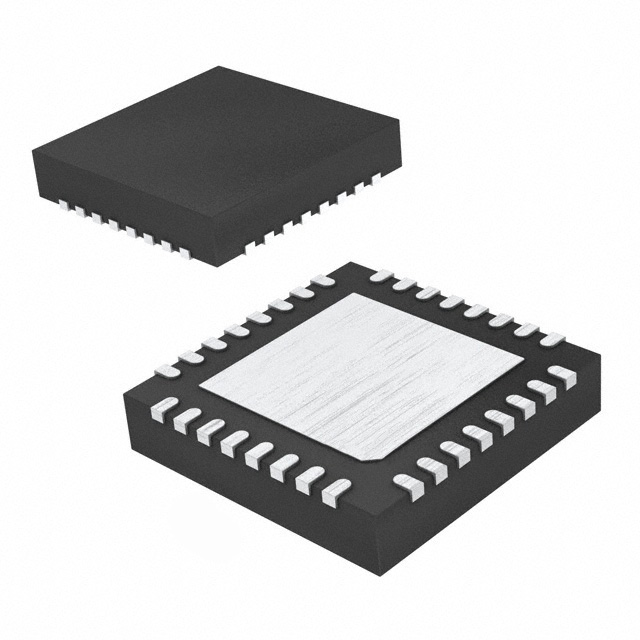
ASL2417SHN
Enhanced two channel LED buck driver with limp-home
Rev. 4 — 16 September 2019
Product data sheet
1. Introduction
The ASL2417SHN is a two channel buck mode LED driver IC with a Limp-home mode.
It delivers constant average DC current to LEDs independent of the input voltage. The
ASL2417SHN supports up to two output channels. It means that with one driver IC, 1 or 2
LED strings can be driven independently of each other. It provides a cost effective design
solution, specifically targeting automotive exterior and interior lighting applications.
2. General description
The ASL2417SHN has a hysteretic buck DC-to-DC topology. With input voltages from
10 V to 80 V, it allows maximum flexibility on output voltages for each channel, enabling
applications with up to 20 LEDs. It also provides an output current of up to and above
1.5 A per channel.1 Furthermore, the output channels can be connected together to
provide an even higher current. It drives an external high-side N channel MOSFET from
an internally regulated adjustable supply. The ASL2417SHN buck driver gives a flexible
system design which can be used to drive two LED strings with the same architecture.
The ASL2417SHN provides an SPI interface for extensive control and diagnostic
communication with an external microcontroller. Furthermore, the ASL2417SHN
integrates a customer programmable Limp-home mode. It allows configurable operation in
Limp-home mode in case SPI communication with the microcontroller has failed.
The ASL2417SHN offers an adjustable hysteresis for optimizing external components as
well as minimizing LED current ripple.
In addition, the ASL2417SHN provides an output voltage of up to 70 V. It has a
measurement capability that can be used to identify LED open or short circuit conditions.
The microcontroller can read this voltage and use it to detect open or short circuit
conditions. There are also additional diagnostic features such as current reached status.
Additional features include input under-voltage lockout and thermal shutdown when the
junction temperature of the ASL2417SHN exceeds +175 C.
It is housed in a very small HVQFN32 pin package with an exposed thermal pad and is
designed to meet the stringent requirements of automotive applications. It is fully AEC
Q100 grade 1 qualified. It operates over the ambient automotive temperature range of
40 C to +125 C.
1.
The ASL2417 provides an accurate current over a 1 : 12.5 range. This range can be scaled up or down using external
components. Depending on the operating conditions and component choices, output currents of min 30 mA and more than 3 A can
be achieved.
�ASL2417SHN
NXP Semiconductors
Enhanced two channel LED buck driver with limp-home
3. Features and benefits
The ASL2417SHN is an automotive grade product that is AEC-Q100 grade 1 qualified.
Operating ambient temperature range of 40 C to +125 C
Wide operating input voltage range from +10 V to +80 V
Able to drive up to 20 LEDs, wide operating LED voltage range regulated from 2.5 V to
70 V
Output current of up to and above 1.5 A with high LED current accuracy of 5 % over
the complete operating temperature range
Output current programmable via SPI interface
Read back programmed current via SPI
Customer programmable Limp-home mode.
Two output current ranges, programmable via SPI interface with 5 % accuracy
Hysteretic converter
Fast gate drive for high efficiency
Programmable internal gate driver voltage regulator
Support logic level and standard level FETs
Integrated bootstrap diode
PWM inputs for individual dimming of each channel
Low Electro Magnetic Emission (EME) and high Electro Magnetic Immunity (EMI)
Input voltage monitoring and input under voltage protection
Output voltage monitoring
Control signal to enable the device
Junction temperature monitoring via SPI
Small package outline HVQFN32
Low quiescent current < 5A at 25 C when EN = 0
Short-circuit and open-circuit output protection
4. Applications
Automotive LED lighting
Daytime running lights
Position or park light
Low beam
High beam
Turn indicator
Fog light
Cornering light
Advanced front lighting
ASL2417SHN
Product data sheet
All information provided in this document is subject to legal disclaimers.
Rev. 4 — 16 September 2019
© NXP Semiconductors N.V. 2019. All rights reserved.
2 of 43
�ASL2417SHN
NXP Semiconductors
Enhanced two channel LED buck driver with limp-home
5. Ordering information
Table 1.
Ordering information
Type number
ASL2417SHN
Package
Name
Description
Version
HVQFN32
plastic thermal enhanced very thin quad flat package; no leads; 32 terminals;
body 5 5 0.85 mm
SOT617-12
6. Block diagram
VDDA
VDDD
VGG
UVOV
GATE DRIVER 1
ERROR AMP
AND CONTROL
LOOP 1
POR
Gate
Driver 1
Signal
VIN
GATE DRIVER 2
OSCILLATOR
ERROR AMP
AND CONTROL
LOOP 2
Gate
Driver 2
Signal
VCC
PWM
SDO
EN
SCLK
SPI INTERFACE
DIGITAL
CONTROL
LOGIC
CSB
SDI
MISC, MTP
GND
aaa-016620
Fig 1.
Block diagram
ASL2417SHN
Product data sheet
All information provided in this document is subject to legal disclaimers.
Rev. 4 — 16 September 2019
© NXP Semiconductors N.V. 2019. All rights reserved.
3 of 43
�ASL2417SHN
NXP Semiconductors
Enhanced two channel LED buck driver with limp-home
7. Pinning information
25 LX1
26 G1
27 BS1
28 n.c.
29 VGG
30 n.c.
terminal 1
index area
31 VIN
32 n.c.
7.1 Pinning
GND
1
24 RH1
SDO
2
23 RL1
VCC
3
22 n.c.
EN
4
21 LX2
ASL2417SHN
CSB
5
20 G2
SCLK
6
19 BS2
SDI
7
n.c
8
18 RH2
GND
n.c. 16
n.c. 15
n.c. 14
n.c. 13
n.c. 12
n.c. 11
PWM1 10
PWM2
9
17 RL2
aaa-018753
Transparent top view
Fig 2.
Pin configuration
7.2 Pin description
ASL2417SHN
Product data sheet
Table 2.
Pin description[1]
Symbol
Pin
Description
GND
1
chip ground
SDO
2
SPI data out
VCC
3
external 5 V supply
EN
4
enable signal
CSB
5
SPI chip select
SCLK
6
SPI clock
SDI
7
SPI data input
n.c.
8
not connected
PWM2
9
external PWM signal channel 2
PWM1
10
external PWM signal channel 1
n.c.
11
not connected
n.c.
12
not connected
n.c.
13
not connected
n.c.
14
not connected
n.c.
15
not connected
n.c.
16
not connected
All information provided in this document is subject to legal disclaimers.
Rev. 4 — 16 September 2019
© NXP Semiconductors N.V. 2019. All rights reserved.
4 of 43
�ASL2417SHN
NXP Semiconductors
Enhanced two channel LED buck driver with limp-home
Table 2.
Pin description[1] …continued
Symbol
Pin
Description
RL2
17
sense resistor low side channel 2
RH2
18
sense resistor high side channel 2
BS2
19
boot supply channel 2
G2
20
channel 2 gate driver
LX2
21
inductor connection to switching FET channel 2
n.c.
22
not connected
RL1
23
sense resistor low side channel 1
RH1
24
sense resistor high side channel 1
LX1
25
inductor connection to switching FET channel 1
G1
26
channel 1 gate driver
BS1
27
boot supply channel 1
n.c.
28
not connected
VGG
29
gate driver supply
n.c.
30
not connected
VIN
31
input voltage
n.c.
32
not connected
[1]
Not connected (n.c.) pins are internally not connected and must be left floating to maintain high-voltage
separation.
For enhanced thermal and electrical performance, the exposed center pad of the package
should be soldered to board ground (and not to any other voltage level).
ASL2417SHN
Product data sheet
All information provided in this document is subject to legal disclaimers.
Rev. 4 — 16 September 2019
© NXP Semiconductors N.V. 2019. All rights reserved.
5 of 43
�ASL2417SHN
NXP Semiconductors
Enhanced two channel LED buck driver with limp-home
8. Functional description
8.1 Operating modes
EN = low
Initial state
EN = high
EN = low
Off
VIN < VIN_UV
Under
voltage
Operation
VIN > VIN_UV
EN = low
Clr_errors = 1
Tj > Tsd(otp)
or
VGG_err = 1
Tj > Tsd(otp)
EN = low
Fail silent
aaa-018556
Note: All outputs should be turned off at least 200 ns before the transition from operation to off
mode is executed
Fig 3.
State diagram
8.1.1 Off mode
If the EN pin goes low, the ASL2417SHN switches to off mode.
In Off mode, the SPI interface and all outputs are turned off. Before off mode is entered,
all channels should be turned off.
8.1.2 Operation mode
The ASL2417SHN switches from Off mode to Operation mode when the input voltage is
above the power-on detection threshold (Vth(det)pon) and the EN pin is high. In operation
mode, all outputs are available as configured via the SPI interface.
8.1.3 Under voltage mode
The ASL2417SHN switches from operation mode to under voltage mode as soon as the
input voltage drops below the programmed voltage. In under voltage mode, all outputs,
including the gate voltage supply are off.
8.1.4 Fail silent mode
The ASL2417SHN switches from Operation mode to Fail silent mode, when the junction
temperature exceeds the over temperature shutdown threshold or a VGG error is
detected.
ASL2417SHN
Product data sheet
All information provided in this document is subject to legal disclaimers.
Rev. 4 — 16 September 2019
© NXP Semiconductors N.V. 2019. All rights reserved.
6 of 43
�ASL2417SHN
NXP Semiconductors
Enhanced two channel LED buck driver with limp-home
In Fail silent mode, all outputs are turned off and only the SPI interface remains
operational.
8.2 Buck converter
The ASL2417SHN is a buck converter IC delivering constant current to the LEDs. It is a
hysteretic controller that regulates the inductor current. It switches off the external FET
when the inductor current rises above the upper threshold current. It switches on when the
current falls below the lower threshold. The width of the hysteresis window can be
programmed via SPI to keep the switching frequency between bounds. The anode of the
LED string is connected to the driver, while the cathode of the LED string is connected to
ground. This arrangement helps to reduce the total number of connections to the LEDs.
8.3 Input voltage measurement
The ASL2417SHN measures the supply voltage of the device and makes this
measurement available via the SPI interface.
Table 3.
VIN voltage measurement register, address 0x38h[1]
Bit
Symbol
Description
Value
Function
7:0
V_VIN[7:0]
VIN voltage
measurement
0x00h
voltage measurement not available
...
VIN voltage = 0.3548 V_VIN[7:0] 0.56 V
[1]
A write to the VIN voltage measurement register does not set the SPI error bit high.
8.4 Input under voltage detection
The ASL2417SHN offers a variable undervoltage detection threshold.
When the supply voltage is above the under voltage detection threshold, the bit VIN_stat
is high, when the supply voltage is below, the bit is low.
For effects of this bit on the functionality of the device, see Section 8.12.1.1.
Table 4.
Undervoltage threshold register, address 0x0Fh
Bit
Symbol
Description
Value
Function
7:0
V_VIN_UV[7:0]
undervoltage
threshold
0x00h
undervoltage detection threshold = 0 V
...
undervoltage detection threshold = 0.3548 V_VIN_UV[7:0] 0.56 V
8.5 Output current programmability
The ASL2417SHN provides the possibility to program the LED current and LED current
hysteresis via the SPI interface.
8.5.1 Output target current programming
The ASL2417SHN target output current, can be programmed via the LED current range
registers and the LED current registers of channel 1 and 2. The sense voltage that is set
via SPI, and the value of the external sense resistor, determine the actual level.
V LEDcurrent
I LED = ---------------------------R sense
ASL2417SHN
Product data sheet
(1)
All information provided in this document is subject to legal disclaimers.
Rev. 4 — 16 September 2019
© NXP Semiconductors N.V. 2019. All rights reserved.
7 of 43
�ASL2417SHN
NXP Semiconductors
Enhanced two channel LED buck driver with limp-home
Table 5.
Bit
LED current range register, address 0x05h
Symbol
7:2
1
0
I_CH2
I_CH1
Table 6.
Description
Value
Function
reserved
000000
reserved; keep clear for future use
LED current range bit 0
channel 2
1
maximum sense voltage is approximately 300 mV
LED current range bit 0
channel 1
1
maximum sense voltage is approximately 300 mV
maximum sense voltage is approximately 120 mV
maximum sense voltage is approximately 120 mV
LED current channel 1 register, address 0x02h
Bit
Symbol
Description
Value
7:0
I_LED_CH1[7:0]
LED current
channel 1
0x00h;
not recommended
0xF6h...0xFFh
...
Function
When I_CH1 is 0: 1.179 mV I_LED_CH1 + 0.74 mV
When I_CH1 is 1: 0.47882 mV I_LED_CH1 0.6 mV
Table 7.
LED current channel 2 register, address 0x03h
Bit
Symbol
Description
Value
7:0
I_LED_CH2[7:0]
LED current
channel 2
0x00h;
not recommended
0xF6h...0xFFh
...
Function
When I_CH2 is 0: 1.179 mV I_LED_CH2 + 0.74 mV
When I_CH2 is 1: 0.47882 mV I_LED_CH2 0.6 mV
The LED current is the result of the voltage drop across the Rsense resistor in mV.
Example:
To achieve an output current of e.g. 300 mA with 200 m Rsense resistor on channel 1, two
settings are possible:
1. Set bit I_CH1 to 1 and the LED current channel 1 register to 0x7Eh
2. Set bit I_CH1 to 0 and the LED current channel 1 register to 0x32h
For higher granularity and higher accuracy, use setting 1. When the LED current is
dynamically adjusted to higher levels than offered when bit I_CHx = 1, deviations are
possible.
8.5.2 Hysteresis programming via SPI
ASL2417SHN provides an option to program the level of hysteresis via the SPI interface.
The hysteresis setting is independent of the I_CH1 and I_CH2 bits in LED current range
registers.
The hysteresis voltage that is set via SPI, and the value of the external sense resistor,
determine the actual level.
V Hyst
I Hyst = --------------R sense
(2)
Depending on the hysteresis level, the values of the external components, the input and
the output voltage, and the switching frequency varies.
ASL2417SHN
Product data sheet
All information provided in this document is subject to legal disclaimers.
Rev. 4 — 16 September 2019
© NXP Semiconductors N.V. 2019. All rights reserved.
8 of 43
�ASL2417SHN
NXP Semiconductors
Enhanced two channel LED buck driver with limp-home
The ASL2417SHN is specified for switching frequencies from 100 kHz to 2 MHz.
Note: For all hysteresis settings, the hysteresis, specified in mV, corresponds with the
lowest average LED current in the static characteristics section.
Table 8.
Bit
Hysteresis channel 1 register, address 0x0Bh
Symbol
7:2
1:0
HCH1[1:0]
Table 9.
Bit
Value
Function
reserved
000000
reserved; keep clear for future use
hysteresis channel 1
00
setting 0
01
setting 1
10
setting 2
11
setting 3
Hysteresis channel 2 register, address 0x0Ch
Symbol
7:2
1:0
Description
HCH2[1:0]
Description
Value
Function
reserved
000000
reserved; keep clear for future use
hysteresis channel 2
00
setting 0
01
setting 1
10
setting 2
11
setting 3
By increasing the hysteresis level, the switching frequency is reduced, leading to less
switching events and lower overall switching losses. However, the ripple of the LED
current increases.
Calculation example:
A system has 40 V input voltage, an LED voltage of 15 V, a 200 m Rsense, and an
inductor of 220 H. It operates with a hysteresis of 20 mV at:
2
V IN V LED – V LED
1
1
1
f = --- = ----------------------- = ------------------------------------------------------------------------------- = ----------------------------------------------- 426 kHz
T T on + T off
L
L
I Hyst L V IN
I Hyst --------------------------- + I Hyst ------------V IN – V LED
V LED
(3)
Remarks:
The calculation above does not account for delays in the switching. Due to these delays,
the measured switching frequency is lower than calculated here.
To avoid that the device is operating with undesired settings, pull the PWM pin high only
when a channel is completely configured.
In case the PWM functionality is not needed, it is possible to connect the PWM pin directly
to pin VCC. In this case, the PWM pin control bits can be used to enable or disable the
channel. To avoid operation at an undesired frequency, the hysteresis for the channel
should be set before the LED current register is set.
The hysteresis and LED current level can be adapted during operation of the device to
enable smooth fade-in/fade-out scenarios down to very low output currents. It does it in
combination with the PWM inputs.
ASL2417SHN
Product data sheet
All information provided in this document is subject to legal disclaimers.
Rev. 4 — 16 September 2019
© NXP Semiconductors N.V. 2019. All rights reserved.
9 of 43
�ASL2417SHN
NXP Semiconductors
Enhanced two channel LED buck driver with limp-home
8.5.3 Overcurrent protection
The ASL2417SHN offers an overcurrent protection feature in addition to the set trip points
to protect the system. If the output voltage suddenly changes very fast, the upper and
lower hysteretic thresholds may deviate from actual target values. In case the deviation is
too large the built-in overcurrent protection feature prevents the system from excessive
current build-up.
In case such an event is detected, the gate driver will immediately be turned off for
approximately 16 ms after which the system is restarted.
8.5.4 Output diagnostics
The diagnostic options for the outputs are:
• measurement of the output voltages during the LED on and off state - details can be
found in Section 8.6
• indication that the target LED current is reached - details can be found in Section 8.11
• indication that a channel is operating with low voltage headroom - details can be
found in Section 8.12.3.1
8.6 Output voltage measurement
The ASL2417SHN measures the output voltage of all channels every tmeas_per. On a
transition from the PWM pin of a channel, the measurement results are stored in the
corresponding registers. The registers V_LEDx_on, contain the voltage information when
the PWM input of the channel is high. The registers V_LEDx_off, contain the voltage
information when the PWM input is low. It ensures that the registers contain the latest
measured value of the individual channels with respect to the status of the PWM pin. If the
PWM input of one channel stays constant for TLEDmeas_stat, the V_LEDx_on voltage
register and the V_LEDx_off voltage register of this channel are updated.
Table 10.
LED on voltage channel 1 register, address 0x20h
Bit
Symbol
Description
Value
7:0
V_LED1_on[7:0]
LED on voltage channel 1 0x00h
...
Table 11.
LED on voltage = 0 V
LED on voltage = 0.3548 V_LED1_on[7:0] 0.56 V
LED off voltage channel 1 register, address 0x21h
Bit
Symbol
Description
7:0
V_LED1_off[7:0]
LED off voltage channel 1 0x00h
Value
...
Table 12.
Function
Function
LED off voltage = 0 V
LED off voltage = 0.3548 V_LED1_off[7:0] 0.56 V
LED on voltage channel 2 register, address 0x22h
Bit
Symbol
Description
Value
7:0
V_LED2_on[7:0]
LED on voltage channel 2 0x00h
...
ASL2417SHN
Product data sheet
Function
LED on voltage = 0 V
LED on voltage = 0.3548 V_LED2_on[7:0] 0.56 V
All information provided in this document is subject to legal disclaimers.
Rev. 4 — 16 September 2019
© NXP Semiconductors N.V. 2019. All rights reserved.
10 of 43
�ASL2417SHN
NXP Semiconductors
Enhanced two channel LED buck driver with limp-home
Table 13.
LED off voltage channel 2 register, address 0x23h
Bit
Symbol
Description
Value
7:0
V_LED2_off[7:0]
LED off voltage channel 2 0x00h
...
Function
LED off voltage = 0 V
LED on voltage = 0.3548 V_LED2_off[7:0] 0.56 V
8.7 External PWM input
The ASL2417SHN provides a dedicated PWM input for each of the two channels. It allows
full control over the PWM frequency and duty cycle and allows phase shifting of the PWM
cycles to balance the input current variations.
Pin PWM1 controls channel 1 and PWM2 controls channel 2. A high level at the pins
represents that the corresponding channel is turned on and the configured current is
delivered to the output.
As soon as the pin is pulled high, pin Gx of the corresponding channel starts toggling. It
switches the MOSFET attached to the pin on and off and the system starts to deliver the
configured output current.
As soon as the pin is pulled low, pin Gx of the corresponding channel is no longer turned
on. The MOSFET stays off and no current is delivered to the output of the corresponding
channel.
8.7.1 Control for PWM pins
The ASL2417SHN provides the option to disable the PWM input for each channel
individually. In case the PWM input of one channel is disabled, this channel stays off,
independent of any other conditions.
The bits to disable the PWM inputs are located in the function control register (refer to
Section 8.8 for details of the function control register).
8.7.2 Diagnostics for PWM functionality
The diagnostic options for the PWM functionality comprise the toggle information for the
individual PWM pins. Details of the functionality can be found in Section 8.8.
8.8 Function control register
To monitor the status of the SPI interface, use the function control register. It allows a
reset of the fail silent mode and offers the control of the PWM inputs.
After enabling the device, the SPI_status bit should be set. When a query returns that the
bit is set, the SPI interface is operational and the device can be configured. Configuration
of the device is not permitted before this bit is set.
When the device enters fail silent mode due to an error condition, bit Clr_error can be set
to bring the device back into operation mode. Once the error bits are cleared, the device
clears the Clr_error bit automatically. If the Clr_error bit is set, when no error is present,
the Clr_error bit remains set, until an error occurs. This error is cleared automatically.
The functionality of bits PWMctrl1 and PWMctrl2, is described in Section 8.7.1.
ASL2417SHN
Product data sheet
All information provided in this document is subject to legal disclaimers.
Rev. 4 — 16 September 2019
© NXP Semiconductors N.V. 2019. All rights reserved.
11 of 43
�ASL2417SHN
NXP Semiconductors
Enhanced two channel LED buck driver with limp-home
Table 14.
Function control register, address 0x00h
Bit
Symbol
Description
Value
Function
7
SPI_status
SPI status bit
0
SPI is not available
1
SPI is operating
6
Clr_error
clear error bits
0
no pending clear request
1
request to clear error bits and reset fail silent mode pending
reserved
0
reserved; keep clear for future use
PWM control for pin
PWM2
0
PWM2 is disabled, channel stays off
1
PWM2 is enabled, LED current depends on PWM state and
Register settings
PWM control for pin
PWM1
0
PWM1 is disabled, channel stays off
1
PWM1 is enabled, LED current depends on PWM state and
Register settings
reserved
0
reserved; keep clear for future use
5:4
2
1
PWMctrl2
PWMctrl1
0
8.9 Gate voltage supply
The ASL2417SHN has an integrated linear regulator to generate the supply voltage of the
gate drivers. The voltage generated by the linear regulator can be set via the VGG control
register.
Table 15.
VGG control register, address 0x01h
Bit
Symbol
Description
Value
Function
7:0
VGG[7:0]
VGG control
0x00h
not allowed
...
not allowed
0x5Dh
maximum output voltage = 10.20 V
...
16.1 V VGG[7:0] 63.4 mV
0xA6h
minimum output voltage = 5.58 V
...
not allowed
0xFFh
not allowed
The actual value of VGG can deviate from the target setting due to the tolerances of the
VGG regulation loop (see Vo(reg)acc in Table 39).
When a setting between 0x00h and 0x5Dh is used, the resulting gate driver target voltage
exceeds the limiting values of the IC. The limiting values of the VGG pin can also be
violated with target settings of 0xA6h to 0x5Dh due to these tolerances. A violation of the
limiting values with the actual VGG voltage must be avoided. To ensure that only allowed
settings are used for the gate driver target voltage, an immediate read back of the
programmed value is required after setting the registers.
If a setting between 0xFFh and 0xA6h is used, the device may shut down and signal a
BS_UV error. If the device operates, parameters of VGG are not guaranteed.
• VGG available. Details can be found in Section 8.12
• VGG overload protection active. Details can be found in Section 8.12
ASL2417SHN
Product data sheet
All information provided in this document is subject to legal disclaimers.
Rev. 4 — 16 September 2019
© NXP Semiconductors N.V. 2019. All rights reserved.
12 of 43
�ASL2417SHN
NXP Semiconductors
Enhanced two channel LED buck driver with limp-home
8.10 Junction temperature information
The ASL2417SHN provides a measurement of the IC junction temperature. The
measurement information is available in the junction temperature register.
Table 16.
Junction temperature register, address 0x26h
Bit
Symbol
Description
Value
Function
7:0
T_junction[7:0]
junction temperature
0xD8h
device junction temperature = 40 C
...
device junction temperature = (256 T_juction[7:0]) C
0xFFh
device junction temperature = 1 C
0x00h
device junction temperature = 0 C
0x01h
device junction temperature = 1 C
...
device junction temperature = T_juction[7:0]* C
0xAFh
device junction temperature = 175 C
The reading of the junction temperature register should be in the range as given in
Table 16. If not, the Tj_err bit (Bit 5 in diagnostic register 1, address 0x37h) can be used to
indicate whether the temperature is below 175 °C (Tj_err = Low) or above 175 C
(Tj_err = High).
8.11 Bootstrap recharge mechanism
The gate drivers and current delivered to the gate pins of the ASL2417SHN is supplied by
the bootstrap capacitors. These capacitors are attached between the LXx and the BSx
pins of the device. To allow a proper drive of the external FET, the voltage across this
capacitor must remain near the target level of the gate drive voltage.
During device operation, if the external FET switches periodically at relatively high
frequency, the bootstrap capacitor is charged when the Lx node is low. It is the case when
the external FET is off and the converter coil is delivering current to the output.
When the external FET is not switching periodically, the bootstrap capacitor is recharged
regularly every tperiod when:
• the PWM pin is low for more than TLEDmeas_stat
• the PWM is high and the CR0 bit is low
8.11.1 Bootstrap charge maintaining
There is an additional mechanism to maintain the bootstrap charge. This mechanism
avoids a discharge of the bootstrap capacitors when the system is operated with long
PWM off times and short PWM on times.
The ASL2417SHN compensates for the current consumption of the IC on the BS pins. As
a result, the BS cap no longer discharges, but slowly settles around VBS-LX.
The compensating mechanism is enabled when the gate driver is enabled, the PWM is
low, and no bootstrap undervoltage or low voltage headroom condition is detected.
ASL2417SHN
Product data sheet
All information provided in this document is subject to legal disclaimers.
Rev. 4 — 16 September 2019
© NXP Semiconductors N.V. 2019. All rights reserved.
13 of 43
�ASL2417SHN
NXP Semiconductors
Enhanced two channel LED buck driver with limp-home
8.12 Diagnostic information
Diagnostic registers contain useful information for diagnostic purposes. Details of each bit
can be found in the following subchapters.
8.12.1 Diagnostic Register 1
The diagnostic register 1 contains information about the operational status of the
ASL2417SHN.
Table 17.
Diagnostic register 1, address 0x37h
Bit
Symbol
Description
Value
Function
7
VIN_stat
VIN status
0
VIN below under voltage detection threshold
1
VIN above under voltage detection threshold
6
5
4
3
SPI_err
Tj_err
VGG_err
VGG_ok
2
1
0
I-CH2
I-CH1
8.12.1.1
SPI error
0
last SPI command was executed correctly
1
last SPI command was erroneous and has been discarded
device temperature is too
high
0
device temperature below 175 C
1
device temperature above 175 C
VGG error
0
VGG overload protection not active
1
VGG overload protection has turned on and VGG is
deactivated
VGG regulation ok
0
VGG is not available
1
VGG is available
reserved
0
reserved; keep clear for future use
target current reached on
channel 2
0
target current was not reached during last PWM cycle
1
target current was reached during last PWM cycle
target current reached on
channel 1
0
target current was not reached during last PWM cycle
1
target current was reached during last PWM cycle
Bit VIN_stat
The bit VIN_stat indicates the VIN voltage status of the device. This bit is set once the VIN
voltage is higher than programmed under voltage threshold value. When VIN is less than
the programmed under voltage threshold value, the bit is cleared (see Section 8.4 for
details about the input under voltage detection functionality).
When the bit is high, the gate pins start switching. The device starts to deliver the output
current as requested via the PWM inputs of the corresponding channels. The bits
VGG_ok and VGG_err indicate the functional status of VGG.
When the bit is low, the VGG regulator and gate drivers are turned off. The gate pins stop
switching, resulting in a turn-off of the output currents. The bit VGG_ok is reset, the bit
VGG_err is not changed and the VLED measurement registers are no longer updated.
Table 18.
Effect of VIN_stat on device functionality
Status of VIN
VIN_stat
VGG_ok
VGG_err
Output current
VLED measurement
below under voltage
detection threshold
0
reset
cannot be set
disabled
no update
above under voltage
detection threshold
1
no influence
no influence
enabled
updated when VGG_ok is 1
ASL2417SHN
Product data sheet
All information provided in this document is subject to legal disclaimers.
Rev. 4 — 16 September 2019
© NXP Semiconductors N.V. 2019. All rights reserved.
14 of 43
�ASL2417SHN
NXP Semiconductors
Enhanced two channel LED buck driver with limp-home
8.12.1.2
Bit SPI_err
The bit SPI_err indicates if some error has occurred during the last SPI transfer. When
this bit is set after a write access to the device, the device discards the command. When
the bit is set after a read command, the microcontroller should discard the information
delivered by the device. The SPI_err bit is set in the following cases:
• SPI write is attempted to a read-only location or reserved location
• SPI read is attempted from a reserved location
• SPI command does not consist of a multiple of 16 clock counts
The SPI_err bit is cleared on a write to the diagnostic register 1.
In case a SPI_error has been detected, the device will return the diagnostic register 1
(default read) and diagnostic register 2 for the next SPI access.
8.12.1.3
Bit Tj_err
When the junction temperature rises above the maximum allowable temperature (Tsd(otp)),
bit Tj_err is set high. It turns off the gate driver and the gate driver voltage regulator, and
clears bit VGG_ok. If VGG_ok was already set high, bit VGG_err is set. The output
current is no longer delivered. Only the SPI remains operational.
Bit Tj_err must only be cleared with the Clr_errors command when the junction
temperature is below the maximum allowable temperature threshold again. Bit VGG_err,
that is set together with bit Tj_err, is cleared together with bit Tj_err.
8.12.1.4
Bit VGG_err
The bit VGG_err is set when VGG cannot be regulated to its target value. During start-up,
the device waits for 12 ms until the bit gets set, during normal operation the device waits
only 1 ms. Once the bit is set, it turns off the gate driver, VGG voltage regulator and clears
the bit VGG_ok. Consequently, output current can no longer be delivered. Only the SPI
remains operational.
In case the VGG_err bit is set, the LED voltage measurement is no longer updated.
To reset the bit, the bit Clr_errors in the function control register can be set. Alternatively,
the device must be set to off mode, e.g. by EN going low, or a power-on reset.
8.12.1.5
Bit VGG_ok
The bit VGG_ok is set, as soon as the VGG output is regulated to the target value. The bit
is cleared on an under voltage condition at VIN, or an error on VGG.
8.12.1.6
Bits I-Ch1 and I-CH2
The bits I-CH1 and I-CH2 indicate whether the targeted output current was reached or not
in the last PWM cycle. Reasons for not reaching the target current can be e.g. an open
LED string or a too low input voltage.
The bits are updated for a:
• falling edge of the PWM
• write of the CR copy pulse bit
The bits are cleared for a:
ASL2417SHN
Product data sheet
All information provided in this document is subject to legal disclaimers.
Rev. 4 — 16 September 2019
© NXP Semiconductors N.V. 2019. All rights reserved.
15 of 43
�ASL2417SHN
NXP Semiconductors
Enhanced two channel LED buck driver with limp-home
• VIN undervoltage event
• low voltage headroom event on the representative channel
8.12.1.7
CR copy pulse
The bits CCH1 and CCH2 can be used to force an update of the LED current reached
information. Setting a bit high, initiates an update of the I-CHx bit in the diagnostic
register 1 and clears the CR0_CHx bit. The device automatically clears the bit that was
set high, after the update.
Table 19.
Bit
CR copy pulse register, address 0x06h
Symbol
7:2
Description
Value
Function
reserved
000000 reserved; keep clear for future use
1
CCH2
update request for bit I-CH2
0
no pending update request
1
update request for bit I-CH2
0
CCH1
update request for bit I-CH1
0
no pending update request
1
update request for bit I-CH1
8.12.2 Diagnostic register 2
The diagnostic register 2 contains the PWM toggle information of the ASL2417SHN.
Table 20.
Bit
Diagnostic register 2, address 0x36h
Description
Value
Function
7
reserved
0
reserved; keep clear for future use
6
reserved
1
reserved; keep clear for future use
5
reserved
000
reserved; keep clear for future use
NVM_access failed
0
no NVM access failed
1
NVM access failed
0
no NVM access completed
1
NVM access completed
000
reserved; keep clear for future use
4
3
Symbol
NVM_fail
NVM_ok
2
NVM_access completed
reserved
1
PWM2
toggle information for pin PWM2 0
0
PWM1
toggle information for pin PWM1 0
1
1
8.12.2.1
PWM2 has not toggled since last time the register was read
PWM2 has toggled since last time the register was read
PWM1 has not toggled since last time the register was read
PWM1 has toggled since last time the register was read
Bit NVM_fail
When the ASL2417SHN rejects the write to the particular NVM address location, bit
NVM_fail is set. The bit is reset on a write to diagnostic register 2.
8.12.2.2
Bit NVM_ok
When the ASL2417SHN accepts the write/read to/from the particular NVM address
location and the write/read process is completed, the NVM_ok bit is set. The bit is reset on
a write to diagnostic register 2.
ASL2417SHN
Product data sheet
All information provided in this document is subject to legal disclaimers.
Rev. 4 — 16 September 2019
© NXP Semiconductors N.V. 2019. All rights reserved.
16 of 43
�ASL2417SHN
NXP Semiconductors
Enhanced two channel LED buck driver with limp-home
8.12.2.3
PWM toggle information (bits PWM1 and PWM2)
To allow the detection of errors in the control of the PWM pins, the ASL2417SHN allows
some diagnostics of the PWM inputs via diagnostic register 2. This register contains the
toggle information of the PWM inputs.
The bits are set when a change in the level of the pin is detected. The bits are reset on a
write to diagnostic register 2.
8.12.3 Diagnostic register 3
Diagnostic register 3 contains the low voltage headroom warning information and the
output current state bits.
8.12.3.1
Low voltage headroom warning
When the ASL2417SHN operates with low voltage headroom, it could lead to very high
duty cycles. Subsequent long on-times for the external FET, could result in low switching
frequencies. To avoid long on-times of the external FET, the supply voltage and output
voltages are continuously monitored while the channel is on and VIN_stat is high. Once
the output voltage is measured to be above Vin minus VHead_low, the gate pin is pulled low.
It results in the FET being turned off. At the same moment in time, the low voltage
headroom bit (LV_CHx in diagnostic register 3) for the corresponding channel is set.
If the voltage difference is again above VHead_low, the device starts to operate again.
Bits LV_CH1 and LV_CH2 remain set until a write to the diagnostic register 3 is
performed. If the bits are cleared while the channels are turned off or VIN_stat is low, the
bits might be set again if the last sampled voltage indicates a low voltage headroom
condition.
8.12.3.2
Output current state
Diagnostic register 3 also contains bits CR0_CH1 and CR0_CH3. The bits indicate the
target current reached information of the individual channels for the current PWM cycle.
The bits are set as soon as the target current of the channel is reached.
The bits are cleared under the following conditions:
•
•
•
•
ASL2417SHN
Product data sheet
a falling edge on the PWM pin
a VIN under voltage event
a CR0 copy pulse request via SPI
the gate is driven high for more than 1 ms while PWM is high
All information provided in this document is subject to legal disclaimers.
Rev. 4 — 16 September 2019
© NXP Semiconductors N.V. 2019. All rights reserved.
17 of 43
�ASL2417SHN
NXP Semiconductors
Enhanced two channel LED buck driver with limp-home
8.12.3.3
Table 21.
Bit
Diagnostic register 3, address 0x35h
Symbol
7:5
4
3
CR0_CH2
CR0_CH1
2
1
0
Register content
LV_CH2
LV_CH1
Description
Value
Function
reserved
00
reserved; keep clear for future use
current reached CH2
0
output current is not reached
1
output current is reached
current reached CH1
0
output current is not reached
1
output current is reached
reserved
00
reserved; keep clear for future use
low voltage headroom in CH2
0
no low headroom event occurred
1
at least one low headroom event occurred
0
no low headroom event occurred
1
at least one low headroom event occurred
low voltage headroom in CH1
8.12.4 Diagnostic register 4
Diagnostic register 4 contains the BS undervoltage detection bits.
8.12.4.1
Bootstrap undervoltage detection
The integrated bootstrap undervoltage detection monitors the voltage between the BS and
the LX pins during the off time of the LX pin. If the voltage drops below VBS_UV, the
ASL2417SHN prevents the gate from being turned-on and prevent the MOSFET being
driven at a low voltage.
When this condition is detected on a channel, the channel is turned off and the
appropriate error bit is set. A write command to the device clears the error bit and any bits
to be cleared are set high. Once the error is cleared, the channel is enabled again.
Table 22.
Bit
BS_UV register - read access, address 0x34h
Symbol
7:2
Description
Value
Function
reserved
00000
reserved; keep clear for future use
0
no low BS event occurred
1
at least one low BS event occurred
0
no low BS event occurred
1
at least one low BS event occurred
1
BS_UV2
low BS warning CH2
0
BS_UV1
low BS warning CH1
Table 23.
Bit
BS_UV register - write access, address 0x34h
Symbol
7:2
1
0
BS_UV2
BS_UV1
ASL2417SHN
Product data sheet
Description
Value
Function
reserved
00000
reserved; keep clear for future use
low BS warning CH2
0
no action
1
clear low BS warning for channel 2
0
no action
1
clear low BS warning for channel 1
low BS warning CH1
All information provided in this document is subject to legal disclaimers.
Rev. 4 — 16 September 2019
© NXP Semiconductors N.V. 2019. All rights reserved.
18 of 43
�ASL2417SHN
NXP Semiconductors
Enhanced two channel LED buck driver with limp-home
8.13 Limp-home mode
The ASL2417SHN offers a Limp-home mode and the detection of a loss of SPI
communication, activates it. In Limp-home mode, the outputs are operating according to a
pre-defined condition stored in a non-volatile memory (NVM). Figure 4 shows the
operation state diagram of the Limp-home mode and Table 24 gives an overview of the
behavior of the ASL2417SHN in the states.
Limp-home
operation
Limp-home
timeout
Limp-home
deactivation
sequence
Normal
operation
Refresh limp
timeout
NVM not in Use
1. No NVM Program acces
2. LED output is off
3. Only Limp-home mode
control register has effect
4. Vin measurement is not
updated
Limp_cfg = 0
Limp_cfg = 1
and
Write acces to
register 0x17 with
valid NVM address
Limp_cfg = 1
Limp_cfg = 0
NVM
access
EN = high
Limp_cfg = 1
and
Write acces to
register 0x17 with
valid NVM address
NVM Use
1. NVM Program acces
2. LED output is off
3. Only Limp-home mode
control register has effect
4. Vin measurement is not
updated
Off-Mode
EN = low
aaa-020071
Fig 4.
Limp-home state diagram
Table 24.
Limp-home state overview
Mode
Outputs
Normal
operation
as defined via
full access to SPI registers
registers and PWM
input
Limp-home
operation
as defined per
limp-home
configuration
NVM
access
as defined via
full access to SPI registers
registers and PWM
input
no
once NVM access mode is entered,
the limp-home refresh timer is
stopped.
NVM Use
outputs disabled
SPI registers are programmable
but values have no effect
read/write
to restart it, a power-on reset via EN is
required
NVM not in
use
outputs disabled
SPI registers are programmable
but values have no effect
no
the use of this state is not
recommended
ASL2417SHN
Product data sheet
Register access
MTP
access
Remark
no
normal operation consists of operation,
undervoltage and fail silent mode (see
Figure 3)
write to limp home control register no
allowed; other control registers are
set to the NVM values.
All information provided in this document is subject to legal disclaimers.
Rev. 4 — 16 September 2019
limp-home operation offers same
states as normal operation mode
© NXP Semiconductors N.V. 2019. All rights reserved.
19 of 43
�ASL2417SHN
NXP Semiconductors
Enhanced two channel LED buck driver with limp-home
The settings with which the device operates in limp-home settings can be configured in
NVM Use mode. In NVM Use mode, the outputs are disabled. After configuration, the
limp-home settings will be permanently stored. Once the ASL2417SHN detects a loss of
the communication, the device populates these settings into the registers and operates
according to them.
In case the system recovers from the error, Limp-home mode can be left via the exit
Limp-home mode sequence. With the completion of the exit sequence, the device already
operates according to the applied levels on the PWM pin inputs. The configuration
registers are open for write configuration again.
Limp-home and normal mode operation offer the same operational behavior. It includes
the undervoltage behavior as well as the fails silent behavior. When the fail silent mode is
entered, the system cannot execute an automatic recovery in either the normal operation
mode or the Limp-home mode.
8.13.1 Limp-home mode activation
Limp-home mode is automatically entered if no write to the Limp-home mode exit bits
(register 0x33h, bits 6:4) with data 111, is executed for the time-out time. The time-out
time is defined in the Limp-home mode control register.
8.13.2 Limp-home mode operation
Once the system has entered Limp-home mode, the ASL2417SHN switches to the
configuration as defined in the NVM memory for Limp-home mode. The ASL2417SHN
modifies the control registers accordingly. During Limp-home mode operation, the SPI
interface remains functional, but only the Limp-home mode control register can be written.
The other registers offer only read access.
8.13.3 Limp-home mode deactivation
To deactivate Limp-home mode, a dedicated Limp-home mode deactivation sequence
must be written to the Limp-home mode control register.
Table 25.
Limp-home mode deactivation sequence
Deactivation step
Data to Limp_exit [2:0]
step 1
001
step 2
010
step 3
100
Once the deactivation sequence is completed, the ASL2417SHN immediately starts to
react on the PWM inputs. The registers remain as set for the Limp-home mode. As the
system is now back to operation mode, all registers are accessible as defined for
operation mode again.
ASL2417SHN
Product data sheet
All information provided in this document is subject to legal disclaimers.
Rev. 4 — 16 September 2019
© NXP Semiconductors N.V. 2019. All rights reserved.
20 of 43
�ASL2417SHN
NXP Semiconductors
Enhanced two channel LED buck driver with limp-home
8.13.4 Limp-home mode control register
The Limp-home mode control register allows control of the Limp-home mode.
Table 26.
Limp-home mode control register, address 0x33h
Bit
Symbol
Description
Value Function
7
Limp_status
Limp-home mode status
0
device is not in limp-home mode
1
device is in limp-home mode
...
bits for limp home mode deactivation sequence and SPI
time-out trigger
000
Limp-home time-out setting 1
001
Limp-home time-out setting 2
6:4
Limp_exit
3:1
Limp_timeout time-out setting for activation of
limp-home mode[2]
0
Limp_cfg
Limp-home mode exit
bits[1]
Limp-home mode configuration
mode
010
Limp-home time-out setting 3
011
Limp-home time-out setting 4
100
Limp-home time-out setting 5
101
Limp-home time-out setting 6
110
Limp-home time-out setting 7
111
Limp-home time-out setting 8
0
not in limp-home mode configuration mode
1
system in limp-home mode configuration mode
[1]
When refreshing the time-out timer, the limp home mode time-out setting must be written as well.
[2]
When changing the limp home mode time-out setting, the limp_exit bits should be set to 111 to refresh the time-out timer.
8.13.5 NVM Write Sequence
The limp home configuration of the ASL2417SHN can be stored in a non-volatile-memory
(NVM). In NVM Use mode, data can be written to the NVM using the following sequence:
1. Clear the previous NVM bits by writing the Diagnostic Summary Register 2 (address
0x36h) with any data.
2. Write required NVM data [7:0] into SPI register 0x18h.
3. Write required NVM data [15:8] into SPI register 0x19h.
4. Finally, to start the programming process, write the NVM address into SPI register
0x17h with bit NVM_write set high.
a. If access to the NVM is allowed at these address locations, the ASL2417SHN
programs the NVM memory. After programming, the bit NVM_ok is set.
b. If access to the NVM is not allowed at these address locations, the ASL2417SHN
does not modify the NVM memory and set bit NVM_fail high.
5. The next operation can be initiated after the NVM write is completed.
8.13.6 NVM read sequence
The limp-home configuration of the ASL2417SHN can be stored in a non-volatile-memory
(NVM). To read data to the NVM, use the following sequence:
1. Clear the previous NVM bits by writing the Diagnostic Summary Register 2 (address
0x36h) with any data.
2. To start the read process, write the NVM address into SPI register 0x17h with bit
NVM_read set high.
ASL2417SHN
Product data sheet
All information provided in this document is subject to legal disclaimers.
Rev. 4 — 16 September 2019
© NXP Semiconductors N.V. 2019. All rights reserved.
21 of 43
�ASL2417SHN
NXP Semiconductors
Enhanced two channel LED buck driver with limp-home
3. Obtain the read completion status by reading the Diagnostic Summary Register 2
(0x36h).
4. NVM data [7:0] is now available via SPI register 0x28h.
5. NVM data [15:8] is now available via SPI register 0x29h.
6. The next operation can be initiated after the NVM read is completed.
8.13.7 NVM register map
The ASL2417SHN allows limp home values for all control registers that can be configured
during normal operation to be set. Table 27 links the NVM addresses to the register
addresses.
Table 27.
Mapping of NVM registers to control registers
NVM address
NVM data
linked to SPI register 0x17h [4:0]
0x10h
NVM data
linked to SPI register 0x19h
[15:8][1]
linked to SPI register 0x18h [7:0][1]
LED current channel 2
(SPI register address 0x03h)
default: 0x00h
0x11h
VGG control
(SPI register address 0x01h)
default: 0x96h
0x12h
NVM_Hyst, default: 0x00h
(see Table 28)
0x13h
LED current channel 1
(SPI Register Address 0x02h)
default: 0x00h
-
Under voltage threshold
(SPI Register Address 0x0Fh)
default: 0x00h
-
NVM_PWM_ctrl, default: 0x2Ah
(see Table 28)
[1]
Register 0x18h and 0x19h are used for write to NVM and register 0x28h and 0x29h are used for read from NVM.
The content NVM Data fields that contain more than just one register are shown in
Table 28.
Table 28.
Overview of multi-content NVM data fields
NVM_
Address
Name
7
6
0x12h;
Data[15:8]
NVM_Hyst
LED current
range _CH2
LED current
range _CH1
(SPI register
address 0x05h
bit 1)
(SPI register
address 0x05h
bit 0)
0x13h;
Data[7:0]
NVM_PWM
_ctrl
-
5
-
4
-
3
2
1
0
[2:3] Hysteresis
channel 2
[1:0] Hysteresis channel
1
(SPI register
address 0x0Ch)
(SPI register address
0x0Bh)
NVM_PWM2[1:0]
NVM_PWM1[1:0]
(see Table 29)
(see Table 29)
-
In Limp-home mode, the ASL2417SHN offers the option to override the PWM input to turn
channels individually ON, OFF, or allow them to react to pin PWM. Table 29 shows the
possible configurations of the channels during Limp-home mode.
ASL2417SHN
Product data sheet
All information provided in this document is subject to legal disclaimers.
Rev. 4 — 16 September 2019
© NXP Semiconductors N.V. 2019. All rights reserved.
22 of 43
�ASL2417SHN
NXP Semiconductors
Enhanced two channel LED buck driver with limp-home
Table 29.
NVM_PWMx bits
NVM_PWMx[1:0]
Channel reaction
00
Channel x is turned off in limp home mode
01
Channel x reacts to PWMx in limp home mode
10
Channel x is turned on in limp home mode
11
Channel x reacts to PWMx in limp home mode
8.14 SPI
The ASL2417SHN uses an SPI interface to communicate with an external microcontroller.
The SPI interface can be used for setting the LEDs current, reading and writing the control
register.
8.14.1 Introduction
The Serial Peripheral Interface (SPI) provides the communication link with the
microcontroller, supporting multi-slave operations. The SPI is configured for full duplex
data transfer, so status information is returned when new control data is shifted in. The
interface also offers a read-only access option, allowing the application to read back the
registers without changing the register content.
The SPI uses four interface signals for synchronization and data transfer:
•
•
•
•
CSB - SPI chip select; active LOW
SCLK - SPI clock - default level is LOW due to low-power concept
SDI - SPI data input
SDO - SPI data output - floating when pin CSB is HIGH
Bit sampling is performed on the falling clock edge and data is shifted on the rising clock
edge as illustrated in Figure 5.
SCLK
CSB
SDI
b15
MSB
b14
b13
b12
b11
b10
b9
b3
b2
b1
b0
SDO
b15
MSB
b14
b13
b12
b11
b10
b9
b3
b2
b1
b0
Sampling
Edge
Driving
Edge
aaa-016623
Fig 5.
SPI timing protocol
ASL2417SHN
Product data sheet
All information provided in this document is subject to legal disclaimers.
Rev. 4 — 16 September 2019
© NXP Semiconductors N.V. 2019. All rights reserved.
23 of 43
�ASL2417SHN
NXP Semiconductors
Enhanced two channel LED buck driver with limp-home
The data bits of the ASL2417SHN are arranged in registers of 1 byte length. Each register
is assigned to a 7-bit address. For writing into a register, 2 bytes must be sent to the LED
driver. The first byte is an identifier byte that consists of the 7-bit address and one
read-only bit. For writing, the read-only bit must be set to “0”. The second byte is the data
that shall be written into the register. So an SPI access consists of at least 16 bits.
Figure 6 together with Table 30 and Table 31 demonstrate the SPI frame format.
R/W Address
b15 b14 b13 b12 b11 b10 b9
Table 30.
b8
b7
b4
b3
b2
b1
b0
aaa-016624
SPI frame format for a transition to the device
Bit
Symbol
Description
Value
Function
b15
R/W bits
0
write access
1
read access
14:8 b14:8
address bits
...
selected address
7:0
data bits
...
transmitted data
Bit
b5
SPI frame format
15
b7:0
Table 31.
b6
b15 = MSB = first transmitted bit
R/W
Fig 6.
Data
SPI frame format for a transition from the device
Symbol
Description
Value Function
15:8 b15:8
diagnostic register 1
...
content of diagnostic register 1
7:0
data bits
...
when previous command was a valid read command, content of the register
that is supposed to be read
...
When previous command was a valid write command, new content of the
register that was supposed to be written
b7:0
Note: The first SPI command after a leaving of off mode returns 0x00h.
The Master initiates the command sequence. The sequence begins with CSB pin pulled
low and lasts until it is asserted high.
The ASL2417SHN also tolerates SPI accesses with a multiple of 16 bits. It allows a daisy
chain configuration of the SPI.
ASL2417SHN
Product data sheet
All information provided in this document is subject to legal disclaimers.
Rev. 4 — 16 September 2019
© NXP Semiconductors N.V. 2019. All rights reserved.
24 of 43
�ASL2417SHN
NXP Semiconductors
Enhanced two channel LED buck driver with limp-home
MOSI
SDI
CSB
CSB
SCLK
SCLK
SDO
ASLxxxxSHN
SOMI
µC
SDI
CSB
SCLK
SDO
ASL2417SHN
SDI
CSB
SCLK
SDO
ASL2417SHN
aaa-018754
Fig 7.
Daisy chain configuration
MOSI
SDI
CSB1
CSB
SCLK
SCLK
ASLxxxxSHN
SDO
SOMI
CSB2
µC
CSB3
SDI
CSB
SCLK
ASL2417SHN
SDO
SDI
CSB
SCLK
ASL2417SHN
SDO
aaa-018755
Fig 8.
Physical parallel slave connection
During the SPI data transfer, the identifier byte and the actual content of the addressed
registers is returned via the SDO pin. The same happens for pure read accesses. Here
the read-only bit must be set to 1. The content of the data bytes that are transmitted to the
ASL2417SHN is ignored.
The ASL2417SHN monitors the number of data bits that are transmitted. If the number is
not 16, or a multiple of 16, then a write access is ignored and the SPI error indication bit is
set.
ASL2417SHN
Product data sheet
All information provided in this document is subject to legal disclaimers.
Rev. 4 — 16 September 2019
© NXP Semiconductors N.V. 2019. All rights reserved.
25 of 43
�ASL2417SHN
NXP Semiconductors
Enhanced two channel LED buck driver with limp-home
8.14.2 Typical use case illustration (write/read)
Consider a daisy chain scheme with one master connected to 4 slaves in Daisy chain
fashion. The following commands are performed during one sequence (first sequence).
•
•
•
•
write data 0xFF to register 0x1A slave 1
read from register 0x02 of slave 2
write data 0xAF to register 0x2F of slave 3
read from register 0x44 of slave 4
1st Sequence
2nd Sequence
CSB
SCLK
1 x 16 SCLK’s
2 x 16 SCLK’s
3 x 16 SCLK’s
4 x 16 SCLK’s
1 x 16 SCLK’s
2 x 16 SCLK’s
3 x 16 SCLK’s
Next command
for Slave4
Next command
for Slave3
Next command
for Slave2
Next command
for Slave1
4 x 16 SCLK’s
Master SDO/
Slave1 SDI
b15 = 1
b14-b8 = 0x44
b7-b0 = xx
b15 = 0
b14-b8 = 0x2F
b7-b0 = 0xAF
b15 = 1
b14-b8 = 0x2
b7-b0 = xx
Slave 1
b15 = 0
b14-b8 = 0x1A
b7-b0 = 0xFF
Slave1 SDO/
Slave2 SDI
XXX
b15 = 1
b14-b8 = 0x44
b7-b0 = xx
b15 = 0
b14-b8 = 0x2F
b7-b0 = 0xAF
Slave 2
b15 = 1
b14-b8 = 0x2
b7-b0 = xx
b15-b8 = Default
read reg of slave1
b7-b0 = xx
Next command
for Slave4
Next command
for Slave3
Next command
for Slave2
Slave2 SDO/
Slave3 SDI
XXX
XXX
b15 = 1
b14-b8 = 0x44
b7-b0 = xx
Slave 3
b15 = 0
b14-b8 = 0x2F
b7-b0 = 0xAF
b15-b8 = Default
read reg of slave2
b7-b0 = Data from
0x2 of Slave2
b15-b8 = Default
read reg of slave1
b7-b0 = xx
Next command
for Slave4
Next command
for Slave3
Slave3 SDO/
Slave4 SDI
XXX
XXX
XXX
Slave 4
b15 = 1
b14-b8 = 0x44
b7-b0 = xx
b15-b8 = Default
read reg of slave3
b7-b0 = xx
b15-b8 = Default
read reg of slave2
b7-b0 = Data from
0x2 of Slave2
b15-b8 = Default
read reg of slave1
b7-b0 = xx
Next command
for Slave4
Slave4 SDO/
Master SDI
XXX
XXX
XXX
XXX
b15-b8 = Default
read reg of slave4
b7-b0 = Data from
0x44 of Slave4
b15-b8 = Default
read reg of slave3
b7-b0 = xx
b15-b8 = Default
read reg of slave2
b7-b0 = Data from
0x2 of Slave4
b15-b8 = Default
read reg of slave1
b7-b0 = xx
Current sequence Command
decoded by Slave
Response from previous sequence
Fig 9.
aaa-016627
SPI frame format
8.14.3 Diagnostics for the SPI interface
The diagnostic options for the SPI interface are Error during last SPI transfer. For details,
refer to Section 8.11.
8.14.4 Register map
The addressable register space amounts to 128 registers from 0x00 to 0x7F. They are
separated in two groups as shown in Table 32. The register mapping is shown in Table 33
and Table 34. The functional description of each bit can be found in the dedicated chapter.
Table 32.
ASL2417SHN
Product data sheet
Grouping of the register space
Address range
Description
Content
0x00 ... 0x1F
control registers
thresholds, LED currents
0x20 ... 0x7F
diagnostic registers
LED voltages, PWM toggle information
All information provided in this document is subject to legal disclaimers.
Rev. 4 — 16 September 2019
© NXP Semiconductors N.V. 2019. All rights reserved.
26 of 43
�ASL2417SHN
NXP Semiconductors
Enhanced two channel LED buck driver with limp-home
8.14.4.1
Control registers
Table 33 provides an overview of the control registers and their reset state.
Table 33.
Control register group overview
Address Name
Reset value 7
6
0x00h
function control
0x0Eh
Clr_errors
0x01h
VGG control
0x96h
0x02h
LED current channel 1 0x00h
I_LED_CH1[7:0]
0x03h
LED current channel 2 0x00h
I_LED_CH2[7:0]
0x05h
LED current range
0x07h
-
-
-
-
-
-
I_CH2
I_CH1
0x06h
CR copy pulse
0x00h
-
-
-
-
-
-
CCH2
CCH1
0x0Bh
hysteresis channel 1
0x03h
-
-
-
-
-
-
HCH1[1:0]
0x0Ch
hysteresis channel 2
0x03h
-
-
-
-
-
-
HCH2[1:0]
0x0Fh
undervoltage
threshold
0xFFh
0x33h
limp-home control
0x0Eh
8.14.4.2
SPI_status
5
4
-
-
3
2
-
1
0
PWMctrl PWMctrl
2
1
-
VGG[7:0]
V_VIN_UV[7:0]
limp_status limp_exit[2:0]
Limp_timeout[0:2]
limp_cfg
Diagnostic registers
Table 34 provides an overview of the diagnostic registers. As the device continuously
updates these registers, they do not have a default value.
Table 34.
Diagnostic register group overview
Address Name
7
6
5
4
3
2
0x20h
LED on voltage channel 1
0x21h
LED off voltage channel 1
V_LED1_off[7:0]
0x22h
LED on voltage channel 2
V_LED2_on[7:0]
0x23h
LED off voltage channel 2
V_LED2_off[7:0]
0x26h
junction temperature
1
0
V_LED1_on[7:0]
T_junction[7:0]
0x34h
diagnostic register 4
-
-
-
-
BS_UV2 BS_UV1
0x35h
diagnostic register 3
-
-
-
CR0_CH2 CR0_CH1
-
LV_CH2 LV_CH1
0x36h
diagnostic register 2
-
1
-
NVM_fail
NWM_ok
-
PWM2
PWM1
0x37h
diagnostic register 1
(default read register)
Tj_er
VGG_er
VGG_ok
-
I-CH2
I-CH1
0x38h
VIN voltage
measurement[1]
[1]
VIN_Stat SPI_er
-
-
V_VIN[7:0]
A write to the VIN voltage measurement register sets the SPI error bit high.
ASL2417SHN
Product data sheet
All information provided in this document is subject to legal disclaimers.
Rev. 4 — 16 September 2019
© NXP Semiconductors N.V. 2019. All rights reserved.
27 of 43
�ASL2417SHN
NXP Semiconductors
Enhanced two channel LED buck driver with limp-home
8.14.4.3
NVM registers
Table 35 provides an overview of the registers that control the NVM.
Table 35.
NVM register group overview
Address
Name
7
6
5
0x17h
NVM control
NVM_read
NVM_write
-
0x18h
NVM write data 1
NVM Data1[7:0]
0x19h
NVM write data 2
NVM Data2[7:0]
0x28h
NVM read data 1
NVM Data1[7:0]
0x29h
NVM read data 2
NVM Data2[7:0]
8.14.4.4
4
3
2
1
0
NVM_adress
Internal registers
The ASL2417SHN uses the SPI registers to control some internal functions. In order to
avoid any unintended behavior of the device, do not modify these registers but leave them
all at their default value.
Table 36.
Internal register overview
Address Name
Default value 7
6
5
4
3
2
1
0
0x04h
Internal 1
0x17h
-
-
-
-
-
-
-
-
0x0Dh
Internal 2
0x03h
-
-
-
-
-
-
-
-
0x24h
Internal 3
0x00h
-
-
-
-
-
-
-
-
0x25h
Internal 4
0x00h
-
-
-
-
-
-
-
-
ASL2417SHN
Product data sheet
All information provided in this document is subject to legal disclaimers.
Rev. 4 — 16 September 2019
© NXP Semiconductors N.V. 2019. All rights reserved.
28 of 43
�ASL2417SHN
NXP Semiconductors
Enhanced two channel LED buck driver with limp-home
9. Limiting values
Table 37. Limiting values
In accordance with the Absolute Maximum Rating System (IEC 60134).
Symbol
Parameter
Conditions
Min
Max
Unit
VIN
voltage on pin VIN
EN = low
0.3
+80
V
EN = high
10
80
V
VVCC
voltage on pin VCC
0.3
+5.5
V
VI(dig)
digital input voltage
voltage on pins SDO, SDI, CSB, SCLK, EN,
PWM1, PWM2 and PWM3
0.3
+5.5
V
VVGG
voltage on pin VGG
0.3
+10
V
VLX
voltage on pin LX
LX1, LX2 and LX3
1.0
+80
V
SRf(max)
maximum falling edge slew
rate
on pins LX1, LX2 and LX3; at maximum
input voltage
-
5.0
V/ns
Vsense
sense voltage
voltage on sense pins RH1, RL1, RH2, RL2,
RH3 and RL3
1.0[1]
+70[2]
V
VRH-RL(max)
maximum voltage drop
between pins RH and RL
maximum drop between the RH and RL pins
of one channel
0.3
+0.8
V
VBSx
voltage on bootstrap pins
BS1 and BS2
0.3
+90
V
VGx
voltage on gate pins
G1 and G2
1.0
+90
V
Vmax
maximum voltage difference
between pins G and LX of one channel
-
12
V
between pins BS and LX of one channel
-
12
V
40
+175
°C
0
+85
°C
55
+175
°C
-
200
at any pin
2
+2
kV
at pins RLx with 100 nF at pin
6
+6
kV
6
+6
kV
500
+500
V
junction temperature
Tj
during programming of NVM
Tstg
storage temperature
Nendu(W_ER)
write or erase endurance
VESD
electrostatic discharge voltage HBM[3]
number of NVM programming cycles
IEC
61000-4-2[4]
at pins RLx with 100 nF at pin
CDM[5]
at any pin
[1]
The limitation of the slew rate is an IC constraint. When the IC is operating in an application circuit, the external circuitry influences the
slew rate capability. An example guideline for some specific MOSFET parameters to be considered when selecting the appropriate
resistor values, can be found in the table below. Nonetheless, each application should be validated to determine the final solution when
considering EMC performance and correct gate driver operation.
[2]
76 V for t 10 seconds guaranteed by design.
[3]
Human Body Model (HBM): according to AEC-Q100-002 (100 pF, 1.5 k).
[4]
IEC 61000-4-2 (150 pF, 330 ).
[5]
Charged Device Model (CDM): according to AEC-Q100-011 (field Induced charge; 4 pF).
ASL2417SHN
Product data sheet
All information provided in this document is subject to legal disclaimers.
Rev. 4 — 16 September 2019
© NXP Semiconductors N.V. 2019. All rights reserved.
29 of 43
�ASL2417SHN
NXP Semiconductors
Enhanced two channel LED buck driver with limp-home
9.1 External circuitry
Table 38.
Guideline for external circuitry
Symbol
Component
MOSFET configuration typical values
Config. 1
Config. 2
Config. 3
RG
[1]
1.0
4.7
1.7
QGS
[1]
0.6
1.2
0.8
nC
QGD
[1]
0.9
1.8
1.2
nC
RDSon
[1]
175
80
72
m
Rgate
gate resistor
33
15
33
RLx
sense resistor low side channel
10
10
10
1
1
1
F
C5
[1]
Unit
MOSFET M5
VIN
C15
Gx
ASL2417SHN
Rgate
BSx
C5
LXx
RLx
M5
L5
R5
C12
RHx
D9
D10
RLx
D11
D5
aaa-023113
Fig 10. External components
ASL2417SHN
Product data sheet
All information provided in this document is subject to legal disclaimers.
Rev. 4 — 16 September 2019
© NXP Semiconductors N.V. 2019. All rights reserved.
30 of 43
�ASL2417SHN
NXP Semiconductors
Enhanced two channel LED buck driver with limp-home
10. Thermal characteristics
10.1 Thermal model of the ASL2417SHN
The ASL2417SHN has several power sources on the die, but for thermal modeling they
can be simplified to one generic power source.
Pd
Tj
13.3 K/W
Tsense
8 K/W
Tcase
Rth
(exposed pad ambient)
aaa-016628
Fig 11. Thermal model of the ASL2417SHN
The power can be calculated using Equation 4 and Equation 5:
I gates = fsw1 Qg1 + fsw2 Qg2
(4)
P d = V Vin 3.5 mA + 1.3 mA #channels_active + I gates + V VCC 10 mA
(5)
Note, the Tsense is the location of the IC internal temperature measurement. The location
of the sensor, makes it possible that the junction temperature has already exceeded
175 C, even though the temperature measurement returns a value lower than 175C.
ASL2417SHN
Product data sheet
All information provided in this document is subject to legal disclaimers.
Rev. 4 — 16 September 2019
© NXP Semiconductors N.V. 2019. All rights reserved.
31 of 43
�ASL2417SHN
NXP Semiconductors
Enhanced two channel LED buck driver with limp-home
11. Static characteristics
Table 39. Static characteristics
Min and Max values are specified for the following conditions: VVIN = 10 V to 80 V, VEN = 4.5 V to 5.5 V, VVCC = 4.5 V to 5.5 V
and Tj = 40 °C to +175 °C.[1] All voltages are defined with respect to ground, positive currents flow into the IC. Typical values
are given at VVIN = 40 V. VEN = 5 V, VVCC = 5 V and Tj = 25 °C unless otherwise specified.
Symbol
Parameter
Conditions
Min
Typ
Max
Unit
IDD
supply current
on pin VIN; operating no load
on gate and VGG not set
-
3.5
10
mA
current on pin EN when
EN = high
-
-
150
A
EN = low; VIN < 12 V
-
-
5
A
Ioff
off-state current
Supply pin VCC
IVCC
VUVLO(VCC)
supply current on pin VCC
EN = high; CSB = low
-
10
15
mA
[2]
3.7
-
4.4
V
[2]
3.7
-
4.4
V
LED1; VIN VO(LED) + Vhr(low)
2.5
-
70
V
LED2; VIN VO(LED) + Vhr(low)
2.5
-
70
V
setting 0
5
-
11
mV
setting 1
13
-
21
mV
setting 2
22
-
31
mV
setting 3
32
-
42
mV
nominal average;
VO(LED) = 2.5 V to 70 V;
VIN VO(LED) + Voff(hr)low;
Rsense = 200 m
VO(min)/
Rsense
-
1500
mA
4
-
+4
%
undervoltage lockout on pin VCC
Enable pin EN
VUVLO(EN)
undervoltage lockout on pin EN
LED output characteristics
VO(LED)
VO(min)
IO(LED)
LED output voltage
minimum output voltage
average values
LED output current
Vsense(AV)acc average sense voltage accuracy
VO(acc)
output voltage accuracy
I_CHx = 1; Vsense(AV) 24 mV
[3]
I_CHx = 0; Vsense(AV) 120 mV
[3]
related to currently applied
value
Voff(hr)low
low headroom turn-off voltage
Vocp
overcurrent protection voltage
VIN VO(LED)
4
-
+4
%
0.02
VLEDx
1.0644 V
-
0.02
VLEDx
1.0644 V
%
0.02
VVIN
1.0644 V
-
0.02
VVIN
1.0644 V
%
5
-
7
V
-
400
-
mV
VGG output characteristics (CVGG = 1 F, ESR 0.1 )
VO(reg)
regulator output voltage
4.5
-
10.04
V
VO(reg)acc
regulator output voltage accuracy
5
-
+5
%
Vdo(reg)
regulator dropout voltage
Ireg 50 mA; regulator in
saturation
-
0.5
1.0
V
Ireg 160 mA; regulator in
saturation
-
1.6
3.2
V
ASL2417SHN
Product data sheet
All information provided in this document is subject to legal disclaimers.
Rev. 4 — 16 September 2019
© NXP Semiconductors N.V. 2019. All rights reserved.
32 of 43
�ASL2417SHN
NXP Semiconductors
Enhanced two channel LED buck driver with limp-home
Table 39. Static characteristics …continued
Min and Max values are specified for the following conditions: VVIN = 10 V to 80 V, VEN = 4.5 V to 5.5 V, VVCC = 4.5 V to 5.5 V
and Tj = 40 °C to +175 °C.[1] All voltages are defined with respect to ground, positive currents flow into the IC. Typical values
are given at VVIN = 40 V. VEN = 5 V, VVCC = 5 V and Tj = 25 °C unless otherwise specified.
Symbol
Parameter
Conditions
Min
Typ
Max
Unit
Bootstrap characteristics; pins BS1 and BS2 (capacitance between BS and LX pins = 1 F)
Vd(bs)
bootstrap diode voltage
Ibs 100 mA
-
-
1.5
V
Ibs
bootstrap current
current consumption of gate
driver; output is turned on
-
300
-
A
Vth(bs)OV
bootstrap overvoltage detection
threshold
5.5
-
8
V
Vth(bs)UV
bootstrap undervoltage detection
threshold
3.5
4.5
5.3
V
PWM inputs; pins PWM1 and PWM2
Vth(sw)
switching threshold voltage
0.7
-
3.5
V
Rpd(int)
internal pull-down resistance
50
-
130
k
Serial peripheral interface inputs; pins SDI, SCLK and CSB
Vth(sw)
switching threshold voltage
0.7
-
3.5
V
Vth(sw)hys
switching threshold voltage
hysteresis
0.1
-
1.1
V
IIL
LOW-level input current
10
-
+10
A
IIH
HIGH-level input current
15
40
110
A
Rpd(int)SCLK
internal pull-down resistance on
pin SCLK
50
-
130
k
Rpd(int)CSB
internal pull-down resistance on
pin CSB
50
-
130
k
Rpd(int)SDI
internal pull-down resistance on
pin SDI
50
-
130
k
V
Serial peripheral interface data output; pin SDO
VOH
HIGH-level output voltage
IOH = 4 mA
0.9 VVCC -
-
VOL
LOW-level output voltage
IOL = 4 mA
-
-
0.1 VVCC V
IOH
HIGH-level output current
30.0
-
1.6
mA
IOL
LOW-level output current
1.6
-
30.0
mA
ILOZ
OFF-state output leakage current VCSB = VVCC; VO = 0 V to VVCC
5
-
+5
A
165
175
185
C
5
-
+5
C
Temperature protection
Tsd(otp)
overtemperature protection
shutdown temperature
Tj
junction temperature deviation
Tj = 130 C; measurement
provided via register 0x26h
[4]
[1]
All parameters are guaranteed over the virtual junction temperature range by design. Factory testing uses correlated test conditions to
cover the specified temperature and power supply voltage range.
[2]
Undervoltage lockout pulls the gate pins low but the other functions of the IC remain operational.
[3]
Excluding influence of load and line regulation due to total delay of gate driver and comparators of hysteretic converter.
[4]
Guaranteed by wafer testing at 125 °C.
ASL2417SHN
Product data sheet
All information provided in this document is subject to legal disclaimers.
Rev. 4 — 16 September 2019
© NXP Semiconductors N.V. 2019. All rights reserved.
33 of 43
�ASL2417SHN
NXP Semiconductors
Enhanced two channel LED buck driver with limp-home
12. Dynamic characteristics
Table 40. Dynamic characteristics
Min and Max values are specified for the following conditions: VVIN = 10 V to 80 V, VEN = 4.5 V to 5.5 V, VVCC = 4.5 V to 5.5 V
and Tj = 40 °C to +175 °C. All voltages are defined with respect to ground, positive currents flow into the IC. Typical values
are given at VVIN = 40 V. VEN = 5 V and VVCC = 5 V, unless otherwise specified.
Symbol
Parameter
Min
Typ
Max
Unit
fPWM
PWM frequency
Conditions
100
-
1000
Hz
PWM
PWM duty cycle
0
-
100
%
td(on)PWM
PWM turn-on delay time
90 % of LED current
-
-
100
s
td(off)PWM
PWM turn-off delay time
10 % of LED current
-
-
100
s
td(i)PWM
PWM input delay time
including start-up time of the boost
-
20
-
ms
fDCDC
DC-to-DC frequency
100
-
2000
kHz
ton(drv)G(max)
maximum on time of one gate
driver
-
1
-
ms
td(drv)G
gate driver delay time
tblank
blanking time
toff(drv)G(min)
minimum off time of one gate
driver
total delay of gate driver and comparators
of hysteretic converter
[1]
25
-
75
ns
total delay of gate driver and comparators
of hysteretic converter
[2]
10
-
75
ns
70
-
130
ns
-
125
-
ns
of sense amplifier after switching
Serial peripheral interface timing; pins CSB, SCLK, SDI and SDO
tcy(clk)
clock cycle time
285
-
-
ns
tSPILEAD
SPI enable lead time
140
-
-
ns
tSPILAG
SPI enable lag time
140
-
-
ns
tclk(H)
clock HIGH time
140
-
-
ns
tclk(L)
clock LOW time
140
-
-
ns
tsu(D)
data input setup time
50
-
-
ns
th(D)
data input hold time
50
-
-
ns
tv(Q)
data output valid time
-
-
130
ns
tWH(S)
chip select pulse width HIGH
285
-
-
ns
td(SPI)
SPI delay time
after leaving OFF mode;
EN = 0 V 5 V
-
-
100
s
trst(reg)
register reset time
time to reset all registers to default value;
EN = 0 V 5 V
-
-
400
s
pin SDO; CL = 50 pF
Gate driver characteristics for pins G1 and G2
tch(G)
gate charge time
20 % to 80 %;
Vbsx - LXx = 10 V;
CG = 1000 pF
-
-
50
ns
tdch(G)
gate discharge time
20 % to 80 %;
Vbsx - LXx = 10 V;
CG = 1000 pF
-
-
25
ns
tp
pulse duration
applies to BS pins
recharge pulse time
-
80
-
s
period for recharge pulses
-
360
-
s
ASL2417SHN
Product data sheet
All information provided in this document is subject to legal disclaimers.
Rev. 4 — 16 September 2019
© NXP Semiconductors N.V. 2019. All rights reserved.
34 of 43
�ASL2417SHN
NXP Semiconductors
Enhanced two channel LED buck driver with limp-home
Table 40. Dynamic characteristics …continued
Min and Max values are specified for the following conditions: VVIN = 10 V to 80 V, VEN = 4.5 V to 5.5 V, VVCC = 4.5 V to 5.5 V
and Tj = 40 °C to +175 °C. All voltages are defined with respect to ground, positive currents flow into the IC. Typical values
are given at VVIN = 40 V. VEN = 5 V and VVCC = 5 V, unless otherwise specified.
Symbol
Parameter
Conditions
Min
Typ
Max
Unit
period for voltage measurements at VIN
-
15
-
s
period for voltage measurements at outputs
-
80
-
s
period for sampling low headroom
detection at outputs
-
8
-
s
period for the LED voltage measurement
update when the PWM pin is static
-
16
-
ms
Voltage measurements
tmeas
tmeas(LED)
measurement time
LED measurement time
VGG characteristics
terr(startup)
start-up error time
time to detect an error on VGG at start-up
-
20.2
-
ms
terr(oper)
operation error time
time to detect an error on VGG during
operation
-
200
-
s
setting 1
4.72
5.02
5.3
ms
setting 2
9.53
10
10.6
ms
setting 3
19.1
20.2
21.2
ms
setting 4
38.3
40.4
42.5
ms
setting 5
76.7
80.9
84.9
ms
setting 6
153
162
170
ms
setting 7
307
324
340
ms
setting 8
614
647
680
ms
Limp-home mode timing
tto(limp)
limp time-out time
Limp-home mode time-out time
[1]
Lower hysteresis trip point until external FET is turned on.
[2]
Higher hysteresis trip point until external FET is turned off.
ASL2417SHN
Product data sheet
All information provided in this document is subject to legal disclaimers.
Rev. 4 — 16 September 2019
© NXP Semiconductors N.V. 2019. All rights reserved.
35 of 43
�ASL2417SHN
NXP Semiconductors
Enhanced two channel LED buck driver with limp-home
CSB
tSPILEAD
tSPILAG
tcy(clk)
tclk(H)
tclk(L)
tsu(D)
th(D)
tWH(S)
SCLK
SDI
MSB
X
LSB
X
tv(Q)
floating
SDO
floating
X
MSB
LSB
aaa-018559
Fig 12. SPI timing diagram
ASL2417SHN
Product data sheet
All information provided in this document is subject to legal disclaimers.
Rev. 4 — 16 September 2019
© NXP Semiconductors N.V. 2019. All rights reserved.
36 of 43
�ASL2417SHN
NXP Semiconductors
Enhanced two channel LED buck driver with limp-home
13. Application information
Figure 13 provides an example for the ASL2417SHN in a typical external front lighting
application driving 2 independent LED strings.
D8
battery
C1
C2
L1
D1
VGG
VGG
Vin
C8
M1
VGG
SNH1
C16
G1
C15
BS1
R1
M5
L5
R5
C5
LED1
C12
SNL1
LX1
D9
PWM1
RH1
Vbat
FB1
D10
PWM2
C20
RL1
C16
D11
D5
VCC
EN
ASLxxxxSHN
ASL2417SHN
CSB
VCC
SDI
EN
SDO
CSB
SCLK
SDI
GND
SDO
GND1
SCLK
GND2
G2
BS2
M6
L6
C6
R6
LED2
C13
LX2
D12
RH2
GND3
D13
GND
GND4
RL2
C21
D14
D6
C20
VCC
Vbat
RSTN
C19
GND
TJA1028
LIN
LIN
EN
VCC
EN_1
RSTN
EN_2
EN
CSB1
TXD
TXD
RXD
RXD
CSB2
µC
SDI
SDO
GND
SCLK
PWM1
PWM2
aaa-018756
Fig 13. Application example in a typical external front lighting
14. Test information
14.1 Quality information
This product has been qualified in accordance with the Automotive Electronics Council
(AEC) standard Q100 - Failure mechanism-based stress test qualification for integrated
circuits. It is suitable for use in automotive applications.
ASL2417SHN
Product data sheet
All information provided in this document is subject to legal disclaimers.
Rev. 4 — 16 September 2019
© NXP Semiconductors N.V. 2019. All rights reserved.
37 of 43
�ASL2417SHN
NXP Semiconductors
Enhanced two channel LED buck driver with limp-home
15. Package outline
HVQFN32: plastic thermal enhanced very thin quad flat package; no leads;
32 terminals; body 5 x 5 x 0.85 mm
A
B
D
SOT617-12
terminal 1
index area
E
A
A1
c
detail X
e1
1/2 e
e
9
16
C
C A B
C
v
w
b
y1 C
y
L
8
17
e
e2
Eh
1/2 e
1
24
terminal 1
index area
32
k
25
X
Dh
0
5 mm
scale
Dimensions (mm are the original dimensions)
Unit
mm
A
A1
b
max 1.00 0.05 0.30
nom 0.85 0.02 0.21
min 0.80 0.00 0.18
c
D(1)
Dh
E(1)
Eh
e
e1
e2
0.2
5.1
5.0
4.9
3.1
3.0
2.9
5.1
5.0
4.9
3.1
3.0
2.9
0.5
3.5
3.5
k
L
v
0.1
0.5
0.50
0.44
0.30
w
y
y1
0.05 0.05
0.1
Note
1. Plastic or metal protrusions of 0.075 mm maximum per side are not included.
Outline
version
References
IEC
SOT617-12
JEDEC
JEITA
sot617-12_po
European
projection
Issue date
13-10-14
13-11-05
MO-220
Fig 14. Package outline HVQFN32
ASL2417SHN
Product data sheet
All information provided in this document is subject to legal disclaimers.
Rev. 4 — 16 September 2019
© NXP Semiconductors N.V. 2019. All rights reserved.
38 of 43
�ASL2417SHN
NXP Semiconductors
Enhanced two channel LED buck driver with limp-home
16. Revision history
Table 41.
Revision history
Document ID
Release date
Data sheet status
Change notice
Supersedes
ASL2417SHN v.4
20190916
Product data sheet
-
ASL2417SHN v.3
Modifications:
ASL2417SHN v.3
Modifications:
ASL2417SHN v.2
Modifications:
ASL2417SHN v.1
ASL2417SHN
Product data sheet
•
•
•
•
Section 8.5.1: corrected results in calculation example
Table 15: changed formula for VGG setting
Table 33: adapt reset values for a more robust start of the limp-home functionality
Table 39: clarified minimum LED output current
20171026
•
•
-
ASL2417SHN v.2
Section 8.13.6: the SPI register address changed in list item 4 and list item 5
Section 8.9: clarified exceeding of limiting values
20170222
•
•
•
•
Product data sheet
Product data sheet
-
ASL2417SHN v.1
Formula for voltage conversion updated
Figure 11: updated
Equation 4 and Equation 5: updated
Table 39: maximum value for low headroom turn-off voltage changed
20160603
Product data sheet
-
All information provided in this document is subject to legal disclaimers.
Rev. 4 — 16 September 2019
-
© NXP Semiconductors N.V. 2019. All rights reserved.
39 of 43
�ASL2417SHN
NXP Semiconductors
Enhanced two channel LED buck driver with limp-home
17. Legal information
17.1 Data sheet status
Document status[1][2]
Product status[3]
Definition
Objective [short] data sheet
Development
This document contains data from the objective specification for product development.
Preliminary [short] data sheet
Qualification
This document contains data from the preliminary specification.
Product [short] data sheet
Production
This document contains the product specification.
[1]
Please consult the most recently issued document before initiating or completing a design.
[2]
The term ‘short data sheet’ is explained in section “Definitions”.
[3]
The product status of device(s) described in this document may have changed since this document was published and may differ in case of multiple devices. The latest product status
information is available on the Internet at URL http://www.nxp.com.
17.2 Definitions
Draft — The document is a draft version only. The content is still under
internal review and subject to formal approval, which may result in
modifications or additions. NXP Semiconductors does not give any
representations or warranties as to the accuracy or completeness of
information included herein and shall have no liability for the consequences of
use of such information.
Short data sheet — A short data sheet is an extract from a full data sheet
with the same product type number(s) and title. A short data sheet is intended
for quick reference only and should not be relied upon to contain detailed and
full information. For detailed and full information see the relevant full data
sheet, which is available on request via the local NXP Semiconductors sales
office. In case of any inconsistency or conflict with the short data sheet, the
full data sheet shall prevail.
Product specification — The information and data provided in a Product
data sheet shall define the specification of the product as agreed between
NXP Semiconductors and its customer, unless NXP Semiconductors and
customer have explicitly agreed otherwise in writing. In no event however,
shall an agreement be valid in which the NXP Semiconductors product is
deemed to offer functions and qualities beyond those described in the
Product data sheet.
17.3 Disclaimers
Limited warranty and liability — Information in this document is believed to
be accurate and reliable. However, NXP Semiconductors does not give any
representations or warranties, expressed or implied, as to the accuracy or
completeness of such information and shall have no liability for the
consequences of use of such information. NXP Semiconductors takes no
responsibility for the content in this document if provided by an information
source outside of NXP Semiconductors.
In no event shall NXP Semiconductors be liable for any indirect, incidental,
punitive, special or consequential damages (including - without limitation - lost
profits, lost savings, business interruption, costs related to the removal or
replacement of any products or rework charges) whether or not such
damages are based on tort (including negligence), warranty, breach of
contract or any other legal theory.
Notwithstanding any damages that customer might incur for any reason
whatsoever, NXP Semiconductors’ aggregate and cumulative liability towards
customer for the products described herein shall be limited in accordance
with the Terms and conditions of commercial sale of NXP Semiconductors.
Right to make changes — NXP Semiconductors reserves the right to make
changes to information published in this document, including without
limitation specifications and product descriptions, at any time and without
notice. This document supersedes and replaces all information supplied prior
to the publication hereof.
ASL2417SHN
Product data sheet
Suitability for use in automotive applications — This NXP
Semiconductors product has been qualified for use in automotive
applications. Unless otherwise agreed in writing, the product is not designed,
authorized or warranted to be suitable for use in life support, life-critical or
safety-critical systems or equipment, nor in applications where failure or
malfunction of an NXP Semiconductors product can reasonably be expected
to result in personal injury, death or severe property or environmental
damage. NXP Semiconductors and its suppliers accept no liability for
inclusion and/or use of NXP Semiconductors products in such equipment or
applications and therefore such inclusion and/or use is at the customer's own
risk.
Applications — Applications that are described herein for any of these
products are for illustrative purposes only. NXP Semiconductors makes no
representation or warranty that such applications will be suitable for the
specified use without further testing or modification.
Customers are responsible for the design and operation of their applications
and products using NXP Semiconductors products, and NXP Semiconductors
accepts no liability for any assistance with applications or customer product
design. It is customer’s sole responsibility to determine whether the NXP
Semiconductors product is suitable and fit for the customer’s applications and
products planned, as well as for the planned application and use of
customer’s third party customer(s). Customers should provide appropriate
design and operating safeguards to minimize the risks associated with their
applications and products.
NXP Semiconductors does not accept any liability related to any default,
damage, costs or problem which is based on any weakness or default in the
customer’s applications or products, or the application or use by customer’s
third party customer(s). Customer is responsible for doing all necessary
testing for the customer’s applications and products using NXP
Semiconductors products in order to avoid a default of the applications and
the products or of the application or use by customer’s third party
customer(s). NXP does not accept any liability in this respect.
Limiting values — Stress above one or more limiting values (as defined in
the Absolute Maximum Ratings System of IEC 60134) will cause permanent
damage to the device. Limiting values are stress ratings only and (proper)
operation of the device at these or any other conditions above those given in
the Recommended operating conditions section (if present) or the
Characteristics sections of this document is not warranted. Constant or
repeated exposure to limiting values will permanently and irreversibly affect
the quality and reliability of the device.
Terms and conditions of commercial sale — NXP Semiconductors
products are sold subject to the general terms and conditions of commercial
sale, as published at http://www.nxp.com/profile/terms, unless otherwise
agreed in a valid written individual agreement. In case an individual
agreement is concluded only the terms and conditions of the respective
agreement shall apply. NXP Semiconductors hereby expressly objects to
applying the customer’s general terms and conditions with regard to the
purchase of NXP Semiconductors products by customer.
All information provided in this document is subject to legal disclaimers.
Rev. 4 — 16 September 2019
© NXP Semiconductors N.V. 2019. All rights reserved.
40 of 43
�ASL2417SHN
NXP Semiconductors
Enhanced two channel LED buck driver with limp-home
No offer to sell or license — Nothing in this document may be interpreted or
construed as an offer to sell products that is open for acceptance or the grant,
conveyance or implication of any license under any copyrights, patents or
other industrial or intellectual property rights.
Export control — This document as well as the item(s) described herein
may be subject to export control regulations. Export might require a prior
authorization from competent authorities.
Translations — A non-English (translated) version of a document is for
reference only. The English version shall prevail in case of any discrepancy
between the translated and English versions.
Security — While NXP Semiconductors has implemented advanced security
features, all products may be subject to unidentified vulnerabilities.
Customers are responsible for the design and operation of their applications
and products to reduce the effect of these vulnerabilities on customer’s
applications and products, and NXP Semiconductors accepts no liability for
any vulnerability that is discovered. Customers should implement appropriate
design and operating safeguards to minimize the risks associated with their
applications and products.
17.4 Trademarks
Notice: All referenced brands, product names, service names and trademarks
are the property of their respective owners.
18. Contact information
For more information, please visit: http://www.nxp.com
For sales office addresses, please send an email to: salesaddresses@nxp.com
ASL2417SHN
Product data sheet
All information provided in this document is subject to legal disclaimers.
Rev. 4 — 16 September 2019
© NXP Semiconductors N.V. 2019. All rights reserved.
41 of 43
�ASL2417SHN
NXP Semiconductors
Enhanced two channel LED buck driver with limp-home
19. Tables
able 1.
Table 2.
Table 3.
Table 4.
Table 5.
Table 6.
Table 7.
Table 8.
Table 9.
Table 10.
Table 11.
Table 12.
Table 13.
Table 14.
Table 15.
Table 16.
Table 17.
Table 18.
Table 19.
Ordering information . . . . . . . . . . . . . . . . . . . . .3
Pin description[1] . . . . . . . . . . . . . . . . . . . . . . . .4
VIN voltage measurement register, address
0x38h[1] . . . . . . . . . . . . . . . . . . . . . . . . . . . . . . . .7
Undervoltage threshold register, address 0x0Fh 7
LED current range register, address 0x05h . . . .8
LED current channel 1 register, address 0x02h .8
LED current channel 2 register, address 0x03h .8
Hysteresis channel 1 register, address 0x0Bh . .9
Hysteresis channel 2 register, address 0x0Ch .9
LED on voltage channel 1 register,
address 0x20h . . . . . . . . . . . . . . . . . . . . . . . . .10
LED off voltage channel 1 register,
address 0x21h . . . . . . . . . . . . . . . . . . . . . . . . .10
LED on voltage channel 2 register,
address 0x22h . . . . . . . . . . . . . . . . . . . . . . . . .10
LED off voltage channel 2 register,
address 0x23h . . . . . . . . . . . . . . . . . . . . . . . . . 11
Function control register, address 0x00h . . . . .12
VGG control register, address 0x01h . . . . . . . .12
Junction temperature register, address 0x26h .13
Diagnostic register 1, address 0x37h . . . . . . .14
Effect of VIN_stat on device functionality . . . . .14
CR copy pulse register, address 0x06h . . . . . .16
Table 20.
Table 21.
Table 22.
Table 23.
Table 24.
Table 25.
Table 26.
Table 27.
Table 28.
Table 29.
Table 30.
Table 31.
Table 32.
Table 33.
Table 34.
Table 35.
Table 36.
Table 37.
Table 38.
Table 39.
Table 40.
Table 41.
Diagnostic register 2, address 0x36h. . . . . . . . 16
Diagnostic register 3, address 0x35h . . . . . . . 18
BS_UV register - read access, address 0x34h 18
BS_UV register - write access, address 0x34h 18
Limp-home state overview . . . . . . . . . . . . . . . 19
Limp-home mode deactivation sequence . . . . 20
Limp-home mode control register,
address 0x33h . . . . . . . . . . . . . . . . . . . . . . . . . 21
Mapping of NVM registers to control registers. 22
Overview of multi-content NVM data fields . . . 22
NVM_PWMx bits . . . . . . . . . . . . . . . . . . . . . . . 23
SPI frame format for a transition to the device. 24
SPI frame format for a transition from the
device. . . . . . . . . . . . . . . . . . . . . . . . . . . . . . . . 24
Grouping of the register space. . . . . . . . . . . . . 26
Control register group overview . . . . . . . . . . . 27
Diagnostic register group overview . . . . . . . . . 27
NVM register group overview. . . . . . . . . . . . . . 28
Internal register overview. . . . . . . . . . . . . . . . . 28
Limiting values . . . . . . . . . . . . . . . . . . . . . . . . 29
Guideline for external circuitry . . . . . . . . . . . . . 30
Static characteristics . . . . . . . . . . . . . . . . . . . . 32
Dynamic characteristics . . . . . . . . . . . . . . . . . 34
Revision history . . . . . . . . . . . . . . . . . . . . . . . . 39
20. Figures
Fig 1.
Fig 2.
Fig 3.
Fig 4.
Fig 5.
Fig 6.
Fig 7.
Fig 8.
Fig 9.
Fig 10.
Fig 11.
Fig 12.
Fig 13.
Block diagram . . . . . . . . . . . . . . . . . . . . . . . . . . . .3
Pin configuration . . . . . . . . . . . . . . . . . . . . . . . . . .4
State diagram . . . . . . . . . . . . . . . . . . . . . . . . . . . .6
Limp-home state diagram . . . . . . . . . . . . . . . . . .19
SPI timing protocol. . . . . . . . . . . . . . . . . . . . . . . .23
SPI frame format . . . . . . . . . . . . . . . . . . . . . . . . .24
Daisy chain configuration. . . . . . . . . . . . . . . . . . .25
Physical parallel slave connection . . . . . . . . . . . .25
SPI frame format . . . . . . . . . . . . . . . . . . . . . . . . .26
External components . . . . . . . . . . . . . . . . . . . . . .30
Thermal model of the ASL2417SHN . . . . . . . . . .31
SPI timing diagram . . . . . . . . . . . . . . . . . . . . . . .36
Application example in a typical external front
lighting . . . . . . . . . . . . . . . . . . . . . . . . . . . . . . . . .37
Fig 14. Package outline HVQFN32 . . . . . . . . . . . . . . . . .38
ASL2417SHN
Product data sheet
All information provided in this document is subject to legal disclaimers.
Rev. 4 — 16 September 2019
© NXP Semiconductors N.V. 2019. All rights reserved.
42 of 43
�ASL2417SHN
NXP Semiconductors
Enhanced two channel LED buck driver with limp-home
21. Contents
1
Introduction . . . . . . . . . . . . . . . . . . . . . . . . . . . . 1
2
General description . . . . . . . . . . . . . . . . . . . . . . 1
3
Features and benefits . . . . . . . . . . . . . . . . . . . . 2
4
Applications . . . . . . . . . . . . . . . . . . . . . . . . . . . . 2
5
Ordering information . . . . . . . . . . . . . . . . . . . . . 3
6
Block diagram . . . . . . . . . . . . . . . . . . . . . . . . . . 3
7
Pinning information . . . . . . . . . . . . . . . . . . . . . . 4
7.1
Pinning . . . . . . . . . . . . . . . . . . . . . . . . . . . . . . . 4
7.2
Pin description . . . . . . . . . . . . . . . . . . . . . . . . . 4
8
Functional description . . . . . . . . . . . . . . . . . . . 6
8.1
Operating modes . . . . . . . . . . . . . . . . . . . . . . . 6
8.1.1
Off mode . . . . . . . . . . . . . . . . . . . . . . . . . . . . . . 6
8.1.2
Operation mode . . . . . . . . . . . . . . . . . . . . . . . . 6
8.1.3
Under voltage mode . . . . . . . . . . . . . . . . . . . . . 6
8.1.4
Fail silent mode . . . . . . . . . . . . . . . . . . . . . . . . 6
8.2
Buck converter . . . . . . . . . . . . . . . . . . . . . . . . . 7
8.3
Input voltage measurement . . . . . . . . . . . . . . . 7
8.4
Input under voltage detection . . . . . . . . . . . . . . 7
8.5
Output current programmability . . . . . . . . . . . . 7
8.5.1
Output target current programming . . . . . . . . . 7
8.5.2
Hysteresis programming via SPI . . . . . . . . . . . 8
8.5.3
Overcurrent protection . . . . . . . . . . . . . . . . . . 10
8.5.4
Output diagnostics . . . . . . . . . . . . . . . . . . . . . 10
8.6
Output voltage measurement . . . . . . . . . . . . . 10
8.7
External PWM input . . . . . . . . . . . . . . . . . . . . 11
8.7.1
Control for PWM pins . . . . . . . . . . . . . . . . . . . 11
8.7.2
Diagnostics for PWM functionality . . . . . . . . . 11
8.8
Function control register . . . . . . . . . . . . . . . . . 11
8.9
Gate voltage supply . . . . . . . . . . . . . . . . . . . . 12
8.10
Junction temperature information . . . . . . . . . . 13
8.11
Bootstrap recharge mechanism . . . . . . . . . . . 13
8.11.1
Bootstrap charge maintaining . . . . . . . . . . . . . 13
8.12
Diagnostic information . . . . . . . . . . . . . . . . . . 14
8.12.1
Diagnostic Register 1 . . . . . . . . . . . . . . . . . . . 14
8.12.1.1 Bit VIN_stat. . . . . . . . . . . . . . . . . . . . . . . . . . . 14
8.12.1.2 Bit SPI_err . . . . . . . . . . . . . . . . . . . . . . . . . . . 15
8.12.1.3 Bit Tj_err . . . . . . . . . . . . . . . . . . . . . . . . . . . . . 15
8.12.1.4 Bit VGG_err . . . . . . . . . . . . . . . . . . . . . . . . . . 15
8.12.1.5 Bit VGG_ok. . . . . . . . . . . . . . . . . . . . . . . . . . . 15
8.12.1.6 Bits I-Ch1 and I-CH2 . . . . . . . . . . . . . . . . . . . 15
8.12.1.7 CR copy pulse . . . . . . . . . . . . . . . . . . . . . . . . 16
8.12.2
Diagnostic register 2 . . . . . . . . . . . . . . . . . . . . 16
8.12.2.1 Bit NVM_fail . . . . . . . . . . . . . . . . . . . . . . . . . . 16
8.12.2.2 Bit NVM_ok. . . . . . . . . . . . . . . . . . . . . . . . . . . 16
8.12.2.3 PWM toggle information (bits PWM1 and
PWM2) . . . . . . . . . . . . . . . . . . . . . . . . . . . . . . 17
8.12.3
Diagnostic register 3 . . . . . . . . . . . . . . . . . . . . 17
8.12.3.1 Low voltage headroom warning . . . . . . . . . . .
8.12.3.2 Output current state . . . . . . . . . . . . . . . . . . . .
8.12.3.3 Register content. . . . . . . . . . . . . . . . . . . . . . .
8.12.4
Diagnostic register 4 . . . . . . . . . . . . . . . . . . .
8.12.4.1 Bootstrap undervoltage detection . . . . . . . . .
8.13
Limp-home mode . . . . . . . . . . . . . . . . . . . . . .
8.13.1
Limp-home mode activation. . . . . . . . . . . . . .
8.13.2
Limp-home mode operation . . . . . . . . . . . . . .
8.13.3
Limp-home mode deactivation. . . . . . . . . . . .
8.13.4
Limp-home mode control register . . . . . . . . .
8.13.5
NVM Write Sequence . . . . . . . . . . . . . . . . . .
8.13.6
NVM read sequence . . . . . . . . . . . . . . . . . . .
8.13.7
NVM register map . . . . . . . . . . . . . . . . . . . . .
8.14
SPI . . . . . . . . . . . . . . . . . . . . . . . . . . . . . . . .
8.14.1
Introduction . . . . . . . . . . . . . . . . . . . . . . . . . .
8.14.2
Typical use case illustration (write/read) . . . .
8.14.3
Diagnostics for the SPI interface . . . . . . . . . .
8.14.4
Register map . . . . . . . . . . . . . . . . . . . . . . . . .
8.14.4.1 Control registers. . . . . . . . . . . . . . . . . . . . . . .
8.14.4.2 Diagnostic registers . . . . . . . . . . . . . . . . . . . .
8.14.4.3 NVM registers . . . . . . . . . . . . . . . . . . . . . . . .
8.14.4.4 Internal registers . . . . . . . . . . . . . . . . . . . . . .
9
Limiting values . . . . . . . . . . . . . . . . . . . . . . . .
9.1
External circuitry . . . . . . . . . . . . . . . . . . . . . .
10
Thermal characteristics . . . . . . . . . . . . . . . . .
10.1
Thermal model of the ASL2417SHN . . . . . . .
11
Static characteristics . . . . . . . . . . . . . . . . . . .
12
Dynamic characteristics. . . . . . . . . . . . . . . . .
13
Application information . . . . . . . . . . . . . . . . .
14
Test information . . . . . . . . . . . . . . . . . . . . . . .
14.1
Quality information . . . . . . . . . . . . . . . . . . . . .
15
Package outline. . . . . . . . . . . . . . . . . . . . . . . .
16
Revision history . . . . . . . . . . . . . . . . . . . . . . .
17
Legal information . . . . . . . . . . . . . . . . . . . . . .
17.1
Data sheet status . . . . . . . . . . . . . . . . . . . . . .
17.2
Definitions . . . . . . . . . . . . . . . . . . . . . . . . . . .
17.3
Disclaimers . . . . . . . . . . . . . . . . . . . . . . . . . .
17.4
Trademarks . . . . . . . . . . . . . . . . . . . . . . . . . .
18
Contact information . . . . . . . . . . . . . . . . . . . .
19
Tables . . . . . . . . . . . . . . . . . . . . . . . . . . . . . . . .
20
Figures . . . . . . . . . . . . . . . . . . . . . . . . . . . . . . .
21
Contents. . . . . . . . . . . . . . . . . . . . . . . . . . . . . .
17
17
18
18
18
19
20
20
20
21
21
21
22
23
23
26
26
26
27
27
28
28
29
30
31
31
32
34
37
37
37
38
39
40
40
40
40
41
41
42
42
43
Please be aware that important notices concerning this document and the product(s)
described herein, have been included in section ‘Legal information’.
© NXP Semiconductors N.V. 2019.
All rights reserved.
For more information, please visit: http://www.nxp.com
For sales office addresses, please send an email to: salesaddresses@nxp.com
Date of release: 16 September 2019
Document identifier: ASL2417SHN
�