Freescale Semiconductor
Product Brief
9S12XDFAMPP
Rev. 2.16, 27-May-2006
MC9S12XD Family
16-bit Microprocessor Family (covers MC9S12XD64 through
MC9S12XDP512 and MC3S12XDT256/MC3S12XDG128)
Introduction
Targeted at automotive multiplexing applications, the MC9S12XD Family will deliver 32-bit performance
with all the advantages and efficiencies of a 16-bit MCU. The S12X is designed to retain the low cost, low
power consumption, excellent EMC performance and code-size efficiency advantages enjoyed by users
of Freescale's previous 16-bit MC9S12 MCU family.
Based around an enhanced S12 core, the MC9S12XD Family will deliver two to five times the
performance of a 25 MHz S12 whilst retaining a high degree of pin and code compatibility with the original
S12D - family.
The MC9S12XD Family features the performance boosting XGATE co-processor. The XGATE, which is
programmable in "C" language, has an instruction set which is optimized for data movement, logic and
bit manipulation instructions. It runs at twice the bus frequency of the S12X and off-loads the CPU by
providing high speed data transfer (and data processing) between any peripheral module, RAM and I/O
ports. This is particularly useful in applications such as automotive gateways where there are multiple
busses carrying heavy data traffic which would otherwise exert a heavy interrupt/processing load on the
CPU.
© Freescale Semiconductor, Inc., 2005. All rights reserved.
�Features
The MC9S12XD Family will feature an enhanced MSCAN module which, when used in conjunction with
XGATE, delivers FullCAN performance with virtually unlimited number of mailboxes and retains
backwards compatibility with the MSCAN module featured on previous S12 products.
Memory options will range from 64 Kbytes to 512 Kbytes of Freescale's industry-leading, full automotive
spec SG-Flash with additional integrated EEPROM.
In addition to the rich S12 peripheral set, the MC9S12XD Family will feature more RAM, extra A/D
channels, new timer features and additional LIN-compatible SCI ports compared with the original S12 DFamily. The MC9S12XD Family also features a new flexible interrupt handler which allows multilevel
nested interrupts.
The MC9S12XD Family has full 16-bit data paths throughout. The non-multiplexed expanded bus
interface available on the 144-pin versions allows an easy interface to external memories. The inclusion
of a PLL circuit allows power consumption and performance to be adjusted to suit operational
requirements. System power consumption is further improved with the new “fast exit from STOP mode”
feature and an ultra low power wakeup timer.
In addition to the I/O ports available in each module, up to 25 further I/O ports are available with interrupt
capability allowing wakeup from STOP or WAIT mode.
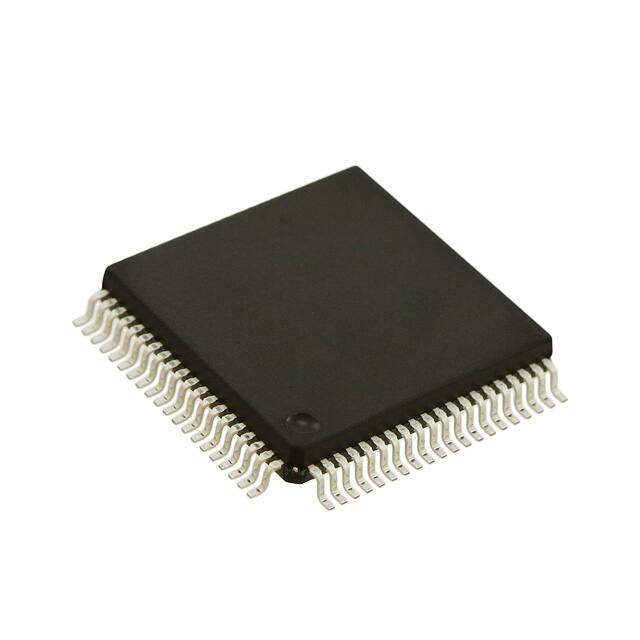
The MC9S12XD Family will be available in 144-pin LQFP (with optional external bus), 112-pin, and 80-pin
options.
Features
Features of the MC9S12XD Family are listed here. Please see Table 1 for memory options and Table 2
for the peripheral features that are available on the different family members.
16-bit CPU12X
Enhanced Interrupt
Module
•
Upward compatible with MC9S12 instruction set
•
Enhanced indexed addressing
•
Additional (superset) instructions to improve 32-bit calculations and
semaphore handling
•
Access large data segments independent of PPAGE
•
Eight levels of nested interrupt
•
Flexible assignment of interrupt sources to each interrupt level.
•
One non-maskable high priority interrupt (XIRQ)
•
Wakeup interrupt inputs
– IRQ and non-maskable XIRQ
MC9S12XD Family, Rev. 2.16
2
Freescale Semiconductor
�Features
XGATE
•
Programmable, high performance I/O co-processor module — up to
80 MIPS RISC performance
•
Transfers data to or from all peripherals and RAM without CPU
intervention or CPU wait states
•
Performs logical, shifts, arithmetic, and bit operations on data
•
Enables FullCAN capability when used in conjunction with MSCAN
module
•
Full LIN master or slave capability when used in conjunction with the
six integrated LIN SCI modules
•
Can interrupt the HCS12X CPU signalling transfer completion
•
Triggers from any hardware module as well as from the CPU possible
•
64K, 128K, 256K, 384K and 512K byte Flash
•
128K and 256K ROM
•
Flash General Features
– Automated program and erase algorithm
– Fast sector erase and word program operation
– 2-stage command pipeline for faster multi-word program times
– Sector erase abort feature for critical interrupt response
– Protection scheme to prevent accidental program or erase
– Automated program and erase algorithm
– Fast sector erase and word program operation
– 2-stage command pipeline for faster multi-word program times
– Sector erase abort feature for critical interrupt response
– Protection scheme to prevent accidental program or erase
•
4K, 8K, 12K, 14K, 16K, 20K, 32K Byte RAM
•
Loop control Pierce oscillator using a 0.5 MHz to 16 MHz crystal
•
Option for full-swing Pierce without internal feedback resistor using a
0.5 MHz to 40 MHz crystal
•
Current gain control on amplitude output
– Signal with low harmonic distortion
– Low power
– Good noise immunity
– Eliminates need for external current limiting resistor
•
Transconductance sized for optimum start-up margin for typical
crystals
•
Clock monitor
Memory Options
Oscillator (OSC_LCP)
MC9S12XD Family, Rev. 2.16
Freescale Semiconductor
3
�Features
Clock and Reset
Generator (CRG)
Non-Multiplexed
External Bus
(144 Pin package only)
Analog-to-Digital
Converter (ATD)
Enhanced Capture
Timer (ECT)
•
Phase-locked-loop clock frequency multiplier
– Reference divider
– Automatic bandwidth control mode for low-jitter operation
– Automatic frequency lock detector
•
Fast wakeup from STOP in self clock mode for power saving and
immediate program execution
•
Computer operating properly (COP) watchdog with optional safety
window to initialize timeout counter
•
Real time interrupt for task scheduling purposes or cyclic wakeup
from low power modes
•
System reset generation
•
16 bit data
•
Support for external WAIT input or internal wait cycles to adapt MCU
speed to peripheral speed requirements
•
Up to four chip select outputs to select 16K, 1M, 2M and 4M byte
address spaces
•
Supports glue-less interface to popular asynchronous RAMs and
Flash devices
•
External address space 4M byte for data and program space
•
Programmable sample time
•
Left/right, signed/unsigned result data
•
Continuous conversion mode
•
Multiple channel scans
•
Pins can also be used as digital I/O
•
Eight 16-bit channels for input capture or output compare
•
One 16-bit free-running counter with 8-bit precision prescaler
•
One 16-bit modulus down counter with 8-bit precision prescaler
•
Four 8-bit or two 16-bit pulse accumulators
•
Four channels have enhanced input capture capabilities:
– Delay counter for noise immunity
– 16-bit capture buffer
– 8-bit pulse accumulator buffer
•
Four channel x 24-bit modulus down-count timers
– Timeout interrupt
– Timeout peripheral trigger
•
Start of timers can be aligned
Periodic Interrupt
Timer (PIT)
MC9S12XD Family, Rev. 2.16
4
Freescale Semiconductor
�Features
Pulse Width
Modulator (PWM)
Multi-scalable
Controller
Area Networks
(MSCAN)
Serial Peripheral
Interface (SPI)
Serial Communication
Interfaces (SCI)
•
Eight channel x 8-bit or four channel x 16-bit pulse width modulator
•
Programmable period and duty cycle per channel
•
Center-aligned or left-aligned outputs
•
Programmable clock select logic with a wide range of frequencies
•
Up to five MSCAN modules (see )
•
CAN 2.0 A, B software compatible
– Standard and extended data frames
– 0–8 bytes data length
– Programmable bit rate up to 1 Mbps
•
Five receive buffers with FIFO storage scheme
•
Three transmit buffers with internal prioritization
•
Flexible identifier acceptance filter programmable as:
– 2 x 32-bit
– 4 x 16-bit
– 8 x 8-bit
•
Wakeup with integrated low-pass filter option
•
Loop back for self test
•
Listen-only mode to monitor CAN bus
•
Bus-off recovery by software intervention or automatically
•
16-bit time stamp of transmitted/received messages
•
FullCAN capability when used in conjunction with XGATE
•
Up to three SPI modules (see )
•
Full-duplex or single-wire bidirectional
•
Double-buffered transmit and receive
•
Master or slave mode
•
MSB-first or LSB-first shifting
•
Serial clock phase and polarity options
•
Up to six SCI modules (see )
•
Full-duplex or single wire operation
•
Standard mark/space non-return-to-zero (NRZ) format
•
Selectable IrDA 1.4 return-to-zero-inverted (RZI) format with
programmable pulse widths
•
13-bit baud rate selection
•
Programmable character length
•
Programmable polarity for transmitter and receiver
•
Receive wakeup on active edge
•
Break detect and transmit collision detect supporting LIN
MC9S12XD Family, Rev. 2.16
Freescale Semiconductor
5
�Features
Inter IC Module (IIC)
•
Up to two IIC modules (see )
•
Compatible with I2C Bus standard
•
Multi-master operation
•
Software programmable for one of 256 different serial clock
frequencies
•
Software selectable acknowledge bit
•
Interrupt driven byte-by-byte data transfer
•
Arbitration lost interrupt with automatic mode switching from master
to slave
•
Calling address identification interrupt
•
Start and stop signal generation/detection
•
Repeated start signal generation
•
Acknowledge bit generation/detection
•
Bus busy detection
•
supports 400 Kbps
•
Background Debug
(BDM)
Debugger (XDBG)
–
–
–
Non-intrusive memory access commands
Supports in-circuit programming of on-chip non-volatile memory
Supports security
–
–
Each can monitor CPU or XGATE busses
A and C compares 23-bit address bus and 16-bit data bus with
mask register
Three modes: simple address/data match, inside address range
or outside address range
–
•
System Protection
Input/Output
Package Options
•
Power-on reset (POR)
•
with interrupt or reset
•
up to 117 general-purpose input/output (I/O) pins depending on the
package option and 2 input-only pins
•
Hysteresis and configurable pullup/pulldown device on all input pins
•
Configurable drive strength on all output pins
•
144-pin low-profile quad flat-pack (LQFP)
•
112-pin low-profile quad flat-pack (LQFP)
•
80-pin quad flat-pack (QFP)
MC9S12XD Family, Rev. 2.16
6
Freescale Semiconductor
�Features
•
Ambient temperature range -40°C to 125°C
•
Temperature options:
– -40°C to 85°C
– -40°C to 105°C
– -40°C to 125°C
•
Supply voltage 3.15V to 5.5V
•
Internal voltage regulator providing 2.5 V logic supply
– 40 MHz maximum CPU bus frequency in single chip mode
– 80 MHz maximum XGATE bus frequency
Operating Conditions
MC9S12XD Family, Rev. 2.16
Freescale Semiconductor
7
�MC9S12XD Family Block Diagram
MC9S12XD Family Block Diagram
MC9S12XD Family, Rev. 2.16
8
Freescale Semiconductor
�MC9S12XD Family Block Diagram
Digital Supply 2.5V
VDD1,2
VSS1,2
CAN0
CAN1
CAN2
CAN3
CAN4
SCI2
PLL Supply 2.5V
VDDPLL
VSSPLL
IIC1
IIC0
Analog Supply 3-5V
DDRC
PTC
VDDA
VSSA
PWM
I/O Supply 3-5V
VDDX1,2
VSSX1,2
Voltage Regulator 3-5V
DDRD
PTD
VDDR1,2
VSSR1,2
SCI4
SCI5
SPI1
RXD
TXD
RXD
TXD
SPI2
SDA
SCL
SDA
SCL
PWM0
PWM1
PWM2
PWM3
PWM4
PWM5
PWM6
PWM7
MISO
MOSI
SCK
SS
MISO
MOSI
SCK
SS
KWJ0
KWJ1
KWJ2
KWJ4
KWJ5
KWJ6
KWJ7
KWP0
KWP1
KWP2
KWP3
KWP4
KWP5
KWP6
KWP7
KWH0
KWH1
KWH2
KWH3
KWH4
KWH5
KWH6
KWH7
DDRAD1 & AD1
PTT
PTS
SPI0
MISO
MOSI
SCK
SS
RXCAN
TXCAN
RXCAN
TXCAN
RXCAN
TXCAN
RXCAN
TXCAN
RXCAN
TXCAN
RXD
TXD
PTM
SCI1
VRH
VRL
VDDA
VSSA
PAD08
PAD09
PAD10
PAD11
PAD12
PAD13
PAD14
PAD15
PAD16
PAD17
PAD18
PAD19
PAD20
PAD21
PAD22
PAD23
PT0
PT1
PT2
PT3
PT4
PT5
PT6
PT7
PS0
PS1
PS2
PS3
PS4
PS5
PS6
PS7
PM0
PM1
PM2
PM3
PM4
PM5
PM6
PM7
PJ0 CS3
PJ1
PJ2 CS1
PJ4 CS0
PJ5 CS2
PJ6
PJ7
PP0
PP1
PP2
PP3
PP4
PP5
PP6
PP7
PH0
PH1
PH2
PH3
PH4
PH5
PH6
PH7
Signals shown in Bold-Italics are neither available on the 112 Pin nor on the 80 Pin Package Option
Signals shown in Bold are not available on the 80 Pin Package
DDRB
PTB
Non-Multiplexed External Bus Interface (EBI)
SCI3
RXD
TXD
SCI0
PTJ
DDRA
PTA
Timer
4 channel
16 bit with Prescaler
for internal timebases
Enhanced Capture
Timer
PTP
XIRQ
IRQ
R/W/WE
LSTRB/LDS/EROMCTL
ECLK
MODA/RE/TAGLO
MODB/TAGHI
ECLKX2/XCLKS
IQSTAT0
IQSTAT1
IQSTAT2
IQSTAT3
8 Bit PPAGE
ACC0
Allows 4MByte
ACC1
Program space
ACC2
ROMCTL/EWAIT
XGATE
Peripheral Co-Processor
PTH
Periodic Interrupt
COP Watchdog
Clock Monitor
Breakpoints
DDRT
Enhanced Multilevel
Interrupt Module
DDRS
Clock and
Reset
Generation
Module
CPU12X
AN8
AN9
AN10
AN11
AN12
AN13
AN14
AN15
AN16
AN17
AN18
AN19
AN20
AN21
AN22
AN23
IOC0
IOC1
IOC2
IOC3
IOC4
IOC5
IOC6
IOC7
RXD
TXD
RXD
TXD
DDRM
DDRK
PTK
ADDR16
ADDR17
ADDR18
ADDR19
ADDR20
ADDR21
ADDR22
EWAIT
ADDR15
ADDR14
ADDR13
ADDR12
ADDR11
ADDR10
ADDR9
ADDR8
ADDR7
ADDR6
ADDR5
ADDR4
ADDR3
ADDR2
ADDR1
UDS ADDR0
DATA15
DATA14
DATA13
DATA12
DATA11
DATA10
DATA9
DATA8
DATA7
DATA6
DATA5
DATA4
DATA3
DATA2
DATA1
DATA0
PE0
PE1
PE2
PE3
PE4
PE5
PE6
PE7
PK0
PK1
PK2
PK3
PK4
PK5
PK6
PK7
PA7
PA6
PA5
PA4
PA3
PA2
PA1
PA0
PB7
PB6
PB5
PB4
PB3
PB2
PB1
PB0
PC7
PC6
PC5
PC4
PC3
PC2
PC1
PC0
PD7
PD6
PD5
PD4
PD3
PD2
PD1
PD0
PLL
DDRE
XFC
VDDPLL
VSSPLL
EXTAL
XTAL
RESET
TEST
Single-wire Background
Debug Module
PTE
BKGD
Voltage Regulator
PAD00
PAD01
PAD02
PAD03
PAD04
PAD05
PAD06
PAD07
DDRJ
VDDR
VSSR
VREGEN
VDD1,2
VSS1,2
AN0
AN1
AN2
AN3
AN4
AN5
AN6
AN7
VRH
VRL
VDDA
VSSA
DDRP
4K/2K/1K Byte EEPROM
Module to Port Routing
32K/20K/16K/14K/12K/8K/4K Byte RAM
ATD1
DDRH
VRH
VRL
VDDA
VSSA
ATD0
DDRAD0 & AD0
512K/384K/256k/128K/64K Byte Flash
MC9S12XD Family, Rev. 2.16
Freescale Semiconductor
9
�MC9S12XD Family Block Diagram
Table 1. Package and Memory Options of MC9S12XD Family Members
Device
Package
Flash
144 LQFP
RAM
EEPROM
ROM
32K
9S12XDP512
112 LQFP
144 LQFP
9S12XDT512
512K
112 LQFP
20K
80 QFP
144 LQFP
9S12XDT384
112 LQFP
384K
20K
80 QFP
144 LQFP
9S12XDQ256
4K
112 LQFP
80 QFP
16K
144 LQFP
9S12XDT256
112 LQFP
256K
80 QFP
144 LQFP
9S12XD256
112 LQFP
14K
80 QFP
144 LQFP
3S12XDT256
112 LQFP
16K
(1)
256K
80 QFP
112 LQFP
9S12XDG128
128K
2K
80 QFP
12K
112 LQFP
(1)
3S12XDG128
128K
80 QFP
112 LQFP
9S12XD128
128K
8K
2K
64K
4K
1K
80 QFP
9S12XD64
80 QFP
NOTES:
1. No EEPROM is available on ROM versions.
MC9S12XD Family, Rev. 2.16
10
Freescale Semiconductor
�MC9S12XD Family Block Diagram
Table 2. Peripheral Options of MC9S12XD Family Members
Device
Package
XGATE
CAN
SCI
SPI
IIC
ECT
PIT
A/D
I/O
144LQFP
5
6
3
2
8
4
2/24
119
112LQFP
5
6
3
1
8
4
2/16
91
144LQFP
3
6
3
1
8
4
2/24
119
112LQFP
3
6
3
1
8
4
2/16
91
80QFP
3
2
3
1
8
4
1/8
59
144LQFP
3
4
3
1
8
4
2/24
119
112LQFP
3
4
3
1
8
4
2/16
91
80QFP
3
2
3
1
8
4
1/8
59
144LQFP
4
4
3
1
8
4
2/24
119
4
4
3
1
8
4
2/16
91
80QFP
4
2
3
1
8
4
1/8
59
144LQFP
3
4
3
1
8
4
2/24
119
112LQFP
3
4
3
1
8
4
2/16
91
80QFP
3
2
3
1
8
4
1/8
59
144LQFP
1
4
3
1
8
4
2/24
119
112LQFP
1
4
3
1
8
4
2/16
91
80QFP
1
2
3
1
8
4
1/8
59
144LQFP
3
4
3
1
8
4
2/24
119
112LQFP
3
4
3
1
8
4
2/16
91
80QFP
3
2
3
1
8
4
1/8
59
112LQFP
2
2
2
1
8
4
1/16(2)
91
80QFP
2
2
2
1
8
4
1/8
59
112LQFP
2
2
2
1
8
4
1/16(2)
91
2
2
2
1
8
4
1/8
59
112LQFP
1
2
2
1
8
4
1/16(2)
91
80QFP
1
2
2
1
8
4
1/8
59
80QFP
1
2
2
1
8
2
1/8
59
9S12XDP512
9S12XDT512
9S12XDT384
9S12XDQ256
112LQFP
yes
9S12XDT256
9S12XD256
3S12XDT256
9S12XDG128
3S12XDG128
80QFP
yes(1)
9S12XD128
9S12XD64
NOTES:
1. Can execute code only from RAM
2. ATD1 routed to PAD00-15 instead of PAD08-23.
MC9S12XD Family, Rev. 2.16
Freescale Semiconductor
11
�MC9S12XD Family Block Diagram
Pinout explanations:
•
A/D is the number of modules/total number of A/D channels.
•
I/O is the sum of ports capable to act as digital input or output.
–
144 Pin Packages:
Port A = 8, B = 8, C=8, D=8, E = 6 + 2 input only,
H = 8, J = 7, K = 8, M = 8, P = 8, S = 8, T = 8, PAD = 24
25 inputs provide Interrupt capability (H =8, P= 8, J = 7, IRQ, XIRQ)
–
112 Pin Packages:
Port A = 8, B = 8, E = 6 + 2 input only, H = 8, J = 4, K = 7, M = 8, P = 8, S = 8, T = 8, PAD = 16
22 inputs provide Interrupt capability (H =8, P= 8, J = 4, IRQ, XIRQ)
–
80 Pin Packages:
Port A = 8, B = 8, E = 6 + 2 input only, J = 2, M = 6, P = 7, S = 4, T = 8, PAD = 8
11 inputs provide Interrupt capability (P= 7, J = 2, IRQ, XIRQ)
•
CAN0 can be routed under software control from PM[1:0] to pins PM[3:2] or PM[5:4] or PJ[7:6].
•
CAN4 pins are shared between IIC0 pins.
•
CAN4 can be routed under software control from PJ[7:6] to pins PM[5:4] or PM[7:6].
•
Versions with 5 CAN modules will have CAN0, CAN1, CAN2, CAN3 and CAN4
•
Versions with 4 CAN modules will have CAN0, CAN1, CAN2 and CAN4
•
Versions with 3 CAN modules will have CAN0, CAN1 and CAN4.
•
Versions with 2 CAN modules will have CAN0 and CAN4.
•
Versions with 1 CAN modules will have CAN0
•
Versions with 2 SPI modules will have SPI0 and SPI1.
•
Versions with 4 SCI modules will have SCI0, SCI1, SCI2 and SCI4.
•
Versions with 2 SCI modules will have SCI0 and SCI1.
•
Versions with 1 IIC module will have IIC0.
•
SPI0 can be routed to either Ports PS[7:4] or PM[5:2].
•
SPI1 pins are shared with PWM[3:0]; In 144 and 112-pin versions, SPI1 can be routed under
software control to PH[3:0].
•
SPI2 pins are shared with PWM[7:4]; In 144 and 112-pin versions, SPI2 can be routed under
software control to PH[7:4]. In 80-pin packages, SS-signal of SPI2 is not bonded out!
MC9S12XD Family, Rev. 2.16
12
Freescale Semiconductor
�Pin Assignments
Pin Assignments
Table 3. Port and Peripheral Availability by Package Option
Port
144 LQFP
112 LQFP
80 QFP
Port AD/ADC Channels
24/24
16/16
8/8
Port A pins
8
8
8
Port B pins
8
8
8
Port C pins
8
0
0
Port D pins
8
0
0
Port E pins incl. IRQ/XIRQ input only
8
8
8
Port H pins
8
8
0
Port J pins
7
4
2
Port K pins
8
7
0
Port M pins
8
8
6
Port P pins
8
8
7
Port S pins
8
8
4
Port T pins
8
8
8
Sum of Ports
119
91
59
VDDX/VSSX
4/4
3/3
2/2
PJ1:0
IIC1
IIC0
SPI2
SPI1
SPI0
SCI5
SCI4
SCI3
SCI2
SCI1
SCI0
CAN4
CAN3
CAN2
CAN1
CAN0
Table 4. Peripheral–Port Cross Reference(1)
X
PJ3:2
PJ5:4
X
PJ7:6
O
PM1:0
X
PM3:2
O
PM5:4
O
PM7:6
PS1:0
PS3:2
X
X
X
O
X
O
X
O
X
X
X
PS7:4
X
PH3:0
O
MC9S12XD Family, Rev. 2.16
Freescale Semiconductor
13
�Pin Assignments
PH5:4
X
PH7:6
IIC1
IIC0
SPI2
SPI1
SPI0
SCI5
SCI4
SCI3
SCI2
SCI1
SCI0
CAN4
CAN3
CAN2
CAN1
CAN0
Table 4. Peripheral–Port Cross Reference(1)
O
X
PP3:0
O
X
PP7:4
X
NOTES:
1. X denotes the reset condition and O denotes a possible rerouting under software control
Table 5. Pin-Out Summary(1)
LQFP
144
LQFP
112
QFP
80
1
1
1
PP3
KWP3
PWM3
SS1
2
2
2
PP2
KWP2
PWM2
SCK1
3
3
3
PP1
KWP1
PWM1
MOSI1
4
4
4
PP0
KWP0
PWM0
MISO1
5
PJ2
KWJ2
CS1
6
PK6
ADDR22
NOACC
Pin
2nd
Function
3rd
Function
7
5
PK3
ADDR19
8
6
PK2
ADDR18
IQSTAT2
9
7
PK1
ADDR17
IQSTAT1
10
8
PK0
ADDR16
IQSTAT0
11
9
5
PT0
IOC0
12
10
6
PT1
IOC1
13
11
7
PT2
IOC2
14
12
8
PT3
IOC3
15
13
9
VDD1
16
14
10
VSS1
17
15
11
PT4
IOC4
18
16
12
PT5
IOC5
19
17
13
PT6
IOC6
20
18
14
PT7
IOC7
21
19
PK5
ADDR21
22
20
PK4
ADDR20
23
21
PJ1
KWJ1
TXD2
24
22
PJ0
KWJ0
RXD2
4th
Function
5th
Function
MC9S12XD Family, Rev. 2.16
14
Freescale Semiconductor
�Pin Assignments
Table 5. Pin-Out Summary(1)
LQFP
144
LQFP
112
QFP
80
25
23
15
Pin
BKGD
2nd
Function
3rd
Function
4th
Function
MODC
26
VDDX2
27
VSSX2
28
PC0
DATA8
29
PC1
DATA9
30
PC2
DATA10
31
PC3
DATA11
32
24
16
PB0
ADDR0
33
25
17
PB1
ADDR1
34
26
18
PB2
ADDR2
35
27
19
PB3
ADDR3
36
28
20
PB4
ADDR4
37
29
21
PB5
ADDR5
38
30
22
PB6
ADDR6
39
31
23
PB7
ADDR7
40
PC4
DATA12
41
PC5
DATA13
42
PC6
DATA14
43
PC7
DATA15
UDS
44
32
PH7
KWH7
SS2
TXD5
45
33
PH6
KWH6
SCK2
RXD5
46
34
PH5
KWH5
MOSI2
TXD4
47
35
PH4
KWH4
MISO2
RXD4
48
36
24
PE7
XCLKS
ECLKX2
49
37
25
PE6
MODB
TAGHI
50
38
26
PE5
MODA
TAGLO
RE
51
39
27
PE4
ECLK
52
40
28
VSSR
53
41
29
VDDR
54
42
30
RESET
55
43
31
VDDPLL
56
44
32
XFC
57
45
33
VSSPLL
58
46
34
EXTAL
59
47
35
XTAL
60
48
36
TEST
61
49
SS1
TXD7
PH3
5th
Function
KWH3
MC9S12XD Family, Rev. 2.16
Freescale Semiconductor
15
�Pin Assignments
Table 5. Pin-Out Summary(1)
LQFP
144
LQFP
112
QFP
80
62
50
PH2
KWH2
SCK1
RXD7
63
51
PH1
KWH1
MOSI1
TXD6
64
52
PH0
KWH0
MISO1
RXD6
65
PD0
DATA0
66
PD1
DATA1
67
PD2
DATA2
68
PD3
DATA3
EROMCTL
Pin
2nd
Function
3rd
Function
69
53
37
PE3
LSTRB
LDS
70
54
38
PE2
RW
WE
71
55
39
PE1
IRQ
72
56
40
PE0
XIRQ
73
57
41
PA0
ADDR8
74
58
42
PA1
ADDR9
75
59
43
PA2
ADDR10
76
60
44
PA3
ADDR11
77
61
45
PA4
ADDR12
78
62
46
PA5
ADDR13
79
63
47
PA6
ADDR14
80
64
48
PA7
ADDR15
81
VDDX3
82
VDDX3
83
PD4
DATA4
84
PD5
DATA5
85
PD6
DATA6
86
PD7
DATA7
87
65
49
VDD2
88
66
50
VSS2
89
67
51
PAD00
AN0
90
68
PAD08
AN8
91
69
PAD01
AN1
92
70
PAD09
AN9
93
71
PAD02
AN2
94
72
PAD10
AN8
95
73
PAD03
AN3
96
74
PAD11
AN11
97
75
PAD04
AN4
98
76
PAD12
AN12
52
53
54
55
4th
Function
5th
Function
MC9S12XD Family, Rev. 2.16
16
Freescale Semiconductor
�Pin Assignments
Table 5. Pin-Out Summary(1)
LQFP
144
LQFP
112
QFP
80
99
77
56
100
78
101
79
102
80
103
81
104
82
Pin
2nd
Function
PAD05
AN5
PAD13
AN13
PAD06
AN6
PAD14
AN14
PAD07
AN7
PAD15
AN15
105
PAD16
AN16
106
PAD17
AN17
57
58
107
83
59
VDDA
108
84
60
VRH
109
85
61
VRL
110
86
62
VSSA
111
PAD18
AN18
112
PAD19
AN19
113
PAD20
AN20
114
PAD21
AN21
115
PAD22
AN22
116
PAD23
AN23
3rd
Function
4th
Function
117
87
PM7
TXCAN3
TXCAN4
TXD3
118
88
PM6
RXCAN3
RXCAN4
RXD3
119
89
63
PS0
RXD0
120
90
64
PS1
TXD0
121
91
65
PS2
RXD1
122
92
66
PS3
TXD1
123
93
PS4
MISO0
124
94
PS5
MOSI0
125
95
PS6
SCK0
126
96
PS7
SS0
127
97
67
VREGEN
128
98
68
PJ7
KWJ7
TXCAN4
SCL0
129
99
69
PJ6
KWJ6
RXCAN4
SDA0
130
PJ5
KWJ5
SCL1
CS2
131
PJ4
KWJ4
SDA1
CS0
5th
Function
132
100
70
PM5
TXCAN2
TXCAN0
TXCAN4
SCK0
133
101
71
PM4
RXCAN2
RXCAN0
RXCAN4
MOSI0
134
102
72
PM3
TXCAN1
TXCAN0
SS0
135
103
73
PM2
RXCAN1
RXCAN0
MISO0
MC9S12XD Family, Rev. 2.16
Freescale Semiconductor
17
�Pin Assignments
Table 5. Pin-Out Summary(1)
LQFP
144
LQFP
112
QFP
80
136
104
74
PM1
TXCAN0
137
105
75
PM0
RXCAN0
138
106
76
VSSX1
139
107
77
VDDX1
140
108
141
109
142
110
143
111
144
112
Pin
2nd
Function
3rd
Function
4th
Function
PK7
ROMCTL
EWAIT
PP7
KWP7
PWM7
SCK2
PP6
KWP6
PWM6
SS2
79
PP5
KWP5
PWM5
MOSI2
80
PP4
KWP4
PWM4
MISO2
78
5th
Function
NOTES:
1. Table shows a superset of pin functions. Not all functions are available on all derivatives
MC9S12XD Family, Rev. 2.16
18
Freescale Semiconductor
�144
143
142
141
140
139
138
137
136
135
134
133
132
131
130
129
128
127
126
125
124
123
122
121
120
119
118
117
116
115
114
113
112
111
110
109
PP4/KWP4/PWM4/MISO2
PP5/KPW5/PWM5/MOSI2
PP6/KWP6/PWM6/SS2
PP7/KWP7/PWM7/SCK2
PK7/ROMCTL/EWAIT
VDDX1
VSSX1
PM0/RXCAN0
PM1/TXCAN0
PM2/RXCAN1/RXCAN0/MISO0
PM3/TXCAN1/TXCAN0/SS0
PM4/RXCAN2/RXCAN0/RXCAN4/MOSI0
PM5/TXCAN2/TXCAN0/TXCAN4/SCK0
PJ4/KWJ4/SDA1/CS0
PJ5/KWJ5/SCL1/CS2
PJ6/KWJ6/RXCAN4/SDA0
PJ7/KWJ7/TXCAN4/SCL0
VREGEN
PS7/SS0
PS6/SCK0
PS5/MOSI0
PS4/MISO0
PS3/TXD1
PS2/RXD1
PS1/TXD0
PS0/RXD0
PM6/RXCAN3/RXCAN4/RXD3
PM7/TXCAN3/TXCAN4/TXD3
PAD23/AN23
PAD22/AN22
PAD21/AN21
PAD20/AN20
PAD19/AN19
PAD18/AN18
VSSA
VRL
Pin Assignments
1
2
3
4
5
6
7
8
9
10
11
12
13
14
15
16
17
18
19
20
21
22
23
24
25
26
27
28
29
30
31
32
33
34
35
36
MC9S12XD Family
144 LQFP
Pins shown in BOLD-ITALICS are bit available on the 112 LQFP
nor on the 80 QFP Package Option
Pins shown in BOLD are not available on the 80 QFP package
108
107
106
105
104
103
102
101
100
99
98
97
96
95
94
93
92
91
90
89
88
87
86
85
84
83
82
81
80
79
78
77
76
75
74
73
VRH
VDDA
PAD17/AN17
PAD16/AN16
PAD15/AN15
PAD07/AN07
PAD14/AN14
PAD06/AN06
PAD13/AN13
PAD05/AN05
PAD12/AN12
PAD04/AN04
PAD11/AN11
PAD03/AN03
PAD10/AN10
PAD02/AN02
PAD09/AN09
PAD01/AN01
PAD08/AN08
PAD00/AN00
VSS2
VDD2
PD7/DATA7
PD6/DATA6
PD5/DATA5
PD4/DATA4
VDDX3
VSSX3
PA7/ADDR15
PA6/ADDR14
PA5/ADDR13
PA4/ADDR12
PA3/ADDR11
PA2/ADDR10
PA1/ADDR9
PA0/ADDR8
ADDR5/PB5
ADDR6/PB6
ADDR7/PB7
DATA12/PC4
DATA13/PC5
DATA14/PC6
DATA15/PC7
TXD5/SS2/KWH7/PH7
RXD5/SCK2/KWH6/PH6
TXD4/MOSI2/KWH5/PH5
RXD4/MISO2/KWH4/PH4
XCLKS/ECLK2X/PE7
TAGHI/MODB/PE6
RE/TAGLO/MODA/PE5
ECLK/PE4
VSSR
VDDR
RESET
VDDPLL
XFC
VSSPLL
EXTAL
XTAL
TEST
SS1/KWH3/PH3
SCK1/KWH2/PH2
MOSI1/KWH1/PH1
MISO1/KWH0/PH0
PD0/DATA0
PD1/DATA1
PD2/DATA2
PD3/DATA3
EROMCTL/LDS/LSTRB/PE3
WE/RW/PE2
IRQ/PE1
XIRQ/PE0
37
38
39
40
41
42
43
44
45
46
47
48
49
50
51
52
53
54
55
56
57
58
59
60
61
62
63
64
65
66
67
68
69
70
71
72
SS1/PWM3/KWP3/PP3
SCK1/PWM2/KWP2/PP2
MOSI1/PWM1/KWP1/PP1
MISO1/PWM0/KWP0/PP0
CS1/KWJ2/PJ2
NOACC/ADDR22/PK6
ADDR19/PK3
IQSTAT2/ADDR18/PK2
IQSTAT1/ADDR17/PK1
IQSTAT0/ADDR16/PK0
IOC0/PT0
IOC1/PT1
IOC2/PT2
IOC3/PT3
VDD1
VSS1
IOC4/PT4
IOC5/PT5
IOC6/PT6
IOC7/PT7
ADDR21/PK5
ADDR20/PK4
TXD2/KWJ1/PJ1
RXD2/KWJ0/PJ0
MODC/BKGD
VDDX2
VSSX2
DATA8/PC0
DATA9/PC1
DATA10/PC2
DATA11/PC3
UDS/ADDR0/PB0
ADDR1/PB1
ADDR2/PB2
ADDR3/PB3
ADDR4/PB4
Figure 1. MC9S12XD Family Pin Assignments for 144-pin LQFP Package
MC9S12XD Family, Rev. 2.16
Freescale Semiconductor
19
�MC9S12XD Family
112LQFP
Pins shown in BOLD are not available on the 80 QFP package
84
83
82
81
80
79
78
77
76
75
74
73
72
71
70
69
68
67
66
65
64
63
62
61
60
59
58
57
29
30
31
32
33
34
35
36
37
38
39
40
41
42
43
44
45
46
47
48
49
50
51
52
53
54
55
56
1
2
3
4
5
6
7
8
9
10
11
12
13
14
15
16
17
18
19
20
21
22
23
24
25
26
27
28
VRH
VDDA
PAD15/AN15
PAD07/AN07
PAD14/AN14
PAD06/AN06
PAD13/AN13
PAD05/AN05
PAD12/AN12
PAD04/AN04
PAD11/AN11
PAD03/AN03
PAD10/AN10
PAD02/AN02
PAD09/AN09
PAD01/AN01
PAD08/AN08
PAD00/AN00
VSS2
VDD2
PA7
PA6
PA5
PA4
PA3
PA2
PA1
PA0
PB5
PB6
PB7
SS2/KWH7/PH7
SCK2/KWH6/PH6
TXD4/MOSI2/KWH5/PH5
RXD4/MISO2/KWH4/PH4
ECLK2X/XCLKS/PE7
MODB/PE6
MODA/PE5
ECLK/PE4
VSSR
VDDR
RESET
VDDPLL
XFC
VSSPLL
EXTAL
XTAL
TEST
SS1/KWH3/PH3
SCK1/KWH2/PH2
MOSI1/KWH1/PH1
MISO1/KWH0/PH0
PE3
PE2
IRQ/PE1
XIRQ/PE0
SS1/PWM3/KWP3/PP3
SCK1/PWM2/KWP2/PP2
MOSI1/PWM1/KWP1/PP1
MISO1/PWM0/KWP0/PP0
PK3
PK2
PK1
PK0
IOC0/PT0
IOC1/PT1
IOC2/PT2
IOC3/PT3
VDD1
VSS1
IOC4/PT4
IOC5/PT5
IOC6/PT6
IOC7/PT7
PK5
PK4
TXD2/KWJ1/PJ1
RXD2/KWJ0/PJ0
MODC/BKGD
PB0
PB1
PB2
PB3
PB4
112
111
110
109
108
107
106
105
104
103
102
101
100
99
98
97
96
95
94
93
92
91
90
89
88
87
86
85
PP4/KWP4/PWM4/MISO2
PP5/KPW5/PWM5/MOSI2
PP6/KWP6/PWM6/SS2
PP7/KWP7/PWM7/SCK2
PK7
VDDX
VSSX
PM0/RXCAN0
PM1/TXCAN0
PM2/RXCAN1/RXCAN0/MISO0
PM3/TXCAN1/TXCAN0/SS0
PM4/RXCAN2/RXCAN0/RXCAN4/MOSI0
PM5/TXCAN2/TXCAN0/TXCAN4/SCK0
PJ6/KWJ6/RXCAN4/SDA0
PJ7/KWJ7/TXCAN4/SCL0
VREGEN
PS7/SS0
PS6/SCK0
PS5/MOSI0
PS4/MISO0
PS3/TXD1
PS2/RXD1
PS1/TXD0
PS0/RXD0
PM6/RXCAN3/RXCAN4
PM7/TXCAN3/TXCAN4
VSSA
VRL
Pin Assignments
Figure 2. MC9S12XD Family Pin Assignments for 112-pin LQFP Package
MC9S12XD Family, Rev. 2.16
20
Freescale Semiconductor
�1
2
3
4
5
6
7
8
9
10
11
12
13
14
15
16
17
18
19
20
MC9S12XD Family
80-Pin QFP
60
59
58
57
56
55
54
53
52
51
50
49
48
47
46
45
44
43
42
41
VRH
VDDA
PAD07/AN07
PAD06/AN06
PAD05/AN05
PAD04/AN04
PAD03/AN03
PAD02/AN02
PAD01/AN01
PAD00/AN00
VSS2
VDD2
PA7
PA6
PA5
PA4
PA3
PA2
PA1
PA0
PB5
PB6
PB7
XCLKS/PE7
MODB/PE6
MODA/PE5
ECLK/PE4
VSSR1
VDDR1
RESET
VDDPLL
XFC
VSSPLL
EXTAL
XTAL
TEST
PE3
PE2
IRQ/PE1
XIRQ/PE0
21
22
23
24
25
26
27
28
29
30
31
32
33
34
35
36
37
38
39
40
SS1/PWM3/KWP3/PP3
SCK1/PWM2/KWP2/PP2
MOSI1/PWM1/KWP1/PP1
MISO1/PWM0/KWP0/PP0
IOC0/PT0
IOC1/PT1
IOC2/PT2
IOC3/PT3
VDD1
VSS1
IOC4/PT4
IOC5/PT5
IOC6/PT6
IOC7/PT7
MODC/BKGD
PB0
PB1
PB2
PB3
PB4
80
79
78
77
76
75
74
73
72
71
70
69
68
67
66
65
64
63
62
61
PP4/KWP4/PWM4/MISO2
PP5/KWP5/PWM5/MOSI2
PP7/KWP7/PWM7/SCK2
VDDX
VSSX
PM0/RXCAN0/RXB
PM1/TXCAN0/TXB
PM2/RXCAN1/RXCAN0/MISO0
PM3/TXCAN1/TXCAN0/SS0
PM4/RXCAN2/RXCAN0/RXCAN4/MOSI0
PM5/TXCAN2/TXCAN0/TXCAN4/SCK0
PJ6/KWJ6/RXCAN4/SDA0/RXCAN0
PJ7/KWJ7/TXCAN4/SCL0/TXCAN0
VREGEN
PS3/TXD1
PS2/RXD1
PS1/TXD0
PS0/RXD0
VSSA
VRL
Pin Assignments
Figure 3. MC9S12XD Family Pin Assignments for 80-pin QFP Package
MC9S12XD Family, Rev. 2.16
Freescale Semiconductor
21
�Memory Maps
Memory Maps
$0000
2K Register Space
$0800
$0C00
4K Bytes EEPROM
4 * 1K pages accessible through $0800 - $0BFF
$1000
$2000
32K Bytes RAM
8 * 4K pages accessible through $1000 - $1FFF
$4000
16K Fixed Flash EEPROM
External
$8000
16K Page Window
32 * 16K Flash EEPROM Pages
$C000
16K Fixed Flash EEPROM
$FF00
VECTORS
VECTORS
BDM
NORMAL
SINGLE CHIP
EXPANDED
SPECIAL
SINGLE CHIP
2K, 4K, 8K or 16K Protected Boot Sector
$FFFF
Figure 4. MC9S12XD-Family Memory Map1
1. The memory Map shows the memory sizes of DP512 part. For memory configuration of other parts see Table 1.
MC9S12XD Family, Rev. 2.16
22
Freescale Semiconductor
�Memory Maps
Global Address
$78_0000
DP512/
DT512
DT384
DQ256/
D256
128K
128K
128K
DG128/
D128
D64
(PPAGE $E0)
$7A_0000
(PPAGE $E8)
128K
$7C_0000
(PPAGE $F0)
$7E_0000
128K
128K
128K
128K
(PPAGE $F8)
128K
128K
64K
Shared XGATE/CPU area
Not implemented
Figure 5. MC9S12XD-Family Flash Configuration1, 2, 3, 4, 5
1. XGATE read access to Flash not possible on DG128/D128 and D64
2. Program Pages available on DT384 are $E0 - $E7 and $F0 - $FF
3. Program Pages available on DQ256/D256 are $E0 - $E7 and $F8 - $FF
4. Shared XGATE/CPU area on DP512/DT512/DT384 at global address $78_0800 to $78_FFFF (30Kbyte)
5. Shared XGATE/CPU area on DQ256/D256 at global address $78_0800 to $79_3FFF (46Kbyte)
MC9S12XD Family, Rev. 2.16
Freescale Semiconductor
23
�Mechanical Package Dimensions
Mechanical Package Dimensions
0.20 T L-M N
4X
PIN 1
IDENT
0.20 T L-M N
4X 36 TIPS
144
109
1
108
4X
J1
P
J1
L
M
CL
B
V
X
G
140X
B1
VIEW Y
36
VIEW Y
V1
NOTES:
1. DIMENSIONS AND TOLERANCING PER ASME
Y14.5M, 1994.
2. DIMENSIONS IN MILLIMETERS.
3. DATUMS L, M, N TO BE DETERMINED AT THE
SEATING PLANE, DATUM T.
4. DIMENSIONS S AND V TO BE DETERMINED
AT SEATING PLANE, DATUM T.
5. DIMENSIONS A AND B DO NOT INCLUDE
MOLD PROTRUSION. ALLOWABLE
PROTRUSION IS 0.25 PER SIDE. DIMENSIONS
A AND B DO INCLUDE MOLD MISMATCH
AND ARE DETERMINED AT DATUM PLANE H.
6. DIMENSION D DOES NOT INCLUDE DAMBAR
PROTRUSION. ALLOWABLE DAMBAR
PROTRUSION SHALL NOT CAUSE THE D
DIMENSION TO EXCEED 0.35.
73
37
72
N
A1
S1
A
S
VIEW AB
C
0.1 T
θ2
144X
SEATING
PLANE
θ2
T
PLATING
J
AA
F
C2
0.05
R2
θ
R1
0.08
M
0.25
BASE
METAL
D
GAGE PLANE
T L-M N
SECTION J1-J1
(ROTATED 90 ° )
144 PL
(K)
C1
E
(Y)
VIEW AB
MILLIMETERS
DIM MIN MAX
A
20.00 BSC
A1
10.00 BSC
B
20.00 BSC
B1
10.00 BSC
C
1.40
1.60
C1
0.05
0.15
C2
1.35
1.45
D
0.17
0.27
E
0.45
0.75
F
0.17
0.23
G
0.50 BSC
J
0.09
0.20
K
0.50 REF
P
0.25 BSC
R1
0.13
0.20
R2
0.13
0.20
S
22.00 BSC
S1
11.00 BSC
V
22.00 BSC
V1
11.00 BSC
Y
0.25 REF
Z
1.00 REF
AA
0.09
0.16
θ
0°
θ1
0°
7°
θ2
11°
13 °
θ1
(Z)
Figure 6. 144-pin LQFP Mechanical Dimensions (case no. 918-03)
MC9S12XD Family, Rev. 2.16
24
Freescale Semiconductor
�Mechanical Package Dimensions
0.20 T L-M N
4X
PIN 1
DENT
0.20 T L-M N
4X 28 TIPS
112
J1
85
4X
P
J1
1
CL
84
VIEW Y
108X
G
X
X=L, M OR N
VIEW Y
B
L
V
M
B1
28
AA
J
V1
57
29
F
D
56
0.13
N
M
BASE
METAL
T L-M N
SECTION J1-J1
ROTATED 90 ° COUNTERCLOCKWISE
A1
S1
A
S
C2
C
VIEW AB
θ2
0.050
0.10 T
112X
SEATING
PLANE
NOTES:
1. DIMENSIONING AND TOLERANCING PER
ASME Y14.5M, 1994.
2. DIMENSIONS IN MILLIMETERS.
3. DATUMS L, M AND N TO BE DETERMINED AT
SEATING PLANE, DATUM T.
4. DIMENSIONS S AND V TO BE DETERMINED AT
SEATING PLANE, DATUM T.
5. DIMENSIONS A AND B DO NOT INCLUDE
MOLD PROTRUSION. ALLOWABLE
PROTRUSION IS 0.25 PER SIDE. DIMENSIONS
A AND B INCLUDE MOLD MISMATCH.
6. DIMENSION D DOES NOT INCLUDE DAMBAR
PROTRUSION. ALLOWABLE DAMBAR
PROTRUSION SHALL NOT CAUSE THE D
DIMENSION TO EXCEED 0.46.
θ3
T
θ
R
R2
R
0.25
R1
GAGE PLANE
(K)
C1
E
θ1
(Y)
(Z)
VIEW AB
DIM
A
A1
B
B1
C
C1
C2
D
E
F
G
J
K
P
R1
R2
S
S1
V
V1
Y
Z
AA
θ
θ1
θ2
θ3
MILLIMETERS
MIN
MAX
20.000 BSC
10.000 BSC
20.000 BSC
10.000 BSC
--1.600
0.050
0.150
1.350
1.450
0.270
0.370
0.450
0.750
0.270
0.330
0.650 BSC
0.090
0.170
0.500 REF
0.325 BSC
0.100
0.200
0.100
0.200
22.000 BSC
11.000 BSC
22.000 BSC
11.000 BSC
0.250 REF
1.000 REF
0.090
0.160
8 °
0°
7 °
3 °
13 °
11 °
11 °
13 °
Figure 7. 112-pin LQFP Mechanical Dimensions (case no. 987)
MC9S12XD Family, Rev. 2.16
Freescale Semiconductor
25
�Mechanical Package Dimensions
41
60
61
B
D
D
S
V
B
P
B
0.20 M C A-B
L
0.05 D
-B-
0.20 M H A-B
-A-
S
S
S
40
-A-,-B-,-DDETAIL A
DETAIL A
21
80
1
A
0.20 M H A-B
S
F
20
-DD
S
0.05 A-B
J
S
0.20 M C A-B
S
D
S
D
M
E
DETAIL C
C
-H-
-CSEATING
PLANE
N
DATUM
PLANE
0.20 M C A-B
S
D
S
SECTION B-B
VIEW ROTATED 90 °
0.10
H
M
G
U
T
DATUM -HPLANE
R
K
W
X
DETAIL C
Q
NOTES:
1. DIMENSIONING AND TOLERANCING PER
ANSI Y14.5M, 1982.
2. CONTROLLING DIMENSION: MILLIMETER.
3. DATUM PLANE -H- IS LOCATED AT BOTTOM OF
LEAD AND IS COINCIDENT WITH THE
LEAD WHERE THE LEAD EXITS THE PLASTIC
BODY AT THE BOTTOM OF THE PARTING LINE.
4. DATUMS -A-, -B- AND -D- TO BE
DETERMINED AT DATUM PLANE -H-.
5. DIMENSIONS S AND V TO BE DETERMINED
AT SEATING PLANE -C-.
6. DIMENSIONS A AND B DO NOT INCLUDE
MOLD PROTRUSION. ALLOWABLE
PROTRUSION IS 0.25 PER SIDE. DIMENSIONS
A AND B DO INCLUDE MOLD MISMATCH
AND ARE DETERMINED AT DATUM PLANE -H-.
7. DIMENSION D DOES NOT INCLUDE DAMBAR
PROTRUSION. ALLOWABLE DAMBAR
PROTRUSION SHALL BE 0.08 TOTAL IN
EXCESS OF THE D DIMENSION AT MAXIMUM
MATERIAL CONDITION. DAMBAR CANNOT
BE LOCATED ON THE LOWER RADIUS OR
THE FOOT.
DIM
A
B
C
D
E
F
G
H
J
K
L
M
N
P
Q
R
S
T
U
V
W
X
MILLIMETERS
MIN
MAX
13.90 14.10
13.90 14.10
2.15
2.45
0.22
0.38
2.00
2.40
0.22
0.33
0.65 BSC
--0.25
0.13
0.23
0.65
0.95
12.35 REF
5°
10 °
0.13
0.17
0.325 BSC
0°
7°
0.13
0.30
16.95 17.45
0.13
--0°
--16.95 17.45
0.35
0.45
1.6 REF
MC9S12XD Family, Rev. 2.16
26
Freescale Semiconductor
��How to Reach Us:
Home Page:
www.freescale.com
E-mail:
support@freescale.com
USA/Europe or Locations Not Listed:
Freescale Semiconductor
Technical Information Center, CH370
1300 N. Alma School Road
Chandler, Arizona 85224
+1-800-521-6274 or +1-480-768-2130
support@freescale.com
Europe, Middle East, and Africa:
Freescale Halbleiter Deutschland GmbH
Technical Information Center
Schatzbogen 7
81829 Muenchen, Germany
+44 1296 380 456 (English)
+46 8 52200080 (English)
+49 89 92103 559 (German)
+33 1 69 35 48 48 (French)
support@freescale.com
Japan:
Freescale Semiconductor Japan Ltd.
Headquarters
ARCO Tower 15F
1-8-1, Shimo-Meguro, Meguro-ku,
Tokyo 153-0064
Japan
0120 191014 or +81 3 5437 9125
support.japan@freescale.com
Asia/Pacific:
Freescale Semiconductor Hong Kong Ltd.
Technical Information Center
2 Dai King Street
Tai Po Industrial Estate
Tai Po, N.T., Hong Kong
+800 2666 8080
support.asia@freescale.com
For Literature Requests Only:
Freescale Semiconductor Literature Distribution Center
P.O. Box 5405
Denver, Colorado 80217
1-800-441-2447 or 303-675-2140
Fax: 303-675-2150
LDCForFreescaleSemiconductor@hibbertgroup.com
9S12XDFAMPP
Rev. 2.16, 27-May-2006
Information in this document is provided solely to enable system and software
implementers to use Freescale Semiconductor products. There are no express or
implied copyright licenses granted hereunder to design or fabricate any integrated
circuits or integrated circuits based on the information in this document.
Freescale Semiconductor reserves the right to make changes without further notice to
any products herein. Freescale Semiconductor makes no warranty, representation or
guarantee regarding the suitability of its products for any particular purpose, nor does
Freescale Semiconductor assume any liability arising out of the application or use of any
product or circuit, and specifically disclaims any and all liability, including without
limitation consequential or incidental damages. “Typical” parameters that may be
provided in Freescale Semiconductor data sheets and/or specifications can and do vary
in different applications and actual performance may vary over time. All operating
parameters, including “Typicals”, must be validated for each customer application by
customer’s technical experts. Freescale Semiconductor does not convey any license
under its patent rights nor the rights of others. Freescale Semiconductor products are
not designed, intended, or authorized for use as components in systems intended for
surgical implant into the body, or other applications intended to support or sustain life,
or for any other application in which the failure of the Freescale Semiconductor product
could create a situation where personal injury or death may occur. Should Buyer
purchase or use Freescale Semiconductor products for any such unintended or
unauthorized application, Buyer shall indemnify and hold Freescale Semiconductor and
its officers, employees, subsidiaries, affiliates, and distributors harmless against all
claims, costs, damages, and expenses, and reasonable attorney fees arising out of,
directly or indirectly, any claim of personal injury or death associated with such
unintended or unauthorized use, even if such claim alleges that Freescale
Semiconductor was negligent regarding the design or manufacture of the part.
Freescale™ and the Freescale logo are trademarks of Freescale Semiconductor, Inc.
All other product or service names are the property of their respective owners.
© Freescale Semiconductor, Inc. 2005. All rights reserved.
�









 工商网监
湘ICP备2023018690号
工商网监
湘ICP备2023018690号