NXP Semiconductors
Data Sheet: Technical Data
Document Number: MM9Z1_638D1
Rev. 5.0, 11/2016
Intelligent battery sensor with
CAN and LIN
MM9Z1_638
The MM9Z1_638 is a fully integrated intelligent battery monitoring
system. The device supports precise current measurement via an
external shunt resistor. It features four voltage measurements via internal
calibrated resistor dividers or external dividers. It includes an internal
temperature sensor, allowing close proximity battery temperature
measurements, plus four external temperature sensor inputs.
BATTERY MONITORING SYSTEM
The MM9Z1_638 features the LIN 2.2 protocol and physical interface, as
well as an msCAN protocol controller, for interfacing to automotive buses.
The MM9Z1_638 is able to supply and control external CAN interfaces.
EP SUFFIX (WF-TYPE)
98ASA00343D
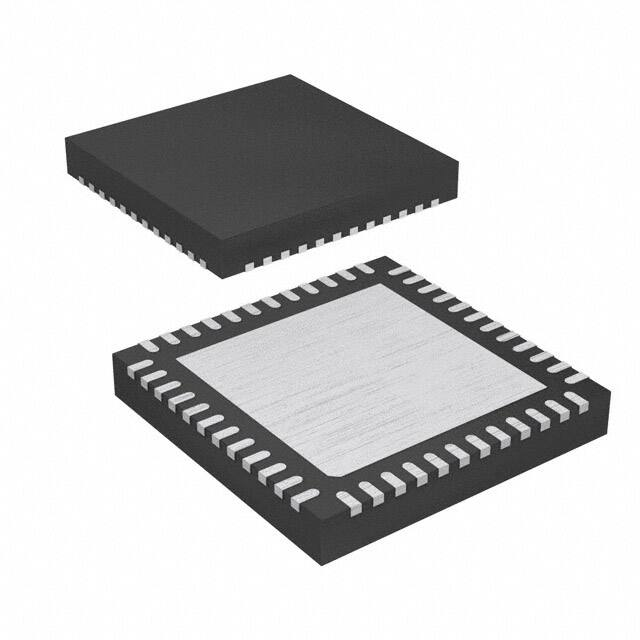
48-PIN QFN
This device is powered by SMARTMOS technology.
Features
• Wide range battery current measurement; On-chip temperature
measurement
• Four battery voltage measurements with internal resistor dividers, and
up to five direct voltage measurements for use with an external resistor
divider
• Measurement synchronization between voltage channels and current
channels
• Five external temperature sensor inputs with internal supply for
external sensors
• Low-power modes with low-current operation
• Multiple wake-up sources: LIN, timer, high-voltage input, external CAN
interface, and current threshold and integration
• Precision internal oscillator and connections for external crystal
• LIN 2.2/ 2.1/ 2.0 protocol and physical interface
• msCAN protocol controller, and supply capability for 8 and 14 pin CAN
interfaces
• MM9Z1_638: S12Z microcontroller with 96/128 kByte Flash, 8.0 kByte
RAM, 4.0 kByte EEPROM
Applications
• 12 V lead-acid battery monitoring
• Multi-cell battery (Li-ion) monitoring
• HV battery pack sensor
• Truck battery monitoring
MM9Z1_638
MM9Z1_638
Battery
Pack
VSUP
VSENSE2
12V
T°
VDDA
PTB0
PTB5
PA0
RxD
Shunt
ISENSEH
ISENSEL PTB4
GNDs
VSENSE3
VSENSE2
VDDX
TxD
VSUP
EN
TX
VDD
CAN
interface
RX
CANL CANH
T°
T°
Vehicle
CAN bus
12 V Application, CAN Communication
Shunt
VDDA
PTB2
PTB5
PTB1
Vehicle
LIN bus
LIN
VDDX
VSENSE1
PA0
VSENSE0
TxD
ISENSEH
ISENSEL
GNDs
RxD
PTB4
EN
TX
VDD
CAN
Interface
RX
CANL CANH
Vehicle
CAN bus
Multiple Cell Monitoring, CAN & LIN Communication,
Figure 1. 12 V simplified application diagrams
© 2016 NXP B.V.
�MM9Z1_638
HV Switch
PTB2
PTB1
HV Pack
PTB0
HV Switch
ISENSEH
ISENSEL
GNDs
Figure 2. Simplified application diagram for HV pack monitoring - Use of an external divider principle schematic
MM9Z1_638
2
NXP Semiconductors
�Table of contents
1
2
3
4
5
6
Ordering information . . . . . . . . . . . . . . . . . . . . . . . . . . . . . . . . . . . . . . . . . . . . . . . . . . . . . . . . . . . . . . . . . . . . . . . . . . . . . . . . . . . . 6
Internal block diagram . . . . . . . . . . . . . . . . . . . . . . . . . . . . . . . . . . . . . . . . . . . . . . . . . . . . . . . . . . . . . . . . . . . . . . . . . . . . . . . . . . . 7
Pin assignment . . . . . . . . . . . . . . . . . . . . . . . . . . . . . . . . . . . . . . . . . . . . . . . . . . . . . . . . . . . . . . . . . . . . . . . . . . . . . . . . . . . . . . . . 8
3.1 MM9Z1_638 pin description . . . . . . . . . . . . . . . . . . . . . . . . . . . . . . . . . . . . . . . . . . . . . . . . . . . . . . . . . . . . . . . . . . . . . . . . . . 8
3.2 Typical applications . . . . . . . . . . . . . . . . . . . . . . . . . . . . . . . . . . . . . . . . . . . . . . . . . . . . . . . . . . . . . . . . . . . . . . . . . . . . . . . . 10
Electrical characteristics . . . . . . . . . . . . . . . . . . . . . . . . . . . . . . . . . . . . . . . . . . . . . . . . . . . . . . . . . . . . . . . . . . . . . . . . . . . . . . . . 13
4.1 General . . . . . . . . . . . . . . . . . . . . . . . . . . . . . . . . . . . . . . . . . . . . . . . . . . . . . . . . . . . . . . . . . . . . . . . . . . . . . . . . . . . . . . . . . 13
4.2 Absolute maximum ratings . . . . . . . . . . . . . . . . . . . . . . . . . . . . . . . . . . . . . . . . . . . . . . . . . . . . . . . . . . . . . . . . . . . . . . . . . . 13
4.3 Operating conditions . . . . . . . . . . . . . . . . . . . . . . . . . . . . . . . . . . . . . . . . . . . . . . . . . . . . . . . . . . . . . . . . . . . . . . . . . . . . . . . 14
4.4 Supply currents . . . . . . . . . . . . . . . . . . . . . . . . . . . . . . . . . . . . . . . . . . . . . . . . . . . . . . . . . . . . . . . . . . . . . . . . . . . . . . . . . . . 14
4.4.1 Measurement conditions . . . . . . . . . . . . . . . . . . . . . . . . . . . . . . . . . . . . . . . . . . . . . . . . . . . . . . . . . . . . . . . . . . . . . . . 14
4.5 Analog die electrical characteristics . . . . . . . . . . . . . . . . . . . . . . . . . . . . . . . . . . . . . . . . . . . . . . . . . . . . . . . . . . . . . . . . . . . 17
4.5.1 Static electrical characteristics . . . . . . . . . . . . . . . . . . . . . . . . . . . . . . . . . . . . . . . . . . . . . . . . . . . . . . . . . . . . . . . . . . 17
4.5.2 Dynamic electrical characteristics . . . . . . . . . . . . . . . . . . . . . . . . . . . . . . . . . . . . . . . . . . . . . . . . . . . . . . . . . . . . . . . . 22
4.6 S12ZI128 electrical characteristics . . . . . . . . . . . . . . . . . . . . . . . . . . . . . . . . . . . . . . . . . . . . . . . . . . . . . . . . . . . . . . . . . . . . 25
4.6.1 Electrical Characteristics . . . . . . . . . . . . . . . . . . . . . . . . . . . . . . . . . . . . . . . . . . . . . . . . . . . . . . . . . . . . . . . . . . . . . . . 25
4.6.2 NVM electrical parameters . . . . . . . . . . . . . . . . . . . . . . . . . . . . . . . . . . . . . . . . . . . . . . . . . . . . . . . . . . . . . . . . . . . . . 28
4.6.3 Electrical specification for voltage regulator . . . . . . . . . . . . . . . . . . . . . . . . . . . . . . . . . . . . . . . . . . . . . . . . . . . . . . . . 30
4.6.4 OSCLCPcr electrical specifications . . . . . . . . . . . . . . . . . . . . . . . . . . . . . . . . . . . . . . . . . . . . . . . . . . . . . . . . . . . . . . . 31
4.6.5 PLL electrical specifications . . . . . . . . . . . . . . . . . . . . . . . . . . . . . . . . . . . . . . . . . . . . . . . . . . . . . . . . . . . . . . . . . . . . 32
4.6.6 IRC electrical specifications . . . . . . . . . . . . . . . . . . . . . . . . . . . . . . . . . . . . . . . . . . . . . . . . . . . . . . . . . . . . . . . . . . . . 33
4.6.7 SPI electrical specifications . . . . . . . . . . . . . . . . . . . . . . . . . . . . . . . . . . . . . . . . . . . . . . . . . . . . . . . . . . . . . . . . . . . . . 33
4.7 Thermal protection characteristics . . . . . . . . . . . . . . . . . . . . . . . . . . . . . . . . . . . . . . . . . . . . . . . . . . . . . . . . . . . . . . . . . . . . 38
4.8 Electromagnetic compatibility (EMC) . . . . . . . . . . . . . . . . . . . . . . . . . . . . . . . . . . . . . . . . . . . . . . . . . . . . . . . . . . . . . . . . . . 38
MM9Z1_638 overview . . . . . . . . . . . . . . . . . . . . . . . . . . . . . . . . . . . . . . . . . . . . . . . . . . . . . . . . . . . . . . . . . . . . . . . . . . . . . . . . . . 40
5.1 MM9Z1_638 analog die overview . . . . . . . . . . . . . . . . . . . . . . . . . . . . . . . . . . . . . . . . . . . . . . . . . . . . . . . . . . . . . . . . . . . . . 42
5.1.1 Introduction . . . . . . . . . . . . . . . . . . . . . . . . . . . . . . . . . . . . . . . . . . . . . . . . . . . . . . . . . . . . . . . . . . . . . . . . . . . . . . . . . 42
5.1.2 Features . . . . . . . . . . . . . . . . . . . . . . . . . . . . . . . . . . . . . . . . . . . . . . . . . . . . . . . . . . . . . . . . . . . . . . . . . . . . . . . . . . . 43
5.2 MC9S12ZI128 overview . . . . . . . . . . . . . . . . . . . . . . . . . . . . . . . . . . . . . . . . . . . . . . . . . . . . . . . . . . . . . . . . . . . . . . . . . . . . 44
5.2.1 Introduction . . . . . . . . . . . . . . . . . . . . . . . . . . . . . . . . . . . . . . . . . . . . . . . . . . . . . . . . . . . . . . . . . . . . . . . . . . . . . . . . . 44
5.2.2 Features . . . . . . . . . . . . . . . . . . . . . . . . . . . . . . . . . . . . . . . . . . . . . . . . . . . . . . . . . . . . . . . . . . . . . . . . . . . . . . . . . . . 44
5.2.3 Module features . . . . . . . . . . . . . . . . . . . . . . . . . . . . . . . . . . . . . . . . . . . . . . . . . . . . . . . . . . . . . . . . . . . . . . . . . . . . . 45
5.2.4 Block diagram . . . . . . . . . . . . . . . . . . . . . . . . . . . . . . . . . . . . . . . . . . . . . . . . . . . . . . . . . . . . . . . . . . . . . . . . . . . . . . . 48
5.2.5 Device memory map . . . . . . . . . . . . . . . . . . . . . . . . . . . . . . . . . . . . . . . . . . . . . . . . . . . . . . . . . . . . . . . . . . . . . . . . . . 48
5.2.6 Modes of operation . . . . . . . . . . . . . . . . . . . . . . . . . . . . . . . . . . . . . . . . . . . . . . . . . . . . . . . . . . . . . . . . . . . . . . . . . . . 53
5.2.7 Security . . . . . . . . . . . . . . . . . . . . . . . . . . . . . . . . . . . . . . . . . . . . . . . . . . . . . . . . . . . . . . . . . . . . . . . . . . . . . . . . . . . . 54
5.2.8 Resets and interrupts . . . . . . . . . . . . . . . . . . . . . . . . . . . . . . . . . . . . . . . . . . . . . . . . . . . . . . . . . . . . . . . . . . . . . . . . . 56
5.2.9 BDC clock source connectivity . . . . . . . . . . . . . . . . . . . . . . . . . . . . . . . . . . . . . . . . . . . . . . . . . . . . . . . . . . . . . . . . . . 58
5.2.10COP configuration . . . . . . . . . . . . . . . . . . . . . . . . . . . . . . . . . . . . . . . . . . . . . . . . . . . . . . . . . . . . . . . . . . . . . . . . . . . . 58
Functional description and application information . . . . . . . . . . . . . . . . . . . . . . . . . . . . . . . . . . . . . . . . . . . . . . . . . . . . . . . . . . . . 59
6.1 Device register map . . . . . . . . . . . . . . . . . . . . . . . . . . . . . . . . . . . . . . . . . . . . . . . . . . . . . . . . . . . . . . . . . . . . . . . . . . . . . . . 59
6.1.1 Detailed module register map . . . . . . . . . . . . . . . . . . . . . . . . . . . . . . . . . . . . . . . . . . . . . . . . . . . . . . . . . . . . . . . . . . . 59
6.2 Clock, reset, and power management unit (S12ZCPMU + PCR) . . . . . . . . . . . . . . . . . . . . . . . . . . . . . . . . . . . . . . . . . . . . . 72
6.2.1 S12Z clock, reset and power management unit (S12ZCPMU) . . . . . . . . . . . . . . . . . . . . . . . . . . . . . . . . . . . . . . . . . . 72
6.2.2 Analog die - power, clock and resets - PCR . . . . . . . . . . . . . . . . . . . . . . . . . . . . . . . . . . . . . . . . . . . . . . . . . . . . . . . 110
6.2.3 Window watchdog . . . . . . . . . . . . . . . . . . . . . . . . . . . . . . . . . . . . . . . . . . . . . . . . . . . . . . . . . . . . . . . . . . . . . . . . . . . 130
6.3 Channel acquisition . . . . . . . . . . . . . . . . . . . . . . . . . . . . . . . . . . . . . . . . . . . . . . . . . . . . . . . . . . . . . . . . . . . . . . . . . . . . . . . 133
6.3.1 Features . . . . . . . . . . . . . . . . . . . . . . . . . . . . . . . . . . . . . . . . . . . . . . . . . . . . . . . . . . . . . . . . . . . . . . . . . . . . . . . . . . 133
6.3.2 Block diagrams . . . . . . . . . . . . . . . . . . . . . . . . . . . . . . . . . . . . . . . . . . . . . . . . . . . . . . . . . . . . . . . . . . . . . . . . . . . . . 134
6.3.3 Channel acquisition . . . . . . . . . . . . . . . . . . . . . . . . . . . . . . . . . . . . . . . . . . . . . . . . . . . . . . . . . . . . . . . . . . . . . . . . . . 136
6.4 General purpose I/O - GPIO . . . . . . . . . . . . . . . . . . . . . . . . . . . . . . . . . . . . . . . . . . . . . . . . . . . . . . . . . . . . . . . . . . . . . . . . 174
6.4.1 Introduction . . . . . . . . . . . . . . . . . . . . . . . . . . . . . . . . . . . . . . . . . . . . . . . . . . . . . . . . . . . . . . . . . . . . . . . . . . . . . . . . 174
6.4.2 Features . . . . . . . . . . . . . . . . . . . . . . . . . . . . . . . . . . . . . . . . . . . . . . . . . . . . . . . . . . . . . . . . . . . . . . . . . . . . . . . . . . 174
6.4.3 Block diagram . . . . . . . . . . . . . . . . . . . . . . . . . . . . . . . . . . . . . . . . . . . . . . . . . . . . . . . . . . . . . . . . . . . . . . . . . . . . . . 175
6.4.4 Modes of operation . . . . . . . . . . . . . . . . . . . . . . . . . . . . . . . . . . . . . . . . . . . . . . . . . . . . . . . . . . . . . . . . . . . . . . . . . . 176
6.4.5 Memory map and registers . . . . . . . . . . . . . . . . . . . . . . . . . . . . . . . . . . . . . . . . . . . . . . . . . . . . . . . . . . . . . . . . . . . . 176
MM9Z1_638
NXP Semiconductors
3
�6.5
6.6
6.7
6.8
6.9
6.10
6.11
6.12
6.13
6.14
6.15
6.16
Port integration module (S12ZIPIMV1) . . . . . . . . . . . . . . . . . . . . . . . . . . . . . . . . . . . . . . . . . . . . . . . . . . . . . . . . . . . . . . . .
6.5.1 Introduction . . . . . . . . . . . . . . . . . . . . . . . . . . . . . . . . . . . . . . . . . . . . . . . . . . . . . . . . . . . . . . . . . . . . . . . . . . . . . . . .
6.5.2 External signal description . . . . . . . . . . . . . . . . . . . . . . . . . . . . . . . . . . . . . . . . . . . . . . . . . . . . . . . . . . . . . . . . . . . . .
6.3.3 Channel acquisition . . . . . . . . . . . . . . . . . . . . . . . . . . . . . . . . . . . . . . . . . . . . . . . . . . . . . . . . . . . . . . . . . . . . . . . . . .
Die to die interface . . . . . . . . . . . . . . . . . . . . . . . . . . . . . . . . . . . . . . . . . . . . . . . . . . . . . . . . . . . . . . . . . . . . . . . . . . . . . . . .
6.6.1 Die-to-die initiator (D2DIV2) . . . . . . . . . . . . . . . . . . . . . . . . . . . . . . . . . . . . . . . . . . . . . . . . . . . . . . . . . . . . . . . . . . .
6.6.2 Die to die interface - target . . . . . . . . . . . . . . . . . . . . . . . . . . . . . . . . . . . . . . . . . . . . . . . . . . . . . . . . . . . . . . . . . . . .
Interrupt module (S12ZINTV0 + IRQ) . . . . . . . . . . . . . . . . . . . . . . . . . . . . . . . . . . . . . . . . . . . . . . . . . . . . . . . . . . . . . . . . .
6.7.1 Interrupt (S12ZINTV0) . . . . . . . . . . . . . . . . . . . . . . . . . . . . . . . . . . . . . . . . . . . . . . . . . . . . . . . . . . . . . . . . . . . . . . . .
6.7.2 Interrupt module - IRQ . . . . . . . . . . . . . . . . . . . . . . . . . . . . . . . . . . . . . . . . . . . . . . . . . . . . . . . . . . . . . . . . . . . . . . . .
ECC generation module (SRAM_ECCV1) . . . . . . . . . . . . . . . . . . . . . . . . . . . . . . . . . . . . . . . . . . . . . . . . . . . . . . . . . . . . . .
6.8.1 Introduction . . . . . . . . . . . . . . . . . . . . . . . . . . . . . . . . . . . . . . . . . . . . . . . . . . . . . . . . . . . . . . . . . . . . . . . . . . . . . . . .
6.8.2 Memory map and register definition . . . . . . . . . . . . . . . . . . . . . . . . . . . . . . . . . . . . . . . . . . . . . . . . . . . . . . . . . . . . .
6.8.3 Functional description . . . . . . . . . . . . . . . . . . . . . . . . . . . . . . . . . . . . . . . . . . . . . . . . . . . . . . . . . . . . . . . . . . . . . . . .
Memory mapping control (S12ZMMCV1) . . . . . . . . . . . . . . . . . . . . . . . . . . . . . . . . . . . . . . . . . . . . . . . . . . . . . . . . . . . . . .
6.9.1 Introduction . . . . . . . . . . . . . . . . . . . . . . . . . . . . . . . . . . . . . . . . . . . . . . . . . . . . . . . . . . . . . . . . . . . . . . . . . . . . . . . .
6.9.2 External signal description . . . . . . . . . . . . . . . . . . . . . . . . . . . . . . . . . . . . . . . . . . . . . . . . . . . . . . . . . . . . . . . . . . . . .
6.9.3 Memory map and register definition . . . . . . . . . . . . . . . . . . . . . . . . . . . . . . . . . . . . . . . . . . . . . . . . . . . . . . . . . . . . .
6.9.4 Functional description . . . . . . . . . . . . . . . . . . . . . . . . . . . . . . . . . . . . . . . . . . . . . . . . . . . . . . . . . . . . . . . . . . . . . . . .
S12Z debug module (S12ZDBGV2) . . . . . . . . . . . . . . . . . . . . . . . . . . . . . . . . . . . . . . . . . . . . . . . . . . . . . . . . . . . . . . . . . .
6.10.1Introduction . . . . . . . . . . . . . . . . . . . . . . . . . . . . . . . . . . . . . . . . . . . . . . . . . . . . . . . . . . . . . . . . . . . . . . . . . . . . . . . .
6.10.2External signal description . . . . . . . . . . . . . . . . . . . . . . . . . . . . . . . . . . . . . . . . . . . . . . . . . . . . . . . . . . . . . . . . . . . . .
6.10.3Memory map and registers . . . . . . . . . . . . . . . . . . . . . . . . . . . . . . . . . . . . . . . . . . . . . . . . . . . . . . . . . . . . . . . . . . . .
6.10.4Functional description . . . . . . . . . . . . . . . . . . . . . . . . . . . . . . . . . . . . . . . . . . . . . . . . . . . . . . . . . . . . . . . . . . . . . . . .
6.10.5Application information . . . . . . . . . . . . . . . . . . . . . . . . . . . . . . . . . . . . . . . . . . . . . . . . . . . . . . . . . . . . . . . . . . . . . . .
Background debug controller (S12ZBDCV1) . . . . . . . . . . . . . . . . . . . . . . . . . . . . . . . . . . . . . . . . . . . . . . . . . . . . . . . . . . . .
6.11.1Introduction . . . . . . . . . . . . . . . . . . . . . . . . . . . . . . . . . . . . . . . . . . . . . . . . . . . . . . . . . . . . . . . . . . . . . . . . . . . . . . . .
6.11.2External signal description . . . . . . . . . . . . . . . . . . . . . . . . . . . . . . . . . . . . . . . . . . . . . . . . . . . . . . . . . . . . . . . . . . . . .
6.11.3Memory map and register definition . . . . . . . . . . . . . . . . . . . . . . . . . . . . . . . . . . . . . . . . . . . . . . . . . . . . . . . . . . . . .
6.11.4Functional description . . . . . . . . . . . . . . . . . . . . . . . . . . . . . . . . . . . . . . . . . . . . . . . . . . . . . . . . . . . . . . . . . . . . . . . .
Serial peripheral interface (S12SPIV5) . . . . . . . . . . . . . . . . . . . . . . . . . . . . . . . . . . . . . . . . . . . . . . . . . . . . . . . . . . . . . . . .
6.12.1Introduction . . . . . . . . . . . . . . . . . . . . . . . . . . . . . . . . . . . . . . . . . . . . . . . . . . . . . . . . . . . . . . . . . . . . . . . . . . . . . . . .
6.12.2External signal description . . . . . . . . . . . . . . . . . . . . . . . . . . . . . . . . . . . . . . . . . . . . . . . . . . . . . . . . . . . . . . . . . . . . .
6.12.3Memory map and register definition . . . . . . . . . . . . . . . . . . . . . . . . . . . . . . . . . . . . . . . . . . . . . . . . . . . . . . . . . . . . .
6.12.4Functional description . . . . . . . . . . . . . . . . . . . . . . . . . . . . . . . . . . . . . . . . . . . . . . . . . . . . . . . . . . . . . . . . . . . . . . . .
NXP’s scalable controller area network (S12MSCANV3) . . . . . . . . . . . . . . . . . . . . . . . . . . . . . . . . . . . . . . . . . . . . . . . . . .
6.13.1Introduction . . . . . . . . . . . . . . . . . . . . . . . . . . . . . . . . . . . . . . . . . . . . . . . . . . . . . . . . . . . . . . . . . . . . . . . . . . . . . . . .
6.13.2External signal description . . . . . . . . . . . . . . . . . . . . . . . . . . . . . . . . . . . . . . . . . . . . . . . . . . . . . . . . . . . . . . . . . . . . .
6.13.3Memory map and register definition . . . . . . . . . . . . . . . . . . . . . . . . . . . . . . . . . . . . . . . . . . . . . . . . . . . . . . . . . . . . .
6.13.4Functional Description . . . . . . . . . . . . . . . . . . . . . . . . . . . . . . . . . . . . . . . . . . . . . . . . . . . . . . . . . . . . . . . . . . . . . . . .
6.13.5Initialization/application information . . . . . . . . . . . . . . . . . . . . . . . . . . . . . . . . . . . . . . . . . . . . . . . . . . . . . . . . . . . . . .
128 KB flash module (S12ZFTMRZ128K4KV1) . . . . . . . . . . . . . . . . . . . . . . . . . . . . . . . . . . . . . . . . . . . . . . . . . . . . . . . . .
6.14.1Introduction . . . . . . . . . . . . . . . . . . . . . . . . . . . . . . . . . . . . . . . . . . . . . . . . . . . . . . . . . . . . . . . . . . . . . . . . . . . . . . . .
6.14.2External signal description . . . . . . . . . . . . . . . . . . . . . . . . . . . . . . . . . . . . . . . . . . . . . . . . . . . . . . . . . . . . . . . . . . . . .
6.14.3Memory map and registers . . . . . . . . . . . . . . . . . . . . . . . . . . . . . . . . . . . . . . . . . . . . . . . . . . . . . . . . . . . . . . . . . . . .
6.14.4Functional description . . . . . . . . . . . . . . . . . . . . . . . . . . . . . . . . . . . . . . . . . . . . . . . . . . . . . . . . . . . . . . . . . . . . . . . .
6.14.5Security . . . . . . . . . . . . . . . . . . . . . . . . . . . . . . . . . . . . . . . . . . . . . . . . . . . . . . . . . . . . . . . . . . . . . . . . . . . . . . . . . . .
6.14.6Initialization . . . . . . . . . . . . . . . . . . . . . . . . . . . . . . . . . . . . . . . . . . . . . . . . . . . . . . . . . . . . . . . . . . . . . . . . . . . . . . . .
Basic timer module - TIM (TIM16B4C) . . . . . . . . . . . . . . . . . . . . . . . . . . . . . . . . . . . . . . . . . . . . . . . . . . . . . . . . . . . . . . . .
6.15.1Introduction . . . . . . . . . . . . . . . . . . . . . . . . . . . . . . . . . . . . . . . . . . . . . . . . . . . . . . . . . . . . . . . . . . . . . . . . . . . . . . . .
6.15.2Signal description . . . . . . . . . . . . . . . . . . . . . . . . . . . . . . . . . . . . . . . . . . . . . . . . . . . . . . . . . . . . . . . . . . . . . . . . . . .
6.15.3Memory map and registers . . . . . . . . . . . . . . . . . . . . . . . . . . . . . . . . . . . . . . . . . . . . . . . . . . . . . . . . . . . . . . . . . . . .
6.15.4Functional description . . . . . . . . . . . . . . . . . . . . . . . . . . . . . . . . . . . . . . . . . . . . . . . . . . . . . . . . . . . . . . . . . . . . . . . .
6.15.5Resets . . . . . . . . . . . . . . . . . . . . . . . . . . . . . . . . . . . . . . . . . . . . . . . . . . . . . . . . . . . . . . . . . . . . . . . . . . . . . . . . . . . .
6.15.6Interrupts . . . . . . . . . . . . . . . . . . . . . . . . . . . . . . . . . . . . . . . . . . . . . . . . . . . . . . . . . . . . . . . . . . . . . . . . . . . . . . . . . .
Life time counter (LTC) . . . . . . . . . . . . . . . . . . . . . . . . . . . . . . . . . . . . . . . . . . . . . . . . . . . . . . . . . . . . . . . . . . . . . . . . . . . .
6.16.1Introduction . . . . . . . . . . . . . . . . . . . . . . . . . . . . . . . . . . . . . . . . . . . . . . . . . . . . . . . . . . . . . . . . . . . . . . . . . . . . . . . .
6.16.2Memory map and registers . . . . . . . . . . . . . . . . . . . . . . . . . . . . . . . . . . . . . . . . . . . . . . . . . . . . . . . . . . . . . . . . . . . .
184
184
185
136
193
193
205
207
207
217
224
224
224
229
231
231
233
233
237
240
240
242
242
263
279
280
280
283
283
286
305
305
307
308
315
325
325
327
328
353
364
365
365
367
367
385
403
405
405
405
406
406
417
418
418
419
419
419
MM9Z1_638
4
NXP Semiconductors
�7
8
6.17 Serial communication interface (S08SCIV4) . . . . . . . . . . . . . . . . . . . . . . . . . . . . . . . . . . . . . . . . . . . . . . . . . . . . . . . . . . . .
6.17.1Introduction . . . . . . . . . . . . . . . . . . . . . . . . . . . . . . . . . . . . . . . . . . . . . . . . . . . . . . . . . . . . . . . . . . . . . . . . . . . . . . . .
6.17.2Memory map and registers . . . . . . . . . . . . . . . . . . . . . . . . . . . . . . . . . . . . . . . . . . . . . . . . . . . . . . . . . . . . . . . . . . . .
6.17.3Functional description . . . . . . . . . . . . . . . . . . . . . . . . . . . . . . . . . . . . . . . . . . . . . . . . . . . . . . . . . . . . . . . . . . . . . . . .
6.18 LIN . . . . . . . . . . . . . . . . . . . . . . . . . . . . . . . . . . . . . . . . . . . . . . . . . . . . . . . . . . . . . . . . . . . . . . . . . . . . . . . . . . . . . . . . . . . .
6.18.1Introduction . . . . . . . . . . . . . . . . . . . . . . . . . . . . . . . . . . . . . . . . . . . . . . . . . . . . . . . . . . . . . . . . . . . . . . . . . . . . . . . .
6.18.2Overview . . . . . . . . . . . . . . . . . . . . . . . . . . . . . . . . . . . . . . . . . . . . . . . . . . . . . . . . . . . . . . . . . . . . . . . . . . . . . . . . . .
6.18.3Memory map and registers . . . . . . . . . . . . . . . . . . . . . . . . . . . . . . . . . . . . . . . . . . . . . . . . . . . . . . . . . . . . . . . . . . . .
Packaging . . . . . . . . . . . . . . . . . . . . . . . . . . . . . . . . . . . . . . . . . . . . . . . . . . . . . . . . . . . . . . . . . . . . . . . . . . . . . . . . . . . . . . . . . .
7.1 Package dimensions . . . . . . . . . . . . . . . . . . . . . . . . . . . . . . . . . . . . . . . . . . . . . . . . . . . . . . . . . . . . . . . . . . . . . . . . . . . . . .
Revision history . . . . . . . . . . . . . . . . . . . . . . . . . . . . . . . . . . . . . . . . . . . . . . . . . . . . . . . . . . . . . . . . . . . . . . . . . . . . . . . . . . . . . .
422
422
425
432
436
436
436
438
444
444
450
MM9Z1_638
NXP Semiconductors
5
�ORDERING INFORMATION
1
Ordering information
Table 1. Ordering information
Device
(Add an R2 suffix for tape and reel orders)
MM9Z1J638BM2EP
MM9Z1I638BM2EP
Temperature range (TA)
Package
-40 °C to 125 °C
48 QFN-EP
Flash (kB)
128
96
RAM (kB)
EEPROM (kB)
8.0
4.0
MM9Z1_638
6
NXP Semiconductors
�NXP Semiconductors
PA0
32-bit ALU
MISO
MOSI
SCK
SS
RXCAN
TXCAN
SPI
msCAN
Flash 128 kByte with ECC
RAM 8k Bytes with ECC
EEPROM 4k Bytes with ECC
CPU
Register
S12Z CPU
Reset Generation and
Test Entry
VREG
1.8V Core
2.7V Flash
Internal Bus
PA1
PA2
PA3
PA4
PA5
PA6
PA7
Low Power Pierce
Oscillator
PLL with Freq. Modulation option
OSC Clock Monitor
PB
[1:0]
D2DI
PC1
PD0
PD4
PD1
PD5
PD2
PD6
PD3
PD7
PC0
Debug Module:
4 comparators
64 byte Trace Buffer
Interrupt Module
Periodic Interrupt
COP Watchdog
MCU Die
Background Debug Controller
BKGD/MODC
RESET
TEST
XTAL
EXTAL
D2DINT
D2DDAT0
D2DDAT4
D2DDAT1
D2DDAT5
D2DDAT2
D2DDAT6
D2DDAT3
D2DDAT7
D2DCLK
TEST_A
Analog Die
RESET_A
BIAS
Cascaded
Voltage Regulators
VDDH = 2.5V
(D2D Buffer)
VDDL = 2.5V
(Internal Digital)
VDDA = 2.5V
(Acquisition Chains)
VDDX = 5V
(MCU Core)
Die To Die
Interface
Interrupt
Control Module
Trimming /
Calibration
Reset
Control Module
16 Bit
- ADC
LIN
Physical
Layer
SCI
4 Channel Timer
4
Internal
Temperaure
Sensor
Wake Up Control Module
(with Current Threshold and
Ampere-Hour Threshold)
Temperature Sense
Module
Control
Voltage Sense
Module
16 Bit
- ADC
Low Pass Filter
And
Control
16 Bit
- ADC
Current Sense Module
(PGA with configurable
Automatic Gain Control)
4
4
GPIO
Digital
GPIO
4
1/
10
1/
16
1/
28
1/
52
PTB0
PTB1
PTB2
PTB3
PTB4
PTB5
VSENSE0
VSENSE1
VSENSE2
VSENSE3
ISENSEL
ISENSEH
2
PTA
DDRA
Test
Interface
INTERNAL BLOCK DIAGRAM
Internal block diagram
GNDSUB
GNDSUB
GNDSUB
ADCGND
AGND
LGND
LIN
Internal Bus
VSUP
DGND
DGND
LTO
VDDA
VDDX
VDDH
VDDD2D
VSS1
VDDRX
VSSRX
Figure 3. Simplified internal block diagram
MM9Z1_638
7
�PIN ASSIGNMENT
3
Pin assignment
PTB3
PTB2
PTB1
PTB0
GNDSUB
LTO
DGND
TEST_A
RESET_A
RESET
PA7
BKGD
Transparent Top View
PA6
1
48 47 46 45 44 43 42 41 40 39 38 37
36
VSENSE3
EXTAL
2
35
VSENSE2
XTAL
3
34
VSENSE1
TEST
4
33
VSENSE0
PA5
5
32
ADCGND
PA4
6
31
ISENSEH
PA3
7
30
ISENSEL
PA2
8
29
GNDSUB
PA1
9
28
PTB4
PA0
10
27
PTB5/GND_SW
VSSRX
11
26
AGND
VDDRX
12
25
13 14 15 16 17 18 19 20 21 22 23 24
VDDA
EP
LGND
LIN
VSUP
NC
VDDX
GNDSUB
VDDH
DGND
NC
VDDD2D
NC
VSS1
Figure 4. MM9Z1_638 pin connections
3.1
MM9Z1_638 pin description
The following table gives a brief description of all available pins on the MM9Z1_638 device. Refer to the highlighted chapter for detailed
information
Table 2. MM9Z1_638 pin description
Pin #
Pin name
1
PA6
2
Formal name
Description
MCU PA6
General purpose port A input or output pin 6. See Port integration module (S12ZIPIMV1).
EXTAL
MCU Oscillator
EXTAL is one of the optional crystal/resonator drivers and external clock pins, and the PB0
port may be used as a general purpose I/O. On reset, all the device clocks are derived from
the internal reference clock. See S12Z clock, reset and power management unit
(S12ZCPMU).
3
XTAL
MCU Oscillator
XTAL is one of the optional crystal/resonator drivers and external clock pins, and the PB1
port may be used as a general purpose I/O. On reset all the device clocks are derived from
the internal reference clock. See S12Z clock, reset and power management unit
(S12ZCPMU).
4
TEST
MCU Test
This input only pin is reserved for test. This pin has a pull-down device. The TEST pin must
be tied to VSSRX in user mode.
5
PA5
MCU PA5/CAN TXD
General purpose port A input or output pin 5. This pin is shared with the TXDCAN of the
integrated msCAN module. See Port integration module (S12ZIPIMV1).
6
PA4
MCU PA4/CAN RXD
General purpose port A input or output pin 4. This pin is shared with the RXDCAN of the
integrated msCAN module. See Port integration module (S12ZIPIMV1).
7
PA3
MCU PA3 / SS
General purpose port A input or output pin 3, shared with the SS signal of the integrated
SPI interface. See Port integration module (S12ZIPIMV1).
8
PA2
MCU PA2 / SCK
General purpose port A input or output pin 2, shared with the SCLK signal of the integrated
SPI interface. See Port integration module (S12ZIPIMV1).
MM9Z1_638
8
NXP Semiconductors
�PIN ASSIGNMENT
Table 2. MM9Z1_638 pin description (continued)
Pin #
Pin name
Formal name
Description
9
PA1
MCU PA1 / MOSI
General purpose port A input or output pin 1, shared with the MOSI signal of the integrated
SPI interface. See Port integration module (S12ZIPIMV1).
10
PA0
MCU PA0 / MISO
General purpose port A input or output pin 0, shared with the MISO signal of the integrated
SPI interface. See Port integration module (S12ZIPIMV1).
11
VSSRX
MCU 5.0 V Ground
External ground for the MCU - VDDRX return path.
12
VDDRX
MCU 5.0 V Supply
5.0 V MCU input power supply. This pin must be connected to VDDX.
13
VSS1
MCU 2.5 V Ground
External ground for the MCU - VDDD2D return path.
14
NC
Not connected
This pin must be grounded in the application.
15
VDDD2D
MCU 2.5 V Supply
2.5 V MCU input power supply for the die to die interface. This pin must be connected to
VDDH.
16
NC
Not connected
This pin must be grounded in the application.
17
DGND
Digital Ground
This pin is the device digital ground connection.
18
VDDH
Voltage Regulator Output
2.5 V
2.5 V output voltage. This pin must be connected to the VDDD2D. An external capacitor
(CVDDH) is needed.
19
GNDSUB
Substrate Ground
Substrate ground connection.
MCU 5.0 V and External
CAN Supply
5.0 V output power supply for the internal MCU die and an external 8 or 14 pin CAN
interface. This pin must be connected to VDDRX. An external capacitor (CVDDX) is needed.
20
VDDX
21
NC
Not connected
This pin is not connected to the die. Within the application, it could be connected or left
open.
22
VSUP
Power Supply
This pin is the device power supply pin. A reverse battery protection diode is required.
External capacitor(s) needed.
23
LIN
LIN Bus
This pin is the single-wire LIN bus.
24
LGND
LIN Ground
This pin is the device LIN ground connection.
25
VDDA
Analog Voltage Regulator
Output
Voltage regulator output pin, to supply the analog front end, and the external temperature
sensor circuitry. An external capacitor (CVDDA) is needed.
26
AGND
Analog Ground
This pin is the device analog voltage regulator and LP oscillator ground connection.
27
PTB5/
GND_SW
GND Switch Temp
This pin is a switch to GND for connection of the external temperature sensors circuitry.
Analog Input & General
Purpose Input 4
General purpose 5.0 V Input (connection to timer and selectable pull-down). This pin
shares several functions:
Temperature sensor input.
Direct voltage sense, used with an external resistor divider
Wake-up input.
General purpose 5.0 V input
28
PTB4
29
GNDSUB
Substrate Ground
Substrate ground connection.
30
ISENSEL
Current Sense L
Current sense input “Low”. This pin is used in combination with ISENSEH to measure the
voltage drop across a shunt resistor.
31
ISENSEH
Current Sense H
Current sense input “high”. This pin is used in combination with ISENSEL to measure the
voltage drop across a shunt resistor.
32
ADCGND
Analog Digital Converter
Ground
Analog digital converter ground connection.
Voltage Sense 0
Precision battery voltage measurement input. This pin can be connected directly to the
battery line for voltage measurements. The voltage preset at this input is scaled down by
an internal voltage divider. The pin is self protected against reverse battery connections. An
external resistor (RVSENSE) is needed for protection.
Voltage Sense 1
Precision battery voltage measurement input. This pin can be connected directly to the
battery line for voltage measurements. The voltage preset at this input is scaled down by
an internal voltage divider. The pin is self-protected against reverse battery connections. An
external resistor (RVSENSE) is needed for protection.
33
34
VSENSE0
VSENSE1
MM9Z1_638
NXP Semiconductors
9
�PIN ASSIGNMENT
Table 2. MM9Z1_638 pin description (continued)
Pin #
Pin name
Formal name
Description
Voltage Sense 2
Precision battery voltage measurement input. This pin can be connected directly to the
battery line for voltage measurements. The voltage preset at this input is scaled down by
an internal voltage divider. The pin is self-protected against reverse battery connections. An
external resistor (RVSENSE) is needed for protection.
Voltage Sense 3
Precision battery voltage measurement input. This pin can be connected directly to the
battery line for voltage measurements. The voltage preset at this input is scaled down by
an internal voltage divider. The pin is self-protected against reverse battery connections. An
external resistor (RVSENSE) is needed for protection.
PTB3
Analog Input & General
Purpose I/O 3
This pin shares several functions:
Temperature sensor input.
Direct voltage sense, used with an external resistor divider
General purpose 5.0 V I/O (connection to timer, LIN SCI, and selectable pull-up to VDDX).
PTB2
Analog Input & General
Purpose I/O 2
This pin shares several functions:
Temperature sensor input.
Direct voltage sense, used with an external resistor divider
General purpose 5.0 V I/O (connection to timer, LIN SCI, and selectable pull-up to VDDX).
39
PTB1
Analog Input & General
Purpose I/O 1
This pin shares several functions:
Temperature sensor input.
Direct voltage sense, used with an external resistor divider
General purpose 5.0 V I/O (connection to timer, LIN SCI, and selectable pull-up to VDDX).
40
PTB0
Analog Input 0
This pin shares several functions:
Temperature sensor input.
Direct voltage sense, used with an external resistor divider
41
GNDSUB
Substrate Ground
Substrate ground connection.
42
LTO
Logic Test Output
Reserved pin for logic test output signal. Typical voltage is 2.5 V. Should be left open during
device operation.
43
TEST_A
44
DGND
45
RESET_A
46
35
VSENSE2
36
VSENSE3
37
38
Test Mode
Test mode pin. This pin must be grounded in applications.
Digital Ground
This pin is the device digital ground connection.
Reset I/O
Reset output pin of the analog die in Normal mode. Bidirectional reset I/O of the analog die
in Stop mode. Active low signal with internal pull-up to VDDX. This pin must be connected
to RESET.
RESET
MCU Reset
Bidirectional reset I/O pin of the MCU die. Active low signal with internal pull-up to VDDRX.
This pin must be connected to RESETA.
47
BKGD
MCU Background Debug
and Mode
The BKGD/MODC pin is used as a pseudo-open-drain pin for the background debug
communication. It is used as an MCU operating mode select pin during reset. The state of
this pin is latched to the MODC bit at the rising edge of RESET. The BKGD pin has a pull-up
device. See Background debug controller (BDC).
48
PA7
MCU PA7
General purpose port A input or output pin 7. See Port integration module (S12ZIPIMV1).
3.2
Typical applications
Figure 5 and Table 3 show a typical application to illustrate some of the device capabilities.
Both CAN and LIN communications are described.
VSENSE_2 and VSENSE_3 inputs are used to show possible redundancy.
External wake-up via PTB4 is used.
Single external voltage sense is used utilizing PTB3.
Single external temperature sense is used utilizing PTB0.
MM9Z1_638
10
NXP Semiconductors
�PIN ASSIGNMENT
Battery
Plus Pole
+
D1
CISENSEH
CVBAT1
RVS2
VSENSE2
ISENSEL
RISENSEL
Rshunt
VSENSE3
RVS3
VSUP
Battery
Minus Pole
CISENSEHL
RESET
RESETA
VDDD2D
ISENSEH
RISENSEH
CVBAT2
VDDH
CISENSEH
Chassis
Ground
CVDDH
LIN
DGND
VSS1
VSSRX
LIN
CVDDX
CLIN
LGND
Ext. WU
VDDX
VDDX
VDDRX
PTB4
RP4
AGND
ADCGND
CP4
CANH
CP32
CANL
8 pin CAN
Interface
120
CANL
CANH
RXD
TXD
STB
VIO
VDD
GND
GNDSUB
GNDSUB
GNDSUB
Exposed Pad (EP)
RP3
CP31
PA6
PA4-CANRXD
PTB3
Ext. VS
PA5-CANTXD
CVDDA
VDDA
RTEMP
PTB0
Ext. TS
RP0
RS
PTB5/GNDSW
Ext. TS
RP5
DP5
CP5
VDDX
Note: Module GND connected to Battery Minus or Chassis Ground – based on configuration
Figure 5. Typical application example
Table 3. External components
Name
Description
value
D1
Reverse Battery Diode
N/A
CVBAT1
Battery Decoupling Capacitor
4.7 μF
CVBAT2
Battery Decoupling Capacitor
100 nF
RVS2
Vsense Current Limitation
2.2 kΩ
RVS3
Vsense Current Limitation
2.2 kΩ
RSHUNT
Current Measurement
50 to 200 μΩ
RISENSEL
EMC resistor
max 500 Ω
RISENSEH
EMC resistor
max 500 Ω
Comment
CISENSEL
EMC capacitor
2.2 nF (typ)
CISENSEH
EMC capacitor
2.2 nF (typ)
CISENSEHL
EMC capacitor
2.2 nF (typ)
CLIN
LIN bus filter
Optional
220 pF
RP4
PTB4 Protection Resistor
10 kΩ
Minimum value to meet max rating
Minimum value to meet max rating
CP4
PTB4 Protection Capacitor
10 nF
CVDDX
VDDX Decoupling Capacitor
470 nF
CVDDH
VDDH Decoupling Capacitor
470 nF
Selection for best EMC performance
Selection per OEM requirement, for EMC and ESD performance.
An additional 4.7 nF capacitor might be required for specific EMC test
conditions.
MM9Z1_638
NXP Semiconductors
11
�PIN ASSIGNMENT
Table 3. External components (continued)
Name
Description
value
CVDDA
VDDA Decoupling Capacitor
47 nF
RTEMP
Temp Sense Serial Resistor
100 kΩ
RS
Temperature Sensor
N/A
RP0
PTB0 Protection Resistor
2.2 kΩ
RP5
PTB5 Protection Resistor
1.0 kΩ
CP5
PTB5 Protection Capacitor
2.2 nF
DP5
PTB5 Protection Zener Diode
5.1 V
CP31
VSENSE_EXT Protection
Capacitor
2.2 nF
CP32
VSENSE_EXT Protection
Capacitor
22 nF
RP3
VSENSE_EXT Protection
Resistor
10 kΩ
Comment
ex: NTC temperature Sensor
To meet maximum rating. Higher or different value might be required.
These components are optional and required to sustain EMC and ESD
requirements when the pins go outside of the module.
To meet maximum rating. Higher or different value might be required. These
components are optional and required to sustain EMC and ESD
requirements when the pins go outside of the module.
MM9Z1_638
12
NXP Semiconductors
�ELECTRICAL CHARACTERISTICS
4
Electrical characteristics
4.1
General
This section contains electrical information for the microcontroller and the analog die.
4.2
Absolute maximum ratings
Absolute maximum ratings are stress ratings only. A functional operation under or outside these maximums is not guaranteed. Stress
beyond these limits may affect the reliability, or cause permanent damage of the device.
This device contains circuitry protecting against damage due to high static voltage or electrical fields. However, it is advised that normal
precautions be taken to avoid application of any voltages higher than maximum rated voltages to this high-impedance circuit. Reliability
of operation is enhanced if unused inputs are tied to an appropriate voltage level. All voltages are with respect to ground, unless otherwise
noted.
Table 4. Absolute maximum electrical ratings - analog die
Ratings
VSUP pin voltage
(1)
Symbol
Value
Unit
VVSUP
-0.3 to 42
V
VVSENSE012
-40 to 42
V
VSENSE3 pin voltage with 2.2k resistor in serial (1)
VVSENSE3
-40 to 62
V
PTB0, PTB1, PTB2, and PTB3 Voltage
VPTB0-3
-0.3 to VDDX+0.3
V
PTB4 direct voltage
PTB4 with external 47 k serial resistor
VPTB4
-0.3 to 7.0
VSENSE0, VSENSE1, VSENSE2 pin voltage with 2.2 k resistor in serial
PTB5 GND Switch current
-27 to 42
V
IPTB5
1.0
mA
ISENSEH and ISENSEL pin voltage
VISENSE
-0.5 to VDDA+0.25
V
ISENSEH and ISENSEL pin current
IISENSE
-1.0 to 1.0
mA
VBUS
-27 to 42
V
IBUSLIM
on page 18
mA
VDDX
-0.3 to 5.55
V
LIN pin voltage
LIN pin current (internally limited)
Voltage at VDDX
Voltage at VDDH
VDDH
-0.3 to 3.0
V
VDDH output current
IVDDH
internally limited
mA
VDDX output current
IVDDX
internally limited
mA
RESET_A pin voltage
VIN
-0.3 to VDDX+0.3
V
Notes:
1.It has to be assured by the application circuit that these limits will not be exceeded, e.g. by ISO pulse 1.
Table 5. Maximum thermal ratings
Ratings
Storage temperature
Package thermal resistance
(2)
Symbol
Value
Unit
TSTG
-55 to 150
°C
RθJA
32 typ.
°C/W
Notes:
2.RθJA value is derived using a JEDEC 2s2p test board
MM9Z1_638
NXP Semiconductors
13
�ELECTRICAL CHARACTERISTICS
4.3
Operating conditions
This section describes the operating conditions of the device. Conditions apply to all the following data, unless otherwise noted.
Table 6. Operating Conditions (3)
Ratings
Symbol
Value
Unit
Functional operating supply voltage - Device is fully functional. All features are
operating.
VSUP
3.5 to 28
V
Extended range for RAM Content is guaranteed. Other device functionality is
limited. With Cranking mode enabled (see Cranking mode).
VSUPL
2.5 to 3.5
V
Functional operating VSENSE0 voltage(4)
VSENSE0
0.0 to 10
V
Functional operating VSENSE1 voltage(4)
VSENSE1
0.0 to 16
V
(4)
VSENSE2
0.0 to 28
V
Functional operating VSENSE3 voltage(4)
VSENSE3
0.0 to 52
V
External voltage and temperature sense input - PTB0-4
VPTB0-4
0.0 to 1.0
V
ISENSEH, ISENSEL voltage
VISH/L
-0.3 to 0.3
V
Functional operating VSENSE2 voltage
LIN output voltage range
VVSUP_LIN
7.0 to 18
V
MCU oscillator
fOSC
4.0 to 16.384
MHz
MCU bus frequency
fBUS
51.2
MHz
TA
-40 to 125
°C
Operating junction temperature - analog die
TJ_A
-40 to 150
°C
Operating junction temperature - MCU die
TJ_M
-40 to 150
°C
Operating ambient temperature
Notes:
3.The parametric data are guaranteed while the pins are within Operating Conditions. Other conditions are presented at top of parametric tables or noted
into parameters.
4.Values for VSENSE-x > Max. Specified Value are flagged in the VTH bit.
4.4
Supply currents
This section describes the current consumption characteristics of the device, as well as the conditions for the measurements.
4.4.1
Measurement conditions
All measurements are without output loads. Unless otherwise noted the currents are measured in special single chip mode and the CPU
code is executed from RAM. For Run and Wait current measurements PLL is on and the reference clock is the IRC1M trimmed to
1.024 MHz. The bus frequency is 51.2 MHz and the CPU frequency is 102.4 MHz. Table 7 and Table 8 show the configuration of the
CPMU module for Run, Wait and Stop current measurement. Table 9 shows the configuration of the peripherals for run current
measurement
Table 7. CPMU configuration for pseudo stop current measurement
CPMU REGISTER
Bit settings/conditions
CPMUCLKS
PLLSEL = 0, PSTP = 1, CSAD = 0,
PRE = PCE = RTIOSCSEL = COPOSCSEL = 1
CPMUOSC
OSCE = 1, External Square wave on EXTAL fEXTAL = 4.0 MHz, VIH = 1.8 V,
VIL = 0 V
CPMURTI
RTDEC = 0, RTR[6:4] = 111, RTR[3:0] = 1111;
CPMUCOP
WCOP = 1, CR[2:0] = 111
MM9Z1_638
14
NXP Semiconductors
�ELECTRICAL CHARACTERISTICS
Table 8. CPUM Configuration for Run/Wait and Full Stop Current Measurement
CPMU REGISTER
CPMUSYNR
CPMUPOSTDIV
Bit settings/conditions
VCOFRQ[1:0] = 3,SYNDIV[5:0] = 49
POSTDIV[4:0] = 0,
CPMUCLKS
PLLSEL = 1, CSAD = 0
CPMUOSC
OSCE = 0, Reference clock for PLL is fREF = fIRC1M trimmed to 1.024 MHz
API settings for stop current measurement
CPMUAPICTL
CPMUACLKTR
CPMUAPIRH/RL
APIEA = 0, APIFE = 1, APIE = 0
trimmed to ≥ 10 kHz
set to 0xFFFF
Table 9. Peripheral configurations for run supply current measurements
Peripheral
SPI
msCAN
Configuration
configured to master mode, continuously transmit data (0x55 or 0xAA) at 1.0 Mbit/s
continuously transmit data (0x55 and 0xAA) at 1.0 MBaud/s
D2DI
continuously read data
COP
COP Watchdog Rate 224
RTI
enabled, RTI Control Register (RTICTL) set to $FF
DBG
the module is disabled
Table 10. Analog die configurations for normal mode supply current measurements
Peripheral
Configuration
D2D
maximum frequency (25.600 MHz)
LIN
enabled, 50% dominant, 50% recessive
TIMER
enabled, all channels active in output compare mode with minimum timeout
LTC
enabled, maximum timeout
SCI
continuously transmitting data (0x55 or 0xAA) with 19.2 kBit/s
Current/voltage: highest sampling rate (8.0 kHz), LPF enabled, chopper ON for Current and
Temperature channels, OFF for Voltage channels and compensation enabled, automatic gain
adjustment enabled temperature: internal temperature measurement enabled, 1.0 kHz sampling
rate
Channels
Table 11. Supply currents
Symbol
Min.
Typ.(5)
Max.
Unit
Normal mode current measured at VSUP excluding external load current, (3.5 V ≤ VSUP
≤ 28 V; -40 °C ≤ TA ≤ 125 °C) parameter tested up to TA = 85 °C
IRUN
–
35
40
mA
Normal mode current measured at VSUP - analog die contribution - excluding MCU and
external load current, (3.5 V ≤ VSUP ≤ 28 V; -40 °C ≤ TA ≤ 125 °C) parameter tested up
to TA = 85 °C
INORMAL
–
1.5
4.0
mA
ISTOP
–
–
–
105
110
210
125
195
450
µA
–
–
–
110
130
235
135
235
500
Parameter
MM9Z1_638 combined consumption
Stop mode current measured at VSUP
• Continuous base current (6)
T = -40 °C
T = 85 °C
T = 125 °C (7)
• Stop current during Cranking mode (6)
T = -40 °C
T = 85 °C
T = 125 °C (7)
MM9Z1_638
NXP Semiconductors
15
�ELECTRICAL CHARACTERISTICS
Table 11. Supply currents
Parameter
Sleep mode measured at VSUP
• Continuous base current (6)
T = -40 °C
T = 85 °C
T = 125 °C (7)
Symbol
Min.
Typ.(5)
Max.
Unit
ISLEEP
–
–
–
65
65
85
85
135
145
µA
–
–
–
205
210
310
225
305
550
–
1500
1750
Pseudo stop current (6)
T = -40 °C
T = 85 °C
T = 125 °C (7)
Current adder during current trigger event in stop or sleep modes- (typ. 10 ms duration
(8)
, temperature measurement = OFF)
µA
µA
Notes:
5.Typical values noted reflect the approximate parameter mean at TA = 25 °C.
6.From VSUP 6.0 to 28 V
7.Guaranteed by design and characterization
8.Duration based on channel configuration. 10 ms typical for Decimation Factor = 512, Chopper = ON.
MM9Z1_638
16
NXP Semiconductors
�ELECTRICAL CHARACTERISTICS
4.5
4.5.1
Analog die electrical characteristics
Static electrical characteristics
All characteristics noted under conditions 3.5 V ≤ VSUP ≤ 28 V, -40 °C ≤ TA ≤ 125 °C, unless otherwise noted. Parameters tested up to
TA = 85 °C unless otherwise noted.Typical values noted reflect the approximate parameter mean at TA = 25 °C under nominal conditions,
unless otherwise noted.
Table 12. Static electrical characteristics - power supply
Parameter
Symbol
Min.
Typ.
Max.
PORL
1.75
1.9
2.12
PORH
1.85
2.1
2.35
Unit
Low Voltage Reset L (POR) Assert (measured on LTO)
• Cranking Mode Disabled
V
Low Voltage Reset L (POR) Deassert (measured on LTO)
• Cranking Mode Disabled
V
Low Voltage Reset L (POR) Assert (measured on LTO)
• Cranking Mode Enabled(9)
V
PORCL
1.0
1.3
1.7
Low Voltage Reset A (LVRA) Assert (measured on VDDA)
VLVRAL
1.9
2.05
2.2
V
Low Voltage Reset A (LVRA) Deassert (measured on VDDA)
V
2.0
2.15
2.3
V
Low Voltage Reset X (LVRX) Assert (measured on VDDX)
V
2.5
2.75
3.0
V
Low Voltage Reset X (LVRX) Deassert (measured on VDDX)
VLVRXH
2.7
2.95
3.25
V
Low Voltage Reset H (LVRH) Assert (measured on VDDH)
V
1.9
2.075
2.2
V
Low Voltage Reset H (LVRH) Deassert (measured on VDDH)
V
LVRAH
LVRXL
LVRHL
V
V
V
2.05
2.175
2.3
V
Undervoltage Interrupt (UVI) Assert (measured on VSUP), Cranking Mode Disabled
VUVIL
4.65
5.2
6.15
V
4.9
5.4
6.3
V
LVRHH
Undervoltage Interrupt (UVI) Deassert (measured on VSUP), Cranking Mode Disabled
V
Undervoltage Cranking Interrupt (UVI) Assert (measured on VSUP) Cranking Mode
Enabled
VUVCIL
3.4
3.6
4.0
V
Undervoltage Cranking Interrupt (UVI) Deassert (measured on VSUP) Cranking Mode
Enabled
VUVCIH
3.5
3.8
4.15
V
VSENSE2 High Voltage Warning Threshold Assert(10)
Notes:
9.Deassert with Cranking off = V
UVIH
V
28
TH
V
PORH
10.5.0 V < VSUP < 28 V, Digital Threshold at the end of channel chain (incl. compensation)
Table 13. Static electrical characteristics - resets
Parameter
Symbol
Low-state Output Voltage IOUT = 2.0 mA
Pull-up Resistor
Min.
Typ.
Max.
Unit
VOL
–
–
0.8
V
RRPU
25
–
50
kΩ
Low-state Input Voltage
VIL
–
–
0.3VDDX
V
High-state Input Voltage
VIH
0.7VDDX
–
–
V
Reset Release Voltage (VDDX)
VRSTRV
0.0
0.02
1.0
V
RESET_A pin Current Limitation
ILIMRST
–
–
10
mA
Table 14. Static electrical characteristics - voltage regulator outputs
Parameter
Analog Voltage Regulator -
Symbol
Min.
Typ.
Max.
Unit
VDDA
2.25
2.5
2.75
V
VDDA(11)
Output Voltage IVDDA ≤ 1.0 mA
Output Current Limitation (Max. value occurs under VDDA short to GND condition)
Load current available for external sensor supply(i.e Temp sensor)
Line regulation, VSUP 3.5 to 28 V, I_Load 1.0 mA
IVDDA
–
–
30
mA
IVDDA EXT
–
–
1.0
mA
LINE REGA
-30
–
30
mV
MM9Z1_638
NXP Semiconductors
17
�ELECTRICAL CHARACTERISTICS
Table 14. Static electrical characteristics - voltage regulator outputs (continued)
Parameter
Symbol
Min.
LOAD REGA
-50
VDDA LP
–
Output Voltage
VLTO
2.25
Output current limitation (for pin FMEA purpose only)
ILTO
Output Voltage 1.0 mA ≤ IVDDH ≤ 18 mA
Output Current Limitation
Output Voltage in Normal Mode, 1.0 mA ≤ IVDDX ≤ 150 mA, VSUP > 5.5 V
Output Current Limitation
Load regulation, I_Load 2.0 µA - 3.0 mA
(12)
Voltage in Low-power modes (sleep and stop)
Logic Test Output - LTO
Typ.
Max.
Unit
–
50
mV
0.0
100
mV
2.5
2.75
V
1.0
–
30
mA
VDDH
2.4
2.5
2.75
V
IVDDH
–
–
65
mA
VDDX
4.75
5.0
5.25
V
(11)
High Power Digital Voltage Regulator - VDDH(13)
5.0 V Voltage Regulator - VDDX(13)
IVDDX
150
–
300
mA
Load current available for external supply - VSUP> 5.5 V, for all external loads like:
CAN transceiver, MCU I/Os, and PTBx for external temperature sensors.
IVDDX EXT
–
–
100
mA
Output Voltage in Low-power Stop mode IVDDX ≤ 2.0 mA
• VSUP> 5.5 V
• VSUP > 3.5 V
VDDXSTP
4.75
3.2
5.0
–
5.25
–
V
Line regulation in normal mode, VSUP 6.0 to 18 V, no load and ILOAD = 150 mA
Line Reg Vx
-50
–
50
mV
Load regulation in normal mode, VSUP 6.0 V, ILOAD < 150 mA
Load Reg Vx
–
–
300
mV
Line regulation in Low-power Stop mode VSUP 5.5 to 18 V
Line Reg
VxLP
-50
–
50
mV
Load regulation in Low-power Stop mode
Load Reg
VxLP
–
–
100
mV
Output current limitation in Low-power Stop mode
IVDDXSTP
3.0
–
10
mA
Drop voltage, ILOAD < ILIM (IVDDX)
VDDXDRP
–
–
300
mV
External decoupling capacitor
C at VDDX
–
470
–
nF
Notes:
11.No additional current must be taken from those outputs.
12.Total VDDA regulator current, including internal device consumption
13.The specified current ranges does include the current for the MCU die. No external loads recommended.
Table 15. Static electrical characteristics - LIN physical layer interface - LIN
Parameter
Current Limitation for Driver dominant state. VBUS = 18 V
Symbol
Min.
Typ.
Max.
Unit
IBUSLIM
40
120
200
mA
Input Leakage Current at the Receiver incl. Pullup Resistor RSLAVE; Driver
OFF; VBUS = 0 V; VBAT = 12 V
IBUS_PAS_DOM
-1.0
–
–
mA
Input Leakage Current at the Receiver incl. Pullup Resistor RSLAVE; Driver
OFF; 8.0 V < VBAT < 18 V; 8.0 V < VBUS < 18 V; VBUS ≥ VBAT
IBUS_PAS_REC
–
–
20
µA
Input Leakage Current; GND Disconnected; GNDDEVICE = VSUP; 0 < VBUS <
18 V; VBAT = 12 V
IBUS_NO_GND
-1.0
–
1.0
mA
Input Leakage Current; VBAT disconnected; VSUP_DEVICE = GND; 0 < VBUS <
18 V
IBUS_NO_BAT
–
–
10
µA
VBUSDOM
–
–
0.4
VSUP
Receiver Input Voltage; Receiver Dominant State
Receiver Input Voltage; Receiver Recessive State
VBUSREC
0.6
–
–
VSUP
Receiver Threshold Center (VTH_DOM + VTH_REC)/2
VBUS_CNT
0.475
0.5
0.525
VSUP
Receiver Threshold Hysteresis (VTH_REC - VTH_DOM)
VBUS_HYS
–
–
0.175
VSUP
Voltage Drop at the serial Diode
DSER_INT
0.3
0.7
1.0
V
RSLAVE
20
30
60
kΩ
CLIN
–
5.0
30
pF
LIN Pull-up Resistor
LIN Internal Capacitor (14)
MM9Z1_638
18
NXP Semiconductors
�ELECTRICAL CHARACTERISTICS
Table 15. Static electrical characteristics - LIN physical layer interface - LIN (continued)
Parameter
Symbol
Min.
Typ.
Max.
Unit
Low Level Output Voltage, IBUS=40 mA
VDOM
–
–
0.3
VSUP
High Level Output Voltage, IBUS=-10 µA, RL=33 kΩ
VREC
VSUP-1
–
–
V
J2602 Detection Deassert Threshold for VSUP level
VJ2602H
5.9
6.3
6.7
V
J2602 Detection Assert Threshold for VSUP level
VJ2602L
5.8
6.2
6.6
V
J2602 Detection Hysteresis
BUS Wake-up Threshold
VJ2602HYS
70
190
250
mV
VLINWUP
4.0
5.25
6.0
V
Notes:
14.This parameter is guaranteed by process monitoring but not production tested.
Table 16. Static electrical characteristics - high voltage input - PTB4
Parameter
Symbol
Min.
Typ.
VWTHR
1.3
2.6
3.4
V
VIH
0.7VDDX
–
VDDX+0.3
V
VIL
VSS-0.3
–
0.35VDDX
V
VHYS
–
140
–
mV
VPTB4CLMP
–
9.8
–
V
IIN
-10
0
10
uA
Wake-up Threshold - Rising Edge
Input High-voltage (digital Input)
Input Low-voltage (digital Input)
Input Hysteresis
Internal Positive Clamp Voltage
Input Current PTB4, VIN = 8V
Internal Pull-down Resistance(15)
Max.
Unit
RPD
50
100
200
kΩ
External Series Resistor
RPTB4
42.3
47
51.7
kΩ
External Capacitor
CPTB4
–
2.2
–
nF
Notes:
15.Disabled by default.
Table 17. Static electrical characteristics - general purpose I/O - PTB[1…3]
Parameter
Symbol
Min.
Typ.
Max.
Unit
Input High Voltage
VIH
0.7VDDX
–
VDDX+0.3
V
Input Low Voltage
VIL
VSS-0.3
–
0.35VDDX
V
VHYS
–
140
–
mV
IIN
-1.0
–
1.0
µA
PTB1, 2, 3. Output High Voltage (pins in output mode), IOH = –5.0 mA
VOH
VDDX-0.8
–
–
V
PTB1, 2, 3. Output Low Voltage (pins in output mode), IOL = 5.0 mA
VOL
–
–
0.8
V
Internal Pull-up Resistance for PTB1, 2, 3 only (VIH min. > Input voltage > VIL
max)(16)
RPUL
25
37.5
50
kΩ
CIN
–
6.0
–
pF
COUT
–
–
100
pF
Symbol
Min.
Typ.
Max.
Unit
PTB5RON
20
50
100
Ω
Input Hysteresis
Input Leakage Current (pins in high-impedance input mode)
(VIN = VDDX or VSSX)
Input Capacitance
Output Drive strength at 10 MHz
Notes:
16.Disabled by default.
Table 18. Static electrical characteristics - general purpose I/O - PTB5
Parameter
PTB5 switch to GND: On resistance
MM9Z1_638
NXP Semiconductors
19
�ELECTRICAL CHARACTERISTICS
Table 19. Static electrical characteristics - current sense module
Parameter
Symbol
Min.
Typ.
Max.
-0.3
-0.5
–
–
0.3
0.5
-0.5
-0.7
-0.2
–
–
–
0.5
0.7
0.2
–
–
0.5
–
–
–
–
–
0.05
0.75
0.1
0.15
0.2
–
–
–
–
–
-300
–
300
-100
–
100
-50
–
50
-150
–
150
–
–
–
–
4
16
64
256
–
–
–
–
-2.0
–
2.0
Unit
(17), (18)
Gain Error
• without common mode from -40 °C to 85 °C (20)
without life time drift
including life time drift
• without common mode from 85 °C to 125 °C (20)
without life time drift
including life time drift
• additional common mode error for gain 64 and 256 (20)
Offset Error (17),(18),(19)
IGAINERR
IOFFSETERR
Resolution (LSB)
• COMP_TF.IRSEL = 000 (50 µΩ)
• COMP_TF.IRSEL = 001 (75 µΩ)
• COMP_TF.IRSEL = 010 (100 µΩ)
• COMP_TF.IRSEL = 011 (150 µΩ)
• COMP_TF.IRSEL = 100 (200 µΩ)
ISENSEH, ISENSEL (20)
• terminal voltage range for gain 4 and 16 for specified gain error without
additional common mode error
• terminal voltage range for gain 64 for specified gain error without additional
common mode error
• terminal voltage range for gain 256 for specified gain error without
additional common mode error
• differential signal voltage range
PGA Gains
• gain 4
• gain 16
• gain 64
• gain 256
IRES
VINC
VIND
PGAGAIN
Differential Leakage Current: differential voltage between ISENSEH/
ISENSEL, with IsenseH or IsenseL connected to GND
ISENSE_DLC
%
µV
µV
mV
nA
Wake-up Current Threshold Resolution
IRESWAKE
–
0.2
–
µV
Resistor Threshold for OPEN Detection
ROPEN
0.8
1.25
1.8
MΩ
Symbol
Min.
Typ.
Max.
Unit
VSENSE0 internal resistor divider ratio
VS0_div
–
10
–
VSENSE1 internal resistor divider ratio
VS1_div
–
16
–
VSENSE2 internal resistor divider ratio
VS2_div
–
28
–
VSENSE3 internal resistor divider ratio
VS3_div
–
52
–
VSENSE0, accuracy (accuracy includes both gain and offset errors) (21), (23)
• from -40 to 85 °C, input range 1.8 V to 10 V
• from -40 to 85 °C, input range 1.25 V to 1.8 V
• from 85 to 125 °C, input range 1.8 V to 10 V
• from 85 to 125 °C, input range 1.25 V to 1.8 V
VS0ACC
-0.25
-0.5
-0.5
-0.6
–
–
–
–
0.25
0.5
0.5
0.6
VSENSE1, accuracy (accuracy includes both gain and offset errors) (21), (23)
• from -40 to 85 °C, input range 2.8 V to 16 V
• from -40 to 85 °C, input range 2.0 V to 2.8 V
• from 85 °C to 125 °C, input range 2.8 V to 16 V
• from 85 °C to 125 °C, input range 2.0 V to 2.8 V
VS1ACC
-0.15
-0.5
-0.25
-0.5
–
–
–
–
0.15
0.5
0.25
0.5
Notes:
17.Device trimmed and after system calibration. Automatic gain compensation over temperature.
18.Chopper Mode = ON, Gain with automatic gain control enabled
19.Parameter not tested. Guaranteed by design and characterization
20.Voltage level referred to AGND.
Table 20. Static electrical characteristics - voltage sense module (22)
Parameter
%
%
MM9Z1_638
20
NXP Semiconductors
�ELECTRICAL CHARACTERISTICS
Table 20. Static electrical characteristics - voltage sense module (22) (continued)
Parameter
VSENSE2, accuracy (accuracy includes both gain and offset errors)
• from -40 to 85 °C, input range 5.0 V to 28 V
• from -40 to 85 °C, input range 3.5 V to 5.0 V
• from 85 °C to 125 °C, input range 5.0 V to 28 V
• from 85 °C to 125 °C, input range 3.5 V to 5.0 V
Symbol
Min.
Typ.
Max.
-0.15
-0.5
-0.25
-0.5
–
–
–
–
0.15
0.5
0.25
0.5
-0.15
-0.5
-0.25
-0.5
–
–
–
–
0.15
0.5
0.25
0.5
Unit
(21), (23)
VS2ACC
%
VSENSE3, accuracy (accuracy includes both gain and offset errors) (21), (23)
• from -40 to 85 °C, input range 9.4 V to 50 V
• from -40 to 85 °C, input range 6.5 V to 9.4 V or > 50 V
• from 85 °C to 125 °C, input range 9.4 V to 50 V
• from 85 °C to 125 °C, input range 6.5 V to 9.4 V and > 50 V
VS3ACC
VSENSE[0..3] Drift
• drift due to MSL3 (according JEDEC J-STD-020) reflow
• drift due to Life Time Drift
VSDRIFT
–
–
0.03
-6.0
–
–
%
ppb/h
VSENSE0,resolution and offset (21)
• voltage measurement resolution
• extrapolated offset error
VS0RO
–
–
0.25
±3.7
–
–
mV
VSENSE1,resolution and offset (21)
• voltage measurement resolution
• extrapolated offset error
VS1RO
–
–
0.25
±3.7
–
–
mV
VSENSE2,resolution and offset (21)
• voltage measurement resolution
• extrapolated offset error
VS2RO
–
–
0.5
±6.2
–
–
mV
VSENSE3,resolution and offset (21)
• voltage measurement resolution
• extrapolated offset error
VS3RO
–
–
1.0
±19.4
–
–
mV
%
Notes:
21.Device trimmed and after system calibration. Automatic gain compensation over temperature.
22.The data are valid for both chop modes (off and on). The dies are delivered with chop off compensation values.
23.Including 2.2 kΩ perfect resistor into measurement path.
Table 21. Static electrical characteristics - internal temperature sense module
Parameter
Measurement Range
Accuracy
• -40 °C ≤ TJ ≤ 85 °C
• 85 °C < TJ ≤ 150 °C (24)
Resolution
Max. Calibration Request Interrupt Temperature Step
Symbol
Min.
Typ.
Max.
Unit
TRANGE
-40
–
150
°C
TACC
-2.0
-3.0
–
–
2.0
3.0
K
TRES
–
8.0
–
mK
TCALSTEP
-25
–
25
K
Notes:
24.Temperature not tested in production. Guaranteed by design and characterization.
Table 22. Static electrical characteristics - PTB0 to 4 voltage and temperature measurements
Parameter
Symbol
Min.
Typ.
Max.
Unit
PTB0, 1, 2, 3, and 4: measurement resolution for voltage measurement (PTBx
routed to Voltage Analog to Digital Converter)
PTB0-4VRES
–
25
–
μV
PTB0, 1, 2, 3 and 4: voltage sense gain error from -40 °C to 85 °C
• input range 0.0 V to 1.0 V (25)
PTB0, 1, 2, 3 and 4: voltage sense gain error from 85 °C to 125 °C
• input range 0.0 V to 1.0 V (25)
PTB0-4ACC
-0.15
–
0.15
-0.25
–
0.25
PTB0, 1, 2, 3 and 4: extrapolated voltage sense offset error, obtained by linear
regression at 25 °C.
PTB0-4OFF
-0.5
–
0.5
%
mV
MM9Z1_638
NXP Semiconductors
21
�ELECTRICAL CHARACTERISTICS
Table 22. Static electrical characteristics - PTB0 to 4 voltage and temperature measurements (continued)
Parameter
Symbol
Min.
Typ.
Max.
Unit
PTB0, 1, 2, 3, and 4: measurement resolution for temperature measurement
(PTBx routed to Temperature Analog to Digital Converter)
PTB0-4TRES
–
19
–
μV
PTB0, 1, 2, 3 and 4: temperature sense gain error (25)
PTB0-4TSG
-0.15
–
0.15
%
-12
-7.0
0.0
μV/°C
Offset temperature coefficient
Notes:
25.Device trimmed and after system calibration. Automatic gain compensation over temperature.
4.5.2
Dynamic electrical characteristics
Dynamic characteristics noted under conditions 3.5 V ≤ VSUP ≤ 28 V, -40 °C ≤ TA ≤ 125 °C, unless otherwise noted. Parameters tested up
to TA = +85° C, unless otherwise noted. Typical values noted reflect the approximate parameter mean at TA = 25 °C under nominal
conditions, unless otherwise noted.
Table 23. Dynamic electrical characteristics - modes of operation
Parameter
Symbol
Min.
Typ.
Max.
Unit
fOSCL
–
512
–
kHz
-3.0
-3.5
-8.0
–
–
–
3.0
3.5
3.5
Low Power Oscillator Frequency
Low Power Oscillator Tolerance overtemperature range
• -40 to 85 °C
• after life time -40 to 85 °C
• 85 to 125 °C
(26)
Low Power Oscillator Tolerance - synchronized ALFCLK(27)
• ALF clock cycle = 1.0 ms
• ALF clock cycle = 2.0 ms
• ALF clock cycle = 4.0 ms
• ALF clock cycle = 8.0 ms
fTOL_A
fTOLC_A
fTOL-0.2
fTOL-0.1
fTOL-0.05
fTOL-0.025
fTOL
fTOL+0.2
fTOL+0.1
fTOL+0.05
fTOL+0.025
%
%
Notes:
26.At T = 125 °C: min = -8.0%, max = -1.0%.
27.Parameter not tested. Guaranteed by design and characterization.
Table 24. Dynamic electrical characteristics - die to die interface - D2D
Parameter
Symbol
Min.
Typ.
Max.
Unit
fD2D
–
–
25.600
MHz
Symbol
Min.
Typ.
Max.
Unit
Reset Deglitch Filter Time
tRSTDF
1.0
2.0
3.2
µs
Reset Release Time for WDR and HWR
tRSTRT
–
32
–
µs
Symbol
Min.
Typ.
Max.
Unit
tWAKEUP
ALFCLK
–
TIM4CH
ms
tSTEP
ALFCLK
–
16Bit
ms
Operating Frequency (D2DCLK, D2D[0:3])
Table 25. Dynamic electrical characteristics - resets
Parameter
Table 26. Dynamic electrical characteristics - wake-up / cyclic sense
Parameter
Cyclic Wake-up
Time(28)
(29)
Cyclic Current Measurement Step Width
Notes:
28.Cyclic wake-up on ALFCLK clock based 16 Bit TIMER with maximum 128x prescaler (min 1x)
29.Cyclic wake-up on ALFCLK clock with 16 Bit programmable counter
MM9Z1_638
22
NXP Semiconductors
�ELECTRICAL CHARACTERISTICS
Table 27. Dynamic electrical characteristics - window watchdog
Parameter
Symbol
Initial Non-window Watchdog Timeout
Min.
Typ.
Max.
256 ms. see Section 6.2.3
tIWDTO
Unit
ms
Table 28. Dynamic electrical characteristics - LIN physical layer interface - LIN
Parameter
Symbol
Min.
Typ.
Max.
Unit
Bus Wake-up Deglitcher (Sleep and Stop Mode)
tPROPWL
60
80
100
µs
Fast Bit Rate (Programming Mode)
BRFAST
–
–
100
kBit/s
Propagation delay of receiver
tRX_PD
–
–
6.0
µs
Symmetry of receiver propagation delay rising edge w.r.t. falling edge
tRX_SYM
-2.0
–
2.0
µs
TxD Dominant Timeout
tTxDDOM
4
–
8
ms
LIN Driver - 20.0 kBit/s; bus load conditions (CBUS; RBUS): 1.0 nF; 1.0 kΩ / 6,8 nF;660 Ω / 10 nF;500 Ω
Duty Cycle 1:
THREC(MAX) = 0.744 x VSUP
THDOM(MAX) = 0.581 x VSUP
7.0 V ≤ VSUP ≤ 18 V; tBIT = 50 µs;
D1 = tBUS_REC(MIN)/(2 x tBIT)
D1
0.396
–
–
Duty Cycle 2:
THREC(MIN) = 0.422 x VSUP
THDOM(MIN) = 0.284 x VSUP
7.6 V ≤ VSUP ≤ 18 V; tBit = 50 µs
D2 = tBUS_REC(MAX)/(2 x tBIT)
D2
–
–
0.581
LIN Driver - 10.0 kBit/s; bus load conditions (CBUS; RBUS): 1.0 nF; 1.0 kΩ / 6,8 nF;660 Ω / 10 nF;500 Ω
Duty Cycle 3:
THREC(MAX) = 0.778 x VSUP
THDOM(MAX) = 0.616 x VSUP
7.0 V ≤ VSUP ≤ 18 V; tBit = 96 µs
D3 = tBUS_REC(MIN)/(2 x tBIT)
D3
0.417
–
–
Duty Cycle 4:
THREC(MIN) = 0.389 x VSUP
THDOM(MIN) = 0.251 x VSUP
7.6 V ≤ VSUP ≤ 18 V; tBIT = 96 µs
D4 = tBUS_REC(MAX)/(2 x tBIT)
D4
–
–
0.590
tTRAN_SYM
-7.25
0.0
7.25
LIN Transmitter Timing, (VSUP from 7.0 to 18 V) - See Figure 6
Transmitter Symmetry
tTRAN_SYM < MAX(ttran_sym60%, tTRAN_SYM40%)
tTRAN_SYM60% = tTRAN_PDF60% - tTRAN_PDR60%
tTRAN_SYM40% = tTRAN_PDF40% - tTRAN_PDR40%
µs
TXD
BUS
60%
40%
ttran_pdf60%
ttran_pdr40%
ttran_pdf40%
ttran_pdr60%
Figure 6. LIN Transmitter Timing
MM9Z1_638
NXP Semiconductors
23
�ELECTRICAL CHARACTERISTICS
Table 29. Dynamic electrical characteristics - general purpose I/O - PTB4
Ratings
Symbol
Min.
Typ.
Max.
Unit
Wake-up filter time, positive edge
tPTB4-PF
–
20
–
µs
Wake up filter time 1, negative edge
tPTB4-NF1
350
700
1000
ns
Wake up filter time 2, negative edge
tPTB4-NF2
0.8
1.6
2.2
us
Symbol
Min.
Typ.
Max.
Unit
GPIO Digital Frequency
fPTB
–
–
5.0
MHz
Propagation Delay - Rising Edge(30)
tPDr
–
–
20
ns
Table 30. Dynamic electrical characteristics - general purpose I/O - PTB[1…3]
Parameter
(30)
tRISE
–
–
17.5
ns
Propagation Delay - Falling Edge(30)
tPDf
–
–
20
ns
Rise Time - Falling Edge(30)
tFALL
–
–
17.5
ns
Symbol
Min.
Typ.
Max.
Unit
–
40
–
–
3.0
–
dB
fIUPDATE
0.5
–
8.0
kHz
fIVMATCH
–
2.0
–
µs
tGC
–
–
14
µs
Symbol
Min.
Typ.
Max.
Unit
–
40
–
–
3.0
–
dB
Rise Time - Rising Edge
Notes:
30.Load PTBx = 100 pF
Table 31. Dynamic electrical characteristics - current sense module
Parameter
Frequency Attenuation
• 500 Hz (fSTOP)
(31),(32)
Signal Update Rate(33)
Signal Path Match with Voltage Channel
(34)
Gain Change Duration (Automatic GCB active)(34)
Notes:
31.Characteristics identical to Voltage Sense Module
32.With default LPF coefficients
33.After passing decimation filter
34.Parameter not tested. Guaranteed by design and characterization.
Table 32. Dynamic electrical characteristics - voltage sense module
Parameter
(35),(36)
Frequency attenuation
• 95 to 105 Hz (fPASS)
• >500 Hz (fSTOP)
Signal update rate(37)
fVUPDATE
0.5
–
8.0
kHz
Signal path match with Current Channel(38)
fIVMATCH
–
2.0
–
µs
Symbol
Min.
Typ.
Max.
Unit
fTUPDATE
1.0
–
4.0
kHz
Notes:
35.Characteristics identical to Voltage Sense Module
36.With default LPF coefficients
37.After passing decimation filter
38.Parameter not tested. Guaranteed by design and characterization.
Table 33. Dynamic electrical characteristics - temperature sense module
Parameter
Signal Update Rate
(39)
Notes:
39.1.0 kHz with Chopper Enabled, 4.0 kHz with Chopper Disabled (fixed decimeter = 128)
MM9Z1_638
24
NXP Semiconductors
�ELECTRICAL CHARACTERISTICS
4.6
4.6.1
4.6.1.1
S12ZI128 electrical characteristics
Electrical Characteristics
General
This supplement contains the most accurate electrical information for the MC9S12ZI-Family microcontroller available at the time of
publication.
This introduction is intended to give an overview on several common topics like power supply, current injection etc.
4.6.1.2
Parameter classification
The electrical parameters shown in this supplement are guaranteed by various methods. To give the customer a better understanding the
following classification is used and the parameters are tagged accordingly in the tables where appropriate.
Note
This classification is shown in the column labeled “C” in the parameter tables where appropriate.
• P: Those parameters are guaranteed during production testing on each individual device.
• C: Those parameters are achieved by the design characterization by measuring a statistically relevant sample size across process
variations.
• T: Those parameters are achieved by design characterization on a small sample size from typical devices under typical conditions
unless otherwise noted. All values shown in the typical column are within this category.
• D: Those parameters are derived mainly from simulations.
4.6.1.3
Power supply
The VDDD2D, VSSD2D/VSSD2D1 pin pair supplies the D2DI interface.
The VDDRX, VSSRX pin pair supplies the I/O pins.
VSSD2D & VSSD2D1 pins are internally connected by metal.
4.6.1.4
Pins
There are four groups of functional pins.
4.6.1.4.1
I/O Pins
The I/O pins have a level in the range of 3.13 V to 5.5 V. This class of pins is comprised of all port I/O pins, the analog inputs, BKGD and
the RESET pins. Some functionality may be disabled.
4.6.1.4.2
D2DI interface
The pins D2DI interface pins have a level in the range of 2.5 V +/-5%.
4.6.1.4.3
Oscillator
The pins EXTAL, XTAL have a nominal 1.8 V level. Whenever the MCU is running on the internal clock, the oscillator pins may be used
as I/O pins at a voltage level of 3.13 V to 5.5 V.
4.6.1.4.4
TEST
This pin is used for production testing only. The TEST pin must be tied to ground in all applications.
MM9Z1_638
NXP Semiconductors
25
�ELECTRICAL CHARACTERISTICS
4.6.1.5
Current injection
Power supply must maintain regulation within VDDRX operating range during instantaneous and operating maximum current conditions. If
positive injection current (Vin > VDDRX) is greater than IDDX, the injection current may flow out of VDDRX and could result in external power
supply going out of regulation. Ensure external VDDRX load will shunt current greater than maximum injection current. This will be the
greatest risk when the MCU is not consuming power; e.g., if no system clock is present, or if clock rate is very low which would reduce
overall power consumption.
4.6.1.6
Absolute Maximum Ratings
Absolute maximum ratings are stress ratings only. A functional operation under or outside those maxima is not guaranteed. Stress beyond
those limits may affect the reliability or cause permanent damage of the device.
This device contains circuitry protecting against damage due to high static voltage or electrical fields; however, it is advised that normal
precautions be taken to avoid application of any voltages higher than maximum-rated voltages to this high-impedance circuit. Reliability
of operation is enhanced if unused inputs are tied to an appropriate logic voltage level (e.g., either VSSRX or VDDRX).
Table 34. Absolute maximum ratings(40)
Rating
Symbol
Min.
Max.
Unit
Digital logic and I/O supply voltage
VDDRX
–0.3
5.55
V
D2DI interface supply voltage
VDDD2D
–0.3
3.0
V
Digital I/O input voltage (PA0….PA7, PB0, PB1)
VIN
–0.3
6.0
V
EXTAL, XTAL
VILV
–0.3
2.16
V
Instantaneous maximum current, Single pin limit for all digital I/O pins(41)
I
–25
+25
mA
Instantaneous maximum current, Single pin limit for EXTAL, XTAL
IDL
–25
+25
mA
Storage temperature range
Tstg
–65
150
°C
D
Notes:
40.Beyond absolute maximum ratings device might be damaged.
41.All digital I/O pins are internally clamped to VSSRX and VDDRX.
4.6.1.7
ESD protection and latch-up immunity
All ESD testing is in conformity with CDF-AEC-Q100 stress test qualification for automotive grade integrated circuits. During the device
qualification ESD stresses were performed for the Human Body Model (HBM) and the Charge Device Model.
A device will be defined as a failure if after exposure to ESD pulses the device no longer meets the device specification. Complete DC
parametric and functional testing is performed per the applicable device specification at room temperature followed by hot temperature,
unless specified otherwise in the device specification.
Table 35. ESD and latch-up test conditions
Model
Human Body
Machine
Latch-up
Description
Symbol
Value
Series Resistance
R1
1500
Ω
Storage Capacitance
C
100
pF
Number of Pulse per pin
positive
negative
-
3
3
Series Resistance
R1
0
Ω
Storage Capacitance
C
200
pF
-
3
3
Number of Pulse per pin
positive
negative
Unit
Minimum input voltage limit
-2.5
V
Maximum input voltage limit
7.5
V
MM9Z1_638
26
NXP Semiconductors
�ELECTRICAL CHARACTERISTICS
Table 36. ESD and latch-up protection characteristics
C
Rating
Symbol
Min.
Max.
Unit
C
Human Body Model (HBM)
VHBM
2000
-
V
C
Machine Model (MM)
VMM
200
-
V
C
Charge Device Model (CDM)
VCDM
500
-
V
C
Charge Device Model (CDM) (Corner Pins)
VCDM
750
-
V
C
Latch-up Current at 125 °C
positive
negative
ILAT
+100
-100
-
mA
C
Latch-up Current at 27 °C
positive
negative
ILAT
+200
-200
4.6.1.8
-
mA
Operating conditions
This section describes the operating conditions of the device. Unless otherwise noted those conditions apply to all the following data.
Table 37. Operating conditions
Rating
Symbol
Min.
Typ.
Max.
Unit
I/O and supply voltage
VDDRX
3.13
5
5.5
V
D2DI interface supply voltage
VDDD2D
2.375
2.5
2.625
V
Digital logic supply voltage
VDD
1.72
1.8
1.98
V
Oscillator
fosc
4
—
16.384
MHz
Bus frequency
fbus
1
—
51.2
MHz
D2DI frequency(42)
fd2di
—
—
25.6
MHz
Temperature Option M
Operating junction temperature range
Operating ambient temperature range
TJ
TA
–40
–40
—
27
150
125
°C
Notes:
42.VDDD2D = 2.5 V +/-5%
Note
Operation is guaranteed when powering down until low voltage reset assertion.
4.6.1.9
I/O characteristics
This section describes the characteristics of all I/O pins except EXTAL, XTAL, TEST, D2DI, and supply pins.
Table 38. I/O characteristics .
Conditions are 3.13 V < VDDRX< 5.5 V junction temperature from –40 °C to +150 °C, unless otherwise noted. I/O Characteristics for all
I/O pins except EXTAL, XTAL,TEST, and supply pins.
C
P
Rating
Symbol
Min.
Typ.
Max.
Unit
0.65*VDDRX
—
—
V
Input high voltage
V
T
Input high voltage
VIH
—
—
VDDRX+0.3
V
P
Input low voltage
VIL
—
—
0.35*VDDRX
V
IH
T
Input low voltage
VIL
VSSRX–0.3
—
—
V
C
Input hysteresis
VHYS
—
250
—
mV
P
Input leakage current (pins in high-impedance input mode)(43)
Vin = VDDRX or VSSRX
M temperature range –40 °C to +150 °C
–1.00
—
1.00
I
in
μA
MM9Z1_638
NXP Semiconductors
27
�ELECTRICAL CHARACTERISTICS
Table 38. I/O characteristics (continued).
Conditions are 3.13 V < VDDRX< 5.5 V junction temperature from –40 °C to +150 °C, unless otherwise noted. I/O Characteristics for all
I/O pins except EXTAL, XTAL,TEST, and supply pins.
C
Rating
Symbol
Min.
Typ.
Max.
Unit
VDDRX – 0.8
—
—
V
—
—
0.8
V
7.0
—
pF
2.5
25
mA
P
Output high voltage (pins in output mode)
IOH = –4 mA
V
C
Output low voltage (pins in output mode)
IOL = +4mA
V
D
Input capacitance
CIN
—
IICS
IICP
–2.5
–25
OH
OL
(44)
Injection current
Single pin limit
Total device Limit, sum of all injected currents
T
—
—
Notes:
43.Maximum leakage current occurs at maximum operating temperature. Current decreases by approximately one-half for each 8.0 °C to 12 °C in the
temperature range from 50 °C to 125 °C.
44.Refer to Current injection” for more details
4.6.2
NVM electrical parameters
4.6.2.1
NVM timing parameters
The time base for all NVM program or erase operations is derived from the bus clock using the FCLKDIV register. The frequency of this
derived clock must be set within the limits specified as fNVMOP. The NVM module does not have any means to monitor the frequency and
will not prevent program or erase operation at frequencies above or below the specified minimum. When attempting to program or erase
the NVM module at a lower frequency, a full program or erase transition is not assured.
Table 39 provides the time required to execute specific flash commands. All timing parameters are a function of the bus clock frequency,
fNVMBUS. All program and erase times are also a function of the NVM operating frequency, fNVMOP.
Table 39. NVM timing characteristics
Num
1
fNVMOP
cycle
Command
Bus frequency
fNVMBUS
cycle
1
Symbol
Min.(45)
Typ.(46)
Max.(47)
fNVMBUS
1
50
51.2
Lfmax (48)
Unit
MHz
2
Operating frequency
1
fNVMOP
0.8
1.0
1.05
3
Erase Verify All Blocks (49),(50)
0
35384
tRD1ALL
0.71
0.71
1.42
70.77
4
Erase Verify Block (Pflash)
(49)
0
33337
tRD1BLK_P
0.67
0.67
1.33
66.67
ms
5
Erase Verify Block (EEPROM) (50)
0
2573
tRD1BLK_D
0.05
0.05
0.10
5.15
ms
6
Erase Verify P-Flash Section
0
505
tRD1SEC
0.01
0.01
0.02
1.01
ms
7
Read Once
0
481
tRDONCE
9.62
9.62
9.62
481.00
us
8
Program P-Flash (4 Word)
164
3077
tPGM_4
0.22
0.23
0.41
12.51
ms
9
Program Once
164
3054
tPGMONCE
0.22
0.23
0.23
3.26
ms
10
Erase All Blocks (49),(50)
100066
35773
tERSALL
96.02
100.78
101.50
196.63
ms
11
Erase Flash Block (Pflash) (49)
100060
33596
tERSBLK_P
95.97
100.73
101.40
192.27
ms
(50)
MHz
ms
12
Erase Flash Block (EEPROM)
100060
2895
tERSBLK_D
95.35
100.12
100.18
130.87
ms
13
Erase P-Flash Sector
20015
914
tERSPG
19.08
20.03
20.05
26.85
ms
14
Unsecure Flash
100066
35838
tUNSECU
96.02
100.78
101.50
196.76
ms
15
Verify Backdoor Access Key
0
515
tVFYKEY
10.30
10.30
10.30
515.00
us
16
Set User Margin Level
0
427
tMLOADU
8.54
8.54
8.54
427.00
us
17
Set Factory Margin Level
0
436
tMLOADF
8.72
8.72
8.72
436.00
us
18
Erase Verify EEPROM Section
0
583
tDRD1SEC
0.01
0.01
0.02
1.17
ms
19
Program EEPROM (1 Word)
68
1657
tDPGM_1
0.10
0.10
0.20
6.71
ms
MM9Z1_638
28
NXP Semiconductors
�ELECTRICAL CHARACTERISTICS
Table 39. NVM timing characteristics
Num
Command
fNVMOP
cycle
fNVMBUS
cycle
Symbol
Min.(45)
Typ.(46)
Max.(47)
Lfmax (48)
Unit
20
Program EEPROM (2 Word)
136
2660
tDPGM_2
0.18
0.19
0.35
10.81
ms
21
Program EEPROM (3 Word)
204
3663
tDPGM_3
0.27
0.28
0.50
14.91
ms
22
Program EEPROM (4 Word)
272
4666
tDPGM_4
0.35
0.37
0.65
19.00
ms
23
Erase EEPROM Sector
5015
810
tDERSPG
4.79
5.03
20.34
38.85
ms
24
Protection Override
0
475
tPRTOVRD
9.50
9.50
9.50
475.00
us
Notes:
45.Minimum times are based on maximum fNVMOP and maximum fNVMBUS
46.Typical times are based on typical fNVMOP and typical fNVMBUS
47.Maximum times are based on typical fNVMOP and typical fNVMBUS plus aging
48.Lowest-frequency max times are based on minimum fNVMOP and minimum fNVMBUS plus aging
49.Affected by Pflash size
50.Affected by EEPROM size
4.6.2.2
NVM reliability parameters
The reliability of the NVM blocks is guaranteed by stress test during qualification, constant process monitors and burn-in to screen early
life failures.
The data retention and program/erase cycling failure rates are specified at the operating conditions noted. The program/erase cycle count
on the sector is incremented every time a sector or mass erase event is executed.
Note
All values shown in Table 40 are preliminary and subject to further characterization.
Table 40. NVM reliability characteristics
NUM
C
Rating
Symbol
Min.
Typ.
Max.
Unit
C
Data retention at an average junction temperature of TJAVG = 85 °C (51) after up to
10,000 program/erase cycles
tNVMRET
20
100(52)
—
Years
C
Program Flash number of program/erase cycles (-40 °C ≤ TJ ≤ 150 °C)
nFLPE
10K
100K(53)
—
Cycles
Program Flash Arrays
EEPROM Array
C
Data retention at an average junction temperature of TJAVG = 85 °C (51) after up to
100,000 program/erase cycles
tNVMRET
5
100(52)
—
Years
C
Data retention at an average junction temperature of TJAVG = 85 °C (51) after up to
10,000 program/erase cycles
tNVMRET
10
100(52)
—
Years
C
Data retention at an average junction temperature of TJAVG = 85 °C (51) after less
than 100 program/erase cycles
tNVMRET
20
100(52)
—
Years
C
EEPROM number of program/erase cycles (-40 °C ≤ TJ ≤ 150 °C)
nFLPE
100 k
500 k(53)
—
Cycles
Notes:
51.TJAVG does not exceed 85 °C in a typical temperature profile over the lifetime of a consumer, industrial or automotive application.
52.Typical data retention values are based on intrinsic capability of the technology measured at high temperature and de-rated to 25 °C using the
Arrhenius equation. For additional information on how NXP defines Typical Data Retention, refer to Engineering Bulletin EB618
53.Spec table quotes typical endurance evaluated at 25 °C for this product family. For additional information on how NXP defines Typical Endurance,
refer to Engineering Bulletin EB619.
MM9Z1_638
NXP Semiconductors
29
�ELECTRICAL CHARACTERISTICS
4.6.3
Electrical specification for voltage regulator
Table 41. ivregcrz_ll18 characteristics
Num
C
P
Characteristic
Input Voltages
(54)
Symbol
Min.
Typ.
Max.
Unit
VVDDRX
3.13
—
5.5
V
P
VDDRX Low Voltage Interrupt Assert Level
VDDRX Low Voltage Interrupt Deassert Level
VLVIA
VLVID
4.04
4.19
4.23
4.38
4.47
4.60
V
V
P
VDDRX Low Voltage Reset Deassert (55), (56)
VLVRXD
—
—
3.25
V
T
CPMU ACLK frequency
(CPMUACLKTR[5:0] = %000000)
fACLK
—
20
—
kHz
C
Trimmed ACLK internal clock(57) Δf / fNOMINAl
dfACLK
- 5.0
—
+ 5.0
%
D
The first period after enabling the counter by APIFE might be
reduced by ACLK start up delay
tsdel
—
—
100
us
D
The first period after enabling the COP might be reduced by
ACLK start up delay
tSDEL
—
—
100
us
VLVRXA
VLVRXD
2.906
—
3.037
3.054
—
3.25
V
V
VDDRX Low Voltage Reset(58)
Assert Level
Deassert Level
Notes:
54.Monitors VDDA, active only in Full Performance mode. Indicates I/O & ADC performance degradation due to low supply voltage.
55.Device functionality is guaranteed on power down to the LVR assert level
56.Monitors VDDRX, active only in Full Performance mode. MCU is monitored by the POR in RPM (see Figure 7)
57.The ACLK Trimming CPMUACLKTR[5:0] bits must be set so that fACLK=10KHz.
58.Monitors VDDRX, active only in Full Performance mode. VLVRA and VPORD must overlap (see Figure 7)
Note
The LVR monitors the voltages VDD, VDDF, and VDDRX. As soon as voltage drops on these supplies
which would prohibit the correct function of the microcontroller, the LVR is triggering a reset.
4.6.3.1
Chip power-up and voltage drops
LVI (low voltage interrupt), POR (power-on reset) and LVRs (low voltage reset) handle chip power-up or drops of the supply voltage.
MM9Z1_638
30
NXP Semiconductors
�ELECTRICAL CHARACTERISTICS
V
VDDRX
VLVID
VLVIA
VDD
VLVRD
VLVRA
VPORD
t
LVI
LVI enabled
POR
LVI disabled due to LVR
LVR
Figure 7. Chip power-up and voltage drops OSCLCPcr electrical specifications
4.6.4
OSCLCPcr electrical specifications
Table 42. XOSCLCP characteristics
Conditions are shown in Table 37 unless otherwise noted
Num
C
Rating
1
C
Nominal crystal or resonator frequency
fOSC
2
P
Startup Current
iOSC
(59)
tUPOSC
—
tUPOSC
—
3a
C
Oscillator start-up time (4.0 MHz)
3b
C
Oscillator start-up time (8.0 MHz) (59)
Symbol
(59)
3c
C
Oscillator start-up time (16 MHz)
4
P
Clock Monitor Failure Assert Frequency
5
D
Input Capacitance (EXTAL, XTAL pins)
6
C
EXTAL Pin Input Hysteresis
Min.
Typ.
Max.
Unit
4.0
—
16.384
MHz
100
—
—
μA
2.0
10
ms
1.6
8.0
ms
tUPOSC
—
1.0
5
ms
fCMFA
200
450
1200
KHz
CIN
—
7.0
—
pF
VHYS,EXTAL
—
120
—
mV
7
C
EXTAL Pin oscillation amplitude (loop controlled Pierce)
VPP,EXTAL
—
1.0
—
V
7
C
EXTAL Pin oscillation amplitude (full swing Pierce)
VPP,EXTAL
—
1.8
—
V
VPP,EXTAL
0.8
—
—
V
8
D
EXTAL Pin oscillation required amplitude
(60)
Notes:
59.These values apply for carefully designed PCB layouts with capacitors that match the crystal/resonator requirements.
60.Needs to be measured at room temperature on the application board using a probe with very low (≤5.0 pF) input capacitance.
MM9Z1_638
NXP Semiconductors
31
�ELECTRICAL CHARACTERISTICS
4.6.5
PLL electrical specifications
4.6.5.1
Reset, oscillator and PLL
4.6.5.2
Phase locked loop
4.6.5.2.1
Jitter information
With each transition of the feedback clock, the deviation from the reference clock is measured and the input voltage to the VCO is adjusted
accordingly.The adjustment is done continuously with no abrupt changes in the VCOCLK frequency. Noise, voltage, temperature and other
factors cause slight variations in the control loop resulting in a clock jitter. This jitter affects the real minimum and maximum clock periods
as illustrated in Figure 8.
1
0
2
3
N-1
N
tMIN1
tNOM
tMAX1
tMINN
tMAXN
Figure 8. Jitter definitions
The relative deviation of tNOM is at its maximum for one clock period, and decreases towards zero for larger number of clock periods (N).
Defining the jitter as:
The following equation is a good fit for the maximum jitter:
t
(N)
t
(N)
max
min
J ( N ) = max 1 – ----------------------- , 1 – -----------------------
N⋅t
N⋅t
nom
nom
j
1
J ( N ) = -------N
MM9Z1_638
32
NXP Semiconductors
�ELECTRICAL CHARACTERISTICS
J(N)
1
5
10
20
Figure 9. Maximum bus clock jitter approximation
N
Note
On timers and serial modules a prescaler eliminates the effect of the jitter to a large extent.
Table 43. ipll_1vdd_ll18 characteristics
Conditions are 4.5 V < VDDRX < 5.5 V junction temperature from –40 °C to +150 °C, unless otherwise noted
Num
C
Rating
Symbol
Min.
Typ.
Max.
Unit
fVCORST
8.0
—
32
MHz
fVCO
32
—
100
MHz
1
D VCO frequency during system reset
2
C VCO locking range
3
C Reference clock
fREF
1.0
—
—
MHz
4
D Lock detection
|ΔLOCK|
0.0
—
1.5
%(61)
5
D Unlock detection
|ΔUNL|
0.5
—
2.5
%(61)
7
C Time to lock
tLOCK
—
—
150 +
256/fREF
μs
8
C Jitter fit parameter 1(62)
j1
—
—
2.0
%
Notes:
61.% deviation from target frequency
62.fREF = 1.0 MHz, fBUS = 50 MHz
4.6.6
IRC electrical specifications
Table 44. IRC electrical characteristics
Num
C
1
P
Junction Temperature - 40 to 150 Celsius
Internal Reference Frequency, factory trimmed
2
P
Internal Clock Frequency Tolerance -40 °C ≤ TA ≤ 85 °C
3
4
C
Rating
Internal Clock Frequency Tolerance 85 °C 12 MHz
11
S12ZCPMU post divider register (CPMUPOSTDIV)
The POSTDIV register controls the frequency ratio between the VCOCLK and the PLLCLK.
Table 69. S12ZCPMU post divider register (CPMUPOSTDIV)
Module Base + 0x0006
R
7
6
5
0
0
0
0
0
4
3
0
1
0
1
1
POSTDIV[4:0]
W
Reset
2
0
0
0
= Unimplemented or Reserved
Notes:
82.Read: Anytime
Write: If PLLSEL=1 write anytime, else write has no effect.
MM9Z1_638
82
NXP Semiconductors
�FUNCTIONAL DESCRIPTION AND APPLICATION INFORMATION
If PLL is locked (LOCK=1)
f VCO
f PLL = ---------------------------------------( POSTDIV + 1 )
If PLL is not locked (LOCK=0)
f VCO
f PLL = -------------4
If PLL is selected (PLLSEL=1)
f PLL
f bus = -----------2
When changing the POSTDIV[4:0] value or PLL transitions to locked stated (lock = 1), it takes up to 32 bus clock cycles until fPLL is at the
desired target frequency. This is because the post divider gradually changes (increases or decreases) fPLL to avoid sudden load changes
for the on-chip voltage regulator.
6.2.1.6.2.5
S12ZCPMU Interrupt Flags Register (CPMUIFLG)
This register provides S12ZCPMU status bits and interrupt flags.
Table 70. S12ZCPMU flags register (CPMUIFLG)
Module base + 0x0007
7
R
W
Reset
RTIF
0
6
5
0
0
0
0
4
LOCKIF
0
3
2
LOCK
0
0
0
1
OSCIF
0
0
UPOSC
0
= Unimplemented or Reserved
Notes:
83.Read: Anytime
Write: Refer to each bit for individual write conditions.
Table 71. CPMUIFLG field descriptions
Field
Description
7
RTIF
Real Time Interrupt Flag — RTIF is set to 1 at the end of the RTI period. This flag can only be cleared by writing a 1. Writing a 0 has no
effect. If enabled (RTIE=1), RTIF causes an interrupt request.
0
RTI timeout has not yet occurred.
1
RTI timeout has occurred.
4
LOCKIF
PLL Lock Interrupt Flag — LOCKIF is set to 1 when LOCK status bit changes. This flag can only be cleared by writing a 1. Writing a 0
has no effect. If enabled (LOCKIE=1), LOCKIF causes an interrupt request.
0
No change in LOCK bit.
1
LOCK bit has changed.
3
LOCK
Lock Status Bit — LOCK reflects the current state of PLL lock condition. Writes have no effect. While PLL is unlocked (LOCK=0) fPLL is
fVCO / 4 to protect the system from high core clock frequencies during the PLL stabilization time tLOCK.
0VCOCLK is not within the desired tolerance of the target frequency.
fPLL = fVCO/4.
1
VCOCLK is within the desired tolerance of the target frequency.
fPLL = fVCO/(POSTDIV+1).
1
OSCIF
Oscillator Interrupt Flag — OSCIF is set to 1 when UPOSC status bit changes. This flag can only be cleared by writing a 1. Writing a
0 has no effect. If enabled (OSCIE=1), OSCIF causes an interrupt request.
0
No change in UPOSC bit.
1
UPOSC bit has changed.
0
UPOSC
Oscillator Status Bit — UPOSC reflects the status of the oscillator. Writes have no effect. Entering Full Stop mode UPOSC is cleared.
0
The oscillator is off or oscillation is not qualified by the PLL.
1
The oscillator is qualified by the PLL.
MM9Z1_638
NXP Semiconductors
83
�FUNCTIONAL DESCRIPTION AND APPLICATION INFORMATION
6.2.1.6.2.6
S12ZCPMU interrupt enable register (CPMUINT)
This register enables S12ZCPMU interrupt requests.
Table 72. S12ZCPMU interrupt enable register (CPMUINT)
Module base + 0x0008
7
R
W
RTIE
Reset
0
6
5
0
0
0
0
4
LOCKIE
0
3
2
1
0
0
0
0
0
0
0
OSCIE
0
= Unimplemented or Reserved
Notes:
84.Read: Anytime
Write: Anytime
Table 73. CPMUINT field descriptions
Field
7
RTIE
Description
Real Time Interrupt Enable Bit
0
Interrupt requests from RTI are disabled.
1
Interrupt will be requested whenever RTIF is set.
4
LOCKIE
PLL Lock Interrupt Enable Bit
0
PLL LOCK interrupt requests are disabled.
1
Interrupt will be requested whenever LOCKIF is set.
1
OSCIE
Oscillator Corrupt Interrupt Enable Bit
0
Oscillator Corrupt interrupt requests are disabled.
1
Interrupt will be requested whenever OSCIF is set.
6.2.1.6.2.7
S12ZCPMU clock select register (CPMUCLKS)
This register controls S12ZCPMU clock selection.
Table 74. S12ZCPMU clock select register (CPMUCLKS)
Module Base + 0x0009
R
W
Reset
7
6
5
4
3
2
1
0
PLLSEL
PSTP
CSAD
COP
OSCSEL1
PRE
PCE
RTI
OSCSEL
COP
OSCSEL0
1
0
0
0
0
0
0
0
= Unimplemented or Reserved
Notes:
85.Read: Anytime
Write: Anytime
• Only possible if PROT=0 (CPMUPROT register) in all MCU Modes (Normal and Special mode).
• All bits in Special mode (if PROT=0).
• PLLSEL, PSTP, PRE, PCE, RTIOSCSEL: In Normal mode (if PROT=0).
• CSAD: In Normal mode (if PROT=0) until CPMUCOP write once has taken place.
• COPOSCSEL0: In Normal mode (if PROT=0) until CPMUCOP write once has taken place.
If COPOSCSEL0 was cleared by UPOSC=0 (entering Full Stop mode with COPOSCSEL0=1 or insufficient OSCCLK quality), then COPOSCSEL0
can be set once again.
• COPOSCSEL1: In Normal mode (if PROT=0) until CPMUCOP write once has taken place. COPOSCSEL1 will not be cleared by UPOSC=0 (entering
Full Stop mode with COPOSCSEL1=1 or insufficient OSCCLK quality if OSCCLK is used as clock source for other clock domains: for instance core
clock etc.).
MM9Z1_638
84
NXP Semiconductors
�FUNCTIONAL DESCRIPTION AND APPLICATION INFORMATION
Note
After writing CPMUCLKS register, it is strongly recommended to read back CPMUCLKS register to
make sure that write of PLLSEL, RTIOSCSEL and COPOSCSEL was successful. This is because
under certain circumstances writes have no effect or bits are automatically changed (see Table 75).
Note
When using the oscillator clock as system clock (write PLLSEL = 0) it is highly recommended to
enable the oscillator clock monitor reset feature (write OMRE = 1 in CPMUOSC2 register). If the
oscillator monitor reset feature is disabled (OMRE = 0) and the oscillator clock is used as system
clock, the system will stall in case of loss of oscillation.
Table 75. CPMUCLKS descriptions
Field
7
PLLSEL
Description
PLL Select Bit
This bit selects the PLLCLK as source of the System Clocks (Core Clock and Bus Clock).
PLLSEL can only be set to 0, if UPOSC=1.
UPOSC = 0 sets the PLLSEL bit.
Entering Full Stop mode sets the PLLSEL bit.
0
System clocks are derived from OSCCLK if oscillator is up (UPOSC = 1, fBUS = fOSC/2).
1
System clocks are derived from PLLCLK, fBUS = fPLL/2.
6
PSTP
Pseudo Stop Bit
This bit controls the functionality of the oscillator during Stop mode.
0
Oscillator is disabled in Stop mode (Full Stop mode).
1
Oscillator continues to run in Stop mode (Pseudo Stop mode), option to run RTI and COP.
Pseudo Stop mode allows for faster STOP recovery and reduces the mechanical stress and aging of the resonator in case of frequent
STOP conditions at the expense of a slightly increased power consumption.
When starting up the external oscillator (either by programming OSCE bit to 1 or on exit from Full Stop mode with OSCE bit already 1)
the software must wait for a minimum time equivalent to the start-up time of the external oscillator tUPOSC before entering Pseudo Stop
mode.
4
CSAD
COP in Stop mode ACLK Disable — This bit disables the ACLK for the COP in Stop mode. Hence the COP is static while in Stop mode
and continues to operate after exit from Stop mode.
Due to clock domain crossing synchronization there is a latency time to enter and exit Stop mode if COP clock source is ACLK and this
clock is stopped in Stop mode. This maximum latency time is 4 ACLK cycles which must be added to the Stop mode recovery time
tSTP_REC from exit of current Stop mode to entry of next Stop mode. This latency time occurs no matter which Stop mode (Full, Pseudo)
is currently exited or entered next. After exit from Stop mode (Pseudo, Full) for 2 ACLK cycles no Stop mode request (STOP instruction)
should be generated to make sure the COP counter increments at each Stop mode exit.
This bit does not influence the ACLK for the API.
0
COP running in Stop mode (ACLK for COP enabled in Stop mode).
1
COP stopped in Stop mode (ACLK for COP disabled in Stop mode)
4
COP
OSCSEL1
COP Clock Select 1 — COPOSCSEL0 and COPOSCSEL1 combined determine the clock source to the COP (see also Table 76).
If COPOSCSEL1 = 1, COPOSCSEL0 has no effect regarding clock select and changing the COPOSCSEL0 bit does not re-start the COP
timeout period.
COPOSCSEL1 selects the clock source to the COP to be either ACLK (derived from trimmable internal RC-Oscillator) or clock selected
via COPOSCSEL0 (IRCCLK or OSCCLK).
Changing the COPOSCSEL1 bit re-starts the COP timeout period.
COPOSCSEL1 can be set independent from value of UPOSC.
UPOSC = 0 does not clear the COPOSCSEL1 bit.
0
COP clock source defined by COPOSCSEL0
1
COP clock source is ACLK derived from a trimmable internal RC-Oscillator
3
PRE
RTI Enable During Pseudo Stop Bit — PRE enables the RTI during Pseudo Stop mode.
0
RTI stops running during Pseudo Stop mode.
1
RTI continues running during Pseudo Stop mode if RTIOSCSEL=1.
If PRE = 0 or RTIOSCSEL = 0 then the RTI will go static while Stop mode is active. The RTI counter will not be reset.
2
PCE
COP Enable During Pseudo Stop Bit — PCE enables the COP during Pseudo Stop mode.
0
COP stops running during Pseudo Stop mode
1
COP continues running during Pseudo Stop mode if COPOSCSEL = 1
If PCE = 0 or COPOSCSEL = 0 then the COP will go static while Stop mode is active. The COP counter will not be reset.
MM9Z1_638
NXP Semiconductors
85
�FUNCTIONAL DESCRIPTION AND APPLICATION INFORMATION
Table 75. CPMUCLKS descriptions (continued)
Field
Description
1
RTIOSCSEL
RTI Clock Select— RTIOSCSEL selects the clock source to the RTI. Either IRCCLK or OSCCLK. Changing the RTIOSCSEL bit re-starts
the RTI timeout period.
RTIOSCSEL can only be set to 1, if UPOSC = 1.
UPOSC = 0 clears the RTIOSCSEL bit.
0
RTI clock source is IRCCLK.
1
RTI clock source is OSCCLK.
0
COP
OSCSEL0
COP Clock Select 0 — COPOSCSEL0 and COPOSCSEL1 combined determine the clock source to the COP (see also Table 76)
If COPOSCSEL1 = 1, COPOSCSEL0 has no effect regarding clock select and changing the COPOSCSEL0 bit does not re-start the COP
timeout period.
When COPOSCSEL1=0,COPOSCSEL0 selects the clock source to the COP to be either IRCCLK or OSCCLK. Changing the
COPOSCSEL0 bit re-starts the COP timeout period.
COPOSCSEL0 can only be set to 1, if UPOSC = 1.
UPOSC = 0 clears the COPOSCSEL0 bit.
0
COP clock source is IRCCLK.
1
COP clock source is OSCCLK
Table 76. COPOSCSEL1, COPOSCSEL0 clock source
6.2.1.6.2.8
COPOSCSEL1
COPOSCSEL0
COP clock source
0
0
IRCCLK
0
1
OSCCLK
1
x
ACLK
S12ZCPMU PLL control register (CPMUPLL)
This register controls the PLL functionality.
Table 77. S12ZCPMU PLL control register (CPMUPLL)
Module Base + 0x000A
R
7
6
0
0
0
0
W
Reset
5
4
FM1
FM0
0
0
3
2
1
0
0
0
0
0
0
0
0
0
Notes:
86.Read: Anytime
Write: Anytime if PROT=0 (CPMUPROT register) and PLLSEL=1 (CPMUCLKS register). Else write has no effect.
Note
Write to this register clears the LOCK and UPOSC status bits.
Note
Care should be taken to ensure that the bus frequency does not exceed the specified maximum when
frequency modulation is enabled.
Table 78. CPMUPLL field descriptions
Field
5, 4
FM1, FM0
Description
PLL Frequency Modulation Enable Bits — FM1 and FM0 enable frequency modulation on the VCOCLK. This is to reduce noise
emission. The modulation frequency is fref divided by 16. See Table 79 for coding.
MM9Z1_638
86
NXP Semiconductors
�FUNCTIONAL DESCRIPTION AND APPLICATION INFORMATION
Table 79. FM amplitude selection
6.2.1.6.2.9
FM1
FM0
FM Amplitude /
fVCO Variation
0
0
FM off
0
1
±1%
1
0
±2%
1
1
±4%
S12ZCPMU RTI control register (CPMURTI)
This register selects the timeout period for the Real Time Interrupt.
The clock source for the RTI is either IRCCLK or OSCCLK depending on the setting of the RTIOSCSEL bit. In Stop mode with PSTP=1
(Pseudo Stop mode) and RTIOSCSEL=1 the RTI continues to run, else the RTI counter halts in Stop mode.
Table 80. S12ZCPMU RTI control register (CPMURTI)
Module Base + 0x000B
R
W
7
6
5
4
3
2
1
0
RTDEC
RTR6
RTR5
RTR4
RTR3
RTR2
RTR1
RTR0
0
0
0
0
0
0
0
0
Reset
Notes:
87.Read: Anytime
Write: Anytime
Note
A write to this register starts the RTI timeout period. A change of the RTIOSCSEL bit (writing a
different value or loosing UPOSC status) re-starts the RTI timeout period.
Table 81. CPMURTI field descriptions
Field
Description
7
RTDEC
Decimal or Binary Divider Select Bit — RTDEC selects decimal or binary based prescaler values.
0
Binary based divider value. See Table 82
1
Decimal based divider value. See Table 83
6–4
RTR[6:4]
Real Time Interrupt Prescale Rate Select Bits — These bits select the prescale rate for the RTI.See Table 82 and Table 83.
3–0
RTR[3:0]
Real Time Interrupt Modulus Counter Select Bits — These bits select the modulus counter target value to provide additional
granularity.Table 82 and Table 83 show all possible divide values selectable by the CPMURTI register.
Table 82. RTI frequency divide rates for RTDEC = 0
RTR[6:4] =
RTR[3:0]
000 (OFF)
001
(210)
010
(211)
011
(212)
100 (213)
101 (214)
110 (215)
111 (216)
0000 (÷1)
OFF(88)
210
211
212
213
214
215
216
0001 (÷2)
OFF
2x210
2x211
2x212
2x213
2x214
2x215
2x216
0010 (÷3)
OFF
3x210
3x211
3x212
3x213
3x214
3x215
3x216
0011 (÷4)
OFF
4x210
4x211
4x212
4x213
4x214
4x215
4x216
0100 (÷5)
OFF
5x210
5x211
5x212
5x213
5x214
5x215
5x216
0101 (÷6)
OFF
6x210
6x211
6x212
6x213
6x214
6x215
6x216
MM9Z1_638
NXP Semiconductors
87
�FUNCTIONAL DESCRIPTION AND APPLICATION INFORMATION
Table 82. RTI frequency divide rates for RTDEC = 0 (continued)
RTR[6:4] =
RTR[3:0]
10
11
12
000 (OFF)
001 (2 )
010 (2 )
011 (2 )
100 (213)
101 (214)
110 (215)
111 (216)
0110 (÷7)
OFF
7x210
7x211
7x212
7x213
7x214
7x215
7x216
0111 (÷8)
OFF
8x210
8x211
8x212
8x213
8x214
8x215
8x216
1000 (÷9)
OFF
9x210
9x211
9x212
9x213
9x214
9x215
9x216
1001 (÷10)
OFF
10x210
10x211
10x212
10x213
10x214
10x215
10x216
1010 (÷11)
OFF
11x210
11x211
11x212
11x213
11x214
11x215
11x216
1011 (÷12)
OFF
12x210
12x211
12x212
12x213
12x214
12x215
12x216
1100 (÷13)
OFF
13x210
13x211
13x212
13x213
13x214
13x215
13x216
1101 (÷14)
OFF
14x210
14x211
14x212
14x213
14x214
14x215
14x216
1110 (÷15)
OFF
15x210
15x211
15x212
15x213
15x214
15x215
15x216
1111 (÷16)
OFF
16x210
16x211
16x212
16x213
16x214
16x215
16x216
Notes:
88.Denotes the default value out of reset.This value should be used to disable the RTI to ensure future backwards compatibility.
Table 83. RTI frequency divide rates for RTDEC=1
RTR[6:4] =
RTR[3:0]
000 (1x10³)
001 (2x10³)
010 (5x10³)
011 (10x103)
100 (20x103)
101 (50x103)
110 (100x103) 111 (200x103)
0000 (÷1)
1x10³
2x10³
5x10³
10x103
20x103
50x103
100x103
200x103
0001 (÷2)
2x10³
4x10³
10x103
20x103
40x103
100x103
200x103
400x103
0010 (÷3)
3x10³
6x10³
15x103
30x103
60x103
150x103
300x103
600x103
0011 (÷4)
4x10³
8x10³
20x103
40x103
80x103
200x103
400x103
800x103
0100 (÷5)
5x10³
10x103
25x103
50x103
100x103
250x103
500x103
1x10⁶
0101 (÷6)
6x10³
12x103
30x103
60x103
120x103
300x103
600x103
1.2x10⁶
0110 (÷7)
7x10³
14x103
35x103
70x103
140x103
350x103
700x103
1.4x10⁶
0111 (÷8)
8x10³
16x103
40x103
80x103
160x103
400x103
800x103
1.6x10⁶
1000 (÷9)
9x10³
18x103
45x103
90x103
180x103
450x103
900x103
1.8x10⁶
1001 (÷10)
10 x103
20x103
50x103
100x103
200x103
500x103
1x10⁶
2x10⁶
1010 (÷11)
11 x103
22x103
55x103
110x103
220x103
550x103
1.1x10⁶
2.2x10⁶
1011 (÷12)
12x103
24x103
60x103
120x103
240x103
600x103
1.2x10⁶
2.4x10⁶
1100 (÷13)
13x103
26x103
65x103
130x103
260x103
650x103
1.3x10⁶
2.6x10⁶
1101 (÷14)
14x103
28x103
70x103
140x103
280x103
700x103
1.4x10⁶
2.8x10⁶
1110 (÷15)
15x103
30x103
75x103
150x103
300x103
750x103
1.5x10⁶
3x10⁶
1111 (÷16)
16x103
32x103
80x103
160x103
320x103
800x103
1.6x10⁶
3.2x10⁶
MM9Z1_638
88
NXP Semiconductors
�FUNCTIONAL DESCRIPTION AND APPLICATION INFORMATION
6.2.1.6.2.10 S12ZCPMU COP control register (CPMUCOP)
This register controls the COP (computer operating properly) watchdog.
The clock source for the COP is either ACLK, IRCCLK or OSCCLK depending on the setting of the COPOSCSEL0 and COPOSCSEL1
bit (see also Table 76).
In Stop Mode with PSTP=1 (Pseudo Stop mode), COPOSCSEL0=1 and COPOSCEL1=0 and PCE=1 the COP continues to run, else the
COP counter halts in Stop mode with COPOSCSEL1 =0.
In Full Stop mode and Pseudo Stop mode with COPOSCSEL1=1 the COP continues to run.
Table 84. S12ZCPMU COP control register (CPMUCOP)
Module Base + 0x000C
R
W
Reset
7
6
WCOP
RSBCK
F
0
5
4
3
0
0
0
0
0
WRTMASK
0
2
1
0
CR2
CR1
CR0
F
F
F
After de-assert of System Reset the values are automatically loaded from the Flash memory. See Device specification for details.
= Unimplemented or Reserved
Notes:
89.Read: Anytime
Write:
1. RSBCK: Anytime in Special mode; write to “1” but not to “0” in Normal mode
2. WCOP, CR2, CR1, CR0:
— Anytime in Special mode, when WRTMASK is 0, otherwise it has no effect
— Write once in Normal mode, when WRTMASK is 0, otherwise it has no effect.
– Writing CR[2:0] to “000” has no effect, but counts for the “write once” condition.
– Writing WCOP to “0” has no effect, but counts for the “write once” condition.
When a non-zero value is loaded from Flash to CR[2:0] the COP timeout period is started.
A change of the COPOSCSEL0 or COPOSCSEL1 bit (writing a different value) or loosing UPOSC status while COPOSCSEL1 is clear
and COPOSCSEL0 is set, re-starts the COP timeout period.
In Normal Mode the COP timeout period is restarted if either of these conditions is true:
1. Writing a non-zero value to CR[2:0] (anytime in special mode, once in normal mode) with WRTMASK = 0.
2. Writing WCOP bit (anytime in Special mode, once in Normal mode) with WRTMASK = 0.
3. Changing RSBCK bit from “0” to “1”.
In Special mode, any write access to CPMUCOP register restarts the COP timeout period.
Table 85. CPMUCOP field descriptions
Field
Description
7
WCOP
Window COP Mode Bit — When set, a write to the CPMUARMCOP register must occur in the last 25% of the selected period. A write
during the first 75% of the selected period generates a COP reset. As long as all writes occur during this window, $55 can be written as
often as desired. Once $AA is written after the $55, the timeout logic restarts and the user must wait until the next window before writing
to CPMUARMCOP. Table 86 shows the duration of this window for the seven available COP rates.
0
Normal COP operation
1
Window COP operation
6
RSBCK
COP and RTI Stop in Active BDM mode Bit
0
Allows the COP and RTI to keep running in Active BDM mode.
1
Stops the COP and RTI counters whenever the part is in Active BDM mode.
MM9Z1_638
NXP Semiconductors
89
�FUNCTIONAL DESCRIPTION AND APPLICATION INFORMATION
Table 85. CPMUCOP field descriptions (continued)
Field
5
WRTMASK
2–0
CR[2:0]
Description
Write Mask for WCOP and CR[2:0] Bit — This write-only bit serves as a mask for the WCOP and CR[2:0] bits while writing the
CPMUCOP register. It is intended for BDM writing the RSBCK without changing the content of WCOP and CR[2:0].
0
Write of WCOP and CR[2:0] has an effect with this write of CPMUCOP
1
Write of WCOP and CR[2:0] has no effect with this write of CPMUCOP.
(Does not count for “write once”.)
COP Watchdog Timer Rate Select — These bits select the COP timeout rate (see Table 86 and Table 87). Writing a nonzero value to
CR[2:0] enables the COP counter and starts the timeout period. A COP counter timeout causes a System Reset. This can be avoided by
periodically (before timeout) initializing the COP counter via the CPMUARMCOP register.
While all of the following four conditions are true the CR[2:0], WCOP bits are ignored and the COP operates at highest timeout period
(224 cycles) in normal COP mode (Window COP mode disabled):
1) COP is enabled (CR[2:0] is not 000)
2) BDM mode active
3) RSBCK = 0
4) Operation in Special Mode
Table 86. COP watchdog rates if COPOSCSEL1=0. (default out of reset)
CR2
CR1
CR0
COPCLK
Cycles to timeout (COPCLK is either
IRCCLK or OSCCLK depending on the
COPOSCSEL0 bit)
0
0
0
COP disabled
0
0
1
2 14
0
1
0
2 16
0
1
1
2 18
1
0
0
2 20
1
0
1
2 22
1
1
0
2 23
1
1
1
2 24
Table 87. COP watchdog rates if COPOSCSEL1=1.
CR2
CR1
CR0
COPCLK
Cycles to timeout (COPCLK is ACLK
divided by 2)
0
0
0
COP disabled
0
0
1
27
0
1
0
29
0
1
1
2 11
1
0
0
2 13
1
0
1
2 15
1
1
0
2 16
1
1
1
2 17
6.2.1.6.2.11 Reserved register CPMUTEST0
Note
This reserved register is designed for factory test purposes only and is not intended for general user
access. Writing to this register when in Special mode can alter the S12ZCPMU’s functionality.
MM9Z1_638
90
NXP Semiconductors
�FUNCTIONAL DESCRIPTION AND APPLICATION INFORMATION
Table 88. Reserved register (CPMUTEST0)
Module Base + 0x000D
R
7
6
5
4
3
2
1
0
0
0
0
0
0
0
0
0
0
0
0
0
0
0
0
0
W
Reset
= Unimplemented or Reserved
Notes:
90.Read: Anytime
Write: Only in Special mode
6.2.1.6.2.12 Reserved register CPMUTEST1
Note
This reserved register is designed for factory test purposes only and is not intended for general user
access. Writing to this register when in Special Mode can alter the S12ZCPMU’s functionality.
Table 89. Reserved register (CPMUTEST1)
Module Base + 0x000E
R
7
6
5
4
3
2
1
0
0
0
0
0
0
0
0
0
0
0
0
0
0
0
0
0
W
Reset
= Unimplemented or Reserved
Notes:
91.Read: Anytime
Write: Only in Special mode
6.2.1.6.2.13 S12ZCPMU COP timer arm/reset register (CPMUARMCOP)
This register is used to restart the COP timeout period.
Table 90. S12ZCPMU CPMUARMCOP register
Module Base + 0x000F
7
6
5
4
3
2
1
0
R
0
0
0
0
0
0
0
0
W
ARMCOP-Bit 7
ARMCOP-Bit 6
ARMCOP-Bit 5
ARMCOP-Bit 4
ARMCOP-Bit 3
ARMCOP-Bit 2
ARMCOP-Bit 1
ARMCOP-Bit 0
Reset
0
0
0
0
0
0
0
0
Notes:
92.Read: Always reads $00
Write: Anytime
When the COP is disabled (CR[2:0] = “000”) writing to this register has no effect.
When the COP is enabled by setting CR[2:0] nonzero, the following applies:
Writing any value other than $55 or $AA causes a COP reset. To restart the COP timeout period write $55 followed by a write of $AA.
These writes do not need to occur back-to-back, but the sequence ($55, $AA) must be completed prior to COP end of timeout period to
avoid a COP reset. Sequences of $55 writes are allowed. When the WCOP bit is set, $55 and $AA writes must be done in the last 25%
of the selected timeout period; writing any value in the first 75% of the selected period will cause a COP reset.
MM9Z1_638
NXP Semiconductors
91
�FUNCTIONAL DESCRIPTION AND APPLICATION INFORMATION
6.2.1.6.2.14 Low voltage control register (CPMULVCTL)
The CPMULVCTL register allows the configuration of the low-voltage detect features.
Table 91. Low-voltage control register (CPMULVCTL)
Module Base + 0x0011
R
7
6
5
4
3
2
0
0
0
0
0
LVDS
0
0
0
0
0
U
W
Reset
1
0
LVIE
LVIF
0
U
The Reset state of LVDS and LVIF depends on the external supplied VDDRX level
= Unimplemented or Reserved
Notes:
93.Read: Anytime
Write: LVIE and LVIF are write anytime, LVDS is read only
Table 92. CPMULVCTL field descriptions
Field
Description
2
LVDS
Low-voltage Detect Status Bit — This read-only status bit reflects the voltage level on VDDRX. Writes have no effect.
0
Input voltage VDDA is above level VLVID or RPM.
1
Input voltage VDDA is below level VLVIA and FPM.
1
LVIE
Low-voltage Interrupt Enable Bit
0
Interrupt request is disabled.
1
Interrupt will be requested whenever LVIF is set.
0
LVIF
Low-voltage Interrupt Flag — LVIF is set to 1 when LVDS status bit changes. This flag can only be cleared by writing a 1. Writing a 0
has no effect. If enabled (LVIE = 1), LVIF causes an interrupt request.
0
No change in LVDS bit.
1
LVDS bit has changed.
6.2.1.6.2.15 Autonomous periodical interrupt control register (CPMUAPICTL)
The CPMUAPICTL register allows the configuration of the autonomous periodical interrupt features.
Table 93. Autonomous periodical interrupt control register (CPMUAPICTL)
Module Base + 0x0012
7
R
W
APICLK
Reset
0
6
5
0
0
0
4
3
2
1
0
APIES
APIEA
APIFE
APIE
APIF
0
0
0
0
0
0
= Unimplemented or Reserved
Notes:
94.Read: Anytime
Write: Anytime
MM9Z1_638
92
NXP Semiconductors
�FUNCTIONAL DESCRIPTION AND APPLICATION INFORMATION
Table 94. CPMUAPICTL field descriptions
Field
Description
7
APICLK
Autonomous Periodical Interrupt Clock Select Bit — Selects the clock source for the API. Writable only if APIFE = 0. APICLK cannot
be changed if APIFE is set by the same write operation.
0
Autonomous Clock (ACLK) used as source.
1
Bus clock used as source.
4
APIES
Autonomous Periodical Interrupt External Select Bit — Selects the waveform at the external pin API_EXTCLK as shown in
Figure 21. See device level specification for connectivity of API_EXTCLK pin.
0
If APIEA and APIFE are set, at the external pin API_EXTCLK periodic high pulses are visible at the end of every selected period
with the size of half of the minimum period (APIR=0x0000 in Table 101).
1
If APIEA and APIFE are set, at the external pin API_EXTCLK a clock is visible with two times the selected API Period.
3
APIEA
Autonomous Periodical Interrupt External Access Enable Bit — If set, the waveform selected by bit APIES can be accessed
externally. See device level specification for connectivity.
0
Waveform selected by APIES can not be accessed externally.
1
Waveform selected by APIES can be accessed externally, if APIFE is set.
2
APIFE
Autonomous Periodical Interrupt Feature Enable Bit — Enables the API feature and starts the API timer when set.
0
Autonomous periodical interrupt is disabled.
1
Autonomous periodical interrupt is enabled and timer starts running.
1
APIE
Autonomous Periodical Interrupt Enable Bit
0
API interrupt request is disabled.
1
API interrupt will be requested whenever APIF is set.
0
APIF
Autonomous Periodical Interrupt Flag — APIF is set to 1 when the in the API configured time has elapsed. This flag can only be
cleared by writing a 1.Writing a 0 has no effect. If enabled (APIE = 1), APIF causes an interrupt request.
0
API timeout has not yet occurred.
1
API timeout has occurred.
API min. period / 2
APIES=0
API period
APIES=1
Figure 21. Waveform selected on API_EXTCLK pin (APIEA=1, APIFE=1)
6.2.1.6.2.16 Autonomous clock trimming register (CPMUACLKTR)
The CPMUACLKTR register configures the trimming of the Autonomous Clock (ACLK - trimmable internal RC-Oscillator) which can be
selected as clock source for some CPMU features.
Table 95. Autonomous clock trimming register (CPMUACLKTR)
Module Base + 0x0013
R
W
7
6
5
4
3
2
ACLKTR5
ACLKTR4
ACLKTR3
ACLKTR2
ACLKTR1
ACLKTR0
F
F
F
F
F
Reset
F
1
0
0
0
0
0
After de-assert of System Reset a value is automatically loaded from the Flash memory.
Notes:
95.Read: Anytime
Write: Anytime
MM9Z1_638
NXP Semiconductors
93
�FUNCTIONAL DESCRIPTION AND APPLICATION INFORMATION
Table 96. CPMUACLKTR field descriptions
Field
Description
7–2
ACLKTR[5:0]
Autonomous Clock Period Trimming Bits — See Table 97 for trimming effects. The ACLKTR[5:0] value represents a signed number
influencing the ACLK period time.
Table 97. Trimming effect of ACLKTR
Bit
Trimming Effect
ACLKTR[5]
Increases period
ACLKTR[4]
Decreases period less than ACLKTR[5] increased it
ACLKTR[3]
Decreases period less than ACLKTR[4]
ACLKTR[2]
Decreases period less than ACLKTR[3]
ACLKTR[1]
Decreases period less than ACLKTR[2]
ACLKTR[0]
Decreases period less than ACLKTR[1]
6.2.1.6.2.17 Autonomous periodical interrupt rate high and low register (CPMUAPIRH /
CPMUAPIRL)
The CPMUAPIRH and CPMUAPIRL registers allow the configuration of the autonomous periodical interrupt rate.
Table 98. Autonomous periodical interrupt rate high register (CPMUAPIRH)
Module Base + 0x0014
R
W
Reset
7
6
5
4
3
2
1
0
APIR15
APIR14
APIR13
APIR12
APIR11
APIR10
APIR9
APIR8
0
0
0
0
0
0
0
0
= Unimplemented or Reserved
Table 99. Autonomous periodical interrupt rate low register (CPMUAPIRL)
Module Base + 0x0015
R
W
Reset
7
6
5
4
3
2
1
0
APIR7
APIR6
APIR5
APIR4
APIR3
APIR2
APIR1
APIR0
0
0
0
0
0
0
0
0
Notes:
96.Read: Anytime
Write: Anytime if APIFE=0, Else writes have no effect
Table 100. CPMUAPIRH / CPMUAPIRL field descriptions
Field
Description
15-0
APIR[15:0]
Autonomous Periodical Interrupt Rate Bits — These bits define the timeout period of the API. See Table 101 for details of the effect
of the autonomous periodical interrupt rate bits.
The period can be calculated as follows depending on logical value of the APICLK bit:
APICLK = 0: Period = 2*(APIR[15:0] + 1) * (ACLK Clock Period * 2)
APICLK = 1: Period = 2*(APIR[15:0] + 1) * Bus Clock Period
MM9Z1_638
94
NXP Semiconductors
�FUNCTIONAL DESCRIPTION AND APPLICATION INFORMATION
Note
For APICLK bit clear the first timeout period of the API will show a latency time between two to three
fACLK cycles due to synchronous clock gate release when the API feature gets enabled (APIFE bit
set).
Table 101. Selectable autonomous periodical interrupt periods
APICLK
APIR[15:0]
Selected Period
0
0000
0.2 ms (97)
0
0001
0.4 ms (97)
0
0002
0.6 ms (97)
0
0003
0.8 ms (97)
0
0004
1.0 ms (97)
0
0005
1.2 ms (97)
0
.....
.....
0
FFFD
13106.8 ms (97)
0
FFFE
13107.0 ms (97)
0
FFFF
13107.2 ms (97)
1
0000
2 * Bus Clock period
1
0001
4 * Bus Clock period
1
0002
6 * Bus Clock period
1
0003
8 * Bus Clock period
1
0004
10 * Bus Clock period
1
0005
12 * Bus Clock period
1
.....
.....
1
FFFD
131068 * Bus Clock period
1
FFFE
131070 * Bus Clock period
1
FFFF
131072 * Bus Clock period
Notes:
97.When fACLK is trimmed to 20 kHz
6.2.1.6.2.18 Reserved register CPMUTEST3
Note
This reserved register is designed for factory test purposes only, and is not intended for general user
access. Writing to this register when in Special Mode can alter the S12ZCPMU’s functionality.
Table 102. Reserved register (CPMUTEST3)
Module Base + 0x0016
R
7
6
5
4
3
2
1
0
0
0
0
0
0
0
0
0
0
0
0
0
0
0
0
0
W
Reset
= Unimplemented or Reserved
Notes:
98.Read: Anytime
Write: Only in Special mode
MM9Z1_638
NXP Semiconductors
95
�FUNCTIONAL DESCRIPTION AND APPLICATION INFORMATION
6.2.1.6.2.19 S12ZCPMU IRC1M trim registers (CPMUIRCTRIMH / CPMUIRCTRIML)
Table 103. S12ZCPMU IRC1M trim high register (CPMUIRCTRIMH)
Module Base + 0x0018
15
14
R
13
12
11
Reset
F
F
F
9
0
TCTRIM[4:0]
W
10
F
F
0
8
IRCTRIM[9:8]
F
F
After de-assert of System Reset, a factory programmed trim value is automatically loaded from the Flash memory to provide trimmed Internal Reference
Frequency fIRC1M_TRIM.
Table 104. S12ZCPMU IRC1M trim low register (CPMUIRCTRIML)
Module Base + 0x0019
7
6
5
4
R
3
2
1
0
F
F
F
F
IRCTRIM[7:0]
W
Reset
F
F
F
F
After de-assert of System Reset, a factory programmed trim value is automatically loaded from the Flash memory to provide trimmed Internal Reference
Frequency fIRC1M_TRIM.
Notes:
99.Read: Anytime
Write: if PROT = 0 (CPMUPROT register). Else write has no effect
Note
Writes to these registers while PLLSEL = 1 clears the LOCK and UPOSC status bits.
Table 105. CPMUIRCTRIMH/L field descriptions
Field
Description
15-11
TCTRIM[4:0]
IRC1M temperature coefficient Trim Bits
Trim bits for the temperature coefficient (TC) of the IRC1M frequency.
Table shows the influence of the bits TCTRIM[4:0] on the relationship between frequency and temperature. Figure 23 shows an
approximate TC variation, relative to the nominal TC of the IRC1M (i.e. for TCTRIM[4:0] = 0x00000 or 0x10000).
9-0
IRCTRIM[9:0]
IRC1M Frequency Trim Bits — Trim bits for internal reference clock
After System Reset, the factory programmed trim value is automatically loaded into these registers, resulting in an internal reference
frequency fIRC1M_TRIM.See device electrical characteristics for the value of fIRC1M_TRIM.
The frequency trimming consists of two different trimming methods: A rough trimming controlled by bits IRCTRIM[9:6] can be done with
frequency leaps of about 6% in average. A fine trimming controlled by bits IRCTRIM[5:0] can be done with frequency leaps of about
0.3% (this trimming determines the precision of the frequency setting of 0.15%, i.e. 0.3% is the distance between two trimming values).
Figure 22 shows the relationship between the trim bits and the resulting IRC1M frequency.
MM9Z1_638
96
NXP Semiconductors
�FUNCTIONAL DESCRIPTION AND APPLICATION INFORMATION
IRC1M frequency (IRCCLK)
IRCTRIM[9:6]
1.5 MHz
......
IRCTRIM[5:0]
1.0 MHz
600 kHz
IRCTRIM[9:0]
$000
$1FF
$3FF
Figure 22. IRC1M frequency trimming diagram
frequency
111
x11
0
=
0x11111
...
0x10101
T
0x10100 TC increases
C
T
0x10011
0x10010
0x10001
TCTRIM[4:0] = 0x10000 or 0x00000 (nominal TC)
]
[4:0
M
I
R
T CT
- 40 C
RIM
[4:0
]
= 0x
011
11
0x00001
0x00010
0x00011
0x00100 TC decreases
0x00101
...
0x01111
150 C
temperature
Figure 23. Influence of TCTRIM[4:0] on the temperature coefficient
Note
The frequency is not necessarily linear with the temperature (in most cases it will not be). Figure 23
is meant only to give the direction (positive or negative) of the variation of the TC, relative to the
nominal TC.
Setting TCTRIM[4:0] at 0x00000 or 0x10000 does not mean that the temperature coefficient will be
zero. These two combinations basically switch off the TC compensation module, which results in the
nominal TC of the IRC1M.
Table 106. TC trimming of the frequency of the IRC1M at ambient temperature
TCTRIM[4:0]
IRC1M Indicative relative TC
variation
IRC1M indicative frequency drift
for relative TC variation
00000
0 (nominal TC of the IRC)
0%
00001
-0.27%
-0.5%
00010
-0.54%
-0.9%
00011
-0.81%
-1.3%
MM9Z1_638
NXP Semiconductors
97
�FUNCTIONAL DESCRIPTION AND APPLICATION INFORMATION
Table 106. TC trimming of the frequency of the IRC1M at ambient temperature
TCTRIM[4:0]
IRC1M Indicative relative TC
variation
IRC1M indicative frequency drift
for relative TC variation
00100
-1.08%
-1.7%
00101
-1.35%
-2.0%
00110
-1.63%
-2.2%
00111
-1.9%
-2.5%
01000
-2.20%
-3.0%
01001
-2.47%
-3.4%
01010
-2.77%
-3.9%
01011
-3.04
-4.3%
01100
-3.33%
-4.7%
01101
-3.6%
-5.1%
01110
-3.91%
-5.6%
01111
-4.18%
-5.9%
10000
0 (nominal TC of the IRC)
0%
10001
+0.27%
+0.5%
10010
+0.54%
+0.9%
10011
+0.81%
+1.3%
10100
+1.07%
+1.7%
10101
+1.34%
+2.0%
10110
+1.59%
+2.2%
10111
+1.86%
+2.5%
11000
+2.11%
+3.0%
11001
+2.38%
+3.4%
11010
+2.62%
+3.9%
11011
+2.89%
+4.3%
11100
+3.12%
+4.7%
11101
+3.39%
+5.1%
11110
+3.62%
+5.6%
11111
+3.89%
+5.9%
Note
Since the IRC1M frequency is not a linear function of the temperature, but more like a parabola, the
Table 106 relative variation is only an indication and should be considered with care.
Be aware that the output frequency varies with the TC trimming. A frequency trimming correction is
therefore necessary. The values provided in Table 106 are typical values at ambient temperature
which can vary from device to device.
MM9Z1_638
98
NXP Semiconductors
�FUNCTIONAL DESCRIPTION AND APPLICATION INFORMATION
6.2.1.6.2.20 S12ZCPMU oscillator register (CPMUOSC)
This registers configures the external oscillator (XOSCLCP).
Table 107. S12ZCPMU oscillator register (CPMUOSC)
Module Base + 0x001A
7
R
W
OSCE
Reset
0
6
0
0
5
Reserved (100)
0
4
3
2
1
0
0
0
0
0
0
0
0
0
0
0
Notes:
100.Do not alter these bits from their reset value. These are for Manufacturer use only and can change the Oscillator and the PLL behavior.
101.Read: Anytime
Write: if PROT = 0 (CPMUPROT register) and PLLSEL=1 (CPMUCLKS register). Else write has no effect
Note
Write to this register clears the LOCK and UPOSC status bits.
Table 108. CPMUOSC field descriptions
Field
7
OSCE
Description
Oscillator Enable Bit — This bit enables the external oscillator (XOSCLCP). The UPOSC status bit in the CPMIUFLG register indicates
when the oscillation is stable and when OSCCLK can be selected as Bus Clock or source of the COP or RTI.
If the oscillator clock monitor reset is enabled (OMRE = 1 in CPMUOSC2 register), then a loss of oscillation will lead to an oscillator clock
monitor reset.
0
External oscillator is disabled. REFCLK for PLL is IRCCLK.
1
External oscillator is enabled. REFCLK for PLL is the external oscillator clock divided by REFDIV.
If OSCE bit has been set (write “1”) the EXTAL and XTAL pins are exclusively reserved for the oscillator and they can not be used anymore
as general purpose I/O until the next system reset.
When starting up the external oscillator (either by programming OSCE bit to 1 or on exit from Full Stop mode with OSCE bit already 1)
the software must wait for a minimum time equivalent to the start-up time of the external oscillator tUPOSC before entering Pseudo Stop
mode.
5
Reserved
Do not alter this bit from its reset value.It is for Manufacturer use only and can change the Oscillator behavior.
6.2.1.6.2.21 S12ZCPMU protection register (CPMUPROT)
This register protects the clock configuration registers from accidental overwrite:
CPMUSYNR, CPMUREFDIV, CPMUCLKS, CPMUPLL, CPMUIRCTRIMH/L, CPMUOSC, and CPMUOSC2
Table 109. S12ZCPMU protection register (CPMUPROT)
Module Base + 0x001B
R
7
6
5
4
3
2
1
0
0
0
0
0
0
0
0
0
0
0
0
0
0
W
Reset
0
PROT
0
Notes:
102.Read: Anytime
Write: Anytime
MM9Z1_638
NXP Semiconductors
99
�FUNCTIONAL DESCRIPTION AND APPLICATION INFORMATION
Table 110. CPMUPROT field description
Field
Description
PROT
Clock Configuration Registers Protection Bit - This bit protects the clock configuration registers from accidental overwrite (see list of
protected registers in Table 109): Writing 0x26 to the CPMUPROT register clears the PROT bit, other write accesses set the PROT bit.
0
Protection of clock configuration registers is disabled.
1
Protection of clock configuration registers is enabled. (see list of protected registers in Table 109).
6.2.1.6.2.22 Reserved register CPMUTEST2
Note
This reserved register is designed for factory test purposes only, and is not intended for general user
access. Writing to this register when in Special mode can alter the S12ZCPMU’s functionality.
Table 111. Reserved register CPMUTEST2
Module Base + 0x001C
R
7
6
5
4
3
2
1
0
0
0
0
0
0
0
0
0
0
0
0
0
0
0
0
0
1
0
OMRE
OSCMOD
0
0
W
Reset
= Unimplemented or Reserved
Notes:
103.Read: Anytime
Write: Only in Special mode
6.2.1.6.2.23 S12ZCPMU oscillator register 2 (CPMUOSC2)
This registers configures the external oscillator (XOSCLCP).
Table 112. S12ZCPMU oscillator register 2 (CPMUOSC2)
Module Base + 0x001E
R
7
6
5
4
3
2
0
0
0
0
0
0
0
0
0
0
0
0
W
Reset
Notes:
104.Read: Anytime
Write: Anytime if PROT = 0 (CPMUPROT register) and PLLSEL = 1 (CPMUCLKS register). Else write has no effect.
Table 113. CPMUOSC field descriptions
Field
0
OSCMOD
1
OMRE
Description
This bit selects the mode of the external oscillator (XOSCLCP)
If OSCE bit in CPMUOSC register is 1, then the OSCMOD bit can not be changed (writes will have no effect).
0
External oscillator configured for loop controlled mode (reduced amplitude on EXTAL and XTAL))
1
External oscillator configured for full swing mode (full swing amplitude on EXTAL and XTAL)
This bit enables the oscillator clock monitor reset. If OSCE bit in CPMUOSC register is 1, then the OMRE bit can not be changed
(writes will have no effect).
0
Oscillator clock monitor reset is disabled
1
Oscillator clock monitor reset is enabled
MM9Z1_638
100
NXP Semiconductors
�FUNCTIONAL DESCRIPTION AND APPLICATION INFORMATION
6.2.1.7
Functional description
6.2.1.7.1
Phase locked loop with internal filter (PLL)
The PLL is used to generate a high speed PLLCLK based on a low frequency REFCLK.
The REFCLK is by default the IRCCLK which is trimmed to fIRC1M_TRIM = 1.024 MHz.
If using the oscillator (OSCE = 1), REFCLK will be based on OSCCLK. For increased flexibility, OSCCLK can be divided in a range of 1
to 16, to generate the reference frequency REFCLK using the REFDIV[3:0] bits. Based on the SYNDIV[5:0] bits, the PLL generates the
VCOCLK by multiplying the reference clock by a 2, 4, 6,... 126, 128. Based on the POSTDIV[4:0] bits the VCOCLK can be divided in a
range of 1,2, 3, 4, 5, 6,... to 32 to generate the PLLCLK.
If oscillator is enabled (OSCE=1)
f OSC
f REF = ------------------------------------( REFDIV + 1 )
If oscillator is disabled (OSCE=0)
f REF = f IRC1M
f VCO = 2 × f REF × ( SYNDIV + 1 )
If PLL is locked (LOCK=1)
f VCO
f PLL = ---------------------------------------( POSTDIV + 1 )
If PLL is not locked (LOCK=0)
f VCO
f PLL = -------------4
If PLL is selected (PLLSEL=1)
f PLL
f bus = -----------2
Note
Although it is possible to set the dividers to command a very high clock frequency, do not exceed the
specified bus frequency limit for the MCU.
Several examples of PLL divider settings are shown in Table 114. The following rules help to achieve optimum stability and shortest lock
time:
• Use lowest possible fVCO / fREF ratio (SYNDIV value).
• Use highest possible REFCLK frequency fREF.
Table 114. Examples of PLL divider settings
fosc
REFDIV[3:0]
fREF
REFFRQ[1:0]
SYNDIV[5:0]
fVCO
VCOFRQ[1:0]
POSTDIV[4:0]
fPLL
fbus
off
$00
1.0 MHz
00
$18
50 MHz
01
$03
12.5 MHz
6.25 MHz
off
$00
1.0 MHz
00
$18
50 MHz
01
$00
50 MHz
25 MHz
4MHz
$00
4.0 MHz
01
$05
48 MHz
00
$00
48 MHz
24 MHz
The phase detector inside the PLL compares the feedback clock (FBCLK = VCOCLK/(SYNDIV+1)) with the reference clock (REFCLK =
(IRC1M or OSCCLK)/(REFDIV+1)). Correction pulses are generated based on the phase difference between the two signals. The loop
filter alters the DC voltage on the internal filter capacitor, based on the width and direction of the correction pulse which leads to a higher
or lower VCO frequency.
The user must select the range of the REFCLK frequency (REFFRQ[1:0] bits) and the range of the VCOCLK frequency (VCOFRQ[1:0]
bits) to ensure that the correct PLL loop bandwidth is set.
The lock detector compares the frequencies of the FBCLK and the REFCLK. Therefore the speed of the lock detector is directly
proportional to the reference clock frequency. The circuit determines the lock condition based on this comparison.
If PLL LOCK interrupt requests are enabled, the software can wait for an interrupt request and for instance check the LOCK bit. If interrupt
requests are disabled, software can poll the LOCK bit continuously (during PLL start-up) or at periodic intervals. In either case, only when
the LOCK bit is set, the VCOCLK will have stabilized to the programmed frequency.
• The LOCK bit is a read-only indicator of the locked state of the PLL.
MM9Z1_638
NXP Semiconductors
101
�FUNCTIONAL DESCRIPTION AND APPLICATION INFORMATION
• The LOCK bit is set when the VCO frequency is within the tolerance, ΔLOCK, and is cleared when the VCO frequency is out of the
tolerance, ΔUNL.
• Interrupt requests can occur if enabled (LOCKIE = 1) when the lock condition changes, toggling the LOCK bit.
6.2.1.7.2
Startup from reset
An example for startup of the clock system from Reset is given in Figure 24.
System
Reset
768 cycles
PLLCLK
fPLL increasing
fPLLRST
fPLL=25 MHz
fPLL=12.5 MHz
)(
tlock
LOCK
SYNDIV
$18 (default target fVCO=50 MHz)
POSTDIV
$03 (default target fPLL=fVCO/4 = 12.5 MHz)
CPU
reset state
$01
vector fetch, program execution
example change
of POSTDIV
Figure 24. Startup of clock system after reset
6.2.1.7.3
Stop mode using PLLCLK as bus clock
An example of what happens going into Stop mode and exiting Stop mode after an interrupt is shown in Figure 25. Disable PLL Lock
interrupt (LOCKIE=0) before going into Stop mode.
wake up
CPU
execution
interrupt
STOP instruction
continue execution
tSTP_REC
PLLCLK
LOCK
tlock
Figure 25. Stop mode using PLLCLK as bus clock
Depending on the COP configuration, there might be an additional significant latency time until COP is active again after exit from Stop
mode due to clock domain crossing synchronization. This latency time of 2 ACLK cycles occurs if the COP clock source is ACLK and the
CSAD bit is set and must be added to the device Stop mode recovery time tSTP_REC. After exit from Stop mode (Pseudo, Full) for this
latency time of 2 ACLK cycles, no Stop mode request (STOP instruction) should be generated to make sure the COP counter can
increment at each Stop mode exit.
6.2.1.7.4
Full stop mode using oscillator clock as bus clock
An example of what happens going into Full Stop mode and exiting Full Stop mode after an interrupt is shown in Figure 26.
Disable PLL Lock interrupt (LOCKIE=0) and oscillator status change interrupt (OSCIE=0) before going into Full Stop mode.
MM9Z1_638
102
NXP Semiconductors
�FUNCTIONAL DESCRIPTION AND APPLICATION INFORMATION
wake-up
CPU
execution
interrupt
STOP instruction
Core
Clock
continue execution
tSTP_REC
tlock
PLLCLK
OSCCLK
UPOSC
select OSCCLK as Core/Bus Clock by writing PLLSEL to “0”
PLLSEL
automatically set when going into Full Stop mode
Figure 26. Full stop mode using oscillator clock as bus clock
Depending on the COP configuration, there might be a significant latency time until COP is active again after exit from Stop mode due to
clock domain crossing synchronization. This latency time of 2 ACLK cycles occurs if COP clock source is ACLK and the CSAD bit is set
and must be added to the device Stop mode recovery time tSTP_REC. After exit from Stop mode (Pseudo, Full) for this latency time of 2
ACLK cycles, no Stop mode request (STOP instruction) should be generated to make sure the COP counter can increment at each Stop
mode exit.
6.2.1.7.5
External oscillator
6.2.1.7.5.1
Enabling the external oscillator
An example of how to use the oscillator as Bus Clock is shown in Figure 27.
enable external oscillator by writing OSCE bit to one.
OSCE
crystal/resonator starts oscillating
EXTAL
UPOSC flag is set upon successful start of oscillation
UPOSC
OSCCLK
select OSCCLK as Core/Bus Clock by writing PLLSEL to zero
PLLSEL
Core
Clock
based on PLL Clock
based on OSCCLK
Figure 27. Enabling the external oscillator
MM9Z1_638
NXP Semiconductors
103
�FUNCTIONAL DESCRIPTION AND APPLICATION INFORMATION
6.2.1.7.6
System clock configurations
6.2.1.7.6.1
PLL engaged internal mode (PEI)
This mode is the default mode after system reset or Power-On reset.
The bus clock is based on the PLLCLK, the reference clock for the PLL is internally generated (IRC1M). The PLL is configured to 50 MHz
VCOCLK with POSTDIV set to 0x03. If locked (LOCK=1). This results in a PLLCLK of 12.5 MHz and a bus clock of 6.25 MHz. The PLL
can be re-configured to other bus frequencies. The clock sources for COP and RTI can be based on the internal reference clock generator
(IRC1M) or the RC-oscillator (ACLK).
6.2.1.7.6.2
PLL engaged external mode (PEE)
In this mode, the bus clock is based on the PLLCLK as well (like PEI). The reference clock for the PLL is based on the external oscillator.
The clock sources for COP and RTI can be based on the internal reference clock generator or on the external oscillator clock or the
RC-Oscillator (ACLK).
This mode can be entered from default mode PEI by performing the following steps:
1. Configure the PLL for desired bus frequency.
2. Enable the external Oscillator (OSCE bit).
3. Wait for oscillator to start-up and the PLL being locked (LOCK = 1) and (UPOSC = 1).
4. Clear all flags in the CPMUIFLG register to be able to detect any future status bit change.
5. Optionally status interrupts can be enabled (CPMUINT register).
Loosing PLL lock status (LOCK=0) means loosing the oscillator status information as well (UPOSC=0).
The impact of loosing the oscillator status (UPOSC=0) in PEE mode is as follows:
• The PLLCLK is derived from the VCO clock (with its actual frequency) divided by four until the PLL locks again.
Application software needs to be prepared to deal with the impact of loosing the oscillator status at any time.
6.2.1.7.6.3
PLL bypassed external mode (PBE)
In this mode, the bus clock is based on the external oscillator clock. The reference clock for the PLL is based on the external oscillator.
The clock sources for COP and RTI can be based on the internal reference clock generator or on the external oscillator clock or the
RC-Oscillator (ACLK).
This mode can be entered from default mode PEI by performing the following steps:
1. Make sure the PLL configuration is valid.
2. Enable the external oscillator (OSCE bit)
3. Wait for the oscillator to start-up and the PLL being locked (LOCK = 1) and (UPOSC = 1)
4. Clear all flags in the CPMUIFLG register to be able to detect any status bit change.
5. Optionally status interrupts can be enabled (CPMUINT register).
6. Select the oscillator clock as bus clock (PLLSEL=0)
Loosing PLL lock status (LOCK=0) means loosing the oscillator status information as well (UPOSC=0).
The impact of loosing the oscillator status (UPOSC=0) in PBE mode is as follows:
• PLLSEL is set automatically and the bus clock is switched back to the PLL clock.
• The PLLCLK is derived from the VCO clock (with its actual frequency) divided by four until the PLL locks again.
Application software needs to be prepared to deal with the impact of loosing the oscillator status at any time.
6.2.1.8
6.2.1.8.1
Resets
General
All reset sources are listed in Table 115. There is only one reset vector for all these reset sources. Refer to MCU specification for reset
vector address.
MM9Z1_638
104
NXP Semiconductors
�FUNCTIONAL DESCRIPTION AND APPLICATION INFORMATION
Table 115. Reset summary
6.2.1.8.2
Reset Source
Local Enable
Power-On Reset (POR)
None
Low-voltage Reset (LVR)
None
External pin RESET
None
PLL Clock Monitor Reset
None
Oscillator Clock Monitor Reset
OSCE Bit in CPMUOSC register and OMRE Bit in
CPMUOSC2 register
COP Reset
CR[2:0] in CPMUCOP register
Description of reset operation
Detection of any reset of an internal circuit drives the RESET pin low for 512 PLLCLK cycles. After 512 PLLCLK cycles, the RESET pin
is released. The internal reset of the MCU remains asserted while the reset generator completes the 768 PLLCLK cycles long reset
sequence. In case the RESET pin is externally driven low for more than these 768 PLLCLK cycles (External Reset), the internal reset
remains asserted longer.
Note
While System Reset is asserted the PLLCLK runs with the frequency fVCORST.
RESET
S12_CPMU drives
RESET pin low
fVCORST
fVCORST
)
)
PLLCLK
S12_CPMU releases
RESET pin
(
512 cycles
)
(
(
256 cycles
possibly
RESET driven low
externally
Figure 28. RESET timing
6.2.1.8.3
Oscillator clock monitor reset
If the external oscillator is enabled (OSCE=1) and the oscillator clock monitor reset is enabled (OMRE=1), then in case of loss of oscillation
or the oscillator frequency drops below the failure assert frequency fCMFA (see device electrical characteristics for values), the S12ZCPMU
generates an Oscillator Clock Monitor Reset. In Full Stop mode the external oscillator and the oscillator clock monitor reset are both
disabled.
In case of loss of PLL clock oscillation or the PLL clock frequency is below the failure assert frequency fPMFA (see device electrical
characteristics for values), the S12ZCPMU generates a PLL Clock Monitor Reset. In Full Stop mode the PLL and the PLL clock monitor
are disabled.
MM9Z1_638
NXP Semiconductors
105
�FUNCTIONAL DESCRIPTION AND APPLICATION INFORMATION
6.2.1.8.4
Computer operating properly watchdog (COP) reset
The COP (free running watchdog timer) enables the user to check that a program is running and sequencing properly. When the COP is
being used, software is responsible for keeping the COP from timing out. If the COP times out, it is an indication that the software is no
longer being executed in the intended sequence; thus COP reset is generated.
The clock source for the COP is either ACLK, IRCCLK or OSCCLK depending on the setting of the COPOSCSEL0 and COPOSCSEL1 bit.
Due to clock domain crossing synchronization there is a latency time to enter and exit Stop mode if the COP clock source is ACLK and
this clock is stopped in Stop mode. This maximum total latency time is 4 ACLK cycles (2 ACLK cycles for Stop mode entry and exit each)
which must be added to the Stop mode recovery time tSTP_REC from exit of current Stop mode to entry of next Stop mode. This latency
time occurs no matter which Stop mode (Full, Pseudo) is currently exited or entered next.
After exit from Stop mode (Pseudo, Full) for this latency time of 2 ACLK cycles no Stop mode request (STOP instruction) should be
generated to make sure the COP counter can increment at each Stop mode exit.
Table 116 gives an overview of the COP condition (run, static) in Stop mode depending on legal configuration and status bit settings:
Table 116. COP condition (run, static) in stop mode
PSTP
PCE
COPOSCSEL0
OSCE
UPOSC
COP counter behavior in stop mode
(clock source)
COPOSCSEL1
CSAD
1
0
x
x
x
x
x
Run (ACLK)
1
1
x
x
x
x
x
Static (ACLK)
0
x
1
1
1
1
1
Run (OSCCLK)
0
x
1
1
0
0
x
Static (IRCCLK)
0
x
1
1
0
1
x
Static (IRCCLK)
0
x
1
0
0
x
x
Static (IRCCLK)
0
x
1
0
1
1
1
Static (OSCCLK)
0
x
0
1
1
1
1
Static (OSCCLK)
0
x
0
1
0
1
x
Static (IRCCLK)
0
x
0
1
0
0
0
Static (IRCCLK)
0
x
0
0
1
1
1
Static (OSCCLK)
0
x
0
0
0
1
1
Static (IRCCLK)
0
x
0
0
0
1
0
Static (IRCCLK)
0
x
0
0
0
0
0
Static (IRCCLK)
Three control bits in the CPMUCOP register allow selection of seven COP timeout periods.
When COP is enabled, the program must write $55 and $AA (in this order) to the CPMUARMCOP register during the selected timeout
period. Once this is done, the COP timeout period is restarted. If the program fails to do this and the COP times out, a COP reset is
generated. Also, if any value other than $55 or $AA is written, a COP reset is generated.
Windowed COP operation is enabled by setting WCOP in the CPMUCOP register. In this mode, writes to the CPMUARMCOP register to
clear the COP timer must occur in the last 25% of the selected timeout period. A premature write will immediately reset the part.
In MCU Normal mode, the COP timeout period (CR[2:0]) and COP window (WCOP) setting can be automatically pre-loaded at reset
release from NVM memory (if values are defined in the NVM by the application). By default, the COP is off and no window COP feature
is enabled after reset release via NVM memory. The COP control register CPMUCOP can be written once in an application in MCU Normal
mode to update the COP timeout period (CR[2:0]) and COP window (WCOP) setting loaded from NVM memory at reset release. Any
value for the new COP timeout period and COP window setting is allowed except COP off value, if the COP was enabled during pre-load
via NVM memory.
The COP clock source select bits can not be pre-loaded via NVM memory at reset release. The IRC clock is the default COP clock source
out of reset.
The COP clock source select bits (COPOSCSEL0/1) and ACLK clock control bit in Stop mode (CSAD) can be modified until the
CPMUCOP register write once has taken place. Therefore these control bits should be modified before the final COP timeout period and
window COP setting is written.
The CPMUCOP register access to modify the COP timeout period and window COP setting in MCU Normal mode after reset release must
be done with the WRTMASK bit cleared, otherwise the update is ignored and this access does not count as the write once.
MM9Z1_638
106
NXP Semiconductors
�FUNCTIONAL DESCRIPTION AND APPLICATION INFORMATION
6.2.1.8.5
Power-on reset (POR)
The on-chip POR circuitry detects when the internal supply VDD drops below an appropriate voltage level. The POR is deasserted, if the
internal supply VDD exceeds an appropriate voltage level (voltage levels not specified, because the internal supply can not be monitored
externally. The POR circuitry is always active. It acts as LVR in Stop mode.
6.2.1.8.6
Low-voltage reset (LVR)
The on-chip LVR circuitry detects when one of the supply voltages VDD, VDDRX, and VDDF drops below an appropriate voltage level. If
LVR is deasserted, the MCU is fully operational at the specified maximum speed. The LVR assert and deassert levels for the supply
voltage VDDRX are VLVRXA and VLVRXD, and are specified in the device Reference Manual. The LVR circuitry is active in Run- and Wait
mode.
6.2.1.9
Interrupts
The interrupt vectors requested by the S12ZCPMU are listed in Table 117. Refer to the MCU specification for related vector addresses
and priorities.
Table 117. S12ZCPMU interrupt vectors
Interrupt Source
CCR Mask
Local Enable
RTI timeout interrupt
I bit
CPMUINT (RTIE)
PLL lock interrupt
I bit
CPMUINT (LOCKIE)
Oscillator status interrupt
I bit
CPMUINT (OSCIE)
Low-voltage interrupt
I bit
CPMULVCTL (LVIE)
Autonomous Periodical
Interrupt
I bit
CPMUAPICTL (APIE)
6.2.1.9.1
Description of interrupt operation
6.2.1.9.1.1
Real time interrupt (RTI)
The clock source for the RTI is either IRCCLK or OSCCLK depending on the setting of the RTIOSCSEL bit. In Stop mode with PSTP = 1
(Pseudo Stop mode), RTIOSCSEL = 1 and PRE = 1 the RTI continues to run, else the RTI counter halts in Stop mode.
The RTI can be used to generate hardware interrupts at a fixed periodic rate. If enabled (by setting RTIE=1), this interrupt will occur at the
rate selected by the CPMURTI register. At the end of the RTI timeout period the RTIF flag is set to one and a new RTI timeout period starts
immediately.
A write to the CPMURTI register restarts the RTI timeout period.
6.2.1.9.1.2
PLL lock interrupt
The S12ZCPMU generates a PLL Lock interrupt when the lock condition (LOCK status bit) of the PLL changes, either from a locked state
to an unlocked state or vice versa. Lock interrupts are locally disabled by setting the LOCKIE bit to zero. The PLL Lock interrupt flag
(LOCKIF) is set to1 when the lock condition has changed, and is cleared to 0 by writing a 1 to the LOCKIF bit.
6.2.1.9.1.3
Oscillator status interrupt
When the OSCE bit is 0, then UPOSC stays 0. When OSCE = 1 the UPOSC bit is set after the LOCK bit is set.
Upon detection of a status change (UPOSC) the OSCIF flag is set. Going into Full Stop mode or disabling the oscillator can also cause a
status change of UPOSC. Any change in PLL configuration or any other event which causes the PLL lock status to be cleared leads to a
loss of the oscillator status information as well (UPOSC = 0).
Oscillator status change interrupts are locally enabled with the OSCIE bit.
Note
Loosing the oscillator status (UPOSC = 0) affects the clock configuration of the system(105). This
needs to be dealt with in application software.
MM9Z1_638
NXP Semiconductors
107
�FUNCTIONAL DESCRIPTION AND APPLICATION INFORMATION
Notes:
105.For details refer to “System clock configurations”
6.2.1.9.1.4
Low-voltage interrupt (LVI)
In FPM the input voltage VDDRX is monitored. Whenever VDDRX drops below level VLVIA, the status bit LVDS is set to 1. When VDDRX
rises above level VLVID the status bit LVDS is cleared to 0. An interrupt, indicated by flag LVIF = 1, is triggered by any change of the status
bit LVDS if interrupt enable bit LVIE = 1.
6.2.1.9.1.5
Autonomous periodical interrupt (API)
The API sub-block can generate periodical interrupts independent of the clock source of the MCU. To enable the timer, the bit APIFE needs
to be set.
The API timer is either clocked by the autonomous clock (ACLK - trimmable internal RC oscillator) or the bus clock. Timer operation will
freeze when MCU clock source is selected and bus clock is turned off. The clock source can be selected with bit APICLK. APICLK can
only be written when APIFE is not set.
The APIR[15:0] bits determine the interrupt period. APIR[15:0] can only be written when APIFE is cleared. As soon as APIFE is set, the
timer starts running for the period selected by APIR[15:0] bits. When the configured time has elapsed, the flag APIF is set. An interrupt,
indicated by flag APIF = 1, is triggered if interrupt enable bit APIE = 1. The timer is re-started automatically again after it has set APIF.
The procedure to change APICLK or APIR[15:0] is first to clear APIFE, then write to APICLK or APIR[15:0], and afterwards set APIFE.
The API Trimming bits ACLKTR[5:0] must be set so the minimum period equals 0.2 ms if stable frequency is desired.
See Table 97 for the trimming effect of ACLKTR[5:0].
Note
The first period after enabling the counter by APIFE might be reduced by API start up delay tSDEL.
It is possible to generate with the API a waveform at the external pin API_EXTCLK by setting APIFE
and enabling the external access with setting APIEA.
6.2.1.10
6.2.1.10.1
Initialization/Application Information
General initialization information
Usually applications run in MCU Normal mode.
It is recommended to write the CPMUCOP register in any case from the application program initialization routine after reset no matter if
the COP is used in the application or not, even if a configuration is loaded via the flash memory after reset. By doing a “controlled” write
access in MCU Normal mode (with the right value for the application) the write once for the COP configuration bits (WCOP,CR[2:0]) takes
place which protects these bits from further accidental change. In case of a program sequencing issue (code runaway) the COP
configuration can not be accidentally modified anymore.
6.2.1.10.2
Application information for COP and API use
In many applications the COP is used to check that the program is running and sequencing properly. Often the COP is kept running during
Stop mode and periodic wake-up events are needed to service the COP on time and maybe to check the system status.
For such an application it is recommended to use the ACLK as clock source for both COP and API. This guarantees lowest possible IDD
current during Stop mode. Additionally it eases software implementation using the same clock source for both, COP and API.
The interrupt service routine (ISR) of the autonomous periodic interrupt API should contain the write instruction to the CPMUARMCOP
register. The value (byte) written is derived from the “main routine” (alternating sequence of $55 and $AA) of the application software.
Using this method, then in the case of a runtime or program sequencing issue the application “main routine” is not executed properly
anymore and the alternating values are not provided properly. Hence the COP is written at the correct time (due to independent API
interrupt request) but the wrong value is written (alternating sequence of $55 and $AA is no longer maintained) which causes a COP reset.
If the COP is stopped during any Stop mode it is recommended to service the COP shortly before Stop mode is entered.
MM9Z1_638
108
NXP Semiconductors
�FUNCTIONAL DESCRIPTION AND APPLICATION INFORMATION
6.2.1.10.3
Application information for PLL and oscillator startup
The following C-code example shows a recommended way of setting up the system clock system using the PLL and Oscillator:
/* Procedure proposed by to setup PLL and Oscillator */
/* example for OSC = 4 MHz and Bus Clock = 25MHz, That is VCOCLK = 50MHz */
/* Initialize */
/* PLL Clock = 50 MHz, divide by one */
CPMUPOSTDIV = 0x00;
/* Generally: Whenever changing PLL reference clock (REFCLK) frequency to a higher value */
/* it is recommended to write CPMUSYNR = 0x00 in order to stay within specified */
/* maximum frequency of the MCU */
CPMUSYNR = 0x00;
/* configure PLL reference clock (REFCLK) for usage with Oscillator */
/* OSC=4MHz divide by 4 (3+1) = 1MHz, REFCLK range 1MHz to 2 MHz (REFFRQ[1:0] = 00) */
CPMUREFDV = 0x03;
/* enable external Oscillator, switch PLL reference clock (REFCLK) to OSC */
CPMUOSC = 0x80;
/* multiply REFCLK = 1MHz by 2*(24+1)*1MHz = 50MHz */
/* VCO range 48 to 80 MHz (VCOFRQ[1:0] = 01) */
CPMUSYNR = 0x58;
/* clear all flags, especially LOCKIF and OSCIF */
CPMUIFLG = 0xFF;
/* put your code to loop and wait for the LOCKIF and OSCIF or */
/* poll CPMUIFLG register until both UPOSC and LOCK status are “1” */
/* that is CPMIFLG == 0x1B */
/*...............continue to your main code execution here...............*/
/* in case later in your code you want to disable the Oscillator and use the */
/* 1MHz IRCCLK as PLL reference clock */
/* Generally: Whenever changing PLL reference clock (REFCLK) frequency to a higher value */
/* it is recommended to write CPMUSYNR = 0x00 in order to stay within specified */
/* maximum frequency of the MCU */
CPMUSYNR = 0x00;
/* disable OSC and switch PLL reference clock to IRC */
CPMUOSC = 0x00;
/* multiply REFCLK = 1MHz by 2*(24+1)*1MHz = 50MHz */
/* VCO range 48 to 80 MHz (VCOFRQ[1:0] = 01) */
CPMUSYNR = 0x58;
MM9Z1_638
NXP Semiconductors
109
�FUNCTIONAL DESCRIPTION AND APPLICATION INFORMATION
/* clear all flags, especially LOCKIF and OSCIF */
CPMUIFLG = 0xFF;
/* put your code to loop and wait for the LOCKIF or */
/* poll CPMUIFLG register until both LOCK status is “1” */
/* that is CPMIFLG == 0x18 */
/*...............continue to your main code execution here...............*/
6.2.2
6.2.2.1
Analog die - power, clock and resets - PCR
Introduction
The following chapter describes the MM9Z1_638’s system base functionality primary location on the analog die. The chapter is divided in
the following sections:
1. Device operating modes
2. Power management
3. Wake-up sources
4. Device clock tree
5. System resets
6. PCR - memory map and registers
6.2.2.2
Device operating modes
The MM9Z1_638 features three main operation modes: Normal operation, Stop mode, and Sleep mode.
The full signal conditioning and measurements are permanently running in normal operation mode. The total current consumption of the
MM9Z1_638 is reduced in the two Low-power modes.
The analog die of the MM9Z1_638 is still partially active and able to monitor the battery current, temperature, activities on the LIN interface
and PTB4 terminal, during both Low-power modes.
6.2.2.2.1
Operating mode overview
• Normal mode
— All device modules active
— Microcontroller fully supplied
— D2DCLK active analog die clock source
— Window watchdog clocked by the low-power oscillator (LPCLK) to operate on independent clock
• Stop Mode
— MCU in Low-power mode, MCU regulator supply (VDDX) with reduced current capability
— D2D interface supply disabled (VDDH=OFF)
— Unused analog blocks disabled
— Watchdog is disabled
— LIN wake-up, calibration request wake-up, cyclic wake-up, external wake-up, current threshold wake-up, and lifetime counter
wake-up optional
— Current Measurement / current averaging and temperature measurement optional
• Sleep Mode
— MCU powered down (VDDH and VDDX = OFF)
— Unused Analog Blocks disabled
— Watchdogs = OFF
— LIN wake-up, calibration request wake-up, cyclic wake-up, external wake-up, current threshold wake-up, and lifetime counter
wake-up optional
— Current measurement / current averaging and temperature measurement optional
MM9Z1_638
110
NXP Semiconductors
�FUNCTIONAL DESCRIPTION AND APPLICATION INFORMATION
• Intermediate mode
— Every transition from Stop or Sleep into Normal mode will go through an Intermediate mode where the analog die clock is not
yet switched to the D2D clock.
• Reset Mode
— Every reset source within the analog die will bring the system into a Reset state
• Power On Reset Mode
— For both low voltage thresholds are defined to indicate a loss of internal state.
• Cranking Mode
— Special Mode implemented to guarantee the RAM content being valid though very low power conditions.
6.2.2.2.2
Operating mode transitions
The device operating modes are controlled by the microcontroller, as well as external and internal wake-up sources. Figure 29 shows the
basic principal.
POR
ANALOG: VDDL > VPORH
MCU: VDDRX>VPORD
ANALOG: VDDL < VPORL
MCU: VDDRX Power On
“10”
MCU can access D2D (106)
TIM / AQ are still on LPCLK domain
(e.g. check Wake-up source)
Write OPM[1:0] Bits in the PCR Control Register
“00”
NORMAL MODE
TIM / AQ = based on D2D Clock
Notes:
106.As the Life Time Counter has to be configured into Normal mode (no access to LTC_CNT[1..0] is
possible during intermediate mode). If not reconfigured it will continue to increment starting from 0.
Figure 30. Low-power mode to normal mode transition through the intermediate mode
MM9Z1_638
112
NXP Semiconductors
�FUNCTIONAL DESCRIPTION AND APPLICATION INFORMATION
6.2.2.2.8
Low-power modes
In Low-power mode, the MM9Z1_638 is still active to monitor the battery current (triggered current measurement for current threshold
detection and current accumulator function), and activities on the LIN interface and wake-up inputs. A cyclic wake-up using timer module
is implemented for timed wake-up. Temperature measurements are optional to detect an out of calibration condition.
The Life Time counter is also incremented during Low-power mode, to issue a wake-up on overflow. See Life time counter (LTC) for
additional details.
The average current consumption is reduced, and based on the actual Low-power mode, the active modules, and the wake-up timing.
Note
To avoid any lock condition, no analog die interrupt should be enabled or pending when entering
LPM. To accomplish that condition, the analog die interrupts should be masked and served before
writing the PCR_CTL register.
The MCU interrupts should be enabled right before the STOP command, to avoid any interrupt to be
handled in between.
A wake-up from any of the Low-power modes will reset the window watchdog equal to a standard
reset.
6.2.2.2.8.1
Sleep mode
Writing the PCR Control Register (PCR_CTL) with OPM=10, the MM9Z1_638 will enter Sleep mode with the configured wake-up sources
(see Wake-up sources).
Note
The power supply to the MCU will be turned off during Sleep mode. To safely approach this condition,
the MCU should be put into a safe state (e.g STOP).
During Sleep mode, the only active voltage regulator is LTO, supplying the low power oscillator (LPOSC), and the permanently supplied
digital blocks.
When an enabled wake-up condition occurs, the shutdown voltage regulators are re-enabled, and once their outputs are above reset
threshold, the RESET_A signal is released, and the microcontroller will start its normal operation. The wake-up source is flagged in the
PCR Status Register (PCR_SR (hi)).
The microcontroller has to acknowledge the Normal mode, by writing the OPM=00, to allow a controlled transition into the D2D Clock
domain. If the clock domain transition is not required, the microcontroller may issue a Sleep / Stop mode entry instead (see Device clock
tree for details on the limitations during the intermediate state).
6.2.2.2.8.2
Stop mode
Writing the PCR Control Register (PCR_CTL) with OPM=01, the MM9Z1_638 analog die will enter Stop mode with the configured wake-up
sources (see Wake-up sources), after the D2DCLK signal has been stopped by the MCU die entering Stop.
Note
After writing the PCR Control Register (PCR_CTL) with OPM=01, the register content of the SCI
(S08SCIV4) and TIMER (TIM16B4C) module registers are read only until Normal mode is entered
again. This is important in case the MCU does not effectively enter STOP, due to an IRQ pending
from one of the two blocks. (Having any analog die IRQ allowed when entering Low-power mode is
not recommended).
During Stop mode, the MM9Z1_638 has the same behavior as during Sleep mode, except VDDX is still powered by the internal Clamp_5V,
to supply the MCU Stop mode current. As this current is limited, the MCU die must be switched into Stop mode after sending the Stop
command for the analog die.
If any enabled wake up condition occurs, the shutdown voltage regulators are re-enabled, and once their outputs are above the reset
threshold, VDDX is switched to the main regulator, an D2D interrupt (D2DINT) is issued to wake-up the MCU, and the microcontroller will
continue its normal operation. The wake-up source is flagged in the PCR Status Register (PCR_SR (hi)).
The microcontroller has to acknowledge the Normal mode by writing the OPM=00. This allows a controlled transition into the D2D Clock
domain. If the clock domain transition is not required, the microcontroller may issue a Sleep / Stop mode entry instead (see Device clock
tree for details on the limitations during the intermediate state).
MM9Z1_638
NXP Semiconductors
113
�FUNCTIONAL DESCRIPTION AND APPLICATION INFORMATION
At start-up or after wake-up, it is required to wait until the PLL is locked, if the PLL is enabled previous to access to the analog die through
the D2D interface.
Note
After writing the PCR Control Register (PCR_CTL) with OPM=01, the reduced current capability of
the MCU regulator supply (VDDX) has to be considered.
6.2.2.3
Power management
To support the various operating modes and modules in the MM9Z1_638, the following power management architecture has been
implemented.
POR
VPORH / VPORL
LTO
Flash
LTO
LVRA
VLVRAH / VLVRAL
VDDF
LVR
Clamp5v
VDDA
VDDA
VDDX
VDDX
VLVRXA /
VLVRXD
VDDRX
LVI
VLVIA / VLVID
VLVRXH / VLVRXL
VDD
POR
VSUP
LVRX
D2D
VDDH
VDDD2D
VDDH
VPORA / VPORD
UVI
VUVIH / VUVIL
LVRH
Core
VLVRHH / VLVRHL
MCU
Analog Die
Figure 31. System voltage monitoring
6.2.2.3.1
Detailed power block description
See recommended external components under Typical applications.
6.2.2.3.1.1
VSUP
VSUP is the system power supply input, and must be reverse battery protected by an external diode. VSUP is monitored for undervoltage
conditions (UVI). Once VSUP drops below VUVIL an undervoltage interrupt (LVI) is issued.
Note
If the device has the Cranking mode feature enabled, the undervoltage threshold would be VUVCIL
instead of VUVIL.
6.2.2.3.1.2
LTO
LTO is the low power 2.5 V digital supply voltage, supplying the permanently active blocks. It is based on the internal Clamp5v voltage
and always on.
6.2.2.3.1.3
VDDX
VDDX is the Normal mode 5.0 V regulator output, suppling the LIN block and the microcontroller via the VDDX pin. During Sleep mode
operation, the VDDX regulator is shut down. In Stop mode, a sub block of the VDDX regulator remain enabled to supply the
microcontroller, while offering a low device current consumption.
6.2.2.3.1.4
VDDH
VDDH is the Normal mode 2.5 V regulator output, suppling only active blocks during Normal mode and the MCU Die to Die Interface, via
the VDDH terminal. The VDDH regulator is shut down during both Low-power modes.
MM9Z1_638
114
NXP Semiconductors
�FUNCTIONAL DESCRIPTION AND APPLICATION INFORMATION
6.2.2.3.1.5
VDDA
VDDA is the 2.5 V analog supply voltage, active during Normal mode and I/T acquisitions. Only the circuitry related to usage of external
temperature sensor can be connected to this terminal.
6.2.2.3.2
Power supply by module
The following table summarized the active regulators vs. module for the different operating modes.
Table 118. Power supply by module
Module / block
Gain Control Block
(GCB)(107)
VDDH
X
VDDA
X
I/T - ADC Converters(108)
X
V - ADC Converters(107)
X
(108)
X
LIN(107)
D2D
(107)
X
X
X
LPOSC(109)
Permanent Digital
VDDX
X
Programmable Gain Amplifier (PGA)(108)
Temperature Sensor
VDDL
X
(109)
Normal mode Digital(107)
X
X
Notes:
107.Enabled in Normal mode only
108.Enabled when a measuring in Low-power mode and always in Normal mode
109.Permanently enabled
6.2.2.3.3
Power up / power down behavior
Several system voltage monitors have been implemented in both die, to guarantee a defined power up and power down system behavior.
See Figure 31 for the various sensing points. The individual threshold levels are specified in Table 12 for the analog die and inTable 41
for the microcontroller.
Note
To differentiate between the MCU and analog die thresholds, the following symbol scheme is defined:
VxxxxA - MCU Assert Level (lower threshold for low voltage events)
VxxxxD - MCU Deassert Level (higher threshold for low voltage events)
VxxxxH - Analog Die High Threshold Level (deassert threshold for low voltage events)
VxxxxL - Analog Die Low Threshold Level (assert threshold for low voltage events)
6.2.2.3.4
Low voltage operation - cranking mode
The “Cranking” option is an option, allowing lower voltage operations to guarantee the MCU memory content during a standard cranking
situation. As illustrated in Figure 32, the Cranking mode is introduced to maintain both die in a Stop mode alike state. The MCU die will
remain in STOP with the RAM content being guaranteed until the PORA level is reached for the VDDRX supply.
The analog die will enter “Cranking Mode” upon the MCU command out of Normal mode, or when it reaches VUVCIL during Stop mode,
with the LVT bit set in the TRIM_LVT register.
Note
Executing Stop with VSUP < VUVCIL and LVT = 1, the MM9Z1_638 will immediately enter Cranking
mode.
During Cranking mode, the analog die will gate its internal oscillator to stop all ongoing acquisitions during the low power condition.
Returning from Cranking mode will appear as a wake-up from undervoltage interrupt (UVI=1). The analog die will be in Intermediate mode
after wake-up, and in this case, writing LVT = 0 will have no effect. The analog die can be sent into Normal mode (Stop, Sleep) by writing
the OPM bits.
MM9Z1_638
NXP Semiconductors
115
�FUNCTIONAL DESCRIPTION AND APPLICATION INFORMATION
Device with Cranking Mode Enabled
Stop / Sleep
Mode
Normal /
Intermediate
Mode
Stop / Sleep
Mode
High Precision
Comparator always on
in Normal /
Intermediate Mode
High Precision
Comparator => ON
VUVIL
Under Voltage IRQ
(UVI) issued.
Inactive during Stop /
Sleep
Handle IRQ, prepare
for Cranking Mode
Inactive during Stop /
Sleep
VLVIA
Handle IRQ, prepare
for Cranking Mode
Inactive during Stop /
Sleep
Under Voltage IRQ
(UVI) issued.
Cranking Mode Entry
without MCU
interaction. MCU will
stay in STOP mode or
turned off.
VUVCIL
Inactive for Non
Cranking Mode Device
Option
Inactive for Non
Cranking Mode Device
Option
MCU in LVR, Analog
Die remains in Low
Power Mode
Inactive during Stop /
Sleep
MCU initiates rapid shutdown
to Cranking Mode (OPM=11) and
enters STOP.
CRANKING MODE
(MCU = Stop or Off,
Analog = Cranking Mode
LPOSC gated => operation stopped)
VSUP Decrease
Normal /
Intermediate
Mode
Device with Cranking Mode Disabled
Inactive during Cranking Mode
VLVRXA
Inactive during Cranking Mode
VLVRXL
LOW VOLTAGE RESET at VDDX
=> Analog Die + MCU in Reset Mode
Inactive during Cranking Mode
VLVRHL
VLVRAL
System remains in Reset
Mode
MCU POR, RAM invalid,
Analog Die Remains in
Cranking Mode
VPORA
MCU POR, RAM invalid, Both
Dice Remain in Reset Mode
Inactive for Cranking Mode
Device Option
VPORL
Analog Die Power On Reset
Analog Die Power On Reset
VPORCL
Inactive for Non - Cranking
Mode Device Option
Figure 32. Power down sequence
MM9Z1_638
116
NXP Semiconductors
�FUNCTIONAL DESCRIPTION AND APPLICATION INFORMATION
6.2.2.4
Wake-up sources
Several wake-up sources have been implemented in the MM9Z1_638, to exit from Sleep or Stop mode.
Figure 33 shows the wake-up sources and the corresponding configuration and status bits.
To indicate the internal wake-up signal, a routing of the internal wake-up signal to the PTBx output (WKUP) is implemented. See General
purpose I/O - GPIO, for additional details on the required configuration.
Arial 12
GPIO
PCR
WKIP
TCOMP3..0
DIR1(M)
PE1(M)
TIM16B4C
PTB1
I/O
Output Compare CH3
Output Compare CH2
Output Compare CH1
Output Compare CH0
TCOMP3..0
DIR2(M)
DIR3(M)
WUPTB1
WUPTB1F
PE2(M)
PTB2
I/O
TCOMP3..0
Arial 10
WLPMF
WUPTB1F
WUPTB2
WUPTB2F
PE3(M)
PTB3
I/O
WUPTB3
WUPTB3F
PE4(M)
PTB4
PTB4
I/-
WUPTB4
PTWU
WUPTB4F
LIN
WULIN
LIN Wake Up detected
Current Trigger
Current Accumulator
Threshold reached
Current Threshold
reached
WUAHTH
WUCTH
WUCAL
Calibration Request
Life Timer Counter
Life Time Counter
Overflow
WULTC
WULINF
WUAHTHF
WUCTHF
WUCALF
WULTCF
Figure 33. Wake-up sources
6.2.2.4.1
Wake-up source details
6.2.2.4.1.1
Cyclic current acquisition / calibration temperature check
A configurable (ACQ_TCMP) independent Low-power mode counter/trigger, based on the ALFCLK, has been implemented to trigger a
cyclic current measurement during the Low-power modes. To validate that the temperature is still within the calibration range, the
temperature measurement can be enabled during this event as well.
As a result of the cyclic conversions, three wake-up conditions are implemented.
• Current Threshold Wake-up
• Current Averaging Wake-up
• Calibration Request Wake-up
The configuration of the counter and the cyclic measurements is part of the acquisition paragraph (see Channel acquisition). The actual
cyclic measurement does not wake-up the microcontroller unless one of the three wake-up conditions become valid.
MM9Z1_638
NXP Semiconductors
117
�FUNCTIONAL DESCRIPTION AND APPLICATION INFORMATION
6.2.2.4.1.1.1
Current threshold wake-up
Every cyclic current measurement result (absolute content of the ADC result I_CURR register) is compared with a programmable
unsigned current threshold (CTH in the ACQ_CTH register).
The comparison is done with the CTH content left - shifted by 1, as shown in Figure 119.
Table 119. Current threshold comparison
23 22 21 20 19 18 17 16 15 14 13 12 11
10
9
CTH[7:0]
0
0
0
ABS(CURR[23:0])
X
0
0
0
0
0
0
0
0
0
0
0
0
8
7
6
5
4
CTH[7:0]
3
2
1
0
0
ABS(CURR[23:0])
If the absolute result is greater or equal to the programmed and shifted threshold, a filter counter is incremented (decremented if below).
If the filter counter (8-Bit) reaches the programmable low power current threshold filtering period (ACQ_THF), a wake-up initiated if the
Current Threshold Wake-up is enabled (WUCTH). The filter counter is reset every time a Low-power mode is entered. The implementation
is shown in Figure 34.
The wake-up source is flagged with the WUCTHF Bit.
Figure 34. Current threshold - wake-up counter
6.2.2.4.1.1.2
Current ampere hour threshold wake-up
As shown in Figure 35, every cyclic current measurement (signed content of the ADC result ACQ_CURR register) is added to the 32-Bit
(signed) current accumulator (ACQ_AHC) (both in two’s complement format). If the absolute accumulator value reaches (|ACQ_AHC| ≥
ACQ_AHTH), the absolute programmable 31-Bit current threshold (ACQ_AHTH), a wake-up is initiated if the Current AH Threshold
Wake-up is enabled (WUAHTH). The accumulator can be reset by writing a 1 into the AHCR register.The Ampere Hour Counter is counting
after wake-up.
In Normal mode, the accumulator register ACQ_AHC can be read out at any time.
The wake-up source is flagged with the WUAHTHF Bit.
MM9Z1_638
118
NXP Semiconductors
�FUNCTIONAL DESCRIPTION AND APPLICATION INFORMATION
Ah counter
Accu
threshold
(progr.)
actual
measured
current
measurement
interval
uC
wake-up
t
start low-power mode = reset of
Ah counter
Figure 35. Ah counter function
6.2.2.4.1.1.3
Calibration request wake-up
Once the temperature measured during the cyclic sense is indicating a potential “out of calibration” situation, a wake-up is issued if the
Calibration Request Wake-up is enabled (WUCAL).
The wake-up source is flagged with the WUCALF Bit.
6.2.2.4.1.2
Timed wake-up
To generate a programmable wake-up timer, the integrated 4 Channel Timer Module is supplied during both low-power modes and clocked
by the ALFCLK clock. To wake-up from one of the Low-power modes, the output compare signal (OC) of any of the 4 channels can be
routed to the PTB[3:1] logic (standard feature also in Normal mode). Enabling the corresponding Wake-up Enable Bit (WUPTB[3:1]) will
generate the wake up, once the timer output compare becomes active.
Note
Only the internal GPIO logic is active during the Low-power modes. The Port I/O structures will not
be active.
To allow an accurate wake-up configuration during the clock transition, the timer should be configured before entering one of the
Low-power modes, without the Timer Enable Bit (TEN) being set. Setting the Timer Wake-up Enable Bit WUPTB[3:1] will enable the
TIMER OC as wake-up sources, and cause the Timer Enable Bit (TEN) to be set, once the timer clock domain was changed to the LPOSC
clock.
During Low-power mode, only current and temperature measurements are performed, so only the current measurement channel is active
with the temperature channel being optional - the voltage measurement channel is inactive. To reduce further the power consumption,
only triggered current measurements are done. For this purpose, an independent Timer Module is used to periodically start a current
measurement after a programmable time (ACQ_TCMP).
6.2.2.4.1.3
Wake-up from LIN
During Low-power mode, operation of the transmitter of the physical layer is disabled. The receiver remains active and able to detect
wake-up events on the LIN bus line. For further details, refer to Section 6.18. The LIN wake-up occurs at the LIN dominant to recessive
transition, following a LIN dominant level longer than tPROPWUL. The wake-up source is flagged with the WULINF Bit.
6.2.2.4.1.4
Wake-up on PTB4 external wake-up pin
Once a Wake-up signal (low or high level, depending on setting of the NWUE bit in the GPIO_IN4 register) is detected on the PTB4 input,
with the Wake-up Enable Bit (WUPTB4) and the port configuration bit (PTWU) set, a wake-up is issued. The wake-up source is flagged
with the WUPTB4F Bit. This pin can be routed to an external CAN interface to detect CAN bus wake-up events.
MM9Z1_638
NXP Semiconductors
119
�FUNCTIONAL DESCRIPTION AND APPLICATION INFORMATION
6.2.2.4.1.5
Wake-up on life time counter overflow
The life time counter continues to run during Low-power mode, if configured. Once the counter overflows with the life time counter wake-up
enabled (WULTC=1), a wake-up is issued. The wake-up source is flagged with the WULTC Bit. The Life Time Counter has to be configured
in Normal mode only.
6.2.2.4.1.6
General wake-up indicator
The WLPMF bit can be used after a wake-up from low-power mode (STOP and SLEEP), to indicate the system is awake (clock domain
is in normal mode). Prior requires to set analog die to normal mode, by writing OPM=00 in the PCR_CTL register.
6.2.2.5
6.2.2.5.1
Device clock tree
Clock scheme overview
There are two system oscillators implemented. The low power oscillator is located on the analog die, and is supplied permanently and has
a nominal frequency of fOSCL, providing a LPCLK clock signal. It is primarily used in Low-power mode, and as an independent clock source
for the watchdog during Normal mode.
The high power oscillator is basically the internal or external microcontroller oscillator (active only during Normal mode). The high power
oscillator is distributed to the analog die via the D2DCLK (via configurable MCU prescalers), and there it’s divided into two clocks
(D2DSCLK and D2DFCLK), based on the PRESC[15:0] prescaler. For the D2DSCLK, an additional 2 Bit divider PF[1:0] is
implemented(110). During Normal mode, D2DSCLK is continuously synchronizing the LPCLK, to create the accurate ALFCLK (See
ALFCLK calibration), it’s clock source of the TIM16B4C (Timer), and S08SCIV4 (SCI) module with a fixed by 4 divider.
Notes:
110.PF[1:0] is not implemented as a simple divider. To accomplish a D2DSCLK period ranging from 1.0 ms to 8.0 ms, the following scheme is used: 00 1; 01 - 2; 10 - 4; 11 - 8.
D2DSCLK - D2D slow clock (1... 0.125 kHz)
Eqn. 1
D2DCLK
D2DSCLK = ------------------------------------------------------------------------
PF [ 1, 0 ]
(2
) × ( PRESC [ 15, 0 ] )
D2DFCLK - D2D fast clock (512 kHz)
Eqn. 2
D2DCLK
D2DFCLK = --------------------------------------------------------------------------------------
2 × ( PRESC [ 15, 10 ] + PRESC [ 9 ] )
During Low-power mode, D2DCLK is not available. The low power oscillator is the only system clock.
Figure 36 and Figure 37 show the different clock sources for Normal and Low-power mode.
LPOSC
(fOSCL)
LPCLK
LP CLK Synch
D2DSCLK
trim _lposc
W DTO[2:0]=100
t IW DTO
W DTO[2:0]
t W DTO
ALFCLK
Life Time Counter
PF[1:0]
D2DFCLK
D2D Interface
W indow
W atchdog
Channel
Acquisition
PRESC[15:0]
D2DCLK
[15:10]
[9:0]
DIV4
DPD[1:0]
DIV by 1, 2, 4
TIM16B4C
(Timer)
S08SCIV4
(SCI)
Figure 36. Clock tree overview - normal mode
MM9Z1_638
120
NXP Semiconductors
�FUNCTIONAL DESCRIPTION AND APPLICATION INFORMATION
LPOSC
LP CLK Synch
LPCLK
Life Time Counter
ALFCLK
TIM16B4C
(Timer)
trim_lposc
Current Trigger
Channel
Acquisition
Figure 37. Clock tree overview - low-power modes
6.2.2.5.2
ALFCLK calibration
To increase the accuracy of the 1.0 kHz (or 2.0, 4.0, 8.0 kHz based on PF[1:0]) system clock (ALFCLK), the low power oscillator (LPCLK)
is synchronized to the more precise D2DCLK, via the D2DSCLK signal. The “Calibrated Low Power Clock” (ALFCLK) could be trimmed
to the D2DCLK accuracy plus a maximum error adder of 1 LPCLK period, by internally counting the number of periods of the LPCLK
(512 kHz) during a D2DSCLK period. The APRESC[12:0] register will represent the calculated internal prescaler. The PRDF bit (Prescaler
Ready flag) will indicate the synchronization complete after a power up or prescaler (PRESC/PF) change.
The adjustment is continuously performed during Normal mode. During Low-power mode (STOP or SLEEP), the last adjustment factor
would be used.
D2DCLK
PRESC[15:0]+PF[1:0] Counter based ms clock (D2DSCLK) period
LPCLK
1
2
3
4
5
6
APRESC[12:0]
0x0200 (512d) default
PRDF
0
7
8
9
0x0009 (9d)
1
Synch
Start
Synch
Finished
Figure 38. ALF clock calibration procedure during normal mode
1
2
3
4
5
6
7
8
9
1
2
3
4
5
6
7
8
9
1
2
3
4
5
LPCLK
PRDF
APRESC[12:0]
0
1
?
0x0009 (9d)
ALFCLK
Figure 39. ALFCLK after calibration
MM9Z1_638
NXP Semiconductors
121
�FUNCTIONAL DESCRIPTION AND APPLICATION INFORMATION
6.2.2.5.3
Recommended clock settings
The prescaler (PCR_PRESC) settings has to be done using the following formula: PCR_PRESC = |D2DCLK(kHz)| (integer value of D2D
clock in kHz). For details on the MCU divider settings, including POSTDIV and SYNDIV, see S12Z clock, reset and power management
unit (S12ZCPMU).
6.2.2.6
System resets
To guarantee safe operation, several RESET sources have been implemented in the MM9Z1_638 device. Both the MCU and the analog
die are designed to initiate reset events on internal sources and the MCU is capable of being reset by external events including the analog
die reset output. The analog die is capable of being reset by the MCU in Stop and Cranking mode only.
Note
In normal mode the RESET_A is only an output. In sleep mode VDDRX = 0 V and the
RESET_A/RESET lines are 0 V.
6.2.2.6.1
Device reset overview
RESET_A
RESET
The MM9Z1_638 reset concept includes two external reset signals, RESET (MCU) and RESET_A (analog Die). Figure 40 illustrates the
general configuration.
MCU
Reset Module
Power-On Reset
(POR)
Low Voltage Reset
(LVR)
External Pin
RESET
PLL Clock Monitor
Reset
OSC Clock Monitor
Reset
COP Watchdog
Reset
Reset Module
STOP or CRANKING mode
Hardware Reset
Watchdog Reset
Low Voltage
Reset
Thermal
Shutdown Reset
Analog Die
Figure 40. Device reset overview
Both RESET and RESET_A signals are low active I/Os, based on the 5.0 V supply (VDDRX for RESET and VDDX for RESET_A).
6.2.2.6.2
Analog die reset implementation
There are 7 internal reset sources implemented in the analog die of the MM9Z1_638 that causing the internal analog die status to be reset
to default (Internal analog RST), and to trigger an external reset, activating the RESET_A pin. In addition, during Stop and Cranking mode,
an external reset at the RESET_A pin will also reset the analog die.
MM9Z1_638
122
NXP Semiconductors
�FUNCTIONAL DESCRIPTION AND APPLICATION INFORMATION
VDDLR
VDDHR
RESET_A
1
0
0
1
WDR
HWR
16
LP
LPM
Cranking
Mode
TSDR
VDDXR
VDDAR
1
0
Measure
during LPM
LPM = Low Power Mode
Figure 41. Analog die reset implementation
With the exception of the WDR, HWR, and TSDR, the RESET_A pin is driven active as long the condition is pending. The WDR, HWR,
and TSDR will issue a 2 x LPCLK cycle active at the pin. During Cranking mode, only the VDDLR is active. During Low-power modes,
only VDDXR and VDDAR are active reset sources. VDDAR is only active during active measurement in LPM. VDDXR and VDDAR are
not active in Normal mode.
6.2.2.6.3
Reset source summary
• HWR - Hardware Reset
— Forced internal reset caused by writing the HWR bin in the PCR_CTL register. The source will be indicated by the HWRF bit.
• WDR - Watchdog Reset
— Window watchdog failure. The source will be indicated by the WDRF bit.
• LVR - Low Voltage Reset
— The Voltage at the LTO, VDDH, VDDX, or VDDA has dropped below its reset threshold level. The source will be indicated for
the LTO by the LVRF + HVRF, for the VDDA by the AVRF, and for the VDDH by the HVRF bit. VDDX resets are not indicated via
individual reset flags. See Figure 41 for dependencies.
• TSDR - Temperature Shutdown Reset
— The critical shutdown temperature threshold has been reached. VDDA, VDDX, and VDDH will be disabled as long as the
overtemperature condition is pending(111) and the reset source is indicated by the HTF bit.
• External Reset
— During Stop and Cranking(111) mode, a low signal at the RESET_A pin will reset the analog die. Since this condition can only be
initiated by the microcontroller, no specific indicator flag is implemented.
Notes:
111.Resulting in a VDDH Low Voltage Reset taking over the reset after the 2 LPCLK reset pulse
TSDR
HTF
WDR
WDRF
HWR
HWRF
VDDHR
HVRF
VDDLR
LVRF
VDDAR
AVRF
VDDXR
No Flag Indicator
Figure 42. Reset status information
6.2.2.7
6.2.2.7.1
PCR - memory map and registers
Overview
This section provides a detailed description of the memory map and registers.
MM9Z1_638
NXP Semiconductors
123
�FUNCTIONAL DESCRIPTION AND APPLICATION INFORMATION
6.2.2.7.2
Module memory map
The memory map for the Analog Die - Power, Clock and Resets - PCR module is given in Figure 60
Table 120. Module memory map
Offset
(112),(113)
0x00
0x02
0x03
0x04
0x06
0x07
0x0E
0x0F
Name
7
6
5
4
3
0
0
PCR_CTL (hi)
R
0
0
0
PCR Control Register
W
HTIEM
UVIEM
HWRM
HTIE
UVIE
HTF
UVF
PCR_CTL (lo)
R
PCR Control Register
W
PCR_SR (hi)
R
PCR Status Register
W
PCR_SR (lo)
R
PCR Status Register
W
PCR_PRESC (hi)
R
PCR 1.0 ms prescaler
W
PCR_PRESC (lo)
R
PCR 1.0 ms prescaler
W
PCR_WUE (hi)
R
Wake-up Enable Register
W
PCR_WUE (lo)
R
Wake-up Enable Register
W
TRIM_ALF (hi)
R
Trim for accurate 1.0 ms low
freq clock
W
TRIM_ALF (lo)
R
Trim for accurate 1.0 ms low
freq clock
W
0
0
0
0
OPMM
PF
OPM
0
WDRF
1
PFM
HWR
HWRF
2
HVRF
LVRF
WULTCF
WLPMF
Write 1 will clear the flags
WUAHTH
F
WUCTHF
WUCALF
WULINF
WUPTB4F WUPTB3F WUPTB2F WUPTB1F
Write 1 will clear the flags
PRESC
WUAHTH
WULTC
PRDF
WUCTH
WUCAL
WULIN
WUPTB4
WUPTB3
WUPTB2
WUPTB1
0
0
0
0
0
HTWF
TSDF
0
0
APRESC[12:8]
APRESC[7:0]
Notes:
112.Offset related to 0x0E00 for blocking access and 0x0F00 for non blocking access within the global address Space.
113.Register Offset with the “lo” address value not shown have to be accessed in 16-Bit mode. 8-Bit access will not function.
6.2.2.7.3
Register descriptions
This section consists of register descriptions in address order. Each description includes a standard register diagram with an associated
figure number. Details of register bit and field function follow the register diagrams, in bit order.
MM9Z1_638
124
NXP Semiconductors
�FUNCTIONAL DESCRIPTION AND APPLICATION INFORMATION
6.2.2.7.3.1
PCR control register (PCR_CTL)
Table 121. PCR control register (PCR_CTL)
Offset
,
0x00
(114) (115)
15
14
Access: User read/write
13
12
11
0
10
9
0
0
8
R
0
0
0
0
W
HTIEM
UVIEM
HWRM
0
Reset
0
0
0
0
0
0
0
0
7
6
5
4
3
2
1
0
HTIE
UVIE
0
0
R
W
Reset
0
0
HWR
0
0
0
PFM[1:0]
PF[1:0]
0
0
OPMM[1:0]
OPM[1:0]
0
0
0
Notes:
114.Offset related to 0x0E00 for blocking access and 0x0F00 for non blocking access within the global address space.
115.Register Offset with the “lo” address value not shown have to be accessed in 16-Bit mode. 8-Bit access will not function.
Table 122. PCR control register (PCR_CTL) - register field descriptions
Field
Description
15
HTIEM
High temperature interrupt enable mask
0 - writing the HTIE bit will have no effect
1 - writing the HTIE bit will be effective
14
UVIEM
Supply undervoltage interrupt enable mask
0 - writing the UVIE bit will have no effect
1 - writing the UVIE bit will be effective
13
HWRM
Hardware reset mask
0 - writing the HWR bit will have no effect
1 - writing the HWR bit will be effective
12
Reserved
Reserved. Must remain “0”
11-10
PFM[1:0]
Prescaler factor mask
00,01,10 - writing the PF bits will have no effect
11 - writing the PF bits will be effective
9-8
OPMM[1:0]
Operation mode mask
00,01,10 - writing the OPM bits will have no effect
11 - writing the OPM bits will be effective
7
HTIE
High Temperature Interrupt enable. Writing only effective with corresponding mask bit HTIEM set.
0 - High temperature interrupt (HTI) enabled
1 - High temperature interrupt (HTI) disabled
6
UVIE
Low supply voltage interrupt enable. Writing only effective with corresponding mask bit UVIEM set.
0 - Low supply voltage interrupt (UVI) enabled
1 - Low supply voltage interrupt (UVI) disabled
5
HWR
Hardware Reset. Writing only effective with corresponding mask bit HWRM set. Write only.
0 - No effect
1 - All analog die digital logic is reset and external reset (RESET_A) is set to reset the MCU.
4
Reserved
Reserved. Must remain “0”
MM9Z1_638
NXP Semiconductors
125
�FUNCTIONAL DESCRIPTION AND APPLICATION INFORMATION
Table 122. PCR control register (PCR_CTL) - register field descriptions (continued)
Field
3-2
PF[1:0]
1-0
OPM[1:0]
6.2.2.7.3.2
Description
1.0 ms Prescaler. Writing only effective with corresponding mask bits PFM set to 11.
00 - 1
01 - 2
10 - 4
11 - 8
Operation mode select. Writing only effective with “11” mask bits OPMM set to 11.
00 - Normal mode
01 - Stop mode
10 - Sleep mode
11 - Cranking mode
PCR status register (PCR_SR (hi))
Table 123. PCR status register (PCR_SR (hi))
Offset(116)
R
0x02
7
6
5
4
3
HTF
UVF
HWRF
WDRF
HVRF
W
Reset
Access: User read/write
Write 1 will clear the flags
0
0
0
0
0
2
1
0
LVRF
WULTCF
WLPMF
0
0
0
(117)
Notes:
116.Offset related to 0x0E00 for blocking access and 0x0F00 for non blocking access within the global address space.
117.HTF and UVF represent the current status and cannot be cleared. Writing 1 to HTF / UVF will clear the Interrupt flag in the Interrupt Source Register
and Interrupt Vector Register instead.
Table 124. PCR status register (PCR_SR (hi)) - register field descriptions
Field
Description
7
HTF
High Temperature Condition Flag. This bit is set once a temperature warning is detected, or the last reset being caused by a
temperature shutdown event (TSDR). Writing HTF=1 will clear the flag and the interrupt flag in the Interrupt Source Register and
Interrupt Vector Register, if the condition is gone.
0 - No High Temperature condition detected.
1 - High Temperature condition detected or last reset = TSDR.
6
UVF
Supply Undervoltage Condition Flag. This bit is set once a undervoltage warning is detected. Writing UVF=1 will clear the flag and
the Interrupt flag in the Interrupt Source Register and Interrupt Vector Register, if the condition is gone (UVF=0).
0 - No undervoltage condition detected.
1 - Undervoltage condition detected.
5
HWRF
Hardware Reset Flag. Writing this bit to logic 1 will clear the flag.
0 - n.a.
1 - Last reset was caused by a HWR command.
4
WDRF
Watchdog Reset Flag. Writing this bit to logic 1 will clear the flag.
0 - n.a.
1 - Last reset was caused by the analog die window watchdog.
3
HVRF
VDDH Low Voltage Reset Flag. Writing this bit to logic 1 will clear the flag.
0 - n.a.
1 - Last reset was caused by a low voltage condition at the VDDH regulator. (LVRF = 0)
1 - Last reset was caused by a low voltage condition at the LTO regulator. (LVRF = 1)
2
LVRF
LTO Low Voltage (POR) Reset Flag. Writing this bit to logic 1 will clear the flag.
0 - n.a.
1 - Last reset was caused by a low voltage condition at the LTO regulator. (Power on Reset - POR)
MM9Z1_638
126
NXP Semiconductors
�FUNCTIONAL DESCRIPTION AND APPLICATION INFORMATION
Table 124. PCR status register (PCR_SR (hi)) - register field descriptions (continued)
Field
Description
1
WULTCF
Life Time Counter Wake-up Flag. Writing this bit to logic 1 will clear the flag.
0 - n.a.
1 - Last Wake-up was caused by a life time counter overflow
0
WLPMF
Wake-up after Low-power Mode Flag. Writing this bit to logic 1 will clear the flag.
0 - n.a.
1 - Indicates wake-up after Low-power mode.
6.2.2.7.3.3
PCR status register (PCR_SR (lo))
Table 125. PCR status register (PCR_SR (lo))
Offset(118)
R
0x03
Access: User read/write
7
6
5
4
3
2
1
0
WUAHTHF
WUCTHF
WUCALF
WULINF
WUPTB4F
WUPTB3F
WUPTB2F
WUPTB1F
0
0
0
0
0
0
W
Write 1 will clear the flags
Reset
0
0
Notes:
118.Offset related to 0x0E00 for blocking access and 0x0F00 for non blocking access within the global address space.
Table 126. PCR status register (PCR_SR (lo)) - register field descriptions
Field
7
WUAHTHF
6
WUCTHF
5
WUCALF
4
WULINF
3
WUPTB4F
2
WUPTB3F
1
WUPTB2F
0
WUPTB1F
Description
Wake-up on Ah counter threshold Flag. Writing this bit to logic 1 will clear the flag.
0 - n.a.
1 - Indicates wake-up after Ah counter threshold reached.
Wake-up on current threshold Flag. Writing this bit to logic 1 will clear the flag.
0 - n.a.
1 - Indicates wake-up after current threshold reached.
Wake-up on calibration request flag. Writing this bit to logic 1 will clear the flag.
0 - n.a.
1 - Indicates wake-up after calibration request.
Wake-up on LIN flag. Writing this bit to logic 1 will clear the flag.
0 - n.a.
1 - Indicates wake-up after LIN wake-up detected
Wake-up on GPIO 4 event (TIMER output compare or external wake up) flag. Writing this bit to logic 1 will clear the flag.
0 - n.a.
1 - Indicates wake-up after GPIO 4 event
Wake-up on GPIO 3 event (TIMER output compare) flag. Writing this bit to logic 1 will clear the flag.
0 - n.a.
1 - Indicates wake-up after GPIO 3 event
Wake-up on GPIO 2 event (TIMER output compare) flag. Writing this bit to logic 1 will clear the flag.
0 - n.a.
1 - Indicates wake-up after GPIO 2 event
Wake-up on GPIO 1 event (TIMER output compare) flag. Writing this bit to logic 1 will clear the flag.
0 - n.a.
1 - Indicates wake-up after GPIO 1 event
MM9Z1_638
NXP Semiconductors
127
�FUNCTIONAL DESCRIPTION AND APPLICATION INFORMATION
6.2.2.7.3.4
PCR 1.0 ms prescaler (PCR_PRESC)
Table 127. PCR 1.0 ms prescaler (PCR_PRESC)
Offset
0x04
(119),(120)
15
14
13
Access: User read/write
12
R
11
10
9
8
PRESC[15:8]
W
Reset
0
1
1
1
1
1
0
1
7
6
5
4
3
2
1
0
0
0
0
0
R
PRESC[7:0]
W
Reset
0
0
0
0
Notes:
119.Offset related to 0x0E00 for blocking access and 0x0F00 for non blocking access within the global address space.
120.This Register is 16 Bit access only.
Table 128. PCR 1.0 ms prescaler (PCR_PRESC) - register field descriptions
Field
15-0
PRESC[15:0]
6.2.2.7.3.5
Description
1.0 ms Prescaler, used to derive D2DSCLK and D2DFCLK from the D2DCLK signal. See Device clock tree for details.
Wake-up enable register (PCR_WUE (hi))
Table 129. Wake-up enable register (PCR_WUE (hi))
Offset(121)
R
W
Reset
0x06
Access: User read/write
7
6
5
4
3
2
1
0
WUAHTH
WUCTH
WUCAL
WULIN
WUPTB4
WUPTB3
WUPTB2
WUPTB1
0
0
0
0
0
0
0
0
Notes:
121.Offset related to 0x0E00 for blocking access and 0x0F00 for non blocking access within the global address space.
Table 130. Wake-up enable register (PCR_WUE (hi)) - register field descriptions
Field
7
WUAHTH
Description
0 - Wake-up on Ah counter disabled
1 - Wake-up on Ah counter enabled
6
WUCTH
0 - Wake-up on current threshold disabled
1 - Wake-up on current threshold enabled
5
WUCAL
0 - Wake-up on calibration request disabled
1 - Wake-up on calibration request enabled
4
WULIN
0 - Wake-up on LIN disabled
1 - Wake-up on LIN enabled
3
WUPTB4
0 - Wake-up on GPIO 4 event disabled
1 - Wake-up on GPIO 4 event enabled
2
WUPTB3
0 - Wake-up on GPIO 3 event disabled
1 - Wake-up on GPIO 3 event enabled
MM9Z1_638
128
NXP Semiconductors
�FUNCTIONAL DESCRIPTION AND APPLICATION INFORMATION
Table 130. Wake-up enable register (PCR_WUE (hi)) - register field descriptions (continued)
Field
Description
1
WUPTB2
0 - Wake-up on GPIO 2 event disabled
1 - Wake-up on GPIO 2 event enabled
0
WUPTB1
0 - Wake-up on GPIO 1 event disabled
1 - Wake-up on GPIO 1 event enabled
6.2.2.7.3.6
Wake-up enable register (PCR_WUE (lo))
Table 131. Wake-up enable register (PCR_WUE (lo))
Offset(122)
0x07
7
R
W
Reset
WULTC
0
Access: User read/write
6
5
4
3
2
1
0
0
0
0
0
0
HTWF
TSDF
0
0
0
0
0
0
0
Notes:
122.Offset related to 0x0E00 for blocking access and 0x0F00 for non blocking access within the global address space.
Table 132. Wake-up enable register (PCR_WUE (lo)) - register field descriptions
Field
Description
7
WULTC
0 - Wake-up on Life Timer Counter Overflow disabled
1 - Wake-up on Life Timer Counter Overflow enabled
1
HTWF (123)
0 - Thermal prewarning flag not set
1 - Thermal prewarning flag set
0
TSDF
0 - Thermal shutdown flag not set
1 - Thermal shutdown fag set
Notes:
123.The HTWF flag can be cleared even if the overtemperature condition remains. The HTWF flag will be set again only if the temperature falls below
the threshold and rises again above the threshold.
6.2.2.7.3.7
Trim for accurate 1.0 ms low freq clock (TRIM_ALF (hi))
Table 133. Trim for accurate 1.0 ms low freq clock (TRIM_ALF (hi))
Offset(124)
R
0x0E
15
14
13
PRDF
0
0
Access: User read
12
11
10
9
8
APRESC[12:8]
W
Notes:
124.Offset related to 0x0E00 for blocking access and 0x0F00 for non blocking access within the global address space.
MM9Z1_638
NXP Semiconductors
129
�FUNCTIONAL DESCRIPTION AND APPLICATION INFORMATION
6.2.2.7.3.8
Trim for accurate 1.0 ms low freq clock (TRIM_ALF (lo))
Table 134. Trim for accurate 1.0 ms low freq clock (TRIM_ALF (lo))
Offset(125)
0x0F
7
6
Access: User read
5
4
R
3
2
1
0
APRESC[7:0]
W
Notes:
125.Offset related to 0x0E00 for blocking access and 0x0F00 for non blocking access within the global address space.
Table 135. Trim for accurate 1.0 ms low freq clock (TRIM_ALF (lo)) - register field descriptions
Field
Description
ALFCLK Prescaler ready Flag
0 - The ALFCLK synchronization after power up or PRESC[15:0] / PF[1:0] change is not completed.
1 - The ALFCLK synchronization is complete. The ALFCLK signal is synchronized to the D2DCLK.
15
PRDF
12-0
APRESC[12:0]
6.2.3
ALFCLK Prescaler
This read only value represents the current ALFCLK prescaler value. With the synchronization complete (PRDF=1), the prescaler is
used to create the calibrated clock for the Life Time Counter (Normal mode and Low-power mode), and Timer and Current trigger
(Low-power mode only), based on the low power oscillator.
After Power Up, the APRESC register is reset to 0x0200 (512dec) until the first synchronization is complete. This will initialize the
ALFCLK to 1.0 kHz.
Window watchdog
The MM9Z1_638 analog die includes a configurable window watchdog which is active in Normal mode. The watchdog module is based
on the Low Power Oscillator (LPCLK) to operate independently from the MCU based D2DCLK clock. The watchdog timeout (tWDTO) can
be configured between 4.0 ms and 2048 ms using the watchdog control register (WD_CTL).
Note
As the watchdog timing is based on the LPCLK, its accuracy is based on the trimming applied to the
TRIM_OSC register. The given timeout values are typical values only.
During Low-power mode, the watchdog feature is not active, a D2D read during Stop mode will have the WDOFF bit set. After wake-up
and transition to Normal mode, the watchdog is reset to the same state as when following a Power-On-Reset (POR).
To clear the watchdog counter, an alternating write has to be performed to the watchdog rearm register (WD_RR). The first write after the
wake-up or RESET_A has been released has to be 0xAA, the next one has to be 0x55.
After the wake-up or RESET_A has been released, there will be a standard (non window) watchdog active with a fixed timeout of tIWDTO
(tWDTO = b100 = 256 ms). The Watchdog Window Open (WDWO) bit is set during that time.
WD Register
WRITE = 0xAA
(to be continued)
Window WD timing (tWDTO)
tWDTO / 2
tWDTO / 2
RESET_A release
WD Register
WRITE = 0x55
Initial WD Reg.
WRITE = 0xAA
Window Watch Dog
Window Closed
Window Watch Dog
Window Closed
Window Watch Dog
Window Open
Window Watch Dog
Window Open
Standard Initial Watch Dog (no window)
t
tIWDTO
Figure 43. MM9Z1_638 analog die watchdog operation
MM9Z1_638
130
NXP Semiconductors
�FUNCTIONAL DESCRIPTION AND APPLICATION INFORMATION
To change from the standard initial watchdog to the window watchdog, the initial counter reset has to be performed by writing 0xAA to the
Watchdog rearm register (WD_RR) before tIWDTO is reached.
If the tIWDTO timeout is reached with no counter reset or a value different from 0xAA written to the WD_RR, a watchdog reset will occur.
Once entering Window Watchdog mode, the first half of the time, tWDTO is forbidden for a counter reset. To reset the watchdog counter,
a alternating write of 0x55 and 0xAA has to be performed within the second half of the tWDTO. A Window Open (WDWO) flag will indicate
the current status of the window. A timeout or wrong value written to the WD_RR will force a watchdog reset.
If the first write to the WD_CTL register is 000 (WD OFF), the WD will be disabled(126).
Notes:
126.The Watchdog can be enabled any time later.
6.2.3.1
6.2.3.1.1
Memory map and registers
Overview
This section provides a detailed description of the memory map and registers.
6.2.3.1.2
Module memory map
The memory map for the Watchdog module is given in Table 60.
Table 136. Module memory map
Offset
Name
(127),(128)
0x10
WD_CTL
Watchdog control register
7
6
5
4
3
2
1
0
R
0
0
0
0
0
0
0
0
W
WDTSTM
0
0
0
0
0
0
0
0
0
0
WDOFF
WDWO
0
0
0
0
0
0
0
0
R
W
0x12
WD_SR
R
Watchdog status register
W
0x13
0x14
Reserved
R
R
Watchdog rearm register
W
Reserved
0x16
Reserved
0x17
Reserved
WDTO[2:0]
W
WD_RR
0x15
WDTST
WDTOM[2:0]
R
WDR[7:0]
0
0
0
0
0
0
0
0
0
0
0
0
0
0
0
0
0
0
0
0
0
0
0
0
W
R
W
R
W
Notes:
127.Offset related to 0x0E00 for blocking access and 0x0F00 for non blocking access within the global address space.
128.Register Offset with the “lo” address value not shown have to be accessed in 16-Bit mode. 8-Bit access will not function.
6.2.3.1.3
Register descriptions
This section consists of register descriptions in address order. Each description includes a standard register diagram with an associated
figure number. Details of register bits and field function follow the register diagrams, in bit order.
MM9Z1_638
NXP Semiconductors
131
�FUNCTIONAL DESCRIPTION AND APPLICATION INFORMATION
6.2.3.1.3.1
Watchdog control register (WD_CTL)
Table 137. Watchdog control register (WD_CTL)
Offset
0x10
(129),(130)
Access: User write
15
14
13
12
11
10
0
0
0
0
0
9
8
0
0
R
0
W
WDTSTM
Reset
0
0
0
0
0
0
0
0
7
6
5
4
3
2
1
0
0
0
0
0
0
0
0
0
R
W
Reset
WDTST
1
WDTOM
WDTO
1
0
0
Notes:
129.Offset related to 0x0E00 for blocking access and 0x0F00 for non blocking access within the global address space.
130.This Register is 16 Bit access only.
Table 138. Watchdog control register (WD_CTL) - register field descriptions
Field
Description
15
WDTSTM
Watchdog Test - Mask
0 - writing the WDTST bit will have no effect
1 - writing the WDTST bit will be effective
10-8
WDTOM[2:0]
Watchdog Timeout - Mask
0 - writing the WDTO bits will have no effect
1 - writing the WDTO bits will be effective
7
WDTST
2-0
WDTO[2:0]
6.2.3.1.3.2
Watchdog Test
This bit is implemented for test purpose and has no function in Normal mode.
Watchdog Timeout Configuration - configuring the watchdog timeout duration tWDTO.
000 - Watchdog OFF
001 - 4.0 ms
010 - 16.0 ms
011 - 64.0 ms
100 - 256 ms (default)
101 - 512 ms
110 - 1024 ms
111 - 2048 ms
Watchdog status register (WD_SR)
Table 139. Watchdog status register (WD_SR)
Offset(131)
R
0x12
Access: User read
7
6
5
4
3
2
1
0
0
0
0
0
0
0
WDOFF
WDWO
W
Notes:
131.Offset related to 0x0E00 for blocking access and 0x0F00 for non blocking access within the global address space.
MM9Z1_638
132
NXP Semiconductors
�FUNCTIONAL DESCRIPTION AND APPLICATION INFORMATION
Table 140. Watchdog status register (WD_SR) - register field descriptions
Field
Description
1
WDOFF
Watchdog Status - Indicating the watchdog module being enabled/disabled
1 - Watchdog Off
0 - Watchdog Active
0
WDWO
Watchdog Window Status
1 - Open - Indicating the watchdog window is currently open for counter reset.
0 - Closed - Indicating the watchdog window is currently closed for counter reset. Resetting the watchdog with the window closed
will cause a watchdog - reset.
6.2.3.1.3.3
Watchdog rearm register (WD_RR)
Table 141. Watchdog rearm register (WD_RR)
Offset(132)
0x14
7
6
5
Access: User read/write
4
R
3
2
1
0
0
0
0
0
WDR
W
Reset
0
0
0
0
Notes:
132.Offset related to 0x0E00 for blocking access and 0x0F00 for non blocking access within the global address space.
Table 142. Watchdog rearm register (WD_RR) - register field descriptions
Field
Description
7-0
WDR[7:0]
Watchdog rearm register - Writing this register with the correct value (0xAA alternating 0x55) while the window is open will reset the
watchdog counter. Writing the register while the watchdog is disabled will have no effect.
6.3
Channel acquisition
6.3.1
6.3.1.1
•
•
•
•
•
•
•
•
•
•
•
•
Current measurement - ISENSE features
Dedicated 16 Bit Sigma Delta (ΣΔ) ADC
Programmable gain amplifier (PGA) with 4 programmable gain factors
Gain control block (GCB) for automatic gain adjustment
Simultaneous sampling with voltage channel
Programmable gain and offset compensation
Chopper mode with moving average
Optional automatic temperature dependant gain compensation
SINC3 + IIR stage
Calibration mode to compute compensation buffers
Programmable low pass filter (LPF), configuration shared with the voltage measurement channel
Optional Shunt resistor sensing feature
Triggered sampling during Low-power mode with programmable wake-up conditions
6.3.1.2
•
•
•
•
Features
Voltage measurement - VSENSE features
Dedicated 16 Bit Sigma Delta (ΣΔ) ADC
Four external voltage inputs with individual resistor divider (VSENSE0, VSENSE1, VENSE2 and VSENSE3)
Five external voltage inputs with direct access (no divider) to Sigma delta (PTB0, PTB1, PTB2, PTB3, PTB4)
Fixed high precision and calibrated divider for each VSENSE input
MM9Z1_638
NXP Semiconductors
133
�FUNCTIONAL DESCRIPTION AND APPLICATION INFORMATION
•
•
•
•
•
•
•
Simultaneous sampling with current channel
Programmable gain and offset compensation
Optional automatic temperature dependant gain compensation
Calibration mode to compute compensation buffers
Optional Chopper mode with moving average (chopper mode recommended to achieve better performance)
SINC3 + IIR stage
Programmable low pass filter (LPF), configuration shared with current measurement channel
6.3.1.3
•
•
•
•
•
•
•
Temperature measurement - TSENSE features
Internal on chip temperature sensor
Five optional external temperature sensor inputs: PTB0, PTB1, PTB2, PTB3 and PTB4
Dedicated PTB5 input for connection to GND of external temperature sensors and disconnection in Sleep and Stop modes.
Dedicated 16-Bit Sigma Delta ADC
Programmable gain and offset compensation
External sensor supply (VDDA) with decoupling capacitor
Optional measurement during Low-power mode to trigger recalibration
6.3.2
6.3.2.1
Block diagrams
Current measurement - ISENSE block diagram
PGA
Auto
Zero
Battery
Minus
Pole
ESD
Input
Swap
ISENSEL
RSHUNT
PGA
Compensation
ESD
ISENSEH
Chassis
Ground
Decimation
with IIR
GCB
LPF
24Bit
Vref
Digital Chopper
Figure 44. Current measurement channel
The battery current is measured by measuring the voltage drop VDROP over an external shunt resistor, connected to ISENSEH and
ISENSEL. VDROP is defined as the differential voltage between the ISENSEL and ISENSEH inputs (VDROP=ISENSEL-ISENSEH). A
positive voltage drop means a positive current is flowing, and vice versa.
If the GND pin of the module is connected to ISENSEH, the measured current includes the supply current of the MM9Z1_638 (current
flows back to negative battery pole). If the GND pin is connected to the ISENSEL input, the supply current of the MM9Z1_638 is not
measured. However, the voltage at the ISENSEH input could go below GND (see Absolute maximum ratings). In this case, the current
measurement still functions as specified.
MM9Z1_638
134
NXP Semiconductors
�FUNCTIONAL DESCRIPTION AND APPLICATION INFORMATION
6.3.2.2
Voltage measurement - VSENSE block diagram
VSENSE3
ESD
DIV52
VSENSE2
ESD
DIV28
VSENSE1
ESD
DIV16
VSENSE0
ESD
DIV10
PTB0
ESD
PTB1
ESD
PTB2
ESD
PTB3
ESD
PTB4
ESD
Input
Swap
Compensation
Decimator
with IIR
LPF
16Bit
MUX
Vref
Digital Chopper
Figure 45. Voltage measurement channel
The voltage can be measured via the on VSENSEX or via PTB0, PTB1,PTB2, PTB3, and PTB4 inputs. For VSENSEX, high precision
divider stage scales down the voltage by a fixed factor (K =1/10, 1/16, 1/28, and 1/52 for VSENSE0, VSENSE1, VSENSE2 and VSENSE3
respectively), to a voltage below the internal reference voltage of the Sigma Delta ADC (VSENSEX * K < VREF). For PTB0 to PTB4, the
voltage is directly applied to the Sigma Delta ADC.
Temperature measurement - TSENSE block diagram
6.3.2.3
RS0
RP0
RS1
PTB0
internal
TempSense
ESD
RS2
RP1
PTB1
RP2
PTB2
ESD
RS3
RP3
PTB3
RP4
PTB4
Digital Chopper
SIGNAL
MUX
ESD
RS4
ESD
Input
Swap
Signal
Compensation
ESD
RTEMP
RTEMP
RTEMP
RTEMP
RTEMP
Ref.
VDDA
(2.5V)
Vref
Decimation
VDDA
ESD
R
CVDDA
RP5
(*)
16Bit
REF
MUX
R
PTB5
(*)= (VDDA – Vptb5) / 2
ESD
GND
SWITCH
Figure 46. Temperature measurement channel
The external temperature can be measured via external temperature sensors supplied from VDDA. Up to five external sensor can be
connected. The GND return path of the temperature sensor should be connected to PTB5. The GND SWITCH is automatically closed
when external temperature sense is selected (ETMEN bit). Otherwise, the GND SWITCH is open to reduce consumption of temperature
sensor resistor dividers.
MM9Z1_638
NXP Semiconductors
135
�FUNCTIONAL DESCRIPTION AND APPLICATION INFORMATION
6.3.3
Channel acquisition
6.3.3.1
Introduction
This chapter documents the current, voltage, and temperature acquisition flow. The chapter is structured in the following sections.
• Channel structure overview
• Current and voltage measurement
— Shunt sense, PGA, and GCB (current channel only)
— Voltage sense multiplexer (voltage channel only)
— Sigma delta converter
— Compensation
— IIR / decimation / chopping stage
— Low pass filter
— Format and clamping
• Temperature measurement channel
— Compensation
• Calibration
• Memory map and registers
6.3.3.2
Channel structure overview
The MM9Z1_638 offers three parallel measurement channels: Current, voltage, and temperature. The voltage channel is shared between
the four VSENSEX and the five PTB0 to 4 input sources, the temperature channel is shared between internal temperature sensor and up
to five external temperature sensors.
I
V
T
PGA
SD
SD
SD
1
10
8
Gain
(IGCx)
Offset
(COC)
1
10
8
Gain
(VSGC)
Offset
(VOC)
SINC3
+IIR
SINC1
LPF
Format &
Clamp
SINC3
+IIR
SINC1
LPF
Format &
Clamp
SINC1
Format &
Clamp
SINC3
1
8
Gain
(ITGC/
ETGC)
24
16
16
8
Offset
(ITOC/
ETOC)
Figure 47. Simplified measurement channel
6.3.3.3
Current and voltage measurement
To guarantee synchronous voltage and current acquisition, both channels are implemented equal in terms of digital signal conditioning
and timing. The analog signal conditioning, before the Sigma Delta Converter, is different to match the different sources.
The current channel is set into chopper mode. The voltage channel can be configured into chopper or non chopper mode (according to
the value of CVCHOP bit).
The voltage and current channel output will be synchronized whatever the setting of the voltage channel. Both channels will perform
synchronized conversions when enabled with a single write to the ACQ_CTL register.
MM9Z1_638
136
NXP Semiconductors
�FUNCTIONAL DESCRIPTION AND APPLICATION INFORMATION
6.3.3.3.1
Shunt sense, PGA, and GCB (current channel only)
Current channel specific analog signal conditioning.
6.3.3.3.1.1
Shunt sense
An optional current sense feature is implemented to sense the presence of the current shunt resistor. Setting the OPENE bit (COMP_CTL
register), will activate the feature. The OPEN bit (COMP_SR register) will indicate the shunt resistor open.
The sense feature will detect an open condition for a shunt resistance RSHUNT > ROPEN, or for an open GND.
Note
The sense feature influences the current sense result.
6.3.3.3.1.2
Programmable gain amplifier (PGA)
To allow a wide range of current levels to be measured, a programmable gain amplifier is implemented. Following the input chopper (see
IIR / decimation / chopping stage), the differential voltage is amplified by one of the four gains controlled by the Gain Control Block.
The programmable gain amplifier (PGA) has a temperature depending offset error which can lead to errors in the current measurement
result. Due to the differential architecture of the PGA, the offset error itself is no issue as long as no saturation occurs. Therefore it is
required to regularly cancel the offset using the PGA auto zero sequence (Section 6.3.3.5.2, “PGA auto zero sequence"). The PGA
Autozero Sequence should be performed, for example after startup/wake-up and if the chip temperature has changed.
6.3.3.3.1.3
Gain control block (GCB)
To allow a transparent Gain adjustment with minimum MCU load, an automatic gain control has been implemented. The absolute output
of the PGA is constantly compared with a programmable up and down threshold (ACQ_GCB register). The threshold is a D/A output
(VREF = 1.25 V) according Table 143.
Table 143. Gain control block - register
ACQ_GCB D[7:0]
GCB high (up) threshold
ACQ_GCB D[7:0]
GCB low (down) threshold
0000xxxx
1/16 VREF
xxxx0000
0
0001xxxx
2/16 VREF
xxxx0001
1/16 VREF
0010xxxx
3/16 VREF
xxxx0010
2/16 VREF
0011xxxx
4/16 VREF
xxxx0011
3/16 VREF
0100xxxx
5/16 VREF
xxxx0100
4/16 VREF
0101xxxx
6/16 VREF
xxxx0101
5/16 VREF
0110xxxx
7/16 VREF
xxxx0110
6/16 VREF
0111xxxx
8/16 VREF
xxxx0111
7/16 VREF
1000xxxx
9/16 VREF
xxxx1000
8/16 VREF
1001xxxx
10/16 VREF
xxxx1001
9/16 VREF
1010xxxx
11/16 VREF
xxxx1010
10/16 VREF
1011xxxx
12/16 VREF
xxxx1011
11/16 VREF
1100xxxx
13/16 VREF
xxxx1100
12/16 VREF
1101xxxx
14/16 VREF
xxxx1101
13/16 VREF
1110xxxx
15/16 VREF
xxxx1110
14/16 VREF
1111xxxx
16/16 VREF
xxxx1111
15/16 VREF
Once the programmed threshold is reached, the gain is adjusted to the next level. The currently active gain setting can be read in the
IGAIN[1:0] register. Once the gain has been adjusted by the GCB, the PGAG bit will be set.
The automatic Gain Control can be disabled by clearing the AGEN bit. In this case, writing the IGAIN[1:0] register will allow manual gain
control.
MM9Z1_638
NXP Semiconductors
137
�FUNCTIONAL DESCRIPTION AND APPLICATION INFORMATION
Note
The IGAIN[1:0] register content does determine the offset compensation register access, as there are
4 individual offset register buffers implemented, accessed through the same COC[7:0] register
(paged register).
6.3.3.3.2
Voltage sense multiplexer (voltage channel only)
A multiplexer is implemented to select between nine different inputs: VSENSE3, VSENSE2, VSENSE1, VSENSE0, PTB4, PTB3, PTB2,
PTB1, and PTB0. The multiplexer is controlled by the GPIO_VSENSE register.
Note
There is no further state machine separation of the various voltage channels. The software has to
assure all compensation registers are configured properly after changing the multiplexer. Both
voltage source conversion results will be stored in the same result register.
The divided and multiplexed voltages will be routed through the optional chopper (see IIR / decimation / chopping stage) before entering
the Sigma Delta converter stage.
6.3.3.3.3
Sigma delta converter
A high resolution ADC is needed for current and battery voltage measurements of the MM9Z1_638. A second order sigma delta modulator
based architecture is chosen.
6.3.3.3.4
Compensation
Following the optional chopper stage, the sigma delta bit stream is first gain and then offset compensated using the compensation
registers.
The compensation stages for both channels can be completely bypassed by clearing the CCOMP / VCOMP bits.
6.3.3.3.5
IIR / decimation / chopping stage
6.3.3.3.5.1
Functional description
The chopper frequency is set to one fourth of the decimator frequency (512 kHz typ). On each phase, four decimation cycles are
necessary to get a steady signal.
The equation of the IIR is yn+1=α.xn+(1-α).yn.
The α parameter can be configured by the IIRC[2:0] register. See I and V chopper control register (ACQ_CVCR).
The decimation process is then completed by a programmable (DEC[2:0]) sinc3 filter, which outputs a 0.5...8 kS/s signal. The modulated
noise is removed by an averaging filter (SINC1; L=4), which has an infinite rejection at the chopping frequency.
6.3.3.3.5.2
Latency and throughput (sampling rate)
Due to the nature of the digital (post-) processing of the sigma-delta converter, a latency has to be considered until the output signal/result
is valid. The latency depends on the sigma-delta channel configuration and is handled in hardware if the conversion is started (setting of
VMEN(M) respective CMEN(M) bits in the ACQ_CTL register). If the input signal changes (i.e. VSENSE_GPIO register) while the
conversion is running, the latency has to be handled in software (by ignoring samples). Once the output signal/result is valid, all following
data samples are ready with the sampling rate (throughput).
• The throughput (sampling rate) is 512 kHz/DF with DF configurable from 64 to 1024.
• The latency is given by (4+3*IIR+3*Avger+N_LPF)*DF/512 kHz where:
— IIR=1 if IIR is enabled (0 otherwise),
— Avger=1 as the chopper mode filter of current sense channel is always activated (independent of the chopper mode of the
voltage channel),
— N_LPF is the LPF coefficient number.
MM9Z1_638
138
NXP Semiconductors
�FUNCTIONAL DESCRIPTION AND APPLICATION INFORMATION
6.3.3.3.6
Low pass filter
To achieve the required attenuation of the measured voltage and current signals in the frequency domain, a programmable low-pass filter
following the SINC3+IIR filter, is implemented for both channels with shared configuration registers to deliver the equivalent filtering.
The following filter characteristic is implemented:
• FPASS = 100 Hz (Att100 Hz)
• FSTOPP = 500 Hz (Att500 Hz)
The number of filter coefficients used can be programmed in the ACQ_LPFC[3:0] register. The filter can be bypassed completely clearing
the LPFEN bit.
The filter uses an algorithmic and logic unit (ALU) for calculating the filtered output data, depending on the incoming data stream at “DATA
IN” and the low-pass coefficients (A0...15) at the input “COEFF”, 16-bit width of each coefficient (See Low pass filter coefficient Ax
(LPF_Ax (hi))). The filter structure calculates during one cycle (Tcyc=1/Fadc) the filtered data output.
Y(n)
+
+
+
a0
a1
a2
Z-1
Z-1
Z-1
Z-1
……
……
+
+
+
a13
a14
a15
Z-1
Z-1
……
Z-1
Z-1
Z-1
Z-1
X(n)
y(n) = a0.x(n)+a1.x(n-1)+a2.x(n-2)+a3.x(n-3)+a4.x(n-4)+a5.x(n-5)+a6.x(n-6)+a7.x(n-7)
+a8.x(n-8)+a9.x(n-9)+a10.x(n-10)+a11.x(n-11)+a12.x(n-12)+a13.x(n-13)+a14.x(n-14)+a15.x(n-15)
Figure 48. FIR Structure
Z-1 Unit delay is done at a programmable frequency, depending on the decimation factor programmed in the DEC[2:0] register. See
Table 163.
Note
There is no decimation from SINC3 to the LPF output, LPF uses same output rate than decimator.
It's therefore possible to select an output update rate independent of the filter characteristic and
bandwidth.
The coefficient vector consists of 16*16-bit elements and is free programmable, the maximum response time for 16 coefficients structure
is 16*1/output rate. The following filter function can be realized.
M
H LP ( z ) = ai * z −i
i =0
LP filter function
Eqn. 1
The coefficients ai are the elements of the coefficient vector and determine the filter function. M IPL[2:0]).
3. The I-bit in the condition code register (CCW) of the CPU must be cleared.
4. There is no access violation interrupt request pending.
5. There is no SYS, SWI, SPARE, TRAP, Machine Exception or XIRQ request pending.
Note
All non I-bit maskable interrupt requests always have higher priority than I-bit maskable interrupt
requests. If an I-bit maskable interrupt request is interrupted by a non I-bit maskable interrupt request,
the currently active interrupt processing level (IPL) remains unaffected. It is possible to nest non I-bit
maskable interrupt requests, e.g., by nesting SWI, SYS or TRAP calls.
6.7.1.8.2.1
Interrupt priority stack
The current interrupt processing level (IPL) is stored in the condition code register (CCW) of the CPU. This way the current IPL is
automatically pushed to the stack by the standard interrupt stacking procedure. The new IPL is copied to the CCW from the priority level
of the highest priority active interrupt request channel which is configured to be handled by the CPU. The copying takes place when the
interrupt vector is fetched. The previous IPL is automatically restored from the stack by executing the RTI instruction.
6.7.1.8.3
Priority decoder
The INT module contains a priority decoder to determine the relative priority for all interrupt requests pending for the CPU.
A CPU interrupt vector is not supplied until the CPU requests it. Therefore, it is possible that a higher priority interrupt request could
override the original exception which caused the CPU to request the vector. In this case, the CPU will receive the highest priority vector
and the system will process this exception first instead of the original request.
If the interrupt source is unknown (for example, in the case where an interrupt request becomes inactive after the interrupt has been
recognized, but prior to the vector request), the vector address supplied to the CPU defaults to that of the spurious interrupt vector.
Note
Care must be taken to ensure that all exception requests remain active until the system begins
execution of the applicable service routine; otherwise, the exception request may not get processed
at all or the result may be a spurious interrupt request (vector at address (vector base + 0x0001DC)).
MM9Z1_638
214
NXP Semiconductors
�FUNCTIONAL DESCRIPTION AND APPLICATION INFORMATION
6.7.1.8.4
Reset exception requests
The INT module supports one system reset exception request. The different reset types are mapped to this vector (for details refer to the
Clock and Power Management Unit module (CPMU)):
1. Pin reset
2. Power-on reset
3. Low-voltage reset
4. Clock monitor reset request
5. COP watchdog reset request
6.7.1.8.5
Exception priority
The priority (from highest to lowest) and address of all exception vectors issued by the INT module upon request by the CPU are shown
in Table 295. Generally, all non-maskable interrupts have higher priorities than maskable interrupts. Note that between the four software
interrupts (Unimplemented op-code trap page1/page2 requests, SWI request, SYS request) there is no real priority defined, since they
cannot occur simultaneously (the S12Z CPU executes one instruction at a time).
Table 295. Exception vector map and priority
Vector Address (227)
0xFFFFFC
Source
Pin reset, power-on reset, low-voltage reset, clock monitor reset, COP watchdog reset
(Vector base + 0x0001F8)
Unimplemented page1 op-code trap (SPARE) vector request
(Vector base + 0x0001F4)
Unimplemented page2 op-code trap (TRAP) vector request
(Vector base + 0x0001F0)
Software interrupt instruction (SWI) vector request
(Vector base + 0x0001EC)
System call interrupt instruction (SYS) vector request
(Vector base + 0x0001E8)
Machine exception vector request
(Vector base + 0x0001E4)
Reserved
(Vector base + 0x0001E0)
Reserved
(Vector base + 0x0001DC)
Spurious interrupt
(Vector base + 0x0001D8)
XIRQ interrupt request
(Vector base + 0x0001D4)
IRQ interrupt request
(Vector base + 0x000010
…
Vector base + 0x0001D0)
Device specific I-bit maskable interrupt sources (priority determined by the associated configuration registers, in
descending order)
Notes:
227.24 bits vector address based
6.7.1.8.6
Interrupt vector table layout
The interrupt vector table contains 128 entries, each 32 bits (4 bytes) wide. Each entry contains a 24-bit address (3 bytes) which is stored
in the 3 low-significant bytes of the entry. The content of the most significant byte of a vector-table entry is ignored. Table 296 illustrates
the vector table entry format.
Table 296. Interrupt vector table entry
Bits
[31:24]
[23:0]
(unused)
ISR Address
MM9Z1_638
NXP Semiconductors
215
�FUNCTIONAL DESCRIPTION AND APPLICATION INFORMATION
6.7.1.9
6.7.1.9.1
Initialization/application information
Initialization
After system reset, software should:
• Initialize the interrupt vector base register if the interrupt vector table is not located at the default location (0xFFFE00–0xFFFFFB).
• Initialize the interrupt processing level configuration data registers (INT_CFADDR, INT_CFDATA0–7) for all interrupt vector
requests with the desired priority levels. It might be a good idea to disable unused interrupt requests.
• Enable I-bit maskable interrupts by clearing the I-bit in the CCW.
• Enable the X-bit maskable interrupt by clearing the X-bit in the CCW (if required).
6.7.1.9.2
Interrupt nesting
The interrupt request priority level scheme makes it possible to implement priority based interrupt request nesting for the I-bit maskable
interrupt requests.
• I-bit maskable interrupt requests can be interrupted by an interrupt request with a higher priority, so that there can be up to seven
nested I-bit maskable interrupt requests at a time (refer to Figure 62 for an example using up to three nested interrupt requests).
I-bit maskable interrupt requests cannot be interrupted by other I-bit maskable interrupt requests per default. To make an interrupt service
routine (ISR) interruptible, the ISR must explicitly clear the I-bit in the CCW (CLI). After clearing the I-bit, I-bit maskable interrupt requests
with higher priority can interrupt the current ISR.
An ISR of an interruptible I-bit maskable interrupt request could basically look like this:
• Service interrupt, e.g., clear interrupt flags, copy data, etc.
• Clear I-bit in the CCW by executing the CPU instruction CLI (thus allowing interrupt requests with higher priority)
• Process data
• Return from interrupt by executing the instruction RTI
0
Stacked IPL
IPL in CCW
0
0
4
0
0
0
4
7
4
3
1
0
7
6
L7
5
Processing Levels
RTI
4
RTI
3
2
L4
L3 (Pending)
1
L1 (Pending)
0
RTI
RTI
Reset
Figure 62. Interrupt processing example
MM9Z1_638
216
NXP Semiconductors
�FUNCTIONAL DESCRIPTION AND APPLICATION INFORMATION
6.7.1.9.3
Wake-up from stop or wait mode
6.7.1.9.3.1
CPU wake-up from stop or wait mode
Every I-bit maskable interrupt request which is configured to be handled by the CPU is capable of waking the MCU from Stop or Wait
mode. Additionally machine exceptions can wake-up the MCU from Stop or Wait mode.
To determine whether an I-bit maskable interrupts is qualified to wake-up the CPU, the same settings as in Normal Run mode are applied
during Stop or Wait mode:
• If the I-bit in the CCW is set, all I-bit maskable interrupts are masked from waking up the MCU.
• An I-bit maskable interrupt is ignored if it is configured to a priority level below or equal to the current IPL in CCW.
The X-bit maskable interrupt request can wake-up the MCU from Stop or Wait mode at anytime, even if the X-bit in CCW is set If the X-bit
maskable interrupt request is used to wake-up the MCU with the X-bit in the CCW set, the associated ISR is not called. The CPU then
resumes program execution with the instruction following the WAIT or STOP instruction. This feature works following the same rules like
any interrupt request, i.e. care must be taken that the X-bit maskable interrupt request used for wake-up remains active, at least until the
system begins execution of the instruction following the WAIT or STOP instruction; otherwise, wake-up may not occur.
6.7.2
6.7.2.1
Interrupt module - IRQ
Introduction
Several interrupt sources are implemented on the analog die to indicate important system conditions. Those Interrupt events are
signalized via the D2DINT signal to the microcontroller. See Interrupt (S12ZINTV0)
6.7.2.2
Interrupt source identification
Once an Interrupt is signalized, there are two options to identify the corresponding source(s).
Note
The following Interrupt source registers (Interrupt Source Mirror and Interrupt Vector Emulation by
Priority) are indicators only. After identifying the interrupt source, the acknowledgement of the
interrupt has to be performed in the corresponding block.
6.7.2.2.1
Interrupt source mirror
All Interrupt sources in the MM9Z1_638 analog die are mirrored to a special Interrupt Source Register (INT_SRC). This register is read
only and will indicate all currently pending Interrupts. Reading this register will not acknowledge any interrupt. An additional D2D access
is necessary to serve the specific module.
6.7.2.2.2
Interrupt vector emulation by priority
To allow a vector based interrupt handling by the MCU, the number of the highest prioritized interrupt pending is returned in the Interrupt
Vector Register (INT_VECT). Reading this register will not acknowledge an interrupt. An additional D2D access is necessary to serve the
specific module.
6.7.2.3
Interrupt global mask
The Global Interrupt mask registers INT_MSK (hi) and INT_MSK (lo) are implemented to allow a global enable / disable of all analog die
Interrupt sources. The individual blocks mask registers should be used to control the individual sources.
6.7.2.4
Interrupt sources
The following Interrupt sources are implemented on the analog die.
MM9Z1_638
NXP Semiconductors
217
�FUNCTIONAL DESCRIPTION AND APPLICATION INFORMATION
Table 297. Interrupt sources
IRQ
UVI
Undervoltage Interrupt (or wake-up from Cranking mode)
HTI
High Temperature Interrupt
LFI
LIN Driver Overtemperature or TxD Dominant Timeout Interrupt
CH0
TIM Channel 0 Interrupt
CH1
TIM Channel 1 Interrupt
CH2
TIM Channel 2 Interrupt
CH3
TIM Channel 3 Interrupt
TOV
TIM Timer Overflow Interrupt
ERR
SCI Error Interrupt
TX
RX
CVMI
6.7.2.4.1
Description
SCI Transmit Interrupt
SCI Receive Interrupt
Current / Voltage Measurement Interrupt
LTC
Lifetime Counter Interrupt
CAL
Calibration Request Interrupt
Undervoltage Interrupt (UVI)
This maskable interrupt signalizes a undervoltage condition on the VSUP supply input.
Acknowledge the interrupt by writing a 1 into the UVF Bit in the PCR Status Register (PCR_SR (hi)). The flag cannot be cleared as long
as the condition is present. To issue a new interrupt, the condition has to vanish and occur again. The UVF Bit represents the current
condition, and might not be set after an interrupt was signalized by the interrupt source registers.
See Clock, reset, and power management unit (S12ZCPMU + PCR) for details on the PCR Status Register (PCR_SR (hi)), including
masking information.
Note
The undervoltage interrupt is not active in devices with the Cranking mode enabled. For those
devices, the undervoltage threshold is used to enable the high precision low voltage threshold during
Stop/Sleep mode.
Once the device wakes up from Cranking mode, the UVI flag is indicating the wake-up source.
6.7.2.4.2
High temperature interrupt (HTI)
This maskable interrupt signalizes a high temperature condition on the analog die. The sensing element is located close to the major
thermal contributors, the system voltage regulators.
Acknowledge the interrupt by writing a 1 into the HTF Bit in the PCR Status Register (PCR_SR (hi)). The flag cannot be cleared as long
as the condition is present. To issue a new interrupt, the condition has to vanish and occur again. The HTF Bit represents the current
condition and might not be set after an interrupt was signalized by the interrupt source registers.
See Clock, reset, and power management unit (S12ZCPMU + PCR) for details on the PCR Status Register (PCR_SR (hi)), including
masking information.
6.7.2.4.3
LIN driver overtemperature or TxD dominant timeout interrupt (LFI)
Acknowledge the interrupt by reading the LIN Register - LINR. The flag cannot be cleared as long as the condition is present. To issue a
new interrupt, the condition has to cease and then reoccur. See LIN for details on the LIN Register, including masking information.
6.7.2.4.4
TIM channel 0 interrupt (CH0)
See Basic timer module - TIM (TIM16B4C).
MM9Z1_638
218
NXP Semiconductors
�FUNCTIONAL DESCRIPTION AND APPLICATION INFORMATION
6.7.2.4.5
TIM channel 1 interrupt (CH1)
See Basic timer module - TIM (TIM16B4C).
6.7.2.4.6
TIM channel 2 interrupt (CH2)
See Basic timer module - TIM (TIM16B4C).
6.7.2.4.7
TIM channel 3 interrupt (CH3)
See Basic timer module - TIM (TIM16B4C).
6.7.2.4.8
TIM timer overflow interrupt (TOV)
See Basic timer module - TIM (TIM16B4C).
6.7.2.4.9
SCI error interrupt (ERR)
See Serial communication interface (S08SCIV4).
6.7.2.4.10
SCI transmit interrupt (TX)
See Serial communication interface (S08SCIV4).
6.7.2.4.11
SCI receive interrupt (RX)
See Serial communication interface (S08SCIV4).
6.7.2.4.12
Current / voltage measurement interrupt (CVMI)
Indicates the current or voltage measurement finished (VM or CM bit set). See Channel acquisition.
6.7.2.4.13
Life time counter interrupt (LTC)
In case a Life Time Counter overflow occurs with the corresponding interrupt enabled, the LTC interrupt is issued. See Life time counter
(LTC).
6.7.2.4.14
Calibration request interrupt (CAL)
Once a request for re-calibration is present (Temperature out of pre-set range), the Calibration Interrupt is issued. See full documentation
on the interrupt source in Channel acquisition.
6.7.2.5
6.7.2.5.1
IRQ - memory map and registers
Overview
This section provides a detailed description of the memory map and registers.
6.7.2.5.2
Module memory map
The memory map for the IRQ module is given in Table 60
Table 298. Module memory map
Offset(228)
0x08
0x09
Name
INT_SRC (hi)
R
Interrupt source register
W
INT_SRC (lo)
R
Interrupt source register
W
7
6
5
4
3
2
1
0
TOV
CH3
CH2
CH1
CH0
LFI
HTI
UVI
0
0
CAL
LTC
CVMI
RX
TX
ERR
MM9Z1_638
NXP Semiconductors
219
�FUNCTIONAL DESCRIPTION AND APPLICATION INFORMATION
Table 298. Module memory map
Offset(228)
0x0A
Name
INT_VECT
R
Interrupt vector register
W
0x0B
0x0C
0x0D
7
6
5
4
0
0
0
0
0
0
0
0
0
TOVM
CH3M
CH2M
CH1M
0
0
CALM
LTCM
R
Reserved
3
2
1
0
0
0
0
CH0M
LFIM
HTIM
UVIM
CVMM
RXM
TXM
ERRM
IRQ[3:0]
W
INT_MSK (hi)
R
Interrupt mask register
W
INT_MSK (lo)
R
Interrupt mask register
W
Notes:
228.Offset related to 0x0E00 for blocking access and 0x0F00 for non blocking access within the global address space.
6.7.2.5.3
Register descriptions
This section consists of register descriptions in address order. Each description includes a standard register diagram with an associated
figure number. Details of register bit and field function follow the register diagrams, in bit order.
6.7.2.5.3.1
Interrupt source register (INT_SRC (hi))
Table 299. Interrupt source register (INT_SRC (hi))
Offset(229)
R
0x08
Access: User read
7
6
5
4
3
2
1
0
TOV
CH3
CH2
CH1
CH0
LFI
HTI
UVI
W
Notes:
229.Offset related to 0x0E00 for blocking access and 0x0F00 for non blocking access within the global address space.
Table 300. Interrupt source register (INT_SRC (hi)) - register field descriptions
Field
Description
7
TOV
TIM16B4C - Timer overflow interrupt status
0 - No timer overflow interrupt pending
1 - Timer overflow interrupt pending
6
CH3
TIM16B4C - TIM channel 3 interrupt status
0 - No channel 3 interrupt pending
1 - Channel 3 interrupt pending
5
CH2
TIM16B4C - TIM channel 2 interrupt status
0 - No channel 2 interrupt pending
1 - Channel 2 interrupt pending
4
CH1
TIM16B4C - TIM channel 1 interrupt status
0 - No channel 1 interrupt pending
1 - Channel 1 interrupt pending
3
CH0
TIM16B4C - TIM channel 0 interrupt status
0 - No channel 0 interrupt pending
1 - Channel 0 interrupt pending
2
LFI
LIN Driver overtemperature or TxD dominant timeout interrupt status
0 - No LIN driver overtemperature or TxD dominant timeout interrupt
1 - LIN driver overtemperature or TxD dominant timeout interrupt
MM9Z1_638
220
NXP Semiconductors
�FUNCTIONAL DESCRIPTION AND APPLICATION INFORMATION
Table 300. Interrupt source register (INT_SRC (hi)) - register field descriptions (continued)
Field
Description
1
HTI
High temperature interrupt status
0 - No high temperature interrupt pending
1 - High temperature interrupt pending
0
UVI
Undervoltage interrupt pending or wake-up from Cranking mode status
0 - No undervoltage Interrupt pending or wake-up from Cranking mode
1 - Undervoltage interrupt pending or wake-up from Cranking mode
6.7.2.5.4
Interrupt source register (INT_SRC (lo))
Table 301. Interrupt source register (INT_SRC (lo))
Offset(230)
R
0x09
Access: User read
7
6
5
4
3
2
1
0
0
0
CAL
LTC
CVMI
RX
TX
ERR
W
Notes:
230.Offset related to 0x0E00 for blocking access and 0x0F00 for non blocking access within the global address space.
Table 302. Interrupt source register (INT_SRC (lo)) - register field descriptions
Field
Description
5
CAL
Calibration request interrupt status
0 - No calibration request interrupt pending
1 - Calibration request interrupt pending
4
LTC
Life time counter interrupt status
0 - No life time counter interrupt pending
1 - Life time counter interrupt pending
3
CVMI
Current / Voltage measurement interrupt status
0 - No Current / Voltage measurement interrupt pending
1 - Current / Voltage measurement interrupt pending
2
RX
SCI receive interrupt status
0 - No SCI receive interrupt pending
1 - SCI receive interrupt pending
1
TX
SCI transmit interrupt status
0 - No SCI transmit interrupt pending
1 - SCI transmit interrupt pending
0
ERR
SCI error interrupt status
0 - No SCI transmit interrupt pending
1 - SCI transmit interrupt pending
MM9Z1_638
NXP Semiconductors
221
�FUNCTIONAL DESCRIPTION AND APPLICATION INFORMATION
6.7.2.5.4.1
Interrupt vector register (INT_VECT)
Table 303. Interrupt vector register (INT_VECT)
Offset(231)
0x0A
R
Access: User read
7
6
5
4
0
0
0
0
3
2
1
0
IRQ
W
Notes:
231.Offset related to 0x0E00 for blocking access and 0x0F00 for non blocking access within the global address space.
Table 304. Interrupt vector register (INT_VECT) - register field descriptions
Field
Description
4-0
IRQ
Represents the highest prioritized interrupt pending. See 305. If no interrupt is pending, the result will be 0.
Table 305. Interrupt vector / priority
IRQ
-
Description
No interrupt pending or wake-up from Stop mode
IRQ
Priority
0x00
-
UVI
Undervoltage interrupt or wake-up from Cranking mode
0x01
1 (highest)
HTI
High temperature interrupt
0x02
2
LFI
LIN driver overtemperature or TxD dominant timeout interrupt
0x03
3
CH0
TIM channel 0 interrupt
0x04
4
CH1
TIM channel 1 interrupt
0x05
5
CH2
TIM channel 2 interrupt
0x06
6
CH3
TIM channel 3 interrupt
0x07
7
TOV
TIM timer overflow interrupt
0x08
8
ERR
SCI error interrupt
0x09
9
SCI transmit interrupt
0x0A
10
TX
RX
SCI receive interrupt
0x0B
11
CVMI
Acquisition interrupt
0x0C
12
LTC
Life time counter interrupt
0x0D
13
CAL
Calibration request interrupt
0x0E
14 (lowest)
6.7.2.5.4.2
Interrupt mask register (INT_MSK (hi))
Table 306. Interrupt mask register (INT_MSK (hi))
Offset(232)
R
W
Reset
0x0C
Access: User read/write
7
6
5
4
3
2
1
0
TOVM
CH3M
CH2M
CH1M
CH0M
LFIM
HTIM
UVIM
0
0
0
0
0
0
0
0
Notes:
232.Offset related to 0x0E00 for blocking access and 0x0F00 for non blocking access within the global address space.
MM9Z1_638
222
NXP Semiconductors
�FUNCTIONAL DESCRIPTION AND APPLICATION INFORMATION
Table 307. Interrupt mask register (INT_MSK (hi)) - register field descriptions
Field
Description
7
TOVM
Timer overflow interrupt mask
0 - Interrupt enabled
1 - Interrupt disabled
6
CH3M
Timer channel 3 interrupt mask
0 - Interrupt enabled
1 - Interrupt disabled
5
CH2M
Timer channel 2 interrupt mask
0 - Interrupt enabled
1 - Interrupt disabled
4
CH1M
Timer channel 1 interrupt mask
0 - Interrupt enabled
1 - Interrupt disabled
3
CH0M
Timer channel 1 interrupt mask
0 - Interrupt enabled
1 - Interrupt disabled
2
LFIM
LIN driver overtemperature or TxD dominant timeout interrupt
0 - Interrupt enabled
1 - Interrupt disabled
1
HTIM
High temperature interrupt mask
0 - Interrupt enabled
1 - Interrupt disabled
0
UVIM
Undervoltage interrupt mask
0 - Interrupt enabled
1 - Interrupt disabled
6.7.2.5.4.3
Interrupt mask register (INT_MSK (lo)
)
Table 308. Interrupt mask register (INT_MSK (lo))
Offset(233)
R
0x0D
7
6
0
0
0
0
W
Reset
Access: User read/write
5
4
3
2
1
0
CALM
LTCM
CVMM
RXM
TXM
ERRM
0
0
0
0
0
0
Notes:
233.Offset related to 0x0E00 for blocking access and 0x0F00 for non blocking access within the global address space.
Table 309. Interrupt mask register (INT_MSK (lo)) - register field descriptions
Field
Description
5
CALM
Calibration request interrupt mask
0 - Interrupt enabled
1 - Interrupt disabled
4
LTCM
Life time counter interrupt mask
0 - Interrupt enabled
1 - Interrupt disabled
3
CVMM
Current / Voltage measurement interrupt mask
0 - Interrupt enabled
1 - Interrupt disabled
2
RXM
SCI receive interrupt mask
0 - Interrupt enabled
1 - Interrupt disabled
MM9Z1_638
NXP Semiconductors
223
�FUNCTIONAL DESCRIPTION AND APPLICATION INFORMATION
Table 309. Interrupt mask register (INT_MSK (lo)) - register field descriptions (continued)
Field
Description
SCI transmit interrupt mask
0 - Interrupt enabled
1 - Interrupt disabled
1
TXM
SCI error interrupt mask
0 - Interrupt enabled
1 - Interrupt disabled
0
ERRM
6.8
ECC generation module (SRAM_ECCV1)
6.8.1
Introduction
The purpose of ECC logic is to detect and correct as much as possible memory data bit errors. These soft errors can occur randomly
during operation, mainly generated by alpha radiation. Soft Error means, that only the information inside the memory cell is corrupt, the
memory cell itself is not damaged. A write access with correct data solves the issue. If the ECC algorithm is able to correct the data, then
the system can use this corrected data without any issues. If the ECC algorithm is able to detect, but not correct the error, then the system
is able to ignore the memory read data to avoid system malfunction.
The ECC value is calculated based on an aligned two byte memory data word. The ECC algorithm is able to detect and correct single bit
ECC errors. Double bit ECC errors will be detected but the system is not able to correct these errors. This kind of ECC code is called
SECDED code. This ECC code requires six additional parity bits for each two byte data word.
6.8.1.1
Features
The SRAM_ECC module provides the ECC logic for the system memory based on a SECDED algorithm. Main features of the SRAM_ECC
module:
• SECDED ECC code
— single bit error detection and correction per two byte data word
— double bit error detection per two byte data word
• memory initialization function
• byte wide system memory write access
• automatic single bit ECC error correction for read and write accesses
• debug logic to read and write raw use data and ECC values
6.8.2
Memory map and register definition
This section provides a detailed description of all memory and registers for the SRAM_ECC module.
6.8.2.1
Register summary
Table 310 shows the summary of all implemented registers inside the SRAM_ECC module.
Note
Register Address = Module Base Address + Address Offset, where the Module Base Address is
defined at the MCU level and the Address Offset is defined at the module level.
Table 310. SRAM_ECC register summary
Address offset
register name
0x0000
ECCSTAT
0x0001
ECCIE
R
Bit 7
6
5
4
3
2
1
Bit 0
0
0
0
0
0
0
0
RDY
0
0
0
0
0
0
0
W
R
W
SBEEIE
MM9Z1_638
224
NXP Semiconductors
�FUNCTIONAL DESCRIPTION AND APPLICATION INFORMATION
Table 310. SRAM_ECC register summary (continued)
Address offset
register name
R
0x0002
ECCIF
Bit 7
6
5
4
3
2
1
0
0
0
0
0
0
0
0
0
0
0
0
0
0
Bit 0
SBEEIF
W
0x0003 - 0x0006
Reserved
0x0007
ECCDPTRH
R
W
R
DPTR[23:16]
R
0x0008
ECCDPTRM
DPTR[15:8]
W
R
0x0009
ECCDPTRL
R
0
0
0
0
R
R
0
0
0
ECCDW
ECCDR
DECC[5:0]
W
R
0x000F
ECCDCMD
0
DDATA[7:0]
W
0x000E
ECCDE
0
DDATA[15:8]
W
0x0000D
ECCDDL
0
W
R
0x0000C
ECCDDH
0
DPTR[7:1]
W
0x000A - 0x000B
Reserved
0
W
0
ECCDRR
0
0
0
0
= Unimplemented, Reserved, Read as zero
6.8.2.2
Register descriptions
This section consists of register descriptions in address order. Each description includes a standard register diagram with an associated
figure number. Details of register bit and field functions follow the register diagrams, in bit order.
6.8.2.2.1
ECC status register (ECCSTAT)
Table 311. ECC status register (ECCSTAT)
Access: User read only (234)
Module Base + 0x00000
R
7
6
5
4
3
2
1
0
0
0
0
0
0
0
0
RDY
0
0
0
0
0
0
0
0
W
Reset
Notes:
234.Read: Anytime
Write: Never
Table 312. ECCSTAT field description
Field
0
RDY
Description
ECC Ready— Shows the status of the ECC module.
0
Internal memory initialization is ongoing, access to the memory is disabled
1
Internal memory initialization is done, access to the memory is enabled
MM9Z1_638
NXP Semiconductors
225
�FUNCTIONAL DESCRIPTION AND APPLICATION INFORMATION
6.8.2.2.2
ECC interrupt enable register (ECCIE)
Table 313. ECC interrupt enable register (ECCIE)
Access: User read/write (235)
Module Base + 0x00001
R
7
6
5
4
3
2
1
0
0
0
0
0
0
0
0
0
0
0
0
0
0
0
SBEEIE
W
Reset
0
Notes:
235.Read: Anytime
Write: Anytime
Table 314. ECCIE field description
Field
0
SBEEIE
6.8.2.2.3
Description
Single bit ECC Error Interrupt Enable — Enables Single ECC Error interrupt.
0
Interrupt request is disabled
1
Interrupt will be requested whenever SBEEIF is set
ECC interrupt flag register (ECCIF)
Table 315. ECC interrupt flag register (ECCIF)
Access: User read/write (236)
Module Base + 0x0002
R
7
6
5
4
3
2
1
0
0
0
0
0
0
0
0
0
0
0
0
0
0
0
SBEEIF
W
Reset
0
Notes:
236.Read: Anytime
Write: Anytime, write 1 to clear
Table 316. ECCIF field description
Field
0
SBEEIF
6.8.2.2.4
Description
Single bit ECC Error Interrupt Flag — The flag is set to 1 when a single bit ECC error occurs.
0
No occurrences of single bit ECC error since the last clearing of the flag
1
single bit ECC error occurs since the last clearing of the flag
ECC debug pointer register (ECCDPTRH, ECCDPTRM, ECCDPTRL)
Table 317. ECC debug pointer register (ECCDPTRH, ECCDPTRM, ECCDPTRL)
Access: User read/write (237)
Module Base + 0x0007
7
6
5
4
R
2
0
0
1
0
0
0
DPTR[23:16]
W
Reset
3
0
0
0
0
Module Base + 0x0008
7
6
5
Access: User read/write
4
3
2
1
0
MM9Z1_638
226
NXP Semiconductors
�FUNCTIONAL DESCRIPTION AND APPLICATION INFORMATION
Table 317. ECC debug pointer register (ECCDPTRH, ECCDPTRM, ECCDPTRL) (continued)
R
DPTR[15:8]
W
Reset
0
0
0
0
0
0
Module Base + 0x0009
7
6
5
R
0
0
Access: User read/write
4
3
2
1
0
0
DPTR[7:1]
W
Reset
0
0
0
0
0
0
0
0
= Unimplemented
Notes:
237.Read: Anytime
Write: Anytime
Table 318. ECCDPTR register field descriptions
Field
Description
DPTR
[23:0]
ECC Debug Pointer — This register contains the system memory address which will be used for a debug access. Address bits not
relevant for SRAM address space are not writeable, so the SW should read back the pointer value to make sure the register contains
the intended memory address.
6.8.2.2.5
ECC debug data (ECCDDH, ECCDDL)
Table 319. ECC debug data (ECCDDH, ECCDDL)
Access: User read/write (238)
Module Base + 0x000C
7
6
5
4
R
3
2
1
0
0
0
0
0
DDATA[15:8]
W
Reset
0
0
0
0
Module Base + 0x000D
7
6
5
Access: User read/write
4
R
3
2
1
0
0
0
0
0
DDATA[7:0]
W
Reset
0
0
0
0
= Unimplemented
Notes:
238.Read: Anytime
Write: Anytime
Table 320. ECCDD register field descriptions
Field
DDATA
[15:0]
Description
ECC Debug Raw Data — This register contains the raw data which will be written into the system memory during a debug write
command or the read data from the debug read command.
MM9Z1_638
NXP Semiconductors
227
�FUNCTIONAL DESCRIPTION AND APPLICATION INFORMATION
6.8.2.2.6
ECC debug ECC (ECCDE)
Table 321. ECC debug ECC (ECCDE)
Access: User read/write (239)
Module Base + 0x000E
R
7
6
0
0
0
0
5
4
3
1
0
0
0
0
DECC[5:0]
W
Reset
2
0
0
0
Notes:
239.Read: Anytime
Write: Anytime
Table 322. ECCDE field description
Field
Description
5:0
DECC[5:0]
ECC Debug ECC — This register contains the raw ECC value which will be written into the system memory during a debug write command
or the ECC read value from the debug read command.
6.8.2.2.7
ECC debug command (ECCDCMD)
Table 323. ECC debug command (ECCDCMD)
Access: User read/write (240)
Module Base + 0x000F
7
R
W
Reset
ECCDRR
0
6
5
4
3
2
0
0
0
0
0
0
0
0
0
0
1
0
ECCDW
ECCDR
0
0
Notes:
240.Read: Anytime
Write: Anytime, in special mode only
Table 324. CCDCMD field description
Field
Description
7
ECCDRR
ECC Disable Read Repair Function — Write one to this register bit will disable the automatic single bit ECC error repair function during
read access, see also ECC debug behavior”.
0
Automatic single ECC error repair function is enabled
1
Automatic single ECC error repair function is disabled
1
ECCDW
ECC Debug Write Command — Write one to this register bit will perform a debug write access to the system memory. During this access
the debug data word (DDATA) and the debug ECC value (DECC) will be written to the system memory address defined by DPTR. If the
debug write access is done this bit is cleared. Writing 0 has no effect. It is not possible to set this bit if the previous debug access is ongoing.
(ECCDW or ECCDR bit set)
0
ECCDR
ECC Debug Read Command — Write one to this register bit will perform a debug read access from the system memory address defined
by DPTR. If the debug read access is done this bit is cleared and the raw memory read data are available in register DDATA and the raw
ECC value is available in register DECC. Writing 0 has no effect. If the ECCDW and ECCDR bit are set at the same time, then only the
ECCDW bit is set and the Debug Write Command is performed. It is not possible to set this bit if the previous debug access is ongoing.
(ECCDW or ECCDR bit set)
MM9Z1_638
228
NXP Semiconductors
�FUNCTIONAL DESCRIPTION AND APPLICATION INFORMATION
6.8.3
Functional description
The bus system allows 1, 2, 3, and 4 byte write access to a 4 byte aligned memory address, but the ECC value is generated based on an
aligned 2 byte data word. Depending on the access type, the access is separated into different access cycles. Table 325 shows the
different access types with the expected number of access cycles and the performed internal operations.
.
Table 325. Memory access cycles
Access type
ECC error
Access
cycle
Internal operation
Memory
content
Error indication
2 and 4 byte aligned
write access
-
1
write to memory
new data
-
no
2
old + new data
-
single bit
2
corrected + new
data
SBEEIF
double bit
2
unchanged
initiator module is informed
no
1
unchanged
-
single bit
1 (241)
corrected data
SBEEIF
double bit
1
unchanged
data mark as invalid
1 or 3 byte write,
non-aligned 2 byte
write
read access
read data from the memory
write old + new data to the memory
read data from the memory
write corrected + new data to the memory
read data from the memory
ignore write data
read from memory
read data from the memory
write corrected data back to memory
read from memory
Notes:
241.The next back to back read access to the memory will be delayed by one clock cycle
The single bit ECC errors generates an interrupt when enabled. The double bit ECC errors are reported by the SRAM_ECC module, but
are handled outside by MCU level. For more information see Memory mapping control (S12ZMMCV1).
6.8.3.1
Aligned 2 and 4 byte memory write access
During an aligned 2 or 4 byte memory write access no ECC check is performed. The internal ECC logic generates the new ECC value
based on the write data and writes the data words together with the generated ECC values into the memory.
6.8.3.2
Other memory write access
Other types of write accesses are separated into read-modify-write operation. During the first cycle, the logic reads the data from the
memory and performs an ECC check. If no ECC errors was detected then the logic generates the new ECC value based on the read and
write data and writes the new data word together with the new ECC value into the memory. If required both 2 byte data words are updated.
If the module detects a single bit ECC error during the read cycle, then the logic generates the new ECC value based on the corrected
read and new write read. In the next cycle new data word and the new ECC value are written into the memory. If required both 2 byte data
words are updated. The SBEEIF bit is set. Hence the single bit ECC error was corrected by the write access. Figure 63 shows an example
of a 2 byte non-aligned memory write access.
If the module detects a double bit ECC error during the read cycle, then the write access to the memory is blocked and the initiator module
is informed about the error.
MM9Z1_638
NXP Semiconductors
229
�FUNCTIONAL DESCRIPTION AND APPLICATION INFORMATION
.
2 byte use data
ECC
2 byte use data
read out data
and correct if
single bit ECC
error was found
4 byte read data from system memory
read out data
and correct if
single bit ECC
error was found
correct read data
correct read data
write data
correct
read data write data
ECC
2 byte write data
write data
ECC
write data
correct
read data ECC
4 byte write data to system memory
Figure 63. 2 Byte non-aligned write access
6.8.3.3
Memory read access
An ECC check is performed during each memory read access. If the logic detects a single bit ECC error, then the module corrects the
data, so that the access initiator module receives correct data. In parallel, the logic writes the corrected data back to the memory, so that
this read access repairs the single bit ECC error. This automatic ECC read repair function is disabled by setting the ECCDRR bit.
The SBEEIF flag is set if a single bit ECC error is detected.
The data word is flagged as invalid if the logic detects a double bit ECC error, so the access initiator module can ignore the data.
6.8.3.4
Memory initialization
Memory operation which allows a read before a first write, like the read-modify-write operation of the un-aligned access, requires that the
memory contains valid ECC values before the first read-modify-write access is performed to avoid spurious ECC error reporting. The ECC
module provides logic to initialize the complete memory content with zero during the power up phase. During the initialization process the
access to the memory is disabled and the RDY status bit is cleared. If the initialization process is done, the memory access is possible
and the RDY status bit is set.
6.8.3.5
Interrupt handling
This sections describes the interrupts generated by the SRAM_ECC module and their individual sources, Vector addresses and interrupt
priority are defined by MCU level.
Table 326. PTU interrupt sources
Module Interrupt Sources
Single bit ECC error
Local Enable
ECCIE[SBEEIE]
MM9Z1_638
230
NXP Semiconductors
�FUNCTIONAL DESCRIPTION AND APPLICATION INFORMATION
6.8.3.6
ECC algorithm
The table below shows the equation for each ECC bit based on the 16 bit data word.
Table 327. ECC calculation
ECC bit
6.8.3.7
Use data
ECC[0]
~ (^ (data[15:0] & 0x443F))
ECC[1]
~ (^ (data[15:0] & 0x13C7))
ECC[2]
~ (^ (data[15:0] & 0xE1D1))
ECC[3]
~ (^ (data[15:0] & 0xEE60))
ECC[4]
~ (^ (data[15:0] & 0x3E8A))
ECC[5]
~ (^ (data[15:0] & 0x993C))
ECC debug behavior
For debug purposes, it is possible to read and write the uncorrected use data and the raw ECC value direct from the memory. For these
debug accesses a register interface is available. The debug access is performed with the lowest priority, other memory accesses must be
done before the debug access starts. If a debug access is requested during a ongoing memory initialization process, then the debug
access is performed if the memory initialization process is done.
If the ECCDRR bit is set, then the automatic single bit ECC error repair function for all read accesses is disabled. In this case, a read
access from a system memory location with single bit ECC error will produce correct data, and the single bit ECC error is flagged by the
SBEEIF, but the data inside the system memory are unchanged.
By writing wrong ECC values into the system memory the debug access can be used to force single and double bit ECC errors to check
the SW error handling.
It is not possible to set the ECCDW or ECCDR bit if the previous debug access is ongoing. (ECCDW or ECCDR bit active) This makes
sure that the ECCDD and ECCDE registers contains consistent data. The SW should read out the status of the ECCDW and ECCDR
register bit before a new debug access is requested.
6.8.3.7.1
ECC debug memory write access
Writing one to the ECCDW bit performs a debug write access to the memory address defined by register DPTR. During this access, the
raw data DDATA and the ECC value DECC are written direct into the system memory. If the debug write access is done, the ECCDW
register bit is cleared. The debug write access is always a 2 byte aligned memory access, so that no ECC check is performed and no
single or double bit ECC error indication are activated.
6.8.3.7.2
ECC debug memory read access
Writing one to the ECCDR bit performs a debug read access from the memory address defined by register DPTR. If the ECCDR bit is
cleared, then the register DDATA contains the uncorrected read data from the memory. The register DECC contains the ECC value read
from the memory. Independent of the ECCDRR register bit setting, the debug read access will not perform an automatic ECC repair during
read access. During the debug read access, no ECC check is performed, so no single or double bit ECC error indication are activated.
If the ECCDW and the ECCDR bits are set at the same time, then only the debug write access is performed.
6.9
6.9.1
Memory mapping control (S12ZMMCV1)
Introduction
The S12ZMMC module controls the access to all internal memories and peripherals for the S12ZCPU, and the S12ZBDC module. It also
provides access to the RAM for ADCs and the PTU module. The S12ZMMC determines the address mapping of the on-chip resources,
regulates access priorities and enforces memory protection. Figure 64 shows a block diagram of the S12ZMMC module.
MM9Z1_638
NXP Semiconductors
231
�FUNCTIONAL DESCRIPTION AND APPLICATION INFORMATION
6.9.1.1
Glossary
Table 328. Glossary of terms
Term
Definition
MCU
Microcontroller Unit
CPU
S12Z Central Processing Unit
BDC
S12Z Background Debug Controller
ADC
Analog-to-Digital Converter
PTU
Programmable Trigger Unit
unmapped address
range
Address space that is not assigned to a memory
reserved address range Address space that is reserved for future use cases
illegal access
Memory access, that is not supported or prohibited by the S12ZMMC, e.g. a data store to NVM
access violation
Either an illegal access or an uncorrectable ECC error
byte
8-bit data
word
16-bit data
6.9.1.2
Overview
The S12ZMMC provides access to on-chip memories and peripherals for the S12ZCPU, the S12ZBDC, the PTU, and the ADC. It
arbitrates memory accesses and determines all of the MCU memory maps. Furthermore, the S12ZMMC is responsible for selecting the
MCUs functional mode.
6.9.1.3
Features
• S12ZMMC mode operation control
• Memory mapping for S12ZCPU and S12ZBDC, PTU, and ADCs
— Maps peripherals and memories into a 16 Mbyte address space for the S12ZCPU, the S12ZBDC, the PTU, and the ADCs
— Handles simultaneous accesses to different on-chip resources (NVM, RAM, and peripherals)
• Access violation detection and logging
— Triggers S12ZCPU machine exceptions upon detection of illegal memory accesses and uncorrectable ECC errors
— Logs the state of the S12ZCPU and the cause of the access error
6.9.1.4
6.9.1.4.1
Modes of operation
Chip configuration modes
The S12ZMMC determines the chip configuration mode of the device. It captures the state of the MODC pin at reset and provides the
ability to switch from Special-single Chip mode to Normal Single Chip mode.
6.9.1.4.2
Power modes
The S12ZMMC module is only active in Run and Wait mode.There is no bus activity in Stop mode.
MM9Z1_638
232
NXP Semiconductors
�FUNCTIONAL DESCRIPTION AND APPLICATION INFORMATION
6.9.1.5
Block diagram
Run Mode Controller
S12ZCPU
S12ZBDC
ADCs, PTU
Memory Protection
Register
Block
Crossbar Switch
EEPROM
Program
Flash
RAM
Peripherals
Figure 64. S12ZMMC block diagram
6.9.2
External signal description
The S12ZMMC uses two external pins to determine the devices operating mode: RESET and MODC (Table 329)
See device overview for the mapping of these signals to device pins.
Table 329. External system pins associated with S12ZMMC
Pin Name
6.9.3
6.9.3.1
Description
RESET
External reset signal. The RESET signal is active low.
MODC
This input is captured in bit MODC of the MODE register when the external RESET pin deasserts.
Memory map and register definition
Memory map
A summary of the registers associated with the MMC block is shown in Table 330. Detailed descriptions of the registers and bits are given
in the subsections that follow.
Table 330. S12ZMMC register summary
Address
0x0070
0x00710x007F
0x0080
0x0081
Name
MODE
Reserved
MMCECH
MMCECL
Bit 7
R
W
R
MODC
0
6
5
4
3
2
1
Bit 0
0
0
0
0
0
0
0
0
0
0
0
0
0
0
W
R
W
R
W
ITR[3:0]
TGT[3:0]
ACC[3:0]
ERR[3:0]
= Unimplemented or Reserved
MM9Z1_638
NXP Semiconductors
233
�FUNCTIONAL DESCRIPTION AND APPLICATION INFORMATION
Table 330. S12ZMMC register summary (continued)
Address
0x0082
0x0083
0x0084
0x0085
0x0086
0x0087
0x00880x00FF
Name
MMCCCRH
MMCCCRL
Reserved
MMCPCH
MMCPCM
MMCPCL
Reserved
R
Bit 7
6
5
4
3
2
1
Bit 0
CPUU
0
0
0
0
0
0
0
0
CPUX
0
CPUI
0
0
0
0
0
0
0
0
0
0
0
0
0
0
0
0
W
R
W
R
W
R
CPUPC[23:16]
W
R
CPUPC[15:8]
W
R
CPUPC[7:0]
W
R
0
0
0
0
W
= Unimplemented or Reserved
6.9.3.2
Register descriptions
This section consists of the S12ZMMC control and status register descriptions in address order.
6.9.3.2.1
Mode register (MODE)
Table 331. Mode register (MODE)
Address: 0x0070
7
R
W
Reset
MODC
MODC(242)
6
5
4
3
2
1
0
0
0
0
0
0
0
0
0
0
0
0
0
0
0
= Unimplemented or Reserved
Notes:
242.External signal (see Table 329).
243.Read: Anytime
Write: Only if a transition is allowed (see Figure 65)
The MODE register determines the operating mode of the MCU.
Table 332. MODE field descriptions
Field
Description
7
MODC
Mode Select Bit — This bit determines the current operating mode of the MCU. Its reset value is captured from the MODC pin at the
rising edge of the RESET pin. Figure 65 illustrates the only valid mode transition from special single-chip mode to normal single chip
mode.
MM9Z1_638
234
NXP Semiconductors
�FUNCTIONAL DESCRIPTION AND APPLICATION INFORMATION
Reset with
MODC pin = 1
Reset with
MODC pin = 0
Normal
Single-Chip
Mode (NS)
Special
Single-Chip
Mode (SS)
write access to
MODE:
1 → MODC bit
Figure 65. Mode transition diagram
6.9.3.2.2
Error code register (MMCECH, MMCECL)
Table 333. Error code register (MMCEC)
Address: 0x0080 (MMCECH)
7
6
R
4
3
2
1
0
0
0
0
2
1
0
0
0
ITR[3:0]
W
Reset
5
0
0
TGT[3:0]
0
0
0
Address: 0x0081 (MMCECL)
7
6
R
4
3
ACC[3:0]
W
Reset
5
0
0
ERR[3:0]
0
0
0
0
Notes:
244.Read: Anytime
Write: Write of 0xFFFF to MMCECH:MMCECL resets both registers to 0x0000
Table 334. MMCECH and MMCECL field descriptions
Field
Description
7-4 (MMCECH)
ITR[3:0]
Initiator Field — The ITR[3:0] bits capture the initiator which caused the access violation. The initiator is captured in form of a 4 bit
value which is assigned as follows:
0: none (no error condition detected)
1:S12ZCPU
2:reserved
3:ADC0
4:ADC1
5:PTU
6-15: reserved
3-0 (MMCECH)
TGT[3:0]
Target Field — The TGT[3:0] bits capture the target of the faulty access. The target is captured in form of a 4 bit value which is
assigned as follows:
0:none
1:register space
2:RAM
3:EEPROM
4:program flash
5:IFR
6-15: reserved
MM9Z1_638
NXP Semiconductors
235
�FUNCTIONAL DESCRIPTION AND APPLICATION INFORMATION
Table 334. MMCECH and MMCECL field descriptions (continued)
Field
Description
7-4 (MMCECL)
ACC[3:0]
Access Type Field — The ACC[3:0] bits capture the type of memory access, which caused the access violation. The access type is
captured in form of a 4 bit value which is assigned as follows:
0:none (no error condition detected)
1:opcode fetch
2:vector fetch
3:data load
4:data store
5-15: reserved
3-0 (MMCECL)
ERR[3:0]
Error Type Field — The EC[3:0] bits capture the type of the access violation. The type is captured in form of a 4 bit value which is
assigned as follows:
0:none (no error condition detected)
1:access to an illegal address range
2:uncorrectable ECC error
3-15:reserved
The MMCEC register captures debug information about access violations. It is set to a non-zero value if a S12ZCPU access violation has
occurred. At the same time this register is set to a non-zero value, access information is captured in the MMCPCn and MMCCCRn
registers. The MMCECn, the MMCPCn and the MMCCCRn registers are not updated if the MMCECn registers contain a non-zero value.
The MMCECn registers are cleared by writing the value 0xFFFF.
6.9.3.2.3
Captured S12ZCPU condition code register (MMCCCRH, MMCCCRL)
Table 335. Captured S12ZCPU condition code register (MMCCCRH, MMCCCRL)
Address: 0x0082 (MMCCCRH)
R
7
6
5
4
3
2
1
0
CPUU
0
0
0
0
0
0
0
0
0
0
0
0
0
0
0
W
Reset
Address: 0x0083 (MMCCCRL)
R
7
6
5
4
3
2
1
0
0
CPUX
0
CPUI
0
0
0
0
0
0
0
0
0
0
0
0
W
Reset
Notes:
245.Read: Anytime
Write: Never
Table 336. MMCCCRH and MMCCCRL field descriptions
Field
Description
7 (MMCCCRH)
CPUU
S12ZCPU User State Flag — This bit shows the state of the user/supervisor mode bit in the S12ZCPU’s CCR at the time the
access violation has occurred. The S12ZCPU user state flag is read-only; it will be automatically updated when the next error
condition is flagged through the MMCEC register.
6 (MMCCCRL)
CPUX
S12ZCPU X-Interrupt Mask— This bit shows the state of the X-interrupt mask in the S12ZCPU’s CCR at the time the access
violation has occurred. The S12ZCPU X-interrupt mask is read-only; it will be automatically updated when the next error
condition is flagged through the MMCEC regiter.
4 (MMCCCRL)
CPUI
S12ZCPU I-Interrupt Mask— This bit shows the state of the I-interrupt mask in the CPU’s CCR at the time the access
violation has occurred. The S12ZCPU I-interrupt mask is read-only; it will be automatically updated when the next error
condition is flagged through the MMCEC register.
MM9Z1_638
236
NXP Semiconductors
�FUNCTIONAL DESCRIPTION AND APPLICATION INFORMATION
6.9.3.2.4
Captured S12ZCPU program counter (MMCPCH, MMCPCM, MMCPCL)
Table 337. Captured S12ZCPU program counter (MMCPCH, MMCPCM, MMCPCL)
Address: 0x0085 (MMCPCH)
7
6
5
4
R
3
2
1
0
0
0
0
0
3
2
1
0
0
0
0
0
3
2
1
0
0
0
0
0
CPUPC[23:16]
W
Reset
0
0
0
0
Address: 0x0086 (MMCPCM)
7
6
5
4
R
CPUPC[15:8]
W
Reset
0
0
0
0
Address: 0x0087 (MMCPCL)
7
6
5
4
R
CPUPC[7:0]
W
Reset
0
0
0
0
Notes:
246.Read: Anytime
Write: Never
Table 338. MMCPCH, MMCPCM, and MMCPCL field descriptions
Field
Description
7–0 (MMCPCH)
7–0 (MMCPCM)
7–0 (MMCPCL)
CPUPC[23:0]
S12ZCPU Program Counter Value— The CPUPC[23:0] stores the CPU’s program counter value at the time the access violation
occurred. CPUPC[23:0] always points to the instruction which triggered the violation. These bits are undefined if the error code registers
(MMCECn) are cleared.
6.9.4
Functional description
This section provides a complete functional description of the S12ZMMC module.
6.9.4.1
Global memory map
The S12ZMMC maps all on-chip resources into an 16MB address space, the global memory map. The exact resource mapping is shown
in Figure 66. The global address space is used by S12ZCPU, the S12ZBDC and the S12ZDBG module.
MM9Z1_638
NXP Semiconductors
237
�FUNCTIONAL DESCRIPTION AND APPLICATION INFORMATION
Register Space
4 kByte
0x00_0000
0x00_1000
RAM
max. 1 MByte - 4 KByte
0x10_0000
EEPROM
max. 1 MByte - 48 KByte
Reserved
512 Byte
0x1F_4000
Reserved (read only)
6 KByte
0x1F_8000
NVM IFR
256 Byte
0x1F_C000
0x20_0000
Unmapped
6 MByte
0x80_0000
Program NVM
max. 8 MByte
Unmapped
address range
Low address aligned
High address aligned
0xFF_FFFF
Figure 66. Global memory map
MM9Z1_638
238
NXP Semiconductors
�FUNCTIONAL DESCRIPTION AND APPLICATION INFORMATION
6.9.4.2
Illegal accesses
The S12ZMMC module monitors all memory traffic for illegal accesses. See Table 339 for a complete list of all illegal accesses.
Table 339. Illegal memory accesses
S12ZCPU
S12ZBDC
ADCs and PTU
ok
ok
illegal access
Write access
ok
ok
illegal access
Code execution
illegal access
Read access
Register space
RAM
EEPROM
Reserved
Space
Reserved
Read-only
Space
NVM IFR
Program NVM
Unmapped
Space
Read access
ok
ok
ok
Write access
ok
ok
ok
Code execution
ok
Read access
ok (247)
ok(247)
ok(247)
Write access
illegal access
illegal access
illegal access
Code execution
ok
Read access
ok
ok
illegal access
Write access
only permitted in SS mode
ok
illegal access
Code execution
illegal access
Read access
ok
ok
illegal access
illegal access
illegal access
Write access
illegal access
Code execution
illegal access
Read access
ok(247)
ok(247)
illegal access
Write access
illegal access
illegal access
illegal access
Code execution
illegal access
Read access
ok(247)
ok(247)
ok
illegal access
illegal access
Write access
illegal access
Code execution
ok(247)
Read access
illegal access
illegal access
illegal access
Write access
illegal access
illegal access
illegal access
Code execution
illegal access
Notes:
247.Unsupported NVM accesses during NVM command execution (see section FTMRZ), are treated as illegal accesses.
Illegal accesses are reported in several ways:
• All illegal accesses performed by the S12ZCPU trigger machine exceptions.
• All illegal accesses performed through the S12ZBDC interface, are captured in the ILLACC bit of the BDCCSRL register.
• All illegal accesses performed by an ADC or PTU module trigger error interrupts. See ADC and PTU section for details.
Note
Illegal accesses caused by S12ZCPU opcode prefetches will also trigger machine exceptions, even
if those opcodes might not be executed in the program flow. To avoid these machine exceptions,
S12ZCPU instructions must mot be executed from the last (high addresses) 8 bytes of RAM,
EEPROM, and Flash.
6.9.4.3
Uncorrectable ECC faults
RAM and flash use error correction codes (ECC) to detect and correct memory corruption. Each uncorrectable memory corruption, which
is detected during a S12ZCPU, ADC or PTU access triggers a machine exception. Uncorrectable memory corruptions which are detected
during a S12ZBDC access, are captured in the RAMWF or the RDINV bit of the BDCCSRL register.
MM9Z1_638
NXP Semiconductors
239
�FUNCTIONAL DESCRIPTION AND APPLICATION INFORMATION
6.10
S12Z debug module (S12ZDBGV2)
6.10.1
Introduction
The DBG module provides an on-chip trace buffer with flexible triggering capability to allow non-intrusive debug of application software.
The DBG module is optimized for the S12Z architecture and allows debugging of CPU module operations.
Typically the DBG module is used in conjunction with the BDC module, whereby the user configures the DBG module for a debugging
session over the BDC interface. Once configured the DBG module is armed and the device leaves active BDM returning control to the
user program, which is then monitored by the DBG module. Alternatively the DBG module can be configured over a serial interface using
SWI routines.
6.10.1.1
Glossary
Table 340. Glossary of terms
Term
COF
PC
Definition
Change Of Flow. Change in the program flow due to a conditional branch, indexed jump or interrupt
Program Counter
BDM
Background Debug Mode. In this mode CPU application code execution is halted. Execution of BDC “active BDM” commands is
possible.
BDC
Background Debug Controller
WORD
16 bit data entity
Data Line
64 bit data entity
CPU
Trigger
6.10.1.2
S12Z CPU module
A trace buffer input that triggers tracing start, end or mid point
Overview
The comparators monitor the bus activity of the CPU. A single comparator match or a series of matches can trigger bus tracing and/or
generate breakpoints. A state sequencer determines if the correct series of matches occurs. Similarly an external event can trigger bus
tracing and/or generate breakpoints.
Independent of comparator matches, CPU breakpoints can be forced by an external pin event.
The trace buffer is visible through a 2-byte window in the register address map and can be read out using standard 16-bit word reads.
6.10.1.3
Features
• Four comparators (A, B, C, and D)
— Comparators A and C compare the full address bus and full 32-bit data bus
— Comparators A and C feature a data bus mask register
— Comparators B and D compare the full address bus only
— Each comparator can be configured to monitor CPU buses
— Each comparator can be configured to monitor PC addresses or addresses of data accesses
— Each comparator can select either read or write access cycles
— Comparator matches can force state sequencer state transitions
• Three comparator modes
— Simple address/data comparator match mode
— Inside address range mode, Addmin ≤ Address ≤ Addmax
— Outside address range match mode, Address < Addmin or Address > Addmax
• State sequencer control
— State transitions forced by comparator matches
— State transitions forced by software write to TRIG
— State transitions forced by an external event
MM9Z1_638
240
NXP Semiconductors
�FUNCTIONAL DESCRIPTION AND APPLICATION INFORMATION
• The following types of breakpoints
— CPU breakpoint entering active BDM on breakpoint (BDM)
— CPU breakpoint executing SWI on breakpoint (SWI)
• Trace control
— Tracing session triggered by state sequencer
— Begin, End, and Mid alignment of tracing to trigger
• Four trace modes
— Normal: change of flow (COF) PC information is stored (see Normal mode) for change of flow definition.
— Loop1: same as Normal but inhibits consecutive duplicate source address entries
— Detail: address and data for all read/write access cycles are stored
— Pure PC: All program counter addresses are stored.
• 2 Pin (data and clock) profiling interface
— Output of code flow information
6.10.1.4
Modes of operation
The DBG module can be used in all MCU functional modes.
The DBG module can issue breakpoint requests to force the device to enter active BDM or an SWI ISR. The BDC BACKGROUND
command is also handled by the DBG to force the device to enter active BDM. When the device enters active BDM through a
BACKGROUND command with the DBG module armed, the DBG remains armed.
6.10.1.5
Block diagram
EXTERNAL EVENT
TRIG
COMPARATOR A
COMPARATOR B
COMPARATOR C
COMPARATOR D
COMPARATOR
MATCH CONTROL
CPU BUS
BUS INTERFACE
REGISTERS
MATCH0
MATCH1
STATE SEQUENCER
AND
EVENT CONTROL
BREAKPOINT
REQUESTS
MATCH2
MATCH3
TRACE
CONTROL
TRIGGER
TRACE BUFFER
PROFILE
OUTPUT
READ TRACE DATA (DBG READ DATA BUS)
Figure 67. Debug module block diagram
MM9Z1_638
NXP Semiconductors
241
�FUNCTIONAL DESCRIPTION AND APPLICATION INFORMATION
6.10.2
6.10.2.1
External signal description
External event input
The DBG module features an external event input signal, DBGEEV. The mapping of this signal to a device pin is specified in the device
specific documentation. This function can be enabled and configured by the EEVE field in the DBGC1 control register. This signal is input
only and allows an external event to force a state sequencer transition, or trace buffer entry, or to gate trace buffer entries. With the external
event function enabled, a falling edge at the external event pin constitutes an event. Rising edges have no effect. If configured for gating
trace buffer entries, then a low level at the pin allows entries, but a high level suppresses entries. The maximum frequency of events is
half the internal core bus frequency. The function is explained in the EEVE field description.
Note
Due to input pin synchronization circuitry, the DBG module sees external events two bus cycles after
they occur at the pin. Thus an external event occurring less than two bus cycles before arming the
DBG module is perceived to occur while the DBG is armed.
When the device is in Stop mode the synchronizer clocks are disabled and the external events are
ignored.
6.10.2.2
Profiling output
The DBG module features a profiling data output signal PDO. The mapping of this signal to a device pin is specified in the device specific
documentation. The device pin is enabled for profiling by setting the PDOE bit. The profiling function can be enabled by the PROFILE bit
in the DBGTCRL control register. This signal is output only and provides a serial, encoded data stream that can be used by external
development tools to reconstruct the internal CPU code flow, as specified in Code profiling. During code profiling the device PDOCLK
output is used as a clock signal.
6.10.3
6.10.3.1
Memory map and registers
Module memory map
A summary of the registers associated with the DBG module is shown in Table 341. Detailed descriptions of the registers and bits are
given in the subsections that follow.
Table 341. Quick reference to DBG registers
Address
Name
0x0100
DBGC1
0x0101
DBGC2
0x0102
DBGTCRH
0x0103
DBGTCRL
0x0104
DBGTB
Bit 7
R
W
R
ARM
6
0
TRIG
5
4
3
2
reserved
BDMBP
BRKCPU
reserved
0
0
0
0
R
reserved
TSOURCE
R
0
0
0
0
Bit 15
Bit 14
Bit 13
Bit 7
Bit 6
Bit 5
TRANGE
EEVE
ABCM
TRCMOD
TALIGN
DSTAMP
PDOE
PROFILE
STAMP
Bit 12
Bit 11
Bit 10
Bit 9
Bit 8
Bit 4
Bit 3
Bit 2
Bit 1
Bit 0
C1SC0
C0SC1
C0SC0
W
R
Bit 0
CDCM
W
W
1
W
0x0105
DBGTB
R
W
0x0106
DBGCNT
0x0107
DBGSCR1
R
0
CNT
W
R
W
C3SC1
C3SC0
C2SC1
C2SC0
C1SC1
MM9Z1_638
242
NXP Semiconductors
�FUNCTIONAL DESCRIPTION AND APPLICATION INFORMATION
Table 341. Quick reference to DBG registers (continued)
Address
Name
0x0108
DBGSCR2
0x0109
DBGSCR3
0x010A
DBGEFR
0x010B
DBGSR
0x010C0x010F
Reserved
0x0110
DBGACTL
0x01110x0114
Reserved
0x0115
DBGAAH
0x0116
DBGAAM
0x0117
DBGAAL
0x0118
DBGAD0
0x0119
DBGAD1
0x011A
DBGAD2
0x011B
DBGAD3
0x011C
DBGADM0
R
W
R
W
R
Bit 7
6
5
4
3
2
1
Bit 0
C3SC1
C3SC0
C2SC1
C2SC0
C1SC1
C1SC0
C0SC1
C0SC0
C3SC1
C3SC0
C2SC1
C2SC0
C1SC1
C1SC0
C0SC1
C0SC0
PTBOVF
TRIGF
0
EEVF
ME3
ME2
ME1
ME0
TBF
0
0
PTACT
0
SSF2
SSF1
SSF0
0
0
0
0
0
0
0
0
NDB
INST
RW
RWE
reserved
COMPE
0
0
0
0
0
0
W
R
W
R
W
R
0
W
R
0
0
0
W
R
DBGAA[23:16]
W
R
DBGAA[15:8]
W
R
DBGAA[7:0]
W
R
W
R
W
R
W
R
W
R
W
Bit 31
30
29
28
27
26
25
Bit 24
Bit 23
22
21
20
19
18
17
Bit 16
Bit 15
14
13
12
11
10
9
Bit 8
Bit 7
6
5
4
3
2
1
Bit 0
Bit 31
30
29
28
27
26
25
Bit 24
Bit 15
14
13
12
11
10
9
Bit 8
Bit 7
6
5
4
3
2
1
Bit 0
0
0
RW
RWE
reserved
COMPE
0
0
0
0
0
0
W
0x011E
DBGADM2
0x011F
DBGADM3
0x0120
DBGBCTL
0x01210x0124
Reserved
0x0125
DBGBAH
0x0126
DBGBAM
0x0127
DBGBAL
R
W
R
W
R
W
R
INST
0
0
0
W
R
W
R
W
R
W
DBGBA[23:16]
DBGBA[15:8]
DBGBA[7:0]
MM9Z1_638
NXP Semiconductors
243
�FUNCTIONAL DESCRIPTION AND APPLICATION INFORMATION
Table 341. Quick reference to DBG registers (continued)
Address
Name
0x01280x012F
Reserved
0x0130
DBGCCTL
0x01310x0134
Reserved
0x0135
DBGCAH
0x0136
DBGCAM
0x0137
DBGCAL
0x0138
DBGCD0
0x0139
DBGCD1
0x013A
DBGCD2
0x013B
DBGCD3
0x013C
DBGCDM0
0x013D
DBGCDM1
0x013E
DBGCDM2
0x013F
DBGCDM3
0x0140
DBGDCTL
0x01410x0144
Reserved
0x0145
DBGDAH
0x0146
DBGDAM
0x0147
DBGDAL
0x01480x017F
Reserved
R
Bit 7
6
5
4
3
2
1
Bit 0
0
0
0
0
0
0
0
0
NDB
INST
RW
RWE
reserved
COMPE
0
0
0
0
0
0
W
R
0
W
R
0
0
0
W
R
DBGCA[23:16]
W
R
DBGCA[15:8]
W
R
DBGCA[7:0]
W
R
W
R
W
R
W
R
W
R
W
R
W
R
W
R
W
R
Bit 31
30
29
28
27
26
25
Bit 24
Bit 23
22
21
20
19
18
17
Bit 16
Bit 15
14
13
12
11
10
9
Bit 8
Bit 7
6
5
4
3
2
1
Bit 0
Bit 31
30
29
28
27
26
25
Bit 24
Bit 23
22
21
20
19
18
17
Bit 16
Bit 15
14
13
12
11
10
9
Bit 8
Bit 7
6
5
4
3
2
1
Bit 0
0
0
RW
RWE
reserved
COMPE
0
0
0
0
0
0
0
0
0
W
R
INST
0
0
0
W
R
DBGDA[23:16]
W
R
DBGDA[15:8]
W
R
DBGDA[7:0]
W
R
0
0
0
0
0
W
MM9Z1_638
244
NXP Semiconductors
�FUNCTIONAL DESCRIPTION AND APPLICATION INFORMATION
6.10.3.2
Register descriptions
This section consists of the DBG control and trace buffer register descriptions in address order. When ARM is set in DBGC1, the only bits
in the DBG module registers that can be written are ARM, and TRIG.
6.10.3.2.1
Debug control register 1 (DBGC1)
Table 342. Debug control register (DBGC1)
Address: 0x0100
7
R
W
Reset
ARM
0
6
0
TRIG
0
5
4
3
2
reserved
BDMBP
BRKCPU
reserved
0
0
0
0
1
0
EEVE
0
0
Notes:
248.Read: Anytime
Write: Bit 7 Anytime with the exception that it cannot be cleared if PTACT is set.
Bit 6 can be written anytime but always reads back as 0.
Bits 5:0 anytime DBG is not armed and PTACT is clear.
Note
On a write access to DBGC1 and simultaneous hardware disarm from an internal event, the hardware
disarm has highest priority, clearing the ARM bit and generating a breakpoint, if enabled.
Note
When disarming the DBG by clearing ARM with software, the contents of bits[5:0] are not affected by
the write, since up until the write operation, ARM = 1 preventing these bits from being written. These
bits must be cleared using a second write if required.
Table 343. DBGC1 field descriptions
Field
Description
7
ARM
Arm Bit — The ARM bit controls whether the DBG module is armed. This bit can be set and cleared by register writes and is automatically
cleared when the state sequencer returns to State0 on completing a debugging session. On setting this bit the state sequencer enters
State1.
0
Debugger disarmed. No breakpoint is generated when clearing this bit by software register writes.
1
Debugger armed
6
TRIG
Immediate Trigger Request Bit — This bit when written to 1 requests an immediate transition to final state independent of comparator
status. This bit always reads back a 0. Writing a 0 to this bit has no effect.
0
No effect.
1
Force state sequencer immediately to final state.
4
BDMBP
3
BRKCPU
1–0
EEVE
Background Debug Mode Enable — This bit determines if a CPU breakpoint causes the system to enter Background Debug mode
(BDM) or initiate a Software Interrupt (SWI). If this bit is set but the BDC is not enabled, then no breakpoints are generated.
0
Breakpoint to Software Interrupt if BDM inactive. Otherwise no breakpoint.
1
Breakpoint to BDM, if BDC enabled. Otherwise no breakpoint.
CPU Breakpoint Enable — The BRKCPU bit controls whether the debugger requests a breakpoint to CPU upon transitions to State 0.
If tracing is enabled, the breakpoint is generated on completion of the tracing session. If tracing is not enabled, the breakpoint is
generated immediately. Refer to Breakpoints for further details.
External Event Enable — The EEVE bits configure the external event function. Table 344 explains the bit encoding.
MM9Z1_638
NXP Semiconductors
245
�FUNCTIONAL DESCRIPTION AND APPLICATION INFORMATION
Table 344. EEVE bit encoding
EEVE
Description
00
External event function disabled
01
External event forces a trace buffer entry if tracing is enabled
10
External event is mapped to the state sequencer, replacing comparator channel 3
11
External event pin gates trace buffer entries
6.10.3.2.2
Debug control register2 (DBGC2)
Table 345. Debug control register2 (DBGC2)
Address: 0x0101
R
7
6
5
4
0
0
0
0
0
0
0
0
3
1
CDCM
W
Reset
2
0
0
ABCM
0
0
0
= Unimplemented or Reserved
Notes:
249.Read: Anytime
Write: Anytime the module is disarmed and PTACT is clear
This register configures the comparators for range matching
Table 346. DBGC2 field descriptions
Field
Description
3–2
CDCM[1:0]
C and D Comparator Match Control — These bits determine the C and D comparator match mapping as described in Table 347.
1–0
ABCM[1:0]
A and B Comparator Match Control — These bits determine the A and B comparator match mapping as described in Table 348.
Table 347. CDCM encoding
CDCM
Description
00
Match2 mapped to comparator C match… Match3 mapped to comparator D match.
01
Match2 mapped to comparator C/D inside range… Match3 disabled.
10
Match2 mapped to comparator C/D outside range… Match3 disabled.
11
Reserved (250)
Notes:
250.Currently defaults to Match2 mapped to inside range: Match3 disabled.
Table 348. ABCM encoding
ABCM
Description
00
Match0 mapped to comparator A match… Match1 mapped to comparator B match.
01
Match0 mapped to comparator A/B inside range… Match1 disabled.
10
Match0 mapped to comparator A/B outside range… Match1 disabled.
11
Reserved (251)
Notes:
251.Currently defaults to Match0 mapped to inside range: Match1 disabled
MM9Z1_638
246
NXP Semiconductors
�FUNCTIONAL DESCRIPTION AND APPLICATION INFORMATION
6.10.3.2.3
Debug trace control register High (DBGTCRH)
Table 349. Debug trace control register (DBGTCRH)
Address: 0x0102
R
W
Reset
7
6
reserved
TSOURCE
0
0
5
4
3
TRANGE
0
2
1
TRCMOD
0
0
0
TALIGN
0
0
0
Notes:
252.Read: Anytime
Write: Anytime the module is disarmed and PTACT is clear.
CAUTION
DBGTCR[7] is reserved. Setting this bit maps the tracing to an unimplemented bus, thus preventing
proper operation.
This register configures the trace buffer for tracing and profiling.
Table 350. DBGTCRH field descriptions
Field
6
TSOURCE
Description
Trace Control Bits — The TSOURCE enables the tracing session.
0
No CPU tracing/profiling selected
1
CPU tracing/profiling selected
5–4
TRANGE
Trace Range Bits — The TRANGE bits allow filtering of trace information from a selected address range when tracing from the CPU in
Detail mode. These bits have no effect in other tracing modes. To use a comparator for range filtering, the corresponding COMPE bit
must remain cleared. If the COMPE bit is set then the comparator is used to generate events and the TRANGE bits have no effect. See
Table 351 for range boundary definition.
3–2
TRCMOD
Trace Mode Bits — See Trace modes for detailed Trace Mode descriptions. In Normal mode, change of flow information is stored. In
Loop1 mode, change of flow information is stored but redundant entries into trace memory are inhibited. In Detail mode, address and
data for all memory and register accesses is stored. See Table 352.
1–0
TALIGN
Trigger Align Bits — These bits control whether the trigger is aligned to the beginning, end or the middle of a tracing or profiling session.
See Table 353.
Table 351. TRANGE trace range encoding
TRANGE
Tracing Range
00
Trace from all addresses (No filter)
01
Trace only in address range from $00000 to Comparator D
10
Trace only in address range from Comparator C to $FFFFFF
11
Trace only in range from Comparator C to Comparator D
Table 352. TRCMOD trace mode bit encoding
TRCMOD
Description
00
Normal
01
Loop1
10
Detail
11
Pure PC
MM9Z1_638
NXP Semiconductors
247
�FUNCTIONAL DESCRIPTION AND APPLICATION INFORMATION
Table 353. TALIGN trace alignment encoding
TALIGN
Description
00
Trigger ends data trace
01
Trigger starts data trace
10
32 lines of data trace follow trigger
11 (253)
Reserved
Notes:
253.Tracing/Profiling disabled
6.10.3.2.4
Debug trace control register low (DBGTCRL)
Table 354. Debug control register low (DBGTCRL)
Address: 0x0103
R
7
6
5
4
0
0
0
0
0
0
0
0
W
Reset
3
2
1
0
DSTAMP
PDOE
PROFILE
STAMP
0
0
0
0
= Unimplemented or Reserved
Notes:
254.Read: Anytime
Write: Anytime the module is disarmed and PTACT is clear
This register configures the profiling and timestamp features
Table 355. DBGTCRL field descriptions
Field
Description
3
DSTAMP
Comparator D Timestamp Enable — This bit, when set, enables Comparator D matches to generate timestamps in Detail, Normal and
Loop1 trace modes.
0 Comparator D match does not generate timestamp
1 Comparator D match generates timestamp if timestamp function is enabled
2
PDOE
1
PROFILE
0
STAMP
Profile Data Out Enable — This bit, when set, configures the device profiling pins for profiling.
0 Device pins not configured for profiling
1 Device pins configured for profiling
Profile Enable — This bit, when set, enables the profile function, whereby a subsequent arming of the DBG activates profiling.
When PROFILE is set, the TRCMOD bits are ignored.
0 Profile function disabled
1 Profile function enabled
Timestamp Enable — This bit, when set, enables the timestamp function. The timestamp function adds a timestamp to each trace buffer
entry in Detail, Normal and Loop1 trace modes.
0 Timestamp function disabled
1 Timestamp function enabled
MM9Z1_638
248
NXP Semiconductors
�FUNCTIONAL DESCRIPTION AND APPLICATION INFORMATION
6.10.3.2.5
Debug trace buffer register (DBGTB)
Table 356. Debug trace buffer register (DBGTB)
Address:
0x0104, 0x0105
15
14
13
12
11
10
9
8
7
6
5
4
3
2
1
0
Bit 15
Bit 14
Bit 13
Bit 12
Bit 11
Bit 10
Bit 9
Bit 8
Bit 7
Bit 6
Bit 5
Bit 4
Bit 3
Bit 2
Bit 1
Bit 0
POR
X
X
X
X
X
X
X
X
X
X
X
X
X
X
X
X
Other
Resets
—
—
—
—
—
—
—
—
—
—
—
—
—
—
—
—
R
W
Notes:
255.Read: Only when unlocked AND not armed AND the TSOURCE bit is set. Only aligned word read operations are supported. Misaligned word reads
or byte reads return the error code 0xEE for each byte.
Write: Aligned word writes when the DBG is disarmed and PTACT is clear unlock the trace buffer for reading but do not affect trace buffer contents.
Table 357. DBGTB field descriptions
Field
Description
15–0
Bit[15:0]
Trace Buffer Data Bits — The Trace Buffer Register is a window through which the lines of the trace buffer may be read 16 bits at a
time. Each valid read of DBGTB increments an internal trace buffer pointer which points to the next address to be read. When the ARM
bit is written to 1 the trace buffer is locked to prevent reading. The trace buffer can only be unlocked for reading by writing to DBGTB with
an aligned word write when the module is disarmed. The DBGTB register can be read only as an aligned word. Byte reads or misaligned
access of these registers returns 0xEE and does not increment the trace buffer pointer. Similarly word reads while the debugger is armed
or trace buffer is locked return 0xEEEE. The POR state is undefined Other resets do not affect the trace buffer contents.
6.10.3.2.6
Debug count register (DBGCNT)
Table 358. Debug count register (DBGCNT)
Address: 0x0106
7
R
6
5
4
0
3
2
1
0
—
0
—
0
—
0
CNT
W
Reset
POR
0
0
—
0
—
0
—
0
—
0
= Unimplemented or Reserved
Notes:
256.Read: Anytime
Write: Never
Table 359. DBGCNT field descriptions
Field
Description
6–0
CNT[6:0]
Count Value — The CNT bits [6:0] indicate the number of valid data lines stored in the trace buffer. Table 360 shows the correlation
between the CNT bits and the number of valid data lines in the trace buffer. When the CNT rolls over to zero, the TBF bit in DBGSR is
set. Thereafter incrementing of CNT continues if configured for end-alignment or mid-alignment.
The DBGCNT register is cleared when ARM in DBGC1 is written to a one. The DBGCNT register is cleared by power-on-reset
initialization but is not cleared by other system resets. If a reset occurs during a debug session, the DBGCNT register still indicates after
the reset, the number of valid trace buffer entries stored before the reset occurred. The DBGCNT register is not decremented when
reading from the trace buffer.
MM9Z1_638
NXP Semiconductors
249
�FUNCTIONAL DESCRIPTION AND APPLICATION INFORMATION
Table 360. CNT decoding table
6.10.3.2.7
TBF (DBGSR)
CNT[6:0]
Description
0
0000000
No data valid
0
0000001
32 bits of one line valid
0
0000010
0000100
0000110
…
1111100
1 line valid
2 lines valid
3 lines valid
…
62 lines valid
0
1111110
63 lines valid
1
0000000
64 lines valid; if using Begin trigger alignment,
ARM bit is cleared and the tracing session ends.
1
0000010
…
1111110
64 lines valid,
oldest data has been overwritten by most recent data
Debug state control register 1 (DBGSCR1)
Table 361. Debug state control register 1 (DBGSCR1)
Address: 0x0107
R
W
Reset
7
6
5
4
3
2
1
0
C3SC1
C3SC0
C2SC1
C2SC0
C1SC1
C1SC0
C0SC1
C0SC0
0
0
0
0
0
0
0
0
Notes:
257.Read: Anytime
Write: If DBG is not armed and PTACT is clear
The state control register 1 selects the targeted next state while in State1. The matches refer to the outputs of the comparator match control
logic as depicted in Figure 67 and described in Debug comparator A control register (DBGACTL)”. Comparators must be enabled by
setting the comparator enable bit in the associated DBGXCTL control register.
Table 362. DBGSCR1 field descriptions
Field
Description
1–0
C0SC[1:0]
These bits select the targeted next state while in State1 following a match0.
3–2
C1SC[1:0]
These bits select the targeted next state while in State1 following a match1.
5–4
C2SC[1:0]
These bits select the targeted next state while in State1 following a match2.
7–6
C3SC[1:0]
If EEVE!=10, these bits select the targeted next state while in State1 following a match3.
If EEVE = 10, these bits select the targeted next state while in State1 following an external event.
Table 363. State1 match state sequencer transitions
CxSC[1:0]
Function
00
Match has no effect
01
Match forces sequencer to State2
10
Match forces sequencer to State3
11
Match forces sequencer to Final State
In the case of simultaneous matches, the match on the higher channel number (3,2,1,0) has priority.
MM9Z1_638
250
NXP Semiconductors
�FUNCTIONAL DESCRIPTION AND APPLICATION INFORMATION
6.10.3.2.8
Debug state control register 2 (DBGSCR2)
Table 364. Debug state control register 2 (DBGSCR2)
Address: 0x0108
R
W
Reset
7
6
5
4
3
2
1
0
C3SC1
C3SC0
C2SC1
C2SC0
C1SC1
C1SC0
C0SC1
C0SC0
0
0
0
0
0
0
0
0
Notes:
258.Read: Anytime
Write: If DBG is not armed and PTACT is clear
The state control register 2 selects the targeted next state while in State2. The matches refer to the outputs of the comparator match control
logic as depicted in Figure 67 and described in Debug comparator A control register (DBGACTL)”. Comparators must be enabled by
setting the comparator enable bit in the associated DBGXCTL control register.
Table 365. DBGSCR2 field descriptions
Field
Description
1–0
C0SC[1:0]
These bits select the targeted next state while in State2 following a match0.
3–2
C1SC[1:0]
These bits select the targeted next state while in State2 following a match1.
5–4
C2SC[1:0]
These bits select the targeted next state while in State2 following a match2.
7–6
C3SC[1:0]
If EEVE!=10, these bits select the targeted next state while in State2 following a match3.
If EEVE =10, these bits select the targeted next state while in State2 following an external event.
Table 366. State2 match state sequencer transitions
CxSC[1:0]
Function
00
Match has no effect
01
Match forces sequencer to State1
10
Match forces sequencer to State3
11
Match forces sequencer to Final State
In the case of simultaneous matches, the match on the higher channel number (3,2,1,0) has priority.
6.10.3.2.9
Debug state control register 3 (DBGSCR3)
Table 367. Debug state control register 3 (DBGSCR3)
Address: 0x0109
R
W
Reset
7
6
5
4
3
2
1
0
C3SC1
C3SC0
C2SC1
C2SC0
C1SC1
C1SC0
C0SC1
C0SC0
0
0
0
0
0
0
0
0
Notes:
259.Read: Anytime
Write: If DBG is not armed and PTACT is clear
The state control register three selects the targeted next state while in State3. The matches refer to the outputs of the comparator match
control logic as depicted in Figure 67 and described in Debug comparator A control register (DBGACTL)”. Comparators must be enabled
by setting the comparator enable bit in the associated DBGxCTL control register.
MM9Z1_638
NXP Semiconductors
251
�FUNCTIONAL DESCRIPTION AND APPLICATION INFORMATION
Table 368. DBGSCR3 field descriptions
Field
Description
1–0
C0SC[1:0]
These bits select the targeted next state while in State3 following a match0.
3–2
C1SC[1:0]
These bits select the targeted next state while in State3 following a match1.
5–4
C2SC[1:0]
These bits select the targeted next state while in State3 following a match2.
7–6
C3SC[1:0]
If EEVE!=10, these bits select the targeted next state while in State3 following a match3.
If EEVE =10, these bits select the targeted next state while in State3 following an external event.
Table 369. State3 match state sequencer transitions
CxSC[1:0]
Function
00
Match has no effect
01
Match forces sequencer to State1
10
Match forces sequencer to State2
11
Match forces sequencer to Final State
In the case of simultaneous matches, the match on the higher channel number (3,2,1,0) has priority.
6.10.3.2.10 Debug event flag register (DBGEFR)
Table 370. Debug event flag register (DBGEFR)
Address: 0x010A
R
7
6
5
4
3
2
1
0
PTBOVF
TRIGF
0
EEVF
ME3
ME2
ME1
ME0
0
0
0
0
0
0
0
0
W
Reset
= Unimplemented or Reserved
Notes:
260.Read: Anytime
Write: Never
DBGEFR contains flag bits each mapped to events while armed. Should an event occur, then the corresponding flag is set. With the
exception of TRIGF, the bits can only be set when the ARM bit is set. The TRIGF bit is set if a TRIG event occurs when ARM is already
set, or if the TRIG event occurs simultaneous to setting the ARM bit. All other flags can only be cleared by arming the DBG module. Thus
the contents are retained after a debug session for evaluation purposes.
A set flag does not inhibit the setting of other flags.
MM9Z1_638
252
NXP Semiconductors
�FUNCTIONAL DESCRIPTION AND APPLICATION INFORMATION
Table 371. DBGEFR field descriptions
Field
7
PTBOVF
Description
Profiling Trace Buffer Overflow Flag — Indicates the occurrence of a trace buffer overflow event during a profiling session.
0
No trace buffer overflow event
1
Trace buffer overflow event
6
TRIGF
TRIG Flag — Indicates the occurrence of a TRIG event during the debug session.
0
No TRIG event
1
TRIG event
4
EEVF
External Event Flag — Indicates the occurrence of an external event during the debug session.
0
No external event
1
External event
3–0
ME[3:0]
Match Event[3:0]— Indicates a comparator match event on the corresponding comparator channel.
6.10.3.2.11
Debug status register (DBGSR)
Table 372. Debug status register (DBGSR)
Address: 0x010B
R
7
6
5
4
3
2
1
0
TBF
0
0
PTACT
0
SSF2
SSF1
SSF0
—
0
0
0
0
0
0
0
0
0
0
0
0
0
0
0
W
Reset
POR
= Unimplemented or Reserved
Notes:
261.Read: Anytime
Write: Never
Table 373. DBGSR field descriptions
Field
Description
7
TBF
Trace Buffer Full — The TBF bit indicates that the trace buffer has been filled with data since it was last armed. If this bit is set, then all
trace buffer lines contain valid data, regardless of the value of DBGCNT bits CNT[6:0]. The TBF bit is cleared when ARM in DBGC1 is
written to a one. The TBF is cleared by the power on reset initialization. Other system generated resets have no affect on this bit
4
PTACT
Profiling Transmission Active — The PTACT bit, when set, indicates that the profiling transmission is still active. When clear, PTACT
then profiling transmission is not active. The PTACT bit is set when profiling begins with the first PTS format entry to the trace buffer. The
PTACT bit is cleared when the profiling transmission ends.
2–0
SSF[2:0]
State Sequencer Flag Bits — The SSF bits indicate the current State Sequencer state. During a debug session on each transition to a
new state these bits are updated. If the debug session is ended by software clearing the ARM bit, then these bits retain their value to
reflect the last state of the state sequencer before disarming. If a debug session is ended by an internal event, then the state sequencer
returns to State0 and these bits are cleared to indicate that State0 was entered during the session. On arming the module the state
sequencer enters State1 and these bits are forced to SSF[2:0] = 001. See Table 374.
Table 374. SSF[2:0] — State sequence flag bit encoding
SSF[2:0]
Current State
000
State0 (disarmed)
001
State1
010
State2
011
State3
100
Final State
101,110,111
Reserved
MM9Z1_638
NXP Semiconductors
253
�FUNCTIONAL DESCRIPTION AND APPLICATION INFORMATION
6.10.3.2.12 Debug comparator A control register (DBGACTL)
Table 375. Debug comparator A control register
Address: 0x0110
7
R
0
W
Reset
0
6
5
NDB
INST
0
0
4
0
0
3
2
1
0
RW
RWE
reserved
COMPE
0
0
0
0
= Unimplemented or Reserved
Notes:
262.Read: Anytime
Write: If DBG is not armed and PTACT is clear
Table 376. DBGACTL field descriptions
Field
6
NDB
5
INST
Description
Not Data Bus — The NDB bit controls whether the match occurs when the data bus matches the comparator register value or when
the data bus differs from the register value. This bit is ignored if the INST bit in the same register is set.
0
Match on data bus equivalence to comparator register contents
1
Match on data bus difference to comparator register contents
Instruction Select — This bit configures the comparator to compare PC or data access addresses.
0
Comparator compares addresses of data accesses
1
Comparator compares PC address
3
RW
Read/Write Comparator Value Bit — The RW bit controls whether read or write is used in compare for the associated comparator.
The RW bit is ignored if RWE is clear or INST is set.
0
Write cycle is matched
1
Read cycle is matched
2
RWE
Read/Write Enable Bit — The RWE bit controls whether read or write comparison is enabled for the associated comparator. This
bit is ignored when INST is set.
0
Read/Write is not used in comparison
1
Read/Write is used in comparison
0
COMPE
Enable Bit — Determines if comparator is enabled
0
The comparator is not enabled
1
The comparator is enabled
Table 377 shows the effect for RWE and RW on the comparison conditions. These bits are ignored if INST is set, because matches based
on opcodes reaching the execution stage are data independent.
Table 377. Read or write comparison logic table
RWE Bit
RW Bit
RW Signal
Comment
0
x
0
RW not used in comparison
0
x
1
RW not used in comparison
1
0
0
Write match
1
0
1
No match
1
1
0
No match
1
1
1
Read match
MM9Z1_638
254
NXP Semiconductors
�FUNCTIONAL DESCRIPTION AND APPLICATION INFORMATION
6.10.3.2.13 Debug comparator A address register (DBGAAH, DBGAAM, DBGAAL)
Table 378. Debug comparator A address register
Address: 0x0115, DBGAAH
23
22
21
20
R
18
17
16
0
0
0
0
11
10
9
8
DBGAA[23:16]
W
Reset
19
0
0
0
0
Address: 0x0116, DBGAAM
15
14
13
12
R
DBGAA[15:8]
W
Reset
0
0
0
0
0
0
0
0
Reset
0
0
0
0
0
0
0
0
3
2
1
0
0
0
0
0
Address: 0x0117, DBGAAL
7
6
5
4
R
DBGAA[7:0]
W
Reset
0
0
0
0
Notes:
263.Read: Anytime
Write: If DBG is not armed and PTACT is clear
Table 379. DBGAAH, DBGAAM, DBGAAL field descriptions
Field
Description
23–16
DBGAA
[23:16]
Comparator Address Bits [23:16]— These comparator address bits control whether the comparator compares the address bus bits
[23:16] to a logic one or logic zero.
0
Compare corresponding address bit to a logic zero
1
Compare corresponding address bit to a logic one
15–0
DBGAA
[15:0]
Comparator Address Bits [15:0]— These comparator address bits control whether the comparator compares the address bus bits [15:0]
to a logic one or logic zero.
0
Compare corresponding address bit to a logic zero
1
Compare corresponding address bit to a logic one
MM9Z1_638
NXP Semiconductors
255
�FUNCTIONAL DESCRIPTION AND APPLICATION INFORMATION
6.10.3.2.14 Debug comparator A data register (DBGAD)
Table 380. Debug comparator A data register (DBGAD)
Address:
R
W
Reset
R
W
Reset
0x0118, 0x0119, 0x011A, 0x011B
31
30
29
28
27
26
25
24
23
22
21
20
19
18
17
16
Bit 31
Bit 30
Bit 29
Bit 28
Bit 27
Bit 26
Bit 25
Bit 24
Bit 23
Bit 22
Bit 21
Bit 20
Bit 19
Bit 18
Bit 17
Bit 16
0
0
0
0
0
0
0
0
0
0
0
0
0
0
0
0
15
14
13
12
11
10
9
8
7
6
5
4
3
2
1
0
Bit 15
Bit 14
Bit 13
Bit 12
Bit 11
Bit 10
Bit 9
Bit 8
Bit 7
Bit 6
Bit 5
Bit 4
Bit 3
Bit 2
Bit 1
Bit 0
0
0
0
0
0
0
0
0
0
0
0
0
0
0
0
0
Notes:
264.Read: Anytime
Write: If DBG is not armed and PTACT is clear
This register can be accessed with a byte resolution, whereby DBGAD0, DBGAD1, DBGAD2, DBGAD3 map to DBGAD[31:0] respectively.
Table 381. DBGAD field descriptions
Field
Description
31–16
Bits[31:16]
(DBGAD0,
DBGAD1)
Comparator Data Bits — These bits control whether the comparator compares the data bus bits to a logic one or logic zero. The
comparator data bits are only used in comparison if the corresponding data mask bit is logic 1.
0
Compare corresponding data bit to a logic zero
1
Compare corresponding data bit to a logic one
15–0
Bits[15:0]
(DBGAD2,
DBGAD3)
Comparator Data Bits — These bits control whether the comparator compares the data bus bits to a logic one or logic zero. The
comparator data bits are only used in comparison if the corresponding data mask bit is logic 1.
0
Compare corresponding data bit to a logic zero
1
Compare corresponding data bit to a logic one
6.10.3.2.15 Debug comparator A data mask register (DBGADM)
Table 1. Debug comparator A data mask register (DBGADM)
Address:
R
W
Reset
R
W
Reset
0x011C, 0x011D, 0x011E, 0x011F
31
30
29
28
27
26
25
24
23
22
21
20
19
18
17
16
Bit 31
Bit 30
Bit 29
Bit 28
Bit 27
Bit 26
Bit 25
Bit 24
Bit 23
Bit 22
Bit 21
Bit 20
Bit 19
Bit 18
Bit 17
Bit 16
0
0
0
0
0
0
0
0
0
0
0
0
0
0
0
0
15
14
13
12
11
10
9
8
7
6
5
4
3
2
1
0
Bit 15
Bit 14
Bit 13
Bit 12
Bit 11
Bit 10
Bit 9
Bit 8
Bit 7
Bit 6
Bit 5
Bit 4
Bit 3
Bit 2
Bit 1
Bit 0
0
0
0
0
0
0
0
0
0
0
0
0
0
0
0
0
Notes:
265.Read: Anytime
Write: If DBG is not armed
This register can be accessed with a byte resolution, whereby DBGADM0, DBGADM1, DBGADM2, DBGADM3 map to DBGADM[31:0]
respectively.
MM9Z1_638
256
NXP Semiconductors
�FUNCTIONAL DESCRIPTION AND APPLICATION INFORMATION
Table 382. DBGADM field descriptions
Field
Description
31–16
Bits[31:16]
(DBGADM0,
DBGADM1)
Comparator Data Mask Bits — These bits control whether the comparator compares the data bus bits to the corresponding comparator
data compare bits.
0
Do not compare corresponding data bit
1
Compare corresponding data bit
15-0
Bits[15:0]
(DBGADM2,
DBGADM3)
Comparator Data Mask Bits — These bits control whether the comparator compares the data bus bits to the corresponding comparator
data compare bits.
0
Do not compare corresponding data bit
1
Compare corresponding data bit
6.10.3.2.16 Debug comparator B control register (DBGBCTL)
Table 383. Debug comparator B control register
Address: 0x0120
R
7
6
0
0
0
0
5
INST
W
Reset
0
4
0
0
3
2
1
0
RW
RWE
reserved
COMPE
0
0
0
0
= Unimplemented or Reserved
Notes:
266.Read: Anytime
Write: If DBG is not armed and PTACT is clear
Table 384. DBGBCTL field descriptions
Field (267)
5
INST
Description
Instruction Select — This bit configures the comparator to compare PC or data access addresses.
0
Comparator compares addresses of data accesses
1
Comparator compares PC address
3
RW
Read/Write Comparator Value Bit — The RW bit controls whether read or write is used in compare for the associated comparator.
The RW bit is ignored if RWE is clear or INST is set.
0
Write cycle is matched
1
Read cycle is matched
2
RWE
Read/Write Enable Bit — The RWE bit controls whether read or write comparison is enabled for the associated comparator. This bit
is ignored when INST is set.
0
Read/Write is not used in comparison
1
Read/Write is used in comparison
0
COMPE
Enable Bit — Determines if comparator is enabled
0
The comparator is not enabled
1
The comparator is enabled
Notes:
267.If the ABCM field selects range mode comparisons, then DBGACTL bits configure the comparison, DBGBCTL is ignored.
Table 385 shows the effect for RWE and RW on the comparison conditions. These bits are ignored if INST is set, as matches based on
instructions reaching the execution stage are data independent.
MM9Z1_638
NXP Semiconductors
257
�FUNCTIONAL DESCRIPTION AND APPLICATION INFORMATION
Table 385. Read or write comparison logic table
RWE Bit
RW Bit
RW Signal
Comment
0
x
0
RW not used in comparison
0
x
1
RW not used in comparison
1
0
0
Write match
1
0
1
No match
1
1
0
No match
1
1
1
Read match
6.10.3.2.17 Debug comparator B address register (DBGBAH, DBGBAM, DBGBAL)
Table 386. Debug Comparator B Address Register
Address: 0x0125, DBGBAH
23
22
21
20
R
18
17
16
0
0
0
0
11
10
9
8
0
0
0
0
2
1
0
DBGBA[23:16]
W
Reset
19
0
0
0
0
Address: 0x0126, DBGBAM
15
14
13
12
R
DBGBA[15:8]
W
Reset
0
0
0
0
Address: 0x0127, DBGBAL
7
6
5
R
4
3
DBGBA[7:0]
W
Notes:
268.Read: Anytime
Write: If DBG is not armed and PTACT is clear
Table 387. DBGBAH, DBGBAM, DBGBAL field descriptions
Field
Description
23–16
DBGBA
[23:16]
Comparator Address Bits [23:16]— These comparator address bits control whether the comparator compares the address bus bits
[23:16] to a logic one or logic zero.
0
Compare corresponding address bit to a logic zero
1
Compare corresponding address bit to a logic one
15–0
DBGBA
[15:0]
Comparator Address Bits[15:0]— These comparator address bits control whether the comparator compares the address bus bits [15:0]
to a logic one or logic zero.
0
Compare corresponding address bit to a logic zero
1
Compare corresponding address bit to a logic one
MM9Z1_638
258
NXP Semiconductors
�FUNCTIONAL DESCRIPTION AND APPLICATION INFORMATION
6.10.3.2.18 Debug comparator C control register (DBGCCTL)
Table 388. Debug comparator C control register
Address: 0x0130
7
R
0
W
Reset
0
6
5
NDB
INST
0
0
4
0
0
3
2
1
0
RW
RWE
reserved
COMPE
0
0
0
0
= Unimplemented or Reserved
Notes:
269.Read: Anytime
Write: If DBG is not armed and PTACT is clear
Table 389. DBGCCTL field descriptions
Field
6
NDB
5
INST
Description
Not Data Bus — The NDB bit controls whether the match occurs when the data bus matches the comparator register value or when
the data bus differs from the register value. This bit is ignored if the INST bit in the same register is set.
0
Match on data bus equivalence to comparator register contents
1
Match on data bus difference to comparator register contents
Instruction Select — This bit configures the comparator to compare PC or data access addresses.
0
Comparator compares addresses of data accesses
1
Comparator compares PC address
3
RW
Read/Write Comparator Value Bit — The RW bit controls whether read or write is used in compare for the associated comparator.
The RW bit is ignored if RWE is clear or INST is set.
0
Write cycle is matched
1
Read cycle is matched
2
RWE
Read/Write Enable Bit — The RWE bit controls whether read or write comparison is enabled for the associated comparator. This
bit is not used if INST is set.
0
Read/Write is not used in comparison
1
Read/Write is used in comparison
0
COMPE
Enable Bit — Determines if comparator is enabled
0
The comparator is not enabled
1
The comparator is enabled
Table 390 shows the effect for RWE and RW on the comparison conditions. These bits are ignored if INST is set, because matches based
on opcodes reaching the execution stage are data independent.
Table 390. Read or write comparison logic table
RWE Bit
RW Bit
RW Signal
Comment
0
x
0
RW not used in comparison
0
x
1
RW not used in comparison
1
0
0
Write match
1
0
1
No match
1
1
0
No match
1
1
1
Read match
MM9Z1_638
NXP Semiconductors
259
�FUNCTIONAL DESCRIPTION AND APPLICATION INFORMATION
6.10.3.2.19 Debug comparator C address register (DBGCAH, DBGCAM, DBGCAL)
Table 391. Debug comparator C address register
Address: 0x0135, DBGCAH
23
22
21
20
R
19
18
17
16
0
0
0
0
11
10
9
8
0
0
0
0
3
2
1
0
0
0
0
0
DBGCA[23:16]
W
Reset
0
0
0
0
Address: 0x0136, DBGCAM
15
14
13
12
R
DBGCA[15:8]
W
Reset
0
0
0
0
Address: 0x0137, DBGCAL
7
6
5
4
R
DBGCA[7:0]
W
Reset
0
0
0
0
Notes:
270.Read: Anytime
Write: If DBG is not armed and PTACT is clear
Table 392. DBGCAH, DBGCAM, DBGCAL field descriptions
Field
Description
23–16
DBGCA
[23:16]
Comparator Address Bits [23:16]— These comparator address bits control whether the comparator compares the address bus bits
[23:16] to a logic one or logic zero.
0
Compare corresponding address bit to a logic zero
1
Compare corresponding address bit to a logic one
15–0
DBGCA
[15:0]
Comparator Address Bits[15:0]— These comparator address bits control whether the comparator compares the address bus bits [15:0]
to a logic one or logic zero.
0
Compare corresponding address bit to a logic zero
1
Compare corresponding address bit to a logic one
6.10.3.2.20 Debug comparator C data register (DBGCD)
Table 393. Debug comparator C data register (DBGCD)
Address:
R
W
Reset
R
W
0x0138, 0x0139, 0x013A, 0x013B
31
30
29
28
27
26
25
24
23
22
21
20
19
18
17
16
Bit 31
Bit 30
Bit 29
Bit 28
Bit 27
Bit 26
Bit 25
Bit 24
Bit 23
Bit 22
Bit 21
Bit 20
Bit 19
Bit 18
Bit 17
Bit 16
0
0
0
0
0
0
0
0
0
0
0
0
0
0
0
0
15
14
13
12
11
10
9
8
7
6
5
4
3
2
1
0
Bit 15
Bit 14
Bit 13
Bit 12
Bit 11
Bit 10
Bit 9
Bit 8
Bit 7
Bit 6
Bit 5
Bit 4
Bit 3
Bit 2
Bit 1
Bit 0
MM9Z1_638
260
NXP Semiconductors
�FUNCTIONAL DESCRIPTION AND APPLICATION INFORMATION
Table 393. Debug comparator C data register (DBGCD) (continued)
Address:
0x0138, 0x0139, 0x013A, 0x013B
Reset
31
30
29
28
27
26
25
24
23
22
21
20
19
18
17
16
0
0
0
0
0
0
0
0
0
0
0
0
0
0
0
0
Notes:
271.Read: Anytime
Write: If DBG is not armed and PTACT is clear
This register can be accessed with a byte resolution, whereby DBGCD0, DBGCD1, DBGCD2, DBGCD3 map to DBGCD[31:0]
respectively.
Table 394. DBGCD field descriptions
Field
Description
31–16
Bits[31:16]
(DBGCD0,
DBGCD1)
Comparator Data Bits — These bits control whether the comparator compares the data bus bits to a logic one or logic zero. The
comparator data bits are only used in comparison if the corresponding data mask bit is logic 1.
0
Compare corresponding data bit to a logic zero
1
Compare corresponding data bit to a logic one
15–0
Bits[15:0]
(DBGCD2,
DBGCD3)
Comparator Data Bits — These bits control whether the comparator compares the data bus bits to a logic one or logic zero. The
comparator data bits are only used in comparison if the corresponding data mask bit is logic 1.
0
Compare corresponding data bit to a logic zero
1
Compare corresponding data bit to a logic one
6.10.3.2.21 Debug comparator C data mask register (DBGCDM)
Table 395. Debug comparator C data mask register (DBGCDM)
Address:
R
W
0x013C, 0x013D, 0x013E, 0x013F
31
30
29
28
27
26
25
24
23
22
21
20
19
18
17
16
Bit 31
Bit 30
Bit 29
Bit 28
Bit 27
Bit 26
Bit 25
Bit 24
Bit 23
Bit 22
Bit 21
Bit 20
Bit 19
Bit 18
Bit 17
Bit 16
0
0
0
0
0
0
0
0
0
0
0
0
0
0
0
0
15
14
13
12
11
10
9
8
7
6
5
4
3
2
1
0
Bit 15
Bit 14
Bit 13
Bit 12
Bit 11
Bit 10
Bit 9
Bit 8
Bit 7
Bit 6
Bit 5
Bit 4
Bit 3
Bit 2
Bit 1
Bit 0
0
0
0
0
0
0
0
0
0
0
0
0
0
0
0
0
Reset
R
W
Reset
Notes:
272.Read: Anytime
Write: If DBG is not armed
This register can be accessed with a byte resolution, whereby DBGCDM0, DBGCDM1, DBGCDM2, DBGCDM3 map to DBGCDM[31:0]
respectively.
Table 396. DBGCDM field descriptions
Field
Description
31–16
Bits[31:16]
(DBGCDM0,
DBGCDM1)
Comparator Data Mask Bits — These bits control whether the comparator compares the data bus bits to the corresponding comparator
data compare bits.
0
Do not compare corresponding data bit
1
Compare corresponding data bit
15–0
Bits[15:0]
(DBGCDM2,
DBGCDM3)
Comparator Data Mask Bits — These bits control whether the comparator compares the data bus bits to the corresponding comparator
data compare bits.
0
Do not compare corresponding data bit
1
Compare corresponding data bit
MM9Z1_638
NXP Semiconductors
261
�FUNCTIONAL DESCRIPTION AND APPLICATION INFORMATION
6.10.3.2.22 Debug comparator D control register (DBGDCTL)
Table 397. Debug comparator D control register
Address: 0x0140
R
7
6
0
0
0
0
5
0
INST
W
Reset
4
0
0
3
2
1
0
RW
RWE
reserved
COMPE
0
0
0
0
Notes:
273.Read: Anytime
Write: If DBG is not armed and PTACT is clear
Table 398. DBGDCTL field descriptions
Field (274)
5
INST
Description
Instruction Select — This bit configures the comparator to compare PC or data access addresses.
0
Comparator compares addresses of data accesses
1
Comparator compares PC address
3
RW
Read/Write Comparator Value Bit — The RW bit controls whether read or write is used in compare for the associated comparator.
The RW bit is ignored if RWE is clear or INST is set.
0
Write cycle is matched
1
Read cycle is matched
2
RWE
Read/Write Enable Bit — The RWE bit controls whether read or write comparison is enabled for the associated comparator. This bit
is ignored if INST is set.
0
Read/Write is not used in comparison
1
Read/Write is used in comparison
0
COMPE
Enable Bit — Determines if comparator is enabled
0
The comparator is not enabled
1
The comparator is enabled
Notes:
274.If the CDCM field selects range mode comparisons, then DBGCCTL bits configure the comparison, DBGDCTL is ignored.
Table 399 shows the effect for RWE and RW on the comparison conditions. These bits are ignored if INST is set, because matches based
on opcodes reaching the execution stage are data independent.
Table 399. Read or write comparison logic table
RWE Bit
RW Bit
RW Signal
Comment
0
x
0
RW not used in comparison
0
x
1
RW not used in comparison
1
0
0
Write match
1
0
1
No match
1
1
0
No match
1
1
1
Read match
MM9Z1_638
262
NXP Semiconductors
�FUNCTIONAL DESCRIPTION AND APPLICATION INFORMATION
6.10.3.2.23 Debug comparator D address register (DBGDAH, DBGDAM, DBGDAL)
Table 400. Debug comparator D address register
Address: 0x0145, DBGDAH
23
22
21
20
R
18
17
16
0
0
0
0
11
10
9
8
0
0
0
0
3
2
1
0
DBGDA[23:16]
W
Reset
19
0
0
0
0
Address: 0x0146, DBGDAM
15
14
13
12
R
DBGDA[15:8]
W
Reset
0
0
0
0
Address: 0x0147, DBGDAL
7
6
5
4
R
DBGDA[7:0]
W
Reset
0
0
0
0
0
0
0
0
23
22
21
20
19
18
17
16
Notes:
275.Read: Anytime
Write: If DBG is not armed and PTACT is clear
Table 401. DBGDAH, DBGDAM, DBGDAL field descriptions
Field
Description
23–16
DBGDA
[23:16]
Comparator Address Bits [23:16]— These comparator address bits control whether the comparator compares the address bus bits
[23:16] to a logic one or logic zero.
0
Compare corresponding address bit to a logic zero
1
Compare corresponding address bit to a logic one
15–0
DBGDA
[15:0]
Comparator Address Bits[15:0]— These comparator address bits control whether the comparator compares the address bus bits [15:0]
to a logic one or logic zero.
0
Compare corresponding address bit to a logic zero
1
Compare corresponding address bit to a logic one
6.10.4
Functional description
This section provides a complete functional description of the DBG module.
6.10.4.1
DBG operation
The DBG module operation is enabled by setting ARM in DBGC1. When armed it supports storing of data in the trace buffer and can be
used to generate breakpoints to the CPU. The DBG module is made up of comparators, control logic, the state sequencer, and the trace
buffer, Figure 67.
The comparators monitor the bus activity of the CPU. Comparators can be configured to monitor opcode addresses (effectively the PC
address) or data accesses. Comparators can be configured during data accesses to mask out individual data bus bits and to use R/W
access qualification in the comparison. Comparators can be configured to monitor a range of addresses.
When configured for data access comparisons, the match is generated if the address (and optionally data) of a data access matches the
comparator value.
Configured for monitoring opcode addresses, the match is generated when the associated opcode reaches the execution stage of the
instruction queue, but before execution of that opcode.
MM9Z1_638
NXP Semiconductors
263
�FUNCTIONAL DESCRIPTION AND APPLICATION INFORMATION
When a match with a comparator register value occurs, the associated control logic can force the state sequencer to another state (see
Figure 68).
The state sequencer can transition freely between the states 1, 2, and 3. On transition to Final State, bus tracing is triggered.
Independent of the comparators, state sequencer transitions can be forced by the external event input or by writing to the TRIG bit in the
DBGC1 control register.
The trace buffer is visible through a 2-byte window in the register address map and can be read out using standard 16-bit word reads.
6.10.4.2
Comparator modes
The DBG contains four comparators, A, B, C, and D. Each comparator compares the address stored in DBGXAH, DBGXAM, and DBGXAL
with the PC (opcode addresses) or selected address bus (data accesses). Furthermore, comparators A and C can compare the data buses
to values stored in DBGXD3-0 and allow data bit masking.
The comparators can monitor the buses for an exact address or an address range. The comparator configuration is controlled by the
control register contents and the range control by the DBGC2 contents.
The comparator control register also allows the type of data access to be included in the comparison through the use of the RWE and RW
bits. The RWE bit controls whether the access type is compared for the associated comparator and the RW bit selects either a read or
write access for a valid match.
The INST bit in each comparator control register is used to determine the matching condition. By setting INST, the comparator matches
opcode addresses, whereby the databus, data mask, RW and RWE bits are ignored. The comparator register must be loaded with the
exact opcode address.
The comparator can be configured to match memory access addresses by clearing the INST bit.
Each comparator match can force a transition to another state sequencer state (see Events”).
Once a successful comparator match has occurred, the condition that caused the original match is not verified again on subsequent
matches. Thus if a particular data value is verified at a given address, this address may not contain that data value when a subsequent
match occurs.
Comparators C and D can also be used to select an address range to trace from, when tracing CPU accesses in Detail mode. This is
determined by the TRANGE bits in the DBGTCRH register. The TRANGE encoding is shown in Table 351. If the TRANGE bits select a
range definition using comparator D and the COMPE bit is clear, then comparator D is configured for trace range definition. By setting the
COMPE bit, the comparator is configured for address bus comparisons, the TRANGE bits are ignored and the tracing range function is
disabled. Similarly if the TRANGE bits select a range definition using comparator C and the COMPE bit is clear, then comparator C is
configured for trace range definition.
Match[0, 1, 2, 3] map directly to Comparators [A, B, C, D] respectively, except in range modes (see Debug control register2 (DBGC2)”).
Comparator priority rules are described in the event priority section (Event priorities”).
6.10.4.2.1
Exact address comparator match
With range comparisons disabled, the match condition is an exact equivalence of address bus with the value stored in the comparator
address registers. Qualification of the type of access (R/W) is also possible.
Code may contain various access forms of the same address, for example a 16-bit access of ADDR[n] or byte access of ADDR[n+1] both
access n+1. The comparators ensure that any access of the address defined by the comparator address register generates a match, as
shown in the example of Table 402. Thus if the comparator address register contains ADDR[n+1] any access of ADDR[n+1] matches. This
means that a 16-bit access of ADDR[n] or 32-bit access of ADDR[n-1] also match because they also access ADDR[n+1]. The right hand
columns show the contents of DBGxA that would match for each access.
Table 402. Comparator address bus matches
Access
Address
ADDR[n]
ADDR[n+1]
ADDR[n+2]
ADDR[n+3]
32-bit
ADDR[n]
Match
Match
Match
Match
16-bit
ADDR[n]
Match
Match
No Match
No Match
16-bit
ADDR[n+1]
No Match
Match
Match
No Match
8-bit
ADDR[n]
Match
No Match
No Match
No Match
If the comparator INST bit is set, the comparator address register contents are compared with the PC, the data register contents and
access type bits are ignored. The comparator address register must be loaded with the address of the first opcode byte.
MM9Z1_638
264
NXP Semiconductors
�FUNCTIONAL DESCRIPTION AND APPLICATION INFORMATION
6.10.4.2.2
Address and data comparator match
Comparators A and C feature data comparators, for data access comparisons. The comparators do not evaluate if accessed data is valid.
Accesses across aligned 32-bit boundaries are split internally into consecutive accesses. The data comparator mapping to accessed
addresses for the CPU is shown in Table 403, whereby the Address column refers to the lowest 2 bits of the lowest accessed address.
This corresponds to the most significant data byte.
Table 403. Comparator data byte alignment
Address[1:0]
Data Comparator
00
DBGxD0
01
DBGxD1
10
DBGxD2
11
DBGxD3
The fixed mapping of data comparator bytes to addresses within a 32-bit data field ensures data matches independent of access size. To
compare a single data byte within the 32-bit field, the other bytes within that field must be masked using the corresponding data mask
registers. This ensures that any access of that byte (32-bit,16-bit, or 8-bit) with matching data causes a match. If no bytes are masked
then the data comparator always compares all 32-bits and can only generate a match on a 32-bit access with correct 32-bit data value. In
this case, 8-bit or 16-bit accesses within the 32-bit field cannot generate a match even if the contents of the addressed bytes match,
because all 32-bits must match. In Table 404, the Access Address column refers to the address bits[1:0] of the lowest accessed address
(most significant data byte).
Table 404. Data register use dependency on CPU access type
Memory Address[2:0]
Case
Access
Address
Access
Size
000
001
010
011
1
00
32-bit
DBGxD0
DBGxD1
DBGxD2
DBGxD3
2
01
32-bit
3
10
32-bit
4
11
32-bit
5
00
16-bit
6
01
16-bit
7
10
16-bit
8
11
16-bit
9
00
8-bit
10
01
8-bit
11
10
8-bit
12
11
8-bit
13
00
8-bit
DBGxD1
DBGxD0
100
101
DBGxD2
DBGxD3
DBGxD0
DBGxD2
DBGxD3
DBGxD0
DBGxD1
DBGxD3
DBGxD0
DBGxD1
110
DBGxD0
DBGxD1
DBGxD1
DBGxD2
DBGxD2
DBGxD3
DBGxD3
DBGxD0
DBGxD0
DBGxD1
DBGxD2
DBGxD3
DBGxD0
Denotes byte that is not accessed.
For a match of a 32-bit access with data compare, the address comparator must be loaded with the address of the lowest accessed byte.
For Case1 Table 404 this corresponds to 000, for Case2 it corresponds to 001. To compare all 32-bits, it is required that no bits are
masked.
6.10.4.2.3
Data bus comparison NDB dependency
Comparators A and C feature NDB control bits, which allow data bus comparators to be configured to either match on equivalence or on
difference. This allows monitoring of a difference in the contents of an address location from an expected value.
When matching on an equivalence (NDB = 0), each individual data bus bit position can be masked out by clearing the corresponding mask
bit, so that it is ignored in the comparison. A match occurs when all data bus bits with corresponding mask bits set are equivalent. If all
mask register bits are clear, then a match is based on the address bus only, the data bus is ignored.
When matching on a difference, mask bits can be cleared to ignore bit positions. A match occurs when any data bus bit with corresponding
mask bit set is different. Clearing all mask bits, causes all bits to be ignored and prevents a match because no difference can be detected.
MM9Z1_638
NXP Semiconductors
265
�FUNCTIONAL DESCRIPTION AND APPLICATION INFORMATION
In this case, address bus equivalence does not cause a match. Bytes that are not accessed are ignored. Thus when monitoring a multi
byte field for a difference, partial accesses of the field only return a match if a difference is detected in the accessed bytes.
Table 405. NDB and MASK bit dependency
6.10.4.2.4
NDB
DBGADM
Comment
0
0
Do not compare data bus bit.
0
1
Compare data bus bit. Match on equivalence.
1
0
Do not compare data bus bit.
1
1
Compare data bus bit. Match on difference.
Range comparisons
Range comparisons are accurate to byte boundaries. Thus for data access comparisons a match occurs if at least one byte of the access
is in the range (inside range) or outside the range (outside range). For opcode comparisons only the address of the first opcode byte is
compared with the range.
When using the AB comparator pair for a range comparison, the data bus can be used for qualification by using the comparator A data
and data mask registers. Similarly when using the CD comparator pair for a range comparison, the data bus can be used for qualification
by using the comparator C data and data mask registers. The DBGACTL/DBGCCTL RW and RWE bits can be used to qualify the range
comparison on either a read or a write access. The corresponding DBGBCTL/DBGDCTL bits are ignored. The DBGACTL/DBGCCTL
COMPE, INST and SRC bits are used for range comparisons of the AB and CD ranges respectively. The DBGBCTL/DBGDCTL COMPE,
INST and SRC bits are ignored in range modes.
6.10.4.2.4.1 Inside range (CompAC_Addr ≤ address ≤ CompBD_Addr)
In the Inside Range comparator mode, either comparator pair A and B or comparator pair C and D can be configured for range
comparisons by the control register (DBGC2). The match condition requires a simultaneous valid match for both comparators. A match
condition on only one comparator is not valid.
6.10.4.2.4.2 Outside range (address < CompAC_Addr or address > CompBD_Addr)
In the Outside Range comparator mode, either comparator pair A and B or comparator pair C and D can be configured for range
comparisons. A single match condition on either of the comparators is recognized as valid. Outside range mode in combination with
opcode address matches can be used to detect if opcodes are from an unexpected range.
Note
When configured for data access matches, an outside range match would typically occur at any
interrupt vector fetch or register access. This can be avoided by setting the upper or lower range limit
to $FFFFFF or $000000 respectively. Interrupt vector fetches do not cause opcode address matches.
6.10.4.3
Events
Events are used as qualifiers for a state sequencer change of state. The state control register for the current state determines the next
state for each event. An event can immediately initiate a transition to the next state sequencer state whereby the corresponding flag in
DBGSR is set.
6.10.4.3.1
Comparator match events
6.10.4.3.1.1 Opcode address comparator match
The comparator is loaded with the address of the selected instruction and the comparator control register INST bit is set. When the opcode
reaches the execution stage of the instruction queue, a match occurs just before the instruction executes, allowing a breakpoint
immediately before the instruction boundary. The comparator address register must contain the address of the first opcode byte for the
match to occur. Opcode address matches are data independent thus the RWE and RW bits are ignored. CPU compares are disabled
when BDM becomes active.
MM9Z1_638
266
NXP Semiconductors
�FUNCTIONAL DESCRIPTION AND APPLICATION INFORMATION
6.10.4.3.1.2 Data access comparator match
Data access matches are generated when an access occurs at the address contained in the comparator address register. The match can
be qualified by the access data and by the access type (read/write). The breakpoint occurs a maximum of 2 instructions after the access
in the CPU flow. Note that if a COF occurs between access and breakpoint, the opcode address of the breakpoint can be elsewhere in
the memory map.
Opcode fetches are not classed as data accesses. Thus data access matches are not possible on opcode fetches.
6.10.4.3.2
External event
The DBGEEV input signal can force a state sequencer transition, independent of internal comparator matches. The DBGEEV is an input
signal mapped directly to a device pin and configured by the EEVE field in DBGC1. The external events can change the state sequencer
state, or force a trace buffer entry, or gate trace buffer entries. Table 344 explains external event configuration.
If configured to change the state sequencer state, then the external match is mapped to DBGSCRx bits C3SC[1:0]. In this configuration,
internal comparator channel3 is de-coupled from the state sequencer but can still be used for timestamps. The DBGEFR bit EEVF is set
when an external event occurs.
6.10.4.3.3
Setting the TRIG bit
Independent of comparator matches it is possible to initiate a tracing session and/or breakpoint by writing the TRIG bit in DBGC1 to a logic
“1”. This forces the state sequencer into the Final State. If configured for End aligned tracing or for no tracing, the transition to Final State
is followed immediately by a transition to State0. If configured for Begin- or Mid Aligned tracing, the state sequencer remains in Final State
until tracing is complete, then it transitions to State0.
Breakpoints, if enabled, are issued on the transition to State0.
6.10.4.3.4
Profiling trace buffer overflow event
During code profiling, a trace buffer overflow forces the state sequencer into the disarmed State0 and, if breakpoints are enabled, issues
a breakpoint request to the CPU.
6.10.4.3.5
Event priorities
If simultaneous events occur, the priority is resolved according to Table 406. Lower priority events are suppressed. It is thus possible to
miss a lower priority event if it occurs simultaneously with an event of a higher priority. The event priorities dictate that in the case of
simultaneous matches, the match on the higher comparator channel number (3,2,1,0) has priority.
If a write access to DBGC1 with the ARM bit position set occurs simultaneously to a hardware disarm from an internal event, then the
ARM bit is cleared due to the hardware disarm.
Table 406. Event priorities
Priority
Source
Action
Highest
TB Overflow
Immediate force to state 0, generate breakpoint and terminate tracing
Lowest
TRIG
Force immediately to final state
DBGEEV
Force to next state as defined by state control registers (EEVE = 2’b10)
Match3
Force to next state as defined by state control registers
Match2
Force to next state as defined by state control registers
Match1
Force to next state as defined by state control registers
Match0
Force to next state as defined by state control registers
MM9Z1_638
NXP Semiconductors
267
�FUNCTIONAL DESCRIPTION AND APPLICATION INFORMATION
6.10.4.4
State sequence control
State 0
(Disarmed)
ARM = 1
State1
Final State
State2
State3
Figure 68. State sequencer diagram
The state sequencer allows a defined sequence of events to provide a breakpoint and/or a trigger point for tracing of data in the trace
buffer. When the DBG module is armed by setting the ARM bit in the DBGC1 register, the state sequencer enters State1. Further
transitions between the states are controlled by the state control registers and depend upon event occurrences (see Events). From Final
State the only permitted transition is back to the disarmed State0. Transition between the states 1 to 3 is not restricted. Each transition
updates the SSF[2:0] flags in DBGSR accordingly to indicate the current state. If breakpoints are enabled, then an event based transition
to State0 generates the breakpoint request. A transition to State0 resulting from writing “0” to the ARM bit does not generate a breakpoint
request.
6.10.4.4.1
Final state
On entering Final State a trigger may be issued to the trace buffer according to the trigger position control as defined by the TALIGN field
(see Debug trace control register High (DBGTCRH)”).
If tracing is enabled and either Begin or Mid aligned triggering is selected, the state sequencer remains in Final State until completion of
the trace. On completion of the trace the state sequencer returns to State0 and the debug module is disarmed; if breakpoints are enabled,
a breakpoint request is generated.
If tracing is disabled or End aligned triggering is selected, then when the Final State is reached the state sequencer returns to State0
immediately and the debug module is disarmed. If breakpoints are enabled, a breakpoint request is generated on transitions to State0.
6.10.4.5
Trace buffer operation
The trace buffer is a 64 lines deep by 64-bits wide RAM array. The DBG module stores trace information in the RAM array in a circular
buffer format. Data is stored in mode dependent formats, as described in the following sections. After each trace buffer entry, the counter
register DBGCNT is incremented. Trace buffer rollover is possible when configured for End- or Mid-Aligned tracing, such that older entries
are replaced by newer entries. Tracing of CPU activity is disabled when the BDC is active.
The RAM array can be accessed through the register DBGTB using 16-bit wide word accesses. After each read, the internal RAM pointer
is incremented so that the next read will receive fresh information. Reading the trace buffer while the DBG is armed returns invalid data
and the trace buffer pointer is not incremented.
In Detail mode, the address range for CPU access tracing can be limited to a range specified by the TRANGE bits in DBGTCRH. This
function uses comparators C and D to define an address range inside which accesses should be traced. Thus traced accesses can be
restricted, for example, to particular register or RAM range accesses.
The external event pin can be configured to force trace buffer entries in Normal or Loop1 trace modes. All tracing modes support trace
buffer gating. In Pure PC and Detail modes external events do not force trace buffer entries.
If the external event pin is configured to gate trace buffer entries, then any trace mode is valid.
MM9Z1_638
268
NXP Semiconductors
�FUNCTIONAL DESCRIPTION AND APPLICATION INFORMATION
6.10.4.5.1
Trace trigger alignment
Using the TALIGN bits (see Debug trace control register High (DBGTCRH)), it is possible to align the trigger with the end, the middle, or
the beginning of a tracing session.
If End or Mid-alignment is selected, tracing begins when the ARM bit in DBGC1 is set and State1 is entered. The transition to Final State
if End-alignment is selected, ends the tracing session. The transition to Final State if Mid-alignment is selected signals that another 32
lines are traced before ending the tracing session. Tracing with Begin-alignment starts at the trigger and ends when the trace buffer is full.
Table 407. Tracing alignment
TALIGN
Tracing Begin
00
On arming
At trigger
01
At trigger
When trace buffer is full
10
On arming
When 32 trace buffer lines have
been filled after trigger
11
Tracing End
Reserved
6.10.4.5.1.1 Storing with begin-alignment
Storing with Begin-alignment, data is not stored in the trace buffer until the Final State is entered. Once the trigger condition is met, the
DBG module remains armed until 64 lines are stored in the trace buffer. Using Begin-alignment together with opcode address
comparisons, if the instruction is about to be executed, then the trace is started. If the trigger is at the address of a COF instruction, while
tracing COF addresses, then that COF address is stored to the trace buffer. If breakpoints are enabled, the breakpoint is generated upon
entry into State0 on completion of the tracing session; thus the breakpoint does not occur at the instruction boundary.
6.10.4.5.1.2 Storing with mid-alignment
Storing with Mid-alignment, data is stored in the trace buffer as soon as the DBG module is armed. When the trigger condition is met,
another 32 lines are traced before ending the tracing session, irrespective of the number of lines stored before the trigger occurred, then
the DBG module is disarmed and no more data is stored. Using Mid-alignment with opcode address triggers, if the instruction is about to
be executed then the trace is continued for another 32 lines. If breakpoints are enabled, the breakpoint is generated upon entry into State0
on completion of the tracing session. The breakpoint does not occur at the instruction boundary. When configured for Compressed
Pure-PC tracing, the MAT info bit is set to indicate the last PC entry before a trigger event.
6.10.4.5.1.3 Storing with end-alignment
Storing with End-alignment, data is stored in the trace buffer until the Final State is entered. Following this trigger, the DBG module
immediately transitions to State0. If the trigger is at the address of a COF instruction the trigger event is not stored in the trace buffer.
6.10.4.5.2
Trace modes
The DBG module can operate in four trace modes. The mode is selected using the TRCMOD bits in the DBGTCRH register. Normal,
Loop1 and Detail modes can be configured to store a timestamp with each entry, by setting the STAMP bit.The modes are described in
the following subsections.
In addition to the listed trace modes it is also possible to use code profiling to fill the trace buffer with a highly compressed COF format.
This can be subsequently read out in the same fashion as the listed trace modes (see Code profiling).
6.10.4.5.2.1 Normal mode
In Normal mode, change of flow (COF) program counter (PC) addresses are stored.
CPU COF addresses are defined as follows:
• Source address of taken conditional branches (bit-conditional, and loop primitives)
• Destination address of indexed JMP and JSR instructions
• Destination address of RTI and RTS instructions.
• Vector address of interrupts
BRA, BSR, BGND, as well as non-indexed JMP and JSR instructions, are not classified as change of flow and are not stored in the trace
buffer.
MM9Z1_638
NXP Semiconductors
269
�FUNCTIONAL DESCRIPTION AND APPLICATION INFORMATION
COF addresses stored include the full address bus of CPU and an information byte, which contains bits to indicate whether the stored
address was a source, destination or vector address.
Note
When a CPU indexed jump instruction is executed, the destination address is stored to the trace
buffer on instruction completion, indicating the COF has taken place. If an interrupt occurs
simultaneously then the next instruction carried out is actually from the interrupt service routine. The
instruction at the destination address of the original program flow gets executed after the interrupt
service routine.
In the following example an IRQ interrupt occurs during execution of the indexed JMP at address
MARK1. The NOP at the destination (SUB_1) is not executed until after the IRQ service routine but
the destination address is entered into the trace buffer to indicate that the indexed JMP COF has
taken place.
LD X,#SUB_1
MARK1:JMP(0,X); IRQ interrupt occurs during execution of this
MARK2:NOP;
SUB_1:NOP ; JMP Destination address TRACE BUFFER ENTRY 1
; RTI Destination address TRACE BUFFER ENTRY 3
NOP;
ADDR1:DBNED0,PART5; Source address TRACE BUFFER ENTRY 4
IRQ_ISR: LD D1,#$F0; IRQ Vector $FFF2 = TRACE BUFFER ENTRY 2
ST D1,VAR_C1
RTI;
The execution flow taking into account the IRQ is as follows
LDX,#SUB_1
MARK1:JMP(0,X);
IRQ_ISR: LD D1,#$F0;
STD1,VAR_C1
RTI;
SUB_1:NOP
NOP;
ADDR1:DBNED0,PART5;
The Normal mode trace buffer format is shown in the following tables. While tracing in Normal or Loop1 modes each array line contains
two data entries, thus in this case the DBGCNT[0] is incremented after each separate entry. Information byte bits indicate if an entry is a
source, destination or vector address.
The external event input can force trace buffer entries independent of COF occurrences, in which case the EEVI bit is set and the PC
value of the last instruction is stored to the trace buffer. If the external event coincides with a COF buffer entry a single entry is made with
the EEVI bit set.
Normal mode profiling with timestamp is possible when tracing from a single source by setting the STAMP bit in DBGTCRL. This results
in a different format (see Table 408).
Table 408. Normal and loop1 mode trace buffer format without timestamp
8-Byte Wide Trace Buffer Line
Mode
CPU
7
6
5
4
3
2
1
0
CINF1
CPCH1
CPCM1
CPCL1
CINF0
CPCH0
CPCM0
CPCL0
CINF3
CPCH3
CPCM3
CPCL3
CINF2
CPCH2
CPCM2
CPCL2
MM9Z1_638
270
NXP Semiconductors
�FUNCTIONAL DESCRIPTION AND APPLICATION INFORMATION
Table 409. Normal and loop1 mode trace buffer format with timestamp
8-Byte Wide Trace Buffer Line
Mode
CPU
7
6
5
4
3
2
1
0
Timestamp
Timestamp
Reserved
Reserved
CINF0
CPCH0
CPCM0
CPCL0
Timestamp
Timestamp
Reserved
Reserved
CINF1
CPCH1
CPCM1
CPCL1
CINF contains information relating to the CPU.
CPU Information Byte CINF For Normal And Loop1 Modes
Table 410. CPU information byte CINF
Bit 7
Bit 6
Bit 5
Bit 4
Bit 3
Bit 2
Bit 1
Bit 0
0
0
CTI
EEVI
0
TOVF
CET
Table 411. CINF bit descriptions
Field
Description
7–6
CET
CPU Entry Type Field — Indicates the type of stored address of the trace buffer entry as described in Table 412
3
CTI
Comparator Timestamp Indicator — This bit indicates if the trace buffer entry corresponds to a comparator timestamp. If a comparator
D match occurs then a trace buffer entry is made independent of trace mode settings.
0
Trace buffer entry initiated by trace mode specification conditions or timestamp counter overflow
1
Trace buffer entry initiated by comparator D match
2
EEVI
External Event Indicator — This bit indicates if the trace buffer entry corresponds to an external event.
0
Trace buffer entry not initiated by an external event
1
Trace buffer entry initiated by an external event
0
TOVF
Timestamp Overflow Indicator — Indicates if the trace buffer entry corresponds to a timestamp overflow
0
Trace buffer entry not initiated by a timestamp overflow
1
Trace buffer entry initiated by a timestamp overflow
Table 412. CET encoding
CET
Entry Type Description
00
Non COF opcode address (entry forced by an external event)
01
Vector destination address
10
Source address of COF opcode
11
Destination address of COF opcode
6.10.4.5.2.2 Loop1 mode
Loop1 mode, similarly to Normal mode also stores only COF address information to the trace buffer, it however allows the filtering out of
redundant information.
The intent of Loop1 mode is to prevent the trace buffer from being filled entirely with duplicate information from a looping construct such
as delays using the DBNE instruction. The DBG monitors trace buffer entries and prevents consecutive duplicate address entries resulting
from repeated branches.
Loop1 mode only inhibits consecutive duplicate source address entries that would typically be stored in most tight looping constructs. It
does not inhibit repeated entries of destination addresses or vector addresses, since repeated entries of these could indicate a bug in
application code that the DBG module is designed to help find.
The trace buffer format for Loop1 mode is the same as that of Normal mode.
MM9Z1_638
NXP Semiconductors
271
�FUNCTIONAL DESCRIPTION AND APPLICATION INFORMATION
6.10.4.5.2.3 Detail mode
When tracing CPU activity in Detail mode, address and data of data and vector accesses are traced. An information byte (CINF) indicates
the size of access and the type of access (read or write).
ADRH, ADRM, and ADRL denote address high, middle and low byte respectively. The numerical suffix indicates which tracing step.
DBGCNT increments by 2 for each line completed.
If timestamps are enabled, each CPU entry can span 2 trace buffer lines, whereby the second line includes the timestamp. If a valid PC
occurs in the same cycle as the timestamp, it is also stored to the trace buffer and the PC bit is set. The second line featuring the timestamp
is only stored if no further data access occurs in the following cycle. Table 414 shows where data accesses 2 and 3 occur in consecutive
cycles, suppressing the entry2 timestamp. If 2 lines are used for an entry, then DBGCNT increments by 4. A timestamp line is indicated
by bit1 in the TSINF byte.
The timestamp counter is only reset each time a timestamp line entry is made. It is not reset when the data and address trace buffer line
entry is made.
Table 413. Detail mode trace buffer format without timestamp
8-Byte Wide Trace Buffer Line
Mode
7
CPU Detail
6
5
4
3
2
1
0
CDATA31
CDATA21
CDATA11
CDATA01
CINF1
CADRH1
CADRM1
CADRL1
CDATA32
CDATA22
CDATA12
CDATA02
CINF2
CADRH2
CADRM2
CADRL2
Table 414. Detail mode trace buffer format with timestamp
8-Byte Wide Trace Buffer Line
Mode
CPU Detail
7
6
5
4
3
2
1
0
CDATA31
CDATA21
CDATA11
CDATA01
CINF1
CADRH1
CADRM1
CADRL1
Timestamp
Timestamp
Reserved
Reserved
TSINF1
CPCH1
CPCM1
CPCL1
CDATA32
CDATA22
CDATA12
CDATA02
CINF2
CADRH2
CADRM2
CADRL2
CDATA33
CDATA23
CDATA13
CDATA03
CINF3
CADRH3
CADRM3
CADRL3
Timestamp
Timestamp
Reserved
Reserved
TSINF3
CPCH3
CPCM3
CPCL3
Detail Mode data entries store the bytes aligned to the address of the MSB accessed (Byte1 Table 415). Accesses split across 32-bit
boundaries are wrapped around.
Table 415. Detail mode data byte alignment
Access
Address
Access
Size
CDATA31
CDATA21
CDATA11
CDATA01
00
32-bit
Byte1
Byte2
Byte3
Byte4
01
32-bit
Byte4
Byte1
Byte2
Byte3
10
32-bit
Byte3
Byte4
Byte1
Byte2
11
32-bit
Byte2
Byte3
Byte4
Byte1
Byte1
00
24-bit
01
24-bit
10
24-bit
Byte3
11
24-bit
Byte2
Byte1
00
16-bit
01
16-bit
10
16-bit
11
16-bit
Byte2
00
8-bit
Byte1
01
8-bit
Byte2
Byte3
Byte1
Byte2
Byte3
Byte1
Byte2
Byte3
Byte1
Byte2
Byte1
Byte2
Byte1
Byte2
Byte1
Byte1
MM9Z1_638
272
NXP Semiconductors
�FUNCTIONAL DESCRIPTION AND APPLICATION INFORMATION
Table 415. Detail mode data byte alignment (continued)
Access
Address
Access
Size
10
8-bit
11
8-bit
CDATA31
CDATA21
CDATA11
CDATA01
Byte1
Byte1
Denotes byte that is not accessed.
CINF, TSINF Information Bytes
Table 416. Information bytes CINF and XINF
BYTE
Bit 7
CINF
TSINF
Bit 6
CSZ
0
0
Bit 5
Bit 4
Bit 3
Bit 2
Bit 1
Bit 0
CRW
0
0
0
0
0
0
0
CTI
PC
1
TOVF
When tracing in Detail mode, CINF provides information about the type of CPU access being made TSINF provides information about a
timestamp. Bit1 indicates if the byte is a TSINF byte.
Table 417. CINF field descriptions
Field
Description
7–6
CSZ
Access Type Indicator — This field indicates the CPU access size.
00 8-bit Access
01 16-bit Access
10 24-bit Access
11 32-bit Access
5
CRW
Read/Write Indicator — Indicates if the corresponding stored address corresponds to a read or write access.
0
Write Access
1
Read Access
\
Table 418. TSINF field descriptions
Field
Description
3
CTI
Comparator Timestamp Indicator — This bit indicates if the trace buffer entry corresponds to a comparator timestamp. If a comparator
D match occurs then a trace buffer entry is made independent of trace mode settings.
0
Trace buffer entry initiated by trace mode specification conditions or timestamp counter overflow
1
Trace buffer entry initiated by comparator D match
2
PC
Program Counter Valid Indicator — Indicates if the PC entry is valid on the timestamp line.
0
Trace buffer entry does not include PC value
1
Trace buffer entry includes PC value
0
TOVF
Timestamp Overflow Indicator — Indicates if the trace buffer entry corresponds to a timestamp overflow
0
Trace buffer entry not initiated by a timestamp overflow
1
Trace buffer entry initiated by a timestamp overflow
6.10.4.5.2.4 Pure PC mode
In Pure PC mode, the PC addresses of all opcodes loaded into the execution stage, including illegal opcodes, are stored.
Tracing from a single source, compression is implemented to increase the effective trace depth. A compressed entry consists of the lowest
PC byte only. A full entry consists of all PC bytes. If the PC remains in the same 256 byte range, then a compressed entry is made,
otherwise a full entry is made. The full entry is always the last entry of a record.
Each trace buffer line consists of 7 payload bytes, PLB0-6, containing full or compressed CPU PC addresses and 1 information byte to
indicate the type of entry (compressed or base address) for each payload byte.
Each trace buffer line is filled from right to left. The final entry on each line is always a base address, used as a reference for the previous
entries on the same line.
Tracing from the CPU, a base address is typically stored in bytes[6:4], the other payload bytes may be compressed or complete addresses
as indicated by the info byte bits.
MM9Z1_638
NXP Semiconductors
273
�FUNCTIONAL DESCRIPTION AND APPLICATION INFORMATION
Table 419. Pure PC mode trace buffer format single source
8-Byte Wide Trace Buffer Line
Mode
CPU
7
6
5
4
3
2
1
0
CXINF
BASE
BASE
BASE
PLB3
PLB2
PLB1
PLB0
If the info bit for byte3 indicates a full CPU PC address, whereby bytes[5:3] are used, the info bit mapped to byte[4] is redundant and the
byte[6] is unused because a line overflow has occurred. Similarly a base address stored in bytes[4:2] causes line overflow, so bytes[6:5]
are unused.
CXINF[6:4] indicate how many bytes in a line contain valid data, since tracing may terminate before a complete line has been filled.
CXINF Information Byte Source Tracing
CXINF
7
MAT
6
5
PLEC
4
3
2
1
0
NB3
NB2
NB1
NB0
Table 420. CXINF field descriptions
Field
Description
MAT
Mid Aligned Trigger— This bit indicates a mid aligned trigger position. When a mid aligned trigger occurs, the next trace buffer entry is
a base address and the counter is incremented to a new line, independent of the number of bytes used on the current line. The MAT bit
is set on the current line, to indicate the position of the trigger. When configured for begin or end aligned trigger, this bit has no meaning.
NOTE: In the case when ARM and TRIG are simultaneously set together in the same cycle that a new PC value is registered, then this
PC is stored to the same trace buffer line and MAT set.
0 Line filled without mid aligned trigger occurrence
1 Line last entry is the last PC entry before a mid aligned trigger
PLEC[2:0]
NBx
Payload Entry Count— This field indicates the number of valid bytes in the trace buffer line
Binary encoding is used to indicate up to 7 valid bytes.
Payload Compression Indicator— This field indicates if the corresponding payload byte is the lowest byte of a base PC entry
0 Corresponding payload byte is a not the lowest byte of a base PC entry
1 Corresponding payload byte is the lowest byte of a base PC entry
Pure PC mode tracing does not support timestamps or external event entries.
6.10.4.5.3
Timestamp
When set, the STAMP bit in DBGTCRL configures the DBG to add a timestamp to trace buffer entries in Normal, Loop1 and Detail trace
buffer modes. The timestamp is generated from a 16-bit counter and is stored to the trace buffer line each time a trace buffer entry is made.
The number of core clock cycles since the last entry equals the timestamp + 1. The core clock runs at twice the frequency of the bus clock.
The timestamp of the first trace buffer entry is 0x0000. With timestamps enabled trace buffer entries are initiated in the following ways:
• according to the trace mode specification, for example, COF PC addresses in Normal mode
• on a timestamp counter overflow:
If the timestamp counter reaches 0xFFFF, then a trace buffer entry is made, with timestamp= 0xFFFF and the timestamp overflow
bit TOVF is set.
• on a match of comparator D:
If STAMP and DSTAMP are set, then comparator D is used for forcing trace buffer entries with timestamps. The state control
register settings determine if comparator D is also used to trigger the state sequencer. Thus if the state control register configuration
does not use comparator D, then it is used solely for the timestamp function. If comparator D initiates a timestamp, then the CTI bit
is set in the INFO byte. This can be used in Normal/Loop1 mode to find when a particular data access occurs relative to the PC
flow. For example, when the timing of an access may be unclear due to the use of indexes.
Timestamps are disabled in Pure PC mode.
MM9Z1_638
274
NXP Semiconductors
�FUNCTIONAL DESCRIPTION AND APPLICATION INFORMATION
6.10.4.5.4
Reading data from trace buffer
The data stored in the trace buffer can be read using either the background debug controller (BDC) module or the CPU, provided the DBG
module is not armed and is configured for tracing by TSOURCE. When the ARM bit is set, the trace buffer is locked to prevent reading.
The trace buffer can only be unlocked for reading by an aligned word write to DBGTB when the module is disarmed. The trace buffer can
only be read through the DBGTB register using aligned word reads. Reading the trace buffer while the DBG module is armed, or the trace
buffer locked, returns 0xEE and no shifting of the RAM pointer occurs. Any byte or misaligned reads return 0xEE and does not cause the
trace buffer pointer to increment to the next trace buffer address.
The trace buffer data is read out first-in first-out. By reading CNT in DBGCNT, the number of valid 64-bit lines can be determined. DBGCNT
does not decrement as data is read. While reading, an internal pointer is used to determine the next line to be read. After a tracing session,
the pointer points to the oldest data entry. If no overflow has occurred, the pointer points to line0. The pointer is initialized by each aligned
write to DBGTB to point to the oldest data again. This enables an interrupted trace buffer read sequence to be easily restarted from the
oldest data entry. After reading all trace buffer lines, the next read wraps around and returns the contents of line0.
The least significant word of each 64-bit wide array line is read out first. All bytes, including those containing invalid information are read
out.
6.10.4.5.5
Trace buffer reset state
The trace buffer contents are not initialized by a system reset. Thus should a system reset occur, the trace session information from
immediately before the reset occurred can be read out. The DBGCNT bits are not cleared by a system reset. Should a reset occur, the
number of valid lines in the trace buffer is indicated by DBGCNT. The internal pointer is cleared by a system reset. It can be initialized by
an aligned word write to DBGTB following a reset during debugging, so that it points to the oldest valid data again. Debugging occurrences
of system resets are best handled using mid or end trigger alignment, since the reset may occur before the trace trigger, which in the
beginning trigger alignment case means no information would be stored in the trace buffer.
6.10.4.6
6.10.4.6.1
Code profiling
Code profiling overview
Code profiling supplies encoded COF information on the PDO pin and the reference clock on the PDOCLK pin. Code profiling is enabled
by setting the PROFILE bit and the associated device pin is configured for code profiling by setting the PDOE bit. Once enabled, code
profiling is activated by arming the DBG. During profiling, if PDOE is set, the PDO operates as an output pin at a half the internal bus
frequency, driving both high and low.
Independent of PDOE status, profiling data is stored to the trace buffer and can be read out when the debug session ends, in the same
fashion as other trace buffer reads.
The external debugger uses both edges of the clock output to strobe the data on PDO. The first PDOCLK edge is used to sample the first
data bit on PDO.
CLOCK
PDOCLK
DATA
TBUF
PDO
DEV TOOL
DBG
MCU
Figure 69. Profiling output interface
Figure 70 shows the profiling clock, PDOCLK, whose edges are offset from the bus clock, to ease setup and hold time requirements
relative to PDO, which is synchronous to the bus clock.
MM9Z1_638
NXP Semiconductors
275
�FUNCTIONAL DESCRIPTION AND APPLICATION INFORMATION
l
STROBE
BUS CLOCK
PDO
CLOCK ENABLE
PDOCLK
Figure 70. PDO profiling clock control
The trace buffer is used as a temporary storage medium to store COF information before it is transmitted. COF information can be
transmitted while new information is written to the trace buffer. The trace buffer data is transmitted at PDO least significant bit first. After
the first trace buffer entry is made, transmission begins in the first clock period in which no further data is written to the trace buffer.
If a trace buffer line transmission completes before the next trace buffer line is ready, the clock output is held at a constant level until the
line is ready for transfer.
6.10.4.6.2
Profiling configuration, alignment and mode dependencies
The PROFILE bit must be set and the DBG armed to enable profiling. Furthermore, the PDOE bit must be set to configure the PDO and
PDOCLK pins for profiling.
If TALIGN is configured for End-aligned tracing, profiling begins as soon as the module is armed.
If TALIGN is configured for Begin-aligned tracing, profiling begins when the state sequencer enters Final State and continues until a
software disarm or trace buffer overflow occurs. Profiling does not terminate after 64 line entries have been made.
Mid-align tracing is not supported while profiling. If the TALIGN bits are configured for Mid-align tracing when PROFILE is set, the
alignment defaults to end alignment.
Profiling entries continue until either a trace buffer overflow occurs or the DBG is disarmed by a state machine transition to State0. The
profiling output transmission continues, even after disarming, until all trace buffer entries have been transmitted. The PTACT bit indicates
if a profiling transmission is still active. The PTBOVF indicates if a trace buffer overflow has occurred.
The profiling timestamp feature is used only for the PTVB and PTW formats, differing from timestamps offered in other modes.
Profiling does not support trace buffer gating. The external pin gating feature is ignored during profiling.
When the DBG module is disarmed but profiling transmission is ongoing, register write accesses are suppressed.
When the DBG module is disarmed but profiling transmission is still ongoing, reading from the DBGTB returns the code 0xEE.
6.10.4.6.3
Code profiling internal data storage format
When profiling starts, the first trace buffer entry is made to provide the start address. This uses a 4-byte format (PTS), including the INFO
byte and a 3-byte PC start address. In order to avoid trace buffer overflow a fully compressed format is used for direct (conditional branch)
COF information.
Table 421. Profiling trace buffer line format
Format
8-Byte Wide Trace Buffer Line
7
6
5
4
3
1
0
PC Start Address
PTS
PTIB
2
Indirect
Indirect
PTHF
INFO
Indirect
Direct
Direct
Direct
Direct
INFO
0
Direct
Direct
Direct
Direct
INFO
PTVB
Timestamp
Timestamp
Vector
Direct
Direct
Direct
Direct
INFO
PTW
Timestamp
Timestamp
0
Direct
Direct
Direct
Direct
INFO
MM9Z1_638
276
NXP Semiconductors
�FUNCTIONAL DESCRIPTION AND APPLICATION INFORMATION
The INFO byte indicates the line format used. Up to 4-bytes of each line are dedicated to branch COFs. Further bytes are used for storing
indirect COF information (indexed jumps and interrupt vectors). Indexed jumps force a full line entry with the PTIB format and require
3-bytes for the full 24-bit destination address. Interrupts force a full line entry with the PTVB format, whereby vectors are stored as a single
byte and a 16-bit timestamp value is stored simultaneously to indicate the number of bus cycles relative to the previous COF. The 16-bit
timestamp counter is cleared at each trace buffer entry. The device vectors use address[8:0] whereby address[1:0] are constant zero for
vectors. The value stored to the PTVB vector byte is equivalent to (Vector Address[8:1]).
After the PTS entry, the pointer increments and the DBG begins to fill the next line with direct COF information. This continues until the
direct COF field is full or an indirect COF occurs, then the INFO byte and, if needed, indirect COF information are entered on that line and
the pointer increments to the next line.
If a timestamp overflow occurs, indicating a 65536 bus clock cycles without COF, then an entry is made with the TSOVF bit set, INFO[6]
(Table 423) and profiling continues.
If a trace buffer overflow occurs, a final entry is made with the TBOVF bit set, profiling is terminated and the DBG is disarmed. Trace buffer
overflow occurs when the trace buffer contains 64 lines pending transmission.
Whenever the DBG is disarmed during profiling, a final entry is made with the TERM bit set to indicate the final entry.
When a final entry is made then by default the PTW line format is used, except if a COF occurs in the same cycle in which case the
corresponding PTIB/PTVB/PTHF format is used.
Since the development tool receives the INFO byte first, it can determine in advance the format of data it is about to receive. The
transmission of the INFO byte starts when a line is complete. Whole bytes are always transmitted. The grey shaded bytes of Table 423
are not transmitted.
Table 422. INFO byte encoding
7
6
5
4
0
TSOVF
TBOVF
TERM
3
2
1
0
Line Format
Table 423. Profiling format encoding
INFO[3:0]
Line Format
Source
Description
0000
PTS
CPU
Initial CPU entry
0001
PTIB
CPU
Indexed jump with up to 31 direct COFs
0010
PTHF
CPU
31 direct COFs without indirect COF
0011
PTVB
CPU
Vector with up to 31 direct COFs
0111
PTW
CPU
Error (Error codes in INFO[7:4])
Others
Reserved
CPU
Reserved
INFO[7:4]
Bit Name
INFO[7]
Reserved
CPU
Reserved
INFO[6]
TSOVF
CPU
Timestamp Overflow
INFO[5]
TBOVF
CPU
Trace Buffer Overflow
INFO[4]
TERM
CPU
Profiling terminated by disarming
Vector[7:0]
Vector[7:0]
CPU
Device Interrupt Vector Address [8:1]
6.10.4.6.4
Description
Direct COF compression
Each branch COF is stored to the trace buffer as a single bit (0 = branch not taken, 1 = branch taken) until an indirect COF (indexed jump,
return, or interrupt) occurs. The branch COF entries are stored in the byte fields labelled “Direct” in Table 423. These entries start at
byte1[0] and continue through to byte4[7], or until an indirect COF occurs, whichever occurs sooner. The entries use a format whereby
the left most asserted bit is always the stop bit, which indicates that the bit to its right is the first direct COF and byte1[0] is the last COF
that occurred before the indirect COF. This is shown in Table 424, whereby the Bytes 4 to 1 of the trace buffer are shown for three different
cases. The stop bit field for each line is shaded.
In line0, the left most asserted bit is Byte4[7]. This indicates that all remaining 31 bits in the 4-byte field contain valid direct COF
information, whereby each one represents branch taken and each 0 represents branch not taken. The stop bit of line1 indicates that all
30 bits to it’s right are valid, after the 30th direct COF entry, an indirect COF occurred, that is stored in bytes 7 to 5. In this case, the bit to
the left of the stop bit is redundant. Line2 indicates that an indirect COF occurred after eight direct COF entries. The indirect COF address
is stored in bytes 7 to 5. All bits to the left of the stop bit are redundant.
MM9Z1_638
NXP Semiconductors
277
�FUNCTIONAL DESCRIPTION AND APPLICATION INFORMATION
Table 424. Profiling direct COF format
Line
Byte4
Byte3
Byte2
Byte1
Line0
1
0
0
1
0
0
1
0
0
1
0
1
1
0
0
1
0
0
1
0
0
0
0
1
1
0
0
0
0
1
1
0
Line1
0
1
1
0
0
1
0
1
1
0
0
1
0
0
1
0
1
1
0
0
1
0
0
1
0
1
1
0
0
1
0
0
Line2
0
0
0
0
0
0
0
0
0
0
0
0
0
0
0
0
0
0
0
0
0
0
0
1
0
0
0
1
0
0
0
1
6.10.4.7
Breakpoints
Breakpoints can be generated by state sequencer transitions to State0. State sequencer transitions to State0 follow automatically and
immediately from Final State on tracing completion. Transitions to State0 are forced by the following events:
• Through comparator matches via Final State.
• Through software writing to the TRIG bit in the DBGC1 register via Final State.
• Through the external event input (DBGEEV) via Final State.
• Through a profiling trace buffer overflow event.
Breakpoints are not generated by software writes to DBGC1 that clear the ARM bit.
6.10.4.7.1
Breakpoints from comparator matches or external events
Breakpoints can be generated when the state sequencer transitions to State0 following a comparator match or an external event.
If a tracing session is selected by TSOURCE, the transition to State0 occurs when the tracing session has completed. If Begin or Mid
aligned triggering is selected, the breakpoint is requested only on completion of the subsequent trace. If End aligned tracing or no tracing
session is selected, the transition to State0 and associated breakpoints are immediate.
MM9Z1_638
278
NXP Semiconductors
�FUNCTIONAL DESCRIPTION AND APPLICATION INFORMATION
6.10.4.7.2
Breakpoints generated via the TRIG bit
When TRIG is written to “1”, the Final State is entered. If a tracing session is selected by TSOURCE, State0 is entered and breakpoints
are requested only when the tracing session has completed. If Begin or Mid aligned triggering is selected, the breakpoint is requested
only on completion of the subsequent trace. If no tracing session is selected, the state sequencer enters State0 immediately and
breakpoints are requested. TRIG breakpoints are possible even if the DBG module is disarmed.
6.10.4.7.3
DBG breakpoint priorities
If a TRIG occurs after Begin or Mid aligned tracing has already been triggered by a comparator instigated transition to Final State, TRIG
no longer has an effect. When the associated tracing session is complete, the breakpoint occurs. Similarly, if a TRIG is followed by a
subsequent comparator match, it has no effect, since tracing has already started.
6.10.4.7.3.1 DBG breakpoint priorities and BDC interfacing
Breakpoint operation is dependent on the state of the S12ZBDC module. BDM cannot be entered from a breakpoint unless the BDC is
enabled (ENBDC bit is set in the BDC). If BDM is already active, breakpoints are disabled. In addition, while executing a BDC STEP1
command, breakpoints are disabled.
When the DBG breakpoints are mapped to BDM (BDMBP set), then if a breakpoint request from either a BDC BACKGROUND command
or a DBG event, coincides with an SWI instruction in application code, (i.e. the DBG requests a breakpoint at the next instruction boundary
and the next instruction is an SWI) the CPU gives priority to the BDM request over the SWI request.
On returning from BDM, the SWI from user code gets executed. Breakpoint generation control is summarized in Table 425.
Table 425. Breakpoint mapping summary
6.10.5
6.10.5.1
BRKCPU
BDMBP Bit
(DBGC1[4])
BDC
Enabled
BDM Active
Breakpoint Mapping
0
X
X
X
No Breakpoint
1
0
X
0
Breakpoint to SWI
1
0
1
1
No Breakpoint
1
1
0
X
No Breakpoint
1
1
1
0
Breakpoint to BDM
1
1
1
1
No Breakpoint
Application information
Avoiding unintended breakpoint re-triggering
Returning from an instruction address breakpoint using an RTI or BDC GO command without PC modification, reverts to the instruction
that generated the breakpoint. To avoid re-triggering a breakpoint at the same location, the BDC STEP1 command can be used, if
configured for BDM breakpoints to increment the PC past the instruction.
If configured for SWI breakpoints, the DBG can be re configured in the SWI routine. If a comparator match occurs at an SWI vector
address, then a code SWI and DBG breakpoint SWI could occur simultaneously. In this case, the SWI routine is executed twice before
returning.
MM9Z1_638
NXP Semiconductors
279
�FUNCTIONAL DESCRIPTION AND APPLICATION INFORMATION
6.10.5.2
Debugging through reset
To debug through reset, the debugger can recognize a reset occurrence and pull the device BKGD pin low. This forces the device to leave
reset in special single chip (SSC) mode, because the BKGD pin is used as the MODC signal in the reset phase. When the device leaves
reset in SSC mode, CPU execution is halted and the device is in active BDM. The debugger can configure the DBG for tracing and
breakpoints before returning to application code execution. In this way it is possible to analyze the sequence of events emerging from
reset. The recommended handling of the internal reset scenario is as follows:
• When a reset occurs the debugger pulls BKGD low until the reset ends, forcing SSC mode entry.
• The debugger reads the reset flags to determine the cause of reset.
• If required, the debugger can read the trace buffer to see what happened just before reset. The trace buffer and DBGCNT register
are not affected by resets other than POR.
• The debugger configures and arms the DBG to start tracing on returning to application code.
• The debugger then sets the PC according to the reset flags.
• Then the debugger returns to user code with GO or STEP1.
6.10.5.3
Breakpoints from other S12Z sources
The DBG is neither affected by CPU BGND instructions, nor by BDC BACKGROUND commands.
6.10.5.4
Code profiling
The code profiling data output pin PDO is mapped to a device pin that can also be used as GPIO in an application. If profiling is required
and all pins are required in the application, it is recommended to use the device pin for a simple output function in the application, without
feedback to the chip. The application can still be profiled, since the pin has no effect on code flow.
The PDO provides a simple bit stream that must be strobed at both edges of the profiling clock when profiling. The external development
tool activates profiling by setting the DBG ARM bit, with PROFILE and PDOE already set. Thereafter, the first bit of the profiling bit stream
is valid at the first rising edge of the profiling clock. No start bit is provided. The external development tool must detect this first rising edge
after arming the DBG. To detect the end of profiling, the DBG ARM bit can be monitored using the BDC.
6.11
Background debug controller (S12ZBDCV1)
6.11.1
Introduction
The background debug controller (BDC) is a single-wire, background debug system implemented in on-chip hardware for minimal CPU
intervention. The device BKGD pin interfaces directly to the BDC.
The S12ZBDC maintains the standard S12 serial interface protocol but introduces an enhanced handshake protocol and enhanced BDC
command set to support the linear instruction set family of S12Z devices and offer easier, more flexible internal resource access over the
BDC serial interface.
6.11.1.1
Glossary
Table 426. Glossary of terms
Term
DBG
Definition
On chip Debug Module
BDM
Active Background Debug mode
CPU
S12Z CPU
SSC
Special Single Chip mode (device operating mode
NSC
Normal Single Chip mode (device operating mode)
BDCSI
Background Debug Controller Serial Interface. This refers to the single pin BKGD serial interface.
MM9Z1_638
280
NXP Semiconductors
�FUNCTIONAL DESCRIPTION AND APPLICATION INFORMATION
6.11.1.2
Features
The BDC includes these distinctive features:
• Single-wire communication with host development system
• SYNC command to determine communication rate
• Genuine non-intrusive handshake protocol
• Enhanced handshake protocol for error detection and stop mode recognition
• Active out of reset in special single chip mode
• Most commands not requiring active BDM, for minimal CPU intervention
• Full global memory map access without paging
• Simple flash mass erase capability
6.11.1.3
Modes of operation
S12 devices feature power modes (run, wait, and stop) and operating modes (normal single chip, special single chip). Furthermore, the
operation of the BDC is dependent on the device security status.
6.11.1.3.1
BDC modes
The BDC features module specific modes, namely disabled, enabled and active. These modes are dependent on the device security and
operating mode. In active BDM, the CPU ceases execution, to allow BDC system access to all internal resources including CPU internal
registers.
6.11.1.3.2
Security and operating mode dependency
In device run mode the BDC dependency is as follows:
• Normal modes, unsecure device
General BDC operation available. The BDC is disabled out of reset.
• Normal modes, secure device BDC disabled. No BDC access possible.
• Special Single Chip mode, unsecure
BDM active out of reset. All BDC commands are available.
• Special single chip mode, secure
BDM active out of reset. Restricted command set available.
When operating in secure mode, BDC operation is restricted to allow checking and clearing security by mass erasing the on-chip flash
memory. Secure operation prevents BDC access to on-chip memory other than mass erase. The BDC command set is restricted to those
commands classified as Always-available.
6.11.1.3.3
Low power modes
6.11.1.3.3.1 Stop mode
The execution of the CPU STOP instruction leads to stop mode only when all bus masters (CPU, or others, depending on the device)
have finished processing. The operation during Stop mode depends on the ENBDC and BDCCIS bit settings, as summarized in Table 427
Table 427. BDC STOP operation dependencies
ENBDC
BDCCIS
Description Of Operation
0
0
BDC has no effect on STOP mode.
0
1
BDC has no effect on STOP mode.
1
0
Only BDCSI clock continues
1
1
All clocks continue
A disabled BDC has no influence on Stop mode operation. The BDCSI clock is disabled in Stop mode, so it is not possible to enable the
BDC from within sTop mode.
MM9Z1_638
NXP Semiconductors
281
�FUNCTIONAL DESCRIPTION AND APPLICATION INFORMATION
If the BDC is enabled and BDCCIS is clear, then the BDC prevents the BDCCLK clock (Figure 72) from being disabled in Stop mode. This
allows BDC communication to continue throughout Stop mode in order to access the BDCCSR register. All other device level clock signals
are disabled on entering Stop mode.
Note
This is intended for application debugging, not for fast flash programming. The CLKSW bit must be
clear to map the BDCSI to BDCCLK.
If handshaking is enabled, then the first ACK, following a stop mode entry is long to indicate a stop exception. Attempted internal accesses
set the NORESP flag bit. The BDC indicates a Stop mode occurrence by setting the BDCCSR bit STOP.
If the BDC is enabled and BDCCIS is set, the BDC prevents clocks being disabled in Stop mode. This allows BDC communication,
including access of internal memory mapped resources to continue throughout Stop mode. If handshaking is enabled, the first ACK,
following a Stop mode entry, is long to indicate a stop exception. The BDC indicates a stop mode occurrence by setting the BDCCSR bit
STOP.
6.11.1.3.3.2 Wait mode
The device enters Wait mode when the CPU starts to execute the WAI instruction. The second part of the WAI instruction (return from
Wait mode) can only be performed when an interrupt occurs. On entering Wait mode, the CPU is in the middle of the WAI instruction and
cannot permit access to CPU internal resources, nor allow entry to active BDM. Only commands classified as Non-intrusive or
Always-available are possible in Wait mode.
On entering Wait mode, the WAIT flag in BDCCSR is set. If the ACK handshake protocol is enabled, the first ACK generated after WAIT
has been set is a long-ACK pulse. The host can recognize a Wait mode occurrence. The WAIT flag remains set and cannot be cleared
when the device remains in Wait mode. After the device leaves Wait mode the WAIT flag can be cleared by writing a “1” to it.
A BACKGROUND command, issued while in Wait mode with ACK disabled, sets the NORESP bit and the BDM active request remains
pending internally until the CPU leaves Wait mode due to an interrupt. The device then enters BDM with the PC pointing to the address
of the first instruction of the ISR. Further Non-intrusive or Always-available commands are possible in this pending state, but attempted
Active-background commands set NORESP and ILLCMD because the BDC is not in active BDM state.
A BACKGROUND command, issued while in Wait mode with ACK enabled, remains pending internally until the CPU leaves Wait mode
due to an interrupt. A long ACK is generated on leaving Wait mode. If the host attempts communication before the ACK pulse generation,
the OVRUN bit is set.
6.11.1.4
Block diagram
A block diagram of the BDC is shown in Figure 71.
HOST
SYSTEM
BKGD
SERIAL INTERFACE CONTROL
AND SHIFT REGISTER
CLOCK DOMAIN
CONTROL
INSTRUCTION
DECODE AND
FSM
BDCSI
CORE CLOCK
ADDRESS
BUS INTERFACE
AND
CONTROL LOGIC
BDCCSR REGISTER
AND DATAPATH
CONTROL
DATA
BUS CONTROL
CPU CONTROL
ERASE FLASH
FLASH ERASED
FLASH SECURE
Figure 71. BDC block diagram
MM9Z1_638
282
NXP Semiconductors
�FUNCTIONAL DESCRIPTION AND APPLICATION INFORMATION
6.11.2
External signal description
A single-wire interface pin (BKGD) is used to communicate with the BDC system. During reset, this pin is a device mode select input. After
reset, this pin becomes the dedicated serial interface pin for the BDC.
BKGD is a pseudo-open-drain pin with an on-chip pull-up. Unlike typical open-drain pins, the external RC time constant on this pin due to
external capacitance, plays almost no role in signal rise time. The custom protocol provides for brief, actively driven speed-up pulses to
force rapid rise times on this pin without risking harmful drive level conflicts. Refer to BDC access of internal resources” for more details.
6.11.3
Memory map and register definition
6.11.3.1
Module memory map
Table 59 shows the BDC memory map.
Table 428. BDC memory map
6.11.3.2
Global Address
Module
Size (Bytes)
Not Applicable
BDC registers
2
Register descriptions
The BDC registers are shown in Table 429. Registers are accessed only by host-driven communications to the BDC hardware using
READ_BDCCSR and WRITE_BDCCSR commands. They are not accessible in the device memory map.
Table 429. BDC register summary
Global
Address
Register
Name
Not Applicable
BDCCSRH
Not Applicable
BDCCSRL
Bit 7
R
6
BDMACT
ENBDC
W
R
WAIT
W
5
4
2
STEAL
CLKSW
NORESP
RDINV
0
BDCCIS
STOP
3
RAMWF
OVRUN
= Unimplemented, Reserved
6.11.3.2.1
0
1
Bit 0
UNSEC
ERASE
ILLACC
ILLCMD
= Always read zero
BDC control status register high (BDCCSRH)
Table 430. BDC control status register high (BDCCSRH)
7
R
W
ENBDC
6
BDMACT
5
BDCCIS
4
0
3
2
STEAL
CLKSW
1
0
UNSEC
ERASE
Reset
Secure AND SSC-Mode
1
1
0
0
0
0
0
0
Unsecure AND SSC-Mode
1
1
0
0
0
0
1
0
Secure AND NSC-Mode
0
0
0
0
0
0
0
0
Unsecure AND NSC-Mode
0
0
0
0
0
0
1
0
= Unimplemented, Reserved
0
= Always read zero
Register Address: This register is not in the device memory map. It is accessible using BDC inherent addressing commands
Notes:
276.Read: All modes through BDC operation only.
Write: All modes through BDC operation only, when not secured, but subject to the following:
Bits 7,5,3 and 2 can only be written by WRITE_BDCCSR commands.
Bits 6, 1 and 0 cannot be written. They can only be updated by internal hardware.
MM9Z1_638
NXP Semiconductors
283
�FUNCTIONAL DESCRIPTION AND APPLICATION INFORMATION
Table 431. BDCCSRH field descriptions
Field
Description
7
ENBDC
Enable BDC — This bit controls whether the BDC is enabled or disabled. When enabled, active BDM can be entered and
non-intrusive commands can be carried out. When disabled, active BDM is not possible and the valid command set is
restricted. Further information is provided in Table 434.
0
BDC disabled
1
BDC enabled
ENBDC is set out of reset in special single chip mode.
6
BDMACT
BDM Active Status — This bit becomes set upon entering active BDM. BDMACT is cleared as part of the active BDM exit
sequence.
0
BDM not active
1
BDM active
BDMACT is set out of reset in special single chip mode.
5
BDCCIS
BDC Continue In Stop — If ENBDC is set, then BDCCIS selects the type of BDC operation in Stop mode (as shown in
Table 427). If ENBDC is clear, then the BDC has no effect on Stop mode and no BDC communication is possible. If ACK pulse
handshaking is enabled, then the first ACK pulse following Stop mode entry is a long ACK.
0
Only the BDCSI clock continues in Stop mode
1
All clocks continue in Stop mode
3
STEAL
Steal enabled with ACK— This bit forces immediate internal accesses with the ACK handshaking protocol enabled. If ACK
handshaking is disabled, then this bit has no effect.
0
If ACK is enabled then BDC accesses await a free cycle, with a timeout of 512 cycles
1
If ACK is enabled then BDC accesses are carried out in the next bus cycle
2
CLKSW
Clock Switch — The CLKSW bit controls the BDCSI clock source. This bit is initialized to “0” by each reset and can be written
to “1”. Once it has been set, it can only be cleared by a reset. When setting CLKSW a minimum delay of 150 cycles at the
initial clock speed must elapse before the next command can be sent. This guarantees that the start of the next BDC command
uses the new clock for timing subsequent BDC communications.
0
BDCCLK used as BDCSI clock source
1
Device fast clock used as BDCSI clock source
Refer to the device specification to determine which clock connects to the BDCCLK and fast clock inputs.
1
UNSEC
Unsecure — If the device is unsecure, the UNSEC bit is set automatically.
0
Device is secure.
1
Device is unsecure.
When UNSEC is set, the device is unsecure and the state of the secure bits in the on-chip Flash EEPROM can be changed.
0
ERASE
Erase Flash — This bit can only be set by the dedicated ERASE_FLASH command. ERASE is unaffected by write accesses
to BDCCSR. ERASE is cleared either when the mass erase sequence is completed, independent of the actual status of the
flash array, or by a soft reset.
Reading this bit indicates the status of the requested mass erase sequence.
0
No flash mass erase sequence pending completion
1
Flash mass erase sequence pending completion.
6.11.3.2.2
BDC control status register low (BDCCSRL)
Table 432. BDC Control Status Register Low (BDCCSRL)
R
W
Reset
7
6
5
4
3
2
1
0
WAIT
STOP
RAMWF
OVRUN
NORESP
RDINV
ILLACC
ILLCMD
0
0
0
0
0
0
0
0
Register Address: This register is not in the device memory map. It is accessible using BDC inherent addressing commands
Notes:
277.Read: BDC access only.
Write: Bits [7:5], [3:0] BDC access only, restricted to flag clearing by writing a “1” to the bit position.
Write: Bit 4 never. It can only be cleared by a SYNC pulse.
If ACK handshaking is enabled then BDC commands with ACK causing a BDCCSRL[3:1] flag setting condition also generate a long ACK
pulse. Subsequent commands that are executed correctly generate a normal ACK pulse. Subsequent commands that are not correctly
executed generate a long ACK pulse. The first ACK pulse after WAIT or STOP have been set also generates a long ACK. Subsequent
ACK pulses are normal, while STOP and WAIT remain set.
MM9Z1_638
284
NXP Semiconductors
�FUNCTIONAL DESCRIPTION AND APPLICATION INFORMATION
Long ACK pulses are not immediately generated if an overrun condition is caused by the host driving the BKGD pin low while a target
ACK is pending, because this would conflict with an attempted host transmission following the BKGD edge. When a whole byte has been
received following the offending BKGD edge, the OVRUN bit is still set, forcing subsequent ACK pulses to be long.
Unimplemented BDC opcodes causing the ILLCMD bit to be set do not generate a long ACK because this could conflict with further
transmission from the host. If the ILLCMD is set for another reason, then a long ACK is generated for the current command if it is a BDC
command with ACK.
Table 433. BDCCSRL field descriptions
Field
Description
7
WAIT
WAIT Indicator Flag — Indicates that the device entered Wait mode. Writing a “1” to this bit while in Wait mode has no effect. Writing
a “1” after exiting Wait mode, clears the bit.
0
Device did not enter Wait mode
1
Device entered Wait mode.
6
STOP
STOP Indicator Flag — Indicates that the CPU requested Stop mode following a STOP instruction. Writing a “1” to this bit while not in
Stop mode clears the bit. Writing a “1” to this bit while in Stop mode has no effect. This bit can only be set when the BDC is enabled.
0
Device did not enter Stop mode
1
Device entered Stop mode.
5
RAMWF
RAM Write Fault — Indicates an ECC double fault during a BDC write access to RAM. Writing a “1” to this bit, clears the bit.
0
No RAM write double fault detected.
1
RAM write double fault detected.
4
OVRUN
Overrun Flag — Indicates unexpected host activity before command completion. This occurs if a new command is received before the
current command completion. With ACK enabled, this also occurs if the host drives the BKGD pin low while a target ACK pulse is pending
To protect internal resources from misinterpreted BDC accesses following an overrun, internal accesses are suppressed until a SYNC
clears this bit. A SYNC clears the bit.
0
No overrun detected.
1
Overrun detected when issuing a BDC command.
3
NORESP
No Response Flag — Indicates that the BDC internal data access did not complete. This occurs if no free cycle for an access is found
within 512 core clock cycles. This could typically happen if a code loop without free cycles is executing with ACK enabled and STEAL
clear. With ACK disabled or STEAL set, this occurs when an internal access is not complete before the host starts data/BDCCSRL
retrieval, or an internal write access is not complete before the host starts the next BDC command. On setting NORESP, the BDC aborts
the access if permitted. (BDC external accesses with EWAIT assertions, prevent a command from being aborted until EWAIT is
deasserted).
If a BACKGROUND command is issued while the device is in Wait mode, the NORESP bit is set but the command is not aborted. The
active BDM request is completed when the device leaves wait mode. Furthermore subsequent CPU register access commands during
wait mode set the NORESP bit, should it have been cleared.
When NORESP is set, a value of 0xEE is returned for each data byte associated with the current access. Writing a “1” to this bit, clears
the bit.
0
Internal access completed.
1
Internal access did not complete.
2
RDINV
Read Data Invalid Flag — Indicates invalid read data due to an ECC error during a BDC initiated read access.
The access returns the actual data read from the location. Writing a “1” to this bit, clears the bit.
0
No invalid read data detected.
1
Invalid data returned during a BDC read access.
1
ILLACC
Illegal Access Flag — Indicates an attempted illegal access. This is set in the following cases:
When the attempted access addresses unimplemented memory
When the access attempts to write to the flash array
When a CPU register access is attempted with an invalid CRN (BDC access of CPU registers).
Illegal accesses return a value of 0xEE for each data byte. Writing a “1” to this bit, clears the bit.
0
No illegal access detected.
1
Illegal BDC access detected.
0
ILLCMD
Illegal Command Flag — Indicates an illegal BDC command. This bit is set in the following cases:
When an unimplemented BDC command opcode is received.
When a DUMP_MEM{_WS}, FILL_MEM{_WS} or READ_SAME{_WS} is attempted in an illegal sequence.
When an active BDM command is received while BDM is not active
When a non Always-available command is received while the BDC is disabled or a flash mass erase is ongoing.
When a non Always-available command is received while the device is secure
Read commands return a value of 0xEE for each data byte
Writing a “1” to this bit, clears the bit.
0
No illegal command detected.
1
Illegal BDC command detected.
MM9Z1_638
NXP Semiconductors
285
�FUNCTIONAL DESCRIPTION AND APPLICATION INFORMATION
6.11.4
6.11.4.1
Functional description
Security
If the device resets with the system secured, the device clears the BDCCSR UNSEC bit. In the secure state BDC access is restricted to
the BDCCSR register. A mass erase can be requested using the ERASE_FLASH command. If the mass erase is completed successfully,
the device programs the security bits to the unsecure state and sets the BDC UNSEC bit. If the mass erase is unsuccessful, the device
remains secure and the UNSEC bit is not set.
For more information regarding security, Refer to device specific security information.
6.11.4.2
Enabling BDC and entering active BDM
BDM can be activated only after being enabled. BDC is enabled by setting the ENBDC bit in the BDCCSR register, via the single-wire
interface, using the hardware command WRITE_BDCCSR.
After being enabled, BDM is activated by one of the following:
• The BDC BACKGROUND command
• A CPU BGND instruction
• The DBG Breakpoint mechanism
Notes:
278.BDM active immediately out of special single-chip reset
Alternatively BDM can be activated directly from reset when resetting into Special Single Chip mode.
The BDC is ready for receiving the first command 10 core clock cycles after the deassertion of the internal reset signal. This is delayed
relative to the external pin reset as specified in the device reset documentation. On S12Z devices, an NVM initialization phase follows
reset. During this phase the BDC commands classified as always-available are carried out immediately, whereas other BDC commands
are subject to delayed response due to the NVM initialization phase.
When BDM is activated, the CPU finishes executing the current instruction. Thereafter only BDC commands can affect CPU register
contents until the BDC GO command returns from active BDM to user code or a device reset occurs. When BDM is activated by a
breakpoint, the type of breakpoint used determines if BDM becomes active before or after execution of the next instruction.
Note
When attempting to activate BDM using a BGND instruction while the BDC is disabled, the CPU
requires clock cycles for the attempted BGND execution. BACKGROUND commands issued while
the BDC is disabled are ignored by the BDC and the CPU execution is not delayed.
6.11.4.3
Clock source
The BDC clock source can be mapped to a constant frequency clock source or a PLL based fast clock. The clock source for the BDC is
selected by the CLKSW bit as shown in Figure 72. The BDC internal clock is named BDCSI clock. If BDCSI clock is mapped to the
BDCCLK by CLKSW then the serial interface communication is not affected by bus/core clock frequency changes. If the BDC is mapped
to BDCFCLK then the clock is connected to a PLL derived source at device level (typically bus clock), thus can be subject to frequency
changes in application. Debugging through frequency changes requires SYNC pulses to resynchronize. The sources of BDCCLK and
BDCFCLK are specified at device level.
BDC accesses of internal device resources always use the device core clock. Thus if the ACK handshake protocol is not enabled, the
clock frequency relationship must be taken into account by the host.
When changing the clock source via the CLKSW bit a minimum delay of 150 cycles at the initial clock speed must elapse before a SYNC
can be sent. This guarantees that the start of the next BDC command uses the new clock for timing subsequent BDC communications.
MM9Z1_638
286
NXP Semiconductors
�FUNCTIONAL DESCRIPTION AND APPLICATION INFORMATION
BDCCLK
BDCFCLK
0
BDC serial interface
and FSM
BDCSI Clock
1
CLKSW
BDC device resource
interface
Core clock
Figure 72. Clock switch
6.11.4.4
BDC commands
BDC commands can be classified into three types as shown in Table 434.
Table 434. BDC command types
Command Type
Secure Status
BDC
Status
Always-available
Secure or
Unsecure
Enabled or
Disabled
Non-intrusive
Active background
Unsecure
Unsecure
Enabled
Active
CPU Status
—
Command Set
Read/write access to BDCCSR
Mass erase flash memory using ERASE_FLASH
SYNC
ACK enable/disable
Read/write access to BDCCSR
Memory access
Memory access with status
Code execution Mass erase flash memory using ERASE_FLASH
Debug register access
allowed
BACKGROUND
SYNC
ACK enable/disable
Read/write access to BDCCSR
Memory access
Memory access with status
Mass erase flash memory using ERASE_FLASH
Code execution Debug register access
Read or write CPU registers
halted
Single-step the application
Exit active BDM to return to the application program (GO)
SYNC
ACK enable/disable
Non-intrusive commands are used to read and write target system memory locations and to enter active BDM. Target system memory
includes all memory and registers within the global memory map, including external memory.
Active background commands are used to read and write all memory locations and CPU resources. Furthermore they allow single
stepping through application code and to exit from active BDM.
Non-intrusive commands can only be executed when the BDC is enabled and the device unsecure. Active background commands can
only be executed when the system is not secure and is in active BDM.
Non-intrusive commands do not require the system to be in active BDM for execution, although, they can still be executed in this mode.
When executing a non-intrusive command with the ACK pulse handshake protocol disabled, the BDC steals the next bus cycle for the
access. If an operation requires multiple cycles, then multiple cycles can be stolen. If stolen cycles are not free cycles, the application
code execution is delayed. The delay is negligible because the BDC serial transfer rate dictates that such accesses occur infrequently.
For data read commands, the external host must wait at least 16 BDCSI clock cycles after sending the address before attempting to obtain
the read data. This is to be certain that valid data is available in the BDC shift register, ready to be shifted out. For write commands, the
external host must wait 16 bdcsi cycles after sending the data to be written before attempting to send a new command. This is to avoid
disturbing the BDC shift register before the write has been completed. The external host must wait at least for 16 bdcsi cycles after a
control command before starting any new serial command.
MM9Z1_638
NXP Semiconductors
287
�FUNCTIONAL DESCRIPTION AND APPLICATION INFORMATION
If the ACK pulse handshake protocol is enabled and STEAL is cleared, then the BDC waits for the first free bus cycle to make a
non-intrusive access. If no free bus cycle occurs within 512 core clock cycles then the BDC aborts the access, sets the NORESP bit and
uses a long ACK pulse to indicate an error condition to the host.
Table 435 summarizes the BDC command set. The subsequent sections describe each command in detail and illustrate the command
structure in a series of packets, each consisting of eight bit times starting with a falling edge. The bar across the top of the blocks indicates
that the BKGD line idles in the high state. The time for an 8-bit command is 8 × 16 target BDCSI clock cycles.
The nomenclature below is used to describe the structure of the BDC commands. Commands begin with an 8-bit hexadecimal command
code in the host-to-target direction (most significant bit first)
/=separates parts of the command
d=delay 16 target BDCSI clock cycles (DLY)
dack =delay (16 cycles) no ACK; or delay (=> 32 cycles) then ACK.(DACK)
ad24=24-bit memory address in the host-to-target direction
rd8=8 bits of read data in the target-to-host direction
rd16=16 bits of read data in the target-to-host direction
rd24=24 bits of read data in the target-to-host direction
rd32=32 bits of read data in the target-to-host direction
rd64=64 bits of read data in the target-to-host direction
rd.sz=read data, size defined by sz, in the target-to-host direction
wd8=8 bits of write data in the host-to-target direction
wd16=16 bits of write data in the host-to-target direction
wd32=32 bits of write data in the host-to-target direction
wd.sz=write data, size defined by sz, in the host-to-target direction
ss=the contents of BDCCSRL in the target-to-host direction
sz=memory operand size (00 = byte, 01 = word, 10 = long)
(sz = 11 is reserved and currently defaults to long)
crn=core register number, 32-bit data width
WS=command suffix signaling the operation is with status
Table 435. BDC command summary
Command Mnemonic
Command
Classification
ACK
Command Structure
SYNC
Always
Available
N/A
N/A (279)
Request a timed reference pulse to determine the target
BDC communication speed
ACK_DISABLE
Always
Available
No
0x03/d
Disable the communication handshake. This command
does not issue an ACK pulse.
ACK_ENABLE
Always
Available
Yes
0x02/dack
Enable the communication handshake. Issues an ACK
pulse after the command is executed.
BACKGROUND
Non-intrusive
Yes
0x04/dack
Halt the CPU if ENBDC is set. Otherwise, ignore as illegal
command.
(0x32+4 x sz)/dack/rd.sz
Dump (read) memory based on operand size (sz). Used
with READ_MEM to dump large blocks of memory. An
initial READ_MEM is executed to set up the starting
address of the block and to retrieve the first result.
Subsequent DUMP_MEM commands retrieve sequential
operands.
(0x33+4 x sz)/d/ss/rd.sz
Dump (read) memory based on operand size (sz) and
report status. Used with READ_MEM{_WS} to dump large
blocks of memory. An initial READ_MEM{_WS} is
executed to set up the starting address of the block and to
retrieve the first result. Subsequent DUMP_MEM{_WS}
commands retrieve sequential operands.
DUMP_MEM.sz
DUMP_MEM.sz_WS
Non-intrusive
Non-intrusive
Yes
No
Description
MM9Z1_638
288
NXP Semiconductors
�FUNCTIONAL DESCRIPTION AND APPLICATION INFORMATION
Table 435. BDC command summary (continued)
Command Mnemonic
FILL_MEM.sz
Command
Classification
Non-intrusive
ACK
Yes
Command Structure
Description
(0x12+4 x sz)/wd.sz/dack
Fill (write) memory based on operand size (sz). Used with
WRITE_MEM to fill large blocks of memory. An initial
WRITE_MEM is executed to set up the starting address of
the block and to write the first operand. Subsequent
FILL_MEM commands write sequential operands.
Fill (write) memory based on operand size (sz) and report
status. Used with WRITE_MEM{_WS} to fill large blocks of
memory. An initial WRITE_MEM{_WS} is executed to set
up the starting address of the block and to write the first
operand. Subsequent FILL_MEM{_WS} commands write
sequential operands.
FILL_MEM.sz_WS
Non-intrusive
No
(0x13+4 x sz)/wd.sz/d/ss
GO
Active
Background
Yes
0x08/dack
Resume CPU user code execution
GO_UNTIL (280)
Active
Background
Yes
0x0C/dack
Go to user program. ACK is driven upon returning to active
background mode.
NOP
Non-intrusive
Yes
0x00/dack
No operation
READ_Rn
Active
Background
Yes
(0x60+CRN)/dack/rd32
READ_MEM.sz
Non-intrusive
Yes
(0x30+4 x sz)/ad24/dack/rd.sz
Read the appropriately-sized (sz) memory value from the
location specified by the 24-bit address
READ_MEM.sz_WS
Non-intrusive
No
(0x31+4 x sz)/ad24/d/ss/rd.sz
Read the appropriately-sized (sz) memory value from the
location specified by the 24-bit address and report status
READ_DBGTB
Non-intrusive
Yes
(0x07)/dack/rd32/dack/rd32
READ_SAME.sz
Non-intrusive
Yes
(0x50+4 x sz)/dack/rd.sz
Read from location. An initial READ_MEM defines the
address, subsequent READ_SAME reads return content of
same address
READ_SAME.sz_WS
Non-intrusive
No
(0x51+4 x sz)/d/ss/rd.sz
Read from location. An initial READ_MEM defines the
address, subsequent READ_SAME reads return content of
same address
READ_BDCCSR
Always
Available
No
0x2D/rd16
SYNC_PC
Non-intrusive
Yes
0x01/dack/rd24
WRITE_MEM.sz
Non-intrusive
Yes
(0x10+4 x sz)/ad24/wd.sz/dack
Write the appropriately-sized (sz) memory value to the
location specified by the 24-bit address
WRITE_MEM.sz_WS
Non-intrusive
No
(0x11+4 x sz)/ad24/wd.sz/d/ss
Write the appropriately-sized (sz) memory value to the
location specified by the 24-bit address and report status
WRITE_Rn
Active
Background
Yes
(0x40+CRN)/wd32/dack
WRITE_BDCCSR
Always
Available
No
0x0D/wd16
ERASE_FLASH
Always
Available
No
0x95/d
STEP1 (TRACE1)
Active
Background
Yes
0x09/dack
Read the requested CPU register
Read 64-bits of DBG trace buffer
Read the BDCCSR register
Read current PC
Write the requested CPU register
Write the BDCCSR register
Mass erase internal flash
Execute one CPU command.
Notes:
279.The SYNC command is a special operation which does not have a command code.
280.The GO_UNTIL command is identical to the GO command if ACK is not enabled.
MM9Z1_638
NXP Semiconductors
289
�FUNCTIONAL DESCRIPTION AND APPLICATION INFORMATION
6.11.4.4.1
SYNC
The SYNC command is unlike other BDC commands because the host does not necessarily know the correct speed to use for serial
communications until after it has analyzed the response to the SYNC command.
To issue a SYNC command, the host:
1. Ensures that the BKGD pin is high for at least four cycles of the slowest possible BDCSI clock without reset asserted.
2. Drives the BKGD pin low for at least 128 cycles of the slowest possible BDCSI clock.
3. Drives BKGD high for a brief speed-up pulse to get a fast rise time. (This speed-up pulse is typically one cycle of the host clock,
which is as fast as the maximum target BDCSI clock).
4. Removes all drive to the BKGD pin so it reverts to high-impedance.
5. Listens to the BKGD pin for the sync response pulse.
Upon detecting the sync request from the host (which is a much longer low time than would ever occur during normal BDC
communications), the target:
1. Discards any incomplete command
2. Waits for BKGD to return to a logic high.
3. Delays 16 cycles to allow the host to stop driving the high speed-up pulse.
4. Drives BKGD low for 128 BDCSI clock cycles.
5. Drives a 1-cycle high speed-up pulse to force a fast rise time on BKGD.
6. Removes all drive to the BKGD pin so it reverts to high-impedance.
7. Clears the OVRRUN flag (if set).
The host measures the low time of this 128-cycle SYNC response pulse and determines the correct speed for subsequent BDC
communications. Typically, the host can determine the correct communication speed within a few percent of the actual target speed and
the serial protocol can easily tolerate this speed error.
If the SYNC request is detected by the target, any partially executed command is discarded. This is referred to as a soft-reset, equivalent
to a timeout in the serial communication. After the SYNC response, the target interprets the next negative edge (issued by the host) as
the start of a new BDC command or the start of new SYNC request.
A SYNC command can also be used to abort a pending ACK pulse. This is explained in Hardware handshake abort procedure.
6.11.4.4.2
ACK_DISABLE
Disable host/target handshake protocol
Always Available
0x03
host → target
DLY
Disables the serial communication handshake protocol. The subsequent commands, issued after the ACK_DISABLE command, do not
execute the hardware handshake protocol. This command is not followed by an ACK pulse.
6.11.4.4.3
ACK_ENABLE
Enable host/target handshake protocol
Always Available
0x02
host → target DACK
Enables the hardware handshake protocol in the serial communication. The hardware handshake is implemented by an acknowledge
(ACK) pulse issued by the target MCU in response to a host command. The ACK_ENABLE command is interpreted and executed in the
BDC logic without the need to interface with the CPU. An ACK pulse is issued by the target device after this command is executed. This
command can be used by the host to evaluate if the target supports the hardware handshake protocol. If the target supports the hardware
handshake protocol, subsequent commands are enabled to execute the hardware handshake protocol, otherwise this command is
ignored by the target. Table 435 indicates which commands support the ACK hardware handshake protocol.
For additional information about the hardware handshake protocol, refer to Serial interface hardware handshake (ACK pulse) protocol,”
and Hardware handshake abort procedure.”
MM9Z1_638
290
NXP Semiconductors
�FUNCTIONAL DESCRIPTION AND APPLICATION INFORMATION
6.11.4.4.4
Background
Enter active background mode (if enabled)
Non-intrusive
0x04
host → target DACK
Provided ENBDC is set, the BACKGROUND command causes the target MCU to enter active BDM as soon as the current CPU instruction
finishes. If ENBDC is cleared, the BACKGROUND command is ignored.
A delay of 16 BDCSI clock cycles is required after the BACKGROUND command to allow the target MCU to finish its current CPU
instruction, and enter active background mode before a new BDC command can be accepted.
The host debugger must set ENBDC before attempting to send the BACKGROUND command the first time. Normally the host sets
ENBDC once at the beginning of a debug session or after a target system reset. During debugging, the host uses GO commands to move
from active BDM to application program execution and uses the BACKGROUND command or DBG breakpoints to return to active BDM.
A BACKGROUND command issued during Wait mode cannot immediately force active BDM, because the WAI instruction does not end
until an interrupt occurs. The BDM entry is stalled by wait, but remains pending, the NORESP bit is set and, if enabled, a long ACK is
returned. When an interrupt brings the device out of Wait mode, the WAI instruction is completed and the pending BDM request is applied
with the CPU PC pointing to the address of the first instruction of the interrupt service routine. A further ACK related to the BACKGROUND
request is not generated.
The host can recognize this pending BDM request condition because both NORESP and WAIT are set, but BDMACT is clear. While in
Wait mode, with the pending BDM request, non-intrusive BDC commands are allowed.
6.11.4.4.5
DUMP_MEM.sz, DUMP_MEM.sz_WS
DUMP_MEM.sz
Read memory specified by debug address register, then increment address
0x32
Non-intrusive
Data[7-0]
host → target DACK target → host
0x36
Data[15-8]
host → target DACK target → host
0x3A
Data[31-24]
host → target DACK target → host
Data[7-0]
target → host
Data[23-16]
Data[15-8]
Data[7-0]
target → host
target → host
target → host
DUMP_MEM.sz_WS
Read memory specified by debug address register with status, then
increment address
0x33
host → target
BDCCSRL
DLY
0x37
host → target
DLY
0x3B
host → target
DLY
target → host
Non-intrusive
Data[7-0]
target →
host
BDCCSRL
Data[15-8]
Data[7-0]
target → host
target → host
BDCCSRL
Data[31-24]
Data23-16]
Data[15-8]
target → host
target → host
target → host
target → host
target →
host
Data[7-0]
target →
host
DUMP_MEM{_WS} is used with the READ_MEM{_WS} command to access large blocks of memory. An initial READ_MEM{_WS} is
executed to set-up the starting address of the block and to retrieve the first result. The DUMP_MEM{_WS} command retrieves subsequent
operands. The initial address is incremented by the operand size (1, 2, or 4) and saved in a temporary register. Subsequent
DUMP_MEM{_WS} commands use this address, perform the memory read, increment it by the current operand size, and store the
updated address in the temporary register. If the with-status option is specified, the BDCCSRL status byte is returned before the read data.
This status byte reflects the state after the memory read was performed. If enabled, an ACK pulse is driven before the data bytes are
transmitted. The effect of the access size and alignment on the next address to be accessed is explained in more detail in BDC access
of device memory mapped resources.
MM9Z1_638
NXP Semiconductors
291
�FUNCTIONAL DESCRIPTION AND APPLICATION INFORMATION
Note
DUMP_MEM{_WS} is a valid command only when preceded by SYNC, NOP, READ_MEM{_WS}, or
another DUMP_MEM{_WS} command. Otherwise, an illegal command response is returned, setting
the ILLCMD bit. NOP can be used for inter-command padding without corrupting the address pointer.
The size field (sz) is examined each time a DUMP_MEM{_WS} command is processed, allowing the operand size to be dynamically
altered. The examples show the DUMP_MEM.B{_WS}, DUMP_MEM.W{_WS} and DUMP_MEM.L{_WS} commands.
6.11.4.4.6
FILL_MEM.sz, FILL_MEM.sz_WS
FILL_MEM.sz
Write memory specified by debug address register, then increment address
0x12
host → target
Non-intrusive
Data[7-0]
host → target DACK
0x16
Data[15-8]
Data[7-0]
host → target
host → target
host → target
0x1A
Data[31-24]
Data[23-16]
Data[15-8]
host → target
host → target
host → target
host → target
DACK
Data[7-0]
host → target DACK
FILL_MEM.sz_WS
Write memory specified by debug address register with status, then
increment address
0x13
Data[7-0]
host → target
host → target
Non-intrusive
BDCCSRL
DLY
target → host
0x17
Data[15-8]
Data[7-0]
host → target
host → target
host → target
BDCCSRL
DLY target → host
0x1B
Data[31-24]
Data[23-16]
Data[15-8]
Data[7-0]
host → target
host → target
host → target
host → target
host → target
BDCCSRL
DLY
target → host
FILL_MEM{_WS} is used with the WRITE_MEM{_WS} command to access large blocks of memory. An initial WRITE_MEM{_WS} is
executed to set up the starting address of the block and write the first datum. If an initial WRITE_MEM{_WS} is not executed before the
first FILL_MEM{_WS}, an illegal command response is returned. The FILL_MEM{_WS} command stores subsequent operands. The initial
address is incremented by the operand size (1, 2, or 4) and saved in a temporary register. Subsequent FILL_MEM{_WS} commands use
this address, perform the memory write, increment it by the current operand size, and store the updated address in the temporary register.
If the with-status option is specified, the BDCCSRL status byte is returned after the write data. This status byte reflects the state after the
memory write was performed. If enabled an ACK pulse is generated after the internal write access has been completed or aborted. The
effect of the access size and alignment on the next address to be accessed is explained in more detail in BDC access of device memory
mapped resources.
Note
FILL_MEM{_WS} is a valid command only when preceded by SYNC, NOP, WRITE_MEM{_WS}, or
another FILL_MEM{_WS} command. Otherwise, an illegal command response is returned, setting
the ILLCMD bit. NOP can be used for inter command padding without corrupting the address pointer.
The size field (sz) is examined each time a FILL_MEM{_WS} command is processed, allowing the operand size to be dynamically altered.
The examples show the FILL_MEM.B{_WS}, FILL_MEM.W{_WS} and FILL_MEM.L{_WS} commands.
6.11.4.4.7
Go
Go
Non-intrusive
0x08
host → target
DACK
This command is used to exit active BDM and begin (or resume) execution of CPU application code. The CPU pipeline is flushed and
refilled before normal instruction execution resumes. Prefetching begins at the current address in the PC. If any register (such as the PC)
is altered by a BDC command while in BDM, the updated value is used when prefetching resumes. If enabled, an ACK is driven on exiting
active BDM.
MM9Z1_638
292
NXP Semiconductors
�FUNCTIONAL DESCRIPTION AND APPLICATION INFORMATION
If a GO command is issued while the BDM is inactive, an illegal command response is returned and the ILLCMD bit is set.
6.11.4.4.8
GO_UNTIL
Go Until
Active Background
0x0C
host → target
DACK
This command is used to exit active BDM and begin (or resume) execution of application code. The CPU pipeline is flushed and refilled
before normal instruction execution resumes. Prefetching begins at the current address in the PC. If any register (such as the PC) is
altered by a BDC command while in BDM, the updated value is used when prefetching resumes.
After resuming application code execution, if ACK is enabled, the BDC awaits a return to active BDM before driving an ACK pulse.
Timeouts do not apply when awaiting a GO_UNTIL command ACK.
If a GO_UNTIL is not acknowledged then a SYNC command must be issued to end the pending GO_UNTIL.
If a GO_UNTIL command is issued while BDM is inactive, an illegal command response is returned and the ILLCMD bit is set.
If ACK handshaking is disabled, the GO_UNTIL command is identical to the GO command.
6.11.4.4.9
NOP
No operation
Active Background
0x00
host → target
DACK
NOP performs no operation and may be used as a null command where required.
6.11.4.4.10
READ_Rn
Read CPU register
0x60+CRN
host → target
DACK
Active Background
Data [31-24]
Data [23-16]
Data [15-8]
Data [7-0]
target → host
target → host
target → host
target → host
This command reads the selected CPU registers and returns the 32-bit result. Accesses to CPU registers are always 32-bits wide,
regardless of implemented register width. Bytes that are not implemented return zero. The register is addressed through the CPU register
number (CRN). See BDC access of CPU registers for the CRN address decoding. If enabled, an ACK pulse is driven before the data bytes
are transmitted.
If the device is not in active BDM, this command is illegal, the ILLCMD bit is set and no access is performed.
6.11.4.4.11
READ_MEM.sz, READ_MEM.sz_WS
READ_MEM.sz
Read memory at the specified address
0x30
Address[23-0]
host → target
host →
target
0x34
Address[23-0]
host → target
host →
target
0x38
Address[23-0]
host → target
host →
target
Non-intrusive
Data[7-0]
DACK target → host
Data[15-8]
DACK target → host
Data[31-24]
DACK target → host
Data[7-0]
target → host
Data[23-16]
Data[15-8]
Data[7-0]
target → host
target → host
target → host
MM9Z1_638
NXP Semiconductors
293
�FUNCTIONAL DESCRIPTION AND APPLICATION INFORMATION
READ_MEM.sz_WS
Read memory at the specified address with status
0x31
Address[23-0]
host → target
host →
target
0x35
Address[23-0]
host → target
host →
target
0x39
Address[23-0]
host → target
host →
target
Non-intrusive
BDCCSRL
DLY
DLY
DLY
Data[7-0]
target →
host
target → host
BDCCSRL
Data [15-8]
Data [7-0]
target → host
target → host
BDCCSRL
Data[31-24]
Data[23-16]
Data [15-8]
target → host
target → host
target → host
target → host
target →
host
Data [7-0]
target →
host
Read data at the specified memory address. The address is transmitted as three 8-bit packets (msb to lsb) immediately after the
command.
The hardware forces low-order address bits to zero longword accesses to ensure these accesses are on 0-modulo-size alignments. Byte
alignment details are described in BDC access of device memory mapped resources”. If the with-status option is specified, the BDCCSR
status byte is returned before the read data. This status byte reflects the state after the memory read was performed. If enabled, an ACK
pulse is driven before the data bytes are transmitted.
The examples show the READ_MEM.B{_WS}, READ_MEM.W{_WS} and READ_MEM.L{_WS} commands.
6.11.4.4.12
READ_DBGTB
Read DBG trace buffer
TB Line
[31-24]
0x07
host →
target
Non-intrusive
TB Line
[23-16]
TB Line
[63-56]
TB Line [15-8] TB Line [7-0]
TB Line
[55-48]
TB Line
[47-40]
TB Line
[39-32]
DACK target → host target → host target → host target → host DACK target → host target → host target → host target → host
Read 64 bits from the DBG trace buffer. Refer to the DBG module description for more detailed information. If enabled an ACK pulse is
generated before each 32-bit long word is ready to be read by the host. After issuing the first ACK a timeout is still possible while accessing
the second 32-bit long word, since this requires separate internal accesses. The first 32-bit long word corresponds to trace buffer line
bits[31:0]; the second to trace buffer line bits[63:32]. If ACK handshaking is disabled, the host must wait 16 clock cycles (DLY) after
completing the first 32-bit read before starting the second 32-bit read.
6.11.4.4.13
READ_SAME.sz, READ_SAME.sz_WS
READ_SAME
Read same location specified by previous READ_MEM{_WS}
0x54
host → target
DACK
Data[15-8]
Data[7-0]
target → host
target → host
Non-intrusive
READ_SAME_WS
Read same location specified by previous READ_MEM{_WS}
0x55
host → target
DLY
BDCCSRL
Data [15-8]
target → host
target → host
Non-intrusive
Data [7-0]
target →
host
MM9Z1_638
294
NXP Semiconductors
�FUNCTIONAL DESCRIPTION AND APPLICATION INFORMATION
Read from location defined by the previous READ_MEM. The previous READ_MEM command defines the address, subsequent
READ_SAME commands return contents of same address. The example shows the sequence for reading a 16-bit word size. Byte
alignment details are described in BDC access of device memory mapped resources”. If enabled, an ACK pulse is driven before the data
bytes are transmitted.
Note
READ_SAME{_WS} is a valid command only when preceded by SYNC, NOP, READ_MEM{_WS},
or another READ_SAME{_WS} command. Otherwise, an illegal command response is returned,
setting the ILLCMD bit. NOP can be used for inter-command padding without corrupting the address
pointer.
6.11.4.4.14
READ_BDCCSR
Read BDCCSR Status Register
0x2D
host →
target
Always Available
BDCCSR
[15:8]
BDCCSR
[7-0]
target
→ host
target
→ host
DLY
Read the BDCCSR status register. This command can be executed in any mode.
6.11.4.4.15
SYNC_PC
Sample current PC
Non-intrusive
0x01
host → target DACK
PC
data[23–16]
PC
data[15–8]
PC
data[7–0]
target →
host
target →
host
target →
host
This command returns the 24-bit CPU PC value to the host. Unsuccessful SYNC_PC accesses return 0xEE for each byte. If enabled, an
ACK pulse is driven before the data bytes are transmitted. The value of 0xEE is returned if a timeout occurs, whereby NORESP is set.
This can occur if the CPU is executing the WAI or STOP instruction or if a CPU access is delayed considerably by EWAIT.
This command can be used to dynamically access the PC for performance monitoring as the execution of this command is considerably
less intrusive to the real-time operation of an application than a BACKGROUND/read-PC/GO command sequence.
While the BDC is not in active BDM, SYNC_PC returns the PC address of the instruction currently being executed by the CPU. In active
BDM, SYNC_PC returns the address of the next instruction to be executed on returning from active BDM. Thus following a write to the
PC in active BDM, a SYNC_PC returns that written value.
6.11.4.4.16
WRITE_MEM.sz, WRITE_MEM.sz_WS
WRITE_MEM.sz
Write memory at the specified address
0x10
Address[23-0]
Non-intrusive
Data[7–0]
host → target
host → target
0x14
Address[23-0]
host → target DACK
Data[15–8]
Data[7–0]
host → target
host → target
host → target
host → target
0x18
Address[23-0]
Data[31–24]
Data[23–16]
Data[15–8]
host → target
host → target
host → target
host → target
host → target
DACK
Data[7–0]
host → target DACK
MM9Z1_638
NXP Semiconductors
295
�FUNCTIONAL DESCRIPTION AND APPLICATION INFORMATION
WRITE_MEM.sz_WS
Write memory at the specified address with status
Non-intrusive
0x11
Address[23-0]
Data[7–0]
host → target
host →
target
host → target
0x15
Address[23-0]
Data[15–8]
Data[7–0]
host → target
host →
target
host → target
host → target
0x19
Address[23-0]
Data[31–24]
Data[23–16]
Data[15–8]
Data[7–0]
host → target
host →
target
host → target
host → target
host → target
host → target
BDCCSRL
DLY
target → host
BDCCSRL
DLY target → host
BDCCSRL
DLY
target → host
Write data to the specified memory address. The address is transmitted as three 8-bit packets (msb to lsb) immediately after the command.
If the with-status option is specified, the status byte contained in BDCCSRL is returned after the write data. This status byte reflects the
state after the memory write was performed. The examples show the WRITE_MEM.B{_WS}, WRITE_MEM.W{_WS}, and
WRITE_MEM.L{_WS} commands. If enabled an ACK pulse is generated after the internal write access has been completed or aborted.
The hardware forces low-order address bits to zero longword accesses to ensure these accesses are on 0-modulo-size alignments. Byte
alignment details are described in BDC access of device memory mapped resources.
6.11.4.4.17
WRITE_Rn
Write general purpose CPU register
Active Background
0x40+CRN
Data [31–24]
Data [23–16]
Data [15–8]
Data [7–0]
host → target
host → target
host → target
host → target
host → target
DACK
If the device is in active BDM, this command writes the 32-bit operand to the selected CPU general purpose register. See BDC access of
CPU registers for the CRN details. Accesses to CPU registers are always 32-bits wide, regardless of implemented register width. If
enabled an ACK pulse is generated after the internal write access has been completed or aborted.
If the device is not in active BDM, this command is rejected as an illegal operation, the ILLCMD bit is set and no operation is performed.
6.11.4.4.18
WRITE_BDCCSR
Write BDCCSR
0x0D
host → target
Always Available
BDCCSR Data BDCCSR Data
[15-8]
[7-0]
DLY
host → target
host → target
16-bit write to the BDCCSR register. No ACK pulse is generated. Writing to this register can be used to configure control bits or clear flag
bits. Refer to the register bit descriptions.
6.11.4.4.19
ERASE_FLASH
Erase FLASH
Always Available
0x95
host → target
DLY
Mass erase the internal flash. This command can always be issued. On receiving this command twice in succession, the BDC sets the
ERASE bit in BDCCSR and requests a flash mass erase. Any other BDC command following a single ERASE_FLASH initializes the
sequence, such that the ERASE_FLASH must then be applied twice in succession to request a mass erase. If 512 BDCSI clock cycles
elapse between the consecutive ERASE_FLASH commands then a timeout occurs, which forces a soft reset and initializes the sequence.
The ERASE bit is cleared when the mass erase sequence has been completed. No ACK is driven.
During the mass erase operation, which takes many clock cycles, the command status is indicated by the ERASE bit in BDCCSR. While
a mass erase operation is ongoing, Always-available commands can be issued. This allows the status of the erase operation to be polled
by reading BDCCSR to determine when the operation is finished. The status of the flash array can be verified by subsequently reading
the flash error flags to determine if the erase completed successfully.
ERASE_FLASH can be aborted by a SYNC pulse forcing a soft reset.
MM9Z1_638
296
NXP Semiconductors
�FUNCTIONAL DESCRIPTION AND APPLICATION INFORMATION
Note: Device bus frequency considerations
The ERASE_FLASH command requires the default device bus clock frequency after reset. Thus the
bus clock frequency must not be changed following reset before issuing an ERASE_FLASH
command.
6.11.4.4.20
Step1
Step1
Active Background
0x09
host → target
DACK
This command is used to step through application code. In active BDM, this command executes the next CPU instruction in application
code. If enabled an ACK is driven.
If a STEP1 command is issued and the CPU is not halted, the command is ignored.
6.11.4.5
BDC access of internal resources
Unsuccessful read accesses of internal resources return a value of 0xEE for each data byte. This enables a debugger to recognize a
potential error, even if neither the ACK handshaking protocol nor a status command is currently being executed. The value of 0xEE is
returned in the following cases.
• Illegal address access, whereby ILLACC is set
• Invalid READ_SAME or DUMP_MEM sequence
• Invalid READ_Rn command (BDM inactive or CRN incorrect)
• Internal resource read with timeout, whereby NORESP is set
6.11.4.5.1
BDC access of CPU registers
The CRN field of the READ_Rn and WRITE_Rn commands contains a pointer to the CPU registers. The mapping of CRN to CPU registers
is shown in Table 436. Accesses to CPU registers are always 32-bits wide, regardless of implemented register width. This means that the
BDC data transmission for these commands is 32-bits long. The valid bits of the transfer are listed in the Valid Data Bits column. The other
bits of the transmission are redundant.
Attempted accesses of CPU registers using a CRN of 0xD,0xE or 0xF is invalid, returning the value 0xEE for each byte and setting the
ILLACC bit.
Table 436. CPU register number (CRN) mapping
CPU Register
Valid Data Bits
Command
Opcode
Command
Opcode
D0
[7:0]
WRITE_D0
0x40
READ_D0
0x60
D1
[7:0]
WRITE_D1
0x41
READ_D1
0x61
D2
[15:0]
WRITE_D2
0x42
READ_D2
0x62
D3
[15:0]
WRITE_D3
0x43
READ_D3
0x63
D4
[15:0]
WRITE_D4
0x44
READ_D4
0x64
D5
[15:0]
WRITE_D5
0x45
READ_D5
0x65
D6
[31:0]
WRITE_D6
0x46
READ_D6
0x66
D7
[31:0]
WRITE_D7
0x47
READ_D7
0x67
X
[23:0]
WRITE_X
0x48
READ_X
0x68
Y
[23:0]
WRITE_Y
0x49
READ_Y
0x69
SP
[23:0]
WRITE_SP
0x4A
READ_SP
0x6A
PC
[23:0]
WRITE_PC
0x4B
READ_PC
0x6B
CCR
[15:0]
WRITE_CCR
0x4C
READ_CCR
0x6C
MM9Z1_638
NXP Semiconductors
297
�FUNCTIONAL DESCRIPTION AND APPLICATION INFORMATION
6.11.4.5.2
BDC access of device memory mapped resources
The device memory map is accessed using READ_MEM, DUMP_MEM, WRITE_MEM, FILL_MEM and READ_SAME, which support
different access sizes, as explained in the command descriptions.
When an unimplemented command occurs during a DUMP_MEM, FILL_MEM or READ_SAME sequence, then that sequence is ended.
Illegal read accesses return a value of 0xEE for each byte. After an illegal access FILL_MEM and READ_SAME commands are not valid,
and it is necessary to restart the internal access sequence with READ_MEM or WRITE_MEM. An illegal access does not break a
DUMP_MEM sequence. After read accesses that cause the RDINV bit to be set, DUMP_MEM and READ_SAME commands are valid, it
is not necessary to restart the access sequence with a READ_MEM.
The hardware forces low-order address bits to zero for longword accesses to ensure these accesses are realigned to 0-modulo-size
alignments.
Word accesses map to 2-bytes from within a 4-byte field as shown in Table . Thus if address bits [1:0] are both logic “1” the access is
realigned so that it does not straddle the 4-byte boundary but accesses data from within the addressed 4-byte field.
Table 437. Field location to byte access mapping
Address[1:0]
Access Size
00
01
10
11
00
32-bit
Data[31:24]
Data[23:16]
Data [15:8]
Data [7:0]
01
32-bit
Data[31:24]
Data[23:16]
Data [15:8]
Data [7:0]
Realigned
10
32-bit
Data[31:24]
Data[23:16]
Data [15:8]
Data [7:0]
Realigned
Data [15:8]
Data [7:0]
Realigned
11
32-bit
Data[31:24]
Data[23:16]
00
16-bit
Data [15:8]
Data [7:0]
01
16-bit
10
16-bit
11
16-bit
00
8-bit
01
8-bit
10
8-bit
11
8-bit
Data [15:8]
Note
Data [7:0]
Data [15:8]
Data [7:0]
Data [15:8]
Data [7:0]
Realigned
Data [7:0]
Data [7:0]
Data [7:0]
Data [7:0]
Denotes byte that is not transmitted
6.11.4.5.2.1 FILL_MEM and DUMP_MEM increments and alignment
FILL_MEM and DUMP_MEM increment the previously accessed address by the previous access size to calculate the address of the
current access. On misaligned longword accesses, the address bits [1:0] are forced to zero, therefore the following FILL_MEM or
DUMP_MEM increment to the first address in the next 4-byte field. This is shown in Table 438, the address of the first DUMP_MEM.32
following READ_MEM.32 being calculated from 0x004000+4.
When misaligned word accesses are realigned, then the original address (not the realigned address) is incremented for the following
FILL_MEM, DUMP_MEM command.
Misaligned word accesses can cause the same locations to be read twice as shown in rows 6 and 7. The hardware ensures alignment at
an attempted misaligned word access across a 4-byte boundary, as shown in row 7. The following word access in row 8 continues from
the realigned address of row 7.
Table 438. Field location to byte access mapping
Row
Command
Address
Address[1:0]
00
01
10
11
1
READ_MEM.32
0x004003
11
Accessed
Accessed
Accessed
Accessed
2
DUMP_MEM.32
0x004004
00
Accessed
Accessed
Accessed
Accessed
3
DUMP_MEM.16
0x004008
00
Accessed
Accessed
4
DUMP_MEM.16
0x00400A
10
Accessed
Accessed
5
DUMP_MEM.08
0x00400C
00
6
DUMP_MEM.16
0x00400D
01
Accessed
Accessed
Accessed
MM9Z1_638
298
NXP Semiconductors
�FUNCTIONAL DESCRIPTION AND APPLICATION INFORMATION
Table 438. Field location to byte access mapping (continued)
Row
Command
Address
Address[1:0]
7
DUMP_MEM.16
0x00400E
10
8
DUMP_MEM.16
0x004010
01
00
01
Accessed
Accessed
10
11
Accessed
Accessed
6.11.4.5.2.2 READ_SAME effects of variable access size
R EAD_SAME uses the unadjusted address given in the previous READ_MEM command as a base address for subsequent
READ_SAME commands. When the READ_MEM and READ_SAME size parameters differ then READ_SAME uses the original base
address buts aligns 32-bit and 16-bit accesses, where those accesses would otherwise cross the aligned 4-byte boundary. Table 439
shows some examples of this.
Table 439. Consecutive READ_SAME accesses with variable size
6.11.4.6
Row
Command
Base Address
00
01
10
11
1
READ_MEM.32
0x004003
Accessed
Accessed
Accessed
Accessed
2
READ_SAME.32
—
Accessed
Accessed
Accessed
Accessed
3
READ_SAME.16
—
Accessed
Accessed
4
READ_SAME.08
—
5
READ_MEM.08
0x004000
Accessed
6
READ_SAME.08
—
Accessed
7
READ_SAME.16
—
Accessed
Accessed
8
READ_SAME.32
—
Accessed
Accessed
9
READ_MEM.08
0x004002
Accessed
10
READ_SAME.08
—
Accessed
11
READ_SAME.16
—
Accessed
12
READ_SAME.32
—
13
READ_MEM.08
0x004003
14
READ_SAME.08
—
15
READ_SAME.16
—
16
READ_SAME.32
—
17
READ_MEM.16
0x004001
Accessed
Accessed
Accessed
Accessed
Accessed
Accessed
Accessed
Accessed
Accessed
Accessed
Accessed
Accessed
Accessed
Accessed
Accessed
Accessed
Accessed
Accessed
18
READ_SAME.08
—
Accessed
19
READ_SAME.16
—
Accessed
20
READ_SAME.32
—
21
READ_MEM.16
0x004003
22
READ_SAME.08
—
23
READ_SAME.16
—
24
READ_SAME.32
—
Accessed
Accessed
Accessed
Accessed
Accessed
Accessed
Accessed
Accessed
Accessed
Accessed
Accessed
Accessed
Accessed
Accessed
BDC serial interface
The BDC communicates with external devices serially via the BKGD pin. During reset, this pin is a mode select input which selects
between normal and special modes of operation. After reset, this pin becomes the dedicated serial interface pin for the BDC.
The BDC serial interface uses an internal clock source, selected by the CLKSW bit in the BDCCSR register. This clock is referred to as
the target clock in the following explanation.
The BDC serial interface uses a clocking scheme in which the external host generates a falling edge on the BKGD pin to indicate the start
of each bit time. This falling edge is sent for every bit whether data is transmitted or received. Data is transferred most significant bit (MSB)
first at 16 target clock cycles per bit. The interface times out if during a command 512 clock cycles occur between falling edges from the
host. The timeout forces the current command to be discarded.
MM9Z1_638
NXP Semiconductors
299
�FUNCTIONAL DESCRIPTION AND APPLICATION INFORMATION
The BKGD pin is a pseudo open-drain pin and has a weak on-chip active pull-up that is enabled at all times. It is assumed that there is
an external pull-up and that drivers connected to BKGD do not typically drive the high level. Since R-C rise time could be unacceptably
long, the target system and host provide brief drive-high (speed-up) pulses to drive BKGD to a logic 1. The source of this speedup pulse
is the host for transmit cases and the target for receive cases.
The timing for host-to-target is shown in Figure 73 and that of target-to-host in Figure 74 and Figure 75. All cases begin when the host
drives the BKGD pin low to generate a falling edge. Since the host and target operate from separate clocks, it can take the target up to
one full clock cycle to recognize this edge. This synchronization uncertainty is illustrated in Figure 73. The target measures delays from
this perceived start of the bit time while the host measures delays from the point it actually drove BKGD low to start the bit up to one target
clock cycle earlier. Synchronization between the host and target is established in this manner at the start of every bit time.
Figure 73 shows an external host transmitting a logic 1 and transmitting a logic 0 to the BKGD pin of a target system. The host is
asynchronous to the target, so there is up to a one clock-cycle delay from the host-generated falling edge to where the target recognizes
this edge as the beginning of the bit time. Ten target clock cycles later, the target senses the bit level on the BKGD pin. Internal glitch
detect logic requires the pin be driven high no later than eight target clock cycles after the falling edge for a logic 1 transmission.
Since the host drives the high speedup pulses in these two cases, the rising edges look like digitally driven signals.
BDCSI clock
(TARGET MCU)
HOST
TRANSMIT 1
HOST
TRANSMIT 0
10 CYCLES
SYNCHRONIZATION
UNCERTAINTY
EARLIEST START
OF NEXT BIT
TARGET SENSES BIT LEVEL
PERCEIVED START
OF BIT TIME
Figure 73. BDC host-to-target serial bit timing
Figure 74 shows the host receiving a logic 1 from the target system. The host holds the BKGD pin low long enough for the target to
recognize it (at least two target clock cycles). The host must release the low drive at the latest after 6 clock cycles, before the target drives
a brief high speedup pulse seven target clock cycles after the perceived start of the bit time. The host should sample the bit level about
10 target clock cycles after it started the bit time.
MM9Z1_638
300
NXP Semiconductors
�FUNCTIONAL DESCRIPTION AND APPLICATION INFORMATION
BDCSI clock
(TARGET MCU)
HOST DRIVE
TO BKGD PIN
TARGET MCU
SPEEDUP PULSE
HIGH-IMPEDANCE
HIGH-IMPEDANCE
HIGH-IMPEDANCE
PERCEIVED START
OF BIT TIME
R-C RISE
BKGD PIN
10 CYCLES
EARLIEST START
OF NEXT BIT
10 CYCLES
HOST SAMPLES BKGD PIN
Figure 74. BDC target-to-host serial bit timing (logic 1)
Figure 75 shows the host receiving a logic 0 from the target. The host initiates the bit time but the target finishes it. Since the target wants
the host to receive a logic 0, it drives the BKGD pin low for 13 target clock cycles then briefly drives it high to speed up the rising edge.
The host samples the bit level about 10 target clock cycles after starting the bit time.
BDCSI clock
(TARGET MCU)
HOST DRIVE
TO BKGD PIN
HIGH-IMPEDANCE
SPEEDUP
PULSE
TARGET MCU
DRIVE AND
SPEED-UP PULSE
PERCEIVED START
OF BIT TIME
BKGD PIN
10 CYCLES
10 CYCLES
EARLIEST START
OF NEXT BIT
HOST SAMPLES BKGD PIN
Figure 75. BDC target-to-host serial bit timing (logic 0)
MM9Z1_638
NXP Semiconductors
301
�FUNCTIONAL DESCRIPTION AND APPLICATION INFORMATION
6.11.4.7
Serial interface hardware handshake (ACK pulse) protocol
BDC commands are processed internally at the device core clock rate. Since the BDCSI clock can be asynchronous relative to the bus
frequency, a handshake protocol is provided so the host can determine when an issued command has been executed. This section
describes the hardware handshake protocol.
The hardware handshake protocol signals to the host controller when a BDC command has been executed by the target. This protocol is
implemented by a low pulse (16 BDCSI clock cycles) followed by a brief speedup pulse on the BKGD pin, generated by the target MCU
when a command, issued by the host, has been successfully executed (see Figure 76). This pulse is referred to as the ACK pulse. After
the ACK pulse has finished, the host can start the bit retrieval if the last issued command was a read command, or start a new command
if the last command was a write command or a control command.
If a command results in an error condition, whereby a BDCCSRL flag is set, then the target generates a “Long-ACK” low pulse of 64 BDCSI
clock cycles, followed by a brief speed pulse. This indicates to the host that an error has occurred. The host can subsequently read
BDCCSR to determine the type of error. Whether normal ACK or Long-ACK, the ACK pulse is not issued earlier than 32 BDCSI clock
cycles after the BDC command was issued. The end of the BDC command is assumed to be the 16th BDCSI clock cycle of the last bit.
The 32 cycle minimum delay differs from the 16 cycle delay time with ACK disabled.
If the BDC does not gain access within 512 core clock cycles, the request is aborted, the NORESP flag is set and a Long-ACK pulse is
transmitted to indicate an error case.
BDCSI clock
(TARGET MCU)
TARGET
TRANSMITS
ACK PULSE
HIGH-IMPEDANCE
16 CYCLES
HIGH-IMPEDANCE
32 CYCLES
SPEED UP PULSE
MINIMUM DELAY
FROM THE BDC COMMAND
BKGD PIN
EARLIEST
START OF
NEXT BIT
16th CYCLE OF THE
LAST COMMAND BIT
Figure 76. Target acknowledge pulse (ACK)
The handshake protocol is enabled by the ACK_ENABLE command. The BDC sends an ACK pulse when the ACK_ENABLE command
has been completed. This feature can be used by the host to evaluate if the target supports the hardware handshake protocol. If an ACK
pulse is issued in response to this command, the host knows that the target supports the hardware handshake protocol.
Unlike the normal bit transfer, where the host initiates the transmission by issuing a negative edge on the BKGD pin, the serial interface
ACK handshake pulse is initiated by the target MCU by issuing a negative edge on the BKGD pin. Figure 76 specifies the timing when the
BKGD pin is being driven. The host must follow this timing constraint in order to avoid the risk of an electrical conflict at the BKGD pin.
When the handshake protocol is enabled, the STEAL bit in BDCCSR selects if bus cycle stealing is used to gain immediate access. If
STEAL is cleared, the BDC is configured for low priority bus access using free cycles, without stealing cycles. This guarantees that BDC
accesses remain truly non-intrusive to not affect the system timing during debugging. If STEAL is set, the BDC gains immediate access,
if necessary stealing an internal bus cycle.
Note
If bus steals are disabled then a loop with no free cycles cannot allow access. In this case the host
must recognize repeated NORESP messages and then issue a BACKGROUND command to stop
the target and access the data.
Following a STOP instruction, if the BDC is enabled, the first ACK, following stop mode entry is a long ACK to indicate an exception.
Figure 77 shows the ACK handshake protocol without steal in a command level timing diagram. The READ_MEM.B command is used as
an example. First, the 8-bit command code is sent by the host, followed by the address of the memory location to be read. The target BDC
decodes the command. Then an internal access is requested by the BDC. When a free bus cycle occurs the READ_MEM.B operation is
carried out. If no free cycle occurs within 512 core clock cycles then the access is aborted, the NORESP flag is set and the target generates
a Long-ACK pulse.
MM9Z1_638
302
NXP Semiconductors
�FUNCTIONAL DESCRIPTION AND APPLICATION INFORMATION
Having retrieved the data, the BDC issues an ACK pulse to the host controller, indicating that the addressed byte is ready to be retrieved.
After detecting the ACK pulse, the host initiates the data read part of the command.
TARGET
BKGD PIN
READ_MEM.B
BYTE IS
RETRIEVED
ADDRESS[23–0]
HOST
HOST
NEW BDC COMMAND
TARGET
HOST
TARGET
BDC ISSUES THE
ACK PULSE (NOT TO SCALE)
MCU EXECUTES THE
READ_MEM.B
COMMAND
BDC DECODES
THE COMMAND
Figure 77. Handshake protocol at command level
Alternatively, setting the STEAL bit configures the handshake protocol to make an immediate internal access, independent of free bus
cycles.
The ACK handshake protocol does not support nested ACK pulses. If a BDC command is not acknowledged by an ACK pulse, the host
needs to abort the pending command first in order to be able to issue a new BDC command. The host can decide to abort any possible
pending ACK pulse in order to be sure a new command can be issued. Therefore, the protocol provides a mechanism in which a
command, and its corresponding ACK, can be aborted.
Commands With-Status do not generate an ACK, thus if ACK is enabled and a With-Status command is issued, the host must use the
512 cycle timeout to calculate when the data is ready for retrieval.
6.11.4.8
Hardware handshake abort procedure
The abort procedure is based on the SYNC command. To abort a command that has not responded with an ACK pulse, the host controller
generates a sync request (by driving BKGD low for at least 128 BDCSI clock cycles and then driving it high for one BDCSI clock cycle as
a speedup pulse). By detecting this long low pulse in the BKGD pin, the target executes the SYNC protocol, see SYNC, and assumes that
the pending command and therefore the related ACK pulse are being aborted. After the SYNC protocol has been completed the host is
free to issue new BDC commands.
The host can issue a SYNC close to the 128 clock cycles length, providing a small overhead on the pulse length to assure the sync pulse
is not misinterpreted by the target. See SYNC”.
Figure 78 shows a SYNC command being issued after a READ_MEM, which aborts the READ_MEM command. Note that, after the
command is aborted a new command is issued by the host.
READ_MEM.B CMD
IS ABORTED BY THE SYNC REQUEST
(NOT TO SCALE)
BKGD PIN
READ_MEM.B
HOST
ADDRESS[23-0]
TARGET
BDC DECODES
AND TRYS TO EXECUTE
SYNC RESPONSE
FROM THE TARGET
(NOT TO SCALE)
READ_BDCCSR
HOST
TARGET
NEW BDC COMMAND
HOST
TARGET
NEW BDC COMMAND
Figure 78. ACK abort procedure at the command level (not to scale)
Figure 79 shows a conflict between the ACK pulse and the SYNC request pulse. The target is executing a pending BDC command at the
exact moment the host is being connected to the BKGD pin. In this case, an ACK pulse is issued simultaneously to the SYNC command.
Thus there is an electrical conflict between the ACK speed-up pulse and the SYNC pulse. As this is not a probable situation, the protocol
does not prevent this conflict from happening.
MM9Z1_638
NXP Semiconductors
303
�FUNCTIONAL DESCRIPTION AND APPLICATION INFORMATION
AT LEAST 128 CYCLES
BDCSI clock
(TARGET MCU)
TARGET MCU
DRIVES TO
BKGD PIN
ACK PULSE
HIGH-IMPEDANCE
ELECTRICAL CONFLICT
HOST
DRIVES SYNC
TO BKGD PIN
HOST AND TARGET
DRIVE TO BKGD PIN
SPEEDUP PULSE
HOST SYNC REQUEST PULSE
BKGD PIN
16 CYCLES
Figure 79. ACK pulse and SYNC request conflict
6.11.4.9
Hardware handshake disabled (ACK pulse disabled)
The default state of the BDC after reset is hardware handshake protocol disabled. It can also be disabled by the ACK_DISABLE BDC
command. This provides backwards compatibility with the existing host devices which are not able to execute the hardware handshake
protocol. For host devices that support the hardware handshake protocol, true non-intrusive debugging and error flagging is offered.
If the ACK pulse protocol is disabled, the host needs to use the worst case delay time at the appropriate places in the protocol.
If the handshake protocol is disabled, the access is always independent of free cycles, whereby BDC has higher priority than CPU. Since
at least 2 bytes (command byte + data byte) are transferred over BKGD the maximum intrusiveness is only once every few hundred cycles.
After decoding an internal access command, the BDC then awaits the next internal core clock cycle. The relationship between BDCSI
clock and core clock must be considered. If the host retrieves the data immediately, then the BDCSI clock frequency must not be more
than 4 times the core clock frequency, in order to guarantee that the BDC gains bus access within 16 the BDCSI cycle DLY period following
an access command. If the BDCSI clock frequency is more than 4 times the core clock frequency, then the host must use a suitable delay
time before retrieving data (see Clock frequency considerations). Furthermore, for stretched read accesses to external resources via a
device expanded bus (if implemented) the potential extra stretch cycles must be taken into consideration before attempting to obtain read
data.
If the access does not succeed before the host starts data retrieval then the NORESP flag is set but the access is not aborted. The
NORESP state can be used by the host to recognize an unexpected access conflict due to stretched expanded bus accesses. Although
the NORESP bit is set when an access does not succeed before the start of data retrieval, the access may succeed in following bus cycles
if the internal access has already been initiated.
6.11.4.10 Single stepping
When a STEP1 command is issued to the BDC in active BDM, the CPU executes a single instruction in the user code and returns to active
BDM. The STEP1 command can be issued repeatedly to step through the user code one instruction at a time.
If an interrupt is pending when a STEP1 command is issued, the interrupt stacking operation occurs but no user instruction is executed.
In this case the stacking counts as one instruction. The device re-enters active BDM with the program counter pointing to the first
instruction in the interrupt service routine.
When stepping through the user code, the execution of the user code is done step by step but peripherals are free running. Some
peripheral modules include a freeze feature, whereby their clocks are halted when the device enters active BDM. Timer modules typically
include the freeze feature. Serial interface modules typically do not include the freeze feature. Hence possible timing relations between
CPU code execution and occurrence of events of peripherals no longer exist.
If the handshake protocol is enabled and BDCCIS is set then stepping over the STOP instruction causes the Long-ACK pulse to be
generated and the BDCCSR STOP flag to be set. When stop mode is exited due to an interrupt the device enters active BDM and the PC
points to the start of the corresponding interrupt service routine. Stepping can be continued.
MM9Z1_638
304
NXP Semiconductors
�FUNCTIONAL DESCRIPTION AND APPLICATION INFORMATION
Stepping over a WAI instruction, the STEP1 command cannot be finished because active BDM cannot be entered after CPU starts to
execute the WAI instruction.
Stepping over the WAI instruction causes the BDCCSR WAIT and NORESP flags to be set and, if the handshake protocol is enabled, then
the Long-ACK pulse is generated. Then the device enters wait mode, clears the BDMACT bit and awaits an interrupt to leave wait mode.
In this time non-intrusive BDC commands are possible, although the STEP1 has actually not finished. When an interrupt occurs the device
leaves wait mode, enters active BDM and the PC points to the start of the corresponding interrupt service routine. A further ACK related
to stepping over the WAI is not generated.
6.11.4.11 Serial communication timeout
The host initiates a host-to-target serial transmission by generating a falling edge on the BKGD pin. If BKGD is kept low for more than 128
target clock cycles, the target understands that a SYNC command was issued. In this case, the target waits for a rising edge on BKGD in
order to answer the SYNC request pulse. When the BDC detects the rising edge a soft reset is generated, whereby the current BDC
command is discarded. If the rising edge is not detected, the target keeps waiting forever without any timeout limit.
If a falling edge is not detected by the target within 512 clock cycles since the last falling edge, a timeout occurs and the current command
is discarded without affecting memory or the operating mode of the MCU. This is referred to as a soft-reset. This timeout also applies if
512 cycles elapse between 2 consecutive ERASE_FLASH commands. The soft reset is disabled while the internal flash mass erase
operation is pending completion.
Timeouts are also possible if a BDC command is partially issued, or data partially retrieved. Thus if a time greater than 512 BDCSI clock
cycles is observed between two consecutive negative edges, a soft-reset occurs causing the partially received command or data retrieved
to be discarded. The next negative edge at the BKGD pin, after a soft-reset has occurred, is considered by the target as the start of a new
BDC command, or the start of a SYNC request pulse.
6.11.4.12 Application information
6.11.4.12.1
Clock frequency considerations
Read commands without status and without ACK must consider the frequency relationship between BDCSI and the internal core clock. If
the core clock is slow, then the internal access may not have been carried out within the standard 16 BDCSI cycle delay period (DLY).
The host must then extend the DLY period or clock frequencies accordingly. Taking internal clock domain synchronizers into account, the
minimum number of BDCSI periods required for the DLY is expressed by:
#DLY > 3(f(BDCSI clock) / f(core clock)) + 4
and the minimum core clock frequency with respect to BDCSI clock frequency is expressed by
Minimum f(core clock) = (3/(#DLY cycles -4))f(BDCSI clock)
For the standard 16 period DLY this yields f(core clock)>= (1/4)f(BDCSI clock)
6.12
6.12.1
Serial peripheral interface (S12SPIV5)
Introduction
The SPI module allows a duplex, synchronous, serial communication between the MCU and peripheral devices. Software can poll the SPI
status flags or the SPI operation can be interrupt driven.
MM9Z1_638
NXP Semiconductors
305
�FUNCTIONAL DESCRIPTION AND APPLICATION INFORMATION
6.12.1.1
6.12.1.2
Glossary of terms
SPI
Serial Peripheral Interface
SS
Slave Select
SCK
Serial Clock
MOSI
Master Output, Slave Input
MISO
Master Input, Slave Output
MOMI
Master Output, Master Input
SISO
Slave Input, Slave Output
Features
The SPI includes these distinctive features:
• Master mode and slave mode
• Selectable 8 or 16-bit transfer width
• Bidirectional mode
• Slave select output
• Mode fault error flag with CPU interrupt capability
• Double-buffered data register
• Serial clock with programmable polarity and phase
• Control of SPI operation during wait mode
6.12.1.3
Modes of operation
The SPI functions in three modes: run, wait, and stop.
• Run mode
This is the basic mode of operation.
• Wait mode
SPI operation in wait mode is a configurable low power mode, controlled by the SPISWAI bit located
in the SPICR2 register. In Wait mode, if the SPISWAI bit is clear, the SPI operates like in Run mode.
If the SPISWAI bit is set, the SPI goes into a power conservative state, with the SPI clock generation
turned off. If the SPI is configured as a master, any transmission in progress stops, but is resumed
after CPU goes into Run mode. If the SPI is configured as a slave, reception and transmission of data
continues, so that the slave stays synchronized to the master.
• Stop mode
The SPI is inactive in stop mode for reduced power consumption. If the SPI is configured as a master,
any transmission in progress stops, but is resumed after CPU goes into Run mode. If the SPI is
configured as a slave, reception and transmission of data continues, so that the slave stays
synchronized to the master.
For a detailed description of operating modes, refer to Low power mode options.
6.12.1.4
Block diagram
Figure 80 gives an overview on the SPI architecture. The main parts of the SPI are status, control and data registers, shifter logic, baud
rate generator, master/slave control logic, and port control logic.
MM9Z1_638
306
NXP Semiconductors
�FUNCTIONAL DESCRIPTION AND APPLICATION INFORMATION
SPI
2
SPI Control Register 1
BIDIROE
2
SPI Control Register 2
SPC0
SPI Status Register
Slave
Control
SPIF MODF SPTEF
CPOL
CPHA
Phase + SCK In
Slave Baud Rate Polarity
Control
Master Baud Rate
Phase + SCK Out
Polarity
Control
Interrupt Control
SPI
Interrupt
Request
Baud Rate Generator
Master
Control
Counter
Bus Clock
Prescaler Clock Select
SPPR
3
SPR
MOSI
Port
Control
Logic
SCK
SS
Baud Rate
3
Shift
Clock
Sample
Clock
Shifter
SPI Baud Rate Register
Data In
LSBFE=1
LSBFE=0
MSB
SPI Data Register
LSBFE=0
LSBFE=1
LSBFE=0 LSB
LSBFE=1
Data Out
Figure 80. SPI block diagram
6.12.2
External signal description
This section lists the name and description of all ports including inputs and outputs that do, or may, connect off chip. The SPI module has
a total of four external pins.
6.12.2.1
MOSI — master out/slave in pin
This pin is used to transmit data out of the SPI module when it is configured as a master and receive data when it is configured as slave.
6.12.2.2
MISO — master in/slave out pin
This pin is used to transmit data out of the SPI module when it is configured as a slave and receive data when it is configured as master.
6.12.2.3
SS — slave select pin
This pin is used to output the select signal from the SPI module to another peripheral with which a data transfer is to take place when it is
configured as a master and it is used as an input to receive the slave select signal when the SPI is configured as slave.
MM9Z1_638
NXP Semiconductors
307
�FUNCTIONAL DESCRIPTION AND APPLICATION INFORMATION
6.12.2.4
SCK — serial clock pin
In Master mode, this is the synchronous output clock. In Slave mode, this is the synchronous input clock.
6.12.3
Memory map and register definition
This section provides a detailed description of address space and registers used by the SPI.
6.12.3.1
Module memory map
The memory map for the SPI is given in Table 440. The address listed for each register is the sum of a base address and an address
offset. The base address is defined at the SoC level and the address offset is defined at the module level. Reads from the reserved bits
return zeros and writes to the reserved bits have no effect.
Table 440. SPI register summary
Register Name
R
0x0000
SPICR1
W
R
0x0001
SPICR2
Bit 7
6
5
4
3
2
1
Bit 0
SPIE
SPE
SPTIE
MSTR
CPOL
CPHA
SSOE
LSBFE
MODFEN
BIDIROE
SPISWAI
SPC0
SPR2
SPR1
SPR0
0
W
R
0x0002
SPIBR
0
0
0
SPPR2
SPPR1
SPPR0
SPIF
0
SPTEF
MODF
0
0
0
0
R
R15
R14
R13
R12
R11
R10
R9
R8
W
T15
T14
T13
T12
T11
T10
T9
T8
R
R7
R6
R5
R4
R3
R2
R1
R0
W
T7
T6
T5
T4
T3
T2
T1
T0
W
R
0x0003
SPISR
0
XFRW
W
0x0004
SPIDRH
0x0005
SPIDRL
R
0x0006
Reserved
W
R
0x0007
Reserved
W
= Unimplemented or Reserved
6.12.3.2
Register descriptions
This section consists of register descriptions in address order. Each description includes a standard register diagram with an associated
figure number. Details of register bit and field function follow the register diagrams, in bit order.
6.12.3.2.1
SPI control register 1 (SPICR1)
)
Table 441. SPI control register 1 (SPICR1)
Module Base +0x0000
R
W
7
6
5
4
3
2
1
0
SPIE
SPE
SPTIE
MSTR
CPOL
CPHA
SSOE
LSBFE
0
0
0
0
0
1
0
0
Reset
Notes:
281.Read: Anytime
Write: Anytime
MM9Z1_638
308
NXP Semiconductors
�FUNCTIONAL DESCRIPTION AND APPLICATION INFORMATION
Table 442. SPICR1 field descriptions
Field
Description
7
SPIE
SPI Interrupt Enable Bit — This bit enables SPI interrupt requests, if SPIF or MODF status flag is set.
0
SPI interrupts disabled.
1
SPI interrupts enabled.
6
SPE
SPI System Enable Bit — This bit enables the SPI system and dedicates the SPI port pins to SPI system functions. If SPE is cleared,
SPI is disabled and forced into idle state, status bits in SPISR register are reset.
0
SPI disabled (lower power consumption).
1
SPI enabled, port pins are dedicated to SPI functions.
5
SPTIE
SPI Transmit Interrupt Enable — This bit enables SPI interrupt requests, if SPTEF flag is set.
0
SPTEF interrupt disabled.
1
SPTEF interrupt enabled.
4
MSTR
SPI Master/Slave Mode Select Bit — This bit selects whether the SPI operates in master or slave mode. Switching the SPI from master
to slave or vice versa forces the SPI system into idle state.
0
SPI is in slave mode.
1
SPI is in master mode.
3
CPOL
SPI Clock Polarity Bit — This bit selects an inverted or non-inverted SPI clock. To transmit data between SPI modules, the SPI modules
must have identical CPOL values. In Master mode, a change of this bit will abort a transmission in progress and force the SPI system
into idle state.
0
Active-high clocks selected. In idle state SCK is low.
1
Active-low clocks selected. In idle state SCK is high.
2
CPHA
SPI Clock Phase Bit — This bit is used to select the SPI clock format. In master mode, a change of this bit will abort a transmission in
progress and force the SPI system into idle state.
0
Sampling of data occurs at odd edges (1,3,5,….) of the SCK clock.
1
Sampling of data occurs at even edges (2,4,6,….) of the SCK clock.
1
SSOE
Slave Select Output Enable — The SS output feature is enabled only in master mode, if MODFEN is set, by asserting the SSOE as
shown in Table 443. In Master mode, a change of this bit will abort a transmission in progress and force the SPI system into idle state.
0
LSBFE
LSB-First Enable — This bit does not affect the position of the MSB and LSB in the data register. Reads and writes of the data register
always have the MSB in the highest bit position. In master mode, a change of this bit will abort a transmission in progress and force the
SPI system into idle state.
0
Data is transferred most significant bit first.
1
Data is transferred least significant bit first.
Table 443. SS input / output selection
MODFEN
6.12.3.2.2
SSOE
Master Mode
Slave Mode
0
0
SS not used by SPI
SS input
0
1
SS not used by SPI
SS input
1
0
SS input with MODF feature
SS input
1
1
SS is slave select output
SS input
SPI control register 2 (SPICR2)
)
Table 444. SPI control register 2 (SPICR2)
Module Base +0x0001
7
R
0
W
Reset
0
6
XFRW
0
5
0
0
4
3
MODFEN
BIDIROE
0
0
2
0
0
1
0
SPISWAI
SPC0
0
0
= Unimplemented or Reserved
Notes:
282.Read: Anytime
Write: Anytime. Writes to the reserved bits have no effect
MM9Z1_638
NXP Semiconductors
309
�FUNCTIONAL DESCRIPTION AND APPLICATION INFORMATION
Table 445. SPICR2 field descriptions
Field
Description
6
XFRW
Transfer Width — This bit is used for selecting the data transfer width. If 8-bit transfer width is selected, SPIDRL becomes the dedicated
data register and SPIDRH is unused. If 16-bit transfer width is selected, SPIDRH and SPIDRL form a 16-bit data register. Refer to SPI
status register (SPISR) for information about transmit/receive data handling and the interrupt flag clearing mechanism. In Master mode,
a change of this bit will abort a transmission in progress and force the SPI system into idle state.
0 8-bit Transfer Width (n = 8) (283)
1 16-bit Transfer Width (n = 16)(283)
4
MODFEN
Mode Fault Enable Bit — This bit allows the MODF failure to be detected. If the SPI is in master mode and MODFEN is cleared, then
the SS port pin is not used by the SPI. In Slave mode, the SS is available only as an input regardless of the value of MODFEN. For an
overview on the impact of the MODFEN bit on the SS port pin configuration, refer to SS input / output selection. In Master mode, a
change of this bit will abort a transmission in progress and force the SPI system into idle state.
0
SS port pin is not used by the SPI.
1
SS port pin with MODF feature.
3
BIDIROE
Output Enable in the Bidirectional Mode of Operation — This bit controls the MOSI and MISO output buffer of the SPI, when in
bidirectional mode of operation (SPC0 is set). In Master mode, this bit controls the output buffer of the MOSI port, in slave mode it
controls the output buffer of the MISO port. In Master mode, with SPC0 set, a change of this bit will abort a transmission in progress and
force the SPI into idle state.
0
Output buffer disabled.
1
Output buffer enabled.
1
SPISWAI
SPI Stop in Wait Mode Bit — This bit is used for power conservation while in wait mode.
0
SPI clock operates normally in Wait mode.
1
Stop SPI clock generation when in Wait mode.
0
SPC0
Serial Pin Control Bit 0 — This bit enables bidirectional pin configurations as shown in Table 446. In master mode, a change of this bit
will abort a transmission in progress and force the SPI system into idle state.
Notes:
283.n is used later in this document as a placeholder for the selected transfer width.
Table 446. Bidirectional pin configurations
Pin Mode
SPC0
BIDIROE
MISO
MOSI
Master Mode of Operation
Normal
0
Bidirectional
X
Master In
0
1
Master Out
Master In
MISO not used by SPI
1
Master I/O
Slave Mode of Operation
Normal
0
Bidirectional
6.12.3.2.3
1
X
Slave Out
0
Slave In
1
Slave I/O
Slave In
MOSI not used by SPI
SPI baud rate register (SPIBR)
Table 447. SPI baud rate register (SPIBR)
Module Base +0x0002
7
R
0
W
Reset
0
6
5
4
SPPR2
SPPR1
SPPR0
0
0
0
3
0
0
2
1
0
SPR2
SPR1
SPR0
0
0
0
= Unimplemented or Reserved
Notes:
284.Read: Anytime
Write: Anytime. Writes to the reserved bits have no effect
MM9Z1_638
310
NXP Semiconductors
�FUNCTIONAL DESCRIPTION AND APPLICATION INFORMATION
Table 448. SPIBR field descriptions
Field
Description
6–4
SPPR[2:0]
SPI Baud Rate Preselection Bits — These bits specify the SPI baud rates as shown in Table 449. In master mode, a change of these
bits will abort a transmission in progress and force the SPI system into idle state.
2–0
SPR[2:0]
SPI Baud Rate Selection Bits — These bits specify the SPI baud rates as shown in Table 449. In master mode, a change of these bits
will abort a transmission in progress and force the SPI system into idle state.
The baud rate divisor equation is as follows:
BaudRateDivisor = (SPPR + 1) • 2(SPR + 1)
The baud rate can be calculated with the following equation:
Baud Rate = BusClock / BaudRateDivisor
Note
For maximum allowed baud rates, refer to the SPI Electrical Specification in the Electricals chapter
of this data sheet.
Table 449. Example SPI baud rate selection (25 MHz bus clock)
SPPR2
SPPR1
SPPR0
SPR2
SPR1
SPR0
Baud Rate Divisor
Baud Rate
0
0
0
0
0
0
2
12.5 Mbit/s
0
0
0
0
0
1
4
6.25 Mbit/s
0
0
0
0
1
0
8
3.125 Mbit/s
0
0
0
0
1
1
16
1.5625 Mbit/s
0
0
0
1
0
0
32
781.25 kbit/s
0
0
0
1
0
1
64
390.63 kbit/s
0
0
0
1
1
0
128
195.31 kbit/s
0
0
0
1
1
1
256
97.66 kbit/s
0
0
1
0
0
0
4
6.25 Mbit/s
0
0
1
0
0
1
8
3.125 Mbit/s
0
0
1
0
1
0
16
1.5625 Mbit/s
0
0
1
0
1
1
32
781.25 kbit/s
0
0
1
1
0
0
64
390.63 kbit/s
0
0
1
1
0
1
128
195.31 kbit/s
0
0
1
1
1
0
256
97.66 kbit/s
0
0
1
1
1
1
512
48.83 kbit/s
0
1
0
0
0
0
6
4.16667 Mbit/s
0
1
0
0
0
1
12
2.08333 Mbit/s
0
1
0
0
1
0
24
1.04167 Mbit/s
0
1
0
0
1
1
48
520.83 kbit/s
0
1
0
1
0
0
96
260.42 kbit/s
0
1
0
1
0
1
192
130.21 kbit/s
0
1
0
1
1
0
384
65.10 kbit/s
0
1
0
1
1
1
768
32.55 kbit/s
0
1
1
0
0
0
8
3.125 Mbit/s
0
1
1
0
0
1
16
1.5625 Mbit/s
0
1
1
0
1
0
32
781.25 kbit/s
0
1
1
0
1
1
64
390.63 kbit/s
0
1
1
1
0
0
128
195.31 kbit/s
0
1
1
1
0
1
256
97.66 kbit/s
MM9Z1_638
NXP Semiconductors
311
�FUNCTIONAL DESCRIPTION AND APPLICATION INFORMATION
Table 449. Example SPI baud rate selection (25 MHz bus clock) (continued)
SPPR2
SPPR1
SPPR0
SPR2
SPR1
SPR0
Baud Rate Divisor
Baud Rate
0
1
1
1
1
0
512
48.83 kbit/s
0
1
1
1
1
1
1024
24.41 kbit/s
1
0
0
0
0
0
10
2.5 Mbit/s
1
0
0
0
0
1
20
1.25 Mbit/s
1
0
0
0
1
0
40
625 kbit/s
1
0
0
0
1
1
80
312.5 kbit/s
1
0
0
1
0
0
160
156.25 kbit/s
1
0
0
1
0
1
320
78.13 kbit/s
1
0
0
1
1
0
640
39.06 kbit/s
1
0
0
1
1
1
1280
19.53 kbit/s
1
0
1
0
0
0
12
2.08333 Mbit/s
1
0
1
0
0
1
24
1.04167 Mbit/s
1
0
1
0
1
0
48
520.83 kbit/s
1
0
1
0
1
1
96
260.42 kbit/s
1
0
1
1
0
0
192
130.21 kbit/s
1
0
1
1
0
1
384
65.10 kbit/s
1
0
1
1
1
0
768
32.55 kbit/s
1
0
1
1
1
1
1536
16.28 kbit/s
1
1
0
0
0
0
14
1.78571 Mbit/s
1
1
0
0
0
1
28
892.86 kbit/s
1
1
0
0
1
0
56
446.43 kbit/s
1
1
0
0
1
1
112
223.21 kbit/s
1
1
0
1
0
0
224
111.61 kbit/s
1
1
0
1
0
1
448
55.80 kbit/s
1
1
0
1
1
0
896
27.90 kbit/s
1
1
0
1
1
1
1792
13.95 kbit/s
1
1
1
0
0
0
16
1.5625 Mbit/s
1
1
1
0
0
1
32
781.25 kbit/s
1
1
1
0
1
0
64
390.63 kbit/s
1
1
1
0
1
1
128
195.31 kbit/s
1
1
1
1
0
0
256
97.66 kbit/s
1
1
1
1
0
1
512
48.83 kbit/s
1
1
1
1
1
0
1024
24.41 kbit/s
1
1
1
1
1
1
2048
12.21 kbit/s
MM9Z1_638
312
NXP Semiconductors
�FUNCTIONAL DESCRIPTION AND APPLICATION INFORMATION
6.12.3.2.4
SPI status register (SPISR)
)
Table 450. SPI status register (SPISR)
Module Base +0x0003
R
7
6
5
4
3
2
1
0
SPIF
0
SPTEF
MODF
0
0
0
0
0
0
1
0
0
0
0
0
W
Reset
= Unimplemented or Reserved
Notes:
285.Read: Anytime
Write: Has no effect
Table 451. SPISR field descriptions
Field
Description
7
SPIF
SPIF Interrupt Flag — This bit is set after received data has been transferred into the SPI data register. For information about clearing
SPIF Flag, refer to Table 452.
0
Transfer not yet complete.
1
New data copied to SPIDR.
5
SPTEF
SPI Transmit Empty Interrupt Flag — If set, this bit indicates that the transmit data register is empty. For information about clearing
this bit and placing data into the transmit data register, refer to Table 453.
0
SPI data register not empty.
1
SPI data register empty.
4
MODF
Mode Fault Flag — This bit is set if the SS input becomes low while the SPI is configured as a master and mode fault detection is
enabled, MODFEN bit of SPICR2 register is set. Refer to MODFEN bit description in SPI control register 2 (SPICR2)”. The flag is cleared
automatically by a read of the SPI status register (with MODF set) followed by a write to the SPI control register 1.
0
Mode fault has not occurred.
1
Mode fault has occurred.
Table 452. SPIF interrupt flag clearing sequence
XFRW Bit
0
SPIF Interrupt Flag Clearing Sequence
Read SPISR with SPIF == 1
then
Read SPIDRL
Byte Read SPIDRL (286)
or
1
Read SPISR with SPIF == 1
then
Byte Read SPIDRH
(287)
Byte Read SPIDRL
or
Word Read (SPIDRH:SPIDRL)
Notes:
286.Data in SPIDRH is lost in this case.
287.SPIDRH can be read repeatedly without any effect on SPIF. SPIF Flag is cleared only by the read of SPIDRL
after reading SPISR with SPIF == 1
MM9Z1_638
NXP Semiconductors
313
�FUNCTIONAL DESCRIPTION AND APPLICATION INFORMATION
Table 453. SPTEF interrupt flag clearing sequence
XFRW Bit
SPTEF Interrupt Flag Clearing Sequence
0
Read SPISR with SPTEF == 1
Write to SPIDRL (288)
then
Byte Write to SPIDRL (288), (289)
or
1
Read SPISR with SPTEF == 1
Byte Write to SPIDRH (288),(290)
then
Byte Write to SPIDRL (288)
or
Word Write to (SPIDRH:SPIDRL) (288)
Notes:
288.Any write to SPIDRH or SPIDRL with SPTEF == 0 is effectively ignored.
289.Data in SPIDRH is undefined in this case.
290.SPIDRH can be written repeatedly without any effect on SPTEF. SPTEF Flag is cleared only by writing to SPIDRL after reading SPISR with
SPTEF == 1.
6.12.3.2.5
SPI data register (SPIDR = SPIDRH:SPIDRL)
Table 454. SPI data register high (SPIDRH)
Module Base +0x0004
7
6
5
4
3
2
1
0
R
R15
R14
R13
R12
R11
R10
R9
R8
W
T15
T14
T13
T12
T11
T10
T9
T8
Reset
0
0
0
0
0
0
0
0
Table 455. SPI data register low (SPIDRL)
Module Base +0x0005
7
6
5
4
3
2
1
0
R
R7
R6
R5
R4
R3
R2
R1
R0
W
T7
T6
T5
T4
T3
T2
T1
T0
Reset
0
0
0
0
0
0
0
0
Notes:
291.Read: Anytime. Read data only valid when SPIF is set
Write: Anytime
The SPI data register is both the input and output register for SPI data. A write to this register allows data to be queued and transmitted.
For an SPI configured as a master, queued data is transmitted immediately after the previous transmission has completed. The SPI
transmitter empty flag SPTEF in the SPISR register indicates when the SPI data register is ready to accept new data. Received data in
the SPIDR is valid when SPIF is set.
If SPIF is cleared and data has been received, the received data is transferred from the receive shift register to the SPIDR and SPIF is set.
If SPIF is set and not serviced, and a second data value has been received, the second received data is kept as valid data in the receive
shift register until the start of another transmission. The data in the SPIDR does not change.
If SPIF is set and valid data is in the receive shift register, and SPIF is serviced before the start of a third transmission, the data in the
receive shift register is transferred into the SPIDR and SPIF remains set (see Figure 81).
If SPIF is set and valid data is in the receive shift register, and SPIF is serviced after the start of a third transmission, the data in the receive
shift register has become invalid and is not transferred into the SPIDR (see Figure 82).
MM9Z1_638
314
NXP Semiconductors
�FUNCTIONAL DESCRIPTION AND APPLICATION INFORMATION
Data A Received
Data B Received
Data C Received
SPIF Serviced
Receive Shift Register
Data B
Data A
Data C
SPIF
SPI Data Register
Data B
Data A
= Unspecified
Data C
= Reception in progress
Figure 81. Reception with SPIF serviced in time
Data A Received
Data B Received
Data C Received
Data B Lost
SPIF Serviced
Receive Shift Register
Data B
Data A
Data C
SPIF
SPI Data Register
Data A
= Unspecified
Data C
= Reception in progress
Figure 82. Reception with SPIF serviced too late
6.12.4
Functional description
The SPI module allows a duplex, synchronous, serial communication between the MCU and peripheral devices. Software can poll the SPI
status flags or SPI operation can be interrupt driven.
The SPI system is enabled by setting the SPI enable (SPE) bit in SPI control register 1. While SPE is set, the four associated SPI port
pins are dedicated to the SPI function as:
• Slave select (SS)
• Serial clock (SCK)
• Master out/slave in (MOSI)
• Master in/slave out (MISO)
The main element of the SPI system is the SPI data register. The n-bit (292) data register in the master and the n-bit (292) data register in
the slave are linked by the MOSI and MISO pins to form a distributed 2n-bit (292) register. When a data transfer operation is performed,
this 2n-bit (292) register is serially shifted n (292) bit positions by the S-clock from the master, so data is exchanged between the master and
the slave. Data written to the master SPI data register becomes the output data for the slave, and data read from the master SPI data
register after a transfer operation is the input data from the slave.
A read of SPISR with SPTEF = 1 followed by a write to SPIDR puts data into the transmit data register. When a transfer is complete and
SPIF is cleared, received data is moved into the receive data register. This data register acts as the SPI receive data register for reads
and as the SPI transmit data register for writes. A common SPI data register address is shared for reading data from the read data buffer
and for writing data to the transmit data register.
MM9Z1_638
NXP Semiconductors
315
�FUNCTIONAL DESCRIPTION AND APPLICATION INFORMATION
The clock phase control bit (CPHA) and a clock polarity control bit (CPOL) in the SPI control register 1 (SPICR1) select one of four possible
clock formats to be used by the SPI system. The CPOL bit simply selects a non-inverted or inverted clock. The CPHA bit is used to
accommodate two fundamentally different protocols by sampling data on odd numbered SCK edges or on even numbered SCK edges
(see Transmission formats”).
The SPI can be configured to operate as a master or as a slave. When the MSTR bit in SPI control register1 is set, master mode is
selected, when the MSTR bit is clear, slave mode is selected.
Notes:
292.n depends on the selected transfer width, refer to SPI control register 2 (SPICR2)
Note
A change of CPOL or MSTR bit while there is a received byte pending in the receive shift register will
destroy the received byte and must be avoided.
6.12.4.1
Master mode
The SPI operates in master mode when the MSTR bit is set. Only a master SPI module can initiate transmissions. A transmission begins
by writing to the master SPI data register. If the shift register is empty, data immediately transfers to the shift register. Data begins shifting
out on the MOSI pin under the control of the serial clock.
• Serial clock
The SPR2, SPR1, and SPR0 baud rate selection bits, in conjunction with the SPPR2, SPPR1, and
SPPR0 baud rate preselection bits in the SPI baud rate register, control the baud rate generator and
determine the speed of the transmission. The SCK pin is the SPI clock output. Through the SCK pin,
the baud rate generator of the master controls the shift register of the slave peripheral.
• MOSI, MISO pin
In master mode, the function of the serial data output pin (MOSI) and the serial data input pin (MISO)
is determined by the SPC0 and BIDIROE control bits.
• SS pin
If MODFEN and SSOE are set, the SS pin is configured as slave select output. The SS output
becomes low during each transmission and is high when the SPI is in idle state.
If MODFEN is set and SSOE is cleared, the SS pin is configured as input for detecting mode fault
error. If the SS input becomes low this indicates a mode fault error where another master tries to drive
the MOSI and SCK lines. In this case, the SPI immediately switches to slave mode, by clearing the
MSTR bit and also disables the slave output buffer MISO (or SISO in bidirectional mode). The result
is that all outputs are disabled and SCK, MOSI, and MISO are inputs. If a transmission is in progress
when the mode fault occurs, the transmission is aborted and the SPI is forced into idle state.
This mode fault error also sets the mode fault (MODF) flag in the SPI status register (SPISR). If the
SPI interrupt enable bit (SPIE) is set when the MODF flag becomes set, then an SPI interrupt
sequence is also requested.
When a write to the SPI data register in the master occurs, there is a half SCK-cycle delay. After the
delay, SCK is started within the master. The rest of the transfer operation differs slightly, depending
on the clock format specified by the SPI clock phase bit, CPHA, in SPI control register 1 (see
Transmission formats”).
Note
A change of the bits CPOL, CPHA, SSOE, LSBFE, XFRW, MODFEN, SPC0, or BIDIROE with SPC0
set, SPPR2-SPPR0 and SPR2-SPR0 in master mode will abort a transmission in progress and force
the SPI into idle state. The remote slave cannot detect this, therefore the master must ensure that
the remote slave is returned to idle state.
MM9Z1_638
316
NXP Semiconductors
�FUNCTIONAL DESCRIPTION AND APPLICATION INFORMATION
6.12.4.2
Slave mode
The SPI operates in slave mode when the MSTR bit in SPI control register 1 is clear.
• Serial clock
In Slave mode, SCK is the SPI clock input from the master.
• MISO, MOSI pin
In Slave mode, the function of the serial data output pin (MISO) and serial data input pin (MOSI) is
determined by the SPC0 bit and BIDIROE bit in SPI control register 2.
• SS pin
The SS pin is the slave select input. Before a data transmission occurs, the SS pin of the slave SPI
must be low. SS must remain low until the transmission is complete. If SS goes high, the SPI is forced
into idle state.
The SS input also controls the serial data output pin, if SS is high (not selected), the serial data output
pin is high-impedance, and, if SS is low, the first bit in the SPI data register is driven out of the serial
data output pin. Also, if the slave is not selected (SS is high), then the SCK input is ignored and no
internal shifting of the SPI shift register occurs.
Although the SPI is capable of duplex operation, some SPI peripherals are capable of only receiving
SPI data in a Slave mode. For these simpler devices, there is no serial data out pin.
Note
When peripherals with duplex capability are used, take care not to simultaneously enable two
receivers whose serial outputs drive the same system slave’s serial data output line.
As long as no more than one slave device drives the system slave’s serial data output line, it is possible for several slaves to receive the
same transmission from a master, although the master would not receive return information from all of the receiving slaves.
If the CPHA bit in SPI control register 1 is clear, odd numbered edges on the SCK input cause the data at the serial data input pin to be
latched. Even numbered edges cause the value previously latched from the serial data input pin to shift into the LSB or MSB of the SPI
shift register, depending on the LSBFE bit.
If the CPHA bit is set, even numbered edges on the SCK input cause the data at the serial data input pin to be latched. Odd numbered
edges cause the value previously latched from the serial data input pin to shift into the LSB or MSB of the SPI shift register, depending on
the LSBFE bit.
When CPHA is set, the first edge is used to get the first data bit onto the serial data output pin. When CPHA is clear and the SS input is
low (slave selected), the first bit of the SPI data is driven out of the serial data output pin. After the nth (293) shift, the transfer is considered
complete and the received data is transferred into the SPI data register. To indicate transfer is complete, the SPIF flag in the SPI status
register is set.
Notes:
293.n depends on the selected transfer width, refer to Section 6.12.3.2.2, “SPI control register 2 (SPICR2)"
Note
A change of the bits CPOL, CPHA, SSOE, LSBFE, MODFEN, SPC0, or BIDIROE with SPC0 set in
slave mode will corrupt a transmission in progress and must be avoided.
6.12.4.3
Transmission formats
During an SPI transmission, data is transmitted (shifted out serially) and received (shifted in serially) simultaneously. The serial clock
(SCK) synchronizes shifting and sampling of the information on the two serial data lines. A slave select line allows selection of an individual
slave SPI device; slave devices that are not selected do not interfere with SPI bus activities. Optionally, on a master SPI device, the slave
select line can be used to indicate multiple-master bus contention.
MM9Z1_638
NXP Semiconductors
317
�FUNCTIONAL DESCRIPTION AND APPLICATION INFORMATION
MASTER SPI
SLAVE SPI
SHIFT REGISTER
BAUD RATE
GENERATOR
MISO
MISO
MOSI
MOSI
SCK
SCK
SS
VDD
SHIFT REGISTER
SS
Figure 83. Master/slave transfer block diagram
6.12.4.3.1
Clock phase and polarity controls
Using two bits in the SPI control register 1, software selects one of four combinations of serial clock phase and polarity.
The CPOL clock polarity control bit specifies an active high or low clock and has no significant effect on the transmission format.
The CPHA clock phase control bit selects one of two fundamentally different transmission formats.
Clock phase and polarity should be identical for the master SPI device and the communicating slave device. In some cases, the phase
and polarity are changed between transmissions to allow a master device to communicate with peripheral slaves having different
requirements.
6.12.4.3.2
CPHA = 0 transfer format
The first edge on the SCK line is used to clock the first data bit of the slave into the master and the first data bit of the master into the
slave. In some peripherals, the first bit of the slave’s data is available at the slave’s data out pin as soon as the slave is selected. In this
format, the first SCK edge is issued a half cycle after SS has become low.
A half SCK cycle later, the second edge appears on the SCK line. When this second edge occurs, the value previously latched from the
serial data input pin is shifted into the LSB or MSB of the shift register, depending on LSBFE bit.
After this second edge, the next bit of the SPI master data is transmitted out of the serial data output pin of the master to the serial input
pin on the slave. This process continues for a total of 16 edges on the SCK line, with data being latched on odd numbered edges and
shifted on even numbered edges.
Data reception is double buffered. Data is shifted serially into the SPI shift register during the transfer and is transferred to the parallel SPI
data register after the last bit is shifted in.
After 2n (294) (last) SCK edges:
• Data that was previously in the master SPI data register should now be in the slave data register and the data that was in the slave
data register should be in the master.
• The SPIF flag in the SPI status register is set, indicating that the transfer is complete.
Notes:
294.n depends on the selected transfer width, refer to SPI control register 2 (SPICR2)
Figure 84 is a timing diagram of an SPI transfer where CPHA = 0. SCK waveforms are shown for CPOL = 0 and CPOL = 1. The diagram
may be interpreted as a master or slave timing diagram because the SCK, MISO, and MOSI pins are connected directly between the
master and the slave. The MISO signal is the output from the slave and the MOSI signal is the output from the master. The SS pin of the
master must be either high or reconfigured as a general purpose output not affecting the SPI.
MM9Z1_638
318
NXP Semiconductors
�FUNCTIONAL DESCRIPTION AND APPLICATION INFORMATION
End of Idle State
Begin
1
SCK Edge Number
2
3
4
5
6
7
8
Begin of Idle State
End
Transfer
9
10
11
12
13 14
15
16
Bit 1
Bit 6
LSB Minimum 1/2 SCK
for tT, tl, tL
MSB
SCK (CPOL = 0)
SCK (CPOL = 1)
If next transfer begins here
SAMPLE I
MOSI/MISO
CHANGE O
MOSI pin
CHANGE O
MISO pin
SEL SS (O)
Master only
SEL SS (I)
tT
tL
MSB first (LSBFE = 0): MSB
Bit 6
Bit 5
Bit 4
Bit 3
Bit 2
LSB first (LSBFE = 1): LSB
Bit 1
Bit 2
Bit 3
Bit 4
Bit 5
tL = Minimum leading time before the first SCK edge
tT = Minimum trailing time after the last SCK edge
tI = Minimum idling time between transfers (minimum SS high time)
tL, tT, and tI are guaranteed for the master mode and required for the slave mode.
tI
tL
Figure 84. SPI clock format 0 (CPHA = 0), with 8-bit transfer width selected (XFRW = 0)
MM9Z1_638
NXP Semiconductors
319
�FUNCTIONAL DESCRIPTION AND APPLICATION INFORMATION
End of Idle State
SCK Edge Number
Begin
1
2
3
4
5
6
7
8
9
10
11
12
13
14
15
16
17
Begin of Idle State
End
Transfer
18
19
20
21
22
23
24
25
26
27
28
29
30
31
32
SCK (CPOL = 0)
SCK (CPOL = 1)
If next transfer begins here
SAMPLE I
MOSI/MISO
CHANGE O
MOSI pin
CHANGE O
MISO pin
SEL SS (O)
Master only
SEL SS (I)
MSB first (LSBFE = 0)
LSB first (LSBFE = 1)
tL
tT tI tL
MSB Bit 14Bit 13Bit 12 Bit 11 Bit 10 Bit 9 Bit 8 Bit 7 Bit 6 Bit 5 Bit 4 Bit 3 Bit 2 Bit 1 LSB
Minimum 1/2 SCK
LSB Bit 1 Bit 2 Bit 3 Bit 4 Bit 5 Bit 6 Bit 7 Bit 8 Bit 9 Bit 10 Bit 11Bit 12Bit 13Bit 14 MSB
for tT, tl, tL
tL = Minimum leading time before the first SCK edge
tT = Minimum trailing time after the last SCK edge
tI = Minimum idling time between transfers (minimum SS high time)
tL, tT, and tI are guaranteed for the master mode and required for the slave mode.
Figure 85. SPI clock format 0 (CPHA = 0), with 16-bit transfer width selected (XFRW = 1)
In Slave mode, if the SS line is not deasserted between the successive transmissions then the content of the SPI data register is not
transmitted; instead the last received data is transmitted. If the SS line is deasserted for at least minimum idle time (half SCK cycle)
between successive transmissions, then the content of the SPI data register is transmitted.
In Master mode with slave select output enabled, the SS line is always deasserted and reasserted between successive transfers for at
least minimum idle time.
6.12.4.3.3
CPHA = 1 transfer format
Some peripherals require the first SCK edge before the first data bit becomes available at the data out pin, the second edge clocks data
into the system. In this format, the first SCK edge is issued by setting the CPHA bit at the beginning of the n (295) -cycle transfer operation.
The first edge of SCK occurs immediately after the half SCK clock cycle synchronization delay. This first edge commands the slave to
transfer its first data bit to the serial data input pin of the master.
A half SCK cycle later, the second edge appears on the SCK pin. This is the latching edge for both the master and slave.
When the third edge occurs, the value previously latched from the serial data input pin is shifted into the LSB or MSB of the SPI shift
register, depending on LSBFE bit. After this edge, the next bit of the master data is coupled out of the serial data output pin of the master
to the serial input pin on the slave.
This process continues for a total of n (295) edges on the SCK line with data being latched on even numbered edges and shifting taking
place on odd numbered edges.
Data reception is double buffered, data is serially shifted into the SPI shift register during the transfer and is transferred to the parallel SPI
data register after the last bit is shifted in.
After 2n (295) SCK edges:
Notes:
295.n depends on the selected transfer width, refer to SPI control register 2 (SPICR2)
MM9Z1_638
320
NXP Semiconductors
�FUNCTIONAL DESCRIPTION AND APPLICATION INFORMATION
• Data that was previously in the SPI data register of the master is now in the data register of the slave, and data that was in the data
register of the slave is in the master.
• The SPIF flag bit in SPISR is set indicating that the transfer is complete.
Figure 86 shows two clocking variations for CPHA = 1. The diagram may be interpreted as a master or slave timing diagram because the
SCK, MISO, and MOSI pins are connected directly between the master and the slave. The MISO signal is the output from the slave, and
the MOSI signal is the output from the master. The SS line is the slave select input to the slave. The SS pin of the master must be either
high or reconfigured as a general purpose output not affecting the SPI.
End of Idle State
Begin
SCK Edge Number
1
2
3
4
End
Transfer
5
6
7
8
9
10
11
12
13 14
Begin of Idle State
15
16
SCK (CPOL = 0)
SCK (CPOL = 1)
If next transfer begins here
SAMPLE I
MOSI/MISO
CHANGE O
MOSI pin
CHANGE O
MISO pin
SEL SS (O)
Master only
SEL SS (I)
tT
tL
MSB first (LSBFE = 0):
LSB first (LSBFE = 1):
MSB
LSB
Bit 6
Bit 1
Bit 5
Bit 2
Bit 4
Bit 3
Bit 3
Bit 4
Bit 2
Bit 5
Bit 1
Bit 6
tI
tL
LSB Minimum 1/2 SCK
for tT, tl, tL
MSB
tL = Minimum leading time before the first SCK edge, not required for back-to-back transfers
tT = Minimum trailing time after the last SCK edge
tI = Minimum idling time between transfers (minimum SS high time), not required for back-to-back transfers
Figure 86. SPI clock format 1 (CPHA = 1), with 8-bit transfer width selected (XFRW = 0)
MM9Z1_638
NXP Semiconductors
321
�FUNCTIONAL DESCRIPTION AND APPLICATION INFORMATION
End of Idle State
SCK Edge Number
Begin
1
2
3
4
5
6
7
8
9
10
11
12
13
14
15
16
17
Begin of Idle State
End
Transfer
18
19
20
21
22
23
24
25
26
27
28
29
30
31
32
SCK (CPOL = 0)
SCK (CPOL = 1)
If next transfer begins here
SAMPLE I
MOSI/MISO
CHANGE O
MOSI pin
CHANGE O
MISO pin
SEL SS (O)
Master only
SEL SS (I)
tL
MSB first (LSBFE = 0)
LSB first (LSBFE = 1)
tT tI tL
Minimum 1/2 SCK
for tT, tl, tL
MSB Bit 14Bit 13Bit 12 Bit 11 Bit 10 Bit 9 Bit 8 Bit 7 Bit 6 Bit 5 Bit 4 Bit 3 Bit 2 Bit 1 LSB
LSB Bit 1 Bit 2 Bit 3 Bit 4 Bit 5 Bit 6 Bit 7 Bit 8 Bit 9 Bit 10 Bit 11Bit 12Bit 13Bit 14 MSB
tL = Minimum leading time before the first SCK edge, not required for back-to-back transfers
tT = Minimum trailing time after the last SCK edge
tI = Minimum idling time between transfers (minimum SS high time), not required for back-to-back transfers
Figure 87. SPI clock format 1 (CPHA = 1), with 16-bit transfer width selected (XFRW = 1)
The SS line can remain active low between successive transfers (can be tied low at all times). This format is sometimes preferred in
systems having a single fixed master and a single slave that drive the MISO data line.
• Back-to-back transfers in master mode
In Master mode, if a transmission has completed and new data is available in the SPI data register,
this data is sent out immediately without a trailing and minimum idle time.
The SPI interrupt request flag (SPIF) is common to both the Master and Slave modes. SPIF gets set
one half SCK cycle after the last SCK edge.
6.12.4.4
SPI baud rate generation
Baud rate generation consists of a series of divider stages. Six bits in the SPI baud rate register (SPPR2, SPPR1, SPPR0, SPR2, SPR1,
and SPR0) determine the divisor to the SPI module clock which results in the SPI baud rate.
The SPI clock rate is determined by the product of the value in the baud rate preselection bits (SPPR2–SPPR0) and the value in the baud
rate selection bits (SPR2–SPR0). The module clock divisor equation is shown in the following Equation .
BaudRateDivisor = (SPPR + 1) • 2(SPR + 1)
When all bits are clear (the default condition), the SPI module clock is divided by 2. When the selection bits (SPR2–SPR0) are 001 and
the preselection bits (SPPR2–SPPR0) are 000, the module clock divisor becomes 4. When the selection bits are 010, the module clock
divisor becomes 8, etc.
When the preselection bits are 001, the divisor determined by the selection bits is multiplied by 2. When the preselection bits are 010, the
divisor is multiplied by 3, etc. See Table 449 for baud rate calculations for all bit conditions, based on a 25 MHz bus clock. The two sets
of selects allows the clock to be divided by a non-power of two to achieve other baud rates such as divide by 6, divide by 10, etc.
The baud rate generator is activated only when the SPI is in master mode and a serial transfer is taking place. In the other cases, the
divider is disabled to decrease IDD current.
MM9Z1_638
322
NXP Semiconductors
�FUNCTIONAL DESCRIPTION AND APPLICATION INFORMATION
Note
For maximum allowed baud rates, refer to the SPI Electrical Specification in the Electricals chapter
of this data sheet.
6.12.4.5
6.12.4.5.1
Special features
SS output
The SS output feature automatically drives the SS pin low during transmission to select external devices and drives it high during idle to
deselect external devices. When SS output is selected, the SS output pin is connected to the SS input pin of the external device.
The SS output is available only in master mode during normal SPI operation by asserting SSOE and MODFEN bit as shown in Table 443.
The mode fault feature is disabled while SS output is enabled.
Note
Care must be taken when using the SS output feature in a multimaster system because the mode
fault feature is not available for detecting system errors between masters.
6.12.4.5.2
Bidirectional mode (MOMI or SISO)
The bidirectional mode is selected when the SPC0 bit is set in SPI control register 2 (see Table 456). In this mode, the SPI uses only one
serial data pin for the interface with external device(s). The MSTR bit decides which pin to use. The MOSI pin becomes the serial data I/O
(MOMI) pin for the Master mode, and the MISO pin becomes serial data I/O (SISO) pin for the Slave mode. The MISO pin in Master mode
and MOSI pin in Slave mode are not used by the SPI.
Table 456. Normal mode and bidirectional mode
When SPE = 1
Master Mode MSTR = 1
Serial Out
Normal Mode
SPC0 = 0
MOSI
MISO
Serial Out
SPI
MOSI
Serial In
SPI
SPI
Serial In
Bidirectional Mode
SPC0 = 1
Slave Mode MSTR = 0
MOMI
Serial Out
Serial In
SPI
BIDIROE
Serial In
MISO
BIDIROE
Serial Out
SISO
The direction of each serial I/O pin depends on the BIDIROE bit. If the pin is configured as an output, serial data from the shift register is
driven out on the pin. The same pin is also the serial input to the shift register.
• The SCK is output for the Master mode and input for the Slave mode.
• The SS is the input or output for the Master mode, and it is always the input for the Slave mode.
• The bidirectional mode does not affect SCK and SS functions.
Note
In bidirectional Master mode, with mode fault enabled, both data pins MISO and MOSI can be
occupied by the SPI, though MOSI is normally used for transmissions in bidirectional mode and MISO
is not used by the SPI. If a mode fault occurs, the SPI is automatically switched to Slave mode. In this
case, MISO becomes occupied by the SPI and MOSI is not used. This must be considered, if the
MISO pin is used for another purpose.
MM9Z1_638
NXP Semiconductors
323
�FUNCTIONAL DESCRIPTION AND APPLICATION INFORMATION
6.12.4.6
Error conditions
The SPI has one error condition:
• Mode fault error
6.12.4.6.1
Mode fault error
If the SS input becomes low while the SPI is configured as a master, it indicates a system error where more than one master may be trying
to drive the MOSI and SCK lines simultaneously. This condition is not permitted in normal operation, the MODF bit in the SPI status
register is set automatically, provided the MODFEN bit is set.
In the special case where the SPI is in Master mode and MODFEN bit is cleared, the SS pin is not used by the SPI. In this special case,
the mode fault error function is inhibited and MODF remains cleared. In case the SPI system is configured as a slave, the SS pin is a
dedicated input pin. Mode fault error doesn’t occur in Slave mode.
If a mode fault error occurs, the SPI is switched to Slave mode, with the exception that the slave output buffer is disabled. So SCK, MISO,
and MOSI pins are forced to be high-impedance inputs to avoid any possibility of conflict with another output driver. A transmission in
progress is aborted and the SPI is forced into idle state.
If the mode fault error occurs in the bidirectional mode for a SPI system configured in master mode, output enable of the MOMI (MOSI in
bidirectional mode) is cleared if it was set. No mode fault error occurs in the bidirectional mode for SPI system configured in Slave mode.
The mode fault flag is cleared automatically by a read of the SPI status register (with MODF set) followed by a write to SPI control register
1. If the mode fault flag is cleared, the SPI becomes a normal master or slave again.
Note
If a mode fault error occurs and a received data byte is pending in the receive shift register, this data
byte will be lost.
6.12.4.7
6.12.4.7.1
Low power mode options
SPI in run mode
In Run mode with the SPI system enable (SPE) bit in the SPI control register clear, the SPI system is in a low-power, disabled state. SPI
registers remain accessible, but clocks to the core of this module are disabled.
6.12.4.7.2
SPI in wait mode
SPI operation in Wait mode depends upon the state of the SPISWAI bit in SPI control register 2.
• If SPISWAI is clear, the SPI operates normally when the CPU is in Wait mode
• If SPISWAI is set, SPI clock generation ceases and the SPI module enters a power conservation state when the CPU is in Wait
mode.
— If SPISWAI is set and the SPI is configured for master, any transmission and reception in progress stops at Wait mode entry.
The transmission and reception resumes when the SPI exits Wait mode.
— If SPISWAI is set and the SPI is configured as a slave, any transmission and reception in progress continues if the SCK
continues to be driven from the master. This keeps the slave synchronized to the master and the SCK.
If the master transmits several bytes while the slave is in Wait mode, the slave will continue to send
out bytes consistent with the operation mode at the start of Wait mode (i.e., if the slave is currently
sending its SPIDR to the master, it will continue to send the same byte. Else if the slave is currently
sending the last received byte from the master, it will continue to send each previous master byte).
Note
Care must be taken when expecting data from a master while the slave is in Wait or Stop mode. Even
though the shift register will continue to operate, the rest of the SPI is shut down (i.e., a SPIF interrupt
will not be generated until exiting Stop or Wait mode). The byte from the shift register will not be
copied into the SPIDR register until after the slave SPI has exited Wait or Stop mode. In Slave mode,
a received byte pending in the receive shift register will be lost when entering Wait or Stop mode. An
SPIF flag and SPIDR copy is generated only if Wait mode is entered or exited during a tranmission.
If the slave enters Wait mode in idle mode and exits Wait mode in Idle mode, neither a SPIF nor a
SPIDR copy will occur.
MM9Z1_638
324
NXP Semiconductors
�FUNCTIONAL DESCRIPTION AND APPLICATION INFORMATION
6.12.4.7.3
SPI in stop mode
Stop mode is dependent on the system. The SPI enters Stop mode when the module clock is disabled (held high or low). If the SPI is in
Master mode and exchanging data when the CPU enters Stop mode, the transmission is frozen until the CPU exits Stop mode. After stop,
data to and from the external SPI is exchanged correctly. In Slave mode, the SPI will stay synchronized with the master.
The Stop mode is not dependent on the SPISWAI bit.
6.12.4.7.4
Reset
The reset values of registers and signals are described in Memory map and register definition”, which details the registers and their bit
fields.
• If a data transmission occurs in Slave mode after reset without a write to SPIDR, it will transmit garbage, or the data last received
from the master before the reset.
• Reading from the SPIDR after reset will always read zeros.
6.12.4.7.5
Interrupts
The SPI only originates interrupt requests when SPI is enabled (SPE bit in SPICR1 set). The following is a description of how the SPI
makes a request and how the MCU should acknowledge that request. The interrupt vector offset and interrupt priority are chip dependent.
The interrupt flags MODF, SPIF, and SPTEF are logically ORed to generate an interrupt request.
6.12.4.7.5.1 MODF
MODF occurs when the master detects an error on the SS pin. The master SPI must be configured for the MODF feature (see Table 443).
After MODF is set, the current transfer is aborted and the following bit is changed:
• MSTR = 0, The master bit in SPICR1 resets.
The MODF interrupt is reflected in the status register MODF flag. Clearing the flag will also clear the interrupt. This interrupt will stay active
while the MODF flag is set. MODF has an automatic clearing process which is described in SPI status register (SPISR)”.
6.12.4.7.5.2 SPIF
SPIF occurs when new data has been received and copied to the SPI data register. After SPIF is set, it does not clear until it is serviced.
SPIF has an automatic clearing process, which is described in SPI status register (SPISR)”.
6.12.4.7.5.3 SPTEF
SPTEF occurs when the SPI data register is ready to accept new data. After SPTEF is set, it does not clear until it is serviced. SPTEF has
an automatic clearing process, which is described in SPI status register (SPISR)”.
6.13
6.13.1
NXP’s scalable controller area network (S12MSCANV3)
Introduction
NXP’s scalable controller area network (S12MSCANV3) definition is based on the MSCAN12 definition, which is the specific
implementation of the MSCAN concept targeted for the M68HC12 microcontroller family.
The module is a communication controller implementing the CAN 2.0A/B protocol as defined in the Bosch specification dated September
1991. For users to fully understand the MSCAN specification, it is recommended that the Bosch specification be read first to familiarize
the reader with the terms and concepts contained within this document.
Though not exclusively intended for automotive applications, CAN protocol is designed to meet the specific requirements of a vehicle serial
data bus: real-time processing, reliable operation in the EMI environment of a vehicle, cost-effectiveness, and required bandwidth.
MSCAN uses an advanced buffer arrangement resulting in predictable real-time behavior and simplified application software.
MM9Z1_638
NXP Semiconductors
325
�FUNCTIONAL DESCRIPTION AND APPLICATION INFORMATION
6.13.1.1
Glossary
Table 457. Terminology
ACK
Acknowledge of CAN message
CAN
Controller Area Network
CRC
Cyclic Redundancy Code
EOF
End of Frame
FIFO
First-In-First-Out Memory
IFS
Inter-frame Sequence
SOF
Start of Frame
CPU bus
CPU related read/write data bus
CAN bus
CAN protocol related serial bus
oscillator clock
6.13.1.2
Direct clock from external oscillator
bus clock
CPU bus related clock
CAN clock
CAN protocol related clock
Block diagram
MSCAN
Oscillator Clock
Bus Clock
MUX
CANCLK
Presc.
Tq Clk
Receive/
Transmit
Engine
RXCAN
TXCAN
Transmit Interrupt Req.
Receive Interrupt Req.
Errors Interrupt Req.
Message
Filtering
and
Buffering
Control
and
Status
Wake-up Interrupt Req.
Configuration
Registers
Wake-up
Low Pass Filter
Figure 88. MSCAN block diagram
6.13.1.3
Features
The basic features of the MSCAN are as follows:
• Implementation of the CAN protocol — Version 2.0A/B
— Standard and extended data frames
— Zero to eight bytes data length
— Programmable bit rate up to 1.0 Mbps (296)
— Support for remote frames
• Five receive buffers with FIFO storage scheme
• Three transmit buffers with internal prioritization using a “local priority” concept
• Flexible maskable identifier filter supports two full-size (32-bit) extended identifier filters, or four 16-bit filters, or eight 8-bit filters
MM9Z1_638
326
NXP Semiconductors
�FUNCTIONAL DESCRIPTION AND APPLICATION INFORMATION
•
•
•
•
•
•
•
•
•
Programmable wake-up functionality with integrated low-pass filter
Programmable loopback mode supports self-test operation
Programmable listen-only mode for monitoring of CAN bus
Programmable bus-off recovery functionality
Separate signalling and interrupt capabilities for all CAN receiver and transmitter error states (warning, error passive, bus-off)
Programmable MSCAN clock source either bus clock or oscillator clock
Internal timer for time-stamping of received and transmitted messages
Three low-power modes: sleep, power down, and MSCAN enable
Global initialization of configuration registers
Notes:
296.Depending on the actual bit timing and the clock jitter of the PLL.
6.13.1.4
Modes of operation
For a description of the specific MSCAN modes and the module operation related to the system operating modes refer to Modes of
operation”.
6.13.2
External signal description
The MSCAN uses two external pins.
Note
On MCUs with an integrated CAN physical interface (transceiver) the MSCAN interface is connected
internally to the transceiver interface. In these cases, the external availability of signals TXCAN and
RXCAN is optional.
6.13.2.1
RXCAN — CAN receiver input pin
RXCAN is the MSCAN receiver input pin.
6.13.2.2
TXCAN — CAN transmitter output pin
TXCAN is the MSCAN transmitter output pin. The TXCAN output pin represents the logic level on the CAN bus:
0 = Dominant state
1 = Recessive state
6.13.2.3
CAN system
A typical CAN system with MSCAN is shown in Figure 89. Each CAN station is connected physically to the CAN bus lines through a
transceiver device. The transceiver is capable of driving the large current needed for the CAN bus and has current protection against
defective CAN or defective stations.
MM9Z1_638
NXP Semiconductors
327
�FUNCTIONAL DESCRIPTION AND APPLICATION INFORMATION
CAN node 2
CAN node 1
CAN node n
MCU
CAN Controller
(MSCAN)
TXCAN
RXCAN
Transceiver
CANH
CANL
CAN Bus
Figure 89. CAN system
6.13.3
Memory map and register definition
This section provides a detailed description of all registers accessible in the MSCAN.
6.13.3.1
Module memory map
Figure 458 gives an overview on all registers and their individual bits in the MSCAN memory map. The register address results from the
addition of base address and address offset. The base address is determined at the MCU level and can be found in the MCU memory
map description. The address offset is defined at the module level.
The MSCAN occupies 64 bytes in the memory space. The base address of the MSCAN module is determined at the MCU level when the
MCU is defined. The register decode map is fixed and begins at the first address of the module address offset.
The detailed register descriptions follow in the order they appear in the register map.
Table 458. MSCAN register summary
Register
Name
0x0000
CANCTL0
0x0001
CANCTL1
0x0002
CANBTR0
0x0003
CANBTR1
0x0004
CANRFLG
0x0005
CANRIER
0x0006
CANTFLG
0x0007
CANTIER
Bit 7
R
W
R
W
R
W
R
W
R
W
R
W
R
RXFRM
6
RXACT
5
CSWAI
4
SYNCH
3
2
1
Bit 0
TIME
WUPE
SLPRQ
INITRQ
SLPAK
INITAK
CANE
CLKSRC
LOOPB
LISTEN
BORM
WUPM
SJW1
SJW0
BRP5
BRP4
BRP3
BRP2
BRP1
BRP0
SAMP
TSEG22
TSEG21
TSEG20
TSEG13
TSEG12
TSEG11
TSEG10
WUPIF
CSCIF
RSTAT1
RSTAT0
TSTAT1
TSTAT0
OVRIF
RXF
WUPIE
CSCIE
RSTATE1
RSTATE0
TSTATE1
TSTATE0
OVRIE
RXFIE
0
0
0
0
0
TXE2
TXE1
TXE0
0
0
0
0
0
TXEIE2
TXEIE1
TXEIE0
W
R
W
= Unimplemented or Reserved
MM9Z1_638
328
NXP Semiconductors
�FUNCTIONAL DESCRIPTION AND APPLICATION INFORMATION
Table 458. MSCAN register summary (continued)
Register
Name
0x0008
CANTARQ
0x0009
CANTAAK
0x000A
CANTBSEL
R
6
5
4
3
2
1
Bit 0
0
0
0
0
0
ABTRQ2
ABTRQ1
ABTRQ0
0
0
0
0
0
ABTAK2
ABTAK1
ABTAK0
0
0
0
0
0
TX2
TX1
TX0
0
0
IDAM1
IDAM0
0
IDHIT2
IDHIT1
IDHIT0
0
0
0
0
0
0
0
0
0
0
0
0
0
0
0
RXERR7
RXERR6
RXERR5
RXERR4
RXERR3
RXERR2
RXERR1
RXERR0
TXERR7
TXERR6
TXERR5
TXERR4
TXERR3
TXERR2
TXERR1
TXERR0
AC7
AC6
AC5
AC4
AC3
AC2
AC1
AC0
AM7
AM6
AM5
AM4
AM3
AM2
AM1
AM0
AC7
AC6
AC5
AC4
AC3
AC2
AC1
AC0
AM7
AM6
AM5
AM4
AM3
AM2
AM1
AM0
W
R
W
R
W
R
0x000B
CANIDAC
Bit 7
W
R
0x000C
Reserved
W
0x000D
CANMISC
0x000E
CANRXERR
0x000F
CANTXERR
0x0010–0x0013
CANIDAR0–3
0x0014–0x0017
CANIDMRx
0x0018–0x001B
CANIDAR4–7
0x001C–0x001F
CANIDMR4–7
R
W
R
W
R
W
R
W
R
W
R
W
R
W
R
0x0020–0x002F
CANRXFG
W
0x0030–0x003F
R
CANTXFG
BOHOLD
See Section 6.13.3.3, “Programmer’s model of message storage"”
See Section 6.13.3.3, “Programmer’s model of message storage"”
W
= Unimplemented or Reserved
6.13.3.2
Register descriptions
This section describes in detail all the registers and register bits in the MSCAN module. Each description includes a standard register
diagram with an associated figure number. Details of register bit and field function follow the register diagrams, in bit order. All bits of all
registers in this module are completely synchronous to internal clocks during a register read.
MM9Z1_638
NXP Semiconductors
329
�FUNCTIONAL DESCRIPTION AND APPLICATION INFORMATION
6.13.3.2.1
MSCAN control register 0 (CANCTL0)
The CANCTL0 register provides various control bits of the MSCAN module as described in Table 459.
Table 459. MSCAN Control Register 0 (CANCTL0)
Access: User read/write (297)
Module Base + 0x0000
7
R
W
Reset:
RXFRM
0
6
RXACT
5
CSWAI
0
0
4
SYNCH
0
3
2
1
0
TIME
WUPE
SLPRQ
INITRQ
0
0
0
1
= Unimplemented
Notes:
297.Read: Anytime
Write: Anytime when out of initialization mode; exceptions are read-only RXACT and SYNCH, RXFRM (which is set by the module only), and INITRQ
(which is also writable in initialization mode)
Note
The CANCTL0 register, except WUPE, INITRQ, and SLPRQ, is held in the reset state when the
initialization mode is active (INITRQ = 1 and INITAK = 1). This register is writable again as soon as
the initialization mode is exited (INITRQ = 0 and INITAK = 0).
Table 460. CANCTL0 register field descriptions
Field
Description
7
RXFRM
Received Frame Flag — This bit is read and clear only. It is set when a receiver has received a valid message correctly, independently
of the filter configuration. After it is set, it remains set until cleared by software or reset. Clearing is done by writing a 1. Writing a 0 is ignored.
This bit is not valid in loopback mode.
0
No valid message was received since last clearing this flag
1
A valid message was received since last clearing of this flag
6
RXACT
Receiver Active Status — This read-only flag indicates the MSCAN is receiving a message (298). The flag is controlled by the receiver
front end. This bit is not valid in loopback mode.
0
MSCAN is transmitting or idle
1
MSCAN is receiving a message (including when arbitration is lost)
5
CSWAI (299)
CAN Stops in Wait Mode — Enabling this bit allows for lower power consumption in wait mode by disabling all the clocks at the CPU bus
interface to the MSCAN module.
0
The module is not affected during wait mode
1
The module ceases to be clocked during wait mode
4
SYNCH
Synchronized Status — This read-only flag indicates whether the MSCAN is synchronized to the CAN bus and able to participate in the
communication process. It is set and cleared by the MSCAN.
0
MSCAN is not synchronized to the CAN bus
1
MSCAN is synchronized to the CAN bus
3
TIME
Timer Enable — This bit activates an internal 16-bit wide free running timer which is clocked by the bit clock rate. If the timer is enabled,
a 16-bit time stamp will be assigned to each transmitted/received message within the active TX/RX buffer. Right after the EOF of a valid
message on the CAN bus, the time stamp is written to the highest bytes (0x000E, 0x000F) in the appropriate buffer (see Programmer’s
model of message storage”). The internal timer is reset (all bits set to 0) when disabled. This bit is held low in initialization mode.
0
Disable internal MSCAN timer
1
Enable internal MSCAN timer
2
WUPE (300)
Wake-Up Enable — This configuration bit allows the MSCAN to restart from sleep mode or from power down mode (entered from sleep)
when traffic on CAN is detected (see MSCAN sleep mode”). This bit must be configured before sleep mode entry for the selected function
to take effect.
0
Wake-up disabled — The MSCAN ignores traffic on CAN
1
Wake-up enabled — The MSCAN is able to restart
MM9Z1_638
330
NXP Semiconductors
�FUNCTIONAL DESCRIPTION AND APPLICATION INFORMATION
Table 460. CANCTL0 register field descriptions (continued)
Field
Description
Sleep Mode Request — This bit requests the MSCAN to enter sleep mode, which is an internal power saving mode (see MSCAN sleep
mode”). The sleep mode request is serviced when the CAN bus is idle, i.e., the module is not receiving a message and all transmit buffers
are empty. The module indicates entry to sleep mode by setting SLPAK = 1 (see MSCAN control register 1 (CANCTL1)”). SLPRQ cannot
1
be set while the WUPIF flag is set (see MSCAN receiver flag register (CANRFLG)”). Sleep mode will be active until SLPRQ is cleared by
SLPRQ (301)
the CPU or, depending on the setting of WUPE, the MSCAN detects activity on the CAN bus and clears SLPRQ itself.
0
Running — The MSCAN functions normally
1
Sleep mode request — The MSCAN enters sleep mode when CAN bus idle
0
INITRQ
(302),(303)
Initialization Mode Request — When this bit is set by the CPU, the MSCAN skips to initialization mode (see MSCAN initialization mode”).
Any ongoing transmission or reception is aborted and synchronization to the CAN bus is lost. The module indicates entry to initialization
mode by setting INITAK = 1 (MSCAN control register 1 (CANCTL1)”).
The following registers enter their hard reset state and restore their default values: CANCTL0 (304), CANRFLG (305), CANRIER (306),
CANTFLG, CANTIER, CANTARQ, CANTAAK, and CANTBSEL.
The registers CANCTL1, CANBTR0, CANBTR1, CANIDAC, CANIDAR0-7, and CANIDMR0-7 can only be written by the CPU when the
MSCAN is in initialization mode (INITRQ = 1 and INITAK = 1). The values of the error counters are not affected by initialization mode.
When this bit is cleared by the CPU, the MSCAN restarts and then tries to synchronize to the CAN bus. If the MSCAN is not in bus-off
state, it synchronizes after 11 consecutive recessive bits on the CAN bus; if the MSCAN is in bus-off state, it continues to wait for 128
occurrences of 11 consecutive recessive bits.
Writing to other bits in CANCTL0, CANRFLG, CANRIER, CANTFLG, or CANTIER must be done only after initialization mode is exited,
which is INITRQ = 0 and INITAK = 0.
0
Normal operation
1
MSCAN in initialization mode
Notes:
298.See the Bosch CAN 2.0A/B specification for a detailed definition of transmitter and receiver states.
299.In order to protect from accidentally violating the CAN protocol, TXCAN is immediately forced to a recessive state when the CPU enters wait (CSWAI
= 1) or stop mode (see Section 6.13.4.5.2, “Operation in wait mode"” and Section 6.13.4.5.3, “Operation in stop mode"”).
300.The CPU has to make sure that the WUPE register and the WUPIE wake-up interrupt enable register (see Section 6.13.3.2.6, “MSCAN receiver
interrupt enable register (CANRIER)") is enabled, if the recovery mechanism from stop or wait is required.
301.The CPU cannot clear SLPRQ before the MSCAN has entered sleep mode (SLPRQ = 1 and SLPAK = 1).
302.The CPU cannot clear INITRQ before the MSCAN has entered initialization mode (INITRQ = 1 and INITAK = 1).
303.In order to protect from accidentally violating the CAN protocol, TXCAN is immediately forced to a recessive state when the initialization mode is
requested by the CPU. Thus, the recommended procedure is to bring the MSCAN into sleep mode (SLPRQ = 1 and SLPAK = 1) before requesting
initialization mode.
304.Not including WUPE, INITRQ, and SLPRQ.
305.TSTAT1 and TSTAT0 are not affected by initialization mode.
306.RSTAT1 and RSTAT0 are not affected by initialization mode.
6.13.3.2.2
MSCAN control register 1 (CANCTL1)
The CANCTL1 register provides various control bits and handshake status information of the MSCAN module as described in Table 3.
Table 3. MSCAN control register 1 (CANCTL1)
Access: User read/write (307)
Module Base + 0x0001
R
W
7
6
5
4
3
2
CANE
CLKSRC
LOOPB
LISTEN
BORM
WUPM
0
0
0
1
0
0
Reset:
1
0
SLPAK
INITAK
0
1
= Unimplemented
Notes:
307.Read: Anytime
Write: Anytime in initialization mode (INITRQ = 1 and INITAK = 1), except CANE which is write once in normal and anytime in special system
operation modes when the MSCAN is in initialization mode (INITRQ = 1 and INITAK = 1)
MM9Z1_638
NXP Semiconductors
331
�FUNCTIONAL DESCRIPTION AND APPLICATION INFORMATION
Table 461. CANCTL1 register field descriptions
Field
7
CANE
Description
MSCAN Enable
0
MSCAN module is disabled
1
MSCAN module is enabled
6
CLKSRC
MSCAN Clock Source — This bit defines the clock source for the MSCAN module (only for systems with a clock generation module;
Clock system,” and MSCAN clocking scheme,”).
0
MSCAN clock source is the oscillator clock
1
MSCAN clock source is the bus clock
5
LOOPB
Loopback Self Test Mode — When this bit is set, the MSCAN performs an internal loopback which can be used for self test operation.
The bit stream output of the transmitter is fed back to the receiver internally. The RXCAN input is ignored and the TXCAN output goes to
the recessive state (logic 1). The MSCAN behaves as it does normally when transmitting and treats its own transmitted message as a
message received from a remote node. In this state, the MSCAN ignores the bit sent during the ACK slot in the CAN frame acknowledge
field to ensure proper reception of its own message. Both transmit and receive interrupts are generated.
0
Loopback self test disabled
1
Loopback self test enabled
4
LISTEN
Listen Only Mode — This bit configures the MSCAN as a CAN bus monitor. When LISTEN is set, all valid CAN messages with matching
ID are received, but no acknowledgement or error frames are sent out (see Listen-only mode”). In addition, the error counters are frozen.
Listen only mode supports applications which require “hot plugging” or throughput analysis. The MSCAN is unable to transmit any
messages when listen only mode is active.
0
Normal operation
1
Listen only mode activated
3
BORM
Bus-Off Recovery Mode — This bit configures the bus-off state recovery mode of the MSCAN. Refer to Bus-off recovery,” for details.
0
Automatic bus-off recovery (see Bosch CAN 2.0A/B protocol specification)
1
Bus-off recovery upon user request
2
WUPM
Wake-up Mode — If WUPE in CANCTL0 is enabled, this bit defines whether the integrated low-pass filter is applied to protect the MSCAN
from spurious wake-up (see MSCAN sleep mode”).
0
MSCAN wakes up on any dominant level on the CAN bus
1
MSCAN wakes up only in case of a dominant pulse on the CAN bus that has a length of tWUP
1
SLPAK
Sleep Mode Acknowledge — This flag indicates whether the MSCAN module has entered Sleep mode (see MSCAN sleep mode”). It is
used as a handshake flag for the SLPRQ Sleep mode request. Sleep mode is active when SLPRQ = 1 and SLPAK = 1. Depending on the
setting of WUPE, the MSCAN will clear the flag if it detects activity on the CAN bus while in Sleep mode.
0
Running — The MSCAN operates normally
1
Sleep mode active — The MSCAN has entered Sleep mode
0
INITAK
Initialization Mode Acknowledge — This flag indicates whether the MSCAN module is in initialization mode (see MSCAN initialization
mode”). It is used as a handshake flag for the INITRQ initialization mode request. Initialization mode is active when INITRQ = 1 and
INITAK = 1. The registers CANCTL1, CANBTR0, CANBTR1, CANIDAC, CANIDAR0–CANIDAR7, and CANIDMR0–CANIDMR7 can be
written only by the CPU when the MSCAN is in Initialization mode.
0
Running — The MSCAN operates normally
1
Initialization mode active — The MSCAN has entered initialization mode
6.13.3.2.3
MSCAN bus timing register 0 (CANBTR0)
The CANBTR0 register configures various CAN bus timing parameters of the MSCAN module.
Table 462. MSCAN bus timing register 0 (CANBTR0)
Access: User read/write (308)
Module Base + 0x0002
R
W
Reset:
7
6
5
4
3
2
1
0
SJW1
SJW0
BRP5
BRP4
BRP3
BRP2
BRP1
BRP0
0
0
0
0
0
0
0
0
Notes:
308.Read: Anytime
Write: Anytime in Initialization mode (INITRQ = 1 and INITAK = 1)
MM9Z1_638
332
NXP Semiconductors
�FUNCTIONAL DESCRIPTION AND APPLICATION INFORMATION
Table 463. CANBTR0 register field descriptions
Field
Description
7-6
SJW[1:0]
Synchronization Jump Width — The synchronization jump width defines the maximum number of time quanta (Tq) clock cycles a bit can
be shortened or lengthened to achieve resynchronization to data transitions on the CAN bus (see Table 464).
5-0
BRP[5:0]
Baud Rate Prescaler — These bits determine the time quanta (Tq) clock which is used to build up the bit timing (see Table 465).
Table 464. Synchronization jump width
SJW1
SJW0
Synchronization Jump Width
0
0
1 Tq clock cycle
0
1
2 Tq clock cycles
1
0
3 Tq clock cycles
1
1
4 Tq clock cycles
Table 465. Baud rate prescaler
6.13.3.2.4
BRP5
BRP4
BRP3
BRP2
BRP1
BRP0
Prescaler value (P)
0
0
0
0
0
0
1
0
0
0
0
0
1
2
0
0
0
0
1
0
3
0
0
0
0
1
1
4
:
:
:
:
:
:
:
1
1
1
1
1
1
64
MSCAN bus timing register 1 (CANBTR1)
The CANBTR1 register configures various CAN bus timing parameters of the MSCAN module.
Table 466. MSCAN bus timing register 1 (CANBTR1)
Access: User read/write(309)
Module Base + 0x0003
R
W
7
6
5
4
3
2
1
0
SAMP
TSEG22
TSEG21
TSEG20
TSEG13
TSEG12
TSEG11
TSEG10
0
0
0
0
0
0
0
0
Reset:
Notes:
309.Read: Anytime
Write: Anytime in Initialization mode (INITRQ = 1 and INITAK = 1)
Table 467. CANBTR1 register field descriptions
Field
Description
7
SAMP
Sampling — This bit determines the number of CAN bus samples taken per bit time.
0One sample per bit.
1Three samples per bit (310).
If SAMP = 0, the resulting bit value is equal to the value of the single bit positioned at the sample point. If SAMP = 1, the resulting bit value
is determined by using majority rule on the three total samples. For higher bit rates, it is recommended that only one sample is taken per
bit time (SAMP = 0).
6-4
TSEG2[2:0]
Time Segment 2 — Time segments within the bit time fix the number of clock cycles per bit time and the location of the sample point (see
Figure 95). Time segment 2 (TSEG2) values are programmable as shown in Table 468.
MM9Z1_638
NXP Semiconductors
333
�FUNCTIONAL DESCRIPTION AND APPLICATION INFORMATION
Table 467. CANBTR1 register field descriptions (continued)
Field
Description
3-0
TSEG1[3:0]
Time Segment 1 — Time segments within the bit time fix the number of clock cycles per bit time and the location of the sample point (see
Figure 95). Time segment 1 (TSEG1) values are programmable as shown in Table 469.
Notes:
310.In this case, PHASE_SEG1 must be at least two times quanta (Tq).
Table 468. Time segment 2 values
TSEG22
TSEG21
TSEG20
Time Segment 2
0
0
0
1 Tq clock cycle(311)
0
0
1
2 Tq clock cycles
:
:
:
:
1
1
0
7 Tq clock cycles
1
1
1
8 Tq clock cycles
Notes:
311.This setting is not valid. Refer to Table 526 for valid settings.
Table 469. Time segment 1 values
TSEG13
TSEG12
TSEG11
TSEG10
Time segment 1
0
0
0
0
1 Tq clock cycle (312)
0
0
0
1
2 Tq clock cycles (312)
0
0
1
0
3 Tq clock cycles (312)
0
0
1
1
4 Tq clock cycles
:
:
:
:
:
1
1
1
0
15 Tq clock cycles
1
1
1
1
16 Tq clock cycles
Notes:
312.This setting is not valid. Refer to Table 526 for valid settings.
The bit time is determined by the oscillator frequency, the baud rate prescaler, and the number of time quanta (Tq) clock cycles per bit (as
shown in Table 468 and Table 469).
( Prescaler Þ value )
Bit Þ Time = ---------------------------------------------------------- ² ( 1 + TimeSegment1 + TimeSegment2 )
f CANCLK
MM9Z1_638
334
NXP Semiconductors
�FUNCTIONAL DESCRIPTION AND APPLICATION INFORMATION
6.13.3.2.5
MSCAN receiver flag register (CANRFLG)
A flag can be cleared only by software (writing a 1 to the corresponding bit position) when the condition which caused the setting is no
longer valid. Every flag has an associated interrupt enable bit in the CANRIER register.
Table 470. MSCAN receiver flag register (CANRFLG)
Access: User read/write(313)
Module Base + 0x0004
R
W
7
6
WUPIF
CSCIF
0
0
Reset:
5
4
3
2
RSTAT1
RSTAT0
TSTAT1
TSTAT0
0
0
0
0
1
0
OVRIF
RXF
0
0
= Unimplemented
Notes:
313.Read: Anytime
Write: Anytime when not in initialization mode, except RSTAT[1:0] and TSTAT[1:0] flags which are read-only; write of 1 clears flag; write of 0 is ignored
Note
The CANRFLG register is held in the reset state (314) when the initialization mode is active
(INITRQ = 1 and INITAK = 1). This register is writable again as soon as the initialization mode is
exited (INITRQ = 0 and INITAK = 0).
Notes:
314.The RSTAT[1:0], TSTAT[1:0] bits are not affected by initialization mode.
Table 471. CANRFLG register field descriptions
Field
Description
7
WUPIF
Wake-up Interrupt Flag — If the MSCAN detects CAN bus activity while in sleep mode (see MSCAN sleep mode,”) and WUPE = 1 in
CANTCTL0 (see MSCAN control register 0 (CANCTL0)”), the module will set WUPIF. If not masked, a wake-up interrupt is pending while
this flag is set.
0
No wake-up activity observed while in sleep mode
1
MSCAN detected activity on the CAN bus and requested wake-up
6
CSCIF
CAN Status Change Interrupt Flag — This flag is set when the MSCAN changes its current CAN bus status due to the actual value of
the transmit error counter (TEC) and the receive error counter (REC). An additional 4-bit (RSTAT[1:0], TSTAT[1:0]) status register, which
is split into separate sections for TEC/REC, informs the system on the actual CAN bus status (see MSCAN receiver interrupt enable
register (CANRIER)”). If not masked, an error interrupt is pending while this flag is set. CSCIF provides a blocking interrupt. That
guarantees that the receiver/transmitter status bits (RSTAT/TSTAT) are only updated when no CAN status change interrupt is pending. If
the TECs/RECs change their current value after the CSCIF is asserted, which would cause an additional state change in the
RSTAT/TSTAT bits, these bits keep their status until the current CSCIF interrupt is cleared again.
0
No change in CAN bus status occurred since last interrupt
1
MSCAN changed current CAN bus status
5-4
RSTAT[1:0]
Receiver Status Bits — The values of the error counters control the actual CAN bus status of the MSCAN. As soon as the status change
interrupt flag (CSCIF) is set, these bits indicate the appropriate receiver related CAN bus status of the MSCAN. The coding for the bits
RSTAT1, RSTAT0 is:
00 RxOK: 0 ≤ receive error counter ≤ 96
01 RxWRN: 96 < receive error counter ≤ 127
10 RxERR:127 < receive error counter
11 Bus-off(315):transmit error counter > 255
3-2
TSTAT[1:0]
Transmitter Status Bits — The values of the error counters control the actual CAN bus status of the MSCAN. As soon as the status
change interrupt flag (CSCIF) is set, these bits indicate the appropriate transmitter related CAN bus status of the MSCAN. The coding for
the bits TSTAT1, TSTAT0 is:
00 TxOK: 0 ≤ transmit error counter ≤ 96
01 TxWRN: 96 < transmit error counter ≤ 127
10 TxERR:127 < transmit error counter ≤ 255
11 Bus-Off: transmit error counter > 255
1
OVRIF
Overrun Interrupt Flag — This flag is set when a data overrun condition occurs. If not masked, an error interrupt is pending while this
flag is set.
0
No data overrun condition
1
A data overrun detected
MM9Z1_638
NXP Semiconductors
335
�FUNCTIONAL DESCRIPTION AND APPLICATION INFORMATION
Table 471. CANRFLG register field descriptions (continued)
Field
Description
0
RXF(316)
Receive Buffer Full Flag — RXF is set by the MSCAN when a new message is shifted in the receiver FIFO. This flag indicates whether
the shifted buffer is loaded with a correctly received message (matching identifier, matching cyclic redundancy code (CRC) and no other
errors detected). After the CPU has read that message from the RxFG buffer in the receiver FIFO, the RXF flag must be cleared to release
the buffer. A set RXF flag prohibits the shifting of the next FIFO entry into the foreground buffer (RxFG). If not masked, a receive interrupt
is pending while this flag is set.
0
No new message available within the RxFG
1
The receiver FIFO is not empty. A new message is available in the RxFG
Notes:
315.Redundant Information for the most critical CAN bus status which is “bus-off”. This only occurs if the Tx error counter exceeds a number of 255 errors.
Bus-off affects the receiver state. As soon as the transmitter leaves its bus-off state the receiver state skips to RxOK too. Refer also to TSTAT[1:0]
coding in this register.
316.To ensure data integrity, do not read the receive buffer registers while the RXF flag is cleared. For MCUs with dual CPUs, reading the receive buffer
registers while the RXF flag is cleared may result in a CPU fault condition.
6.13.3.2.6
MSCAN receiver interrupt enable register (CANRIER)
This register contains the interrupt enable bits for the interrupt flags described in the CANRFLG register.
Table 472. MSCAN receiver interrupt enable register (CANRIER)
Access: User read/write(317)
Module Base + 0x0005
R
W
Reset:
7
6
5
4
3
2
1
0
WUPIE
CSCIE
RSTATE1
RSTATE0
TSTATE1
TSTATE0
OVRIE
RXFIE
0
0
0
0
0
0
0
0
Notes:
317.Read: Anytime
Write: Anytime when not in initialization mode.
Note
The CANRIER register is held in the reset state when the initialization mode is active (INITRQ=1 and
INITAK=1). This register is writable when not in initialization mode (INITRQ=0 and INITAK=0).
The RSTATE[1:0], TSTATE[1:0] bits are not affected by initialization mode.
Table 473. CANRIER register field descriptions
Field
7
WUPIE(318)
6
CSCIE
5-4
RSTATE[1:0]
Description
Wake-up Interrupt Enable
0
No interrupt request is generated from this event.
1
A wake-up event causes a Wake-up interrupt request.
CAN Status Change Interrupt Enable
0
No interrupt request is generated from this event.
1
A CAN Status Change event causes an error interrupt request.
Receiver Status Change Enable — These RSTAT enable bits control the sensitivity level in which receiver state changes are causing
CSCIF interrupts. Independent of the chosen sensitivity level the RSTAT flags continue to indicate the actual receiver state and are only
updated if no CSCIF interrupt is pending.
00 Do not generate any CSCIF interrupt caused by receiver state changes.
01 Generate CSCIF interrupt only if the receiver enters or leaves “bus-off” state. Discard other receiver state changes for
generating CSCIF interrupt.
10 Generate CSCIF interrupt only if the receiver enters or leaves “RxErr” or “bus-off”(319) state. Discard other receiver state
changes for generating CSCIF interrupt.
11 Generate CSCIF interrupt on all state changes.
MM9Z1_638
336
NXP Semiconductors
�FUNCTIONAL DESCRIPTION AND APPLICATION INFORMATION
Table 473. CANRIER register field descriptions (continued)
Field
Description
3-2
TSTATE[1:0]
Transmitter Status Change Enable — These TSTAT enable bits control the sensitivity level in which transmitter state changes are
causing CSCIF interrupts. Independent of the chosen sensitivity level, the TSTAT flags continue to indicate the actual transmitter state
and are only updated if no CSCIF interrupt is pending.
00 Do not generate any CSCIF interrupt caused by transmitter state changes.
01 Generate CSCIF interrupt only if the transmitter enters or leaves “bus-off” state. Discard other transmitter state changes for
generating CSCIF interrupt.
10 Generate CSCIF interrupt only if the transmitter enters or leaves “TxErr” or “bus-off” state. Discard other transmitter state
changes for generating CSCIF interrupt.
11 Generate CSCIF interrupt on all state changes.
1
OVRIE
Overrun Interrupt Enable
0
No interrupt request is generated from this event.
1
An overrun event causes an error interrupt request.
0
RXFIE
Receiver Full Interrupt Enable
0
No interrupt request is generated from this event.
1
A receive buffer full (successful message reception) event causes a receiver interrupt request.
Notes:
318.WUPIE and WUPE (see MSCAN control register 0 (CANCTL0)”) must both be enabled if the recovery mechanism from stop or wait is required.
319.Bus-off state is only defined for transmitters by the CAN standard (see Bosch CAN 2.0A/B protocol specification). Because the only possible state
change for the transmitter from bus-off to TxOK also forces the receiver to skip its current state to RxOK, the coding of the RXSTAT[1:0] flags define
an additional bus-off state for the receiver (see MSCAN receiver flag register (CANRFLG)”).
6.13.3.2.7
MSCAN transmitter flag register (CANTFLG)
The transmit buffer empty flags each have an associated interrupt enable bit in the CANTIER register.
Table 474. MSCAN transmitter flag register (CANTFLG)
Access: User read/write(320)
Module Base + 0x0006
R
7
6
5
4
3
0
0
0
0
0
0
0
0
0
0
W
Reset:
2
1
0
TXE2
TXE1
TXE0
1
1
1
= Unimplemented
Notes:
320.Read: Anytime
Write: Anytime when not in initialization mode; write of 1 clears flag, write of 0 is ignored
Note
The CANTFLG register is held in the reset state when the initialization mode is active (INITRQ = 1
and INITAK = 1). This register is writable when not in initialization mode (INITRQ = 0 and INITAK = 0).
MM9Z1_638
NXP Semiconductors
337
�FUNCTIONAL DESCRIPTION AND APPLICATION INFORMATION
Table 475. CANTFLG register field descriptions
Field
Description
2-0
TXE[2:0]
Transmitter Buffer Empty — This flag indicates that the associated transmit message buffer is empty, and thus not scheduled for
transmission. The CPU must clear the flag after a message is set up in the transmit buffer and is due for transmission. The MSCAN sets
the flag after the message is sent successfully. The flag is also set by the MSCAN when the transmission request is successfully aborted
due to a pending abort request (see MSCAN transmitter message abort request register (CANTARQ)”). If not masked, a transmit interrupt
is pending while this flag is set.
Clearing a TXEx flag also clears the corresponding ABTAKx (see MSCAN transmitter message abort acknowledge register
(CANTAAK)”). When a TXEx flag is set, the corresponding ABTRQx bit is cleared (see MSCAN transmitter message abort request
register (CANTARQ)”).
When listen-mode is active (see MSCAN control register 1 (CANCTL1)”) the TXEx flags cannot be cleared and no transmission is started.
Read and write accesses to the transmit buffer will be blocked, if the corresponding TXEx bit is cleared (TXEx = 0) and the buffer is
scheduled for transmission.
0
The associated message buffer is full (loaded with a message due for transmission)
1
The associated message buffer is empty (not scheduled)
6.13.3.2.8
MSCAN transmitter interrupt enable register (CANTIER)
This register contains the interrupt enable bits for the transmit buffer empty interrupt flags.
Table 476. MSCAN transmitter interrupt enable register (CANTIER)
Access: User read/write (321)
Module Base + 0x0007
R
7
6
5
4
3
0
0
0
0
0
0
0
0
0
0
W
Reset:
2
1
0
TXEIE2
TXEIE1
TXEIE0
0
0
0
= Unimplemented
Notes:
321.Read: Anytime
Write: Anytime when not in initialization mode
Note
The CANTIER register is held in the reset state when the initialization mode is active (INITRQ = 1 and
INITAK = 1). This register is writable when not in initialization mode (INITRQ = 0 and INITAK = 0).
Table 477. CANTIER register field descriptions
Field
2-0
TXEIE[2:0]
Description
Transmitter Empty Interrupt Enable
0
No interrupt request is generated from this event.
1
A transmitter empty (transmit buffer available for transmission) event causes a transmitter empty interrupt request.
MM9Z1_638
338
NXP Semiconductors
�FUNCTIONAL DESCRIPTION AND APPLICATION INFORMATION
6.13.3.2.9
MSCAN transmitter message abort request register (CANTARQ)
The CANTARQ register allows abort request of queued messages as described in Table 478.
Table 478. MSCAN transmitter message abort request register (CANTARQ)
Access: User read/write (322)
Module Base + 0x0008
R
7
6
5
4
3
0
0
0
0
0
0
0
0
0
0
W
Reset:
2
1
0
ABTRQ2
ABTRQ1
ABTRQ0
0
0
0
= Unimplemented
Notes:
322.Read: Anytime
Write: Anytime when not in initialization mode
Note
The CANTARQ register is held in the reset state when the initialization mode is active (INITRQ = 1
and INITAK = 1). This register is writable when not in initialization mode (INITRQ = 0 and INITAK = 0).
Table 479. CANTARQ register field descriptions
Field
Description
2-0
ABTRQ[2:0]
Abort Request — The CPU sets the ABTRQx bit to request that a scheduled message buffer (TXEx = 0) be aborted. The MSCAN grants
the request if the message has not already started transmission, or if the transmission is not successful (lost arbitration or error). When
a message is aborted, the associated TXE (see MSCAN transmitter flag register (CANTFLG)”) and abort acknowledge flags (ABTAK,
see MSCAN transmitter message abort acknowledge register (CANTAAK)”) are set and a transmit interrupt occurs if enabled. The CPU
cannot reset ABTRQx. ABTRQx is reset whenever the associated TXE flag is set.
0
No abort request
1
Abort request pending
6.13.3.2.10 MSCAN transmitter message abort acknowledge register (CANTAAK)
The CANTAAK register indicates the successful abort of a queued message, if requested by the appropriate bits in the CANTARQ register.
Table 480. MSCAN transmitter message abort acknowledge register (CANTAAK)
Access: User read/write(323)
Module Base + 0x0009
R
7
6
5
4
3
2
1
0
0
0
0
0
0
ABTAK2
ABTAK1
ABTAK0
0
0
0
0
0
0
0
0
W
Reset:
= Unimplemented
Notes:
323.Read: Anytime
Write: Unimplemented
Note
The CANTAAK register is held in the reset state when the initialization mode is active (INITRQ = 1
and INITAK = 1).
MM9Z1_638
NXP Semiconductors
339
�FUNCTIONAL DESCRIPTION AND APPLICATION INFORMATION
Table 481. CANTAAK register field descriptions
Field
Description
2-0
ABTAK[2:0]
Abort Acknowledge — This flag acknowledges that a message was aborted due to a pending abort request from the CPU. After a
particular message buffer is flagged empty, this flag can be used by the application software to identify whether the message was aborted
successfully or was sent anyway. The ABTAKx flag is cleared whenever the corresponding TXE flag is cleared.
0
The message was not aborted.
1
The message was aborted.
6.13.3.2.11
MSCAN transmit buffer selection register (CANTBSEL)
The CANTBSEL register allows the selection of the actual transmit message buffer, which then will be accessible in the CANTXFG register
space.
Table 482. MSCAN transmit buffer selection register (CANTBSEL)
Access: User read/write (324)
Module Base + 0x000A
R
7
6
5
4
3
0
0
0
0
0
0
0
0
0
0
W
Reset:
2
1
0
TX2
TX1
TX0
0
0
0
= Unimplemented
Notes:
324.Read: Find the lowest ordered bit set to 1, all other bits will be read as 0
Write: Anytime when not in initialization mode
Note
The CANTBSEL register is held in the reset state when the initialization mode is active (INITRQ = 1
and INITAK=1). This register is writable when not in initialization mode (INITRQ = 0 and INITAK = 0).
Table 483. CANTBSEL register field descriptions
Field
Description
2-0
TX[2:0]
Transmit Buffer Select — The lowest numbered bit places the respective transmit buffer in the CANTXFG register space (e.g., TX1 = 1
and TX0 = 1 selects transmit buffer TX0; TX1 = 1 and TX0 = 0 selects transmit buffer TX1). Read and write accesses to the selected
transmit buffer will be blocked, if the corresponding TXEx bit is cleared and the buffer is scheduled for transmission (see MSCAN
transmitter flag register (CANTFLG)”).
0
The associated message buffer is deselected
1
The associated message buffer is selected, if lowest numbered bit
The following gives a short programming example of the usage of the CANTBSEL register:
To get the next available transmit buffer, application software must read the CANTFLG register and write this value back into the
CANTBSEL register. In this example, Tx buffers TX1 and TX2 are available. The value read from CANTFLG is therefore 0b0000_0110.
When writing this value back to CANTBSEL, the Tx buffer TX1 is selected in the CANTXFG because the lowest numbered bit set to 1 is
at bit position 1. Reading back this value out of CANTBSEL results in 0b0000_0010, because only the lowest numbered bit position set
to 1 is presented. This mechanism eases the application software’s selection of the next available Tx buffer.
• LDAA CANTFLG; value read is 0b0000_0110
• STAA CANTBSEL; value written is 0b0000_0110
• LDAA CANTBSEL; value read is 0b0000_0010
If all transmit message buffers are deselected, no accesses are allowed to the CANTXFG registers.
6.13.3.2.12 MSCAN identifier acceptance control register (CANIDAC)
The CANIDAC register is used for identifier acceptance control as described below.
MM9Z1_638
340
NXP Semiconductors
�FUNCTIONAL DESCRIPTION AND APPLICATION INFORMATION
Table 484. MSCAN identifier acceptance control register (CANIDAC)
Access: User read/write(325)
Module Base + 0x000B
R
7
6
0
0
0
0
W
Reset:
5
4
IDAM1
IDAM0
0
0
3
2
1
0
0
IDHIT2
IDHIT1
IDHIT0
0
0
0
0
= Unimplemented
Notes:
325.Read: Anytime
Write: Anytime in initialization mode (INITRQ = 1 and INITAK = 1), except bits IDHITx, which are read-only
Table 485. CANIDAC register field descriptions
Field
Description
5-4
IDAM[1:0]
Identifier Acceptance Mode — The CPU sets these flags to define the identifier acceptance filter organization (see Identifier acceptance
filter”). Figure 486 summarizes the different settings. In filter closed mode, no message is accepted such that the foreground buffer is
never reloaded.
2-0
IDHIT[2:0]
Identifier Acceptance Hit Indicator — The MSCAN sets these flags to indicate an identifier acceptance hit (see Identifier acceptance
filter”). Table 487 summarizes the different settings.
Table 486. Identifier acceptance mode settings
IDAM1
IDAM0
Identifier Acceptance Mode
0
0
Two 32-bit acceptance filters
0
1
Four 16-bit acceptance filters
1
0
Eight 8-bit acceptance filters
1
1
Filter closed
Table 487. Identifier acceptance hit indication
IDHIT2
IDHIT1
IDHIT0
Identifier Acceptance Hit
0
0
0
Filter 0 hit
0
0
1
Filter 1 hit
0
1
0
Filter 2 hit
0
1
1
Filter 3 hit
1
0
0
Filter 4 hit
1
0
1
Filter 5 hit
1
1
0
Filter 6 hit
1
1
1
Filter 7 hit
The IDHITx indicators are always related to the message in the foreground buffer (RxFG). When a message gets shifted into the
foreground buffer of the receiver FIFO the indicators are updated as well.
6.13.3.2.13 MSCAN reserved register
This register is reserved for factory testing of the MSCAN module and is not available in normal system operating modes.
MM9Z1_638
NXP Semiconductors
341
�FUNCTIONAL DESCRIPTION AND APPLICATION INFORMATION
Table 488. MSCAN Reserved Register
Access: User read/write (326)
Module Base + 0x000C to Module Base + 0x000D
R
7
6
5
4
3
2
1
0
0
0
0
0
0
0
0
0
0
0
0
0
0
0
0
0
W
Reset:
= Unimplemented
Notes:
326.Read: Always reads zero in normal system operation modes
Write: Unimplemented in normal system operation modes
Note
Writing to this register when in special system operating modes can alter the MSCAN functionality.
6.13.3.2.14 MSCAN miscellaneous register (CANMISC)
This register provides additional features.
Table 489. MSCAN miscellaneous register (CANMISC)
Access: User read/write (327)
Module Base + 0x000D
R
7
6
5
4
3
2
1
0
0
0
0
0
0
0
0
0
0
0
0
0
0
0
BOHOLD
W
Reset:
0
= Unimplemented
Notes:
327.Read: Anytime
Write: Anytime; write of ‘1’ clears flag; write of ‘0’ ignored
Table 490. CANMISC register field descriptions
Field
Description
0
BOHOLD
Bus-off State Hold Until User Request — If BORM is set in MSCAN control register 1 (CANCTL1), this bit indicates whether the module
has entered the bus-off state. Clearing this bit requests the recovery from bus-off. Refer to Bus-off recovery,” for details.
0
Module is not bus-off or recovery has been requested by user in bus-off state
1
Module is bus-off and holds this state until user request
6.13.3.2.15 MSCAN receive error counter (CANRXERR)
This register reflects the status of the MSCAN receive error counter.
Table 491. MSCAN receive error counter (CANRXERR)
Access: User read/write(328)
Module Base + 0x000E
R
7
6
5
4
3
2
1
0
RXERR7
RXERR6
RXERR5
RXERR4
RXERR3
RXERR2
RXERR1
RXERR0
0
0
0
0
0
0
0
0
W
Reset:
= Unimplemented
Notes:
328.Read: Only when in sleep mode (SLPRQ = 1 and SLPAK = 1) or initialization mode (INITRQ = 1 and INITAK = 1)
Write: Unimplemented
MM9Z1_638
342
NXP Semiconductors
�FUNCTIONAL DESCRIPTION AND APPLICATION INFORMATION
Note
Reading this register when in any other mode other than sleep or initialization mode may return an
incorrect value. For MCUs with dual CPUs, this may result in a CPU fault condition.
Writing to this register when in special modes can alter the MSCAN functionality.
6.13.3.2.16 MSCAN transmit error counter (CANTXERR)
This register reflects the status of the MSCAN transmit error counter.
Table 492. MSCAN transmit error counter (CANTXERR)
Access: User read/write (329)
Module Base + 0x000F
R
7
6
5
4
3
2
1
0
TXERR7
TXERR6
TXERR5
TXERR4
TXERR3
TXERR2
TXERR1
TXERR0
0
0
0
0
0
0
0
0
W
Reset:
= Unimplemented
Notes:
329.Read: Only when in sleep mode (SLPRQ = 1 and SLPAK = 1) or initialization mode (INITRQ = 1 and INITAK = 1)
Write: Unimplemented
Note
Reading this register when in any other mode other than sleep or initialization mode, may return an
incorrect value. For MCUs with dual CPUs, this may result in a CPU fault condition.
Writing to this register when in special modes can alter the MSCAN functionality.
6.13.3.2.17 MSCAN identifier acceptance registers (CANIDAR0-7)
On reception, each message is written into the background receive buffer. The CPU is only signalled to read the message if it passes the
criteria in the identifier acceptance and identifier mask registers (accepted); otherwise, the message is overwritten by the next message
(dropped).
The acceptance registers of the MSCAN are applied on the IDR0–IDR3 registers (see Identifier registers (IDR0–IDR3)”) of incoming
messages in a bit by bit manner (see Identifier acceptance filter”).
For extended identifiers, all four acceptance and mask registers are applied. For standard identifiers, only the first two (CANIDAR0/1,
CANIDMR0/1) are applied.
Table 493. MSCAN identifier acceptance registers (first bank) — CANIDAR0–CANIDAR3
Access: User read/write (330)
Module Base + 0x0010 to Module Base + 0x0013
R
W
Reset
7
6
5
4
3
2
1
0
AC7
AC6
AC5
AC4
AC3
AC2
AC1
AC0
0
0
0
0
0
0
0
0
Notes:
330.Read: Anytime
Write: Anytime in initialization mode (INITRQ = 1 and INITAK = 1)
Table 494. CANIDAR0–CANIDAR3 register field descriptions
Field
7-0
AC[7:0]
Description
Acceptance Code Bits — AC[7:0] comprise a user-defined sequence of bits with which the corresponding bits of the related identifier
register (IDRn) of the receive message buffer are compared. The result of this comparison is then masked with the corresponding
identifier mask register.
MM9Z1_638
NXP Semiconductors
343
�FUNCTIONAL DESCRIPTION AND APPLICATION INFORMATION
Table 495. MSCAN identifier acceptance registers (second bank) — CANIDAR4–CANIDAR7
Access: User read/write (331)
Module Base + 0x0018 to Module Base + 0x001B
R
W
7
6
5
4
3
2
1
0
AC7
AC6
AC5
AC4
AC3
AC2
AC1
AC0
0
0
0
0
0
0
0
0
Reset
Notes:
331.Read: Anytime
Write: Anytime in initialization mode (INITRQ = 1 and INITAK = 1)
Table 496. CANIDAR4–CANIDAR7 register field descriptions
Field
Description
7-0
AC[7:0]
Acceptance Code Bits — AC[7:0] comprise a user-defined sequence of bits with which the corresponding bits of the related identifier
register (IDRn) of the receive message buffer are compared. The result of this comparison is then masked with the corresponding
identifier mask register.
6.13.3.2.18 MSCAN identifier mask registers (CANIDMR0–CANIDMR7)
The identifier mask register specifies which of the corresponding bits in the identifier acceptance register are relevant for acceptance
filtering. To receive standard identifiers in 32 bit filter mode, it is required to program the last three bits (AM[2:0]) in the mask registers
CANIDMR1 and CANIDMR5 to “don’t care.” To receive standard identifiers in 16 bit filter mode, it is required to program the last three bits
(AM[2:0]) in the mask registers CANIDMR1, CANIDMR3, CANIDMR5, and CANIDMR7 to “don’t care.”
Table 497. MSCAN identifier mask registers (first bank) — CANIDMR0–CANIDMR3
Access: User read/write (332)
Module Base + 0x0014 to Module Base + 0x0017
R
W
Reset
7
6
5
4
3
2
1
0
AM7
AM6
AM5
AM4
AM3
AM2
AM1
AM0
0
0
0
0
0
0
0
0
Notes:
332.Read: Anytime
Write: Anytime in initialization mode (INITRQ = 1 and INITAK = 1)
Table 498. CANIDMR0–CANIDMR3 register field descriptions
Field
Description
7-0
AM[7:0]
Acceptance Mask Bits — If a particular bit in this register is cleared, this indicates that the corresponding bit in the
identifier acceptance register must be the same as its identifier bit before a match is detected. The message is accepted
if all such bits match. If a bit is set, it indicates that the state of the corresponding bit in the identifier acceptance register
does not affect whether or not the message is accepted.
0
1
Match corresponding acceptance code register and identifier bits
Ignore corresponding acceptance code register bit
MM9Z1_638
344
NXP Semiconductors
�FUNCTIONAL DESCRIPTION AND APPLICATION INFORMATION
Table 499. MSCAN identifier mask registers (second bank) — CANIDMR4–CANIDMR7
Access: User read/write (333)
Module Base + 0x001C to Module Base + 0x001F
R
W
Reset
7
6
5
4
3
2
1
0
AM7
AM6
AM5
AM4
AM3
AM2
AM1
AM0
0
0
0
0
0
0
0
0
Notes:
333.Read: Anytime
Write: Anytime in initialization mode (INITRQ = 1 and INITAK = 1)
Table 500. CANIDMR4–CANIDMR7 register field descriptions
Field
Description
7-0
AM[7:0]
Acceptance Mask Bits — If a particular bit in this register is cleared, this indicates that the corresponding bit in the identifier
acceptance register must be the same as its identifier bit before a match is detected. The message is accepted if all such bits
match. If a bit is set, it indicates that the state of the corresponding bit in the identifier acceptance register does not affect
whether or not the message is accepted.
0
Match corresponding acceptance code register and identifier bits
1
Ignore corresponding acceptance code register bit
6.13.3.3
Programmer’s model of message storage
The following section details the organization of the receive and transmit message buffers and the associated control registers.
To simplify the programmer interface, the receive and transmit message buffers have the same outline. Each message buffer allocates
16 bytes in the memory map containing a 13 byte data structure.
An additional transmit buffer priority register (TBPR) is defined for the transmit buffers. Within the last two bytes of this memory map, the
MSCAN stores a special 16-bit time stamp, which is sampled from an internal timer after successful transmission or reception of a
message. This feature is only available for transmit and receiver buffers, if the TIME bit is set (see MSCAN control register 0 (CANCTL0)”).
The time stamp register is written by the MSCAN. The CPU can only read these registers.
Table 501. Message buffer organization
Offset Address
Register
Access
0x00X0
Identifier Register 0
R/W
0x00X1
Identifier Register 1
R/W
0x00X2
Identifier Register 2
R/W
0x00X3
Identifier Register 3
R/W
0x00X4
Data Segment Register 0
R/W
0x00X5
Data Segment Register 1
R/W
0x00X6
Data Segment Register 2
R/W
0x00X7
Data Segment Register 3
R/W
0x00X8
Data Segment Register 4
R/W
0x00X9
Data Segment Register 5
R/W
0x00XA
Data Segment Register 6
R/W
0x00XB
Data Segment Register 7
R/W
0x00XC
Data Length Register
R/W
0x00XD
Transmit Buffer Priority Register (334)
R/W
0x00XE
Time Stamp Register (High Byte)
R
0x00XF
Time Stamp Register (Low Byte)
R
Notes:
334.Not applicable for receive buffers
MM9Z1_638
NXP Semiconductors
345
�FUNCTIONAL DESCRIPTION AND APPLICATION INFORMATION
Figure 502 shows the common 13-byte data structure of receive and transmit buffers for extended identifiers. The mapping of standard
identifiers into the IDR registers is shown in Figure 503.
All bits of the receive and transmit buffers are ‘x’ out of reset because of RAM-based implementation (335). All reserved or unused bits of
the receive and transmit buffers always read ‘x’.
Notes:
335.Exception: The transmit buffer priority registers are 0 out of reset.
Table 502. Receive/transmit message buffer — extended identifier mapping
Register
Name
R
0x00X0
IDR0
W
0x00X1
IDR1
W
0x00X2
IDR2
W
0x00X3
IDR3
W
0x00X4
DSR0
W
0x00X5
DSR1
W
0x00X6
DSR2
W
0x00X7
DSR3
W
0x00X8
DSR4
W
0x00X9
DSR5
W
0x00XA
DSR6
W
0x00XB
DSR7
W
0x00XC
DLR
W
R
R
R
R
R
R
R
R
R
R
R
Bit 7
6
5
4
3
2
1
Bit0
ID28
ID27
ID26
ID25
ID24
ID23
ID22
ID21
ID20
ID19
ID18
SRR (=1)
IDE (=1)
ID17
ID16
ID15
ID14
ID13
ID12
ID11
ID10
ID9
ID8
ID7
ID6
ID5
ID4
ID3
ID2
ID1
ID0
RTR
DB7
DB6
DB5
DB4
DB3
DB2
DB1
DB0
DB7
DB6
DB5
DB4
DB3
DB2
DB1
DB0
DB7
DB6
DB5
DB4
DB3
DB2
DB1
DB0
DB7
DB6
DB5
DB4
DB3
DB2
DB1
DB0
DB7
DB6
DB5
DB4
DB3
DB2
DB1
DB0
DB7
DB6
DB5
DB4
DB3
DB2
DB1
DB0
DB7
DB6
DB5
DB4
DB3
DB2
DB1
DB0
DB7
DB6
DB5
DB4
DB3
DB2
DB1
DB0
DLC3
DLC2
DLC1
DLC0
R
= Unused, always read ‘x’
Notes:
336.Read:
For transmit buffers, anytime when TXEx flag is set (see MSCAN transmitter flag register (CANTFLG)”) and the corresponding transmit buffer is
selected in CANTBSEL (see MSCAN transmit buffer selection register (CANTBSEL)”).
For receive buffers, only when RXF flag is set (see MSCAN receiver flag register (CANRFLG)”).
Write:
For transmit buffers, anytime when TXEx flag is set (see MSCAN transmitter flag register (CANTFLG)”) and the corresponding transmit buffer is
selected in CANTBSEL (see MSCAN transmit buffer selection register (CANTBSEL)”).
Unimplemented for receive buffers.
Reset:
Undefined because of RAM-based implementation
MM9Z1_638
346
NXP Semiconductors
�FUNCTIONAL DESCRIPTION AND APPLICATION INFORMATION
Table 503. Receive/transmit message buffer — standard identifier mapping
Register
Name
IDR0
0x00X0
IDR1
0x00X1
IDR2
0x00X2
IDR3
0x00X3
R
W
R
W
Bit 7
6
5
4
3
2
1
Bit 0
ID10
ID9
ID8
ID7
ID6
ID5
ID4
ID3
ID2
ID1
ID0
RTR
IDE (=0)
R
W
R
W
= Unused, always read ‘x’
6.13.3.3.1
Identifier registers (IDR0–IDR3)
The identifier registers for an extended format identifier consist of a total of 32 bits: ID[28:0], SRR, IDE, and RTR. The identifier registers
for a standard format identifier consist of a total of 13 bits: ID[10:0], RTR, and IDE.
6.13.3.3.2
IDR0–IDR3 for extended identifier mapping
Table 504. Identifier register 0 (IDR0) — extended identifier mapping
Module Base + 0x00X0
R
W
7
6
5
4
3
2
1
0
ID28
ID27
ID26
ID25
ID24
ID23
ID22
ID21
x
x
x
x
x
x
x
x
Reset:
Table 505. IDR0 register field descriptions — extended
Field
Description
7-0
ID[28:21]
Extended Format Identifier — The identifiers consist of 29 bits (ID[28:0]) for the extended format. ID28 is the most significant bit and is
transmitted first on the CAN bus during the arbitration procedure. The priority of an identifier is defined to be highest for the smallest binary
number.
Table 506. Identifier register 1 (IDR1) — extended identifier mapping
Module Base + 0x00X1
R
W
7
6
5
4
3
2
1
0
ID20
ID19
ID18
SRR (=1)
IDE (=1)
ID17
ID16
ID15
x
x
x
x
x
x
x
x
Reset:
Table 507. IDR1 register field descriptions — extended
Field
Description
7-5
ID[20:18]
Extended Format Identifier — The identifiers consist of 29 bits (ID[28:0]) for the extended format. ID28 is the most significant bit and
is transmitted first on the CAN bus during the arbitration procedure. The priority of an identifier is defined to be highest for the smallest
binary number.
4
SRR
Substitute Remote Request — This fixed recessive bit is used only in extended format. It must be set to 1 by the user for transmission
buffers and is stored as received on the CAN bus for receive buffers.
MM9Z1_638
NXP Semiconductors
347
�FUNCTIONAL DESCRIPTION AND APPLICATION INFORMATION
Table 507. IDR1 register field descriptions — extended (continued)
Field
Description
3
IDE
ID Extended — This flag indicates whether the extended or standard identifier format is applied in this buffer. In the case of a receive
buffer, the flag is set as received and indicates to the CPU how to process the buffer identifier registers. In the case of a transmit buffer,
the flag indicates to the MSCAN what type of identifier to send.
0
Standard format (11 bit)
1
Extended format (29 bit)
2-0
ID[17:15]
Extended Format Identifier — The identifiers consist of 29 bits (ID[28:0]) for the extended format. ID28 is the most significant bit and
is transmitted first on the CAN bus during the arbitration procedure. The priority of an identifier is defined to be highest for the smallest
binary number.
Table 508. Identifier register 2 (IDR2) — extended identifier mapping
Module Base + 0x00X2
R
W
Reset:
7
6
5
4
3
2
1
0
ID14
ID13
ID12
ID11
ID10
ID9
ID8
ID7
x
x
x
x
x
x
x
x
Table 509. IDR2 register field descriptions — extended
Field
Description
7-0
ID[14:7]
Extended Format Identifier — The identifiers consist of 29 bits (ID[28:0]) for the extended format. ID28 is the most significant bit and is
transmitted first on the CAN bus during the arbitration procedure. The priority of an identifier is defined to be highest for the smallest
binary number.
Table 510. Identifier register 3 (IDR3) — extended identifier mapping
Module Base + 0x00X3
R
W
Reset:
7
6
5
4
3
2
1
0
ID6
ID5
ID4
ID3
ID2
ID1
ID0
RTR
x
x
x
x
x
x
x
x
Table 511. IDR3 register field descriptions — extended
Field
Description
7-1
ID[6:0]
Extended Format Identifier — The identifiers consist of 29 bits (ID[28:0]) for the extended format. ID28 is the most significant bit and is
transmitted first on the CAN bus during the arbitration procedure. The priority of an identifier is defined to be highest for the smallest
binary number.
0
RTR
Remote Transmission Request — This flag reflects the status of the remote transmission request bit in the CAN frame. In the case of
a receive buffer, it indicates the status of the received frame and supports the transmission of an answering frame in software. In the case
of a transmit buffer, this flag defines the setting of the RTR bit to be sent.
0
Data frame
1
Remote frame
6.13.3.3.2.1 IDR0–IDR3 for standard identifier mapping
Table 4. Identifier register 0 — standard mapping
Module Base + 0x00X0
7
6
5
4
3
2
1
0
MM9Z1_638
348
NXP Semiconductors
�FUNCTIONAL DESCRIPTION AND APPLICATION INFORMATION
Table 4. Identifier register 0 — standard mapping
R
W
ID10
ID9
ID8
ID7
ID6
ID5
ID4
ID3
x
x
x
x
x
x
x
x
Reset:
Table 512. IDR0 register field descriptions — standard
Field
Description
7-0
ID[10:3]
Standard Format Identifier — The identifiers consist of 11 bits (ID[10:0]) for the standard format. ID10 is the most significant bit and is
transmitted first on the CAN bus during the arbitration procedure. The priority of an identifier is defined to be highest for the smallest
binary number. See also ID bits in Table 514.
Table 513. Identifier register 1 — standard mapping
Module Base + 0x00X1
R
W
7
6
5
4
3
ID2
ID1
ID0
RTR
IDE (=0)
x
x
x
x
x
Reset:
2
1
0
x
x
x
= Unused; always read ‘x’
Table 514. IDR1 register field descriptions
Field
Description
7-5
ID[2:0]
Standard Format Identifier — The identifiers consist of 11 bits (ID[10:0]) for the standard format. ID10 is the most significant bit and is
transmitted first on the CAN bus during the arbitration procedure. The priority of an identifier is defined to be highest for the smallest binary
number. See also ID bits in Table 512.
4
RTR
Remote Transmission Request — This flag reflects the status of the Remote Transmission Request bit in the CAN frame. In the case
of a receive buffer, it indicates the status of the received frame and supports the transmission of an answering frame in software. In the
case of a transmit buffer, this flag defines the setting of the RTR bit to be sent.
0
Data frame
1
Remote frame
3
IDE
ID Extended — This flag indicates whether the extended or standard identifier format is applied in this buffer. In the case of a receive
buffer, the flag is set as received and indicates to the CPU how to process the buffer identifier registers. In the case of a transmit buffer,
the flag indicates to the MSCAN what type of identifier to send.
0
Standard format (11 bit)
1
Extended format (29 bit)
Table 515. Identifier register 2 — standard mapping
Module Base + 0x00X2
7
6
x
x
5
4
3
2
1
0
x
x
x
x
x
x
3
2
1
0
R
W
Reset:
= Unused; always read ‘x’
Table 516. Identifier register 3 — standard mapping
Module Base + 0x00X3
7
6
5
4
R
W
MM9Z1_638
NXP Semiconductors
349
�FUNCTIONAL DESCRIPTION AND APPLICATION INFORMATION
Table 516. Identifier register 3 — standard mapping
Reset:
x
x
x
x
x
x
x
x
= Unused; always read ‘x’
6.13.3.3.3
Data segment registers (DSR0-7)
The eight data segment registers, each with bits DB[7:0], contain the data to be transmitted or received. The number of bytes to be
transmitted or received is determined by the data length code in the corresponding DLR register.
Table 517. Data segment registers (DSR0–DSR7) — extended identifier mapping
Module Base + 0x00X4 to Module Base + 0x00XB
R
W
Reset:
7
6
5
4
3
2
1
0
DB7
DB6
DB5
DB4
DB3
DB2
DB1
DB0
x
x
x
x
x
x
x
x
Table 518. DSR0–DSR7 register field descriptions
Field
7-0
DB[7:0]
6.13.3.3.4
Description
Data bits 7-0
Data length register (DLR)
This register keeps the data length field of the CAN frame.
Table 519. Data length register (DLR) — extended identifier mapping
Module Base + 0x00XC
7
6
5
4
R
W
Reset:
x
x
x
3
2
1
0
DLC3
DLC2
DLC1
DLC0
x
x
x
x
x
= Unused; always read “x”
Table 520. DLR register field descriptions
Field
Description
3-0
DLC[3:0]
Data Length Code Bits — The data length code contains the number of bytes (data byte count) of the respective message. During the
transmission of a remote frame, the data length code is transmitted as programmed while the number of transmitted data bytes is always
0. The data byte count ranges from 0 to 8 for a data frame. Table 521 shows the effect of setting the DLC bits.
Table 521. Data length codes
Data Length Code
Data Byte Count
DLC3
DLC2
DLC1
DLC0
0
0
0
0
0
0
0
0
1
1
0
0
1
0
2
0
0
1
1
3
0
1
0
0
4
0
1
0
1
5
0
1
1
0
6
MM9Z1_638
350
NXP Semiconductors
�FUNCTIONAL DESCRIPTION AND APPLICATION INFORMATION
Table 521. Data length codes
Data Length Code
Data Byte Count
6.13.3.3.5
DLC3
DLC2
DLC1
DLC0
0
1
1
1
7
1
0
0
0
8
Transmit buffer priority register (TBPR)
This register defines the local priority of the associated message buffer. The local priority is used for the internal prioritization process of
the MSCAN and is defined to be highest for the smallest binary number. The MSCAN implements the following internal prioritization
mechanisms:
• All transmission buffers with a cleared TXEx flag participate in the prioritization immediately before the SOF (start of frame) is sent.
• The transmission buffer with the lowest local priority field wins the prioritization.
In cases of more than one buffer having the same lowest priority, the message buffer with the lower index number wins.
Table 522. Transmit buffer priority register (TBPR)
Access: User read/write (337)
Module Base + 0x00XD
R
W
7
6
5
4
3
2
1
0
PRIO7
PRIO6
PRIO5
PRIO4
PRIO3
PRIO2
PRIO1
PRIO0
0
0
0
0
0
0
0
0
Reset:
Notes:
337.Read: Anytime when TXEx flag is set (see MSCAN transmitter flag register (CANTFLG)”) and the corresponding transmit buffer is selected in
CANTBSEL (see MSCAN transmit buffer selection register (CANTBSEL)”)
Write: Anytime when TXEx flag is set (see MSCAN transmitter flag register (CANTFLG)”) and the corresponding transmit buffer is selected in
CANTBSEL (see MSCAN transmit buffer selection register (CANTBSEL)”
6.13.3.3.6
Time stamp register (TSRH–TSRL)
If the TIME bit is enabled, the MSCAN will write a time stamp to the respective registers in the active transmit or receive buffer right after
the EOF of a valid message on the CAN bus (see MSCAN control register 0 (CANCTL0)”). In case of a transmission, the CPU can only
read the time stamp after the respective transmit buffer has been flagged empty.
The timer value, which is used for stamping, is taken from a free running internal CAN bit clock. A timer overrun is not indicated by the
MSCAN. The timer is reset (all bits set to 0) during initialization mode. The CPU can only read the time stamp registers.
MM9Z1_638
NXP Semiconductors
351
�FUNCTIONAL DESCRIPTION AND APPLICATION INFORMATION
Table 523. Time stamp register — high byte (TSRH)
Access: User read/write (338)
Module Base + 0x00XE
R
7
6
5
4
3
2
1
0
TSR15
TSR14
TSR13
TSR12
TSR11
TSR10
TSR9
TSR8
x
x
x
x
x
x
x
x
W
Reset:
Notes:
338.Read: Anytime when TXEx flag is set (see MSCAN transmitter flag register (CANTFLG)”) and the corresponding transmit buffer is selected in
CANTBSEL (see MSCAN transmit buffer selection register (CANTBSEL)”)
Write: Unimplemented
Table 524. Time stamp register — low byte (TSRL)
Access: User read/write (339)
Module Base + 0x00XF
R
7
6
5
4
3
2
1
0
TSR7
TSR6
TSR5
TSR4
TSR3
TSR2
TSR1
TSR0
x
x
x
x
x
x
x
x
W
Reset:
Notes:
339.Read: Anytime when TXEx flag is set (see MSCAN transmitter flag register (CANTFLG)”) and the corresponding transmit buffer is selected in
CANTBSEL (see MSCAN transmit buffer selection register (CANTBSEL)”)
Write: Unimplemented
MM9Z1_638
352
NXP Semiconductors
�FUNCTIONAL DESCRIPTION AND APPLICATION INFORMATION
6.13.4
6.13.4.1
Functional Description
General
This section provides a complete functional description of the MSCAN.
6.13.4.2
Message storage
CAN Receive / Transmit Engine
Memory Mapped I/O
Rx0
Rx1
Rx2
Rx3
Rx4
RXF
CPU bus
RxFG
RxBG
MSCAN
Receiver
TxBG
Tx0
MSCAN
TxFG
Tx1
Transmitter
TxBG
Tx2
TXE0
PRIO
TXE1
CPU bus
PRIO
TXE2
PRIO
Figure 90. User model for message buffer organization
The MSCAN facilitates a sophisticated message storage system which addresses the requirements of a broad range of network
applications.
MM9Z1_638
NXP Semiconductors
353
�FUNCTIONAL DESCRIPTION AND APPLICATION INFORMATION
6.13.4.2.1
Message transmit background
Modern application layer software is built upon two fundamental assumptions:
• Any CAN node is able to send out a stream of scheduled messages without releasing the CAN bus between the two messages.
Such nodes arbitrate for the CAN bus immediately after sending the previous message and only release the CAN bus in case of
lost arbitration.
• The internal message queue within any CAN node is organized such that the highest priority message is sent out first, if more than
one message is ready to be sent.
The behavior described in the bullets above cannot be achieved with a single transmit buffer. That buffer must be reloaded immediately
after the previous message is sent. This loading process lasts a finite amount of time and must be completed within the inter-frame
sequence (IFS) to be able to send an uninterrupted stream of messages. Even if this is feasible for limited CAN bus speeds, it requires
that the CPU reacts with short latencies to the transmit interrupt.
A double buffer scheme de-couples the reloading of the transmit buffer from the actual message sending and, therefore, reduces the
reactiveness requirements of the CPU. Problems can arise if the sending of a message is finished while the CPU re-loads the second
buffer. No buffer would then be ready for transmission, and the CAN bus would be released.
At least three transmit buffers are required to meet the first of the above requirements under all circumstances. The MSCAN has three
transmit buffers.
The second requirement calls for some sort of internal prioritization which the MSCAN implements with the “local priority” concept
described in Transmit structures.”
6.13.4.2.2
Transmit structures
The MSCAN triple transmit buffer scheme optimizes real-time performance by allowing multiple messages to be set up in advance. The
three buffers are arranged as shown in Figure 90.
All three buffers have a 13-byte data structure similar to the outline of the receive buffers (see Programmer’s model of message storage”).
An additional Transmit buffer priority register (TBPR) contains an 8-bit local priority field (PRIO) (see Transmit buffer priority register
(TBPR)”). The remaining two bytes are used for time stamping of a message, if required (see Time stamp register (TSRH–TSRL)”).
To transmit a message, the CPU must identify an available transmit buffer, which is indicated by a set transmitter buffer empty (TXEx) flag
(see MSCAN transmitter flag register (CANTFLG)”). If a transmit buffer is available, the CPU must set a pointer to this buffer by writing to
the CANTBSEL register (see MSCAN transmit buffer selection register (CANTBSEL)”). This makes the respective buffer accessible within
the CANTXFG address space (see Programmer’s model of message storage”). The algorithmic feature associated with the CANTBSEL
register simplifies the transmit buffer selection. In addition, this scheme makes the handler software simpler because only one address
area is applicable for the transmit process, and the required address space is minimized.
The CPU then stores the identifier, the control bits, and the data content into one of the transmit buffers. Finally, the buffer is flagged as
ready for transmission by clearing the associated TXE flag.
The MSCAN then schedules the message for transmission and signals the successful transmission of the buffer by setting the associated
TXE flag. A transmit interrupt (see Transmit interrupt”) is generated (340) when TXEx is set and can be used to drive the application software
to re-load the buffer.
If more than one buffer is scheduled for transmission when the CAN bus becomes available for arbitration, the MSCAN uses the local
priority setting of the three buffers to determine the prioritization. For this purpose, every transmit buffer has an 8-bit local priority field
(PRIO). The application software programs this field when the message is set up. The local priority reflects the priority of this particular
message relative to the set of messages being transmitted from this node. The lowest binary value of the PRIO field is defined to be the
highest priority. The internal scheduling process takes place whenever the MSCAN arbitrates for the CAN bus. This is also the case after
the occurrence of a transmission error.
When a high priority message is scheduled by the application software, it may become necessary to abort a lower priority message in one
of the three transmit buffers. Because messages that are already in transmission cannot be aborted, the user must request the abort by
setting the corresponding abort request bit (ABTRQ) (see MSCAN transmitter message abort request register (CANTARQ)”.) The MSCAN
then grants the request, if possible, by:
1. Setting the corresponding abort acknowledge flag (ABTAK) in the CANTAAK register.
2. Setting the associated TXE flag to release the buffer.
3. Generating a transmit interrupt. The transmit interrupt handler software can determine from the setting of the ABTAK flag whether
the message was aborted (ABTAK = 1) or sent (ABTAK = 0).
Notes:
340.The transmit interrupt occurs only if not masked. A polling scheme can also be applied on TXEx.
MM9Z1_638
354
NXP Semiconductors
�FUNCTIONAL DESCRIPTION AND APPLICATION INFORMATION
6.13.4.2.3
Receive structures
The received messages are stored in a five stage input FIFO. The five message buffers are alternately mapped into a single memory area
(see Figure 90). The background receive buffer (RxBG) is exclusively associated with the MSCAN, but the foreground receive buffer
(RxFG) is addressable by the CPU (see Figure 90). This scheme simplifies the handler software because only one address area is
applicable for the receive process.
All receive buffers have a size of 15 bytes to store the CAN control bits, the identifier (standard or extended), the data contents, and a time
stamp, if enabled (see Programmer’s model of message storage”).
The receiver full flag (RXF) (see MSCAN receiver flag register (CANRFLG)”) signals the status of the foreground receive buffer. When
the buffer contains a correctly received message with a matching identifier, this flag is set.
On reception, each message is checked to see whether it passes the filter (see Identifier acceptance filter”) and simultaneously is written
into the active RxBG. After successful reception of a valid message, the MSCAN shifts the content of RxBG into the receiver FIFO, sets
the RXF flag, and generates a receive interrupt (341) (see Receive interrupt”) to the CPU. The user’s receive handler must read the received
message from the RxFG and then reset the RXF flag to acknowledge the interrupt and to release the foreground buffer. A new message,
which can follow immediately after the IFS field of the CAN frame, is received into the next available RxBG. If the MSCAN receives an
invalid message in its RxBG (wrong identifier, transmission errors, etc.) the actual contents of the buffer is over-written by the next
message. The buffer is not shifted into the FIFO.
When the MSCAN module is transmitting, the MSCAN receives its own transmitted messages into the background receive buffer, RxBG,
but does not shift it into the receiver FIFO, generate a receive interrupt, or acknowledge its own messages on the CAN bus. The exception
to this rule is in loopback mode (see MSCAN control register 1 (CANCTL1)”) where the MSCAN treats its own messages exactly like all
other incoming messages. The MSCAN receives its own transmitted messages in the event that it loses arbitration. If arbitration is lost,
the MSCAN must be prepared to become a receiver.
An overrun condition occurs when all receive message buffers in the FIFO are filled with correctly received messages with accepted
identifiers and another message is correctly received from the CAN bus with an accepted identifier. The latter message is discarded and
an error interrupt with overrun indication is generated if enabled (see Error interrupt”). The MSCAN remains able to transmit messages
while the receiver FIFO is being filled, but all incoming messages are discarded. As soon as a receive buffer in the FIFO is available again,
new valid messages will be accepted.
Notes:
341.The receive interrupt occurs only if not masked. A polling scheme can be applied on RXF also.
6.13.4.3
Identifier acceptance filter
The MSCAN identifier acceptance registers (see MSCAN identifier acceptance control register (CANIDAC)”) define the acceptable
patterns of the standard or extended identifier (ID[10:0] or ID[28:0]). Any of these bits can be marked ‘don’t care’ in the MSCAN identifier
mask registers (see MSCAN identifier mask registers (CANIDMR0–CANIDMR7)”).
A filter hit is indicated to the application software by a set receive buffer full flag (RXF = 1) and three bits in the CANIDAC register (see
MSCAN identifier acceptance control register (CANIDAC)”). These identifier hit flags (IDHIT[2:0]) clearly identify the filter section that
caused the acceptance. They simplify the application software’s task to identify the cause of the receiver interrupt. If more than one hit
occurs (two or more filters match), the lower hit has priority.
A very flexible programmable generic identifier acceptance filter has been introduced to reduce the CPU interrupt loading. The filter is
programmable to operate in four different modes:
• Two identifier acceptance filters, each to be applied to:
— The full 29 bits of the extended identifier and to the following bits of the CAN 2.0B frame:
– Remote transmission request (RTR)
– Identifier extension (IDE)
– Substitute remote request (SRR)
— The 11 bits of the standard identifier plus the RTR and IDE bits of the CAN 2.0A/B messages. This mode implements two filters
for a full length CAN 2.0B compliant extended identifier. Although this mode can be used for standard identifiers, it is
recommended to use the four or eight identifier acceptance filters. Figure 91 shows how the first 32-bit filter bank
(CANIDAR0–CANIDAR3, CANIDMR0–CANIDMR3) produces a filter 0 hit. Similarly, the second filter bank
(CANIDAR4–CANIDAR7, CANIDMR4–CANIDMR7) produces a filter 1 hit.
• Four identifier acceptance filters, each to be applied to:
— The 14 most significant bits of the extended identifier plus the SRR and IDE bits of CAN 2.0B messages.
— The 11 bits of the standard identifier, the RTR and IDE bits of CAN 2.0A/B messages. Figure 92 shows how the first 32-bit filter
bank (CANIDAR0–CANIDAR3, CANIDMR0–CANIDMR3) produces filter 0 and 1 hits. Similarly, the second filter bank
(CANIDAR4–CANIDAR7, CANIDMR4–CANIDMR7) produces filter 2 and 3 hits.
MM9Z1_638
NXP Semiconductors
355
�FUNCTIONAL DESCRIPTION AND APPLICATION INFORMATION
• Eight identifier acceptance filters, each to be applied to the first 8 bits of the identifier. This mode implements eight independent
filters for the first 8 bits of a CAN 2.0A/B compliant standard identifier or a CAN 2.0B compliant extended identifier. Figure 93 shows
how the first 32-bit filter bank (CANIDAR0–CANIDAR3, CANIDMR0–CANIDMR3) produces filter 0 to 3 hits. Similarly, the second
filter bank (CANIDAR4–CANIDAR7, CANIDMR4–CANIDMR7) produces filter 4 to 7 hits.
• Closed filter. No CAN message is copied into the foreground buffer RxFG, and the RXF flag is never set.
CAN 2.0B
Extended Identifier ID28
IDR0
ID21
ID20
IDR1
CAN 2.0A/B
Standard Identifier ID10
IDR0
ID3
ID2
IDR1
ID15
IDE
ID14
IDR2
ID7
ID6
IDR3
RTR
ID10
IDR2
ID3
ID10
IDR3
ID3
AM7
CANIDMR0
AM0
AM7
CANIDMR1
AM0
AM7
CANIDMR2
AM0
AM7
CANIDMR3
AM0
AC7
CANIDAR0
AC0
AC7
CANIDAR1
AC0
AC7
CANIDAR2
AC0
AC7
CANIDAR3
AC0
ID Accepted (Filter 0 Hit)
Figure 91. 32-bit maskable identifier acceptance filter
CAN 2.0B
Extended Identifier ID28
IDR0
ID21
ID20
IDR1
CAN 2.0A/B
ID10
Standard Identifier
IDR0
ID3
ID2
IDR1
ID15
IDE
AM7
CANIDMR0
AM0
AM7
CANIDMR1
AM0
AC7
CANIDAR0
AC0
AC7
CANIDAR1
AC0
ID14
IDR2
ID7
ID6
IDR3
RTR
ID10
IDR2
ID3
ID10
IDR3
ID3
ID Accepted (Filter 0 Hit)
AM7
CANIDMR2
AM0
AM7
CANIDMR3
AM0
AC7
CANIDAR2
AC0
AC7
CANIDAR3
AC0
ID Accepted (Filter 1 Hit)
Figure 92. 16-bit maskable identifier acceptance filters
MM9Z1_638
356
NXP Semiconductors
�FUNCTIONAL DESCRIPTION AND APPLICATION INFORMATION
CAN 2.0B
Extended Identifier ID28
IDR0
ID21
ID20
IDR1
CAN 2.0A/B
Standard Identifier ID10
IDR0
ID3
ID2
IDR1
AM7
CIDMR0
AM0
AC7
CIDAR0
AC0
ID15
IDE
ID14
IDR2
ID7
ID6
IDR3
RTR
ID10
IDR2
ID3
ID10
IDR3
ID3
ID Accepted (Filter 0 Hit)
AM7
CIDMR1
AM0
AC7
CIDAR1
AC0
ID Accepted (Filter 1 Hit)
AM7
CIDMR2
AM0
AC7
CIDAR2
AC0
ID Accepted (Filter 2 Hit)
AM7
CIDMR3
AM0
AC7
CIDAR3
AC0
ID Accepted (Filter 3 Hit)
Figure 93. 8-bit maskable identifier acceptance filters
MM9Z1_638
NXP Semiconductors
357
�FUNCTIONAL DESCRIPTION AND APPLICATION INFORMATION
6.13.4.3.1
Protocol violation protection
The MSCAN protects the user from accidentally violating the CAN protocol through programming errors. The protection logic implements
the following features:
• The receive and transmit error counters cannot be written or otherwise manipulated.
• All registers which control the configuration of the MSCAN cannot be modified while the MSCAN is on-line. The MSCAN has to be
in Initialization Mode. The corresponding INITRQ/INITAK handshake bits in the CANCTL0/CANCTL1 registers (see MSCAN control
register 0 (CANCTL0)”) serve as a lock to protect the following registers:
— MSCAN control 1 register (CANCTL1)
— MSCAN bus timing registers 0 and 1 (CANBTR0, CANBTR1)
— MSCAN identifier acceptance control register (CANIDAC)
— MSCAN identifier acceptance registers (CANIDAR0–CANIDAR7)
— MSCAN identifier mask registers (CANIDMR0–CANIDMR7)
• The TXCAN is immediately forced to a recessive state when the MSCAN goes into the power down mode or initialization mode
(see MSCAN power down mode,” and MSCAN initialization mode”).
• The MSCAN enable bit (CANE) is writable only once in normal system operation modes, which provides further protection against
inadvertently disabling the MSCAN.
6.13.4.3.2
Clock system
Figure 94 shows the structure of the MSCAN clock generation circuitry.
MSCAN
Bus Clock
CANCLK
CLKSRC
Prescaler
(1… 64)
Time quanta clock (Tq)
CLKSRC
Oscillator Clock
Figure 94. MSCAN clocking scheme
The clock source bit (CLKSRC) in the CANCTL1 register (MSCAN control register 1 (CANCTL1)) defines whether the internal CANCLK
is connected to the output of a crystal oscillator (oscillator clock) or to the bus clock.
The clock source has to be chosen such that the tight oscillator tolerance requirements (up to 0.4%) of the CAN protocol are met.
Additionally, for high CAN bus rates (1.0 Mbps), a 45% to 55% duty cycle of the clock is required.
If the bus clock is generated from a PLL, it is recommended to select the oscillator clock rather than the bus clock due to jitter
considerations, especially at the faster CAN bus rates.
For microcontrollers without a clock and reset generator (CRG), CANCLK is driven from the crystal oscillator (oscillator clock).
A programmable prescaler generates the time quanta (Tq) clock from CANCLK. A time quantum is the atomic unit of time handled by the
MSCAN.
f CANCLK
f Tq = ---------------------------------------------------------( Prescaler Þ value )
A bit time is subdivided into three segments as described in the Bosch CAN 2.0A/B specification. (see Figure 95):
• SYNC_SEG: This segment has a fixed length of one time quantum. Signal edges are expected to happen within this section.
• Time Segment 1: This segment includes the PROP_SEG and the PHASE_SEG1 of the CAN standard. It can be programmed by
setting the parameter TSEG1 to consist of 4 to 16 time quanta.
• Time Segment 2: This segment represents the PHASE_SEG2 of the CAN standard. It can be programmed by setting the TSEG2
parameter to be 2 to 8 time quanta long.
MM9Z1_638
358
NXP Semiconductors
�FUNCTIONAL DESCRIPTION AND APPLICATION INFORMATION
f Tq
Bit Þ Rate = --------------------------------------------------------------------------------------------( number Þ of Þ Time Þ Quanta )
NRZ Signal
SYNC_SEG
Time Segment 1
(PROP_SEG + PHASE_SEG1)
Time Segment 2
(PHASE_SEG2)
4... 16
2... 8
1
8... 25 Time Quanta
= 1 Bit Time
Transmit Point
Sample Point
(single or triple sampling)
Figure 95. Segments within the bit time
Table 525. Time segment syntax
Syntax
Description
SYNC_SEG
System expects transitions to occur on the CAN bus during this period.
Transmit Point
A node in transmit mode transfers a new value to the CAN bus at this point.
Sample Point
A node in receive mode samples the CAN bus at this point. If the three samples
per bit option is selected, then this point marks the position of the third sample.
The synchronization jump width (see the Bosch CAN 2.0A/B specification for details) can be programmed in a range of 1 to 4 time quanta
by setting the SJW parameter.
The SYNC_SEG, TSEG1, TSEG2, and SJW parameters are set by programming the MSCAN bus timing registers (CANBTR0, CANBTR1)
(see MSCAN bus timing register 0 (CANBTR0)” and MSCAN bus timing register 1 (CANBTR1)”).
Table 526 gives an overview of the Bosch CAN 2.0A/B specification compliant segment settings and the related parameter values.
Note
It is the user’s responsibility to ensure the bit time settings are in compliance with the CAN standard.
Table 526. Bosch CAN 2.0A/B compliant bit time segment settings
Synchronization Jump
Width
Time Segment 1
TSEG1
Time Segment 2
TSEG2
SJW
5… 10
4… 9
2
1
1… 2
0… 1
4… 11
3 … 10
3
2
1…3
0…2
5 … 12
4 … 11
4
3
1…4
0…3
6 … 13
5 … 12
5
4
1…4
0…3
7 … 14
6 … 13
6
5
1…4
0…3
8 … 15
7 … 14
7
6
1…4
0…3
9 … 16
8 … 15
8
7
1…4
0…3
MM9Z1_638
NXP Semiconductors
359
�FUNCTIONAL DESCRIPTION AND APPLICATION INFORMATION
6.13.4.4
6.13.4.4.1
Modes of operation
Normal system operating modes
The MSCAN module behaves as described within this specification in all normal system operating modes. Write restrictions exist for some
registers.
6.13.4.4.2
Special system operating modes
The MSCAN module behaves as described within this specification in all special system operating modes. Write restrictions which exist
on specific registers in normal modes are lifted for test purposes in special modes.
6.13.4.4.3
Emulation modes
In all emulation modes, the MSCAN module behaves just like in normal system operating modes as described within this specification.
6.13.4.4.4
Listen-only mode
In an optional CAN bus monitoring mode (listen-only), the CAN node is able to receive valid data frames and valid remote frames, but it
sends only “recessive” bits on the CAN bus. In addition, it cannot start a transmission.
If the MAC sub-layer is required to send a “dominant” bit (ACK bit, overload flag, or active error flag), the bit is rerouted internally so that
the MAC sub-layer monitors this “dominant” bit, although the CAN bus may remain in recessive state externally.
6.13.4.4.5
MSCAN initialization mode
The MSCAN enters initialization mode when it is enabled (CANE=1).
When entering initialization mode during operation, any on-going transmission or reception is immediately aborted and synchronization
to the CAN bus is lost, potentially causing CAN protocol violations. To protect the CAN bus system from fatal consequences of violations,
the MSCAN immediately drives TXCAN into a recessive state.
Note
The user is responsible for ensuring that the MSCAN is not active when initialization mode is entered.
The recommended procedure is to bring the MSCAN into sleep mode (SLPRQ = 1 and SLPAK = 1)
before setting the INITRQ bit in the CANCTL0 register. Otherwise, the abort of an on-going message
can cause an error condition and can impact other CAN bus devices.
In initialization mode, the MSCAN is stopped. However, interface registers remain accessible. This mode is used to reset the CANCTL0,
CANRFLG, CANRIER, CANTFLG, CANTIER, CANTARQ, CANTAAK, and CANTBSEL registers to their default values. In addition, the
MSCAN enables the configuration of the CANBTR0, CANBTR1 bit timing registers; CANIDAC; and the CANIDAR, CANIDMR message
filters. See MSCAN control register 0 (CANCTL0),” for a detailed description of the initialization mode.
Bus Clock Domain
CAN Clock Domain
INITRQ
SYNC
sync.
INITRQ
sync.
SYNC
INITAK
CPU
Init Request
INITAK
Flag
INITAK
INIT
Flag
Figure 96. Initialization request/acknowledge cycle
Due to independent clock domains within the MSCAN, INITRQ must be synchronized to all domains by using a special handshake
mechanism. This handshake causes additional synchronization delay (see Figure 96).
MM9Z1_638
360
NXP Semiconductors
�FUNCTIONAL DESCRIPTION AND APPLICATION INFORMATION
If there is no message transfer ongoing on the CAN bus, the minimum delay will be two additional bus clocks and three additional CAN
clocks. When all parts of the MSCAN are in initialization mode, the INITAK flag is set. The application software must use INITAK as a
handshake indication for the request (INITRQ) to go into initialization mode.
Note
The CPU cannot clear INITRQ before initialization mode (INITRQ = 1 and INITAK = 1) is active.
6.13.4.5
Low-power options
If the MSCAN is disabled (CANE = 0), the MSCAN clocks are stopped for power saving.
If the MSCAN is enabled (CANE = 1), the MSCAN has two additional modes with reduced power consumption, compared to Normal mode:
Sleep and Power Down mode. In Sleep mode, power consumption is reduced by stopping all clocks except those to access the registers
from the CPU side. In Power Down mode, all clocks are stopped and no power is consumed.
Table 527 summarizes the combinations of MSCAN and CPU modes. A particular combination of modes is entered by the given settings
on the CSWAI and SLPRQ/SLPAK bits.
Table 527. CPU vs. MSCAN operating modes
MSCAN Mode
Reduced Power Consumption
CPU Mode
Normal
Sleep
RUN
CSWAI = X (342)
SLPRQ = 0
SLPAK = 0
CSWAI = X
SLPRQ = 1
SLPAK = 1
WAIT
CSWAI = 0
SLPRQ = 0
SLPAK = 0
CSWAI = 0
SLPRQ = 1
SLPAK = 1
STOP
Power Down
Disabled
(CANE=0)
CSWAI = X
SLPRQ = X
SLPAK = X
CSWAI = 1
SLPRQ = X
SLPAK = X
CSWAI = X
SLPRQ = X
SLPAK = X
CSWAI = X
SLPRQ = X
SLPAK = X
CSWAI = X
SLPRQ = X
SLPAK = X
Notes:
342.‘X’ means don’t care.
6.13.4.5.1
Operation in run mode
As shown in Table 527, only MSCAN sleep mode is available as low power option when the CPU is in run mode.
6.13.4.5.2
Operation in wait mode
The WAI instruction puts the MCU in a low power consumption stand-by mode. If the CSWAI bit is set, additional power can be saved in
power down mode because the CPU clocks are stopped. After leaving this Power Down mode, the MSCAN restarts and enters Normal
mode again.
While the CPU is in Wait mode, the MSCAN can be operated in Normal mode and generate interrupts (registers can be accessed via
background debug mode).
6.13.4.5.3
Operation in stop mode
The STOP instruction puts the MCU in a low power consumption stand-by mode. In Stop mode, the MSCAN is set in power down mode
regardless of the value of the SLPRQ/SLPAK and CSWAI bits (Table 527).
6.13.4.5.4
MSCAN normal mode
This is a non-power-saving mode. Enabling the MSCAN puts the module from disabled mode into Normal mode. In this mode the module
can either be in initialization mode or out of initialization mode. See MSCAN initialization mode”.
MM9Z1_638
NXP Semiconductors
361
�FUNCTIONAL DESCRIPTION AND APPLICATION INFORMATION
6.13.4.5.5
MSCAN sleep mode
The CPU can request the MSCAN to enter this low power mode by asserting the SLPRQ bit in the CANCTL0 register. The time when the
MSCAN enters Sleep mode depends on a fixed synchronization delay and its current activity:
• If there are one or more message buffers scheduled for transmission (TXEx = 0), the MSCAN will continue to transmit until all
transmit message buffers are empty (TXEx = 1, transmitted successfully or aborted) and then goes into Sleep mode.
• If the MSCAN is receiving, it continues to receive and goes into Sleep mode as soon as the CAN bus next becomes idle.
• If the MSCAN is neither transmitting nor receiving, it immediately goes into Sleep mode.
Bus Clock Domain
CAN Clock Domain
SLPRQ
SYNC
sync.
SLPRQ
sync.
SYNC
SLPAK
CPU
Sleep Request
SLPAK
Flag
SLPAK
SLPRQ
Flag
MSCAN
in Sleep Mode
Figure 97. Sleep request / acknowledge cycle
Note
The application software must avoid setting up a transmission (by clearing one or more TXEx flag(s))
and immediately request sleep mode (by setting SLPRQ). Whether the MSCAN starts transmitting or
goes into Sleep mode directly depends on the exact sequence of operations.
If Sleep mode is active, the SLPRQ and SLPAK bits are set (Figure 97). The application software must use SLPAK as a handshake
indication for the request (SLPRQ) to go into Sleep mode.
When in Sleep mode (SLPRQ = 1 and SLPAK = 1), the MSCAN stops its internal clocks. However, clocks that allow register accesses
from the CPU side continue to run.
If the MSCAN is in bus-off state, it stops counting the 128 occurrences of 11 consecutive recessive bits due to the stopped clocks. TXCAN
remains in a recessive state. If RXF = 1, the message can be read and RXF can be cleared. Shifting a new message into the foreground
buffer of the receiver FIFO (RxFG) does not take place while in sleep mode.
It is possible to access the transmit buffers and to clear the associated TXE flags. No message abort takes place while in sleep mode.
If the WUPE bit in CANCTL0 is not asserted, the MSCAN will mask any activity it detects on CAN. RXCAN is therefore held internally in
a recessive state. This locks the MSCAN in sleep mode. WUPE must be set before entering sleep mode to take effect.
The MSCAN is able to leave sleep mode (wake up) only when:
• CAN bus activity occurs and WUPE = 1
or
• the CPU clears the SLPRQ bit
Note
The CPU cannot clear the SLPRQ bit before sleep mode (SLPRQ = 1 and SLPAK = 1) is active.
After wake-up, the MSCAN waits for 11 consecutive recessive bits to synchronize to the CAN bus. As a consequence, if the MSCAN is
woken-up by a CAN frame, this frame is not received.
The receive message buffers (RxFG and RxBG) contain messages if they were received before sleep mode was entered. All pending
actions will be executed upon wake-up; copying of RxBG into RxFG, message aborts and message transmissions. If the MSCAN remains
in bus-off state after sleep mode was exited, it continues counting the 128 occurrences of 11 consecutive recessive bits.
MM9Z1_638
362
NXP Semiconductors
�FUNCTIONAL DESCRIPTION AND APPLICATION INFORMATION
6.13.4.5.6
MSCAN power down mode
The MSCAN is in power down mode (Table 527) when
• CPU is in stop mode
or
• CPU is in wait mode and the CSWAI bit is set
When entering the power down mode, the MSCAN immediately stops all ongoing transmissions and receptions, potentially causing CAN
protocol violations. To protect the CAN bus system from fatal consequences of violations to the above rule, the MSCAN immediately drives
TXCAN into a recessive state.
Note
The user is responsible for ensuring that the MSCAN is not active when power down mode is entered.
The recommended procedure is to bring the MSCAN into Sleep mode before the STOP or WAI
instruction (if CSWAI is set) is executed. Otherwise, the abort of an ongoing message can cause an
error condition and impact other CAN bus devices.
In power down mode, all clocks are stopped and no registers can be accessed. If the MSCAN was not in sleep mode before power down
mode became active, the module performs an internal recovery cycle after powering up. This causes some fixed delay before the module
enters normal mode again.
6.13.4.5.7
Disabled mode
The MSCAN is in disabled mode out of reset (CANE=0). All module clocks are stopped for power saving, however the register map can
still be accessed as specified.
6.13.4.5.8
Programmable wake-up function
The MSCAN can be programmed to wake up from sleep or power down mode as soon as CAN bus activity is detected (see control bit
WUPE in MSCAN control register 0 (CANCTL0). The sensitivity to existing CAN bus action can be modified by applying a low-pass filter
function to the RXCAN input line (see control bit WUPM in MSCAN control register 1 (CANCTL1)”).
This feature can be used to protect the MSCAN from wake-up due to short glitches on the CAN bus lines. Such glitches can result
from—for example—electromagnetic interference within noisy environments.
6.13.4.6
Reset initialization
The reset state of each individual bit is listed in Register descriptions,” which details all the registers and their bit-fields.
6.13.4.7
Interrupts
This section describes all interrupts originated by the MSCAN. It documents the enable bits and generated flags. Each interrupt is listed
and described separately.
6.13.4.7.1
Description of interrupt operation
The MSCAN supports four interrupt vectors (see Table 528), any of which can be individually masked (for details see MSCAN receiver
interrupt enable register (CANRIER)” to MSCAN transmitter interrupt enable register (CANTIER)”).
Refer to the device overview section to determine the dedicated interrupt vector addresses.
Table 528. Interrupt vectors
Interrupt Source
CCR Mask
Local Enable
Wake-up Interrupt (WUPIF)
I bit
CANRIER (WUPIE)
Error Interrupts Interrupt (CSCIF, OVRIF)
I bit
CANRIER (CSCIE, OVRIE)
Receive Interrupt (RXF)
I bit
CANRIER (RXFIE)
Transmit Interrupts (TXE[2:0])
I bit
CANTIER (TXEIE[2:0])
MM9Z1_638
NXP Semiconductors
363
�FUNCTIONAL DESCRIPTION AND APPLICATION INFORMATION
6.13.4.7.2
Transmit interrupt
At least one of the three transmit buffers is empty (not scheduled) and can be loaded to schedule a message for transmission. The TXEx
flag of the empty message buffer is set.
6.13.4.7.3
Receive interrupt
A message is successfully received and shifted into the foreground buffer (RxFG) of the receiver FIFO. This interrupt is generated
immediately after receiving the EOF symbol. The RXF flag is set. If there are multiple messages in the receiver FIFO, the RXF flag is set
as soon as the next message is shifted to the foreground buffer.
6.13.4.7.4
Wake-up interrupt
A wake-up interrupt is generated if activity on the CAN bus occurs during MSCAN sleep or power-down mode.
Note
This interrupt can only occur if the MSCAN was in sleep mode (SLPRQ = 1 and SLPAK = 1) before
entering power down mode, the wake-up option is enabled (WUPE = 1), and the wake-up interrupt is
enabled (WUPIE = 1).
6.13.4.7.5
Error interrupt
An error interrupt is generated if an overrun of the receiver FIFO, error, warning, or bus-off condition occurrs. MSCAN receiver flag register
(CANRFLG) indicates one of the following conditions:
• Overrun — An overrun condition of the receiver FIFO as described in Receive structures,” occurred.
• CAN Status Change — The actual value of the transmit and receive error counters control the CAN bus state of the MSCAN. As
soon as the error counters skip into a critical range (Tx/Rx-warning, Tx/Rx-error, bus-off), the MSCAN flags an error condition. The
status change, which caused the error condition, is indicated by the TSTAT and RSTAT flags (see MSCAN receiver flag register
(CANRFLG)” and MSCAN receiver interrupt enable register (CANRIER)”).
6.13.4.7.6
Interrupt acknowledge
Interrupts are directly associated with one or more status flags in either the MSCAN receiver flag register (CANRFLG) or the MSCAN
transmitter flag register (CANTFLG). Interrupts are pending as long as one of the corresponding flags is set. The flags in CANRFLG and
CANTFLG must be reset within the interrupt handler to handshake the interrupt. The flags are reset by writing a 1 to the corresponding
bit position. A flag cannot be cleared if the respective condition prevails.
Note
It must be guaranteed that the CPU clears only the bit causing the current interrupt. For this reason,
bit manipulation instructions (BSET) must not be used to clear interrupt flags. These instructions may
cause accidental clearing of interrupt flags which are set after entering the current interrupt service
routine.
6.13.5
6.13.5.1
Initialization/application information
MSCAN initialization
The procedure to initially start up the MSCAN module out of reset is as follows:
1. Assert CANE
2. Write to the configuration registers in initialization mode
3. Clear INITRQ to leave initialization mode
If the configuration of registers which are only writable in initialization mode shall be changed:
1. Bring the module into sleep mode by setting SLPRQ and awaiting SLPAK to assert after the CAN bus becomes idle.
2. Enter initialization mode: assert INITRQ and await INITAK
3. Write to the configuration registers in initialization mode
4. Clear INITRQ to leave initialization mode and continue
MM9Z1_638
364
NXP Semiconductors
�FUNCTIONAL DESCRIPTION AND APPLICATION INFORMATION
6.13.5.2
Bus-off recovery
The bus-off recovery is user configurable. The bus-off state can either be left automatically or on user request.
For reasons of backwards compatibility, the MSCAN defaults to automatic recovery after reset. In this case, the MSCAN will become error
active again after counting 128 occurrences of 11 consecutive recessive bits on the CAN bus (see the Bosch CAN 2.0 A/B specification
for details).
If the MSCAN is configured for user request (BORM set in MSCAN control register 1 (CANCTL1)), the recovery from bus-off starts after
both independent events have become true:
• 128 occurrences of 11 consecutive recessive bits on the CAN bus have been monitored
• BOHOLD in MSCAN miscellaneous register (CANMISC) has been cleared by the user
These two events may occur in any order.
6.14
128 KB flash module (S12ZFTMRZ128K4KV1)
6.14.1
Introduction
The FTMRZ128K4K module implements the following:
• 128 kbytes of P-Flash (Program Flash) memory
• 4.0 kbytes of EEPROM memory
The Flash memory is ideal for single supply applications allowing for field reprogramming without requiring external high voltage sources
for program or erase operations. The Flash module includes a memory controller that executes commands to modify Flash memory
contents. The user interface to the memory controller consists of the indexed Flash Common Command Object (FCCOB) register which
is written to with the command, global address, data, and any required command parameters. The memory controller must complete the
execution of a command before the FCCOB register can be written to with a new command.
Note
A Flash word or phrase must be in the erased state before being programmed. Cumulative
programming of bits within a Flash word or phrase is not allowed.
The Flash memory may be read as bytes and aligned words. Read access time is one bus cycle for bytes and aligned words. For
misaligned words access, the CPU has to perform twice the byte read access command. For Flash memory, an erased bit reads 1 and a
programmed bit reads 0.
It is possible to read from P-Flash memory while some commands are executing on EEPROM memory. It is not possible to read from
EEPROM memory while a command is executing on P-Flash memory. Simultaneous P-Flash and EEPROM operations are discussed in
Allowed simultaneous p-flash and EEPROM operations.
Both P-Flash and EEPROM memories are implemented with Error Correction Codes (ECC) that can resolve single bit faults and detect
double bit faults. For P-Flash memory, the ECC implementation requires that programming be done on an aligned 8 byte basis (a Flash
phrase). Since P-Flash memory is always read by half-phrase, only one single bit fault in an aligned 4 byte half-phrase containing the byte
or word accessed will be corrected.
6.14.1.1
Glossary
Table 529 shows a glossary of the major terms used in this document.
Table 529. Glossary
Term
Command Write
Sequence
EEPROM
Memory
Definition
An MCU instruction sequence to execute built-in algorithms (including program and erase) on the Flash memory.
The EEPROM memory constitutes the nonvolatile memory store for data.
EEPROM Sector The EEPROM sector is the smallest portion of the EEPROM memory that can be erased. The EEPROM sector consists of 4 bytes.
NVM Command
Mode
An NVM mode using the CPU to setup the FCCOB register to pass parameters required for Flash command execution.
MM9Z1_638
NXP Semiconductors
365
�FUNCTIONAL DESCRIPTION AND APPLICATION INFORMATION
Table 529. Glossary (continued)
Term
Definition
Phrase
An aligned group of four 16-bit words within the P-Flash memory. Each phrase includes two sets of aligned double words with each
set including 7 ECC bits for single bit fault correction and double bit fault detection within each double word.
P-Flash Memory The P-Flash memory constitutes the main nonvolatile memory store for applications.
P-Flash Sector
Program IFR
6.14.1.2
6.14.1.2.1
•
•
•
•
•
•
Nonvolatile information register located in the P-Flash block that contains the Version ID, and the Program Once field.
Features
P-flash features
128 kbytes of P-Flash composed of one 128 kbyte Flash block divided into 256 sectors of 512 bytes
Single bit fault correction and double bit fault detection within a 32-bit double word during read operations
Automated program and erase algorithm with verify and generation of ECC parity bits
Fast sector erase and phrase program operation
Ability to read the P-Flash memory while programming a word in the EEPROM memory
Flexible protection scheme to prevent accidental program or erase of P-Flash memory
6.14.1.2.2
•
•
•
•
•
•
The P-Flash sector is the smallest portion of the P-Flash memory that can be erased. Each P-Flash sector contains 512 bytes.
EEPROM features
4Kbytes of EEPROM memory composed of one 4 Kbytes Flash block divided into 1024 sectors of 4 bytes
Single bit fault correction and double bit fault detection within a word during read operations
Automated program and erase algorithm with verify and generation of ECC parity bits
Fast sector erase and word program operation
Protection scheme to prevent accidental program or erase of EEPROM memory
Ability to program up to four words in a burst sequence
6.14.1.2.3
Other flash module features
• No external high-voltage power supply required for Flash memory program and erase operations
• Interrupt generation on Flash command completion and Flash error detection
• Security mechanism to prevent unauthorized access to the Flash memory
6.14.1.3
Block diagram
The block diagram of the Flash module is shown in Figure 98.
MM9Z1_638
366
NXP Semiconductors
�FUNCTIONAL DESCRIPTION AND APPLICATION INFORMATION
Flash
Interface
Command
Interrupt
Request
Error
Interrupt
Request
16bit
internal
bus
Registers
P-Flash
32Kx39
sector 0
sector 1
Protection
sector 255
Security
Bus
Clock
CPU
Clock
Divider FCLK
Memory
EEPRO
2Kx22
sector 0
sector 1
sector 1023
Figure 98. FTMRZ128K4K block diagram
6.14.2
External signal description
The Flash module contains no signals that connect off-chip.
6.14.3
Memory map and registers
This section describes the memory map and registers for the Flash module. Read data from unimplemented memory space in the Flash
module is undefined. Write access to unimplemented or reserved memory space in the Flash module will be ignored by the Flash module.
Note
Writing to the Flash registers while a Flash command is executing (that is indicated when the value
of flag CCIF reads as ’0’) is not allowed. If such action is attempted the write operation will not change
the register value.
Writing to the Flash registers is allowed when the Flash is not busy executing commands (CCIF = 1)
and during initialization right after reset, despite the value of flag CCIF in that case (refer to
Initialization for a complete description of the reset sequence).
MM9Z1_638
NXP Semiconductors
367
�FUNCTIONAL DESCRIPTION AND APPLICATION INFORMATION
.
Table 530. FTMRZ memory map
Global Address (in Bytes)
Size (Bytes)
Description
0x0_0000 – 0x0_0FFF
4,096
Register Space
0x10_0000 – 0x10_0FFF
4,096
EEPROM memory
0x1F_4000 – 0x1F_FFFF
49,152
NVMRES (343) =1: NVM Resource area (see Figure 100)
0xFE_0000 – 0xFF_FFFF
131,072
P-Flash Memory
Notes:
343.See NVMRES description in Internal NVM resource (NVMRES)
6.14.3.1
Module memory map
The S12 architecture places the P-Flash memory between global addresses
0xFE_0000 and 0xFF_FFFF as shown in Table 531
The P-Flash memory map is shown in Figure .
Table 531. P-flash memory addressing
Global Address
Size (Bytes)
Description
0xFE_0000 – 0xFF_FFFF
128 k
P-Flash Block. Contains Flash Configuration Field
(see Table 532)
The FPROT register, described in P-flash protection register (FPROT), can be set to protect regions in the Flash memory from accidental
program or erase. Three separate memory regions, one growing upward from global address 0xFF_8000 in the Flash memory (called the
lower region), one growing downward from global address 0xFF_FFFF in the Flash memory (called the higher region), and the remaining
addresses in the Flash memory, can be activated for protectionThe Flash memory addresses covered by these protectable regions are
shown in the P-Flash memory map. The higher address region is mainly targeted to hold the boot loader code since it covers the vector
space. Default protection settings as well as security information that allows the MCU to restrict access to the Flash module are stored in
the Flash configuration field as described in Table 532.
Table 532. Flash configuration field
Global Address
Size (Bytes)
0xFF_FE00-0xFF_FE07
8
Backdoor Comparison Key. Refer to Verify backdoor access key command,” and Unsecuring the MCU
using backdoor key access”
0xFF_FE08-0xFF_FE09 (344)
2
Protection Override Comparison Key. Refer to Protection override command”
0xFF_FE0A-0xFF_FE0B (344)
2
Reserved
(344)
1
P-Flash Protection byte. Refer to P-flash protection register (FPROT)”
0xFF_FE0D (344)
1
EEPROM Protection byte. Refer to EEPROM protection register (DFPROT)”
(344)
1
Flash Nonvolatile byte. Refer to Flash option register (FOPT)”
0xFF_FE0F (344)
1
Flash Security byte. Refer to Flash security register (FSEC)”
0xFF_FE0C
0xFF_FE0E
Description
Notes:
344.0xFF_FE08-0xFF_FE0F form a Flash phrase and must be programmed in a single command write sequence. Each byte in the 0xFF_FE0A 0xFF_FE0B reserved field should be programmed to 0xFF.
MM9Z1_638
368
NXP Semiconductors
�FUNCTIONAL DESCRIPTION AND APPLICATION INFORMATION
P-Flash START = 0xFE_0000
Flash Protected/Unprotected Region
96 kbytes
0xFF_8000
0xFF_8400
0xFF_8800
0xFF_9000
Protection
Fixed End
Flash Protected/Unprotected Lower Region
1, 2, 4, 8 kbytes
0xFF_A000
Flash Protected/Unprotected Region
8 kbytes (up to 29 kbytes)
Protection
Movable End
0xFF_C000
Protection
Fixed End
0xFF_E000
Flash Protected/Unprotected Higher Region
2, 4, 8, 16 kbytes
0xFF_F000
0xFF_F800
Flash Configuration Field
16 bytes (0xFF_FE00 - 0xFF_FE0F)
P-Flash END = 0xFF_FFFF
Figure 99. P-flash memory map
Table 533. Program IFR fields
Global Address
Size
(Bytes)
0x1F_C000 – 0x1F_C007
8
0x1F_C008 – 0x1F_C0B5
174
0x1F_C0B6 – 0x1F_C0B7
2
Version ID(345)
0x1F_C0B8 – 0x1F_C0BF
8
Reserved
0x1F_C0C0 – 0x1F_C0FF
64
Program Once Field. Refer to Program once command”
Field Description
Reserved
Reserved
Notes:
345.Used to track firmware patch versions, see IFR version ID word
MM9Z1_638
NXP Semiconductors
369
�FUNCTIONAL DESCRIPTION AND APPLICATION INFORMATION
Table 534. Memory controller resource fields (NVMRES =1)(346)
Global Address
Size (Bytes)
Description
0x1F_4000 – 0x1F_41FF
512
Reserved
0x1F_4200 – 0x1F_7FFF
15,872
Reserved
0x1F_8000 – 0x1F_93FF
5,120
Reserved
0x1F_9400 – 0x1F_BFFF
11,264
Reserved
0x1F_C000 – 0x1F_C0FF
256
0x1F_C100 – 0x1F_FFFF
16,128
P-Flash IFR (see Table 533)
Reserved.
Notes:
346.NVMRES - See Internal NVM resource (NVMRES) for NVMRES (NVM Resource) detail.
RAM Start = 0x1F_40000
RAM End = 0x1F_41FF
Reserved 512 bytes
Reserved 15872 bytes
0x1F_8000
Reserved 5 kbytes
0x1F_93FF
Reserved 11 kbytes
0x1F_C000
P-Flash IFR 256 bytes (NVMRES=1)
0x1F_C100
Reserved 16,128 bytes
Figure 100. Memory Controller resource memory map (NVMRES=1)
6.14.3.2
Register descriptions
The Flash module contains a set of 24 control and status registers located between Flash module base + 0x0000 and 0x0017.
In the case of the writable registers, the write accesses are forbidden during Flash command execution (for more detail, see note in
Memory map and registers).
A summary of the Flash module registers is given in Figure 535 with detailed descriptions in the following subsections.
Table 535. FTMRC128K1 register summary
Address & Name
7
R
0x0000
FCLKDIV
W
0x0001
FSEC
W
0x0002
FCCOBIX
W
0x0003
FPSTAT
W
0x0004
FCNFG
W
R
R
R
R
6
5
4
3
2
1
0
FDIVLCK
FDIV5
FDIV4
FDIV3
FDIV2
FDIV1
FDIV0
KEYEN1
KEYEN0
RNV5
RNV4
RNV3
RNV2
SEC1
SEC0
0
0
0
0
0
CCOBIX2
CCOBIX1
CCOBIX0
FPOVRD
0
0
0
0
0
0
0
0
ERSAREQ
RV1
RV0
FDFD
FSFD
FDIVLD
CCIE
IGNSF
MM9Z1_638
370
NXP Semiconductors
�FUNCTIONAL DESCRIPTION AND APPLICATION INFORMATION
Table 535. FTMRC128K1 register summary (continued)
Address & Name
R
0x0005
FERCNFG
W
0x0006
FSTAT
W
0x0007
FERSTAT
W
0x0008
FPROT
W
0x0009
DFPROT
W
0x000A
FOPT
W
0x000B
FRSV1
W
0x000C
FCCOB0HI
W
0x000D
FCCOB0LO
W
0x000E
FCCOB1HI
W
0x000F
FCCOB1LO
W
0x0010
FCCOB2HI
W
0x0011
FCCOB2LO
W
0x0012
FCCOB3HI
W
0x0013
FCCOB3LO
W
0x0014
FCCOB4HI
W
0x0015
FCCOB4LO
W
0x0016
FCCOB5HI
W
0x0017
FCCOB5LO
W
R
R
R
R
R
R
R
R
R
R
R
R
R
R
R
R
R
R
7
6
5
4
3
2
1
0
0
0
0
0
0
0
ACCERR
FPVIOL
MGBUSY
RSVD
MGSTAT1
MGSTAT0
0
0
0
0
DFDIF
SFDIF
FPHDIS
FPHS1
FPHS0
FPLDIS
FPLS1
FPLS0
CCIF
0
FPOPEN
0
0
RNV6
0
SFDIE
DPOPEN
DPS6
DPS5
DPS4
DPS3
DPS2
DPS1
DPS0
NV7
NV6
NV5
NV4
NV3
NV2
NV1
NV0
0
0
0
0
0
0
0
0
CCOB15
CCOB14
CCOB13
CCOB12
CCOB11
CCOB10
CCOB9
CCOB8
CCOB7
CCOB6
CCOB5
CCOB4
CCOB3
CCOB2
CCOB1
CCOB0
CCOB15
CCOB14
CCOB13
CCOB12
CCOB11
CCOB10
CCOB9
CCOB8
CCOB7
CCOB6
CCOB5
CCOB4
CCOB3
CCOB2
CCOB1
CCOB0
CCOB15
CCOB14
CCOB13
CCOB12
CCOB11
CCOB10
CCOB9
CCOB8
CCOB7
CCOB6
CCOB5
CCOB4
CCOB3
CCOB2
CCOB1
CCOB0
CCOB15
CCOB14
CCOB13
CCOB12
CCOB11
CCOB10
CCOB9
CCOB8
CCOB7
CCOB6
CCOB5
CCOB4
CCOB3
CCOB2
CCOB1
CCOB0
CCOB15
CCOB14
CCOB13
CCOB12
CCOB11
CCOB10
CCOB9
CCOB8
CCOB7
CCOB6
CCOB5
CCOB4
CCOB3
CCOB2
CCOB1
CCOB0
CCOB15
CCOB14
CCOB13
CCOB12
CCOB11
CCOB10
CCOB9
CCOB8
CCOB7
CCOB6
CCOB5
CCOB4
CCOB3
CCOB2
CCOB1
CCOB0
= Unimplemented or Reserved
MM9Z1_638
NXP Semiconductors
371
�FUNCTIONAL DESCRIPTION AND APPLICATION INFORMATION
6.14.3.2.1
Flash clock divider register (FCLKDIV)
The FCLKDIV register is used to control timed events in program and erase algorithms.
Table 536. Flash clock divider register (FCLKDIV)
Offset
Module Base + 0x0000
7
R
FDIVLD
W
Reset
6
5
4
3
FDIVLCK
0
2
1
0
0
0
0
FDIV[5:0]
0
0
0
0
= Unimplemented or Reserved
All bits in the FCLKDIV register are readable, bit 7 is not writable, bit 6 is write-once-hi and controls the writability of the FDIV field in normal
mode. In Special mode, bits 6-0 are writable any number of times but bit 7 remains unwritable.
Note
The FCLKDIV register should never be written while a Flash command is executing (CCIF=0).
Table 537. FCLKDIV field descriptions
Field
7
FDIVLD
Description
Clock Divider Loaded
0
FCLKDIV register has not been written since the last reset
1
FCLKDIV register has been written since the last reset
6
FDIVLCK
Clock Divider Locked
0
FDIV field is open for writing
1
FDIV value is locked and cannot be changed. Once the lock bit is set high, only reset can clear this bit and restore writability to
the FDIV field in normal mode.
5–0
FDIV[5:0]
Clock Divider Bits — FDIV[5:0] must be set to effectively divide BUSCLK down to 1.0 MHz to control timed events during Flash program
and erase algorithms. Table 538 shows recommended values for FDIV[5:0] based on the BUSCLK frequency. Refer to Flash command
operations,” for more information.
Table 538. FDIV values for various BUSCLK frequencies
BUSCLK Frequency (MHz)
MIN (347)
MAX (348)
1.0
1.6
1.6
2.6
2.6
3.6
BUSCLK Frequency (MHz)
FDIV[5:0]
FDIV[5:0]
MIN (347)
MAX (348)
0x00
26.6
27.6
0x1A
0x01
27.6
28.6
0x1B
3.6
0x02
28.6
29.6
0x1C
4.6
0x03
29.6
30.6
0x1D
4.6
5.6
0x04
30.6
31.6
0x1E
5.6
6.6
0x05
31.6
32.6
0x1F
6.6
7.6
0x06
32.6
33.6
0x20
7.6
8.6
0x07
33.6
34.6
0x21
8.6
9.6
0x08
34.6
35.6
0x22
9.6
10.6
0x09
35.6
36.6
0x23
10.6
11.6
0x0A
36.6
37.6
0x24
11.6
12.6
0x0B
37.6
38.6
0x25
12.6
13.6
0x0C
38.6
39.6
0x26
13.6
14.6
0x0D
39.6
40.6
0x27
14.6
15.6
0x0E
40.6
41.6
0x28
15.6
16.6
0x0F
41.6
42.6
0x29
16.6
17.6
0x10
42.6
43.6
0x2A
MM9Z1_638
372
NXP Semiconductors
�FUNCTIONAL DESCRIPTION AND APPLICATION INFORMATION
Table 538. FDIV values for various BUSCLK frequencies (continued)
BUSCLK Frequency (MHz)
MIN
(347)
MAX
(348)
BUSCLK Frequency (MHz)
FDIV[5:0]
MIN (347)
MAX (348)
FDIV[5:0]
17.6
18.6
0x11
43.6
44.6
0x2B
18.6
19.6
0x12
44.6
45.6
0x2C
19.6
20.6
0x13
45.6
46.6
0x2D
20.6
21.6
0x14
46.6
47.6
0x2E
21.6
22.6
0x15
47.6
48.6
0x2F
22.6
23.6
0x16
48.6
49.6
0x30
23.6
24.6
0x17
49.6
50.6
0x31
24.6
25.6
0x18
25.6
26.6
0x19
Notes:
347.BUSCLK is Greater Than this value.
348.BUSCLK is Less Than or Equal to this value.
6.14.3.2.2
Flash security register (FSEC)
The FSEC register holds all bits associated with the security of the MCU and Flash module.
Table 539. Flash security register (FSEC)
Offset
Module Base + 0x0001
7
R
6
5
4
KEYEN[1:0]
3
2
1
RNV[5:2]
0
SEC[1:0]
W
Reset
F (349)
F (349)
F (349)
F (349)
F (349)
F (349)
F (349)
F (349)
= Unimplemented or Reserved
Notes:
349.Loaded from Flash configuration field, during reset sequence.
All bits in the FSEC register are readable but not writable.
During the reset sequence, the FSEC register is loaded with the contents of the Flash security byte in the Flash configuration field at global
address 0xFF_FE0F located in P-Flash memory (see Table 532) as indicated by reset condition F in Table 539. If a double bit fault is
detected while reading the P-Flash phrase containing the Flash security byte during the reset sequence, all bits in the FSEC register will
be set to leave the Flash module in a secured state with backdoor key access disabled.
Table 540. FSEC field descriptions
Field
Description
7–6
KEYEN[1:0]
Backdoor Key Security Enable Bits — The KEYEN[1:0] bits define the enabling of backdoor key access to the Flash module as shown
in Table 541.
5–2
RNV[5:2]
Reserved Nonvolatile Bits — The RNV bits should remain in the erased state for future enhancements.
1–0
SEC[1:0]
Flash Security Bits — The SEC[1:0] bits define the security state of the MCU as shown in Table 542. If the Flash module is unsecured
using backdoor key access, the SEC bits are forced to 10.
MM9Z1_638
NXP Semiconductors
373
�FUNCTIONAL DESCRIPTION AND APPLICATION INFORMATION
Table 541. Flash KEYEN states
KEYEN[1:0]
Status of Backdoor Key Access
00
DISABLED
01
DISABLED (350)
10
ENABLED
11
DISABLED
Notes:
350.Preferred KEYEN state to disable backdoor key access.
Table 542. Flash security states
SEC[1:0]
Status of Security
00
SECURED
01
SECURED (351)
10
UNSECURED
11
SECURED
Notes:
351.Preferred SEC state to set MCU to secured state.
The security function in the Flash module is described in Security.
6.14.3.2.3
Flash CCOB index register (FCCOBIX)
The FCCOBIX register is used to indicate the amount of parameters loaded into the FCCOB registers for Flash memory operations.
Table 543. FCCOB index register (FCCOBIX)
Offset
R
Module Base + 0x0002
7
6
5
4
3
0
0
0
0
0
0
0
0
0
0
2
0
CCOBIX[2:0]
W
Reset
1
0
0
0
= Unimplemented or Reserved
CCOBIX bits are readable and writable while remaining bits read 0 and are not writable.
Table 544. FCCOBIX field descriptions
Field
Description
2–0
CCOBIX[1:0]
Common Command Register Index— The CCOBIX bits are used to indicate how many words of the FCCOB register array are being
read or written to. See Flash common command object registers (FCCOB),” for more details.
6.14.3.2.4
Flash protection status register (FPSTAT)
This Flash register holds the status of the Protection Override feature.
Table 545. Flash protection status register (FPSTAT)
Offset
R
Module Base + 0x0003
7
6
5
4
3
2
1
0
FPOVRD
0
0
0
0
0
0
0
0
0
0
0
0
0
0
0
W
Reset
= Unimplemented or Reserved
MM9Z1_638
374
NXP Semiconductors
�FUNCTIONAL DESCRIPTION AND APPLICATION INFORMATION
All bits in the FPSTAT register are readable but are not writable.
Table 546. FPSTAT field descriptions
Field
Description
7
FPOVRD
Flash Protection Override Status — The FPOVRD bit indicates if the Protection Override feature is currently enabled. See Protection
override command” for more details.
0
Protection is not overridden
1
Protection is overridden, contents of registers FPROT and/or DFPROT (and effective protection limits determined by their
current contents) were determined during execution of command Protection Override
6.14.3.2.5
Flash configuration register (FCNFG)
The FCNFG register enables the Flash command complete interrupt, control generation of wait-states and forces ECC faults on Flash
array read access from the CPU.
Table 547. Flash configuration register (FCNFG)
Offset
Module Base + 0x0004
7
R
W
Reset
CCIE
0
6
5
0
ERSAREQ
0
0
4
IGNSF
0
3
2
0
0
0
0
1
0
FDFD
FSFD
0
0
= Unimplemented or Reserved
CCIE, IGNSF, FDFD, and FSFD bits are readable and writable, while remaining bits read 0 and are not writable.
Table 548. FCNFG field descriptions
Field
7
CCIE
5
ERSAREQ
Description
Command Complete Interrupt Enable — The CCIE bit controls interrupt generation when a Flash command has completed.
0
Command complete interrupt disabled
1
An interrupt will be requested whenever the CCIF flag in the FSTAT register is set (see Flash status register (FSTAT))
Erase All Request — Requests the Memory Controller to execute the Erase All Blocks command and release security. ERSAREQ is
not directly writable but is under indirect user control. Refer to the Reference Manual for assertion of the soc_erase_all_req input to the
FTMRZ module.
0
No request or request complete
1
Request to:
a) run the Erase All Blocks command
b) verify the erased state
c) program the security byte in the Flash Configuration Field to the unsecure state
d) release MCU security by setting the SEC field of the FSEC register to the unsecure state as defined in Table 540 of Flash security
register (FSEC).
The ERSAREQ bit sets to 1 when soc_erase_all_req is asserted, CCIF=1 and the Memory Controller starts executing the sequence.
ERSAREQ will be reset to 0 by the Memory Controller when the operation is completed (see Erase all pin).
4
IGNSF
Ignore Single Bit Fault — The IGNSF controls single bit fault reporting in the FERSTAT register (see Flash error status register
(FERSTAT)).
0
All single bit faults detected during array reads are reported
1
Single bit faults detected during array reads are not reported and the single bit fault interrupt will not be generated
1
FDFD
Force Double Bit Fault Detect — The FDFD bit allows the user to simulate a double bit fault during Flash array read operations and
check the associated interrupt routine. The FDFD bit is cleared by writing a 0 to FDFD.
0
Flash array read operations will set the DFDIF flag in the FERSTAT register only if a double bit fault is detected
1
Any Flash array read operation will force the DFDIF flag in the FERSTAT register to be set (see Flash status register (FSTAT))
and an interrupt will be generated as long as the DFDIE interrupt enable in the FERCNFG register is set (see Flash error configuration
register (FERCNFG))
0
FSFD
Force Single Bit Fault Detect — The FSFD bit allows the user to simulate a single bit fault during Flash array read operations and
check the associated interrupt routine. The FSFD bit is cleared by writing a 0 to FSFD.
0
Flash array read operations will set the SFDIF flag in the FERSTAT register only if a single bit fault is detected
1
Flash array read operation will force the SFDIF flag in the FERSTAT register to be set (see Flash status register (FSTAT)) and
an interrupt will be generated as long as the SFDIE interrupt enable in the FERCNFG register is set (see Flash error configuration
register (FERCNFG))
MM9Z1_638
NXP Semiconductors
375
�FUNCTIONAL DESCRIPTION AND APPLICATION INFORMATION
6.14.3.2.6
Flash error configuration register (FERCNFG)
The FERCNFG register enables the Flash error interrupts for the FERSTAT flags.
Table 549. Flash error configuration register (FERCNFG)
Offset
R
Module Base + 0x0005
7
6
5
4
3
2
1
0
0
0
0
0
0
0
0
0
0
0
0
0
0
0
SFDIE
W
Reset
0
= Unimplemented or Reserved
All assigned bits in the FERCNFG register are readable and writable.
Table 550. FERCNFG field descriptions
Field
0
SFDIE
6.14.3.2.7
Description
Single Bit Fault Detect Interrupt Enable — The SFDIE bit controls interrupt generation when a single bit fault is detected
during a Flash block read operation.
0
SFDIF interrupt disabled whenever the SFDIF flag is set (see Flash error status register (FERSTAT))
1
An interrupt will be requested whenever the SFDIF flag is set (see Flash error status register (FERSTAT))
Flash status register (FSTAT)
The FSTAT register reports the operational status of the Flash module.
Table 551. Flash status register (FSTAT)
Offset
Module Base + 0x0006
7
R
W
Reset
CCIF
1
6
0
0
5
4
ACCERR
FPVIOL
0
0
3
2
MGBUSY
RSVD
0
0
1
0
MGSTAT[1:0]
0 (352)
0 (352)
= Unimplemented or Reserved
Notes:
352.Reset value can deviate from the value shown if a double bit fault is detected during the reset sequence (see Initialization).
CCIF, ACCERR, and FPVIOL bits are readable and writable, MGBUSY and MGSTAT bits are readable but not writable, while remaining
bits read 0 and are not writable.
Table 5. FSTAT field descriptions
Field
Description
7
CCIF
Command Complete Interrupt Flag — The CCIF flag indicates that a Flash command has completed. The CCIF flag is cleared by
writing a 1 to CCIF to launch a command and CCIF will stay low until command completion or command violation.
0
Flash command in progress
1
Flash command has completed
5
ACCERR
Flash Access Error Flag — The ACCERR bit indicates an illegal access has occurred to the Flash memory caused by either a
violation of the command write sequence (see Command write sequence) or issuing an illegal Flash command. While ACCERR is set,
the CCIF flag cannot be cleared to launch a command. The ACCERR bit is cleared by writing a 1 to ACCERR. Writing a 0 to the
ACCERR bit has no effect on ACCERR.
0
No access error detected
1
Access error detected
MM9Z1_638
376
NXP Semiconductors
�FUNCTIONAL DESCRIPTION AND APPLICATION INFORMATION
Table 5. FSTAT field descriptions (continued)
Field
Description
4
FPVIOL
Flash Protection Violation Flag —The FPVIOL bit indicates an attempt was made to program or erase an address in a protected
area of P-Flash or EEPROM memory during a command write sequence. The FPVIOL bit is cleared by writing a 1 to FPVIOL. Writing
a 0 to the FPVIOL bit has no effect on FPVIOL. While FPVIOL is set, it is not possible to launch a command or start a command write
sequence.
0
No protection violation detected
1
Protection violation detected
3
MGBUSY
2
RSVD
1–0
MGSTAT[1:0]
6.14.3.2.8
Memory Controller Busy Flag — The MGBUSY flag reflects the active state of the Memory Controller.
0
Memory Controller is idle
1
Memory Controller is busy executing a Flash command (CCIF = 0)
Reserved Bit — This bit is reserved and always reads 0.
Memory Controller Command Completion Status Flag — One or more MGSTAT flag bits are set if an error is detected during
execution of a Flash command or during the Flash reset sequence. See Flash command description,” and Initialization” for details.
Flash error status register (FERSTAT)
The FERSTAT register reflects the error status of internal Flash operations.
Table 552. Flash error status register (FERSTAT)
Offset
R
Module Base + 0x0007
7
6
5
4
3
2
0
0
0
0
0
0
0
0
0
0
0
0
W
Reset
1
0
DFDIF
SFDIF
0
0
= Unimplemented or Reserved
All flags in the FERSTAT register are readable and only writable to clear the flag.
Table 553. FERSTAT field descriptions
Field
Description
1
DFDIF
Double Bit Fault Detect Interrupt Flag — The setting of the DFDIF flag indicates that a double bit fault was detected in the stored parity
and data bits during a Flash array read operation or that a Flash array read operation returning invalid data was attempted on a Flash
block that was under a Flash command operation.(353) The DFDIF flag is cleared by writing a 1 to DFDIF. Writing a 0 to DFDIF has no
effect on DFDIF.(354)
0
No double bit fault detected
1
Double bit fault detected or a Flash array read operation returning invalid data was attempted while command running
0
SFDIF
Single Bit Fault Detect Interrupt Flag — With the IGNSF bit in the FCNFG register clear, the SFDIF flag indicates that a single bit fault
was detected in the stored parity and data bits during a Flash array read operation or that a Flash array read operation returning invalid
data was attempted on a Flash block that was under a Flash command operation.(353) The SFDIF flag is cleared by writing a 1 to SFDIF.
Writing a 0 to SFDIF has no effect on SFDIF.
0
No single bit fault detected
1
Single bit fault detected and corrected or a Flash array read operation returning invalid data was attempted while command
running
Notes:
353.The single bit fault and double bit fault flags are mutually exclusive for parity errors (an ECC fault occurrence can be either single fault or double fault
but never both). A simultaneous access collision (Flash array read operation returning invalid data attempted while command running) is indicated
when both SFDIF and DFDIF flags are high.
354.There is a one cycle delay in storing the ECC DFDIF and SFDIF fault flags in this register. At least one NOP is required after a flash memory read
before checking FERSTAT for the occurrence of ECC errors.
MM9Z1_638
NXP Semiconductors
377
�FUNCTIONAL DESCRIPTION AND APPLICATION INFORMATION
6.14.3.2.9
P-flash protection register (FPROT)
The FPROT register defines which P-Flash sectors are protected against program and erase operations.
Table 554. Flash protection register (FPROT)
Offset
Module Base + 0x0008
7
R
W
Reset
FPOPEN
F (355)
6
5
RNV6
F (355)
4
FPHDIS
F (355)
3
FPHS[1:0]
F (355)
2
1
0
FPLDIS
F (355)
F (355)
FPLS[1:0]
F (355)
F (355)
= Unimplemented or Reserved
Notes:
355.Loaded from Flash configuration field, during reset sequence.
The (unreserved) bits of the FPROT register are writable with the restriction that the size of the protected region can only be increased
(see P-flash protection restrictions,” and Table 559)
During the reset sequence, the FPROT register is loaded with the contents of the P-Flash protection byte in the Flash configuration field
at global address 0xFF_FE0C located in P-Flash memory (see Table 532) as indicated by reset condition ‘F’ in Table 554. To change the
P-Flash protection that will be loaded during the reset sequence, the upper sector of the P-Flash memory must be unprotected, then the
P-Flash protection byte must be reprogrammed. If a double bit fault is detected while reading the P-Flash phrase containing the P-Flash
protection byte during the reset sequence, the FPOPEN bit will be cleared and remaining bits in the FPROT register will be set to leave
the P-Flash memory fully protected.
Trying to alter data in any protected area in the P-Flash memory will result in a protection violation error and the FPVIOL bit will be set in
the FSTAT register. The block erase of a P-Flash block is not possible if any of the P-Flash sectors contained in the same P-Flash block
are protected.
Table 555. FPROT field descriptions
Field
Description
7
FPOPEN
Flash Protection Operation Enable — The FPOPEN bit determines the protection function for program or erase operations as shown
in Table 556 for the P-Flash block.
0
When FPOPEN is clear, the FPHDIS and FPLDIS bits define unprotected address ranges as specified by the corresponding
FPHS and FPLS bits
1
When FPOPEN is set, the FPHDIS and FPLDIS bits enable protection for the address range specified by the corresponding
FPHS and FPLS bits
6
RNV[6]
Reserved Nonvolatile Bit — The RNV bit should remain in the erased state for future enhancements.
5
FPHDIS
Flash Protection Higher Address Range Disable — The FPHDIS bit determines whether there is a protected/unprotected area in a
specific region of the P-Flash memory ending with global address 0xFF_FFFF.
0
Protection/Unprotection enabled
1
Protection/Unprotection disabled
4–3
FPHS[1:0]
Flash Protection Higher Address Size — The FPHS bits determine the size of the protected/unprotected area in P-Flash memory as
shown inTable 557. The FPHS bits can only be written to while the FPHDIS bit is set.
2
FPLDIS
Flash Protection Lower Address Range Disable — The FPLDIS bit determines whether there is a protected/unprotected area in a
specific region of the P-Flash memory beginning with global address 0xFF_8000.
0
Protection/Unprotection enabled
1
Protection/Unprotection disabled
1–0
FPLS[1:0]
Flash Protection Lower Address Size — The FPLS bits determine the size of the protected/unprotected area in P-Flash memory as
shown in Table 558. The FPLS bits can only be written to while the FPLDIS bit is set.
MM9Z1_638
378
NXP Semiconductors
�FUNCTIONAL DESCRIPTION AND APPLICATION INFORMATION
Table 556. P-flash protection function
FPOPEN
Function (356)
FPHDIS
FPLDIS
1
1
1
No P-Flash Protection
1
1
0
Protected Low Range
1
0
1
Protected High Range
1
0
0
Protected High and Low Ranges
0
1
1
Full P-Flash Memory Protected
0
1
0
Unprotected Low Range
0
0
1
Unprotected High Range
0
0
0
Unprotected High and Low Ranges
Notes:
356.For range sizes, refer to Table 557 and Table 558.
Table 557. P-flash protection higher address range
FPHS[1:0]
Global Address Range
Protected Size
00
0xFF_F800–0xFF_FFFF
2.0 kbytes
01
0xFF_F000–0xFF_FFFF
4.0 kbytes
10
0xFF_E000–0xFF_FFFF
8.0 kbytes
11
0xFF_C000–0xFF_FFFF
16 kbytes
Table 558. P-flash protection lower address range
FPLS[1:0]
Global Address Range
Protected Size
00
0xFF_8000–0xFF_83FF
1.0 kbyte
01
0xFF_8000–0xFF_87FF
2.0 kbytes
10
0xFF_8000–0xFF_8FFF
4.0 kbytes
11
0xFF_8000–0xFF_9FFF
8.0 kbytes
All possible P-Flash protection scenarios are shown in Figure 101 . Although the protection scheme is loaded from the Flash memory at
global address 0xFF_FE0C during the reset sequence, it can be changed by the user. The P-Flash protection scheme can be used by
applications requiring reprogramming in single chip mode while providing as much protection as possible if reprogramming is not required.
MM9Z1_638
NXP Semiconductors
379
�FPHDIS = 1
FPLDIS = 0
FPHDIS = 0
FPLDIS = 1
FPHDIS = 0
FPLDIS = 0
7
6
5
4
3
2
1
0
Scenario
0xFF_8000
0xFF_FFFF
Scenario
FPLS[1:0]
FLASH START
FPHS[1:0]
FPLS[1:0]
FLASH START
FPHS[1:0]
0xFF_8000
FPOPEN = 0
FPHDIS = 1
FPLDIS = 1
FPOPEN = 1
FUNCTIONAL DESCRIPTION AND APPLICATION INFORMATION
0xFF_FFFF
Unprotected region
Protected region with size
defined by FPLS
Protected region
not defined by FPLS, FPHS
Protected region with size
defined by FPHS
Figure 101. P-flash protection scenarios
6.14.3.2.9.1 P-flash protection restrictions
The general guideline is that P-Flash protection can only be added and not removed. Table 559 specifies all valid transitions between
P-Flash protection scenarios. Any attempt to write an invalid scenario to the FPROT register will be ignored. The contents of the FPROT
register reflect the active protection scenario. See the FPHS and FPLS bit descriptions for additional restrictions.
Table 559. P-flash protection scenario transitions
To Protection Scenario(357)
From
Protection
Scenario
0
0
X
1
1
2
X
X
X
2
4
5
6
7
X
X
X
3
X
X
4
5
6
3
X
X
X
X
X
X
X
X
X
X
MM9Z1_638
380
NXP Semiconductors
�FUNCTIONAL DESCRIPTION AND APPLICATION INFORMATION
Table 559. P-flash protection scenario transitions (continued)
To Protection Scenario(357)
From
Protection
Scenario
0
1
2
3
4
5
6
7
7
X
X
X
X
X
X
X
X
Notes:
357.Allowed transitions marked with X, see Figure 101 for a definition of the scenarios.
6.14.3.2.10 EEPROM protection register (DFPROT)
The DFPROT register defines which EEPROM sectors are protected against program and erase operations
.
Table 560. EEPROM protection register (DFPROT)
Offset
Module Base + 0x0009
7
R
W
Reset
6
5
4
3
DPOPEN
F (358)
2
1
0
F (358)
F (358)
F (358)
DPS[6:0]
F (358)
F (358)
F (358)
F (358)
Notes:
358.Loaded from Flash configuration field, during reset sequence.
The (unreserved) bits of the DFPROT register are writable with the restriction that protection can be added but not removed. Writes must
increase the DPS value and the DPOPEN bit can only be written from 1 (protection disabled) to 0 (protection enabled). If the DPOPEN
bit is set, the state of the DPS bits is irrelevant.
During the reset sequence, fields DPOPEN and DPS of the DFPROT register are loaded with the contents of the EEPROM protection
byte in the Flash configuration field at global address 0xFF_FE0D located in P-Flash memory (see Table 532) as indicated by reset
condition F in. To change the EEPROM protection that will be loaded during the reset sequence, the P-Flash sector containing the
EEPROM protection byte must be unprotected, then the EEPROM protection byte must be programmed. If a double bit fault is detected
while reading the P-Flash phrase containing the EEPROM protection byte during the reset sequence, the DPOPEN bit will be cleared and
DPS bits will be set to leave the EEPROM memory fully protected.
Trying to alter data in any protected area in the EEPROM memory will result in a protection violation error and the FPVIOL bit will be set
in the FSTAT register. Block erase of the EEPROM memory is not possible if any of the EEPROM sectors are protected.
Table 561. DFPROT field descriptions
Field
Description
7
DPOPEN
EEPROM Protection Control
0
Enables EEPROM memory protection from program and erase with protected address range defined by DPS bits
1
Disables EEPROM memory protection from program and erase
6–0
DPS[6:0]
EEPROM Protection Size — The DPS[6:0] bits determine the size of the protected area in the EEPROM memory, this size increase in
step of 32 bytes, as shown in Table 562 .
Table 562. EEPROM protection address range
DPS[6:0]
Global Address Range
Protected Size
0000000
0x10_0000 – 0x10_001F
32 bytes
0000001
0x10_0000 – 0x10_003F
64 bytes
0000010
0x10_0000 – 0x10_005F
96 bytes
0000011
0x10_0000 – 0x10_007F
128 bytes
0000100
0x10_0000 – 0x10_009F
160 bytes
0000101
0x10_0000 – 0x10_00BF
192 bytes
MM9Z1_638
NXP Semiconductors
381
�FUNCTIONAL DESCRIPTION AND APPLICATION INFORMATION
Table 562. EEPROM protection address range (continued)
DPS[6:0]
Global Address Range
Protected Size
The Protection Size goes on enlarging in step of 32 bytes, for each DPS value increasing of
one.
.
.
.
1111111
6.14.3.2.11
0x10_0000 – 0x10_0FFF
4,096 bytes
Flash option register (FOPT)
The FOPT register is the Flash option register.
Table 563. Flash option register (FOPT)
Offset
Module Base + 0x000A
7
6
5
4
R
3
2
1
0
F (359)
F (359)
F (359)
F (359)
NV[7:0]
W
Reset
F (359)
F (359)
F (359)
F (359)
= Unimplemented or Reserved
Notes:
359.Loaded from Flash configuration field, during reset sequence.
All bits in the FOPT register are readable but are not writable.
During the reset sequence, the FOPT register is loaded from the Flash nonvolatile byte in the Flash configuration field at global address
0xFF_FE0E located in P-Flash memory (see Table 532) as indicated by reset condition F in Table 563. If a double bit fault is detected
while reading the P-Flash phrase containing the Flash nonvolatile byte during the reset sequence, all bits in the FOPT register will be set.
Table 564. FOPT field descriptions
Field
7–0
NV[7:0]
Description
Nonvolatile Bits — The NV[7:0] bits are available as nonvolatile bits. Refer to the device user guide for proper use of the NV bits.
6.14.3.2.12 Flash reserved1 register (FRSV1)
This Flash register is reserved for factory testing.
Table 565. Flash reserved1 register (FRSV1)
Offset
R
Module Base + 0x000B
7
6
5
4
3
2
1
0
0
0
0
0
0
0
0
0
0
0
0
0
0
0
0
0
W
Reset
= Unimplemented or Reserved
All bits in the FRSV1 register read 0 and are not writable.
MM9Z1_638
382
NXP Semiconductors
�FUNCTIONAL DESCRIPTION AND APPLICATION INFORMATION
6.14.3.2.13 Flash common command object registers (FCCOB)
The FCCOB is an array of six words. Byte wide reads and writes are allowed to the FCCOB registers.
Table 566. Flash common command object 0 high register (FCCOB0HI)
Offset
Module Base + 0x000C
7
6
5
4
R
3
2
1
0
0
0
0
0
3
2
1
0
0
0
0
0
3
2
1
0
0
0
0
0
3
2
1
0
0
0
0
0
CCOB[15:8]
W
Reset
0
0
0
0
Table 567. Flash common command object 0 low register (FCCOB0LO)
Offset
Module Base + 0x000D
7
6
5
4
R
CCOB[7:0]
W
Reset
0
0
0
0
Table 568. Flash common command object 1 high register (FCCOB1HI)
Offset
Module Base + 0x000E
7
6
5
4
R
CCOB[15:8]
W
Reset
0
0
0
0
Table 569. Flash common command object 1 low register (FCCOB1LO)
Offset
Module Base + 0x000F
7
6
5
4
R
CCOB[7:0]
W
Reset
0
0
0
0
Table 570. Flash common command object 2 high register (FCCOB2HI)
Offset
Module Base + 0x0010
7
6
5
4
R
2
1
0
0
0
0
0
3
2
1
0
0
0
0
0
CCOB[15:8]
W
Reset
3
0
0
0
0
Table 571. Flash common command object 2 low register (FCCOB2LO)
Offset
Module Base + 0x0011
7
6
5
4
R
CCOB[7:0]
W
Reset
0
0
0
0
MM9Z1_638
NXP Semiconductors
383
�FUNCTIONAL DESCRIPTION AND APPLICATION INFORMATION
Table 572. Flash common command object 3 high register (FCCOB3HI)
Offset
Module Base + 0x0012
7
6
5
4
R
2
1
0
0
0
0
0
3
2
1
0
0
0
0
0
3
2
1
0
0
0
0
0
3
2
1
0
0
0
0
0
3
2
1
0
0
0
0
0
3
2
1
0
0
0
0
0
CCOB[15:8]
W
Reset
3
0
0
0
0
Table 573. Flash common command object 3 low register (FCCOB3LO)
Offset
Module Base + 0x0013
7
6
5
4
R
CCOB[7:0]
W
Reset
0
0
0
0
Table 574. Flash common command object 4 high register (FCCOB4HI)
Offset
Module Base + 0x0014
7
6
5
4
R
CCOB[15:8]
W
Reset
0
0
0
0
Table 575. Flash common command object 4 low register (FCCOB4LO)
Offset
Module Base + 0x0015
7
6
5
4
R
CCOB[7:0]
W
Reset
0
0
0
0
Table 576. Flash common command object 5 high register (FCCOB5HI)
Offset
Module Base + 0x0016
7
6
5
4
R
CCOB[15:8]
W
Reset
0
0
0
0
Table 577. Flash common command object 5 low register (FCCOB5LO)
Offset
Module Base + 0x0017
7
6
5
4
R
CCOB[7:0]
W
Reset
0
0
0
0
MM9Z1_638
384
NXP Semiconductors
�FUNCTIONAL DESCRIPTION AND APPLICATION INFORMATION
6.14.3.2.13.1 FCCOB - NVM command mode
NVM command mode uses the FCCOB registers to provide a command code and its relevant parameters to the Memory Controller. The
user first sets up all required FCCOB fields and then initiates the command’s execution by writing a 1 to the CCIF bit in the FSTAT register
(a 1 written by the user clears the CCIF command completion flag to 0). When the user clears the CCIF bit in the FSTAT register all FCCOB
parameter fields are locked and cannot be changed by the user until the command completes (as evidenced by the Memory Controller
returning CCIF to 1). Some commands return information to the FCCOB register array.
The generic format for the FCCOB parameter fields in NVM command mode is shown in Table 578. The return values are available for
reading after the CCIF flag in the FSTAT register has been returned to 1 by the Memory Controller. The value written to the FCCOBIX
field must reflect the amount of CCOB words loaded for command execution.
Table 578 shows the generic Flash command format. The high byte of the first word in the CCOB array contains the command code,
followed by the parameters for this specific Flash command. For details on the FCCOB settings required by each command, see the Flash
command descriptions in Flash command description.
Table 578. FCCOB - NVM command mode (typical usage)
CCOBIX[2:0]
Register
000
FCCOB0
001
010
011
100
101
6.14.4
6.14.4.1
FCCOB1
FCCOB2
FCCOB3
FCCOB4
FCCOB5
Byte
FCCOB Parameter Fields (NVM Command Mode)
HI
FCMD[7:0] defining Flash command
LO
Global address [23:16]
HI
Global address [15:8]
LO
Global address [7:0]
HI
Data 0 [15:8]
LO
Data 0 [7:0]
HI
Data 1 [15:8]
LO
Data 1 [7:0]
HI
Data 2 [15:8]
LO
Data 2 [7:0]
HI
Data 3 [15:8]
LO
Data 3 [7:0]
Functional description
Modes of operation
The FTMRC128K1 module provides the modes of operation normal and special . The operating mode is determined by module-level
inputs and affects the FCLKDIV, FCNFG, and DFPROT registers (see 580).
6.14.4.2
IFR version ID word
The version ID word is stored in the IFR at address 0x1F_C0B6. The contents of the word are defined in Table 579.
Table 579. IFR version ID fields
[15:4]
[3:0]
Reserved
VERNUM
• VERNUM: Version number. The first version is number 0b_0001 with both 0b_0000 and 0b_1111 meaning ‘none’.
6.14.4.3
Internal NVM resource (NVMRES)
IFR is an internal NVM resource readable by CPU, when NVMRES is active. The IFR fields are shown in Table 533.
The NVMRES global address map is shown in Table 534.
MM9Z1_638
NXP Semiconductors
385
�FUNCTIONAL DESCRIPTION AND APPLICATION INFORMATION
6.14.4.4
Flash command operations
Flash command operations are used to modify Flash memory contents.
The next sections describe:
• How to write the FCLKDIV register that is used to generate a time base (FCLK) derived from BUSCLK for Flash program and erase
command operations
• The command write sequence used to set Flash command parameters and launch execution
• Valid Flash commands available for execution, according to MCU functional mode and MCU security state.
6.14.4.4.1
Writing the FCLKDIV register
Prior to issuing any Flash program or erase command after a reset, the user is required to write the FCLKDIV register to divide BUSCLK
down to a target FCLK of 1 MHz. Table 538 shows recommended values for the FDIV field based on BUSCLK frequency.
CAUTION
Programming or erasing the Flash memory cannot be performed if the bus clock runs at less than
0.8 MHz. Setting FDIV too high can destroy the Flash memory due to overstress. Setting FDIV too
low can result in incomplete programming or erasure of the Flash memory cells.
When the FCLKDIV register is written, the FDIVLD bit is set automatically. If the FDIVLD bit is 0, the FCLKDIV register has not been written
since the last reset. If the FCLKDIV register has not been written, any Flash program or erase command loaded during a command write
sequence will not execute and the ACCERR bit in the FSTAT register will set.
6.14.4.4.2
Command write sequence
The Memory Controller will launch all valid Flash commands entered using a command write sequence.
Before launching a command, the ACCERR and FPVIOL bits in the FSTAT register must be clear (see Flash status register (FSTAT)) and
the CCIF flag should be tested to determine the status of the current command write sequence. If CCIF is 0, the previous command write
sequence is still active, a new command write sequence cannot be started, and all writes to the FCCOB register are ignored.
6.14.4.4.3
Define FCCOB contents
The FCCOB parameter fields must be loaded with all required parameters for the Flash command being executed. The CCOBIX bits in
the FCCOBIX register must reflect the amount of words loaded into the FCCOB registers (see Flash CCOB index register (FCCOBIX)).
The contents of the FCCOB parameter fields are transferred to the Memory Controller when the user clears the CCIF command
completion flag in the FSTAT register (writing 1 clears the CCIF to 0). The CCIF flag will remain clear until the Flash command has
completed. Upon completion, the Memory Controller will return CCIF to 1 and the FCCOB register will be used to communicate any
results. The flow for a generic command write sequence is shown in Figure 102.
MM9Z1_638
386
NXP Semiconductors
�FUNCTIONAL DESCRIPTION AND APPLICATION INFORMATION
START
Read: FCLKDIV register
Clock Divider
Value Check
FDIV
Correct?
no
no
Read: FSTAT register
yes
FCCOB
Availability Check
CCIF
Set?
yes
Read: FSTAT register
Note: FCLKDIV must be
set after each reset
Write: FCLKDIV register
no
CCIF
Set?
yes
Results from previous Command
ACCERR/
FPVIOL
Set?
no
Access Error and
Protection Violation
Check
yes
Write: FSTAT register
Clear ACCERR/FPVIOL 0x30
Write to FCCOBIX register
to indicate number of parameters
to be loaded.
Write to FCCOB register
to load required command parameter.
More
Parameters?
yes
no
Write: FSTAT register (to launch command)
Clear CCIF 0x80
Read: FSTAT register
Bit Polling for
Command Completion
Check
CCIF Set?
no
yes
EXIT
Figure 102. Generic flash command write sequence flowchart
6.14.4.4.4
Valid flash module commands
Table 580 presents the valid Flash commands, as enabled by the combination of the functional MCU mode (Normal SingleChip NS,
Special Singlechip SS) with the MCU security state (Unsecured, Secured).
Special Singlechip mode is selected by input mmc_ss_mode_ts2 asserted. MCU Secured state is selected by input mmc_secure input
asserted.
MM9Z1_638
NXP Semiconductors
387
�FUNCTIONAL DESCRIPTION AND APPLICATION INFORMATION
Table 580. Flash commands by mode and security state
Unsecured
FCMD
Command
NS
SS
Secured
NS
SS
(360)
(361)
(362)
(363)
0x01
Erase Verify All Blocks
∗
∗
∗
∗
0x02
Erase Verify Block
∗
∗
∗
∗
0x03
Erase Verify P-Flash Section
∗
∗
∗
0x04
Read Once
∗
∗
∗
0x06
Program P-Flash
∗
∗
∗
0x07
Program Once
∗
∗
∗
∗
∗
0x08
Erase All Blocks
0x09
Erase Flash Block
∗
0x0A
Erase P-Flash Sector
∗
0x0B
Unsecure Flash
0x0C
Verify Backdoor Access Key
∗
0x0D
Set User Margin Level
∗
0x0E
Set Field Margin Level
0x10
Erase Verify EEPROM Section
∗
∗
∗
∗
∗
∗
∗
∗
∗
∗
∗
∗
∗
0x11
Program EEPROM
∗
∗
∗
0x12
Erase EEPROM Sector
∗
∗
∗
0x13
Protection Override
∗
∗
∗
∗
Notes:
360.Unsecured Normal Single Chip mode
361.Unsecured Special Single Chip mode.
362.Secured Normal Single Chip mode.
363.Secured Special Single Chip mode.
6.14.4.4.5
P-flash commands
Table 581 summarizes the valid P-Flash commands along with the effects of the commands on the P-Flash block and other resources
within the Flash module.
Table 581. P-flash commands
FCMD
Command
0x01
Erase Verify All Blocks
0x02
Erase Verify Block
0x03
Function on P-Flash Memory
Verify that all P-Flash (and EEPROM) blocks are erased.
Verify that a P-Flash block is erased.
Erase Verify P-Flash Section Verify that a given number of words starting at the address provided are erased.
Read a dedicated 64 byte field in the nonvolatile information register in P-Flash block that was previously
programmed using the Program Once command.
0x04
Read Once
0x06
Program P-Flash
0x07
Program Once
0x08
Erase All Blocks
Erase all P-Flash (and EEPROM) blocks.
An erase of all Flash blocks is only possible when the FPLDIS, FPHDIS, and FPOPEN bits in the FPROT
register and the DPOPEN bit in the DFPROT register are set prior to launching the command.
0x09
Erase Flash Block
Erase a P-Flash (or EEPROM) block.
An erase of the full P-Flash block is only possible when FPLDIS, FPHDIS and FPOPEN bits in the FPROT
register are set prior to launching the command.
0x0A
Erase P-Flash Sector
Program a phrase in a P-Flash block.
Program a dedicated 64 byte field in the nonvolatile information register in P-Flash block that is allowed to be
programmed only once.
Erase all bytes in a P-Flash sector.
MM9Z1_638
388
NXP Semiconductors
�FUNCTIONAL DESCRIPTION AND APPLICATION INFORMATION
Table 581. P-flash commands (continued)
FCMD
Command
Function on P-Flash Memory
0x0B
Unsecure Flash
Supports a method of releasing MCU security by erasing all P-Flash (and EEPROM) blocks and verifying that
all P-Flash (and EEPROM) blocks are erased.
0x0C
Verify Backdoor Access Key Supports a method of releasing MCU security by verifying a set of security keys.
0x0D
Set User Margin Level
Specifies a user margin read level for all P-Flash blocks.
0x0E
Set Field Margin Level
Specifies a field margin read level for all P-Flash blocks (special modes only).
0x13
Protection Override
6.14.4.4.6
Supports a mode to temporarily override Protection configuration (for P-Flash and/or EEPROM) by verifying
a key.
EEPROM commands
Table 582 summarizes the valid EEPROM commands along with the effects of the commands on the EEPROM block.
Table 582. EEPROM commands
FCMD
Command
0x01
Erase Verify All Blocks
0x02
Erase Verify Block
0x08
Erase All Blocks
0x09
Erase Flash Block
0x0B
Unsecure Flash
0x0D
Set User Margin Level
Specifies a user margin read level for the EEPROM block.
0x0E
Set Field Margin Level
Specifies a field margin read level for the EEPROM block (special modes only).
0x10
Erase Verify EEPROM
Section
Verify that a given number of words starting at the address provided are erased.
0x11
Program EEPROM
Program up to four words in the EEPROM block.
0x12
Erase EEPROM Sector
Erase all bytes in a sector of the EEPROM block.
0x13
Protection Override
6.14.4.5
Function on EEPROM Memory
Verify that all EEPROM (and P-Flash) blocks are erased.
Verify that the EEPROM block is erased.
Erase all EEPROM (and P-Flash) blocks.
An erase of all Flash blocks is only possible when the FPLDIS, FPHDIS, and FPOPEN bits in the FPROT
register and the DPOPEN bit in the DFPROT register are set prior to launching the command.
Erase a EEPROM (or P-Flash) block.
An erase of the full EEPROM block is only possible when DPOPEN bit in the DFPROT register is set prior to
launching the command.
Supports a method of releasing MCU security by erasing all EEPROM (and P-Flash) blocks and verifying
that all EEPROM (and P-Flash) blocks are erased.
Supports a mode to temporarily override Protection configuration (for P-Flash and/or EEPROM) by verifying
a key.
Allowed simultaneous p-flash and EEPROM operations
Only the operations marked ‘OK’ in Table 583 are permitted to be run simultaneously on the Program Flash and EEPROM blocks. Some
operations cannot be executed simultaneously because certain hardware resources are shared by the two memories. The priority has
been placed on permitting Program Flash reads while program and erase operations execute on the EEPROM, providing read (P-Flash)
while write (EEPROM) functionality.
MM9Z1_638
NXP Semiconductors
389
�FUNCTIONAL DESCRIPTION AND APPLICATION INFORMATION
Table 583. Allowed P-flash and EEPROM simultaneous operations
EEPROM
Program Flash
Read
Margin
Read (364)
Program
Sector Erase
OK
OK
OK
Read
Mass
Erase (365)
Margin Read (364)
Program
Sector Erase
Mass Erase (365)
OK
Notes:
364.A ‘Margin Read’ is any read after executing the margin setting commands ‘Set User Margin Level’
or ‘Set Field Margin Level’ with anything but the ‘normal’ level specified. See the Note on margin
settings in Set user margin level command and Set field margin level command.
365.The ‘Mass Erase’ operations are commands ‘Erase All Blocks’ and ‘Erase Flash Block’
6.14.4.6
Flash command description
This section provides details of all available Flash commands launched by a command write sequence. The ACCERR bit in the FSTAT
register will be set during the command write sequence if any of the following illegal steps are performed, causing the command not to be
processed by the Memory Controller:
• Starting any command write sequence that programs or erases Flash memory before initializing the FCLKDIV register
• Writing an invalid command as part of the command write sequence
• For additional possible errors, refer to the error handling table provided for each command
If a Flash block is read during execution of an algorithm (CCIF = 0) on that same block, the read operation will return invalid data if both
flags SFDIF and DFDIF are set. If the SFDIF or DFDIF flags were not previously set when the invalid read operation occurred, both the
SFDIF and DFDIF flags will be set.
If the ACCERR or FPVIOL bits are set in the FSTAT register, the user must clear these bits before starting any command write sequence
(see Flash status register (FSTAT)).
Note
A Flash word or phrase must be in the erased state before being programmed. Cumulative
programming of bits within a Flash word or phrase is not allowed.
6.14.4.6.1
Erase verify all blocks command
The Erase Verify All Blocks command will verify that all P-Flash and EEPROM blocks have been erased.
Table 6. Erase verify all blocks command FCCOB requirements
Register
FCCOB0
FCCOB Parameters
0x01
Not required
Upon clearing CCIF to launch the Erase Verify All Blocks command, the Memory Controller will verify that the entire Flash memory space
is erased. The CCIF flag will set after the Erase Verify All Blocks operation has completed. If all blocks are not erased, it means blank
check failed, both MGSTAT bits will be set.
MM9Z1_638
390
NXP Semiconductors
�FUNCTIONAL DESCRIPTION AND APPLICATION INFORMATION
Table 584. Erase verify all blocks command error handling
Register
Error Bit
ACCERR
FPVIOL
FSTAT
6.14.4.6.2
Error Condition
Set if CCOBIX[2:0]!= 000 at command launch
None
MGSTAT1
Set if any errors have been encountered during the read or if blank check failed.
MGSTAT0
Set if any non-correctable errors have been encountered during the read or if blank check failed.
Erase verify block command
The Erase Verify Block command allows the user to verify that an entire P-Flash or EEPROM block has been erased.
Table 585. Erase verify block command FCCOB requirements
Register
FCCOB Parameters
FCCOB0
0x02
FCCOB1
Global address [23:16] to identify Flash block
Global address [15:0] to identify Flash block
Upon clearing CCIF to launch the Erase Verify Block command, the Memory Controller will verify that the selected P-Flash or EEPROM
block is erased. The CCIF flag will set after the Erase Verify Block operation has completed.If the block is not erased, it means blank check
failed, both MGSTAT bits will be set.
Table 586. Erase verify block command error handling
Register
Error Bit
ACCERR
FSTAT
6.14.4.6.3
FPVIOL
Error Condition
Set if CCOBIX[2:0]!= 001 at command launch
Set if an invalid global address [23:0] is supplied see Flash status register (FSTAT))
None
MGSTAT1
Set if any errors have been encountered during the read or if blank check failed.
MGSTAT0
Set if any non-correctable errors have been encountered during the read or if blank check failed.
Erase verify P-Flash Section Command
The Erase Verify P-Flash Section command will verify that a section of code in the P-Flash memory is erased. The Erase Verify P-Flash
Section command defines the starting point of the code to be verified and the number of phrases.
Table 587. Erase verify P-flash section command FCCOB requirements
Register
FCCOB0
FCCOB Parameters
0x03
Global address [23:16] of a P-Flash block
FCCOB1
Global address [15:0] of the first phrase to be verified
FCCOB2
Number of phrases to be verified
Upon clearing CCIF to launch the Erase Verify P-Flash Section command, the Memory Controller will verify the selected section of Flash
memory is erased. The CCIF flag will set after the Erase Verify P-Flash Section operation has completed. If the section is not erased, it
means blank check failed, both MGSTAT bits will be set.
MM9Z1_638
NXP Semiconductors
391
�FUNCTIONAL DESCRIPTION AND APPLICATION INFORMATION
Table 588. Erase verify P-flash section command error handling
Register
Error Bit
Error Condition
Set if CCOBIX[2:0]!= 010 at command launch
Set if command not available in current mode (see Table 580)
ACCERR
Set if a misaligned phrase address is supplied (global address [2:0]!= 000)
FSTAT
Set if the requested section crosses a the P-Flash address boundary
FPVIOL
6.14.4.6.4
Set if an invalid global address [23:0] is supplied see Table 580)
None
MGSTAT1
Set if any errors have been encountered during the read or if blank check failed.
MGSTAT0
Set if any non-correctable errors have been encountered during the read or if blank check failed.
Read once command
The Read Once command provides read access to a reserved 64 byte field (8 phrases) located in the nonvolatile information register of
P-Flash. The Read Once field is programmed using the Program Once command described in Program once command. The Read Once
command must not be executed from the Flash block containing the Program Once reserved field to avoid code runaway.
Table 589. Read once command FCCOB requirements
Register
FCCOB Parameters
FCCOB0
0x04
Not Required
FCCOB1
Read Once phrase index (0x0000 - 0x0007)
FCCOB2
Read Once word 0 value
FCCOB3
Read Once word 1 value
FCCOB4
Read Once word 2 value
FCCOB5
Read Once word 3 value
Upon clearing CCIF to launch the Read Once command, a Read Once phrase is fetched and stored in the FCCOB indexed register. The
CCIF flag will set after the Read Once operation has completed. Valid phrase index values for the Read Once command range from
0x0000 to 0x0007. During execution of the Read Once command, any attempt to read addresses within P-Flash block will return invalid
data.
Table 590. Read once command error handling
Register
Error Bit
Error Condition
Set if CCOBIX[2:0]!= 001 at command launch
ACCERR
FSTAT
6.14.4.6.5
Set if command not available in current mode (see Table 580)
Set if an invalid phrase index is supplied
FPVIOL
None
MGSTAT1
Set if any errors have been encountered during the read
MGSTAT0
Set if any non-correctable errors have been encountered during the read
Program P-flash command
The Program P-Flash operation will program a previously erased phrase in the P-Flash memory using an embedded algorithm.
Note
A P-Flash phrase must be in the erased state before being programmed. Cumulative programming
of bits within a Flash phrase is not allowed.
MM9Z1_638
392
NXP Semiconductors
�FUNCTIONAL DESCRIPTION AND APPLICATION INFORMATION
Table 591. Program P-flash command FCCOB requirements
Register
FCCOB Parameters
FCCOB0
Global address [23:16] to identify
P-Flash block
0x06
FCCOB1
Global address [15:0] of phrase location to be programmed (366)
FCCOB2
Word 0 program value
FCCOB3
Word 1 program value
FCCOB4
Word 2 program value
FCCOB5
Word 3 program value
Notes:
366.Global address [2:0] must be 000
Upon clearing CCIF to launch the Program P-Flash command, the Memory Controller will program the data words to the supplied global
address and will then proceed to verify the data words read back as expected. The CCIF flag will set after the Program P-Flash operation
has completed.
Table 592. Program P-flash command error handling
Register
Error Bit
Error Condition
Set if CCOBIX[2:0]!= 101 at command launch
ACCERR
Set if a misaligned phrase address is supplied (global address [2:0]!= 000)
FSTAT
FPVIOL
6.14.4.6.6
Set if command not available in current mode (see Table 580)
Set if an invalid global address [23:0] is supplied
Set if the global address [17:0] points to a protected area
MGSTAT1
Set if any errors have been encountered during the verify operation
MGSTAT0
Set if any non-correctable errors have been encountered during the verify operation
Program once command
The Program Once command restricts programming to a reserved 64 byte field (8 phrases) in the nonvolatile information register located
in P-Flash. The Program Once reserved field can be read using the Read Once command as described in Read once command. The
Program Once command must only be issued once since the nonvolatile information register in P-Flash cannot be erased. The Program
Once command must not be executed from the Flash block containing the Program Once reserved field to avoid code runaway.
Table 593. Program once command FCCOB requirements
CCOBIX[2:0]
FCCOB0
FCCOB Parameters
0x07
Not Required
FCCOB1
Program Once phrase index (0x0000 - 0x0007)
FCCOB2
Program Once word 0 value
FCCOB3
Program Once word 1 value
FCCOB4
Program Once word 2 value
FCCOB5
Program Once word 3 value
Upon clearing CCIF to launch the Program Once command, the Memory Controller first verifies that the selected phrase is erased. If
erased, then the selected phrase will be programmed and then verified with read back. The CCIF flag will remain clear, setting only after
the Program Once operation has completed.
The reserved nonvolatile information register accessed by the Program Once command cannot be erased and any attempt to program
one of these phrases a second time will not be allowed. Valid phrase index values for the Program Once command range from 0x0000 to
0x0007. During execution of the Program Once command, any attempt to read addresses within P-Flash will return invalid data.
MM9Z1_638
NXP Semiconductors
393
�FUNCTIONAL DESCRIPTION AND APPLICATION INFORMATION
Table 594. Program once command error handling
Register
Error Bit
Error Condition
Set if CCOBIX[2:0]!= 101 at command launch
ACCERR
Set if command not available in current mode (see Table 580)
Set if an invalid phrase index is supplied
Set if the requested phrase has already been programmed (367)
FSTAT
FPVIOL
None
MGSTAT1
Set if any errors have been encountered during the verify operation
MGSTAT0
Set if any non-correctable errors have been encountered during the verify operation
Notes:
367.If a Program Once phrase is initially programmed to 0xFFFF_FFFF_FFFF_FFFF, the Program Once command will be allowed
to execute again on that same phrase.
MM9Z1_638
394
NXP Semiconductors
�FUNCTIONAL DESCRIPTION AND APPLICATION INFORMATION
6.14.4.6.7
Erase all blocks command
The Erase All Blocks operation will erase the entire P-Flash and EEPROM memory space.
Table 595. Erase all blocks command FCCOB requirements
Register
FCCOB Parameters
FCCOB0
0x08
Not required
Upon clearing CCIF to launch the Erase All Blocks command, the Memory Controller will erase the entire Flash memory space and verify
that it is erased. If the Memory Controller verifies that the entire Flash memory space was properly erased, security will be released. During
the execution of this command (CCIF=0) the user must not write to any Flash module register. The CCIF flag will set after the Erase All
Blocks operation has completed.
Table 596. Erase all blocks command error handling
Register
Error Bit
ACCERR
FSTAT
FPVIOL
Error Condition
Set if CCOBIX[2:0]!= 000 at command launch
Set if command not available in current mode (see Table 580)
Set if any area of the P-Flash or EEPROM memory is protected
MGSTAT1
Set if any errors have been encountered during the verify operation
MGSTAT0
Set if any non-correctable errors have been encountered during the verify operation
6.14.4.6.7.1 Erase all pin
The functionality of the Erase All Blocks command is also available in an uncommanded fashion from the soc_erase_all_req input pin on
the Flash module. Refer to the Reference Manual for information on control of soc_erase_all_req.
The erase-all function requires the clock divider register FCLKDIV (see Flash clock divider register (FCLKDIV)) to be loaded before
invoking this function using soc_erase_all_req input pin. Refer to the Reference Manual for information about the default value of
FCLKDIV in case direct writes to register FCLKDIV are not allowed by the time this feature is invoked. If FCLKDIV is not properly set the
erase-all operation will not execute and the ACCERR flag in FSTAT register will set. After the execution of the erase-all function the
FCLKDIV register will be reset and the value of register FCLKDIV must be loaded before launching any other command afterwards.
Before invoking the erase-all function using the soc_erase_all_req pin, the ACCERR and FPVIOL flags in the FSTAT register must be
clear. When invoked from soc_erase_all_req the erase-all function will erase all P-Flash memory and EEPROM memory space regardless
of the protection settings. If the post-erase verify passes, the routine will then release security by setting the SEC field of the FSEC register
to the unsecure state (see Flash security register (FSEC)). The security byte in the Flash Configuration Field will be programmed to the
unsecure state (see Table 540). The status of the erase-all request is reflected in the ERSAREQ bit in the FCNFG register (see Flash
configuration register (FCNFG)). The ERSAREQ bit in FCNFG will be cleared once the operation has completed and the normal FSTAT
error reporting will be available as described inTable 597.
At the end of the erase-all sequence Protection will remain configured as it was before executing the erase-all function. If the application
requires programming P-Flash and/or EEPROM after the erase-all function completes, the existing protection limits must be taken into
account. If protection needs to be disabled the user may need to reset the system right after completing the erase-all function.
Table 597. Erase all pin error handling
Register
FSTAT
Error Bit
Error Condition
ACCERR
Set if command not available in current mode (see Table 580)
MGSTAT1
Set if any errors have been encountered during the erase verify operation, or during the
program verify operation
MGSTAT0
Set if any non-correctable errors have been encountered during the erase verify operation,
or during the program verify operation
MM9Z1_638
NXP Semiconductors
395
�FUNCTIONAL DESCRIPTION AND APPLICATION INFORMATION
6.14.4.6.8
Erase flash block command
The Erase Flash Block operation will erase all addresses in a P-Flash or EEPROM block.
Table 598. Erase flash block command FCCOB requirements
Register
FCCOB0
FCCOB1
FCCOB Parameters
0x09
Global address [23:16] to identify Flash block
Global address [15:0] in Flash block to be erased
Upon clearing CCIF to launch the Erase Flash Block command, the Memory Controller will erase the selected Flash block and verify that
it is erased. The CCIF flag will set after the Erase Flash Block operation has completed.
Table 599. Erase flash block command error handling
Register
Error Bit
Error Condition
Set if CCOBIX[2:0]!= 001 at command launch
Set if command not available in current mode (see Table 580)
ACCERR
Set if the supplied P-Flash address is not phrase-aligned or if the EEPROM address is not
word-aligned
FSTAT
FPVIOL
6.14.4.6.9
Set if an invalid global address [23:0] is supplied
Set if an area of the selected Flash block is protected
MGSTAT1
Set if any errors have been encountered during the verify operation
MGSTAT0
Set if any non-correctable errors have been encountered during the verify operation
Erase P-flash sector command
The Erase P-Flash Sector operation will erase all addresses in a P-Flash sector.
Table 600. Erase P-Flash Sector Command FCCOB Requirements
Register
FCCOB0
FCCOB1
FCCOB Parameters
0x0A
Global address [23:16] to identify P-Flash
block to be erased
Global address [15:0] anywhere within the sector to be erased.
Refer to P-flash features for the P-Flash sector size.
Upon clearing CCIF to launch the Erase P-Flash Sector command, the Memory Controller will erase the selected Flash sector and then
verify that it is erased. The CCIF flag will be set after the Erase P-Flash Sector operation has completed.
Table 601. Erase P-flash sector command error handling
Register
Error Bit
Error Condition
Set if CCOBIX[2:0]!= 001 at command launch
ACCERR
Set if command not available in current mode (see Table 580)
Set if an invalid global address [23:0] is supplied
Set if a misaligned phrase address is supplied (global address [2:0]!= 000)
FSTAT
FPVIOL
Set if the selected P-Flash sector is protected
MGSTAT1
Set if any errors have been encountered during the verify operation
MGSTAT0
Set if any non-correctable errors have been encountered during the verify operation
MM9Z1_638
396
NXP Semiconductors
�FUNCTIONAL DESCRIPTION AND APPLICATION INFORMATION
6.14.4.6.10 Unsecure flash command
The Unsecure Flash command will erase the entire P-Flash and EEPROM memory space and, if the erase is successful, will release
security.
Table 602. Unsecure flash command FCCOB requirements
Register
FCCOB0
FCCOB Parameters
0x0B
Not required
Upon clearing CCIF to launch the Unsecure Flash command, the Memory Controller will erase the entire P-Flash and EEPROM memory
space and verify that it is erased. If the Memory Controller verifies that the entire Flash memory space was properly erased, security will
be released. If the erase verify is not successful, the Unsecure Flash operation sets MGSTAT1 and terminates without changing the
security state. During the execution of this command (CCIF=0) the user must not write to any Flash module register. The CCIF flag is set
after the Unsecure Flash operation has completed.
Table 603. Unsecure flash command error handling
Register
Error Bit
ACCERR
FSTAT
6.14.4.6.11
FPVIOL
Error Condition
Set if CCOBIX[2:0]!= 000 at command launch
Set if command not available in current mode (see Table 580)
Set if any area of the P-Flash or EEPROM memory is protected
MGSTAT1
Set if any errors have been encountered during the verify operation
MGSTAT0
Set if any non-correctable errors have been encountered during the verify operation
Verify backdoor access key command
The Verify Backdoor Access Key command will only execute if it is enabled by the KEYEN bits in the FSEC register (see Table 541). The
Verify Backdoor Access Key command releases security if user-supplied keys match those stored in the Flash security bytes of the Flash
configuration field (see Table 532). The Verify Backdoor Access Key command must not be executed from the Flash block containing the
backdoor comparison key to avoid code runaway.
Table 604. Verify backdoor access key command FCCOB requirements
Register
FCCOB0
FCCOB Parameters
0x0C
Not required
FCCOB1
Key 0
FCCOB2
Key 1
FCCOB3
Key 2
FCCOB4
Key 3
Upon clearing CCIF to launch the Verify Backdoor Access Key command, the Memory Controller will check the FSEC KEYEN bits to verify
that this command is enabled. If not enabled, the Memory Controller sets the ACCERR bit in the FSTAT register and terminates. If the
command is enabled, the Memory Controller compares the key provided in FCCOB to the backdoor comparison key in the Flash
configuration field with Key 0 compared to 0xFF_FE00, etc. If the backdoor keys match, security will be released. If the backdoor keys do
not match, security is not released and all future attempts to execute the Verify Backdoor Access Key command are aborted (set
ACCERR) until a reset occurs. The CCIF flag is set after the Verify Backdoor Access Key operation has completed.
MM9Z1_638
NXP Semiconductors
397
�FUNCTIONAL DESCRIPTION AND APPLICATION INFORMATION
Table 605. Verify backdoor access key command error handling
Register
Error Bit
Error Condition
Set if CCOBIX[2:0]!= 100 at command launch
Set if an incorrect backdoor key is supplied
ACCERR
FSTAT
Set if backdoor key access has not been enabled (KEYEN[1:0]!= 10, see Flash security
register (FSEC))
Set if the backdoor key has mismatched since the last reset
FPVIOL
None
MGSTAT1
None
MGSTAT0
None
6.14.4.6.12 Set user margin level command
The Set User Margin Level command causes the Memory Controller to set the margin level for future read operations of the P-Flash or
EEPROM block.
Table 606. Set user margin level command FCCOB requirements
Register
FCCOB Parameters
FCCOB0
0x0D
Global address [23:16] to identify Flash block
FCCOB1
Global address [15:0] to identify Flash block
FCCOB2
Margin level setting.
Upon clearing CCIF to launch the Set User Margin Level command, the Memory Controller will set the user margin level for the targeted
block and then set the CCIF flag.
Note
When the EEPROM block is targeted, the EEPROM user margin levels are applied only to the
EEPROM reads. However, when the P-Flash block is targeted, the P-Flash user margin levels are
applied to both P-Flash and EEPROM reads. It is not possible to apply user margin levels to the
P-Flash block only.
Valid margin level settings for the Set User Margin Level command are defined in 607.
Table 607. Valid set user margin level settings
FCCOB1
Level Description
0x0000
Return to Normal Level
0x0001
User Margin-1 Level (369)
0x0002
User Margin-0 Level (369)
Notes:
368.Read margin to the erased state
369.Read margin to the programmed state
Table 608. Set user margin level command error handling
Register
Error Bit
Error Condition
Set if CCOBIX[2:0]!= 010 at command launch
ACCERR
Set if command not available in current mode (see Table 580)
Set if an invalid global address [23:0] is supplied
Set if an invalid margin level setting is supplied
FSTAT
FPVIOL
None
MGSTAT1
None
MGSTAT0
None
MM9Z1_638
398
NXP Semiconductors
�FUNCTIONAL DESCRIPTION AND APPLICATION INFORMATION
Note
User margin levels can be used to check that Flash memory contents have adequate margin for
normal level read operations. If unexpected results are encountered when checking Flash memory
contents at user margin levels, a potential loss of information has been detected.
6.14.4.6.13 Set field margin level command
The Set Field Margin Level command, valid in special modes only, causes the Memory Controller to set the margin level specified for
future read operations of the P-Flash or EEPROM block.
Table 609. Set field margin level command FCCOB requirements
Register
FCCOB Parameters
FCCOB0
0x0E
Global address [23:16] to identify Flash block
FCCOB1
Global address [15:0] to identify Flash block
FCCOB2
Margin level setting.
Upon clearing CCIF to launch the Set Field Margin Level command, the Memory Controller will set the field margin level for the targeted
block and then set the CCIF flag.
Note
When the EEPROM block is targeted, the EEPROM field margin levels are applied only to the
EEPROM reads. However, when the P-Flash block is targeted, the P-Flash field margin levels are
applied to both P-Flash and EEPROM reads. It is not possible to apply field margin levels to the
P-Flash block only.
Valid margin level settings for the Set Field Margin Level command are defined in Table 610.
Table 610. Valid set field margin level settings
FCCOB1
Level Description
0x0000
Return to Normal Level
0x0001
User Margin-1 Level (370)
0x0002
User Margin-0 Level (371)
0x0003
Field Margin-1 Level (370)
0x0004
Field Margin-0 Level (371)
Notes:
370.Read margin to the erased state
371.Read margin to the programmed state
Table 611. Set field margin level command error handling
Register
Error Bit
Error Condition
Set if CCOBIX[2:0]!= 010 at command launch
ACCERR
Set if command not available in current mode (see Table 580)
Set if an invalid global address [23:0] is supplied
Set if an invalid margin level setting is supplied
FSTAT
FPVIOL
None
MGSTAT1
None
MGSTAT0
None
Note
Field margin levels must only be used during verify of the initial factory programming.
MM9Z1_638
NXP Semiconductors
399
�FUNCTIONAL DESCRIPTION AND APPLICATION INFORMATION
Note
Field margin levels can be used to check that Flash memory contents have adequate margin for data
retention at the normal level setting. If unexpected results are encountered when checking Flash
memory contents at field margin levels, the Flash memory contents should be erased and
reprogrammed.
6.14.4.6.14 Erase verify EEPROM section command
The Erase Verify EEPROM Section command will verify that a section of code in the EEPROM is erased. The Erase Verify EEPROM
Section command defines the starting point of the data to be verified and the number of words.
Table 612. Erase verify EEPROM section command FCCOB requirements
Register
FCCOB Parameters
FCCOB0
Global address [23:16] to
identify the EEPROM block
0x10
FCCOB1
Global address [15:0] of the first word to be verified
FCCOB2
Number of words to be verified
Upon clearing CCIF to launch the Erase Verify EEPROM Section command, the Memory Controller will verify the selected section of
EEPROM memory is erased. The CCIF flag will set after the Erase Verify EEPROM Section operation has completed. If the section is not
erased, it means blank check failed, both MGSTAT bits will be set.
Table 613. Erase verify EEPROM section command error handling
Register
Error Bit
Error Condition
Set if CCOBIX[2:0]!= 010 at command launch
Set if command not available in current mode (see Table 580)
ACCERR
Set if an invalid global address [23:0] is supplied
Set if a misaligned word address is supplied (global address [0]!= 0)
FSTAT
Set if the requested section breaches the end of the EEPROM block
FPVIOL
None
MGSTAT1
Set if any errors have been encountered during the read or if blank check failed.
MGSTAT0
Set if any non-correctable errors have been encountered during the read or if blank check
failed.
6.14.4.6.15 Program EEPROM command
The Program EEPROM operation programs one to four previously erased words in the EEPROM block. The Program EEPROM operation
will confirm that the targeted location(s) were successfully programmed upon completion.
Note
A Flash word must be in the erased state before being programmed. Cumulative programming of bits
within a Flash word is not allowed.
Table 614. Program EEPROM command FCCOB requirements
Register
FCCOB0
FCCOB Parameters
0x11
Global address [23:16] to identify
the EEPROM block
FCCOB1
Global address [15:0] of word to be programmed
FCCOB2
Word 0 program value
FCCOB3
Word 1 program value, if desired
FCCOB4
Word 2 program value, if desired
FCCOB5
Word 3 program value, if desired
MM9Z1_638
400
NXP Semiconductors
�FUNCTIONAL DESCRIPTION AND APPLICATION INFORMATION
Upon clearing CCIF to launch the Program EEPROM command, the user-supplied words will be transferred to the Memory Controller and
be programmed if the area is unprotected. The CCOBIX index value at Program EEPROM command launch determines how many words
will be programmed in the EEPROM block. The CCIF flag is set when the operation has completed.
Table 615. Program EEPROM command error handling
Register
Error Bit
Error Condition
Set if CCOBIX[2:0] < 010 at command launch
Set if CCOBIX[2:0] > 101 at command launch
ACCERR
FSTAT
Set if command not available in current mode (see Table 580)
Set if an invalid global address [23:0] is supplied
Set if a misaligned word address is supplied (global address [0]!= 0)
Set if the requested group of words breaches the end of the EEPROM block
FPVIOL
Set if the selected area of the EEPROM memory is protected
MGSTAT1
Set if any errors have been encountered during the verify operation
MGSTAT0
Set if any non-correctable errors have been encountered during the verify operation
6.14.4.6.16 Erase EEPROM sector command
The Erase EEPROM Sector operation will erase all addresses in a sector of the EEPROM block.
Table 616. Erase EEPROM sector command FCCOB requirements
Register
FCCOB0
FCCOB1
FCCOB Parameters
0x12
Global address [23:16] to identify
EEPROM block
Global address [15:0] anywhere within the sector to be erased.
See EEPROM features for EEPROM sector size.
Upon clearing CCIF to launch the Erase EEPROM Sector command, the Memory Controller will erase the selected Flash sector and verify
that it is erased. The CCIF flag will set after the Erase EEPROM Sector operation has completed.
Table 617. Erase EEPROM sector command error handling
Register
Error Bit
Error Condition
Set if CCOBIX[2:0]!= 001 at command launch
ACCERR
Set if command not available in current mode (see Table 580)
Set if an invalid global address [23:0] is supplied
Set if a misaligned word address is supplied (global address [0]!= 0)
FSTAT
FPVIOL
Set if the selected area of the EEPROM memory is protected
MGSTAT1
Set if any errors have been encountered during the verify operation
MGSTAT0
Set if any non-correctable errors have been encountered during the verify operation
6.14.4.6.17 Protection override command
The Protection Override command allows the user to temporarily override the protection limits, either decreasing, increasing or disabling
protection limits, on P-Flash and/or EEPROM, if the comparison key provided as a parameter loaded on FCCOB matches the value of the
key previously programmed on the Flash Configuration Field (see Table 532). The value of the Protection Override Comparison Key must
not be 16’hFFFF, that is considered invalid and if used as argument will cause the Protection Override feature to be disabled. Any valid
key value that does not match the value programmed in the Flash Configuration Field will cause the Protection Override feature to be
disabled. Current status of the Protection Override feature can be observed on FPSTAT FPOVRD bit (see Flash protection status register
(FPSTAT)).
MM9Z1_638
NXP Semiconductors
401
�FUNCTIONAL DESCRIPTION AND APPLICATION INFORMATION
Table 618. Protection override command FCCOB requirements
Register
FCCOB Parameters
FCCOB0
Protection Update Selection [1:0]
See Table 619
0x13
FCCOB1
Comparison Key
FCCOB2
reserved
New FPROT value
FCCOB3
reserved
New DFPROT value
Table 619. Protection override selection description
Protection Update
Selection code [1:0]
Protection register selection
bit 0
Update P-Flash protection
0 - keep unchanged (do not update)
1 - update P-Flash protection with new FPROT value loaded on FCCOB
bit 1
Update EEPROM protection
0 - keep unchanged (do not update)
1 - update EEPROM protection with new DFPROT value loaded on FCCOB
If the comparison key successfully matches the key programmed in the Flash Configuration Field the Protection Override command will
preserve the current values of registers FPROT and DFPROT stored in an internal area and will override these registers as selected by
the Protection Update Selection field with the value(s) loaded on FCCOB parameters. The new values loaded into FPROT and/or
DFPROT can reconfigure protection without any restriction (by increasing, decreasing or disabling protection limits). If the command
executes successfully the FPSTAT FPOVRD bit will set.
If the comparison key does not match the key programmed in the Flash Configuration Field, or if the key loaded on FCCOB is 16’hFFFF,
the value of registers FPROT and DFPROT will be restored to their original contents before executing the Protection Override command
and the FPSTAT FPOVRD bit will be cleared. If the contents of the Protection Override Comparison Key in the Flash Configuration Field
is left in the erased state (i.e. 16’hFFFF) the Protection Override feature is permanently disabled. If the command execution is flagged as
an error (ACCERR being set for incorrect command launch) the values of FPROT and DFPROT will not be modified.
The Protection Override command can be called multiple times and every time it is launched it will preserve the current values of registers
FPROT and DFPROT in a single-entry buffer to be restored later; when the Protection Override command is launched to restore FPROT
and DFPROT these registers will assume the values they had before executing the Protection Override command on the last time. If
contents of FPROT and/or DFPROT registers were modified by direct register writes while protection is overridden these modifications
will be lost. Running Protection Override command to restore the contents of registers FPROT and DFPROT will not force them to the
reset values.
Table 620. Protection override command error handling
Register
Error Bit
Error Condition
Set if CCOBIX[2:0]!= (001, 010 or 011) at command launch.
Set if command not available in current mode (see Table 580).
ACCERR
Set if protection is supposed to be restored (if key does not match or is invalid) and Protection
Override command was not run previously (bit FPSTAT FPOVRD is 0), so there are no
previous valid values of FPROT and DFPROT to be re-loaded.
Set if Protection Update Selection[1:0] = 00 (in case of CCOBIX[2:0] = 010 or 011)
FSTAT
Set if Protection Update Selection[1:0] = 00, CCOBIX[2:0] = 001 and a valid comparison key
is loaded as a command parameter.
FPVIOL
None
MGSTAT1
None
MGSTAT0
None
MM9Z1_638
402
NXP Semiconductors
�FUNCTIONAL DESCRIPTION AND APPLICATION INFORMATION
6.14.4.7
Interrupts
The Flash module can generate an interrupt when a Flash command operation has completed or when a Flash command operation has
detected an ECC fault.
Table 621. Flash interrupt sources
Interrupt Source
Interrupt Flag
Local Enable
Global (CCR) Mask
Flash Command Complete
CCIF (FSTAT register)
CCIE (FCNFG register)
I Bit
ECC Double Bit Fault on Flash Read
DFDIF (FERSTAT register)
DFDIE (FERCNFG register)
I Bit
ECC Single Bit Fault on Flash Read
SFDIF (FERSTAT register)
SFDIE (FERCNFG register)
I Bit
Note
Vector addresses and their relative interrupt priority are determined at the MCU level.
6.14.4.7.1
Description of flash interrupt operation
The Flash module uses the CCIF flag in combination with the CCIE interrupt enable bit to generate the Flash command interrupt request.
The Flash module uses the DFDIF and SFDIF flags in combination with the DFDIE and SFDIE interrupt enable bits to generate the Flash
error interrupt request. For a detailed description of the register bits involved, refer to Flash configuration register (FCNFG)”, Flash error
configuration register (FERCNFG)”, Flash status register (FSTAT)”, and Flash error status register (FERSTAT)”.
The logic used for generating the Flash module interrupts is shown in Figure 103.
Flash Command Interrupt Request
CCIE
CCIF
DFDIE
DFDIF
Flash Error Interrupt Request
SFDIE
SFDIF
Figure 103. Flash module interrupts implementation
6.14.4.8
Wait mode
The Flash module is not affected if the MCU enters wait mode. The Flash module can recover the MCU from wait via the CCIF interrupt
(see Interrupts”).
6.14.4.9
Stop mode
If a Flash command is active (CCIF = 0) when the MCU requests stop mode, the current Flash operation will be completed before the
MCU is allowed to enter stop mode.
6.14.5
Security
The Flash module provides security information to the MCU. The Flash security state is defined by the SEC bits of the FSEC register (see
Table 542). During reset, the Flash module initializes the FSEC register using data read from the security byte of the Flash configuration
field at global address 0xFF_FE0F. The security state out of reset can be permanently changed by programming the security byte
assuming that the MCU is starting from a mode where the necessary P-Flash erase and program commands are available and that the
upper region of the P-Flash is unprotected. If the Flash security byte is successfully programmed, its new value will take affect after the
next MCU reset.
The following subsections describe these security-related subjects:
• Unsecuring the MCU using backdoor key access
• Unsecuring the MCU in special single chip mode using BDM
• Mode and security effects on flash command availability
MM9Z1_638
NXP Semiconductors
403
�FUNCTIONAL DESCRIPTION AND APPLICATION INFORMATION
6.14.5.1
Unsecuring the MCU using backdoor key access
The MCU may be unsecured by using the backdoor key access feature which requires knowledge of the contents of the backdoor keys
(four 16-bit words programmed at addresses 0xFF_FE00-0xFF_FE07). If the KEYEN[1:0] bits are in the enabled state (see Flash security
register (FSEC)), the Verify Backdoor Access Key command (see Verify backdoor access key command) allows the user to present four
prospective keys for comparison to the keys stored in the Flash memory via the Memory Controller. If the keys presented in the Verify
Backdoor Access Key command match the backdoor keys stored in the Flash memory, the SEC bits in the FSEC register (see Table 542)
will be changed to unsecure the MCU. Key values of 0x0000 and 0xFFFF are not permitted as backdoor keys. While the Verify Backdoor
Access Key command is active, P-Flash memory and EEPROM memory will not be available for read access and will return invalid data.
The user code stored in the P-Flash memory must have a method of receiving the backdoor keys from an external stimulus. This external
stimulus would typically be through one of the on-chip serial ports.
If the KEYEN[1:0] bits are in the enabled state (see Flash security register (FSEC)), the MCU can be unsecured by the backdoor key
access sequence described below:
1. Follow the command sequence for the Verify Backdoor Access Key command as explained in Verify backdoor access key
command
2. If the Verify Backdoor Access Key command is successful, the MCU is unsecured and the SEC[1:0] bits in the FSEC register are
forced to the unsecure state of 10
The Verify Backdoor Access Key command is monitored by the Memory Controller and an illegal key will prohibit future use of the Verify
Backdoor Access Key command. A reset of the MCU is the only method to re-enable the Verify Backdoor Access Key command. The
security as defined in the Flash security byte (0xFF_FE0F) is not changed by using the Verify Backdoor Access Key command sequence.
The backdoor keys stored in addresses 0xFF_FE00-0xFF_FE07 are unaffected by the Verify Backdoor Access Key command sequence.
The Verify Backdoor Access Key command sequence has no effect on the program and erase protections defined in the Flash protection
register, FPROT.
After the backdoor keys have been correctly matched, the MCU will be unsecured. After the MCU is unsecured, the sector containing the
Flash security byte can be erased and the Flash security byte can be reprogrammed to the unsecure state, if desired. In the unsecure
state, the user has full control of the contents of the backdoor keys by programming addresses 0xFF_FE00-0xFF_FE07 in the Flash
configuration field.
6.14.5.2
Unsecuring the MCU in special single chip mode using BDM
A secured MCU can be unsecured in special single chip mode using an automated procedure described in Erase all pin”, For a complete
description about how to activate that procedure, refer to the Reference Manual. Alternatively, a similar (non-automated) procedure to
unsecure the MCU in special single chip mode can be done by using the following method to erase the P-Flash and EEPROM memory:
1. Reset the MCU into special single chip mode
2. Delay while the BDM executes the Erase Verify All Blocks command write sequence to check if the P-Flash and EEPROM
memories are erased
3. Send BDM commands to disable protection in the P-Flash and EEPROM memory
4. Execute the Erase All Blocks command write sequence to erase the P-Flash and EEPROM memory. Alternatively the Unsecure
Flash command can be executed, if so the steps 5 and 6 below are skipped.
5. After the CCIF flag sets to indicate that the Erase All Blocks operation has completed, reset the MCU into special single chip
mode
6. Delay while the BDM executes the Erase Verify All Blocks command write sequence to verify that the P-Flash and EEPROM
memory are erased
If the P-Flash and EEPROM memory are verified as erased, the MCU will be unsecured. All BDM commands will now be enabled and the
Flash security byte may be programmed to the unsecure state by continuing with the following steps:
7. Send BDM commands to execute the Program P-Flash command write sequence to program the Flash security byte to the
unsecured state
8. Reset the MCU
6.14.5.3
Mode and security effects on flash command availability
The availability of Flash module commands depends on the MCU operating mode and security state as shown in Table 580.
MM9Z1_638
404
NXP Semiconductors
�FUNCTIONAL DESCRIPTION AND APPLICATION INFORMATION
6.14.6
Initialization
On each system reset the flash module executes an initialization sequence which establishes initial values for the Flash Block
Configuration Parameters, the FPROT and DFPROT protection registers, and the FOPT and FSEC registers. The initialization routine
reverts to built-in default values that leave the module in a fully protected and secured state if errors are encountered during execution of
the reset sequence. If a double bit fault is detected during the reset sequence, both MGSTAT bits in the FSTAT register will be set.
CCIF is cleared throughout the initialization sequence. The Flash module holds off all CPU access for a portion of the initialization
sequence. Flash reads are allowed once the hold is removed. Completion of the initialization sequence is marked by setting CCIF high
which enables user commands.
If a reset occurs while any Flash command is in progress, that command will be immediately aborted. The state of the word being
programmed or the sector/block being erased is not guaranteed.
6.15
Basic timer module - TIM (TIM16B4C)
6.15.1
6.15.1.1
Introduction
Overview
The basic timer consists of a 16-bit, software-programmable counter driven by a seven stage programmable prescaler.
This timer can be used for many purposes, including input waveform measurements while simultaneously generating an output waveform.
Pulse widths can vary from microseconds to many seconds.
This timer contains four complete input capture/output compare channels [IOC 3:0]. The input capture function is used to detect a selected
transition edge and record the time. The output compare function is used for generating output signals or for timer software delays.
Full access for the counter registers or the input capture/output compare registers should take place in a16-bit word access. Accessing
high bytes and low bytes separately for all of these registers may not yield the same result as accessing them in one word.
6.15.1.2
Features
The TIM16B4C includes these distinctive features:
• Four input capture/output compare channels.
• Clock prescaler
• 16-bit counter
6.15.1.3
Modes of operation
The TIM16B4C is driven by the D2DCLK / 4 during Normal mode and the ALFCLK during Low-power mode.
MM9Z1_638
NXP Semiconductors
405
�FUNCTIONAL DESCRIPTION AND APPLICATION INFORMATION
6.15.1.4
Block diagram
D2DCLK / 4 or
ALFCLK
Prescaler
Timer overflow
interrupt
16-bit Counter
Channel 0
Input capture
Output compare
Channel 1
Input capture
Output compare
Channel 2
Input capture
Output compare
Timer channel 0
interrupt
Registers
Timer channel 3
interrupt
Channel 3
Input capture
Output compare
IOC0
IOC1
IOC2
IOC3
Figure 104. Timer block diagram
For more information on the respective functional descriptions see Functional description of this chapter.
6.15.2
Signal description
6.15.2.1
Overview
The TIM16B4C module can be used as regular time base, or can be internally routed to the PTB and LIN module. Refer to the
corresponding sections for further details, see LIN and General purpose I/O - GPIO. In addition, the TIM16B4C module is used during
Low-power mode to determine the cyclic wake-up and current measurement timing.
6.15.2.2
Detailed signal descriptions
6.15.2.2.1
IOC3 – input capture and output compare channel 3
This pin serves as the input capture or output compare for channel 3.
6.15.2.2.2
IOC2 – input capture and output compare channel 2
This pin serves as the input capture or output compare for channel 2.
6.15.2.2.3
IOC1 – input capture and output compare channel 1
This pin serves as the input capture or output compare for channel 1.
6.15.2.2.4
IOC0 – input capture and output compare channel 0
This pin serves as the input capture or output compare for channel 0.
6.15.3
6.15.3.1
Memory map and registers
Overview
This section provides a detailed description of all memory and registers.
MM9Z1_638
406
NXP Semiconductors
�FUNCTIONAL DESCRIPTION AND APPLICATION INFORMATION
6.15.3.2
Module memory map
The memory map for the TIM16B4C module is given in 60.
Table 622. Module memory map
Offset (372)
0x20
0x21 (373)
0x22
0x23
0x24 (374)
0x25 (374)
0x26
0x27
0x28
0x29
0x2A
0x2B
0x2C
0x2D
Name
TIOS
R
Timer Input Capture/Output
Compare Select
W
CFORC
R
Timer Compare Force Register
W
OC3M
R
Output Compare 3 Mask Register
W
OC3D
R
Output Compare 3 Data Register
W
TCNT (hi)
R
Timer Count Register
W
TCNT (lo)
R
Timer Count Register
W
TSCR1
R
Timer System Control Register 1
W
TTOV
R
Timer Toggle Overflow Register
W
TCTL1
R
Timer Control Register 1
W
TCTL2
R
Timer Control Register 2
W
TIE
R
Timer Interrupt Enable Register
W
TSCR2
R
Timer System Control Register 2
W
TFLG1
R
Main Timer Interrupt Flag 1
W
TFLG2
R
Main Timer Interrupt Flag 2
W
TC0 (hi)
R
Timer Input Capture/Output
Compare Register 0
W
TC0 (lo)
R
0x2F (375)
Timer Input Capture/Output
Compare Register 0
W
TC1 (hi)
R
0x30 (375)
Timer Input Capture/Output
Compare Register 1
W
TC1 (lo)
R
Timer Input Capture/Output
Compare Register 1
W
0x2E (375)
0x31 (375)
7
6
5
4
0
0
0
0
0
0
0
0
0
0
0
0
0
0
0
0
3
2
1
0
IOS3
IOS2
IOS1
IOS0
0
0
0
0
FOC3
FOC2
FOC1
FOC0
OC3M3
OC3M2
OC3M1
OC3M0
OC3D3
OC3D2
OC3D1
OC3D0
0
0
0
0
TOV3
TOV2
TOV1
TOV0
TCNT
0
0
0
0
0
0
OM3
OL3
OM2
OL2
OM1
OL1
OM0
OL0
EDG3B
EDG3A
EDG2B
EDG2A
EDG1B
EDG1A
EDG0B
EDG0A
0
0
0
0
C3I
C2I
C1I
C0I
0
0
0
TCRE
PR2
PR1
PR0
0
0
0
C3F
C2F
C1F
C0F
0
0
0
0
0
0
0
TEN
TOI
0
TOF
TFFCA
TC0
TC1
MM9Z1_638
NXP Semiconductors
407
�FUNCTIONAL DESCRIPTION AND APPLICATION INFORMATION
Table 622. Module memory map (continued)
Offset (372)
Name
TC2 (hi)
R
0x32 (375)
Timer Input Capture/Output
Compare Register 2
W
TC2 (lo)
R
Timer Input Capture/Output
Compare Register 2
W
0x33
(375)
0x34 (375)
0x35 (375)
7
TC3 (hi)
R
Timer Input Capture/Output
Compare Register 3
W
TC3 (lo)
R
Timer Input Capture/Output
Compare Register 3
W
0x36 (374)
TIMTST
R
Timer Test Register
W
6
5
4
3
2
0
0
1
0
TC2
TC3
0
0
0
0
0
TCBYP
Notes:
372.Offset related to 0x0E00 for blocking access and 0x0F00 for non blocking access within the global address space.
373.Always reads $00.
374.Only writable in special modes. (Refer to the SOC Guide for different modes).
375.A write to these registers has no meaning or effect during input capture.
6.15.3.3
Register descriptions
This section consists of register descriptions in address order. Each description includes a standard register diagram with an associated
figure number. Details of register bit and field function follow the register diagrams, in bit order.
6.15.3.3.1
Timer input capture/output compare select (TIOS)
Table 623. Timer input capture/output compare select (TIOS)
Offset(376)
R
0x20
Access: User read/write
7
6
5
4
0
0
0
0
0
0
0
0
W
Reset
3
2
1
0
IOS3
IOS2
IOS1
IOS0
0
0
0
0
Notes:
376.Offset related to 0x0E00 for blocking access and 0x0F00 for non blocking access within the global address space.
Table 624. TIOS - register field descriptions
Field
3-0
IOS[3-0]
Description
Input Capture or Output Compare Channel Configuration
0 - The corresponding channel acts as an input capture.
1 - The corresponding channel acts as an output compare.
MM9Z1_638
408
NXP Semiconductors
�FUNCTIONAL DESCRIPTION AND APPLICATION INFORMATION
6.15.3.3.2
Timer compare force register (CFORC)
Table 625. Timer compare force register (CFORC)
Offset(377)
R
0x21
Access: User write
7
6
5
4
3
2
1
0
0
0
0
0
0
0
0
0
FOC3
FOC2
FOC1
FOC0
0
0
0
0
0
0
0
0
W
Reset
Notes:
377.Offset related to 0x0E00 for blocking access and 0x0F00 for non blocking access within the global address space.
Table 626. CFORC - register field descriptions
Field
3-0
FOC[3-0]
Description
Force Output Compare Action for Channel 3-0
0 - Force output compare action disabled. Input capture or output compare channel configuration
1 - Force output compare action enabled
A write to this register with the corresponding (FOC 3:0) data bit(s) set causes the action programmed for output compare on channel “n”
to occur immediately.The action taken is the same as if a successful comparison had just taken place with the TCn register, except the
interrupt flag does not get set.
Note
A successful channel 3 output compare overrides any channel 2:0 compare. If a forced output
compare on any channel occurs at the same time as the successful output compare, then a forced
output compare action will take precedence and the interrupt flag will not get set.
6.15.3.3.3
Output compare 3 mask register (OC3M)
Table 627. Output compare 3 mask register (OC3M)
Offset(378)
R
0x22
Access: User read/write
7
6
5
4
0
0
0
0
0
0
0
0
W
Reset
3
2
1
0
OC3M3
OC3M2
OC3M1
OC3M0
0
0
0
0
Notes:
378.Offset related to 0x0E00 for blocking access and 0x0F00 for non blocking access within the global address space.
Table 628. OC3M - register field descriptions
Field
3-0
OC3M[3-0]
Description
Output Compare 3 Mask “n” Channel bit
0 - Does not set the corresponding port to be an output port
1 - Sets the corresponding port to be an output port when this corresponding TIOS bit is set to be an output compare
Setting the OC3Mn (n ranges from 0 to 2) will set the corresponding port to be an output port when the corresponding TIOSn (n ranges
from 0 to 2) bit is set to be an output compare.
Note
A successful channel 3 output compare overrides any channel 2:0 compares. For each OC3M bit that
is set, the output compare action reflects the corresponding OC3D bit.
MM9Z1_638
NXP Semiconductors
409
�FUNCTIONAL DESCRIPTION AND APPLICATION INFORMATION
6.15.3.3.4
Output compare 3 data register (OC3D)
Table 629. Output compare 3 data register (OC3D)
Offset(379)
R
0x23
Access: User read/write
7
6
5
4
0
0
0
0
0
0
0
0
W
Reset
3
2
1
0
OC3D3
OC3D2
OC3D1
OC3D0
0
0
0
0
Notes:
379.Offset related to 0x0E00 for blocking access and 0x0F00 for non blocking access within the global address space.
Table 630. OC3D - register field descriptions
Field
Description
3
OC3D3
Output Compare 3 Data for Channel 3
2
OC3D2
Output Compare 3 Data for Channel 2
1
OC3D1
Output Compare 3 Data for Channel 1
0
OC3D0
Output Compare 3 Data for Channel 0
Note
A channel 3 output compare will cause bits in the output compare 3 data register to transfer to the
timer port data register if the corresponding output compare 3 mask register bits are set.
6.15.3.3.5
Timer count register (TCNT)
Table 631. Timer count register (TCNT)
Offset(380)
R
W
Reset
R
W
Reset
0x24, 0x25
Access: User read (anytime)/write (special mode)
15
14
13
12
11
10
9
8
tcnt15
tcnt14
tcnt13
tcnt12
tcnt11
tcnt10
tcnt9
tcnt8
0
0
0
0
0
0
0
0
7
6
5
4
3
2
1
0
tcnt7
tcnt6
tcnt5
tcnt4
tcnt3
tcnt2
tcnt1
tcnt0
0
0
0
0
0
0
0
0
Notes:
380.Offset related to 0x0E00 for blocking access and 0x0F00 for non blocking access within the global address space.
Table 632. TCNT - register field descriptions
Field
15-0
tcnt[15-0]
Description
16-Bit Timer Count Register
MM9Z1_638
410
NXP Semiconductors
�FUNCTIONAL DESCRIPTION AND APPLICATION INFORMATION
Note
The 16-bit main timer is an up counter. Full access to the counter register should take place in one
clock cycle. A separate read/write for high bytes and low bytes will give a different result than
accessing them as a word. The period of the first count after a write to the TCNT registers may be a
different length, because the write is not synchronized with the prescaler clock.
6.15.3.3.6
Timer system control register 1 (TSCR1)
Table 633. Timer system control register 1 (TSCR1)
Offset(381)
0x26
7
R
W
Reset
TEN
0
6
5
0
0
0
0
Access: User read/write
4
TFFCA
0
3
2
1
0
0
0
0
0
0
0
0
0
Notes:
381.Offset related to 0x0E00 for blocking access and 0x0F00 for non blocking access within the global address space.
Table 634. TSCR1 - register field descriptions
Field
7
TEN
4
TFFCA
6.15.3.3.7
Description
Timer Enable
1 = Enables the timer.
0 = Disables the timer. (Used for reducing power consumption).
Timer Fast Flag Clear All
1 = For TFLG1 register, a read from an input capture or a write to the output compare channel [TC 3:0] causes the corresponding
channel flag, CnF, to be cleared. For TFLG2 register, any access to the TCNT register clears the TOF flag. This has the advantage
of eliminating software overhead in a separate clear sequence. Extra care is required to avoid accidental flag clearing due to
unintended accesses.
0 = Allows the timer flag clearing.
Timer toggle on overflow register 1 (TTOV)
Table 635. Timer toggle on overflow register 1 (TTOV)
Offset(382)
R
0x27
Access: User read/write
7
6
5
4
0
0
0
0
0
0
0
0
W
Reset
3
2
1
0
TOV3
TOV2
TOV1
TOV0
0
0
0
0
Notes:
382.Offset related to 0x0E00 for blocking access and 0x0F00 for non blocking access within the global address space.
Table 636. TTOV - register field descriptions
Field
3-0
TOV[3-0]
Description
Toggle On Overflow Bits
1 = Toggle output compare pin on overflow feature enabled.
0 = Toggle output compare pin on overflow feature disabled.
Note
TOVn toggles the output compare pin on overflow. This feature only takes effect when the
corresponding channel is configured for an output compare mode. When set, an overflow toggle on
the output compare pin takes precedence over forced output compare events.
MM9Z1_638
NXP Semiconductors
411
�FUNCTIONAL DESCRIPTION AND APPLICATION INFORMATION
6.15.3.3.8
Timer control register 1 (TCTL1)
Table 637. Timer control register 1 (TCTL1)
Offset(383)
R
W
Reset
0x28
Access: User read/write
7
6
5
4
3
2
1
0
OM3
OL3
OM2
OL2
OM1
OL1
OM0
OL0
0
0
0
0
0
0
0
0
Notes:
383.Offset related to 0x0E00 for blocking access and 0x0F00 for non blocking access within the global address space.
Table 638. TCTL1 - register field descriptions
Field
Description
7,5,3,1
OMn
Output Mode bit
6,4,2,0
OLn
Output Level bit
Note
These four pairs of control bits are encoded to specify the output action to be taken as a result of a
successful Output Compare on “n” channel. When either OMn or OLn, the pin associated with the
corresponding channel becomes an output tied to its IOC. To enable output action by the OMn and
OLn bits on a timer port, the corresponding bit in OC3M should be cleared.
Table 639. Compare result output action
6.15.3.3.9
OMn
OLn
Action
0
0
Timer disconnected from output pin logic
0
1
Toggle OCn output line
1
0
Clear OCn output line to zero
1
1
Set OCn output line to one
Timer control register 2 (TCTL2)
Table 640. Timer Control Register 2 (TCTL2)
Offset(384)
R
W
Reset
0x29
Access: User read/write
7
6
5
4
3
2
1
0
EDG3B
EDG3A
EDG2B
EDG2A
EDG1B
EDG1A
EDG0B
EDG0A
0
0
0
0
0
0
0
0
Notes:
384.Offset related to 0x0E00 for blocking access and 0x0F00 for non blocking access within the global address space.
Table 641. TCTL2 - register field descriptions
Field
EDGnB,EDGn
A
Description
Input Capture Edge Control
These four pairs of control bits configure the input capture edge detector circuits.
MM9Z1_638
412
NXP Semiconductors
�FUNCTIONAL DESCRIPTION AND APPLICATION INFORMATION
Table 642. Edge detector circuit configuration
EDGnB
EDGnA
Configuration
0
0
Capture disabled
0
1
Capture on rising edges only
1
0
Capture on falling edges only
1
1
Capture on any edge (rising or falling)
6.15.3.3.10 Timer interrupt enable register (TIE)
Table 643. Timer interrupt enable register (TIE)
Offset(385)
R
0x2A
Access: User read/write
7
6
5
4
0
0
0
0
0
0
0
0
W
Reset
3
2
1
0
C3I
C2I
C1I
C0I
0
0
0
0
Notes:
385.Offset related to 0x0E00 for blocking access and 0x0F00 for non blocking access within the global address space.
Table 644. TIE - register field descriptions
Field
3-0
C[3-0]I
6.15.3.3.11
Description
Input Capture/Output Compare Interrupt Enable.
1 = Enables corresponding Interrupt flag (CnF of TFLG1 register) to cause a hardware interrupt
0 = Disables corresponding Interrupt flag (CnF of TFLG1 register) from causing a hardware interrupt
Timer system control register 2 (TSCR2)
Table 645. Timer system control register 2 (TSCR2)
Offset(386)
0x2B
7
R
W
Reset
TOI
0
Access: User read/write
6
5
4
0
0
0
0
0
0
3
2
1
0
TCRE
PR2
PR1
PR0
0
0
0
0
Notes:
386.Offset related to 0x0E00 for blocking access and 0x0F00 for non blocking access within the global address space.
Table 646. TSCR2 - register field descriptions
Field
7
TOI
3
TCRE
3-0
PR[2:0]
Description
Timer Overflow Interrupt Enable
1 = Hardware interrupt requested when TOF flag set in TFLG2 register.
0 = Hardware Interrupt request inhibited.
TCRE — Timer Counter Reset Enable
1 = Enables timer counter reset by a successful output compare on channel 3
0 = Inhibits timer counter reset and counter continues to run.
Timer Prescaler Select
These three bits select the frequency of the timer prescaler clock derived from the bus clock as shown in Table 647.
MM9Z1_638
NXP Semiconductors
413
�FUNCTIONAL DESCRIPTION AND APPLICATION INFORMATION
Note
This mode of operation is similar to an up-counting modulus counter.
If register TC3 = $0000 and TCRE = 1, the timer counter register (TCNT) will stay at $0000
continuously. If register TC3 = $FFFF and TCRE = 1, TOF will not be set when the timer counter
register (TCNT) is reset from $FFFF to $0000.
The newly selected prescale factor will not take effect until the next synchronized edge, where all
prescale counter stages equal zero.
Table 647. Timer clock selection
PR2
PR1
PR0
Timer Clock(387)
0
0
0
TimerClk / 1
0
0
1
TimerClk / 2
0
1
0
TimerClk / 4
0
1
1
TimerClk / 8
1
0
0
TimerClk / 16
1
0
1
TimerClk / 32
1
1
0
TimerClk / 64
1
1
1
TimerClk / 128
Notes:
387.TimerClk = D2DCLK/4 or ALFCLK
6.15.3.3.12 Main timer interrupt flag 1 (TFLG1)
Table 648. Main timer interrupt flag 1 (TFLG1)
Offset(388)
R
0x2C
Access: User read/write
7
6
5
4
0
0
0
0
0
0
0
0
W
Reset
3
2
1
0
C3F
C2F
C1F
C0F
0
0
0
0
Notes:
388.Offset related to 0x0E00 for blocking access and 0x0F00 for non blocking access within the global address space.
Table 649. TFLG1 - register field descriptions
Field
3-0
C[3:0]F
Description
Input Capture/Output Compare Channel Flag.
1 = Input capture or output compare event occurred
0 = No event (input capture or output compare event) occurred.
Note
These flags are set when an input capture or output compare event occurs. Flag set on a particular
channel is cleared by writing a one to that corresponding CnF bit. Writing a zero to CnF bit has no
effect on its status. When TFFCA bit in TSCR register is set, a read from an input capture or a write
into an output compare channel will cause the corresponding channel flag CnF to be cleared.
MM9Z1_638
414
NXP Semiconductors
�FUNCTIONAL DESCRIPTION AND APPLICATION INFORMATION
6.15.3.3.13 Main timer interrupt flag 2 (TFLG2)
Table 650. Main timer interrupt flag 2 (TFLG2)
Offset(389)
0x2D
7
R
W
Reset
TOF
0
Access: User read/write
6
5
4
3
2
1
0
0
0
0
0
0
0
0
0
0
0
0
0
0
0
Notes:
389.Offset related to 0x0E00 for blocking access and 0x0F00 for non blocking access within the global address space.
Table 651. TFLG2 - register field descriptions
Field
Description
7
TOF
Timer Overflow Flag
1 = Indicates that an interrupt has occurred (Set when 16-bit free-running timer counter overflows from $FFFF to $0000)
0 = Flag indicates an interrupt has not occurred.
Note
The TFLG2 register indicates when an interrupt has occurred. Writing a one to the TOF bit will clear
it. Any access to TCNT will clear TOF bit of TFLG2 register if the TFFCA bit in TSCR register is set.
6.15.3.3.14 Timer input capture/output compare registers (TC3 - TC0)
Table 652. Timer input capture/output compare register 0 (TC0)
Offset(390)
R
W
Reset
R
W
Reset
0x2E, 0x2F
Access: User read/write
15
14
13
12
11
10
9
8
tc0_15
tc0_14
tc0_13
tc0_12
tc0_11
tc0_10
tc0_9
tc0_8
0
0
0
0
0
0
0
0
7
6
5
4
3
2
1
0
tc0_7
tc0_6
tc0_5
tc0_4
tc0_3
tc0_2
tc0_1
tc0_0
0
0
0
0
0
0
0
0
Notes:
390.Offset related to 0x0E00 for blocking access and 0x0F00 for non blocking access within the global address space.
MM9Z1_638
NXP Semiconductors
415
�FUNCTIONAL DESCRIPTION AND APPLICATION INFORMATION
Table 653. Timer input capture/output compare register 1(TC1)
Offset(391)
R
W
Reset
R
W
Reset
0x30, 0x31
Access: User read/write
15
14
13
12
11
10
9
8
tc1_15
tc1_14
tc1_13
tc1_12
tc1_11
tc1_10
tc1_9
tc1_8
0
0
0
0
0
0
0
0
7
6
5
4
3
2
1
0
tc1_7
tc1_6
tc1_5
tc1_4
tc1_3
tc1_2
tc1_1
tc1_0
0
0
0
0
0
0
0
0
Notes:
391.Offset related to 0x0E00 for blocking access and 0x0F00 for non blocking access within the global address space.
Table 654. Timer input capture/output compare register 2(TC2)
Offset(392)
R
W
Reset
R
W
Reset
0x32, 0x33
Access: User read/write
15
14
13
12
11
10
9
8
tc2_15
tc2_14
tc2_13
tc2_12
tc2_11
tc2_10
tc2_9
tc2_8
0
0
0
0
0
0
0
0
7
6
5
4
3
2
1
0
tc2_7
tc2_6
tc2_5
tc2_4
tc2_3
tc2_2
tc2_1
tc2_0
0
0
0
0
0
0
0
0
Notes:
392.Offset related to 0x0E00 for blocking access and 0x0F00 for non blocking access within the global address space.
Table 655. Timer input capture/output compare register 3(TC3)
Offset(393)
R
W
Reset
R
W
Reset
0x34, 0x35
Access: User read/write
15
14
13
12
11
10
9
8
tc3_15
tc3_14
tc3_13
tc3_12
tc3_11
tc3_10
tc3_9
tc3_8
0
0
0
0
0
0
0
0
7
6
5
4
3
2
1
0
tc3_7
tc3_6
tc3_5
tc3_4
tc3_3
tc3_2
tc3_1
tc3_0
0
0
0
0
0
0
0
0
Notes:
393.Offset related to 0x0E00 for blocking access and 0x0F00 for non blocking access within the global address space.
Table 656. TCn - register field descriptions
Field
15-0
tcn[15-0]
Description
16 Timer Input Capture/Output Compare Registers
MM9Z1_638
416
NXP Semiconductors
�FUNCTIONAL DESCRIPTION AND APPLICATION INFORMATION
Note
Read anytime. Write anytime for output compare function. Writes to these registers have no effect
during input capture.
Depending on the TIOS bit for the corresponding channel, these registers are used to latch the value
of the free-running counter when a defined transition is sensed by the corresponding input capture
edge detector or to trigger an output action for output compare.
Read/Write access in byte mode for high byte should takes place before low byte otherwise it will give
a different result.
6.15.4
6.15.4.1
Functional description
General
This section provides a complete functional description of the timer TIM16B4C block. Refer to the detailed timer block diagram in
Figure 105 as necessary.
D2D Clock / 4 or ALFCLK
channel 3 output
compare
PR[2:1:0]
TCRE
PRESCALER
CxI
TCNT(hi):TCNT(lo)
CxF
CLEAR COUNTER
16-BIT COUNTER
TOF
INTERRUPT
LOGIC
TOI
TE
TOF
CHANNEL 0
16-BIT COMPARATOR
C0F
TC0
EDG0A
EDG0B
EDGE
DETECT
C0F
OM:OL0
CH. 0 CAPTURE
IOC0 PIN
LOGIC CH. 0 COMPARE
TOV0
IOC0 PIN
IOC0
CHANNEL3
16-BIT COMPARATOR
EDG3A
EDG3B
C3F
C3F
TC3
EDGE
DETECT
CH.3 CAPTURE
IOC3 PIN
LOGIC CH.3 COMPARE
OM:OL3
TOV3
IOC3 PIN
IOC3
Figure 105. Detailed timer block diagram
6.15.4.2
Prescaler
The prescaler divides the bus clock by 1, 2, 4, 8,16, 32, 64, or 128. The prescaler select bits, PR[2:0], select the prescaler divisor. PR[2:0]
are in the timer system control register 2 (TSCR2).
MM9Z1_638
NXP Semiconductors
417
�FUNCTIONAL DESCRIPTION AND APPLICATION INFORMATION
6.15.4.3
Input capture
Clearing the I/O (input/output) select bit, IOSn, configures channel n as an input capture channel. The input capture function captures the
time at which an external event occurs. When an active edge occurs on the pin of an input capture channel, the timer transfers the value
in the timer counter into the timer channel registers, TCn.
The minimum pulse width for the input capture input is greater than two bus clocks. An input capture on channel n sets the CnF flag. The
CnI bit enables the CnF flag to generate interrupt requests.
6.15.4.4
Output compare
Setting the I/O select bit, IOSn, configures channel n as an output compare channel. The output compare function can generate a periodic
pulse with a programmable polarity, duration, and frequency. When the timer counter reaches the value in the channel registers of an
output compare channel, the timer can set, clear, or toggle the channel pin. An output compare on channel n sets the CnF flag. The CnI
bit enables the CnF flag to generate interrupt requests.
The output mode and level bits, OMn and OLn, select set, clear, toggle on output compare. Clearing both OMn and OLn disconnects the
pin from the output logic. Setting a force output compare bit, FOCn, causes an output compare on channel n. A forced output compare
does not set the channel flag.
A successful output compare on channel 3 overrides output compares on all other output compare channels. The output compare 3 mask
register masks the bits in the output compare 3 data register. The timer counter reset enable bit, TCRE, enables channel 3 output
compares to reset the timer counter.Writing to the timer port bit of an output compare pin does not affect the pin state. The value written
is stored in an internal latch. When the pin becomes available for general purpose output, the last value written to the bit appears at the pin.
6.15.5
Resets
6.15.5.1
General
The reset state of each individual bit is listed within the Register Description Memory map and registers, which details the registers and
their bit-fields.
6.15.6
Interrupts
6.15.6.1
General
This section describes interrupts originated by the TIM16B4C block. Table 657 lists the interrupts generated by the TIM16B4C to
communicate with the MCU.
Table 657. TIM16B4C interrupts
Interrupt
Offset
Vector
Priority
Source
Description
C[3:0]F
-
-
-
Timer Channel 3-0
Active high timer channel interrupts 3-0
TOF
-
-
-
Timer Overflow
Timer Overflow interrupt
6.15.6.2
Description of interrupt operation
The TIM16B4C uses a total of 5 interrupt vectors. The interrupt vector offsets and interrupt numbers are chip dependent. More information
on interrupt vector offsets and interrupt numbers can be found in Interrupt module (S12ZINTV0 + IRQ).
Channel [3:0] Interrupt
These active high outputs is asserted by the module to request a timer channel 3 – 0 interrupt following an input capture or output compare
event on these channels [3-0]. For the interrupt to be asserted on a specific channel, the enable, CnI bit of TIE register should be set.
These interrupts are serviced by the system controller.
6.15.6.2.1
Timer overflow interrupt (TOF)
This active high output will be asserted by the module to request a timer overflow interrupt, following the timer counter overflow when the
overflow enable bit (TOI) bit of TFLG2 register is set. This interrupt is serviced by the system controller.
MM9Z1_638
418
NXP Semiconductors
�FUNCTIONAL DESCRIPTION AND APPLICATION INFORMATION
6.16
Life time counter (LTC)
6.16.1
Introduction
The Life Time Counter is implemented as flexible counter running in both, low power (STOP and SLEEP) and Normal modes.
It is based on the ALFCLK clock featuring IRQ and Wake-up capabilities on the Life Time Counter Overflow. The Wake-up on overflow
would be indicated in the PCR_SR register WULTCF bit. The Life Time Counter has to be set in Normal mode. The Life Time Counter is
an up counter.
6.16.2
6.16.2.1
Memory map and registers
Overview
This section provides a detailed description of the memory map and registers.
6.16.2.2
Module memory map
The memory map for the LTC module is in Table 60
Table 658. Module memory map
Offset(394)
0x38
Name
7
6
5
4
3
2
1
0
0
0
0
0
0
0
0
LTC_CTL (hi)
R
0
Life Time Counter control
register
W
LTCIEM
LTC_CTL (lo)
R
Life Time Counter control
register
W
LTCEM
0
0
0
0
0
0
LTCIE
LTC_SR
R
LTCOF
0x3A
Life Time Counter status
register
W
1 = clear
0x3B
Reserved
R
0
LTCE
0
0
0
0
0
0
0
0
0
0
0
0
0
0
W
R
0x3C
LTC_CNT1
Life Time Counter Register
W
R
W
R
0x3E
LTC_CNT0
Life Time Counter Register
LTC[31:0]
W
R
W
Notes:
394.Offset related to 0x0E00 for blocking access and 0x0F00 for non blocking access within the global address space.
MM9Z1_638
NXP Semiconductors
419
�FUNCTIONAL DESCRIPTION AND APPLICATION INFORMATION
6.16.2.3
Register descriptions
This section consists of register descriptions in address order. Each description includes a standard register diagram with an associated
figure number. Details of register bit and field function follow the register diagrams, in bit order.
6.16.2.3.1
Life time counter control register (LTC_CTL)
Table 659. Life time counter control register (LTC_CTL)
Offset(395),
0x38
(396)
Access: User write
15
14
13
12
11
10
9
0
0
0
0
0
0
8
R
0
W
LTCIEM
Reset
0
0
0
0
0
0
0
0
7
6
5
4
3
2
1
0
0
0
0
0
0
0
0
0
0
0
0
0
R
W
Reset
LTCIE
0
0
LTCEM
LTCE
0
Notes:
395.This register is 16-bit access.
396.Offset related to 0x0E00 for blocking access and 0x0F00 for non blocking access within the global address space.
Table 660. Life time counter control register (LTC_CTL) - register field descriptions
Field
Description
15
LTCIEM
Life Time Counter Interrupt Enable Mask
0 - writing the LTCIE Bit will have no effect
1 - writing the LTCIE Bit will be effective
8
LTCEM
Life Time Counter Enable Mask
0 - writing the LTCE Bit will have no effect
1 - writing the LTCE Bit will be effective
7
LTCIE
Life Time Counter Interrupt Enable
1 - Life time counter overflow will generate an interrupt request.
0 - Life time counter overflow will not generate an interrupt request.
0
LTCE
Life Time Counter Enable
1 - Life time counter module enabled. Counter will be incremented with based on the ALFCLK frequency.
0 - Life time counter module disabled. Counter content will remain.(397)
Notes:
397.The first period after enable might be shorted due to the asynchronous clocks.
MM9Z1_638
420
NXP Semiconductors
�FUNCTIONAL DESCRIPTION AND APPLICATION INFORMATION
6.16.2.3.2
Life time counter status register (LTC_SR)
Table 661. Life time counter status register (LTC_SR)
Offset(398)
R
0x3A
Access: User read/write
7
6
5
4
3
2
1
0
LTCOF
0
0
0
0
0
0
0
0
0
0
0
0
0
0
0
W
Reset
Notes:
398.Offset related to 0x0E00 for blocking access and 0x0F00 for non blocking access within the global address space.
Table 662. Life time counter status register (LTC_SR) - register field descriptions
Field
0
LTCOF
6.16.2.3.3
Description
Life Time Counter Overflow Flag. Writing 1 will clear the flag.
1 - Life time counter overflow detected.
0 - No life time counter overflow since last clear
Life time counter register (LTC_CNT1, LTC_CNT0)
Table 663. Life time counter register (LTC_CNT1, LTC_CNT0)
Offset
0x3C, 0x3E
(399),(400)
7
6
5
Access: User read/write
4
3
2
1
0
0
0
0
0
R
W
LTC[31:16]
R
W
R
W
LTC[15:0]
R
W
Reset
0
0
0
0
Notes:
399.Offset related to 0x0E00 for blocking access and 0x0F00 for non blocking access within the global address space.
400.Those Registers are 16-Bit access only.
Table 664. Life time counter register (LTC_CNT1, LTC_CNT0) - register field descriptions
Field
Description
0-31
LTC[31:0]
Life Time Counter Register
The two 16-Bit words of the 32-Bit Life Time Counter register represent the current counter status. Whenever the microcontroller
performs a reading operation on one of the 16Bit registers, the Life Time Counter is stopped until the remaining 16-Bit register is read,
to prevent loss of information. After the second part is read, the LTC continues automatically.
Write operations should be performed with the Life Time Counter disabled to prevent a loss of data.
MM9Z1_638
NXP Semiconductors
421
�FUNCTIONAL DESCRIPTION AND APPLICATION INFORMATION
6.17
Serial communication interface (S08SCIV4)
6.17.1
6.17.1.1
Introduction
Features
Features of SCI module include:
• Full-duplex, standard non-return-to-zero (NRZ) format
• Double-buffered transmitter and receiver with separate enables
• Programmable baud rates (13-bit modulo divider)
• Interrupt-driven or polled operation:
— Transmit data register empty and transmission complete
— Receive data register full
— Receive overrun, parity error, framing error, and noise error
— Idle receiver detect
— Active edge on receive pin
— Break detect supporting LIN
• Hardware parity generation and checking
• Programmable 8-bit or 9-bit character length
• Receiver wake-up by idle-line or address-mark
• Optional 13-bit break character generation / 11-bit break character detection
• Selectable transmitter output polarity
• A clock divider DPD[1..0] of the D2DCLK by 1, 2 or 4
6.17.1.2
Modes of operation
See Functional description, for details concerning SCI operation in these modes:
• 8- and 9-bit data modes
• Loop mode
• Single-wire mode
6.17.1.3
Block diagram
Figure 106 shows the transmitter portion of the SCI.
MM9Z1_638
422
NXP Semiconductors
�FUNCTIONAL DESCRIPTION AND APPLICATION INFORMATION
INTERNAL BUS
(WRITE-ONLY)
LOOPS
SCID – Tx BUFFER
11-BIT TRANSMIT SHIFT REGISTER
STOP
M
8
7
6
5
4
3
2
1
0
LOOP
CONTROL
TO RECEIVE
DATA IN
TO TxD
L
LSB
H
1 × BAUD
RATE CLOCK
START
RSRC
SHIFT DIRECTION
PT
BREAK (ALL 0s)
PARITY
GENERATION
PREAMBLE (ALL 1s)
PE
SHIFT ENABLE
T8
LOAD FROM SCID
TXINV
SCI CONTROLS TxD
TE
SBK
TRANSMIT CONTROL
TXDIR
TxD DIRECTION
TO TxD
LOGIC
BRK13
TDRE
TIE
TC
Tx INTERRUPT
REQUEST
TCIE
Figure 106. SCI transmitter block diagram
Figure 107 shows the receiver portion of the SCI.
MM9Z1_638
NXP Semiconductors
423
�FUNCTIONAL DESCRIPTION AND APPLICATION INFORMATION
INTERNAL BUS
(READ-ONLY)
16 × BAUD
RATE CLOCK
DIVIDE
BY 16
SCID – Rx BUFFER
FROM
TRANSMITTER
H
DATA RECOVERY
8
7
6
4
3
2
0
L
1
SHIFT DIRECTION
WAKEUP
LOGIC
ILT
5
LSB
LBKDE
START
STOP
FROM RxD
RXINV
M
MSB
RSRC
11-BIT RECEIVE SHIFT REGISTER
SINGLE-WIRE
LOOP CONTROL
ALL 1s
LOOPS
RWU
RWUID
ACTIVE EDGE
DETECT
RDRF
RIE
IDLE
ILIE
LBKDIF
Rx INTERRUPT
REQUEST
LBKDIE
RXEDGIF
RXEDGIE
OR
ORIE
FE
FEIE
NF
ERROR INTERRUPT
REQUEST
NEIE
PE
PT
PARITY
CHECKING
PF
PEIE
Figure 107. SCI receiver block diagram
MM9Z1_638
424
NXP Semiconductors
�FUNCTIONAL DESCRIPTION AND APPLICATION INFORMATION
6.17.2
Memory map and registers
6.17.2.1
Overview
This section provides a detailed description of the memory map and registers.
6.17.2.2
Module memory map
The memory map for the S08SCIV4 module is given in Table 60.
Table 665. Module memory map
Offset(401)
0x18
0x19
0x1A
0x1B
0x1C
0x1D
0x1E
0x1F
Name
SCIBD (hi)
R
SCI Baud Rate Register
W
SCIBD (lo)
R
SCI Baud Rate Register
W
SCIC1
R
SCI Control Register 1
W
SCIC2
R
SCI Control Register 2
W
SCIS1
R
SCI Status Register 1
W
SCIS2
R
SCI Status Register 2
W
SCIC3
R
SCI Control Register 3
W
SCID
R
SCI Data Register
W
7
6
LBKDIE
RXEDGIE
SBR7
SBR6
LOOPS
4
3
2
1
0
SBR12
SBR11
SBR10
SBR9
SBR8
SBR5
SBR4
SBR3
SBR2
SBR1
SBR0
DPD1
RSRC
M
DPD0
ILT
PE
PT
TIE
TCIE
RIE
ILIE
TE
RE
RWU
SBK
TDRE
TC
RDRF
IDLE
OR
NF
FE
PF
LBKDIF
RXEDGIF
RXINV
RWUID
BRK13
LBKDE
R8
5
0
0
RAF
T8
TXDIR
TXINV
ORIE
NEIE
FEIE
PEIE
R7
R6
R5
R4
R3
R2
R1
R0
T7
T6
T5
T4
T3
T2
T1
T0
Notes:
401.Offset related to 0x0E00 for blocking access and 0x0F00 for non blocking access within the global address space.
6.17.2.3
Register definition
The SCI has eight 8-bit registers to control baud rate, select SCI options, report SCI status, and for transmit/receive data.
6.17.2.3.1
SCI baud rate registers (SCIBD (hi), SCIBD (lo))
This pair of registers control the prescale divisor for SCI baud rate generation. To update the 13-bit baud rate setting [SBR12:SBR0], first
write to SCIBD (hi) to buffer the high half of the new value, and then write to SCIBD (lo). The working value in SCIBD (hi) does not change
until SCIBD (lo) is written.
SCIBDL is reset to a non-zero value, so after reset the baud rate generator remains disabled until the first time the receiver or transmitter
is enabled (RE or TE bits in SCIC2 are written to 1).
MM9Z1_638
NXP Semiconductors
425
�FUNCTIONAL DESCRIPTION AND APPLICATION INFORMATION
Table 666. SCI baud rate register (SCIBD (hi))
Offset
0x18
(402)
R
W
Reset
7
6
LBKDIE
RXEDGIE
0
0
Access: User read/write
5
0
4
3
2
1
0
SBR12
SBR11
SBR10
SBR9
SBR8
0
0
0
0
0
0
= Unimplemented or Reserved
Notes:
402.Offset related to 0x0E00 for blocking access and 0x0F00 for non blocking access within the global address space.
Bit Legend
= Unimplemented, Reserved
X
= Implemented (do not alter)
= Indeterminate
0
= Always read zero
Table 667. SCIBD (hi) field descriptions
Field
7
LBKDIE
Description
LIN Break Detect Interrupt Enable (for LBKDIF)
0
Hardware interrupts from LBKDIF disabled (use polling).
1
Hardware interrupt requested when LBKDIF flag is 1.
6
RXEDGIE
RxD Input Active Edge Interrupt Enable (for RXEDGIF)
0
Hardware interrupts from RXEDGIF disabled (use polling).
1
Hardware interrupt requested when RXEDGIF flag is 1.
4:0
SBR[12:8]
Baud Rate Modulo Divisor — The 13 bits in SBR[12:0] are referred to collectively as BR, and they set the modulo divide rate for the
SCI baud rate generator. When BR = 0, the SCI baud rate generator is disabled to reduce supply current. When BR = 1 to 8191, the SCI
baud rate = BUSCLK/(16xDPD[1:0]xBR).
Table 668. SCI baud rate register (SCIBDL)
Offset(403)
R
W
Reset
0x19
Access: User read/write
7
6
5
4
3
2
1
0
SBR7
SBR6
SBR5
SBR4
SBR3
SBR2
SBR1
SBR0
0
0
0
0
0
1
0
0
Notes:
403.Offset related to 0x0E00 for blocking access and 0x0F00 for non blocking access within the global address space.
Table 669. SCIBDL field descriptions
Field
Description
7:0
SBR[7:0]
Baud Rate Modulo Divisor — These 13 bits in SBR[12:0] are referred to collectively as BR, and they set the modulo divide rate for the
SCI baud rate generator. When BR = 0, the SCI baud rate generator is disabled to reduce supply current. When BR = 1 to 8191, the SCI
baud rate = BUSCLK/(16xDPD[1:0]xBR).
MM9Z1_638
426
NXP Semiconductors
�FUNCTIONAL DESCRIPTION AND APPLICATION INFORMATION
6.17.2.3.2
SCI control register 1 (SCIC1)
This read/write register is used to control various optional features of the SCI system.
Table 670. SCI control register 1 (SCIC1)
Offset(404)
R
W
Reset
0x1A
Access: User read/write
7
6
5
4
3
2
1
0
LOOPS
DPD1
RSRC
M
DPD0
ILT
PE
PT
0
0
0
0
0
0
0
0
Notes:
404.Offset related to 0x0E00 for blocking access and 0x0F00 for non blocking access within the global address space.
Table 671. SCIC1 field descriptions
Field
Description
7
LOOPS
Loop Mode Select — Selects between loop back modes and normal 2-pin full-duplex modes. When LOOPS = 1, the transmitter output
is internally connected to the receiver input.
0
Normal operation — RxD and TxD use separate pins.
1
Loop mode or single-wire mode where transmitter outputs are internally connected to receiver input. (See RSRC bit.) RxD pin
is not used by SCI.
6,3
DPD[1…0]
5
RSRC
Die to Die Post Divider — Selection of pre divider to the SCI operation.
00 die to die clock divide by 4
01 Reserved
10 die to die clock divide by 2
11 die to die clock divide by 1
Receiver Source Select — This bit has no meaning or effect unless the LOOPS bit is set to 1. When LOOPS = 1, the receiver input is
internally connected to the TxD pin and RSRC determines whether this connection is also connected to the transmitter output.
0
Provided LOOPS = 1, RSRC = 0 selects internal loop back mode and the SCI does not use the RxD pins.
1
Single-wire SCI mode where the TxD pin is connected to the transmitter output and receiver input.
4
M
9-Bit or 8-Bit Mode Select
0
Normal — start + 8 data bits (LSB first) + stop.
1
Receiver and transmitter use 9-bit data characters start + 8 data bits (LSB first) + 9th data bit + stop.
2
ILT
Idle Line Type Select — Setting this bit to 1 ensures that the stop bit and logic 1 bits at the end of a character do not count toward the
10 or 11 bit times of logic high level needed by the idle line detection logic. Refer to Idle-line wake-up for more information.
0
Idle character bit count starts after start bit.
1
Idle character bit count starts after stop bit.
1
PE
Parity Enable — Enables hardware parity generation and checking. When parity is enabled, the most significant bit (MSB) of the data
character (eighth or ninth data bit) is treated as the parity bit.
0
No hardware parity generation or checking.
1
Parity enabled.
0
PT
Parity Type — Provided parity is enabled (PE = 1), this bit selects even or odd parity. Odd parity means the total number of 1s in the
data character, including the parity bit, is odd. Even parity means the total number of 1s in the data character, including the parity bit, is
even.
0
Even parity.
1
Odd parity.
MM9Z1_638
NXP Semiconductors
427
�FUNCTIONAL DESCRIPTION AND APPLICATION INFORMATION
6.17.2.3.3
SCI control register 2 (SCIC2)
This register can be read or written at any time.
Table 672. SCI control register 2 (SCIC2)
Offset(405)
R
W
Reset
0x1B
Access: User read/write
7
6
5
4
3
2
1
0
TIE
TCIE
RIE
ILIE
TE
RE
RWU
SBK
0
0
0
0
0
0
0
0
Notes:
405.Offset related to 0x0E00 for blocking access and 0x0F00 for non blocking access within the global address space.
Table 673. SCIC2 field descriptions
Field
7
TIE
6
TCIE
Description
Transmit Interrupt Enable (for TDRE)
0
Hardware interrupts from TDRE disabled (use polling).
1
Hardware interrupt requested when TDRE flag is 1.
Transmission Complete Interrupt Enable (for TC)
0
Hardware interrupts from TC disabled (use polling).
1
Hardware interrupt requested when TC flag is 1.
5
RIE
Receiver Interrupt Enable (for RDRF)
0
Hardware interrupts from RDRF disabled (use polling).
1
Hardware interrupt requested when RDRF flag is 1.
4
ILIE
Idle Line Interrupt Enable (for IDLE)
0
Hardware interrupts from IDLE disabled (use polling).
1
Hardware interrupt requested when IDLE flag is 1.
3
TE
Transmitter Enable
0
Transmitter off.
1
Transmitter on.
TE must be 1 in order to use the SCI transmitter. When TE = 1, the SCI forces the TxD pin to act as an output for the SCI system.
When the SCI is configured for single-wire operation (LOOPS = RSRC = 1), TXDIR controls the direction of traffic on the single SCI
communication line (TxD pin).
TE also can be used to queue an idle character by writing TE = 0 then TE = 1 while a transmission is in progress. Refer to Send break
and queued idle for more details.
When TE is written to 0, the transmitter keeps control of the port TxD pin until any data, queued idle, or queued break character finishes
transmitting before allowing the pin to revert to a general purpose I/O pin.
2
RE
Receiver Enable — When the SCI receiver is off, the RxD pin reverts to being a general purpose port I/O pin. If LOOPS = 1 the RxD
pin reverts to being a general purpose I/O pin even if RE = 1.
0
Receiver off.
1
Receiver on.
1
RWU
Receiver Wake-up Control — This bit can be written to 1 to place the SCI receiver in a standby state where it waits for automatic
hardware detection of a selected wake-up condition. The wake-up condition is either an idle line between messages (WAKE = 0, idle-line
wake-up), or a logic 1 in the most significant data bit in a character (WAKE = 1, address-mark wake-up). Application software sets RWU
and (normally) a selected hardware condition automatically clears RWU. Refer to Receiver wake-up operation for more details.
0
Normal SCI receiver operation.
1
SCI receiver in standby waiting for wake-up condition.
0
SBK
Send Break — Writing a 1 and then a 0 to SBK queues a break character in the transmit data stream. Additional break characters of 10
or 11 (13 or 14 if BRK13 = 1) bit times of logic 0 are queued as long as SBK = 1. Depending on the timing of the set and clear of SBK
relative to the information currently being transmitted, a second break character may be queued before software clears SBK. Refer to
Send break and queued idle for more details.
0
Normal transmitter operation.
1
Queue break character(s) to be sent.
MM9Z1_638
428
NXP Semiconductors
�FUNCTIONAL DESCRIPTION AND APPLICATION INFORMATION
6.17.2.3.4
SCI status register 1 (SCIS1)
This register has eight read-only status flags. Writes have no effect. Special software sequences (which do not involve writing to this
register) are used to clear these status flags.
Table 674. SCI status register 1 (SCIS1)
Offset(406)
R
0x1C
Access: User read/write
7
6
5
4
3
2
1
0
TDRE
TC
RDRF
IDLE
OR
NF
FE
PF
1
1
0
0
0
0
0
0
W
Reset
= Unimplemented or Reserved
Notes:
406.Offset related to 0x0E00 for blocking access and 0x0F00 for non blocking access within the global address space.
Table 675. SCIS1 field descriptions
Field
Description
7
TDRE
Transmit Data Register Empty Flag — TDRE is set out of reset and when a transmit data value transfers from the transmit data buffer
to the transmit shifter, leaving room for a new character in the buffer. To clear TDRE, read SCIS1 with TDRE = 1 and then write to the
SCI data register (SCID).
0
Transmit data register (buffer) full.
1
Transmit data register (buffer) empty.
6
TC
Transmission Complete Flag — TC is set out of reset and when TDRE = 1 and no data, preamble, or break character is being
transmitted.
0
Transmitter active (sending data, a preamble, or a break).
1
Transmitter idle (transmission activity complete).
TC is cleared automatically by reading SCIS1 with TC = 1 and then doing one of the following three things:
Write to the SCI data register (SCID) to transmit new data
Queue a preamble by changing TE from 0 to 1
Queue a break character by writing 1 to SBK in SCIC2
5
RDRF
Receive Data Register Full Flag — RDRF becomes set when a character transfers from the receive shifter into the receive data register
(SCID). To clear RDRF, read SCIS1 with RDRF = 1 and then read the SCI data register (SCID).
0
Receive data register empty.
1
Receive data register full.
4
IDLE
Idle Line Flag — IDLE is set when the SCI receive line becomes idle for a full character time after a period of activity. When ILT = 0, the
receiver starts counting idle bit times after the start bit. So if the receive character is all 1s, these bit times and the stop bit time count
toward the full character time of logic high (10 or 11 bit times depending on the M control bit) needed for the receiver to detect an idle
line. When ILT = 1, the receiver doesn’t start counting idle bit times until after the stop bit. So the stop bit and any logic high bit times at
the end of the previous character do not count toward the full character time of logic high needed for the receiver to detect an idle line.
To clear IDLE, read SCIS1 with IDLE = 1 and then read the SCI data register (SCID). After IDLE has been cleared, it cannot become set
again until after a new character has been received and RDRF has been set. IDLE will get set only once even if the receive line remains
idle for an extended period.
0
No idle line detected.
1
Idle line was detected.
3
OR
Receiver Overrun Flag — OR is set when a new serial character is ready to be transferred to the receive data register (buffer), but the
previously received character has not been read from SCID yet. In this case, the new character (and all associated error information) is
lost because there is no room to move it into SCID. To clear OR, read SCIS1 with OR = 1 and then read the SCI data register (SCID).
0
No overrun.
1
Receive overrun (new SCI data lost and no more receive/RDRF interrupts)
2
NF
Noise Flag — The advanced sampling technique used in the receiver takes seven samples during the start bit and three samples in
each data bit and the stop bit. If any of these samples disagrees with the rest of the samples within any bit time in the frame, the flag NF
will be set at the same time as the flag RDRF gets set for the character. To clear NF, read SCIS1 and then read the SCI data register
(SCID).
0
No noise detected.
1
Noise detected in the received character in SCID.
MM9Z1_638
NXP Semiconductors
429
�FUNCTIONAL DESCRIPTION AND APPLICATION INFORMATION
Table 675. SCIS1 field descriptions (continued)
Field
Description
1
FE
Framing Error Flag — FE is set at the same time as RDRF when the receiver detects a logic 0 where the stop bit was expected. This
suggests the receiver was not properly aligned to a character frame. To clear FE, read SCIS1 with FE = 1 and then read the SCI data
register (SCID).
0
No framing error detected. This does not guarantee the framing is correct.
1
Framing error.
0
PF
Parity Error Flag — PF is set at the same time as RDRF when parity is enabled (PE = 1) and the parity bit in the received character
does not agree with the expected parity value. To clear PF, read SCIS1 and then read the SCI data register (SCID).
0
No parity error.
1
Parity error.
6.17.2.3.5
SCI status register 2 (SCIS2)
This register has one read-only status flag.
Table 676. SCI status register 2 (SCIS2)
Offset(407)
R
W
Reset
0x1D
7
6
LBKDIF
RXEDGIF
0
0
Access: User read/write
5
0
4
3
2
1
RXINV
RWUID
BRK13
LBKDE
0
0
0
0
0
0
RAF
0
= Unimplemented or Reserved
Notes:
407.Offset related to 0x0E00 for blocking access and 0x0F00 for non blocking access within the global address space.
Table 677. SCIS2 field descriptions
Field
Description
7
LBKDIF
LIN Break Detect Interrupt Flag — LBKDIF is set when the LIN break detect circuitry is enabled and a LIN break character is detected.
LBKDIF is cleared by writing a “1” to it.
0
No LIN break character has been detected.
1
LIN break character has been detected.
6
RXEDGIF
RxD Pin Active Edge Interrupt Flag — RXEDGIF is set when an active edge (falling if RXINV = 0, rising if RXINV=1) on the RxD pin
occurs. RXEDGIF is cleared by writing a “1” to it.
0
No active edge on the receive pin has occurred.
1
An active edge on the receive pin has occurred.
4
RXINV(408)
Receive Data Inversion — Setting this bit reverses the polarity of the received data input.
0
Receive data not inverted
1
Receive data inverted
3
RWUID
Receive Wake Up Idle Detect— RWUID controls whether the idle character that wakes up the receiver sets the IDLE bit.
0
During receive standby state (RWU = 1), the IDLE bit does not get set upon detection of an idle character.
1
During receive standby state (RWU = 1), the IDLE bit gets set upon detection of an idle character.
2
BRK13
Break Character Generation Length — BRK13 is used to select a longer transmitted break character length. Detection of a framing
error is not affected by the state of this bit.
0
Break character is transmitted with length of 10 bit times (11 if M = 1)
1
Break character is transmitted with length of 13 bit times (14 if M = 1)
1
LBKDE
LIN Break Detection Enable— LBKDE is used to select a longer break character detection length. While LBKDE is set, framing error
(FE) and receive data register full (RDRF) flags are prevented from setting.
0
Break character detection disabled.
1
Break character detection enabled (11/12 bit times for M=0/1).
MM9Z1_638
430
NXP Semiconductors
�FUNCTIONAL DESCRIPTION AND APPLICATION INFORMATION
Table 677. SCIS2 field descriptions (continued)
Field
Description
0
RAF
Receiver Active Flag — RAF is set when the SCI receiver detects the beginning of a valid start bit, and RAF is cleared automatically
when the receiver detects an idle line. This status flag can be used to check whether an SCI character is being received before instructing
the MCU to go to stop mode.
0
SCI receiver idle waiting for a start bit.
1
SCI receiver active (RxD input not idle).
Notes:
408.Setting RXINV inverts the RxD input for all cases: data bits, start and stop bits, break, and idle.
When using an internal oscillator in a LIN system, it is necessary to raise the break detection threshold by one bit time. Under the worst
case timing conditions allowed in LIN, it is possible that a 0x00 data character can appear to be 10.26 bit times long at a slave which is
running 14% faster than the master. This would trigger normal break detection circuitry, which is designed to detect a 10 bit break symbol.
When the LBKDE bit is set, framing errors are inhibited and the break detection threshold changes from 10 bits to 11 bits, preventing false
detection of a 0x00 data character as a LIN break symbol.
6.17.2.3.6
SCI control register 3 (SCIC3)
Table 678. SCI control register 3 (SCIC3)
Offset(409)
0x1E
7
R
R8
W
Reset
0
Access: User read/write
6
5
4
3
2
1
0
T8
TXDIR
TXINV
ORIE
NEIE
FEIE
PEIE
0
0
0
0
0
0
0
= Unimplemented or Reserved
Notes:
409.Offset related to 0x0E00 for blocking access and 0x0F00 for non blocking access within the global address space.
Table 679. SCIC3 field descriptions
Field
Description
7
R8
Ninth Data Bit for Receiver — When the SCI is configured for 9-bit data (M = 1), R8 can be thought of as a ninth receive data bit to the
left of the MSB of the buffered data in the SCID register. When reading 9-bit data, read R8 before reading SCID, because reading SCID
completes automatic flag clearing sequences, which could allow R8 and SCID to be overwritten with new data.
6
T8
Ninth Data Bit for Transmitter — When the SCI is configured for 9-bit data (M = 1), T8 may be thought of as a ninth transmit data bit
to the left of the MSB of the data in the SCID register. When writing 9-bit data, the entire 9-bit value is transferred to the SCI shift register
after SCID is written, so T8 should be written (if it needs to change from its previous value) before SCID is written. If T8 does not need
to change in the new value (such as when it is used to generate mark or space parity), it need not be written each time SCID is written.
5
TXDIR
TxD Pin Direction in Single-wire Mode — When the SCI is configured for single-wire half-duplex operation (LOOPS = RSRC = 1), this
bit determines the direction of data at the TxD pin.
0
TxD pin is an input in single-wire mode.
1
TxD pin is an output in single-wire mode.
4
TXINV(410)
Transmit Data Inversion — Setting this bit reverses the polarity of the transmitted data output.
0
Transmit data not inverted
1
Transmit data inverted
3
ORIE
Overrun Interrupt Enable — This bit enables the overrun flag (OR) to generate hardware interrupt requests.
0
OR interrupts disabled (use polling).
1
Hardware interrupt requested when OR = 1.
2
NEIE
Noise Error Interrupt Enable — This bit enables the noise flag (NF) to generate hardware interrupt requests.
0
NF interrupts disabled (use polling).
1
Hardware interrupt requested when NF = 1.
1
FEIE
Framing Error Interrupt Enable — This bit enables the framing error flag (FE) to generate hardware interrupt requests.
0
FE interrupts disabled (use polling).
1
Hardware interrupt requested when FE = 1.
MM9Z1_638
NXP Semiconductors
431
�FUNCTIONAL DESCRIPTION AND APPLICATION INFORMATION
Table 679. SCIC3 field descriptions (continued)
Field
Description
Parity Error Interrupt Enable — This bit enables the parity error flag (PF) to generate hardware interrupt requests.
0
PF interrupts disabled (use polling).
1
Hardware interrupt requested when PF = 1.
0
PEIE
Notes:
410.Setting TXINV inverts the TxD output for all cases: data bits, start and stop bits, break, and idle.
6.17.2.3.7
SCI data register (SCID)
This register is actually two separate registers. Reads return the contents of the read-only receive data buffer and writes go to the
write-only transmit data buffer. Reads and writes of this register are also involved in the automatic flag clearing mechanisms for the SCI
status flags.
Table 680. SCI data register (SCID)
Offset(411)
0x1D
Access: User read/write
7
6
5
4
3
2
1
0
R
R7
R6
R5
R4
R3
R2
R1
R0
W
T7
T6
T5
T4
T3
T2
T1
T0
Reset
0
0
0
0
0
0
0
0
Notes:
411.Offset related to 0x0E00 for blocking access and 0x0F00 for non blocking access within the global address space.
6.17.3
Functional description
The SCI allows full-duplex, asynchronous, NRZ serial communication among the MCU and remote devices, including other MCUs. The
SCI comprises a baud rate generator, transmitter, and receiver block. The transmitter and receiver operate independently, although they
use the same baud rate generator. During normal operation, the MCU monitors the status of the SCI, writes the data to be transmitted,
and processes received data. The following describes each of the blocks of the SCI.
6.17.3.1
Baud rate generation
Figure 108 shows the clock source for the SCI baud rate generator is the D2D clock/DPD[1:0].
MODULO DIVIDE BY
(1 THROUGH 8191)
D2D / DPD[1:0]
SBR12:SBR0
BAUD RATE GENERATOR
OFF IF [SBR12:SBR0] = 0
DIVIDE BY
16
Tx BAUD RATE
Rx SAMPLING CLOCK
(16 × BAUD RATE)
BAUD RATE =
D2DCLK / DPD[1:0]
[SBR12:SBR0] × 16
Figure 108. SCI baud rate generation
SCI communications require the transmitter and receiver (which typically derive baud rates from independent clock sources) to use the
same baud rate. Allowed tolerance on this baud frequency depends on the details of how the receiver synchronizes to the leading edge
of the start bit and how bit sampling is performed.
The MCU resynchronizes to bit boundaries on every high-to-low transition, but in the worst case, there are no such transitions in the full
10- or 11-bit time character frame so any mismatch in baud rate is accumulated for the whole character time. For a NXP Semiconductor
SCI system whose bus frequency is driven by a crystal, the allowed baud rate mismatch is about ±4.5 percent for 8-bit data format and
about ±4.0 percent for 9-bit data format. Although baud rate modulo divider settings do not always produce baud rates that exactly match
standard rates, it is normally possible to get within a few percent, which is acceptable for reliable communications.
MM9Z1_638
432
NXP Semiconductors
�FUNCTIONAL DESCRIPTION AND APPLICATION INFORMATION
6.17.3.2
Transmitter functional description
This section describes the overall block diagram for the SCI transmitter, as well as specialized functions for sending break and idle
characters. The transmitter block diagram is shown in Figure 106.
The transmitter output (TxD) idle state defaults to logic high (TXINV = 0 following reset). The transmitter output is inverted by setting TXINV
= 1. The transmitter is enabled by setting the TE bit in SCIC2. This queues a preamble character that is one full character frame of the
idle state. The transmitter then remains idle until data is available in the transmit data buffer. Programs store data into the transmit data
buffer by writing to the SCI data register (SCID).
The central element of the SCI transmitter is the transmit shift register that is either 10 or 11 bits long depending on the setting in the M
control bit. For the remainder of this section, we will assume M = 0, selecting the normal 8-bit data mode. In 8-bit data mode, the shift
register holds a start bit, eight data bits, and a stop bit. When the transmit shift register is available for a new SCI character, the value
waiting in the transmit data register is transferred to the shift register (synchronized with the baud rate clock) and the transmit data register
empty (TDRE) status flag is set to indicate another character may be written to the transmit data buffer at SCID.
If no new character is waiting in the transmit data buffer after a stop bit is shifted out the TxD pin, the transmitter sets the transmit complete
flag and enters an idle mode, with TxD high, waiting for more characters to transmit.
Writing 0 to TE does not immediately release the pin to be a general purpose I/O pin. Any transmit activity that is in progress must first be
completed. This includes data characters in progress, queued idle characters, and queued break characters.
6.17.3.2.1
Send break and queued idle
The SBK control bit in SCIC2 is used to send break characters which were originally used to gain the attention of old teletype receivers.
Break characters are a full character time of logic 0 (10 bit times including the start and stop bits). A longer break of 13 bit times can be
enabled by setting BRK13 = 1. Normally, a program would wait for TDRE to become set to indicate the last character of a message has
moved to the transmit shifter, then write 1 and then write 0 to the SBK bit. This action queues a break character to be sent as soon as the
shifter is available. If SBK is still 1 when the queued break moves into the shifter (synchronized to the baud rate clock), an additional break
character is queued. If the receiving device is another NXP Semiconductors SCI, the break characters will be received as 0s in all eight
data bits and a framing error (FE = 1) occurs.
When idle-line wake-up is used, a full character time of idle (logic 1) is needed between messages to wake up any sleeping receivers.
Normally, a program would wait for TDRE to become set to indicate the last character of a message has moved to the transmit shifter,
then write 0 and then write 1 to the TE bit. This action queues an idle character to be sent as soon as the shifter is available. As long as
the character in the shifter does not finish while TE = 0, the SCI transmitter never actually releases control of the TxD pin. If there is a
possibility of the shifter finishing while TE = 0, set the general purpose I/O controls so the pin that is shared with TxD is an output driving
a logic 1. This ensures that the TxD line will look like a normal idle line even if the SCI loses control of the port pin between writing 0 and
then 1 to TE.
The length of the break character is affected by the BRK13 and M bits as shown in Table 681.
Table 681. Break character length
6.17.3.3
BRK13
M
Break Character Length
0
0
10 bit times
0
1
11 bit times
1
0
13 bit times
1
1
14 bit times
Receiver functional description
In this section, the receiver block diagram (Figure 107) is used as a guide for the overall receiver functional description. The data sampling
technique used to reconstruct receiver data is then described in more detail. Finally, two variations of the receiver wake-up function are
explained.
The receiver input is inverted by setting RXINV = 1. The receiver is enabled by setting the RE bit in SCIC2. Character frames consist of
a start bit of logic 0, eight (or nine) data bits (LSB first), and a stop bit of logic 1. For information about 9-bit data mode, refer to 8 and 9-bit
data modes. For the remainder of this discussion, we assume the SCI is configured for normal 8-bit data mode.
After receiving the stop bit into the receive shifter, and provided the receive data register is not already full, the data character is transferred
to the receive data register and the receive data register full (RDRF) status flag is set. If RDRF was already set indicating the receive data
register (buffer) was already full, the overrun (OR) status flag is set and the new data is lost. Because the SCI receiver is double-buffered,
the program has one full character time after RDRF is set before the data in the receive data buffer must be read to avoid a receiver
overrun.
MM9Z1_638
NXP Semiconductors
433
�FUNCTIONAL DESCRIPTION AND APPLICATION INFORMATION
When a program detects that the receive data register is full (RDRF = 1), it gets the data from the receive data register by reading SCID.
The RDRF flag is cleared automatically by a 2-step sequence which is normally satisfied in the course of the user’s program that handles
receive data. Refer to Interrupts and status flags for more details about flag clearing.
6.17.3.3.1
Data sampling technique
The SCI receiver uses a 16× baud rate clock for sampling. The receiver starts by taking logic level samples at 16 times the baud rate to
search for a falling edge on the RxD serial data input pin. A falling edge is defined as a logic 0 sample after three consecutive logic 1
samples. The 16× baud rate clock is used to divide the bit time into 16 segments labeled RT1 through RT16. When a falling edge is
located, three more samples are taken at RT3, RT5, and RT7 to make sure this was a real start bit and not merely noise. If at least two of
these three samples are 0, the receiver assumes it is synchronized to a receive character.
The receiver then samples each bit time, including the start and stop bits, at RT8, RT9, and RT10 to determine the logic level for that bit.
The logic level is interpreted to be that of the majority of the samples taken during the bit time. In the case of the start bit, the bit is assumed
to be 0 if at least two of the samples at RT3, RT5, and RT7 are 0 even if one or all of the samples taken at RT8, RT9, and RT10 are 1s.
If any sample in any bit time (including the start and stop bits) in a character frame fails to agree with the logic level for that bit, the noise
flag (NF) will be set when the received character is transferred to the receive data buffer.
The falling edge detection logic continuously looks for falling edges, and if an edge is detected, the sample clock is resynchronized to bit
times. This improves the reliability of the receiver in the presence of noise or mismatched baud rates. It does not improve worst case
analysis because some characters do not have any extra falling edges anywhere in the character frame.
In the case of a framing error, provided the received character was not a break character, the sampling logic that searches for a falling
edge is filled with three logic 1 samples so that a new start bit can be detected almost immediately. The receiver is inhibited from receiving
any new characters until the framing error flag is cleared. The receive shift register continues to function, but a complete character cannot
transfer to the receive data buffer if FE is still set.
6.17.3.3.2
Receiver wake-up operation
Receiver wake-up is a hardware mechanism that allows an SCI receiver to ignore the characters in a message that is intended for a
different SCI receiver. In such a system, all receivers evaluate the first character(s) of each message, and as soon as they determine the
message is intended for a different receiver, they write logic 1 to the receiver wake up (RWU) control bit in SCIC2. When RWU bit is set,
the status flags associated with the receiver (with the exception of the idle bit, IDLE, when RWUID bit is set) are inhibited from setting,
thus eliminating the software overhead for handling the unimportant message characters. At the end of a message, or at the beginning of
the next message, all receivers automatically force RWU to 0 so all receivers wake-up in time to look at the first character(s) of the next
message.
6.17.3.3.2.1 Idle-line wake-up
When WAKE = 0, the receiver is configured for idle-line wake-up. In this mode, RWU is cleared automatically when the receiver detects
a full character time of the idle-line level. The M control bit selects 8-bit or 9-bit data mode that determines how many bit times of idle are
needed to constitute a full character time (10 or 11 bit times because of the start and stop bits).
When RWU is one and RWUID is zero, the idle condition that wakes up the receiver does not set the IDLE flag. The receiver wakes up
and waits for the first data character of the next message which will set the RDRF flag and generate an interrupt if enabled. When RWUID
is one, any idle condition sets the IDLE flag and generates an interrupt if enabled, regardless of whether RWU is zero or one.
The idle-line type (ILT) control bit selects one of two ways to detect an idle line. When ILT = 0, the idle bit counter starts after the start bit
so the stop bit and any logic 1s at the end of a character count toward the full character time of idle. When ILT = 1, the idle bit counter
does not start until after a stop bit time, so the idle detection is not affected by the data in the last character of the previous message.
6.17.3.3.2.2 Address-mark wake-up
When WAKE = 1, the receiver is configured for address-mark wake-up. In this mode, RWU is cleared automatically when the receiver
detects a logic 1 in the most significant bit of a received character (eighth bit in M = 0 mode and ninth bit in M = 1 mode).
Address-mark wake-up allows messages to contain idle characters but requires that the MSB be reserved for use in address frames. The
logic 1 MSB of an address frame clears the RWU bit before the stop bit is received and sets the RDRF flag. In this case, the character
with the MSB set is received even though the receiver was sleeping during most of this character time.
MM9Z1_638
434
NXP Semiconductors
�FUNCTIONAL DESCRIPTION AND APPLICATION INFORMATION
6.17.3.4
Interrupts and status flags
The SCI system has three separate interrupt vectors to reduce the amount of software needed to isolate the cause of the interrupt. One
interrupt vector is associated with the transmitter for TDRE and TC events. Another interrupt vector is associated with the receiver for
RDRF, IDLE, RXEDGIF, and LBKDIF events, and a third vector is used for OR, NF, FE, and PF error conditions. Each of these ten interrupt
sources can be separately masked by local interrupt enable masks. The flags can still be polled by software when the local masks are
cleared to disable generation of hardware interrupt requests.
The SCI transmitter has two status flags that optionally can generate hardware interrupt requests. Transmit data register empty (TDRE)
indicates when there is room in the transmit data buffer to write another transmit character to SCID. If the transmit interrupt enable (TIE)
bit is set, a hardware interrupt will be requested whenever TDRE = 1. Transmit complete (TC) indicates that the transmitter is finished
transmitting all data, preamble, and break characters and is idle with TxD at the inactive level. This flag is often used in systems with
modems to determine when it is safe to turn off the modem. If the transmit complete interrupt enable (TCIE) bit is set, a hardware interrupt
will be requested whenever TC = 1. Instead of hardware interrupts, software polling may be used to monitor the TDRE and TC status flags
if the corresponding TIE or TCIE local interrupt masks are 0s.
When a program detects that the receive data register is full (RDRF = 1), it gets the data from the receive data register by reading SCID.
The RDRF flag is cleared by reading SCIS1 while RDRF = 1 and then reading SCID.
When polling is used, this sequence is naturally satisfied in the normal course of the user program. If hardware interrupts are used, SCIS1
must be read in the interrupt service routine (ISR). Normally, this is done in the ISR anyway to check for receive errors, so the sequence
is automatically satisfied.
The IDLE status flag includes logic that prevents it from getting set repeatedly when the RxD line remains idle for an extended period of
time. IDLE is cleared by reading SCIS1 while IDLE = 1 and then reading SCID. After IDLE has been cleared, it cannot become set again
until the receiver has received at least one new character and has set RDRF.
If the associated error was detected in the received character that caused RDRF to be set, the error flags — noise flag (NF), framing error
(FE), and parity error flag (PF) — get set at the same time as RDRF. These flags are not set in overrun cases.
If RDRF was already set when a new character is ready to be transferred from the receive shifter to the receive data buffer, the overrun
(OR) flag gets set instead the data along with any associated NF, FE, or PF condition is lost.
At any time, an active edge on the RxD serial data input pin causes the RXEDGIF flag to set. The RXEDGIF flag is cleared by writing a
“1” to it. This function does depend on the receiver being enabled (RE = 1).
6.17.3.5
Additional SCI functions
The following sections describe additional SCI functions.
6.17.3.5.1
8 and 9-bit data modes
The SCI system (transmitter and receiver) can be configured to operate in 9-bit data mode by setting the M control bit in SCIC1. In 9-bit
mode, there is a ninth data bit to the left of the MSB of the SCI data register. For the transmit data buffer, this bit is stored in T8 in SCIC3.
For the receiver, the ninth bit is held in R8 in SCIC3.
For coherent writes to the transmit data buffer, write to the T8 bit before writing to SCID.
If the bit value to be transmitted as the ninth bit of a new character is the same as for the previous character, it is not necessary to write
to T8 again. When data is transferred from the transmit data buffer to the transmit shifter, the value in T8 is copied at the same time data
is transferred from SCID to the shifter.
9-bit data mode typically is used in conjunction with parity to allow eight bits of data plus the parity in the ninth bit. Or it is used with
address-mark wake-up so the ninth data bit can serve as the wake-up bit. In custom protocols, the ninth bit can also serve as a
software-controlled marker.
6.17.3.5.2
Stop/sleep mode operation
The SCI is powered down in stop and sleep mode. It is required to re-initialize the SCI module after a wake-up from stop or sleep mode.
6.17.3.5.3
Loop mode
When LOOPS = 1, the RSRC bit in the same register chooses between loop mode (RSRC = 0) or single-wire mode (RSRC = 1). Loop
mode is sometimes used to check software, independent of connections in the external system, to help isolate system problems. In this
mode, the transmitter output is internally connected to the receiver input and the RxD pin is not used by the SCI, so it reverts to a general
purpose port I/O pin.
MM9Z1_638
NXP Semiconductors
435
�FUNCTIONAL DESCRIPTION AND APPLICATION INFORMATION
6.17.3.5.4
Single-wire operation
When LOOPS = 1, the RSRC bit in the same register chooses between loop mode (RSRC = 0) or single-wire mode (RSRC = 1).
Single-wire mode is used to implement a half-duplex serial connection. The receiver is internally connected to the transmitter output and
to the TxD pin. The RxD pin is not used and reverts to a general purpose port I/O pin.
In single-wire mode, the TXDIR bit in SCIC3 controls the direction of serial data on the TxD pin. When TXDIR = 0, the TxD pin is an input
to the SCI receiver and the transmitter is temporarily disconnected from the TxD pin so an external device can send serial data to the
receiver. When TXDIR = 1, the TxD pin is an output driven by the transmitter. In single-wire mode, the internal loop back connection from
the transmitter to the receiver causes the receiver to receive characters that are sent out by the transmitter.
6.18
LIN
6.18.1
Introduction
The LIN bus pin provides a physical layer for single-wire communication in automotive applications. The LIN physical layer is designed to
meet the LIN physical layer version 2.2 and J2602 specification, and has the following features:
• LIN physical layer 2.2 / J2602 compliant
• Slew rate selection 20 kBit, 10 kBit, and Fast mode (100 kBit)
• Overtemperature shutdown - HTI
• Permanent pull-up in Normal mode 30 kΩ, 1.0 MΩ in low power
• Current limitation
• Special J2602 compliant configuration
• Direct Rx / Tx access
• Optional external Rx / Tx access and routing to the TIMER Input through PTBx
• TXD dominant timeout detection
The LIN driver is a low side MOSFET with current limitation and thermal shutdown. An internal pull-up resistor with a serial diode structure
is integrated, so no external pull-up components are required for the application in a slave node. The fall time from dominant to recessive
and the rise time from recessive to dominant is controlled. The symmetry between both slopes is guaranteed.
6.18.2
6.18.2.1
Overview
Block diagram
Figure 109 shows the basic function of the LIN module.
MM9Z1_638
436
NXP Semiconductors
�FUNCTIONAL DESCRIPTION AND APPLICATION INFORMATION
UV
Undervoltage
Detection
LVSD (M)
VSUP
Wake Up
DSER
HF
Wake-up
Filter
RSLAVE
RX
TOPTB
TOSCI
Receiver
RX
SCI
LIN
=1
TX
TX
FROMSCI
PTB
0
FROMPTB
1
LGND
SRS (M)[1:0]
TXDOMIE(M)
TXDOM
Interrupt
TxD
Dominant
Detection
RDY
EN (M)
Transmitter
Control
OTIE(M)
OT
Interrupt
Overtemperature
Detection
Figure 109. LIN module block diagram
6.18.2.2
LIN pin
The LIN pin offers high susceptibility immunity level from external disturbance, guaranteeing communication during external disturbances.
See Electromagnetic compatibility (EMC).
6.18.2.3
Slew rate selection
The slew rate can be selected for optimized operation at 10 kBit/s and 20 kBit/s as well as a fast baud rate (100 kBit/s) for test and
programming. The slew rate can be adapted with the bits SRS[1:0] in the LIN Control Register (LIN_CTL). The initial slew rate is 20 kBit/s.
6.18.2.4
Overtemperature shutdown (LIN interrupt)
The output low side FET (transmitter) is protected against overtemperature conditions. In an overtemperature condition, the transmitter
will be shut down, and the OT bit in the LIN Control Register (LIN_CTL) is set as long as the condition is present.
If the OTIE bit is set in the LIN Status Register (LIN_SR), an Interrupt IRQ will be generated. Acknowledge the interrupt by writing a “1” in
the LIN Status Register (LIN_SR). To issue a new interrupt, the condition has to vanish and reoccur.
The transmitter is automatically re-enabled once the overtemperature condition has ceased and TxD is High.
6.18.2.5
TxD dominant detection (LIN interrupt)
The LIN Physical Layer (transmitter) is protected against TxD Dominant conditions. In a TxD Dominant condition, longer than tTxDDOM,
the LIN transmitter will be turned off, so that the LIN line will be released to the recessive state.
If the TXDOMIE bit is set in the LIN Status Register, an interrupt LIN IRQ will be generated when a TxD Dominant Condition is detected.
When LIN IRQ is cleared, and the TxD Dominant condition persists, a new interrupt will not be generated, a new interrupt will only be
generated if the TxD Dominant condition is removed and then reoccurs.
MM9Z1_638
NXP Semiconductors
437
�FUNCTIONAL DESCRIPTION AND APPLICATION INFORMATION
6.18.2.6
Low-power mode and wake-up feature
During Low-power mode operation, the transmitter of the physical layer is disabled. The receiver is still active and able to detect wake-up
events on the LIN bus line.
A dominant level longer than tPROPWL, followed by a rising edge will generate a wake-up event and will be reported in the PCR status
register, bit WULINF.
6.18.2.7
J2602 compliance
A Low Voltage Shutdown feature allows controlled LIN driver behavior under low voltage conditions at VSUP. If LVSD is set, once VSUP
is below the threshold VJ2602H, the LIN transmitter is not turned dominant again. The condition is indicated by the UV flag.
6.18.2.8
Transmit / receiving line definition
The LIN module can be connected to the SCI or PTB module.
The module includes a TxD permanent dominant detection, in order to disable the LIN bus driver if TxD signal (internal RX signal is
monitored) is low for a time longer than 6.0 ms (typ).
6.18.2.9
Transmitter enable / ready
The LIN transmitter must be enabled before transmission is possible (EN). The RDY bit is set to 1 about 50 µs after the LIN transmitter is
enabled. This is due to the initialization time for the LIN transmitter, under some low voltage conditions.
During this period (LIN enabled to RDY = 1), the LIN is forced to a recessive state.
6.18.3
6.18.3.1
Memory map and registers
Overview
This section provides a detailed description of the memory map and registers.
6.18.3.2
Module memory map
The memory map for the LIN module is given in Table 60
Bit Legend
= Unimplemented, Reserved
X
= Implemented (do not alter)
= Indeterminate
0
= Always read zero
Table 682. Module memory map
Offset
(412),(413)
Name
7
R
0x50
LIN_CTL
LIN control register
W
R
W
0x52
0x53
LIN_SR (hi)
R
LIN status register
W
LIN_SR (lo)
R
LIN status register
W
6
5
4
3
2
1
0
0
0
0
0
0
0
0
0
OTIEM
TXDOMIE
M
LVSDM
ENM
SRSM
OTIE
TXDOMIE
LVSD
EN
SRS
OT
TXDOM
HF
UV
0
0
0
RDY
0
0
0
RX
TX
0
0
Write 1 will clear the flags
0
0
MM9Z1_638
438
NXP Semiconductors
�FUNCTIONAL DESCRIPTION AND APPLICATION INFORMATION
Table 682. Module memory map (continued)
Offset
Name
(412),(413)
0x54
0x55
LIN_TX
R
LIN transmit line definition
W
LIN_RX
R
LIN receive line definition
W
0x56
Reserved
0x57
Reserved
R
7
6
5
4
3
2
1
0
0
0
0
0
0
0
FROMPT
B
FROMSCI
0
0
0
0
0
0
TOPTB
TOSCI
0
0
0
0
0
0
0
0
0
0
0
0
0
0
0
0
W
R
W
Notes:
412.Offset related to 0x0E00 for blocking access and 0x0F00 for non blocking access within the global address space.
413.This Register is 16-Bit access only.
6.18.3.3
Register descriptions
This section consists of register descriptions in address order. Each description includes a standard register diagram with an associated
figure number. Details of the register bit and field function follow the register diagrams, in bit order.
6.18.3.3.1
LIN control register (LIN_CTL)
Bit Legend
= Unimplemented, Reserved
X
= Indeterminate
= Implemented (do not alter)
0
= Always read zero
Table 683. LIN control register (LIN_CTL)
Offset
0x50
(414) ,(415)
Access: User write
15
14
13
12
11
10
9
8
R
0
0
0
0
0
0
0
0
W
OTIEM
TXDOMIEM
LVSDM
ENM
Reset
0
0
0
0
0
0
0
0
7
6
5
4
3
2
1
0
OTIE
TXDOMIE
0
LVSD
EN
0
0
0
0
0
R
W
Reset
0
0
SRSM
SRS
0
0
Notes:
414.Offset related to 0x0E00 for blocking access and 0x0F00 for non blocking access within the global address space.
415.This Register is 16-Bit access only.
MM9Z1_638
NXP Semiconductors
439
�FUNCTIONAL DESCRIPTION AND APPLICATION INFORMATION
Table 684. LIN control register (LIN_CTL) - register field descriptions
Field
15
OTIEM
14
TXDOMIEM
Description
LIN Overtemperature Interrupt Enable - Mask
0 - writing the OTIE Bit will have no effect
1 - writing the OTIE Bit will be effective
LIN - TxD Permanent Dominant - Mask
0 - writing the TXDOMIEM Bit will have no effect
1 - writing the TXDOMIEM Bit will be effective
12
11
LVSDM
10
ENM
9-8
SRSM[1:0]
7
OTIE
6
TXDOMIE
LIN - Low Voltage Shutdown Disable (J2602 Compliance Control) - Mask
0 - writing the LVSD Bit will have no effect
1 - writing the LVSD Bit will be effective
LIN Module Enable - Mask
0 - writing the EN Bit will have no effect
1 - writing the EN Bit will be effective
LIN - Slew Rate Select - Mask
00,01,10 - writing the SRS Bits will have no effect
11 - writing the SRS Bits will be effective
LIN Overtemperature Interrupt Enable
0 - LIN overtemperature interrupt disabled
1 - LIN overtemperature interrupt enabled
LIN TxD permanent dominant Interrupt Enable
0 - LIN TxD permanent dominant interrupt disabled
1 - LIN TxD permanent dominant interrupt enabled
4
3
LVSD
2
EN
1-0
SRS[1:0]
6.18.3.3.2
LIN - Low Voltage Shutdown Disable (J2602 Compliance Control)
0 - LIN will be remain in recessive state in case of VSUP undervoltage condition
1 - LIN will stay functional even with a VSUP undervoltage condition
LIN Module Enable
0 - LIN module disabled
1 - LIN module enabled
LIN - Slew Rate Select
00 - Normal slew rate (20 kBit)
01 - Slow slew rate (10.4 kBit)
10 - Fast slew rate (100 kbit)
11 - normal Slew Rate (20 kBit)
LIN status register (LIN_SR (hi))
Table 685. LIN status register (LIN_SR (hi))
Offset(416)
R
0x52
7
6
5
4
3
2
1
0
OT
TXDOM
HF
0
UV
0
0
0
0
0
0
0
0
0
W
Reset
Access: User read/write
Write 1 will clear the flags
0
0
Notes:
416.Offset related to 0x0E00 for blocking access and 0x0F00 for non blocking access within the global address space.
MM9Z1_638
440
NXP Semiconductors
�FUNCTIONAL DESCRIPTION AND APPLICATION INFORMATION
Table 686. LIN status register (LIN_SR (hi)) - register field descriptions
Field
7
OT
6
TXDOM
Description
LIN Overtemperature Status. This bit is latched and has to be reset by writing 1 into OT bit.
0 - No LIN overtemperature condition detected
1 - LIN overtemperature condition detected
LIN TxD permanent Dominant Status. This bit is latched and has to be reset by writing 1 into TXDOM bit.
0 - no TxD permanent Dominant condition detected
1 - TxD permanent Dominant condition detected
5
HF
LIN HF (High Frequency) Condition Status indicating HF (DPI) disturbance in the LIN module. This bit is latched and has to be
reset by writing 1 into HF bit.
0 - No LIN HF (DPI) condition detected
1 - LIN HF (DPI) condition detected
3
UV
LIN Undervoltage Status. This threshold is used for the J2602 feature as well. This bit is latched and has to be reset by writing 1 into
UV bit.
0 - No LIN undervoltage condition detected
1 - LIN undervoltage condition detected
6.18.3.3.3
LIN status register (LIN_SR (lo))
Table 687. LIN status register (LIN_SR (lo))
Offset(417)
R
0x53
Access: User read
7
6
5
4
3
2
1
0
RDY
0
0
0
0
0
RX
TX
W
Notes:
417.Offset related to 0x0E00 for blocking access and 0x0F00 for non blocking access within the global address space.
Table 688. LIN status register (LIN_SR (lo)) - register field descriptions
Field
1
RDY
Description
Transmitter Ready Status
0 - Transmitter not ready
1 - Transmitter ready
1
RX
Current RX status
0 - Rx recessive
1 - Rx dominant
0
TX
Current TX status
0 - Tx recessive
1 - Tx dominant
6.18.3.3.4
LIN transmit line definition (LIN_TX)
Table 689. LIN Transmit Line Definition (LIN_TX)
Offset(418)
R
0x54
Access: User read/write
7
6
5
4
3
2
0
0
0
0
0
0
0
0
0
0
0
0
W
Reset
1
0
FROMPTB
FROMSCI
0
0
Notes:
418.Offset related to 0x0E00 for blocking access and 0x0F00 for non blocking access within the global address space.
MM9Z1_638
NXP Semiconductors
441
�FUNCTIONAL DESCRIPTION AND APPLICATION INFORMATION
Table 690. LIN transmit line definition (LIN_TX) - register field descriptions
Field
Description
1
FROMPTB
LIN_TX internally routed from PTB. See General purpose I/O - GPIO for details.(419)
0 - LIN transmitter disconnected from PTB module.
1 - LIN transmitter connected to the PTB module.
0
FROMSCI
LIN_TX internally routed from SCI (419)
0 - LIN transmitter disconnected from SCI module.
1 - LIN transmitter connected to the SCI module.
Notes:
419.In case both, FROMPTB and FROMSCI are selected, the SCI has priority and the PTB signal is ignored.
6.18.3.3.5
LIN receive line definition (LIN_RX)
Table 691. LIN Receive Line Definition (LIN_RX)
Offset(420)
R
0x55
Access: User read/write
7
6
5
4
3
2
0
0
0
0
0
0
0
0
0
0
0
0
W
Reset
1
0
TOPTB
TOSCI
0
0
Notes:
420.Offset related to 0x0E00 for blocking access and 0x0F00 for non blocking access within the global address space.
Table 692. LIN receive line definition (LIN_RX) - register field descriptions
Field
Description
1
TOPTB
LIN_RX internally routed to PTB
0 - LIN receiver disconnected from PTB module.
1 - LIN receiver connected to the PTB module.
0
TOSCI
LIN_RX internally routed to SCI
0 - LIN receiver disconnected from SCI module.
1 - LIN receiver connected to the SCI module.
Note
In order to route the RX signal to the Timer Input capture, one of the PTBx must be configured as a
pass through.
MM9Z1_638
442
NXP Semiconductors
�FUNCTIONAL DESCRIPTION AND APPLICATION INFORMATION
Figure 110. Definition of LIN bus timing parameters
MM9Z1_638
NXP Semiconductors
443
�PACKAGING
7
Packaging
7.1
Package dimensions
For the most current package revision, visit www.nxp.com and perform a keyword search using the “98A” listed below.
MM9Z1_638
444
NXP Semiconductors
�PACKAGING
MM9Z1_638
NXP Semiconductors
445
�PACKAGING
MM9Z1_638
446
NXP Semiconductors
�PACKAGING
MM9Z1_638
NXP Semiconductors
447
�PACKAGING
MM9Z1_638
448
NXP Semiconductors
�PACKAGING
MM9Z1_638
NXP Semiconductors
449
�REVISION HISTORY
8
Revision history
Revision
1.0
Date
1/2013
2/2013
Description of changes
• Initial release. This release joins the Analog, Digital, and Packaging sections into a single document.
• Fixed document to standard Freescale format. No changes to content were made.
•
•
•
•
•
•
2.0
5/2013
•
•
•
•
•
•
•
•
•
•
•
•
•
•
•
•
Added targeted applications - page 1
Added wettable flanks - page 1
Updated description of PTB4, VSENSE[3..1], RESET and RESETA pins into pin description section
Updated Typical Application Schematics (added connection of RESET to RESETA)
Merged current consumption of embedded MCU and Analog die into a unique table
Changed limit of Undervoltage Cranking Interrupt (UVI) Deassert (measured on VSUP) Cranking Mode
Enabled
Changed typo on Resistor Threshold for OPEN Detection unit from mΩ to MΩ
Changed limits of Static Electrical Characteristics - Current Sense Module
Changed limits of Static Electrical Characteristics - Voltage Sense Module
Changed limits of Static Electrical Characteristics - PTB0 to 4 voltage and temperature measurements
Changed limits of Low Power Oscillator Tolerance over temperature range
Changed LIN configuration into ESD GUN - ISO10605(35), powered, contact discharge, CZAP = 330 pF,
RZAP = 2.0 kΩ
Corrected Low Pass Filter Coefficient Ax - Reset Values
Updated description of PTB4 into several chapters
Added requirement to wait that PLL is locked to access to D2D at start-up of after wake-up
Updated ampere hour counter description
Added description of Life Time Counter configuration to be done into normal mode only
Added description of Low Power Current Trigger Counter
Added description of DPD[1..0] registers into overview of SCI block
Corrected LIN Module Block Diagram
Removed references and functions related to XGATE into Interrupt (S12ZINTV0) chapter
Changed limits of VDDRX Low Voltage Reset Deassert
10/2013
• Complete reformatting of the document: Moved all functional description blocks into chapter 5. Moved
all parametrics data into Chapter 3.
• Removed references to MM9Z1_638D2.
• Updated Ordering Information.
• Added PTB5 Protection Zener Diode into External Components
• Updated Ordering Information with two part numbers: MM9Z1J638BM2EP and MM9Z1I638BM2EP
• Updated limits of VSDRIFT
• Updated Voltage Sense Module parameters
• Updated Wake-Up Filter Times 1 and 2
• Updated VDDH/VDDA/VDDX High Temperature Warning (HTI)
• Changed VUVIL limits
• Changed VUVIH limits
• Changed fNVMBUS limits
• Changed VLVIA limits
• Changed VLVID limits
• Updated IFR content: trim and compensation values
• Added descriptions of the IFR content: trim and com
• Harmonized max ratings of VDDRX and VDDX
• Harmonized max ratings of VDDD2D and VDDH
• Harmonized Storage Temperature Range
• Added Access to ACQ and COMP registers description
• normal mode current max = 40mA
• Updated stop/sleep/pseudo stop consumption combined for the product
• Updated IRC frequency
• Updated Low Power Oscillator Frequency
• Description updated to fit current implementation on current ampere hour counter: The accumulator
could be reset by writing 1 into AHCR register. The Ampere Hour Counter is counting after wake up. In
normal mode, the accumulator register ACQ_AHC can be read out any time.
3/2014
• Removed Xtrinsic logo and document type from Product Preview to Advance Information. No other
change to the document.
5/2014
• Corrected footer typographic error. No other change to the document.
3.0
MM9Z1_638
450
NXP Semiconductors
�REVISION HISTORY
Revision
Date
Description of changes
4.0
10/2016
•
•
•
•
•
•
•
•
•
•
•
•
•
•
•
•
•
•
•
•
•
•
•
•
•
•
•
•
•
•
•
•
•
•
•
•
•
•
•
•
•
Updated document to NXP form and style.
Various clarifications, corrections
updated all frequency values related to 1.024 MHz IRC clock (e.g. fBUS 50 MHz -> 51.2 MHz)
Extended external oscillator to 16.384 MHz
Corrected all wrong references to VDDA -> VDDRX
Updated Figure 1 (VSENSE0 -> VSENSE2)
Updated Table 2, Pin 21 description
Updated Typical applications
Updated Figure 5, Typical application example
Updated Table 3, External components
Updated Tables 17, 19, 20, 21, and 22
Updated Table 38, I/O characteristics
Updated Table 60, Analog die registers
Updated Figure 29, Operating mode transitions
Updated Stop mode
Updated Figure 33 Wake-up Sources
Updated Timed wake-up
Updated Wake-up from LIN
Updated Wake-up on PTB4 external wake-up pin
Updated General wake-up indicator
Updated System resets
Updated Figure 40, Device Reset Overview
Updated Shunt sense
Updated Programmable gain amplifier (PGA)
Updated Latency and throughput (sampling rate)
Reformatted and corrected Table 144, Acquisition channel compensation values
Corrected Table 200 (Shunt Resistor Typ. Value selection)
Updated General purpose I/O - GPIO
Updated Introduction
Updated Features
Updated Figure 50, General purpose I/O - block diagram
Updated Figure 51, PTB4 input structure
Updated Table 243, Port 4 Input configuration (GPIO_IN4)
Updated Mode of operation
Corrected Table 536, 550 (deleted bit DFDIE from register FERCNFG)
Updated Serial communication interface (S08SCIV4), corrected baud rate divisor (bits DPD[1:0])
Updated Table 677, added comment that SCIS1 bit OR blocks further RDRF interrupts
Updated Table 679, corrected SCIS2 bit LBKDE description
Corrected Stop/sleep mode operation
Updated LIN
Updated Figure 109 and text (TXD dom. Detection clarifications)
5.0
11/2016
• Updated PTBx input voltage range in Table 22
• Corrected typo in Table 122 (Prescaler factor mask description)
• Corrected links in SCI error interrupt (ERR), SCI transmit interrupt (TX), and SCI receive interrupt (RX)
MM9Z1_638
NXP Semiconductors
451
�How to Reach Us:
Information in this document is provided solely to enable system and software implementers to use NXP products.
Home Page:
NXP.com
based on the information in this document. NXP reserves the right to make changes without further notice to any
Web Support:
http://www.nxp.com/support
There are no expressed or implied copyright licenses granted hereunder to design or fabricate any integrated circuits
products herein.
NXP makes no warranty, representation, or guarantee regarding the suitability of its products for any particular
purpose, nor does NXP assume any liability arising out of the application or use of any product or circuit, and
specifically disclaims any and all liability, including without limitation, consequential or incidental damages. "Typical"
parameters that may be provided in NXP data sheets and/or specifications can and do vary in different applications,
and actual performance may vary over time. All operating parameters, including "typicals," must be validated for each
customer application by the customer's technical experts. NXP does not convey any license under its patent rights nor
the rights of others. NXP sells products pursuant to standard terms and conditions of sale, which can be found at the
following address:
http://www.nxp.com/terms-of-use.html.
NXP, the NXP logo, Freescale, the Freescale logo and SMARTMOS are trademarks of NXP B.V. All other product or
service names are the property of their respective owners. All rights reserved.
© 2016 NXP B.V.
Document Number: MM9Z1_638D1
Rev. 5.0
11/2016
�