Freescale Semiconductor, Inc.
MOTOROLA
Order number: MMA3202D
Rev 1, 1/2004
SEMICONDUCTOR TECHNICAL DATA
Surface Mount
Micromachined Accelerometer
MMA3202D
The MMA3200 series of dual axis (X and Y) silicon capacitive, micromachined accelerometers features signal conditioning, a 4-pole low
pass filter, temperature compensation and separate outputs for the two
axes. Zero-g offset full scale span and filter cut-off are factory set and
require no external devices. A full system self-test capability verifies
system functionality."
MMA3202D: X-Y AXIS SENSITIVITY
MICROMACHINED
ACCELEROMETER
±100/50g
Freescale Semiconductor, Inc...
Features
•
•
•
•
•
•
•
•
•
Sensitivity in two separate axes: 100g X-axis and 50g Y-axis
Integral Signal Conditioning
Linear Output
Ratiometric Performance
4th Order Bessel Filter Preserves Pulse Shape Integrity
Calibrated Self-test
Low Voltage Detect, Clock Monitor, and EPROM Parity Check Status
Transducer Hermetically Sealed at Wafer Level for Superior Reliability
Robust Design, High Shocks Survivability
Typical Applications
•
•
•
•
•
•
•
•
Vibration Monitoring and Recording
Impact Monitoring
Appliance Control
Mechanical Bearing Monitoring
Computer Hard Drive Protection
Computer Mouse and Joysticks
Virtual Reality Input Devices
Sport Diagnostic Devices and Systems
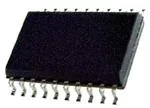
20 LEAD SOIC
CASE 475A-01
PIN ASSIGNMENT
N/C
1
20
GND
N/C
2
19
N/C
N/C
3
4
18
17
N/C
5
16
6
7
15
14
8
13
9
10
12
N/C
ST
XOUT
STATUS
VSS
VDD
AVDD
11
ORDERING INFORMATION
Device
Temperature Range
Case No.
– 40 to +125°C
Case 475A-01
MMA3202D
Package
SOIC-20
VDD
AVDD
G-CELL
SENSOR
INTEGRATOR
GAIN
FILTER
TEMP
COMP
XOUT
YOUT
ST
SELF-TEST
CONTROL LOGIC &
EPROM TRIM
CIRCUITS
OSCILLATOR
CLOCK GEN.
STATUS
Figure 1. Simplified Accelerometer Functional Block Diagram
REV 1
© Motorola, Inc. 2004
For More Information On This Product,
Go to: www.freescale.com
VSS
N/C
N/C
N/C
N/C
N/C
N/C
YOUT
�Freescale Semiconductor, Inc.
Maximum Ratings (Maximum ratings are the limits to which the device can be exposed without causing permanent damage.)
Rating
Symbol
Value
Unit
Powered Acceleration (all axes)
Gpd
1500
g
Unpowered Acceleration (all axes)
Gupd
2000
g
Supply Voltage
VDD
–0.3 to +7.0
V
Drop Test (1)
Ddrop
1.2
m
Tstg
–40 to +125
°C
Storage Temperature Range
Freescale Semiconductor, Inc...
NOTES:
1. Dropped onto concrete surface from any axis.
ELECTRO STATIC DISCHARGE (ESD)
WARNING: This device is sensitive to electrostatic
discharge.
Although the Motorola accelerometers contain internal
2kV ESD protection circuitry, extra precaution must be
taken by the user to protect the chip from ESD. A charge
2
of over 2000 volts can accumulate on the human body or
associated test equipment. A charge of this magnitude
can alter the performance or cause failure of the chip.
When handling the accelerometer, proper ESD precautions should be followed to avoid exposing the device to
discharges which may be detrimental to its performance.
Surface Mount Micromachined Accelerometer
MMA3202D
For More Information On This Product,
Go to: www.freescale.com
MOTOROLA
�Freescale Semiconductor, Inc.
Operating Characteristics
(Unless otherwise noted: –40°C ≤ TA ≤ +105°C, 4.75 ≤ VDD ≤ 5.25, Acceleration = 0g, Loaded output(1))
Characteristic
Symbol
Min
Typ
Max
Unit
VDD
IDD
TA
gFS
gFS
4.75
6
−40
—
—
5.00
8
—
112.5
56.3
5.25
10
+125
—
—
V
mA
°C
g
g
VOFF
VOFF,v
S
S
SV
SV
f–3dB
NLOUT
2.35
0.46VDD
19
38
3.72
7.44
360
−1.0
2.5
0.50 VDD
20
40
4
8
400
—
2.65
0.54 VDD
21
42
4.28
8.56
440
+1.0
V
V
mV/g
mV/g
mV/g/V
mV/g/V
Hz
% FSO
nRMS
nPSD
nCLK
—
—
—
—
110
2.0
2.8
—
—
mVrms
µV/(Hz1/2)
mVpk
Self-Test
Output Response
Input Low
Input High
Input Loading(7)
Response Time(8)
gST
VIL
VIH
IIN
tST
9.6
VSS
0.7 x VDD
−30
—
12
—
—
−100
2.0
14.4
0.3 x VDD
VDD
−300
—
g
V
V
µA
ms
Status(12)(13)
Output Low (Iload = 100 µA)
Output High (Iload = 100 µA)
VOL
VOH
—
VDD –0.8
—
—
0.4
—
V
V
Minimum Supply Voltage (LVD Trip)
VLVD
2.7
3.25
4.0
V
fmin
50
—
260
kHz
tDELAY
VFSO
CL
ZO
—
0.25
—
—
0.2
—
—
300
—
VDD −0.25
100
—
ms
V
pF
Ω
VXZ,YZ
fPKG
—
—
—
10
5.0
—
% FSO
kHz
Operating Range (2)
Supply Voltage (3)
Supply Current
Operating Temperature Range
Acceleration Range X-axis
Acceleration Range Y-axis
Freescale Semiconductor, Inc...
Output Signal
Zero g (TA = 25°C, VDD = 5.0 V)(4)
Zero g
Sensitivity X-axis (TA = 25°C, VDD = 5.0 V)(5)
Sensitivity Y-axis (TA = 25°C, VDD = 5.0 V)(5)
Sensitivity X-axis
Sensitivity Y-axis
Bandwidth Response
Nonlinearity
Noise
RMS (.01 Hz – 1 kHz)
Power Spectral Density
Clock Noise (without RC load on output)(6)
Clock Monitor Fail Detection Frequency
Output Stage Performance
Electrical Saturation Recovery Time(9)
Full Scale Output Range (IOUT = 200 µA)
Capacitive Load Drive(10)
Output Impedence
Mechanical Characteristics
Transverse Sensitivity(11)
Package Resonance
NOTES:
1. For a loaded output the measurements are observed after an RC filter consisting of a 1 kΩ resistor and a 0.01 µF capacitor to ground.
2. These limits define the range of operation for which the part will meet specification.
3. Within the supply range of 4.75 and 5.25 volts, the device operates as a fully calibrated linear accelerometer. Beyond these supply limits the device may
operate as a linear device but is not guaranteed to be in calibration.
4. The device can measure both + and – acceleration. With no input acceleration the output is at midsupply. For positive acceleration the output will
increase above VDD/2 and for negative acceleration the output will decrease below VDD/2.
5. The device is calibrated at 20g.
6. At clock frequency ≅70 kHz.
7. The digital input pin has an internal pull-down current source to prevent inadvertent self test initiation due to external board level leakages.
8. Time for the output to reach 90% of its final value after a self-test is initiated.
9. Time for amplifiers to recover after an acceleration signal causing them to saturate.
10. Preserves phase margin (60°) to guarantee output amplifier stability.
11. A measure of the device's ability to reject an acceleration applied 90° from the true axis of sensitivity.
12. The Status pin output is not valid following power-up until at least one rising edge has been applied to the self-test pin. The Status pin is high whenever
the self-test input is high, as a means to check the connectivity of the self-test and Status pins in the application.
13. The Status pin output latches high if a Low Voltage Detection or Clock Frequency failure occurs, or the EPROM parity changes to odd. The Status pin
can be reset low if the self-test pin is pulsed with a high input for at least 100 µs, unless a fault condition continues to exist.
MOTOROLA
Surface Mount Micromachined Accelerometer
For More Information On This Product,
Go to: www.freescale.com
3
MMA3202D
�Freescale Semiconductor, Inc.
Freescale Semiconductor, Inc...
PRINCIPLE OF OPERATION
The Motorola accelerometer is a surface-micromachined integrated-circuit accelerometer.
The device consists of a surface micromachined capacitive sensing cell (g-cell) and a CMOS signal conditioning ASIC contained in a single integrated circuit
package. The sensing element is sealed hermetically at
the wafer level using a bulk micromachined “cap'' wafer.
The g-cell is a mechanical structure formed from semiconductor materials (polysilicon) using semiconductor
processes (masking and etching). It can be modeled as
a set of beams attached to a movable central mass that
move between fixed beams. The movable beams can be
deflected from their rest position by subjecting the system to an acceleration (Figure 2).
As the beams attached to the central mass move, the
distance from them to the fixed beams on one side will increase by the same amount that the distance to the fixed
beams on the other side decreases. The change in distance is a measure of acceleration.
The g-cell plates form two back-to-back capacitors
(Figure 2). As the central mass moves with acceleration,
the distance between the beams change and each capacitor's value will change, (C = NAε/D). Where A is the
area of the facing side of the beam, ε is the dielectric constant, D is the distance between the beams, and N is the
number of beams. The X-Y device contains two structures at right angles to each other.
The CMOS ASIC uses switched capacitor techniques
to measure the g-cell capacitors and extract the acceleration data from the difference between the two capacitors. The ASIC also signal conditions and filters
(switched capacitor) the signal, providing a high level output voltage that is ratiometric and proportional to acceleration.
Acceleration
SPECIAL FEATURES
Filtering
The Motorola accelerometers contain an onboard 4pole switched capacitor filter. A Bessel implementation is
used because it provides a maximally flat delay response
(linear phase) thus preserving pulse shape integrity. Because the filter is realized using switched capacitor techniques, there is no requirement for external passive
components (resistors and capacitors) to set the cut-off
frequency.
Self-Test
The sensor provides a self-test feature that allows the
verification of the mechanical and electrical integrity of
the accelerometer at any time before or after installation.
This feature is critical in applications such as automotive
airbag systems where system integrity must be ensured
over the life of the vehicle. A fourth “plate'' is used in the
g-cell as a self-test plate. When the user applies a logic
high input to the self-test pin, a calibrated potential is applied across the self-test plate and the moveable plate.
The resulting electrostatic force (Fe = 1/2 AV2/d2) causes
the center plate to deflect. The resultant deflection is
measured by the accelerometer's control ASIC and a
proportional output voltage results. This procedure assures that both the mechanical (g-cell) and electronic
sections of the accelerometer are functioning.
Ratiometricity
Ratiometricity simply means that the output offset voltage and sensitivity will scale linearly with applied supply
voltage. That is, as you increase supply voltage the sensitivity and offset increase linearly; as supply voltage decreases, offset and sensitivity decrease linearly. This is
a key feature when interfacing to a microcontroller or an
A/D converter because it provides system level cancellation of supply induced errors in the analog to digital conversion process.
Status
Figure 1. Simplified Transducer Physical Model
Motorola accelerometers include fault detection circuitry and a fault latch. The Status pin is an output from
the fault latch, OR'd with self-test, and is set high whenever one (or more) of the following events occur:
•
4
Supply voltage falls below the Low Voltage Detect
(LVD) voltage threshold
Surface Mount Micromachined Accelerometer
MMA3202D
For More Information On This Product,
Go to: www.freescale.com
MOTOROLA
�Freescale Semiconductor, Inc.
•
•
Clock oscillator falls below the clock monitor minimum
frequency
LOGIC
INPUT
Parity of the EPROM bits becomes odd in number.
The fault latch can be reset by a falling edge on the
self-test input pin, unless one (or more) of the fault conditions continues to exist.
7
MMA3202D
VDD
C1
0.1 µF
5
XOUT
9 VDD
R1
1 kΩ
6
10 AVDD
X OUTPUT
SIGNAL
C2
0.01 µF
8 VSS
YOUT
BASIC CONNECTIONS
11
R2
1 kΩ
Y OUTPUT
SIGNAL
C3
0.01 µF
Pinout Description
Figure 3. SOIC Accelerometer with Recommended
Connection Diagram
N/C
1
20
GND
N/C
2
19
N/C
N/C
3
18
N/C
ST
XOUT
4
5
17
16
N/C
N/C
N/C
6
15
N/C
STATUS
STATUS
VSS
7
8
14
N/C
ST
13
N/C
VDD
AVDD
9
12
10
11
N/C
YOUT
Pin No.
Pin Name
Description
1 thru 3
—
Redundant VSS. Leave
unconnected.
4
—
No internal connection. Leave
unconnected.
5
ST
Logic input pin used to initiate selftest.
6
XOUT
7
STATUS
8
VSS
The power supply ground.
The power supply input.
Output voltage of the accelerometer.
X Direction.
Logic output pin to indicate fault.
9
VDD
10
AVDD
The power supply input (Analog).
11
YOUT
Output voltage of the accelerometer.
Y Direction.
12 thru 16
—
Used for factory trim. Leave
unconnected.
17 thru 19
—
No internal connection. Leave
unconnected.
20
—
Ground
ACCELEROMETER
PCB Layout
XOUT
YOUT
VSS
VDD
P1
P0
R
1 kΩ
A/D IN
C 0.01 µF
R
A/D IN
1 kΩ C 0.01 µF
C 0.01 µF
MICROCONTROLLER
Freescale Semiconductor, Inc...
STATUS
ST
VSS
C
0.1 µF
VDD
VRH
C
0.1 µF
POWER SUPPLY
Figure 4. Recommended PCB Layout for Interfacing
Accelerometer to Microcontroller
NOTES:
• Use a 0.1 µF capacitor on VDD to decouple the power source.
• Physical coupling distance of the accelerometer to the
microcontroller should be minimal.
• Place a ground plane beneath the accelerometer to reduce
noise, the ground plane should be attached to all of the open
ended terminals shown in Figure 4.
• Use an RC filter of 1 kΩ and 0.01 µF on the output of the
accelerometer to minimize clock noise (from the switched
capacitor filter circuit).
• PCB layout of power and ground should not couple power supply
noise.
• Accelerometer and microcontroller should not be a high
current path.
• A/D sampling rate and any external power supply switching
frequency should be selected such that they do not interfere
with the internal accelerometer sampling frequency. This will
prevent aliasing errors.
MOTOROLA
Surface Mount Micromachined Accelerometer
For More Information On This Product,
Go to: www.freescale.com
5
MMA3202D
�Freescale Semiconductor, Inc.
Dynamic Acceleration Sensing Direction
+Y
Freescale Semiconductor, Inc...
Acceleration of the
package in the +X and
+Y direction (center plates
move in the −X and −Y
direction) will result in an
increase X and Y outputs.
+X
N/C
1
20
GND
N/C
2
19
N/C
N/C
3
18
N/C
ST
XOUT
4
17
5
16
N/C
N/C
N/C
6
15
N/C
STATUS
VSS
7
8
14
N/C
13
N/C
VDD
AVDD
9
12
10
11
N/C
YOUT
−X
Activation of Self test moves
the center plate in the −X
direction, resulting in an
increase in the output.
−Y
20-Pin SOIC Package
N/C pins are recommended to be left FLOATING
Top View
Static Acceleration Sensing Direction
10
9
8
7
6
5 4
3
2
1
Direction of Earth’s gravity field.*
11 12 13 14 15 16 17 18 19 20
Front View
Side View
* When positioned as shown, the Earth’s gravity will result in a positive 1g output in the X channel.
6
Surface Mount Micromachined Accelerometer
MMA3202D
For More Information On This Product,
Go to: www.freescale.com
MOTOROLA
�Freescale Semiconductor, Inc.
PACKAGE DIMENSIONS
-A20
11
P 10 PL
0.13 (0.005)
-B1
T A
M
B
M
10
D
0.13 (0.005)
16 PL
M
T
A
M
B
M
R
X 45˚
J
C
Freescale Semiconductor, Inc...
M
-TSEATING
PLANE
K
NOTES:
1. DIMENSIONING AND TOLERANCING PER ANSI
Y14.5M, 1982.
2. CONTROLLING DIMENSION: MILLIMETER.
3. DEMENSIONS A AND B DO NOT INCLUDE MOLD
PROTRUSION.
4. MAXIMUM MOLD PROTRUSION 0.15 (0.006) PER
SIDE.
5. DIMENSION D DOES NOT INCLUDE DAMBAR
PROTRUSION. ALLOWABLE DAMBAR
PROTRUSION SHALL BE 0.13 (0.005) TOTAL IN
EXCESS OF D DIMENSION AT MAXIMUM
MATERIAL CONDITION.
G
M
F
DIM
A
B
C
D
F
G
J
K
M
P
R
MILLIMETERS
MIN
MAX
12.67
12.96
7.40
7.60
3.30
3.55
0.35
0.49
0.76
1.14
1.27 BSC
0.25
0.32
0.10
0.25
0˚
7˚
10.16
10.67
0.25
0.75
CASE 475A-01
ISSUE O
20 LEAD SOIC
INCHES
MIN
MAX
0.499
0.510
0.292
0.299
0.130
0.140
0.014
0.019
0.030
0.045
0.050 BSC
0.010
0.012
0.004
0.009
0˚
7˚
0.400
0.420
0.010
0.029
DATE 02/10/98
MINIMUM RECOMMENDED FOOTPRINT FOR SURFACE MOUNTED APPLICATIONS
Surface mount board layout is a critical portion of the
total design. The footprint for the surface mount packages must be the correct size to ensure proper solder connection interface between the board and the package.
0.380 in.
9.65 mm
With the correct footprint, the packages will self-align
when subjected to a solder reflow process. It is always
recommended to design boards with a solder mask layer
to avoid bridging and shorting between solder pads.
0.050 in.
1.27 mm
0.024 in.
0.610 mm
0.080 in.
2.03 mm
Figure 5. Footprint SOIC-20 (Case 475A-01)
MOTOROLA
Surface Mount Micromachined Accelerometer
For More Information On This Product,
Go to: www.freescale.com
7
MMA3202D
�Freescale Semiconductor, Inc...
Freescale Semiconductor, Inc.
Information in this document is provided solely to enable system and software implementers to use Motorola products. There are no express or implied
copyright licenses granted hereunder to design or fabricate any integrated circuits or integrated circuits based on the information in this document.
Motorola reserves the right to make changes without further notice to any products herein. Motorola makes no warranty, representation or guarantee
regarding the suitability of its products for any particular purpose, nor does Motorola assume any liability arising out of the application or use of any product
or circuit, and specifically disclaims any and all liability, including without limitation consequential or incidental damages. “Typical” parameters which may be
provided in Motorola data sheets and/or specifications can and do vary in different applications and actual performance may vary over time. All operating
parameters, including “Typicals” must be validated for each customer application by customer’s technical experts. Motorola does not convey any license
under its patent rights nor the rights of others. Motorola products are not designed, intended, or authorized for use as components in systems intended for
surgical implant into the body, or other applications intended to support or sustain life, or for any other application in which the failure of the Motorola product
could create a situation where personal injury or death may occur. Should Buyer purchase or use Motorola products for any such unintended or
unauthorized application, Buyer shall indemnify and hold Motorola and its officers, employees, subsidiaries, affiliates, and distributors harmless against all
claims, costs, damages, and expenses, and reasonable attorney fees arising out of, directly or indirectly, any claim of personal injury or death associated
with such unintended or unauthorized use, even if such claim alleges that Motorola was negligent regarding the design or manufacture of the part.
MOTOROLA and the Stylized M Logo are registered in the US Patent and Trademark Office. All other product or service names are the property of their
respective owners.
© Motorola, Inc. 2004
HOW TO REACH US:
USA/EUROPE/LOCATIONS NOT LISTED:
Motorola Literature Distribution
P.O. Box 5405, Denver, Colorado 80217
1-800-521-6274 or 480-768-2130
JAPAN: Motorola Japan Ltd.; SPS, Technical Information Center
3-20-1 Minami-Azabu. Minato-ku, Tokyo 106-8573, Japan
81-3-3440-3569
ASIA/PACIFIC: Motorola Semiconductors H.K. Ltd.; Silicon Harbour Centre
2 Dai King Street, Tai Po Industrial Estate, Tai Po, N.T., Hong Kong
852-26668334
HOME PAGE: http://motorola.com/semiconductors
For More Information On This Product,
Go to: www.freescale.com
MMA3202D
�