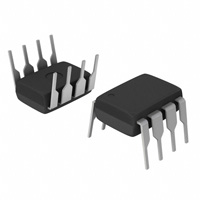
FAN7602C
Green Current Mode PWM Controller
Features
Description
Green Current Mode PWM Controller
The FAN7602C is a green current-mode PWM controller.
It is specially designed for off-line adapter applications;
DVDP, VCR, LCD monitor applications; and auxiliary
power supplies.
Random Frequency Fluctuation for Low EMI
Internal High-Voltage Startup Switch
Burst Mode Operation
Line Voltage Feedforward to Limit Maximum Power
Line Under-Voltage Protection
Latch Protection & Internal Soft-Start (10ms) Function
Overload Protection
The internal high-voltage startup switch and the burst
mode operation reduce the power loss in standby mode.
As a result, the input power is lower than 1W when the
input line voltage is 265VAC and the load is 0.5W. At noload condition, input power is under 0.15W.
The maximum power can be limited constantly,
regardless of the line voltage change, using the power
limit function.
Over-Voltage Protection
Over-Temperature Protection
Low Operation Current: 1mA Typical
The switching frequency is not fixed and it has random
frequency fluctuation.
8-Pin DIP/SOP
The FAN7602C includes various protections for the
system reliability and the internal soft-start prevents the
output voltage over-shoot at startup.
Applications
Adapter
LCD Monitor Power
Auxiliary Power Supply
Related Resources
AN-6014- Green Current Mode PWM Controller
(Except for frequency fluctuation part in AN-6014)
Ordering Information
Part Number
Operating Junction
Temperature
Eco Status
FAN7602CN
FAN7602CM
Package
8-DIP
-40°C to +150°C
FAN7602CMX
RoHS
8-SOP
Packing
Method
Top Mark
Rail
FAN7602C
Rail
FAN7602C
Tape and Reel
FAN7602C
For Fairchild’s definition of Eco Status, please visit: http://www.fairchildsemi.com/company/green/rohs_green.html.
© 2009 Fairchild Semiconductor Corporation
FAN7602C • Rev. 1.0.0
www.fairchildsemi.com
FAN7602C — Green Current Mode PWM Controller
April 2009
�FAN7602C — Green Current Mode PWM Controller
Typical Application Diagram
VSTR
LUVP
Latch/
Plimit
NC
FAN7602C
CS/FB
GND
VCC
Out
Figure 1. Typical Flyback Application
Internal Block Diagram
VSTR
8
6 VCC
LUVP
LUVP 1
OVP
OLP
2V/1.5V
SS End
Auto Restart
Protection
TSD
5V Ref
OVP
12V/8V
Reset
Circuit
Latch
Protection
Latch
UVLO
Vcc
10ms
Soft Start
19V
Driver
Circuit
SS End
Plimit
Offset
PWM
Block
OSC
5 OUT
3 CS/FB
Delay
Circuit
Random
0.95V/0.88V
Latch/
2
Plimit
Latch
4V
Plimit
Offset
Generator
PWM+
OLP
Plimit
Offset
Soft
Start
Power Limit
Plimit
Offset
OLP
Soft
Start
4 GND
Figure 2. Functional Block Diagram
© 2009 Fairchild Semiconductor Corporation
FAN7602C • Rev. 1.0.0
www.fairchildsemi.com
2
�Figure 3. Pin Configuration (Top View)
Pin Definitions
Pin #
Name
1
LUVP
2
Latch/Plimit
3
CS/FB
4
GND
Ground Pin. This pin is used for the ground potential of all the pins. For proper operation,
the signal ground and the power ground should be separated.
5
OUT
Gate Drive Output Pin. This pin is an output pin to drive an external MOSFET. The peak
sourcing current is 450mA and the peak sinking current is 600mA. For proper operation,
the stray inductance in the gate driving path must be minimized.
6
VCC
Supply Voltage Pin. IC operating current and MOSFET driving current are supplied
using this pin.
7
NC
No Connection.
VSTR
Startup Pin. This pin is used to supply IC operating current during IC startup. After
startup, the internal JFET is turned off to reduce power loss.
8
Description
Line Under-Voltage Protection Pin. This pin is used to protect the set when the input
voltage is lower than the rated input voltage range.
Latch Protection and Power Limit Pin. When the pin voltage exceeds 4V, the latch
protection works. The latch protection is reset when the VCC voltage is lower than 5V. For
the power limit function, the OCP level decreases as the pin voltage increases.
Current Sense and Feedback Pin. This pin is used to sense the MOSFET current for
the current mode PWM and OCP. The output voltage feedback information and the
current sense information are added using an external RC filter.
© 2009 Fairchild Semiconductor Corporation
FAN7602C • Rev. 1.0.0
www.fairchildsemi.com
3
FAN7602C — Green Current Mode PWM Controller
Pin Configuration
�Stresses exceeding the absolute maximum ratings may damage the device. The device may not function or be
operable above the recommended operating conditions and stressing the parts to these levels is not recommended. In
addition, extended exposure to stresses above the recommended operating conditions may affect device reliability.
The absolute maximum ratings are stress ratings only.
Symbol
Parameter
Min.
Max.
Unit
25
V
VCC
Supply Voltage
IO
Output Current
-600
+450
mA
VCS/FB
CS/FB Input Voltage
-0.3
20
V
VLUVP
LUVP Input Voltage
-0.3
10
V
VLatch
Latch/Plimit Input Voltage
-0.3
10
V
VSTR
VSTR Input Voltage
600
V
TJ
TSTG
PD
ESD
Junction Temperature
+150
°C
Recommended Operating Junction Temperature
-40
+150
Storage Temperature Range
-55
+150
°C
1.2
W
Power Dissipation
Electrostatic Discharge Capability
Human Body Model, JESD22-A114
3.5
Charged Device Model, JESD22-C101
2.0
kV
Thermal Impedance
Symbol
θJA
Parameter
(1)
Thermal Resistance , Junction-to-Ambient
8-DIP
Value
Unit
100
°C/W
Note:
1. Regarding the test environment and PCB type, please refer to JESD51-2 and JESD51-10.
© 2009 Fairchild Semiconductor Corporation
FAN7602C • Rev. 1.0.0
www.fairchildsemi.com
4
FAN7602C — Green Current Mode PWM Controller
Absolute Maximum Ratings
�VCC = 14V, TA = -25°C~125°C, unless otherwise specified.
Symbol
Parameter
Condition
Min.
Typ.
Max.
Unit
VSTR = 30V, TA = 25°C
0.7
1.0
1.4
mA
Startup Section
ISTR
VSTR Startup Current
Under Voltage Lock Out Section
Vth(start)
Start Threshold Voltage
VCC Increasing
11
12
13
V
Vth(stop)
Stop Threshold Voltage
VCC Decreasing
7
8
9
V
HY(uvlo)
UVLO Hysteresis
3.6
4.0
4.4
V
Supply Current Section
IST
Startup Supply Current
TA = 25°C
250
320
µA
ICC
Operating Supply Current
Output Not Switching
1.0
1.5
mA
5
10
15
ms
59
65
73
kHz
Soft-Start Section
tSS
(2)
Soft-Start Time
PWM Section
fOSC
Operating Frequency
ᅀfOSC
Frequency Fluctuation
VCS/FB1
CS/FB Threshold Voltage
tD
VCS/FB = 0.2V, TA = 25°C
(2)
Propagation Delay to Output
DMAX
Maximum Duty Cycle
DMIN
Minimum Duty Cycle
±3
TA = 25°C
0.9
(2)
70
kHz
1.0
1.1
V
100
150
ns
75
80
%
0
%
Burst Mode Section
VCS/FB2
Burst On Threshold Voltage
TA = 25°C
0.84
0.95
1.06
V
VCS/FB3
Burst Off Threshold Voltage
TA = 25°C
0.77
0.88
0.99
V
VLatch/Plimit = 2V, TA = 25°C
0.12
0.16
0.20
11.5
12.0
14.0
V
Power Limit Section
KPlimit
Offset Gain
Output Section
VOH
Output Voltage High
TA = 25°C, Isource = 100mA
VOL
Output Voltage Low
TA = 25°C, Isink = 100mA
1.0
2.5
V
(2)
TA = 25°C, CL = 1nF
45
150
ns
(2)
TA = 25°C, CL= 1nF
35
150
ns
tR
Rising Time
tF
Falling Time
Continued on the following page…
© 2009 Fairchild Semiconductor Corporation
FAN7602C • Rev. 1.0.0
www.fairchildsemi.com
5
FAN7602C — Green Current Mode PWM Controller
Electrical Characteristics
�VCC = 14V, TA = -25°C~125°C, unless otherwise specified.
Symbol
Parameter
Condition
Min.
Typ.
Max.
Unit
3.6
4.0
4.4
V
20
22
24
ms
30
37
44
ms
0
0.1
V
Protection Section
VLATCH
tOLP
tOLP_ST
VOLP
Latch Voltage
Overload Protection Time
(2)
Overload Protection Time at
Startup
Overload Protection Level
VLUVPoff
Line Under-Voltage Protection
On to Off
TA = 25°C
1.9
2.0
2.1
V
VLUVPon
Line Under-Voltage Protection
Off to On
TA = 25°C
1.4
1.5
1.6
V
Over-Voltage Protection
TA = 25°C
18
19
20
V
VOVP
TSD
HYS
Shutdown Temperature
(2)
170
°C
60
°C
Note:
2. These parameters, although guaranteed, are not 100% tested in production.
© 2009 Fairchild Semiconductor Corporation
FAN7602C • Rev. 1.0.0
www.fairchildsemi.com
6
FAN7602C — Green Current Mode PWM Controller
Electrical Characteristics (Continued)
�1.20
1.20
1.15
1.15
1.10
1.10
1.05
1.05
1.00
1.00
0.95
0.95
0.90
0.90
0.85
0.85
0.80
-50
-25
0
25
50
75
100
0.80
125
-50
-25
0
25
50
75
100
125
Temperature [°C]
Figure 4. Start Threshold Voltage vs. Temperature
Figure 5. Stop Threshold Voltage vs. Temperature
1.20
1.40
1.15
1.30
1.10
1.20
1.05
1.10
1.00
1.00
0.95
0.90
0.90
0.80
0.85
0.70
0.60
0.80
-50
-25
0
25
50
75
100
-50
125
-25
0
Temperature [°C]
Figure 6. UVLO Hysteresis vs. Temperature
Normalized
25
50
75
100
125
Temperature [°C]
Figure 7. Startup Threshold Current vs. Temperature
1.50
1.20
1.40
1.15
1.30
1.10
1.05
1.20
1.00
1.10
0.95
1.00
0.90
0.90
0.85
0.80
0.80
-50
-25
0
25
50
75
100
125
Figure 8. Operating Supply Current vs. Temperature
© 2009 Fairchild Semiconductor Corporation
FAN7602C • Rev. 1.0.0
-50
-25
0
25
50
75
100
125
Temperature [°C]
Temperature [°C]
Figure 9. VSTR Startup Current vs. Temperature
www.fairchildsemi.com
7
FAN7602C — Green Current Mode PWM Controller
Typical Performance Characteristics
�1.20
1.20
1.15
1.15
1.10
1.10
CSFB2
CSFB3
1.05
1.05
1.00
1.00
0.95
0.95
0.90
0.90
0.85
0.85
0.80
0.80
-50
-25
0
25
50
75
100
125
-50
-25
0
Temperature [°C]
Normalized
Figure 10. Burst On/Off Voltage vs. Temperature
50
75
100
125
Figure 11. Operating Frequency vs. Temperature
1.20
1.20
1.15
1.15
1.10
1.10
1.05
1.05
1.00
1.00
0.95
0.95
0.90
0.90
0.85
0.85
0.80
0.80
-50
-25
0
25
50
75
100
-50
125
-25
0
25
50
75
100
125
Temperature [°C]
Figure 12. Offset Gain vs. Temperature
Normalized
25
Temperature [°C]
Figure 13. Maximum Duty Cycle vs. Temperature
1.20
1.20
1.15
1.15
1.10
1.10
1.05
1.05
1.00
1.00
0.95
0.95
0.90
0.90
0.85
0.85
0.80
0.80
-50
-25
0
25
50
75
100
-50
125
-25
0
25
50
75
100
125
Temperature [°C]
Figure 14. OVP Voltage vs. Temperature
© 2009 Fairchild Semiconductor Corporation
FAN7602C • Rev. 1.0.0
Figure 15. Latch Voltage vs. Temperature
www.fairchildsemi.com
8
FAN7602C — Green Current Mode PWM Controller
Typical Performance Characteristics (Continued).
�Normalized
1.20
1.20
1.15
1.15
1.10
1.10
1.05
1.05
1.00
1.00
0.95
0.95
0.90
0.90
0.85
0.85
0.80
0.80
-50
-25
0
25
50
75
100
-50
125
-25
0
25
50
75
100
125
Temperature [°C]
Figure 16. LUVP On-to-Off Voltage vs. Temperature
Figure 17. LUVP Off-to-On Voltage vs. Temperature
1.20
1.15
1.10
1.05
1.00
0.95
0.90
0.85
0.80
-50
-25
0
25
50
75
100
125
Temperature [°C]
Figure 18. CS/FB Threshold Voltage vs. Temperature
© 2009 Fairchild Semiconductor Corporation
FAN7602C • Rev. 1.0.0
www.fairchildsemi.com
9
FAN7602C — Green Current Mode PWM Controller
Typical Performance Characteristics (Continued)
�1. Startup Circuit and Soft-Start Block
The FAN7602C contains a startup switch to reduce the
power loss of the external startup circuit of the
conventional PWM converters. The internal startup
circuit charges the VCC capacitor with 0.9mA current
source if the AC line is connected. The startup switch is
turned off 15ms after IC starts up, as shown in Figure 19.
The soft-start function starts when the VCC voltage
reaches the start threshold voltage of 12V and ends
when the internal soft-start voltage reaches 1V. The
internal startup circuit starts charging the VCC capacitor
again if the VCC voltage is lowered to the minimum
operating voltage, 8V. The UVLO block shuts down the
output drive circuit and some blocks to reduce the IC
operating current and the internal soft-start voltage
drops to zero. If the VCC voltage reaches the start
threshold voltage, the IC starts switching again and the
soft-start block works as well.
Figure 20. Frequency Fluctuation Waveform
3. Current Sense and Feedback Block
The FAN7602C performs the current sensing for the
current mode PWM and the output voltage feedback
with only one pin, pin 3. To achieve the two functions
with one pin, an internal LEB (leading-edge blanking)
circuit to filter the current sense noise is not included
because the external RC filter is necessary to add the
output voltage feedback information and the current
sense information.
During the soft-start, pulse-width modulated (PWM)
comparator compares the CS/FB pin voltage with the
soft-start voltage. The soft-start voltage starts from 0.5V
and the soft-start ends when it reaches 1V and the softstart time is 10ms. The startup switch is turned off when
the soft-start voltage reaches 1.3V.
Figure 21 shows the current sense and feedback circuits.
RS is the current sense resistor to sense the switch
current. The current sense information is filtered by an
RC filter composed of RF and CF. According to the
output voltage feedback information, IFB charges or
stops charging CF to adjust the offset voltage. If IFB is
zero, CF is discharged through RF and RS to lower the
offset voltage.
VCC
PWM
Comparator
PWM+
Figure 19. Startup Current and VCC Voltage
Soft-Start
RFB
Power
Limit
3
2. Oscillator Block
CS/FB
IFB
RF
Isw
CF
The oscillator frequency is set internally and FAN7602C
has a random frequency fluctuation function.
RS
Fluctuation of the switching frequency of a switched
power supply can reduce EMI by spreading the energy
over a wider frequency range than the bandwidth
measured by the EMI test equipment. The amount of
EMI reduction is directly related to the range of the
frequency variation. The range of frequency variation is
fixed internally; however, its selection is randomly
chosen by the combination of external feedback voltage
and internal free-running oscillator. This randomly
chosen switching frequency effectively spreads the EMI
noise nearby switching frequency and allows the use of
a cost-effective inductor instead of an AC input line filter
to satisfy the world-wide EMI requirements.
© 2009 Fairchild Semiconductor Corporation
FAN7602C • Rev. 1.0.0
Plimit
Offset
Figure 21. Current Sense and Feedback Circuits
Figure 22 shows typical voltage waveforms of the CS/FB
pin. The current sense waveform is added to the offset
voltage, as shown in the Figure 22. The CS/FB pin
voltage is compared with PWM that is 1V - Plimit offset.
If the CS/FB voltage meets PWM+, the output drive is
shut off. If the feedback offset voltage is LOW, the
switch on-time is increased. If the feedback offset
voltage is HIGH, the switch on-time is decreased. In this
way, the duty cycle is controlled according to the output
load condition. Generally, the maximum output power
increases as input voltage increases because the
current slope during switch on-time increases.
www.fairchildsemi.com
10
FAN7602C — Green Current Mode PWM Controller
Application Information
�1V
5.1 Overload Protection (OLP)
The FAN7602C contains the overload protection
function. If the output load is higher than the rated
output current, the output voltage drops and the
feedback error amplifier is saturated. The offset of the
CS/FB voltage representing the feedback information is
almost zero. As shown in Figure 24, the CS/FB voltage
is compared with 50mV reference when the internal
clock signal is HIGH and, if the voltage is lower than
50mV, the OLP timer starts counting. If the OLP
condition persists for 22ms, the timer generates the OLP
signal. The protection is reset by the UVLO. The OLP
block is enabled after the soft-start finishes.
Power Limit
Offset
PWM+
CS/FB
FB
Offset
GND
Figure 24. Overload Protection Circuit
On Time
(a) Low Power Limit Offset Case
1V
5.2 Line Under-Voltage Protection
If the input voltage of the converter is lower than the
minimum operating voltage, the converter input current
increases too much, causing components failure.
Therefore, if the input voltage is LOW, the converter
should be protected. The LUVP circuit senses the input
voltage using the LUVP pin and, if this voltage is lower
than 2V, the LUVP signal is generated. The comparator
has 0.5V hysteresis. If the LUVP signal is generated, the
output drive block is shut down, the output voltage
feedback loop is saturated, and the OLP works if the
LUVP condition persists more than 22ms.
Power Limit
Offset
PWM+
CS/FB
FB
Offset
GND
On Time
(b) High Power Limit Offset Case
Figure 22. CS/FB Pin Voltage Waveforms
−
+
4. Burst Mode Block
The FAN7602C contains the burst-mode block to reduce
the power loss at a light load and no load. A hysteresis
comparator senses the offset voltage of the Burst+ for
the burst mode, as shown in Figure 23. The Burst+ is
the sum of the CS/FB voltage and Plimit offset voltage.
The FAN7602C enters the burst mode when the offset
voltage of the Burst+ is higher than 0.95V and exits the
burst mode when the offset voltage is lower than 0.88V.
The offset voltage is sensed during the switch off time.
Figure 25. Line UVP Circuit
5.3 Latch Protection
The latch protection is provided to protect the system
against abnormal conditions using the Latch/Plimit pin.
The Latch/Plimit pin can be used for the output overvoltage protection and/or other protections. If the Latch/
Plimit pin voltage is made higher than 4V by an external
circuit, the IC is shut down. The latch protection is reset
when the VCC voltage is lower than 5V.
+
−
5.4 Over-Voltage Protection (OVP)
If the VCC voltage reaches 19V, the IC shuts down and
the OVP protection is reset when the VCC voltage is
lower than 5V.
Figure 23. Burst Mode Block
6. Output Drive Block
The FAN7602C contains a single totem-pole output
stage to drive a power MOSFET. The drive output is
capable of up to 450mA sourcing current and 600mA
sinking current with typical rise and fall time of 45ns and
35ns, respectively, with a 1nF load.
5. Protection Block
The FAN7602C contains several protection functions to
improve system reliability.
© 2009 Fairchild Semiconductor Corporation
FAN7602C • Rev. 1.0.0
www.fairchildsemi.com
11
FAN7602C — Green Current Mode PWM Controller
To limit the output power of the converter constantly, the
power limit function is included in FAN7602C. Sensing
the converter input voltage through the Latch/Plimit pin,
the Plimit offset voltage is subtracted from 1V. As shown
in Figure 22, the Plimit offset voltage is subtracted from
1V and the switch on-time decreases as the Plimit offset
voltage increases. If the converter input voltage
increases, the switch on-time decreases, keeping the
output power constant. The offset voltage is proportional
to the Latch/Plimit pin voltage and the gain is 0.16. If the
Latch/Plimit voltage is 1V, the offset voltage is 0.16V.
�Application
Output Power
Adaptor
48W
Input Voltage
Universal input
(85 ~ 265 VAC)
Output Voltage
12V
Features
Low stand-by power (