Is Now Part of
To learn more about ON Semiconductor, please visit our website at
www.onsemi.com
Please note: As part of the Fairchild Semiconductor integration, some of the Fairchild orderable part numbers
will need to change in order to meet ON Semiconductor’s system requirements. Since the ON Semiconductor
product management systems do not have the ability to manage part nomenclature that utilizes an underscore
(_), the underscore (_) in the Fairchild part numbers will be changed to a dash (-). This document may contain
device numbers with an underscore (_). Please check the ON Semiconductor website to verify the updated
device numbers. The most current and up-to-date ordering information can be found at www.onsemi.com. Please
email any questions regarding the system integration to Fairchild_questions@onsemi.com.
ON Semiconductor and the ON Semiconductor logo are trademarks of Semiconductor Components Industries, LLC dba ON Semiconductor or its subsidiaries in the United States and/or other countries. ON Semiconductor owns the rights to a number
of patents, trademarks, copyrights, trade secrets, and other intellectual property. A listing of ON Semiconductor’s product/patent coverage may be accessed at www.onsemi.com/site/pdf/Patent-Marking.pdf. ON Semiconductor reserves the right
to make changes without further notice to any products herein. ON Semiconductor makes no warranty, representation or guarantee regarding the suitability of its products for any particular purpose, nor does ON Semiconductor assume any liability
arising out of the application or use of any product or circuit, and specifically disclaims any and all liability, including without limitation special, consequential or incidental damages. Buyer is responsible for its products and applications using ON
Semiconductor products, including compliance with all laws, regulations and safety requirements or standards, regardless of any support or applications information provided by ON Semiconductor. “Typical” parameters which may be provided in ON
Semiconductor data sheets and/or specifications can and do vary in different applications and actual performance may vary over time. All operating parameters, including “Typicals” must be validated for each customer application by customer’s
technical experts. ON Semiconductor does not convey any license under its patent rights nor the rights of others. ON Semiconductor products are not designed, intended, or authorized for use as a critical component in life support systems or any FDA
Class 3 medical devices or medical devices with a same or similar classification in a foreign jurisdiction or any devices intended for implantation in the human body. Should Buyer purchase or use ON Semiconductor products for any such unintended
or unauthorized application, Buyer shall indemnify and hold ON Semiconductor and its officers, employees, subsidiaries, affiliates, and distributors harmless against all claims, costs, damages, and expenses, and reasonable attorney fees arising out
of, directly or indirectly, any claim of personal injury or death associated with such unintended or unauthorized use, even if such claim alleges that ON Semiconductor was negligent regarding the design or manufacture of the part. ON Semiconductor
is an Equal Opportunity/Affirmative Action Employer. This literature is subject to all applicable copyright laws and is not for resale in any manner.
�FPF2200-FPF2202
Integrated Load Switch with 500mA High Precision Current Limit
Features
General Description
1.8 to 5.5V Input Voltage Range
Typical RDS(ON) = 140m
@ VIN = 5.5V
Typical RDS(ON) = 160m
@ VIN = 3.3V
The FPF2200-FPF2202 are low RDS(ON) P-Channel MOSFET
load switches with high precision current limit value. The input
voltage range operates from 1.8V to 5.5V to fulfill today's Ultra
Portable Device's supply requirement. Switch control is by a
logic input (ON) capable of interfacing directly with low voltage
control signal. On-chip pull-down is available for output quick
discharge when switch is turned off.
Fixed 500mA Current Limit (min)
5% Accurate Current Limit
72
(typ) Output Discharge Resistance
ESD Protected, above 8kV HBM and 2kV CDM
For the FPF2201, if the constant current condition still persists
after 30ms, these parts will shut off the switch and pull the fault
signal pin (FLAGB) low. The FPF2200 has an auto-restart
feature which will turn the switch on again after 450ms if the ON
pin is still active. The FPF2201 do not have this auto-restart
feature so the switch will remain off until the ON pin is cycled.
For the FPF2202, a current limit condition will immediately pull
the fault signal pin low and the part will remain in the constantcurrent mode until the switch current falls below the current
limit. For the FPF2200 through FPF2202, the minimum current
limit is 500mA with 5% accuracy.
Applications
PDAs
Cell Phones
GPS Devices
MP3 Players
Digital Cameras
Peripheral Ports
Notebook Computer
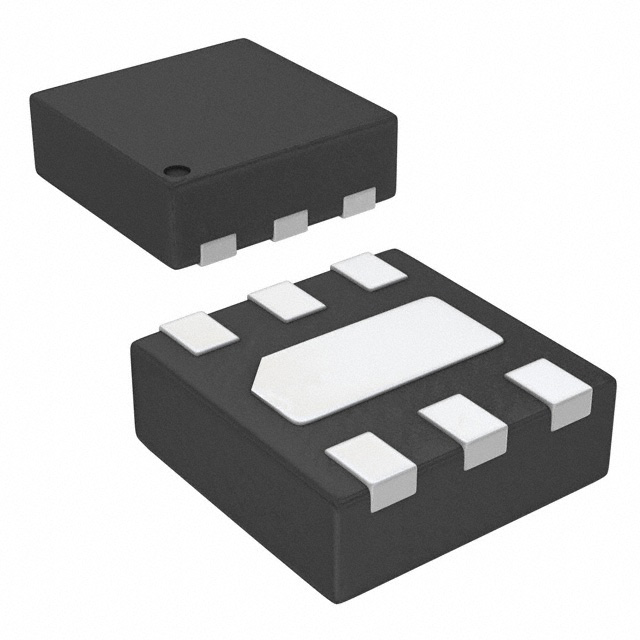
Pin 1
BOTTOM
TOP
Ordering Information
Part
Current Limit
(mA)
Current Limit
Blanking Time
(mS)
Auto-Restart Time
(mS)
ON Pin
Activity
FPF2200
500
30
450
Active HI
FPF2201
500
30
NA
Active HI
FPF2202
500
NA
NA
Active HI
©2008 Fairchild Semiconductor Corporation
FPF2200-FPF2202 Rev. B
1
www.fairchildsemi.com
FPF2200-FPF2202 Integrated Load Switch with 500mA High Precision Current Limit
June 2008
�TO LOAD
VOUT
VIN
FPF2200/1/2
OFF ON
FLAGB
ON
GND
Functional Block Diagram
VIN
UVLO
THERMAL
SHUTDOWN
CONTROL
LOGIC
ON
CURRENT
LIMIT
VOUT
Output Discharge
FLAGB
GND
FPF2200-FPF2202 Rev. B
2
www.fairchildsemi.com
FPF2200-FPF2202 Integrated Load Switch with 500mA High Precision Current Limit
Typical Application Circuit
�FPF2200-FPF2202 Integrated Load Switch with 500mA High Precision Current Limit
Pin Configuration
ON 6
1 N/C
GND 5
2 VIN
FLAGB 4
3 VOUT
MicroFET 2x2 6L
(BOTTOMVIEW)
Pin Description
Pin
Name
1
N/C
No Connection
Function
2
VIN
Supply Input: Input to the power switch and the supply voltage for the IC
3
VOUT
4
FLAGB
5
GND
6
ON
Switch Output: Output of the power switch
Fault Output: Active LO, open drain output which indicates an over current, supply
under voltage or over temperature state
Ground
ON/OFF Control Input
Absolute Maximum Ratings
Parameter
VIN, VOUT, ON, FLAGB TO GND
Min.
Max.
Unit
-0.3
6
V
1.2
W
-65
125
°C
86
°C/W
Power Dissipation @ TA = 25°C
Operating and Storage Junction Temperature
Thermal Resistance, Junction to Ambient
Electrostatic Discharge Protection
HBM
8000
V
MM
400
V
CDM
2000
V
Recommended Operating Range
Parameter
Min.
Max.
Unit
VIN
1.8
5.5
V
Ambient Operating Temperature, TA
-40
85
°C
Electrical Characteristics
VIN = 1.8 to 5.5V, TA = -40 to +85°C unless otherwise noted. Typical values are at VIN = 3.3V and TA = 25°C.
Parameter
Symbol
Conditions
Min.
Typ.
Max.
Units
5.5
V
Basic Operation
Operating Voltage
Quiescent Current
VIN Shutdown Current
FPF2200-FPF2202 Rev. B
VIN
IQ
1.8
IOUT=0mA, VIN=VON=1.8V
40
65
IOUT=0mA, VIN=VON=3.3V
45
75
IOUT=0mA, VIN=VON=5.5V
55
85
VON=0V, VIN=5.5V, VOUT=short to
GND
3
2.5
A
A
www.fairchildsemi.com
�Symbol
Min.
Typ.
VON=0V, VOUT=5.5V, VIN=short to
GND
VOUT Shutdown Current
On-Resistance
Conditions
RON
VIH
ON Input Logic Low Voltage (OFF)
VIL
On Input Leakage
FLAGB Output High Leakage Current
A
140
185
160
210
VIN=1.8V, IOUT=200mA, TA=25°C
230
300
90
VIN=1.8V
0.8
1.4
m
265
72
VIN=5.5V
105
V
VIN=1.8V
0.5
VIN=5.5V
1.0
VON = VIN or GND
FLAGB Output Logic Low Voltage
1
VIN=3.3V, IOUT=200mA, TA=25°C
VIN=3.3V, VON=0V, IOUT=10mA
ON Input Logic High Voltage (ON)
Units
VIN=5.5V, IOUT=200mA, TA=25°C
VIN=3.3V, IOUT=200mA,
TA=-40°C to 85°C
Output Discharge Resistance
Max.
-1
1
VIN=5.5V, ISINK=100 A
0.05
0.1
VIN=1.8V, ISINK=100 A
0.12
0.25
VIN=5.5V, Switch on
1
V
A
V
A
Protections
Current Limit
ILIM
Thermal Shutdown
Under Voltage Shutdown
UVLO
VIN=3.3V, VOUT = 3.0V, TA=25°C
504
530
Shutdown Threshold
140
Return from Shutdown
130
Hysteresis
10
VIN increasing
1.55
Under Voltage Shutdown Hysteresis
1.65
557
mA
°C
1.75
V
50
mV
Dynamic
Turn On Time
tON
RL=500 , CL=0.001uF
70
S
Turn Off Time
tOFF
RL=500 , CL=0.001uF
600
nS
VOUT Rise Time
tRISE
RL=500 , CL=0.001uF
40
S
VOUT Fall Time
tFALL
RL=500 , CL=0.001uF
Over Current Blanking Time
tBLANK
FPF2200, FPF2201
15
30
60
mS
Auto-Restart Time
tRSTRT
FPF2200
225
450
900
mS
Current Limit Response Time
FPF2200-FPF2202 Rev. B
VIN = VON = 3.3V. Over-Current
Condition: RLOAD=1.55
4
100
5
nS
S
www.fairchildsemi.com
FPF2200-FPF2202 Integrated Load Switch with 500mA High Precision Current Limit
Parameter
�80
70
V ON = VIN
50
SUPPLY CURRENT (uA)
SUPPLY CURRENT (uA)
VON=VIN
70
60
o
85 C
o
25 C
40
o
-40 C
30
20
VIN=3.3V
60
VIN=5.5V
50
VIN=1.8V
40
30
20
10
-40
10
1
2
3
4
5
6
-15
SUPPLY VOLTAGE (V)
60
85
Figure 2. Quiescent Current vs. Temperature
1.30
1.6
1.15
VIH
VON SUPPLY VOLTAGE (V)
VON SUPPLY VOLTAGE (V)
35
o
Figure 1. Quiescent Current vs. Input Voltage
VIL
1.00
0.85
0.70
0.55
0.40
1.4
VIN=5.5V
1.2
1.0
VIN=3.3V
0.8
VIN=1.8V
0.6
0.4
1
2
3
4
5
6
-40
-15
VIN, SUPPLY VOLTAGE (V)
10
35
60
85
o
TJ, JUNCTION TEMPERATURE ( C)
Figure 3. VON vs. Input Voltage
Figure 4. VON High Voltage vs. Temperature
1.4
0.04
1.2
0.03
VIN=5.5V
1.0
ON PIN CURRENT (uA)
VON SUPPLY VOLTAGE (V)
10
TJ, JUNCTION TEMPERATURE ( C)
VIN=3.3V
0.8
VIN=1.8V
0.6
0.4
0.02
VON = 5.5V
0.01
0.00
VON = 0V
-0.01
-0.02
-0.03
0.2
-40
-15
10
35
60
-40
85
10
35
60
85
TJ, JUNCTION TEMPERATURE ( C)
Figure 5. VON Low Voltage vs. Temperature
FPF2200-FPF2202 Rev. B
-15
o
o
TJ, JUNCTION TEMPERATURE ( C)
Figure 6. On Pin Current vs. Temperature
5
www.fairchildsemi.com
FPF2200-FPF2202 Integrated Load Switch with 500mA High Precision Current Limit
Typical Characteristics
�600
590
500
OUTPUT CURRENT (mA)
OUTPUT CURRENT (mA)
600
400
300
200
580
VIN = 3.3V
570
VIN = 1.8V
560
550
VIN = 5.5V
540
100
530
-40
0
0
1
2
3
4
5
6
-15
VIN-VOUT (V)
Figure 7. Current Limit vs. Output Voltage
300
270
270
240
RON(mOhms)
RON (mOhms)
240
210
o
85 C
150
25oC
120
VIN=1.8V
210
180
VIN=3.3V
VIN=5.5V
90
-40
60
3.5
4.5
5.5
-15
10
35
60
85
o
VIN, SUPPLY VOLTAGE (V)
TJ, JUNCTION TEMPERATURE ( C)
Figure 9. RON vs. Input Voltage
Figure 10. RON vs. Temperature
1000
100
TFALL
RISE / FALL TIMES (uS)
TURN-ON/OFF TIMES (uS)
85
120
90
2.5
60
150
-40oC
1.5
35
Figure 8. Current Limit vs. Temperature
300
180
10
TJ, JUNCTION TEMPERATURE (oC)
100
TOFF
10
TON
VIN = 3.3V
RL = 500 Ohms
COUT = 0.11uF
1
0.1
-40
-15
10
35
60
-15
10
35
60
85
o
o
TJ, JUNCTION TEMPERATURE ( C)
TJ, JUNCTION TEMPERATURE ( C)
Figure 11. TON / TOFF vs. Temperature
FPF2200-FPF2202 Rev. B
TRISE
1
0.1
-40
85
VIN = 3.3V
RL = 500 Ohms
COUT = 0.11uF
10
Figure 12. TRISE / TFALL vs. Temperature
6
www.fairchildsemi.com
FPF2200-FPF2202 Integrated Load Switch with 500mA High Precision Current Limit
Typical Characteristics
�BLANKING TIME (mS)
40
VIN
2V/DIV
38
36
IOUT
10mA/DIV
34
VON
2V/DIV
32
30
28
-40
VIN=3.3V,
RL=500 ,
CIN=10 F
VOUT
2V/DIV
-15
10
35
60
85
TJ, JUNCTION TEMPERATURE ( C)
100 s/DIV
Figure 13. TBLANK vs Temperature
VIN
2V/DIV
Figure 14. TON Response
VON
5V/DIV
VIN=3.3V,
RL=500 ,
CIN=10 F
VIN=3.3V,
RL=5 ,
CIN=10 F
IOUT
500mA/DIV
IOUT
10mA/DIV
VFLAGB
2V/DIV
VON
2V/DIV
TBLANK
VOUT
2V/DIV
VOUT
2V/DIV
500ns/DIV
10ms/DIV
Figure 15. TOFF Response
Figure 16. TBLANK Response
VIN=3.3V,
RL=1.2 ,
CIN=10 F
COUT=10 F
VON
2V/DIV
IOUT
500mA/DIV
IOUT
500mA/DIV
VIN
2V/DIV
VIN
2V/DIV
VOUT
2V/DIV
VOUT
2V/DIV
100 s/DIV
500 s/DIV
Figure 17. Current Limit Response
(Output is loaded with 1.2 resistor and COUT=10 F)
FPF2200-FPF2202 Rev. B
VIN=5V,
RL=1.2 ,
CIN=10 F
COUT=10 F
VON
2V/DIV
Figure 18. Current Limit Response
(Output is loaded with 1.2 resistor and COUT=100 F)
7
www.fairchildsemi.com
FPF2200-FPF2202 Integrated Load Switch with 500mA High Precision Current Limit
Typical Characteristics
�IOUT
500mA/DIV
IOUT
5A/DIV
VIN=VON=,3.
3V, RL=1.2 ,
CIN=10 F
COUT=1 F
VOUT
2V/DIV
VOUT
2V/DIV
100 s/DIV
20 s/DIV
Figure 19. Current Limit Response
(Switch is powered into a short - Input and
enable pins are tied together)
FPF2200-FPF2202 Rev. B
VIN=3.3V,
RL=100 ,
CIN=10 F
COUT=1 F
VON
2V/DIV
VON
2V/DIV
Figure 20. Current Limit Response
(Output shorted to GND while the switch is in normal operation)
8
www.fairchildsemi.com
FPF2200-FPF2202 Integrated Load Switch with 500mA High Precision Current Limit
Typical Characteristics
�Undervoltage Lockout (UVLO)
The FPF2200, FPF2201, and FPF2202 are state of the art High
Precision Current Limit switches designed to meet USB OTG
(On-The-Go) applications with optimum current for a safe
design practice. The core of each device is a 0.16 P-channel
MOSFET and a controller capable of functioning over an input
operating range of 1.8- 5.5V. The controller protects or offers
current limiting, UVLO(undervoltage lockout) and thermal
shutdown protection. The minimum current limit value is set to
500mA allowing to draw as much as 500mA from the USB port.
The undervoltage lockout turns-off the switch if the input voltage
drops below the undervoltage lockout threshold. With the ON
pin active the input voltage rising above the undervoltage
lockout threshold will cause a controlled turn-on of the switch
which limits current over-shoots.
Output Discharge Resistor
The FPF2200/1/2 family contains an 80 on-chip load resistor
for quick output discharge when the switch is turned off. This
features become more attractive when application requires
large output capacitor to be discharged when switch turns-off.
However, VOUT pin should not be connected directly to the
battery source due to the discharge mechanism of the load
switch.
On/Off Control
The ON pin is active high, and controls the state of the switch.
Applying a continuous high signal will hold the switch in the ON
state. The switch will move into the OFF state when the active
high is removed, or if a fault is encountered. For all versions, an
undervoltage on VIN or a junction temperature in excess of
140°C overrides the ON control to turn off the switch.
In addition, excessive currents will cause the switch to turn off in
the FPF2200 and FPF2201. The FPF2200 has an Auto-Restart
feature which will automatically turn the switch ON again after
450ms. For the FPF2201, the ON pin must be toggled to turn-on
the switch again. The FPF2202 does not turn off in response to
an over current condition but instead remains operating in a
constant current mode so long as ON is active and the thermal
shutdown or UVLO have not activated.
Thermal Shutdown
The thermal shutdown protects the die from internally or
externally generated excessive temperatures. During an overtemperature condition the FLAGB is activated and the switch is
turned-off. The switch automatically turns-on again if
temperature of the die drops below the threshold temperature.
Fault Reporting
Upon the detection of an over-current condition, an input UVLO,
or an over-temperature condition, the FLAGB signals the fault
mode by activating LO. In the event of an over-current condition
for the FPF2200 and FPF2201, the FLAGB goes LO at the end
of the blanking time while FLAGB goes LO immediately for the
FPF2202. If the over-current condition lasts longer than
blanking time, FLAGB remains LO through the Auto-Restart
Time for the FPF2200 while for the FPF2201, FLAGB is latched
LO and ON must be toggled to release it. With the FPF2202,
FLAGB is LO during the faults and immediately returns HI at the
end of the fault condition. FLAGB is an open-drain MOSFET
which requires a pull-up resistor between VIN and FLAGB.
During shutdown, the pull-down on FLAGB is disabled to reduce
current draw from the supply. A 100K pull up resistor is
recommended to be used in the application.
Current Limiting
The current limit ensures that the current through the switch
doesn't exceed a maximum value while not limiting at less than
a minimum value. The minimum current at which the parts will
limit is set to 500mA. The FPF2200 and FPF2201 have a
blanking time of 30ms (nominal) during which the switch will act
as a constant current source. At the end of the blanking time,
the switch will be turned-off. The FPF2202 has no current limit
blanking period so it will remain in a constant current state until
the ON pin is deactivated or the thermal shutdown turns-off the
switch.
FPF2200-FPF2202 Rev. B
9
www.fairchildsemi.com
FPF2200-FPF2202 Integrated Load Switch with 500mA High Precision Current Limit
Description of Operation
�PCB Layout Recommendations
Input Capacitor
For best performance, all traces should be as short as possible.
To be more effective, the input and output capacitors should be
placed close to the device to minimize the effects that parasitic
trace inductances may have on normal and short-circuit
operation. Using wide traces for VIN, VOUT and GND will help
minimize parasitic electrical effects along with minimizing the
case to ambient thermal impedance.
To limit the voltage drop on the input supply caused by transient
in-rush currents when the switch is turned on into a discharged
load capacitor or a short-circuit, a capacitor is recommended to
be placed between VIN and GND. A 1uF ceramic capacitor, CIN,
placed close to the pins is usually sufficient. Higher values of
CIN can be used to further reduce the voltage drop.
Output Capacitor
Improving Thermal Performance
A 0.1uF capacitor COUT, should be placed between VOUT and
GND. This capacitor will prevent parasitic board inductances
from forcing VOUT below GND when the switch turns-off. For the
FPF2200 and FPF2201, the total output capacitance needs to
be kept below a maximum value, COUT(max), to prevent the
part from registering an over-current condition and turning-off
the switch. The maximum output capacitance can be
determined from the following formula:
An improper layout could result in higher junction temperature
and triggering the thermal shutdown protection feature. This
concern applies when the switch is set at higher current limit
value and an over-current condition occurs. In this case, the
power dissipation of the switch, from the formula below, could
exceed the maximum absolute power dissipation of 1.2W.
PD = (VIN - VOUT) x ILIM (Max)
ILIM (Max) X tBLANK (Min)
COUT (Max) =
The following techniques have been identified to improve the
thermal performance of this family of devices.
These
techniques are listed in order of the significance of their impact.
VIN
Power Dissipation
1. Thermal performance of the load switch can be improved by
connecting pin7 of the DAP (Die Attach Pad) to the GND plane
of the PCB.
During normal on-state operation, the power dissipated in the
device will depend upon the level at which the current limit is
set. The maximum allowed setting for the current limit is 500mA
and will result in a power dissipation of:
2. Embedding two exposed through-hole vias into the DAP
(pin7) provides a path for heat to transfer to the back GND
plane of the PCB. A drill size of Round, 14 mils (0.35mm) with
1-ounce copper plating is recommended to result in appropriate
solder reflow. A smaller size hole prevents the solder from
penetrating into the via, resulting in device lift-up. Similarly, a
larger via-hole consumes excessive solder, and may result in
voiding of the DAP.
P = (ILIM)2 * RON = (0.5)2 * 0.16 = 40mW
If the part goes into current limit, the maximum power
dissipation will occur when the output is shorted to ground. For
the FPF2200, the power dissipation will scale by the AutoRestart Time, tRSTRT, and the Over Current Blanking Time,
tBLANK, so that the maximum power dissipated is:
P (Max) =
=
tBLANK
tBLANK + tRSTRT
30
30 + 450
* VIN (Max) * ILIM (Max)
* 5.5 * 0.5 = 0.17W
Note this is below the maximum package power dissipation, and
the thermal shutdown feature will act as additional safety to
protect the part from damage due to excessive heating. The
junction temperature is only able to increase to the thermal
shutdown threshold. Once this temperature has been reached,
toggling ON will not turn-on the switch until the junction
temperature drops. For the FPF2202, a short on the output will
cause the part to operate in a constant current state dissipating
a worst case power of:
Figure 21: Two through hole open vias embedded in DAP
3. The VIN, VOUT and GND pins will dissipate most of the heat
generated during a high load current condition. The layout
suggested in Figure 23 provides each pin with adequate copper
so that heat may be transferred as efficiently as possible out of
the device. The low-power FLAGB and ON pin traces may be
laid-out diagonally from the device to maximize the area
available to the ground pad. Placing the input and output
capacitors as close to the device as possible also contributes to
heat dissipation, particularly during high load currents.
P (Max) = VIN (MAX) * ILIM (MAX) = 5.5 * 0.557 = 3.064W
This large amount of power will activate the thermal shutdown
and the part will cycle in and out of thermal shutdown so long as
the ON pin is active and the short is present.
FPF2200-FPF2202 Rev. B
10
www.fairchildsemi.com
FPF2200-FPF2202 Integrated Load Switch with 500mA High Precision Current Limit
Application Information
�FPF2200-FPF2202 Integrated Load Switch with 500mA High Precision Current Limit
Figure 22: X-Ray result (bottom view with 45o angle)
Figure 25: Bottom and ASB Layers
Figure 26: Zoom in to Top layer
Figure 23: Proper layout of output and ground copper area
FPF22XX Demo Board
FPF22XX Demo board has components and circuitry to
demonstrate FPF2223/4/5 load switches functions and features.
R4 resistor with 0 value is used for measuring the output
current. Load current can be scoped by removing the R4
resistor and soldering a current loop to the R4 footprint. Thermal
performance of the board is improved using a few techniques
recommended in the layout recommendations section of
datasheet. R3 resistor should be left open for FPF220X family.
Figure 24: Top, SST, and AST Layers
FPF2200-FPF2202 Rev. B
11
www.fairchildsemi.com
�2.0
0.05 C
A
1.72
1.68
B
2X
6
4
0.15
2.0
1.21
2.25
0.90
0.52(6X)
0.05 C
PIN#1 IDENT
TOP VIEW
1
2X
3
0.65
0.42(6X)
RECOMMENDED
LAND PATTERN
0.10 C
NOTES:
0.08 C
SIDE VIEW
C
A. PACKAGE DOES NOT FULLY CONFORM
TO JEDEC MO-229 REGISTRATION
SEATING
PLANE
B. DIMENSIONS ARE IN MILLIMETERS.
C. DIMENSIONS AND TOLERANCES PER
ASME Y14.5M, 2009.
D. LAND PATTERN RECOMMENDATION IS
EXISTING INDUSTRY LAND PATTERN.
(0.70)
(0.20)4X
PIN #1 IDENT
1
E. DRAWING FILENAME: MKT-MLP06Krev5.
3
(0.40)
(6X)
(0.60)
6
4
(6X)
0.65
1.30
BOTTOM VIEW
0.10
0.05
C A B
C
�ON Semiconductor and
are trademarks of Semiconductor Components Industries, LLC dba ON Semiconductor or its subsidiaries in the United States and/or other countries.
ON Semiconductor owns the rights to a number of patents, trademarks, copyrights, trade secrets, and other intellectual property. A listing of ON Semiconductor’s product/patent
coverage may be accessed at www.onsemi.com/site/pdf/Patent−Marking.pdf. ON Semiconductor reserves the right to make changes without further notice to any products herein.
ON Semiconductor makes no warranty, representation or guarantee regarding the suitability of its products for any particular purpose, nor does ON Semiconductor assume any liability
arising out of the application or use of any product or circuit, and specifically disclaims any and all liability, including without limitation special, consequential or incidental damages.
Buyer is responsible for its products and applications using ON Semiconductor products, including compliance with all laws, regulations and safety requirements or standards,
regardless of any support or applications information provided by ON Semiconductor. “Typical” parameters which may be provided in ON Semiconductor data sheets and/or
specifications can and do vary in different applications and actual performance may vary over time. All operating parameters, including “Typicals” must be validated for each customer
application by customer’s technical experts. ON Semiconductor does not convey any license under its patent rights nor the rights of others. ON Semiconductor products are not
designed, intended, or authorized for use as a critical component in life support systems or any FDA Class 3 medical devices or medical devices with a same or similar classification
in a foreign jurisdiction or any devices intended for implantation in the human body. Should Buyer purchase or use ON Semiconductor products for any such unintended or unauthorized
application, Buyer shall indemnify and hold ON Semiconductor and its officers, employees, subsidiaries, affiliates, and distributors harmless against all claims, costs, damages, and
expenses, and reasonable attorney fees arising out of, directly or indirectly, any claim of personal injury or death associated with such unintended or unauthorized use, even if such
claim alleges that ON Semiconductor was negligent regarding the design or manufacture of the part. ON Semiconductor is an Equal Opportunity/Affirmative Action Employer. This
literature is subject to all applicable copyright laws and is not for resale in any manner.
PUBLICATION ORDERING INFORMATION
LITERATURE FULFILLMENT:
Literature Distribution Center for ON Semiconductor
19521 E. 32nd Pkwy, Aurora, Colorado 80011 USA
Phone: 303−675−2175 or 800−344−3860 Toll Free USA/Canada
Fax: 303−675−2176 or 800−344−3867 Toll Free USA/Canada
Email: orderlit@onsemi.com
© Semiconductor Components Industries, LLC
N. American Technical Support: 800−282−9855 Toll Free
USA/Canada
Europe, Middle East and Africa Technical Support:
Phone: 421 33 790 2910
Japan Customer Focus Center
Phone: 81−3−5817−1050
www.onsemi.com
1
ON Semiconductor Website: www.onsemi.com
Order Literature: http://www.onsemi.com/orderlit
For additional information, please contact your local
Sales Representative
www.onsemi.com
�