HGTG11N120CND
Data Sheet
December 2001
43A, 1200V, NPT Series N-Channel IGBT
with Anti-Parallel Hyperfast Diode
The HGTG11N120CND is a Non-Punch Through (NPT)
IGBT design. This is a new member of the MOS gated high
voltage switching IGBT family. IGBTs combine the best
features of MOSFETs and bipolar transistors. This device
has the high input impedance of a MOSFET and the low
on-state conduction loss of a bipolar transistor. The IGBT
used is the development type TA49291. The Diode used is
the development type TA49189.
The IGBT is ideal for many high voltage switching
applications operating at moderate frequencies where low
conduction losses are essential, such as: AC and DC motor
controls, power supplies and drivers for solenoids, relays
and contactors.
Features
• 43A, 1200V, TC = 25oC
• 1200V Switching SOA Capability
• Typical Fall Time . . . . . . . . . . . . . . . . 340ns at TJ = 150oC
• Short Circuit Rating
• Low Conduction Loss
• Thermal Impedance SPICE Model
www.fairchildsemi.com
Packaging
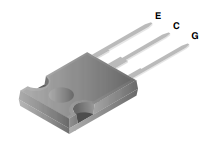
JEDEC STYLE TO-247
E
C
G
Formerly Developmental Type TA49303.
Ordering Information
PART NUMBER
HGTG11N120CND
PACKAGE
TO-247
BRAND
11N120CND
NOTE: When ordering, use the entire part number.
Symbol
C
G
E
FAIRCHILD SEMICONDUCTOR IGBT PRODUCT IS COVERED BY ONE OR MORE OF THE FOLLOWING U.S. PATENTS
4,364,073
4,598,461
4,682,195
4,803,533
4,888,627
4,417,385
4,605,948
4,684,413
4,809,045
4,890,143
©2001 Fairchild Semiconductor Corporation
4,430,792
4,620,211
4,694,313
4,809,047
4,901,127
4,443,931
4,631,564
4,717,679
4,810,665
4,904,609
4,466,176
4,639,754
4,743,952
4,823,176
4,933,740
4,516,143
4,639,762
4,783,690
4,837,606
4,963,951
4,532,534
4,641,162
4,794,432
4,860,080
4,969,027
4,587,713
4,644,637
4,801,986
4,883,767
HGTG11N120CND Rev. B
�HGTG11N120CND
Absolute Maximum Ratings
TC = 25oC, Unless Otherwise Specified
HGTG11N120CND
UNITS
1200
V
At TC = 25oC . . . . . . . . . . . . . . . . . . . . . . . . . . . . . . . . . . . . . . . . . . . . . . . . . . . . . . . . . IC25
43
A
At TC = 110oC . . . . . . . . . . . . . . . . . . . . . . . . . . . . . . . . . . . . . . . . . . . . . . . . . . . . . . . IC110
22
A
Collector Current Pulsed (Note 1) . . . . . . . . . . . . . . . . . . . . . . . . . . . . . . . . . . . . . . . . . . . ICM
80
A
Gate to Emitter Voltage Continuous. . . . . . . . . . . . . . . . . . . . . . . . . . . . . . . . . . . . . . . . . VGES
±20
V
V
Collector to Emitter Voltage . . . . . . . . . . . . . . . . . . . . . . . . . . . . . . . . . . . . . . . . . . . . . .BVCES
Collector Current Continuous
Gate to Emitter Voltage Pulsed . . . . . . . . . . . . . . . . . . . . . . . . . . . . . . . . . . . . . . . . . . . .VGEM
±30
Switching Safe Operating Area at TJ = 150oC (Figure 2) . . . . . . . . . . . . . . . . . . . . . . . SSOA
55A at 1200V
Power Dissipation Total at TC = 25oC . . . . . . . . . . . . . . . . . . . . . . . . . . . . . . . . . . . . . . . . . PD
298
W
Power Dissipation Derating TC > 25oC . . . . . . . . . . . . . . . . . . . . . . . . . . . . . . . . . . . . . . . . . .
2.38
W/oC
Operating and Storage Junction Temperature Range . . . . . . . . . . . . . . . . . . . . . . . . TJ, TSTG
-55 to 150
oC
Maximum Lead Temperature for Soldering . . . . . . . . . . . . . . . . . . . . . . . . . . . . . . . . . . . . . TL
260
oC
Short Circuit Withstand Time (Note 2) at VGE = 15V . . . . . . . . . . . . . . . . . . . . . . . . . . . . . .tSC
8
µs
Short Circuit Withstand Time (Note 2) at VGE = 12V . . . . . . . . . . . . . . . . . . . . . . . . . . . . . .tSC
15
µs
CAUTION: Stresses above those listed in “Absolute Maximum Ratings” may cause permanent damage to the device. This is a stress only rating and operation of the
device at these or any other conditions above those indicated in the operational sections of this specification is not implied.
NOTES:
1. Pulse width limited by maximum junction temperature.
2. VCE(PK) = 840V, TJ = 125oC, RG = 10Ω .
Electrical Specifications
TC = 25oC, Unless Otherwise Specified
PARAMETER
Collector to Emitter Breakdown Voltage
Collector to Emitter Leakage Current
Collector to Emitter Saturation Voltage
Gate to Emitter Threshold Voltage
Gate to Emitter Leakage Current
SYMBOL
BVCES
ICES
VCE(SAT)
VGE(TH)
IGES
TEST CONDITIONS
IC = 250µA, VGE = 0V
VCE = 1200V
IC = 11A,
VGE = 15V
TC = 25oC
TC = 125oC
TC = 150oC
TC = 25oC
TC = 150oC
IC = 90µA, VCE = VGE
VGE = ±20V
MIN
TYP
MAX
UNITS
1200
-
-
V
-
-
250
µA
-
300
-
µA
-
-
3.5
mA
-
2.1
2.4
V
-
2.9
3.5
V
6.0
6.8
-
V
-
-
±250
nA
55
-
-
A
Switching SOA
SSOA
TJ = 150oC, RG = 10Ω, VGE = 15V,
L = 400µH, VCE(PK) = 1200V
Gate to Emitter Plateau Voltage
VGEP
IC = 11A, VCE = 600V
-
10.4
-
V
IC = 11A,
VCE = 600V
VGE = 15V
-
100
120
nC
VGE = 20V
-
130
150
nC
-
23
26
ns
-
12
16
ns
-
180
240
ns
-
190
220
ns
-
0.95
1.3
mJ
-
1.3
1.6
mJ
On-State Gate Charge
Current Turn-On Delay Time
Current Rise Time
Current Turn-Off Delay Time
QG(ON)
td(ON)I
trI
td(OFF)I
Current Fall Time
tfI
Turn-On Energy
EON
Turn-Off Energy (Note 3)
EOFF
©2001 Fairchild Semiconductor Corporation
IGBT and Diode at TJ = 25oC,
ICE = 11A,
VCE = 960V,
VGE = 15V,
RG = 10Ω ,
L = 2mH,
Test Circuit (Figure 20)
HGTG11N120CND Rev. B
�HGTG11N120CND
Electrical Specifications
TC = 25oC, Unless Otherwise Specified (Continued)
PARAMETER
SYMBOL
Current Turn-On Delay Time
td(ON)I
Current Rise Time
trI
Current Turn-Off Delay Time
td(OFF)I
Current Fall Time
tfI
Turn-On Energy
EON
Turn-Off Energy (Note 3)
EOFF
Diode Forward Voltage
VEC
Diode Reverse Recovery Time
trr
Thermal Resistance Junction To Case
RθJC
TEST CONDITIONS
MIN
TYP
MAX
UNITS
-
21
24
ns
-
12
16
ns
-
210
280
ns
-
360
400
ns
-
1.9
2.5
mJ
-
2.1
2.5
mJ
IEC = 11A
-
2.6
3.2
V
IEC = 11A, dlEC/dt = 200A/µs
-
60
70
ns
IEC = 1A, dlEC/dt = 200A/µs
-
32
40
ns
IGBT
-
-
0.42
oC/W
Diode
-
-
1.25
oC/W
IGBT and Diode at TJ = 150oC,
ICE = 11A,
VCE = 960V,
VGE = 15V,
RG = 10Ω ,
L = 2mH,
Test Circuit (Figure 20)
NOTE:
3. Turn-Off Energy Loss (EOFF) is defined as the integral of the instantaneous power loss starting at the trailing edge of the input pulse and ending
at the point where the collector current equals zero (ICE = 0A). All devices were tested per JEDEC Standard No. 24-1 Method for Measurement
of Power Device Turn-Off Switching Loss. This test method produces the true total Turn-Off Energy Loss.
Unless Otherwise Specified
ICE , DC COLLECTOR CURRENT (A)
45
VGE = 15V
40
35
30
25
20
15
10
5
0
25
50
75
100
125
TC , CASE TEMPERATURE (oC)
FIGURE 1. DC COLLECTOR CURRENT vs CASE
TEMPERATURE
©2001 Fairchild Semiconductor Corporation
150
ICE, COLLECTOR TO EMITTER CURRENT (A)
Typical Performance Curves
60
50
TJ = 150oC, RG = 10Ω, VGE = 15V, L = 400µH
40
30
20
10
0
0
200
400
600
800
1000
1200
1400
VCE, COLLECTOR TO EMITTER VOLTAGE (V)
FIGURE 2. MINIMUM SWITCHING SAFE OPERATING AREA
HGTG11N120CND Rev. B
�HGTG11N120CND
TJ = 150oC, RG = 10Ω, L = 2mH, V CE = 960V
TC = 75oC, VGE = 15V, IDEAL DIODE
100
50
fMAX1 = 0.05 / (td(OFF)I + td(ON)I)
TC
VGE
fMAX2 = (PD - PC)/(EON + EOFF)
75oC 15V
o
10 PC = CONDUCTION DISSIPATION 75 C 12V
110oC 15V
(DUTY FACTOR = 50%)
110oC 12V
RØJC = 0.42oC/W, SEE NOTES
5
5
10
2
ICE, COLLECTOR TO EMITTER CURRENT (A)
20
25
20
200
tSC
150
10
100
5
12
ICE, COLLECTOR TO EMITTER CURRENT (A)
ICE, COLLECTOR TO EMITTER CURRENT (A)
40
30
TC = 150oC
20
10
DUTY CYCLE < 0.5%, VGE = 12V
PULSE DURATION = 250µs
0
TC = 25oC
40
TC = -55oC
30
TC = 150oC
20
10
DUTY CYCLE < 0.5%, VGE = 15V
PULSE DURATION = 250µs
0
0
2
4
6
8
VCE, COLLECTOR TO EMITTER VOLTAGE (V)
FIGURE 6. COLLECTOR TO EMITTER ON-STATE VOLTAGE
3.5
5
RG = 10Ω, L = 2mH, VCE = 960V
EOFF , TURN-OFF ENERGY LOSS (mJ)
EON , TURN-ON ENERGY LOSS (mJ)
50
16
15
50
8
FIGURE 5. COLLECTOR TO EMITTER ON-STATE VOLTAGE
4
TJ = 150oC, VGE = 12V, VGE = 15V
3
2
1
TJ = 25oC, VGE = 12V, VGE = 15V
0
14
FIGURE 4. SHORT CIRCUIT WITHSTAND TIME
TC = 25oC
2
4
6
VCE, COLLECTOR TO EMITTER VOLTAGE (V)
13
VGE , GATE TO EMITTER VOLTAGE (V)
50
0
ISC
15
FIGURE 3. OPERATING FREQUENCY vs COLLECTOR TO
EMITTER CURRENT
TC = -55oC
250
VCE = 840V, RG = 10Ω, TJ = 125oC
ISC, PEAK SHORT CIRCUIT CURRENT (A)
fMAX, OPERATING FREQUENCY (kHz)
200
Unless Otherwise Specified (Continued)
tSC , SHORT CIRCUIT WITHSTAND TIME (µs)
Typical Performance Curves
0
5
10
15
ICE , COLLECTOR TO EMITTER CURRENT (A)
FIGURE 7. TURN-ON ENERGY LOSS vs COLLECTOR TO
EMITTER CURRENT
©2001 Fairchild Semiconductor Corporation
20
RG = 10Ω, L = 2mH, VCE = 960V
3.0
2.5
TJ = 150oC, VGE = 12V OR 15V
2.0
1.5
1.0
TJ = 25oC, VGE = 12V OR 15V
0.5
0
0
5
10
15
20
ICE , COLLECTOR TO EMITTER CURRENT (A)
FIGURE 8. TURN-OFF ENERGY LOSS vs COLLECTOR TO
EMITTER CURRENT
HGTG11N120CND Rev. B
�HGTG11N120CND
Typical Performance Curves
Unless Otherwise Specified (Continued)
40
50
RG = 10Ω, L = 2mH, VCE = 960V
TJ = 25oC, TJ = 150oC, VGE = 12V
35
30
25
20
15
TJ = 25oC, TJ = 150oC, VGE = 12V
40
trI , RISE TIME (ns)
tdI , TURN-ON DELAY TIME (ns)
RG = 10Ω, L = 2mH, VCE = 960V
30
20
10
TJ = 25oC OR TJ = 150oC, VGE = 15V
TJ = 25oC, TJ = 150oC, VGE = 15V
5
0
15
10
0
20
0
ICE , COLLECTOR TO EMITTER CURRENT (A)
FIGURE 9. TURN-ON DELAY TIME vs COLLECTOR TO
EMITTER CURRENT
700
RG = 10Ω, L = 2mH, VCE = 960V
RG = 10Ω, L = 2mH, VCE = 960V
450
600
400
tfI , FALL TIME (ns)
td(OFF)I , TURN-OFF DELAY TIME (ns)
20
FIGURE 10. TURN-ON RISE TIME vs COLLECTOR TO
EMITTER CURRENT
500
VGE = 12V, VGE = 15V, TJ = 150oC
350
300
250
500
TJ = 150oC, VGE = 12V OR 15V
400
300
200
200
150
100
TJ = 25oC, VGE = 12V OR 15V
VGE = 12V, VGE = 15V, TJ = 25oC
100
10
15
5
ICE , COLLECTOR TO EMITTER CURRENT (A)
0
0
20
10
5
15
20
ICE , COLLECTOR TO EMITTER CURRENT (A)
FIGURE 11. TURN-OFF DELAY TIME vs COLLECTOR TO
EMITTER CURRENT
FIGURE 12. FALL TIME vs COLLECTOR TO EMITTER
CURRENT
20
100
DUTY CYCLE < 0.5%, VCE = 20V
PULSE DURATION = 250µs
VGE, GATE TO EMITTER VOLTAGE (V)
ICE, COLLECTOR TO EMITTER CURRENT (A)
5
10
15
ICE , COLLECTOR TO EMITTER CURRENT (A)
80
60
TC = 25oC
40
20
TC = 150oC
0
7
8
9
TC = -55oC
10
11
12
13
VGE, GATE TO EMITTER VOLTAGE (V)
FIGURE 13. TRANSFER CHARACTERISTIC
©2001 Fairchild Semiconductor Corporation
14
15
IG(REF) = 1mA, RL = 54.5Ω, TC = 25oC
15
VCE = 1200V
VCE = 800V
10
VCE = 400V
5
0
0
20
60
80
40
QG , GATE CHARGE (nC)
100
120
FIGURE 14. GATE CHARGE WAVEFORMS
HGTG11N120CND Rev. B
�HGTG11N120CND
Typical Performance Curves
Unless Otherwise Specified (Continued)
ICE, COLLECTOR TO EMITTER CURRENT (A)
4
C, CAPACITANCE (nF)
FREQUENCY = 1MHz
3
CIES
2
1
COES
0
CRES
0
5
10
15
20
25
15
DUTY CYCLE < 0.5%, TC = 110oC
PULSE DURATION = 250µs
12
VGE = 15V
9
VGE = 10V
6
3
0
0
1
VCE, COLLECTOR TO EMITTER VOLTAGE (V)
FIGURE 15. CAPACITANCE vs COLLECTOR TO EMITTER
VOLTAGE
ZθJC , NORMALIZED THERMAL RESPONSE
2
3
4
VCE, COLLECTOR TO EMITTER VOLTAGE (V)
FIGURE 16. COLLECTOR TO EMITTER ON-STATE VOLTAGE
100
0.5
0.2
10-1
t1
0.1
PD
0.05
t2
0.02
DUTY FACTOR, D = t1 / t2
0.01
PEAK TJ = (PD X ZθJC X RθJC) + TC
SINGLE PULSE
10-2
10-5
10-4
10-3
10-2
10-1
100
t1 , RECTANGULAR PULSE DURATION (s)
FIGURE 17. NORMALIZED TRANSIENT THERMAL RESPONSE, JUNCTION TO CASE
70
TC = 25oC, dIEC / dt = 200A/µs
60
t, RECOVERY TIMES (ns)
IF , FORWARD CURRENT (A)
100
150oC
10
25oC
50
trr
40
30
ta
20
-55oC
1
1
2
3
4
5
VF , FORWARD VOLTAGE (V)
FIGURE 18. DIODE FORWARD CURRENT vs FORWARD
VOLTAGE DROP
©2001 Fairchild Semiconductor Corporation
6
10
tb
1
2
5
10
20
IF , FORWARD CURRENT (A)
FIGURE 19. RECOVERY TIMES vs FORWARD CURRENT
HGTG11N120CND Rev. B
�HGTG11N120CND
Test Circuit and Waveforms
HGTG11N120CND
90%
10%
VGE
EON
EOFF
L = 2mH
VCE
RG = 10Ω
90%
+
-
ICE
VDD = 960V
10%
td(OFF)I
tfI
trI
td(ON)I
FIGURE 20. INDUCTIVE SWITCHING TEST CIRCUIT
FIGURE 21. SWITCHING TEST WAVEFORMS
Handling Precautions for IGBTs
Operating Frequency Information
Insulated Gate Bipolar Transistors are susceptible to
gate-insulation damage by the electrostatic discharge of
energy through the devices. When handling these devices,
care should be exercised to assure that the static charge built
in the handler’s body capacitance is not discharged through
the device. With proper handling and application procedures,
however, IGBTs are currently being extensively used in
production by numerous equipment manufacturers in military,
industrial and consumer applications, with virtually no damage
problems due to electrostatic discharge. IGBTs can be
handled safely if the following basic precautions are taken:
Operating frequency information for a typical device (Figure 3)
is presented as a guide for estimating device performance for
a specific application. Other typical frequency vs collector
current (ICE) plots are possible using the information shown
for a typical unit in Figures 5, 6, 7, 8, 9 and 11. The operating
frequency plot (Figure 3) of a typical device shows fMAX1 or
fMAX2; whichever is smaller at each point. The information is
based on measurements of a typical device and is bounded
by the maximum rated junction temperature.
1. Prior to assembly into a circuit, all leads should be kept
shorted together either by the use of metal shorting
springs or by the insertion into conductive material such as
“ECCOSORBD™ LD26” or equivalent.
2. When devices are removed by hand from their carriers, the
hand being used should be grounded by any suitable
means - for example, with a metallic wristband.
3. Tips of soldering irons should be grounded.
4. Devices should never be inserted into or removed from
circuits with power on.
5. Gate Voltage Rating - Never exceed the gate-voltage
rating of VGEM. Exceeding the rated VGE can result in
permanent damage to the oxide layer in the gate region.
6. Gate Termination - The gates of these devices are
essentially capacitors. Circuits that leave the gate opencircuited or floating should be avoided. These conditions
can result in turn-on of the device due to voltage buildup on
the input capacitor due to leakage currents or pickup.
7. Gate Protection - These devices do not have an internal
monolithic Zener diode from gate to emitter. If gate
protection is required an external Zener is recommended.
©2001 Fairchild Semiconductor Corporation
fMAX1 is defined by fMAX1 = 0.05/(td(OFF)I+ td(ON)I).
Deadtime (the denominator) has been arbitrarily held to 10%
of the on-state time for a 50% duty factor. Other definitions are
possible. td(OFF)I and td(ON)I are defined in Figure 21. Device
turn-off delay can establish an additional frequency limiting
condition for an application other than TJM. td(OFF)I is
important when controlling output ripple under a lightly loaded
condition.
fMAX2 is defined by fMAX2 = (PD - PC)/(EOFF + EON). The
allowable dissipation (PD) is defined by PD = (TJM - TC)/RθJC .
The sum of device switching and conduction losses must not
exceed PD . A 50% duty factor was used (Figure 3) and the
conduction losses (PC) are approximated by
PC = (VCE x ICE)/2.
EON and EOFF are defined in the switching waveforms shown
in Figure 21. EON is the integral of the instantaneous power
loss (ICE x VCE) during turn-on and EOFF is the integral of the
instantaneous power loss (ICE x VCE) during turn-off. All tail
losses are included in the calculation for EOFF; i.e., the
collector current equals zero (ICE = 0).
HGTG11N120CND Rev. B
�TRADEMARKS
The following are registered and unregistered trademarks Fairchild Semiconductor owns or is authorized to use and is
not intended to be an exhaustive list of all such trademarks.
ACEx™
Bottomless™
CoolFET™
CROSSVOLT™
DenseTrench™
DOME™
EcoSPARK™
E2CMOSTM
EnSignaTM
FACT™
FACT Quiet Series™
FAST
FASTr™
FRFET™
GlobalOptoisolator™
GTO™
HiSeC™
ISOPLANAR™
LittleFET™
MicroFET™
MicroPak™
MICROWIRE™
OPTOLOGIC™
OPTOPLANAR™
PACMAN™
POP™
Power247™
PowerTrench
QFET™
QS™
QT Optoelectronics™
Quiet Series™
SILENT SWITCHER
SMART START™
STAR*POWER™
Stealth™
SuperSOT™-3
SuperSOT™-6
SuperSOT™-8
SyncFET™
TinyLogic™
TruTranslation™
UHC™
UltraFET
VCX™
STAR*POWER is used under license
DISCLAIMER
FAIRCHILD SEMICONDUCTOR RESERVES THE RIGHT TO MAKE CHANGES WITHOUT FURTHER
NOTICE TO ANY PRODUCTS HEREIN TO IMPROVE RELIABILITY, FUNCTION OR DESIGN. FAIRCHILD
DOES NOT ASSUME ANY LIABILITY ARISING OUT OF THE APPLICATION OR USE OF ANY PRODUCT
OR CIRCUIT DESCRIBED HEREIN; NEITHER DOES IT CONVEY ANY LICENSE UNDER ITS PATENT
RIGHTS, NOR THE RIGHTS OF OTHERS.
LIFE SUPPORT POLICY
FAIRCHILD’S PRODUCTS ARE NOT AUTHORIZED FOR USE AS CRITICAL COMPONENTS IN LIFE SUPPORT
DEVICES OR SYSTEMS WITHOUT THE EXPRESS WRITTEN APPROVAL OF FAIRCHILD SEMICONDUCTOR CORPORATION.
As used herein:
1. Life support devices or systems are devices or
2. A critical component is any component of a life
systems which, (a) are intended for surgical implant into
support device or system whose failure to perform can
the body, or (b) support or sustain life, or (c) whose
be reasonably expected to cause the failure of the life
failure to perform when properly used in accordance
support device or system, or to affect its safety or
with instructions for use provided in the labeling, can be
effectiveness.
reasonably expected to result in significant injury to the
user.
PRODUCT STATUS DEFINITIONS
Definition of Terms
Datasheet Identification
Product Status
Definition
Advance Information
Formative or
In Design
This datasheet contains the design specifications for
product development. Specifications may change in
any manner without notice.
Preliminary
First Production
This datasheet contains preliminary data, and
supplementary data will be published at a later date.
Fairchild Semiconductor reserves the right to make
changes at any time without notice in order to improve
design.
No Identification Needed
Full Production
This datasheet contains final specifications. Fairchild
Semiconductor reserves the right to make changes at
any time without notice in order to improve design.
Obsolete
Not In Production
This datasheet contains specifications on a product
that has been discontinued by Fairchild semiconductor.
The datasheet is printed for reference information only.
Rev. H4
�