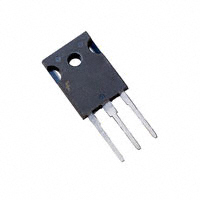
SMPS Series N-Channel
IGBT with Anti-Parallel
Hyperfast Diode
600 V
HGTG7N60A4D,
HGTP7N60A4D,
HGT1S7N60A4DS
www.onsemi.com
The HGTG7N60A4D, HGTP7N60A4D and HGT1S7N60A4DS
are MOS gated high voltage switching devices combining the best
features of MOSFETs and bipolar transistors. These devices have the
high input impedance of a MOSFET and the low on−state conduction
loss of a bipolar transistor. The much lower on−state voltage drop
varies only moderately between 25°C and 150°C. The IGBT used is
the development type TA49331. The diode used in anti−parallel is the
development type TA49370.
This IGBT is ideal for many high voltage switching applications
operating at high frequencies where low conduction losses are
essential. This device has been optimized for high frequency switch
mode power supplies.
Formerly Developmental Type TA49333.
TO−247−3LD
CASE 340CK
TO−220−3LD
CASE 340AT
Features
•
•
•
•
•
•
•
>100 kHz Operation at 390 V, 7 A
200 kHz Operation at 390 V, 5 A
600 V Switching SOA Capability
Typical Fall Time: 75 ns at TJ = 125°C
Low Conduction Loss
Temperature Compensating SABER™ Model www.onsemi.com
These Devices are Pb−Free, Halogen Free/BFR Free and are RoHS
Compliant
D2PAK−3
CASE 418AJ
MARKING DIAGRAMS
$Y&Z&3&K
G7N60A4D
$Y&Z&3&K
G7N60A4D
$Y&Z&3&K
G7N60A4D
&Y
&Z
&3
&K
G7N60A4D
= ON Semiconductor Logo
= Assembly Plant Code
= 3−Digit Date Code
= 2−Digit Lot Traceability Code
= Specific Device Code
ORDERING INFORMATION
See detailed ordering and shipping information on page 2 of
this data sheet.
© Semiconductor Components Industries, LLC, 2005
May, 2020 − Rev. 2
1
Publication Order Number:
HGTG7N60A4D/D
�HGTG7N60A4D, HGTP7N60A4D,
ORDERING INFORMATION
NOTE:
PART NUMBER
PACKAGE
BRAND
HGTG7N60A4D
TO−247
G7N60A4D
HGTP7N60A4D
TO−220AB
G7N60A4D
HGT1S7N60A4DS
TO−263AB
G7N60A4D
When ordering, use the entire part number. Add the suffix 9A to obtain the TO−263AB variant in tape and reel, e.g.,
HGT1S7N60A4DS9A.
PACKAGING
Figure 1.
ABSOLUTE MAXIMUM RATINGS TC = 25°C Unless Otherwise Specified
Symbol
All Types
Units
BVCES
600
V
IC25
IC110
34
14
A
A
ICM
56
A
Gate to Emitter Voltage Continuous
VGES
±20
V
Gate to Emitter Voltage Pulsed
VGEM
±30
V
Switching Safe Operating Area at TJ = 150°C (Figure 1)
SSOA
35 A at 600 V
PD
125
1.0
W
W/°C
TJ, TSTG
−55 to 150
°C
TL
TPKG
300
260
Description
Collector to Emitter Voltage
Collector Current Continuous
At TC = 25°C
At TC = 110°C
Collector Current Pulsed (Note 1)
Power Dissipation Total at TC = 25°C
Power Dissipation Derating TC > 25°C
Operating and Storage Junction Temperature Range
Maximum Lead Temperature for Soldering
Leads at 0.063 in (1.6 mm) from case for 10 s
Package Body for 10 s, see Tech Brief 334
Stresses exceeding those listed in the Maximum Ratings table may damage the device. If any of these limits are exceeded, device functionality
should not be assumed, damage may occur and reliability may be affected.
1. Pulse width limited by maximum junction temperature.
www.onsemi.com
2
�HGTG7N60A4D, HGTP7N60A4D,
ELECTRICAL SPECIFICATIONS TJ = 25 °C Unless Otherwise Specified
PARAMETER
SYMBOL
Collector to Emitter Breakdown Voltage
BVCES
Collector to Emitter Leakage Current
Collector to Emitter Saturation Voltage
Gate to Emitter Threshold Voltage
Gate to Emitter Leakage Current
Switching SOA
Gate to Emitter Plateau Voltage
On−State Gate Charge
Current Turn−On Delay Time
Current Rise Time
Current Turn−Off Delay Time
ICES
VCE(SAT)
VGE(TH)
IGES
−
−
V
VCE = 600 V
TC = 25°C
−
−
250
mA
TC = 125°C
−
−
2
mA
IC = 7 A,
VGE = 15 V
TC = 25°C
−
1.9
2.7
V
TC = 150°C
−
1.6
2.2
V
4.5
5.9
7
V
IC = 250 mA, VCE = 600 V
−
±250
nA
−
−
A
VGEP
IC = 7 A, VCE = 300 V
−
9
−
V
IC = 7 A,
VCE = 300 V
VGE = 15 V
−
37
45
nC
VGE = 20 V
−
48
60
nC
−
11
−
ns
−
11
−
ns
−
100
−
ns
−
45
−
ns
QG(ON)
td(ON)I
trI
td(OFF)I
EON2
EOFF
Current Turn−On Delay Time
td(ON)I
trI
td(OFF)I
Current Fall Time
tfI
Turn−On Energy
EON1
EON2
Turn−Off Energy (Note 3)
EOFF
Diode Forward Voltage
VEC
Thermal Resistance Junction To Case
600
IC = 250 mA, VGE = 0 V
−
Turn−Off Energy (Note 3)
Diode Reverse Recovery Time
UNITS
35
EON1
Turn−On Energy
MAX
TJ = 150°C, RG = 25 Ω, VGE = 15 V,
L = 100 mH, VCE = 600 V
Turn−On Energy
Current Turn−Off Delay Time
TYP
VGE = ±20 V
tfI
Current Rise Time
MIN
SSOA
Current Fall Time
Turn−On Energy
TEST CONDITIONS
trr
RθJC
IGBT and Diode at TJ = 25°C,
ICE = 7 A,
VCE = 390 V,
VGE = 15 V,
RG = 25 Ω,
L = 1 mH,
Test Circuit (Figure 24)
−
55
−
mJ
−
120
150
mJ
−
60
75
mJ
−
10
−
ns
−
7
−
ns
−
130
150
ns
−
75
85
ns
−
50
−
mJ
−
200
215
mJ
−
125
170
mJ
IEC = 7 A
−
2.4
−
V
IEC = 7 A, dlEC/dt = 200 A/ms
−
34
−
ns
IEC = 1 A, dlEC/dt = 200 A/ms
−
22
−
ns
IGBT
−
−
1.0
°C/W
Diode
−
−
2.2
°C/W
IGBT and Diode at TJ = 150°C,
ICE = 7 A,
VCE = 390 V,
VGE = 15 V,
RG = 25 Ω,
L = 1 mH,
Test Circuit (Figure 24)
Product parametric performance is indicated in the Electrical Characteristics for the listed test conditions, unless otherwise noted. Product
performance may not be indicated by the Electrical Characteristics if operated under different conditions.
2. Values for two Turn−On loss conditions are shown for the convenience of the circuit designer. EON1 is the turn−on loss of the IGBT only. EON2
is the turn−on loss when a typical diode is used in the test circuit and the diode is at the same TJ as the IGBT. The diode type is specified
in Figure 24.
3. Turn−Off Energy Loss (EOFF) is defined as the integral of the instantaneous power loss starting at the trailing edge of the input pulse and
ending at the point where the collector current equals zero (ICE = 0 A). All devices were tested per JEDEC Standard No. 24−1 Method for
Measurement of Power Device Turn−Off Switching Loss. This test method produces the true total Turn−Off Energy Loss.
www.onsemi.com
3
�HGTG7N60A4D, HGTP7N60A4D,
ICE , COLLECTOR TO EMITTER CURRENT (A)
TYPICAL PERFORMANCE CURVES
VGE = 15V
30
25
20
15
10
5
0
25
75
50
100
125
150
40
TJ = 1505C, RG = 25 W, VGE = 15 V, L = 100 mH
30
20
10
0
0
100
TC , CASE TEMPERATURE (oC)
fMAX , OPERATING FREQUENCY (kHz)
500
TC
VGE
75oC 15V
200
30
fMAX1 = 0.05 / (td(OFF)I + td(ON)I)
RjJC = 1.05C/W, SEE NOTES
PC = CONDUCTION DISSIPATION
(DUTY FACTOR = 50%)
fMAX2 = (PD − PC) / (EON2 + EOFF)
TJ = 1255C, RG = 25 W, L = 1 mH, VCE = 390 V
1
CE
5
10
20
16
15
10
TJ = 25 oC
TJ = 150 o C
0.5
1.0
1.5
2.0
2.5
3.0
ICE , COLLECTOR TO EMITTER CURRENT (A)
ICE, COLLECTOR TO EMITTER CURRENT (A)
20
0
700
140
120
ISC
12
100
10
80
8
60
tSC
6
4
10
11
12
13
40
14
20
15
Figure 4. SHORT CIRCUIT WITHSTAND TIME
TJ = 125 o C
0
600
VGE , GATE TO EMITTER VOLTAGE (V)
DUTY CYCLE < 0.5%, VGE = 12 V
PULSE DURATION = 250 ms
5
500
14
Figure 3. OPERATING FREQUENCY vs
COLLECTOR TO EMITTER CURRENT
25
400
VCE = 390 V, RG = 25 W, TJ = 1255C
I CE , COLLECTOR TO EMITTER CURRENT (A)
30
300
Figure 2. MINIMUM SWITCHING SAFE
OPERATING AREA
tSC , SHORT CIRCUIT WITHSTAND TIME (ms)
Figure 1. DC COLLECTOR CURRENT vs CASE
TEMPERATURE
100
200
VCE, COLLECTOR TO EMITTER VOLTAGE (V)
ISC , PEAK SHORT CIRCUIT CURRENT (A)
ICE , DC COLLECTOR CURRENT (A)
35
30
DUTY CYCLE < 0.5%, VGE = 15 V
PULSE DURATION = 250 ms
25
20
15
10
TJ = 125 oC
5
0
TJ = 150 oC
0
0.5
1.0
TJ = 25 oC
1.5
2.0
2.5
VCE , COLLECTOR TO EMITTER VOLTAGE (V)
VCE , COLLECTOR TO EMITTER VOLTAGE (V)
Figure 5. COLLECTOR TO EMITTER ON−STATE
VOLTAGE
Figure 6. COLLECTOR TO EMITTER ON−STATE
VOLTAGE
www.onsemi.com
4
3.0
�HGTG7N60A4D, HGTP7N60A4D,
TYPICAL PERFORMANCE CHARACTERISTICS (continued)
EON2 , TURN−ON ENERGY LOSS (m J)
500
350
R G = 25W, L = 1mH, V CE = 390V
R G = 25 W , L = 1mH, VCE = 390V
300
400
250
TJ = 125 oC, VGE = 12V, VGE = 15V
300
200
TJ = 125oC, VGE
150
200
100
100
50
TJ = 25 oC, VGE = 12V, VGE = 15V
0
0
2
4
6
8
10
12
0
14
TJ = 25oC, VGE = 12V OR 15V
0
ICE , COLLECTOR TO EMITTER CURRENT (A)
TJ = 125 oC, VGE = 12V
TJ = 25oC, VGE = 15V
10
8
trI , RISE TIME (ns)
td(ON)I , TURN−ON DELAY TIME (ns)
40
TJ = 125oC, VGE = 15V
12
14
20
10
TJ = 125oC, VGE = 12V, VGE = 15V
0
2
4
6
8
10
12
0
14
0
2
4
6
8
10
12
14
ICE , COLLECTOR TO EMITTER CURRENT (A)
Figure 9. TURN−ON DELAY TIME vs COLLECTOR
TO EMITTER CURRENT
180
90
RG = 25 W , L = 1mH, VCE = 390V
Figure 10. TURN−ON RISE TIME vs COLLECTOR
TO EMITTER CURRENT
RG = 25 W , L = 1mH, VCE = 390V
80
160
tfI , FALL TIME (ns)
td(OFF)I , TURN−OFF DELAY TIME (ns)
10
TJ = 25 oC, VGE = 12V, VGE = 15V
30
ICE , COLLECTOR TO EMITTER CURRENT (A)
VGE = 15V, TJ = 125oC
140
120
VGE = 12V, TJ = 125 oC
100
VGE = 15V, TJ = 25 oC
80
70
TJ = 125 oC, VGE = 12V OR 15V
60
50
TJ = 25 oC, VGE = 12V OR 15V
40
30
VGE = 12V, TJ = 25 oC
60
8
RG = 25 W , L = 1mH, VCE = 390V
TJ = 25oC, VGE = 12V
12
6
Figure 8. TURN−OFF ENERGY LOSS vs
COLLECTOR TO EMITTER CURRENT
R G = 25 W , L = 1mH, VCE = 390V
14
4
ICE , COLLECTOR TO EMITTER CURRENT (A)
Figure 7. TURN−ON ENERGY LOSS vs COLLECTOR
TO EMITTER CURRENT
16
2
0
2
4
6
8
10
12
20
14
0
ICE , COLLECTOR TO EMITTER CURRENT (A)
2
4
6
8
10
12
14
ICE , COLLECTOR TO EMITTER CURRENT (A)
Figure 11. TURN−OFF DELAY TIME vs
COLLECTOR TO
EMITTER CURRENT
Figure 12. FALL TIME vs COLLECTOR TO EMITTER
CURRENT
www.onsemi.com
5
�HGTG7N60A4D, HGTP7N60A4D,
120
VGE , GATE TO EMITTER VOLTAGE (V)
ICE , COLLECTOR TO EMITTER CURRENT (A)
TYPICAL PERFORMANCE CHARACTERISTICS (continued)
DUTY CYCLE < 0.5%, VCE = 10 V
PULSE DURATION = 250 ms
100
TJ = 25oC
80
TJ = 125 oC
60
TJ = −55 oC
40
20
0
7
8
9
10
11
12
13
14
15
VCE = 600V
12
VCE = 200V
6
3
0
5
RG = 25 W , L = 1mH, VCE = 390V, VGE = 15V
ETOTAL = E ON2 + E OFF
600
ICE = 14A
400
ICE = 7A
200
0
ICE = 3.5A
25
50
75
100
150
125
10
C, CAPACITANCE (nF)
1.2
1.0
CIES
0.6
0.4
COES
CRES
0
0
20
40
60
80
100
V CE , COLLECTOR TO EMITTER VOLTAGE (V)
FREQUENCY = 1MHz
0.2
25
20
30
35
40
ICE = 14A
1
ICE = 7A
ICE = 3.5A
0.1
10
1000
100
RG , GATE RESISTANCE (W)
Figure 15. TOTAL SWITCHING LOSS vs CASE
TEMPERATURE
0.8
15
TJ = 125 oC, L = 1mH, V CE = 390V, VGE = 15V
ETOTAL = E ON2 + E OFF
TC , CASE TEMPERATURE (oC)
1.4
10
Figure 14. GATE CHARGE WAVEFORMS
ETOTAL, TOTAL SWITCHING ENERGY LOSS (mJ)
ETOTAL, TOTAL SWITCHING ENERGY LOSS ( µJ)
Figure 13. TRANSFER CHARACTERISTIC
800
VCE = 400V
9
0
15
IG(REF) = 1mA, R L= 43 W , TJ = 25oC
Figure 16. TOTAL SWITCHING LOSS vs GATE
RESISTANCE
2.8
DUTY CYCLE < 0.5%, TJ = 25 oC
2.6
2.4
ICE= 14A
2.2
ICE = 7A
2.0
ICE = 3.5A
1.8
9
10
11
12
13
14
15
VGE , GATE TO EMITTER VOLTAGE (V)
VCE, COLLECTOR TO EMITTER VOLTAGE (V)
Figure 17. CAPACITANCE vs COLLECTOR TO
EMITTER VOLTAGE
Figure 18. COLLECTOR TO EMITTER ON−STATE
VOLTAGE
vs GATE TO EMITTER VOLTAGE
www.onsemi.com
6
16
�HGTG7N60A4D, HGTP7N60A4D,
TYPICAL PERFORMANCE CHARACTERISTICS (continued)
100
DUTY CYCLE < 0.5%,
PULSE DURATION = 250 ms
30
25
20
125oC
25oC
15
10
5
0
dI EC /dt = 200A/ms
60
125oC tb
40
125oC ta
20
25oC ta
25oC trr
25oC tb
0
1
2
3
4
0
5
0
4
2
V EC , FORWARD VOLTAGE (V)
IEC = 7A, VCE = 390V
50
125oC tb
40
125oC ta
30
25oC ta
20
25oC tb
10
100
200
300
400
500
10
8
12
14
Figure 20. DIODE FORWARD CURRENT vs
FORWARD VOLTAGE DROP
Qrr, REVERSE RECOVERY CHARGE (nc)
trr, RECOVERY TIMES (ns)
60
6
IEC , FORWARD CURRENT (A)
Figure 19. DIODE FORWARD CURRENT vs
FORWARD VOLTAGE DROP
600
500
VCE = 390V
125oC, IEC = 7A
400
300
125oC, IEC = 3.5A
200
25oC, IEC = 7A
100
700
0
100
di EC/dt, RATE OF CHANGE OF CURRENT (A/ms)
25oC, IEC = 3.5A
200
300
500
400
600
700
di EC/dt, RATE OF CHANGE OF CURRENT (A/m s)
Figure 21. RECOVERY TIMES vs RATE OF
CHANGE OF CURRENT
ZqJC, NORMALIZED THERMAL RESPONSE
125oC t rr
80
trr , RECOVERY TIMES (ns)
IEC , FORWARD CURRENT (A)
35
Figure 22. STORED CHARGE vs RATE OF
CHANGE OF CURRENT
100
0.5
0.2
10−1
0.1
t1
0.05
PD
0.02
t2
0.01
10−2 −5
10
DUTY FACTOR, D = t1 / t2
PEAK TJ = (PD X ZqJC X RqJC) + TC
SINGLE PULSE
10−4
10−3
10−2
10−1
100
Figure 23. IGBT NORMALIZED TRANSIENT THERMAL RESPONSE, JUNCTION TO CASE
www.onsemi.com
7
101
�HGTG7N60A4D, HGTP7N60A4D,
TEST CIRCUITS AND WAVEFORMS
HGTG7N60A4D
90%
10%
VGE
EON2
EOFF
L = 1mH
VCE
RG = 25 W
90%
DUT
+
−
ICE
VDD = 390V
Figure 24. INDUCTIVE SWITCHING TEST CIRCUIT
10%
td(OFF)I
trI
tfI
td(ON)I
Figure 25. SWITCHING TEST WAVEFORMS
OPERATING FREQUENCY INFORMATION
Operating frequency information for a typical device
(Figure 3) is presented as a guide for estimating device
performance for a specific application. Other typical
frequency vs collector current (ICE) plots are possible using
the information shown for a typical unit in Figures 6, 7, 8, 9
and 11. The operating frequency plot (Figure 3) of a typical
device shows fMAX1 or fMAX2; whichever is smaller at each
point. The information is based on measurements of a
typical device and is bounded by the maximum rated
junction temperature.
fMAX1 is defined by fMAX1 = 0.05/(td(OFF)I+ td(ON)I).
Deadtime (the denominator) has been arbitrarily held to
10% of the on−state time for a 50% duty factor. Other
definitions are possible. td(OFF)I and td(ON)I are defined in
Figure 25. Device turn−off delay can establish an additional
frequency limiting condition for an application other than
TJM. td(OFF)I is important when controlling output ripple
under a lightly loaded condition.
fMAX2 is defined by fMAX2 = (PD − PC)/(EOFF + EON2). The
allowable dissipation (PD) is defined by PD = (TJM - TC)/RθJC.
The sum of device switching and conduction losses must not
exceed PD. A 50% duty factor was used (Figure 3) and the
conduction losses (PC) are approximated by
HANDLING PRECAUTIONS FOR IGBTS
Insulated Gate Bipolar Transistors are susceptible to gate−
insulation damage by the electrostatic discharge of energy
through the devices. When handling these devices, care
should be exercised to assure that the static charge built in
the handler’s body capacitance is not discharged through the
device. With proper handling and application procedures,
however, IGBTs are currently being extensively used in
production by numerous equipment manufacturers in
military, industrial and consumer applications, with
virtually no damage problems due to electrostatic discharge.
IGBTs can be handled safely if the following basic
precautions are taken:
1. Prior to assembly into a circuit, all leads should be
kept shorted together either by the use of metal
shorting springs or by the insertion into conductive
material such as “ECCOSORBD™ LD26” or
equivalent
2. When devices are removed by hand from their
carriers, the hand being used should be grounded
by any suitable means − for example, with a
metallic wristband
3. Tips of soldering irons should be grounded
4. Devices should never be inserted into or removed
from circuits with power on
5. Gate Voltage Rating − Never exceed the
gate−voltage rating of VGEM. Exceeding the rated
VGE can result in permanent damage to the oxide
layer in the gate region
6. Gate Termination − The gates of these devices are
essentially capacitors. Circuits that leave the gate
open− circuited or floating should be avoided.
These conditions can result in turn−on of the
device due to voltage buildup on the input
capacitor due to leakage currents or pickup
7. Gate Protection - These devices do not have an
internal monolithic Zener diode from gate to
emitter. If gate protection is required an external
Zener is recommended
P C + (V CE
I CE)ń2
(eq. 1)
EON2 and EOFF are defined in the switching waveforms
shown in Figure 25. EON2 is the integral of the instantaneous
power loss (ICE x VCE) during turn−on and EOFF is the integral
of the instantaneous power loss (ICE x VCE) during turn−off.
All tail losses are included in the calculation for EOFF; i.e.,
the collector current equals zero (ICE = 0).
www.onsemi.com
8
�HGTG7N60A4D, HGTP7N60A4D,
Saber is a registered trademark of Sabremark Limited Partnership.
All brand names and product names appearing in this document are registered trademarks or trademarks of their respective holders.
www.onsemi.com
9
�HGTG7N60A4D, HGTP7N60A4D,
PACKAGE DIMENSIONS
TO−247−3LD SHORT LEAD
CASE 340CK
ISSUE A
A
DATE 31 JAN 2019
A
E
P1
P
A2
D2
Q
E2
S
B
D
1
2
D1
E1
2
3
L1
A1
L
b4
c
(3X) b
0.25 M
(2X) b2
B A M
DIM
(2X) e
A
A1
A2
b
b2
b4
c
D
D1
D2
E
E1
E2
e
L
L1
P
P1
Q
S
GENERIC
MARKING DIAGRAM*
AYWWZZ
XXXXXXX
XXXXXXX
XXXX = Specific Device Code
A
= Assembly Location
Y
= Year
WW = Work Week
ZZ
= Assembly Lot Code
*This information is generic. Please refer to
device data sheet for actual part marking.
Pb−Free indicator, “G” or microdot “G”, may
or may not be present. Some products may
not follow the Generic Marking.
www.onsemi.com
10
MILLIMETERS
MIN NOM MAX
4.58 4.70 4.82
2.20 2.40 2.60
1.40 1.50 1.60
1.17 1.26 1.35
1.53 1.65 1.77
2.42 2.54 2.66
0.51 0.61 0.71
20.32 20.57 20.82
13.08
~
~
0.51 0.93 1.35
15.37 15.62 15.87
12.81
~
~
4.96 5.08 5.20
~
5.56
~
15.75 16.00 16.25
3.69 3.81 3.93
3.51 3.58 3.65
6.60 6.80 7.00
5.34 5.46 5.58
5.34 5.46 5.58
�HGTG7N60A4D, HGTP7N60A4D,
TO−220−3LD
CASE 340AT
ISSUE A
Scale 1:1
www.onsemi.com
11
DATE 03 OCT 2017
�HGTG7N60A4D, HGTP7N60A4D,
D2PAK−3 (TO−263, 3−LEAD)
CASE 418AJ
ISSUE E
SCALE 1:1
GENERIC MARKING DIAGRAMS*
XX
XXXXXXXXX
AWLYWWG
IC
XXXXXXXXG
AYWW
Standard
AYWW
XXXXXXXXG
AKA
Rectifier
XXXXXX
XXYMW
SSG
www.onsemi.com
12
DATE 25 OCT 2019
XXXXXX = Specific Device Code
A
= Assembly Location
WL
= Wafer Lot
Y
= Year
WW
= Work Week
W
= Week Code (SSG)
M
= Month Code (SSG)
G
= Pb−Free Package
AKA
= Polarity Indicator
*This information is generic. Please refer to
device data sheet for actual part marking.
Pb−Free indicator, “G” or microdot “ G”,
may or may not be present. Some products
may not follow the Generic Marking.
�HGTG7N60A4D, HGTP7N60A4D,
ON Semiconductor and
are trademarks of Semiconductor Components Industries, LLC dba ON Semiconductor or its subsidiaries in the United States and/or other countries.
ON Semiconductor owns the rights to a number of patents, trademarks, copyrights, trade secrets, and other intellectual property. A listing of ON Semiconductor’s product/patent
coverage may be accessed at www.onsemi.com/site/pdf/Patent−Marking.pdf. ON Semiconductor reserves the right to make changes without further notice to any products herein.
ON Semiconductor makes no warranty, representation or guarantee regarding the suitability of its products for any particular purpose, nor does ON Semiconductor assume any liability
arising out of the application or use of any product or circuit, and specifically disclaims any and all liability, including without limitation special, consequential or incidental damages.
Buyer is responsible for its products and applications using ON Semiconductor products, including compliance with all laws, regulations and safety requirements or standards,
regardless of any support or applications information provided by ON Semiconductor. “Typical” parameters which may be provided in ON Semiconductor data sheets and/or
specifications can and do vary in different applications and actual performance may vary over time. All operating parameters, including “Typicals” must be validated for each customer
application by customer’s technical experts. ON Semiconductor does not convey any license under its patent rights nor the rights of others. ON Semiconductor products are not
designed, intended, or authorized for use as a critical component in life support systems or any FDA Class 3 medical devices or medical devices with a same or similar classification
in a foreign jurisdiction or any devices intended for implantation in the human body. Should Buyer purchase or use ON Semiconductor products for any such unintended or unauthorized
application, Buyer shall indemnify and hold ON Semiconductor and its officers, employees, subsidiaries, affiliates, and distributors harmless against all claims, costs, damages, and
expenses, and reasonable attorney fees arising out of, directly or indirectly, any claim of personal injury or death associated with such unintended or unauthorized use, even if such
claim alleges that ON Semiconductor was negligent regarding the design or manufacture of the part. ON Semiconductor is an Equal Opportunity/Affirmative Action Employer. This
literature is subject to all applicable copyright laws and is not for resale in any manner.
PUBLICATION ORDERING INFORMATION
LITERATURE FULFILLMENT:
Email Requests to: orderlit@onsemi.com
ON Semiconductor Website: www.onsemi.com
◊
TECHNICAL SUPPORT
North American Technical Support:
Voice Mail: 1 800−282−9855 Toll Free USA/Canada
Phone: 011 421 33 790 2910
www.onsemi.com
13
Europe, Middle East and Africa Technical Support:
Phone: 00421 33 790 2910
For additional information, please contact your local Sales Representative
�