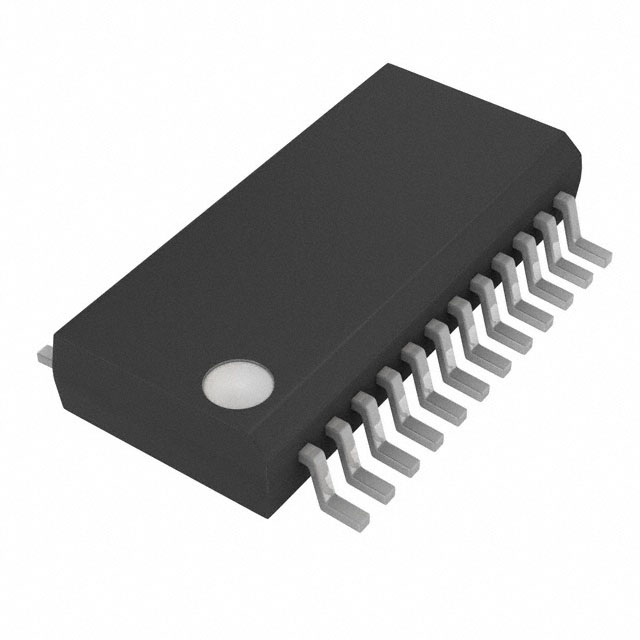
Ordering number : ENN6974A
CMOS IC
LC72148V
Electronic Tuning PLL Frequency Synthesizer
for Car Stereo Systems
Package Dimensions
unit: mm
3175B-SSOP24
[LC72148V]
7.8
24
1
(0.33)
0.65
7.6
0.15
0.22
0.1
(1.3)
• High-speed programmable divider
— FMIN: 10 to 180 MHz ... Pulse swallower technique
— AMIN: 2 to 40 MHz ... Pulse swallower technique
0.5 to 10 MHz ... Direct division technique
• IF counters
— HCTR: 0.4 to 25 MHz ... Frequency measurement
— LCTR: 10 to 500 kHz ... Frequency measurement
1.0 to 20 × 103 Hz ... Period measurement
• Reference frequency
— One of 12 reference frequencies can be selected
(Crystal resonator: 7.2 or 4.5 MHz)
1, 3, 5, 9, 10, 3.125, 6.25, 12.5, 25, 30, 50, and
100 kHz
• Phase comparator
— Provides dead zone control
— Built-in unlock detection circuit
— Built-in deadlock clear circuit
— Sub-charge pump for high-speed locking
• Built-in MOS transistor for implementing an active lowpass filter
0.5
Functions
5.6
The LC72148V is a 3 V version of the LC72146 PLL
frequency synthesizer that can easily implement a variety
of 3 V power supply tuners, including in-car navigation
system receivers based on the VICS FM multiplex system.
• I/O ports: Five general-purpose I/O ports.
— Input: 7 pins (maximum)
— Output: 7 pins (maximum. N-channel: 4 pins,
CMOS: 3 pins)
— A clock time base signal (8 Hz) can be output.
• Serial data I/O
— Supports communication with a controller in the
CCB format.
— Uses the same serial data as the LC72146.
• Operating ranges
— Supply voltage: 2.7 to 3.6 V
— Operating temperature: –40 to +85°C
• Package
— SSOP24
1.5max
Overview
SANYO: SSOP24
• CCB is a trademark of SANYO ELECTRIC CO., LTD.
• CCB is SANYO’s original bus format and all the bus
addresses are controlled by SANYO.
Any and all SANYO products described or contained herein do not have specifications that can handle
applications that require extremely high levels of reliability, such as life-support systems, aircraft’s
control systems, or other applications whose failure can be reasonably expected to result in serious
physical and/or material damage. Consult with your SANYO representative nearest you before using
any SANYO products described or contained herein in such applications.
SANYO assumes no responsibility for equipment failures that result from using products at values that
exceed, even momentarily, rated values (such as maximum ratings, operating condition ranges, or other
parameters) listed in products specifications of any and all SANYO products described or contained
herein.
SANYO Electric Co.,Ltd. Semiconductor Company
TOKYO OFFICE Tokyo Bldg., 1-10, 1 Chome, Ueno, Taito-ku, TOKYO, 110-8534 JAPAN
41202RM (OT)/70601RM (OT) No. 6974-
�LC72148V
XIN
VSSa
AOUT
AIN
PD0
PD1
VSSd
FMIN
AMIN
VDD
HCTR/I-6
LCTR/I-7
24
23
22
21
20
19
18
17
16
15
14
13
1
2
3
4
5
6
7
8
9
10
11
12
XOUT
CE
DI
CL
DO
O-7
O-6
I/O-5
I/O-4
I/O-3
I/O-2
I/O-1
Pin Assignment
Block Diagram
19 PD1
Phase detector
charge pump
Reference
divider
XIN 24
20 PD0
XOUT 1
Swallow counter
1/16, 1/17 4 bits
FMIN 17
AMIN 16
14 HCTR/I-6
13 LCTR/I-7
12 bits programmable divider
CE 2
DI 3
CL 4
Universal
counter
CCB
I/F
Data shift register latch
21 AIN
22 AOUT
DO 5
23 VSSa
VDD 15
Power on
reset
VSSd 18
12
11
10
9
8
7
6
I/O-1
I/O-2
I/O-3
I/O-4
I/O-5
O-6
O-7
No. 6974-2/21
�LC72148V
Specifications
Absolute Maximum Ratings at Ta = 25°C, Vssd = Vssa = 0 V
Parameter
Symbol
Supply voltage
Maximum input voltage
Maximum output voltage
Maximum output current
Allowable power dissipation
Conditions
Ratings
Unit
VDD max
VDD
–0.3 to +7.0
VIN1 max
CE, CL, DI
–0.3 to +7.0
V
VIN2 max
XIN, FMIN, AMIN, HCTR/I-6, LCTR/I-7, AIN, I/O-4, I/O-5
–0.3 to VDD + 0.3
V
–0.3 to +15.0
V
VIN3 max
I/O-1, I/O-2, I/O-3
VO1 max
DO
VO2 max
XOUT, I/O-4, I/O-5, O-6, PD0, PD1, AIN
V
–0.3 to +7.0
V
–0.3 to VDD + 0.3
V
VO3 max
I/O-1, I/O-2, I/O-3, AOUT, O-7
IO1 max
I/O-4, I/O-5, O-6, O-7
0 to 3.0
mA
mA
–0.3 to +15.0
V
IO2 max
DO, AOUT
0 to 6.0
IO3 max
I/O-1, I/O-2, I/O-3
0 to 10
mA
Pd max
(Ta ≤ 85°C) SSOP24
140
mW
Operating temperature
Topr
–40 to +85
°C
Storage temperature
Tstg
–55 to +125
°C
Allowable Operating Conditions at Ta = 25°C, Vssd = Vssa = 0 V
Parameter
Supply voltage
High-level input voltage
Low-level input voltage
Output voltage
Input frequency
Input amplitude
Guaranteed operation range for
crystal resonator
Notes:
Symbol
Conditions
Ratings
min
typ
VDD1
VDD
2.7
VDD2
VDD: Serial data retained
1.5
Unit
max
3.6
V
V
VIH1
CE, CL, DI, I/O-1, I/O-2, I/O-3
0.7 VDD
6.5
V
VIH2
I/O-4, I/O-5, HCTR/I-6, LCTR/I-7
0.7 VDD
VDD
V
VIH3
LCTR/I-7: Pulse waveform
0.7 VDD
VDD
V
VIL1
CE, CL, DI, I/O-1 to I/O-5,
HCTR/I-6, LCTR/I-7
0
0.3 VDD
V
VIL2
LCTR/I-7: Pulse waveform
0
0.3 VDD
V
VO1
DO
0
6.5
V
VO2
I/O-1, I/O-2, I/O-3, O-7, AOUT
0
13
V
fIN1
XIN: VIN1 *1
1
8
MHz
fIN2
FMIN: VIN2 *1
10
180
MHz
fIN3
AMIN (SNS = 1): VIN3 *1
2
40
MHz
fIN4
AMIN (SNS = 0): VIN4 *1
0.5
10
MHz
fIN5
HCTR/I-6: VIN5 *1
0.4
25
MHz
fIN6
LCTR/I-7: VIN6 *1
10
500
kHz
fIN7
LCTR/I-7 *2
1.0
20 × 103
VIN1
XIN: fIN1
200
900
mVrms
mVrms
Hz
VIN2-1
FMIN: f = 10 to 130 MHz
20
900
VIN2-2
FMIN: f = 130 to 180 MHz
40
900
mVrms
VIN3
AMIN (SNS = 1): fIN3
40
900
mVrms
VIN4
AMIN (SNS = 0): fIN4
40
900
mVrms
VIN5-1
HCTR/I-3 (CTC = 0): f = 0.4 to 25 MHz
40
900
mVrms
VIN5-2
HCTR/I-3 (CTC = 1): f = 8 to 12 MHz
70
900
mVrms
VIN6-1
LCTR/I-4 (CTC = 0): f = 10 to 400 kHz
40
900
mVrms
VIN6-2
LCTR/I-4 (CTC = 0): f = 400 to 500 kHz
20
900
mVrms
VIN6-3
LCTR/I-4 (CTC = 1): f = 400 to 500 kHz
70
900
mVrms
XIN, XOUT *3
4.0
8.0
MHz
X’tal
1. Sine wave, capacitance coupling
2. Pulse waveform, DC coupling (period measurement)
3. Recommended CI values for the crystal resonator: CI ≤ 120Ω (4.5 MHz) or CI ≤ 70Ω (7.2 MHz)
No. 6974-3/21
�LC72148V
Electrical Characteristics for the Allowable Operating Ranges
Parameter
Internal feedback resistors
Symbol
Hysteresis
High-level output voltage
1
MΩ
FMIN
500
kΩ
Rf3
AMIN
500
kΩ
Rf4
HCTR/I-6
250
kΩ
LCTR/I-7
250
Rpd1
FMIN
80
Rpd2
AMIN
80
VHIS
CE, CL, DI, LCTR/I-7
VOH1
kΩ
200
600
kΩ
200
600
kΩ
0.1 VDD
V
PD0, PD1, I/O-4, I/O-5, O-6, IO = –0.5 mA
VDD – 0.5
V
PD0, PD1, I/O-4, I/O-5, O-6, IO = –1 mA
VDD – 1.0
V
AIN, IO = –5 mA
VDD – 1.0
V
PD0, PD1, I/O-4, I/O-5, O-6, O-7, IO = 0.5 mA
0.5
V
PD0, PD1, I/O-4, I/O-5, O-6, O-7, IO = 1.0 mA
1.0
V
AIN, IO = 5 mA
1.0
V
I/O-1, I/O-2, I/O-3, IO = 1 mA
0.2
V
I/O-1, I/O-2, I/O-3, IO = 2.5 mA
0.5
V
I/O-1, I/O-2, I/O-3, IO = 5 mA
1.0
V
I/O-1, I/O-2, I/O-3, IO = 9 mA
1.8
V
VOL4
DO, IO = 5 mA
1.0
V
VOL5
VOL2
Low-level input current
Unit
max
XIN
VOL1
High-level input current
typ
Rf2
VOH2
Low-level output voltage
Ratings
min
Rf1
Rf5
Internal pull-down resistors
Conditions
VOL3
AOUT, IO = 10 mA, AIN = 2.0 V
1.5
V
IIH1
CE, CL, DI, VI = 6.5 V
5.0
µA
IIH2
I/O-1, I/O-2, I/O-3, VI = 13 V
5.0
µA
IIH3
I/O-4, I/O-5, HCTR/I-6, LCTR/I-7, VI = VDD
5.0
µA
IIH4
XIN, VI = VDD
1.3
8
µA
IIH5
FMIN, AMIN, VI = VDD
2.5
15
µA
IIH6
HCTR/I-6, LCTR/I-7, VI = VDD
5.0
30
µA
IIL1
CE, CL, DI, VI = 0 V
5.0
µA
IIL2
I/O-1, I/O-2, I/O-3, VI = 0 V
5.0
µA
IIL3
HCTR/I-6, LCTR/I-7, VI = 0 V
5.0
µA
µA
IIL4
XIN, VI = 0 V
1.3
8
IIL5
FMIN, AMIN, VI = 0 V
2.5
15
µA
IIL6
HCTR/I-6, LCTR/I-7, VI = 0 V
5.0
30
µA
IOFF1
I/O-1, I/O-2, I/O-3, O-7, AOUT, VO = 13 V
5.0
µA
IOFF2
DO, VO = 6.5 V
5.0
µA
High-level three-state off leakage
current
IOFFH
PD0, PD1, AIN, VO = VDD
0.01
200
nA
Low-level three-state off leakage
current
IOFFL
PD0, PD1, AIN, VO = 0 V
0.01
200
nA
Output off leakage current
Input capacitance
Supply current
CIN
FMIN
6
IDD1
VDD, X’tal = 7.2 MHz, fIN2 = 180 MHz, VIN2 = 40 mVrms,
fIN5 = 25 MHz, VIN5 = 40 mVrms
3
8
mA
IDD2
VDD, With the PLL block stopped. (PLL INHIBIT)
With the crystal oscillator operating.
(Crystal frequency = 7.2 MHz)
0.5
1.5
mA
IDD3
VDD, With the PLL block stopped.
With the crystal oscillator stopped.
10
µA
pF
No. 6974-4/21
�LC72148V
Pin Functions
Pin No.
Symbol
24
XIN
1
XOUT
Type
X’tal
Function
Pin circuit
• Crystal resonator connections (7.2 or 4.5 MHz)
• FMIN is selected when DVS in the serial data input is set to 1.
17
FMIN
Local oscillator
signal input
• The input frequency range is 10 to 180 MHz.
• The signal is directly transmitted to the swallow counter.
• The divisor can be set to a value in the range 272 to 65,535.
• AMIN is selected when DVS in the serial data input is set to 0.
• When SNS in the serial data input is set to 1:
—The input frequency range is 2 to 40 MHz.
—The signal is directly transmitted to the swallow counter.
16
AMIN
Local oscillator
signal input
—The divisor can be set to a value in the range 272 to 65,535.
• When SNS in the serial data input is set to 0:
—The input frequency range is 0.5 to 10 MHz.
—The signal is directly transmitted to the 12-bit programmable divider.
—The divisor can be set to a value in the range 5 to 4,095.
2
CE
Chip enable
• This pin must be set to the high level during serial data input (DI) from, or
serial data output (DO) to, the LC72148V.
S
3
DI
Input data
• Input pin for serial data transmitted from the controller to the LC72148V.
S
4
CL
Clock
• Data synchronization clock used during serial data input (DI) from, or
serial data output (DO) to, the LC72148V.
S
5
DO
Output data
15
VDD
Power supply
18
VSSd
Ground
• Data output pin for data output from the LC72148V to the controller.
21
AIN
22
AOUT
23
VSSa
The content of the data output is determined by the ULD, DT0, and DT1
bits in the serial data.
• The LC72148V power supply pin. (VDD = 2.7 to 3.6 V)
• The power-on reset circuit operates when power is first applied.
• Digital system ground for the LC72148V
———
———
• Connections to the internal n-channel MOS transistor provided to
implement an active low-pass filter for the PLL.
Low-pass filter
amplifier transistor
• A high-speed locking circuit can be implemented by using these pins in
conjunction with the built-in sub-charge pump.
• See the item describing the structure of the charge pump for details.
• Vssa is a dedicated ground pin.
• Input/output shared-function pins
• In output mode, the circuits are open-drain outputs.
• The I/O direction is determined by I/O-1 to I/O-3 in the serial data.
When the data is 0: input port
When 1: output port
12
I/O-1
11
I/O-2
10
I/O-3
• When specified for use as input ports
General-purpose
I/O ports
The input pin states are transmitted from the DO pin to the controller
Input state = low : Data = 0
Input state = high : Data = 1
• When specified for use as output ports
The output states are determined by OUT1 to OUT3 in the serial data.
Data = 0 : low
Data = 1 : open
• These pins are set to function as input ports by the power-on reset.
Continued on next page.
No. 6974-5/21
�LC72148V
Continued from preceding page.
Pin No.
Symbol
Type
Function
9
I/O-4
8
I/O-5
General-purpose
I/O ports
• Input/output shared-function pins
• In output mode, the circuits are complementary outputs.
• The I/O direction is determined by I/O-4 and I/O-5 in the serial data.
When the data is 0: input port
When 1: output port
• When specified for use as input ports
The input pin states are transmitted from the DO pin to the controller
Input state = low : Data = 0
Input state = high : Data = 1
• When specified for use as output ports
The output states are determined by OUT4 and OUT5 in the serial data.
Data = 0 : low
Data = 1 : high
• These pins are set to function as input ports by the power-on reset.
7
O-6
Output port
• The OUT6 bit in the serial data is latched and output from O-6.
6
O-7
Output port
• The OUT7 bit in the serial data is latched and output from O-7.
• This pin outputs the 8 Hz clock time base signal when TBC is 1.
• This pin is set to the open state by the power-on reset.
Pin circuit
• PLL charge pump output pins
20
PD0
19
PD1
Charge pump
output
When the frequency created by dividing the local oscillator signal
frequency by N is higher than the reference frequency, a high level is
output from the PD0 pin, and when lower, a low level is output. When the
frequencies match, PD0 goes to the high-impedance state.
• PD1 operates in a similar manner.
14
13
HCTR/I-6
LCTR/I-7
General-purpose
counter
• HCTR is selected when CTS1 in the serial data input is set to 1.
—The input frequency range is 0.4 to 25 MHz
—The signal is passed through an internal divide-by-two circuit and
transmitted to a general-purpose counter. An integrating count can also
be performed.
—The result is output starting with the MSB of the general-purpose
counter from the DO pin.
—There are four counting time periods: 4, 8, 32, or 64 ms.
—See the item on the general-purpose counter for details.
• When H/I-6 in the serial data is set to 0
— This pin functions as an input port, and its state is output from the DO
output pin.
General-purpose
counter
• LCTR is selected when CTS1 in the serial data input is set to 0.
• When CTS0 in the serial data input is set to 1 in the CTS1=0 state.
—The circuit operates in frequency measurement mode.
—The input frequency range is 10 to 500 kHz.
—The signal is transmitted directly to the general-purpose counter.
• When CTS0 in the serial data input is set to 0
—The circuit operates in period measurement mode.
—The input frequency range is 1 Hz to 20 kHz.
—The measurement period can be set to be either 1 period or 2 periods.
If 2-period measurement is selected, the input frequency range will be
2 Hz to 40 kHz.
—The result is output starting with the MSB of the general-purpose
counter from the DO pin.
—See the item on the general-purpose counter for details.
• When L/I-7 in the serial data input is set to 0.
—This pin functions as an input port, and its state is output from the DO
output pin.
S
No. 6974-6/21
�LC72148V
Procedures for input and output of serial data
Data is input and output using CCB (Computer Control Bus), which is SANYO’s audio IC serial bus format. This IC
adopts the 8-bit address version of the CCB format.
I/O mode
Address
B0
B1
B2
B3
A0
A1
A2
A3
0
0
0
1
0
0
1
0
Description
• Control data input (serial data input) mode
1
IN1 (84)
• 32 bits of data are input.
• See the “Structure of the DI control data (serial data input)” item for the content of the input data.
• Control data input (serial data input) mode
2
IN2 (94)
1
0
0
1
0
0
1
0
• 32 bits of data are input.
• See the “Structure of the DI control data (serial data input)” item for the content of the input data.
• Data output (serial data output) mode
3
OUT (A4)
0
1
0
1
0
0
1
0
• The number of bits of data output is equal to the number of clock cycles.
• See the "Structure of the DO output data (serial data output)" item for the content of the
output data.
I/O mode determined
CE
CL
DI
B0
B1
B2
B3
A0
A1
A2
A3
First Data IN1/2
DO
First Data OUT
No. 6974-7/21
�(10) Unlock
(11) XTAL
(6) U-CTR
(12) DZ-C
(15) TEST
No. 6974-8/21
(13) PD-L
(2) PD-C
(3) R-CTR
(4) DO-C
(5) Don’t care
(6) U-CTR
LC72148V
(4) DO-C
Structure of the DI control data (serial data input)
(9) U/I-C
Address
(8) O-PORT
(1) P-CTR
P0
P1
P2
P3
P4
P5
P6
P7
P8
P9
P10
P11
P12
P13
P14
P15
SNS
DVS
PDC0
PDC1
R0
R1
R2
R3
DT0
DT1
*
CTE
CTS0
CTS1
GT0
GT1
0 0 0 1 0 0 1 0
(14) TIME
[1] IN1 mode
[2] IN2 mode
(5) Don’t care
Address
(7) I/O-C
*
I/O-1
I/O-2
I/O-3
I/O-4
I/O-5
*
*
TBC
OUT1
OUT2
OUT3
OUT4
OUT5
OUT6
OUT7
H/I-6
L/I-7
IL0
IL1
ULD
UL0
UL1
XS
CTP
CTC
DZ0
DZ1
TEST0
TEST1
TEST2
DLC
1 0 0 1 0 0 1 0
(5) Don’t care
�LC72148V
DI control data functions
Number
Control block/data
Description
Related data
• This data sets the divisor provided by the programmable divider. This is a binary value with
P15 the MSB. The LSB depends on the DVS and SNS settings.
(*: don't care)
Programmable divider
data
(1)
P0 to P15
DVS, SNS
DVS
SNS
LSB
Set divisor (N)
1
*
P0
272 to 65535
0
1
P0
272 to 65535
0
0
P4
*: When P4 is the LSB, P0 to P3 are ignored.
4 to 4095
• DVS selects the input pin (FMIN or AMIN) whose signal is input to the programmable divider
and SNS switches the input frequency range.
DVS
SNS
Input pin
Input pin frequency range
1
*
FMIN
10 to 180 MHz
0
1
AMIN
2 to 40 MHz
0
0
AMIN
0.5 to 10 MHz
*: See the “Structure of the Programmable Divider” item for details.
• Sub-charge pump control data
(2)
Sub-charge pump control
data
PDC1
PDC0
0
*
High impedance
Sub-charge pump state
1
1
Charge pump operation (normal)
1
0
Charge pump operation (unlocked mode)
UL0
UL1
DLC
PDC0, PDC1
*: The sub-charge pump is connected to the gate of the low-pass filter amplifier transistor. A
high-speed locking circuit can be formed by using this function in conjunction with PD0 and
PD1 (main charge pump).
See the “Structure of the Charge Pump” item for details.
• Reference frequency selection data
(3)
Reference divider data
R0 to R3
R3
R2
R1
R0
Reference frequency
0
0
0
0
100 kHz
0
0
0
1
50
0
0
1
0
25
0
0
1
1
25
0
1
0
0
12.5
0
1
0
1
6.25
0
1
1
0
3.125
0
1
1
1
3.125
1
0
0
0
10
1
0
0
1
9
1
0
1
0
5
1
0
1
1
1
1
1
0
0
3
1
1
0
1
30
1
1
1
0
PLL inhibit + X’tal OSC stop
1
1
1
1
PLL inhibit
*: PLL INHIBIT
In this state, the programmable divider is stopped, the FMIN and AMIN pins are pulled down to
ground, and the charge pump goes to the high-impedance state.
Continued on next page.
No. 6974-9/21
�LC72148V
Continued from preceding page.
Number
Control block/data
Description
Related data
• This data selects the output from the DO pin.
ULD
DT1
DT0
DO pin state
0
0
0
Low when the unlocked state
is detected.
I/O-5 pin state
OUT5 *3
0
0
1
Open
0
1
0
end-UC *1
0
1
1
IN *2
1
0
0
Open
1
0
1
Open
1
1
0
end-UC *1
1
1
1
IN *2
Low when the unlocked state
is detected. *3
*1. end-UC is the general-purpose counter measurement complete check function.
DO pin
(1) Counting starts
DO and I/O-5 pin control
data
(4)
ULD
DT0, DT1
IL0, IL1
(2) Counting completes
(3) CE: HI
(1) When end-UC is set and the counter started (CTE = 0 → 1), the DO pin automatically goes to
the open state.
(2) When the general-purpose counter measurement completes, the DO pin goes to the low
level, and it becomes possible to check for the count complete state.
(3) The DO pin goes to the open state due to the I/O of serial data (when the CE pin is high).
CTE
OUT5
I/O-1
I/O-2
I/O-5
*2
IL1
IL0
0
0
Open
IN
0
1
I-1 (pin state)
1
0
I-2 (pin state)
1
1
DO goes low when I-1 changes state.
However, when the I/O-1 and I/O-2 pins are specified to be output ports, IN will go to the open
state.
*3: This is invalid if the I/O-5 pin is specified to be an input port.
Note: The DO pin will be in the open state, regardless of the state of the DO pin control data,
during the data input period (the period when CE is high in IN1 or IN2 mode).
Furthermore, the DO pin will output the content of the internal DO serial data in
synchronization with CL, regardless of the state of the DO pin control data during the data
output period (the period when CE is high in OUT mode).
DO cannot be used (it does not change state) in crystal oscillator stopped mode (R0=0,
R1=R2=R3=1).
(5)
*
Don’t Care
Continued on next page.
No. 6974-10/21
�LC72148V
Continued from preceding page.
Number
Control block/data
Description
Related data
• CTS1 and CTS0 select the input pin (HCTR or LCTR) for the general-purpose counter.
General-purpose counter
control data
CTS0, CTS1
CTE
(6)
CTS1
CTS0
Input pin
1
*
HCTR
Measurement mode
Frequency
0
1
LCTR
Frequency
0
0
LCTR
Period
• CTE controls the general-purpose counter measurement operation.
CTE = 1: Starts the count
= 0: Resets the counter
• GT1 and GT0 determine the general-purpose counter measurement time (in frequency mode)
and number of periods (in period mode)
GT0, GT1
GT1
GT0
CTP
0
CTC
0
Frequency measurement
H/I-6
L/I-7
Period measurement
Measurement time
Wait time
0
4 ms
3 to 4 ms
1
8
3 to 4
1 period
1
0
32
7 to 8
2 periods
1
1
64
7 to 8
2 periods
1 period
• When CTE is 0, pulling down the input is disabled by setting CTP to 1.
Note: The wait time will be 1 to 2 ms.
However, CTP must be set to 1 at least 4 ms before CTE is set to 1.
• The input sensitivity is reduced when CTC is set to 1. (Sensitivity: 10 to 30 mVrms)
* See the “Structure of the General-Purpose Counter” item for details.
(7)
(8)
(9)
I/O port control data
I/O-1 to I/O-5
Output port data
OUT1 to OUT7
General-purpose counter
input control data
H/I-6, L/I-7
• This data specifies the I/O direction of the shared-function I/O pins (I/O-1 to I/O-5).
Data = 0: Input port
= 1: Output port
OUT1 to OUT5
ULD
• This data determines the output from the output ports O-1 to O-7.
Data = 0: Low
= 1: Open or high
• This data is invalid if input port operation or unlocked state output is specified.
I/O-1 to I/O-5
ULD
• Sets the general-purpose counter pins to function as input ports.
H/I-6 = 0: I-6 (input port)
= 1: HCTR (general-purpose counter)
L/I-3 = 0: I-7 (input port)
= 1: LCTR (general-purpose counter)
CTS0
CTS1
• UL0 and UL1 select the phase error (øE) detection width used for judging the PLL locked state.
If a phase error in excess of the widths listed in the table below occurs, the PLL will be seen to
be in the unlocked state. When unlocked, the detection pin goes low.
(* : don’t care)
(10)
Unlocked state detection
data
UL1
UL0
øE detection width
0
0
Stopped
Detection output
Open
0
1
0
øE is output directly.
1
0
±0.56 µs
øE is extended by 1 to 2 ms.
1
1
±1.11 µs
øE is extended by 1 to 2 ms.
UL0, UL1
ULD
DT0, DT1
øE
DO
1 to 2 ms
Extension
I/O-5
Unlocked state output
Continued on next page.
No. 6974-11/21
�LC72148V
Continued from preceding page.
Number
(11)
Control block/data
Crystal oscillator circuit
XS
Description
Related data
• Selects the crystal oscillator.
XS = 1: 7.2 MHz
= 0: 4.5 MHz
* The 4.5 MHz setting is selected after the power-on reset.
• Controls the phase comparator’s dead band.
(12)
Phase comparator
control data
DZ0, DZ1
DZ1
DZ0
Dead band mode
0
0
DZA
0
1
DZB
1
0
DZC
1
1
DZD
The width of the dead band settings: DZA < DZB