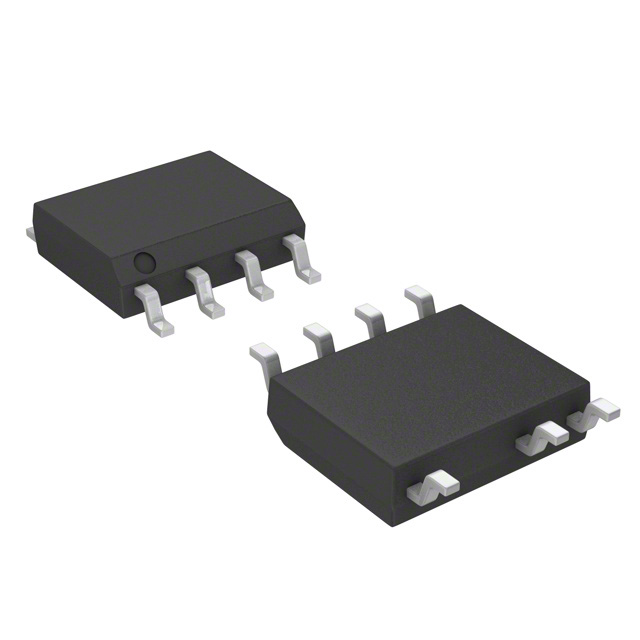
Power Factor Corrected
LED Driver with Primary
Side CC/CV
NCL30488
The NCL30488 is a power factor corrected flyback controller
targeting isolated constant current LED drivers. The controller
operates in a quasi−resonant mode to provide high efficiency. Thanks
to a novel control method, the device is able to tightly regulate a
constant LED current from the primary side. This removes the need
for secondary side feedback circuitry, its biasing and for an
optocoupler.
The device is highly integrated with a minimum number of external
components. A robust suite of safety protection is built in to simplify
the design.
www.onsemi.com
SOIC−7
CASE 751U
MARKING
DIAGRAM
Features
•
•
•
•
•
•
•
•
•
•
•
•
8
High Voltage Startup
Quasi−resonant Peak Current−mode Control Operation
Primary Side Feedback
CC / CV Accurate Control Vin up to 320 V rms
Tight LED Constant Current Regulation of ±2% Typical
Digital Power Factor Correction
Analog and Digital Dimming
Cycle by Cycle Peak Current Limit
Wide Operating VCC Range
−40 to + 125°C
Robust Protection Features
♦ Brown−Out
♦ OVP on VCC
♦ Constant Voltage / LED Open Circuit Protection
♦ Winding Short Circuit Protection
♦ Secondary Diode Short Protection
♦ Output Short Circuit Protection
♦ Thermal Shutdown
♦ Line over Voltage Protection
This is a Pb−Free Device
L30488XX
ALYWX
G
1
L30488
XX
A
L
YW
G
= Specific Device Code
= Version
= Assembly Location
= Wafer Lot
= Assembly Start Week
= Pb−Free Package
PIN CONNECTIONS
HV
COMP
1
ZCD
2
CS
3
6
VCC
GND
4
5
DRV
8
Typical Applications
• Integral LED Bulbs
• LED Power Driver Supplies
• LED Light Engines
© Semiconductor Components Industries, LLC, 2020
May, 2021 − Rev. 2
ORDERING INFORMATION
See detailed ordering and shipping information on page 21 of
this data sheet.
1
Publication Order Number:
NCL30488/D
�NCL30488
.
.
.
NCL30488
1
7
2
3
6
4
5
Figure 1. Typical Application Schematic for NCL30488
PIN FUNCTION DESCRIPTION NCL30488
Pin N5
Pin Name
Function
Pin Description
1
COMP
OTA output for CV loop
This pin receives a compensation network (capacitors and resistors) to stabilize the
CV loop
2
ZCD
Zero crossing Detection
Vaux sensing
This pin connects to the auxiliary winding and is used to detect the core reset event.
This pin also senses the auxiliary winding voltage for accurate output voltage control.
3
CS
Current sense
4
GND
−
5
DRV
Driver output
6
VCC
Supplies the controller
7
NC
creepage
8
HV
High Voltage sensing
This pin monitors the primary peak current.
The controller ground
The driver’s output to an external MOSFET
This pin is connected to an external auxiliary voltage.
This pin connects after the diode bridge to provide the startup current and internal
high voltage sensing function.
www.onsemi.com
2
�NCL30488
INTERNAL CIRCUIT ARCHITECTURE
STOP
VCV
Constant Voltage
Control
Thermal
Shutdown
Slow_OVP
CS_short
Fast_OVP
Leading
Edge
Blanking
Q_drv
VHVdiv
STOP
VCC Management
OFF
VCC
OVP
VCC_OVP
HV
Startup
HV
BO_NOK
Zero crossing detection Logic
(ZCD blanking, Time−Out, …)
Line
feed −forward
UVLO
VREFX VVS Slow_OVP
Valley Selection
Aux . Winding Short Circuit Prot.
CS
Fault
Management
Fast_OVP
Standby
ZCD
VCC
L_OVP
Aux_SCP
COMP
VHVdiv Standby
Power factor and
Constant−current control
Max. Peak
Current Limit
Winding /
Output diode
SCP
CS Short
Protection
L_OVP
VHVdiv
Frequency foldback
Aux_SCP
Brown−out
Line OVP
S
Q
R
Q
Q_drv
VREFX
CS_reset
Ipk_max
STOP
WOD_SCP
CS_short
GND
Figure 2. Internal Circuit Architecture NCL30488
www.onsemi.com
3
Maximum
on−time
Driver
and
Clamp
DRV
�NCL30488
MAXIMUM RATINGS TABLE
Symbol
VCC(MAX)
ICC(MAX)
Rating
Maximum Power Supply voltage, VCC pin, continuous voltage
Maximum current for VCC pin
VDRV(MAX) Maximum driver pin voltage, DRV pin, continuous voltage
IDRV(MAX) Maximum current for DRV pin
VHV(MAX)
IHV(MAX)
Value
Unit
−0.3 to 30
Internally limited
V
mA
−0.3, VDRV (Note 1)
−300, +500
V
mA
−0.3, +700
±20
V
mA
−0.3, 5.5 (Note 2)
−2, +5
V
mA
Maximum voltage on HV pin
Maximum current for HV pin (dc current self−limited if operated within the allowed range)
VMAX
IMAX
Maximum voltage on low power pins (except pins DRV and VCC)
Current range for low power pins (except pins DRV and VCC)
RθJ−A
Thermal Resistance Junction−to−Air
200
°C/W
Maximum Junction Temperature
150
°C
Operating Temperature Range
−40 to +125
°C
Storage Temperature Range
−60 to +150
°C
TJ(MAX)
ESD Capability, HBM model except HV pin (Note 3)
ESD Capability, HBM model HV pin
ESD Capability, CDM model (Note 3)
4
kV
1.5
kV
1
kV
Stresses exceeding those listed in the Maximum Ratings table may damage the device. If any of these limits are exceeded, device functionality
should not be assumed, damage may occur and reliability may be affected.
1. VDRV is the DRV clamp voltage VDRV(high) when VCC is higher than VDRV(high). VDRV is VCC otherwise.
2. This level is low enough to guarantee not to exceed the internal ESD diode and 5.5 V ZENER diode. More positive and negative voltages
can be applied if the pin current stays within the −2 mA / 5 mA range.
3. This device series contains ESD protection and exceeds the following tests: Human Body Model 4000 V per Mil−Std−883, Method 3015.
Charged Device Model 1000 V per JEDEC Standard JESD22−C101D.
4. This device contains latch−up protection and exceeds 100 mA per JEDEC Standard JESD78.
ELECTRICAL CHARACTERISTICS (Unless otherwise noted: For typical values TJ = 25°C, VCC = 12 V, VZCD = 0 V, VCS = 0 V)
For min/max values TJ = −40°C to +125°C, Max TJ = 150°C, VCC = 12 V)
Parameter
Test Condition
Symbol
Min
Typ
Max
Unit
HIGH VOLTAGE SECTION
High voltage current source
VCC = VCC(on) – 200 mV
IHV(start2)
3.9
5.1
6.2
mA
High voltage current source
VCC = 0 V
IHV(start1)
−
300
−
mA
VCC(TH)
−
0.8
−
V
−
15
−
V
VCC level for IHV(start1) to IHV(start2) transition
Minimum startup voltage
VCC = 0 V
VHV(MIN)
HV source leakage current
VHV = 450 V
IHV(leak)
−
4.5
10
mA
VHV(OL)
320
−
−
V rms
VCC(on)
VCC(off)
VCC(HYS)
VCC(reset)
16
9.3
7.6
4
18
10.2
−
5
20
10.7
−
6
Over Voltage Protection
VCC OVP threshold
VCC(OVP)
25
26.5
28
V
VCC(off) noise filter (Note 5)
VCC(reset) noise filter (Note 5)
tVCC(off)
tVCC(reset)
−
−
5
20
−
−
ms
ICC1
ICC2
ICC3
ICC4
1.2
–
−
−
1.35
3.0
3.5
1.7
1.6
3.5
4.0
1.88
Maximum input voltage (rms) for correct operation of
the PFC loop
SUPPLY SECTION
Supply Voltage
Startup Threshold
Minimum Operating Voltage
Hysteresis VCC(on) – VCC(off)
Internal logic reset
Supply Current
Device Disabled/Fault
Device Enabled/No output load on pin 5
Device Switching (Fsw = 65 kHz)
Device switching (Fsw = 700 Hz)
VCC increasing
VCC decreasing
VCC decreasing
VCC > VCC(off)
Fsw = 65 kHz
CDRV = 470 pF, Fsw = 65 kHz
VCOMP v 0.9 V
www.onsemi.com
4
V
mA
�NCL30488
ELECTRICAL CHARACTERISTICS (Unless otherwise noted: For typical values TJ = 25°C, VCC = 12 V, VZCD = 0 V, VCS = 0 V)
For min/max values TJ = −40°C to +125°C, Max TJ = 150°C, VCC = 12 V) (continued)
Parameter
Test Condition
Symbol
Min
Typ
Max
Unit
Maximum Internal current limit
VILIM
1.33
1.40
1.47
V
Leading Edge Blanking Duration for VILIM
tLEB
283
345
407
ns
Propagation delay from current detection to gate
off−state
tILIM
−
100
150
ns
Maximum on−time (option 1)
ton(MAX)
29
39
49
ms
Maximum on−time (option 2)
ton(MAX)
16
20
24
ms
Threshold for immediate fault protection activation
(140% of VILIM)
VCS(stop)
1.9
2.0
2.1
V
CURRENT SENSE
Leading Edge Blanking Duration for VCS(stop)
tBCS
−
170
−
ns
Current source for CS to GND short detection
ICS(short)
400
500
600
mA
VCS(low)
20
60
90
mV
Drive Resistance
DRV Sink
DRV Source
RSNK
RSRC
−
−
13
30
−
−
Drive current capability
DRV Sink (Note GBD)
DRV Source (Note GBD)
ISNK
ISRC
−
−
500
300
−
−
Current sense threshold for CS to GND short
detection
VCS rising
GATE DRIVE
W
mA
Rise Time (10% to 90%)
CDRV = 470 pF
tr
–
30
−
ns
Fall Time (90 %to 10%)
CDRV = 470 pF
tf
–
20
−
ns
DRV Low Voltage
VCC = VCC(off)+0.2 V
CDRV = 470 pF, RDRV = 33 kW
VDRV(low)
8
–
−
V
DRV High Voltage
VCC = VCC(MAX)
CDRV = 470 pF, RDRV = 33 kW
VDRV(high)
10
12
14
V
Upper ZCD threshold voltage
VZCD rising
VZCD(rising)
−
90
150
mV
Lower ZCD threshold voltage
VZCD falling
VZCD(falling)
35
55
−
mV
Threshold to force VREFX maximum during startup
VZCD falling
VZCD(start)
−
0.7
−
V
ZERO VOLTAGE DETECTION CIRCUIT
ZCD hysteresis
VZCD(HYS)
15
−
−
mV
Propagation Delay from valley detection to DRV high
(no tLEB4)
VZCD decreasing
tZCD(DEM)
−
−
150
ns
Additional delay from valley lockout output to DRV
latch set (programmable option)
VZCD decreasing
TLEB4
125
250
375
ns
tPAR
−
20
−
ns
Equivalent time constant for ZCD input (GBD)
Blanking delay after on−time (option 1)
VREFX > 0.35 V
tZCD(blank1)
1.1
1.5
1.9
ms
Blanking delay after on−time (option 2)
VREFX > 0.35 V
tZCD(blank1)
0.75
1.0
1.25
ms
Blanking Delay at light load (option 1)
VREFX < 0.25 V
tZCD(blank2)
0.6
0.8
1.0
ms
Blanking Delay at light load (option 2)
VREFX < 0.25 V
tZCD(blank2)
0.45
0.6
0.75
ms
tTIMO
5
6.5
8
ms
RZCD(pd)
−
200
−
kW
VREF/3
327.9
334.2
341.2
mV
Timeout after last DEMAG transition
Pulling−down resistor
VZCD = VZCD(falling)
CONSTANT CURRENT CONTROL
Reference Voltage
Tj = 25°C − 85°C
Reference Voltage
Tj = −40°C to 125°C
VREF/3
324
334.2
346
mV
Current sense lower threshold for detection of the
leakage inductance reset time
VCS falling
VCS(low)
20
50
100
mV
tCS(low)
−
120
−
ns
Blanking time for leakage inductance reset detection
www.onsemi.com
5
�NCL30488
ELECTRICAL CHARACTERISTICS (Unless otherwise noted: For typical values TJ = 25°C, VCC = 12 V, VZCD = 0 V, VCS = 0 V)
For min/max values TJ = −40°C to +125°C, Max TJ = 150°C, VCC = 12 V) (continued)
Parameter
Test Condition
Symbol
Min
Typ
Max
Unit
POWER FACTOR CORRECTION
Clamping value for VREF(PFC)
TJ = 0°C to 125°C
VREF(PFC)CLP
2.06
2.2
2.34
V
Line range detector for PFC loop
VHV increases
VHL(PFC)
−
240
−
Vdc
Line range detector for PFC loop
VHV decreases
VLL(PFC)
−
230
−
Vdc
VREF(CV)
3.41
3.52
3.63
V
GEA
40
50
60
mS
CONSTANT VOLTAGE SECTION
Internal voltage reference for constant voltage
regulation
CV Error amplifier Gain
Error amplifier current capability
VREFX = VREF (no dimming)
COMP pin lower clamp voltage
IEA
−
±60
−
mA
VCV(clampL)
−
0.6
−
V
COMP pin higher clamp voltage
TJ = 0°C to 125°C
VCV(clampH)
4.05
4.12
4.25
V
COMP pin higher clamp voltage
TJ = −40°C to 125°C
VCV(clampH)
4.01
4.12
4.25
V
KCOMP
−
4
−
2.975
3.154
Internal divider VCOMP to VREFX
Internal ZCD voltage below which the CV OTA is
boosted
VREF(CV) * 85%
Vboost(CV)
2.796
Threshold for releasing the CV boost
VREF(CV) * 90%
Vboost(CV)RST
2.96
3.15
3.34
V
IEAboost
−
±140
−
mA
VOVP1
3.783
4.025
4.267
V
Error amplifier current capability during boost phase
ZCD OVP 1st level (slow OVP) option 1
VREF(CV) * 115%
ZCD voltage at which slow OVP is exit (option 1)
VREF(CV) * 105%
Switching period during slow OVP
ZCD fast OVP option 1
Vref(CV) * 125% + 150 mV
Number of switching cycles before fast OVP
confirmation
Duration for disabling DRV pulses during ZCD fast
OVP
COMP pin internal pullup resistor (SSR option)
V
VOVP1rst
−
3.675
−
V
Tsw(OVP1)
−
1.5
−
ms
V
VOVP2
4.253
4.525
4.797
TOVP2_CNT
−
4
−
Trecovery
−
4
−
s
Rpullup
−
15
−
kW
LINE FEED FORWARD
VHV to ICS(offset) conversion ratio
KLFF
0.189
0.21
0.231
mA/V
Offset current maximum value
VHV > (450 V or 500 V)
Ioffset(MAX)
76
95
114
mA
Line feed−forward current
DRV high, VHV = 200 V
IFF
35
40
45
mA
Threshold for line range detection VHV increasing
(1st to 2nd valley transition for VREFX > 80% VREF)
(prog. option: 1st to 3rd valley transition)
VHV increases
VHL
228
240
252
V
Threshold for line range detection VHV decreasing
(2nd to 1st valley transition for VREFX > 80% VREF)
(prog. option: 3rd to 1st valley transition)
VHV decreases
VLL
218
230
242
V
tHL(blank)
15
25
35
ms
VALLEY LOCKOUT SECTION
Blanking time for line range detection
www.onsemi.com
6
�NCL30488
ELECTRICAL CHARACTERISTICS (Unless otherwise noted: For typical values TJ = 25°C, VCC = 12 V, VZCD = 0 V, VCS = 0 V)
For min/max values TJ = −40°C to +125°C, Max TJ = 150°C, VCC = 12 V) (continued)
Parameter
Test Condition
Symbol
Min
Typ
Max
Unit
VREF decreases
VVLY1−2/2−3
−
0.80
−
VREF increases
VVLY2−1/3−2
−
0.90
−
VREF decreases
VVLY2−3/3−4
−
0.65
−
VREF increases
VVLY3−2/4−3
−
0.75
−
VREF decreases
VVLY3−4/4−5
−
0.50
−
VREF increases
VVLY4−3/5−4
−
0.60
−
VREF decreases
VVLY4−5/5−6
−
0.35
−
VREF increases
VVLY5−4/6−5
−
0.45
−
VREF value at which the FF mode is activated
VREF decreases
VFFstart
−
0.25
−
V
VREF value at which the FF mode is removed
VREF increases
VFFstop
−
0.35
−
V
Added dead time
VREFX = 0.25 V
tFF1LL
0.8
1.0
1.2
ms
Added dead time
VREFX = 0.08 V
tFFchg
−
40
−
ms
Dead−time clamp ( option 1)
VREFX < 3 mV
tFFend1
−
675
−
ms
Dead−time clamp ( option 2)
VREFX < 11.2 mV
tFFend2
−
250
−
ms
Minimum added dead−time in standby
VREFX = 0
tDT(min)SBY
−
650
−
ms
Maximum added dead−time in standby (option 2)
VREFX = 0, VCOMP < 0.7 V
tDT(max)SBY2
−
1.8
−
ms
TSHDN
130
150
170
°C
VALLEY LOCKOUT SECTION
Valley thresholds
1st to 2nd valley transition at LL and 2nd to 3rd valley
HL, VREF decr. (prog. option: 3rd to 4th valley HL)
2nd to 1st valley transition at LL and 3rd to 2nd valley
HL, VREF incr. (prog. option: 4th to 3rd valley HL)
2nd to 3rd valley transition at LL and 3rd to 4th valley
HL, VREF decr. (prog. option: 4th to 5th valley HL)
3rd to 2nd valley transition at LL and 4th to 3rd valley
HL, VREF incr. (prog. option: 5th to 4th valley HL)
3rd to 4th valley transition at LL and 4th to 5th valley
HL, VREF decr. (prog. option: 5th to 6th valley HL)
4th to 3th valley transition at LL and 5th to 4th valley
HL, VREF incr. (prog. option: 6th to 5th valley HL)
4th to 5th valley transition at LL and 5th to 6th valley
HL, VREF decr. (prog. option: 6th to 7th valley HL)
5th to 4th valley transition at LL and 6th to 5th valley
HL, VREF incr. (prog. option: 7th to 6th valley HL)
V
FREQUENCY FOLDBACK
FAULT PROTECTION
Thermal Shutdown (Note 5)
Device switching (FSW
around 65 kHz)
Thermal Shutdown Hysteresis
TSHDN(HYS)
−
20
–
°C
Threshold voltage for output short circuit or aux.
winding short circuit detection
VZCD(short)
0.6
0.65
0.7
V
tOVLD
70
90
110
ms
Short circuit detection Timer
VZCD < VZCD(short)
Auto−recovery Timer
trecovery
3
4
5
s
Line OVP threshold
VHV increasing
VHV(OVP)
457
469
485
Vdc
HV pin voltage at which Line OVP is reset
VHV decreasing
VHV(OVP)RST
430
443
465
Vdc
TLOVP(blank)
15
25
35
ms
Blanking time for line OVP reset
BROWN−OUT AND LINE SENSING
Brown−Out ON level (IC start pulsing)
VHV increasing
VHVBO(on)
101.5
108
114.5
Vdc
Brown−Out ON level (IC start pulsing) option 2
VHV increasing
VHVBO(on)2
129.7
138
146.3
Vdc
Brown−Out OFF level (IC stops pulsing)
VHV decreasing
VHVBO(off)
92
98
104
Vdc
Brown−Out OFF level (IC stops pulsing) option 2
VHV decreasing
VHVBO(off)2
121
129
137
Vdc
HV pin voltage above which the sampling of ZCD is
enabled low line
VHV decreasing, low line
VsampENLL
−
55
−
V
HV pin voltage above which the sampling of ZCD is
enabled highline
VHV decreasing, highline
VsampENHL
−
105
−
V
ZCD sampling enable comparator hysteresis
VHV increasing
VsampHYS
−
5
−
V
BO comparators delay
tBO(delay)
−
30
−
ms
Brown−Out blanking time
tBO(blank)
15
25
35
ms
Product parametric performance is indicated in the Electrical Characteristics for the listed test conditions, unless otherwise noted. Product
performance may not be indicated by the Electrical Characteristics if operated under different conditions.
5. Guaranteed by design.
www.onsemi.com
7
�NCL30488
TYPICAL CHARACTERISTICS
5,4
309
5,3
304
5,1
IHV(start1) (mA)
IHV(start2) (mA)
5,2
5
4,9
4,8
4,7
299
294
289
4,6
4,5
284
−50
−25
0
25
50
75
100
−50
125
−25
0
TEMPERATURE (°C)
25
50
75
100
125
100
125
100
125
TEMPERATURE (°C)
Figure 3. IHV(start2) vs. Temperature
Figure 4. IHV(start1) vs. Temperature
361
18,34
357
VCC(on) (V)
VHV(OL) (V rms)
359
355
18,29
18,24
353
18,19
351
349
−50
−25
0
25
50
75
100
18,14
125
−50
−25
0
TEMPERATURE (°C)
25
50
75
TEMPERATURE (°C)
Figure 5. VHV(OL) vs. Temperature
Figure 6. VCC(on) vs. Temperature
10,25
26,96
10,23
26,91
VCC(OVP) (V)
VCC(off) (V)
10,21
10,19
10,17
26,86
26,81
10,15
26,76
10,13
26,71
26,66
10,11
−50
−25
0
25
50
75
100
−50
125
TEMPERATURE (°C)
−25
0
25
50
75
TEMPERATURE (°C)
Figure 7. VCC(off) vs. Temperature
Figure 8. VCC(OVP) vs. Temperature
www.onsemi.com
8
�NCL30488
TYPICAL CHARACTERISTICS (continued)
1,7
1,41
1,69
1,39
ICC4 (mA)
ICC1 (mA)
1,68
1,37
1,35
1,33
1,67
1,66
1,65
1,64
1,31
1,63
1,29
1,62
−50
−25
0
25
50
75
100
−50
125
−25
0
TEMPERATURE (°C)
Figure 9. ICC1 vs. Temperature
54
1.402
53,5
VCS(low)F (mV)
VILIM (V)
1.400
1.398
1.396
1.394
1.392
100
125
51,5
50,5
50
125
52
1.388
25
100
52,5
51
0
75
53
1.390
−25
50
Figure 10. ICC4 vs. Temperature
1.404
1.386
−50
25
TEMPERATURE (°C)
75
100
50
125
−50
−25
0
TEMPERATURE (°C)
25
50
75
TEMPERATURE (°C)
Figure 11. VILIM vs. Temperature
Figure 12. VCS(low)F vs. Temperature
2,06
20,24
20,19
2,02
ton(MAX)2 (ms)
VCS(stop) (V)
2,04
2
1,98
20,14
20,09
20,04
19,99
19,94
1,96
19,89
19,84
1,94
−50
−25
0
25
50
75
100
−50
125
TEMPERATURE (°C)
−25
0
25
50
75
100
TEMPERATURE (°C)
Figure 13. VCS(stop) vs. Temperature
Figure 14. ton(MAX)2 vs. Temperature
www.onsemi.com
9
125
�NCL30488
TYPICAL CHARACTERISTICS (continued)
359
180
179
354
tBCS (ns)
tLEB (ns)
178
349
344
177
176
175
174
339
173
334
172
−50
−25
0
25
50
75
100
−50
125
−25
0
TEMPERATURE (°C)
25
50
75
100
125
100
125
100
125
TEMPERATURE (°C)
Figure 15. tLEB vs. Temperature
Figure 16. tBCS vs. Temperature
120
10,5
110
9,5
100
RSNK (W)
tILIM (ns)
8,5
90
80
70
7,5
6,5
5,5
60
4,5
50
−50
−25
0
25
50
75
100
3,5
125
−50
−25
0
TEMPERATURE (°C)
25
50
75
TEMPERATURE (°C)
Figure 17. tILIM vs. Temperature
Figure 18. RSNK vs. Temperature
34
15,5
32
30
tr (ns)
RSRC (W)
13,5
11,5
28
26
9,5
24
7,5
22
20
5,5
−50
−25
0
25
50
75
100
−50
125
TEMPERATURE (°C)
−25
0
25
50
75
TEMPERATURE (°C)
Figure 19. RSRC vs. Temperature
Figure 20. tr vs. Temperature
www.onsemi.com
10
�NCL30488
TYPICAL CHARACTERISTICS (continued)
21,5
83
20,5
82,5
19,5
VZCD(rising) (mV)
82
tF (ns)
18,5
17,5
16,5
15,5
81,5
81
80,5
80
14,5
79,5
13,5
12,5
79
−50
−25
0
25
50
75
100
−50
125
−25
0
TEMPERATURE (°C)
25
50
75
100
125
TEMPERATURE (°C)
Figure 21. tf vs. Temperature
Figure 22. VZCD(rising) vs. Temperature
0,672
54,5
53,5
VZCD(short) (V)
VZCD(falling) (mV)
0,67
52,5
51,5
0,668
0,666
0,664
0,662
50,5
0,66
49,5
−50
−25
0
25
50
75
100
0,658
125
−50
−25
0
TEMPERATURE (°C)
25
50
75
100
125
TEMPERATURE (°C)
Figure 23. VZCD(falling) vs. Temperature
Figure 24. VZCD(short) vs. Temperature
116
1,605
tZCD(blank1)OPN1 (ms)
111
tZCD(DEM) (ns)
106
101
96
91
86
1,595
1,585
1,575
1,565
81
1,555
76
−50
−25
0
25
50
75
100
−50
125
TEMPERATURE (°C)
−25
0
25
50
75
100
TEMPERATURE (°C)
Figure 25. tZCD(dem) vs. Temperature
Figure 26. tZCD(blank1)OPN1 vs. Temperature
www.onsemi.com
11
125
�NCL30488
TYPICAL CHARACTERISTICS (continued)
0,861
tZCD(blank2)OPN1 (ms)
tZCD(blank1)OPN2 (ms)
1,072
1,067
1,062
1,057
1,052
0,856
0,851
0,846
0,841
1,047
1,042
0,836
−50
−25
0
25
50
75
100
−50
125
−25
0
TEMPERATURE (°C)
50
75
100
125
Figure 28. tZCD(blank2)OPN1 vs. Temperature
0,584
6,92
0,579
6,87
tTIMO (ms)
tZCD(blank2)OPN2 (ms)
Figure 27. tZCD(blank1)OPN2 vs. Temperature
0,574
0,569
6,82
6,77
0,564
−50
−25
0
25
50
75
100
6,72
125
−50
−25
0
TEMPERATURE (°C)
25
50
75
100
125
100
125
TEMPERATURE (°C)
Figure 29. tZCD(blank2)OPN2 vs. Temperature
Figure 30. tTIMO vs. Temperature
336,8
3,545
336,3
3,535
335,8
3,525
VREF(CV) (V)
335,3
VREF/3 (mV)
25
TEMPERATURE (°C)
334,8
334,3
333,8
333,3
3,515
3,505
3,495
332,8
3,485
332,3
331,8
3,475
−50
−25
0
25
50
75
100
125
−50
−25
0
25
50
75
TEMPERATURE (°C)
TEMPERATURE (°C)
Figure 31. VREF/3 vs. Temperature
Figure 32. VREF(CV) vs. Temperature
www.onsemi.com
12
�NCL30488
TYPICAL CHARACTERISTICS (continued)
4,15
4,075
4,065
4,13
4,055
VOVP1 (V)
VCV(clampH) (V)
4,14
4,12
4,11
4,045
4,035
4,025
4,1
4,015
4,09
4,005
4,08
−50
−25
0
25
50
75
100
3,995
125
−50
−25
0
TEMPERATURE (°C)
25
50
75
100
125
100
125
100
125
TEMPERATURE (°C)
Figure 33. VCV(clampH) vs. Temperature
Figure 34. VOVP1 vs. Temperature
0,2095
4,54
0,2085
0,2075
KLFF (mA/V)
VOVP2 (V)
4,53
4,52
4,51
0,2065
0,2055
0,2045
0,2035
0,2025
4,5
0,2015
0,2005
−50
4,49
−50
−25
0
25
50
75
100
125
−25
0
TEMPERATURE (°C)
25
50
75
TEMPERATURE (°C)
Figure 35. VOVP2 vs. Temperature
Figure 36. KLFF vs. Temperature
104
41,7
103
41,5
41,3
101
IFF (mA)
Ioffset(MAX) (mA)
102
100
99
41,1
40,9
40,7
98
40,5
97
40,3
96
40,1
−50
−25
0
25
50
75
100
−50
125
TEMPERATURE (°C)
−25
0
25
50
75
TEMPERATURE (°C)
Figure 37. Ioffset(MAX) vs. Temperature
Figure 38. IFF vs. Temperature
www.onsemi.com
13
�NCL30488
TYPICAL CHARACTERISTICS (continued)
1,0395
2,208
1,0375
2,203
VREF(PFC)CLP (V)
1,0385
tFF1LL (ms)
1,0365
1,0355
1,0345
1,0335
2,198
2,193
2,188
2,183
1,0325
2,178
1,0315
2,173
1,0305
−50
−25
0
25
50
75
100
2,168
125
−50
−25
0
TEMPERATURE (°C)
Figure 39. tFF1LL vs. Temperature
50
75
100
125
Figure 40. VREF(PFC)CLP vs. Temperature
108,9
99,6
108,7
99,4
108,5
99,2
VHVBO(off)OPN1 (V)
VHVBO(on)OPN1 (V)
25
TEMPERATURE (°C)
108,3
108,1
107,9
107,7
107,5
99
98,8
98,6
98,4
107,3
98,2
107,1
98
106,9
−50
−25
0
25
50
75
100
97,8
125
−50
−25
0
25
50
75
100
125
TEMPERATURE (°C)
TEMPERATURE (°C)
Figure 41. VHVBO(on)ONP1 vs. Temperature
Figure 42. VHVBO(off) vs. Temperature
472
446
471
445
VHV(OVP)RST (V dc)
VHV(OVP) (V dc)
470
469
468
467
466
444
443
442
441
440
465
464
−50
−25
0
25
50
75
100
439
125
−50
TEMPERATURE (°C)
−25
0
25
50
75
100
TEMPERATURE (°C)
Figure 43. VHV(OVP) vs. Temperature
Figure 44. VHV(OVP)RST vs. Temperature
www.onsemi.com
14
125
�NCL30488
Application Information
The NCL30488 implements a current−mode architecture
operating in quasi−resonant mode. Thanks to proprietary
circuitry, the controller is able to accurately regulate the
secondary side current and voltage of the fly−back converter
without using any opto−coupler or measuring directly the
secondary side current or voltage. The controller provides
near unity power factor correction
• Quasi−Resonance
Current−Mode
Operation:
implementing quasi−resonance operation in peak
current−mode control, the NCL30488 optimizes the
efficiency by switching in the valley of the MOSFET
drain−source voltage. Thanks to an internal algorithm
control, the controller locks−out in a selected valley and
remains locked until the input voltage or the output
current set point significantly changes.
• Primary Side Constant Current Control: thanks to a
proprietary circuit, the controller is able to take into
account the effect of the leakage inductance of the
transformer and allows an accurate control of the
secondary side current regardless of the input voltage and
output load variation.
• Primary Side Constant Voltage Regulation: By
monitoring the auxiliary winding voltage, it is possible to
regulate accurately the output voltage. The output voltage
regulation is typically within ±2%.
• Load Transient Compensation: Since PFC has low loop
bandwidth, abrupt changes in the load may cause
excessive over or under−shoot. The slow Over Voltage
Protection contains the output voltage when it tends to
become excessive. In addition, the NCL30488 speeds up
the constant voltage regulation loop when the output
voltage goes below 85% of its regulation level.
• Power Factor Correction: A proprietary concept allows
achieving high power factor correction and low THD
while keeping accurate constant current and constant
voltage control.
• Line Feed−forward: allows compensating the variation of
the output current caused by the propagation delay.
• VCC Over Voltage Protection: if the VCC pin voltage
exceeds an internal limit, the controller shuts down and
waits 4 seconds before restarting pulsing.
• Fast Over Voltage Protection: If the voltage of ZCD pin
exceeds 130% of its regulation level, the controller shuts
down and waits 4 s before trying to restart.
• Brown−Out: the controller includes a brown−out circuit
which safely stops the controller in case the input voltage
is too low. The device will automatically restart if the line
recovers.
• Cycle−by−cycle peak current limit: when the current
sense voltage exceeds the internal threshold VILIM, the
MOSFET is turned off for the rest of the switching cycle.
• Winding Short−Circuit Protection: an additional
comparator senses the CS signal and stops the controller
•
•
if VCS reaches 1.5 x VILIM (after a reduced LEB of tBCS).
This additional comparator is enabled only during the
main LEB duration tLEB, for noise immunity reason.
Output Under Voltage Protection: If a too low voltage is
applied on ZCD pin for 90 ms time interval, the
controllers assume that the output or the ZCD pin is
shorted to ground and shutdown. After waiting 4 seconds,
the IC restarts switching.
Thermal Shutdown: an internal circuitry disables the gate
drive when the junction temperature exceeds 150°C
(typically). The circuit resumes operation once the
temperature drops below approximately 140°C.
POWER FACTOR AND CONSTANT CURRENT
CONTROL
The NCL30488 embeds an analog/digital block to control
the power factor and regulate the output current by
monitoring the ZCD, CS and HV pin voltages (signals
VZCD, VHV_DIV, VCS). This circuit generates the current
setpoint signal and compares it to the current sense signal to
turn the MOSFET off. The HV pin provides the sinusoidal
reference necessary for shaping the input current. The
obtained current reference is further modulated so that when
averaged over a half line period, it is equal to the output
current reference (VREFX). The modulation and averaging
process is made internally by a digital circuit. If the HV pin
properly conveys the sinusoidal shape, power factor will be
close to 1. Also, the Total Harmonic Distortion (THD) will
be low especially if the output voltage ripple is small.
I OUT +
V REF
2N spR sense
(eq. 1)
Where:
• Nsp is the secondary to primary transformer turns ratio:
Nsp = NS / NP
• Rsense is the current sense resistor
• VREFX is the output current reference: VREFX = VREF if
no dimming
The output current reference (VREFX) is VREF unless the
controller operates in constant voltage mode.
PRIMARY SIDE CONSTANT VOLTAGE CONTROL
The auxiliary winding voltage is sampled internally
through the ZCD pin.
A precise internal voltage reference VREF(CV) sets the
voltage target for the CV loop.
The sampled voltage is applied to the negative input of the
constant voltage (CV) operational transconductance
amplifier (OTA) and compared to VREFCV.
A type 2 compensator is needed at the CV OTA output to
stabilize the loop. The COMP pin voltage modify the the
output current internal reference in order to regulate the
output voltage.
When VCOMP ≥ 4 V, VREFX = VREF.
When VCOMP < 0.9 V, VREFX = 0 V.
www.onsemi.com
15
�NCL30488
RZCDU
ZCD
VZCDsamp
ZCD & signal
sampling
Gm
COMP
.
RZCDL
VREF(CV)
Aux.
OTA
R1
C2
C1
Figure 45. Constant Voltage Feedback Circuit
Secondary Side Regulation Compatible
The HV startup circuitry is made of two startup current
levels, IHV(start1) and IHV(start1). This helps to protect the
controller against short−circuit between VCC and GND. At
power−up, as long as VCC is below VCC(TH), the source
delivers IHV(start1) (around 300 mA typical). Then, when
VCC reaches VCC(TH), the source smoothly transitions to
IHV(start2) and delivers its nominal value. As a result, in case
of short−circuit between VCC and GND occurring at high
line (Vin = 305 V rms), the maximum power dissipation will
be 431 x 300 m = 130 mW instead of 1.5 W if there was only
one startup current level.
To speed−up the output voltage rise, the following is
implemented:
• The digital OTA output is increased until VREF(PFC)
signal reaches VREFX. Again, this is to speed−up the
control signal rise to their steady state value.
• At the beginning of each operating phase of a VCC cycle,
the digital OTA output is set to 0. Actually, the digital
OTA output is set to 0 in the case of a cold start−up or in
the case of a start−up sequence following an operation
interruption due to a fault. On the other hand, if the VCC
hiccups just because the system fails to start−up in one
VCC cycle, the digital OTA output is not reset to ease the
second (or more) attempt.
• If the load is shorted, the circuit will operate in hiccup
mode with VCC oscillating between VCC(off) and VCC(on)
until the output under voltage protection (UVP) trips.
UVP is triggered if the ZCD pin voltage does not exceed
VZCD(short) within a 90 ms operation of time. This
indicates that the ZCD pin is shorted to ground or that an
excessive load prevents the output voltage from rising.
The NCL30488 is able to support secondary−side
regulation as well. The controller features an option to
provide a pullup resistor Rpullup on COMP pin instead of the
CV OTA output. This allows connecting directly an
optocoupler collector and properly biases it. The internal
voltage biasing Rpullup is around 5 V.
In secondary side regulation, the slow and fast OVP on
ZCD pin are still active thus providing an additional over
voltage protection. In this case, the ZCD pin resistors should
be calculated to trigger VOVP2 at the output voltage of
interest.
VDD
CV OTA Boost
Rpullup
COMP
−
+
VREF(CV)
Figure 46. COMP Pin Configuration for Secondary
Side Regulation
STARTUP PHASE (HV STARTUP)
It is generally requested that the LED driver starts to emit
light in less than 1 s and possibly within 300 ms. It is
challenging since the start−up consists of the time to charge
the VCC capacitor and that necessary to charge the output
capacitor until sufficient current flows into the LED string.
This second phase can be particularly long in dimming cases
where the secondary current is a portion of the nominal one.
The NCL30488 features a high voltage startup circuit that
allows charging VCC pin capacitor very fast.
When the power supply is first connected to the mains
outlet, the internal current source is biased and charges up
the VCC capacitor. When the voltage on this VCC capacitor
reaches the VCC(on) level, the current source turns off. At this
time, the controller is only supplied by the VCC capacitor,
and the auxiliary supply should take over before VCC
collapses below VCC(off).
HV Startup Power Dissipation
At high line (305 V rms and above) the power dissipated
by the HV startup in case of fault becomes high. Indeed, in
case of fault, the NCL30488 is directly supplied by the HV
rail. The current flowing through the HV startup will heat the
controller. It is highly recommended adding enough copper
around the controller to decrease the RqJA of the controller.
Adding a minimum pad area of 215 mm2 of 35 mm copper
(1 oz) drops the RqJA to around 120°C/W (no air flow, RqJA
measured at ADIM pin)
The PCB layout shown in Figure 47 is a layout example
to achieve low RqJA.
www.onsemi.com
16
�NCL30488
Winding and Output Diode Short−Circuit Protection
In parallel to the cycle−by−cycle sensing of the CS pin,
another comparator with a reduced LEB (tBCS ) and a
threshold of (VCS(stop) = 140% x VILIM ) monitors the CS pin
to detect a winding or an output diode short circuit. The
controller shuts down if it detects 4 consecutives pulses
during which the CS pin voltage exceeds VCS(stop).
The controller goes into auto−recovery mode.
Valley Lockout
Quasi−Square wave resonant systems have a wide
switching frequency excursion. The switching frequency
increases when the output load decreases or when the input
voltage increases. The switching frequency of such systems
must be limited.
The NCL30488 changes valley as VREFX decreases and as
the input voltage increases and as the output current setpoint
is varied during dimming. This limits the frequency
excursion.
By default, when the output current is not dimmed, the
controller operates in the first valley at low line and in the
second valley at high line.
(prog. option to have the operating valley incremented by
1 at high line for better Iout control at 305 V rms.)
Figure 47. PCD Layout Example
The application note ANDXXXX gives more details about
strategies to decrease the power dissipation of the HV
startup circuit.
Cycle−by−Cycle Current Limit
When the current sense voltage exceeds the internal
threshold VILIM, the MOSFET is turned off for the rest of the
switching cycle.
Table 1. VALLEY SELECTION
VHV_DIV Voltage for Valley Change
0
Iout decreases
100%
80%
65%
50%
35%
25%
0%
0
−−LL−−
2.3 V
−−HL−−
1st
2nd (3rd)
2nd
3rd (4th)
3rd
4th (5th)
4th
5th (6th)
5th
6th (7th)
FF mode
FF mode
−−LL−−
2.3 V
−−HL−−
5V
VREFX Value at Which the Controller
Changes Valley(Iout Increasing)
100%
80%
65%
50%
35%
Iout decreases
VREFX value at which the Controller
Changes Valley (Iout Decreasing)
25%
0%
5V
Internal VHV_DIV Voltage for Valley Change
Zero Crossing Detection Block
The Time−out also acts as a substitute clock for the valley
detection and simulates a missing valley in case of too
damped free oscillations.
At startup, the output voltage reflected on the auxiliary
winding is low. Because of the ZCD resistor bridge setting
the constant voltage regulation target, the voltage on the
ZCD pin is very low and the ZCD comparator might be
unable to detect the valleys. In this condition, setting the
DRV Latch with the 6.5 ms time−out leads to a continuous
conduction mode operation (CCM) at the beginning of the
soft−start. This CCM operation only last a few cycles until
the voltage on ZCD pin becomes high enough and trips the
ZCD comparator.
The ZCD pin allows detecting when the drain−source
voltage of the power MOSFET reaches a valley.
A valley is detected when the ZCD pin voltage crosses
below the 55 mV internal threshold.
At startup or in case of extremely damped free
oscillations, the ZCD comparator may not be able to detect
the valleys. To avoid such a situation, Optimus Prime
features a Time−Out circuit that generates pulses if the
voltage on ZCD pin stays below the 55 mV threshold for
6.5 ms.
www.onsemi.com
17
�NCL30488
VZCD
VZCD(th)
low
3
4
high
14
Iout decreases or Vin
increases
high
12
ZCD comp
high
low
15
TimeOut
low
16
2nd ,
3 rd
high
VVIN
increases
Clock
low
17
Figure 48. Valley Detection and Time−out Chronograms
If the ZCD pin or the auxiliary winding happen to be
shorted the time−out function would normally make the
controller keep switching and hence lead to improper
regulation of the LED current.
The Under Voltage Protection (UVP) is implemented to
avoid these scenarios: a secondary timer starts counting
when the ZCD voltage is below the VZCD(short) threshold. If
this timer reaches 90 ms, the controller detects a fault and
enters the auto−recovery fault mode.
Slow OVP
If ZCD voltage exceeds VOVP1 for 4 consecutive
switching cycles, the controller stops switching during
1.4 ms. The PFC loop is not reset. After 1.4 ms, the
controller initiates a new DRV pulse to refresh ZCD
sampling voltage. If VZCD is still too high (VZCD > 115%
VREF(CV)), the controller continues to switch with a 1.4 ms
period. The controller resumes its normal operation when
VZCD < 115% VREF(CV).
During slow OVP, the peak current setpoint is COMP pin
voltage scaled down by a fixed ratio.
ZCD Over Voltage Protection
Because of the power factor correction, it is necessary to
set the crossover frequency of the CV loop very low (target
10 Hz, depending on power stage phase shift). Because the
loop is slow, the output voltage can reach high value during
startup or during an output load step. It is necessary to limit
the output voltage excursion. For this, the NCL30488
features a slow OVP and a fast OVP on ZCD pin.
Fast OVP
If ZCD voltage exceeds VOVP2 (130% of VREF(CV)) for
4 consecutive switching cycles (slow OVP not triggered) or
for 2 switching cycles if the slow OVP has already been
triggered, the controller detects a fault and starts the
auto−recovery fault mode (cf: Fault Management Section)
www.onsemi.com
18
�NCL30488
Line Feedforward
HV
v DD
v VS
CS
I CS(offset)
R LFF
K LFF
R sense
Q_drv
+
25 ms
Blanking
−
BO_NOK
1 V / 0.9 V
Figure 49. Line Feed−Forward and Brown−out Schematic
The line voltage is sensed by the HV pin and converted
into a current. By adding an external resistor in series
between the sense resistor and the CS pin, a voltage offset
proportional to the line voltage is added to the CS signal. The
offset is applied only during the MOSFET on−time in order
to not influence the detection of the leakage inductance
reset.
The offset is always applied even at light load in order to
improve the current regulation at low output load.
below VHVBO(off) for 25 ms typical. Exiting a brown−out
condition overrides the hiccup on VCC (VCC does not wait
to reach VCC(off)) and the IC immediately goes into startup
mode.
An option with higher brown−out levels is also available
(see ordering table and electricals parameters)
Line OVP
In order to protect the power supply in case of too high
input voltage, the NCL30488 features a line over voltage
protection. When the voltage on HV pin exceeds VHV(OVP)
the controller stops switching; VCC hiccups.
When VHV becomes lower than VHV(OVP)RST for more
than 25 ms, the controller initiates a clean startup sequence
and re−starts switching.
Brown−out
In order to protect the supply against a very low input
voltage, the controller features a brown−out circuit with a
fixed ON/OFF threshold. The controller is allowed to start
if a voltage higher than VHVBO(on) is applied to the HV pin
and shuts−down if the HV pin voltage decreases and stays
www.onsemi.com
19
�NCL30488
V HV
V HV(OVP)
V HV(OVP)RST
t LOVP(blank)
V CC
V CC(on)
V CC(off)
V DRV
I out
ÎÎÎÎÎÎ
ÎÎÎÎÎÎ
ÎÎÎÎÎÎ
ÎÎÎÎÎÎ
ÎÎÎÎÎÎ
ÎÎÎÎÎÎ
Figure 50. Line OVP Chronograms
Protections
• Winding or Output Diode Short Circuit protection
The circuit incorporates a large variety of protections to
make the LED driver very rugged.
Among them, we can list:
• Fault of the GND connection
If the GND pin is properly connected, the supply current
drawn from the positive terminal of the VCC capacitor,
flows out of the GND pin to return to the negative terminal
of the VCC capacitor. If the GND pin is not connected, the
circuit ESD diodes offer another return path. The
accidental non connection of the GND pin can hence be
detected by detecting that one of this ESD diode is
conducting. Practically, the ESD diode of CS pin is
monitored. If such a fault is detected for 200 ms, the circuit
stops generating DRV pin.
• Output short circuit situation (Output Under Voltage
Protection)
Overload is detected by monitoring the ZCD pin voltage:
if it remains below VZCD(short) for 90 ms, an output short
circuit is detected and the circuit stops generating pulses
for 4 s. When this 4 s delay has elapsed, the circuit
attempts to restart.
• ZCD pin incorrect connection:
♦ If the ZCD pin grounded, the circuit will detect an
output short circuit situation when 90 ms delay has
elapsed.
♦ A 200 kW resistor pulls down the ZCD pin so that
the output short circuit detection trips if the ZCD pin
is not connected (floating).
•
•
•
•
The circuit detects this failure when 4 consecutive DRV
pulses occur within which the CS pin voltage exceeds
(VCS(stop) = 140% x VILIM). In this case, the controller
enters auto−recovery mode (4−s operation interruption
between active bursts).
VCC Over Voltage Protection
The circuit stops generating pulses if the VCC exceeds
VCC(OVP) and enters auto−recovery mode. This feature
protects the circuit if output LEDs happen to be
disconnected.
ZCD fast OVP
If ZCD voltage exceeds VZCD(OVP2) for 4 consecutive
switching cycles (slow OVP not triggered) or for 2
switching cycles if the slow OVP has already been
triggered, the controller detects a fault and enters
auto−recovery mode (4 s operation interruption between
active bursts).
Die Over Temperature (TSD)
The circuit stops operating if the junction temperature
(TJ) exceeds 150°C typically. The controller remains off
until TJ goes below nearly 130°C.
Brown−Out Protection (BO)
The circuit prevents operation when the line voltage is too
low to avoid an excessive stress of the LED driver.
Operation resumes as soon as the line voltage is high
enough and VCC is higher than VCC(on).
www.onsemi.com
20
�NCL30488
• CS pin short to ground
The CS pin is checked at start−up (cold start−up or after
a brown−out event). A current source (Ics(short)) is applied
to the pin and no DRV pulse is generated until the CS pin
exceeds Vcs(low). Ics(short) and Vcs(low) are 500 mA and
60 mV typically (VCS rising). The typical minimum
impedance to be placed on the CS pin for operation is then
120 W. In practice, it is recommended to place more than
•
250 W to take into account possible parametric deviations.
Also, along the circuit operation, the CS pin could happen
to be grounded. If it is grounded, the MOSFET
conduction time is limited by the 20 ms maximum
on−time. If such an event occurs, a new pin impedance
test is made.
Line overvoltage protection
(see Line OVP section)
ORDERING TABLE OPTION
Maximum Dead−time
OPN #
NCL30488_ _
250 ms
687 ms
VREF
1.4 ms 200 mV 333 mV
Max. On−time
ZCD Blanking
20 ms
1 ms
33 ms
1.5 ms
Valley
Transition
from LL to HL
1st to
2nd
1st to
3rd
Standby Mode
On
Line Range
Detector
Off
On
NCL30488A2
x
x
x
x
x
x
x
NCL30488A3
x
x
x
x
x
x
x
NCL30488A4
x
x
x
x
x
x
x
Frozen Peak Current During Standby
Mode VCS(SBY)
Line OVP
Brown−out Levels
OPN #
NCL30488_ _
On
NCL30488A2
x
NA
NCL30488A3
x
NA
x
NCL30488A4
x
NA
x
Off
380 mV
330 mV
280 mV
On: 108 V
Off: 98 V
On: 138 V
Off: 129 V
Off
COMP Pin Rpullup
(CV OTA output disconnected)
On
x
Off
x
x
x
ORDERING INFORMATION
Marking
Package type
Shipping†
NCL30488A2
L30486A2
SOIC7 – P7 COMP VHV PBFH
(Pb−Free)
2500 / Tape & Reel
NCL30488A3
L30488A3
SOIC7 – P7 COMP VHV PBFH
(Pb−Free)
2500 / Tape & Reel
NCL30488A4
L30488A4
SOIC7 – P7 COMP VHV PBFH
(Pb−Free)
2500 / Tape & Reel
Device
†For information on tape and reel specifications, including part orientation and tape sizes, please refer to our Tape and Reel Packaging
Specifications Brochure, BRD8011/D.
www.onsemi.com
21
�MECHANICAL CASE OUTLINE
PACKAGE DIMENSIONS
SOIC−7
CASE 751U−01
ISSUE E
DATE 20 OCT 2009
SCALE 1:1
−A−
8
NOTES:
1. DIMENSIONING AND TOLERANCING PER
ANSI Y14.5M, 1982.
2. CONTROLLING DIMENSION: MILLIMETER.
3. DIMENSION A AND B ARE DATUMS AND T
IS A DATUM SURFACE.
4. DIMENSION A AND B DO NOT INCLUDE
MOLD PROTRUSION.
5. MAXIMUM MOLD PROTRUSION 0.15 (0.006)
PER SIDE.
5
−B− S
0.25 (0.010)
B
M
M
1
4
G
C
R
X 45 _
J
−T−
SEATING
PLANE
H
0.25 (0.010)
K
M
D 7 PL
M
T B
S
A
DIM
A
B
C
D
G
H
J
K
M
N
S
INCHES
MIN MAX
0.189 0.197
0.150 0.157
0.053 0.069
0.013 0.020
0.050 BSC
0.004 0.010
0.007 0.010
0.016 0.050
0_
8_
0.010 0.020
0.228 0.244
S
GENERIC
MARKING DIAGRAM
SOLDERING FOOTPRINT*
8
1.52
0.060
7.0
0.275
MILLIMETERS
MIN
MAX
4.80
5.00
3.80
4.00
1.35
1.75
0.33
0.51
1.27 BSC
0.10
0.25
0.19
0.25
0.40
1.27
0_
8_
0.25
0.50
5.80
6.20
1
XXX
A
L
Y
W
G
4.0
0.155
0.6
0.024
= Specific Device Code
= Assembly Location
= Wafer Lot
= Year
= Work Week
= Pb−Free Package
*This information is generic. Please refer to
device data sheet for actual part marking.
Pb−Free indicator, “G” or microdot “ G”,
may or may not be present.
1.270
0.050
SCALE 6:1
XXXXX
ALYWX
G
mm Ǔ
ǒinches
*For additional information on our Pb−Free strategy and soldering
details, please download the ON Semiconductor Soldering and
Mounting Techniques Reference Manual, SOLDERRM/D.
STYLES ON PAGE 2
DOCUMENT NUMBER:
98AON12199D
DESCRIPTION:
7−LEAD SOIC
Electronic versions are uncontrolled except when accessed directly from the Document Repository.
Printed versions are uncontrolled except when stamped “CONTROLLED COPY” in red.
PAGE 1 OF 2
ON Semiconductor and
are trademarks of Semiconductor Components Industries, LLC dba ON Semiconductor or its subsidiaries in the United States and/or other countries.
ON Semiconductor reserves the right to make changes without further notice to any products herein. ON Semiconductor makes no warranty, representation or guarantee regarding
the suitability of its products for any particular purpose, nor does ON Semiconductor assume any liability arising out of the application or use of any product or circuit, and specifically
disclaims any and all liability, including without limitation special, consequential or incidental damages. ON Semiconductor does not convey any license under its patent rights nor the
rights of others.
© Semiconductor Components Industries, LLC, 2019
www.onsemi.com
�SOIC−7
CASE 751U−01
ISSUE E
STYLE 1:
PIN 1. EMITTER
2. COLLECTOR
3. COLLECTOR
4. EMITTER
5. EMITTER
6.
7. NOT USED
8. EMITTER
DATE 20 OCT 2009
STYLE 2:
PIN 1. COLLECTOR, DIE, #1
2. COLLECTOR, #1
3. COLLECTOR, #2
4. COLLECTOR, #2
5. BASE, #2
6. EMITTER, #2
7. NOT USED
8. EMITTER, #1
STYLE 3:
PIN 1. DRAIN, DIE #1
2. DRAIN, #1
3. DRAIN, #2
4. DRAIN, #2
5. GATE, #2
6. SOURCE, #2
7. NOT USED
8. SOURCE, #1
STYLE 5:
PIN 1. DRAIN
2. DRAIN
3. DRAIN
4. DRAIN
5.
6.
7. NOT USED
8. SOURCE
STYLE 6:
PIN 1. SOURCE
2. DRAIN
3. DRAIN
4. SOURCE
5. SOURCE
6.
7. NOT USED
8. SOURCE
STYLE 7:
PIN 1. INPUT
2. EXTERNAL BYPASS
3. THIRD STAGE SOURCE
4. GROUND
5. DRAIN
6. GATE 3
7. NOT USED
8. FIRST STAGE Vd
STYLE 8:
PIN 1. COLLECTOR (DIE 1)
2. BASE (DIE 1)
3. BASE (DIE 2)
4. COLLECTOR (DIE 2)
5. COLLECTOR (DIE 2)
6. EMITTER (DIE 2)
7. NOT USED
8. COLLECTOR (DIE 1)
STYLE 9:
PIN 1. EMITTER (COMMON)
2. COLLECTOR (DIE 1)
3. COLLECTOR (DIE 2)
4. EMITTER (COMMON)
5. EMITTER (COMMON)
6. BASE (DIE 2)
7. NOT USED
8. EMITTER (COMMON)
STYLE 10:
PIN 1. GROUND
2. BIAS 1
3. OUTPUT
4. GROUND
5. GROUND
6. BIAS 2
7. NOT USED
8. GROUND
STYLE 11:
PIN 1. SOURCE (DIE 1)
2. GATE (DIE 1)
3. SOURCE (DIE 2)
4. GATE (DIE 2)
5. DRAIN (DIE 2)
6. DRAIN (DIE 2)
7. NOT USED
8. DRAIN (DIE 1)
STYLE 4:
PIN 1. ANODE
2. ANODE
3. ANODE
4. ANODE
5. ANODE
6. ANODE
7. NOT USED
8. COMMON CATHODE
DOCUMENT NUMBER:
98AON12199D
DESCRIPTION:
7−LEAD SOIC
Electronic versions are uncontrolled except when accessed directly from the Document Repository.
Printed versions are uncontrolled except when stamped “CONTROLLED COPY” in red.
PAGE 2 OF 2
ON Semiconductor and
are trademarks of Semiconductor Components Industries, LLC dba ON Semiconductor or its subsidiaries in the United States and/or other countries.
ON Semiconductor reserves the right to make changes without further notice to any products herein. ON Semiconductor makes no warranty, representation or guarantee regarding
the suitability of its products for any particular purpose, nor does ON Semiconductor assume any liability arising out of the application or use of any product or circuit, and specifically
disclaims any and all liability, including without limitation special, consequential or incidental damages. ON Semiconductor does not convey any license under its patent rights nor the
rights of others.
© Semiconductor Components Industries, LLC, 2019
www.onsemi.com
�onsemi,
, and other names, marks, and brands are registered and/or common law trademarks of Semiconductor Components Industries, LLC dba “onsemi” or its affiliates
and/or subsidiaries in the United States and/or other countries. onsemi owns the rights to a number of patents, trademarks, copyrights, trade secrets, and other intellectual property.
A listing of onsemi’s product/patent coverage may be accessed at www.onsemi.com/site/pdf/Patent−Marking.pdf. onsemi reserves the right to make changes at any time to any
products or information herein, without notice. The information herein is provided “as−is” and onsemi makes no warranty, representation or guarantee regarding the accuracy of the
information, product features, availability, functionality, or suitability of its products for any particular purpose, nor does onsemi assume any liability arising out of the application or use
of any product or circuit, and specifically disclaims any and all liability, including without limitation special, consequential or incidental damages. Buyer is responsible for its products
and applications using onsemi products, including compliance with all laws, regulations and safety requirements or standards, regardless of any support or applications information
provided by onsemi. “Typical” parameters which may be provided in onsemi data sheets and/or specifications can and do vary in different applications and actual performance may
vary over time. All operating parameters, including “Typicals” must be validated for each customer application by customer’s technical experts. onsemi does not convey any license
under any of its intellectual property rights nor the rights of others. onsemi products are not designed, intended, or authorized for use as a critical component in life support systems
or any FDA Class 3 medical devices or medical devices with a same or similar classification in a foreign jurisdiction or any devices intended for implantation in the human body. Should
Buyer purchase or use onsemi products for any such unintended or unauthorized application, Buyer shall indemnify and hold onsemi and its officers, employees, subsidiaries, affiliates,
and distributors harmless against all claims, costs, damages, and expenses, and reasonable attorney fees arising out of, directly or indirectly, any claim of personal injury or death
associated with such unintended or unauthorized use, even if such claim alleges that onsemi was negligent regarding the design or manufacture of the part. onsemi is an Equal
Opportunity/Affirmative Action Employer. This literature is subject to all applicable copyright laws and is not for resale in any manner.
PUBLICATION ORDERING INFORMATION
LITERATURE FULFILLMENT:
Email Requests to: orderlit@onsemi.com
onsemi Website: www.onsemi.com
◊
TECHNICAL SUPPORT
North American Technical Support:
Voice Mail: 1 800−282−9855 Toll Free USA/Canada
Phone: 011 421 33 790 2910
Europe, Middle East and Africa Technical Support:
Phone: 00421 33 790 2910
For additional information, please contact your local Sales Representative
�