NCP10670B, NCP10671B,
NCP10672B
High-Voltage Switcher for
Low Power Offline SMPS
The NCP1067X products integrate a fixed frequency current mode
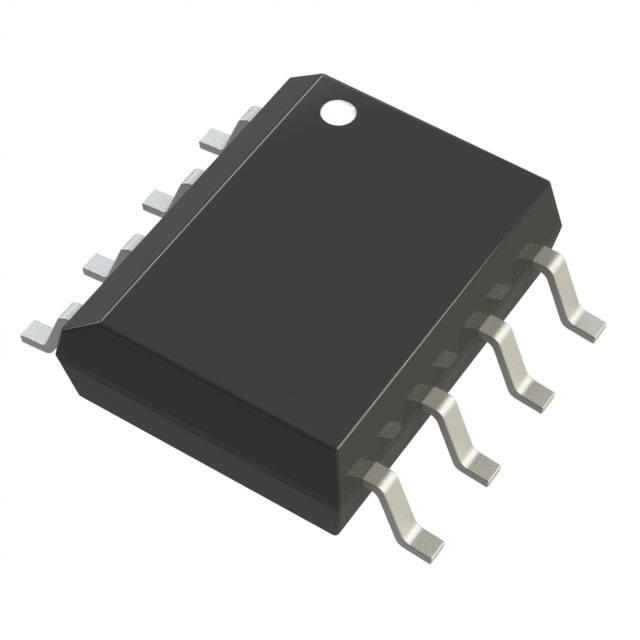
controller with a 700 V MOSFET. Available in a SOIC−7 package, the
NCP1067X offer a high level of integration, including soft−start,
frequency−jittering, short−circuit protection, skip−cycle, ramp
compensation, and a Dynamic Self−Supply (eliminating the need for
an auxiliary winding).
During nominal load operation, the NCP1067X switches at one of
the available frequencies (60 or 100 kHz). When the output power
demand diminishes, the IC automatically enters into a skip mode to
reduce the standby consumption down.
Protection features include: a timer to detect an overload or a
short−circuit event, Overvoltage Protection with auto−recovery.
For improved standby performance, the connection of an auxiliary
winding or supplying the IC from the output, stops the DSS operation
and helps to reduce input power consumption below 25 mW at high
line.
NCP1067x can be seamlessly used both in non−isolated and in
isolated topologies.
Features
• Built−in 700 V MOSFET with RDS(on) of 34 � (NCP10670/1) and
•
•
•
•
•
•
•
•
•
•
•
•
12 � (NCP10672)
Large Creepage Distance Between High−Voltage Pins
Current−Mode Fixed Frequency Operation – 60 or 100 kHz
Fixed Ramp Compensation
Direct Feedback Connection for Non−isolated Converter
Skip−Cycle Operation at Low Peak Currents Only
Dynamic Self−Supply: No Need for an Auxiliary Winding
Internal 4 ms Soft−Start
Auto−Recovery Output Short Circuit Protection with Timer−Based
Detection
Auto−Recovery Overvoltage Protection with Auxiliary Winding
Operation
Frequency Jittering for Better EMI Signature
No Load Input Consumption < 25 mW
These Devices are Pb−Free and are RoHS Compliant
www.onsemi.com
SOIC8
CASE 751EV
MARKING DIAGRAM
8
P1067xy
ALYW
G
1
P1067
x
y
A
L
Y
G
= Specific Device Code
= Current Limit (0, 1, 2)
= Frequency (060, 100)
= Assembly Location
= Wafer Lot
= Year
= Pb−Free Package
PIN CONNECTION
VCC
FB
COMP
GND
GND
DRAIN
GND
SOIC−7
ORDERING INFORMATION
See detailed ordering and shipping information on page 23 of
this data sheet.
Applications
• Auxiliary / Standby Isolated and Non−Isolated Power Supplies
• Power Meter SMPS
• Wide Vin Low Power Industrial SMPS
© Semiconductor Components Industries, LLC, 2018
February, 2019 − Rev. 0
1
Publication Order Number:
NCP10670/D
�NCP10670B, NCP10671B, NCP10672B
Table 1. PRODUCTS INFOS & INDICATIVE MAXIMUM OUTPUT POWER
230 Vac +15%
85 − 265 Vac
Product
RDS(on)
IIPK(0)
Adapter
OpenFrame
Adapter
OpenFrame
NCP10670 60 kHz
34 �
100 mA
1.1 W
2.7 W
0.6 W
1.5 W
NCP10671 60 kHz
34 �
250 mA
2.7 W
6.7 W
1.5 W
3.7 W
NCP10672 100 kHz
12 �
780 mA
6.2 W
15.5 W
3.3 W
7.8 W
1. Informative values only, with Tamb = 25°C, Tcase = 100°C, Self supply via Auxiliary winding and circuit mounted on minimum copper area
as recommended.
Table 2. SELECTION TABLE
Device
Frequency
RDS(on)
IIPK(0)
Package Type
NCP10670
60 kHz
34
100 mA
NCP10670
100 kHz
34
100 mA
SOIC−7
(Pb−Free)
NCP10671
60 kHz
34
250 mA
NCP10671
100 kHz
34
250 mA
NCP10672
60 kHz
12
780 mA
NCP10672
100 kHz
12
780 mA
Figure 1. Typical Non−Isolated Application (Buck Converter)
Figure 2. Typical Isolated Application (Flyback Converter)
www.onsemi.com
2
�NCP10670B, NCP10671B, NCP10672B
PIN DESCRIPTION
Pin No.
SOIC−7
Name
Function
1
VCC
Powers the internal
circuitry
2
Comp
Compensation
3
Description
This pin is connected to an external capacitor.
The VCC includes an auto−recovery over voltage protection.
The error amplifier output is available on this pin. The network connected
between this pin and ground adjusts the regulation loop bandwidth. Also, by
connecting an opto−coupler to this pin, the peak current set point is adjusted
accordingly to the output power demand.
This missing pin ensures adequate creepage distance
4
Drain
Drain connection
5−7
GND
The IC Ground
8
FB
Feedback signal input
The internal drain MOSFET connection
This is the inverting input of the trans conductance error amplifier. It is normally
connected to the switching power supply output through a resistor divider.
Table 3. TYPICAL APPLICATION
Non Isolated Buck
• If the output voltage is above 9.0 V
typ. (between VCC(on) level and
VOVP level) VCC is supplied from
output via D2
• If the output voltage is below 9.0 V,
D2 is redundant, the IC is supplied
from DSS
• Direct feedback, resistive divider
formed by R3, R4 sets output
voltage
• If the output voltage is above 9.0 V
typ. (between VCC(on) level and
VOVP level) VCC is supplied from
output via D3
• If the output voltage is below 9.0 V,
D3 is redundant, the IC is supplied
from DSS
• Optocoupler feedback, output
voltage is set by D4
Non Isolated Buck−Boost (Invert)
• If the output voltage is above 9.0 V
typ. between VCC(on) level and
VOVP level, VCC is supplied from
output via D2
• If the output voltage is below 9.0 V,
D2 is redundant, the IC is supplied
from DSS
• Direct feedback, resistive divider
formed by R3, R4 sets output
voltage
www.onsemi.com
3
�NCP10670B, NCP10671B, NCP10672B
Table 3. TYPICAL APPLICATION
Non Isolated Flyback
• If the output voltage is above 9.0 V
typ. between VCC(on) level and
VOVP level –VCC supplied from
output via D4
• If the output voltage is below 9.0 V,
D4 is redundant, the IC is supplied
from DSS
• Resistive divider formed by R2, R3
sets output voltage
Isolated Flyback
• VCC supplied from auxiliary
winding
• Optocoupler feedback, resistive
divider formed by R6, R7 sets
output voltage
www.onsemi.com
4
�NCP10670B, NCP10671B, NCP10672B
Vcc
DRAIN
80−�s Filter
V CC OVP
SCP
VOVP
Ipflag
UVLO
Reset
Vdd
VCC
Management
S
tSCP
Q
R
t recovery
UVLO
Jittering
OFF
TSD
VCOMP(REF)
OSC
V CC
Sawtooth
R COMP(up)
S
Sawtooth
Q
R
ICOMPskip
SKIP
Ramp
compensation
SKIP = ”1” → Shut down some
blocks to reduce consumption
FB/COMP
Processing
COMP
GND
LEB
Ipflag
ICOMPfault
ICOMP to CS setpoint
Reset
IFreeze
IFB
Soft −Start
IIPK(0)
Reset SS as recoving from
SCP , TSD , VCC OVP or UVLO
FB
Figure 3. Simplified Internal Circuit Architecture
www.onsemi.com
5
�NCP10670B, NCP10671B, NCP10672B
MAXIMUM RATINGS (All voltages related to GND terminal)
Parameter
Rating
Units
Power supply voltage, VCC pin, continuous voltage
−0.3 to 20
V
Vinmax
Voltage on all pins, except Drain and VCC pin
−0.3 to 10
V
BVdss
Drain voltage
−0.3 to 700
V
10
mA
300
300
850
mA
mA
mA
335
335
950
mA
mA
mA
520
520
1500
mA
mA
mA
116
°C/W
102
°C/W
150
°C
−60 to +150
°C
Symbol
VCC
ICC
IDS(PK)
RθJ−A
Maximum Current into VCC pin
Drain Current Peak during Transformer Saturation (TJ = 150°C):
NCP10670
NCP10671
NCP10672
Drain Current Peak during Transformer Saturation (TJ = 125°C):
NCP10670
NCP10671
NCP10672
Drain Current Peak during Transformer Saturation (TJ = 25°C):
NCP10670
NCP10671
NCP10672
Thermal Resistance Junction−to−Air – NCP10670(1) SOIC7 with 200 mm2 of 35−� copper area
RθJ−A
Thermal Resistance Junction−to−Air – NCP10672 SOIC7 with 200
TJMAX
Maximum Junction Temperature
mm2
of 35−� copper area
Storage Temperature Range
HBM
Human Body Model ESD Capability per JEDEC JESD22−A114F
2
kV
CDM
Charged−Device Model ESD Capability per JEDEC JESD22−C101E
1
kV
Stresses exceeding those listed in the Maximum Ratings table may damage the device. If any of these limits are exceeded, device functionality
should not be assumed, damage may occur and reliability may be affected.
2. This device contains latch−up protection and exceeds 100 mA per JEDEC Standard JESD78.
i D(t)
< 1.5 x I DS ( PK )
< t LEB
I DS ( PK )
Transformer
Saturation
t
Figure 4. Spike Limits
www.onsemi.com
6
�NCP10670B, NCP10671B, NCP10672B
ELECTRICAL CHARACTERISTICS
(Tj = 25°C, for min/max values Tj = −40°C to +125°C, Vcc = 14 V unless otherwise noted)
Symbol
Rating
Pin
Min
Typ
Max
Unit
SUPPLY SECTION AND VCC MANAGEMENT
VCC(on)
VCC increasing level at which the switcher starts operation
1
8.4
9.0
9.5
V
VCC(min)
VCC decreasing level at which the HV current source restarts
1
7.0
7.5
7.8
V
VCC(off)
VCC decreasing level at which the switcher stops operation (UVLO)
1
6.7
7.0
7.2
V
Internal IC consumption, NCP10670 switching at 60 kHz
Internal IC consumption, NCP10670 switching at 100 kHz
Internal IC consumption, NCP10671 switching at 60 kHz
Internal IC consumption, NCP10671 switching at 100 kHz
Internal IC consumption, NCP10672 switching at 60 kHz
Internal IC consumption, NCP10672 switching at 100 kHz
1
−
−
−
−
−
−
0.84
0.88
0.84
0.88
0.91
1.00
1.05
1.10
1.05
1.10
1.15
1.25
mA
Internal IC consumption, COMP is 0 V (No switching on MOSFET)
1
−
340
−
�A
−
−
34
65
41
72
�
�
−
−
12
22
14
24
�
�
700
−
−
V
−
−
7
1
−
−
�A
�A
−
−
20
10
−
−
ns
ns
−
−
−
200
200
230
−
−
−
ns
ns
ns
ICC1
ICCskip
POWER SWITCH CIRCUIT
Power Switch Circuit on−state resistance
NCP10670, NCP10671 (Id = 50 mA)
Tj = 25°C
Tj = 125°C
NCP10672 (Id = 50 mA)
Tj = 25°C
Tj = 125°C
4
BVDSS
Power Switch Circuit & Startup breakdown voltage
(ID(off) = 120 �A, Tj = 25°C)
4
IDSS(off)
Power Switch & Startup breakdown voltage off−state leakage current
Tj = 125°C (Vds = 700 V)
Tj = 25°C (Vds = 700 V)
4
Switching characteristics (RL = 50 �, VDS set for Idrain = 0.7 x Ilim)
Turn−on time (90% − 10%)
Turn−off time (10% − 90%)
4
Minimum on time
NCP10670
NCP10671
NCP10672
4
RDS(on)
tr
tf
ton(min)
INTERNAL START−UP CURRENT SOURCE
Istart1
High−voltage current source, VCC = VCC(on) – 200 mV
4
4
8
12
mA
Istart2
High−voltage current source, VCC = 0 V
4
−
0.4
−
mA
VCC Transient level for Istart1 to Istart2 toggling point
1
−
1.2
−
V
Minimum startup voltage, VCC = 0 V
4
−
−
22
V
Maximum internal current setpoint at 50% duty cycle
FB = 2 V, Tj = 25°C
NCP10670
NCP10671
NCP10672
−
−
−
−
−
−
83
208
650
−
−
−
mA
mA
mA
Maximum internal current setpoint at beginning of switching cycle
FB = 2 V, Tj = 25°C
NCP10670
NCP10671
NCP10672
−
−
−
85
223
702
100
250
780
115
277
858
mA
mA
mA
Final switch current with a primary slope of 200 mA/�s,
FSW = 60 kHz (Note 3)
NCP10670
NCP10671
NCP10672
−
−
−
−
−
−
120
258
740
−
−
−
mA
mA
mA
VCCTH
Vstart(min)
CURRENT COMPARATOR
IIPK
IIPK(0)
IIPKSW
www.onsemi.com
7
�NCP10670B, NCP10671B, NCP10672B
ELECTRICAL CHARACTERISTICS
(Tj = 25°C, for min/max values Tj = −40°C to +125°C, Vcc = 14 V unless otherwise noted) (continued)
Symbol
Rating
Pin
Min
Typ
Max
Unit
−
−
−
120
250
710
−
−
−
mA
mA
mA
CURRENT COMPARATOR
IIPKSW
Final switch current with a primary slope of 200 mA/�s,
FSW = 100 kHz (Note 3)
NCP10670
NCP10671
NCP10672
tSS
Soft−start duration (guaranteed by design)
−
−
4
−
ms
tprop
Propagation delay from current detection to drain OFF state
−
−
70
−
ns
tLEB
Leading Edge Blanking Duration
NCP10670
NCP10671
NCP10672
−
−
−
−
−
−
130
130
160
−
−
−
ns
ns
ns
INTERNAL OSCILLATOR
fOSC
Oscillation frequency, 60 kHz version, Tj = 25°C (Note 4)
−
54
60
66
kHz
fOSC
Oscillation frequency, 100 kHz version, Tj = 25°C (Note 4)
−
90
100
110
kHz
fjitter
Frequency jittering in percentage of fOSC
−
−
±6
−
%
fswing
Jittering swing frequency
−
−
300
−
Hz
Dmax
Maximum duty−cycle
−
62
66
72
%
ERROR AMPLIFIER SECTION
Voltage Feedback Input (VCOMP = 2.5 V)
8
3.2
3.3
3.4
V
IFB
Input Bias Current (VFB = 3.3 V)
8
−
1
−
�A
GM
Transconductance
2
−
2
−
mS
IOTAlim
OTA maximum current capability (VFB > VOTAen)
2
−
+150/−150
−
�A
VOTAen
FB voltage to disable OTA
8
0.7
1.3
1.7
V
VREF
COMPENSATION SECTION
ICOMPfault
COMP current for which Fault is detected
2
−
−40
−
�A
ICOMP100%
COMP current for which internal current set−point is 100% (IIPK(0))
2
−
−44
−
�A
ICOMPfreeze
COMP current for which internal current set−point is:
IFreeze1, 2 or 3 (NCP10670/1/2)
2
−
−80
−
�A
VCOMP(REF) Equivalent pull−up voltage in linear regulation range
(Guaranteed by design)
2
−
2.7
−
V
RCOMP(up)
Equivalent feedback resistor in linear regulation range
(Guaranteed by design)
2
−
17.7
−
k�
The COMP pin current level to enter skip mode
2
−
−120
−
�A
IFreeze1
Internal minimum current setpoint (ICOMP = ICOMPFreeze) in NCP10670
−
−
35
−
mA
IFreeze2
Internal minimum current setpoint (ICOMP = ICOMPFreeze) in NCP10671
−
−
92
−
mA
IFreeze3
Internal minimum current setpoint (ICOMP = ICOMPFreeze) in NCP10672
−
−
270
−
mA
SKIP CYCLE
ICOMPskip
RAMP COMPENSATION
Sa(60)
The internal ramp compensation @ 60 kHz:
NCP10670
NCP10671
NCP10672
−
−
−
−
−
−
2.8
8.4
15.6
−
−
−
mA/�s
mA/�s
mA/�s
Sa(100)
The internal ramp compensation @ 100 kHz:
NCP10670
NCP10671
NCP10672
−
−
−
−
−
−
4.7
14
26
−
−
−
mA/�s
mA/�s
mA/�s
www.onsemi.com
8
�NCP10670B, NCP10671B, NCP10672B
ELECTRICAL CHARACTERISTICS
(Tj = 25°C, for min/max values Tj = −40°C to +125°C, Vcc = 14 V unless otherwise noted) (continued)
Symbol
Rating
Pin
Min
Typ
Max
Unit
Fault validation further to error flag assertion
−
35
48
−
ms
OFF phase in fault mode
−
−
400
−
ms
VOVP
VCC voltage at which the switcher stops pulsing
1
17.0
18.0
18.8
V
tOVP
The filter of VCC OVP comparator
−
−
80
−
�s
PROTECTIONS
tSCP
trecovery
TEMPERATURE MANAGEMENT
TSD
Temperature shutdown (Guaranteed by design)
−
150
163
−
°C
TSDHYST
Hysteresis in shutdown (Guaranteed by design)
−
−
20
−
°C
Product parametric performance is indicated in the Electrical Characteristics for the listed test conditions, unless otherwise noted. Product
performance may not be indicated by the Electrical Characteristics if operated under different conditions.
3. The final switch current is: IIPK(0) / (Vin/LP + Sa) x Vin/LP + Vin/LP x tprop, with Sa the built−in slope compensation, Vin the input voltage,
LP the primary inductor in a flyback, and tprop the propagation delay..
4. Oscillator frequency is measured with disabled jittering.
TYPICAL CHARACTERISTICS
VCC(on)
9.10
Voltage [V]
Voltage [V]
9.05
9.00
8.95
8.90
8.85
8.80
−40
−20
0
20
40
60
80
100
120
7.48
7.46
7.44
7.42
7.40
7.38
7.36
7.34
7.32
7.30
−40
VCC(min)
−20
0
20
80
100
Figure 5. VCC(on) vs. Temperature
Figure 6. VCC(min) vs. Temperature
Current [mA]
6.96
6.94
6.92
6.90
6.88
−20
0
20
40
120
IDSS(off)
VCC(off)
Voltage [V]
60
Temperature [5C]
6.98
6.86
−40
40
Temperature [5C]
60
80
100
120
10
9
8
7
6
5
4
3
2
1
0
−40
−20
0
20
40
60
80
100
Temperature [5C]
Temperature [5C]
Figure 7. VCC(off) vs. Temperature
Figure 8. IDSS(off) vs. Temperature
www.onsemi.com
9
120
�NCP10670B, NCP10671B, NCP10672B
TYPICAL CHARACTERISTICS (continued)
ICC1(10670_60k)
0.89
0.88
Current [mA]
Current [mA]
0.87
0.85
0.83
0.81
0.79
0.75
−40
0.86
0.85
0.84
0.82
−20
0
20
40
60
80
100
120
−40
0
20
40
60
80
100
120
Temperature [5C]
Figure 9. ICC1 (10670_60k) vs. Temperature
Figure 10. ICC1 (NCP10670_100k) vs. Temperature
ICC1(10672_60k)
ICC1(10672_100k)
1.04
0.91
Current [mA]
1.02
0.90
0.89
0.88
0.87
0.86
0.85
−40
−20
0
20
40
60
80
100
1.00
0.98
0.96
0.94
0.92
0.90
−40
120
−20
0
20
40
60
80
100
120
Temperature [5C]
Temperature [5C]
Figure 11. ICC1 (10672_60k) vs. Temperature
Figure 12. ICC1 (10672_100k) vs. Temperature
IIPK(0)10670
110
IIPK(0)10671
250
Current [mA]
105
100
95
90
85
−40
−20
0
20
40
60
80
100
245
240
235
230
225
220
−40
120
Temperature [5C]
−20
40
60
80
100
120
Ifreeze10670
34.5
34.0
Current [mA]
760
750
740
730
720
710
−40
20
Figure 14. IIPK(0)10671 vs. Temperature
IIPK(0)10672
770
0
Temperature [5C]
Figure 13. IIPK(0)10670 vs. Temperature
Current [mA]
−20
Temperature [5C]
0.92
Current [mA]
0.87
0.83
0.77
Current [mA]
ICC1(10670_100k)
0.89
33.5
33.0
32.5
32.0
31.5
−20
0
20
40
60
80
100
31.0
120
-40
-20
0
20
40
60
80
100
120
Temperature [5C]
Temperature [5C]
Figure 15. IIPK(0)10672 vs. Temperature
Figure 16. Ifreeze10670 vs. Temperature
www.onsemi.com
10
�NCP10670B, NCP10671B, NCP10672B
TYPICAL CHARACTERISTICS (continued)
Ifreeze10671
86
268
Current [mA]
Current [mA]
85
84
83
82
81
80
266
264
262
260
258
256
254
79
−40
−20
0
20
40
60
80
100
252
−40
120
0
100
120
Resistivity [W]
20
40
30
20
10
−20
0
20
40
60
80
100
15
10
5
0
−40
120
−20
0
40
60
80
100
120
Figure 20. RDS(on)10672 vs. Temperature
fOSC60
62
20
Temperature [5C]
Figure 19. RDS(on)10670/1 vs. Temperature
fOSC100
110
60
Frequency [kHz]
Frequency [kHz]
80
RDS(on)10672
25
Temperature [5C]
105
58
100
56
54
52
−20
0
20
40
60
80
100
95
90
85
−40
120
−20
0
Temperature [5C]
Current [mA]
8
6
4
2
0
20
40
60
60
80
100
120
Istart2
0.7
10
−20
40
Figure 22. fOSC100 vs. Temperature
Istart1
12
20
Temperature [5C]
Figure 21. fOSC60 vs. Temperature
Current [mA]
60
Figure 18. Ifreeze10672 vs. Temperature
50
0
−40
40
Figure 17. Ifreeze10671 vs. Temperature
60
50
−40
20
Temperature [5C]
RDS(on)10670/1
0
−40
−20
Temperature [5C]
70
Resistivity [W]
Ifreeze10672
270
80
100
0.6
0.5
0.4
0.3
0.2
0.1
−40
120
Temperature [5C]
−20
0
20
40
60
80
100
Temperature [5C]
Figure 23. Istart1 vs. Temperature
Figure 24. Istart2 vs. Temperature
www.onsemi.com
11
120
�NCP10670B, NCP10671B, NCP10672B
TYPICAL CHARACTERISTICS (continued)
trecovery
440
Duty Cycle [%]
Time [ms]
435
430
425
420
415
410
−40
−20
0
20
60
80
100
66.3
66.2
66.1
66.0
65.9
65.8
65.7
65.6
−40
120
0
VOVP
Time [ms]
53
17.9
17.8
100
17.7
17.6
120
53
52
52
51
51
50
−20
0
20
40
60
80
100
50
−40
120
−20
0
Temperature [5C]
1.4
Voltage [V]
1.2
1.0
0.8
0.6
0.4
0.2
−20
0
20
40
60
40
60
80
100
80
100
120
3.34
3.33
3.32
3.31
3.30
3.29
3.28
3.27
3.26
3.25
3.24
−40
VREF
−20
0
20
40
60
80
100
Temperature [5C]
Temperature [5C]
Figure 29. VOTAen vs. Temperature
Figure 30. VREF vs. Temperature
fmin
25.6
120
Figure 28. tSCP vs. Temperature
VOTAen
1.6
20
Temperature [5C]
Figure 27. VOVP vs. Temperature
Voltage [V]
80
tSCP
54
17.5
25.4
20
25.2
19
25.0
24.8
24.6
24.4
120
Vstart(min)
20
Voltage [V]
Frequency [kHz]
60
Figure 26. D(max) vs. Temperature
54
19
18
18
17
24.2
24.0
−40
40
Figure 25. trecovery vs. Temperature
18.0
0.0
−40
20
Temperature [5C]
18.1
17.4
−40
−20
Temperature [5C]
18.2
Voltage [V]
40
Dmax
66.4
−20
0
20
40
60
80
100
17
−40
120
−20
0
20
40
60
80
100
Temperature [5C]
Temperature [5C]
Figure 31. fmin vs. Temperature
Figure 32. Vstart(min) vs. Temperature
www.onsemi.com
12
120
�NCP10670B, NCP10671B, NCP10672B
APPLICATION INFORMATION
Introduction
The NCP1067X offers a complete current−mode control
solution. The component integrates everything needed to
build a rugged and cost effective Switch−Mode Power
Supply (SMPS) featuring low standby power. The Quick
Selection Table is on details the differences between
references, mainly peak current setpoints, RDS(on) value and
operating frequency.
• Current−mode operation: the controller uses
current−mode control architecture.
• 700 V – _ Power MOSFET: Due to ON Semiconductor
Very High Voltage Integrated Circuit technology, the
circuit hosts a high−voltage power MOSFET featuring a
34 or 12 � RDS(on) – Tj = 25°C. This value lets the
designer build a power supply up to 7.8 W operated on
universal mains. An internal current source delivers the
startup current, necessary to crank the power supply.
• Dynamic Self−Supply: Due to the internal high voltage
current source, this device could be used in the application
without the auxiliary winding to provide supply voltage.
• Short circuit protection: by permanently monitoring the
COMP line activity, the IC is able to detect the presence
of a short−circuit, immediately reducing the output power
for a total system protection. A tSCP timer is started as
soon as the COMP current is below threshold, ICOMPfault,
which indicates the maximum peak current. If at the end
of this timer the fault is still present, then the device enters
a safe, auto−recovery burst mode, affected by a fixed
timer recurrence, trecovery. Once the short has
disappeared, the controller resumes and goes back to
normal operation.
• Built−in VCC Over Voltage Protection: when the
auxiliary winding is used to bias the VCC pin (no DSS),
an internal comparator is connected to VCC pin. In case
the voltage on the pin exceeds a level of VOVP (18 V
typically), the controller immediately stops switching and
waits a full timer period (trecovery) before attempting to
restart. If the fault is gone, the controller resumes
operation. If the fault is still there, e.g. a broken
opto−coupler, the controller protects the load through a
safe burst mode.
• Frequency jittering: an internal low−frequency
modulation signal varies the pace at which the oscillator
frequency is modulated. This helps spreading out energy
in conducted noise analysis.
• Soft−Start: a 4 ms soft−start ensures a smooth startup
sequence, reducing output overshoots.
• Skip: if SMPS naturally exhibits a good efficiency at
nominal load, they begin to be less efficient when the
output power demand diminishes. By skipping
un−needed switching cycles, the NCP1067X drastically
reduces the power wasted during light load conditions.
Startup sequence
When the power supply is first powered from the mains
outlet, the internal current source (typically 8.0 mA) is
biased and charges up the VCC capacitor from the drain pin.
Once the voltage on this VCC capacitor reaches the VCC(on)
level (typically 9.0 V), the current source turns off and
pulses are delivered by the output stage: the circuit is awake
and activates the power MOSFET if the bulk voltage is
above Vstart(min) (22 V dc). Figure 33 details the simplified
internal circuitry.
Vbulk
+
I1
Rlimit
Istart1
←
ICC1
1
Drain
5
I2
−
+
+
CVCC
VCC(on)
VCC(min)
+
+
−
VOVP
VCC >18 V ?
→ OVP fault
8
Figure 33. The Internal Arrangement of the Start−up
Circuitry
Being loaded by the circuit consumption, the voltage on
the VCC capacitor goes down. When VCC is below VCC(min)
level (7.5 V typically), it activates the internal current source
to bring VCC toward VCC(on) level and stops again: a cycle
takes place whose low frequency depends on the VCC
capacitor and the IC consumption. A 1.5 V ripple takes place
on the VCC pin whose average value equals (VCC(on) +
VCC(min)) / 2. Figure 34 portrays a typical operation of the
DSS.
www.onsemi.com
13
�NCP10670B, NCP10671B, NCP10672B
10
9
9.0 V
8
7
6
V [V]
7.5 V
VCC
5
Device
Internal
Pulses
4
3
2
VCCTH
1
0
0
1
2
3
4
5
6
7
8
9
10
time [ms]
Startup Duration
Figure 34. The Charge/Discharge Cycle Over a 1 mF VCC Capacitor
The VCC capacitor has only a supply role and its value
does not impact other parameters such as fault duration or
the frequency sweep period for instance. As one can see on
Figure 33, an internal OVP comparator, protects the
switcher against lethal VCC runaways. This situation can
occur if the feedback loop optocoupler fails, for instance,
and you would like to protect the converter against an over
voltage event. In that case, the over voltage protection
(OVP) circuit and immediately stops the output pulses for
trecovery duration (400 ms typically). Then a new start−up
attempt takes place to check whether the fault has
disappeared or not. The OVP paragraph gives more design
details on this particular section.
As one can see, even if there is auxiliary winding to
provide energy for VCC, it happens that the device is still
biased by DSS during start−up time or some fault mode
when the voltage on auxiliary winding is not ready yet. The
VCC capacitor shall be dimensioned to avoid VCC crosses
VCC(off) level, which stops operation. The �V between
VCC(min) and VCC(off) is 0.5 V. There is no current source to
charge VCC capacitor when driver is on, i.e. drain voltage is
close to zero. Hence the VCC capacitor can be calculated
using
C VCC ≥
I CC1D max
f OSC @ �V
(eq. 1)
Take the 60 kHz device as an example. CVCC should be
above
0.84 m @ 72%
54 kHz @ 0.5
+ 22 nF
(eq. 2)
A margin that covers the temperature drift and the voltage
drop due to switching inside FET should be considered, and
thus a capacitor above 0.1 �F is appropriate.
www.onsemi.com
14
�NCP10670B, NCP10671B, NCP10672B
Fault Condition – Short−circuit on VCC
Fault Condition – Output Short−circuit
In some fault situations, a short−circuit can purposely
occur between VCC and GND. In high line conditions
(VHV = 370 VDC) the current delivered by the startup
device will seriously increase the junction temperature. For
instance, since Istart1 equals 4 mA (the min corresponds to
the highest Tj), the device would dissipate
370 · 4 m 1.48 W. To avoid this situation, the controller
includes a novel circuitry made of two startup levels, Istart1
and Istart2. At power−up, as long as VCC is below a 1.2 V
level, the source delivers Istart2 (around 400 �A typical),
then, when VCC reaches 1.2 V, the source smoothly
transitions to Istart1 and delivers its nominal value. As a
result, in case of short−circuit between VCC and GND, the
power dissipation will drop to 370 · 400 � = 148 mW.
Figure 34 portrays this particular behavior.
The first startup period is calculated by the formula
C · V = I · t, which implies a 1 � · 1.2 / 400 � = 3 ms startup
time for the first sequence. The second sequence is obtained
by toggling the source to 8 mA with a delta V of
VCC(on) – VCCTH = 9.0 – 1.2 = 7.8 V, which finally leads to
a second startup time of 1 � · 7.8 / 8 m = 975 �s. The total
startup time becomes 3 m + 0.975 m = 3.975 ms. Please note
that this calculation is approximated by the presence of the
knee in the vicinity of the transition.
As soon as VCC reaches VCC(on), drive pulses are
internally enabled. If everything is correct, the auxiliary
winding increases the voltage on the VCC pin as the output
voltage rises. During the start−sequence, the controller
smoothly ramps up the peak drain current to maximum
setting, i.e. IIPK, which is reached after a typical period of
4 ms. When the output voltage is not regulated, the current
coming through COMP pin is below ICOMPfault level (40 �A
typically), which is not only during the startup period but
also anytime an overload occurs, an internal error flag is
asserted, Ipflag, indicating that the system has reached its
maximum current limit set point. The assertion of this flag
triggers a fault counter tSCP (48 ms typically). If at counter
completion, Ipflag remains asserted, all driving pulses are
stopped and the part stays off in trecovery duration (about
400 ms). A new attempt to re−start occurs and will last 48 ms
providing the fault is still present. If the fault still affects the
output, a safe burst mode is entered, affected by a low
duty−cycle operation (11%). When the fault disappears, the
power supply quickly resumes operation. Figure 35 depicts
this particular mode:
VCC(on)
VCC(min)
V CC
IpFlag
VCOMP
Open Loop
FB
48 ms typ
.
Fault level
TIMER
400 ms .typ
DRV
internal
Figure 35. In Case of Short−circuit or Overload, the NCP1067X Protects Itself and the Power Supply via a Low
Frequency Burst Mode. The VCC is Maintained by the Current Source and Self−supplies the Controller.
www.onsemi.com
15
�NCP10670B, NCP10671B, NCP10672B
Auto−recovery Over Voltage Protection
and to filter out the Vcc line to avoid undesired OVP
activation. Rlimit should be carefully selected to avoid
triggering the OVP as we discussed, but also to avoid
disturbing the VCC in low / light load conditions.
Self−supplying controllers in extremely low standby
applications often puzzles the designer. Actually, if a SMPS
operated at nominal load can deliver an auxiliary voltage of
an arbitrary 16 V (Vnom), this voltage can drop below 10 V
(Vstby) when entering standby. This is because the
recurrence of the switching pulses expands so much that the
low frequency re−fueling rate of the VCC capacitor is not
enough to keep a proper auxiliary voltage.
The particular NCP1067X arrangement offers a simple
way to prevent output voltage runaway when the
optocoupler fails. As Figure 36 shows, a comparator
monitors the VCC pin. If the auxiliary pushes too much
voltage into the CVCC capacitor, then the controller
considers an OVP situation and stops the internal drivers.
When an OVP occurs, all switching pulses are permanently
disabled. After trecovery delay, it resumes the internal drivers.
If the failure symptom still exists, e.g. feedback
opto−coupler fails, the device keeps the auto−recovery OVP
mode. It is recommended insertion of a resistor (Rlimit )
between the auxiliary dc level and the VCC pin to protect the
IC against high voltage spikes, which can damage the IC,
Drain
VCC(on) = 9.0 V
VCC(min) = 7.5 V
Istart1
VCC
Shut down
Internal DRV
CVCC
80 �s
filter
D1
Rlimit
CAUX
NAUX
GND
VOVP
Figure 36. A More Detailed View of the NCP1067X Offers Better Insight on How to Properly Wire an Auxiliary
Winding
VOVP
VCC(on)
VCC(min)
VCC
VCOMP
48 ms typ
Fault level
TIMER
400 ms typ
DRV
internal
Figure 37 Describes the Main Signal Variations when the Part Operates in Auto−recovery OVP:
Figure 37. If the VCC Current Exceeds a Certain Threshold, an Auto−recovery Protection is Activated
www.onsemi.com
16
�NCP10670B, NCP10671B, NCP10672B
Soft−start
The NCP1067X features a 4 ms soft−start which reduces
the power−on stress but also contributes to lower the output
overshoot. Figure 38 shows a typical operating waveform.
VCC
The NCP1067X features a novel patented structure which
offers a better soft−start ramp, almost ignoring the start−up
pedestal inherent to traditional current−mode supplies:
VCCON
0 V (fresh PON)
Drain current
Max IIPK
4 ms
Figure 38. The 4 ms Soft−start Sequence
Jittering
Frequency jittering is a method used to soften the EMI
signature by spreading the energy in the vicinity of the main
switching component. The NCP1067X offers a ±6%
deviation of the nominal switching frequency. The sweep
sawtooth is internally generated and modulates the clock up
and down with a fixed frequency of 300 Hz. Figure 39 shows
the relationship between the jitter ramp and the frequency
deviation. It is not possible to externally disable the jitter.
Jitter ramp
63.6 kHz
60 kHz
Internal
sawtooth
56.4 kHz
adjustable
Figure 39. Modulation Effects on the Clock Signal by the Jittering Sawtooth
www.onsemi.com
17
�NCP10670B, NCP10671B, NCP10672B
Ipk Reduction
The internal peak current set−point is following the
COMP current information until its level reaches IFreeze.
Below this value, the peak current setpoint is frozen to 30%
of the IIPK(0). This value is reached at a COMP current level
of ICOMPskip (120 �A typically). Below this point, if the
output power continues to decrease, the part enters skip
cycle for the best performance in no−load conditions.
Figure 40 depict the adopted scheme for the part.
800
NCP10672
NCP10671
NCP10670
Current Set Point [mA]
700
600
500
400
300
200
100
0
40
50
60
70
80
90
100
ICOMP [mA]
Figure 40. IIPK Set−point is Frozen at Lower Power Demand
this linear operating range, the dynamic resistance is
17.7 k� typically (RCOMP(up)) and the effective pull up
voltage is 2.7 V typically (VCOMP(REF)). When ICOMP is
decreases, the COMP voltage will increase to 3.2 V.
Feedback and Skip
Figure 41 depicts the relationship between COMP pin
voltage and current. The COMP pin operates linearly as the
absolute value of COMP current (ICOMP) is above 40 �A. In
3.5
3.0
VCOMP [V]
2.5
2.0
1.5
1.0
0.5
0.0
−180
−160
−140
−120
−100
−80
−60
−40
ICOMP [mA]
Figure 41. COMP Pin Voltage vs. Current
www.onsemi.com
18
−20
0
�NCP10670B, NCP10671B, NCP10672B
Figure 42 depicts the skip mode block diagram. When the
COMP current information reaches ICOMPskip, the internal
clock to set the flip−flop is blanked and the internal
consumption of the controller is decreased. The hysteresis of
internal skip comparator is minimized to lower the ripple of
the auxiliary voltage for VCC pin and VOUT of power supply
during skip mode. It easies the design of VCC over load
range.
Jittering
OSC
S
VCOMP(REF)
RCOMP(UP)
R
ICOMPskip
−
SKIP
DRV stage
Q
Q
CS comparator
+
COMP
Figure 42. Skip Cycle Schematic
Ramp Compensation and Ipk Set−point
In order to allow the NCP106X to operate in CCM with a
duty cycle above 50%, a fixed slope compensation is
internally applied to the current−mode control.
Here we got a table of the ramp compensation, the initial
current set point, and the final current set−point of different
versions of switcher.
NCP10670
NCP10671
NCP10672
Fsw
60 kHz
100 kHz
60 kHz
100 kHz
60 kHz
100 kHz
Sa
2.8 mA/�s
4.7 mA/�s
8.4 mA/�s
14 mA/�s
15.6 mA/�s
26 mA/�s
IIPK(Duty = 50%)
83 mA
208 mA
650 mA
IIPK(0)
100 mA
250 mA
780 mA
Figure 43 depicts the variation of IIPK set−point vs. the
power switcher duty ratio, which is caused by the internal
ramp compensation.
800
Current Set Point [mA]
700
600
500
NCP10672
NCP10671
NCP10670
400
300
200
100
0
0%
10%
20%
30%
40%
50%
60%
70%
Dutty Ratio [%]
Figure 43. IIPK Set−point Varies with Power Switch on Time, Which is Caused by the Ramp Compensation
www.onsemi.com
19
�NCP10670B, NCP10671B, NCP10672B
1. The lateral MOSFET body−diode shall never be
forward biased, either during start−up (because of a
large leakage inductance) or in normal operation as
shown in Figure 45. This condition sets the
maximum voltage that can be reflected during toff .
As a result, the Flyback voltage which is reflected on
the drain at the switch opening cannot be larger than
the input voltage. When selecting components, you
thus must adopt a turn ratio which adheres to the
following equation:
FB pin function
The FB pin is used in non isolated SMPS application only.
Portion of the output voltage is connected into the pin. The
voltage is compared with internal VREF (3.3 V) using
Operation Transconductance Amplifier (Figure 44). The
OTAs output is connected to COMP pin. From the outside
an user defined compensation network is connected to the
COMP pin. The current capability of OTA is limited to
−150 �A typically. The positive current is defined by
internal RCOMP(up) resistor and VCOMP(ref) voltage. If FB
path loop is broken (i.e. the FB pin is disconnected), an
internal current IFB (1 �A typ.) will pull up the FB pin and
the IC stops switching to avoid uncontrolled output voltage
increasing.
In isolated topology, the FB pin should be connected to
GND pin. In this configuration no current flows from OTA
to COMP pin (OTA is disabled) so the OTA has no influence
on regulation at all.
N (V out ) V f) t V in,
min
(eq. 3)
2. In our case, since we operate from a 127 V DC rail
while delivering 12 V, we can select a reflected
voltage of 120 V dc maximum. Therefore, the turn
ratio Np:Ns must be smaller than
V reflect
V out ) V f
+
120
+ 9.6
12 ) 0.5
(eq. 4)
or Np:Ns < 9.6. Here we choose N = 8 in this case.
We will see later on how it affects the calculation.
VCOMP(REF)
RCOMP(up)
350
ICOMP
COMP
250
IFB
FB
150
OTA ouT = 0 A IOTAlim
if FB = 0 V
−
OTA
+
50.0
> 0 !!
−50.0
VREF
1.004M
1.011M
1.018M
1.025M
1.032M
Figure 45. The Drain−Source Wave Shall
Always be Positive
Figure 44. FB Pin Connection
Design Procedure
The design of an SMPS around a monolithic device does
not differ from that of a standard circuit using a controller
and a MOSFET. However, one needs to be aware of certain
characteristics specific of monolithic devices. Let us follow
the steps:
IL
Ipeak
�IL
I1
Vin min = 90 Vac or 127 Vdc once rectified, assuming a low
bulk ripple
Vin max = 265 Vac or 375 Vdc
Ivalley
Vout = 12 V
Iavg
Pout = 5 W
Operating mode is CCM
h = 0.8
t
dTsw
Tsw
Figure 46. Primary Inductance Current
Evolution in CCM
www.onsemi.com
20
�NCP10670B, NCP10671B, NCP10672B
3. Lateral MOSFETs have a poorly doped body−diode
which naturally limits their ability to sustain the
avalanche. A traditional RCD clamping network
shall thus be installed to protect the MOSFET. In
some low power applications, a simple capacitor can
also be used since
V drain,max + V in ) N (V out ) V f) ) I peak
Ǹ
peak to peak
The peak current can be evaluated to be:
I peak +
(eq. 5)
d max +
N (V out ) V f) ) V in,min
1
V in,min
+
1)
I d,rms +
+
(eq. 6)
P off +
+
(eq. 7)
�I L
(eq. 8)
P on +
+
(127 @ 0.44) 2
60k @ 1 @ 5)
LF SW
+
+ 158 mA
(eq. 11)
2
92.8 m
+ 111.6 mA
(eq. 12)
2
Ǹǒ
Ǹǒ
d I 2peak * I peak�I L )
d I 2peak * I peak�I L )
�I 2L
3
�I 2L
3
Ǔ
Ǔ
+
+ 57 mA
(eq. 13)
(on)
+ 110mW
(eq. 14)
I peak (V bulk ) V clamp) t off
2T SW
+
0.158 @ (127 ) 100 @ 2) @ 10 n
2 @ 16.7 �
+ 15.5 mW
(eq. 15)
+ 10.04 mH
127 @ 0.44
10.04 m @ 60 k
(eq. 9)
92.8 mA
I valley (V bulk ) N (V out ) V f)) t on
6T SW
0.0464 @ (127 ) 100 @ 2) @ 20 n
6 @ 16.7 �
+
+ 2.1 mW
(eq. 16)
It is noted that the overlap of voltage and current seen
on MOSFET during turning on and off duration is
dependent on the snubber and parasitic capacitance
seen from drain pin. Therefore the toff and ton in
eq. 15 and eq. 16 have to be modified after
measuring on the bench.
8. The theoretical total power is then
117 + 15.5 + 2.1 = 127.6 mW
9. If the NCP106X operates at DSS mode, then the
losses caused by DSS mode should be counted as
losses of this device on the following calculation:
From eq.17, a K factor of 1 (50% ripple), gives an
inductance of:
V ind
2
Where, assume the Vclamp is equal to 2 times of
reflected voltage.
I Lavg
�I L +
92.8 m
7. Off−time and on−time switching losses can be
estimated based on the following calculations:
and defines the amount of ripple we want in CCM
(see Figure 46 ).
• Small K: deep CCM, implying a large primary
inductance, a low bandwidth and a large leakage
inductance.
• Large K: approaching DCM where the RMS
losses are worse, but smaller inductance, leading
to a better leakage inductance.
L+
0.44
)
+ 158 m *
2
where
K+
�I L
P cond + I d,dms R ds
(V in d) 2
f sw K P in
49.2 m
If we take the maximum Rds(on) for a 125°C junction
temperature, i.e. 34 �, then conduction losses worse
case are:
5. To obtain the primary inductance, we have the
choice between two equations:
L+
2
+
6. Based on the above numbers, we can now evaluate
the conduction losses:
+ 0.44
N (V out)V f)
�I L
I Lavg + I peak *
where Lf is the leakage inductance, Ctot the total
capacitance at the drain node (which is increased by
the capacitor you will wire between drain and
source), N the NP:NS turn ratio, Vout the output
voltage, Vf the secondary diode forward drop and
finally, Ipeak the maximum peak current. Worse case
occurs when the SMPS is very close to regulation,
e.g. the Vout target is almost reached and Ipeak is still
pushed to the maximum. For this design, we have
selected our maximum voltage around 650 V
(at Vin = 375 Vdc). This voltage is given by the RCD
clamp installed from the drain to the bulk voltage.
We will see how to calculate it later on.
4. Calculate the maximum operating duty−cycle for
this flyback converter operated in CCM:
N (V out ) V f)
d
)
On , I1 can also be calculated:
Lf
C tot
I avg
(eq. 10)
P DSS + I cc1 @ V in,max + 0.8 m @ 375 + 300 mW
www.onsemi.com
21
(eq. 17)
�NCP10670B, NCP10671B, NCP10672B
MOSFET Protection
which is 700 V.
implementations:
As in any Flyback design, it is important to limit the drain
excursion to a safe value, e.g. below the MOSFET BVdss
HV
HV
Figure 47 a−b−c present possible
HV
Rclamp
Dz
Cclamp
D
NCP1067x
D
NCP1067x
GND
NCP1067x
GND
CVcc
GND
CVcc
C
GND
CVcc
GND
a)
GND
b)
c)
Figure 47. Different Options to Clamp the Leakage Spike
area is far bigger for a transient suppressor than that of zener.
A 5 W zener diode like the 1N5388B will accept 180 W peak
power if it lasts less than 8.3 ms. If the peak current in the
worse case (e.g. when the PWM circuit maximum current
limit works) multiplied by the nominal zener voltage
exceeds these 180 W, then the diode will be destroyed when
the supply experiences overloads. A transient suppressor
like the P6KE200 still dissipates 5 W of continuous power
but is able to accept surges up to 600 W @ 1 ms. Select the
zener or TVS clamping level between 40 to 80 volts above
the reflected output voltage when the supply is heavily
loaded.
As a good design practice, it is recommended to
implement one of this protection to make sure Drain pin
voltage doesn’t go above 650 V (to have some margin
between Drain pin voltage and BVdss) during most stringent
operating conditions (high Vin and peak power).
Figure 47a: the simple capacitor limits the voltage
according to the lateral MOSFET body−diode shall never be
forward biased, either during start−up (because of a large
leakage inductance) or in normal operation as shown by
Figure 45. This condition sets the maximum voltage that can
be reflected during toff . As a result, the flyback voltage which
is reflected on the drain at the switch opening cannot be
larger than the input voltage. When selecting components,
you must adopt a turn ratio which adheres to the following
equation eq. 5. This option is only valid for low power
applications, e.g. below 5 W, otherwise chances exist to
destroy the MOSFET. After evaluating the leakage
inductance, you can compute C with (eq. 6). Typical values
are between 100 pF and up to 470 pF. Large capacitors
increase capacitive losses…
Figure 47b: the most standard circuitry is called the RCD
network. You can calculate Rclamp and Cclamp using the
following formula:
R clamp +
C clamp +
Power Dissipation and Heatsinking
The NCP1067X welcomes two dissipating terms, the DSS
current−source (when active) and the MOSFET. Thus,
Ptot = PDSS + PMOSFET. It is mandatory to properly manage
the heat generated by losses. If no precaution is taken, risks
exist to trigger the internal thermal shutdown (TSD). To help
dissipating the heat, the PCB designer must foresee large
copper areas around the package. When the package is
surrounded by a surface approximately 200 mm2 of 35 �m
copper, the maximum power the device can thus evacuate is:
2 V clamp (V clamp ) (V out ) V f) N)
L leak I leak 2 F sw
(eq. 18)
V clamp
V ripple F sw R clamp
(eq. 19)
Vclamp is usually selected 50 − 80 V above the reflected
value N x (Vout + Vf ). The diode needs to be a fast one and
a MUR160 represents a good choice. One major drawback
of the RCD network lies in its dependency upon the peak
current. Worse case occurs when Ipeak and Vin are maximum
and Vout is close to reach the steady−state value.
Figure 47c: this option is probably the most expensive of
all three but it offers the best protection degree. If you need
a very precise clamping level, you must implement a zener
diode or a TVS. There are little technology differences
behind a standard zener diode and a TVS. However, the die
P max +
t jmax * t ambmax
R �JA
(eq. 20)
which gives around 862 mW for an ambient of 50°C and
a maximum junction of 150°C. If the surface is not large
enough, the RθJA is growing and the maximum power the
device can evacuate decreases. Figure 48 gives a possible
layout to help drop the thermal resistance.
www.onsemi.com
22
�NCP10670B, NCP10671B, NCP10672B
Figure 48. A Possible PCB Arrangement to Reduce the Thermal Resistance Junction−to−Ambient
Bill of Material:
C1
Bulk capacitor, input DC voltage is connected
to the capacitor
C2, R1, D1 Clamping elements
C3
Vcc capacitor
OK1
Optocoupler
ORDERING INFORMATION
Shipping†
Device
Marking
Frequency
RDS(on)
IIPK(0)
Package Type
NCP10670BD060R2G
P10670060
60 kHz
34
100 mA
NCP10670BD100R2G
P10670100
100 kHz
34
100 mA
SOIC−8
MISSING PIN 3
(Pb−Free)
NCP10671BD060R2G
P10671060
60 kHz
34
250 mA
2500 / Tape & Reel
NCP10671BD100R2G
P10671100
100 kHz
34
250 mA
2500 / Tape & Reel
NCP10672BD060R2G
P10672060
60 kHz
12
780 mA
2500 / Tape & Reel
NCP10672BD100R2G
P10672100
100 kHz
12
780 mA
2500 / Tape & Reel
2500 / Tape & Reel
2500 / Tape & Reel
†For information on tape and reel specifications, including part orientation and tape sizes, please refer to our Tape and Reel Packaging
Specifications Brochure, BRD8011/D.
www.onsemi.com
23
�MECHANICAL CASE OUTLINE
PACKAGE DIMENSIONS
SOIC8 MISSING PIN 3
CASE 751EV
ISSUE O
SCALE 1:1
D
A
8
NOTE 5
F
0.10 C
5
NOTE 6
M
E
A1
E1
L2
0.20 C
1
L
DETAIL A
4
7X
NOTE 5
B
b
0.12
M
C
SEATING
PLANE
C A-B D
TOP VIEW
0.10 C A-B
D
DETAIL A
7X
0.10 C
A
DATE 19 SEP 2017
c
e
SIDE VIEW
C
END VIEW
SEATING
PLANE
RECOMMENDED
SOLDERING FOOTPRINT*
NOTES:
1. DIMENSIONING AND TOLERANCING PER ASME
Y14.5M, 1994.
2. CONTROLLING DIMENSION: MILLIMETERS.
3. DIMENSION b DOES NOT INCLUDE DAMBAR
PROTRUSION. ALLOWABLE PROTRUSION SHALL
BE 0.10mm IN EXCESS OF MAXIMUM MATERIAL
CONDITION.
4. DIMENSIONS D & E1 DOES NOT INCLUDE MOLD
FLASH, PROTRUSIONS, OR GATE BURRS. MOLD
FLASH, PROTRUSIONS, OR GATE BURRS SHALL
NOT EXCEED 0.15mm PER SIDE. DIMENSIONS D
AND E1 ARE DETERMINED AT DATUM F.
5. DATUMS A AND B ARE TO BE DETERMINED AT
DATUM F.
6. A1 IS DEFINED AS THE VERTICAL DISTANCE
FROM THE SEATING PLANE TO THE LOWEST
POINT ON THE PACKAGE BODY.
DIM
A
A1
b
c
D
E
E1
e
L
L2
M
MILLIMETERS
MIN
MAX
1.35
1.75
0.10
0.25
0.33
0.51
0.19
0.25
4.80
5.00
5.80
6.20
3.80
4.00
1.27 BSC
0.40
1.27
0.25 BSC
0°
8°
GENERIC
MARKING DIAGRAM*
8
XXXXXXXXX
ALYWX G
G
7X 1.17
6.30
1
1
7X
1.27
PITCH
0.60
DIMENSION: MILLIMETERS
*For additional information on our Pb−Free strategy and soldering
details, please download the ON Semiconductor Soldering and
Mounting Techniques Reference Manual, SOLDERRM/D.
XXXXX
A
L
Y
W
G
= Specific Device Code
= Assembly Location
= Wafer Lot
= Year
= Work Week
= Pb−Free Package
(Note: Microdot may be in either location)
*This information is generic. Please refer
to device data sheet for actual part
marking. Pb−Free indicator, “G”, may
or not be present. Some products may
not follow the Generic Marking.
DOCUMENT NUMBER:
DESCRIPTION:
98AON76133G
SOIC8 MISSING PIN 3
Electronic versions are uncontrolled except when accessed directly from the Document Repository.
Printed versions are uncontrolled except when stamped “CONTROLLED COPY” in red.
PAGE 1 OF 1
ON Semiconductor and
are trademarks of Semiconductor Components Industries, LLC dba ON Semiconductor or its subsidiaries in the United States and/or other countries.
ON Semiconductor reserves the right to make changes without further notice to any products herein. ON Semiconductor makes no warranty, representation or guarantee regarding
the suitability of its products for any particular purpose, nor does ON Semiconductor assume any liability arising out of the application or use of any product or circuit, and specifically
disclaims any and all liability, including without limitation special, consequential or incidental damages. ON Semiconductor does not convey any license under its patent rights nor the
rights of others.
© Semiconductor Components Industries, LLC, 2019
www.onsemi.com
�onsemi,
, and other names, marks, and brands are registered and/or common law trademarks of Semiconductor Components Industries, LLC dba “onsemi” or its affiliates
and/or subsidiaries in the United States and/or other countries. onsemi owns the rights to a number of patents, trademarks, copyrights, trade secrets, and other intellectual property.
A listing of onsemi’s product/patent coverage may be accessed at www.onsemi.com/site/pdf/Patent−Marking.pdf. onsemi reserves the right to make changes at any time to any
products or information herein, without notice. The information herein is provided “as−is” and onsemi makes no warranty, representation or guarantee regarding the accuracy of the
information, product features, availability, functionality, or suitability of its products for any particular purpose, nor does onsemi assume any liability arising out of the application or use
of any product or circuit, and specifically disclaims any and all liability, including without limitation special, consequential or incidental damages. Buyer is responsible for its products
and applications using onsemi products, including compliance with all laws, regulations and safety requirements or standards, regardless of any support or applications information
provided by onsemi. “Typical” parameters which may be provided in onsemi data sheets and/or specifications can and do vary in different applications and actual performance may
vary over time. All operating parameters, including “Typicals” must be validated for each customer application by customer’s technical experts. onsemi does not convey any license
under any of its intellectual property rights nor the rights of others. onsemi products are not designed, intended, or authorized for use as a critical component in life support systems
or any FDA Class 3 medical devices or medical devices with a same or similar classification in a foreign jurisdiction or any devices intended for implantation in the human body. Should
Buyer purchase or use onsemi products for any such unintended or unauthorized application, Buyer shall indemnify and hold onsemi and its officers, employees, subsidiaries, affiliates,
and distributors harmless against all claims, costs, damages, and expenses, and reasonable attorney fees arising out of, directly or indirectly, any claim of personal injury or death
associated with such unintended or unauthorized use, even if such claim alleges that onsemi was negligent regarding the design or manufacture of the part. onsemi is an Equal
Opportunity/Affirmative Action Employer. This literature is subject to all applicable copyright laws and is not for resale in any manner.
ADDITIONAL INFORMATION
TECHNICAL PUBLICATIONS:
Technical Library: www.onsemi.com/design/resources/technical−documentation
onsemi Website: www.onsemi.com
ONLINE SUPPORT: www.onsemi.com/support
For additional information, please contact your local Sales Representative at
www.onsemi.com/support/sales
�