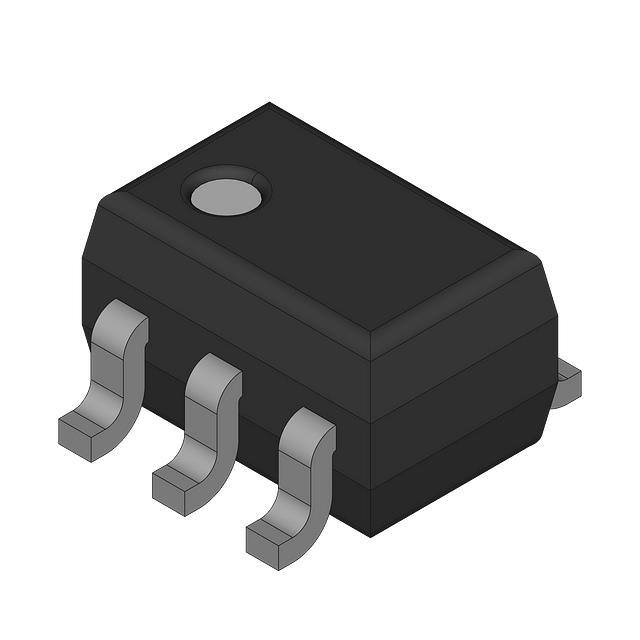
NCP512
80 mA CMOS Low Iq
Voltage Regulator
http://onsemi.com
MARKING
DIAGRAM
5
1
SC70-5/SC-88A/
SOT-353
SQ SUFFIX
CASE 419A
M
The NCP512 series of fixed output linear regulators are designed for
handheld communication equipment and portable battery powered
applications which require low quiescent. The NCP512 series features
an ultra-low quiescent current of 40 �A. Each device contains a
voltage reference unit, an error amplifier, a PMOS power transistor,
resistors for setting output voltage, current limit, and temperature limit
protection circuits.
The NCP512 has been designed to be used with low cost ceramic
capacitors. The device is housed in the micro-miniature SC70-5
surface mount package. Standard voltage versions are 1.3, 1.5, 1.8,
2.2, 2.5, 2.7, 2.8, 3.0, 3.1, 3.3, and 5.0 V. Other voltages are available
in 100 mV steps.
xxx M�G
G
Features
•�Low Quiescent Current of 40 �A Typical
•�Low Dropout Voltage of 180 mV at 80 mA and 3.0 V Vout
•�Low Output Voltage Option
•�Output Voltage Accuracy of 2.0%
•�Industrial Temperature Range of -40°C to 85°C
•�Pb-Free Packages are Available
PIN CONNECTIONS
Typical Applications
•�Cellular Phones
•�Battery Powered Consumer Products
•�Hand-Held Instruments
•�Camcorders and Cameras
Battery or
Unregulated
Voltage
C1
+
1
1
GND
2
Enable
3
5 Vout
4 N/C
(Top View)
+
3
Vin
Vout
5
2
ON
xxx = Device Code
M = Date Code*
G = Pb-Free Package
(Note: Microdot may be in either location)
*Date Code orientation and/or position may
vary depending upon manufacturing location.
C2
ORDERING INFORMATION
4
OFF
See detailed ordering and shipping information in the package
dimensions section on page 8 of this data sheet.
This device contains 86 active transistors
Figure 1. Typical Application Diagram
©� Semiconductor Components Industries, LLC, 2008
April, 2008 - Rev. 14
1
Publication Order Number:
NCP512/D
�NCP512
ÁÁÁÁÁÁÁÁÁÁÁÁÁÁÁÁÁÁÁÁÁÁÁÁÁÁÁÁÁÁÁÁÁ
ÁÁÁÁ
ÁÁÁÁÁ
ÁÁÁÁÁÁÁÁÁÁÁÁÁÁÁÁÁÁÁÁÁÁÁÁÁÁ
ÁÁÁÁÁÁÁÁÁÁÁÁÁÁÁÁÁÁÁÁÁÁÁÁÁÁÁÁÁÁÁÁÁ
ÁÁÁÁÁÁÁÁÁ
ÁÁÁÁÁÁÁÁÁÁÁÁÁÁÁÁÁÁÁÁÁÁÁÁÁÁ
ÁÁÁÁ
ÁÁÁÁÁ
ÁÁÁÁÁÁÁÁÁÁÁÁÁÁÁÁÁÁÁÁÁÁÁÁÁÁ
ÁÁÁÁ
ÁÁÁÁÁ
ÁÁÁÁÁÁÁÁÁÁÁÁÁÁÁÁÁÁÁÁÁÁÁÁÁÁ
ÁÁÁÁÁÁÁÁÁ
ÁÁÁÁÁÁÁÁÁÁÁÁÁÁÁÁÁÁÁÁÁÁÁÁÁÁ
ÁÁÁÁ
ÁÁÁÁÁ
ÁÁÁÁÁÁÁÁÁÁÁÁÁÁÁÁÁÁÁÁÁÁÁÁÁÁ
ÁÁÁÁ
ÁÁÁÁÁ
ÁÁÁÁÁÁÁÁÁÁÁÁÁÁÁÁÁÁÁÁÁÁÁÁÁÁ
ÁÁÁÁÁÁÁÁÁ
ÁÁÁÁÁÁÁÁÁÁÁÁÁÁÁÁÁÁÁÁÁÁÁÁÁÁ
PIN FUNCTION DESCRIPTION
Pin No.
Pin Name
1
Vin
Description
2
GND
3
Enable
4
N/C
No internal connection.
5
Vout
Regulated output voltage.
Positive power supply input voltage.
Power supply ground.
This input is used to place the device into low-power standby. When this input is pulled low, the device is
disabled. If this function is not used, Enable should be connected to Vin.
MAXIMUM RATINGS
ÁÁÁÁÁÁÁÁÁÁÁÁÁÁÁÁÁÁ
ÁÁÁÁÁÁ
ÁÁÁÁÁÁÁÁ
ÁÁÁÁ
ÁÁÁÁÁÁÁÁÁÁÁÁÁÁÁÁÁÁ
ÁÁÁÁÁÁ
ÁÁÁÁÁÁÁÁ
ÁÁÁÁ
ÁÁÁÁÁÁÁÁÁÁÁÁÁÁÁÁÁÁ
ÁÁÁÁÁÁ
ÁÁÁÁ
ÁÁÁÁÁÁÁÁÁÁÁÁÁÁÁÁÁÁ
ÁÁÁÁÁÁÁÁÁÁÁÁÁÁ
ÁÁÁÁÁÁÁÁ
ÁÁÁÁ
ÁÁÁÁÁÁÁÁÁÁÁÁÁÁÁÁÁÁ
ÁÁÁÁÁÁ
ÁÁÁÁÁÁÁÁ
ÁÁÁÁ
ÁÁÁÁÁÁÁÁÁÁÁÁÁÁÁÁÁÁ
ÁÁÁÁÁÁÁÁÁÁÁÁÁÁ
ÁÁÁÁ
ÁÁÁÁÁÁÁÁÁÁÁÁÁÁÁÁÁÁ
ÁÁÁÁÁÁ
ÁÁÁÁÁÁÁÁ
ÁÁÁÁ
ÁÁÁÁÁÁÁÁÁÁÁÁÁÁÁÁÁÁ
ÁÁÁÁÁÁ
ÁÁÁÁÁÁÁÁ
ÁÁÁÁ
ÁÁÁÁÁÁÁÁÁÁÁÁÁÁÁÁÁÁ
ÁÁÁÁÁÁÁÁÁÁÁÁÁÁ
ÁÁÁÁ
Rating
Symbol
Value
Unit
Vin
0 to 6.0
V
Enable Voltage
Enable
-0.3 to Vin +0.3
V
Output Voltage
Vout
-0.3 to Vin +0.3
V
Power Dissipation and Thermal Characteristics
Power Dissipation
Thermal Resistance, Junction-to-Ambient
PD
R�JA
Internally Limited
400
W
°C/W
Operating Junction Temperature
TJ
+150
°C
Maximum Junction Temperature
TJ(max)
+150
°C
Operating Ambient Temperature
TA
-40 to +85
°C
Storage Temperature
Tstg
-55 to +150
°C
Input Voltage
Stresses exceeding Maximum Ratings may damage the device. Maximum Ratings are stress ratings only. Functional operation above the
Recommended Operating Conditions is not implied. Extended exposure to stresses above the Recommended Operating Conditions may affect
device reliability.
1. This device series contains ESD protection and exceeds the following tests:
Human Body Model 2000 V per MIL-STD-883, Method 3015
Machine Model Method 200 V
2. Latch-up capability (85°C) "200 mA DC with trigger voltage.
http://onsemi.com
2
�NCP512
ELECTRICAL CHARACTERISTICS (Vin = Vout(nom.) + 1.0 V, Venable = Vin, Cin = 1.0 �F, Cout = 1.0 �F, TJ = 25°C, unless
otherwise noted.)
Characteristic
Symbol
Output Voltage (TA = 25°C, Iout = 10 mA)
1.3 V
1.5 V
1.8 V
2.2 V
2.5 V
2.7 V
2.8 V
3.0 V
3.1 V
3.3 V
5.0 V
Output Voltage (TA = -40°C to 85°C, Iout = 10 mA)
1.3 V
1.5 V
1.8 V
2.2 V
2.5 V
2.7 V
2.8 V
3.0 V
3.1 V
3.3 V
5.0 V
Line Regulation (Iout = 10 mA)
1.3 V-4.4 V (Vin = Vout(nom.) + 1.0 V to 6.0 V)
4.5 V-5.0 V (Vin = 5.5 V to 6.0 V)
Load Regulation (Iout = 1.0 mA to 80 mA)
Output Current (Vout = (Vout at Iout = 80 mA) -3%)
1.3 V-3.9 V (Vin = Vout(nom.) + 2.0 V)
4.0 V-5.0 V (Vin = 6.0 V)
Dropout Voltage (TA = -40°C to 85°C, Iout = 80 mA,
Measured at Vout = Vout(nom) -3.0%)
1.3 V
1.5 V
1.8 V
2.2 V
2.5 V
2.7 V
2.8 V
3.0 V
3.1 V
3.3 V
5.0 V
Min
Typ
Max
1.261
1.455
1.746
2.134
2.425
2.646
2.744
2.94
3.038
3.234
4.900
1.3
1.5
1.8
2.2
2.5
2.7
2.8
3.0
3.1
3.3
5.0
1.339
1.545
1.854
2.266
2.575
2.754
2.856
3.06
3.162
3.366
5.100
1.261
1.455
1.746
2.134
2.425
2.619
2.716
2.910
3.007
3.201
4.900
1.3
1.5
1.8
2.2
2.5
2.7
2.8
3.0
3.1
3.3
5.0
1.339
1.545
1.854
2.266
2.575
2.781
2.884
3.09
3.193
3.399
5.100
-
1.0
1.0
0.3
3.0
3.0
0.8
80
80
200
200
-
Vout
V
Vout
V
Regline
Regload
Io(nom.)
mV/V
Vin-Vout
Ground Current (Enable Input = Vin, Iout = 1.0 mA to Io(nom.))
Quiescent Current (TA = -40°C to 85°C)
(Enable Input = 0 V)
(Enable Input = Vin, Iout = 1.0 mA to Io(nom.))
Output Short Circuit Current (Vout = 0 V)
1.3 V-3.9 V (Vin = Vout(nom.) + 2.0 V)
4.0 V-5.0 V (Vin = 6.0 V)
IGND
IQ
Vn
RR
-
520
450
350
240
220
200
200
180
170
160
120
700
550
450
300
300
300
300
300
300
300
300
-
40
90
-
0.1
40
1.0
90
150
150
-
250
250
180
50
400
400
-
1.3
-
"100
0.3
-
3. Maximum package power dissipation limits must be observed.
T
*TA
PD + J(max)
R�JA
4. Low duty cycle pulse techniques are used during testing to maintain the junction temperature as close to ambient as possible.
http://onsemi.com
3
�A
�A
mA
Vth(en)
TC
mV/mA
mA
mV
Iout(max)
Output Voltage Noise (f = 100 Hz to 100 kHz, Iout = 30 mA, Cout = 1 �F)
Ripple Rejection (f = 1.0 kHz, 60 mA)
Enable Input Threshold Voltage
(Voltage Increasing, Output Turns On, Logic High)
(Voltage Decreasing, Output Turns Off, Logic Low)
Output Voltage Temperature Coefficient
Unit
�VRMS
dB
V
ppm/°C
�NCP512
300
3.020
NCP512SQ30
Vout, OUTPUT VOLTAGE (V)
Vin - Vout, DROPOUT VOLTAGE (mV)
TYPICAL CHARACTERISTICS
250
Io = 80 mA
200
150
Io = 40 mA
100
50
Io = 10 mA
0
-50
-25
0
25
50
75
100
3.015
Vin = 6.0 V
3.010
Vin = 4.0 V
3.005
3.000
2.995
2.990
2.985
-60
125
-40
-20
0
TEMPERATURE (°C)
Iq, QUIESCENT CURRENT (�A)
Iq, QUIESCENT CURRENT (�A)
44
42
40
-60
100
-40
-20
0
20
40
60
80
Vout = 3.0 V
Cin = 1.0 �F
Cout = 1.0 �F
TA = 25°C
50
40
30
20
10
0
0
100
1.0
2.0
3.0
4.0
5.0
6.0
7.0
Vin, INPUT VOLTAGE (V)
TEMPERATURE (°C)
Figure 5. Quiescent Current vs. Input Voltage
Figure 4. Quiescent Current vs. Temperature
60
70
Vout = 3.0 V
Cin = 1.0 �F
Cout = 1.0 �F
Iout = 30 mA
TA = 25°C
Vin = 4.0 V
Cout = 1.0 �F
Iout = 30 mA
60
RIPPLE REJECTION (dB)
Ignd, GROUND CURRENT (�A)
80
60
Iout = 0 mA
Vin = 4.0 V
Vout = 3.0 V
46
30
20
10
0
0
60
Figure 3. Output Voltage vs. Temperature
48
40
40
TEMPERATURE (°C)
Figure 2. Dropout Voltage vs. Temperature
50
20
50
40
30
20
10
1.0
2.0
3.0
4.0
5.0
6.0
0
100
7.0
1.0k
10k
100k
Vin, INPUT VOLTAGE (V)
FREQUENCY (Hz)
Figure 6. Ground Pin Current vs. Input Voltage
Figure 7. Ripple Rejection vs. Frequency
http://onsemi.com
4
1.0M
�NCP512
7
Vin, INPUT
VOLTAGE (V)
7
Vin = 4.0 V
Cout = 1.0 �F
Iout = 30 mA
6
5
4
OUTPUT VOLTAGE
DEVIATION (mV)
OUTPUT VOLTAGE NOISE (�V/ǰ Hz)
TYPICAL CHARACTERISTICS
3
2
1
6
Cout = 1.0 �F
Iout = 10 mA
5
4
3
200
100
0
-100
0
10
100
1.0k
10k
100k
1.0M
0
50
100 150 200 250
Figure 9. Line Transient Response
Figure 8. Output Noise Density
Vin, INPUT
VOLTAGE (V)
6
60 mA
0
200
4
2
0
4
OUTPUT VOLTAGE
(V)
100
0
Iout = 1 mA to 60 mA
Vin = 4.0 V
Cin = 1.0 �F
Cout = 1.0 �F
-100
-200
0
100
200
300
400
500
600
700
Iout = 10 mA
Vin = 4.0 V
Cin = 1.0 �F
Cout = 1.0 �F
3
2
1
0
0
800
0.2
0.4
0.6 0.8
1.0
1.2 1.4
1.6
TIME (�s)
TIME (ms)
Figure 10. Load Transient Response
Figure 11. Turn-on Response
3.5
Vout, OUTPUT VOLTAGE (V)
Io, OUTPUT
CURRENT (mA)
500
TIME (�s)
FREQUENCY (Hz)
OUTPUT VOLTAGE
DEVIATION (mV)
300 350 400 450
3.0
2.5
2.0
1.5
1.0
0.5
0
0
1.0
2.0
3.0
4.0
5.0
Vin, INPUT VOLTAGE (V)
Figure 12. Output Voltage vs. Input Voltage
http://onsemi.com
5
6.0
1.8
2.0
�NCP512
DEFINITIONS
Load Regulation
Line Regulation
The change in output voltage for a change in output
current at a constant temperature.
The change in output voltage for a change in input voltage.
The measurement is made under conditions of low
dissipation or by using pulse technique such that the average
chip temperature is not significantly affected.
Dropout Voltage
The input/output differential at which the regulator output
no longer maintains regulation against further reductions in
input voltage. Measured when the output drops 3.0% below
its nominal. The junction temperature, load current, and
minimum input supply requirements affect the dropout level.
Line Transient Response
Typical over and undershoot response when input voltage
is excited with a given slope.
Thermal Protection
Internal thermal shutdown circuitry is provided to protect
the integrated circuit in the event that the maximum junction
temperature is exceeded. When activated at typically 160°C,
the regulator turns off. This feature is provided to prevent
failures from accidental overheating.
Maximum Power Dissipation
The maximum total dissipation for which the regulator
will operate within its specifications.
Quiescent Current
The quiescent current is the current which flows through
the ground when the LDO operates without a load on its
output: internal IC operation, bias, etc. When the LDO
becomes loaded, this term is called the Ground current. It is
actually the difference between the input current (measured
through the LDO input pin) and the output current.
Maximum Package Power Dissipation
The maximum power package dissipation is the power
dissipation level at which the junction temperature reaches
its maximum operating value, i.e. 125°C. Depending on the
ambient power dissipation and thus the maximum available
output current.
http://onsemi.com
6
�NCP512
APPLICATIONS INFORMATION
A typical application circuit for the NCP512 series is
shown in Figure 1, front page.
Set external components, especially the output capacitor,
as close as possible to the circuit, and make leads as short as
possible.
Input Decoupling (C1)
A 1.0 �F capacitor either ceramic or tantalum is
recommended and should be connected close to the NCP512
package. Higher values and lower ESR will improve the
overall line transient response.
TDK capacitor: C2012X5R1C105K, or C1608X5R1A105K
Thermal
As power across the NCP512 increases, it might become
necessary to provide some thermal relief. The maximum
power dissipation supported by the device is dependent
upon board design and layout. Mounting pad configuration
on the PCB, the board material and also the ambient
temperature effect the rate of temperature rise for the part.
This is stating that when the NCP512 has good thermal
conductivity through the PCB, the junction temperature will
be relatively low with high power dissipation applications.
The maximum dissipation the package can handle is
given by:
Output Decoupling (C2)
The NCP512 is a stable regulator and does not require any
specific Equivalent Series Resistance (ESR) or a minimum
output current. Capacitors exhibiting ESRs ranging from a
few m� up to 5.0 � can thus safely be used. The minimum
decoupling value is 1.0 �F and can be augmented to fulfill
stringent load transient requirements. The regulator accepts
ceramic chip capacitors as well as tantalum capacitors.
Larger values improve noise rejection and load regulation
transient response.
TDK capacitor: C2012X5R1C105K, C1608X5R1A105K,
or C3216X7R1C105K
T
*TA
PD + J(max)
R�JA
If junction temperature is not allowed above the
maximum 125°C, then the NCP512 can dissipate up to
250 mW @ 25°C.
The power dissipated by the NCP512 can be calculated
from the following equation:
Enable Operation
The enable pin will turn on the regulator when pulled high
and turn off the regulator when pulled low. These limits of
threshold are covered in the electrical specification section
of this data sheet. If the enable is not used then the pin should
be connected to Vin.
Ptot + [Vin * Ignd�(Iout)] ) [Vin * Vout] * Iout
or
P ) Vout * Iout
VinMAX + tot
Ignd ) Iout
If an 80 mA output current is needed then the ground
current from the data sheet is 40 �A. For an NCP512 (3.0 V),
the maximum input voltage will then be 6.12 V.
Hints
Please be sure the Vin and GND lines are sufficiently
wide. When the impedance of these lines is high, there is a
chance to pick up noise or cause the regulator to
malfunction.
http://onsemi.com
7
�NCP512
ORDERING INFORMATION
Device
Nominal
Output Voltage*
Marking
Package
NCP512SQ13T1G
1.3
LIW
SC-88A (SOT-353)
(Pb-Free)
NCP512SQ15T1
1.5
LCK
SC-88A (SOT-353)
NCP512SQ15T1G
1.5
LCK
SC-88A (SOT-353)
(Pb-Free)
NCP512SQ18T1
1.8
LCL
SC-88A (SOT-353)
NCP512SQ18T1G
1.8
LCL
SC-88A (SOT-353)
(Pb-Free)
NCP512SQ22T1G
2.2
LIA
SC-88A (SOT-353)
(Pb-Free)
NCP512SQ25T1
2.5
LCM
SC-88A (SOT-353)
NCP512SQ25T1G
2.5
LCM
SC-88A (SOT-353)
(Pb-Free)
NCP512SQ27T1
2.7
LCN
SC-88A (SOT-353)
NCP512SQ27T1G
2.7
LCN
SC-88A (SOT-353)
(Pb-Free)
NCP512SQ28T1
2.8
LCO
SC-88A (SOT-353)
NCP512SQ28T1G
2.8
LCO
SC-88A (SOT-353)
(Pb-Free)
NCP512SQ30T1
3.0
LCP
SC-88A (SOT-353)
NCP512SQ30T1G
3.0
LCP
SC-88A (SOT-353)
(Pb-Free)
NCP512SQ31T1
3.1
LFO
SC-88A (SOT-353)
NCP512SQ31T1G
3.1
LFO
SC-88A (SOT-353)
(Pb-Free)
NCP512SQ33T1
3.3
LCQ
SC-88A (SOT-353)
NCP512SQ33T1G
3.3
LCQ
SC-88A (SOT-353)
(Pb-Free)
NCP512SQ50T1
5.0
LCR
SC-88A (SOT-353)
NCP512SQ50T1G
5.0
LCR
SC-88A (SOT-353)
(Pb-Free)
Shipping†
3000 Units/
7″ Tape & Reel
*Additional voltages in 100 mV steps are available upon request by contacting your ON Semiconductor representative.
†For information on tape and reel specifications, including part orientation and tape sizes, please refer to our Tape and Reel Packaging
Specification Brochure, BRD8011/D.
http://onsemi.com
8
�NCP512
PACKAGE DIMENSIONS
SC-88A/SOT-353/SC70-5
SQ SUFFIX
CASE 419A-02
ISSUE J
A
NOTES:
1. DIMENSIONING AND TOLERANCING
PER ANSI Y14.5M, 1982.
2. CONTROLLING DIMENSION: INCH.
3. 419A-01 OBSOLETE. NEW STANDARD
419A-02.
4. DIMENSIONS A AND B DO NOT INCLUDE
MOLD FLASH, PROTRUSIONS, OR GATE
BURRS.
G
5
4
-B-
S
1
2
3
D 5 PL
0.2 (0.008)
M
B
INCHES
MIN
MAX
0.071
0.087
0.045
0.053
0.031
0.043
0.004
0.012
0.026 BSC
--0.004
0.004
0.010
0.004
0.012
0.008 REF
0.079
0.087
DIM
A
B
C
D
G
H
J
K
N
S
M
N
J
MILLIMETERS
MIN
MAX
1.80
2.20
1.15
1.35
0.80
1.10
0.10
0.30
0.65 BSC
--0.10
0.10
0.25
0.10
0.30
0.20 REF
2.00
2.20
C
K
H
SOLDERING FOOTPRINT*
0.50
0.0197
0.65
0.025
0.65
0.025
0.40
0.0157
1.9
0.0748
SCALE 20:1
mm Ǔ
ǒinches
*For additional information on our Pb-Free strategy and soldering
details, please download the ON Semiconductor Soldering and
Mounting Techniques Reference Manual, SOLDERRM/D.
ON Semiconductor and
are registered trademarks of Semiconductor Components Industries, LLC (SCILLC). SCILLC reserves the right to make changes without further notice
to any products herein. SCILLC makes no warranty, representation or guarantee regarding the suitability of its products for any particular purpose, nor does SCILLC assume any liability
arising out of the application or use of any product or circuit, and specifically disclaims any and all liability, including without limitation special, consequential or incidental damages.
“Typical” parameters which may be provided in SCILLC data sheets and/or specifications can and do vary in different applications and actual performance may vary over time. All
operating parameters, including “Typicals” must be validated for each customer application by customer's technical experts. SCILLC does not convey any license under its patent rights
nor the rights of others. SCILLC products are not designed, intended, or authorized for use as components in systems intended for surgical implant into the body, or other applications
intended to support or sustain life, or for any other application in which the failure of the SCILLC product could create a situation where personal injury or death may occur. Should
Buyer purchase or use SCILLC products for any such unintended or unauthorized application, Buyer shall indemnify and hold SCILLC and its officers, employees, subsidiaries, affiliates,
and distributors harmless against all claims, costs, damages, and expenses, and reasonable attorney fees arising out of, directly or indirectly, any claim of personal injury or death
associated with such unintended or unauthorized use, even if such claim alleges that SCILLC was negligent regarding the design or manufacture of the part. SCILLC is an Equal
Opportunity/Affirmative Action Employer. This literature is subject to all applicable copyright laws and is not for resale in any manner.
PUBLICATION ORDERING INFORMATION
LITERATURE FULFILLMENT:
Literature Distribution Center for ON Semiconductor
P.O. Box 5163, Denver, Colorado 80217 USA
Phone: 303-675-2175 or 800-344-3860 Toll Free USA/Canada
Fax: 303-675-2176 or 800-344-3867 Toll Free USA/Canada
Email: orderlit@onsemi.com
N. American Technical Support: 800-282-9855 Toll Free
USA/Canada
Europe, Middle East and Africa Technical Support:
Phone: 421 33 790 2910
Japan Customer Focus Center
Phone: 81-3-5773-3850
http://onsemi.com
9
ON Semiconductor Website: www.onsemi.com
Order Literature: http://www.onsemi.com/orderlit
For additional information, please contact your local
Sales Representative
NCP512/D
�