DATA SHEET
www.onsemi.com
Ideal Diode and High Side
Switch NMOS Controller
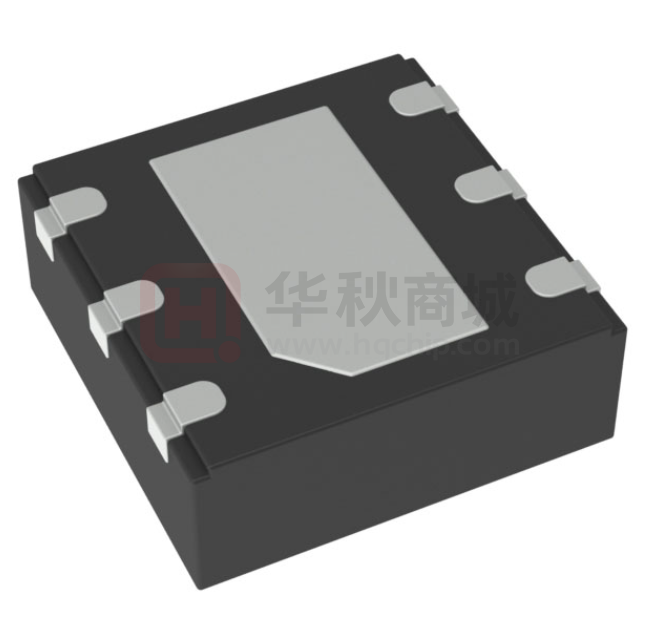
WDFNW6
CASE 511DW
NCV68261
The NCV68261 is a Reverse Polarity Protection and Ideal Diode
NMOS Controller with optional High Side Switch function, intended
as a lower loss and lower forward voltage replacement for power
rectifier diodes and mechanical power switches. The controller
operates in conjunction with one or two N−channel MOSFETs and
sets the ON/OFF state of the transistors based on the state of the
Enable pin and the Input−to−Drain differential voltage polarity.
Depending on the Drain pin connection, both Ideal Diode and High
Side Switch applications can operate in two different modes. With the
Drain pin connected to the load, the applications are in Ideal Diode
mode, whereas with the Drain pin connected to ground, the
applications are merely in Reverse Polarity Protection mode.
S
1
G
2
D
3
•
•
•
•
•
•
•
6
IN
5
GND
4
EN
WDFNW6
(Top View)
MARKING DIAGRAMS
Features
•
•
•
•
Thermal
Pad
PIN ASSIGNMENT
V6MG
Operating Voltage Range: up to 32 V
G
Immune to 60 V Load Dump Pulse
Immune to −40 V Negative Transient
V6 = Specific Device Code
M = Month Code
Overvoltage Protection
G
= Pb−Free Package
♦ Disconnects the load from battery at VIN = 35.6 V typ
(Note: Microdot may be in either location)
Enable Function (3.3 V Logic Compatible Thresholds)
Ideal Diode Function
ORDERING INFORMATION
♦ Protecting against Reverse Current Flow (from Output to Input)
See detailed ordering and shipping information on page 15 of
this data sheet.
Reverse Polarity Protection (RPP) Function
♦ Protecting against Negative Supply
Typical Applications
High Side Switch with Ideal Diode
• Automotive Battery Regulation
High Side Switch with Reverse Polarity Protection
• Industrial Power Supply
NCV Prefix for Automotive and Other Applications
• Rectifier
Requiring Unique Site and Control Change
Requirements; AEC−Q100 Grade 1 Qualified and
• High Side Switch
PPAP Capable
• Vehicle Control Module
These Devices are Pb−Free and are RoHS Compliant
Battery
Battery
Protected Battery
CIN
S
IN
EN
G
D
NCV68261
+
CIN
Cbulk
EN
Figure 1. NCV68261 Application Schematic
(Ideal Diode)
May, 2022 − Rev. 1
S
IN
GND
© Semiconductor Components Industries, LLC, 2020
Protected Battery
G
NCV68261
D
+
Cbulk
GND
Figure 2. NCV68261 Application Schematic
(Ideal Diode + High Side Switch)
1
Publication Order Number:
NCV68261/D
�NCV68261
Battery
Protected Battery
G
S
CIN
+
D
NCV68261
IN
EN
Battery
Protected Battery
G
S
CIN
Cbulk
IN
Figure 3. NCV68261 Application Schematic
(Reverse Polarity Protection)
+
NCV68261
EN
GND
D
Cbulk
GND
Figure 4. NCV68261 Application Schematic
(Reverse Polarity Protection + High Side Switch)
S
G
1 MW
Pull-down
Bulk
IN
Discharge
Switch
Prereg.
References
EN
Enable
Input/
Drain
+
-
D
Logic
&
&&
1>=11
CP_OUT-
DISCH
OSC+CP
UVLO
CP_EN
+
DISCH_OUT
CP_OUT+
OVLO
+
-
GND
Figure 5. NCV68261 Block Diagram
Table 1. PIN FUNCTION DESCRIPTION
Pin No.
WDFNW6
Pin Name
Description
6
IN
Supply voltage input, Anode of the diode and Non−inverting input of the internal comparator. Bypass directly
to GND with a ceramic capacitor. Connect to the Drain of the High Side Switch NMOS or to the Source pin
(see the application schematics).
5
GND
4
EN
3
D
Cathode of the diode and Inverting input of the internal comparator. Bypass directly to GND with a ceramic
capacitor. Connect to the Drain of the Diode NMOS or to the GND (see the application schematics).
2
G
Charge pump output with discharge function. Connect to the Gate of the external NMOS (see application
schematics).
1
S
Reference for the Charge pump output. Connect to the Source of the external NMOS (see application
schematics).
Ground potential.
Enable Input. High Level enables the chip. Connect to IN if enable function is not required.
www.onsemi.com
2
�NCV68261
Table 2. MAXIMUM RATINGS
Rating
Symbol
Min
Max
Unit
Input and Source Voltage DC (Note 1)
VS
−18
45
V
Input, Source, Drain, Gate and Enable Voltage (Note 2)
Load Dump − Suppressed
Us*
−
60
Input, Source, Gate and Enable Voltage (Note 3)
Test Pulse 1
Us
−40
−
Gate Voltage
VG
−18
45
V
Gate−to−Source Voltage
VGS
−0.3
19
V
Drain Voltage
VD
−5
45
V
Input and Source−to−Drain Voltage DC
VSD
−45
45
V
Input and Source−to−Drain Voltage transient (Test Pulse 1)
VSD
−60
−
V
Enable Voltage
VEN
−18
45
V
TJ
−40
150
°C
TSTG
−55
150
°C
Operating Junction Temperature
Storage Temperature
V
V
Stresses exceeding those listed in the Maximum Ratings table may damage the device. If any of these limits are exceeded, device functionality
should not be assumed, damage may occur and reliability may be affected.
1. Refer to ELECTRICAL CHARACTERISTICS and APPLICATION INFORMATION for Safe Operating Area.
2. Load Dump Test B (with centralized load dump suppression) according to ISO 16750−2 standard. Guaranteed by design. Not tested in
production. Passed Class A according to ISO 16750−1.
3. Test Pulse 1 according to ISO 7637−2 standard. Guaranteed by design. Not tested in production. Passed Class A according to ISO 16750−1.
More ISO 7637−2: 2011(E) PULSE TEST RESULTS are in Table 8.
Table 3. ESD CAPABILITY (Note 4)
Symbol
Min
Max
Unit
ESD Capability, Human Body Model
ESDHBM
−2
2
kV
ESD Capability, Charged Device Model
ESDCDM
−1
1
kV
Rating
4. This device series incorporates ESD protection and is tested by the following methods:
ESD Human Body Model tested per AEC−Q100−002 (JS−001−2017)
Field Induced Charge Device Model ESD characterization is not performed on plastic molded packages with body sizes smaller than
2 × 2 mm due to the inability of a small package body to acquire and retain enough charge to meet the minimum CDM discharge current
waveform characteristic defined in JEDEC JS−002−2018.
Table 4. LEAD SOLDERING TEMPERATURE AND MSL (Note 5)
Symbol
Rating
Moisture Sensitivity Level
Min
MSL
Max
1
Unit
−
5. For more information, please refer to our Soldering and Mounting Techniques Reference Manual, SOLDERRM/D.
Table 5. THERMAL CHARACTERISTICS (Note 6)
Rating
Thermal Characteristics, WDFNW−6
Thermal Resistance, Junction−to−Ambient
Thermal Reference, Junction−to−Case Top
Symbol
Value
RqJA
ΨqJT
157.8
37.4
Unit
°C/W
6. Mounted onto a 80 x 80 x 1.6 mm single layer FR4 board (645 sq mm, 1 oz. Cu, steady state).
Table 6. RECOMMENDED OPERATING RANGES
Rating
Symbol
Min
Max
Unit
Input Voltage
VIN
3
32
V
Junction Temperature
TJ
−40
150
°C
Functional operation above the stresses listed in the Recommended Operating Ranges is not implied. Extended exposure to stresses beyond
the Recommended Operating Ranges limits may affect device reliability.
www.onsemi.com
3
�NCV68261
Table 7. ELECTRICAL CHARACTERISTICS
VIN = 13.5 V, VEN = 5 V, CIN = 0.1 mF, Cbulk = 1 mF, Min and Max values are valid for temperature range −40°C ≤ TJ ≤ +150°C unless
noted otherwise and are guaranteed by test, design or statistical correlation. Typical values are referenced to TJ = 25°C
Parameter
Test Conditions
Symbol
Min
Typ
Max
Unit
CHARGE PUMP OPERATION
Undervoltage Lockout
VIN rising
VIN falling (Gate Discharge)
VIN_UVLO
−
3
3.4
3.25
3.65
−
V
Overvoltage Lockout
VIN rising
Hysteresis (VIN falling)
VIN_OVLO
32
−
35.6
0.8
42
−
V
Gate−to−Source Charged Voltage
VIN = 4 V
VIN ≥ 8 V
VGS
3
9
4
11.3
−
15
V
100
−40
140
−10
220
0
70
170
100
320
−
−
Input−to−Drain Voltage Threshold
Gate Charge
Gate Discharge
Vth(IN−D)
VIN−D rising
VIN−D falling
IG_Charge
mV
Gate Charge Current
VGS = 0 V, VIN−D = 220 mV
VIN = 4 V
VIN = 13.5 V
Gate Discharge Peak Current
VGS = 10 V, VIN−D ≤ −100 mV
IG_Disch
−
1.65
−
A
Discharge Switch RDS(ON)
VGS = 100 mV, VIN−D ≤ −100 mV
RDS(on)
1
2.4
5
W
Response Time (Time from Reverse
Voltage Condition to VGS = 9 V)
VGS = 10 V, VIN = 13.5 V,
VIN−D = step from 250 mV to −150 mV
trt_OFF
−
0.2
0.6
−
1.1
−
MW
IDIS
−
−
5
mA
Iq
−
210
295
mA
0.99
−
1.7
1.8
−
2.31
−
−
−
11
3.2
0.010
−
5
1
−
0.9
4
Gate−to−Source Static Resistance
mA
ms
DISABLE AND QUIESCENT CURRENTS
Disable Current
VEN = 0 V
Quiescent Current
IGS = 0 mA, VIN−D = 220 mV
(CP active)
ENABLE
Vth(EN)
Enable Input Threshold Voltage
Logic Low
Logic High
VGS ≤ 0.1 V
VGS ≥ 4.9 V
Enable Input Current
Logic High
Logic High
Logic Low
VEN = 13.5 V
VEN = 5 V
VEN = 0 V
Response Time (Time from EN High−
to−Low to VGS = 9 V)
VGS = 10 V, VIN = 13.5 V,
VEN = step from 5 V to 0 V
IEN_ON
IEN_ON
IEN_OFF
trt_EN_OFF
V
mA
ms
Product parametric performance is indicated in the Electrical Characteristics for the listed test conditions, unless otherwise noted. Product
performance may not be indicated by the Electrical Characteristics if operated under different conditions.
www.onsemi.com
4
�NCV68261
12.5
IG_Charge, GATE CHARGE CURRENT (mA)
VGS, GATE−TO−SOURCE CHARGED VOLTAGE (V)
TYPICAL CHARACTERISTICS
TJ = 150°C
11.5
10.5
TJ = −40°C TJ = 25°C TJ = 125°C
9.5
8.5
7.5
6.5
5.5
4.5
3.5
2.5
2
4
6
8 10 12 14 16 18 20 22 24 26 28 30 32 34
400
TJ = −40°C
350
300
TJ = 125°C
250
TJ = 150°C
200
150
100
50
2
Figure 7. Gate Charge Current vs. Input
Voltage
0.4
RDS(on), DISCHARGE SWITCH ON
RESISTANCE (W)
VIN = 4 V
VIN = 8 V to 32 V
2.0
1.5
1.0
−50 −30 −10
VIN−D = −100 mV
VGS = 100 mV
10
30
50
70
90
trt_OFF, RESPONSE TIME IN
REVERSE CONDITION (ms)
0.35
2.5
0.3
0.25
0.15
0.1
0.05
0
−50 −30 −10
110 130 150
1.4
VIN = 13.5 V
VIN = 32 V
0.8
0.6
VIN = 4 V
0.4
0.2
20
40
60
80
30
50
70
90
110 130 150
100
Figure 9. Charge Pump Output Response Time in
Reverse Condition (from VIN−D = 0 V to VGS = 9 V)
vs. Temperature
Vth(IN−D), INPUT−TO−DRAIN VOLTAGE
THRESHOLDS (mV)
tDisch, DISCHARGE TIME (ms)
TJ = 25°C
1.0
10
TJ, JUNCTION TEMPERATURE (°C)
Figure 8. Discharge Switch On Resistance vs.
Temperature
1.2
VIN = 8 V to 32 V
0.2
TJ, JUNCTION TEMPERATURE (°C)
0
8 10 12 14 16 18 20 22 24 26 28 30 32 34
Figure 6. Gate−to−Source Charged Voltage vs.
Input Voltage
3.0
0
6
VIN, INPUT VOLTAGE (V)
3.5
1.6
4
VIN, INPUT VOLTAGE (V)
4.0
1.8
TJ = 25°C
200
180
VIN = 13.5 V
160
VIN−D rising
140
120
100
80
60
40
20
0
VIN−D falling
−20
−40
−50 −30 −10
CGS, GATE−SOURCE CAPACITANCE (nF)
10
30
50
70
90
110 130 150
TJ, JUNCTION TEMPERATURE (°C)
Figure 10. Discharge Time (from VIN−D = 0 V to
VGS = 0 V) vs. Gate−Source Capacitance
Figure 11. Input−to−Drain Voltage Thresholds
vs. Temperature
www.onsemi.com
5
�NCV68261
TYPICAL CHARACTERISTICS
300
260
Iq, QUIESCENT CURRENT (mA)
TJ = 25°C
280
Charge pump ON
240
220
200
180
160
Charge pump OFF
140
120
100
2
4
6
260
240
200
180
160
120
10
30
50
70
90
110 130 150
Figure 13. Quiescent Current vs. Temperature
0.25
0.2
0.15
VIN = 13.5 V
0.1
VIN = 4 V
0.05
0
−50 −30 −10
10
30
50
70
90
110 130 150
TJ, JUNCTION TEMPERATURE (°C)
2.2
TJ = 150°C
30
TJ = 125°C
25
20
TJ = 25°C
15
TJ = −40°C
10
5
2
4
6
Logic high
1.8
Logic low
1.6
1.4
1.2
1.0
−50 −30 −10
10
30
50
70
90
110 130 150
TJ, JUNCTION TEMPERATURE (°C)
Figure 15. Enable Voltage Thresholds vs.
Temperature
trt_EN_OFF, ENABLE RESPONSE TIME
(ms)
35
VIN = 13.5 V
2.0
Figure 14. Disable Current vs. Temperature
IEN, ENABLE INPUT CURRENT (mA)
Charge pump OFF
140
Figure 12. Quiescent Current vs. Input Voltage
VIN = 32 V
0
Charge pump ON
220
TJ, JUNCTION TEMPERATURE (°C)
0.3
0
VIN = 13.5 V
VIN, INPUT VOLTAGE (V)
0.35
IDIS, DISABLE CURRENT (mA)
280
100
−50 −30 −10
8 10 12 14 16 18 20 22 24 26 28 30 32 34
Vth(EN), ENABLE VOTLAGE THRESHOLDS (V)
Iq, QUIESCENT CURRENT (mA)
300
8 10 12 14 16 18 20 22 24 26 28 30 32
1
VIN = 8 V to 32 V
0.95
0.9
0.85
0.8
0.75
0.7
−50 −30 −10
10
30
50
70
90
110 130 150
VEN, ENABLE VOLTAGE (V)
TJ, JUNCTION TEMPERATURE (°C)
Figure 16. Enable Input Current vs. Enable
Voltage
Figure 17. Enable Response Time (from EN
High−to−Low to VGS = 9 V) vs. Temperature
www.onsemi.com
6
�NCV68261
VIN_OVLO, OVERVOLTAGE LOCKOUT
THRESHOLDS (V)
3.4
VIN rising
3.3
VIN falling
3.2
−50 −30 −10
25
ID, DRAIN INPUT CURRENT (mA)
36
3.5
10
30
50
70
90
110 130 150
10
30
50
70
90
110 130 150
50
10
5
Charge pump ON
4
34.5
−50 −30 −10
Figure 19. Overvoltage Lockout (OVLO)
Thresholds vs. Temperature
Charge pump OFF
2
VIN falling
35
Figure 18. Undervoltage Lockout (UVLO)
Thresholds vs. Temperature
15
0
35.5
TJ, JUNCTION TEMPERATURE (°C)
TJ = 25°C
VEN = 5 V
20
VIN rising
TJ, JUNCTION TEMPERATURE (°C)
ID, DRAIN INPUT CURRENT (nA)
VIN_UVLO, UNDERVOLTAGE LOCKOUT
THRESHOLDS (V)
TYPICAL CHARACTERISTICS
6
TJ = 25°C
45 VEN = 0 V
40 VD = VIN − 220 mV
35
30
25
20
15
10
5
0
8 10 12 14 16 18 20 22 24 26 28 30 32 34
2
4
6
8 10 12 14 16 18 20 22 24 26 28 30 32 34
VIN, INPUT VOLTAGE (V)
VIN, INPUT VOLTAGE (V)
Figure 20. Drain Input Current vs. Input
Voltage
Figure 21. Drain Input Current vs. Input
Voltage
www.onsemi.com
7
�NCV68261
TYPICAL CHARACTERISTICS
Table 8. ISO 7637−2: 2011(E) PULSE TEST RESULTS
ISO 7637−2:2011(E)
Test Pulse
Test Severity Levels, 12 V System
I / II
III
IV
Delays and Impedance
# of Pulses or
Test Time
Pulse / Burst
Rep. Time
1
−75
−112
−150
2 ms, 10 W
500 pulses
0.5 s
2a
+37
+55
+112
0.05 ms, 2 W
500 pulses
0.5 s
3a
−112
−165
−220
0.1 ms, 50 W
1h
100 ms
3b
+75
+112
+150
0.1 ms, 50 W
1h
100 ms
Test Results
ISO 7637−2:2011(E)
Test Pulse
I / II
III
1
A
E
2a
3a
3b
A
A
IV
E
E
A
E
Class
Functional Status
A
All functions of a device perform as designed during and after exposure to disturbance.
B
All functions of a device perform as designed during exposure. However,one or more of them can go beyond specified tolerance. All functions return automatically to within normal limits after exposure is removed. Memory functions
shall remain class A.
C
One or more functions of a device do not perform as designed during exposure but return automatically to normal
operation after exposure is removed.
D
One or more functions of a device do not perform as designed during exposure and do not return to normal operation until exposure is removed and the device is reset by simple ”operator/use” action.
E
One or more functions of a device do not perform as designed during and after exposure and cannot be returned to
proper operation without replacing the device.
www.onsemi.com
8
�NCV68261
APPLICATION INFORMATION
INTEGRATED CIRCUIT AND BLOCK DIAGRAM
DESCRIPTION
UVLO Comparator
The undervoltage lockout (UVLO) comparator compares
the Input voltage level with an internal reference voltage
level. When the Input voltage falls below the UVLO
threshold, the output of the UVLO comparator is set to low
resulting in turning OFF the charge pump and switching
OFF the external NMOS transistors.
Integrated Circuit Description
The NCV68261 can operate in conjunction with one or
two external NMOS transistors. Two basic applications can
be configured: an Ideal diode application or a Reverse
Polarity Protection application defined by the Drain pin
connection as shown in the Table 9. The applications with
single NMOS are always forward conductive. The
applications with two NMOS transistors provide a High
Side Switch function to control the power supplied to the
application.
OVLO Comparator
The overvoltage lockout (OVLO) comparator compares
the Input voltage level with an internal reference voltage
level. When the Input voltage rises above the OVLO
threshold, the output of the OVLO comparator is set to high
resulting in turning OFF the charge pump and switching
OFF the external NMOS transistors.
Enable
The Enable block turns the controller ON and OFF. If the
Enable function is not needed, then the Enable pin can be
connected to the Input pin for permanent operation.
Logic
The Logic block controls the Charge Pump block
according to the inputs from the Input/Drain, UVLO and
OVLO comparators. The truth table of the logic function is
shown in Table 10.
References
The References block provides voltage references and
voltage supply for other internal circuitry. This block is
supplied from the Input and controlled by the Enable block.
Pre−regulator
The pre−regulator provides a stable voltage supply for the
Charge Pump block.
Input/Drain Comparator
This comparator compares voltage levels at the Input and
Drain pins. Based on the Drain pin connection, the
applications can be designed with both Reverse Current
Protection and Reverse Polarity Protection features active
(Figures 22 and 23) or with Reverse Polarity Protection
only (Figures 24 and 25).
Oscillator and Charge Pump
The oscillator generates an approximately 2 MHz clock
signal that drives the charge pump. The charge pump
generates the Gate−Source voltage from the voltage
provided by the pre−regulator. The OSC+CP block drives
the discharge switch as well.
Table 9. AVAILABLE PROTECTION FEATURES
Protection Features
Drain Pin Connection
Reverse Current Protection
Reverse Polarity Protection
Load Side (Protected Battery) (see Figures 22 and 23)
Yes
Yes
GND (see Figures 24 and 25)
No
Yes
Table 10. TRUTH TABLE OF THE LOGIC BLOCK (@ EN = HIGH)
Input/Drain Comparator
UVLO Comparator
OVLO Comparator
Disch
CP_EN
NMOS
VIN < VD
VIN < VIN_UVLO
X
TRUE
FALSE
OFF
VIN < VD
VIN > VIN_UVLO
VIN < VIN_OVLO
TRUE
FALSE
OFF
VIN < VD
VIN > VIN_UVLO
VIN > VIN_OVLO
TRUE
FALSE
OFF
VIN > VD
VIN < VIN_UVLO
X
TRUE
FALSE
OFF
VIN > VD
VIN > VIN_UVLO
VIN < VIN_OVLO
FALSE
TRUE
ON
VIN > VD
VIN > VIN_UVLO
VIN > VIN_OVLO
TRUE
FALSE
OFF
www.onsemi.com
9
�NCV68261
Operation
the charge pump and the NMOS transistor are disabled. As
the Input voltage becomes greater than the Drain voltage,
forward current flows through the body diode of the NMOS
transistor. Once this forward voltage drop exceeds the
Input−to−Drain Gate Charge Voltage Threshold level (typ.
140 mV), the charge pump is turned ON and the NMOS
transistor becomes fully conductive.
Reverse Current Blocking: When the Input voltage
becomes less than the Drain voltage, a reverse current
initially flows through the conductive channel of the NMOS
transistor. This current creates a voltage drop across the
conductive channel of the NMOS transistor which is
proportional to its RDS(ON) resistance. When this voltage
crosses below the Input−to−Drain Gate Discharge Voltage
Threshold (typ. −10 mV), the charge pump is disabled and
the external NMOS transistor is turned OFF by an internal
PMOS transistor (see Figure 5).
The main function of the NCV68261 is to control the
ON/OFF state of one or two external NMOS transistors
depending on the state of the Enable pin and the difference
between the voltages at the Input and Drain pins − as shown
in Figures 22 to 25. Figure 5 illustrates the internal
connections between the functional blocks described above.
OFF state: When the Enable input is low, the IC is in
disable mode. All the internal blocks are turned OFF, and the
current consumption is reduced − typically down to tens of
nano−amps. In this state, the external transistors are kept
OFF by an integrated 1 MW resistor between the Gate and
Source pins.
ON state: When the Enable input is high, the IC is active.
Further operation depends on the output state of the UVLO,
OVLO and Input/Drain comparators. Table 10 shows the
charge pump, gate discharge, and NMOS transistor states
based on the output states of these comparators. The charge
pump is turned ON only when the Input voltage level is
between the UVLO and OVLO thresholds and above the
Drain voltage level.
Undervoltage Lockout: When the Input voltage falls
below the UVLO thresholds (typ. 3.25 V), the charge pump
is disabled and the external NMOS transistors are turned
OFF by an internal PMOS transistor. By decreasing the
Input voltage further, the chip is insufficiently powered, and
the external NMOSs are kept in OFF state by the integrated
1 MW resistor (see Figure 5).
Overvoltage Lockout: When the Input voltage rises
above the OVLO thresholds (typ. 35.6 V), the charge pump
is disabled and the external NMOS transistors are turned
OFF by an internal PMOS transistor.
Reverse Polarity Protection (RPP)
By connecting the Drain pin to the GND potential
(Figure 24), the NCV68261 does not allow a falling input
voltage to discharge the output below GND potential, but it
does allow the output to follow any positive input voltage
between the UVLO and OVLO thresholds. When the Input
voltage is between the UVLO (typ. 3.4 V) and OVLO (typ.
34.8 V) thresholds, the Input/Drain, UVLO and OVLO
comparators enable the charge pump to provide
Gate−Source voltage to the external NMOS transistor,
which is fully conductive. For Input voltage below the
UVLO (typ. 3.25 V) or above the OVLO (typ. 35.6 V)
thresholds, the charge pump and the NMOS transistor are
disabled, and any load current flows through the body diode
of the NMOS transistor.
APPLICATION CONFIGURATIONS
High Side Switch (HSS)
The applications with two NMOS transistors provide
High Side Switch function to control the power supply of the
application. The first transistor operates as a switch, while
the second operates as an Ideal Diode and/or Reverse
polarity protection.
Ideal Diode
In the Ideal Diode configuration (Figure 22), the input
voltage is not allowed to discharge the output.
Conduction Mode: Prior to entering the conduction
mode, the Input voltage is lower than the Drain voltage, and
www.onsemi.com
10
�NCV68261
The Ideal Diode application in Figure 22 has rectifying
properties as a common diode application, while reducing
the forward voltage drop on the diode. Th application is in
reverse mode as long as the Input voltage is lower than the
Drain voltage.
The Ideal Diode + High Side Switch (HSS) application
in Figure 23 combines the features of the Ideal Diode and an
Ideal Switch depending on the Enable (EN) state. If the EN
is high the application is in Ideal Diode mode. If the EN is
Battery
low, the application behaves as an Ideal Switch and the
protected battery line is disconnected from the battery line.
The Reverse Polarity Protection (RPP) application in
Figure 24 protects the load from negative voltages at the
battery line.
The Reverse Polarity Protection + High Side Switch
application in Figure 25 combines the features of the RPP
and HSS, similarly to the Ideal Diode + HSS.
Protected Battery
CIN
S
IN
EN
G
D
+
NCV68261
Battery
CIN
Cbulk
Battery
IN
EN
G
IN
NCV68261
EN
GND
D
+
Cbulk
Figure 23. Ideal Diode + High Side Switch
Protected Battery
CIN
S
GND
Figure 22. Ideal Diode
S
Protected Battery
G
D
+
NCV68261
Battery
Protected Battery
CIN
Cbulk
S
G
IN
NCV68261
EN
GND
D
+
Cbulk
GND
Figure 24. Reverse Polarity Protection
Figure 25. Reverse Polarity Protection + High Side Switch
www.onsemi.com
11
�NCV68261
Figure 26. Application Response to 13 V + 6 Vpp Sine Wave on the Input (VIN) – Ideal Diode + High Side Switch
Application (see Figure 23)
Figure 27. Application Response to 11 V to 0 V Transient on the Input (VIN) − Ideal Diode + High Side Switch
Application (see Figure 23)
Figure 28. Application response to 11 V to −18 V transient on the Input (VIN) – Reverse Polarity Protection + High
Side Switch Application (see Figure 25)
www.onsemi.com
12
�NCV68261
n
CIN Capacitor Considerations
– the number of external transistors used in the
application (n = 1 for Ideal Diode or RPP
applications, n = 2 for Ideal Diode +HSS or
RPP +HSS)
RDS(ON) – ON resistance of the external NMOS
transistor
tdrop
– the expected duration of the battery voltage
drop
DUout – the maximum allowed drop of the output
voltage
For proper device performance, it is recommended that a
0.1 mF ceramic capacitor be placed as close as possible to the
NCV68261 and connected with the shortest possible traces.
If the device is used in High Side Switch configuration, the
CIN capacitor should be large enough to cover the inrush
currents flowing into the application during the startup
event.
Cbulk (Output) Capacitor Considerations
Besides presenting a sufficiently low impedance for the
load input rail, in an Ideal Diode application the Cbulk
capacitance should be high enough to maintain adequate
voltage while providing load current for the duration of
battery sag plus the charge from reverse current spike before
the NMOS transistor turns off. Capacitor ESR is also limited
by the RDS(ON) of the NMOS, as high ESR can reduce
reverse current flow below that needed to create sufficient
NMOS reverse voltage drop (see Figure 26). The value of
the Cbulk capacitor can be calculated according to the
Equation 1:
t Disch @
C bulk +
where:
tDisch
DUin
DUin
n@RDS(ON)
) I load @ t drop
NMOS Transistor Considerations
In general, any NMOS can be connected to the
NCV68261. There are no special requirements for the
transistor. From the NCV68261 perspective, the Gate to
Source maximum voltage of the transistor should be rated
above a 15 V level (see Table 7 with electrical
characteristics) unless an external voltage protection is
applied to protect the Gate−Source structure from a
breakdown.
EMC and Dynamic Performance Considerations
To improve the EMC immunity to Direct Power Injection,
it is recommended to use the application example and PCB
layout shown in Figures 29 and 30. The recommended
application contains additional capacitor connected to the
Gate and GND pins respectively. The recommended
component values are listed in the Table 11.
The CG capacitance limits inrush current as well. The
typical measurements are shown in Figures 31 to 33. The
RG_Q1 and RS mitigate potential oscillations of the output
voltage during start up.
(eq. 1)
DU out
– discharge time for the given Gate−Source
capacity of the external NMOS
(see Figure 10)
– expected battery voltage drop
Q1
Q2
Battery
Protected Battery
RG_Q1
CIN
10 mF
10 W
S
IN
EN
G
RS
CG
10 W
1 nF
Cbulk
10 mF
D
NCV68261
GND
Figure 29. Application Example for Optimized
EMC Performance and Inrush Current Control
Figure 30. PCB Layout Example
www.onsemi.com
13
�NCV68261
Table 11. RECOMMENDED COMPONENTS FOR OPTIMAL EMC PERFORMANCE (Note 7)
CIN (mF)
Cbulk (mF)
0.1
1
0.1
10
4.7
10
10
10
10
10
CG (nF)
1
RS (W)
RG_Q1 (W)
10
10
4.7
7. Global pins: up to 33 dBm
Local pins: up to 17 dBm
Table 12. RECOMMENDED EXTERNAL COMPONENT PART NUMBERS
Component
Value/Rating
Part Number
CG
1 nF/100 V
GCM1885C2A102JA16
CG
4.7 nF/100 V
GCM188R72A472KA37
CIN
100 nF/100 V
GRM188R72A104KA64
Cbulk
1 mF/50 V
GCM21BR71H105KA03
CIN
4.7 mF/50 V
GCM32ER71H475KA55
CIN, Cbulk
10 mF/50 V
GCM32EC71H106KA03
RS, RG_Q1
10 W
MC0063W0603110R
Figure 31. Startup with EN − No Inrush Current Reduction
www.onsemi.com
14
�NCV68261
Figure 32. Startup with EN − CG = 1 nF Inrush Current Reduction
Figure 33. Startup with EN − CG = 4.7 nF Inrush Current Reduction
Thermal Considerations
PCB Layout Considerations
The NCV68261 has no thermal protection function as it is
not designed to handle large currents itself. Regarding the
application, the most heated elements are the external
NMOS transistors. In case an SMD transistors are used,
maximum power dissipation, thermal resistance of the
NMOSs and cooling area of the PCB should be considered
to keep the junction temperature of the controller below
150°C.
For optimal performance, place the transistors and the
input and output capacitors as close as possible to the
NCV68261. Tracks carrying high load current − Input
(Battery), Source, Drain (Protected Battery) and GND are
recommended to connect using power planes on the PCB.
An example PCB Layout with inrush current reduction
circuitry is shown in Figure 30.
ORDERING INFORMATION
Device
NCV68261MTWAITBG
Application
Marking
Package
Shipping†
Ideal Diode and High
Side Switch
V6
WDFNW6
(Pb−Free)
3,000 / Tape & Reel
†For information on tape and reel specifications, including part orientation and tape sizes, please refer to our Tape and Reel Packaging
Specifications Brochure, BRD8011/D.
www.onsemi.com
15
�MECHANICAL CASE OUTLINE
PACKAGE DIMENSIONS
WDFNW6 2x2, 0.65P
CASE 511DW
ISSUE B
DATE 15 JUN 2018
SCALE 4:1
GENERIC
MARKING DIAGRAM*
XXMG
G
M
G
= Month Code
= Pb−Free Package
(Note: Microdot may be in either location)
*This information is generic. Please refer to
device data sheet for actual part marking.
Pb−Free indicator, “G” or microdot “ G”,
may or may not be present. Some products
may not follow the Generic Marking.
DOCUMENT NUMBER:
DESCRIPTION:
98AON79327G
WDFNW6 2x2, 0.65P
Electronic versions are uncontrolled except when accessed directly from the Document Repository.
Printed versions are uncontrolled except when stamped “CONTROLLED COPY” in red.
PAGE 1 OF 1
ON Semiconductor and
are trademarks of Semiconductor Components Industries, LLC dba ON Semiconductor or its subsidiaries in the United States and/or other countries.
ON Semiconductor reserves the right to make changes without further notice to any products herein. ON Semiconductor makes no warranty, representation or guarantee regarding
the suitability of its products for any particular purpose, nor does ON Semiconductor assume any liability arising out of the application or use of any product or circuit, and specifically
disclaims any and all liability, including without limitation special, consequential or incidental damages. ON Semiconductor does not convey any license under its patent rights nor the
rights of others.
© Semiconductor Components Industries, LLC, 2018
www.onsemi.com
�onsemi,
, and other names, marks, and brands are registered and/or common law trademarks of Semiconductor Components Industries, LLC dba “onsemi” or its affiliates
and/or subsidiaries in the United States and/or other countries. onsemi owns the rights to a number of patents, trademarks, copyrights, trade secrets, and other intellectual property.
A listing of onsemi’s product/patent coverage may be accessed at www.onsemi.com/site/pdf/Patent−Marking.pdf. onsemi reserves the right to make changes at any time to any
products or information herein, without notice. The information herein is provided “as−is” and onsemi makes no warranty, representation or guarantee regarding the accuracy of the
information, product features, availability, functionality, or suitability of its products for any particular purpose, nor does onsemi assume any liability arising out of the application or use
of any product or circuit, and specifically disclaims any and all liability, including without limitation special, consequential or incidental damages. Buyer is responsible for its products
and applications using onsemi products, including compliance with all laws, regulations and safety requirements or standards, regardless of any support or applications information
provided by onsemi. “Typical” parameters which may be provided in onsemi data sheets and/or specifications can and do vary in different applications and actual performance may
vary over time. All operating parameters, including “Typicals” must be validated for each customer application by customer’s technical experts. onsemi does not convey any license
under any of its intellectual property rights nor the rights of others. onsemi products are not designed, intended, or authorized for use as a critical component in life support systems
or any FDA Class 3 medical devices or medical devices with a same or similar classification in a foreign jurisdiction or any devices intended for implantation in the human body. Should
Buyer purchase or use onsemi products for any such unintended or unauthorized application, Buyer shall indemnify and hold onsemi and its officers, employees, subsidiaries, affiliates,
and distributors harmless against all claims, costs, damages, and expenses, and reasonable attorney fees arising out of, directly or indirectly, any claim of personal injury or death
associated with such unintended or unauthorized use, even if such claim alleges that onsemi was negligent regarding the design or manufacture of the part. onsemi is an Equal
Opportunity/Affirmative Action Employer. This literature is subject to all applicable copyright laws and is not for resale in any manner.
ADDITIONAL INFORMATION
TECHNICAL PUBLICATIONS:
Technical Library: www.onsemi.com/design/resources/technical−documentation
onsemi Website: www.onsemi.com
ONLINE SUPPORT: www.onsemi.com/support
For additional information, please contact your local Sales Representative at
www.onsemi.com/support/sales
�