ENHANCED T1/E1/OC3 WAN PLL
WITH DUAL REFERENCE INPUTS
82V3155
FEATURES
• Supports AT&T TR62411 and Telcordia GR-1244-CORE Stratum
3, Stratum 4 Enhanced and Stratum 4 clock, OC-3 port and
155.52 Mbit/s application
• Supports ITU-T G.813 Option 1 clocks
• Supports ITU-T G.812 Type IV clocks
• Supports ETSI ETS 300 011, TBR 4, TBR 12 and TBR 13 timing
for E1 interface
• Selectable reference inputs: 8 kHz, 1.544 MHz, 2.048 MHz or
19.44 MHz
• Accepts two independent reference inputs which may have
same or different nominal frequencies applied to them
• Provides C1.5o, C3o, C2o, C4o, C6o, C8o, C16o, C19o, C32o and
C155 output clock signals
• Provides 7 types of 8 kHz framing pulses: F0o, F8o, F16o,
F19o,F32o, RSP and TSP
• Provides a C2/C1.5 output clock signal with the frequency
controlled by the selected reference input Fref0 or Fref1
• Holdover frequency accuracy of 0.025 ppm
• Phase slope of 5 ns per 125 µs
• Attenuates wander from 2.1 Hz
• Fast lock mode
• Provides Time Interval Error (TIE) correction
• MTIE of 600 ns
• JTAG boundary scan
• Holdover status indication
• Freerun status indication
• Normal status indication
• Lock status indication
• Input reference quality indication
• 3.3 V operation with 5 V tolerant I/O
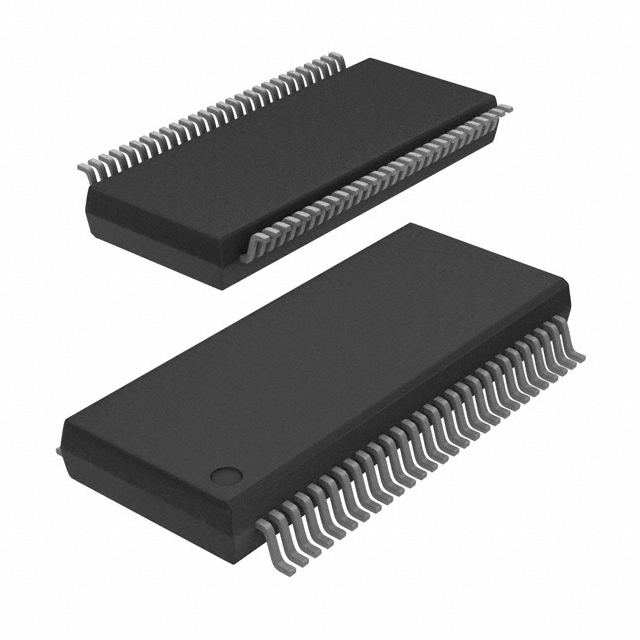
• Package available: 56-pin SSOP (Green option available)
For functional replacement use 82P33714ANLG
FUNCTIONAL BLOCK DIAGRAM
TDO
TDI
OSCi
TCLR
VDDD VSS VDDD VSS VDDD VSS VDDA VSS VDDA VSS
RST
C2/C1.5
TCK
TMS
TRST
Fref0
Fref1
JTAG
C32o
C19o
C155POS
C155NEG
OSC
Reference Input
Switch
TIE Control
Block
Virtual
Reference
C16o
C8o
C4o
C2o
IN_sel
MON_out0
MON_out1
C3o
C1.5o
C6o
DPLL
FLOCK
F0o
F8o
Reference Input
Monitor 0
F16o
F19o
F32o
RSP
TSP
Feedback Signal
Reference Input
Monitor 1
LOCK
Invalid Input
Signal Detection
Frequency
Select Circuit 0
F0_sel0
F0_sel1
Frequency
Select Circuit 1
F1_sel0
F1_sel1
State Control Circuit
TIE_en MODE_sel1 MODE_sel0 Normal Holdover Freerun
IDT and the IDT logo are trademarks of Integrated Device Technology, Inc.
1
2017 Integrated Device Technology, Inc.
January 11, 2017
DSC-6244/3
�IDT82V3155
ENHANCED T1/E1/OC3 WAN PLL WITH DUAL REFERENCE INPUTS
DESCRIPTION
1244-CORE Stratum 3, Stratum 4 Enhanced, Stratum 4, OC-3 port,
155.52 Mbit/s application and ETSI ETS 300 011, ITU-T G.813 Option 1,
and ITU-T G.812 Type IV clocks. It meets the jitter/wander tolerance,
jitter/wander transfer, intrinsic jitter/wander, frequency accuracy, capture
range, phase change slope, holdover frequency accuracy and MTIE
(Maximum Time Interval Error) requirements for these specifications.
The 82V3155 can be used in synchronization and timing control for
T1, E1 and OC3 systems, or used as ST-BUS clock and frame pulse
source. It also can be used in access switch, access routers, ATM edge
switches, wireless base station controllers, or IADs (Integrated Access
Devices), PBXs, line cards and SONET/SDH equipments.
The 82V3155 is an enhanced T1/E1/OC3 WAN PLL with dual
reference inputs. It contains a Digital Phase-Locked Loop (DPLL), which
generates low jitter ST-BUS, 19.44 MHz and 155.52 MHz clock and
framing signals that are phase locked to an 8 kHz, 1.544 MHz, 2.048
MHz or 19.44 MHz input reference.
The 82V3155 provides 10 types of clock signals (C1.5o, C3o,
C6o, C2o, C4o, C8o, C16o, C19o, C32o, C155) and 7 types of framing
signals (F0o, F8o, F16o, F19o, F32o, RSP, TSP) for multitrunk T1/E1
and STS3/OC3 links.
The IDT82V3155 is compliant with AT&T TR62411, Telcordia GR-
PIN CONFIGURATION
MODE_sel0
MODE_sel1
1
TCLR
56
TIE_en
2
55
IC2
3
54
C2/C1.5
RST
Fref0
4
53
IC0
5
6
7
8
52
51
50
49
HOLDOVER
Fref1
MON_out0
9
48
F19o
VDDA
10
11
47
VSS
IN_sel
VSS
12
46
45
NORMAL
FLOCK
VDDD
13
44
LOCK
C6o
14
43
C19o
C1.5o
15
42
C3o
C2o
VSS
16
41
TSP
RSP
17
40
F32o
18
19
20
39
38
37
F16o
VSS
21
22
36
35
F8o
F1_sel0
23
34
F1_sel1
C16o
24
C32o
VDDD
25
26
33
32
F0o
TDI
31
TMS
VSS
27
30
TRST
TCK
28
29
TDO
MON_out1
F0_sel0
F0_sel1
VDDD
C4o
C155POS
C155NEG
C8o
IDT82V3155
FREERUN
OSCi
VDDA
Figure - 1 IDT82V3155 56-pin SSOP Package Pin Assignment
Description
2
January 11, 2017
�Table of Contents
1
Pin Description...................................................................................................................................................................................................7
2
Functional Description ....................................................................................................................................................................................10
2.1 State Control Circuit ................................................................................................................................................................................10
2.1.1 Normal Mode..............................................................................................................................................................................11
2.1.2 Fast Lock Mode..........................................................................................................................................................................11
2.1.3 Holdover Mode ...........................................................................................................................................................................11
2.1.4 Freerun Mode.............................................................................................................................................................................11
2.2 Frequency Select Circuit .........................................................................................................................................................................11
2.3 Reference Input Switch ...........................................................................................................................................................................12
2.4 Reference Input Monitor ..........................................................................................................................................................................12
2.5 Invalid Input Signal Detection ..................................................................................................................................................................12
2.6 TIE Control Block.....................................................................................................................................................................................12
2.7 DPLL Block..............................................................................................................................................................................................14
2.7.1 Phase Detector (PHD)................................................................................................................................................................14
2.7.2 Limiter.........................................................................................................................................................................................14
2.7.3 Loop Filter ..................................................................................................................................................................................15
2.7.4 Fraction Block.............................................................................................................................................................................15
2.7.5 Digital Control Oscillator (DCO)..................................................................................................................................................15
2.7.6 Lock Indicator .............................................................................................................................................................................15
2.7.7 Output Interface..........................................................................................................................................................................15
2.8 OSC.........................................................................................................................................................................................................16
2.8.1 Clock Oscillator ..........................................................................................................................................................................16
2.9 JTAG .......................................................................................................................................................................................................16
2.10 Reset Circuit ............................................................................................................................................................................................16
2.11 Power Supply Filtering Techniques .........................................................................................................................................................17
3
Measures of Performance ...............................................................................................................................................................................18
3.1 Intrinsic Jitter ...........................................................................................................................................................................................18
3.2 Jitter Tolerance........................................................................................................................................................................................18
3.3 Jitter Transfer ..........................................................................................................................................................................................18
3.4 Frequency Accuracy................................................................................................................................................................................18
3.5 Holdover Accuracy ..................................................................................................................................................................................18
3.6 Capture Range ........................................................................................................................................................................................18
3.7 Lock Range .............................................................................................................................................................................................18
3.8 Phase Slope ............................................................................................................................................................................................18
3.9 Time Interval Error (TIE)..........................................................................................................................................................................18
3.10 Maximum Time Interval Error (MTIE) ......................................................................................................................................................19
3.11 Phase Continuity .....................................................................................................................................................................................19
3.12 Phase Lock Time.....................................................................................................................................................................................19
4
Absolute Maximum Ratings ............................................................................................................................................................................20
5
Recommended DC Operating Conditions .....................................................................................................................................................20
6
DC Electrical Characteristics ..........................................................................................................................................................................20
6.1 Single End Input/Output Port...................................................................................................................................................................20
6.2 Differential Output Port (LVDS) ...............................................................................................................................................................21
7
AC Electrical Characteristics .........................................................................................................................................................................22
Table of Contents
3
January 11, 2017
�7.1
7.2
7.3
7.4
7.5
7.6
7.7
7.8
7.9
7.10
7.11
7.12
7.13
7.14
Performance ............................................................................................................................................................................................22
Intrinsic Jitter Unfiltered ...........................................................................................................................................................................22
C1.5o (1.544 MHz) Intrinsic Jitter Filtered ...............................................................................................................................................23
C2o (2.048 MHz) Intrinsic Jitter Filtered ..................................................................................................................................................23
C19o (19.44 MHz) Intrinsic Jitter Filtered ................................................................................................................................................23
C155 (155.52 MHz) Intrinsic Jitter Filtered ..............................................................................................................................................23
8 kHz Input to 8 kHz Output Jitter Transfer .............................................................................................................................................24
1.544 MHz Input to 1.544 MHz Output Jitter Transfer.............................................................................................................................24
2.048 MHz Input to 2.048 MHz Output Jitter Transfer.............................................................................................................................25
19.44 MHz Input to 19.44 MHz Output Jitter Transfer.............................................................................................................................25
8 kHz Input Jitter Tolerance.....................................................................................................................................................................25
1.544 MHz Input Jitter Tolerance ............................................................................................................................................................27
2.048 MHz Input Jitter Tolerance ............................................................................................................................................................27
19.44 MHz Input Jitter Tolerance ............................................................................................................................................................28
8
Timing Characteristics ....................................................................................................................................................................................29
8.1 Timing Parameter Measurement Voltage Levels ....................................................................................................................................29
8.2 Input/Output Timing .................................................................................................................................................................................29
9
Ordering Information .......................................................................................................................................................................................34
Table of Contents
4
January 11, 2017
�List of Tables
Table - 1
Table - 2
Table - 3
Table - 4
Table - 5
Operating Modes Selection ................................................................................................................................................................10
Fref0 Frequency Selection .................................................................................................................................................................11
Fref1 Frequency Selection .................................................................................................................................................................11
Input Reference Selection ..................................................................................................................................................................12
C2/C1.5 Output Frequency Control....................................................................................................................................................15
List of Tables
5
January 11, 2017
�List of Figures
Figure - 1
Figure - 2
Figure - 3
Figure - 4
Figure - 5
Figure - 6
Figure - 7
Figure - 8
Figure - 9
Figure - 10
Figure - 11
Figure - 12
Figure - 13
Figure - 14
Figure - 15
82V3155 56-pin SSOP Package Pin Assignment ......................................................................................................................... 2
State Control Circuit .......................................................................................................................................................................... 10
State Control Diagram....................................................................................................................................................................... 10
TIE Control Block Diagram................................................................................................................................................................ 12
Reference Switch with TIE Control Block Enabled............................................................................................................................ 13
Reference Switch with TIE Control Block Disabled........................................................................................................................... 13
DPLL Block Diagram ......................................................................................................................................................................... 14
Clock Oscillator Circuit ...................................................................................................................................................................... 16
Power-Up Reset Circuit..................................................................................................................................................................... 16
82V3155 Power Decoupling Scheme.......................................................................................................................................... 17
Timing Parameter Measurement Voltage Levels .............................................................................................................................. 29
Input to Output Timing (Normal Mode).............................................................................................................................................. 31
Output Timing 1................................................................................................................................................................................. 32
Output Timing 2................................................................................................................................................................................. 33
Input Control Setup and Hold Timing ................................................................................................................................................ 33
List of Figures
6
January 11, 2017
�82V3155
1
ENHANCED T1/E1/OC3 WAN PLL WITH DUAL REFERENCE INPUTS
PIN DESCRIPTION
Name
Type
Pin Number
VSS
Power
12, 18, 27
38, 47
VDDA
Power
37, 48
VDDD
Power
13, 19, 26
OSCi
(CMOS) I
50
Fref0
Fref1
I
5
6
IN_sel
I
11
F0_sel0
F0_sel1
I
9
10
F1_sel0
F1_sel1
I
35
34
MODE_sel0
MODE_sel1
I
1
2
RST
I
4
TCLR
I
3
TIE_en
I
56
FLOCK
I
45
LOCK
(CMOS) O
44
HOLDOVER
(CMOS) O
52
NORMAL
(CMOS) O
46
FREERUN
(CMOS) O
51
MON_out0
O
7
Pin Description
Description
Ground.
0 V. All VSS pins should be connected to the ground.
3.3 V Analog Power Supply.
Refer to Chapter 2.11 Power Supply Filtering Techniques.
3.3 V Digital Power Supply.
Refer to Chapter 2.11 Power Supply Filtering Techniques.
Oscillator Master Clock Input.
This pin is connected to a clock source.
Reference Input 0 and Reference Input 1.
These are two input reference sources (falling edge of 8 kHz, 1.544 MHz and 2.048 MHz or rising edge of 19.44
MHz) used for synchronization. The IN_sel pin determines which one of the two reference inputs to be used. See
Table - 4 for details.
The frequency of the reference inputs can be 8 kHz, 1.544 MHz, 2.048 MHz or 19.44 MHz. These two pins are
internally pulled up to VDDD.
Input Reference Selection.
A logic low at this pin selects Reference Input 0 (Fref0) and a logic high at this pin selects Reference Input 1 (Fref1).
The logic level on this input is gated in by the rising edges of F8o. This Pin is internally pulled down to VSS.
Frequency Selection Inputs for Fref0.
These two inputs select one of the four possible frequencies (8 kHz, 1.544 MHz, 2.048 MHz or 19.44 MHz) for the
Reference Input 0 (Fref0). See Table - 2 for details.
Frequency Selection Inputs for Fref1.
These two inputs select one of the four possible frequencies (8 kHz, 1.544 MHz, 2.048 MHz or 19.44 MHz) for the
Reference Input 1 (Fref1). These two pins are internally pulled down to Vss. See Table - 3 for details.
Mode Selection Inputs.
These two inputs determine the operating mode of the IDT82V3155 (Normal, Holdover or Freerun). See Table - 1 for
details.
The logic levels on these two pins are gated in by the rising edges of F8o. These two pins are internally pulled down
to VSS.
Reset Input.
Pulling this pin to logic low for at least 300 ns will reset the IDT82V3155. While the RST pin is low, all framing and
clock outputs are at logic high.
To ensure proper operation, the device must be reset after it is powered up.
TIE Control Block Reset.
Pulling this pin to logic low for at least 300 ns will reset the TIE (Maximum Time Interval Error) control block and
result in a realignment of the output phase with the input phase. This pin is internally pulled up to VDDD.
TIE Control Block Enable.
A logic high at this pin enables the TIE control block while a logic low disables it. The logic level on this input is gated
in by the rising edges of F8o. This pin is internally pulled down to Vss.
Fast Lock Mode Enable.
When this pin is set to logic high, the DPLL will quickly lock to the input reference within 500 ms.
Lock Indicator.
This output pin will go high when the DPLL is frequency locked to the input reference.
Holdover Indicator.
This output pin will go high whenever the DPLL enters Holdover mode.
Normal Indicator.
This output pin will go high whenever the DPLL enters Normal mode.
Freerun Indicator.
This output pin will go high whenever the DPLL enters Freerun mode.
Frequency Out-of-range Indicator for Fref0.
A logic high at this pin indicates that Fref0 is off the nominal frequency by more than ±12 ppm.
7
January 11, 2017
�82V3155
Name
ENHANCED T1/E1/OC3 WAN PLL WITH DUAL REFERENCE INPUTS
Type
Pin Number
Description
MON_out1
O
8
Frequency Out-of-range Indicator for Fref1.
A logic high at this pin indicates that Fref1 is off the nominal frequency by more than ±12 ppm.
C155POS
C155NEG
(LVDS) O
21
22
155.52 MHz Clock Output (LVDS Level).
This pair of pins output a 155.52 MHz clock, used for OC3/STS3 and SDH/SONET applications.
C19o
(CMOS) O
43
C32o
(CMOS) O
25
C16o
(CMOS) O
24
C8o
(CMOS) O
23
C4o
(CMOS) O
20
C2o
(CMOS) O
17
C3o
(CMOS) O
16
C1.5o
(CMOS) O
15
C6o
(CMOS) O
14
C2/C1.5
(CMOS) O
54
F19o
(CMOS) O
49
F32o
(CMOS) O
40
F16o
(CMOS) O
39
F8o
(CMOS) O
36
F0o
(CMOS) O
33
RSP
(CMOS) O
41
TSP
(CMOS) O
42
TDO
(CMOS) O
29
TDI
I
32
Pin Description
19.44 MHz Clock Output (CMOS Level).
This output is a 19.44 MHz clock used for OC3/STS3 applications.
32.768 MHz Clock Output.
This output is a 32.768 MHz clock used for ST-BUS operation.
16.384 MHz Clock Output.
This output is a 16.384 MHz clock used for ST-BUS operation.
8.192 MHz Clock Output.
This output is an 8.192 MHz clock used for ST-BUS operation.
4.096 MHz Clock Output.
This output is a 4.096 MHz clock used for ST-BUS operation.
2.048 MHz Clock Output.
This output is a 2.048 MHz clock used for ST-BUS operation.
3.088 MHz Clock Output.
This output is a 3.088 MHz clock used for T1 applications.
1.544 MHz Clock Output.
This output is a 1.544 MHz clock used for T1 applications.
6.312 MHz Clock Output.
This output is a 6.312 MHz clock used for DS2 applications.
2.048 MHz or 1.544 MHz Clock Output.
This output is a 2.048 MHz or 1.544 MHz clock signal. If the selected reference input (Fref0 or Fref1) is 8 kHz, 2.048
MHz, or 19.44 MHz, the C2/C1.5 pin will output a 2.048 MHz clock signal. If the frequency of the selected reference
input (Fref0 or Fref1) is 1.544 MHz, the C2/C1.5 pin will output a 1.544 MHz clock signal. Refer to Table - 5 for
details.
8 kHz Frame Signal with 19.44 MHz Pulse Width.
This output is used for OC3/STS3 applications.
Frame Pulse ST-BUS 8.192 Mb/s.
This is an 8 kHz 30 ns active low framing pulse, which marks the beginning of an ST-BUS frame. This framing signal
is typically used for ST-BUS operation at 8.192 Mb/s.
Frame Pulse ST-BUS 8.192 Mb/s.
This is an 8 kHz 61 ns active low framing pulse, which marks the beginning of an ST-BUS frame. This framing signal
is typically used for ST-BUS operation at 8.192 Mb/s.
Frame Pulse.
This is an 8 kHz 122 ns active high framing pulse, which marks the beginning of a frame.
Frame Pulse ST-BUS 2.048 Mb/s.
This is an 8 kHz 244 ns active low framing pulse, which marks the beginning of an ST-BUS frame. This framing
signal is typically used for ST-BUS operation at 2.048 Mb/s and 4.096 Mb/s.
Receive Sync Pulse.
This is an 8 kHz 488 ns active high framing pulse, which marks the beginning of a ST-BUS frame. This framing
signal is typically used to connect to the Siemens MUNICH-32 device.
Transmit Sync Pulse.
This is an 8 kHz 488 ns active high framing pulse, which marks the beginning of an ST-BUS frame. This framing is
typically used to connect to the Siemens MUNICH-32 device.
Test Serial Data Out.
JTAG serial data is output on this pin on the falling edge of TCK. This pin is held in high impedance state when
JTAG scan is not enabled.
Test Serial Data In.
JTAG serial test instructions and data are shifted in on this pin. This pin is internally pulled up to VDDD.
8
January 11, 2017
�82V3155
Name
ENHANCED T1/E1/OC3 WAN PLL WITH DUAL REFERENCE INPUTS
Type
Pin Number
TRST
I
30
TCK
I
28
TMS
I
31
IC0, IC2
-
53, 55
Pin Description
Description
Test Reset.
Asynchronously initializes the JTAG TAP controller by putting it in the Test-Logic-Reset state. This pin is internally
pulled up to VDDD. It is connected to the ground for normal applications.
Test Clock.
Provides the clock for the JTAG test logic.
Test Mode Select.
JTAG signal that controls the state transitions of the TAP controller. This pin is internally pulled up to VDDD.
These pins should be connected to VSS.
9
January 11, 2017
�82V3155
2
ENHANCED T1/E1/OC3 WAN PLL WITH DUAL REFERENCE INPUTS
FUNCTIONAL DESCRIPTION
TIE Block
Enable/Disable
The IDT82V3155 is a enhanced T1/E1/OC3 WAN PLL with dual
reference inputs, providing timing (clock) and synchronization (framing)
signals to interface circuits for multitrunk T1/E1 and STS3/OC3 links.
The details are described in the following sections.
2.1
Output of the
Invalid Input
Signal Detection
State Control Circuit
STATE CONTROL CIRCUIT
IN_sel
The State Control Circuit is an important part in the IDT82V3155. It is
used to control the TIE block and the DPLL block as shown in Figure - 2.
The control is based on the result of Invalid Input Signal Detection and
the logic levels on the MODE_sel0, MODE_sel1, IN_sel and TIE_en
pins.
The IDT82V3155 can be operated in three different modes: Normal,
Holdover and Freerun. The operating mode is selected by the
MODE_sel1 and MODE_sel0 pins, as shown in Table - 1.
Figure - 3 shows the state control diagram. All state changes occur
synchronously on the rising edge of F8o. Three operating modes,
Normal (S1), Holdover (S3) and Freerun (S0) can be switched from one
to another by changing the logic levels on the MODE_sel0 and
MODE_sel1 pins.
DPLL Block
Mode Control
TIE_en
MODE_sel1
F8o
MODE_sel0
Figure - 2 State Control Circuit
Table - 1 Operating Modes Selection
Mode Selection Pins
Operating Mode
MODE_sel1
MODE_sel0
0
0
Normal
0
1
Holdover
1
0
Freerun
1
1
Reserved
Reset *
A
T
uto
Dis
IE
S0
Freerun
Mode_sel1 = 1
Mode_sel0 = 0
able
able
Dis
IE
to T
Au
Auto
Au
to T
IE
Dis
a
TIE
Disa
ble
ble
(Valid Input Reference Signal)
TIE Enable (TIE_en = H)
(Valid Input Reference Signal)
S1
Normal
Mode_sel1 = 0
Mode_sel0 = 0
S2
Auto - Holdover
Mode_sel1 = 0
Mode_sel0 = 0
TIE Disable (TIE_en = L)
(Invalid Input Reference Signal)
Auto TIE Disable
TIE
TIE
Di
sa
ble
Au
toT
IE
En
able
(T
IE_
en
=L
(TI
)
E_e
n
Dis
able
=H
)
t
Au
IE
oT
ble
sa
Di
nt
sie
b
sa
Di
ran
TIE
le
t
sien
Tran
_sel
)
n=L
IE_e
ble (T
Disa
No IN
TIE
T
el
_s
to
Au
IN
S3
Holdover
Mode_sel1 = 0
Mode_sel0 = 1
TIE
No
IN_
sel
Tra
En
nsie
able
nt
(TI
E_
en
=H
)
S4
Short Time Holdover
Mode_sel1 = 0
Mode_sel0 = 0
el
IN_s
s
Tran
Auto
ient
b
Disa
TIE
le
* Note: After reset, the Mode_sel1 and Mode_sel0 should be initially set to '10' or '00'.
Figure - 3 State Control Diagram
Functional Description
10
January 11, 2017
�82V3155
ENHANCED T1/E1/OC3 WAN PLL WITH DUAL REFERENCE INPUTS
The mode changes between Normal (S1) and Auto-Holdover (S2)
are triggered by the Invalid Input Reference Detection Circuit and are
irrelative to the logic levels on the MODE_sel0 and MODE_sel1 pins. At
the stage of S1, if the input reference is invalid (out of the capture
range), the operating mode will be changed to Auto-Holdover (S2)
automatically. At the stage of S2, if no IN_sel transient occurs and the
input reference becomes valid, the operating mode will be changed back
to Normal (S1) automatically. If an IN_sel transient is detected at the
stage of S2, the operating mode will be changed to Short Time Holdover
(S4) with the TIE Control Block automatically disabled. Refer to “2.5
Invalid Input Signal Detection” for more information.
The mode changes between Normal (S1) and Short Time Holdover
(S4) are triggered by the IN_sel transient. At the stage of S1, if a voltage
transient occurs on the IN_sel pin, the operating mode will be changed
to Short Time Holdover (S4) automatically. At the stage of S4, if no
voltage transient occurs on the IN_sel pin, the operating mode will be
changed back to S1 automatically. See “2.3 Reference Input Switch” for
details.
When the operating mode is changed from one to another, the TIE
control block is automatically disabled as shown in Figure - 3, except the
changes from Holdover (S3) or Auto-Holdover (S2) to Normal (S1). In
the case of changing from S3 or S2 to S1, the TIE control block is
enabled or disabled by the TIE_en pin.
2.1.1
to set the output frequency of the device.
The frequency accuracy in the Holdover mode is ±0.025 ppm, which
corresponds to a worst case of 18 frame (125 µs per frame) slips in 24
hours. This meets the AT&T TR62411 and Telcordia GR-1244-CORE
Stratum 3 requirement of ±0.37 ppm (255 frame slips per 24 hours).
Whenever the IDT82V3155 works in the Holdover mode, the
HOLDOVER pin will be set to logic high.
2.1.4
2.2
NORMAL MODE
Table - 2 Fref0 Frequency Selection
Frequency Selection Pins
FAST LOCK MODE
The Fast Lock mode is a submode of the Normal mode. It allows the
DPLL to lock to a reference more quickly than the Normal mode allows.
Typically, the locking time in the Fast Lock mode is less than 500 ms.
When the FLOCK pin is set to high, the Fast Lock mode will be
enabled.
2.1.3
Fref0 Input Frequency
F0_sel1
F0_sel0
0
0
19.44 MHz
0
1
8 kHz
1
0
1.544 MHz
1
1
2.048 MHz
Table - 3 Fref1 Frequency Selection
HOLDOVER MODE
Frequency Selection Pins
The Holdover mode is typically used for short duration (e.g., 2
seconds) while network synchronization is temporarily disrupted.
In the Holdover mode, the IDT82V3155 provides timing and
synchronization signals that are not locked to an external reference
signal, but are based on storage techniques. In the Normal mode, when
the output frequency is locked to the input reference signal, a numerical
value corresponding to the output frequency is stored alternately in two
memory locations every 30 ms. When the device is changed to the
Holdover mode, the stored value from between 30 ms and 60 ms is used
Functional Description
FREQUENCY SELECT CIRCUIT
The input reference can be 8 kHz, 1.544 MHz, 2.048 MHz or 19.44
MHz. The F0_sel1 and F0_sel0 pins select one of the four frequencies
for the reference input 0 (Fref0). The F1_sel1 and F1_sel0 pins select
one of the four frequencies for the reference input 1 (Fref1). See Table 2 and Table - 3 for details.
The reference inputs Fref0 and Fref1 may have different frequencies
applied to them. Every time the frequency is changed, the device must
be reset to make the change effective.
The Normal mode is typically used when a slave clock source
synchronized to the network is required.
In this mode, the IDT82V3155 provides timing (C1.5o, C3o, C2o,
C4o, C8o, C16o, C19o, C32o, C155) and synchronization (F0o, F8o,
F16o, F19o, F32o, TSP, RSP) signals. All these signals are synchronous
to one of the two input references. The nominal frequency of the input
reference can be 8 kHz, 1.544 MHz, 2.048 MHz or 19.44 MHz.
After reset, the IDT82V3155 will take 30 seconds at most to make
the output signals synchronous (phase locked) to the input reference.
Whenever the IDT82V3155 works in the Normal mode, the NORMAL
pin will be set to logic high.
2.1.2
FREERUN MODE
The Freerun mode is typically used when a master clock source is
required, or used when a system is just powered up and the network
synchronization has not been achieved.
In this mode, the IDT82V3155 provides timing and synchronization
signals which are based on the master clock frequency (OSCi) only, and
are not synchronized to the input reference signal.
The accuracy of the output clock is equal to the accuracy of the
master clock (OSCi). So if a ±32 ppm output clock is required, the
master clock must also be ±32 ppm. Refer to “2.8 OSC” for more
information.
Whenever the IDT82V3155 works in the Freerun mode, the
FREERUN pin will be set to logic high.
11
Fref1 Input Frequency
F1_sel1
F1_sel0
0
0
19.44 MHz
0
1
8 kHz
1
0
1.544 MHz
1
1
2.048 MHz
January 11, 2017
�82V3155
2.3
ENHANCED T1/E1/OC3 WAN PLL WITH DUAL REFERENCE INPUTS
REFERENCE INPUT SWITCH
result of Fref1 in the same way. The MON_out0 and MON_out1 signals
are updated every 2 seconds.
The IDT82V3155 accepts two simultaneous reference signals Fref0
and Fref1, and operates on the falling edge (8 KHz, 1.544 MHz and
2.048 MHz) or rising edge (19.44 MHz). One of the two reference
signals will be input to the device, as determined by the IN_sel pin. See
Table - 4. The selected reference signal is sent to the TIE control block,
Reference Input Monitor and Invalid Input Signal Detection block for
further processing.
2.5
This circuit is used to detect if the selected input reference (Fref0 or
Fref1) is out of the capture range. Refer to “3.6 Capture Range” for
details. This includes a complete loss of the input reference and a large
frequency shift in the input reference.
If the input reference is invalid (out of the capture range), the
IDT82V3155 will be automatically changed to the Holdover mode (AutoHoldover). When the input reference becomes valid, the device will be
changed back to the Normal mode and the output signals will be locked
to the input reference.
In the Holdover mode, the output signals are based on the output
reference signal 30 ms to 60 ms prior to entering the Holdover mode.
The amount of phase drift while in holdover can be negligible because
the Holdover mode is very accurate (e.g., 0.025 ppm). Consequently,
the phase delay between the input and output after switching back to the
Normal mode is preserved.
Table - 4 Input Reference Selection
IN_sel
Input Reference
0
Fref0
1
Fref1
When a transient voltage occurs on the IN_sel pin, the operating
mode will be changed to Short Time Holdover (S4) with the TIE Control
Block automatically disabled. At the stage of S4, if no IN_sel transient
occurs, the reference signal will be switched from one to the other, and
the operating mode will be changed back to Normal (S1) automatically.
During the change from S4 to S1, the TIE Control Block can be enabled
or disabled, depending on the logic level on the TIE_en pin. See Figure 3 for details.
2.4
INVALID INPUT SIGNAL DETECTION
2.6
TIE CONTROL BLOCK
If the current reference is badly damaged or lost, it is necessary to
use the other reference or the one generated by storage techniques
instead. But when switching the reference, a step change in phase on
the input reference will occur. A step change in phase in the input to
DPLL may lead to an unacceptable phase change on the output signals.
The TIE control block, when enabled, prevents a step change in phase
on the input reference signals from causing a step change in phase on
the output of the DPLL block. Figure - 4 shows the TIE Control Block
diagram.
REFERENCE INPUT MONITOR
The Telcordia GR-1244-CORE standard recommends that the DPLL
should be able to reject the references that are off the nominal frequency
by more than ±12 ppm. The IDT82V3155 monitors the Fref0 and Fref1
frequencies and outputs two signals at MON_out0 pin and MON_out1
pin to indicate the monitoring results respectively. Whenever the Fref0
frequency is off the nominal frequency by more than ±12 ppm, the
MON_out0 pin will go high. The MON_out1 pin indicates the monitoring
Step Generation
TIE_en
IN_sel
Fref0
Fref1
Reference
Select Circuit
Fref
Storage
Circuit
Measure
Circuit
Feedback
Signal
Trigger
Circuit
Virtual
Reference
Signal
TCLR
Figure - 4 TIE Control Block Diagram
When the TIE Control Block is enabled manually or automatically (by
the TIE_en pin or TIE auto-enable logic generated by the State Control
Circuit), it works under the control of the Step Generation circuit.
At the Measure Circuit stage, the selected reference signal (Fref0 or
Fref1) is compared with the feedback signal (current output feed back
from the Frequency Select Circuit). The phase difference between the
input reference and the feedback signal is stored in the Storage Circuit
for TIE correction. According to the value stored in the storage circuit,
Functional Description
the Trigger Circuit generates a virtual reference with the same phase as
the previous reference. In this way, the reference can be switched
without generating a step change in phase.
Figure - 5 shows the phase transient that will result if a reference
switch is performed with the TIE Control Block enabled.
The value of the phase difference in the Storage Circuit can be
cleared by applying a logic low reset signal to the TCLR pin. The
minimum width of the reset pulse should be 300 ns.
12
January 11, 2017
�82V3155
ENHANCED T1/E1/OC3 WAN PLL WITH DUAL REFERENCE INPUTS
When the IDT82V3155 primarily enters the Holdover mode for a
short time period and then returns back to the Normal mode, the TIE
Control Circuit should not be enabled. This will prevent undesired
accumulated phase change between the input and output.
If the TIE Control Block is disabled manually or automatically, a
reference switch will result in a phase alignment between the input
signal and the output signal as shown in Figure - 6. The slope of the
phase adjustment is limited to 5 ns per 125 µs.
Input Clock
Ref1
Ref2
Output Clock
Time = 0.00 s
Time = 0.25 s
Time = 0.50 s
Time = 0.75 s
Time = 1.0 s
Time = 1.25 s
Time = 1.50 s
Time = 1.75 s
Figure - 5 Reference Switch with TIE Control Block Enabled
Input Clock
Ref1
Ref2
Output Clock
Time = 0.00 s
Time = 0.25 s
Time = 0.50 s
Time = 0.75 s
Time = 1.0 s
Time = 1.25 s
Time = 1.50 s
Time = 1.75 s
Figure - 6 Reference Switch with TIE Control Block Disabled
Functional Description
13
January 11, 2017
�82V3155
2.7
ENHANCED T1/E1/OC3 WAN PLL WITH DUAL REFERENCE INPUTS
DPLL BLOCK
As shown in Figure - 7, the DPLL Block consists of a Phase Detector,
a Limiter, a Loop Filter, a Digital Control Oscillator and Divider.
Limiter circuit for phase slope control.
In the Freerun or Holdover mode, the Frequency Select Circuit, the
Phase Detector and the Limiter are inactive, and the input reference
signal is not used.
2.7.1
2.7.2
PHASE DETECTOR (PHD)
In the Normal mode, the Phase Detector compares the
reference signal from the TIE Control Circuit with the feedback
from the Frequency Select Circuit, and outputs an error
corresponding to the phase difference. This error signal is sent
virtual
signal
signal
to the
LIMITER
The Limiter is used to limit the phase slope. It ensures that the
maximum output phase slope is limited to 5 ns per 125 µs for all input
transient conditions. This well meets the AT&T TR62411 and Telcordia
Fx_sel1 Fx_sel0 (x = 0 or 1)
Output Interface
C2/C1.5
C155POS
19.44 MHz
Fraction_C19
155.52 MHz
APLL
C19_Divider
C155NEG
C19o
F19o
24.704 MHz
Digital Control Oscillator
Fraction_T1
T1_Divider
C1.5o
C3o
C2o
C4o
C8o
C16o
C32o
32.768 MHz
E1_Divider
F0o
F8o
F16o
F32o
RSP
TSP
25.248 MHz
Fraction_C6
Loop Filter
Limiter
FLOCK
Phase
Detector
C6_Divider
Frequency
Selection
Circuit 1
Frequency
Selection
Circuit 0
F1_sel1 F1_sel0
F0_sel1 F0_sel0
Feedback Signal
Virtual Reference
IN_sel
C6o
Figure - 7 DPLL Block Diagram
In the Normal mode, the Limiter receives the error signal from the
Phase Detector, limits the phase slope within 5 ns per 125 µs and sends
the limited signal to the Loop Filter.
In the Fast Lock mode, the Limiter is disabled, and the DPLL locks to
the input reference within 500 ms, which is much shorter than that in the
Normal mode.
Functional Description
14
January 11, 2017
�82V3155
2.7.3
ENHANCED T1/E1/OC3 WAN PLL WITH DUAL REFERENCE INPUTS
LOOP FILTER
The 32.768 MHz signal is used by the E1_divider to generate 5 types
of clock signals (C2o, C4o, C8o, C16o and C32o) with nominal 50% duty
cycle and 6 types of framing signals (F0o, F8o, F16o, F32o, RSP and
TSP).
The 24.704 MHz signal is used by the T1_divider to generate two
types of T1 signals (C1.5o and C3o) with nominal 50% duty cycle.
The 25.248 MHz signal is used by the C6_divider to generate a C6o
signal with nominal 50% duty cycle.
The 19.44 MHz signal is sent to an APLL, which outputs a 155.52
MHz signal. The 155.52 MHz signal is used by the C19_divider to
generate 19.44 MHz and 155.52 MHz clock signals (C19o, C155POS
and C155NEG) with nominal 50% duty cycle and a framing signal F19o.
Additionally, the IDT82V3155 provides an output clock (C2/C1.5)
with the frequency controlled by the frequency selection pins Fx_sel0
and Fx_sel1 (see Table - 5 for details). If the selected reference input
(Fref0 or Fref1) is 8 kHz, 2.048 MHz or 19.44 MHz, the C2/C1.5 pin will
output a 2.048 MHz clock signal. If the selected reference input (Fref0 or
Fref1) is 1.544 MHz, the C2/C1.5 pin will output a 1.544 MHz clock
signal. The electrical and timing characteristics of this output (2.048
MHz or 1.544 MHz) is the same as that of C2o or C1.5o.
The Loop Filter ensures that the jitter transfer meets the ETS 300
011 and AT&T TR62411 requirements. It works similarly to a first order
low pass filter with 2.1 Hz cutoff frequency for the four valid input
frequencies (8 kHz, 1.544 MHz, 2.048 MHz or 19.44 MHz).
The output of the Loop Filter goes to the Digital Control Oscillator
directly or through the Fraction blocks, in which E1, T1, C6 and C19
signals are generated.
2.7.4
FRACTION BLOCK
By applying some algorithms to the incoming E1 signal, the
Fraction_C19, Fraction_C6 and Fraction_T1 blocks generate C19, C6
and T1 signals respectively.
2.7.5
DIGITAL CONTROL OSCILLATOR (DCO)
In the Normal mode, the DCO receives four limited and filtered
signals from Loop Filter or Fraction blocks. Based on the values of the
received signals, the DCO generates four digital outputs: 19.44 MHz,
25.248 MHz, 32.768 MHz and 24.704 MHz for C19, C6, E1 and T1
dividers respectively.
In the Holdover mode, the DCO is running at the same frequency as
that generated by storage techniques.
In the Freerun mode, the DCO is running at the same frequency as
that of the master clock.
2.7.6
Table - 5 C2/C1.5 Output Frequency Control
Frequency Selection Pins
LOCK INDICATOR
If the output frequency of the DPLL is identical to the input frequency,
and the input phase offset is small enough so that no slope limiting is
exhibited, the LOCK pin will be set high.
2.7.7
Fx_sel0
Frefx Input
Frequency
C2/C1.5 Output
Frequency
0
0
19.44 MHz
2.048 MHz
0
1
8 kHz
2.048 MHz
1
0
1.544 MHz
1.544 MHz
1
1
2.048 MHz
2.048 MHz
Note: ‘x’ can be 0 or 1, as selected by IN_sel pin.
IN_sel = 0: x = 0, Fref0 is the selected reference input. The frequency of Fref0
is determined by F0_sel0 and F0_sel1 pins.
IN_sel = 1: x = 1, Fref1 is the selected reference input. The frequency of Fref1
is determined by F1_sel0 and F1_sel1 pins.
OUTPUT INTERFACE
The Output Interface uses three output signals from the DCO to
generate totally 10 types of clock signals and 7 types of framing signals
All these output signals are synchronous to F8o.
Functional Description
Fx_sel1
15
January 11, 2017
�82V3155
2.8
ENHANCED T1/E1/OC3 WAN PLL WITH DUAL REFERENCE INPUTS
OSC
2.9
The IDT82V3155 can use a clock as the master timing source. In the
Freerun mode, the frequency tolerance of the clock outputs is identical
to that of the source at the OSCi pin. For applications not requiring an
accurate Freerun mode, the tolerance of the master timing source may
be ±100 ppm. For applications requiring an accurate Freerun mode,
such as AT&T TR62411, the tolerance of the master timing source must
be no greater than ±32 ppm.
The desired capture range should be taken into consideration when
determining the accuracy of the master timing source. The sum of the
accuracy of the master timing source and the capture range of the
IDT82V3155 will always equal 230 ppm. For example, if the master
timing source is 100 ppm, the capture range will be 130 ppm.
2.8.1
JTAG
The IDT82V3155 supports IEEE 1149.1 JTAG Scan.
2.10
RESET CIRCUIT
A simple power-up reset circuit is shown as Figure - 9. The logic low
reset pulse is about 50 µs.
The resistor Rp is used for protection only and limits current into the
RST pin during power down conditions. The logic low reset pulse width
is not critical but should be greater than 300 ns.
IDT82V3155
3.3 V
R
10 kΩ
CLOCK OSCILLATOR
When selecting a Clock Oscillator, numerous parameters must be
considered. This includes absolute frequency, frequency change over
temperature, output rise and fall times, output levels and duty cycle.
For applications requiring ±32 ppm clock accuracy, the following
clock oscillator module may be used.
FOX F7C-2E3-20.0 MHz
Frequency:
20.0 MHz
Tolerance:
25 ppm 0°C to 70°C
Rise & Fall Time:10 ns (0.33 V, 2.97 V, 15 pF)
Duty Cycle:
40% to 60%
RST
Rp
1 kΩ
C
1 µF
Figure - 9 Power-Up Reset Circuit
For Stratum 3 application, the clock oscillator should meet the
following requirements:
Frequency:
20.0 MHz
Tolerance:
±4.6 ppm over 20 years life time
Drift:
±0.04 ppm per day @ constant temperature
±0.3 ppm over temperature range of 0 to 70°C
The output clock should be connected directly (not AC coupled) to
the OSCi input of the IDT82V3155, as shown in Figure - 8.
+3.3 V
IDT82V3155
OSCi
+3.3 V
20 MHz OUT
GND
0.1 µF
Figure - 8 Clock Oscillator Circuit
Functional Description
16
January 11, 2017
�82V3155
2.11
ENHANCED T1/E1/OC3 WAN PLL WITH DUAL REFERENCE INPUTS
POWER SUPPLY FILTERING TECHNIQUES
for each pin. Figure - 10 illustrates how bypass capacitor and ferrite
bead should be connected to each power pin.
The analog power supply VDDA should have low impedance. This
can be achieved by using one 10 uF (1210 case size, ceramic) and at
least two 0.1 uF (0402 case size, ceramic) capacitors in parallel. The 0.1
uF (0402 case size, ceramic) capacitors must be placed next to the
VDDA pins and as close as possible. Note that the 10 uF capacitor must
be of 1210 case size, and it must be ceramic for lowest possible ESR
(Effective Series Resistance). The 0.1 uF should be of case size 0402,
which offers the lowest ESL (Effective Series Inductance) to achieve low
impedance towards the high speed range.
For VDDD, at least three 0.1 uF (0402 case size, ceramic) and one 10
uF (1210 case size, ceramic) capacitors are recommended. The 0.1 uF
capacitors should be placed as close to the VDDD pins as possible.
Please refer to evaluation board schematic for details.
To achieve optimum jitter performance, power supply filtering is
required to minimize supply noise modulation of the output clocks. The
common sources of power supply noise are switching power supplies
and the high switching noise from the outputs to the internal PLL. The
82V3155 provides separate power pins: VDDA and VDDD. VDDA pins are
for the internal analog PLL, and VDDD pins are for the core logic as well
as I/O driver circuits.
To minimize switching power supply noise generated by the
switching regulator, the power supply output should be filtered with
sufficient bulk capacity to minimize ripple and 0.1 uF (0402 case size,
ceramic) capacitors to filter out the switching transients.
For the 82V3155, the decoupling for VDDA and VDDD are handled
individually. VDDD and VDDA should be individually connected to the
power supply plane through vias, and bypass capacitors should be used
3.3 V
IDT82V3155
SLF7028T-100M1R1
37
10 µF
VDDA
0.1 µF
48
VDDA
VSS
12
VSS
18
VSS
27
VSS
38
VSS
47
0.1 µF
3.3 V
SLF7028T-100M1R1
13
10 µF
VDDD
0.1 µF
19
VDDD
0.1 µF
26
VDDD
0.1 µF
Figure - 10 IDT82V3155 Power Decoupling Scheme
Functional Description
17
January 11, 2017
�82V3155
ENHANCED T1/E1/OC3 WAN PLL WITH DUAL REFERENCE INPUTS
3
MEASURES
MANCE
OF
PERFOR-
The following are some synchronizer performance indicators and
their corresponding definitions.
same.
Since intrinsic jitter is always present, jitter attenuation will appear to
be lower for small input jitter signals than for large ones. Consequently,
accurate jitter transfer function measurements are usually made with
large input jitter signals (e.g., 75% of the specified maximum jitter
tolerance).
3.1
3.4
INTRINSIC JITTER
Intrinsic jitter is the jitter produced by the synchronizing circuit and is
measured at its output. It is measured by applying a reference signal
with no jitter to the input of the device, and measuring its output jitter.
Intrinsic jitter may also be measured when the device is in a nonsynchronizing mode, such as free running or holdover, by measuring the
output jitter of the device. Intrinsic jitter is usually measured with various
band limiting filters depending on the applicable standards. For the
IDT82V3155, the intrinsic Jitter is limited to less than 0.02 UI on the
2.048 MHz and 1.544 MHz clocks.
3.2
Frequency accuracy is defined as the absolute tolerance of an output
clock signal when it is not locked to an external reference, but is
operating in a free running mode. For the IDT82V3155, the Freerun
accuracy is equal to the Master Clock (OSCi) accuracy.
3.5
JITTER TOLERANCE
3.6
CAPTURE RANGE
Also referred to as pull-in range. This is the input frequency range
over which the synchronizer must be able to pull into synchronization.
The IDT82V3155 capture range is equal to ±230 ppm minus the
accuracy of the master clock (OSCi). For example, a 32 ppm master
clock results in a capture range of 198 ppm.
The Telcordia GR-1244-CORE standard, recommends that the DPLL
should be able to reject references that are off the nominal frequency by
more than ±12 ppm. The IDT82V3155 provides two pins, MON_out0
and MON_out1, to respectively indicate whether the reference inputs
Fref0 and Fref1 are within ±12 ppm of the nominal frequency.
JITTER TRANSFER
Jitter transfer or jitter attenuation refers to the magnitude of jitter at
the output of a device for a given amount of jitter at the input of the
device. Input jitter is applied at various amplitudes and frequencies, and
output jitter is measured with various filters depending on the applicable
standards.
For the IDT82V3155, two internal elements determine the jitter
attenuation. This includes the internal 2.1 Hz low pass loop filter and the
phase slope limiter. The phase slope limiter limits the output phase slope
to 5 ns per 125 µs. Therefore, if the input signal exceeds this rate, such
as for very large amplitude, low frequency input jitter, the maximum
output phase slope will be limited (i.e., attenuated) to 5 ns per 125 µs.
The IDT82V3155 has 17 outputs with 4 possible input frequencies for
a total of 68 possible jitter transfer functions. Since all outputs are
derived from the same signal, the jitter transfer values for the 4 cases, 8
kHz to 8 kHz, 1.544 MHz to 1.544 MHz, 2.048 MHz to 2.048 MHz and
19.44 MHz to 19.44 MHz can be applied to all outputs.
It should be noted that 1 UI at 1.544 MHz is 644 ns, which is not
equal to 1 UI at 2.048 MHz, which is 488 ns. Consequently, a transfer
value using different input and output frequencies must be calculated in
common units (e.g., seconds).
Using the above method, the jitter attenuation can be calculated for
all combinations of inputs and outputs based on the four jitter transfer
functions provided. Note that the resulting jitter transfer functions for all
combinations of inputs (8 kHz, 1.544 MHz, 2.048 MHz, 19.44 MHz) and
outputs (8 kHz, 1.544 MHz,3.088 MHz, 6.312 MHz, 2.048 MHz, 4.096
MHz, 8.192 MHz, 16.384 MHz, 19.44 MHz, 32.768 MHz, 155.52MHz)
for a given input signal (jitter frequency and jitter amplitude) are the
Measures of Performance
HOLDOVER ACCURACY
Holdover accuracy is defined as the absolute tolerance of an output
clock signal, when it is not locked to an external reference signal, but is
operating using storage techniques. For the IDT82V3155, the storage
value is determined while the device is in Normal mode and locked to an
external reference signal.
The absolute Master Clock (OSCi) accuracy of the IDT82V3155 does
not affect Holdover accuracy, but the change in OSCi accuracy while in
Holdover mode does.
Jitter tolerance is a measure of the ability of a DPLL to operate
properly (i.e., remain in lock and or regain lock in the presence of large
jitter magnitudes at various jitter frequencies) when jitter is applied to its
reference. The applied jitter magnitude and jitter frequency depends on
the applicable standards.
3.3
FREQUENCY ACCURACY
3.7
LOCK RANGE
This is the input frequency range over which the synchronizer must
be able to maintain synchronization. The lock range is equal to the
capture range for the IDT82V3155.
3.8
PHASE SLOPE
Phase slope is measured in seconds per second and is the rate at
which a given signal changes phase with respect to an ideal signal. The
given signal is typically the output signal. The ideal signal is of constant
frequency and is nominally equal to the value of the final output signal or
final input signal.
3.9
TIME INTERVAL ERROR (TIE)
TIE is the time delay between a given timing signal and an ideal
timing signal.
18
January 11, 2017
�82V3155
3.10
ENHANCED T1/E1/OC3 WAN PLL WITH DUAL REFERENCE INPUTS
MAXIMUM TIME INTERVAL ERROR (MTIE)
3.12
MTIE is the maximum peak to peak delay between a given timing
signal and an ideal timing signal within a particular observation period.
3.11
This is the time it takes the synchronizer to phase lock to the input
signal. Phase lock occurs when the input signal and output signal are
not changing in phase with respect to each other (not including jitter).
Lock time is very difficult to determine because it is affected by many
factors including:
1. Initial input to output phase difference
2. Initial input to output frequency difference
3. Synchronizer loop filter
4. Synchronizer limiter
Although a short lock time is desirable, it is not always possible to
achieve due to other synchronizer requirements. For instance, better
jitter transfer performance is achieved with a lower frequency loop filter
which increases lock time. And better (smaller) phase slope
performance (limiter) results in longer lock times. The IDT82V3155 loop
filter and limiter are optimized to meet the AT&T TR62411 jitter transfer
and phase slope requirements. Consequently, phase lock time, which is
not a standard requirement, may be longer than in other applications.
See “7.1 Performance”for details.
The IDT82V3155 provides a FLOCK pin to enable the Fast Lock
mode. When this pin is set to high, the DPLL will lock to an input
reference within approximately 500 ms.
PHASE CONTINUITY
Phase continuity is the phase difference between a given timing
signal and an ideal timing signal at the end of a particular observation
period. Usually, the given timing signal and the ideal timing signal are of
the same frequency. Phase continuity applies to the output of the
synchronizer after a signal disturbance due to a mode change. The
observation period is usually the time from the disturbance, to just after
the synchronizer has settled to a steady state.
In the case of the IDT82V3155, the output signal phase continuity is
maintained to within ±5 ns at the instance (over one frame) of all mode
changes. The total phase shift, depending on the type of mode change,
may accumulate up to 200 ns over many frames. The rate of change of
the 200 ns phase shift is limited to a maximum phase slope of
approximately 5 ns per 125 µs. This meets the AT&T TR62411
maximum phase slope requirement of 7.6 ns per 125 µs and Telcordia
GR-1244-CORE (81 ns per 1.326 ms).
Measures of Performance
PHASE LOCK TIME
19
January 11, 2017
�82V3155
4
ENHANCED T1/E1/OC3 WAN PLL WITH DUAL REFERENCE INPUTS
ABSOLUTE MAXIMUM RATINGS
Ratings
Min.
Max.
Unit
Power supply voltage
-0.5
5.0
V
Voltage on any pin with respect to ground
-0.5
5.5
V
200
mW
125
°C
Package power dissipation
Storage temperature
-55
Note: Stresses greater than those listed under ABSOLUTE MAXIMUM RATINGS may cause permanent damage to the device. This is a stress rating only and functional operation of the
device at these or any other conditions above those indicated in the operational sections of this specification is not implied. Exposure to absolute maximum rating conditions for extended
periods may affect reliability.
5
RECOMMENDED DC OPERATING CONDITIONS
Parameter
Min.
Max.
Unit
Operating temperature
-40
+85
°C
Power supply voltage
3.0
3.6
V
6
DC ELECTRICAL CHARACTERISTICS
6.1
SINGLE END INPUT/OUTPUT PORT
Parameter
Description
Min.
Typ.
Max.
Units
Test Conditions *
IDDS
Supply current with OSCi = 0 V
10
mA
Outputs unloaded
IDD
Supply current with OSCi = Clock
60
mA
Outputs unloaded
VCIH
CMOS high-level input voltage
VCIL
CMOS low-level input voltage
VTIH
TTL high-level input voltage
VTIL
TTL low-level input voltage
IIL
Input leakage current:
Normal (low level)
Normal (high level)
Pull up (low level)
Pull up (high level)
Pull down (low level)
Pull down (high level)
-15
-15
-100
-15
-15
0
VOH
High-level output voltage
2.4
VOL
Low-level output voltage
0.7VDDD
0.3VDDD
2.0
0.8
15
15
0
15
15
100
0.4
V
OSCi, Fref0 and Fref1
V
OSCi, Fref0 and Fref1
V
All input pins except for OSCi, Fref0 and Fref1
V
All input pins except for OSCi, Fref0 and Fref1
µA
VI = VDDD or 0 V
V
IOH = 8 mA
V
IOL = 8 mA
* Note:
1. Voltages are with respect to ground (VSS) unless otherwise stated.
2. Supply voltage and operating temperature are as per Recommended Operating Conditions.
Absolute Maximum Ratings
20
January 11, 2017
�82V3155
6.2
ENHANCED T1/E1/OC3 WAN PLL WITH DUAL REFERENCE INPUTS
DIFFERENTIAL OUTPUT PORT (LVDS)
Parameter
VOD
∆VOD
VOS
Description
Differential Output Voltage
Min.
Typ.
Max.
Units
Test Conditions
250
350
450
mV
RL = 100 Ω
4
35
mV
RL = 100 Ω
1.25
1.375
V
RL = 100 Ω
5
25
mV
RL = 100 Ω
1.38
1.6
V
RL = 100 Ω
Change in Magnitude of VOD for
Complementary Output States
Offset Voltage
1.125
∆VOS
Change in Magnitude of VOS for
Complementary Output States
VOH
Output Voltage High
VOL
Output Voltage Low
0.9
1.03
V
RL = 100 Ω
tTLH
Output Rise time
0.3
0.9
ns
RL = 100 Ω
tTHL
Output Fall time
0.3
0.9
ns
RL = 100 Ω
IOS
Output Short Circuit Current
6.0
mA
IOSD
Differential Output Short Circuit Current
6.0
DC Electrical Characteristics
21
10
mA
January 11, 2017
�82V3155
7
ENHANCED T1/E1/OC3 WAN PLL WITH DUAL REFERENCE INPUTS
AC ELECTRICAL CHARACTERISTICS
7.1
PERFORMANCE
Description
Min.
Typ.
Max.
Units
Test Conditions / Notes
(see “Notes” on page 28)
Freerun Mode accuracy with OSCi at: 0 ppm
-0
+0
ppm
5-9
Freerun Mode accuracy with OSCi at: ±32 ppm
-32
+32
ppm
5-9
Freerun Mode accuracy with OSCi at: ±100 ppm
-100
+100
ppm
5-9
Holdover Mode accuracy with OSCi at: 0 ppm
-0.025
+0.025
ppm
1, 2, 4, 6-9, 44, 45
Holdover Mode accuracy with OSCi at: ±32 ppm
-0.025
+0.025
ppm
1, 2, 4, 6-9, 44, 45
Holdover Mode accuracy with OSCi at: ±100 ppm
-0.025
+0.025
ppm
1, 2, 4, 6-9, 44, 45
Capture range with OSCi at: 0 ppm
-230
+230
ppm
1-3, 6-9
Capture range with OSCi at: ±32 ppm
-198
+198
ppm
1-3, 6-9
Capture range with OSCi at: ±100 ppm
-130
+130
ppm
1-3, 6-9
s
1-3, 6-15, 46
Phase lock time
50
Output phase continuity with reference switch
200
ns
1-3, 6-15
Output phase continuity with mode switch to Normal
200
ns
1-2, 4-15
Output phase continuity with mode switch to Freerun
200
ns
1-4, 6-15
Output phase continuity with mode switch to Holdover
50
ns
1-3, 6-15
Fref0 Frequency accuracy when MON_out0 is logic low
-12
+12
ppm
Fref1 Frequency accuracy when MON_out1 is logic low
-12
+12
ppm
MTIE (maximum time interval error)
600
ns
1-15, 28
Output phase slope
40
µs/s
1-15, 28
Reference input for Auto-Holdover with 8 kHz
-18 k
+18 k
ppm
1-3, 6, 10-12
Reference input for Auto-Holdover with 1.544 MHz
-36 k
+36 k
ppm
1-3, 7, 10-12
Reference input for Auto-Holdover with 2.048 MHz
-36 k
+36 k
ppm
1-3, 8, 10-12
Reference input for Auto-Holdover with 19.44 MHz
-36 k
+36 k
ppm
1-3, 9, 10-12
7.2
INTRINSIC JITTER UNFILTERED
Max.
Units
Test Conditions / Notes
(see “Notes” on page 28)
Intrinsic jitter at F8o (8 kHz)
0.0001
UIpp
1-15, 22-25, 29
Intrinsic jitter at F0o (8 kHz)
0.0001
UIpp
1-15, 22-25, 29
Intrinsic jitter at F16o (8 kHz)
0.0001
UIpp
1-15, 22-25, 29
Intrinsic jitter at C1.5o (1.544 MHz)
0.015
UIpp
1-15, 22-25, 30
Intrinsic jitter at C3o (3.088 MHz)
0.03
UIpp
1-15, 22-25
Intrinsic jitter at C2o (2.048 MHz)
0.01
UIpp
1-15, 22-25, 31
Intrinsic jitter at C6o (6.312 MHz)
0.06
UIpp
1-15, 22-25
Intrinsic jitter at C4o (4.096 MHz)
0.02
UIpp
1-15, 22-25, 33
Description
AC Electrical Characteristics
Min.
Typ.
22
January 11, 2017
�82V3155
ENHANCED T1/E1/OC3 WAN PLL WITH DUAL REFERENCE INPUTS
Max.
Units
Test Conditions / Notes
(see “Notes” on page 28)
Intrinsic jitter at C8o (8.192 MHz)
0.04
UIpp
1-15, 22-25, 35
Intrinsic jitter at C16o (16.834 MHz)
0.04
UIpp
1-15, 22-25, 36
Intrinsic jitter at TSP (8 kHz)
0.0001
UIpp
1-15, 22-25, 29
Intrinsic jitter at RSP (8 kHz)
0.0001
UIpp
1-15, 22-25, 29
0.08
UIpp
1-15, 22-25
Max.
Units
Test Conditions / Notes
(see “Notes” on page 28)
Intrinsic jitter (4 Hz to 100 kHz filter)
0.008
UIpp
1-15, 22-25, 30
Intrinsic jitter (10 Hz to 40 kHz filter)
0.006
UIpp
1-15, 22-25, 30
Intrinsic jitter (8 kHz to 40 kHz filter)
0.006
UIpp
1-15, 22-25, 30
Intrinsic jitter (10 Hz to 8 kHz filter)
0.003
UIpp
1-15, 22-25, 30
Max.
Units
Test Conditions / Notes
(see “Notes” on page 28)
Intrinsic jitter (4 Hz to 100 kHz filter)
0.005
UIpp
1-15, 22-25, 31
Intrinsic jitter (10 Hz to 40 kHz filter)
0.004
UIpp
1-15, 22-25, 31
Intrinsic jitter (8 kHz to 40 kHz filter)
0.003
UIpp
1-15, 22-25, 31
Intrinsic jitter (10 Hz to 8 kHz filter)
0.002
UIpp
1-15, 22-25, 31
Typ.
Max.
Units
Test Conditions / Notes
(see “Notes” on page 28)
Intrinsic jitter (500 Hz to 1.3 MHz filter)
0.4
0.5
nspp
1-15, 22-25, 37
Intrinsic jitter (65 kHz to 1.3 MHz filter)
0.2
0.3
nspp
1-15, 22-25, 37
Typ.
Max.
Units
Test Conditions / Notes
(see “Notes” on page 28)
Intrinsic jitter (500 Hz to 1.3 MHz filter)
0.4
0.5
nspp
1-15, 22-25, 39
Intrinsic jitter (65 kHz to 1.3 MHz filter)
0.2
0.3
nspp
1-15, 22-25, 39
Description
Min.
Typ.
Intrinsic jitter at C32o (32.768 MHz)
7.3
C1.5o (1.544 MHZ) INTRINSIC JITTER FILTERED
Description
7.4
Min.
Typ.
C19o (19.44 MHZ) INTRINSIC JITTER FILTERED
Description
7.6
Typ.
C2o (2.048 MHZ) INTRINSIC JITTER FILTERED
Description
7.5
Min.
Min.
C155 (155.52 MHZ) INTRINSIC JITTER FILTERED
Description
AC Electrical Characteristics
Min.
23
January 11, 2017
�82V3155
7.7
ENHANCED T1/E1/OC3 WAN PLL WITH DUAL REFERENCE INPUTS
8 KHZ INPUT TO 8 KHZ OUTPUT JITTER TRANSFER
Description
Min.
Typ.
Max.
Units
Test Conditions / Notes
(see “Notes” on page 28)
Jitter attenuation for 1 Hz@0.01 UIpp input
0
6
dB
1-3, 6, 10-15, 22-23, 25, 29, 40
Jitter attenuation for 1 Hz@0.54 UIpp input
6
16
dB
1-3, 6, 10-15, 22-23, 25, 29, 40
Jitter attenuation for 10 Hz@0.10 UIpp input
15
22
dB
1-3, 6, 10-15, 22-23, 25, 29, 40
Jitter attenuation for 60 Hz@0.10 UIpp input
32
38
dB
1-3, 6, 10-15, 22-23, 25, 29, 40
Jitter attenuation for 300 Hz@0.10 UIpp input
42
dB
1-3, 6, 10-15, 22-23, 25, 29, 40
Jitter attenuation for 3600 Hz@0.005 UIpp input
50
dB
1-3, 6, 10-15, 22-23, 25, 29, 40
Max.
Units
Test Conditions / Notes
(see “Notes” on page 28)
7.8
1.544 MHZ INPUT TO 1.544 MHZ OUTPUT JITTER TRANSFER
Description
Min.
Typ.
Jitter attenuation for 1 Hz@20 UIpp input
0
6
dB
1-3, 7, 10-15, 22-23, 25, 30, 40
Jitter attenuation for 1 Hz@104 UIpp input
6
16
dB
1-3, 7, 10-15, 22-23, 25, 30, 40
Jitter attenuation for 10 Hz@20 UIpp input
17
22
dB
1-3, 7, 10-15, 22-23, 25, 30, 40
Jitter attenuation for 60 Hz@20 UIpp input
33
38
dB
1-3, 7, 10-15, 22-23, 25, 30, 40
Jitter attenuation for 300 Hz@20 UIpp input
45
dB
1-3, 7, 10-15, 22-23, 25, 30, 40
Jitter attenuation for 10 kHz@0.3 UIpp input
48
dB
1-3, 7, 10-15, 22-23, 25, 30, 40
Jitter attenuation for 40 kHz@0.3 UIpp input
50
dB
1-3, 7, 10-15, 22-23, 25, 30, 40
AC Electrical Characteristics
24
January 11, 2017
�82V3155
7.9
ENHANCED T1/E1/OC3 WAN PLL WITH DUAL REFERENCE INPUTS
2.048 MHZ INPUT TO 2.048 MHZ OUTPUT JITTER TRANSFER
Max.
Units
Test Conditions / Notes
(see “Notes” on page 28)
Jitter at output for 1 Hz@3.00 UIpp input
2.5
UIpp
1-3, 8, 10-15, 22-23, 25, 31, 40
Jitter at output for 1 Hz@3.00 UIpp input with 40 Hz to 100 kHz filter
0.07
UIpp
1-3, 8, 10-15, 22-23, 25, 31, 41
Jitter at output for 3 Hz@2.33 UIpp input
1.4
UIpp
1-3, 8, 10-15, 22-23, 25, 31, 40
Jitter at output for 3 Hz@2.33 UIpp input with 40 Hz to 100 kHz filter
0.10
UIpp
1-3, 8, 10-15, 22-23, 25, 31, 41
Jitter at output for 5 Hz@2.07 UIpp input
0.90
UIpp
1-3, 8, 10-15, 22-23, 25, 31, 40
Jitter at output for 5 Hz@2.07 UIpp input with 40 Hz to 100 kHz filter
0.10
UIpp
1-3, 8, 10-15, 22-23, 25, 31, 41
Jitter at output for 10 Hz@1.76 UIpp input
0.40
UIpp
1-3, 8, 10-15, 22-23, 25, 31, 40
Jitter at output for 10 Hz@1.76 UIpp input with 40 Hz to 100 kHz filter
0.10
UIpp
1-3, 8, 10-15, 22-23, 25, 31, 41
Jitter at output for 100 Hz@1.50 UIpp input
0.06
UIpp
1-3, 8, 10-15, 22-23, 25, 31, 40
Jitter at output for 100 Hz@1.50 UIpp input with 40 Hz to 100 kHz filter
0.05
UIpp
1-3, 8, 10-15, 22-23, 25, 31, 41
Jitter at output for 2400 Hz@1.50 UIpp input
0.04
UIpp
1-3, 8, 10-15, 22-23, 25, 31, 40
Jitter at output for 2400 Hz@1.50 UIpp input with 40 Hz to 100 kHz filter
0.03
UIpp
1-3, 8, 10-15, 22-23, 25, 31, 41
Jitter at output for 100 kHz@0.20 UIpp input
0.04
UIpp
1-3, 8, 10-15, 22-23, 25, 31, 40
Jitter at output for 100 kHz@0.20 UIpp input with 40 Hz to 100 kHz filter
0.02
UIpp
1-3, 8, 10-15, 22-23, 25, 31, 41
Description
7.10
Min.
Typ.
19.44 MHZ INPUT TO 19.44 MHZ OUTPUT JITTER TRANSFER
Description
Min.
Typ.
Max.
Units
Test Conditions / Notes
(see “Notes” on page 28)
Jitter attenuation for 1 Hz@20 UIpp input
0
6
dB
1-3, 9-15, 22-23, 25, 37, 40
Jitter attenuation for 1 Hz@104 UIpp input
6
16
dB
1-3, 9-15, 22-23, 25, 37, 40
Jitter attenuation for 10 Hz@20 UIpp input
17
22
dB
1-3, 9-15, 22-23, 25, 37, 40
Jitter attenuation for 60 Hz@20 UIpp input
33
38
dB
1-3, 9-15, 22-23, 25, 37, 40
Jitter attenuation for 300 Hz@20 UIpp input
45
dB
1-3, 9-15, 22-23, 25, 37, 40
Jitter attenuation for 10 kHz@0.3 UIpp input
48
dB
1-3, 9-15, 22-23, 25, 37, 40
Jitter attenuation for 40 kHz@0.3 UIpp input
50
dB
1-3, 9-15, 22-23, 25, 37, 40
Units
Test Conditions / Notes
(see “Notes” on page 28)
7.11
8 KHZ INPUT JITTER TOLERANCE
Description
Min.
Typ.
Max.
Jitter tolerance for 1 Hz input
0.80
UIpp
1-3, 6, 10-15, 22-23, 25-27, 29
Jitter tolerance for 5 Hz input
0.70
UIpp
1-3, 6, 10-15, 22-23, 25-27, 29
Jitter tolerance for 20 Hz input
0.60
UIpp
1-3, 6, 10-15, 22-23, 25-27, 29
Jitter tolerance for 300 Hz input
0.16
UIpp
1-3, 6, 10-15, 22-23, 25-27, 29
Jitter tolerance for 400 Hz input
0.14
UIpp
1-3, 6, 10-15, 22-23, 25-27, 29
Jitter tolerance for 700 Hz input
0.07
UIpp
1-3, 6, 10-15, 22-23, 25-27, 29
AC Electrical Characteristics
25
January 11, 2017
�82V3155
ENHANCED T1/E1/OC3 WAN PLL WITH DUAL REFERENCE INPUTS
Description
Min.
Typ.
Max.
Units
Test Conditions / Notes
(see “Notes” on page 28)
Jitter tolerance for 2400 Hz input
0.02
UIpp
1-3, 6, 10-15, 22-23, 25-27, 29
Jitter tolerance for 3600 Hz input
0.01
UIpp
1-3, 6, 10-15, 22-23, 25-27, 29
AC Electrical Characteristics
26
January 11, 2017
�82V3155
7.12
ENHANCED T1/E1/OC3 WAN PLL WITH DUAL REFERENCE INPUTS
1.544 MHZ INPUT JITTER TOLERANCE
Description
Min.
Typ.
Max.
Units
Test Conditions / Notes
(see “Notes” on page 28)
Jitter tolerance for 1 Hz input
150
UIpp
1-3, 7, 10-15, 22-23, 25-27, 30
Jitter tolerance for 5 Hz input
140
UIpp
1-3, 7, 10-15, 22-23, 25-27, 30
Jitter tolerance for 20 Hz input
130
UIpp
1-3, 7, 10-15, 22-23, 25-27, 30
Jitter tolerance for 300 Hz input
38
UIpp
1-3, 7, 10-15, 22-23, 25-27, 30
Jitter tolerance for 400 Hz input
25
UIpp
1-3, 7, 10-15, 22-23, 25-27, 30
Jitter tolerance for 700 Hz input
15
UIpp
1-3, 7, 10-15, 22-23, 25-27, 30
Jitter tolerance for 2400 Hz input
5
UIpp
1-3, 7, 10-15, 22-23, 25-27, 30
Jitter tolerance for 10 kHz input
1.2
UIpp
1-3, 7, 10-15, 22-23, 25-27, 30
Jitter tolerance for 40 kHz input
0.5
UIpp
1-3, 7, 10-15, 22-23, 25-27, 30
Units
Test Conditions / Notes
(see “Notes” on page 28)
7.13
2.048 MHZ INPUT JITTER TOLERANCE
Description
Min.
Typ.
Max.
Jitter tolerance for 1 Hz input
150
UIpp
1-3, 7, 10-15, 22-23, 25-27, 31
Jitter tolerance for 5 Hz input
140
UIpp
1-3, 7, 10-15, 22-23, 25-27, 31
Jitter tolerance for 20 Hz input
130
UIpp
1-3, 7, 10-15, 22-23, 25-27, 31
Jitter tolerance for 300 Hz input
40
UIpp
1-3, 7, 10-15, 22-23, 25-27, 31
Jitter tolerance for 400 Hz input
33
UIpp
1-3, 7, 10-15, 22-23, 25-27, 31
Jitter tolerance for 700 Hz input
18
UIpp
1-3, 8, 10-15, 22-23, 25-27, 31
Jitter tolerance for 2400 Hz input
5.5
UIpp
1-3, 8, 10-15, 22-23, 25-27, 31
Jitter tolerance for 10 kHz input
1.3
UIpp
1-3, 8, 10-15, 22-23, 25-27, 31
Jitter tolerance for 100 kHz input
0.4
UIpp
1-3, 8, 10-15, 22-23, 25-27, 31
AC Electrical Characteristics
27
January 11, 2017
�82V3155
7.14
ENHANCED T1/E1/OC3 WAN PLL WITH DUAL REFERENCE INPUTS
19.44 MHZ INPUT JITTER TOLERANCE
Units
Test Conditions / Notes
(see “Notes” on page 28)
2800
UIpp
1-3, 9-15, 22-23, 25-27, 37
Jitter tolerance for 178 µHz input
2800
UIpp
1-3, 9-15, 22-23, 25-27, 37
Jitter tolerance for 0.0016 Hz input
311
UIpp
1-3, 9-15, 22-23, 25-27, 37
Jitter tolerance for 0.0156 Hz input
311
UIpp
1-3, 9-15, 22-23, 25-27, 37
Jitter tolerance for 0.125 Hz input
39
UIpp
1-3, 9-15, 22-23, 25-27, 37
Jitter tolerance for 19.3 Hz input
39
UIpp
1-3, 9-15, 22-23, 25-27, 37
Jitter tolerance for 500 Hz input
1.5
UIpp
1-3, 9-15, 22-23, 25-27, 37
Jitter tolerance for 6.5 kHz input
1.5
UIpp
1-3, 9-15, 22-23, 25-27, 37
Jitter tolerance for 65 kHz input
0.15
UIpp
1-3, 9-15, 22-23, 25-27, 37
Jitter tolerance for 1.3 MHz input
0.15
UIpp
1-3, 9-15, 22-23, 25-27, 37
Description
Min.
Jitter tolerance for 12 µHz input
Typ.
Notes:
Voltages are with respect to ground (VSS) unless otherwise stated. Supply voltage and
operating temperature are as per Recommended Operating Conditions. Timing
parameters are as per Timing Parameter Measurement Voltage Levels.
1.
Fref0 reference input selected.
2.
Fref1 reference input selected.
3.
Normal mode selected.
4.
Holdover mode selected.
5.
Freerun mode selected.
6. 8 kHz frequency mode selected.
7.
1.544 MHz frequency mode selected.
8.
2.048 MHz frequency mode selected.
9. 19.44 MHz frequency mode selected.
10. Master clock input OSCi at 20 MHz ±0 ppm.
11. Master clock input OSCi at 20 MHz ±32 ppm.
12. Master clock input OSCi at 20 MHz ±100 ppm.
13. Selected reference input at ±0 ppm.
14. Selected reference input at ±32 ppm.
15. Selected reference input at ±100 ppm.
16. For Freerun mode of ±0 ppm.
17. For Freerun mode of ±32 ppm.
18. For Freerun mode of ±100 ppm.
19. For capture range of ±230 ppm.
20. For capture range of ±198 ppm.
21. For capture range of ±130 ppm.
22. 25 pF capacitive load.
AC Electrical Characteristics
Max.
23. OSCi Master Clock jitter is less than 2 nspp, or 0.04 UIpp where 1 UIpp = 1/20 MHz.
24. Jitter on reference input is less than 7 nspp.
25. Applied jitter is sinusoidal.
26. Minimum applied input jitter magnitude to regain synchronization.
27. Loss of synchronization is obtained at slightly higher input jitter amplitudes.
28. Within 10 ms of the state, reference or input change.
29. 1 UIpp = 125 µs for 8 kHz signals.
30. 1 UIpp = 648 ns for 1.544 MHz signals.
31. 1 UIpp = 488 ns for 2.048 MHz signals.
32. 1 UIpp = 323 ns for 3.088 MHz signals.
33. 1 UIpp = 244 ns for 4.096 MHz signals.
34. 1 UIpp = 158 ns for 6.312 MHz signals.
35. 1 UIpp = 122 ns for 8.192 MHz signals.
36. 1 UIpp = 61 ns for 16.484 MHz signals.
37. 1 UIpp = 51 ns for 19.44 MHz signals.
38. 1 UIpp = 30 ns for 32.968 MHz signals.
39. 1 UIpp = 6 ns for 155.52 MHz signals.
40. No filter.
41. 40 Hz to 100 kHz bandpass filter.
42. With respect to reference input signal frequency.
43. After a RST or TCLR.
44. Master clock duty 40% to 60%.
45. Prior to Holdover mode, device as in Normal mode and phase locked.
46. With input frequency offset of 100 ppm.
28
January 11, 2017
�82V3155
8
ENHANCED T1/E1/OC3 WAN PLL WITH DUAL REFERENCE INPUTS
TIMING CHARACTERISTICS
8.1
TIMING PARAMETER MEASUREMENT VOLTAGE LEVELS
Parameter
Description
CMOS
Units
Threshold Voltage
0.5VDDD
V
VHM
Rise and Fall Threshold Voltage High
0.7VDDD
V
VLM
Rise and Fall Threshold Voltage Low
0.3VDDD
V
VT
Timing Reference Points
VHM
All Siganls
tIRF,tORF
tIRF,tORF
VT
VLM
Figure - 11 Timing Parameter Measurement Voltage Levels
Notes:
1. Voltages are with respect to ground (VSS) unless otherwise stated.
2. Supply voltage and operating temperature are as per Recommended Operating Conditions.
3. Timing for input and output signals is based on the worst case result of the CMOS thresholds.
8.2
INPUT/OUTPUT TIMING
Parameter
Description
tRW
Reference input pulse width high or low
tIRF
Reference input rise or fall time
tR8D
8 kHz reference input to F8o delay
tR15D
Min.
Typ.
Max.
51
Units
ns
5
ns
10
ns
1.544 MHz reference input to F8o delay
332
ns
tR2D
2.048 MHz reference input to F8o delay
253
ns
tR19D
19.44 MHz reference input to F8o delay
8
ns
tF0D
F8o to F0o delay
118
tF16S
F16o setup to C16o falling
tF16H
124
ns
25
40
ns
F16o hold to C16o falling
25
40
ns
tF19S
F19o setup to C19o falling
20
35
ns
tF19H
F19o hold to C19o falling
20
35
ns
tC15D
F8o to C1.5o delay
-3
0
+3
ns
tC3D
F8o to C3o delay
-3
1.6
+3
ns
tC6D
F8o to C6o delay
-3
1.6
+3
ns
tC2D
F8o to C2o
-2
0
+2
ns
tC4D
F8o to C4o
-2
0
+2
ns
Timing Characteristics
29
8 kHz, 1.544 MHz or 2.048 MHz
reference input
19.44 MHz reference input
ns
8
121
Test Conditions
January 11, 2017
�82V3155
ENHANCED T1/E1/OC3 WAN PLL WITH DUAL REFERENCE INPUTS
Parameter
Description
Min.
Typ.
Max.
Units
tC8D
F8o to C8o delay
-2
0
+2
ns
tC16D
F8o to C16o delay
-2
0
+2
ns
tC19D
F8o to C19o delay
-8
0
+8
ns
tC32D
F8o to C32o delay
-2
2
+2
ns
tC155D
F8o to C155 delay
-3
0
+3
ns
tTSPD
F8o to TSP delay
-3
0
+3
ns
tRSPD
F8o to RSP delay
-3
0
+3
ns
tC15W
C1.5o pulse width high or low
323
ns
tC3W
C3o pulse width high or low
161
ns
tC6W
C6o pulse width high or low
82
ns
tC2W
C2o pulse width high or low
244
ns
tC4W
C4o pulse width high or low
122
ns
tC8W
C8o pulse width high or low
61
ns
tC16W
C16o pulse width high or low
30.5
ns
tC19W
C19o pulse width high or low
25
ns
tC32WH
C32o pulse width high
14.4
ns
tC155W
C155 pulse width high or low
3.25
ns
tTSPW
TSP pulse width high
486
ns
tRSPW
RSP pulse width high
490
ns
tF0WL
F0o pulse width low
243
ns
tF8WH
F8o pulse width high
123.6
ns
tF16WL
F16o pulse width low
60.9
ns
tF19WH
F19o pulse width high
25
ns
Output clock and frame pulse rise or fall time
3
ns
t0RF
tS
Input controls setup Time
100
ns
tH
Input controls hold Time
100
ns
tF16D
F8o to F16o delay
27.1
30.1
33.1
ns
tF19D
F8o to F19o delay
17
25
33
ns
tF32D
F8o to F32o delay
12
15.8
19
ns
tF32S
F32o setup to C32o falling
11
ns
tF32H
F32o hold to C32o falling
11
ns
tF32WL
F32o pulse width low
Timing Characteristics
30.6
30
Test Conditions
ns
January 11, 2017
�82V3155
ENHANCED T1/E1/OC3 WAN PLL WITH DUAL REFERENCE INPUTS
tR8D
Fref0/Fref1
8 kHz
tRW
tR15D
Fref0/Fref1
1.544 MHz
Fref0/Fref1
2.048 MHz
tRW
VT
tR2D
tRW
VT
tRW
Fref0/Fref1
19.44 MHz
VT
tR19D
VT
VT
F8o
Figure - 12 Input to Output Timing (Normal Mode)
Timing Characteristics
31
January 11, 2017
�82V3155
ENHANCED T1/E1/OC3 WAN PLL WITH DUAL REFERENCE INPUTS
tF8WH
F8o
tF0D
tF0WL
F0o
F16o
VT
tF16WL
tF16D
tF16S
tF16H
F32o
tF32WL
tF32D
tF32S
tF32H
tC32WH
VT
VT
tC32D
VT
C32o
tC16W
tC16D
VT
C16o
tC8W
tC8W
tC8D
C8o
VT
tC4W
tC4W
tC4D
C4o
tC2W
VT
tC2D
C2o
(see Note 1)
VT
VT
tC6W
tC6W
tC6D
C6o
VT
tC3W
tC3D
C3o
VT
tC15D
tC15W
C1.5o
(see Note 1)
tF19WH
tF19D
VT
F19o
tF19S
tC19W
tF19H
tC19D
C19o
tC155W
C155
VT
tC155D
VT
VDD
0
Figure - 13 Output Timing 1
Timing Characteristics
32
January 11, 2017
�82V3155
ENHANCED T1/E1/OC3 WAN PLL WITH DUAL REFERENCE INPUTS
F8o
VT
VT
C2o
tRSPD
RSP
tRSPW
VT
tTSPW
TSP
VT
tTSPD
Figure - 14 Output Timing 2
Note 1: The timing characteristic of C2/C1.5 (2.048 MHz or 1.544 MHz) is the same as
that of C2o or C1.5o.
VT
F8o
MODE_sel0
MODE_sel1
TIE_en
IN_sel
tS
tH
VT
Figure - 15 Input Control Setup and Hold Timing
Timing Characteristics
33
January 11, 2017
�82V3155
9
ENHANCED T1/E1/OC3 WAN PLL WITH DUAL REFERENCE INPUTS
ORDERING INFORMATION
IDT
XXXXXXX
XX
Device Type
Package
X
Process/
Temperature
Range
Blank
Industrial (-40 °C to +85 °C)
P
DATASHEET DOCUMENT HISTORY
11/18/2004
05/24/2006
05/06/2015
1/11/2017
pgs. 1, 10, 30
pgs. 2, 7, 17
pg. 1 Product Discontinuation Notice - PDN CQ-15-03
Part obsolete per Product Discontinuation Notice - PDN CQ-15-03
34
PVG
Green - Shrink Small Outline Package (SSOP, PVG56)
82V3155
Enhanced T1/E1/OC3 WAN PLL with
Dual Reference Inputs
�IMPORTANT NOTICE AND DISCLAIMER
RENESAS ELECTRONICS CORPORATION AND ITS SUBSIDIARIES (“RENESAS”) PROVIDES TECHNICAL
SPECIFICATIONS AND RELIABILITY DATA (INCLUDING DATASHEETS), DESIGN RESOURCES (INCLUDING
REFERENCE DESIGNS), APPLICATION OR OTHER DESIGN ADVICE, WEB TOOLS, SAFETY INFORMATION, AND
OTHER RESOURCES “AS IS” AND WITH ALL FAULTS, AND DISCLAIMS ALL WARRANTIES, EXPRESS OR IMPLIED,
INCLUDING, WITHOUT LIMITATION, ANY IMPLIED WARRANTIES OF MERCHANTABILITY, FITNESS FOR A
PARTICULAR PURPOSE, OR NON-INFRINGEMENT OF THIRD PARTY INTELLECTUAL PROPERTY RIGHTS.
These resources are intended for developers skilled in the art designing with Renesas products. You are solely responsible
for (1) selecting the appropriate products for your application, (2) designing, validating, and testing your application, and (3)
ensuring your application meets applicable standards, and any other safety, security, or other requirements. These
resources are subject to change without notice. Renesas grants you permission to use these resources only for
development of an application that uses Renesas products. Other reproduction or use of these resources is strictly
prohibited. No license is granted to any other Renesas intellectual property or to any third party intellectual property.
Renesas disclaims responsibility for, and you will fully indemnify Renesas and its representatives against, any claims,
damages, costs, losses, or liabilities arising out of your use of these resources. Renesas' products are provided only subject
to Renesas' Terms and Conditions of Sale or other applicable terms agreed to in writing. No use of any Renesas resources
expands or otherwise alters any applicable warranties or warranty disclaimers for these products.
(Rev.1.0 Mar 2020)
Corporate Headquarters
Contact Information
TOYOSU FORESIA, 3-2-24 Toyosu,
Koto-ku, Tokyo 135-0061, Japan
www.renesas.com
For further information on a product, technology, the most
up-to-date version of a document, or your nearest sales
office, please visit:
www.renesas.com/contact/
Trademarks
Renesas and the Renesas logo are trademarks of Renesas
Electronics Corporation. All trademarks and registered
trademarks are the property of their respective owners.
© 2020 Renesas Electronics Corporation. All rights reserved.
�