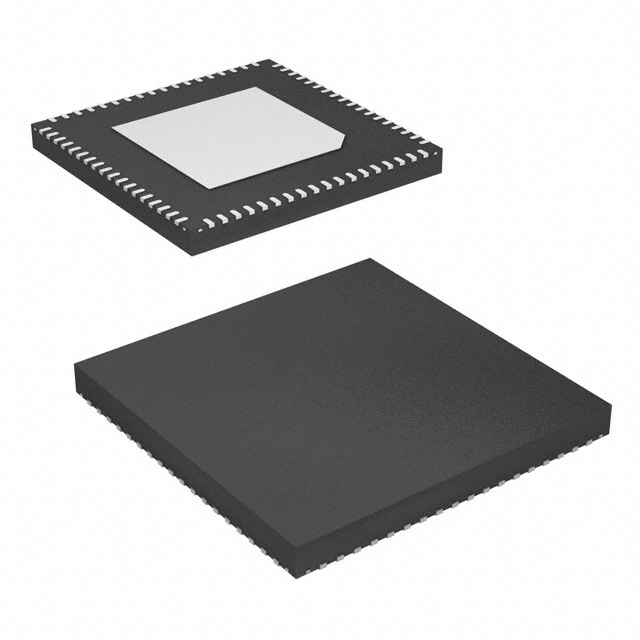
DAC1627D1G25
Dual 16-bit DAC, LVDS interface, up to 1.25 Gsps, x2, x4 and
x8 interpolating
Rev. 4.00 — 12 December 2012
Product data sheet
1. General description
The DAC1627D1G25 is a high-speed 16-bit dual channel Digital-to-Analog Converter
(DAC). It incorporates selectable ×2, ×4 and ×8 interpolation filters optimized for
multi-carrier and broadband wireless transmitters at sample rates of up to 1.25 Gsps. The
DAC1627D1G25 is supplied by two power supplies and integrates a differential scalable
output current up to 34 mA.
The DAC1627D1G25 meets multi-carrier Global System for Mobile communications
(GSM) specifications. For example, with an NCO frequency of 153.6 MHz and a DAC
clock frequency of 1.2288 Gsps the full-scale dynamic range is:
• SFDRRBW = 90 dBc (bandwidth = 180 MHz)
• IMD3 = 85 dBc
The Serial Peripheral Interface (SPI) provides full control of the DAC1627D1G25.
The DAC1627D1G25 integrates a Low Voltage Differential Signaling (LVDS) Double Data
Rate (DDR) receiver interface, with an on-chip 100 Ω termination. The LVDS DDR
interface accepts a multiplex input data stream such as interleaved or folded. An internal
LVDS input auto-calibration ensures the robustness and stability of the interface.
Digital on-chip modulation converts the complex I and Q inputs from baseband to IF. A
40-bit Numerically Controlled Oscillator (NCO) sets the mixer frequency. High resolution
internal gain, phase and offset control provide outstanding image and Local Oscillator
(LO) signal rejection at the system analog modulator output.
An inverse (sin x) / x function ensures a controlled flatness 0.5 dB for high bandwidths at
the DAC output.
Multiple Device Synchronization (MDS) allows synchronization of the outputs of multiple
DAC devices. MDS guarantees a maximum skew of one output clock period between
several devices.
The DAC1627D1G25 includes a low noise capacitor-free integrated Phase-Locked Loop
(PLL) multiplier which generates a DAC clock rate from the LVDS clock rate.
The DAC1627D1G25 is available in an HVQFN72 package (10 mm × 10 mm).
®
�DAC1627D1G25
Integrated Device Technology
Dual 16-bit DAC: up to 1.25 Gsps; x2, x4 and x8 interpolating
2. Features and benefits
� Dual-channel 16-bit resolution
�
�
�
�
�
�
�
�
�
�
� Synchronization of multiple DAC
devices
1.25 Gsps maximum update rate
� 3-wire or 4-wire mode SPI interface
Selectable ×2, ×4 and ×8 interpolation
� Differential scalable output current from
filters
8.1 mA to 34 mA
Low noise capacitor-free integrated
� External analog offset control
Phase-Locked Loop (PLL)
(10-bit auxiliary DACs)
Embedded Numerically Controlled
� High resolution internal digital gain and
Oscillator (NCO) with 40-bit
offset control to support high
programmable frequency
performance IQ-modulator image
rejection
Embedded complex (I/Q) modulator
� Internal phase correction
Two power supplies
� Inverse (sin x) / x function
LVDS DDR compatible input interface
� Power-down mode and Sleep mode;
with on-chip 100 Ω terminations
5-bit NCO low-power mode
LVDS DDR input clock up to 400 MHz
� On-chip 1.25 V reference
LVDS or LVPECL compatible DAC clock � Industrial temperature range −40 °C to
+85 °C
Interleaved or folded I and Q data input � 72 pins small form factor HVQFN
mode
package
3. Applications
�
�
�
�
�
�
Wireless infrastructure: MC_GSM, LTE, WiMAX, GSM, CDMA, WCDMA, TD-SCDMA
Communications: LMDS/MMDS, point-to-point
Direct Digital Synthesis (DDS)
Digital radio links
Instrumentation
Automated Test Equipment (ATE)
4. Ordering information
Table 1.
Ordering information
Type number
DAC1627D1G25
Package
Name
Description
Version
HVQFN72
plastic thermal enhanced very thin quad flat package; no leads;
72 terminals; body 10 × 10 × 0.85 mm
SOT813-3
DAC1627D1G25
Product data sheet
© IDT 2012. All rights reserved.
Rev. 4 — 12 December 2012
2 of 81
�xxxxxxxxxxxxxxxxxxxxx xxxxxxxxxxxxxxxxxxxxxxxxxx xxxxxxx x x x xxxxxxxxxxxxxxxxxxxxxxxxxxxxxx xxxxxxxxxxxxxxxxxxx xx xx xxxxx
xxxxxxxxxxxxxxxxxxxxxxxxxxx xxxxxxxxxxxxxxxxxxx xxxxxx xxxxxxxxxxxxxxxxxxxxxxxxxxxxxxxxxxx xxxxxxxxxxxx x x
xxxxxxxxxxxxxxxxxxxxx xxxxxxxxxxxxxxxxxxxxxxxxxxxxxx xxxxx xxxxxxxxxxxxxxxxxxxxxxxxxxxxxxxxxxxxxxxxxxxxxxxxxx xxxxxxxx
xxxxxxxxxxxxxxxxxxxxxxxxx xxxxxxxxxxxxxxxxxxxx xxx
SDO
SDIO
SCS_N
SCLK
DAC
NCO
40-bit frequency setting
16-bit phase adjustment
SPI
DCMSU
cos
IO0
LDCLKP
CDI
FIR 2
x2
FIR 3
x2
FIR 1
FIR 2
-
FIR 3
+
LDCLKN
x2
x2
x2
IOUTAP
+
MDS
COARSE
16
AUXAN
+
X
sin X
DAC A
REF.
BANDGAP
AND
BIASING
OFFSET
CONTROL
X
sin X
+
IOUTAN
CLIPPING
+
GAPOUT
VIRES
IOUTBP
CLIPPING
DAC B
IOUTBN
10-BIT
ANALOG GAIN
CONTROL
CLKP
CLOCK GENERATOR/PLL
CLKN
COMPLEX MODULATOR
MDSP
MDSN
10-BIT
OFFSET
CONTROL
MULTI-DAC
SYNCHRONIZATION
Fig 1.
DAC1627D1G25 block diagram
AUXBP
AUXBN
3 of 81
© IDT 2012. All rights reserved.
DAC1627D1G25
RESET_N
AUX.
DAC
Dual 16-bit DAC: up to 1.25 Gsps; x2, x4 and x8 interpolating
Rev. 4 — 12 December 2012
LD(15)N to
LD(0)N
x2
16
LVDS
DDR/
DIF
AUXAP
10-BIT
ANALOG GAIN
CONTROL
ALIGNP
ALIGNN
AUX.
DAC
sin
INTERRUPT
INTERNAL MONITORING
FIR 1
LD(15)P to
LD(0)P
10-BIT
OFFSET
CONTROL
PHASE COMPENSATION
DIGITAL GAIN/OFFSET
IO1
Integrated Device Technology
DAC1627D1G25
Product data sheet
5. Block diagram
�DAC1627D1G25
Integrated Device Technology
Dual 16-bit DAC: up to 1.25 Gsps; x2, x4 and x8 interpolating
6. Pinning information
55 VDDA(1V8)_D
56 IOUTBN
57 IOUTBP
58 VDDA(1V8)_D
59 VDDA(3V3)
60 AUXBP
61 AUXBN
62 VDDA(1V8)_P1
63 VIRES
64 GAPOUT
65 VDDA(1V8)_P2
66 AUXAN
67 AUXAP
69 VDDA(1V8)_D
68 VDDA(3V3)
70 IOUTAP
terminal 1
index area
71 IOUTAN
72 VDDA(1V8)_D
6.1 Pinning
CLKP
1
54 RESET_N
CLKN
2
53 SCS_N
MDSP
3
52 SCLK
MDSN
4
51 SDIO
TM
5
50 SDO
ALIGNP
6
49 IO0
ALIGNN
7
48 IO1
LD[15]P
8
47 LD[0]N
LD[15]N
9
46 LD[0]P
DAC
LD[14]P 10
45 LD[1]N
VDDD 36
LD[5]N 35
LD[5]P 34
LD[6]N 33
LD[6]P 32
LD[7]N 31
LD[7]P 30
n.c. 29
LCKN 28
37 LD[4]P
LCKP 27
38 LD[4]N
LD[11]N 18
VDDD 26
39 LD[3]P
LD[11]P 17
LD[8]P 24
40 LD[3]N
LD[12]N 16
LD[8]N 25
41 LD[2]P
LD[12]P 15
LD[9]N 23
LD[13]N 14
LD[9]P 22
43 VDDD
42 LD[2]N
LD[10]N 21
LD[13]P 13
VDDD 19
44 LD[1]P
VDDD 12
LD[10]P 20
LD[14]N 11
Transparent top view
Fig 2.
DAC1627D1G25 pin configuration
6.2 Pin description
Table 2.
Pin description
Symbol
Pin
Type[1]
Description
CLKP
1
I
DAC clock positive input
CLKN
2
I
DAC clock negative input
MDSP
3
IO
multi-device synchronization positive signal
MDSN
4
IO
multi-device synchronization negative signal
TM
5
I
Test mode selection (connect to GND)
ALIGNP
6
I
positive input for data alignment
ALIGNN
7
I
negative input for data alignment
LD[15]P
8
I
LVDS positive input bit 15[2]
LD[15]N
9
I
LVDS negative input bit 15[2]
DAC1627D1G25
Product data sheet
© IDT 2012. All rights reserved.
Rev. 4 — 12 December 2012
4 of 81
�DAC1627D1G25
Integrated Device Technology
Dual 16-bit DAC: up to 1.25 Gsps; x2, x4 and x8 interpolating
Table 2.
Pin description …continued
Symbol
Pin
Type[1]
Description
LD[14]P
10
I
LVDS positive input bit 14[2]
LD[14]N
11
I
LVDS negative input bit 14[2]
VDDD
12
P
digital power supply
LD[13]P
13
I
LVDS positive input bit 13[2]
LD[13]N
14
I
LVDS negative input bit 13[2]
LD[12]P
15
I
LVDS positive input bit 12[2]
LD[12]N
16
I
LVDS negative input bit 12[2]
LD[11]P
17
I
LVDS positive input bit 11[2]
LD[11]N
18
I
LVDS negative input bit 11[2]
VDDD
19
P
digital power supply
LD[10]P
20
I
LVDS positive input bit 10[2]
LD[10]N
21
I
LVDS negative input bit 10[2]
LD[9]P
22
I
LVDS positive input bit 9[2]
LD[9]N
23
I
LVDS negative input bit 9[2]
LD[8]P
24
I
LVDS positive input bit 8[2]
LD[8]N
25
I
LVDS negative input bit 8[2]
VDDD
26
P
digital power supply
LCKP
27
I
LVDS positive data clock input
LCKN
28
I
LVDS negative data clock input
n.c.
29
-
not connected
LD[7]P
30
I
LVDS positive input bit 7[2]
LD[7]N
31
I
LVDS negative input bit 7[2]
LD[6]P
32
I
LVDS positive input bit 6[2]
LD[6]N
33
I
LVDS negative input bit 6[2]
LD[5]P
34
I
LVDS positive input bit 5[2]
LD[5]N
35
I
LVDS negative input bit 5[2]
VDDD
36
P
digital power supply
LD[4]P
37
I
LVDS positive input bit 4[2]
LD[4]N
38
I
LVDS negative input bit 4[2]
LD[3]P
39
I
LVDS positive input bit 3[2]
LD[3]N
40
I
LVDS negative input bit 3[2]
LD[2]P
41
I
LVDS positive input bit 2[2]
LD[2]N
42
I
LVDS negative input bit 2[2]
VDDD
43
P
digital power supply
LD[1]P
44
I
LVDS positive input bit 1[2]
LD[1]N
45
I
LVDS negative input bit 1[2]
LD[0]P
46
I
LVDS positive input bit 0[2]
LD[0]N
47
I
LVDS negative input bit 0[2]
IO1
48
IO
IO port bit 1
IO0
49
IO
IO port bit 0
SDO
50
O
SPI data output
DAC1627D1G25
Product data sheet
© IDT 2012. All rights reserved.
Rev. 4 — 12 December 2012
5 of 81
�DAC1627D1G25
Integrated Device Technology
Dual 16-bit DAC: up to 1.25 Gsps; x2, x4 and x8 interpolating
Table 2.
Pin description …continued
Symbol
Pin
Type[1]
Description
SDIO
51
IO
SPI data input/output
SCLK
52
I
SPI clock
SCS_N
53
I
SPI chip select (active LOW)
RESET_N
54
I
general reset (active LOW)
VDDA(1V8)_D
55
P
1.8 V analog power supply (DAC core)
IOUTBN
56
O
complementary DAC B output current
IOUTBP
57
O
DAC B output current
VDDA(1V8)_D
58
P
1.8 V analog power supply (DAC core)
VDDA(3V3)
59
P
3.3 V analog power supply
AUXBP
60
O
auxiliary DAC B output current
AUXBN
61
O
complementary auxiliary DAC B output current
VDDA(1V8)_P1
62
P
1.8 V analog power supply (PLL)
VIRES
63
IO
DAC biasing resistor
GAPOUT
64
IO
band gap input/output voltage
VDDA(1V8)_P2
65
P
1.8 V analog power supply (PLL)
AUXAN
66
O
complementary auxiliary DAC A output current
AUXAP
67
O
auxiliary DAC A output current
VDDA(3V3)
68
P
3.3 V analog power supply
VDDA1V8_D
69
P
1.8 V analog power supply (DAC core)
IOUTAP
70
O
DAC A output current
IOUTAN
71
O
complementary DAC A output current
VDDA(1V8)_D
72
P
1.8 V analog power supply (DAC core)
GND
H
G
ground (exposed die pad)
[1]
P: power supply; G: ground; I: input; O: output.
[2]
The LVDS input data bus order can be reversed and each element can be swapped between P and N using
dedicated registers (see Table 60).
7. Limiting values
Table 3.
Limiting values
In accordance with the Absolute Maximum Rating System (IEC 60134).
Symbol
Parameter
Conditions
VDDA(3V3) analog supply voltage
(3.3 V)
VDDD
digital supply voltage
[1]
VDDA(1V8) analog supply voltage
(1.8 V)
Max
Unit
−0.5
+4.6
V
−0.5
+2.5
V
−0.5
+2.5
V
VI
input voltage
input pins referenced to GND
−0.5
+2.5
V
VO
output voltage
pins IOUTAP, IOUTAN,
IOUTBP, IOUTBN, AUXAP,
AUXAN, AUXBP and AUXBN
referenced to GND
−0.5
+4.6
V
DAC1627D1G25
Product data sheet
Min
© IDT 2012. All rights reserved.
Rev. 4 — 12 December 2012
6 of 81
�DAC1627D1G25
Integrated Device Technology
Dual 16-bit DAC: up to 1.25 Gsps; x2, x4 and x8 interpolating
Table 3.
Limiting values …continued
In accordance with the Absolute Maximum Rating System (IEC 60134).
Symbol
Parameter
Tstg
Min
Max
Unit
storage temperature
−55
+150
°C
Tamb
ambient temperature
−40
+85
°C
Tj
junction temperature
−40
+125
°C
[1]
Conditions
Connect the analog 1.8 V power supply to pins VDDA1V8_D, VDDA1V8_P1, and VDDA1V8_P2.
8. Thermal characteristics
Table 4.
Thermal characteristics
Symbol
Parameter
Typ
Unit
Rth(j-a)
thermal resistance from junction
to ambient
[1]
16.2
K/W
Rth(j-c)
thermal resistance from junction
to case
[1]
6.7
K/W
[1]
Conditions
Value for six-layer board in still air with a minimum of 49 thermal vias.
DAC1627D1G25
Product data sheet
© IDT 2012. All rights reserved.
Rev. 4 — 12 December 2012
7 of 81
�DAC1627D1G25
Integrated Device Technology
Dual 16-bit DAC: up to 1.25 Gsps; x2, x4 and x8 interpolating
9. Characteristics
Table 5.
Characteristics
VDDA(1V8) = 1.8 V; VDDD = 1.8 V; VDDA(3V3) = 3.3 V; Typical values measured at Tamb = +25 °C; RL = 50 Ω; IO(fs) = 20 mA;
maximum sample rate used; external PLL; no auxiliary DAC; no inverse sinus x/x; no output correction; output load condition
defined in Figure 42; output level = 1 V (p-p).
Test[1]
Min
Typ
Max
Unit
analog supply
voltage
(3.3 V)
C
3.15
3.3
3.45
V
VDDD
digital supply
voltage
C
1.7
1.8
1.9
V
VDDA(1V8)
analog supply
voltage
(1.8 V)
C
1.7
1.8
1.9
V
IDDA(3V3)
analog supply Auxiliary DAC on
current
(3.3 V)
C
51
55
59
mA
IDDD
digital supply
current
fs = 983.04 Msps;
×4 interpolation; no NCO;
MDS off
C
475
525
585
mA
fs = 620 Msps;
×2 interpolation; NCO on;
no MDS
C
400
450
500
mA
207
218
230
mA
207
218
230
mA
fs = 1228.8 Msps;
C
×4 interpolation; 5-bit NCO;
MDS off
-
1730
-
mW
fs = 983.04 Msps;
C
×4 interpolation; 5-bit NCO;
MDS off
-
1580
-
mW
fs = 983.04 Msps;
×4 interpolation; NCO off;
MDS off
-
1500
-
mW
-
1370
-
mW
C
-
63
-
mW
C
150
-
1000
mV
Symbol
Parameter
VDDA(3V3)
IDDA(1V8)
Ptot
Conditions
analog supply fs = 983.04 Msps; 1 V (p-p) C
current
fs = 620 Msps; 1 V (p-p)
C
(1.8 V)
total power
dissipation
C
fs = 620 Msps;
×2 interpolation; 5-bit NCO;
MDS off
power-down using SPI
register
[2]
[2]
Clock inputs (pins CLKP, CLKN)
Vi(clk)dif
differential
clock input
voltage
peak-to-peak
Ri
input
resistance
D
-
200
-
kΩ
Ci
input
capacitance
D
-
1
-
pF
DAC1627D1G25
Product data sheet
© IDT 2012. All rights reserved.
Rev. 4 — 12 December 2012
8 of 81
�DAC1627D1G25
Integrated Device Technology
Dual 16-bit DAC: up to 1.25 Gsps; x2, x4 and x8 interpolating
Table 5.
Characteristics …continued
VDDA(1V8) = 1.8 V; VDDD = 1.8 V; VDDA(3V3) = 3.3 V; Typical values measured at Tamb = +25 °C; RL = 50 Ω; IO(fs) = 20 mA;
maximum sample rate used; external PLL; no auxiliary DAC; no inverse sinus x/x; no output correction; output load condition
defined in Figure 42; output level = 1 V (p-p).
Symbol
Parameter
Test[1]
Conditions
Min
Typ
Max
Unit
Digital inputs (pins LD[15]P to LD[0]P, LD[15]N to LD[0]N, LCKP and LCKN, ALIGNP and ALIGNN)
Vi
input voltage
Vidth
input
differential
threshold
voltage
Ri
input
resistance
Ci
input
capacitance
|Vgpd| < 50 mV[3]
C
825
-
1575
mV
mV[3]
C
−100
-
+100
mV
D
-
100
-
Ω
|Vgpd| < 50
D
-
0.8
-
pF
D
-
0.9
-
pF
C
-
500
-
mV
D
-
0.6
-
pF
D
-
100
-
Ω
|Vgpd| < 50 mV[3]
C
825
-
1575
mV
mV[3]
C
−100
-
+100
mV
pins LCKP and LCKN
Digital inputs/outputs (pins MDSN, MDSP)
Vo(dif)(p-p)
peak-to-peak
differential
output
voltage
Ci
input
capacitance
Ri
input
resistance
Vi
input voltage
Vidth
input
differential
threshold
voltage
between GND and pin
MDSN or MDSP
|Vgpd| < 50
Digital inputs/outputs (pins IO0, IO1, SDO, SDIO, SCLK, SCS_N, RESET_N)
VIL
LOW-level
input voltage
C
GND
-
0.3VDDD
V
VIH
HIGH-level
input voltage
C
0.7VDDD
-
VDDD
V
VOL
LOW-level
output
voltage
pins IO0, IO1, SDO, and
SDIO
C
GND
-
0.1VDDD
V
VOH
HIGH-level
output
voltage
pins IO0, IO1, SDO, and
SDIO
C
0.9VDDD
-
VDDD
V
IIL
LOW-level
input current
maximum VIL
I
−10
-
+10
µA
IIH
HIGH-level
input current
minimum VIH
I
−10
-
+10
µA
Ci
input
capacitance
D
-
2.2
-
pF
DAC1627D1G25
Product data sheet
© IDT 2012. All rights reserved.
Rev. 4 — 12 December 2012
9 of 81
�DAC1627D1G25
Integrated Device Technology
Dual 16-bit DAC: up to 1.25 Gsps; x2, x4 and x8 interpolating
Table 5.
Characteristics …continued
VDDA(1V8) = 1.8 V; VDDD = 1.8 V; VDDA(3V3) = 3.3 V; Typical values measured at Tamb = +25 °C; RL = 50 Ω; IO(fs) = 20 mA;
maximum sample rate used; external PLL; no auxiliary DAC; no inverse sinus x/x; no output correction; output load condition
defined in Figure 42; output level = 1 V (p-p).
Symbol
Parameter
Test[1]
Conditions
Min
Typ
Max
Unit
D
-
2.5
-
mA
D
8.1
-
34
mA
default value
D
-
20
-
mA
compliance range
D
2.3
-
VDDA(3V3)
V
Analog outputs (pins IOUTAP, IOUTAN, IOUTBP, IOUTBN)
Ibias
bias current
DC current
IO(fs)
full-scale
controlled by the analog
output current GAIN registers
(see Table 33)
VO
output
voltage
VO(cm)
common-mod 1 V (p-p) DAC output
e output
configuration
voltage
2 V (p-p) DAC output
configuration
D
-
3
-
V
D
-
2.8
-
V
Ro
output
resistance
D
-
250
-
kΩ
Co
output
capacitance
D
-
5
-
pF
I
-
1.21
-
V
D
-
40
-
µA
between pins OUTAN and
OUTBN and pins OUTAP
and OUTBP
Reference voltage output (pin GAPOUT)
VO(ref)
reference
output
voltage
Tamb = +25 °C
IO(ref)
reference
1.25 V external voltage
output current
Analog auxiliary outputs (pins AUXAP, AUXAN, AUXBP and AUXBN)
IO(fs)
VO(aux)
full-scale
auxiliary DAC A;
output current differential outputs
I
-
3.1
-
mA
auxiliary DAC B;
differential outputs
I
-
3.1
-
mA
compliance range
D
0
-
2.3
V
auxiliary
output
voltage
LVDS input timing
fdata
data rate
fs(max) specification must be C
respected
(fs = fdata × interpolation
factor)
-
-
400
MHz
tsk(clk-D)
skew time
from clock to
data input
fDATA = 184.32 Mhz
C
800
-
830
ps
fDATA = 245.76 MHz
C
500
-
675
ps
fDATA = 307.2 MHz
C
300
-
520
ps
fDATA = 368.64 MHz
C
150
-
500
ps
DAC1627D1G25
Product data sheet
© IDT 2012. All rights reserved.
Rev. 4 — 12 December 2012
10 of 81
�DAC1627D1G25
Integrated Device Technology
Dual 16-bit DAC: up to 1.25 Gsps; x2, x4 and x8 interpolating
Table 5.
Characteristics …continued
VDDA(1V8) = 1.8 V; VDDD = 1.8 V; VDDA(3V3) = 3.3 V; Typical values measured at Tamb = +25 °C; RL = 50 Ω; IO(fs) = 20 mA;
maximum sample rate used; external PLL; no auxiliary DAC; no inverse sinus x/x; no output correction; output load condition
defined in Figure 42; output level = 1 V (p-p).
Symbol
Parameter
Conditions
tsu
set-up time
manual tuning mode (see
Figure 29); depends on
LDCLK_DEL[3:0]
0000
thold
hold time
Test[1]
Min
Typ
Max
Unit
C
−300
-
-
ps
0001
C
−365
-
-
ps
0010
C
−440
-
-
ps
0011
C
−520
-
-
ps
0100
C
−590
-
-
ps
0101
C
−675
-
-
ps
0110
C
−750
-
-
ps
0111
C
−830
-
-
ps
1000
C
−845
-
-
ps
1001
C
−845
-
-
ps
1010
C
−1000
-
-
ps
1011
C
−1100
-
-
ps
1100
C
−1220
-
-
ps
1101
C
−1290
-
-
ps
1110
C
−1360
-
-
ps
1111
C
−1450
-
-
ps
0000
C
790
-
-
ps
0001
C
870
-
-
ps
manual tuning mode (see
Figure 28); depends on
LDCLK_DEL[3:0]:
0010
C
950
-
-
ps
0011
C
1055
-
-
ps
0100
C
1140
-
-
ps
0101
C
1230
-
-
ps
0110
C
1360
-
-
ps
0111
C
1460
-
-
ps
1000
C
1900
-
-
ps
1001
C
2075
-
-
ps
1010
C
2250
-
-
ps
1011
C
2400
-
-
ps
1100
C
2560
-
-
ps
1101
C
2740
-
-
ps
1110
C
2900
-
-
ps
1111
C
3000
-
-
ps
DAC1627D1G25
Product data sheet
© IDT 2012. All rights reserved.
Rev. 4 — 12 December 2012
11 of 81
�DAC1627D1G25
Integrated Device Technology
Dual 16-bit DAC: up to 1.25 Gsps; x2, x4 and x8 interpolating
Table 5.
Characteristics …continued
VDDA(1V8) = 1.8 V; VDDD = 1.8 V; VDDA(3V3) = 3.3 V; Typical values measured at Tamb = +25 °C; RL = 50 Ω; IO(fs) = 20 mA;
maximum sample rate used; external PLL; no auxiliary DAC; no inverse sinus x/x; no output correction; output load condition
defined in Figure 42; output level = 1 V (p-p).
Symbol
Parameter
Conditions
Test[1]
Min
Typ
Max
Unit
DAC output timing
fs(max)
maximum sampling rate
C
1250
-
-
Msps
ts
settling time
D
-
20
-
ns
D
50
-
1000
Msps
register value =
8000000000h
D
-
−500
-
MHz
register value =
FFFFFFFFFFh
D
-
−0.9095
-
mHz
register value =
0000000000h
D
-
0
-
Hz
register value =
0000000001h
D
-
+0.9095
-
mHz
register value =
7FFFFFFFFFh
D
-
+499.99909 -
MHz
D
-
0.9095
-
mHz
register value =
F8000000000h
D
-
−500
-
MHz
register value =
F8000000000h
D
-
−31.25
-
MHz
register value =
00000000000h
D
-
0
-
Hz
register value =
08000000000h
D
-
+31.25
-
MHz
register value =
7FFFFFFFFFh
D
-
+468.75
-
MHz
D
-
31.25
-
MHz
I
-
85.5
-
dBc
I
-
85.5
-
dBc
to ± 0.5 LSB
Internal PLL timing
fs
sampling rate
40-bit NCO frequency range; fs = 1000 Msps
fNCO
fstep
NCO
frequency
two’s complement coding
step
frequency
Low-power NCO frequency range; fs = 1000 MHz
fNCO
fstep
NCO
frequency
two’s complement coding
step
frequency
Dynamic performance
SFDR
spurious-free
dynamic
range
fdata = 184.32 MHz;
fs = 737.28 Msps;
BW = fs / 2
fo = 20 MHz at −1 dBFS;
fdata = 245.76 MHz;
fs = 983.04 Msps;
BW = fs / 2
fo = 20 MHz at −1 dBFS
DAC1627D1G25
Product data sheet
© IDT 2012. All rights reserved.
Rev. 4 — 12 December 2012
12 of 81
�DAC1627D1G25
Integrated Device Technology
Dual 16-bit DAC: up to 1.25 Gsps; x2, x4 and x8 interpolating
Table 5.
Characteristics …continued
VDDA(1V8) = 1.8 V; VDDD = 1.8 V; VDDA(3V3) = 3.3 V; Typical values measured at Tamb = +25 °C; RL = 50 Ω; IO(fs) = 20 mA;
maximum sample rate used; external PLL; no auxiliary DAC; no inverse sinus x/x; no output correction; output load condition
defined in Figure 42; output level = 1 V (p-p).
Test[1]
Min
Typ
Max
Unit
BW = 100 MHz
I
-
90
-
dBc
BW = 180 MHz
I
-
91
-
dBc
BW = 100 MHz
I
-
88
-
dBc
BW = 180 MHz
I
-
91
-
dBc
fdata = 245.76 MHz;
C
fs = 983.04 Msps;
fo1 = 20 MHz; fo2 = 21 MHz;
×4 interpolation;
output level = −1 dBFS
-
> 95
-
dBc
fdata = 245.76 MHz;
fs = 983.04 Msps;
fo1 = 152 MHz;
fo2 = 155.1 MHz;
×4 interpolation;
output level = −1 dBFS
I
-
85
-
dBc
1 carrier; BW = 5 MHz
C
-
81.5
-
dBc
2 carriers; BW = 10 MHz
C
-
76.5
-
dBc
4 carriers; BW = 20 MHz
C
-
73
-
dBc
C
-
73.5
-
dBc
Symbol
Parameter
Conditions
SFDRRBW
restricted
bandwidth
spurious-free
dynamic
range
fdata = 245.76 MHz;
fs = 983.04 Msps;
fo = 147 MHz
fdata = 307.2 MHz;
fs = 1228.8 Msps;
fo = 158.6 MHz
IMD3
ACPR
third-order
intermodulati
on distortion
adjacent
channel
power ratio
with WCDMA pattern;
fs = 1228.8 Msps;
×4 interpolation;
fNCO = 153.6 MHz
with WCDMA pattern;
fs = 983.04 Msps;
×4 interpolation;
fNCO = 40 MHz
4 carriers; BW = 20 MHz
DAC1627D1G25
Product data sheet
© IDT 2012. All rights reserved.
Rev. 4 — 12 December 2012
13 of 81
�DAC1627D1G25
Integrated Device Technology
Dual 16-bit DAC: up to 1.25 Gsps; x2, x4 and x8 interpolating
Table 5.
Characteristics …continued
VDDA(1V8) = 1.8 V; VDDD = 1.8 V; VDDA(3V3) = 3.3 V; Typical values measured at Tamb = +25 °C; RL = 50 Ω; IO(fs) = 20 mA;
maximum sample rate used; external PLL; no auxiliary DAC; no inverse sinus x/x; no output correction; output load condition
defined in Figure 42; output level = 1 V (p-p).
Symbol
Parameter
Conditions
αisol(ch-ch)
isolation
between
channels
NSD
Test[1]
Min
Typ
Max
Unit
fs = 1228.8 Msps;
C
×4 interpolation;
fout = 10 MHz; NCO = off;
level = 0.1 dBFS; both DAC
channels enabled
-
110
-
dBc
C
fs = 1228.8 Msps;
×4 interpolation;
fout = 83 MHz; NCO = off;
level = 0.1 dBFS; both DAC
channels enabled
-
95
-
dBc
fs = 1228.8 Msps;
C
×4 interpolation;
fout = 210 MHz; NCO = on;
level = 0.1 dBFS; one DAC
channel enabled; one DAC
channel disabled
-
81
-
dBc
D
-
−166
-
dBm/Hz
D
-
−164
-
dBm/Hz
noise spectral fs = 983.04 Msps;
×4 interpolation;
density
fo = 20 MHz at −1 dBFS
fs = 983.04 Msps;
×4 interpolation;
fo = 153.6 MHz at −1 dBFS
[1]
D = guaranteed by design; C = guaranteed by characterization; I = 100 % industrially tested.
[2]
Connect VDDA(1V8)_D, VDDA(1V8)_P1 and VDDA(1V8)_P2 to the same 1.8 V analog power supply. Use dedicated filters for the three power
pins.
[3]
|Vgpd| represents the ground potential difference voltage. This voltage is the result of current flowing through the finite resistance and the
inductance between the receiver and the driver circuit ground voltages.
DAC1627D1G25
Product data sheet
© IDT 2012. All rights reserved.
Rev. 4 — 12 December 2012
14 of 81
�DAC1627D1G25
Integrated Device Technology
Dual 16-bit DAC: up to 1.25 Gsps; x2, x4 and x8 interpolating
10. Typical characteristics
Typical measurement done at Tamb = +25 °C in typical power supply condition,
IO(fs) = 20 mA, external PLL, no auxiliary DAC, no inverse (sinus x) / x, and no output
correction. The output load condition defined in Figure 42. All graphs are based on
average measurements using several devices.
90
90
H2
(dBc)
H2
(dBc)
80
80
70
70
(1)
(2)
(3)
60
(1)
(2)
(3)
60
50
50
40
40
0
100
200
300
0
100
200
fout (MHz)
(1) 0 dBFS
(1) 0 dBFS
(2) −7 dBFS
(2) −7 dBFS
(3) −10 dBFS
Fig 3.
(3) −10 dBFS
Second harmonic distortion versus output
frequency over input scale at fs = 983.04 MHz
Fig 4.
Second harmonic distortion versus output
frequency over input scale at fs = 1228.8 MHz
95
95
H3
(dBc)
H3
(dBc)
85
85
75
75
(1)
(2)
(3)
65
(1)
(2)
(3)
65
55
55
45
45
0
50
100
150
200
250
0
300
350
fout (MHz)
(1) 0 dBFS
50
(2) −7 dBFS
(3) −10 dBFS
(3) −10 dBFS
Third harmonic distortion versus output
frequency over input scale at fs = 983.04 MHz
Fig 6.
150
200
250
300
350
fout (MHz)
Third harmonic distortion versus output
frequency over input scale at fs = 1228.8 MHz
DAC1627D1G25
Product data sheet
100
(1) 0 dBFS
(2) −7 dBFS
Fig 5.
300
fout (MHz)
© IDT 2012. All rights reserved.
Rev. 4 — 12 December 2012
15 of 81
�DAC1627D1G25
Integrated Device Technology
Dual 16-bit DAC: up to 1.25 Gsps; x2, x4 and x8 interpolating
95
95
SFDRrbw
(dBc)
SFDRrbw
(dBc)
85
85
(1)
(2)
(3)
75
(1)
(2)
(3)
75
65
65
55
55
45
45
0
50
100
150
200
250
fout (MHz)
(1) 0 dBFS
0
50
(2) −7 dBFS
(3) −10 dBFS
(3) −10 dBFS
SFDR restricted bandwidth (200 MHz) versus
output frequency over input scale at
fs = 983.04 MHz
95
200
250
fout (MHz)
Fig 8.
SFDR restricted bandwidth (200 MHz) versus
output frequency over input scale at
fs = 1228.8 MHz
95
IMD3
(dBc)
IMD3
(dBc)
85
85
(1)
(2)
(3)
75
75
65
65
55
55
45
0
50
100
150
200
250
300
350
fNCO (MHz)
(1)
(2)
(3)
45
0
50
(1) -7 dBFS
(1) -7 dBFS
(2) -10 dBFS
(2) -10 dBFS
(3) -12 dBFS
(3) -12 dBFS
Fig 9.
150
(1) 0 dBFS
(2) −7 dBFS
Fig 7.
100
IMD3 versus output frequency over input
scale at fs = 983.04 MHz
150
200
250
300
350
fNCO (MHz)
Fig 10. IMD3 versus output frequency over input scale
at fs = 1228.8 MHz
DAC1627D1G25
Product data sheet
100
© IDT 2012. All rights reserved.
Rev. 4 — 12 December 2012
16 of 81
�DAC1627D1G25
Integrated Device Technology
Dual 16-bit DAC: up to 1.25 Gsps; x2, x4 and x8 interpolating
85
85
ACLR
(dBc)
ACLR
(dBc)
(1)
(2)
(3)
75
75
(1)
(2)
(3)
65
65
55
55
0
100
200
300
0
100
fNCO (MHz)
200
300
fNCO (MHz)
(1) fs = 1228.8 Msps
(1) fs = 1228.8 Msps
(2) fs = 983 Msps
(2) fs = 983 Msps
(3) fs = 737 Msps
(3) fs = 737 Msps
Fig 11. One carrier ACLR as a function of output
frequency (fout) over sampling frequency (fs)
Fig 12. Two carriers ACLR as a function of output
frequency (fout) over sampling frequency (fs)
85
ACLR
(dBc)
75
(1)
(2)
(3)
65
55
0
100
200
300
fNCO (MHz)
(1) fs = 1228.8 Msps
(2) fs = 983 Msps
(3) fs = 737 Msps
Fig 13. Four carriers ACLR as a function of output frequency (fout) over sampling frequency (fs)
DAC1627D1G25
Product data sheet
© IDT 2012. All rights reserved.
Rev. 4 — 12 December 2012
17 of 81
�DAC1627D1G25
Integrated Device Technology
Dual 16-bit DAC: up to 1.25 Gsps; x2, x4 and x8 interpolating
100
highest
digital spur
(dBc)
90
100
highest
digital spur
(dBc)
90
(1)
(2)
(3)
80
(1)
(2)
(3)
80
70
70
60
60
0
40
80
120
160
200
240
280
fout (MHz)
0
40
(1) 1 dBFS
(1) 1 dBFS
(2) 7 dBFS
(2) 7 dBFS
(3) 10 dBFS
(3) 10 dBFS
Fig 14. Highest digital spur [ n / 8 × fs ± fout (n = 1 to 4)]
at 1228.8 MHz as a function of fout over input
scale
80
120
160
200
240
280
fout (MHz)
Fig 15. Highest digital spur [ n / 8 × fs ± fout (n = 1 to 4)]
at 983.04 MHz as a function of fout over input
scale
11. Application information
11.1 General description
The DAC1627D1G25 is a dual 16-bit DAC operating up to 1250 Msps. Each DAC consists
of a segmented architecture, comprising a 6-bit thermometer subDAC and a 10-bit binary
weighted subDAC.
A maximum input LVDS DDR data rate of up to 400 MHz and a maximum output sampling
rate of 1250 Msps ensure more flexibility for wide bandwidth and multi-carrier systems.
The internal 40-bit NCO of the DAC1627D1G25 simplifies the frequency selection of the
system. The DAC1627D1G25 provides ×2, ×4 or ×8 interpolation filters that are useful for
removing the undesired images.
Each DAC generates two complementary current outputs on pins IOUTAP and IOUTAN
and pins IOUTBP and IOUTBN. These outputs provide a full-scale output current (IO(fs)) of
up to 34 mA. An internal reference is available for the reference current which is externally
adjustable using pin VIRES.
High resolution internal gain, phase and offset control provide outstanding image and
Local Oscillator (LO) signal rejection at the system analog modulator output.
Multiple device synchronization enables synchronization of the outputs of multiple DAC
devices. MDS guarantees a maximum skew of one output clock period between several
devices.
All functions can be set using an SPI interface.
DAC1627D1G25
Product data sheet
© IDT 2012. All rights reserved.
Rev. 4 — 12 December 2012
18 of 81
�DAC1627D1G25
Integrated Device Technology
Dual 16-bit DAC: up to 1.25 Gsps; x2, x4 and x8 interpolating
11.2 Serial Peripheral Interface (SPI)
11.2.1 Protocol description
The DAC1627D1G25 serial interface is a synchronous serial communication port ensures
easy interface with many industry microprocessors. It provides access to the registers that
define the operating modes of the chip in both write and read mode.
This interface can be configured as a 3-wire type (pin SDIO as bidirectional pin) or 4-wire
type (pins SDIO and SDO as unidirectional pins, input and output port, respectively). In
both configurations, SCLK acts as the serial clock and SCS_N as the serial chip select.
Figure 16 shows the SPI protocol. An SCS_N signal follows each read/write operation. A
LOW assertion to drive the chip with 2 bytes to 5 bytes, depending on the content of the
instruction byte (see Table 7) enables the read/write operation.
RESET_N
(optional)
SCS_N
SCLK
SDIO
R/W
N1
N0
A4
A3
A2
A1
A0
SDO
(optional)
D7
D6
D5
D4
D3
D2
D1
D0
D7
D6
D5
D4
D3
D2
D1
D0
Fig 16. SPI protocol
R/W indicates the mode access (see Table 6)
Table 6.
Read or Write mode access description
R/W
Description
0
Write mode operation
1
Read mode operation
Table 7 shows the number of bytes to be transferred. N1 and N0 indicate the number of
bytes transferred after the instruction byte.
Table 7.
Number of bytes to be transferred
N1
N0
Number of bytes transferred
0
0
1 byte
0
1
2 bytes
1
0
3 bytes
1
1
4 bytes
A[4:0] indicates which register is being addressed. If a multiple transfer occurs, this
address concerns the first register. Other registers follow directly in a decreasing order
(see Table 21, Table 35 and Table 53).
DAC1627D1G25
Product data sheet
© IDT 2012. All rights reserved.
Rev. 4 — 12 December 2012
19 of 81
�DAC1627D1G25
Integrated Device Technology
Dual 16-bit DAC: up to 1.25 Gsps; x2, x4 and x8 interpolating
The DAC1627D1G25 incorporates more than the 32 SPI registers allowed by the address
value A[4:0]. It uses three SPI register pages (page_00, page_01, and page_0A), each
containing 32 registers. The 32nd register of each page indicates which page is currently
addressed (00h, 01h or 0Ah).
11.2.2 SPI timing description
The SPI interface can operate at a frequency up to 25 MHz. The SPI timings are shown in
Figure 17.
tw(RESET_N)
RESET_N
50 %
th(SCS_N)
tsu(SCS_N)
SCS_N
50 %
tw(SCLK)
SCLK
SDIO
50 %
50 %
th(SDIO)
tsu(SDIO)
Fig 17. SPI timing diagram
The SPI timing characteristics are given in Table 8.
Table 8.
SPI timing characteristics
Symbol
Parameter
Min
Typ
Max
Unit
fSCLK
SCLK frequency
-
-
25
MHz
tw(SCLK)
SCLK pulse
width
30
-
-
ns
tsu(SCS_N)
SCS_N set-up
time
20
-
-
ns
th(SCS_N)
SCS_N hold
time
20
-
-
ns
tsu(SDIO)
SDIO set-up
time
10
-
-
ns
th(SDIO)
SDIO hold time
5
-
-
ns
tw(RESET_N)
RESET_N pulse
width
30
-
-
ns
11.3 Power-on sequence
There are three steps for the power-on sequence (see Figure 18):
1. The board is power-on. At the turn-on time, all DAC1627D1G25 supplies have
reached their specification ranges.
2. At least 1 µs after the turn-on time pin RESET_N must be released.
DAC1627D1G25
Product data sheet
© IDT 2012. All rights reserved.
Rev. 4 — 12 December 2012
20 of 81
�DAC1627D1G25
Integrated Device Technology
Dual 16-bit DAC: up to 1.25 Gsps; x2, x4 and x8 interpolating
3. When the DAC clock and LVDS clock are stable, the SPI configuration is sent to the
DAC1627D1G25. Writing 0 in bits RST_DCLK and RST_LCLK of the register
MAIN_CNTRL (see Table 54) starts the automatic calibration. 30 µs after this
calibration, the DAC1627D1G25 is operational.
WRITE DAC CONFIGURATION
START CLOCK CALIBRATION
SPI bus
RESET_N
power supplies
trst
ton
power in
specification
range
time
tspi_start
Fig 18. Power-on sequence
11.4 LVDS Data Input Format (DIF) block
The Data Input Formatting (DIF) block captures and resynchronizes data on the LVDS bus
with its own LCLKP/LCLKN clock. Each LVDS input buffer has an internal resistance of
100 Ω, so an external resistor is not required. The DIF block includes two subblocks:
• LVDS receiver:
Provides high flexibility for the LVDS interface, especially for the Printed-Circuit Board
(PCB) layout and the control of the input port polarity and the input port mapping.
• Data format block:
Enables the adaptation, which ensures the support of several data encoding modes.
LD[15]P
16 PA[15..0]
16
I[15..0]
to DAC A
LD[15]N
LD[0]P
LD[0]N
16 PB[15..0]
LVDS
RECEIVER
DATA
FORMAT
16 Q[15..0]
to DAC B
LCLKP
LCLKN
LCLK
Fig 19. LVDS Data Input Format (DIF) block diagram
11.4.1 Input port polarity
The polarity of each individual LVDS input (LD[15]P to LD[0]P and LD[15]N to LD[0]N) can
be changed, ensuring a much easier PCB layout design. The input polarity is controlled
with bits LD_POL[15:0] (see Table 59).
DAC1627D1G25
Product data sheet
© IDT 2012. All rights reserved.
Rev. 4 — 12 December 2012
21 of 81
�DAC1627D1G25
Integrated Device Technology
Dual 16-bit DAC: up to 1.25 Gsps; x2, x4 and x8 interpolating
11.4.2 Input port mapping
Inverting the order of the LSB and the MSB of the LVDS bus using bit WORD_SWAP in
register LD_CNTRL (see Table 60) also simplifies the design of the PCB (see Table 9).
Table 9.
Input LVDS bus swapping
Internal LVDS bus
External LVDS bus
(WORD_SWAP = 0)
External LVDS bus
(WORD_SWAP = 1)
LDI[15]P,N
LD[15]P,N
LD[0]P,N
LDI[14]P,N
LD[14]P,N
LD[1]P,N
LDI[13]P,N
LD[13]P,N
LD[2]P,N
LDI[12]P,N
LD[12]P,N
LD[3]P,N
LDI[11]P,N
LD[11]P,N
LD[4]P,N
LDI[10]P,N
LD[10]P,N
LD[5]P,N
LDI[9]P,N
LD[9]P,N
LD[6]P,N
LDI[8]P,N
LD[8]P,N
LD[7]P,N
LDI[7]P,N
LD[7]P,N
LD[8]P,N
LDI[6]P,N
LD[6]P,N
LD[9]P,N
LDI[5]P,N
LD[5]P,N
LD[10]P,N
LDI[4]P,N
LD[4]P,N
LD[11]P,N
LDI[3]P,N
LD[3]P,N
LD[12]P,N
LDI[2]P,N
LD[2]P,N
LD[13]P,N
LDI[1]P,N
LD[1]P,N
LD[14]P,N
LDI[0]P,N
LD[0]P,N
LD[15]P,N
11.4.3 Input port swapping
The LVDS DDR receiver block internally maps the incoming LVDS data bus into two
buses with a single data rate (Figure 20).
A0
B0
A1
B1
A2
B2
A3
B3
A2
A3
B2
B3
to DAC A
PA[15..0]
A0
A1
LD[15..0]P/N
LVDS
RECEIVER
PB[15..0]
LCLKP/N
B0
B1
to DAC B
LCLK
Fig 20. LVDS DDR receiver mapping LDAB SWAP = 0
These two buses can be swapped internally using bit LDAB_SWAP of register
LD_CNTRL (see Table 60 and Figure 21).
DAC1627D1G25
Product data sheet
© IDT 2012. All rights reserved.
Rev. 4 — 12 December 2012
22 of 81
�DAC1627D1G25
Integrated Device Technology
Dual 16-bit DAC: up to 1.25 Gsps; x2, x4 and x8 interpolating
B0
B1
PA[15..0]
A0
B0
A1
B1
A2
B2
A3
B3
B2
B3
A2
A3
to DAC A
LD[15..0]P/N
LVDS
RECEIVER
A0
A1
PB[15..0]
LCLKP/N
to DAC B
LCLK
Fig 21. LVDS DDR receiver mapping LDAB SWAP = 1
11.4.4 Input port formatting
The LVDS DDR input bus multiplexes two 16-bit streams. The LVDS receiver block
demultiplexes these two streams.
The two streams can carry two data formats:
• Folded
• Interleaved
The data format block is in charge of the data format adaptation (see Figure 22).
A0
A1
A2
A3
I0
PA[15..0]
A0
B0
A1
B1
A2
B2
A3
B3
I1
I2
I3
Q2
Q3
to DAC A
LD[15..0]P/N
LVDS
RECEIVER
B0
B1
B2
B3
DATA
FORMAT
Q0
PB[15..0]
LCLKP/N
Q1
to DAC B
LCLK
Fig 22. LVDS DDR data formats
The DAC1627D1G25 can correctly decode the input stream using bit IQ_FORMAT of
register LD_CNTRL (see Table 60), because it can determine which format is used on the
LVDS DDR bus.
Table 10 shows the format mapping between the LVDS input data and the data sent to the
two DAC channels depending on the data format selected.
Table 10.
Folded and interleaved format mapping
Data format
Data bit mapping
interleaved format (IQ_FORMAT = 1)
In[15..0] = An[15..0]; Qn[15..0] = Bn[15..0]
folded format (IQ_FORMAT = 0)
In[15..8] = An[15..8]; In[7..0] = Bn[15..8]
Qn[15..8] = An[7..0]; Qn[7..0] = Bn[7..0]
DAC1627D1G25
Product data sheet
© IDT 2012. All rights reserved.
Rev. 4 — 12 December 2012
23 of 81
�DAC1627D1G25
Integrated Device Technology
Dual 16-bit DAC: up to 1.25 Gsps; x2, x4 and x8 interpolating
11.4.5 Data parity/data enable
The ALIGN pins can be used in several ways:
• As datastream start flag for Multiple Devices Synchronization (see Section 11.13).
• As LVDS data enable which can be used to insert a DC level into the datastream. The
SEL_EN bits in register LD_CNTRL (see Table 60) enable the programming of this
mode. The DC level for both channels is selected using registers I_DC_LVL and
Q_DC_LVL (see Table 62)
• As parity bit for the LD[15:0] to detect disruptions at the LVDS-input port bit PARITYC
in register LD_CNTRL (see Table 60) enabling the control of this mode. A Parity error
can generate an interrupt (INTR) reported on either IO0 or IO1 pin
11.5 Interrupt controller
The DAC1627D1G25 incorporates an interrupt controller that makes notifying a
host-controller in case of an internal event. The INTR-signal can be made available on
one of the IO pins. The polarity on the IO pins is programmable.
The internal event that must be tracked and generates an interrupt can be selected using
the INTR_EN register (see Table 45). Two types of interrupt sources are considered:
• The ready-indicators (MAQ_RDY_B, MAQ_RDY_A, AUTO_CAL_RDY, and
AUTO_DL_RDY; register INTR_FLAGS; see Table Table 47) notify the host-interface
that the corresponding process (invoked by the host interface) has been finalized
• The error flags indicate that a failure has been detected. For example, on the
LVDS-interface it is possible to check for parity errors and/or to monitor if the internal
timing of the LVDS clock delay has changed since the calibration. Errors like these
can result in critical timings within the Clock Domain Interface (CDI) which transfers
the data from the LCLK to the DCLK domain
The selected event that has invoked the interrupt can be determined using the
INTR_FLAGS register (see Table 47). The flags and the INTR signal are reinitialized by
setting the INTR_CLEAR control bit in register INTR_CTRL (see Table 45).
11.6 General-purpose IO pins
The DAC1627D1G25 provides two general-purpose pins, IO0 and IO1. These pins can be
used to observe the interrupt signal (INTR) or other internal signals (internal clocks, LVDS
data, etc.). These pins can also be used as generic outputs to control external devices.
The internal signals that must be observed on these pins are selected using registers
IO_MUX0, IO_MUX1, and IO_MUX2 (see Table 63 and Table 64).
11.7 Input clock
The DAC1627D1G25 operates with two clocks, one for the LVDS DDR interface and one
for the DAC core.
DAC1627D1G25
Product data sheet
© IDT 2012. All rights reserved.
Rev. 4 — 12 December 2012
24 of 81
�DAC1627D1G25
Integrated Device Technology
Dual 16-bit DAC: up to 1.25 Gsps; x2, x4 and x8 interpolating
11.7.1 LVDS DDR clock
The LVDS DDR clock can be interfaced as shown in Figure 23 because the clock buffer
contains a 100 Ω internal resistor.
DAC
LCLKP
Z = 100 Ω
LVDS
100 Ω
LVDS
LCLKN
Fig 23. LVDS DDR clock configuration
11.7.2 DAC core clock
The DAC core clock can achieve a frequency of up to 1.25 Gsps. It includes internal
biasing to support both AC-coupling and DC-coupling. The clock can be easily connected
to any LVDS, CML or PECL clock sources.
Depending on the interface selected, the hardware configuration varies
(see Figure 24 to Figure 26).
CLKP
Z = 100 Ω
100 Ω
LVDS
DAC
CLKN
a. DC-coupling
100 nF
CLKP
Z = 100 Ω
LVDS
100 Ω
100 nF
DAC
CLKN
b. AC-coupling
Fig 24. DAC core clock: LVDS configuration
DAC1627D1G25
Product data sheet
© IDT 2012. All rights reserved.
Rev. 4 — 12 December 2012
25 of 81
�DAC1627D1G25
Integrated Device Technology
Dual 16-bit DAC: up to 1.25 Gsps; x2, x4 and x8 interpolating
50 Ω
3.3 V
100 nF
CLKP
Z = 50 Ω
DAC
CML
100 nF
CLKN
Z = 50 Ω
50 Ω
3.3 V
Fig 25. DAC core clock: CML configuration with AC-coupling
200 Ω
100 nF
CLKP
Z = 50 Ω
PECL
DAC
100 Ω
100 nF
CLKN
Z = 50 Ω
200 Ω
Fig 26. DAC core clock: PECL configuration with AC-coupling
11.8 Timing
The DAC1627D1G25 can operate at an update rate (fs) of up to 1.25 Gsps and with an
input data rate (fdata) of up to 400 MHz.
The sampling position of the LVDS data can be tuned using a 16-step compensation delay
clock. An internal clock is generated to define the exact sampling position of the LVDS
data (see Figure 27, signals LDCLKPcp and LDCLKNcp) which depends on the
compensation delay.
Figure 27 shows how the compensation delay helps to recover the LVDS DDR data on
both the A and B paths.
LDCLKN
LDCLKP
LD[i]N
Dn[i]
LD[i]P
Dn + 1[i]
Dn + 2[i]
tcmp
LDCLKNcp
LDCLKPcp
LDA[i]
Dn − 1[i]
Dn[i]
Dn + 2[i]
LDB[i]
Dn − 1[i]
Dn + 1[i]
Dn + 3[i]
Fig 27. LVDS DDR demux timing (LVDS A and B paths not swapped; LDAB_SWAP = 0)
DAC1627D1G25
Product data sheet
© IDT 2012. All rights reserved.
Rev. 4 — 12 December 2012
26 of 81
�DAC1627D1G25
Integrated Device Technology
Dual 16-bit DAC: up to 1.25 Gsps; x2, x4 and x8 interpolating
The compensation delay time (tcmp in Figure 27) can be tuned automatically or manually.
Bit CAL_CNTRL of the MAIN_CNTRL register (see Table 54) enables the switching
between automatic tuning and manual tuning.
In automatic tuning mode, the external LVDS data and clock signals are generated using
the same reference clock (inside the Field Programmable Gate Array (FPGA)). The
LDCLK clock is similar to a data bit that toggles each time (the rising edge and falling
edge of the LDCLK and LVDS data occur at the same time). In automatic tuning, the
internal compensation delay time (tcmp) is defined automatically to compensate the
internal DAC1627D1G25 delay time optimally.
The timing requirement in automatic tuning mode is defined in Figure 28 and in Table 5.
VIH
VIH
VIL
VIL
LVDS data
tsk(min)
tsk(max)
LVDS clock
tsk(min) = minimum skew time
tsk(max) = maximum skew time
Fig 28. Timing requirement automatic tuning
Use manual tuning mode if the LVDS data and the LDCLK clock signals provided to the
DAC1627D1G25 device have a systematic delay. Adjust the compensation delay time to
compensate for the systematic delay. The compensation delay time (tcmp in Figure 27),
can be defined using bits LDCLK_DEL[3:0] of register MAN_LDCLKDEL (see Table 55).
The timing requirement in manual tuning mode is defined in Figure 29 and in Table 5.
sampling
window
LVDS
data
sampling
window
tsu (negative)
LDCLK
thold
Fig 29. Timing requirement in manual tuning mode
DAC1627D1G25
Product data sheet
© IDT 2012. All rights reserved.
Rev. 4 — 12 December 2012
27 of 81
�DAC1627D1G25
Integrated Device Technology
Dual 16-bit DAC: up to 1.25 Gsps; x2, x4 and x8 interpolating
11.9 Operating modes
The DAC1627D1G25 requires two differential clocks:
• The LVDS clock (LDCLKP, LDCLKN) for the LVDS DDR interface
• The data clock (CLKP, CLKN) for the internal PLL and the dual DAC core
In Normal mode, provide both the DAC clock and the LVDS clock to the DAC1627. Align
the ratio frequency between these two clocks needs with selected ×2, ×4 or ×8
interpolation filters. The clocks provided to the DAC1627 must respect the LVDS input
timing and the DAC output timing specifications as defined in Table 5.
In PLL mode, provide the LVDS clock to pins LDCLKP/LDCLKN and pins CLKP/CLKN.
Depending on selected interpolation filter, the internal PLL can be set to generate the right
DAC core clock frequency internally. The clocks provided to the DAC1627 pins must
respect the LVDS input timing and the DAC output timing specifications as defined in
Table 5. The PLL settings must also respect the maximum sampling rate of the PLL
(see the sampling rate (fs) in subsection Internal PLL timing of Table 5).
The main function of the Clock Domain Interface (CDI) is to resynchronize the input data
streams to the internal clock the digital processing uses. The CDI also performs the
required reformatting of the input data streams. Set PLL, CDI, and the interpolation filters,
which depend on the targeted application, accordingly. Section 11.9.1 (×2), Section 11.9.2
(×4), and Section 11.9.3 (×8) explain how to set the DAC1627D1G25 to support the
different upsampling modes.
DAC1627D1G25
Product data sheet
© IDT 2012. All rights reserved.
Rev. 4 — 12 December 2012
28 of 81
�DAC1627D1G25
Integrated Device Technology
Dual 16-bit DAC: up to 1.25 Gsps; x2, x4 and x8 interpolating
11.9.1 CDI mode 0 (x2 interpolation)
CDI mode 0 (×2 interpolation) is required when the value of the LVDS DDR clock is twice
the internal maximum CDI frequency. Table 11 shows examples of applications using an
internal PLL or an external clock for the DAC core.
Table 11.
CDI mode 0: operating modes examples
LVDS DDR
rate (MHz)
I rate;
Q rate
(Msps)
CDI
mode[1]
FIR mode[2]
320
320
0
320
320
0
SSBM
rate[3]
(Msps)
DAC rate
(Msps)
×2
640
×2
640
PLL configuration
DAC input
clock[4]
(MHz)
PLL
status[5]
PLL
divider[6]
640
320
enabled
2
640
640
disabled
n.a.
[1]
Bits CDI_MODE[1:0] of register MISC_CNTRL (see Table 61).
[2]
Bits INTERPOLATION[1:0] of register TXCFG (see Table 23).
[3]
If a Single Sideband Modulator (SSBM) is used, see bits NCO_ON and MODULATION[2:0] of register TXCFG (see Table 23).
[4]
Pins CLKP and CLKN (see Figure 2).
[5]
Bit PLL_PD of register PLLCFG (see Table 24).
[6]
Bits PLL_DIV[1:0] of register PLLCFG (see Table 24).
11.9.2 CDI mode 1 (x4 interpolation)
CDI mode 1 (×4 interpolation) is required when the values of the LVDS DDR clock and the
internal CDI frequency are equal. Table 12 shows examples of applications using an
internal PLL or an external clock for the DAC core.
Table 12.
CDI mode 1: operating modes examples
LVDS DDR
rate (MHz)
I rate;
Q rate
(Msps)
CDI
mode[1]
FIR mode[2]
250
250
1
250
250
1
[1]
SSBM
rate[3]
(Msps)
DAC rate
(Msps)
×4
1000
×4
1000
PLL configuration
DAC input
clock[4]
(MHz)
PLL
status[5]
PLL
divider[6]
1000
250
enabled
4
1000
1000
disabled
n.a.
Bits CDI_MODE[1:0] of register MISC_CNTRL (see Table 61).
[2]
Bits INTERPOLATION[1:0] of register TXCFG (see Table 23).
[3]
If SSBM is used, see bits NCO_ON and MODULATION[2:0] of register TXCFG (see Table 23).
[4]
Pins CLKP and CLKN (see Figure 2).
[5]
Bit PLL_PD of register PLLCFG (see Table 24).
[6]
Bits PLL_DIV[1:0] of register PLLCFG (see Table 24).
DAC1627D1G25
Product data sheet
© IDT 2012. All rights reserved.
Rev. 4 — 12 December 2012
29 of 81
�DAC1627D1G25
Integrated Device Technology
Dual 16-bit DAC: up to 1.25 Gsps; x2, x4 and x8 interpolating
11.9.3 CDI mode 2 (x8 interpolation)
CDI mode 2 (×8 interpolation) is required when the LVDS DDR clock is half the maximum
CDI frequency or less. Table 13 shows examples of applications using an internal PLL or
an external clock for the DAC core.
Table 13.
CDI mode 2: operating modes examples
LVDS DDR
rate (MHz)
I rate;
Q rate
(Msps)
CDI
mode[1]
FIR mode[2]
125
125
2
125
125
2
SSBM
rate[3]
(Msps)
DAC rate
(Msps)
×8
1000
×8
1000
[1]
Bits CDI_MODE[1:0] of register MISC_CNTRL (see Table 61).
[2]
Bits INTERPOLATION[1:0] of register TXCFG (see Table 23).
PLL configuration
DAC input
clock[4]
(MHz)
PLL
status[5]
PLL
divider[6]
1000
125
enabled
4
1000
1000
disabled
n.a.
[3]
If SSBM is used, see bits NCO_ON and MODULATION[2:0] of register TXCFG (see Table 23).
[4]
Pins CLKP and CLKN (see Figure 2).
[5]
Bit PLL_PD of register PLLCFG (see Table 24).
[6]
Bits PLL_DIV[1:0] of register PLLCFG (see Table 24).
11.10 FIR filters
The DAC1627D1G25 integrates three selectable Finite Impulse Response (FIR) filters.
These FIRs enable the use of the device with ×2, ×4 or ×8 interpolation rates. All three
interpolation FIR filters have a stop-band attenuation of at least 80 dBc and a pass-band
ripple of less than 0.0005 dB. Table 14 shows the coefficients of the interpolation filters.
0
magnitude
(dB)
-20
-40
-60
-80
-100
0
0.1
0.2
0.3
0.4
0.5
NF (fs)
Fig 30. First stage half-band filter response
DAC1627D1G25
Product data sheet
© IDT 2012. All rights reserved.
Rev. 4 — 12 December 2012
30 of 81
�DAC1627D1G25
Integrated Device Technology
Dual 16-bit DAC: up to 1.25 Gsps; x2, x4 and x8 interpolating
0
magnitude
(dB)
-20
-40
-60
-80
-100
0
0.1
0.2
0.3
0.4
0.5
NF (fs)
Fig 31. Second stage half-band filter response
0
magnitude
(dB)
-20
-40
-60
-80
-100
0
0.1
0.2
0.3
0.4
0.5
NF (fs)
Fig 32. Third stage half-band filter response
Table 14: Interpolation filter coefficients
First interpolation filter
Second interpolation filter
Third interpolation filter
Lower
Upper
Value
Lower
Upper
Value
Lower
Upper
Value
-
H(27)
+65536
H(11)
-
+32768
H(7)
-
+1024
H(26)
H(28)
+41501
H(10)
H(12)
+20272
H(6)
H(8)
+615
H(25)
H(29)
0
H(9)
H(13)
0
H(5)
H(9)
0
H(24)
H(30)
−13258
H(8)
H(14)
−5358
H(4)
H(10)
−127
H(23)
H(31)
0
H(7)
H(15)
0
H(3)
H(11)
0
H(22)
H(32)
+7302
H(6)
H(16)
+1986
H(2)
H(12)
+27
H(21)
H(33)
0
H(5)
H(17)
0
H(1)
H(13)
0
H(20)
H(34)
−4580
H(4)
H(18)
−654
H(0)
H(14)
−3
DAC1627D1G25
Product data sheet
© IDT 2012. All rights reserved.
Rev. 4 — 12 December 2012
31 of 81
�DAC1627D1G25
Integrated Device Technology
Dual 16-bit DAC: up to 1.25 Gsps; x2, x4 and x8 interpolating
Table 14: Interpolation filter coefficients …continued
First interpolation filter
Second interpolation filter
Third interpolation filter
Lower
Upper
Value
Lower
Upper
Value
Lower
Upper
Value
H(19)
H(35)
0
H(3)
H(19)
0
-
-
-
H(18)
H(36)
+2987
H(2)
H(20)
+159
-
-
-
H(17)
H(37)
0
H(1)
H(21)
0
-
-
-
H(16)
H(38)
−1951
H(0)
H(22)
−21
-
-
-
H(15)
H(39)
0
-
-
-
-
-
-
H(14)
H(40)
+1250
-
-
-
-
-
-
H(13)
H(41)
0
-
-
-
-
-
-
H(12)
H(42)
-773
-
-
-
-
-
-
H(11)
H(43)
0
-
-
-
-
-
-
H(10)
H(44)
+456
-
-
-
-
-
-
H(9)
H(45)
0
-
-
-
-
-
-
H(8)
H(46)
−252
-
-
-
-
-
-
H(7)
H(47)
0
-
-
-
-
-
-
H(6)
H(48)
+128
-
-
-
-
-
-
H(5)
H(49)
0
-
-
-
-
-
-
H(4)
H(50)
−58
-
-
-
-
-
-
H(3)
H(51)
0
-
-
-
-
-
-
H(2)
H(52)
+22
-
-
-
-
-
-
H(1)
H(53)
0
-
-
-
-
-
-
H(0)
H(54)
−6
-
-
-
-
-
-
Equation 1 defines the dependency of the FIR1 output Y(m) on its inputs X(m):
n = 54
1
Y ( m ) = --------------- ×
H ( 27 )
∑
(1)
[ H ( n ):X ( m – n ) ]
n=0
Equation 2 defines the dependency of the FIR2 output Y(m) on its inputs X(m):
n = 22
1
Y ( m ) = --------------- ×
H ( 11 )
∑
(2)
[ H ( n ):X ( m – n ) ]
n=0
Equation 3 defines the dependency of the FIR3 output Y(m) on its inputs X(m):
n = 14
1
Y ( m ) = ------------ ×
H(7)
∑
[ H ( n ):X ( m – n ) ]
(3)
n=0
DAC1627D1G25
Product data sheet
© IDT 2012. All rights reserved.
Rev. 4 — 12 December 2012
32 of 81
�DAC1627D1G25
Integrated Device Technology
Dual 16-bit DAC: up to 1.25 Gsps; x2, x4 and x8 interpolating
11.11 Single SideBand Modulator (SSBM)
The SSBM is a quadrature modulator that enables mixing the I data and Q data with the
sine and cosine signals generated by the NCO to generate path A and path B
(see Figure 33).
cos
A
I
sin
+/−
sin
+/−
B
Q
cos
+/−
Fig 33. SSBM principle
The frequency of the NCO is programmed over 40 bits. NCO enables inverting the sine
component to operate a positive or negative, lower or upper SSB conversion
(see register TXCFG in Table 23).
11.11.1 NCO in 40 bits
When using NCO, the frequency can be set over 40 bits by five registers, FREQNCO_B0
to FREQNCO_B4 (see Table 25).
The frequency is calculated with Equation 4.
M × fs
f NCO = -------------40
2
(4)
Where:
• M is the two’s complement coding representation of FREQ_NCO[39:0]
• fs is the DAC clock sampling frequency
The default settings are:
• fNCO = 96 MHz
• fs = 640 Msps
Registers PHINCO_LSB and PHINCO_MSB (over 16 bits from 0° to 360°; see Table 26)
can set the phase of the NCO.
DAC1627D1G25
Product data sheet
© IDT 2012. All rights reserved.
Rev. 4 — 12 December 2012
33 of 81
�DAC1627D1G25
Integrated Device Technology
Dual 16-bit DAC: up to 1.25 Gsps; x2, x4 and x8 interpolating
11.11.2 NCO low power
The five MSB-bits of register FREQNCO_B4 (bits FREQ_NCO[39:35]; see Table 25) can
set the frequency when using NCO low power (bit NCO_LP_SEL; see Table 23).
The frequency is calculated with Equation 5.
M × fs
f NCO = -------------5
2
(5)
Where:
• M is the two’s complement coding representation of FREQ_NCO[39:35]
• fs is the DAC clock sampling frequency
Five MSB-bits of register PHINCO_MSB (see Table 31) can set the phase of the NCO low
power.
11.11.3 Complex modulator
The complex modulator upconverts the single side band by mixing NCO signals and I and
Q input signals. Table 15 shows the various possibilities set by bits MODULATION[2:0] of
register TXCFG (see Table 23).
The effect of the MODULATION parameter is better viewed after mixing the A and B
signal with a LO frequency through an IQ modulator:
negative
upper
0
positive
lower
LO-NCO
lower
LO
upper
LO+NCO
frequency
Fig 34. Complex modulation after LO mixing
Table 15.
Complex modulator operation mode
MODULATION[2:0] Mode
000
bypass
001
Path A
Path B
I(t)
Q( t)
positive
upper sob
I ( t ) × cos ( ω NCO × t ) – Q ( t ) × sin ( ω NCO × t )
I ( t ) × sin ( ω NCO × t ) + Q ( t ) × cos ( ω NCO × t )
010
positive
lower ssb
I ( t ) × cos ( ω NCO × t ) + Q ( t ) × sin ( ωNCO × t ) I ( t ) × sin ( ω NCO × t ) – Q ( t ) × cos ( ω NCO × t )
011
negative
upper ssb
I ( t ) × cos ( ω NCO × t ) – Q ( t ) × sin ( ω NCO × t )
100
negative
lower ssb
I ( t ) × cos ( ω NCO × t ) + Q ( t ) × sin ( ωNCO × t ) – I ( t ) × sin ( ω NCO × t ) + Q ( t ) × cos ( ω NCO × t )
others
not defined
-
-
DAC1627D1G25
Product data sheet
– I ( t ) × sin ( ω NCO × t ) – Q ( t ) × cos ( ω NCO × t )
© IDT 2012. All rights reserved.
Rev. 4 — 12 December 2012
34 of 81
�DAC1627D1G25
Integrated Device Technology
Dual 16-bit DAC: up to 1.25 Gsps; x2, x4 and x8 interpolating
11.11.4 Minus 3dB
In normal use, a full-scale pattern is also full-scale at the DAC output. Nevertheless, when
the I data and Q data come close to full-scale simultaneously, some clipping can occur.
The Minus 3dB function (bit MINUS_3DB of register DAC_OUT_CTRL; see Table 28) can
be used to reduce the 3 dB gain in the modulator. It retains a full-scale range at the DAC
output without added interferers.
11.12 Inverse sin x / x
A selectable FIR filter is incorporated to compensate the sin x / x effect caused by the
roll-off effect of the DAC. This filter has no effect at DC. It introduces a gain for high
frequency. The coefficients are represented in Table 16. The filter response is presented
in Figure 35.
Table 16.
Inversion filter coefficients
First interpolation filter
Lower
Upper
Value
H(1)
H(9)
+1
H(2)
H(8)
−4
H(3)
H(7)
+13
H(4)
H(6)
−51
H(5)
-
+610
6
Magnitude
(dB)
2
-2
-6
0
0.2
0.4
0.6
0.8
1.0
Normalized Frequency = 2 x fout / fs
Fig 35. Inverse sin(x)/x response
11.13 Multiple Devices Synchronization (MDS)
Several DAC channels can be sampled synchronously and phase coherently using the
MDS feature.
When all DAC slave devices of one system receive the same MDS signal (or at least a
synchronous version of this reference), all the devices are time-aligned at ±1 DAC clock
accuracy at the end of the synchronization process.
DAC1627D1G25
Product data sheet
© IDT 2012. All rights reserved.
Rev. 4 — 12 December 2012
35 of 81
�DAC1627D1G25
Integrated Device Technology
Dual 16-bit DAC: up to 1.25 Gsps; x2, x4 and x8 interpolating
11.13.1 MDS concept
The FPGA(s) has(have) to activate the ALIGN pins to identify the LVDS data flow start
(see Figure 36).
align
LVDS data
ln-2
Qn-2
ln-1
Qn-1
ln
Qn
ln+1
Qm
lm+1 Qm+1 lm+2 Qm+2 lm+3 Qm+3 lm+4 Qm+4 lm+5
Fig 36. ALIGN LVDS data
The ALIGN signal is used to generate a local reference inside the DAC1627D1G25 which
is 'aligned' with the IQ-data.
The DAC1627D1G25 devices use the MDS signals to do the output synchronization
(see Figure 37).
DAC1627D1G25
Product data sheet
© IDT 2012. All rights reserved.
Rev. 4 — 12 December 2012
36 of 81
�DAC1627D1G25
Integrated Device Technology
Dual 16-bit DAC: up to 1.25 Gsps; x2, x4 and x8 interpolating
MDS internal ref
early
MDS
DAC CLK
EARLY/LATE
DETECTOR
late
window
DAC MASTER
MDS CONTROL
AND
GENERATION
align
MDS
adj delay
LVDS align
DAC A
DATA FLOW
DELAY
LVDS data
DAC A
MDS internal ref
early
MDS
DAC CLK
EARLY/LATE
DETECTOR
late
window
DAC SLAVE
MDS CONTROL
AND
GENERATION
align
MDS
adj delay
LVDS align
DAC A
DATA FLOW
DELAY
LVDS data
DAC A
Fig 37. MDS synchronization
The signal detector of the DAC1627D1G25 detects the presence of the MDS signals.
Once detected, an internal copy process of this reference starts. The MDS early/late
detector block then compares the phase difference of these two signals to align the copy
to its reference accurately. The alignment is done inside an "enabling window" that avoids
the misinterpretation of the signal edges. This alignment process is done by moving the
internal pointer of register MDS_ADJDELAY (see Table 39) (so inserting/removing a delay
in data flow). This pointer can have a preset offset, which register MDS_OFFSET_DLY
(see Table 42) specifies. Using the MDS_MAN and MDS_MAN_ADJDELAY bits in
register MDS_MAN_ADJUSTLY register (see Table 39), the alignment can also be set
manually.
DAC1627D1G25
Product data sheet
© IDT 2012. All rights reserved.
Rev. 4 — 12 December 2012
37 of 81
�DAC1627D1G25
Integrated Device Technology
Dual 16-bit DAC: up to 1.25 Gsps; x2, x4 and x8 interpolating
During the whole alignment process, the MDS controller tries to adjust the delay to get the
internal copy signal aligned to the external MDS signal. Once aligned, the MDS signal is
not required anymore. It can be switched off at system level. The alignment is done just in
front of the analog DACs cores ensuring the ±1 DAC clock sample accuracy.
At the end of the MDS process, the MDS circuitry is disabled to avoid any analog
disturbances.
The MDS feature can be used in two modes:
• All slaves mode
• Master/slaves mode
The mode can be set using the MD_MASTER bit of register MDS_MAIN (see Table 36).
11.13.1.1
MDS in All slaves mode
In this mode, each device uses its ALIGN pins signal to identify the LVDS data flow start
(see Figure 36). The FPGA(s) has(have) to generate these ALIGN signals
The FPGA is also used to generate the different MDS reference signals to enable the
DAC1627D1G25 devices to do the synchronization of the output. Use this mode when two
or more DAC1627D1G25 devices must be synchronized.
Figure 38 shows the MDS all slave mode schematic.
system
start
reference
all output
are aligned
align
DAC A
LD[15:0]
FPGA2
DAC
DEVICE 2
LCLK
DAC B
MDS
to DEVn
MDS
REFERENCE
GENERATOR
MDS
DAC A
align
FPGA1
DAC
DEVICE 1
LD[15:0]
DAC B
LCLK
DAC CLK1
CLOCK
DAC CLK2
DISTRIBUTION
to FPGAn
ref
to device n
Fig 38. MDS in All slaves mode
DAC1627D1G25
Product data sheet
© IDT 2012. All rights reserved.
Rev. 4 — 12 December 2012
38 of 81
�DAC1627D1G25
Integrated Device Technology
Dual 16-bit DAC: up to 1.25 Gsps; x2, x4 and x8 interpolating
11.13.1.2
MDS in Master/slaves mode
In this mode, one DAC1627D1G25 device is used as master, the other one is used as
slave. The FPGA(s) still has(have) to provide the ALIGN signal to the DAC devices to
identify the LVDS data flow start (see Figure 36). However, the master generates the
reference MDS signal. The slave uses this signal to do the synchronization of the output.
This mode is recommended when only two DAC1627D1G25 devices must be
synchronized.
Figure 38 shows the MDS Master/slaves mode schematic.
system
start
reference
all output
are aligned
align
DAC A
LD[15:0]
FPGA2
DAC
SLAVE DEVICE
LCLK
DAC B
MDS (input)
MDS (output)
FPGA1
DAC A
align
LD[15:0]
DAC
MASTER DEVICE
DAC B
LCLK
ref
DAC CLK1
CLOCK
DISTRIBUTION DAC CLK2
Fig 39. MDS Master/slaves mode
11.13.2 MDS flexibility and constraints
Getting a ±1 clock period alignment can become very difficult without the MDS feature.
There are many sources of misalignment:
• At 1.25 GHz, two signals with only 12 cm PCB length difference have a 1 clock period
skew. So the PCB traces off the FPGA reference clock, the LVDS data/clock, or the
DAC clock introduce delay.
• The clock generation circuit can cause delay between the different clocks.
• The most important delay comes from the internal FPGA design that can cause 1 or 2
LVDS clock delays between the different LVDS data patterns.
The DAC1627D1G25 MDS feature compensates these delays when:
• The overall delay compensated by the DAC1627D1G25 remains below ±64 DAC
clock.
• Each FPGA has to activate its ALIGN signal with the beginning of the LVDS data flow
start (even if the different ALIGN signals are mis-aligned)
DAC1627D1G25
Product data sheet
© IDT 2012. All rights reserved.
Rev. 4 — 12 December 2012
39 of 81
�DAC1627D1G25
Integrated Device Technology
Dual 16-bit DAC: up to 1.25 Gsps; x2, x4 and x8 interpolating
• All slave devices use the MDS signals for the fine alignment. Any misalignment
between these signals causes misalignment on the output. Minimize the delay
between the different MDS signals to avoid misalignment:
– In All slave mode: Use a low skew buffer on the FPGA to generate this signal. Use
the same PCB length for all MDS signal trace distributions.
– In Master/slave mode: Minimize the MDS PCB length between the master and the
slave (or compensate the introduced MDS PCB delay manually).
11.14 DAC transfer function
The full-scale output current for each DAC is the sum of the two complementary current
outputs:
• I OA ( fs ) = I IOUTAP + IIOUTAN
• I OB ( fs ) ) = I IOUTBP + I IOUTBN
The output current of DAC A depends on the digital input data. Bits DAC_A_DGAIN[11:0]
of register DAC_A_DGAIN_LSB (see Table 27) define the gain factor.
( DAC_A_DGAIN )
DATA
I IOUTAP = I OA ( fs ) × ------------------------------------------------ × ----------------
4096
65535
(6)
( DAC_A_DGAIN )
DATA
I IOUTAN = I OA ( fs ) × 1 – ------------------------------------------------ × ----------------
65535
4096
(7)
The output current of DAC B depends on the digital input data. bits DAC_B_DGAIN[11:0]
of register DAC_B_DGAIN_LSB (see Table 27) define the gain factor.
( DAC_B_DGAIN )
DATA
I IOUTBP = I OB ( fs ) × ------------------------------------------------ × ----------------
65535
4096
(8)
( DAC_B_DGAIN )
DATA
I IOUTBN = I OB ( fs ) × 1 – ------------------------------------------------ × ----------------
65535
4096
(9)
It is possible to define if the DAC1627D1G25 operates with a binary input or a
two's complement input (bit CODING; see Table 22).
Table 17 shows the output current as a function of the input data, when
IOA(fs) = IOB(fs) = 20 mA.
Table 17.
DAC transfer function
Data
I15 to I0/Q15 to Q0
(binary coding)
I15 to I0/Q15 to Q0
(two’s complement
coding
IOUTAP/IOUTBP
IOUTAN/IOUTBN
0
0000 0000 0000 0000
1000 0000 0000 0000
0 mA
20 mA
...
...
...
...
....
32768
1000 0000 0000 0000
0000 0000 0000 0000
10 mA
10 mA
...
...
...
...
...
65535
1111 1111 1111 1111
0111 1111 1111 1111
20 mA
0 mA
DAC1627D1G25
Product data sheet
© IDT 2012. All rights reserved.
Rev. 4 — 12 December 2012
40 of 81
�DAC1627D1G25
Integrated Device Technology
Dual 16-bit DAC: up to 1.25 Gsps; x2, x4 and x8 interpolating
11.15 Full-scale current
11.15.1 Regulation
The DAC1627D1G25 reference circuitry integrates an internal band gap reference voltage
which delivers a 1.25 V reference on the GAPOUT pin. Decouple pin GAPOUT using a
100 nF capacitor.
The reference current is generated via an external resistor of 910 Ω (1 %) connected to
VIRES. A control amplifier sets the appropriate full-scale current (IOA(fs) and IOB(fs)) for
both DACs (see Figure 40)).
DAC
BAND GAP
REFERENCE
100 nF
AGND
910 Ω (1 %)
AGND
GAPOUT
VIRES
DAC
CURRENT
SOURCES
ARRAY
Fig 40. Internal reference configuration
Figure 40 shows the optimal configuration for temperature drift compensation because the
band gap reference voltage can be matched to the voltage across the feedback resistor.
Applying an external reference voltage to the non-inverting input pin GAPOUT and
disabling the internal band gap reference voltage (bit GAP_PON of the COMMON
register; see Table 22) can also adjust the DAC current.
11.15.2 Full-scale current adjustment
The default full-scale current (IO(fs)) is 20 mA. However, further adjustments, ranging from
8.1 mA to 34 mA, can be made to both DACs independently using the serial interface.
The settings applied to DAC_A_GAIN[9:0] (registers 17h and 18h; see Table 32;) define
the full-scale current of DAC A:
I O ( fs ) ( µA ) = 8100 + DAC_A_GAIN[9:0] × 25.3
(10)
The DAC_B_GAIN[9:0] (registers 19h and 1Ah; see Table 32;) define the full-scale current
of DAC B:
I O ( fs ) ( µA ) = 8100 + DAC_B_GAIN[9:0] × 25.3
(11)
11.16 Limiter/clip control
A limiter at the end of the data path saturates the output signal in case the signal does not
fit the output range. This feature is activated using the CLIPPING_ENA bit in register
DAC_OUT_CTRL (see Table 28).
DAC1627D1G25
Product data sheet
© IDT 2012. All rights reserved.
Rev. 4 — 12 December 2012
41 of 81
�DAC1627D1G25
Integrated Device Technology
Dual 16-bit DAC: up to 1.25 Gsps; x2, x4 and x8 interpolating
The clipping level can be programmed using the CLIPPING_LEVEL register
(see Table 29.). The output range is limited (or clipped) to between
−128x CLIPPING_LEVEL and +128x CLIPPING_LEVEL.
At the DAC analog output, the AC current range is limited to:
I O ( FS )
I O ( FS )
CLIPPING_LEVEL
CLIPPING_LEVEL
– -------------- × ---------------------------------------------------- ≤ I IOUT ≤ + -------------- × ----------------------------------------------------
2
2
256
256
(12)
11.17 Digital offset adjustment
The DAC1627D1G25 provides digital offset correction (bits DAC_A_OFFSET[15:0] and
bits DAC_B_OFFSET[15:0]; see Table 30). This offset correction can be used to adjust
the common-mode level at the output of each DAC. It adds an offset at the end of the
digital part, just before the DACs. Table 18 shows the range of variation of the digital
offset.
This offset can be used to remove the LO image at the IQ modulator output.
Table 18.
Digital offset adjustment
DAC_A_OFFSET[15:0]
DAC_B_OFFSET[15:0]
(two’s complement)
Offset applied
1000 0000 0000 0000
−32768
1000 0000 0000 0001
−32767
...
...
1111 1111 1111 1111
−1
0000 0000 0000 0000
0
0000 0000 0000 0001
+1
...
...
0111 1111 1111 1110
+32766
0111 1111 1111 1111
+32767
11.18 Analog output
The device has two output channels, producing two complementary current outputs,
which enable the reduction of even-order harmonics and noise. The pins are
IOUTAP/IOUTAN and IOUTBP/IOUTBN. Connect them using a load resistor RL to the
3.3 V analog power supply (VDDA(3V3)).
Figure 41 shows the equivalent analog output circuit of one DAC. This circuit includes a
parallel combination of NMOS current sources and associated switches for each
segment.
DAC1627D1G25
Product data sheet
© IDT 2012. All rights reserved.
Rev. 4 — 12 December 2012
42 of 81
�DAC1627D1G25
Integrated Device Technology
Dual 16-bit DAC: up to 1.25 Gsps; x2, x4 and x8 interpolating
3.3 V
3.3 V
RL
IOUTAP/IOUTBP
GND
RL
IOUTAN/IOUTBN
GND
Fig 41. Equivalent analog output circuit
The cascode source configuration increases the output impedance of the source, which
improves the dynamic performance of the DAC because there is less distortion.
Depending on the application, the various stages and the targeted performances, the
device can be used for an output level of up to 2 V (p-p).
11.19 Auxiliary DACs
The DAC1627D1G25 integrates two auxiliary DACs, which are used to compensate any
offset between the DACs and the next stage in the transmission path. Both auxiliary DACs
have a 10-bit resolution and are current sources (referenced to ground).
The full-scale output current for each DAC is the sum of the two complementary current
outputs:
• I OAUXA ( fs ) = I AUXAP + I AUXAN
• I OAUXB ( fs ) = I AUXBP + I AUXBN
The output current depends on the digital input data set by SPI registers
DAC_A_Aux_MSB (bits AUX_A[9:0]) and DAC_B_Aux_MSB (bits AUX_B[9:0]; see
Table 33)).
DATAA
I AUXAP = I OAUXA ( fs ) × --------------------
1023
(13)
1023 – DATAA
I AUXAN = I OAUXA ( fs ) × --------------------------------------
1023
(14)
DATAB
I AUXBP = I OAUXB ( fs ) × --------------------
1023
(15)
1023 – DATAB
I AUXBN = I OAUXB ( fs ) × --------------------------------------
1023
(16)
DAC1627D1G25
Product data sheet
© IDT 2012. All rights reserved.
Rev. 4 — 12 December 2012
43 of 81
�DAC1627D1G25
Integrated Device Technology
Dual 16-bit DAC: up to 1.25 Gsps; x2, x4 and x8 interpolating
Table 19 shows the output current as a function of the auxiliary DACs data DATAA and
DATAB.
Table 19.
Auxiliary DAC transfer function
DATAA; DATAB
AUX_A[9:2]/AUX_A[1:0]; IAUXAP; IAUXBP (mA)
AUX_B[9:0]/AUX_B[1:0]
(binary coding)
IAUXAN; IAUXBN (mA)
0
00 0000 0000
0
3.1
...
...
...
...
512
10 0000 0000
1.55
1.55
...
...
...
...
1023
11 1111 1111
3.1
0
11.20 Output configuration
The DAC1627D1G25 supports various output configurations.
The system application must check that for IOUTA/IOUTB output, the output compliance
range (Vo) and the common-mode output voltage (Vo(cm)) specification points are
respected to define other configurations.
Similarly, the system application must check that the output compliance range (Vo)
specification point is respected for AUXA/AUXB DAC (if used).
The common-mode output voltage (Vo(cm)) value for each IOUTA/IOUTB pin depends on
the DC resistor(s) connected to these pins and the IOUT DC sink currents on these pins.
Equation 17 defines The DC sink output current:
I O ( fs )
I O ( sin k ) ( DC ) = I bias ( DC ) + -----------2
(17)
Where:
• IO(fs) = full-scale output current
• Ibias (DC) = DC bias current
The common-mode voltage (Vo(cm)) value for each AUXA/AUXB pins depend on the DC
resistor(s) connected to these pins and the AUX DC source currents.
Equation 18 defines these AUX DC source currents:
I O ( fs )
I O ( source ) ( DC ) = -----------2
(18)
Where:
• IO(fs) = full-scale output current
The output compliance range (Vo) of all DAC outputs depends on the AC resistor load
connected to the DAC:
DAC1627D1G25
Product data sheet
© IDT 2012. All rights reserved.
Rev. 4 — 12 December 2012
44 of 81
�DAC1627D1G25
Integrated Device Technology
Dual 16-bit DAC: up to 1.25 Gsps; x2, x4 and x8 interpolating
I O ( fs )
V O ( max ) = V O ( cm ) + ------------ × R AC
2
(19)
I O ( fs )
V O ( min ) = V O ( cm ) – ------------ × R AC
2
(20)
Where:
• VO(cm) = common-mode output voltage
• IO(fs) = full-scale output current
• RAC = DAC outputs AC resistor load
11.20.1 Basic output configuration
The use of a differentially coupled transformer outputs (see Figure 42) provides optimum
distortion performance. In addition, it helps to match the impedance and provides
electrical isolation.
3.3 V
3.3 V
DAC
50 Ω
22 Ω
0 mA to 20 mA
IOUTAP/IOUTBP
2:1
1:1
0 mA to 20 mA
50 Ω
IOUTAN/IOUTBN
50 Ω
3.3 V
IOUTAP/IOUTAN
IOUTBP/IOUTBN
VO(cm) = 3 V
VO(dif) = 1 V
Fig 42. 1 V (p-p) differential output with transformers
The DAC1627D1G25 can operate a differential output of up to 2 V (p-p). In this
configuration, connect the center tap of the transformer to a 33 Ω resistor, which is
connected to the 3.3 V analog power supply. This adjusts the DC common-mode to
around 2.8 V (see Figure 43).
DAC1627D1G25
Product data sheet
© IDT 2012. All rights reserved.
Rev. 4 — 12 December 2012
45 of 81
�DAC1627D1G25
Integrated Device Technology
Dual 16-bit DAC: up to 1.25 Gsps; x2, x4 and x8 interpolating
3.3 V
3.3 V
DAC
33 Ω
100 Ω
0 mA to 20 mA
4:1
50 Ω
1:1
0 mA to 20 mA
100 Ω
3.3 V
IOUTAP/IOUTAN
IOUTBP/IOUTBN
VO(cm) = 2.8 V
VO(dif) = 2 V
Fig 43. 2 V (p-p) differential output with transformer
11.20.2 Low input impedance IQ-modulator interface
The DAC1627D1G25 can be easily connected to the low input impedance IQ-modulators.
The image of the local oscillator can be canceled using the digital offset control in the
device.
Figure 44 shows an example of a connection between the DAC1627D1G25 and the low
input impedance IQ modulator.
3.3 V
DAC
IQ Mod
Rint=100/200 ohm
50
50
Low Pass
IOUTAP/IOUTBP
BBAP/BBBP
Filter
Rint
Rext
IOUTAN/IOUTBN
BBAN/BBBN
0 to 20 mA
AUXAP/AUXBP
AUXAN/AUXBN
IOUTAP/IOUTAN
IOUTBP/IOUTBN
VO(cm) = 2.7 V
VO(dif) = 1 V
If Rint=100 ohm then Rext = not connected.
If Rint=200 ohm then Rext = 200 ohm.
Fig 44. DAC1627D1G25 with low input impedant IQ-modulator interface
DAC1627D1G25
Product data sheet
© IDT 2012. All rights reserved.
Rev. 4 — 12 December 2012
46 of 81
�DAC1627D1G25
Integrated Device Technology
Dual 16-bit DAC: up to 1.25 Gsps; x2, x4 and x8 interpolating
11.20.3 IQ-modulator - DC interface
When the system operation requires to keep the DC component of the spectrum, the
DAC1627D1G25 can use a DC interface to connect an IQ-modulator. In this case, the
image of the local oscillator can be canceled using the digital offset control in the device.
Figure 45 shows an example of a connection to an IQ modulator with a 1.7 V common
input level.
5V
IQ modulator
(VI(cm) = 1.7 V)
DAC
68 Ω
68 Ω
low pass
filter
54.9 Ω
IOUTAP/IOUTBP
IOUTAN/IOUTBN
BBAP/BBBP
100 Ω
0 mA to 20 mA
54.9 Ω
BBAN/BBBN
84.5 Ω
84.5 Ω
BBAP/BBAN
BBBP/BBBN
VI(cm) = 1.7 V
VI(dif) = 0.92 V
IOUTAP/IOUTAN
IOUTBP/IOUTBN
VO(cm) = 2.78 V
VO(dif) = 1.52 V
Fig 45. IQ-modulator: DC interface with a 1.7 V common input level
Figure 46 shows an example of a connection to an IQ-modulator with a 3.3 V common
input level.
5V
IQ modulator
(VI(cm) = 3.3 V)
DAC
64.9 Ω
15 Ω
IOUTAP/IOUTBP
IOUTAN/IOUTBN
64.9 Ω
low pass
filter
BBAP/BBBP
100
Ω
0 mA to
20 mA
205 Ω
15 Ω
BBAN/BBBN
205 Ω
AUXAP/AUXBP
AUXAN/AUXBN
IOUTAP/IOUTAN
IOUTBP/IOUTBN
VO(cm) = 2.9 V
VO(dif) = 1.43 V
BBAP/BBAN
BBBP/BBBN
VI(cm) = 3.3 V
VI(dif) = 0.93 V
Fig 46. IQ-modulator: DC interface with a 3.3 V common input level
DAC1627D1G25
Product data sheet
© IDT 2012. All rights reserved.
Rev. 4 — 12 December 2012
47 of 81
�DAC1627D1G25
Integrated Device Technology
Dual 16-bit DAC: up to 1.25 Gsps; x2, x4 and x8 interpolating
The auxiliary DACs can be used to control the offset within an accurate range or with
accurate steps.
Figure 47 shows an example of a connection to an IQ-modulator with a 1.7 V common
input level and auxiliary DACs.
5V
IQ modulator
(VI(cm) = 1.7 V)
DAC
69.8 Ω
69.8 Ω
57.6 Ω
low pass
filter
BBAP/BBBP
100 Ω
0 mA to 20 mA
57.6 Ω
3.9 Ω
BBAN/BBBN
3.9 Ω
1.59 mA (typical)
78.7 Ω
IOUTAP/IOUTAN
IOUTBP/IOUTBN
VO(cm) = 2.8 V
VO(dif) = 1.56 V
78.7 Ω
BBAP/BBAN
BBBP/BBBN
VI(cm) = 1.7 V
VI(dif) = 0.92 V
offset correction = up to 147 mV
Fig 47. IQ-modulator: DC interface with a 1.7 V common input level and auxiliary DACs
The constraints to adjust the interface are:
•
•
•
•
The output compliance range of the DAC
The output compliance range of the auxiliary DACs
The input common-mode level of the IQ-modulator
The range of offset correction
DAC1627D1G25
Product data sheet
© IDT 2012. All rights reserved.
Rev. 4 — 12 December 2012
48 of 81
�DAC1627D1G25
Integrated Device Technology
Dual 16-bit DAC: up to 1.25 Gsps; x2, x4 and x8 interpolating
11.20.4 IQ-modulator - AC interface
When the IQ-modulator common-mode voltage is close to ground, use the
DAC1627D1G25 AC-coupled. The auxiliary DACs are required for local oscillator
cancelation.
Figure 48 shows an example of a connection to an IQ-modulator with a 0.5 V common
input level and auxiliary DACs.
5V
5V
IQ modulator
(VI(cm) = 0.5 V)
DAC
91 Ω
91 Ω
0 mA to
20 mA
2.4 kΩ
2.4 kΩ
low pass
filter
10 nF
IOUTAP/IOUTBP
IOUTAN/IOUTBN
BBAP/BBBP
105 Ω
10 nF
270 Ω
270 Ω
BBAN/BBBN
147 Ω
147 Ω
AUXAP/AUXBP
AUXAN/AUXBN
68 Ω
IOUTAP/IOUTAN
IOUTBP/IOUTBN
VO(cm) = 2.9 V
VO(dif) = 1 V
68 Ω
BBAP/BBAN
BBBP/BBBN
VI(cm) = 0.5 V
VI(dif) = 1 V
offset correction = up to 190 mV
Fig 48. IQ-modulator: AC interface with a 0.5 V common input level and auxiliary DACs
11.21 Design recommendations
11.21.1 Power and grounding
Use a separate power supply regulator for the generation of the analog power (pins 65,
62, 55, 58, 69 and 72) and the digital power (pins 12, 19, 26, 36 and 43) to ensure optimal
performance.
Also, include individual LC decoupling for the following six sets of power pins:
•
•
•
•
•
VDDA(1V8)_P1 (pin 62)
VDDA(1V8)_P2 (pin 65)
VDDA(1V8) (pins 55, 69, 72 and 58)
VDDD (pins 12, 19, 26, 36, and 43)
VDDA(3V3) (pins 59 and 68)
Use at least two capacitors for each power pin decoupling. place these capacitors as
close as possible to the DAC1627D1G25 power pins.
The die pad is used for both the power dissipation and electrical grounding. Insert several
vias (typically 7 × 7) to connect the internal ground plane to the top layer die area.
DAC1627D1G25
Product data sheet
© IDT 2012. All rights reserved.
Rev. 4 — 12 December 2012
49 of 81
�DAC1627D1G25
Integrated Device Technology
Dual 16-bit DAC: up to 1.25 Gsps; x2, x4 and x8 interpolating
11.22 Configuration interface
11.22.1 Register description
The DAC1627D1G25 incorporates more than the 32 SPI registers allowed by the address
value A[4:0]. It uses three SPI register pages (page_00, page_01, and page_0A), each
containing 32 registers. The 32nd register of each page indicates which page is currently
addressed (00h, 01h or 0Ah).
Page 00h (see Table 21) is dedicated to the main control of the DAC1627D1G25:
•
•
•
•
•
Mode selection
NCO control
Auxiliary DAC control
Gain/phase/offset control
Power-down control
Page 01h (see Table 35) is dedicated to:
• Multi-Device Synchronization (MDS)
• DAC analog core control (biasing current, Sleep mode)
Page 0Ah (see Table 53) is dedicated to the LVDS input interface configuration.
11.22.2 SPI start-up sequence
The following SPI sequence shows the list of commands to be used to start the
DAC1627D1G25 in interpolation ×4 mode with NCO frequency = 153.6 MHz
(fDAC = 983.04 MHz), PLL bypass mode, and without inverse (sin x) / x. Other start-up
sequences can be easily derived from this sequence:
Table 20.
SPI start-up sequence
Step
SPI (address, data)
Comment
1
Write(0x1F, 0x00)
select SPI (page 0)
2
Write(0x00, 0x47)
reset SPI
3
Write(0x01, 0x86)
set NCO on with positive upper sideband conversion,
interpolation ×4, No inverse (sin x) / x
4
Write(0x02, 0xA0)
PLL in bypass mode
5
Write(0x04, 0xFF)
select NCO frequency (FREQ_NCO[7:0])
6
Write(0x05, 0xFC)
select NCO frequency (FREQ_NCO[15:8])
7
Write(0x06, 0xFF)
select NCO frequency (FREQ_NCO[23:16])
8
Write(0x07, 0xFF)
select NCO frequency (FREQ_NCO[31:24])
9
Write(0x08, 0x27)
select NCO frequency (FREQ_NCO[39:32])
10
Write(0x1F, 0x01)
select SPI (page 1)
11
Write(0x15,0x0A)
set DAC_current_6 to 0X0A in order to guaranty good
performance over process/temperature/voltage
12
Write(0x1F, 0x0A)
select SPI (page A)
DAC1627D1G25
Product data sheet
© IDT 2012. All rights reserved.
Rev. 4 — 12 December 2012
50 of 81
�DAC1627D1G25
Integrated Device Technology
Dual 16-bit DAC: up to 1.25 Gsps; x2, x4 and x8 interpolating
Table 20.
SPI start-up sequence …continued
Step
SPI (address, data)
Comment
13
Write(0x0A, 0x33)
specify LVDS interface setting (no DAC A/B swapping, no
parity check, no data enable, …)
14
Write(0x0B, 0x01)
set CDI block setting (interpolation ×4, CDI mode)
15
Write(0x00, 0x00)
release LVDS reset (start of the DAC1627)
DAC1627D1G25
Product data sheet
© IDT 2012. All rights reserved.
Rev. 4 — 12 December 2012
51 of 81
�xxxxxxxxxxxxxxxxxxxxx xxxxxxxxxxxxxxxxxxxxxxxxxx xxxxxxx x x x xxxxxxxxxxxxxxxxxxxxxxxxxxxxxx xxxxxxxxxxxxxxxxxxx xx xx xxxxx
xxxxxxxxxxxxxxxxxxxxxxxxxxx xxxxxxxxxxxxxxxxxxx xxxxxx xxxxxxxxxxxxxxxxxxxxxxxxxxxxxxxxxxx xxxxxxxxxxxx x x
xxxxxxxxxxxxxxxxxxxxx xxxxxxxxxxxxxxxxxxxxxxxxxxxxxx xxxxx xxxxxxxxxxxxxxxxxxxxxxxxxxxxxxxxxxxxxxxxxxxxxxxxxx xxxxxxxx
xxxxxxxxxxxxxxxxxxxxxxxxx xxxxxxxxxxxxxxxxxxxx xxx
Integrated Device Technology
DAC1627D1G25
Product data sheet
11.22.3 Page 0 register allocation map
Table 21 shows an overview of all registers on page 0 (00h in hexadecimal).
Table 21.
Page_00 register allocation map
Address
Register name
R/W
Bit definition
Default
Bit 7
Bit 6
Bit 5
Bit 4
Bit 3
Bit 2
Bit 1
-
-
CODING
IC_PON
00h
COMMON
R/W
3W_SPI
SPI_RST
-
1
01h
TXCFG
R/W
NCO_ON
NCO_LP
_SEL
INV_SIN
_SEL
2
02h
PLLCFG
R/W
PLL_BP
PLL_BUF
_PD
PLL_PLL
_PD
4
04h
FREQNCO_B0
R/W
5
05h
FREQNCO_B1
6
06h
7
MODULATION[2:0]
Hex Dec
GAP_PON 1000
0111
87h
135
INTERPOLATION[1:0] 0000
0001
01h
1
A1h 161
FREQ_NCO[7:0]
0110
0110
66h
102
R/W
FREQ_NCO[15:8]
0110
0110
66h
102
FREQNCO_B2
R/W
FREQ_NCO[23:16]
0110
0110
66h
102
07h
FREQNCO_B3
R/W
FREQ_NCO[31:24]
0010
0110
66h
102
8
08h
FREQNCO_B4
R/W
FREQ_NCO[39:32]
0010
0110
26h
38
9
09h
PH_CORR_CTL0
R/W
PHASE_COR[7:0]
0000
0000
00h
0
10 0Ah
PH_CORR_CTL1
R/W
0000
0000
00h
0
11
0Bh
DAC_A_DGAIN_LSB
R/W
1101
0100
50h
80
12 0Ch
DAC_A_DGAIN_MSB
R/W
0000
1011
0Bh 11
13 0Dh
DAC_B_DGAIN_LSB
R/W
1101
0100
50h
14 0Eh
DAC_B_DGAIN_MSB
R/W
-
-
-
-
0000
0010
0Bh 11
15 0Fh
DAC_OUT_CTRL
R/W
-
-
-
-
-
-
PLL_PHASE[1:0]
PHASE_COR[12:8]
DAC_A_DGAIN[7:0]
-
-
-
-
DAC_A_DGAIN[11:8]
DAC_B_DGAIN[7:0]
DAC_B_DGAIN[11:8]
A_DGAIN_E
B_DGAIN_E
MINUS
_3DB
PLL_
OSC_PD
CLIPPING 0000
_ENA
0000
00h
80
0
DAC1627D1G25
52 of 81
© IDT 2012. All rights reserved.
1010
0001
PH_COR
_ENA
PLL_DIV[1:0]
Bin
Dual 16-bit DAC: up to 1.25 Gsps; x2, x4 and x8 interpolating
Rev. 4 — 12 December 2012
0
Bit 0
�xxxxxxxxxxxxxxxxxxxxx xxxxxxxxxxxxxxxxxxxxxxxxxx xxxxxxx x x x xxxxxxxxxxxxxxxxxxxxxxxxxxxxxx xxxxxxxxxxxxxxxxxxx xx xx xxxxx
xxxxxxxxxxxxxxxxxxxxxxxxxxx xxxxxxxxxxxxxxxxxxx xxxxxx xxxxxxxxxxxxxxxxxxxxxxxxxxxxxxxxxxx xxxxxxxxxxxx x x
xxxxxxxxxxxxxxxxxxxxx xxxxxxxxxxxxxxxxxxxxxxxxxxxxxx xxxxx xxxxxxxxxxxxxxxxxxxxxxxxxxxxxxxxxxxxxxxxxxxxxxxxxx xxxxxxxx
xxxxxxxxxxxxxxxxxxxxxxxxx xxxxxxxxxxxxxxxxxxxx xxx
Page_00 register allocation map …continued
Address
Register name
R/W
Bit definition
Bit 7
Bit 6
Bit 5
Bit 4
Bit 3
Default
Bit 2
Bit 1
Bit 0
Bin
Hex Dec
R/W
CLIPPING_LEVEL[7:0]
1111
1111
FFh 255
17 11h
DAC_A_OFFSET_LSB
R/W
DAC_A_OFFSET[7:0]
0000
0000
00h
0
18 12h
DAC_A_OFFSET_MSB
R/W
DAC_A_OFFSET[15:8]
0000
0000
00h
0
19 13h
DAC_B_OFFSET_LSB
R/W
DAC_B_OFFSET[7:0]
0000
0000
00h
0
20 14h
DAC_B_OFFSET_MSB
R/W
DAC_B_OFFSET[15:8]
0000
0000
00h
0
21 15h
PHINCO_LSB
R/W
PH_NCO[7:0]
0000
0000
00h
0
22 16h
PHINCO_MSB
R/W
PH_NCO[15:8]
0000
0000
00h
0
23 17h
DAC_A_GAIN1
R/W
DAC_A_GAIN[7:0]
1101
1000
D8h 216
24 18h
DAC_A_GAIN2
R/W
0100
0000
40h
25 19h
DAC_B_GAIN1
R/W
1100
1000
D8h 216
26 1Ah
DAC_B_GAIN2
R/W
0100
0000
40h
64
27 1Bh
DAC_A_AUX_MSB
R/W
1000
0000
80h
128
28 1Ch
DAC_A_AUX_LSB
R/W
1000
0000
80h
128
29 1Dh
DAC_B_AUX_MSB
R/W
1000
0000
80h
128
30 1Eh
DAC_B_AUX_LSB
R/W
AUX_B
_PON
-
-
-
-
1000
0000
80h
128
31 1Fh
PAGE_ADDRESS
R/W
-
-
-
-
-
0000
0000
00h
0
-
-
-
-
-
-
DAC_B_GAIN[7:0]
DAC_B_GAIN[9:8]
-
-
-
-
-
-
AUX_A[9:2]
AUX_A
_PON
-
-
-
-
-
AUX_A[1:0]
AUX_B[9:2]
-
AUX_B[1:0]
PAGE_ADD[2:0]
64
DAC1627D1G25
53 of 81
© IDT 2012. All rights reserved.
DAC_CLIPPING
Dual 16-bit DAC: up to 1.25 Gsps; x2, x4 and x8 interpolating
Rev. 4 — 12 December 2012
16 10h
DAC_A_GAIN[9:8]
Integrated Device Technology
DAC1627D1G25
Product data sheet
Table 21.
�DAC1627D1G25
Integrated Device Technology
Dual 16-bit DAC: up to 1.25 Gsps; x2, x4 and x8 interpolating
11.22.4 Page 0 bit definition detailed description
The tables in this section contain detailed descriptions of the page 0 registers.
Table 22. Register COMMON (address 00h) bit description
Default values are shown highlighted.
Bit
Symbol
Access
7
3W_SPI
R/W
Value
serial interface bus type
0
1
6
2
1
0
SPI_RST
CODING
IC_PON
GAP_PON
Description
R/W
4-wire SPI
3-wire SPI
serial interface reset
0
no reset
1
performs a reset on all registers except address 00h
R/W
coding of input word
0
two’s complement coding
1
unsigned format
R/W
IC power control
0
all circuits (digital and analog, except SPI) are in power-down
1
all circuits (digital and analog, except SPI) are switched on
R/W
internal band gap power control
0
band gap is power-down
1
internal band gap references are switched on
Table 23. Register TXCFG (address 01h) bit description
Default values are shown highlighted.
Bit
Symbol
Access
7
NCO_ON
R/W
6
5
4 to 2
NCO_LP_SEL
INV_SIN_SEL
MODULATION[2:0]
Value
Description
NCO
0
NCO disabled, the NCO phase is reset to 0
1
NCO enabled
R/W
NCO low-power selection
0
low-power NCO disabled
1
low-power NCO enabled (frequency and phase given by the five
MSB of the registers 06h and 08h, respectively)
R/W
inverse (sin x) / x function selection
0
disable
1
enable
R/W
modulation
000
dual DAC: no modulation
001
positive upper single sideband conversion
010
positive lower single sideband conversion
011
negative upper single sideband conversion
100
negative lower single sideband conversion
others
not defined
DAC1627D1G25
Product data sheet
© IDT 2012. All rights reserved.
Rev. 4 — 12 December 2012
54 of 81
�DAC1627D1G25
Integrated Device Technology
Dual 16-bit DAC: up to 1.25 Gsps; x2, x4 and x8 interpolating
Table 23. Register TXCFG (address 01h) bit description …continued
Default values are shown highlighted.
Bit
Symbol
Access
1 to 0
INTERPOLATION[1:0] R/W
Value
Description
interpolation
00
no interpolation
01
×2 interpolation
10
×4 interpolation
11
×8 interpolation
Table 24. Register PLLCFG (address 02h) bit description
Default values are shown highlighted.
Bit
Symbol
Access
7
PLL_BP
R/W
6
PLL_BUF_PD
Value
PLL bypass
0
DAC clock generated by PLL
1
DAC clock provided via external pins CLKN and CLKP
(PLL bypass mode)
R/W
PLL test buffer control
0
1
5
PLL_PLL_PD
4 to 3 PLL_DIV[1:0]
R/W
0
PLL_OSC_PD
Power-down mode
enabled
PLL and CKGEN control
0
Power-down mode
1
enable
R/W
PLL divider factor
00
fs = 2 × fdata
01
fs = 4 × fdata
10
fs = 8 × f
11
2 to 1 PLL_PHASE[1:0]
Description
R/W
undefined
PLL phase shift
00
0 degrees phase shift of fs
01
120 degrees phase shift of fs
10
240 degrees phase shift of fs
11
240 degrees phase shift of fs
R/W
PLL oscillator output power-down
0
Power-down mode
1
enabled
DAC1627D1G25
Product data sheet
© IDT 2012. All rights reserved.
Rev. 4 — 12 December 2012
55 of 81
�DAC1627D1G25
Integrated Device Technology
Dual 16-bit DAC: up to 1.25 Gsps; x2, x4 and x8 interpolating
Table 25. NCO frequency registers (address 04h to 08h) bit description
Default values are shown highlighted.
Address
Register
Bit
04h
FREQNCO_B0 7 to 0
Symbol
Access
FREQ_NCO[7:0]
R/W
Value Description
NCO frequency (two’s complement coding)
-
least significant 8 bits for the NCO
frequency setting
05h
FREQNCO_B1 7 to 0
FREQ_NCO[15:8]
-
intermediate 8 bits for the NCO frequency
setting
06h
FREQNCO_B2 7 to 0
FREQ_NCO[23:16]
-
intermediate 8 bits for the NCO frequency
setting
07h
FREQNCO_B3 7 to 0
FREQ_NCO[31:24]
-
intermediate 8 bits for the NCO frequency
setting
08h
FREQNCO_B4 7 to 0
FREQ_NCO[39:32]
-
most significant 8 bits for the NCO
frequency setting
Table 26. DAC output phase correction registers (address 09h to 0Ah) bit description
Default values are shown highlighted.
Address Register
09h
Bit
Symbol
PH_CORR_CTL0 7 to 0 PHASE_COR[7:0]
Access Value
Description
R/W
DAC output phase correction factor (LSB)
-
0Ah
PH_CORR_CTL1 7
PH_COR_ENA
least significant 8 bits for the DAC output
phase correction factor
R/W
DAC output phase correction control
0
DAC output phase correction disabled
1
DAC output phase correction enabled
4 to 0 PHASE_COR[12:8] R/W
DAC output phase correction factor MSB
00000
most significant 5 bits for the DAC output
phase correction factor
Table 27. Digital gain control registers (address 0Bh to 0Eh) bit description
Default values are shown highlighted.
Address
Register
Bit
Symbol
Access Value Description
0Bh
DAC_A_DGAIN_LSB
7 to 0
DAC_A_DGAIN[7:0]
R/W
0Ch
DAC_A_DGAIN_MSB 3 to 0
DAC_A_DGAIN[11:8]
0Dh
DAC_B_DGAIN_LSB
DAC_B_DGAIN[7:0]
0Eh
7 to 0
DAC_B_DGAIN_MSB 3 to 0
-
least significant 8 bits for the DAC
A digital gain
-
most significant 4 bits for the DAC
A digital gain
R/W
DAC_B_DGAIN[11:8]
DAC1627D1G25
Product data sheet
DAC A digital gain control
DAC B digital gain control
-
least significant 8 bits for the DAC
B digital gain
-
most significant 4 bits for the DAC
B digital gain
© IDT 2012. All rights reserved.
Rev. 4 — 12 December 2012
56 of 81
�DAC1627D1G25
Integrated Device Technology
Dual 16-bit DAC: up to 1.25 Gsps; x2, x4 and x8 interpolating
Table 28. Register DAC_OUT_CTRL (address 0Fh)
Default values are shown highlighted.
Bit
Symbol
Access
3
A_DGAIN_E
R/W
2
1
B_DGAIN_E
MINUS_3DB
Value
Description
DAC A digital gain control
0
disable
1
enable
R/W
DAC B digital gain control
0
disable
1
enable
R/W
DAC attenuation control
0
unity gain
1
0
CLIPPING_ENA
R/W
−3 dB gain
Digital DAC output clipping control
0
disable
1
enable
Table 29. Register DAC_CLIPPING (address 10h)
Default values are shown highlighted.
Bit
Symbol
Access
Value
Description
7 to 0
CLIPPING_LEVEL[7:0]
R/W
-
Digital DAC output clipping level value
Table 30. Digital offset value registers (address 11h to 14h) bit description
Default values are shown highlighted.
Address Register
Bit
Symbol
Access Value
Description
11h
7 to 0
DAC_A_OFFSET[7:0]
R/W
DAC A digital offset value
DAC_A_OFFSET_LSB
12h
DAC_A_OFFSET_MSB 7 to 0
DAC_A_OFFSET[15:8]
13h
DAC_B_OFFSET_LSB
DAC_B_OFFSET[7:0]
14h
7 to 0
DAC_B_OFFSET_MSB 7 to 0
-
least significant 8 bits for the
DAC A digital offset
-
most significant 8 bits for the
DAC A digital offset
R/W
DAC B digital offset value
DAC_B_OFFSET[15:8]
-
least significant 8 bits for the
DAC B digital offset
-
most significant 8 bits for the
DAC B digital offset
Table 31. NCO phase offset registers (address 15h to 16h) bit description
Default values are shown highlighted.
Address Register
Bit
Symbol
Access Value
Description
15h
7 to 0
PH_NCO[7:0]
R/W
NCO phase offset
16h
PHINCO_LSB
PHINCO_MSB 7 to 0
PH_NCO[15:8]
-
least significant 8 bits for the NCO phase
setting
-
most significant 8 bits for the NCO phase
setting
DAC1627D1G25
Product data sheet
© IDT 2012. All rights reserved.
Rev. 4 — 12 December 2012
57 of 81
�DAC1627D1G25
Integrated Device Technology
Dual 16-bit DAC: up to 1.25 Gsps; x2, x4 and x8 interpolating
Table 32. Analog gain control (address 17h to 1Ah) bit description
Default values are shown highlighted.
Address
Register
Bit
Symbol
Access
Value
Description
17h
DAC_A_GAIN1
7 to 0
DAC_A_GAIN[7:0]
R/W
-
DAC A analog gain control (LSB)
18h
DAC_A_GAIN2
7 to 6
DAC_A_GAIN[9:8]
R/W
-
DAC A analog gain control (MSB)
19h
DAC_B_GAIN1
7 to 0
DAC_B_GAIN[7:0]
R/W
-
DAC B analog gain control (LSB)
1Ah
DAC_B_GAIN2
7 to 6
DAC_B_GAIN[9:8]
R/W
-
DAC B analog gain control (MSB)
Table 33. Auxiliary DAC registers (address 1Bh to 1Eh) bit description
Default values are shown highlighted.
Address
Register
Bit
Symbol
Access
Value
Description
1Bh
DAC_A_AUX_MSB
7 to 0
AUX_A[9:2]
R/W
-
most significant 8 bits for auxiliary DAC A
1Ch
DAC_A_AUX_LSB
7
AUX_A_PON
R/W
1 to 0
AUX_A[1:0]
1
on
-
DAC_B_AUX_MSB
7 to 0
AUX_B[9:2]
R/W
1Eh
DAC_B_AUX_LSB
7
AUX_B_PON
R/W
AUX_B[1:0]
off
R/W
1Dh
1 to 0
auxiliary DAC A power
0
R/W
least significant 2 bits for auxiliary DAC A
most significant 8 bits for auxiliary DAC B
auxiliary DAC B power
0
off
1
on
-
least significant 2 bits for auxiliary DAC B
Table 34. SPI_PAGE register (address 1Fh) bit description
Default values are shown highlighted.
Bit
Symbol
Access
Value
Description
2 to 0
PAGE[2:0]
R/W
-
SPI page address
DAC1627D1G25
Product data sheet
© IDT 2012. All rights reserved.
Rev. 4 — 12 December 2012
58 of 81
�xxxxxxxxxxxxxxxxxxxxx xxxxxxxxxxxxxxxxxxxxxxxxxx xxxxxxx x x x xxxxxxxxxxxxxxxxxxxxxxxxxxxxxx xxxxxxxxxxxxxxxxxxx xx xx xxxxx
xxxxxxxxxxxxxxxxxxxxxxxxxxx xxxxxxxxxxxxxxxxxxx xxxxxx xxxxxxxxxxxxxxxxxxxxxxxxxxxxxxxxxxx xxxxxxxxxxxx x x
xxxxxxxxxxxxxxxxxxxxx xxxxxxxxxxxxxxxxxxxxxxxxxxxxxx xxxxx xxxxxxxxxxxxxxxxxxxxxxxxxxxxxxxxxxxxxxxxxxxxxxxxxx xxxxxxxx
xxxxxxxxxxxxxxxxxxxxxxxxx xxxxxxxxxxxxxxxxxxxx xxx
Integrated Device Technology
DAC1627D1G25
Product data sheet
11.22.5 Page 1 allocation map
Table 35 shows an overview of all registers on page 1 (01h in hexadecimal).
Table 35.
Page 1 register allocation map
Address
Register name
R/W
Default[1]
Bit definition
Bit 7
Bit 6
MDS_EQCHECK[1:0]
Bit 5
Bit 4
Bit 3
Bit 2
Bit 1
Bit 0
MDS_
RUN
MDS_
NCO
MDS_
NCO_
PULSE
MDS_
SREF_
DIS
MDS_
MASTER
MDS_
ENA
Bin
Hex
0000
0100
04h
MDS_MAIN
R/W
1
01h
MDS_WIN_
PERIOD_A
R/W
MDS_WIN_PERIOD_A[7:0]
1000
0000
80h
2
02h
MDS_WIN_
PERIOD_B
R/W
MDS_WIN_PERIOD_B[7:0]
0100
0000
40h
3
03h
MDS_MISCCNTRL0 R/W
0001
0000
10h
4
04h
MDS_MAN_
ADJUSTDLY
R/W
0100
0000
40h
5
05h
MDS_AUTO_
CYCLES
R/W
MDS_AUTO_CYCLES[7:0]
1000
0000
80h
6
06h
MDS_MISCCNTRL1 R/W
MDS_
RELOCK
0000
1111
0Fh
7
07h
MDS_OFFSET_DLY RW
-
0000
0000
00h
8
08h
MDS_ADJDELAY
RW
-
0000
0000
00h
9
09h
MDS_STATUS0
R
EARLY
LATE
EQUAL
10
0Ah
MDS_STATUS1
R
-
-
ADD_ERR
11
0Bh
INTR_CTRL
RW
-
-
-
-
-
INTR_
CLEAR
12
0Ch
INTR_EN
RW
AUTO_
DL_EN
AUTO_
CAL_EN
FLAG_
DL_EN
LCLKSAMP_
EN
PARBER_
EN
13
0Dh
INTR_FLAGS
R
FLAG_DL_
ERR
LCLKSAMP_
ERR
14
0Eh
DAC_CURRENT_
AUX
R/W
-
-
-
MDS_
EVAL_
ENA
MDS_
MAN
MDS_
PRERUN_E
MDS_PULSEWIDTH[2:0]
MDS_MAN_ADJUSTDLY[6:0]
MDS_SR_ MDS_SR_
MDS_
CKEN
LOCKOUT SR_LOCK
-
MDS_LOCK_DELAY[3:0]
-
MDS_OFFSET_DLY[4:0]
MDS_ADJDELAY[6:0]
MAQB_EN MAQA_EN
MDS_EQ
EARLY_
ERROR
MDS_EN_PHASE[1:0]
MAQB_
RDY
MAQA_
RDY
AUTO_
DL_RDY
AUTO_
CAL_RDY
-
-
-
-
LATE_
ERROR
EQUAL_
FOUND
MDS_
ACTIVE
uuuu
uuuu
uuh
MDS_
PRERUN
MDS_
LOCKOUT
MDS_
LOCK
uuuu
uuuu
uuh
0000
0100
04h
0000
0000
00h
PARBER_
MON_
uuuu
ERR
DCLK_ERR uuuu
uuh
INTR_MON_DCLK_
RANGE
DAC_AUX_BIAS[3:0]
MON_
DCLK_EN
0000
0111
07h
DAC1627D1G25
59 of 81
© IDT 2012. All rights reserved.
00h
Dual 16-bit DAC: up to 1.25 Gsps; x2, x4 and x8 interpolating
Rev. 4 — 12 December 2012
0
�xxxxxxxxxxxxxxxxxxxxx xxxxxxxxxxxxxxxxxxxxxxxxxx xxxxxxx x x x xxxxxxxxxxxxxxxxxxxxxxxxxxxxxx xxxxxxxxxxxxxxxxxxx xx xx xxxxx
xxxxxxxxxxxxxxxxxxxxxxxxxxx xxxxxxxxxxxxxxxxxxx xxxxxx xxxxxxxxxxxxxxxxxxxxxxxxxxxxxxxxxxx xxxxxxxxxxxx x x
xxxxxxxxxxxxxxxxxxxxx xxxxxxxxxxxxxxxxxxxxxxxxxxxxxx xxxxx xxxxxxxxxxxxxxxxxxxxxxxxxxxxxxxxxxxxxxxxxxxxxxxxxx xxxxxxxx
xxxxxxxxxxxxxxxxxxxxxxxxx xxxxxxxxxxxxxxxxxxxx xxx
Page 1 register allocation map …continued
Address
Register name
R/W
Default[1]
Bit definition
Bit 7
Bit 6
Bit 5
Bit 4
Bit 3
Bit 2
Bit 1
Bit 0
Bin
Hex
0Fh
DAC_CURRENT_0
R/W
-
-
-
-
DAC_DIG_BIAS[3:0]
0000
0111
07h
16
10h
DAC_CURRENT_1
R/W
-
-
-
-
DAC_MST_BIAS[3:0]
0000
0111
07h
17
11h
DAC_CURRENT_2
R/W
-
-
-
-
DAC_DRV_BIAS[3:0]
0000
0111
07h
18
12h
DAC_CURRENT_3
R/W
-
-
-
-
DAC_SLV_BIAS[3:0]
0000
0111
07h
19
13h
DAC_CURRENT_4
R/W
-
-
-
-
DAC_CK_BIAS[3:0]
0000
0111
07h
20
14h
DAC_CURRENT_5
R/W
-
-
-
-
DAC_CAS_BIAS[3:0]
0000
0111
07h
21
15h
DAC_CURRENT_6
R/W
-
-
-
-
DAC_COM_BIAS[3:0]
0000
0111
07h
22
16h
DAC_PON_SLEEP
R/W
DAC_B_
PON
DAC_B_
SLEEP
DAC_B_
COM_PD
DAC_B_
BLEED_
PD
DAC_A_
PD
1011
1011
BBh
23
17h
DAC_CLKDIG_
DELAY
R/W
-
-
-
-
-
PLL_DIG_DELAY[2:0]
0000
0010
02h
31
1Fh
PAGE_ADDRESS
R/W
-
-
-
-
-
PAGE[2:0]
0000
0000
00h
u = undefined at power-up or after reset.
DAC_A_
SLEEP
DAC_A_
COM_PD
DAC_A_
BLEED_
PD
DAC1627D1G25
60 of 81
© IDT 2012. All rights reserved.
Dual 16-bit DAC: up to 1.25 Gsps; x2, x4 and x8 interpolating
Rev. 4 — 12 December 2012
15
[1]
Integrated Device Technology
DAC1627D1G25
Product data sheet
Table 35.
�DAC1627D1G25
Integrated Device Technology
Dual 16-bit DAC: up to 1.25 Gsps; x2, x4 and x8 interpolating
11.22.6 Page 1 bit definition detailed description
The tables in this section contain detailed descriptions of the page 1 registers.
Table 36. MDS_MAIN register (address 00h) bit description
Default values are shown highlighted.
Bit
Symbol
Access
7 to 6
MDS_EQCHECK[1:0]
R/W
5
4
MDS_RUN
MDS_NCO
Value
Description
lock mode
00
lock when (early = 1 and late = 1)
01
lock when (early = 1, late = 1 and equal = 1)
10
lock when equal = 1
11
force lock (equal-check = 1)
R/W
evaluation process restart control
0
no action
1
(0 ≥ 1) transition restarts evaluation_counter
R/W
NCO synchronization
0
no action
1
3
2
1
0
MDS_NCO_PULSE
MDS_SREF_DIS
MDS_MASTER
MDS_ENA
enable
R/W
NCO pulse
0
no action
1
manual control NCO tuning
R/W
internal pulse generation
0
normal mode
1
disable
R/W
MDS mode selection
0
slave mode
1
master mode
R/W
MDS function control
0
disable
1
enable
Table 37. MDS window time registers (address 01h to 02h) bit description
Default values are shown highlighted.
Address
Register
Bit
Symbol
01h
MDS_WIN_PERIOD_A
7 to 0
02h
MDS_WIN_PERIOD_B
7 to 0
Access
Value
Description
MDS_WIN_
R/W
PERIOD_A[7:0]
-
determines MDS window LOW time
MDS_WIN_
R/W
PERIOD_B[7:0]
-
determines MDS window HIGH time
Table 38. MDS_MISCCNTRL0 register (address 03h) bit description
Default values are shown highlighted.
Bit
Symbol
Access
4
MDS_EVAL_ENA
R/W
Value
Description
MDS evaluation
0
disable
1
enable
DAC1627D1G25
Product data sheet
© IDT 2012. All rights reserved.
Rev. 4 — 12 December 2012
61 of 81
�DAC1627D1G25
Integrated Device Technology
Dual 16-bit DAC: up to 1.25 Gsps; x2, x4 and x8 interpolating
Table 38. MDS_MISCCNTRL0 register (address 03h) bit description …continued
Default values are shown highlighted.
Bit
Symbol
Access
3
MDS_PRERUN_ENA
R/W
Value
Description
automatic MDS start-up
0
no mds_win/mds_ref generation in advance
1
2 to 0
mds_win/mds_ref run-in before mds_evaluation
MDS_PULSEWIDTH[2:0] R/W
width of MDS (in output clock periods)
000
1 DAC clock period
001
2 DAC clock periods
010 to 111
(mds_pulsewidth − 1) × 4 DAC clock periods
Table 39. MDS_MAN_ADJUSTDLY register (address 04h) bit description
Default values are shown highlighted.
Bit
Symbol
Access
7
MDS_MAN
R/W
6 to 0
Value
Description
adjustment delays mode
0
auto-control adjustment delays
1
manual control adjustment delays
MDS_MAN_ADJUSTDLY[6:0] R/W
adjustment delay value
-
if MDS_MAN = 0 then initial value adjustment delay
-
if MDS_MAN = 1 then controls adjustment delay
Table 40. MDS_AUTO_CYCLES register (address 05h) bit description
Default values are shown highlighted.
Bit
Symbol
7 to 0 MDS_AUTO_CYCLES[7:0]
Access
Value
Description
R/W
-
number of evaluation cycles applied for MDS. If set to 255, then IC
continuously generates/monitors the MDS pulse
Table 41. MDS_MISCCNTRL1 register (address 06h) bit description
Default values are shown highlighted.
Bit
Symbol
Access
Value
Description
7
MDS_SR_CKEN
R/W
-
lock mode
0
1
6
5
4
3 to 0
MDS_SR_LOCKOUT
MDS_SR_LOCK
MDS_RELOCK
MDS_LOCK_DELAY[3:0]
R/W
MDS_SR_CKEN forced low
lockout detector soft reset
0
MDS_SR_LOCKOUT in use
1
MDS_SR_LOCKOUT forced low
R/W
lock detector soft reset
0
MDS_SR_LOCK in use
1
MDS_SR_LOCK forced low
R/W
R/W
free-running MDS_SR_CKEN
relock mode
0
no action
1
relock when lockout occurs
-
number of succeeding 'equal' detections until lock
DAC1627D1G25
Product data sheet
© IDT 2012. All rights reserved.
Rev. 4 — 12 December 2012
62 of 81
�DAC1627D1G25
Integrated Device Technology
Dual 16-bit DAC: up to 1.25 Gsps; x2, x4 and x8 interpolating
Table 42. MDS_OFFSET_DLY register (address 07h) bit description
Default values are shown highlighted.
Bit
Symbol
4 to 0 MDS_OFFSET_DLY[6:0]
Access
Value
Description
R/W
-
delay offset for dataflow (two’s complement [−16 to 15]
Table 43. MDS_ADJDELAY register (address 08h) bit description
Default values are shown highlighted.
Bit
Symbol
6 to 0 MDS_ADJDELAY[6:0]
Access
Value
Description
R
-
actual value adjustment delay
Table 44. MDS status registers (address 09h to 0Ah) bit description
Default values are shown highlighted.
Address Register
Bit
Symbol
Access
09h
7
EARLY
R
MDS_STATUS0
6
5
4
3
2
1
0
LATE
Value
early signal (sampled) from early-to-late
detector
0
false
1
true
R
EQUAL
late signal (sampled) from early-to-late
detector
0
false
1
true
R
MDS_LOCK
EARLY_ERROR
LATE_ERROR
EQUAL_FOUND
MDS_ACTIVE
equal signal (sampled) from early-to-late
detector
0
false
1
true
R
result equal-check
0
false
1
true
R
adjustment delay maximum value stops
the search
0
false
1
true
R
adjustment delay minimum value stops
the search
0
false
1
true
R
evaluation logic has detected equal
condition
0
false
1
true
R
evaluation logic active
0
false
1
true
DAC1627D1G25
Product data sheet
Description
© IDT 2012. All rights reserved.
Rev. 4 — 12 December 2012
63 of 81
�DAC1627D1G25
Integrated Device Technology
Dual 16-bit DAC: up to 1.25 Gsps; x2, x4 and x8 interpolating
Table 44. MDS status registers (address 09h to 0Ah) bit description …continued
Default values are shown highlighted.
Address Register
Bit
Symbol
Access
0Ah
5
ADD_ERR
R
MDS_STATUS1
4 to 3
MDS_EN_PHASE[1:0]
Value
adjustment delay error detection
0
OK
1
delay offset cannot be applied in
available range
R
MDS enable phase
00
2
1
MDS_PRERUN
MDS_LOCKOUT
01
enable phase = 1 (only for ×2)
enable phase = 2 (only for ×2 and ×4)
11
enable phase = 3 (only for ×2)
R
MDS-PRERUN phase active flag
0
false
1
true
R
MDS_LOCKOUT detected flag
1
MDS_LOCK
enable phase = 0
10
0
0
Description
R
false
true
MDS_LOCK flag
0
false
1
true
Table 45. Interrupt control register (address 0Bh) bit description
Default values are shown highlighted.
Bit
Symbol
Access
3
INTR_CTRL
R/W
2 to 0
INTR_MON_DCLK_RANGE
Value
Description
internal interrupt and flags clearance
0
disabled
1
enabled
R/W
Interrupt condition as related to the DCLK monitoring
00
mon_dclk_flag when mon_dclk drifts to (1 or 5)
(detect small drift)
01
mon_dclk_flag when mon_dclk drifts to (2 or 4)
(detect large drift)
10
mon_dclk_flag when mon_dclk drifts to (3)
(detect maximum drift)
11
mon_dclk_flag disabled
DAC1627D1G25
Product data sheet
© IDT 2012. All rights reserved.
Rev. 4 — 12 December 2012
64 of 81
�DAC1627D1G25
Integrated Device Technology
Dual 16-bit DAC: up to 1.25 Gsps; x2, x4 and x8 interpolating
Table 46. Interrupt enable register (address 0Ch) bit description
Default values are shown highlighted.
Bit
Symbol
Access
7
MAQB_EN
R/W
6
5
MAQA_EN
AUTO_DL_EN
Value
acquisition module B interrupt
0
disabled
1
enabled
R/W
acquisition module A interrupt
0
disabled
1
enabled
R/W
automatic download MTP interrupt
0
1
4
3
2
1
AUTO_CAL_EN
FLAG_DL_EN
LCLKSAMP_EN
PARBER_EN
R/W
enabled
0
disabled
1
enabled
R/W
MTP download error interrupt
0
disabled
1
enabled
R/W
lclk sampling monitor error interrupt
0
disabled
1
enabled
R/W
LVDS parity or ber error interrupt
1
MON_DCLK_EN
disabled
LVDS automatic calibration interrupt
0
0
Description
R/W
disabled
enabled
dclk monitor error interrupt
0
disabled
1
enabled
Table 47. INTR_FLAGS register (address 0Dh) bit description
Default values are shown highlighted.
Bit
Symbol
Access
7
MAQB_RDY
R
6
MAQA_RDY
Value
acquisition module B status
0
not ready
1
ready
R
acquisition module A status
0
1
5
4
AUTO_DL_RDY
AUTO_CAL_RDY
Description
R
not ready
ready
automatic download MTP status
0
not ready
1
ready
R
LVDS automatic calibration status
0
not ready
1
ready
DAC1627D1G25
Product data sheet
© IDT 2012. All rights reserved.
Rev. 4 — 12 December 2012
65 of 81
�DAC1627D1G25
Integrated Device Technology
Dual 16-bit DAC: up to 1.25 Gsps; x2, x4 and x8 interpolating
Table 47. INTR_FLAGS register (address 0Dh) bit description …continued
Default values are shown highlighted.
Bit
Symbol
Access
3
FLAG_DL_ERR
R
Value
error during MTP download
0
1
2
LCLKSAMP_ERR
1
PARBER_ERR
0
R
no error
error detected
error on lclk sampling monitor
0
no error
1
error detected
R
MON_DCLK_ERR
Description
error on LVDS parity or ber error
0
no error
1
error detected
R
error on dclk monitor
0
no error
1
error detected
Table 48. Bias current control registers (address 0Eh to 15h) bit description
Default values are shown highlighted.
Address Register
Bit
Symbol
Access Value
Description
[1]
0Eh
DAC_CURRENT_AUX 3 to 0
DAC_AUX_BIAS[3:0]
0Fh
DAC_CURRENT_0
DAC_DIG_BIAS[3:0]
3 to 0
R/W
-
bias current control (see Table 49)
-
10h
DAC_CURRENT_1
3 to 0
DAC_MST_BIAS[3:0]
-
11h
DAC_CURRENT_2
3 to 0
DAC_DRV_BIAS[3:0]
-
12h
DAC_CURRENT_3
3 to 0
DAC_SLV_BIAS[3:0]
-
13h
DAC_CURRENT_4
3 to 0
DAC_CK_BIAS[3:0]
-
14h
DAC_CURRENT_5
3 to 0
DAC_CAS_BIAS[3:0]
-
15h
DAC_CURRENT_6[2]
3 to 0
DAC_COM_BIAS[3:0]
-
[1]
All default values (except for register DAC_current_6) are OK for good performance over Process Voltage and Temperature.
[2]
The register DAC_current_6 (address 0X15) must be set to 0X0A.
Table 49.
BIAS[3:0]
Bias current control table
Deviation from nominal current
0000
−35 %
0001
−30 %
0010
−25 %
0011
−20 %
0100
−15 %
0101
−10 %
0110
−5 %
0111
+0 % (default)
1000
+5 %
1001
+10 %
1010
+15 %
DAC1627D1G25
Product data sheet
© IDT 2012. All rights reserved.
Rev. 4 — 12 December 2012
66 of 81
�DAC1627D1G25
Integrated Device Technology
Dual 16-bit DAC: up to 1.25 Gsps; x2, x4 and x8 interpolating
Table 49.
Bias current control table …continued
BIAS[3:0]
Deviation from nominal current
1011
+20 %
1100
+25 %
1101
+30 %
1110
+35 %
1111
+40 %
Table 50. DAC_PON_SLEEP register (address 16h) bit description
Default values are shown highlighted.
Bit
Symbol
Access
Value
Description
7
DAC_B_PON
R/W
-
DAC B power control
6
DAC_B_SLEEP
0
power-down
1
power on
R
DAC B mode selection
0
normal operation
1
5
4
3
2
DAC_B_COM_PD
Sleep mode
R
commutator B control
0
disable (power-down)
1
enable
DAC_B_BLEED_PD R
DAC_A_PON
DAC_A_SLEEP
DAC B bleed current control
0
disable (power-down)
1
enable
R
DAC A power control
0
power-down
1
power on
R
DAC B mode selection
0
normal operation
1
1
0
DAC_A_COM_PD
Sleep mode
R
commutator A control
0
disable (power-down)
1
enable
DAC_A_BLEED_PD R
DAC A bleed current control
0
disable (power-down)
1
enable
Table 51. DAC_TEST_8 register (address 17h) bit description
Default values are shown highlighted.
Bit
Symbol
Access
Value
Description
2 to 0
PLL_DIG_DELAY[2:0]
R/W
-
digital clock delay offset of PLL/CKGEN_DIV8
DAC1627D1G25
Product data sheet
© IDT 2012. All rights reserved.
Rev. 4 — 12 December 2012
67 of 81
�DAC1627D1G25
Integrated Device Technology
Dual 16-bit DAC: up to 1.25 Gsps; x2, x4 and x8 interpolating
Table 52. SPI_PAGE register (address 1Fh) bit description
Default values are shown highlighted.
Bit
Symbol
Access
Value
Description
2 to 0
PAGE[2:0]
R/W
-
SPI page address
DAC1627D1G25
Product data sheet
© IDT 2012. All rights reserved.
Rev. 4 — 12 December 2012
68 of 81
�xxxxxxxxxxxxxxxxxxxxx xxxxxxxxxxxxxxxxxxxxxxxxxx xxxxxxx x x x xxxxxxxxxxxxxxxxxxxxxxxxxxxxxx xxxxxxxxxxxxxxxxxxx xx xx xxxxx
xxxxxxxxxxxxxxxxxxxxxxxxxxx xxxxxxxxxxxxxxxxxxx xxxxxx xxxxxxxxxxxxxxxxxxxxxxxxxxxxxxxxxxx xxxxxxxxxxxx x x
xxxxxxxxxxxxxxxxxxxxx xxxxxxxxxxxxxxxxxxxxxxxxxxxxxx xxxxx xxxxxxxxxxxxxxxxxxxxxxxxxxxxxxxxxxxxxxxxxxxxxxxxxx xxxxxxxx
xxxxxxxxxxxxxxxxxxxxxxxxx xxxxxxxxxxxxxxxxxxxx xxx
Integrated Device Technology
DAC1627D1G25
Product data sheet
11.22.7 Page A register allocation map
Table 53 shows an overview of all registers on page A (0Ah in hexadecimal).
Table 53.
Page_0A register allocation map
Address
Register name
R/W
Bit definition
Default
Bit 7
Bit 6
Bit 5
Bit 4
Bit 3
Bit 2
Bit 1
Bit 0
Bin
Hex Dec
PD_CNTRL
CAL_
CNTRL
RST_
DCKL
RST_
LCKL
0000 03h 3
0011
MAIN_CNTRL
R/W
-
-
-
LD_PD
1
01h
MAN_LDCLKDEL
R/W
-
-
-
-
2
02h
DBG_LVDS
R/W
-
-
-
-
4
04h
RST_EXT_LDCLK
R/W
RST_EXT_LCLK_TIME[7:0]
0011 3Fh 63
1111
5
05h
RST_EXT_DCLK
R/W
RST_EXT_DCLK_TIME[7:0]
0010 20h 32
0000
6
06h
DCMSU_PREDIV
R/W
DCMSU_PREDIVIDER[7:0]
0001 1Dh 29
1101
8
08h
LD_POL_LSB
R/W
LD_POL[7:0]
0000 00h 0
0000
9
09h
LD_POL_MSB
R/W
LD_POL[15:8]
0000 00h 0
0000
10 0Ah
LD_CNTRL
R/W
PARITYC DESCRAMBLE
SEL_EN[1:0]
11
MISC_CNTRL
R/W
SR_CDI
I_LEV_
CNTRL[1:0]
12 0Ch
I_DC_LVL_LSB
R/W
I_DC_LEVEL[7:0]
1111 FFh 255
1111
13 0Dh
I_DC_LVL_MSB
R/W
I_DC_LEVEL[15:8]
1000 80h 128
0000
14 0Eh
Q_DC_LVL_LSB
R/W
Q_DC_LEVEL[7:0]
0000 00h 0
0000
15 0Fh
Q_DC_LVL_MSB
R/W
Q_DC_LEVEL[15:8]
1000 80h 128
0000
16 10h
IO_MUX0
R/W
IO_SELECT0[7:0]
1000 80h 128
0000
0Bh
RESERVED
LDCLK_DEL[3:0]
SBER
WORD_SWAP
0000 00h 0
0000
RESERVED
LDAB_
SWAP
Q_LEV_CNTRL[1:0]
IQ_
FORMAT
0000 00h 0
0000
EDGE_
LDCLK
CDI_MODE[1:0]
1111 FFh 255
1111
1111 FFh 255
1111
DAC1627D1G25
69 of 81
© IDT 2012. All rights reserved.
00h
Dual 16-bit DAC: up to 1.25 Gsps; x2, x4 and x8 interpolating
Rev. 4 — 12 December 2012
0
�xxxxxxxxxxxxxxxxxxxxx xxxxxxxxxxxxxxxxxxxxxxxxxx xxxxxxx x x x xxxxxxxxxxxxxxxxxxxxxxxxxxxxxx xxxxxxxxxxxxxxxxxxx xx xx xxxxx
xxxxxxxxxxxxxxxxxxxxxxxxxxx xxxxxxxxxxxxxxxxxxx xxxxxx xxxxxxxxxxxxxxxxxxxxxxxxxxxxxxxxxxx xxxxxxxxxxxx x x
xxxxxxxxxxxxxxxxxxxxx xxxxxxxxxxxxxxxxxxxxxxxxxxxxxx xxxxx xxxxxxxxxxxxxxxxxxxxxxxxxxxxxxxxxxxxxxxxxxxxxxxxxx xxxxxxxx
xxxxxxxxxxxxxxxxxxxxxxxxx xxxxxxxxxxxxxxxxxxxx xxx
Page_0A register allocation map …continued
Address
Register name
R/W
Bit definition
Bit 7
Bit 6
Bit 5
Bit 4
Default
Bit 3
Bit 2
Bit 1
Bit 0
IO_SELECT1[7:0]
Bin
Hex Dec
IO_MUX1
R/W
18 12h
IO_MUX2
R/W
27 1Bh
TYPE_ID
R
28 1Ch
DAC_VERSION
R
DAC_VERSION_ID[7:0]
0010 29h 41
1001
29 1Dh
DIG_VERSION
R
DIG_VERSION_ID[7:0]
0000 04h 4
0100
30 1Eh
LD_VERSION
R
LVDS_VERSION_ID[7:0]
0000 09h 9
1001
31 1Fh
PAGE_ADDRESS
R/W
DAC
-
-
FRONTEND[1:0]
-
-
-
IO_SELECT0[9:8]
DUAL
DSP[1:0]
-
-
1000 80h 128
0000
-
-
BIT_RES[1:0]
PAGE_ADD[2:0]
1000 80h 128
0000
0011 3Ch 60
1010
0000 00h 0
0000
DAC1627D1G25
70 of 81
© IDT 2012. All rights reserved.
Dual 16-bit DAC: up to 1.25 Gsps; x2, x4 and x8 interpolating
Rev. 4 — 12 December 2012
17 11h
IO_SELECT1[9:8]
Integrated Device Technology
DAC1627D1G25
Product data sheet
Table 53.
�DAC1627D1G25
Integrated Device Technology
Dual 16-bit DAC: up to 1.25 Gsps; x2, x4 and x8 interpolating
11.22.8 Page A bit definition detailed description
The tables in this section contain detailed descriptions of the page A registers.
Table 54. Register MAIN_CNTRL (address 00h)
Default values are shown highlighted.
Bit
Symbol
Access
4
LD_PD
R/W
Value Description
LVDS interface power-down (control possible only when PD_CNTRL = 1)
0
switched on
1
3
2
1
0
PD_CNTRL
CAL_CNTRL
RST_DCLK
RST_LCLK
switched off
R/W
power-down modes controlled by
0
DCMSU block
1
SPI registers
R/W
compensation delay controlled by
0
DCMSU block (automatic calibration)
1
SPI registers (manual control)
R/W
reset DCLK
0
disable
1
enable
R/W
reset LVDS clock
0
disable
1
enable
Table 55. Register MAN_LDCLKDEL (address 01h)
Default values are shown highlighted.
Bit
Symbol
Access
3 to 0 LDCLK_DEL[3:0]
Value
Description
R/W
LVDS clock compensation delay (control only if CAL_CNTRL = 1)
-
4-bit compensation delay for LVDS clock
Table 56. Register DBG_LVDS (address 02h)
Default values are shown highlighted.
Bit
Symbol
Access
3
SBER
R/W
Value
simple BER control
0
1
2 to 0
RESERVED
Description
R/W
000
no action
simple BER active
reserved
Table 57. Extension time reset registers (address 04h to 05h) bit description
Default values are shown highlighted.
Address Register
04h
Bit
RST_EXT_LCLK 7 to 0
Symbol
Access Value
RST_EXT_LCLK_TIME[7:0] R/W
specifies extension time reset,
expressed in LVDS clock period
-
05h
RST_EXT_DCLK 7 to 0
RST_EXT_DCLK_TIME[7:0] R/W
Product data sheet
8 bits for the extension time reset
specifies extension time reset,
expressed in DCLK period
DAC1627D1G25
Description
8 bits for the extension time reset
© IDT 2012. All rights reserved.
Rev. 4 — 12 December 2012
71 of 81
�DAC1627D1G25
Integrated Device Technology
Dual 16-bit DAC: up to 1.25 Gsps; x2, x4 and x8 interpolating
Table 58. Register DCSMU_PREDIV (address 06h)
Default values are shown highlighted.
Bit
Symbol
Access
Value
7 to 0 DCMSU_PREDIVIDER[7:0] R/W
Description
predivider value for the DCMSU, expressed in LVDS clock period
-
8 bits for the predivider value
Table 59. LSB/MSB of polarity registers (address 08h to 09h) bit description
Default values are shown highlighted.
Address Register
Bit
08h
7 to 0 LD_POL[7:0]
LD_POL_LSB
09h
Symbol
Access Value
Description
R/W
toggles polarity of corresponding bit pair within
LD[7:0]
LD_POL_MSB 7 to 0 LD_POL[15:8]
-
least significant 6 bits for the polarity toggle
-
most significant 6 bits for the polarity toggle
Table 60. Register LD_CNTRL (address 0Ah)
Default values are shown highlighted.
Bit
Symbol
Access Value
Description
7
PARITYC
R/W
parity check
6
DESCRAMBLE
5 to 4 SEL_EN[1:0]
3
2
WORD_SWAP
LDAB_SWAP
0
disable
1
enable
R/W
Descramble control
0
disable descrambling
1
enable descrambling
R/W
LVDS data enable
00
LVDS data enable = align signal from channel A
01
LVDS data enable = align signal from channel B
10
LVDS data enable = 0
11
LVDS data enable = 1
R/W
reverse order for LVDS path
0
normal operation
1
MSB to LSB order reversed
R/W
swaps LVDS A and LVDS B paths
0
1
1
0
IQ_FORMAT
EDGE_LDCLK
R/W
normal operation
LVDS A and LVDS B paths are swapped
specify IQ supplied format
0
folded
1
interleaved
R/W
specify sampling edge for LVDS data path
0
falling edge of LDCLK
1
rising edge of LDCLK
DAC1627D1G25
Product data sheet
© IDT 2012. All rights reserved.
Rev. 4 — 12 December 2012
72 of 81
�DAC1627D1G25
Integrated Device Technology
Dual 16-bit DAC: up to 1.25 Gsps; x2, x4 and x8 interpolating
Table 61. Register MISC_CNTRL (address 0Bh)
Default values are shown highlighted.
Bit
Symbol
Access
7
SR_CDI
R/W
6
RESERVED
R/W
5 to 4 I_LEV_CNTRL[1:0]
R/W
Value
CDI block software reset control
0
no action
1
perform a software reset on CDI
0
reserved
specifies output from CDI for I path
00
normal operation (CDI data output sent to digital signal processing
input)
01
if LVDS data enable = 1, then normal operation; if LVDS data
enable = 0, then digital signal processing input = I_DC_LEVEL register
value
10
digital signal processing input = I_DC_LEVEL
11
digital signal processing input = I_DC_LEVEL
3 to 2 Q_LEV_CNTRL[1:0] R/W
1 to 0 CDI_MODE[1:0]
Description
specifies output from CDI for Q path
00
normal operation (CDI data output sent to digital signal processing
input)
01
if LVDS data enable = 1, then normal operation; if LVDS data
enable = 0, then digital signal processing input = Q_DC_LEVEL register
value
10
digital signal processing input = Q_DC_LEVEL
11
digital signal processing input = Q_DC_LEVEL
R/W
specifies CDI mode
00
cdi_mode 0 (×
×2 mode)
01
cdi_mode 1 (×4 mode)
10
cdi_mode 2 (×8 mode)
11
not used
Table 62. LDS/MDS of I/Q DC levels registers (address 0Ch to 0Fh) bit description
Default values are shown highlighted.
Address Register
Bit
Symbol
Access
0Ch
7 to 0
I_DC_LEVEL[7:0]
R/W
I_DC_LVL_LSB
0Dh
I_DC_LVL_MSB
7 to 0
I_DC_LEVEL[15:8]
0Eh
Q_DC_LVL_LSB
7 to 0
Q_DC_LEVEL[7:0]
0Fh
Q_DC_LVL_MSB 7 to 0
Q_DC_LEVEL[15:8]
Value
I_DC_LEVEL
-
least significant 8 bits for I_DC_LEVEL
-
most significant 8 bits for I_DC_LEVEL
R/W
Q_DC_LEVEL
-
least significant 8 bits for Q_DC_LEVEL
-
most significant 8 bits for Q_DC_LEVEL
DAC1627D1G25
Product data sheet
Description
© IDT 2012. All rights reserved.
Rev. 4 — 12 December 2012
73 of 81
�DAC1627D1G25
Integrated Device Technology
Dual 16-bit DAC: up to 1.25 Gsps; x2, x4 and x8 interpolating
Table 63. Register IO_MUX0 and IO_MUX2 (address 10h and 12h)
Default values are shown highlighted.
IO_SELECT0[9:0]
Signal on pin IO0
Description
00 0000 0000
lclk
internal LVDS lclk clock
00 0000 0001
ringo
internal low frequency oscillator
(approximately 1 MHz)
01 0000 nnnn
Ldout_A
internal LVDS data bit of
channel A ( = 15 to 0;
enabling the selection of the bit
number to be observed)
10 0000 1111
AND (Ldout_B bits)
AND result of the 16 LVDS data
bits of channel B
10 0001 1111
OR (Ldout_B bits)
OR result of the 16 LVDS data
bits of channel B
10 0010 1111
AND (Ldout_A bits)
AND result of the 16 LVDS data
bits of channel A
10 0011 1111
OR (Ldout_A bits)
OR result of the 16 LVDS data
bits of channel A
11 1100 0000
INTR
active low interrupt signal
11 1100 0001
INTR
active high interrupt signal
11 1111 1110
1
set the general-purpose IO to
high level
11 1111 1111
0
set the general-purpose IO to
low level
Table 64. Register IO_MUX1 and IO_MUX2 (address 11h and 12h)
Default values are shown highlighted.
IO_SELECT1[9:0]
Signal on pin IO1
Description
00 0000 0000
dclk
internal dclk clock (fs / 8
frequency)
01 0000 nnnn
Ldout_B
internal LVDS data bit of
channel B ( = 15 to 0;
enabling the selection bit
number to be observed)
10 0000 1111
AND (Ldout_B bits)
AND result of the 16 LVDS data
bits of channel B
10 0001 1111
OR (Ldout_B bits)
OR result of the 16 LVDS data
bits of channel B
10 0010 1111
AND (Ldout_A bits)
AND result of the 16 LVDS data
bits of channel A
10 0011 1111
OR (Ldout_A bits)
OR result of the 16 LVDS data
bits of channel A
11 1100 0000
INTR
active low interrupt signal
11 1100 0001
INTR
active high interrupt signal
11 1111 1110
0
set the general-purpose IO to
low level
11 1111 1111
1
set the general-purpose IO to
high level
DAC1627D1G25
Product data sheet
© IDT 2012. All rights reserved.
Rev. 4 — 12 December 2012
74 of 81
�DAC1627D1G25
Integrated Device Technology
Dual 16-bit DAC: up to 1.25 Gsps; x2, x4 and x8 interpolating
Table 65. Register TYPE_ID (address 1Bh)
Default values are shown highlighted.
Bit
Symbol
Access
7
DAC
R
Value
Description
calibration
0
uncalibrated device
1
calibrated device
6 to 5 FRONTEND R
01
LVDS input interface
4
0
DUAL
3 to 2 DSP
1 to 0 BIT_RES
R
dual DAC
R
internal digital signal processing
11
interpolation filter + SSBM
10
SSBM
01
interpolation filter
00
none
R
DAC bit resolution
00
16 bits
01
14 bits
10
12 bits
11
10 bits
Table 66. Register DAC_VERSION (address 1Ch)
Default values are shown highlighted.
Bit
Symbol
Access
7 to 0
DAC_VERSION_ID[7:0]
R
Value
Description
DAC version number
-
8 bits for the DAC version number
Table 67. Register DIG_VERSION (address 1Dh)
Default values are shown highlighted.
Bit
Symbol
7 to 0 DIG_VERSION_ID[7:0]
Access
Value
R
Description
digital version number
-
8 bits for the digital version number
Table 68. Register LVDS_VERSION (address 1Eh)
Default values are shown highlighted.
Bit
Symbol
7 to 0 LVDS_VERSION_ID[7:0]
Access
Value
R
Description
LVDS receiver version number
-
8 bits for the LVDS receiver version number
Table 69. Register PAGE_ADD (address 1Fh)
Default values are shown highlighted.
Bit
Symbol
Access
2 to 0
PAGE_ADD[2:0]
R/W
Value
Description
Page address
-
current page address
DAC1627D1G25
Product data sheet
© IDT 2012. All rights reserved.
Rev. 4 — 12 December 2012
75 of 81
�DAC1627D1G25
Integrated Device Technology
Dual 16-bit DAC: up to 1.25 Gsps; x2, x4 and x8 interpolating
12. Package outline
HVQFN72: plastic thermal enhanced very thin quad flat package; no leads;
72 terminals; body 10 x 10 x 0.85 mm
B
D
SOT813-3
A
terminal 1
index area
A
E
A1
c
detail X
e1
e
1/2 e
19
36
L
C
C A B
C
v
w
b
y1 C
y
37
18
e
e2
Eh
1/2 e
1
terminal 1
index area
54
72
55
X
Dh
0
5
Dimensions
Unit
A
A1
b
max 1.00 0.05 0.30
nom 0.85 0.02 0.21
min 0.80 0.00 0.18
mm
10 mm
scale
c
D(1)
Dh
E(1)
Eh
e
e1
e2
L
v
0.2
10.1
10.0
9.9
7.2
7.1
7.0
10.1
10.0
9.9
7.2
7.1
7.0
0.5
8.5
8.5
0.5
0.4
0.3
0.1
w
y
0.05 0.05
y1
0.1
Note
1. Plastic or metal protrusions of 0.075 mm maximum per side are not included.
References
Outline
version
IEC
JEDEC
JEITA
SOT813-3
---
---
---
sot813-3_po
European
projection
Issue date
10-04-02
11-06-20
Fig 49. Package outline SOT813-3 (HVQFN72)
DAC1627D1G25
Product data sheet
© IDT 2012. All rights reserved.
Rev. 4 — 12 December 2012
76 of 81
�DAC1627D1G25
Integrated Device Technology
Dual 16-bit DAC: up to 1.25 Gsps; x2, x4 and x8 interpolating
13. Abbreviations
Table 70.
Abbreviations
Acronym
Description
BW
BandWidth
BWA
Broadband Wireless Access
CDI
Clock Domain Interface
CDMA
Code Division Multiple Access
CML
Current Mode Logic
CMOS
Complementary Metal Oxide Semiconductor
DAC
Digital-to-Analog Converter
EDGE
Enhanced Data rates for GSM Evolution
FIR
Finite Impulse Response
FPGA
Field Programmable Gate Array
GSM
Global System for Mobile communications
IF
Intermediate Frequency
IMD3
Third Order InterMoDulation
LMDS
Local Multipoint Distribution Service
LO
Local Oscillator
LVDS
Low-Voltage Differential Signaling
NCO
Numerically Controlled Oscillator
NMOS
Negative Metal-Oxide Semiconductor
PLL
Phase-Locked Loop
SFDR
Spurious-Free Dynamic Range
SPI
Serial Peripheral Interface
WCDMA
Wide band Code Division Multiple Access
WLL
Wireless Local Loop
DAC1627D1G25
Product data sheet
© IDT 2012. All rights reserved.
Rev. 4 — 12 December 2012
77 of 81
�DAC1627D1G25
Integrated Device Technology
Dual 16-bit DAC: up to 1.25 Gsps; x2, x4 and x8 interpolating
14. Glossary
14.1 Static parameters
INL — The deviation of the transfer function from a best fit straight line (linear regression
computation).
DNL — The difference between the ideal and the measured output value between
successive DAC codes.
14.2 Dynamic parameters
Spurious-Free Dynamic Range (SFDR) — The ratio between the RMS value of the
reconstructed output sine wave and the RMS value of the largest spurious observed
(harmonic and non-harmonic, excluding DC component) in the frequency domain.
Decibels relative to full-scale (dBFS) — Unit used in a digital system to measure the
amplitude level in decibel relative to the maximum peak value.
InterModulation Distortion (IMD) — From a dual-tone digital input sine wave (these two
frequencies being close together), the intermodulation distortion products IMD2 and IMD3
(second-order and third-order components) are defined below.
IMD2 — The ratio between the RMS value of either tone and the RMS value of the worst
second order intermodulation product.
IMD3 — The ratio between the RMS value of either tone and the RMS value of the worst
third order Intermodulation product.
Total Harmonic Distortion (THD) — The ratio between the RMS value of the harmonics
of the output frequency and the RMS value of the output sine wave. Usually, the
calculation of THD is done on the first five harmonics.
Signal-to-Noise Ratio (SNR) — The ratio between the RMS value of the reconstructed
output sine wave and the RMS value of the noise excluding the harmonics and the DC
component.
Restricted BandWidth Spurious-Free Dynamic Range (SFDRRBW) — the ratio
between the RMS value of the reconstructed output sine wave and the RMS value of the
noise, including the harmonics, in a given bandwidth centered around foffset.
DAC1627D1G25
Product data sheet
© IDT 2012. All rights reserved.
Rev. 4 — 12 December 2012
78 of 81
�DAC1627D1G25
Integrated Device Technology
Dual 16-bit DAC: up to 1.25 Gsps; x2, x4 and x8 interpolating
15. Revision history
Table 71.
Revision history
Document ID
Release date
Data sheet status
Change notice
Supersedes
DAC1627D1G25 v.4
20121113
Product data sheet
-
DAC1627D1G25 v.3
DAC1627D1G25 v.3
20120702
Rebranded/updated
-
DAC1627D1G25 v.2
DAC1627D1G25 v.2
20120331
Preliminary data sheet
-
DAC1627D1G25 v.1
DAC1627D1G25 v.1
20110429
Objective data sheet
-
-
Contact information
6024 Silver Creek Valley Road
San Jose, California 95138
DAC1627D1G25
Product data sheet
© IDT 2012. All rights reserved.
Rev. 4 — 12 December 2012
79 of 81
�DAC1627D1G25
Integrated Device Technology
Dual 16-bit DAC: up to 1.25 Gsps; x2, x4 and x8 interpolating
16. Tables
Table 1.
Table 2.
Table 3.
Table 4.
Table 5.
Table 6.
Table 7.
Table 8.
Table 9.
Table 10.
Table 11.
Table 12.
Table 13.
Table 14:
Table 15.
Table 16.
Table 17.
Table 18.
Table 19.
Table 20.
Table 21.
Table 22.
Table 23.
Table 24.
Table 25.
Table 26.
Table 27.
Table 28.
Table 29.
Table 30.
Table 31.
Table 32.
Table 33.
Table 34.
Table 35.
Table 36.
Table 37.
Table 38.
Table 39.
Table 40.
Ordering information . . . . . . . . . . . . . . . . . . . . .2
Pin description . . . . . . . . . . . . . . . . . . . . . . . . . .4
Limiting values . . . . . . . . . . . . . . . . . . . . . . . . . .6
Thermal characteristics . . . . . . . . . . . . . . . . . . .7
Characteristics . . . . . . . . . . . . . . . . . . . . . . . . . .8
Read or Write mode access description . . . . .19
Number of bytes to be transferred . . . . . . . . . .19
SPI timing characteristics . . . . . . . . . . . . . . . .20
Input LVDS bus swapping . . . . . . . . . . . . . . . .22
Folded and interleaved format mapping . . . . . .23
CDI mode 0: operating modes examples . . . .29
CDI mode 1: operating modes examples . . . .29
CDI mode 2: operating modes examples . . . .30
Interpolation filter coefficients . . . . . . . . . . . . .31
Complex modulator operation mode . . . . . . . .34
Inversion filter coefficients . . . . . . . . . . . . . . . .35
DAC transfer function . . . . . . . . . . . . . . . . . . .40
Digital offset adjustment . . . . . . . . . . . . . . . . .42
Auxiliary DAC transfer function . . . . . . . . . . . .44
SPI start-up sequence . . . . . . . . . . . . . . . . . . .50
Page_00 register allocation map . . . . . . . . . . .52
Register COMMON (address 00h)
bit description . . . . . . . . . . . . . . . . . . . . . . . . .54
Register TXCFG (address 01h)
bit description . . . . . . . . . . . . . . . . . . . . . . . . .54
Register PLLCFG (address 02h)
bit description . . . . . . . . . . . . . . . . . . . . . . . . .55
NCO frequency registers (address 04h to 08h)
bit description . . . . . . . . . . . . . . . . . . . . . . . . .56
DAC output phase correction registers
(address 09h to 0Ah) bit description . . . . . . . .56
Digital gain control registers (address 0Bh to 0Eh)
bit description . . . . . . . . . . . . . . . . . . . . . . . . .56
Register DAC_OUT_CTRL (address 0Fh) . . .57
Register DAC_CLIPPING (address 10h) . . . . .57
Digital offset value registers (address 11h to 14h)
bit description . . . . . . . . . . . . . . . . . . . . . . . . .57
NCO phase offset registers (address 15h to 16h)
bit description . . . . . . . . . . . . . . . . . . . . . . . . .57
Analog gain control (address 17h to 1Ah)
bit description . . . . . . . . . . . . . . . . . . . . . . . . .58
Auxiliary DAC registers (address 1Bh to 1Eh)
bit description . . . . . . . . . . . . . . . . . . . . . . . . .58
SPI_PAGE register (address 1Fh)
bit description . . . . . . . . . . . . . . . . . . . . . . . . .58
Page 1 register allocation map . . . . . . . . . . . .59
MDS_MAIN register (address 00h)
bit description . . . . . . . . . . . . . . . . . . . . . . . . .61
MDS window time registers (address 01h to 02h)
bit description . . . . . . . . . . . . . . . . . . . . . . . . .61
MDS_MISCCNTRL0 register (address 03h)
bit description . . . . . . . . . . . . . . . . . . . . . . . . .61
MDS_MAN_ADJUSTDLY register (address 04h)
bit description . . . . . . . . . . . . . . . . . . . . . . . . .62
MDS_AUTO_CYCLES register (address 05h)
bit description . . . . . . . . . . . . . . . . . . . . . . . . .62
Table 41. MDS_MISCCNTRL1 register (address 06h)
bit description . . . . . . . . . . . . . . . . . . . . . . . . . 62
Table 42. MDS_OFFSET_DLY register (address 07h)|
bit description . . . . . . . . . . . . . . . . . . . . . . . . . 63
Table 43. MDS_ADJDELAY register (address 08h)
bit description . . . . . . . . . . . . . . . . . . . . . . . . . 63
Table 44. MDS status registers (address 09h to 0Ah)
bit description . . . . . . . . . . . . . . . . . . . . . . . . . 63
Table 45. Interrupt control register (address 0Bh)
bit description . . . . . . . . . . . . . . . . . . . . . . . . . 64
Table 46. Interrupt enable register (address 0Ch)
bit description . . . . . . . . . . . . . . . . . . . . . . . . . 65
Table 47. INTR_FLAGS register (address 0Dh)
bit description . . . . . . . . . . . . . . . . . . . . . . . . . 65
Table 48. Bias current control registers (address 0Eh to 15h)
bit description . . . . . . . . . . . . . . . . . . . . . . . . . 66
Table 49. Bias current control table . . . . . . . . . . . . . . . . 66
Table 50. DAC_PON_SLEEP register (address 16h)
bit description . . . . . . . . . . . . . . . . . . . . . . . . . 67
Table 51. DAC_TEST_8 register (address 17h)
bit description . . . . . . . . . . . . . . . . . . . . . . . . . 67
Table 52. SPI_PAGE register (address 1Fh)
bit description . . . . . . . . . . . . . . . . . . . . . . . . . 68
Table 53. Page_0A register allocation map . . . . . . . . . . 69
Table 54. Register MAIN_CNTRL (address 00h) . . . . . . 71
Table 55. Register MAN_LDCLKDEL (address 01h) . . . 71
Table 56. Register DBG_LVDS (address 02h) . . . . . . . . 71
Table 57. Extension time reset registers
(address 04h to 05h) bit description . . . . . . . . 71
Table 58. Register DCSMU_PREDIV (address 06h) . . . 72
Table 59. LSB/MSB of polarity registers
(address 08h to 09h) bit description . . . . . . . . 72
Table 60. Register LD_CNTRL (address 0Ah) . . . . . . . . 72
Table 61. Register MISC_CNTRL (address 0Bh) . . . . . . 73
Table 62. LDS/MDS of I/Q DC levels registers
(address 0Ch to 0Fh) bit description . . . . . . . . 73
Table 63. Register IO_MUX0 and IO_MUX2
(address 10h and 12h) . . . . . . . . . . . . . . . . . . 74
Table 64. Register IO_MUX1 and IO_MUX2
(address 11h and 12h) . . . . . . . . . . . . . . . . . . 74
Table 65. Register TYPE_ID (address 1Bh) . . . . . . . . . . 75
Table 66. Register DAC_VERSION (address 1Ch) . . . . 75
Table 67. Register DIG_VERSION (address 1Dh) . . . . . 75
Table 68. Register LVDS_VERSION (address 1Eh) . . . . 75
Table 69. Register PAGE_ADD (address 1Fh) . . . . . . . . 75
Table 70. Abbreviations . . . . . . . . . . . . . . . . . . . . . . . . . 77
Table 71. Revision history . . . . . . . . . . . . . . . . . . . . . . . . 79
DAC1627D1G25
Product data sheet
© IDT 2012. All rights reserved.
Rev. 4 — 12 December 2012
80 of 81
�DAC1627D1G25
Integrated Device Technology
Dual 16-bit DAC: up to 1.25 Gsps; x2, x4 and x8 interpolating
17. Contents
1
2
3
4
5
6
6.1
6.2
7
8
9
10
11
11.1
11.2
11.2.1
11.2.2
11.3
11.4
11.4.1
11.4.2
11.4.3
11.4.4
11.4.5
11.5
11.6
11.7
11.7.1
11.7.2
11.8
11.9
11.9.1
11.9.2
11.9.3
11.10
11.11
11.11.1
11.11.2
11.11.3
General description . . . . . . . . . . . . . . . . . . . . . . 1
Features and benefits . . . . . . . . . . . . . . . . . . . . 2
Applications . . . . . . . . . . . . . . . . . . . . . . . . . . . . 2
Ordering information . . . . . . . . . . . . . . . . . . . . . 2
Block diagram . . . . . . . . . . . . . . . . . . . . . . . . . . 3
Pinning information . . . . . . . . . . . . . . . . . . . . . . 4
Pinning . . . . . . . . . . . . . . . . . . . . . . . . . . . . . . . 4
Pin description . . . . . . . . . . . . . . . . . . . . . . . . . 4
Limiting values. . . . . . . . . . . . . . . . . . . . . . . . . . 6
Thermal characteristics . . . . . . . . . . . . . . . . . . 7
Characteristics . . . . . . . . . . . . . . . . . . . . . . . . . . 8
Typical characteristics . . . . . . . . . . . . . . . . . . 15
Application information. . . . . . . . . . . . . . . . . . 18
General description . . . . . . . . . . . . . . . . . . . . 18
Serial Peripheral Interface (SPI) . . . . . . . . . . . 19
Protocol description . . . . . . . . . . . . . . . . . . . . 19
SPI timing description . . . . . . . . . . . . . . . . . . . 20
Power-on sequence . . . . . . . . . . . . . . . . . . . . 20
LVDS Data Input Format (DIF) block . . . . . . . 21
Input port polarity . . . . . . . . . . . . . . . . . . . . . . 21
Input port mapping . . . . . . . . . . . . . . . . . . . . . 22
Input port swapping . . . . . . . . . . . . . . . . . . . . 22
Input port formatting . . . . . . . . . . . . . . . . . . . . 23
Data parity/data enable. . . . . . . . . . . . . . . . . . 24
Interrupt controller . . . . . . . . . . . . . . . . . . . . . 24
General-purpose IO pins . . . . . . . . . . . . . . . . 24
Input clock . . . . . . . . . . . . . . . . . . . . . . . . . . . 24
LVDS DDR clock. . . . . . . . . . . . . . . . . . . . . . . 25
DAC core clock . . . . . . . . . . . . . . . . . . . . . . . . 25
Timing . . . . . . . . . . . . . . . . . . . . . . . . . . . . . . . 26
Operating modes . . . . . . . . . . . . . . . . . . . . . . 28
CDI mode 0 (x2 interpolation). . . . . . . . . . . . . 29
CDI mode 1 (x4 interpolation). . . . . . . . . . . . . 29
CDI mode 2 (x8 interpolation). . . . . . . . . . . . . 30
FIR filters . . . . . . . . . . . . . . . . . . . . . . . . . . . . 30
Single SideBand Modulator (SSBM). . . . . . . . 33
NCO in 40 bits . . . . . . . . . . . . . . . . . . . . . . . . 33
NCO low power . . . . . . . . . . . . . . . . . . . . . . . 34
Complex modulator . . . . . . . . . . . . . . . . . . . . 34
11.11.4
11.12
11.13
11.13.1
11.13.1.1
11.13.1.2
11.13.2
11.14
11.15
11.15.1
11.15.2
11.16
11.17
11.18
11.19
11.20
11.20.1
11.20.2
11.20.3
11.20.4
11.21
11.21.1
11.22
11.22.1
11.22.2
11.22.3
11.22.4
11.22.5
11.22.6
11.22.7
11.22.8
12
13
14
14.1
14.2
15
16
17
Minus 3dB . . . . . . . . . . . . . . . . . . . . . . . . . . .
Inverse sin x / x . . . . . . . . . . . . . . . . . . . . . . .
Multiple Devices Synchronization (MDS). . . .
MDS concept . . . . . . . . . . . . . . . . . . . . . . . . .
MDS in All slaves mode . . . . . . . . . . . . . . . . .
MDS in Master/slaves mode . . . . . . . . . . . . .
MDS flexibility and constraints . . . . . . . . . . . .
DAC transfer function. . . . . . . . . . . . . . . . . . .
Full-scale current . . . . . . . . . . . . . . . . . . . . . .
Regulation . . . . . . . . . . . . . . . . . . . . . . . . . . .
Full-scale current adjustment. . . . . . . . . . . . .
Limiter/clip control . . . . . . . . . . . . . . . . . . . . .
Digital offset adjustment. . . . . . . . . . . . . . . . .
Analog output. . . . . . . . . . . . . . . . . . . . . . . . .
Auxiliary DACs . . . . . . . . . . . . . . . . . . . . . . . .
Output configuration. . . . . . . . . . . . . . . . . . . .
Basic output configuration . . . . . . . . . . . . . . .
Low input impedance IQ-modulator
interface . . . . . . . . . . . . . . . . . . . . . . . . . . . . .
IQ-modulator - DC interface. . . . . . . . . . . . . .
IQ-modulator - AC interface . . . . . . . . . . . . . .
Design recommendations . . . . . . . . . . . . . . .
Power and grounding. . . . . . . . . . . . . . . . . . .
Configuration interface. . . . . . . . . . . . . . . . . .
Register description . . . . . . . . . . . . . . . . . . . .
SPI start-up sequence . . . . . . . . . . . . . . . . . .
Page 0 register allocation map . . . . . . . . . . .
Page 0 bit definition detailed description . . . .
Page 1 allocation map . . . . . . . . . . . . . . . . . .
Page 1 bit definition detailed description . . . .
Page A register allocation map . . . . . . . . . . .
Page A bit definition detailed description . . . .
Package outline. . . . . . . . . . . . . . . . . . . . . . . .
Abbreviations . . . . . . . . . . . . . . . . . . . . . . . . .
Glossary. . . . . . . . . . . . . . . . . . . . . . . . . . . . . .
Static parameters . . . . . . . . . . . . . . . . . . . . . .
Dynamic parameters . . . . . . . . . . . . . . . . . . .
Revision history . . . . . . . . . . . . . . . . . . . . . . .
Tables . . . . . . . . . . . . . . . . . . . . . . . . . . . . . . . .
Contents. . . . . . . . . . . . . . . . . . . . . . . . . . . . . .
35
35
35
36
38
39
39
40
41
41
41
41
42
42
43
44
45
46
47
49
49
49
50
50
50
52
54
59
61
69
71
76
77
78
78
78
79
80
81
Disclaimer
Integrated Device Technology, Inc. (IDT) and its subsidiaries reserve the right to modify the products and/or specifications described herein at any time and at IDT’s sole discretion.
All information in this document, including descriptions of product features and performance, is subject to change without notice. Performance specifications and the operating parameters
of the described products are determined in the independent state and are not guaranteed to perform the same way when installed in customer products. The information contained herein
is provided without representation or warranty of any kind, whether express or implied, including, but not limited to, the suitability of IDT’s products for any particular purpose, an implied
warranty of merchantability, or non-infringement of the intellectual property rights of others. This document is presented only as a guide and does not convey any license under intellectual
property rights of IDT or any third parties.
IDT’s products are not intended for use in life support systems or similar devices where the failure or malfunction of an IDT product can be reasonably expected to significantly affect the
health or safety of users. Anyone using an IDT product in such a manner does so at their own risk, absent an express, written agreement by IDT.
Integrated Device Technology, IDT and the IDT logo are registered trademarks of IDT. Other trademarks and service marks used herein, including protected names, logos and designs, are
the property of IDT or their respective third party owners.
Copyright, 2012. All rights reserved.
�