DATASHEET
EL8300
FN7347
Rev 2.00
May 20, 2005
200MHz Rail-to-Rail Amplifier
The EL8300 represents a triple rail-to-rail amplifier with a 3dB bandwidth of 200MHz and slew rate of 200V/µs.
Running off a very low supply current of 2mA per channel,
the EL8300 also features inputs that go to 0.15V below the
VS- rail.
The EL8300 includes a fast-acting disable/power-down
circuit. With a 25ns disable and a 200ns enable, the EL8300
is ideal for multiplexing applications.
The EL8300 is designed for a number of general purpose
video, communication, instrumentation, and industrial
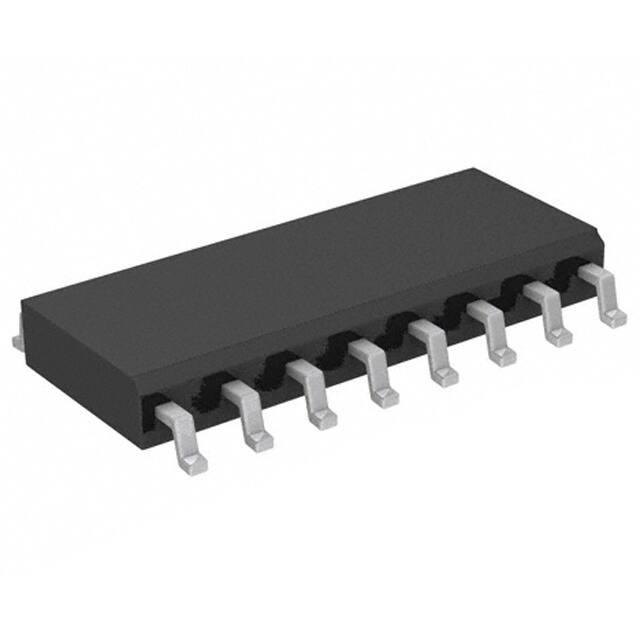
applications. The EL8300 is available in an 16-pin SO and
16-pin QSOP packages and is specified for operation over
the -40°C to +85°C temperature range.
Features
• 200MHz -3dB bandwidth
• 200V/µs slew rate
• Low supply current = 2mA per amplifier
• Supplies from 3V to 5.5V
• Rail-to-rail output
• Input to 0.15V below VS• Fast 25ns disable
• Low cost
• Pb-Free pus Anneal available (RoHS compliant)
Applications
Pinout
EL8300
(16-PIN SO, QSOP)
TOP VIEW
INA+ 1
CEA 2
16 INA+
VS- 3
CEB 4
14 VS+
+
-
INB+ 5
NC 6
CEC 7
INC+ 8
15 OUTA
+
-
13 OUTB
• Video amplifiers
• Portable/hand-held products
• Communications devices
Ordering Information
PART
NUMBER
PACKAGE
TAPE & REEL PKG. DWG. #
EL8300IS
16-Pin SO
-
MDP0027
12 INB-
EL8300IS-T7
16-Pin SO
7”
MDP0027
11 NC
EL8300IS-T13
16-Pin SO
13”
MDP0027
10 OUTC
EL8300ISZ
(See Note)
16-Pin SO
(Pb-free)
-
MDP0027
EL8300ISZ-T7
(See Note)
16-Pin SO
(Pb-free)
7”
MDP0027
EL8300ISZ-T13
(See Note)
16-Pin SO
(Pb-free)
13”
MDP0027
EL8300IU
16-Pin QSOP
-
MDP0040
EL8300IU-T7
16-Pin QSOP
7”
MDP0040
EL8300IU-T13
16-Pin QSOP
13”
MDP0040
EL8300IUZ
(See Note)
16-Pin QSOP
(Pb-free)
-
MDP0040
EL8300IUZ-T7
(See Note)
16-Pin QSOP
(Pb-free)
7”
MDP0040
EL8300IUZ-T13
(See Note)
16-Pin QSOP
(Pb-free)
13”
MDP0040
9 INC-
NOTE: Intersil Pb-free products employ special Pb-free material sets;
molding compounds/die attach materials and 100% matte tin plate
termination finish, which are RoHS compliant and compatible with both
SnPb and Pb-free soldering operations. Intersil Pb-free products are
MSL classified at Pb-free peak reflow temperatures that meet or
exceed the Pb-free requirements of IPC/JEDEC J STD-020.
FN7347 Rev 2.00
May 20, 2005
Page 1 of 14
�EL8300
Absolute Maximum Ratings (TA = 25°C)
Power Dissipation . . . . . . . . . . . . . . . . . . . . . . . . . . . . . See Curves
Storage Temperature . . . . . . . . . . . . . . . . . . . . . . . .-65°C to +125°C
Ambient Operating Temperature . . . . . . . . . . . . . . . .-40°C to +85°C
Operating Junction Temperature . . . . . . . . . . . . . . . . . . . . . . +125°C
Supply Voltage from VS+ to VS- . . . . . . . . . . . . . . . . . . . . . . . . 5.5V
Input Voltage . . . . . . . . . . . . . . . . . . . . . . . . VS+ +0.3V to VS- -0.3V
Differential Input Voltage . . . . . . . . . . . . . . . . . . . . . . . . . . . . . . . .2V
Continuous Output Current . . . . . . . . . . . . . . . . . . . . . . . . . . . 40mA
CAUTION: Stresses above those listed in “Absolute Maximum Ratings” may cause permanent damage to the device. This is a stress only rating and operation of the
device at these or any other conditions above those indicated in the operational sections of this specification is not implied.
IMPORTANT NOTE: All parameters having Min/Max specifications are guaranteed. Typ values are for information purposes only. Unless otherwise noted, all tests are
at the specified temperature and are pulsed tests, therefore: TJ = TC = TA
Electrical Specifications
PARAMETER
VS+ = 5V, VS- = GND, TA = 25°C, VCM = 2.5V, RL to 2.5V, AV = 1, Unless Otherwise Specified
DESCRIPTION
CONDITIONS
MIN
TYP
MAX
UNIT
-5
-0.8
+5
mV
INPUT CHARACTERISTICS
VOS
Offset Voltage
TCVOS
Offset Voltage Temperature Coefficient Measured from TMIN to TMAX
IB
Input Bias Current
VIN = 0V
IOS
Input Offset Current
VIN = 0V
TCIOS
Input Bias Current Temperature
Coefficient
Measured from TMIN to TMAX
CMRR
Common Mode Rejection Ratio
VCM = -0.15V to +3.5V
CMIR
Common Mode Input Range
RIN
Input Resistance
CIN
Input Capacitance
AVOL
Open Loop Gain
-3
3
µV/°C
-1.4
µA
0.2
70
µA
2
nA/°C
90
dB
VS- - 0.15
Common Mode
0.55
VS+ - 1.5
V
16
M
0.5
pF
90
dB
VOUT = +1.5V to +3.5V, RL = 150 to GND
80
dB
30
m
VOUT = +1.5V to +3.5V, RL = 1k to GND
75
OUTPUT CHARACTERISTICS
ROUT
Output Resistance
AV = +1
VOP
Positive Output Voltage Swing
RL = 1k
4.85
4.88
V
RL = 150
4.65
4.68
V
VON
Negative Output Voltage Swing
RL = 150
150
200
mV
RL = 1k
50
65
mV
IOUT
Linear Output Current
65
mA
ISC (source)
Short Circuit Current
RL = 10
50
75
mA
ISC (sink)
Short Circuit Current
RL = 10
90
130
mA
VS+ = 4.5V to 5.5V
70
100
dB
POWER SUPPLY
PSRR
Power Supply Rejection Ratio
IS-ON
Supply Current - Enabled per Amplifier
2
2.6
mA
IS-OFF
Supply Current - Disabled per Amplifier
40
90
µA
tEN
Enable Time
200
ns
tDS
Disable Time
25
ns
VIH-ENB
ENABLE Pin Voltage for Power-up
0.8
V
VIL-ENB
ENABLE Pin Voltage for Shut-down
2
V
ENABLE
FN7347 Rev 2.00
May 20, 2005
Page 2 of 14
�EL8300
Electrical Specifications
PARAMETER
VS+ = 5V, VS- = GND, TA = 25°C, VCM = 2.5V, RL to 2.5V, AV = 1, Unless Otherwise Specified (Continued)
DESCRIPTION
CONDITIONS
MIN
TYP
MAX
UNIT
IIH-ENB
ENABLE Pin Input Current High
8.6
µA
IIL-ENB
ENABLE Pin Input for Current Low
0.01
µA
AV = +1, RF = 0, CL = 1.5pF
200
MHz
AV = -1, RF = 1k, CL = 1.5pF
90
MHz
AV = +2, RF = 1k, CL = 1.5pF
90
MHz
AV = +10, RF = 1k, CL = 1.5pF
10
MHz
AC PERFORMANCE
BW
-3dB Bandwidth
BW
±0.1dB Bandwidth
AV = +1, RF = 0, CL = 1.5pF
20
MHz
Peak
Peaking
AV = +1, RF = 1k, CL = 5pF
1
dB
GBWP
Gain Bandwidth Product
100
MHz
PM
Phase Margin
RL = 1k, CL = 1.5pF
55
°
SR
Slew Rate
AV = 2, RL = 100, VOUT = 0.5V to 4.5V
200
V/µs
tR
Rise Time
2.5VSTEP, 20% - 80%
8
ns
tF
Fall Time
2.5VSTEP, 20% - 80%
7
ns
OS
Overshoot
200mV step
10
%
tPD
Propagation Delay
200mV step
2
ns
tS
0.1% Settling Time
200mV step
20
ns
dG
Differential Gain
AV = +2, RF = 1k, RL = 150
0.035
%
dP
Differential Phase
AV = +2, RF = 1k, RL = 150
0.05
°
eN
Input Noise Voltage
f = 10kHz
10
nV/Hz
iN+
Positive Input Noise Current
f = 10kHz
1
pA/Hz
iN-
Negative Input Noise Current
f = 10kHz
0.8
pA/Hz
eS
Channel Separation
f = 100kHz
95
dB
160
Pin Descriptions
PIN
NAME
1, 5, 8
INA+, INB+, INC+
Non-inverting input for each channel
2, 4, 7
CEA, CEB, CEC
Enable and disable input for each channel
3
VS-
Negative power supply
6, 11
NC
Not connected
9, 12, 16
INC-, INB-, INA-
10, 13, 15
OUTC, OUTB, OUTA
14
VS+
FN7347 Rev 2.00
May 20, 2005
FUNCTION
Inverting input for each channel
Amplifier output for each channel
Positive power supply
Page 3 of 14
�EL8300
Typical Performance Curves
GAIN (dB)
2
4
VS=5V
AV=1
RL=1k
CL=1.5pF
2
VOP-P=200mV
GAIN (dB)
4
0
VOP-P=1V
-2
-6
100K
1M
10M
RL=330
0
RL=1k
-2
RL=100
VOP-P=2V
-4
VS=5V
AV=1
CL=1.5pF
-4
100M
-6
100K
1G
1M
10M
FIGURE 1. FREQUENCY RESPONSE FOR VARIOUS OUTPUT
VOLTAGE LEVELS
4
NORMALIZED GAIN (dB)
NORMALIZED GAIN (dB)
2
AV=1
AV=2
0
-2
AV=5
-4
AV=10
-6
100K
1M
10M
100M
2
VS=5V
RL=1k
CL=1.5pF
RF=1k
AV=-2
-2
AV=-10
-4
-6
100K
1G
AV=-5
0
1M
FIGURE 3. SMALL SIGNAL FREQUENCY RESPONSE FOR
VARIOUS NON-INVERTING GAINS
100M
1G
FIGURE 4. SMALL SIGNAL FREQUENCY RESPONSE FOR
VARIOUS INVERTING GAINS
14
5
3
CL=10pF
-12
CL=7pF
10
CL=5pF
1
CL=1.5pF
-1
1M
100M
1G
FIGURE 5. SMALL SIGNAL FREQUENCY RESPONSE FOR
VARIOUS CL
CL=15pF
2
4
FREQUENCY (Hz)
FN7347 Rev 2.00
May 20, 2005
6
-2
10M
CL=35pF
-4
0
VS=5V
AV=1
RL=1k
VOP-P=200mV
-5
100K
CL=56pF
-8
GAIN (dB)
GAIN (dB)
10M
FREQUENCY (Hz)
FREQUENCY (Hz)
-3
1G
FIGURE 2. SMALL SIGNAL FREQUENCY RESPONSE FOR
VARIOUS RLOAD
4
VS=5V
RL=1k
CL=1.5pF
100M
FREQUENCY (Hz)
FREQUENCY (Hz)
VS=5V
AV=2
RL=1k
RF=RG=1k
-6
100K
1M
CL=1.5pF
10M
100M
1G
FREQUENCY (Hz)
FIGURE 6. SMALL SIGNAL FREQUENCY RESPONSE FOR
VARIOUS CL
Page 4 of 14
�EL8300
Typical Performance Curves (Continued)
10
110
8
RF=RG=500
2
VS=5V
AV=2
RL=1k
CL=1.5pF
0
100K
30
225
RL=150
-10
RL=1k
-50
1M
10M
100M
1G
135
-90
1K
10K
45
100K
FREQUENCY (Hz)
1M
10M
100M
-45
1G
FREQUENCY (Hz)
FIGURE 7. SMALL SIGNAL FREQUENCY RESPONSE FOR
VARIOUS RF AND RG
FIGURE 8. OPEN LOOP GAIN AND PHASE vs FREQUENCY
230
-10
210
BANDWIDTH (MHz)
-30
CMRR (dB)
PHASE (°)
6
4
315
RL=150
GAIN (dB)
GAIN (dB)
70
RF=RG=1k
RF=RG=2k
405
RL=1k
-50
-70
-90
AV=1
190
170
150
130
110
90
RL=1k
CL=1.5pF
70
50
-110
100K
1M
10M
100M
3
3.5
AV=2
4.5
4
5
5.5
VS (V)
FREQUENCY (Hz)
FIGURE 9. COMMON-MODE REJECTION RATIO vs
FREQUENCY
FIGURE 10. SMALL SIGNAL BANDWIDTH vs SUPPLY
VOLTAGE
2.5
100
PEAKING (dB)
IMPEDANCE ()
2
10
1
0.1
0.01
10K
1.5
1
AV=1
RL=1k
CL=1.5pF
0.5
0
100K
1M
10M
100M
FREQUENCY (Hz)
FIGURE 11. OUTPUT IMPEDANCE vs FREQUENCY
FN7347 Rev 2.00
May 20, 2005
3
3.5
4
4.5
5
5.5
VS (V)
FIGURE 12. SMALL SIGNAL PEAKING vs SUPPLY VOLTAGE
Page 5 of 14
�EL8300
-10
-45
-30
-55
DISTORTION (dBc)
PSRR (dB)
Typical Performance Curves (Continued)
PSRR-
-50
-70
PSRR+
VS=5V
RL=1k
CL=1.5pF
AV=2
@10
HD2
MHz
@10
HD3
Hz
HD3@5M
-65
-75
-90
-85
-110
1K
-95
MHz
z
HD2@5MH
1
HD2@
MHz
HD3@1MHz
100K
10K
1M
10M
100M
2
1
3
FREQUENCY (Hz)
-30
VS=5V
AV=1
RL=1k
CL=1.5pF
VS=5V
RL=1k
VO=1VP-P for AV=1
VO=2VP-P for AV=2
-40
DISTORTION (dBc)
GAIN (dB)
-30
-50
-70
-90
-50
-60
-70
HD
-80
2@
-100
100K
10K
1M
10M
100M
1G
1
40
10
FIGURE 16. HARMONIC DISTORTION vs FREQUENCY
-60
1K
HD
3@
-70
-75
HD
-80
AV =
-85
2
HD2@A =1
V
3@
A
V=
AV =2
VOLTAGE NOISE (nV/Hz)
CURRENT NOISE (pA/Hz)
HD2@
-65
DISTORTION (dBc)
2
A V=
FREQUENCY (MHz)
FIGURE 15. DISABLED OUTPUT ISOLATION FREQUENCY
RESPONSE
-95
=1
AV
HD3@AV=1
FREQUENCY (Hz)
-90
2@
HD
=2
AV
3@
HD
-90
-110
1K
5
FIGURE 14. HARMONIC DISTORTION vs OUTPUT VOLTAGE
FIGURE 13. POWER SUPPLY REJECTION RATIO vs
FREQUENCY
-10
4
VOP-P (V)
1
VS=5V
VO=1VP-P for AV=1
VO=2VP-P for AV=2
-100
100
1K
2K
RLOAD ()
FIGURE 17. HARMONIC DISTORTION vs LOAD RESISTANCE
FN7347 Rev 2.00
May 20, 2005
100
eN
10
IN+
1
IN0.1
10
100
1K
10K
100K
1M
10M
FREQUENCY (Hz)
FIGURE 18. VOLTAGE AND CURRENT NOISE vs FREQUENCY
Page 6 of 14
�EL8300
Typical Performance Curves (Continued)
VS=5V, AV=1, RL=1k to 2.5V
CHANNELL SEPARATION (dB)
-10
-20
-30
5
-40
-50
-60
2.5
CH1CH2
CH2CH3
-70
-80
CH1CH3
0
-90
-100
100K
1M
10M
100M
1G
10ns/DIV
FREQUENCY (Hz)
FIGURE 19. CHANNEL SEPARATION vs FREQUENCY
FIGURE 20. LARGE SIGNAL TRANSIENT RESPONSE
VS=5V, AV=1, RL=1k to 2.5V CL=1.5pF
VS=5V, AV=5, RL=1k to 2.5V
5
2.6
2.5
2.5
2.4
0
10ns/DIV
2µs/DIV
FIGURE 21. OUTPUT SWING
FIGURE 22. SMALL SIGNAL TRANSIENT RESPONSE
VS=±2.5V, AV=1, RL=1k
VS=5V, AV=5, RL=1k to 2.5V
5
CH1
ENABLE
INPUT
2.5
CH2
0
2µs/DIV
FIGURE 23. OUTPUT SWING
FN7347 Rev 2.00
May 20, 2005
OUTPUT
CH1, CH2, 0.5V/DIV, M=20ns
FIGURE 24. DISABLED RESPONSE
Page 7 of 14
�EL8300
Typical Performance Curves (Continued)
JEDEC JESD51-3 LOW EFFECTIVE THERMAL
CONDUCTIVITY TEST BOARD
VS=±2.5V, AV=1, RL=1k
POWER DISSIPATION (W)
1.2
CH1
ENABLE
INPUT
CH2
VOUT
1
0.6
J
0.2
0
0
25
SO
16
=1 (0.1
10 50
°C ”)
/W
JA
633mW
0.4
CH1, CH2, 1V/DIV, M=100ns
909mW
0.8
QS
A=
OP
16
15
8°
C/
W
50
75 85 100
125
150
AMBIENT TEMPERATURE (°C)
FIGURE 25. ENABLED RESPONSE
POWER DISSIPATION (W)
1.4
FIGURE 26. PACKAGE POWER DISSIPATION vs AMBIENT
TEMPERATURE
JEDEC JESD51-7 HIGH EFFECTIVE THERMAL
CONDUCTIVITY TEST BOARD
1.2
1.250W
SO
16
JA
1
0.8
893mW
0.6
JA =
0.4
QS
OP
11
2°
=8
(0
.1
0° 50”
)
C/
W
16
C/
W
0.2
0
0
25
50
75 85 100
125
150
AMBIENT TEMPERATURE (°C)
FIGURE 27. PACKAGE POWER DISSIPATION vs AMBIENT TEMPERATURE
FN7347 Rev 2.00
May 20, 2005
Page 8 of 14
�EL8300
Simplified Schematic Diagram
VS+
I1
I2
Q5
IN+
Q1
R8
VBIAS1
Q6
R3
R1
R7
R6
Q7
R2
Q2
DIFFERENTIAL TO
SINGLE ENDED
DRIVE
GENERATOR
IN-
VBIAS2
Q3
OUT
Q4
Q8
R4
R5
R9
VS-
Description of Operation and Application
Information
Product Description
The EL8300 is wide bandwidth, single supply, low power and
rail-to-rail output voltage feedback operational amplifier. The
amplifiers are internally compensated for closed loop gain of
+1 of greater. Connected in voltage follower mode and driving
a 1k load, the EL8300 has a -3dB bandwidth of 200MHz.
Driving a 150 load, the bandwidth is about 130MHz while
maintaining a 200V/us slew rate. The EL8300 is available with
a power down pin for each channel to reduce power to 30µA
typically while the amplifier is disabled.
Input, Output and Supply Voltage Range
The EL8300 has been designed to operate with a single supply
voltage from 3V to 5.0V. Split supplies can also be used as
long as their total voltage is within 3V to 5.0V. The amplifiers
have an input common mode voltage range from 0.15V below
the negative supply (VS- pin) to within 1.5V of the positive
supply (VS+ pin). If the input signal is outside the above
specified range, it will cause the output signal to be distorted.
The output of the EL8300 can swing rail to rail. As the load
resistance becomes lower, the ability to drive close to each rail
is reduced. For the load resistor 1k, the output swing is about
4.9V at a 5V supply. For the load resistor 150, the output
swing is about 4.6V.
Choice of Feedback Resistor and Gain Bandwidth
Product
For applications that require a gain of +1, no feedback resistor
is required. Just short the output pin to the inverting input pin.
For gains greater than +1, the feedback resistor forms a pole
with the parasitic capacitance at the inverting input. As this
pole becomes smaller, the amplifier’s phase margin is reduced.
This causes ringing in the time domain and peaking in the
FN7347 Rev 2.00
May 20, 2005
frequency domain. Therefore, RF has some maximum value
that should not be exceeded for optimum performance. If a
large value of RF must be used, a small capacitor in the few
Pico farad range in parallel with RF can help to reduce the
ringing and peaking at the expense of reducing the bandwidth.
As far as the output stage of the amplifier is concerned, the
output stage is also a gain stage with the load. RF and RG
appear in parallel with RL for gains other than +1. As this
combination gets smaller, the bandwidth falls off.
Consequently, RF also has a minimum value that should not be
exceeded for optimum performance. For gain of +1, RF=0 is
optimum. For the gains other than +1, optimum response is
obtained with RF between 300 to 1k.
The EL8300 has a gain bandwidth product of 100MHz. For
gains 5, its bandwidth can be predicted by the following
equation:
Gain BW = 100MHz
Video Performance
For good video performance, an amplifier is required to
maintain the same output impedance and the same frequency
response as DC levels are changed at the output. This is
especially difficult when driving a standard video load of 150,
because the change in output current with DC level. Special
circuitry has been incorporated in the EL8300 to reduce the
variation of the output impedance with the current output. This
results in dG and dP specifications of 0.03% and 0.05, while
driving 150 at a gain of 2. Driving high impedance loads
would give a similar or better dG and dP performance.
Driving Capacitive Loads and Cables
The EL8100, EL8101 can drive 10pF loads in parallel with 1k
with less than 5dB of peaking at gain of +1. If less peaking is
desired in applications, a small series resistor (usually between
5 to 50) can be placed in series with the output to eliminate
Page 9 of 14
�EL8300
most peaking. However, this will reduce the gain slightly. If the
gain setting is greater than 1, the gain resistor RG can then be
chosen to make up for any gain loss which may be created by
the additional series resistor at the output.
When used as a cable driver, double termination is always
recommended for reflection-free performance. For those
applications, a back-termination series resistor at the
amplifier’s output will isolate the amplifier from the cable and
allow extensive capacitive drive. However, other applications
may have high capacitive loads without a back-termination
resistor. Again, a small series resistor at the output can help to
reduce peaking.
Disable/Power-Down
The EL8300 can be disabled and placed its output in a high
impedance state. The turn off time for each channel is about
25ns and the turn on time is about 200ns. When disabled, the
amplifier’s supply current is reduced to 30µA typically, thereby
effectively eliminating the power consumption. The amplifier’s
power down can be controlled by standard TTL or CMOS
signal levels at the ENABLE pin. The applied logic signal is
relative to VS- pin. Letting the ENABLE pin float or applying a
signal that is less than 0.8V above VS- will enable the amplifier.
The amplifier will be disabled when the signal at ENABLE pin is
2V above VS-.
Output Drive Capability
The EL8300 does not have internal short circuit protection
circuitry. They have a typical short circuit current of 70mA
sourcing and 140mA sinking for the output is connected to half
way between the rails with a 10 resistor. If the output is
shorted indefinitely, the power dissipation could easily increase
such that the part will be destroyed. Maximum reliability is
maintained if the output current never exceeds ±40mA. This
limit is set by the design of the internal metal interconnections.
Power Dissipation
With the high output drive capability of the EL8300, it is
possible to exceed the 125C absolute maximum junction
temperature under certain load current conditions. Therefore, it
is important to calculate the maximum junction temperature for
the application to determine if the load conditions or package
types need to be modified for the amplifier to remain in the safe
operating area.
The maximum power dissipation actually produced by an IC is
the total quiescent supply current times the total power supply
voltage, plus the power in the IC due to the load, or:
For sourcing:
3
PD MAX = V S I SMAX +
V OUTi
VS – VOUTi ---------------R Li
i=1
For sinking:
3
PD MAX = V S I SMAX +
VOUTi – VS - ILOADi
i=1
Where:
VS = Total supply voltage
ISMAX = Maximum quiescent supply current
VOUTi = Maximum output voltage of the application for each
channel
RLOADi = Load resistance tied to ground for each channel
ILOADi = Load current for each channel
By setting the two PDMAX equations equal to each other, we
can solve the output current and RLOADi to avoid the device
overheat.
Power Supply Bypassing and Printed Circuit Board
Layout
As with any high frequency device, a good printed circuit board
layout is necessary for optimum performance. Lead lengths
should be as sort as possible. The power supply pin must be
well bypassed to reduce the risk of oscillation. For normal
single supply operation, where the VS- pin is connected to the
ground plane, a single 4.7µF tantalum capacitor in parallel with
a 0.1µF ceramic capacitor from VS+ to GND will suffice. This
same capacitor combination should be placed at each supply
pin to ground if split supplies are to be used. In this case, the
VS- pin becomes the negative supply rail.
T JMAX – T AMAX
PD MAX = -------------------------------------------- JA
For good AC performance, parasitic capacitance should be
kept to a minimum. Use of wire wound resistors should be
avoided because of their additional series inductance. Use of
sockets should also be avoided if possible. Sockets add
parasitic inductance and capacitance that can result in
compromised performance. Minimizing parasitic capacitance
at the amplifier’s inverting input pin is very important. The
feedback resistor should be placed very close to the inverting
input pin. Strip line design techniques are recommended for
the signal traces.
Where:
Typical Applications
The maximum power dissipation allowed in a package is
determined according to:
TJMAX = Maximum junction temperature
VIDEO SYNC PULSE REMOVER
TAMAX = Maximum ambient temperature
Many CMOS analog to digital converters have a parasitic latch
up problem when subjected to negative input voltage levels.
Since the sync tip contains no useful video information and it is
JA = Thermal resistance of the package
FN7347 Rev 2.00
May 20, 2005
Page 10 of 14
�EL8300
a negative going pulse, we can chop it off. Figure 28 shows a
gain of 2 connections for EL8300. Figure 29 shows the
complete input video signal applied at the input, as well as the
output signal with the negative going sync pulse removed.
+2.5V
B 2MHz
1VP-P
MULTIPLEXER
Besides the normal power down usage, the ENABLE pin of the
EL8300 can be used for multiplexing applications. Figure 30
shows two channels with the outputs tied together, driving a
back terminated 75 video load. A 2VP-P 2MHz sine wave is
applied to Amp A and a 1VP-P 2MHz sine wave is applied to
Amp B. Figure 31 shows the ENABLE signal and the resulting
output waveform at VOUT. Observe the break-before-make
operation of the multiplexing. Amp A is on and VIN1 is passed
through to the output when the ENABLE signal is low and turns
off in about 25ns when the ENABLE signal is high. About
200ns later, Amp B turns on and VIN2 is passed through to the
output. The break-before-make operation ensures that more
than one amplifier isn’t trying to drive the bus at the same time.
+
75
-2.5V
1K
1K
75
VOUT
+2.5V
A 2MHz
2VP-P
75
+
-
75
-2.5V
1K
1K
ENABLE
FIGURE 30. TWO TO ONE MULTIPLEXER
5V
VIN
VS+
+
-
75
VS-
75
0V
-0.5V
VOUT
75
ENABLE
-1.5V
-2.5V
1K
1K
1V
0V
FIGURE 28. SYNC PULSE REMOVER
1V
VIN
0.5V
-1V
B
A
M = 50ns/DIV
FIGURE 31. ENABLE SIGNAL
0V
1V
VOUT
0.5V
0V
M = 10µs/DIV
FIGURE 29. VIDEO SIGNAL
FN7347 Rev 2.00
May 20, 2005
SINGLE SUPPLY VIDEO LINE DRIVER
The EL8300 is wideband rail-to-rail output op amplifiers with
large output current, excellent dG, dP, and low distortion that
allow them to drive video signals in low supply applications.
Figure 32 is the single supply non-inverting video line driver
configuration and Figure 33 is the inverting video ling driver
configuration. The signal is AC coupled by C1. R1 and R2 are
used to level shift the input and output to provide the largest
output swing. RF and RG set the AC gain. C2 isolates the
virtual ground potential. RT and R3 are the termination
resistors for the line. C1, C2 and C3 are selected big enough to
minimize the droop of the luminance signal.
Page 11 of 14
�EL8300
5V
VIN
C1
47µF
R1
10K
R3
C3
470µF 75
+
RT
75
VOUT
-
R2
10K
75
RF
1k
RG
1k
C2
220µF
FIGURE 32. 5V SINGLE SUPPLY NON INVERTING VIDEO LINE
DRIVER
RF
1k
VIN
C1
RG
47µF 500
5V
RT
75
5V
-
R3
C3
470µF 75
VOUT
+
R1
10K
R2
10K
75
C2
220µF
FIGURE 33. 5V SINGLE SUPPLY INVERTING VIDEO LINE
DRIVER
5
NORMALIZED GAIN (dB)
4
3
2
1
AV = 2
0
-1
AV = -2
-2
-3
-4
-5
100K
1M
10M
FREQUENCY (Hz)
100M 200M
FIGURE 34. VIDEO LINE DRIVER FREQUENCY RESPONSE
FN7347 Rev 2.00
May 20, 2005
Page 12 of 14
�EL8300
SO Package Outline Drawing
FN7347 Rev 2.00
May 20, 2005
Page 13 of 14
�EL8300
QSOP Package Outline Drawing
NOTE: The package drawing shown here may not be the latest version. To check the latest revision, please refer to the Intersil website at
http://www.intersil.com/design/packages/index.asp
© Copyright Intersil Americas LLC 2003-2005. All Rights Reserved.
All trademarks and registered trademarks are the property of their respective owners.
For additional products, see www.intersil.com/en/products.html
Intersil products are manufactured, assembled and tested utilizing ISO9001 quality systems as noted
in the quality certifications found at www.intersil.com/en/support/qualandreliability.html
Intersil products are sold by description only. Intersil may modify the circuit design and/or specifications of products at any time without notice, provided that such
modification does not, in Intersil's sole judgment, affect the form, fit or function of the product. Accordingly, the reader is cautioned to verify that datasheets are
current before placing orders. Information furnished by Intersil is believed to be accurate and reliable. However, no responsibility is assumed by Intersil or its
subsidiaries for its use; nor for any infringements of patents or other rights of third parties which may result from its use. No license is granted by implication or
otherwise under any patent or patent rights of Intersil or its subsidiaries.
For information regarding Intersil Corporation and its products, see www.intersil.com
FN7347 Rev 2.00
May 20, 2005
Page 14 of 14
�