DATASHEET
HI5662
FN4317
Rev 2.00
February 1999
Dual 8-Bit, 60MSPS A/D Converter with Internal Voltage Reference
The HI5662 is a monolithic, dual 8-Bit, 60MSPS analog-todigital converter fabricated in an advanced CMOS process.
It is designed for high speed applications where integration,
bandwidth and accuracy are essential. The HI5662 reaches
a new level of multi-channel integration. The fully pipeline
architecture and an innovative input stage enable the
HI5662 to accept a variety of input configurations, singleended or fully differential. Only one external clock is
necessary to drive both converters and an internal band-gap
voltage reference is provided. This allows the system
designer to realize an increased level of system integration
resulting in decreased cost and power dissipation.
Features
• Sampling Rate . . . . . . . . . . . . . . . . . . . . . . . . . . . 60MSPS
• 7.8 Bits at fIN = 10MHz
• Low Power at 60MSPS . . . . . . . . . . . . . . . . . . . . 650mW
• Wide Full Power Input Bandwidth . . . . . . . . . . . . 250MHz
• Excellent Channel-to-Channel Isolation . . . . . . . . . .>75dB
• On-Chip Sample and Hold Amplifiers
• Internal Band-Gap Voltage Reference . . . . . . . . . . . . 2.5V
• Fully Differential or Single-Ended Analog Inputs
The HI5662 has excellent dynamic performance while
consuming only 650mW power at 60MSPS. The A/D only
requires a single +5V power supply and encode clock. Data
output latches are provided which present valid data to the
output bus with a latency of 6 clock cycles.
• Single Supply Voltage Operation . . . . . . . . . . . . . . . . .+5V
For those customers needing dual channel 10-bit resolution,
please refer to the HI5762. For single channel 10-bit
applications, please refer to the HI5767.
• Dual 8-Bit A/D Converters on a Monolithic Chip
• TTL/CMOS Compatible Digital Inputs
• CMOS Compatible Digital Outputs. . . . . . . . . . . . 3.0/5.0V
• Offset Binary Digital Data Output Format
Applications
• Wireless Local Loop
Ordering Information
PART
NUMBER
HI5662/6IN
TEMP.
RANGE (oC)
-40 to 85
HI5662EVAL2
25
• PSK and QAM I and Q Demodulators
PACKAGE
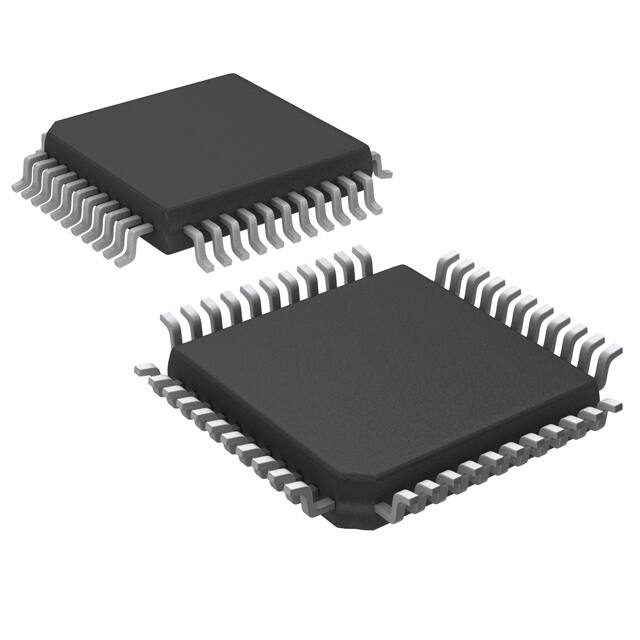
44 Ld MQFP
Evaluation Platform
PKG. NO.
Q44.10x10
• Medical Imaging
• High Speed Data Acquisition
Pinout
QVDC
QIN-
QIN+
AVCC1
VROUT
NC
VRIN
AGND
IIN+
IVDC
44 43 42 41 40 39 38 37 36 35 34
33
2
32
AGND
ID7
3
31
QD7
ID6
4
30
QD6
ID5
5
29
QD5
ID4
6
28
QD4
ID3
7
27
QD3
DVCC3
8
26
DVCC3
DGND
9
25
DGND
ID2
10
24
QD2
ID1
11
23
12 13 14 15 16 17 18 19 20 21 22
QD1
AVCC2
QD0
NC
NC
DGND
DVCC2
CLK
DVCC1
NC
DGND
ID0
AVCC2
1
NC
AGND
FN4317 Rev 2.00
February 1999
IIN-
HI5662
(MQFP)
TOP VIEW
Page 1 of 15
�HI5662
Functional Block Diagram
I/QIN-
I/QVDC
BIAS
I/QIN+
S/H
STAGE 1
2-BIT
FLASH
2-BIT
DAC
+
DVCC3
X2
I/QD7 (MSB)
I/QD6
DIGITAL DELAY
AND
DIGITAL ERROR
CORRECTION
STAGE M-1
I/QD5
I/QD4
I/QD3
2-BIT
FLASH
2-BIT
DAC
I/QD2
I/QD1
+
I/QD0 (LSB)
-
X2
STAGE M
2-BIT
FLASH
I or Q CHANNEL
VREFOUT
VREFIN
CLOCK
REFERENCE
AVCC1,2
FN4317 Rev 2.00
February 1999
AGND
DVCC1,2
CLK
DGND
Page 2 of 15
�HI5662
Typical Application Schematic
HI5662
IIN +
(42) IIN +
(44) IVDC
IIN -
(43) IIN -
QIN +
(36) QIN +
(34) QVDC
QIN -
(35) QIN -
0.1F
(LSB) ID0 (12)
ID0
ID1 (11)
ID1
ID2 (10)
ID2
ID3 (7)
ID3
ID4 (6)
ID4
ID5 (5)
ID5
ID6 (4)
ID6
(MSB) ID7 (3)
ID7
(LSB) QD0 (22)
QD0
QD1 (23)
QD1
QD2 (24)
QD2
QD3 (27)
QD3
QD4 (28)
QD4
QD5 (29)
QD5
QD6 (30)
QD6
(MSB) QD7 (31)
QD7
(40) VRIN
(38) VROUT
CLK (17)
CLOCK
DVCC3 (8,26)
(13,14,20,21,39) NC
+5V
+
10F
(37) AVCC1
DVCC2 (18)
(2,32) AVCC2
DVCC1 (16)
0.1F
(1,33,41) AGND
BNC AGND DGND
FN4317 Rev 2.00
February 1999
+
10F
+5V or +3V
0.1F
+
10F
+5V
0.1F
DGND (9,15,19,25)
10F AND 0.1F CAPS
ARE PLACED AS CLOSE
TO PART AS POSSIBLE
Page 3 of 15
�HI5662
Pin Descriptions
PIN NO.
NAME
1
AGND
2
AVCC2
3
DESCRIPTION
PIN NO.
NAME
Analog Ground
24
QD2
Analog Supply (+5.0V)
25
DGND
Digital Ground
ID7
I-Channel, Data Bit 7 Output (MSB)
26
DVCC3
4
ID6
I-Channel, Data Bit 6 Output
Digital Output Supply
(+3.0V or +5.0V)
5
ID5
I-Channel, Data Bit 5 Output
27
QD3
Q-Channel, Data Bit 3 Output
6
ID4
I-Channel Data Bit 4 Output
28
QD4
Q-Channel, Data Bit 4 Output
7
ID3
I-Channel, Data Bit 3 Output
29
QD5
Q-Channel, Data Bit 5 Output
8
DVCC3
Digital Output Supply
(+3.0V or +5.0V)
30
QD6
Q-Channel, Data Bit 6 Output
31
QD7
9
DGND
Digital Ground
Q-Channel, Data Bit 7 Output
(MSB)
10
ID2
I-Channel, Data Bit 2 Output
32
AVCC2
Analog Supply (+5.0V)
11
ID1
I-Channel, Data Bit 1 Output
33
AGND
Analog Ground
12
ID0
I-Channel, Data Bit 0 Output (LSB)
34
QVDC
Q-Channel DC Bias Voltage Output
13
NC
No Connect
35
QIN-
Q-Channel Negative Analog Input
14
NC
No Connect
36
QIN+
Q-Channel Positive Analog Input
15
DGND
Digital Ground
37
AVCC1
Analog Supply (+5.0V)
16
DVCC1
Digital Supply (+5.0V)
38
VROUT
+2.5V Reference Voltage Output
17
CLK
39
NC
18
DVCC2
Digital Supply (+5.0V)
40
VRIN
+2.5V Reference Voltage Input
19
DGND
Digital Ground
41
AGND
Analog Ground
20
NC
No Connect
42
IIN+
I-Channel Positive Analog Input
21
NC
No Connect
43
IIN-
I-Channel Negative Analog Input
22
QD0
Q-Channel, Data Bit 0 Output (LSB)
44
IVDC
23
QD1
Q-Channel, Data Bit 1 Output
FN4317 Rev 2.00
February 1999
Sample Clock Input
DESCRIPTION
Q-Channel, Data Bit 2 Output
No Connect
I-Channel DC Bias Voltage Output
Page 4 of 15
�HI5662
Absolute Maximum Ratings TA = 25oC
Thermal Information
Supply Voltage, AVCC or DVCC to AGND or DGND . . . . . . . . . . .6V
DGND to AGND . . . . . . . . . . . . . . . . . . . . . . . . . . . . . . . . . . . . . . . . 0.3V
Digital I/O Pins . . . . . . . . . . . . . . . . . . . . . . . . . . . . . DGND to DVCC
Analog I/O Pins . . . . . . . . . . . . . . . . . . . . . . . . . . . . AGND to AVCC
Thermal Resistance (Typical, Note 1)
Operating Conditions
JA (oC/W)
HI5662/6IN . . . . . . . . . . . . . . . . . . . . . . . . . . . . . . . .
75
Maximum Junction Temperature . . . . . . . . . . . . . . . . . . . . . . .150oC
Maximum Storage Temperature Range . . . . . . . . . . -65oC to 150oC
Maximum Lead Temperature (Soldering 10s) . . . . . . . . . . . . .300oC
(Lead Tips Only)
Temperature Range
HI5662/6IN . . . . . . . . . . . . . . . . . . . . . . . . . . . . . . . -40oC to 85oC
CAUTION: Stresses above those listed in “Absolute Maximum Ratings” may cause permanent damage to the device. This is a stress only rating and operation of the
device at these or any other conditions above those indicated in the operational sections of this specification is not implied.
NOTE:
1. JA is measured with the component mounted on an evaluation PC board in free air.
Electrical Specifications
AVCC1,2 = DVCC1,2 = +5.0V, DVCC3 = +3.0V; VRIN = 2.50V; fS = 60MSPS at 50% Duty Cycle;
CL = 10pF; TA = 25oC; Differential Analog Input; Unless Otherwise Specified
PARAMETER
TEST CONDITIONS
MIN
TYP
MAX
UNITS
8
-
-
Bits
ACCURACY
Resolution
Integral Linearity Error, INL
fIN = 10MHz
-
±0.5
-
LSB
Differential Linearity Error, DNL
(Guaranteed No Missing Codes)
fIN = 10MHz
-
0.2
1.0
LSB
Offset Error, VOS
fIN = DC
-10
-
+10
LSB
Full Scale Error, FSE
fIN = DC
-
1
-
LSB
Minimum Conversion Rate
No Missing Codes
-
1
-
MSPS
Maximum Conversion Rate
No Missing Codes
60
-
-
MSPS
Effective Number of Bits, ENOB
fIN = 10MHz
fIN = 10MHz, Single Ended Analog Input
7.5
7.0
7.8
7.7
-
Bits
Bits
Signal to Noise and Distortion Ratio, SINAD
RMS Signal
= -------------------------------------------------------------RMS Noise + Distortion
fIN = 10MHz
-
48.7
-
dB
Signal to Noise Ratio, SNR
RMS Signal
= ------------------------------RMS Noise
fIN = 10MHz
-
48
-
dB
Total Harmonic Distortion, THD
fIN = 10MHz
-
-66
-
dBc
2nd Harmonic Distortion
fIN = 10MHz
-
-71
-
dBc
3rd Harmonic Distortion
fIN = 10MHz
-
-71
-
dBc
Spurious Free Dynamic Range, SFDR
fIN = 10MHz
-
71
-
dBc
Intermodulation Distortion, IMD
f1 = 1MHz, f2 = 1.02MHz
-
64
-
dBc
I/Q Channel Crosstalk
-
-75
-60
dBc
I/Q Channel Offset Match
-
2.5
-
LSB
I/Q Channel Full Scale Error Match
-
2.5
-
LSB
DYNAMIC CHARACTERISTICS
Transient Response
(Note 2)
-
1
-
Cycle
Over-Voltage Recovery
0.2V Overdrive (Note 2)
-
1
-
Cycle
FN4317 Rev 2.00
February 1999
Page 5 of 15
�HI5662
Electrical Specifications
AVCC1,2 = DVCC1,2 = +5.0V, DVCC3 = +3.0V; VRIN = 2.50V; fS = 60MSPS at 50% Duty Cycle;
CL = 10pF; TA = 25oC; Differential Analog Input; Unless Otherwise Specified (Continued)
PARAMETER
TEST CONDITIONS
MIN
TYP
MAX
UNITS
Maximum Peak-to-Peak Differential Analog Input
Range (VIN+ - VIN-)
-
0.5
-
V
Maximum Peak-to-Peak Single-Ended
Analog Input Range
-
1.0
-
V
ANALOG INPUT
Analog Input Resistance, RIN+ or RIN-
VIN+, VIN- = VREF, DC
-
1
-
M
Analog Input Capacitance, CIN+ or CIN-
VIN+, VIN- = 2.5V, DC
-
10
-
pF
Analog Input Bias Current, IB+ or IB-
VIN+, VIN- = VREF-, VREF+, DC
(Notes 2, 3)
-10
-
10
A
Differential Analog Input Bias Current
IBDIFF = (IB+ - IB-)
(Notes 2, 3)
-0.5
-
+0.5
A
Full Power Input Bandwidth, FPBW
(Note 2)
-
250
-
MHz
Analog Input Common Mode Voltage Range
(VIN+ + VIN-) / 2
Differential Mode (Note 2)
0.25
-
4.75
V
2.35
2.5
2.65
V
Reference Output Current, IROUT
-
2
4
mA
Reference Temperature Coefficient
-
-400
-
ppm/oC
-
2.5
-
V
INTERNAL VOLTAGE REFERENCE
Reference Output Voltage, VROUT (Loaded)
REFERENCE VOLTAGE INPUT
Reference Voltage Input, VRIN
Total Reference Resistance, RRIN
with VRIN = 2.5V
-
1.25
-
k
Reference Current, IRIN
with VRIN = 2.5V
-
2
-
mA
DC Bias Voltage Output, VDC
-
3.0
-
V
Maximum Output Current
-
-
0.4
mA
DC BIAS VOLTAGE
SAMPLING CLOCK INPUT
Input Logic High Voltage, VIH
CLK
2.0
-
-
V
Input Logic Low Voltage, VIL
CLK
-
-
0.8
V
Input Logic High Current, IIH
CLK, VIH = 5V
-10.0
-
+10.0
A
Input Logic Low Current, IIL
CLK, VIL = 0V
-10.0
-
+10.0
A
Input Capacitance, CIN
CLK
-
7
-
pF
DIGITAL OUTPUTS
Output Logic High Voltage, VOH
IOH = 100A; DVCC3 = 5V
4.0
-
-
V
Output Logic Low Voltage, VOL
IOL = 100A; DVCC3 = 5V
-
-
0.8
V
Output Logic High Voltage, VOH
IOH = 100A; DVCC3 = 3V
2.4
-
-
V
Output Logic Low Voltage, VOL
IOL = 100A; DVCC3 = 3V
-
-
0.5
V
-
7
-
pF
Aperture Delay, tAP
-
5
-
ns
Aperture Jitter, tAJ
-
5
-
psRMS
Data Output Hold, tH
-
10.7
-
ns
Output Capacitance, COUT
TIMING CHARACTERISTICS
FN4317 Rev 2.00
February 1999
Page 6 of 15
�HI5662
Electrical Specifications
AVCC1,2 = DVCC1,2 = +5.0V, DVCC3 = +3.0V; VRIN = 2.50V; fS = 60MSPS at 50% Duty Cycle;
CL = 10pF; TA = 25oC; Differential Analog Input; Unless Otherwise Specified (Continued)
PARAMETER
TEST CONDITIONS
Data Output Delay, tOD
MIN
TYP
MAX
UNITS
-
11.7
-
ns
Data Latency, tLAT
For a Valid Sample (Note 2)
6
6
6
Cycles
Power-Up Initialization
Data Invalid Time (Note 2)
-
-
20
Cycles
Sample Clock Pulse Width (Low)
(Note 2)
7.5
8.3
-
ns
Sample Clock Pulse Width (High)
(Note 2)
7.5
8.3
-
ns
5
Sample Clock Duty Cycle Variation
%
POWER SUPPLY CHARACTERISTICS
Analog Supply Voltage, AVCC
(Note 2)
4.75
5.0
5.25
V
Digital Supply Voltage, DVCC1 and DVCC2
(Note 2)
4.75
5.0
5.25
V
Digital Output Supply Voltage, DVCC3
At 3.0V (Note 2)
2.7
3.0
3.3
V
At 5.0V (Note 2)
4.75
5.0
5.25
V
-
130
-
mA
-
650
670
mW
Supply Current, ICC
fS = 60MSPS
Power Dissipation
Offset Error Sensitivity, VOS
AVCC or DVCC = 5V 5%
-
0.125
-
LSB
Gain Error Sensitivity, FSE
AVCC or DVCC = 5V 5%
-
0.15
-
LSB
NOTES:
2. Parameter guaranteed by design or characterization and not production tested.
3. With the clock low and DC input.
FN4317 Rev 2.00
February 1999
Page 7 of 15
�HI5662
Timing Waveforms
ANALOG
INPUT
CLOCK
INPUT
SN - 1
HN - 1
SN
HN
SN + 1
HN + 1
SN + 2
SN + 5 HN + 5
S N + 6 HN + 6 S N + 7
HN + 7 S N + 8
HN + 8
INPUT
S/H
1ST
STAGE
B1 , N - 1
2ND
STAGE
B2 , N - 2
M-th
STAGE
B1 , N
B2 , N - 1
B9 , N - 5
DATA
OUTPUT
B1 , N + 1
B1 , N + 5
B2 , N + 4
B2 , N
B9 , N - 4
DN - 6
B1 , N + 4
B9 , N
DN - 5
B1 , N + 6
B2 , N + 5
B9 , N + 1
DN - 1
B1 , N + 7
B2 , N + 6
B9 , N + 2
DN
B9 , N + 3
DN + 1
DN + 2
tLAT
NOTES:
4. SN : N-th sampling period.
5. HN : N-th holding period.
6. BM , N : M-th stage digital output corresponding to N-th sampled input.
7. DN : Final data output corresponding to N-th sampled input.
FIGURE 1. HI5662 INTERNAL CIRCUIT TIMING
ANALOG
INPUT
tAP
tAJ
CLOCK
INPUT
1.5V
1.5V
tOD
tH
DATA
OUTPUT
2.4V
DATA N-1
0.5V
DATA N
FIGURE 2. HI5662 INPUT-TO-OUTPUT TIMING
FN4317 Rev 2.00
February 1999
Page 8 of 15
�HI5662
50
50
7
44
44
6
38
SNR (dB)
8
SINAD (dB)
ENOB (BITS)
Typical Performance Curves
38
fS = 60MSPS
TA = 25oC
5
1
32
100
10
INPUT FREQUENCY (MHz)
32
fS = 60MSPS
TA = 25oC
1
10
INPUT FREQUENCY (MHz)
FIGURE 3. EFFECTIVE NUMBER OF BITS (ENOB) AND
SINAD vs INPUT FREQUENCY
FIGURE 4. SNR vs INPUT FREQUENCY
70
90
85
60
-2HD
80
50
-THD (dBc)
dB
dBc
75
-3HD
70
65
-THD
40
30
SNR (dB) OR SINAD (dB)
60
55
20
fS = 60MSPS
TA = 25oC
1
10
INPUT FREQUENCY (MHz)
10
-40
100
-30
-20
INPUT LEVEL (dBFS)
-10
0
FIGURE 5. -THD, -2HD AND -3HD vs INPUT FREQUENCY
FIGURE 6. SINAD, SNR AND -THD vs INPUT AMPLITUDE
8
150
140
130
120
110
100
90
80
70
60
50
40
30
20
10
0
SUPPLY CURRENT (mA)
ENOB (BITS)
50
100
7
6
fS = 60MSPS
1MHz < fIN < 15MHz
TA = 25oC
5
40
42
44
46
48
50
52
54
56
58
DUTY CYCLE (%, tHI /tCLK)
FIGURE 7. EFFECTIVE NUMBER OF BITS (ENOB) vs
SAMPLE CLOCK DUTY CYCLE
FN4317 Rev 2.00
February 1999
60
1MHz < fIN < 15MHz
TA = 25oC
ICC
AICC
DICC1
DICC2
DICC3
10
20
30
40
fS (MSPS)
50
60
FIGURE 8. SUPPLY CURRENT vs SAMPLE CLOCK
FREQUENCY
Page 9 of 15
70
�HI5662
Typical Performance Curves
(Continued)
3.10
2.49
2.48
DC BIAS VOLTAGE, I/Q VDC (V)
INTERNAL REFERENCE VOLTAGE,
VROUT (V)
2.50
2.47
2.46
2.45
2.44
2.43
2.42
2.41
2.40
-40
-20
0
20
40
TEMPERATURE (oC)
60
3.00
2.95
IVDC
-40
0
20
40
TEMPERATURE (oC)
60
80
140
ICC
SUPPLY CURRENT (mA)
120
12.5
tOD (ns)
-20
FIGURE 10. DC BIAS VOLTAGE (I/QVDC) vs TEMPERATURE
13.0
tOD
12.0
11.5
11.0
QVDC
2.90
2.85
80
FIGURE 9. INTERNAL REFERENCE VOLTAGE (VROUT) vs
TEMPERATURE
3.05
-40
-20
0
20
40
TEMPERATURE (oC)
60
80
FIGURE 11. DATA OUTPUT DELAY (tOD) vs TEMPERATURE
fS = 60MSPS
1MHz < fIN < 15MHz
100
80
AICC
60
40
DICC1
20
DICC2
0
-40
DICC3
-20
0
20
40
TEMPERATURE (oC)
60
FIGURE 12. SUPPLY CURRENT vs TEMPERATURE
0
fS = 60MSPS
fIN = 10MHz
TA = 25oC
-10
-20
-30
dB
-40
-50
-60
-70
-80
-90
-100
0
100
200
300
400 500 600 700
FREQUENCY (BIN)
800
900
1023
FIGURE 13. 2048 POINT FFT PLOT
FN4317 Rev 2.00
February 1999
Page 10 of 15
80
�HI5662
TABLE 1. A/D CODE TABLE
OFFSET BINARY OUTPUT CODE
DIFFERENTIAL INPUT
VOLTAGE
(I/QIN+ - I/QIN-)
I/QD7
I/QD6
I/QD5
I/QD4
I/QD3
I/QD2
I/QD1
I/QD0
0.498291V
1
1
1
1
1
1
1
1
0.494385V
1
1
1
1
1
1
1
0
16LSB
2.19727mV
1
0
0
0
0
0
0
0
16LSB
CODE CENTER
DESCRIPTION
+Full Scale (+FS) -7/16LSB
+FS +9/
-7/
17 /
16LSB
MSB
LSB
-1.70898mV
0
1
1
1
1
1
1
1
-FS + 19/16LSB
-0.493896V
0
0
0
0
0
0
0
1
-Full Scale (-FS) + 9/16LSB
-0.497803V
0
0
0
0
0
0
0
0
NOTE:
8. The voltages listed above represent the ideal center of each output code shown with VREFIN = +2.5V.
Detailed Description
Theory of Operation
The HI5662 is a dual 8-bit fully differential sampling pipeline
A/D converter with digital error correction logic. Figure 14
depicts the circuit for the front end differential-in-differential-out
sample-and-hold (S/H) amplifiers. The switches are controlled
by an internal sampling clock which is a non-overlapping two
phase signal, 1 and 2 , derived from the master sampling
clock. During the sampling phase, 1 , the input signal is
applied to the sampling capacitors, CS . At the same time the
holding capacitors, CH , are discharged to analog ground. At
the falling edge of 1 the input signal is sampled on the bottom
plates of the sampling capacitors. In the next clock phase, 2 ,
the two bottom plates of the sampling capacitors are
connected together and the holding capacitors are switched to
the op-amp output nodes. The charge then redistributes
between CS and CH completing one sample-and-hold cycle.
The front end sample-and-hold output is a fully-differential,
sampled-data representation of the analog input. The circuit
not only performs the sample-and-hold function but will also
convert a single-ended input to a fully-differential output for the
converter core. During the sampling phase, the I/QIN pins see
only the on-resistance of a switch and CS . The relatively small
values of these components result in a typical full power input
bandwidth of 250MHz for the converter.
1
I/QIN+
1
1
1
CS
2
I/QIN-
CH
-+
VOUT+
+-
VOUT-
CS
1
CH
1
FIGURE 14. ANALOG INPUT SAMPLE-AND-HOLD
FN4317 Rev 2.00
February 1999
As illustrated in the functional block diagram and the timing
diagram in Figure 1, identical pipeline subconverter stages,
each containing a two-bit flash converter and a two-bit
multiplying digital-to-analog converter, follow the S/H circuit
with the last stage being a two bit flash converter. Each
converter stage in the pipeline will be sampling in one phase
and amplifying in the other clock phase. Each individual
subconverter clock signal is offset by 180 degrees from the
previous stage clock signal resulting in alternate stages in the
pipeline performing the same operation.
The output of each of the identical two-bit subconverter stages
is a two-bit digital word containing a supplementary bit to be
used by the digital error correction logic. The output of each
subconverter stage is input to a digital delay line which is
controlled by the internal sampling clock. The function of the
digital delay line is to time align the digital outputs of the
identical two-bit subconverter stages with the corresponding
output of the last stage flash converter before applying the
results to the digital error correction logic. The digital error
correction logic uses the supplementary bits to correct any
error that may exist before generating the final eight bit digital
data output of the converter.
Because of the pipeline nature of this converter, the digital data
representing an analog input sample is output to the digital
data bus following the 6th cycle of the clock after the analog
sample is taken (see the timing diagram in Figure 1). This time
delay is specified as the data latency. After the data latency
time, the digital data representing each succeeding analog
sample is output during the following clock cycle. The digital
output data is provided in offset binary format (see Table 1, A/D
Code Table).
Internal Reference Voltage Output, VREFOUT
The HI5662 is equipped with an internal reference voltage
generator, therefore, no external reference voltage is required.
VROUT must be connected to VRIN when using the internal
reference voltage.
Page 11 of 15
�HI5662
An internal band-gap reference voltage followed by an
amplifier/buffer generates the precision +2.5V reference
voltage used by the converter. A band-gap reference circuit is
used to generate a precision +1.25V internal reference voltage.
This voltage is then amplified by a wide-band uncompensated
operational amplifier connected in a gain-of-two configuration.
An external, user-supplied, 0.1F capacitor connected from
the VROUT output pin to analog ground is used to set the
dominant pole and to maintain the stability of the operational
amplifier.
Reference Voltage Input, VREFIN
The HI5662 is designed to accept a +2.5V reference voltage
source at the VRIN input pin. Typical operation of the converter
requires VRIN to be set at +2.5V. The HI5662 is tested with
VRIN connected to VROUT yielding a fully differential analog
input voltage range of 0.5V.
The user does have the option of supplying an external +2.5V
reference voltage. As a result of the high input impedance
presented at the VRIN input pin, 1.25k typically, the external
reference voltage being used is only required to source 2mA of
reference input current. In the situation where an external
reference voltage will be used an external 0.1F capacitor
must be connected from the VROUT output pin to analog
ground in order to maintain the stability of the internal
operational amplifier.
In order to minimize overall converter noise it is recommended
that adequate high frequency decoupling be provided at the
reference voltage input pin, VRIN .
Analog Input, Differential Connection
The analog input of the HI5662 is a differential input that can
be configured in various ways depending on the signal source
and the required level of performance. A fully differential
connection (Figure 15 and Figure 16) will deliver the best
performance from the converter.
I/QIN+
VIN
R
an AC coupled differential input. This low output impedance
voltage source is not designed to be a reference but makes an
excellent DC bias source and stays well within the analog input
common mode voltage range over temperature.
For the AC coupled differential input (Figure 15) and with
VRIN connected to VROUT, full scale is achieved when the VIN
and -VIN input signals are 0.5VP-P , with -VIN being
180 degrees out of phase with VIN . The converter will be at
positive full scale when the I/QIN+ input is at VDC + 0.25V and the
I/QIN- input is at VDC - 0.25V (I/QIN+ - I/QIN- = +0.5V).
Conversely, the converter will be at negative full scale when
the I/QIN+ input is equal to VDC - 0.25V and I/QIN- is at
VDC + 0.25V (I/QIN+ - I/QIN- = -0.5V).
The analog input can be DC coupled (Figure 16) as long as the
inputs are within the analog input common mode voltage range
(0.25V VDC 4.75V).
VIN
I/QIN+
VDC
R
HI5662
I/QVDC
-VIN
R
VDC
I/QIN-
FIGURE 16. DC COUPLED DIFFERENTIAL INPUT
The resistors, R, in Figure 16 are not absolutely necessary but
may be used as load setting resistors. A capacitor, C,
connected from I/QIN+ to I/QIN- will help filter any high
frequency noise on the inputs, also improving performance.
Values around 20pF are sufficient and can be used on AC
coupled inputs as well. Note, however, that the value of
capacitor C chosen must take into account the highest
frequency component of the analog input signal.
Analog Input, Single-Ended Connection
The configuration shown in Figure 17 may be used with a
single ended AC coupled input.
HI5662
I/QVDC
I/QIN+
VIN
R
R
-VIN
C
VDC
HI5662
I/QINI/QIN-
FIGURE 15. AC COUPLED DIFFERENTIAL INPUT
Since the HI5662 is powered by a single +5V analog supply,
the analog input is limited to be between ground and +5V. For
the differential input connection this implies the analog input
common mode voltage can range from 0.25V to 4.75V. The
performance of the ADC does not change significantly with the
value of the analog input common mode voltage.
A DC voltage source, I/QVDC , equal to 3.0V (typical), is made
available to the user to help simplify circuit design when using
FN4317 Rev 2.00
February 1999
FIGURE 17. AC COUPLED SINGLE ENDED INPUT
Again, with VRIN connected to VROUT, if VIN is a 1VP-P sinewave,
then I/QIN+ is a 1.0VP-P sinewave riding on a positive voltage
equal to VDC . The converter will be at positive full scale when
I/QIN+ is at VDC + 0.5V (I/QIN+ - I/QIN- = +0.5V) and will be at
negative full scale when I/QIN+ is equal to
VDC - 0.5V (I/QIN+ - I/QIN- = -0.5V). Sufficient headroom must be
provided such that the input voltage never goes above +5V or
Page 12 of 15
�HI5662
below AGND. In this case, VDC could range between 0.5V and
4.5V without a significant change in ADC performance. The
simplest way to produce VDC is to use the DC bias source,
I/QVDC , of the HI5662.
should also have good high frequency decoupling capacitors
mounted as close as possible to the converter. If the part is
powered off a single supply then the analog supply can be
isolated by a ferrite bead from the digital supply.
The single ended analog input can be DC coupled (Figure 18)
as long as the input is within the analog input common mode
voltage range.
Refer to the application note “Using Intersil High Speed A/D
Converters” (AN9214) for additional considerations when using
high speed converters.
VIN
I/QIN+
VDC
Offset Error (VOS)
R
HI5662
C
VDC
I/QIN-
FIGURE 18. DC COUPLED SINGLE ENDED INPUT
The resistor, R, in Figure 18 is not absolutely necessary but
may be used as a load setting resistor. A capacitor, C,
connected from I/QIN+ to I/QIN- will help filter any high
frequency noise on the inputs, also improving performance.
Values around 20pF are sufficient and can be used on AC
coupled inputs as well. Note, however, that the value of
capacitor C chosen must take into account the highest
frequency component of the analog input signal.
A single ended source may give better overall system
performance if it is first converted to differential before driving
the HI5662.
Sampling Clock Requirements
The HI5662 sampling clock input provides a standard highspeed interface to external TTL/CMOS logic families.
In order to ensure rated performance of the HI5662, the duty
cycle of the clock should be held at 50% 5%. It must also
have low jitter and operate at standard TTL/CMOS levels.
Performance of the HI5662 will only be guaranteed at
conversion rates above 1MSPS (Typ). This ensures proper
performance of the internal dynamic circuits. Similarly, when
power is first applied to the converter, a maximum of 20 cycles
at a sample rate above 1MSPS must to be performed before
valid data is available.
Supply and Ground Considerations
The HI5662 has separate analog and digital supply and ground
pins to keep digital noise out of the analog signal path. The digital
data outputs also have a separate supply pin, DVCC3 , which can
be powered from a 3.0V or 5.0V supply. This allows the outputs to
interface with 3.0V logic if so desired.
The part should be mounted on a board that provides separate
low impedance connections for the analog and digital supplies
and grounds. For best performance, the supplies to the HI5662
should be driven by clean, linear regulated supplies. The board
FN4317 Rev 2.00
February 1999
Static Performance Definitions
The midscale code transition should occur at a level 1 / 4LSB
above half-scale. Offset is defined as the deviation of the
actual code transition from this point.
Full-Scale Error (FSE)
The last code transition should occur for an analog input that is
3 / LSB below Positive Full Scale (+FS) with the offset error
4
removed. Full scale error is defined as the deviation of the
actual code transition from this point.
Differential Linearity Error (DNL)
DNL is the worst case deviation of a code width from the ideal
value of 1LSB.
Integral Linearity Error (INL)
INL is the worst case deviation of a code center from a best fit
straight line calculated from the measured data.
Power Supply Sensitivity
Each of the power supplies are moved plus and minus 5% and
the shift in the offset and full scale error (in LSBs) is noted.
Dynamic Performance Definitions
Fast Fourier Transform (FFT) techniques are used to evaluate
the dynamic performance of the HI5662. A low distortion sine
wave is applied to the input, it is coherently sampled, and the
output is stored in RAM. The data is then transformed into the
frequency domain with an FFT and analyzed to evaluate the
dynamic performance of the A/D. The sine wave input to the part
is typically -0.5dB down from full scale for all these tests.
SNR and SINAD are quoted in dB. The distortion numbers are
quoted in dBc (decibels with respect to carrier) and DO NOT
include any correction factors for normalizing to full scale.
The Effective Number of Bits (ENOB) is calculated from the
SINAD data by:
ENOB = (SINAD - 1.76 + VCORR) / 6.02,
where: VCORR = 0.5dB (Typical).
VCORR adjusts the SINAD, and hence the ENOB, for the
amount the analog input signal is backed off from full scale.
Page 13 of 15
�HI5662
Signal To Noise and Distortion Ratio (SINAD)
I/Q Channel Crosstalk
SINAD is the ratio of the measured RMS signal to RMS sum of
all the other spectral components below the Nyquist frequency,
fS/2, excluding DC.
I/Q Channel Crosstalk is a measure of the amount of channel
separation or isolation between the two A/D converter cores
contained within the dual converter package. The
measurement consists of stimulating one channel of the
converter with a fullscale input signal and then measuring the
amount that signal is below, in dBc, a fullscale signal on the
opposite channel.
Signal To Noise Ratio (SNR)
SNR is the ratio of the measured RMS signal to RMS noise at a
specified input and sampling frequency. The noise is the RMS
sum of all of the spectral components below fS /2 excluding the
fundamental, the first five harmonics and DC.
Timing Definitions
Total Harmonic Distortion (THD)
Refer to Figure 1 and Figure 2 for these definitions.
THD is the ratio of the RMS sum of the first 5 harmonic
components to the RMS value of the fundamental input signal.
Aperture Delay (tAP)
This is the ratio of the RMS value of the applicable harmonic
component to the RMS value of the fundamental input signal.
Aperture delay is the time delay between the external sample
command (the falling edge of the clock) and the time at which
the signal is actually sampled. This delay is due to internal
clock path propagation delays.
Spurious Free Dynamic Range (SFDR)
Aperture Jitter (tAJ)
SFDR is the ratio of the fundamental RMS amplitude to the
RMS amplitude of the next largest spectral component in the
spectrum below fS /2.
Aperture jitter is the RMS variation in the aperture delay due to
variation of internal clock path delays.
Intermodulation Distortion (IMD)
Data hold time is the time to where the previous data (N - 1) is
no longer valid.
2nd and 3rd Harmonic Distortion
Nonlinearities in the signal path will tend to generate
intermodulation products when two tones, f1 and f2 , are
present at the inputs. The ratio of the measured signal to the
distortion terms is calculated. The terms included in the
calculation are (f1+f2), (f1-f2), (2f1), (2f2), (2f1+f2), (2f1-f2),
(f1+2f2), (f1-2f2). The ADC is tested with each tone 6dB below
full scale.
Transient Response
Transient response is measured by providing a full-scale
transition to the analog input of the ADC and measuring the
number of cycles it takes for the output code to settle within 10bit accuracy.
Over-Voltage Recovery
Over-Voltage Recovery is measured by providing a full-scale
transition to the analog input of the ADC which overdrives the
input by 200mV, and measuring the number of cycles it takes
for the output code to settle within 10-bit accuracy.
Full Power Input Bandwidth (FPBW)
Full power input bandwidth is the analog input frequency at
which the amplitude of the digitally reconstructed output has
decreased 3dB below the amplitude of the input sine wave.
The input sine wave has an amplitude which swings from -FS
to +FS. The bandwidth given is measured at the specified
sampling frequency.
FN4317 Rev 2.00
February 1999
Data Hold Time (tH)
Data Output Delay Time (tOD)
Data output delay time is the time to where the new data (N) is
valid.
Data Latency (tLAT)
After the analog sample is taken, the digital data representing
an analog input sample is output to the digital data bus
following the 6th cycle of the clock after the analog sample is
taken. This is due to the pipeline nature of the converter where
the analog sample has to ripple through the internal
subconverter stages. This delay is specified as the data
latency. After the data latency time, the digital data
representing each succeeding analog sample is output during
the following clock cycle. The digital data lags the analog input
sample by 6 sample clock cycles.
Power-Up Initialization
This time is defined as the maximum number of clock cycles
that are required to initialize the converter at power-up. The
requirement arises from the need to initialize the dynamic
circuits within the converter.
Page 14 of 15
�Notice
1.
Descriptions of circuits, software and other related information in this document are provided only to illustrate the operation of semiconductor products and application examples. You are fully responsible for
the incorporation or any other use of the circuits, software, and information in the design of your product or system. Renesas Electronics disclaims any and all liability for any losses and damages incurred by
you or third parties arising from the use of these circuits, software, or information.
2.
Renesas Electronics hereby expressly disclaims any warranties against and liability for infringement or any other claims involving patents, copyrights, or other intellectual property rights of third parties, by or
arising from the use of Renesas Electronics products or technical information described in this document, including but not limited to, the product data, drawings, charts, programs, algorithms, and application
examples.
3.
No license, express, implied or otherwise, is granted hereby under any patents, copyrights or other intellectual property rights of Renesas Electronics or others.
4.
You shall not alter, modify, copy, or reverse engineer any Renesas Electronics product, whether in whole or in part. Renesas Electronics disclaims any and all liability for any losses or damages incurred by
5.
Renesas Electronics products are classified according to the following two quality grades: “Standard” and “High Quality”. The intended applications for each Renesas Electronics product depends on the
you or third parties arising from such alteration, modification, copying or reverse engineering.
product’s quality grade, as indicated below.
"Standard":
Computers; office equipment; communications equipment; test and measurement equipment; audio and visual equipment; home electronic appliances; machine tools; personal electronic
equipment; industrial robots; etc.
"High Quality": Transportation equipment (automobiles, trains, ships, etc.); traffic control (traffic lights); large-scale communication equipment; key financial terminal systems; safety control equipment; etc.
Unless expressly designated as a high reliability product or a product for harsh environments in a Renesas Electronics data sheet or other Renesas Electronics document, Renesas Electronics products are
not intended or authorized for use in products or systems that may pose a direct threat to human life or bodily injury (artificial life support devices or systems; surgical implantations; etc.), or may cause
serious property damage (space system; undersea repeaters; nuclear power control systems; aircraft control systems; key plant systems; military equipment; etc.). Renesas Electronics disclaims any and all
liability for any damages or losses incurred by you or any third parties arising from the use of any Renesas Electronics product that is inconsistent with any Renesas Electronics data sheet, user’s manual or
other Renesas Electronics document.
6.
When using Renesas Electronics products, refer to the latest product information (data sheets, user’s manuals, application notes, “General Notes for Handling and Using Semiconductor Devices” in the
reliability handbook, etc.), and ensure that usage conditions are within the ranges specified by Renesas Electronics with respect to maximum ratings, operating power supply voltage range, heat dissipation
characteristics, installation, etc. Renesas Electronics disclaims any and all liability for any malfunctions, failure or accident arising out of the use of Renesas Electronics products outside of such specified
ranges.
7.
Although Renesas Electronics endeavors to improve the quality and reliability of Renesas Electronics products, semiconductor products have specific characteristics, such as the occurrence of failure at a
certain rate and malfunctions under certain use conditions. Unless designated as a high reliability product or a product for harsh environments in a Renesas Electronics data sheet or other Renesas
Electronics document, Renesas Electronics products are not subject to radiation resistance design. You are responsible for implementing safety measures to guard against the possibility of bodily injury, injury
or damage caused by fire, and/or danger to the public in the event of a failure or malfunction of Renesas Electronics products, such as safety design for hardware and software, including but not limited to
redundancy, fire control and malfunction prevention, appropriate treatment for aging degradation or any other appropriate measures. Because the evaluation of microcomputer software alone is very difficult
and impractical, you are responsible for evaluating the safety of the final products or systems manufactured by you.
8.
Please contact a Renesas Electronics sales office for details as to environmental matters such as the environmental compatibility of each Renesas Electronics product. You are responsible for carefully and
sufficiently investigating applicable laws and regulations that regulate the inclusion or use of controlled substances, including without limitation, the EU RoHS Directive, and using Renesas Electronics
products in compliance with all these applicable laws and regulations. Renesas Electronics disclaims any and all liability for damages or losses occurring as a result of your noncompliance with applicable
laws and regulations.
9.
Renesas Electronics products and technologies shall not be used for or incorporated into any products or systems whose manufacture, use, or sale is prohibited under any applicable domestic or foreign laws
or regulations. You shall comply with any applicable export control laws and regulations promulgated and administered by the governments of any countries asserting jurisdiction over the parties or
transactions.
10. It is the responsibility of the buyer or distributor of Renesas Electronics products, or any other party who distributes, disposes of, or otherwise sells or transfers the product to a third party, to notify such third
party in advance of the contents and conditions set forth in this document.
11. This document shall not be reprinted, reproduced or duplicated in any form, in whole or in part, without prior written consent of Renesas Electronics.
12. Please contact a Renesas Electronics sales office if you have any questions regarding the information contained in this document or Renesas Electronics products.
(Note 1)
“Renesas Electronics” as used in this document means Renesas Electronics Corporation and also includes its directly or indirectly controlled subsidiaries.
(Note 2)
“Renesas Electronics product(s)” means any product developed or manufactured by or for Renesas Electronics.
(Rev.4.0-1 November 2017)
http://www.renesas.com
SALES OFFICES
Refer to "http://www.renesas.com/" for the latest and detailed information.
Renesas Electronics America Inc.
1001 Murphy Ranch Road, Milpitas, CA 95035, U.S.A.
Tel: +1-408-432-8888, Fax: +1-408-434-5351
Renesas Electronics Canada Limited
9251 Yonge Street, Suite 8309 Richmond Hill, Ontario Canada L4C 9T3
Tel: +1-905-237-2004
Renesas Electronics Europe Limited
Dukes Meadow, Millboard Road, Bourne End, Buckinghamshire, SL8 5FH, U.K
Tel: +44-1628-651-700, Fax: +44-1628-651-804
Renesas Electronics Europe GmbH
Arcadiastrasse 10, 40472 Düsseldorf, Germany
Tel: +49-211-6503-0, Fax: +49-211-6503-1327
Renesas Electronics (China) Co., Ltd.
Room 1709 Quantum Plaza, No.27 ZhichunLu, Haidian District, Beijing, 100191 P. R. China
Tel: +86-10-8235-1155, Fax: +86-10-8235-7679
Renesas Electronics (Shanghai) Co., Ltd.
Unit 301, Tower A, Central Towers, 555 Langao Road, Putuo District, Shanghai, 200333 P. R. China
Tel: +86-21-2226-0888, Fax: +86-21-2226-0999
Renesas Electronics Hong Kong Limited
Unit 1601-1611, 16/F., Tower 2, Grand Century Place, 193 Prince Edward Road West, Mongkok, Kowloon, Hong Kong
Tel: +852-2265-6688, Fax: +852 2886-9022
Renesas Electronics Taiwan Co., Ltd.
13F, No. 363, Fu Shing North Road, Taipei 10543, Taiwan
Tel: +886-2-8175-9600, Fax: +886 2-8175-9670
Renesas Electronics Singapore Pte. Ltd.
80 Bendemeer Road, Unit #06-02 Hyflux Innovation Centre, Singapore 339949
Tel: +65-6213-0200, Fax: +65-6213-0300
Renesas Electronics Malaysia Sdn.Bhd.
Unit 1207, Block B, Menara Amcorp, Amcorp Trade Centre, No. 18, Jln Persiaran Barat, 46050 Petaling Jaya, Selangor Darul Ehsan, Malaysia
Tel: +60-3-7955-9390, Fax: +60-3-7955-9510
Renesas Electronics India Pvt. Ltd.
No.777C, 100 Feet Road, HAL 2nd Stage, Indiranagar, Bangalore 560 038, India
Tel: +91-80-67208700, Fax: +91-80-67208777
Renesas Electronics Korea Co., Ltd.
17F, KAMCO Yangjae Tower, 262, Gangnam-daero, Gangnam-gu, Seoul, 06265 Korea
Tel: +82-2-558-3737, Fax: +82-2-558-5338
© 2018 Renesas Electronics Corporation. All rights reserved.
Colophon 7.0
�