DATASHEET
ISL22317
Precision Single Digitally Controlled Potentiometer (XDCP™) Low Noise, Low
Power, I2C™ Bus, 128 Taps
The digitally controlled potentiometer is implemented with a
combination of resistor elements and CMOS switches. The
position of the wiper is controlled by the user through the I2C
bus interface. The potentiometer has an associated volatile
Wiper Register (WR) and a non-volatile Initial Value Register
(IVR) that can be directly written to and read by the user. The
contents of the WR control the position of the wiper. At
power up, the device recalls the contents of the DCP’s IVR
to the WR.
The highly precise ISL22317 features a low end-to-end
temperature coefficient of TC_Ref ±10ppm/°C and precise
resistance selection. It maintains less than ±1% typical
variance from the ideal resistance at each wiper position
providing 99% accuracy of selected resistance value. This
highly accurate DCP eliminates the need for complex
algorithms to guarantee precision. The ISL22317 allows the
user to dial in an accurate resistance and the EEPROM
memory stores the set value for life, or until changed by the
user.
An external 0.5% or better reference resistor must be
attached to the ISL22317. The ISL22317 will mirror both the
precise resistance and temperature coefficient of the
external resistor.
The DCP can be used as a three-terminal potentiometer or
as a two-terminal variable resistor in a wide variety of
applications including control, parameter adjustments, and
signal processing.
Pinout
FN6912
Rev 1.00
April 15, 2010
Features
• Precision Digitally Controlled Potentiometer
- 99% Typical Accuracy Of Resistance Over Operational
Conditions
- Zero-Compensated Wiper Resistance
• Integrated Digitally Controlled Potentiometer
- 128-Tap Positions
- I2C Serial Interface
- Pin Selectable Slave Address
- 10k50kand 100kTotal Resistance
- Monotonic Over-Temperature
- Non-Volatile EEPROM Storage of Wiper Position
- 0 to VCC Terminal Voltage
• Single 2.7V to 5.5V Supply
• High Reliability
- 50 Years Retention @ +55°C
- 15 Years Retention @ +125°C
- 1,000,000 Cycles Endurance
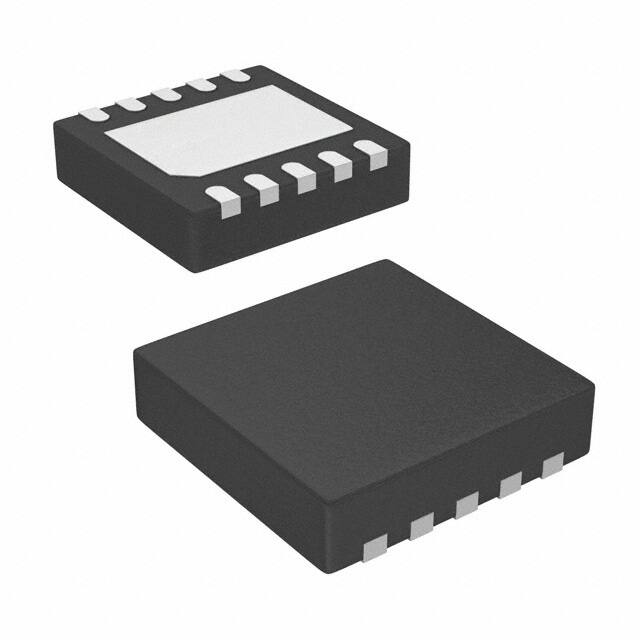
• 3mmx3mm Thin DFN Package – 0.75mm Max Thickness,
0.65mm Pitch
• Pb-Free (RoHS Compliant)
Applications
• Setting Precise Current Values for DC Margining and
Backlight Control
• Replaces Complex Compensation Circuitry That Stores
Values in Look-up Tables Needed for Precise Resistor
Setting
ISL22317
(10 LD TDFN)
TOP VIEW
• Setting Precise Resistance Values for Test and
Measurement Circuits
SCL
1
10 VCC
SDA
2
9 RH
• Adjust Specific Resistances in Analog Circuits
A1
3
8 RW
• Precise Calibration and Fine Tune-Up
REF_A
4
7 RL
REF_B
5
6 GND
FN6912 Rev 1.00
April 15, 2010
Page 1 of 15
�ISL22317
Ordering Information
PART NUMBER
(Notes 1, 2, 3)
PART
MARKING
RESISTANCE OPTION
(k)
TEMP. RANGE
(°C)
PACKAGE
(Pb-free)
PKG.
DWG. #
ISL22317TFRTZ
317T
100
-40 to +125
10 Ld TDFN
L10.3x3B
ISL22317UFRTZ
317U
50
-40 to +125
10 Ld TDFN
L10.3x3B
ISL22317WFRTZ
317W
10
-40 to +125
10 Ld TDFN
L10.3x3B
NOTES:
1. Add “-TK” suffix for tape and reel. Please refer to TB347 for details on reel specifications.
2. These Intersil Pb-free plastic packaged products employ special Pb-free material sets, molding compounds/die attach materials, and 100% matte
tin plate plus anneal (e3 termination finish, which is RoHS compliant and compatible with both SnPb and Pb-free soldering operations). Intersil
Pb-free products are MSL classified at Pb-free peak reflow temperatures that meet or exceed the Pb-free requirements of IPC/JEDEC J STD020.
3. For Moisture Sensitivity Level (MSL), please see device information page for ISL22317. For more information on MSL please see techbrief
TB363.
Block Diagram
VCC
SCL
RH
SDA
A1
REF_A
POWER-UP,
INTERFACE,
EEPROM
AND
CONTROL
LOGIC
RW
RL
RREF
10k0.5%
External Resistor
for W option,
or 50k0.5%
for U and T options
respectively
REF_B
GND
Pinout
Pin Descriptions
ISL22317
(10 LD TDFN)
TOP VIEW
TDFN
PIN #
SYMBOL
1
SCL
Open drain I2C interface clock input
Open drain Serial data I/O for the I2C interface
DESCRIPTION
SCL
1
10 VCC
2
SDA
SDA
2
9 RH
3
A1
A1
3
8 RW
4
REF_A
Terminal A for an external reference resistor
REF_B
Terminal B for an external reference resistor
Device address input for the I2C interface
REF_A
4
7 RL
5
REF_B
5
6 GND
6
GND
7
RL
8
RW
“Wiper” terminal of DCP
9
RH
“High” terminal of DCP
10
VCC
EPAD*
Device ground pin
“Low” terminal of DCP
Power supply pin
Exposed Die Pad internally connected to
GND
*PCB thermal land for QFN/TDFN EPAD should be connected to
GND plane or left floating. For more information refer to
http://www.intersil.com/data/tb/TB389.pdf
FN6912 Rev 1.00
April 15, 2010
Page 2 of 15
�ISL22317
Absolute Maximum Ratings
Thermal Information
Voltage at any Digital Interface Pin
with respect to GND. . . . . . . . . . . . . . . . . . . . . . -0.3V to VCC + 0.3V
VCC . . . . . . . . . . . . . . . . . . . . . . . . . . . . . . . . . . . . . . -0.3V to +6.0V
Voltage at any DCP Pin with respect to GND . . . . . . . . . .0V to VCC
IW (10s) . . . . . . . . . . . . . . . . . . . . . . . . . . . . . . . . . . . . . . . . . . ±6mA
Latchup (Note 6) . . . . . . . . . . . . . . . . . . Class II, Level B at +125°C
ESD
Human Body Model . . . . . . . . . . . . . . . . . . . . . . . . . . . . . . . . .5kV
Machine Model . . . . . . . . . . . . . . . . . . . . . . . . . . . . . . . . . . . .500V
Thermal Resistance (Typical, Notes 4, 5)
JA (°C/W) JC (°C/W)
10 Lead TDFN . . . . . . . . . . . . . . . . .
44
3
Storage Temperature . . . . . . . . . . . . . . . . . . . . . . . .-65°C to +150°C
Maximum Junction Temperature (Plastic Package). . . . . . . . +150°C
Pb-Free Reflow Profile. . . . . . . . . . . . . . . . . . . . . . . . .see link below
http://www.intersil.com/pbfree/Pb-FreeReflow.asp
Recommended Operating Conditions
Temperature Range (Extended Industrial). . . . . . . .-40°C to +125°C
VCC . . . . . . . . . . . . . . . . . . . . . . . . . . . . . . . . . . . . . . . . 2.7V to 5.5V
VRH-VRL . . . . . . . . . . . . . . . . . . . . . . . . . . . . . . . . 1V to VCC - 0.3V
VRW-VRL . . . . . . . . . . . . . . . . . . . . . . . . . . . . . . . 0.3V to VCC - 0.3V
Power Rating . . . . . . . . . . . . . . . . . . . . . . . . . . . . . . . . . . . . . .15mW
Wiper Current . . . . . . . . . . . . . . . . . . . . . . . . . . . . . . . . . . . . ±3.0mA
CAUTION: Do not operate at or near the maximum ratings listed for extended periods of time. Exposure to such conditions may adversely impact product reliability and
result in failures not covered by warranty.
NOTES:
4. JA is measured in free air with the component mounted on a high effective thermal conductivity test board with “direct attach” features. See
Tech Brief TB379.
5. For JC, the “case temp” location is the center of the exposed metal pad on the package underside.
6. Jedec Class II pulse conditions and failure criterion used. Level B exceptions is using a minimum negative pulse of -0.8V on the A1 pin.
Analog Specifications
SYMBOL
RTOTAL
Over recommended operating conditions unless otherwise stated.
MIN
TYP
MAX
(Note 22) (Note 7) (Note 22)
UNIT
W option
10
k
U option
50
k
T option
100
k
PARAMETER
RH to RL Resistance
RH to RL Resistance Tolerance
TEST CONDITIONS
U and T options
-3
±1
+3
%
W option
-4
±1
+4
%
End-to-End Temperature Coefficient
All options, match external reference TCr
VRH
DCP High Terminal Voltage
VRH to GND
VRL + 1
VCC - 0.3
V
VRL
DCP Low Terminal Voltage
VRL to GND
0
VCC - 1V
V
RW
Wiper Resistance
Precision On, RH - floating, VRL = 0V, force
IW current to wiper,
IW = (VCC - VRL)/RTOTAL
0
Precision Off, RH - floating, VRL = 0V, force
IW current to wiper,
IW = (VCC - VRL)/RTOTAL
70
for W option, 0.5%
10
k
for U option, 0.5%
50
k
for T option, 0.5%
50
k
Voltage at pin from GND to VCC
0.1
0.5
µA
RREF
ILkgDCP
External Reference Resistor
Leakage on DCP Pins
TCref
±10
ppm/°C
VOLTAGE DIVIDER MODE (0V @ RL; VCC -0.3V @ RH; measured at RW, unloaded)
INL
(Note 12)
Integral Non-linearity
W, U or T option
VRL + 0.3V < VRW < VCC - 0.3V
-0.5
±0.1
0.5
LSB
(Note 8)
DNL
(Note 11)
Differential Non-linearity
W, U or T option
VRL + 0.3V < VRW < VCC - 0.3V
-0.5
±0.1
0.5
LSB
(Note 8)
FN6912 Rev 1.00
April 15, 2010
Page 3 of 15
�ISL22317
Analog Specifications
SYMBOL
Over recommended operating conditions unless otherwise stated. (Continued)
PARAMETER
TEST CONDITIONS
ZSerror
(Note 9)
Zero-scale Error
W, U or T option
VRL < VRW < VRL + 0.3V
FSerror
(Note 10)
Full-scale Error
W, U or T option
VCC - 0.3V < VRW < VCC
TCV
Ratiometric Temperature Coefficient
(Notes 13, 19)
fcutoff
(Note 19)
-3dB Cut Off Frequency
MIN
TYP
MAX
(Note 22) (Note 7) (Note 22)
0.5
-2
2
UNIT
LSB
(Note 8)
-0.5
LSB
(Note 8)
Match to external Rref, DCP register set
between 15 hex and 7F hex
TCref
±10
ppm/°C
Wiper at midpoint (40hex) W option (10k)
1
kHz
Wiper at midpoint (40hex) U option (50k)
1
kHz
Wiper at midpoint (40hex) T option (100k)
1
kHz
RESISTOR MODE (Measurements between RW and RL with RH not connected)
RINL
(Note 17)
Integral Non-linearity
W, U or T option
Current forced to the wiper
IW = (VCC - VRL)/RTOTAL (Note 20)
-3
±1
3
MI
(Note 14)
RDNL
(Note 16)
Differential Non-linearity
W, U or T option
Current forced to the wiper
IW = (VCC - VRL)/RTOTAL (Note 20)
-3
±1
3
MI
(Note 14)
Roffset
(Note 15)
Offset
W, U or T option, wiper is out of
recommended operation conditions
0
1
2
MI
(Note 14)
TCR
Resistance Temperature Coefficient
(Notes 18, 19)
Match to external Rref, DCP register set
between 15 hex and 7F hex, all options
TCref
±10
ppm/°C
Operating Specifications Over the recommended operating conditions unless otherwise specified.
TYP
(Note 7)
MAX
(Note 22)
UNIT
VCC = +5.5V, fSCL = 400kHz; SDA = Open;
(for I2C, active, read and write states)
0.6
1.2
mA
VCC = +2.7V, fSCL = 400kHz; SDA = Open;
(for I2C, active, read and write states), 10k
0.35
0.9
mA
VCC = +5.5V, fSCL = 400kHz; SDA = Open;
(for I2C, active, read and write states)
1.75
2.5
mA
VCC = +2.7V, fSCL = 400kHz; SDA = Open;
(for I2C, active, read and write states)
1.0
1.8
mA
VCC = +5.5V @ +125°C, I2C interface in
standby state
0.5
1.0
mA
VCC = +2.7V @ +125°C, I2C interface in
standby state, 10k
0.3
0.75
mA
VCC Current (Shutdown)
VCC = +5.5V @ +125°C, I2C interface in
standby state
0.5
1.5
µA
Leakage Current, at Pins REF_A,
REF_B, A1, SDA, and SCL
Voltage at pin from GND to VCC
0.25
µA
tDCP
(Note 19)
DCP Wiper Response Time
SCL falling edge of last bit of DCP data byte
to wiper new position
150
µs
tShdnRec
(Note 19)
DCP Recall Time from Shutdown
Mode
SCL falling edge of last bit of ACR data byte
to wiper stored position and RH connection
150
µs
Power-on Recall Voltage
Minimum VCC at which memory recall occurs
SYMBOL
ICC1
ICC2
ISB
ISD
ILkgDig
Vpor
PARAMETER
VCC Supply Current (volatile
write/read)
VCC Supply Current (non-volatile
write/read)
VCC Current (Standby)
VCC Ramp VCC Ramp Rate
FN6912 Rev 1.00
April 15, 2010
TEST CONDITIONS
MIN
(Note 22)
-0.25
0.2
2.6
V
50
V/ms
Page 4 of 15
�ISL22317
Operating Specifications Over the recommended operating conditions unless otherwise specified. (Continued)
SYMBOL
tD
PARAMETER
Power-up Delay
TEST CONDITIONS
MIN
(Note 22)
TYP
(Note 7)
VCC above Vpor, to DCP Initial Value
Register recall completed, and I2C Interface
in standby state
MAX
(Note 22)
UNIT
1
ms
EEPROM SPECIFICATION
EEPROM Endurance
EEPROM Retention
tWC
(Note 21)
1,000,000
Cycles
Temperature T +55°C
50
Years
Temperature T +125°C
15
Years
Non-volatile Write Cycle Time
12
20
ms
0.3*VCC
V
SERIAL INTERFACE SPECS
VIL
A1, A0, SDA, and SCL Input Buffer
LOW Voltage
VIH
A1, A0, SDA, and SCL Input Buffer
HIGH Voltage
0.7*VCC
V
Hysteresis
(Note 19)
SDA and SCL Input Buffer Hysteresis
0.05*VCC
V
VOL
(Note 19)
SDA Output Buffer LOW Voltage,
Sinking 4mA
Cpin
(Note 19)
0.4
V
A1, A0, SDA, and SCL Pin
Capacitance
10
pF
SCL Frequency
400
kHz
tsp
Pulse Width Suppression Time at SDA Any pulse narrower than the max spec is
and SCL Inputs
suppressed
50
ns
tAA
SCL Falling Edge to SDA Output Data SCL falling edge crossing 30% of VCC, until
Valid
SDA exits the 30% to 70% of VCC window
900
ns
fSCL
0
tBUF
Time the Bus must be Free Before the SDA crossing 70% of VCC during a STOP
Start of a New Transmission
condition, to SDA crossing 70% of VCC
during the following START condition
1300
ns
tLOW
Clock LOW Time
Measured at the 30% of VCC crossing
1300
ns
tHIGH
Clock HIGH Time
Measured at the 70% of VCC crossing
600
ns
tSU:STA
START Condition Setup Time
SCL rising edge to SDA falling edge; both
crossing 70% of VCC
600
ns
tHD:STA
START Condition Hold Time
From SDA falling edge crossing 30% of VCC
to SCL falling edge crossing 70% of VCC
600
ns
tSU:DAT
Input Data Setup Time
From SDA exiting the 30% to 70% of VCC
window, to SCL rising edge crossing 30% of
VCC
100
ns
tHD:DAT
Input Data Hold Time
From SCL falling edge crossing 70% of VCC
to SDA entering the 30% to 70% of VCC
window
0
ns
tSU:STO
STOP Condition Setup Time
From SCL rising edge crossing 70% of VCC,
to SDA rising edge crossing 30% of VCC
600
ns
tHD:STO
STOP Condition Hold Time for Read,
or Volatile Only Write
From SDA rising edge to SCL falling edge;
both crossing 70% of VCC
1300
ns
Output Data Hold Time
From SCL falling edge crossing 30% of VCC,
until SDA enters the 30% to 70% of VCC
window
0
ns
tDH
FN6912 Rev 1.00
April 15, 2010
Page 5 of 15
�ISL22317
Operating Specifications Over the recommended operating conditions unless otherwise specified. (Continued)
SYMBOL
PARAMETER
MIN
(Note 22)
TEST CONDITIONS
TYP
(Note 7)
MAX
(Note 22)
UNIT
tR
(Note 19)
SDA and SCL Rise Time
From 30% to 70% of VCC
20 +
0.1*Cb
250
ns
tF
(Note 19)
SDA and SCL Fall Time
From 70% to 30% of VCC
20 +
0.1*Cb
250
ns
Cb
(Note 19)
Capacitive Loading of SDA or SCL
Total on-chip and off-chip
10
400
pF
Rpu
(Note 19)
SDA and SCL Bus Pull-up Resistor
Off-chip
Maximum is determined by tR and tF
For Cb = 400pF, max is about 2k~ 2.5k
For Cb = 40pF, max is about 15k ~ 20k
1
k
tSU:A
A1 Setup Time
Before START condition
600
ns
tHD:A
A1 Hold Time
After STOP condition
600
ns
NOTES:
7. Typical values are for TA = +25°C and 3.3V supply voltage.
8. LSB: [V(RW)127 – V(RW)0]/127. V(RW)127 and V(RW)0 are V(RW) for the DCP register set to 7F hex and 00 hex respectively. LSB is the
incremental voltage when changing from one tap to an adjacent tap.
9. ZSERROR = V(RW)0/LSB.
10. FSerror = [V(RW)127 – VCC]/LSB.
11. DNL = [V(RW)i – V(RW)i-1]/LSB-1, for i = 1 to 127, where i is the DCP register setting.
12. INL = [V(RW)i – i • LSB – V(RW)0]/LSB for i = 1 to 127
Max V RW i – Min V RW i
10 6 - for i = 15 to 127 decimal, T = -40°C to +125°C. Max( ) is the maximum value of the wiper
13. TC = --------------------------------------------------------------------------------------------- ---------------V
Max V RW i + Min V RW i 2 +165°C voltage and Min ( ) is the minimum value of the wiper voltage over the temperature range.
14. MI = |RW127 – RW0|/127. MI is a minimum increment. RW127 and RW0 are the measured resistances for the DCP register set to 7F hex and
00 hex respectively.
15. ROFFSET = RW0/MI, when measuring between RW and RL.
16. RDNL = (RWi – RWi-1)/MI -1, for i = 1 to 127.
17. RINL = [RWi – (MI • i) – RW0]/MI, for i = 1 to 127.
6 for i = 15 to 127, T = -40°C to +125°C. Max( ) is the maximum value of the resistance and Min ( ) is
Max Ri – Min Ri
10
TC R = ---------------------------------------------------------------- ----------------- the minimum value of the resistance over the temperature range.
Max Ri + Min Ri 2 +165°C
19. Limits should be considered typical and are not production tested.
18.
20. In rheostat mode, if a current is injected into the RW terminal, the magnitude of the current should be such that the developed potential difference
between RW and RL terminals is at least 300mV, even at the minimum wiper setting. This ensures that the recommended operating condition
of V(RW) V(RL) + 0.3V is satisfied and the part operates in its most accurate resistance. Minimum and Maximum wiper setting can be
calculated as follow, MIN code = (0.3V*127)/(Iw*Rtotal), Max code = [(VCC - 0.3V)*127]/(IW*RTOTAL).
21. tWC is the time from a valid STOP condition at the end of a Write sequence of I2C serial interface, to the end of the self-timed internal non-volatile
write cycle.
22. Parameters with MIN and/or MAX limits are 100% tested at +25°C, unless otherwise specified. Temperature limits established by
characterization and are not production tested.
SDA vs SCL Timing
tHIGH
tF
SCL
tLOW
tsp
tR
tSU:DAT
tSU:STA
SDA
(INPUT TIMING)
tHD:STA
tHD:DAT
tSU:STO
tAA
tDH
tBUF
SDA
(OUTPUT TIMING)
FN6912 Rev 1.00
April 15, 2010
Page 6 of 15
�ISL22317
A1 Pin Timing
STOP
START
SCL
CLK 1
SDA
tSU:A
tHD:A
A1
Typical Performance Curves
2
2
T = +25°C
1
RESISTANCE ERROR (%)
RESISTANCE ERROR (%)
T = +25°C
VCC = 2.7V
0
-1
-2
VCC = 5.5V
5
25
45
65
85
TAP POSITION (DECIMAL)
105
0
VCC = 5.5V
-1
-2
125
VCC = 2.7V
1
5
25
45
65
85
105
FIGURE 2. RESISTANCE ERROR vs TAP POSITION
[I(RW) = VCC/RTOTAL] FOR 10k (W)
FIGURE 1. RESISTANCE ERROR vs TAP POSITION
[I(RW) = VCC/RTOTAL] FOR 100k (T)
2
2
T = +25°C
T = +25°C
1
VCC = 5.5V
RINL (MI)
RINL (MI)
1
0
VCC = 2.7V
-1
-2
125
TAP POSITION (DECIMAL)
0
20
40
-1
60
80
100
120
TAP POSITION (DECIMAL)
FIGURE 3. INL vs TAP POSITION IN RHEOSTAT MODE FOR
100k (T)
FN6912 Rev 1.00
April 15, 2010
VCC = 5.5V
0
-2
VCC = 2.7V
0
20
40
60
80
100
120
TAP POSITION (DECIMAL)
FIGURE 4. INL vs TAP POSITION IN RHEOSTAT MODE FOR
10k (W)
Page 7 of 15
�ISL22317
Typical Performance Curves
(Continued)
3
2
T = +25°C
T = +25°C
VCC = 2.7V
2
RDNL (MI)
RDNL (MI)
1
0
VCC = 5.5V
-1
-2
0
20
40
60
80
TAP POSITION (DECIMAL)
1
VCC = 5.5V
0
100
-1
120
FIGURE 5. DNL vs TAP POSITION IN RHEOSTAT MODE FOR
100k (T)
0
20
40
60
80
TAP POSITION (DECIMAL)
VCC = 5.5V
RTOTAL ERROR (%)
0.8
0.4
0.0
VCC = 2.7V
0.5
0.0
VCC = 5.5V
-0.5
VCC = 2.7V
-0.4
-40
-20
0
20
40
60
80
100
-1.0
-40
120
-20
0
TEMPERATURE (ºC)
FIGURE 7. RTOTAL ERROR vs TEMPERATURE FOR 100k (T)
20
40
60
TEMPERATURE (ºC)
80
100
120
FIGURE 8. RTOTAL ERROR vs TEMPERATURE FOR 10k (W)
0.30
0.30
T = +25°C
T = +25°C
0.15
0.15
INL (LSB)
INL (LSB)
120
1.0
1.2
VCC = 2.7V
0
-0.15
-0.30
100
FIGURE 6. DNL vs TAP POSITION IN RHEOSTAT MODE FOR
10k (W)
1.6
RTOTAL ERROR (%)
VCC = 2.7V
VCC = 5.5V
0
-0.15
VCC = 2.7V
VCC = 5.5V
0
20
40
60
80
100
TAP POSITION (DECIMAL)
FIGURE 9. INL vs TAP POSITION IN VOLTAGE DIVIDER
MODE FOR 100k (T)
FN6912 Rev 1.00
April 15, 2010
120
-0.30
0
20
40
60
80
TAP POSITION (DECIMAL)
100
120
FIGURE 10. INL vs TAP POSITION IN VOLTAGE DIVIDER
MODE FOR 10k (W)
Page 8 of 15
�ISL22317
Typical Performance Curves
(Continued)
0.10
0.10
T = +25°C
T = +25°C
0.05
VCC = 2.7V
DNL (LSB)
DNL (LSB)
0.05
0
VCC = 5.5V
-0.05
-0.10
0
20
40
60
80
VCC = 2.7V
0
-0.05
100
120
-0.10
VCC = 5.5V
0
20
40
0.08
0.4
0.06
0.3
ZSERROR (LSB)
ZSERROR (LSB)
80
100
120
FIGURE 12. DNL vs TAP POSITION IN VOLTAGE DIVIDER
MODE FOR 10k (W)
FIGURE 11. DNL vs TAP POSITION IN VOLTAGE DIVIDER
MODE FOR 100k (T)
0.04
60
TAP POSITION (DECIMAL)
TAP POSITION (DECIMAL)
VCC = 2.7V
0.02
VCC = 2.7V
0.2
VCC = 5.5V
0.1
VCC = 5.5V
0
-40
-20
0
20
40
60
80
100
0
-40
120
-20
0
TEMPERATURE (ºC)
0
60
80
100
120
0
VCC = 5.5V
-0.3
FSERROR (LSB)
-0.03
FSERROR (LSB)
40
FIGURE 14. ZSERROR vs TEMPERATURE FOR 10k (W)
FIGURE 13. ZSERROR vs TEMPERATURE FOR 100k (T)
-0.06
-0.09
VCC = 5.5V
-0.6
-0.9
VCC = 2.7V
-0.12
-40
20
TEMPERATURE (ºC)
-20
0
20
40
60
TEMPERATURE (ºC)
VCC = 2.7V
80
100
120
FIGURE 15. FSERROR vs TEMPERATURE FOR 100k (T)
FN6912 Rev 1.00
April 15, 2010
-1.2
-40
-20
0
20
40
60
80
100
TEMPERATURE (ºC)
FIGURE 16. FSERROR vs TEMPERATURE FOR 10k (W)
Page 9 of 15
120
�ISL22317
(Continued)
40
40
30
30
TCv (ppm/ºC)
TCr (ppm/ ºC)
Typical Performance Curves
VCC = 2.7V
20
10
VCC = 2.7V
20
10
VCC = 5.5V
VCC = 5.5V
0
15
35
55
75
95
0
15
115
35
TAP POSITION (DECIMAL)
FIGURE 17. TC FOR RHEOSTAT MODE (10k/50k/100k) IN ppm
[RREF 2ppm/°C]
55
75
95
TAP POSITION (DECIMAL)
115
FIGURE 18. TC FOR VOLTAGE DIVIDER MODE (10k/50k/100k)
IN ppm [RREF 10ppm/°C]
100
800
WIPER RESISTANCE ()
VCC = 5.5V
ISB (uA)
600
VCC = 2.7V
400
200
0
-40
0
40
TEMPERATURE (°C)
80
120
FIGURE 19. STANDBY ICC vs TEMPERATURE
Pin Description
Potentiometers Pins
RH AND RL
The high (RH) and low (RL) terminals of the ISL22317 are
equivalent to the fixed terminals of a mechanical
potentiometer. RH and RL are referenced to the relative
position of the wiper and the voltage potential on the terminals.
With WR set to 127 decimal, the wiper will be closest to RH.
With the WR set to 0, the wiper is closest to RL. The voltage
potential on the RH terminal must be higher than voltage
potential on RL terminal.
80
T = +125°C
60
VCC = 5.5V
T = +25°C
40
T = -40°C
20
0
0
20
40
60
80
TAP POSITION (DECIMAL)
100
FIGURE 20. WIPER RESISTANCE vs TAP POSITION WHEN
PRECISION IS OFF
Warning! Do not connect REF_A to GND under any
circumstances. That may damage the ISL22317.
Bus Interface Pins
SERIAL DATA INPUT/OUTPUT (SDA)
The SDA is a bidirectional serial data input/output pin for I2C
interface. It receives device address, operation code, wiper
address and data from an I2C external master device at the
rising edge of the serial clock SCL, and it shifts out data after
each falling edge of the serial clock.
SDA requires an external pull-up resistor, since it is an open
drain input/output.
RW
SERIAL CLOCK (SCL)
RW is the wiper terminal and is equivalent to the movable
terminal of a mechanical potentiometer. The position of the
wiper within the array is determined by the WR register.
This input is the serial clock of the I2C serial interface.
REF_A, REF_B
REF_A and REF_B are pins to connect an external resistor. If
application is required to connect RL terminal to GND, then the
REF_B pin should also be connected to GND.
FN6912 Rev 1.00
April 15, 2010
120
DEVICE ADDRESS (A1)
The address input is used to set the A1 bit of the 7-bit I2C
interface slave address, see Table 4. A match in the slave
address serial data stream must match with the Address input
pins in order to initiate communication with the ISL22317. A
Page 10 of 15
�ISL22317
maximum of two ISL22317 devices may occupy the I2C serial
bus with addresses 50h and 54h.
Principles of Operation
The ISL22317 is an integrated circuit incorporating one DCP
with its associated registers, non-volatile memory and an I2C
serial interface providing direct communication between a host
and the potentiometer and memory. The resistor array is
comprised of individual resistors connected in series. At either
end of the array and between each resistor, is an electronic
switch that transfers the potential at that point to the wiper.
TABLE 1. MEMORY MAP
ADDRESS
(hex)
NON-VOLATILE
VOLATILE
2
NA
ACR
1
Mode Select Register
NA
0
IVR
WR
The non-volatile IVR and volatile WR registers are accessible
with the same address 0.
The ISL22317 is pre-programed with 40h in the IVR.
The electronic switches on the device operate in a “make
before break” mode when the wiper changes tap positions.
The Access Control Register (ACR) at address 2 contains
information and control bits described below in Table 2.
When the device is powered down, the last value stored in IVR
will be maintained in the non-volatile memory. When power is
restored, the contents of the IVR is recalled and loaded into the
WR to set the wiper to the initial value.
The VOL bit (ACR) determines whether the access is to
wiper registers WR or initial value registers IVR.
DCP Description
The DCP is implemented with a combination of resistor
elements and CMOS switches. The physical ends of each DCP
are equivalent to the fixed terminals of a mechanical
potentiometer (RH and RL pins). The RW pin of the DCP is
connected to intermediate nodes, and is equivalent to the
wiper terminal of a mechanical potentiometer. The position of
the wiper terminal within the DCP is controlled by a 7-bit
volatile Wiper Register (WR). When the WR of a DCP contains
all zeroes (WR: 00h), its wiper terminal (RW) is closest to
its “Low” terminal (RL). When the WR register of a DCP
contains all ones (WR: 7Fh), its wiper terminal (RW) is
closest to its “High” terminal (RH). As the value of the WR
increases from all zeroes (0) to all ones (127 decimal), the
wiper moves monotonically from the position closest to RL to
the closest to RH.
While the ISL22317 is being powered up, the WR is reset to
40h (64 decimal), which locates RW roughly at the center
between RL and RH. After the power supply voltage becomes
large enough for reliable non-volatile memory reading, the WR
will be reload with the value stored in a non-volatile Initial Value
Register (IVR).
The WR and IVR can be read or written to directly using the
I2C serial interface as described in the following sections.
Memory Description
The ISL22317 contains one non-volatile 8-bit Initial Value Register
(IVR), one 8-bit non-volatile Mode Select Register (MSR), and two
volatile 8-bit registers: Wiper Register (WR) and Access Control
Register (ACR). Memory map of ISL22317 is in Table 1. The nonvolatile register (IVR) at address 0, contains initial wiper
position and the volatile register (WR) contains current wiper
position.
TABLE 2. ACCESS CONTROL REGISTER (ACR)
VOL
SHDN
WIP
0
0
0
0
0
(LSB)
(MSB)
If VOL bit is 0, the non-volatile IVR register is accessible. If
VOL bit is 1, only the volatile WR is accessible. Note, value is
written to IVR register also is written to the WR. The default
value of this bit is 0.
The SHDN bit (ACR) disables or enables Shutdown mode.
When this bit is 0, DCP is in Shutdown mode. Default value of
SHDN bit is 1.
The WIP bit (ACR) is read only bit. It indicates that
non-volatile write operation is in progress. It is impossible to
write to the WR or ACR while WIP bit is 1.
The Mode Select Bit in Mode Select Register (MSR) at
address 1 allows selection of Rheostat or Voltage Divider
Mode, see Table 3.
TABLE 3. MODE SELECT REGISTER (MSR)
Mode
Select
Precision
Off
x
x
(MSB)
x
x
x
x
(LSB)
When this bit is 0, DCP is in two-terminal Rheostat Mode. In
Rheostat Mode, the RH pin should be left unconnected and
DCP can be used as variable resistor between RW and RL
pins.
When this bit is 1, DCP is in three-terminal Voltage Divider
Mode. In Voltage Divider Mode, signal is applied between RH
and RL terminals. Total resistance between RH and RL
terminals is precisely matched to external reference resistor.
Refer to reference resistor value in “Analog Specifications”
Table on page 3.
Default value of Mode Select Bit is 0.
The Precision Off bit (MSR) allows the user to turn off the
matching mechanism and use the device as a regular, non-
FN6912 Rev 1.00
April 15, 2010
Page 11 of 15
�ISL22317
precision DCP by setting this bit to 1. Default value of the
Precision Off bit is 0, i.e. matching to external resistor is ON.
Note, if the external resistor between REF_A/REF_B is not
populated, the DCP will work as a normal DCP without giving
99% precision and with ~40% higher value of the resistance. It
is highly recommended to use the bit option (MSR) to turn
OFF the precision mode first and then removing the external
resistor.
All other bits MSR are reserved and cannot be written.
Any value read from these bits should be ignored.
I2C Serial Interface
The ISL22317 supports an I2C bi-directional bus oriented
protocol. The protocol defines any device that sends data onto
the bus as a transmitter and the receiving device as the
receiver. The device controlling the transfer is a master and the
device being controlled is the slave. The master always
initiates data transfers and provides the clock for both transmit
and receive operations. Therefore, the ISL22317 operates as a
slave device in all applications.
All communication over the I2C interface is conducted by
sending the MSB of each byte of data first.
All I2C interface operations must be terminated by a STOP
condition, which is a LOW to HIGH transition of SDA while SCL
is HIGH (see Figure 21). A STOP condition at the end of a read
operation, or at the end of a write operation, places the device
in its standby mode.
An ACK, Acknowledge, is a software convention used to
indicate a successful data transfer. The transmitting device,
either master or slave, releases the SDA bus after transmitting
eight bits. During the ninth clock cycle, the receiver pulls the
SDA line LOW to acknowledge the reception of the eight bits of
data (see Figure 22).
The ISL22317 responds with an ACK after recognition of a
START condition followed by a valid Identification Byte, and
once again after successful receipt of an Address Byte. The
ISL22317 also responds with an ACK after receiving a Data
Byte of a write operation. The master must respond with an
ACK after receiving a Data Byte of a read operation
A valid Identification Byte contains 01010 as the five MSBs,
and the following bit matching the logic value present at pin A1.
The LSB is the Read/Write bit. Its value is “1” for a Read
operation, and “0” for a Write operation (See Table 4).
TABLE 4. IDENTIFICATION BYTE FORMAT
Protocol Conventions
Data states on the SDA line must change only during SCL
LOW periods. SDA state changes during SCL HIGH are
reserved for indicating START and STOP conditions (see
Figure 21). On power-up of the ISL22317, the SDA pin is in the
input mode.
Logic value at pin A1
0
1
0
1
0
(MSB)
A1
0
R/W
(LSB)
All I2C interface operations must begin with a START
condition, which is a HIGH to LOW transition of SDA while SCL
is HIGH. The ISL22317 continuously monitors the SDA and
SCL lines for the START condition and does not respond to
any command until this condition is met (see Figure 21). A
START condition is ignored during the power-up of the device.
SCL
SDA
START
DATA
STABLE
DATA
CHANGE
DATA
STABLE
STOP
FIGURE 21. VALID DATA CHANGES, START, AND STOP CONDITIONS
FN6912 Rev 1.00
April 15, 2010
Page 12 of 15
�ISL22317
SCL FROM
MASTER
1
8
9
SDA OUTPUT FROM
TRANSMITTER
HIGH IMPEDANCE
HIGH IMPEDANCE
SDA OUTPUT FROM
RECEIVER
START
ACK
FIGURE 22. ACKNOWLEDGE RESPONSE FROM RECEIVER
WRITE
S
T
A
R
T
SIGNALS FROM
THE MASTER
SIGNAL AT SDA
IDENTIFICATION
BYTE
ADDRESS
BYTE
0 1 0 1 0 A1 0 0
SIGNALS FROM
THE SLAVE
S
T
O
P
DATA
BYTE
0 0 0 0
A
C
K
A
C
K
A
C
K
FIGURE 23. BYTE WRITE SEQUENCE
SIGNALS
FROM THE
MASTER
S
T
A
R
T
SIGNAL AT SDA
SIGNALS FROM
THE SLAVE
IDENTIFICATION
BYTE WITH
R/W=0
S
T
A IDENTIFICATION
R
BYTE WITH
T
R/W=1
ADDRESS
BYTE
0 1 0 1 0 A1 0 0
S
A T
C O
K P
A
C
K
0 1 0 1 0 A1 0 1
0 0 0 0
A
C
K
A
C
K
A
C
K
A
C
K
FIRST READ
DATA BYTE
LAST READ
DATA BYTE
FIGURE 24. READ SEQUENCE
Write Operation
A Write operation requires a START condition, followed by a
valid Identification Byte, a valid Address Byte, a Data Byte, and
a STOP condition. After each of the three bytes, the ISL22317
responds with an ACK. At this time, the device enters its
standby state (see Figure 23). The non-volatile write cycle
starts after a STOP condition is determined and requires up to
20ms delay for the next non-volatile write.
Read Operation
A Read operation consists of a three byte instruction followed
by one or more Data Bytes (see Figure 24). The master
initiates the operation issuing the following sequence: a
START, the Identification byte with the R/W bit set to “0”, an
FN6912 Rev 1.00
April 15, 2010
Address Byte, a second START, and a second Identification
byte with the R/W bit set to “1”. After each of the three bytes,
the ISL22317 responds with an ACK. Then the ISL22317
transmits Data Bytes as long as the master responds with an
ACK during the SCL cycle following the eighth bit of each byte.
The master terminates the read operation (issuing a ACK and
STOP condition) following the last bit of the last Data Byte (see
Figure 24).
In order to read back the non-volatile IVR, it is recommended
that the application reads the ACR first to verify the WIP bit is
0. If the WIP bit (ACR[5]) is not 0, the host should repeat its
reading sequence again.
Page 13 of 15
�ISL22317
Rheostat Mode Configuration
Voltage Divider Mode Configuration
When DCP is used as a two-terminal variable resistor, the
RH terminal should be left unconnected and MSR is 0.
Resistance between RW and RL terminal can be calculated
by Equation 1:
In Voltage Divider Mode, voltage or signal is applied
between RH and RL terminals and MSR is 1. A potential
at RH terminal must be higher than at RL terminal at any
time. Total resistance between RH and RL terminal is fixed
and matched to external reference resistor. Voltage on the
wiper terminal RW can be calculated by Equation 4:
Rtotal
Ri = ----------------- i
127
(EQ. 1)
Where i is a decimal code from 0 to 127. Note, that
resistance accuracy will decrease at the lowest and the
highest taps, where voltage drops < 0.3V. In other words, a
minimum and maximum decimal code at which the DCP
resistance not exceed 3% precision is as shown in
Equations 2 and 3:
0.3 127
i min = -----------------------------------------Iwiper Rtotal
(EQ. 2)
Vcc – 0.3 127
i max = ---------------------------------------------Iwiper Rtotal
(EQ. 3)
Vrh – Vrl
Vrw i = ------------------------ i
127
(EQ. 4)
Where i is a decimal code from 0 to 127. Note, that the wiper
voltage accuracy will decrease at the lowest and the highest
taps, where it is less than 0.3V from ground or from VCC
respectively.
Applications Information
In order to get better accuracy in applications where RL pin
is connected to GND, it is highly recommended that REF_B
pin is also connected to GND.
The coupling capacitors of 1µF and 0.1µF should be placed
close to VCC pin.
Where Iwiper is a current going through the wiper terminal.
Revision History
DATE
REVISION
CHANGE
4/6/10
FN6912.1
Page 10 description of Pin A1 references Table 3 changed to Table 4.
Page 5, tHD:DAT parameter test condition,"From SCL rising edge ..." changed to "From SCL falling
edge ..."
Added MSL note to ordering information. Replaced POD to recent version with following changes:
1. Removed mention of "b" from Note 4 since "b" does not exist on the drawing.
2. Added Note 6 callout to lead width on "Bottom View".
3. Corrected the word "indentifier" in Note 6 to read "identifier".
5/26/09
FN6912.0
Initial Release of Datasheet. Issued FN6912 making it a Rev 0.
© Copyright Intersil Americas LLC 2009-2010. All Rights Reserved.
All trademarks and registered trademarks are the property of their respective owners.
For additional products, see www.intersil.com/en/products.html
Intersil products are manufactured, assembled and tested utilizing ISO9001 quality systems as noted
in the quality certifications found at www.intersil.com/en/support/qualandreliability.html
Intersil products are sold by description only. Intersil may modify the circuit design and/or specifications of products at any time without notice, provided that such
modification does not, in Intersil's sole judgment, affect the form, fit or function of the product. Accordingly, the reader is cautioned to verify that datasheets are
current before placing orders. Information furnished by Intersil is believed to be accurate and reliable. However, no responsibility is assumed by Intersil or its
subsidiaries for its use; nor for any infringements of patents or other rights of third parties which may result from its use. No license is granted by implication or
otherwise under any patent or patent rights of Intersil or its subsidiaries.
For information regarding Intersil Corporation and its products, see www.intersil.com
FN6912 Rev 1.00
April 15, 2010
Page 14 of 15
�ISL22317
Package Outline Drawing
L10.3x3B
10 LEAD THIN DUAL FLAT PACKAGE (TDFN) WITH E-PAD
Rev 2, 03/10
3.00
6
PIN #1 INDEX AREA
A
B
1
2
0.50
3.00
2.38 +0.1/ - 0.15
10
6
PIN 1
INDEX AREA
4
0.25 +0.05/ - 0.07
6
(4X)
0.15
1.64 +0.1/ -0.15
TOP VIEW
BOTTOM VIEW
10x 0.40 +/- 0.1
(10x0.20)
PACKAGE
OUTLINE
SEE DETAIL "X"
(10x0.40)
(10X0.25)
0.75
0.10 C
SEATING PLANE
0.08 C
2.38
0.05
C
SIDE VIEW
(8x 0.50)
1.64
TYPICAL RECOMMENDED LAND PATTERN
C
0.20 REF
5
0.05
DETAIL "X"
NOTES:
1.
Dimensions are in millimeters.
Dimensions in ( ) for Reference Only.
2.
Dimensioning and tolerancing conform to AMSE Y14.5m-1994.
3.
Unless otherwise specified, tolerance : Decimal ± 0.05
4.
Dimension applies to the metallized terminal and is measured
between 0.18mm and 0.30mm from the terminal tip.
5.
Tiebar shown (if present) is a non-functional feature.
6.
The configuration of the pin #1 identifier is optional, but must be
located within the zone indicated. The pin #1 identifier may be
either a mold or mark feature.
FN6912 Rev 1.00
April 15, 2010
Page 15 of 15
�