Datasheet
ISL9123
Ultra-Low IQ Buck Regulator with Bypass
The ISL9123 is a highly integrated buck switching
regulator that is capable of supplying output voltage
down to 0.4V. It features an extremely low quiescent
current consumption of 950nA in Regulation mode,
140nA in Forced Bypass mode, and 7nA in Shutdown
mode. It provides 80% efficiency at 10µA load and
has a peak efficiency of 97%. It supports input
voltages from 1.8V to 5.5V.
Features
The ISL9123 has automatic bypass functionality for
situations in which the input voltage is close to the
output voltage. In addition to the automatic bypass
functionality, the Forced Bypass power saving mode
can be chosen if voltage regulation is not required.
Forced Bypass power saving mode is accessible
using the I2C interface bus.
• Output current: up to 600mA
(VIN = 3.6V, VOUT = 1.8V)
The ISL9123 is capable of delivering up to 600mA of
output current (VIN = 3.6V, VOUT = 1.8V) and provides
excellent efficiency due to its adaptive frequency
hysteretic control architecture.
The ISL9123 is designed for stand-alone applications
and supports a default output voltage at Power-On
Reset (POR). After POR, the output voltage can be
adjusted in the range of 0.4V to 5.375V by using the
I2C interface bus. Specific default output voltages are
available upon request.
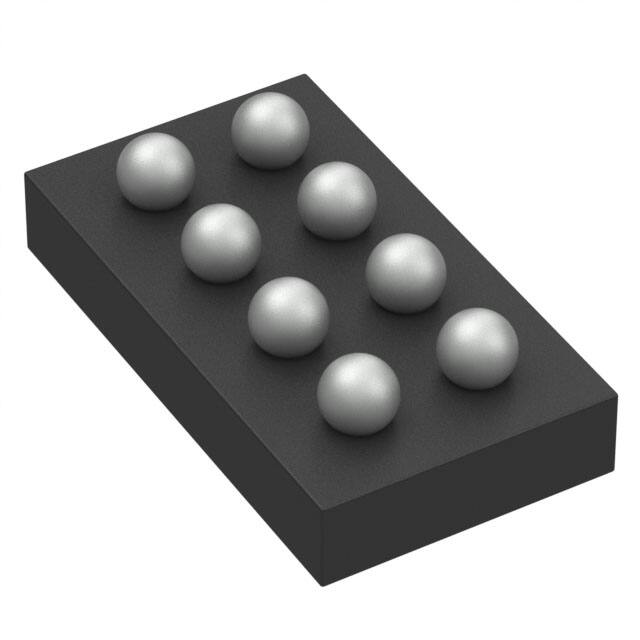
The ISL9123 requires only a single EIA 0603 size
inductor and two external capacitors. Power supply
solution size is minimized by a 1.8mmx1.0mm
WLCSP and is also available in 8 Ld plastic DFN.
• 950nA quiescent current
• 80% efficiency at 10µA load
• 97% peak efficiency
• Input voltage range: 1.8V to 5.5V
• Output voltage range: 0.4V to 5.375V
• Selectable Forced and Auto Bypass power saving
modes
• PFM and PWM modes with seamless transition
• Ultrasonic mode for acoustic noise suppression
• I2C control and voltage adjustability
• Hysteretic controller
• Small 1.8mmx1.0mm WLCSP and 8 Ld DFN
packages
Applications
• Smart watches and wristband devices
• Wireless earphones
• Internet of Things (IoT) devices
• Water, gas, and oil meters
• Portable medical devices
• Hearing aid devices
Related Literature
For a full list of related documents, visit our website:
• ISL9123 device page
100
95
L1
VIN = 1.8V to 5.5V
VIN
LX
ISL9123
C1
10µF/0603
VOUT = 0.4V to VIN
1µH/0603
VOUT
2
I C
Host
SDA
EN
SCL
Enable
Disable
GND
C2
10µF/0603
Efficiency (%)
VSW
90
85
80
2.5Vin
3.6Vin
5.0Vin
75
70
0.01
0.1
1
10
100
1000
Load Current (mA)
Figure 1. Typical Application
FN8959 Rev.2.00
Jan.20.21
Figure 2. Efficiency vs Load Current: VOUT = 1.8V,
TA = +25°C
Page 1 of 23
�ISL9123
Contents
1.
Overview . . . . . . . . . . . . . . . . . . . . . . . . . . . . . . . . . . . . . . . . . . . . . . . . . . . . . . . . . . . . . . . . . . . . . . . . . . . 3
1.1
1.2
1.3
1.4
2.
Block Diagram . . . . . . . . . . . . . . . . . . . . . . . . . . . . . . . . . . . . . . . . . . . . . . . . . . . . . . . . . . . . . . . . . . . .
Ordering Information . . . . . . . . . . . . . . . . . . . . . . . . . . . . . . . . . . . . . . . . . . . . . . . . . . . . . . . . . . . . . . .
Pin Configuration . . . . . . . . . . . . . . . . . . . . . . . . . . . . . . . . . . . . . . . . . . . . . . . . . . . . . . . . . . . . . . . . . .
Pin Descriptions . . . . . . . . . . . . . . . . . . . . . . . . . . . . . . . . . . . . . . . . . . . . . . . . . . . . . . . . . . . . . . . . . . .
3
4
5
5
Specifications. . . . . . . . . . . . . . . . . . . . . . . . . . . . . . . . . . . . . . . . . . . . . . . . . . . . . . . . . . . . . . . . . . . . . . . 6
2.1
2.2
2.3
2.4
2.5
Absolute Maximum Ratings . . . . . . . . . . . . . . . . . . . . . . . . . . . . . . . . . . . . . . . . . . . . . . . . . . . . . . . . . .
Thermal Information. . . . . . . . . . . . . . . . . . . . . . . . . . . . . . . . . . . . . . . . . . . . . . . . . . . . . . . . . . . . . . . .
Recommended Operating Conditions . . . . . . . . . . . . . . . . . . . . . . . . . . . . . . . . . . . . . . . . . . . . . . . . . .
Analog Specifications . . . . . . . . . . . . . . . . . . . . . . . . . . . . . . . . . . . . . . . . . . . . . . . . . . . . . . . . . . . . . .
I2C Interface Timing Specifications . . . . . . . . . . . . . . . . . . . . . . . . . . . . . . . . . . . . . . . . . . . . . . . . . . . .
6
6
6
7
9
3.
Typical Performance Curves. . . . . . . . . . . . . . . . . . . . . . . . . . . . . . . . . . . . . . . . . . . . . . . . . . . . . . . . . . 10
4.
Functional Description . . . . . . . . . . . . . . . . . . . . . . . . . . . . . . . . . . . . . . . . . . . . . . . . . . . . . . . . . . . . . . 14
4.1
4.2
4.3
4.4
4.5
4.6
4.7
4.8
4.9
4.10
4.11
5.
Enable Input. . . . . . . . . . . . . . . . . . . . . . . . . . . . . . . . . . . . . . . . . . . . . . . . . . . . . . . . . . . . . . . . . . . . .
Soft Discharge . . . . . . . . . . . . . . . . . . . . . . . . . . . . . . . . . . . . . . . . . . . . . . . . . . . . . . . . . . . . . . . . . . .
Startup . . . . . . . . . . . . . . . . . . . . . . . . . . . . . . . . . . . . . . . . . . . . . . . . . . . . . . . . . . . . . . . . . . . . . . . . .
Overcurrent/Short-Circuit Protection . . . . . . . . . . . . . . . . . . . . . . . . . . . . . . . . . . . . . . . . . . . . . . . . . .
Thermal Shutdown. . . . . . . . . . . . . . . . . . . . . . . . . . . . . . . . . . . . . . . . . . . . . . . . . . . . . . . . . . . . . . . .
Buck Conversion Topology . . . . . . . . . . . . . . . . . . . . . . . . . . . . . . . . . . . . . . . . . . . . . . . . . . . . . . . . .
PWM Operation . . . . . . . . . . . . . . . . . . . . . . . . . . . . . . . . . . . . . . . . . . . . . . . . . . . . . . . . . . . . . . . . . .
PFM Operation . . . . . . . . . . . . . . . . . . . . . . . . . . . . . . . . . . . . . . . . . . . . . . . . . . . . . . . . . . . . . . . . . .
Operation with VIN Close to VOUT . . . . . . . . . . . . . . . . . . . . . . . . . . . . . . . . . . . . . . . . . . . . . . . . . . . .
Forced Operating Modes . . . . . . . . . . . . . . . . . . . . . . . . . . . . . . . . . . . . . . . . . . . . . . . . . . . . . . . . . . .
I2C Serial Interface . . . . . . . . . . . . . . . . . . . . . . . . . . . . . . . . . . . . . . . . . . . . . . . . . . . . . . . . . . . . . . .
14
14
14
14
14
14
15
15
15
15
15
Register Descriptions . . . . . . . . . . . . . . . . . . . . . . . . . . . . . . . . . . . . . . . . . . . . . . . . . . . . . . . . . . . . . . . 19
5.1
5.2
5.3
5.4
5.5
RO_REG1 . . . . . . . . . . . . . . . . . . . . . . . . . . . . . . . . . . . . . . . . . . . . . . . . . . . . . . . . . . . . . . . . . . . . . .
INTFLG_REG . . . . . . . . . . . . . . . . . . . . . . . . . . . . . . . . . . . . . . . . . . . . . . . . . . . . . . . . . . . . . . . . . . .
VSET . . . . . . . . . . . . . . . . . . . . . . . . . . . . . . . . . . . . . . . . . . . . . . . . . . . . . . . . . . . . . . . . . . . . . . . . . .
CONV_CFG . . . . . . . . . . . . . . . . . . . . . . . . . . . . . . . . . . . . . . . . . . . . . . . . . . . . . . . . . . . . . . . . . . . . .
INTFLG_MASK . . . . . . . . . . . . . . . . . . . . . . . . . . . . . . . . . . . . . . . . . . . . . . . . . . . . . . . . . . . . . . . . . .
19
19
19
20
20
6.
Revision History. . . . . . . . . . . . . . . . . . . . . . . . . . . . . . . . . . . . . . . . . . . . . . . . . . . . . . . . . . . . . . . . . . . . 21
7.
Package Outline Drawing . . . . . . . . . . . . . . . . . . . . . . . . . . . . . . . . . . . . . . . . . . . . . . . . . . . . . . . . . . . . 22
FN8959 Rev.2.00
Jan.20.21
Page 2 of 23
�ISL9123
1.
1.1
1. Overview
Overview
Block Diagram
LX
VOUT
VIN
Auxiliary
Switch
VSW
GND
GND
Hysteretic
PWM
Controller
Overcurrent
Under and
Overvoltage
SDA
SCL
EN
Digital Core
VREF
OverTemperature
Figure 3. Block Diagram
FN8959 Rev.2.00
Jan.20.21
Page 3 of 23
�ISL9123
1.2
1. Overview
Ordering Information
Part
Marking
Default
VOUT (V)
I2 C
Address
Temp
Range (°C)
Tape and Reel
(Units) (Note 1)
ISL9123IINZ-T (Note 2)
9123
3.0V
0x1C
-40 to +85
3k
8 Bump WLCSP
W2x4.8
ISL9123IICZ-T (Note 2)
C123
1.8V
0x1C
-40 to +85
3k
8 Bump WLCSP
W2x4.8
ISL9123II4Z-T (Note 2)
1234
1.0V
0x1C
-40 to +85
3k
8 Bump WLCSP
W2x4.8
ISL9123II7Z-T (Note 2)
1237
0.7V
0x1C
-40 to +85
3k
8 Bump WLCSP
W2x4.8
ISL9123IRNZ-T (Note 3)
A23
3.0V
0x1C
-40 to +85
6k
8 Ld DFN
L8.2x3
ISL9123IRNZ-T7A (Note 3)
A23
3.0V
0x1C
-40 to +85
250
8 Ld DFN
L8.2x3
ISL9123IRCZ-T (Note 3)
C23
1.8V
0x1C
-40 to +85
6k
8 Ld DFN
L8.2x3
ISL9123IRCZ-T7A (Note 3)
C23
1.8V
0x1C
-40 to +85
250
8 Ld DFN
L8.2x3
ISL9123IRQZ-T (Note 3)
D23
3.3V
0x1C
-40 to +85
6k
8 Ld DFN
L8.2x3
ISL9123IRQZ-T7A (Note 3)
D23
3.3V
0x1C
-40 to +85
250
8 Ld DFN
L8.2x3
Part Number
(Note 4)
ISL9123IIC-EVZ
Evaluation Board for the ISL9123IICZ
ISL9123IRC-EVZ
Evaluation Board for the ISL9123IRCZ
ISL9123IIN-EVZ
Evaluation Board for the ISL9123IINZ
ISL9123IRN-EVZ
Evaluation Board for the ISL9123IRNZ
Package
(RoHS Compliant)
Pkg.
Dwg. #
Notes:
1. See TB347 for details about reel specifications.
2. These Pb-free WLCSP packaged products employ special Pb-free material sets; molding compounds/die attach materials and SnAgCu - e1
solder ball terminals, which are RoHS compliant and compatible with both SnPb and Pb-free soldering operations. Pb-free WLCSP
packaged products are MSL classified at Pb-free peak reflow temperatures that meet or exceed the Pb-free requirements of IPC/JEDEC
J-STD-020.
3. These Pb-free plastic packaged products employ special Pb-free material sets, molding compounds/die attach materials, and 100% matte
tin plate plus anneal (e3 termination finish, which is RoHS compliant and compatible with both SnPb and Pb-free soldering operations).
Pb-free products are MSL classified at Pb-free peak reflow temperatures that meet or exceed the Pb-free requirements of IPC/JEDEC
J-STD-020.
4. For Moisture Sensitivity Level (MSL), see the ISL9123 device page. For more information about MSL, see TB363.
FN8959 Rev.2.00
Jan.20.21
Page 4 of 23
�ISL9123
1.3
1. Overview
Pin Configuration
8 Bump WLCSP
Top View
1
A
GND
8 Ld DFN
Top View
2
VSW
LX
1
GND
2
8
VIN
7
SCL
EPAD
LX
B
1.4
VSW
3
6
SDA
VOUT
4
5
EN
VOUT
C
VIN
EN
D
SCL
SDA
Pin Descriptions
WLCSP Ball
Number
DFN Pin
Number
Pin Names
A1
2
GND
Ground connection
A2
3
VSW
Auxiliary output
B1
1
LX
B2
4
VOUT
C1
8
VIN
Power supply input
C2
5
EN
Logic input, drive HIGH to enable device. Do not leave floating
D1
7
SCL
I2C clock input
D2
6
SDA
I2C data input
N/A
EPAD
Exposed pad. Must be soldered to PCB GND
FN8959 Rev.2.00
Jan.20.21
Description
Inductor connection
Buck output
Page 5 of 23
�ISL9123
2.
2.1
2. Specifications
Specifications
Absolute Maximum Ratings
Parameter
Minimum
Maximum
Unit
VIN, VOUT
-0.3
6.5
V
LX
-0.3
6.5
V
All Other Pins
-0.3
6.5
V
ESD Rating
Value
Unit
Human Body Model (Tested per JS-001-2017)
2
kV
Charged Device Model (Tested per JS-002-2014)
1
kV
Latch-Up (Tested per JESD78E; Class 2, Level A)
100
mA
CAUTION: Do not operate at or near the maximum ratings listed for extended periods of time. Exposure to such conditions can adversely
impact product reliability and result in failures not covered by warranty.
2.2
Thermal Information
θJA (°C/W)
JC (°C/W)
θJB (°C/W)
8 Bump WLCSP Package (Notes 5, 6)
110
-
28
8 Ld 2x3 DFN Package (Notes 5, 7)
55
5.5
-
Thermal Resistance (Typical)
Notes:
5. θJA is measured in free air with the component mounted on a high-effective thermal conductivity test board with direct attach features.
See TB379.
6. For θJB, the board temperature is taken on the board near the edge of the package, on a copper trace at the center of one side. See TB379.
7. For θJC, the case temperature location is the center of the exposed metal pad on the package underside.
Parameter
Minimum
Maximum Junction Temperature
Storage Temperature Range
-65
Pb-Free Reflow Profile
2.3
Maximum
Unit
+125
°C
+150
°C
See TB493
Recommended Operating Conditions
Parameter
Minimum
Maximum
Unit
Ambient Temperature (TA) Range
-40
+85
°C
Supply Voltage (VIN) Range
1.8
5.5
V
0
600
mA
Load Current (IOUT) Range (DC)
FN8959 Rev.2.00
Jan.20.21
Page 6 of 23
�ISL9123
2.4
2. Specifications
Analog Specifications
VIN = VEN = 3.6V, VOUT = 1.8V, I2C pull-up voltage = VIN, L1 = 1µH, C1 = 10µF, C2 = 10µF, TA = +25°C. Boldface limits apply across the
operating temperature range (-40°C to +85°C) and input voltage range (1.8V to 5.5V) unless specified otherwise.
Parameter
Symbol
Test Conditions
Min
(Note 8)
Typ
Max
(Note 8)
Unit
5.5
V
1.791
V
Power Supply
Input Voltage Range
VIN Undervoltage Lockout Threshold
VIN
VUVLO
1.8
VIN rising
Hysteresis
100
VIN Quiescent Current
IQ
VIN = 3.6V, IOUT = 0A (Note 9)
VIN Supply Current, Shutdown
ISD
VIN Supply Current, Soft Shutdown
VIN Supply Current, Forced Bypass
Mode
mV
950
1800
nA
VIN = 3.6V, EN = GND
7
450
nA
ISSD
VIN = 3.6V, shutdown using I2C register.
EN_AND = CONV_CFG[7] = 0
30
450
nA
IBYP
VIN = 3.6V, IOUT = 0A, averaged > 1ms
140
850
nA
VOUT
VIN > VSET , IOUT = 1mA
0.4
5.375
V
VIN = 3.6V, VOUT = 1.8V, IOUT = 0A, forced PWM
-2.5
+2.5
%
VIN = 3.6V, VOUT = 1.8V, IOUT = 1mA, PFM
-3.6
+3.6
%
VIN = 3.6V, VOUT = 3.0V, IOUT = 0A, forced PWM
-2.0
+2.0
%
VIN = 3.6V, VOUT = 3.0V, IOUT = 1mA, PFM
-3.6
+3.6
%
VIN = 3.6V, VOUT = 1.0V, IOUT = 0A, forced PWM
-65
+65
mV
VIN = 3.6V, VOUT = 1.0V, IOUT = 1mA, PFM
-80
+80
mV
VIN = 3.6V, VOUT = 3.3V, IOUT = 0A, forced PWM
-2.0
+2.0
%
VIN = 3.6V, VOUT = 3.3V, IOUT = 1mA, PFM
-3.6
+3.6
%
Output Voltage Regulation
Output Voltage Range, Buck Mode
(Note 10)
Output Voltage Accuracy
ISL9123IICZ, ISL9123IRCZ
VOUT_ACC
ISL9123IINZ, ISL9123IRNZ
ISL9123II4Z
ISL9123IRQZ
Soft-Start and Soft Discharge
Time to Read OTP
VOUT Ramp Rate for Soft-Start and
During Dynamic Voltage Scaling
(applicable only for VOUT ramp-up,
not ramp-down)
VOUT Soft Discharge ON-Resistance
tOTP
DVSRATE
Time from when VIN > VUVLO and EN signal
asserts until switching starts
Default at POR
Programmable using I2C after POR
125
µs
3.125
mV/µs
6.25
0.78125
1.5625
mV/µs
125
Ω
rDISCHG
EN < ENIL
P-Channel MOSFET ON-Resistance
rDSON_P
VIN = 3.6V, VOUT = 3.6V
50
95
140
mΩ
N-Channel MOSFET ON-Resistance
rDSON_N
VIN = 3.6V, VOUT = 3.6V
50
100
140
mΩ
55
70
mΩ
Power MOSFET (WLCSP Package)
Auxiliary Switched Output MOSFET
ON-Resistance
rDSON_VAUX VIN = 3.6V, VOUT = 3.6V
Power MOSFET (DFN Package)
P-Channel MOSFET ON-Resistance
rDSON_P
VIN = 3.6V, VOUT = 3.6V
150
mΩ
N-Channel MOSFET ON-Resistance
rDSON_N
VIN = 3.6V, VOUT = 3.6V
150
mΩ
rDSON_VAUX VIN = 3.6V, VOUT = 3.6V
100
mΩ
Auxiliary Switched Output MOSFET
ON-Resistance
FN8959 Rev.2.00
Jan.20.21
Page 7 of 23
�ISL9123
2. Specifications
VIN = VEN = 3.6V, VOUT = 1.8V, I2C pull-up voltage = VIN, L1 = 1µH, C1 = 10µF, C2 = 10µF, TA = +25°C. Boldface limits apply across the
operating temperature range (-40°C to +85°C) and input voltage range (1.8V to 5.5V) unless specified otherwise. (Continued)
Parameter
Symbol
Test Conditions
Min
(Note 8)
Typ
Max
(Note 8)
Unit
Bypass Mode
Auto Bypass Thresholds
VIN_BYP
Auto bypass exit threshold - VIN offset above
regulated output voltage VOUT. IOUT = 10mA
30
mV
Auto bypass entry threshold - VIN offset above
regulated output voltage VOUT. IOUT = 10mA
20
mV
2.5V < VIN < 5.5V
1.4
A
1.8V < VIN < 2.5V
1.2
A
2.5V < VIN < 5.5V
600
mA
IOUT_DERATE 1.8V < VIN < 2.5V
300
mA
IOUT = 50mA, VIN = 3.7V, VOUT = 3.3V
96
%
IOUT = 10µA, VIN = 3.7V, VOUT = 3.3V
86
%
IOUT = 50mA, VIN = 3.6V, VOUT = 1.8V
91
%
IOUT = 10µA, VIN = 3.6V, VOUT = 1.8V
78
%
CCM (with frequency control)
2.5
MHz
DCM, Ultrasonic
30
kHz
Time from shutdown to restart
100
ms
Rising temperature
140
°C
25
°C
Inductor Peak Current Limit
Peak Current Limit
ILIM
Output Current
Maximum Load Current
Maximum Load Current at Low VIN
IOUT_MAX
Efficiency
Efficiency
Switching Frequency
Switching Frequency
fSW
Hiccup Mode
Hiccup Time
tFLT_WAIT
Thermal Protection
Thermal Shutdown Threshold
TSD
Thermal Shutdown Hysteresis
TSD_HYS
Logic Levels
Input Leakage
ILEAK
EN Input HIGH Voltage
ENIH
EN Input LOW Voltage
ENIL
SCL/SDA Input HIGH Voltage
SCL/SDAIH
SCL/SDA Input LOW Voltage
SCL/SDAIL
EN pin
9
300
nA
SCL pin
8
300
nA
SDA pin
8
300
nA
VIN = 3.6V
1.6
V
0.36
1.45
V
V
0.36
V
Notes:
8. Parameters with MIN and/or MAX limits are 100% tested at +25°C, unless otherwise specified. Temperature limits are established by
characterization and are not production tested.
9. Quiescent current measurements are taken when the device is not switching.
10. Minimum load of 300nA is needed to maintain VOUT , for VSET less than 1.1V.
FN8959 Rev.2.00
Jan.20.21
Page 8 of 23
�ISL9123
2.5
2. Specifications
I2C Interface Timing Specifications
Applicable to SCL and SDA in the Fast mode I2C operation, unless otherwise specified.
Parameter
Symbol
Test Conditions
Min
Max
(Note 11) Typ (Note 11) Unit
I2C Frequency Capability
fI2C
Pulse Width Suppression Time at SDA
and SCL Inputs
tSP
Any pulse narrower than the maximum specification
is suppressed
50
ns
Data Valid Time
tVD;DAT
Time from SCL falling edge crossing SCLIL to SDA
exiting the SDAIL to SDAIH window
900
ns
Data Valid Acknowledge Time
tVD;ACK Time from SCL falling edge crossing SCLIL to SDA
exiting the SDAIL to SDAIH window, during
acknowledgment
900
ns
3.4
MHz
Bus Free Time Between a STOP and
START Condition
tBUF
Time from SDA crossing SDAIH at STOP to SDA
crossing SDAIH at the following START
1300
ns
SCL Low Time
tLOW
Measured at the SCLIL crossing
1300
ns
SCL High Time
tHIGH
Measured at the SCLIH crossing
600
ns
START Condition Setup Time
tSU;STA
Time from SCL rising edge crossing SCLIH to SDA
falling edge crossing SDAIH
600
ns
START Condition Hold Time
tHD;STA
Time from SDA falling edge crossing SDAIL to SCL
falling edge crossing SCLIH
600
ns
Data Set-Up Time
tSU;DAT
Time from SDA exiting the SDAIL to SDAIH window
to SCL rising edge crossing SCLIL
100
ns
Data Hold Time
tHD;DAT Time from SCL falling edge crossing SCLIL to SDA
entering the SDAIL to SDAIH window
50
ns
STOP Condition Set-Up Time
tSU;STO Time from SCL rising edge crossing SCLIH to SDA
rising edge crossing SDAIL
600
ns
SCL/SDA Capacitive Loading
Cb
Capacitive load for each bus line
400
pF
Note:
11. Limits established by design and are not production tested.
FN8959 Rev.2.00
Jan.20.21
Page 9 of 23
�ISL9123
3.
3. Typical Performance Curves
Typical Performance Curves
Unless otherwise noted, operating conditions are: VIN = VEN = 3.6V, VOUT = 1.8V, I2C pull-up voltage = VIN, L1 = 1µH, C1 = 10µF, C2 = 10µF,
TA = +25°C
90
100
85
95
Efficiency (%)
Efficiency (%)
80
75
70
65
60
85
VIN = 2.5V
VIN = 3.6V
VIN = 5.0V
55
50
0.01
0.1
1
10
100
90
3.6Vin
5.0Vin
80
0.01
1000
0.1
1
10
100
Figure 4. Efficiency vs Load Current: VOUT = 0.8V
Figure 5. Efficiency vs Load Current: VOUT = 3.3V
100
90
10mA
100mA
600mA
95
85
90
80
Load = 10mA
Load = 100mA
Load = 600mA
75
85
70
2.0
2.5
3.0
3.5
4.0
4.5
5.0
2.0
VIN (V)
2.5
3.0
3.5
4.0
4.5
5.0
VIN (V)
Figure 6. Efficiency vs Input Voltage: VOUT = 1.8V
Figure 7. Efficiency vs Input Voltage: VOUT = 0.8V
2
100
2.5Vin
10mA
98
100mA
Load Regulation (%)
Efficiency (%)
1000
Load Current (mA)
Efficiency (%)
Efficiency (%)
Load Current (mA)
600mA
96
94
92
90
3.6Vin
1
5.0Vin
0
-1
-2
3.5
4.0
4.5
VIN (V)
Figure 8. Efficiency vs Input Voltage: VOUT = 3.3V
FN8959 Rev.2.00
Jan.20.21
5.0
10
100
Load Current (mA)
Figure 9. Output Voltage Accuracy vs Load Current:
VOUT = 1.8V
Page 10 of 23
�ISL9123
3. Typical Performance Curves
Unless otherwise noted, operating conditions are: VIN = VEN = 3.6V, VOUT = 1.8V, I2C pull-up voltage = VIN, L1 = 1µH, C1 = 10µF, C2 = 10µF,
TA = +25°C (Continued)
1.1
3.0
Quiescent Current (µA)
Switching Frequency (MHz)
3.5
2.5
2.0
1.5
1.0
FLL Enabled
0.5
FLL Disabled
2.5
3.0
3.5
4.0
4.5
5.0
Vout = 1.8V
1.0
0.9
0.8
0.0
2.0
Vout = 0.8V
Vout = 3.3V
5.5
1.6
2.6
3.6
VIN (V)
Figure 10. Switching Frequency vs Input Voltage:
Load = 600mA, VOUT = 1.8V
VIN (2V/Div)
4.6
5.6
VIN (V)
Figure 11. Quiescent Current vs Input Voltage
VIN (2V/Div)
LX (2V/Div)
LX (2V/Div)
VOUT (1.8VOFFSET, 10mV/Div)
VOUT (1.8VOFFSET, 10mV/Div)
IL (500mA/Div)
IL (200mA/Div)
400ns/Div
200ns/Div
Figure 12. Steady-State Operation in PFM: VIN = 3.6V,
VOUT = 1.8V, No Load
Figure 13. Steady-State Operation in PWM: VIN = 3.6V,
VOUT = 1.8V, Load = 600mA
EN (2V/Div)
VIN (1V/Div)
LX (2V/Div)
LX (2V/Div)
VOUT (1V/Div)
VOUT (500mV/Div)
IIN (20mA/Div)
IIN (20mA/Div)
100µs/Div
Figure 14. Soft-Start: VIN = 3.6V, VSET = 1.8V, No Load
FN8959 Rev.2.00
Jan.20.21
100µs/Div
Figure 15. Soft-Start: VIN = 1.8V, VSET = 0.8V, No Load
Page 11 of 23
�ISL9123
3. Typical Performance Curves
Unless otherwise noted, operating conditions are: VIN = VEN = 3.6V, VOUT = 1.8V, I2C pull-up voltage = VIN, L1 = 1µH, C1 = 10µF, C2 = 10µF,
TA = +25°C (Continued)
VIN (2V/Div)
VIN (2V/Div)
LX (2V/Div)
LX (2V/Div)
VOUT
(1V/Div)
VOUT
(1V/Div)
IL
(500mA/Div)
IL
(500mA/Div)
40ms/Div
40ms/Div
Figure 16. Output Short-Circuit Behavior (Hiccup Mode)
VIN (2V/Div)
Figure 17. Output Short-Circuit Behavior
(Shutdown Mode)
VIN (2V/Div)
IOUT
(500mA/Div)
LX (2V/Div)
VOUT (1.8VOFFSET, 50mV/Div)
VOUT (1.8VOFFSET, 10mV/Div)
IL (200mA/Div)
IL (500mA/Div)
100µs/Div
40ms/Div
Figure 18. Steady-State Operation in Ultrasonic Mode:
VIN = 3.6V, VOUT = 1.8V, No Load
Figure 19. Load Transient: VIN = 3.6V, VOUT = 1.8V,
Load = 0.01A to 0.60A, Slew Rate = 1A/μs,
Type II Error Amplifier
VIN (2V/Div)
VIN (2V/Div)
IOUT
(500mA/Div)
IOUT
(500mA/Div)
VOUT (1.8VOFFSET, 50mV/Div)
VOUT (1.8VOFFSET, 50mV/Div)
IL (500mA/Div)
IL (500mA/Div)
100µs/Div
Figure 20. Load Transient: VIN = 3.6V, VOUT = 1.8V,
Load = 0.01A to 0.60A, Slew Rate = 1A/μs,
Type I Error Amplifier
FN8959 Rev.2.00
Jan.20.21
100µs/Div
Figure 21. Load Transient: VIN = 3.6V, VOUT = 1.8V,
Load = 0.01A to 0.30A, Slew Rate = 1A/μs,
Type II Error Amplifier
Page 12 of 23
�ISL9123
3. Typical Performance Curves
Unless otherwise noted, operating conditions are: VIN = VEN = 3.6V, VOUT = 1.8V, I2C pull-up voltage = VIN, L1 = 1µH, C1 = 10µF, C2 = 10µF,
TA = +25°C (Continued)
VIN (2V/Div)
VIN (2V/Div)
IOUT
(500mA/Div)
IVSW
(500mA/Div)
VOUT (1.8VOFFSET, 50mV/Div)
VOUT (1.8VOFFSET, 50mV/Div)
VVSW
(50mV/Div)
IL (500mA/Div)
100µs/Div
100µs/Div
Figure 23. Load Transient: VIN = 3.6V, VOUT = 1.8V,
Load at VSW = 0.01A to 0.60A, Slew Rate = 1A/μs,
Type II Error Amplifier
Figure 22. Load Transient: VIN = 3.6V, VOUT = 1.8V,
Load = 0.15A to 0.45A, Slew Rate = 1A/μs,
Type II Error Amplifier
VIN (2V/Div)
VOUT (1.8VOFFSET, 50mV/Div)
IOUT (500mA/Div)
IL (500mA/Div)
100µs/Div
Figure 24. Line Transient: VIN = 3.6V to 5.0V, Slew Rate = 0.5V/μs, VOUT = 1.8V,
Load = 600mA, Type II Error Amplifier
FN8959 Rev.2.00
Jan.20.21
Page 13 of 23
�ISL9123
4.
4. Functional Description
Functional Description
The ISL9123 implements a complete buck switching regulator, with a PWM controller, internal switches,
references, protection circuitry, and control inputs. For more information see the “Block Diagram” on page 3.
4.1
Enable Input
The device is enabled by asserting the EN pin HIGH. Driving the EN LOW invokes Power-Down mode, in which
most internal device functions are disabled.
4.2
Soft Discharge
Whenever the converter is disabled over I2C, an internal discharge resistor between VOUT and GND can be
activated to slowly discharge the output capacitor. This internal discharge resistor has a typical resistance of
125Ω. The soft discharge function is accessed using I2C while keeping the EN pin HIGH. Using the CONV_CFG
register, set the DISCH bit to 1, and disable the IC by setting the EN_AND bit to 0 (see Table 5 on page 20 for
details). When the device is disabled by setting EN pin low, while the input voltage is still present, the internal
discharge resistor is present between VOUT and GND.
4.3
Startup
The power-on sequence starts when the input voltage rises above the undervoltage lockout threshold and EN is
asserted HIGH. First, the IC is initialized and its One-Time Programmable (OTP) memory is read. After the OTP
has been read and the controller knows the target output voltage and ramp rate, soft-start begins and the output
voltage rises at the programmed ramp rate until it reaches the target output voltage.
4.4
Overcurrent/Short-Circuit Protection
The ISL9123 provides overcurrent protection by monitoring the inductor current. When the peak inductor current
hits its current limit, the IC enters Hiccup mode, Shutdown mode, or Current Limit mode according to the setting of
the OC_FAULT_MODE bits in the INT_FLAG_MASK register. During Hiccup mode, the IC shuts down for 100ms
and then tries to restart.
4.5
Thermal Shutdown
The ISL9123 thermal shutdown feature protects the device from damage due to overheating. An integrated
temperature sensor circuit monitors the internal IC temperature. When the temperature exceeds TSD, the device
stops switching and waits for the temperature to fall. When the temperature falls by TSDHYS, the controller first
goes through the soft-start phase and then starts regulating at the target output voltage as defined by the I2C
register value.
4.6
Buck Conversion Topology
The ISL9123 operates in either Bypass or Buck mode. When operating in conditions in which VIN is close to VOUT,
the ISL9123 automatically switches from Buck mode to Bypass mode. For other conditions, the device performs
Buck regulation.
Figure 25 shows a simplified diagram of the internal switches and external inductor. Switch D is used for the
auxiliary switched output connection.
L1
LX
VIN
VOUT
Switch A
Switch D
VSW
Switch B
Figure 25. Buck Topology
FN8959 Rev.2.00
Jan.20.21
Page 14 of 23
�ISL9123
4.7
4. Functional Description
PWM Operation
In Buck PWM mode, Switches A and B operate as a synchronous buck converter. Switch D can be controlled by
using the AUX_SW bit in the INTFLG_MASK register.
4.8
PFM Operation
During PFM operation in Buck mode, Switches A and B operate in Discontinuous mode. The ISL9123 closes
Switch A to ramp up the current in the inductor and the output voltage. When the inductor current reaches a
certain threshold, the device turns off Switch A, then turns on Switch B. With Switch B closed, output voltage
decreases as the inductor current ramps down.
In some operating conditions, there are multiple PFM pulses to charge up the output capacitor. These pulses
continue until VOUT has achieved the upper threshold of the PFM hysteretic controller. Switching then stops and
remains stopped until VOUT decays to the lower threshold of the hysteretic PFM controller.
4.9
Operation with VIN Close to VOUT
When the output voltage is close to the input voltage, the ISL9123 rapidly and smoothly switches between Buck
mode and Bypass mode as needed to maintain the regulated output voltage. This behavior provides excellent
efficiency and very low output voltage ripple.
4.10
Forced Operating Modes
Forced operating modes include Ultrasonic mode, Forced PWM mode, and Forced Bypass mode. Forced
operating modes are selected using the FMODE bits in the CONV_CFG register (see Table 5 on page 20 for
details).
The power-up default mode is Normal operation with automatic mode transitions to optimize efficiency. Ultrasonic
mode can be selected to keep the DCM switching frequency above the audio range. If VIN approaches VOUT,
switching instances reduce and smoothly transition from Switching to Bypass mode. Forced PWM mode can be
selected to minimize frequency variation. Forced Bypass mode can be selected to minimize power losses when
output voltage regulation is not required.
When the device enters Bypass mode, the high-side FET is turned ON, providing a direct path from the input to
output through the high-side FET and the inductor. In Bypass mode, all other blocks, except POR and I2C, are
turned off to minimize quiescent current consumption. There should be at least 1ms of time delay between entry
into or exit out of Bypass mode, when transitioning between Bypass mode and Buck mode. Note: There is no
overcurrent protection in Bypass mode.
4.11
I2C Serial Interface
The ISL9123 supports a bidirectional bus oriented protocol. The protocol defines any device that sends data onto
the bus as a transmitter and the receiving device as the receiver. The device controlling the transfer is the master
and the device being controlled is the slave. The master always initiates data transfers and provides the clock for
both transmit and receive operations. Therefore, the ISL9123 operates as a slave device in all applications.
The IC supports the following data transfer rates and modes as defined in the I2C specification:
• Up to 100kbit/s in Standard mode
• Up to 400kbit/s in Fast mode
• Up to 1Mbit/s in Fast-Mode Plus
• Up to 3.4Mbit/s in the High-Speed mode
All communication over the I2C interface is conducted by sending the MSB of each byte of data first.
FN8959 Rev.2.00
Jan.20.21
Page 15 of 23
�ISL9123
4.11.1
4. Functional Description
Protocol Conventions
Data states on the SDA line can change only during SCL LOW periods. The SDA state changes during SCL HIGH
are reserved for indicating START and STOP conditions (see Figure 26). At power-up of the ISL9123, the SDA
pin is in input mode.
SCL
SDA
Start
Data
Stable
Data
Change
Data
Stable
Stop
Figure 26. Valid Data Changes, Start, and Stop Conditions
All I2C interface operations must begin with a START condition, which is a HIGH to LOW transition of SDA while
SCL is HIGH. The ISL9123 continuously monitors the SDA and SCL lines for the START condition and does not
respond to any command until this condition is met (see Figure 26). A START condition is ignored during the
power-up sequence and when the EN input is low.
All I2C interface operations must be terminated by a STOP condition, which is a LOW to HIGH transition of SDA
while SCL is HIGH (see Figure 26). A STOP condition at the end of a write operation initiates the reconfiguration
for the voltage feedback loop of the ISL9123 as necessary to provide the programmed output voltage.
An acknowledge (ACK) is a software convention used to indicate a successful data transfer. The transmitting
device, either master or slave, releases the SDA bus after transmitting eight bits. During the ninth clock cycle, the
receiver pulls the SDA line LOW to acknowledge the reception of the eight bits of data (see Figure 27).
SCL from
Master
1
8
9
SDA Output from
Transmitter
High Impedance
High Impedance
SDA Output from
Receiver
Start
ACK
Figure 27. Acknowledge Response from Receiver
The ISL9123 responds with an ACK after recognition of a START condition followed by a valid 7-bit slave address,
and once again after successful receipt of a register address byte. The ISL9123 also responds with an ACK after
receiving a data byte of a write operation. The master must respond with an ACK after receiving a data byte of a
read operation.
As a default option, the 7-bit slave address is set in trim to 0x1C. The 7-bit address is followed by a Read/Write bit
whose value is “1” for a Read operation, and “0” for a Write operation (see Table 1).
Table 1.
7-Bit Address Format
0
(MSB)
FN8959 Rev.2.00
Jan.20.21
0
1
1
1
0
0
R/W
(LSB)
Page 16 of 23
�ISL9123
4.11.2
4. Functional Description
Write Operation
Write operations are shown in Figure 28. A write operation requires a START condition, followed by a valid 7-bit
slave address with the R/W bit set to 0, a valid register address byte, one or more data bytes, and a STOP condition.
After each of the bytes, the ISL9123 responds with an ACK. After each data byte is acknowledged, the ISL9123
increments its register address to support block writes. The master sends a STOP to complete the command.
STOP conditions that terminate write operations must be sent by the master after sending at least one full data
byte and its associated ACK signal. If a STOP condition is issued in the middle of a data byte, or before one full
data byte + ACK is sent, the ISL9123 ignores the command, and does not change the output voltage or other
settings.
2
I C Write Protocol
S
0 A
A
A
P
System Host
Slave
I2C Slave
7-Bit Address
R/W
Register Address
S = Start
Sr = Repeated Start
A = Acknowledge
N = Not Acknowledge
P = Stop
Data Byte
2
I C Block Write Protocol
S
0 A
A
A
System Host
Slave
2
I C Slave
7-Bit Address
R/W
Register
Address M
A
Write Data to
Reg M+1
Write Data to
Reg M
A
P
S = Start
Sr = Repeated Start
A = Acknowledge
N = Not Acknowledge
P = Stop
Write Data to
Reg M+L-1
Figure 28. I2C Register Write Protocols
4.11.3
Read Operation
Read operations are shown in Figure 29 on page 18. They consist of four or more bytes. The host generates a
START condition, then transmits the 7-bit slave address with the R/W bit set to 0. The ISL9123 responds with an
ACK. The host then transmits the register address byte, and the ISL9123 responds with another ACK.
The host then generates a repeat START condition and transmits the 7-bit slave address with the R/W bit set to 1.
The ISL9123 responds with an ACK, indicating it is ready to begin providing the requested data.
The ISL9123 then transmits the data byte by asserting control of the SDA pin while the host generates clock
pulses on the SCL pin. After each data byte is complete, the host generates an ACK condition, and the ISL9123
increments its register address to support block reads. After the last data byte is complete and acknowledged, the
host sends a STOP condition. This completes the I2C Read operation.
FN8959 Rev.2.00
Jan.20.21
Page 17 of 23
�ISL9123
4. Functional Description
2
I C Read Protocol
S
0 A
A Sr
Data Byte
1 A
A
System Host
P
Slave
I2C Slave
7-Bit Address
R/W
I2C Slave
7-Bit Address
Register
Address
R/W
S = Start
Sr = Repeated Start
A = Acknowledge
N = Not Acknowledge
P = Stop
2
I C Block Read Protocol
S
0 A
A Sr
System Host
1 A
Slave
2
I C Slave
7-Bit Address
Data Byte
R/W
I2C Slave
7-Bit Address
Register
Address M
A
Read Data from
Reg M
Data Byte
Read Data from
Reg M+1
A
R/W
Data Byte
A
P
S = Start
Sr = Repeated Start
A = Acknowledge
N = Not Acknowledge
P = Stop
Read Data from
Reg M+L-1
Figure 29. I2C Register Read Protocols
4.11.4
High-Speed Mode
Entering High-Speed mode (HS-mode) requires an additional 8-bit master code (0b00001xxx), NACK, and
repeated START be inserted after the initial START condition. See the I2C specification for details.
FN8959 Rev.2.00
Jan.20.21
Page 18 of 23
�ISL9123
5.
5. Register Descriptions
Register Descriptions
The ISL9123 has five I2C accessible control registers whose functions are described in Tables 2 through 6. These
registers can be accessed any time the ISL9123 is enabled. Attempts to communicate with the ISL9123 through
its I2C interface when disabled (EN = Low), are not supported.
5.1
RO_REG1
The RO_REG1 register contains the hardware identification bits as described in Table 2.
Table 2.
Register Address 0x02: RO_REG1
Bit
Name
7:6
FAMILY_ID[1:0]
R
0x0
Chip family identifier
0x0 = ISL9122 stand-alone converter family
5:3
HW_REV[2:0]
R
0x3
Chip revision level
0x3 = Hardware revision D
2:0
RAIL_VAR[2:0]
R
0x4
Converter variant identifier
0x4 = Buck (ISL9123)
5.2
Type Reset
Description
INTFLG_REG
The INTFLG_REG register contains fault flags. Each bit represents a different type of fault as described in
Table 3. A 0 indicates no fault, and a 1 indicates a fault. Each bit is set by a fault event and is cleared when read.
Table 3.
Register Address 0x03: INTFLG_REG
Bit
Name
3
INT3
R
0x0
Voltage setting under range
2
INT2
R
0x0
Voltage setting over range
1
INT1
R
0x0
Over-temperature
0
INT0
R
0x0
Overcurrent
5.3
Type Reset
Description
VSET
The VSET register contains the output voltage setting in 25mV steps as shown in Equation 1. The VSET can be
changed after the IC is enabled and operating. When the output voltage is changed, it ramps at the rate set in the
DVSRATE bits of CONV_CFG register.
(EQ. 1)
V OUT = VSET 0.025V
The output voltage range is digitally limited to be between the minimum and maximum values shown in Table 4.
Setting values above or below the limits results in the output voltage ramping to the limit and the appropriate
overvoltage or undervoltage interrupt flag in INTFLG_REG being set.
Table 4.
Register Address 0x11: VSET
Bit
Name
7:0
VSET[7:0]
FN8959 Rev.2.00
Jan.20.21
Type Reset
R/W
Description
Output voltage setting
Minimum limit = 0.4V
Maximum limit = 5.375V
Page 19 of 23
�ISL9123
5.4
5. Register Descriptions
CONV_CFG
The CONV_CFG register settings are described in Table 5.
Table 5.
Register Address 0x12: CONV_CFG
Bit
Name
7
EN_AND
R/W
0x1
Enable bit. ANDed with the enable input
0x0 = EN pin going high wakes up the I2C, but does not start the converter. The converter is started by
writing 1 to this bit using I2C while the EN pin is high
0x1 = EN pin going high wakes up the I2C and starts the converter
Note: EN pin low always disables the converter and I2C
6
DISCH
R/W
0x0
0x0 = No discharge resistor present when converter is disabled over I2C
0x1 = Discharge resistor present when converter is disabled over I2C
5:4 DVSRATE[1:0]
R/W
0x0
Dynamic Voltage Scaling slew rate applied when the output voltage setting is changed.
0x0 = 3.125mV/µs
0x1 = 6.25mV/µs
0x2 = 0.78125mV/µs
0x3 = 1.5625mV/µs
3:2
FMODE
R/W
0x0
Forced operating modes
0x0 = Normal operation with automatic mode transitions
0x1 = Ultrasonic mode with enforced minimum PFM frequency
0x2 = Forced PWM mode with no PFM operation
0x3 = Forced bypass. Disables switching. If the Forced Bypass mode is selected and the part is
disabled over I2C (CONV_CFG[7] = EN_AND = 0x0), the converter remains in Forced Bypass
1
CONV_RSVD
R/W
0x0
Reserved
0
TYPE1
R/W
0x1
0x0 = Type I error amplifier for best transient response with voltage positioning
0x1 = Type II error amplifier for best steady state voltage accuracy. DO NOT USE Type II error amplifier
if overcurrent fault handling is disabled (INTFLG_MASK[7] = OC_FAULT_MODE = 0x2 or 0x3)
5.5
Type Reset
Description
INTFLG_MASK
The INTFLG_MASK register settings are described in Table 6.
Table 6.
Register Address 0x13: INTFLG_MASK
Bit
Name
7:6
OC_FAULT_MODE
R/W
0x0
Overcurrent fault handling modes
0x0 = Hiccup mode with 100ms wait
0x1 = Shutdown mode. Requires restart over I2C or EN pin
0x2 = Current limit with no fault action taken. USE ONLY with Type I error amplifier
(CONV_CFG[0] = TYPE1 = 0x0)
0x3 = Reserved. USE ONLY with Type I error amplifier (CONV_CFG[0] = TYPE1 = 0x0)
5
AUX_SW
R/W
0x0
Auxiliary switched output control
0x0 = VSW pin disconnected
0x1 = VSW pin connected to the VOUT pin by power switch
4
EN_OR
R/W
0x0
Enable override bit for I2C control of converter. Implements push-button ON operation; the button
pulls EN high and the part starts. If EN_OR is set from OTP or over I2C, the part remains enabled
when the button is released.
0x0 = Controlled by the EN pin
0x1 = Held in enable state - EN pin is ignored
FN8959 Rev.2.00
Jan.20.21
Type Reset
Description
Page 20 of 23
�ISL9123
6.
6. Revision History
Revision History
Rev.
Date
2.00
Jan.20.21
Added DFN package option information throughout.
Added ISL9123II7Z-T to the ordering information table.
1.00
Sep.11.19
Changed the minimum values to typical values for the Maximum Load Current and Maximum Load Current at
Low Vin specifications.
Removed the bolding on the Output Voltage Accuracy specifications minimum and maximum values.
0.00
Aug.26.19
Initial release
FN8959 Rev.2.00
Jan.20.21
Description
Page 21 of 23
�ISL9123
7.
Package Outline Drawing
7. Package Outline Drawing
For the most recent package outline drawing, see W2x4.8.
W2x4.8
8 Ball Wafer Level Chip Scale Package (WLCSP) 0.4mm Pitch
Rev 0, 6/17
FN8959 Rev.2.00
Jan.20.21
Page 22 of 23
�ISL9123
7. Package Outline Drawing
L8.2x3
8 Lead Dual Flat No-Lead Plastic Package
Rev 2, 3/15
2.00
For the most recent package outline drawing, see L8.2x3.
A
2X 1.50
PIN 1
INDEX AREA
6
PIN #1
INDEX AREA
6X 0.50
1
1.80 +0.10/-0.15
3.00
B
(4X)
0.15
8
8X 0.40 ±0.10
TOP VIEW
1.65 +0.10/-0.15
8X 0.25 +0.07/-0.05 4
0.10 M C A B
BOTTOM VIEW
SEE DETAIL "X"
0.90 ±0.10
0.10 C
(1.65)
(1.50)
(8X 0.60)
C
BASE PLANE
SEATING PLANE
0.08 C
0.05 MAX
SIDE VIEW
(2.80)(1.80)
0.20 REF
C
(6X 0.50)
0.05 MAX
(8X 0.25)
DETAIL "X"
TYPICAL RECOMMENDED LAND PATTERN
NOTES:
FN8959 Rev.2.00
Jan.20.21
1.
Dimensions are in millimeters.
Dimensions in ( ) for Reference Only.
2.
Dimensioning and tolerancing conform to ASME Y14.5m-1994.
3.
Unless otherwise specified, tolerance : Decimal ± 0.05
4.
Dimension applies to the metallized terminal and is measured
between 0.25mm and 0.30mm from the terminal tip.
5.
Tiebar shown (if present) is a non-functional feature and may be
located on any of the 4 sides (or ends).
6.
The configuration of the pin #1 identifier is optional, but must be
located within the zone indicated. The pin #1 identifier may be
either a mold or mark feature.
7.
Compies to JEDEC MO-229 VCED-2.
Page 23 of 23
�IMPORTANT NOTICE AND DISCLAIMER
RENESAS ELECTRONICS CORPORATION AND ITS SUBSIDIARIES (“RENESAS”) PROVIDES TECHNICAL
SPECIFICATIONS AND RELIABILITY DATA (INCLUDING DATASHEETS), DESIGN RESOURCES (INCLUDING
REFERENCE DESIGNS), APPLICATION OR OTHER DESIGN ADVICE, WEB TOOLS, SAFETY INFORMATION, AND
OTHER RESOURCES “AS IS” AND WITH ALL FAULTS, AND DISCLAIMS ALL WARRANTIES, EXPRESS OR IMPLIED,
INCLUDING, WITHOUT LIMITATION, ANY IMPLIED WARRANTIES OF MERCHANTABILITY, FITNESS FOR A
PARTICULAR PURPOSE, OR NON-INFRINGEMENT OF THIRD PARTY INTELLECTUAL PROPERTY RIGHTS.
These resources are intended for developers skilled in the art designing with Renesas products. You are solely responsible
for (1) selecting the appropriate products for your application, (2) designing, validating, and testing your application, and (3)
ensuring your application meets applicable standards, and any other safety, security, or other requirements. These
resources are subject to change without notice. Renesas grants you permission to use these resources only for
development of an application that uses Renesas products. Other reproduction or use of these resources is strictly
prohibited. No license is granted to any other Renesas intellectual property or to any third party intellectual property.
Renesas disclaims responsibility for, and you will fully indemnify Renesas and its representatives against, any claims,
damages, costs, losses, or liabilities arising out of your use of these resources. Renesas' products are provided only subject
to Renesas' Terms and Conditions of Sale or other applicable terms agreed to in writing. No use of any Renesas resources
expands or otherwise alters any applicable warranties or warranty disclaimers for these products.
(Rev.1.0 Mar 2020)
Corporate Headquarters
Contact Information
TOYOSU FORESIA, 3-2-24 Toyosu,
Koto-ku, Tokyo 135-0061, Japan
www.renesas.com
For further information on a product, technology, the most
up-to-date version of a document, or your nearest sales
office, please visit:
www.renesas.com/contact/
Trademarks
Renesas and the Renesas logo are trademarks of Renesas
Electronics Corporation. All trademarks and registered
trademarks are the property of their respective owners.
© 2021 Renesas Electronics Corporation. All rights reserved.
�