DATASHEET
NOT RECOMMENDED FOR NEW DESIGNS
POSSIBLE SUBSTITUTE PRODUCT
ISL9208
X3100, X3101
FN8110
Rev 1.00
January 3, 2008
3 or 4 Cell Li-ion Battery Protection and Monitor IC
The X3100 is a protection and monitor IC for use in battery
packs consisting of 4 series Lithium-Ion battery cells. The
X3101 is designed to work in 3-cell applications. Both devices
provide internal over-charge, over-discharge, and overcurrent protection circuitry, internal EEPROM memory, an
internal voltage regulator, and internal drive circuitry for
external FET devices that control cell charge, discharge, and
cell voltage balancing.
Features
Over-charge, over-discharge, and over-current thresholds
reside in an internal EEPROM memory register and are
selected independently via software using a 3MHz SPI serial
interface. Detection and time-out delays can also be individually
varied using external capacitors.
• Integrated 4k-bit EEPROM
Using an internal analog multiplexer, the X3100 or X3101
allow battery parameters such as cell voltage and current
(using a sense resistor) to be monitored externally by a
separate microcontroller with A/D converter. Software on this
microcontroller implements gas gauge and cell balancing
functionality in software.
Benefit
The X3100 and X3101 contain a current sense amplifier.
Selectable gains of 10, 25, 80 and 160 allow an external
10-bit A/D converter to achieve better resolution than a more
expensive 14-bit converter.
• Accurate voltage and current measurements
• Software Selectable Protection Levels and Variable
Protect Detection/Release Times
• Integrated FET Drive Circuitry
• Cell Voltage and Current Monitoring
• 0.5% Accurate Voltage Regulator
• Flexible Power Management with 1µA Sleep Mode
• Cell Balancing Control
• Pb-Free Available (RoHS Compliant)
• Optimize protection for chosen cells to allow maximum
use of pack capacity
• Reduce component count and cost
• Simplify implementation of gas gauge
• Record battery history to optimize gas gauge, track pack
failures and monitor system use
• Reduce power to extend battery life
An internal 4k-bit EEPROM memory featuring IDLock™
allows the designer to partition and “lock in” written battery
cell/pack data.
• Increase battery capacity and improve cycle life battery life
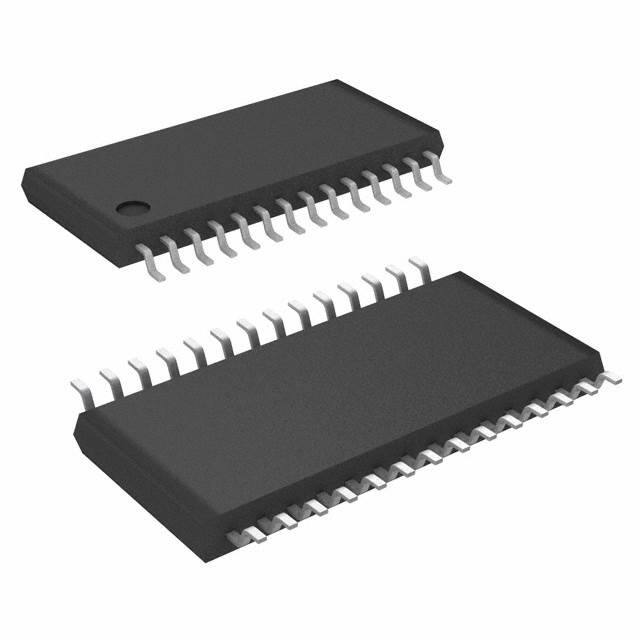
The X3100 and X3101 are each housed in a 28 Ld TSSOP
package.
Functional Diagram
RGP RGC
VCC
VCELL3
CB3
OVP/LMON
FET CONTROL
CIRCUITRY
ANALOGMUX
REGULATOR
CB1
CB2
UVP/OCP
5VDC
VCELL1
VCELL2
RGO
OVERCHARGE
OVERDISCHARGE
PROTECTION
SENSE
CIRCUITS
OVERCURRENT
PROTECTION
AND
CURRENT
SENSE
VCELL4/VSS
CB4
VSS
FN8110 Rev 1.00
January 3, 2008
PROTECTION
SAMPLE RATE
TIMER
VCS1
VCS2
INTERNAL VOLTAGE
REGULATOR
POWER-ON RESET AND STATUS
REGISTER
PROTECTION
CIRCUIT
TIMING CONTROL
AND
CONFIGURATION
OVT
UVT
CONFIGURATION
REGISTER
AS0
AS1
AS2
AO
4k-BIT
EEPROM
CONTROL
REGISTER
S0
SPI
I/F
SCK
CS
SI
OCT
Page 1 of 40
�X3100, X3101
Pinout
X3100, X3101
(28 LD TSSOP)
TOP VIEW
VCELL1 1
28 VCC
CB1 2
27 RGP
VCELL2 3
26 RGC
CB2 4
25 RGO
VCELL3 5
CB3 6
VCELL4/VSS* 7
24 UVP/OCP
23 OVP/LMON
22 CS
CB4 8
21 SCK
VSS 9
20 SO
VCS1 10
19 SI
VCS2 11
18 AS2
OVT 12
17 AS1
UVT 13
16 AS0
OCT 14
15 AO
*For X3101, Connect to GND
Ordering Information
PART
NUMBER*
PART
MARKING
VCC LIMITS
(V)
TEMP. RANGE
(°C)
PKG.
DWG. #
PACKAGE
X3100V28*
X3100V
6 to 24
-20 to +70
28 Ld TSSOP
M28.173
X3100V28I
X3100V I
6 to 24
-20 to +70
28 Ld TSSOP
M28.173
X3100V28Z
(Note)
X3100VZ
6 to 24
-20 to +70
28 Ld TSSOP
(Pb-free)
M28.173
X3101V28*
X3101V
6 to 24
-20 to +70
28 Ld TSSOP
M28.173
X3101V28Z
(Note)
X3101VZ
6 to 24
-20 to +70
28 Ld TSSOP
(Pb-free)
M28.173
**Add “-T1” or “T2” suffix for tape and reel. Please refer to TB347 for details on reel specifications.
NOTE: Intersil Pb-free plus anneal products employ special Pb-free material sets; molding compounds/die attach materials and 100% matte tin
plate termination finish, which are RoHS compliant and compatible with both SnPb and Pb-free soldering operations. Intersil Pb-free products are
MSL classified at Pb-free peak reflow temperatures that meet or exceed the Pb-free requirements of IPC/JEDEC J STD-020.
Pin Descriptions
PIN
NUMBER PIN NAME
1
VCELL1
2
CB1
3
VCELL2
FN8110 Rev 1.00
January 3, 2008
BRIEF DESCRIPTION
Battery cell 1 voltage input. This pin is used to monitor the voltage of this battery cell internally.
The voltage of an individual cell can also be monitored externally at pin AO.
The X3100 monitors 4 battery cells. The X3101 monitors 3 battery cells.
Cell balancing FET control output 1. This output is used to switch an external FET in order to
perform cell voltage balancing control. This function can be used to adjust an individual cell voltage
(e.g. during cell charging). CB1 can be driven high (Vcc) or low (Vss) to switch the external FET
ON/OFF.
Battery cell 2 voltage. This pin is used to monitor the voltage of this battery cell internally. The voltage of an individual cell
can also be monitored externally at pin AO.
The X3100 monitors 4 battery cells. The X3101 monitors 3 battery cells.
Page 2 of 40
�X3100, X3101
Pin Descriptions (Continued)
PIN
NUMBER PIN NAME
BRIEF DESCRIPTION
4
CB2
Cell balancing FET control output 2. These outputs are used to switch an external FETs in order to perform cell voltage
balancing control. This function can be used to adjust individual cell voltages (e.g. during cell charging). CB2 can be driven
high (Vcc) or low (Vss) to switch the external FET ON/OFF.
5
VCELL3
6
CB3
Cell balancing FET control output 3. This output is used to switch an external FET in order to
perform cell voltage balancing control. This function can be used to adjust an individual cell voltage (e.g. during cell charging).
CB3 can be driven high (Vcc) or low (Vss) to switch the external FET ON/OFF.
7
VCELL4/
VSS
Battery cell 4 voltage (X3100) Ground (X3101). This pin is used to monitor the voltage of this battery cell internally. The
voltage of an individual cell can also be monitored externally at pin AO.
The X3100 monitors 4 battery cells. The X3101 monitors 3 battery cells. For the X3101 device connect the VCELL4/VSS pin
to ground.
8
CB4
Cell balancing FET control output 4. This output is used to switch an external FET in order to
perform cell voltage balancing control. This function can be used to adjust individual cell voltages
(e.g. during cell charging). CB4 can be driven high (Vcc) or low (Vss) to switch the external FET ON/OFF.
When using the X3101, the CB4 pin can be left unconnected, or the FET control can be used for other purposes.
Ground.
Battery cell 3 voltage. This pin is used to monitor the voltage of each battery cell internally. The
voltage of an individual cell can also be monitored externally at pin AO.
The X3100 monitors 4 battery cells. The X3101 monitors 3 battery cells.
9
VSS
10
VCS1
Current sense voltage pin 1. A sense resistor (RSENSE) is connected between VCS1 and VCS2 (Figure 1). RSENSE has a
resistance in the order of 20m to 100m, and is used to monitor current flowing through the battery terminals, and protect
against over-current conditions. The voltage at each end of RSENSE can also be monitored at pin AO.
11
VCS2
Current sense voltage pin 2. A sense resistor (RSENSE) is connected between VCS1 and VCS2 (Figure 1). RSENSE has a
resistance in the order of 20m to 100m, and is used to monitor current flowing through the battery terminals, and protect
against over-current conditions. The voltage at each end of RSENSE can also be monitored at pin AO.
12
OVT
Over-charge detect/release time input. This pin is used to control the delay time (TOV) associated with the detection of an
over-charge condition (see section “Over-charge Protection” on page 14).
13
UVT
Over-discharge detect/release time input. This pin is used to control the delay times associated with the detection (TUV)
and release (TUVR) of an over-discharge (under-voltage) condition (see section “Over-discharge Protection” on page 16).
14
OCT
Over-current detect/release time input. This pin is used to control the delay times associated with the detection (TOC) and
release (TOCR) of an over-current condition (see section “Over-Current Protection” on page 19).
15
AO
Analog multiplexer output. The analog output pin is used to externally monitor various battery parameter voltages. The
voltages which can be monitored at AO (see section “Analog Multiplexer Selection” on page 21) are:
– Individual cell voltages
– Voltage across the current sense resistor (RSENSE). This voltage is amplified with a gain set by the user in the control register
(see section “Current Monitor Function” on page 21.)
The analog select pins pins AS0 - AS2 select the desired voltage to be monitored on the AO pin.
16
AS0
Analog output select pin 0. These pins select which voltage is to be multiplexed to the output AO (see section “Sleep Control
(SLP)” on page 11 and section “Current Monitor Function” on page 21)
17
AS1
Analog output select pin 1. These pins select which voltage is to be multiplexed to the output AO (see section “Sleep Control
(SLP)” on page 11 and section “Current Monitor Function” on page 21)
18
AS2
Analog output select pin 2. These pins select which voltage is to be multiplexed to the output AO (see section “Sleep Control
(SLP)” on page 11 and section “Current Monitor Function” on page 21)
19
SI
Serial data input. SI is the serial data input pin. All opcodes, byte addresses, and data to be written to the device are input
on this pin.
20
SO
Serial data output. SO is a push/pull serial data output pin. During a read cycle, data is shifted out on this pin. Data is clocked
out by the falling edge of the serial clock. While CS is HIGH, SO will be in a High Impedance state.
Note: SI and SO may be tied together to form one line (SI/SO). In this case, all serial data communication with the X3100 or
X3101 is undertaken over one I/O line. This is permitted ONLY if no simultaneous read/write operations occur.
21
SCK
Serial data clock input. The Serial Clock controls the serial bus timing for data input and output. Opcodes, addresses, or
data present on the SI pin are latched on the rising edge of the clock input, while data on the SO pin change after the falling
edge of the clock input.
22
CS
Chip select input pin. When CS is HIGH, the device is deselected and the SO output pin is at high impedance. CS LOW
enables the SPI serial bus.
FN8110 Rev 1.00
January 3, 2008
Page 3 of 40
�X3100, X3101
Pin Descriptions (Continued)
PIN
NUMBER PIN NAME
BRIEF DESCRIPTION
23
OVP/
LMON
Over-charge Voltage Protection output/Load Monitor output. This one pin performs two functions depending upon the
present mode of operation of the X3100 or X3101.
Over-charge Voltage Protection (OVP)
This pin controls the switching of the battery pack charge FET. This power FET is a P-channel device. As such, cell charge is
possible when OVP/LMON=VSS, and cell charge is prohibited when OVP/LMO = VCC. In this configuration the X3100 and
X3101 turn off the charge voltage when the cells reach the over-charge limit. This prevents damage to the battery cells due to
the application of charging voltage for an extended period of time (see section “Over-charge Protection” on page 14).
Load Monitor (LMON)
In Over-current Protection mode, a small test current (7.5µA typ.) is passed out of this pin to sense the load resistance. The
measured load resistance determines whether or not the X3100 or X3101 returns from an over-current protection mode (see
section “Over-Current Protection” on page 19).
24
UVP/
OCP
Over-discharge protection output/Over-current protection output. Pin UVP/OCP controls the battery cell discharge via
an external power FET. This P-channel FET allows cell discharge when UVP/OCP=Vss, and prevents cell discharge when
UVP/OCP=Vcc. The X3100 and X3101 turn the external power FET off when the X3100 or X3101 detects either:
Over-discharge Protection (UVP)
In this case, pin 24 is referred to as “Over-discharge (Under-Voltage) protection (UVP)” (see section “Over-discharge
Protection” on page 16). UVP/OCP turns off the FET to prevent damage to the battery cells by being discharged to
excessively low voltages.
Over-current protection (OCP)
In this case, pin 24 is referred to as “Over-current protection (OCP)” (see section “Over-Current Protection” on page 19).
UVP/OCP turns off the FET to prevent damage to the battery pack caused by excessive current drain (e.g. as in the case of
a surge current resulting from a stalled disk drive).
25
RGO
Voltage regulator output pin. This pin is an input that connects to the collector of an external PNP transistor. The voltage
at this pin is the regulated output voltage, but it also provides the feedback voltage for the regulator and the operating voltage
for the device.
26
RGC
Voltage regulator control pin. This pin connects to the base of an external PNP transistor and controls the transistor turn on.
27
RGP
Voltage regulator protection pin. This pin is an input that connects to the emitter of an external PNP transistor and an
external current limit resistor and provides a current limit voltage.
28
VCC
Power supply. This pin is provides the voltage for FET control, regulator operation, and wake-up
circuits.
Principles of Operation
The X3100 and X3101 provide two distinct levels of
functionality and battery cell protection:
First, in Normal mode, the device periodically checks each cell
for an overcharge and overdischarge state, while continuously
watching for a pack over-current condition. A protection mode
violation results from an over-charge, over-discharge, or
overcurrent state. The thresholds for these states are selected
by the user through software. When one of these conditions
occur, a Discharge FET or a Charge FET or both FETs are
turned off to protect the battery pack. In an over-discharge
condition, the X3100 and X3101 devices go into a low power
sleep mode to conserve battery power. During sleep, the
voltage regulator turns off, removing power from the
microcontroller to further reduce pack current.
Second, in Monitor mode, a microcontroller with A/D converter
measures battery cell voltage and pack current via pin AO and
the X3100 or X3101 on-board MUX. The user can thus
implement protection, charge/discharge, cell balancing or gas
gauge software algorithms to suit the specific application and
characteristics of the cells used. While monitoring these
voltages, all protection circuits are on continuously.
FN8110 Rev 1.00
January 3, 2008
In a typical application, the microcontroller is also programmed
to provide an SMBus interface along with the Smart Battery
System interface protocols. These additions allow an X3100 or
X3101 based module to adhere to the latest industry battery
pack standards.
Typical Application Circuit
The X3100 and X3101 have been designed to operate
correctly when used as connected in the Typical Application
Circuit (see Figure 1 on page 5).
The power MOSFET’s Q1 and Q2 are referred to as the
“Discharge FET” and “Charge FET,” respectively. Since these
FETs are p-channel devices, they will be ON when the gates
are at VSS, and OFF when the gates are at VCC. As their
names imply, the discharge FET is used to control cell
discharge, while the charge FET is used to control cell charge.
Diode D1 allows the battery cells to receive charge even if the
Discharge FET is OFF, while diode D2 allows the cells to
discharge even if the charge FET is OFF. D1 and D2 are
integral to the Power FETs. It should be noted that the cells can
neither charge nor discharge if both the charge FET and
discharge FET are OFF.
Page 4 of 40
�X3100, X3101
Power to the X3100 or X3101 is applied to pin VCC via diodes
D6 and D7. These diodes allow the device to be powered by
the Li-Ion battery cells in normal operating conditions, and
allow the device to be powered by an external source (such as
a charger) via pin P+ when the battery cells are being charged.
These diodes should have sufficient current and voltage
ratings to handle both cases of battery cell charge and
discharge.
The operation of the voltage regulator is described in section
“Voltage Regulator” on page 22. This regulator provides a
5VDC±0.5% output. The capacitor (C1) connected from RGO
to ground provides some noise filtering on the RGO output.
The recommended value is 0.1µF or less. The value chosen
must allow VRGO to decay to 0.1V in 170ms or less when the
X3100 or X3101 enter the sleep mode. If the decay is slower
than this, a resistor (R1) can be placed in parallel with the
capacitor.
During an initial turn-on period (TPUR + TOC), VRGO has a
stable, regulated output in the range of 5VDC ± 10% (see
Figure ). The selection of the microcontroller should take this
into consideration. At the end of this turn on period, the X3100
and X3101 “self-tunes” the output of the voltage regulator to
5V+/-0.5%. As such, VRGO can be used as a reference voltage
for the A/D converter in the microcontroller. Repeated powerup operations, consistently re-apply the same “tuned” value for
VRGO.
Figure 1 shows a battery pack temperature sensor
implemented as a simple resistive voltage divider, utilizing a
thermistor (RT) and resistor (RT’). The voltage VT can be fed to
the A/D input of a microcontroller and used to measure and
monitor the temperature of the battery cells. RT’ should be
chosen with consideration of the dynamic resistance range of
RT as well as the input voltage range of the microcontroller A/D
input. An output of the microcontroller can be used to turn on
the thermistor divider to allow periodic turn-on of the sensor.
This reduces power consumption since the resistor string is not
always drawing current.
Diode D3 is included to facilitate load monitoring in an Overcurrent protection mode (see section “Over-Current Protection”
on page 19), while preventing the flow of current into pin
OVP/LMON during normal operation. The N-Channel transistor
turns off this function during the sleep mode.
Resistor RPU is connected across the gate and drain of the
charge FET (Q2). The discharge FET Q1 is turned off by the
X3100 or X3101, and hence the voltage at pin OVP/LMON will
be (at maximum) equal to the voltage of the battery terminal,
minus one forward biased diode voltage drop (VP+ - VD7).
Since the drain of Q2 is connected to a higher potential (VP+) a
pull-up resistor (RPU) in the order of 1Mshould be used to
ensure that the charge FET is completely turned OFF when
OVP/LMON = VCC.
The capacitors on the VCELL1 to VCELL4 inputs are used in a
first order low pass filter configuration, at the battery cell
FN8110 Rev 1.00
January 3, 2008
voltage monitoring inputs (VCELL1 - VCELL4) of the X3100 or
X3101. This filter is used to block any unwanted interference
signals from being inadvertently injected into the monitor
inputs. These interference signals may result from:
• Transients created at battery contacts when the battery pack
is being connected/disconnected from the charger or the
host.
• Electrostatic discharge (ESD) from something/someone
touching the battery contacts.
• Unfiltered noise that exists in the host device.
• RF signals which are induced into the battery pack from the
surrounding environment.
Such interference can cause the X3100 or X3101 to operate in
an unpredictable manner, or in extreme cases, damage the
device. As a guide, the capacitor should be in the order of
0.01µF and the resistor, should be in the order of 10k The
capacitors should be of the ceramic type. In order to minimize
interference, PCB tracks should be made as short and as wide
as possible to reduce their impedance. The battery cells should
also be placed as close to the X3100 or X3101 monitor inputs as
possible.
Resistors RCB and the associated n-channel MOSFET’s (Q6 Q9) are used for battery cell voltage balancing. The X3100 and
X3101 provide internal drive circuitry which allows the user to
switch FETs Q6 - Q9 ON or OFF via the microcontroller and SPI
port (see section “Cell Voltage Balance Control (CBC1-CBC4)”
on page 12). When any of the these FETs are switched ON, a
current, limited by resistor RCB, flows across the particular
battery cell. In doing so, the user can control the voltage across
each individual battery cell. This is important when using Li-Ion
battery cells since imbalances in cell voltages can, in time,
greatly reduce the usable capacity of the battery pack. Cell
voltage balancing may be implemented in various ways, but is
usually performed towards the end of cell charging (“Top-ofcharge method”). Values for RCB will vary according to the
specific application.
The internal 4kbit EEPROM memory can be used to store the
cell characteristics for implementing such functions as gas
gauging, battery pack history, charge/discharge cycles, and
minimum/maximum conditions. Battery pack manufacturing
data as well as serial number information can also be stored in
the EEPROM array. An SPI serial bus provides the
communication link to the EEPROM.
A current sense resistor (RSENSE) is used to measure and
monitor the current flowing into/out of the battery terminals,
and is used to protect the pack from over-current conditions
(see section “Over-Current Protection” on page 19). RSENSE is
also used to externally monitor current via a microcontroller
(see section “Current Monitor Function” on page 21).
FETs Q4 and Q5 may be required on general purpose I/Os
of the microcontroller that connect outside of the package. In
some cases, without FETs, pull-up resistors external to the
Page 5 of 40
�X3100, X3101
pack force a voltage on the VCC pin of the microcontroller
during a pack sleep condition. This voltage can affect the
proper tuned voltage of the X3100/X3101 regulator. These
FETs should be turned-on by the microcontroller. (See
Figure 1.)
Power-On Sequence
Initial connection of the Li-Ion cells in the battery pack will not
normally power-up the battery pack. Instead, the X3100 or
X3101 enters and remains in the SLEEP mode. To exit the
SLEEP mode, after the initial power-up sequence, or following
any other SLEEP MODE, a minimum of 16V (X3100 VSLR) or
12V (X3101 VSLR) is applied to the VCC pin, as would be the
case during a battery charge condition. (See Figure .)
When VSLR is applied to VCC, the analog select pins (AS2 AS0) and the SPI communication pins (CS, CLK, SI, SO) must
be low, so the X3100 and X3101 power-up correctly into the
normal operating mode. This can be done by using a power-on
reset circuit.
When entering the normal operating mode, either from initial
power-up or following the SLEEP MODE, all bits in the control
register are zero. With UVPC and OVPC bits at zero, the
charge and discharge FETs are off. The microcontroller must
turn these on to activate the pack. The microcontroller would
typically check the voltage and current levels prior to turning on
the FETs via the SPI port. The software should prevent turning
on the FETs throughout an initial measurement/calibration
period. The duration of this period is TOV + 200ms or TUV +
200ms, whichever is longer.
FN8110 Rev 1.00
January 3, 2008
Page 6 of 40
�FN8110 Rev 1.00
January 3, 2008
B-
RCB
RCB
RCB
100
100
100
100
8
0.01µF
7
0.01µF
6
5
0.01µF
4
3
2
0.01µF
1
1µF
For the X3101, or X3100
when 3 cells are used,
VCELL4/VSS MUST be
tied to Ground (Vss). CB4
is left unconnected.
Q9
Q8
Q7
Q6
RCB
B+
3 OR 4
Li-ion cells†
VSS
CB4
9
RGC
26
Q3
11
VCS2
VRGO
D1
1M
14
OCT
AO
AS0
AS1
AS2
SI
SO
15
16
17
18
19
20
21
22
R1
1M
(Optional)
VT
Choose R1 and
C1 such that
VRGO goes to
0.1V (or less) in
170ms (or less)
when entering
the Sleep Mode
(at +25oC).
C1
0.1µF
Q10
D3
ILMON
CHARGE FET
RPU
CS
SCK
OVP/
LMON
23
Q2
D2
13
COC
UVT
UVP/
OCP
24
Q1
12
CUV
OVT
RGO
25
COV
X3100/X3101
RSENSE
10
VCS1
VCELL4/VSS
CB3
VCELL3
CB2
VCELL2
CB1
VCELL1
RGP
VCC
RLMT
DISCHARGE FET
ILMT
27
.
BAT54
D7
28
BAT54
D6
RT
RT’
GP
I/O
A/D INPUT
GP
I/O
RESET
A/D INPUT
GP
I/O
A/D
REF
VCC
ASIC
µC,
Q4
100
100 SMBDATA
SMBCLK
Set High
after poweruppowerdown to
enable
P-
FETs Q4 and Q5 are needed
only if external pull-ups on
the SMBus lines cause voltage to appear at the uC Vcc
pin during sleep mode.
Q5
CPOR
RPOR
Transistor Recommendations
Q1, Q2 = Si4435
Q3 = 2N3906
Q4 - Q10 = 2N7002
P+
X3100, X3101
Typical Application Circuit
Page 7 of 40
�X3100, X3101
Power-up Timing (Initial Power-up or after
Sleep Mode)
TPUR
VSLR
VCC
0V
5V ±10% (STABLE AND REPEATABLE)
VRGO TUNED TO 5V ±0.5%
5V
VRGO
0V
2ms (Typ.)
1
VOLTAGE REGULATOR OUTPUT STATUS
(INTERNAL SIGNAL) VRGS
0
TOC
1
1 = X3100/1 in Overcurrent Protection Mode
0 = X3100/1 NOT in Overcurrent Protection Mode
OVERCURRENT DETECTION STATUS
(INTERNAL SIGNAL) OCDS
0
1
STATUS REGISTER BIT 0
1 = X3100/1 in Overcurrent Protection Mode OR VRGO Not Yet Tuned
0 = X3100/1 NOT in Overcurrent Protection Mode AND VRGO Tuned
VRGS+OCDS
0
TOV+200ms
1
STATUS REGISTER BIT 2
(SWCEN = 0)
0
CCES+OVDS
1 = VCELL < VCE OR X3100/1 in Overcharge Protection Mode
0 = VCELL > VCE OR X3100/1 NOT in Overcharge Protection Mode
1
STATUS REGISTER BIT 2
(SWCEN = 1)
0
OVDS
1 = X3100/1 in Overcharge Protection Mode
FROM
MICROCONTROLLER
0 = X3100/1 NOT in Overcharge Protection Mode
AS2_AS0
TOV + 200ms OR TUV + 200ms (WHICHEVER IS LONGER)
SPI PORT
Any Read or Write Operation, except
turn-on of FETs can start here.
FN8110 Rev 1.00
January 3, 2008
Charge, Discharge FETs can be
turned on here.
Page 8 of 40
�X3100, X3101
Configuration Register
Overdischarge Settings
The X3100 and X3101 can be configured for specific user
requirements using the Configuration Register.
VUV1 and VUV0 control the cell over-discharge (under voltage
threshold) level. See section “Over-discharge Protection” on
page 16.
TABLE 1. CONFIGURATION REGISTER FUNCTIONALITY
BIT(s)
NAME
0 to 5
–
6
SWCEN
FUNCTION
TABLE 5. OVERDISCHARGE THRESHOLD SELECTION.
CONFIGURATION
REGISTER BITS
(don’t care)
Switch Cell Charge Enable threshold
function ON/OFF
7
CELLN
Set the number of Li-ion battery cells
used (3 or 4)
8 to 9
VCE1-VCE0
Select Cell Charge Enable threshold
10 to11
VOC1-VOC0
Select overcurrent threshold
12 to 13
VUV1-VUV0
Select overdischarge (under voltage)
threshold
14 to 15
VOV1-VOV0
Select overcharge voltage threshold
TABLE 2. CONFIGURATION REGISTER—UPPER BYTE
15
14
13
12
11
10
9
8
VOV1
VOV0
VUV1
VUV0
VOC1
VOC0
VCE1
VCE0
OPERATION
VUV1
VUV0
X3100
X3101
0
0
VUV = 1.95V
VUV = 2.25V
(X3101 default)
0
1
VUV = 2.05V
VUV = 2.35V
1
0
VUV = 2.15V
VUV = 2.45V
1
1
VUV = 2.25V
(X3100 default)
VUV = 2.55V
Overcurrent Settings
VOC1 and VOC0 control the pack over-current level. See
section “Over-Current Protection” on page 19.
TABLE 6. OVERCURRENT THRESHOLD VOLTAGE SELECTION
CONFIGURATION REGISTER
BITS
X3100 Default = 33H; X3101 Default = 03H.
TABLE 3. CONFIGURATION REGISTER—LOWER BYTE
7
6
5
4
3
2
1
0
CELLN
SWCEN
x
x
x
x
x
x
X3100 Default = C0H; X3101 Default = 40H.
Overcharge Voltage Settings
VOV1 and VOV0 control the cell over-charge level. See
section “Over-charge Protection” on page 14.
TABLE 4. OVERCHARGE VOLTAGE THRESHOLD SELECTION
CONFIGURATION REGISTER
BITS
VOV1
VOV0
0
0
VOV = 4.20 (Default)
0
1
VOV = 4.25
1
0
VOV = 4.30
1
1
VOV = 4.35
VOC1
VOC0
OPERATION
0
0
VOC = 0.075V (Default)
0
1
VOC = 0.100V
1
0
VOC = 0.125V
1
1
VOC = 0.150V
Cell Charge Enable Settings
VCE1, VCE0 and SWCEN control the pack charge enable
function. SWCEN enables or disables a circuit that prevents
charging if the cells are at too low a voltage. VCE1 and VCE0
select the voltage that is recognized as too low. See section
“Sleep Mode” on page 16.
TABLE 7. CELL CHARGE ENABLE FUNCTION
OPERATION (V)
CONFIGURATION
REGISTER BITS
SWCEN
OPERATION
0
Charge enable function: ON
1
Charge enable function: OFF
TABLE 8. CELL CHARGING THRESHOLD VOLTAGE
SELECTION
CONFIGURATION REGISTER
BITS
FN8110 Rev 1.00
January 3, 2008
VCE1
VCE0
0
0
VCE = 0.5V
OPERATION
0
1
VCE = 0.80V
1
0
VCE = 1.10V
1
1
VCE = 1.40V (Default)
Page 9 of 40
�X3100, X3101
Figure 1. Power-up of Configuration Register
Cell Number Selection
The X3100 is designed to operate with four (4) Li-Ion battery
cells. The X3101 is designed to operate with three (3) Li-ion
battery cells. The CELLN bit of the configuration register
(Table 9) sets the number of cells recognized. For the X3101,
the value for CELLN should always be zero.
Configuration Register (SRAM)
Upper Byte
Lower Byte
Recall
Recall
Shadow EEPROM
Table 9. Selection of Number of Battery
Cells1
Configuration
Register Bit
CELLN
Operation
1
4 Li-Ion battery cells (X3100 default)
0
3 Li-Ion battery cells (X3100 or X3101)
The configuration register consists of 16 bits of
NOVRAM memory (Table 2, Table 3). This memory features a high-speed static RAM (SRAM) overlaid bit-forbit with non-volatile “Shadow” EEPROM. An automatic
array recall operation reloads the contents of the
shadow EEPROM into the SRAM configuration register
upon power-up (Figure 1).
1.
The configuration register is designed for unlimited write
operations to SRAM, and a minimum of 1,000,000 store
operations to the EEPROM. Data retention is specified
to be greater than 100 years.
It should be noted that the bits of the shadow EEPROM
are for the dedicated use of the configuration register,
and are NOT part of the general purpose 4kbit EEPROM
array.
The WCFIG command writes to the configuration regis-
ter, see Table 30 and section “X3100/X3101 SPI Serial
Communication” on page 23.
After writing to this register using a WCFIG instruction,
data will be stored only in the SRAM of the configuration
register. In order to store data in shadow EEPROM, a
WREN instruction, followed by a EEWRITE to any
address of the 4kbit EEPROM memory array must
occur, see Figure 2. This sequence initiates an internal
nonvolatile write cycle which permits data to be stored in
the shadow EEPROM cells. It must be noted that even
though a EEWRITE is made to the general purpose
4kbit EEPROM array, the value and address to which it
is written, is unimportant. If this procedure is not followed, the configuration register will power-up to the last
previously stored values following a power-down
sequence.
In the case that the X3100 or X3101 is configured for use with only
three Li-Ion battery cells (i.e. CELLN = 0), then VCELL4 (pin 7)
MUST be tied to Vss (pin 9) to ensure correct operation.
FN8110 Rev 1.00
January 3, 2008
Page 10 of 40
�X3100, X3101
Since the control register is volatile, data will be lost following a power-down and power-up sequence. The
default value of the control register on initial power-up
or when exiting the SLEEP MODE is 00h (for both
upper and lower bytes respectively). The functions that
can be manipulated by the Control Register are shown
in Table 12.
Figure 2. Writing to Configuration Register
Power-up
Data Recalled
from Shadow
EEPROM to SRAM
Configuration Register
(SRAM = Old Value)
Table 12. Control Register Functionality
WCFIG (New Value)
Bit(s) Name
Configuration Register
(Sram = New Value)
Store
(New Value)
in Shadow
EEPROM
NO
YES
WREN
Write
Enable
Power-downpower-on
Data Recalled
from Shadow
EEPROM to SRAM
EEWRITE
Write to
4kbit EEPROM
Configuration Register
(SRAM = old value)
Function
0-4
–
(don’t care)
5,6
0, 0
Reserved—write 0 to these locations.
7
SLP
Select sleep mode.
8,9
CSG1, Select current sense voltage gain
CSG0
10
OVPC OVP control: switch pin OVP = VCC/VSS
11
UVPC
UVP control: switch pin UVP = VCC/VSS
12
CBC1
CB1 control: switch pin CB1 = VCC/VSS
13
CBC2
CB2 control: switch pin CB2 = VCC/VSS
14
CBC3
CB3 control: switch pin CB3 = VCC/VSS
15
CBC4
CB4 control: switch pin CB4 = VCC/VSS
Sleep Control (SLP)
Power-down
Power-up
Setting the SLP bit to ‘1’ forces the X3100 or X3101 into
the sleep mode, if VCC < VSLP. See section “Sleep
Mode” on page 16.
Data Recalled
from Shadow
EEPROM to SRAM
Table 13. Sleep Mode Selection
Configuration Register
(SRAM = New Value)
Control Register Bits
SLP
Operation
CONTROL REGISTER
0
Normal operation mode
The Control Register is realized as two bytes of volatile
RAM (Table 10, Table 11). This register is written using
the WCNTR instruction, see Table 30 and section
“X3100/X3101 SPI Serial Communication” on page 23.
1
Device enters Sleep mode
Table 10. Control Register—Upper Byte
15
14
13
12
11
10
9
8
CBC4
CBC3
CBC2
CBC1
UVPC
OVPC
CSG1
CSG0
Table 11. Control Register—Lower Byte
7
6
5
4
3
2
1
0
SLP
0
0
x
x
x
x
x
FN8110 Rev 1.00
January 3, 2008
Page 11 of 40
�X3100, X3101
Current Sense Gain (CSG1, CSG0)
These bits set the gain of the current sense amplifier.
These are x10, x25, x80 and x160. For more detail, see
section “Current Monitor Function” on page 21.
Table 16. CB1—CB4 Control
Control Register Bits
CBC4 CBC3 CBC2 CBC1
Table 14. Current Sense Gain Control
Control Register Bits
Operation
x
x
x
1
Set CB1 = VCC (ON)
x
x
x
0
Set CB1=VSS (OFF)
x
x
1
x
Set CB2 = VCC (ON)
CSG1
CSG0
Operation
x
x
0
x
Set CB2 = VSS (OFF)
0
0
Set current sense gain = x10
x
1
x
x
Set CB3 = VCC (ON)
0
1
Set current sense gain = x25
x
0
x
x
Set CB3 = VSS (OFF)
1
0
Set current sense gain = x80
1
x
x
x
Set CB4 = VCC (ON)
Set current sense gain = x160
0
x
x
x
Set CB4 = VSS (OFF)
1
1
Charge/Discharge Control (OVPC, UVPC)
The OVPC and UVPC bits allow control of cell charge and
discharge externally, via the SPI port. These bits control
the OVP/LMON and UVP/OCP pins, which in turn control
the external power FETs.
Using P-channel power FETs ensures that the FET is on
when the pin voltage is low (Vss), and off when the pin
voltage is high (Vcc).
OVP/LMON and UVP/OCP can be controlled by using
the WCNTR Instruction to set bits OVPC and UVPC in
the Control register (See page 11).
Table 15. UVP/OVP Control
Control Register Bits
OVPC
UVPC
Operation
1
x
Pin OVP = VSS (FET ON)
0
x
Pin OVP = VCC (FET OFF)
x
1
Pin UVP = VSS (FET ON)
x
0
Pin UVP = VCC (FET OFF)
It is possible to set/change the values of OVPC and
UVPC during a protection mode. A change in the state of
the pins OVP/LMON and UVP/OCP, however, will not
take place until the device has returned from the protection mode.
Cell Voltage Balance Control (CBC1-CBC4)
This function can be used to adjust individual battery cell
voltage during charging. Pins CB1 - CB4 are used to
control external power switching devices. Cell voltage
balancing is achieved via the SPI port.
FN8110 Rev 1.00
January 3, 2008
CB1 - CB4 can be controlled by using the WCNTR Instruction to set bits CBC1 - CBC4 in the control register
(Table 16).
STATUS REGISTER
The status of the X3100 or X3101 can be verified by
using the RDSTAT command to read the contents of the
Status Register (Table 17).
Table 17. Status Register.
7
6
5
4
3
2
1
0
0
0
0
0
0
CCES+
OVDS
UVDS
VRGS+
OCDS
The function of each bit in the status register is shown in
Table 18.
Bit 0 of the status register (VRGS+OCDS) actually indicates the status of two conditions of the X3100 or
X3101. Voltage Regulator Status (VRGS) is an internally
generated signal which indicates that the output of the
Voltage Regulator (VRGO) has reached an output of
5VDC ± 0.5%. In this case, the voltage regulator is said
to be “tuned”. Before the signal VRGS goes low (i.e.
before the voltage regulator is tuned), the voltage at the
output of the regulator is nominally 5VDC ± 10% (See
section “Voltage Regulator” on page 22.) Over-current
Detection Status (OCDS) is another internally generated
signal which indicates whether or not the X3100 or
X3101 is in over-current protection mode.
Signals VRGS and OCDS are logically OR’ed together
(VRGS + OCDS) and written to bit 0 of the status register (See Table 18, Table 17 and Figure ).
Page 12 of 40
�X3100, X3101
Bit 1 of the status register simply indicates whether or
not the X3100 or X3101 is in over-discharge protection
mode.
an internally generated signal which indicates whether
or not the X3100 or X3101 is in over-charge protection
mode.
Bit 2 of the status register (CCES+OVDS) indicates the
status of two conditions of the X3100 or X3101. Cell
Charge Enable Status (CCES) is an internally generated
signal which indicates the status of any cell voltage
(VCELL) with respect to the Cell Charge Enable Voltage
(VCE). Over-charge Voltage Detection Status (OVDS) is
When the cell charge enable function is switched ON
(configuration bit SWCEN=0), the signals CCES and
OVDS are logically OR’ed (CCES+OVDS) and written to
bit 2 of the status register. If the cell charge enable function is switched OFF (configuration bit SWCEN=1), then
bit 2 of the status register effectively only represents information about the over-charge status (OVDS) of the
X3100 or X3101 (See Table 18, Table 17 and Figure ).
Table 18. Status Register Functionality.
Bit(s)
0
1
2
3-7
Name
Description
VRGS+OCDS Voltage regulator
status
+
Over-current
detection status
UVDS
CCES+OVDS
Case
Status
-
1
VRGO not yet tuned (VRGO = 5V ± 10%) OR
X3100/X3101 in over-current protection mode.
0
VRGO tuned (VRGO = 5V ± 0.5%) AND
X3100/X3101 NOT in over-current protection mode.
1
X3100/X3101 in over-discharge protection mode
0
X3100/X3101 NOT in over-discharge protection mode
1
VCELL < VCE OR
X3100/X3101 in over-charge protection mode
0
VCELL > VCE AND
X3100/X3101 NOT in over-charge protection mode
1
X3100/X3101 in over-charge protection mode
0
X3100/X3101 NOT in over-charge protection mode
0
Not used (always return zero)
Over-discharge
detection status
-
Cell charge
enable status
+
Over-charge
detection status
SWCEN =0†
-
SWCEN =1†
-
Interpretation
Notes: † This bit is set in the configuration register.
X3100/X3101 INTERNAL PROTECTION FUNCTIONS
The X3100 and the X3101 provide periodic monitoring
(see section “Periodic Protection Monitoring” on page
13) for over-charge and over-discharge states and continuous monitoring for an over-current state. It has automatic shutdown when a protection mode is encountered,
as well as automatic return after the device is released
from a protection mode. When sampling voltages
through the analog port (Monitor Mode), over-charge
and over-discharge protection monitoring is also performed on a continuous basis.
Voltage thresholds for each of these protection modes
(VOV, VUV, and VOC respectively) can be individually
selected via software and stored in an internal non-volatile register. This feature allows the user to avoid the
restrictions of mask programmed voltage thresholds, and
is especially useful during prototype/evaluation design
stages or when cells with slightly different characteristics
are used in an existing design.
FN8110 Rev 1.00
January 3, 2008
Delay times for the detection of, and release from protection modes (TOV, TUV/TUVR, and TOC/TOCR respectively)
can be individually varied by setting the values of external capacitors connected to pins OVT, UVT, OCT.
Periodic Protection Monitoring
In normal operation, the analog select pins are set such
that AS2 = L, AS1 = L, AS0 = L. In this mode the X3100
and X3101 conserve power by sampling the cells for
over or over-discharge conditions.
In this state over-charge and over-discharge protection
circuitry are usually off, but are periodically switched on
by the internal Protection Sample Rate Timer (PSRT). The
over-charge and over-discharge protection circuitry is on
for approximately 2ms in each 125ms period. Over-current monitoring is continuous. In monitor mode (see
page 21) over-charge and over-discharge monitoring is
also continuous.
Page 13 of 40
�X3100, X3101
Over-charge Protection
The X3100 and X3101 monitor the voltage on each
battery cell (VCELL). If for any cell, VCELL > VOV for a
time exceeding TOV, then the Charge FET will be
switched OFF (OVP/LMON = VCC). The device has
now entered Over-charge protection mode (Figure 3).
The status of the discharge FET (via pin UVP) will
remain unaffected.
While in over-charge protection mode, it is possible to
change the state of the OVPC bit in the control register
such that OVP/LMON = Vss (Charge FET = ON).
Although the OVPC bit in the control register can be
changed, the change will not be seen at pin OVP until
the X3100 or X3101 returns from over-charge protection mode.
The over-charge detection delay TOV, is varied using a
capacitor (COV) connected between pin OVT and
GND. A typical delay time is shown in Table 10. The
delay TOV that results from a particular capacitance
COV, can be approximated by the following linear
equation:
TOV (s) 10 x COV (µF).
Table 19. Typical over-charge detection time
Symbol
COV
Delay
TOV
0.1µF
1.0s (Typ)
The device further continues to monitor the battery cell
voltages, and is released from over-charge protection
mode when VCELL< VOVR, for all cells. When the
X3100 or X3101 is released from over-charge protection mode, the charge FET is automatically switched
ON (OVP/LMON = VSS). When the device returns from
over-charge protection mode, the status of the discharge FET (pin UVP/OCP) remains unaffected.
The value of VOV can be selected from the values
shown in Table 4 by setting bits VOV1, VOV0. These
bits are set by using the WCFIG instruction to write to
the configuration register.
Figure 3. Over-charge Protection Mode—Event Diagram
Normal Operation Mode
Normal Operation Mode
Over-charge
Protection
Mode
VOV
VOVR
VCELL
TOV
VCC
OVP/LMON
VSS
Event
0
FN8110 Rev 1.00
January 3, 2008
1
2
3
Page 14 of 40
�X3100, X3101
Table 20. Over-charge Protection Mode—Event Diagram Description
Event
[0,1)
[1]
Event Description
— Discharge FET is ON (UVP/OCP = VSS).
— Charge FET is ON (OVP/LMON = VSS), and hence battery cells are permitted to receive charge.
— All cell voltages (VCELL - VCELL4) are below the over-charge voltage threshold (VOV).
— The device is in normal operation mode (i.e. not in a protection mode).
— The voltage of one or more of the battery cells (VCELL), exceeds VOV.
— The internal over-charge detection delay timer begins counting down.
— The device is still in normal operation mode
(1,2)
The internal over-charge detection delay timer continues counting for TOV seconds.
[2]
The internal over-charge detection delay timer times out
AND
VCELL still exceeds VOV.
— Therefore, the internal over-charge sense circuitry switches the charge FET OFF (OVP/LMON=Vcc).
— The device has now entered over-charge protection mode.
(2,3)
[3]
While in over-charge protection mode:
— The battery cells are permitted to discharge via the discharge FET, and diode D2 across the charge FET
— The X3100 or X3101 monitors the voltages VCELL1 - VCELL4 to determine whether or not they have all fallen
below the “Return from over-charge threshold” (VOVR).
— (It is possible to change the status of UVP/OCP or OVP/LMON using the control register)
— All cell voltages fall below VOVR—The device is now in normal operation mode.
— The X3100/X3101 automatically switches charge FET = ON (OVP/LMON = Vss)
— The status of the discharge FET remains unaffected.
— Charging of the battery cells can now resume.
FN8110 Rev 1.00
January 3, 2008
Page 15 of 40
�X3100, X3101
Over-discharge Protection
If VCELL < VUV, for a time exceeding TUV, the cells are
said to be in a over-discharge state (Figure 4). In this
instance, the X3100 and X3101 automatically switch the
discharge FET OFF (UVP/OCP = Vcc), and then enter
sleep mode.
The over-discharge (under-voltage) value, VUV, can be
selected from the values shown in Table 5 by setting bits
VUV1, VUV0 in the configuration register. These bits are
set using the WCFIG command. Once in the sleep mode,
the following steps must occur before the X3100 or X3101
allows the battery cells to discharge:
– The X3100 and X3101 must wake from sleep mode
(see section “Voltage Regulator” on page 22).
– The charge FET must be switched ON by the microcontroller (OVP/LMON=VSS), via the control register (see
section “Control Register Functionality” on page 11).
A sleep mode can be induced by the user, by setting the
SLP bit in the control register (Table 13) using the
WCNTR Instruction.
In sleep mode, power to all internal circuitry is switched
off, minimizing the current drawn by the device to 1µA
(max). In this state, the discharge FET and the charge
FET are switched OFF (OVP/LMON=VCC and
UVP/OCP=VCC), and the 5VDC regulated output (VRGO)
is 0V. Control of UVP/OCP and OVP/LMON via bits
UVPC and OVPC in the control register is also prohibited.
The device returns from sleep mode when VCC VSLR.
(e.g. when the battery terminals are connected to a battery charger). In this case, the X3100 or the X3101
restores the 5VDC regulated output (section “Voltage
Regulator” on page 22), and communication via the SPI
port resumes.
– The discharge FET must be switched ON by the microcontroller (UVP/OCP=VSS), via the control register
(see section “Control Register Functionality” on page
11)
If the Cell Charge Enable function is enabled when VCC
rises above VSLR, the X3100 and X3101 internally verifies that the individual battery cell voltages (VCELL) are
larger than the cell charge enable voltage (VCE) before
allowing the FETs to be turned on. The value of VCE is
selected by using the WCFIG command to set bits
VCE1–VCE0 in the configuration register.
The times TUV/TUVR are varied using a capacitor (CUV)
connected between pin UVT and GND (Table 13). The
delay TUV that results from a particular capacitance CUV,
can be approximated by the following linear equation:
Only if the condition “VCELL > VCE” is satisfied can the
state of charge and discharge FETs be changed via the
control register. Otherwise, if VCELL < VCE for any bat-
– All battery cells must satisfy the condition: VCELL >
VUVR for a time exceeding TUVR.
TUV (s) 10 x CUV (µF)
TUVR (ms) 70 x CUV (µF)
Table 21. Typical Over-discharge Delay Times
Symbol
Description
CUV
Delay
TUV
Over-discharge
detection delay
0.1µF
1.0s (Typ)
TUVR
Over-discharge
release time
0.1µF
7ms (Typ)
Sleep Mode
The X3100 or X3101 can enter sleep mode in two ways:
tery cell then both the Charge FET and the discharge FET
are OFF (OVP/LMON=Vcc and UVP/OCP=VCC). Thus
both charge and discharge of the battery cells via terminals P+ / P- is prohibited1.
The cell charging threshold function can be switched ON
or OFF by the user, by setting bit SWCEN in the configuration register (Table 7) using the WCFIG command. In
the case that this cell charge enable function is switched
OFF, then VCE is effectively set to 0V.
Neither the X3100 nor the X3101 enter sleep mode
(automatically or manually, by setting the SLP bit) if VCC
VSLR. This is to ensure that the device does not go into
a sleep mode while the battery cells are at a high voltage
(e.g. during cell charging).
i) The device enters the over-discharge protection mode.
ii) The user sends the device into sleep mode using the
control register.
1.
FN8110 Rev 1.00
January 3, 2008
In this case, charging of the battery may resume ONLY if the cell
charge enable function is switched OFF by setting bit SWCEN =
1 in the configuration register (See Above, “CONFIGURATION
REGISTER FUNCTIONALITY” on page 9).
Page 16 of 40
�X3100, X3101
Figure 4. Over-discharge Protection Mode—Event Diagram
VSLR
VCC
Cell Charge Prohibited if SWCEN=0
AND VCELL < VCE
VCELL
0.7V
VUVR
VUV
TUVR
VCE
TUV
VCC
Note 3
Over-discharge Protection Mode
UVP/OCP
VSS
The Longer of TOV+200ms OR TUV+200ms
VCC
Note 1, 2
OVP/LMON
RGO
VSS
5V
Sleep Mode
0V
Event
0
1
2
3
4
5
Note 1: If SWEN = 0 and VCELL < VCE, then OVP/LMON stays high and charging is prohibited.
Note 2: OVP/LMON stays high until the microcontroller writes a “1” to the OVPC bit in the control register. This sets the signal low, which turns on the
charge FET. It cannot be turned on prior to this time.
Note 3: UVP/OCP stays high until the microcontroller writes a “1” to the UVPC bit in the control register. This sets the signal low, which turns on the
discharge FET. The FET cannot be turned on prior to this time.
Table 22. Over-discharge Protection Mode—Event Diagram Description
Event
[0,1)
[1]
Event Description
— Charge FET is ON (OVP/LMON = VSS)
— Discharge FET is ON (UVP/OCP = VSS), and hence battery cells are permitted to discharge.
— All cell voltages (VCELL1 - VCELL4) are above the Over-discharge threshold voltage (VUV).
— The device is in normal operation mode (i.e. not in a protection mode).
— The voltage of one or more of the battery cells (VCELL), falls below VUV.
— The internal over-discharge detection delay timer begins counting down.
— The device is still in normal operation mode
The internal over-discharge detection delay timer continues counting for TUV seconds.
(1,2)
[2]
— The internal over-discharge detection delay timer times out, AND VCELL is still below VUV.
— The internal over-discharge sense circuitry switches the discharge FET OFF (UVP/OCP = Vcc).
— The charge FET is switched OFF (OVP/LMON = VCC).
— The device has now entered over-discharge protection mode.
— At the same time, the device enters sleep mode (See section “Voltage Regulator” on page 22).
(2,3)
While device is in sleep (in over-discharge protection) mode:
— The power to ALL internal circuits is switched OFF limiting power consumption to less than 1µA.
— The output of the 5VDC voltage regulator (RGO) is 0V.
— Access to the X3100/X3101 via the SPI port is NOT possible.
FN8110 Rev 1.00
January 3, 2008
Page 17 of 40
�X3100, X3101
Table 22. Over-discharge Protection Mode—Event Diagram Description (Continued)
Event
[3]
(3,4)
Event Description
Return from sleep mode (but still in over-discharge protection mode):
— Vcc rises above the “Return from Sleep mode threshold Voltage” (VSLR)—This would normally occur in the
case that the battery pack was connected to a charger. The X3100/X3101 is now powered via P+/P-, and
not the battery pack cells.
— Power is returned to ALL internal circuitry
— 5VDC output is returned to the regulator output (RGO).
— Access is enabled to the X3100/X3101 via the SPI port.
— The status of the discharge FET remains OFF (It is possible to change the status of UVPC in the control
register, although it will have no effect at this time).
If the cell charge enable
function is switched ON
AND VCELL > VCE
OR
Charge enable function is
switched OFF
If the cell charge enable
function is switched ON
AND
VCELL < VCE
[4]
— The X3100/X3101 initiates a reset operation that takes the longer of
TOV + 200ms or TUV + 200ms to complete. Do not write to the FET control
bits during this time.
— The charge FET is switched On (OVP/LMON = Vss) by the microcontroller by
writing a “1” to the OVPC bit in the control register.
— The battery cells now receive charge via the charge FET and diode D1
across the discharge FET (which is OFF).
— The X3100/X3101 monitors the VCELL voltage to determine whether or not it
has risen above VUVR.
— Charge/discharge of the battery cells via P+ is no longer permitted (Charge
FET and discharge FET are held OFF).
— (Charging may re-commence only when the Cell Charge Enable function is
switched OFF - See Sections: “Configuration Register” page 4, and “Sleep
mode” page 17.)
— The voltage of all of the battery cells (VCELL), have risen above VUVR.
— The internal Over-discharge release timer begins counting down.
— The X3100/X3101 is still in over-discharge protection mode.
(4,5)
— The internal over-discharge release timer continues counting for tUVR seconds.
— The X3100/X3101 should be in monitor mode (AS2:AS0 not all low) for recovery time based on tUVR. Otherwise recovery is based on two successive samples about 120ms apart.
[5]
— The internal over-discharge release timer times out, AND VCELL is still above VUVR.
— The device returns from over-discharge protection mode, and is now in normal operation mode.
— The Charger voltage can now drop below VSLR and the X3100/X3101 will not go back to sleep.
— The discharge FET is can now be switched ON (UVP/OCP = VSS) by the microcontroller by writing a “1” to
the UVPC bit of the control register.
— The status of the charge FET remains unaffected (ON)
— The battery cells continue to receive charge via the charge FET and discharge FET (both ON).
FN8110 Rev 1.00
January 3, 2008
Page 18 of 40
�X3100, X3101
Over-Current Protection
In addition to monitoring the battery cell voltages, the
X3100 and X3101 continually monitor the voltage VCS21
(VCS2 - VCS1) across the current sense resistor
(RSENSE). If VCS21 > VOC for a time exceeding TOC,
then the device enters over-current protection mode (Figure 7). In this mode, the X3100 and X3101 automatically
switch the discharge FET OFF (UVP/OCP = Vcc) and
hence prevent current from flowing through the terminals
P+ and P-.
Figure 5. Over-Current Protection
P+
ILMON
Q2
If the load resistance > ROCR (ILMON = 0µA) for a time
exceeding TOCR, then the X3100 or X3101 is released
from over-current protection mode. The discharge FET
is then automatically switched ON (UVP/OCP = Vss) by
the X3100 or X3101, unless the status of UVP/OCP has
been changed in control register (by manipulating bit
UVPC) during the over-current protection mode.
TOC/TOCR are varied using a capacitor (COC) connected
between pin OCT and VSS. A list of typical delay times
is shown in Table 23. Note that the value COC should be
larger than 1nF.
The delay TOC and TOCR that results from a particular
capacitance COC can be approximated by the following
equations:
TOC (ms) 10,000 x COC (µF)
D1
VRGO
Q10
OVP/LMON
TOCR (ms) 10,000 x COC (µF)
ROCR
(Load)
Table 23. Typical Over-Current Delay Times
X3100/X3101
Symbol
FET Control
Circuitry
VSS
VCS1
VCS2
P-
RSENSE
The 5VDC voltage regulator output (VRGO) is always
active during an over-current protection mode.
Once the device enters over-current protection mode,
the X3100 and X3101 begin a load monitor state. In the
load monitor state, a small current (ILMON = 7.5µA typ.) is
passed out of pin OVP/LMON in order to determine the
load resistance. The load resistance is the impedance
seen looking out of pin OVP/LMON, between terminal
P+ and pin VSS (See Figure 5.)
FN8110 Rev 1.00
January 3, 2008
Description
COC
Delay
TOC
Over-current
detection delay
0.001µF
10ms (Typ)
TOCR
Over-current
release time
0.001µF
10ms (Typ)
The value of VOC can be selected from the values
shown in Table 6, by setting bits VOC1, VOC0 in the
configuration register using the WCFIG command.
Note: If the Charge FET is turned off, due to an overcharge condition or by direct command from the microcontroller, the cells are not in an undervoltage condition
and the pack has a load, then excessive current may
flow through Q10 and diode D1. To eliminate this effect,
the gate of Q10 can be turned off by the microcontroller
through an unused X3101 cell balance output, or directly
from a microcontroller port instead of connecting to
VRGO.
Page 19 of 40
�X3100, X3101
Figure 6. Over-Current Protection Mode—Event Diagram
Over-Current Protection Mode
Normal Operation Mode
Normal Operation Mode
B+
P+
P+ = (RLOAD+RSENSE) x ILMON
VOC
Voc
VCS2
VSS
TOCR
TOC
VCC
UVP/OCP
VSS
Event
0
1
3
2
4
Table 24. Over-Current Protection Mode—Event Diagram Description
Event
[0,1)
[1]
Event Description
— Discharge FET is ON (OCP = Vss). Battery cells are permitted to discharge.
— VCS21 (VCS2 - VCS1) is less than the over-current threshold voltage (VOC).
— The device is in normal operation mode (i.e. not in a protection mode).
— Excessive current flows through the battery terminals P+, dropping the voltage. (See Figure 6.).
— The positive battery terminal voltage (P+) falls, and VCS21 exceeds VOC.
— The internal over-current detection delay timer begins counting down.
— The device is still in Normal Operation Mode
The internal Over-current detection delay timer continues counting for TOC seconds.
(1,2)
[2]
(2,3)
— The internal over-current detection delay timer times out, AND VCS21 is still above VOC.
— The internal over-current sense circuitry switches the discharge FET OFF (UVP/OCP = Vcc).
— The device now begins a load monitor state by passing a small test current (ILMON = 7.5µA) out of pin
OVP/LMON. This senses if an over-current condition (i.e. if the load resistance < ROCR) still exists across
P+/P-.
— The device has now entered over-current protection mode.
— It is possible to change the status of UVPC and OVPC in the control register, although the status of pins
UVP/OCP and OVP/LMON will not change until the device has returned from over-current protection mode.
— The X3100/X3101 now continuously monitors the load resistance to detect whether or not an overcurrent condition is still present across the battery terminals P+/P-.
FN8110 Rev 1.00
January 3, 2008
Page 20 of 40
�X3100, X3101
Table 24. Over-Current Protection Mode—Event Diagram Description (Continued)
Event
Event Description
[3]
— The device detects the load resistance has risen above ROCR.
— Voltages P+ and VCS21 return to their normal levels.
— The test current from pin OVP/LMON is stopped (ILMON = 0µA)
— The device has now returned from the load monitor state
— The internal over-current release time timer begins counting down.
— Device is still in over-current protection mode.
The internal over-current release timer continues counting for TOCR seconds.
(3,4)
[4]
— The internal over-current release timer times out, and VCS21 is still below VOC.
— The device returns from over-current protection mode, and is now in normal operation mode.
— The discharge FET is automatically switched ON (UVP/OCP = Vss)—unless the status of UVPC has been
changed in the control register during the over-current protection mode.
— The status of the charge FET remains unaffected.
— Discharge of the battery cells is once again possible.
MONITOR MODE
Analog Multiplexer Selection
The X3100 and X3101 can be used to externally monitor
individual battery cell voltages, and battery current. Each
quantity can be monitored at the analog output pin (AO),
and is selected using the analog select (AS0 - AS2) pins
(Table 25). Also, see Figure 7.
Since the value of the sense resistor (RSENSE) is small
(typically in the order of tens of mand since the resolution of various A/D converters may vary, the voltage
across RSENSE (VCS1 and VCS2) is amplified internally
with a gain of between 10 and 160, and output to pin AO
(Figure 7).
Figure 7. X3100/X3101 Monitor Circuit
AS2 AS1 AS0
AO output
L
L
L
VSS(1)
L
L
H
VCELL1 - VCELL2 (VCELL12)
L
H
L
VCELL2 - VCELL3 (VCELL23)
L
H
H
VCELL3 - VCELL4 (VCELL34)
H
L
L
VCELL4 - Vss (VCELL4)
H
L
H
VCS1 - VCS2 (VCS12)(2)
H
H
L
VCS2 - VCS1 (VCS21)(2)
H
H
H
VSS
Cell 1 Voltage
Cell 2 Voltage
Cell 3 Voltage
Cell 4 Voltage
Voltage
Level
Shifters
2.5V
R2
+
-
R1
AO
S0
Config
Register
Gain
Setting
CSG1 CSG0
Cross-Bar
Switch
SPI
I/F
SCL
CS
SI
Over-Current
Protection
X3100/X3101
Current Monitor Function
FN8110 Rev 1.00
January 3, 2008
AS0
AS1
AS2
R2
R1
Notes: (1) This is the normal state of the X3100 or X3101. While
in this state Over-charge and Over-discharge Protection conditions are periodically monitored (See “Periodic Protection Monitoring” on page 13.)
(2) VCS1, VCS2 are read at AO with respect to a DC bias
voltage of 2.5V (See section “Current Monitor Function” on page 21).
The voltages monitored at pins VCS1 and VCS2 can be
used to calculate current flowing through the battery terminals, using an off-board microcontroller with an A/D.
OP1
Analog MUX
Table 25. AO Selection Map
VCS1
VCS2
P-
RSENSE
Page 21 of 40
�X3100, X3101
The internal gain of the X3100 or X3101 current sense
voltage amplifier can be selected by using the WCNTR
Instruction to set bits CSG1 and CSG0 in the control register (Table 14). The CSG1 and CSG0 bits select one of
four input resistors to Op Amp OP1. The feedback resistors remain constant. This ratio of input to feedback
resistors determines the gain. Putting external resistors in
series with the inputs reduces the gain of the amplifier.
VCS1 and VCS2 are read at AO with respect to a DC
bias voltage of 2.5V. Therefore, the voltage range of
VCS12 and VCS21 changes depending upon the direction of current flow (i.e. battery cells are in Charge or
Discharge—Table 21).
Table 26. AO Voltage Range for VCS12 and VCS21
AO
Cell State
AO Voltage Range
VCS12
Charge
2.5V AO 5.0V
VCS12
Discharge
0V AO 2.5V
VCS21
Charge
0V AO 2.5V
VCS21
Discharge
2.5V AO 5.0V
By calculating the difference of VCS12 and VCS21 the
offset voltage of the internal op-amp circuitry is cancelled. This allows for the accurate calculation of current
flow into and out of the battery cells.
Pack current is calculated using the following formula:
age across VCC and RGP reaches a nominal 2.5V (i.e.
the threshold voltage for the FET), Q2 switches ON, shorting VCC to the base of Q1. Since the base voltage of Q1
is now higher than the emitter voltage, Q1 switches OFF,
and hence the supply current goes to zero.
Typical values for RLMT and ILMT are shown in Table 27.
In order to protect the voltage regulator circuitry from
damage in case of a short-circuit, RLMT 10 should
always be used.
Table 27. Typical Values for RLMT and ILMT
RLMT
Voltage Regulator Current Limit (ILMT)
10
250mA ± 50% (Typical)
25
100mA ± 50% (Typical)
50
50mA ± 50% (Typical)
When choosing the value of RLMT, the drive limitations
of the PNP transistor used should also be taken into
consideration. The transistor should have a gain of at
least 100 to support an output current of 250mA.
Figure 8. Voltage Regulator Operation
VCC
To Internal Voltage
Regulating Circuitry
RLMT
X3100/X3101
VCS 12 – VCS 21
Pack Current = -------------------------------------------------------------------------------------------------------- 2 gain setting (current sense resistor)
VOLTAGE REGULATOR
The X3100 and X3101 are able to supply peripheral
devices with a regulated 5VDC±0.5% output at pin
RGO. The voltage regulator should be configured externally as shown in Figure 8.
The non-inverting input of OP1 is fed with a high precision 5VDC supply. The voltage at the output of the voltage regulator (VRGO) is compared to this 5V reference
via the inverting input of OP1. The output of OP1 in turn
drives the regulator pnp transistor (Q1). The negative
feedback at the regulator output maintains the voltage at
5VDC±0.5% (including ripple) despite changes in load,
and differences in regulator transistors.
When power is applied to pin VCC of the X3100 or
X3101, VRGO is regulated to 5VDC±10% for a nominal
time of TOC+2ms. During this time period, VRGO is “tuned”
to attain a final value of 5VDC±0.5% (Figure ).
The maximum current that can flow from the voltage regulator (ILMT) is controlled by the current limiting resistor
(RLMT) connected between RGP and VCC. When the voltFN8110 Rev 1.00
January 3, 2008
Tuning
5VDC
Precision
Voltage
Reference
Un-Regulated
Voltage
Input
Q2
+
_
RGP
ILMT
RGC
Q1
OP1
RGO
Regulated
5VDC Output
0.1
µF
VRGO
4KBIT EEPROM MEMORY
The X3100 and X3101 contain a CMOS 4k-bit serial
EEPROM, internally organized as 512 x 8 bits. This
memory is accessible via the SPI port, and features the
IDLock function.
The 4kbit EEPROM array can be accessed by the SPI
port at any time, even during a protection mode, except
during sleep mode. After power is applied to VCC of the
X3100 or X3101, EEREAD and EEWRITE Instructions
can be executed only after times tPUR (power-up to read
time) and tPUW (power-up to write time) respectively.
Page 22 of 40
�X3100, X3101
IDLock is a programmable locking mechanism which
allows the user to lock data in different portions of the
EEPROM memory space, ranging from as little as one
page to as much as 1/2 of the total array. This is useful
for storing information such as battery pack serial number, manufacturing codes, battery cell chemistry data, or
cell characteristics.
EEPROM Write Enable Latch
The X3100 and X3101 contain an EEPROM “Write
Enable” latch. This latch must be SET before a write to
EEPROM operation is initiated. The WREN instruction will
set the latch and the WRDI instruction will reset the latch
(Figure 9). This latch is automatically reset upon a powerup condition and after the completion of a byte or page
write cycle.
IDLock Memory
Intersil’s IDLock memory provides a flexible mechanism
to store and lock battery cell/pack information. There are
seven distinct IDLock memory areas within the array
which vary in size from one page to as much as half of
the entire array.
Prior to any attempt to perform an IDLock operation, the
WREN instruction must first be issued. This instruction
sets the “Write Enable” latch and allows the part to
respond to an IDLock sequence. The EEPROM memory
may then be IDLocked by writing the SET IDL instruction
(Table 30 and Figure 17), followed by the IDLock protection byte.
Table 28. IDLock Partition Byte Definition
IDLock Protection
Bytes
EEPROM Memory Address
IDLocked
0000 0000
None
0000 0001
000h - 07Fh
0000 0010
080h - 0FFh
0000 0011
100h - 17Fh
0000 0100
180h - 1FFh
0000 0101
000h - 0FFh
0000 0110
000h - 00Fh
0000 0111
1F0h - 1FFh
FN8110 Rev 1.00
January 3, 2008
The IDLock protection byte contains the IDLock bits
IDL2-IDL0, which defines the particular partition to be
locked (Table 28). The rest of the bits [7:3] are unused
and must be written as zeroes. Bringing CS HIGH after
the two byte IDLock instruction initiates a nonvolatile write
to the status register. Writing more than one byte to the
status register will overwrite the previously written
IDLock byte.
Once an IDLock instruction has been completed, that
IDLock setup is held in a nonvolatile IDLock Register
(Table 29) until the next IDLock instruction is issued. The
sections of the memory array that are IDLocked can be
read but not written until IDLock is removed or changed.
Table 29. IDLock Register
7
6
5
4
3
2
1
0
0
0
0
0
0
IDL2
IDL1
IDL0
Note:
Bits [7:3] specified to be “0’s”
X3100/X3101 SPI SERIAL COMMUNICATION
The X3100 and X3101 are designed to interface directly
with the synchronous Serial Peripheral Interface (SPI) of
many popular microcontroller families. This interface
uses four signals, CS, SCK, SI and SO. The signal CS
when low, enables communications with the device. The
SI pin carries the input signal and SO provides the output signal. SCK clocks data in or out. The X3100 and
X3101 operate in SPI mode 0 which requires SCK to be
normally low when not transferring data. It also specifies
that the rising edge of SCK clocks data into the device,
while the falling edge of SCK clocks data out.
This SPI port is used to set the various internal registers,
write to the EEPROM array, and select various device
functions.
The X3100 and X3101 contain an 8-bit instruction register. It is accessed by clocking data into the SI input.
CS must be LOW during the entire operation. Table 30
contains a list of the instructions and their opcodes. All
instructions, addresses and data are transferred MSB
first.
Data input is sampled on the first rising edge of SCK
after CS goes LOW. SCK is static, allowing the user to
stop the clock, and then start it again to resume operations where left off.
Page 23 of 40
�X3100, X3101
Table 30. X3100/X3101 Instruction Set
Instruction
Name
Instruction
Format*
WREN
0000 0110
Set the write enable latch (write enable operation)—Figure 9
WRDI
0000 0100
Reset the write enable latch (write disable operation)—Figure 9
EEWRITE
0000 0010
Write command followed by address/data (4kbit EEPROM)—Figure 10, Figure 11
EEREAD STAT
0000 0101
Reads IDLock settings & status of EEPROM EEWRITE instruction—Figure 12
Description
EEREAD
0000 0011
Read operation followed by address (for 4kbit EEPROM)—Figure 13
WCFIG
0000 1001
Write to configuration register followed by two bytes of data—Figure 2, Figure 14.
Data stored in SRAM only and will power-up to previous settings—Figure 1
WCNTR
0000 1010
Write to control register, followed by two bytes of data—Figure 15
RDSTAT
0000 1011
Read contents of status register—Figure 16
SET IDL
0000 0001
Set EEPROM ID lock partition followed by partition byte—Figure 17
*Instructions have the MSB in leftmost position and are transferred MSB first.
Write Enable/Write Disable (WREN/WRDI)
Any write to a nonvolatile array or register, requires the
WREN command be sent prior to the write command.
This command sets an internal latch allowing the write
operation to proceed. The WRDI command resets the
internal latch if the system decides to abort a write operation. See Figure 9.
Figure 9. EEPROM Write Enable Latch (WREN/WRDI) Operation Sequence
CS
0
1
2
3
4
5
6
7
WREN
SCK
Instruction
(1 Byte)
SI
SO
FN8110 Rev 1.00
January 3, 2008
High Impedance
WRDI
Page 24 of 40
�X3100, X3101
EEPROM Write Sequence (EEWRITE)
Prior to any attempt to write data into the EEPROM of the
X3100 or X3101, the “Write Enable” latch must first be set
by issuing the WREN instruction (See Table 30 and Figure 9). CS is first taken LOW. Then the WREN instruction
is clocked into the X3100 or X3101. After all eight bits of
the instruction are transmitted, CS must then be taken
HIGH. If the user continues the write operation without
taking CS HIGH after issuing the WREN instruction, the
write operation will be ignored.
To write data to the EEPROM memory array, the user
issues the EEWRITE instruction, followed by the 16 bit
address and the data to be written. Only the last 9 bits of
the address are used and bits [15:9] are specified to be
zeroes. This is minimally a thirty-two clock operation. CS
must go LOW and remain LOW for the duration of the
operation. The host may continue to write up to 16 bytes
of data to the X3100 or X3101. The only restriction is the
16 bytes must reside on the same page. If the address
counter reaches the end of the page and the clock continues, the counter will “roll over” to the first address of
the page and overwrite any data that may have been
previously written.
For a byte or page write operation to be completed, CS
can only be brought HIGH after bit 0 of the last data byte
to be written is clocked in. If it is brought HIGH at any
other time, the write operation will not be completed.
Refer to Figure 10 and Figure 11 for detailed illustration
of the write sequences and time frames in which CS
going HIGH are valid.
EEPROM Read Status Operation (EEREAD STAT)
If there is not a nonvolatile write in progress, the
EEREAD STAT instruction returns the IDLock byte from
the IDLock register which contains the IDLock bits IDL2IDL0 (Table 29). The IDLock bits define the IDLock condition (Table 28). The other bits are reserved and will
return ‘0’ when read.
If a nonvolatile write to the EEPROM (i.e. EEWRITE
instruction) is in progress, the EEREAD STAT returns a
HIGH on SO. When the nonvolatile write cycle in the
EEPROM is completed, the status register data is read
out.
Clocking SCK is valid during a nonvolatile write in progress, but is not necessary. If the SCK line is clocked, the
pointer to the status register is also clocked, even
though the SO pin shows the status of the nonvolatile
write operation (See Figure 12).
Figure 10. EEPROM Byte Write (EEWRITE) Operation Sequence
CS
0
1
2
3
4
5
6
7
8
9
20 21 22 23 24 25 26 27 28 29 30 31
SCK
EEWRITE Instruction
(1 Byte)
SI
SO
Byte Address (2 Byte)
15 14
3
2
Data Byte
1
0
7
6
5
4
3
2
1
0
High Impedance
FN8110 Rev 1.00
January 3, 2008
Page 25 of 40
�X3100, X3101
Figure 11. EEPROM Page Write (EEWRITE) Operation Sequence
CS
0
1
2
3
4
5
6
7
8
9
20 21 22 23 24 25 26 27 28 29 30 31
10
SCK
EEWRITE
Instruction
Byte Address
(2 Byte)
15 14 13
SI
3
Data Byte 1
2
1
0
7
6
5
4
3
2
1
0
150
151
149
5
148
6
147
146
32 33 34 35 36 37 38 39 40 41 42 43 44 45 46 47
145
CS
1
0
SCK
Data Byte 2
SI
7
6
5
4
3
Data Byte 3
2
1
0
7
6
5
4
3
2
Data Byte 16
1
0
4
3
2
Figure 12. EEPROM Read Status (EEREAD STAT) Operation Sequence
CS
0
1
2
3
4
5
6
...
7
SCK
EEREAD STAT
Instruction
...
SI
Nonvolatile EEWRITE in Progress
I
D
L
2
SO
SO High During
Nonvolatile
EEWRITE Cycle
FN8110 Rev 1.00
January 3, 2008
I
D
L
1
I
D
L
0
...
SO=Status Reg Bit
When No Nonvolatile
EEWRITE Cycle
Page 26 of 40
�X3100, X3101
EEPROM Read Sequence (EEREAD)
When reading from the X3100 or X3101 EEPROM memory, CS is first pulled LOW to select the device. The 8-bit
EEREAD instruction is transmitted to the X3100 or
X3101, followed by the 16-bit address, of which the last 9
bits are used (bits [15:9] specified to be zeroes). After the
EEREAD opcode and address are sent, the data stored in
the memory at the selected address is shifted out on the
SO line. The data stored in memory at the next address
can be read sequentially by continuing to provide clock
pulses. The address is automatically incremented to the
next higher address after each byte of data is shifted out.
When the highest address is reached (01FFh), the
address counter rolls over to address 0000h, allowing the
read cycle to be continued indefinitely. The read operation
is terminated by taking CS HIGH. Refer to the EEPROM
Read (EEREAD) operation sequence illustrated in Figure
13.
Figure 13. EEPROM (EEREAD) Read Operation Sequence
CS
0
1
2
3
4
5
6
7
8
9
20 21 22 23 24 25 26 27 28 29 30 31
SCK
EEREAD Instruction
(1 Byte)
SI
SO
High Impedance
FN8110 Rev 1.00
January 3, 2008
Byte Address (2 Byte)
15 14
3
2
Data Out
1
0
7
6
5
4
3
2
1
0
Page 27 of 40
�X3100, X3101
Write Configuration Register (WCFIG)
Write Control Register (WCNTRL)
The Write Configuration Register (WCFIG) instruction
updates the static part of the Configuration Register.
These new values take effect immediately, for example
writing a new Over-discharge voltage limit. However, to
make these changes permanent, so they remain if the
cell voltages are removed, an EEWRITE operation to
the EEPROM array is required following the WCFIG
command. This command is shown in Figure 14.
The Write Control Register (WCNTRL) instruction
updates the contents of the volatile Control Register.
This command sets the status of the FET control pins,
the cell balancing outputs, the current sense gain and
external entry to the sleep mode. Since this instruction
controls a volatile register, no other commands are
required and there is no delay time needed after the
instruction, before subsequent commands. The
operation of the WCNTRL command is shown in Figure
15.
Figure 14. Write Configuration Register (WCFIG) Operation Sequence
CS
0
1
2
3
4
5
6
7
8
20 21 22 23
9
SCK
Configuration
Register Data
WCFIG Instruction
3
15 14
SI
2
1
0
(2 BYTE)
(1 BYTE)
High Impedance
SO
Figure 15. Write Control Register (WCNTR) Operation Sequence
CS
0
1
2
3
4
5
6
7
8
18 19 20 21 22
9
23
SCK
Control
Register Data
WCNTR Instruction
(1 Byte)
SO
Control
Bits
FN8110 Rev 1.00
January 3, 2008
5
15 14
SI
4
3
2
1
0
(2 Byte)
High Impedance
Old Control Bits
New Control Bits
Page 28 of 40
�X3100, X3101
Read Status Register (RDSTAT)
Set ID Lock (SET IDL)
The Read Status Register (RDSTAT) command returns
the status of the X3100 or X3101. The Status Register
contains three bits that indicate whether the voltage regulator is stabilized, and if there are any protection failure
conditions. The operation of the RDSTAT instruction is
shown in Figure 16.
The contents of the EEPROM memory array in the
X3100 or X3101 can be locked in one of eight configurations using the SET ID lock command. When a section
of the EEPROM array is locked, the contents cannot be
changed, even when a valid write operation attempts a
write to that area. The SET IDL command operation is
shown in Figure 17.
Figure 16. Read Status Register (RDSTAT) Operation Sequence
CS
0
1
2
3
4
5
6
7
9
8
10 11 12 13 14 15
SCK
RDSTAT
Instruction
SI
(1 Byte)
High Impedance
SO
2
1
0
Status Register Output
Figure 17. EEPROM IDLock (SET IDL) Operation Sequence
CS
0
1
2
3
4
5
6
7
8
9
10 11 12 13 14 15
SCK
Set IDL
Instruction
I
D
L
2
SI
SO
FN8110 Rev 1.00
January 3, 2008
IDLock
Byte
I
D
L
1
I
D
L
0
High Impedance
Page 29 of 40
�X3100, X3101
ABSOLUTE MAXIMUM RATINGS
Symbol
Parameter
Min.
Max.
Unit
Storage temperature
-55
125
°C
Operating temperature
-40
85
°C
5
mA
300
°C
VSS-0.5
VSS+27.0
V
-0.5
6.75
V
DC output current
Lead temperature (soldering 10 seconds)
VCC
Power supply voltage
VCELL
Cell voltage
VTERM1
Terminal voltage (Pins: SCK, SI, SO, CS, AS0, AS1, AS2, VCS1,
VCS2, OVT, UVT, OCT, AO)
VSS-0.5
VRGO + 0.5
V
VTERM2
Terminal voltage (VCELL1)
VSS-0.5
VCC + 1.0
V
VTERM3
Terminal voltage (all other pins)
VSS-0.5
VCC + 0.5
V
Stresses above those listed under “Absolute Maximum Ratings” may cause permanent damage to the device. This is
a stress rating only; the functional operation of the device (at these or any other conditions above those indicated in
the operational sections of this specification) is not implied. Exposure to absolute maximum rating conditions for
extended periods may affect device reliability.
RECOMMENDED OPERATING CONDITIONS
Temperature
Min.
Max.
Supply Voltage
Limits
Commercial
-20°C
+70°C
X3100/X3101
6V to 24V
D.C. OPERATING CHARACTERISTICS
(Over the recommended operating conditions, unless otherwise specified.)
Limits
Symbol
Parameter
Min.
Max.
Units
ILI
Input leakage current (SCK, SI, CS,
ASO, AS1, AS2)
±10
µA
ILO
Output leakage current (SO)
±10
µA
Test Conditions
(1)
Input LOW voltage
(SCK, SI, CS, AS0, AS1, AS2)
- 0.3
VRGO x 0.3
V
VIH(1)
Input HIGH voltage
(SCK, SI, CS, AS0, AS1, AS2)
VRGO x 0.7
VRGO + 0.3
V
0.4
V
IOL = 1.0mA
V
IOH = -0.4mA
V
IOL = 100uA
V
IOH = -20uA
V
IOL = 2mA, RGP = VCC,
RGO = 5V
V
IOH = -20µA, RGP = VCC - 4V,
RGO = 5V
VIL
VOL1
Output LOW voltage (SO)
VOH1
Output HIGH voltage (SO)
VOL2
Output LOW voltage
(UVP/OCP, OVP/LMON, CB1-CB4)
VOH2
Output HIGH voltage
(UVP/OCP, OVP/LMON, CB1-CB4)
VOL3
Output LOW voltage (RGC)
VOH3
Output HIGH voltage (RGC)
Note:
VRGO - 0.8
0.4
VCC-0.4
0.4
VCC-4.0
(1) VIL min. and VIH max. are for reference only and are not 100% tested.
FN8110 Rev 1.00
January 3, 2008
Page 30 of 40
�X3100, X3101
OPERATING CHARACTERISTICS X3100
(Over the recommended operating conditions unless otherwise specified)
Description
5V regulated voltage
5VDC voltage regulator current
limit
Sym
VRGO
ILMT(3)
Condition
Min
Typ(2)
Max
Unit
5.5
V
On power-up or at wake-up
4.5
After self-tuning
(@10mA VRGO current; 25oC)
4.98
After self-tuning
(@10mA VRGO current; 0 - 50oC)(5)
4.95
5.02
After self-tuning
(@50mA VRGO current)(5)
4.90
5.00
4.99
RLMT = 10
250
5.00
V
mA
VCC supply current (1)
Icc1
Normal operation
85
250
µA
VCC supply current (2)
Icc2
during nonvolatile EEPROM write
1.3
2.5
mA
VCC supply current (3)
Icc3
During EEPROM read
SCK=3.3MHz
0.9
1.2
mA
VCC supply current (4)
Icc4
Sleep mode
1
µA
VCC supply current (5)
Icc5
Monitor mode
AN2, AN1, AN0 not equal to 0.
600
µA
Cell over-charge protection mode
voltage threshold
(Default in Boldface)
Cell over-charge protection mode
release voltage threshold
Cell over-charge detection time
VOV(4)
365
VOV = 4.20V (VOV1, VOV0 = 0,0)
0oC to 50oC
4.10
4.15
4.275
4.25
V
VOV = 4.25V (VOV1, VOV0 = 0,1)
0oC to 50oC
4.15
4.20
4.325
4.30
V
VOV = 4.30V (VOV1, VOV0 = 1,0)
0oC to 50oC
4.2
4.25
4.375
4.35
V
VOV = 4.35V (VOV1, VOV0 = 1,1)
0oC to 50oC
4.25
4.425
V
4.30
4.40
VOVR
TOV
(4)
Cell over-discharge protection
mode (SLEEP) threshold.
(Default in Boldface)
VUV
Cell over-discharge protection
mode release threshold
VUVR
COV = 0.1uF
VOV 0.20
V
1
s
VUV = 1.95V (VUV1, VUV0 = 0,0)
1.85
2.05
V
VUV = 2.05V (VUV1, VUV0 = 0,1)
1.95
2.15
V
VUV = 2.15V (VUV1, VUV0 = 1,0)
2.05
2.25
V
VUV = 2.25V (VUV1, VUV0 = 1,1)
2.15
2.35
V
VUV +
0.7
V
Cell over-discharge detection time
TUV
CUV = 0.1µF
CUV = 200pF
1
2
s
ms
Cell over-discharge release time
TUVR
CUV = 0.1µF
CUV = 200pF
7
100
ms
µs
FN8110 Rev 1.00
January 3, 2008
Page 31 of 40
�X3100, X3101
Description
Sym
Over-current mode detection
voltage
(Default in Boldface)
VOC
(4)
Condition
Min
VOC = 0.075V (VOC1, VOC0 = 0,0)
0oC to 50oC
Typ(2)
Max
Unit
0.050
0.060
0.100
0.090
V
VOC = 0.100V (VOC1, VOC0 = 0,1)
0oC to 50oC
0.075
0.085
0.125
0.115
V
VOC = 0.125V (VOC1, VOC0 = 1,0)
0oC to 50oC
0.100
0.110
0.150
0.140
V
VOC = 0.150V (VOC1, VOC0 = 1,1)
0oC to 50oC
0.125
0.135
0.175
0.165
V
Over-current mode detection time
TOC
COC = 0.001µF
COC = 200pF
10
2
ms
Over-current mode release time
TOCR
COC = 0.001µF
COC = 200pF
10
2
ms
Load resistance over-current mode
release condition
ROCR
Releases when OVP/LMON pin >
2.5V
250
k
Cell charge threshold voltage
VCE(4)
VCE = 0.5V (Vce1, Vce0 = 0,0)
0.4
0.5
0.6
V
VCE = 0.8V (Vce1, Vce0 = 0,1)
0.7
0.8
0.9
V
VCE = 1.1V (Vce1, Vce0 = 1,0)
1
1.1
1.2
V
VCE = 1.4V (Vce1, Vce0 = 1,1)
1.3
1.4
1.5
V
VSLR
See Wake-up test circuit
12.5
15.5
V
VSLP
See Sleep test circuit
11.5
14.5
V
X3100 wake-up voltage
(For Vcc above this voltage, the
device wakes up)
X3100 sleep voltage
(For Vcc above this voltage, the
device cannot go to sleep)
Notes: (2)
(3)
(4)
(5)
Typical at 25°C.
See Figure 10 on page 22.
The default setting is set at the time of shipping, but may be changed by the user via changes in the configuration register.
For reference only, this parameter is not 100% tested.
Wake-up test circuit (X3100)
Sleep test circuit (X3100)
Vcc
Vcc
Vcc
VCELL1
VCELL2
Vcc
RGP
VCELL1
RGC
RGO
1V
VRGO
VCELL2
RGP
RGC
RGO
VRGO
1V
VCELL3
VCELL3
1V
VCELL4
VCELL4
1V
Vss
Increase Vcc until VRGO turns on
FN8110 Rev 1.00
January 3, 2008
Vss
Decrease Vcc until VRGO turns off
Page 32 of 40
�X3100, X3101
OPERATING CHARACTERISTICS X3101
(Over the recommended operating conditions unless otherwise specified)
Description
5V regulated voltage
5VDC voltage regulator current limit
Sym
VRGO
ILMT(3)
Condition
Min
Typ(2)
Max
Unit
5.5
V
On power-up or at wake-up
4.5
After self-tuning
(@10mA VRGO current; 25oC)
4.98
After self-tuning
(@10mA VRGO current; 0 - 50oC)(5)
4.95
5.02
After self-tuning
(@50mA VRGO current)(5)
4.90
5.00
4.99
RLMT = 10
250
5.00
V
mA
VCC supply current (1)
Icc1
Normal operation
85
250
µA
VCC supply current (2)
Icc2
during nonvolatile EEPROM write
1.3
2.5
mA
VCC supply current (3)
Icc3
During EEPROM read
SCK = 3.3MHz
0.9
1.2
mA
VCC supply current (4)
Icc4
Sleep mode
1
µA
VCC supply current (5)
Icc5
Monitor mode
AN2, AN1, AN0 not equal to 0.
600
µA
Cell over-charge protection mode
voltage threshold
(Default in Boldface)
Cell over-charge protection mode
release voltage threshold
VOV(4)
VOV = 4.20V (VOV1, VOV0 = 0,0)
0oC to 50oC
4.10
4.15
4.275
4.25
V
VOV = 4.25V (VOV1, VOV0 = 0,1)
0oC to 50oC
4.15
4.20
4.325
4.30
V
VOV = 4.30V (VOV1, VOV0 = 1,0)
0oC to 50oC
4.2
4.25
4.375
4.35
V
VOV = 4.35V (VOV1, VOV0 = 1,1)
0oC to 50oC
4.25
4.425
V
4.30
4.40
VOVR
Cell over-charge detection time
TOV
Cell over-discharge protection
mode (SLEEP) threshold.
(Default in Boldface)
VUV(4)
Cell over-discharge protection
mode release threshold
365
COV = 0.1uF
VOV 0.20
V
1
s
VUV = 2.25V (VUV1, VUV0 = 0,0)
2.15
2.35
V
VUV = 2.35V (VUV1, VUV0 = 0,1)
2.25
2.45
V
VUV = 2.45V (VUV1, VUV0 = 1,0)
2.35
2.55
V
VUV = 2.55V (VUV1, VUV0 = 1,1)
2.45
2.65
V
VUVR
VUV +
0.7
V
Cell over-discharge detection time
TUV
CUV = 0.1µF
CUV = 200pF
1
2
s
ms
Cell over-discharge release time
TUVR
CUV = 0.1µF
CUV = 200pF
7
100
ms
µs
FN8110 Rev 1.00
January 3, 2008
Page 33 of 40
�X3100, X3101
Description
Sym
Over-current mode detection
voltage
(Default in Boldface)
VOC
(4)
Condition
Min
VOC = 0.075V (VOC1, VOC0 = 0,0)
0oC to 50oC
Typ(2)
Max
Unit
0.050
0.060
0.100
0.090
V
VOC = 0.100V (VOC1, VOC0 = 0,1)
0oC to 50oC
0.075
0.085
0.125
0.115
V
VOC = 0.125V (VOC1, VOC0 = 1,0)
0oC to 50oC
0.100
0.110
0.150
0.140
V
VOC = 0.150V (VOC1, VOC0 = 1,1)
0oC to 50oC
0.125
0.135
0.175
0.165
V
Over-current mode detection time
TOC
COC = 0.001µF
COC = 200pF
10
2
ms
Over-current mode release time
TOCR
COC = 0.001µF
COC = 200pF
10
2
ms
Load resistance over-current mode
release condition
ROCR
Releases when OVP/LMON pin >
2.5V
250
k
Cell charge threshold voltage
X3101 wake-up voltage
(For Vcc above this voltage, the device
wakes up)
X3101 sleep voltage
(For Vcc above this voltage, the device
cannot go to sleep)
Notes: (2)
(3)
(4)
(5)
VCE
VCE = 0.5V (Vce1, Vce0 = 0,0)
0.4
0.5
0.6
V
VCE = 0.8V (Vce1, Vce0 = 0,1)
0.7
0.8
0.9
V
VCE = 1.1V (Vce1, Vce0 = 1,0)
1
1.1
1.2
V
VCE = 1.4V (Vce1, Vce0 = 1,1)
1.3
1.4
1.5
V
VSLR
See Wake-up test circuit
10.5
12.5
V
VSLP
See Sleep test circuit
9.5
11.5
V
Typical at 25°C.
See Figure 10 on page 22.
The default setting is set at the time of shipping, but may be changed by the user via changes in the configuration register.
For reference only, this parameter is not 100% tested.
Wake-up test circuit (X3101)
Sleep test circuit (X3101)
Vcc
Vcc
Vcc
VCELL1
VCELL2
RGP
Vcc
VCELL1
RGC
RGO
1V
VRGO
VCELL2
RGP
RGC
RGO
VRGO
1V
VCELL3
VCELL3
1V
VCELL4
VCELL4
Vss
Vss
Increase Vcc until VRGO turns on
FN8110 Rev 1.00
January 3, 2008
Decrease Vcc until VRGO turns off
Page 34 of 40
�X3100, X3101
POWER-UP TIMING
Symbol
tPUR
(6)
tPUW1(6)
tPUW2(6)
Parameter
Min.
Max.
Power-up to SPI read operation (RDSTAT, EEREAD STAT)
TOC + 2ms
Power-up to SPI write operation (WREN, WRDI, EEWRITE, WCFIG, SET IDL, WCNTR)
TOC + 2ms
Power-up to SPI write operation (WCNTR - bits 10 and 11)
TOV + 200ms
or
TUV + 200ms(7)
Notes: (6) tPUR, tPUW1 and tPUW2 are the delays required from the time VCC is stable until a read or write can be initiated. These parameters are
not 100% tested.
(7) Whichever is longer.
CAPACITANCE TA = +25°C, f = 1 MHz, VRGO = 5V
Symbol
(8)
COUT
(8)
CIN
Parameter
Max.
Units
Conditions
Output capacitance (SO)
8
pF
VOUT = 0V
Input capacitance (SCK, SI, CS)
6
pF
VIN = 0V
Notes: (8) This parameter is not 100% tested.
Equivalent A.C. Load Circuit
A.C. TEST CONDITIONS
Input pulse levels
5V
2061
0.5 - 4.5V
Input rise and fall times
10ns
Input and output timing level
2.5V
SO
3025
FN8110 Rev 1.00
January 3, 2008
30pF
Page 35 of 40
�X3100, X3101
A.C. CHARACTERISTICS (Over the recommended operating conditions, unless otherwise specified.)
SERIAL INPUT TIMING
Symbol
Parameter
Voltage
Min.
Max.
Units
0
3.3
MHz
fSCK
Clock frequency
tCYC
Cycle time
300
ns
tLEAD
CS lead time
150
ns
tLAG
CS lag time
150
ns
tWH
Clock HIGH time
130
ns
tWL
Clock LOW time
130
ns
tSU
Data setup time
20
ns
tH
Data hold time
20
ns
tRI(9)
tFI(9)
Data in rise time
2
µs
Data in fall time
2
µs
tCS
CS deselect time
tWC(10)
Write cycle time
5
ms
100
ns
Notes: (9) This parameter is not 100% tested
(10)tWC is the time from the rising edge of CS after a valid write sequence has been sent to the end of the self-timed internal nonvolatile
write cycle.
Serial Input Timing
tCS
CS
tLEAD
tLAG
SCK
tH
tSU
SI
MSB IN
tRI
tFI
LSB IN
SO
FN8110 Rev 1.00
January 3, 2008
Page 36 of 40
�X3100, X3101
Serial Output Timing
Symbol
Parameter
Voltage
Min.
Max.
Units
0
3.3
MHz
fSCK
Clock Frequency
tDIS
Output Disable Time
150
ns
Output Valid from Clock LOW
130
ns
tV
tHO
0
ns
Output Rise Time
50
ns
(11)
Output Fall Time
50
ns
tRO
tFO
Output Hold Time
(11)
Notes: (11)This parameter is not 100% tested.
Serial Output Timing
CS
tCYC
tWH
tLAG
SCK
tHO
tV
SO
SI
MSB Out
MSB–1 Out
tWL
tDIS
LSB Out
ADDR
LSB In
SYMBOL TABLE
WAVEFORM
FN8110 Rev 1.00
January 3, 2008
INPUTS
OUTPUTS
Must be
steady
Will be
steady
May change
from LOW
to HIGH
Will change
from LOW
to HIGH
May change
from HIGH
to LOW
Will change
from HIGH
to LOW
Don’t Care:
Changes
Allowed
Changing:
State Not
Known
N/A
Center Line
is High
Impedance
Page 37 of 40
�X3100, X3101
Analog Output Response Time
Symbol
Parameter
tVSC
tCSGO
tCO
Min.
Typ.
Max.
Units
AO Output Stabilization Time (Voltage Source Change)
1.0
ms
AO Output Stabilization Time (Current Sense Gain Change)
1.0
ms
Control Outputs Response Time (UVP/OCP, OVP/MON, CB4,
CB3, CB2, CB1, RGC)
1.0
µs
ANALOG OUTPUT RESPONSE TIME
Change in Voltage Source
AS2:AS0
AO
tVSC
tVSC
Change in Current Sense Gain Amplification and Control Bits
CS
SCK
DI
Control Reg
OVPC
Bit10
AO
Current Sense
Gain Change
UVP/OCP
OVP/LMON
CB4:CB1
RGC
Control
Outputs
CSG1 CSG0
SLP
0
Bit9
Bit7
Bit6
Bit8
0
x
Bit5
Old Gain
tCSGO
New Gain
On
Off
tCO
FN8110 Rev 1.00
January 3, 2008
Page 38 of 40
�X3100, X3101
TYPICAL OPERATING CHARACTERISTICS
Norm al Operating Current
Monitor Mode Current
450
125
Current (uA)
Current (uA)
150
100
75
50
400
350
300
-20
25
80
-20
25
Tem perature
X3100 Over Discharge Trip Voltage (Typical)
X3100/X3101 Over Charge Trip Voltage (Typical)
4.35
Voltage (V)
Voltage (V)
4.40
4.30
4.25
4.20
2.30
2.25
2.20
2.15
2.10
2.05
2.00
1.95
4.15
-25
-25
80
Tem perature
25
25
75
75
Temperature (Deg C)
Temperature (Deg C)
4.2V Setting
4.3V Setting
4.25V Setting
4.35V Setting
1.95V Setting
2.15V Setting
X3101 Over Discharge Trip Voltage (Typical)
Voltage Regulator Output (Typical)
Vcc = 10.8V to 16V Rlim = 15 Ohm (Ilim = 200mA)
Voltage (V)
2.55
2.50
2.45
2.40
2.35
2.30
2.25
25
75
Regulator Voltage (V)
2.60
-25
5.020
5.000
4.980
4.960
4.940
4.920
4.900
4.880
Temperature (Deg C)
2.25V Setting
2.45V Setting
2.05V Setting
2.25V Setting
1
10
50
100
Load (mA)
2.35V Setting
2.55V Setting
-25 degC
25 degC
75 degC
Regulated Voltage
Voltage Regulator Output (Typical)
Vcc = 10.8V to 16V Rlim = 15 Ohm (Ilim = 200mA)
5.020
5.000
4.980
4.960
4.940
4.920
4.900
4.880
-25
25
75
Temperature
1mA Load
10mA Load
50mA Load
100 mA Load
For typical performance of current and voltage monitoring circuits, please refer to Application Note AN142 and AN143
FN8110 Rev 1.00
January 3, 2008
Page 39 of 40
�X3100, X3101
Thin Shrink Small Outline Plastic Packages (TSSOP)
N
INDEX
AREA
E
0.25(0.010) M
E1
2
INCHES
3
0.05(0.002)
-A-
28 LEAD THIN SHRINK SMALL OUTLINE PLASTIC
PACKAGE
GAUGE
PLANE
-B1
M28.173
B M
A
D
-C-
e
A2
A1
b
0.10(0.004) M
0.25
0.010
SEATING PLANE
L
c
0.10(0.004)
C A M
B S
NOTES:
SYMBOL
MIN
MAX
MIN
MAX
NOTES
A
-
0.047
-
1.20
-
A1
0.002
0.006
0.05
0.15
-
A2
0.031
0.051
0.80
1.05
-
b
0.0075
0.0118
0.19
0.30
9
c
0.0035
0.0079
0.09
0.20
-
D
0.378
0.386
9.60
9.80
3
E1
0.169
0.177
4.30
4.50
4
e
0.026 BSC
E
0.246
L
0.0177
N
1. These package dimensions are within allowable dimensions of
JEDEC MO-153-AE, Issue E.
MILLIMETERS
0.65 BSC
0.256
6.25
0.0295
0.45
28
0o
-
0.75
6
28
8o
0o
2. Dimensioning and tolerancing per ANSI Y14.5M-1982.
-
6.50
7
8o
Rev. 0 6/98
3. Dimension “D” does not include mold flash, protrusions or gate burrs.
Mold flash, protrusion and gate burrs shall not exceed 0.15mm
(0.006 inch) per side.
4. Dimension “E1” does not include interlead flash or protrusions. Interlead flash and protrusions shall not exceed 0.15mm (0.006 inch) per
side.
5. The chamfer on the body is optional. If it is not present, a visual index
feature must be located within the crosshatched area.
6. “L” is the length of terminal for soldering to a substrate.
7. “N” is the number of terminal positions.
8. Terminal numbers are shown for reference only.
9. Dimension “b” does not include dambar protrusion. Allowable dambar
protrusion shall be 0.08mm (0.003 inch) total in excess of “b” dimension at maximum material condition. Minimum space between protrusion and adjacent lead is 0.07mm (0.0027 inch).
10. Controlling dimension: MILLIMETER. Converted inch dimensions
are not necessarily exact. (Angles in degrees)
© Copyright Intersil Americas LLC 2005-2008. All Rights Reserved.
All trademarks and registered trademarks are the property of their respective owners.
For additional products, see www.intersil.com/en/products.html
Intersil products are manufactured, assembled and tested utilizing ISO9001 quality systems as noted
in the quality certifications found at www.intersil.com/en/support/qualandreliability.html
Intersil products are sold by description only. Intersil may modify the circuit design and/or specifications of products at any time without notice, provided that such
modification does not, in Intersil's sole judgment, affect the form, fit or function of the product. Accordingly, the reader is cautioned to verify that datasheets are
current before placing orders. Information furnished by Intersil is believed to be accurate and reliable. However, no responsibility is assumed by Intersil or its
subsidiaries for its use; nor for any infringements of patents or other rights of third parties which may result from its use. No license is granted by implication or
otherwise under any patent or patent rights of Intersil or its subsidiaries.
For information regarding Intersil Corporation and its products, see www.intersil.com
FN8110 Rev 1.00
January 3, 2008
Page 40 of 40
�