®
RT8115A
12V Green Voltage Mode High Efficiency Synchronous
Buck PWM Controller
General Description
Features
The RT8115A is a high efficiency single phase
synchronous Buck DC/DC controller with 5V/12V supply
voltage. The IC features Green Voltage Mode (GVMTM)
control, which is specifically designed to improve converter
efficiency at light load condition. At light load condition,
the IC automatically operates in the diode emulation mode
with constant on-time PFM to reduce switching frequency
so as to improve conversion efficiency. As the load current
increases, the RT8115A leaves the Diode Emulation Mode
(DEM) and operates in the continuous conduction mode
with fixed frequency PWM.
z
z
z
z
z
z
z
z
z
z
z
The RT8115A has embedded MOSFET gate driver with
high driving capability, supporting driving voltage up to 12V
for high output current application. This device uses
lossless low-side MOSFET R DS(ON) current sense
z
z
z
technique for over-current protection with adjustable
threshold set by the LGATE pin (LGOCS). Other features
include power good indication, enable/disable control and
internal soft-start. The RT8115A also provides fault
protection functions to protect the power stage output.
With above functions, the IC provides customers a costeffective solution for high efficiency power conversion. The
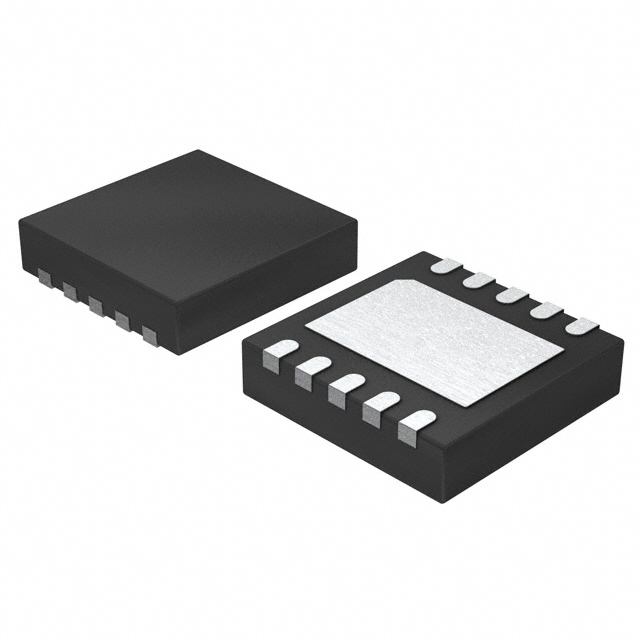
RT8115A is available in the WDFN-10L 3x3 package.
z
Green Voltage Mode (GVMTM) Control
High Light Load Efficiency
Single 5V to 12V Driver Voltage
Integrated High Driving Capability N-MOSFET Gate
Drivers
300kHz Fixed Frequency Internal Oscillator
85% Maximum PWM Duty Cycle
Power Good Indicator
Enable/Disable Control
Adaptive Zero-Current Detection
Internal Soft-Start
Lossless Low-Side MOSFET RDS(ON) Current Sensing
for Over-Current Fault Monitoring
LGATE Over-Current Setting (LGOCS)
Dedicated Output Voltage Monitor
OCP, UVP, OVP, OTP, UVLO
RoHs Compliant and Halogen Free
Applications
z
z
z
Motherboard, Memory/Chip-set Power
Graphic Card, GPU/Memory Core Power
Low Voltage, High Current DC/DC Regulator
Simplified Application Circuit
VIN
RT8115A
BOOT
VCC
VCC
VOUT
UGATE
VPGOOD
PHASE
PGOOD
LGATE
COMP/EN
EN
GND
Copyright © 2013 Richtek Technology Corporation. All rights reserved.
DS8115A-02 August 2013
FB
is a registered trademark of Richtek Technology Corporation.
www.richtek.com
1
�RT8115A
Ordering Information
Pin Configurations
RT8115A
(TOP VIEW)
BOOT
PHASE
UGATE
LGATE
GND
Lead Plating System
Z : ECO (Ecological Element with
Halogen Free and Pb free)
1
2
3
4
5
10
9
GND
Package Type
QW : WDFN-10L 3x3 (W-Type)
8
7
6
11
PGOOD
NC
FB
COMP/EN
VCC
WDFN-10L 3x3
Note :
Richtek products are :
RoHS compliant and compatible with the current requirements of IPC/JEDEC J-STD-020.
Suitable for use in SnPb or Pb-free soldering processes.
Marking Information
JH : Product Code
JH YM
DNN
YMDNN : Date Code
Functional Pin Description
Pin No.
Pin Name
Pin Function
BOOT
Bootstrap Supply for High-Side Gate Driver. Connect this pin to a power source
VCC through a bootstrap diode, and connect a 0.1μF or greater ceramic
capacitor from this pin to the PHASE pin to supply the power for high-side gate
driver.
2
PHASE
Switch Node. Connect this pin to the switching node of Buck converter. This pin
is also the floating drive return of the high-side MOSFET gate driver. The
PHASE voltage is sensed for zero current detection and over-current protection
when low-side MOSFET is on.
3
UGATE
4
LGATE
1
5,
GND
11 (Exposed Pad)
6
VCC
7
COMP/EN
High-Side MOSFET Gate Driver Output. Connect this pin to the Gate of
high-side MOSFET for floating drive.
Low-Side MOSFET Gate Driver Output. Connect this pin to the Gate of low-side
MOSFET. This pin is also used for over-current protection (OCP) threshold
setting. Connect a resistor (ROCSET) from this pin to the GND pin to set the OCP
threshold.
Ground. The exposed pad must be soldered to a large PCB and connected to
GND for maximum power dissipation.
Supply Voltage Input. It is recommended to connect a 1μF or greater ceramic
capacitor from this pin to the GND pin. VCC also powers the low-side gate
driver.
Compensation Node. Connect R-C network between this pin and the FB pin for
PWM control loop compensation. This pin is also used for enable/disable
control. Connect a small signal MOSFET to this pin to implement enable/disable
control.
8
FB
Feedback Voltage Input. This pin is used for output voltage feedback input and
it is also monitored for power good indication, over-voltage and under-voltage
protections. Connect this pin to the converter output through voltage divider
resistors for output voltage regulation.
9
NC
No Internal Connection.
PGOOD
Power Good Indicator Output. This pin provides an open-drain output. Connect
this pin to a voltage source through a pull-up resistor. The PGOOD voltage goes
high to indicate the output voltage is in regulation. This pin can be left open if
the power good indication function is not used.
10
Copyright © 2013 Richtek Technology Corporation. All rights reserved.
www.richtek.com
2
is a registered trademark of Richtek Technology Corporation.
DS8115A-02 August 2013
�RT8115A
Function Block Diagram
COMP/EN
VCC
Regulator
BOOT
UGATE
FB
VREF
+
EA
-
VREF
+
CMP
UV_level
PWM
+
CMP
-
VCC
UV
-
OV_level
IOCSET
Control
Logic
+
-
OV
OC
Current
Sense & OCP
Comparator
VCC
LGATE
+
PGH_level
PHASE
GND
+
-
PGL_level
-
-1
PGOOD
+
Operation
The RT8115A is a high efficiency single-phase green
voltage mode (GVMTM) synchronous Buck controller with
integrated MOSFET driver. The controller has a fixed
frequency control, a fixed frequency 300kHz oscillator is
integrated to minimize external components.
Under-Voltage Protection
Enable
Over-Voltage Protection
The RT8115A remains in shutdown if the COMP/EN pin is
lower than 0.3V (Max). When the COMP/EN pin rises
above the enable trip point, the RT8115A will begin a softstart cycle.
If the FB pin voltage is higher than the OVP threshold
during normal operation, OVP will be triggered. When OVP
is triggered, UGATE will go low and LGATE will go high
until VCC is resupplied and exceeds the POR rising
threshold voltage.
Over-Current Threshold Setting
If the FB voltage is lower than the UVP threshold during
normal operation, UVP will be triggered. When the UVP
is triggered, both UGATE and LGATE go low until VCC is
resupplied and exceeds the POR rising threshold voltage.
Current limit threshold is externally programmed by adding
a resistor (ROCSET) between LGATE and GND. Once VCC
exceeds the POR threshold, an internal current source
IOC flows through ROCSET. The voltage across ROCSET is
stored as the current limit protection threshold. After that,
the current source is switched off.
Copyright © 2013 Richtek Technology Corporation. All rights reserved.
DS8115A-02 August 2013
is a registered trademark of Richtek Technology Corporation.
www.richtek.com
3
�RT8115A
Absolute Maximum Ratings
(Note 1)
Supply Voltage, VCC --------------------------------------------------------------------------------------------- 15V
BOOT to PHASE -------------------------------------------------------------------------------------------------- 15V
z PGOOD -------------------------------------------------------------------------------------------------------------- 15V
z Input, Output or I/O Voltage ------------------------------------------------------------------------------------- GND − 0.3V to 7V
z PHASE to GND (Note 2)
DC --------------------------------------------------------------------------------------------------------------------- −5V to 30V
< 20ns --------------------------------------------------------------------------------------------------------------- −10V to 30V
z UGATE to PHASE
DC --------------------------------------------------------------------------------------------------------------------- −0.3V to (VBOOT + 0.3V)
< 20ns --------------------------------------------------------------------------------------------------------------- −5V to (VBOOT + 5V)
z LGATE to GND
DC --------------------------------------------------------------------------------------------------------------------- −0.3V to (VCC + 0.3V)
< 20ns --------------------------------------------------------------------------------------------------------------- −5V to (VCC + 5V)
z Power Dissipation, PD @ TA = 25°C (Note 3)
WDFN-10L 3x3 ----------------------------------------------------------------------------------------------------- 3.27W
z Package Thermal Resistance
WDFN-10L 3x3, θJA ----------------------------------------------------------------------------------------------- 30.5°C/W
WDFN-10L 3x3, θJC ----------------------------------------------------------------------------------------------- 7.5°C/W
z Junction Temperature --------------------------------------------------------------------------------------------- 150°C
z Lead Temperature (Soldering, 10 sec.) ----------------------------------------------------------------------- 260°C
z Storage Temperature Range ------------------------------------------------------------------------------------ −65°C to 150°C
z ESD Susceptibility (Note 4)
HBM (Human Body Model) -------------------------------------------------------------------------------------- 2kV
z
z
Recommended Operating Conditions
z
z
z
z
(Note 5)
Power Input Voltage, VIN ---------------------------------------------------------------------------------------- 2.5V to 21V
Supply Input Voltage, VCC -------------------------------------------------------------------------------------- 4.5V to 13.2V
Junction Temperature Range ------------------------------------------------------------------------------------ −40°C to 125°C
Ambient Temperature Range ------------------------------------------------------------------------------------ −40°C to 85°C
Electrical Characteristics
(VCC = 12V, TA = 25°C, unless otherwise specified)
Parameter
Symbol
Test Conditions
Min
Typ
Max
Unit
4.5
12
13.2
V
General
Supply Input Voltage
VCC
VCC Supply Current
ICC
No Load for UGATE/ LGATE
--
2
--
mA
VPORH
VCC Rising
--
4.1
4.2
V
VRORL
VCC Falling
3.6
3.8
--
V
--
0.3
--
V
--
1.6
--
ms
0.793
0.8
0.807
V
VCC POR Threshold
VCC POR Hysteresis
Soft-Start Interval
tSS
Reference Voltage
VREF
VFB from 0V to 0.8V
Copyright © 2013 Richtek Technology Corporation. All rights reserved.
www.richtek.com
4
is a registered trademark of Richtek Technology Corporation.
DS8115A-02 August 2013
�RT8115A
Parameter
Symbol
Test Conditions
Min
Typ
Max
Unit
--
165
--
°C
Protection
Thermal Shutdown Limit
TSD
Over-Voltage Threshold
VOVP
Relative to FB Voltage
115
125
135
%
Under-Voltage Threshold
VUVP
Relative to FB Voltage
--
75
--
%
OC Current Source
IOC
9
10
11
μA
OC Preset Trigger Voltage
VOC_Preset
ROCSET is Not Populated
--
0.6
--
V
From VCC > 4.5V to Soft-Start
--
--
5
ms
--
1.5
--
A
--
1.5
--
A
Over Current Setting Time Delay tOCP
MOSFET Gate Driver
VBOOT – VPHASE = 12V, Max
Source Current
VLGATE = 12V, Max Source
Current
UGATE Drive Source
IUGATEsr
LGATE Drive Source
ILGATEsr
UGATE Drive Sink
RUGATEsk
VUGATE – VPHASE = 0.1V
--
1.8
--
Ω
LGATE Drive Sink
RLGATEsk
VLGATE = 0.1V
--
1.2
--
Ω
Dead Time
tDEAD
--
30
--
ns
PWM Controller
EA Open Loop Gain
GEA
(Note 6)
--
80
--
dB
EA Bandwidth
BW
(Note 6)
--
15
--
MHz
Maximum Duty
DMAX
--
88
--
%
--
0.9
--
V
--
1.6
--
V
--
--
0.3
V
270
300
330
kHz
Ramp Valley
Ramp Amplitude
ΔVOSC
VIN = 12V
COMP/EN Disable Threshold
PWM Frequency
PGOOD Threshold
fOSC
VPGOOD_H
Relative to FB Voltage
0.86
0.89
0.92
VPGOOD_L
Relative to FB Voltage
0.68
0.71
0.74
V
PGOOD Low Level
VOL_PGOOD Sink Current = 4mA
--
--
0.4
V
EN to Soft-Start Delay
tDELAY_EN
--
--
500
μs
(Note 6)
Note 1. Stresses beyond those listed “Absolute Maximum Ratings” may cause permanent damage to the device. These are
stress ratings only, and functional operation of the device at these or any other conditions beyond those indicated in
the operational sections of the specifications is not implied. Exposure to absolute maximum rating conditions may
affect device reliability.
Note 2. (PHASE to GND + VCC) should not higher than 43.2V.
Note 3. θJA is measured at TA = 25°C on a high effective thermal conductivity four-layer test board per JEDEC 51-7. θJC is
measured at the exposed pad of the package.
Note 4. Devices are ESD sensitive. Handling precaution is recommended.
Note 5. The device is not guaranteed to function outside its operating conditions.
Note 6. Guaranteed by design.
Copyright © 2013 Richtek Technology Corporation. All rights reserved.
DS8115A-02 August 2013
is a registered trademark of Richtek Technology Corporation.
www.richtek.com
5
�RT8115A
Typical Application Circuit
VIN
2.5V to 21V
DBOOT
VCC
5V to 12V
VPGOOD
up to 12V
R1
2.2
C1
NC
RPGOOD
10k
RFB2
13.7k
CBP
2.2µF
CS
4.7nF
VCC
BOOT 1
UGATE 3
PHASE
10 PGOOD
7
RS
8.2k
EN
RT8115A
6
CBOOT
0.1µF
2
LGATE 4
Q2
ROCSET
10k
COMP/EN
FB 8
CP
82pF
GND
Copyright © 2013 Richtek Technology Corporation. All rights reserved.
www.richtek.com
6
RBOOT
0
RUGATE
0
5, 11 (Exposed Pad)
C4
10µF x 4
Q1
470µF x 2
VOUT
L1
1.2µH
RSNB
1
CSNB
2.2nF
RFB1
4.3k
R2
560
C2
8.2nF
RL
COUT
820µF x 2
is a registered trademark of Richtek Technology Corporation.
DS8115A-02 August 2013
�RT8115A
Typical Operating Characteristics
Efficiency vs. Output Current
100
Efficiency vs. Output Current
90
RT8115A
90
85
80
70
Efficiency (%)
Efficiency (%)
RT8115A
60
50
40
30
20
VIN = VCC =12V, VOUT = 1.1V,
IOUT = 0.01A to 10A, L = 1μH,
DCR = 1.7mΩ
10
0
0.01
80
75
70
VIN = VCC =12V, VOUT = 1.1V,
IOUT = 0A to 30A, L = 1μH,
DCR = 1.7mΩ
65
60
0.1
1
10
0
3
6
9
Output Current (A)
1.102
0.803
1.101
0.802
1.100
1.099
1.098
1.097
1.096
1.095
VIN = VCC =12V, VOUT = 1.1V
1.093
5
10
15
20
24
27
30
0.799
0.798
0.797
0.796
0.795
VIN = VCC =12V, No Load
25
30
-50
VOUT
(1V/Div)
V CC
(10V/Div)
V CC
(10V/Div)
UGATE
(50V/Div)
UGATE
(50V/Div)
Time (4ms/Div)
Copyright © 2013 Richtek Technology Corporation. All rights reserved.
0
25
50
75
100
125
Power Off from VCC
VOUT
(1V/Div)
VIN = VCC =12V, VOUT = 1.1V, ILOAD = 10A
-25
Temperature (°C)
Power On from VCC
DS8115A-02 August 2013
21
0.800
Output Current (A)
LGATE
(10V/Div)
18
0.801
0.794
0
15
Reference Voltage vs. Temperature
0.804
Reference Voltage (V)
Output Voltage (V)
Output Voltage vs. Output Current
1.103
1.094
12
Output Current (A)
LGATE
(10V/Div)
VIN = VCC =12V, VOUT = 1.1V, ILOAD = 10A
Time (4ms/Div)
is a registered trademark of Richtek Technology Corporation.
www.richtek.com
7
�RT8115A
Power Off from COMP/EN
Power On from COMP/EN
VOUT
(1V/Div)
COMP/EN
(2V/Div)
VOUT
(1V/Div)
COMP/EN
(2V/Div)
UGATE
(20V/Div)
UGATE
(20V/Div)
LGATE
(10V/Div)
VIN = VCC =12V, VOUT = 1.1V, ILOAD = 10A
LGATE
(10V/Div)
Time (400μs/Div)
Time (400μs/Div)
OCP
Short OCP
PGOOD
(20V/Div)
PGOOD
(20V/Div)
Inductor
Current
(20A/Div)
Inductor
Current
(20A/Div)
UGATE
(20V/Div)
LGATE
(20V/Div)
UGATE
(20V/Div)
LGATE
(20V/Div)
VIN = VCC =12V, VOUT = 1.1V, ROCSET = 7.5kΩ
VIN = VCC =12V, VOUT = 1.1V, ROCSET = 7.5kΩ
Time (5μs/Div)
Time (5μs/Div)
UVP
OVP
VFB
(1V/Div)
VFB
(1V/Div)
PGOOD
(10V/Div)
PGOOD
(10V/Div)
UGATE
(20V/Div)
LGATE
(20V/Div)
UGATE
(20V/Div)
LGATE
(20V/Div)
VIN = VCC =12V, VOUT = 1.1V, No Load
Time (2ms/Div)
Copyright © 2013 Richtek Technology Corporation. All rights reserved.
www.richtek.com
8
VIN = VCC =12V, VOUT = 1.1V, ILOAD = 10A
VIN = VCC =12V, VOUT = 1.1V, No Load
Time (200μs/Div)
is a registered trademark of Richtek Technology Corporation.
DS8115A-02 August 2013
�RT8115A
Load Transient Response
VOUT
(50mV/Div)
I LOAD
(20A/Div)
UGATE
(20V/Div)
LGATE
(20V/Div)
VIN = VCC =12V, VOUT = 1.1V, ILOAD = 6A to 30A
Time (100μs/Div)
Copyright © 2013 Richtek Technology Corporation. All rights reserved.
DS8115A-02 August 2013
is a registered trademark of Richtek Technology Corporation.
www.richtek.com
9
�RT8115A
Application Information
Supply Voltage and Power-On Reset
The VCC pin is the power supply pin of the RT8115A. The
input voltage range (VCC) is from 4.5V to 13.2V with respect
to the GND pin. An internal linear regulator regulates the
supply voltage for internal control logic circuit. The VCC
pin also supplies the power for the integrated low-side
MOSFET gate driver. A 1μF ceramic capacitor or greater
is recommended for the Vcc voltage de-coupling. Place
the de-coupling capacitor physically close to the VCC pin.
The Power-On Reset (POR) circuit monitors the VCC pin
voltage. If VCC exceeds the POR rising threshold, the
controller begins to work and prepares for soft-start
operation. If VCC falls below the POR falling threshold,
the controller stops working. All MOSFETs stop switching,
and all protections are reset. There is a hysteresis between
the POR rising and falling thresholds to prevent
inadvertently reset caused by noise.
Soft-Start
When the controller input voltage (VCC) rises and exceeds
the POR rising threshold at power up, the RT8115A
initiates soft-start operation after the tOCP time delay. The
soft-start function is used to prevent large inrush current
from input power source while converter is powered up.
The IC provides soft-start function internally. The FB voltage
will track the internal soft-start voltage, which ramps up
from zero in a monotone during the soft-start period.
Therefore, the duty cycle of PWM signal will increase
gradually and so does the input current.
Figure 1 shows the power-up operation of RT8115A. The
IC operates firstly in DEM with fixed switching frequency
during soft-start period T SS, and then enters CCM
operation. When the CCM period ends, the IC enters
Ultrasonic Mode (USM) or CCM depending on the load
current.
Green Voltage Mode (GVM) Control
The RT8115A utilizes GVM control to improve light load
efficiency. Depending on the load current, the controller
automatically operates in Diode Emulation Mode (DEM)
with constant on-time PFM or in Continuous Conduction
Mode (CCM) with fixed-frequency PWM.
At light load condition, the IC automatically operates in
diode emulation mode with constant on-time PFM to
reduce switching frequency so as to improve efficiency.
As the output current decreases from heavy load condition,
the inductor current decreases, and eventually the inductor
valley current decreases to zero, which is the boundary
between continuous conduction mode and discontinuous
conduction mode. By emulating the behavior of diodes,
the low-side MOSFET allows only partial of negative
current to flow when the inductor freewheeling current
reaches negative. As the load current further decreases,
it takes longer and longer to discharge the output capacitor
to the level that next UGATE on-time begins. The UGATE
on-time in DEM is determined by the converter input and
output voltage, and it is generated internally. When the
output current increases from light load to heavy load, the
VCC POR
VCC
VOUT
tOCP
With Diode
Emulation
CCM
tSS
t ≈3 x tSS
Ultrasonic Mode (USM) with
Diode Emulation (Variable
Frequency)
/PWM (Fixed 300kHz)
(Load Current Dependent)
Fixed Frequency 300kHz
Figure 1. Power up Operation
Copyright © 2013 Richtek Technology Corporation. All rights reserved.
www.richtek.com
10
is a registered trademark of Richtek Technology Corporation.
DS8115A-02 August 2013
�RT8115A
switching frequency increases to the value as the inductor
current reaches the continuous conduction condition.
Controller will then operate in continuous conduction mode
with 300kHz fixed switching frequency PWM.
The RT8115A activates ultrasonic mode operation with
switching frequency higher than 25kHz. The ultrasonic
mode eliminates audio noise that would be presented
when the controller automatically skips pulses at light
load condition. In this mode, the low-side switch gatedriver signal is OR with an internal oscillator. Once the
internal oscillator is triggered, the controller pulls LGATE
high, turning on the low-side MOSFET to induce a negative
inductor current. After VFB falls to VREF, the controller turns
off the low-side MOSFET (LGATE pulled low) and triggers
a constant on-time (UGATE driven high). When the
on-time is expired, the controller re-enables the low-side
MOSFET until the inductor current decreases below the
zero crossing threshold.
As the load current increases, the inductor current no
longer reaches the zero-crossing threshold. The controller
leaves the ultrasonic mode and enters the continuous
conduction mode. In the continuous conduction mode,
the controller operates with fixed switching frequency, and
uses voltage mode PWM control for output voltage
regulation.
Power Up with Pre-bias Voltage
Conventionally, when the converter output capacitor has
been pre-charged to a non-zero positive voltage, the FB
pin voltage of the PWM controller is non-zero. If the
converter is powered up under this condition, the softstart function of PWM controller will turn on low-side
MOSFET with maximum duty ratio to rapidly discharge
the output capacitor so as to force the FB voltage to track
the internal soft-start voltage. Large current is then drawn
from the output capacitor while the discharge is taking
place. The discharge current depends on the inductance
and the output capacitance. Output voltage may oscillate
and go negative. The negative output voltage could damage
the load.
The RT8115A implements control circuits specifically to
prevent the negative voltage when the converter is powered
up with pre-biased voltage on the output capacitor.
Copyright © 2013 Richtek Technology Corporation. All rights reserved.
DS8115A-02 August 2013
Figure 2 shows the waveform that converter is powered
up with pre-biased output voltage. The output voltage rises
smoothly from its pre-charged initial value during soft-start
without sagging.
VOUT1
(500mV/Div)
UGATE
(20V/Div)
LGATE
(10V/Div)
Time (1ms/Div)
Figure 2. Power Up with Pre-biased Output Voltage
Enable/Disable Function
The COMP/EN pin is used to enable or to disable the
controller. Because the COMP/EN pin is also the error
amplifier output, it is recommended to use a small signal
MOSFET with low capacitance C gd to minimize the
influence of the COMP/EN pin capacitance on loop
response. Use a small signal MOSFET or BJT to
implement the enable/disable control. Connect the Drain
of small signal MOSFET (or the Collector of BJT) to the
COMP/EN pin and its Source (or the Emitter of BJT) to
ground for enable/disable control. If the COMP/EN voltage
is pulled down below the enable level VEN, the controller
is disabled with both UGATE and LGATE go low after
about 15μs delay time. If the COMP/EN pin is released,
the COMP/EN voltage rises and then begins to soft-start.
Power Good Indication
The RT8115A monitors the converter output voltage through
the FB pin for power good indication, over-voltage
protection and under voltage protection. The PGOOD pin
is an open-drain output, and it should be tied to a voltage
source VPGOOD no greater than 12V through a pull up
resistor RPGOOD. Referring to the typical application, it is
recommended to choose the RPGOOD to set maximum
1mA sink current into the PGOOD pin.
is a registered trademark of Richtek Technology Corporation.
www.richtek.com
11
�RT8115A
If the FB pin voltage stays within the voltage window of
±12% of VREF (typical), the PGOOD voltage will go high
to indicate that the converter output voltage is in regulation.
If the FB pin voltage is out of the voltage window, the
PGOOD voltage goes low to indicate that the converter
output voltage is out of regulation. If the power good
indication function is not used, the PGOOD pin can be
left open.
consecutive PWM switching cycles, OCP will be
triggered. When OCP is triggered, both UGATE and LGATE
will go low to protect the load from over-current condition.
The OCP function belongs to a latch protection. The IC
will not repeat the soft-start operation unless the VCC
voltage is toggled off and on to reset the OCP.
Over Voltage Protection (OVP)
The LGATE pin is not only for driving the low-side MOSFET,
but also is used to set the over-current protection (OCP)
threshold. Figure 3 shows the connection for OCP
threshold setting, in which a resistor ROCSET connected
from the LGATE pin to the GND pin sets the OCP threshold.
If the FB pin voltage is higher than the OVP threshold
during normal operation, OVP will be triggered. When OVP
is triggered, UGATE will go low and LGATE will go high to
discharge the converter output capacitor to protect the
load from over voltage condition. When the FB pin voltage
falls below 0.4V, LGATE will go low to stop the discharge.
The OVP function belongs to a latch protection. The
RT8115A will not repeat the soft-start operation unless
the VCC voltage is toggled off and on to reset the OVP.
Under-Voltage Protection (UVP)
If the FB pin voltage is lower than the UVP threshold during
normal operation, UVP will be triggered. When UVP is
triggered, both UGATE and LGATE will go low to protect
the load from under-voltage condition. Referring to Figure
1, the UVP function is not activated until the soft-start
period tSS completes. The UVP function belongs to a latch
protection, and it is masked during the soft-start time tSS.
The RT8115A will not repeat the soft-start operation unless
the VCC voltage is toggled off and on to reset the UVP.
Over-Current Protection (OCP)
The RT8115A utilizes low-side MOSFET RDS(ON) current
sense technique for over-current protection (OCP). After
low-side MOSFET is turned on, the controller monitors
the voltage across low-side MOSFET by sensing the
PHASE voltage. The RT8115A uses cycle-by-cycle
inductor valley current sense, the controller samples and
holds the PHASE voltage before low-side MOSFET is
turned off. This sampled PHASE voltage represents the
inductor valley current, and it is compared with the user
defined threshold voltage for OCP. When the inductor
current exceeds the user defined threshold level for two
Copyright © 2013 Richtek Technology Corporation. All rights reserved.
www.richtek.com
12
LGATE Over-Current Protection Threshold Setting
(LGOCS)
After the controller input voltage VCC exceeds the POR
rising threshold at power up, the IC waits for a period of
time for OCP setting before soft-start operation begins.
During this period, the UGATE output is low and the LGATE
output is in tri-state. An internal current source IOCSET is
switched on and then flows out of the LGATE pin to the
external resistor ROCSET to set the OCP threshold. The
voltage drop across ROCSET is stored by the controller as
the OCP threshold VOCSET. After that, the current source
is switched off, and the LGATE output leaves tri-state then
goes low. The resistance value of ROCSET is determined
by the following equation :
RDS(ON) x IMAX
V
ROCSET = OCSET =
IOCSET
IOCSET
where IMAX represents the maximum inductor valley
current, RDS(ON) is the on state channel resistance of the
low-side MOSFET.
If the ROCSET is not connected, the internal current source
IOCSET will charge the Cgs of the low-side MOSFET during
the OCP threshold setting period. Under this condition,
the LGATE voltage may be high enough to turn on the
low-side MOSFET so that the output capacitor is
discharged. Although the LGATE voltage may be high
enough to turn on the low-side MOSFET, the OCP
threshold voltage is internally clamped at 600mV (typical)
and stored as the preset value.
is a registered trademark of Richtek Technology Corporation.
DS8115A-02 August 2013
�RT8115A
Although the OCP threshold voltage is internally clamped
at 600mV when ROCSET is not connected, this preset
threshold voltage may be very high to most of applications.
Hence, it is recommended to keep the ROCSET always
well-connected to protect the converter from over-current
condition.
VCC
VGD
BOOT
DBOOT
VIN
CBOOT
MOSFET Driver
UGATE
RUGATE
High-Side
MOSFET
PHASE
IOCSET
Figure 4. Bootstrap Circuit
Control Logic
OC
PHASE
Current Sense
and OCP
Comparator
L
x1
VCC
LGATE
ROCSET
Figure 3. OCP Threshold Setting
Bootstrap Circuit
Figure 4 shows the bootstrap circuit, which is used for
the high-side MOSFET driving. The CBOOT is used to store
and supply the energy for high-side MOSFET floating drive,
and the DBOOT is used for voltage blocking. Choose the
DBOOT with sufficient voltage rating to block the PHASE
peak voltage (consider switching spike) plus the voltage
V CC.
When the low-side MOSFET is on, the PHASE voltage is
pulled down to ground and the DBOOT conducts to charge
the CBOOT. When the high-side MOSFET driver is on, part
of the charge stored in the CBOOT is transferred to the
high-side MOSFET to turn it on. Use 0.1μF or greater
ceramic capacitor as the CBOOT to ensure the high-side
MOSFET gate driver operation. The CBOOT and DBOOT should
be placed physically close to the BOOT and PHASE pins
to minimize the trace parasitic components.
Copyright © 2013 Richtek Technology Corporation. All rights reserved.
DS8115A-02 August 2013
MOSFET Gate Drivers
In synchronous rectified Buck topology, the dead-time is
utilized to prevent cross conduction of high-side and lowside MOSFETs. The RT8115A implements non-overlapping
MOSFET gate drivers with dead-time control scheme to
ensure a safe operation of MOSFET switching.
For high output current applications, multiple power
MOSFETs are usually paralleled to reduce the total
RDS(ON). The MOSFET gate driver needs to have higher
driving capability to switch on/off these paralleled
MOSFETs. The RT8115A integrates MOSFET gate drivers
that have high current driving capability to have lower
switching loss and thus better performance of conversion
efficiency. The embedded MOSFET drivers contribute to
the majority of power dissipation of the controller. Therefore,
WDFN package is chosen because of its power dissipation
rating. If gate resistor is not used, the power dissipation
of the controller can be approximately calculated by the
following equation :
PSW = FSW (Qg_High x VBOOT-PHASE + Qg_Low x VCC)
where VBOOT-PHASE represents the voltage across the
bootstrap capacitor.
It is important to make sure that the controller can dissipate
the switching loss and have enough room for safe operation
when power MOSFETs are paralleled.
is a registered trademark of Richtek Technology Corporation.
www.richtek.com
13
�RT8115A
Inductor Selection
Output Capacitor Selection
Inductor plays an important role in step-down converters
because the energy from the input power rail is stored in
it and then released to the load. From the viewpoint of
efficiency, the DC resistance (DCR) of inductor should be
as small as possible to minimize the conduction loss. In
addition, because inductor uses most of the board space,
its size is also important. Low profile inductors can save
board space especially when the height has limitation.
However, low DCR and low profile inductors are usually
cost ineffective.
The output capacitor and the inductor form a low-pass filter
in the Buck topology. The electrolytic capacitor is used
for this application because it can provide large capacitance
value. In steady state condition, the output capacitor
supplies only AC ripple current to the load, which means
the output capacitor must be able to handle the inductor
ripple current. The ripple current flows into/out of the
Additionally, larger inductance results in lower ripple
current, which means lower power loss. However, the
inductor current rising time increases with inductance value.
This means the transient response will be slower. Therefore,
the inductor design is a trade-off between performance,
size and cost.
In addition, the output voltage ripple is also influenced by
the switching frequency and the capacitance value.
In general, inductance is designed so that the ripple
current ranges between 20% to 40% of full load current.
The inductance can be calculated by the following
equation :
LMIN =
VIN - VOUT
V
x OUT ,
FSW x k x IOUT_FULL LOAD
VIN
where k is 0.2 to 0.4
Input Capacitor Selection
Voltage rating and current rating are the key parameters
in selecting input capacitor. Generally, input capacitor has
a voltage rating 1.5 times greater than the maximum input
voltage is a conservatively safe design.
The input capacitor is used to supply the input RMS
current, which can be approximately calculated by the
following equation :
IRMS = IOUT x
⎛
⎞
VOUT
V
x ⎜ 1 - OUT ⎟
VIN
VIN ⎠
⎝
The next step is to select proper capacitor for RMS current
rating. Using more than one capacitor with low equivalent
series resistance (ESR) in parallel to form a capacitor
bank is a good design. Besides, placing ceramic capacitor
close to the Drain of the high-side MOSFET is helpful for
reducing the input voltage ripple at heavy load.
Copyright © 2013 Richtek Technology Corporation. All rights reserved.
www.richtek.com
14
capacitor results in ripple voltage, which can be determined
by the following equation :
ΔVOUT_ESR = ΔIL x ESR
ΔVOUT_C = ΔIL x
1
8 x COUT x FSW
Another parameter that has influence on the output voltage
sag is the equivalent series inductance (ESL). The rapid
change in load current results in di/dt during transient.
Therefore, ESL contributes to part of the voltage sag. Using
capacitors that have low ESL can obtain better transient
performance. Generally, using several capacitors
connected in parallel can have better transient performance
than using single capacitor for the same total ESR.
Unlike the electrolytic capacitor, the ceramic capacitor has
relative low ESR and can reduce the voltage deviation during
load transient. However, the ceramic capacitor can only
provide low capacitance value. Therefore, using a mixed
combination of electrolytic capacitor and ceramic capacitor
can also have better transient performance.
PWM Feedback Loop Compensation
In continuous conduction mode, the RT8115A operates
with fixed frequency and uses voltage mode control for
output voltage regulation. The IC utilizes voltage error
amplifier with external compensation to provide flexibility
in feedback loop compensator design. Figure 5 shows
the voltage mode control loop of a Buck converter. The
control loop consists of the modulator, power stage and
the compensator.
is a registered trademark of Richtek Technology Corporation.
DS8115A-02 August 2013
�RT8115A
LOUT
Q1
VIN
DCR VOUT
CIN
To Load
ESR
MOSFET
Driver
Q2
Figure 6 shows the Type-III compensator, which is
composed of voltage error amplifier, impedance network
Z1 and Z2.
Z2
COUT
CP
Z2
PWM
Comparator
+
COMP
RS
FB
EA
+
VREF
RFB2
COMP
Ramp
Figure 5. Voltage Mode Control Loop of Buck Converter
Output voltage of the converter is scaled by the divider
resistors and then compared to the reference voltage, which
is the regulation level seen by the controller. The error
amplifier output voltage VCOMP is compared to the sawtooth waveform from the oscillator to generate PWM signal.
The output voltage is then regulated according to the duty
cycle of the PWM signal.
Vˆ OUT
has two poles at
Vˆ COMP
fLC and one zero at fESR. The frequency of fLC and fESR can
be calculated by the following expressions :
fLC =
1
2π x LOUT x COUT
fESR =
1
2π x COUT x ESR
In order to obtain an accurate output voltage regulation
and fast transient response, a compensator is necessary.
Depending on the inductor and output capacitor, different
type of compensator can be used to finish the feedback
loop compensation. By inserting a well designed
compensator into the feedback loop, the closed loop
control-to-output transfer function can be shaped to have
adequate crossover frequency and sufficient phase margin.
The design goals are:
z
z
z
Obtain high gain at low frequency for DC regulation
accuracy
Obtain sufficient bandwidth for transient performance
(generally, 1/10 to 1/5 switching frequency)
Obtain sufficient phase margin for stability (generally
>45° )
Copyright © 2013 Richtek Technology Corporation. All rights reserved.
DS8115A-02 August 2013
Z1
Z1
C2
-
The system open loop gain
CS
EA
+
FB
VREF
R2
RFB1
VOUT
RFB2
Figure 6. Type-III Compensator
The Type-III compensator introduces three poles and two
zeros to the system. The first pole is located in low
frequency to increase the DC gain for voltage regulation
accuracy and is usually referred to as the pole at zero.
The location of rest of the two poles and two zeros can be
determined as follows :
1
1
fZ1 =
, fZ2 =
2π x RS x CS
2π x (R2 + RFB1 ) x C2
fP1 =
1
, fP2 =
2π x R2 x C2
1
⎛ C x CP ⎞
2π x R S x ⎜ S
⎟
⎝ CS + CP ⎠
Figure 7 shows the system Bode plot. The close loop
gain is the sum of modulation gain and the compensation
gain. The modulation DC gain is determined by VIN/ΔVOSC,
where ΔVOSC is peak to peak voltage of the saw-tooth
ramp. In general, fZ1 is placed at half of fLC, and fZ2 is
placed at fLC to boost the large phase lag created by the
double pole especially when ESR is low. fP1 is typically
placed at fESR to obtain a −20dB/dec slope at crossover
frequency. fP2 is placed at half of the switching frequency
to increase the attenuation in high frequency.
After calculating the compensation values, draw the
system Bode plot to check the crossover frequency and
phase margin. Due to the circuit parasitic components
and the characteristic deviation in the inductor and output
capacitors, further tuning of the compensation value to
obtain the required crossover frequency and phase margin
is necessary.
is a registered trademark of Richtek Technology Corporation.
www.richtek.com
15
�RT8115A
fLC
fESR
Compensation Gain
Freq.(Log)
0
Close Loop Gain
fZ1
fP1
fZ2
fP2
Modulation Gain
fCROSS
Figure 7. System Bode Plot
Maximum Power Dissipation (W)
4.0
(dB)
Four-Layers PCB
3.6
3.2
2.8
2.4
2.0
1.6
1.2
0.8
0.4
0.0
Thermal Considerations
For continuous operation, do not exceed absolute
maximum junction temperature. The maximum power
dissipation depends on the thermal resistance of the IC
package, PCB layout, rate of surrounding airflow, and
difference between junction and ambient temperature. The
maximum power dissipation can be calculated by the
following formula :
PD(MAX) = (TJ(MAX) − TA) / θJA
where TJ(MAX) is the maximum junction temperature, TA is
the ambient temperature, and θJA is the junction to ambient
thermal resistance.
For recommended operating condition specifications, the
maximum junction temperature is 125°C. The junction to
ambient thermal resistance, θJA, is layout dependent. For
WDFN-10L 3x3 packages, the thermal resistance, θJA, is
30.5C/W on a standard JEDEC 51-7 four-layer thermal
test board. The maximum power dissipation at TA = 25°C
can be calculated by the following formula :
PD(MAX) = (125°C − 25°C) / (30.5°C/W) = 3.27W for
WDFN-10L 3x3 package
The maximum power dissipation depends on the operating
ambient temperature for fixed T J(MAX) and thermal
resistance, θJA. The derating curve in Figure 8 allows the
designer to see the effect of rising ambient temperature
on the maximum power dissipation.
Copyright © 2013 Richtek Technology Corporation. All rights reserved.
www.richtek.com
16
0
25
50
75
100
125
Ambient Temperature (°C)
Figure 8. Derating Curve of Maximum Power Dissipation
Layout Considerations
PCB layout plays an important role in high current, high
frequency switching converter design. The general layout
guide line is listed as follows.
Minimize the high-current loop as short as possible. The
current transition between MOSFETs usually causes di/
dt voltage spike and thus the EMI issue due to parasitic
components on PCB trace and component lead. The
PCB trace parasitic components cause not only
excessive voltage spike, but also power loss. To reduce
the PCB trace parasitic, place the high-side, low-side
MOSFETs and the inductor with short current loop as
possible.
Connect the controller and power MOSFETs with wide
width and short length PCB traces. Because the
RT8115A has integrated high-current MOSFET gate
drivers, the PCB trace for MOSFET driving should be
sized to carry at least 2A peak current.
For bootstrap circuit, place the bootstrap diode DBOOT
close to the BOOT pin, and place the bootstrap capacitor
CBOOT physically close to BOOT pin and PHASE pin
with wide and short copper trace connection.
Place the ceramic capacitor close to the VCC pin for
noise de-coupling.
Place all the function setting and compensation
components as close to their associated pins as
possible. This includes :
is a registered trademark of Richtek Technology Corporation.
DS8115A-02 August 2013
�RT8115A
Place the compensation components close to the FB
pin and COMP pin to avoid noise pickup. Voltage divider
resistors connected to the FB pin should be placed close
to the controller.
Place the OCP setting resistor ROCSET close to the
LGATE pin.
Place the small-signal MOSFET or BJT used for enable/
disable function close to the COMP pin.
Place ceramic capacitor close to the drain of high-side
MOSFET to decrease the input voltage ripple.
The output voltage feedback trace should be away from
the switching node, power MOSFETs and inductor to
avoid noise pickup.
Place the bulk capacitors close to the load.
Place bootstrap circuit close to the BOOT pin.
MOSFET driver
trace : wide and short
To other circuit
Enough copper
area to carry
load current.
VOUT
LOAD
Via inner ground layer
RPGOOD
VIN
BOOT
PHASE
UGATE
1
10
2
9
LGATE
GND
4
3
5
GND
Place CIN close
to MOSFET.
DBOOT
CBOOT
8
7
11
6
PGOOD
NC
FB
COMP/EN
VCC
EN
5V/12V
ROCSET
Via inner layer
Place noise
Place ROCSET close decoupling MLCC
to the LGATE pin.
close to the VCC pin.
Place COUT Place snubber
close to load. close to low-side
MOSFET.
Enough vias around
MOSFET lead to
inner ground layer.
Place disable
MOSFET close to
the COMP pin.
Keep voltage feedback trace away from noisy node.
Figure 9. PCB Layout Guide
Copyright © 2013 Richtek Technology Corporation. All rights reserved.
DS8115A-02 August 2013
is a registered trademark of Richtek Technology Corporation.
www.richtek.com
17
�RT8115A
Outline Dimension
D2
D
L
E
E2
1
SEE DETAIL A
2
e
A
A1
1
2
1
b
DETAIL A
Pin #1 ID and Tie Bar Mark Options
A3
Note : The configuration of the Pin #1 identifier is optional,
but must be located within the zone indicated.
Symbol
Dimensions In Millimeters
Dimensions In Inches
Min
Max
Min
Max
A
0.700
0.800
0.028
0.031
A1
0.000
0.050
0.000
0.002
A3
0.175
0.250
0.007
0.010
b
0.180
0.300
0.007
0.012
D
2.950
3.050
0.116
0.120
D2
2.300
2.650
0.091
0.104
E
2.950
3.050
0.116
0.120
E2
1.500
1.750
0.059
0.069
e
L
0.500
0.350
0.020
0.450
0.014
0.018
W-Type 10L DFN 3x3 Package
Richtek Technology Corporation
5F, No. 20, Taiyuen Street, Chupei City
Hsinchu, Taiwan, R.O.C.
Tel: (8863)5526789
Richtek products are sold by description only. Richtek reserves the right to change the circuitry and/or specifications without notice at any time. Customers should
obtain the latest relevant information and data sheets before placing orders and should verify that such information is current and complete. Richtek cannot
assume responsibility for use of any circuitry other than circuitry entirely embodied in a Richtek product. Information furnished by Richtek is believed to be
accurate and reliable. However, no responsibility is assumed by Richtek or its subsidiaries for its use; nor for any infringements of patents or other rights of third
parties which may result from its use. No license is granted by implication or otherwise under any patent or patent rights of Richtek or its subsidiaries.
www.richtek.com
18
DS8115A-02 August 2013
�







 工商网监
湘ICP备2023018690号
工商网监
湘ICP备2023018690号