®
RTQ2102A-QA
1.5A, 6V, Low IQ ACOT Synchronous Step-Down Converter
General Description
Features
The RTQ2102A-QA is a full featured 6V, 1.5A, Advanced
Constant-On-Time (ACOT) synchronous step-down
converter with two integrated MOSFETs. The advanced
COT operation allows transient responses to be optimized
over a wide range of loads, and output capacitors to
efficiently reduce external component count. The
RTQ2102A-QA provides up to 2.7MHz switching frequency
to minimize the size of output inductor and capacitors.
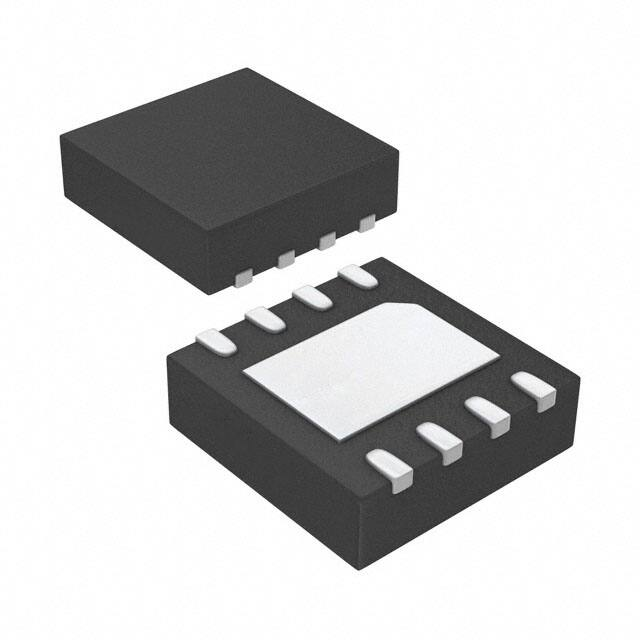
The RTQ2102A-QA is available in the WDFN-8L 3x3
package.
AEC-Q100 Grade 1 Qualified
3V to 6V Input Voltage Range
Advanced COT Control Loop Design
Fast Transient Response
Internal 110mΩ
Ω and 90mΩ
Ω Synchronous Rectifier
Highly Accurate VOUT Regulation Over Load/Line
Range
Robust Loop Stability with Low-ESR COUT
Automotive Temperature Range −40°°C to 125°°C
Applications
Ordering Information
RTQ2102A
-QA
Mobile Phones and Handheld Devices
STB, Cable Modem, and xDSL Platforms
WLAN ASIC Power / Storage (SSD and HDD)
General Purpose for POL LV Buck Converter
Automotive Infotainment
Automotive Instrument Clusters & HUD
Car Connectivity
Grade
QA : AEC-Q100 Qualified and
Screened by High Temperature
Package Type
QW : WDFN-8L 3x3 (W-Type)
Lead Plating System
G : Green (Halogen Free and Pb Free)
Pin Configuration
Note :
(TOP VIEW)
Richtek products are :
RoHS compliant and compatible with the current requirements of IPC/JEDEC J-STD-020.
Suitable for use in SnPb or Pb-free soldering processes.
EN
PGND
AGND
FB
8
1
3
GND
6
4
9
5
2
7
VIN
LX
PGOOD
VOS
WDFN-8L 3x3
Marking Information
HX= : Product Code
HX=YM
DNN
YMDNN : Date Code
Copyright © 2019 Richtek Technology Corporation. All rights reserved.
DSQ2102A-QA-02 October 2019
is a registered trademark of Richtek Technology Corporation.
www.richtek.com
1
�RTQ2102A-QA
Functional Pin Description
Pin No.
Pin Name
1
EN
2,
PGND
9 (Exposed Pad)
Pin Function
Enable control input. Pull high to enable.
Power ground. The exposed pad must be soldered to a large PCB and connected
to PGND for maximum power dissipation.
3
AGND
Analog ground. Should be electrically connected to GND close to the device.
4
FB
Feedback voltage input.
5
VOS
Output voltage sense pin for the internal control loop. Must be connected to
output.
6
PGOOD
Power good open-drain output. This pin is pulled to low if the output voltage is
below regulation limits. Can be left floating if not used.
7
LX
Switch node. The Source of the internal high-side power MOSFET, and Drain of
the internal low-side (synchronous) rectifier MOSFET.
8
VIN
Power input supply voltage, 3V to 6V.
Functional Block Diagram
VOS
EN
AGND
UVLO
Shutdown
Control
OTP
FB
TON
Error Amplifier
+
+
Comparator
+
-
VREF
Logic
Control
Ramp
Generator
Current
Limit
Detector
LX
AZC
LX
VIN
Driver
LX
LX
PGOOD
+
VFB
-
Copyright © 2019 Richtek Technology Corporation. All rights reserved.
www.richtek.com
2
LX
PGND
is a registered trademark of Richtek Technology Corporation.
DSQ2102A-QA-02 October 2019
�RTQ2102A-QA
Operation
The RTQ2102A-QA is a low voltage synchronous stepdown converter that can support input voltage ranging from
3V to 6V and the output current can be up to 1.5A. The
RTQ2102A-QA uses ACOTTM mode control. To achieve
good stability with low-ESR ceramic capacitors, the ACOT
uses a virtual inductor current ramp generated inside the
IC. This internal ramp signal replaces the ESR ramp
normally provided by the output capacitor's ESR. The ramp
signal and other internal compensations are optimized
for low-ESR ceramic output capacitors.
In steady-state operation, the feedback voltage, with the
virtual inductor current ramp added, is compared to the
reference voltage. When the combined signal is less than
the reference, the on-time one-shot is triggered, as long
as the minimum off-time one-shot is clear and the
measured inductor current (through the synchronous
rectifier) is below the current limit. The on-time one-shot
turns on the high-side switch and the inductor current
ramps up linearly. After the on-time, the high-side switch
is turned off and the synchronous rectifier is turned on
and the inductor current ramps down linearly. At the same
time, the minimum off-time one-shot is triggered to prevent
another immediate on-time during the noisy switching
time and allow the feedback voltage and current sense
signals to settle. The minimum off-time is kept short so
that rapidly-repeated on-times can raise the inductor
current quickly when needed.
PWM Frequency and Adaptive On-Time Control
Power Good
When the output voltage is higher than PGOOD rising
threshold, the PGOOD flag is high.
Output Under-Voltage Protection (UVP)
When the output voltage is lower than 66% reference
voltage after soft-start, the UVP is triggered.
Over-Current Protection (OCP)
The RTQ2102A-QA senses the current signal when the
high-side and low-side MOSFET turns on. As a result,
The OCP is a cycle-by-cycle current limit. If an over-current
condition occurs, the converter turns off the next on pulse
until inductor current drops below the OCP limit. If the
OCP is continually activated and the load current is larger
than the current provided by the converter, the output
voltage drops. Also, when the output voltage triggers the
UVP also, the current will drop to ZC and trigger the resoft start sequence.
Soft-Start
An internal current source charges an internal capacitor
to build the soft-start ramp voltage. The typical soft-start
time is 150μs.
Over-Temperature Protection (OTP)
The RTQ2102A-QA has an over-temperature protection.
When the device triggers the OTP, the device shuts down
until the temperature is back to normal.
The on-time can be roughly estimated by the equation :
V
1
TON = OUT
where fOSC is nominal 2.7MHz
VIN
fOSC
Under-Voltage Protection (UVLO)
The UVLO continuously monitors the VCC voltage to make
sure the device works properly. When the VCC is high
enough to reach the UVLO high threshold voltage, the
step-down converter softly starts or pre-bias to its regulated
output voltage. When the VCC decreases to its low
threshold voltage, the device shuts down.
Copyright © 2019 Richtek Technology Corporation. All rights reserved.
DSQ2102A-QA-02 October 2019
is a registered trademark of Richtek Technology Corporation.
www.richtek.com
3
�RTQ2102A-QA
Absolute Maximum Ratings
(Note 1)
Supply Input Voltage, VIN ----------------------------------------------------------------------------------------LX Pin Switch Voltage ---------------------------------------------------------------------------------------------< 100ns ---------------------------------------------------------------------------------------------------------------Other Pins ------------------------------------------------------------------------------------------------------------Power Dissipation, PD @ TA = 25°C
WDFN-8L 3x3 -------------------------------------------------------------------------------------------------------Package Thermal Resistance (Note 2)
WDFN-8L 3x3, θJA --------------------------------------------------------------------------------------------------WDFN-8L 3x3, θJC --------------------------------------------------------------------------------------------------Junction Temperature ----------------------------------------------------------------------------------------------Lead Temperature (Soldering, 10 sec.) ------------------------------------------------------------------------Storage Temperature Range -------------------------------------------------------------------------------------ESD Susceptibility (Note 3)
HBM (Human Body Model) ----------------------------------------------------------------------------------------
Recommended Operating Conditions
−0.3V to 7V
−0.3V to (VIN + 0.3V)
−5V to 9V
−0.3V to (VIN + 0.3V)
3.22W
31°C/W
8°C/W
150°C
260°C
−65°C to 150°C
2kV
(Note 4)
Supply Input Voltage, VIN ----------------------------------------------------------------------------------------- 3V to 6V
Junction Temperature Range -------------------------------------------------------------------------------------- −40°C to 125°C
Ambient Temperature Range -------------------------------------------------------------------------------------- −40°C to 125°C
Electrical Characteristics
(VIN = 3.6V, TA = TJ
=
−40°C to 125°C, unless otherwise specified)
Parameter
Symbol
Test Conditions
Min
Typ
Max
Unit
--
2.35
2.52
V
--
400
--
mV
Under-Voltage Lockout
Threshold
VUVLO
Under-Voltage Lockout
Hysteresis
VUVLOHY
Shutdown Supply Current
ISHDN
EN = 0V
--
--
2
A
Quiescent Current
IQ
Active, VFB = 0.5V, no switching
--
30
--
A
Voltage Reference
VREF
0.443
0.45
0.457
V
Peak current
2.4
3.2
4
Valley current
1.8
2.4
2.9
Current Limit
High-Side
Low-Side
ILIM
VCC rising
A
Power Good Threshold
VPGTH
VOUT falling referenced to VOUT
nominal
15
10
5
%
Power Good Hysteresis
VPGHY
Hysteresis referenced to VOUT
nominal
--
5
--
%
Power Good Leakage Current
IPG
VPG = 5V
--
0.01
0.1
A
Power Good Low Level Voltage
VPGL
Isink = 500A
--
--
0.3
V
H-Level VENH
EN rising
1
--
--
V
L-Level
EN falling
--
--
0.4
V
EN Threshold Voltage
VENL
Copyright © 2019 Richtek Technology Corporation. All rights reserved.
www.richtek.com
4
is a registered trademark of Richtek Technology Corporation.
DSQ2102A-QA-02 October 2019
�RTQ2102A-QA
Parameter
Symbol
Test Conditions
Min
Typ
Max
Unit
High-Side
RP-MOSFET
--
110
--
Low-Side
RN-MOSFET
--
90
--
Thermal Shutdown
Temperature
130
150
--
C
Thermal Shutdown
Hysteresis
--
20
--
C
2.2
2.7
3
MHz
--
1
--
k
Switch
On-Resistance
Switching Frequency
fOSC
Output Discharge Resistor
m
Note 1. Stresses beyond those listed “Absolute Maximum Ratings” may cause permanent damage to the device. These are
stress ratings only, and functional operation of the device at these or any other conditions beyond those indicated in
the operational sections of the specifications is not implied. Exposure to absolute maximum rating conditions may
affect device reliability.
Note 2. θJA is measured at TA = 25°C on a high effective thermal conductivity four-layer test board per JEDEC 51-7. θJC is
measured at the exposed pad of the package. The copper area is 70mm2 connected with IC exposed pad.
Note 3. Devices are ESD sensitive. Handling precaution is recommended.
Note 4. The device is not guaranteed to function outside its operating conditions.
Copyright © 2019 Richtek Technology Corporation. All rights reserved.
DSQ2102A-QA-02 October 2019
is a registered trademark of Richtek Technology Corporation.
www.richtek.com
5
�RTQ2102A-QA
Typical Application Circuit
RTQ2102A-QA
8
VIN
10µF
VIN
PGOOD
1 EN
LX
2, 9 (Exposed Pad)
6
7
5
PGND
3 AGND
VOS
FB 4
Power Good
180k
L
VOUT
R1
COUT
R2
Table 1. Suggested Component Values
VOUT (V)
R1 (k)
R2 (k)
L (H)
COUT (F)
1.2V
65.3
39.2
0.47
22
1.8V
117.6
39.2
1
22
2.5V
178.6
39.2
1
22
3.3V
248.3
39.2
1
22
Copyright © 2019 Richtek Technology Corporation. All rights reserved.
www.richtek.com
6
is a registered trademark of Richtek Technology Corporation.
DSQ2102A-QA-02 October 2019
�RTQ2102A-QA
Typical Operating Characteristics
Efficiency vs. Output Current
Efficiency vs. Output Current
100
100
90
90
80
80
VIN = 3.3V
VIN = 5V
60
Efficiency (%)
Efficiency (%)
70
50
40
30
70
VIN = 3.3V
VIN = 5V
60
50
40
30
20
20
10
10
VOUT = 1.2V, L = 0.47μH
0
0.001
VOUT = 1.2V, L = 0.47μH
0
0.01
0.1
1
0
10
0.5
Efficiency vs. Output Current
2
Efficiency vs. Output Current
100
100
90
90
VIN = 3.3V
VIN = 5V
80
VIN = 3.3V
VIN = 5V
80
Efficiency (%)
70
Efficiency (%)
1.5
Output Current (A)
Output Current (A)
60
50
40
30
20
70
60
50
40
30
20
10
10
VOUT = 2.5V, L = 1μH
0
0.001
VOUT = 2.5V, L = 1μH
0
0.01
0.1
1
10
0
0.5
Output Current (A)
1.240
2.58
1.230
2.56
Output Voltage (V)
2.60
1.220
VIN = 5V
VIN = 3.3V
1.200
1.5
2
Output Voltage vs. Output Current
1.250
1.210
1
Output Current (A)
Output Voltage vs. Output Current
Output Voltage (V)
1
1.190
1.180
1.170
2.54
VIN = 5V
VIN = 3.3V
2.52
2.50
2.48
2.46
2.44
1.160
2.42
VOUT = 1.2V, L = 0.47μH
1.150
VOUT = 2.5V, L = 1μH
2.40
0
0.5
1
1.5
Output Current (A)
Copyright © 2019 Richtek Technology Corporation. All rights reserved.
DSQ2102A-QA-02 October 2019
2
0
0.5
1
1.5
2
Output Current (A)
is a registered trademark of Richtek Technology Corporation.
www.richtek.com
7
�RTQ2102A-QA
Output Voltage vs. Input Voltage
2.54
1.215
2.53
2.52
1.210
Output Voltage (V)
Output Voltage (V)
Output Voltage vs. Input Voltage
1.220
1.205
1.200
1.195
1.190
2.51
2.50
2.49
2.48
2.47
2.46
1.185
2.45
VOUT = 1.2V, IOUT = 0A, L = 0.47μH
1.180
VOUT = 2.5V, IOUT = 0A, L = 1μH
2.44
2.5
3
3.5
4
4.5
5
5.5
2.5
3
3.5
Input Voltage (V)
5
5.5
Switching Frequency vs. Temperature
3.0
2.9
2.9
Switching Frequency (MHz)1
Switching Frequency (MHz)1
Switching Frequency vs. Input Voltage
2.8
2.7
2.6
2.5
2.4
2.3
2.2
VOUT = 1.2V, IOUT = 0A, L = 0.47μH
2.0
2.8
2.7
2.6
2.5
2.4
2.3
2.2
2.1
VIN = 5V, VOUT = 1.2V, IOUT = 1A, L = 0.47μH
2.0
2.5
3
3.5
4
4.5
5
5.5
-50
-25
0
Input Voltage (V)
50
75
100
125
Output Current Limit vs. Temperature
4.0
3.8
3.8
Output Current Limit (A)
4.0
3.6
3.4
3.2
3.0
2.8
2.6
2.4
2.2
25
Temperature (°C)
Output Current Limit vs. Input Voltage
Output Current Limit (A)
4.5
Input Voltage (V)
3.0
2.1
4
VOUT = 1.2V, L = 0.47μH
2.0
3.6
3.4
3.2
3.0
2.8
2.6
2.4
2.2
VIN = 3.3V, VOUT = 1.2V, L = 0.47μH
2.0
2.5
3
3.5
4
4.5
5
Input Voltage (V)
Copyright © 2019 Richtek Technology Corporation. All rights reserved.
www.richtek.com
8
5.5
-50
-25
0
25
50
75
100
125
Temperature (°C)
is a registered trademark of Richtek Technology Corporation.
DSQ2102A-QA-02 October 2019
�RTQ2102A-QA
Input Voltage vs. Temperature
Output Voltage vs. Temperature
1.24
2.5
2.4
UVLO Turn On
2.3
Input Voltage (V)
Output Voltage (V)
1.23
1.22
1.21
1.20
2.2
2.1
2.0
1.9
UVLO Turn Off
1.8
1.7
1.19
VIN = 3.6V, IOUT = 0.5A
1.6
1.5
1.18
-50
-25
0
25
50
75
100
125
-50
-25
0
25
50
75
100
Temperature (°C)
Temperature (°C)
Enable Threshold vs. Temperature
Load Transient Response
125
2.0
VIN = 3.3V, VOUT = 1.2V, IOUT = 0A to 2A
1.8
VOUT
(20mV/Div)
Enable Voltage (V)
1.6
1.4
1.2
Enable On
1.0
0.8
Enable Off
0.6
0.4
IOUT
(1A/Div)
0.2
0.0
-50
-25
0
25
50
75
100
125
Time (100μs/Div)
Temperature (°C)
Load Transient Response
Load Transient Response
VIN = 5V, VOUT = 2.5V, IOUT = 0A to 2A
VIN = 3.3V, VOUT = 1.2V, IOUT = 1A to 2A
VOUT
(20mV/Div)
VOUT
(20mV/Div)
IOUT
(1A/Div)
IOUT
(1A/Div)
Time (100μs/Div)
Copyright © 2019 Richtek Technology Corporation. All rights reserved.
DSQ2102A-QA-02 October 2019
Time (100μs/Div)
is a registered trademark of Richtek Technology Corporation.
www.richtek.com
9
�RTQ2102A-QA
Voltage Ripple
Load Transient Response
VIN = 5V, VOUT = 2.5V, IOUT = 1A to 2A
VOUT
(20mV/Div)
VOUT
(20mV/Div)
VLX
(5V/Div)
IOUT
(1A/Div)
VIN = 3.3V, VOUT = 1.2V, IOUT = 1A
Time (100μs/Div)
Time (500ns/Div)
Voltage Ripple
Voltage Ripple
VOUT
(20mV/Div)
VOUT
(20mV/Div)
VLX
(5V/Div)
VLX
(5V/Div)
VIN = 5V, VOUT = 2.5V, IOUT = 1A
VIN = 3.3V, VOUT = 1.2V, IOUT = 2A
Time (500ns/Div)
Time (500ns/Div)
Voltage Ripple
Power On from VIN
VEN
(5V/Div)
VOUT
(20mV/Div)
VOUT
(1V/Div)
VLX
(5V/Div)
VLX
(5V/Div)
VIN = 5V, VOUT = 2.5V, IOUT = 2A
Time (500ns/Div)
Copyright © 2019 Richtek Technology Corporation. All rights reserved.
www.richtek.com
10
IOUT
(2A/Div)
VIN = 5V, VOUT = 1.2V, IOUT = 2A
Time (100μs/Div)
is a registered trademark of Richtek Technology Corporation.
DSQ2102A-QA-02 October 2019
�RTQ2102A-QA
Power Off from VIN
VEN
(5V/Div)
VOUT
(1V/Div)
VLX
(5V/Div)
IOUT
(2A/Div)
VIN = 5V, VOUT = 1.2V, IOUT = 2A
Time (100μs/Div)
Copyright © 2019 Richtek Technology Corporation. All rights reserved.
DSQ2102A-QA-02 October 2019
is a registered trademark of Richtek Technology Corporation.
www.richtek.com
11
�RTQ2102A-QA
Application Information
The RTQ2102A-QA is a single-phase step-down converter.
Advance Constant-on-Time (ACOT) with fast transient
response. An internal 0.45V reference allows the output
voltage to be precisely regulated for low output voltage
applications. A fixed switching frequency (2.7MHz)
oscillator and internal compensation are integrated to
minimize external component count. Protection features
include over current protection, under voltage protection
and over temperature protection.
Output Voltage Setting
The output voltage is set by an external resistive divider
according to the following equation :
R1
VOUT VREF x (1
)
R2
where VREF equals to 0.45V typical. The resistive divider
allows the FB pin to sense a fraction of the output voltage
as shown in Figure 1.
VOUT
R1
FB
RTQ2102A-QA
R2
RTQ2102A-QA will retry automatically. When the UVP
condition is removed, the converter will resume operation.
The UVP is disabled during soft-start period.
Post Short
VIN
(2V/Div)
VOUT
(500mV/Div)
SW
(5V/Div)
IOUT
(2A/Div)
VIN = 5V, VOUT = 1.2V, L = 1μH
Time (1ms/Div)
CIN and COUT Selection
The input capacitance, C IN, is needed to filter the
trapezoidal current at the source of the top MOSFET. To
prevent large ripple voltage, a low ESR input capacitor
sized for the maximum RMS current should be used. RMS
current is given by :
GND
Figure 1. Setting the Output Voltage
Low Supply Operation
The RTQ2102A-QA is designed to operate down to an
input supply voltage of 3V. One important consideration
at low input supply voltages is that the RDS(ON) of the PChannel and N-Channel power switches increases. The
user should calculate the power dissipation when the
RTQ2102A-QA is used at 100% duty cycle with low input
voltages to ensure that thermal limits are not exceeded.
Under Voltage Protection (UVP)
Hiccup Mode
For the RTQ2102A-QA, it provides Hiccup Mode Under
Voltage Protection (UVP). When the output voltage is
lower than 66% reference voltage after soft-start, the UVP
is triggered. If the UVP condition remains for a period, the
Copyright © 2019 Richtek Technology Corporation. All rights reserved.
www.richtek.com
12
IRMS IOUT(MAX)
VOUT
VIN
VIN
1
VOUT
This formula has a maximum at VIN = 2VOUT, where IRMS =
IOUT / 2. This simple worst case condition is commonly
used for design because even significant deviations do
not result in much difference. Choose a capacitor rated at
a higher temperature than required.
Several capacitors may also be paralleled to meet size or
height requirements in the design.
The selection of COUT is determined by the effective series
resistance (ESR) that is required to minimize voltage ripple
and load step transients, as well as the amount of bulk
capacitance that is necessary to ensure that the control
loop is stable. Loop stability can be checked by viewing
the load transient response. The output ripple, ΔVOUT, is
determined by :
1
VOUT IL ESR
8fCOUT
is a registered trademark of Richtek Technology Corporation.
DSQ2102A-QA-02 October 2019
�RTQ2102A-QA
The high Q of ceramic capacitors with trace inductance
can also lead to significant ringing.
Using Ceramic Input and Output Capacitors
Higher value, lower cost ceramic capacitors are now
becoming available in smaller case sizes. Their high ripple
current, high voltage rating and low ESR make them ideal
for switching regulator applications. However, care must
be taken when these capacitors are used at the input and
output. When a ceramic capacitor is used at the input
and the power is supplied by a wall adapter through long
wires, a load step at the output can induce ringing at the
input, VIN. At best, this ringing can couple to the output
and be mistaken as loop instability. At worst, a sudden
inrush of current through the long wires can potentially
cause a voltage spike at VIN large enough to damage the
part.
Table 2. Capacitors for CIN and COUT
Component
Supplier
Capacitance Case
(F)
Size
Part No.
MuRata
GRM31CR71A106KA01
10F
1206
MuRata
GRM31CR71A226KA01
22F
1206
Thermal Considerations
The junction temperature should never exceed the
absolute maximum junction temperature TJ(MAX), listed
under Absolute Maximum Ratings, to avoid permanent
damage to the device. The maximum allowable power
dissipation depends on the thermal resistance of the IC
package, the PCB layout, the rate of surrounding airflow,
and the difference between the junction and ambient
temperatures. The maximum power dissipation can be
calculated using the following formula :
PD(MAX) = (TJ(MAX) − TA) / θJA
where TJ(MAX) is the maximum junction temperature, TA is
the ambient temperature, and θJA is the junction-to-ambient
thermal resistance.
For continuous operation, the maximum operating junction
temperature indicated under Recommended Operating
Conditions is 125°C. The junction-to-ambient thermal
resistance, θJA, is highly package dependent. For a
WDFN-8L 3x3 package, the thermal resistance, θJA, is
31°C/W on a standard JEDEC 51-7 high effective-thermalconductivity four-layer test board. The maximum power
dissipation at TA = 25°C can be calculated as below :
PD(MAX) = (125°C − 25°C) / (31°C/W) = 3.22W for a
WDFN-8L 3x3 package.
The maximum power dissipation depends on the operating
ambient temperature for the fixed TJ(MAX) and the thermal
resistance, θJA. The derating curves in Figure 2 allows
the designer to see the effect of rising ambient temperature
on the maximum power dissipation.
4.0
Maximum Power Dissipation (W)1
The output ripple is highest at maximum input voltage
since ΔIL increases with input voltage. Multiple capacitors
placed in parallel may be needed to meet the ESR and
RMS current handling requirements. Dry tantalum, special
polymer, aluminum electrolytic and ceramic capacitors are
all available in surface mount packages. Special polymer
capacitors offer very low ESR, but have lower capacitance
density than other types. Tantalum capacitors have the
highest capacitance density, but it is important to only
use types that have been surge tested for use in switching
power supplies. Aluminum electrolytic capacitors have
significantly higher ESR, but can be used in cost-sensitive
applications provided that consideration is given to ripple
current ratings and long term reliability. Ceramic capacitors
have excellent low ESR characteristics, but can have a
high voltage coefficient and audible piezoelectric effects.
Four-Layer PCB
3.6
3.2
2.8
2.4
2.0
1.6
1.2
0.8
0.4
0.0
0
25
50
75
100
125
Ambient Temperature (°C)
Figure 2. Derating Curve of Maximum Power Dissipation
Copyright © 2019 Richtek Technology Corporation. All rights reserved.
DSQ2102A-QA-02 October 2019
is a registered trademark of Richtek Technology Corporation.
www.richtek.com
13
�RTQ2102A-QA
Layout Considerations
Flood all unused areas on all layers with copper. Flooding
Follow the PCB layout guidelines for optimal performance
of the RTQ2102A-QA.
with copper will reduce the temperature rise of power
components. Connect the copper areas to any DC net
(VIN, VOUT, GND, or any other DC rail in the system).
Connect the terminal of the input capacitor(s), CIN, as
close as possible to the VIN pin. This capacitor provides
the AC current into the internal power MOSFETs.
LX node experiences high frequency voltage swing and
should be kept within a small area. Keep all sensitive
small-signal nodes away from the LX node to prevent
stray capacitive noise pick up.
Connect the FB pin directly to the feedback resistors.
The resistive voltage divider must be connected between
VOUT and GND.
Input capacitor must be placed
as close to the IC as possible.
GND CIN
VIN
LX should be connected to inductor by
wide and short trace. Keep sensitive
components away from this trace
R2
EN
PGND
AGND
FB
1
2
3
4
PGND
CIN
9
8
7
6
5
VIN
LX
PGOOD
VOS
COUT
L
R1
COUT
VOUT
VOUT
The feedback and must be connected as close to the
device as possible. Keep sensitive component away.
Figure 3. PCB Layout Guide
Copyright © 2019 Richtek Technology Corporation. All rights reserved.
www.richtek.com
14
is a registered trademark of Richtek Technology Corporation.
DSQ2102A-QA-02 October 2019
�RTQ2102A-QA
Outline Dimension
D2
D
L
E
E2
1
e
SEE DETAIL A
b
2
1
2
1
A
A1
A3
DETAIL A
Pin #1 ID and Tie Bar Mark Options
Note : The configuration of the Pin #1 identifier is optional,
but must be located within the zone indicated.
Symbol
Dimensions In Millimeters
Dimensions In Inches
Min
Max
Min
Max
A
0.700
0.800
0.028
0.031
A1
0.000
0.050
0.000
0.002
A3
0.175
0.250
0.007
0.010
b
0.200
0.300
0.008
0.012
D
2.950
3.050
0.116
0.120
D2
2.100
2.350
0.083
0.093
E
2.950
3.050
0.116
0.120
E2
1.350
1.600
0.053
0.063
e
L
0.650
0.425
0.026
0.525
0.017
0.021
W-Type 8L DFN 3x3 Package
Copyright © 2019 Richtek Technology Corporation. All rights reserved.
DSQ2102A-QA-02 October 2019
is a registered trademark of Richtek Technology Corporation.
www.richtek.com
15
�RTQ2102A-QA
Footprint Information
Footprint Dimension (mm)
Package
Number of
Pin
P
A
B
C
D
Sx
Sy
M
V/W/U/XDFN3*3-8
8
0.65
3.80
1.94
0.93
0.35
2.30
1.50
2.30
Tolerance
±0.05
Richtek Technology Corporation
14F, No. 8, Tai Yuen 1st Street, Chupei City
Hsinchu, Taiwan, R.O.C.
Tel: (8863)5526789
Richtek products are sold by description only. Customers should obtain the latest relevant information and data sheets before placing orders and should verify
that such information is current and complete. Richtek cannot assume responsibility for use of any circuitry other than circuitry entirely embodied in a Richtek
product. Information furnished by Richtek is believed to be accurate and reliable. However, no responsibility is assumed by Richtek or its subsidiaries for its use;
nor for any infringements of patents or other rights of third parties which may result from its use. No license is granted by implication or otherwise under any patent
or patent rights of Richtek or its subsidiaries.
www.richtek.com
16
DSQ2102A-QA-02 October 2019
�










 工商网监
湘ICP备2023018690号
工商网监
湘ICP备2023018690号