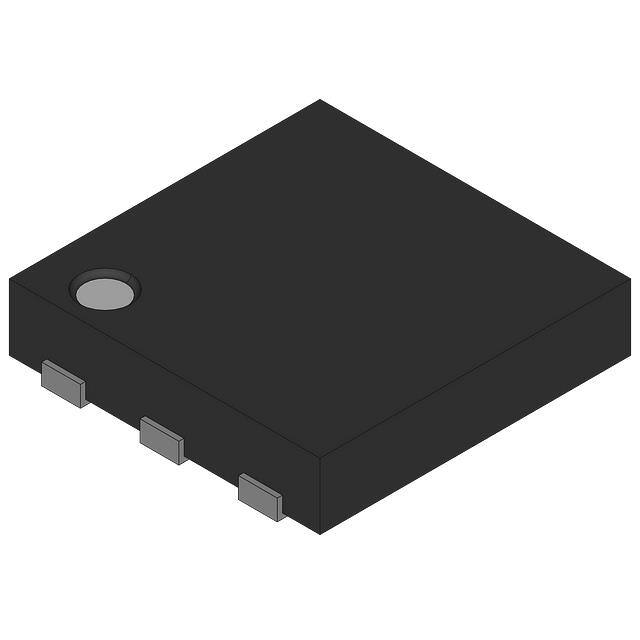
R1218x SERIES
Step-up DC/DC converter for White LED Backlight
NO.EA-166-170620
OUTLINE
The R1218x Series are PWM control type step-up DC/DC converter ICs with low supply current.
The R1218x is fully dedicated to drive White LED with constant current. Each of these ICs consists of an NMOS
FET, an oscillator, a PWM comparator, a voltage reference unit, an error amplifier, a current limit circuit, an under
voltage lockout circuit (UVLO), an over-voltage protection circuit (OVP).
The R1218x can drive white LEDs with high efficiency with low supply current. A diode is built-in the
R1218xxx1A, therefore it is possible to drive up to 4LEDs without an external diode. The R1218xxx2A, an external
diode is necessary, however, up to 7 serial LEDs can be driven with the R1218xxx2A.
Constant current can be set with an external resistance value. Dimming control is possible by PWM signal for
CE pin. Feedback voltage is 0.2V, therefore power loss by current setting resistor is small and efficiency is good.
Maximum duty cycle is internally fixed, Typ. 91% to 92%. LEDs can be driven from low voltage. Protection circuits
are the current limit of Lx peak current, the over voltage limit of output, and the under voltage lockout function.
Packages are standard SOT-23-6 and very tiny DFN(PLP)1820-6.
FEATURES
•
•
•
•
•
•
•
•
•
Input voltage.................................................. 1.8V to 5.5V
Built-in 400mA, 1.5Ω, 20V Nch MOSFET and diode (R1218xxx1A)
Built-in 400mA, 1.5Ω, 33V Nch MOSFET (R1218xxx2A)
Oscillator Frequency (PWM control) ............. 1.2MHz
Maximum Duty Cycle .................................... Typ. 91% to 92%
Feedback Voltage ......................................... Typ. 0.2V
UVLO Threshold Voltage .............................. Typ. 1.6V (Hysteresis Typ. 0.1V)
Lx Current limit Protection............................. Typ. 700mA
Over Voltage Protection (OVP) Threshold .... Typ. 9.5V (R1218x021A)
Typ. 14.0V (R1218x031A)
Typ. 18.5V (R1218x041A)
Typ. 23.0V (R1218x052A)
Typ. 27.5V (R1218x062A)
Typ. 31.5V (R1218x072A)
• LED dimming control..................................... by external PWM signal (Frequency 200Hz to 5kHz) to CE pin
by feedback voltage and filtered PWM signal (high frequency)
• Packages ...................................................... DFN(PLP)1820-6, SOT-23-6
APPLICATIONS
• White LED Backlight for portable equipment
1
�R1218x
NO.EA-166-170620
SELECTION GUIDE
The OVP threshold, the built-in diode, and the package for the ICs can be selected at the user’s request.
Product Name
R1218Kxxxx-TR
R1218Nxxxx-TR-FE
Package
Quantity per Reel
Pb Free
Halogen Free
DFN(PLP)1820-6
5,000 pcs
Yes
Yes
SOT-23-6
3,000 pcs
Yes
Yes
xx xx: The combination of the OVP threshold and with/without of built-in diode can be designated.
2
Code
OVP Threshold
Built-in Diode
021A
9.5V
Yes
031A
14.0V
Yes
041A
18.5V
Yes
052A
23.0V
No
062A
27.5V
No
072A
31.5V
No
�R1218x
NO.EA-166-170620
BLOCK DIAGRAMS
R1218xxx1A
VFB
VIN
Error Amp
LX
VOUT
UVLO
PWM Comp
R
Switch
Control
Q
S
OVP
Vref
OSC
Slope
Compensation
Current
Protect
Current
sense
Σ
Shutdown
delay
Chip Enable
CE
GND
R1218xxx2A
VFB
VIN
Error Amp
LX
VOUT
UVLO
PWM Comp
R
Q
S
Switch
Control
OVP
Vref
OSC
Slope
Compensation
Current
Protect
Current
sense
Σ
Shutdown
delay
Chip Enable
CE
GND
3
�R1218x
NO.EA-166-170620
PIN DESCRIPTIONS
• DFN(PLP)1820-6
Top View
6
5
4
• SOT-23-6
Bottom View
4
5
6
5
4
6
(mark side)
1
•
2
3
3
2
1
1
2
DFN(PLP)1820-6
Pin No
Symbol
Pin Description
1
CE
Chip Enable Pin ("H" Active)
2
VFB
Feedback Pin
3
Lx
Switching Pin
(Open Drain Output)
4
GND
5
VIN
6
VOUT
Ground Pin
Power Supply Input Pin
Output Pin
∗) Tab is GND level. (They are connected to the reverse side of this IC.)
The tab is better to be connected to the GND, but leaving it open is also acceptable.
•
4
SOT-23-6
Pin No
Symbol
Pin Description
1
CE
Chip Enable Pin ("H" Active)
2
VOUT
Output Pin
3
VIN
Power Supply Input Pin
4
Lx
Switching Pin (Open Drain Output)
5
GND
6
VFB
Ground Pin
Feedback Pin
3
�R1218x
NO.EA-166-170620
ABSOLUTE MAXIMUM RATINGS
Symbol
(GND=0V)
Item
Rating
Unit
VIN
VIN Pin Voltage
6.5
V
VCE
CE Pin Voltage
−0.3 to VIN+0.3
V
VFB
VFB Pin Voltage
−0.3 to VIN+0.3
V
VOUT
VOUT Pin Voltage
VLX
LX Pin Voltage
ILX
LX Pin Current
1000
Power Dissipation (DFN(PLP)1820-6)∗
880
Power Dissipation (SOT-23-6)∗
420
PD
R1218xxx1A
−0.3 to 22
R1218xxx2A
−0.3 to 34
R1218xxx1A
−0.3 to 22
R1218xxx2A
−0.3 to 34
V
V
mA
mW
Tj
Junction Temperature Range
−40 to 125
°C
Tstg
Storage Temperature Range
−55 to 125
°C
∗) For Power Dissipation, please refer to PACKAGE INFORMATION.
ABSOLUTE MAXIMUM RATINGS
Electronic and mechanical stress momentarily exceeded absolute maximum ratings may cause the permanent damages
and may degrade the life time and safety for both device and system using the device in the field.
The functional operation at or over these absolute maximum ratings is not assured.
RECOMMENDED OPERATING CONDITIONS
Symbol
Item
Rating
Unit
VIN
Operating Input Voltage
1.8 to 5.5
V
Ta
Operating Temperature Range
−40 to 85
°C
RECOMMENDED OPERATING CONDITIONS
All of electronic equipment should be designed that the mounted semiconductor devices operate within the
recommended operating conditions. The semiconductor devices cannot operate normally over the recommended
operating conditions, even if when they are used over such conditions by momentary electronic noise or surge. And the
semiconductor devices may receive serious damage when they continue to operate over the recommended operating
conditions.
5
�R1218x
NO.EA-166-170620
ELECTRICAL CHARACTERISTICS
•
R1218xxxxA
Symbol
IDD
Ta=25°C
Item
Supply Current
Min.
VIN=5.5V, VFB=0V, Lx at no load
Typ.
Max.
Unit
0.5
1.0
mA
0
3.0
µA
1.6
1.7
V
VUVLO1+0.1
1.8
V
Istandby Standby Current
VIN=5.5V, VCE=0V
VUVLO1
UVLO Detector Threshold
VIN falling
VUVLO2
UVLO Released Voltage
VIN rising
VCEH
CE Input Voltage "H"
VIN=5.5V
VCEL
CE Input Voltage "L"
VIN=1.8V
RCE
CE Pull Down Resistance
VIN=3.6V
tshtdn
CE Shutdown Delay Time
VIN=3.6V
VFB Voltage
VIN=3.6V
VFB Voltage Temperature
Coefficient
VIN=3.6V, −40°C ≤ Ta ≤ 85°C
IFB
VFB Input Current
VIN=5.5V, VFB=0V or 5.5V
RON
Switch On Resistance
VIN=3.6V, ISW=100mA
ILXleak
Switch Leakage Current
ILXlim
Switch Current Limit
VIN=3.6V
Vf
Diode Forward Voltage
R1218xxx1A
IDIODE=100mA
0.8
V
IDIODEleak
Diode Leakage Current
R1218xxx1A
VOUT=20V, VLX=0V
10
µA
Oscillator Frequency
VIN=3.6V, VOUT=VFB=0V
VFB
∆VFB/
∆Ta
fosc
Maxduty Maximum Duty Cycle
VOVP1
VOVP2
6
Conditions
OVP Detector Threshold
OVP Released Voltage
1.5
1.5
600
V
1200
0.5
V
2200
kΩ
10
0.19
0.20
ms
0.21
ppm
/°C
±150
−0.1
V
0.1
µA
Ω
1.5
R1218xxx1A
VLX=20V
0
3.0
µA
R1218xxx2A
VLX=29V
0
3.0
µA
700
1000
mA
VIN=3.6V,
VOUT=VFB=0V
VIN=3.6V,
VOUT rising
VIN=3.6V,
VOUT falling
400
1.0
1.2
R1218x072A
86
92
Others
86
91
R1218x021A
8.5
9.5
10.5
R1218x031A
13.0
14.0
15.0
R1218x041A
17.0
18.5
20.0
R1218x052A
21.5
23.0
24.5
R1218x062A
26.0
27.5
29.0
R1218x072A
30.0
31.5
33.0
R1218x021A
VOVP1−0.5
R1218x031A
VOVP1−0.75
R1218x041A
VOVP1−1.0
R1218x052A
VOVP1−1.25
R1218x062A
VOVP1−1.5
R1218x072A
VOVP1−1.75
1.4
MHz
%
V
V
�R1218x
NO.EA-166-170620
APPLICATION INFORMATION
•
Typical Application Circuit
L1
22µH
L1
22µH
C1
1µF
C1
1µF
VIN
LX
CE
VIN
VOUT
GND
VFB
LX
CE
R1
10Ω
VOUT
GND
R1218x041A
•
C2
0.22µF
C2
0.22µF
VFB
R1
10Ω
R1218x072A
LED Current setting
LED current can be set with feedback resistor(R1)
ILED=0.2 / R1
•
LED Dimming Control, Softstart
(1) LED dimming control by PWM signal to CE pin
LED dimming control is possible by forcing PWM signal to CE pin.
When the power-on or start up with CE pin, softstart function works, however, after that, if the CE pin is set
as "L" and set CE pin "H" again during the shutdown delay time, softstart function is disabled and starts up
fast to normal mode, therefore 200Hz to 5kHz PWM signal is standard. By the CE pin input, LED turns on
and off. Average LED current varies depending on the duty cycle of CE input. Too high frequency PWM
signal is not effective because of its delay.
CE
VFB
R1
Dimming control by CE pin input
7
�R1218x
NO.EA-166-170620
(2) Dimming control by DC voltage
LED dimming control is also possible by using the DC voltage to VFB pin. LED current is adjustable by DC
voltage and resistors, R1 and R2 in the following figure.
ILED=(DC − 0.2) / R2 − 0.2 / R1
R2
VFB
DC
R1
Dimming control by DC voltage
(3) Dimming control by feedback voltage and filtered PWM signal
LED dimming control is also possible by using the feedback voltage and filtered PWM signal.
LED current is adjustable according to the "H" level (VH) and "L" level(VL) of PWM signal and resistors,
R1, R2, R3, and R4 in the following figure.
R2
VFB
R3
C3
R4
R1
VH
VL
Dimming control by filtered PWM signal
Duty=0% to 100% PWM signal duty cycle can be used up to the maximum LED current and minimum LED
current as in the next formulas.
ILEDMIN={0.2 − R2 × (VH − 0.2) / (R3 + R4)} / R1
ILEDMAX={0.2 − R2 × (VL − 0.2) / (R3 + R4)} / R1
For example, supposed that the PWM signal level is set as 2.5V/0V, to adjust the LED current range from 0mA
to 20mA by the duty cycle, our recommendation external components values are, R1=10Ω, R2=5.1kΩ,
R3=51kΩ, R4=5.1kΩ or around.
C3 should be set large enough to regard the PWM signal as adjustable DC voltage by the filter. In this method,
higher frequency control than the frequency against the CE pin can be used for dimming control.
For example, if the frequency is 40kHz, 0.1µF or more capacitor is our recommendation value as C3.
8
�R1218x
NO.EA-166-170620
•
Selection of Inductors
The peak current of the inductor at normal mode can be calculated as next formula:
ILXpeak=1.25 × ILED × VOUT / VIN + 0.5 × VIN × (VOUT − VIN) / (L × VOUT × fosc)
When the start-up or dimming control by CE pin, transient current flows, the peak current must be equal or less
than the current limit of the IC. The peak current should not beyond the rating current of the inductor. For
example, for 4 serial LED drive from VIN=3.6V, recommendation value of the inductor is 22µH or more.
•
Selection of Capacitors
Set 1µF or more value bypass capacitor C1 between VIN pin and GND pin as close as posible.
Set 0.22µF or more capacitor C2 between VOUT and GND pin.
TECHNICAL NOTES
●Current path on PCB
The current paths in an application circuit are shown in Fig.3 and 4.
A current flows through the paths shown in Fig.3 at the time of MOSFET-ON, and shown in Fig.4 at the time of
MOSFET-OFF. In the paths pointed with red arrows in Fig.4, current flows just in MOSFET-ON period or just
in MOSFET-OFF period. Parasitic impedance / inductance and the capacitance of these paths influence
stability of the system and cause noise outbreak. So please minimize this side effect. In addition, please shorten
the wiring of other current paths shown in Fig.3 and 4 except for the paths of LED load.
●LAYOUT Guide for PCB
⋅
Please shorten the wiring of the input capacitor (C1) between VIN pin and GND pin of IC. The GND pin should
be connected to the strong GND plane.
⋅
The area of LX land pattern should be smaller.
⋅
In the case of internal diode version, please put output capacitor (C2) close to the VOUT pin.
⋅
⋅
In the case of external diode, the wiring between LX pin and inductor and diode should be short and please put
output capacitor(C2) close to the cathode of diode.
Please make the GND side of output capacitor (C2) close to the GND pin of IC.
MOSFET-ON
Load
Load
Fig.3
Fig.4
MOSFET-OFF
9
�R1218x
NO.EA-166-170620
●PCB Layout
・PKG: DFN(PLP)1820-6pin
R1218Kxx1A
Topside
Backside
R1218Kxx2A
Topside
10
Backside
�R1218x
NO.EA-166-170620
・PKG: SOT-23-6pin
R1218Nxx1A
Topside
Backside
Topside
Backside
R1218Nxx2A
11
�R1218x
NO.EA-166-170620
TYPICAL CHARACTERISTICS
1) Efficiency vs. LED Current (2LED) L:LQH32CN220 (Ta=25°C)
R1218x021A
R1218x021A
R1218x021A
2) Efficiency vs. LED Current (3LED) L: LQH32CN220 (Ta=25°C)
R1218x031A
12
R1218x031A
�R1218x
NO.EA-166-170620
R1218x031A
3) Efficiency vs. LED Current (4LED) L: LQH32CN220 (Ta=25°C)
R1218x041A
R1218x041A
R1218x041A
13
�R1218x
NO.EA-166-170620
4) Efficiency vs. LED Current (6LED) L: LQH32CN220, Diode: CRS02 (Ta=25°C)
R1218x062A
R1218x062A
R1218x062A
5) Efficiency vs. LED Current (7LED) L: LQH32CN220, Diode: CRS02 (Ta=25°C)
R1218x072A
14
R1218x072A
�R1218x
NO.EA-166-170620
R1218x072A
6) PWM Dimming Control (2LED) VIN=3.6V, R1=10Ω
6-1. Duty vs. LED Current (2LED) (Ta=25°C)
R1218x021A
6-2. Output Voltage Waveform (2LED) (Ta=25°C)
R1218x021A
R1218x021A
15
�R1218x
NO.EA-166-170620
7) PWM Dimming Control (4LED) VIN=3.6V, R1=10Ω
7-1. Duty vs. LED Current (4LED) (Ta=25°C)
R1218x041A
7-2. Output Voltage Waveform (4LED) (Ta=25°C)
R1218x041A
8) PWM Dimming Control (6LED) VIN=3.6V, R1=10Ω
8-1. Duty vs. LED Current (6LED) (Ta=25°C)
R1218x062A
16
R1218x041A
�R1218x
NO.EA-166-170620
8-2. Output Voltage Waveform (6LED) (Ta=25°C)
R1218x062A
R1218x062A
9) PWM Dimming Control (7LED) VIN=3.6V, R1=10Ω
9-1. Duty vs. LED Current (7LED) (Ta=25°C)
R1218x072A
9-2. Output Voltage Waveform (7LED) (Ta=25°C)
R1218x072A
R1218x072A
17
�R1218x
NO.EA-166-170620
10) VFB Voltage vs. Temperature
11) UVLO Detector Threshold/Released Voltage
vs. Temperature
R1218x041A
12) Oscillator Frequency vs. Temperature
R1218x041A
14) OVP Detector Threshold/Released Voltage vs. Temperature
R1218x041A
18
R1218x041A
13) Maximum duty cycle vs. Temperature
R1218x041A
15) Supply Current vs. Temperature
R1218x041A
�R1218x
NO.EA-166-170620
16) LX Current Limit vs. Temperature
Lx Current Limit Ilim (mA)
R1218x041A
2.4
12003.6
5.5
514
860
1080
460
675
810
400
515
595
VIN=1.8V
VIN=2.4V
VIN=3.6V
VIN=5.5V
1000
800
600
400
200
0
-40
-15
10
35
60
85
Temparature Topt (℃)
17) OVP Transient Response (Ta=25°C)
R1218x021A
R1218x041A
R1218x062A
19
�R1218x
NO.EA-166-170620
18) Efficiency dependence on inductors (4 LED)
R1218x041A (Internal Diode Type)
20
�POWER DISSIPATION
DFN(PLP)1820-6
Ver. A
The power dissipation of the package is dependent on PCB material, layout, and environmental conditions.
The following conditions are used in this measurement.
Measurement Conditions
Standard Test Land Pattern
Environment
Mounting on Board (Wind Velocity = 0 m/s)
Board Material
Glass Cloth Epoxy Plastic (Double-Sided Board)
Board Dimensions
40 mm × 40 mm × 1.6 mm
Top Side: Approx. 50%
Copper Ratio
Bottom Side: Approx. 50%
Through-holes
φ 0.54 mm × 30 pcs
Measurement Result
(Ta = 25°C, Tjmax = 125°C)
Standard Test Land Pattern
Power Dissipation
880 mW
Thermal Resistance
θja = (125 − 25°C) / 0.88 W = 114°C/W
40
1000
880
800
Standard Test Land Pattern
40
Power Dissipation PD (mW)
1200
600
400
200
0
0
25
50
75 85 100
125
Ambient Temperature (°C)
Power Dissipation vs. Ambient Temperature
150
IC Mount Area (mm)
Measurement Board Pattern
i
�PACKAGE DIMENSIONS
DFN(PLP)1820-6
Ver. A
1.6±0.1
A
1.80
B
5
4
0.20±0.1
6
2.00
1.0±0.1
※
INDEX
0.6MAX.
3
0.05 S
0.05min
S
0.25±0.1 0.25±0.1
X4
0.05
0.05 M AB
0.5
2
1
0.1NOM.
0.3±0.1
Bottom View
DFN(PLP)1820-6 Package Dimensions (Unit: mm)
*
∗ The tab on the bottom of the package is substrate level (GND). It is recommended that the tab be connected to the
ground plane on the board, or otherwise be left floating.
i
�POWER DISSIPATION
SOT-23-6
Ver. A
The power dissipation of the package is dependent on PCB material, layout, and environmental conditions.
The following conditions are used in this measurement.
Measurement Conditions
Standard Test Land Pattern
Environment
Mounting on Board (Wind Velocity = 0 m/s)
Board Material
Glass Cloth Epoxy Plastic (Double-Sided Board)
Board Dimensions
40 mm x 40 mm x 1.6 mm
Copper Ratio
Top Side: Approx.50%
Bottom Side: Approx. 50%
Through-holes
φ 0.5 mm x 44 pcs
Measurement Result
(Ta = 25°C, Tjmax = 125°C)
Standard Test Land Pattern
Free Air
Power Dissipation
420 mW
250 mW
Thermal Resistance
θja = (125 − 25°C) / 0.42 W = 238°C/W
400°C/W
40
500
Standard Test Land Pattern
420
400
300
Free Air
250
40
Power Dissipation (mW)
600
200
100
0
0
25
50
75 85 100
125
150
Ambient Temperature (°C)
Power Dissipation vs. Ambient Temperature
IC Mount Area (mm)
Measurement Board Pattern
i
�PACKAGE DIMENSIONS
SOT-23-6
Ver. A
2.9±0.2
+0.2
1.1-0.1
1.9±0.2
4
1
2
0 to 0.1
0.2MIN.
5
+0.2
1.6-0.1
6
0.8±0.1
(0.95)
2.8±0.3
(0.95)
3
+0.1
0.4-0.2
+0.1
0.15-0.05
Unit : mm
SOT-23-6 Package Dimensions
i
�1. The products and the product specifications described in this document are subject to change or discontinuation of
production without notice for reasons such as improvement. Therefore, before deciding to use the products, please
refer to Ricoh sales representatives for the latest information thereon.
2. The materials in this document may not be copied or otherwise reproduced in whole or in part without prior written
consent of Ricoh.
3. Please be sure to take any necessary formalities under relevant laws or regulations before exporting or otherwise
taking out of your country the products or the technical information described herein.
4. The technical information described in this document shows typical characteristics of and example application circuits
for the products. The release of such information is not to be construed as a warranty of or a grant of license under
Ricoh's or any third party's intellectual property rights or any other rights.
5. The products listed in this document are intended and designed for use as general electronic components in standard
applications (office equipment, telecommunication equipment, measuring instruments, consumer electronic products,
amusement equipment etc.). Those customers intending to use a product in an application requiring extreme quality
and reliability, for example, in a highly specific application where the failure or misoperation of the product could result
in human injury or death (aircraft, spacevehicle, nuclear reactor control system, traffic control system, automotive and
transportation equipment, combustion equipment, safety devices, life support system etc.) should first contact us.
6. We are making our continuous effort to improve the quality and reliability of our products, but semiconductor products
are likely to fail with certain probability. In order to prevent any injury to persons or damages to property resulting from
such failure, customers should be careful enough to incorporate safety measures in their design, such as redundancy
feature, fire containment feature and fail-safe feature. We do not assume any liability or responsibility for any loss or
damage arising from misuse or inappropriate use of the products.
7. Anti-radiation design is not implemented in the products described in this document.
8. The X-ray exposure can influence functions and characteristics of the products. Confirm the product functions and
characteristics in the evaluation stage.
9. WLCSP products should be used in light shielded environments. The light exposure can influence functions and
characteristics of the products under operation or storage.
10. There can be variation in the marking when different AOI (Automated Optical Inspection) equipment is used. In the
case of recognizing the marking characteristic with AOI, please contact Ricoh sales or our distributor before attempting
to use AOI.
11. Please contact Ricoh sales representatives should you have any questions or comments concerning the products or
the technical information.
Halogen Free
Ricoh is committed to reducing the environmental loading materials in electrical devices
with a view to contributing to the protection of human health and the environment.
Ricoh has been providing RoHS compliant products since April 1, 2006 and Halogen-free products since
April 1, 2012.
http://www.e-devices.ricoh.co.jp/en/
Sales & Support Offices
RICOH ELECTRONIC DEVICES CO., LTD.
Higashi-Shinagawa Office (International Sales)
3-32-3, Higashi-Shinagawa, Shinagawa-ku, Tokyo 140-8655, Japan
Phone: +81-3-5479-2857 Fax: +81-3-5479-0502
RICOH EUROPE (NETHERLANDS) B.V.
Semiconductor Support Centre
Prof. W.H. Keesomlaan 1, 1183 DJ Amstelveen, The Netherlands
Phone: +31-20-5474-309
RICOH INTERNATIONAL B.V. - German Branch
Semiconductor Sales and Support Centre
Oberrather Strasse 6, 40472 Düsseldorf, Germany
Phone: +49-211-6546-0
RICOH ELECTRONIC DEVICES KOREA CO., LTD.
3F, Haesung Bldg, 504, Teheran-ro, Gangnam-gu, Seoul, 135-725, Korea
Phone: +82-2-2135-5700 Fax: +82-2-2051-5713
RICOH ELECTRONIC DEVICES SHANGHAI CO., LTD.
Room 403, No.2 Building, No.690 Bibo Road, Pu Dong New District, Shanghai 201203,
People's Republic of China
Phone: +86-21-5027-3200 Fax: +86-21-5027-3299
RICOH ELECTRONIC DEVICES CO., LTD.
Taipei office
Room 109, 10F-1, No.51, Hengyang Rd., Taipei City, Taiwan (R.O.C.)
Phone: +886-2-2313-1621/1622 Fax: +886-2-2313-1623
�