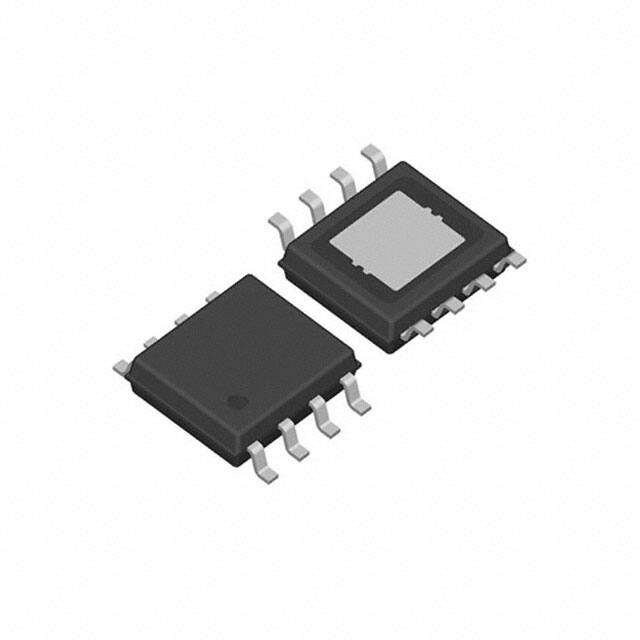
R1242S Series
30 V Input 3 A Buck DC/DC Converter
NO.EA-191-190718
OUTLINE
The R1242S is a CMOS-based 30 V input, 3 A, synchronous rectified step-down DC/DC converter with builtin High-side switch. The R1242S contains Nch High-side Tr. (Typ. 0.1 Ω) and can supply maximum 3 A output
current. In order to reduce heat generation caused by energy loss, FET can be used as Low-side switch. Lowside switch turns off when ICs shut down. The R1242S consists of the followings: an oscillator, a PWM control
circuit, a voltage reference unit, an error amplifier, a phase compensation circuit, a slope control circuit, a softstart circuit, protection circuits, an internal regulator, a switch, and so on. Also, the R1242S consists of the
following external components: an inductor, resistors, an external FET, and capacitors.
The R1242S operates with current mode topology, which does not require any sense resistor. As a result, the
R1242S can achieve high speed and high efficiency. The oscillator frequencies for each version are set as
follows; adjustable between 330 kHz to 1000 kHz for versions A and B, 330 kHz for versions C and D, 500 kHz
for versions E and F, and 1000 kHz for versions G and H.
The R1242S is equipped with the protection functions, such as peak current limit function, latch function, fold
back function, thermal-shutdown function, and undervoltage-lockout (UVLO) function. Peak current limit
function restricts the maximum current into 4.5 A. Latch function (comes with versions A, C, E, and G) shuts
off the output if current limit detection continues for a certain period of time. Fold back function (comes with
versions B, D, F, and H) reduces the initial oscillator frequencies into 1/4 when output is short-circuited.
FEATURES
Supply Current ................................................................... Typ. 0.8 mA (VIN = 30 V, Set VFB = 1.0 V)
Standby Current................................................................. Typ. 0 µA (VIN = 30 V, CE = L)
Input Voltage Range .......................................................... 5 V to 30 V
Output Voltage Range ....................................................... 0.8 V to 15 V, Adjustable using external resistors
Feed Back Voltage Accuracy ............................................. 0.8 V with 1.5% accuracy
Output Current ................................................................... 3 A*
Oscillator Frequency .......................................................... 330 kHz to 1 MHz (Ver. A/B), 330 kHz (Ver. C/D),
500 kHz, (Ver. E/F), 1000 kHz (Ver. G/H)
Maximum Duty Cycle ......................................................... Typ. 88%
UVLO Detector Threshold ................................................. Typ. 3.6 V
Soft-start Time ................................................................... Typ. 0.5 ms
Peak Current Limit ............................................................. Typ. 4.5 A
Thermal Shutdown............................................................. Typ. 160C
Latch Type Protection ........................................................ Delay Time: Typ. 5 ms (Ver. A/C/E/G)
Fold-back Type Protection ................................................. Fold-back Frequency: Ver. B: fosc x 1/4,
Ver. D: 83 kHz, Ver. F: 125 kHz, Ver. H: 250 kHz
Package ............................................................................. HSOP-8E
* This is an approximate value. The output current depends on conditions and external parts.
1
�R1242S
NO.EA-191-190718
APPLICATIONS
Digital Home Appliances: Digital TVs, DVD Players
Office Automation Equipment: Printers, Fax
Hand-held Communication Equipment: Cameras, Video Recorders
Battery-powered Equipment
SELECTION GUIDE
The oscillator frequency (Adjustable, Fixed: 330 kHz, 500 kHz, 1000 kHz) and the short-circuit protection type
(Latch, Fold-back) are user-selectable options.
Selection Guide
Product Name
Package
Quantity per Reel
Pb Free
Halogen Free
R1242S001-E2-FE
HSOP-8E
1,000 pcs
Yes
Yes
: Specify the oscillator frequency and the short-circuit protection type.
Code
A
B
C
D
E
F
G
H
2
Frequency
Adjustable
Adjustable
330 kHz
330 kHz
500 kHz
500 kHz
1000 kHz
1000 kHz
Latch Type
Yes
No
Yes
No
Yes
No
Yes
No
Fold-back Type
No
Yes
No
Yes
No
Yes
No
Yes
�R1242S
NO.EA-191-190718
BLOCK DIAGRAM
R1242S Block Diagram
1
Version
Oscillator Frequency
Short Protection
A
B
C
D
E
F
G
H
Adjustable
Adjustable
330 kHz
330 kHz
500 kHz
500 kHz
1000 kHz
1000 kHz
Latch Type
Fold-back Type
Latch Type
Fold-back Type
Latch Type
Fold-back Type
Latch Type
Fold-back Type
3
�R1242S
NO.EA-191-190718
PIN DESCRIPTIONS
Top View
1
8
2
7
R1242
3
6
4
5
HSOP-8E Pin Configuration
R1242S001A/B Pin Description
Pin No.
Symbol
1
CE
2
EXT
3
BST
4
VIN
5
Lx
6
GND
7
VFB
8
RT
Description
Chip Enable Pin, Active with “H”
Gete Drive Pin
Bootstrap Pin
Power Supply Pin
Lx Switching Pin
Ground Pin
Feedback Pin
Frequency Setting Pin
Tab is GND level. (They are connected to the reverse side of this IC.) The tab must be connected to the GND.
R1242S001C/D/E/F/G/H Pin Description
Pin No.
Symbol
Description
1
CE
Chip Enable Pin, Active with “H”
2
EXT
Gate Drive Pin
3
BST
Bootstrap Pin
4
VIN
Power Supply Pin
5
Lx
Lx Switching Pin
6
GND
Ground Pin
7
VFB
Feedback Pin
8
TEST
TEST Pin, OPEN or connect to GND
Tab is GND level. (They are connected to the reverse side of this IC.) The tab must be connected to the GND.
4
�R1242S
NO.EA-191-190718
ABSOLUTE MAXIMUM RATINGS
Absolute Maximum Ratings
Symbol
VIN
VBST
VLX
VCE
VFB
VEXT
VRT/ VTEST
PD
Tj
Tstg
Item
Input Voltage
Boost Pin Voltage
Lx Pin Voltage
CE Pin Input Voltage
VFB Pin Voltage
EXT Pin Voltage
RT/ TEST Pin Voltage
Power Dissipation (Standard Land Pattern)*
Junction Temperature Range
Storage Temperature Range
Rating
−0.3 V to 32 V
VLX −0.3 V to VLX +6 V
−0.3 V to VIN +0.3
−0.3 V to VIN +0.3
−0.3 V to 6 V
−0.3 V to 6 V
−0.3 V to 6 V
2.9
−40 to 125
−55 to 125
(GND = 0 V)
Unit
V
V
V
V
V
V
V
W
ºC
ºC
* Refer to Power Dissipation for detailed information.
ABSOLUTE MAXIMUM RATINGS
Electronic and mechanical stress momentarily exceeded absolute maximum ratings may cause permanent damage
and may degrade the life time and safety for both device and system using the device in the field.
The functional operation at or over these absolute maximum ratings is not assured.
RECOMMENDED OPERATING CONDITIONS
Recommended Operating Conditions
Symbol
Item
VIN
Operating Input Voltage
Ta
Operating Temperature Range
Rating
Unit
5 to 30
V
−40 to 85
°C
RECOMMENDED OPERATING CONDITIONS
All of electronic equipment should be designed that the mounted semiconductor devices operate within the
recommended operating conditions. The semiconductor devices cannot operate normally over the recommended
operating conditions, even if they are used over such conditions by momentary electronic noise or surge. And the
semiconductor devices may receive serious damage when they continue to operate over the recommended operating
conditions.
5
�R1242S
NO.EA-191-190718
ELECTRICAL CHARACTERISTICS
Electrical Characteristics
Symbol
Item
IIN
(Unless otherwise noted, VIN = 12 V, Ta = 25ºC)
Conditions
Min.
Typ.
Max.
Unit
VIN Consumption Current
VIN = 30 V, VFB = 1.0 V
VUVLO2
UVLO Detect Voltage
Rising
VUVLO1
UVLO Released Voltage
Falling
VFB
tDLY
RLXH
ILXHOFF
ILIMLXH
VCEH
RT = floating
290
330
375
kHz
RT = 120 kΩ
Oscillator Frequency (Ver. C/D)
450
300
500
330
550
370
kHz
kHz
Oscillator Frequency (Ver. E/F)
Oscillator Frequency (Ver. G/H)
450
900
500
1000
550
1100
kHz
kHz
kHz
Fold back Frequency
Delay Time for Latch Protection
Lx High Side Switch
ON Resistance
Lx High Side Switch
Leakage Current
Lx High Side Switch
Limited Current
CE “H” Input Voltage
VFB Input Current
CE “H” Input Current
VFB < 0.56,
RT = GND (Ver. B)
VFB < 0.56 (Ver. D)
VFB < 0.56 (Ver. F)
250
83
125
kHz
kHz
VFB < 0.56 (Ver. H)
RT = 120 kΩ (Ver. A/B)
VIN = 9 V (Ver. C/D)
250
kHz
82
CE “L” Input Current
Thermal Shutdown
TTSD
Detect Temperature
Istandby Standby Current
RRISE
EXT “H” Switch On Resistance
(Ver. A/C/E/G)
EXT “L” Switch On Resistance
Detecting Voltage for Low
Side Switch Current Limit
88
95
%
0.5
ms
5
ms
0.1
Ω
0
20
4.5
A
A
1.7
ICEL
6
±100
−40ºC ≤ Ta ≤ 85ºC
Soft Start Time
CE “L” Input Voltage
VEXTLIM
0.812
1100
IFB
RFALL
0.800
V
1000
VCEL
ICEH
0.788
V
900
Maxduty Maximum Duty Cycle
tstart
mA
4.0
1.20
VUVLO2
−0.3
4.3
RT = GND
Oscillator Frequency (Ver. A/B)
fFLB
0.80
V
ppm/
ºC
kHz
VFB Voltage Tolerance
ΔVFB/ΔTa VFB Voltage Temperature
Coefficient
fosc
0.45
VUVLO2
−0.5
3.7
V
0.4
V
−1.0
−1.0
1.0
1.0
A
A
−1.0
1.0
A
160
Hysteresis: 30ºC
ºC
IEXT = −100 mA
6
11
A
Ω
IEXT = 100 mA
0.5
1.5
Ω
76
mV
0
VIN = 30 V, VCE = 0 V
36
55
20
�R1242S
NO.EA-191-190718
OPERATING DESCRIPTIONS
OPERATION OF STEP-DOWN DC/DC CONVERTER AND OUTPUT CURRENT
The step-down DC/DC converter charges energy in the inductor (L) when the Lx transistor turns on, and
discharges the energy from the inductor when Lx transistor turns off and controls with less energy loss, so that
a lower output voltage (VOUT) than the input voltage (VIN) can be obtained. The operation of the step-down
DC/DC converter is explained in the following figures.
VIN
Highside Tr.
Lowside FET
VOUT
L
i2
ILmax
IL
i1
ILmin
COUT
GND
Iconst
ton
t
toff
T=1/fosc
Basic Circuit
Step1.
Inductor Current flowing through Inductor
The highside transistor turns on and the inductor current (i1) flows, L is charged with energy. At this
moment, i1 increases from the minimum inductor current (ILmin), which is 0 A, and reaches the
maximum inductor current (ILmax) in proportion to the on-time period (ton) of the highside transistor.
Step2.
When the highside transistor turns off, L tries to maintain IL at ILmax, so L turns the lowside FET on
and the inductor current (i2) flows into L.
Step3.
i2 decreases gradually and reaches ILmin in proportion to the off-time period (toff) of the highside
transistor.
In the case of PWM mode, VOUT is maintained by controlling ton. During PWM mode, the oscillator frequency
(fosc) is being maintained constant.
When the step-down DC/DC operation is constant, ILmin and ILmax during ton of highside transistor would be
same as during toff of highside transistor.
7
�R1242S
NO.EA-191-190718
APPLICATION INFORMATION
TYPICAL APPLICATION CIRCUIT
15Ω
VIN
20kΩ
VIN
CIN
10F
0.1F
4.7H
VOUT
1.8V
COUT
22F 2
16kΩ
5.1kΩ
R1242S001A/B Typical Application Circuit, VOUT = 1.8 V, 330 kHz
15Ω
VIN
8kΩ
CIN
10F
VIN
0.1F 4.7F
VOUT
1.2V
COUT
16kΩ
22F 2
5.1kΩ
(recommendation)
R1242S001C/D Typical Application Circuit, VOUT = 1.2 V, 330 kHz
Recommendation Parts
CIN
10 F, KTS500B106M55N0T00 (Nippon Chemi-Con)
COUT
22 F, GRM31CR71A226M (Murata)
Cbst
0.1 F, GRM21BB11H104KA01L (Murata)
L
4.7 H, VLF10045T-4R7N6R1 (TDK)
FET
TPN11003NL (TOSHIBA)
8
�R1242S
NO.EA-191-190718
VIN
15Ω
8kΩ
VIN
0.1F
CIN
10F
15Ω
2.2H
VOUT
COUT
22F 2
16kΩ
(Rt=120kΩ)
5.1kΩ
R1242S001A/B Typical Application Circuit, VOUT = 1.2 V, 500 kHz
VIN
15Ω
8kΩ
CIN
10F
VIN
0.1F
15Ω
2.2H
VOUT
COUT
22F 2
16kΩ
5.1kΩ
R1242S001E/F Typical Application Circuit, VOUT = 1.2 V, 500 kHz
Recommendation Parts
CIN
10 F, KTS500B106M55N0T00 (Nippon Chemi-Con)
COUT
22 F, GRM31CR71A226M (Murata)
Cbst
0.1 F, GRM21BB11H104KA01L (Murata)
L
2.2 H, RLF7030T-2R2M5R4 (TDK)
FET
TPN11003NL (TOSHIBA)
9
�R1242S
NO.EA-191-190718
VIN
50kΩ
VIN
CIN
10F
0.1F
4.7H
VOUT
COUT
16kΩ
10F
5.1kΩ
R1242S001A/B Typical Application Circuit, VOUT = 3.3 V, 1000 kHz
VIN
15
50kΩ
VIN
CIN
10F
0.1F
4.7H
VOUT
COUT
16kΩ
10F
5.1kΩ
R1242S001G/H Typical Application Circuit, VOUT = 3.3 V, 1000 kHz
Recommendation Parts
CIN
10 F, KTS500B106M55N0T00 (Nippon Chemi-Con)
COUT
10 F, GRM31CR71E106K (Murata)
Cbst
0.1 F, GRM21BB11H104KA01L (Murata)
L
4.7 H, VLF10045T-4R7N6R1 (TDK)
FET
TPN11003NL (TOSHIBA)
10
�R1242S
NO.EA-191-190718
THE VOLTAGE BETWEEN THE BST PIN AND Lx PIN
In the application of the "Bootstrap" Start switching regulator, the R1242S, when the Lx pin voltage becomes
equal or less than the BST voltage supply regulator, the BST voltage supply regulator charges the capacitor,
Cbst. By this function, even if the Lx pin becomes "H", the high side switch composed of an Nch transistor can
be turned on.
Under the condition of PWM operation, the BST voltage supply regulator of the R1242S, while the Lx pin
voltage is "L", the voltage between BST pin and GND pin is controlled and maintained the level as of 5 V, then
regardless of the voltage drop by the bootstrap switch, the BST voltage supply regulator can drive a high side
switch and the low side external MOSFET.
However, if either the maximum duty cycle limit or the low side switch current limit is detected, sampling of the
voltage between BST pin and Lx pin is halted, and the output of the BST voltage supply regulator becomes
stacked at 5 V as same as a conventional "Bootstrap" Start switching regulator. Depending on the external
FET gate capacitance, excessive voltage drop can be caused by bootstrap switching, and also switching failure
can be caused by insufficient electrical charge on Cbst. As a result, the desired voltage may not be obtained.
Higher frequency requires higher electrical charge. Special attention is required in case of using the device at
1000 kHz.
Events that may trigger such trouble are
(A) Detect of the current limit of low side switch at light load
(B) VOUT > VIN / 2 and starting the circuit without using CE pin individually or CE pin and VIN are tied and
controlled at the same time.
(C) The voltage difference between the input and the output is small and usage at maximum duty cycle is
expected.
The countermeasure to avoid the trouble caused by the events above is to use an external diode, Dbst shown
in the figure below. The Dbst will charge CBST and prevents the abnormal switching. The supply voltage to Dbst
should be in the range from 4.5 V to 6.0 V and if the set output voltage of the R1242S is in the range from 4.5
V to 6.0 V, then the output voltage can be used directly as the supply voltage of Dbst. The voltage rating of the
diode, Dbst must be VIN or more, the forward current of Dbst must be 20 mA or more. Other specifications of
the Dbst are not important.
11
�R1242S
NO.EA-191-190718
4.5 V to 6.0 V
(
Cspd
R1
VIN
BST
VIN
) Dbst
*if necessary
Cbst
CIN
FB
L
Lx
VOUT
R2
1000kHz
(Rt=GND)
RT
EXT
CE
GND
FET
COUT
"H"active
(recommendation)
Application Circuit Example
If the auxiliary power source for BST 4.5 V to 6.0 V does not have a bypass capacitor, set 0.1 µF or higher
bypass capacitor between the auxiliary power source and GND.
12
�R1242S
NO.EA-191-190718
OPERATING FREQUENCY (VERSION A/B)
In the application circuit of the R1242S001A/B, the 330 kHz operation is selected by leaving Rt open.
Connecting a 200 kΩ to 0 Ω resistor between Rt (pin 8) and ground can be used to set the switching frequency
to approximately 450 kHz to 1000 kHz. To calculate the Rt resistor, use the equation below:
*(Between 330 kHz and 450 kHz switching frequency can be also set by connecting the appropriate resistor
according to the next equation.)
Rt = 120000 / (2 / (1000000 / fosc - 1) - 1) [Ω]
The switching frequency vs. Rt value is shown in Figure 1 and Figure 2.
Figure 1. Linearscale
Figure 2. Logscale
13
�R1242S
NO.EA-191-190718
OUTPUT CURRENT AND SELECTION OF EXTERNAL COMPONENTS
The following equations explain the relationship between output current and peripheral components.
Ripple Current P-P value is described as IRP, ON resistance of Highside Tr. is described as RONH, ON resistance
of Lowside FET is described as RONL, and DC resistance of the inductor is described as RL.
First, when Highside Tr. is “ON”, the following equation is satisfied.
VIN = VOUT + (RONH + RL) IOUT + L IRP / ton ................................................................................ Equation 3
Second, when Highside Tr. is "OFF" (Lowside FET is "ON"), the following equation is satisfied.
L IRP / toff = RONL IOUT + VOUT + RL IOUT .................................................................................. Equation 4
Put Equation 4 into Equation 3 to solve ON duty of Highside Tr. (DON = ton / (toff + ton)):
DON = (VOUT + (RONL + RL) IOUT) / (VIN + (RONL – RONH) IOUT)...................................................... Equation 5
Ripple Current is described as follows:
IRP = (VIN − VOUT − RONH IOUT − RL IOUT) DON / fosc / L ........................................................... Equation 6
Peak current that flows through L, and LX Tr. is described as follows:
ILmax = IOUT + IRP / 2...................................................................................................................... Equation 7
Notes: Please consider ILmax when setting conditions of input and output, as well as selecting the external
components. The above calculation formulas are based on the ideal operation of the ICs in continuous mode.
14
�R1242S
NO.EA-191-190718
TECHNICAL NOTES
The performance of a power source circuit using this device is highly dependent on a peripheral circuit. A
peripheral component or the device mounted on PCB should not exceed its voltage, current or power ratings.
When designing a peripheral circuit, please be fully aware of the following points. (Refer to our PCB layout for
detailed information).
External components must be connected as close as possible to the ICs and their wiring must be short as
possible. Especially, the capacitor must be connected with the shortest distance between VIN and GND pins.
If the impedances of the power supply line and the GND line are high, the operation can be unstable due
to the switching current which fluctuates the electric potential of the inside the ICs. The impedances of
power supply line and GND line must be as low as possible. When designing their wirings, it is necessary
to give careful consideration to the large current flowing into the power supply, GND, Lx, VOUT and inductor.
The wiring of output voltage setting resistance (R1) and the wiring of inductor must be separated from load
wiring.
The ceramic capacitors with low ESR (Equivalent Series Resistance) must be used for the ICs. The
recommended value for the CIN capacitor between VIN and GND is equal or more than 10 F.
The selections of inductor (L) and output capacitor (COUT) can be different according to the ICs’ oscillation
frequencies, output voltages and input voltages. Refer to “Recommended Value for Each Output Voltage”
on the next page and select the most suitable values at the conditions of use. The internal phase
compensation is built in the ICs; therefore, if the values selected are largely deviated from the
recommended values, the operation may result in unstable.
The over current protection circuit could be influenced by self-heating of the ICs and heat dissipation of the
PCB environment.
In order to prevent self-turning on, FET with smaller gate resistance and with smaller Cgd/ Cgs (capacities
between gate drains and the capacities between gate sources) should be selected.
The output voltage (VOUT) can be calculated as VOUT = VFB (R1 + R2) / R2. The various voltage settings
are possible by changing the values of R1 and R2. However, R2 value must be equal or less than 16 kΩ.
Rspd prevents the deterioration in the regulation characteristics, which is caused by spike noise occurred
in VOUT. Spike noise is largely depending on the PCB layout. If the PCB board layout is optimized, there is
no need of Rspd; however, if the spike noise is a concern, Rspd with 15 Ω or so should be used.
After the completion of soft start, latch function (Ver. A, C, E, G) starts to work. The internal counter starts
counting up when the over current protection circuit activates the limited current detection. When the
internal counter counts up to 5ms, which is a typical delay time for latch protection, the latch function turns
off the output. The turned off output can be reset when CE pin is changed to “L”, and also VIN pin voltage
is became less than 3.6 V (Typ.), which is UVLO detecting voltage. If the output voltage increases more
than the setting voltage (VFB pin voltage is 0.8 V (Typ.)) within the delay time for latch protection, the
counter restores the default. If the power-supply voltage’s start-up is slow and the output voltage is not
reached to the setting voltage within the delay time for latch protection after the soft start, the careful
attention is required.
15
�R1242S
NO.EA-191-190718
After the soft start, fold back function (Ver. B, D, F, H) starts to work. The fold back function limits the
oscillation frequencies into 1/4 when (VFB pin voltage decreases to less than 0.56 V (Typ.)). If the powersupply voltage’s start-up is slow and the output voltage is not reached to the 70% of the setting voltage
even for a short period of time after the soft start, the careful attention is required.
The ICs are not supporting Nonsynchronous rectification using a diode as a rectifier.
The following table shows the recommended values for setting frequency and setting output voltage.
Recommended Values
330 kHz
VOUT [V]
VIN Range [V]
L [H]
COUT [F]
Cspd [pF]
R1 [Ω]
R2 [Ω]
0.8
5~14
2.2
100
-
1.2
~12
10
22
470
8000
16000
1.2
9~30
4.7
44
470
8000
16000
1.5
5~10
10
22
220
14000
16000
1.5
10~30
4.7
44
220
14000
16000
1.8
5~15
15
22
470
20000
16000
1.8
12~30
4.7
44
220
20000
16000
2.5
5~15
15
22
220
34000
16000
2.5
12~30
10
22
220
34000
16000
3.3
5~30
15
22
220
50000
16000
5
7~30
15
22
220
84000
16000
500 kHz
VOUT [V]
VIN Range [V]
L [H]
COUT [F]
Cspd [pF]
R1 [Ω]
R2 [Ω]
0.8
~9
2.2
100
-
1.0
~10
2.2
44
1000
4000
16000
1.2
5~15
2.2
44
470
8000
16000
1.5
5~18
4.7
44
220
14000
16000
1.5
7~19
2.2
44
220
14000
16000
1.8
5~23
4.7
44
220
20000
16000
1.8
9~21
2.2
44
220
20000
16000
2.5
5~29
10
22
220
34000
16000
3.3
5~30
10
22
220
50000
16000
5
7~30
10
22
220
84000
16000
9
12
15~30
18~30
10
15
22
22
220
220
164000 224000
16000
16000
1000 kHz
VOUT [V]
VIN Range [V]
L [H]
COUT [F]
Cspd [pF]
R1 [Ω]
R2 [Ω]
0.8
5~7
1.5
100
-
1.5
5~15
2.2
22
100
14000
16000
1.8
5~15
4.7
22
220
20000
16000
2.5
5~19
4.7
22
220
34000
16000
3.3
5~30
4.7
10
100
50000
16000
16
1.2
5~10
2.2
22
220
8000
16000
5
7~12
4.7
10
100
84000
16000
5
12~30
4.7
10
56
84000
16000
9
15~30
4.7
10
56
164000
16000
15
20~30
10
10
100
284000
16000
9
15~30
15
22
220
164000
16000
15
20~30
15
22
220->100
284000
16000
15
20~30
15
22
220
284000
16000
�R1242S
NO.EA-191-190718
Recommended External Components
Symbol
Condition
Value
Parts Name
MFR
10 F/ 50 V
UMK325BJ106MM-P
TAIYO YUDEN
10 F/ 50 V
CGA6P3X7S1H106K
TDK
10 F/ 50 V
KTS500B106M55N0T00
Nippon Chemi-Con
10 F/ 10 V
GRM31CR71A106K
Murata
VOUT > 10 V
10 F/ 50 V
KTS500B106M55N0T00
Nippon Chemi-Con
10 V > VOUT > 1.8 V
10 F/ 25 V
GRM31CR71E106K
Murata
VOUT ≤ 1.8 V
GRM31CR71A226M
22 F/ 10 V
Note: at the diode rectifier, the specified condition only
COUT capacitance is variable depending on the set output voltage
Murata
CIN
COUT
0.1 F/ 50 V
GRM21BB11H104KA01L
Murata
1.5 H ±30%/ 4.0 A
1.5 H
SLF7055T-1R5N4R0-3PF
TDK
2.2 H ±20%/ 5.4 A
2.2 H
RLF7030T-2R2M5R4
TDK
4.7 H ±30%/ 6.1 A
4.7 H
VLF10045T-4R7N6R1
TDK
10 H ±20% 6.2 A
10 H
VLF12060T-100M6R2
TDK
15 H ±20% 5.0 A
30 V/11 A
15 H
12.6 mΩ
VLF12060T-150M5R0
TDK
TPN11003NL
TOSHIBA
30 V/20 A
10.2 mΩ
TPN8R903NL
TOSHIBA
30 V/6 A
56 mΩ
SSM3K335R
TOSHIBA
CBST
L
FET
RCE
The diode is connected between CE pin and VIN pin as an ESD protection element.
If there is a possibility that the CE pin voltage becomes higher than the VIN pin voltage,
it is recommended to insert a 5 kΩ resistance or more in order to prevent the large current
flowing from CE pin into VIN pin.
17
�R1242S
NO.EA-191-190718
TECHNICAL NOTES ON PCB LAYOUT PATTERN
1. Make the power line (VIN and GND) broad to avoid the generation of the parasitic inductance. Place
the bypass capacitor (CIN) between VIN and GND as close as possible to each other.
2. Make the wire between Lx pin and the inductor as short as possible to avoid the generation of the
parasitic inductance. (This Evaluation Board is designed for the testing. Therefore, the inductor is
large, a diode is connectable, and the large space is secured for Lx part.)
3. The ripple current passes through the output capacitor; therefore, if the COUT’s GND is placed in the
outside of the CIN’s GND side and the IC’s GND, the IC can be easily affected by the noise.
4. Mount RUP, RBOT, CSPD and RSPD on the place where the FB pin is close and the inductor and the BST
pin are away.
5. Start the feedback from where the output capacitor (COUT) is close.
PCB LAYOUT
TOP VIEW
BOTTOM VIEW
18
�R1242S
NO.EA-191-190718
TYPICAL CHARACTERISTICS
1)FB Voltage
2)Oscillator Frequency(ver.A,B Rt=floating)
(VIN=12V)
(VIN=12V)
fosc(kHz)
VFB(V)
0.808
0.806
0.804
0.802
0.800
0.798
0.796
0.794
0.792
-40
-15
10
35
60
390
370
350
330
310
290
270
-40
85
-15
10
35
3)Oscillator Frequency(ver.A,B Rt=GND)
4)Oscillator Frequency(ver.A,B Rt=120kΩ)
(VIN=12V)
(VIN=12V)
1200
1150
1100
1050
1000
950
900
850
800
fosc(kHz)
600
550
500
450
400
-40
-15
10
35
60
-40
85
-15
10
35
60
85
Ta(°C)
Ta(°C)
5)Oscillator Frequency(ver.C,D)
6)
Oscillator Frequency(ver.E,F)
(VIN=12V)
390
370
350
330
310
290
270
(VIN=12V)
600
fosc(kHz)
fosc(kHz)
85
Ta(°C)
Ta(°C)
fosc(kHz)
60
-40
-15
10
35
Ta(°C)
60
85
550
500
450
400
-40
-15
10
35
60
85
Ta(°C)
19
�R1242S
NO.EA-191-190718
Oscillator Frequency(ver.G,H)
8) Fold-Back Frequency(ver.A,B Rt=GND)
(VIN=12V)
1200
1150
1100
1050
1000
950
900
850
800
300
250
200
150
-40
-15
10
35
Ta(°C)
60
85
9) Fold-Back Frequency(ver.C,D)
-40
-15
10
35
60
-40
85
12)
(VIN=12V)
-15
10
35
60
85
Maxduty(ver.A,B Rt=floating)
(VIN=12V)
100.0
95.0
300
Maxduty(%)
fFLD(kHz)
85
Ta(°C)
11) Fold-Back Frequency(ver.G,H)
250
200
90.0
85.0
-4
80.0
-4
-4
75.0
150
-40
-15
10
35
Ta(°C)
20
60
(VIN=12V)
Ta(°C)
350
10
35
Ta(°C)
160
150
140
130
120
110
100
90
80
fFLD(kHz)
115
105
95
85
75
65
55
45
-40
-15
10) Fold-Back Frequency(ver.E,F)
(VIN=12V)
fFLD(kHz)
(VIN=12V)
350
fFLD(kHz)
fosc(kHz)
7)
60
85
70.0
-40
-15
10
35
Ta(°C)
60
85
�R1242S
NO.EA-191-190718
13)
Maxduty(ver.C,D)
14)
(VIN=12V)
100.0
(VIN=12V)
100.0
95.0
Maxduty(%)
95.0
Maxduty(%)
Maxduty(ver.G,H)
90.0
85.0
80.0
75.0
90.0
85.0
80.0
75.0
70.0
70.0
-40
-15
10
35
60
85
-40
-15
Ta(°C)
15)
16)
(Ta=25℃)
100.0
Maxduty(%)
Maxduty(%)
90.0
85.0
80.0
70.0
70.0
50.0
20
25
30
(Ta=25℃)
80.0
60.0
5
10
15
20
25
30
VIN [V]
VIN [V]
17)
85
90.0
75.0
15
60
Maxduty(ver.C,D)
100.0
95.0
10
35
Ta(°C)
Maxduty(ver.A,B Rt=GND)
5
10
Maxduty(ver.G,H)
(Ta=25℃)
100.0
Maxduty(%)
95.0
90.0
85.0
80.0
75.0
70.0
5
10
15
20
25
30
VIN [V]
21
�R1242S
NO.EA-191-190718
18)Efficiency vs Load Current
fosc=330kHz
VOUT:0.8V
VOUT:3.3V
(Ta=25℃)
80
60
Vin=
5V
V =5V
IN
40
VIN=9V
Vin=
9V
20
V =12V
(Ta=25℃)
100
Efficiency[%]
Efficiency [%]
100
IN 12 V
Vin=
80
Vin=
5V
VIN=5V
Vin=
9V
VIN=9V
Vin=
12 V
VIN=12V
Vin=
24 V
VIN=24V
VIN=30V
Vin=
30 V
60
40
20
0
0
1
10
100
IOUT [mA]
1000
10000
1
10
100
IOUT [mA]
1000
10000
VOUT:15V
(Ta=25℃)
Efficiency [%]
100
80
60
40
VIN=24V
Vin=
24 V
20
VIN=30V
Vin=
30 V
0
1
10
100
1000
10000
IOUT [mA]
fosc=500kHz
VOUT:0.8V
VOUT:3.3V
(Ta=25℃)
80
60
40
Vin=
5V
VIN=5V
Vin=
9V
VIN=9V
20
0
80
Vin=
5V
VIN=5V
Vin=
9V
VIN=9V
Vin=
12 V
VIN=12V
V
=24V
Vin=
IN 24 V
VIN=30V
Vin=
30 V
60
40
20
0
1
22
(Ta=25℃)
100
Efficiency [%]
Efficiency [%]
100
10
100
IOUT [mA]
1000
10000
1
10
100
IOUT [mA]
1000
10000
�R1242S
NO.EA-191-190718
VOUT:15V
(Ta=25℃)
Efficiency [%]
100
80
60
40
Vin=
24 V
VIN=24
VIN=30
Vin=
30 V
V
20
0
1
10
100
IOUT[mA]
1000
10000
fosc=1000kHz
VOUT:0.8V
VOUT:3.3V
(Ta=25℃)
(Ta=25℃)
5
VVin=
IN=5V
V
80
100
Efficiency [%]
Efficiency [%]
100
60
40
20
80
60
Vin=
5V
VIN=5V
Vin=
9V
VIN=9V
VIN=12V
Vin=
12 V
40
20
0
0
1
10
100
IOUT [mA]
1000
10000
1
10
100
1000
10000
IOUT [mA]
VOUT:15V
(Ta=25℃)
100
Efficiency [%]
80
60
40
VIN=24V
Vin=24V
VIN=30V
Vin=30V
20
0
1
10
100
IOUT [mA]
1000
10000
23
�R1242S
NO.EA-191-190718
19)Load Regulation
fosc=330kHz
VOUT:0.8V
VOUT:3.3V
(Ta=25℃)
VIN=5V
Vin=
5V
Vin=
9V
VIN=9V
Vin=
12 V
VIN=12V
Vin=
24 V
VIN=24V
Vin=
30 V
VIN=30V
0.85
0.84
0.83
0.82
0.81
0.8
0.79
0.78
0.77
0.76
0.75
VOUT[V]
Vin=
5V
VIN=5V
Vin=
9V
VIN=9V
Vin=
12 V
VIN=12V
0
VOUT[V]
(Ta=25℃)
3.5
3.45
3.4
3.35
3.3
3.25
3.2
3.15
3.1
0
500 1000 1500 2000 2500 3000
500
IOUT[mA]
1000 1500 2000 2500 3000
IOUT[mA]
VOUT[V]
VOUT:15V
(Ta=25℃)
16
15.8
15.6
15.4
15.2
15
14.8
14.6
14.4
14.2
14
VIN=24V
Vin=
24 V
V
=30V
Vin=
IN 30 V
0
500
1000 1500 2000 2500 3000
IOUT [mA]
fosc=500kHz
VOUT:0.8V
VOUT:3.3V
(Ta=25℃)
VOUT [V]
VIN=5V
Vin=
5V
VIN=9V
Vin=
9V
0
24
500
1000 1500 2000 2500 3000
IOUT[mA]
VOUT [V]
(Ta=25℃)
0.85
0.84
0.83
0.82
0.81
0.8
0.79
0.78
0.77
0.76
0.75
3.5
3.45
3.4
3.35
3.3
3.25
3.2
3.15
3.1
V
Vin=
5V
IN=5V
V
=9V
Vin=
9V
IN
V
=12V
Vin=
12 V
IN
V
Vin=
24 V
IN=24V
V
Vin=
30 V
IN=30V
0
500
1000
1500
2000
IOUT [mA]
2500
3000
�R1242S
NO.EA-191-190718
VOUT [V]
VOUT:15V
(Ta=25℃)
16
15.8
15.6
15.4
15.2
15
14.8
14.6
14.4
14.2
14
Vin=
24 V
VIN=24V
Vin=
30 V
VIN=30V
0
500
1000 1500 2000 2500 3000
IOUT [mA]
fosc=1000kHz
VOUT:3.3V
(Ta=25℃)
0.85
0.84
0.83
0.82
0.81
0.8
0.79
0.78
0.77
0.76
0.75
Vin=
5
V
IN=5V
V
0
500
1000 1500 2000
IOUT [mA]
2500
3000
VOUT[V]
VOUT[V]
VOUT:0.8V
(Ta=25℃)
5V
VVin=
IN=5V
VVin=
9V
IN=9V
VVin=
12 V
IN=12V
3.6
3.5
3.4
3.3
3.2
3.1
3
2.9
2.8
0
500
1000
1500 2000
IOUT [mA]
2500
3000
VOUT [V]
VOUT:15V
(Ta=25℃)
16
15.8
15.6
15.4
15.2
15
14.8
14.6
14.4
14.2
14
V
Vin=24V
IN=24V
V
Vin=30V
IN=30V
0
500
1000 1500 2000 2500 3000
IOUT [mA]
25
�R1242S
NO.EA-191-190718
20)Line Regulation
fosc=330kHz
VOUT:3.3V
(Ta=25℃)
0.85
0.84
0.83
0.82
0.81
0.80
0.79
0.78
0.77
0.76
0.75
Iout=1mA
IOUT=1mA
Iout=100mA
IOUT=100mA
Iout=500mA
IOUT=500mA
Iout=1500mA
IOUT=1500mA
Iout=3000mA
IOUT=3000mA
5
10
15
20
VIN(V)
25
VOUT [V]
VOUT [V]
VOUT:0.8V
(Ta=25℃)
3.50
3.45
3.40
3.35
3.30
3.25
3.20
3.15
3.10
30
IOUT=1mA
Iout=1mA
IOUT=100mA
Iout=100mA
IOUT=500mA
Iout=500mA
IOUT=1500mA
Iout=1500mA
IOUT=3000mA
Iout=3000mA
5
10
15
20
VIN(V)
25
30
VOUT [V]
VOUT:15V
(Ta=25℃)
16.0
15.8
15.6
15.4
15.2
15.0
14.8
14.6
14.4
14.2
14.0
Iout=1mA
IOUT=1mA
Iout=100mA
IOUT=100mA
Iout=500mA
IOUT=500mA
Iout=1500mA
IOUT=1500mA
Iout=3000mA
IOUT=3000mA
20
25
VIN(V)
30
fosc=500kHz
(Ta=25℃)
0.85
0.84
0.83
0.82
0.81
0.80
0.79
0.78
0.77
0.76
0.75
Iout=1mA
IOUT=1mA
Iout=100mA
IOUT=100mA
Iout=500mA
IOUT=500mA
Iout=1500mA
IOUT=1500mA
Iout=3000mA
IOUT=3000mA
5
26
VOUT:3.3V
6
VIN(V)
7
8
(Ta=25℃)
VOUT [V]
VOUT [V]
VOUT:0.8V
3.50
3.45
3.40
3.35
3.30
3.25
3.20
3.15
3.10
Iout=1mA
IOUT=1mA
Iout=100mA
IOUT=100mA
Iout=500mA
IOUT=500mA
IOUT=1500mA
Iout=1500mA
IOUT=3000mA
Iout=3000mA
5
10
15
VIN(V)
20
25
30
�R1242S
NO.EA-191-190718
VOUT [V]
VOUT:15V
(Ta=25℃)
16.0
15.8
15.6
15.4
15.2
15.0
14.8
14.6
14.4
14.2
14.0
Iout=1mA
IOUT=1mA
Iout=100mA
IOUT=100mA
Iout=500mA
IOUT=500mA
Iout=1500mA
IOUT=1500mA
Iout=3000mA
IOUT=3000mA
20
25
VIN(V)
30
fosc=1000kHz
VOUT:0.8V
VOUT:3.3V
(Ta=25℃)
IIout=1mA
OUT=1mA
IIout=100mA
OUT=100mA
IIout=500mA
OUT=500mA
IIout=1500mA
OUT=1500mA
IIout=3000mA
OUT=3000mA
VOUT [V]
0.85
0.84
0.83
0.82
0.81
0.80
0.79
0.78
0.77
0.76
0.75
5
6
VIN [V]
7
8
VOUT [V]
(Ta=25℃)
3.50
3.45
3.40
3.35
3.30
3.25
3.20
3.15
3.10
IOUT=1mA
Iout=1mA
IOUT=100mA
Iout=100mA
IOUT=500mA
Iout=500mA
IOUT=1500mA
Iout=1500mA
IOUT=3000mA
Iout=3000mA
5
10
15
20
25
30
VIN(V)
VOUT:15V
(Ta=25℃)
VOUT [V]
16.0
15.8
15.6
15.4
15.2
15.0
14.8
14.6
14.4
14.2
14.0
Iout=1mA
IOUT=1mA
Iout=100mA
IOUT=100mA
Iout=500mA
IOUT=500mA
Iout=1500mA
IOUT=1500mA
Iout=2000mA
IOUT=3000mA
20
25
VIN(V)
30
27
�POWER DISSIPATION
HSOP-8E
Ver. A
The power dissipation of the package is dependent on PCB material, layout, and environmental conditions.
The following conditions are used in this measurement.
Measurement Conditions
Ultra-High Wattage Land Pattern
Environment
Mounting on Board (Wind Velocity = 0 m/s)
Board Material
Glass Cloth Epoxy Plastic (Four-Layer Board)
Board Dimensions
76.2 mm × 114.3 mm × 0.8 mm
Copper Ratio
Outer Layers (First and Fourth Layers): Approx. 95% of 50 mm Square
Inner Layers (Second and Third Layers): Approx. 100% of 50 mm Square
Through-holes
φ 0.4 mm × 21 pcs
(Ta = 25°C, Tjmax = 125°C)
Measurement Result
Ultra-High Wattage Land Pattern
Power Dissipation
2.9 W
Thermal Resistance
θja = (125 − 25°C) / 2.9 W = 35°C/W
θjc = 10°C/W
4.0
76.2
40
3.0
50
Ultra-High Wattage Land Pattern
2.0
114.3
Power Dissipation (W)
50
2.9
1.0
0
0
25
50
75 85 100
125
150
Ambient Temperature (°C)
Power Dissipation vs. Ambient Temperature
IC Mount Area (mm)
Measurement Board Pattern
i
�PACKAGE DIMENSIONS
HSOP-8E
∗
HSOP-8E Package Dimensions
∗ The tab on the bottom of the package shown by blue circle is substrate potential (GND). It is recommended that this
tab be connected to the ground plane on the board but it is possible to leave the tab floating.
i
�1. The products and the product specifications described in this document are subject to change or discontinuation of
production without notice for reasons such as improvement. Therefore, before deciding to use the products, please
refer to Ricoh sales representatives for the latest information thereon.
2. The materials in this document may not be copied or otherwise reproduced in whole or in part without prior written
consent of Ricoh.
3. Please be sure to take any necessary formalities under relevant laws or regulations before exporting or otherwise
taking out of your country the products or the technical information described herein.
4. The technical information described in this document shows typical characteristics of and example application circuits
for the products. The release of such information is not to be construed as a warranty of or a grant of license under
Ricoh's or any third party's intellectual property rights or any other rights.
5. The products listed in this document are intended and designed for use as general electronic components in standard
applications (office equipment, telecommunication equipment, measuring instruments, consumer electronic products,
amusement equipment etc.). Those customers intending to use a product in an application requiring extreme quality
and reliability, for example, in a highly specific application where the failure or misoperation of the product could result
in human injury or death (aircraft, spacevehicle, nuclear reactor control system, traffic control system, automotive and
transportation equipment, combustion equipment, safety devices, life support system etc.) should first contact us.
6. We are making our continuous effort to improve the quality and reliability of our products, but semiconductor products
are likely to fail with certain probability. In order to prevent any injury to persons or damages to property resulting from
such failure, customers should be careful enough to incorporate safety measures in their design, such as redundancy
feature, fire containment feature and fail-safe feature. We do not assume any liability or responsibility for any loss or
damage arising from misuse or inappropriate use of the products.
7. Anti-radiation design is not implemented in the products described in this document.
8. The X-ray exposure can influence functions and characteristics of the products. Confirm the product functions and
characteristics in the evaluation stage.
9. WLCSP products should be used in light shielded environments. The light exposure can influence functions and
characteristics of the products under operation or storage.
10. There can be variation in the marking when different AOI (Automated Optical Inspection) equipment is used. In the
case of recognizing the marking characteristic with AOI, please contact Ricoh sales or our distributor before attempting
to use AOI.
11. Please contact Ricoh sales representatives should you have any questions or comments concerning the products or
the technical information.
Halogen Free
Ricoh is committed to reducing the environmental loading materials in electrical devices
with a view to contributing to the protection of human health and the environment.
Ricoh has been providing RoHS compliant products since April 1, 2006 and Halogen-free products since
April 1, 2012.
https://www.e-devices.ricoh.co.jp/en/
Sales & Support Offices
Ricoh Electronic Devices Co., Ltd.
Shin-Yokohama Office (International Sales)
2-3, Shin-Yokohama 3-chome, Kohoku-ku, Yokohama-shi, Kanagawa, 222-8530, Japan
Phone: +81-50-3814-7687 Fax: +81-45-474-0074
Ricoh Americas Holdings, Inc.
675 Campbell Technology Parkway, Suite 200 Campbell, CA 95008, U.S.A.
Phone: +1-408-610-3105
Ricoh Europe (Netherlands) B.V.
Semiconductor Support Centre
Prof. W.H. Keesomlaan 1, 1183 DJ Amstelveen, The Netherlands
Phone: +31-20-5474-309
Ricoh International B.V. - German Branch
Semiconductor Sales and Support Centre
Oberrather Strasse 6, 40472 Düsseldorf, Germany
Phone: +49-211-6546-0
Ricoh Electronic Devices Korea Co., Ltd.
3F, Haesung Bldg, 504, Teheran-ro, Gangnam-gu, Seoul, 135-725, Korea
Phone: +82-2-2135-5700 Fax: +82-2-2051-5713
Ricoh Electronic Devices Shanghai Co., Ltd.
Room 403, No.2 Building, No.690 Bibo Road, Pu Dong New District, Shanghai 201203,
People's Republic of China
Phone: +86-21-5027-3200 Fax: +86-21-5027-3299
Ricoh Electronic Devices Shanghai Co., Ltd.
Shenzhen Branch
1205, Block D(Jinlong Building), Kingkey 100, Hongbao Road, Luohu District,
Shenzhen, China
Phone: +86-755-8348-7600 Ext 225
Ricoh Electronic Devices Co., Ltd.
Taipei office
Room 109, 10F-1, No.51, Hengyang Rd., Taipei City, Taiwan
Phone: +886-2-2313-1621/1622 Fax: +886-2-2313-1623
�