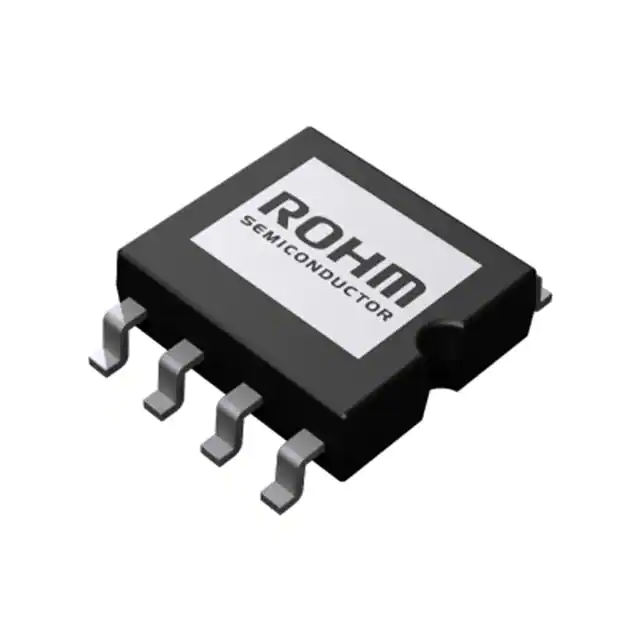
Application Note
600 V High Voltage High and Low Side Gate Driver
BS2114F
Contents
1. Product summary .................................................................................................................................. 2
1.1 Applications ........................................................................................................................................ 2
1.2 Series line-up ..................................................................................................................................... 2
1.3 Functions and features ........................................................................................................................ 2
1.4 Block diagram ....................................................................................................................................... 2
2. Specifications ........................................................................................................................................ 3
2.1 Details of absolute maximum rating ...................................................................................................... 3
2.2 Protection function and operation sequence ........................................................................................... 4
2.2.1 Under voltage lock out (UVLO) circuit for control supply voltage ......................................................... 4
2.3 Package ............................................................................................................................................. 5
2.3.1 Outer dimensions drawing .............................................................................................................. 5
2.3.2 Terminal configuration ................................................................................................................... 6
3. Applications .......................................................................................................................................... 7
3.1 Example of practical application circuit (IGBT output stage) ..................................................................... 7
3.2 Selection method of application components (refer to Figure 3.1.1) .......................................................... 8
3.2.1 Bootstrap circuit (VB terminal) ........................................................................................................ 8
3.2.2 Design method for output gate resistance ...................................................................................... 12
3.2.3 VCC terminal (VCC) ......................................................................................................................... 17
3.2.4 Power supply for external power element .............................................................................................. 17
3.2.5 Control input terminal (HIN, LIN) ......................................................................................................... 18
3.2.6 COM terminal ................................................................................................................................ 18
3.2.7 Shunt resistor ................................................................................................................................ 19
3.3 Notes for PCB pattern designing including the power elements ............................................................... 20
3.4 Snubber capacitor connection ............................................................................................................. 21
© 2018 ROHM Co., Ltd.
1/22
No. 60AN097E Rev.001
2018.1
�BS2114F
Application Note
1. Product summary
1.1 Applications
Application for driving N-channel MOSFET and IGBT
1.2 Series line-up
Table 1.2.1 Line-up
Series
Model
Absolute
maximum
rating
6 ch (3 arms)
BS2130F-G
625V/25V
BS2101F
BS2103F
BS2114F
2 ch (1 arm)
VCC
recommend
ed
operating
range
Output stage
capacity (min)
(source/sink)
Protection
function
Dead time
(typ)
Package
11.5-20V
120mA/250mA
UVLO, OCP
300ns
SOP-28
620V/20V
10-18V
60mA/130mA
UVLO
-
SOP-8
620V/20V
10-18V
60mA/130mA
UVLO
160ns
SOP-8
625V/25V
10ー20V
500mA/500mA
UVLO
160ns
SOP-8
1.3 Functions and features
Floating terminal withstanding voltage: Up to 600 V
Gate driver voltage range: 10 V to 20 V
SOI (silicon on insulator) process is employed
Under voltage lock out (UVLO) circuit is installed for the supply voltage on the upper drive (voltage between the VB and
VS terminals) and the supply voltage on the lower drive (voltage between the VCC and COM terminals)
Logic voltage of 3.3 V or 5.0 V can be input
Output common-mode for input signal
1.4 Block diagram
VB
UV
DETECT
HV
LEVEL
SHIFTER
PULSE
FILTER
R
R
Q
DRV
S
VS
HIN
PULSE
GENERATOR
SHOOTTHROUGH
PREVENTION
VCC
UV
DETECT
DRV
LIN
© 2018 ROHM Co., Ltd.
HO
DELAY
LO
COM
2/22
No. 60AN097E Rev.001
2018.1
�BS2114F
Application Note
2. Specifications
2.1 Details of absolute maximum rating
Table 2.1.1 provides details of the absolute maximum ratings.
Table 2.1.1 Absolute maximum rating (Unless specified otherwise, Ta = 25°C and COM is set to the reference at 0 V.)
Item
Symbol
Rating (Min)
Rating (Max)
Unit
High side offset voltage
VS
VB-25
VB+0.3
V
High side floating supply voltage
VB
-0.3
+625V
V
High side floating output voltage
HO
VHO
VS-0.3
VB+0.3
V
Maximum voltage for the HO terminal
Low side and logic fixed supply
voltage(VCC vs. COM)
VCC
-0.3
+25
V
Maximum voltage that can be applied
between the VCC and COM terminals
Low side output voltage LO
(LO vs COM)
VLO
-0.3
VCC+0.3
V
Logic input voltage(HIN, LIN)
VIN
-0.3
VCC+0.3
V
Maximum voltage between the COM
and LO terminals
Input voltage of the logic signal
Com
VCC-25
VCC+0.3
V
Maximum voltage for the COM terminal
dVS/dt
-
50
V/ns
Maximum slew rate for the VS terminal
Junction temperature
Tjmax
-
150
℃
Storage temperature
Tstg
-55
+150
℃
Logic ground
Allowable offset voltage
SLEW RATE
© 2018 ROHM Co., Ltd.
3/22
Description
Maximum voltage between the VB and
VS terminals
Maximum voltage between the VB and
COM terminals
Maximum
allowable
temperature of the chip
LSI storage temperature
junction
No. 60AN097E Rev.001
2018.1
�BS2114F
Application Note
2.2 Protection function and operation sequence
2.2.1 Under voltage lock out (UVLO) circuit for control supply voltage
Reduction in the control supply voltage (voltage between the VB and VS terminals or between the VCC and COM
terminals) decreases the “High” voltage of the HO and LO terminals that is the gate driving voltage for external power elements.
As a result, the gate voltage of the external power elements is reduced, causing problems such as insufficient capacity. Therefore,
keep the supply voltage within the recommended range. When the control supply voltage is reduced below a specified voltage,
the under voltage lock out (UVLO) circuit for the control supply voltage is activated.
The UVLO circuits are installed for both the upper driving supply voltage on the VB terminal (voltage between the VB and
VS terminals) and for the lower control supply voltage VCC (voltage between the VCC and COM terminals).
■ Operation sequence of under voltage lock out (UVLO) circuit for the control supply voltage input VCC
a. The protection is activated when VCC is reduced to VCCUV-.
b. The LO terminal on the lower phase changes to “Low” (power elements are turned OFF), and the HO terminal on the
upper phase changes to “Low”.
c. When VCC returns to VCCUV+, the protection is released.
d. When the protection is released, an output logic is output according to the input signal.
VCC
VCCUVH
a
c
VCCUV+
VCCUVb
d
LO
LIN
Figure 2.2.1 Timing chart of VCC UVLO
■ Operation sequence of under voltage lock out (UVLO) circuit for the VB control supply voltage
a. The protection is activated when VBS (voltage between the VB and VS terminals) is reduced to VBSUV-.
b. The HO terminal on the upper phase changes to “Low” (power elements are turned OFF).
c. When VBS returns to VBSUV+, the protection is released.
d. Even when the protection is released, a “High” output logic is not output until a rising edge of the input signal arrives.
e. After the protection is released, a “High” output logic is output when a rising edge of the input signal arrives.
VBS
VBSUVH
a
c
VBSUV+
VBSUV-
e
d
b
HO
HIN
Figure 2.2.2 Timing chart of VBS UVLO
© 2018 ROHM Co., Ltd.
4/22
No. 60AN097E Rev.001
2018.1
�BS2114F
Application Note
2.3 Package
The SOP8 package is employed.
2.3.1 Outer dimensions drawing
Package Name
SOP8
(Maximum dimension is 5.35
including burr)
Drawing number: EX112-5001-1
Package Name
© 2018 ROHM Co., Ltd.
SOPHSDIP25
5/22
No. 60AN097E Rev.001
2018.1
�BS2114F
Application Note
2.3.2 Terminal configuration
Table 2.3.1 Terminal descriptions
Pin No.
Symbol
1
LIN
Logic input for low side gate driver output
2
HIN
Logic input for high side gate driver output
3
VCC
Low side supply voltage
4
COM
Low side return
5
LO
Low side gate drive output
6
VS
High side floating supply return
7
HO
High side gate drive output
8
VB
High side floating supply
© 2018 ROHM Co., Ltd.
Function
6/22
No. 60AN097E Rev.001
2018.1
�BS2114F
Application Note
3. Applications
3.1 Example of practical application circuit (IGBT output stage)
In this example of an application circuit, a three-phase inverter is configured.
The circuit design also considers external components for handling phenomena (or problems) that occur in the actual
equipment.
Since some of the components included may be unnecessary in the actual equipment, an evaluation should be performed
using a finalized actual set to optimize the circuit design.
VCC
C1
+
P
1
LIN
VB
8
2
HIN
HO
7
3
VCC
VS
6
4
COM
LO
5
+
U
C2
NU
1
LIN
VB
8
MCU
+
C5
2
HIN
3
VCC
HO
VS
+
7
M
6
V
4
COM
LO
5
C3
NV
1
LIN
VB
8
2
HIN
HO
7
3
VCC
VS
6
+
W
4
C4
COM
+
5
Shunt
NW
C
Resistor
RS
N
A
Figure 3.1.1 Example of application circuit
• When the wiring of C is too long, the output may be short-circuited.
© 2018 ROHM Co., Ltd.
7/22
No. 60AN097E Rev.001
2018.1
�BS2114F
Application Note
3.2 Selection method of application components (refer to Figure 3.1.1)
3.2.1 Bootstrap circuit (VB terminal)
By creating a floating power supply with a bootstrap circuit, you can obtain the four independent power supplies that are
normally necessary for driving an inverter (power supplies for driving the upper power elements in three phases and for
driving the lower power elements) from a single VCC power supply.
Installing an external bootstrap capacitor (CBS) allows you to configure a bootstrap circuit (Figure 3.2.1). CBS functions as a
power supply, providing the upper power element driving current and the upper gate drive supply current. Electric charges
consumed for driving the circuit are charged into CBS from the VCC power supply through the BSD, when the potential of the
VS terminal (external output terminal for each phase) is reduced to near the ground level. Depending on the driving methods,
the capacitance value of CBS, or other factors, the electric charge may not be charged adequately, reducing the CBS potential.
This can lead to deterioration of losses in the power elements, heating, or activation of the UVLO. Therefore, the circuit
constants such as the capacitance value of CBS should be determined based on a detailed evaluation on the actual
equipment.
Resistance for current limit
BSD
Pathway of
initial charge
VCC
VB
+
CBS
HO
VS
LO
COM
Figure 3.2.1 Bootstrap circuit (with IGBT power element, simplified single phase)
■ Initial charge
When you use a bootstrap circuit, it is necessary to charge CBS in advance before starting the circuit. Normally, CBS is
charged by turning ON all phases of the lower power element. When a motor load is connected, the charging may be
performed via the motor winding by turning on only one phase. However, it should be noted that the charging efficiency is
reduced due to the resistance in the motor winding and wiring.
The initial charge can be performed using two methods: single pulse method (Figure 3.2.2) and multiple ON pulses
method when there is a limitation such as the supply capacity of the 15 V control power supply (Figure 3.2.3). The time
required for the initial charge depends on the capacitance of CBS and the resistance for the current limit. Therefore, you
should secure an adequate charge time according to the capacitance value of CBS, based on a detailed evaluation on the
actual equipment.
© 2018 ROHM Co., Ltd.
8/22
No. 60AN097E Rev.001
2018.1
�BS2114F
Application Note
VCC
VCC
LIN
LIN
PWM start
HIN
HIN
CBS charge current
CBS charge current
VBS
VBS
Initial charge
Figure 3.2.2 Initial charge sequence with a single pulse
© 2018 ROHM Co., Ltd.
Initial charge
Figure 3.2.3 Initial charge sequence with multiple pulses
9/22
No. 60AN097E Rev.001
2018.1
�BS2114F
Application Note
■ Design method of bootstrap capacitor CBS
For capacitors to be used in bootstrap circuits, we recommend ceramic capacitors with low ESR in order to reduce a ripple
voltage. When the capacitance of a ceramic capacitor is insufficient, connect an electrolytic capacitor in parallel to the
ceramic capacitor.
The size of the bootstrap capacitor is determined by the value of the voltage drop and the total amount of supplied
charges.
The minimum voltage drop ΔVBS that can turn ON power devices on the high side is determined by the following equation.
∆𝑉𝐵𝑆 = 𝑉𝐶𝐶 − 𝑉𝐹 − 𝑉𝐺𝐸𝑀𝐼𝑁 − 𝑉𝑂𝐿 − 𝑉𝑅𝑆
(3.2.1)
VCC: Supply voltage for the gate driver
VF: Forward voltage drop in the bootstrap diode
VGEMIN: Minimum voltage between the gate and emitter that can keep the upper side power elements ON
VOL: ON voltage for the lower side power elements
VRS: Voltage between the current detection resistances
In addition, total charge amount QTotal is determined by the following equation.
𝑄𝑇𝑜𝑡𝑎𝑙 = 𝑄𝐺 + (𝐼𝐿𝐾𝐺𝑆 + 𝐼𝐿𝐾 + 𝐼𝐿𝐾𝐷𝐼𝑂 + 𝐼𝑄𝐵𝑆 ) × 𝑇𝐻𝑂𝑁
(3.2.2)
QG: Gate charge required to turn ON the power element
ILKGE: Leakage current between the gate and emitter of the power element
ILK: Leakage current in the level shift circuit of the gate driver IC
ILKDIO: Leakage current in the bootstrap diode
IQBS: Supply current in the high side of the gate driver IC
THON: ON time for the high side
Accordingly, set the capacitance value of the bootstrap capacitor so that the following equation is satisfied.
𝐶𝐵𝑆 ≥
𝑄𝑇𝑜𝑡𝑎𝑙
(3.2.3)
∆𝑉𝐵𝑆
Numerical example
Use an RFN1LAM6S fast recovery diode (VR = 600 V, IO = 0.8 A) as the bootstrap diode and an IGBT RGT50NL65D
(VCES = 650 V, IC(100°C) = 25 A) as the power element. Set shunt resistance RS to 0.033Ω.
VCC = 15 V (typ)
VF = 1.15 V (typ) [when IF = 0.8 A] (from the electrical characteristics in the RFN1LAM6S data sheet)
VGEMIN = 9.0 V (typ) [VGE when IC = 25.0 A] (from the electrical characteristics curve in the RGT50NL65D data sheet)
VOL = 1.62 V (typ) [VCE(sat) when IC = 25.0 A] (from the electrical characteristics in the RGT50NL65D data sheet)
VRS = IC・RS = 25 A・0.033Ω (typ) = 0.825 V (typ)
When these values are substituted in Equation (3.2.1),
ΔVBS = 15 V (typ) - 1.15 V (typ) - 9.0 V (typ) - 1.62 V (typ) - 0.825 V (typ) = 2.405 V (typ)
© 2018 ROHM Co., Ltd.
10/22
No. 60AN097E Rev.001
2018.1
�BS2114F
Application Note
is obtained.
QG = 49 nC (typ) [when IC = 25.0 A] (from the electrical characteristics in the RGT50NL65D data sheet)
ILKGE = 200 nA (max) (from the electrical characteristics in the RGT50NL65D data sheet)
Ilk = 50 μA (max) (from the electrical characteristics in the BS2114F data sheet)
ILKDIO = 1 μA (max) (from the electrical characteristics in the RFN1LAM6S data sheet)
IQBS = 150 μA (max) (from the electrical characteristics in the BS2114F data sheet)
THON = 100 μs (typ) (when the PWM frequency is 10 kHz and the ON time of the upper side power element is the
maximum of the PWM period)
When these values are substituted in Equation (3.2.2),
QTotal=49nC(typ) + {200nA(max) + 50μA(max) + 1μA(max) + 150μA(max)}・100μs(typ)
=49nC(typ) + 20.1 nC = 33.6nC
is obtained. When the values of ΔVBS and QTotal are substituted in Equation (3.2.3),
CBS ≥
69.1nC
2.405𝑉
= 28.7nF
is obtained.
CBS should be determined so that a sufficient margin is provided, considering variation in supply voltage, variation in the
electrical characteristics of the elements, the temperature characteristics, and other factors.
Meanwhile, since the UVLO (8.2 V (typ)) is installed between VB and VS, CBS should also be set so that the voltage
between VB and VS remains higher than the voltage that will activate the UVLO by ΔVBS.
In addition, if a countermeasure against surge is necessary, place a zener diode (20.5 V to 24.5 V) for surge absorption
immediately next to the terminal.
Resistance for
current limit
VF
BSD
VCC
VB
Upper side
driving circuit
+
P
CBS
HO
VS
LO
VOL
COM
VRS
Figure 3.2.4 Bootstrap circuit (with IGBT power element, simplified single phase)
■ Resistance for current limit
Connect a resistance for the current limit in series to each bootstrap diode (BSD). Determine a resistor value so that a current
value is obtained that does not exceed the average rectified current of the maximum rating for the BSD to be used. In
addition, de-rating should be achieved with the current value.
© 2018 ROHM Co., Ltd.
11/22
No. 60AN097E Rev.001
2018.1
�BS2114F
Application Note
Note the consumption power with this resistance and select a product that does not exceed the rated power of the resistance.
■ Bootstrap diode (BSD)
The DC reverse voltage (VR) of the absolute maximum rating for the BSD should be higher than the power supply (P point)
voltage of the power element.
To minimize the amount of charges that return to the VCC terminal power supply from the bootstrap capacitor, it is
recommended to use a fast recovery diode that has a short reverse recovery time (trr).
3.2.2 Design method for output gate resistance
With an output gate resistance, you can set the switching time tSW or the variation rate of the output voltage dVS/dt (the
slew rate of the output voltage).
For the gate resistance setting, consider the switching time or the variation rate of the output voltage that is required for the
set, and determine the gate resistance that provides such
characteristics.
■ Value of the gate resistance at turn-on
(1) Method for calculating the gate resistance from the switching time
VCE
dVS/dt
tSW
The switching time tSW is defined as the time shown in Figure 3.2.5.
• The current that flows through the gate of the power device is
IC
VGE
described by the following equation.
𝐼𝑔 =
𝑄𝑔𝑒 +𝑄𝑔𝑐
(3.2.4)
𝑡𝑆𝑊
tSW
• The gate resistance at turn-on is described by the following
Figure 3.2.5. Gate charge transfer characteristics
equation.
𝑅𝑇𝑂𝑇𝐴𝐿(𝑜𝑛) = 𝑅𝑝𝑜𝑛 + 𝑅𝐺(𝑜𝑛) =
𝑉𝐵𝑆 − 𝑉𝑔𝑒(𝑡ℎ)
𝐼𝑔
(3.2.5)
By substituting Equation (3.2.4) into Equation (3.2.5), the gate resistance is determined as follows.
𝑅𝐺(𝑜𝑛) =
(𝑉𝐵𝑆 −𝑉𝑔𝑒(𝑡ℎ) )× 𝑡𝑆𝑊
𝑄𝑔𝑒 +𝑄𝑔𝑐
− 𝑅𝑝𝑜𝑛
(3.2.6)
tSW: Required switching time
VBS: Gate drive voltage in the high side
Vge(th): ON threshold of the power element
Qge: Charge between the gate and emitter of the power element
Qgc: Charge between the gate and collector of the power element
Rpon: ON-resistance in the high side of the output stage of the gate driver
Numerical example
Use an RFN1LAM6S fast recovery diode (VR = 600 V, IO = 0.8 A) as the bootstrap diode and an IGBT RGT50NL65D
(VCES = 650 V, IC(100°C) = 25A) as the power element.
© 2018 ROHM Co., Ltd.
12/22
No. 60AN097E Rev.001
2018.1
�BS2114F
Application Note
tSW = 1 μs (with the PWM frequency of 10 kHz, the switching time should be less than 1/100 of the PWM period)
VBS = VCC-VF = 15V(typ) -1.15V(typ) = 13.85V(typ)
(VCC = 15 V (typ) and the value of VF is taken from the electrical characteristics in the data sheet for the
RFN1LAM6S diode of the bootstrap circuit)
Vge(th) = 9.0 V (typ) [VGE when IC = 25.0 A] (from the electrical characteristics curve in the RGT50NL65D data sheet)
Qge = 15.0 nC (typ) (from the electrical characteristics in the RGT50NL65D data sheet)
Qgc = 19.0 nC (typ) (from the electrical characteristics in the RGT50NL65D data sheet)
Rpon = 10Ω (typ) (from the electrical characteristics curve in the BS2114F data sheet)
When these values are substituted in Equation (3.2.6),
R G(on) =
(13.85V(typ)−9.0V(typ))×1μs(typ)
15.0nC+19.0nC
− 10Ω(typ) = 142Ω(typ) − 10Ω(typ) = 132Ω(typ)
is obtained.
© 2018 ROHM Co., Ltd.
13/22
No. 60AN097E Rev.001
2018.1
�BS2114F
Application Note
(2) Method for calculating the gate resistance from the variation rate of the output voltage (slew rate of the output stage)
• The value of dVS/dt can be determined from the value of the gate resistance. The slew rate of a power device is
determined by the following equation.
𝑑𝑉𝑆
𝑑𝑡
=
𝐼𝑔
(3.2.7)
𝐶𝑟𝑒𝑠
VB
Rpon
• The gate resistance at turn-on is described by the following equation.
𝑅𝑇𝑂𝑇𝐴𝐿(𝑜𝑛) = 𝑅𝑝𝑜𝑛 + 𝑅𝐺(𝑜𝑛) =
Ion
RG(on)
HO
Rnoff Ioff
𝑉𝐵𝑆 − 𝑉𝑔𝑒(𝑡ℎ )
(3.2.8)
𝐼𝑔
Cgc
RG(off)
VS
Cge
BS2114F
Figure 3.2.6 Gate driver equivalent circuit
By substituting Equation (3.2.7) into Equation (3.2.8), the gate resistance RG(on) is determined as follows.
𝑅𝐺(𝑜𝑛) =
𝑉𝐵𝑆 − 𝑉𝑔𝑒(𝑡ℎ )
𝑑𝑉
𝐶𝑟𝑒𝑠 × 𝑑𝑡𝑆
− 𝑅𝑝𝑜𝑛
(3.2.9)
dVS/dt: Variation rate of the output voltage (slew rate of the output stage)
Cres: Feedback capacitance of the power element
VBS: Gate drive voltage in the high side
Vge(th): ON threshold of the power element
Rpon: ON-resistance in the high side of the output stage of the gate driver
Numerical example
Use an RFN1LAM6S fast recovery diode (VR = 600 V, IO = 0.8 A) as the bootstrap diode and an IGBT RGT50NL65D (VCES
= 650 V, IC(100°C) = 25 A) as the power element.
dVS/dt = 3.0 V/ns (a value that satisfies the noise and heating requirements based on an empirical rule)
Cres = 22 pF (from the electrical characteristics in the RGT50NL65D data sheet)
VBS = VCC-VF = 15V(typ) -1.15V(typ) = 13.85V(typ)
(VCC = 15 V (typ) and the value of VF is taken from the electrical characteristics in the data sheet for the
RFN1LAM6S diode of the bootstrap circuit)
Vge(th) = 9.0 V (typ) [VGE when IC = 25.0 A] (from the electrical characteristics curve in the RGT50NL65D data sheet)
Rpon = 10Ω (typ) (from the electrical characteristics curve in the BS2114F data sheet)
When these values are substituted in Equation (3.2.9),
R G(on) =
13.85𝑉(𝑡𝑦𝑝) − 9.0𝑉(𝑡𝑦𝑝)
− 10Ω(typ) = 73.5Ω(typ) − 10Ω(typ) = 63.5Ω(typ)
22𝑝𝐹(𝑡𝑦𝑝) × 3𝑉/𝑛𝑠
is obtained.
© 2018 ROHM Co., Ltd.
14/22
No. 60AN097E Rev.001
2018.1
�BS2114F
Application Note
■ Value of the gate resistance at turn-off
When the power device in either the upper or lower side is turned OFF, turning ON the power device in the other side
causes a current (Ig) flowing via Cgc of the power device in the side that is turned OFF. (Figure3.2.7)
Ig
VB
OFF
OFF
R
HO G(on)
OFF
Cgc
Steep voltage
BS2114F rise
Cgc
Low
voltage
VB
LO
RG(on)
LO
voltage
Steep voltage
fall
ON
BS2114F
ON
RG(off)
Ig
VS
High
f
ON
Ig
RG(off)
(a) When the power device in the upper side is
(b) When the power device in the lower side is
turned ON
turned ON
Figure 3.2.7 Rise in the gate voltage of the power device that is turned OFF
At this point, set the value of the gate resistance (RG(off)) so that the gate voltage does not exceed the threshold of the
power element (Vge(th)) and turn ON the element itself.
𝑉𝑔𝑒(𝑡ℎ) ≥ (𝑅𝑛𝑜𝑓𝑓 + 𝑅𝑔(𝑜𝑓𝑓) ) × 𝐼𝑔 + 𝑉𝐹 = (𝑅𝑛𝑜𝑓𝑓 + 𝑅𝑔(𝑜𝑓𝑓) ) × 𝐶𝑔𝑐
𝑑𝑉𝑆
𝑑𝑡
+ 𝑉𝐹
(3.2.10)
By transforming the above equation, we obtain the following equation.
𝑅𝑔(𝑜𝑓𝑓) ≤
𝑉𝑔𝑒(𝑡ℎ) −𝑉𝐹
𝐶𝑔
𝑑𝑉𝑆
𝑑𝑡
− 𝑅𝑛𝑜𝑓𝑓
(3.2.11)
dVS/dt: Variation rate of the output voltage (slew rate of the output stage) of the power element in the side that is
turned ON
Cgc : Capacitance between the gate and collector (Cgc = Cres)
Vge(th): ON threshold of the power element
VF: Forward voltage drop in the diode that is connected in series to the gate resistance (RG(off))
Rnoff: ON-resistance in the low side of the output stage of the gate driver
Numerical example
Use an IGBT RGT50NL65D (VCES = 650 V, IC(100°C) = 25 A) as a power element and an RB160VAM-40 Schottky barrier
diode (VR = 40 V, IO = 1.0 A) as the diode that is connected in series to the gate resistance (RG(off)).
dVS/dt = 3.0 V/ns (from a standard setting for the slew rate of the output stage of the power element that is turned ON)
Cgc = Cres = 22.0 pF (typ) (from the electrical characteristics in the RGT50NL65D data sheet)
Vge(th) = 6.0 V (typ) [when IC = 17.5 mA] (from the electrical characteristics in the RGT50NL65D data sheet)
VF = 0.50 V (typ) [when IF = 0.7 A] (from the electrical characteristics in the RB160VAM-40 data sheet)
Rnoff = 8Ω (typ) (from the electrical characteristics curve in the BS2114F data sheet)
When these values are substituted in Equation (3.2.1),
© 2018 ROHM Co., Ltd.
15/22
No. 60AN097E Rev.001
2018.1
�BS2114F
R g(off) ≤
Application Note
6.0V(typ)−0.5V(typ)
3.0V
ns
22pF(typ)×
− 8Ω(typ) = 83Ω(typ) − 8Ω(typ) = 75Ω
is obtained. Rg(off) is set to a value that is 1/3 to 1/10 of Rg(on) to adjust the slew rate and prevent the power elements in the
upper and lower sides from being turned ON simultaneously.
© 2018 ROHM Co., Ltd.
16/22
No. 60AN097E Rev.001
2018.1
�BS2114F
Application Note
3.2.3 VCC terminal (VCC)
• To prevent a malfunction or breakdown due to a switching noise or power supply ripple, install electrolytic capacitor C1,
which has excellent temperature and frequency characteristics as a bypass capacitor near the terminal. To reduce the
power supply impedance over a broad frequency bandwidth, also install ceramic capacitors C2, C3, and C4
(characteristics B or R recommended) with a capacitance of 0.1 µF to 0.22 µF, which have excellent temperature,
frequency, and DC bias characteristics in parallel to the electrolytic capacitor immediately next to the VCC terminal of each
gate driver.
• If a countermeasure against surge is necessary, place a zener diode (18.5 V to 19.5 V) with a power loss of approximately
1 W for surge absorption immediately next to the terminal.
• Since the VCC capacitor supplies charges to the high and low sides and it also supplies a large amount of charges for the
initial charge of bootstrap capacitor CBS, a capacitor that has a capacitance larger than the total capacitance of the bootstrap
capacitors in three phases by a factor of 2 (larger than the capacitance of a bootstrap capacitor by a factor of 6) is
recommended.
• Design a power supply circuit that satisfies Vripple ≤ 2 Vp-p with the power supply noise of dV/dt ≤ 1 V/µs. (Reference value)
3.2.4 Power supply for external power element
• To prevent an over voltage breakdown due to a surge voltage, keep the wiring between the smoothing capacitor and points
P and N (the terminal parts of the shunt resistor) as thick and short as possible.
• It is recommended to install snubber capacitor C5 with a capacitance of 0.1 µF to 0.22 µF between points P and N.
© 2018 ROHM Co., Ltd.
17/22
No. 60AN097E Rev.001
2018.1
�BS2114F
Application Note
3.2.5 Control input terminal (HIN, LIN)
• To prevent a malfunction, keep the wiring as short as possible.
• The input signal is high-active. A pull-down at approximately 1MΩ (typ) is performed inside the LSI. When inserting an RC
filter, adjust the setting to satisfy the input threshold
LIN(HIN)
voltage.
50%
• Be sure to observe the rest time (ΔtIN) for the upper and
lower arms as described below.
• Input signal interval ΔtIN
The minimum interval between input signals (ΔtIN(min))
HIN(LIN)
⊿tIN
50%
that is required to prevent the power elements in the
high
and
low
sides
from
being
turned
ON
LO(HO)
tf
90%
toff
simultaneously can be calculated by the following
10%
equation.
HO(LO)
𝑡𝑑𝑒𝑎𝑑 ≈ (𝑡𝑜𝑛 + ∆𝑡𝐼𝑁 ) − (𝑡𝑜𝑓𝑓 + 𝑡𝑓 )(3.2.12)
𝑡𝑓 = −𝜏 × (𝑙𝑛0.1 − 𝑙𝑛0.9)
10%
tdead
(3.2.13)
τ = (𝑅𝑛𝑜𝑛 + 𝑅𝐺 ) × 𝐶𝐿
(3.2.14)
ton
Figure 3.2.8. Shoot-through prevention timing
Chart
ton: Propagation delay in the ON side
toff: Propagation delay in the OFF side
tf: Fall time
Rnon: N-channel on-resistance of the final stage of
the gate driver
RG: Gate resistance
CL: Load capacitance
To prevent the simultaneous ON, design the timing to satisfy the following conditions.
𝑡𝑑𝑒𝑎𝑑 > 0
(3.2.15)
(𝑡𝑜𝑛 + ∆𝑡𝐼𝑁 ) − (𝑡𝑜𝑓𝑓 + 𝑡𝑓 ) > 0
∆𝑡𝐼𝑁 > (𝑡𝑜𝑓𝑓 − 𝑡𝑜𝑛 ) + 𝑡𝑓
(3.2.16)
(3.2.17)
∆𝑡𝐼𝑁(𝑚𝑖𝑛) > (𝑡𝑜𝑓𝑓(𝑚𝑎𝑥) − 𝑡𝑜𝑛(𝑚𝑖𝑛) ) − (𝑅𝑛𝑜𝑛(𝑚𝑎𝑥) + 𝑅𝐺 ) × 𝐶𝐿 × (𝑙𝑛0.1 − 𝑙𝑛0.9)
(3.2.18)
3.2.6 COM terminal
• The COM terminal serves as the ground for the control system and the output stage part.
© 2018 ROHM Co., Ltd.
18/22
No. 60AN097E Rev.001
2018.1
�BS2114F
Application Note
3.2.7 Shunt resistor
(1) Driving with one shunt resistor
Notes for the wiring around an external shunt resistor when driving with one shunt resistor are shown in the figure below
(Figure 3.2.9).
The surface mounted, low inductance type is recommended for the shunt resistor.
Gate
driver
Connect NU, NV, and NW with a broad and short pattern.
COM
Con
Gate
driver
N
COM
NW
Keep the wire inductance as low as possible.
N
Keep
Connect the grounding wiring from the COM
terminal immediately next to the shunt resistor.
COM
Connect the wiring for detecting a current from the
shunt resistor immediately next to the shunt resistor.
Figure 3.2.9 Wiring around an external shunt resistor when driving with one shunt resistor
(2) Driving with three shunt resistors
Notes for the wiring around external shunt resistors when driving with three shunt resistors are shown in the figure below
(Figure 3.2.10).
Gate
driver
COM
Keep the wire inductance for each phase as low as possible.
Gate
driver
NU
NV
COM
Gate
driver
N
Connect the grounding wiring from
the COM terminal immediately next
NW
to the shunt resistor.
COM
Connect the wiring for detecting a current from the shunt resistor
immediately next to the shunt resistor.
Figure 3.2.10 Wiring around an external shunt resistor when driving with three shunt resistors
© 2018 ROHM Co., Ltd.
19/22
No. 60AN097E Rev.001
2018.1
�BS2114F
Application Note
3.3 Notes for PCB pattern designing including the power elements
(E)
(I)
(I)
U
U
P
(I)
(D)
V
V
NU
NU
(D)
NV
NV
(C)
W
W
(D)
(F)
N
NW
W
N
(B)
(H) (G) (H) (G) (H) (G)
(G) (J) (G) (J) (G) (J)
(K)
(K)
(K)
Size: 90mm × 90mm
Figure 3.3.1 Example of PCB pattern
(A) Connect the power ground and the control system ground at a single point immediately next to the terminal part of the
shunt resistor (point N).
(B) The surface mounted, low inductance type is recommended for the shunt resistor.
(C) Keep the wiring from points NU, NV, and NW to the shunt resistor as short as possible.
(D) Keep the wiring for output points U, V, and W itself and the wiring to the motor as short and broad as possible.
(E) Keep the wiring of the power supply for power elements as broad and short as possible.
(F) Place the snubber capacitor immediately next to and between points P and N.
(G) To minimize the parasitic inductance, keep the wiring for the bootstrap diode and capacitor as short as possible. Since
the wiring for the VB and VS terminals swings at a high voltage during the switching, any adjacent wiring may result in
superimposing noise, causing a malfunction. When using a multilayer board, etc., design the circuit so that these wirings
will not be placed adjacent to or cross low voltage wirings, such as the wiring for the control input signal.
(H) Since the wiring from the HO terminal to the gate of the power element in the upper side also swings at a high voltage
during the switching, any adjacent wiring may result in superimposing noise, causing a malfunction. When using a
multilayer board, etc., design the circuit so that these wirings will not be placed adjacent to or cross low voltage wirings,
such as the wiring for the control input signal.
(I)
Separate the wiring for each VS terminal at the output point (U, V, or W) from the main wiring for the motor, so that they
will not have a common impedance.
(J) Since the charge current for the bootstrap flows to the ground for the control system, keep the wiring as short and low
impedance as possible.
(K) Place the capacitor immediately next to the VCC terminal.
© 2018 ROHM Co., Ltd.
20/22
No. 60AN097E Rev.001
2018.1
(A)
�BS2114F
Application Note
3.4 Snubber capacitor connection
To prevent an over voltage breakdown due to a surge voltage, make the wiring between the smoothing capacitor and points
P and N (the terminal parts of the shunt resistor) as thick and short as possible. In addition, install a snubber capacitor with a
capacitance of 0.1 µF to 0.22 µF immediately next to the collector (or drain) of the power elements in the upper side and
immediately next to the ground side of the shunt resistor.
Figure 3.4.1 shows an example for the positions to insert the snubber capacitors.
Wire Inductance
P
(B)
(A)
+
NU
NV
N
NW
(C)
Figure 3.4.1 Connection method of snubber capacitor
To remove a surge voltage as much as possible, the snubber capacitor should be installed on position (B). However, care
must be taken because the charge/discharge current (resonance current between the wire inductance and the snubber
capacitor) flows in the shunt resistor through the snubber capacitor, activating the protection circuit against the short-circuit
current if the wire inductance is large. A recommended connection is as follows: connect the snubber capacitor to the outside of
the shunt resistor (A), keep the wiring (C) as short as possible to remove the surge voltage as much as possible, and connect
the snubber capacitor immediately next to point P
© 2018 ROHM Co., Ltd.
21/22
No. 60AN097E Rev.001
2018.1
�BS2114F
Application Note
● Revision history
Date
Revision
Jan. 31, 2018
001
© 2018 ROHM Co., Ltd.
Revised content
Newly created
22/22
No. 60AN097E Rev.001
2018.1
�Notice
Notes
1) The information contained herein is subject to change without notice.
2) Before you use our Products, please contact our sales representative and verify the latest specifications :
3) Although ROHM is continuously working to improve product reliability and quality, semiconductors can break down and malfunction due to various factors.
Therefore, in order to prevent personal injury or fire arising from failure, please take safety
measures such as complying with the derating characteristics, implementing redundant and
fire prevention designs, and utilizing backups and fail-safe procedures. ROHM shall have no
responsibility for any damages arising out of the use of our Poducts beyond the rating specified by
ROHM.
4) Examples of application circuits, circuit constants and any other information contained herein are
provided only to illustrate the standard usage and operations of the Products. The peripheral
conditions must be taken into account when designing circuits for mass production.
5) The technical information specified herein is intended only to show the typical functions of and
examples of application circuits for the Products. ROHM does not grant you, explicitly or implicitly,
any license to use or exercise intellectual property or other rights held by ROHM or any other
parties. ROHM shall have no responsibility whatsoever for any dispute arising out of the use of
such technical information.
6) The Products specified in this document are not designed to be radiation tolerant.
7) For use of our Products in applications requiring a high degree of reliability (as exemplified
below), please contact and consult with a ROHM representative : transportation equipment (i.e.
cars, ships, trains), primary communication equipment, traffic lights, fire/crime prevention, safety
equipment, medical systems, servers, solar cells, and power transmission systems.
8) Do not use our Products in applications requiring extremely high reliability, such as aerospace
equipment, nuclear power control systems, and submarine repeaters.
9) ROHM shall have no responsibility for any damages or injury arising from non-compliance with
the recommended usage conditions and specifications contained herein.
10) ROHM has used reasonable care to ensure the accuracy of the information contained in this
document. However, ROHM does not warrants that such information is error-free, and ROHM
shall have no responsibility for any damages arising from any inaccuracy or misprint of such
information.
11) Please use the Products in accordance with any applicable environmental laws and regulations,
such as the RoHS Directive. For more details, including RoHS compatibility, please contact a
ROHM sales office. ROHM shall have no responsibility for any damages or losses resulting
non-compliance with any applicable laws or regulations.
12) When providing our Products and technologies contained in this document to other countries,
you must abide by the procedures and provisions stipulated in all applicable export laws and
regulations, including without limitation the US Export Administration Regulations and the Foreign
Exchange and Foreign Trade Act.
13) This document, in part or in whole, may not be reprinted or reproduced without prior consent of
ROHM.
Thank you for your accessing to ROHM product informations.
More detail product informations and catalogs are available, please contact us.
ROHM Customer Support System
http://www.rohm.com/contact/
www.rohm.com
© 2016 ROHM Co., Ltd. All rights reserved.
R1102B
�