Communication ICs
DTMF receiver for telephones
BU8872 / BU8872FS
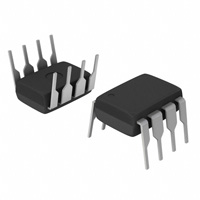
The BU8872 and BU8872FS are DTMF receiver ICs developed for use in telephone answering machines, and convert 16 different types of DTMF signals into 4-bit binary serial data. In addition to a compact 8-pin DIP (BU8872) or 16-pin SSOP (BU8872FS) package, these receivers feature a wide dynamic range, eliminating the need for an external input amplifier. Expertise from a number of companies has been incorporated into these products to enable guard time control through a host microcomputer. FApplications Telephone answering machines FFeatures 1) Dynamic range of 45dB. (internal AGC) 2) 4-bit binary serial data output. 3) Guard time can be controlled through host microcomputer. 4) Input pins equipped with hysteresis. (ACK pin) FBlock diagram
5) 4.19MHz ceramic resonator or crystal resonator can be used. 6) 8-pin DIP package. (BU8872) 16-pin SSOP package. (BU8872FS)
192
�Communication ICs
FAbsolute maximum ratings (Ta=25_C)
BU8872 / BU8872FS
FRecommended operating conditions (Ta=25_C)
193
�Communication ICs
FElectrical characteristics DC characteristics (unless otherwise noted, Ta=25_C, VDD=5.0V)
BU8872 / BU8872FS
AC characteristics (unless otherwise noted, Ta=25_C, VDD=5.0V)
194
�Communication ICs
FPin descriptions
BU8872 / BU8872FS
FInput / output circuits
195
�Communication ICs
FCircuit operation A DTMF signal is supplied to the INPUT pin and applied to a pair of 6th-order bandpass filters, which separate the DTMF signal into its high (COL) and low (ROW) frequencies. The separated tones are converted into square waves and fed to a digital detector. (See the block diagram.) The digital detector checks the two tones to see if they are within the valid DTMF frequency bands. If they are, it sends a DETECT signal to the steering circuit, and sends the appropriate column and row address signals to a code converter. The code converter encodes the received and detected DTMF signal, and outputs an ENABLE signal to the steering circuit. Based on the DETECT and ENABLE signals, the steering circuit outputs an Early Steering (ESt) signal, which sets the ESt pin to HIGH, indicating that a valid DTMF signal has been detected. If a series of pulses is input at the ACK pin while ESt is HIGH, a decoded DTMF signal is output to the SD pin as a binary code. (See Figure 2 for the overall timing.) If a pulse sequence is input at the ACK pin, the data is latched at the rising edge of the first pulse by a parallelserial converter, and at the same time, the LSB is output from the SD pin. Following this, three bits of data are output from the SD pin for each bit of each pulse in the pulse sequence input from the ACK pin. As a result, a total of four bits of data are output for the four pulses. (See Figure 3 for the ACK and SD timing.) If the pulse sequence input to the ACK pin consists of three or fewer pulses, the next DTMF input cannot be decoded properly. Any ACK pulses in excess of four are ignored until ESt goes HIGH again. Table 1 shows the format of serial data output from the SD pin.
BU8872 / BU8872FS
196
�Communication ICs
Table 1. Serial data correspondence table
BU8872 / BU8872FS
FApplication example
197
�Communication ICs
BU8872 / BU8872FS
FOperation notes (1) To prevent latch-ups, we recommend inserting a bypass capacitor (a capacitor between VDD and GND) close to the VDD pin of the device. (2) If using a pin-type ceramic resonator, connect a CH class capacitor between the OSCIN and OSCOUT pins and the GND. (3) This LSI is not equipped with the power-on reset function. Also, since the internal circuit (flip-flop circuit) becomes unstable at the rising edge of the power supply, the internal circuit is initialized as shown below by the first DTMF sequence received after the rising edge of the power supply. Therefore, input four dummy ACK pulses before the DTMF reception.
FSelecting attached components (1) Power supply components
X501, C551, and C552 : Use a crystal or ceramic resonator with an oscillation frequency of 4.194304MHz. If using a ceramic resonator, there may be problems with the precision of the oscillation frequency, so we recommend using one of the ceramic resonators listed below. X501 Murata CSA4.19MG CST4.19MGW213 Matsushita EFOEN4194 EFOEC4194 TDK FCR4.19M5 FCR4.19MC5 Kyocera KBR-4.19MSK KBR-4.19MKS Fujitsu FAR-C4j B-04194-K00 ROHM SFR3AU 4194 C551 C552 30pF 30pF (internal capacitors) 33pF 33pF (internal capacitors) 33pF 33pF (internal capacitors) 33pF 33pF (internal capacitors) (internal capacitors) (internal capacitors)
C502 : This is the VDD bypass capacitor, and is normally 100µF. JP501 : This is normally shorted. To test the current consumption of the IC, insert a DC ammeter in place of JP501. (2) Oscillation components
C591 : If you are using a dedicated resonator designed for DTMF receivers, such as the X501, C551, or C552, capacitor C591 should be left open. If you are injecting an external clock, X501 should be omitted and capacitor C591 used in its place. Typically, this capacitor should be 47nF.
198
�Communication ICs
(3) DTMF input
BU8872 / BU8872FS
The relation between a momentary falter in the ESt guard time (tGL), a momentary HIGH level in the ESt guard time (tGH), and the time constant is shown below. Figure 10 shows a timing diagram for guard times.
C501 : This is the DC blocking capacitor. Select a capacitor that will pass DTMF signals (greater than 697Hz) without significantly attenuating the signals. JP592 : If DTMF signals are being input directly, both ends should be shorted. C591 Use these to increase the sensitivity of R591 X R595 the DTMF receiver. C592, C593
(4) ESt output The ESt guard time is determined by the CPU of the host computer, but to reduce the load on the host computer, the guard time can be set using an external circuit, as shown below.
199
�Communication ICs
FElectrical characteristic curves
BU8872 / BU8872FS
200
�Communication ICs
FExternal dimensions (Units: mm)
BU8872 / BU8872FS
201
�
很抱歉,暂时无法提供与“BU8872”相匹配的价格&库存,您可以联系我们找货
免费人工找货