SP6686
400mA Buck/Boost Charge Pump LED Driver
January 2020
Rev. 2.0.1
GENERAL DESCRIPTION
APPLICATIONS
• White LED Torch/Flash for Mobile
Phones, DSCs and Camcorders
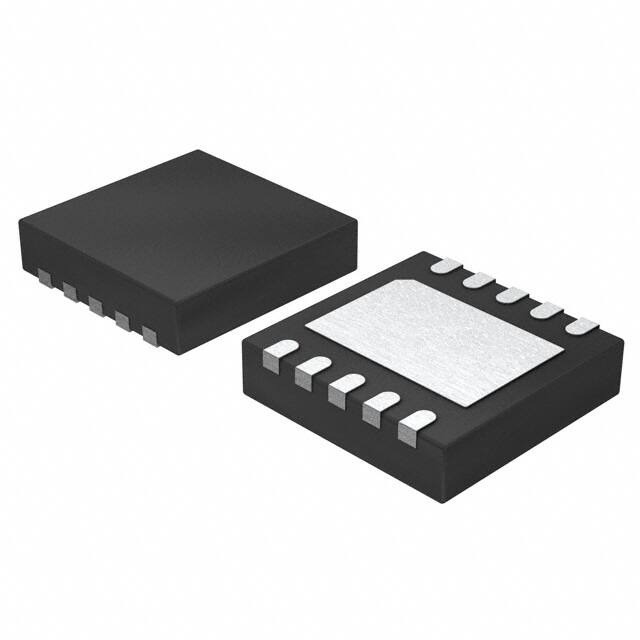
The SP6686 is a current-regulated charge
pump ideal for powering high brightness LEDs
for camera flash applications.
• Generic Lighting/Flash/Strobe
Applications
The charge pump can be set to regulate two
current levels for FLASH and TORCH modes.
The SP6686 automatically switches modes
between step-up and step-down ensuring that
LED current does not depend on the forward
voltage. A low current sense reference voltage
(50mV) allows the use of small 0603 current
sensing resistors.
• White LED Backlighting
FEATURES
• Output Current up to 400mA
• Up to 94% Efficiency in Torch Mode
The SP6686 is designed to operate from a
single cell lithium-ion battery or fixed 3.3V or
5.0V power rails and is available in a RoHS
compliant, “green”/halogen free space saving
10-pin 3mmx3mm DFN package
• Adjustable FLASH Mode
• x1 and x2 Automatic Modes for High
Efficiency
• Minimum External Components: No
Inductors
• 2.4MHz High Frequency Operation
• 1μA Shutdown Current
• Built-In Soft Start Limit Inrush Current
• Output Overvoltage Protection
• Over current/Temperature Protection
• 10-pin 3mm x 3mm DFN Package
TYPICAL APPLICATION DIAGRAM
Fig. 1: SP6686 Application Diagram
1/12
Rev. 2.0.1
�SP6686
400mA Buck/Boost Charge Pump LED Driver
ABSOLUTE MAXIMUM RATINGS
OPERATING RATINGS
These are stress ratings only and functional operation of
the device at these ratings or any other above those
indicated in the operation sections of the specifications
below is not implied. Exposure to absolute maximum
rating conditions for extended periods of time may affect
reliability.
Input Voltage Range VIN ............................... 2.7V to 5.5V
Operating Temperature Range ................... -40°C to 85°C
Thermal Resistance θJA ....................................57.1°C/W
VIN, VOUT ................................................... -0.3V to 6.0V
Output Current Pulse (FLASH) .............................. 500mA
Output Current Continuous (TORCH)..................... 200mA
VEN ................................................................. 0V to 7V
Storage Temperature .............................. -65°C to 150°C
Lead Temperature (Soldering, 10 sec) ................... 260°C
ESD Rating EN pin (HBM - Human Body Model) .......... 1kV
ESD Rating All Other Pins (HBM) .............................. 2kV
ELECTRICAL SPECIFICATIONS
Specifications with standard type are for an Operating Junction Temperature of TJ = 25°C only; limits applying over the full
Operating Junction Temperature range are denoted by a “•”. Minimum and Maximum limits are guaranteed through test,
design, or statistical correlation. Typical values represent the most likely parametric norm at TJ = 25°C, and are provided for
reference purposes only. Unless otherwise indicated, VIN = VSHTDN= 3.6V, CIN = 2.2µF, CFC = 0.47µF, COUT = 1µF. TA= –40°C
to 85°C.
Parameter
Operating Input Voltage
Min.
Typ.
2.7
0.5
Quiescent Current
Max.
Units
5.5
V
3
mA
Conditions
•
•
2
FLASH = VIN, 2x Mode
1
Shutdown Current
Oscillator Frequency
VIN = 2.7 – 5.5V FLASH = 0V
ILOAD = 100 µA
µA
VIN = 5.5V, VEN = 0V
2.4
MHz
Charge Pump Equivalent
Resistance (x2 Mode)
5
Ω
VFB = 0V, VIN = 3.6V
Charge Pump Equivalent
Resistance (x1 Mode)
0.6
0.8
Ω
VIN = 3.6V
FB Reference Voltage
138
150
162
mV
•
FLASH = VIN, RSET = 106kΩ
FB Reference Voltage
45
50
55
mV
•
FLASH = GND
FB Pin Current
0.5
µA
EN, Flash Logic Low
0.4
V
•
V
•
0.5
µA
•
500
µs
•
EN, Flash Logic High
1.3
EN, Flash Pin Current
VOUT Turn-on Time
250
Thermal Shutdown Temperature
145
VFB = 0.3V
VIN = 3.6V, FB within 90% of regulation
C
o
2/12
Rev. 2.0.1
�SP6686
400mA Buck/Boost Charge Pump LED Driver
BLOCK DIAGRAM
Fig. 2: SP6686 Block Diagram
PIN ASSIGNEMENT
Fig. 3: SP6686 Pin Assignement
3/12
Rev. 2.0.1
�SP6686
400mA Buck/Boost Charge Pump LED Driver
PIN DESCRIPTION
Name
Pin Number
Description
VIN
1
Input voltage for the charge pump. Decouple with 2.2µF ceramic capacitor close to the
pins of the IC.
C1
2
Positive input for the external fly capacitor. Connect a ceramic 0.47µF capacitor close to
the pins of the IC.
C2
3
Negative input for the external fly capacitor. Connect a ceramic 0.47µF capacitor close
to the pins of the IC.
FLASH
4
Logic input to toggle between FLASH and TORCH mode. In TORCH Mode FB is regulated
to the internal 50mV reference. In FLASH Mode FB reference voltage can be adjusted by
changing the resistor from RSET pin to ground. Choose the external current sense
Resistor (RSENSE) based on desired current in TORCH Mode.
EN
5
Shutdown control input. Connect to VIN for normal operation, connect to ground for
shutdown.
RSET
6
Connect a resistor from this pin to ground. When in FLASH Mode (FLASH = High) this
resistor sets the current regulation point according to the following:
VFB = (1.26V/RSET)*11.2KΩ
FB
7
Feedback input for the current control loop. Connect directly to the current sense
resistor.
SGND
8
Internal ground pin. Control circuitry returns current to this pin.
PGND
9
Power ground pin. Fly capacitor current returns through this pin.
VOUT
10
Charge Pump Output Voltage. Decouple with an external capacitor. At least 1µF is
recommended. Higher capacitor values reduce output ripple.
ORDERING INFORMATION(1)
Part Number
SP6686ER-L/TR
SP6686EB
Temperature Range
-40°C ≤ TA ≤ +85°C
Package
Packing Method
Tape & Reel
DFN-10
SP6686 Evaluation Board
Lead free(2)
Yes
Notes:
1. Refer to www.maxlinear.com/SP6686 for most up-to-date Ordering Information.
2. Visit www.maxlinear.com for additional information on Environmental Rating.
4/12
Rev. 2.0.1
�SP6686
400mA Buck/Boost Charge Pump LED Driver
TYPICAL PERFORMANCE CHARACTERISTICS
All data taken at VIN = 3.6V, TA = 25°C, unless otherwise specified - Schematic and BOM from Application Information
section of this datasheet. D1 = AOT 2015HPW-1915B LED.
Fig. 4: Output Current vs Supply Voltage
CIN=2.2µF, CFC=0.47µF,COUT=1µF
Fig. 5: Output Current vs Supply Voltage
CIN=2.2µF, CFC=0.47µF,COUT=1µF
Fig. 6: Efficiency vs Supply Voltage
CIN=2.2µF, CFC=0.47µF,COUT=1µF
Fig. 7: Efficiency vs Supply Voltage
CIN=2.2µF, CFC=0.47µF,COUT=1µF
Fig. 8: Ripple 1x Flash 400mA, Ch1=VIN, Ch2=VOUT
VIN=4.2V, CIN=4.7µF, CFC=0.47µF,COUT=2.2µF
Fig. 9: Ripple 2x Flash 400mA, Ch1=VIN, Ch2=VOUT
VIN=3.6V, CIN=4.7µF, CFC=0.47µF,COUT=2.2µF
5/12
Rev. 2.0.1
�SP6686
400mA Buck/Boost Charge Pump LED Driver
Fig. 10: Ripple 1x Torch 150mA, Ch1=VIN, Ch2=VOUT
VIN=4.2V, CIN=4.7µF, CFC=0.47µF,COUT=2.2µF
Fig. 11: Ripple 2x Torch 150mA, Ch1=VIN, Ch2=VOUT
VIN=3.0V, CIN=4.7µF, CFC=0.47µF,COUT=2.2µF
Fig. 12: Output Current vs Supply Voltage
D1=AOT2015HPW-1915 LED, RSENSE=0.3Ω
RSET=106kΩ, CIN=2.2µF, CFC=0.47µF,COUT=1µF
Fig. 13: Output Current vs Supply Voltage
D1=AOT3228HPW0303B LED, RSENSE=0.3Ω
RSET=140kΩ, CIN=2.2µF, CFC=0.47µF,COUT=1µF
Fig. 14: Efficiency vs Supply Voltage
D1=AOT2015HPW-1915 LED, RSENSE=0.3Ω
RSET=106kΩ, CIN=2.2µF, CFC=0.47µF,COUT=1µF
Fig. 15: Efficiency vs Supply Voltage
D1=AOT3228HPW0303B LED, RSENSE=0.3Ω
RSET=140kΩ, CIN=2.2µF, CFC=0.47µF,COUT=1µF
6/12
Rev. 2.0.1
�SP6686
400mA Buck/Boost Charge Pump LED Driver
Fig. 16: Battery Current vs Supply Voltage
D1=AOT2015HPW-1915 LED, RSENSE=0.3Ω
RSET=106kΩ, CIN=2.2µF, CFC=0.47µF,COUT=1µF
Fig. 17: Battery Current vs Supply Voltage
D1=AOT3228HPW0303B LED, RSENSE=0.3Ω
RSET=140kΩ, CIN=2.2µF, CFC=0.47µF,COUT=1µF
Fig. 18: Startup Torch
VIN=3.6V, VOUT=3.1V, CIN=4.7µF, CFC=0.47µF,COUT=2.2µF
Fig. 19: Startup Flash
VIN=3.6V, VOUT=3.5V, CIN=4.7µF, CFC=0.47µF,COUT=2.2µF
Fig. 20: Torch in 1x to Flash in 1x Mode
VIN=4.2V, CIN=4.7µF, CFC=0.47µF,COUT=2.2µF
Fig. 21: Torch in 1x to Flash in 2x Mode
VIN=3.6V, CIN=4.7µF, CFC=0.47µF,COUT=2.2µF
7/12
Rev. 2.0.1
�SP6686
400mA Buck/Boost Charge Pump LED Driver
THEORY OF OPERATION
The SP6686 is a charge pump regulator
designed for converting a Li-Ion battery
voltage of 2.7V to 4.2V to drive a white LED
used in digital still camera Flash and Torch
applications. The SP6686 has two modes of
operation which are pin selectable for either
Flash or Torch. Flash mode is usually used
with a pulse of about 200 to 300 milliseconds
to generate a high intensity Flash. Torch can
be used continuously at a lower output current
than Flash and is often used for several
seconds in a digital still camera “movie” mode.
When in Flash mode, (Flash = VIN), the FB
regulation voltage is set by the resistor RSET
connected between the RSET pin and SGND and
the equation:
The SP6686 also has two modes of operation
to control the output current, the 1x mode and
2x mode. Operation begins after the enable
pin EN receives a logic high, the bandgap
reference wakes up after 200μsec, and then
SP6686 goes through a soft-start mode
designed to reduce inrush current. The
SP6686 starts in the 1x mode, which acts like
a linear regulator to control the output current
by continuously monitoring the feedback pin
FB. In 1x mode, if the SP6686 auto detects a
dropout condition, which is when the FB pin is
below the regulation point for more than 32
cycles of the internal clock, the SP6686
automatically switches to the 2x mode. The
SP6686 remains in the 2x mode until one of
four things happens:
The output current is then set in either Flash
or Torch mode by the equation:
𝑉𝑉𝐹𝐹𝐹𝐹 = �
Where 1.26V is the internal bandgap reference
voltage and 11.2kΩ is an internal resistance
used to scale the RSET current. Typical values
of RSET are 40kΩ to 180kΩ for a range of VFB =
300mV to 75mV in Flash mode.
𝐼𝐼𝑂𝑂𝑂𝑂𝑂𝑂 =
𝑉𝑉𝐹𝐹𝐹𝐹
𝑅𝑅𝑆𝑆𝑆𝑆𝑆𝑆𝑆𝑆𝑆𝑆
OVER TEMPERATURE PROTECTION
When the temperature of the SP6686 rises
above 145°C, the over temperature protection
circuitry turns off the output switches to
prevent damage to the device. If the
temperature drops back down below 135°C,
the part automatically recovers and executes a
soft start cycle.
OVER VOLTAGE PROTECTION
1) The enable pin EN has been toggled
The SP6686 has over voltage protection. If the
output voltage rises above the 5.5V threshold,
the over voltage protection shuts off all of the
output switches to prevent the output voltage
from rising further. When the output
decreases below 5.5V, the device resumes
normal operation
2) The Flash pin has changed from high to low
3) VIN is cycled
4) A thermal fault occurs
The 2X mode is the charge pump mode where
the output can be pumped as high as two
times the input voltage, provided the output
does not exceed the maximum voltage for the
SP6686, which is internally limited to about
5.5V. In the 2x mode, as in the 1x mode, the
output current is regulated by the voltage at
the FB pin.
OVER CURRENT PROTECTION
The over current protection circuitry monitors
the average current out of the VOUT=50mV
(Torch Mode) pin. If the average output
current exceeds approximately 1Amp, then
the over current protection circuitry shuts off
the output switches to protect the chip.
In the Torch mode, (Flash = GND) the Flash
pin is set to logic low and the SP6686 FB pin
regulates to 50mV output:
𝑉𝑉𝐹𝐹𝐹𝐹 = 50𝑚𝑚𝑚𝑚 (𝑇𝑇𝑇𝑇𝑇𝑇𝑇𝑇ℎ 𝑀𝑀𝑀𝑀𝑀𝑀𝑀𝑀)
1.26𝑉𝑉
� × 11.2𝑘𝑘Ω (𝐹𝐹𝐹𝐹𝐹𝐹𝐹𝐹ℎ 𝑀𝑀𝑀𝑀𝑀𝑀𝑀𝑀)
𝑅𝑅𝑆𝑆𝑆𝑆𝑆𝑆
COMPONENT SELECTION
The SP6686 charge pump circuit requires 3
capacitors: 4.7μF input, 1μF output and
8/12
Rev. 2.0.1
�SP6686
400mA Buck/Boost Charge Pump LED Driver
0.47μF
fly
capacitor
are
typically
recommended. For the input capacitor, a
larger value of 10μF will help reduce input
voltage ripple for applications sensitive to
ripple on the battery voltage. All the
capacitors should be ceramic to obtain low
ESR, which improves bypassing on the input
and output and improves output voltage drive
by reducing output resistance. X5R or X7R
Ceramic capacitors are recommended for most
applications. A selection of recommended
capacitors is included in Table 1. The input and
output capacitors should be located as close to
the VIN and VOUT pins as possible to obtain best
bypassing, and the returns should be
connected directly to the PGND pin or to the
thermal pad ground located under the SP6686.
The fly capacitor should be located as close to
the C1 and C2 pins as possible. The sense
resistor RSENSE is determined by the value
needed in the Torch mode for the desired
output current by the equation:
𝑅𝑅𝑆𝑆𝑆𝑆𝑆𝑆𝑆𝑆𝑆𝑆 =
Next, the RSET resistor can be selected for
Flash mode using the following equation:
𝑅𝑅𝑆𝑆𝑆𝑆𝑆𝑆 = �
1.26𝑉𝑉
� × 11.2𝑘𝑘Ω (𝐹𝐹𝐹𝐹𝐹𝐹𝐹𝐹ℎ 𝑀𝑀𝑀𝑀𝑀𝑀𝑀𝑀)
𝑉𝑉𝐹𝐹𝐹𝐹
For an example of 150mA Torch mode and
400mA Flash mode, the values RSENSE=0.33Ω,
VFB=135mV (Flash Mode), and RSET=106kΩ are
calculated. The power obtained in the Flash
mode would be:
𝑃𝑃𝐹𝐹𝐹𝐹𝐹𝐹𝐹𝐹𝐹𝐹 = 𝑉𝑉𝐹𝐹𝐹𝐹 × 𝐼𝐼𝑂𝑂𝑂𝑂𝑂𝑂 = 133𝑚𝑚𝑚𝑚 × 400𝑚𝑚𝑚𝑚 = 53𝑚𝑚𝑚𝑚
The typical 0603 surface mount resistor is
rated at 1/10 Watt continuous power and 1/5
Watt pulsed power, more than enough for this
application. For other applications, the PFLASH
can be calculated from the resistor size
selected. The RSENSE resistor is recommended
to be size 0603 for most applications.
𝑉𝑉𝐹𝐹𝐹𝐹
𝐼𝐼𝑂𝑂𝑂𝑂𝑂𝑂
EVALUATION BOARD LAYOUT
Where VFB=50mV in torch mode.
Once the RSENSE resistor has been selected for
Torch mode, the VFB voltage can be selected
for Flash mode using the following equation:
𝑉𝑉𝐹𝐹𝐹𝐹 = 𝐼𝐼𝑂𝑂𝑂𝑂𝑂𝑂 × 𝑅𝑅𝑆𝑆𝑆𝑆𝑆𝑆𝑆𝑆𝑆𝑆 (𝐹𝐹𝐹𝐹𝐹𝐹𝐹𝐹ℎ 𝑀𝑀𝑀𝑀𝑀𝑀𝑀𝑀)
Where IOUT is for Flash Mode
9/12
Rev. 2.0.1
�SP6686
400mA Buck/Boost Charge Pump LED Driver
Manufacturer
TDK
TDK
TDK
TDK
Murata
Murata
Murata
Murata
Part Number
C1005X5R0J474K
C1005X5R0J105K
C1608X5R0J225K
C1608X5R0J475K
GRM155R60J474KE19D
GRM155R60J105KE19D
GRM188R60J225KE19D
GRM188R60J475KE19D
Value
0.47uF/6.3V
1uF/6.3V
2.2uF/6.3V
4.7uF/6.3V
0.47uF/6.3V
1uF/6.3V
2.2uF/6.3V
4.7uF/6.3V
Size/Type
ESR
0402/X5R/0.55mm
0402/X5R/0.55mm
0603/X5R/0.9mm
0603/X5R/0.9mm
0402/X5R/0.55mm
0402/X5R/0.55mm
0603/X5R/0.8mm
0603/X5R/0.8mm
0.03
0.03
0.03
0.02
0.03
0.03
0.03
0.02
Table 1: Recommended Capacitors
Part Reference
Value
Tolerance
Size
RSET
RSET
RSET
RSET
RSET
RSET
RSET
RSET
RSET
RSET
RSENSE
RSENSE
RSENSE
RSENSE
RSENSE
68KΩ
75KΩ
82KΩ
91KΩ
100KΩ
110KΩ
120KΩ
130KΩ
140KΩ
150KΩ
0.22Ω
0.27Ω
0.33Ω
0.39Ω
0.47Ω
5%
5%
5%
5%
5%
5%
5%
5%
5%
5%
5%
5%
5%
5%
5%
0402
0402
0402
0402
0402
0402
0402
0402
0402
0402
0603
0603
0603
0603
0603
Table 2: Resistor Value and Sizes
10/12
Rev. 2.0.1
�SP6686
400mA Buck/Boost Charge Pump LED Driver
PACKAGE SPECIFICATION
10-PIN DFN
11/12
Rev. 2.0.1
�SP6686
400mA Buck/Boost Charge Pump LED Driver
REVISION HISTORY
Revision
Date
Description
2.0.0
08/04/2009
Reformat of datasheet.
Added EN pin ESD information.
2.0.1
01/24/2020
Updated to MaxLinear logo. Updated Ordering Information.
CORPORATE HEADQUARTERS:
5966 La Place Court
Suite 100
Carlsbad, CA 92008
Tel.: +1 (760) 692-0711
Fax: +1 (760) 444-8598
www.maxlinear.com
The content of this document is furnished for informational use only, is subject to change without notice, and should not be
construed as a commitment by Maxlinear, Inc. Maxlinear, Inc. Assumes no responsibility or liability for any errors or inaccuracies
that may appear in the informational content contained in this guide. Complying with all applicable copyright laws is the
responsibility of the user. Without limiting the rights under copyright, no part of this document may be reproduced into, stored in, or
introduced into a retrieval system, or transmitted in any form or by any means (electronic, mechanical, photocopying, recording, or
otherwise), or for any purpose, without the express written permission of Maxlinear, Inc.
Maxlinear, Inc. Does not recommend the use of any of its products in life support applications where the failure or malfunction of the
product can reasonably be expected to cause failure of the life support system or to significantly affect its safety or effectiveness.
Products are not authorized for use in such applications unless Maxlinear, Inc. Receives, in writing, assurances to its satisfaction
that: (a) the risk of injury or damage has been minimized; (b) the user assumes all such risks; (c) potential liability of Maxlinear,
Inc. Is adequately protected under the circumstances.
Maxlinear, Inc. May have patents, patent applications, trademarks, copyrights, or other intellectual property rights covering subject
matter in this document. Except as expressly provided in any written license agreement from Maxlinear, Inc., the furnishing of this
document does not give you any license to these patents, trademarks, copyrights, or other intellectual property.
Maxlinear, the Maxlinear logo, and any Maxlinear trademarks, MxL, Full-Spectrum Capture, FSC, G.now, AirPHY and the Maxlinear
logo are all on the products sold, are all trademarks of Maxlinear, Inc. or one of Maxlinear’s subsidiaries in the U.S.A. and other
countries. All rights reserved. Other company trademarks and product names appearing herein are the property of their respective
owners.
© 2009 - 2020 Maxlinear, Inc. All rights reserved.
12/12
Rev. 2.0.1
�