XRP6124
Non-Synchronous PFET Step-Down Controller
May 2018
Rev. 1.1.1
GENERAL DESCRIPTION
APPLICATIONS
• Point of Load Conversions
The XRP6124 is a non synchronous step down
(buck) controller for up to 5Amps point of
loads. A wide 3V to 30V input voltage range
allows for single supply operations from
industry standard 3.3V, 5V, 12V and 24V
power rails.
• Audio-Video Equipment
• Industrial and Medical Equipment
• Distributed Power Architecture
With a proprietary Constant On-Time (COT)
control scheme, the XRP6124 provides
extremely fast line and load transient response
while the operating frequency remains nearly
constant. It requires no loop compensation
hence simplifying circuit implementation and
reducing overall component count. The
XRP76124 also implements an emulated ESR
circuitry allowing usage of ceramic output
capacitors and insuring stable operations
without the use of extra external components.
FEATURES
• 5A Point-of-Load Capable
− Down to 1.2V Output Voltage Conversion
• Wide Input Voltage Range
− 3V to 18V: XRP6124
− 4.5V to 30V: XRP6124HV
• Constant On-Time Operations
− Constant Frequency Operations
− No External Compensation
Built-in soft start prevents high inrush currents
while under voltage lock-out and output short
protections insure safe operations under
abnormal operating conditions.
− Supports Ceramic Output Capacitors
• Built-in 2ms Soft Start
• Short Circuit Protection
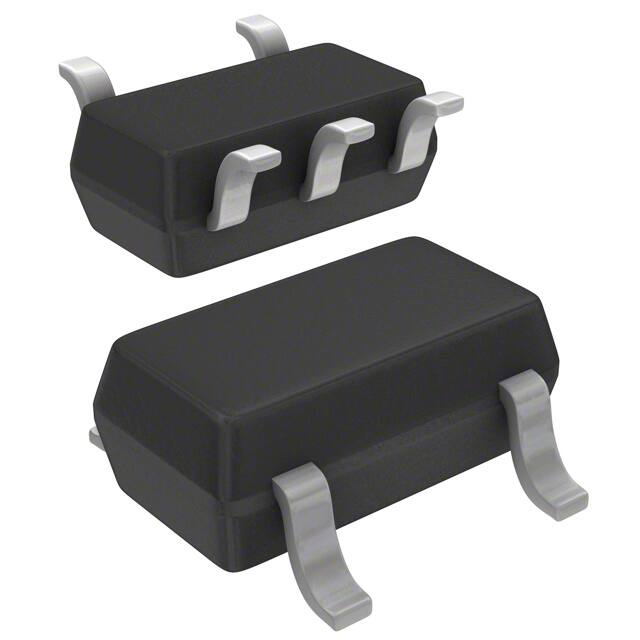
The XRP6124 is available in a RoHS compliant,
green/halogen free space-saving 5-pin SOT23
package.
• 3V the gate pulls to within 0.4V
of ground. Therefore a PFET with a gate rating of 2.6V or lower should be used.
VIN
5
Input Voltage
ORDERING INFORMATION(1)
Part Number
XRP6124ESTR0.5-F
XRP6124HVESTR0.5-F
XRP6124EVB
XRP6124HVEVB
Operating
Temperature Range
Lead-Free
Package
Packing Method
-40°C≤TJ≤125°C
Yes(2)
5-pin SOT23
Tape & Reel
Note 1
0.5µs/18V max
0.5µs/30V max
XRP6124 Evaluation Board
XRP6124HV Evaluation Board
NOTES:
1.Refer to www.exar.com/XRP6124 for most up-to-date Ordering Information
2. Visit www.exar.com for additional information on Environmental Rating.
3/12
Rev. 1.1.1
�XRP6124
Non-Synchronous PFET Step-Down Controller
TYPICAL PERFORMANCE CHARACTERISTICS
All data taken at TJ = TA = 25°C, unless otherwise specified – Curves are based on Schematic and BOM from Application
Information section of this datasheet. Refer to figure 20 for XRP6124 and to figure 21 for XRP6124HV.
Fig. 4: Efficiency versus IOUT, VIN=12V
Fig. 5: Efficiency versus IOUT, VIN=24V
Fig. 6: TON versus VIN
Fig. 7: TON versus VIN
Fig. 8: Load Regulation
Fig. 9: Load Regulation
4/12
Rev. 1.1.1
�XRP6124
Non-Synchronous PFET Step-Down Controller
XRP6124ES0.5-F
Fig. 10: Line Regulation
Fig. 11: Line Regulation
XRP6124ES0.5-F
VOUT
AC coupled
10mV/div
VOUT
AC coupled
20mV/div
LX
10V/div
LX
20V/div
IL
2A/div
IL
2A/div
1µs/div
Fig. 12: Steady state, VIN = 12V, VOUT = 3.3V, IOU T= 3A
2µs/div
Fig. 13: Steady state, VIN = 24V, VOUT = 5.0V, IOUT = 3A
XRP6124ES0.5-F
XRP6124HVES0.5-F
90mV
VOUT
AC coupled
100mV/div
XRP6124HVES0.5-F
180mV
VOUT
AC coupled
200mV/div
IOUT
1A/div
IOUT
1A/div
10µs/div
20µs/div
Fig. 15: Load step transient response, 1.4A-3A-1.4A
Fig. 14: Load step transient response, 1.4A-3A-1.4A
5/12
Rev. 1.1.1
�XRP6124
Non-Synchronous PFET Step-Down Controller
XRP6124ES0.5-F
XRP6124HVES0.5-F
90mV
180mV
VOUT
AC coupled
100mV/div
VOUT
AC coupled
200mV/div
IOUT
1A/div
IOUT
1A/div
50µs/div
50µs/div
Fig. 16: Load step transient response corresponding to a
CCM-DCM transition, 0.05A-1.6A-0.05A
Fig. 17: Load step transient response corresponding to a
CCM-DCM transition, 0.05A-1.6A-0.05A
Fig. 18: Shutdown current versus VIN, VEN = 0V
Fig. 19: Shutdown current versus VIN, VEN = 0V
6/12
Rev. 1.1.1
�XRP6124
Non-Synchronous PFET Step-Down Controller
THEORY OF OPERATION
fs =
THEORY OF OPERATION
Since for each voltage option, the product of
VIN and TON is the constant K shown in table 1,
then switching frequency is determined by
VOUT as shown in table 2.
The XRP6124 utilizes a proprietary Constant
On-Time (COT) control with emulated ESR.
The on-time is internally set and automatically
adjusts during operation, inversely with the
voltage VIN, in order to maintain a constant
frequency. Therefore the switching frequency
is independent of the inductor and capacitor
size,
unlike
hysteretic
controllers.
The
emulated ESR ramp allows the use of ceramic
capacitors for output filtering.
VOUT
At the beginning of each cycle, the XRP6124
turns on the P-Channel FET for a fixed
duration. The on-time is internally set and
adjusted by VIN. At the end of the on-time the
FET is turned off, for a predetermined
minimum off time TOFF-MIN (nominally 250ns).
After the TOFF-MIN has expired the voltage at
feedback pin FB is compared to a voltage
ramp at the feedback comparators positive
input. Once VFB drops below the ramp voltage,
the FET is turned on and a new cycle starts.
This voltage ramp constitutes an emulated
ESR and makes possible the use of ceramic
capacitors, in addition to other capacitors, as
output filter for the buck converter.
3-18
4.5-30
TON (µs)
XRP6124ES0.5-F
0.5 @ 12VIN
XRP6124HVES0.5-F
1.2
200
100
1.5
250
125
1.8
300
150
2.5
417
208
3.3
550
275
5.0
833
417
12
---
1000
VOUT
K=TONxVIN
(μs.V)
XRP6124HVES0.5-F 0.5 @ 24VIN
XRP6124ES0.5-F
Where it is advantageous, the high-voltage
option
may
be
used
for
low-voltage
applications. For example a 12VIN to 5VOUT
conversion using a low-voltage option will
result in switching frequency of 833kHz as
shown in table 2. If it is desired to increase
the converter efficiency, then switching losses
can be reduced in half by using a high-voltage
option operating at a switching frequency of
417kHz.
The XRP6124 is available in two voltage
options as shown in table 1. The low-voltage
and high-voltage options have TON of 0.5µs at
12VIN and 24VIN respectively. Note that TON is
inversely proportional to VIN. The constant of
proportionality K, for each voltage option is
shown in table 1. Variation of TON versus VIN is
shown graphically in figures 6 and 7.
Part Number
Switching frequency fs(kHz)
Table 2: Switching frequency fs
for the XRP6124 voltage options
VOLTAGE OPTIONS
Voltage
rating (V)
VOUT
VIN × TON
6
Maximum Output Current IOUT(A)
XRP6124ES0.5-F
XRP6124HVES0.5-F
3.3VIN
5.0VIN
12VIN
18VIN
1.2
5
5
4
---
24VIN
---
1.5
5
5
4
4
---
1.8
5
5
4
4
4
2.5
4
4
4
4
4
3.3
---
4
3
4
4
5.0
---
---
3
3
3
12
---
---
---
2
2
Table 3: Maximum recommended IOUT
12
SHORT-CIRCUIT PROTECTION
Table 1 : XRP6124 voltage options
The purpose of this feature is to prevent an
accidental short-circuit at the output from
damaging the converter. The XRP6124 has a
short-circuit
comparator
that
constantly
monitors the feedback node, after soft-start is
For a buck converter the switching frequency
fs can be expressed in terms of VIN, VOUT and
TON as follows:
7/12
Rev. 1.1.1
�XRP6124
Non-Synchronous PFET Step-Down Controller
finished. If the feedback voltage drops below
0.55V, equivalent to output voltage dropping
below 69% of nominal, the comparator will
trip causing the IC to latch off. In order to
restart the XRP6124, the input voltage has to
be reduced below UVLO threshold and then
increased to its normal operating point.
XRP6124 will latch up. In applications where
an independent enable signal is not available,
a Zener diode can be used to derive VEN from
VIN.
DISCONTINUOUS CONDUCTION MODE, DCM
Because XRP6124 is a non-synchronous
controller, when load current IOUT is reduced to
less than half of peak-to-peak inductor current
ripple ΔIL, the converter enters DCM mode of
operation. The switching frequency fs is now
IOUT dependent and no longer governed by the
relationship shown in table 2. As IOUT is
decreased so does fs until a minimum
switching frequency, typically in the range of
few hundred Hertz, is reached at no load. This
contributes to good converter efficiency at
light load as seen in figures 4 and 5. The
reduced fs corresponding to light load,
however, increases the output voltage ripple
and causes a slight increase in output voltage
as seen in figures 8 and 9. Another effect of
reduced fs at light load is slow down of
transient response when a load step
transitions from a high load to a light load.
This is shown in figures 16 and 17.
SOFT-START
To limit in-rush current the XRP6124 has an
internal soft-start. The nominal soft-start time
is 2ms and commences when VIN exceeds the
UVLO threshold. As explained above, the
short-circuit comparator is enabled as soon as
soft-start is complete. Therefore if the input
voltage has a very slow rising edge such that
at the end of soft-start the output voltage has
not reached 69% of its final value then the
XRP6124 will latch-off.
ENABLE
By applying a logic-level signal to the enable
pin EN the XRP6124 can be turned on and off.
Pulling the enable below 1V shuts down the
controller and reduces the VIN leakage current
to 1.5µA nominal as seen in figure 18. Enable
signal should always be applied after the input
voltage or concurrent with it. Otherwise
APPLICATION INFORMATION
SETTING THE OUTPUT VOLTAGE
FEED-FORWARD CAPACITOR CFF
Use an external resistor divider to set the
output voltage. Program the output voltage
from:
CFF, which is placed in parallel with R1,
provides
a
low-impedance/high-frequency
path for the output voltage ripple to be
transmitted to FB. It also helps get an
optimum transient response. An initial value
for CFF can be calculated from:
V
R1 = R 2 × OUT − 1
0.8
where:
CFF =
R1 is the resistor between VOUT and FB
1
2 × π × fs × 0.1 × R1
R2 is the resistor between FB and GND
(nominally 2kΩ)
where:
0.8V is the nominal feedback voltage.
This value can be adjusted as necessary to
provide an optimum load step transient
response.
fs is the switching frequency from table 2
8/12
Rev. 1.1.1
�XRP6124
Non-Synchronous PFET Step-Down Controller
ESR of the capacitor has to be selected such
that the output voltage ripple requirement
VOUT(ripple), nominally 1% of VOUT, is met.
Voltage ripple VOUT(ripple) is composed mainly of
two components: the resistive ripple due to
ESR and capacitive ripple due to COUT charge
transfer. For applications requiring low voltage
ripple, ceramic capacitors are recommended
because of their low ESR which is typically in
the range of 5mΩ. Therefore VOUT(ripple) is
mainly capacitive. For ceramic capacitors
calculate the VOUT(ripple) from:
OUTPUT INDUCTOR
Select the output inductor L1 for inductance L,
DC current rating IDC and saturation current
rating ISAT. IDC should be larger than regulator
output current. ISAT, as a rule of thumb, should
be 50% higher than the regulator output
current. Calculate the inductance from:
VOUT
L = (VIN − VOUT )
∆I L × fs × VIN
Where:
VOUT(ripple) =
ΔIL is peak-to-peak inductor current ripple
nominally set to 30% of IOUT
fS is nominal switching frequency from table 2
Where:
COUT is the value calculated above
OUTPUT CAPACITOR COUT
If tantalum or electrolytic capacitors are used
then VOUT(ripple) is essentially a function of ESR:
Select the output capacitor for voltage rating,
capacitance COUT and Equivalent Series
Resistance ESR. The voltage rating, as a rule
of thumb, should be twice the output voltage.
When calculating the required capacitance,
usually the overriding requirement is current
load-step transient. If the unloading transient
requirement (i.e., when IOUT transitions from a
high to a low current) is met, then usually the
loading transient requirement (when IOUT
transitions from a low to a high current) is met
as well. Therefore calculate the COUT
capacitance based on the unloading transient
requirement from:
COUT
∆I L
8 × COUT × fs
VOUT(ripple) = ∆I L × ESR
INPUT CAPACITOR CIN
Select the input capacitor for voltage rating,
RMS current rating and capacitance. The
voltage rating, as a rule of thumb, should be
50% higher than the regulator’s maximum
input voltage. Calculate the capacitor’s current
rating from:
I CIN,RMS = I OUT × D × (1 − D )
2
2
I High − I LOW
= L×
2
2
(V
OUT + Vtransient ) − VOUT
Where:
IOUT is regulator’s maximum current
Where:
D is duty cycle (D=VOUT/VIN)
L is the inductance calculated in the preceding
step
Calculate the CIN capacitance from:
IHigh is the value of IOUT prior to unloading. This
is nominally set equal to regulator current
rating.
C IN =
ILow is the value of IOUT after unloading. This is
nominally set equal to 50% of regulator
current rating.
I OUT × VOUT × (VIN − VOUT )
2
fs × VIN × ∆VIN
Where:
ΔVIN is the permissible input voltage ripple,
nominally set to 1% of VIN.
Vtransient is the maximum permissible voltage
transient corresponding to the load step
mentioned above. Vtransient is typically specified
from 3% to 5% of VOUT.
9/12
Rev. 1.1.1
�XRP6124
Non-Synchronous PFET Step-Down Controller
TYPICAL APPLICATIONS
12V TO 3.3V / 3A CONVERSION
1
2
3
EN
VIN 6V to 18V
5
VIN
XRP6124ES
CIN, X5R
22uF, 25V
GND
FB
GATE
4
M1
IRF9335
L1, 4.7uH
DR74-4R7-R
D1
MBRA340
CFF
1nF
VOUT 3.3V/3A
R1, 1%
6.34k
COUT, X5R
2x22uF, 10V
R2, 1%
2k
Fig. 20: 12V to 3.3V/3A regulator
24V TO 5V / 3A CONVERSION
1
2
3
EN
VIN 8V to 30V
5
VIN
XRP6124HVES
CIN, X5R
10uF, 50V
GND
FB
GATE
4
D1
MBRA340
M1
DMP4050SSS
L1, 8.2uH
HCM0730
CFF
0.47nF
VOUT 5.0V/3A
R1, 1%
10.5k
COUT, X5R
2x22uF, 16V
R2, 1%
2k
Fig. 21: 24V to 5V/3A regulator
10/12
Rev. 1.1.1
�XRP6124
Non-Synchronous PFET Step-Down Controller
MECHANICAL DIMENSIONS
5-PIN SOT23
11/12
Rev. 1.1.1
�XRP6124
Non-Synchronous PFET Step-Down Controller
REVISION HISTORY
Revision
Date
Description
1.0.0
01/26/2011
1.1.0
01/31/2011
Corrected typo (changed V to I) on formula under Input Capacitor CIN paragraph
1.1.1
05/24/2018
Updated to MaxLinear logo. Updated format and Ordering Information.
Initial release of datasheet
Corporate Headquarters:
5966 La Place Court
Suite 100
Carlsbad, CA 92008
Tel.:+1 (760) 692-0711
Fax: +1 (760) 444-8598
www.maxlinear.com
High Performance Analog:
1060 Rincon Circle
San Jose, CA 95131
Tel.: +1 (669) 265-6100
Fax: +1 (669) 265-6101
www.exar.com
The content of this document is furnished for informational use only, is subject to change without notice, and should not be construed as a
commitment by MaxLinear, Inc.. MaxLinear, Inc. assumes no responsibility or liability for any errors or inaccuracies that may appear in the
informational content contained in this guide. Complying with all applicable copyright laws is the responsibility of the user. Without limiting
the rights under copyright, no part of this document may be reproduced into, stored in, or introduced into a retrieval system, or transmitted
in any form or by any means (electronic, mechanical, photocopying, recording, or otherwise), or for any purpose, without the express written
permission of MaxLinear, Inc.
Maxlinear, Inc. does not recommend the use of any of its products in life support applications where the failure or malfunction of the product
can reasonably be expected to cause failure of the life support system or to significantly affect its safety or effectiveness. Products are not
authorized for use in such applications unless MaxLinear, Inc. receives, in writing, assurances to its satisfaction that: (a) the risk of injury or
damage has been minimized; (b) the user assumes all such risks; (c) potential liability of MaxLinear, Inc. is adequately protected under the
circumstances.
MaxLinear, Inc. may have patents, patent applications, trademarks, copyrights, or other intellectual property rights covering subject matter in
this document. Except as expressly provided in any written license agreement from MaxLinear, Inc., the furnishing of this document does not
give you any license to these patents, trademarks, copyrights, or other intellectual property.
Company and product names may be registered trademarks or trademarks of the respective owners with which they are associated.
© 2011 - 2018 MAXLINEAR, INC. ALL RIGHTS RESERVED
12/12
Rev. 1.1.1
�