XRP7674
2A 18V Synchronous PFM/PWM Step-Down Regulator
February 2013
Rev. 1.0.0
GENERAL DESCRIPTION
APPLICATIONS
The XRP7674 is a 2A capable synchronous
current-mode PWM step down (buck) voltage
regulator with improved light current load
efficiency. A wide 4.5V to 18V input voltage
range allows for single supply operations from
industry standard 5V and 12V power rails.
With a 340kHz constant operating frequency
and
integrated
high
and
low-side
100mΩ/100mΩ
MOSFETs,
the
XRP7674
reduces the overall component count and
solution
footprint.
Current-mode
control
provides fast transient response and cycle-bycycle OCP. An adjustable soft-start prevents
inrush current at turn-on, and in shutdown
mode the supply current drops to 0.1µA. At
light current loads, the XRP7674 operates in
Discontinuous Conduction Mode (DCM) and is
complemented
by
a
pulse
frequency
modulation mode (PFM) to provide excellent
conversion efficiency.
Built-in output over-voltage (open load), over
temperature,
cycle-by-cycle
over-current,
under-voltage lockout (UVLO) and hiccup
mode short-circuit protection insures safe
operation
under
abnormal
operating
conditions.
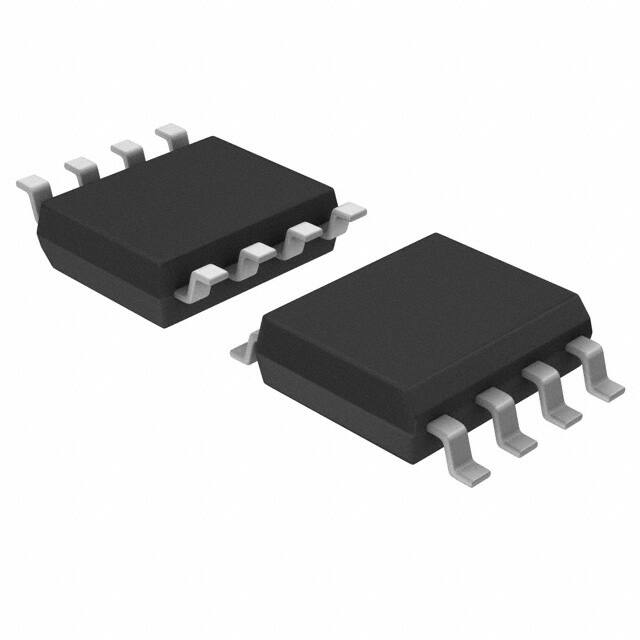
The XRP7674 is offered in a RoHS compliant,
“green”/halogen free 8-pin SOIC package.
Distributed Power Architecture
Portable Equipment
Point of Load Converter
Audio-Video Equipment
FEATURES
2A Continuous Output Current
4.5V to 18V Wide Input Voltage
0.925V to 16V Adjustable Output Voltage
±2% Output Voltage Accuracy
PWM Current-Mode Control
340kHz Constant Operations
Up to 95% Efficiency
Light-Load efficiency
Discontinuous Conduction Mode (DCM)
Pulse Frequency Modulation Mode (PFM)
Programmable Soft-Start and Enable
Function
Built-in Thermal, Over-Current, UVLO,
Output Over-Voltage and hiccup mode
short-circuit protection
RoHS Compliant, “Green”/Halogen
Free 8-Pin SOIC Package
TYPICAL APPLICATION DIAGRAM
Fig. 1: XRP7674 Application Diagram
Exar Corporation
48720 Kato Road, Fremont CA 94538, USA
www.exar.com
Tel. +1 510 668-7000 – Fax. +1 510 668-7001
�XRP7674
2A 18V Synchronous PFM/PWM Step-Down Regulator
ABSOLUTE MAXIMUM RATINGS
OPERATING RATINGS
These are stress ratings only and functional operation of
the device at these ratings or any other above those
indicated in the operation sections of the specifications
below is not implied. Exposure to absolute maximum
rating conditions for extended periods of time may affect
reliability.
Input Voltage VIN ......................................... 4.5V to 18V
Ambient Operating Temperature ................ -40°C to 85°C
Maximum Output Current.................................... 2A min
Thermal Resistance θJA .....................................105°C/W
Supply Voltage VIN ...................................... -0.3V to 20V
Switch Node Voltage VSW ......................................... 21V
Boost Voltage VBS ................................... -0.3 to VSW+6V
Enable Voltage VEN ......................................... -0.3 to VIN
All Other Pins .............................................. -0.3 to +6V
Junction Temperature .......................................... 150°C
Storage Temperature .............................. -65°C to 150°C
Lead Temperature (Soldering, 10 sec) ................... 260°C
ESD Rating (HBM - Human Body Model) .................... 2kV
ESD Rating (MM - Machine Model) ...........................200V
Moisture Sensitivity Level (MSL) ................................... 3
ELECTRICAL SPECIFICATIONS
Specifications are for an Operating Ambient Temperature of TA = 25°C only; limits applying over the full Ambient Operating
Temperature range are denoted by a “•”. Minimum and Maximum limits are guaranteed through test, design, or statistical
correlation. Typical values represent the most likely parametric norm at TA = 25°C, and are provided for reference purposes
only. Unless otherwise indicated, VIN = VEN = 12V, VOUT=3.3V.
Typ.
Max.
Units
Shutdown Supply Current
Parameter
Min.
0.1
10
µA
VEN=0V
Quiescent Current
1.2
1.4
mA
VEN=3V, VFB=1V
0.925
0.943
V
0.1
µA
Feedback Voltage VFB
0.907
Feedback Overvoltage Threshold
Feedback Bias Current
Error Amplifier Voltage Gain AEA
1.1
-0.1
1
Conditions
V
VFB=1V
400
V/V
Error Amplifier
Transconductance GEA
800
µA/V
COMP to Current Sense
Transconductance GCS
3.5
A/V
High-Side switch On Resistance
RDSONH2
100
mΩ
ISW=0.2A&0.7A
Low-Side switch On Resistance
RDSONL2
100
mΩ
ISW=-0.2A&-0.7A
High-Side switch Leakage
Current
0.1
µA
VIN=18V, VEN=0V, VSW=0V
High-Side Switch Current Limit
2.7
Low-Side Switch Current Limit
Oscillator Frequency FOSC1
10
3.5
A
0
280
340
Short Circuit Oscillator
Frequency FOSC2
90
Maximum Duty Cycle DMAX
90
Minimum Duty Cycle DMIN
A
400
Drain to Source
kHz
kHz
0
%
VFB=0.85V
%
VFB=1V
VIN≤4.75V
Minimum Start-up Current
10
mA
Minimum No Load Start-up
Voltage
5
V
IOUT=0A
Minimum Full Load Start-up
Voltage
4.75
V
IOUT=2A
© 2013 Exar Corporation
2/12
Rev. 1.0.0
�XRP7674
2A 18V Synchronous PFM/PWM Step-Down Regulator
Parameter
Min.
Typ.
Max.
1.1
1.5
2
EN Shutdown Threshold
EN Shutdown Hysteresis1
0.35
EN Lockout Threshold
2.2
EN Lockout Hysteresis
UVLO Threshold
2.5
2.7
0.21
3.65
UVLO Hysteresis
Soft-start Current
Soft-start Time1
Thermal Shutdown1
Thermal Shutdown Hysteresis1
4.00
4.25
0.20
Units
Conditions
V
V
V
VIN Rising
V
5
µA
15
ms
160
°C
30
°C
CSS=0.1µF, IOUT=500mA
Note 1: Guaranteed by design.
Note 2: RDSON=(VSW1-VSW2)/(ISW1-ISW2)
BLOCK DIAGRAM
Fig. 2: XRP7674 Block Diagram
© 2013 Exar Corporation
3/12
Rev. 1.0.0
�XRP7674
2A 18V Synchronous PFM/PWM Step-Down Regulator
PIN ASSIGNMENT
Fig. 3: XRP7674 Pin Assignment (SOIC-8)
PIN DESCRIPTION
Name
Pin Number
Description
BS
1
Bootstrap pin.
Connect a 0.01µF or greater bootstrap capacitor between the BS pin and the SW pin.
The voltage across the bootstrap capacitor drives the internal high-side power MOSFET.
IN
2
Power input pin.
A capacitor should be connected between the IN pin and GND pin to keep the input
voltage constant.
SW
3
Power switch output pin.
This pin is connected to the inductor and the bootstrap capacitor.
GND
4
Ground pin.
5
Feedback pin.
An external resistor divider connected to FB programs the output voltage. If the
feedback pin exceeds 1.1V the over-voltage protection will trigger. If the feedback
voltage drops below 0.3V the oscillator frequency is lowered to achieve short-circuit
protection.
6
Compensation pin.
This is the output of transconductance error amplifier and the input to the current
comparator. It is used to compensate the control loop. Connect an RC network form
this pin to GND.
EN
7
Control input pin.
Drive EN high/low in order to turn on/off the regulator. When the IC is in shutdown
mode all functions are disabled to decrease the supply current below 1µA. This input
can be connected to VIN (pin 2) through a 100kΩ resistor for automatic startup
operations.
SS
8
Soft-start control input pin.
Connect a capacitor from SS to GND to set the soft-start period. A 0.1µF capacitor sets
the soft start period to 15ms. To disable the soft-start feature, leave SS unconnected.
FB
COMP
ORDERING INFORMATION
Part Number
XRP7674IDTR-F
XRP7674EVB
Temperature
Range
Marking
XRP7674I
YYWWF
X
XRP7674 Evaluation Board
-40°C≤TA≤+85°C
Packing
Quantity
Package
SOIC-8
Note 1
Note 2
2.5K/Tape & Reel RoHS Compliant
Halogen Free
“YY” = Year – “WW” = Work Week – “X” = Lot Number; when applicable.
© 2013 Exar Corporation
4/12
Rev. 1.0.0
�XRP7674
2A 18V Synchronous PFM/PWM Step-Down Regulator
TYPICAL PERFORMANCE CHARACTERISTICS
All data taken at VIN = 12V, VOUT=3.3V, TJ = TA = 25°C, unless otherwise specified - Schematic and BOM from Application
Information section of this datasheet.
Fig. 4: Efficiency versus output current
Fig. 5: Quiescent current versus temperature
Fig. 6: Feedback voltage versus temperature
Fig. 7: Output voltage versus load current
Fig. 8: Output voltage versus input voltage
Fig. 9: Minimum Start-Up Voltage vs Output Current
© 2013 Exar Corporation
5/12
Rev. 1.0.0
�XRP7674
2A 18V Synchronous PFM/PWM Step-Down Regulator
Fig. 10: Output voltage ripple
IOUT=2A
Fig. 11: Load transient
IOUT=1A to 2A
Fig. 12: Enable turn on Characteristics
VIN=12V, VEN=3.3V, VOUT=3.3V, IOUT=2A
Fig. 13: Enable turn off
VIN=12V, VEN=3.3V, VOUT=3.3V, IOUT=2A
Fig. 14: Short-circuit protection
IOUT=2A
Fig. 15: Short-circuit recovery
IOUT=2A
© 2013 Exar Corporation
6/12
Rev. 1.0.0
�XRP7674
2A 18V Synchronous PFM/PWM Step-Down Regulator
THEORY OF OPERATION
OVERCURRENT PROTECTION AND HICCUP
MODE
FUNCTIONAL DESCRIPTION
The OCP protects against accidental increase
in load current or a short circuit. The current
of internal switch M1 is monitored. If this
current exceeds 3.5A typical then a hiccup
mode is triggered. In hiccup mode, internal
power FETs are turned off and the SS pin is
discharged. When SS reaches 0.2V a softstart
is initiated. The regulator will stay in hiccup
mode until overcurrent is removed. Note that
when the soft start pin is below approximately
0.5V the regulator switching frequency is
90kHz.
The XRP7674 is a synchronous, current-mode,
step-down regulator with light-load efficiency.
The light-load efficiency is achieved by
monitoring the current through M2 and turning
it off when current drops below 0A. The
XRP7674 regulates input voltages from 4.5V to
18V and supplies up to 2A of load current. It
uses current-mode control to regulate the
output voltage. The output voltage is
measured at FB through a resistive voltage
divider and input to a transconductance error
amplifier. The high-side switch current is
compared to the output of the error amplifier
to control the output voltage. The regulator
utilizes internal N-channel MOSFETs to stepdown the input voltage. A bootstrapping
capacitor connected between BS and SW acts
as a supply for high-side MOSFET. This
capacitor is charged from the internal 5V
supply when SW node is low. The XRP7674
has several powerful protection features
including OCP, OVP, OTP, UVLO and output
short-circuit.
OVERVOLTAGE PROTECTION OVP
The XRP7674 has internal OVP. When VOUT
exceeds the OVP threshold (when VFB exceeds
1.1V) the power switching will be turned off.
The XRP7674 will restart when overvoltage
condition is removed.
OVER-TEMPERATURE PROTECTION OTP
If the junction temperature exceeds 160°C the
OTP circuit is triggered, turning off the internal
control circuit and switched M1 and M2. When
junction temperature drops below 130°C the
XRP7674 will restart.
PROGRAMMABLE SOFT-START
The soft-start time is fully programmable via
CSS capacitor, placed between the SS and
GND pin. The CSS is charged by a 5µA
constant-current source, generating a ramp
signal fed into non-inverting input of the error
amplifier. This ramp regulates the voltage on
comp pin during the regulator startup, thus
realizing soft-start. Calculate the required CSS
from:
Where:
tss is the required soft-start time
VFB is the feedback voltage (0.925V nominal)
Please note that the above is a simplified
equation and will provide an approximate CSS
value. For a required soft-start, a more
accurate CSS can be determined based on
empirical data.
© 2013 Exar Corporation
7/12
Rev. 1.0.0
�XRP7674
2A 18V Synchronous PFM/PWM Step-Down Regulator
APPLICATION INFORMATION
VOUT(V) ΔIL(p-p)(A)
SETTING THE OUTPUT VOLTAGE
3.3
2.5
1.8
1.5
1.2
Use an external resistor divider to set the
output voltage. Program the output voltage
from:
0.70
0.78
0.72
0.66
0.57
L(µH)
Inductor
Example
4.7
4.7
4.7
4.7
4.7
DR74-4R7-R
DR74-4R7-R
DR74-4R7-R
DR74-4R7-R
DR74-4R7-R
Table 2: Suggested inductor values
for VIN=5V and IOUT=2A
Where:
OUTPUT CAPACITOR COUT
R1 is the resistor between VOUT and FB
Select the output capacitor for voltage rating,
capacitance COUT and Equivalent Series
Resistance ESR. The voltage rating, as a rule
of thumb, should be at least twice the output
voltage. When calculating the required
capacitance,
usually
the
overriding
requirement is current load-step transient. If
the unloading transient (i.e., when load
transitions from a high to a low current) is
met, then usually the loading transient (when
load transitions from a low to a high current)
is met as well. Therefore calculate the COUT
based on the unloading transient requirement
from:
R2 is the resistor between FB and GND
(nominally 10kΩ)
0.925V is the nominal feedback voltage.
OUTPUT INDUCTOR
Select the output inductor for inductance L, DC
current rating IDC and saturation current rating
ISAT. IDC should be larger than regulator output
current. ISAT, as a rule of thumb, should be
50% higher than the regulator output current.
Since the regulator is rated at 2A then IDC≥2A
and ISAT≥3A. Calculate the inductance from:
Where:
Where:
ΔIL is peak-to-peak inductor current ripple
nominally set to 30%-40% of IOUT
L is the inductance calculated in the preceding
step
fS is nominal switching frequency (340kHz)
IHigh is the value of load-step prior to
unloading. This is nominally set equal to
regulator current rating (2A).
As an example, inductor values for several
common output voltages are shown in tables 1
and 2.
VOUT(V) ΔIL(p-p)(A)
5.0
3.3
2.5
1.8
1.5
1.2
L(µH)
Inductor
Example
10
10
8.2
6.8
6.8
4.7
DR74-100-R
DR74-100-R
DR74-8R2-R
DR74-6R8-R
DR74-6R8-R
DR74-4R7-R
0.86
0.70
0.70
0.66
0.57
0.68
ILow is the value of load-step after unloading.
This is nominally set equal to 50% of regulator
current rating (1A).
Vtransient is the maximum permissible voltage
transient corresponding to the load step
mentioned above. Vtransient is typically specified
from 3% to 5% of VOUT.
ESR of the capacitor has to be selected such
that the output voltage ripple requirement
ΔVOUT, nominally 1% of VOUT, is met. Voltage
ripple ΔVOUT is mainly composed of two
components: the resistive ripple due to ESR
and capacitive ripple due to COUT charge
transfer. For applications requiring low voltage
ripple, ceramic capacitors are recommended
Table 1: Suggested inductor values
for VIN=12V and IOUT=2A
© 2013 Exar Corporation
8/12
Rev. 1.0.0
�XRP7674
2A 18V Synchronous PFM/PWM Step-Down Regulator
because of their low ESR which is typically in
the range of 5mΩ. Therefore ΔVOUT is mainly
capacitive. For ceramic capacitors calculate
the ΔVOUT from:
EXTERNAL BOOTSTRAP DIODE
A low-cost diode, such as 1N4148, may
provide higher efficiency when the input
voltage is 5V or the output is 5V or 3.3V.
Circuit configuration is shown in figures 16 and
17. The external bootstrap diode is also
recommended where duty cycle (VOUT/VIN) is
larger than 65%.
Where:
ΔIL is from table 1 or 2 in previous section
1N4148
COUT is the value calculated above
VIN = 5V
fs is nominal switching frequency (340kHz)
IN
If tantalum or electrolytic capacitors are used
then ΔVOUT is essentially a function of ESR:
BS
10nF
XRP7674
SW
INPUT CAPACITOR CIN
Fig. 16: Optional external bootstrap diode
where input voltage is fixed 5V
Select the input capacitor for voltage rating,
RMS current rating and capacitance. The
voltage rating should be at least 50% higher
than the regulator’s maximum input voltage.
Calculate the capacitor’s current rating from:
1N4148
BS
10nF
XRP7674
VOUT = 5V
or 3.3V
SW
Where:
COUT
IOUT is regulator’s maximum current (2A)
D is duty cycle (D=VOUT/VIN)
Calculate the CIN capacitance from:
Fig. 17: Optional external bootstrap diode
where output voltage is 5V or 3.3V
LOOP COMPENSATION
Where:
XRP7674 utilizes current-mode control. This
allows
using
a
minimum
of
external
components to compensate the regulator. In
general only two components are needed: RC
and CC. Proper compensation of the regulator
(determining RC and CC) results in optimum
transient response. In terms of power supply
control theory, the goals of compensation are
to choose RC and CC such that the regulator
loop gain has a crossover frequency fc
between 15kHz and 34kHz. The corresponding
phase-margin should be between 45 degrees
and 65 degrees. An important characteristic of
current-mode buck regulator is its dominant
pole. The frequency of the dominant pole is
given by:
ΔVIN is the permissible input voltage ripple,
nominally set at 1% of VIN
OPTIONAL SCHOTTKY DIODE
An optional Schottky diode may be paralleled
between the GND pin and SW pin to improve
the regulator efficiency. See Table 3.
Part Number
Voltage/Current
Rating
B130
SK13
30V/1A
30V/1A
MBRS130
30V/1A
Vendor
Diodes, Inc.
Diodes, Inc.
International
Rectifier
Table 3: Optional Schottky diode
© 2013 Exar Corporation
9/12
Rev. 1.0.0
�XRP7674
2A 18V Synchronous PFM/PWM Step-Down Regulator
For the typical application circuit, RC=13kΩ
and
CC=4.7nF
provide
a
satisfactory
compensation. The XRP7674 can also be used
as a pin to pin upgrade replacement for
XRP7664 based designs; in this instance, the
recommended RC network for XRP7664,
RC=5.6k and CC=3.3nF, can be used with
satisfactory results with the XRP7674. Please
contact EXAR if you need assistance with the
compensation of your particular circuit.
where Rload is the output load resistance.
The uncompensated regulator has a constant
gain up to its pole frequency, beyond which
the gain decreases at -20dB/decade. The zero
arising from the output capacitor’s ESR is
inconsequential if ceramic COUT is used. This
simplifies the compensation. The RC and CC,
which are placed between the output of
XRP7674’s Error Amplifier and ground,
constitute a zero. The frequency of this
compensating zero is given by:
TYPICAL APPLICATIONS
Fig. 18: XRP7674 Typical Application Diagram - 12V to 3.3V Conversion
© 2013 Exar Corporation
10/12
Rev. 1.0.0
�XRP7674
2A 18V Synchronous PFM/PWM Step-Down Regulator
PACKAGE SPECIFICATION
8-PIN SOIC
Unit: mm (inch)
© 2013 Exar Corporation
11/12
Rev. 1.0.0
�XRP7674
2A 18V Synchronous PFM/PWM Step-Down Regulator
REVISION HISTORY
Revision
Date
1.0.0
02/28/2013
Description
Initial release of datasheet
FOR FURTHER ASSISTANCE
Email:
customersupport@exar.com
powertechsupport@exar.com
Exar Technical Documentation:
http://www.exar.com/TechDoc/default.aspx?
EXAR CORPORATION
HEADQUARTERS AND SALES OFFICES
48720 Kato Road
Fremont, CA 94538 – USA
Tel.: +1 (510) 668-7000
Fax: +1 (510) 668-7030
www.exar.com
NOTICE
EXAR Corporation reserves the right to make changes to the products contained in this publication in order to improve
design, performance or reliability. EXAR Corporation assumes no responsibility for the use of any circuits described herein,
conveys no license under any patent or other right, and makes no representation that the circuits are free of patent
infringement. Charts and schedules contained here in are only for illustration purposes and may vary depending upon a
user’s specific application. While the information in this publication has been carefully checked; no responsibility, however,
is assumed for inaccuracies.
EXAR Corporation does not recommend the use of any of its products in life support applications where the failure
malfunction of the product can reasonably be expected to cause failure of the life support system or to significantly affect
safety or effectiveness. Products are not authorized for use in such applications unless EXAR Corporation receives,
writing, assurances to its satisfaction that: (a) the risk of injury or damage has been minimized; (b) the user assumes
such risks; (c) potential liability of EXAR Corporation is adequately protected under the circumstances.
or
its
in
all
Reproduction, in part or whole, without the prior written consent of EXAR Corporation is prohibited.
© 2013 Exar Corporation
12/12
Rev. 1.0.0
�