XRT86VX38A
8-CHANNEL T1/E1/J1 FRAMER/LIU COMBO - T1 REGISTER DESCRIPTION
JULY 2013
REV. 1.0.0
GENERAL DESCRIPTION
The XRT86VX38A is an eight-channel 1.544 Mbit/s or
2.048 Mbit/s DS1/E1/J1 framer and Long-haul/Shorthual LIU integrated solution featuring R3 technology
(Relayless, Reconfigurable, Redundancy) and BITS
Timing element. The physical interface is optimized
with internal impedance, and with the patented pad
structure, the XRT86VX38A provides protection from
power failures and hot swapping.
The XRT86VX38A contains an integrated DS1/E1/J1
framer and LIU which provide DS1/E1/J1 framing and
error accumulation in accordance with ANSI/ITU_T
specifications. Each framer has its own framing
synchronizer and transmit-receive slip buffers. The
slip buffers can be independently enabled or disabled
as required and can be configured to frame to the
common DS1/E1/J1 signal formats.
Each Framer block contains its own Transmit and
Receive T1/E1/J1 Framing function. There are 3
Transmit HDLC controllers per channel which
encapsulate contents of the Transmit HDLC buffers
into LAPD Message frames. There are 3 Receive
HDLC controllers per channel which extract the
payload content of Receive LAPD Message frames
from the incoming T1/E1/J1 data stream and write the
contents into the Receive HDLC buffers. Each framer
also contains a Transmit and Overhead Data Input
port, which permits Data Link Terminal Equipment
direct access to the outbound T1/E1/J1 frames.
Likewise, a Receive Overhead output data port
permits Data Link Terminal Equipment direct access
to the Data Link bits of the inbound T1/E1/J1 frames.
The XRT86VX38A fully meets all of the latest T1/E1/
J1 specifications: ANSI T1/E1.107-1988, ANSI T1/
E1.403-1995, ANSI T1/E1.231-1993, ANSI T1/
E1.408-1990, AT&T TR 62411 (12-90) TR54016, and
ITU G-703, G.704, G706 and G.733, AT&T Pub.
43801, and ETS 300 011, 300 233, JT G.703, JT
G.704, JT G706, I.431. Extensive test and diagnostic
functions include Loop-backs, Boundary scan,
Pseudo Random bit sequence (PRBS) test pattern
generation, Performance Monitor, Bit Error Rate
(BER) meter, forced error insertion, and LAPD
unchannelized data payload processing according to
ITU-T standard Q.921.
.
APPLICATIONS AND FEATURES (NEXT PAGE)
FIGURE 1. XRT86VX38A EIGHT CHANNEL DS1 (T1/E1/J1) FRAMER/LIU COMBO
Local PCM
Highway
External Data
Link Controller
XRT86VX38A
Tx Overhead In
Rx Overhead Out
1 of 8-channels
Tx Serial
Data In
1:2 Turns Ratio
2-Frame
Slip Buffer
Elastic Store
TTIP
Tx LIU
Interface
Tx Framer
Tx Serial
Clock
ST-BUS
LLB
Rx Serial
Clock
TRING
LB
RTIP
Rx Serial
Data Out
2-Frame
Slip Buffer
Elastic Store
Rx Framer
Rx LIU
Interface
PRBS
Generator &
Analyser
Performance
Monitor
HDLC/LAPD
Controllers
LIU &
Loopback
Control
RRING
RxLOS
Line Side
8kHz sync
OSC
Back Plane
1.544-16.384 Mbit/s
1:1 Turns Ratio
Signaling &
Alarms
Microprocessor
Interface
DMA
Interface
JTAG
3
INT
System (Terminal) Side
TxON
Memory
D[7:0]
A[14:0]
P
Select
WR
4 ALE_AS
RD
RDY_DTACK
Intel/Motorola µP
Configuration , Control &
Status Monitor
Exar Corporation 48720 Kato Road, Fremont CA, 94538 • (510) 668-7000 • FAX (510) 668-7017 • www.exar.com
�XRT86VX38A
8-CHANNEL T1/E1/J1 FRAMER/LIU COMBO - T1 REGISTER DESCRIPTION
REV. 1.0.0
APPLICATIONS
High-Density T1/E1/J1 interfaces for Multiplexers, Switches, LAN Routers and Digital Modems
SONET/SDH terminal or Add/Drop multiplexers (ADMs)
T1/E1/J1 add/drop multiplexers (MUX)
Channel Service Units (CSUs): T1/E1/J1 and Fractional T1/E1/J1
BITS Timing
Digital Access Cross-connect System (DACs)
Digital Cross-connect Systems (DCS)
Frame Relay Switches and Access Devices (FRADS)
ISDN Primary Rate Interfaces (PRA)
PBXs and PCM channel bank
T3 channelized access concentrators and M13 MUX
Wireless base stations
ATM equipment with integrated DS1 interfaces
Multichannel DS1 Test Equipment
T1/E1/J1 Performance Monitoring
Voice over packet gateways
Routers
FEATURES
Backwards compatible to the XRT86VX38
Supports Section 13 - Synchronization Interface (BITS timing) in ITU G.703 for both Tx and Rx Paths
Supports SSM Synchronous Messaging Generation (BOC for T1, National Bits for E1) on the Transmit Path
Supports SSM Synchronous Messaging Extraction (BOC for T1, National Bits for E1) on the Receive Path
Supports a Customized Section 13 - Synchronization Interface in G.703 at 1.544MHz
BITS functionality (generation and extraction) can be enabled by channel or globally - New Feature
DS-0 Monitoring on both Transmit and Receive Time Slots
Supports SSM Synchronization Messaging per ANSI T1.101-1999 and ITU G.704
Independent, full duplex DS1 Tx and Rx Framer/LIUs
Each channel has full featured Long-haul/Short-haul LIU
Two 512-bit (two-frame) elastic store, PCM frame slip buffers (FIFO) on TX and Rx provide up to 8.192 MHz
asynchronous back plane connections with jitter and wander attenuation
Supports input PCM and signaling data at 1.544, 2.048, 4.096 and 8.192 Mbits. Also supports 2-channel
multiplexed 12.352/16.384 (HMVIP/H.100) Mbit/s on the back plane bus
Programmable output clocks for Fractional T1/E1/J1
Supports Channel Associated Signaling (CAS) and Common Channel Signaling (CCS)
Supports ISDN Primary Rate Interface (ISDN PRI) signaling
Extracts and inserts robbed bit signaling (RBS)
2
�XRT86VX38A
REV. 1.0.0 8-CHANNEL T1/E1/J1 FRAMER/LIU COMBO - T1 REGISTER DESCRIPTION
8-CHANNEL T1/E1/J1 FRAMER/
3 Integrated HDLC controllers for Tx and Rx, each controller having two 96-byte buffers (buffer 0 / buffer 1)
3 Full SS7 Controllers per channel that implement hardware based transmission and reception of FISUs,
LSSUs and MSUs to ease the software implementation of SS7 signaling.- New Feature
Timeslot assignable HDLC
V5.1 or V5.2 Interface
Automatic Performance Report Generation (PMON Status) can be inserted into the transmit LAPD interface
every 1 second or for a single transmission
Supports SPRM and NPRM
Alarm Indication Signal with Customer Installation signature (AIS-CI) - Hardware enhancement
Remote Alarm Indication with Customer Installation (RAI-CI) - Hardware enhancement
Simultaneous RAI-CI and AIS-CI monitoring - New Feature
Gapped Clock interface mode for Transmit and Receive.
Supports RxCLK clock squelch upon LOS - New Feature
Intel/Motorola and Power PC interfaces for configuration, control and status monitoring
Parallel search algorithm for fast frame synchronization
Wide choice of T1 framing structures: SF/D4, ESF, SLC®96, T1DM and N-Frame (non-signaling)
Direct access to D and E channels for fast transmission of data link information
Full BERT (supports TR-25) Controller for generation and detection on system and line side of the chip
PRBS, QRSS, and Network Loop Code generation and detection
Seven Independent, simultaneous Loop Code Detectors per Channel
Programmable Interrupt output pin
Supports programmed I/O and DMA modes of Read-Write access
Detects and forces Red (SAI), Yellow (RAI) and Blue (AIS) Alarms
Detects OOF, LOF, LOS errors and COFA conditions
Loopbacks: Local (LLB) and Line remote (LB)
Facilitates Inverse Multiplexing for ATM
Performance monitor with one second polling
Boundary scan (IEEE 1149.1) JTAG test port
Accepts external 8kHz Sync reference
3.3V CMOS operation with 5V tolerant inputs, 1.8V Inner Core
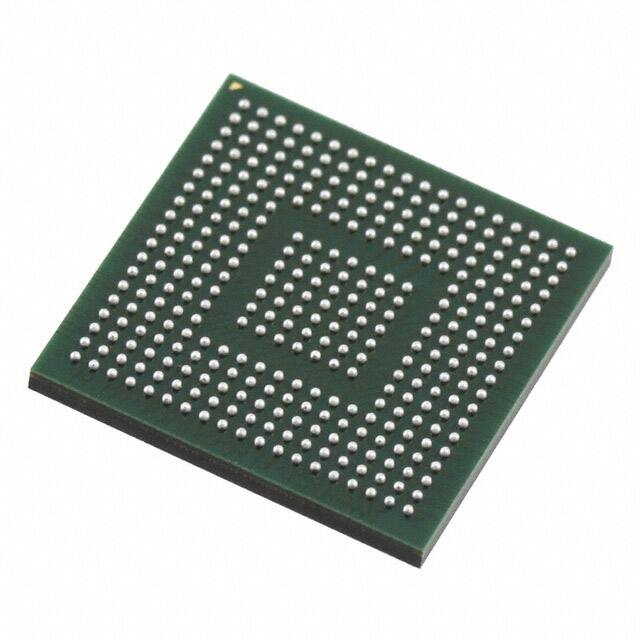
Offered in 256-pin fpBGA and 329-pin fpBGA packages with -40C to +85C operation
ORDERING INFORMATION
PART NUMBER
PACKAGE
OPERATING TEMPERATURE RANGE
XRT86VX38AIB256
256 Pin Fine Pitch Ball Grid Array
-40C to +85C
XRT86VX38AIB329
329 Pin Fine Pitch Ball Grid Array
-40C to +85C
3
�XRT86VX38A
8-CHANNEL T1/E1/J1 FRAMER/LIU COMBO - T1 REGISTER DESCRIPTION
REV. 1.0.0
LIST OF TABLES
Table 1:: Register Summary .............................................................................................................................................. 4
Table 2:: Clock Select Register(CSR)
Hex Address: 0xN100 ........ 11
Table 3:: Line Interface Control Register (LICR)
Hex Address: 0xN101 ............... 13
Table 4:: General Purpose Input/Output 0 Control Register(GPIOCR0)
Hex Address: 0x0102 ........................... 15
Table 5:: General Purpose Input/Output 1 Control Register(GPIOCR1)
Hex Address: 0x4102 ........................ 16
Table 6:: Framing Select Register (FSR)
Hex Address: 0xN107 .................... 17
Table 7:: Alarm Generation Register (AGR)
Hex Address: 0xN108 ..................... 19
Table 8:: yellow alarm duration and format when one second rule is not enforced ......................................................... 20
Table 9:: yellow alarm format when one second rule is enforced .................................................................................... 21
Table 10:: Synchronization MUX Register (SMR)
Hex Address: 0xN109 ................. 23
Table 11:: Transmit Signaling and Data Link Select Register (TSDLSR)
Hex Address:0xN10A .................. 26
Table 12:: Framing Control Register (FCR)
Hex Address: 0xN10B .................. 28
Table 13:: Receive Signaling & Data Link Select Register (RSDLSR)
Hex Address: 0xN10C .................... 29
Table 14:: Receive Signaling Change Register 0 (RSCR 0)
Hex Address: 0xN10D .......... 31
Table 15:: Receive Signaling Change Register 1(RSCR 1)
Hex Address: 0xN10E ...... 31
Table 16:: Receive Signaling Change Register 2 (RSCR 2)
Hex Address: 0xN10F ........ 31
Table 17:: Receive In Frame Register (RIFR)
Hex Address: 0xN112 .................. 32
Table 18:: Data Link Control Register (DLCR1)
Hex Address: 0xN113 .................... 33
Table 19:: Transmit Data Link Byte Count Register (TDLBCR1)
Hex Address: 0xN114 .................... 35
Table 20:: Receive Data Link Byte Count Register (RDLBCR1)
Hex Address: 0xN115 .................. 36
Table 21:: Slip Buffer Control Register (SBCR)
Hex Address: 0xN116 ..................... 37
Table 22:: FIFO Latency Register (FFOLR)
Hex Address: 0xN117 ................ 38
Table 23:: DMA 0 (Write) Configuration Register (D0WCR)
Hex Address: 0xN118 .................. 39
Table 24:: DMA 1 (Read) Configuration Register (D1RCR)
Hex Address: 0xN119 ................. 40
Table 25:: Interrupt Control Register (ICR)
Hex Address: 0xN11A ...................... 41
Table 26:: LAPD Select Register (LAPDSR)
Hex Address: 0xN11B ................ 42
Table 27:: Customer Installation Alarm Generation Register (CIAGR)
Hex Address: 0xN11C ....................... 43
Table 28:: Performance Report Control Register (PRCR)
Hex Address: 0xN11D .................... 44
Table 29:: Gapped Clock Control Register (GCCR)
Hex Address: 0xN11E .................. 45
Table 30:: Transmit Interface Control Register (TICR)
Hex Address:0xN120 .................... 46
Table 31:: Transmit Interface Speed When Multiplexed Mode is Disabled (TxMUXEN = 0) ........................................... 48
Table 32:: Transmit Interface Speed when Multiplexed Mode is Enabled (TxMUXEN = 1) ............................................ 49
Table 33:: BERT Control & Status Register (BERTCSR0)
Hex Address: 0xN121 ............... 50
Table 34:: Receive Interface Control Register (RICR)
Hex Address: 0xN122 ............... 51
Table 35:: Receive Interface Speed When Multiplexed Mode is Disabled (TxMUXEN = 0) ............................................ 53
Table 36:: Receive Interface Speed when Multiplexed Mode is Enabled (TxMUXEN = 1) ............................................. 54
Table 37:: BERT Control & Status Register (BERTCSR1)
Hex Address: 0xN123 ..................... 55
Table 38:: Loopback Code Control Register - Code 0 (LCCR0)
Hex Address: 0xN124 ............... 57
Table 39:: Transmit Loopback Coder Register (TLCR)
Hex Address: 0xN125 ............. 59
Table 40:: Receive Loopback Activation Code Register - Code 0 (RLACR0)
Hex Address: 0xN126 ................ 59
Table 41:: Receive Loopback Deactivation Code Register - Code 0 (RLDCR0)
Hex Address: 0xN127 ................. 59
Table 42:: Receive LoopCode Detection Switch (RLCDS)
Hex Address: 0xN128 .................................. 60
Table 43:: Defect Detection Enable Register (DDER)
Hex Address: 0xN129 .............. 61
Table 44:: Loopback Code Control Register - Code 1 (LCCR1)
Hex Address: 0xN12A ........................ 62
Table 45:: Receive Loopback Activation Code Register - Code 1 (RLACR1)
Hex Address: 0xN12B .................. 63
Table 46:: Receive Loopback Deactivation Code Register - Code 1 (RLDCR1) Hex Address: 0xN12C .................... 63
Table 47:: Loopback Code Control Register - Code 2 (LCCR2)
Hex Address: 0xN12D ........................ 64
Table 48:: Receive Loopback Activation Code Register - Code 2 (RLACR2)
Hex Address: 0xN12E .................. 65
Table 49:: Receive Loopback Deactivation Code Register - Code 2 (RLDCR2) Hex Address: 0xN12F ..................... 65
Table 50:: Transmit SS7 LSSU SF1 Registers (TSS7LSSUSF1R)
Hex Address: 0xN138 - 0xN13A ................... 65
Table 51:: Transmit LoopCode Generation Switch (TLCGS)
Hex Address: 0xN140 ............................... 66
Table 52:: LoopCode Timer Select (LCTS)
Hex Address: 0xN141 .......................................................... 66
Table 53:: Transmit SPRM and NPRM Control Register (TSPRMCR)
Hex Address: 0xN142 ................ 66
Table 54:: Data Link Control Register (DLCR2)
Hex Address: 0xN143 ................... 68
Table 55:: Transmit Data Link Byte Count Register (TDLBCR2)
Hex Address: 0xN144 ................... 70
Table 56:: Receive Data Link Byte Count Register (RDLBCR2)
Hex Address: 0xN145 ................. 71
Table 57:: Loopback Code Control Register - Code 3 (LCCR3)
Hex Address: 0xN146 ......................... 72
Table 58:: Receive Loopback Activation Code Register - Code 3 (RLACR3)
Hex Address: 0xN147 .................. 73
I
�XRT86VX38A
REV. 1.0.0
8-CHANNEL T1/E1/J1 FRAMER/LIU COMBO - T1 REGISTER DESCRIPTION
Table 59:: Receive Loopback Deactivation Code Register - Code 3 (RLDCR3) Hex Address: 0xN148 ..................... 73
Table 60:: Loopback Code Control Register - Code 4 (LCCR4)
Hex Address: 0xN149 ......................... 74
Table 61:: Receive Loopback Activation Code Register - Code 4 (RLACR4)
Hex Address: 0xN14A .................. 75
Table 62:: Receive Loopback Deactivation Code Register - Code 4 (RLDCR4) Hex Address: 0xN14B .................... 75
Table 63:: Loopback Code Control Register - Code 5 (LCCR5)
Hex Address: 0xN14C ........................ 76
Table 64:: Receive Loopback Activation Code Register - Code 5 (RLACR5)
Hex Address: 0xN14D .................. 77
Table 65:: Receive Loopback Deactivation Code Register - Code 5 (RLDCR5) Hex Address: 0xN14E .................... 77
Table 66:: Loopback Code Control Register - Code 6 (LCCR6)
Hex Address: 0xN14F ........................ 78
Table 67:: Receive Loopback Activation Code Register - Code 6 (RLACR6)
Hex Address: 0xN150 .................. 79
Table 68:: Receive Loopback Deactivation Code Register - Code 6 (RLDCR6) Hex Address: 0xN151 ..................... 79
Table 69:: Transmit SS7 Minimum Flag Count Register (TSS7MFCR)
Hex Address: 0xN152 ......................... 79
Table 70:: Data Link Control Register (DLCR3)
Hex Address: 0xN153 ................. 80
Table 71:: Transmit Data Link Byte Count Register (TDLBCR3)
Hex Address: 0xN154 ................... 82
Table 72:: Receive Data Link Byte Count Register (RDLBCR3)
Hex Address: 0xN155 ................. 83
Table 73:: Loopback Code Control Register - Code 7 (LCCR7)
Hex Address: 0xN156 ......................... 84
Table 74:: Receive Loopback Activation Code Register - Code 7 (RLACR7)
Hex Address: 0xN157 .................. 85
Table 75:: Receive Loopback Deactivation Code Register - Code 7 (RLDCR7) Hex Address: 0xN158 ..................... 85
Table 76:: Transmit SS7 Control Registers 0 (TSS7CR0) Hex Address: 0xN159 to 0xN15B ......................................... 86
Table 77:: Transmit SS7 Control Registers 1 (TSS7CR1) Hex Address: 0xN15C to 0xN15E ........................................ 86
Table 78:: BERT Control Register (BCR)
Hex Address: 0xN163 ............... 87
Table 79:: T1 SSM Messages ......................................................................................................................................... 88
Table 80:: SSM BOC Control Register (BOCCR 0xN170h) ............................................................................................ 89
Table 81:: SSM Receive FDL Register (RFDLR 0xN171h) ............................................................................................. 90
Table 82:: SSM Receive FDL Match 1 Register (RFDLMR1 0xN172h) .......................................................................... 91
Table 83:: SSM Receive FDL Match 2 Register (RFDLMR2 0xN173h) .......................................................................... 91
Table 84:: SSM Receive FDL Match 3 Register (RFDLMR3 0xN174h) .......................................................................... 91
Table 85:: SSM Transmit FDL Register (TFDLR 0xN175h) ............................................................................................ 92
Table 86:: SSM Transmit Byte Count Register (TBCR 0xN176h) ................................................................................... 92
Table 87:: Transmit SS7 FSN Registers (TSS7FSNR) Hex Address: 0xN17A to 0xN17C ............................................. 92
Table 88:: Transmit SS7 BSN Registers (TSS7BSNR) Hex Address: 0xN17D to 0xN17F ............................................. 93
Table 89:: Receive DS-0 Monitor Registers (RDS0MR)
Hex Address:
0xN15F to 0xN16F (not including 0xN163) and 0xN1C0 to 0xN1D0 ................................................................ 93
Table 90:: Transmit DS-0 Monitor Registers (TDS0MR) Hex Address: 0xN1D0 to 0xN1EF ....................................... 94
Table 91:: Transmit SS7 LI Registers (TSS7LIR) Hex Address: 0xN1F0 to 0xN1F2 .................................................. 94
Table 92:: Transmit SS7 LSSU SF0 Registers (TSS7LSSUSF0R) Hex Address: 0xN1F3 to 0xN1F5 ....................... 94
Table 93:: Receive SS7 RxSOT Delay Count Register (RSS7RXSOTDCR)
Hex Address: 0xN1F6 ................... 94
Table 94:: Transmit Alarm Test Register (TATR)
Hex Address: 0xN1FB ............................................................. 95
Table 95:: Device ID Register (DEVID)
Hex Address: 0x01FE ........... 95
Table 96:: Revision ID Register (REVID)
Hex Address: 0x01FF ........... 95
Table 97:: Transmit Channel Control Register 0-23 (TCCR 0-23)
Hex Address: 0xN300 to 0xN317 ................... 96
Table 98:: Transmit User Code Register 0-23 (TUCR 0-23)
Hex Address: 0xN320 to 0xN337 ............... 98
Table 99:: Transmit Signaling Control Register 0-23 (TSCR 0-23)
Hex Address: 0xN340 to 0xN357 ...................... 99
Table 100:: Receive Channel Control Register 0-23 (RCCR 0-23)
Hex Address: 0xN360 to 0xN377 .............. 101
Table 101:: Receive User Code Register 0-23 (RUCR 0-23)
Hex Address: 0xN380 to 0xN397 ......... 103
Table 102:: Receive Signaling Control Register 0-23 (RSCR 0-23)
Hex Address: 0xN3A0 to 0xN3B7 ............... 104
Table 103:: Receive Substitution Signaling Register 0-23 (RSSR 0-23) Hex Address: 0xN3C0 to 0xN3D7 ............. 106
Table 104:: Receive Signaling Array Register 0 to 23 (RSAR 0-23)
Hex Address: 0xN500 to 0xN517 .............. 107
Table 105:: LAPD Buffer 0 Control Register (LAPDBCR0)
Hex Address: 0xN600 ............................... 108
Table 106:: LAPD Buffer 1 Control Register (LAPDBCR1)
Hex Address: 0xN700 ................................. 108
Table 107:: PMON Receive Line Code Violation Counter MSB (RLCVCU)
Hex Address: 0xN900 ............ 109
Table 108:: PMON Receive Line Code Violation Counter LSB (RLCVCL)
Hex Address: 0xN901 ............ 109
Table 109:: PMON Receive Framing Alignment Bit Error Counter MSB (RFAECU) Hex Address: 0xN902 ............... 110
Table 110:: PMON Receive Framing Alignment Bit Error Counter LSB (RFAECL) Hex Address: 0xN903 ............... 110
Table 111:: PMON Receive Severely Errored Frame Counter (RSEFC)
Hex Address: 0xN904 .............. 111
Table 112:: PMON Receive CRC-6 BIT Error Counter - MSB (RSBBECU)
Hex Address: 0xN905 ............. 112
Table 113:: PMON Receive CRC-6 Bit Error Counter - LSB (RSBBECL)
Hex Address: 0xN906 ............ 112
Table 114:: PMON Receive Slip Counter (RSC)
Hex Address: 0xN909 .......... 113
Table 115:: PMON Receive Loss of Frame Counter (RLFC)
Hex Address: 0xN90A ........... 113
Table 116:: PMON Receive Change of Frame Alignment Counter (RCFAC)
Hex Address: 0xN90B ........... 113
Table 117:: PMON LAPD1 Frame Check Sequence Error Counter 1 (LFCSEC1)
Hex Address: 0xN90C ............. 114
II
�XRT86VX38A
8-CHANNEL T1/E1/J1 FRAMER/LIU COMBO - T1 REGISTER DESCRIPTION
REV. 1.0.0
Table 118:: PRBS Bit Error Counter MSB (PBECU)
Hex Address: 0xN90D ............. 114
Table 119:: PRBS Bit Error Counter LSB (PBECL)
Hex Address: 0xN90E ............. 114
Table 120:: Transmit Slip Counter (TSC)
Hex Address: 0xN90F .......... 115
Table 121:: Excessive Zero Violation Counter MSB (EZVCU)
Hex Address: 0xN910 ............ 115
Table 122:: Excessive Zero Violation Counter LSB (EZVCL)
Hex Address: 0xN911 ............. 115
Table 123:: SS7 FCS Error Counter Registers (SS7FCSECR) Hex Address: 0xN912 to 0xN914 ................................ 116
Table 124:: PMON LAPD2 Frame Check Sequence Error Counter 2 (LFCSEC2)
Hex Address: 0xN91C ............. 116
Table 125:: PMON LAPD3 Frame Check Sequence Error Counter 3 (LFCSEC3)
Hex Address: 0xN92C ............. 116
Table 126:: Block Interrupt Status Register (BISR)
Hex Address: 0xNB00 ................ 117
Table 127:: Block Interrupt Enable Register (BIER)
Hex Address: 0xNB01 ............... 119
Table 128:: Alarm & Error Interrupt Status Register (AEISR)
Hex Address: 0xNB02 ................. 121
Table 129:: Alarm & Error Interrupt Enable Register (AEIER)
Hex Address: 0xNB03 .................. 123
Table 130:: Framer Interrupt Status Register (FISR)
Hex Address: 0xNB04 .............. 124
Table 131:: Framer Interrupt Enable Register (FIER)
Hex Address: 0xNB05 .............. 126
Table 132:: Data Link Status Register 1 (DLSR1)
Hex Address: 0xNB06 ............ 128
Table 133:: Data Link Interrupt Enable Register 1 (DLIER1)
Hex Address: 0xNB07 .............. 130
Table 134:: Slip Buffer Interrupt Status Register (SBISR)
Hex Address: 0xNB08 ................. 132
Table 135:: Slip Buffer Interrupt Enable Register (SBIER)
Hex Address: 0xNB09 ................ 135
Table 136:: Receive Loopback Code 0 Interrupt and Status Register (RLCISR0) Hex Address: 0xNB0A ................... 137
Table 137:: Receive Loopback Code 0 Interrupt Enable Register (RLCIER0)
Hex Address: 0xNB0B ................ 138
Table 138:: Excessive Zero Status Register (EXZSR)
Hex Address: 0xNB0E .............. 139
Table 139:: Excessive Zero Enable Register (EXZER)
Hex Address: 0xNB0F ............ 139
Table 140:: SS7 Status Register for LAPD1 (SS7SR1) Hex Address: 0xNB10 ........................................................ 139
Table 141:: SS7 Enable Register for LAPD1 (SS7ER1) Hex Address: 0xNB11 ....................................................... 140
Table 142:: RxLOS/CRC Interrupt Status Register (RLCISR)
Hex Address: 0xNB12 ............. 142
Table 143:: RxLOS/CRC Interrupt Enable Register (RLCIER)
Hex Address: 0xNB13 ............. 142
Table 144:: Receive Loopback Code 1 Interrupt and Status Register (RLCISR1) Hex Address: 0xNB14 .................... 143
Table 145:: Receive Loopback Code 1 Interrupt Enable Register (RLCIER1)
Hex Address: 0xNB15 ................. 144
Table 146:: Data Link Status Register 2 (DLSR2)
Hex Address: 0xNB16 ............. 145
Table 147:: Data Link Interrupt Enable Register 2 (DLIER2)
Hex Address: 0xNB17 .............. 147
Table 148:: SS7 Status Register for LAPD2 (SS7SR2) Hex Address: 0xNB18 ........................................................ 148
Table 149:: SS7 Enable Register for LAPD2 (SS7ER2) Hex Address: 0xNB19 ....................................................... 149
Table 150:: Receive Loopback Code 2 Interrupt and Status Register (RLCISR2) Hex Address: 0xNB1A ................... 150
Table 151:: Receive Loopback Code 2 Interrupt Enable Register (RLCIER2)
Hex Address: 0xNB1B ................ 151
Table 152:: Receive Loopback Code 3 Interrupt and Status Register (RLCISR3) Hex Address: 0xNB1C ................... 152
Table 153:: Receive Loopback Code 3 Interrupt Enable Register (RLCIER3)
Hex Address: 0xNB1D ................ 153
Table 154:: Receive Loopback Code 4 Interrupt and Status Register (RLCISR4) Hex Address: 0xNB1E ................... 154
Table 155:: Receive Loopback Code 4 Interrupt Enable Register (RLCIER4)
Hex Address: 0xNB1F ................. 155
Table 156:: Receive Loopback Code 5 Interrupt and Status Register (RLCISR5) Hex Address: 0xNB20 .................... 156
Table 157:: Receive Loopback Code 5 Interrupt Enable Register (RLCIER5)
Hex Address: 0xNB21 ................. 157
Table 158:: Receive Loopback Code 6 Interrupt and Status Register (RLCISR6) Hex Address: 0xNB22 .................... 158
Table 159:: Receive Loopback Code 6 Interrupt Enable Register (RLCIER6)
Hex Address: 0xNB23 ................. 159
Table 160:: Receive Loopback Code 7 Interrupt and Status Register (RLCISR7) Hex Address: 0xNB24 .................... 160
Table 161:: Receive Loopback Code 7 Interrupt Enable Register (RLCIER7)
Hex Address: 0xNB25 ................. 161
Table 162:: Data Link Status Register 3 (DLSR3)
Hex Address: 0xNB26 ............. 162
Table 163:: Data Link Interrupt Enable Register 3 (DLIER3)
Hex Address: 0xNB27 ............. 164
Table 164:: SS7 Status Register for LAPD3 (SS7SR3) Hex Address: 0xNB28 ........................................................ 166
Table 165:: SS7 Enable Register for LAPD3 (SS7ER3) Hex Address: 0xNB29 ....................................................... 166
Table 166:: Customer Installation Alarm Status Register (CIASR)
Hex Address: 0xNB40 ................. 168
Table 167:: Customer Installation Alarm Status Register (CIAIER)
Hex Address: 0xNB41 ................. 169
Table 168:: T1 BOC Interrupt Status Register (BOCISR 0xNB70h) .............................................................................. 170
Table 169:: T1 BOC Interrupt Enable Register (BOCIER 0xNB71h) ............................................................................. 172
Table 170:: T1 BOC Unstable Interrupt Status Register (BOCUISR 0xNB74h) ............................................................ 173
Table 171:: T1 BOC Unstable Interrupt Enable Register (BOCUIER 0xNB75h) ........................................................... 174
Table 172:: LIU Channel Control Register 0 (LIUCCR0)
Hex Address: 0x0FN0 ............ 175
Table 173:: Equalizer Control and Transmit Line Build Out ........................................................................................... 177
Table 174:: LIU Channel Control Register 1 (LIUCCR1)
Hex Address: 0x0FN1 ........... 178
Table 175:: LIU Channel Control Register 2 (LIUCCR2)
Hex Address: 0x0FN2 ............ 180
Table 176:: LIU Channel Control Register 3 (LIUCCR3)
Hex Address: 0x0FN3 ........... 182
Table 177:: LIU Channel Control Interrupt Enable Register (LIUCCIER)
Hex Address: 0x0FN4 .................. 184
III
�XRT86VX38A
REV. 1.0.0
8-CHANNEL T1/E1/J1 FRAMER/LIU COMBO - T1 REGISTER DESCRIPTION
Table 178:: LIU Channel Control Status Register (LIUCCSR)
Table 179:: LIU Channel Control Interrupt Status Register (LIUCCISR)
Table 180:: LIU Channel Control Cable Loss Register (LIUCCCCR)
Table 181:: LIU Channel Control Arbitrary Register 1 (LIUCCAR1)
Table 182:: LIU Channel Control Arbitrary Register 2 (LIUCCAR2)
Table 183:: LIU Channel Control Arbitrary Register 3 (LIUCCAR3)
Table 184:: LIU Channel Control Arbitrary Register 4 (LIUCCAR4)
Table 185:: LIU Channel Control Arbitrary Register 5 (LIUCCAR5)
Table 186:: LIU Channel Control Arbitrary Register 6 (LIUCCAR6)
Table 187:: LIU Channel Control Arbitrary Register 7 (LIUCCAR7)
Table 188:: LIU Channel Control Arbitrary Register 8 (LIUCCAR8)
Table 189:: LIU Global Control Register 0 (LIUGCR0)
Table 190:: LIU Global Control Register 1 (LIUGCR1)
Table 191:: LIU Global Control Register 2 (LIUGCR2)
Table 192:: LIU Global Control Register 3 (LIUGCR3)
Table 193:: LIU Global Control Register 4 (LIUGCR4)
Table 194:: LIU Global Control Register 5 (LIUGCR5)
Table 195:: LIU Transmit BITS Enable (LIUTXBITSEN)
Table 196:: LIU Receive BITS Enable (LIURXBITSEN)
IV
Hex Address: 0x0FN5 ............... 186
Hex Address: 0x0FN6 .................... 189
Hex Address: 0x0FN7 ............... 191
Hex Address: 0x0FN8 .................. 191
Hex Address: 0x0FN9 ..................... 191
Hex Address: 0x0FNA .................... 192
Hex Address: 0x0FNB .................... 192
Hex Address: 0x0FNC .................... 192
Hex Address: 0x0FND .................... 193
Hex Address: 0x0FNE .................... 193
Hex Address: 0x0FNF ..................... 193
Hex Address: 0x0FE0 ............. 194
Hex Address: 0x0FE1 ............. 196
Hex Address: 0x0FE2 ............. 197
Hex Address: 0x0FE4 ............. 197
Hex Address: 0x0FE9 ............. 198
Hex Address: 0x0FEA ............ 199
Hex Address: 0x0FF0 ........... 199
Hex Address: 0x0FF1 ........... 199
�XRT86VX38A
8-CHANNEL T1/E1/J1 FRAMER/LIU COMBO - T1 REGISTER DESCRIPTION
REV. 1.0.0
DESCRIPTION OF THE CONTROL REGISTERS - T1 MODE
All address on this register description is shown in HEX format.
TABLE 1: REGISTER SUMMARY
FUNCTION
SYMBOL
HEX
Clock and Select Register
CSR
0xN100
Line Interface Control Register
LICR
0xN101
General Purpose Input/Output Control 0
GPIOCR0
0x0102
General Purpose Input/Output Control 1
GPIOCR1
0x4102
-
0xN103 - 0xN106
Framing Select Register
FSR
0xN107
Alarm Generation Register
AGR
0xN108
Synchronization MUX Register
SMR
0xN109
TSDLSR
0xN10A
FCR
0xN10B
RSDLSR
0xN10C
Receive Signaling Change Register 0
RSCR0
0xN10D
Receive Signaling Change Register 1
RSCR1
0xN10E
Receive Signaling Change Register 2
RSCR2
0xN10F
-
0xN110 0xN111
Receive In-Frame Register
RIFR
0xN112
Data Link Control Register 1
DLCR1
0xN113
Transmit Data Link Byte Count Register 1
TDLBCR1
0xN114
Receive Data Link Byte Count Register 1
RDLBCR1
0xN115
SBCR
0xN116
FIFO Latency Register
FIFOLR
0xN117
DMA 0 (Write) Configuration Register
D0WCR
0xN118
DMA 1 (Read) Configuration Register
D1RCR
0xN119
ICR
0xN11A
LAPDSR
0xN11B
Customer Installation Alarm Generation Register
CIAGR
0xN11C
Performance Report Control Register
PRCR
0xN11D
Gapped Clock Control Register
GCCR
0xN11E
TICR
0xN120
Control Registers (0xN100 - 0xN1FF)
Reserved
Transmit Signaling and Data Link Select Register
Framing Control Register
Receive Signaling & Data Link Select Register
Reserved - E1 mode only
Slip Buffer Control Register
Interrupt Control Register
LAPD Select Register
Transmit Interface Control Register
4
�XRT86VX38A
REV. 1.0.0
8-CHANNEL T1/E1/J1 FRAMER/LIU COMBO - T1 REGISTER DESCRIPTION
TABLE 1: REGISTER SUMMARY
FUNCTION
SYMBOL
HEX
BERT Control & Status - Register 0
BERTCSR0
0xN121
Receive Interface Control Register
RICR
0xN122
BERT Control & Status - Register 1
BERTCSR1
0xN123
LCCR0
0xN124
TLCR
0xN125
Receive Loopback Activation Code Register - Code 0
RLACR0
0xN126
Receive Loopback Deactivation Code Register - Code 0
RLDCR0
0xN127
Receive LoopCode Detection Switch
RLCDS
0xN128
Defect Detection Enable Register
DDER
0xN129
Loopback Code Control Register - Code 1
LCCR1
0xN12A
Receive Loopback Activation Code Register - Code 1
RLACR1
0xN12B
Receive Loopback Deactivation Code Register - Code 1
RLDCR1
0xN12C
LCCR2
0xN12D
Receive Loopback Activation Code Register - Code 2
RLACR2
0xN12E
Receive Loopback Deactivation Code Register - Code 2
RLDCR2
0xN12F
-
0xN130 - 0xN137
TSS7LSSUSF1R
0xN138 - 0xN13A
-
0xN13B - 0xN13F
TLCGS
0xN140
LCTS
0xN141
TSPRMCR
0xN142
DLCR2
0xN143
Transmit Data Link Byte Count Register 2
TDLBCR2
0xN144
Receive Data Link Byte Count Register 2
RDLBCR2
0xN145
Loopback Code Control Register - Code 3
LCCR3
0xN146
Receive Loopback Activation Code Register - Code 3
RLACR3
0xN147
Receive Loopback Deactivation Code Register - Code 3
RLDCR3
0xN148
LCCR4
0xN149
Receive Loopback Activation Code Register - Code 4
RLACR4
0xN14A
Receive Loopback Deactivation Code Register - Code 4
RLDCR4
0xN14B
LCCR5
0xN14C
Receive Loopback Activation Code Register - Code 5
RLACR5
0xN14D
Receive Loopback Deactivation Code Register - Code 5
RLDCR5
0xN14E
Loopback Code Control Register - Code 0
Transmit Loopback Code Register
Loopback Code Control Register - Code 2
Reserved - E1 mode only
Transmit SS7 Link Status Signal Unit (LSSU) SF1 Registers
Reserved - E1 mode only
Transmit LoopCode Generation Switch
Loopcode Timer Select
Transmit SPRM and NPRM Control Register
Data Link Control Register 2
Loopback Code Control Register - Code 4
Loopback Code Control Register - Code 5
5
�XRT86VX38A
8-CHANNEL T1/E1/J1 FRAMER/LIU COMBO - T1 REGISTER DESCRIPTION
REV. 1.0.0
TABLE 1: REGISTER SUMMARY
FUNCTION
SYMBOL
HEX
LCCR6
0xN14F
Receive Loopback Activation Code Register - Code 6
RLACR6
0xN150
Receive Loopback Deactivation Code Register - Code 6
RLDCR6
0xN151
TSS7MFCR
0xN152
DLCR3
0xN153
Transmit Data Link Byte Count Register 3
TDLBCR3
0xN154
Receive Data Link Byte Count Register 3
RDLBCR3
0xN155
Loopback Code Control Register - Code 7
LCCR7
0xN156
Receive Loopback Activation Code Register - Code 7
RLACR7
0xN157
Receive Loopback Deactivation Code Register - Code 7
RLDCR7
0xN158
Transmit SS7 Control Register 0
TSS7CR0
0xN159 - 0xN15B
Transmit SS7 Control Register 1
TSS7CR1
0xN15C - 0xN15E
BCR
0xN163
SSM BOC Control Register
BOCCR
0xN170
SSM Receive FDL Register
RFDLR
0xN171
SSM Receive FDL Match 1 Register
RFDLMR1
0xN172
SSM Receive FDL Match 2 Register
RFDLMR2
0xN173
SSM Receive FDL Match 3 Register
RFDLMR3
0xN174
SSM Transmit FDL Register
TFDLR
0xN175
SSM Transmit Byte Count Register
TBCR
0xN176
Transmit SS7 Forward Sequence Number (FSN) Register
TSS7FSNR
0xN17A - 0xN17C
Transmit SS7 Backward Sequence Number (BSN) Register
TSS7BSNR
0xN17D - 0xN17F
Receive DS-0 Monitor Registers
RDS0MR
0xN15F - 0xN1CF
Transmit DS-0 Monitor Registers
TDS0MR
0xN1D0 - 0xN1EF
Transmit SS7 Length Indicator (LI) Registers
TSS7LIR
0xN1F0 - 0xN1F2
Transmit SS7 Link Status Signal Unit (LSSU) SF0 Registers
TSS7LSSUSF0R
0xN1F3 - 0xN1F5
Receive SS7 RxSOT Delay Count Register
RSS7RXSOTDCR
0xN1F6
Transmit Alarm Test Register
TATR
0xN1FB
Device ID Register
DEVID
0x01FE
Revision Number Register
REVID
0x01FF
Transmit Channel Control Register 0-23
TCCR 0-23
0xN300 - 0xN317
Transmit User Code Register 0-23
TUCR 0-23
0xN320 - 0xN337
Loopback Code Control Register - Code 6
Transmit SS7 Minimum Flag Count Register
Data Link Control Register 3
BERT Control Register
Time Slot (payload) Control (0xN300 - 0xN3FF)
6
�XRT86VX38A
8-CHANNEL T1/E1/J1 FRAMER/LIU COMBO - T1 REGISTER DESCRIPTION
REV. 1.0.0
TABLE 1: REGISTER SUMMARY
FUNCTION
SYMBOL
HEX
Transmit Signaling Control Register 0-23
TSCR 0-23
0xN340 - 0xN357
Receive Channel Control Register 0-23
RCCR 0-23
0xN360 - 0xN377
Receive User Code Register 0-23
RUCR 0-23
0xN380 - 0xN397
Receive Signaling Control Register 0-23
RSCR 0-23
0xN3A0 - 0xN3B7
Receive Substitution Signaling Register 0-23
RSSR 0-23
0xN3C0 - 0xN3D7
RSAR0-23
0xN500 0xN517
LAPDBCR0
0xN600 0xN660
LAPDBCR1
0xN700 0xN760
Receive Line Code Violation Counter: MSB
RLCVCU
0xN900
Receive Line Code Violation Counter: LSB
RLCVCL
0xN901
Receive Frame Alignment Error Counter: MSB
RFAECU
0xN902
Receive Frame Alignment Error Counter: LSB
RFAECL
0xN903
Receive Severely Errored Frame Counter
RSEFC
0xN904
Receive Synchronization Bit (CRC-6) Error Counter: MSB
RSBBECU
0xN905
Receive Synchronization Bit (CRC-6) Error Counter: LSB
RSBBECL
0xN906
Receive Signaling Array (0xN500 - 0xN51F)
Receive Signaling Array Register 0
LAPDn Buffer 0
LAPD Buffer 0 Control Register
LAPDn Buffer 1
LAPD Buffer 1 Control Register
Performance Monitor
Reserved - E1 Mode Only
0xN907 - 0xN908
Receive Slip Counter
RSC
0xN909
Receive Loss of Frame Counter
RLFC
0xN90A
Receive Change of Frame Alignment Counter
RCOAC
0xN90B
LAPD Frame Check Sequence Error counter 1
LFCSEC1
0xN90C
PRBS bit Error Counter: MSB
PBECU
0xN90D
PRBS bit Error Counter: LSB
PBECL
0xN90E
TSC
0xN90F
Excessive Zero Violation Counter: MSB
EZVCU
0xN910
Excessive Zero Violation Counter: LSB
EZVCL
0xN911
SS7FCSECR
0xN912 - 0xN914
LFCSEC2
0xN91C
Transmit Slip Counter
SS7 FCS Error Counter Registers
LAPD Frame Check Sequence Error counter 2
7
�XRT86VX38A
8-CHANNEL T1/E1/J1 FRAMER/LIU COMBO - T1 REGISTER DESCRIPTION
REV. 1.0.0
TABLE 1: REGISTER SUMMARY
FUNCTION
SYMBOL
HEX
LFCSEC3
0xN92C
Block Interrupt Status Register
BISR
0xNB00
Block Interrupt Enable Register
BIER
0xNB01
Alarm & Error Interrupt Status Register
AEISR
0xNB02
Alarm & Error Interrupt Enable Register
AEIER
0xNB03
Framer Interrupt Status Register
FISR
0xNB04
Framer Interrupt Enable Register
FIER
0xNB05
Data Link Status Register 1
DLSR1
0xNB06
Data Link Interrupt Enable Register 1
DLIER1
0xNB07
Slip Buffer Interrupt Status Register
SBISR
0xNB08
Slip Buffer Interrupt Enable Register
SBIER
0xNB09
Receive Loopback code 0 Interrupt and Status Register
RLCISR0
0xNB0A
Receive Loopback code 0 Interrupt Enable Register
RLCIER0
0xNB0B
-
0xNB0C - 0xNB0D
Excessive Zero Status Register
EXZSR
0xNB0E
Excessive Zero Enable Register
EXZER
0xNB0F
SS7 Status Register for LAPD 1
SS7SR1
0xNB10
SS7 Enable Register for LAPD 1
SS7ER1
0xNB11
RxLOS/CRC Interrupt Status Register
RLCISR
0xNB12
RxLOS/CRC Interrupt Enable Register
RLCIER
0xNB13
Receive Loopback code 1 Interrupt and Status Register
RLCISR1
0xNB14
Receive Loopback code 1 Interrupt Enable Register
RLCIER1
0xNB15
Data Link Status Register 2
DLSR2
0xNB16
Data Link Interrupt Enable Register 2
DLIER2
0xNB17
SS7 Status Register for LAPD 2
SS7SR2
0xNB18
SS7 Enable Register for LAPD 2
SS7ER2
0xNB19
Receive Loopback code 2 Interrupt and Status Register
RLCISR2
0xNB1A
Receive Loopback code 2 Interrupt Enable Register
RLCIER2
0xNB1B
Receive Loopback code 3 Interrupt and Status Register
RLCISR3
0xNB1C
Receive Loopback code 3 Interrupt Enable Register
RLCIER3
0xNB1D
Receive Loopback code 4 Interrupt and Status Register
RLCISR4
0xNB1E
Receive Loopback code 4Interrupt Enable Register
RLCIER4
0xNB1F
LAPD Frame Check Sequence Error counter 3
Interrupt Generation/Enable Register Address Map (0xNB00 - 0xNB41)
Reserved - E1 Mode Only
8
�XRT86VX38A
8-CHANNEL T1/E1/J1 FRAMER/LIU COMBO - T1 REGISTER DESCRIPTION
REV. 1.0.0
TABLE 1: REGISTER SUMMARY
FUNCTION
SYMBOL
HEX
Receive Loopback code 5 Interrupt and Status Register
RLCISR5
0xNB20
Receive Loopback code 5 Interrupt Enable Register
RLCIER5
0xNB21
Receive Loopback code 6 Interrupt and Status Register
RLCISR6
0xNB22
Receive Loopback code 6 Interrupt Enable Register
RLCIER6
0xNB23
Receive Loopback code 7 Interrupt and Status Register
RLCISR7
0xNB24
Receive Loopback code 7 Interrupt Enable Register
RLCIER7
0xNB25
Data Link Status Register 3
DLSR3
0xNB26
Data Link Interrupt Enable Register 3
DLIER3
0xNB27
SS7 Status Register for LAPD 3
SS7SR3
0xNB28
SS7 Enable Register for LAPD 3
SS7ER3
0xNB29
Customer Installation Alarm Status Register
CIASR
0xNB40
Customer Installation Alarm Interrupt Enable Register
CIAIER
0xNB41
BOC Interrupt Status Register
BOCISR
0xNB70
BOC Interrupt Enable Register
BOCIER
0xNB71
-
0xNB72 - 0xNB73
BOC Unstable Interrupt Status Register
BOCUSR
0xNB74
BOC Unstable Interrupt Enable Register
BOCUER
0xNB75
LIU Channel Control Register 0
LIUCCR0
0x0FN0
LIU Channel Control Register 1
LIUCCR1
0x0FN1
LIU Channel Control Register 2
LIUCCR2
0x0FN2
LIU Channel Control Register 3
LIUCCR3
0x0FN3
LIU Channel Control Interrupt Enable Register
LIUCCIER
0x0FN4
LIU Channel Control Status Register
LIUCCSR
0x0FN5
LIU Channel Control Interrupt Status Register
LIUCCISR
0x0FN6
LIU Channel Control Cable Loss Register
LIUCCCCR
0x0FN7
LIU Channel Control Arbitrary Register 1
LIUCCAR1
0x0FN8
LIU Channel Control Arbitrary Register 2
LIUCCAR2
0x0FN9
LIU Channel Control Arbitrary Register 3
LIUCCAR3
0x0FNA
LIU Channel Control Arbitrary Register 4
LIUCCAR4
0x0FNB
LIU Channel Control Arbitrary Register 5
LIUCCAR5
0x0FNC
LIU Channel Control Arbitrary Register 6
LIUCCAR6
0x0FND
LIU Channel Control Arbitrary Register 7
LIUCCAR7
0x0FNE
Reserved
LIU Register Summary - Channel Control Registers
9
�XRT86VX38A
8-CHANNEL T1/E1/J1 FRAMER/LIU COMBO - T1 REGISTER DESCRIPTION
REV. 1.0.0
TABLE 1: REGISTER SUMMARY
FUNCTION
SYMBOL
HEX
LIUCCAR8
0x0FNF
-
0x0F80 0x0FDF
LIU Global Control Register 0
LIUGCR0
0x0FE0
LIU Global Control Register 1
LIUGCR1
0x0FE1
LIU Global Control Register 2
LIUGCR2
0x0FE2
LIU Global Control Register 3
LIUGCR3
0x0FE4
LIU Global Control Register 4
LIUGCR4
0x0FE9
LIU Global Control Register 5
LIUGCR5
0x0FEA
-
0x0FEB - 0x0FEF
LIU Transmit BITS Enable
LIUTXBITSEN
0x0FF0
LIU Receive BITS Enable
LIURXBITSEN
0x0FF1
-
0x0FF2 - 0x0FFF
LIU Channel Control Arbitrary Register 8
Reserved
LIU Register Summary - Global Control Registers
Reserved
LIU Register Summary - BITS Enable Registers
Reserved
10
�XRT86VX38A
8-CHANNEL T1/E1/J1 FRAMER/LIU COMBO - T1 REGISTER DESCRIPTION
REV. 1.0.0
1.0 REGISTER DESCRIPTIONS - T1 MODE
All address on this register description is shown in HEX format
TABLE 2: CLOCK SELECT REGISTER(CSR)
BIT
FUNCTION
TYPE
DEFAULT
HEX ADDRESS: 0XN100
DESCRIPTION-OPERATION
7
LCV Insert
R/W
0
Line Code Violation Insertion
This bit is used to force a Line Code Violation (LCV) on the transmit
output of TTIP/TRING.
A “0” to “1” transition on this bit will cause a single LCV to be inserted
on the transmit output of TTIP/TRING.
6
Set T1 Mode
R/W
0
T1 Mode select
This bit is used to program the individual channel to operate in either
T1 or E1 mode.
0 = Configures the selected channel to operate in E1 mode.
1 = Configures the selected channel to operate in T1 mode.
5
Sync All Transmitters to 8kHz
R/W
0
Sync All Transmit Framers to 8kHz
This bit permits the user to configure the Transmit T1 Framer block to
synchronize its “transmit output” frame alignment with the 8kHz signal
that is derived from the MCLK PLL, as described below.
0 - Disables the “Sync all Transmit Framers to 8kHz” feature.
1 - Enables the “Sync all Transmit Framers to 8kHz” feature.
NOTE: This bit is only active if the MCLK PLL is used as the “Timing
Source” for the Transmit T1 Framer” blocks. CSS[1:0] of this
register allows users to select the transmit source of the
framer.
4
Clock Loss Detect
R/W
1
Clock Loss Detect Enable/Disable Select
This bit enables a clock loss protection feature for the Framer whenever the recovered line clock is used as the timing source for the transmit section. If the LIU loses clock recovery, the Clock Distribution Block
will detect this occurrence and automatically begin to use the internal
clock derived from MCLK PLL as the Transmit source, until the LIU is
able to regain clock recovery.
0 = Disables the clock loss protection feature.
1 = Enables the clock loss protection feature.
NOTE: This bit needs to be enabled in order to detect the clock closs
detection interrupt status (address: 0xNB00, bit 5)
3:2
Reserved
R/W
00
Reserved
11
�XRT86VX38A
8-CHANNEL T1/E1/J1 FRAMER/LIU COMBO - T1 REGISTER DESCRIPTION
TABLE 2: CLOCK SELECT REGISTER(CSR)
BIT
1:0
FUNCTION
CSS[1:0]
REV. 1.0.0
HEX ADDRESS: 0XN100
TYPE
DEFAULT
DESCRIPTION-OPERATION
R/W
01
Clock Source Select
These bits select the timing source for the Transmit T1 Framer block.
These bits can also determine the direction of TxSERCLK, TxSYNC,
and TxMSYNC in base rate operation mode (1.544MHz Clock mode).
In Base Rate (1.544MHz Clock Mode):
CSS[1:0]
00/11
TRANSMIT SOURCE FOR THE
TRANSMIT T1 FRAMER BLOCK
Loop Timing Mode
The recovered line clock is chosen as the timing source.
01
External Timing Mode
The Transmit Serial Input Clock
from the TxSERCLK_n input pin is
chosen as the timing source.
10
Internal Timing Mode
The MCLK PLL is chosen as the
timing source.
DIRECTION OF
TXSERCLK
Output
Input
Output
NOTE: TxSYNC/TxMSYNC can be programmed as input or output
depending on the setting of SYNC INV bit in Register Address
0xN109, bit 4. Please see Register Description for the
Synchronization Mux Register (SMR - 0xN109) Table 10.
NOTES: In High-Speed or multiplexed modes, TxSERCLK, TxSYNC,
and TxMSYNC are all configured as INPUTS only.
12
�XRT86VX38A
8-CHANNEL T1/E1/J1 FRAMER/LIU COMBO - T1 REGISTER DESCRIPTION
REV. 1.0.0
TABLE 3: LINE INTERFACE CONTROL REGISTER (LICR)
BIT
FUNCTION
HEX ADDRESS: 0XN101
TYPE
DEFAULT
DESCRIPTION-OPERATION
7
FORCE_LOS
R/W
0
Force Transmit LOS (To the Line Side)
This bit permits the user to configure the transmit direction circuitry
(within the channel) to transmit the LOS pattern to the remote terminal
equipment, as described below.
0 - Configures the transmit direction circuitry to transmit “normal” traffic.
1 - Configures the transmit direction circuitry to transmit the LOS
Pattern.
6
Reserved
R/W
0
Single Rail Mode
This bit can only be set if the LIU Block is also set to single rail mode.
See Register 0xNFE0, bit 7.
0 - Dual Rail
1 - Single Rail
LB[1:0]
R/W
00
Framer Loopback Selection
These bits are used to select any of the following loop-back modes for
the framer section. For LIU loopback modes, see the LIU configuration
registers.
5:4
3:2
Reserved
R/W
0
LB[1:0]
TYPES OF LOOPBACK SELECTED
00
Normal Mode (No LoopBack)
01
Framer Local LoopBack:
When framer local loopback is enabled, the transmit
PCM input data is looped back to the receive PCM output data. The receive input data at RTIP/RRING is
ignored while an All Ones Signal is transmitted out to
the line interface.
10
Framer Far-End (Remote) Line LoopBack:
When framer remote loopback is enabled, the digital
data enters the framer interface, however does not
enter the framing blocks. The receive digital data from
the LIU is allowed to pass through the LIU Decoder/
Encoder circuitry before returning to the line interface.
11
Framer Payload LoopBack:
When framer payload loopback is enabled, the raw
data within the receive time slots are looped back to the
transmit framer block where the data is re-framed
according to the transmit timing.
Reserved
13
�XRT86VX38A
8-CHANNEL T1/E1/J1 FRAMER/LIU COMBO - T1 REGISTER DESCRIPTION
TABLE 3: LINE INTERFACE CONTROL REGISTER (LICR)
BIT
1
FUNCTION
Encode B8ZS
TYPE
DEFAULT
R/W
0
REV. 1.0.0
HEX ADDRESS: 0XN101
DESCRIPTION-OPERATION
Encode AMI or B8ZS/HDB3 Line Code Select
This bit enables or disables the B8ZS/HDB3 encoder on the transmit
path.
0 = Enables the B8ZS encoder.
1 = Disables the B8ZS encoder.
NOTE: When B8ZS encoder is disabled, AMI line code is used.
0
Decode AMI/B8ZS
R/W
0
Decode AMI or B8ZS/HDB3 Line Code Select
This bit enables or disables the B8ZS/HDB3 decoder on the receive
path.
0 = Enables the B8ZS decoder.
1 = Disables the B8ZS decoder.
NOTE: When B8ZS decoder is disabled, AMI line code is received.
14
�XRT86VX38A
8-CHANNEL T1/E1/J1 FRAMER/LIU COMBO - T1 REGISTER DESCRIPTION
REV. 1.0.0
TABLE 4: GENERAL PURPOSE INPUT/OUTPUT 0 CONTROL REGISTER(GPIOCR0)
BIT
FUNCTION
7-4 GPIO0_3DIR
GPIO0_2DIR
GPIO0_1DIR
GPIO0_0DIR
TYPE
DEFAULT
R/W
1111
HEX ADDRESS: 0X0102
DESCRIPTION-OPERATION
GPIO0_3/GPIO0_2/GPIO0_1/GPIO0_0 Direction
These bits permit the user to define the General Purpose I/O Pins,
GPIO0_3/GPIO0_2/GPIO0_1/GPIO0_0 as either Input pins or Output
pins, as described below.
0 – Configures GPIO0_3/GPIO0_2/GPIO0_1/GPIO0_0 to function as
input pins.
1 – Configures GPIO0_3/GPIO0_2/GPIO0_1/GPIO0_0 to function as
output pins.
1. If GPIO0_3/GPIO0_2/GPIO0_1/GPIO0_0 are configured to
function as input pins, then the user can monitor the state of
these input pins by reading out the state of Bit 3-0 (GPIO0_3/
GPIO0_2/GPIO0_1/GPIO0_0) within this register.
2. If GPIO0_3/GPIO0_2/GPIO0_1/GPIO0_0 are configured to
function as output pins, then the user can control the state of
these output pins by writing the appropriate value into Bit 3-0
(GPIO0_3/GPIO0_2/GPIO0_1/GPIO0_0) within this register.
3-0 GPIO0_3
GPIO0_2
GPIO0_1
GPIO0_0
R/W
0000
GPIO0_3/GPIO0_2/GPIO0_1/GPIO0_0 Control
The exact function of this bit depends upon whether General Purpose I/
O Pins, GPIO0_3/GPIO0_2/GPIO0_1/GPIO0_0 have been configured
to function as input or output pins, as described below.
If GPIO0_3/GPIO0_2/GPIO0_1/GPIO0_0 are configured to function
as input pins:
If GPIO0_3/GPIO0_2/GPIO0_1/GPIO0_0 are configured to function as
input pins, then the user can monitor the state of the corresponding
input pin by reading out the state of these bits.
NOTE:
If GPIO0_3/GPIO0_2/GPIO0_1/GPIO0_0 are configured to
function as input pins, then writing to this particular register will
have no effect on the state of this pin.
If GPIO0_3/GPIO0_2/GPIO0_1/GPIO0_0 are configured to function
as output pins:
If GPIO0_3/GPIO0_2/GPIO0_1/GPIO0_0 are configured to function as
output pins, then the user can control the state of the corresponding
output pin by writing the appropriate value to these bits.
NOTE: GPIO0_3/GPIO0_2/GPIO0_1/GPIO0_0 can be configured to
function as input or output pins, by writing the appropriate
value to Bit 7-4 (GPIO0_3DIR/GPIO0_2DIR/GPIO0_1DIR/
GPIO0_0DIR) within this register.
15
�XRT86VX38A
8-CHANNEL T1/E1/J1 FRAMER/LIU COMBO - T1 REGISTER DESCRIPTION
TABLE 5: GENERAL PURPOSE INPUT/OUTPUT 1 CONTROL REGISTER(GPIOCR1)
BIT
FUNCTION
7-4 GPIO1_3DIR
GPIO1_2DIR
GPIO1_1DIR
GPIO1_0DIR
TYPE
DEFAULT
R/W
0000
REV. 1.0.0
HEX ADDRESS: 0X4102
DESCRIPTION-OPERATION
GPIO1_3/GPIO1_2/GPIO1_1/GPIO1_0 Direction
These bits permit the user to define the General Purpose I/O Pins,
GPIO1_3/GPIO1_2/GPIO1_1/GPIO1_0 as either Input pins or Output
pins, as described below.
0 – Configures GPIO1_3/GPIO1_2/GPIO1_1/GPIO1_0 to function as
input pins.
1 – Configures GPIO1_3/GPIO1_2/GPIO1_1/GPIO1_0 to function as
output pins.
1. If GPIO1_3/GPIO1_2/GPIO1_1/GPIO1_0 are configured to
function as input pins, then the user can monitor the state of
these input pins by reading out the state of Bit 3-0 (GPIO1_3/
GPIO1_2/GPIO1_1/GPIO1_0) within this register.
2. If GPIO1_3/GPIO1_2/GPIO1_1/GPIO1_0 are configured to
function as output pins, then the user can control the state of
these output pins by writing the appropriate value into Bit 3-0
(GPIO1_3/GPIO1_2/GPIO1_1/GPIO1_0) within this register.
3-0 GPIO1_3
GPIO1_2
GPIO1_1
GPIO1_0
R/W
0000
GPIO1_3/GPIO1_2/GPIO1_1/GPIO1_0 Control
The exact function of this bit depends upon whether General Purpose I/
O Pins, GPIO1_3/GPIO1_2/GPIO1_1/GPIO1_0 have been configured
to function as input or output pins, as described below.
If GPIO1_3/GPIO1_2/GPIO1_1/GPIO1_0 are configured to function
as input pins:
If GPIO1_3/GPIO1_2/GPIO1_1/GPIO1_0 are configured to function as
input pins, then the user can monitor the state of the corresponding
input pin by reading out the state of these bits.
NOTE:
If GPIO1_3/GPIO1_2/GPIO1_1/GPIO1_0 are configured to
function as input pins, then writing to this particular register will
have no effect on the state of this pin.
If GPIO1_3/GPIO1_2/GPIO1_1/GPIO1_0 are configured to function
as output pins:
If GPIO1_3/GPIO1_2/GPIO1_1/GPIO1_0 are configured to function as
output pins, then the user can control the state of the corresponding
output pin by writing the appropriate value to these bits.
NOTE: GPIO1_3/GPIO1_2/GPIO1_1/GPIO1_0 can be configured to
function as input or output pins, by writing the appropriate
value to Bit 7-4 (GPIO1_3DIR/GPIO1_2DIR/GPIO1_1DIR/
GPIO1_0DIR) within this register.
16
�XRT86VX38A
8-CHANNEL T1/E1/J1 FRAMER/LIU COMBO - T1 REGISTER DESCRIPTION
REV. 1.0.0
TABLE 6: FRAMING SELECT REGISTER (FSR)
HEX ADDRESS: 0XN107
BIT
FUNCTION
TYPE
DEFAULT
DESCRIPTION-OPERATION
7
Signaling update on
Superframe Boundaries
R/W
0
Enable Robbed-Bit Signaling Update on Superframe Boundary
on Both Transmit and Receive Direction
This bit enables or disables robbed-bit signaling update on the
superframe boundary for both the transmit and receive side of the
framer.
On the Receive Side:
If signaling update is enabled, signaling data on the receive side
(RxSIG pin and Signaling Array Register - RSAR) will be updated on
the superframe boundary, otherwise, signaling data will be updated
as soon as it is received.
On the Transmit Side:
If signaling update is enabled, any signaling data changes on the
transmit side will be transmitted on the superframe boundary, otherwise, signaling data will be transmitted as soon as it is changed.
0 - Disables the signaling update feature for both transmit and
receive.
1 - Enables the signaling update feature for both transmit and
receive.
6
Force CRC Errors
R/W
0
Force CRC Errors (To the Line Side)
This bit permits the user to force the Transmit T1 Framer block to
transmit CRC errors within the outbound T1 data-stream, as depicted
below.
0 - Disables CRC error transmission on the outbound T1 stream.
1 - Enables CRC error transmission on the outbound T1 stream.
5
J1_MODE
R/W
0
J1 Mode
This bit is used to configure the device in J1 mode. Once the device
is configured in J1 mode, the following two changes will happen:
1. CRC calculation is done in J1 format. The J1 CRC6 calculation is based on the actual values of all 4632 bits in a T1 multiframe including Fe bits instead of assuming all Fe bits to be a
one in T1 format.
2. Receive and Transmit Yellow Alarm signal format is interpreted per the J1 standard. (J1-SF or J1-ESF)
0 - Configures the device in T1 mode. (Default)
1 - Configures the device in J1 mode.
NOTE: Users can select between J1-SF or J1-ESF by setting this bit
and the T1 Framing Mode Select Bits[2:0] (Bits 2-0 within
this register).
4
ONEONLY
R/W
0
Allow Only One Sync Candidate
This bit is used to specify one of the synchronization criteria that the
Receive T1 Framer block employs.
0 - Allows the Receive T1 Framer to select any one of the winners in
the matching process when there are two or more valid synchronization patterns appear in the required time frame.
1 - Allows the Receive T1 Framer to declare success of match when
there is only one candidate left in the required time frame.
17
�XRT86VX38A
8-CHANNEL T1/E1/J1 FRAMER/LIU COMBO - T1 REGISTER DESCRIPTION
REV. 1.0.0
TABLE 6: FRAMING SELECT REGISTER (FSR)
BIT
3
FUNCTION
FASTSYNC
HEX ADDRESS: 0XN107
TYPE
DEFAULT
DESCRIPTION-OPERATION
R/W
0
Faster Sync Algorithm
This bit is used to specify one of the synchronization criteria that the
Receive T1 Framer block employs. If this “Faster Sync Algorithm” is
enabled, the Receive T1 Framer Block will declare synchronization
earlier. The table below specifies the number of consecutive frames
with correct F-bits that the T1 Receive framer must receive in order
to declare “SYNC” when FASTSYNC is enabled or disabled.
Framing
FastSync
=0
FastSync
=1
ESF
96
48
SF
48
24
N
48
24
SLC 96
48
24
0 - Disables FASTSYNC feature.
1 - Enables FASTSYNC feature.
2-0 FSl[2:0]
R/W
000
T1 Framing Mode Select [2:0]
These three bits permit the user to select the exact T1 framing format
that the channel is to operate in.
Bit 2 is MSB and Bit 0 is LSB. The following table shows the five different framing formats that can be selected by configuring these
three bits accordingly.
NOTE: Changing Framing formats 'on the fly' will cause the Receive
T1 Framer block to undergo a “Reframe” event.
18
Framing
FS[2]
FS[1]
FS[0]
ESF
0
X
X
SF
1
0
1
N
1
1
0
T1DM
1
1
1
SLC96
1
0
0
�XRT86VX38A
8-CHANNEL T1/E1/J1 FRAMER/LIU COMBO - T1 REGISTER DESCRIPTION
REV. 1.0.0
TABLE 7: ALARM GENERATION REGISTER (AGR)
BIT
7
FUNCTION
HEX ADDRESS: 0XN108
TYPE DEFAULT
Yellow Alarm - R/W
One Second
Rule
0
DESCRIPTION-OPERATION
One-Second Yellow Alarm Rule Enforcement
This bit is used to enforce the one-second yellow alarm rule according to the yellow alarm (RAI) transmission duration per the ANSI standards.
If the one second alarm rule is enforced, the following will happen:
1. RAI will be transmitted for at least one second for both ESF and SF.
2. There must be a minimum of one second delay between termination
of the first RAI and the initiation of a subsequent RAI.
3. ALARM_ENB bit (see description of bit 6 of this register) controls the
duration of RAI.
4. YEL[0] & YEL[1] (see description of bits 5-4 of this register) controls the
format of RAI.
If the one second alarm rule is NOT enforced, the following will happen:
1. RAI will be transmitted for at least one second for ESF and SF.
2. Minimum one second delay between termination of the first RAI and the
initiation of the subsequent RAI is NOT enforced.
3. YEL[0] and YEL[1] bits (see description of bits 5-4 of this register) are used
to control the duration AND the format of RAI transmission.
0 - The one-second yellow alarm rule is NOT enforced.
1 - The one-second yellow alarm rule is enforced.
NOTE: When setting this bit to ‘0’, yellow alarm transmission will be backward
compatible with the XRT86L38 device. XRT86L38 does not support the
one-second yellow alarm rule.
6
ALARM_ENB
R/W
0
Yellow Alarm Transmission Enable
This bit is used to control the duration of yellow alarm (RAI) when the one-second
yellow alarm rule is enforced (bit 7 of this register set to’1’).
When the one-second yellow alarm rule is not enforced (bit 7 of this register set
to’0’), the duration of the RAI is controlled by the YEL[0] and YEL[1] bits (bits 5-4
of this register).
If the one-second alarm rule is enforced:
0 - Stop the transmission of yellow alarm (see description of bits 5-4).
1 - Start the transmission of yellow alarm (see description of bits 5-4).
NOTE: This bit has no function if the one second alarm rule is not enforced.
19
�XRT86VX38A
8-CHANNEL T1/E1/J1 FRAMER/LIU COMBO - T1 REGISTER DESCRIPTION
TABLE 7: ALARM GENERATION REGISTER (AGR)
BIT
FUNCTION
5-4 YEL[1:0]
HEX ADDRESS: 0XN108
TYPE DEFAULT
R/W
00
REV. 1.0.0
DESCRIPTION-OPERATION
Yellow Alarm (RAI) Duration and Format
The exact function of these bits depends on whether or not the one-second yellow
alarm rule is enforced. (Bit 7 of this register). The decoding of these bits are
explained in Table 8 and Table 9 below.
TABLE 8: YELLOW ALARM DURATION AND FORMAT WHEN ONE SECOND RULE IS NOT
ENFORCED
YEL[1:0]
YELLOW ALARM DURATION AND FORMAT
00
Disable the transmission of yellow alarm
01
SF or N mode:
RAI is transmitted as bit 2 = 0 (second MSB) in all DS0 data channel.
T1DM mode:
RAI is transmitted as Y-bit = 0 (6th bit in the SYNC byte).
ESF mode:
1. If YEL[0] bit is set ’high’ for a duration shorter or equal to the
time
required
to
transmit
255
patterns
of
1111_1111_0000_0000 on the 4-kbit/s data link bits (M1M12),
RAI
is
transmitted
for
255
patterns.of
1111_1111_0000_0000 (approximately 1 second)
2. If YEL[0] bit is set ’high’ for a duration longer than the time
required to transmit 255 patterns of 1111_1111_0000_0000
on the 4-kbit/s data link bits (M1-M12), RAI transmission
continues until YEL[0] bit is set ’low’.
3. If YEL[0] bit forms another pulse during the RAI
transmission, it resets the pattern counter and extends the
RAI
duration
for
another
255
patterns
of
1111_1111_0000_0000. (approximately 1 second)
10
SF mode:
RAI is transmitted as a “1” in the Fs bit of frame 12 (This is RAI for
J1 SF standard).
T1DM mode:
RAI is transmitted as Y-bit = 0 (6th bit in the SYNC byte).
ESF mode:
RAI is controlled by the duration of YEL[1] bit. This allows continuous RAI of any length.
11
SF, N, and T1DM mode:
RAI format is the same as described above when YEL[1:0] is set
to’01’.
ESF mode:
RAI duration is the same as described above when YEL[1:0] is set
to’01’, except that format of RAI is transmitted as 255 patterns of
1111_1111_1111_1111 (sixteen ones) on the 4kbits/s data link bits
instead of 255 patterns of 1111_1111_0000_0000.
NOTE: 255 patterns of 1111_1111_1111_111 is the J1 ESF RAI
standard)
20
�XRT86VX38A
8-CHANNEL T1/E1/J1 FRAMER/LIU COMBO - T1 REGISTER DESCRIPTION
REV. 1.0.0
TABLE 7: ALARM GENERATION REGISTER (AGR)
BIT
FUNCTION
5-4 YEL[1:0]
HEX ADDRESS: 0XN108
TYPE DEFAULT
R/W
00
DESCRIPTION-OPERATION
(Continued)
TABLE 9: YELLOW ALARM FORMAT WHEN ONE SECOND RULE IS ENFORCED
YEL[1:0]
YELLOW ALARM FORMAT
00
Disable the transmission of yellow alarm
01
SF or N mode:
RAI is transmitted as bit 2 = 0 (second MSB) in all DS0 data channel.
T1DM mode:
RAI is transmitted as Y-bit = 0 (6th bit in the SYNC byte).
ESF mode:
YEL[1:0] controls the format of RAI. When YEL[1:0] is set to’01’, RAI
is transmitted as 255 patterns of 1111_1111_0000_0000 on the 4kbit/s data link (M1-M12) (approximately 1 second).
ALARM_ENB (Bit 6 of this register) controls the duration of RAI as
described below:
1. If ALARM_ENB bit is set ’high’ for a duration shorter or equal
to the time required to transmit 255 pattern of
1111_1111_0000_0000 on the 4-kbit/s data link (M1-M12), RAI
is transmitted for 255 patterns. (approximately 1 second)
2. If ALARM_ENB bit is set ’high’ for a duration longer than the
time
required
to
transmit
255
patterns
of
1111_1111_0000_0000 on the 4-kbit/s data link (M1-M12), RAI
continues until ALARM_ENB bit is set ’low’.
3. If ALARM_ENB forms another pulse during an alarm
transmission, it resets the pattern counter and extends the
RAI duration for another 255 patterns.(approximately 1
second)
NOTE: A minimum of one second delay between termination of the
first RAI and the initiation of a subsequent RAI is enforced.
10
SF mode:
RAI is transmitted as a “1” in the Fs bit of frame 12 (This is RAI for J1
SF standard).
T1DM mode:
RAI is transmitted as Y-bit = 0 (6th bit in the SYNC byte).
ESF mode:
RAI is controlled by the duration of ALARM_ENB bit. This allows
continuous RAI of any length.
11
SF, N, and T1DM mode:
RAI format is the same as described above when YEL[1:0] is set
to’01’.
ESF mode:
RAI duration is the same as described above when YEL[1:0] is set
to’01’, except that format of RAI is transmitted as 255 patterns of
1111_1111_1111_1111 on the 4kbits/s data link bits (J1 ESF standard) instead of 255 patterns of 1111_1111_0000_0000.
21
�XRT86VX38A
8-CHANNEL T1/E1/J1 FRAMER/LIU COMBO - T1 REGISTER DESCRIPTION
TABLE 7: ALARM GENERATION REGISTER (AGR)
BIT
FUNCTION
3-2 Transmit AIS
Pattern
Select[1:0]
HEX ADDRESS: 0XN108
TYPE DEFAULT
R/W
00
REV. 1.0.0
DESCRIPTION-OPERATION
Transmit AIS Pattern Select[1:0]:
These two bits permit the user to do the following.
1. To select the appropriate AIS Pattern that the Transmit T1 Framer block will
transmit to the remote terminal equipment, and
2. To command (via Software Control) the Transmit T1 Framer block to transmit
that particular AIS Pattern to the remote terminal equipment, as depicted below.
AISG[1:0]
TYPES OF AIS PATTERNS TRANSMITTED
00/10
Disable AIS Alarm Generation
The Transmit T1 Framer block will transmit “normal” T1
traffic to the remote terminal equipment.
01
Enable Unframed AIS Alarm Generation
Transmit T1 Framer block will transmit an Unframed All
Ones Pattern, as an AIS Pattern.
11
Enable Framed AIS Alarm Generation
Transmit T1 Framer block will transmit a Framed, All
Ones Pattern, as the AIS Pattern.
NOTE: For normal operation (e.g., to configure the Transmit T1 Framer block to
transmit normal T1 traffic) the user should set this bit to “[X, 0]”
1-0 AIS Defect
Declaration
Criteria [1:0]
R/W
00
AIS Defect Declaration Criteria[1:0]:
These bits permit the user to specify the types of AIS Patterns that the Receive T1
Framer block must detect before it will declare the AIS defect condition.
AISD[1:0]
00/10
AIS Defect Declaration Criteria
AIS Detection Disabled
AIS Defect Condition will NOT be declared.
01
Enable Unframed and Framed AIS Alarm Detection
ReceiveT1 Framer block will detect both Unframed and
Framed AIS pattern
11
Enable Framed AIS Alarm Detection
Receive T1 Framer block will detect only Framed AIS pattern
22
�XRT86VX38A
8-CHANNEL T1/E1/J1 FRAMER/LIU COMBO - T1 REGISTER DESCRIPTION
REV. 1.0.0
TABLE 10: SYNCHRONIZATION MUX REGISTER (SMR)
BIT
FUNCTION
7
Reserved
6
MFRAMEALIGN
HEX ADDRESS: 0XN109
TYPE
DEFAULT
DESCRIPTION-OPERATION
-
-
Reserved
R/W
0
Transmit Multiframe Sync Alignment
This bit forces Transmit T1 framer block to align with the backplane
multiframe boundary (TxMSYNC_n).
0 = Do not force the transmit T1 framer block to align with the TxMSYNC signal.
1 = Force the transmit T1 framer block to align with the TxMSYNC
signal.
NOTE: This bit is not used in base rate (1.544MHz Clock) mode.
5
MSYNC
R/W
O
Transmit Super Frame Boundary
This bit provides an option to use the transmit single frame boundary
(TxSYNC) as the transmit multi-frame boundary (TxMSYNC) in high
speed or multiplexed modes. In 1.544MHz clock mode (base rate),
the TxMSYNC is used as the transmit superframe boundary, in other
clock modes (i.e. high speed or multiplexed modes), TxMSYNC is
used as an input transmit clock for the backplane interface.
0 = Configures the TxSYNC as a single frame boundary.
1 = Configures the TxSYNC as a superframe boundary (TxMSYNC)
in high-speed or multiplexed mode.
NOTE: This bit is not used in base rate (1.544MHz Clock) mode.
23
�XRT86VX38A
8-CHANNEL T1/E1/J1 FRAMER/LIU COMBO - T1 REGISTER DESCRIPTION
TABLE 10: SYNCHRONIZATION MUX REGISTER (SMR)
BIT
4
FUNCTION
Transmit Frame Sync
Select
REV. 1.0.0
HEX ADDRESS: 0XN109
TYPE
DEFAULT
DESCRIPTION-OPERATION
R/W
0
Transmit Frame Sync Select
This bit permits the user to configure the System-Side Terminal
Equipment or the T1 Transmit Framer to dictate whenever the Transmit T1 Framer block will initiate its generation and transmission of the
very next T1 frame. If the system side controls, then all of the following will be true.
1. The corresponding TxSync_n and TxMSync_n pins will function
as input pins.
2. The Transmit T1 Framer block will initiate its generation of a new
T1 frame whenever it samples the corresponding “TxSync_n” input
pin “high” (via the TxSerClk_n input clock signal).
3. The Transmit T1 Framer block will initiate its generation of a new
Multiframe whenever it samples the corresponding “TxMSync_n”
input pin “high”.
This bit can also be used to select the direction of the transmit single
frame boundary (TxSYNC) and multi-frame boundary (TxMSYNC)
depending on whether TxSERCLK is chosen as the timing source for
the transmit section of the framer. (CSS[1:0] = 01 in register 0xN100)
If TxSERCLK is chosen as the timing source:
0 = Configures TxSYNC and TxMSYNC as inputs. (System Side
Controls)
1 = Configures TxSYNC and TxMSYNC as outputs. (Chip Controls)
If either Recovered Line Clock, MCLK PLL is chosen as the timing source:
0 = Configures TxSYNC and TxMSYNC as outputs. (Chip Controls)
1 = Configures TxSYNC and TxMSYNC as inputs. (System Side
Controls)
NOTE: TxSERCLK is chosen as the transmit clock if CSS[1:0] of the
Clock Select Register (Register Address: 0xN100) is set to
b01. Recovered Clock is chosen as the transmit clock if
CSS[1:0] is set to b00 or b11; Internal Clock is chosen as the
transmit clock if CSS[1:0] is set to b10.
3 - 2 Reserved
-
-
Reserved
24
�XRT86VX38A
8-CHANNEL T1/E1/J1 FRAMER/LIU COMBO - T1 REGISTER DESCRIPTION
REV. 1.0.0
TABLE 10: SYNCHRONIZATION MUX REGISTER (SMR)
BIT
FUNCTION
HEX ADDRESS: 0XN109
TYPE
DEFAULT
DESCRIPTION-OPERATION
1
CRC-6 Bits Source
Select
R/W
0
CRC-6 Bits Source Select
This bit permits the user to specify the source of the CRC-6 bits,
within the outbound T1 data-stream, as depicted below.
0 - Configures the Transmit T1 Framer block to internally compute
and insert the CRC-6 bits within the outbound T1 data-stream.
1 - Configures the Transmit T1 Framer block to externally accept
data from the TxSer_n input pin, and to insert this data into the CRC6 bits within the outbound T1 data-stream.
This bit is ignored if CRC Multiframe Alignment is disabled
0
Framing Bits Source
Select
R/W
0
Framing Bits Source Select
This bit is used to specify the source for the Framing bits that will be
inserted into the outbound T1 frames. The Framing bits can be generated internally or inserted from the transmit serial input pin.
(TxSER_n input pin)
0 = Configures the Transmit T1 Framer block to internally generate
and insert the Framing bits into the outbound T1 data stream.
1 = Configures the Transmit T1 Framer block to externally accept
framing bits from the TxSer_n input pin, and to insert this data to the
outbound T1 data-stream.
25
�XRT86VX38A
8-CHANNEL T1/E1/J1 FRAMER/LIU COMBO - T1 REGISTER DESCRIPTION
TABLE 11: TRANSMIT SIGNALING AND DATA LINK SELECT REGISTER (TSDLSR)
BIT
FUNCTION
TYPE
DEFAULT
HEX ADDRESS:0XN10A
DESCRIPTION-OPERATION
7
Reserved
-
-
Reserved
6
Reserved
-
-
Reserved
R/W
00
5-4 TxDLBW[1:0]
REV. 1.0.0
Transmit Data Link Bandwidth[1:0]
These two bits are used to select the bandwidth for data link message transmission. Data Link messages can be transmitted at a
4kHz rate or at a 2kHz rate on odd or even framing bits depending on
the configuration of these three bits. The table below specifies the
four different configurations.
TXDLBW[1:0]
TRANSMIT DATA LINK BANDWIDTH SELECTED
00
Data link bits are inserted in every frame. Facility
Data Link Bits (FDL) is a 4kHz data link channel.
01
Data link bits are inserted in every other frame.
Facility Data Link Bits (FDL) is a 2kHz data link
channel carried by odd framing bits (Frames
1,5,9.....)
10
Data link bits are inserted in every other frame.
Facility Data Link Bits (FDL) is a 2kHz data link
channel carried by even framing bits (Frames
3,7,11.....)
11
Reserved
NOTE: This bit only applies to T1 ESF framing format. For SLC96
and N framing formats, FDL is a 4kHz data link channel. For
T1DM, FDL is a 8kHz data link channel.
3-2 TxDE[1:0]
R/W
00
Transmit D/E TimeSlot Source Select[1:0]:
These two bits specify the source for transmit D/E time slots. The
table below shows the different sources from which D/E time slots
can be inserted.
TXDE[1:0]
SOURCE FOR TRANSMIT D/E TIMESLOTS
00
TxSER_n input pin - The D/E time slots are
inserted from the transmit serial data input pin
(TxSER_n) pin.
01
Transmit LAPD Controller - The D/E time slots are
inserted from LAPD Controller.
10
Reserved
11
TxFRTD_n - The D/E time slots are inserted from
the transmit fractional input pin.
26
�XRT86VX38A
8-CHANNEL T1/E1/J1 FRAMER/LIU COMBO - T1 REGISTER DESCRIPTION
REV. 1.0.0
TABLE 11: TRANSMIT SIGNALING AND DATA LINK SELECT REGISTER (TSDLSR)
BIT
FUNCTION
1-0 TxDL[1:0]
HEX ADDRESS:0XN10A
TYPE
DEFAULT
DESCRIPTION-OPERATION
R/W
00
Transmit Data Link Source Select [1:0]
These two bits specify the source for data link bits that will be
inserted in the outbound T1 frames. The table below shows the three
different sources from which data link bits can be inserted.
TXDL[1:0]
SOURCE FOR DATA LINK BITS
00
Transmit LAPD Controller #1 / SLC96 Buffer - The
Data Link bits are inserted from the Transmit LAPD
Controller #1 or SLC96 Buffer.
NOTE:
LAPD Controller #1 is the only LAPD
controller that can be used to transport
LAPD messages through the data link bits
01
TxSER_n input pin - The Data Link bits are
inserted from the transmit serial data input pin
(TxSER_n) pin.
10
TxOH_n input pin - The Data Link bits are inserted
from the transmit overhead input pin. (TxOH_n)
11
Data Link bits are forced to 1.
27
�XRT86VX38A
8-CHANNEL T1/E1/J1 FRAMER/LIU COMBO - T1 REGISTER DESCRIPTION
TABLE 12: FRAMING CONTROL REGISTER (FCR)
BIT
FUNCTION
REV. 1.0.0
HEX ADDRESS: 0XN10B
TYPE
DEFAULT
DESCRIPTION-OPERATION
7
Reframe
R/W
0
Force Reframe
A ‘0’ to ‘1’ transition will force the Receive T1 Framer to restart the synchronization process. This bit field is automatically cleared (set to 0)
after frame synchronization is reached.
6
Framing with CRC
Checking
R/W
1
Framing with CRC Checking in ESF
This bit permits the user to include CRC verification as a part of the
“T1/ESF Framing Alignment” process. If the user enables this feature,
then the Receive T1 Framer block will also check and verify that the
incoming T1 data-stream contains correct CRC data, prior to declaring
the “In-Frame” condition.
0 - CRC Verification is NOT included in the “Framing Alignment” process.
1 - Receive T1 Framer block will also check for correct CRC values
prior to declaring the “In-Frame” condition.
R/W
000
LOF Defect Declaration Tolerance[2:0]:
These bits along with the LOF_RANGE[2:0] bits are used to define the
LOF Defect Declaration criteria. The Receive T1 Framer block will
declare the LOF defect condition anytime it detects
“LOF_Tolerance[2:0]” out of “LOF_Range[2:0] framing bit errors within
the incoming T1 data-stream.
The recommended LOF_TOLR value is 2.
5-3 LOF Tolerance[2:0]
NOTE: A “0” value for LOF_TOLR is internally blocked. A LOF_TOLR
value must be specified.
2-0 LOF_Range[2:0]
R/W
011
LOF Defect Declaration Range[2:0]:
These bits along with the “LOF_Tolerance[2:0] bits are used to define
the “LOF Defect Declaration” criteria. The Receive T1 Framer block will
declare the LOF Defect condition anytime it has received
“LOF_Tolerance[2:0] out of “LOF_Range[2:0] framing bit errors, within
the incoming T1 data-stream.
The recommended LOF_ANG value is 5.
NOTE: A “0” value for LOF_RANG is internally blocked. A LOF_RANG
value must be specified.
28
�XRT86VX38A
8-CHANNEL T1/E1/J1 FRAMER/LIU COMBO - T1 REGISTER DESCRIPTION
REV. 1.0.0
TABLE 13: RECEIVE SIGNALING & DATA LINK SELECT REGISTER (RSDLSR)
BIT
FUNCTION
TYPE
DEFAULT
DESCRIPTION-OPERATION
7
Reserved
-
-
Reserved
6
Reserved
-
-
Reserved
R/W
00
5-4 RxDLBW[1:0]
HEX ADDRESS: 0XN10C
Receive Data Link Bandwidth[1:0]:
These two bits select the bandwidth for data link message reception.
Data Link messages can be received at a 4kHz rate or at a 2kHz rate
on odd or even framing bits depending on the configuration of these
bits. The table below specifies the different configurations.
RXDLBW[1:0]
RECEIVE DATA LINK BANDWIDTH SELECTED
00
Received Data link bits are extracted in every
frame. Facility Data Link Bits (FDL) is a 4kHz data
link channel.
01
Received Data link bits are extracted in every
other frame. Facility Data Link Bits (FDL) is a 2kHz
data link channel carried by odd framing bits
(Frames 1,5,9.....)
10
Received Data link bits are extracted in every
other frame. Facility Data Link Bits (FDL) is a 2kHz
data link channel carried by even framing bits
(Frames 3,7,11.....)
11
Reserved
NOTE: This bit only applies to T1 ESF framing format. For SLC96 and
N framing formats, FDL is a 4kHz data link channel. For T1DM,
FDL is a 8kHz data link channel.
3-2 RxDE[1:0]
R/W
00
Receive D/E Time-Slot Destination Select[1:0]:
These bits permit the user to specify the “destination” circuitry that will
receive and process the D/E-Time-slot within the incoming T1 datastream.
DESTINATION CIRCUITRY FOR
RECEIVE D/E TIME-SLOT
RXDE[1:0]
00
RxSER_n output pin - The D/E time slots are output to the receive serial data output pin (RxSER_n)
pin.
01
Receive LAPD Controller Block - The D/E time
slots are output to Receive LAPD Controller Block.
10
Reserved
11
RxFRTD_n output pin- The D/E time slots are
output to the receive fractional output pin.
29
�XRT86VX38A
8-CHANNEL T1/E1/J1 FRAMER/LIU COMBO - T1 REGISTER DESCRIPTION
TABLE 13: RECEIVE SIGNALING & DATA LINK SELECT REGISTER (RSDLSR)
BIT
FUNCTION
1-0 RxDL[1:0]
TYPE
DEFAULT
R/W
00
REV. 1.0.0
HEX ADDRESS: 0XN10C
DESCRIPTION-OPERATION
Receive Data-Link Destination Select[1:0]:
These bits specify the destination circuitry, that is used to process the
Data-Link data, within the incoming T1 data-stream.
RXDL[1:0]
00
DESTINATION CIRCUITRY FOR RECEIVE DATA-LINK
Receive LAPD Controller Block # 1 and
RxSER_n - The Data Link bits are routed to the
Receive LAPD Controller block #1 and the
RxSER_n output pin
NOTE:
LAPD Controller #1 is the only LAPD
controller that can be used to extract
LAPD messages through the data link bits
01
RxSER_n- The Data Link bits are routed to the
RxSER_n output pin.
10
RxOH_n and RxSER_n - The Data Link bits are
routed to the RxOH_n and RxSER_n output pins.
11
Data Link bits are forced to 1.
30
�XRT86VX38A
8-CHANNEL T1/E1/J1 FRAMER/LIU COMBO - T1 REGISTER DESCRIPTION
REV. 1.0.0
TABLE 14: RECEIVE SIGNALING CHANGE REGISTER 0 (RSCR 0)
BIT
FUNCTION
TYPE
DEFAULT
7
Ch. 0
RUR
0
6
Ch. 1
RUR
0
5
Ch.2
RUR
0
4
Ch.3
RUR
0
3
Ch.4
RUR
0
2
Ch.5
RUR
0
1
Ch.6
RUR
0
0
Ch.7
RUR
0
HEX ADDRESS: 0XN10D
DESCRIPTION-OPERATION
These bits indicate whether the Channel Associated signaling data,
associated with Time-Slots 0 through 7 within the incoming T1 datastream, has changed since the last read of this register, as depicted
below.
0 - CAS data (for Time-slots 0 through 7) has NOT changed since the
last read of this register.
1 - CAS data (for Time-slots 0 through 7) HAS changed since the last
read of this register.
NOTES: This register is only active if the incoming T1 data-stream is
using Channel Associated Signaling.
TABLE 15: RECEIVE SIGNALING CHANGE REGISTER 1(RSCR 1)
0XN10E
BIT
FUNCTION
HEX ADDRESS:
TYPE
DEFAULT
DESCRIPTION-OPERATION
These bits indicate whether the Channel Associated signaling data,
associated with Time-Slots 8 through 15 within the incoming T1 datastream, has changed since the last read of this register, as depicted
below.
0 - CAS data (for Time-slots 8 through 15) has NOT changed since the
last read of this register.
1 - CAS data (for Time-slots 8 through 15) HAS changed since the last
read of this register.
This register is only active if the incoming T1 data-stream is using
Channel Associated Signaling.
7
Ch.8
RUR
0
6
Ch.9
RUR
0
5
Ch.10
RUR
0
4
Ch.11
RUR
0
3
Ch.12
RUR
0
2
Ch.13
RUR
0
1
Ch.14
RUR
0
0
Ch.15
RUR
0
TABLE 16: RECEIVE SIGNALING CHANGE REGISTER 2 (RSCR 2)
0XN10F
BIT
FUNCTION
HEX ADDRESS:
TYPE
DEFAULT
DESCRIPTION-OPERATION
These bits indicate whether the Channel Associated signaling data, associated with Time-Slots 16 through 23 within the incoming T1 data-stream, has
changed since the last read of this register, as depicted below.
0 - CAS data (for Time-slots 16 through 23) has NOT changed since the last
read of this register.
1 - CAS data (for Time-slots 16 through 23) HAS changed since the last read
of this register.
7
Ch.16
RUR
0
6
Ch.17
RUR
0
5
Ch.18
RUR
0
4
Ch.19
RUR
0
3
Ch.20
RUR
0
2
Ch.21
RUR
0
1
Ch.22
RUR
0
0
Ch.23
RUR
0
NOTE:
This register is only active if the incoming T1 data-stream is using
Channel Associated Signaling.
31
�XRT86VX38A
8-CHANNEL T1/E1/J1 FRAMER/LIU COMBO - T1 REGISTER DESCRIPTION
TABLE 17: RECEIVE IN FRAME REGISTER (RIFR)
BIT
FUNCTION
REV. 1.0.0
HEX ADDRESS: 0XN112
TYPE
DEFAULT
DESCRIPTION-OPERATION
7
In Frame
RO
0
In Frame State
This READ-ONLY bit indicates whether the Receive T1 Framer block is
currently declaring the “In-Frame” condition with the incoming T1 datastream.
0 - Indicates that the Receive T1 Framer block is currently declaring the
LOF (Loss of Frame) Defect condition.
1 - Indicates that the Receive T1 Framer block is currently declaring itself
to be in the “In-Frame” condition.
6
Reserved
-
-
Reserved (For E1 Mode Only)
5
AIS_Ingress
R/W
0
AIS Ingress Generation
This bit is used to send an AIS signal (unframed all ones) on the receiver
output RxSER.
0 - Disabled
1 - Rx AIS Ingress Generation Enabled
4
FRAlarmMask
R/W
0
Framer Alarm Mask
This bit can be used to mask the alarms associated with the Framing
Mode that is selected. Regardless of the framing mode, this bit will mask
to following alarms: LOF, IF, COFA, COMFA, FE, SE, and FMD. By
default, the alarms are NOT masked.
0 - Disabled
1 - Framing Alarms Masked
3
DS0Yel
R/W
0
DS-0 Yellow Alarm Generation (T1 Mode Only)
This bit is used to send a DS-0 Yellow alarm to TTip/TRing Egress direction regardless of what framing format is used if bit 2 in this register is set
to "0". If bit 2 is set to "1", then the Yellow Alarm is sent to RxSER on the
Ingress side. DS-0 Yellow Alarm is defined as bit 2 = 0 (second MSB) in
all DS-0 data channels.
0 - Disabled
1 - DS-0 Yellow Alarm Generation Enabled
2
DS0Yel_Switch
R/W
0
DS-0 Yellow Alarm Switch Bit (T1 Mode Only)
This bit is used to set the direction of the DS-0 Yellow Alarm as described
in bit 3 of this register.
0 - DS-0 Yellow Egress (TTip/TRing) Generation
1 - DS-0 Yellow Ingress (RxSER) Generation
-
-
Reserved (For E1 Mode Only)
1-0 Reserved
32
�XRT86VX38A
8-CHANNEL T1/E1/J1 FRAMER/LIU COMBO - T1 REGISTER DESCRIPTION
REV. 1.0.0
TABLE 18: DATA LINK CONTROL REGISTER (DLCR1)
BIT
FUNCTION
HEX ADDRESS: 0XN113
TYPE
DEFAULT
DESCRIPTION-OPERATION
7
SLC-96 Data Link
Enable
R/W
0
SLC®96 DataLink Enable
This bit permits the user to configure the channel to support the
transmission and reception of the “SLC-96 type” of data-link message.
0 - Channel does not support the transmission and reception of
“SLC-96” type of data-link messages. Regular SF framing bits will
be transmitted.
1 - Channel supports the transmission and reception of the “SLC96” type of data-link messages.
This bit is only active if the channel has been configured to operate
in either the SLC-96 or the ESF Framing formats.
6
MOS ABORT Disable
R/W
0
MOS ABORT Disable:
This bit permits the user to either enable or disable the “Automatic
MOS ABORT” feature within Transmit HDLC Controller # 1. If the
user enables this feature, then Transmit HDLC Controller block # 1
will automatically transmit the ABORT Sequence (e.g., a zero followed by a string of 7 consecutive “1s”) whenever it abruptly transitions from transmitting a MOS type of message, to transmitting a
BOS type of message.
If the user disables this feature, then the Transmit HDLC Controller
Block # 1 will NOT transmit the ABORT sequence, whenever it
abruptly transitions from transmitting a MOS-type of message to
transmitting a BOS-type of message.
0 - Enables the “Automatic MOS Abort” feature
1 - Disables the “Automatic MOS Abort” feature
5
Rx_FCS_DIS
R/W
0
Receive Frame Check Sequence (FCS) Verification Enable/Disable
This bit permits the user to configure the Receive HDLC Controller
Block # 1 to compute and verify the FCS value within each incoming
LAPD message frame.
0 - Enables FCS Verification
1 - Disables FCS Verification
4
AutoRx
R/W
0
Auto Receive LAPD Message
This bit configures the Receive HDLC Controller Block #1 to discard
any incoming BOS or LAPD Message frame that exactly match
which is currently stored in the Receive HDLC1 buffer.
0 = Disables this “AUTO DISCARD” feature
1 = Enables this “AUTO DISCARD” feature.
3
Tx_ABORT
R/W
0
Transmit ABORT
This bit configures the Transmit HDLC Controller Block #1 to transmit an ABORT sequence (string of 7 or more consecutive 1’s) to the
Remote terminal.
0 - Configures the Transmit HDLC Controller Block # 1 to function
normally (e.g., not transmit the ABORT sequence).
1 - Configures the Transmit HDLC Controller block # 1 to transmit
the ABORT Sequence.
33
�XRT86VX38A
8-CHANNEL T1/E1/J1 FRAMER/LIU COMBO - T1 REGISTER DESCRIPTION
TABLE 18: DATA LINK CONTROL REGISTER (DLCR1)
BIT
2
FUNCTION
Tx_IDLE
Tx_FCS_EN
HEX ADDRESS: 0XN113
TYPE
DEFAULT
DESCRIPTION-OPERATION
R/W
0
Transmit Idle (Flag Sequence Byte)
This bit configures the Transmit HDLC Controller Block #1 to unconditionally transmit a repeating string of Flag Sequence octets (0X7E)
in the data link channel to the Remote terminal. In normal conditions, the Transmit HDLC Controller block will repeatedly transmit
the Flag Sequence octet whenever there is no MOS message to
transmit to the remote terminal equipment. However, if the user
invokes this “Transmit Idle Sequence” feature, then the Transmit
HDLC Controller block will UNCONDITIONALLY transmit a repeating stream of the Flag Sequence octet (thereby overwriting all outbound MOS data-link messages).
0 - Configures the Transmit HDLC Controller Block # 1 to transmit
data-link information in a “normal” manner.
1 - Configures the Transmit HDLC Controller block # 1 to transmit a
repeating string of Flag Sequence Octets (0x7E).
NOTE:
1
REV. 1.0.0
R/W
0
This bit is ignored if the Transmit HDLC1 controller is
operating in the BOS Mode - bit 0 (MOS/BOS) within this
register is set to 0.
Transmit LAPD Message with Frame Check Sequence (FCS)
This bit permits the user to configure the Transmit HDLC Controller
block # 1 to compute and append FCS octets to the “back-end” of
each outbound MOS data-link message.
0 - Configures the Transmit HDLC Controller block # 1 to NOT compute and append the FCS octets to the back-end of each outbound
MOS data-link message.
1 - Configures the Transmit HDLC Controller block # 1 TO COMPUTE and append the FCS octets to the back-end of each outbound
MOS data-link message.
NOTE: This bit is ignored if the transmit HDLC1 controller has been
configured to operate in the BOS mode - bit 0 (MOS/BOS)
within this register is set to 0.
0
MOS/BOS
R/W
0
Message Oriented Signaling/Bit Oriented Signaling Send
This bit permits the user to enable LAPD transmission through
HDLC Controller Block # 1 using either BOS (Bit-Oriented Signaling)
or MOS (Message-Oriented Signaling) frames.
0 - Transmit HDLC Controller block # 1 BOS message Send.
1 - Transmit HDLC Controller block # 1 MOS message Send.
NOTE: This is not an Enable bit. This bit must be set to "0" each time
a BOS is to be sent.
34
�XRT86VX38A
8-CHANNEL T1/E1/J1 FRAMER/LIU COMBO - T1 REGISTER DESCRIPTION
REV. 1.0.0
TABLE 19: TRANSMIT DATA LINK BYTE COUNT REGISTER (TDLBCR1)
BIT
7
FUNCTION
TxHDLC1 BUFAvail/
BUFSel
HEX ADDRESS: 0XN114
TYPE
DEFAULT
DESCRIPTION-OPERATION
R/W
0
Transmit HDLC1 Buffer Available/Buffer Select
This bit has different functions, depending upon whether the user is
writing to or reading from this register, as depicted below.
If the user is writing data into this register bit:
0 - Configures the Transmit HDLC1 Controller to read out and transmit the data, residing within “Transmit HDLC1 Buffer # 0", via the
Data Link channel to the remote terminal equipment.
1 - Configures the Transmit HDLC1 Controller to read out and transmit the data, residing within the “Transmit HDLC1 Buffer #1”, via the
Data Link channel to the remote terminal equipment.
If the user is reading data from this register bit:
0 - Indicates that “Transmit HDLC1 Buffer # 0" is the next available
buffer. In this case, if the user wishes to write in the contents of a
new “outbound” Data Link Message into the Transmit HDLC1 Message Buffer, he/she should proceed to write this message into
“Transmit HDLC1 Buffer # 0" - Address location: 0xN600.
1 - Indicates that “Transmit HDLC1 Buffer # 1" is the next available
buffer. In this case, if the user wishes to write in the contents of a
new “outbound” Data Link Message into the Transmit HDLC1 Message Buffer, he/she should proceed to write this message into
“Transmit HDLC1 Buffer # 1" - Address location: 0xN700.
NOTE: If one of these Transmit HDLC1 buffers contain a message
which has yet to be completely read-in and processed for
transmission by the Transmit HDLC1 controller, then this bit
will automatically reflect the value corresponding to the next
available buffer when it is read. Changing this bit to the inuse buffer is not permitted.
6-0 TDLBC[6:0]
R/W
0000000 Transmit HDLC1 Message - Byte Count
The exact function of these bits depends on whether the Transmit
HDLC 1 Controller is configured to transmit MOS or BOS messages
to the Remote Terminal Equipment.
In BOS MODE:
These bit fields contain the number of repetitions the BOS message
must be transmitted before the Transmit HDLC1 controller generates the Transmit End of Transfer (TxEOT) interrupt and halts transmission. If these fields are set to 00000000, then the BOS message
will be transmitted for an indefinite number of times.
In MOS MODE:
These bit fields contain the length, in number of octets, of the message to be transmitted. The length of MOS message specified in
these bits include header bytes such as the SAPI, TEI, Control field,
however, it does not include the FCS bytes.
35
�XRT86VX38A
8-CHANNEL T1/E1/J1 FRAMER/LIU COMBO - T1 REGISTER DESCRIPTION
TABLE 20: RECEIVE DATA LINK BYTE COUNT REGISTER (RDLBCR1)
BIT
7
FUNCTION
RBUFPTR
6-0 RDLBC[6:0]
REV. 1.0.0
HEX ADDRESS: 0XN115
TYPE
DEFAULT
DESCRIPTION-OPERATION
R/W
0
Receive HDLC1 Buffer-Pointer
This bit Identifies which Receive HDLC1 buffer contains the most
recently received HDLC1 message.
0 - Indicates that Receive HDLC1 Buffer # 0 contains the contents of
the most recently received HDLC message.
1 - Indicates that Receive HDLC1 Buffer # 1 contains the contents of
the most recently received HDLC message.
R/W
0000000 Receive HDLC Message - byte count
The exact function of these bits depends on whether the Receive
HDLC Controller Block #1 is configured to receive MOS or BOS
messages.
In BOS Mode:
These seven bits contain the number of repetitions the BOS message must be received before the Receive HDLC1 controller generates the Receive End of Transfer (RxEOT) interrupt. If these bits are
set to “0000000”, the message will be received indefinitely and no
Receive End of Transfer (RxEOT) interrupt will be generated.
In MOS Mode:
These seven bits contain the size in bytes of the HDLC1 message
that has been received and written into the Receive HDLC buffer.
The length of MOS message shown in these bits include header
bytes such as the SAPI, TEI, Control field, AND the FCS bytes.
36
�XRT86VX38A
8-CHANNEL T1/E1/J1 FRAMER/LIU COMBO - T1 REGISTER DESCRIPTION
REV. 1.0.0
TABLE 21: SLIP BUFFER CONTROL REGISTER (SBCR)
BIT
7
FUNCTION
TYPE
DEFAULT
TxSB_ISFIFO
R/W
0
HEX ADDRESS: 0XN116
DESCRIPTION-OPERATION
Transmit Slip Buffer Mode
This bit permits the user to configure the Transmit Slip Buffer to function as
either “Slip-Buffer” Mode, or as a “FIFO”, as depicted below.
0 - Configures the Transmit Slip Buffer to function as a “Slip-Buffer”.
1 - Configures the Transmit Slip Buffer to function as a “FIFO”.
NOTE: Transmit slip buffer is only used in high-speed or multiplexed mode
where TxSERCLKn must be configured as inputs only. Users must
make sure that the “Transmit Direction” timing (i.e. TxMSYNC) and
the TxSerClk input clock signal are synchronous to prevent any
transmit slips from occuring.
NOTE: The data latency is dictated by FIFO Latency in the FIFO Latency
Register (register 0xN117).
6-5 Reserved
-
-
Reserved
4
SB_FORCESF
R/W
0
Force Signaling Freeze
This bit permits the user to freeze any signaling update on the RxSIGn output
pin as well as the Receive Signaling Array Register -RSAR (0xN5000xN51F) until this bit is cleared.
0 = Signaling on RxSIG and RSAR is updated immediately.
1 = Signaling on RxSIG and RSAR is not updated until this bit is set to ‘0’.
3
SB_SFENB
R/W
0
Signal Freeze Enable Upon Buffer Slips
This bit enables signaling freeze for one multiframe after the receive buffer
slips.
If signaling freeze is enabled, then the “Receive Channel” will freeze all signaling updates on RxSIG pin and RSAR (0xN500-0xN51F) for at least “onemultiframe” period, after a “slip-event” has been detected within the “Receive
Slip Buffer”.
0 = Disables signaling freeze for one multi-frame after receive buffer slips.
1 = Enables signaling freeze for one multi-frame after receive buffer slips.
2
SB_SDIR
R/W
1
Slip Buffer (RxSync) Direction Select
This bit permits user to select the direction of the receive frame boundary
(RxSYNC) signal if the receive buffer is enabled. (i.e. SB_ENB[1:0] = 01 or
10). If slip buffer is bypassed, RxSYNC is always an output pin.
0 = Selects the RxSync signal as an output
1 = Selects the RxSync signal as an input
37
�XRT86VX38A
8-CHANNEL T1/E1/J1 FRAMER/LIU COMBO - T1 REGISTER DESCRIPTION
TABLE 21: SLIP BUFFER CONTROL REGISTER (SBCR)
BIT
FUNCTION
REV. 1.0.0
HEX ADDRESS: 0XN116
TYPE
DEFAULT
DESCRIPTION-OPERATION
Receive Slip Buffer Mode Select
These bits select modes of operation for the receive slip buffer. These two
bits also select the direction of RxSERCLK and RxSYNC in base clock rate
(2.048MHz). The following table shows the corresponding slip buffer modes
as well as the direction of the RxSYNC/RxSERCLK according to the setting
of these two bits.
1
SB_ENB(1)
R/w
0
0
SB_ENB(0)
R/W
1
SB_ENB RECEIVE SLIP BUFFER DIRECTION OF
MODE SELECT
RXSERCLK
[1:0]
00/11
DIRECTION OF
RXSYNC
Receive Slip Buffer is Output
bypassed
Output
01
Slip Buffer Mode
Input
Depends on the
setting of SB_SDIR
(bit 2 of this register)
If SB_SDIR = 0:
RxSYNC = Output
If SB_SDIR = 1:
RxSYNC = Input
10
FIFO Mode.
Input
FIFO data latency
can be programmed
by the 'FIFO Latency
Register' (Address =
0xN117).
Depends on the
setting of SB_SDIR
(bit 2 of this register)
If SB_SDIR = 0:
RxSYNC = Output
If SB_SDIR = 1:
RxSYNC = Input
NOTE: Users must make sure that the RxSerClk input pin is synchronized to
the Recovered Clock signal for this particular channel to prevent any
buffer slips from occurring.
TABLE 22: FIFO LATENCY REGISTER (FFOLR)
BIT
FUNCTION
7-5 Reserved
4-0 Rx Slip Buffer FIFO
Latency[4:0]
TYPE
DEFAULT
-
-
R/W
00100
HEX ADDRESS: 0XN117
DESCRIPTION-OPERATION
Reserved
Receive Slip Buffer FIFO Latency[4:0]:
These bits permit the user to specify the “Receive Data” Latency (in
terms of RxSerClk_n clock periods), whenever the Receive Slip
Buffer has been configured to operate in the “FIFO” Mode.
NOTE: These bits are only active if the Receive Slip Buffer has been
configured to operate in the FIFO Mode.
38
�XRT86VX38A
8-CHANNEL T1/E1/J1 FRAMER/LIU COMBO - T1 REGISTER DESCRIPTION
REV. 1.0.0
TABLE 23: DMA 0 (WRITE) CONFIGURATION REGISTER (D0WCR)
BIT
FUNCTION
HEX ADDRESS: 0XN118
TYPE
DEFAULT
DESCRIPTION-OPERATION
7
DMA0 RST
R/W
0
DMA_0 Reset
This bit resets the transmit DMA (Write) channel 0.
0 = Normal operation.
1 = A zero to one transition resets the transmit DMA (Write) channel 0.
6
DMA0 ENB
R/W
0
DMA_0 Enable
This bit enables the transmit DMA_0 (Write) interface. After a transmit
DMA is enabled, DMA transfers are only requested when the transmit
buffer status bits indicate that there is space for a complete message
or cell.
The DMA write channel is used by the external DMA controller to
transfer data from the external memory to the HDLC buffers within the
T1 Framer. The DMA Write cycle starts by T1 Framer asserting the
DMA Request (REQ0) ‘low’, then the external DMA controller should
drive the DMA Acknowledge (ACK0) ‘low’ to indicate that it is ready to
start the transfer. The external DMA controller should place new data
on the Microprocessor data bus each time the Write Signal is Strobed
low if the WR is configured as a Write Strobe. If WR is configured as a
direction signal, then the external DMA controller would place new
data on the Microprocessor data bus each time the Read Signal (RD)
is Strobed low.
0 = Disables the transmit DMA_0 (Write) interface
1 = Enables the transmit DMA_0 (Write) interface
5
WR TYPE
R/W
0
Write Type Select
This bit selects the function of the WR signal.
0 = WR functions as a direction signal (indicates whether the current
bus cycle is a read or write operation) and RD functions as a data
strobe signal.
1 =WR functions as a write strobe signal
-
-
Reserved
Channel Select
These three bits select which T1 channel within the XRT86VX38A
uses the Transmit DMA_0 (Write) interface.
000 = Channel 0
001 = Reserved
001 = Channel 2
011 = Reserved
1xx = Reserved
4 - 3 Reserved
2
DMA0_CHAN(2)
R/W
0
1
DMA0_CHAN(1)
R/W
0
0
DMA0_CHAN(0)
R/W
0
39
�XRT86VX38A
8-CHANNEL T1/E1/J1 FRAMER/LIU COMBO - T1 REGISTER DESCRIPTION
TABLE 24: DMA 1 (READ) CONFIGURATION REGISTER (D1RCR)
BIT
FUNCTION
7-6 Reserved
TYPE
DEFAULT
-
-
Reserved
REV. 1.0.0
HEX ADDRESS: 0XN119
DESCRIPTION-OPERATION
7
DMA1 RST
R/W
0
DMA_1 Reset
This bit resets the Receive DMA (Read) Channel 1
0 = Normal operation.
1 = A zero to one transition resets the Receive DMA (Read) channel 1.
6
DMA1 ENB
R/W
0
DMA1_ENB
This bit enables the Receive DMA_1 (Read) interface. After a receive
DMA is enabled, DMA transfers are only requested when the receive
cell buffer contains a complete message or cell.
The DMA read channel is used by the T1 Framer to transfer data from
the HDLC buffers within the T1 Framer to external memory. The DMA
Read cycle starts by T1 Framer asserting the DMA Request (REQ1)
‘low’, then the external DMA controller should drive the DMA Acknowledge (ACK1) ‘low’ to indicate that it is ready to receive the data. The
T1 Framer should place new data on the Microprocessor data bus
each time the Read Signal is Strobed low if the RD is configured as a
Read Strobe. If RD is configured as a direction signal, then the T1
Framer would place new data on the Microprocessor data bus each
time the Write Signal (WR) is Strobed low.
0 = Disables the DMA_1 (Read) interface
1 = Enables the DMA_1 (Read) interface
5
RD TYPE
R/W
0
READ Type Select
This bit selects the function of the RD signal.
0 = RD functions as a Read Strobe signal
1 = RD acts as a direction signal (indicates whether the current bus
cycle is a read or write operation), and WR works as a data strobe.
-
-
Reserved
Channel Select
These three bits select which T1 channel within the chip uses the
Receive DMA_1 (Read) interface.
000 = Channel 0
001 = Reserved
001 = Channel 2
011 = Reserved
1xx = Reserved
4 - 3 Reserved
2
DMA1_CHAN(2)
R/W
0
1
DMA1_CHAN(1)
R/W
0
0
DMA1_CHAN(0)
R/W
0
40
�XRT86VX38A
8-CHANNEL T1/E1/J1 FRAMER/LIU COMBO - T1 REGISTER DESCRIPTION
REV. 1.0.0
TABLE 25: INTERRUPT CONTROL REGISTER (ICR)
BIT
FUNCTION
7-3 Reserved
HEX ADDRESS: 0XN11A
TYPE
DEFAULT
DESCRIPTION-OPERATION
-
-
Reserved
2
INT_WC_RUR
R/W
0
Interrupt Write-to-Clear or Reset-upon-Read Select
This bit configures all Interrupt Status bits to be either Reset Upon
Read or Write-to-Clear
0= Configures all Interrupt Status bits to be Reset-Upon-Read
(RUR).
1= Configures all Interrupt Status bits to be Write-to-Clear (WC).
1
ENBCLR
R/W
0
Interrupt Enable Auto Clear
This bit configures all interrupt enable bits to clear or not clear after
reading the interrupt status bit.
0= Configures all Interrupt Enable bits to not cleared after reading
the interrupt status bit. The corresponding Interrupt Enable bit will
stay ‘high’ after reading the interrupt status bit.
1= Configures all interrupt Enable bits to clear after reading the
interrupt status bit. The corresponding interrupt enable bit will be set
to ‘low’ after reading the interrupt status bit.
0
INTRUP_ENB
R/W
0
Interrupt Enable for Framer_n
This bit enables or disables the entire T1 Framer Block for Interrupt
Generation.
0 = Disables the T1 framer block for Interrupt Generation
1 = Enables the T1 framer block for Interrupt Generation
41
�XRT86VX38A
8-CHANNEL T1/E1/J1 FRAMER/LIU COMBO - T1 REGISTER DESCRIPTION
TABLE 26: LAPD SELECT REGISTER (LAPDSR)
BIT
FUNCTION
[7:5] Reserved
REV. 1.0.0
HEX ADDRESS: 0XN11B
TYPE
DEFAULT
DESCRIPTION-OPERATION
-
-
Reserved
4
HDLC3en
R/W
1
HDLC Controller 3 Enable
This bit is used to enable or disable HDLC Controller 3. By default,
the HDLC controller is Enabled, this bit set to "1". If the HDLC controller is disabled while transmitting a message, BOS will disrupt the
transmission and send all ones, MOS will send the flag sequence.
0 - Disabled
1 - Enabled
3
HDLC2en
R/W
1
HDLC Controller 2 Enable
This bit is used to enable or disable HDLC Controller 2. By default,
the HDLC controller is Enabled, this bit set to "1". If the HDLC controller is disabled while transmitting a message, BOS will disrupt the
transmission and send all ones, MOS will send the flag sequence.
0 - Disabled
1 - Enabled
2
HDLC1en
R/W
1
HDLC Controller 1 Enable
This bit is used to enable or disable HDLC Controller 1. By default,
the HDLC controller is Enabled, this bit set to "1". If the HDLC controller is disabled while transmitting a message, BOS will disrupt the
transmission and send all ones, MOS will send the flag sequence.
0 - Disabled
1 - Enabled
[1:0] HDLC Controller
Select[1:0]
R/W
0
HDLC Controller Select[1:0]:
These bits permit the user to select any of the three (3) HDLC Controllers that he/she will use within this particular channel, as
depicted below.
00 & 11 - Selects HDLC Controller # 1
01 - Selects HDLC Controller # 2
10 - Selects HDLC Controller # 3
42
�XRT86VX38A
8-CHANNEL T1/E1/J1 FRAMER/LIU COMBO - T1 REGISTER DESCRIPTION
REV. 1.0.0
TABLE 27: CUSTOMER INSTALLATION ALARM GENERATION REGISTER (CIAGR)
BIT
FUNCTION
HEX ADDRESS: 0XN11C
TYPE
DEFAULT
-
-
[3:2] CIAG
R/W
00
CI Alarm Transmit (Only in ESF)
These two bits are used to enable or disable AIS-CI or RAI-CI generation in T1 ESF mode only.
Alarm Indication Signal-Customer Installation (AIS-CI) and Remote
Alarm Indication-Customer Installation (RAI-CI) are intended for use
in a network to differentiate between an issue within the network or
the Customer Installation (CI).
AIS-CI
AIS-CI is an all ones signal with an embedded signature of
01111100 11111111 (right-to left) which recurs at 386 bit intervals inthe DS-1 signal.
RAI-CI
Remote Alarm Indication - Customer Installation (RAI-CI) is a repetitive pattern with a period of 1.08 seconds. It comprises 0.99 seconds of RAI message (00000000 11111111 Right-to-left) and a 90
ms of RAI-CI signature (00111110 11111111 Right to left) to form a
RAI-CI signal. RAI-CI applies to T1 ESF framing mode only.
00/11 = Disables RAI-CI or AIS-CI alarms generation
01 = Enables unframed AIS-CI alarm generation
10 = Enables RAI-CI alarm generation
[1:0] CIAD
R/W
00
CI Alarm Detect (Only in ESF)
These two bits are used to enable or disable RAI-CI or AIS-CI alarm
detection in T1 ESF mode only.
00 = Disables the RAI-CI & AIS-CI alarm detections
01 = Enables the unframed AIS-CI alarm detection
10 = Enables the RAI-CI alarm detection
11 = Enables both RAI-CI & AIS-CI alarm detection
[7:4] Reserved
DESCRIPTION-OPERATION
Reserved
43
�XRT86VX38A
8-CHANNEL T1/E1/J1 FRAMER/LIU COMBO - T1 REGISTER DESCRIPTION
TABLE 28: PERFORMANCE REPORT CONTROL REGISTER (PRCR)
BIT
7
FUNCTION
LBO_ADJ_ENB
REV. 1.0.0
HEX ADDRESS: 0XN11D
TYPE
DEFAULT
DESCRIPTION-OPERATION
R/W
0
Transmit Line Build Out Auto Adjustment:
This bit is used to enable or disable the transmit line build out auto
adjustment feature. When the transmitter of the device is sending
AIS condition, the transmit line build out will automatically be adjust
to one setting lower if this feature is enabled. (Please refer to the
EQC[4:0] bits in register 0xNF00 for different settings of Transmit
Line Build Out). This feature is designed to for power saving purposes when an AIS signal is being transmitted.
1 - Enables the transmit line build out auto adjustment feature.
0 - Disables the transmit line build out auto adjustment feature.
NOTE: This feature is only available for T1 short haul applications.
6
RLOS_OUT_ENB
R/W
1
RLOS Output Enable:
This bit is used to enable or disable the Receive LOS (RLOS_n) output pins. When this bit is set "Low", the RLOS_n pin will be tri-stated
for all conditions. When this bit is set "High", the RLOS_n pin will
pull "High" during a LOS condition and pull "Low" when data is
present on RTIP/RRING.
0 - Disables the RLOS output pin.
1 - Enables the RLOS output pin.
5
FAR_END
R/W
0
FAR_END
0 = Near-End enabled in NPRM
1 = Far-End enabled in NPRM
R/W
00
NPRM[1:0]
00/11 = No NPRM performance report issued.
01 = Single NPRM performance report issued when a write of 00 is
followed by a write of 01.
10 = NPRM performance report issued every second automatically
R/W
0
C/R Bit Control
This bit allows user to control the value of C/R bit within an outgoing
performance report.
0 - Outgoing C/R bit will be set to’0’
1 - Outgoing C/R bit will be set to’1’
R/W
00
Automatic Performance Control/Response Report
These bits automatically generates a summary report of the PMON
status so that it can be inserted into an out going LAPD message.
Automatic performance report can be generated every time these
bits transition from ‘b00’ to ‘b01‘or automatically every one second.
The table below describes the different APCR[1:0] bits settings.
[4:3] NPRM
2
C/R_BIt
[1:0] APCR
APCR[1:0]
00/11
SOURCE FOR RECEIVE D/E TIMESLOTS
No performance report issued
01
Single performance report is issued when
these bits transitions from ‘b00’ to b’01’.
10
Automatically issues a performance report
every one second
44
�XRT86VX38A
8-CHANNEL T1/E1/J1 FRAMER/LIU COMBO - T1 REGISTER DESCRIPTION
REV. 1.0.0
TABLE 29: GAPPED CLOCK CONTROL REGISTER (GCCR)
BIT
7
FUNCTION
FrOutclk
[6:2] Reserved
HEX ADDRESS: 0XN11E
TYPE
DEFAULT
DESCRIPTION-OPERATION
R/W
0
Framer Output Clock Reference
This bit is used to enable or disable high-speed T1 rate on the
T1OSCCLK and the E1OSCCLK output pins.
By default, the output clock reference on T1OSCCLK and
E1OSCCLK output pins are set to 1.544MHz/2.048MHz respectively.
By setting this bit to a “1”, the output clock reference on the
T1OSCLK and the E1OSCCLK are changed to 49.408MHz/
65.536MHz respectively.
0 = Disables high-speed rate to be output on the T1OSCCLK and
E1OSCCLK output pins.
1 = Enables high-speed rate to be output on the T1OSCCLK and
E1OSCCLK output pins.
-
-
Reserved
1
TxGCCR
R/W
0
Transmit Gapped Clock Interface
This bit is used to enable or disable the transmit gapped clock interface operating at 2.048Mbit/s in DS-1 mode. In this application, 63
gaps (missing data) are inserted so that the overall bit rate is reduced
to 1.544Mbit/s.
If the transmit Gapped Clock Interface is enabled:
TxMSYNC is used as the 2.048MHz Gapped Clock Input.
TxSER is used as the 2.048MHz Gapped Data Input.
TxSERCLK must be a 1.544MHz clock input.
0 = Disables the transmit gapped clock interface.
1 = Enables the transmit gapped clock interface.
0
RxGCCR
R/W
0
Receive Gapped Clock Interface
This bit is used to enable or disable the receive gapped clock interface operating at 2.048Mbit/s in DS-1 mode. In this application, 63
gaps (missing data) are extracted so that the overall bit rate is
reduced to 1.544Mbit/s.
If the Receive Gapped Clock Interface is enabled:
RxSERCLK should be configured as a Gapped clock input at
2.048MHz so that a 2.048MHz Gapped Clock can be applied to the
Framer block.
RxSER is used as the 2.048MHz Gapped Data Output. The position
of the gaps will be determined by the gaps placed on RxSERCLK by
the user.
0 = Disables the Receive Gapped Clock Interface
1 = Enables the Receive Gapped Clock Interface
45
�XRT86VX38A
8-CHANNEL T1/E1/J1 FRAMER/LIU COMBO - T1 REGISTER DESCRIPTION
TABLE 30: TRANSMIT INTERFACE CONTROL REGISTER (TICR)
BIT
7
FUNCTION
TxSyncFrD
REV. 1.0.0
HEX ADDRESS:0XN120
TYPE
DEFAULT
DESCRIPTION-OPERATION
R/W
0
Tx Synchronous fraction data interface
This bit selects whether TxCHCLK or TxSERCLK will be used for fractional
data input if fractional interface is enabled. If TxSERCLK is selected to clock in
fractional data input, TxCHCLK will be used as an enable signal
0 = Fractional data Is clocked into the chip using TxChCLK if fractional data
interface is enabled.
1 = Fractional data is clocked into the chip using TxSerClk. TxChClk is used
as fractional data enable.
NOTE: The Time Slot Identifier Pins (TxChn[4:0]) still indicates the time slot
number if fractional data interface is not enabled. Fractional Interface
can be enabled by setting TxFr1544 to 1
6
Reserved
5
TxPLClkEnb/
TxSync Is Low
-
-
Reserved
R/W
0
Transmit payload clock enable/TxSYNC is Active Low
This exact function of this bit depends on whether the T1 framer is configured
to operate in base rate or high speed modes of operation.
If the T1 framer is configured to operate in base rate - TxPayload Clock:
This bit configures the framer to output a regular clock or a payload clock on
the transmit serial clock (TxSERCLK) pin when TxSERCLK is configured to be
an output.
0 = Configures the framer to output a 1.544MHz clock on the TxSERCLK pin
when TxSERCLK is configured as an output.
1 = Configures the framer to output a 1.544MHz clock on the TxSERCLK pin
when transmitting payload bits. There will be gaps on the TxSERCLK output
pin when transmitting overhead bits.
If the T1 framer is configured to operate in high-speed or multiplexed
modes - TxSYNC is Active Low:
This bit is used to select whether the transmit frame boundary (TxSYNC) is
active low or active high.
0 = Selects TxSync to be active “High”
1 = Selects TxSync to be active “Low”
46
�XRT86VX38A
8-CHANNEL T1/E1/J1 FRAMER/LIU COMBO - T1 REGISTER DESCRIPTION
REV. 1.0.0
TABLE 30: TRANSMIT INTERFACE CONTROL REGISTER (TICR)
BIT
4
FUNCTION
TxFr1544
TYPE
DEFAULT
DESCRIPTION-OPERATION
R/W
0
Fractional/Signaling Interface Enabled
This bit is used to enable or disable the transmit fractional data interface, signaling input, as well as the 32MHz transmit clock and the transmit overhead
Signal output.
0 = Configures the 5 time slot identifier pins (TxChn[4:0]) to output the channel
number as usual.
1 = Configures the 5 time slot identifier pins (TxChn[4:0]) to function as the following:
TxChn[0] becomes the Transmit Serial SIgnaling pin (TxSIG_n) for signaling
inputs. Signaling data can now be input from the TxSIG pin if configured
appropriately.
TxChn[1] becomes the Transmit Fractional Data Input pin (TxFrTD_n) for fractional data input. Fractional data can now be input from the TxFrTD pin if configured appropriately.
TxChn[2] becomes the 32 MHz transmit clock output
TxChn[3] becomes the Transmit Overhead Signal which pulses high on the
first bit of each multi-frame.
NOTE:
3
TxICLKINV
HEX ADDRESS:0XN120
R/W
0
This bit has no effect in the high speed or multiplexed modes of
operation. In high-speed or multiplexed modes, TxCHN[0] functions
as TxSIGn for signaling input.
Transmit Clock Inversion (Backplane Interface)
This bit selects whether data transition will happen on the rising or falling edge
of the transmit clock.
0 = Selects data transition to happen on the rising edge of the transmit clocks.
1 = Selects data transition to happen on the falling edge of the transmit clocks.
NOTE: This feature is only available for base rate configuration (i.e. nonhighspeed, and non-multiplexed modes).
2
TxMUXEN
R/W
0
Multiplexed Mode Enable
This bit enables or disables the multiplexed mode. When multiplexed mode is
enable, multiplexed data of four channels at 12.352 or 16.384MHz are demultiplexed inside the transmit framer and sent to 2 channels on the line side. The
backplane speed will be running at either 12.352 or 16.384MHz depending on
the multiplexed mode selected by TxIMODE[1:0] of this register.
0 = Disables the multiplexed mode.
1 = Enables the multiplexed mode.
47
�XRT86VX38A
8-CHANNEL T1/E1/J1 FRAMER/LIU COMBO - T1 REGISTER DESCRIPTION
TABLE 30: TRANSMIT INTERFACE CONTROL REGISTER (TICR)
BIT
FUNCTION
1-0 TxIMODE[1:0]
REV. 1.0.0
HEX ADDRESS:0XN120
TYPE
DEFAULT
DESCRIPTION-OPERATION
R/W
00
Transmit Interface Mode selection
This bit determines the transmit interface speed. The exact function of these
two bits depends on whether Multiplexed mode is enabled or disabled.
Table 31 and Table 32 shows the functions of these two bits for non-multiplexed and multiplexed modes.:
TABLE 31: TRANSMIT INTERFACE SPEED WHEN MULTIPLEXED MODE IS
DISABLED (TXMUXEN = 0)
TXIMODE[1:0]
TRANSMIT INTERFACE SPEED
00
1.544Mbit/s Base Rate Mode:
Transmit Backplane interface signals include:
TxSERCLK is an input or output clock at 1.544MHz
TxMSYNC is the superframe boundary at 3ms (ESF) or
1.5ms (SF)
TxSYNC is the single frame boundary at 125 us
TxSER is the base-rate data input
01
2.048Mbit/s (High-Speed MVIP Mode):
Transmit backplane interface signals include:
TxSERCLK is an input clock at 1.544MHz
TxMSYNC is the high speed input clock at 2.048MHz to
input high-speed data
TxSYNC can be configured as a single frame or superframe boundary, depending on the setting of bit 5 of register 0xN109
TxSER is the high-speed data input
10
4.096Mbit/s High-Speed Mode:
Transmit Backplane interface signals include:
TxSERCLK is an input clock at 1.544MHz
TxMSYNC will become the high speed input clock at
4.096MHz to input high-speed data
TxSYNC can be configured as a single frame or superframe boundary, depending on the setting of bit 5 of register 0xN109
TxSER is the high-speed data input
11
8.192Mbit/s High-Speed Mode:
Transmit Backplane interface signals include:
TxSERCLK is an input clock at 1.544MHz
TxMSYNC will become the high speed input clock at
8.192MHz to input high-speed data
TxSYNC can be configured as a single frame or superframe boundary, depending on the setting of bit 5 of register 0xN109
TxSER is the high-speed data input
48
�XRT86VX38A
8-CHANNEL T1/E1/J1 FRAMER/LIU COMBO - T1 REGISTER DESCRIPTION
REV. 1.0.0
TABLE 30: TRANSMIT INTERFACE CONTROL REGISTER (TICR)
BIT
FUNCTION
1-0 TxIMODE[1:0]
TYPE
DEFAULT
R/W
00
HEX ADDRESS:0XN120
DESCRIPTION-OPERATION
(Continued)
TABLE 32: TRANSMIT INTERFACE SPEED WHEN MULTIPLEXED MODE IS
ENABLED (TXMUXEN = 1)
TXIMODE[1:0]
TRANSMIT INTERFACE SPEED
00
Bit-Multiplexed Mode at 12.352MHz is Enabled:
Transmit backplane interface is taking four-channel multiplexed data at a rate of 12.352Mbit/s from channel 0
and bit-demultiplexing the serial data into 4 channels
and output to the line on channels 0 through 3. The
TxSYNC signal pulses “High” during the framing bit of
each DS-1 frame.
01
Reserved
10
HMVIP High-Speed Multiplexed Mode Enabled:
Transmit backplane interface is taking four-channel multiplexed data at a rate of 16.384Mbit/s from channel 0
and byte-demultiplexing the serial data into 4 channels
and output on channels 0 through 3. The TxSYNC signal
pulses “High” during the last two bits of the previous DS1 frame and the first two bits of the current DS-1 frame.
11
H.100 High-Speed Multiplexed Mode Enabled:
Transmit backplane interface is taking four-channel multiplexed data at a rate of 16.384Mbit/s from channel 0
and byte-demultiplexing the serial data into 4 channels
and output to the line on channels 0 through 3. The
TxSYNC signal pulses “High” during the last bit of the
previous DS-1 frame and the first bit of the current DS-1
frame.
Transmit backplane interface signals include:
TxSERCLK is an input clock at 1.544MHz
TxMSYNC will become the highspeed input clock at 12.352 or 16.384MHz to
input high-speed multiplexed data on the back-plane interface
TxSYNC can be configured as a single frame or super-frame boundary,
depending on the setting of bit 5 of register 0xN109
TxSER is the high-speed data input
NOTE: In high speed mode, transmit data is sampled on the rising edge of the
12Mhz or 16MHz clock edge.
49
�XRT86VX38A
8-CHANNEL T1/E1/J1 FRAMER/LIU COMBO - T1 REGISTER DESCRIPTION
TABLE 33: BERT CONTROL & STATUS REGISTER (BERTCSR0)
BIT
FUNCTION
7-4 Reserved
REV. 1.0.0
HEX ADDRESS: 0XN121
TYPE
DEFAULT
DESCRIPTION-OPERATION
-
-
These bits are not used
3
BERT_Switch
R/W
0
BERT Switch
This bit enables or disables the BERT switch function within the
XRT86VX38A device.
By enabling the BERT switch function, BERT functionality will be
switched between the receive and transmit framer. T1 Receive
framer will generate the BERT pattern and insert it onto the receive
backplane interface, and T1 Transmit Framer will be monitoring the
transmit backplane interface for BERT pattern and declare BERT
LOCK if BERT has locked onto the input pattern.
If BERT switch is disabled, T1 Transmit framer will generate the
BERT pattern to the line interface and the receive framer will be
monitoring the line for BERT pattern and declare BERT LOCK if
BERT has locked onto the input pattern.
0 = Disables the BERT Switch Feature.
1 = Enables the BERT Switch Feature.
2
BER[1]
R/W
0
1
BER[0]
R/W
0
Bit Error Rate
This bit is used to insert BERT bit error at the rates presented at the
table below. The exact function of this bit depends on whether BERT
switch function is enabled or not. (bit 3 within this register).
If the BERT switch function is disabled, bit error will be inserted by
the T1 transmit framer out to the line interface if this bit is enabled.
If the BERT switch function is enabled, bit error will be inserted by
the T1 receive framer out to the receive backplane interface if this
bit is enabled.
0
UnFramedBERT
R/W
0
BER[1:0]
BIT ERROR RATE
00/11
Disable Bit Error insertion to the transmit output
or receive backplane interface
01
Bit Error is inserted to the transmit output or
receive backplane interface at a rate of 1/1000
(one out of one Thousand)
10
Bit Error is inserted to the transmit output or
receive backplane interface at a rate of 1/
1,000,000 (one out of one million)
Unframed BERT Pattern
This bit enables or disables unframed BERT pattern generation (i.e.
All timeslots and framing bits are all BERT data). The exact function
of this bit depends on whether BERT switch function is enabled or
not. (bit 3 within this register).
If BERT switch function is disabled, T1 Transmit Framer will generate an unframed BERT pattern to the line side if this bit is enabled.
If PRBS switch function is enabled, T1 Receive Framer will generate
an unframed BERT pattern to the receive backplane interface if this
bit is enabled.
0 - Disables an unframed BERT pattern generation
1 - Enables an unframed BERT pattern generation
50
�XRT86VX38A
8-CHANNEL T1/E1/J1 FRAMER/LIU COMBO - T1 REGISTER DESCRIPTION
REV. 1.0.0
TABLE 34: RECEIVE INTERFACE CONTROL REGISTER (RICR)
BIT
HEX ADDRESS: 0XN122
FUNCTION
TYPE
DEFAULT
DESCRIPTION-OPERATION
7
RxSyncFrD
R/W
0
Reserved
6
Reserved
-
-
Reserved
5
RxPLClkEnb/
RxSync is low
R/W
0
Receive payload clock enable/RxSYNC is Active Low
This exact function of this bit depends on whether the T1 framer is configured
to operate in base rate or high speed modes of operation.
If the T1 framer is configured to operate in base rate - TxPayload Clock:
This bit configures the T1 framer to either output a regular clock or a payload
clock on the receive serial clock (RxSERCLK) pin when RxSERCLK is configured to be an output.
0 = Configures the framer to output a 1.544MHz clock on the RxSERCLK pin
when RxSERCLK is configured as an output.
1 = Configures the framer to output a 1.544MHz clock on the RxSERCLK pin
when receiving payload bits. There will be gaps on the RxSERCLK output pin
when receiving overhead bits.
If the T1 framer is configured to operate in high-speed or multiplexed
modes - RxSYNC is Active Low:
This bit is used to select whether the receive frame boundary (RxSYNC) is
active low or active high.
0 = Selects RxSync to be active “High”
1 = Selects RxSync to be active “Low”
4
RxFr1544
R/W
0
Receive Fractional/Signaling Interface Enabled
This bit is used to enable or disable the receive signaling output and the
received recovered clock output. This bit only functions when the device is
configured in non-high speed or multiplexed modes of operations.
If the device is configured in base rate:
0 = Disabled
1 = Enabled
RxSIG_n for signaling outputs. Signaling data can now be output to the RxSIG
pin if configured appropriately.
RxSCLK outputs the received recovered clock signal (1.544MHz for T1)
NOTE: This bit has no effect in the high speed or multiplexed modes of
operation. In high-speed or multiplexed modes, RxSIG outputs the
Signaling data and RxSCLK outputs the recovered clock.
3
RxICLKINV
N/A
0
Receive Clock Inversion (Backplane Interface)
This bit selects whether data transition will happen on the rising or falling edge
of the receive clock.
0 = Selects data transition to happen on the rising edge of the receive clocks.
1 = Selects data transition to happen on the falling edge of the receive clocks.
NOTE: This feature is only available for base rate configuration (i.e. nonhighspeed, or non-multiplexed modes).
51
�XRT86VX38A
8-CHANNEL T1/E1/J1 FRAMER/LIU COMBO - T1 REGISTER DESCRIPTION
TABLE 34: RECEIVE INTERFACE CONTROL REGISTER (RICR)
BIT
2
FUNCTION
RxMUXEN
REV. 1.0.0
HEX ADDRESS: 0XN122
TYPE
DEFAULT
DESCRIPTION-OPERATION
R/W
0
Receive Multiplexed Mode Enable
This bit enables or disables the multiplexed mode on the receive side. When
multiplexed mode is enable, data of four channels from the line side are multiplexed onto one serial stream inside the receive framer and output to the
back-plane interface on RxSER. The backplane speed will become either
12.352MHz or 16.384MHz once multiplexed mode is enabled.
0 = Disables the multiplexed mode.
1 = Enables the multiplexed mode.
52
�XRT86VX38A
8-CHANNEL T1/E1/J1 FRAMER/LIU COMBO - T1 REGISTER DESCRIPTION
REV. 1.0.0
TABLE 34: RECEIVE INTERFACE CONTROL REGISTER (RICR)
BIT
FUNCTION
1-0 RxIMODE[1:0]
HEX ADDRESS: 0XN122
TYPE
DEFAULT
DESCRIPTION-OPERATION
R/W
00
Receive Interface Mode Selection[1:0]
This bit determines the receive backplane interface speed. The exact function of these two bits depends on whether Receive Multiplexed mode is
enabled or disabled. Table 35 and Table 36 shows the functions of these two
bits for non-multiplexed and multiplexed modes.:
TABLE 35: RECEIVE INTERFACE SPEED WHEN MULTIPLEXED MODE IS
DISABLED (TXMUXEN = 0)
RXIMODE[1:0]
RECEIVE INTERFACE SPEED
00
1.544Mbit/s Base Rate Mode
Receive backplane interface signals include:
RxSERCLK is an input or output clock at 1.544MHz
RxSYNC is an input or output signal which indicates the
receive singe frame boundary
RxSER is the base-rate data output
01
2.048Mbit/s High-Speed MVIP Mode:
Receive backplane interface signals include:
RxSERCLK is an input clock at 2.048MHz
RxSYNC is an input signal which indicates the receive
singe frame boundary
RxSER is the high-speed data output
10
4.096Mbit/s High-Speed Mode:
Receive backplane interface signals include:
RxSERCLK is an input clock at 4.096MHz
RxSYNC is an input signal which indicates the receive
singe frame boundary
RxSER is the high-speed data output
11
8.192Mbit/s High-Speed Mode:
Receive backplane interface signals include:
RxSERCLK is an input clock at 8.192MHz
RxSYNC is an input signal which indicates the receive
singe frame boundary
RxSER is the high-speed data output
53
�XRT86VX38A
8-CHANNEL T1/E1/J1 FRAMER/LIU COMBO - T1 REGISTER DESCRIPTION
TABLE 34: RECEIVE INTERFACE CONTROL REGISTER (RICR)
BIT
FUNCTION
1-0 RxIMODE[1:0]
TYPE
DEFAULT
R/W
00
REV. 1.0.0
HEX ADDRESS: 0XN122
DESCRIPTION-OPERATION
(Continued):(
TABLE 36: RECEIVE INTERFACE SPEED WHEN MULTIPLEXED MODE IS
ENABLED (TXMUXEN = 1)
TXIMODE[1:0]
TRANSMIT INTERFACE SPEED
00
Bit-Multiplexed Mode at 12.352MHz is Enabled:
Receive backplane interface is taking data from the four
LIU input channels 0 through 3 and bit-multiplexing the
four-channel data into one 12.352MHz serial stream and
output on channel 0 of the Receive Serial Output
(RxSER). The RxSYNC signal pulses “High” during the
framing bit of each DS-1 frame.
01
Reserved
10
HMVIP High-Speed Multiplexed Mode Enabled:
Receive backplane interface is taking data from the four
LIU input channels 0 through 3 and byte-multiplexing the
four-channel data into one 16.384MHz serial stream and
output to channel 0 of the Receive Serial Output
(RxSER). The RxSYNC signal pulses “High” during the
last two bits of the previous T1 frame and the first two
bits of the current T1 frame.
11
H.100 High-Speed Multiplexed Mode Enabled:
Receive backplane interface is taking data from the four
LIU input channels 0 through 3 and byte-multiplexing the
four-channel data into one 16.384MHz serial stream and
output to channel 0 of the Receive Serial Output
(RxSER). The RxSYNC signal pulses “High” during the
last bit of the previous T1 frame and the first bit of the
current T1 frame.
Receive backplane interface signals include:
RxSERCLK is an input clock at either 12.352MHz or16.384MHz depending on
the selected multiplexed mode.
RxSYNC is an input signal which indicates the multiplexed frame boundary.
The length of RxSYNC depends on the multiplexed mode selected.
RxSER is the high-speed data output
NOTE: In high speed mode, receive data is clocked out on the rising edge of
the 12Mhz or 16MHz clock edge.
54
�XRT86VX38A
8-CHANNEL T1/E1/J1 FRAMER/LIU COMBO - T1 REGISTER DESCRIPTION
REV. 1.0.0
TABLE 37: BERT CONTROL & STATUS REGISTER (BERTCSR1)
BIT
7
FUNCTION
PRBSTyp
HEX ADDRESS: 0XN123
TYPE
DEFAULT
DESCRIPTION-OPERATION
R/W
0
PRBS Pattern Type
This bit selects the type of PRBS pattern that the T1 Transmit/
Receive framer will generate or detect. PRBS 15 (X15 + X14 +1)
Polynomial or QRTS (Quasi-Random Test Signal) Pattern can be
generated by the transmit or receive framer depending on whether
PRBS switch function is enabled or not (bit 3 in register 0xN121).
If the PRBS Switch function is disabled, T1 transmit framer will generate either PRBS 15 or QRTS pattern and output to the line interface. PRBS 15 or QRTS pattern depends on the setting of this bit.
If the PRBS Switch function is enabled, T1 receive framer will generate either PRBS 15 or QRTS pattern and output to the receive back
plane interface. PRBS 15 or QRTS pattern depends on the setting
of this bit.
0 = Enables the PRBS 15 (X15 + X14 +1) Polynomial generation.
1 = Enables the QRTS (Quasi-Random Test Signal) pattern generation.
6
ERRORIns
R/W
0
Error Insertion
This bit is used to insert a single BERT error to the transmit or
receive output depending on whether BERT switch function is
enabled or not. (bit 3 in register 0xN121).
If the BERT Switch function is disabled, T1 transmit framer will insert
a single BERT error and output to the line interface if this bit is
enabled.
If the BERT Switch function is enabled, T1 receive framer will insert
a single BERT error and output to the receive back plane interface if
this bit is enabled.
A ‘0’ to ‘1’ transition will cause one output bit inverted in the BERT
stream.
NOTE: This bit only works if BERT generation is enabled.
5
DATAInv
R/W
0
BERT Data Invert:
This bit inverts the Transmit BERT output data and the Receive
BERT input data. The exact function of this bit depends on whether
BERT switch function is enabled or not. (bit 3 in register 0xN121).
If the BERT Switch function is disabled and if this bit is enabled, T1
transmit framer will invert the BERT data before it outputs to the line
interface, and the T1 receive framer will invert the incoming BERT
data before it receives it.
If the BERT Switch function and this bit are both enabled, T1 receive
framer will invert the BERT data before it outputs to the line interface, and the T1 transmit framer will invert the incoming BERT data
before it receives it.
0 - Transmit and Receive Framer will NOT invert the Transmit and
Receive BERT data.
1 - Transmit and Receive Framer will invert the Transmit and
Receive BERT data.
55
�XRT86VX38A
8-CHANNEL T1/E1/J1 FRAMER/LIU COMBO - T1 REGISTER DESCRIPTION
TABLE 37: BERT CONTROL & STATUS REGISTER (BERTCSR1)
BIT
FUNCTION
REV. 1.0.0
HEX ADDRESS: 0XN123
TYPE
DEFAULT
DESCRIPTION-OPERATION
4
RxBERTLock
RO
0
Lock Status
This bit indicates whether or not the Receive or Transmit BERT lock
has obtained. The exact function of this bit depends on whether
BERT switch function is enabled or not. (bit 3 in register 0xN121).
If the BERT Switch function is disabled, T1 receive framer will
declare LOCK if BERT has locked onto the input pattern.
If the BERT Switch function is disabled, T1 transmit framer will
declare LOCK if BERT has locked onto the input pattern.
0 = Indicates the Receive BERT has not Locked onto the input patterns.
1 = Indicates the Receive BERT has locked onto the input patterns.
3
RxBERTEnb
R/W
0
Receive BERT Detection/Generation Enable
This bit enables or disables the receive BERT pattern detection or
generation. The exact function of this bit depends on whether BERT
switch function is enabled or not. (bit 3 in register 0xN121).
If the BERT switch function is disabled and if this bit is enabled, T1
Receive Framer will detect the incoming BERT pattern from the line
side and declare BERT lock if incoming data locks onto the BERT
pattern.
If the BERT switch function and this bit are both enabled, T1 Transmit Framer will detect the incoming BERT pattern from the transmit
backplane interface and declare BERT lock if incoming data locks
onto the BERT pattern.
0 = Disables the Receive BERT pattern detection.
1 = Enables the Receive BERT pattern detection.
2
TxBERTEnb
R/W
0
Transmit BERT Generation Enable
This bit enables or disables the Transmit BERT pattern generator.
The exact function of this bit depends on whether BERT switch function is enabled or not. (bit 3 in register 0xN121).
If BERT switch function is disabled, T1 Transmit Framer will generate the BERT pattern to the line side if this bit is enabled.
If BERT switch function is enabled, T1 Receive Framer will generate
the BERT pattern to the receive backplane interface if this bit is
enabled.
0 = Disables the Transmit BERT pattern generator.
1 = Enables the Transmit BERT pattern generator.
1
RxBypass
R/W
0
Receive Framer Bypass
This bit enables or disables the Receive T1 Framer bypass.
0 = Disables the Receive T1 framer Bypass.
1 = Enables the Receive T1 Framer Bypass.
0
TxBypass
R/W
0
Transmit Framer Bypass
This bit enables or disables the Transmit T1 Framer bypass.
0 = Disables the Transmit T1 framer Bypass.
1 = Enables the Transmit T1 Framer Bypass.
56
�XRT86VX38A
8-CHANNEL T1/E1/J1 FRAMER/LIU COMBO - T1 REGISTER DESCRIPTION
REV. 1.0.0
TABLE 38: LOOPBACK CODE CONTROL REGISTER - CODE 0 (LCCR0)
BIT
FUNCTION
7-6 RXLBCALEN[1:0]
TYPE
DEFAULT
DESCRIPTION-OPERATION
R/W
00
Receive Loopback Code Activation Length
This bit determines the receive loopback code activation length.
There are four lengths supported by the XRT86VX38A as presented
in the table below:
RXLBCALEN[1:0]
5-4 RXLBCDLEN[1:0]
HEX ADDRESS: 0XN124
R/W
00
RECEIVE LOOPBACK CODE ACTIVATION
LENGTH
00
Selects 4-bit receive loopback code activation Sequence
01
Selects 5-bit receive loopback code activation Sequence
10
Selects 6-bit receive loopback code activation Sequence
11
Selects 7-bit receive loopback code activation Sequence
Receive Loopback Code Deactivation Length
This bit determines the receive loopback code deactivation length.
There are four lengths supported by the XRT86VX38A as presented
in the table below
RXLBCDLEN[1:0]
57
RECEIVE LOOPBACK CODE DEACTIVATION
LENGTH
00
Selects 4-bit receive loopback code deactivation Sequence
01
Selects 5-bit receive loopback code deactivation Sequence
10
Selects 6-bit receive loopback code deactivation Sequence
11
Selects 7-bit receive loopback code deactivation Sequence
�XRT86VX38A
8-CHANNEL T1/E1/J1 FRAMER/LIU COMBO - T1 REGISTER DESCRIPTION
TABLE 38: LOOPBACK CODE CONTROL REGISTER - CODE 0 (LCCR0)
BIT
FUNCTION
3-2 TXLBCLEN[1:0]
TYPE
DEFAULT
R/W
00
REV. 1.0.0
HEX ADDRESS: 0XN124
DESCRIPTION-OPERATION
Transmit Loopback Code Length
This bit determines transmit loopback code length. There are four
lengths supported by the XRT86VX38A as presented in the table
below
TXLBCLEN[1:0]
TRANSMIT LOOPBACK CODE ACTIVATION
LENGTH
00
Selects 4-bit transmit loopback code
Sequence
01
Selects 5-bit transmit loopback code
Sequence
10
Selects 6-bit transmit loopback code
Sequence
11
Selects 7-bit transmit loopback code
Sequence
1
FRAMED
R/W
0
Framed Loopback Code
This bit selects either framed or unframed loopback code generation
in the transmit path.
0 = Selects an “Unframed” loopback code for transmission.
1 = Selects a “framed” loopback code for transmission.
0
AUTOENB
R/W
0
Remote Loopback Automatically
This bit configures the XRT86VX38A in remote loopback automatically upon detecting the loopback code activation code specified in
the Receive Loopback Code Activation Register if Receive activation loopback code is enabled (Register address:0xN126).
The XRT86VX38A will cancel the remote loopback upon detecting
the loopback code deactivation code specified in the Receive Loopback Code Deactivation register if the Receive deactivation loopback code is enabled. (Register address:0xN127)
0 = Disables automatic remote loopback upon detecting the receive
activation code.
1 = Enables automatic remote loopback upon detecting the receive
activation code.
NOTE: This feature is only available on the Loopcode 0 Controller.
Loopcode Generators 1 through 7 do not support this
feature.
58
�XRT86VX38A
8-CHANNEL T1/E1/J1 FRAMER/LIU COMBO - T1 REGISTER DESCRIPTION
REV. 1.0.0
TABLE 39: TRANSMIT LOOPBACK CODER REGISTER (TLCR)
BIT
FUNCTION
7-1 TXLBC[6:0]
0
TXLBCENB
HEX ADDRESS: 0XN125
TYPE
DEFAULT
R/W
1010101 Transmit Loopback Code
These seven bits determine the transmit loopback code. The MSB
of the transmit loopback code is loaded first for transmission.
R/W
0
DESCRIPTION-OPERATION
Transmit Loopback Code Enable
This bit enables loopback code generation in the transmit path.
Transmit loopback code is generated by writing the transmit loopback code in this register and enabling it using this bit. The length
and the format of the transmit loopback code is determined by the
Loopback Code Control Register.
0 = Disables the transmit loopback code generation.
1 = Enables the transmit loopback code generation.
TABLE 40: RECEIVE LOOPBACK ACTIVATION CODE REGISTER - CODE 0 (RLACR0)
BIT
FUNCTION
7-1 RXLBAC[6:0]
0
RXLBACENB
TYPE
DEFAULT
R/W
1010101 Receive activation loopback code
These seven bits determine the receive loopback activation code.
The MSB of the receive activation loopback code is received first.
R/W
0
DESCRIPTION-OPERATION
Receive activation loopback code enable
This bit enables the receive loopback activation code detection.
Receive loopback activation code is detected by writing the
expected receive activation loopback code in this register and
enabling it using this bit.
The length and format of the Receive loopback activation code is
determined by the Loopback Code Control Register.
0 = Disables the receive loopback code activation detection.
1 = Enables the receive loopback code activation detection.
TABLE 41: RECEIVE LOOPBACK DEACTIVATION CODE REGISTER - CODE 0 (RLDCR0)
BIT
FUNCTION
7-1 RXLBDC[6:0]
0
RXLBDCENB
HEX ADDRESS: 0XN126
HEX ADDRESS: 0XN127
TYPE
DEFAULT
R/W
1010101 Receive deactivation loopback code
These seven bits determine the receive loopback deactivation code.
The MSB of the receive deactivation loopback code is received first.
R/W
0
DESCRIPTION-OPERATION
Receive deactivation loopback code enable
This bit enables the receive loopback deactivation code detection.
Receive loopback deactivation code is detected by writing the
expected receive deactivation loopback code in this register and
enabling it using this bit.
The length and format of the Receive loopback deactivation code is
determined by the Loopback Code Control Register.
0 = Disables the receive loopback code deactivation detection.
1 = Enables the receive loopback code deactivation detection.
59
�XRT86VX38A
8-CHANNEL T1/E1/J1 FRAMER/LIU COMBO - T1 REGISTER DESCRIPTION
TABLE 42: RECEIVE LOOPCODE DETECTION SWITCH (RLCDS)
BIT
REV. 1.0.0
HEX ADDRESS: 0XN128
FUNCTION
TYPE
DEFAULT
DESCRIPTION-OPERATION
7
RxLCDetSwitch7
R/W
7
Receive LoopCode Switch 7
If receive loopcode 7 is enabled, this bit will determine which input
the loopcode will be detected on. By default, the loopcode is searching for the line side (RTIP/RRING).
0 - Line Side (RTIP/RRING)
1 - System Side (TxSER)
6
RxLCDetSwitch6
R/W
6
Receive LoopCode Switch 6
If receive loopcode 6 is enabled, this bit will determine which input
the loopcode will be detected on. By default, the loopcode is searching for the line side (RTIP/RRING).
0 - Line Side (RTIP/RRING)
1 - System Side (TxSER)
5
RxLCDetSwitch5
R/W
5
Receive LoopCode Switch 5
If receive loopcode 5 is enabled, this bit will determine which input
the loopcode will be detected on. By default, the loopcode is searching for the line side (RTIP/RRING).
0 - Line Side (RTIP/RRING)
1 - System Side (TxSER)
4
RxLCDetSwitch4
R/W
4
Receive LoopCode Switch 4
If receive loopcode 4 is enabled, this bit will determine which input
the loopcode will be detected on. By default, the loopcode is searching for the line side (RTIP/RRING).
0 - Line Side (RTIP/RRING)
1 - System Side (TxSER)
3
RxLCDetSwitch3
R/W
3
Receive LoopCode Switch 3
If receive loopcode 3 is enabled, this bit will determine which input
the loopcode will be detected on. By default, the loopcode is searching for the line side (RTIP/RRING).
0 - Line Side (RTIP/RRING)
1 - System Side (TxSER)
2
RxLCDetSwitch2
R/W
2
Receive LoopCode Switch 2
If receive loopcode 2 is enabled, this bit will determine which input
the loopcode will be detected on. By default, the loopcode is searching for the line side (RTIP/RRING).
0 - Line Side (RTIP/RRING)
1 - System Side (TxSER)
60
�XRT86VX38A
8-CHANNEL T1/E1/J1 FRAMER/LIU COMBO - T1 REGISTER DESCRIPTION
REV. 1.0.0
TABLE 42: RECEIVE LOOPCODE DETECTION SWITCH (RLCDS)
BIT
HEX ADDRESS: 0XN128
FUNCTION
TYPE
DEFAULT
DESCRIPTION-OPERATION
1
RxLCDetSwitch1
R/W
0
Receive LoopCode Switch 1
If receive loopcode 1 is enabled, this bit will determine which input
the loopcode will be detected on. By default, the loopcode is searching for the line side (RTIP/RRING).
0 - Line Side (RTIP/RRING)
1 - System Side (TxSER)
0
RxLCDetSwitch0
R/W
0
Receive LoopCode Switch 0
If receive loopcode 0 is enabled, this bit will determine which input
the loopcode will be detected on. By default, the loopcode is searching for the line side (RTIP/RRING).
0 - Line Side (RTIP/RRING)
1 - System Side (TxSER)
TABLE 43: DEFECT DETECTION ENABLE REGISTER (DDER)
BIT
7
FUNCTION
DEFDET
HEX ADDRESS: 0XN129
TYPE
DEFAULT
DESCRIPTION-OPERATION
R/W
1
For defect detection per ANSI T1.231-1997 and T1.403-1999, user
should leave this bit set to ‘1’.
61
�XRT86VX38A
8-CHANNEL T1/E1/J1 FRAMER/LIU COMBO - T1 REGISTER DESCRIPTION
TABLE 44: LOOPBACK CODE CONTROL REGISTER - CODE 1 (LCCR1)
BIT
FUNCTION
7-6 RXLBCALEN[1:0]
TYPE
DEFAULT
R/W
00
R/W
00
Receive Loopback Code Activation Length
This bit determines the receive loopback code activation length.
There are four lengths supported as presented in the table below:
RECEIVE LOOPBACK CODE ACTIVATION
LENGTH
00
Selects 4-bit receive loopback code activation Sequence
01
Selects 5-bit receive loopback code activation Sequence
10
Selects 6-bit receive loopback code activation Sequence
11
Selects 7-bit receive loopback code activation Sequence
Receive Loopback Code Deactivation Length
This bit determines the receive loopback code deactivation length.
There are four lengths supported as presented in the table below
RXLBCDLEN[1:0]
3-2 Reserved
HEX ADDRESS: 0XN12A
DESCRIPTION-OPERATION
RXLBCALEN[1:0]
5-4 RXLBCDLEN[1:0]
REV. 1.0.0
RECEIVE LOOPBACK CODE DEACTIVATION
LENGTH
00
Selects 4-bit receive loopback code deactivation Sequence
01
Selects 5-bit receive loopback code deactivation Sequence
10
Selects 6-bit receive loopback code deactivation Sequence
11
Selects 7-bit receive loopback code deactivation Sequence
R/W
00
Reserved
1
FRAMED
R/W
0
Framed Loopback Code
This bit selects either framed or unframed loopback code generation
in the transmit path.
0 = Selects an “Unframed” loopback code for transmission.
1 = Selects a “framed” loopback code for transmission.
0
Reserved
R/W
0
Reserved
62
�XRT86VX38A
8-CHANNEL T1/E1/J1 FRAMER/LIU COMBO - T1 REGISTER DESCRIPTION
REV. 1.0.0
TABLE 45: RECEIVE LOOPBACK ACTIVATION CODE REGISTER - CODE 1 (RLACR1)
BIT
FUNCTION
7-1 RXLBAC[6:0]
0
RXLBACENB
TYPE
DEFAULT
R/W
1010101 Receive activation loopback code
These seven bits determine the receive loopback activation code.
The MSB of the receive activation loopback code is received first.
R/W
0
DESCRIPTION-OPERATION
Receive activation loopback code enable
This bit enables the receive loopback activation code detection.
Receive loopback activation code is detected by writing the
expected receive activation loopback code in this register and
enabling it using this bit.
The length and format of the Receive loopback activation code is
determined by the Loopback Code Control Register.
0 = Disables the receive loopback code activation detection.
1 = Enables the receive loopback code activation detection.
TABLE 46: RECEIVE LOOPBACK DEACTIVATION CODE REGISTER - CODE 1 (RLDCR1)
BIT
FUNCTION
7-1 RXLBDC[6:0]
0
RXLBDCENB
HEX ADDRESS: 0XN12B
HEX ADDRESS: 0XN12C
TYPE
DEFAULT
R/W
1010101 Receive deactivation loopback code
These seven bits determine the receive loopback deactivation code.
The MSB of the receive deactivation loopback code is received first.
R/W
0
DESCRIPTION-OPERATION
Receive deactivation loopback code enable
This bit enables the receive loopback deactivation code detection.
Receive loopback deactivation code is detected by writing the
expected receive deactivation loopback code in this register and
enabling it using this bit.
The length and format of the Receive loopback deactivation code is
determined by the Loopback Code Control Register.
0 = Disables the receive loopback code deactivation detection.
1 = Enables the receive loopback code deactivation detection.
63
�XRT86VX38A
8-CHANNEL T1/E1/J1 FRAMER/LIU COMBO - T1 REGISTER DESCRIPTION
TABLE 47: LOOPBACK CODE CONTROL REGISTER - CODE 2 (LCCR2)
BIT
FUNCTION
7-6 RXLBCALEN[1:0]
TYPE
DEFAULT
R/W
00
R/W
00
Receive Loopback Code Activation Length
This bit determines the receive loopback code activation length.
There are four lengths supported as presented in the table below:
RECEIVE LOOPBACK CODE ACTIVATION
LENGTH
00
Selects 4-bit receive loopback code activation Sequence
01
Selects 5-bit receive loopback code activation Sequence
10
Selects 6-bit receive loopback code activation Sequence
11
Selects 7-bit receive loopback code activation Sequence
Receive Loopback Code Deactivation Length
This bit determines the receive loopback code deactivation length.
There are four lengths supported as presented in the table below
RXLBCDLEN[1:0]
3-2 Reserved
HEX ADDRESS: 0XN12D
DESCRIPTION-OPERATION
RXLBCALEN[1:0]
5-4 RXLBCDLEN[1:0]
REV. 1.0.0
RECEIVE LOOPBACK CODE DEACTIVATION
LENGTH
00
Selects 4-bit receive loopback code deactivation Sequence
01
Selects 5-bit receive loopback code deactivation Sequence
10
Selects 6-bit receive loopback code deactivation Sequence
11
Selects 7-bit receive loopback code deactivation Sequence
R/W
00
Reserved
1
FRAMED
R/W
0
Framed Loopback Code
This bit selects either framed or unframed loopback code generation
in the transmit path.
0 = Selects an “Unframed” loopback code for transmission.
1 = Selects a “framed” loopback code for transmission.
0
Reserved
R/W
0
Reserved
64
�XRT86VX38A
8-CHANNEL T1/E1/J1 FRAMER/LIU COMBO - T1 REGISTER DESCRIPTION
REV. 1.0.0
TABLE 48: RECEIVE LOOPBACK ACTIVATION CODE REGISTER - CODE 2 (RLACR2)
BIT
FUNCTION
7-1 RXLBAC[6:0]
0
RXLBACENB
TYPE
DEFAULT
R/W
1010101 Receive activation loopback code
These seven bits determine the receive loopback activation code.
The MSB of the receive activation loopback code is received first.
R/W
0
DESCRIPTION-OPERATION
Receive activation loopback code enable
This bit enables the receive loopback activation code detection.
Receive loopback activation code is detected by writing the
expected receive activation loopback code in this register and
enabling it using this bit.
The length and format of the Receive loopback activation code is
determined by the Loopback Code Control Register.
0 = Disables the receive loopback code activation detection.
1 = Enables the receive loopback code activation detection.
TABLE 49: RECEIVE LOOPBACK DEACTIVATION CODE REGISTER - CODE 2 (RLDCR2)
BIT
FUNCTION
7-1 RXLBDC[6:0]
0
RXLBDCENB
FUNCTION
7-0 SF1[7:0]
HEX ADDRESS: 0XN12F
TYPE
DEFAULT
R/W
1010101 Receive deactivation loopback code
These seven bits determine the receive loopback deactivation code.
The MSB of the receive deactivation loopback code is received first.
R/W
0
DESCRIPTION-OPERATION
Receive deactivation loopback code enable
This bit enables the receive loopback deactivation code detection.
Receive loopback deactivation code is detected by writing the
expected receive deactivation loopback code in this register and
enabling it using this bit.
The length and format of the Receive loopback deactivation code is
determined by the Loopback Code Control Register.
0 = Disables the receive loopback code deactivation detection.
1 = Enables the receive loopback code deactivation detection.
TABLE 50: TRANSMIT SS7 LSSU SF1 REGISTERS (TSS7LSSUSF1R)
BIT
HEX ADDRESS: 0XN12E
TYPE
DEFAULT
R/W
00000000 Reserved for future
HEX ADDRESS: 0XN138 - 0XN13A
DESCRIPTION-OPERATION
Note1: SS7 Controller #1 = 0xN138, SS7 Controller #2 = 0xN139, SS7 Controller #3 = 0xN13A.
Note2: For a description/example of the SS7 Controller functionality, please refer to application note TAN-210.
65
�XRT86VX38A
8-CHANNEL T1/E1/J1 FRAMER/LIU COMBO - T1 REGISTER DESCRIPTION
TABLE 51: TRANSMIT LOOPCODE GENERATION SWITCH (TLCGS)
BIT
FUNCTION
7-1 Reserved
0
TxLCGenSwitch
HEX ADDRESS: 0XN140
TYPE
DEFAULT
DESCRIPTION-OPERATION
R/W
0
Reserved
R/W
0
Transmit LoopCode Switch
If the transmit loopcode is enabled, this bit will determine which
direction the loopcode will be transmitted. By default, the loopcode
is generated on the line side (TTIP/TRING).
0 - Line Side (TTIP/TRING)
1 - System Side (RxSER)
TABLE 52: LOOPCODE TIMER SELECT (LCTS)
BIT
FUNCTION
TYPE
DEFAULT
7-3 Reserved
R/W
0
2-0 LCTimer
R/W
110
HEX ADDRESS: 0XN141
DESCRIPTION-OPERATION
Reserved
Loopcode Timer Select
These bits are used to select the timer value for declaring a valid
loopcode detection for both Activation and De-Activation. By default,
the timer is set to 5 seconds.
000 - Do Not Use
001 - Do Not Use
010 - 1 Second
011 - 2 Seconds
100 - 3 Seconds
101 - 4 Seconds
110 - 5 Seconds
111 - 6 Seconds
TABLE 53: TRANSMIT SPRM AND NPRM CONTROL REGISTER (TSPRMCR)
BIT
FUNCTION
REV. 1.0.0
TYPE
DEFAULT
HEX ADDRESS: 0XN142
DESCRIPTION-OPERATION
7
FC_Bit
R/W
0
NPRM FC Bit
This bit is used to set the value of the FC bit field within the NPRM
report.
6
PA_Bit
R/W
0
NPRM PA Bit
This bit is used to set the value of the PA bit field within the NPRM
report.
5
U1_BIT
R/W
0
U1 Bit
This bit provides the contents of the U1 bit within the outgoing
SPRM message.
66
�XRT86VX38A
8-CHANNEL T1/E1/J1 FRAMER/LIU COMBO - T1 REGISTER DESCRIPTION
REV. 1.0.0
TABLE 53: TRANSMIT SPRM AND NPRM CONTROL REGISTER (TSPRMCR)
BIT
4
FUNCTION
U2_BIT
3-0 R_BIT
TYPE
DEFAULT
R/W
0
R/W
0000
HEX ADDRESS: 0XN142
DESCRIPTION-OPERATION
U2 Bit
This bit provides the contents of the U2 bit within the outgoing
SPRM message.
R Bit
This bit provides the contents of the R bit within the outgoing SPRM
message.
67
�XRT86VX38A
8-CHANNEL T1/E1/J1 FRAMER/LIU COMBO - T1 REGISTER DESCRIPTION
TABLE 54: DATA LINK CONTROL REGISTER (DLCR2)
BIT
7
FUNCTION
SLC-96 Data Link
Enable
TYPE
DEFAULT
R/W
0
REV. 1.0.0
HEX ADDRESS: 0XN143
DESCRIPTION-OPERATION
SLC®96 DataLink Enable
This bit permits the user to configure the channel to support the
transmission and reception of the “SLC-96 type” of data-link message.
0 - Channel does not support the transmission and reception of
“SLC-96” type of data-link messages. Regular SF framing bits will
be transmitted.
1 - Channel supports the transmission and reception of the “SLC96” type of data-link messages.
NOTE: This bit is only active if the channel has been configured to
operate in either the SLC-96 or the ESF Framing formats.
6
MOS ABORT Disable
R/W
0
MOS ABORT Disable:
This bit permits the user to either enable or disable the “Automatic
MOS ABORT” feature within Transmit HDLC Controller # 2. If the
user enables this feature, then Transmit HDLC Controller block # 2
will automatically transmit the ABORT Sequence (e.g., a zero followed by a string of 7 consecutive “1s”) whenever it abruptly transitions from transmitting a MOS type of message, to transmitting a
BOS type of message.
If the user disables this feature, then the Transmit HDLC Controller
Block # 2 will NOT transmit the ABORT sequence, whenever it
abruptly transitions from transmitting a MOS-type of message to
transmitting a BOS-type of message.
0 - Enables the “Automatic MOS Abort” feature
1 - Disables the “Automatic MOS Abort” feature
5
Rx_FCS_DIS
R/W
0
Receive Frame Check Sequence (FCS) Verification Enable/Disable
This bit permits the user to configure the Receive HDLC Controller
Block # 2 to compute and verify the FCS value within each incoming
LAPD message frame.
0 - Enables FCS Verification
1 - Disables FCS Verification
4
AutoRx
R/W
0
Auto Receive LAPD Message
This bit configures the Receive HDLC Controller Block #2 to discard
any incoming BOS or LAPD Message frame that exactly match
which is currently stored in the Receive HDLC1 buffer.
0 = Disables this “AUTO DISCARD” feature
1 = Enables this “AUTO DISCARD” feature.
3
Tx_ABORT
R/W
0
Transmit ABORT
This bit configures the Transmit HDLC Controller Block # 2 to transmit an ABORT sequence (string of 7 or more consecutive 1’s) to the
Remote terminal.
0 - Configures the Transmit HDLC Controller Block # 2 to function
normally (e.g., not transmit the ABORT sequence).
1 - Configures the Transmit HDLC Controller block # 2 to transmit
the ABORT Sequence.
68
�XRT86VX38A
8-CHANNEL T1/E1/J1 FRAMER/LIU COMBO - T1 REGISTER DESCRIPTION
REV. 1.0.0
TABLE 54: DATA LINK CONTROL REGISTER (DLCR2)
BIT
2
FUNCTION
Tx_IDLE
TYPE
DEFAULT
DESCRIPTION-OPERATION
R/W
0
Transmit Idle (Flag Sequence Byte)
This bit configures the Transmit HDLC Controller Block #2 to unconditionally transmit a repeating string of Flag Sequence octets (0X7E)
in the data link channel to the Remote terminal. In normal conditions, the Transmit HDLC Controller block will repeatedly transmit
the Flag Sequence octet whenever there is no MOS message to
transmit to the remote terminal equipment. However, if the user
invokes this “Transmit Idle Sequence” feature, then the Transmit
HDLC Controller block will UNCONDITIONALLY transmit a repeating stream of the Flag Sequence octet (thereby overwriting all outbound MOS data-link messages).
0 - Configures the Transmit HDLC Controller Block # 2 to transmit
data-link information in a “normal” manner.
1 - Configures the Transmit HDLC Controller block # 2 to transmit a
repeating string of Flag Sequence Octets (0x7E).
NOTE:
1
Tx_FCS_EN
HEX ADDRESS: 0XN143
R/W
0
This bit is ignored if the Transmit HDLC2 controller is
operating in the BOS Mode - bit 0 (MOS/BOS) within this
register is set to 0.
Transmit LAPD Message with Frame Check Sequence (FCS)
This bit permits the user to configure the Transmit HDLC Controller
block # 2 to compute and append FCS octets to the “back-end” of
each outbound MOS data-link message.
0 - Configures the Transmit HDLC Controller block # 2 to NOT compute and append the FCS octets to the back-end of each outbound
MOS data-link message.
1 - Configures the Transmit HDLC Controller block # 2 TO COMPUTE and append the FCS octets to the back-end of each outbound
MOS data-link message.
NOTE: This bit is ignored if the transmit HDLC2 controller has been
configured to operate in the BOS mode - bit 0 (MOS/BOS)
within this register is set to 0.
0
MOS/BOS
R/W
0
Message Oriented Signaling/Bit Oriented Signaling Send
This bit permits the user to enable LAPD transmission through
HDLC Controller Block # 2 using either BOS (Bit-Oriented Signaling)
or MOS (Message-Oriented Signaling) frames.
0 - Transmit HDLC Controller block # 2 BOS message Send.
1 - Transmit HDLC Controller block # 2 MOS message Send.
NOTE: This is not an Enable bit. This bit must be set to "0" each time
a BOS is to be sent.
69
�XRT86VX38A
8-CHANNEL T1/E1/J1 FRAMER/LIU COMBO - T1 REGISTER DESCRIPTION
TABLE 55: TRANSMIT DATA LINK BYTE COUNT REGISTER (TDLBCR2)
BIT
7
FUNCTION
TxHDLC2 BUFAvail/
BUFSel
REV. 1.0.0
HEX ADDRESS: 0XN144
TYPE
DEFAULT
DESCRIPTION-OPERATION
R/W
0
Transmit HDLC2 Buffer Available/Buffer Select
This bit has different functions, depending upon whether the user is
writing to or reading from this register, as depicted below.
If the user is writing data into this register bit:
0 - Configures the Transmit HDLC2 Controller to read out and transmit the data, residing within “Transmit HDLC2 Buffer # 0", via the
Data Link channel to the remote terminal equipment.
1 - Configures the Transmit HDLC2 Controller to read out and transmit the data, residing within the “Transmit HDLC2 Buffer #1”, via the
Data Link channel to the remote terminal equipment.
If the user is reading data from this register bit:
0 - Indicates that “Transmit HDLC2 Buffer # 0" is the next available
buffer. In this case, if the user wishes to write in the contents of a
new “outbound” Data Link Message into the Transmit HDLC2 Message Buffer, he/she should proceed to write this message into
“Transmit HDLC2 Buffer # 0" - Address location: 0xN600.
1 - Indicates that “Transmit HDLC2 Buffer # 1" is the next available
buffer. In this case, if the user wishes to write in the contents of a
new “outbound” Data Link Message into the Transmit HDLC2 Message Buffer, he/she should proceed to write this message into
“Transmit HDLC2 Buffer # 1" - Address location: 0xN700.
NOTE: If one of these Transmit HDLC2 buffers contain a message
which has yet to be completely read-in and processed for
transmission by the Transmit HDLC2 controller, then this bit
will automatically reflect the value corresponding to the next
available buffer when it is read. Changing this bit to the inuse buffer is not permitted.
6-0 TDLBC[6:0]
R/W
0000000 Transmit HDLC2 Message - Byte Count
The exact function of these bits depends on whether the Transmit
HDLC 2 Controller is configured to transmit MOS or BOS messages
to the Remote Terminal Equipment.
In BOS MODE:
These bit fields contain the number of repetitions the BOS message
must be transmitted before the Transmit HDLC2 controller generates the Transmit End of Transfer (TxEOT) interrupt and halts transmission. If these fields are set to 00000000, then the BOS message
will be transmitted for an indefinite number of times.
In MOS MODE:
These bit fields contain the length, in number of octets, of the message to be transmitted. The length of MOS message specified in
these bits include header bytes such as the SAPI, TEI, Control field,
however, it does not include the FCS bytes.
70
�XRT86VX38A
8-CHANNEL T1/E1/J1 FRAMER/LIU COMBO - T1 REGISTER DESCRIPTION
REV. 1.0.0
TABLE 56: RECEIVE DATA LINK BYTE COUNT REGISTER (RDLBCR2)
BIT
7
FUNCTION
RBUFPTR
6-0 RDLBC[6:0]
HEX ADDRESS: 0XN145
TYPE
DEFAULT
DESCRIPTION-OPERATION
R/W
0
Receive HDLC2 Buffer-Pointer
This bit Identifies which Receive HDLC2 buffer contains the most
recently received HDLC2 message.
0 - Indicates that Receive HDLC2 Buffer # 0 contains the contents of
the most recently received HDLC message.
1 - Indicates that Receive HDLC2 Buffer # 1 contains the contents of
the most recently received HDLC message.
R/W
0000000 Receive HDLC Message - byte count
The exact function of these bits depends on whether the Receive
HDLC Controller Block #2 is configured to receive MOS or BOS
messages.
In BOS Mode:
These seven bits contain the number of repetitions the BOS message must be received before the Receive HDLC2 controller generates the Receive End of Transfer (RxEOT) interrupt. If these bits are
set to “0000000”, the message will be received indefinitely and no
Receive End of Transfer (RxEOT) interrupt will be generated.
In MOS Mode:
These seven bits contain the size in bytes of the HDLC2 message
that has been received and written into the Receive HDLC buffer.
The length of MOS message shown in these bits include header
bytes such as the SAPI, TEI, Control field, AND the FCS bytes.
71
�XRT86VX38A
8-CHANNEL T1/E1/J1 FRAMER/LIU COMBO - T1 REGISTER DESCRIPTION
TABLE 57: LOOPBACK CODE CONTROL REGISTER - CODE 3 (LCCR3)
BIT
FUNCTION
7-6 RXLBCALEN[1:0]
TYPE
DEFAULT
R/W
00
R/W
00
Receive Loopback Code Activation Length
This bit determines the receive loopback code activation length.
There are four lengths supported as presented in the table below:
RECEIVE LOOPBACK CODE ACTIVATION
LENGTH
00
Selects 4-bit receive loopback code activation Sequence
01
Selects 5-bit receive loopback code activation Sequence
10
Selects 6-bit receive loopback code activation Sequence
11
Selects 7-bit receive loopback code activation Sequence
Receive Loopback Code Deactivation Length
This bit determines the receive loopback code deactivation length.
There are four lengths supported as presented in the table below
RXLBCDLEN[1:0]
3-2 Reserved
HEX ADDRESS: 0XN146
DESCRIPTION-OPERATION
RXLBCALEN[1:0]
5-4 RXLBCDLEN[1:0]
REV. 1.0.0
RECEIVE LOOPBACK CODE DEACTIVATION
LENGTH
00
Selects 4-bit receive loopback code deactivation Sequence
01
Selects 5-bit receive loopback code deactivation Sequence
10
Selects 6-bit receive loopback code deactivation Sequence
11
Selects 7-bit receive loopback code deactivation Sequence
R/W
00
Reserved
1
FRAMED
R/W
0
Framed Loopback Code
This bit selects either framed or unframed loopback code generation
in the transmit path.
0 = Selects an “Unframed” loopback code for transmission.
1 = Selects a “framed” loopback code for transmission.
0
Reserved
R/W
0
Reserved
72
�XRT86VX38A
8-CHANNEL T1/E1/J1 FRAMER/LIU COMBO - T1 REGISTER DESCRIPTION
REV. 1.0.0
TABLE 58: RECEIVE LOOPBACK ACTIVATION CODE REGISTER - CODE 3 (RLACR3)
BIT
FUNCTION
7-1 RXLBAC[6:0]
0
RXLBACENB
TYPE
DEFAULT
R/W
1010101 Receive activation loopback code
These seven bits determine the receive loopback activation code.
The MSB of the receive activation loopback code is received first.
R/W
0
DESCRIPTION-OPERATION
Receive activation loopback code enable
This bit enables the receive loopback activation code detection.
Receive loopback activation code is detected by writing the
expected receive activation loopback code in this register and
enabling it using this bit.
The length and format of the Receive loopback activation code is
determined by the Loopback Code Control Register.
0 = Disables the receive loopback code activation detection.
1 = Enables the receive loopback code activation detection.
TABLE 59: RECEIVE LOOPBACK DEACTIVATION CODE REGISTER - CODE 3 (RLDCR3)
BIT
FUNCTION
7-1 RXLBDC[6:0]
0
RXLBDCENB
HEX ADDRESS: 0XN147
HEX ADDRESS: 0XN148
TYPE
DEFAULT
R/W
1010101 Receive deactivation loopback code
These seven bits determine the receive loopback deactivation code.
The MSB of the receive deactivation loopback code is received first.
R/W
0
DESCRIPTION-OPERATION
Receive deactivation loopback code enable
This bit enables the receive loopback deactivation code detection.
Receive loopback deactivation code is detected by writing the
expected receive deactivation loopback code in this register and
enabling it using this bit.
The length and format of the Receive loopback deactivation code is
determined by the Loopback Code Control Register.
0 = Disables the receive loopback code deactivation detection.
1 = Enables the receive loopback code deactivation detection.
73
�XRT86VX38A
8-CHANNEL T1/E1/J1 FRAMER/LIU COMBO - T1 REGISTER DESCRIPTION
TABLE 60: LOOPBACK CODE CONTROL REGISTER - CODE 4 (LCCR4)
BIT
FUNCTION
7-6 RXLBCALEN[1:0]
TYPE
DEFAULT
R/W
00
R/W
00
Receive Loopback Code Activation Length
This bit determines the receive loopback code activation length.
There are four lengths supported as presented in the table below:
RECEIVE LOOPBACK CODE ACTIVATION
LENGTH
00
Selects 4-bit receive loopback code activation Sequence
01
Selects 5-bit receive loopback code activation Sequence
10
Selects 6-bit receive loopback code activation Sequence
11
Selects 7-bit receive loopback code activation Sequence
Receive Loopback Code Deactivation Length
This bit determines the receive loopback code deactivation length.
There are four lengths supported as presented in the table below
RXLBCDLEN[1:0]
3-2 Reserved
HEX ADDRESS: 0XN149
DESCRIPTION-OPERATION
RXLBCALEN[1:0]
5-4 RXLBCDLEN[1:0]
REV. 1.0.0
RECEIVE LOOPBACK CODE DEACTIVATION
LENGTH
00
Selects 4-bit receive loopback code deactivation Sequence
01
Selects 5-bit receive loopback code deactivation Sequence
10
Selects 6-bit receive loopback code deactivation Sequence
11
Selects 7-bit receive loopback code deactivation Sequence
R/W
00
Reserved
1
FRAMED
R/W
0
Framed Loopback Code
This bit selects either framed or unframed loopback code generation
in the transmit path.
0 = Selects an “Unframed” loopback code for transmission.
1 = Selects a “framed” loopback code for transmission.
0
Reserved
R/W
0
Reserved
74
�XRT86VX38A
8-CHANNEL T1/E1/J1 FRAMER/LIU COMBO - T1 REGISTER DESCRIPTION
REV. 1.0.0
TABLE 61: RECEIVE LOOPBACK ACTIVATION CODE REGISTER - CODE 4 (RLACR4)
BIT
FUNCTION
7-1 RXLBAC[6:0]
0
RXLBACENB
TYPE
DEFAULT
R/W
1010101 Receive activation loopback code
These seven bits determine the receive loopback activation code.
The MSB of the receive activation loopback code is received first.
R/W
0
DESCRIPTION-OPERATION
Receive activation loopback code enable
This bit enables the receive loopback activation code detection.
Receive loopback activation code is detected by writing the
expected receive activation loopback code in this register and
enabling it using this bit.
The length and format of the Receive loopback activation code is
determined by the Loopback Code Control Register.
0 = Disables the receive loopback code activation detection.
1 = Enables the receive loopback code activation detection.
TABLE 62: RECEIVE LOOPBACK DEACTIVATION CODE REGISTER - CODE 4 (RLDCR4)
BIT
FUNCTION
7-1 RXLBDC[6:0]
0
RXLBDCENB
HEX ADDRESS: 0XN14A
HEX ADDRESS: 0XN14B
TYPE
DEFAULT
R/W
1010101 Receive deactivation loopback code
These seven bits determine the receive loopback deactivation code.
The MSB of the receive deactivation loopback code is received first.
R/W
0
DESCRIPTION-OPERATION
Receive deactivation loopback code enable
This bit enables the receive loopback deactivation code detection.
Receive loopback deactivation code is detected by writing the
expected receive deactivation loopback code in this register and
enabling it using this bit.
The length and format of the Receive loopback deactivation code is
determined by the Loopback Code Control Register.
0 = Disables the receive loopback code deactivation detection.
1 = Enables the receive loopback code deactivation detection.
75
�XRT86VX38A
8-CHANNEL T1/E1/J1 FRAMER/LIU COMBO - T1 REGISTER DESCRIPTION
TABLE 63: LOOPBACK CODE CONTROL REGISTER - CODE 5 (LCCR5)
BIT
FUNCTION
7-6 RXLBCALEN[1:0]
TYPE
DEFAULT
R/W
00
R/W
00
Receive Loopback Code Activation Length
This bit determines the receive loopback code activation length.
There are four lengths supported as presented in the table below:
RECEIVE LOOPBACK CODE ACTIVATION
LENGTH
00
Selects 4-bit receive loopback code activation Sequence
01
Selects 5-bit receive loopback code activation Sequence
10
Selects 6-bit receive loopback code activation Sequence
11
Selects 7-bit receive loopback code activation Sequence
Receive Loopback Code Deactivation Length
This bit determines the receive loopback code deactivation length.
There are four lengths supported as presented in the table below
RXLBCDLEN[1:0]
3-2 Reserved
HEX ADDRESS: 0XN14C
DESCRIPTION-OPERATION
RXLBCALEN[1:0]
5-4 RXLBCDLEN[1:0]
REV. 1.0.0
RECEIVE LOOPBACK CODE DEACTIVATION
LENGTH
00
Selects 4-bit receive loopback code deactivation Sequence
01
Selects 5-bit receive loopback code deactivation Sequence
10
Selects 6-bit receive loopback code deactivation Sequence
11
Selects 7-bit receive loopback code deactivation Sequence
R/W
00
Reserved
1
FRAMED
R/W
0
Framed Loopback Code
This bit selects either framed or unframed loopback code generation
in the transmit path.
0 = Selects an “Unframed” loopback code for transmission.
1 = Selects a “framed” loopback code for transmission.
0
Reserved
R/W
0
Reserved
76
�XRT86VX38A
8-CHANNEL T1/E1/J1 FRAMER/LIU COMBO - T1 REGISTER DESCRIPTION
REV. 1.0.0
TABLE 64: RECEIVE LOOPBACK ACTIVATION CODE REGISTER - CODE 5 (RLACR5)
BIT
FUNCTION
7-1 RXLBAC[6:0]
0
RXLBACENB
TYPE
DEFAULT
R/W
1010101 Receive activation loopback code
These seven bits determine the receive loopback activation code.
The MSB of the receive activation loopback code is received first.
R/W
0
DESCRIPTION-OPERATION
Receive activation loopback code enable
This bit enables the receive loopback activation code detection.
Receive loopback activation code is detected by writing the
expected receive activation loopback code in this register and
enabling it using this bit.
The length and format of the Receive loopback activation code is
determined by the Loopback Code Control Register.
0 = Disables the receive loopback code activation detection.
1 = Enables the receive loopback code activation detection.
TABLE 65: RECEIVE LOOPBACK DEACTIVATION CODE REGISTER - CODE 5 (RLDCR5)
BIT
FUNCTION
7-1 RXLBDC[6:0]
0
RXLBDCENB
HEX ADDRESS: 0XN14D
HEX ADDRESS: 0XN14E
TYPE
DEFAULT
R/W
1010101 Receive deactivation loopback code
These seven bits determine the receive loopback deactivation code.
The MSB of the receive deactivation loopback code is received first.
R/W
0
DESCRIPTION-OPERATION
Receive deactivation loopback code enable
This bit enables the receive loopback deactivation code detection.
Receive loopback deactivation code is detected by writing the
expected receive deactivation loopback code in this register and
enabling it using this bit.
The length and format of the Receive loopback deactivation code is
determined by the Loopback Code Control Register.
0 = Disables the receive loopback code deactivation detection.
1 = Enables the receive loopback code deactivation detection.
77
�XRT86VX38A
8-CHANNEL T1/E1/J1 FRAMER/LIU COMBO - T1 REGISTER DESCRIPTION
TABLE 66: LOOPBACK CODE CONTROL REGISTER - CODE 6 (LCCR6)
BIT
FUNCTION
7-6 RXLBCALEN[1:0]
TYPE
DEFAULT
R/W
00
R/W
00
Receive Loopback Code Activation Length
This bit determines the receive loopback code activation length.
There are four lengths supported as presented in the table below:
RECEIVE LOOPBACK CODE ACTIVATION
LENGTH
00
Selects 4-bit receive loopback code activation Sequence
01
Selects 5-bit receive loopback code activation Sequence
10
Selects 6-bit receive loopback code activation Sequence
11
Selects 7-bit receive loopback code activation Sequence
Receive Loopback Code Deactivation Length
This bit determines the receive loopback code deactivation length.
There are four lengths supported as presented in the table below
RXLBCDLEN[1:0]
3-2 Reserved
HEX ADDRESS: 0XN14F
DESCRIPTION-OPERATION
RXLBCALEN[1:0]
5-4 RXLBCDLEN[1:0]
REV. 1.0.0
RECEIVE LOOPBACK CODE DEACTIVATION
LENGTH
00
Selects 4-bit receive loopback code deactivation Sequence
01
Selects 5-bit receive loopback code deactivation Sequence
10
Selects 6-bit receive loopback code deactivation Sequence
11
Selects 7-bit receive loopback code deactivation Sequence
R/W
00
Reserved
1
FRAMED
R/W
0
Framed Loopback Code
This bit selects either framed or unframed loopback code generation
in the transmit path.
0 = Selects an “Unframed” loopback code for transmission.
1 = Selects a “framed” loopback code for transmission.
0
Reserved
R/W
0
Reserved
78
�XRT86VX38A
8-CHANNEL T1/E1/J1 FRAMER/LIU COMBO - T1 REGISTER DESCRIPTION
REV. 1.0.0
TABLE 67: RECEIVE LOOPBACK ACTIVATION CODE REGISTER - CODE 6 (RLACR6)
BIT
FUNCTION
7-1 RXLBAC[6:0]
0
RXLBACENB
TYPE
DEFAULT
R/W
1010101 Receive activation loopback code
These seven bits determine the receive loopback activation code.
The MSB of the receive activation loopback code is received first.
R/W
0
DESCRIPTION-OPERATION
Receive activation loopback code enable
This bit enables the receive loopback activation code detection.
Receive loopback activation code is detected by writing the
expected receive activation loopback code in this register and
enabling it using this bit.
The length and format of the Receive loopback activation code is
determined by the Loopback Code Control Register.
0 = Disables the receive loopback code activation detection.
1 = Enables the receive loopback code activation detection.
TABLE 68: RECEIVE LOOPBACK DEACTIVATION CODE REGISTER - CODE 6 (RLDCR6)
BIT
FUNCTION
7-1 RXLBDC[6:0]
0
RXLBDCENB
FUNCTION
7-0 Flag Count
HEX ADDRESS: 0XN151
TYPE
DEFAULT
R/W
1010101 Receive deactivation loopback code
These seven bits determine the receive loopback deactivation code.
The MSB of the receive deactivation loopback code is received first.
R/W
0
DESCRIPTION-OPERATION
Receive deactivation loopback code enable
This bit enables the receive loopback deactivation code detection.
Receive loopback deactivation code is detected by writing the
expected receive deactivation loopback code in this register and
enabling it using this bit.
The length and format of the Receive loopback deactivation code is
determined by the Loopback Code Control Register.
0 = Disables the receive loopback code deactivation detection.
1 = Enables the receive loopback code deactivation detection.
TABLE 69: TRANSMIT SS7 MINIMUM FLAG COUNT REGISTER (TSS7MFCR)
BIT
HEX ADDRESS: 0XN150
HEX ADDRESS: 0XN152
TYPE
DEFAULT
DESCRIPTION-OPERATION
R/W
00000101 Minimum number of flags between 2 messages in SS7 mode.
Note: For a description/example of the SS7 Controller functionality, please refer to application note TAN-210.
79
�XRT86VX38A
8-CHANNEL T1/E1/J1 FRAMER/LIU COMBO - T1 REGISTER DESCRIPTION
TABLE 70: DATA LINK CONTROL REGISTER (DLCR3)
BIT
7
REV. 1.0.0
HEX ADDRESS: 0XN153
FUNCTION
TYPE
DEFAULT
DESCRIPTION-OPERATION
SLC-96 Data
Link Enable
R/W
0
SLC®96 DataLink Enable
This bit permits the user to configure the channel to support the transmission
and reception of the “SLC-96 type” of data-link message.
0 - Channel does not support the transmission and reception of “SLC-96”
type of data-link messages. Regular SF framing bits will be transmitted.
1 - Channel supports the transmission and reception of the “SLC-96” type of
data-link messages.
NOTE: This bit is only active if the channel has been configured to operate in
either the SLC-96 or the ESF Framing formats.
6
MOS ABORT
Disable
R/W
0
MOS ABORT Disable:
This bit permits the user to either enable or disable the “Automatic MOS
ABORT” feature within Transmit HDLC Controller # 3. If the user enables this
feature, then Transmit HDLC Controller block # 3 will automatically transmit
the ABORT Sequence (e.g., a zero followed by a string of 7 consecutive
“1s”) whenever it abruptly transitions from transmitting a MOS type of message, to transmitting a BOS type of message.
If the user disables this feature, then the Transmit HDLC Controller Block # 3
will NOT transmit the ABORT sequence, whenever it abruptly transitions
from transmitting a MOS-type of message to transmitting a BOS-type of
message.
0 - Enables the “Automatic MOS Abort” feature
1 - Disables the “Automatic MOS Abort” feature
5
Rx_FCS_DIS
R/W
0
Receive Frame Check Sequence (FCS) Verification Enable/Disable
This bit permits the user to configure the Receive HDLC Controller Block # 3
to compute and verify the FCS value within each incoming LAPD message
frame.
0 - Enables FCS Verification
1 - Disables FCS Verification
4
AutoRx
R/W
0
Auto Receive LAPD Message
This bit configures the Receive HDLC Controller Block #3 to discard any
incoming BOS or LAPD Message frame that exactly match which is currently
stored in the Receive HDLC3 buffer.
0 = Disables this “AUTO DISCARD” feature
1 = Enables this “AUTO DISCARD” feature.
3
Tx_ABORT
R/W
0
Transmit ABORT
This bit configures the Transmit HDLC Controller Block #3 to transmit an
ABORT sequence (string of 7 or more consecutive 1’s) to the Remote terminal.
0 - Configures the Transmit HDLC Controller Block # 3 to function normally
(e.g., not transmit the ABORT sequence).
1 - Configures the Transmit HDLC Controller block # 3 to transmit the
ABORT Sequence.
80
�XRT86VX38A
8-CHANNEL T1/E1/J1 FRAMER/LIU COMBO - T1 REGISTER DESCRIPTION
REV. 1.0.0
TABLE 70: DATA LINK CONTROL REGISTER (DLCR3)
BIT
2
FUNCTION
Tx_IDLE
HEX ADDRESS: 0XN153
TYPE
DEFAULT
DESCRIPTION-OPERATION
R/W
0
Transmit Idle (Flag Sequence Byte)
This bit configures the Transmit HDLC Controller Block #3 to unconditionally
transmit a repeating string of Flag Sequence octets (0X7E) in the data link
channel to the Remote terminal. In normal conditions, the Transmit HDLC
Controller block will repeatedly transmit the Flag Sequence octet whenever
there is no MOS message to transmit to the remote terminal equipment.
However, if the user invokes this “Transmit Idle Sequence” feature, then the
Transmit HDLC Controller block will UNCONDITIONALLY transmit a repeating stream of the Flag Sequence octet (thereby overwriting all outbound
MOS data-link messages).
0 - Configures the Transmit HDLC Controller Block # 3 to transmit data-link
information in a “normal” manner.
1 - Configures the Transmit HDLC Controller block # 3 to transmit a repeating string of Flag Sequence Octets (0x7E).
NOTE: This bit is ignored if the Transmit HDLC3 controller is operating in the
BOS Mode - bit 0 (MOS/BOS) within this register is set to 0.
1
Tx_FCS_EN
R/W
0
Transmit LAPD Message with Frame Check Sequence (FCS)
This bit permits the user to configure the Transmit HDLC Controller block # 3
to compute and append FCS octets to the “back-end” of each outbound
MOS data-link message.
0 - Configures the Transmit HDLC Controller block # 3 to NOT compute and
append the FCS octets to the back-end of each outbound MOS data-link
message.
1 - Configures the Transmit HDLC Controller block # 3 TO COMPUTE and
append the FCS octets to the back-end of each outbound MOS data-link
message.
NOTE:
0
MOS/BOS
R/W
0
This bit is ignored if the transmit HDLC3 controller has been
configured to operate in the BOS mode - bit 0 (MOS/BOS) within this
register is set to 0.
Message Oriented Signaling/Bit Oriented Signaling Send
This bit permits the user to enable LAPD transmission through HDLC Controller Block # 3 using either BOS (Bit-Oriented Signaling) or MOS (Message-Oriented Signaling) frames.
0 - Transmit HDLC Controller block # 3 BOS message Send.
1 - Transmit HDLC Controller block # 3 MOS message Send.
NOTE: This is not an Enable bit. This bit must be set to "0" each time a BOS
is to be sent.
81
�XRT86VX38A
8-CHANNEL T1/E1/J1 FRAMER/LIU COMBO - T1 REGISTER DESCRIPTION
TABLE 71: TRANSMIT DATA LINK BYTE COUNT REGISTER (TDLBCR3)
BIT
7
FUNCTION
TxHDLC3 BUFAvail/
BUFSel
REV. 1.0.0
HEX ADDRESS: 0XN154
TYPE
DEFAULT
DESCRIPTION-OPERATION
R/W
0
Transmit HDLC3 Buffer Available/Buffer Select
This bit has different functions, depending upon whether the user is
writing to or reading from this register, as depicted below.
If the user is writing data into this register bit:
0 - Configures the Transmit HDLC3 Controller to read out and transmit the data, residing within “Transmit HDLC3 Buffer # 0", via the
Data Link channel to the remote terminal equipment.
1 - Configures the Transmit HDLC3 Controller to read out and transmit the data, residing within the “Transmit HDLC3 Buffer #1”, via the
Data Link channel to the remote terminal equipment.
If the user is reading data from this register bit:
0 - Indicates that “Transmit HDLC3 Buffer # 0" is the next available
buffer. In this case, if the user wishes to write in the contents of a
new “outbound” Data Link Message into the Transmit HDLC3 Message Buffer, he/she should proceed to write this message into
“Transmit HDLC3 Buffer # 0" - Address location: 0xN600.
1 - Indicates that “Transmit HDLC3 Buffer # 1" is the next available
buffer. In this case, if the user wishes to write in the contents of a
new “outbound” Data Link Message into the Transmit HDLC3 Message Buffer, he/she should proceed to write this message into
“Transmit HDLC3 Buffer # 1" - Address location: 0xN700.
NOTE: If one of these Transmit HDLC3 buffers contain a message
which has yet to be completely read-in and processed for
transmission by the Transmit HDLC3 controller, then this bit
will automatically reflect the value corresponding to the next
available buffer when it is read. Changing this bit to the inuse buffer is not permitted.
6-0 TDLBC[6:0]
R/W
0000000 Transmit HDLC3 Message - Byte Count
The exact function of these bits depends on whether the Transmit
HDLC 3 Controller is configured to transmit MOS or BOS messages
to the Remote Terminal Equipment.
In BOS MODE:
These bit fields contain the number of repetitions the BOS message
must be transmitted before the Transmit HDLC3 controller generates the Transmit End of Transfer (TxEOT) interrupt and halts transmission. If these fields are set to 00000000, then the BOS message
will be transmitted for an indefinite number of times.
In MOS MODE:
These bit fields contain the length, in number of octets, of the message to be transmitted. The length of MOS message specified in
these bits include header bytes such as the SAPI, TEI, Control field,
however, it does not include the FCS bytes.
82
�XRT86VX38A
8-CHANNEL T1/E1/J1 FRAMER/LIU COMBO - T1 REGISTER DESCRIPTION
REV. 1.0.0
TABLE 72: RECEIVE DATA LINK BYTE COUNT REGISTER (RDLBCR3)
BIT
7
FUNCTION
RBUFPTR
6-0 RDLBC[6:0]
HEX ADDRESS: 0XN155
TYPE
DEFAULT
DESCRIPTION-OPERATION
R/W
0
Receive HDLC2 Buffer-Pointer
This bit Identifies which Receive HDLC3 buffer contains the most
recently received HDLC3 message.
0 - Indicates that Receive HDLC3 Buffer # 0 contains the contents of
the most recently received HDLC message.
1 - Indicates that Receive HDLC3 Buffer # 1 contains the contents of
the most recently received HDLC message.
R/W
0000000 Receive HDLC Message - byte count
The exact function of these bits depends on whether the Receive
HDLC Controller Block #3 is configured to receive MOS or BOS
messages.
In BOS Mode:
These seven bits contain the number of repetitions the BOS message must be received before the Receive HDLC3 controller generates the Receive End of Transfer (RxEOT) interrupt. If these bits are
set to “0000000”, the message will be received indefinitely and no
Receive End of Transfer (RxEOT) interrupt will be generated.
In MOS Mode:
These seven bits contain the size in bytes of the HDLC3 message
that has been received and written into the Receive HDLC buffer.
The length of MOS message shown in these bits include header
bytes such as the SAPI, TEI, Control field, AND the FCS bytes.
83
�XRT86VX38A
8-CHANNEL T1/E1/J1 FRAMER/LIU COMBO - T1 REGISTER DESCRIPTION
TABLE 73: LOOPBACK CODE CONTROL REGISTER - CODE 7 (LCCR7)
BIT
FUNCTION
7-6 RXLBCALEN[1:0]
TYPE
DEFAULT
R/W
00
R/W
00
Receive Loopback Code Activation Length
This bit determines the receive loopback code activation length.
There are four lengths supported as presented in the table below:
RECEIVE LOOPBACK CODE ACTIVATION
LENGTH
00
Selects 4-bit receive loopback code activation Sequence
01
Selects 5-bit receive loopback code activation Sequence
10
Selects 6-bit receive loopback code activation Sequence
11
Selects 7-bit receive loopback code activation Sequence
Receive Loopback Code Deactivation Length
This bit determines the receive loopback code deactivation length.
There are four lengths supported as presented in the table below
RXLBCDLEN[1:0]
3-2 Reserved
HEX ADDRESS: 0XN156
DESCRIPTION-OPERATION
RXLBCALEN[1:0]
5-4 RXLBCDLEN[1:0]
REV. 1.0.0
RECEIVE LOOPBACK CODE DEACTIVATION
LENGTH
00
Selects 4-bit receive loopback code deactivation Sequence
01
Selects 5-bit receive loopback code deactivation Sequence
10
Selects 6-bit receive loopback code deactivation Sequence
11
Selects 7-bit receive loopback code deactivation Sequence
R/W
00
Reserved
1
FRAMED
R/W
0
Framed Loopback Code
This bit selects either framed or unframed loopback code generation
in the transmit path.
0 = Selects an “Unframed” loopback code for transmission.
1 = Selects a “framed” loopback code for transmission.
0
Reserved
R/W
0
Reserved
84
�XRT86VX38A
8-CHANNEL T1/E1/J1 FRAMER/LIU COMBO - T1 REGISTER DESCRIPTION
REV. 1.0.0
TABLE 74: RECEIVE LOOPBACK ACTIVATION CODE REGISTER - CODE 7 (RLACR7)
BIT
FUNCTION
7-1 RXLBAC[6:0]
0
RXLBACENB
TYPE
DEFAULT
R/W
1010101 Receive activation loopback code
These seven bits determine the receive loopback activation code.
The MSB of the receive activation loopback code is received first.
R/W
0
DESCRIPTION-OPERATION
Receive activation loopback code enable
This bit enables the receive loopback activation code detection.
Receive loopback activation code is detected by writing the
expected receive activation loopback code in this register and
enabling it using this bit.
The length and format of the Receive loopback activation code is
determined by the Loopback Code Control Register.
0 = Disables the receive loopback code activation detection.
1 = Enables the receive loopback code activation detection.
TABLE 75: RECEIVE LOOPBACK DEACTIVATION CODE REGISTER - CODE 7 (RLDCR7)
BIT
FUNCTION
7-1 RXLBDC[6:0]
0
RXLBDCENB
HEX ADDRESS: 0XN157
HEX ADDRESS: 0XN158
TYPE
DEFAULT
R/W
1010101 Receive deactivation loopback code
These seven bits determine the receive loopback deactivation code.
The MSB of the receive deactivation loopback code is received first.
R/W
0
DESCRIPTION-OPERATION
Receive deactivation loopback code enable
This bit enables the receive loopback deactivation code detection.
Receive loopback deactivation code is detected by writing the
expected receive deactivation loopback code in this register and
enabling it using this bit.
The length and format of the Receive loopback deactivation code is
determined by the Loopback Code Control Register.
0 = Disables the receive loopback code deactivation detection.
1 = Enables the receive loopback code deactivation detection.
85
�XRT86VX38A
8-CHANNEL T1/E1/J1 FRAMER/LIU COMBO - T1 REGISTER DESCRIPTION
REV. 1.0.0
#
TABLE 76: TRANSMIT SS7 CONTROL REGISTERS 0 (TSS7CR0) HEX ADDRESS: 0XN159 TO 0XN15B
BIT
FUNCTION
TYPE
DEFAULT
DESCRIPTION-OPERATION
7
Reserved
RW
0
6
MOS-A
RW
0
1: Insert MOS abort
5
FCS check Rx disable
RW
0
1: Disable FCS check on Rx
4
AutoRx
RW
0
1: Automatically receive compare
3
ABORT
RW
0
1: Start abort sequence
2
IDLE
RW
0
1: Insert flag characters on Tx
1
FCS Tx
RW
0
1: Include FCS on Tx
0
MSU enable
RW
0
Send MSU/MOS message, Auto clear
Note1: SS7 Controller #1 = 0xN159, SS7 Controller #2 = 0xN15A, SS7 Controller #3 = 0xN15B.
Note2: For a description/example of the SS7 Controller functionality, please refer to application note TAN-210.
TABLE 77: TRANSMIT SS7 CONTROL REGISTERS 1 (TSS7CR1) HEX ADDRESS: 0XN15C TO 0XN15E
BIT
FUNCTION
7-4 Reserved
TYPE
DEFAULT
RW
0
DESCRIPTION-OPERATION
3
Load configuration
RW
0
1: load FSN/BSN/LI/SF0/SF1 to controller register, Auto clear after
loading.
2
Error threshold
RW
0
0: 32
1: 64
1
Reserved
RW
0
0
SS7 enable
RW
0
0: disable
1: enable
Note1: SS7 Controller #1 = 0xN15C, SS7 Controller #2 = 0xN15D, SS7 Controller #3 = 0xN15E.
Note2: For a description/example of the SS7 Controller functionality, please refer to application note TAN-210.
86
�XRT86VX38A
8-CHANNEL T1/E1/J1 FRAMER/LIU COMBO - T1 REGISTER DESCRIPTION
REV. 1.0.0
TABLE 78: BERT CONTROL REGISTER (BCR)
BIT
FUNCTION
TYPE
DEFAULT
7-4 Reserved
R/W
0
3-0 BERT[3:0]
R/W
0000
HEX ADDRESS: 0XN163
DESCRIPTION-OPERATION
Reserved
BERT Pattern Select
0010 =PRBS X20 + X3 + 1
0011 = QRSS X20 + X17 + 1
0100 = All Ones
0101 = All Zeros
0110 = 3 in 24
0111 = 1 in 8
1000 = 55 Octet Pattern
1001 = Daly Pattern
1010 = PRBS X20 + X17 + 1
Others = Invalid
BERT Pattern Definitions
3 in 24
0001 0001 0000 0001 0000 0000 ...
1 in 8
0000 0010 ...
55 Octet (Unframed)
This pattern is shown in HEX format for simplification purposes.
01 01 01 01 01 01 80 01 01 01 01 01 01 03 01 01 01 01 07 01 01 01 01 55 55 55 55 AA AA AA AA 01 01 01 01
01 01 FF FF FF FF FF FF 80 01 80 01 80 01 80 01 80 01 80 01 ...
Daly Pattern (Framed)
This pattern is shown in HEX format for simplification purposes.
01 01 01 01 01 01 80 01 01 01 01 01 01 03 01 01 01 01 07 01 01 01 01 55 55 55 55 AA AA AA AA 01 01 01 01
01 01 FF FF FF FF FF FF 80 01 80 01 80 01 80 01 80 01 80 01 ...
87
�XRT86VX38A
8-CHANNEL T1/E1/J1 FRAMER/LIU COMBO - T1 REGISTER DESCRIPTION
1.1
REV. 1.0.0
T1 Synchronization status message
T1 synchronization messages are sent through the FDL (Facility Data Link) bits by using a BOC (Bit Oriented
Code) controller within the XRT86VX38A device. The most right bit position in the BOC code is sent first. The
SSM message that are used in typical BITS applications are shown below. These messages are defined in
specification ANSI T1.101-1999.
TABLE 79: T1 SSM MESSAGES
QUALITY LEVEL
DESCRIPTION
BOC CODE
1
Stratum 1 Traceable
00000100 11111111
2
Synchronized Traceability Unknown
00001000 11111111
3
Stratum 2 Traceable
00001100 11111111
4
Stratum 3 Traceable
00010000 11111111
5
SONET Minimum Clock Traceable
00100010 11111111
6
Stratum 4 Traceable
00101000 11111111
7
Do Not Use for Synchronization
00110000 11111111
User Assignable
Reserved for Network Synchronization Use
01000000 11111111
1.2
T1 BOC Receiver
If enabled, the T1 BOC receiver will monitor the FDL bits for SSM messages with various features being
supported. Some of these features are Change of Status Alarm, 3 independent pre-set codes for matching
validation (each having its own alarm), filter settings for consecutive pattern qualification, and many more.
NOTE: If the receive BOC is enabled. the part will still report BOS and MOS messages as described in the register
descriptions.
1.3
T1 BOC Transmitter
The T1 BOC transmitter will automatically insert an SSM message in the correct FDL bit positions if enabled.
Once the message is stored in the TFDL register, Bit 0=1 sends the message, automatically followed by the
Abort Sequence.
88
�XRT86VX38A
8-CHANNEL T1/E1/J1 FRAMER/LIU COMBO - T1 REGISTER DESCRIPTION
REV. 1.0.0
TABLE 80: SSM BOC CONTROL REGISTER (BOCCR 0XN170H)
BIT7
BIT6
TxABORT
BIT5
RMF[1:0]
BIT4
BIT3
RBOCE
BOCR
BIT2
BIT1
RBF[1:0]
BIT0
SBOC
R/W
R/W
R/W
R/W
Auto Clear
R/W
R/W
Auto Clear
0
0
0
0
0
0
0
0
BIT 7 - Transmit Abort Sequence Enable
By default, the transmitter will send an IDLE flag after the SSM message (unless continuos is set). To send an Abort
sequence to over write the IDLE flag, set this bit to ’1’.
} 0 - Disabled
} 1 - Enable TxABORT
BITS [6:5] - Receive Match Filter Bits
These bits are used to set the number of consecutive error free patterns that must be received before the receive Match
Event is set. This filter can be set to any message, not just a Valid SSM message. This filter does NOT apply to the
RFDL valid message or alarm indication. The RFDL alarm and valid register have their own filter. See BITS [2:1] of this
register.
} 00 - None
} 01 - 3 consecutive patterns
} 10 - 5 consecutive patterns
} 11 - 7 consecutive patterns
BIT 4 - Receive BOC Enable
This bit is used to enable the BOC receiver. If this bit is set to "0", only standard BOS messages will be processed by
the HDLC controller. For clarification, BOC messages can only be processed through the FDL bits.
} 0 - Disabled
} 1 - Enable Receive BOC
BIT 3 - BOC Reset
This bit is used to reset the receive BOC controller. The function of this bit is to reset all the BOC register values to their
default values, except the BOC Interrupt registers. This register bit is automatically set back to ’0’ so that the user only
needs to write ’1’ to send a subsequent reset.
} 1 - Reset BOC
BITS [2:1] - Receive BOC Filter Bits
These bits are used to set the number of consecutive error free patterns that must be received before the receive BOC
alarm indication is set and the RFDL Valid Register is updated. This filter does NOT apply to the RFDL Matching Event
registers. The 3 RFDL Matching Event Registers have a separate filter that applies equally to all three matching
registers. Therefore, there are a total of 2 filters.
} 00 - None
} 01 - 3 consecutive patterns
} 10 - 5 consecutive patterns
} 11 - 7 consecutive patterns
BIT 0 - Send BOC Message
This bit is used to transmit the stored BOC message in the transmit FDL register. This register bit is automatically set
back to ’0’ so that the user only needs to write ’1’ to send a subsequent BOC message.
} 0 - Normal Operation
} 1 - Send BOC Message
89
�XRT86VX38A
8-CHANNEL T1/E1/J1 FRAMER/LIU COMBO - T1 REGISTER DESCRIPTION
REV. 1.0.0
TABLE 81: SSM RECEIVE FDL REGISTER (RFDLR 0XN171H)
BIT7
BIT6
BIT5
BIT4
BIT3
Reserved
BIT2
BIT1
BIT0
RBOC[5:0]
RO
RO
RO
RO
RO
RO
RO
RO
0
0
0
0
0
0
0
0
BITS [7:6] - Reserved
BITS [5:0] - Receive BOC Message
These bits contain the most recently received BOC message if the filter setting has been meet in bits[2:1] of register
0xn170h.
90
�XRT86VX38A
8-CHANNEL T1/E1/J1 FRAMER/LIU COMBO - T1 REGISTER DESCRIPTION
REV. 1.0.0
TABLE 82: SSM RECEIVE FDL MATCH 1 REGISTER (RFDLMR1 0XN172H)
BIT7
BIT6
BIT5
BIT4
BIT3
Reserved
BIT2
BIT1
BIT0
RFDLM1[5:0]
R/W
R/W
R/W
R/W
R/W
R/W
R/W
R/W
0
0
0
0
0
0
0
0
BITS [7:6] - Reserved
BITS [5:0] - Receive FDL Match 1
These bits can be used to set an expected value to be compared to the actual receive FDL message. This register is
one of three possible expected values that can be set. Upon a match of this register, an independent alarm will be set.
In addition, this register has a filter for consecutive message validation.
TABLE 83: SSM RECEIVE FDL MATCH 2 REGISTER (RFDLMR2 0XN173H)
BIT7
BIT6
BIT5
BIT4
BIT3
Reserved
BIT2
BIT1
BIT0
RFDLM2[5:0]
R/W
R/W
R/W
R/W
R/W
R/W
R/W
R/W
0
0
0
0
0
0
0
0
BITS [7:6] - Reserved
BITS [5:0] - Receive FDL Match 2
These bits can be used to set an expected value to be compared to the actual receive FDL message. This register is
one of three possible expected values that can be set. Upon a match of this register, an independent alarm will be set.
In addition, this register has a filter for consecutive message validation.
TABLE 84: SSM RECEIVE FDL MATCH 3 REGISTER (RFDLMR3 0XN174H)
BIT7
BIT6
BIT5
BIT4
BIT3
Reserved
BIT2
BIT1
BIT0
RFDLM3[5:0]
R/W
R/W
R/W
R/W
R/W
R/W
R/W
R/W
0
0
0
0
0
0
0
0
BITS [7:6] - Reserved
BITS [5:0] - Receive FDL Match 3
These bits can be used to set an expected value to be compared to the actual receive FDL message. This register is
one of three possible expected values that can be set. Upon a match of this register, an independent alarm will be set.
In addition, this register has a filter for consecutive message validation.
91
�XRT86VX38A
8-CHANNEL T1/E1/J1 FRAMER/LIU COMBO - T1 REGISTER DESCRIPTION
REV. 1.0.0
TABLE 85: SSM TRANSMIT FDL REGISTER (TFDLR 0XN175H)
BIT7
BIT6
BIT5
BIT4
BIT3
Reserved
BIT2
BIT1
BIT0
TBOC[5:0]
RW
RW
RW
RW
RW
RW
RW
RW
0
0
0
0
0
0
0
0
BITS [7:6] - Reserved
BITS [5:0] - Transmit BOC Message
These bits are used to store the BOC message to be transmitted out the FDL bits. Once the message has been stored
in this register, Bit 0 within the BOC Control Register is used to automatically transmit the message.
NOTE: The TxBYTE Count register 0xN176h is used to set the number of repetitions for this BOC message before the
Abort sequence is sent out. The default is one repetition.
TABLE 86: SSM TRANSMIT BYTE COUNT REGISTER (TBCR 0XN176H)
BIT7
BIT6
BIT5
BIT4
BIT3
BIT2
BIT1
BIT0
TBCR[7:0]
RW
RW
RW
RW
RW
RW
RW
RW
0
0
0
0
0
0
0
1
BITS [7:0] - Transmit Byte Count Value
These bits are used to store the amount of repetitions the Transmit BOC message will be sent before an Abort
sequence. The default value is "1". If "0" is programmed into this register, the transmit BOC will be set continuously. To
stop a continuous transmission, the TxBYTE count should be programmed to a definite value, and then re-send the BOC
message.
TABLE 87: TRANSMIT SS7 FSN REGISTERS (TSS7FSNR) HEX ADDRESS: 0XN17A TO 0XN17C
BIT
TYPE
DEFAULT
FIB
RW
0
6-0 FSN[6:0]
RW
7
FUNCTION
DESCRIPTION-OPERATION
Forward Indicator Bit
0000000 FSN contains the sequence number of the signal unit.
LAPD Controller 1 = 0xN17A
LAPD Controller 2 = 0xN17B
LAPD Controller 3 = 0xN17C
Note1: SS7 Controller #1 = 0xN17A, SS7 Controller #2 = 0xN17B, SS7 Controller #3 = 0xN17C.
Note2: For a description/example of the SS7 Controller functionality, please refer to application note TAN-210.
92
�XRT86VX38A
8-CHANNEL T1/E1/J1 FRAMER/LIU COMBO - T1 REGISTER DESCRIPTION
REV. 1.0.0
TABLE 88: TRANSMIT SS7 BSN REGISTERS (TSS7BSNR) HEX ADDRESS: 0XN17D TO 0XN17F
BIT
TYPE
DEFAULT
BIB
RW
0
6-0 BSN[6:0]
RW
7
FUNCTION
DESCRIPTION-OPERATION
Backward Indicator Bit
0000000 BSN is used to acknowledge the receipt of signal units by the
remote signal point.
LAPD Controller 1 = 0xN17D
LAPD Controller 2 = 0xN17E
LAPD Controller 3 = 0xN17F
Note1: SS7 Controller #1 = 0xN17D, SS7 Controller #2 = 0xN17E, SS7 Controller #3 = 0xN17F.
Note2: For a description/example of the SS7 Controller functionality, please refer to application note TAN-210.
TABLE 89: RECEIVE DS-0 MONITOR REGISTERS (RDS0MR)
HEX ADDRESS: 0XN15F TO 0XN16F (NOT INCLUDING 0XN163) AND 0XN1C0 TO 0XN1D0
BIT
FUNCTION
7-0 RxDS-0[7:0]
TYPE
RO
DEFAULT
DESCRIPTION-OPERATION
00000000 Receive DS-0 Monitor
The contents of these registers will display a direct copy of the value
currently being processed by the receive framer within the selected
time slot. This value will reflect the data present at RTIP/RRING
before any conditioning occurs.
TS0 = 0xN15F
TS1 = 0xN160
TS2 = 0xN161
TS3 = 0xN162
TS4 = 0xN164 (Note: 0xN163 is not used)
TS5 = 0xN165
TS6 = 0xN166
TS7 = 0xN167
TS8 = 0xN168
TS9 = 0xN169
TS10 = 0xN16A
TS11 = 0xN16B
TS12 = 0xN16C
TS13 = 0xN16D
TS14 = 0xN16E
TS15 = 0xN16F
TS16 = 0xN1C0
TS17 = 0xN1C1
TS18 = 0xN1C2
TS19 = 0xN1C3
TS20 = 0xN1C4
TS21 = 0xN1C5
TS22 = 0xN1C6
TS23 = 0xN1C7
NOTE: 0xN1C8 to 0XN1CF are not used in T1
93
�XRT86VX38A
8-CHANNEL T1/E1/J1 FRAMER/LIU COMBO - T1 REGISTER DESCRIPTION
TABLE 90: TRANSMIT DS-0 MONITOR REGISTERS (TDS0MR)
BIT
FUNCTION
7-0 TxDS-0[7:0]
TYPE
RO
DEFAULT
FUNCTION
HEX ADDRESS: 0XN1D0 TO 0XN1EF
DESCRIPTION-OPERATION
00000000 Transmit DS-0 Monitor
The contents of these registers will display a direct copy of the value
currently being processed by the transmit framer within the selected
time slot. This value will reflect the data present at TxSER before
any conditioning occurs. For time slot 0, read register 0xN1D0, for
time slot 1, read 0xN1D1, etc. up to time slot 23 which is 0xN1E7.
For T1 mode, time slots 24 through 31 are not used.
TABLE 91: TRANSMIT SS7 LI REGISTERS (TSS7LIR)
BIT
REV. 1.0.0
TYPE
DEFAULT
7-6 Reserved
RW
00
5-0
RW
000001
HEX ADDRESS: 0XN1F0 TO 0XN1F2
DESCRIPTION-OPERATION
Length Indicator, the 6-bit LI can store values between zero and 63
Note1: SS7 Controller #1 = 0xN1F0, SS7 Controller #2 = 0xN1F1, SS7 Controller #3 = 0xN1F2.
Note2: For a description/example of the SS7 Controller functionality, please refer to application note TAN-210.
TABLE 92: TRANSMIT SS7 LSSU SF0 REGISTERS (TSS7LSSUSF0R)
BIT
FUNCTION
TYPE
DEFAULT
7-3 SFO[7:3] bits
RW
00000
2-0 CBA Indication
RW
000
HEX ADDRESS: 0XN1F3 TO 0XN1F5
DESCRIPTION-OPERATION
Reserved for future
000 : SIO
001 : SIN
010 : SIE
011 : SIOS
100 : SIPO
101 : SIB
110 : reserved
111 : reserved
Note1: SS7 Controller #1 = 0xN1F3, SS7 Controller #2 = 0xN1F4, SS7 Controller #3 = 0xN1F5.
Note2: For a description/example of the SS7 Controller functionality, please refer to application note TAN-210.
TABLE 93: RECEIVE SS7 RXSOT DELAY COUNT REGISTER (RSS7RXSOTDCR)
BIT
FUNCTION
TYPE
DEFAULT
7-4 Reserved
RW
0000
3-0 Delay Byte Count
RW
0111
HEX ADDRESS: 0XN1F6
DESCRIPTION-OPERATION
Bytes to be delayed before generating a RxSOT
Note: For a description/example of the SS7 Controller functionality, please refer to application note TAN-210.
94
�XRT86VX38A
8-CHANNEL T1/E1/J1 FRAMER/LIU COMBO - T1 REGISTER DESCRIPTION
REV. 1.0.0
TABLE 94: TRANSMIT ALARM TEST REGISTER (TATR)
BIT
FUNCTION
TYPE
DEFAULT
7-6 AIS-CI pattern
RW
00
5-0 Reserved
RW
00000
DESCRIPTION-OPERATION
Transmit AIS-CI Test pattern
00 = The AIS-CI signature sent contains 148ms of CI signature
(8896/1184).
01 = The AIS-CI signature sent contains 152ms of CI signature
(8864/1216).
10 = The AIS-CI signature sent contains 144ms of CI signature
(8928/1152).
11 = The AIS-CI signature sent contains 156ms of CI signature
(8832/1248).
TABLE 95: DEVICE ID REGISTER (DEVID)
BIT
FUNCTION
HEX ADDRESS: 0X01FE
TYPE
DEFAULT
RO
0x3C
7-0 DEVID[7:0]
DESCRIPTION-OPERATION
DEVID
This register is used to identify the XRT86VX38A Framer/LIU. The
value of this register is 0x3Ch.
TABLE 96: REVISION ID REGISTER (REVID)
BIT
FUNCTION
7-0 REVID[7:0]
TYPE
RO
HEX ADDRESS: 0XN1FB
HEX ADDRESS: 0X01FF
DEFAULT
DESCRIPTION-OPERATION
00000010 REVID
This register is used to identify the revision number of the
XRT86VX38A. The value of this register for the first revision is A 0x01h.
NOTE: The content of this register is subject to change when a newer
revision of the device is issued.
95
�XRT86VX38A
8-CHANNEL T1/E1/J1 FRAMER/LIU COMBO - T1 REGISTER DESCRIPTION
TABLE 97: TRANSMIT CHANNEL CONTROL REGISTER 0-23 (TCCR 0-23)
BIT
FUNCTION
HEX ADDRESS: 0XN300 TO 0XN317
TYPE
DEFAULT
DESCRIPTION-OPERATION
Transmit LAPD Control
These bits select which one of the three Transmit LAPD controller is configured to use D/E time slot (Octets 0-23) for transmitting LAPD messages.
The following table presents the different settings of these two bits.
7
LAPDcntl[1]
R/W
1
6
LAPDcntl[0]
R/W
0
LAPDCNTL[1:0]
NOTE:
5 - 4 TxZERO[1:0]
REV. 1.0.0
R/W
00
LAPD CONTROLLER SELECTED
00
Transmit LAPD Controller 1
01
Transmit LAPD Controller 2
10
The TxDE[1:0] bits in the Transmit Signaling and
Data Link Select Register (TSDLSR - Register
Address - 0xN10A, bit 3-2) determine the data
source for D/E time slots.
11
Transmit LAPD Controller 3
All three Transmit LAPD Controllers can use D/E timeslots for
transmission. However, only Transmit LAPD Controller 1 can use
datalink for transmission. Register 0xN300 represents D/E time slot
0, and 0xN317 represents D/E time slot 23.
Selects Type of Zero Suppression
These bits select the type of zero code suppression used by the
XRT86VX38A device
.
TXZERO[1:0]
TYPE OF ZERO CODE SUPPRESSION SELECTED
00
No zero code suppression is used
01
AT&T bit 7 stuffing is used
10
GTE zero code suppression is used. If GTE zero
code suppression is used, bit 8 is stuffed in non-signaling frame. Otherwise, bit 7 is stuffed in signaling
frame if signaling bit is zero.
11
DDS zero code suppression is used. The value
0x98 replaces the input data
96
�XRT86VX38A
8-CHANNEL T1/E1/J1 FRAMER/LIU COMBO - T1 REGISTER DESCRIPTION
REV. 1.0.0
TABLE 97: TRANSMIT CHANNEL CONTROL REGISTER 0-23 (TCCR 0-23)
BIT
FUNCTION
3-0 TxCond(3:0)
HEX ADDRESS: 0XN300 TO 0XN317
TYPE
DEFAULT
DESCRIPTION-OPERATION
R/W
0000
Transmit Channel Conditioning for Timeslot 0 to 23
These bits allow the user to substitute the input PCM data (Octets 0-23)
with internally generated Conditioning Codes prior to transmission to the
remote terminal equipment on a per-channel basis. The table below presents the different conditioning codes based on the setting of these bits.
Register address 0xN300 represents time slot 0, and address 0xN317 represents time slot 23.
TXCOND[1:0]
0xN / 0xE
CONDITIONING CODES
Contents of timeslot octet are unchanged.
0x1
All 8 bits of the selected timeslot octet are inverted (1’s
complement)
OUTPUT = (TIME_SLOT_OCTET) XOR 0xFF
0x2
Even bits of the selected timeslot octet are inverted
OUTPUT = (TIME_SLOT_OCTET) XOR 0xAA
0x3
Odd bits of the selected time slot octet are inverted
OUTPUT = (TIME_SLOT_OCTET) XOR 0x55
0x4
Contents of the selected timeslot octet will be substituted
with the 8 -bit value in the Transmit
Programmable User Code Register (0xN320-0xN337),
0x5
Contents of the timeslot octet will be substituted with the
value 0x7F (BUSY Code)
0x6
Contents of the timeslot octet will be substituted with the
value 0xFF (VACANT Code)
0x7
Contents of the timeslot octet will be substituted with the
BUSY time slot code (111#_####), where ##### is the
Timeslot number
0x8
Contents of the timeslot octet will be substituted with the
MOOF code (0x1A)
0x9
Contents of the timeslot octet will be substituted with the
A-Law Digital Milliwatt pattern
0xA
Contents of the timeslot octet will be substituted with the
-Law Digital Milliwatt pattern
0xB
The MSB (bit 1) of input data is inverted
0xC
All input data except MSB is inverted
0xD
Contents of the timeslot octet will be substituted with the
PRBS X15 + X 14 + 1/QRTS pattern
NOTE: PRBS X15 + X 14 + 1 or QRTS pattern depends on
PRBSType selected in the register 0xN123 - bit 7
0xF
D/E time slot - The TxDE[2:0] bits in the Transmit Signaling and Data Link Select Register (0xN10A) will determine
the data source for D/E time slots.
97
�XRT86VX38A
8-CHANNEL T1/E1/J1 FRAMER/LIU COMBO - T1 REGISTER DESCRIPTION
TABLE 98: TRANSMIT USER CODE REGISTER 0-23 (TUCR 0-23)
BIT
7-0
FUNCTION
TUCR[7:0]
TYPE
R/W
DEFAULT
REV. 1.0.0
HEX ADDRESS: 0XN320 TO 0XN337
DESCRIPTION-OPERATION
b00010111 Transmit Programmable User code.
These eight bits allow users to program any code in this register to
replace the input PCM data when the Transmit Channel Control
Register (TCCR) is configured to replace timeslot octet with programmable user code. (i.e. if TCCR is set to ‘0x4’)
The default value of this register is an IDLE Code (b00010111).
98
�XRT86VX38A
8-CHANNEL T1/E1/J1 FRAMER/LIU COMBO - T1 REGISTER DESCRIPTION
REV. 1.0.0
TABLE 99: TRANSMIT SIGNALING CONTROL REGISTER 0-23 (TSCR 0-23)
BIT
7
FUNCTION
A (x)
HEX ADDRESS: 0XN340 TO 0XN357
TYPE
DEFAULT
DESCRIPTION-OPERATION
R/W
See Note
Transmit Signaling bit A
This bit allows user to provide signaling Bit A (Octets 0-23) if
Robbed-bit signaling is enabled (Rob_Enb bit of this register set to
1) and if signalling data is inserted from TSCR (TxSIGSRC[1:0] =
01 in this register).
NOTE: Register 0xN340 represents signaling data for Time Slot 0,
and 0xN357 represents signaling data for Time Slot 23.
6
B (y)
R/W
See Note
Transmit Signaling bit B
This bit allows user to provide signaling Bit B (Octets 0-23) if
Robbed-bit signaling is enabled (Rob_Enb bit of this register set to
1) and if signalling data is inserted from TSCR (TxSIGSRC[1:0] =
01 in this register).
NOTE: Register 0xN340 represents signaling data for Time Slot 0,
and 0xN357 represents signaling data for Time Slot 23.
5
C (x)
R/W
See Note
Transmit Signaling bit C
This bit allows user to provide signaling Bit C (Octets 0-23) if
Robbed-bit signaling is enabled (Rob_Enb bit of this register set to
1) and if signalling data is inserted from TSCR (TxSIGSRC[1:0] =
01 in this register).
NOTE: Register 0xN340 represents signaling data for Time Slot 0,
and 0xN357 represents signaling data for Time Slot 23.
4
D (x)
R/W
See Note
Transmit Signaling bit D
This bit allows user to provide signaling Bit D (Octets 0-23) if
Robbed-bit signaling is enabled (Rob_Enb bit of this register set to
1) and if signalling data is inserted from TSCR (TxSIGSRC[1:0] =
01 in this register).
NOTE: Register 0xN340 represents signaling data for Time Slot 0,
and 0xN357 represents signaling data for Time Slot 23.
3
Reserved
-
See Note
Reserved
2
Rob_Enb
R/W
See Note
Robbed-bit signaling enable
This bit enables or disables Robbed-bit signaling transmission. If
robbed-bit signaling is enabled, signaling data is conveyed in the
8th position of each signaling channel by replacing the original LSB
of the voice channel with signaling data.
0 = Disables Robbed-bit signaling.
1 = Enables Robbed-bit signaling.
99
�XRT86VX38A
8-CHANNEL T1/E1/J1 FRAMER/LIU COMBO - T1 REGISTER DESCRIPTION
TABLE 99: TRANSMIT SIGNALING CONTROL REGISTER 0-23 (TSCR 0-23)
BIT
FUNCTION
REV. 1.0.0
HEX ADDRESS: 0XN340 TO 0XN357
TYPE
DEFAULT
DESCRIPTION-OPERATION
Channel signaling control
These bits determine the source for signaling information, see table
below.
1
TxSIGSRC[1]
R/W
See Note
0
TxSIGSRC[0]
R/W
See Note
TXSIGSRC[1:0]
SIGNALING SOURCE SELECTED
00/11
Signaling data is inserted from input PCM
data (TxSERn pin)
01
Signaling data is inserted from this register
(TSCRs).
10
Signaling data is inserted from the Transmit
Signaling input pin (TxSIG_n) if the Transmit
Signaling Interface bit is enabled (i.e.
TxFr1544 bit = 1 in the Transmit Interface
Control Register (TICR) Register 0xN120),
NOTE: The default value for register address 0xN340 = 0xN1, 0xN341-0xN34F = 0xD0, 0xN350 = 0xB3, 0xN351-0xN35F =
0xD0
100
�XRT86VX38A
8-CHANNEL T1/E1/J1 FRAMER/LIU COMBO - T1 REGISTER DESCRIPTION
REV. 1.0.0
TABLE 100: RECEIVE CHANNEL CONTROL REGISTER 0-23 (RCCR 0-23)
0XN377
BIT
FUNCTION
HEX ADDRESS: 0XN360 TO
TYPE
DEFAULT
DESCRIPTION-OPERATION
Receive LAPD Control
These bits select which one of the three Receive LAPD controller will be
configured to use D/E time slot (Octets 0-23) for receiving LAPD messages.
7
LAPDcntl[1]
R/W
1
6
LAPDcntl[0]
R/W
0
LAPDCNTL[1:0]
RECEIVE LAPD CONTROLLER SELECTED
00
Receive LAPD Controller 1
01
Receive LAPD Controller 2
10
The RxDE[1:0] bits in the Receive Signaling
and Data Link Select Register (RSDLSR Address - 0xN10C) determine the data
source for Receive D/E time slots.
11
Receive LAPD Controller 3
NOTE: All three LAPD Controller can use D/E timeslots for receiving LAPD
messages. However, only LAPD Controller 1 can use datalink for
reception.
NOTE: Register 0xN360 represents D/E time slot 0, and 0xN377 represents
D/E time slot 23.
5-4 RxZERO[1:0]
R/W
00
Type of Zero Suppression
These bits select the type of zero code suppression used by the
XRT86VX38A device.
RXZERO[1:0]
TYPE OF ZERO CODE SUPPRESSION
SELECTED
00
No zero code suppression is used
01
AT&T bit 7 stuffing is used
10
GTE zero code suppression is used. If GTE
zero code suppression is used, bit 8 is
stuffed in non-signaling frame. Otherwise,
bit 7 is stuffed in signaling frame if signaling
bit is zero.
11
DDS zero code suppression is used. The
value 0x98 replaces the input data
101
�XRT86VX38A
8-CHANNEL T1/E1/J1 FRAMER/LIU COMBO - T1 REGISTER DESCRIPTION
TABLE 100: RECEIVE CHANNEL CONTROL REGISTER 0-23 (RCCR 0-23)
0XN377
BIT
REV. 1.0.0
HEX ADDRESS: 0XN360 TO
FUNCTION
TYPE
DEFAULT
DESCRIPTION-OPERATION
3-0 RxCOND[3:0]
R/W
0000
Receive Channel Conditioning for Timeslot 0 to 23
These bits allow the user to substitute the input line data (Octets 0-23) with
internally generated Conditioning Codes prior to transmission to the backplane interface on a per-channel basis. The table below presents the different conditioning codes based on the setting of these bits.
NOTE:
Register address 0xN300 represents time slot 0, and address
0xN317 represents time slot 23.
RXCOND[1:0]
0xN / 0xE
CONDITIONING CODES
Contents of timeslot octet are unchanged.
0x1
All 8 bits of the selected timeslot octet are inverted (1’s
complement)
OUTPUT = (TIME_SLOT_OCTET) XOR 0xFF
0x2
Even bits of the selected timeslot octet are inverted
OUTPUT = (TIME_SLOT_OCTET) XOR 0xAA
0x3
Odd bits of the selected time slot octet are inverted
OUTPUT = (TIME_SLOT_OCTET) XOR 0x55
0x4
Contents of the selected timeslot octet will be substituted
with the 8 -bit value in the Receive
Programmable User Code Register (0xN380-0xN397),
0x5
Contents of the timeslot octet will be substituted with the
value 0x7F (BUSY Code)
0x6
Contents of the timeslot octet will be substituted with the
value 0xFF (VACANT Code)
0x7
Contents of the timeslot octet will be substituted with the
BUSY time slot code (111#_####), where ##### is the
Timeslot number
0x8
Contents of the timeslot octet will be substituted with the
MOOF code (0x1A)
0x9
Contents of the timeslot octet will be substituted with the
A-Law Digital Milliwatt pattern
0xA
Contents of the timeslot octet will be substituted with the
-Law Digital Milliwatt pattern
0xB
The MSB (bit 1) of input data is inverted
0xC
All input data except MSB is inverted
0xD
Contents of the timeslot octet will be substituted with the
PRBS X15 + X 14 + 1/QRTS pattern
NOTE: PRBS X15 + X 14 + 1 or QRTS pattern depends on
PRBSType selected in the register 0xN123 - bit 7
0xF
D/E time slot - The RxDE[2:0] bits in the Transmit Signaling and Data Link Select Register (0xN10C) will determine
the data source for Receive D/E time slots.
102
�XRT86VX38A
8-CHANNEL T1/E1/J1 FRAMER/LIU COMBO - T1 REGISTER DESCRIPTION
REV. 1.0.0
TABLE 101: RECEIVE USER CODE REGISTER 0-23 (RUCR 0-23)
0XN397
BIT
FUNCTION
7-0 RxUSER[7:0]
HEX ADDRESS: 0XN380 TO
TYPE
DEFAULT
DESCRIPTION-OPERATION
R/W
11111111 Receive Programmable User code.
These eight bits allow users to program any code in this register to
replace the received data when the Receive Channel Control Register (RCCR) is configured to replace timeslot octet with the receive
programmable user code. (i.e. if RCCR is set to ‘0x4’)
103
�XRT86VX38A
8-CHANNEL T1/E1/J1 FRAMER/LIU COMBO - T1 REGISTER DESCRIPTION
TABLE 102: RECEIVE SIGNALING CONTROL REGISTER 0-23 (RSCR 0-23)
0XN3B7
BIT
FUNCTION
REV. 1.0.0
HEX ADDRESS: 0XN3A0 TO
TYPE
DEFAULT
DESCRIPTION-OPERATION
6
SIGC_ENB
R/W
0
Signaling substitution enable
This bit enables or disables signaling substitution on the receive
side. Once signaling substitution is enabled, received signaling bits
ABCD will be substituted with the ABCD values in the Receive Substitution Signaling Register (RSSR).
Signaling substitution only occurs in the output PCM data
(RxSERn). Receive Signaling Array Register (RSAR - Address
0xN500-0xN51F) and the external Signaling bus (RxSIG_n) output
pin will not be affected.
0 = Disables signaling substitution on the receive side.
1 = Enables signaling substitution on the receive side.
5
OH_ENB
R/W
0
Signaling OH interface output enable
This bit enables or disables signaling information to output via the
Receive Overhead pin (RxOH_n). The signaling information in the
receive signaling array registers (RSAR - Address 0xN500-0xN51F)
is output to the receive overhead output pin (RxOH_n) if this bit is
enabled.
0 = Disables signaling information to output via RxOH_n.
1 = Enables signaling information to output via RxOH_n.
4
DEB_ENB
R/W
0
Per-channel debounce enable
This bit enables or disables the signaling debounce feature.
When this feature is enabled, the per-channel signaling state must
be in the same state for 2 superframes before the Receive Framer
updates signaling information on the Receive Signaling Array Register (RSAR) and the Signaling Pin (RxSIGn). If the signaling bits for
two consecutive superframes are not the same, the current state of
RSAR and RxSIG will not change.
When this feature is disabled, RSAR and RxSIG will be updated as
soon as the receive signaling bits have changed.
0 = Disables the Signaling Debounce feature.
1 = Enables the Signaling Debounce feature.
104
�XRT86VX38A
8-CHANNEL T1/E1/J1 FRAMER/LIU COMBO - T1 REGISTER DESCRIPTION
REV. 1.0.0
TABLE 102: RECEIVE SIGNALING CONTROL REGISTER 0-23 (RSCR 0-23)
0XN3B7
BIT
FUNCTION
3-2 RxSIGC[1:0]]
TYPE
DEFAULT
DESCRIPTION-OPERATION
R/W
00
Signaling conditioning [1:0]
These bits allow user to select the format of signaling substitution on
a per-channel basis, as presented in the table below.
RXSIGC[1:0]
1-0 RxSIGE[1:0]
HEX ADDRESS: 0XN3A0 TO
R/W
00
SIGNALING SUBSTITUTION SCHEMES
00
Substitutes all signaling bits with one.
01
Enables 16-code (A,B,C,D) signaling substitution.
Users must write to bits 3-0 in the Receive Signaling Substitution Register (RSSR) to provide
the 16-code (A,B,C,D) signaling substitution values.
10
Enables 4-code (A,B) signaling substitution.
Users must write to bits 4-5 in the Receive Signaling Substitution Register (RSSR) to provide
the 4-code (A,B) signaling substitution values.
11
Enables 2-code (A) signaling substitution.
Users must write to bit 6 in the Receive Signaling Substitution Register (RSSR) to provide the
2-code (A) signaling substitution values.
Receive Signaling Extraction [1:0]
These bits control per-channel signaling extraction as presented in
the table below. Signaling information can be extracted to the
Receive Signaling Array Register (RSAR), the Receive Signaling
Output pin (RxSIG_n) if the Receive SIgnaling Interface is enable,
or the Receive Overhead Interface output (RxOH_n) if OH_ENB bit
is enabled. (bit 5 of this register).
RXSIGE[1:0]
SIGNALING EXTRACTION SCHEMES
00
No signaling information is extracted.
01
Enables 16-code (A,B,C,D) signaling
extraction.
All signaling bits A,B,C,D will be extracted.
10
Enables 4-code (A,B) signaling extraction
Only signaling bits A,B will be extracted.
11
Enables 2-code (A) signaling extraction
Only signaling bit A will be extracted.
105
�XRT86VX38A
8-CHANNEL T1/E1/J1 FRAMER/LIU COMBO - T1 REGISTER DESCRIPTION
TABLE 103: RECEIVE SUBSTITUTION SIGNALING REGISTER 0-23 (RSSR 0-23)
0XN3D7
BIT
FUNCTION
7-4 Reserved
TYPE
DEFAULT
-
-
Reserved
REV. 1.0.0
HEX ADDRESS: 0XN3C0 TO
DESCRIPTION-OPERATION
3
SIG16-A, 4-A, 2-A
R/W
0
16-code/4-code/2-code Signaling Bit A
This bit provides the value of signaling bit A to substitute the receive
signaling bit A when 16-code or 4-code or 2-code signaling substitution is enabled.
2
SIG16-B, 4-B, 2-A
R/W
0
16-code/4-code Signaling Bit B
This bit provides the value of signaling bit B to substitute the receive
signaling bit B when 16-code or 4-code signaling substitution is
enabled.
1
SIG16-C, 4-A, 2-A
R/W
0
16-code Signaling Bit C
This bit provides the value of signaling bit C to substitute the receive
signaling bit C when 16-code signaling substitution is enabled.
0
SIG16-D, 4-B, 2-A
R/W
0
16-code Signaling Bit D
This bit provides the value of signaling bit D to substitute the receive
signaling bit D when 16-code signaling substitution is enabled.
106
�XRT86VX38A
8-CHANNEL T1/E1/J1 FRAMER/LIU COMBO - T1 REGISTER DESCRIPTION
REV. 1.0.0
TABLE 104: RECEIVE SIGNALING ARRAY REGISTER 0 TO 23 (RSAR 0-23)
0XN517
BIT
FUNCTION
7-4 Reserved
HEX ADDRESS: 0XN500 TO
TYPE
DEFAULT
-
-
Reserved
These READ ONLY registers reflect the most recently received signaling value (A,B,C,D) associated with timeslot 0 to 31. If signaling
debounce feature is enabled, the received signaling state must be
the same for 2 superframes before this register is updated. If the
signaling bits for two consecutive superframes are not the same, the
current value of this register will not be changed.
When Bit 7 within register 0xN107 is set to ’1’, signaling bits in this
register are updated on superframe boundary
If the signaling debounce feature is disabled or if Bit 7 within register
0xN107 is set to ’0’, this register is updated as soon as the received
signaling bits have changed.
3
A
RO
0
2
B
RO
0
1
C
RO
0
0
D
RO
0
DESCRIPTION-OPERATION
NOTE: The content of this register only has meaning when robbedbit signaling is enabled.
107
�XRT86VX38A
8-CHANNEL T1/E1/J1 FRAMER/LIU COMBO - T1 REGISTER DESCRIPTION
TABLE 105: LAPD BUFFER 0 CONTROL REGISTER (LAPDBCR0)
BIT
FUNCTION
7-0 LAPD Buffer 0
REV. 1.0.0
HEX ADDRESS: 0XN600
TYPE
DEFAULT
DESCRIPTION-OPERATION
R/W
0
LAPD Buffer 0 (96-Bytes) Auto Incrementing
This register is used to transmit and receive LAPD messages within
buffer 0 of the HDLC controller. Any one of the three HDLC controller can be chosen in the LAPD Select Register (0xN11B). Users
should determine the next available buffer by reading the BUFAVAL
bit (bit 7 of the Transmit Data Link Byte Count Register 1 (address
0xN114), Register 2 (0xN144) and Register 3 (0xN154) depending
on which HDLC controller is selected. If buffer 0 is available, writing
to buffer 0 will insert the message into the outgoing LAPD frame
after the LAPD message is sent and the data from the transmit
buffer cannot be retrieved.
After detecting the Receive end of transfer interrupt (RxEOT), users
should read the RBUFPTR bit (bit 7 of the Receive Data Link Byte
Count Register 1 (address 0xN115), Register 2 (0xN145), or Register 3 (0xN155) depending on which HDLC controller is selected) to
determine which buffer contains the received LAPD message ready
to be read. If RBUFPTR bit indicates that buffer 0 is available to be
read, reading buffer 0 (Register 0xN600) continuously will retrieve
the entire received LAPD message.
NOTE: When writing to or reading from Buffer 0, the register is
automatically incremented such that the entire 96 Byte
LAPD message can be written into or read from buffer 0
(Register 0xN600) continuously.
TABLE 106: LAPD BUFFER 1 CONTROL REGISTER (LAPDBCR1)
BIT
FUNCTION
7-0 LAPD Buffer 1
HEX ADDRESS: 0XN700
TYPE
DEFAULT
DESCRIPTION-OPERATION
R/W
0
LAPD Buffer 1 (96-Bytes) Auto Incrementing
This register is used to transmit and receive LAPD messages within
buffer 1 of the HDLC controller. Any one of the three HDLC controller can be is chosen in the LAPD Select Register (0xN11B). Users
should determine the next available buffer by reading the BUFAVAL
bit (bit 7 of the Transmit Data Link Byte Count Register 1 (address
0xN114), Register 2 (0xN144) and Register 3 (0xN154) depending
on which HDLC controller is selected. If buffer 1 is available, writing
to buffer 1 will insert the message into the outgoing LAPD frame
after the LAPD message is sent and the data from the transmit
buffer 1 cannot be retrieved.
After detecting the Receive end of transfer interrupt (RxEOT), users
should read the RBUFPTR bit (bit 7 of the Receive Data Link Byte
Count Register 1 (address 0xN115), Register 2 (0xN145), or Register 3 (0xN155) depending on which HDLC controller is selected) to
determine which buffer contains the received LAPD message ready
to be read. If RBUFPTR bit indicates that buffer 1 is available to be
read, reading buffer 1 (Register 0xN700) continuously will retrieve
the entire received LAPD message.
NOTE: When writing to or reading from Buffer 0, the register is
automatically incremented such that the entire 96 Byte
LAPD message can be written into or read from buffer 0
(Register 0xN600) continuously.
108
�XRT86VX38A
8-CHANNEL T1/E1/J1 FRAMER/LIU COMBO - T1 REGISTER DESCRIPTION
REV. 1.0.0
TABLE 107: PMON RECEIVE LINE CODE VIOLATION COUNTER MSB (RLCVCU)
0XN900
BIT
FUNCTION
TYPE
DEFAULT
DESCRIPTION-OPERATION
Performance Monitor “Receive Line Code Violation” 16-bit
Counter - Upper Byte:
These RESET-upon-READ bits, along with that within the PMON
Receive Line Code Violation Counter Register LSB combine to
reflect the cumulative number of instances that Line Code Violation
has been detected by the Receive T1 Framer block since the last
read of this register.
This register contains the Most Significant byte of this 16-bit of the
Line Code Violation counter.
7
RLCVC[15]
RUR
0
6
RLCVC[14]
RUR
0
5
RLCVC[13]
RUR
0
4
RLCVC[12]
RUR
0
3
RLCVC[11]
RUR
0
2
RLCVC[10]
RUR
0
1
RLCVC[9]
RUR
0
0
RLCVC[8]
RUR
0
NOTE: For all 16-bit wide PMON registers, user must read the MSB
counter first before reading the LSB counter in order to read
the accurate PMON counts. To clear PMON count, user
must read the MSB counter first before reading the LSB
counter in order to clear the PMON count.
TABLE 108: PMON RECEIVE LINE CODE VIOLATION COUNTER LSB (RLCVCL)
0XN901
BIT
FUNCTION
HEX ADDRESS:
HEX ADDRESS:
TYPE
DEFAULT
DESCRIPTION-OPERATION
Performance Monitor “Receive Line Code Violation” 16-bit
Counter - Lower Byte:
These RESET-upon-READ bits, along with that within the PMON
Receive Line Code Violation Counter Register MSB combine to
reflect the cumulative number of instances that Line Code Violation
has been detected by the Receive T1 Framer block since the last
read of this register.
This register contains the Least Significant byte of this 16-bit of the
Line Code Violation counter.
7
RLCVC[7]
RUR
0
6
RLCVC[6]
RUR
0
5
RLCVC[5]
RUR
0
4
RLCVC[4]
RUR
0
3
RLCVC[3]
RUR
0
2
RLCVC[2]
RUR
0
1
RLCVC[1]
RUR
0
0
RLCVC[0]
RUR
0
NOTE: For all 16-bit wide PMON registers, user must read the MSB
counter first before reading the LSB counter in order to read
the accurate PMON counts. To clear PMON count, user
must read the MSB counter first before reading the LSB
counter in order to clear the PMON count.
109
�XRT86VX38A
8-CHANNEL T1/E1/J1 FRAMER/LIU COMBO - T1 REGISTER DESCRIPTION
REV. 1.0.0
.
TABLE 109: PMON RECEIVE FRAMING ALIGNMENT BIT ERROR COUNTER MSB (RFAECU) HEX ADDRESS:
0XN902
BIT
FUNCTION
TYPE
DEFAULT
DESCRIPTION-OPERATION
Performance Monitor “Receive Framing Alignment Error 16-Bit
counter” - Upper Byte:
These RESET-upon-READ bits, along with that within the “PMON
Receive Framing Alignment Error Counter Register LSB” combine
to reflect the cumulative number of instances that the Receive
Framing Alignment errors has been detected by the Receive T1
Framer block since the last read of this register.
This register contains the Most Significant byte of this 16-bit of the
Receive Framing Alignment Error counter.
7
RFAEC[15]
RUR
0
6
RFAEC[14]
RUR
0
5
RFAEC[13]
RUR
0
4
RFAEC[12]
RUR
0
3
RFAEC[11]
RUR
0
2
RFAEC[10]
RUR
0
1
RFAEC[9]
RUR
0
0
RFAEC[8]
RUR
0
NOTE: For all 16-bit wide PMON registers, user must read the MSB
counter first before reading the LSB counter in order to read
the accurate PMON counts. To clear PMON count, user
must read the MSB counter first before reading the LSB
counter in order to clear the PMON count.
.
TABLE 110: PMON RECEIVE FRAMING ALIGNMENT BIT ERROR COUNTER LSB (RFAECL)
0XN903
BIT
FUNCTION
HEX ADDRESS:
TYPE
DEFAULT
DESCRIPTION-OPERATION
Performance Monitor “Receive Framing Alignment Error 16-Bit
Counter” - Lower Byte:
These RESET-upon-READ bits, along with that within the “PMON
Receive Framing Alignment Error Counter Register MSB” combine
to reflect the cumulative number of instances that the Receive
Framing Alignment errors has been detected by the Receive T1
Framer block since the last read of this register.
This register contains the Least Significant byte of this 16-bit of the
Receive Framing Alignment Error counter.
7
RFAEC[7]
RUR
0
6
RFAEC[6]
RUR
0
5
RFAEC[5]
RUR
0
4
RFAEC[4]
RUR
0
3
RFAEC[3]
RUR
0
2
RFAEC[2]
RUR
0
1
RFAEC[1]
RUR
0
0
RFAEC[0]
RUR
0
NOTE: For all 16-bit wide PMON registers, user must read the MSB
counter first before reading the LSB counter in order to read
the accurate PMON counts. To clear PMON count, user
must read the MSB counter first before reading the LSB
counter in order to clear the PMON count.
110
�XRT86VX38A
8-CHANNEL T1/E1/J1 FRAMER/LIU COMBO - T1 REGISTER DESCRIPTION
REV. 1.0.0
TABLE 111: PMON RECEIVE SEVERELY ERRORED FRAME COUNTER (RSEFC)
BIT
FUNCTION
HEX ADDRESS: 0XN904
TYPE
DEFAULT
DESCRIPTION-OPERATION
Performance Monitor - Receive Severely Errored frame Counter
(8-bit Counter)
These Reset-Upon-Read bit fields reflect the cumulative number of
instances that Receive Severely Errored Frames have been
detected by the T1 Framer since the last read of this register.
in T1 mode, Severely Errored Frame is defined as having framing bit
errors in contiguous windows. In T1 SF mode, SEF is defined if Ft
bits have been received consecutively in errors for 0.75ms or 6 SF
frames. In T1 ESF mode, SEF is defined if FPS bit have been
received consecutively in errors for 3 ms or 24 ESF frames.
7
RSEFC[7]
RUR
0
6
RSEFC[6]
RUR
0
5
RSEFC[5]
RUR
0
4
RSEFC[4]
RUR
0
3
RSEFC[3]
RUR
0
2
RSEFC[2]
RUR
0
1
RSEFC[1]
RUR
0
0
RSEFC[0]
RUR
0
111
�XRT86VX38A
8-CHANNEL T1/E1/J1 FRAMER/LIU COMBO - T1 REGISTER DESCRIPTION
TABLE 112: PMON RECEIVE CRC-6 BIT ERROR COUNTER - MSB (RSBBECU)
BIT
FUNCTION
REV. 1.0.0
HEX ADDRESS: 0XN905
TYPE
DEFAULT
DESCRIPTION-OPERATION
Performance Monitor “Receive Synchronization Bit Error 16-Bit
Counter” - Upper Byte:
These RESET-upon-READ bits, along with that within the “PMON
Receive Synchronization Bit Error Counter Register LSB” combine
to reflect the cumulative number of instances that the Receive Synchronization Bit errors has been detected by the Receive T1 Framer
block since the last read of this register.
This register contains the Most Significant byte of this 16-bit of the
Receive Synchronization Bit Error counter.
7
RSBBEC[15]
RUR
0
6
RSBBEC[14]
RUR
0
5
RSBBEC[13]
RUR
0
4
RSBBEC[12]
RUR
0
3
RSBBEC[11]
RUR
0
2
RSBBEC[10]
RUR
0
1
RSBBEC[9]
RUR
0
0
RSBBEC[8]
RUR
0
NOTE: For all 16-bit wide PMON registers, user must read the MSB
counter first before reading the LSB counter in order to read
the accurate PMON counts. To clear PMON count, user
must read the MSB counter first before reading the LSB
counter in order to clear the PMON count.
TABLE 113: PMON RECEIVE CRC-6 BIT ERROR COUNTER - LSB (RSBBECL)
0XN906
BIT
FUNCTION
HEX ADDRESS:
TYPE
DEFAULT
DESCRIPTION-OPERATION
Performance Monitor “Receive Synchronization Bit Error 16-Bit
Counter” - Lower Byte:
These RESET-upon-READ bits, along with that within the “PMON
Receive Synchronization Bit Error Counter Register MSB” combine
to reflect the cumulative number of instances that the Receive Synchronization Bit errors has been detected by the Receive T1 Framer
block since the last read of this register.
This register contains the Least Significant byte of this 16-bit of the
Receive Synchronization Bit Error counter.
7
RSBBEC[7]
RUR
0
6
RSBBEC[6]
RUR
0
5
RSBBEC[5]
RUR
0
4
RSBBEC[4]
RUR
0
3
RSBBEC[3]
RUR
0
2
RSBBEC[2]
RUR
0
1
RSBBEC[1]
RUR
0
0
RSBBEC[0]
RUR
0
NOTE: For all 16-bit wide PMON registers, user must read the MSB
counter first before reading the LSB counter in order to read
the accurate PMON counts. To clear PMON count, user
must read the MSB counter first before reading the LSB
counter in order to clear the PMON count.
112
�XRT86VX38A
8-CHANNEL T1/E1/J1 FRAMER/LIU COMBO - T1 REGISTER DESCRIPTION
REV. 1.0.0
TABLE 114: PMON RECEIVE SLIP COUNTER (RSC)
BIT
FUNCTION
HEX ADDRESS: 0XN909
TYPE
DEFAULT
DESCRIPTION-OPERATION
7
RSC[7]
RUR
0
6
RSC[6]
RUR
0
5
RSC[5]
RUR
0
Performance Monitor - Receive Slip Counter (8-bit Counter)
These Reset-Upon-Read bit fields reflect the cumulative number of
instances that Receive Slip events have been detected by the T1
Framer since the last read of this register.
4
RSC[4]
RUR
0
NOTE: A slip event is defined as a replication or deletion of a T1
frame by the receive slip buffer.
3
RSC[3]
RUR
0
2
RSC[2]
RUR
0
1
RSC[1]
RUR
0
0
RSC[0]
RUR
0
TABLE 115: PMON RECEIVE LOSS OF FRAME COUNTER (RLFC)
BIT
FUNCTION
HEX ADDRESS: 0XN90A
TYPE
DEFAULT
DESCRIPTION-OPERATION
Performance Monitor - Receive Loss of Frame Counter (8-bit
Counter)
These Reset-Upon-Read bit fields reflect the cumulative number of
instances that Receive Loss of Frame condition have been detected
by the T1 Framer since the last read of this register.
7
RLFC[7]
RUR
0
6
RLFC[6]
RUR
0
5
RLFC[5]
RUR
0
4
RLFC[4]
RUR
0
3
RLFC[3]
RUR
0
2
RLFC[2]
RUR
0
1
RLFC[1]
RUR
0
0
RLFC[0]
RUR
0
NOTE: This counter counts once every time the Loss of Frame
condition is declared. This counter provides the capability to
measure an accumulation of short failure events.
TABLE 116: PMON RECEIVE CHANGE OF FRAME ALIGNMENT COUNTER (RCFAC)
0XN90B
BIT
FUNCTION
HEX ADDRESS:
TYPE
DEFAULT
DESCRIPTION-OPERATION
Performance Monitor - Receive Change of Frame Alignment
Counter (8-bit Counter)
These Reset-Upon-Read bit fields reflect the cumulative number of
instances that Receive Change of Framing Alignment have been
detected by the T1 Framer since the last read of this register.
7
RCFAC[7]
RUR
0
6
RCFAC[6]
RUR
0
5
RCFAC[5]
RUR
0
4
RCFAC[4]
RUR
0
3
RCFAC[3]
RUR
0
2
RCFAC[2]
RUR
0
1
RCFAC[1]
RUR
0
0
RCFAC[0]
RUR
0
NOTE: Change of Framing Alignment (COFA) is declared when the
newly-locked framing pattern is different from the one
offered by off-line framer.
113
�XRT86VX38A
8-CHANNEL T1/E1/J1 FRAMER/LIU COMBO - T1 REGISTER DESCRIPTION
REV. 1.0.0
TABLE 117: PMON LAPD1 FRAME CHECK SEQUENCE ERROR COUNTER 1 (LFCSEC1)
0XN90C
BIT
FUNCTION
TYPE
DEFAULT
DESCRIPTION-OPERATION
Performance Monitor - LAPD 1 Frame Check Sequence Error
Counter (8-bit Counter)
These Reset-Upon-Read bit fields reflect the cumulative number of
instances that Frame Check Sequence Error have been detected by
the LAPD Controller 1 since the last read of this register.
7
FCSEC1[7]
RUR
0
6
FCSEC1[6]
RUR
0
5
FCSEC1[5]
RUR
0
4
FCSEC1[4]
RUR
0
3
FCSEC1[3]
RUR
0
2
FCSEC1[2]
RUR
0
1
FCSEC1[1]
RUR
0
0
FCSEC1[0]
RUR
0
TABLE 118: PRBS BIT ERROR COUNTER MSB (PBECU)
BIT
FUNCTION
DEFAULT
DESCRIPTION-OPERATION
Performance Monitor - T1 PRBS Bit Error 16-Bit Counter Upper Byte:
These RESET-upon-READ bits, along with that within the “PMON
T1 PRBS Bit Error Counter Register LSB” combine to reflect the
cumulative number of instances that the ReceiveT1 PRBS Bit errors
has been detected by the Receive T1 Framer block since the last
read of this register.
This register contains the Most Significant byte of this 16-bit of the
Receive T1 PRBS Bit Error counter.
PRBSE[15]
RUR
0
6
PRBSE[14]
RUR
0
5
PRBSE[13]
RUR
0
4
PRBSE[12]
RUR
0
3
PRBSE[11]
RUR
0
2
PRBSE[10]
RUR
0
1
PRBSE[9]
RUR
0
0
PRBSE[8]
RUR
0
NOTE: For all 16-bit wide PMON registers, user must read the MSB
counter first before reading the LSB counter in order to read
the accurate PMON counts. To clear PMON count, user
must read the MSB counter first before reading the LSB
counter in order to clear the PMON count.
TABLE 119: PRBS BIT ERROR COUNTER LSB (PBECL)
FUNCTION
HEX ADDRESS: 0XN90D
TYPE
7
BIT
HEX ADDRESS:
HEX ADDRESS: 0XN90E
TYPE
DEFAULT
DESCRIPTION-OPERATION
Performance Monitor - T1 PRBS Bit Error 16-Bit Counter Lower Byte:
These RESET-upon-READ bits, along with that within the “PMON
T1 PRBS Bit Error Counter Register MSB” combine to reflect the
cumulative number of instances that the ReceiveT1 PRBS Bit errors
has been detected by the Receive T1 Framer block since the last
read of this register.
This register contains the Least Significant byte of this 16-bit of the
Receive T1 PRBS Bit Error counter.
7
PRBSE[7]
RUR
0
6
PRBSE[6]
RUR
0
5
PRBSE[5]
RUR
0
4
PRBSE[4]
RUR
0
3
PRBSE[3]
RUR
0
2
PRBSE[2]
RUR
0
1
PRBSE[1]
RUR
0
0
PRBSE[0]
RUR
0
NOTE: For all 16-bit wide PMON registers, user must read the MSB
counter first before reading the LSB counter in order to read
the accurate PMON counts. To clear PMON count, user
must read the MSB counter first before reading the LSB
counter in order to clear the PMON count.
114
�XRT86VX38A
8-CHANNEL T1/E1/J1 FRAMER/LIU COMBO - T1 REGISTER DESCRIPTION
REV. 1.0.0
TABLE 120: TRANSMIT SLIP COUNTER (TSC)
BIT
FUNCTION
HEX ADDRESS: 0XN90F
TYPE
DEFAULT
DESCRIPTION-OPERATION
7
TxSLIP[7]
RUR
0
6
TxSLIP[6]
RUR
0
5
TxSLIP[5]
RUR
0
Performance Monitor - Transmit Slip Counter (8-bit Counter)
These Reset-Upon-Read bit fields reflect the cumulative number of
instances that Transmit Slip events have been detected by the T1
Framer since the last read of this register.
4
TxSLIP[4]
RUR
0
NOTE: A slip event is defined as a replication or deletion of a T1
frame by the transmit slip buffer.
3
TxSLIP[3]
RUR
0
2
TxSLIP[2]
RUR
0
1
TxSLIP[1]
RUR
0
0
TxSLIP[0]
RUR
0
TABLE 121: EXCESSIVE ZERO VIOLATION COUNTER MSB (EZVCU)
BIT
FUNCTION
TYPE
DEFAULT
7
EZVC[15]
RUR
0
6
EZVC[14]
RUR
0
5
EZVC[13]
RUR
0
4
EZVC[12]
RUR
0
3
EZVC[11]
RUR
0
2
EZVC[10]
RUR
0
1
EZVC[9]
RUR
0
0
EZVC[8]
RUR
0
DESCRIPTION-OPERATION
Performance Monitor - T1 Excessive Zero Violation 16-Bit
Counter - Upper Byte:
These RESET-upon-READ bits, along with that within the “PMON
T1 Excessive Zero Violation Counter Register LSB” combine to
reflect the cumulative number of instances that the ReceiveT1
Excessive Zero Violation has been detected by the Receive T1
Framer block since the last read of this register.
This register contains the Most Significant byte of this 16-bit of the
Receive T1 Excessive Zero Violation counter.
NOTE: For all 16-bit wide PMON registers, user must read the MSB
counter first before reading the LSB counter in order to read
the accurate PMON counts. To clear PMON count, user
must read the MSB counter first before reading the LSB
counter in order to clear the PMON count.
TABLE 122: EXCESSIVE ZERO VIOLATION COUNTER LSB (EZVCL)
BIT
FUNCTION
HEX ADDRESS: 0XN910
HEX ADDRESS: 0XN911
TYPE
DEFAULT
DESCRIPTION-OPERATION
Performance Monitor - T1 Excessive Zero Violation 16-Bit
Counter - Lower Byte:
These RESET-upon-READ bits, along with that within the “PMON
T1 Excessive Zero Violation Counter Register MSB” combine to
reflect the cumulative number of instances that the ReceiveT1
Excessive Zero Violation has been detected by the Receive T1
Framer block since the last read of this register.
This register contains the Least Significant byte of this 16-bit of the
Receive T1 Excessive Zero Violation counter.
7
EZVC[7]
RUR
0
6
EZVC[6]
RUR
0
5
EZVC[5]
RUR
0
4
EZVC[4]
RUR
0
3
EZVC[3]
RUR
0
2
EZVC[2]
RUR
0
1
EZVC[1]
RUR
0
0
EZVC[0]
RUR
0
NOTE: For all 16-bit wide PMON registers, user must read the MSB
counter first before reading the LSB counter in order to read
the accurate PMON counts. To clear PMON count, user
must read the MSB counter first before reading the LSB
counter in order to clear the PMON count.
115
�XRT86VX38A
8-CHANNEL T1/E1/J1 FRAMER/LIU COMBO - T1 REGISTER DESCRIPTION
REV. 1.0.0
TABLE 123: SS7 FCS ERROR COUNTER REGISTERS (SS7FCSECR) HEX ADDRESS: 0XN912 TO 0XN914
BIT
FUNCTION
7-0 SS7_FCS Error Count
TYPE
DEFAULT
DESCRIPTION-OPERATION
RUR
00000000 SS7 FCS error counter register (leaky bucket implementation).
Note1: SS7 Controller #1 = 0xN912, SS7 Controller #2 = 0xN913, SS7 Controller #3 = 0xN914.
Note2: For a description/example of the SS7 Controller functionality, please refer to application note TAN-210.
TABLE 124: PMON LAPD2 FRAME CHECK SEQUENCE ERROR COUNTER 2 (LFCSEC2)
0XN91C
BIT
FUNCTION
TYPE
DEFAULT
DESCRIPTION-OPERATION
Performance Monitor - LAPD 2 Frame Check Sequence Error
Counter (8-bit Counter)
These Reset-Upon-Read bit fields reflect the cumulative number of
instances that Frame Check Sequence Error have been detected by
the LAPD Controller 2 since the last read of this register.
7
FCSEC2[7]
RUR
0
6
FCSEC2[6]
RUR
0
5
FCSEC2[5]
RUR
0
4
FCSEC2[4]
RUR
0
3
FCSEC2[3]
RUR
0
2
FCSEC2[2]
RUR
0
1
FCSEC2[1]
RUR
0
0
FCSEC2[0]
RUR
0
TABLE 125: PMON LAPD3 FRAME CHECK SEQUENCE ERROR COUNTER 3 (LFCSEC3)
0XN92C
BIT
FUNCTION
HEX ADDRESS:
HEX ADDRESS:
TYPE
DEFAULT
DESCRIPTION-OPERATION
Performance Monitor - LAPD 3 Frame Check Sequence Error
Counter (8-bit Counter)
These Reset-Upon-Read bit fields reflect the cumulative number of
instances that Frame Check Sequence Error have been detected by
the LAPD Controller 3 since the last read of this register.
7
FCSEC3[7]
RUR
0
6
FCSEC3[6]
RUR
0
5
FCSEC3[5]
RUR
0
4
FCSEC3[4]
RUR
0
3
FCSEC3[3]
RUR
0
2
FCSEC3[2]
RUR
0
1
FCSEC3[1]
RUR
0
0
FCSEC3[0]
RUR
0
116
�XRT86VX38A
8-CHANNEL T1/E1/J1 FRAMER/LIU COMBO - T1 REGISTER DESCRIPTION
REV. 1.0.0
TABLE 126: BLOCK INTERRUPT STATUS REGISTER (BISR)
BIT
FUNCTION
7
Reserved
6
LBCODE
TYPE
DEFAULT
DESCRIPTION-OPERATION
For E1 mode only
RO
0
Loopback Code Block Interrupt Status
This bit indicates whether or not the Loopback Code block has an
interrupt request awaiting service.
0 - Indicates no outstanding Loopback Code Block interrupt request
is awaiting service
1 - Indicates the Loopback Code block has an interrupt request
awaiting service. Interrupt Service routine should branch to the interrupt source and read the Loopback Code Interrupt Status register
(address 0xNB0A) to clear the interrupt
NOTE:
5
RxClkLOS
HEX ADDRESS: 0XNB00
RO
0
This bit will be reset to 0 after the microprocessor has
performed a read to the Loopback Code Interrupt Status
Register.
Loss of Recovered Clock Interrupt Status
This bit indicates whether or not the T1 receive framer is currently
declaring the "Loss of Recovered Clock" interrupt.
0 = Indicates that the T1 Receive Framer Block is NOT currently
declaring the "Loss of Recovered Clock" interrupt.
1 = Indicates that the T1 Receive Framer Block is currently declaring the "Loss of Recovered Clock" interrupt.
NOTE: This bit is only active if the clock loss detection feature is
enabled (Register - 0xN100)
4
ONESEC
RO
0
One Second Interrupt Status
This bit indicates whether or not the T1 receive framer block is currently declaring the "One Second" interrupt.
0 = Indicates that the T1 Receive Framer Block is NOT currently
declaring the "One Second" interrupt.
1 = Indicates that the T1 Receive Framer Block is currently declaring the "One Second" interrupt.
3
HDLC
RO
0
HDLC Block Interrupt Status
This bit indicates whether or not the HDLC block has any interrupt
request awaiting service.
0 = Indicates no outstanding HDLC block interrupt request is awaiting service
1 = Indicates HDLC Block has an interrupt request awaiting service.
Interrupt Service routine should branch to the interrupt source and
read the corresponding Data LInk Status Registers (address
0xNB06, 0xNB16, 0xNB26, 0xNB10, 0xNB18, 0xNB28) to clear the
interrupt.
NOTE:
This bit will be reset to 0 after the microprocessor has
performed a read to the corresponding Data Link Status
Registers that generated the interrupt.
117
�XRT86VX38A
8-CHANNEL T1/E1/J1 FRAMER/LIU COMBO - T1 REGISTER DESCRIPTION
TABLE 126: BLOCK INTERRUPT STATUS REGISTER (BISR)
BIT
2
FUNCTION
SLIP
ALARM
DEFAULT
DESCRIPTION-OPERATION
RO
0
Slip Buffer Block Interrupt Status
This bit indicates whether or not the Slip Buffer block has any outstanding interrupt request awaiting service.
0 = Indicates no outstanding Slip Buffer Block interrupt request is
awaiting service
1 = Indicates Slip Buffer block has an interrupt request awaiting service. Interrupt Service routine should branch to the interrupt source
and read the Slip Buffer Interrupt Status register (address 0xNB08)
to clear the interrupt
RO
0
T1 FRAME
RO
0
This bit will be reset to 0 after the microprocessor has
performed a read to the Slip Buffer Interrupt Status
Register.
Alarm & Error Block Interrupt Status
This bit indicates whether or not the Alarm & Error Block has any
outstanding interrupt request awaiting service.
0 = Indicates no outstanding interrupt request is awaiting service
1 = Indicates the Alarm & Error Block has an interrupt request awaiting service. Interrupt service routine should branch to the interrupt
source and read the corresponding alarm and error status registers
(address 0xNB02, 0xNB0E, 0xNB40) to clear the interrupt.
NOTE:
0
HEX ADDRESS: 0XNB00
TYPE
NOTE:
1
REV. 1.0.0
This bit will be reset to 0 after the microprocessor has
performed a read to the corresponding Alarm & Error
Interrupt Status register that generated the interrupt.
T1 Framer Block Interrupt Status
This bit indicates whether or not the T1 Framer block has any outstanding interrupt request awaiting service.
0 = Indicates no outstanding interrupt request is awaiting service.
1 = Indicates the T1 Framer Block has an interrupt request awaiting
service. Interrupt service routine should branch to the interrupt
source and read the T1 Framer status register (address 0xNB04) to
clear the interrupt
NOTE:
This bit will be reset to 0 after the microprocessor has
performed a read to the T1 Framer Interrupt Status register.
118
�XRT86VX38A
8-CHANNEL T1/E1/J1 FRAMER/LIU COMBO - T1 REGISTER DESCRIPTION
REV. 1.0.0
TABLE 127: BLOCK INTERRUPT ENABLE REGISTER (BIER)
BIT
FUNCTION
TYPE
DEFAULT
HEX ADDRESS: 0XNB01
DESCRIPTION-OPERATION
7
Reserved
For E1 mode only
6
LBCODE_ENB
R/W
0
Loopback Code Block interrupt enable
This bit permits the user to either enable or disable the Loopback
Code Interrupt Block for interrupt generation.
Writing a “0” to this register bit will disable the Loopback Code Block
for interrupt generation, all Loopback Code interrupts will be disabled for interrupt generation.
If the user writes a “1” to this register bit, the Loopback Code Interrupts at the “Block Level” will be enabled. However, the individual
Loopback Code interrupts at the “Source Level” still need to be
enabled to in order to generate that particular interrupt to the interrupt pin.
0 - Disables all Loopback Code Interrupt Block interrupt within the
device.
1 - Enables the Loopback Code interrupt at the “Block-Level”.
5
RXCLKLOSS
R/W
0
Loss of Recovered Clock Interrupt Enable
This bit permits the user to either enable or disable the Loss of
Recovered Clock Interrupt for interrupt generation.
0 - Disables the Loss of Recovered Clock Interrupt within the device.
1 - Enables the Loss of Recovered Clock interrupt at the “SourceLevel”.
4
ONESEC_ENB
R/W
0
One Second Interrupt Enable
This bit permits the user to either enable or disable the One Second
Interrupt for interrupt generation.
0 - Disables the One Second Interrupt within the device.
1 - Enables the One Second interrupt at the “Source-Level”.
3
HDLC_ENB
R/W
0
HDLC Block Interrupt Enable
This bit permits the user to either enable or disable the HDLC Block
for interrupt generation.
Writing a “0” to this register bit will disable the HDLC Block for interrupt generation, all HDLC interrupts will be disabled for interrupt
generation.
If the user writes a “1” to this register bit, the HDLC Block interrupt at
the “Block Level” will be enabled. However, the individual HDLC
interrupts at the “Source Level” still need to be enabled in order to
generate that particular interrupt to the interrupt pin.
0 - Disables all SA6 Block interrupt within the device.
1 - Enables the SA6 interrupt at the “Block-Level”.
119
�XRT86VX38A
8-CHANNEL T1/E1/J1 FRAMER/LIU COMBO - T1 REGISTER DESCRIPTION
TABLE 127: BLOCK INTERRUPT ENABLE REGISTER (BIER)
BIT
FUNCTION
REV. 1.0.0
HEX ADDRESS: 0XNB01
TYPE
DEFAULT
DESCRIPTION-OPERATION
2
SLIP_ENB
R/W
0
Slip Buffer Block Interrupt Enable
This bit permits the user to either enable or disable the Slip Buffer
Block for interrupt generation.
Writing a “0” to this register bit will disable the Slip Buffer Block for
interrupt generation, then all Slip Buffer interrupts will be disabled for
interrupt generation.
If the user writes a “1” to this register bit, the Slip Buffer Block interrupt at the “Block Level” will be enabled. However, the individual Slip
Buffer interrupts at the “Source Level” still need to be enabled in
order to generate that particular interrupt to the interrupt pin.
0 - Disables all Slip Buffer Block interrupt within the device.
1 - Enables the Slip Buffer interrupt at the “Block-Level”.
1
ALARM_ENB
R/W
0
Alarm & Error Block Interrupt Enable
This bit permits the user to either enable or disable the Alarm &
Error Block for interrupt generation.
Writing a “0” to this register bit will disable the Alarm & Error Block
for interrupt generation, then all Alarm & Error interrupts will be disabled for interrupt generation.
If the user writes a “1” to this register bit, the Alarm & Error Block
interrupt at the “Block Level” will be enabled. However, the individual
Alarm & Error interrupts at the “Source Level” still need to be
enabled in order to generate that particular interrupt to the interrupt
pin.
0 - Disables all Alarm & Error Block interrupt within the device.
1 - Enables the Alarm & Error interrupt at the “Block-Level”.
0
T1FRAME_ENB
R/W
0
T1 Framer Block Enable
This bit permits the user to either enable or disable the T1 Framer
Block for interrupt generation.
Writing a “0” to this register bit will disable the T1 Framer Block for
interrupt generation, then all T1 Framer interrupts will be disabled
for interrupt generation.
If the user writes a “1” to this register bit, the T1 Framer Block interrupt at the “Block Level” will be enabled. However, the individual T1
Framer interrupts at the “Source Level” still need to be enabled in
order to generate that particular interrupt to the interrupt pin.
0 - Disables all T1 Framer Block interrupt within the device.
1 - Enables the T1 Framer interrupt at the “Block-Level”.
120
�XRT86VX38A
8-CHANNEL T1/E1/J1 FRAMER/LIU COMBO - T1 REGISTER DESCRIPTION
REV. 1.0.0
TABLE 128: ALARM & ERROR INTERRUPT STATUS REGISTER (AEISR)
BIT
FUNCTION
TYPE
DEFAULT
DESCRIPTION-OPERATION
HEX ADDRESS: 0XNB02
7
Rx OOF
State
RO
0
Receive Out of Frame Defect State
This READ-ONLY bit indicates whether or not the Receive T1 Framer block is
currently declaring the “Out of Frame” defect condition within the incoming T1
data-stream, as described below.
Out of Frame defect condition is declared when “TOLR” out of “RANG” errors in
the framing bit pattern is detected. (Register 0xN10B)
0 – The Receive T1 Framer block is NOT currently declaring the “Out of Frame”
defect condition.
1 – The Receive T1 Framer block is currently declaring the “Out of Frame” defect
condition.
6
RxAIS State
RO
0
Receive Alarm Indication Status Defect State
This READ-ONLY bit indicates whether or not the Receive T1 Framer block is
currently declaring the AIS defect condition within the incoming T1 data-stream,
as described below.
AIS defect is declared when AIS condition persists for 42 milliseconds. AIS defect
is cleared when AIS condition is absent for 42 milliseconds.
0 – The Receive T1 Framer block is NOT currently declaring the AIS defect condition.
1 – The Receive T1 Framer block is currently declaring the AIS defect condition.
5
RxYEL
State
RO
0
Receive Yellow Alarm State
This READ-ONLY bit indicates whether or not the Receive T1 Framer block is
currently declaring the Yellow Alarm condition within the incoming T1 datastream, as described below.
Yellow alarm or Remote Alarm Indication (RAI) is declared when RAI condition
persists for 900 milliseconds. Yellow alarm or RAI is cleared immediately when
RAI condition is absent even if the T1 Framer is receiving T1 Idle or RAI-CI signatures in ESF mode.
0 – The Receive T1 Framer block is NOT currently declaring the Yellow Alarm
condition.
1 – The Receive T1 Framer block is currently declaring the Yellow Alarm condition.
4
LOS_State
RO
0
Framer Receive Loss of Signal (LOS) State
This READ-ONLY bit indicates whether or not the Receive T1 framer is currently
declaring the Loss of Signal (LOS) condition within the incoming T1 data-stream,
as described below
LOS defect is declared when LOS condition persists for 175 consecutive bits.
LOS defect is cleared when LOS condition is absent or when the received signal
reaches a 12.5% ones density for 175 consecutive bits.
0 = The Receive T1 Framer block is NOT currently declaring the Loss of Signal
(LOS) condition.
1 = The Receive T1 Framer block is currently declaring the Loss of Signal (LOS)
condition.
3
LCV Int
Status
RUR/
WC
0
Line Code Violation Interrupt Status.
This Reset-Upon-Read bit field indicates whether or not the Receive T1 LIU block
has detected a Line Code Violation interrupt since the last read of this register.
0 = Indicates no Line Code Violation have occurred since the last read of this register.
1 = Indicates one or more Line Code Violation interrupt has occurred since the
last read of this register.
121
�XRT86VX38A
8-CHANNEL T1/E1/J1 FRAMER/LIU COMBO - T1 REGISTER DESCRIPTION
TABLE 128: ALARM & ERROR INTERRUPT STATUS REGISTER (AEISR)
BIT
2
FUNCTION
Rx OOF
State
Change
REV. 1.0.0
HEX ADDRESS: 0XNB02
TYPE
DEFAULT
DESCRIPTION-OPERATION
RUR/
WC
0
Change in Receive Out of Frame Defect Condition Interrupt Status.
This Reset-Upon-Read bit field indicates whether or not the “Change in Receive
Out of Frame Defect Condition” interrupt has occurred since the last read of this
register.
Out of Frame defect condition is declared when “TOLR” out of “RANG” errors in
the framing bit pattern is detected. (Register 0xN10B)
If this interrupt is enabled, then the Receive T1 Framer block will generate an
interrupt in response to either one of the following conditions.
1. Whenever the Receive T1 Framer block declares the Out of Frame defect
condition.
2. Whenever the Receive T1 Framer block clears the Out of Frame defect
condition
0 = Indicates that the “Change in Receive Out of Frame defect condition” interrupt
has not occurred since the last read of this register
1 = Indicates that the “Change in Receive Out of Frame defect condition” interrupt
has occurred since the last read of this register
1
RxAIS State
Change
RUR/
WC
0
Change in Receive AIS Condition Interrupt Status.
This Reset-Upon-Read bit field indicates whether or not the “Change in Receive
AIS Condition” interrupt has occurred since the last read of this register.
If this interrupt is enabled, then the Receive T1 Framer block will generate an
interrupt in response to either one of the following conditions.
1. Whenever the Receive T1 Framer block declares the AIS condition.
2. Whenever the Receive T1 Framer block clears the AIS condition
0 = Indicates that the “Change in Receive AIS condition” interrupt has not
occurred since the last read of this register
1 = Indicates that the “Change in Receive AIS condition” interrupt has occurred
since the last read of this register
0
RxYEL State
Change
RUR/
WC
0
Change in Receive Yellow Alarm Interrupt Status.
This Reset-Upon-Read bit field indicates whether or not the “Change in Receive
Yellow Alarm Condition” interrupt has occurred since the last read of this register.
If this interrupt is enabled, then the Receive T1 Framer block will generate an
interrupt in response to either one of the following conditions.
1. Whenever the Receive T1 Framer block declares the Yellow Alarm
condition.
2. Whenever the Receive T1 Framer block clears the Yellow Alarm condition
0 = Indicates that the “Change in Receive Yellow Alarm condition” interrupt has
not occurred since the last read of this register
1 = Indicates that the “Change in Receive Yellow Alarm condition” interrupt has
occurred since the last read of this register
122
�XRT86VX38A
8-CHANNEL T1/E1/J1 FRAMER/LIU COMBO - T1 REGISTER DESCRIPTION
REV. 1.0.0
TABLE 129: ALARM & ERROR INTERRUPT ENABLE REGISTER (AEIER)
BIT
FUNCTION
7-5 Reserved
HEX ADDRESS: 0XNB03
TYPE
DEFAULT
DESCRIPTION-OPERATION
-
-
Reserved (E1 mode only)
-
-
This bit should be set to’0’ for proper operation.
4
-
3
LCV ENB
R/W
0
Line Code violation interrupt enable
This bit permits the user to either enable or disable the “Line Code Violation” interrupt within the XRT86VX38A device. If the user enables this interrupt, then the Receive T1 Framer block will generate an interrupt when Line
Code Violation is detected.
0 = Disables the interrupt generation when Line Code Violation is detected.
1 = Enables the interrupt generation when Line Code Violation is detected.
2
RxOOF ENB
R/W
0
Change in Out of Frame Defect Condition interrupt enable
This bit permits the user to either enable or disable the “Change in Out of
Frame Defect Condition” Interrupt, within the XRT86VX38A device. If the
user enables this interrupt, then the Receive T1 Framer block will generate
an interrupt in response to either one of the following conditions.
1. The instant that the Receive T1 Framer block declares the Out of
Frame defect condition.
2. The instant that the Receive T1 Framer block clears the Out of
Frame defect condition.
0 – Disables the “Change in Out of Frame Defect Condition” Interrupt.
1 – Enables the “Change in Out of Frame Defect Condition” Interrupt.
1
RxAIS ENB
R/W
0
Change in AIS Condition interrupt enable
This bit permits the user to either enable or disable the “Change in AIS
Condition” Interrupt, within the XRT86VX38A device. If the user enables
this interrupt, then the Receive T1 Framer block will generate an interrupt in
response to either one of the following conditions.
1. The instant that the Receive T1 Framer block declares the AIS
condition.
2. The instant that the Receive T1 Framer block clears the AIS
condition.
0 – Disables the “Change in AIS Condition” Interrupt.
1 – Enables the “Change in AIS Condition” Interrupt.
0
RxYEL ENB
R/W
0
Change in Yellow alarm Condition interrupt enable
This bit permits the user to either enable or disable the “Change in Yellow
Alarm Condition” Interrupt, within the XRT86VX38A device. If the user
enables this interrupt, then the Receive T1 Framer block will generate an
interrupt in response to either one of the following conditions.
1. The instant that the Receive T1 Framer block declares the Yellow
Alarm condition.
2. The instant that the Receive T1 Framer block clears the Yellow
Alarm condition.
0 – Disables the “Change in Yellow Alarm Condition” Interrupt.
1 – Enables the “Change in Yellow Alarm Condition” Interrupt.
123
�XRT86VX38A
8-CHANNEL T1/E1/J1 FRAMER/LIU COMBO - T1 REGISTER DESCRIPTION
TABLE 130: FRAMER INTERRUPT STATUS REGISTER (FISR)
BIT
7
FUNCTION
DS0_Change
REV. 1.0.0
HEX ADDRESS: 0XNB04
TYPE
DEFAULT
DESCRIPTION-OPERATION
RUR
0
Change in DS-0 Yellow Alarm Interrupt Status
This Reset-Upon-Read bit field indicates whether or not the “Change in
DS-0 Yellow Alarm” interrupt has occurred since the last read of this register.
0 - Indicates that the “Change in DS-0 Yellow Alarm” interrupt has not
occurred since the last read of this register.
1 - Indicates that the “Change in DS-0 Yellow Alarm” interrupt has
occurred since the last read of this register.
NOTE: By default, DS-0 Yellow Alarm is detected on the Ingress (RTip/
RRing) side. To detect DS-0 YEL on the Egress (TxSER) side, the
DS-0 Switch bit (bit 2) must be set to "1" in register 0xN112.
6
DS0_Status
RO
0
DS-0 Yellow Alarm Interrupt Status
This Read Only bit will indicate the state of the DS-0 Yellow Alarm detection. When a DS-0 Yellow alarm is present, this bit will be pulled "High".
When a DS-0 Yellow Alarm is not present, this bit will remain "Low".
0 - DS-0 Yellow Alarm is not Detected
1 - DS-0 Yellow Alarm is Detected
NOTE: By default, DS-0 Yellow Alarm is detected on the Ingress (RTip/
RRing) side. To detect DS-0 YEL on the Egress (TxSER) side, the
DS-0 Switch bit (bit 2) must be set to "1" in register 0xN112.
5
SIG
RUR/
WC
0
Change in Signaling Bits Interrupt Status
This Reset-Upon-Read bit field indicates whether or not the “Change in
Signaling Bits” interrupt has occurred since the last read of this register.
If this interrupt is enabled, then the Receive T1 Framer block will generate
an interrupt whenever any one of the four signaling bits values (A,B,C,D)
has changed in any one of the 24 channels within the incoming T1
frames. Users can read the signaling change registers (address 0xN10D0xN10F) to determine which signalling channel has changed.
0 = Indicates that the “Change in Signaling Bits” interrupt has not occurred
since the last read of this register.
1 = Indicates that the “Change in Signaling Bits” interrupt has occurred
since the last read of this register.
NOTE: This bit only has meaning when Robbed-Bit Signaling is enabled.
4
COFA
RUR/
WC
0
Change of Frame Alignment (COFA) Interrupt Status
This Reset-Upon-Read bit field indicates whether or not the “Change of
Framing Alignment (COFA)” interrupt has occurred since the last read of
this register. If this interrupt is enabled, then the Receive T1 Framer block
will generate an interrupt whenever the Receive T1 Framer block detects
a Change of Framing Alignment Signal (e.g., the Framing bits have
appeared to move to a different location within the incoming T1 data
stream).
0 = Indicates that the “Change of Framing Alignment (COFA)” interrupt
has not occurred since the last read of this register.
1 = Indicates that the “Change of Framing Alignment (COFA)” interrupt
has occurred since the last read of this register.
124
�XRT86VX38A
8-CHANNEL T1/E1/J1 FRAMER/LIU COMBO - T1 REGISTER DESCRIPTION
REV. 1.0.0
TABLE 130: FRAMER INTERRUPT STATUS REGISTER (FISR)
BIT
3
FUNCTION
OOF_Status
HEX ADDRESS: 0XNB04
TYPE
DEFAULT
DESCRIPTION-OPERATION
RUR/
WC
0
Change in Receive Out of Frame Defect Condition Interrupt Status.
This Reset-Upon-Read bit field indicates whether or not the “Change in
Receive Out of Frame Defect Condition” interrupt has occurred since the
last read of this register.
Out of Frame defect condition is declared when “TOLR” out of “RANG”
errors in the framing bit pattern is detected. (Register 0xN10B)
If this interrupt is enabled, then the Receive T1 Framer block will generate
an interrupt in response to either one of the following conditions.
1. Whenever the Receive T1 Framer block declares the Out of Frame
defect condition.
2. Whenever the Receive T1 Framer block clears the Out of Frame
defect condition
0 = Indicates that the “Change in Receive Out of Frame defect condition”
interrupt has not occurred since the last read of this register
1 = Indicates that the “Change in Receive Out of Frame defect condition”
interrupt has occurred since the last read of this register
2
FMD
RUR/
WC
0
Frame Mimic Detection Interrupt Status
This Reset-Upon-Read bit field indicates whether or not the “Frame Mimic
Detection” interrupt has occurred since the last read of this register.
If this interrupt is enabled, then the Receive T1 Framer block will
generate an interrupt whenever the Receive T1 Framer block detects the
presence of Frame Mimic bits (i.e., the Payload bits have appeared to
mimic the Framing Bit pattern within the incoming T1 data stream).
0 = Indicates that the “Frame Mimic Detection” interrupt has not occurred
since the last read of this register.
1 = Indicates that the “Frame Mimic Detection” interrupt has occurred
since the last read of this register.
1
SE
RUR/
WC
0
Synchronization Bit Error (CRC-6) Interrupt Status
This Reset-Upon-Read bit field indicates whether or not the “CRC-6 Error”
interrupt has occurred since the last read of this register.
If this interrupt is enabled, then the Receive T1 Framer block will
generate an interrupt whenever the Receive T1 Framer block detects a
CRC-6 Error within the incoming T1 multiframe.
0 = Indicates that the “CRC-6 Error” interrupt has not occurred since the
last read of this register.
1 = Indicates that the “CRC-6 Error” interrupt has occurred since the last
read of this register.
0
FE
RUR/
WC
0
Framing Error Interrupt Status
This Reset-Upon-Read bit field indicates whether or not a “Framing Error”
interrupt has occurred since the last read of this register.
If this interrupt is enabled, then the Receive T1 Framer block will
generate an interrupt whenever the Receive T1 Framer block detects one
or more Framing Alignment Bit Error within the incoming T1 data stream.
0 = Indicates that the “Framing Error” interrupt has not occurred since the
last read of this register.
1 = Indicates that the “Framing Error” interrupt has occurred since the last
read of this register.
NOTE: This bit doesn't not necessarily indicate that synchronization has
been lost.
125
�XRT86VX38A
8-CHANNEL T1/E1/J1 FRAMER/LIU COMBO - T1 REGISTER DESCRIPTION
TABLE 131: FRAMER INTERRUPT ENABLE REGISTER (FIER)
BIT
7
FUNCTION
DS0 ENB
REV. 1.0.0
HEX ADDRESS: 0XNB05
TYPE
DEFAULT
DESCRIPTION-OPERATION
R/W
0
DS-0 Yellow Alarm
This bit is used to enable or disable the DS-0 Yellow Alarm interrupt
within the framer block. This yellow alarm is independent of the framing
format selected. Any time a DS-0 Yellow Alarm occurs (bit 2 = 0 in each
DS-0 time slot), bit 7 and bit 6 in register 0xNB04 will report the status.
0 - Disables the interrupt generation
1 - Enables the interrupt generation
NOTE: By default, DS-0 Yellow Alarm is detected on the Ingress (RTip/
RRing) side. To detect DS-0 YEL on the Egress (TxSER) side,
the DS-0 Switch bit (bit 2) must be set to "1" in register
0xN112.
6
Reserved
-
-
Reserved
5
SIG_ENB
R/W
0
Change in Signaling Bits Interrupt Enable
This bit permits the user to either enable or disable the “Change in Signaling Bits” Interrupt, within the XRT86VX38A device. If the user
enables this interrupt, then the Receive T1 Framer block will generate
an interrupt when it detects a change in the any four signaling bits
(A,B,C,D) in any one of the 24 signaling channels. Users can read the
signaling change registers (address 0xN10D-0xN10F) to determine
which signalling channel has changed state.
0 - Disables the Change in Signaling Bits Interrupt
1 - Enables the Change in Signaling Bits Interrupt
NOTE: This bit has no meaning when Robbed-Bit Signaling is disabled.
4
COFA_ENB
R/W
0
Change of Framing Alignment (COFA) Interrupt Enable
This bit permits the user to either enable or disable the “Change in FAS
Framing Alignment (COFA)” Interrupt, within the XRT86VX38A device.
If the user enables this interrupt, then the Receive T1 Framer block will
generate an interrupt when it detects a Change of Framing Alignment
Signal (e.g., the Framing bits have appeared to move to a different
location within the incoming T1 data stream).
0 - Disables the “Change of Framing Alignment (COFA)” Interrupt.
1 - Enables the “Change of Framing Alignment (COFA)” Interrupt.
3
OOF_ENB
R/W
0
Change in Out of Frame Defect Condition interrupt enable
This bit permits the user to either enable or disable the “Change in Out
of Frame Defect Condition” Interrupt, within the XRT86VX38A device.
If the user enables this interrupt, then the Receive T1 Framer block will
generate an interrupt in response to either one of the following conditions.
1. The instant that the Receive T1 Framer block declares the Out of
Frame defect condition.
2. The instant that the Receive T1 Framer block clears the Out of
Frame defect condition.
0 – Disables the “Change in Out of Frame Defect Condition” Interrupt.
1 – Enables the “Change in Out of Frame Defect Condition” Interrupt.
126
�XRT86VX38A
8-CHANNEL T1/E1/J1 FRAMER/LIU COMBO - T1 REGISTER DESCRIPTION
REV. 1.0.0
TABLE 131: FRAMER INTERRUPT ENABLE REGISTER (FIER)
BIT
FUNCTION
HEX ADDRESS: 0XNB05
TYPE
DEFAULT
DESCRIPTION-OPERATION
2
FMD_ENB
R/W
0
Frame Mimic Detection Interrupt Enable
This bit permits the user to either enable or disable the “Frame Mimic
Detection” Interrupt, within the XRT86VX38A device. If the user
enables this interrupt, then the Receive T1 Framer block will generate
an interrupt when it detects the presence of Frame mimic bits (i.e., the
payload bits have appeared to mimic the framing bit pattern within the
incoming T1 data stream).
0 - Disables the “Frame Mimic Detection” Interrupt.
1 - Enables the “Frame Mimic Detection” Interrupt.
1
SE_ENB
R/W
0
Synchronization Bit (CRC-6) Error Interrupt Enable
This bit permits the user to either enable or disable the “CRC-6 Error
Detection” Interrupt, within the XRT86VX38A device. If the user
enables this interrupt, then the Receive T1 Framer block will generate
an interrupt when it detects a CRC-6 error within the incoming T1 multiframe.
0 - Disables the “CRC-6 Error Detection” Interrupt.
1 - Enables the “CRC-6 Error Detection” Interrupt.
0
FE_ENB
R/W
0
Framing Bit Error Interrupt Enable
This bit permits the user to either enable or disable the “Framing Alignment Bit Error Detection” Interrupt, within the XRT86VX38A device. If
the user enables this interrupt, then the Receive T1 Framer block will
generate an interrupt when it detects one or more Framing Alignment
Bit error within the incoming T1 data stream.
0 - Disables the “Framing Alignment Bit Error Detection” Interrupt.
1 - Enables the “Framing Alignment Bit Error Detection” Interrupt.
NOTE: Detecting Framing Alignment Bit Error doesn't not necessarily
indicate that synchronization has been lost.
127
�XRT86VX38A
8-CHANNEL T1/E1/J1 FRAMER/LIU COMBO - T1 REGISTER DESCRIPTION
TABLE 132: DATA LINK STATUS REGISTER 1 (DLSR1)
BIT
FUNCTION
REV. 1.0.0
HEX ADDRESS: 0XNB06
TYPE
DEFAULT
DESCRIPTION-OPERATION
RO
0
HDLC1 Message Type Identifier
This READ ONLY bit indicates the type of data link message
received by Receive HDLC 1 Controller. Two types of data link messages are supported within the XRT86VX38A device: Message Oriented Signaling (MOS) or Bit-Oriented Signalling (BOS).
0 = Indicates Bit-Oriented Signaling (BOS) type data link message is
received
1 = Indicates Message Oriented Signaling (MOS) type data link
message is received
7
MSG TYPE
6
TxSOT
RUR/
WC
0
Transmit HDLC1 Controller Start of Transmission (TxSOT)
Interrupt Status
This Reset-Upon-Read bit indicates whether or not the “Transmit
HDLC1 Controller Start of Transmission (TxSOT) “Interrupt has
occurred since the last read of this register. Transmit HDLC1 Controller will declare this interrupt when it has started to transmit a data
link message. For sending large HDLC messages, start loading the
next available buffer once this interrupt is detected.
0 = Transmit HDLC1 Controller Start of Transmission (TxSOT) interrupt has not occurred since the last read of this register
1 = Transmit HDLC1 Controller Start of Transmission interrupt
(TxSOT) has occurred since the last read of this register.
5
RxSOT
RUR/
WC
0
Receive HDLC1 Controller Start of Reception (RxSOT) Interrupt
Status
This Reset-Upon-Read bit indicates whether or not the Receive
HDLC1 Controller Start of Reception (RxSOT) interrupt has
occurred since the last read of this register. Receive HDLC1 Controller will declare this interrupt when it has started to receive a data
link message.
0 = Receive HDLC1 Controller Start of Reception (RxSOT) interrupt
has not occurred since the last read of this register
1 = Receive HDLC1 Controller Start of Reception (RxSOT) interrupt
has occurred since the last read of this register
4
TxEOT
RUR/
WC
0
Transmit HDLC1 Controller End of Transmission (TxEOT) Interrupt Status
This Reset-Upon-Read bit indicates whether or not the Transmit
HDLC1 Controller End of Transmission (TxEOT) Interrupt has
occurred since the last read of this register. Transmit HDLC1 Controller will declare this interrupt when it has completed its transmission of a data link message. For sending large HDLC messages, it is
critical to load the next available buffer before this interrupt occurs.
0 = Transmit HDLC1 Controller End of Transmission (TxEOT) interrupt has not occurred since the last read of this register
1 = Transmit HDLC1 Controller End of Transmission (TxEOT) interrupt has occurred since the last read of this register
128
�XRT86VX38A
8-CHANNEL T1/E1/J1 FRAMER/LIU COMBO - T1 REGISTER DESCRIPTION
REV. 1.0.0
TABLE 132: DATA LINK STATUS REGISTER 1 (DLSR1)
BIT
FUNCTION
HEX ADDRESS: 0XNB06
TYPE
DEFAULT
DESCRIPTION-OPERATION
3
RxEOT
RUR/
WC
0
Receive HDLC1 Controller End of Reception (RxEOT) Interrupt
Status
This Reset-Upon-Read bit indicates whether or not the Receive
HDLC1 Controller End of Reception (RxEOT) Interrupt has occurred
since the last read of this register. Receive HDLC1 Controller will
declare this interrupt once it has completely received a full data link
message, or once the buffer is full.
0 = Receive HDLC1 Controller End of Reception (RxEOT) interrupt
has not occurred since the last read of this register
1 = Receive HDLC1 Controller End of Reception (RxEOT) Interrupt
has occurred since the last read of this register
2
FCS Error
RUR/
WC
0
FCS Error Interrupt Status
This Reset-Upon-Read bit indicates whether or not the FCS Error
Interrupt has occurred since the last read of this register. Receive
HDLC1 Controller will declare this interrupt when it has detected the
FCS error in the most recently received data link message.
0 = FCS Error interrupt has not occurred since the last read of this
register
1 = FCS Error interrupt has occurred since the last read of this register
1
Rx ABORT
RUR/
WC
0
Receipt of Abort Sequence Interrupt Status
This Reset-Upon-Read bit indicates whether or not the Receipt of
Abort Sequence interrupt has occurred since last read of this register. Receive HDLC1 Controller will declare this interrupt if it detects
the Abort Sequence (i.e. a string of seven (7) consecutive 1’s) in the
incoming data link channel.
0 = Receipt of Abort Sequence interrupt has not occurred since last
read of this register
1 = Receipt of Abort Sequence interrupt has occurred since last
read of this register
0
RxIDLE
RUR/
WC
0
Receipt of Idle Sequence Interrupt Status
This Reset-Upon-Read bit indicates whether or not the Receipt of
Idle Sequence interrupt has occurred since the last read of this register. The Receive HDLC1 Controller will declare this interrupt if it
detects the flag sequence octet (0x7E) in the incoming data link
channel. If RxIDLE "AND" RxEOT occur together, then the entire
HDLC message has been received.
0 = Receipt of Idle Sequence interrupt has not occurred since last
read of this register
1 = Receipt of Idle Sequence interrupt has occurred since last read
of this register.
129
�XRT86VX38A
8-CHANNEL T1/E1/J1 FRAMER/LIU COMBO - T1 REGISTER DESCRIPTION
TABLE 133: DATA LINK INTERRUPT ENABLE REGISTER 1 (DLIER1)
BIT
FUNCTION
TYPE
DEFAULT
-
-
Reserved
REV. 1.0.0
HEX ADDRESS: 0XNB07
DESCRIPTION-OPERATION
7
Reserved
6
TxSOT ENB
R/W
0
Transmit HDLC1 Controller Start of Transmission (TxSOT)
Interrupt Enable
This bit enables or disables the “Transmit HDLC1 Controller Start of
Transmission (TxSOT) “Interrupt within the XRT86VX38A device.
Once this interrupt is enabled, the Transmit HDLC1 Controller will
generate an interrupt when it has started to transmit a data link message.
0 = Disables the Transmit HDLC1 Controller Start of Transmission
(TxSOT) interrupt.
1 = Enables the Transmit HDLC1 Controller Start of Transmission
(TxSOT) interrupt.
5
RxSOT ENB
R/W
0
Receive HDLC1 Controller Start of Reception (RxSOT) Interrupt
Enable
This bit enables or disables the “Receive HDLC1 Controller Start of
Reception (RxSOT) “Interrupt within the XRT86VX38A device. Once
this interrupt is enabled, the Receive HDLC1 Controller will generate
an interrupt when it has started to receive a data link message.
0 = Disables the Receive HDLC1 Controller Start of Reception
(RxSOT) interrupt.
1 = Enables the Receive HDLC1 Controller Start of Reception
(RxSOT) interrupt.
4
TxEOT ENB
R/W
0
Transmit HDLC1 Controller End of Transmission (TxEOT) Interrupt Enable
This bit enables or disables the “Transmit HDLC1 Controller End of
Transmission (TxEOT) “Interrupt within the XRT86VX38A device.
Once this interrupt is enabled, the Transmit HDLC1 Controller will
generate an interrupt when it has finished transmitting a data link
message.
0 = Disables the Transmit HDLC1 Controller End of Transmission
(TxEOT) interrupt.
1 = Enables the Transmit HDLC1 Controller End of Transmission
(TxEOT) interrupt.
3
RxEOT ENB
R/W
0
Receive HDLC1 Controller End of Reception (RxEOT) Interrupt
Enable
This bit enables or disables the “Receive HDLC1 Controller End of
Reception (RxEOT) “Interrupt within the XRT86VX38A device. Once
this interrupt is enabled, the Receive HDLC1 Controller will generate
an interrupt when it has finished receiving a complete data link message.
0 = Disables the Receive HDLC1 Controller End of Reception
(RxEOT) interrupt.
1 = Enables the Receive HDLC1 Controller End of Reception
(RxEOT) interrupt.
130
�XRT86VX38A
8-CHANNEL T1/E1/J1 FRAMER/LIU COMBO - T1 REGISTER DESCRIPTION
REV. 1.0.0
TABLE 133: DATA LINK INTERRUPT ENABLE REGISTER 1 (DLIER1)
BIT
FUNCTION
TYPE
DEFAULT
HEX ADDRESS: 0XNB07
DESCRIPTION-OPERATION
2
FCS ERR ENB
R/W
0
FCS Error Interrupt Enable
This bit enables or disables the “Received FCS Error “Interrupt
within the XRT86VX38A device. Once this interrupt is enabled, the
Receive HDLC1 Controller will generate an interrupt when it has
detected the FCS error within the incoming data link message.
0 = Disables the “Receive FCS Error” interrupt.
1 = Enables the “Receive FCS Error” interrupt.
1
RxABORT ENB
R/W
0
Receipt of Abort Sequence Interrupt Enable
This bit enables or disables the “Receipt of Abort Sequence“ Interrupt within the XRT86VX38A device. Once this interrupt is enabled,
the Receive HDLC1 Controller will generate an interrupt when it has
detected the Abort Sequence (i.e. a string of seven (7) consecutive
1’s) within the incoming data link channel.
0 = Disables the “Receipt of Abort Sequence” interrupt.
1 = Enables the “Receipt of Abort Sequence” interrupt.
0
RxIDLE ENB
R/W
0
Receipt of Idle Sequence Interrupt Enable
This bit enables or disables the “Receipt of Idle Sequence“ Interrupt
within the XRT86VX38A device. Once this interrupt is enabled, the
Receive HDLC1 Controller will generate an interrupt when it has
detected the Idle Sequence Octet (i.e. 0x7E) within the incoming
data link channel.
0 = Disables the “Receipt of Idle Sequence” interrupt.
1 = Enables the “Receipt of Idle Sequence” interrupt.
131
�XRT86VX38A
8-CHANNEL T1/E1/J1 FRAMER/LIU COMBO - T1 REGISTER DESCRIPTION
TABLE 134: SLIP BUFFER INTERRUPT STATUS REGISTER (SBISR)
BIT
FUNCTION
REV. 1.0.0
HEX ADDRESS: 0XNB08
TYPE
DEFAULT
DESCRIPTION-OPERATION
7
TxSB_FULL
RUR/
WC
0
Transmit Slip buffer Full Interrupt Status
This Reset-Upon-Read bit indicates whether or not the Transmit Slip
Buffer Full interrupt has occurred since the last read of this register.
The transmit Slip Buffer Full interrupt is declared when the transmit
slip buffer is filled. If the transmit slip buffer is full and a WRITE operation occurs, then a full frame of data will be deleted, and this interrupt bit will be set to ‘1’.
0 = Indicates that the Transmit Slip Buffer Full interrupt has not
occurred since the last read of this register.
1 = Indicates that the Transmit Slip Buffer Full interrupt has occurred
since the last read of this register.
6
TxSB_EMPT
RUR/
WC
0
Transmit Slip buffer Empty Interrupt Status
This Reset-Upon-Read bit indicates whether or not the Transmit Slip
Buffer Empty interrupt has occurred since the last read of this register. The transmit Slip Buffer Empty interrupt is declared when the
transmit slip buffer is emptied. If the transmit slip buffer is emptied
and a READ operation occurs, then a full frame of data will be
repeated, and this interrupt bit will be set to ‘1’.
0 = Indicates that the Transmit Slip Buffer Empty interrupt has not
occurred since the last read of this register.
1 = Indicates that the Transmit Slip Buffer Empty interrupt has
occurred since the last read of this register.
5
TxSB_SLIP
RUR/
WC
0
Transmit Slip Buffer Slips Interrupt Status
This Reset-Upon-Read bit indicates whether or not the Transmit Slip
Buffer Slips interrupt has occurred since the last read of this register.
The transmit Slip Buffer Slips interrupt is declared when the transmit
slip buffer is either filled or emptied. This interrupt bit will be set to ‘1’
in either one of these two conditions:
1. If the transmit slip buffer is emptied and a READ operation
occurs, then a full frame of data will be repeated, and this
interrupt bit will be set to ‘1’.
2. If the transmit slip buffer is full and a WRITE operation occurs,
then a full frame of data will be deleted, and this interrupt bit
will be set to ‘1’.
0 = Indicates that the Transmit Slip Buffer Slips interrupt has not
occurred since the last read of this register.
1 = Indicates that the Transmit Slip Buffer Slips interrupt has
occurred since the last read of this register.
NOTE:
Users still need to read the Transmit Slip Buffer Empty
Interrupt (bit 6 of this register) or the Transmit Slip Buffer
Full Interrupts (bit 7 of this register) to determine whether
transmit slip buffer empties or fills.
132
�XRT86VX38A
8-CHANNEL T1/E1/J1 FRAMER/LIU COMBO - T1 REGISTER DESCRIPTION
REV. 1.0.0
TABLE 134: SLIP BUFFER INTERRUPT STATUS REGISTER (SBISR)
BIT
4
FUNCTION
SLC®96 LOCK
HEX ADDRESS: 0XNB08
TYPE
DEFAULT
DESCRIPTION-OPERATION
RO
0
SLC®96 is in SYNC
This READ ONLY bit field indicates whether or not frame synchronization is achieved when the XRT86VX38A is configured in SLC®96
framing mode.
0 = Indicates that frame synchronization is not achieved in SLC®96
framing mode.
1 = Indicates that frame synchronization is achieved in SLC®96
framing mode.
3
Multiframe LOCK
2
RxSB_FULL
RO
0
Multiframe is in SYNC
This READ ONLY bit field indicates whether or not the T1 Receive
Framer Block is declaring T1 Multiframe LOCK status.
0 = Indicates that the T1 Receive Framer is currently declaring T1
multiframe LOSS OF LOCK status
0 = Indicates that the T1 Receive Framer is currently declaring T1
multiframe LOCK status
RUR/
WC
0
Receive Slip buffer Full Interrupt Status
This Reset-Upon-Read bit indicates whether or not the Receive Slip
Buffer Full interrupt has occurred since the last read of this register.
The Receive Slip Buffer Full interrupt is declared when the receive
slip buffer is filled. If the receive slip buffer is full and a WRITE operation occurs, then a full frame of data will be deleted, and this interrupt bit will be set to ‘1’.
0 = Indicates that the Receive Slip Buffer Full interrupt has not
occurred since the last read of this register.
1 = Indicates that the Receive Slip Buffer Full interrupt has occurred
since the last read of this register.
133
�XRT86VX38A
8-CHANNEL T1/E1/J1 FRAMER/LIU COMBO - T1 REGISTER DESCRIPTION
TABLE 134: SLIP BUFFER INTERRUPT STATUS REGISTER (SBISR)
BIT
FUNCTION
REV. 1.0.0
HEX ADDRESS: 0XNB08
TYPE
DEFAULT
DESCRIPTION-OPERATION
1
RxSB_EMPT
RUR/
WC
0
Receive Slip buffer Empty Interrupt Status
This Reset-Upon-Read bit indicates whether or not the Receive Slip
Buffer Empty interrupt has occurred since the last read of this register. The Receive Slip Buffer Empty interrupt is declared when the
receive slip buffer is emptied. If the receive slip buffer is emptied and
a READ operation occurs, then a full frame of data will be repeated,
and this interrupt bit will be set to ‘1’.
0 = Indicates that the Receive Slip Buffer Empty interrupt has not
occurred since the last read of this register.
1 = Indicates that the Receive Slip Buffer Empty interrupt has
occurred since the last read of this register.
0
RxSB_SLIP
RUR/
WC
0
Receive Slip Buffer Slips Interrupt Status
This Reset-Upon-Read bit indicates whether or not the Receive Slip
Buffer Slips interrupt has occurred since the last read of this register.
The Receive Slip Buffer Slips interrupt is declared when the receive
slip buffer is either filled or emptied. This interrupt bit will be set to ‘1’
in either one of these two conditions:
1. If the receive slip buffer is emptied and a READ operation
occurs, then a full frame of data will be repeated, and this
interrupt bit will be set to ‘1’.
2. If the receive slip buffer is full and a WRITE operation occurs,
then a full frame of data will be deleted, and this interrupt bit
will be set to ‘1’.
0 = Indicates that the Receive Slip Buffer Slips interrupt has not
occurred since the last read of this register.
1 = Indicates that the Receive Slip Buffer Slips interrupt has
occurred since the last read of this register.
NOTE:
Users still need to read the Receive Slip Buffer Empty
Interrupt (bit 1 of this register) or the Receive Slip Buffer Full
Interrupts (bit 2 of this register) to determine whether
transmit slip buffer empties or fills.
134
�XRT86VX38A
8-CHANNEL T1/E1/J1 FRAMER/LIU COMBO - T1 REGISTER DESCRIPTION
REV. 1.0.0
TABLE 135: SLIP BUFFER INTERRUPT ENABLE REGISTER (SBIER)
BIT
FUNCTION
HEX ADDRESS: 0XNB09
TYPE
DEFAULT
DESCRIPTION-OPERATION
7
TxFULL_ENB
R/W
0
Transmit Slip Buffer Full Interrupt Enable
This bit enables or disables the Transmit Slip Buffer Full interrupt
within the XRT86VX38A device. Once this interrupt is enabled, the
transmit Slip Buffer Full interrupt is declared when the transmit slip
buffer is filled. If the transmit slip buffer is full and a WRITE operation occurs, then a full frame of data will be deleted, and the interrupt
status bit will be set to ‘1’.
0 - Disables the Transmit Slip Buffer Full interrupt when the Transmit
Slip Buffer fills
1 - Enables the Transmit Slip Buffer Full interrupt when the Transmit
Slip Buffer fills.
6
TxEMPT_ENB
R/W
0
Transmit Slip Buffer Empty Interrupt Enable
This bit enables or disables the Transmit Slip Buffer Empty interrupt
within the XRT86VX38A device. Once this interrupt is enabled, the
transmit Slip Buffer Empty interrupt is declared when the transmit
slip buffer is emptied. If the transmit slip buffer is emptied and a
READ operation occurs, then a full frame of data will be repeated,
and the interrupt status bit will be set to ‘1’.
0 - Disables the Transmit Slip Buffer Empty interrupt when the
Transmit Slip Buffer empties
1 - Enables the Transmit Slip Buffer Empty interrupt when the Transmit Slip Buffer empties.
5
TxSLIP_ENB
R/W
0
Transmit Slip Buffer Slips Interrupt Enable
This bit enables or disables the Transmit Slip Buffer Slips interrupt
within the XRT86VX38A device. Once this interrupt is enabled, the
transmit Slip Buffer Slips interrupt is declared when either the transmit slip buffer is filled or emptied. If the transmit slip buffer is emptied
and a READ operation occurs, then a full frame of data will be
repeated, and the interrupt status bit will be set to ‘1’.
The interrupt status bit will be set to ‘1’ in either one of these two
conditions:
1. If the transmit slip buffer is emptied and a READ operation
occurs, then a full frame of data will be repeated, and this
interrupt bit will be set to ‘1’.
2. If the transmit slip buffer is full and a WRITE operation occurs,
then a full frame of data will be deleted, and this interrupt bit
will be set to ‘1’.
0 - Disables the Transmit Slip Buffer Slips interrupt when the Transmit Slip Buffer empties or fills
1 - Enables the Transmit Slip Buffer Slips interrupt when the Transmit Slip Buffer empties or fills.
4-3 Reserved
-
-
Reserved
135
�XRT86VX38A
8-CHANNEL T1/E1/J1 FRAMER/LIU COMBO - T1 REGISTER DESCRIPTION
TABLE 135: SLIP BUFFER INTERRUPT ENABLE REGISTER (SBIER)
BIT
FUNCTION
REV. 1.0.0
HEX ADDRESS: 0XNB09
TYPE
DEFAULT
DESCRIPTION-OPERATION
2
RxFULL_ENB
R/W
0
Receive Slip Buffer Full Interrupt Enable
This bit enables or disables the Receive Slip Buffer Full interrupt
within the XRT86VX38A device. Once this interrupt is enabled, the
Receive Slip Buffer Full interrupt is declared when the receive slip
buffer is filled. If the Receive slip buffer is full and a WRITE operation occurs, then a full frame of data will be deleted, and the interrupt
status bit will be set to ‘1’.
0 - Disables the Receive Slip Buffer Full interrupt when the Transmit
Slip Buffer fills
1 - Enables the Receive Slip Buffer Full interrupt when the Transmit
Slip Buffer fills.
1
RxEMPT_ENB
R/W
0
Receive Slip buffer Empty Interrupt Enable
This bit enables or disables the Receives Slip Buffer Empty interrupt
within the XRT86VX38A device. Once this interrupt is enabled, the
Receive Slip Buffer Empty interrupt is declared when the Receive
slip buffer is emptied. If the Receive slip buffer is emptied and a
READ operation occurs, then a full frame of data will be repeated,
and the interrupt status bit will be set to ‘1’.
0 - Disables the Receive Slip Buffer Empty interrupt when the Transmit Slip Buffer empties
1 - Enables the Receive Slip Buffer Empty interrupt when the Transmit Slip Buffer empties.
0
RxSLIP_ENB
R/W
0
Receive Slip buffer Slips Interrupt Enable
This bit enables or disables the Receive Slip Buffer Slips interrupt
within the XRT86VX38A device. Once this interrupt is enabled, the
Receive Slip Buffer Slips interrupt is declared when either the
Receive slip buffer is filled or emptied. If the Receive slip buffer is
emptied and a READ operation occurs, then a full frame of data will
be repeated, and the interrupt status bit will be set to ‘1’.
The interrupt status bit will be set to ‘1’ in either one of these two
conditions:
1. If the Receive slip buffer is emptied and a READ operation
occurs, then a full frame of data will be repeated, and this
interrupt bit will be set to ‘1’.
2. If the Receive slip buffer is full and a WRITE operation occurs,
then a full frame of data will be deleted, and this interrupt bit
will be set to ‘1’.
0 - Disables the Receive Slip Buffer Slips interrupt when the Transmit Slip Buffer empties or fills
1 - Enables the Receive Slip Buffer Slips interrupt when the Transmit Slip Buffer empties or fills.
136
�XRT86VX38A
8-CHANNEL T1/E1/J1 FRAMER/LIU COMBO - T1 REGISTER DESCRIPTION
REV. 1.0.0
TABLE 136: RECEIVE LOOPBACK CODE 0 INTERRUPT AND STATUS REGISTER (RLCISR0) HEX ADDRESS: 0XNB0A
BIT
FUNCTION
7-4 -
TYPE
DEFAULT
DESCRIPTION-OPERATION
-
-
Reserved (For E1 mode only)
3
RXASTAT
RO
0
Receive Loopback Activation Code State
This READ ONLY bit indicates whether or not the Receive T1 Framer Block is
currently detecting the Receive Loopback Activation Code, as specified in the
Receive Loopback Activation Code Register (RLACR - address 0xN126) if
Receive Loopback Activation Code Detection is enabled.
0 = Indicates that the Receive T1 Framer Block is NOT currently detecting the
Receive Loopback Activation Code.
1 = Indicates that the Receive T1 Framer Block is currently detecting the
Receive Loopback Activation Code.
2
RXDSTAT
RO
0
Receive Loopback Deactivation Code State
This READ ONLY bit indicates whether or not the Receive T1 Framer Block is
currently detecting the Receive Loopback Deactivation Code, as specified in
the Receive Loopback Deactivation Code Register (RLDCR - address
0xN127) if Receive Loopback Deactivation Code Detection is enabled.
0 = Indicates that the Receive T1 Framer Block is NOT currently detecting the
Receive Loopback Deactivation Code.
1 = Indicates that the Receive T1 Framer Block is currently detecting the
Receive Loopback Deactivation Code.
1
RXAINT
RUR/
WC
0
Change in Receive Loopback Activation Code interrupt Status
This Reset-Upon-Read bit field indicates whether or not the “Change in
Receive Loopback Activation Code” interrupt has occurred since the last read
of this register.
If this interrupt is enabled, then the Receive T1 Framer block will generate an
interrupt in response to either one of the following conditions.
1. Whenever the Receive T1 Framer block detects the Receive Loopback
Activation Code.
2. Whenever the Receive T1 Framer block no longer detects the Receive
Loopback Activation Code.
0 = Indicates that the “Change in Receive Loopback Activation Code” interrupt has not occurred since the last read of this register
1 = Indicates that the “Change in Receive Loopback Activation Code” interrupt has occurred since the last read of this register
0
RXDINT
RUR/
WC
0
Change in Receive Loopback Deactivation Code interrupt Status
This Reset-Upon-Read bit field indicates whether or not the “Change in
Receive Loopback Deactivation Code” interrupt has occurred since the last
read of this register.
If this interrupt is enabled, then the Receive T1 Framer block will generate an
interrupt in response to either one of the following conditions.
1. Whenever the Receive T1 Framer block detects the Receive Loopback
Deactivation Code.
2. Whenever the Receive T1 Framer block no longer detects the Receive
Loopback Deactivation Code.
0 = Indicates that the “Change in Receive Loopback Deactivation Code” interrupt has not occurred since the last read of this register
1 = Indicates that the “Change in Receive Loopback Deactivation Code” interrupt has occurred since the last read of this register
137
�XRT86VX38A
8-CHANNEL T1/E1/J1 FRAMER/LIU COMBO - T1 REGISTER DESCRIPTION
TABLE 137: RECEIVE LOOPBACK CODE 0 INTERRUPT ENABLE REGISTER (RLCIER0)
BIT
FUNCTION
7-2 Reserved
1
RXAENB
REV. 1.0.0
HEX ADDRESS: 0XNB0B
TYPE
DEFAULT
DESCRIPTION-OPERATION
-
-
Reserved
R/W
0
Receive Loopback Activation Code Interrupt Enable
This bit enables or disables the “Change in Receive Loopback Activation Code” interrupt within the T1 Receive Framer.
If this interrupt is enabled, then the Receive T1 Framer block will
generate an interrupt in response to either one of the following
conditions.
1. Whenever the Receive T1 Framer block detects the Receive
Loopback Activation Code.
2. Whenever the Receive T1 Framer block no longer detects
the Receive Loopback Activation Code.
0 - Disables the “Change in Receive Loopback Activation Code”
interrupt within the T1 Receive Framer.
1 - Enables the “Change in Receive Loopback Activation Code”
interrupt within the T1 Receive Framer.
0
RXDENB
R/W
0
Receive Loopback Deactivation Code Interrupt Enable
This bit enables or disables the “Change in Receive Loopback
Deactivation Code” interrupt within the T1 Receive Framer.
If this interrupt is enabled, then the Receive T1 Framer block will
generate an interrupt in response to either one of the following
conditions.
1. Whenever the Receive T1 Framer block detects the Receive
Loopback Deactivation Code.
2. Whenever the Receive T1 Framer block no longer detects
the Receive Loopback Deactivation Code.
0 - Disables the “Change in Receive Loopback Deactivation Code”
interrupt within the T1 Receive Framer.
1 - Enables the “Change in Receive Loopback Deactivation Code”
interrupt within the T1 Receive Framer.
138
�XRT86VX38A
8-CHANNEL T1/E1/J1 FRAMER/LIU COMBO - T1 REGISTER DESCRIPTION
REV. 1.0.0
TABLE 138: EXCESSIVE ZERO STATUS REGISTER (EXZSR)
BIT
FUNCTION
7-1 Reserved
0
EXZ_STATUS
HEX ADDRESS: 0XNB0E
TYPE
DEFAULT
DESCRIPTION-OPERATION
-
-
Reserved
RUR/
WC
0
Change in Excessive Zero Condition Interrupt Status
This Reset-Upon-Read bit field indicates whether or not the “Change in
Excessive Zero Condition” interrupt within the T1 Receive Framer Block
has occurred since the last read of this register.
If this interrupt is enabled, then the Receive T1 Framer block will generate an interrupt in response to either one of the following conditions.
1. Whenever the Receive T1 Framer block detects the Excessive
Zero Condition.
2. Whenever the Receive T1 Framer block clears the Excessive Zero
Condition
0 = Indicates the “Change in Excessive Zero Condition” interrupt has
NOT occurred since the last read of this register
1 = Indicates the “Change in Excessive Zero Condition” interrupt has
occurred since the last read of this register
TABLE 139: EXCESSIVE ZERO ENABLE REGISTER (EXZER)
BIT
FUNCTION
7-1 0
EXZ_ENB
HEX ADDRESS: 0XNB0F
TYPE
DEFAULT
DESCRIPTION-OPERATION
-
-
Reserved
R/W
0
Change in Excessive Zero Condition Interrupt Enable
This bit enables or disables the “Change in Excessive Zero Condition” interrupt within the T1 Receive Framer.
If this interrupt is enabled, then the Receive T1 Framer block will
generate an interrupt in response to either one of the following
conditions.
1. Whenever the Receive T1 Framer block detects the
Excessive Zero Condition.
2. Whenever the Receive T1 Framer block clears the Excessive
Zero Condition
0 - Disables the “Change in Excessive Zero Condition” interrupt
within the Receive T1 Framer Block
1 - Enables the “Change in Excessive Zero Condition” interrupt
within the Receive T1 Framer Block
TABLE 140: SS7 STATUS REGISTER FOR LAPD1 (SS7SR1)
BIT
FUNCTION
TYPE
7-6 Reserved
DEFAULT
HEX ADDRESS: 0XNB10
DESCRIPTION-OPERATION
00
5
SS7TxSOT1
RUR/
WC
TxSOT for FISU/LSSU
4
SS7RxSOT1
RUR/
WC
RxSOT to be used in SS7 mode
139
�XRT86VX38A
8-CHANNEL T1/E1/J1 FRAMER/LIU COMBO - T1 REGISTER DESCRIPTION
TABLE 140: SS7 STATUS REGISTER FOR LAPD1 (SS7SR1)
BIT
FUNCTION
TYPE
DEFAULT
REV. 1.0.0
HEX ADDRESS: 0XNB10
DESCRIPTION-OPERATION
3
SS7TxEOT1
RUR/
WC
TxEOT for FISU/LSSU
2
SS7RxEOT1
RUR/
WC
RxEOT to be used in SS7 mode
1
SS7_Fail_INT_STAT1
RUR/
WC
0
SS7 Failure Interrupt Status for SS7 Controllers
This bit indicates whether or not, an SS7 failure interrupt occurred
since the last read to this register. An SS7 failure interrupt is generated whenever the receive CRC counter reaches the specified CrC
threshold. The error threshold can be set to 32 or 64 consecutive
SS7 frames with corrupted CRC bytes.
0 = SS7 failure interrupt has not occurred since the last reg read
1 = SS7 failure interrupt has occurred since the last reg read.
0
SS7_INT_STAT1
RUR/
WC
0
SS7 Interrupt Status for HDLC controllers.
This reset upon read bit field indicates whether or not the "SS7"
interrupt has occurred since the last read of this register. If the Interrupt is enabled, then the receive T1 Framerblock will generate an
interrupt when the receive LAPD message is more than 276 bytes in
length.
0= indicates that the "SS7" interrupt has not occurred since the last
read of this register.
1 = indicates that the "SS7" interrupt has occurred since the last
read of this register.
Note: For a description/example of the SS7 Controller functionality, please refer to application note TAN-210.
TABLE 141: SS7 ENABLE REGISTER FOR LAPD1 (SS7ER1)
BIT
FUNCTION
TYPE
7-6 Reserved
DEFAULT
HEX ADDRESS: 0XNB11
DESCRIPTION-OPERATION
00
5
SS7TxSOT1_ENB
R/W
TxSOT Enable for FISU/LSSU
4
SS7RxSOT1_ENB
R/W
RxSOT Enable to be used in SS7 mode
3
SS7TxEOT1_ENB
R/W
TxEOT Enable for FISU/LSSU
2
SS7RxEOT1_ENB
R/W
RxEOT Enable to be used in SS7 mode
140
�XRT86VX38A
8-CHANNEL T1/E1/J1 FRAMER/LIU COMBO - T1 REGISTER DESCRIPTION
REV. 1.0.0
TABLE 141: SS7 ENABLE REGISTER FOR LAPD1 (SS7ER1)
BIT
FUNCTION
HEX ADDRESS: 0XNB11
TYPE
DEFAULT
DESCRIPTION-OPERATION
1
SS7_Fail_INT_ENB1
R/W
0
SS7 Failure Interrupt Enable for SS7 Controller
This bit enables the SS7 failure interrupt. A SS7 failure interrupt is
generated whenever the receive CRC counter reaches the specified
CRC error threshold. The error threshold can be set to 32 or 64 consecutive SS7 frames with corrupted CRC bytes.
0 = SS7 failure interrupt is disabled
1 = SS7 failure interrupt is enabled
0
SS7_INT_ENB1
R/W
0
SS7 Interrupt Enable for HDLC controller.
This bit field enables the "SS7" interrupt. If the Interrupt is enabled,
then the receive T1 Framerblock will generate an interrupt when the
receive LAPD message is more than 276 bytes in length.
0= indicates that the "SS7" interrupt is disabled.
1 = indicates that the "SS7" interrupt enabled and will be generated
when the above conditions are met.
Note: For a description/example of the SS7 Controller functionality, please refer to application note TAN-210.
141
�XRT86VX38A
8-CHANNEL T1/E1/J1 FRAMER/LIU COMBO - T1 REGISTER DESCRIPTION
REV. 1.0.0
TABLE 142: RXLOS/CRC INTERRUPT STATUS REGISTER (RLCISR)
0XNB12
BIT
FUNCTION
7-4 3
RxLOSINT
HEX ADDRESS:
TYPE
DEFAULT
DESCRIPTION-OPERATION
-
-
Reserved
RUR/
WC
0
Change in Receive LOS condition Interrupt Status
This bit indicates whether or not the “Change in Receive LOS condition” interrupt has occurred since the last read of this register.
If this interrupt is enabled, then the Receive T1 Framer block will
generate an interrupt in response to either one of the following
conditions.
1. Whenever the Receive T1 Framer block declares the Receive
LOS condition.
2. Whenever the Receive T1 Framer block clears the Receive
LOS condition.
0 = Indicates that the “Change in Receive LOS Condition” interrupt
has not occurred since the last read of this register.
1 = Indicates that the “Change in Receive LOS Condition” interrupt
has occurred since the last read of this register.
2-0 Reserved
-
-
TABLE 143: RXLOS/CRC INTERRUPT ENABLE REGISTER (RLCIER)
BIT
3
FUNCTION
RxLOS_ENB
2-0 -
HEX ADDRESS: 0XNB13
TYPE
DEFAULT
DESCRIPTION-OPERATION
R/W
0
Change in Receive LOS Condition Interrupt Enable
This bit enables the “Change in Receive LOS Condition” interrupt.
0 = Enables “Change in Receive LOS Condition” Interrupt.
1 = Disables “Change in Receive LOS Condition” Interrupt.
-
-
Reserved
142
�XRT86VX38A
8-CHANNEL T1/E1/J1 FRAMER/LIU COMBO - T1 REGISTER DESCRIPTION
REV. 1.0.0
TABLE 144: RECEIVE LOOPBACK CODE 1 INTERRUPT AND STATUS REGISTER (RLCISR1) HEX ADDRESS: 0XNB14
BIT
FUNCTION
7-4 -
TYPE
DEFAULT
DESCRIPTION-OPERATION
-
-
Reserved (For E1 mode only)
3
RXASTAT
RO
0
Receive Loopback Activation Code State
This READ ONLY bit indicates whether or not the Receive T1 Framer Block is
currently detecting the Receive Loopback Activation Code, as specified in the
Receive Loopback Activation Code Register (RLACR) if Receive Loopback
Activation Code Detection is enabled.
0 = Indicates that the Receive T1 Framer Block is NOT currently detecting the
Receive Loopback Activation Code.
1 = Indicates that the Receive T1 Framer Block is currently detecting the
Receive Loopback Activation Code.
2
RXDSTAT
RO
0
Receive Loopback Deactivation Code State
This READ ONLY bit indicates whether or not the Receive T1 Framer Block is
currently detecting the Receive Loopback Deactivation Code, as specified in
the Receive Loopback Deactivation Code Register (RLDCR) if Receive Loopback Deactivation Code Detection is enabled.
0 = Indicates that the Receive T1 Framer Block is NOT currently detecting the
Receive Loopback Deactivation Code.
1 = Indicates that the Receive T1 Framer Block is currently detecting the
Receive Loopback Deactivation Code.
1
RXAINT
RUR/
WC
0
Change in Receive Loopback Activation Code interrupt Status
This Reset-Upon-Read bit field indicates whether or not the “Change in
Receive Loopback Activation Code” interrupt has occurred since the last read
of this register.
If this interrupt is enabled, then the Receive T1 Framer block will generate an
interrupt in response to either one of the following conditions.
1. Whenever the Receive T1 Framer block detects the Receive Loopback
Activation Code.
2. Whenever the Receive T1 Framer block no longer detects the Receive
Loopback Activation Code.
0 = Indicates that the “Change in Receive Loopback Activation Code” interrupt has not occurred since the last read of this register
1 = Indicates that the “Change in Receive Loopback Activation Code” interrupt has occurred since the last read of this register
0
RXDINT
RUR/
WC
0
Change in Receive Loopback Deactivation Code interrupt Status
This Reset-Upon-Read bit field indicates whether or not the “Change in
Receive Loopback Deactivation Code” interrupt has occurred since the last
read of this register.
If this interrupt is enabled, then the Receive T1 Framer block will generate an
interrupt in response to either one of the following conditions.
1. Whenever the Receive T1 Framer block detects the Receive Loopback
Deactivation Code.
2. Whenever the Receive T1 Framer block no longer detects the Receive
Loopback Deactivation Code.
0 = Indicates that the “Change in Receive Loopback Deactivation Code” interrupt has not occurred since the last read of this register
1 = Indicates that the “Change in Receive Loopback Deactivation Code” interrupt has occurred since the last read of this register
143
�XRT86VX38A
8-CHANNEL T1/E1/J1 FRAMER/LIU COMBO - T1 REGISTER DESCRIPTION
TABLE 145: RECEIVE LOOPBACK CODE 1 INTERRUPT ENABLE REGISTER (RLCIER1)
BIT
FUNCTION
7-2 Reserved
1
RXAENB
REV. 1.0.0
HEX ADDRESS: 0XNB15
TYPE
DEFAULT
DESCRIPTION-OPERATION
-
-
Reserved
R/W
0
Receive Loopback Activation Code Interrupt Enable
This bit enables or disables the “Change in Receive Loopback Activation Code” interrupt within the T1 Receive Framer.
If this interrupt is enabled, then the Receive T1 Framer block will
generate an interrupt in response to either one of the following
conditions.
1. Whenever the Receive T1 Framer block detects the Receive
Loopback Activation Code.
2. Whenever the Receive T1 Framer block no longer detects
the Receive Loopback Activation Code.
0 - Disables the “Change in Receive Loopback Activation Code”
interrupt within the T1 Receive Framer.
1 - Enables the “Change in Receive Loopback Activation Code”
interrupt within the T1 Receive Framer.
0
RXDENB
R/W
0
Receive Loopback Deactivation Code Interrupt Enable
This bit enables or disables the “Change in Receive Loopback
Deactivation Code” interrupt within the T1 Receive Framer.
If this interrupt is enabled, then the Receive T1 Framer block will
generate an interrupt in response to either one of the following
conditions.
1. Whenever the Receive T1 Framer block detects the Receive
Loopback Deactivation Code.
2. Whenever the Receive T1 Framer block no longer detects
the Receive Loopback Deactivation Code.
0 - Disables the “Change in Receive Loopback Deactivation Code”
interrupt within the T1 Receive Framer.
1 - Enables the “Change in Receive Loopback Deactivation Code”
interrupt within the T1 Receive Framer.
144
�XRT86VX38A
8-CHANNEL T1/E1/J1 FRAMER/LIU COMBO - T1 REGISTER DESCRIPTION
REV. 1.0.0
TABLE 146: DATA LINK STATUS REGISTER 2 (DLSR2)
BIT
FUNCTION
HEX ADDRESS: 0XNB16
TYPE
DEFAULT
DESCRIPTION-OPERATION
RO
0
HDLC2 Message Type Identifier
This READ ONLY bit indicates the type of data link message
received by Receive HDLC 2 Controller. Two types of data link messages are supported within the XRT86VX38A device: Message Oriented Signaling (MOS) or Bit-Oriented Signalling (BOS).
0 = Indicates Bit-Oriented Signaling (BOS) type data link message is
received
1 = Indicates Message Oriented Signaling (MOS) type data link
message is received
7
MSG TYPE
6
TxSOT
RUR/
WC
0
Transmit HDLC2 Controller Start of Transmission (TxSOT)
Interrupt Status
This Reset-Upon-Read bit indicates whether or not the “Transmit
HDLC2 Controller Start of Transmission (TxSOT) “Interrupt has
occurred since the last read of this register. Transmit HDLC2 Controller will declare this interrupt when it has started to transmit a data
link message. For sending large HDLC messages, start loading the
next available buffer once this interrupt is detected.
0 = Transmit HDLC2 Controller Start of Transmission (TxSOT) interrupt has not occurred since the last read of this register
1 = Transmit HDLC2 Controller Start of Transmission interrupt
(TxSOT) has occurred since the last read of this register.
5
RxSOT
RUR/
WC
0
Receive HDLC2 Controller Start of Reception (RxSOT) Interrupt
Status
This Reset-Upon-Read bit indicates whether or not the Receive
HDLC2 Controller Start of Reception (RxSOT) interrupt has
occurred since the last read of this register. Receive HDLC2 Controller will declare this interrupt when it has started to receive a data
link message.
0 = Receive HDLC2 Controller Start of Reception (RxSOT) interrupt
has not occurred since the last read of this register
1 = Receive HDLC2 Controller Start of Reception (RxSOT) interrupt
has occurred since the last read of this register
4
TxEOT
RUR/
WC
0
Transmit HDLC2 Controller End of Transmission (TxEOT) Interrupt Status
This Reset-Upon-Read bit indicates whether or not the Transmit
HDLC2 Controller End of Transmission (TxEOT) Interrupt has
occurred since the last read of this register. Transmit HDLC2 Controller will declare this interrupt when it has completed its transmission of a data link message. For sending large HDLC messages, it is
critical to load the next available buffer before this interrupt occurs.
0 = Transmit HDLC2 Controller End of Transmission (TxEOT) interrupt has not occurred since the last read of this register
1 = Transmit HDLC2 Controller End of Transmission (TxEOT) interrupt has occurred since the last read of this register
145
�XRT86VX38A
8-CHANNEL T1/E1/J1 FRAMER/LIU COMBO - T1 REGISTER DESCRIPTION
TABLE 146: DATA LINK STATUS REGISTER 2 (DLSR2)
BIT
FUNCTION
REV. 1.0.0
HEX ADDRESS: 0XNB16
TYPE
DEFAULT
DESCRIPTION-OPERATION
3
RxEOT
RUR/
WC
0
Receive HDLC2 Controller End of Reception (RxEOT) Interrupt
Status
This Reset-Upon-Read bit indicates whether or not the Receive
HDLC2 Controller End of Reception (RxEOT) Interrupt has occurred
since the last read of this register. Receive HDLC2 Controller will
declare this interrupt once it has completely received a full data link
message, or once the buffer is full.
0 = Receive HDLC2 Controller End of Reception (RxEOT) interrupt
has not occurred since the last read of this register
1 = Receive HDLC2 Controller End of Reception (RxEOT) Interrupt
has occurred since the last read of this register
2
FCS Error
RUR/
WC
0
FCS Error Interrupt Status
This Reset-Upon-Read bit indicates whether or not the FCS Error
Interrupt has occurred since the last read of this register. Receive
HDLC2 Controller will declare this interrupt when it has detected the
FCS error in the most recently received data link message.
0 = FCS Error interrupt has not occurred since the last read of this
register
1 = FCS Error interrupt has occurred since the last read of this register
1
Rx ABORT
RUR/
WC
0
Receipt of Abort Sequence Interrupt Status
This Reset-Upon-Read bit indicates whether or not the Receipt of
Abort Sequence interrupt has occurred since last read of this register. Receive HDLC2 Controller will declare this interrupt if it detects
the Abort Sequence (i.e. a string of seven (7) consecutive 1’s) in the
incoming data link channel.
0 = Receipt of Abort Sequence interrupt has not occurred since last
read of this register
1 = Receipt of Abort Sequence interrupt has occurred since last
read of this register
0
RxIDLE
RUR/
WC
0
Receipt of Idle Sequence Interrupt Status
This Reset-Upon-Read bit indicates whether or not the Receipt of
Idle Sequence interrupt has occurred since the last read of this register. The Receive HDLC2 Controller will declare this interrupt if it
detects the flag sequence octet (0x7E) in the incoming data link
channel. If RxIDLE "AND" RxEOT occur together, then the entire
HDLC message has been received.
0 = Receipt of Idle Sequence interrupt has not occurred since last
read of this register
1 = Receipt of Idle Sequence interrupt has occurred since last read
of this register.
146
�XRT86VX38A
8-CHANNEL T1/E1/J1 FRAMER/LIU COMBO - T1 REGISTER DESCRIPTION
REV. 1.0.0
TABLE 147: DATA LINK INTERRUPT ENABLE REGISTER 2 (DLIER2)
BIT
FUNCTION
TYPE
DEFAULT
-
-
Reserved
HEX ADDRESS: 0XNB17
DESCRIPTION-OPERATION
7
Reserved
6
TxSOT ENB
R/W
0
Transmit HDLC2 Controller Start of Transmission (TxSOT)
Interrupt Enable
This bit enables or disables the “Transmit HDLC2 Controller Start of
Transmission (TxSOT) “Interrupt within the XRT86VX38A device.
Once this interrupt is enabled, the Transmit HDLC2 Controller will
generate an interrupt when it has started to transmit a data link message.
0 = Disables the Transmit HDLC2 Controller Start of Transmission
(TxSOT) interrupt.
1 = Enables the Transmit HDLC2 Controller Start of Transmission
(TxSOT) interrupt.
5
RxSOT ENB
R/W
0
Receive HDLC2 Controller Start of Reception (RxSOT) Interrupt
Enable
This bit enables or disables the “Receive HDLC2 Controller Start of
Reception (RxSOT) “Interrupt within the XRT86VX38A device. Once
this interrupt is enabled, the Receive HDLC2 Controller will generate
an interrupt when it has started to receive a data link message.
0 = Disables the Receive HDLC2 Controller Start of Reception
(RxSOT) interrupt.
1 = Enables the Receive HDLC2 Controller Start of Reception
(RxSOT) interrupt.
4
TxEOT ENB
R/W
0
Transmit HDLC2 Controller End of Transmission (TxEOT) Interrupt Enable
This bit enables or disables the “Transmit HDLC2 Controller End of
Transmission (TxEOT) “Interrupt within the XRT86VX38A device.
Once this interrupt is enabled, the Transmit HDLC2 Controller will
generate an interrupt when it has finished transmitting a data link
message.
0 = Disables the Transmit HDLC2 Controller End of Transmission
(TxEOT) interrupt.
1 = Enables the Transmit HDLC2 Controller End of Transmission
(TxEOT) interrupt.
3
RxEOT ENB
R/W
0
Receive HDLC2 Controller End of Reception (RxEOT) Interrupt
Enable
This bit enables or disables the “Receive HDLC2 Controller End of
Reception (RxEOT) “Interrupt within the XRT86VX38A device. Once
this interrupt is enabled, the Receive HDLC2 Controller will generate
an interrupt when it has finished receiving a complete data link message.
0 = Disables the Receive HDLC2 Controller End of Reception
(RxEOT) interrupt.
1 = Enables the Receive HDLC2 Controller End of Reception
(RxEOT) interrupt.
147
�XRT86VX38A
8-CHANNEL T1/E1/J1 FRAMER/LIU COMBO - T1 REGISTER DESCRIPTION
TABLE 147: DATA LINK INTERRUPT ENABLE REGISTER 2 (DLIER2)
BIT
FUNCTION
TYPE
DEFAULT
REV. 1.0.0
HEX ADDRESS: 0XNB17
DESCRIPTION-OPERATION
2
FCS ERR ENB
R/W
0
FCS Error Interrupt Enable
This bit enables or disables the “Received FCS Error “Interrupt
within the XRT86VX38A device. Once this interrupt is enabled, the
Receive HDLC2 Controller will generate an interrupt when it has
detected the FCS error within the incoming data link message.
0 = Disables the “Receive FCS Error” interrupt.
1 = Enables the “Receive FCS Error” interrupt.
1
RxABORT ENB
R/W
0
Receipt of Abort Sequence Interrupt Enable
This bit enables or disables the “Receipt of Abort Sequence“Interrupt within the XRT86VX38A device. Once this interrupt is enabled,
the Receive HDLC2 Controller will generate an interrupt when it has
detected the Abort Sequence (i.e. a string of seven (7) consecutive
1’s) within the incoming data link channel.
0 = Disables the “Receipt of Abort Sequence” interrupt.
1 = Enables the “Receipt of Abort Sequence” interrupt.
0
RxIDLE ENB
R/W
0
Receipt of Idle Sequence Interrupt Enable
This bit enables or disables the “Receipt of Idle Sequence“Interrupt
within the XRT86VX38A device. Once this interrupt is enabled, the
Receive HDLC2 Controller will generate an interrupt when it has
detected the Idle Sequence Octet (i.e. 0x7E) within the incoming
data link channel.
0 = Disables the “Receipt of Idle Sequence” interrupt.
1 = Enables the “Receipt of Idle Sequence” interrupt.
TABLE 148: SS7 STATUS REGISTER FOR LAPD2 (SS7SR2)
BIT
FUNCTION
TYPE
7-6 Reserved
DEFAULT
HEX ADDRESS: 0XNB18
DESCRIPTION-OPERATION
00
5
SS7TxSOT1
RUR/
WC
TxSOT for FISU/LSSU
4
SS7RxSOT1
RUR/
WC
RxSOT to be used in SS7 mode
3
SS7TxEOT1
RUR/
WC
TxEOT for FISU/LSSU
2
SS7RxEOT1
RUR/
WC
RxEOT to be used in SS7 mode
148
�XRT86VX38A
8-CHANNEL T1/E1/J1 FRAMER/LIU COMBO - T1 REGISTER DESCRIPTION
REV. 1.0.0
TABLE 148: SS7 STATUS REGISTER FOR LAPD2 (SS7SR2)
BIT
FUNCTION
HEX ADDRESS: 0XNB18
TYPE
DEFAULT
DESCRIPTION-OPERATION
1
SS7_Fail_INT_STAT1
RUR/
WC
0
SS7 Failure Interrupt Status for SS7 Controllers
This bit indicates whether or not, an SS7 failure interrupt occurred
since the last read to this register. An SS7 failure interrupt is generated whenever the receive CRC counter reaches the specified CrC
threshold. The error threshold can be set to 32 or 64 consecutive
SS7 frames with corrupted CRC bytes.
0 = SS7 failure interrupt has not occurred since the last reg read
1 = SS7 failure interrupt has occurred since the last reg read.
0
SS7_INT_STAT1
RUR/
WC
0
SS7 Interrupt Status for HDLC controllers.
This reset upon read bit field indicates whether or not the "SS7"
interrupt has occurred since the last read of this register. If the Interrupt is enabled, then the receive T1 Framerblock will generate an
interrupt when the receive LAPD message is more than 276 bytes in
length.
0= indicates that the "SS7" interrupt has not occurred since the last
read of this register.
1 = indicates that the "SS7" interrupt has occurred since the last
read of this register.
Note: For a description/example of the SS7 Controller functionality, please refer to application note TAN-210.
TABLE 149: SS7 ENABLE REGISTER FOR LAPD2 (SS7ER2)
BIT
FUNCTION
TYPE
7-6 Reserved
DEFAULT
HEX ADDRESS: 0XNB19
DESCRIPTION-OPERATION
00
5
SS7TxSOT1_ENB
R/W
TxSOT Enable for FISU/LSSU
4
SS7RxSOT1_ENB
R/W
RxSOT Enable to be used in SS7 mode
3
SS7TxEOT1_ENB
R/W
TxEOT Enable for FISU/LSSU
2
SS7RxEOT1_ENB
R/W
RxEOT Enable to be used in SS7 mode
1
SS7_Fail_INT_ENB1
R/W
0
SS7 Failure Interrupt Enable for SS7 Controller
This bit enables the SS7 failure interrupt. A SS7 failure interrupt is
generated whenever the receive CRC counter reaches the specified
CRC error threshold. The error threshold can be set to 32 or 64 consecutive SS7 frames with corrupted CRC bytes.
0 = SS7 failure interrupt is disabled
1 = SS7 failure interrupt is enabled
0
SS7_INT_ENB1
R/W
0
SS7 Interrupt Enable for HDLC controller.
This bit field enables the "SS7" interrupt. If the Interrupt is enabled,
then the receive T1 Framerblock will generate an interrupt when the
receive LAPD message is more than 276 bytes in length.
0= indicates that the "SS7" interrupt is disabled.
1 = indicates that the "SS7" interrupt enabled and will be generated
when the above conditions are met.
Note: For a description/example of the SS7 Controller functionality, please refer to application note TAN-210.
149
�XRT86VX38A
8-CHANNEL T1/E1/J1 FRAMER/LIU COMBO - T1 REGISTER DESCRIPTION
REV. 1.0.0
TABLE 150: RECEIVE LOOPBACK CODE 2 INTERRUPT AND STATUS REGISTER (RLCISR2) HEX ADDRESS: 0XNB1A
BIT
FUNCTION
7-4 -
TYPE
DEFAULT
DESCRIPTION-OPERATION
-
-
Reserved (For E1 mode only)
3
RXASTAT
RO
0
Receive Loopback Activation Code State
This READ ONLY bit indicates whether or not the Receive T1 Framer Block is
currently detecting the Receive Loopback Activation Code, as specified in the
Receive Loopback Activation Code Register (RLACR) if Receive Loopback
Activation Code Detection is enabled.
0 = Indicates that the Receive T1 Framer Block is NOT currently detecting the
Receive Loopback Activation Code.
1 = Indicates that the Receive T1 Framer Block is currently detecting the
Receive Loopback Activation Code.
2
RXDSTAT
RO
0
Receive Loopback Deactivation Code State
This READ ONLY bit indicates whether or not the Receive T1 Framer Block is
currently detecting the Receive Loopback Deactivation Code, as specified in
the Receive Loopback Deactivation Code Register (RLDCR) if Receive Loopback Deactivation Code Detection is enabled.
0 = Indicates that the Receive T1 Framer Block is NOT currently detecting the
Receive Loopback Deactivation Code.
1 = Indicates that the Receive T1 Framer Block is currently detecting the
Receive Loopback Deactivation Code.
1
RXAINT
RUR/
WC
0
Change in Receive Loopback Activation Code interrupt Status
This Reset-Upon-Read bit field indicates whether or not the “Change in
Receive Loopback Activation Code” interrupt has occurred since the last read
of this register.
If this interrupt is enabled, then the Receive T1 Framer block will generate an
interrupt in response to either one of the following conditions.
1. Whenever the Receive T1 Framer block detects the Receive Loopback
Activation Code.
2. Whenever the Receive T1 Framer block no longer detects the Receive
Loopback Activation Code.
0 = Indicates that the “Change in Receive Loopback Activation Code” interrupt has not occurred since the last read of this register
1 = Indicates that the “Change in Receive Loopback Activation Code” interrupt has occurred since the last read of this register
0
RXDINT
RUR/
WC
0
Change in Receive Loopback Deactivation Code interrupt Status
This Reset-Upon-Read bit field indicates whether or not the “Change in
Receive Loopback Deactivation Code” interrupt has occurred since the last
read of this register.
If this interrupt is enabled, then the Receive T1 Framer block will generate an
interrupt in response to either one of the following conditions.
1. Whenever the Receive T1 Framer block detects the Receive Loopback
Deactivation Code.
2. Whenever the Receive T1 Framer block no longer detects the Receive
Loopback Deactivation Code.
0 = Indicates that the “Change in Receive Loopback Deactivation Code” interrupt has not occurred since the last read of this register
1 = Indicates that the “Change in Receive Loopback Deactivation Code” interrupt has occurred since the last read of this register
150
�XRT86VX38A
8-CHANNEL T1/E1/J1 FRAMER/LIU COMBO - T1 REGISTER DESCRIPTION
REV. 1.0.0
TABLE 151: RECEIVE LOOPBACK CODE 2 INTERRUPT ENABLE REGISTER (RLCIER2)
BIT
FUNCTION
7-2 Reserved
1
RXAENB
HEX ADDRESS: 0XNB1B
TYPE
DEFAULT
DESCRIPTION-OPERATION
-
-
Reserved
R/W
0
Receive Loopback Activation Code Interrupt Enable
This bit enables or disables the “Change in Receive Loopback Activation Code” interrupt within the T1 Receive Framer.
If this interrupt is enabled, then the Receive T1 Framer block will
generate an interrupt in response to either one of the following
conditions.
1. Whenever the Receive T1 Framer block detects the Receive
Loopback Activation Code.
2. Whenever the Receive T1 Framer block no longer detects
the Receive Loopback Activation Code.
0 - Disables the “Change in Receive Loopback Activation Code”
interrupt within the T1 Receive Framer.
1 - Enables the “Change in Receive Loopback Activation Code”
interrupt within the T1 Receive Framer.
0
RXDENB
R/W
0
Receive Loopback Deactivation Code Interrupt Enable
This bit enables or disables the “Change in Receive Loopback
Deactivation Code” interrupt within the T1 Receive Framer.
If this interrupt is enabled, then the Receive T1 Framer block will
generate an interrupt in response to either one of the following
conditions.
1. Whenever the Receive T1 Framer block detects the Receive
Loopback Deactivation Code.
2. Whenever the Receive T1 Framer block no longer detects
the Receive Loopback Deactivation Code.
0 - Disables the “Change in Receive Loopback Deactivation Code”
interrupt within the T1 Receive Framer.
1 - Enables the “Change in Receive Loopback Deactivation Code”
interrupt within the T1 Receive Framer.
151
�XRT86VX38A
8-CHANNEL T1/E1/J1 FRAMER/LIU COMBO - T1 REGISTER DESCRIPTION
REV. 1.0.0
TABLE 152: RECEIVE LOOPBACK CODE 3 INTERRUPT AND STATUS REGISTER (RLCISR3) HEX ADDRESS: 0XNB1C
BIT
FUNCTION
7-4 -
TYPE
DEFAULT
DESCRIPTION-OPERATION
-
-
Reserved (For E1 mode only)
3
RXASTAT
RO
0
Receive Loopback Activation Code State
This READ ONLY bit indicates whether or not the Receive T1 Framer Block is
currently detecting the Receive Loopback Activation Code, as specified in the
Receive Loopback Activation Code Register (RLACR) if Receive Loopback
Activation Code Detection is enabled.
0 = Indicates that the Receive T1 Framer Block is NOT currently detecting the
Receive Loopback Activation Code.
1 = Indicates that the Receive T1 Framer Block is currently detecting the
Receive Loopback Activation Code.
2
RXDSTAT
RO
0
Receive Loopback Deactivation Code State
This READ ONLY bit indicates whether or not the Receive T1 Framer Block is
currently detecting the Receive Loopback Deactivation Code, as specified in
the Receive Loopback Deactivation Code Register (RLDCR) if Receive Loopback Deactivation Code Detection is enabled.
0 = Indicates that the Receive T1 Framer Block is NOT currently detecting the
Receive Loopback Deactivation Code.
1 = Indicates that the Receive T1 Framer Block is currently detecting the
Receive Loopback Deactivation Code.
1
RXAINT
RUR/
WC
0
Change in Receive Loopback Activation Code interrupt Status
This Reset-Upon-Read bit field indicates whether or not the “Change in
Receive Loopback Activation Code” interrupt has occurred since the last read
of this register.
If this interrupt is enabled, then the Receive T1 Framer block will generate an
interrupt in response to either one of the following conditions.
1. Whenever the Receive T1 Framer block detects the Receive Loopback
Activation Code.
2. Whenever the Receive T1 Framer block no longer detects the Receive
Loopback Activation Code.
0 = Indicates that the “Change in Receive Loopback Activation Code” interrupt has not occurred since the last read of this register
1 = Indicates that the “Change in Receive Loopback Activation Code” interrupt has occurred since the last read of this register
0
RXDINT
RUR/
WC
0
Change in Receive Loopback Deactivation Code interrupt Status
This Reset-Upon-Read bit field indicates whether or not the “Change in
Receive Loopback Deactivation Code” interrupt has occurred since the last
read of this register.
If this interrupt is enabled, then the Receive T1 Framer block will generate an
interrupt in response to either one of the following conditions.
1. Whenever the Receive T1 Framer block detects the Receive Loopback
Deactivation Code.
2. Whenever the Receive T1 Framer block no longer detects the Receive
Loopback Deactivation Code.
0 = Indicates that the “Change in Receive Loopback Deactivation Code” interrupt has not occurred since the last read of this register
1 = Indicates that the “Change in Receive Loopback Deactivation Code” interrupt has occurred since the last read of this register
152
�XRT86VX38A
8-CHANNEL T1/E1/J1 FRAMER/LIU COMBO - T1 REGISTER DESCRIPTION
REV. 1.0.0
TABLE 153: RECEIVE LOOPBACK CODE 3 INTERRUPT ENABLE REGISTER (RLCIER3)
BIT
FUNCTION
7-2 Reserved
1
RXAENB
HEX ADDRESS: 0XNB1D
TYPE
DEFAULT
DESCRIPTION-OPERATION
-
-
Reserved
R/W
0
Receive Loopback Activation Code Interrupt Enable
This bit enables or disables the “Change in Receive Loopback Activation Code” interrupt within the T1 Receive Framer.
If this interrupt is enabled, then the Receive T1 Framer block will
generate an interrupt in response to either one of the following
conditions.
1. Whenever the Receive T1 Framer block detects the Receive
Loopback Activation Code.
2. Whenever the Receive T1 Framer block no longer detects
the Receive Loopback Activation Code.
0 - Disables the “Change in Receive Loopback Activation Code”
interrupt within the T1 Receive Framer.
1 - Enables the “Change in Receive Loopback Activation Code”
interrupt within the T1 Receive Framer.
0
RXDENB
R/W
0
Receive Loopback Deactivation Code Interrupt Enable
This bit enables or disables the “Change in Receive Loopback
Deactivation Code” interrupt within the T1 Receive Framer.
If this interrupt is enabled, then the Receive T1 Framer block will
generate an interrupt in response to either one of the following
conditions.
1. Whenever the Receive T1 Framer block detects the Receive
Loopback Deactivation Code.
2. Whenever the Receive T1 Framer block no longer detects
the Receive Loopback Deactivation Code.
0 - Disables the “Change in Receive Loopback Deactivation Code”
interrupt within the T1 Receive Framer.
1 - Enables the “Change in Receive Loopback Deactivation Code”
interrupt within the T1 Receive Framer.
153
�XRT86VX38A
8-CHANNEL T1/E1/J1 FRAMER/LIU COMBO - T1 REGISTER DESCRIPTION
REV. 1.0.0
TABLE 154: RECEIVE LOOPBACK CODE 4 INTERRUPT AND STATUS REGISTER (RLCISR4) HEX ADDRESS: 0XNB1E
BIT
FUNCTION
7-4 -
TYPE
DEFAULT
DESCRIPTION-OPERATION
-
-
Reserved (For E1 mode only)
3
RXASTAT
RO
0
Receive Loopback Activation Code State
This READ ONLY bit indicates whether or not the Receive T1 Framer Block is
currently detecting the Receive Loopback Activation Code, as specified in the
Receive Loopback Activation Code Register (RLACR) if Receive Loopback
Activation Code Detection is enabled.
0 = Indicates that the Receive T1 Framer Block is NOT currently detecting the
Receive Loopback Activation Code.
1 = Indicates that the Receive T1 Framer Block is currently detecting the
Receive Loopback Activation Code.
2
RXDSTAT
RO
0
Receive Loopback Deactivation Code State
This READ ONLY bit indicates whether or not the Receive T1 Framer Block is
currently detecting the Receive Loopback Deactivation Code, as specified in
the Receive Loopback Deactivation Code Register (RLDCR) if Receive Loopback Deactivation Code Detection is enabled.
0 = Indicates that the Receive T1 Framer Block is NOT currently detecting the
Receive Loopback Deactivation Code.
1 = Indicates that the Receive T1 Framer Block is currently detecting the
Receive Loopback Deactivation Code.
1
RXAINT
RUR/
WC
0
Change in Receive Loopback Activation Code interrupt Status
This Reset-Upon-Read bit field indicates whether or not the “Change in
Receive Loopback Activation Code” interrupt has occurred since the last read
of this register.
If this interrupt is enabled, then the Receive T1 Framer block will generate an
interrupt in response to either one of the following conditions.
1. Whenever the Receive T1 Framer block detects the Receive Loopback
Activation Code.
2. Whenever the Receive T1 Framer block no longer detects the Receive
Loopback Activation Code.
0 = Indicates that the “Change in Receive Loopback Activation Code” interrupt has not occurred since the last read of this register
1 = Indicates that the “Change in Receive Loopback Activation Code” interrupt has occurred since the last read of this register
0
RXDINT
RUR/
WC
0
Change in Receive Loopback Deactivation Code interrupt Status
This Reset-Upon-Read bit field indicates whether or not the “Change in
Receive Loopback Deactivation Code” interrupt has occurred since the last
read of this register.
If this interrupt is enabled, then the Receive T1 Framer block will generate an
interrupt in response to either one of the following conditions.
1. Whenever the Receive T1 Framer block detects the Receive Loopback
Deactivation Code.
2. Whenever the Receive T1 Framer block no longer detects the Receive
Loopback Deactivation Code.
0 = Indicates that the “Change in Receive Loopback Deactivation Code” interrupt has not occurred since the last read of this register
1 = Indicates that the “Change in Receive Loopback Deactivation Code” interrupt has occurred since the last read of this register
154
�XRT86VX38A
8-CHANNEL T1/E1/J1 FRAMER/LIU COMBO - T1 REGISTER DESCRIPTION
REV. 1.0.0
TABLE 155: RECEIVE LOOPBACK CODE 4 INTERRUPT ENABLE REGISTER (RLCIER4)
BIT
FUNCTION
7-2 Reserved
1
RXAENB
HEX ADDRESS: 0XNB1F
TYPE
DEFAULT
DESCRIPTION-OPERATION
-
-
Reserved
R/W
0
Receive Loopback Activation Code Interrupt Enable
This bit enables or disables the “Change in Receive Loopback Activation Code” interrupt within the T1 Receive Framer.
If this interrupt is enabled, then the Receive T1 Framer block will
generate an interrupt in response to either one of the following
conditions.
1. Whenever the Receive T1 Framer block detects the Receive
Loopback Activation Code.
2. Whenever the Receive T1 Framer block no longer detects
the Receive Loopback Activation Code.
0 - Disables the “Change in Receive Loopback Activation Code”
interrupt within the T1 Receive Framer.
1 - Enables the “Change in Receive Loopback Activation Code”
interrupt within the T1 Receive Framer.
0
RXDENB
R/W
0
Receive Loopback Deactivation Code Interrupt Enable
This bit enables or disables the “Change in Receive Loopback
Deactivation Code” interrupt within the T1 Receive Framer.
If this interrupt is enabled, then the Receive T1 Framer block will
generate an interrupt in response to either one of the following
conditions.
1. Whenever the Receive T1 Framer block detects the Receive
Loopback Deactivation Code.
2. Whenever the Receive T1 Framer block no longer detects
the Receive Loopback Deactivation Code.
0 - Disables the “Change in Receive Loopback Deactivation Code”
interrupt within the T1 Receive Framer.
1 - Enables the “Change in Receive Loopback Deactivation Code”
interrupt within the T1 Receive Framer.
155
�XRT86VX38A
8-CHANNEL T1/E1/J1 FRAMER/LIU COMBO - T1 REGISTER DESCRIPTION
REV. 1.0.0
TABLE 156: RECEIVE LOOPBACK CODE 5 INTERRUPT AND STATUS REGISTER (RLCISR5) HEX ADDRESS: 0XNB20
BIT
FUNCTION
7-4 -
TYPE
DEFAULT
DESCRIPTION-OPERATION
-
-
Reserved (For E1 mode only)
3
RXASTAT
RO
0
Receive Loopback Activation Code State
This READ ONLY bit indicates whether or not the Receive T1 Framer Block is
currently detecting the Receive Loopback Activation Code, as specified in the
Receive Loopback Activation Code Register (RLACR) if Receive Loopback
Activation Code Detection is enabled.
0 = Indicates that the Receive T1 Framer Block is NOT currently detecting the
Receive Loopback Activation Code.
1 = Indicates that the Receive T1 Framer Block is currently detecting the
Receive Loopback Activation Code.
2
RXDSTAT
RO
0
Receive Loopback Deactivation Code State
This READ ONLY bit indicates whether or not the Receive T1 Framer Block is
currently detecting the Receive Loopback Deactivation Code, as specified in
the Receive Loopback Deactivation Code Register (RLDCR) if Receive Loopback Deactivation Code Detection is enabled.
0 = Indicates that the Receive T1 Framer Block is NOT currently detecting the
Receive Loopback Deactivation Code.
1 = Indicates that the Receive T1 Framer Block is currently detecting the
Receive Loopback Deactivation Code.
1
RXAINT
RUR/
WC
0
Change in Receive Loopback Activation Code interrupt Status
This Reset-Upon-Read bit field indicates whether or not the “Change in
Receive Loopback Activation Code” interrupt has occurred since the last read
of this register.
If this interrupt is enabled, then the Receive T1 Framer block will generate an
interrupt in response to either one of the following conditions.
1. Whenever the Receive T1 Framer block detects the Receive Loopback
Activation Code.
2. Whenever the Receive T1 Framer block no longer detects the Receive
Loopback Activation Code.
0 = Indicates that the “Change in Receive Loopback Activation Code” interrupt has not occurred since the last read of this register
1 = Indicates that the “Change in Receive Loopback Activation Code” interrupt has occurred since the last read of this register
0
RXDINT
RUR/
WC
0
Change in Receive Loopback Deactivation Code interrupt Status
This Reset-Upon-Read bit field indicates whether or not the “Change in
Receive Loopback Deactivation Code” interrupt has occurred since the last
read of this register.
If this interrupt is enabled, then the Receive T1 Framer block will generate an
interrupt in response to either one of the following conditions.
1. Whenever the Receive T1 Framer block detects the Receive Loopback
Deactivation Code.
2. Whenever the Receive T1 Framer block no longer detects the Receive
Loopback Deactivation Code.
0 = Indicates that the “Change in Receive Loopback Deactivation Code” interrupt has not occurred since the last read of this register
1 = Indicates that the “Change in Receive Loopback Deactivation Code” interrupt has occurred since the last read of this register
156
�XRT86VX38A
8-CHANNEL T1/E1/J1 FRAMER/LIU COMBO - T1 REGISTER DESCRIPTION
REV. 1.0.0
TABLE 157: RECEIVE LOOPBACK CODE 5 INTERRUPT ENABLE REGISTER (RLCIER5)
BIT
FUNCTION
7-2 Reserved
1
RXAENB
HEX ADDRESS: 0XNB21
TYPE
DEFAULT
DESCRIPTION-OPERATION
-
-
Reserved
R/W
0
Receive Loopback Activation Code Interrupt Enable
This bit enables or disables the “Change in Receive Loopback Activation Code” interrupt within the T1 Receive Framer.
If this interrupt is enabled, then the Receive T1 Framer block will
generate an interrupt in response to either one of the following
conditions.
1. Whenever the Receive T1 Framer block detects the Receive
Loopback Activation Code.
2. Whenever the Receive T1 Framer block no longer detects
the Receive Loopback Activation Code.
0 - Disables the “Change in Receive Loopback Activation Code”
interrupt within the T1 Receive Framer.
1 - Enables the “Change in Receive Loopback Activation Code”
interrupt within the T1 Receive Framer.
0
RXDENB
R/W
0
Receive Loopback Deactivation Code Interrupt Enable
This bit enables or disables the “Change in Receive Loopback
Deactivation Code” interrupt within the T1 Receive Framer.
If this interrupt is enabled, then the Receive T1 Framer block will
generate an interrupt in response to either one of the following
conditions.
1. Whenever the Receive T1 Framer block detects the Receive
Loopback Deactivation Code.
2. Whenever the Receive T1 Framer block no longer detects
the Receive Loopback Deactivation Code.
0 - Disables the “Change in Receive Loopback Deactivation Code”
interrupt within the T1 Receive Framer.
1 - Enables the “Change in Receive Loopback Deactivation Code”
interrupt within the T1 Receive Framer.
157
�XRT86VX38A
8-CHANNEL T1/E1/J1 FRAMER/LIU COMBO - T1 REGISTER DESCRIPTION
REV. 1.0.0
TABLE 158: RECEIVE LOOPBACK CODE 6 INTERRUPT AND STATUS REGISTER (RLCISR6) HEX ADDRESS: 0XNB22
BIT
FUNCTION
7-4 -
TYPE
DEFAULT
DESCRIPTION-OPERATION
-
-
Reserved (For E1 mode only)
3
RXASTAT
RO
0
Receive Loopback Activation Code State
This READ ONLY bit indicates whether or not the Receive T1 Framer Block is
currently detecting the Receive Loopback Activation Code, as specified in the
Receive Loopback Activation Code Register (RLACR) if Receive Loopback
Activation Code Detection is enabled.
0 = Indicates that the Receive T1 Framer Block is NOT currently detecting the
Receive Loopback Activation Code.
1 = Indicates that the Receive T1 Framer Block is currently detecting the
Receive Loopback Activation Code.
2
RXDSTAT
RO
0
Receive Loopback Deactivation Code State
This READ ONLY bit indicates whether or not the Receive T1 Framer Block is
currently detecting the Receive Loopback Deactivation Code, as specified in
the Receive Loopback Deactivation Code Register (RLDCR) if Receive Loopback Deactivation Code Detection is enabled.
0 = Indicates that the Receive T1 Framer Block is NOT currently detecting the
Receive Loopback Deactivation Code.
1 = Indicates that the Receive T1 Framer Block is currently detecting the
Receive Loopback Deactivation Code.
1
RXAINT
RUR/
WC
0
Change in Receive Loopback Activation Code interrupt Status
This Reset-Upon-Read bit field indicates whether or not the “Change in
Receive Loopback Activation Code” interrupt has occurred since the last read
of this register.
If this interrupt is enabled, then the Receive T1 Framer block will generate an
interrupt in response to either one of the following conditions.
1. Whenever the Receive T1 Framer block detects the Receive Loopback
Activation Code.
2. Whenever the Receive T1 Framer block no longer detects the Receive
Loopback Activation Code.
0 = Indicates that the “Change in Receive Loopback Activation Code” interrupt has not occurred since the last read of this register
1 = Indicates that the “Change in Receive Loopback Activation Code” interrupt has occurred since the last read of this register
0
RXDINT
RUR/
WC
0
Change in Receive Loopback Deactivation Code interrupt Status
This Reset-Upon-Read bit field indicates whether or not the “Change in
Receive Loopback Deactivation Code” interrupt has occurred since the last
read of this register.
If this interrupt is enabled, then the Receive T1 Framer block will generate an
interrupt in response to either one of the following conditions.
1. Whenever the Receive T1 Framer block detects the Receive Loopback
Deactivation Code.
2. Whenever the Receive T1 Framer block no longer detects the Receive
Loopback Deactivation Code.
0 = Indicates that the “Change in Receive Loopback Deactivation Code” interrupt has not occurred since the last read of this register
1 = Indicates that the “Change in Receive Loopback Deactivation Code” interrupt has occurred since the last read of this register
158
�XRT86VX38A
8-CHANNEL T1/E1/J1 FRAMER/LIU COMBO - T1 REGISTER DESCRIPTION
REV. 1.0.0
TABLE 159: RECEIVE LOOPBACK CODE 6 INTERRUPT ENABLE REGISTER (RLCIER6)
BIT
FUNCTION
7-2 Reserved
1
RXAENB
HEX ADDRESS: 0XNB23
TYPE
DEFAULT
DESCRIPTION-OPERATION
-
-
Reserved
R/W
0
Receive Loopback Activation Code Interrupt Enable
This bit enables or disables the “Change in Receive Loopback Activation Code” interrupt within the T1 Receive Framer.
If this interrupt is enabled, then the Receive T1 Framer block will
generate an interrupt in response to either one of the following
conditions.
1. Whenever the Receive T1 Framer block detects the Receive
Loopback Activation Code.
2. Whenever the Receive T1 Framer block no longer detects
the Receive Loopback Activation Code.
0 - Disables the “Change in Receive Loopback Activation Code”
interrupt within the T1 Receive Framer.
1 - Enables the “Change in Receive Loopback Activation Code”
interrupt within the T1 Receive Framer.
0
RXDENB
R/W
0
Receive Loopback Deactivation Code Interrupt Enable
This bit enables or disables the “Change in Receive Loopback
Deactivation Code” interrupt within the T1 Receive Framer.
If this interrupt is enabled, then the Receive T1 Framer block will
generate an interrupt in response to either one of the following
conditions.
1. Whenever the Receive T1 Framer block detects the Receive
Loopback Deactivation Code.
2. Whenever the Receive T1 Framer block no longer detects
the Receive Loopback Deactivation Code.
0 - Disables the “Change in Receive Loopback Deactivation Code”
interrupt within the T1 Receive Framer.
1 - Enables the “Change in Receive Loopback Deactivation Code”
interrupt within the T1 Receive Framer.
159
�XRT86VX38A
8-CHANNEL T1/E1/J1 FRAMER/LIU COMBO - T1 REGISTER DESCRIPTION
REV. 1.0.0
TABLE 160: RECEIVE LOOPBACK CODE 7 INTERRUPT AND STATUS REGISTER (RLCISR7) HEX ADDRESS: 0XNB24
BIT
FUNCTION
7-4 -
TYPE
DEFAULT
DESCRIPTION-OPERATION
-
-
Reserved (For E1 mode only)
3
RXASTAT
RO
0
Receive Loopback Activation Code State
This READ ONLY bit indicates whether or not the Receive T1 Framer Block is
currently detecting the Receive Loopback Activation Code, as specified in the
Receive Loopback Activation Code Register (RLACR) if Receive Loopback
Activation Code Detection is enabled.
0 = Indicates that the Receive T1 Framer Block is NOT currently detecting the
Receive Loopback Activation Code.
1 = Indicates that the Receive T1 Framer Block is currently detecting the
Receive Loopback Activation Code.
2
RXDSTAT
RO
0
Receive Loopback Deactivation Code State
This READ ONLY bit indicates whether or not the Receive T1 Framer Block is
currently detecting the Receive Loopback Deactivation Code, as specified in
the Receive Loopback Deactivation Code Register (RLDCR) if Receive Loopback Deactivation Code Detection is enabled.
0 = Indicates that the Receive T1 Framer Block is NOT currently detecting the
Receive Loopback Deactivation Code.
1 = Indicates that the Receive T1 Framer Block is currently detecting the
Receive Loopback Deactivation Code.
1
RXAINT
RUR/
WC
0
Change in Receive Loopback Activation Code interrupt Status
This Reset-Upon-Read bit field indicates whether or not the “Change in
Receive Loopback Activation Code” interrupt has occurred since the last read
of this register.
If this interrupt is enabled, then the Receive T1 Framer block will generate an
interrupt in response to either one of the following conditions.
1. Whenever the Receive T1 Framer block detects the Receive Loopback
Activation Code.
2. Whenever the Receive T1 Framer block no longer detects the Receive
Loopback Activation Code.
0 = Indicates that the “Change in Receive Loopback Activation Code” interrupt has not occurred since the last read of this register
1 = Indicates that the “Change in Receive Loopback Activation Code” interrupt has occurred since the last read of this register
0
RXDINT
RUR/
WC
0
Change in Receive Loopback Deactivation Code interrupt Status
This Reset-Upon-Read bit field indicates whether or not the “Change in
Receive Loopback Deactivation Code” interrupt has occurred since the last
read of this register.
If this interrupt is enabled, then the Receive T1 Framer block will generate an
interrupt in response to either one of the following conditions.
1. Whenever the Receive T1 Framer block detects the Receive Loopback
Deactivation Code.
2. Whenever the Receive T1 Framer block no longer detects the Receive
Loopback Deactivation Code.
0 = Indicates that the “Change in Receive Loopback Deactivation Code” interrupt has not occurred since the last read of this register
1 = Indicates that the “Change in Receive Loopback Deactivation Code” interrupt has occurred since the last read of this register
160
�XRT86VX38A
8-CHANNEL T1/E1/J1 FRAMER/LIU COMBO - T1 REGISTER DESCRIPTION
REV. 1.0.0
TABLE 161: RECEIVE LOOPBACK CODE 7 INTERRUPT ENABLE REGISTER (RLCIER7)
BIT
FUNCTION
7-2 Reserved
1
RXAENB
HEX ADDRESS: 0XNB25
TYPE
DEFAULT
DESCRIPTION-OPERATION
-
-
Reserved
R/W
0
Receive Loopback Activation Code Interrupt Enable
This bit enables or disables the “Change in Receive Loopback Activation Code” interrupt within the T1 Receive Framer.
If this interrupt is enabled, then the Receive T1 Framer block will
generate an interrupt in response to either one of the following
conditions.
1. Whenever the Receive T1 Framer block detects the Receive
Loopback Activation Code.
2. Whenever the Receive T1 Framer block no longer detects
the Receive Loopback Activation Code.
0 - Disables the “Change in Receive Loopback Activation Code”
interrupt within the T1 Receive Framer.
1 - Enables the “Change in Receive Loopback Activation Code”
interrupt within the T1 Receive Framer.
0
RXDENB
R/W
0
Receive Loopback Deactivation Code Interrupt Enable
This bit enables or disables the “Change in Receive Loopback
Deactivation Code” interrupt within the T1 Receive Framer.
If this interrupt is enabled, then the Receive T1 Framer block will
generate an interrupt in response to either one of the following
conditions.
1. Whenever the Receive T1 Framer block detects the Receive
Loopback Deactivation Code.
2. Whenever the Receive T1 Framer block no longer detects
the Receive Loopback Deactivation Code.
0 - Disables the “Change in Receive Loopback Deactivation Code”
interrupt within the T1 Receive Framer.
1 - Enables the “Change in Receive Loopback Deactivation Code”
interrupt within the T1 Receive Framer.
161
�XRT86VX38A
8-CHANNEL T1/E1/J1 FRAMER/LIU COMBO - T1 REGISTER DESCRIPTION
TABLE 162: DATA LINK STATUS REGISTER 3 (DLSR3)
BIT
FUNCTION
REV. 1.0.0
HEX ADDRESS: 0XNB26
TYPE
DEFAULT
DESCRIPTION-OPERATION
7
MSG TYPE
RUR/
WC
0
HDLC3 Message Type Identifier
This READ ONLY bit indicates the type of data link message received
by Receive HDLC 3 Controller. Two types of data link messages are
supported within the XRT86VX38A device: Message Oriented Signaling (MOS) or Bit-Oriented Signalling (BOS).
0 = Indicates Bit-Oriented Signaling (BOS) type data link message is
received
1 = Indicates Message Oriented Signaling (MOS) type data link message is received
6
TxSOT
RUR/
WC
0
Transmit HDLC3 Controller Start of Transmission (TxSOT) Interrupt Status
This Reset-Upon-Read bit indicates whether or not the “Transmit
HDLC3 Controller Start of Transmission (TxSOT) “Interrupt has
occurred since the last read of this register. Transmit HDLC3 Controller
will declare this interrupt when it has started to transmit a data link message. For sending large HDLC messages, start loading the next available buffer once this interrupt is detected.
0 = Transmit HDLC3 Controller Start of Transmission (TxSOT) interrupt
has not occurred since the last read of this register
1 = Transmit HDLC3 Controller Start of Transmission interrupt (TxSOT)
has occurred since the last read of this register.
5
RxSOT
RUR/
WC
0
Receive HDLC3 Controller Start of Reception (RxSOT) Interrupt
Status
This Reset-Upon-Read bit indicates whether or not the Receive
HDLC3 Controller Start of Reception (RxSOT) interrupt has occurred
since the last read of this register. Receive HDLC3 Controller will
declare this interrupt when it has started to receive a data link message.
0 = Receive HDLC3 Controller Start of Reception (RxSOT) interrupt
has not occurred since the last read of this register
1 = Receive HDLC3 Controller Start of Reception (RxSOT) interrupt
has occurred since the last read of this register
4
TxEOT
RUR/
WC
0
Transmit HDLC3 Controller End of Transmission (TxEOT) Interrupt
Status
This Reset-Upon-Read bit indicates whether or not the Transmit
HDLC3 Controller End of Transmission (TxEOT) Interrupt has occurred
since the last read of this register. Transmit HDLC3 Controller will
declare this interrupt when it has completed its transmission of a data
link message. For sending large HDLC messages, it is critical to load
the next available buffer before this interrupt occurs.
0 = Transmit HDLC3 Controller End of Transmission (TxEOT) interrupt
has not occurred since the last read of this register
1 = Transmit HDLC3 Controller End of Transmission (TxEOT) interrupt
has occurred since the last read of this register
162
�XRT86VX38A
8-CHANNEL T1/E1/J1 FRAMER/LIU COMBO - T1 REGISTER DESCRIPTION
REV. 1.0.0
TABLE 162: DATA LINK STATUS REGISTER 3 (DLSR3)
BIT
FUNCTION
HEX ADDRESS: 0XNB26
TYPE
DEFAULT
DESCRIPTION-OPERATION
3
RxEOT
RUR/
WC
0
Receive HDLC3 Controller End of Reception (RxEOT) Interrupt
Status
This Reset-Upon-Read bit indicates whether or not the Receive
HDLC3 Controller End of Reception (RxEOT) Interrupt has occurred
since the last read of this register. Receive HDLC3 Controller will
declare this interrupt once it has completely received a full data link
message, or once the buffer is full.
0 = Receive HDLC3 Controller End of Reception (RxEOT) interrupt has
not occurred since the last read of this register
1 = Receive HDLC3 Controller End of Reception (RxEOT) Interrupt has
occurred since the last read of this register
2
FCS Error
RUR/
WC
0
FCS Error Interrupt Status
This Reset-Upon-Read bit indicates whether or not the FCS Error Interrupt has occurred since the last read of this register. Receive HDLC3
Controller will declare this interrupt when it has detected the FCS error
in the most recently received data link message.
0 = FCS Error interrupt has not occurred since the last read of this register
1 = FCS Error interrupt has occurred since the last read of this register
1
Rx ABORT
RUR/
WC
0
Receipt of Abort Sequence Interrupt Status
This Reset-Upon-Read bit indicates whether or not the Receipt of Abort
Sequence interrupt has occurred since last read of this register.
Receive HDLC3 Controller will declare this interrupt if it detects the
Abort Sequence (i.e. a string of seven (7) consecutive 1’s) in the
incoming data link channel.
0 = Receipt of Abort Sequence interrupt has not occurred since last
read of this register
1 = Receipt of Abort Sequence interrupt has occurred since last read of
this register
0
RxIDLE
RUR/
WC
0
Receipt of Idle Sequence Interrupt Status
This Reset-Upon-Read bit indicates whether or not the Receipt of Idle
Sequence interrupt has occurred since the last read of this register.
The Receive HDLC3 Controller will declare this interrupt if it detects the
flag sequence octet (0x7E) in the incoming data link channel. If RxIDLE
"AND" RxEOT occur together, then the entire HDLC message has
been received.
0 = Receipt of Idle Sequence interrupt has not occurred since last read
of this register
1 = Receipt of Idle Sequence interrupt has occurred since last read of
this register.
163
�XRT86VX38A
8-CHANNEL T1/E1/J1 FRAMER/LIU COMBO - T1 REGISTER DESCRIPTION
TABLE 163: DATA LINK INTERRUPT ENABLE REGISTER 3 (DLIER3)
BIT
FUNCTION
TYPE
DEFAULT
-
-
Reserved
REV. 1.0.0
HEX ADDRESS: 0XNB27
DESCRIPTION-OPERATION
7
Reserved
6
TxSOT ENB
R/W
0
Transmit HDLC3 Controller Start of Transmission (TxSOT)
Interrupt Enable
This bit enables or disables the “Transmit HDLC3 Controller Start of
Transmission (TxSOT) “Interrupt within the XRT86VX38A device.
Once this interrupt is enabled, the Transmit HDLC3 Controller will
generate an interrupt when it has started to transmit a data link message.
0 = Disables the Transmit HDLC3 Controller Start of Transmission
(TxSOT) interrupt.
1 = Enables the Transmit HDLC3 Controller Start of Transmission
(TxSOT) interrupt.
5
RxSOT ENB
R/W
0
Receive HDLC3 Controller Start of Reception (RxSOT) Interrupt
Enable
This bit enables or disables the “Receive HDLC3 Controller Start of
Reception (RxSOT) “Interrupt within the XRT86VX38A device. Once
this interrupt is enabled, the Receive HDLC3 Controller will generate
an interrupt when it has started to receive a data link message.
0 = Disables the Receive HDLC3 Controller Start of Reception
(RxSOT) interrupt.
1 = Enables the Receive HDLC3 Controller Start of Reception
(RxSOT) interrupt.
4
TxEOT ENB
R/W
0
Transmit HDLC3 Controller End of Transmission (TxEOT) Interrupt Enable
This bit enables or disables the “Transmit HDLC3 Controller End of
Transmission (TxEOT) “Interrupt within the XRT86VX38A device.
Once this interrupt is enabled, the Transmit HDLC3 Controller will
generate an interrupt when it has finished transmitting a data link
message.
0 = Disables the Transmit HDLC3 Controller End of Transmission
(TxEOT) interrupt.
1 = Enables the Transmit HDLC3 Controller End of Transmission
(TxEOT) interrupt.
3
RxEOT ENB
R/W
0
Receive HDLC3 Controller End of Reception (RxEOT) Interrupt
Enable
This bit enables or disables the “Receive HDLC3 Controller End of
Reception (RxEOT) “Interrupt within the XRT86VX38A device. Once
this interrupt is enabled, the Receive HDLC3 Controller will generate
an interrupt when it has finished receiving a complete data link message.
0 = Disables the Receive HDLC3 Controller End of Reception
(RxEOT) interrupt.
1 = Enables the Receive HDLC3 Controller End of Reception
(RxEOT) interrupt.
164
�XRT86VX38A
8-CHANNEL T1/E1/J1 FRAMER/LIU COMBO - T1 REGISTER DESCRIPTION
REV. 1.0.0
TABLE 163: DATA LINK INTERRUPT ENABLE REGISTER 3 (DLIER3)
BIT
FUNCTION
TYPE
DEFAULT
HEX ADDRESS: 0XNB27
DESCRIPTION-OPERATION
2
FCS ERR ENB
R/W
0
FCS Error Interrupt Enable
This bit enables or disables the “Received FCS Error “Interrupt
within the XRT86VX38A device. Once this interrupt is enabled, the
Receive HDLC3 Controller will generate an interrupt when it has
detected the FCS error within the incoming data link message.
0 = Disables the “Receive FCS Error” interrupt.
1 = Enables the “Receive FCS Error” interrupt.
1
RxABORT ENB
R/W
0
Receipt of Abort Sequence Interrupt Enable
This bit enables or disables the “Receipt of Abort Sequence“ Interrupt within the XRT86VX38A device. Once this interrupt is enabled,
the Receive HDLC3 Controller will generate an interrupt when it has
detected the Abort Sequence (i.e. a string of seven (7) consecutive
1’s) within the incoming data link channel.
0 = Disables the “Receipt of Abort Sequence” interrupt.
1 = Enables the “Receipt of Abort Sequence” interrupt.
0
RxIDLE ENB
R/W
0
Receipt of Idle Sequence Interrupt Enable
This bit enables or disables the “Receipt of Idle Sequence“ Interrupt
within the XRT86VX38A device. Once this interrupt is enabled, the
Receive HDLC3 Controller will generate an interrupt when it has
detected the Idle Sequence Octet (i.e. 0x7E) within the incoming
data link channel.
0 = Disables the “Receipt of Idle Sequence” interrupt.
1 = Enables the “Receipt of Idle Sequence” interrupt.
165
�XRT86VX38A
8-CHANNEL T1/E1/J1 FRAMER/LIU COMBO - T1 REGISTER DESCRIPTION
TABLE 164: SS7 STATUS REGISTER FOR LAPD3 (SS7SR3)
BIT
FUNCTION
TYPE
7-6 Reserved
DEFAULT
REV. 1.0.0
HEX ADDRESS: 0XNB28
DESCRIPTION-OPERATION
00
5
SS7TxSOT1
RUR/
WC
TxSOT for FISU/LSSU
4
SS7RxSOT1
RUR/
WC
RxSOT to be used in SS7 mode
3
SS7TxEOT1
RUR/
WC
TxEOT for FISU/LSSU
2
SS7RxEOT1
RUR/
WC
RxEOT to be used in SS7 mode
1
SS7_Fail_INT_STAT1
RUR/
WC
0
SS7 Failure Interrupt Status for SS7 Controllers
This bit indicates whether or not, an SS7 failure interrupt occurred
since the last read to this register. An SS7 failure interrupt is generated whenever the receive CRC counter reaches the specified CrC
threshold. The error threshold can be set to 32 or 64 consecutive
SS7 frames with corrupted CRC bytes.
0 = SS7 failure interrupt has not occurred since the last reg read
1 = SS7 failure interrupt has occurred since the last reg read.
0
SS7_INT_STAT1
RUR/
WC
0
SS7 Interrupt Status for HDLC controllers.
This reset upon read bit field indicates whether or not the "SS7"
interrupt has occurred since the last read of this register. If the Interrupt is enabled, then the receive T1 Framerblock will generate an
interrupt when the receive LAPD message is more than 276 bytes in
length.
0= indicates that the "SS7" interrupt has not occurred since the last
read of this register.
1 = indicates that the "SS7" interrupt has occurred since the last
read of this register.
Note: For a description/example of the SS7 Controller functionality, please refer to application note TAN-210.
TABLE 165: SS7 ENABLE REGISTER FOR LAPD3 (SS7ER3)
BIT
FUNCTION
TYPE
7-6 Reserved
DEFAULT
HEX ADDRESS: 0XNB29
DESCRIPTION-OPERATION
00
5
SS7TxSOT1_ENB
R/W
TxSOT Enable for FISU/LSSU
4
SS7RxSOT1_ENB
R/W
RxSOT Enable to be used in SS7 mode
3
SS7TxEOT1_ENB
R/W
TxEOT Enable for FISU/LSSU
2
SS7RxEOT1_ENB
R/W
RxEOT Enable to be used in SS7 mode
166
�XRT86VX38A
8-CHANNEL T1/E1/J1 FRAMER/LIU COMBO - T1 REGISTER DESCRIPTION
REV. 1.0.0
TABLE 165: SS7 ENABLE REGISTER FOR LAPD3 (SS7ER3)
BIT
FUNCTION
HEX ADDRESS: 0XNB29
TYPE
DEFAULT
DESCRIPTION-OPERATION
1
SS7_Fail_INT_ENB1
R/W
0
SS7 Failure Interrupt Enable for SS7 Controller
This bit enables the SS7 failure interrupt. A SS7 failure interrupt is
generated whenever the receive CRC counter reaches the specified
CRC error threshold. The error threshold can be set to 32 or 64 consecutive SS7 frames with corrupted CRC bytes.
0 = SS7 failure interrupt is disabled
1 = SS7 failure interrupt is enabled
0
SS7_INT_ENB1
R/W
0
SS7 Interrupt Enable for HDLC controller.
This bit field enables the "SS7" interrupt. If the Interrupt is enabled,
then the receive T1 Framerblock will generate an interrupt when the
receive LAPD message is more than 276 bytes in length.
0= indicates that the "SS7" interrupt is disabled.
1 = indicates that the "SS7" interrupt enabled and will be generated
when the above conditions are met.
Note: For a description/example of the SS7 Controller functionality, please refer to application note TAN-210.
167
�XRT86VX38A
8-CHANNEL T1/E1/J1 FRAMER/LIU COMBO - T1 REGISTER DESCRIPTION
TABLE 166: CUSTOMER INSTALLATION ALARM STATUS REGISTER (CIASR)
BIT
FUNCTION
[7:6] Reserved
5
RxAIS-CI_state
REV. 1.0.0
HEX ADDRESS: 0XNB40
TYPE
DEFAULT
DESCRIPTION-OPERATION
-
-
Reserved
RO
0
Receive Alarm Indication Signal-Customer Installation (AIS-CI) State
This READ ONLY bit field indicates whether or not the Receive T1 Framer is
currently detecting the Alarm Indication Signal-Customer Installation (AISCI) condition.
Alarm Indication Signal-Customer Installation (AIS-CI) is intended for use in
a network to differentiate between an issue within the network or the Customer Installation (CI).
AIS-CI is an all ones signal with an embedded signature of 01111100
11111111 (right-to left) which recurs at 386 bit intervals in-the DS-1 signal.
0 = Indicates the Receive T1 Framer is currently NOT detecting the AIS-CI
condition
1 = Indicates the Receive T1 Framer is currently detecting the AIS-CI condition
NOTE: This bit only works if AIS-CI detection is enabled (Register 0xN11C)
4
RxRAI-CI_state
RO
0
Rx RAI-CI State
This READ ONLY bit field indicates whether or not the Receive T1 Framer is
currently declaring the Remote Alarm Indication - Customer Installation
(RAI-CI) condition. (This is for T1 ESF framing mode only)
Remote Alarm Indication - Customer Installation (RAI-CI) is intended for use
in a network to differentiate between an issue within the network or the Customer Installation (CI).
RAI-CI is a repetitive pattern with a period of 1.08 seconds. It is comprised of
0.99 seconds of RAI message (00000000 11111111 Right-to-left) and a 90
ms of RAI-CI signature (00111110 11111111 Right to left) to form a RAI-CI
signal.
0 = Indicates the Receive T1 Framer is currently NOT detecting the RAI-CI
condition
1 = Indicates the Receive T1 Framer is currently detecting the RAI-CI condition
NOTE: This bit only works if RAI-CI detection is enabled (Register 0xN11C)
[3:2] Reserved
-
-
Reserved
168
�XRT86VX38A
8-CHANNEL T1/E1/J1 FRAMER/LIU COMBO - T1 REGISTER DESCRIPTION
REV. 1.0.0
TABLE 166: CUSTOMER INSTALLATION ALARM STATUS REGISTER (CIASR)
BIT
1
FUNCTION
RxAIS-CI
HEX ADDRESS: 0XNB40
TYPE
DEFAULT
DESCRIPTION-OPERATION
RUR/
WC
0
Change in Receive AIS-CI Condition Interrupt Status
This Reset-Upon-Read bit field indicates whether or not the “Change in AISCI Condition” interrupt within the T1 Receive Framer Block has occurred
since the last read of this register.
If this interrupt is enabled, then the Receive T1 Framer block will generate
an interrupt in response to either one of the following conditions.
1. Whenever the Receive T1 Framer block detects the AIS-CI Condition.
2. Whenever the Receive T1 Framer block clears the AIS-CI Condition
0 = Indicates the “Change in AIS-CI Condition” interrupt has NOT occurred
since the last read of this register
1 = Indicates the “Change in AIS-CI Condition” interrupt has occurred since
the last read of this register
0
RxRAI-CI
RUR/
WC
0
Change in Receive RAI-CI Condition Interrupt Status
This Reset-Upon-Read bit field indicates whether or not the “Change in RAICI Condition” interrupt within the T1 Receive Framer Block has occurred
since the last read of this register.
If this interrupt is enabled, then the Receive T1 Framer block will generate
an interrupt in response to either one of the following conditions.
1. Whenever the Receive T1 Framer block detects the RAI-CI Condition.
2. Whenever the Receive T1 Framer block clears the RAI-CI Condition
0 = Indicates the “Change in RAI-CI Condition” interrupt has NOT occurred
since the last read of this register
1 = Indicates the “Change in RAI-CI Condition” interrupt has occurred since
the last read of this register
TABLE 167: CUSTOMER INSTALLATION ALARM STATUS REGISTER (CIAIER)
HEX ADDRESS: 0XNB41
BIT
FUNCTION
TYPE
DEFAULT
DESCRIPTION-OPERATION
1
RxAIS-CI_ENB
R/W
0
Change in Receive AIS-CI Condition Interrupt Enable
This bit enables or disables the “Change in AIS-CI Condition” interrupt within
the T1 Receive Framer Block.
If this interrupt is enabled, then the Receive T1 Framer block will generate an
interrupt in response to either one of the following conditions.
1. Whenever the Receive T1 Framer block detects the AIS-CI Condition.
2. Whenever the Receive T1 Framer block clears the AIS-CI Condition
0 - Disables the “Change in AIS-CI Condition” interrupt.
1 - Enables the “Change in AIS-CI Condition” interrupt.
0
RxRAI-CI_ENB
R/W
0
Change in Receive RAI-CI Condition Interrupt Enable
This bit enables or disables the “Change in RAI-CI Condition” interrupt within
the T1 Receive Framer Block.
If this interrupt is enabled, then the Receive T1 Framer block will generate an
interrupt in response to either one of the following conditions.
1. Whenever the Receive T1 Framer block detects the RAI-CI Condition.
2. Whenever the Receive T1 Framer block clears the AIS-CI Condition
0 - Disables the “Change in RAI-CI Condition” interrupt.
1 - Enables the “Change in RAI-CI Condition” interrupt.
169
�XRT86VX38A
8-CHANNEL T1/E1/J1 FRAMER/LIU COMBO - T1 REGISTER DESCRIPTION
REV. 1.0.0
TABLE 168: T1 BOC INTERRUPT STATUS REGISTER (BOCISR 0XNB70H)
BIT7
BIT6
BIT5
BIT4
BIT3
BIT2
BIT1
BIT0
RMTCH3
RMTCH2
BOCC
RFDLAD
RFDLF
TFDLE
RMTCH1
RBOC
RUR
RUR
RUR
RUR
RUR
RUR
RUR
RUR
0
0
0
0
0
0
0
0
BIT 7 - Receive FDL Match 3 Event
This bit is set when the receive FDL message is equal to the RFDL Match 3 message, and filter validation has
occurred.
} 0 - No Match
} 1 - Match 3
BIT 6 - Receive FDL Match 2 Event
This bit is set when the receive FDL message is equal to the RFDL Match 2 message, and filter validation has
occurred.
} 0 - No Match
} 1 - Match 2
BIT 5 - BOC Clear Event (Loss of BOC)
This bit is set when 3 or more consecutive Non-BOC messages occur (Non-BOC means that the message meets the
’0xxxxxx011111111’ framing format, but does not contain a valid BOC).
} 0 - No Change
} 1 - BOC Cleared
BIT 4 - RFDL Abort Detect Event
This bit is set when nine consecutive ones are detected within the FDL bits.
} 0 - Normal
} 1 - RFDL Abort
BIT 3 - RFDL Register Full Event (Receive Start of Transfer)
This bit is set when the RFDL register is full. This register is not gated by the filter.
} 0 - Not Full
} 1 - Full
170
�XRT86VX38A
REV. 1.0.0
8-CHANNEL T1/E1/J1 FRAMER/LIU COMBO - T1 REGISTER DESCRIPTION
BIT 2 - TFDL Register Empty Event (Transmit End of Transfer)
This bit is set when the TFDL register has been emptied according to amount of repetitions programmed into the
TxBYTE count register 0xn178h. This alarm is meant to be an indicator of a complete BOC transmission for system alert
or to initiate a response for future processing.
} 0 - Not Emptied
} 1 - Emptied
BIT 1 - Receive FDL Match 1 Event
This bit is set when the receive FDL message is equal to the RFDL Match 1 message, and filter validation has
occurred.
} 0 - No Match
} 1 - Match 1
BIT 0 - Receive BOC Detector Change of Status
This bit is set to 1 any time a change has occurred with the RFDL message. This alarm will NOT be set unless the filter
setting has been satisfied.
} 0 - No Change
} 1 - Change of Status
171
�XRT86VX38A
8-CHANNEL T1/E1/J1 FRAMER/LIU COMBO - T1 REGISTER DESCRIPTION
REV. 1.0.0
TABLE 169: T1 BOC INTERRUPT ENABLE REGISTER (BOCIER 0XNB71H)
BIT7
BIT6
BIT5
BIT4
BIT3
BIT2
BIT1
BIT0
RMTCH3
RMTCH2
BOCC
RFDLAD
RFDLF
TFDLE
RMTCH1
RBOC
R/W
R/W
R/W
R/W
R/W
R/W
R/W
R/W
0
0
0
0
0
0
0
0
BIT 7 - Receive FDL Match 3 Event
This bit is used to enable the RFDL Match 3 message Interrupt.
} 0 - Disabled
} 1 - Interrupt Enabled
BIT 6 - Receive FDL Match 2 Event
This bit is used to enable the RFDL Match 2 message Interrupt.
} 0 - Disabled
} 1 - Interrupt Enabled
BIT 5 - BOC Clear Event
This bit is used to enable the BOC Clear Event Interrupt.
} 0 - Disabled
} 1 - Interrupt Enabled
BIT 4 - RFDL Abort Detect Event
This bit is used to enable the RFDL Abort Detect Event Interrupt.
} 0 - Disabled
} 1 - Interrupt Enabled
BIT 3 - RFDL Register Full Event
This bit is used to enable the RFDL Full Interrupt.
} 0 - Disabled
} 1 - Interrupt Enabled
BIT 2 - TFDL Register Empty Event
This bit is used to enable the TFDL Empty Interrupt.
} 0 - Disabled
} 1 - Interrupt Enabled
BIT 1 - Receive FDL Match 1 Event
This bit is used to enable the RFDL Match 1 message Interrupt.
} 0 - Disabled
} 1 - Interrupt Enabled
BIT 0 - Receive BOC Detector Change of Status
This bit is used to enable the BOC detector change of status Interrupt.
} 0 - Disabled
} 1 - Interrupt Enabled
172
�XRT86VX38A
8-CHANNEL T1/E1/J1 FRAMER/LIU COMBO - T1 REGISTER DESCRIPTION
REV. 1.0.0
TABLE 170: T1 BOC UNSTABLE INTERRUPT STATUS REGISTER (BOCUISR 0XNB74H)
BIT7
BIT6
BIT5
BIT4
Reserved
Unstable
RUR
RUR
RUR
RUR
0
0
0
0
BIT3
BIT2
BIT1
BIT0
RUR
RUR
RUR
RUR
0
0
0
0
Reserved
BIT 7 - Reserved
BIT 6 - Unstable SSM Message Interrupt Status
This bit will be set to ’1’ anytime the receive SSM message has changed from its previous value, IF the SSM
message was valid. Therefore, this interrupt is only active once the BOC has received a valid SSM message.
This register is Reset Upon Read.
} 0 - No Change in SSM
} 1 - Change in SSM
BITS [5:0] - Reserved
173
�XRT86VX38A
8-CHANNEL T1/E1/J1 FRAMER/LIU COMBO - T1 REGISTER DESCRIPTION
REV. 1.0.0
TABLE 171: T1 BOC UNSTABLE INTERRUPT ENABLE REGISTER (BOCUIER 0XNB75H)
BIT7
BIT6
BIT5
BIT4
Reserved
Unstable
R/W
R/W
R/W
R/W
0
0
0
0
BIT3
BIT2
BIT1
BIT0
R/W
R/W
R/W
R/W
0
0
0
0
Reserved
BIT 7 - Reserved
BIT 6 - Unstable SSM Message Interrupt Enable
This bit is used to enable the Unstable SSM message Interrupt. Unstable is defined as anytime the receive
SSM message has changed from its previous value, IF the SSM message was valid. Therefore, this interrupt is
only active once the BOC has received a valid SSM message.
} 0 - Disabled
} 1 - Interrupt Enabled
BITS [5:0] - Reserved
174
�XRT86VX38A
8-CHANNEL T1/E1/J1 FRAMER/LIU COMBO - T1 REGISTER DESCRIPTION
REV. 1.0.0
2.0 LINE INTERFACE UNIT (LIU SECTION) REGISTERS
TABLE 172: LIU CHANNEL CONTROL REGISTER 0 (LIUCCR0)
BIT
FUNCTION
TYPE
DEFAULT
7
QRSS_n/
PRBS_n
R/W
0
HEX ADDRESS: 0X0FN0
DESCRIPTION-OPERATION
QRSS/PRBS Select Bits
These bits are used to select between QRSS and PRBS.
0 = PRBS_n (215 - 1)
1 = QRSS_n (220 - 1)
6
PRBS_Rx_n/
R/W
0
PRBS_Tx_n
PRBS Receive/Transmit Select:
This bit is used to select where the output of the PRBS Generator is
directed if PRBS generation is enabled.
0 = Normal Operation - PRBS generator is output on TTIP and
TRING if PRBS generation is enabled.
1 = PRBS Generator is output on RPOS and RCLK.
Bit 6 = "0"
+
PBRS
Generator
-
TTIP
Tx
TRING
Bit 6 = "1"
+
PBRS
Generator
5
RXON_n
R/W
0
-
RPOS
Rx
RNEG
Receiver ON:
This bit permits the user to either turn on or turn off the Receive Section of XRT86VX38A. If the user turns on the Receive Section, then
XRT86VX38A will begin to receive the incoming data-stream via the
RTIP and RRING input pins.
Conversely, if the user turns off the Receive Section, then the entire
Receive Section except the MCLKIN Phase Locked Loop (PLL) will
be powered down.
0 = Shuts off the Receive Section of XRT86VX38A.
1 = Turns on the Receive Section of XRT86VX38A.
175
�XRT86VX38A
8-CHANNEL T1/E1/J1 FRAMER/LIU COMBO - T1 REGISTER DESCRIPTION
TABLE 172: LIU CHANNEL CONTROL REGISTER 0 (LIUCCR0)
REV. 1.0.0
HEX ADDRESS: 0X0FN0
BIT
FUNCTION
TYPE
DEFAULT
DESCRIPTION-OPERATION
4-0
EQC[4:0]
R/W
00000
Equalizer Control [4:0]:
These bits are used to control the transmit pulse shaping, transmit
line build-out (LBO) and receive sensitivity level.
The Transmit Pulse Shape can be controlled by adjusting the Transmit Line Build-Out Settings for different cable length in T1 mode.
Transmit pulse shape can also be controlled by using the Arbitrary
mode, where users can specify the amplitude of the pulse shape by
using the 8 Arbitrary Pulse Segments provided in the LIU registers
(0xNF08-0xNF0F), where n is the channel number.
The XRT86VX38A device supports both long haul and short haul
applications which can also be selected using the EQC[4:0] bits.
Table 173.presents the corresponding Transmit Line Build Out and
Receive Sensitivity settings using different combinations of these
five EQC[4:0] bits.
176
�XRT86VX38A
8-CHANNEL T1/E1/J1 FRAMER/LIU COMBO - T1 REGISTER DESCRIPTION
REV. 1.0.0
TABLE 173: EQUALIZER CONTROL AND TRANSMIT LINE BUILD OUT
EQC[4:0]
T1 MODE/RECEIVE SENSITIVITY
TRANSMIT LBO
CABLE
0x00h
T1 Long Haul/36dB
0dB
100TP
0x01h
T1 Long Haul/36dB
-7.5dB
100TP
0x02h
T1 Long Haul/36dB
-15dB
100TP
0x03h
T1 Long Haul/36dB
-22.5dB
100TP
0x04h
T1 Long Haul/45dB
0dB
100TP
0x05h
T1 Long Haul/45dB
-7.5dB
100TP
0x06h
T1 Long Haul/45dB
-15dB
100TP
0x07h
T1 Long Haul/45dB
-22.5dB
100TP
0x08h
T1 Short Haul/15dB
0 to 133 feet (0.6dB)
100TP
0x09h
T1 Short Haul/15dB
133 to 266 feet (1.2dB)
100TP
0x0Ah
T1 Short Haul/15dB
266 to 399 feet (1.8dB)
100TP
0x0Bh
T1 Short Haul/15dB
399 to 533 feet (2.4dB)
100TP
0x0Ch
T1 Short Haul/15dB
533 to 655 feet (3.0dB)
100TP
0x0Dh
T1 Short Haul/15dB
Arbitrary Pulse
100TP
0x0Eh
T1 Gain Mode/29dB
0 to 133 feet (0.6dB)
100TP
0x0Fh
T1 Gain Mode/29dB
133 to 266 feet (1.2dB)
100TP
0x10h
T1 Gain Mode/29dB
266 to 399 feet (1.8dB)
100TP
0x11h
T1 Gain Mode/29dB
399 to 533 feet (2.4dB)
100TP
0x12h
T1 Gain Mode/29dB
533 to 655 feet (3.0dB)
100TP
0x13h
T1 Gain Mode/29dB
Arbitrary Pulse
100TP
0x14h
T1 Gain Mode/29dB
0dB
100TP
0x15h
T1 Gain Mode/29dB
-7.5dB
100TP
0x16h
T1 Gain Mode/29dB
-15dB
100TP
0x17h
T1 Gain Mode/29dB
-22.5dB
100TP
0x18h
E1 Long Haul/36dB
ITU G.703
75 Coax
0x19h
E1 Long Haul/36dB
ITU G.703
120 TP
0x1Ah
E1 Long Haul/45dB
ITU G.703
75 Coax
0x1Bh
E1 Long Haul/45dB
ITU G.703
120 TP
0x1Ch
E1 Short Haul/15dB
ITU G.703
75 Coax
0x1Dh
E1 Short Haul/15dB
ITU G.703
120 TP
0x1Eh
E1 Gain Mode/29dB
ITU G.703
75 Coax
0x1Fh
E1 Gain Mode/29dB
ITU G.703
120 TP
177
�XRT86VX38A
8-CHANNEL T1/E1/J1 FRAMER/LIU COMBO - T1 REGISTER DESCRIPTION
REV. 1.0.0
TABLE 174: LIU CHANNEL CONTROL REGISTER 1 (LIUCCR1)
HEX ADDRESS: 0X0FN1
BIT
FUNCTION
TYPE
DEFAULT
DESCRIPTION-OPERATION
7
RXTSEL_n
R/W
0
Receiver Termination Select:
Upon power up, the receivers are in “High” impedance. The receive
termination can be selected by setting this bit according to the following table:
RXTSEL
6
5-4
TXTSEL_n
TERSEL[1:0]
R/W
R/W
0
00
RxJASEL_n
R/W
0
0
"High" Impedance
1
Internal
Transmit Termination Select:
This bit is used to select between internal termination or “High”
impedance modes for the T1 transmitter according to the following
table:
TXTSEL
TX Termination
0
"High" Impedance
1
Internal
Termination Impedance Select [1:0]:
These bits are used to control the transmit and receive termination
impedance when the LIU block is configured in Internal Termination
Mode.
In internal termination mode, (i.e., TXTSEL = “1” and RXTSEL =
“1”), internal transmit and receive termination can be selected
according to the following table:
NOTE:
3
RX Termination
TERSEL1
TERSEL0
Internal Transmit
and Receive
Termination
0
0
100
0
1
110
1
0
75
1
1
120
In the internal termination mode, the transmitter output
should be AC coupled to the transformer.
Receive Jitter Attenuator Enable
This bit permits the user to enable or disable the Jitter Attenuator in
the Receive Path within the XRT86VX38A device.
0 = Disables the Jitter Attenuator to operate in the Receive Path
within the Receive T1 LIU Block.
1 = Enables the Jitter Attenuator to operate in the Receive Path
within the Receive T1 LIU Block.
178
�XRT86VX38A
8-CHANNEL T1/E1/J1 FRAMER/LIU COMBO - T1 REGISTER DESCRIPTION
REV. 1.0.0
TABLE 174: LIU CHANNEL CONTROL REGISTER 1 (LIUCCR1)
HEX ADDRESS: 0X0FN1
BIT
FUNCTION
TYPE
DEFAULT
DESCRIPTION-OPERATION
2
TxJASEL_n
R/W
0
Transmit Jitter Attenuator Enable
This bit permits the user to enable or disable the Jitter Attenuator in
the Transmit Path within the XRT86VX38A device.
0 = Disables the Jitter Attenuator to operate in the Transmit Path
within the Transmit T1 LIU Block.
1 = Enables the Jitter Attenuator to operate in the Transmit Path
within the Transmit T1 LIU Block.
1
JABW_n
R/W
0
Jitter Attenuator Bandwidth Select:
In T1 mode, the Jitter Attenuator Bandwidth is always 3Hz, and this
bit has no effect on the Jitter Attenuator Bandwidth. The FIFOS (bit
D0 of this register) will be used to select the FIFO size, according to
the table below.
0
FIFOS_n
R/W
0
Mode
JABW
bit D1
FIFOS_n
bit D0
JA B-W
Hz
FIFO
Size
T1
0
0
3
32
T1
0
1
3
64
T1
1
0
3
32
T1
1
1
3
64
E1
0
0
10
32
E1
0
1
10
64
E1
1
0
1.5
64
E1
1
1
1.5
64
FIFO Size Select: See table of bit D1 above for the function of this
bit.
179
�XRT86VX38A
8-CHANNEL T1/E1/J1 FRAMER/LIU COMBO - T1 REGISTER DESCRIPTION
REV. 1.0.0
TABLE 175: LIU CHANNEL CONTROL REGISTER 2 (LIUCCR2)
BIT
FUNCTION
TYPE
DEFAULT
7
INVQRSS_n
R/W
0
6-4
TXTEST[2:0]
R/W
000
HEX ADDRESS: 0X0FN2
DESCRIPTION-OPERATION
Invert QRSS Pattern:
This bit inverts the output PRBS/QRSS pattern if the LIU Block is
configured to transmit a PRBS/QRSS pattern.
0 = The LIU will NOT invert the output PRBS/QRSS pattern
1 = The LIU will invert the output PRBS/QRSS pattern
Transmit Test Pattern [2:0]:
These bits are used to configure the Transmit T1 LIU Block to generate and transmit test patterns according to the following table. Use
of these bits automatically places the LIU section in Single Rail
mode. When this happens, the Framer section must be placed in
Single Rail mode in Reg 0xN101.
TXTEST2
TXTEST1
TXTEST0
Test Pattern
0
X
X
No Pattern
1
0
0
TDQRSS
1
0
1
TAOS
1
1
0
TLUC
1
1
1
TLDC
TDQRSS (Transmit/Detect Quasi-Random Signal):
QRSS pattern is a 220-1 pseudo-random bit sequence (PRBS) with
no more than 14 consecutive zeros.
TAOS (Transmit All Ones):
Whenever the user implements this configuration setting, the Transmit T1 LIU Block will ignore the data that it is accepting from the
Transmit T1 Framer block (as well as the upstream system-side terminal equipment) and overwrite this data with the All Ones Pattern.
TLUC (Transmit Network Loop-Up Code):
The Transmit T1 LIU Block will generate and transmit the Network
Loop-Up Code of “00001” to the line for the selected channel number n.
When Network Loop-Up code is being transmitted, the
XRT86VX38A will ignore the “Automatic Loop-Code detection and
Remote Loop-Back activation” (NLCDE1 =“1”, NLCDE0 =“1” of register 0xNF03) in order to avoid activating Remote Digital Loop-Back
automatically when the remote terminal responds to the Loop-Back
request.
TLDC (Transmit Network Loop-Down Code):
The Transmit T1 LIU Block will generate and transmit the Network
Loop-Down Code of “001” to the line for the selected channel number n.
180
�XRT86VX38A
8-CHANNEL T1/E1/J1 FRAMER/LIU COMBO - T1 REGISTER DESCRIPTION
REV. 1.0.0
TABLE 175: LIU CHANNEL CONTROL REGISTER 2 (LIUCCR2)
HEX ADDRESS: 0X0FN2
BIT
FUNCTION
TYPE
DEFAULT
DESCRIPTION-OPERATION
3
TXON_n
R/W
0
Transmitter ON:
This bit permits the user to either turn on or turn off the Transmit
Driver of XRT86VX38A. If the user turns on the Transmit Driver,
then XRT86VX38A will begin to transmit T1 data (on the line) via the
TTIP and TRING output pins.
Conversely, if the user turns off the Transmit Driver, then the TTIP
and TRING output pins will be tri-stated.
0 = Shuts off the Transmit Driver associated with the XRT86VX38A
device and tri-states the TTIP and TRING output pins.
1 = Turns on the Transmit Driver associated with the XRT86VX38A
device.
NOTE: If the user wishes to exercise software control over the state
of the Transmit Driver of the XRT86VX38A, then it is
imperative that the user pull the TxON pin to a logic “HIGH”
level.
2-0
LOOP2_n
R/W
000
Loop-Back control [2:0]:
These bits control the Loop-Back Modes of the LIU section, according to the table below.
LOOP2
LOOP1
LOOP0
0
X
X
No Loop-Back
1
0
0
Dual Loop-Back
1
0
1
Analog Loop-Back
1
1
0
Remote Loop-Back
1
1
1
Digital Loop-Back
181
Loop-Back Mode
�XRT86VX38A
8-CHANNEL T1/E1/J1 FRAMER/LIU COMBO - T1 REGISTER DESCRIPTION
TABLE 176: LIU CHANNEL CONTROL REGISTER 3 (LIUCCR3)
REV. 1.0.0
HEX ADDRESS: 0X0FN3
BIT
FUNCTION
TYPE
DEFAULT
DESCRIPTION-OPERATION
7-6
NLCDE[1:0]
R/W
00
Network Loop Code Detection Enable [1:0]:
These bits are used to control the Loop-Code detection on the
receive path, according to the table below. This part must be in Single Rail mode to detect..
NLCDE[1:0]
NETWORK LOOP CODE DETECTION
ENABLE
00
Disables Loop Code Detection
01
Enables Loop-Up Code Detection on
the Receive Path.
10
Enables Loop-Down Code Detection
on the Receive Path.
11
Enables Automatic Loop-Up Code
Detection on the Receive Path and
Remote Loop-Back Activation upon
detecting Loop-Up Code.
Loop-Up Code Detection Enable:
The XRT86VX38A is configured to monitor the receive data for the
Loop-Up code Pattern (i.e. a string of four ‘0’s followed by one ‘1’
pattern). When the presence of the “00001” pattern is detected for
more than 5 seconds, the status of the NLCD bit (bit 3 of register
0xNF05) is set to “1” and if the NLCD interrupt is enabled (bit 3 of
register 0xNF04), an interrupt will be generated.
Loop-Down Code Detection Enable:
The XRT86VX38A is configured to monitor the receive data for the
Loop-Down code Pattern (i.e. a string of two ‘0’s followed by one ‘1’
pattern). When the presence of the “001” pattern is detected for
more than 5 seconds, the status of the NLCD bit (bit 3 of register
0xNF05) is set to “1” and if the NLCD interrupt is enabled (bit 3 of
register 0xNF04), an interrupt will be generated.
Automatic Loop-Up Code Detection and Remote Loop Back
Activation Enable:
When this mode is enabled, the state of the NLCD bit (bit 3 of register 0xNF05) is reset to “0” and the XRT86VX38A is configured to
monitor the receive data for the Loop-Up code. If the “00001” pattern
is detected for longer than 5 seconds, then the NLCD bit (bit 3 of
register 0xNF05) is set “1”, and Remote Loop-Back is activated.
Once the remote loop-back is activated, the XRT86VX38A is automatically programmed to monitor the receive data for the LoopDown code. The NLCD bit stays set even after the chip stops receiving the Loop-Up code.
The Remote Loop-Back condition is removed only when the
XRT86VX38A receives the Loop-Down code for more than 5 seconds or if the Automatic Loop-Code detection mode is terminated.
5
CODES_n
R/W
0
Encoding and Decoding Select:
Writing a "0" to this bit selects B8ZS encoding and decoding for
channel n. Writing a "1" selects AMI coding scheme. This bit is only
active when in single rail operation.
4-3
Reserved
R/W
00
These Bits are Not Used
182
�XRT86VX38A
8-CHANNEL T1/E1/J1 FRAMER/LIU COMBO - T1 REGISTER DESCRIPTION
REV. 1.0.0
TABLE 176: LIU CHANNEL CONTROL REGISTER 3 (LIUCCR3)
HEX ADDRESS: 0X0FN3
BIT
FUNCTION
TYPE
DEFAULT
DESCRIPTION-OPERATION
2
INSBPV_n
R/W
0
Insert Bipolar Violation: When this bit transitions from "0" to "1", a
bipolar violation is inserted in the transmitted data stream of the
selected channel number n. Bipolar violation can be inserted either
in the PRBS pattern, or input data when operating in single-rail
mode. The state of tis bit is sampled on the rising edge of the
respective TCLK_n.
NOTE: To ensure the insertion of a bipolar violation, a "0" should be
written in this bit location before writing a "1".
1
INSBER_n
R/W
0
Insert Bit Error:
This bit is used to insert a single bit error on the transmitter of the T1
LIU Block.
When the T1 LIU Block is configured to transmit and detect the
QRSS pattern, (i.e., TxTEST[2:0] bits set to ‘b100’), a “0” to “1” transition of this bit will insert a bit error in the transmitted QRSS pattern
of the selected channel number n.
The state of this bit is sampled on the rising edge of the respective
TCLK_n.
NOTE: To ensure the insertion of bit error, a “0” should be written in
this bit location before writing a “1”.
0
RxSERCLKMute
R/W
0
RxSERCLK Mute Upon RLOS:
When this bit is set the recovered line clock is muted (no output)
when a RLOS condition is detected.
0 - Normal operation, RxSERCLK is always active. While no RLOS
is detected the recovered line clock is output on RxSERCLK. If a
RLOS condition is detected the MCLK is output on RxSERCLK.
1 - Mute upon RLOS. RxSERCLK is muted (no output) when RLOS
is detected.
183
�XRT86VX38A
8-CHANNEL T1/E1/J1 FRAMER/LIU COMBO - T1 REGISTER DESCRIPTION
TABLE 177: LIU CHANNEL CONTROL INTERRUPT ENABLE REGISTER (LIUCCIER)
REV. 1.0.0
HEX ADDRESS: 0X0FN4
BIT
FUNCTION
TYPE
DEFAULT
DESCRIPTION-OPERATION
7
Reserved
RO
0
This Bit Is Not Used
6
DMOIE_n
R/W
0
Change of Transmit DMO (Drive Monitor Output) Condition Interrupt Enable:
This bit permits the user to either enable or disable the “Change of
Transmit DMO Condition” Interrupt. If the user enables this interrupt,
then the XRT86VX38A device will generate an interrupt any time when
either one of the following events occur.
1. Whenever the Transmit Section toggles the DMO Status bit (Bit 6
or Register 0xNF05) to “1”.
2. Whenever the Transmit Section toggles the DMO Status bit (Bit 6
or Register 0xNF05) to “0”.
0 – Disables the “Change in the DMO Condition” Interrupt.
1 – Enables the “Change in the DMO Condition” Interrupt.
5
FLSIE_n
R/W
0
FIFO Limit Status Interrupt Enable:
This bit permits the user to either enable or disable the “FIFO Limit Status” Interrupt. If the user enables this interrupt, then the XRT86VX38A
device will generate an interrupt when the jitter attenuator Read/Write
FIFO pointers are within +/- 3 bits.
0 = Disables the “FIFO Limit Status” Interrupt
1 = Enables the “FIFO Limit Status” Interrupt
4
LCVIE_n
R/W
0
Line Code Violation Interrupt Enable: Writing a "1" to this bit enables
Line Code Violation Interrupt generation, writing a "0" masks it.
NOTE: Only use for Framer Bypass operation. When framer is in path,
use Framer LCV interrupt enable in register 0xNB03.
3
NLCDIE_n
R/W
0
Change in Network Loop-Code Detection Interrupt Enable:
This bit permits the user to either enable or disable the “Change in Network Loop-Code Detection” Interrupt. If the user enables this interrupt,
then the XRT86VX38A device will generate an interrupt any time when
either one of the following events occur.
1. Whenever the Receive Section (within XRT86VX38A) detects the
Network Loop-Code (Loop-Up or Loop-Down depending on which
Loop-Code the Receive LIU is configured to detect).
2. Whenever the Receive Section (within XRT86VX38A) no longer
detects the Network Loop-Code (Loop-Up or Loop-Down
depending on which Loop-Code the Receive LIU is configured to
detect).
0 – Disables the “Change in Network Loop-Code Detection” Interrupt.
1 – Enables the “Change in Network Loop-Code Detection” Interrupt.
2
AISDIE_n
R/W
0
AIS Detection Interrupt Enable: Writing a "1" to this bit enables Alarm
indication Signal detection interrupt generation, writing a "0" masks it.
NOTE: Only use for Framer Bypass operation. When framer is in path,
use Framer AIS interrupt enable in register 0xNB03.
184
�XRT86VX38A
8-CHANNEL T1/E1/J1 FRAMER/LIU COMBO - T1 REGISTER DESCRIPTION
REV. 1.0.0
TABLE 177: LIU CHANNEL CONTROL INTERRUPT ENABLE REGISTER (LIUCCIER)
HEX ADDRESS: 0X0FN4
BIT
FUNCTION
TYPE
DEFAULT
DESCRIPTION-OPERATION
1
RLOSIE_n
R/W
0
Change of the Receive LOS (Loss of Signal) Defect Condition Interrupt Enable:
This bit permits the user to either enable or disable the “Change of the
Receive LOS Defect Condition” Interrupt. If the user enables this interrupt, then the XRT86VX38A device will generate an interrupt any time
when either one of the following events occur.
1. Whenever the Receive Section (within XRT86VX38A) declares
the LOS Defect Condition.
2. Whenever the Receive Section (within XRT86VX38A) clears the
LOS Defect condition.
0 – Disables the “Change in the LOS Defect Condition” Interrupt.
1 – Enables the “Change in the LOS Defect Condition” Interrupt.
0
QRPDIE_n
R/W
0
Change in QRSS Pattern Detection Interrupt Enable:
This bit permits the user to either enable or disable the “Change in
QRSS Pattern Detection” Interrupt. If the user enables this interrupt,
then the XRT86VX38A device will generate an interrupt any time when
either one of the following events occur.
1. Whenever the Receive Section (within XRT86VX38A) detects the
QRSS Pattern.
2. Whenever the Receive Section (within XRT86VX38A) no longer
detects the QRSS Pattern.
0 – Disables the “Change in QRSS Pattern Detection” Interrupt.
1 – Enables the “Change in QRSS Pattern Detection” Interrupt.
NOTE: Register 0xNF04, 0xNF05 and 0xNF06 only work if the LIU is placed in Single Rail mode. If done so, the Framer
block must also be placed in Single Rail mode in Register 0xN101.
185
�XRT86VX38A
8-CHANNEL T1/E1/J1 FRAMER/LIU COMBO - T1 REGISTER DESCRIPTION
TABLE 178: LIU CHANNEL CONTROL STATUS REGISTER (LIUCCSR)
BIT
FUNCTION
TYPE
DEFAULT
7
Reserved
RO
0
6
DMO_n
RO
0
REV. 1.0.0
HEX ADDRESS: 0X0FN5
DESCRIPTION-OPERATION
Driver Monitor Output (DMO) Status:
This READ-ONLY bit indicates whether or not the Transmit Section
is currently declaring the DMO Alarm condition.
The Transmit Section will check the Transmit Output T1 Line signal
for bipolar pulses via the TTIP and TRING output signals. If the
Transmit Section were to detect no bipolar signal for 128 consecutive bit-periods, then it will declare the Transmit DMO Alarm condition. This particular alarm can be used to check for fault conditions
on the Transmit Output Line Signal path.
The Transmit Section will clear the Transmit DMO Alarm condition
the instant that it detects some bipolar activity on the Transmit Output Line signal.
0 = Indicates that the Transmit Section of XRT86VX38A is NOT currently declaring the Transmit DMO Alarm condition.
1 = Indicates that the Transmit Section of XRT86VX38A is currently
declaring the Transmit DMO Alarm condition.
NOTE: If the DMO interrupt is enabled (DMOIE - bit D6 of register
0xNF04), any transition on this bit will generate an Interrupt.
5
FLS_n
RO
0
FIFO Limit Status:
This READ-ONLY bit indicates whether or not the XRT86VX38A is
currently declaring the FIFO Limit Status.
This bit is set to a “1” to indicate that the jitter attenuator Read/Write
FIFO pointers are within +/- 3 bits.
0 = Indicates that the XRT86VX38A is NOT currently declaring the
FIFO Limit Status.
1 = Indicates that the XRT86VX38A is currently declaring the FIFO
Limit Status.
NOTE: If the FIFO Limit Status Interrupt is enabled, (FLSIE bit - bit
D5 of register 0xNF04), any transition on this bit will
generate an Interrupt.
4
LCV_n
RO
0
Line Code Violation: This bit is set to "1" to indicate that the receiver
of channel n is currently detecting a Line Code Violation or an
excessive number of zeros in the B8ZS mode. If the LCVIE bit is
enabled any transition on this bit will generate an interrupt.
NOTE: Only use for Framer Bypass operation.
186
�XRT86VX38A
8-CHANNEL T1/E1/J1 FRAMER/LIU COMBO - T1 REGISTER DESCRIPTION
REV. 1.0.0
TABLE 178: LIU CHANNEL CONTROL STATUS REGISTER (LIUCCSR)
HEX ADDRESS: 0X0FN5
BIT
FUNCTION
TYPE
DEFAULT
DESCRIPTION-OPERATION
3
NLCD_n
RO
0
Network Loop-Code Detection Status Bit:
This bit operates differently in the Manual or the Automatic Network
Loop-Code detection modes.
Manual Loop-Up Code detection mode
(.i.e If NLCDE1 = “0” and NLCDE0 = “1”), this bit gets set to “1” as
soon as the Loop-Up Code (“00001”) is detected in the receive data
for longer than 5 seconds.
This bit stays high as long as the Receive T1 LIU Block detects the
presence of the Loop-Up code in the receive data and it is reset to
“0” as soon as it stops receiving the Loop-Up Code.
If the NLCD interrupt is enabled, the XRT86VX38A will initiate an
interrupt on every transition of the NLCD status bit.
Manual Loop-Down Code detection mode
(i.e., If NLCDE1 = “1” and NLCDE0 = “0”), this bit gets set to “1” as
soon as the Loop-Down Code (“001”) is detected in the receive data
for longer than 5 seconds.
This bit stays high as long as the Receive T1 LIU Block detects the
presence of the Loop-Down code in the receive data and it is reset
to “0” as soon as it stops receiving the Loop-Down Code.
If the NLCD interrupt is enabled, the XRT86VX38A will initiate an
interrupt on every transition of the NLCD status bit.
Automatic Loop-code detection mode
(i.e., If NLCDE1 = “1” and NLCDE0 =”1”), the state of the NLCD status bit is reset to “0” and the XRT86VX38A is programmed to monitor the receive input data for the Loop-Up code.
This bit is set to a “1” to indicate that the Network Loop Code is
detected for more than 5 seconds. Simultaneously, the Remote
Loop-Back condition is automatically activated and the
XRT86VX38A is programmed to monitor the receive data for the
Network Loop Down code. The NLCD bit stays ‘high’ as long as the
Remote Loop-Back condition is in effect even if the chip stops
receiving the Loop-Up code. Remote Loop-Back is removed only if
the XRT86VX38A detects the Loop-Down Code “001” pattern for
longer than 5 seconds in the receive data. Upon detecting the LoopDown Code “001” pattern, the XRT86VX38A will reset the NLCD
status bit and an interrupt will be generated if the NLCD interrupt
enable bit is enabled.
Users can monitor the state of this bit to determine if the Remote
Loop-Back is activated.
2
AISD_n
RO
0
Alarm Indication Signal detect : This bit is set to "1" to indicate All
Ones Signal is detected by the receiver of channel n. If the AISDIE
bit is enabled any transition on this bit will generate an interrupt.
NOTE: Only use for Framer Bypass operation. When framer is in
path, use Framer RxAIS State in register 0xNB02.
187
�XRT86VX38A
8-CHANNEL T1/E1/J1 FRAMER/LIU COMBO - T1 REGISTER DESCRIPTION
TABLE 178: LIU CHANNEL CONTROL STATUS REGISTER (LIUCCSR)
REV. 1.0.0
HEX ADDRESS: 0X0FN5
BIT
FUNCTION
TYPE
DEFAULT
DESCRIPTION-OPERATION
1
RLOS_n
RO
0
Receive Loss of Signal Defect Condition Status:
This READ-ONLY bit indicates whether or not the Receive LIU Block
is currently declaring the LOS defect condition.
0 = Indicates that the Receive Section is NOT currently declaring
the LOS Defect Condition.
1 = Indicates that the Receive Section is currently declaring the LOS
Defect condition.
NOTE: If the RLOSIE bit (bit D1 of Register 0xNF04) is enabled, any
transition on this bit will generate an Interrupt.
0
QRPD_n
RO
0
Quasi-random Pattern Detection Status:
This READ-ONLY bit indicates whether or not the Receive LIU Block
is currently declaring the QRSS Pattern LOCK status.
0 = Indicates that the XRT86VX38A is NOT currently declaring the
QRSS Pattern LOCK.
1 = Indicates that the XRT86VX38A is currently declaring the QRSS
Pattern LOCK.
NOTE: If the QRPDIE bit (bit D0 of register 0xNF04) is enabled, any
transition on this bit will generate an Interrupt.
NOTE: Register 0xNF04, 0xNF05 and 0xNF06 only work if the LIU is placed in Single Rail mode. If done so, the Framer
block must also be placed in Single Rail mode in Register 0xN101.
188
�XRT86VX38A
8-CHANNEL T1/E1/J1 FRAMER/LIU COMBO - T1 REGISTER DESCRIPTION
REV. 1.0.0
TABLE 179: LIU CHANNEL CONTROL INTERRUPT STATUS REGISTER (LIUCCISR)
BIT
FUNCTION
TYPE
DEFAULT
7
Reserved
RO
0
6
DMOIS_n
RUR/
WC
0
HEX ADDRESS: 0X0FN6
DESCRIPTION-OPERATION
Change of Transmit DMO (Drive Monitor Output) Condition
Interrupt Status:
This RESET-upon-READ bit indicates whether or not the “Change of
the Transmit DMO Condition” Interrupt has occurred since the last
read of this register.
0 = Indicates that the “Change of the Transmit DMO Condition”
Interrupt has NOT occurred since the last read of this register.
1 = Indicates that the “Change of the Transmit DMO Condition”
Interrupt has occurred since the last read of this register.
This bit is set to a “1” every time when DMO_n status bit (bit 6
of Register 0xNF05) has changed since the last read of this
register.
NOTE: Users can determine the current state of the “Transmit DMO
Condition” by reading out the content of bit 6 within Register
0xNF05
5
FLSIS_n
RUR/
WC
0
FIFO Limit Interrupt Status:
This RESET-upon-READ bit indicates whether or not the “FIFO
Limit” Interrupt has occurred since the last read of this register.
0 = Indicates that the “FIFO Limit Status” Interrupt has NOT
occurred since the last read of this register.
1 = Indicates that the “FIFO Limit Status” Interrupt has occurred
since the last read of this register.
This bit is set to a “1” every time when FIFO Limit Status bit
(bit 5 of Register 0xNF05) has changed since the last read of
this register.
NOTE: Users can determine the current state of the “FIFO Limit” by
reading out the content of bit 5 within Register 0xNF05
4
LCVIS_n
RUR
0
Line Code Violation Interrupt Status: This bit is set to a "1" every
time the LCV_n status has changed since the last read.
NOTE: Only use for Framer Bypass operation. When framer is in
path, use Framer LCV Int Status in register 0xNB02.
3
NLCDIS_n
RUR/
WC
0
Change in Network Loop-Code Detection Interrupt Status:
This RESET-upon-READ bit indicates whether or not the “Change in
Network Loop-Code Detection” Interrupt has occurred since the last
read of this register.
0 = Indicates that the “Change in Network Loop-Code Detection”
Interrupt has NOT occurred since the last read of this register.
1 = Indicates that the “Change in Network Loop-Code Detection”
Interrupt has occurred since the last read of this register.
This bit is set to a “1” every time when NLCD status bit (bit 3 of Register 0xNF05) has changed since the last read of this register.
NOTE: Users can determine the current state of the “Network LoopCode Detection” by reading out the content of bit 3 within
Register 0xNF05
189
�XRT86VX38A
8-CHANNEL T1/E1/J1 FRAMER/LIU COMBO - T1 REGISTER DESCRIPTION
TABLE 179: LIU CHANNEL CONTROL INTERRUPT STATUS REGISTER (LIUCCISR)
REV. 1.0.0
HEX ADDRESS: 0X0FN6
BIT
FUNCTION
TYPE
DEFAULT
DESCRIPTION-OPERATION
2
AISDIS_n
RUR
0
AIS Detection Interrupt Status: This bit is set to a "1" every time the
AISD_n status has changed since the last read.
NOTE: Only use for Framer Bypass operation. When framer is in
path, use Framer RxAIS State Change in register 0xNB02.
1
RLOSIS_n
RUR/
WC
0
Change of Receive LOS (Loss of Signal) Defect Condition Interrupt Status:
This RESET-upon-READ bit indicates whether or not the “Change of
the Receive LOS Defect Condition” Interrupt has occurred since the
last read of this register.
0 = Indicates that the “Change of the Receive LOS Defect Condition” Interrupt has NOT occurred since the last read of this register.
1 - Indicates that the “Change of the Receive LOS Defect Condition”
Interrupt has occurred since the last read of this register.
NOTE: The user can determine the current state of the “Receive
LOS Defect condition” by reading out the contents of Bit 1
(Receive LOS Defect Condition Status) within Register
0xNF05.
0
QRPDIS_n
RUR/
WC
0
Change in Quasi-Random Pattern Detection Interrupt Status:
This RESET-upon-READ bit indicates whether or not the “Change in
QRSS Pattern Detection” Interrupt has occurred since the last read
of this register.
0 = Indicates that the “Change in QRSS Pattern Detection” Interrupt
has NOT occurred since the last read of this register.
1 = Indicates that the “Change in QRSS Pattern Detection” Interrupt
has occurred since the last read of this register.
This bit is set to a “1” every time when QRPD status bit (bit 0 of Register 0xNF05) has changed since the last read of this register.
NOTE: Users can determine the current state of the “QRSS Pattern
Detection” by reading out the content of bit 0 within Register
0xNF05
NOTE: Register 0xNF04, 0xNF05 and 0xNF06 only work if the LIU is placed in Single Rail mode. If done so, the Framer
block must also be placed in Single Rail mode in Register 0xN101.
190
�XRT86VX38A
8-CHANNEL T1/E1/J1 FRAMER/LIU COMBO - T1 REGISTER DESCRIPTION
REV. 1.0.0
TABLE 180: LIU CHANNEL CONTROL CABLE LOSS REGISTER (LIUCCCCR)
BIT
FUNCTION
TYPE
DEFAULT
7-6
Reserved
RO
0
5-0
CLOS[5:0]
RO
0
HEX ADDRESS: 0X0FN7
DESCRIPTION-OPERATION
Cable Loss [5:0]:
These bits represent the six bit receive selective equalizer setting
which is also a binary word that represents the cable attenuation
indication within ±1dB.
CLOS5_n is the most significant bit (MSB) and CLOS0_n is the
least significant bit (LSB).
NOTE: In RxSYNC (Sect 13) mode, ExLOS must be configured (this
will set the DLOS to 4,096 bits which does not meet G.775).
However, the CLOS bits can be used to meet the DLOS
requirements of G.775 with a simple software procedure. To
meet G.775, simply choose a desired value of attenuation
(For example: 12dB) to monitor in this register for RLOS
within a time period of 175 Clock Cycles +/-75. The internal
RLOS alarm should be masked unless ExLOS is being
used. For more details, please contact the factory.
TABLE 181: LIU CHANNEL CONTROL ARBITRARY REGISTER 1 (LIUCCAR1)
BIT
FUNCTION
TYPE
DEFAULT
7
Reserved
R/W
0
6-0
Arb_Seg1
R/W
0
HEX ADDRESS: 0X0FN8
DESCRIPTION-OPERATION
Arbitrary Transmit Pulse Shape, Segment 1:
These seven bits form the first of the eight segments of the transmit
shape pulse when the XRT86VX38A is configured in “Arbitrary
Mode”.
These seven bits represent the amplitude of the nth channel's arbitrary pulse in signed magnitude format with Bit 6 as the sign bit and
Bit 0 as the least significant bit (LSB).
NOTE: Arbitrary mode is enabled by writing to the EQC[4:0] bits in
register 0xNF00.
TABLE 182: LIU CHANNEL CONTROL ARBITRARY REGISTER 2 (LIUCCAR2)
BIT
FUNCTION
TYPE
DEFAULT
7
Reserved
R/W
0
6-0
Arb_Seg2
R/W
0
HEX ADDRESS: 0X0FN9
DESCRIPTION-OPERATION
Arbitrary Transmit Pulse Shape, Segment 2
These seven bits form the second of the eight segments of the
transmit shape pulse when the XRT86VX38A is configured in “Arbitrary Mode”.
These seven bits represent the amplitude of the nth channel's arbitrary pulse in signed magnitude format with Bit 6 as the sign bit and
Bit 0 as the least significant bit (LSB).
NOTE: Arbitrary mode is enabled by writing to the EQC[4:0] bits in
register 0xNF00.
191
�XRT86VX38A
8-CHANNEL T1/E1/J1 FRAMER/LIU COMBO - T1 REGISTER DESCRIPTION
TABLE 183: LIU CHANNEL CONTROL ARBITRARY REGISTER 3 (LIUCCAR3)
BIT
FUNCTION
TYPE
DEFAULT
7
Reserved
R/W
0
6-0
Arb_seg3
R/W
0
REV. 1.0.0
HEX ADDRESS: 0X0FNA
DESCRIPTION-OPERATION
Arbitrary Transmit Pulse Shape, Segment 3
These seven bits form the third of the eight segments of the transmit
shape pulse when the XRT86VX38A is configured in “Arbitrary
Mode”.
These seven bits represent the amplitude of the nth channel's arbitrary pulse in signed magnitude format with Bit 6 as the sign bit and
Bit 0 as the least significant bit (LSB).
NOTE: Arbitrary mode is enabled by writing to the EQC[4:0] bits in
register 0xNF00.
TABLE 184: LIU CHANNEL CONTROL ARBITRARY REGISTER 4 (LIUCCAR4)
BIT
FUNCTION
TYPE
DEFAULT
7
Reserved
R/W
0
6-0
Arb_seg4
R/W
0
DESCRIPTION-OPERATION
Arbitrary Transmit Pulse Shape, Segment 4
These seven bits form the forth of the eight segments of the transmit
shape pulse when the XRT86VX38A is configured in “Arbitrary
Mode”.
These seven bits represent the amplitude of the nth channel's arbitrary pulse in signed magnitude format with Bit 6 as the sign bit and
Bit 0 as the least significant bit (LSB).
Arbitrary mode is enabled by writing to the EQC[4:0] bits in register
0xNF00.
TABLE 185: LIU CHANNEL CONTROL ARBITRARY REGISTER 5 (LIUCCAR5)
BIT
FUNCTION
TYPE
DEFAULT
7
Reserved
R/W
0
6-0
Arb_seg5
R/W
0
HEX ADDRESS: 0X0FNB
HEX ADDRESS: 0X0FNC
DESCRIPTION-OPERATION
Arbitrary Transmit Pulse Shape, Segment 5
These seven bits form the fifth of the eight segments of the transmit
shape pulse when the XRT86VX38A is configured in “Arbitrary
Mode”.
These seven bits represent the amplitude of the nth channel's arbitrary pulse in signed magnitude format with Bit 6 as the sign bit and
Bit 0 as the least significant bit (LSB).
Arbitrary mode is enabled by writing to the EQC[4:0] bits in register
0xNF00.
192
�XRT86VX38A
8-CHANNEL T1/E1/J1 FRAMER/LIU COMBO - T1 REGISTER DESCRIPTION
REV. 1.0.0
TABLE 186: LIU CHANNEL CONTROL ARBITRARY REGISTER 6 (LIUCCAR6)
BIT
FUNCTION
TYPE
DEFAULT
7
Reserved
R/W
0
6-0
Arb_seg6
R/W
0
DESCRIPTION-OPERATION
Arbitrary Transmit Pulse Shape, Segment 6
These seven bits form the sixth of the eight segments of the transmit
shape pulse when the XRT86VX38A is configured in “Arbitrary
Mode”.
These seven bits represent the amplitude of the nth channel's arbitrary pulse in signed magnitude format with Bit 6 as the sign bit and
Bit 0 as the least significant bit (LSB).
Arbitrary mode is enabled by writing to the EQC[4:0] bits in register
0xNF00.
TABLE 187: LIU CHANNEL CONTROL ARBITRARY REGISTER 7 (LIUCCAR7)
BIT
FUNCTION
TYPE
DEFAULT
7
Reserved
R/W
0
6
Arb_seg7
R/W
0
FUNCTION
TYPE
DEFAULT
7
Reserved
R/W
0
6
Arb_seg8
R/W
0
HEX ADDRESS: 0X0FNE
DESCRIPTION-OPERATION
Arbitrary Transmit Pulse Shape, Segment 7
These seven bits form the seventh of the eight segments of the
transmit shape pulse when the XRT86VX38A is configured in “Arbitrary Mode”.
These seven bits represent the amplitude of the nth channel's arbitrary pulse in signed magnitude format with Bit 6 as the sign bit and
Bit 0 as the least significant bit (LSB).
Arbitrary mode is enabled by writing to the EQC[4:0] bits in register
0xNF00.
TABLE 188: LIU CHANNEL CONTROL ARBITRARY REGISTER 8 (LIUCCAR8)
BIT
HEX ADDRESS: 0X0FND
HEX ADDRESS: 0X0FNF
DESCRIPTION-OPERATION
Arbitrary Transmit Pulse Shape, Segment 8
These seven bits form the eight of the eight segments of the transmit shape pulse when the XRT86VX38A is configured in “Arbitrary
Mode”.
These seven bits represent the amplitude of the nth channel's arbitrary pulse in signed magnitude format with Bit 6 as the sign bit and
Bit 0 as the least significant bit (LSB).
Arbitrary mode is enabled by writing to the EQC[4:0] bits in register
0xNF00.
193
�XRT86VX38A
8-CHANNEL T1/E1/J1 FRAMER/LIU COMBO - T1 REGISTER DESCRIPTION
TABLE 189: LIU GLOBAL CONTROL REGISTER 0 (LIUGCR0)
REV. 1.0.0
HEX ADDRESS: 0X0FE0
BIT
FUNCTION
TYPE
DEFAULT
DESCRIPTION-OPERATION
7
SR
R/W
0
Single Rail mode
This bit must set to "1" for Single Rail mode to use LIU diagnostic
features. The Framer section must be programmed as well in Register 0xN101.
0 - Dual Rail
1 - Single Rail
6
ATAOS
R/W
0
Automatic Transmit All Ones Upon RLOS:
This bit enables automatic transmission of All Ones Pattern upon
detecting the Receive Loss of Signal (RLOS) condition.
Once this bit is enabled, the Transmit T1 Framer Block will automatically transmit an All “Ones” data to the line for the channel that
detects an RLOS condition.
0 = Disables the “Automatic Transmit All Ones” feature upon detecting RLOS
1 = Enables the “Automatic Transmit All Ones” feature upon detecting RLOS
5
RCLKE
R/W
0
Receive Clock Data (Framer Bypass mode)
0 = RPOS/RNEG data is updated on the rising edge of RCLK
1 = RPOS/RNEG data is updated on the falling edge of RCLK
4
TCLKE
R/W
0
Transmit Clock Data (Framer Bypass mode)
0 = TPOS/TNEG data is sampled on the falling edge of TCLK
1 = TPOS/TNEG data is sampled on the rising edge of TCLK
3
DATAP
R/W
0
Data Polarity
0 = Transmit input and receive output data is active “High”
1 = Transmit input and receive output data is active “Low”
2
Reserved
This Bit Is Not Used
194
�XRT86VX38A
8-CHANNEL T1/E1/J1 FRAMER/LIU COMBO - T1 REGISTER DESCRIPTION
REV. 1.0.0
TABLE 189: LIU GLOBAL CONTROL REGISTER 0 (LIUGCR0)
HEX ADDRESS: 0X0FE0
BIT
FUNCTION
TYPE
DEFAULT
DESCRIPTION-OPERATION
1
GIE
R/W
0
Global Interrupt Enable:
This bit allows users to enable or disable the global interrupt generation for all channels within the E1 LIU Block. Once this global interrupt is disabled, no interrupt will be generated to the Microprocessor
Interrupt Pin even when the individual “source” interrupt status bit
pulses ‘high’.
If this global interrupt is enabled, users still need to enable the individual “source” interrupt in order for the E1 LIU Block to generate an
interrupt to the Microprocessor pin.
0 - Disables the global interrupt generation for all channels within
the E1 LIU Block.
1 - Enables the global interrupt generation for all channels within the
E1 LIU Block.
0
SRESET
R/W
0
Software Reset P Registers:
This bit allows users to reset the XRT86VX38A device. Writing a “1”
to this bit and keeping it at ’1’ for longer than 10µs initiates a device
reset through the microprocessor interface. Once the XRT86VX38A
is reset, all internal circuits are placed in the reset state except the
microprocessor register bits.
0 = Disables software reset to the XRT86VX38A device.
1 = Enables software reset to the XRT86VX38A device.
195
�XRT86VX38A
8-CHANNEL T1/E1/J1 FRAMER/LIU COMBO - T1 REGISTER DESCRIPTION
TABLE 190: LIU GLOBAL CONTROL REGISTER 1 (LIUGCR1)
REV. 1.0.0
HEX ADDRESS: 0X0FE1
BIT
FUNCTION
TYPE
DEFAULT
DESCRIPTION-OPERATION
7
TxSYNC(Sect 13)
R/W
0
G.703 Section 13 Transmit Pulse
When this bit is set to ’1’, the LIU transmitter will send a T1 synchronous waveform as described in Section 13 of ITU-T G.703, except
with frequency equal to 1.544MHz. This register bit takes priority
over every other LIU setting on the transmit path.
0 = Normal T1 pulse
1 = All channels transmit Synchronous signal at 1.544MHz
6
RxSYNC(Sect 13)
R/W
0
G.703 Section 13 Receiver
When this bit is set to ’1’, the CDR block of the receiver is configured
to accept a waveform as described in Section 13 of ITU-T G.703
except with frequency equal to 1.544MHz.
0 = Normal T1 operation (Equalizer Bit Settings - EQU[4:0])
1 = All channels receive Synchronous signal at 1.544MHz
NOTE:
1. For the RxSync(Sect 13) mode, bit 1 in this register
(0xFE1) must be set to ’1’ to enable ExLOS. This only
applies to the receiver.
NOTE: 2. If RLOS is required to meet G.775 in this mode (and not
ExLOS), then the CLOS[5:0] bits in Register 0x0FN7 can be
used. See Register 0x0FN7 for more details.
5-4
Gauge [1:0]
3
Reserved
2
RXMUTE
R/W
00
Wire Gauge Selector [1:0]:
This bit together with Guage0 bit (bit 4 within this register) are used
to select the wire gauge size as shown in the table below.
GAUGE1
GAUGE0
Wire Size
0
0
22 and 24 Gauge
0
1
22 Gauge
1
0
24 Gauge
1
1
26 Gauge
This bit is not used
R/W
0
Receive Output Mute:
This bit permits the user to configure the Receive T1 Block to automatically pull its Recovered Data Output pins to GND anytime (and
for the duration that) the Receive T1 LIU Block declares the LOS
defect condition.
In other words, if this feature is enabled, the Receive T1 LIU Block
will automatically “mute” the Recovered data that is being routed to
the Receive T1 Framer block anytime (and for the duration that) the
Receive T1 LIU Block declares the LOS defect condition.
0 – Disables the “Muting upon LOS” feature.
1 – Enables the “Muting upon LOS” feature.
NOTE: The receive clock is not muted when this feature is enabled.
196
�XRT86VX38A
8-CHANNEL T1/E1/J1 FRAMER/LIU COMBO - T1 REGISTER DESCRIPTION
REV. 1.0.0
TABLE 190: LIU GLOBAL CONTROL REGISTER 1 (LIUGCR1)
BIT
FUNCTION
1
EXLOS
0
ICT
TYPE
DEFAULT
HEX ADDRESS: 0X0FE1
DESCRIPTION-OPERATION
Extended LOS Enable:
This bit allows users to extend the number of zeros at the receive
input before RLOS is declared.
When Extended LOS is enabled, the Receive T1 LIU Block will
declare RLOS condition when it receives 4096 number of consecutive zeros at the receive input.
When Extended LOS is disabled, the Receive T1 LIU Block will
declare RLOS condition when it receives 175 number of consecutive zeros at the receive input.
0 = Disables the Extended LOS Feature.
1 = Enables the Extended LOS Feature.
R/W
0
In-Circuit-Testing Enable:
This bit allows users to tristate the output pins of all channels for incircuit testing purposes.
When In-Circuit-Testing is enabled, all output pins of the
XRT86VX38A are “Tri-stated”. When In-Circuit-Testing is disabled,
all output pins will resume to normal condition.
0 = Disables the In-Circuit-Testing Feature.
1 = Enables the In-Circuit-Testing Feature.
TABLE 191: LIU GLOBAL CONTROL REGISTER 2 (LIUGCR2)
HEX ADDRESS: 0X0FE2
BIT
FUNCTION
TYPE
DEFAULT
DESCRIPTION-OPERATION
7
Force to "0"
R/W
0
Set to "0"
6-0
Reserved
R/W
0
These Bits Are Not Used
TABLE 192: LIU GLOBAL CONTROL REGISTER 3 (LIUGCR3)
BIT
FUNCTION
TYPE
DEFAULT
7-0
Reserved
R/W
0
HEX ADDRESS: 0X0FE4
DESCRIPTION-OPERATION
These Bits are Not Used.
197
�XRT86VX38A
8-CHANNEL T1/E1/J1 FRAMER/LIU COMBO - T1 REGISTER DESCRIPTION
TABLE 193: LIU GLOBAL CONTROL REGISTER 4 (LIUGCR4)
BIT
FUNCTION
TYPE
DEFAULT
7-4
Reserved
R/W
0
3-0
CLKSEL[3:0]
R/W
0001
REV. 1.0.0
HEX ADDRESS: 0X0FE9
DESCRIPTION-OPERATION
Clock Select Input [3:0]
These four bits allow users to select the programmable input clock
rates for the MCLKIN input pin, according to the table below.
CLKSEL[3:0]
CLOCK RATE OF THE MCLKIN
INPUT PIN
0000
2.048MHz
0001
1.544MHz
0010 - 0111
Reserved
1000
4.096MHz
1001
3.088MHz
1010
8.192MHz
1011
6.176MHz
1100
16.384MHz
1101
12.352MH
1110
2.048MHz
1111
1.544MHz
NOTE: User must provide any one of the above clock frequencies to
the MCLKIN input pin for the device to be functional.
198
�XRT86VX38A
8-CHANNEL T1/E1/J1 FRAMER/LIU COMBO - T1 REGISTER DESCRIPTION
REV. 1.0.0
TABLE 194: LIU GLOBAL CONTROL REGISTER 5 (LIUGCR5)
HEX ADDRESS: 0X0FEA
BIT
FUNCTION
TYPE
DEFAULT
DESCRIPTION-OPERATION
7-1
Reserved
-
0
These bits are reserved
0
GCHIS0
RUR/
WC
0
Global Channel 0 Interrupt Status Indicator
This Reset-Upon-Read bit field indicates whether or not an interrupt
has occurred on Channel 0 within the XRT86VX38A device since
the last read of this register.
0 = Indicates that No interrupt has occurred on Channel 0 within the
XRT86VX38A device since the last read of this register.
1 = Indicates that an interrupt has occurred on Channel 0 within the
XRT86VX38A device since the last read of this register.
LIU
TABLE 195: LIU TRANSMIT BITS ENABLE (LIUTXBITSEN)
HEX ADDRESS: 0X0FF0
BIT
FUNCTION
TYPE
DEFAULT
DESCRIPTION-OPERATION
7
Ch. 7 Tx BITS Enable
R/W
0
6
Ch. 6 Tx BITS Enable
R/W
0
5
Ch.5 Tx BITS Enable
R/W
0
These bits control the Transmit BITS enable feature for each channel.
Each channel’s Tx BITS operation can be controlled independently
from the other channels.
0 - Disable the Transmit BITS feature.
1 - Enable the Transmit BITS feature.
4
Ch.4 Tx BITS Enable
R/W
0
3
Ch.3 Tx BITS Enable
R/W
0
2
Ch.2 Tx BITS Enable
R/W
0
1
Ch.1 Tx BITS Enable
R/W
0
0
Ch.0 Tx BITS Enable
R/W
0
NOTES: 1. The global Transmit BITS enable is found in the LIUGCR1,
Register 0x0FE1 bit 7
LIU
TABLE 196: LIU RECEIVE BITS ENABLE (LIURXBITSEN)
HEX ADDRESS: 0X0FF1
BIT
FUNCTION
TYPE
DEFAULT
DESCRIPTION-OPERATION
7
Ch. 7 Rx BITS Enable
R/W
0
6
Ch. 6 Rx BITS Enable
R/W
0
5
Ch.5 Rx BITS Enable
R/W
0
These bits control the Receive BITS enable feature for each channel.
Each channel’s Rx BITS operation can be controlled independently
from the other channels.
0 - Disable the Receive BITS feature.
1 - Enable the Receive BITS feature.
4
Ch.4 Rx BITS Enable
R/W
0
3
Ch.3 Rx BITS Enable
R/W
0
2
Ch.2 Rx BITS Enable
R/W
0
1
Ch.1 Rx BITS Enable
R/W
0
0
Ch.0 Rx BITS Enable
R/W
0
NOTES: 1. The global Receive BITS enable is found in the LIUGCR1,
Register 0x0FE1 bit 6
199
�XRT86VX38A
8-CHANNEL T1/E1/J1 FRAMER/LIU COMBO - T1 REGISTER DESCRIPTION
REV. 1.0.0
ORDERING INFORMATION
PRODUCT NUMBER
PACKAGE
OPERATING TEMPERATURE RANGE
XRT86VX38AIB256
256 PIn Fine Pitch Ball Grid Array
-40C to +85C
XRT86VX38AIB329
329 PIn Fine Pitch Ball Grid Array
-40C to +85C
PACKAGE DIMENSIONS FOR 256 PIN FINE PITCH BALL GRID ARRAY
256 Fine Pitch Ball Grid Array
(17.0 mm x 17.0 mm, fpBGA)
Rev. 1.00
16 15 14 13 12 11 10
9
8
7
6
5
4
3
2
1
A1 corner
A
B
C
D
E
F
G
H
D1
D
J
K
L
M
N
P
R
T
D1
D
(A1 corner feature is mfger option)
Seating
Plane
A
A1
b
A2
e
Note: The control dimension is in millimeter.
SYMBOL
A
A1
A2
D
D1
b
e
INCHES
MIN
MAX
0.058
0.070
0.013
0.017
0.045
0.053
0.661
0.677
0.591 BSC
0.020
0.024
0.039 BSC
200
MILLIMETERS
MIN
MAX
1.48
1.78
0.33
0.43
1.15
1.35
16.80
17.20
15.00 BSC
0.50
0.60
1.00 BSC
�XRT86VX38A
8-CHANNEL T1/E1/J1 FRAMER/LIU COMBO - T1 REGISTER DESCRIPTION
REV. 1.0.0
PACKAGE DIMENSIONS FOR 329 PIN FINE PITCH BALL GRID ARRAY
4
329 Fine Pitch Ball Grid Array
(17.0 mm x 17.0 mm, fpBGA)
Rev. 1.00
19 18 17 16 15 14 13 12 11 10
9
8
7
6
5
4
3
2
1
A1 corner
A
B
C
D
E
F
G
H
J
D
K
D1
L
M
N
P
R
T
U
V
W
D1
D
(A1 corner feature is mfger option)
Seating
Plane
A
A1
b
A2
e
Note: The control dimension is in millimeter.
SYMBOL
A
A1
A2
D
D1
b
e
INCHES
MIN
MAX
0.056
0.067
0.010
0.014
0.046
0.053
0.663
0.675
0.567 BSC
0.014
0.018
0.031 BSC
201
MILLIMETERS
MIN
MAX
1.43
1.71
0.26
0.36
1.17
1.35
16.85
17.15
14.40 BSC
0.36
0.46
0.80 BSC
�XRT86VX38A
8-CHANNEL T1/E1/J1 FRAMER/LIU COMBO - T1 REGISTER DESCRIPTION
REV. 1.0.0
P4.
REVISION HISTORY
REVISION #
DATE
1.0.0
July 2013
DESCRIPTION
Initial Release of the XRT86VX38A T1 Register Description Datasheet.
(ECN 1333-26)
NOTICE
EXAR Corporation reserves the right to make changes to the products contained in this publication in order to
improve design, performance or reliability. EXAR Corporation assumes no responsibility for the use of any
circuits described herein, conveys no license under any patent or other right, and makes no representation that
the circuits are free of patent infringement. Charts and schedules contained here in are only for illustration
purposes and may vary depending upon a user’s specific application. While the information in this publication
has been carefully checked; no responsibility, however, is assumed for inaccuracies.
EXAR Corporation does not recommend the use of any of its products in life support applications where the
failure or malfunction of the product can reasonably be expected to cause failure of the life support system or
to significantly affect its safety or effectiveness. Products are not authorized for use in such applications unless
EXAR Corporation receives, in writing, assurances to its satisfaction that: (a) the risk of injury or damage has
been minimized; (b) the user assumes all such risks; (c) potential liability of EXAR Corporation is adequately
protected under the circumstances.
Copyright 2013 EXAR Corporation
Datasheet July 2013.
Send your technical inquiry with technical details to our email hotline: commtechsupport@exar.com.
Reproduction, in part or whole, without the prior written consent of EXAR Corporation is prohibited.
202
�