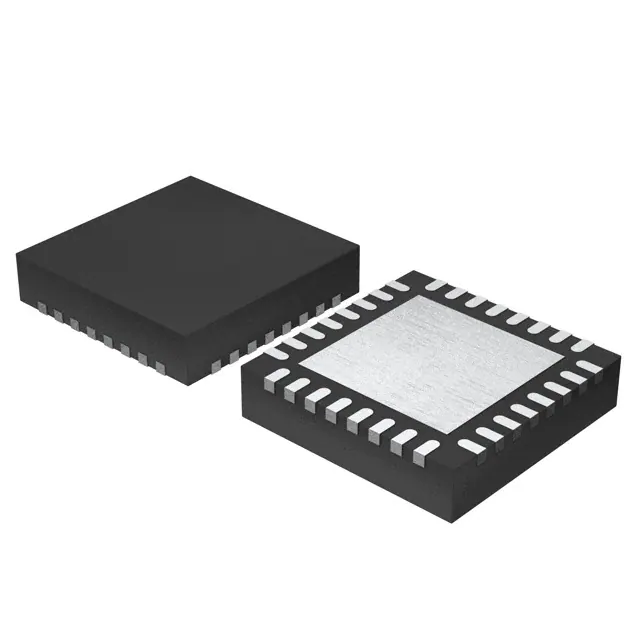
BlueNRG-1
Bluetooth® low energy wireless system-on-chip
Datasheet - production data
Features
Bluetooth low energy single mode systemon-chip compliant with its specifications:
master, slave and multiple
simultaneous roles
Operating supply voltage: from 1.7 to 3.6 V
Integrated linear regulator and DC-DC
step-down converter
Operating temperature range: -40 °C to
105 °C
High performance, ultra-low power
Cortex-M0 32-bit based architecture core
Programmable 160 kB Flash
24 kB RAM with retention (two 12 kB banks)
1 x UART interface
1 x SPI interface
2 x I²C interface
14 or 15 GPIO
2 x multifunction timer
10-bit ADC
Watchdog and RTC
DMA controller
PDM stream processor
16 or 32 MHz crystal oscillator
32 kHz crystal oscillator
December 2017
32 kHz ring oscillator
Battery voltage and temperature sensors
Average advertisement current consumption
15.34 µA (advertisement interval 1000 ms)
– 1 year, 8 months, 19 days with 230 mAh
battery (CR2032)
Average connection current consumption
7.059 µA (connection interval 1000 ms)
– 3 years, 10 months, 12 days with 230 mAh
battery (CR2032)
ST companion integrated balun/filter chips
are available
Up to +8 dBm available output power
(at antenna connector)
Excellent RF link budget (up to 96 dB)
Accurate RSSI to allow power control
8.3 mA TX current (@ -2 dBm, 3.0 V)
Down to 1 µA current consumption with
active BLE stack (sleep mode)
Suitable for building applications compliant
with the following radio frequency
regulations: ETSI EN 300 328, EN 300 440,
FCC CFR47 Part 15, ARIB STD-T66
Pre-programmed bootloader via UART
QFN32, WCSP34 package options
Applications
Watches
Fitness, wellness and sports
Consumer medical
Security/proximity
Remote control
Home and industrial automation
Assisted living
Mobile phone peripherals
Lighting
PC peripherals
DocID028866 Rev 5
This is information on a product in full production.
1/184
www.st.com
�Contents
BlueNRG-1
Contents
1
Description..................................................................................... 11
2
BlueNRG-1 Bluetooth low energy stack ...................................... 13
3
Functional details .......................................................................... 15
3.1
Core ................................................................................................ 15
3.2
Interrupts ......................................................................................... 15
3.3
Memories ........................................................................................ 17
3.4
Power management ........................................................................ 17
3.5
3.6
3.7
3.8
3.9
3.10
2/184
3.4.1
State description ............................................................................... 17
3.4.2
Power saving strategy ...................................................................... 19
3.4.3
System controller registers ............................................................... 19
Clocks and reset management........................................................ 21
3.5.1
Reset management .......................................................................... 22
3.5.2
Reset and wake-up reason decoding ............................................... 25
3.5.3
Switching to external clock ............................................................... 25
3.5.4
Clock and reset registers .................................................................. 26
ADC ................................................................................................ 30
3.6.1
Introduction ....................................................................................... 30
3.6.2
Functional overview .......................................................................... 30
3.6.3
ADC registers ................................................................................... 34
DMA ................................................................................................ 38
3.7.1
Introduction ....................................................................................... 38
3.7.2
Functional overview .......................................................................... 39
3.7.3
DMA registers ................................................................................... 45
SPI .................................................................................................. 55
3.8.1
Introduction ....................................................................................... 55
3.8.2
Functional overview .......................................................................... 55
3.8.3
SPI registers ..................................................................................... 60
UART .............................................................................................. 67
3.9.1
Introduction ....................................................................................... 67
3.9.2
Functional description....................................................................... 68
3.9.3
UART registers ................................................................................. 75
I2C ................................................................................................... 88
3.10.1
Introduction ....................................................................................... 88
3.10.2
Functional description....................................................................... 89
3.10.3
I²C registers ...................................................................................... 91
DocID028866 Rev 5
�BlueNRG-1
Contents
3.11
3.12
3.13
3.14
3.15
3.16
Flash controller.............................................................................. 106
3.11.1
Flash controller introduction ........................................................... 106
3.11.2
Flash controller functional description ............................................ 106
3.11.3
Flash controller registers ................................................................ 109
GPIO ............................................................................................. 111
3.12.1
Introduction ..................................................................................... 111
3.12.2
Functional description..................................................................... 111
3.12.3
GPIO registers ................................................................................ 114
MFT ............................................................................................... 118
3.13.1
MFT introduction ............................................................................. 118
3.13.2
MFT functional description ............................................................. 119
3.13.3
MFT registers ................................................................................. 128
Watchdog ...................................................................................... 132
3.14.1
Introduction ..................................................................................... 132
3.14.2
Functional description..................................................................... 132
3.14.3
Watchdog registers......................................................................... 133
RTC ............................................................................................... 135
3.15.1
Introduction ..................................................................................... 135
3.15.2
Functional description..................................................................... 135
3.15.3
RTC registers ................................................................................. 138
RNG .............................................................................................. 145
3.16.1
Introduction ..................................................................................... 145
3.16.2
Functional description..................................................................... 145
3.16.3
RNG registers ................................................................................. 145
3.17
PDM stream processor ................................................................. 146
3.18
System timer (SysTick) ................................................................. 146
3.19
Public key accelerator (PKA)......................................................... 146
3.19.1
PKA functional description ............................................................. 146
3.19.2
PKA registers .................................................................................. 147
3.20
TX/RX event alert .......................................................................... 149
3.21
SWD debug feature ....................................................................... 149
3.21.1
3.22
Debugging tips ................................................................................ 150
Bluetooth low energy radio ............................................................ 150
3.22.1
Radio operating modes .................................................................. 150
3.23
Pre-programmed bootloader ......................................................... 151
3.24
Unique device serial number ......................................................... 151
DocID028866 Rev 5
3/184
�Contents
BlueNRG-1
4
Pin description ............................................................................ 152
5
6
Memory mapping ......................................................................... 156
Application circuit ....................................................................... 158
7
Absolute maximum ratings and thermal data ........................... 161
8
General characteristics ............................................................... 162
9
Electrical specifications .............................................................. 163
9.1
Electrical characteristics ................................................................ 163
9.1.1
9.2
RF general characteristics ............................................................ 165
9.3
RF transmitter characteristics........................................................ 165
9.4
RF receiver characteristics ............................................................ 166
9.5
High speed crystal oscillator characteristics .................................. 167
9.5.1
10
Peripheral current consumption ..................................................... 164
High speed crystal oscillator ........................................................... 167
9.6
Low speed crystal oscillator characteristics .................................. 169
9.7
High speed ring oscillator characteristics ...................................... 169
9.8
Low speed ring oscillator characteristics ....................................... 169
9.9
N-fractional frequency synthesizer characteristics ........................ 169
9.10
Auxiliary block characteristics ....................................................... 170
Package information ................................................................... 173
10.1
QFN32 package information ......................................................... 174
10.2
WLCSP34 package information .................................................... 176
11
PCB assembly guidelines ........................................................... 178
12
Ordering information................................................................... 180
13
Revision history .......................................................................... 181
4/184
DocID028866 Rev 5
�BlueNRG-1
List of tables
List of tables
Table 2: BlueNRG-1 interrupt vectors ....................................................................................................... 16
Table 3: Relationship between BlueNRG-1 states and functional blocks ................................................ 19
Table 4: SYSTEM_CTRL registers ........................................................................................................... 19
Table 5: SYSTEM_CTRL - WKP_IO_IS register description: address offset
SYSTEM_CTRL_BASE_ADDR+0x00 ...................................................................................................... 20
Table 6: SYSTEM_CTRL - WKP_IO_IE register description: address offset
SYSTEM_CTRL_BASE_ADDR+0x04 ...................................................................................................... 20
Table 7: SYSTEM_CTRL - CTRL register description: address offset
SYSTEM_CTRL_BASE_ADDR+0x08 ...................................................................................................... 20
Table 8: AHBUPCONV registers .............................................................................................................. 20
Table 9: BLUE_CTRL registers ................................................................................................................ 21
Table 10: CKGEN_SOC registers ............................................................................................................ 26
Table 11: CKGEN_SOC - REASON_RST register description: address offset
CKGEN_SOC_BASE_ADDR+0x08 ......................................................................................................... 26
Table 12: CKGEN_SOC - DIE_ID register description: address offset
CKGEN_SOC_BASE_ADDR+0x1C ......................................................................................................... 27
Table 13: CKGEN_SOC - CLOCK_EN register description: address offset
CKGEN_SOC_BASE_ADDR+0x20 ......................................................................................................... 27
Table 14: CKGEN_SOC - DMA_CONFIG register description: address offset
CKGEN_SOC_BASE_ADDR+0x24 ......................................................................................................... 27
Table 15: CKGEN_BLE registers ............................................................................................................. 28
Table 16: CKGEN_BLE - REASON_RST register description: address offset
CKGEN_BLE_BASE_ADDR+0x08 .......................................................................................................... 29
Table 17: CKGEN_BLE - CLK32K_COUNT register description: address offset
CKGEN_BLE_BASE_ADDR+0x0C .......................................................................................................... 29
Table 18: CKGEN_BLE - CLK32K_PERIOD register description: address offset
CKGEN_BLE_BASE_ADDR+0x10 .......................................................................................................... 29
Table 19: CKGEN_BLE - CLK32K_FREQ register description: address offset
CKGEN_BLE_BASE_ADDR+0x14 .......................................................................................................... 30
Table 20: CKGEN_BLE - CLK32K_IT register description: address offset
CKGEN_BLE_BASE_ADDR+0x18 .......................................................................................................... 30
Table 21: ADC channels ........................................................................................................................... 31
Table 22: ADC data rate ........................................................................................................................... 31
Table 23: ADC parameter settings ........................................................................................................... 32
Table 24: Output data rate with microphone ............................................................................................ 32
Table 25: ADC registers............................................................................................................................ 34
Table 26: ADC - CTRL register description: address offset ADC_BASE_ADDR+0x00 ........................... 35
Table 27: ADC - CONF register description: address offset ADC_BASE_ADDR+0x04 .......................... 36
Table 28: ADC - IRQSTAT register description: address offset ADC_BASE_ADDR+0x08..................... 37
Table 29: ADC - IRQMASK register description: address offset ADC_BASE_ADDR+0x0C ................... 37
Table 30: ADC - DATA_CONV register description: address offset ADC_BASE_ADDR+0x14 .............. 37
Table 31: ADC - OFFSET register description: address offset ADC_BASE_ADDR+0x18 ...................... 37
Table 32: ADC - SR_REG register description: address offset ADC_BASE_ADDR+0x20 ..................... 38
Table 33: ADC - THRESHOLD_HI register description: address offset ADC_BASE_ADDR+0x24 ........ 38
Table 34: ADC - THRESHOLD_LO register description: address offset ADC_BASE_ADDR+0x28 ....... 38
Table 35: Programmable data width and endian behavior (when bits PINC = MINC = 1) ....................... 41
Table 36: DMA interrupt requests ............................................................................................................. 44
Table 37: DMA registers ........................................................................................................................... 45
Table 38: DMA - ISR register description: address offset DMA_BASE_ADDR+0x00 ............................. 45
Table 39: DMA - IFCR register description: address offset DMA_BASE_ADDR+0x04 ........................... 49
Table 40: DMA_CHx registers .................................................................................................................. 53
Table 41: DMA_CHx - CCR register description: address offset DMA_CHX_BASE_ADDR+0x00 ......... 53
Table 42: DMA_CHx - CNDTR register description: address offset DMA_CHX_BASE_ADDR+0x04 .... 54
DocID028866 Rev 5
5/184
�List of tables
BlueNRG-1
Table 43: DMA_CHx - CPAR register description: address offset DMA_CHX_BASE_ADDR+0x08 ....... 54
Table 44: DMA_CHx - CMAR register description: address offset DMA_CHX_BASE_ADDR+0x0C ..... 55
Table 45: SPI pin assignments ................................................................................................................. 55
Table 46: SPI clock phase and clock polarity ........................................................................................... 56
Table 47: SPI_OUT endianness ............................................................................................................... 57
Table 48: SPI_IN endianness ................................................................................................................... 57
Table 49: SPI registers ............................................................................................................................. 60
Table 50: SPI - CR0 register description: address offset SPI_BASE_ADDR+0x00 ................................. 61
Table 51: SPI - CR1 register description: address offset SPI_BASE_ADDR+0x04 ................................. 62
Table 52: SPI - DR register description: address offset SPI_BASE_ADDR+0x08 ................................... 64
Table 53: SPI - SR register description: address offset SPI_BASE_ADDR+0x0C .................................. 64
Table 54: SPI - CPSR register description: address offset SPI_BASE_ADDR+0x10 .............................. 64
Table 55: SPI - IMSC register description. Address offset SPI_BASE_ADDR+0x14. ............................. 65
Table 56: SPI - RIS register description: address offset SPI_BASE_ADDR+0x18 .................................. 65
Table 57: SPI - MIS register description: address offset SPI_BASE_ADDR+0x1C ................................. 65
Table 58: SPI - ICR register description: address offset SPI_BASE_ADDR+0x20 .................................. 66
Table 59: SPI - DMACR register description: address offset SPI_BASE_ADDR+0x24........................... 66
Table 60: SPI – RXFRM register description: address offset SPI_BASE_ADDR+0x28 .......................... 66
Table 61: SPI – CHN register description: address offset SPI_BASE_ADDR+0x2C ............................... 66
Table 62: SPI – WDTXF register description: address offset SPI_BASE_ADDR + 0x30 ........................ 67
Table 63: SPI - ITCR register description: address offset SPI_BASE_ADDR+0x80 ............................... 67
Table 64: SPI – TDR register description: address offset SPI_BASE_ADDR+0x8C ............................... 67
Table 65: RX FIFO errors ......................................................................................................................... 68
Table 66: Typical baud rates with OVSFACT = 0 ..................................................................................... 70
Table 67: Typical baud rates with OVSFACT = 1 ..................................................................................... 70
Table 68: Control bits to enable and disable hardware flow control ......................................................... 71
Table 69: Control bits to enable and program receive software flow control............................................ 72
Table 70: Control bits to enable and program transmit software flow control .......................................... 73
Table 71: UART registers ......................................................................................................................... 76
Table 72: UART - DR register description: address offset UART_BASE_ADDR+0x00........................... 77
Table 73: UART - RSR register description: address offset UART_BASE_ADDR+0x04 ........................ 77
Table 74: UART - TIMEOUT register description: address offset UART_BASE_ADDR+0x0C ............... 78
Table 75: UART - FR register description: address offset UART_BASE_ADDR+0x18 ........................... 78
Table 76: UART - LCRH_RX register description: address offset UART_BASE_ADDR+0x1C .............. 79
Table 77: UART - IBRD register description: address offset UART_BASE_ADDR+0x24 ....................... 80
Table 78: UART - FBRD register description: address offset UART_BASE_ADDR+0x28 ...................... 80
Table 79: UART - LCRH_TX register description: address offset UART_BASE_ADDR+0x2C ............... 81
Table 80: UART - CR register description: address offset UART_BASE_ADDR+0x30........................... 82
Table 81: UART - IFLS register description: address offset UART_BASE_ADDR+0x34 ........................ 83
Table 82: UART - IMSC register description: address offset UART_BASE_ADDR+0x38 ....................... 83
Table 83: UART - RIS register description: address offset UART_BASE_ADDR+0x3C ......................... 84
Table 84: UART - MIS register description: address offset UART_BASE_ADDR+0x40 ......................... 85
Table 85: UART - ICR register description: address offset UART_BASE_ADDR+0x44 .......................... 86
Table 86: UART - DMACR register description: address offset UART_BASE_ADDR+0x48 .................. 87
Table 87: UART - XFCR register description: address offset UART_BASE_ADDR+0x50 ...................... 87
Table 88: UART - XON1 register description: address offset UART_BASE_ADDR+0x54 ...................... 88
Table 89: UART - XON2 register description. Address offset UART_BASE_ADDR+0x58. .................... 88
Table 90: UART - XOFF1 register description. Address offset UART_BASE_ADDR+0x5C. .................. 88
Table 91: UART - XOFF2 register description. Address offset UART_BASE_ADDR+0x60. ................... 88
Table 92: I2Cx registers ............................................................................................................................ 91
Table 93: I2C - CR register description: address offset I2CX_BASE_ADDR+0x00 ................................. 92
Table 94: I2C - SCR register description: address offset I2CX_BASE_ADDR+0x04 .............................. 94
Table 95: I2C2 - MCR register description: address offset I2CX_BASE_ADDR+0x0C ........................... 94
Table 96: I2C - TFR register description: address offset I2CX_BASE_ADDR+0x10 ............................... 95
Table 97: I2C - SR register description: address offset I2CX_BASE_ADDR+0x14 ................................. 96
6/184
DocID028866 Rev 5
�BlueNRG-1
List of tables
Table 98: I2C - RFR register description: address offset I2CX_BASE_ADDR+0x18 .............................. 97
Table 99: I2C - TFTR register description: address offset I2CX_BASE_ADDR+0x1C ............................ 97
Table 100: I2C - RFTR register description: address offset I2CX_BASE_ADDR+0x20 ........................... 98
Table 101: I2C - DMAR register description: address offset I2CX_BASE_ADDR+0x24 .......................... 98
Table 102: I2C - BRCR register description: address offset I2CX_BASE_ADDR+0x28 .......................... 98
Table 103: I2C - IMSCR register description: address offset I2CX_BASE_ADDR+0x2C ........................ 98
Table 104: I2C - RISR register description: address offset I2CX_BASE_ADDR+0x30 ......................... 100
Table 105: I2C - MISR register description: address offset I2CX_BASE_ADDR+0x34 ......................... 103
Table 106: I2C - ICR register description: address offset I2CX_BASE_ADDR+0x38 ............................ 104
Table 107: I2C - THDDAT register description: address offset I2CX_BASE_ADDR+0x4C .................. 105
Table 108: I2C - THDSTA_FST_STD register description: address offset I2CX_BASE_ADDR+0x50 .. 105
Table 109: I2C - TSUSTA_FST_STD register description: address offset I2CX_BASE_ADDR+0x58 .. 105
Table 110: Flash commands .................................................................................................................. 108
Table 111: Flash interface timing ............................................................................................................ 108
Table 112: FLASH controller registers .................................................................................................... 109
Table 113: FLASH – COMMAND register description: address offset FLASH_BASE_ADDR+0x00 .... 109
Table 114: FLASH – CONFIG register description: address offset FLASH_BASE_ADDR+0x04 ......... 109
Table 115: FLASH - IRQSTAT register description: address offset FLASH_BASE_ADDR+0x08 ........ 109
Table 116: FLASH - IRQMASK register description: address offset FLASH_BASE_ADDR+0x0C ....... 110
Table 117: FLASH - IRQRAW register description: address offset FLASH_BASE_ADDR+0x10 ......... 110
Table 118: FLASH – SIZE register description: address offset FLASH_BASE_ADDR+0x14 ............... 110
Table 119: FLASH – ADDRESS register description: address offset FLASH_BASE_ADDR+0x18 ...... 110
Table 120: FLASH – DATA0 register description: address offset FLASH_BASE_ADDR+0x40 ............ 111
Table 121: FLASH – DATA1 register description: address offset FLASH_BASE_ADDR+0x44 ............ 111
Table 122: FLASH – DATA2 register description: address offset FLASH_BASE_ADDR+0x48 ............ 111
Table 123: FLASH – DATA3 register description: address offset FLASH_BASE_ADDR+0x4C ........... 111
Table 124: IO functional map .................................................................................................................. 112
Table 125: GPIO interrupt modes ........................................................................................................... 112
Table 126: Pin characteristics ................................................................................................................. 113
Table 127: IO pull values ........................................................................................................................ 113
Table 128: GPIO registers ...................................................................................................................... 114
Table 129: GPIO – DATA register description: address offset GPIO_BASE_ADDR+0x00 ................... 115
Table 130: GPIO – OEN register description: address offset GPIO_BASE_ADDR+0x04 ..................... 115
Table 131: GPIO – PE register description: address offset GPIO_BASE_ADDR+0x08 ........................ 115
Table 132: GPIO – DS register description: address offset GPIO_BASE_ADDR+0x0C ....................... 115
Table 133: GPIO – IS register description: address offset GPIO_BASE_ADDR+0x10 ......................... 116
Table 134: GPIO – IBE register description: address offset GPIO_BASE_ADDR+0x14 ....................... 116
Table 135: GPIO – IEV register description: address offset GPIO_BASE_ADDR+0x18 ....................... 116
Table 136: GPIO – IE register description: address offset GPIO_BASE_ADDR+0x1C......................... 116
Table 137: GPIO – MIS register description: address offset GPIO_BASE_ADDR+0x24 ...................... 116
Table 138: GPIO – IC register description: address offset GPIO_BASE_ADDR+0x28 ......................... 116
Table 139: GPIO - MODE0 register description: address offset GPIO_BASE_ADDR+0x2C ................ 116
Table 140: GPIO – MODE1 register description: address offset GPIO_BASE_ADDR+0x30 ................ 117
Table 141: GPIO – DATS register description: address offset GPIO_BASE_ADDR+0x3C .................. 117
Table 142: GPIO – DATC register description: address offset GPIO_BASE_ADDR+0x40 ................... 118
Table 143: GPIO - MFTX register description: address offset GPIO_BASE_ADDR+0x44.................... 118
Table 144: MFT modes ........................................................................................................................... 119
Table 145: MFT IO functions .................................................................................................................. 127
Table 146: MFT interrupt functions ......................................................................................................... 128
Table 147: MFTX registers ..................................................................................................................... 129
Table 148: MFTX – TNCNT1 register description: address offset MFTX_BASE_ADDR+0x00 ............. 129
Table 149: MFTX – TNCRA register description: address offset MFTX_BASE_ADDR+0x04 .............. 129
Table 150: MFTX – TNCRB register description: address offset MFTX_BASE_ADDR+0x08 .............. 129
Table 151: MFTX – TNCNT2 register description: address offset MFTX_BASE_ADDR+0x0C ............ 129
Table 152: MFTX – TNPRSC register description: address offset MFTX_BASE_ADDR+0x10 ............ 129
Table 153: MFTX - TNCKC register description: address offset MFTX_BASE_ADDR+0x14 ............... 130
DocID028866 Rev 5
7/184
�List of tables
BlueNRG-1
Table 154: MFTX - TNMCTRL register description: address offset MFTX_BASE_ADDR+0x18 .......... 130
Table 155: MFTX - TNICTRL register description: address offset MFTX_BASE_ADDR+0x1C ............ 131
Table 156: MFTX - TNICLR register description: address offset MFTX_BASE_ADDR+0x20 ............... 131
Table 157: Watchdog interrupt interval ................................................................................................... 132
Table 158: WDG registers ...................................................................................................................... 133
Table 159: WDG - LR register description: address offset WDG_BASE_ADDR+0x00 ......................... 133
Table 160: WDG - VAL register description: address offset WDG_BASE_ADDR+0x04 ....................... 133
Table 161: WDG - CR register description: address offset WDG_BASE_ADDR+0x08......................... 134
Table 162: WDG - ICR register description: address offset WDG_BASE_ADDR+0x0C ....................... 134
Table 163: WDG - RIS register description: address offset WDG_BASE_ADDR+0x10 ........................ 134
Table 164: WDG - MIS register description: address offset WDG_BASE_ADDR+0x14 ....................... 134
Table 165: WDG - LOCK register description: address offset WDG_BASE_ADDR+0xC00 ................. 135
Table 166: RTC modes ........................................................................................................................... 136
Table 167: RTC registers ........................................................................................................................ 138
Table 168: RTC - CWDR register description: address offset RTC_BASE_ADDR+0x00 ..................... 139
Table 169: RTC - CWDMR register description: address offset RTC_BASE_ADDR+0x04 .................. 139
Table 170: RTC - CWDLR register description: address offset RTC_BASE_ADDR+0x08 ................... 140
Table 171: RTC - CWYR register description: address offset RTC_BASE_ADDR+0x0C ..................... 141
Table 172: RTC - CWYMR register description: address offset RTC_BASE_ADDR+0x10................... 141
Table 173: RTC - CWYLR register description: address offset RTC_BASE_ADDR+0x14.................... 141
Table 174: RTC - CTCR register description: address offset RTC_BASE_ADDR+0x18....................... 141
Table 175: RTC - IMSC register description: address offset RTC_BASE_ADDR+0x1C ....................... 142
Table 176: RTC - RIS register description: address offset RTC_BASE_ADDR+0x20 ........................... 142
Table 177: RTC - MIS register description: address offset RTC_BASE_ADDR+0x24. ......................... 143
Table 178: RTC - ICR register description: address offset RTC_BASE_ADDR+0x28 .......................... 143
Table 179: RTC – TDR register description: address offset RTC_BASE_ADDR+0x2C ........................ 143
Table 180: RTC - TCR register description: address offset RTC_BASE_ADDR+0x30 ......................... 143
Table 181: RTC – TLR1 register description: address offset RTC_BASE_ADDR+0x34 ....................... 144
Table 182: RTC – TLR2 register description: address offset RTC_BASE_ADDR+0x38 ....................... 144
Table 183: RTC – TPR1 register description: address offset RTC_BASE_ADDR+0x3C ...................... 144
Table 184: RTC – TPR2 register description: address offset RTC_BASE_ADDR+0x40....................... 144
Table 185: RTC – TPR3 register description: address offset RTC_BASE_ADDR+0x44....................... 144
Table 186: RTC – TPR4 register description: address offset RTC_BASE_ADDR+0x48....................... 144
Table 187: RTC – TIN register description: address offset RTC_BASE_ADDR+0x4C ......................... 144
Table 188: RNG registers ....................................................................................................................... 145
Table 189: RNG – CR register description: address offset RNG_BASE_ADDR+0x00 ......................... 145
Table 190: RNG – SR register description: address offset RNG_BASE_ADDR+0x04 .......................... 146
Table 191: RNG – VAL register description: address offset RNG_BASE_ADDR+0x08 ........................ 146
Table 192: PKA RAM data location ........................................................................................................ 147
Table 193: PKA registers ........................................................................................................................ 147
Table 194: PKA – CSR register description: address offset PKA_BASE_ADDR+0x00......................... 148
Table 195: PKA – ISR register description: address offset PKA_BASE_ADDR+0x04 .......................... 148
Table 196: PKA – IEN register description: address offset PKA_BASE_ADDR+0x08 .......................... 149
Table 197: SWD port .............................................................................................................................. 150
Table 198: Pinout description ................................................................................................................. 154
Table 199: Memory mapping .................................................................................................................. 156
Table 200: External component list ........................................................................................................ 160
Table 201: Absolute maximum ratings ................................................................................................... 161
Table 202: Thermal data ......................................................................................................................... 161
Table 203: Recommended operating conditions .................................................................................... 162
Table 204: Electrical characteristics ....................................................................................................... 163
Table 205: Digital I/O specifications ....................................................................................................... 164
Table 206: Peripheral current consumption ............................................................................................ 164
Table 207: RF general characteristics .................................................................................................... 165
Table 208: RF transmitter characteristics ............................................................................................... 165
8/184
DocID028866 Rev 5
�BlueNRG-1
List of tables
Table 209: RF receiver characteristics ................................................................................................... 166
Table 210: High speed crystal oscillator characteristics ......................................................................... 167
Table 211: Low speed crystal oscillator characteristics .......................................................................... 169
Table 212: High speed ring oscillator characteristics ............................................................................. 169
Table 213: Low speed ring oscillator characteristics .............................................................................. 169
Table 214: N-Fractional frequency synthesizer characteristics .............................................................. 170
Table 215: Auxiliary block characteristics ............................................................................................... 170
Table 216: QFN32 (5 x 5 x 1 pitch 0.5 mm) mechanical data ................................................................ 175
Table 217: WLCSP34 (2.66 x 2.56 x 0.5 pitch 0.4 mm) mechanical data .............................................. 177
Table 218: Flip Chip CSP (2.71 x 2.58 x 0.5 pitch 0.4 mm) package reflow profile recommendation ... 178
Table 219: Ordering information ............................................................................................................. 180
Table 220: Document revision history .................................................................................................... 181
DocID028866 Rev 5
9/184
�List of figures
BlueNRG-1
List of figures
Figure 1: BlueNRG-1 architecture ............................................................................................................ 11
Figure 2: BlueNRG-1 bus architecture ...................................................................................................... 12
Figure 3: BlueNRG-1 single chip RF software layers ............................................................................... 13
Figure 4: BlueNRG-1 network processor RF software layers................................................................... 14
Figure 5: BlueNRG- power management state machine .......................................................................... 17
Figure 6: Clock tree................................................................................................................................... 21
Figure 7: Reset and wake-up generation.................................................................................................. 23
Figure 8: BlueNRG-1 power-up sequence ............................................................................................... 24
Figure 9: Reset circuit ............................................................................................................................... 24
Figure 10: ADC block diagram .................................................................................................................. 31
Figure 11: DMA request mapping in BlueNRG-1 ..................................................................................... 45
Figure 12: MicroWire master and slave communication ........................................................................... 60
Figure 13: UART character frame............................................................................................................. 69
Figure 14: Hardware flow control between two similar devices ................................................................ 71
Figure 15: PWM signal............................................................................................................................ 120
Figure 16: MFT mode 1 block diagram ................................................................................................... 121
Figure 17: MFT mode 1a block diagram ................................................................................................. 122
Figure 18: MFT mode 2 block diagram ................................................................................................... 124
Figure 19: MFT mode 3 block diagram ................................................................................................... 125
Figure 20: MFT mode 4 block diagram ................................................................................................... 126
Figure 21: BlueNRG-1 pin-out top view (QFN32) ................................................................................... 152
Figure 22: BlueNRG-1 ball out top view (WCSP34) ............................................................................... 153
Figure 23: BlueNRG-1 ball out bottom view (WCSP34) ......................................................................... 154
Figure 24: Application circuit: active DC-DC converter QFN32 package ............................................... 158
Figure 25: Application circuit: non-active DC-DC converter QFN32 package ........................................ 158
Figure 26: Application circuit: active DC-DC converter WCSP34 package ............................................ 159
Figure 27: Application circuit: non active DC-DC converter WCSP34 package ..................................... 159
Figure 28: High speed oscillator block diagram ...................................................................................... 168
Figure 29: QFN32 (5 x 5 x 1 pitch 0.5 mm) package outline .................................................................. 174
Figure 30: QFN32 (5 x 5 x 1 pitch 0.5 mm) package detail "A" ............................................................. 175
Figure 31: WLCSP34 (2.66 x 2.56 x 0.5 pitch 0.4 mm) package outline ................................................ 176
Figure 32: Flip Chip CSP (2.71 x 2.58 x 0.5 pitch 0.4 mm) package reflow profile recommendation .... 178
10/184
DocID028866 Rev 5
�BlueNRG-1
1
Description
Description
The BlueNRG-1 is a very low power Bluetooth low energy (BLE) single-mode system-onchip, compliant with Bluetooth specifications.
The BlueNRG-1 extends the features of award-winning BlueNRG network processor,
enabling the usage of the embedded Cortex M0 to run the user's application code.
The BlueNRG-1 includes 160 kB of programming Flash memory, 24 kB of static RAM
memory with retention (two 12 kB banks) and SPI, UART, I²C standard communication
interface peripherals. It also features multifunction timers, watchdog, RTC and DMA
controller.
An ADC is available to interface with analog sensors, and to read the measurement of the
integrated battery voltage sensor. A digital filter is available to process a PDM stream.
The BlueNRG-1 offers the same excellent RF performance of the BlueNRG radio, and the
integrated high efficiency DC-DC converter keeps the same ultra-low power characteristics,
but the BlueNRG-1 improves the BlueNRG sleep mode current consumption allowing a
further increase in the battery lifetime of the applications.
Figure 1: BlueNRG-1 architecture
DocID028866 Rev 5
11/184
�BlueNRG-1
Description
Figure 2: BlueNRG-1 bus architecture
SWD
A
P
B
12/184
AHB-APB
Bridge
CM0
SPI
FLASH
(160 KB)
2 x I2C
RAM
(24 KB)
UART
2 x MFT
A
H
B
DMA
2.4 GHz
radio
WDG
RNG
RTC
ADC
GPIOs
PKA
DocID028866 Rev 5
�BlueNRG-1
2
BlueNRG-1 Bluetooth low energy stack
BlueNRG-1 Bluetooth low energy stack
The BlueNRG-1 is complemented with a Bluetooth low energy stack C library that provides:
Master, slave role support
GAP: central, peripheral, observer or broadcaster roles
ATT/GATT: client and server
SM: privacy, authentication and authorization.
L2CAP
Link layer: AES-128 encryption and decryption
The BlueNRG-1 can be configured to support single-chip or network processor
applications.
In the first configuration, the BlueNRG-1 operates as single device in the application for
managing both the application code and the Bluetooth low energy stack. The whole
Bluetooth low energy stack is provided as object code in a single library file whereas the
GATT low energy profiles are provided as object codes in separate libraries.
Figure 3: "BlueNRG-1 single chip RF software layers" shows the single-chip RF software
layers.
Figure 3: BlueNRG-1 single chip RF software layers
The BlueNRG-1 can be configured for operating as a network coprocessor. In this case a
dedicated firmware is provided for supporting the interface with an external application
DocID028866 Rev 5
13/184
�BlueNRG-1
BlueNRG-1 Bluetooth low energy stack
processor. The whole Bluetooth low energy stack runs in the BlueNRG-1; the GATT
profiles are provided for running in the application processor together with the application
code. Below figure shows the network processor RF software layers.
Figure 4: BlueNRG-1 network processor RF software layers
14/184
DocID028866 Rev 5
�BlueNRG-1
3
Functional details
Functional details
The BlueNRG-1 integrates the blocks listed below:
Cortex M0 core
Interrupt management
160 kB Flash memory
24 kB of RAM with two retention options (12 kB or 24 kB)
Power management
Clocks
Bluetooth low energy radio
Random number generator (RNG) (it is reserved to Bluetooth low energy protocol
stack, but user application can read it)
Public key cryptography (PKA) (reserved to Bluetooth low energy protocol stack)
Peripherals:
SPI interface
UART interface
I²C bus interface
GPIO
Multifunction timer
DMA controller
Watchdog
RTC
ADC with battery voltage sensor and temperature sensor
PDM stream processor
The main blocks are described in the following subsection.
3.1
Core
The ARM® Cortex®-M0 processor has been developed to provide a low-cost platform that
meets the needs of MCU implementation, with a reduced pin count and low-power
consumption, while delivering outstanding computational performance and an advanced
system response to interrupts.
The ARM® Cortex®-M0 32-bit RISC processor features exceptional code-efficiency,
delivering the high-performance expected from an ARM core in the memory size usually
associated with 8-bit and 16-bit devices.
The BlueNRG-1 has an embedded ARM core and is therefore compatible with all ARM
tools and software.
3.2
Interrupts
The Cortex-M0 nested vector interrupt controller (NVIC) handles interrupts. The NVIC
controls specific Cortex-M0 interrupts (address 0x00 to 0x3C) as well as 32-user interrupts
(address 0x40 to 0xBC). In the BlueNRG-1 device, the user interrupts are connected to the
interrupt signals of the different peripherals.
DocID028866 Rev 5
15/184
�BlueNRG-1
Functional details
Table 2: BlueNRG-1 interrupt vectors
Position
Priority
Description
Address
Initial main SP
0x0000_0000
-3
Fixed
Reset handler
0x0000_0004
-2
Fixed
NMI handler
0x0000_0008
-1
Fixed
HardFault handler
0x0000_000C
RESERVED
0x0000_000C – 0x0000_0028
SVC handler
0x0000_002C
RESERVED
0x0000_0030 - 0x0000_0034
3
16/184
Priority type
Settable
5
Settable
PendSV handler
0x0000_0038
6
Settable
SystemTick handler
0x0000_003C
0
Init 0
Settable
GPIO interrupt
0x0000_0040
1
Init 0
Settable
FLASH controller interrupt
0x0000_0044
2
Init 0
Settable
RESERVED
0x0000_0048
3
Init 0
Settable
RESERVED
0x0000_004C
4
Init 0
Settable
UART interrupt
0x0000_0050
5
Init 0
Settable
SPI interrupt
0x0000_0054
6
Init 0
CRITICAL
BLE controller interrupt
0x0000_0058
7
Init 0
Settable
Watchdog interrupt
0x0000_005C
8
Init 0
Settable
RESERVED
0x0000_0060
9
Init 0
Settable
RESERVED
0x0000_0064
10
Init 0
Settable
RESERVED
0x0000_0068
11
Init 0
Settable
RESERVED
0x0000_006C
12
Init 0
Settable
RESERVED
0x0000_0070
13
Init 0
Settable
ADC interrupt
0x0000_0074
14
Init 0
Settable
I2C 2 interrupt
0x0000_0078
15
Init 0
Settable
I2C 1 interrupt
0x0000_007C
16
Init 0
Settable
RESERVED
0x0000_0080
17
Init 0
Settable
MFT1 A interrupt
0x0000_0084
18
Init 0
Settable
MFT1 B interrupt
0x0000_0088
19
Init 0
Settable
MFT2 A interrupt
0x0000_008C
20
Init 0
Settable
MFT2 B interrupt
0x0000_0090
21
Init 0
Settable
RTC interrupt
0x0000_0094
22
Init 0
Settable
PKA interrupt
0x0000_0098
23
Init 0
Settable
DMA interrupt
0x0000_009C
24 – 31
Init 0
Settable
RESERVED
0x0000_00A0 – 0x0000_00BC
DocID028866 Rev 5
�BlueNRG-1
3.3
Functional details
Memories
The memory subsystem consists of 160 kB Flash memory and two banks of 12 kB ultra-low
leakage static RAM blocks.
The 160 kB Flash memory is available to the user and can be accessed per 32-bit for read
access and per 32-bit for write access (with 4x32-bit FIFO).
The access to the static RAM can be as bytes, half words (16 bits) or words (32 bits).
A 12 kB RAM block is always in retention mode, whereas the second 12 kB RAM block is
switchable and can be put in retention mode according to the user needs.
3.4
Power management
The BlueNRG-1 integrates both a low dropout voltage regulator (LDO) and a step-down
DC-DC converter to supply the internal BlueNRG-1 circuitry.
The BlueNRG- most efficient power management configuration is with DC-DC converter
active where best power consumption is obtained without compromising performances.
Nevertheless, a configuration based on LDO can also be used, if needed.
A simplified version of the state machine is shown below.
Figure 5: BlueNRG- power management state machine
3.4.1
State description
3.4.1.1
Preactive state
The preactive state is the default state after a POR event.
In this state:
3.4.1.2
All the digital power supplies are stable.
The high frequency clock runs on internal fast clock RC oscillator (16 MHz).
The low frequency clock runs on internal RC oscillator (32.768 kHz).
Active state
In this state:
DocID028866 Rev 5
17/184
�BlueNRG-1
Functional details
The high frequency runs on the accurate clock (16 MHz ±50 ppm) provided by the
external XO. The internal fast clock RO oscillator is switched off.
If the external XO is at 32 MHz, some specific programming are needed, see
Section 3.5.3: "Switching to external clock".
3.4.1.3
Standby state
In this state:
Only the digital power supplies necessary to keep the RAM in retention are used.
The wake-up from this low power state is driven by the following sources:
IO9
IO10
IO11
IO12
IO13a
If they have been programmed as wake-up source in the system controller registers.
3.4.1.4
Sleep state
In this state:
Only the digital power supplies necessary to keep the RAM in retention are used.
The low frequency oscillator is switched on.
The wake-up from this low power state is driven by the following sources:
IO9
IO10
IO11
IO12
IO13a
If they have been programmed as wake-up source in the system controller registers and
from the internal timers of the BLE radio.
3.4.1.5
IO wake-up sources
The IOs programmed to be wake-up sources need an external drive according to the
selected level sensitivity.
If the wake-up level is high level, a pull-down drive should be used. If the wake-up level is
low level, a pull-up drive should be used.
If no external drive is applied, IO9, IO10 and IO11 are only sensitive to low level as they
have an internal pull-up (activated by default). IO12 and IO13 do not have an internal pull
and therefore require an external drive.
3.4.1.6
Wake up time
The wake-up time is typically 200 µs at 3.0 V and a temperature of 25´°C.
a
18/184
Not available on WCSP34.
DocID028866 Rev 5
�BlueNRG-1
3.4.2
Functional details
Power saving strategy
The application power saving strategy is based on clock stopping, dynamic clock gating,
digital power supply switch off and analog current consumption minimization.
A summary of functional blocks versus the BlueNRG-1 states is provided below.
Table 3: Relationship between BlueNRG-1 states and functional blocks
Functional blocks
RESET
STANDBY
SLEEP
Preactive
Active
LOCK RX/
LOCK TX
RX
TX
LDO_SOFT_1V2 or
LDO_SOFT_0V9
OFF
ON
ON
ON
ON
ON
ON
ON
LDO_STRONG_1V2
OFF
OFF
OFF
ON
ON
ON
ON
ON
LDO_DIG_1V8
OFF
OFF
OFF
ON
ON
ON
ON
ON
SMPS
OFF
OFF
OFF
ON
ON
ON
ON
ON
LDO_DIG_1V2
OFF
OFF
OFF
ON
ON
ON
ON
ON
BOR
OFF
ON
ON
ON
ON
ON
ON
ON
16 MHz RO
OFF
OFF
OFF
ON
OFF
OFF
OFF
OFF
16 MHz XO
OFF
OFF
OFF
OFF
ON
ON
ON
ON
32 kHz RO or XO
OFF
OFF
ON
ON
ON
ON
ON
ON
3.4.3
System controller registers
SYSTEM_CTRL peripheral base address (SYSTEM_CTRL_BASE_ADDR) 0x40200000.
Table 4: SYSTEM_CTRL registers
Address offset
0x00
Name
WKP_IO_IS
RW
RW
Reset
Description
0x00000000
Level selection for wake-up IO (1 bit for
IO).
0: The system wakes up when IO is low.
1: The system wakes up when IO is high.
0x04
WKP_IO_IE
RW
0x00000007
Enables the IO that wakes up the device
(1 bit for IO).
0: The wake-up feature on the IO is
disabled.
1: The wake-up feature on the IO is
enabled.
0x08
CTRL
RW
0x00000000
XO frequency indication is provided by the
application. Refer to the detailed
description below.
DocID028866 Rev 5
19/184
�BlueNRG-1
Functional details
Table 5: SYSTEM_CTRL - WKP_IO_IS register description: address offset
SYSTEM_CTRL_BASE_ADDR+0x00
Bit
Field name
Reset
RW
Description
4:0
LEVEL_SEL
0x00
RW
Selects the active wake-up level for the
five IOs.
0: The system wakes up when IO is low.
1: The system wakes up when IO is high.
One bit by IO:
Bit0: IO9
Bit1: IO10
Bit2: IO11
Bit3: IO12
Bit4: IO13
31:5
RESERVED
0x00
RW
RESERVED
Table 6: SYSTEM_CTRL - WKP_IO_IE register description: address offset
SYSTEM_CTRL_BASE_ADDR+0x04
Bit
Field name
Reset
RW
Description
4:0
IO_WAKEUP_EN
0x07
RW
Enables the IOs to be wake-up source.
0: Wake up on the IO disabled.
1: Wake up on the IO enabled.
One bit by IO:
Bit0: IO9
Bit1: IO10
Bit2: IO11
Bit3: IO12
Bit4: IO13
31:5
RESERVED
0x00
RW
RESERVED
Table 7: SYSTEM_CTRL - CTRL register description: address offset
SYSTEM_CTRL_BASE_ADDR+0x08
Bit
Field name
Reset
RW
Description
0
MHZ32_SEL
0x0
RW
Indicates the crystal frequency used in the
application.
0: The 16 MHz is selected.
1: The 32 MHz is selected.
31:1
RESERVED
0x0
RW
RESERVED
AHBUPCONV peripheral base address (AHBUPCONV_BASE_ADDR) 0x40C00000.
Table 8: AHBUPCONV registers
Address offset
Name
RW
Reset
Description
0x00
COMMAND
RW
0x00000000
AHB up/down converter command register
BLUE_CTRL peripheral base address (BLUE_CTRL_BASE_ADDR) 0x48000000.
20/184
DocID028866 Rev 5
�BlueNRG-1
Functional details
Table 9: BLUE_CTRL registers
Address offset
Name
RW
Reset
Description
0x04
TIMEOUT
RW
0x00000000
Timeout programming register
0x0C
RADIO_CONFIG
RW
0x00000000
Radio configuration register
All RESERVED fields inside registers must always be written with their default
value.
3.5
Clocks and reset management
The BlueNRG-1 embeds an RC low-speed frequency oscillator at 32 kHz and an RO highspeed frequency oscillator at 16 MHz.
The low-frequency clock is used in low power mode and can be supplied either by a 32.7
kHz oscillator that uses an external crystal and guarantees up to ±50 ppm frequency
tolerance, or by a ring oscillator with maximum ±500 ppm frequency tolerance, which does
not require any external components.
The primary high-speed frequency clock is a 16 MHz or 32 MHz crystal oscillator. A faststarting 16 MHz ring oscillator provides the clock while the crystal oscillator is starting up.
Frequency tolerance of high-speed crystal oscillator is ±50 ppm.
The usage of the 16 MHza (or 32 MHz) crystal is strictly necessary for RF communications.
The clock tree for the peripherals is as follows:
Figure 6: Clock tree
a
For constraints related to the 16 MHz high-speed crystal usage, refer to the BlueNRG-1 DK SW release notes.
DocID028866 Rev 5
21/184
�BlueNRG-1
Functional details
When 32 MHz XO is used, the Cortex-M0, the DMA and the APB tree (except for
BLE radio access) run at 32 MHz. The rest of the clock tree is divided by two and
is at 16 MHz.
The following clocks can be enabled/disabled by software to implement optimal power
consumption:
DMA
BLE controller
BLE clock generator
RNG
Flash controller
GPIO
System controller
UART
SPI
I2C1a
I2C2
ADC
MFT1
MFT2
RTC
WDG
PKA
By default, all the peripheral APB and AHB clocks are enabled, except for the PKA
peripheral. The following clocks are enabled/disabled automatically:
3.5.1
Processor clock (disabled in sleep mode)
RAM clock (disabled if processor clock, SPI clock and BLE clock are all disabled)
Reset management
Figure 7: "Reset and wake-up generation" shows the general principle of reset. Releasing
the Reset pin puts the chip out of shutdown state. The wakeup logic is powered and
receives the POR. Each time the wake-up controller decides to exit sleep or standby
modes, it will generate a reset for the core logic. The core logic can also be reset by:
Watchdog
Reset request from the processor (system reset)
LOCKUP state of the Cortex-M0
The SWD logic is reset by the POR. It is important to highlight that reset pin actually power
down chip, so it is not possible to perform debug access with system under reset.
a
22/184
The I2C1 is not available in WLCSP34 package.
DocID028866 Rev 5
�BlueNRG-1
Functional details
Figure 7: Reset and wake-up generation
If, for any reason, the users would like to power off the device there are two options:
1.
2.
Force RESETN pin to ground, keeping VBAT level
To put VBAT pins to ground (e.g. via a transistor)
In the second option, care must be taken to ensure that no voltage is applied to any of the
other pins since device can be powered and having an anomalous power consumption. ST
recommendation is to use RESETN whenever it is possible.
3.5.1.1
Power-on-Reset
The Power-on-Reset (POR) signal is the combination of the POR signal and the BOR
signal generated by the analog circuitry contained in the BlueNRG-1 device. The
combination of these signals is used to generate the input to the Cortex-M0, which is used
to reset the debug access port (DAP) of the processor. It is also used to generate the
signal, which resets the debug logic of the Cortex-M0. The POR signal also resets the TAP
controller of the BlueNRG-1 and a part of the Flash controller (managing the Flash memory
boot, which does not need to be impacted by system resets).
The BOR is disabled by default, see the BlueNRG-1, BlueNRG-2 BLE stack programming
guidelines (PM0257) to enable it.
3.5.1.2
Power-on-sequence
The starting sequence of the BlueNRG-1 supply and reset signal is shown below.
DocID028866 Rev 5
23/184
�BlueNRG-1
Functional details
Figure 8: BlueNRG-1 power-up sequence
The VBATx power must only be raised when RESETN pin is driven low.
The different VBATx (x=1..3) power can be raised separately or together.
The internal POR is released once internal LDOs are established and RCO clock is
ready.
The system starts on RCO 16 MHz clock system. The software is responsible for
configuring the XO 16/32 MHz when necessary.
Note that: the minimum negative pulse to reset the system must be at least 30 µs.
The POR circuit is powered by a 1.2 V regulator, which must also be powered up with the
correct startup sequence. Before VBAT has reached the nominal value, RESETN line must
be kept low. An external RC circuit on RESETN pin will add a delay that can prevent
RESETN signal from going high before VBAT has reached the nominal value.
Figure 9: Reset circuit
24/184
DocID028866 Rev 5
�BlueNRG-1
Functional details
If the above conditions are not satisfied, ST cannot guarantee the correct operation of the
device.
3.5.1.3
Watchdog reset
The BlueNRG-1 contains a watchdog timer, which may be used to recover from software
crashes. The watchdog contains a 32-bit down counter, which generates an interrupt, if the
interrupt is not serviced, the watchdog will generate a reset. The watchdog reset resets the
Flash controller, the Cortex-M0 and all its peripherals but it does not reset the debug
circuitry of the Cortex-M0.
3.5.1.4
System reset request
The system reset request is generated by the debug circuitry of the Cortex-M0. The
debugger writes to the SYSRESETREQ bit of the “application interrupt and reset control
register” (AIRCR). This system reset request through AIRCR register can also be done by
embedded software. The system reset request does not affect the debugger, thus allowing
the debugger to remain connected during the reset sequence.
3.5.1.5
Lock-up reset
The Cortex-M0 generates an output LOCKUP that indicates that the core is in a deliberate
lock-up state resulting from an unrecoverable exception. The LOCKUP signal is used to
generate a reset in the BlueNRG-1, which affects the Cortex-M0, the Flash controller and
all the peripherals.
The LOCKUP signal does not reset the Cortex-M0 debug circuitry and it is not generated if
a debugger is connected.
3.5.2
Reset and wake-up reason decoding
The BlueNRG-1 provides a set of registers to identify the reason behind a reset and
wakeup generation. Two registers are used: CKGEN_SOC->REASON_RST and
CKGEN_BLE->REASON_RST. The possible reasons are listed below:
1.
2.
3.5.3
If the register CKGEN_SOC->REASON_RST = 0, according to the CKGEN_BLE>REASON_RST the possible reasons are:
a. Wake-up from IO9, IO10, IO11, IO12, IO13.
b. Wake-up from internal timer: BLE timer 1 or BLE timer 2.
c. POR or BOR
If the register CKGEN_SOC->REASON_RST is not 0, according to its value the
possible reasons are:
a. System reset
b. Watchdog reset
c. Lockup reset.
Switching to external clock
When the system is in preactive state (run from internal RO 16 MHz), the software
sequence to switch to active should include switch to external XO.
When the system uses an external XO at 32 MHz instead of 16 MHz, the following steps
need to be performed:
1.
2.
Set the bitfield MHZ32_SEL of register SYSTEM_CTRL for the digital part.
In the preactive state, inform the analog part of the external XO 32 MHz and send the
request to switch to ACTIVE2 state:
uint8_t config[] = { 0x02, 0x3A, 0x44, 0x02, 0x34, 0x1B, 0x00};
BLUE_CTRL->RADIO_CONFIG = 0x10000 | (uint16_t) ( (uint32_t)config &
DocID028866 Rev 5
25/184
�Functional details
3.
4.
BlueNRG-1
0x0000FFFF );
while((BLUE_CTRL->RADIO_CONFIG & 0x10000) != 0);
Wait until the state machine is in the active state by using the following routine:
while(CKGEN_BLE->CLK32K_IT == 0);
CKGEN_BLE->CLK32K_IT = 1;
CKGEN_BLE->CLK32K_COUNT = 23;
CKGEN_BLE->CLK32K_PERIOD = 0;
Only after switching to the active state, write 0x15 in the COMMAND register of the
AHBUPCONV peripheral.
Around 10 system clock cycles after this last write, the system will run at 32 MHz except for
specific blocks requiring a fixed 16 MHz.
The application can make the bus and the core run at 16 MHz by writing 0x14 in
the COMMAND register of AHBUPCONV peripheral.
3.5.4
Clock and reset registers
CKGEN_SOC peripheral base address (CKGEN_SOC_BASE_ADDR) 0x40900000.
Table 10: CKGEN_SOC registers
Address offset
Name
RW
Reset
Description
0x08
REASON_RST
R
0x00000000
Indicates the reset reason from CortexM0. Refer to the detailed description below
0x1C
DIE_ID(1)
R
0x00000111
Identification information of the device.
Refer to the detailed description below
0x20
CLOCK_EN
RW
0x0003FFFF
Enable or gates the APB clock of the
peripherals. Refer to the detailed
description below
0x24
DMA_CONFIG
RW
0x00000000
DMA config. Refer to the detailed
description below
Notes:
(1)It
depends on cut version.
Table 11: CKGEN_SOC - REASON_RST register description: address offset
CKGEN_SOC_BASE_ADDR+0x08
Bit
Field name
Reset
RW
Description
0
RESERVED
0x0
R
RESERVED
1
SYSREQ
0x0
R
Reset caused by Cortex-M0 debug
asserting SYSRESETREQ
2
WDG
0x0
R
Reset caused by assertion of watchdog
reset
3
LOCKUP
0x0
R
Reset caused by Cortex-M0 asserting
LOCKUP signal
31:4
RESERVED
0x0
R
RESERVED
26/184
DocID028866 Rev 5
�BlueNRG-1
Functional details
Table 12: CKGEN_SOC - DIE_ID register description: address offset
CKGEN_SOC_BASE_ADDR+0x1C
Bit
Field name
Reset
RW
Description
3:0
REV
0x1
R
Cut revision
7:4
VERSION
0x01
R
Cut version
11:8
PRODUCT
0x01
R
Product
31:12
RESERVED
0x0
R
RESERVED
Table 13: CKGEN_SOC - CLOCK_EN register description: address offset
CKGEN_SOC_BASE_ADDR+0x20
Bit
Field name
Reset
RW
Description
0
GPIO
0x1
RW
GPIO clock
1
NVM
0x1
RW
Flash controller clock
2
SYSCTRL
0x1
RW
System controller clock
3
UART
0x1
RW
UART clock
4
SPI
0x1
RW
SPI clock
6:5
RESERVED
0x3
RW
RESERVED
7
WDOG
0x1
RW
Watchdog clock
8
ADC
0x1
RW
ADC clock
9
I2C1
0x1
RW
I2C1 clock
10
I2C2
0x1
RW
I2C2 clock
11
MFT1
0x1
RW
MFT1 clock
12
MFT2
0x1
RW
MFT2 clock
13
RTC
0x1
RW
RTC clock
15:14
RESERVED
0x3
RW
RESERVED
16
DMA
0x1
RW
DMA AHB clock
17
RNG
0x1
RW
RNG AHB clock
18
PKA
0x0
RW
PKA AHB clock
19
PKA RAM
0x0
RW
PKA RAM clock
31:20
RESERVED
0x0
RW
RESERVED
Table 14: CKGEN_SOC - DMA_CONFIG register description: address offset
CKGEN_SOC_BASE_ADDR+0x24
Bit
Field name
Reset
RW
Description
0
ADC_CH0
0x0
RW
Select ADC on DMA channel 0 instead of
peripheral
1
ADC_CH1
0x0
RW
Select ADC on DMA channel 1 instead of
peripheral
2
ADC_CH2
0x0
RW
Select ADC on DMA channel 2 instead of
peripheral
DocID028866 Rev 5
27/184
�BlueNRG-1
Functional details
Bit
Field name
Reset
RW
Description
3
ADC_CH3
0x0
RW
Select ADC on DMA channel 3 instead of
peripheral
4
ADC_CH4
0x0
RW
Select ADC on DMA channel 4 instead of
peripheral
5
ADC_CH5
0x0
RW
Select ADC on DMA channel 5 instead of
peripheral
6
ADC_CH6
0x0
RW
Select ADC on DMA channel 6 instead of
peripheral
7
ADC_CH7
0x0
RW
Select ADC on DMA channel 7 instead of
peripheral
31:8
RESERVED
0x0
RW
RESERVED
Only one DMA channel for the ADC should be selected at time. Hardware does
not prevent to select more than one DMA channel for ADC.
CKGEN_BLE peripheral base address (CKGEN_BLE_BASE_ADDR) 0x48100000.
Table 15: CKGEN_BLE registers
Address offset
Name
RW
Reset
Description
0x08
REASON_RST
R
0x00000005
Indicates the reset reason from BLE. Refer
to the detailed description below
0x0C
CLK32K_COUNT
RW
0x0000000F
Counter of 32 kHz clock. Refer to the
detailed description below
0x10
CLK32K_PERIOD
R
0x00000000
Period of 32 kHz clock. Refer to the
detailed description below
0x14
CLK32K_FREQ
R
0x00000000
Measurement of frequency of 32 kHz
clock. Refer to the detailed description
below
0x18
CLK32K_IT
RW
0x00000000
Interrupt event for 32 kHz clock
measurement. Refer to the detailed
description below
28/184
DocID028866 Rev 5
�BlueNRG-1
Functional details
Table 16: CKGEN_BLE - REASON_RST register description: address offset
CKGEN_BLE_BASE_ADDR+0x08
Bit
Field name
Reset
RW
Description
0
RESERVED
0x1
R
RESERVED
1
BOR
0x0
R
Reset from BOR
2
POR
0x1
R
Reset from POR
3
WKP_IO9
0x0
R
Wake-up from external IO9
4
WKP_IO10
0x0
R
Wake-up from external IO10
5
WKP_IO11
0x0
R
Wake-up from external IO11
6
WKP_IO12
0x0
R
Wake-up from external IO12
7
WKP_IO13
0x0
R
Wake-up from external IO13
8
WKP_BLUE
0x0
R
Wake-up comes from the timer 1
expiration in the wake-up control block of
the BLE radio
10
WKP2_BLUE
0x0
R
Wake-up comes from the timer 2
expiration in the wake-up control block of
the BLE radio
31:11
RESERVED
0x0
R
RESERVED
Table 17: CKGEN_BLE - CLK32K_COUNT register description: address offset
CKGEN_BLE_BASE_ADDR+0x0C
Bit
Field name
Reset
RW
Description
8:0
SLOW_COUNT
0xF
RW
Program the window length (in slow clock
period unit) for slow clock measurement
31:9
RESERVED
0x0
RW
RESERVED
Table 18: CKGEN_BLE - CLK32K_PERIOD register description: address offset
CKGEN_BLE_BASE_ADDR+0x10
Bit
Field name
Reset
RW
Description
18:0
SLOW_PERIOD
0x0
R
Indicates slow clock period information.
The result provided in this field
corresponds to the length of
SLOW_COUNT periods of the slow clock
(32 kHz) measured in 16 MHz half-period
unit. The measurement is done
automatically each time the device enters
in active2 mode using SLOW_COUNT =
16. A new calculation can be launched by
writing zero in CLK32K_PERIOD register.
In this case, the time window uses the
value programmed in SLOW_COUNT field
31:19
RESERVED
0x0
R
RESERVED
DocID028866 Rev 5
29/184
�BlueNRG-1
Functional details
Table 19: CKGEN_BLE - CLK32K_FREQ register description: address offset
CKGEN_BLE_BASE_ADDR+0x14
Bit
Field name
Reset
RW
Description
26:0
SLOW_FREQ
0x0
R
Value equal to 239 / SLOW_PERIOD
31:27
RESERVED
0x0
R
RESERVED
Table 20: CKGEN_BLE - CLK32K_IT register description: address offset
CKGEN_BLE_BASE_ADDR+0x18
Bit
Field name
Reset
RW
Description
0
CLK32K_MEAS_IRQ
0x0
RW
When read, provides the status of the
interrupt indicating slow clock
measurement is finished:
0: No pending interrupt.
1: Pending interrupt.
When written, clears the interrupt:
0: No effect.
1: Clear the interrupt.
31:1
RESERVED
0x0
RW
RESERVED
All RESERVED fields inside registers must always be written with their default
value.
3.6
ADC
3.6.1
Introduction
The BlueNRG-1 integrates a 10-bit analog-to-digital converter (ADC) for sampling an
external signal.
Main features are:
3.6.2
Sampling frequency 1 MHz
One channel in single ended or differential input through the pins ADC1 and ADC2
Temperature and battery voltage sensors
The conversion are either continuous or single step acquisition
An integrated digital filter is used to process a PDM data stream from a MEMS
microphone
Functional overview
The figure below shows a top diagram of the ADC.
30/184
DocID028866 Rev 5
�BlueNRG-1
Functional details
Figure 10: ADC block diagram
Several channels are available for the conversion, the CHSEL selects the channel
according to Table 21: "ADC channels".
Table 21: ADC channels
CHSEL
Channels description
0
All switch open. No input
1
Single ended through ADC2 pin. InP = Vbias (internal), InN = ADC2 pin
2
Single ended through ADC1 pin. InP = ADC1 pin, InN = Vbias (internal)
3
Differential ADC1 pin – ADC2 pin. InP = ADC1 pin, InN = ADC2 pin
4
Temperature sensor. InN=TEMP, InP = 0.6 V (internal)
5
Battery voltage sensor. InN = VBATSENS, InP = 0.6 V (internal)
6
Short. InP = InN = 0.6 V (internal)
The conversion can be single (CONT = 0) or continuous (CONT = 1). In continuous mode,
the conversion runs with a pre-programmed sampling rate, while in single step mode the
ADC performs a conversion and then stops.
The output data rate depends on the setting of OSR according to the following table.
Table 22: ADC data rate
OSR
Output data rate [Ksample/s]
0 (200)
5
1 (100)
10
2 (64)
15.625
3 (32)
31.25
The setting of the oversampling ratio (OSR) must be done according to the frequency of
the input signal (AC), while for DC signals, the best performance is with OSR = 200. In
order to achieve the best performance within the selected input voltage range, the
DocID028866 Rev 5
31/184
�BlueNRG-1
Functional details
attenuation value must be set through the corresponding register PGASEL value, as in the
following table.
Table 23: ADC parameter settings
Vin range [V]
Vbias [V]
Attenuation [dB]
REFSEL value
PGASEL value
[0, 1.2]
0.6
0
2
0
[0, 2.4]
0.6
6.02
2
1
[0, 3.6]
0.6
9.54
2
2
The system can work in conjunction with an external MEMS microphone by setting
MIC_SEL. In this mode, an IO configured as PDM_CLK provides the clock to the external
microphone, while an IO configured as PDM_DATA received the PDM stream from the
external microphone. The external clock is 1.6 MHz (DIG_FILT_CLK = 0) or 0.8 MHz
(DIG_FILT_CLK = 1).
The output data rate changes with the OSR according to Table 24: "Output data rate with
microphone".
Table 24: Output data rate with microphone
DIG_FILT_CLK
OSR
Output data rate [Ksample/s]
0 (200)
4
1 (100)
8
2 (64)
12.5
3 (32)
25
0 (200)
8
1 (100)
16
2 (64)
25
3 (32)
50
1 (clock = 0.8 MHz)
0 (clock = 1.6 MHz)
3.6.2.1
ADC start conversion
The ADC both analog and digital sub-system are switched on by setting ADCON and
SWSTART.
The conversion operation consists of four phases.
1.
2.
3.
4.
32/184
The wake-up phase lasts 6 µs, is present at the beginning of a single acquisition, with
the goal to let the analog system to settle before to start the acquisition.
If the CALEN is set, a calibration phase is performed. It permits to compensate the
offset in the analog part. The conversion status is tracked by SR status register. At the
beginning of the conversion the BUSY bit is set and masks any attempt to change
CONF, up to the end of the conversion. At end of this conversion, the ENDCAL flag is
generated and the OFFSET register is written with the converted offset voltage.
The acquisition phase is regulated by a timeout depending on the resolution. In this
phase, digital filter chain processes the data coming from ADC.
The elaboration phase is at the end of the timeout, the data obtained at the output of
the digital filter is written in the DATA register. If the calibration is on, the output of the
digital filter is de-embedded considering the content of the OFFSET register.
Furthermore, the ADCEOC flag is generated to warn about the end of conversion. If
ENAB_COMP bit is set, the WDOG flag is generated to warn that the result of the
conversion is between a high THRESHOLD_HI and low threshold THRESHOLD_LO.
DocID028866 Rev 5
�BlueNRG-1
Functional details
It is always advisable to set the register field CALEN in order to perform automatic
calibration for each measurement.
3.6.2.2
ADC offset
The ADC can automatically correct the offset error.
To enable the automatic offset correction the CALEN and the OFFSET_UPDATE must be
set. The result of the last calibration is stored in the OFFSET register.
The correction of the offset can be also done manually, for example by making a
conversion of the internal channel InP = InN = 0.6 V and after that, writing the result of
conversion in the OFFSET register.
3.6.2.3
ADC conversion
The relationship between differential input voltage and ADCRAW code (first 16-bit MSB of
ADC_CONV register) depends on a limited set of parameters: the digital reference voltage
VREF, the PGA value, and a scaling factor.
Differential mode
𝑉𝐴𝐷𝐶12(𝑉𝑜𝑙𝑡) = 𝑉𝐴𝐷𝐶1 − 𝑉𝐴𝐷𝐶2 = (1 + 𝑃𝐺𝐴𝑆𝐸𝐿) ∗ (
𝐴𝐷𝐶𝑅𝐴𝑊
) ∗ 𝑉𝑅𝐸𝐹
𝐹𝑆_16(𝑂𝑆𝑅)
With:
PGASEL is the input attenuation register, values: 0, 1 or 2.
ADCRAW is the value ADC_CONV[31:16].
FS_16(OSR) is the full scale factor for ADCRAW it depends on the oversampling ratio
(OSR):
FS_16(32) = FS_16(64) = 16708
FS_16(100) = FS_16(200) = 19450
VREF represents the digital core power supply, typical VREF value is 2.4 V.
Single-ended mode
𝑉𝐴𝐷𝐶1(𝑉𝑜𝑙𝑡) = (1 + 𝑃𝐺𝐴𝑆𝐸𝐿) ∗ (𝑉𝑏𝑖𝑎𝑠 + (
𝐴𝐷𝐶𝑅𝐴𝑊
) ∗ 𝑉𝑅𝐸𝐹
𝐹𝑆_16(𝑂𝑆𝑅)
𝑉𝐴𝐷𝐶2(𝑉𝑜𝑙𝑡) = (1 + 𝑃𝐺𝐴𝑆𝐸𝐿) ∗ (𝑉𝑏𝑖𝑎𝑠 − (
𝐴𝐷𝐶𝑅𝐴𝑊
) ∗ 𝑉𝑅𝐸𝐹
𝐹𝑆_16(𝑂𝑆𝑅)
With:
PGASEL is the input attenuation register, values: 0, 1 or 2.
ADCRAW is the value ADC_CONV[31:16].
FS_16(OSR) is the full scale factor for ADCRAW it depends on the oversampling ratio
(OSR):
FS_16(32) = FS_16(64) = 16708
FS_16(100) = FS_16(200) = 19450
VREF represents the digital core power supply, typical VREF value is 2.4 V.
Vbias is given by the register REFSEL, with a typical value of 0.6 V.
Battery voltage sensor
𝑉𝐵𝐴𝑇𝑇(𝑉𝑜𝑙𝑡) = 𝐾𝐵𝐴𝑇𝑇 ∗ (𝑉𝑏𝑖𝑎𝑠 − (
𝐴𝐷𝐶𝑅𝐴𝑊
𝐹𝑆_16(𝑂𝑆𝑅)
) ∗ 𝑉𝑅𝐸𝐹)
DocID028866 Rev 5
33/184
�BlueNRG-1
Functional details
This mode enables the monitoring of the battery voltage VBATT, through an internal resistive
bridge.
With:
ADCRAW is the value ADC_CONV[31:16].
FS_16(OSR) is the full scale factor for ADCRAW it depends on the oversampling ratio
(OSR):
FS_16(32) = FS_16(64) = 16708.
FS_16(100) = FS_16(200) = 19450
VREF represents the digital core power supply, typical VREF value is 2.4 V.
Vbias is given by the register REFSEL, with a typical value of 0.6 V.
KBATT is 4.36.
Temperature sensor
This mode enables the monitoring of the temperature by means of an internal sensor, with
the following voltage to temperature conversion:
𝑉𝑇𝐸𝑀𝑃(°𝐶) = 𝐾𝑇𝐶 ∗ (𝑉𝑏𝑖𝑎𝑠 − (
𝐴𝐷𝐶𝑅𝐴𝑊
) ∗ 𝑉𝑅𝐸𝐹) + 𝑂𝐹𝐹𝑆𝐸𝑇𝑇𝐶
𝐹𝑆_16(𝑂𝑆𝑅)
With:
ADCRAW is the value ADC_CONV[31:16].
FS_16(OSR) is the full scale factor for ADCRAW it depends on the oversampling ratio
(OSR):
FS_16(32) = FS_16(64) = 16708
FS_16(100) = FS_16(200) = 19450
VREF represents the digital core power supply, typical VREF value is 2.4 V.
Vbias is given by the register REFSEL, with a typical value of 0.6 V.
KTC is 401
OFFSETTC is -267 °C
To ensure an accurate temperature reading, average the value over several reads.
3.6.3
ADC registers
ADC peripheral base address (ADC_BASE_ADDR) 0x40800000.
Table 25: ADC registers
34/184
Address offset
Name
RW
Reset
Description
0x00
CTRL
RW
0x00000000
ADC control register. Refer
to the detailed description
below.
0x04
CONF
RW
0x0000000C
ADC configuration register.
Refer to the detailed
description below.
0x08
IRQSTAT
R
0x00000000
IRQ masked status
register. Refer to the
detailed description below.
0x0C
IRQMASK
RW
0x0000000F
It sets the mask for ADC
interrupt. Refer to the
detailed description below.
0x14
DATA_CONV
R
0x00000000
Result of the conversion in
two complement format.
DocID028866 Rev 5
�BlueNRG-1
Functional details
Address offset
Name
RW
Reset
Description
0x18
OFFSET
RW
0x00000000
Offset for correction of
converted data
0x20
SR_REG
RW
0x00000000
ADC status register. Refer
to the detailed description
below.
0x24
THRESHOLD_HI
RW
0xFFFFFFFF
High threshold for window
comparator.
0x28
THRESHOLD_LO
RW
0x00000000
Low threshold for window
comparator.
Table 26: ADC - CTRL register description: address offset ADC_BASE_ADDR+0x00
Bit
Field name
Reset
RW
Description
0
ON
0x0
RW
Starts ADC analog subsystem. This bit must be set before
starting a conversion.
0: ADC is OFF.
1: ADC is ON.
1
CALEN
0x0
RW
Enables the calibration phase when set to 1. This bit is
cleared and the calibration is disabled by setting the
RSTCALEN bit.
2
SWSTART
0x0
RW
Starts the ADC conversion phase when set.
3
RESET
0x0
RW
Reset all the ADC registers when set. This bit is autocleared by the hardware so it is always read at 0
4
STOP
0x0
RW
Permits the continuous conversion to be stopped.
0: continuous conversion is enabled but SWSTART and
ADCON bits must be set.
1: stop the continuous conversion and switch off the ADC.
This bit is auto-cleared by the hardware so it is always
read at 0.
5
ENAB_COMP
0x0
RW
Enables the window comparator when set to 1. WDOG
flag is ADC_SR register is set if the converted value is
between THRESHOLD_HI and THRESHOLD_LO value.
RW
Disable the calibration phase when set to 1. This bit has to
be set to disable the calibration each time calibration is
enabled. This bit is auto-cleared by the hardware so it is
always read at 0.
6
RSTCALEN
0x0
7
AUTO_OFFSET
0x0
RW
Enables the update of OFFSET register.
0: OFFSET register is not updated.
1: OFFSET register is updated.
8
MIC_ON
0x0
RW
Enables the filter chain for voice when set to 1.
0: Filter chain is disabled.
1: Filter chain is enabled.
9
DMA_EN
0x0
RW
Enables the DMA.
0: DMA is disabled.
1: DMA is enabled.
31:10
RESERVED
0x0
RW
RESERVED
DocID028866 Rev 5
35/184
�BlueNRG-1
Functional details
Table 27: ADC - CONF register description: address offset ADC_BASE_ADDR+0x04
Bit
Field name
Reset
RW
Description
0
RESERVED
0x0
RW
RESERVED
3:1
CHSEL
0x6
RW
Select the input channel:
000b: All switches open.
001b: Single ended through ADC2 pin. InP = Vbias
(internal), InN = ADC2 pin.
010b: Single ended through ADC1 pin. InP = ADC1 pin,
InN = Vbias (internal).
011b: Differential ADC1 pin - ADC2 pin, InP = ADC1 pin,
InN = ADC2 pin.
100b: Temperature sensor. InP = 0.6 V (internal), InN =
TEMP.
101b: Battery voltage sensor. InP = 0.6 V (internal), InN =
VBATSENS.
110b: Short InN = InP = 0.6 V (internal).
5:4
REFSEL
0x0
RW
Set the Vbias for single ended conversion:
00b: 0.0 V (default value not recommended)
10b: 0.6 V (suggested value)
Set the oversampling ratio.
00b: Set the oversampling ratio to 200(1)
7:6
36/184
OSR
0x0
RW
01b: Set the oversampling ratio to 100
10b: Set the oversampling ratio to 64
11b: Set the oversampling ratio to 32
9:8
PGASEL
0x0
RW
Set the input attenuator value:
000b: Input attenuator at 0 dB
001b: Input attenuator at 6.02 dB
010b: Input attenuator at 9.54 dB
10
RESERVED
0x0
RW
RESERVED
11
CONT
0x0
RW
Enable the continuous conversion mode:
0: Single conversion
1: Continuous conversion
17:12
RESERVED
0x00
RW
RESERVED
18
SKIP
0x0
RW
It permits the filter COMP to be bypassed to speed up the
conversion for signal at low frequency:
0: Filter not bypassed
1: Filter bypassed
19
RESERVED
0x0
RW
RESERVED
20
DIG_FILT_CLK
0x0
RW
Frequency clock selection value on GPIO0 when
MIC_SEL=1:
0: 1.6 MHz
1: 0.8 MHz
21
RESERVED
0x0
RW
RESERVED
DocID028866 Rev 5
�BlueNRG-1
Functional details
Bit
Field name
Reset
RW
Description
22
MIC_SEL
0x0
RW
Provides the clock on GPIO:
0: Do not provided any external clock source
1: Provide clock source from GPIO
31:23
RESERVED
0x000
WR
RESERVED
Notes:
(1)Best
value for sampling DC signals.
Table 28: ADC - IRQSTAT register description: address offset ADC_BASE_ADDR+0x08
Bit
Field name
Reset
RW
Description
0
ENDCAL
0x0
R
1: when the calibration is completed. Clear on register read.
1
RESERVED
0x0
R
RESERVED
2
EOC
0x0
R
1: when the conversion is completed. Clear on register read.
3
WDOG
0x0
R
1: when the data is within the thresholds. Clear on register
read.
31:4
RESERVED
0x0
R
RESERVED
Table 29: ADC - IRQMASK register description: address offset ADC_BASE_ADDR+0x0C
Bit
Field name
Reset
RW
Description
0
ENDCAL
0x1
RW
Interrupt mask for the end of calibration event:
0: Interrupt is enabled.
1: Interrupt is disabled.
1
RESERVED
0x1
RW
RESERVED
2
EOC
0x1
RW
Interrupt mask for the end of conversion event:
0: Interrupt is enabled.
1: Interrupt is disabled.
3
WDOG
0x1
RW
Interrupt mask for the within the threshold event:
0: Interrupt is enabled.
1: Interrupt is disabled.
31:4
RESERVED
0x0
RW
RESERVED
Table 30: ADC - DATA_CONV register description: address offset ADC_BASE_ADDR+0x14
Bit
Field name
Reset
RW
31:0
DATA_CONV
0x00000000
R
Description
Result of the conversion in two complement format.
Table 31: ADC - OFFSET register description: address offset ADC_BASE_ADDR+0x18
Bit
Field name
Reset
RW
31:0
OFFSET
0x00000000
RW
Description
Offset for correction of converted data.
DocID028866 Rev 5
37/184
�BlueNRG-1
Functional details
Table 32: ADC - SR_REG register description: address offset ADC_BASE_ADDR+0x20
Bit
Field name
Reset
RW
Description
0
RESERVED
0x0
RW
RESERVED
1
BUSY
0x0
RW
1: during conversion.
2
RESERVED
0x0
RW
RESERVED
3
WDOG
0x0
RW
If ENAB_COMP = 1, this bit indicates the result of the
conversion is between high and low threshold:
0: DATAOUT[31:0] is NOT between THRESHOLD_HI and
THRESHOLD_LO values.
1: DATAOUT[31:0] is between THRESHOLD_HI and
THRESHOLD_LO values.
This field is updated on each new end of conversion event
related to the converted data value.
31:4
RESERVED
0x0
RW
RESERVED
Table 33: ADC - THRESHOLD_HI register description: address offset ADC_BASE_ADDR+0x24
Bit
Field name
Reset
RW
31:0
THRESHOLD_HI
0xFFFFFFFF
RW
Description
High threshold for window comparator.
Table 34: ADC - THRESHOLD_LO register description: address offset
ADC_BASE_ADDR+0x28
Bit
Field name
Reset
RW
31:0
THRESHOLD_LO
0x00000000
RW
Description
Low threshold for window comparator.
All RESERVED fields inside registers must always be written with their default
value.
3.7
DMA
3.7.1
Introduction
The BlueNRG-1 device embeds a DMA allowing various combination of data transfer
between the memory and the peripherals without CPU intervention.
Main features are:
38/184
Eight independently configurable channels connected to dedicated hardware DMA
requests; software trigger is also supported.
Priorities between requests from channels of the DMA are software programmable
(four levels consisting of very high, high, medium, low). When two channels with same
software priority need attention, channel with lower hardware index will take priority.
Independent source and destination transfer size (byte, half word, word), emulating
packing and unpacking.
Support for circular buffer management.
Event flags (DMA half transfer, DMA transfer complete), logically ORed together in a
single interrupt request for each channel.
DocID028866 Rev 5
�BlueNRG-1
Functional details
3.7.2
Memory-to-memory transfer (RAM only), peripheral-to-memory and memory-toperipheral, and peripheral-to-peripheral transfers.
Programmable number of data to be transferred up to 65536 bytes.
Functional overview
The DMA controller performs direct memory transfer by sharing the system bus with the
other masters of the device. The DMA request may stop the CPU access to the system bus
for some bus cycles, when the CPU and DMA are targeting the same destination (memory
or peripheral). The bus matrix implements round-robin scheduling, thus ensuring at least
half of the system bus bandwidth (both to memory and peripheral) for the CPU.
3.7.2.1
DMA transactions
After an event, the peripheral sends a request signal to the DMA controller. The DMA
controller serves the request depending on the channel priorities. As soon as the DMA
controller accesses the peripheral, the DMA controller sends an acknowledge to the
peripheral. The peripheral releases its request as soon as it gets the acknowledge from the
DMA controller. Once the request is deasserted by the peripheral, the DMA controller
releases the acknowledge. If there are more requests, the peripheral can initiate the next
transaction.
In summary, each DMA transfer consists of three operations:
3.7.2.2
The loading of data from the peripheral data register or a location in memory
addressed through an internal current peripheral/memory address register. The start
address used for the first transfer is the base peripheral/memory address programmed
in the DMA_CPARx or DMA_CMARx register
The storage of the data loaded to the peripheral data register or a location in memory
addressed through an internal current peripheral/memory address register. The start
address used for the first transfer is the base peripheral/memory address programmed
in the DMA_CPARx or DMA_CMARx register
The post-decrementing of the DMA_CNDTRx register, which contains the number of
transactions that have still to be performed.
Arbiter
The arbiter manages the channel requests based on their priority and launches the
peripheral/memory access sequences.
The priorities are managed in two stages:
3.7.2.3
Software: each channel priority can be configured in the DMA_CCRx register. There
are four levels:
Very high priority
High priority
Medium priority
Low priority
Hardware: if two requests have the same software priority level, the channel with the
lowest number has the priority versus the channel with the highest number. For
example, channel 2 gets priority over channel 4.
DMA channels
Each channel can handle DMA transfer between a peripheral register located at a fixed
address and a memory address. The amount of data to be transferred (up to 65535) is
programmable. The register, which contains the amount of data items to be transferred, is
decremented after each transaction.
DocID028866 Rev 5
39/184
�BlueNRG-1
Functional details
Programmable data sizes
Transfer data sizes of the peripheral and memory are fully programmable through the
PSIZE and MSIZE bits in the DMA_CCRx register.
Pointer increments
Peripheral and memory pointers can optionally be automatically post-incremented after
each transaction depending on the PINC and MINC bits in the DMA_CCRx register. If
incremented mode is enabled, the address of the next transfer will be the address of the
previous one incremented by 1, 2 or 4 depending on the chosen data size. The first transfer
address is the one programmed in the DMA_CPARx/DMA_CMARx registers. During
transfer operations, these registers keep the initially programmed value. The current
transfer addresses (in the current internal peripheral/memory address register) are not
accessible by software. If the channel is configured in non-circular mode, no DMA request
is served after the last transfer (that is once the number of data items to be transferred has
reached zero). In order to reload a new number of data items to be transferred into the
DMA_CNDTRx register, the DMA channel must be disabled.
If a DMA channel is disabled, the DMA registers are not reset. The DMA channel registers
(DMA_CCRx, DMA_CPARx and DMA_CMARx) retain the initial values programmed during
the channel configuration phase.
In circular mode, after the last transfer, the DMA_CNDTRx register is automatically
reloaded with the initially programmed value. The current internal address registers are
reloaded with the base address values from the DMA_CPARx/DMA_CMARx registers.
Channel configuration procedure
The following sequence should be followed to configure a DMA channelx (where x is the
channel number).
1.
2.
3.
4.
5.
6.
Set the peripheral register address in the DMA_CPARx register. The data are moved
from/ to this address to/ from the memory after the peripheral event.
Set the memory address in the DMA_CMARx register. The data will be written to or
read from this memory after the peripheral event.
Configure the total number of data to be transferred in the DMA_CNDTRx register.
After each peripheral event, this value is decremented.
Configure the channel priority using the PL[1:0] bits in the DMA_CCRx register.
Configure data transfer direction, circular mode, peripheral and memory incremented
mode, peripheral and memory data size, and interrupt after half and/or full transfer in
the DMA_CCRx register.
Activate the channel by setting the ENABLE bit in the DMA_CCRx register.
As soon as the channel is enabled, it can serve any DMA request from the peripheral
connected on the channel. Once half of the bytes are transferred, the half-transfer flag
(HTIF) is set and an interrupt is generated if the half-transfer interrupt enable bit (HTIE) is
set. At the end of the transfer, the transfer complete flag (TCIF) is set and an interrupt is
generated if the transfer complete interrupt enable bit (TCIE) is set.
Circular mode
Circular mode is available to handle circular buffers and continuous data flows (e.g. ADC
scan mode). This feature can be enabled using the CIRC bit in the DMA_CCRx register.
When circular mode is activated, the number of data to be transferred is automatically
reloaded with the initial value programmed during the channel configuration phase, and the
DMA requests continue to be served.
Memory-to-memory mode
The DMA channels can also work without being triggered by a request from a peripheral.
This mode is called memory-to-memory mode. If the MEM2MEM bit in the DMA_CCRx
40/184
DocID028866 Rev 5
�BlueNRG-1
Functional details
register is set, then the channel initiates transfers as soon as it is enabled by software by
setting the Enable bit (EN) in the DMA_CCRx register. The transfer stops once the
DMA_CNDTRx register reaches zero. Memory-to-Memory mode may not be used at the
same time as Circular mode.
3.7.2.4
Programmable data width, data alignment and endianness
When PSIZE and MSIZE are not equal, the DMA performs some data alignments as
described in Table 35: "Programmable data width and endian behavior (when bits PINC =
MINC = 1)": Programmable data width & endian behavior (when bits PINC = MINC = 1).
Table 35: Programmable data width and endian behavior (when bits PINC = MINC = 1)
Source
port
width
8
8
8
Destination
port width
8
16
32
Number of
data items
to transfer
(NDT)
Source
content:
address/data
Transfer operations
Destination
content:
address/data
@0x0 / B0
1: READ B0[7:0]
@0x0 then WRITE
B0[7:0] @0x0
@0x0 / B0
@0x1 / B1
2: READ B1[7:0]
@0x1 then WRITE
B0[7:0] @0x1
@0x1 / B1
@0x2 / B2
3: READ B2[7:0]
@0x2 then WRITE
B0[7:0] @0x2
@0x2 / B2
@0x3 / B3
4: READ B3[7:0]
@0x3 then WRITE
B0[7:0] @0x3
@0x3 / B3
@0x0 / B0
1: READ B0[7:0]
@0x0 then WRITE
00B0[15:0] @0x0
@0x0 / 00B0
@0x1 / B1
2: READ B1[7:0]
@0x1 then WRITE
00B0[15:0] @0x2
@0x2 / 00B1
@0x2 / B2
3: READ B2[7:0]
@0x2 then WRITE
00B0[15:0] @0x4
@0x4 / 00B2
@0x3 / B3
4: READ B3[7:0]
@0x3 then WRITE
00B0[15:0] @0x6
@0x6 / 00B3
@0x0 / B0
1: READ B0[7:0]
@0x0 then WRITE
000000B0[31:0] @0x0
@0x0 /
000000B0
@0x1 / B1
2: READ B1[7:0]
@0x1 then WRITE
000000B0[31:0] @0x4
@0x4 /
000000B1
@0x2 / B2
3: READ B2[7:0]
@0x2 then WRITE
000000B0[31:0] @0x8
@0x8 /
000000B2
@0x3 / B3
4: READ B3[7:0]
@0x3 then WRITE
000000B0[31:0]
@0xC
@0xC /
000000B3
4
4
4
DocID028866 Rev 5
41/184
�BlueNRG-1
Functional details
Source
port
width
16
16
16
32
42/184
Destination
port width
8
16
32
8
Number of
data items
to transfer
(NDT)
Source
content:
address/data
Transfer operations
Destination
content:
address/data
@0x0 / B1B0
1: READ B1B0[15:0]
@0x0 then WRITE
B0[7:0] @0x0
@0x0 / B0
@0x1 / B3B2
2: READ B3B2[15:0]
@0x2 then WRITE
B0[7:0] @0x1
@0x1 / B2
@0x2 / B5B4
3: READ B5B4[15:0]
@0x4 then WRITE
B0[7:0] @0x2
@0x2 / B4
@0x3 / B7B6
4: READ B7B6[15:0]
@0x6 then WRITE
B0[7:0] @0x3
@0x3 / B6
@0x0 / B1B0
1: READ B1B0[15:0]
@0x0 then WRITE
B1B0[15:0] @0x0
@0x0 / B1B0
@0x1 / B3B2
2: READ B3B2[15:0]
@0x2 then WRITE
B3B2[15:0] @0x2
@0x2 / B3B2
@0x2 / B5B4
3: READ B5B4[15:0]
@0x4 then WRITE
B5B4[15:0] @0x4
@0x4 / B5B4
@0x3 / B7B6
4: READ B7B6[15:0]
@0x6 then WRITE
B7B6[15:0] @0x6
@0x6 / B7B6
@0x0 / B1B0
1: READ B1B0[15:0]
@0x0 then WRITE
0000B1B0[31:0]
@0x0
@0x0 /
0000B1B0
@0x1 / B3B2
2: READ B3B2[15:0]
@0x2 then WRITE
0000B3B2[31:0]
@0x4
@0x4 /
0000B3B2
@0x2 / B5B4
3: READ B5B4[15:0]
@0x4 then WRITE
0000B5B4[31:0]
@0x8
@0x8 /
0000B5B4
@0x3 / B7B6
4: READ B7B6[15:0]
@0x6 then WRITE
0000B7B6[31:0]
@0xC
@0xC /
0000B7B6
@0x0 /
B3B2B1B0
1: READ
B3B2B1B0[31:0]
@0x0 then WRITE
B0[7:0] @0x0
@0x0 / B0
@0x4 /
B7B6B5B4
2: READ
B7B6B5B4[31:0]
@0x4 then WRITE
B0[7:0] @0x1
@0x1 / B4
4
4
4
4
DocID028866 Rev 5
�BlueNRG-1
Functional details
Source
port
width
32
32
Destination
port width
16
32
Number of
data items
to transfer
(NDT)
Source
content:
address/data
Transfer operations
Destination
content:
address/data
@0x8 /
BBBAB9B8
3: READ
BBBAB9B8[31:0]
@0x8 then WRITE
B0[7:0] @0x2
@0x2 / B8
@0xC /
BFBEBDBC
4: READ
BFBEBDBC[31:0]
@0xC then WRITE
B0[7:0] @0x3
@0x3 / BC
@0x0 /
B3B2B1B0
1: READ
B3B2B1B0[31:0]
@0x0 then WRITE
B1B0[15:0] @0x0
@0x0 / B1B0
@0x4 /
B7B6B5B4
2: READ
B7B6B5B4[31:0]
@0x4 then WRITE
B3B2[15:0] @0x2
@0x2 / B5B4
@0x8 /
BBBAB9B8
3: READ
BBBAB9B8[31:0]
@0x8 then WRITE
B5B4[15:0] @0x4
@0x4 / B9B8
@0xC /
BFBEBDBC
4: READ
BFBEBDBC[31:0]
@0xC then WRITE
B7B6[15:0] @0x6
@0x6 / BDBC
@0x0 /
B3B2B1B0
1: READ
B3B2B1B0[31:0]
@0x0 then WRITE
0000B1B0[31:0]
@0x0
@0x0 /
B3B2B1B0
@0x4 /
B7B6B5B4
2: READ
B7B6B5B4[31:0]
@0x4 then WRITE
0000B3B2[31:0]
@0x4
@0x4 /
B7B6B5B4
@0x8 /
BBBAB9B8
3: READ
BBBAB9B8[31:0]
@0x8 then WRITE
0000B5B4[31:0]
@0x8
@0x8 /
BBBAB9B8
@0xC /
BFBEBDBC
4: READ
BFBEBDBC[31:0]
@0xC then WRITE
0000B7B6[31:0]
@0xC
@0xC /
BFBEBDBC
4
4
The DMA is addressed through AHB and can be accessed only with 32-bit access. Any 8bit or 16-bit access will generate a hard fault.
When the DMA initiates an AHB byte or halfword write operation, the data are duplicated
on the unused lanes of the HWDATA[31:0] bus. So when the used AHB slave peripheral
DocID028866 Rev 5
43/184
�BlueNRG-1
Functional details
does not support byte or halfword write operations (when HSIZE is not used by the
peripheral) and does not generate any error, the DMA writes the 32 HWDATA bits as
shown in the two examples below:
To write the halfword “0xABCD”, the DMA sets the HWDATA bus to “0xABCDABCD”
with HSIZE = HalfWord
To write the byte “0xAB”, the DMA sets the HWDATA bus to “0xABABABAB” with
HSIZE = byte
Assuming that the AHB/APB bridge is an AHB 32-bit slave peripheral that does not take the
HSIZE data into account, it will transform any AHB byte or halfword operation into a 32-bit
APB operation in the following manner:
3.7.2.5
an AHB byte write operation of the data “0xB0” to 0x0 (or to 0x1, 0x2 or 0x3) is
converted to an APB word write operation of the data “0xB0B0B0B0” to 0x0
an AHB half-word write operation of the data “0xB1B0” to 0x0 (or to 0x2) is converted
to an APB word write operation of the data “0xB1B0B1B0” to 0x0
Error management
A DMA transfer error can be generated by reading from or writing to a reserved address
space. When a DMA transfer error occurs during a DMA read or a write access, the faulty
channel is automatically disabled through a hardware clear of its EN bit in the
corresponding channel configuration register (DMA_CCRx). The channel's transfer error
interrupt flag (TEIF) in the ISR register is set and an interrupt is generated if the transfer
error interrupt enable bit (TEIE) in the DMA_CCRx register is set.
3.7.2.6
Interrupts
An interrupt can be produced on a half-transfer, transfer complete or transfer error for each
DMA channel. Separate interrupt enable bits are available for flexibility.
Table 36: DMA interrupt requests
3.7.2.7
Interrupt event
Event flag
Enable control bit
Half-transfer
HTIF
HTIE
Transfer complete
TCIF
TCIE
Transfer error
TEIF
TEIE
DMA request mapping
The eight requests from the peripherals (SPI, I2Cx[1,2] and UART) are multiplexed before
entering DMA with the ADC request. For each channel, the choice between the peripheral
and the ADC is done through the DMA_CONFIG register.
44/184
DocID028866 Rev 5
�BlueNRG-1
Functional details
Figure 11: DMA request mapping in BlueNRG-1
3.7.3
DMA registers
DMA peripheral base address (DMA_BASE_ADDR) 0xA0000000.
Table 37: DMA registers
Address
offset
Name
RW
Reset
0x00
ISR
R
0x00000000
DMA interrupt status register. Refer to the detailed
description below.
0x04
IFCR
W
0x00000000
DMA interrupt flag clear register. Refer to the detailed
description below.
Description
Table 38: DMA - ISR register description: address offset DMA_BASE_ADDR+0x00
Bit
0
Field name
GIF0
Reset
0x0
RW
R
Description
Channel 0 global interrupt flag. This bit is set by
hardware. It is cleared by software writing 1 to the
corresponding bit in the IFCR register.
0: No TE, HT or TC event on channel 0.
1: A TE, HT or TC event occurred on channel 0.
DocID028866 Rev 5
45/184
�BlueNRG-1
Functional details
Bit
1
2
3
4
5
6
7
8
9
46/184
Field name
TCIF0
HTIF0
TEIF0
GIF1
TCIF1
HTIF1
TEIF1
GIF2
TCIF2
Reset
0x0
0x0
0x0
0x0
0x0
0x0
0x0
0x0
0x0
RW
Description
R
Channel 0 transfer complete flag. This bit is set by
hardware. It is cleared by software writing 1 to the
corresponding bit in the IFCR register.
0: No transfer complete (TC) on channel 0.
1: A transfer complete (TC) occurred on channel 0.
R
Channel 0 half transfer flag. This bit is set by
hardware. It is cleared by software writing 1 to the
corresponding bit in the IFCR register.
0: No half transfer (HT) event on channel 0.
1: A half transfer (HT) event occurred on channel 0.
R
Channel 0 transfer error flag. This bit is set by
hardware. It is cleared by software writing 1 to the
corresponding bit in the IFCR register.
0: No transfer error (TE) event on channel 0.
1: A transfer error (TE) occurred on channel 0.
R
Channel 1 global interrupt flag. This bit is set by
hardware. It is cleared by software writing 1 to the
corresponding bit in the IFCR register.
0: No TE, HT or TC event on channel 1.
1: A TE, HT or TC event occurred on channel 1.
R
Channel 1 transfer complete flag. This bit is set by
hardware. It is cleared by software writing 1 to the
corresponding bit in the IFCR register.
0: No transfer complete (TC) on channel 1.
1: A transfer complete (TC) occurred on channel 1.
R
Channel 1 half transfer flag. This bit is set by
hardware. It is cleared by software writing 1 to the
corresponding bit in the IFCR register.
0: No half transfer (HT) event on channel 1.
1: A half transfer (HT) event occurred on channel 1.
R
Channel 1 transfer error flag. This bit is set by
hardware. It is cleared by software writing 1 to the
corresponding bit in the IFCR register.
0: No transfer error (TE) event on channel 1.
1: A transfer error (TE) occurred on channel 1.
R
Channel 2 global interrupt flag. This bit is set by
hardware. It is cleared by software writing 1 to the
corresponding bit in the IFCR register.
0: No TE, HT or TC event on channel 2.
1: A TE, HT or TC event occurred on channel 2.
R
Channel 2 transfer complete flag. This bit is set by
hardware. It is cleared by software writing 1 to the
corresponding bit in the IFCR register.
0: No transfer complete (TC) on channel 2.
1: A transfer complete (TC) occurred on channel 2.
DocID028866 Rev 5
�BlueNRG-1
Functional details
Bit
10
11
12
13
14
15
16
17
18
Field name
HTIF2
TEIF2
GIF3
TCIF3
HTIF3
TEIF3
GIF4
TCIF4
HTIF4
Reset
0x0
0x0
0x0
0x0
0x0
0x0
0x0
0x0
0x0
RW
Description
R
Channel 2 half transfer flag. This bit is set by
hardware. It is cleared by software writing 1 to the
corresponding bit in the IFCR register.
0: No half transfer (HT) event on channel 2.
1: A half transfer (HT) event occurred on channel 2.
R
Channel 2 transfer error flag. This bit is set by
hardware. It is cleared by software writing 1 to the
corresponding bit in the IFCR register.
0: No transfer error (TE) event on channel 2.
1: A transfer error (TE) occurred on channel 2.
R
Channel 3 global interrupt flag. This bit is set by
hardware. It is cleared by software writing 1 to the
corresponding bit in the IFCR register.
0: No TE, HT or TC event on channel 3.
1: A TE, HT or TC event occurred on channel 3.
R
Channel 3 transfer complete flag. This bit is set by
hardware. It is cleared by software writing 1 to the
corresponding bit in the IFCR register.
0: No transfer complete (TC) on channel 3.
1: A transfer complete (TC) occurred on channel 3.
R
Channel 3 half transfer flag. This bit is set by
hardware. It is cleared by software writing 1 to the
corresponding bit in the IFCR register.
0: No half transfer (HT) event on channel 3.
1: A half transfer (HT) event occurred on channel 3.
R
Channel 3 transfer error flag. This bit is set by
hardware. It is cleared by software writing 1 to the
corresponding bit in the IFCR register.
0: No transfer error (TE) event on channel 3.
1: A transfer error (TE) occurred on channel 3.
R
Channel 4 global interrupt flag. This bit is set by
hardware. It is cleared by software writing 1 to the
corresponding bit in the IFCR register.
0: No TE, HT or TC event on channel 4.
1: A TE, HT or TC event occurred on channel 4.
R
Channel 4 transfer complete flag. This bit is set by
hardware. It is cleared by software writing 1 to the
corresponding bit in the IFCR register.
0: No transfer complete (TC) on channel 4.
1: A transfer complete (TC) occurred on channel 4.
R
Channel 4 half transfer flag. This bit is set by
hardware. It is cleared by software writing 1 to the
corresponding bit in the IFCR register.
0: No half transfer (HT) event on channel 4.
1: A half transfer (HT) event occurred on channel 4.
DocID028866 Rev 5
47/184
�BlueNRG-1
Functional details
Bit
19
20
21
22
23
24
25
26
27
48/184
Field name
TEIF4
GIF5
TCIF5
HTIF5
TEIF5
GIF6
TCIF6
HTIF6
TEIF6
Reset
0x0
0x0
0x0
0x0
0x0
0x0
0x0
0x0
0x0
RW
Description
R
Channel 4 transfer error flag. This bit is set by
hardware. It is cleared by software writing 1 to the
corresponding bit in the IFCR register.
0: No transfer error (TE) event on channel 4.
1: A transfer error (TE) occurred on channel 4.
R
Channel 5 global interrupt flag. This bit is set by
hardware. It is cleared by software writing 1 to the
corresponding bit in the IFCR register.
0: No TE, HT or TC event on channel 5.
1: A TE, HT or TC event occurred on channel 5.
R
Channel 5 transfer complete flag. This bit is set by
hardware. It is cleared by software writing 1 to the
corresponding bit in the IFCR register.
0: No transfer complete (TC) on channel 5.
1: A transfer complete (TC) occurred on channel 5.
R
Channel 5 half transfer flag. This bit is set by
hardware. It is cleared by software writing 1 to the
corresponding bit in the IFCR register.
0: No half transfer (HT) event on channel 5.
1: A half transfer (HT) event occurred on channel 5.
R
Channel 5 transfer error flag. This bit is set by
hardware. It is cleared by software writing 1 to the
corresponding bit in the IFCR register.
0: No transfer error (TE) event on channel 5.
1: A transfer error (TE) occurred on channel 5.
R
Channel 6 global interrupt flag. This bit is set by
hardware. It is cleared by software writing 1 to the
corresponding bit in the IFCR register.
0: No TE, HT or TC event on channel 6.
1: A TE, HT or TC event occurred on channel 6.
R
Channel 6 transfer complete flag. This bit is set by
hardware. It is cleared by software writing 1 to the
corresponding bit in the IFCR register.
0: No transfer complete (TC) on channel 6.
1: A transfer complete (TC) occurred on channel 6.
R
Channel 6 half transfer flag. This bit is set by
hardware. It is cleared by software writing 1 to the
corresponding bit in the IFCR register.
0: No half transfer (HT) event on channel 6.
1: A half transfer (HT) event occurred on channel 6.
R
Channel 6 transfer error flag. This bit is set by
hardware. It is cleared by software writing 1 to the
corresponding bit in the IFCR register.
0: No transfer error (TE) event on channel 6.
1: A transfer error (TE) occurred on channel 6.
DocID028866 Rev 5
�BlueNRG-1
Functional details
Bit
28
29
30
31
Field name
GIF7
TCIF7
HTIF7
TEIF7
Reset
0x0
0x0
0x0
0x0
RW
Description
R
Channel 7 global interrupt flag. This bit is set by
hardware. It is cleared by software writing 1 to the
corresponding bit in the IFCR register.
0: No TE, HT or TC event on channel 7.
1: A TE, HT or TC event occurred on channel 7.
R
Channel 7 transfer complete flag. This bit is set by
hardware. It is cleared by software writing 1 to the
corresponding bit in the IFCR register.
0: No transfer complete (TC) on channel 7.
1: A transfer complete (TC) occurred on channel 7.
R
Channel 7 half transfer flag. This bit is set by
hardware. It is cleared by software writing 1 to the
corresponding bit in the IFCR register.
0: No half transfer (HT) event on channel 7.
1: A half transfer (HT) event occurred on channel 7.
R
Channel 7 transfer error flag. This bit is set by
hardware. It is cleared by software writing 1 to the
corresponding bit in the IFCR register.
0: No transfer error (TE) event on channel 7.
1: A transfer error (TE) occurred on channel 7.
Table 39: DMA - IFCR register description: address offset DMA_BASE_ADDR+0x04
Bit
0
1
2
3
4
Field name
CGIF0
CTCIF0
CHTIF0
CTEIF0
CGIF1
Reset
0x0
0x0
0x0
0x0
0x0
RW
Description
W
Channel 0 global interrupt flag. This bit is set by
software.
0: No effect.
1: Clears the GIF, TEIF, HTIF and TCIF flags in the
ISR register.
W
Channel 0 transfer complete flag. This bit is set by
software.
0: No effect.
1: Clears the corresponding TCIF flag in the ISR
register.
W
Channel 0 half transfer flag. This bit is set by
software.
0: No effect.
1: Clears the corresponding HTIF flag in the ISR
register.
W
Channel 0 transfer error flag. This bit is set by
software.
0: No effect.
1: Clears the corresponding TEIF flag in the ISR
register.
W
Channel 1 global interrupt flag. This bit is set by
software.
0: No effect.
1: Clears the GIF, TEIF, HTIF and TCIF flags in the
ISR register.
DocID028866 Rev 5
49/184
�BlueNRG-1
Functional details
Bit
5
6
7
8
9
10
11
12
13
50/184
Field name
CTCIF1
CHTIF1
CTEIF1
CGIF2
CTCIF2
CHTIF2
CTEIF2
CGIF3
CTCIF3
Reset
0x0
0x0
0x0
0x0
0x0
0x0
0x0
0x0
0x0
RW
Description
W
Channel 1 transfer complete flag. This bit is set by
software.
0: No effect.
1: Clears the corresponding TCIF flag in the ISR
register.
W
Channel 1 half transfer flag. This bit is set by
software.
0: No effect.
1: Clears the corresponding HTIF flag in the ISR
register.
W
Channel 1 transfer error flag. This bit is set by
software.
0: No effect.
1: Clears the corresponding TEIF flag in the ISR
register.
W
Channel 2 global interrupt flag. This bit is set by
software.
0: No effect.
1: Clears the GIF, TEIF, HTIF and TCIF flags in the
ISR register.
W
Channel 2 transfer complete flag. This bit is set by
software.
0: No effect.
1: Clears the corresponding TCIF flag in the ISR
register.
W
Channel 2 half transfer flag. This bit is set by
software.
0: No effect.
1: Clears the corresponding HTIF flag in the ISR
register.
W
Channel 2 transfer error flag. This bit is set by
software.
0: No effect.
1: Clears the corresponding TEIF flag in the ISR
register.
W
Channel 3 global interrupt flag. This bit is set by
software.
0: No effect.
1: Clears the GIF, TEIF, HTIF and TCIF flags in the
ISR register.
W
Channel 3 transfer complete flag. This bit is set by
software.
0: No effect.
1: Clears the corresponding TCIF flag in the ISR
register.
DocID028866 Rev 5
�BlueNRG-1
Functional details
Bit
14
15
16
17
18
19
20
21
22
Field name
CHTIF3
CTEIF3
CGIF4
CTCIF4
CHTIF4
CTEIF4
CGIF5
CTCIF5
CHTIF5
Reset
0x0
0x0
0x0
0x0
0x0
0x0
0x0
0x0
0x0
RW
Description
W
Channel 3 half transfer flag. This bit is set by
software.
0: No effect.
1: Clears the corresponding HTIF flag in the ISR
register.
W
Channel 3 transfer error flag. This bit is set by
software.
0: No effect.
1: Clears the corresponding TEIF flag in the ISR
register.
W
Channel 4 global interrupt flag. This bit is set by
software.
0: No effect.
1: Clears the GIF, TEIF, HTIF and TCIF flags in the
ISR register.
W
Channel 4 transfer complete flag. This bit is set by
software.
0: No effect.
1: Clears the corresponding TCIF flag in the ISR
register.
W
Channel 4 half transfer flag. This bit is set by
software.
0: No effect.
1: Clears the corresponding HTIF flag in the ISR
register.
W
Channel 4 transfer error flag. This bit is set by
software.
0: No effect.
1: Clears the corresponding TEIF flag in the ISR
register.
W
Channel 5 global interrupt flag. This bit is set by
software.
0: No effect.
1: Clears the GIF, TEIF, HTIF and TCIF flags in the
ISR register.
W
Channel 5 transfer complete flag. This bit is set by
software.
0: No effect.
1: Clears the corresponding TCIF flag in the ISR
register.
W
Channel 5 half transfer flag. This bit is set by
software.
0: No effect.
1: Clears the corresponding HTIF flag in the ISR
register.
DocID028866 Rev 5
51/184
�BlueNRG-1
Functional details
Bit
23
24
25
26
27
28
29
30
31
52/184
Field name
CTEIF5
CGIF6
CTCIF6
CHTIF6
CTEIF6
CGIF7
CTCIF7
CHTIF7
CTEIF7
Reset
0x0
0x0
0x0
0x0
0x0
0x0
0x0
0x0
0x0
RW
Description
W
Channel 5 transfer error flag. This bit is set by
software.
0: No effect.
1: Clears the corresponding TEIF flag in the ISR
register.
W
Channel 6 global interrupt flag. This bit is set by
software.
0: No effect.
1: Clears the GIF, TEIF, HTIF and TCIF flags in the
ISR register.
W
Channel 6 transfer complete flag. This bit is set by
software.
0: No effect.
1: Clears the corresponding TCIF flag in the ISR
register.
W
Channel 6 half transfer flag. This bit is set by
software.
0: No effect.
1: Clears the corresponding HTIF flag in the ISR
register.
W
Channel 6 transfer error flag. This bit is set by
software.
0: No effect.
1: Clears the corresponding TEIF flag in the ISR
register.
W
Channel 7 global interrupt flag. This bit is set by
software.
0: No effect.
1: Clears the GIF, TEIF, HTIF and TCIF flags in the
ISR register.
W
Channel 7 transfer complete flag. This bit is set by
software.
0: No effect.
1: Clears the corresponding TCIF flag in the ISR
register.
W
Channel 7 half transfer flag. This bit is set by
software.
0: No effect.
1: Clears the corresponding HTIF flag in the ISR
register.
W
Channel 7 transfer error flag. This bit is set by
software.
0: No effect.
1: Clears the corresponding TEIF flag in the ISR
register.
DMA_CH0 peripheral base address (DMA_CH0_BASE_ADDR) 0xA0000008
DMA_CH1 peripheral base address (DMA_CH1_BASE_ADDR) 0xA000001C
DocID028866 Rev 5
�BlueNRG-1
Functional details
DMA_CH2 peripheral base address (DMA_CH2_BASE_ADDR) 0xA0000030
DMA_CH3 peripheral base address (DMA_CH3_BASE_ADDR) 0xA0000044
DMA_CH4 peripheral base address (DMA_CH4_BASE_ADDR) 0xA0000058
DMA_CH5 peripheral base address (DMA_CH5_BASE_ADDR) 0xA000006C
DMA_CH6 peripheral base address (DMA_CH6_BASE_ADDR) 0xA0000080
DMA_CH7 peripheral base address (DMA_CH7_BASE_ADDR) 0xA0000094
Table 40: DMA_CHx registers
Address
offset
Name
RW
Reset
0x00
CCR
RW
0x00000000
DMA channel configuration register. Refer to the
detailed description below.
0x04
CNDTR
RW
0x00000000
DMA channel number of data register. Refer to the
detailed description below.
0x08
CPAR
RW
0x00000000
DMA channel peripheral address register. Refer to
the detailed description below.
0x0C
CMAR
RW
0x00000000
DMA channel memory address register. Refer to the
detailed description below.
Description
Table 41: DMA_CHx - CCR register description: address offset DMA_CHX_BASE_ADDR+0x00
Bit
Field name
Reset
RW
0
EN
0x0
RW
DMA channel enable.
0: DMA channel disabled.
1: DMA channel enabled.
1
TCIE
0x0
RW
Transfer complete interrupt enable.
0: TC interrupt disabled.
1: TC interrupt enabled.
2
HTIE
0x0
RW
Half transfer interrupt enable.
0: HT interrupt disabled.
1: HT interrupt enabled.
3
TEIE
0x0
RW
Transfer error interrupt enable.
0: TE interrupt disabled.
1: TE interrupt enabled.
RW
Data transfer direction.
0: Read from peripheral.
1: Read from memory.
RW
Circular mode.
0: Circular mode disabled.
1: Circular mode enabled.
4
5
DIR
CIRC
0x0
0x0
Description
6
PINC
0x0
RW
Peripheral increment mode.
0: Peripheral increment disabled.
1: Peripheral increment enabled.
7
MINC
0x0
RW
Memory increment mode.
0: Memory increment disabled.
1: Memory increment enabled.
DocID028866 Rev 5
53/184
�BlueNRG-1
Functional details
Bit
9:8
11:10
Field name
PSIZE
MSIZE
Reset
0x0
0x0
RW
Description
RW
Peripheral size.
00b: Size 8 bits.
01b: Size 16 bits.
10b: Size 32 bits.
RW
Memory size.
00b: Size 8 bits.
01b: Size 16 bits.
10b: Size 32 bits.
13:12
PL
0x0
RW
Channel priority level.
00b: Low priority.
01b: Medium priority.
10b: High priority.
11b: Very high priority.
14
MEM2MEM
0x0
RW
Memory to memory mode.
0: Memory to memory mode disabled.
0: Memory to memory mode enabled.
31:15
RESERVED
0x0
RW
RESERVED
Table 42: DMA_CHx - CNDTR register description: address offset
DMA_CHX_BASE_ADDR+0x04
Bit
Field name
Reset
RW
Description
15:0
NDT
0x0
RW
Number of data to be transferred (0 up to 65535).
This register can only be written when the channel is
disabled. Once the channel is enabled, this register is
read-only, indicating the remaining bytes to be
transmitted. This register decrements after each DMA
transfer. Once the transfer is completed, this register
can either stay at zero or be reloaded automatically
by the value previously programmed if the channel is
configured in auto-reload mode. If this register is
zero, no transaction can be served whether the
channel is enabled or not.
31:16
RESERVED
0x0
RW
RESERVED
Table 43: DMA_CHx - CPAR register description: address offset
DMA_CHX_BASE_ADDR+0x08
Bit
31:0
54/184
Field name
PA
Reset
0x0
RW
RW
Description
Base address of the peripheral data register from/to
which the data are read/written. When PSIZE is 01
(16-bit), the PA[0] bit is ignored. Access is
automatically aligned to a halfword address. When
PSIZE is 10 (32-bit), PA[1:0] are ignored. Access is
automatically aligned to a word address.
DocID028866 Rev 5
�BlueNRG-1
Functional details
Table 44: DMA_CHx - CMAR register description: address offset
DMA_CHX_BASE_ADDR+0x0C
Bit
Field name
31:0
MA
Reset
0x0
RW
Description
RW
Base address of the memory area from/to which the
data are read/written. When MSIZE is 01 (16-bit), the
MA[0] bit is ignored. Access is automatically aligned
to a halfword address. When MSIZE is 10 (32-bit),
MA[1:0] are ignored. Access is automatically aligned
to a word address.
All RESERVED fields inside registers must always be written with their default
values.
3.8
SPI
3.8.1
Introduction
The BlueNRG-1 integrates a serial peripheral interface compatible with the Motorola and
National Semiconductor Microwire standards.
Main features are:
3.8.2
Maximal supported baud rate is 1 MHz in slave mode and 8 MHz in master mode.
Parallel-to-serial conversion on data written to an internal 32-bit wide, 16-location
deep transmitter FIFO.
Serial-to-parallel conversion on received data, buffering in a 32-bit wide 16-location
deep receive FIFO.
Programmable data frame size from 4-bit to 32-bit.
Programmable clock bit rate and prescaler.
Programmable clock phase and polarity in SPI mode.
Support for direct memory access (DMA).
Functional overview
The SPI performs serial-to-parallel conversion on data received from a peripheral device on
the SPI_IN pin, and parallel-to-serial conversion on data written by CPU for transmission
on the SPI_OUT pin.
The role of the SPI pins are defined by the SPI master or SPI slave role.
Table 45: SPI pin assignments
SPI role
SPI_IN pin
SPI_OUT pin
Master
MISO
MOSI
Slave
MOSI
MISO
The transmit and receive paths are buffered with internal FIFO memories allowing up to 16
x 32-bit values to be stored independently in both transmit and receive modes. FIFOs may
be burst-loaded or emptied by the system processor or by the DMA, from one to eight
words per transfer. Each 32-bit word from the system fills one entry in FIFO.
The SPI includes a programmable bitrate clock divider and prescaler to generate the serial
output clock signal from the SPI_CLK pin.
DocID028866 Rev 5
55/184
�BlueNRG-1
Functional details
3.8.2.1
SPI clock phase and clock polarity
The SPH control bit selects the clock edge that captures data and allows it to change state.
It has the most impact on the first bit transmitted by either allowing or not allowing a clock
transition before the first data capture edge. The SPO bit selects the clock polarity (low or
high) of the clock signal. SPH in conjunction with the SPO bit allow four possible timing
variations listed in the following table.
Table 46: SPI clock phase and clock polarity
SPH
SPO
Timing description
0b
The clock signal is stopped to low inactive level between transfers. The first rising
edge occurs in the middle of the first data bit (with delay). The SPI transmits data onehalf cycle ahead of the rising edge of clock signal and receives data on the rising edge
of clock signal. In case of multi byte transmission, the CS line must be pulsed HIGH
between each data word transfer.
0b
1b
The clock signal is stopped to high inactive level between transfers. The first falling
edge occurs in the middle of the first data bit (with delay). The SPI transmits data onehalf cycle ahead of the falling edge of clock signal and receives data on the falling
edge of clock signal. In case of multi byte transmission, the CS line must be pulsed
HIGH between each data word transfer.
1b
0b
The clock signal is stopped to low inactive level between transfers. The first rising
edge occurs at the start of the first data bit (no delay). The SPI transmits data on the
rising edge of clock signal and receives data on the failing edge of clock signal.
1b
1b
The clock signal is stopped to high inactive level between transfers. The first falling
edge occurs at the start of the first data bit (no delay). The SPI transmits data on the
falling edge of clock signal and receives data on the rising edge of clock signal.
0b
3.8.2.2
Procedure for enabling SPI
The SPI initialization procedure is the following (assuming clocks already enabled):
1.
2.
3.
4.
5.
6.
Clear the SSE bit in the CR1 register. This step is not required after a hardware or
software reset of the BlueNRG1.
Empty the receive FIFO. This step is not required after a hardware or software reset of
the device BlueNRG1.
Program IO_MODE to route SPI port signals on those GPIOs. See section GPIO
operating modes.
Program the SPI clock prescaler register (CPSR), then program the configuration
registers CR0 and CR1.
The transmit FIFO can optionally be filled before enabling the SPI.
Set the SSE bit to enable SPI operation.
The transmit FIFO and the receive FIFO are not cleared when the SSE bit is
cleared.
3.8.2.3
SPI bit rate generation
The SPI bitrate is derived by dividing down the peripheral clock (CLK) by an even prescaler
value CPSDVSR from 2 to 254, the clock is further divided by a value from 1 to 256, which
is 1+SCR. The SPI frequency clock duty cycle is always 0.5.
56/184
DocID028866 Rev 5
�BlueNRG-1
3.8.2.4
Functional details
SPI data endianness
All transfers can be sent and received with configurable endianness according the setting
of the (T/R)ENDN bit in the CR1 registers
The cases "00b" and "11b" of TENDN and RENDN are implemented for data frame size
from 4- to 32-bit. The cases "01b" and "10b" of TENDN and RENDN are implemented only
for the following data frame sizes: 16-bit, 24-bit and 32-bit. Transmit data endianness:
TENDN in CR1:
Table 47: SPI_OUT endianness
TENDN
Endianness
00b
The element is transmitted MSByte-first and MSbit-first.
01b
The element is transmitted LSByte-first and MSbit-first.
10b
The element is transmitted MSByte-first and LSbit-first.
11b
The element is transmitted LSByte-first and LSbit-first.
Table 48: SPI_IN endianness
3.8.2.5
RENDN
Endianness
00b
The element is received MSByte-first and MSbit-first.
01b
The element is received LSByte-first and MSbit-first.
10b
The element is received MSByte-first and LSbit-first.
11b
The element is received LSByte-first and LSbit-first.
SPI interrupts
There are six individual maskable interrupt sources generated by the SPI (single interrupt
signal that drives the NVIC):
Receive interrupt
Transmit interrupt
Timeout interrupt
Receive overrun interrupt
Transmit underrun interrupt
Transmit empty interrupt
The user can enable or disable the individual interrupt sources by changing the mask bits
in the IMSC register. Setting the appropriate mask bit to 1b enables the interrupt. The
status of the individual interrupt sources can be read from the RIS register (raw interrupt
status) or from the MIS register (masked interrupt status).
3.8.2.6
Receive interrupt
The receive interrupt is asserted when the number of data in receive FIFO reaches the
programmed trigger watermark level. The receive interrupt is cleared by reading data from
the receive FIFO until there are less data than the programmed watermark level.
3.8.2.7
Transmit interrupt
The transmit interrupt is asserted when the number of data in the transmit FIFO is less than
or equal to the programmed watermark level. It is cleared by performing writes to the
transmit FIFO until it holds more elements than the programmed watermark level. The
DocID028866 Rev 5
57/184
�BlueNRG-1
Functional details
transmitter interrupt is not qualified with the SPI enable bit, which allows operation in one of
two ways:
3.8.2.8
Data can be written to the transmit FIFO prior to enabling the SPI and the interrupts.
Or the SPI and the interrupts can be enabled so that data can be written to the
transmit FIFO by an interrupt service routine.
Timeout interrupt
The receive timeout interrupt is asserted when the receive FIFO is not empty, and no
further data is received over a 32-bit period of the serial clock. This mechanism ensures
that the user is aware that data is still present in the receive FIFO and requires servicing.
The receive timeout interrupt is cleared either when the FIFO becomes empty through
reading all the data, or if new data is received, or when a 1b is written to the corresponding
bit of the ICR register.
3.8.2.9
Receive overrun interrupt
Receive overrun interrupt is asserted when the receive FIFO is already full and an
additional data frame is received, causing an overrun of the FIFO. Data is overwritten in the
receive shift register, but not in the FIFO. The interrupt is cleared when a 1b is written to
the corresponding bit of the ICR register.
3.8.2.10
Transmit underrun interrupt
The transmit underrun interrupt is asserted when the transmit FIFO is already empty and
an additional frame is transmitted, causing an underrun of the FIFO. Data is over-read in
the transmit shift register. This interrupt is cleared when a 1b is written to the corresponding
bit of the ICR register.
3.8.2.11
Transmit empty interrupt
The transmit interrupt is asserted when the transmit FIFO is empty. It is cleared by
performing writes to the transmit FIFO.
3.8.2.12
SPI master communication mode for Motorola standard
The SPIM register field selects the SPI transmission mode, these modes are applicable
only for SPI master mode:
58/184
Full duplex mode (SPIM = 00b): the master transmits the data available in the TXFIFO
and receives the data from the slave.
Transmit mode (SPIM = 01b): when the data is available in TX FIFO, the SPI_OUT
line is run, and no data is written in RX FIFO
Receive mode (SPIM = 10b): the sequence of receive mode is:When the receive
mode is selected we have two cases:
a. The software sets the mode to receive (SPIM = 10) and writes the dummy
character value to the CHN register.
b. The software writes the value “number of frames to receive from the slave” in the
RXFRM register.
a. If the TXFIFO is empty, the master receives data from the slave, transmitting the
character from the CHN register in each frame received. The RXFRM register is
decremented by one at each transmission/reception. The interface runs until the
RXFRM value is dummy AND the written number of frames in RXFRM is
received.
b. If the TXFIFO is not empty, the master first transmits the data available in the
TXFIFO and receives the data from the slave (like the full duplex mode). The
RXFRM register is not decremented. When all the data available in TXFIFO are
DocID028866 Rev 5
�BlueNRG-1
Functional details
transmitted, the TXFIFO becomes empty (case a), then the dummy character
from the CHN register are transmitted for each frame received. The RXFRM
register is decremented for each transaction. When the value in this register is
zero and the written number of frames in RXFRM is received, the interface does
not run anymore. The user has to write the RXFRM (with value greater than zero)
by software to reactivate the interface.
In all cases, the RXFRM is decremented by one only if the TXFIFO is empty. The
RFRM is decremented before the data is sent.
If the software fills the TXFIFO while the SPI is transmitting the dummy character,
then the words of TXFIFO should be ignored and we should not send them in this
mode, only the dummy -character are transmitted.
Combined mode (SPIM = 11b): the sequence of combined mode is:
a. The software sets the mode to combined mode: (SPIM=11).
b. The software writes to the WDTXF register the "number of frames to be received
by the slave (a value greater than zero) from TXFIFO master".
If the number of words written in the WDTXF register are sent (WDTXF is equal to zero)
but the RXFRM register is not equal to zero, the master transmits the dummy character
(defined in CHM register) and receives the slave data, decrementing the RXFRM register
by one. Once the RXFRM register is equal to zero and all the data written in RXFRM are
sent, the interface is stopped.
When the RXFRM register is zero and WDTXF is not equal to zero and the TXFIFO of the
master and of slave are not empty, the master transmits the data from TXFIFO and
receives the data from the slave. Before the data is sent from TXFIFO, the WDTXF is
decremented by one. When the WDTXF register is zero and all the numbers written in this
register are sent, the interface is stopped.
The interface is stopped when:
WDTXF and RXFRM registers are equal to zero.
WDTXF register is not equal to zero and TXFIFO is empty.
RXFRM register is not equal to zero, the WDTXF register is zero and TXFIFO is not
empty.
For each data transmission (TXFIFO data or CHN register data), the data slave is received.
WDTXF is decremented by one only at each data transmission from TXFIFO. The
decrementing is done before the words are sent out.
RXFRM is decremented by one only at each dummy character transmission from the CHN
register. The decrementing is done before the words are sent out.
When we start decrementing one of the registers (RXFRM or WDTXF), we must decrement
until we reach zero and we send the last words before starting the decrement of other
registers (RXFRM or WDTXF).
Switching between these different modes when SPI is enabled is possible. If the
transmission mode is deselected for another mode during a frame transmission, the new
mode becomes active at the start of the next word.
DocID028866 Rev 5
59/184
�BlueNRG-1
Functional details
3.8.2.13
SPI master communication mode for National Semiconductor Microwire
standard
The FRF register field selects the SPI mode interface: the default value 0 indicates the
Motorola standard interface, while FRF = 2 selects the Microwire standard interface for the
3-wire SPI mode.
The hardware connection considers the SPI_IN and SPI_OUT pins connected together as
shown in the figure below. The two pins are handled internally to send and receive data.
Figure 12: MicroWire master and slave communication
The CSS register field specifies the length of the data to send and the DSS register field
specifies the length of the data to receive.
In reception mode, the quantity of data to read is specified in the DSS register field. The set
of the SSE register field, enables SPI for the communication. The user should wait for data
reception to end before attempting any reads. The SSE register field must be reset at the
end of the communication.
In transmission mode, the send data are written inside the TX FIFO and the quantity of
data to send is specified in the CSS register field. The SSE register field setting enables
SPI for the communication. When the busy flag is RESET, SPI communication is
terminated. The SSE register field must be reset at the end of the communication.
3.8.3
SPI registers
SPI peripheral base address (SPI_BASE_ADDR) 0x40400000.
Table 49: SPI registers
60/184
Address
offset
Name
RW
Reset
0x00
CR0
RW
0x1C000000
Control register 0. Refer to the detailed description
below.
0x04
CR1
RW
0x00000000
Control register 1. Refer to the detailed description
below.
0x08
DR
RW
0x00000000
Data register. Refer to the detailed description below.
0x0C
SR
R
0x00000003
Status register. Refer to the detailed description
below.
0x10
CPSR
RW
0x00000000
Clock prescale register. Refer to the detailed
description below.
Description
DocID028866 Rev 5
�BlueNRG-1
Functional details
Address
offset
Name
RW
Reset
0x14
IMSC
RW
0x00000000
Interrupt mask set or clear register. Refer to the
detailed description below.
0x18
RIS
R
0x00000000
Raw interrupt status register. Refer to the detailed
description below.
0x1C
MIS
R
0x00000000
Masked Interrupt Status Register. Refer to the
detailed description below.
0x20
ICR
W
0x00000000
Interrupt clear register. Refer to the detailed
description below.
0x24
DMACR
RW
0x00000000
SPI DMA control register. Refer to the detailed
description below.
0x28
RXFRM
RW
0x00000000
SPI receive frame register. Indicates the number of
frames to receive from the slave.
0x2C
CHN
RW
0x00000000
Dummy character register
0x30
WDTXF
RW
0x00000000
SPI transmit FIFO receive frame number. Indicates
the number of frames to receive from the transmit
FIFO
0x80
ITCR
RW
0x00000000
Integration test control register. Refer to the detailed
description below.
0x8C
TDR
RW
0x00000000
Test data register
Description
Table 50: SPI - CR0 register description: address offset SPI_BASE_ADDR+0x00
Bit
Field name
Reset
RW
Description
4:0
DSS
0x0
RW
Data size select. (DSS+1) defines the number of bits:
0x00: Reserved.
0x01: Reserved.
0x02: Reserved.
0x03: 4-bit data.
0x04: 5-bit data.
...
0x1F: 32-bit data.
5
RESERVED
0x0
RW
RESERVED
RW
Clock polarity (Motorola SPI format only):
0: Steady-state of clock polarity is low.
1: Steady-state of clock polarity is high.
RW
Clock phase (Motorola SPI format only):
0: Steady state of clock phase is low.
1: Steady state of clock phase is high.
RW
Serial clock rate.
The SRC value is used to generate the transmit and receive
bit rate of the SPI. The bit rate is: f_SPICLK / (CPSDVR * (1 +
SCR)), where CPSDVR is an even value from 2 to 254 and
SCR is a value from 0 to 255.
6
7
15:8
SPO
SPH
SCR
0x0
0x0
0x0
DocID028866 Rev 5
61/184
�BlueNRG-1
Functional details
Bit
20:16
21:22
Field name
CSS
FRF
Reset
0X00
0x00
RW
Description
RW
Command size select (CSS+1) defines the number of bits for
the command in MicroWire mode only:
0x00: Reserved
0x01: Reserved
0x02: Reserved
0x03: 4-bit data
0x04: 5-bit data
...
0x1F: 32-bit data
RW
Frame format:
0: Motorola SPI frame format
2: National MicroWire frame format
24:23
SPIM
0x0
RW
SPI Master transmission mode (in Motorola SPI master mode
only):
00b: Full duplex mode.
01b: Transmit mode.
10b: Receive mode.
11b: Combined mode.
25
RESERVED
0x0
RW
RESERVED
26
CS1
0x1
RW
Chip Selection for slave one
0: the slave 1 is selected.
1: the slave 1 is not selected.
31:27
RESERVED
0x3
RW
RESERVED
Table 51: SPI - CR1 register description: address offset SPI_BASE_ADDR+0x04
Bit
Field name
Reset
RW
0
RESERVED
0x0
RW
RESERVED
1
SSE
0x0
RW
SPI enable.
0: SPI disable.
1: SPI enable.
2
MS
0x0
RW
Master or slave mode select.
0: Master mode.
1: Slave mode.
RW
Slave mode output disable (slave mode only).
0: SPI can drive the MISO signal in slave mode.
1: SPI must not drive the MISO signal in slave mode.
In multiple slave system, it is possible for a SPI master to
broadcast a message to all slaves in the system while
ensuring only one slave drives data onto the serial output line
MISO.
3
62/184
Description
SOD
0x0
DocID028866 Rev 5
�BlueNRG-1
Functional details
Bit
Field name
Reset
RW
Description
5:4
RENDN
0x0
RW
Receive endian format.
00b: The element is received MSByte-first and MSbit-first.
01b: The element is received LSByte-first and MSbit-first.
10b: The element is received MSByte-first and LSbit-first.
11b: The element is received LSByte-first and LSbit-first.
The cases 00b and 11b are set for data frame size from 4 to
32 bits. The cases 01b and 10b are set only for data frame
size 16, 24 and 32 bits.
6
MWAIT
0x0
RW
MicroWire wait state bit enable:
0: No wait state
1: One wait state
RW
Receive interrupt FIFO level select. This bit field selects the
trigger points to receive FIFO interrupt:
000b: RX FIFO contains 1 element or more.
001b: RX FIFO contains 4 elements or more.
010b: RX FIFO contains 8 elements or more.
Others: Reserved.
9:7
RXIFLSEL
0x0
12:10
TXIFLSEL
0x0
RW
Transmit interrupt FIFO level select. This bit field selects the
trigger points to transmit FIFO interrupt:
000b: TX FIFO contains 1 element or more.
001b: TX FIFO contains 4 elements or more.
010b: TX FIFO contains 8 elements or more.
Others: Reserved.
13
RESERVED
0x0
RW
RESERVED
17:14
MSPIWAIT
0x0
RW
Motorola SPI aait mode. This value is used to insert a wait
state between frames.
19:18
TENDN
0x0
RW
Transmit endian format.
00b: The element is transmitted MSByte-first and MSbit-first.
01b: The element is transmitted LSByte-first and MSbit-first.
10b: The element is transmitted MSByte-first and LSbit-first.
11b: The element is transmitted LSByte-first and LSbit-first.
The cases 00b and 11b are set for data frame size from 4 to
32 bits. The cases 01b and 10b are set only for data frame
size 16, 24 and 32 bits.
20
RESERVED
0x0
RW
RESERVED
21
DATAINDEL
0x0
RW
Data input delay.
0: No delay is inserted in data input.
1: A delay of 2 clock cycles is inserted in the data input path.
31:22
RESERVED
0x0
RW
RESERVED
DocID028866 Rev 5
63/184
�BlueNRG-1
Functional details
Table 52: SPI - DR register description: address offset SPI_BASE_ADDR+0x08
Bit
31:0
Field
name
Reset
DATA
0x0
RW
RW
Description
Transmit/receive data:
Read: RX FIFO is read.
Write: TX FIFO is written.
Data must be right-justified when a data size of less than 32-bit is
programmed. Unused bits are ignored by the transmit logic. The
receive logic automatically right-justifies data.
Table 53: SPI - SR register description: address offset SPI_BASE_ADDR+0x0C
Bit
0
Field name
TFE
Reset
0x1
RW
Description
R
Transmit FIFO empty:
0: TX FIFO is not empty.
1: TX FIFO is empty.
1
TNF
0x1
R
Transmit FIFO not full:
0: TX FIFO is full.
1: TX FIFO is not full.
2
RNE
0x0
R
Receive FIFO not empty:
0: RX FIFO is empty.
1: RX FIFO is not empty.
3
RFF
0x0
R
Receive FIFO full:
0: RX FIFO is not full.
1: RX FIFO is full.
4
BSY
0x0
R
SPI busy flag:
0: SPI is idle.
1: SPI is currently transmitting and/or receiving a frame or the
TX FIFO is not empty.
31:5
RESERVED
0x0
R
RESERVED
Table 54: SPI - CPSR register description: address offset SPI_BASE_ADDR+0x10
Bit
64/184
Field name
Reset
RW
Description
7:0
CPSDVSR
0x0
RW
Clock prescaler divisor. It must be an even number from 2 to
254. The value is used to generate the transmit and receive bit
rate of the SPI. The bit rate is:
FSSPCLK / [CPSDVR x (1+SCR)]
where SCR is a value from 0 to 255, programmed through the
SSP_CR0 register.
31:8
RESERVED
0x0
RW
RESERVED
DocID028866 Rev 5
�BlueNRG-1
Functional details
Table 55: SPI - IMSC register description. Address offset SPI_BASE_ADDR+0x14.
Bit
0
Field name
Reset
RORIM
0x0
RW
Description
RW
Receive overrun interrupt mask:
0: RX FIFO written to while full condition interrupt is masked (irq
disabled).
1: RX FIFO written to while full condition interrupt is not masked
(irq enabled).
1
RTIM
0x0
RW
Receive timeout interrupt mask:
0: RX FIFO not empty or no read prior to the timeout period
interrupt is masked (irq disabled).
1: RX FIFO not empty or no read prior to the timeout period
interrupt is not masked (irq enabled).
2
RXIM
0x0
RW
Receive FIFO interrupt mask:
0: Receive interrupt is masked (irq disabled).
1: Receive interrupt is not masked (irq enabled).
3
TXIM
0x0
RW
Transmit FIFO interrupt mask:
0: Transmit interrupt is masked (irq disabled).
1: Transmit interrupt is not masked (irq enabled).
4
TURIM
0x0
RW
Transmit underrun interrupt mask:
0: Transmit underrun interrupt is masked (irq disabled).
1: Transmit underrun interrupt is not masked (irq enabled).
5
TEIM
0x0
RW
Transmit FIFO empty interrupt mask:
0: TX FIFO empty interrupt is masked (irq disabled).
1: TX FIFO empty interrupt is not masked (irq enabled).
31:6
RESERVED
0x0
RW
RESERVED
Table 56: SPI - RIS register description: address offset SPI_BASE_ADDR+0x18
Bit
Field name
Reset
RW
Description
0
RORRIS
0x0
R
Receive overrun raw interrupt status
1
RTRIS
0x0
R
Receive time out raw interrupt status
2
RXRIS
0x0
R
Receive raw interrupt status
3
TXRIS
0x0
R
Transmit raw interrupt status
4
TURRIS
0x0
R
Transmit underrun raw interrupt Status
5
TERIS
0x0
R
Transmit FIFO empty raw interrupt status
31:6
RESERVED
0x0
R
RESERVED
Table 57: SPI - MIS register description: address offset SPI_BASE_ADDR+0x1C
Bit
Field name
Reset
RW
Description
0
RORMIS
0x0
R
Receive overrun masked interrupt status: gives the interrupt
status after masking of the receive overrun interrupt.
1
RTMIS
0x0
R
Receive time out masked interrupt status: gives the interrupt
status after masking of receive timeout interrupt.
2
RXMIS
0x0
R
Receive masked interrupt status: gives the interrupt status after
masking of the receive interrupt.
DocID028866 Rev 5
65/184
�BlueNRG-1
Functional details
Bit
Field name
Reset
RW
Description
3
TXMIS
0x0
R
Transmit masked interrupt status: gives the interrupt status
after masking of the transmit interrupt.
4
TURMIS
0x0
R
Transmit underrun masked interrupt status: gives the interrupt
status after masking of the transmit underrun interrupt.
5
TEMIS
0x0
R
Transmit FIFO empty masked interrupt status: gives the
interrupt status after masking of the transmit FIFO empty
interrupt.
31:6
RESERVED
0x0
R
RESERVED
Bit
Field name
Reset
RW
0
RORIC
0x0
W
Receive overrun clear interrupt: writing 1 clears the receive
overrun interrupt.
1
RTIC
0x0
W
Receive time out clear interrupt: writing 1 clears the receive
timeout interrupt.
2
TURIC
0x0
W
Transmit underrun clear interrupt: writing 1 clears the transmit
overrun interrupt.
31:3
RESERVED
0x0
RW
Table 58: SPI - ICR register description: address offset SPI_BASE_ADDR+0x20
Description
RESERVED
Table 59: SPI - DMACR register description: address offset SPI_BASE_ADDR+0x24
Bit
Field name
Reset
RW
Description
0
RXDMASE
0x0
RW
Single receive DMA request.
0: Single transfer DMA in receive disable.
1: Single transfer DMA in receive enable.
1
RESERVED
0x0
RW
RESERVED
2
TXDMASE
0x0
RW
Single transmit DMA request.
0: Single transfer DMA in transmit disable.
1: Single transfer DMA in transmit enable.
31:3
RESERVED
0x0
RW
RESERVED
Table 60: SPI – RXFRM register description: address offset SPI_BASE_ADDR+0x28
Bit
Field name
Reset
RW
Description
15:0
RXFRM
0x0000
RW
SPI receive frame register. Indicates the number of frames to
receive from the slave.
31.16
RESERVED
0x0000
RW
RESERVED
Table 61: SPI – CHN register description: address offset SPI_BASE_ADDR+0x2C
66/184
Bit
Field name
Reset
RW
31:0
CHN
0x00000000
RW
DocID028866 Rev 5
Description
Dummy character register.
�BlueNRG-1
Functional details
Table 62: SPI – WDTXF register description: address offset SPI_BASE_ADDR + 0x30
Bit
Field name
Reset
RW
Description
15:0
WDTXF
0x0000
0x0000
SPI transmit FIFO receive frame number. Indicates the
number of frames to receive from the TX FIFO.
31.16
RESERVED
0x0000
0x0000
RESERVED
Table 63: SPI - ITCR register description: address offset SPI_BASE_ADDR+0x80
Bit
Field name
Reset
RW
Description
0
RESERVED
0x0
RW
RESERVED
1
SWAPFIFO
0x0
RW
FIFO control mode:
0: FIFO normal mode. Write in TDR register puts data in TX
FIFO and read from TDR register read data from RX FIFO.
1: FIFO swapped mode. Write in TDR register puts data in RX
FIFO and read from TDR register read data from TX FIFO.
The registers SWAPFIFO and TDR allow the TX FIFO to be
cleared from unwanted data
31:2
RESERVED
0x0
RW
RESERVED
Table 64: SPI – TDR register description: address offset SPI_BASE_ADDR+0x8C
Bit
31:0
Field
name
TDR
Reset
0x00000000
RW
Description
RW
Allows reading out data from TX FIFO if the SWAPFIFO
bitfield is set.
The registers SWAPFIFO and TDR allow the TX FIFO to be
cleared from unwanted data
All RESERVED fields inside registers must always be written with their default
values.
3.9
UART
3.9.1
Introduction
The BlueNRG-1 integrates a universal asynchronous receiver/transmitter that support
much of the functionality of the industry-standard 16C650 UART.
Main features are:
Programmable baud rates up to 2 Mbps.
Programmable data frame of 5, 6, 7 or 8 bits of data.
Even, odd, stick or no-parity bit generation and detection.
Programmable 1 or 2 stop bit.
Support of hardware flow control using CTS and RTS pins.
Support of software flow control using programmable Xon/Xoff characters
False start bit detection.
Line break generation and detection.
DocID028866 Rev 5
67/184
�BlueNRG-1
Functional details
3.9.2
Programmable 8-bit wide, 64-deep transmit FIFO and 12-bit wide (8-bit data and 4-bit
status) , 64-deep receive FIFO.
Support for direct memory access (DMA).
Functional description
The UART performs serial-to-parallel conversion on data asynchronously received from a
peripheral device on the UART_RX pin, and parallel-to-serial conversion on data written by
CPU for transmission on the UART_TX pin. The transmit and receive paths are buffered
with internal FIFO memories allowing up to 64 data byte for transmission, and 64 data byte
with 4-bit status (break, frame, parity, and overrun) for receive. FIFOs may be burst-loaded
or emptied by the system processor from 1 to 16 words per transfer.
3.9.2.1
Data transmission or reception
Data received or transmitted is stored in two 64-byte FIFOs. The receive FIFO has an extra
four bits per character for the status information:
Error bits 8 to 10 are associated with a particular character: break error, parity error
and framing error.
Overrun indicator bit 11 is set when the FIFO is full, and the next character is
completely received in the shift register. The data in the shift register is overwritten,
but it is not written into the FIFO. When an empty location is available in the receive
FIFO, and another character is received, the state of the overrun bit is copied into the
received FIFO along with the received character. The overrun state is then cleared.
Table 65: RX FIFO errors
FIFO bit
Function
11
Overrun indicator
10
Break error
9
Parity error
8
Framing error
7:0
Received data
For transmission, data is written into the transmit FIFO. If the UART is enabled, it causes a
data frame to start transmitting with the parameters indicated in LCRH_TX. Data continue
to be transmitted until there is no data left in the transmit FIFO. The BUSY flag in the
UARTFR register is set as soon as data is written to the transmit FIFO (that is, the FIFO is
non-empty) and remains asserted while data is being transmitted. BUSY is cleared only
when the transmit FIFO is empty, and the last character has been transmitted from the shift
register, including the stop bits. BUSY can be set even though the UART might no longer
be enabled. For each sample of data, three readings are taken and the majority value is
kept. In the following paragraphs, the middle sampling point is defined, and one sample is
taken either side of it. When the receiver detect a start bit, the receive counter runs and
data is sampled on the 8th cycle of that counter in normal UART mode. The start bit is valid
if UART_RX signal is still low on the eighth cycle of Baud16, otherwise a false start bit is
detected and it is ignored. If the start bit is valid, successive data bits are sampled on every
16th cycle of Baud16 (that is 1-bit period later) according to the programmed length of the
data characters. The parity bit is then checked if parity mode was enabled. Lastly, a valid
stop bit is confirmed if UART_RX signal is high, otherwise a framing error has occurred.
When a full word is received, the data is stored in the receive FIFO, with any error bits
associated with that. The UART character frame is shown in Figure 13: "UART character
frame" below.
68/184
DocID028866 Rev 5
�BlueNRG-1
Functional details
Figure 13: UART character frame
The FIFOs can be disabled. In this case, the transmit and receive sides of the UART have
1-byte holding registers (the bottom entry of the FIFOs). The overrun bit is set when a word
has been received, and the previous one was not yet read. In this implementation, the
FIFOs are not physically disabled, but the flags are manipulated to give the illusion of a 1byte register.
3.9.2.2
Baud rate divisor
The baud rate divisor is a 22-bit number consisting of a 16-bit integer (BRDI) and a 6-bit
fractional part (BRDF). The fractional baud rate divider enables the use of any clock to act
as UART_CLK, while it is still possible to generate all the standard baud rates.
The 16-bit integer is loaded through the UART_IBRD register and the 6-bit fractional part is
loaded into the UART_FBRD register. The baud rate divisor has the following relationship:
When bit OVSFACT = 0b: divisor = UARTCLK/(16 x baud rate) = BRDI + BRDF.
When bit OVSFACT = 1b: divisor = UARTCLK/(8 x baud rate) = BRDI + BRDF.
Calculation of the fractional 6-bit number (DIVFRAC) is done by taking the fractional part of
the required baud rate divisor and multiplying it by 64 (that is, 2n, where n is the width of
the UART_FBRD register) and adding 0.5 to account for rounding errors:
DIVFRAC = integer(BRDF * 64 + 0.5)
The maximum deviation error using a 6-bit UART_FBRD register is 1/64 * 100 = 1.56%.
This occurs when DIVFRAC = 1, and the error is cumulative over 64 clock ticks.
Example 1: Calculating the divisor value (with OVSFACT = 0b).
If the required baud rate is 460 800 and the UART clock frequency is 16 MHz then:
Baud rate divisor = (16 x 106) / (16 x 460 800) = 2.170
BRDI = 2 and BRDF = 0.170
Therefore fractional part DIVFRAC = integer(BRDF * 64 + 0.5) = 11
Generated baud rate divider = 2 + (11 / 64) = 2.1718
Generated baud rate = (16 x 106) / (16 x 2.172) = 460 447
Error = (460 800 - 460 405) / 460 800 x 100 = 0.077%
DocID028866 Rev 5
69/184
�BlueNRG-1
Functional details
An internal clock enable signal, Baudl6, is generated, and is a stream of one UARTCLK
wide pulses with an average frequency of 16 (OVSFACT = 0b) or 8 (OVSFACT = 1b) times
the desired baud rate. This signal is then divided by 16 or 8 to give the transmit clock. A
low number in the baud rate divisor gives a short bit period, and a high number in the baud
rate divisor gives a long bit period.
Table 66: "Typical baud rates with OVSFACT = 0" shows some typical bit rates and their
corresponding divisors when OVSFACT = 0b, given the UART clock frequency of 16 MHz.
Table 66: Typical baud rates with OVSFACT = 0
Required bit rate
(bps)
Programmed divisor
Generated bit rate
(bps)
Error
(%)
5 (6’h05)
927 557
0.646
2 (16’h0002)
11 (6’h0B)
460 447
- 0.077
230 400
4 (16’h0004)
22 (6’h16)
230 218
- 0.079
115 200
8 (16’h0008)
44 (6’h2C)
115 107
- 0.081
57 600
17 (16’h0011)
23 (6’h17)
57 606
0.010
38 400
26 (16’h001A)
3 (6’h03)
38 392
- 0.021
28 800
34 (16’h0022)
46 (6’h2E)
28 802
0.007
19 200
52 (16’h0034)
5 (6’h05)
19 201
0.005
9 600
104 (16’h0068)
11 (6’h0B)
9 599
- 0.010
2 400
416 (16’h01A0)
43 (6’h2B)
2 399
- 0.042
1 200
833 (16’h04B0)
21 (6’h15)
1 200
0
300
3333
(16’h0D05)
21 (6’h15)
300
0
110
9090
(16’h2382)
58 (6’h3A)
110
0
Integer
(DIVINT)
Fraction
(DIVFRAC)
921 600
1 (16’h0001)
460 800
Table 67: Typical baud rates with OVSFACT = 1
Required bit rate
(bps)
70/184
Programmed divisor
Generated bit rate
(bps)
Error
(%)
5 (6’h05)
1 855 115
0.646
2 (16’h0002)
11 (6’h0B)
920 895
- 0.076
460 800
4 (16’h0004)
22 (6’h16)
461 436
- 0.079
230 400
8 (16’h0008)
44 (6’h2C)
230 215
- 0.080
115 200
17 (16’h0011)
23 (6’h17)
115 212
0.010
57 600
34 (16’h0022)
46 (6’h2E)
57 605
0.009
38 400
52 (16’h0034)
5 (6’h05)
38 403
0.008
28800
69 (16’h0045)
28 (6’h1C)
28 802
0.007
19 200
104 (16’h0068)
11 (6’h0B)
19 199
- 0.005
9 600
208 (16’h00D0)
21 (6’h15)
9 600
0
Integer
(DIVINT)
Fraction
(DIVFRAC)
1 843 200
1 (16’h0001)
921 600
DocID028866 Rev 5
�BlueNRG-1
Functional details
Programmed divisor
Required bit rate
(bps)
3.9.2.3
Generated bit rate
(bps)
Error
(%)
21 (6’h15)
2 400
0
1666 (16’h0682)
43 (6’h2B)
1 199
-0.083
300
6666
(16’h1A0A)
43 (6’h2B)
299
-0.333
110
18181
(16’h4705)
52 (6’h34)
110
0
Integer
(DIVINT)
Fraction
(DIVFRAC)
2 400
833 (16’h0341)
1 200
Hardware flow control
The hardware flow controls feature is fully selectable through RTSEN and CTSEN in
UARTCR register, and allows to control the serial data flow by using the UART_RTS output
and UART_CTS input signals.
Figure 14: Hardware flow control between two similar devices
When the RTS flow control is enabled, the UART_RTS signal is asserted until the receive
FIFO is filled up to the programmed watermark level. When the CTS flow control is
enabled, the transmitter can only transmit data when the UART_CTS signal is asserted.
Table 68: Control bits to enable and disable hardware flow control
CTSEN
RTSEN
Function
0b
0b
Both RTS and CTS flow control disabled.
0b
1b
Only RTS flow control enabled.
1b
0b
Only CTS flow control enabled.
1b
1b
Both RTS and CTS flow control enabled.
The RTS flow control logic is linked to the programmable receive FIFO watermark levels.
When RTS flow control is enabled, the UART_RTS is asserted until the receive FIFO is
DocID028866 Rev 5
71/184
�BlueNRG-1
Functional details
filled up to the watermark level. When the receive FIFO watermark level is reached, the
UART_RTS signal is de-asserted, indicating that there is no more room to receive any
more data. The transmission of data is expected to cease after the current character has
been transmitted. The UART_RTS signal is reasserted when data has been read out of the
receive FIFO so that it is filled to less than the watermark level. If RTS flow control is
disabled and the UART is still enabled, then data is received until the receive FIFO is full,
or no more data is transmitted to it.
If CTS flow control is enabled, then the transmitter checks the UART_CTS signal before
transmitting the next byte. If the UART_CTS signal is asserted, it transmits the byte
otherwise, transmission does not occur. The data continues to be transmitted while
UART_CTS is asserted, and the transmit FIFO is not empty. If the transmit FIFO is empty
and the UART_CTS signal is asserted no data is transmitted. If the UART_CTS signal is
de-asserted and CTS flow control is enabled, then the current character transmission is
completed before stopping. If CTS flow control is disabled and the UART is enabled, then
the data continues to be transmitted until the transmit FIFO is empty.
3.9.2.4
Software flow control
Software flow control is enabled through register UART_XFCR bit SFEN.
Software receive flow control
Once the software receive flow control is enabled, the receiver compares the incoming data
with the programmed Xoff values. Different combinations of software receive flow control,
which can be selected through SFRMOD, where only 1 character match is needed or in
which 2 Xoff characters must be received sequentially.
Table 69: Control bits to enable and program receive software flow control
SFSEN
SFRMOD
Function
0b
xxb
Software flow control disabled.
1b
00b
Software receive flow control disabled.
1b
01b
Use Xon1, Xoff1 for matching.
1b
10b
Use Xon2, Xoff2 for matching.
1b
11b
Use Xon1 & Xon2, Xoff1 & Xoff2 for matching.
If received characters match the programmed Xoff values, the transmission stops as soon
as the current character is completely transferred. The interrupt bit XOFFRIS in the raw
interrupt register UART_RIS is set. If the corresponding interrupt mask bit is set, the
corresponding bit in the UART_MIS register is set and the UART interrupt pin is asserted.
Following such a transmission suspension, the receiver will monitor incoming characters for
a match with the programmed Xon values. The matching strategy is programmable through
SWRFCPROG in register UART_XFCR. Once a match is found, the receiver clears the
interrupt bit XOFFRIS in the raw interrupt register UART_RIS and the Xoff interrupt is
disabled. The transmission can then resume normally. When the XONANY bit in register
UART_XFCR is set, any incoming character is accepted as a valid Xon condition and the
transmission can then resume. The received character is written into the received FIFO.
If the software flow control is enabled, the received Xon/Xoff characters are never
written into the received FIFO. Exceptions to this occur when the special
character detection feature is enabled (Xoff2 is then written into FIFO upon a
special character match) and when the Xon-any bit is set.
72/184
DocID028866 Rev 5
�BlueNRG-1
Functional details
The received status (parity, framing and break error) of Xon/Xoff characters does
not have to be valid for these characters to be accepted as valid matches.
When the software transmit flow control is enabled through the SFTMOD bit field in the
UART_XFCR register, the transmitter will automatically insert an Xoff character if the
received FIFO has passed the received trigger level (bit field RXIFLSEL in the UART_IFLS
register). The RTXDIS (remote transmitter disabled) bit in the UART_FR register is set to
signal the remote transfer was stopped. When the receive FIFO falls below the trigger
level, Xon character is automatically inserted in the transmission stream and the RTXDIS
bit in the UART_FR register is cleared.
Table 70: Control bits to enable and program transmit software flow control
SFSEN
SFTMOD
Function
0b
xxb
Software flow control disabled.
1b
00b
Software transmit flow control disabled.
1b
01b
Use Xon1, Xoff1 for matching.
1b
10b
Use Xon2, Xoff2 for matching.
1b
11b
Use Xon1 and Xon2, Xoff1 and Xoff2 for matching.
After Xoff character has been transmitted, if the software flow controlled is turned
off, a Xon character is automatically be inserted in the transmission stream and
the bit RTXDIS bit in the UART_FR register is cleared.
Transmission of Xon/Xoff character follows the standard transmission protocol as
programmed in the transmitter registers (word length, parity and so on).
When using the software transmit flow control, there are some cautions to take to
manage the interrupt handler. The software must react on RX interrupt (the flag is
raised once the RX FIFO contains the RXIFSEL trigger level. Then the interrupt
handler must first poll the UART_FR.RTXDIS bit until it is set to indicate the Xoff
byte transmission is over and only then read the RX FIFO content. Note that
hardware and software flow control cannot be enabled simultaneously.
Software transmit flow control
When the special character detection feature is enabled through the SPECHAR bit in the
UART_XFCR register, the software flow control is turned off and the receiver compares
received characters with the Xoff2 value. When a match is found, the interrupt bit XOFFRIS
in the raw interrupt register UART_RIS is set. If the corresponding interrupt mask bit is set,
the UART interrupt pin is asserted. The transmission is not halted. The special character is
written into the received FIFO. The interrupt bit XOFFIS will be cleared when the
corresponding bit in interrupt clear register is written as 1b.
DocID028866 Rev 5
73/184
�BlueNRG-1
Functional details
It is assumed that software flow control is turned off when this feature is used. The
received status (i.e. parity, framing and break error) of special characters does not
have to be valid for these characters to be accepted as valid matches.
3.9.2.5
UART interrupts
There are six individual maskable interrupt sources generated by the UART (single
interrupt signal that drives the NVIC):
TX FIFO empty interrupt
Xoff/ special character interrupt
Receive interrupt
Transmit interrupt
Timeout interrupt
Error interrupt
The user can enable or disable the individual interrupt sources by changing the mask bits
in the UART_IMSC register. Setting the appropriate mask bit to 1b enables the interrupt.
The status of the individual interrupt sources can be read from the UART_RIS register (raw
interrupt status) or from the UART_MIS register (masked interrupt status).
3.9.2.6
TX FIFO empty interrupt
The TX FIFO empty interrupt is asserted whenever the BUSY status bit goes low to
indicate that all DATA has been transmitted. This BUSY bit remains set until the complete
byte, including all the stop bits, has been sent from the shift register. So, the new TX FIFO
empty interrupt is asserted when the transmit FIFO and the transmit shift register are
empty.
3.9.2.7
Xoff/ special character interrupt
The Xoff/special character interrupt is asserted whenever Xoff condition is detected by the
receiver (incoming data matches with the programmable Xoff values), or when a special
character detection was performed (incoming data matches with the Xoff2 and SPECHAR
bit set).
3.9.2.8
Receive interrupt
The receive interrupt is asserted HIGH when one of the following conditions occurs:
3.9.2.9
If the FIFOs are enabled and the number of characters received reaches the
programmed trigger watermark level. The receive interrupt is cleared by reading data
from the receive FIFO until it becomes less than the programmed watermark level, or
by clearing the interrupt by writing a 1b to the corresponding bit in the UART_ICR
register.
If the FIFOs are disabled (have a depth of one location) and there is a data present in
the receiver single location. It is cleared by performing a single read.
Transmit interrupt
The transmit interrupt is asserted HIGH when one of the following conditions occurs:
74/184
If the FIFOs are enabled and the number of characters in the transmit FIFO is less
than the programmed watermark level. It is cleared by performing writes to the
transmit FIFO until it holds more characters than the programmed watermark level, or
by clearing the interrupt by software.
DocID028866 Rev 5
�BlueNRG-1
Functional details
If the FIFOs are disabled (have a depth of one location) and there is no data present
in the transmitter single location. It is cleared by performing a single write to the
transmit FIFO, or by clearing the interrupt by software.
The transmit FIFO service interrupt is based on a transition through a level, rather
than on the level itself. When the interrupt and the UART are enabled before any
data is written to the transmit FIFO, the interrupt is not set. The interrupt is only
set once written data leaves the single location of the transmit FIFO and it
becomes empty.
When the TX FIFO is disabled, the DATA can be written on the bottom of the
FIFO during the transmission of a previous DATA, or in another words, when the
holding register is busy.
The interrupt is de-asserted when we write the next DATA on the bottom of the TX
FIFO. If we write DATA only on the holding register and the bottom of the TX
FIFO is empty, the only way to clear the interrupt is by the software.
3.9.2.10
Timeout interrupt
The receive timeout interrupt is asserted when the receive FIFO is not empty, and no
further data is received (or no correct start bit of a frame is detected in the RX line) over a
programmable timeout period. This mechanism ensures that the user is aware that data is
still present in the receive FIFO and requires servicing. The receive timeout interrupt is
cleared either when the FIFO becomes empty through reading all the data (or by reading
the holding register), or when a 1b is written to the corresponding bit of the UART_ICR
register.
3.9.2.11
Error interrupt
The error interrupt is asserted when an error occurs in the reception of data by the UART.
The interrupt can be caused by the following error conditions:
Framing
Parity
Break
Overrun
The cause of the interrupt is available by reading the UART_RIS or UART_MIS registers.
The interrupt can be cleared by writing to the relevant bits of the UART_ICR register.
3.9.3
UART registers
UART peripheral base address (UART_BASE_ADDR) 0x40300000.
DocID028866 Rev 5
75/184
�BlueNRG-1
Functional details
Table 71: UART registers
76/184
Address
offset
Name
RW
Reset
0x00
DR
RW
0x00000000
Data register. Refer to the detailed description
below.
0x04
RSR
R
0x00000000
Receive status register. Refer to the detailed
description below.
0x04
ECR
W
0x00000000
Error clear register. A write to this register clears
the framing (FE), parity (PE), break (BE), and
overrun (OE) errors.
0x0C
TIMEOUT
RW
0x000001FF
Timeout register. Refer to the detailed description
below.
0x18
FR
R
0x00001E90
Flag register. Refer to the detailed description
below.
0x1C
LCRH_RX
RW
0x00000000
Receive line control register. Refer to the detailed
description below.
0x24
IBRD
RW
0x00000000
Integer baud rate register. Refer to the detailed
description below.
0x28
FBRD
RW
0x00000000
Fractional baud rate register. Refer to the detailed
description below.
0x2C
LCRH_TX
RW
0x00000000
Transmit line control register. Refer to the detailed
description below.
0x30
CR
RW
0x00040300
Control register. Refer to the detailed description
below.
0x34
IFLS
RW
0x00000012
Interrupt FIFO level select register. Refer to the
detailed description below.
0x38
IMSC
RW
0x00000000
Interrupt mask set/clear register. Refer to the
detailed description below.
0x3C
RIS
R
0x00000000
Raw interrupt status register. Refer to the detailed
description below.
0x40
MIS
R
0x00000000
Masked interrupt status register. Refer to the
detailed description below.
0x44
ICR
W
0x00000000
Interrupt clear register. Refer to the detailed
description below.
0x48
DMACR
RW
0x00000000
DMA control register. Refer to the detailed
description below.
0x50
XFCR
RW
0x00000000
XON/XOFF control register. Refer to the detailed
description below.
0x54
XON1
RW
0x00000000
Register used to store the Xon1 character used for
software flow control. Refer to the detailed
description below.
0x58
XON2
RW
0x00000000
Register used to store the Xon2 character used for
software flow control. Refer to the detailed
description below.
0x5C
XOFF1
RW
0x00000000
Register used to store the Xoff1 character used for
software flow control. Refer to the detailed
description below.
Description
DocID028866 Rev 5
�BlueNRG-1
Functional details
Address
offset
Name
RW
Reset
0x60
XOFF2
RW
0x00000000
Description
Register used to store the Xoff2 character used for
software flow control. Refer to the detailed
description below.
Table 72: UART - DR register description: address offset UART_BASE_ADDR+0x00
Bit
Field name
Reset
RW
Description
UART data register:
Receive: read data character.
Transmit: write data character.
7:0
DATA
0x0
RW
8
FE
0x0
R
Frame error. This bit is set to 1 if the received character did
not have a valid stop bit. In FIFO mode, this error is
associated with the character at the top of the FIFO.
R
Parity error. This bit is set to 1 if the parity of the received data
character does not match the parity selected as defined by
bits 2 and 7 of the LCRH_RX register. In FIFO mode, this
error is associated with the character at the top of the FIFO.
R
Break error. This bit is set to 1 if a break condition was
detected, indicating that the received data input was held low
for longer than a full-word transmission time (defined as start,
data, parity and stop bits). In FIFO mode, this error is
associated with the character at the top of the FIFO. When a
break occurs, only one 0 character is loaded into the FIFO.
The next character is only enabled after the receive data input
goes to HIGH (marking state), and the next valid start bit is
received
9
PE
10
BE
0x0
0x0
11
OE
0x0
R
Overrun error. This bit is set to 1 if data is received and the
receive FIFO is already full. This is cleared to 0b once there is
an empty space in the FIFO and a new character can be
written to it. The FIFO content remains valid since no further
data is written when the FIFO is full, only the content of the
shift register is overwritten.
31:12
RESERVED
0x0
R
RESERVED
Table 73: UART - RSR register description: address offset UART_BASE_ADDR+0x04
Bit
0
1
Field name
FE
PE
Reset
0x0
0x0
RW
Description
R
Frame error. This bit is set to 1 if the received character did not
have a valid stop bit (a valid stop bit is 1).This bit is cleared to
0b after a write to ECR. In FIFO mode, this error is associated
with the character at the top of the FIFO.
R
Parity error. This bit is set to 1 if the parity of the received data
character does not match the parity selected as defined by bits
2 and 7 of the LCRH_RX register. This bit is cleared to 0b after
a write to ECR. In FIFO mode, this error is associated with the
character at the top of the FIFO.
DocID028866 Rev 5
77/184
�BlueNRG-1
Functional details
Bit
2
Field name
BE
Reset
0x0
RW
Description
R
Break error. This bit is set to 1 if a break condition was
detected, indicating that the received data input was held low
for longer than a full-word transmission time (defined as start,
data, parity and stop bits). This bit is cleared to 0b after a write
to ECR. In FIFO mode, this error is associated with the
character at the top of the FIFO. When a break occurs, only
one 0 character is loaded into the FIFO. The next character is
only enabled after the receive data input goes to HIGH
(marking state), and the next valid start bit is received.
3
OE
0x0
R
Overrun error. This bit is set to 1 if data is received and the
receive FIFO is already full. This is cleared to 0 by a write to
ECR (data value is not important). The FIFO contents remain
valid since no further data is written when the FIFO is full, only
the content of the shift register are overwritten. The CPU or
DMA must now read the data in order to empty the FIFO.
31:4
RESERVED
0x0
R
RESERVED
Table 74: UART - TIMEOUT register description: address offset UART_BASE_ADDR+0x0C
Bit
Field name
Reset
RW
Description
21:0
PERIOD
0x1FF
RW
Timeout period configuration. This bit field contains the
timeout period for the UART timeout interrupt assertion. The
receive timeout interrupt is asserted when the receive FIFO is
not empty and no further data is received over a programmed
timeout period. The duration before the timeout interrupt
assert is calculated by the following formula:
timeout = PERIOD / (OverSamplingFactor * BaudRate) Where
OverSamplingFactor is:
16 if OVSFACT is 0
8 if OVSFACT is 1.
31:22
RESERVED
0x0
RW
RESERVED
Table 75: UART - FR register description: address offset UART_BASE_ADDR+0x18
78/184
Bit
Field name
Reset
RW
Description
0
CTS
0x0
R
Clear to send.
2:1
RESERVED
0x0
R
RESERVED
3
BUSY
0x0
R
UART Busy. If this bit is set to 1, the UART is busy
transmitting data. This bit remains set until the complete byte,
including all the stop bits, has been sent from the shift register.
However, if the transmit section of the UART is disabled in the
middle of a transmission, the BUSY bit gets cleared. This bit is
set again once the transmit section is re-enabled to complete
the remaining transmission. This bit is set as soon as the
transmit FIFO becomes nonempty (regardless of whether the
UART is enabled or not).
4
RXFE
0x1
R
Receive FIFO empty. If the FIFO is disabled (bit FEN = 0b),
this bit is set when the receive holding register is empty. If the
FIFO is enabled (FEN = 1b), the RXFE bit is set when the
receive FIFO is empty.
DocID028866 Rev 5
�BlueNRG-1
Functional details
Bit
5
6
Field name
TXFF
RXFF
Reset
0x0
0x0
RW
Description
R
Transmit FIFO full. If the FIFO is disabled (bit FEN = 0b), this
bit is set when the transmit holding register is full. If the FIFO
is enabled (FEN = 1b), the TXFF bit is set when the transmit
FIFO is full.
R
Receive FIFO full. If the FIFO is disabled (bit FEN = 0b), this
bit is set when the receive holding register is full. If the FIFO is
enabled (FEN = 1b), the RXFF bit is set when the receive
FIFO is full.
7
TXFE
0x1
R
Transmit FIFO empty. If the FIFO is disabled (bit FEN = 0b),
this bit is set when the transmit holding register is empty. If the
FIFO is enabled (FEN = 1b), the TXFE bit is set when the
transmit FIFO is empty.
8
RESERVED
0x0
R
RESERVED
9
DCTS
0x1
R
Delta clear to send. This bit is set CTS changes since the last
read of the FR register.
12:10
RESERVED
0x7
R
RESERVED
13
RTXDIS
0x0
R
Remote transmitter disabled (software flow control). This bit
indicates an Xoff character was sent to the remote transmitter
to stop it after the received FIFO has passed over its trigger
limit. This bit is cleared when a Xon character is sent to the
remote transmitter.
31:14
RESERVED
0x0
R
RESERVED
Table 76: UART - LCRH_RX register description: address offset UART_BASE_ADDR+0x1C
Bit
Field name
Reset
RW
0
RESERVED
0x0
RW
RESERVED
1
PEN_RX
0x0
RW
RX parity enable:
0: Parity disabled.
1: Parity enabled.
RW
RX even parity selection, when the parity is enabled.
0: Odd parity generation and checking is performed during
reception, which check for an odd number of 1s in data and
parity bits.
1: Even parity generation and checking is performed during
reception, which check for an even number of 1s in data and
parity bits.
RW
RX two stop bits select. This bit enables the check for two stop
bits being received:
0: 1 stop bit received.
1: 2 stop bits received.
RW
RX enable FIFOs. This bit enables/disables the receive RX
FIFO buffer:
0: RX FIFO is disabled (character mode).
1: RX FIFO is enabled.
2
3
4
EPS_RX
STP2_RX
FEN_RX
0x0
0x0
0x0
Description
DocID028866 Rev 5
79/184
�BlueNRG-1
Functional details
Bit
Field name
6:5
WLEN_RX
Reset
0x0
RW
Description
RW
RX word length. This bit field indicates the number of data bits
received in a frame as follows:
00b: 5 bits.
01b: 6 bits.
10b: 7 bits.
11b: 8 bits.
7
SPS_RX
0x0
RW
RX stick parity select:
0: stick parity is disabled.
1: when PEN_RX = 1b (parity enabled) and EPS_RX = 1b
(even parity), the parity is checked as a 0. When PEN_RX = 1b
and EPS_RX = 0b (odd parity), the parity bit is checked as a 1.
31:8
RESERVED
0x0
RW
RESERVED
Table 77: UART - IBRD register description: address offset UART_BASE_ADDR+0x24
Bit
Field name
Reset
RW
Description
15:0
DIVINT
0x0
RW
Baud rate integer. The baud rate divisor is calculated as
follows:
When OVSFACT = 0b in the CR register: Baud rate divisor =
(Frequency (UARTCLK)/(16*Baud rate))
When OVSFACT = 1b in CR register: Baud rate divisor =
(Frequency (UARTCLK)/(8*Baud rate))
where frequency (UARTCLK) is the UART reference clock
frequency. The baud rate divisor comprises the integer value
(DIVINT) and the fractional value (DIVFRAC). The contents of
the IBRD and FBRD registers are not updated until
transmission or reception of the current character has
completed.
31:16
RESERVED
0x0
RW
RESERVED
Table 78: UART - FBRD register description: address offset UART_BASE_ADDR+0x28
Bit
80/184
Field name
Reset
RW
Description
5:0
DIVFRAC
0x0
RW
Baud rate fraction. Baud rate integer. The baud rate divisor is
calculated as follows:
When OVSFACT = 0b in the CR register: Baud rate divisor =
(Frequency (UARTCLK)/(16*Baud rate))
When OVSFACT = 1b in CR register: Baud rate divisor =
(frequency (UARTCLK)/(8*Baud rate))
where frequency (UARTCLK) is the UART reference clock
frequency. The baud rate divisor comprises the integer value
(DIVINT) and the fractional value (DIVFRAC). The contents of
the IBRD and FBRD registers are not updated until
transmission or reception of the current character has
completed.
31:6
RESERVED
0x0
RW
RESERVED
DocID028866 Rev 5
�BlueNRG-1
Functional details
Table 79: UART - LCRH_TX register description: address offset UART_BASE_ADDR+0x2C
Bit
Field name
Reset
RW
Description
0
BRK
0x0
RW
Send break. This bit allows a continuous low-level to be forced
on TX output, after completion of the current character. This bit
must be asserted for at least one complete frame transmission
time in order to generate a break condition. The transmit FIFO
contents remain unaffected during a break condition.
0: Normal transmission.
1: Break condition transmission.
1
PEN_TX
0x0
RW
TX parity enable:
0: Parity disabled.
1: Parity Enable.
RW
TX even parity select. This bit selects the parity generation,
when the parity is enabled (PEN_TX =1b). This bit has no effect
when parity is disabled (PEN_TX = 0b).
0: Odd parity generation and checking is performed during
transmission, which check for an odd number of 1s in data and
parity bits.
1: Even parity generation and checking is performed during
transmission, which check for an even number of 1s in data and
parity bits.
RW
TX two stop bits select. This bit enables the check for two stop
bits being received:
0: 1 stop bit received.
1: 2 stop bits received.
RW
TX Enable FIFO. This bit enables/disables the transmit TX
FIFO buffer:
0: TX FIFO is disabled (character mode), i.e. the TX FIFO
becomes a 1-byte deep holding register.
1: TX FIFO is enabled.
RW
TX word length. This bit field indicates the number of data bits
transmitted in a frame as follows:
00b: 5 bits.
01b: 6 bits.
10b: 7 bits.
11b: 8 bits.
2
3
4
6:5
EPS_TX
STP2_TX
FEN_TX
WLEN_TX
0x0
0x0
0x0
0x0
7
SPS_TX
0x0
RW
TX stick parity check:
0: stick parity disable.
1: when PEN_TX = 1b (parity enabled) and EPS_TX = 1b (even
parity), the parity is transmitted as a 0. When PEN_TX = 1b and
EPS_TX = 0b (odd parity), the parity bit is transmitted as a 1.
31:8
RESERVED
0x0
RW
RESERVED
DocID028866 Rev 5
81/184
�BlueNRG-1
Functional details
Table 80: UART - CR register description: address offset UART_BASE_ADDR+0x30
Bit
Reset
RW
Description
0
EN
0x0
RW
UART enable. This bit enables the UART.
0: UART is disabled.
1: UART is enabled. Data transmission and reception
can occur. When the UART is disabled in the middle of
transmission or reception, it completes the current
character before stopping.
2:1
RESERVED
0x0
RW
RESERVED
3
OVSFACT
0x0
RW
UART oversampling factor. This bit enables the UART
oversampling factor. If UARTCLK is 16 MHz thus max.
baudrate is 1 Mbaud when OVSFACT = 0b, and 2
Mbaud when OVSFACT = 1b.
0: UART it is 16 UARTCLK clock cycles.
1: UART it is 8 UARTCLK clock cycles.
7:4
RESERVED
0x0
RW
RESERVED
8
TXE
0x1
RW
Transmit enable.
0b: UART TX disabled.
1b: UART TX enabled.
9
RXE
0x1
RW
Receive enable.
0b: UART RX disabled.
1b: UART RX enabled.
10
RESERVED
0x0
RW
RESERVED
11
RTS
0x0
RW
Request to send.
0: RTS is high.
1: RTS is low.
13:12
RESERVED
0x0
RW
RESERVED
RW
RTS hardware flow control enable.
0b: RTS disabled.
1b: RTS enabled. Data is only requested when there is
space in the receive FIFO for it to be received.
RW
CTS hardware flow control enable.
0b: CTS disabled.
1b: CTS enabled. Data is only transmitted when the
CTS is asserted.
RW
START bit duration receiver state. These bits can be
used to configure the START bit duration (in clock
cycles) to get the bit sampled in the middle of the
UART receiver. These bits can be used only when
using high baud rates (IBRD = 1, FBRD ≥ 0 and
OVSFACT = 1). Below the formula to calculate the
START bit duration receiver state:
STA_B_DURATION = Integer(Fuartclk/(2* BAUD
RATE)) - 1
Example: when UARTCLK = 16 MHz and BAUD
RATE = 2.0 Mbps then STA_B_DURATION = 4 - 1 =
3. STA_B_DURATION field should be configured with
4'b0011.
14
15
19:16
82/184
Field name
RTSEN
CTSEN
STA_B_DURATION
0x0
0x0
0x4
DocID028866 Rev 5
�BlueNRG-1
Functional details
Bit
Field name
Reset
RW
31:20
RESERVED
0x0
RW
Description
RESERVED
Table 81: UART - IFLS register description: address offset UART_BASE_ADDR+0x34
Bit
2:0
Field name
TXIFLSEL
Reset
0x2
RW
Description
RW
Transmit interrupt FIFO level select. This bit field selects the
trigger points for TX FIFO interrupt:
000b: Interrupt when FIFO ≥ 1/64 empty.
001b: Interrupt when FIFO ≥ 1/32 empty.
010b: Interrupt when FIFO ≥ 1/16 empty.
011b: Interrupt when FIFO ≥ 1/8 empty.
100b: Interrupt when FIFO ≥ 1/4 empty.
101b: Interrupt when FIFO ≥ 1/2 empty.
110b: Interrupt when FIFO ≥ 3/4 empty.
5:3
RXIFLSEL
0x2
RW
Receive interrupt FIFO level select. This bit field selects the
trigger points for RX FIFO interrupt:
000b: Interrupt when FIFO ≥ 1/64 full.
001b: Interrupt when FIFO ≥ 1/32 full.
010b: Interrupt when FIFO ≥ 1/16 full.
011b: Interrupt when FIFO ≥ 1/8 full.
100b: Interrupt when FIFO ≥ 1/4 full.
101b: Interrupt when FIFO ≥ 1/2 full.
110b: Interrupt when FIFO ≥ 3/4 full.
31:6
RESERVED
0x0
RW
RESERVED
Table 82: UART - IMSC register description: address offset UART_BASE_ADDR+0x38
Bit
Field name
Reset
RW
Description
0
RESERVED
0x0
RW
RESERVED
1
CTSMIM
0x0
RW
Clear to send modem interrupt mask. On a read, the current
mask for the CTSMIM interrupt is returned.
0: Clears the mask (interrupt is disabled).
1: Sets the mask (interrupt is enabled).
3:2
RESERVED
0x0
RW
RESERVED
RW
Receive interrupt mask. On a read, the current mask for the
RXIM interrupt is returned.
0: Clears the mask (interrupt is disabled).
1: Sets the mask (interrupt is enabled).
RW
Transmit interrupt mask. On a read, the current mask for the
TXIM interrupt is returned.
0: Clears the mask (interrupt is disabled).
1: Sets the mask (interrupt is enabled).
RW
Receive timeout interrupt mask. On a read, the current mask
for the RTIM interrupt is returned.
0: Clears the mask (interrupt is disabled).
1: Sets the mask (interrupt is enabled).
4
5
6
RXIM
TXIM
RTIM
0x0
0x0
0x0
DocID028866 Rev 5
83/184
�BlueNRG-1
Functional details
Bit
Field name
7
Reset
FEIM
8
0x0
PEIM
9
0x0
BEIM
10
0x0
OEIM
11
0x0
XOFFIM
0x0
RW
Description
RW
Framing error interrupt mask. On a read, the current mask for
the FEIM interrupt is returned.
0: Clears the mask (interrupt is disabled).
1: Sets the mask (interrupt is enabled).
RW
Parity error interrupt mask. On a read, the current mask for the
PEIM interrupt is returned.
0: Clears the mask (interrupt is disabled).
1: Sets the mask (interrupt is enabled).
RW
Break error interrupt mask. On a read, the current mask for
the BEIM interrupt is returned.
0: Clears the mask (interrupt is disabled).
1: Sets the mask (interrupt is enabled).
RW
Overrun error interrupt mask. On a read, the current mask for
the OEIM interrupt is returned.
0: Clears the mask (interrupt is disabled).
1: Sets the mask (interrupt is enabled).
RW
XOFF interrupt mask. On a read, the current mask for the
XOFFIM interrupt is returned.
0: Clears the mask (interrupt is disabled).
1: Sets the mask (interrupt is enabled).
12
TXFEIM
0x0
RW
TX FIFO empty interrupt mask. On a read, the current mask
for the TXFEIM interrupt is returned.
0: Clears the mask (interrupt is disabled).
1: Sets the mask (interrupt is enabled).
31:13
RESERVED
0x0
RW
RESERVED
Table 83: UART - RIS register description: address offset UART_BASE_ADDR+0x3C
84/184
Bit
Field name
Reset
RW
Description
0
RESERVED
0x0
R
RESERVED
1
CTSMIS
0x0
R
Clear to send interrupt status.
0: The interrupt is not pending.
1: The interrupt is pending.
3:2
RESERVED
0x0
R
RESERVED
4
RXIS
0x0
R
Receive interrupt status.
0: The interrupt is not pending.
1: The interrupt is pending.
5
TXIM
0x0
R
Transmit interrupt status.
0: The interrupt is not pending.
1: The interrupt is pending.
6
RTIS
0x0
R
Receive timeout interrupt status.
0: The interrupt is not pending.
1: The interrupt is pending.
DocID028866 Rev 5
�BlueNRG-1
Functional details
Bit
Field name
Reset
RW
Description
7
FEIS
0x0
R
Framing error interrupt status.
0: The interrupt is not pending.
1: The interrupt is pending.
8
PEIS
0x0
R
Parity error interrupt status.
0: The interrupt is not pending.
1: The interrupt is pending.
9
BEIS
0x0
R
Break error interrupt status.
0: The interrupt is not pending.
1: The interrupt is pending.
10
OEIS
0x0
R
Overrun error interrupt status.
0: The interrupt is not pending.
1: The interrupt is pending.
11
XOFFIS
0x0
R
XOFF interrupt status.
0: The interrupt is not pending.
1: The interrupt is pending.
12
TXFEIS
0x0
R
TX FIFO empty interrupt status.
0: The interrupt is not pending.
1: The interrupt is pending.
31:13
RESERVED
0x0
R
RESERVED
Table 84: UART - MIS register description: address offset UART_BASE_ADDR+0x40
Bit
Field name
Reset
RW
Description
0
RESERVED
0x0
R
RESERVED
1
CTSMMIS
0x0
R
Clear to send masked interrupt status.
0: The interrupt is not pending.
1: The interrupt is pending.
3:2
RESERVED
0x0
R
RESERVED
R
Receive masked interrupt status.
0: The interrupt is not pending.
1: The interrupt is pending.
4
RXMIS
0x0
5
TXMIS
0x0
R
Transmit masked interrupt status.
0: The interrupt is not pending.
1: The interrupt is pending.
6
RTMIS
0x0
R
Receive timeout masked interrupt status.
0: The interrupt is not pending.
1: The interrupt is pending.
7
FEMIS
0x0
R
Framing error masked interrupt status.
0: The interrupt is not pending.
1: The interrupt is pending.
8
PEMIS
0x0
R
Parity error masked interrupt status.
0: The interrupt is not pending.
1: The interrupt is pending.
DocID028866 Rev 5
85/184
�BlueNRG-1
Functional details
Bit
Field name
Reset
RW
Description
9
BEMIS
0x0
R
Break error masked interrupt status.
0: The interrupt is not pending.
1: The interrupt is pending.
10
OEMIS
0x0
R
Overrun error masked interrupt status.
0: The interrupt is not pending.
1: The interrupt is pending.
11
XOFFMIS
0x0
R
XOFF interrupt masked status.
0: The interrupt is not pending.
1: The interrupt is pending.
12
TXFEMIS
0x0
R
TX FIFO empty masked interrupt status.
0: The interrupt is not pending.
1: The interrupt is pending.
31:13
RESERVED
0x0
R
RESERVED
Table 85: UART - ICR register description: address offset UART_BASE_ADDR+0x44
Bit
Field name
Reset
RW
0
RESERVED
0x0
RW
RESERVED
Clear to send modem interrupt clear.
0: No effect.
1: Clears the interrupt.
1
CTSMIC
0x0
W
3:2
RESERVED
0x0
RW
4
RXIC
0x0
W
Receive interrupt clear.
0: No effect.
1: Clears the interrupt.
W
Transmit interrupt clear.
0: No effect.
1: Clears the interrupt.
W
Receive timeout interrupt clear.
0: No effect.
1: Clears the interrupt.
5
6
86/184
Description
TXIC
RTIC
0x0
0x0
RESERVED
7
FEIC
0x0
W
Framing error interrupt clear.
0: No effect.
1: Clears the interrupt.
8
PEIC
0x0
W
Parity error interrupt clear.
0: No effect.
1: Clears the interrupt.
9
BEIC
0x0
W
Break error interrupt clear.
0: No effect.
1: Clears the interrupt.
10
OEIC
0x0
W
Overrun error interrupt clear.
0: No effect.
1: Clears the interrupt.
DocID028866 Rev 5
�BlueNRG-1
Functional details
Bit
Field name
Reset
RW
Description
11
XOFFIC
0x0
W
XOFF interrupt clear.
0: No effect.
1: Clears the interrupt.
12
TXFEIC
0x0
W
TX FIFO empty interrupt clear.
0: No effect.
1: Clears the interrupt.
31:13
RESERVED
0x0
RW
RESERVED
Table 86: UART - DMACR register description: address offset UART_BASE_ADDR+0x48
Bit
0
Field name
RXDMAE
Reset
0x0
RW
Description
RW
Receive DMA enable bit.
0: DMA mode is disabled for reception.
1: DMA mode is enabled for reception.
1
TXDMAE
0x0
RW
Transmit DMA enable bit.
0: DMA mode is disabled for transmit.
1: DMA mode is enabled for transmit.
2
RESERVED
0x0
RW
RESERVED
3
DMAONERR
0x0
RW
DMA on error.
0: UART error interrupt status has no impact in receive DMA
mode.
1: DMA receive requests are disabled when the UART error
interrupt is asserted.
31:4
RESERVED
0x0
RW
RW RESERVED
Table 87: UART - XFCR register description: address offset UART_BASE_ADDR+0x50
Bit
0
2:1
4:3
Field name
SFEN
SFRMOD
SFTMOD
Reset
0x0
0x0
0x0
RW
Description
RW
Software flow control enable.
0: Software flow control disable.
1: software flow control enable.
RW
Software receive flow control mode:
00b: Receive flow control is disabled.
01b: Xon1, Xoff1 characters are used in receiving software flow
control.
10b: Xon2, Xoff2 characters are used in receiving software flow
control.
11b: Xon1 and Xon2, Xoff1 and Xoff2 characters are used in
receiving software flow control.
RW
Software transmit flow control mode:
00b: Transmit flow control is disabled.
01b: Xon1, Xoff1 characters are used in transmitting software
flow control.
10b: Xon2, Xoff2 characters are used in transmitting software
flow control.
11b: Xon1 and Xon2, Xoff1 and Xoff2 characters are used in
transmitting software flow control.
DocID028866 Rev 5
87/184
�BlueNRG-1
Functional details
Bit
Field name
5
XONANY
Reset
0x0
RW
Description
RW
Xon-any bit:
0: Incoming character must match Xon programmed value(s) to
be a valid Xon.
1: Any incoming character is considered as a valid Xon.
6
SPECHAR
0x0
RW
Special character detection bit.
0: Special character detection disabled.
1: Special character detection enabled.
31:7
RESERVED
0x0
RW
RESERVED
Table 88: UART - XON1 register description: address offset UART_BASE_ADDR+0x54
Bit
Field name
Reset
RW
Description
7:0
XON1
0x0
RW
Value of Xon1 character used in the software flow control
31:8
RESERVED
0x0
RW
RW RESERVED
Table 89: UART - XON2 register description. Address offset UART_BASE_ADDR+0x58.
Bit
Field name
Reset
RW
Description
7:0
XON2
0x0
RW
Value of Xon2 character used in the software flow control
31:8
RESERVED
0x0
RW
RESERVED
Table 90: UART - XOFF1 register description. Address offset UART_BASE_ADDR+0x5C.
Bit
Field name
Reset
RW
Description
7:0
XOFF1
0x0
RW
Value of Xoff1 character used in the software flow control
31:8
RESERVED
0x0
RW
RESERVED
Table 91: UART - XOFF2 register description. Address offset UART_BASE_ADDR+0x60.
Bit
Field name
Reset
RW
Description
7:0
XOFF2
0x0
RW
Value of Xoff2 character used in the software flow control
31:8
RESERVED
0x0
RW
RESERVED
All RESERVED fields inside registers must always be written with their default
values.
3.10
I 2C
3.10.1
Introduction
The BlueNRG-1 integrates two I²C controllers in the QFN32 package (I2C2 and I2C1), and
one in the WCSP34 package (I2C2). The I²C controller interface is designed to support the
physical and data link layer according to I²C standard revision 3.0 and provides a low-cost
interconnection between ICs.
88/184
DocID028866 Rev 5
�BlueNRG-1
Functional details
Main features are:
3.10.2
Up to 400 Kb/s in fast mode and up to 100 Kb/s in standard mode.
Operating modes supported are master mode, slave mode, master/slave mode for
multi-master system with bus arbitration.
Programmable 7-bit or 10-bit addressing (also with combined formats).
Programmable start byte procedure.
16-byte depth RX FIFO and 16-byte depth TX FIFO.
Spike digital filtering on the SDA and SCL lines.
Control timing constraint defined by the I²C standard.
Support for direct memory access (DMA).
Functional description
Two wires, serial data (SDA) and serial clock (SCL) carry information between the devices
connected to the bus. Each device has a unique address and can operate as either a
transmitter or receiver, depending on the function of the device. A master is the device that
initiates a data transfer on the bus and generates the clock signal. Any device addressed is
considered at that time a slave. The I²C bus is a multi-master bus where more than one
device is capable of controlling the bus. This means that more than one master could try to
initiate a data transfer at the same time. The arbitration procedure relies on the wired-AND
connection of all I²C interfaces to the I²C bus. If two or more masters try to put information
onto the bus, the first to produce a ‘one’ when the other produces a ‘zero’ will lose the
arbitration. The clock signals during arbitration are a synchronized combination of the
clocks generated by the masters using the wired-AND connection to the SCL line.
Generation of clock signals on the I²C bus is always the responsibility of master devices;
each master generates its own clock signals when transferring data to the bus. Bus clock
signals from a master can only be altered when they are stretched by a slow slave device
holding down the clock line, or by another master when arbitration occurs.
Two modes:
3.10.2.1
Standard mode with bit rate up to 100 Kb/s
Fast mode with bit rate up to 400 Kb/s
I2C FIFO management
The transmit and receive paths are buffered with internal FIFO memory enabling up to 16
bytes to be stored independently in both transmit and receive modes. The FIFOs status
can be checked using the I²C interrupts. There is a programmable threshold value for each
FIFO. When the number of entries is greater for the receive FIFO or less for the transmit
FIFO, an interrupt is set.
3.10.2.2
I²C clock rate calculation
To define the I²C clock rate generation there is one register to configure: BRCR. The clock
rate can be calculated using this formula:
Where:
fI2C is the I²C peripheral clock, clocked on the system clock divided by 3.
BRCNT2 is a field of the BRCR register.
DocID028866 Rev 5
89/184
�BlueNRG-1
Functional details
Foncycle depends on a programmable field of the CR register:
CR: FON = “00” → Filter the clock spike wide = 0 → Foncycle = 1
CR: FON = “01” → Filter the clock spike wide = 1 → Foncycle = 3
CR: FON = “10” → Filter the clock spike wide = 2 → Foncycle = 4
CR: FON = “11” → Filter the clock spike wide = 4 → Foncycle = 6
The minimum input clock frequency for the I²C is:
3.10.2.3
1.4 MHz if the I²C is in standard mode at 100 kHz.
7.2 MHz if the I²C is in fast mode at 400 kHz.
I²C configuration
Following a reset, the I²C logic is disabled and must be configured when in this state.
The control register (CR) and baud rate register (BRCR) need to be programmed to
configure the following parameters of the peripheral:
Master or slave.
7- or 10-bit addressing mode.
Speed mode.
Clock rate.
If in slave mode, the SCR register has to be programmed with the selected slave
address.
Then, if in master mode, the MCR register is used to define the transaction:
Read or write.
Slave addresses (7- or 10-bit) to communicate with.
Addressing a 7- or 10-bit slave address.
Stop condition, to generate a stop or restart condition at the end of the transaction (for
consecutive transactions).
Transaction length.
For a master write, the data to transmit have to be written to the transmit FIFO in
the I2C_TFR register. For a master read, when the master transaction is done,
data are available in the receive FIFO in I2C_RFR.
3.10.2.4
DMA interface
The I²C controller includes a specific DMA interface. The following section describes the
signals interface, data flow and programming model for the RX and the TX paths.
The DMA interfaces are separated for each path and two DMA request channels shall be
used for a device.
In RX mode, a DMA transfer based on a single descriptor shall be used and the DMA RX
channel must be programmed for a peripheral-to-memory transfer where the flow controller
is the DMA. Each descriptor is related to a single I²C transaction (master read or write-toslave operation) and no linked list item should be used. The transfer length is programmed
on the DMA and the termination of the frame transfer is notified by the assertion of the
related interrupt I2C_RISR:STD or I2C_RISR:MTD bits. In case of read-from-slave
operation, on the DMA (master device) the transfer length shall be programmed according
to the I2C_MCR:LENGTH register field. In case of write-to-slave operation, on the DMA
90/184
DocID028866 Rev 5
�BlueNRG-1
Functional details
(slave device) the maximum length (not the real length because it is unknown) shall be
programmed.
In TX mode, a DMA transfer based on a single descriptor shall be used and the DMA TX
channel must be programmed for a memory-to-peripheral transfer where the flow controller
is the DMA. Each descriptor is related to a single I²C transaction (master write or readfrom-slave operation) and no linked list item should be used. The transfer length is
programmed on the DMA and the termination of the frame transfer is notified by the
assertion of the related interrupt I2C_RISR:STD or I2C_RISR:MTD bits. In case of write-toslave operation, on the DMA (master device) the transfer length shall be programmed
according to the I2C_MCR:LENGTH register field. In case of read-from-slave operation, on
the DMA (slave device) the maximum length (not the real length because it is unknown)
shall be programmed.
3.10.3
I²C registers
I2C2 peripheral base address (I2C2_BASE_ADDR) 0x40A00000
I2C1 peripheral base address (I2C1_BASE_ADDR) 0x40B00000
Table 92: I2Cx registers
Address
offset
Name
RW
Reset
Description
0x00
CR
RW
0x00000000
I²C control register. Refer to the detailed
description below.
0x04
SCR
RW
0x000F0055
I²C slave control register. Refer to the
detailed description below.
0x0C
MCR
RW
0x00000000
I²C master control register. Refer to the
detailed description below.
0x10
TFR
RW
0x00000000
I²C transmit FIFO register. Refer to the
detailed description below.
0x14
SR
R
0x00000000
I²C status register. Refer to the detailed
description below.
0x18
RFR
R
0x00000000
I²C receive FIFO register. Refer to the
detailed description below.
0x1C
TFTR
RW
0x00000000
I²C transmit FIFO threshold register.
Refer to the detailed description below.
0x20
RFTR
RW
0x00000000
I²C receive FIFO threshold register.
Refer to the detailed description below.
0x24
DMAR
RW
0x00000000
I²C DMA register. Refer to the detailed
description below.
0x28
BRCR
RW
0x00000008
I²C baud-rate counter register. Refer to
the detailed description below.
0x2C
IMSCR
RW
0x00000000
I²C interrupt mask set/clear register.
Refer to the detailed description below.
0x30
RISR
R
0x00000013
I²C raw interrupt status register. Refer to
the detailed description below.
0x34
MISR
R
0x00000000
I²C masked interrupt status register.
Refer to the detailed description below.
0x38
ICR
RW
0x00000000
I²C interrupt clear register. Refer to the
detailed description below.
DocID028866 Rev 5
91/184
�BlueNRG-1
Functional details
Address
offset
Name
RW
Reset
0x4C
THDDAT
RW
0x00000014
I²C hold time data. Refer to the detailed
description below.
0x50
THDSTA_FST_STD
RW
0x003F00E2
I²C hold time start condition F/S. Refer to
the detailed description below.
0x54
RESERVED
RW
0x00000019
RESERVED
0x58
TSUSTA_FST_STD
RW
0x001D00E2
I²C setup time start condition F/S. Refer
to the detailed description below.
Description
Table 93: I2C - CR register description: address offset I2CX_BASE_ADDR+0x00
Bit
0
2:1
3
5:4
6
92/184
Field name
PE
OM
SAM
SM
SGCM
Reset
0x0
0x0
0x0
0x0
0x0
RW
Description
RW
I²C enable disable:
0: I²C disable.
1: I²C enable.
This bit when deasserted works as software reset for I²C
peripheral.
RW
Select the operating mode:
00b: Slave mode. The peripheral can only respond
(transmit/receive) when addressed by a master device
01b: Master mode. The peripheral works in a multi-master
system where it cannot be addressed by another master
device. It can only initiate a new transfer as master device.
10b: Master/slave mode. The peripheral works in a multimaster system where it can be addressed by another master
device, besides to initiate a transfer as master device.
RW
Slave addressing mode. SAM defines the slave addressing
mode when the peripheral works in slave or master/slave
mode. The received address is compared with the content of
the register SCR.
0: 7-bit addressing mode.
1: 10-bit addressing mode.
RW
Speed mode. SM defines the speed mode related to the
serial bit rate:
0: Standard mode (up to 100 k/s).
1: Fast mode (up to 400 k/s).
RW
Slave general call mode defines the operating mode of the
slave controller when a general call is received. This setting
does not affect the hardware general call that is always
managed in transparent mode.
0: transparent mode, the slave receiver recognizes the
general call but any action is taken by the hardware after the
decoding of the message included in the Rx FIFO.
1: direct mode, the slave receiver recognizes the general call
and executes directly (without software intervention) the
related actions. Only the status code word is stored in the
I2C_SR register for notification to the application.
DocID028866 Rev 5
�BlueNRG-1
Functional details
Bit
7
8
9
Field name
FTX
FRX
DMA_TX_EN
Reset
0x0
0x0
0x0
RW
Description
RW
FTX flushes the transmit circuitry (FIFO, fsm). The
configuration of the I²C node (register setting) is not affected
by the flushing operation. The flushing operation is
performed on modules working on different clock domains
(system and I²C clocks) and needs several system clock
cycles before being completed. Upon completion, the I²C
node (internal logic) clears this bit. The application must not
access the Tx FIFO during the flushing operation and should
poll on this bit waiting for completion.
0: Flush operation is completed (I2C controller clears the bit).
1: Flush operation is started and in progress (set by
application).
RW
FRX flushes the receive circuitry (FIFO, fsm).The
configuration of the I²C node (register setting) is not affected
by the flushing operation. The flushing operation is
performed on modules working on different clock domains
(system and I²C clocks) and needs several system clock
cycles before to be completed. Upon completion, the I²C
node (internal logic) clears this bit. The application must not
access the Rx FIFO during the flushing operation and should
poll on this bit waiting for the completion.
0: Flush operation is completed (I2C controller clears the bit).
1: Flush operation is started and in progress (set by
application).
RW
Enables the DMA TX interface.
0: Idle state, the DMA TX interface is disabled.
1: Run state, the DMA TX interface is enabled.
On the completion of the DMA transfer, the DMA TX
interface is automatically turned off clearing this bit when the
end of transfer signal coming from the DMA is raised.
DMA_TX_EN and DMA_RX_EN must not enabled at the
same time.
10
DMA_RX_EN
0x0
RW
Enables the DMA RX interface.
0: Idle state, the DMA RX interface is disabled.
1: Run state, the DMA RX interface is enabled.
On the completion of the DMA transfer, the DMA RX
interface is automatically turned off clearing this bit when the
end of transfer signal coming from the DMA is raised.
DMA_TX_EN and DMA_RX_EN must not enabled at the
same time.
12:11
RESERVED
0x0
RW
RESERVED
RW
Filtering on sets the digital filters on the SDA, SCL line,
according to the I²C bus requirements, when standard opendrain pads are used:
00b: No digital filters are inserted.
01b: Digital filters (filter 1 ck wide spikes) are inserted.
10b: Digital filters (filter 2 ck wide spikes) are inserted.
11b: Digital filters (filter 4 ck wide spikes) are inserted.
14:13
FON
0x0
DocID028866 Rev 5
93/184
�BlueNRG-1
Functional details
Bit
Field name
Reset
RW
Description
15
FS_1
0x0
RW
Force stop enable bit. When set to 1b, the STOP condition is
generated.
0: Force stop disabled.
1: Enable force stop.
31:16
RESERVED
0x0
RW
RESERVED
Table 94: I2C - SCR register description: address offset I2CX_BASE_ADDR+0x04
Bit
Field name
Reset
RW
6:0
SA7
0x55
RW
Slave address 7-bit. SA7 includes the slave address 7-bit or
the LSB bits of the slave address 10-bit
9:7
ESA10
0x0
RW
Extended slave address 10-bit. ESA10 includes the extension
(MSB bits) to the SA7 register field in case of slave addressing
mode set to 10-bit
15:10
RESERVED
0x0
RW
RESERVED
RW
Slave data setup time. SLSU defines the data setup time after
SCL clock stretching in terms of i2c_clk cycles. Data setup
time is actually equal to SLSU-1 clock cycles. The typical
values for i2c_clk of 16 MHz are SLSU = 5 in standard mode
and SLSU = 3 in fast modes.
31:16
SLSU
0xF
Description
Table 95: I2C2 - MCR register description: address offset I2CX_BASE_ADDR+0x0C
Bit
Field name
Reset
RW
Description
0
OP
0x0
RW
Operation
0: Indicates a master write operation.
1: Indicates a master read operation.
7:1
A7
0x0
RW
Address. Includes the 7-bit address or the LSB bits of the10bit address used to initiate the current transaction
10:8
EA10
0x0
RW
Extended address. Includes the extension (MSB bits) of the
field A7 used to initiate the current transaction
RW
Start byte:
0: The start byte procedure is not applied to the current
transaction.
1: The start byte procedure is prefixed to the current
transaction.
RW
Address type:
00b: The transaction is initiated by a general call command. In
this case the fields OP, A7, EA10 are "don't care".
01b: The transaction is initiated by the 7-bit address included
in the A7 field.
10b: The transaction is initiated by the 10-bit address included
in the EA10 and A7 fields.
RW
Stop condition:
0: The current transaction is not terminated by a STOP
condition. A repeated START condition is generated on the
next operation which is required to avoid to stall the I²C line.
1: The current transaction is terminated by a STOP condition.
11
13:12
14
94/184
SB
AM
P
0x0
0x0
0x0
DocID028866 Rev 5
�BlueNRG-1
Functional details
Bit
Field name
Reset
RW
Description
25:15
LENGTH
0x0
RW
Transaction length. Defines the length, in terms of the number
of bytes to be transmitted (MW) or received (MR). In case of
write operation, the payload is stored in the Tx FIFO. A
transaction can be larger than the Tx FIFO size. In case of
read operation the length refers to the number of bytes to be
received before generating a not-acknowledge response. A
transaction can be larger than the Rx FIFO size. The I²C clock
line is stretched low until the data in Rx FIFO are consumed.
31:26
RESERVED
0x0
RW
RESERVED
Table 96: I2C - TFR register description: address offset I2CX_BASE_ADDR+0x10
Bit
Field name
Reset
RW
Description
7:0
TDATA
0x0
RW
Transmission data. TDATA contains the payload related to a
master write or read-from-slave operation to be written in the Tx
FIFO. TDATA(0) is the first LSB bit transmitted over the I²C line.
In case of master write operation, the Tx FIFO shall be
preloaded otherwise the I²C controller cannot start the
operation until data are available.
In case of read-from-slave operation, when the slave is
addressed, the interrupt RISR:RFSR bit is asserted and the
CPU shall download the data in the FIFO. If the FIFO is empty
and the I²C master is still requiring data, a new request
(RISR:RFSE interrupt bit) is asserted to require additional data
to the CPU. The slave controller stretches the I²C clock line
when no data are available for transmission. Since the Tx FIFO
could contain some pending data related to the previous
transfer (the transfer length may be unknown to the slave
controller), the Tx FIFO is self-flushed before asserting the
I2C_RISR:RFSR bit. Upon completion of the read-from-slave
operation the interrupt bit I2C_RISR:STD is asserted and the
related status of the operation is stored in the I2C_SR register.
In CPU mode, the FIFO management is based on the assertion
of the interrupt bit RISR:TXFNE, related to the nearly-empty
threshold.
In DMA mode, the single/burst requests are automatically
executed based on the number of entries available in the TX
FIFO and the related destination burst size programmed in the
I2C_DMAR:DBSIZE_TX register field. The DMA requests are
terminated at the end of the I²C read operation (not
acknowledge received by the master) by a dummy last
single/burst request.
31:8
RESERVED
0x0
RW
RESERVED
DocID028866 Rev 5
95/184
�BlueNRG-1
Functional details
Table 97: I2C - SR register description: address offset I2CX_BASE_ADDR+0x14
Bit
1:0
3:2
6:4
8:7
96/184
Field name
OP
STATUS
CAUSE
TYPE
Reset
0x0
0x0
0x0
0x0
RW
Description
R
Operation:
00b: MW: master write operation.
01b: MR: master read operation.
10b: WTS: write-to-slave operation.
11b: RFS: read-from-slave operation.
R
Controller status. Valid for the operations MW, MR,
WTS RFS:
00b: NOP: No operation is in progress.
01b: ON_GOING: An operation is ongoing.
10b: OK: The operation (OP field) has been completed
successfully.
11b: ABORT: The operation (OP field) has been
aborted due to the occurrence of the event described in
the CAUSE field.
R
Abort cause. This field is valid only when the STATUS
field contains the ABORT tag. Others: RESERVED.
000b: NACK_ADDR: The master receives a notacknowledge after the transmission of the address.
Valid for the operation MW, MR.
001b: NACK_DATA: The master receives a notacknowledge during the data phase of a MW operation.
Valid for the operation MW.
011b: ARB_LOST: The master loses the arbitration
during a MW or MR operation. Valid for the operation
MW, MR.
100b: BERR_START: Slave restarts, a START
Condition occurs while the byte transfer is not
terminated.
101b: BERR_STOP: Slave Reset, a STOP Condition
while the byte transfer is not terminated.
110b: OVFL: The slave receives a frame related to the
WTS operation longer than the maximum size = 2047
bytes. In this case the slave device returns a NACK to
complete the data transfer. Valid for WTS operation
R
Receive type. Valid only for the operation WTS:
00b: FRAME: The slave has received a normal frame.
01b: GCALL: The slave has received a general call. If
the it I2C_CR:SGCM is set to 1, the general call is
directly executed without software intervention and only
the control code word is reported in FIFO (LENGTH
=0).
10b: HW_GCALL: The slave has received a hardware
general call.
DocID028866 Rev 5
�BlueNRG-1
Functional details
Bit
Field name
Reset
RW
Description
19:9
LENGTH
0x0
R
Transfer length. For an MR, WTS operation the
LENGTH field defines the actual size of the subsequent
payload, in terms of number of bytes. For an MW, RFS
operation the LENGTH field defines the actual number
of bytes transferred by the master/slave device. For a
WTS operation if the transfer length exceeds 2047
bytes, the operation is stopped by the slave returning a
NACK handshake and the flag OVFL is set. For an
RFS operation if the transfer length exceeds 2047
bytes, the operation continues normally but the
LENGTH field is reset to 0.
28: 20
RESERVED
0x0
R
RESERVED
29
DUALF
0x0
R
Dual flag (slave mode):
0: Received address matched with slave address
(SA7).
1: Received address matched with dual slave address
(DSA7).
Cleared by hardware after a stop condition or repeated
Start condition, bus error or when PE=0.
31:30
RESERVED
0x0
R
RESERVED
Table 98: I2C - RFR register description: address offset I2CX_BASE_ADDR+0x18
Bit
Field name
Reset
RW
Description
7:0
RDATA
0x0
R
Receive data. RDATA contains the received payload, related to
a master read or write-to-slave operation, to be read from the
Rx FIFO. The RDATA(0) is the first LSB bit received over the
I2C line. In case the FIFO is full, the I2C controller stretches
automatically the I2C clock line until a new entry is available.
For a write-to-slave operation, when the slave is addressed, the
interrupt I2C_RISR:WTSR bit is asserted for notification to the
CPU. In CPU mode the FIFO management shall be based on
the assertion of the interrupt bit I2C_RISR:RXFNF, related to
the nearly-full threshold.
In DMA mode, the single requests are automatically executed
based on the number of entries contained in the Rx FIFO.
31:8
RESERVED
0x0
R
RESERVED
Table 99: I2C - TFTR register description: address offset I2CX_BASE_ADDR+0x1C
Bit
Field name
Reset
RW
Description
9:0
THRESH_TX
0x0
RW
Threshold TX, contains the threshold value, in terms of
number of bytes, of the Tx FIFO.
When the number of entries of the Tx FIFO is less or equal
than the threshold value, the interrupt bit I2C_RISR:TXFNE is
set in order to request the loading of data to the application.
31:10
RESERVED
0x0
RW
RESERVED
DocID028866 Rev 5
97/184
�BlueNRG-1
Functional details
Table 100: I2C - RFTR register description: address offset I2CX_BASE_ADDR+0x20
Bit
Field name
Reset
RW
Description
9:0
THRESH_RX
0x0
RW
Threshold RX, contains the threshold value, in terms of
number of bytes, of the Rx FIFO.
When the number of entries of the RX FIFO is greater than
or equal to the threshold value, the interrupt bit RISR:RXFNF
is set in order to request the download of received data to the
application. The application shall download the received data
based on the threshold. (RISR:RXFNF).
31:10
RESERVED
0x0
RW
RESERVED
Table 101: I2C - DMAR register description: address offset I2CX_BASE_ADDR+0x24
Bit
Field name
Reset
RW
Description
7:0
RESERVED
0x0
RW
RESERVED
10:8
DBSIZE_TX
0x0
RW
Destination burst size. This register field is valid only if the
BURST_TX bit is set to '1'. If burst size is smaller than the
transaction length, only single request are generated.
11
BURST_TX
0x0
RW
Defines the type of DMA request generated by the DMA TX
interface.
0: Single request mode. Transfers a single data (one byte) in
the TX FIFO.
1: Burst request mode. Transfers a programmed burst of data
according to DBSIZE_TX field.
When the burst mode is programmed, the DMA transfer can
be completed by one or more single requests as required.
31:12
RESERVED
0x0
RW
RESERVED
Table 102: I2C - BRCR register description: address offset I2CX_BASE_ADDR+0x28
Bit
Field name
Reset
RW
Description
15:0
BRCNT
0x8
RW
Baud rate counter. BRCNT defines the counter value used to
set up the I2C baud rate in standard and fast mode, when the
peripheral is operating in master mode.
31:16
RESERVED
0x0
RW
RESERVED
Table 103: I2C - IMSCR register description: address offset I2CX_BASE_ADDR+0x2C
Bit
Field name
Reset
RW
Description
0
TXFEM
0x0
RW
TX FIFO empty mask. TXFEM enables the interrupt bit TXFE:
0: TXFE interrupt is disabled.
1: TXFE interrupt is enabled.
RW
TX FIFO nearly empty mask. TXFNEM enables the interrupt
bit TXFNE:
0: TXFNE interrupt is disabled.
1: TXFNE interrupt is enabled.
RW
TX FIFO full mask. TXFFM enables the interrupt bit TXFF:
0: TXFF interrupt is disabled.
1: TXFF interrupt is enabled.
1
2
98/184
TXFNEM
TXFFM
0x0
0x0
DocID028866 Rev 5
�BlueNRG-1
Functional details
Bit
3
4
Field name
TXFOVRM
RXFEM
Reset
0x0
0x0
RW
Description
RW
TX FIFO overrun mask. TXOVRM enables the interrupt bit
TXOVR:
0: TXOVR interrupt is disabled.
1: TXOVR interrupt is enabled.
RW
RX FIFO empty mask. RXFEM enables the interrupt bit RXFE:
0: RXFE interrupt is disabled.
1: RXFE interrupt is enabled.
5
RXFNFM
0x0
RW
RX FIFO nearly full mask. RXNFM enables the interrupt bit
RXNF:
0: RXNF interrupt is disabled.
1: RXNF interrupt is enabled
6
RXFFM
0x0
RW
RX FIFO full mask. RXFFM enables the interrupt bit RXFF:
0: RXFF interrupt is disabled.
1: RXFF interrupt is enabled.
15:7
RESERVED
0x0
RW
RESERVED
RW
Read-from-slave request mask. RFSRM enables the interrupt
bit RFSR:
0: RFSR interrupt is disabled.
1: RFSR interrupt is enabled.
RW
Read-from-slave empty mask. RFSEM enables the interrupt
bit RFSE:
0: RFSE interrupt is disabled.
1: RFSE interrupt is enabled.
RW
Write-to-slave request mask. WTSRM enables the interrupt bit
WTSR:
0: WTSR interrupt is disabled.
1: WTSR interrupt is enabled.
RW
Master transaction done mask. MTDM enables the interrupt bit
MTD:
0: MTD interrupt is disabled.
1: MTD interrupt is enabled.
16
17
18
19
RFSRM
RFSEM
WTSRM
MTDM
0x0
0x0
0x0
0x0
20
STDM
0x0
RW
Slave transaction done mask. STDM enables the interrupt bit
STD:
0: STDM interrupt is disabled.
1: STDM interrupt is enabled.
23:21
RESERVED
0x0
RW
RESERVED
24
MALM
0x0
RW
Master arbitration lost mask. MALM enables the interrupt bit
MAL:
0: MAL interrupt is disabled.
1: MAL interrupt is enabled.
25
BERRM
0x0
RW
Bus error mask. BERRM enables the interrupt bit BERR:
0: BERR interrupt is disabled.
1: BERR interrupt is enabled.
27:26
RESERVED
0x0
RW
RESERVED
DocID028866 Rev 5
99/184
�BlueNRG-1
Functional details
Bit
Field name
Reset
RW
Description
28
MTDWSM
0x0
RW
Master transaction done without stop mask. MTDWSM
enables the interrupt bit MTDWS:
0: MTDWS interrupt is disabled.
1: MTDWS interrupt is enabled.
31:29
RESERVED
0x0
RW
RESERVED
Table 104: I2C - RISR register description: address offset I2CX_BASE_ADDR+0x30
Bit
0
1
2
3
4
5
100/184
Field name
TXFE
TXFNE
TXFF
TXFOVR
RXFE
RXFNF
Reset
0x1
0x1
0x0
0x0
0x1
0x0
RW
Description
R
TX FIFO empty. TXFE is set when TX FIFO is empty. This bit
is self-cleared by writing in TX FIFO.
0: TX FIFO is not empty.
1: TX FIFO is empty.
R
TX FIFO nearly empty. TXFNE is set when the number of
entries in TX FIFO is less than or equal to the threshold value
programmed in the I2C_TFTR:THRESHOLD_TX register. It is
self-cleared when the threshold level is over the programmed
threshold.
0: Number of entries in TX FIFO greater than the
TFTR:THRESHOLD_TX register.
1: Number of entries in TX FIFO less than or equal to the
TFTR:THRESHOLD_TX register.
R
TX FIFO full. TXFF is set when a full condition occurs in TX
FIFO. This bit is self-cleared when the TX FIFO is not full:
0: TX FIFO is not full.
1: TX FIFO is full.
R
TX FIFO overrun. TXFOVR is set when a write operation in TX
FIFO is performed and TX FIFO is full. The application must
avoid an overflow condition by a proper data flow control.
Anyway in case of overrun, the application shall flush the
transmitter (CR:FTX bit to set) because the TX FIFO content
is corrupted (at least one word has been lost in FIFO). This
interrupt is cleared by setting the related bit of the ICR
register:
0: No overrun condition occurred in TX FIFO.
1: Overrun condition occurred in TX FIFO.
R
RX FIFO empty. RXFE is set when the RX FIFO is empty.
This bit is self-cleared when the slave RX FIFO is not empty:
0: RX FIFO is not empty.
1: RX FIFO is empty.
R
RX FIFO nearly full. RXFNF is set when the number of entries
in RX FIFO is greater than or equal to the threshold value
programmed in the RFTR:THRESHOLD_RX register. Its selfcleared when the threshold level is under the programmed
threshold:
0: Number of entries in the RX FIFO less than the
RFTR:THRESHOLD_RX register.
1: Number of entries in the RX FIFO greater than or equal to
the RFTR:THRESHOLD_RX register.
DocID028866 Rev 5
�BlueNRG-1
Functional details
Bit
Field name
Reset
RW
Description
6
RXFF
0x0
R
RX FIFO full. RXFF is set when a full condition occurs in RX
FIFO. This bit is self-cleared when the data are read from the
RX FIFO.
0: RX FIFO is not full.
1: RX FIFO is full.
15:7
RESERVED
0x0
R
RESERVED
R
Read-from-slave request. RFSR is set when a read-from-slave
"Slavetransmitter" request is received (I²C slave is addressed)
from the I²C line. On the assertion of this interrupt the TX FIFO
is flushed (pending data are cleared) and the CPU shall put
the data in TX FIFO. This bit is self-cleared by writing data in
FIFO. In case the FIFO is empty before the completion of the
read operation, the RISR:RFSE interrupt bit is set.This
interrupt is cleared by setting the related bit of the ICR
register.
0: Read-from-slave request has been served.
1: Read-from-slave request is pending.
R
Read-from-slave empty. RFSE is set when a read-from-slave
operation is in progress and TX FIFO is empty. On the
assertion of this interrupt, the CPU shall download in TX FIFO
the data required for the slave operation. This bit is selfcleared by writing in TX FIFO. At the end of the read-fromslave operation this bit is cleared although the TX FIFO is
empty.
0: TX FIFO is not empty.
1: TX FIFO is empty with the read-from-slave operation in
progress.
R
Write-to-slave request. WTSR is set when a write-to-slave
operation is received (I2C slave is addressed) from the I2C
line. This notification can be used by the application to
program the DMA descriptor when required. This interrupt is
cleared by setting the related bit of the ICR register:
0: No write-to-slave request pending.
1: Write-to-slave request is pending.
R
Master transaction done. MTD is set when a master operation
(master write or master read) has been executed after a stop
condition. The application shall read the related transaction
status (SR register), the pending data in the RX FIFO (only for
a master read operation) and clear this interrupt (transaction
acknowledgment). A subsequent master operation can be
issued (writing the MCR register) after the clearing of this
interrupt. A subsequent slave operation will be notified
(RISR:WTSR and RISR:RFSR interrupt bits assertion) after
clearing this interrupt, meanwhile the I²C clock line is stretched
low. This interrupt is cleared by setting the related bit of the
ICR register.
0: Master transaction acknowledged.
1: Master transaction done (ready for acknowledgment).
16
17
18
19
RFSR
RFSE
WTSR
MTD
0x0
0x0
0x0
0x0
DocID028866 Rev 5
101/184
�BlueNRG-1
Functional details
Bit
Reset
RW
Description
20
STD
0x0
R
Slave transaction done. STD is set when a slave operation
(write-to-slave or read-from-slave) has been executed. The
application shall read the related transaction status (SR
register), the pending data in the RX FIFO (only for a write-toslave operation) and clear this interrupt (transaction
acknowledgment). A subsequent slave operation will be
notified (RISR:WTSR and RISR:RFSR interrupt bits assertion)
after clearing this interrupt, meanwhile the I2C clock line will
be stretched low. A subsequent master operation can be
issued (by writing the MCR register) after clearing this
interrupt. This interrupt is cleared by setting the related bit of
the ICR register:
0: Slave transaction acknowledged.
1: Slave transaction done (ready for acknowledgment).
23:21
RESERVED
0x0
R
RESERVED
R
Master arbitration lost. MAL is set when the master loses the
arbitration. The status code word in the SR contains a specific
error tag (CAUSE field) for this error condition. A collision
occurs when 2 stations transmit simultaneously 2 opposite
values on the serial line. The station that is pulling up the line,
identifies the collision reading a 0 value on the sda_in signal,
stops the transmission, leaves the bus and waits for the idle
state (STOP condition received) on the bus line before retrying
the same transaction. The station which transmits the first
unique zero wins the bus arbitration. This interrupt is cleared
by setting the related bit of the ICR register.
0: No master arbitration lost.
1: Master arbitration lost.
24
102/184
Field name
MAL
0x0
25
BERR
0x0
R
Bus Error. BERR is set when an unexpected Start/Stop
condition occurs during a transaction. The related actions are
different, depending on the type of operation in progress.The
status code word in the SR contains a specific error tag
(CAUSE field) for this error condition. This interrupt is cleared
by setting the related bit of the ICR register.
0: No bus error detection.
1: Bus error detection.
27:26
RESERVED
0x0
R
RESERVED
28
MTDWS
0x0
R
Master transaction done without stop. MTDWS is set when a
master operation (write or read) has been executed and a stop
(MCR:P field) is not programmed. The application shall read
the related transaction status (SR register), the pending data
in the RX FIFO (only for a master read operation) and clear
this interrupt (transaction acknowledgment). A subsequent
master operation can be issued (by writing the MCR register)
after clearing this interrupt. A subsequent slave operation will
be notified (RISR:WTSR and RISR:RFSR interrupt bits
assertion) after clearing this interrupt, meanwhile the I²C clock
line will be stretched low. This interrupt is cleared by setting
the related bit of the ICR register:
0: Master transaction acknowledged.
1: Master transaction done (ready for acknowledgment) and
stop is not applied into the I²C bus.
31:29
RESERVED
0x0
R
RESERVED
DocID028866 Rev 5
�BlueNRG-1
Functional details
Table 105: I2C - MISR register description: address offset I2CX_BASE_ADDR+0x34
Bit
0
1
Field name
TXFEMIS
TXFNEMIS
Reset
0x0
0x0
RW
Description
R
TX FIFO empty masked interrupt status.
0: TX FIFO is not empty.
1: TX FIFO is empty.
R
TX FIFO nearly empty masked interrupt status.
0: Number of entries in TX FIFO greater than the
TFTR:THRESHOLD_TX register.
1: Number of entries in TX FIFO less than or equal to the
TFTR:THRESHOLD_TX register.
2
TXFFMIS
0x0
R
Tx FIFO full masked interrupt status.
0: TX FIFO is not full.
1: TX FIFO is full.
3
TXFOVRMIS
0x0
R
Tx FIFO overrun masked interrupt status.
0: No overrun condition occurred in TX FIFO.
1: Overrun condition occurred in TX FIFO.
4
RXFEMIS
0x0
R
RX FIFO empty masked interrupt status.
0: RX FIFO is not empty.
1: RX FIFO is empty.
5
RXFNFMIS
0x0
R
RX FIFO nearly full masked interrupt status.
0: Number of entries in the RX FIFO less than the
RFTR:THRESHOLD_RX register.
1: Number of entries in the RX FIFO greater than or equal to
the RFTR:THRESHOLD_RX register.
6
RXFFMIS
0x0
R
RX FIFO full masked interrupt status.
0: RX FIFO is not full.
1: RX FIFO is full.
15:7
RESERVED
0x0
R
RESERVED
16
RFSRMIS
0x0
R
Read-from-slave request masked interrupt status.
0: Read-from-slave request has been served.
1: Read-from-slave request is pending.
R
Read-from-slave empty masked interrupt status.
0: TX FIFO is not empty.
1: TX FIFO is empty with the read-from-slave operation in
progress.
R
Write-to-slave request masked interrupt status.
0: No write-to-slave request pending.
1: Write-to-slave request is pending.
17
18
RFSEMIS
WTSRMIS
0x0
0x0
19
MTDMIS
0x0
R
Master transaction done masked interrupt status.
0: Master transaction acknowledged.
1: Master transaction done (ready for acknowledgment).
20
STDMIS
0x0
R
Slave transaction done masked interrupt status.
0: Slave transaction acknowledged.
1: Slave transaction done (ready for acknowledgment).
DocID028866 Rev 5
103/184
�BlueNRG-1
Functional details
Bit
Field name
Reset
RW
Description
23:21
RESERVED
0x0
R
RESERVED
24
MALMIS
0x0
R
Master arbitration lost masked interrupt status.
0: No master arbitration lost.
1: Master arbitration lost.
25
BERRMIS
0x0
R
Bus error masked interrupt status.
0: No bus error detection.
1: Bus error detection.
27:26
RESERVED
0x0
R
RESERVED
28
MTDWSMIS
0x0
R
Master transaction done without stop masked interrupt status.
0: Master transaction acknowledged.
1: Master transaction done (ready for acknowledgment) and
stop is not applied into the I²C bus.
31:29
RESERVED
0x0
R
RESERVED
Table 106: I2C - ICR register description: address offset I2CX_BASE_ADDR+0x38
Bit
Field name
Reset
RW
2:0
RESERVED
0x0
RW
RESERVED
3
TXFOVRIC
0x0
RW
Tx FIFO overrun interrupt clear.
0: Has no effect.
1: Clears interrupt pending.
15:4
RESERVED
0x0
RW
RESERVED
16
RFSRIC
0x0
RW
Read-from-Slave request interrupt clear.
0: Has no effect.
1: Clears interrupt pending.
17
RFSEIC
0x0
RW
Read-from-slave empty interrupt clear.
0: Has no effect.
1: Clears interrupt pending.
RW
Write-to-slave request interrupt clear.
0: Has no effect.
1: Clears interrupt pending.
RW
Master transaction done interrupt clear.
0: Has no effect.
1: Clears interrupt pending.
18
19
MTDIC
0x0
0x0
20
STDIC
0x0
RW
Slave transaction done interrupt clear.
0: Has no effect.
1: Clears interrupt pending.
23:21
RESERVED
0x0
RW
RESERVED
RW
Master arbitration lost interrupt clear.
0: Has no effect.
1: Clears interrupt pending.
24
104/184
WTSRIC
Description
MALIC
0x0
DocID028866 Rev 5
�BlueNRG-1
Functional details
Bit
Field name
Reset
RW
Description
25
BERRIC
0x0
RW
Bus error interrupt clear.
0: Has no effect.
1: Clears interrupt pending.
27:26
RESERVED
0x0
RW
RESERVED
28
MTDWSIC
0x0
RW
Master transaction done without stop interrupt clear.
0: Has no effect.
1: Clears interrupt pending.
31:29
RESERVED
0x0
RW
RESERVED
Table 107: I2C - THDDAT register description: address offset I2CX_BASE_ADDR+0x4C
Bit
Field name
Reset
RW
Description
8:0
THDDAT
0x14
RW
Hold time data value. In master or slave mode, when the I2C
controller detects a falling edge in the SCL line, the counter,
which is loaded by the THDDAT, is launched. Once the
THDDAT value is reached, the data is transferred.
31:9
RESERVED
0x0
RW
RESERVED
Table 108: I2C - THDSTA_FST_STD register description: address offset
I2CX_BASE_ADDR+0x50
Bit
Field name
Reset
RW
Description
8:0
THDSTA_STD
0xE2
RW
Hold time start condition value for standard mode. When the
start condition is asserted, the decimeter loads the value of
THDSTA_STD for standard mode, once the THDSTA_STD
value is reached, the SCL line asserts low.
15:9
RESERVED
0x0
RW
RESERVED
24:16
THDSTA_FST
0x3F
RW
Hold time start condition value for fast mode. When the start
condition is asserted, the decimeter loads the value of
THDSTA_FST for fast mode, once the THDSTA_FST value
is reached, the SCL line assert slow.
31:25
RESERVED
0x0
RW
RESERVED
Table 109: I2C - TSUSTA_FST_STD register description: address offset
I2CX_BASE_ADDR+0x58
Bit
Field name
Reset
RW
Description
8:0
TSUSTA_STD
0xE2
RW
Setup time start condition value for standard mode. After a
non-stop on the SCL line the decimeter loads the value of
TSUSTA_STD according to standard mode. Once the
counter is expired, the start condition is generated.
15:9
RESERVED
0x0
RW
RESERVED
24:16
TSUSTA_FST
0x1D
RW
Setup time start condition value for fast mode. After a nonstop on the SCL line the decimeter loads the value of
TSUSTA_FST according to fast mode. Once the counter is
expired the start condition is generated.
31:25
RESERVED
0x0
RW
RESERVED
DocID028866 Rev 5
105/184
�BlueNRG-1
Functional details
All RESERVED fields inside registers must always be written with their default
value.
3.11
Flash controller
3.11.1
Flash controller introduction
The BlueNRG-1 integrates a Flash controller to interface the embedded Flash memory.
Main features are:
3.11.2
Sector erase and mass erase
160 kbyte Flash memory: 80 pages of 8 rows with 64 words each
Flash programming
Mass read
Enable readout protection
32-bit read access
32-bit write access in single write and 4x32-bit in burst write (reduce programming
time by 2)
Flash controller functional description
The BlueNRG-1 embeds up to 160 KB (40960 x 32-bit) of internal Flash memory. A Flash
interface implements instruction access and data access based on the AHB protocol. It
implements the logic necessary to carry out the Flash memory operations (Program/Erase)
controlled through the Flash registers.
Writing to Flash only allows clearing bits from ‘1’ to ‘0’. This means any write from ‘0’ to ‘1’
implies erasing before performing a write.
Flash memory is composed of 80 pages containing 8 rows of 64 words (80 x 8 x 64 =
40960 words). Each word is 32-bit = 4 bytes long which means 160 kB of Flash.
The address inside the ADDRESS register is built as follows:
ADDRESS[13:0] = XADR[9:0] & YADR[5:0] with:
XADR[9:3] = page address
XADR[2:0] = row address
YADR[5:0] = word address (one word = four bytes)
One specific address can be written only twice between two erase actions even if
each writing only clears bits.
The Flash data retention is greater than 10 years at 85 °C. The Flash is rated to
have a Flash cycling of 10.000 write/erase cycles.
3.11.2.1
Reading Flash memory
To read one single word of the flash, just read it as if RAM memory: read the desired flash
address and get read data on the bus.
106/184
DocID028866 Rev 5
�BlueNRG-1
3.11.2.2
Functional details
Erasing Flash
The Flash controller allows erasing one page or the full main Flash.
ERASE sequence (erase one page):
1.
2.
3.
4.
5.
6.
Write the page address to be erased by writing in the ADDRESS register the following
value:
a. ADDRESS[15:9] = XADR[9:3] = page address to erase
b. ADDRESS[8:0] = 9’b0 (row and word addresses at zero).
Write the ERASE command (0x11) in the COMMAND register.
Wait for the CMDSTART flag in the IRQSTAT register (polling mode or interrupt
mode) indicating command is taken into account and under execution.
Clear the CMDSTART flag by writing CMDSTART to ‘1’ in the IRQSTAT register.
Wait for the CMDDONE flag in the IRQSTAT register (polling mode or interrupt mode)
indicating that the command is completed.
Clear the CMDDONE flag by writing CMDDONE to ‘1’ in the IRQSTAT register.
After this command, the erased page contains only bits set to ‘1’.
MASSERASE sequence (erase completely main flash):
1.
2.
3.
4.
5.
Write the MASSERASE command (0x22) in the COMMAND register.
Wait for the CMDSTART flag in the IRQSTAT register (polling mode or interrupt
mode) indicating that the command has been taken into account and is under
execution.
Clear the CMDSTART flag by writing CMDSTART to ‘1’ in the IRQSTAT register.
Wait for the CMDDONE flag in the IRQSTAT register (polling mode or interrupt mode)
indicating that the command is completed.
Clear the CMDDONE flag by writing CMDDONE to ‘1’ in the IRQSTAT register.
After this command, the full main Flash contains only bits set to ‘1’.
3.11.2.3
Write function examples
The Flash Controller allows writing one word (WRITE), up to 4 words (BURSTWRITE) or
the full main Flash memory (with a single fixed word).
Note: As a write can only program to ‘0’ on bits already set to ‘1’, it is necessary to erase
the page and request that the bits be set to ‘1’ (instead of ‘0’) in order to re-write to ‘0’.
WRITE sequence:
1.
2.
3.
4.
5.
6.
7.
Indicate the location to write by filling the ADDRESS register with the targeted address
(page, row and word number)
Write the value to program in the DATA register.
Write the WRITE command (0x33) in the COMMAND register.
Wait for the CMDSTART flag in the IRQSTAT register (polling mode or interrupt
mode) indicating that the command has been taken into account and is under
execution.
Clear the CMDSTART flag by writing CMDSTART to ‘1’ in the IRQSTAT register.
Wait for the CMDDONE flag in the IRQSTAT register (polling mode or interrupt mode)
indicating that the command is completed.
Clear the CMDDONE flag by writing CMDDONE to ‘1’ in the IRQSTAT register.
BURSTWRITE sequence:
1.
Indicate the location to write by filling the ADDRESS register with the targeted address
of the first data to write (page, row and word number). DATA0 will be written and
ADDRESS, DATA1 at ADDRESS+1 and so on. (Write the values to program in the
DATA0-3 registers. To write less than four words, write 0xFFFFFFFF in the unused
DATA1-3 registers.)
DocID028866 Rev 5
107/184
�BlueNRG-1
Functional details
2. Write the BURSTWRITE command (0xCC) in the COMMAND register.
3. Wait for the CMDSTART flag in the IRQSTAT register (polling mode or interrupt
mode) indicating that the command has been taken into account and is under
execution.
4. Clear the CMDSTART flag by writing CMDSTART to ‘1’ in the IRQSTAT register.
5. Wait for the CMDDONE flag in the IRQSTAT register (polling mode or interrupt mode)
indicating that the command is completed.
6. Clear the CMDDONE flag by writing CMDDONE to ‘1’ in the IRQSTAT register.
3.11.2.4
Flash readout protection
It is possible to protect flash memory from unwanted access while in debug mode, this is
normally used to avoid copy or reverse engineering of a deployed application in the market.
If the readout protection mechanism is activated, as soon as Cortex-M0 is halted, any
access to Flash memory will return a fixed 0x0 value and generate an AHB error if a
debugger tries to read it.
Note that RAM memory debug accesses are also disabled by this lock protection.
Enabling readout protection:
1.
Program a secret 64 bit sequence in the last two word address of the user flash. The
secret 64 bit sequence can be anything different from 0xFFFFFFFF, 0xFFFFFFFF.
Disable readout protection:
1.
3.11.2.5
Perform a mass erase of the user flash
Flash command list
The valid command values list for the COMMAND register is reported in the table below.
Table 110: Flash commands
3.11.2.6
Command name
Description
Value
ERASE
Erase page defined by register ADDRESS
0x11
MASSERASE
Mass erase (Flash is completely erased)
0x22
WRITE
Program one location (defined by registers DATA and ADDRESS)
0x33
BURSTWRITE
Burst write operation
0xCC
Flash interface timing characteristics
Table 111: Flash interface timing
Description
Min.
Unit
Page erase time
21.5
ms
Mass erase time
21.5
ms
44
µs
Program time WRITE
Program time
BURSTWRITE(1)
1 word
44
µs
Program time
BURSTWRITE(1)
2 words
65
µs
Program time
BURSTWRITE(1)
3 words
86
µs
Program time BURSTWRITE(1) 4 words
107
µs
Notes:
108/184
DocID028866 Rev 5
�BlueNRG-1
Functional details
(1)Burst
3.11.3
write procedure skips the 0xFFFF_FFFF word
Flash controller registers
Flash controller peripheral base address (FLASH_BASE_ADDR) 0x40100000.
Table 112: FLASH controller registers
Address
offset
Name
RW
Reset
0x00
COMMAND
RW
0x00000000
Commands for the module
0x04
CONFIG
RW
0x00000000
Configure the wrapper
0x08
IRQSTAT
RW
0x00000000
Flash status interrupt (masked). Refer to the
detailed description below.
0x0C
IRQMASK
RW
0x0000003F
Mask for interrupts. Refer to the detailed
description below.
0x10
IRQRAW
RW
0x00000000
Status interrupts (unmasked). Refer to the
detailed description below.
0x14
SIZE
R
0x00009FFF
Indicates the size of the Flash
0x18
ADDRESS
RW
0x00000000
Address for programming Flash, will autoincrement
0x24
RESERVED
R
0xFFFFFFFF
RESERVED
0x28
RESERVED
RW
0x0B061515
RESERVED
0x2C
RESERVED
RW
0x0B156506
RESERVED
0x30
RESERVED
RW
0x00000011
RESERVED
0x40
DATA0
RW
0xFFFFFFFF
Program cycle data
0x44
DATA1
RW
0xFFFFFFFF
Program cycle data
0x48
DATA2
RW
0xFFFFFFFF
Program cycle data
0x4C
DATA3
RW
0xFFFFFFFF
Program cycle data
Description
Table 113: FLASH – COMMAND register description: address offset
FLASH_BASE_ADDR+0x00
Bit
Field name
Reset
RW
Description
31:0
COMMAND
0x00000000
RW
Command for the module.
Table 114: FLASH – CONFIG register description: address offset FLASH_BASE_ADDR+0x04
Bit
Field name
Reset
RW
31:0
CONFIG
0x00000000
RW
Description
Configure the wrapper.
Table 115: FLASH - IRQSTAT register description: address offset FLASH_BASE_ADDR+0x08
Bit
Field name
Reset
RW
Description
0
CMDDONE
0x0
RW
Command is done. 1: clear the interrupt pending bit.
1
CMDSTART
0x0
RW
Command is started.1: clear the interrupt pending bit.
DocID028866 Rev 5
109/184
�BlueNRG-1
Functional details
Bit
Field name
Reset
RW
Description
2
CMDERR
0x0
RW
Command written while BUSY. 1: clear the interrupt pending
bit.
3
ILLCMD
0x0
RW
Illegal command written. 1: clear the interrupt pending bit.
4
READOK
0x0
RW
Mass read was OK. 1: clear the interrupt pending bit.
5
FLNREADY
0x0
RW
Flash not ready (sleep). 1: clear the interrupt pending bit.
31:6
RESERVED
0x0
RW
RESERVED
Table 116: FLASH - IRQMASK register description: address offset FLASH_BASE_ADDR+0x0C
Bit
Field name
Reset
RW
Description
0
CMDDONE
0x1
RW
Command is done.
1
CMDSTART
0x1
RW
Command is started.
2
CMDERR
0x1
RW
Command written while BUSY
3
ILLCMD
0x1
RW
Illegal command written
4
READOK
0x1
RW
Mass read was OK.
5
FLNREADY
0x1
RW
Flash not ready (sleep).
31:6
RESERVED
0x0
RW
RESERVED
Table 117: FLASH - IRQRAW register description: address offset FLASH_BASE_ADDR+0x10
Bit
Field name
Reset
RW
Description
0
CMDDONE
0x0
RW
Command is done.
1
CMDSTART
0x0
RW
Command is started.
2
CMDERR
0x0
RW
Command written while BUSY
3
ILLCMD
0x0
RW
Illegal command written
4
READOK
0x0
RW
Mass read was OK.
5
FLNREADY
0x0
RW
Flash not ready (sleep).
31:6
RESERVED
0x0
RW
RESERVED
Table 118: FLASH – SIZE register description: address offset FLASH_BASE_ADDR+0x14
Bit
Field name
Reset
RW
Description
15:0
SIZE
0x9FFF
R
Indicates the size of the flash. 0x9FFF: 160 kB of flash
31:16
RESERVED
0x0000
R
RESERVED
Table 119: FLASH – ADDRESS register description: address offset FLASH_BASE_ADDR+0x18
110/184
Bit
Field name
Reset
RW
31:0
ADDRESS
0x00000000
RW
Description
Address for programming flash, auto-increment.
DocID028866 Rev 5
�BlueNRG-1
Functional details
Table 120: FLASH – DATA0 register description: address offset FLASH_BASE_ADDR+0x40
Bit
Field name
Reset
RW
31:0
DATA0
0xFFFFFFFF
RW
Description
Program cycle data.
Table 121: FLASH – DATA1 register description: address offset FLASH_BASE_ADDR+0x44
Bit
Field name
Reset
RW
31:0
DATA1
0xFFFFFFFF
RW
Description
Program cycle data.
Table 122: FLASH – DATA2 register description: address offset FLASH_BASE_ADDR+0x48
Bit
Field name
Reset
RW
31:0
DATA2
0xFFFFFFFF
RW
Description
Program cycle data.
Table 123: FLASH – DATA3 register description: address offset FLASH_BASE_ADDR+0x4C
Bit
Field name
Reset
RW
31:0
DATA3
0xFFFFFFFF
RW
Description
Program cycle data.
All RESERVED fields inside registers must always be written with their default
value.
3.12
GPIO
3.12.1
Introduction
The BlueNRG-1 offers 14 GPIOs (WCSP34 package) or 15 GPIOs (QFN32 package).
The programmable I/O pin can be configured for operating as:
3.12.2
Programmable GPIOs
Peripheral input or output line of standard communication interfaces
PDM processor data/clock
2 PWM sources (PWM0 and PWM1 independently configurable) and 4 PWM output
pins (IO2, IO3, IO4 and IO5).
5 wake-up sources from standby and sleep mode
Each I/O can generate an interrupt independently to the selected mode. Interrupts are
generated depending on a level or edge
Functional description
In the table below is reported the GPIO configuration table where at each IO pin is
associated the related functions.
DocID028866 Rev 5
111/184
�BlueNRG-1
Functional details
Table 124: IO functional map
GPIO mode "000"
Mode serial1 '001"
Mode serial0 ‘100’
Mode serial2 '101'
Type
Signal
Type
Signal
Type
Type
IO0
I/O
GPIO 0
I
UART_CTS
I/O
SPI_CLK
-
-
IO1
I/O
GPIO 1
O
UART_RTS
I/O
SPI_CS1
I
PDM_DATA
IO2
I/O
GPIO 2
O
PWM0
O
SPI_OUT
O
PDM_CLK
IO3
I/O
GPIO 3
O
PWM1
I
SPI_IN
IO4
I/O
GPIO 4
I
UART_RXD
I/O
I2C2_CLK
O
PWM0
IO5
I/O
GPIO 5
O
UART_TXD
I/O
I2C2_DAT
O
PWM1
IO6
I/O
GPIO 6
O
UART_RTS
I/O
I2C2_CLK
I
PDM_DATA
IO7
I/O
GPIO 7
I
UART_CTS
I/O
I2C2_DAT
O
PDM_CLK
IO8
I/O
GPIO 8
O
UART_TXD
I/O
SPI_CLK
I
PDM_DATA
IO9
I/O
GPIO 9
I
SWCLK
I
SPI_IN
-
-
IO10
I/O
GPIO 10
I
SWDIO
O
SPI_OUT
-
-
IO11
I/O
GPIO 11
I
UART_RXD
I/O
SPI_CS1
-
-
IO12
OD
GPI 12(2)
-
I/O
I2C1_CLK
-
-
IO13
OD
GPI
13(2)
UART_CTS
I/O
I2C1_DAT
-
-
IO14
I/O
GPIO 14
I2C1_CLK
I/O
SPI_CLK
-
-
Pin name(1)
I
I/O
Signal
Signal
-
Notes:
(1)All
the I2C pins require external pull-up
(2)IO12
3.12.2.1
and IO13 can only be General Purpose Input pins (not output).
GPIO interrupts
Each IO in GPIO mode can be used as interrupt source from external signal. The trigger
event is both edge and level sensitive according to configuration. All the configuration are
reported in table below.
Table 125: GPIO interrupt modes
Interrupt mode
Configuration
Falling edge
Rising edge
Both edges
Low level
High level
IOIS
0
0
0
1
1
IOIBE
0
0
1
NA
NA
IOIEV
0
1
NA
0
1
The interrupt is enabled by writing 1 in the IO_MIS register, in the position with same
number of the IO desired. Once the interrupt occurs, it can be cleared by writing 1 in the
IO_IC register. All the interrupts drive a single interrupt signal of the NVIC.
3.12.2.2
GPIO characteristics
By default all the GPIO pins are configured as input with related pull-up or pull-down
resistor enabled according to table below.
112/184
DocID028866 Rev 5
�BlueNRG-1
Functional details
Table 126: Pin characteristics
Name
Type
Buffer
strength(1)
Pull-up / pull-down
availability
Reset state
Default state
IO0
I/O
Low / high drive
Pull-down
Input pull-down
GPIO mode
IO1
I/O
Low / high drive
Pull-down
Input pull-down
GPIO mode
IO2
I/O
Low / high drive
Pull-down
Input pull-down
GPIO mode
IO3
I/O
Low / high drive
Pull-down
Input pull-down
GPIO mode
IO4
I/O
Low / high drive
Pull-down
Input pull-down
GPIO mode
IO5
I/O
Low / high drive
Pull-down
Input pull-down
GPIO mode
IO6
I/O
Low / high drive
Pull-down
Input pull-down
GPIO mode
IO7
I/O
Low / high drive
Pull-down
Input pull-down
GPIO mode
IO8
I/O
Low / high drive
Pull-down
Input pull-down
GPIO mode
IO9
I/O
Low / high drive
Pull- up
Input pull-up
Mode serial1
(SWCLK)
IO10
I/O
Low / high drive
Pull- up
Input pull-up
Mode serial1
(SWDIO)
IO11
I/O
Low / high drive
Pull-up
Input pull-up
GPIO mode
IO12
I
10 mA
No pull
Input
GPIO mode
IO13
I
10 mA
No pull
Input
GPIO mode
IO14
I/O
Low / high drive
Pull-down
Input pull-down
GPIO mode
Notes:
(1)See
Table 205: "Digital I/O specifications"
All the IOs are in high impedance under reset. In low power modes (sleep and standby) the
IOs are configured as follows:
IO0 to IO8 and IO14 are in high impedance state
IO9, IO10, IO11 are in input state w/o internal pull according to IO configuration
IO12 , IO13 are in input state no pull
If IO12 or IO13 is not used, it must be put at GND through pull-down resistor.
As DIO14 is internally bound with the ANATEST0 signal, a short positive pulse of about 75
µs is generated at the device reset.
Table 127: IO pull values
Name
Description name
Min.
Typ.
Max.
Unit
Digital input and output when 1.8 V supply
RPD
Pull-down value
117
202
363
RPU
Pull-up value
135
211
334
kΩ
Digital input and output when 3.3V supply
RPD
Pull-down value
53
84
144
RPU
Pull-up value
57
81
122
DocID028866 Rev 5
kΩ
113/184
�BlueNRG-1
Functional details
3.12.3
GPIO registers
GPIO peripheral base address (GPIO_BASE_ADDR) 0x40000000.
Table 128: GPIO registers
Address
offset
RW
Reset
Description
0x00
DATA
RW
0x00000000
IO0 to IO14 data value.
Writing to a bit drives the written value on the
corresponding IO when it is configured in GPIO mode
and the output direction. Reading a bit indicates the
pin value
0x04
OEN
RW
0x00000000
GPIO output enable register (1 bit per GPIO)
0: input mode
1: output mode
0x08
PE
RW
0x03FFFFFF
Pull enable (1 bit per IO)
0: pull disabled
1: pull enabled
0x0C
DS
RW
0x00000000
IO driver strength (1 bit per IO)
0: low drive
1: high drive
0x10
IS
RW
0x00000000
Interrupt sense register (1 bit per IO)
0: edge detection
1: level detection
0x14
IBE
RW
0x00000000
Interrupt edge register (1 bit per IO)
0: single edge
1: both edges
0x18
IEV
RW
0x00000000
Interrupt event register (1 bit per IO)
0: falling edge or low level
1: rising edge or high level
0x1C
IE
RW
0x00000000
Interrupt mask register (1 bit per IO)
0: Interrupt disabled
1: Interrupt enabled
0x24
MIS
R
0x00000000
Masked interrupt status register (1 bit per IO)
0x00000000
Interrupt clear register (1 bit per IO)
0: no effect
1: clear interrupt
0x00000000
Select mode for IO0 to IO7.
000b: GPIO mode
001b: Serial1 mode
100b: Serial0 mode
101b: Serial2 mode
Refer to the detailed description below.
0x28
0x2C
114/184
Name
IC
MODE0
W
RW
DocID028866 Rev 5
�BlueNRG-1
Functional details
Address
offset
0x30
Name
RW
MODE1
0x3C
DATS
Reset
RW
RW
Description
0x00000110
Select mode for IO8 to IO14
000b: GPIO mode
001b: Serial1 mode
100b: Serial0 mode
101b: Serial2 mode
Refer to the detailed description below.
0x00000000
Set some bits of DATA when in GPIO mode without
affecting the others (1 bit per IO).
0: no effect.
1: set at 1 the bit
0x40
DATC
RW
0x00000000
Clear some bits of DATA when in GPIO mode without
affecting the others (1 bit per IO)
0: no effect.
1: clear at 0 the bit
0x44
MFTX
RW
0x00000000
Select the IO to be used as capture input for the
MFTX timers. Refer to the detailed description below.
Table 129: GPIO – DATA register description: address offset GPIO_BASE_ADDR+0x00
Field
name
Bit
31:0
Reset
DATA
RW
0x00000000
RW
Description
IO0 to IO14 data value.
Writing to a bit drives the written value on the corresponding
IO when it is configured in GPIO mode and the output
direction. Reading a bit indicates the pin value.
Table 130: GPIO – OEN register description: address offset GPIO_BASE_ADDR+0x04
Bit
Field name
Reset
RW
31:0
OEN
0x00000000
RW
Description
GPIO output enable register (1 bit per GPIO).
0: Input mode
1: Output mode
Table 131: GPIO – PE register description: address offset GPIO_BASE_ADDR+0x08
Bit
Field name
Reset
RW
Description
Pull enable (1 bit per IO).
31:0
PE
0x03FFFFFF
RW
0: Pull disabled.
1: Pull enabled.
Table 132: GPIO – DS register description: address offset GPIO_BASE_ADDR+0x0C
Bit
Field name
Reset
RW
Description
IO driver strength (1 bit per IO).
31:0
DS
0x00000000
RW
DocID028866 Rev 5
0: Low drive
1: High drive
115/184
�BlueNRG-1
Functional details
Table 133: GPIO – IS register description: address offset GPIO_BASE_ADDR+0x10
Bit
Field name
Reset
RW
Description
Interrupt sense register (1 bit per IO).
31:0
IS
0x00000000
RW
0: Edge detection.
1: Level detection.
Table 134: GPIO – IBE register description: address offset GPIO_BASE_ADDR+0x14
Bit
Field name
Reset
RW
Description
Interrupt edge register (1 bit per IO).
31:0
IBE
0x00000000
RW
0: Single edge
1: Both edges
Table 135: GPIO – IEV register description: address offset GPIO_BASE_ADDR+0x18
Bit
Field name
Reset
RW
Description
Interrupt event register (1 bit per IO).
31:0
IEV
0x00000000
RW
0: Falling edge or low level.
1: Rising edge or high level.
Table 136: GPIO – IE register description: address offset GPIO_BASE_ADDR+0x1C
Bit
Field name
Reset
RW
Description
Interrupt mask register (1 bit per IO).
31:0
IE
0x00000000
RW
0: Interrupt disabled
1: Interrupt enabled
Table 137: GPIO – MIS register description: address offset GPIO_BASE_ADDR+0x24
Bit
Field name
Reset
RW
31:0
MIS
0x00000000
R
Description
Masked interrupt status register (1 bit per IO).
Table 138: GPIO – IC register description: address offset GPIO_BASE_ADDR+0x28
Bit
Field name
Reset
RW
31:0
IC
0x00000000
W
Description
Interrupt clear register (1 bit per IO).
0: No effect
1: Clear interrupt
Table 139: GPIO - MODE0 register description: address offset GPIO_BASE_ADDR+0x2C
116/184
Bit
Field name
Reset
RW
2:0
IO0
0x0
RW
IO0 mode
3
RESERVED
0x0
RW
RESERVED
6:4
IO1
0x0
RW
IO1 mode
7
RESERVED
0x0
RW
RESERVED
10:8
IO2
0x0
RW
IO2 mode
DocID028866 Rev 5
Description
�BlueNRG-1
Functional details
Bit
Field name
Reset
RW
Description
11
RESERVED
0x0
RW
RESERVED
14:12
IO3
0x0
RW
IO3 mode
15
RESERVED
0x0
RW
RESERVED
18:16
IO4
0x0
RW
IO4 mode
19
RESERVED
0x0
RW
RESERVED
22:20
IO5
0x0
RW
IO5 mode
23
RESERVED
0x0
RW
RESERVED
26:24
IO6
0x0
RW
IO6 mode
27
RESERVED
0x0
RW
RESERVED
30:28
IO7
0x0
RW
IO7 mode
31
RESERVED
0x0
RW
RESERVED
Table 140: GPIO – MODE1 register description: address offset GPIO_BASE_ADDR+0x30
Bit
Field name
Reset
RW
Description
2:0
IO8
0x0
RW
IO8 mode
3
RESERVED
0x0
RW
RESERVED
6:4
IO9
0x1
RW
IO9 mode
7
RESERVED
0x0
RW
RESERVED
10:8
IO10
0x1
RW
IO10 mode
11
RESERVED
0x0
RW
RESERVED
14:12
IO11
0x0
RW
IO11 mode
15
RESERVED
0x0
RW
RESERVED
18:16
IO12
0x0
RW
IO12 mode
19
RESERVED
0x0
RW
RESERVED
22:20
IO13
0x0
RW
IO13 mode
23
RESERVED
0x0
RW
RESERVED
26:24
IO14
0x0
RW
IO14 mode
31:27
RESERVED
0x0
RW
RESERVED
Table 141: GPIO – DATS register description: address offset GPIO_BASE_ADDR+0x3C
Bit
Field
name
Reset
RW
Description
Set some bits of DATA when in GPIO mode without
affecting the others (1 bit per IO).
31:0
DATS
0x00000000
RW
0: No effect
1: Set at 1 the bit
DocID028866 Rev 5
117/184
�BlueNRG-1
Functional details
Table 142: GPIO – DATC register description: address offset GPIO_BASE_ADDR+0x40
Field
name
Bit
Reset
RW
Description
Clear some bits of DATA when in GPIO mode without
affecting the others (1 bit per IO).
31:0
DATC
0x00000000
RW
0: No effect
1: Clear at 0 the bit
Table 143: GPIO - MFTX register description: address offset GPIO_BASE_ADDR+0x44
Bit
Field name
Reset
RW
Description
MFT1 timer A.
7:0
MFT1_TIMER_A
0x0
RW
0x00: IO0
0x01: IO1
0x02: IO2
...
0x0E: IO14
MFT1 timer B
15:8
MFT1_TIMER_B
0x0
RW
0x00: IO0
0x01: IO1
0x02: IO2
...
0x0E: IO14
MFT2 timer A
23:16
MFT2_TIMER_A
0x0
RW
0x00: IO0
0x01: IO1
0x02: IO2
...
0x0E: IO14
MFT2 timer B
31:24
MFT2_TIMER_B
0x0
RW
0x00: IO0
0x01: IO1
0x02: IO2
...
0x0E: IO14
All RESERVED fields inside registers must always be written with their default
value.
3.13
MFT
3.13.1
MFT introduction
The BlueNRG-1 integrates two multi functions timers (MFT).
Main features are:
118/184
DocID028866 Rev 5
�BlueNRG-1
Functional details
Two 16-bit programmable timer/counters.
Two 16-bit reload/capture registers that function either as reload registers or as
capture registers, depending on the mode of operation.
An 8-bit fully programmable clock prescaler.
Clock source selectors that allow each counter to operate in:
Pulse-accumulate mode
External-event mode
Prescaled system clock mode
Slow clock input mode (available only if 32 MHz system clock is used, allows to
divide by 2 and obtains a 16 MHz system clock as clock source).
Two I/O pins (TnA and TnB) with programmable edge detection that operate as:
Capture and preset inputs
External event (clock) inputs
PWM outputs.
Two interrupts, one for each counter, that can be triggered by a:
Timer underflow
Timer reload
Input capture
Pulse train for generation of single or multiple PWM pulses.
3.13.2
MFT functional description
The MFT can be configured in five different modes. At each mode is associated a particular
function for the two timers both for counter and reload registers as reported in Table 144:
"MFT modes".
Table 144: MFT modes
3.13.2.1
Mode
Description
Timer
Counter 1
(TnCNT1)
Reload / capture A
(TnCRB)
Reload / Capture
B (TnCRB)
Timer
Counter 2
(TnCNT2)
1
PWM and
system timer or
external event
counter
Counter for
PWM
Auto reload A =
PWM time 1
Auto reload B =
PWM time 2
System time
or external
event
1a
PWM pulse train
Counter for
PWM
Auto reload A =
PWM time 1
Auto reload B=
PWM time 2
Pulse
counter
2
Dual-input
capture and
system timer
Capture A
and B time
base
Capture
timer/counter 1
value upon TnA
event
Capture
Timer/counter 1
value upon TnB
event
System
timer
3
Dual
independent
timer
Time base
for first timer
Reload register
fortimer/counter 1
Reload register
for timer/counter 2
Time base
for second
timer
4
Single-input
capture and
single timer
Time base
for first timer
Reload register
forTimer/Counter 1
Capture
timer/counter 1
value upon TnB
event
Capture B
time base
MFT mode 1: processor-independent PWM
In Mode1, the timer counter 1 (TnCNT1) can be used to generate a PWM signal on an
output pin of the device. In this mode, the PWM output can emulate a clock signal with
customized duty-cycle. Indeed, the TnCNT1 is alternatively reloaded by TnCRB and
TnCRB registers. The initial value of the PWM output signal can be selected by software to
DocID028866 Rev 5
119/184
�BlueNRG-1
Functional details
be either high or low thanks to the TnAOUT bit in TnMCTRL register. This bit impacts
which reload value, is used for high level and low level of the PWM signal as shown in
Figure 15: "PWM signal" below.
Figure 15: PWM signal
When started the first time, the TnCNT1 starts with value preprogrammed in the register
and count down at the clock rate selected by the Timer/counter 1 clock selector (TnCKC
register). When an underflow occurs, the TnCNT1 is reloaded alternatively with TnCRB and
TnCRB registers (in this order) and counting proceeds downward from the loaded value.
Any time the counter is stopped by choosing "no-clock" by the timer/counter 1 clock
selector, it obtains its first reload value after it has been started again from the TnCRB
register. Each time the counter is stopped and then restarted, it obtains its first reload value
from the TnCRB register. This is true whether the timer is restarted upon reset, after
entering mode 1 from another mode, or after stopping and restarting the clock with the
Timer/counter1 clock selector.
In figure below the block diagram related to the MFT mode 1.
120/184
DocID028866 Rev 5
�BlueNRG-1
Functional details
Figure 16: MFT mode 1 block diagram
In this mode, the timer toggles the TnA output upon underflow which is connected to PWMx
pin of the BlueNRG1. This generates a clock signal on TnA with the width and duty cycle
controlled by the values stored in the TnCRB and TnCRB registers.
This is a "processor-independent" PWM clock because once the timer is set up, no more
interaction is required from the software and the CPU in order to generate the PWM signal.
The timer can generate separate interrupts upon reload from TnCRB and TnCRB. The
TnAPND or TnBPND flags, which are set by the hardware upon occurrence of a timer
reload, indicate which interrupt has occurred.
In this mode of operation, Timer/counter 2 can be used as a simple system timer or an
external-event counter. Counter TnCNT2 counts down with the clock selected by the
Timer/counter 2 clock selector, and can be configured to generate an interrupt upon
underflow if enabled by the TnDIEN bit.
The interrupts can be enabled or disabled by software.
3.13.2.2
MFT mode 1a: PWM pulse-train mode
Mode1a is used to output a PWM signal thanks to timer/counter 1 as for Mode1 but only in
a time window defined by the Timer/counter2. Indeed, the Timer/counter2 is used to specify
the number of pulses to output on the IO. The Mode1a corresponds to the Mode1 selected
in the TnMDSEL field of TnMCTRL register with in addition the TnPTEN bit set in the
TnMCTRL register. In Mode1a, the timer/counter 1 (TnCNT1) alternatively is reloaded by
TnCRB and TnCRB registers after starting from TnCT1 as for Mode1 and toggle the TnA
output of the MFT connected to PWMx IO each time an underflow occurs. In parallel, a
trigger pulse is sent to Timer/Counter 2 (TnCNT2), decrementing it by one. If timer/counter
2 (TnCNT2) has reached the underflow condition and the end-of-pulse condition is
DocID028866 Rev 5
121/184
�BlueNRG-1
Functional details
detected by the trigger logic as well, the clock of timer/counter 1 (TnCNT1) is disabled
immediately.
The figure below shows the block diagram related to the MFT mode 1a.
Figure 17: MFT mode 1a block diagram
In Mode 1a, timer/counter 2 (TnCNT2) behaves differently from the way it behaves in
modes 1 to 4. If an underflow condition occurs, the counter is preset to 0x0000 and not
0xFFFF.
The timer/counter 1 starts to count:
either on an external event on TnB input,
or by software if TnPTSE bit has been set by setting the TnPTET bit.
The start of count request through TnPTET bit setting when software trigger
option is chosen must be done after the MFT is enabled (TnEN bit in TnMCTRL
register).
Any time the counter is stopped by choosing "no-clock" by the timer/counter 1 clock
selector (TnCKC register), it obtains its first reload value after it has been started again
from the TnCRB register. Upon reset, the MFT is disabled. Every time this mode is entered,
the first reload in this mode will be from register TnCRB. Once the underflow condition for
TnCNT2 has been reached, TnCNT2 must be initialized again by the application. It is not
reloaded by any reload register.
Timer/counter 2 can be configured to generate an interrupt upon underflow if enabled by
the TnDIEN bit.
In pulse-train mode, the value of TnCNT2 specifies the number of pulses to be generated,
plus one additional pulse (TnCTN2+1 number of pulses).
In pulse-train mode, the trigger logic uses events on TnB to enable the timer/counter 1
clock. This function has to be enabled by setting the TnPTSTE bit to 0.
122/184
DocID028866 Rev 5
�BlueNRG-1
Functional details
TnB can be configured to sense either positive-going or negative-going transitions.
Timer/Counter 1 can be configured to toggle the TnA output bit upon underflow. This
results in the generation of a pulse signal on TnA, with the width and duty cycle controlled
by the values stored in the TnCRB and TnCRB registers. This is a processor-independent
PWM signal because once the timer is set up, no more interaction is required from the
software or the CPU in order to generate one or more PWM signal pulses. The initial value
of the PWM output signal can be selected by software to be either high or low.
The timer can be configured to generate separate interrupts upon reload from TnCRB and
TnCRB. The TnAPND or TnBPND flags, which are set by the hardware upon occurrence of
a timer reload, indicate which interrupt has occurred. The interrupts can be enabled or
disabled under software control.
3.13.2.3
MFT mode 2: dual-input capture mode
The Mode2 is used to capture transitions on two selected input pads of the device. The
Timer/Counter1 can be used to manage the dual-capture feature as follows:
A transition on input pad connected to TnA pin of the MFT generates a transfer of
TnCNT1 register value in TnCRB register.
A transition on input pad connected to TnB pin of the MFT generates a transfer of
TnCNT1 register value in TnCRB register.
The Timer/counter2 can be used:
As a system counter: to count down at the rate of the selected clock.
Note: the device input pad selection is done using MFTX_IOSEL register.
The transition edge to capture has to be defined in TnAEDG and TnBEDG bits of the
TnMCTRL register.
The TnA and TnB inputs can be configured to perform a counter pReset to 0xFFFF upon
reception of a valid capture event using TnAEN and TnBEN bits in TnMCTRL register. In
this case, the current value of the counter is transferred to the corresponding capture
register and then the counter is pReset to 0xFFFF. Using this approach directly allows the
software to determine the on-time, off-time, or period of an external signal, while reducing
CPU overhead.
In Figure 18: "MFT mode 2 block diagram" below the block diagram related to the MFT
mode 2.
DocID028866 Rev 5
123/184
�BlueNRG-1
Functional details
Figure 18: MFT mode 2 block diagram
The input signal on TnA and TnB must have a pulse width equal to or greater than one
system clock cycle. The values captured in the TnCRB register at different times reflect the
elapsed time between transitions on the TnA pin. The same is true for the TnCRB register
and TnB pin. Each input pin can be configured to sense either positive-going or negativegoing transitions.
The timer can be configured to generate interrupts on reception of a transition on either
TnA or TnB, which can be enabled or disabled separately by the TnAIEN and TnBIEN bits.
An underflow of TnCNT1 can generate an interrupt if enabled by the TnCIEN bit.
Timer/counter 2 can be used as a simple system timer in this mode of operation. TnCNT2
counts down with the clock selected by the Timer/counter 2 clock selector, and can be
configured to generate an interrupt upon underflow if enabled by the TnDIEN bit.
TnCNT1 cannot operate in the pulse-accumulate or extemal-event counter modes, since
the TnB input is used as a capture input. Selecting either of these modes for TnCNT1
causes TnCNT1 to be stopped. However, all available clock source modes may be
selected for TnCNT2. Thus, it is possible to determine the number of capture events on
TnB or the elapsed time between capture events on TnB by using TnCNT2.
3.13.2.4
MFT mode 3: dual independent timer/counter mode
This Mode3 allows using the two timer/ ounter 1 and 2 separately.
The timer/ counter1 can be used:
124/184
As a system counter: to count down at the rate of the selected clock.
DocID028866 Rev 5
�BlueNRG-1
Functional details
To generate a 50% duty-cycle clock signal on TnA pin connected to the PWMx pin of
the device (TnCNT1 reloaded by TnCRB on underflow).
To be an event counter using TnB pin as an external event or pulse-accumulate input.
The timer/counter2 can be used:
As a system counter: to count down at the rate of the selected clock.
To be an event counter using TnB pin as an external event or pulse-accumulate input.
In figure below the block diagram related to the MFT mode 3.
Figure 19: MFT mode 3 block diagram
In Mode 3, the timer/counter is configured to operate as a dual independent system timer
or dual external-event counter. In addition, timer/counter 1 can generate a 50% duty cycle
PWM signal on the TnA pin. The TnB pin can be used as an external-event input or pulseaccumulate input, and serve as the clock source to either Timer/Counter 1 or
Timer/Counter 2. Both counters can also be operated from the prescaled system clock.
Timer/Counter 1 (TnCNT1) counts down at the rate of the selected clock. Upon underflow,
TnCNT1 is reloaded from the TnCRB register and counting proceeds. If enabled, the TnA
pin toggles upon underflow of TnCNT1. The initial value of the TnA output can be selected
by software to be either high or low. In addition, the TnAPND interrupt-pending flag is set,
and a timer interrupt 1 is generated if the TnAIEN bit is set. Since TnA toggles upon every
underflow, a 50% duty-cycle PWM signal can be generated on TnA without requiring any
interaction of the software or the CPU.
Timer/Counter 2 (TnCNT2) counts down at the rate of the selected clock. Upon every
underflow of TnCNT2, the value contained in the TnCRB register is loaded into TnCNT2
and counting proceeds downward from that value. In addition, the TnDPND interruptpending flag is set and a timer interrupt 2 is generated if the TnDIEN bit is set.
3.13.2.5
MFT mode 4: input-capture plus timer mode
This Mode4 is combination of Mode3 and Mode2.
DocID028866 Rev 5
125/184
�Functional details
The timer/counter1 can be used:
BlueNRG-1
As a system counter: to count down at the rate of the selected clock.
To generate a 50% duty-cycle clock signal on TnA pin connected to the PWMx pin of
the device (TnCNT1 reloaded by TnCRB on underflow).
The Timer/Counter2 can be used:
As a system counter: to count down at the rate of the selected clock.
A transition on input pad connected to TnB pin of the MFT generates a transfer of
TnCNT2 register value in TnCRB register.
The device input pad selection is done using MFTX_IOSEL register
The transition edge to capture has to be defined in TnBEDG bit of the TnMCTRL register.
The TnB input can be configured to perform a counter pReset to 0xFFFF upon reception of
a valid capture event using TnBEN bit in TnMCTRL register.
In figure below the block diagram related to the MFT mode 4.
Figure 20: MFT mode 4 block diagram
This mode is a combination of mode 3 and mode 2,and makes it possible to operate
timer/counter 2 as a single input-capture timer while Timer/Counter 1 can be used as a
system timer as described above.
TnCNT1 starts counting down once a clock has been enabled. Upon underflow, TnCNT1 is
reloaded from the TnCRB register, and counting proceeds downward from that value. If
enabled, the TnA pin toggles upon every underflow of TnCNT1. The initial value of the TnA
output signal can be selected by software to be either high or low. In addition, the TnAPND
interrupt-pending flag is set and a timer interrupt 1 is generated if the TnAIEN bit is set.
126/184
DocID028866 Rev 5
�BlueNRG-1
Functional details
Since TnA toggles upon every underflow, a 50% duty-cycle PWM signal can be generated
on TnA without requiring any interaction with the software or the CPU.
TnCNT2 starts counting down once a clock has been enabled. When a transition is
received on TnB, the value contained in TnCNT2 is transferred to TnCRB, and the
interrupt-pending flag TnBPND is set. A timer interrupt 1is generated if enabled. The
software can enable a pReset of the counter to 0xFFFF upon detection of a transition on
TnB. In this case, the current value of TnCNT2 is transferred to TnCRB, followed by a
pReset of the counter to 0xFFFF. TnCNT2 starts counting downwards from 0xFFFF until
the next transition is received on TnB, which causes the procedure of capture and pReset
to be repeated. The underflow of TnCNT2 causes the TnDPND interrupt-pending flag to be
set, and can also generate a timer interrupt 2 if enabled. The input signal on TnB must
have a pulse width equal to or greater than one system clock cycle. TnB can be configured
to sense either rising or falling edges. TnCNT2 cannot operate in the pulse-accumulate or
external-event counter modes since the TnB input is used as a capture input. Selecting
either of these modes for TnCNT2 causes TnCNT2 to be stopped. However, all available
clock source modes may be selected for TnCNT1. Thus by using TnCNT1, it is possible to
determine the number of capture events on TnB, or the elapsed time between capture
events on TnB.
3.13.2.6
Timer IO functions
There are two pins associated with each instance of the MFTX. The pins are called TnA
and TnB. The functionality of TnA and TnB depends on the mode of operation and the
value of the TnAEN and TnBEN bits. Table 145: "MFT IO functions" shows the function of
TnA and TnB for various modes of operation. Note that if TnA functions as a PWM output,
TnAOUT defines the initial and present value of TnA. For example, if the user wishes to
start with TnA high, TnAOUT needs to be set before enabling the timer clock.
Table 145: MFT IO functions
Pin
Mode 1
Mode 1a
Mode 2
Mode 3
Mode 4
PWM and
counter
PWM pulse
train
Dual-input
capture and
counter
Dual
independent
counter
Input capture
plus timer
TnAEN
=0
TnBEN
=X
No output
No output
Capture
TnCNT1 into
TnCRB
No output toggle
No output
toggle
TnAEN
=1
TnBEN
=X
Toggle output
on underflow
of TnCNT1
Toggle
output on
underflow of
TnCNT1
Capture
TnCNT1 into
TnCRA and
preset
TnCNT1
TnAEN
=X
TnBEN
=0
External event
or pulse
accumulate
input
External
event if
TnPTSE = 0
Capture
TnCNT1 into
TnCRB
External event
or pulse
accumulate
input
Capture
TnCNT2 into
TnCRB
TnAEN
=X
TnBEN
=1
External event
or pulse
accumulate
input
External
event if
TnPTSE = 0
Capture
TnCNT1 into
TnCRB and
preset
TnCNT1
External event
or pulse
accumulate
input
Capture
TnCNT2 into
TnCRB and
preset
TnCNT2
TnAEN
TnBEN
TnA
TnB
DocID028866 Rev 5
Toggle output
on underflow
of TnCNT1
127/184
�BlueNRG-1
Functional details
3.13.2.7
IO configuration linked to MFT timers
The MFT timers can be connected to the BlueNRG1 IO pins for the following features:
Input signal to trig the timer in capture mode.
Output signal when PWM mode is used (clock output emulation with controlled duty
cycle)
In capture mode, the timer waits for an external IO event to start counting. The chosen IO
for capture is programmed through IOSEL_MFTX register in IO peripheral. This register
allows configuring input capture IO for timers A and B of both MFT1 and MFT2, depending
on which timer(s) are configured in capture mode.
In PWM mode, the signal is output on PWM0 IO for MFT1 and PWM1 for MFT2. Those IOs
are available at different location thanks to alternate option. So to output the chosen PWM
signal, it is necessary to configure the IO with the dedicated mode.
3.13.2.8
Timer interrupts
All sources have a pending flag associated with them, and can be enabled or disabled by
software. The pending flags are named TnXPND, where n denotes the instance of the
module, and X represents a letter from A to D. An interrupt enable flag (TnXIEN) is
associated with each interrupt-pending flag. Interrupt sources A, B and C can each
generate a timer interrupt MFT1A for MFT1 and MFT2A for MFT2, whereas interrupt
source D can generate a timer interrupt MFT1B for MFT1 and MFT2B for MFT2. Not all
interrupt sources are available in all modes. Table 146: "MFT interrupt functions" shows
which events can trigger an interrupt in which mode of operation.
Table 146: MFT interrupt functions
Sys. Int.
Timer int.
1 (MFT1A,
MFT2A)
Timer int.
2 (MFT1B,
MFT2B)
3.13.3
Mode 1
Mode 1a
Mode 2
Mode 3
Mode 4
PWM and
counter
PWM
pulse train
Dual-input
capture
and
counter
Dual
independent
counter
Input
capture
plus timer
TnAPND
TnCNT1
reload from
TnCRA
TnCNT1
reload from
TnCRA
Input
capture on
TnA
transition
TnCNT1
reload from
TnCRA
TnCNT1
reload from
TnCRA
TnBPND
TnCNT1
reload from
TnCRB
TnCNT1
reload from
TnCRB
Input
capture on
TnB
transition
N/A
Input
capture on
TnB
transition
TnCPND
N/A
N/A
TnCNT1
underflow
N/A
N/A
TnDPND
TnCNT2
underflow
TnCNT2
underflow
TnCNT2
underflow
TnCNT2
reload from
TnCRB
TnCNT2
underflow
Interrupt
pending
flag
MFT registers
MFT1 peripheral base address (MFT1_BASE_ADDR) 0x40D00000.
MFT2 peripheral base address (MFT2_BASE_ADDR) 0x40E00000.
128/184
DocID028866 Rev 5
�BlueNRG-1
Functional details
Table 147: MFTX registers
Address
offset
Name
RW
Reset
0x00
TNCNT1
RW
0x00000000
Timer / counter1 register
0x04
TnCRA
RW
0x00000000
Capture / reload A register
0x08
TNCRB
RW
0x00000000
Capture / reload B register
0x0C
TNCNT2
RW
0x00000000
Timer / counter2 register
0x10
TNPRSC
RW
0x00000000
Clock prescaler register
0x14
TNCKC
RW
0x00000000
Clock unit control register. Refer to the detailed
description below.
0x18
TNMCTRL
RW
0x00000000
Timer mode control register. Refer to the detailed
description below.
0x1C
TNICTRL
RW
0x00000000
Timer interrupt control register. Refer to the
detailed description below.
0x20
TNICLR
RW
0x00000000
Timer interrupt clear register. Refer to the detailed
description below.
Description
Table 148: MFTX – TNCNT1 register description: address offset MFTX_BASE_ADDR+0x00
Bit
Field name
Reset
RW
Description
15:0
TNCNT1
0x0000
RW
Register counter of timer1.
31:16
RESERVED
0x0
RW
RESERVED
Table 149: MFTX – TNCRA register description: address offset MFTX_BASE_ADDR+0x04
Bit
Field name
Reset
RW
Description
31:0
TNCRA
0x0000
RW
Register capture/reload A.
31:16
RESERVED
0x0
RW
RESERVED
Table 150: MFTX – TNCRB register description: address offset MFTX_BASE_ADDR+0x08
Bit
Field name
Reset
RW
Description
31:0
TNCRB
0x0000
RW
Register capture/reload B.
31:16
RESERVED
0x0
RW
RESERVED
Table 151: MFTX – TNCNT2 register description: address offset MFTX_BASE_ADDR+0x0C
Bit
Field name
Reset
RW
Description
31:0
TNCNT2
0x0000
RW
Register counter of timer2.
31:16
RESERVED
0x0
RW
RESERVED
Table 152: MFTX – TNPRSC register description: address offset MFTX_BASE_ADDR+0x10
Bit
Field name
Reset
RW
7:0
TNPRSC
0x00
RW
Clock prescaler register.
31:8
RESERVED
0x0
RW
RESERVED
DocID028866 Rev 5
Description
129/184
�BlueNRG-1
Functional details
Table 153: MFTX - TNCKC register description: address offset MFTX_BASE_ADDR+0x14
Bit
Field name
Reset
RW
Description
Define the clock mode for timer/counter 1:
2:0
TNC1CSEL
0x0
RW
000b: No clock (timer/counter 1 stopped).
001b: Prescaled system clock.
010b: External event on TnB (mode 1 and 3 only).
011b: Pulse accumulate (mode 1 and 3 only).
100b: Low-speed clock.
Define the clock mode for timer/counter 2:
5:3
TNC2CSEL
0x0
RW
31:6
RESERVED
0x0
RW
RESERVED
000b: No clock (timer/counter 2 stopped).
001b: Prescaled system clock.
010b: External event on TnB (mode 1 and 3 only).
011b: Pulse accumulate (mode 1 and 3 only).
100b: Low-speed clock.
Table 154: MFTX - TNMCTRL register description: address offset MFTX_BASE_ADDR+0x18
Bit
Field name
Reset
RW
Description
MFTX mode select:
1:0
130/184
TNMDSEL
0x0
RW
00b: Mode 1 or 1a: PWM mode and system timer
or pulse train
01b: Mode 2: dual-input capture and system timer
10b: Mode 3: dual independent timer/counter
11b: Mode 4: Single timer and single input capture
2
TNAEDG
0x0
RW
TnA edge polarity:
0: Input is sensitive to falling edges.
1: Input is sensitive to rising edges.
3
TNBEDG
0x0
RW
TnB edge polarity:
0: Input is sensitive to falling edges.
1: Input is sensitive to rising edges.
4
TNAEN
0x0
RW
TnA enable:
0: TnA in disable.
1: TnA in enable.
5
TNBEN
0x0
RW
TnB enable:
0: TnB in disable.
1: TnB in enable.
6
TNAOUT
0x0
RW
TnA output data:
0: Pin is low.
1: Pin is high.
7
TNEN
0x0
RW
MFTX enable:0: MFTX disable.1: MFTX enable.
8
TNPTEN
0x0
RW
Tn pulse-train mode enable:
0: Mode 1a not selected.
1: Mode 1a selected (if TnMDSEL = 00).
DocID028866 Rev 5
�BlueNRG-1
Functional details
Bit
Field name
Reset
RW
Description
9
TNPTSE
0x0
RW
Tn pulse-train sofware trigger enable:0: No effect.1: Pulsetrain generation trigger (in mode 1a)
10
TNPTET
0x0
RW
Tn pulse-train event trigger:
0: No pulse-train event trigger occurred.
1: Pulse-train event trigger occurred (in mode 1a).
31:11
RESERVED
0x0
RW
RESERVED
Table 155: MFTX - TNICTRL register description: address offset MFTX_BASE_ADDR+0x1C
Bit
0
1
Field name
TNAPND
TNBPND
Reset
0x0
0x0
RW
Description
R
Timer interrupt A pending:·
0: No interrupt source pending.
1: Interrupt source pending.
R
Timer interrupt B pending:
0: No interrupt source pending.
1: Interrupt source pending.
2
TNCPND
0x0
R
Timer interrupt C pending:
0: No interrupt source pending.
1: Interrupt source pending.
3
TNDPND
0x0
R
Timer interrupt D pending:
0: No interrupt source pending.
1: Interrupt source pending.
4
TNAIEN
0x0
RW
Timer interrupt A enable:
0: Interrupt disabled.
1: Interrupt enabled.
5
TNBIEN
0x0
RW
Timer interrupt B enable:
0: Interrupt disabled.
1: Interrupt enabled.
6
TNCIEN
0x0
RW
Timer interrupt C enable:
0: Interrupt disabled.
1: Interrupt enabled
7
TNDIEN
0x0
RW
Timer interrupt D enable:
0: Interrupt disabled.
1: Interrupt enabled.
31:8
RESERVED
0x0
RW
RESERVED
Table 156: MFTX - TNICLR register description: address offset MFTX_BASE_ADDR+0x20
Bit
Field name
Reset
RW
Description
0
TNACLR
0x0
W
1: clear the timer pending flag A
1
TNBCLR
0x0
W
1: clear the timer pending flag B.
2
TNCCLR
0x0
W
1: clear the timer pending flag C.
3
TNDCLR
0x0
W
1: clear the timer pending flag D.
DocID028866 Rev 5
131/184
�BlueNRG-1
Functional details
Bit
Field name
Reset
RW
31:4
RESERVED
0x0
W
Description
RESERVED
All RESERVED fields inside registers must always be written with their default
value.
3.14
Watchdog
3.14.1
Introduction
The watchdog timer provides a way of recovering from software crashes.
The watchdog monitors the interrupt and asserts a reset signal if the interrupt remains
unserved for the entire programmed period.
The watchdog clock is used to generate a regular interrupt, depending on a programmed
value. It is counting down at a fixed frequency around 32.768 kHz provided either by
embedded RCO or by the external XO 32 kHz.
Main features are:
3.14.2
32-bit down counter at fixed frequency 32.768 kHz
Generate an interrupt each time the counter reaches zero
Generate an internal reset that reboot the system if the generated interrupt is not
cleared by software and a second interrupt occurs
Functional description
The watchdog timer is a 32-bit down counter that divides the clock input to produce an
interrupt. The divide ratio is fully programmable and controls the interrupt interval, which
can be calculated as:
Interrupt interval = (WDT_LOAD + 1) / (clock frequency in Hz).
The table below shows examples of WDT_LOAD values.
Table 157: Watchdog interrupt interval
WDT_LOAD
Interrupt interval (ms)
4294967295
131072000
65535
2000
32767
1000
4095
125
127
3.90625
63
1.953125
1
0.0610
A watchdog interrupt is generated each time the counter reaches zero. The counter is then
reloaded with the content of the WDT_LR register. The interrupt status should be cleared
by writing to the interrupt clear register. When the interrupt is cleared, the counter is
132/184
DocID028866 Rev 5
�BlueNRG-1
Functional details
reloaded with the WDT_LOAD value. If the interrupt status is not cleared and a new
interrupt is generated, then a watchdog Reset is generated, rebooting the system.
The watchdog interrupt and Reset generation can be enabled or disabled as required by
the system using the relevant bits in the control register. When the interrupt generation is
disabled the watchdog counter is also stopped, and when the interrupt is enabled the
counter will start from the programmed value, not the last-count value.
Write access to the registers within the watchdog timer can be disabled in the watchdog
lock register. Writing a value of 0x1ACC_E551 to this WDT_LOCK register allows write
access to all other registers; writing any other value disables write access. This feature is
included to allow some protection against software that might otherwise disable the
watchdog functionality.
3.14.3
Watchdog registers
WDG peripheral base address (WDG_BASE_ADDR) 0x40700000.
Table 158: WDG registers
Address
offset
Name
RW
Reset
0x00
LR
RW
0xFFFFFFFF
Watchdog load register. Refer to the detailed
description below.
0x04
VAL
R
0xFFFFFFFF
Watchdog value register. Refer to the detailed
description below.
0x08
CR
RW
0x00000000
Watchdog control register. Refer to the detailed
description below.
0x0C
ICR
RW
0x00000000
Watchdog interrupt clear register. Refer to the
detailed description below.
0x10
RIS
R
0x00000000
Watchdog raw interrupt status register. Refer to the
detailed description below.
0x14
MIS
R
0x00000000
Watchdog masked interrupt status register. Refer to
the detailed description below.
0xC00
LOCK
RW
0x00000000
Watchdog Lock register. Refer to the detailed
description below.
Description
Table 159: WDG - LR register description: address offset WDG_BASE_ADDR+0x00
Bit
Field
name
Reset
RW
Description
31:0
LOAD
0xFFFFFFFF
RW
Watchdog load value. Value from which the counter is to
decrement. When this register is written to, the count is
immediately restarted from the new value.
Table 160: WDG - VAL register description: address offset WDG_BASE_ADDR+0x04
Bit
Field
name
Reset
RW
31:0
WDTVAL
0xFFFFFFFF
R
Description
Watchdog current value. When read, returns the current
value of the decrementing watchdog counter. A write has
no effect.
DocID028866 Rev 5
133/184
�BlueNRG-1
Functional details
Table 161: WDG - CR register description: address offset WDG_BASE_ADDR+0x08
Bit
Field name
Reset
RW
Description
0
INTEN
0x0
RW
Watchdog interrupt enable. Enable the interrupt event:
0: watchdog interrupt is disabled.
1: watchdog interrupt is enabled.
1
RESEN
0x0
RW
Watchdog reset enable. Enable the watchdog reset output:
0: watchdog reset is disabled.
1: watchdog reset is enabled.
31:2
RESERVED
0x0
RW
RESERVED
Table 162: WDG - ICR register description: address offset WDG_BASE_ADDR+0x0C
Bit
31:0
Field
name
WDTICLR
Reset
0x0
RW
Description
RW
Watchdog interrupt clear:
Writing any value will clear the watchdog interrupt and reloads
the counter from the LR register.
A read returns zero.
Table 163: WDG - RIS register description: address offset WDG_BASE_ADDR+0x10
Bit
Field name
Reset
RW
Description
0
RIS
0x0
R
Watchdog raw interrupt status bit. Reflects the status of the
interrupt status from the watchdog:
0: watchdog interrupt is not active.
1: watchdog interrupt is active.
Read-only bit. A write has no effect.
31:1
RESERVED
0x0
R
RESERVED
Table 164: WDG - MIS register description: address offset WDG_BASE_ADDR+0x14
Bit
134/184
Field name
Reset
RW
Description
0
MIS
0x0
R
Watchdog masked interrupt status bit. Masked value of
watchdog interrupt status:
0: watchdog interrupt is not active.
1: watchdog interrupt is active.
Read-only bit. A write has no effect.
31:1
RESERVED
0x0
R
RESERVED
DocID028866 Rev 5
�BlueNRG-1
Functional details
Table 165: WDG - LOCK register description: address offset WDG_BASE_ADDR+0xC00
Field
name
Bit
31:0
LOCKVAL
Reset
0x0
RW
Description
RW
Watchdog lock value. When read, returns the lock status:
0: Write access to all watchdog other registers is enabled.
1: Write access to all watchdog other registers is disabled.
When written, allows enabling or disabling write access to all
other watchdog registers:
Writing 0x1ACCE551: Write access to all other registers is
enabled.
Writing any other value: Write access to all other registers is
disabled.
All RESERVED fields inside registers must always be written with their default
value.
3.15
RTC
3.15.1
Introduction
The RTC timer can be used to provide an interrupt at regular time intervals. It generates an
interrupt signal when it reaches zero after decrementing for a programmed number of
cycles of the real-time clock input. The RTC timer can restart automatically from a load
value when reaching zero if the auto restart mode is enabled, or it can stop when it reaches
zero.
The RTC is clocked by the 32 kHz clock and is switched off in low-power modes which
prevents this timer to be used for wake-up events.
3.15.2
Functional description
The RTC peripheral can be used either as real-time clock timer or as real-time clock watch.
3.15.2.1
Real-time clock timer
The real-time clock timer (RTC timer) can be used to provide an interrupt at regular time
intervals.
The RTC timer can restart automatically from a load value when reaching zero if the auto
restart mode is enabled, or it can stop when it reaches zero.
The RTC timer has the following features:
32-bit down-counter.
Interrupt generation when timer reaches zero.
Start, auto restart (after counts to zero) and stop capability.
On-the-fly register read and write access.
1/32 kHz minimum period.
Multiple modes: periodic interrupt and single interrupt generation.
Capability to switch between two load values in periodic mode. The timer reloads
alternatively from one load value to the other and the down-counter starts
decrementing every 31.25 μs (on average).
DocID028866 Rev 5
135/184
�BlueNRG-1
Functional details
The RTC timer is a 32-bit free-running counter, clocked by the 32 kHz clock signal (from an
embedded 32 kHz RC), that works in two modes: periodic and one-shot.
Table 166: RTC modes
RTTOS
bit
Mode
Description
0b
Periodic
The counter generates an interrupt at a constant interval, reloading a load
value after wrapping past zero. There are two load values: RTC_TLR1 for
pattern value 0 and RTC_TLR2 for pattern value 1.
1b
Oneshot
The counter generates an interrupt once. When the counter reaches zero, it
halts until the user restarts it by: setting bit RTTEN in the RTC_TCR register of
writing a new value to the load register RTC_TLR1
The RTC timer load registers define the values from which the counter restarts
alternatively.
In periodic mode, the timer must be stopped by the software before writing to a load
register. The counter loads a value from RTC_TLR1 or from RTC_TLR2, depending on the
value of the current pattern value that crosses the pattern register to decide after each
interrupt generation, which value to load. The number of pattern bits to be crossed
periodically (from the 128 bits) is specified in RTC_TCR [10:4]. This process offers the
possibility to have better precision of the average tick period.
In one-shot mode, the timer stops when it reaches zero, but the software can also stop it.
Once the counter is halted, the load registers (RTC_TLR1, RTC_TLR2) can be written and
the counter considers the new written value. After a write, RTTEN (RTC_TCR) is set if the
timer is in self-start mode.
Writing to RTC_TLR1 or RTC_TLR2 has no effect when the counter is running
(the registers contents are not changed).
3.15.2.2
Real-time clock watch
The RTC clock watch consists of two counters and two alarm registers that have the
following features:
Two counters:
Counts seconds, minutes, hours, days of the week, days of the month.
Counts years.
Two alarm registers:
To trigger an interrupt at exact date and time.
The clock watch counters are split in two registers:
The RTC_CWDR register that holds:
136/184
Seconds on six bits. Valid values are 0 to 59. (60, 61, 62 and 63 are invalid values,
programming the RTC_CWDR with these values leads to unpredictable behavior.)
The seconds are incremented on the CLK1HZ clock rate.
Minutes on six bits. Valid values are 0 to 59 (60, 61, 62 and 63 are invalid values,
programming the RTC_CWDR with these values leads to unpredictable behavior.)
Hours on five bits. Valid values are 0 to 23 (24 to 31 are invalid values, programming
the RTC_CWDR with these values leads to unpredictable behavior.)
DocID028866 Rev 5
�BlueNRG-1
Functional details
The day of the week on three bits. Valid values are 1 (Sunday) to 7 (Saturday) (0 is an
invalid value, programming the RTC_CWDR with this value leads to unpredictable
behavior.)
The day of the month on five bits. Valid values are 1 to 31 for January, March, May,
July, August, October and December, 1 to 30 for April, June, September, and
November, 1 to 29 for February on leap years, or 1 to 28 for February on non-leap
years. All other values are invalid values. Programming the RTC_CWDR with these
values leads to unpredictable behavior.)
The month on four bits. Valid values are 1 (January) to 12 (December). 0, 13, 14 and
15 are invalid values, programming the RTC_CWDR with these values leads to
unpredictable behavior.
The RTC_CWYR register holds:
The year, from 0 to 4096
The clock watch time and date can be changed by writing new settings in the
RTC_CWDLR and RTC_CWYLR load registers. The new setting is transferred to the clock
watch counters on the next CLK1HZ rising edge after the RTC_CWDLR register has been
written.
After each increment of the clock watch counters, the RTC_CWDR and RTC_CWYR
registers are compared to the clock watch match registers, RTC_CWDMR and
RTC_CWYMR.
If both pairs of registers match, the internal interrupt signal RTCWINTR is raised.
To ignore the corresponding bit-field of the RTC_CWDR register during the comparison,
program the month (CWMONTHM), day of the month (CWDAYMM) or day of the week
(CWDAYWM) bit-fields of the RTC_CWDMR register with zero values.
To ignore the RTC_CWYR register during the comparison, program the year bit-fields of
RTC_CWYMR register with zero values.
3.15.2.3
RTC interrupts
The RTC generates two internal interrupt signals:
RTCINTR: raised when the two clock watch counter registers (RTC_CWDR and
RTC_CWYR) match the two clock watch alarm registers (RTC_CWDMR and
RTC_CWYMR). Some bit-fields can be ‘don’t care’ during the comparison if a zero
value is used for year, month, day of month and day of week. The software must clear
this interrupt by writing 1 in the bit RTCCWIC of RTC_ICR register.
RTTINTR: raised when the full 32-bit down-counter RTC_TDR reaches zero and is
only cleared by writing 1 in the bit RTTIC of the RTC_ICR register. The most
significant carry bit of the counter detects the counter reaches zero. The software
must clear this interrupt by writing 1 in the bit RTCTIC of the RTC_ICR register.
Each individual interrupt can be masked by writing 0b to its corresponding interrupt mask
set/clear bit in the RTC_IMSC register. Both the raw interrupt status (prior to masking) and
the final interrupt status (after masking) for each individual interrupt signal can be read from
the RTC_RIS and RTC_MIS status registers.
The RTC delivers also a single combined interrupt signal, RTUINTR. This interrupt line is
the logical OR of the both internal interrupt signals described above and is the signal
connected to the processor interrupt line.
DocID028866 Rev 5
137/184
�BlueNRG-1
Functional details
3.15.3
RTC registers
RTC peripheral base address (RTC_BASE_ADDR) 0x40F00000.
Table 167: RTC registers
138/184
Address
offset
Name
RW
Reset
0x00
CWDR
R
0x02120000
Clockwatch data register. Refer to the detailed
description below.
0x04
CWDMR
RW
0x00000000
Clockwatch data match register. Refer to the
detailed description below.
0x08
CWDLR
RW
0x00000000
Clockwatch data load register. Refer to the detailed
description below.
0x0C
CWYR
R
0x00002000
Clockwatch year register. Refer to the detailed
description below.
0x10
CWYMR
RW
0x00002000
Clockwatch year match register. Refer to the
detailed description below.
0x14
CWYLR
RW
0x00000000
Clockwatch year load register. Refer to the detailed
description below.
0x18
CTCR
RW
0x00007FFF
Control trim and counter register. Refer to the
detailed description below.
0x1C
IMSC
RW
0x00000000
RTC interrupt mask register. Refer to the detailed
description below.
0x20
RIS
R
0x00000000
RTC raw interrupt status register. Refer to the
detailed description below.
0x24
MIS
R
0x00000000
RTC masked interrupt status register. Refer to the
detailed description below.
0x28
ICR
W
0x00000000
RTC interrupt clear register. Refer to the detailed
description below.
0x2C
TDR
R
0xFFFFFFFF
RTC timer load value
0x30
TCR
RW
0x00000000
RTC timer control register. Refer to the detailed
description below.
0x34
TLR1
RW
0x00000000
RTC timer first load register
0x38
TLR2
RW
0x00000000
RTC timer second load Register
0x3C
TPR1
RW
0x00000000
RTC timer pattern register (pattern[31:0])
0x40
TPR2
RW
0x00000000
RTC timer pattern register (pattern[63:32])
0x44
TPR3
RW
0x00000000
RTC timer pattern register (pattern[95:64])
0x48
TPR4
RW
0x00000000
RTC timer pattern register (pattern[127:96])
0x4C
TIN
R
0x00000000
RTC timer interrupt number register
Description
DocID028866 Rev 5
�BlueNRG-1
Functional details
Table 168: RTC - CWDR register description: address offset RTC_BASE_ADDR+0x00
Bit
Field name
Reset
RW
5:0
CWSEC
0x0
R
RTC clockwatch second value. Clockwatch seconds: 0 to 59
(max. 0x3B).
11:6
CWMIN
0x0
R
RTC clockwatch minute value. Clockwatch seconds: 0 to 59
(max. 0x3B).
16:12
CWHOUR
0x0
R
RTC clockwatch hour value. Clockwatch seconds: 0 to 23
(max. 0x17).
R
RTC clockwatch day of week value. Clockwatch day of week:
001b: Sunday.
010b: Monday.
011b: Tuesday.
100b: Wednesday.
101b: Thursday.
110b: Friday.
111b: Saturday.
R
RTC clockwatch day of month value: 1 to 28/29/30 or 31.
Range of value to program depends on the month:
1 to 28: February month, non-leap year.
1 to 29: February month, leap year.
1 to 30: April, June, September, November month.
1 to 31: January, March, May, August, October, December
month.
19:17
24:20
CWDAYW
CWDAYM
0x1
0x1
Description
28:25
CWMONTH
0x1
R
RTC clockwatch month value:
0001b: January.
...
1100: December.
31:29
RESERVED
0x0
R
RESERVED
Table 169: RTC - CWDMR register description: address offset RTC_BASE_ADDR+0x04
Bit
5:0
11:6
16:12
Field name
CWSECM
CWMINM
CWHOURM
Reset
0x0
0x0
0x0
RW
Description
RW
RTC clockwatch second match value:
00 0000 to 11 1011: (0 to 59 or 0x00 to 0x3B) clockwatch
seconds.
11 1100 to 11 1111 - (60 to 63 or 0x3C to 0x3F).
Non-valid data, match never occurs.
RW
RTC clockwatch minute match value:
00 0000 to 11 1011: (0 to 59 or 0x00 to 0x3B) clockwatch
minutes.
11 1100 to 11 1111 - (60 to 63 or 0x3C to 0x3F).
Non-valid data, match never occurs.
RW
RTC clockwatch hour match value:
00000b to 10111b: (0 to 23 or 0x00 to 0x17) hour match
value.
11000b to 11111b - (24 to 31 or 0x18 to 0x1F).
Non-valid data, match never occurs.
DocID028866 Rev 5
139/184
�BlueNRG-1
Functional details
Bit
Field name
19:17
24:20
CWDAYWM
CWDAYMM
Reset
0x0
0x0
RW
Description
RW
RTC clockwatch day of week match value:
000b: day of week does not care in the comparison. (Default
value after PORn).
001b to 111b: (1 to 7) day of week match value.
RW
RTC clockwatch day of month match value:
0000b: (month does not care in the comparison. Default
value after PORn).
1 to 31: day of month match value.
28:25
CWMONTHM
0x0
RW
RTC clockwatch month match value:
0000b: (day of month does not in the comparison. Default
value after PORn).
0001b to 1100b: (1 to 12) month match value.
1101b (13, 0xD) to 1111b (0xF) non-valid data, match never
occurs.
31:29
RESERVED
0x0
RW
RESERVED
Table 170: RTC - CWDLR register description: address offset RTC_BASE_ADDR+0x08
Bit
Field name
Reset
RW
5:0
CWSECL
0x0
RW
RTC clockwatch second load value. Clockwatch seconds
from 0 to 59 (0x3B). Other values must not be used.
11:6
CWMINL
0x0
RW
RTC clockwatch minute load value. Clockwatch minutes from
0 to 59 (0x3B). Other values must not be used.
16:12
CWHOURL
0x0
RW
RTC clockwatch hour load value. Clockwatch hours from 0 to
23 (0x17). Other values must not be used.
RW
RTC clockwatch day of week load value. Clockwatch day of
week:
000b: Must not be used.
001b: Sunday.
010b: Monday.
011b: Tuesday.
100b: Wednesday.
101b: Thursday.
110b: Friday.
111b: Saturday.
RW
RTC clockwatch day of month load value. 1 to 28/29/30 or 31
depending on month:
1 to 28: February month, non-leap year.
1 to 29: February month, leap year.
1 to 30: April, June, September, November month.
1 to 31: January, March, May, August, October, December
month.
Other values must not be used.
19:17
24:20
140/184
CWDAYWL
CWDAYML
0x0
0x0
Description
DocID028866 Rev 5
�BlueNRG-1
Functional details
Bit
Field name
Reset
RW
Description
28:25
CWMONTHL
0x0
RW
RTC clockwatch month load value:
0001b: January.
...
1100: December.
Other values must not be used.
31:29
RESERVED
0x0
RW
RESERVED
Table 171: RTC - CWYR register description: address offset RTC_BASE_ADDR+0x0C
Bit
Field name
Reset
RW
Description
13:0
CWYEAR
0x2000
R
RTC clockwatch year value. Clockwatch year, in BCD format
is from 0 to 3999.
31:14
RESERVED
0x0
R
RESERVED
Table 172: RTC - CWYMR register description: address offset RTC_BASE_ADDR+0x10
Bit
Field name
Reset
RW
Description
13:0
CWYEARM
0x2000
RW
RTC clockwatch year match value. Clockwatch year match
value is in BCD format from 0 to 3999.
31:14
RESERVED
0x0
RW
RESERVED
Table 173: RTC - CWYLR register description: address offset RTC_BASE_ADDR+0x14
Bit
Field name
Reset
RW
Description
13:0
CWYEARL
0x0
RW
RTC clockwatch year load value. Clockwatch year load value
is in BCD format from 0 to 3999.
31:14
RESERVED
0x0
RW
RW RESERVED
Table 174: RTC - CTCR register description: address offset RTC_BASE_ADDR+0x18
Bit
Field name
Reset
RW
Description
14:0
CKDIV
0x7FFF
RW
Clock divider factor. This value plus one represents the
integer part of the CLK32K clock divider used to produce the
reference 1 Hz clock.
0x000: CLK1HZ clock is similar to CLK32K for RTC timer
and stopped for RTC clockwatch.
0x0001: 2 CLK32K clock cycles per CLK1HZ clock cycle.
...
0x7FFF: 32768 CLK32K clock cycles per CLK1HZ clock
cycle (default value after PORn Reset).
...
0xFFFF: CLK32K clock cycles per CLK1HZ clock cycle.
Writing to this bit-field is disregarded if CWEN = 1. A read
returns the value of the CKDIV bit-field.
15
RESERVED
0x0
RW
RESERVED
DocID028866 Rev 5
141/184
�BlueNRG-1
Functional details
Bit
25:16
Field name
CKDEL
Reset
0x0
RW
Description
RW
Trim delete count. This value represents the number of
CLK32K clock pulses to delete every 1023 CLK32K clock
cycles to get a better reference 1 Hz clock for incrementing
the RTC counter.
0x000: No CLK32K clock cycle is deleted every 1023
CLK1HZ clock cycles (default value after PORn Reset).
0x001: 1 CLK32K clock cycle is deleted every 1023 CLK1HZ
clock cycles.
...
0x3FF: 1023 CLK32K clock cycles are deleted every 1023
CLK1HZ clock cycles.
Writing to this bit-field is disregarded if CWEN = 1. A read
returns the value of the CKDEL bit-field.
26
CWEN
0x0
RW
Clockwatch enable bit. When set to 1, the clockwatch is
enabled. Once it is enabled, any write to this register has no
effect until a Power-On-Reset. A read returns the value of
the CWEN bit value.
31:27
RESERVED
0x0
RW
RESERVED
Table 175: RTC - IMSC register description: address offset RTC_BASE_ADDR+0x1C
Bit
0
Field name
WIMSC
Reset
0x0
RW
Description
RW
RTC clock watch interrupt enable bit:
When set to 0, clears the interrupt mask (default after PORn
Reset). The interrupt is disabled.
When set to 1, the interrupt for RTC clockwatch interrupt is
enabled.
1
TIMSC
0x0
RW
RTC timer interrupt enable bit:
When set to 0, sets the mask for RTC timer interrupt (default
after PORn reset). The interrupt is disabled.
When set to 1, clears this mask and enables the interrupt.
31:2
RESERVED
0x0
RW
RESERVED
Table 176: RTC - RIS register description: address offset RTC_BASE_ADDR+0x20
142/184
Bit
Field name
Reset
RW
Description
0
WRIS
0x0
R
RTC clock watch raw interrupt status bit. Gives the raw interrupt
state (prior to masking) of the RTC clock watch interrupt.
1
TRIS
0x0
R
RTC timer raw interrupt status bit. Gives the raw interrupt state
(prior to masking) of the RTC timer interrupt.
31:2
RESERVED
0x0
R
RESERVED
DocID028866 Rev 5
�BlueNRG-1
Functional details
Table 177: RTC - MIS register description: address offset RTC_BASE_ADDR+0x24.
Bit
Field name
Reset
RW
Description
0
WMIS
0x0
R
RTC clock watch interrupt status bit. Gives the masked interrupt
status (after masking) of the RTC clock watch interrupt WINTR.
1
TMIS
0x0
R
RTC timer interrupt status bit. Gives the masked interrupt status
(after masking) of the RTC timer interrupt TINTR.
31:2
RESERVED
0x0
R
RESERVED
Table 178: RTC - ICR register description: address offset RTC_BASE_ADDR+0x28
Bit
Field name
0
Reset
WIC
0x0
RW
Description
W
RTC clock watch interrupt clear register bit. Clears the RTC
clock watch interrupt WINTR.
0: No effect.
1: Clears the interrupt.
1
TIC
0x0
W
RTC timer interrupt clear register bit. Clears the RTC timer
interrupt TINTR.
0: No effect.
1: Clears the interrupt.
31:2
RESERVED
0x0
W
RESERVED
Table 179: RTC – TDR register description: address offset RTC_BASE_ADDR+0x2C
Bit
Field name
Reset
RW
31:0
TDR
0xFFFFFFFF
R
Description
RTC time load value.
Table 180: RTC - TCR register description: address offset RTC_BASE_ADDR+0x30
Bit
0
Field name
OS
Reset
0x0
RW
Description
RW
RTC timer one shot count.
0: Periodic mode (default). When reaching zero, the
RTC timer raises its interrupt and is reloaded from the
LD content.
1: One-shot mode. When reaching zero, the RTC timer
raise its interrupt and stops.
1
EN
0x0
RW
RTC timer enable bit.
0: The RTC timer is stopped on the next CLK32K cycle.
1: The RTC timer is enabled on the next CLK32K cycle.
When the RTC timer is stopped, the content of the
counter is frozen. A read returns the value of the EN bit.
This bit set by hardware when the TLR register is written
to while the counter is stopped. When the device is
active, this bit is cleared by hardware when the counter
reaches zero in one-shot mode.
2
S
0x0
RW
RTC timer self-start bit. When written to 1b, each write in
a load register or a pattern will set EN to 1b, so, start the
counter in the next CLK32K cycle.
3
RESERVED
0x0
RW
RESERVED
10:4
SP
0x0
RW
RTC Timer Pattern size. Number of pattern bits crossed
by the pointer. It defines the useful pattern size.
DocID028866 Rev 5
143/184
�BlueNRG-1
Functional details
Bit
Field name
Reset
RW
Description
11
CLK
0x0
RW
RTC timer clock.
0: The RTC timer is clocked by CLK32K.
1: The RTC timer is clocked by the trimmed clock.
12
BYPASS_GATED
0x0
RW
Enable or disable the internal clock gating:
0: The internal clock gating is activated.
1: No clock gating, clock is always enabled.
31:13
RESERVED
0x0
RW
RESERVED
Table 181: RTC – TLR1 register description: address offset RTC_BASE_ADDR+0x34
Bit
Field name
Reset
RW
Description
31:0
TLR1
0x00000000
RW
RTC timer first load value.
Table 182: RTC – TLR2 register description: address offset RTC_BASE_ADDR+0x38
Bit
Field name
Reset
RW
31:0
TLR2
0x00000000
RW
Description
RTC timer second load value.
Table 183: RTC – TPR1 register description: address offset RTC_BASE_ADDR+0x3C
Bit
Field name
Reset
RW
31:0
TPR1
0x00000000
RW
Description
RTC timer pattern register (pattern[31:0]).
Table 184: RTC – TPR2 register description: address offset RTC_BASE_ADDR+0x40
Bit
Field name
Reset
RW
31:0
TPR2
0x00000000
RW
Description
RTC timer pattern register (pattern[63:32]).
Table 185: RTC – TPR3 register description: address offset RTC_BASE_ADDR+0x44
Bit
Field name
Reset
RW
31:0
TPR3
0x00000000
RW
Description
RTC timer pattern register (pattern[95:64]).
Table 186: RTC – TPR4 register description: address offset RTC_BASE_ADDR+0x48
Bit
Field name
Reset
RW
31:0
TPR4
0x00000000
RW
Description
RTC timer pattern register (pattern[127:96]).
Table 187: RTC – TIN register description: address offset RTC_BASE_ADDR+0x4C
Bit
Field name
Reset
RW
31:0
TIN
0x00000000
R
Description
RTC timer interrupt number register.
All RESERVED fields inside registers must always be written with their default
value.
144/184
DocID028866 Rev 5
�BlueNRG-1
Functional details
3.16
RNG
3.16.1
Introduction
The RNG is a real random number generator based on a continuous analog noise that
provides a 16-bit value to the host when read.
3.16.2
Functional description
The peripheral is normally used by the Bluetooth Stack, but the user can read the random
value at any time by accessing the register VAL. The RNG peripheral is addressed through
the AHB, so the access must be at 32-bit, otherwise hard fault is generated on Cortex M0.
The minimum period between two consecutive random numbers is about 1.25 µs.
3.16.3
RNG registers
RNG peripheral base address (RNG_BASE_ADDR) 0xB0000000
Table 188: RNG registers
Address
offset
Name
RW
Reset
0x00
CR
RW
0x00000000
RNG configuration register. Refer to the detailed
description below.
0x04
SR
R
0x00000000
RNG status register. Refer to the detailed description
below.
0x08
VAL
R
0x00000000
RNG 16-bit random value. Refer to the detailed
description below.
Description
Table 189: RNG – CR register description: address offset RNG_BASE_ADDR+0x00
Bit
Field name
Reset
RW
1:0
RESERVED
0x0
RW
Description
RESERVED
Set the state of the random number generator.
2
DIS
0x0
RW
31:3
RESERVED
0x00000000
RW
0: RNG is enable.
1: RNG is disabled. The internal free-running
oscillators are put in power-down mode and
the RNG clock is stopped at the input of the
block.
RESERVED
DocID028866 Rev 5
145/184
�BlueNRG-1
Functional details
Table 190: RNG – SR register description: address offset RNG_BASE_ADDR+0x04
Bit
Field name
Reset
RW
Description
New random value ready.
0
RDY
0x0
R
0: The VAL register value is not yet valid. If
performing a read access to VAL, the host will
be put on hold until a random value is
available.
1: The VAL register contains a valid random
number.
This bit remains at 0 when the RNG is disabled (RNGDIS
bit = 1b in CR)
31:1
RESERVED
0x00000000
R
RESERVED
Table 191: RNG – VAL register description: address offset RNG_BASE_ADDR+0x08
Bit
Field name
Reset
RW
Description
15:0
RANDOM_VALUE
0x0000
R
The 16-bit random value.
31:16
RESERVED
0x0000
R
RESERVED
All RESERVED fields inside registers must always be written with their default
value.
3.17
PDM stream processor
The BlueNRG-1 integrates a digital filter for processing PDM stream coming from a digital
microphone and inputting into a GPIO pin. The BlueNRG-1 outputs a 0.8MHz or 1.6MHz
signal into a GPIO pin for providing the digital microphone with a frequency clock.
3.18
System timer (SysTick)
The BlueNRG-1 includes a system timer (SysTick) that can be polled by software or can be
configured to generate an interrupt. SysTick interrupt has its own entry in the vector table
and therefore can have its own handler.
3.19
Public key accelerator (PKA)
The Public key accelerator is for the computation of cryptographic public key primitives
through elliptic curve cryptography (ECC) using a predefined prime modulus and a
predefined curve.
3.19.1
PKA functional description
The PKA core is clocked by the system clock divided by two and the PKA memory is
clocked by system clock. This peripheral is addressed through the AHB, so the access
must be at 32-bit or a hard fault is generated on the Cortex M0.
The PKA works on a 4 kB dedicated RAM block located in 0xC0000400.
The main features of the PKA block are:
146/184
elliptic curve Diffie-Hellman (ECDH) public-private key pair calculation accelerator
DocID028866 Rev 5
�BlueNRG-1
Functional details
based on the Montgomery method for fast modular multiplications
built-in Montgomery domain inward and outward transformations
AMBA AHB lite slave interface with a reduced command set
single port internal memory available for the system when the BlueNRG-1 PKA is not
using it.
The PKA and the PKA RAM are clock gated by default after reset, so the clock must be
enabled in CKGEN_SOC before using PKA functionality.
The input data, output data and data verification result have specific locations in the PKA
RAM.
Table 192: PKA RAM data location
Parameter description
PKA RAM offset address
Size (words)
INPUT: ECC K value of kP
0x6C
EOS(1)
INPUT: input point P, coordinate X
0x90
EOS
INPUT: input point P, coordinate Y
0xB4
EOS
OUTPUT: output point P, coordinate X
0x90
EOS
OUTPUT: output point P, coordinate Y
0xB4
EOS
OUTPUT: error value
0x00
1
Notes:
(1)ECC
operand size.
An error value of 1 indicates that input point P does not satisfy the curve equation; in this
case, the computation is very short. If the calculation returns an error value of 0, the result
is valid.
The maximum length of data is calculated by:
Max. EOS = (max_ecc_size / word_size) + 1
If ECC P256 is used, the PKA core needs an operand of 9 (256/32 + 1) words. When
loading a 256-bit (8 word) input, an additional word is requested and must be filled with
zero.
The starting point P for the computation is:
3.19.2
PX = (0x6B17D1F2, 0xE12C4247, 0xF8BCE6E5, 0x63A440F2, 0x77037D81,
0x2DEB33A0, 0xF4A13945, 0xD898C296)
PY = (0x4FE342E2, 0xFE1A7F9B, 0x8EE7EB4A, 0x7C0F9E16, 0x2BCE3357,
0x6B315ECE, 0xCBB64068, 0x37BF51F5)
PKA registers
PKA peripheral base address (PKA_BASE_ADDR) 0xC0000000
Table 193: PKA registers
Address offset
Name
RW
Reset
0x00
CSR
RW
0x00000002
Command and status register
0x04
ISR
RW
0x00000000
Interrupt status register
0x08
IEN
RW
0x00000000
Interrupt enable register
DocID028866 Rev 5
Description
147/184
�BlueNRG-1
Functional details
Table 194: PKA – CSR register description: address offset PKA_BASE_ADDR+0x00
Bit
Field name
Reset
RW
Description
PKA start processing command:
0
GO
0
W
0: has no effect.
1: starts the processing.
After this bitfield is set to 1, it must be written back to 0
manually.
PKA readiness status:
1
READY
1
R
0: the PKA is computing. It is not ready.
1: the PKA is ready to start a new process.
The rising edge of the READY bit set the PROC_END flag in
the ISR register.
6:2
RESERVED
0x00
RW
RESERVED
PKA software reset:
7
SFT_RST
0
W
0: has no effect.
1: reset the PKA peripheral.
After this bitfield is set to 1, it must be written back to 0
manually.
31:8
RESERVED
0x00
RW
RESERVED
Table 195: PKA – ISR register description: address offset PKA_BASE_ADDR+0x04
Bit
Field name
Reset
RW
Description
PKA process ending interrupt. When read:
0
PROC_END
0
RW
When written:
1
RESERVED
0
0: no event.
1: PKA process is ended.
0: no effect.
1: clears the PKA process ending interrupt.
RW
RESERVED
RAM read/write access error interrupt. When read:
2
RAM_ERR
0
RW
0: all AHB read or write access to the PKA
RAM occurred while the PKA was stopped.
1: All the AHB read or write accesses to the
PKA RAM occurred while the PKA was
operating and using the internal RAM. These
reads or writes could not succeed as the PKA
internal RAM is disconnected from the AHB
bus when the PKA is operating (READ bit
low).
When written:
148/184
0: no effect.
1: clears the RAM access error interrupt.
DocID028866 Rev 5
�BlueNRG-1
Functional details
Bit
Field name
Reset
RW
Description
AHB address error interrupt. When read:
3
ADD_ERR
0
RW
0: All AHB read or write access to the PKA
RAM occurred in a mapped address range.
1: All the AHB read or write access to the PKA
RAM occurred in an unmapped address
range.
When written:
31:4
RESERVED
0x00000000
0: no effect.
1: clears the AHB address error interrupt.
RW
RESERVED
Table 196: PKA – IEN register description: address offset PKA_BASE_ADDR+0x08
Bit
Field name
Reset
RW
Description
Process ended interrupt enable.
0
1
PROCEND_EN
RESERVED
0
RW
0
RW
0: interrupt disabled.
1: interrupt enabled.
RESERVED
RAM access error interrupt enable.
2
RAMERR_EN
0
RW
0: interrupt disabled.
1: interrupt enabled.
AHB address error interrupt enable.
3
ADDERR_EN
0
RW
31:4
RESERVED
0
RW
0: interrupt disabled.
1: interrupt enabled.
RESERVED
All RESERVED fields inside registers must always be written with their default
value.
3.20
TX/RX event alert
The BlueNRG-1 is provided with the ANATEST1 (pin 14 for QFN32 package and pin D4 for
WCSP34 package) signal which alerts forthcoming transmission or reception event. The
ANATEST1 pin switches to high level about 18 μs before transmission and about 10 μs
before reception. Then, it switches to low level at the end of the event. The signal can be
used to control external antenna switching and to support coexistence with other wireless
technologies.
3.21
SWD debug feature
The BlueNRG-1 embeds the ARM serial wire debug (SWD) port. It is two pins (clock and
single bi-directional data) debug interface, providing all the debug functionality plus realDocID028866 Rev 5
149/184
�BlueNRG-1
Functional details
time access to system memory without halting the processor or requiring any target
resident code.
Table 197: SWD port
Pin functionality
Pin name
Pin description
SWCLK
IO9
SWD clock signal
SWDIO
IO10
SWD data signal
The Cortex-M0 subsystem of the BlueNRG-1 embeds two breakpoints and one watchpoint.
3.21.1
Debugging tips
There are certain situations where debug access is disabled and the chip cannot be
accessed, including:
application that disables debug pins
application that set the device in sleep or standby state, in which the debug port is not
powered.
These cases are common during application development and device can end up in a state
where debug access is no longer possible. To recover this situation, it is recommended to
force IO7 pin high and hardware reset the device in order to force execution of the updater
code (see Section 3.23: "Pre-programmed bootloader"). The user can then connect with
SWD interface and erase the device Flash memory.
3.22
Bluetooth low energy radio
The BlueNRG-1 integrates a RF transceiver compliant to the Bluetooth specification and to
the standard national regulations in the unlicensed 2.4 GHz ISM band.
The RF transceiver requires very few external discrete components. It provides 96 dB link
budgets with excellent link reliability, keeping the maximum peak current below 15 mA.
In transmit mode, the power amplifier (PA) drives the signal generated by the frequency
synthesizer out to the antenna terminal through a very simple external network. The power
delivered as well as the harmonic content depends on the external impedance seen by the
PA.
3.22.1
Radio operating modes
Several operating modes are defined for the BlueNRG-1 radio:
Reset mode
Sleep mode
Active mode
Radio mode
RX mode
TX mode
In Reset mode, the BlueNRG-1 is in ultra-low power consumption: all voltage regulators,
clocks and the RF interface are not powered. The BlueNRG-1 enters Reset mode by
asserting the external Reset signal. As soon as it is de-asserted, the device follows the
normal activation sequence to transit to active mode.
150/184
DocID028866 Rev 5
�BlueNRG-1
Functional details
In sleep mode either the low speed crystal oscillator or the low speed ring oscillator are
running, whereas the high speed oscillators are powered down as well as the RF interface.
The state of the BlueNRG- is retained and the content of the RAM is preserved.
While in sleep mode, the BlueNRG- waits until an internal timer expires and then it goes
into active mode.
In active mode the BlueNRG- is fully operational: all interfaces, including RF, are active as
well as all internal power supplies together with the high speed frequency oscillator. The
MCU core is also running.
Radio mode differs from active mode as also the RF transceiver is active and it is capable
of either transmitting or receiving.
3.23
Pre-programmed bootloader
BlueNRG-1 device has a pre-programmed bootloader supporting UART protocol with
automatic baudrate detection. Main features of the embedded bootloader are:
Auto baudrate detection up to 460 kbps
Flash mass erase, section erase
Flash programming
Flash readout protection enable/disable
The pre-programmed bootloader is an application which is stored on the BlueNRG-1
internal ROM at manufacturing time by STMicroelectronics. This application allows
upgrading the device Flash with a user application using a serial communication channel
(UART).
Bootloader is activated by hardware by forcing IO7 high during power-up or hardware
Reset, otherwise, application residing in Flash will be launched.
The customer application must ensure that IO7 is forced low during power up.
Bootloader protocol is described in a separate application note.
3.24
Unique device serial number
The BlueNRG-1 device has a unique six-byte serial number stored at address
0x100007F4: it is stored as two words (8 bytes) at addresses 0x100007F4 and
0x100007F8 with unique serial number padded with 0xAA55.
DocID028866 Rev 5
151/184
�BlueNRG-1
Pin description
4
Pin description
The BlueNRG-1 is proposed in two package versions: WCSP34 offering 14 GPIOs and
QFN32 offering 15 GPIOs. Figure 21: "BlueNRG-1 pin-out top view (QFN32)" shows the
QFN32 pin out and Figure 22: "BlueNRG-1 ball out top view (WCSP34)" shows the
WCSP34 ball out.
Figure 21: BlueNRG-1 pin-out top view (QFN32)
152/184
DocID028866 Rev 5
�BlueNRG-1
Pin description
Figure 22: BlueNRG-1 ball out top view (WCSP34)
DocID028866 Rev 5
153/184
�BlueNRG-1
Pin description
Figure 23: BlueNRG-1 ball out bottom view (WCSP34)
Table 198: Pinout description
Pins
154/184
Name
I/O
Description
1
F1
IO10
I/O
General purpose digital I/O
2
E1
IO9
I/O
General purpose digital I/O
3
D3
IO8
I/O
General purpose digital I/O
4
D2
IO7/BOOT (1)
I/O
Bootloader pin/
General purpose digital I/O
5
D1
IO6
I/O
General purpose digital I/O
6
A3
VBAT3
VDD
Battery voltage input
7
C2
IO5
I/O
General purpose digital I/O
8
C3
IO4
I/O
General purpose digital I/O
9
B1
IO3
I/O
General purpose digital I/O
10
A1
IO2
I/O
General purpose digital I/O
11
B2
IO1
I/O
General purpose digital I/O
12
A2
IO0
I/O
General purpose digital I/O
13
A5
ANATEST0(2)/IO14
I/O
Analog output/
General purpose digital I/O
14
D4
ANATEST1(1)
O
Analog output
15
B4
ADC1
I
ADC input 1
DocID028866 Rev 5
�BlueNRG-1
Pin description
Pins
Name
I/O
Description
16
D5
ADC2
I
ADC input 2
17
A6
FXTAL1
I
16/32 MHz crystal
18
B5
FXTAL0
I
16/32 MHz crystal
19
-
VBAT2
VDD
Battery voltage input
20
C6
RF1
I/O
Antenna + matching circuit connection
21
D6
RF0
I/O
Antenna + matching circuit connection
22
E4
SXTAL1
I
32 kHz crystal
23
E5
SXTAL0
I
32 kHz crystal
24
E6
VBAT1
VDD
Battery voltage input
25
B3
RESETN
I
System reset
26
F6
SMPSFILT1
I
SMPS output to external filter
27
F4
SMPSFILT2
I/O
SMPS output to external filter/battery voltage input
28
F3
VDD1V2
O
1.2 V digital core output
29
-
IO13
I/O
General purpose digital Input
30
F2
IO12
I/O
General purpose digital Input
31
E3
TEST
I
Test pin put to GND
32
E2
IO11
I/O
General purpose digital I/O
-
A4
GND
GND
Ground
-
B6
GND
GND
Ground
-
C1
GND
GND
Ground
-
F5
GND
GND
Ground
Notes:
(1)The
pin IO7/BOOT is monitored by bootloader after power up or hardware Reset and it should be low to prevent
unwanted bootloader activation.
(2)Pins
used for the crystal startup measurement.
DocID028866 Rev 5
155/184
�BlueNRG-1
Memory mapping
5
Memory mapping
Program memory, data memory, registers and I/O ports are organized within the same
linear 4-Gbyte address space.
The bytes are coded in memory in little Endian format. The lowest numbered byte in a word
is considered the word’s least significant byte and highest numbered byte the most
significant.
The addressable memory space is divided into 16 main blocks, each 256 MB. All the
memory areas that are not allocated to on-chip memories and peripherals are considered
“RESERVED”.
For the detailed mapping of an available memory and register areas, please refer to the
memory map in table below and to the register lists detailed in each of the peripheral
sections.
Table 199: Memory mapping
Address
Cortex-M0 address map
Size
Description
0x0000_0000 – 0x0000_0FFF
Code
4 kB
ROM
0x1000_0000 – 0x1000_0FFF
Code
4 kB
ROM
0x1004_0000 – 0x1006_7FFF
Code
160 kB
Flash
0x2000_0000 – 0x2000_2FFF
SRAM0 always on
12 kB
SRAM
0x2000_3000 – 0x2000_5FFF
SRAM1 switchable
12 kB
SRAM
0x2000_6000 – 0x3FFF_FFFF
0x4000_0000
4 kB
GPIO
0x4010_0000
4 kB
Flash controller
0x4020_0000
4 kB
System controller
0x4030_0000
4 kB
UART
0x4040_0000
4 kB
SPI
0x4050_0000
4 kB
RESERVED
0x4060_0000
4 kB
RESERVED
0x4070_0000
4 kB
Watchdog
0x4080_0000
4 kB
ADC
4 kB
Clock generator
0x40A0_0000
4 kB
I2C2
0x40B0_0000
4 kB
I2C1(1)
0x40C0_0000
4 kB
AHB up converter
0x40D0_0000
4 kB
MFT1
0x40E0_0000
4 kB
MFT2
0x40F0_0000
4 kB
RTC
0x4100_0000
4 kB
RESERVED
0x4800_0000
4 kB
BLE controller
0x4810_0000
4 kB
BLE clock generator
0x4090_0000
156/184
RESERVED
APB peripheral
DocID028866 Rev 5
�BlueNRG-1
Memory mapping
Address
Cortex-M0 address map
Size
Description
0x5000_0000
4 kB
RESERVED
0xA000_0000
4 kB
DMA controller
4 kB
RNG
0xC000_0000
4 kB
PKA
0xC000_0400
4 kB
PKA RAM
1 MB
Cortex-M0 registers
256 MB
RESERVED
256 MB
RESERVED
0xB000_0000
AHB peripheral
0xE000_0000 – 0xE00F_FFFF
Private peripheral bus
0xE010_0000 – 0xEFFF_FFFF
0xF000_0000 – 0xFFFF_FFFF
RESERVED
Notes:
(1)The
I²C 1 is not available in WLCSP34 package.
All the peripherals are addressed by APB, except DMA, RNG and PKA peripherals that are
addressed by AHB. The peripherals DMA, RNG and PKA that are addressed through the
AHB, must be accessed only with 32-bit accesses. Any 8-bit or 16-bit access generates an
AHB error leading to a hard fault on Cortex-M0.
DocID028866 Rev 5
157/184
�BlueNRG-1
Application circuit
6
Application circuit
The schematics below are purely indicative.
Figure 24: Application circuit: active DC-DC converter QFN32 package
Figure 25: Application circuit: non-active DC-DC converter QFN32 package
158/184
DocID028866 Rev 5
�BlueNRG-1
Application circuit
Figure 26: Application circuit: active DC-DC converter WCSP34 package
Figure 27: Application circuit: non active DC-DC converter WCSP34 package
DocID028866 Rev 5
159/184
�BlueNRG-1
Application circuit
Table 200: External component list
160/184
Component
Description
C1
Decoupling capacitor
C2
DC-DC converter output capacitor
C3
Decoupling capacitor for 1.2 V digital regulator
C4
Decoupling capacitor for 1.2 V digital regulator
C5
Decoupling capacitor
C6
32 kHz crystal loading capacitor
C7
32 kHz crystal loading capacitor
C8
RF balun/matching network capacitor
C9
RF balun/matching network capacitor
C10
RF balun/matching network capacitor
C11
RF balun/matching network capacitor
C12
RF balun/matching network capacitor
C13
RF balun/matching network capacitor
C14
RF balun/matching network capacitor
C15
Decoupling capacitor
C16
16/32 MHz crystal loading capacitor
C17
16/32 MHz crystal loading capacitor
C18
Decoupling capacitor
C19
DC-DC converter output capacitor
L1
32 kHz crystal filter inductor
L2
16/32 MHz crystal filter inductor
L3
RF balun/matching network inductor
L4
RF balun/matching network inductor
L5
RF balun/matching network inductor
XTAL1
32 kHz crystal (optional)
XTAL2
16/32 MHz crystal
DocID028866 Rev 5
�BlueNRG-1
7
Absolute maximum ratings and thermal data
Absolute maximum ratings and thermal data
Table 201: Absolute maximum ratings
Pin
Parameter
Value
Unit
VBAT3, VBAT2, VBAT1, RESETN,
SMPSFILT1, SMPSFILT2
DC-DC converter supply
voltage input and output
-0.3 to +3.9
V
VDD1V2
DC voltage on linear voltage
regulator
-0.3 to +3.9
V
DIO0 to DIO14, TEST
DC voltage on digital
input/output pins
-0.3 to +3.9
V
ANATEST0, ANATEST1, ADC1, ADC2
DC voltage on analog pins
-0.3 to +3.9
V
FXTAL0, FXTAL1, SXTAL0, SXTAL1
DC voltage on XTAL pins
-0.3 to +1.4
V
RF0, RF1
DC voltage on RF pins
-0.3 to +1.4
V
TSTG
Storage temperature range
-40 to +125
°C
VESD-HBM
Electrostatic discharge
voltage
±2.0
kV
Absolute maximum ratings are those values above which damage to the device
may occur. Functional operation under these conditions is not implied. All voltages
are referred to GND.
Table 202: Thermal data
Symbol
Parameter
Value
Unit
Rthj-amb
Thermal resistance junction-ambient
34 (QFN32)
50 (WLCSP34)
°C/W
Rthj-c
Thermal resistance junction-case
2.5 (QFN32)
25 (WLCSP34)
°C/W
DocID028866 Rev 5
161/184
�BlueNRG-1
General characteristics
8
General characteristics
Table 203: Recommended operating conditions
162/184
Symbol
Parameter
Min.
VBAT
Operating battery supply voltage
TA
Operating ambient temperature range
DocID028866 Rev 5
Typ.
Max.
Unit
1.7
3.6
V
-40
+105
°C
�BlueNRG-1
Electrical specifications
9
Electrical specifications
9.1
Electrical characteristics
Characteristics measured over recommended operating conditions unless otherwise
specified. Typical value are referred to T A = 25 °C, VBAT = 3.0 V. All performance data are
referred to a 50 Ω antenna connector, via reference design, QFN32 package version.
Table 204: Electrical characteristics
Symbol
Parameter
Test conditions
Min.
Typ.
Max.
Unit
Power consumption when DC-DC converter active
Reset
–
5
–
nA
Standby
–
500
–
nA
–
µA
Sleep mode: 32 kHz XO ON (24 KB
retention RAM)
0.9
–
Sleep mode: 32 kHZ RO ON (24 KB
retention RAM)
IBAT
Supply
current
2.1
Active mode: CPU, Flash and RAM on
–
1.9
–
mA
RX
–
7.7
–
mA
–
mA
TX +8 dBm
15.1
TX +4 dBm
10.9
TX +2 dBm
9
TX -2 dBm
–
8.3
TX -5 dBm
7.7
TX -8 dBm
7.1
TX -11 dBm
6.8
TX -14 dBm
6.6
Power consumption when DC-DC converter not active
IBAT
IBAT
Supply
current
Supply
current
Reset
–
5
–
nA
Standby
–
500
–
nA
Sleep mode: 32 kHz XO ON (24 kB
retention RAM)
–
0.9
–
µA
Sleep mode: 32 kHZ RO ON (24 kB
retention RAM)
–
2.1
–
Active mode: CPU, Flash and RAM on
–
3.3
–
RX
–
14.5
TX +8 dBm
28.8
TX +4 dBm
20.5
TX +2 dBm
–
17.2
TX -2 dBm
15.3
TX -5 dBm
14
DocID028866 Rev 5
mA
mA
–
mA
163/184
�BlueNRG-1
Electrical specifications
Symbol
Parameter
Test conditions
Min.
Typ.
TX -8 dBm
13
TX -11 dBm
12.3
TX -14 dBm
12
Max.
Unit
Table 205: Digital I/O specifications
Symbol
Test conditions
Min.
VIL
VIH
9.1.1
IOL = 3 mA
VOH
IOH = 3 mA
Max.
Unit
–
0.3*VDD
V
–
0.65*VDD
VOL
Typ.
–
–
0.7*VDD
V
0.4
V
V
Peripheral current consumption
Table 206: Peripheral current consumption
Peripheral
Typical consumption
VDD = 3.0 V, TA = 25 °C
GPIO
11.6
Flash controller
6.3
System controller
0.2
UART
82.3
SPI
46.5
Watchdog
3.6
ADC
6.3
I2C1
95.9
I2C2
97.1
MFT1
5.4
MFT2
6.2
RTC
7.5
DMA
16.3
RNC
21.7
PKA
23.7
Unit
μA
The values are calculated as the increment to the current consumption when the
peripheral is activated. The peripheral is activated if the related clock is provided.
164/184
DocID028866 Rev 5
�BlueNRG-1
9.2
Electrical specifications
RF general characteristics
Characteristics measured over recommended operating conditions unless otherwise
specified. Typical value are referred to T A= 25 °C, VBAT =3.0 V. All performance data are
referred to a 50 Ω antenna connector, via reference design, QFN32 package version.
Table 207: RF general characteristics
9.3
Symbol
Parameter
FREQ
Test conditions
Min.
Typ.
Frequency range
2400
–
FCH
Channel spacing
–
RFch
RF channel center frequency
2402
2
–
Max.
Unit
2483.5
MHz
–
MHz
2480
MHz
RF transmitter characteristics
Characteristics measured over recommended operating conditions unless otherwise
specified. Typical value are referred to T A = 25 °C, VBAT = 3.0 V. All performance data are
referred to a 50 Ω antenna connector, via reference design, QFN32 package version.
Table 208: RF transmitter characteristics
Symbol
Parameter
Test conditions
Min.
Typ.
Max.
Unit
MOD
Modulation scheme
BT
Bandwidth-bit period
product
–
0.5
–
Mindex
Modulation index
–
0.5
–
DR
Air data rate
–
1
–
Mbps
PMAX
Maximum output
power
–
+8
+10
dBm
PRFC
Minimum output power
–
-16.5
–
dBm
PBW1M
6 dB bandwidth for
modulated carrier
(1 Mbps)
Using resolution
bandwidth of
100 kHz
500
–
–
kHz
PRF1
1st Adjacent channel
transmit power 2 MHz
Using resolution
bandwidth of 100
kHz and average
detector
–
-35
–
dBm
PRF2
2nd Adjacent channel
transmit power
>3 MHz
Using resolution
bandwidth of 100
kHz and average
detector
–
-40
–
dBm
ZLOAD
Optimum differential
load
@ 2440 MHz
–
25.4 + j20.8(1)
–
Ω
GFSK
At antenna
connector
Notes:
(1)Simulated
value.
DocID028866 Rev 5
165/184
�BlueNRG-1
Electrical specifications
9.4
RF receiver characteristics
Characteristics measured over recommended operating conditions unless otherwise
specified. Typical value are referred to T A = 25 °C, VBAT =3.0 V. All performance data are
referred to a 50 Ω antenna connector, via reference design, QFN32 package version.
Table 209: RF receiver characteristics
Symbol
Parameter
Test conditions
Min.
Typ.
RXSENS
Sensitivity
BER