L6390
High voltage high/low-side driver
Datasheet - production data
Description
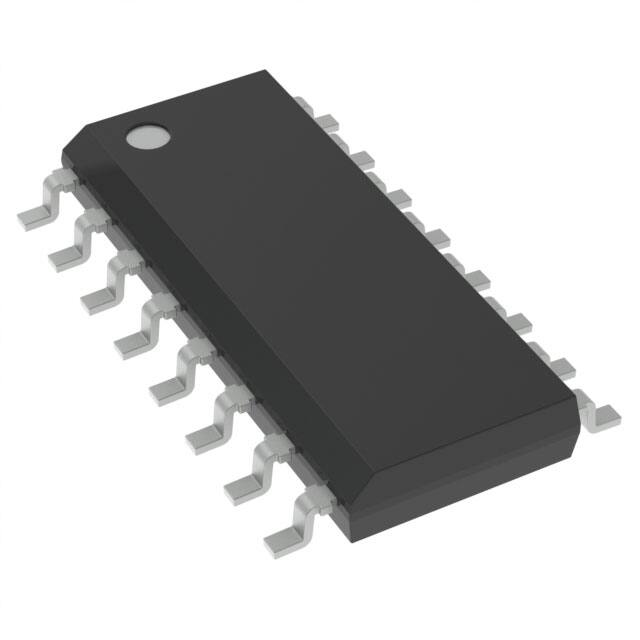
SO-16
The L6390 is a full featured high voltage device
manufactured with the BCD ™ “offline”
technology. It is a single-chip half-bridge gate
driver for N-channel power MOSFETs or IGBTs.
The high-side (floating) section is able to work
with voltage rail up to 600 V.
Features
High voltage rail up to 600 V
dV/dt immunity ± 50 V/nsec in full temperature
range
Driver current capability: 290 mA source, 430
mA sink
Switching times 75/35 nsec rise/fall with 1 nF
load
3.3 V, 5 V TTL/CMOS inputs with hysteresis
Integrated bootstrap diode
Operational amplifier for advanced current
sensing
Comparator for fast fault protection
Smart shutdown function
Adjustable deadtime
Interlocking function
Compact and simplified layout
Bill of material reduction
Both device outputs can sink and source 430 mA
and 290 mA respectively. Prevention from cross
conduction is ensured by interlocking and
programmable deadtime functions.
The device has dedicated input pins for each
output and a shutdown pin. The logic inputs are
CMOS/TTL compatible down to 3.3 V for easy
interfacing with control devices. Matched delays
between low-side and high-side sections
guarantee no cycle distortion and allow high
frequency operation.
The L6390 embeds an operational amplifier
suitable for advanced current sensing in
applications such as field oriented motor control
or for sensorless BEMF detection. A comparator
featuring advanced smartSD function is also
integrated in the device, ensuring fast and
effective protection against fault events like
overcurrent, overtemperature, etc.
Home appliances
The L6390 device features also UVLO protection
on both the lower and upper driving sections,
preventing the power switches from operating in
low efficiency or dangerous conditions.
Motor drivers
– DC, AC, PMDC and PMAC motors
– FOC and sensorless BEMF detection
systems
The integrated bootstrap diode as well as all of
the integrated features of this IC make the
application PCB design easier, more compact and
simple thus reducing the overall bill of material.
Industrial applications and drives
The device is available in an SO-16 tube and tape
and reel packaging options.
Applications
Induction heating
HVAC
Factory automation
Power supply systems
March 2018
This is information on a product in full production.
DocID14493 Rev 11
1/25
www.st.com
�Contents
L6390
Contents
1
Block diagram . . . . . . . . . . . . . . . . . . . . . . . . . . . . . . . . . . . . . . . . . . . . . . 3
2
Pin connection . . . . . . . . . . . . . . . . . . . . . . . . . . . . . . . . . . . . . . . . . . . . . . 4
3
Electrical data . . . . . . . . . . . . . . . . . . . . . . . . . . . . . . . . . . . . . . . . . . . . . . 5
4
3.1
Absolute maximum ratings . . . . . . . . . . . . . . . . . . . . . . . . . . . . . . . . . . . . . 5
3.2
Thermal data . . . . . . . . . . . . . . . . . . . . . . . . . . . . . . . . . . . . . . . . . . . . . . . 5
3.3
Recommended operating conditions . . . . . . . . . . . . . . . . . . . . . . . . . . . . . 6
Electrical characteristics . . . . . . . . . . . . . . . . . . . . . . . . . . . . . . . . . . . . . 7
4.1
AC operation . . . . . . . . . . . . . . . . . . . . . . . . . . . . . . . . . . . . . . . . . . . . . . . 7
4.2
DC operation . . . . . . . . . . . . . . . . . . . . . . . . . . . . . . . . . . . . . . . . . . . . . . . 9
5
Timing and waveforms definitions . . . . . . . . . . . . . . . . . . . . . . . . . . . . 12
6
Input logic . . . . . . . . . . . . . . . . . . . . . . . . . . . . . . . . . . . . . . . . . . . . . . . . 14
7
Smart shutdown function . . . . . . . . . . . . . . . . . . . . . . . . . . . . . . . . . . . . 15
8
Typical application diagram . . . . . . . . . . . . . . . . . . . . . . . . . . . . . . . . . . 18
9
Bootstrap driver . . . . . . . . . . . . . . . . . . . . . . . . . . . . . . . . . . . . . . . . . . . 19
CBOOT selection and charging . . . . . . . . . . . . . . . . . . . . . . . . . . . . . . . . . . . . . . . 19
10
Package information . . . . . . . . . . . . . . . . . . . . . . . . . . . . . . . . . . . . . . . . 21
10.1
SO-16 package information . . . . . . . . . . . . . . . . . . . . . . . . . . . . . . . . . . . 21
11
Order codes . . . . . . . . . . . . . . . . . . . . . . . . . . . . . . . . . . . . . . . . . . . . . . . 23
12
Revision history . . . . . . . . . . . . . . . . . . . . . . . . . . . . . . . . . . . . . . . . . . . 24
2/25
DocID14493 Rev 11
�L6390
Block diagram
1
Block diagram
Figure 1. Block diagram
BOOTSTRAP DRIVER
VCC
4
from LVG
HVG
DRIVER
3
S
LEVEL
SHIFTER
15
R
HVG
LOGIC
5V
SHOOT
THROUGH
PREVENTION
LIN
BOOT
UV
DETECTION
UV
DETECTION
HIN
16
FLOATING STRUCTURE
14
OUT
1
VCC
LVG
DRIVER
LVG
SD/OD
GND
2
8
11
SD
LATCH
SMART
SD
5V
COMPARATOR
10
+
-
CP+
+
VREF
DT
OPOUT
5
DEAD
VCC
TIME
7
OPAMP
+
-
9
6
DocID14493 Rev 11
OP+
OP-
3/25
25
�Pin connection
2
L6390
Pin connection
Figure 2. Pin connection (top view)
-*/
�
��
7#005
4%�0%
�
��
)7(
)*/
�
��
065
7$$
�
��
/$
%5
�
��
/$
01�
�
��
-7(
01065
�
��
$1�
(/%
�
�
01�
".������
Table 1. Pin description
Pin no.
Pin name
Type
1
LIN
I
2
SD/OD (1)
I/O
3
HIN
I
High-side driver logic input (active high)
4
VCC
P
Lower section supply voltage
5
DT
I
Deadtime setting
6
OP-
I
Op amp inverting input
7
OPOUT
O
Op amp output
8
GND
P
Ground
9
OP+
I
Op amp non-inverting input
10
CP+
I
Comparator input
O
Low-side driver output
11
LVG
(1)
12, 13
NC
14
OUT
Function
Low-side driver logic input (active low)
Shutdown logic input (active low)/open drain
(comparator output)
Not connected
(1)
15
HVG
16
BOOT
P
High-side (floating) common voltage
O
High-side driver output
P
Bootstrap supply voltage
1. The circuit provides less than 1 V on the LVG and HVG pins (at Isink = 10 mA), with VCC > 3 V. This allows
the omission of the “bleeder” resistor connected between the gate and the source of the external MOSFET
normally used to hold the pin low; the gate driver assures low impedance also in SD condition.
4/25
DocID14493 Rev 11
�L6390
Electrical data
3
Electrical data
3.1
Absolute maximum ratings
Table 2. Absolute maximum ratings
Value
Symbol
Parameter
Unit
Min.
Max.
VCC
Supply voltage
- 0.3
21
V
VOUT
Output voltage
VBOOT - 21
VBOOT + 0.3
V
VBOOT
Bootstrap voltage
- 0.3
620
V
Vhvg
High-side gate output voltage
VOUT - 0.3
VBOOT + 0.3
V
Vlvg
Low-side gate output voltage
- 0.3
VCC + 0.3
V
VOP+
Op amp non-inverting input
- 0.3
VCC + 0.3
V
VOP-
Op amp inverting input
- 0.3
VCC + 0.3
V
VCP+
Comparator input voltage
- 0.3
VCC + 0.3
V
Vi
Logic input voltage
- 0.3
15
V
Vod
Open drain voltage
- 0.3
15
V
-
50
V/ns
dVOUT/dt Allowed output slew rate
3.2
Ptot
Total power dissipation (TA = 25 °C)
-
800
mW
TJ
Junction temperature
-
150
°C
Tstg
Storage temperature
-50
150
°C
ESD
Human body model
2
kV
Thermal data
Table 3. Thermal data
Symbol
Rth(JA)
Parameter
Thermal resistance junction to ambient
DocID14493 Rev 11
SO-16
Unit
120
°C/W
5/25
25
�Electrical data
3.3
L6390
Recommended operating conditions
Table 4. Recommended operating conditions
Symbol
Pin
VCC
4
VBO(1)
Parameter
Test condition
Min.
Max.
Unit
Supply voltage
-
12.5
20
V
16 - 14 Floating supply voltage
-
12.4
20
V
DC output voltage
-
(2)
-9
580
V
-
800
kHz
-40
125
°C
VOUT
14
fsw
-
Switching frequency
HVG, LVG load CL = 1 nF
TJ
-
Junction temperature
-
1. VBO = VBOOT - VOUT.
2. LVG off. VCC = 12.5 V. Logic is operational if VBOOT > 5 V. Refer to the AN2738 for more details.
6/25
DocID14493 Rev 11
�L6390
Electrical characteristics
4
Electrical characteristics
4.1
AC operation
Table 5. AC operation electrical characteristics (VCC = 15 V; TJ = +25 °C)
Symbol
ton
toff
tsd
Pin
Parameter
Test condition
Min.
Typ.
Max. Unit
50
125
200
ns
50
125
200
ns
50
125
200
ns
50
200
250
ns
-
-
30
ns
RDT = 0, CL = 1 nF
0.1
0.18
0.25
s
RDT = 37 k, CL = 1 nF,
CDT = 100 nF
0.48
0.6
0.72
s
RDT = 136 k, CL = 1 nF,
CDT = 100 nF
1.35
1.6
1.85
s
RDT = 260 k, CL = 1 nF,
CDT = 100 nF
2.6
3.0
3.4
s
RDT = 0, CL = 1 nF
-
-
80
ns
RDT = 37 k, CL = 1 nF,
CDT = 100 nF
-
-
120
ns
RDT = 136 k, CL = 1 nF,
CDT = 100 nF
-
-
250
ns
RDT = 260 k, CL = 1 nF,
CDT = 100 nF
-
-
400
ns
Rise time
CL = 1 nF
-
75
120
ns
Fall time
CL = 1 nF
-
35
70
ns
High/low-side driver turn-on
VOUT = 0 V
1 vs. 11 propagation delay
VBOOT = VCC
3 vs. 15 High/low-side driver turn-off
CL = 1 nF
propagation delay
Vi = 0 to 3.3 V
Shutdown to high/low-side
See
Figure 4 on page 12
2 vs. 11, 15
driver propagation delay
tisd
-
Comparator triggering to
high/low-side driver turn-off
propagation delay
MT
-
Delay matching, HS and LS
turn-on/off
DT
5
MDT
tr
tf
-
11, 15
Deadtime setting range(1)
Matching deadtime(2)
Measured applying a voltage step
from 0 V to 3.3 V to pin CP+.
1. See Figure 3.
2. MDT = | DTLH - DTHL | see Figure 6 on page 13.
DocID14493 Rev 11
7/25
25
�Electrical characteristics
L6390
Figure 3. Typical deadtime vs. DT resistor value
���
$SSUR[LPDWHG�IRUPXOD�IRU
5GW�FDOFXODWLRQ��W\S���
�
'7��XV�
���
5GW>Nȍ@�
������ā�'7>V@��������
�
���
�
���
�
�
��
���
���
5GW��N2KP�
8/25
DocID14493 Rev 11
���
���
���
�L6390
4.2
Electrical characteristics
DC operation
Table 6. DC operation electrical characteristics (VCC = 15 V; TJ = + 25 °C)
Symbol
Pin
Parameter
Test condition
Min.
Typ.
Max.
Unit
Low supply voltage section
VCC_hys
VCC UV hysteresis
-
1200
1500
1800
mV
VCC_thON
VCC UV turn-ON threshold
-
11.5
12
12.5
V
VCC_thOFF
VCC UV turn-OFF threshold -
10
10.5
11
V
Undervoltage quiescent
supply current
VCC = 10 V
SD = 5 V; LIN = 5 V;
HIN = GND;
RDT = 0 ;
CP+ = OP+ = GND;
OP- = 5 V
90
120
150
A
Quiescent current
VCC = 15 V
SD = 5 V; LIN = 5 V;
HIN = GND;
RDT = 0 ;
CP+ = OP+ = GND;
OP- = 5 V
300
720
1000
A
Internal reference voltage
-
500
540
580
mV
VBO UV hysteresis
-
1200
1500
1800
mV
VBO_thON
VBO UV turn-ON threshold
-
11.1
11.5
12.1
V
VBO_thOFF
VBO UV turn-OFF threshold
-
9.8
10
10.6
V
Undervoltage VBO
quiescent current
VBO = 9 V
SD = 5 V; LIN and
HIN = 5 V;
RDT = 0 ;
CP+ = OP+ = GND;
OP- = 5 V
30
70
110
A
VBO quiescent current
VBO = 15 V
SD = 5 V; LIN and
HIN = 5 V;
RDT = 0 ;
CP+ = OP+ = GND;
OP- = 5 V
30
150
240
A
IQCCU
4
IQCC
Vref
-
Bootstrapped supply voltage section(1)
VBO_hys
IQBOU
16
IQBO
ILK
-
High voltage leakage
current
Vhvg = VOUT = VBOOT = 600 V
-
-
10
A
RDS(on)
-
Bootstrap driver onresistance(2)
LVG ON
-
120
-
DocID14493 Rev 11
9/25
25
�Electrical characteristics
L6390
Table 6. DC operation electrical characteristics (VCC = 15 V; TJ = + 25 °C) (continued)
Symbol
Pin
Parameter
Test condition
Min.
Typ.
Max.
Unit
Driving buffers section
High/low-side source shortcircuit current
VIN = Vih (tp < 10 s)
200
290
-
mA
High/low-side sink shortcircuit current
VIN = Vil (tp < 10 s)
250
430
-
mA
Low level logic threshold
voltage
-
0.8
-
1.1
V
High level logic threshold
voltage
-
1.9
-
2.25
V
Single input voltage
LIN and HIN connected
together and floating
-
-
0.8
V
HIN logic “1” input bias
current
HIN = 15 V
110
175
260
A
IHINl
HIN logic “0” input bias
current
HIN = 0 V
-
-
1
A
ILINl
LIN logic “0” input bias
current
LIN = 0 V
3
6
20
A
ILINh
LIN logic “1” input bias
current
LIN = 15 V
-
-
1
A
ISDh
SD logic “1” input bias
current
SD = 15 V
10
40
100
A
SD logic “0” input bias
current
SD = 0 V
-
-
1
A
SD input pull-down resistor
SD = 15 V
150
375
1500
k
Iso
11, 15
Isi
Logic inputs
Vil
1, 2, 3
Vih
Vil_S
1, 3
IHINh
3
1
2
ISDl
RPD_SD
2
1. VBO = VBOOT - VOUT.
2. RDSON is tested in the following way: RDSON = [(VCC - VBOOT1) - (VCC - VBOOT2)] / [I1(VCC,VBOOT1) - I2(VCC,VBOOT2)] where
I1 is the pin 16 current when VBOOT = VBOOT1, I2 when VBOOT = VBOOT2.
10/25
DocID14493 Rev 11
�L6390
Electrical characteristics
Table 7. Op amp characteristics(1) (VCC = 15 V, TJ = +25 °C)
Symbol
Pin
Parameter
Vio
Input offset voltage
Iio
Input offset current
Iib
6, 9
Min.
Typ.
Max.
Unit
-
-
6
mV
-
4
40
nA
-
100
200
nA
0
-
VCC-4
V
0.07
-
VCC-4
V
Source, Vid = +1; Vo = 0 V
16
30
-
mA
Sink,Vid = -1; Vo = VCC
50
80
-
mA
2.5
3.8
-
V/s
Vic = 0 V, Vo = 7.5 V
Vic = 0 V, Vo = 7.5 V
(2)
Input common mode voltage
range
Vicm
VOPOUT
Io
Input bias current
Test condition
Output voltage swing
7
OPOUT = OP-; no load
Output short-circuit current
SR
-
Slew rate
Vi = 1 4 V; CL = 100 pF;
unity gain
GBWP
-
Gain bandwidth product
Vo = 7.5 V
8
12
-
MHz
Avd
-
Large signal voltage gain
RL = 2 k
70
85
-
dB
SVR
-
Supply voltage rejection ratio vs. VCC
60
75
-
dB
CMRR
-
Common mode rejection
ratio
55
70
-
dB
-
1. The operational amplifier is disabled when VCC is in UVLO condition.
2. Input bias current flows out the IC leads.
Table 8. Sense comparator characteristics(1) (VCC = 15 V, TJ = +25 °C)
Symbol
Pin
Parameter
Iib
10
Input bias current
VOL
2
RON_OD
Test condition
Min.
Typ.
Max.
Unit
VCP+ = 1 V
-
-
1
A
Open drain low level output
voltage
IOD = - 3 mA
-
-
0.5
V
2
Open drain ON resistor
-
-
125
167
td_comp
-
Comparator delay
SD/OD pulled to 5 V
through 100 k resistor
-
90
130
ns
SR
2
Slew rate
CL = 180 pF; Rpu = 5 k
-
60
-
V/s
1. The comparator is disabled when VCC is in UVLO condition.
DocID14493 Rev 11
11/25
25
�Timing and waveforms definitions
5
L6390
Timing and waveforms definitions
Figure 4. Propagation delay timing definition
-*/
���
���
��%5
��%5
���
)*/
���
���
US
UG
���
-7(
���
���
���
U PO
US
UG
���
)7(
U PGG
���
���
���
U PO
U PGG
".������7�
Figure 5. Dead time and interlocking timing definitions
U���%5
-*/
)*/
���
���
���
���
US
UG
���
)7(
���
���
���
U PGG
UG
���
-7(
���
U PGG
���
%5 -)
%5 )".������
12/25
DocID14493 Rev 11
�L6390
Timing and waveforms definitions
Figure 6. Deadtime and interlocking waveforms definition
-0$
,*/
(
**/5
&3
-0$
)*/
*/5
&3
$0/530-�4*(/"-�&%(&4
07&3-"11&%��
*/5&3-0$,*/(���%&"%�5*.&
,*/
(
-*/
-7(
%5)-
%5-)
)7(
(BUF�ESJWFS�PVUQVUT�0''
)"-'�#3*%(&�53*�45"5&
(BUF�ESJWFS�PVUQVUT�0''
)"-'�#3*%(&�53*�45"5&
-*/
$0/530-�4*(/"-4�&%(&4
4:/$)30/064� �
��
%&"%�5*.&
)*/
-7(
%5-)
%5)-
)7(
(BUF�ESJWFS�PVUQVUT�0''
)"-'�#3*%(&�53*�45"5&
(BUF�ESJWFS�PVUQVUT�0''
)"-'�#3*%(&�53*�45"5&
-*/
$0/530-�4*(/"-4�&%(&4
/05�07&3-"11&%
�
#65�*/4*%&�5)&�%&"%�5*.&�
%&"%�5*.&
)*/
-7(
%5-)
%5)-
)7(
(BUF�ESJWFS�PVUQVUT�0''
)"-'�#3*%(&�53*�45"5&
(BUF�ESJWFS�PVUQVUT�0''
)"-'�#3*%(&�53*�45"5&
-*/
$0/530-�4*(/"-4�&%(&4
/05�07&3-"11&%
�
0654*%&�5)&�%&"%�5*.&�
%*3&$5�%3*7*/(
)*/
-7(
%5-)
%5)-
)7(
(BUF�ESJWFS�PVUQVUT�0''
)"-'�#3*%(&�53*�45"5&
(BUF�ESJWFS�PVUQVUT�0''
)"-'�#3*%(&�53*�45"5&
�
��)*/�BOE�-*/�DBO�CF�DPOOFDUFE�UPHIFUFS�BOE�ESJWFO�CZ�KVTU�POF�DPOUSPM�TJHOBM�
".������
DocID14493 Rev 11
13/25
25
�Input logic
6
L6390
Input logic
Input logic is provided with an interlocking circuitry which avoids cross-conduction in case of
wrong signals on LIN and HIN tries to turn-on both LVG and HVG outputs at the same times.
In addition, to prevent cross conduction of the external MOSFETs, after each output is
turned off, the other output cannot be turned on before a certain amount of time (DT) (see
Figure 5: Dead time and interlocking timing definitions).
Table 9. Truth table
Input
Output
SD
LIN
HIN
LVG
HVG
L
X(1)
X(1)
L
L
H
H
L
L
L
H
L
H
L
L
H
L
L
H
L
H
H
H
L
H
1. X: don't care.
14/25
DocID14493 Rev 11
�L6390
7
Smart shutdown function
Smart shutdown function
The L6390 device integrates a comparator committed to the fault sensing function. The
comparator has an internal voltage reference Vref connected to the inverting input, while the
non-inverting input is available on the pin 10. The comparator input can be connected to an
external shunt resistor in order to implement a simple overcurrent detection function. The
output signal of the comparator is fed to an integrated MOSFET with the open drain output
available on the pin 2, shared with the SD input. When the comparator triggers, the device is
set in shutdown state and both its outputs are set to low level leaving the half-bridge in
tristate.
Figure 7. Smart shutdown timing waveforms
DPNQ�7SFG
$1�
)*/�-*/
1305&$5*0/
)7(�-7(
4%�0%
0QFO�ESBJO�HBUF
JOUFSOBM
%JTBCMF�UJNF
'BTU�TIVU�EPXO�
5IF�ESJWFS�PVUQVUT�BSF�TFU�JO�4%�TUBUF�JNNFEJBUFMZ�BGUFS�UIF�DPNQBSBUPS
USJHHFSJOH�FWFO�JG�UIF�4%�TJHOBM��IBT�OPU�ZFU�SFBDI�UIF�MPXFS�JOQVU�UISFTIPME�
"O�BQQSPYJNBUJPO�PG�UIF�EJTBCMF�UJNF�JT�HJWFO�CZ�
4)65�%08/�$*3$6*5
7#*"4
XIFSF�
34%�
4%�0%
'30.�50
�$0/530--&3
$4%
30/@0%
4."35
4%
-0(*$
31%@4%
".�����W�
DocID14493 Rev 11
15/25
25
�Smart shutdown function
L6390
In common overcurrent protection architectures the comparator output is usually connected
to the SD input and an RC network is connected to this SD/OD line in order to provide
a monostable circuit, which implements a protection time that follows the fault condition.
Differently from the common fault detection systems, the L6390 smart shutdown
architecture allows immediate turn-off of the outputs of the gate driver in the case of fault, by
minimizing the propagation delay between the fault detection event and the actual output
switch-off. In fact, the time delay between the fault detection and the output turn-off is no
longer dependent on the value of the external RC network connected to the SD/OD pin. In
the smart shutdown circuitry the fault signal has a preferential path which directly switches
off the outputs after the comparator triggering. At the same time the internal logic turns on
the open drain output and holds it on until the SD voltage goes below the SD logic input
lower threshold. When such threshold is reached, the open drain output is turned off,
allowing the external pull-up to recharge the capacitor. The driver outputs restart following
the input pins as soon as the voltage at the SD/OD pin reaches the higher threshold of the
SD logic input. The smart shutdown system provides the possibility to increase the time
constant of the external RC network (that determines the disable time after the fault event)
up to very large values without increasing the delay time of the protection.
Any external signal provided to the SD pin is not latched and can be used as control signal
in order to perform, for instance, PWM chopping through this pin. In fact when a PWM signal
is applied to the SD input and the logic inputs of the gate driver are stable, the outputs
switch from the low level to the state defined by the logic inputs and vice versa.
In some applications it may be useful to latch the driver in the shutdown condition for an
arbitrary time, until the controller decides to reset it to normal operation. This may, for
example, be achieved with a circuit similar to the one shown in Figure 8. When the open
drain starts pulling down the SD/OD pin, the external latch turns on and keeps the pin to
GND, preventing it from being pulled up again once the SD logic input lower threshold is
reached and the internal open drain turns off. One pin of the controller is used to release the
external latch, and one to externally force a shutdown condition and also to read the status
of the SD/OD pin.
Figure 8. Protection latching example circuit
VBOOT
HIN
LIN
3.3 / 5 V
HVG
VCC
+
VCC
µC
R1
20 KΩ
GND
DT
3.3 / 5 V
SD_reset
VDD
GND
R3
2.2 KΩ
R4
20 KΩ
SD_force/sense
R2
1.5 K Ω
OUT
+
LVG
L6390
CP+
SD/OD
OPOUT
OP+
OP-
To other driver/devices
AM12949v1
In applications using only one L6390 for the protection of several different legs (such as
a single-shunt inverter, for example) it may be useful to implement the resistor divider shown
in Figure 9. This simple network allows the pushing of the SD pins of the other devices to
a voltage lower than L6390 Vil, so that each device can reach its low logic level regardless of
part-to-part variations of the thresholds.
16/25
DocID14493 Rev 11
�L6390
Smart shutdown function
Figure 9. SD level shifting example circuit
HV BUS
VBOOT
HIN
LIN
L6390
HVG
VCC
-
VDD
GND
R2
R
SD_force
GND
DT
R1
9*R
VDD
VCC
C1
SD/OD
OPOUT
OUT
L639x
µC
+
L639x
+
VCC
LVG
CP+
OP+
OP-
C2
SD/OD
C3
SD/OD
R3
2*R
SD_sense
C1: disable time setting capacitor
C2, C3: small noise filtering capacitors
DocID14493 Rev 11
AM12948v1
17/25
25
�Typical application diagram
8
L6390
Typical application diagram
Figure 10. Application diagram
BOOTSTRAP DRIVER
VCC
VCC
4
16
FLOATING STRUCTURE
from LVG
UV
DETECTION
UV
DETECTION
FROM CONTROLLER
HIN
H.V.
3
S
LEVEL
SHIFTER
LIN
14
OUT
TO LOAD
1
VCC
GND
HVG
LOGIC
VBIAS
SD/OD
15
R
SHOOT
THROUGH
PREVENTION
FROM CONTROLLER
2
8
LVG
11
SD
LATCH
SMART
SD
LVG
DRIVER
5V
COMPARATOR
10
+
CP+
+
VBIAS
VREF
DT
5
DEAD
VCC
TIME
OPOUT
OPAMP
7
+
9
6
TO ADC
DocID14493 Rev 11
OP+
OP-
-
18/25
Cboot
HVG
DRIVER
5V
FROM/TO
CONTROLLER
BOOT
+
�L6390
9
Bootstrap driver
Bootstrap driver
A bootstrap circuitry is needed to supply the high voltage section. This function is normally
accomplished by a high voltage fast recovery diode (Figure 11.a). In the L6390 device
a patented integrated structure replaces the external diode. It is realized by a high voltage
DMOS, driven synchronously with the low-side driver (LVG), with a diode in series, as
shown in Figure 11.b. An internal charge pump (Figure 11.b) provides the DMOS driving
voltage.
CBOOT selection and charging
To choose the proper CBOOT value the external MOS can be seen as an equivalent
capacitor. This capacitor CEXT is related to the MOS total gate charge:
Equation 1
Q gate
C EXT = -------------V gate
The ratio between the capacitors CEXT and CBOOT is proportional to the cyclical voltage loss.
It must be:
Equation 2
CBOOT >>> CEXT
E.g.: if Qgate is 30 nC and Vgate is 10 V, CEXT is 3 nF. With CBOOT = 100 nF the drop would be
300 mV.
If HVG must be supplied for a long time, the CBOOT selection must also take the leakage and
quiescent losses into account.
E.g.: HVG steady-state consumption is lower than 240 A, so if HVG TON is 5 ms, CBOOT
must supply 1.2 C to CEXT. This charge on a 1 F capacitor means a voltage drop of 1.2 V.
The internal bootstrap driver offers important advantages: the external fast recovery diode
can be avoided (it usually has a high leakage current).
This structure can work only if VOUT is close to GND (or lower) and, at the same time, the
LVG is on. The charging time (Tcharge) of the CBOOT is the time in which both conditions are
fulfilled and it must be long enough to charge the capacitor.
The bootstrap driver introduces a voltage drop due to the DMOS RDSon (typical value:
120 ). This drop can be neglected at low switching frequency, but it should be taken into
account when operating at high switching frequency.
DocID14493 Rev 11
19/25
25
�Bootstrap driver
L6390
The following equation is useful to compute the drop on the bootstrap DMOS:
Equation 3
Q gate
V drop = I ch arg e R dson V drop = ------------------R dson
T ch arg e
where Qgate is the gate charge of the external power MOSFET, Rdson is the on-resistance of
the bootstrap DMOS and Tcharge is the charging time of the bootstrap capacitor.
For example: using a power MOSFET with a total gate charge of 30 nC, the drop on the
bootstrap DMOS is about 1 V, if the Tcharge is 5 s. In fact:
Equation 4
30nC
V drop = --------------- 120 0.7V
5s
Vdrop should be taken into account when the voltage drop on CBOOT is calculated: if this drop
is too high, or the circuit topology doesn’t allow a sufficient charging time, an external diode
can be used.
Figure 11. Bootstrap driver
% #005
#005
7$$
#005
7$$
)�7�
)�7�
)7(
$ #005
065
)7(
50�-0"%
$ #005
065
-7(
50�-0"%
-7(
B
C
%��*/����7�
20/25
DocID14493 Rev 11
�L6390
10
Package information
Package information
In order to meet environmental requirements, ST offers these devices in different grades of
ECOPACK® packages, depending on their level of environmental compliance. ECOPACK
specifications, grade definitions and product status are available at: www.st.com.
ECOPACK is an ST trademark.
10.1
SO-16 package information
Figure 12. SO-16 narrow package outline
40��
DocID14493 Rev 11
21/25
25
�Package information
L6390
Table 10. SO-16 narrow package mechanical data
Dimensions (mm)
Symbol
Min.
Typ.
Max.
A
-
-
1.75
A1
0.10
-
0.25
A2
1.25
-
-
b
0.31
-
0.51
c
0.17
-
0.25
D
9.80
9.90
10.00
E
5.80
6.00
6.20
E1
3.80
3.90
4.00
e
-
1.27
-
h
0.25
-
0.50
L
0.40
-
1.27
k
0
-
8°
ccc
-
-
0.10
Figure 13. SO-16 narrow footprint
22/25
DocID14493 Rev 11
�L6390
11
Order codes
Order codes
Table 11. Order codes
Order code
Package
Packaging
L6390D
SO-16
Tube
L6390DTR
SO-16
Tape and reel
DocID14493 Rev 11
23/25
25
�Revision history
12
L6390
Revision history
Table 12. Document revision history
Date
11-Sep-2015
07-Apr-2017
21-Mar-2018
24/25
Revision
Changes
9
Removed DIP-16 package from the whole document.
Updated Table 3 on page 6 (added ESD parameter and value).
Updated Table 4 on page 6 (updated Rth(JA) value).
Updated note 1.and 2. below Table 7 on page 10 (minor
modifications, replaced VCBOOTx by VBOOTx ).
Minor modifications throughout document.
10
Updated Table 5 on page 7 (updated cross reference to Figure 4 on
page 12 instead of removed Figure 3. Timing).
Updated Table 6 on page 9 (added RPD_SD) and Table 8 on page 11
(added RON_OD).
Updated Section 5 on page 12 (updated title, added Figure 4 and
Figure 5).
Added Section 6 on page 14 (and moved Table 9: Truth table to this
section).
Updated Figure 11 on page 20 and Figure 12 on page 21 (replaced
by new figure).
Minor modifications throughout document.
11
Updated Figure of SO-16 package on page 1 and Figure 2: Pin
connection (top view) on page 4.
Updated Table 5 on page 7 (updated DT and MDT test conditions).
Updated note 2. below Table 7 on page 11.
Updated Section 6 on page 14.
Minor modifications throughout document.
DocID14493 Rev 11
�L6390
IMPORTANT NOTICE – PLEASE READ CAREFULLY
STMicroelectronics NV and its subsidiaries (“ST”) reserve the right to make changes, corrections, enhancements, modifications, and
improvements to ST products and/or to this document at any time without notice. Purchasers should obtain the latest relevant information on
ST products before placing orders. ST products are sold pursuant to ST’s terms and conditions of sale in place at the time of order
acknowledgement.
Purchasers are solely responsible for the choice, selection, and use of ST products and ST assumes no liability for application assistance or
the design of Purchasers’ products.
No license, express or implied, to any intellectual property right is granted by ST herein.
Resale of ST products with provisions different from the information set forth herein shall void any warranty granted by ST for such product.
ST and the ST logo are trademarks of ST. All other product or service names are the property of their respective owners.
Information in this document supersedes and replaces information previously supplied in any prior versions of this document.
© 2018 STMicroelectronics – All rights reserved
DocID14493 Rev 11
25/25
25
�








 工商网监
湘ICP备2023018690号
工商网监
湘ICP备2023018690号