LED1202
Datasheet
12-channel low quiescent current LED driver
Features
WLCSP20
QFN20 3x3
•
•
•
•
•
•
•
•
•
•
•
•
•
•
•
Supply range from 2.6 V to 5 V
12 channels for single LED
20 mA current capability per channel
1% (typ.) current matching at 16 mA and 2% (typ.) at 2.5 mA
1.8 V compatible I²C control interface
8-bit analog dimming individual control
12-bit local PWM resolution
8 programmable patterns
Programmable pattern sequence
Synchronization for multi-device application
Phase shifting between channels
Open LED detection
Overtemperature protection
8 configurable I²C slave addresses plus global address
Fault flag pin
Applications
•
Maturity status link
LED1202
RGB LED lighting, fade-in and fade-out breathing effect, indicator lights for:
–
Wearable electronics
–
Battery powered devices
–
Portable accessories
Description
The LED1202 is a 12-channel low quiescent current LED driver; it guarantees 5 V
output driving capability and each channel is able to provide up to 20 mA with a
headroom voltage of 350 mV (typ.) only. The output current can be adjusted
separately for each channel by 8-bit analog and 12-bit digital dimming control.
A slow turn-on and turn-off time improves the system low noise generation
performance; moreover, the phase shifting function helps to reduce the inrush
current. Eight patterns can be stored in the internal registers for automatic
sequencing without MCU intervention.
The pattern sequence can be also configured for duration time and number of
repetition. For multi-device applications, a common clock domain can be shared for
timing synchronization. The device includes thermal shutdown and open LED
detection.
The device I²C interface is based on fast mode specification and works up to 400
kHz. Eight I²C addresses are possible by using two configuration pins (A0/A1) only.
The LED1202 is available in WLCSP20 package 1.71 x 2.16 x 0.5 mm with 0.4 mm
pitch and in QFN20 3x3 package 3 x 3 x 0.6 mm with 0.5 mm pitch.
DS12875 - Rev 2 - February 2019
For further information contact your local STMicroelectronics sales office.
www.st.com
�LED1202
Introduction
1
Introduction
The LED1202 is a 12-channel LED driver with high current accuracy.
1.1
Block diagram
Figure 1. LED1202 simplified block diagram
VIN
VLDO
LDO
1V8
CS0
OSCILLATOR
CS1
1V8
CS2
SCL
SDA
A0
I²C
INTERFACE
DIGITAL
CORE
+
DIMMING
AND
CONTROL
CS3
CS4
CS5
CS6
A1
CS7
CURRENT
REFERENCE
CS8
CS0-CS11
CURRENT
CONTROL
CS9
CS10
IRQn
PROTECTION AND
FAULT DETECTION
CS11
GND
DS12875 - Rev 2
page 2/54
�LED1202
Pinout and pin description
2
Pinout and pin description
WLCSP20 and QFN20 3x3 package pinout and pin description.
2.1
WLCSP20 package – ball assignment
Figure 2. LED1202JR ball assignment (top and marking side view)
1
2.2
2
3
4
A CS4
CS5
GND
CS7
B CS2
CS3
CS6
CS9
C CS0
CS1
CS8
CS11
D IRQn
A1
CS10
VIN
E SCL
SDA
A0
VLDO
QFN20 3x3 package – pin assignment
VLDO
A0
A1
SDA
SCL
Figure 3. LED1202QTR pin assignment (top and marking side view)
16
IRQn
VIN
01
CS0
CS11
CS1
CS10
CS2
CS9
CS3
11
CS8
DS12875 - Rev 2
CS7
CS6
GND
CS5
CS4
06
page 3/54
�LED1202
Pin description
2.3
Pin description
Table 1. Pin description
DS12875 - Rev 2
I/O balls/pins
Name
Description
D4 / 15
VIN
Power supply input
A3 / 08
GND
Power ground
E1 / 20
SCL
I²C clock signal
E2 / 19
SDA
I²C data signal
D1 / 01
IRQn
Interrupt output (open-drain) – active low
E3 / 17
A0
Address pin 0 / internal clock output
D2 / 18
A1
Address pin 1 / external clock input
E4 / 16
VLDO
C1 / 02
CS0
Current sink 0 input
C2 / 03
CS1
Current sink 1 input
B1 / 04
CS2
Current sink 2 input
B2 / 05
CS3
Current sink 3 input
A1 / 06
CS4
Current sink 4 input
A2 / 07
CS5
Current sink 5 input
B3 / 09
CS6
Current sink 6 input
A4 / 10
CS7
Current sink 7 input
C3 / 11
CS8
Current sink 8 input
B4 / 12
CS9
Current sink 9 input
D3 / 13
CS10
Current sink 10 input
C4 / 14
CS11
Current sink 11 input
LDO capacitor output
page 4/54
�LED1202
Electrical characteristics
3
Electrical characteristics
3.1
Maximum ratings
Table 2. Absolute maximum ratings
Symbol
Parameter
Value
Unit
VIN
LED driver input voltage
-0.3 to 6
V
VSDA, VSCL, VIRQn
Digital domain voltages
-0.3 to 6
V
LED outputs
-0.3 to 6
V
Digital domain voltages
-0.3 to 6
V
±2000
V
VCS0-CS11
VLDO, VA0, VA1
ESD
Human body model (HBM) – JESD22-A114-B
Note:
Absolute maximum ratings are those values beyond which damage to the device may occur. Functional
operation under these conditions is not implied.
3.2
Thermal information
Table 3. Thermal data
Symbol
Parameter
Value
Unit
Ta
Operative free-air temperature range
-40 to +85
°C
TJ
Operative junction temperature range
-40 to +125
°C
Storage ambient temperature range
-55 to +150
°C
WLCSP20 1.71x2.16 mm
89.5
°C/W
QFN20 3x3
65.3
°C/W
WLCSP20 1.71x2.16 mm
53.0
°C/W
QFN20 3x3
18.1
°C/W
WLCSP20 1.71x2.16 mm
13.8
°C/W
QFN20 3x3
19.4
°C/W
TSTG
θja
Thermal resistance junction-ambient (1)
θjb
Thermal resistance junction-board (1)
θjc
Thermal resistance junction-case (1)
1. These parameters correspond to Standard JEDEC PCB (2S2P) as per JESD 51 specification.
DS12875 - Rev 2
page 5/54
�LED1202
LED1202 electrical characteristics
3.3
LED1202 electrical characteristics
Table 4. LED1202 electrical characteristics VIN = 3.3 V, SDA, SCL and IRQn = 1.8 V, Ta = 25 °C,
RC load = 50 Ω//10 pF, unless otherwise specified.
Symbol
Parameter
VIN
Operating input voltage
IQ
Quiescent current
IIN
Supply current
VIN_UVLO
VLDO
Undervoltage lockout threshold
LDO output voltage
Test conditions
Min.
EN=’0’
EN=’1’
ICS0-CS11 = 16 mA
Unit
5
V
4
8
µA
0.8
2.0
mA
2.5
V
VUVLOR (VIN is rising)
VUVLOF (VIN is falling)
2.1
Iout = 10 mA;
Vout forced at 1.6 V
VCS_MIN
Minimal headroom voltage
ICS0-CS11 = 0.985 * ICSMAX
VCS_MAX
Maximum output voltage
ICS0-CS11 = 0 mA
ICS_SET
Analog dimming range (1)
V
1.8
VIN = 2.6 V
LDO short-circuit current
350
@ VCS = 1 V
ICS0-CS11 = 2.5 mA
20
mA
±1%
±3
%
±2%
±3
%
±4
%
±6
%
@ VCS = 1 V
ICS0-CS11 = 2.5 mA
@ VCS = 1 V
fPWM
Output digital dimming frequency
DPWM
Output dimming duty-cycle range
mV
V
ICS0-CS11 = 16.0 mA
Absolute channel accuracy
mA
5
1
@ VCS = 1 V
ΔICS
V
200
ICS0-CS11 = 16.0 mA
ΔICS0-CS11
Max.
2.6
ILDO_SH
Current matching between
channels (2)
Typ.
220
0
Hz
100
%
DPWM_STEP
Output dimming duty-cycle step
1/4095
tPWM_ON-MIN
Minimum output pulse ON-time
1
µs
1/12xfPWM
s
6
ms
150
°C
100
mV
tSHIFT
tINIT
TSHDN
VOPEN_TH
VIRQn
IIRQn_LK
Phase shift time between channels
Initialization time to start lighting
SHFT = ‘1’
EN = ‘0’→ ‘1’
Pattern0 default condition
Thermal shutdown
Open LED detection threshold
ICS0-CS11 > 1 mA
Output low level
ITEST = 1 mA
Input leakage current
VIRQn = 5 V
0.4
V
1
µA
I²C compatible interface
DS12875 - Rev 2
VIH
High level input voltage
VIL
Low level input voltage
VOL
Low level output voltage
1.26
ITEST = 5 mA
V
0.54
V
0.4
V
page 6/54
�LED1202
LED1202 electrical characteristics
Symbol
Parameter
Test conditions
Min.
Typ.
Max.
Unit
CIO
IO pin capacitance
10
pF
fSCL
SCL clock frequency
400
kHz
tLOW
Minimum clock low period
1.3
µs
tHIGH
Minimum clock high period
600
ns
tF
SDA and SCL fall time
300
ns
tR
SDA and SCL rise time
300
ns
tHD:STA
Start condition hold time
600
ns
tSU:STA
Start condition setup time
600
ns
tSU:DAT
Data setup time
100
ns
tHD:DAT
Data hold time
0
µs
tSU:STO
Stop condition setup time
600
ns
Minimum delay between operations
1.3
µs
tBUF
1. The correspondence between the programmed ILED and output current is not guaranteed for ILED < ICS_SET Min.
2. ΔICS0-CS11 = ((ICSx – ICSavg) / ICSavg) * 100; ICSavg = (∑ICSx) / 12
DS12875 - Rev 2
page 7/54
�LED1202
Headroom voltage
3.4
Headroom voltage
The minimum headroom voltage is not constant, it changes according to LED current value. The typical
characteristic at 25 °C ambient temperature is shown in the figure below.
In order to improve the accuracy and ground noise rejection at low current, the output stage implements two
different current sink branches, that is why the curve has a double slope.
The threshold to switch between the branches is the ILEDx (registers from address 09h to 14h) value of 48d
(3.76 mA).
Figure 4. LED1202 headroom voltage vs. ILED
350
300
VCSmin [V]
250
200
150
100
50
0
0
2
4
6
8
10
12
14
16
18
20
ILED [mA]
DS12875 - Rev 2
page 8/54
�LED1202
Device description
4
Device description
The LED1202 implements 12 low-side current generators with independent dimming control. Internal volatile
memory allows the user to store up to 8 different patterns, each pattern is a particular output configuration in
terms of PWM duty-cycle (on 4096 steps). While analog dimming (on 256 steps) is per channel but common to all
patterns.
4.1
Device startup
Once the supply voltage VIN is applied , the LED1202 executes some internal checks, afterwords it stops the
oscillator and puts the internal LDO in quiescent mode. To start the device, EN bit must be set inside the “Device
Enable” register at address 01h (see Section 7.2 Device enable register).
As soon as EN is set, the LED1202 loads the adjustment parameters from the internal non-volatile memory and
performs an auto-calibration procedure in order to increase the output current precision.
Such initialization lasts about 6.5 ms.
4.2
Device reset
The LED1202 can be reset by software. The RST bit is inside the “Device Enable” register at address 01h (see
Section 7.2 Device enable register). When RST bit is set all the register values are restored to default value as
per a POR event. This bit is always read as zero since it is the POR value.
4.3
Device address selection
The LED1202 allows up to eight different local I²C addresses to be selected ; furthermore, it has also a fixed
global address:
•
Global address – is factory pre-set and unchangeable for all devices (5Ch @ 7bit); it controls at the same
time all the devices sharing the same I²C bus (only write is possible)
•
Local address – it allows the user to control each single device according to the defined local address (read/
write operations are possible)
A read operation using a global address produces an ACK as reply to the valid address, but after that SDA line is
not driven generating a “false” FFh data reply, instead of any register content.
Internal register read is allowed using one of the 8 selectable local addresses only; local address can be defined
using only two pins (A0 and A1) connected, as per the following table:
Table 5. LED1202 local address table
A1
A0
I²C slave address (7 bit)
GND
GND
58h
GND
VI2C
59h
VI2C
GND
5Ah
VI2C
VI2C
5Bh
GND
SDA
5Dh
GND
SCL
5Eh
VI2C
SDA
5Fh
VI2C
SCL
60h
Local address is acquired and latched inside the device at first acknowledge. After that, any modification of A0
and/or A1 connection has not effect on the device I²C local address.
DS12875 - Rev 2
page 9/54
�LED1202
LED channel selection
4.4
LED channel selection
The enabling or disabling of channels is performed on “Channel Enable” registers at addresses 02h and 03h.
There are 8 + 4 enable bits available, one for each corresponding channel. "Channel Enable" registers are
detailed on Section 7.3 Channel enable registers. EN bit on “Device Enable” register at address 01h is the global
enable of the device that has higher priority than single channel enable bits (see Section 7.2 Device enable
register).
4.5
Output dimming modes
There are two main methods for dimming LED light: changing the output DC current value (analog dimming) or
modifying the output current duty-cycle (digital dimming). The two methods are not mutually exclusive and can be
used at the same time to generate a specific channel by channel 20 bit depth dimming.
4.5.1
LED controlled by “CSx LED Current” registers (analog dimming)
The output DC current value can be adjusted by “CSx LED Current” registers (see Section 7.8 LED current
registers). In this case, the LED brightness change is achieved by setting the output current in the range from 1
mA to 20 mA. “CSx LED Current” registers are between address 09h to 14h. Note that after POR, all output PWM
values are set by default on “Pattern0CSx PWM” registers: PWML = 55 h, PWMH = 05 h; limiting the maximum
brightness reachable acting on analog dimming alone.
Figure 5. Analog dimming
4.5.2
LED controlled by “PatternyCSx PWM” registers (digital dimming)
The LED brightness can be adjusted by varying the output duty-cycle. The duty-cycle is programmed by
“PatternyCSx PWM” registers (see Section 7.11 Pattern PWM configuration registers). Note that “CSx LED
Current” registers (see Section 7.8 LED current registers) are set by default to 27h, limiting the output current DC
value to about 3.06 mA. To avoid any brightness artefacts, when SHFT=1 and/or EN=1, the update of
“PatternyCSx PWM” registers should be synchronized with SOF (start of frame) interrupt (refer to
Section 4.10.4 Start of frame interrupt for more details).
Figure 6. Digital dimming
DS12875 - Rev 2
page 10/54
�LED1202
Phase-shift
4.5.2.1
Global digital dimming configuration
Setting GCTRL bit in “Configuration” register at address 04h (see Section 7.4 Configuration register), the PWM
value set for the channel CS0 (PatternyCS0) is applied to all channels (same digital dimming level). This is valid
for any pattern selected by PATSEL[2:0] in “Configuration” register (refer to Section 4.7 Pattern selection and
configuration for more details).
During the execution of a pattern sequence (refer to Section 4.8 Pattern sequence configuration for more details)
the PatternyCS0 setting of the running pattern is applied to all channels (CS0-CS11).
4.5.3
LED controlled by “CSx LED Current” and “PatternyCSx PWM” registers
The full control of LED brightness can be achieved by setting both the output current level (“CSx LED Current”
registers, see Section 7.8 LED current registers) and output current duty-cycle using “PatternyCSx PWM”
registers (see Section 7.11 Pattern PWM configuration registers).
Figure 7. Analog+digital dimming
4.6
Phase-shift
Phase-shift feature delays channel power-on to minimize peak load current. This delay reduces voltage ripple on
the LED power supply rail and allows the smallest filtering capacitor to be used. This feature is controlled by
SHFT bit in “Configuration” register (see Section 7.4 Configuration register). The shift time (tSHIFT) is the delay
between two contiguous channels and it is defined as follows:
tsℎift = 1/ 12 × fPWM = 1/ 12 × 220 ≈ 380 µs
To have the phase-shift properly executed, without LED blink artefacts, SHFT=1 has to be set before enabling the
device with EN=1.
When SHFT is set, to avoid any brightness artefact, PWM value change (from CS11 to CS0) must be
synchronized with SOF (start of frame) interrupt (refer to Section 4.10.4 Start of frame interrupt for more details).
While pattern change can be made at any time since the new selected pattern is automatically synchronized by
the LED1202 at the beginning of the new frame.
DS12875 - Rev 2
page 11/54
�LED1202
Pattern selection and configuration
Figure 8. Phase-shift feature scheme
t SHIFT = 1/(12*f PWM )
4.7
Pattern selection and configuration
Active pattern can be selected in “Configuration” register at 04h (see Section 7.4 Configuration register) by
PATSEL[2:0] bits, choosing among 8 different patterns. A pattern is composed of the PWM value for each output
stored into “PatternyCSx PWM” registers. Analog dimming ILEDx (registers from 09h to 14h) is per channel and it
is common to all patterns.
4.8
Pattern sequence configuration
The pattern sequence can be enabled in “Configuration” register at 04h (see Section 7.4 Configuration register)
by using PATS bit and setting PATSR bit starts in the same register. PATS bit can be set at any time, even when
EN=0, but after setting all outputs go OFF waiting for the sequence start. It is not possible to set PATSR bit when
EN=0, in this case it is cleared.
Since PATS and PATSR bits are in the same register they can be set at the same time, there is no point in setting
PATS earlier than PATSR. While setting PATSR earlier than PATS is not possible, in this case PATSR is cleared.
PATSR bit is set by user to start the pattern sequence, afterward it indicates (when it is read by user) that pattern
sequence is being run whether set or not if cleared.
The duration of each single pattern of the sequence can be configured from about 22.2 ms to 5660 ms, by step of
22.2 ms, in “Pattern y Duration” registers (see Section 7.10 Pattern duration registers) at address 16h to 1Dh.
22.2 ms step is generated using the internal oscillator as time base and, in case of application with multiple
devices, all the devices should be synchronized (refer to Section 4.9.1 Common clock domain configuration for
more details) to have a single master oscillator.
The pattern sequence can be repeated for a programmable number of times (from 1 to 254) or in infinite loop, it
depends on the value written in “Pattern Sequence Repetition” register at 15h (see Section 7.9 Pattern sequence
repetition register). Note: the value 00h is not allowed for such registers.
The pattern sequence runs always from pattern 0 to pattern 7, independently of PATSEL[2:0] value. It is possible
to skip a pattern writing 00h into “Pattern y Duration” register, so the sequence moves to the next one; in case all
patterns are set to skip, the device clears PATSR immediately.
When the pattern sequence runs, the displayed pattern can be checked by reading PATSEL bits (used as status
bits when PATSR=1). PATSEL bits can be written during the pattern sequence execution, but the new selected
DS12875 - Rev 2
page 12/54
�LED1202
Device synchronization
pattern becomes active at the end of the pattern sequence (PATSR=0) only and visible only when the sequence is
disabled by PATS=0.
After setting EN=1, the device performs some auto adjustments, if the user sets PATSR during this time the
pattern sequence starts at the end of such auto adjustments only. As a consequence, if read by user, PATSR is
zero up to the end of auto adjustment since the sequence has not started yet and so it is not ongoing.
If “Pattern y Duration” and/or “Pattern Sequence Repetition” are modified during the pattern sequence execution,
new values are updated only when the sequence has been completed or stopped, in case of infinite loop.
At the end of the pattern sequence, the device can be forced in disable by setting AUTODIS bit in “Configuration”
register at 04h (see Section 7.4 Configuration register); in this manner, the internal oscillator is switched off.
Setting GCTRL bit in “Configuration” register forces the value “PatternyCS0 PWM” to all outputs, this feature can
be used, for example, in backlight applications where normally all LEDs use the same dimming.
4.9
Device synchronization
When in one application there is more than one device, the way to activate all the devices at the same time is to
set the EN bit in “Device Enable” register through the global address. In this manner all LEDs are lighted up and
they are driven by those devices sharing the same I²C bus as they are controlled by a single device.
Global address is also important to launch the execution of complex pattern sequences which imply a lot of LEDs
driven by more than one device.
4.9.1
Common clock domain configuration
The LED1202 generates internally the reference clock for all timings, from PWM period to pattern sequence
duration time. The internal clock is stable and precise, but it cannot be absolutely the same for all production
population. So, in those applications with multiple devices running a patter sequence managed by more than one
device, a device has to be selected as master and its clock has to be used as reference for all devices. This
ensures, even in case of long duration time or infinite looping, a synchronicity of patterns managed by different
devices.
I²C local address is set with A0 and A1 pins; the LED1202 latches the configured address after the first
acknowledge of an appropriate I²C frame. After that, any level change on A0 and A1 has no effect on the device
I²C local address, so pins can be used for different purposes.
Specifically to output internal clock (A0) and to input external clock (A1).
In a configuration with multiple devices and common clock domain there is a master device sharing its generated
clock internally with all the other slave devices. The LED1202 supports clock distribution either in daisy chain or
star configuration. In daisy chain configuration each device receives the clock from the previous one (master
excluded) and provides it to the next, in star configuration master distributes the clock to all slaves in parallel.
Clock output can be enabled on pin A0 setting bit CLK_O_En, while clock input is enabled on pin A1 by bit
CLK_I_En, both bits are in “clock configuration” register at address E0h (see Section 7.12 Clock configuration
register).
4.10
Alarms and IRQ generation
Four device detections, fault or condition, can generate an interrupt on IRQn pin if it is not masked:
•
Open LED
•
Overtemperature
•
Pattern end
•
Start of frame
DS12875 - Rev 2
page 13/54
�LED1202
Alarms and IRQ generation
4.10.1
Open LED interrupt
When any used channel (CS0-CS11) goes to open condition, the respective CSx bit in “Open LED” status
registers at 07h and 08h is set. If LED connection is restored the respective bit is not reset since it is latched and
auto-cleared only by a read-back operation. The OPEN bit in “Fault and Status Interrupt” register (see
Section 7.6 Fault and status interrupt register) is set as cumulative result of active channels open detection, it
generates an interrupt on IRQn pin if OPEN_M bit in “Fault and Status Mask” register (see Section 7.5 Fault and
status mask register) is 0 (OPEN flag mask not set). IRQn pin is reset after reading “Fault and Status Interrupt”
register, while the CSx bit is cleared after “Open LED” status register read-back.
Open channel detection has a current threshold and deglitch, it works properly only if ILED value is higher than 1
mA and PWM ON time is longer than about 14 µs.
4.10.2
Overtemperature protection (OVTP) interrupt
An internal temperature sensor monitors continuously the IC junction temperature. If the junction temperature
exceeds 150 °C (typ.) the device stops operating shutting down all the outputs, however the I²C interface stays
active. The OVTP bit in “Fault and Status Interrupt” register (see Section 7.6 Fault and status interrupt register) is
set.
Even if the temperature decreases, the respective fault bit is latched, this bit is auto-cleared by a read operation.
The OVTP bit, when asserted, generates an interrupt on IRQn pin if not masked by OVTP_M bit “Fault and Status
Mask” register (see Section 7.5 Fault and status mask register). Overtemperature detection has a deglitch of
about 18 µs.
4.10.3
Pattern end interrupt
The PAT bit on “Fault and Status Interrupt” register at address 06h (see Section 7.6 Fault and status interrupt
register) is set when the pattern sequence is completed. This PAT bit generates an interrupt on IRQn pin if PAT_M
bit of “Fault and Status Mask” register (see Section 7.5 Fault and status mask register) is not set. Interrupt is
automatically cleared after “Fault and Status Interrupt” register read-back.
At the end of the pattern sequence, the bit PATSR is automatically cleared while bit PATS remains set and as a
consequence all outputs remain OFF. If PAT bit is not masked, at the end of the sequence, the IRQn pin is driven
and can be used as MCU interrupt. In this manner, the end of the sequence is quickly recognized making possible
an immediate PATS bit clearing to display the pattern defined by PATSEL[2:0] instead of leaving all channels OFF.
4.10.4
Start of frame interrupt
SOF bit (Start of frame) in “Fault and Status Interrupt” register (see Section 7.6 Fault and status interrupt register)
can be used o generate an interrupt on IRQn pin in order to change CSx PWM setting of running pattern without
creating any brightness artefact. When not needed, SOF can be masked by SOF_M bit in in in “Fault and Status
Mask” register (see Section 7.5 Fault and status mask register).
When user wants to change CSx PWM settings of running pattern on fly and he wants that new CSx PWM
settings are taken all simultaneously, since I²C CSs pattern PWM settings writing is done sequentially, the steps
below need to be followed:
1. Unmask SOF bit;
2. Wait for the interrupt (generated at the beginning of the frame);
3. Update sequentially (using auto increment) CSx PWM settings of running pattern at 220 Hz. In this way all the
registers are updated within a PWM period and so at the beginning of next frame all CSx channels start
simultaneously with newer PWM settings;
4. Set again SOF_M mask bit, to avoid unnecessary interrupt.
Because SOF signal is synchronized with the start of CS0 frame, in case SHFT bit is set, user has to do the same
procedure described before, but, for point 3, he has to update all CSx PWM settings starting from CS11 PWM
settings down to CS0 PWM settings. This means that auto increment is not possible and the time available to
update each CSx PWM registers is 380 µs.
Since each CSx PWM value is on 2 registers, the I²C frame required for a single CSx PWM update lasts 36
clocks, meaning at least 360 µs with I²C in standard mode (refer to Section 5.2 I²C bus interface for more details)
and 90 µs in fast mode. In both cases a time shorter than tSHIFT allows the new CSx PWM value to be applied
exactly the frame afterward.
DS12875 - Rev 2
page 14/54
�LED1202
Alarms and IRQ generation
Figure 9. SOF position in case of SHFT=1
t SHIFT = 1/(12*f PWM )
DS12875 - Rev 2
page 15/54
�LED1202
Device interface
5
Device interface
This section describes the LED1202 device interfaces.
5.1
IRQn output pin
The interrupt request (IRQ) pin is used to inform the system when an alarm event occurs. This IRQn pin is opendrain active low. “Fault and Status Interrupt” register (see Section 7.6 Fault and status interrupt register) filtered by
“Fault and Status Mask” register (see Section 7.5 Fault and status mask register) controls this pin. The IRQn pin
status is reset after “Fault and Status Interrupt” register read-back. When this pin is used to manage SOF (start of
frame) signal to synchronize PWM change, mainly when SHIFT is active, it had better temporary mask all the
other alarms in “Fault and Status Mask” register.
5.2
I²C bus interface
The LED1202 is fully controlled, registers write and read, by I²C communication.
The I²C bus is a slave serial interface built with a data line (SDA) and a clock line (SCL):
•
SCL: input clock used to shift the data.
•
SDA: input/output bidirectional data transfer line.
The LED1202 device supports the following data transfer mode: standard mode (100 Kbit/s) and fast mode (400
Kbit/s) as defined in the I²C bus specifications.
I²C communication is composed of specific events on the bus:
•
Start condition - it is a falling edge of SDA while SCL is HIGH level
•
Slave addressing - it is the transmission (M→S) of the ID of the slave to be addressed (7-bit)
•
Communication direction - it is one bit immediately following the slave ID: 0 for data writing (M→S) or 1 for
data reading (S→M)
•
Register addressing - it is the transmission (M→S) of the register address of the slave to be accessed (8-bit)
•
Data bit - data are 8 bits per word driven either by MASTER or SLAVE depending on the communication
moment
•
Acknowledge - it is a LOW level on SDA line, driven by either SLAVE or MASTER depending on the
communication direction
•
Stop condition – it is a rising edge of SDA while SCL is HIGH level
•
Restart condition - it is a new start condition which happens before a stop condition: it normally implies a
change in the direction of the communication
Figure 10. I²C timing reference
SDA
tBUF
tHD:STA
tR
SCL
tF
tHIGH
P
5.2.1
tHD:STA
S
tLOW
tSU:DAT
tHD:DAT
SR
tSU:STA
P
tSU:STO
The LED1202 addressing
Since some applications could require more than a single LED1202 device, a method to differentiate each single
device has been put in place using pins A0 and A1; refer to Section 4.3 Device address selection for more details.
DS12875 - Rev 2
page 16/54
�LED1202
I²C bus interface
5.2.2
Data validity
As shown in the figure below, the data on the SDA line must be stable during the high period of the clock. The
HIGH and LOW state of the data line can only change when the clock signal on the SCL line is LOW.
Figure 11. Data validity on the I²C Bus
5.2.3
Start and stop conditions
Both DATA and CLOCK lines remain HIGH when the bus is not busy. As shown in the figure below, a START
condition is a HIGH to LOW transition of the SDA line while SCL is HIGH. The STOP condition is a LOW to HIGH
transition of the SDA line while SCL is HIGH. A STOP condition must be sent to the end of each communication.
A START condition sent before a STOP condition is called RESTART and it is normally used to change the
communication direction, typically from write to read.
Figure 12. Start and stop condition on the I²C Bus
5.2.4
Byte format
Every packet transferred on the SDA line must contain 8 bits, each byte is followed by an acknowledge bit. Each
clock pulse transfers a single bit of the packet, the data transfer is MSB first. The data on the SDA line must
remain stable during the HIGH period of the clock pulse. Any change in the SDA line at this time is considered as
a control signal (START or STOP condition).
Figure 13. Bit transfer
P
SDA
acknowledgement
signal from slave
MSB
SCL
S or Sr
START or
repeated START
condition
DS12875 - Rev 2
1
2
7
8
9
ACK
byte complete,
interrupt within slave
acknowledgement
signal from receiver
1
2
3 to 8
9
ACK
clock line held LOW
while interrupts are serviced
Sr
Sr or P
STOP or
repeated START
condition
page 17/54
�LED1202
I²C bus interface
5.2.5
Acknowledge
The master (MCU) puts a resistive HIGH level on the SDA line during the acknowledge clock pulse (see the figure
below). The peripheral (LED1202) has to pull down (LOW) the SDA line during the acknowledge clock pulse, so
that the SDA line is stable LOW during this clock pulse. The peripheral, which has been addressed, has to
generate an acknowledge pulse after the reception of each byte, otherwise the SDA line remains at the HIGH
level during the ninth clock pulse duration. In this case, the master transmitter can generate the STOP information
in order to abort the transfer. The LED1202 does not generate acknowledge if the VIN supply is below the
undervoltage lockout threshold.
Figure 14. Acknowledge on the I²C bus
5.2.6
Interface protocol
The interface protocol is composed of (see figure below):
•
Start condition (START)
•
Device address (7 bit) + R/W bit (read = 1 / write = 0)
•
Register address byte
•
Sequence of N data packet (1 byte + acknowledge)
•
Stop condition (STOP)
The register address byte determines the first register in which the read or write operation takes place. When the
read or write operation is finished, the internal register address pointer is automatically incremented allowing
multiple register writing or reading.
Figure 15. Interface protocol
Dev i c e ad d r es s + R/W b i t
7
6
5
4
3
2
S
T M
A S
R B
T
5.2.7
1
Reg i s t er ad d r es s
0
7
L
A M
R
S
C S
W
B
K B
6
5
4
3
2
Dat a
1
0
7
L
S
B
A M
C S
K B
6
5
4
3
2
1
0
L
S
B
A
C
K
S
T
O
P
Writing to a single register
Writing to a single register starts with a START condition followed by the 7-bit device address of the LED1202, the
8th bit of the byte is the R/W bit, which is 0 for writing operations.
Then the master waits for the LED1202 acknowledge. Then the 8-bit address of register is sent to the LED1202, it
is also followed by an acknowledge pulse. The last transmitted byte is the data to be written into the register, the
LED1202 generates the acknowledge pulse at the end of packet. The master then generates a STOP condition
and the communication is over. See figure below.
DS12875 - Rev 2
page 18/54
�LED1202
I²C bus interface
Figure 16. Writing to a single register
W
R
I
T
E
DEVICE
ADDRESS
7 bits
S
T
A
R
T
5.2.8
M
S
B
ADDRESS OF
REGISTER
L R A M
S / C S
B W K B
DATA
L
S
B
A
C
K
M
S
B
L
S
B
A
C
K
S
T
O
P
SDA LINE
Writing to multiple registers with incremental addressing
It would not be easy to send several times the device address and the address of the register when writing to
multiple sequential registers. The LED1202 supports writing to multiple registers with incremental addressing.
When data is written to register, the internal address register pointer is automatically incremented, so the next
data can be sent without repeating the device address and new register address. See figure below.
Figure 17. Writing to multiple registers
DEVICE
ADDRESS
7 bits
S M
T S
A B
R
T
W
R
I
T
E
L R A M
S / C S
B W K B
ADDRESS OF
REGISTER i
DATA i
L A M
S C S
B K B
DATA i+1
L A M
S C S
B K B
DATA i+2
L A M
S C S
B K B
DATA i+2
L A M
S C S
B K B
DATA i+n
L A M
S C S
B K B
L A S
S C T
B K O
P
SDA LINE
5.2.9
Reading from a single register
The reading operation starts with a START condition followed by the 7-bit device address of the LED1202, the 8th
bit of the byte is the R/W bit, which has to be set to 0 as writing operations. The LED1202 confirms the receiving
of the address + R/W bit by an acknowledge pulse. The address of the register, which should be read, is sent
afterward and confirmed again by an acknowledge pulse of the LED1202. Then the master generates a
RESTART condition and sends the 7-bit device address followed by the R/W bit, which now is set to 1 for reading
operations. The LED1202 confirms the receiving of the address + R/W bit by an acknowledge pulse and starts to
send the data to the master, one data per clock pulse always generated by master. No acknowledge pulse from
the master is required after receiving the data. Then the master generates a STOP condition to terminate the
communication. See figure below:
DS12875 - Rev 2
page 19/54
�LED1202
I²C bus interface
Figure 18. Reading from a single register
W
R
I
T
E
DEVICE
ADDRESS
7 bits
S M
T S
A B
R
T
ADDRESS
OF
REGISTER
L R A M
S / C S
B WK B
DEVICE
ADDRESS
7 bits
L A S
S C T
B K A
R
T
R
E
A
D
DATA
R A
/ C
WK
L N S
S O T
O
B
A P
C
K
SDA LINE
5.2.10
Reading from multiple registers with incremental addressing
Reading from multiple registers starts in the same way like reading from a single register. As soon as the first
register is read, the internal register address pointer is automatically incremented. If the master generates an
acknowledge pulse after receiving the data from the first register, then reading of the next register can start
immediately without sending again the device address and the new register address. The last acknowledge pulse
before the STOP condition is not required. See figure below.
Figure 19. Reading from multiple registers
DEVICE
ADDRESS
7 bits
S M
T S
A B
R
T
W
R
I
T
E
L R A M
S / C S
B W K B
DEVICE
ADDRESS
7 bits
ADDRESS OF
REGISTER i
L A S
S C T
B K A
R
T
R
E
A
D
R A
/ C
W K
DATA i
DATA i+1
L A M
S C S
B K B
DATA i+2
L A M
S C S
B K B
DATA i+2
L A M
S C S
B K B
DATA i+n
L A M
S C S
B K B
L N S
S O T
B
O
A P
C
K
SDA LINE
DS12875 - Rev 2
page 20/54
�LED1202
Application hints
6
Application hints
The following section presents some application hints. Both the schematic and minimum components to properly
run the application are shown.
6.1
Schematic diagram
The figure below shows the LED1202 typical application.
VLED value depends on the VF of used LED. In case of Red LED with a VF max. of 1.8 V we can choose a VLED
of 2.3 V in order to guarantee enough headroom to current generator at 20 mA. While white LED with VF max. of
3.5 V is used, we have to use 4 V as VLED.
There is always the possibility to connect VLED to VIN in order to use a single power supply, in this case, the
optimization of power dissipation is not easy and a ballast resistor in series to each LED could be necessary.
I²C pins can support buses from 1V8 to 5 V, so the advice is to connect the pull-up resistors to the VI2C used by
MCU in order to have a perfect matching. The value of pull-up resistors could be adapted for different VI2C to
match VIH and VIL level and respect I²C specifications.
Figure 20. LED driver schematic diagram
VLED
C3
2.2µF
CON1
2.3V-4V
3V3
GND
1
2
3
D11
VIN
D10
C1
1µF
Power Supply
D9
VI2C
To MCU
1K
1K
1µF
1
2
3
4
5
U1
LED1202
15
14
13
12
11
1K
C2
16
17
18
19
20
VIN
CS11
CS10
CS9
CS8
R3
VLDO
A0
A1
SDA
SCL
CS7
CS6
GND
CS5
CS4
IRQn
CS0
CS1
CS2
CS3
1V8-3V3
SDA
SCL
IRQn
GND
R2
1
2
3
4
5
CON2
R1
D8
D7
10
9
8
7
6
D6
D5
D4
D3
D2
D1
D0
DS12875 - Rev 2
page 21/54
�LED1202
Cascading multiple devices
6.1.1
Component list
The following table provides the list of the minimum components required to run the application.
Table 6. Typical component list
6.2
Component name
Value
Unit
Comments
C1
1
μF
Input capacitor, rated voltage 6.3 V
C2
1
μF
LDO output capacitor, rated voltage 6.3 V
C3
2.2
μF
VLED filter capacitor, rated voltage 6.3 V
R1-R2-R3
1
KΩ
I²C bus and IRQn pull-up resistors (for VI2C = 1.8 V)
D0-D11
LED
U1
LED1202
Load LEDs
12 channels LED driver
Cascading multiple devices
It is possible to connect multiple LED1202 devices in a cascade or matrix. Each device in the cascade needs to
have a separately controlled local register area for full independent functionality. It is possible to define up to eight
different I²C addresses with only two pins. The whole interface (SDA, SCL, IRQn) is connected in parallel.
Figure 21. Multiple device connection concept
G12
VI2C
B12
SCL
MCU
IRQn
VIN
CS11
CS10
CS9
CS8
15
14
13
12
11
Master
Add 5Ah
VLDO
A0
A1
SDA
SCL
VLED-B
CS7
CS6
GND
CS5
CS4
10
9
8
7
6
B11
B10
B8
VIN
CS11
CS10
CS9
CS8
CS7
CS6
GND
CS5
CS4
10
9
8
7
6
B7
R8
R7
12
12
12
12 RGB LEDs
G7
G6
B6
B5
B4
R6
G4
R5
R4
R3
15
14
13
12
11
U3
LED1202
VIN
CS11
CS10
CS9
CS8
VLDO
A0
A1
SDA
SCL
G5
CS7
CS6
GND
CS5
CS4
10
9
8
7
6
B3
G3
G2
R2
Slave1
Add 58h
1
2
3
4
5
IRQn
CS0
CS1
CS2
CS3
16
17
18
19
20
G8
R9
U2
LED1202
15
14
13
12
11
Slave2
Add 59h
VLDO
A0
A1
SDA
SCL
G9
IRQn
CS0
CS1
CS2
CS3
R
R10
1
2
3
4
5
16
17
18
19
20
G11
G10
B9
VI2C
VLED-G
U1
LED1202
IRQn
CS0
CS1
CS2
CS3
16
17
18
19
20
SDA
VLED-R
R11
1
2
3
4
5
VI2C
R12
B2
B1
DS12875 - Rev 2
G1
R1
page 22/54
�LED1202
Cascading multiple devices
If the application allows the same configuration and patterns to be used, and does not need any register read, the
number of devices is no longer limited by different I²C address (it depends only on I²C bus capability) because by
using the global address all devices can be set in the same way with a unique writing I²C command.
If an application with multiple devices has to run a synchronous pattern sequence, a common clock domain
configuration is needed. Figure 21. Multiple device connection concept shows a conceptual connection of a case
with three devices (for an RGB application) using a common clock domain in star configuration.
A0 (clock out) of the LED1202-Red (that is the master of the clock domain) is connected with all the A1 (clock in)
of slaves; the resistor R (for example 1.2 kΩ) to ground is needed to define the I²C address of the devices.
“Clock Configuration” register at address E0h has to be set to 02h for master (CLK_O_En = 1) and to 01h for all
the slaves (CLK_I_En = 1). It is important to apply the above-mentioned setting before enabling the devices (EN =
1), this is to be sure that each device latches its own I²C address before that clock runs on A0 and A1 pins.
Moreover, by using the global address to set EN = 1, all the devices start synchronized immediately using the
common clock domain.
Figure 22. Command sequence example for star common clock domain configuration
• Configure LED1202 - Blue (Slave1)
Step1
• Write CLK_I_En=1 using local address 58h (I²C Address will be latched
and A0 and A1 released)
• Configure LED1202 - Green (Slave2)
Step2
• Write CLK_I_En=1 using local address 59h (I²C Address will be latched
and A0 and A1 released)
• Configure LED1202 - Red (Master)
Step3
• Write CLK_O_En =1 using local ddress 5Ah (I²C Address will be latched
and A0 and A1 released)
• Turn ON all the devices, setting EN=1 using the Global Address 5Ch
Step4
In case of common clock domain configured in daisy chain, master has to be set like before (CLK_O_En=1 and
CLK_I_En=0), while the slaves need to accept clock but also to cascade it. So they have to be configured with
CLK_O_En=1 and CLK_I_En=1 (value 03h in register E0h); except the last device in the chain that has not to
output the clock, so it must be set as CLK_O_En=0 and CLK_I_En=1.
We have to note that in daisy chain configuration each connection A0-A1 has to be independent, so it is
necessary to have a dedicated pull-up or pull-down resistor per link.
DS12875 - Rev 2
page 23/54
�LED1202
Cascading multiple devices
Figure 23. Concept of daisy chain common clock domain configuration
VLED
VI2C
Master
Add 58h
VIN
CS11
CS10
CS9
CS8
CS7
CS6
GND
CS5
CS4
U3
LED1202
Slave3
Add 5Bh
VIN
CS11
CS10
CS9
CS8
IRQn
CS0
CS1
CS2
CS3
12
VLED
U4
LED1202
VIN
CS11
CS10
CS9
CS8
16
17
18
19
20
10
9
8
7
6
VLDO
A0
A1
SDA
SCL
CS7
CS6
GND
CS5
CS4
10
9
8
7
6
12
IRQn
CS0
CS1
CS2
CS3
VI2C
Port C:
Low -> High -> Hi-Z
CS7
CS6
GND
CS5
CS4
15
14
13
12
11
Slave2
Add 5Ah
VLDO
A0
A1
SDA
SCL
1
2
3
4
5
16
17
18
19
20
12
1
2
3
4
5
Port B:
High -> Hi-Z
10
9
8
7
6
VLED
15
14
13
12
11
Slave1
Add 59h
VLDO
A0
A1
SDA
SCL
IRQn
CS0
CS1
CS2
CS3
16
17
18
19
20
12
U2
LED1202
1
2
3
4
5
Port A:
Low -> Hi-Z
10
9
8
7
6
VLED
15
14
13
12
11
IRQn
CS7
CS6
GND
CS5
CS4
IRQn
CS0
CS1
CS2
CS3
SCL
MCU
VLDO
A0
A1
SDA
SCL
1
2
3
4
5
16
17
18
19
20
SDA
VIN
CS11
CS10
CS9
CS8
15
14
13
12
11
U1
LED1202
If pins A0 and A1 of two different devices, connected by a clock link, cannot have the same defined level to set
the appropriate I2C address, the use of a simple resistor is no longer possible. In this case, it is possible to use
GPIOs from an MCU (see Figure 23. Concept of daisy chain common clock domain configuration) to define
dynamically the appropriate level, high or low, to set the I2C address of each device. After the 1st communication,
MCU GPIOs must be put in Hi-Z to allow the clock transfer. Please, refer to Figure 24. Command sequence
example for daisy chain common clock domain configuration as the right implementation of this concept.
DS12875 - Rev 2
page 24/54
�LED1202
Cascading multiple devices
Figure 24. Command sequence example for daisy chain common clock domain configuration
Step1
•Configure LD#8 (Slave)
•Set MCU GPIO G to VDD
•WriteCLK_I_En =1 using local address 60h (I²C Address will be latched and A0 and A1 released)
Step2
•Configure LD#7 (Slave)
•Set MCU GPIO G to SCL and GPIO F to GND
•WriteCLK_I_En=1 and CLK_O_En =1 using local address 5Eh (I²C Address will be latched and A0 and A1 released)
•Set MCU GPIO G to Hi-Z
Step3
•Configure LD#6 (Slave)
•Set MCU GPIO F to SDA and GPIO E to VDD
•WriteCLK_I_En =1 and CLK_O_En =1 using local address 5Fh(I²C Address will be latched and A0 and A1 released)
•Set MCU GPIO F to Hi-Z
Step4
•Configure LD#5 (Slave)
•Set MCU GPIO E to SDA and GPIO D to GND
•WriteCLK_I_En=1 and CLK_O_En =1 using local address 5Dh(I²C Address will be latched and A0 and A1 released)
•Set MCU GPIO E to Hi-Z
Step5
•Configure LD#4 (Slave)
•Set MCU GPIO C to VDD
•WriteCLK_I_En =1 and CLK_O_En =1 using local address 5Ah(I²C Address will be latched and A0 and A1 released)
•Set MCU GPIO D to Hi-Z
Step6
•Configure LD#3 (Slave)
•Set MCU GPIO A to VDD
•WriteCLK_I_En=1 and CLK_O_En =1 using local address 5Bh(I²C Address will be latched and A0 and A1 released)
•Set MCU GPIO C to Hi-Z
Step7
•Configure LD#2 (Slave)
•Set MCU GPIO B to GND
•WriteCLK_I_En =1 and CLK_O_En =1 using local address 59h(I²C Address will be latched and A0 and A1 released)
•Set MCU GPIO A to Hi-Z
Step8
•Configure LD#1 (Master)
•Write CLK_O_En =1 using local address 58h (I²C Address will be latched and A0 and A1 released)
•Set MCU GPIO B to Hi-Z
•Turn ON all the devices, setting EN=1 using the Global Address 5Ch
Step9
It is a good rule to configure clock configuration register starting from the slaves and ending with master, in any
case this must be done with all the devices disabled (EN=0).
DS12875 - Rev 2
page 25/54
�LED1202
Register description
7
Register description
The LED1202 can be monitored and controlled using the I²C communication interface.
Two different slave address types are available:
•
Global address 5Ch (7-bit)
•
Local address 58h to 5Bh and 5D to 60h (7-bit)
Global slave address is always available and fixed independently of A0 and A1 connection, it is used to control all
the devices on the same I²C bus with a single writing. Local address, defined by A0 and A1 connection, allows
each device to be controlled individually. Reading is possible using local address only.
The following table shows the registers map.
Table 7. Register map
Add
Name
POR
value
00h
Device ID
12h
01h
Device Enable
00h
RST
02h
Channel Enable Low
FFh
CS7
03h
Channel Enable High
0Fh
04h
Configuration
00h
05h
Fault and Status Mask
0Bh
SOF_M
PAT_M
OPEN_M
OVTP_M
06h
Fault and Status Interrupt
00h
SOF
PAT
OPEN
OVTP
07h
Open LED Low
00h
O_CS3
O_CS2
O_CS1
O_CS0
08h
Open LED High
00h
O_CS11 O_CS10
O_CS9
O_CS8
09h
CS0 LED Current
27h
ILED0
0Ah
CS1 LED Current
27h
ILED1
0Bh
CS2 LED Current
27h
ILED2
0Ch
CS3 LED Current
27h
ILED3
0Dh
CS4 LED Current
27h
ILED4
0Eh
CS5 LED Current
27h
ILED5
0Fh
CS6 LED Current
27h
ILED6
10h
CS7 LED Current
27h
ILED7
11h
CS8 LED Current
27h
ILED8
12h
CS9 LED Current
27h
ILED9
13h
CS10 LED Current
27h
ILED10
14h
CS11 LED Current
27h
ILED11
15h
Pattern Sequence Repetition
01h
PAT_REP
16h
Pattern 0 Duration
1Fh
PAT0_DUR
17h
Pattern 1 Duration
1Fh
PAT1_DUR
18h
Pattern 2 Duration
1Fh
PAT2_DUR
19h
Pattern 3 Duration
1Fh
PAT3_DUR
1Ah
Pattern 4 Duration
1Fh
PAT4_DUR
DS12875 - Rev 2
B[7]
B[6]
B[5]
B[4]
B[3]
B[2]
PROD_ID
PATS
O_CS7
B[1]
B[0]
REV_ID
EN
CS6
PATSR
O_CS6
CS5
AUTODIS
O_CS5
CS4
GCTRL
O_CS4
CS3
CS2
CS1
CS0
CS11
CS10
CS9
CS8
SHFT
PATSEL
page 26/54
�LED1202
Register description
Add
Name
POR
value
1Bh
Pattern 5 Duration
1Fh
PAT5_DUR
1Ch
Pattern 6 Duration
1Fh
PAT6_DUR
1Dh
Pattern 7 Duration
1Fh
B[7]
B[6]
B[5]
B[4]
B[3]
B[2]
B[1]
B[0]
PAT7_DUR
Address offset 1Eh
00h
Pattern0CS0 PWM Low
55h
01h
Pattern0CS0 PWM High
05h
02h
Pattern0CS1 PWM Low
55h
03h
Pattern0CS1 PWM High
05h
04h
Pattern0CS2 PWM Low
55h
05h
Pattern0CS2 PWM High
05h
06h
Pattern0CS3 PWM Low
55h
07h
Pattern0CS3 PWM High
05h
08h
Pattern0CS4 PWM Low
55h
09h
Pattern0CS4 PWM High
05h
0Ah
Pattern0CS5 PWM Low
55h
0Bh
Pattern0CS5 PWM High
05h
0Ch
Pattern0CS6 PWM Low
55h
0Dh
Pattern0CS6 PWM High
05h
0Eh
Pattern0CS7 PWM Low
55h
0Fh
Pattern0CS7 PWM High
05h
10h
Pattern0CS8 PWM Low
55h
11h
Pattern0CS8 PWM High
05h
12h
Pattern0CS9 PWM Low
55h
13h
Pattern0CS9 PWM High
05h
14h
Pattern0CS10 PWM Low
55h
15h
Pattern0CS10 PWM High
05h
16h
Pattern0CS11 PWM Low
55h
17h
Pattern0CS11 PWM High
05h
PWM0_0_L
PWM0_0_H
PWM1_0_L
PWM1_0_H
PWM2_0_L
PWM2_0_H
PWM3_0_L
PWM3_0_H
PWM4_0_L
PWM4_0_H
PWM5_0_L
PWM5_0_H
PWM6_0_L
PWM6_0_H
PWM7_0_L
PWM7_0_H
PWM8_0_L
PWM8_0_H
PWM9_0_L
PWM9_0_H
PWM10_0_L
PWM10_0_H
PWM11_0_L
PWM11_0_H
Address offset 36h
00h
Pattern1CS0 PWM Low
FFh
PWM0_1_L
01h
Pattern1CS0 PWM High
0Fh
…
…
…
…
16h
Pattern1CS11 PWM Low
FFh
PWM11_1_L
17h
Pattern1CS11 PWM High
0Fh
PWM0_1_H
PWM11_1_H
Address offset 4Eh
00h
Pattern2CS0 PWM Low
FFh
01h
Pattern2CS0 PWM High
0Fh
…
…
…
…
16h
Pattern2CS11 PWM Low
FFh
PWM11_2_L
17h
Pattern2CS11 PWM High
0Fh
DS12875 - Rev 2
PWM0_2_L
PWM0_2_H
PWM11_2_H
page 27/54
�LED1202
Register description
Add
Name
POR
value
B[7]
B[6]
B[5]
B[4]
B[3]
B[2]
B[1]
B[0]
Address offset 66h
00h
Pattern3CS0 PWM Low
FFh
PWM0_3_L
01h
Pattern3CS0 PWM High
0Fh
…
…
…
…
16h
Pattern3CS11 PWM Low
FFh
PWM11_3_L
17h
Pattern3CS11 PWM High
0Fh
PWM0_3_H
PWM11_3_H
Address offset 7Eh
00h
Pattern4CS0 PWM Low
FFh
PWM0_4_L
01h
Pattern4CS0 PWM High
0Fh
…
…
…
…
16h
Pattern4CS11 PWM Low
FFh
PWM11_4_L
17h
Pattern4CS11 PWM High
0Fh
PWM0_4_H
PWM11_4_H
Address offset 96h
00h
Pattern5CS0 PWM Low
FFh
PWM0_5_L
01h
Pattern5CS0 PWM High
0Fh
…
…
…
…
16h
Pattern5CS11 PWM Low
FFh
PWM11_5_L
17h
Pattern5CS11 PWM High
0Fh
PWM0_5_H
PWM11_5_H
Address offset AEh
00h
Pattern6CS0 PWM Low
FFh
PWM0_6_L
01h
Pattern6CS0 PWM High
0Fh
…
…
…
…
16h
Pattern6CS11 PWM Low
FFh
PWM11_6_L
17h
Pattern6CS11 PWM High
0Fh
PWM0_6_H
PWM11_6_H
Address offset C6h
00h
Pattern7CS0 PWM Low
FFh
PWM0_7_L
01h
Pattern7CS0 PWM High
0Fh
…
…
…
…
16h
Pattern7CS11 PWM Low
FFh
PWM11_7_L
17h
Pattern7CS11 PWM High
0Fh
PWM0_7_H
PWM11_7_H
Address offset 00h
E0h
Clock Configuration
DS12875 - Rev 2
00h
CLK_O_En
CLK_I_En
page 28/54
�LED1202
Device ID register
7.1
Device ID register
Table 8. Device ID register format
Bit 7
Bit 6
Add = 00h
Bit5
Bit4
Bit 3
Bit 2
PROD_ID
Bit1
Bit 0
REV_ID
POR = 12h
0
0
0
1
0
0
1
0
Comments
R
R
R
R
R
R
R
R
REV_ID: Silicon release identification
•
02h: cut 1.1
PROD_ID: Product identification
•
01h: LED1202
DS12875 - Rev 2
page 29/54
�LED1202
Device enable register
7.2
Device enable register
Table 9. Device enable register format
Bit 7
Bit 6
Bit5
Bit4
Bit 3
Bit 2
Bit1
Bit 0
Add = 01h
RST
-
-
-
-
-
-
EN
POR = 00h
0
0
0
0
0
0
0
0
Comments
R/W
R
R
R
R
R
R
R/W
EN: Enable device
•
0: device is disabled (default)
•
1: device is enabled
RST: Reset device
•
0: device is not reset (default)
•
1: device is reset to default values
DS12875 - Rev 2
page 30/54
�LED1202
Channel enable registers
7.3
Channel enable registers
Table 10. Channel enable low register format
Bit 7
Bit 6
Bit5
Bit4
Bit 3
Bit 2
Bit1
Bit 0
Add = 02h
EN_CS7
EN_CS6
EN_CS5
EN_CS4
EN_CS3
EN_CS2
EN_CS1
EN_CS0
POR = FFh
1
1
1
1
1
1
1
1
Comments
R/W
R/W
R/W
R/W
R/W
R/W
R/W
R/W
Table 11. Channel enable high register format
Bit 7
Bit 6
Bit5
Bit4
Bit 3
Bit 2
Bit1
Bit 0
Add = 03h
-
-
-
-
EN_CS11
EN_CS10
EN_CS9
EN_CS8
POR = 0Fh
0
0
0
0
1
1
1
1
Comments
R
R
R
R
R/W
R/W
R/W
R/W
EN_CS0: LED channel 0 enable
•
0: channel is disabled
•
1: channel is enabled (default)
EN_CS11: LED channel 11 enable
•
0: channel is disabled
•
1: channel is enabled (default)
DS12875 - Rev 2
page 31/54
�LED1202
Configuration register
7.4
Configuration register
Table 12. Configuration register format
Bit 7
Bit 6
Bit5
Bit4
Bit 3
Bit 2
Bit1
Bit 0
Add = 04h
PATS
PATSR
AUTODIS
GCTRL
SHFT
POR = 00h
0
0
0
0
0
0
0
0
Comments
R/W
R/W
R/W
R/W
R/W
R/W
R/W
R/W
PATSEL
PATSEL: Pattern selection
•
000: pattern 0 is selected (default)
•
001: pattern 1 is selected
•
···
•
111: pattern 7 is selected
SHFT: Phase-shift feature
•
0: feature is disabled (default)
•
1: feature is enabled
AUTODIS: Auto disable device at the end of patterns sequence
•
- 0: Auto disable off
•
- 1: Auto disable on
Note:
If AUTODIS=1, after the pattern repetition it is necessary to re-enable the device (by writing EN=1 in the enable
register 01h). This setting guarantees the running of internal system clock mandatory to read the status
registers.
GCTRL: Group control
•
0: feature is disabled (default)
•
1: feature is enabled, PatternyCS0 PWM Low/High (y selected by PATSEL[2:0]) is used for all channels (can
be used for backlight where each LED uses the same dimming)
PATSR: Pattern sequence runs (self-clear when sequence is finished)
•
0: pattern sequence is finished (default)
•
1: pattern sequence is run
PATS: Pattern sequence feature enable
•
0: pattern sequence feature is disabled (default)
•
1: pattern sequence feature is enabled; all outputs OFF when sequence does not run
DS12875 - Rev 2
page 32/54
�LED1202
Fault and status mask register
7.5
Fault and status mask register
Table 13. Fault and status mask register format
Bit 7
Bit 6
Bit5
Bit4
Bit 3
Bit 2
Bit1
Bit 0
Add = 05h
-
-
-
-
SOF_M
PAT_M
OPEN_M
OVTP_M
POR = 0Bh
0
0
0
0
1
0
1
1
Comments
R
R
R
R
R/W
R/W
R/W
R/W
OVTP_M: Chip overtemperature protection interrupt mask bit
•
0: interrupt not masked
•
1: interrupt masked
OPEN_M: Open LED detection on CS0-CS11 interrupt mask bit
•
0: interrupt not masked
•
1: interrupt masked
PAT_M: Pattern sequence finished interrupt mask bit
•
0: interrupt not masked
•
1: interrupt masked
SOF_M: Start of PWM frame interrupt mask bit
•
0: interrupt not masked
•
1: interrupt masked
DS12875 - Rev 2
page 33/54
�LED1202
Fault and status interrupt register
7.6
Fault and status interrupt register
Table 14. Fault and status interrupt register format
Bit 7
Bit 6
Bit5
Bit4
Bit 3
Bit 2
Bit1
Bit 0
Add = 06h
-
-
-
-
SOF
PAT
OPEN
OVTP
POR = 00h
0
0
0
0
0
0
0
0
Comments
R
R
R
R
R
R
R
R
OVTP: Chip overtemperature protection reached
0: OVTP not occurred
1: OVTP occurred
OPEN: Open LED detection on CS0-CS11
0: Open led on CSx not occurred
1: Open led on CSx occurred
PAT: Pattern sequence finished
0: Pattern sequence not finished
1: Pattern sequence finished
SOF: Start of PWM frame interrupt flag
0: PWM frame not started
1: PWM frame started
DS12875 - Rev 2
page 34/54
�LED1202
Open LED registers
7.7
Open LED registers
Table 15. Open LED low register format
Bit 7
Bit 6
Bit5
Bit4
Bit 3
Bit 2
Bit1
Bit 0
Add = 07h
O_CS7
O_CS6
O_CS5
O_CS4
O_CS3
O_CS2
O_CS1
O_CS0
POR = 00h
0
0
0
0
0
0
0
0
Comments
R
R
R
R
R
R
R
R
Table 16. Open LED high register format
Bit 7
Bit 6
Bit5
Bit4
Bit 3
Bit 2
Bit1
Bit 0
Add = 08h
-
-
-
-
O_CS11
O_CS10
O_CS9
O_CS8
POR = 00h
0
0
0
0
0
0
0
0
Comments
R
R
R
R
R
R
R
R
If respective bit is set:
CS0: channel 0 is open
···
CS11: channel 11 is open
DS12875 - Rev 2
page 35/54
�LED1202
LED current registers
7.8
LED current registers
Table 17. CSx LED current register format
Bit 7
Bit 6
Bit5
Bit4
Add = ADD (1)
Bit 3
Bit 2
Bit1
Bit 0
ILEDx
POR = 27h
0
0
1
0
0
1
1
1
Comments
R/W
R/W
R/W
R/W
R/W
R/W
R/W
R/W
1. ADD = 09h + xh, where x is the channel number in hexadecimal (x = 00h .. 0Bh)
ILEDx: Channel x LED current selection
ICS_SET = ILEDx_value/255 * 20 mA
•
•
Note:
DS12875 - Rev 2
LSB: 20 mA / 255 (step size)
Range: 1 mA to 20 mA (3.06 mA as default)
Registers value from 00h to 0Dh are functional, but the ILED provided is not guaranteed to be monotonic and
accurate. 00h does not switch OFF the channel; it provides a minimal uncontrolled current because of some
internal offsets.
page 36/54
�LED1202
Pattern sequence repetition register
7.9
Pattern sequence repetition register
Table 18. Pattern sequence repetition number register format
Bit 7
Bit 6
Bit5
Bit4
Add = 15h
Bit 3
Bit 2
Bit1
Bit 0
PAT_REP
POR = 01h
0
0
0
0
0
0
0
1
Comments
R/W
R/W
R/W
R/W
R/W
R/W
R/W
R/W
PAT_REP: Pattern sequence repetition number selection
•
LSB: 1 time
•
Range: 1 time to 254 times (not allowed to write PAT_REP=00h)
•
Infinite loop: PAT_REP = FFh
DS12875 - Rev 2
page 37/54
�LED1202
Pattern duration registers
7.10
Pattern duration registers
Table 19. Pattern y duration time register format
Bit 7
Bit 6
Bit5
Bit4
Add = ADD (1)
Bit 3
Bit 2
Bit1
Bit 0
PATy_DUR
POR = 1Fh
0
0
0
1
1
1
1
1
Comments
R/W
R/W
R/W
R/W
R/W
R/W
R/W
R/W
1. ADD = 16h + yh, where y is the pattern number in hexadecimal (y = 00h .. 07h)
PATy_DUR: Pattern y duration time selection
•
LSB: 22.2 ms
•
Range: 22.2 ms to 5660 ms (690 ms as default)
•
Pattern skip: PATy_DUR = 00h
DS12875 - Rev 2
page 38/54
�LED1202
Pattern PWM configuration registers
7.11
Pattern PWM configuration registers
Table 20. Pattern0CSx PWM low register format
Bit 7
Bit 6
Bit5
Bit4
Add = ADDL (1)
Bit 3
Bit 2
Bit1
Bit 0
PWMx_0_L
POR = 55h
0
1
0
1
0
1
0
1
Comments
R/W
R/W
R/W
R/W
R/W
R/W
R/W
R/W
Bit 2
Bit1
Bit 0
1. ADDL = 1Eh + 2*(xh), where x is the channel number in hexadecimal (x = 00h .. 0Bh)
Table 21. Pattern0CSx PWM high register format
Bit 7
Bit 6
Bit5
Bit4
Bit 3
Add = ADDH (1)
-
-
-
-
POR = 05h
0
0
0
0
0
1
0
1
Comments
R
R
R
R
R/W
R/W
R/W
R/W
Bit 2
Bit1
Bit 0
PWMx_0_H
1. ADDH = 1Eh + 01h + 2(xh), where x is the channel number in hexadecimal (x = 00h .. 0Bh)
PWMx_0_L: represents low 8 bits of PWM duty cycle value
PWMx_0_H: represents high 4 bits of PWM duty cycle value
•
LSB: 1/4095 (step size)
•
Offset: 0
(555h as default; channel ON with PWM at 33%)
Table 22. PatternyCSx PWM low register format
Bit 7
Bit 6
Bit5
Bit4
Add = ADDL
Bit 3
PWMx_y_L
POR = FFh (1)
1
1
1
1
1
1
1
1
Comments
R/W
R/W
R/W
R/W
R/W
R/W
R/W
R/W
1. ADDL = 1Eh + 2*(xh) + 18h*(yh), where x is the channel number in hexadecimal (x = 00h .. 0Bh) and y is the pattern
number in hexadecimal (y = 01h .. 07h)
Table 23. PatternyCSx PWM high register format
Bit 7
Bit 6
Bit5
Bit4
-
-
-
-
POR = 0Fh
0
0
0
0
1
1
1
1
Comments
R
R
R
R
R/W
R/W
R/W
R/W
Add = ADDH
(1)
Bit 3
Bit 2
Bit1
Bit 0
PWMx_y_H
1. ADDH = 1Eh + 01h + 2(xh) +18h*(yh), where x is the channel number in hexadecimal (x = 00h .. 0Bh) and y is the pattern
number in hexadecimal (y = 01h .. 07h)
PWMx_y_L: represents low 8 bits of PWM duty cycle value
PWMx_y_H: represents high 4 bits of PWM duty cycle value
•
LSB: 1/4095 (step size)
•
Offset: 0
(FFFh as default; channel ON with PWM at 100% = fully ON)
DS12875 - Rev 2
page 39/54
�LED1202
Pattern PWM configuration registers
Table 24. PatternyCSx PWM low/high registers
Patterny
CSx
low/high register ADDRs (hex)
Default value (hex)
CS0
CS1
CS2
CS3
CS4
CS5
CS6
CS7
CS8
CS9
CS10
CS11
DS12875 - Rev 2
0
1
2
3
4
5
6
7
1E/1F
36/37
4E/4F
66/67
7E/7F
96/97
AE/AF
C6/C7
555
FFF
FFF
FFF
FFF
FFF
FFF
FFF
20/21
38/39
50/51
68/69
80/81
98/99
B0/B1
C8/C9
555
FFF
FFF
FFF
FFF
FFF
FFF
FFF
22/23
3A/3B
52/53
6A/6B
82/83
9A/9B
B2/B3
CA/CB
555
FFF
FFF
FFF
FFF
FFF
FFF
FFF
24/25
3C/3D
54/55
6C/6D
84/85
9C/9D
B4/B5
CC/CD
555
FFF
FFF
FFF
FFF
FFF
FFF
FFF
26/27
3E/3F
56/57
6E/6F
86/87
9E/9F
B6/B7
CE/CF
555
FFF
FFF
FFF
FFF
FFF
FFF
FFF
28/29
40/41
58/59
70/71
88/89
A0/A1
B8/B9
D0/D1
555
FFF
FFF
FFF
FFF
FFF
FFF
FFF
2A/2B
42/43
5A/5B
72/73
8A/8B
A2/A3
BA/BB
D2/D3
555
FFF
FFF
FFF
FFF
FFF
FFF
FFF
2C/2D
44/45
5C/5D
74/75
8C/8D
A4/A5
BC/BD
D4/D5
555
FFF
FFF
FFF
FFF
FFF
FFF
FFF
2E/2F
46/47
5E/5F
76/77
8E/8F
A6/A7
BE/BF
D6/D7
555
FFF
FFF
FFF
FFF
FFF
FFF
FFF
30/31
48/49
60/61
78/79
90/91
A8/A9
C0/C1
D8/D9
555
FFF
FFF
FFF
FFF
FFF
FFF
FFF
32/33
4A/4B
62/63
7A/7B
92/93
AA/AB
C2/C3
DA/DB
555
FFF
FFF
FFF
FFF
FFF
FFF
FFF
34/35
4C/4D
64/65
7C/7D
94/95
AC/AD
C4/C5
DC/DD
555
FFF
FFF
FFF
FFF
FFF
FFF
FFF
page 40/54
�LED1202
Clock configuration register
7.12
Clock configuration register
Table 25. Clock Configuration register format
Bit 7
Bit 6
Bit5
Bit4
Bit 3
Bit 2
Bit1
Bit 0
Add = E0h
-
-
-
-
-
-
CLK_O_En
CLK_I_En
POR = 00h
0
0
0
0
0
0
0
0
Comments
R
R
R
R
R
R
R/W
R/W
CLK_O_En: Enable internal clock output to A0
0: Disable
1: Enable
CLK_I_En: Enable external clock input to A1
0: Disable
1: Enable
Note:
DS12875 - Rev 2
After first ACK, device latches the I²C address freeing A0 and A1 for different use
page 41/54
�LED1202
Package information
8
Package information
In order to meet environmental requirements, ST offers these devices in different grades of ECOPACK®
packages, depending on their level of environmental compliance. ECOPACK® specifications, grade definitions
and product status are available at: www.st.com. ECOPACK® is an ST trademark.
DS12875 - Rev 2
page 42/54
�LED1202
WLCSP20 (1.71 x 2.16 x 0.5 mm) package information
8.1
WLCSP20 (1.71 x 2.16 x 0.5 mm) package information
The LED1202JR is in Wafer Level Chip Scale Package (WLCSP).
Figure 25. WLCSP20 (1.71 x 2.16 x 0.5 mm) package outline
Table 26. WLCSP20 (1.71 x 2.16 x 0.5 mm) package mechanical data
Dim.
Min.
Typ.
Max.
A
0.537
0.595
0.653
A1
0.165
A2
0.022
0.025
0.028
A3
0.285
0.300
0.315
E
1.689
1.709
1.729
D
2.144
2.164
2,184
0.225
SE
0.2 BSC
E1
1.2 BSC
D1
1.6 BSC
e
0.4
b
DS12875 - Rev 2
mm
0.21
0.24
0.27
page 43/54
�LED1202
WLCSP20 (1.71 x 2.16 x 0.5 mm) package information
Figure 26. WLCSP20 (1.71 x 2.16 x 0.5 mm) recommended footprint
DS12875 - Rev 2
page 44/54
�LED1202
QFN20 3x3 package information
8.2
QFN20 3x3 package information
The LED1202QTR is in Quad Flat No-lead (QFN) package.
Figure 27. QFN20 3x3 (3 x 3 x 0.6 mm 20 L with 0.5 mm pitch) package outline
DS12875 - Rev 2
page 45/54
�LED1202
QFN20 3x3 package information
Table 27. QFN20 3x3 (3 x 3 x 0.6 mm 20 L with 0.5 mm pitch) package mechanical data
Dim.
mm
Min.
Typ.
Max.
A
0.50
0.55
0.60
A1
0.00
0.02
0.05
A3
b
0.153 Ref.
0.18
0.25
D
3.00 BSC
E
3.00 BSC
e
0.50 BSC
0.30
L1
0.45
0.55
0.65
L2
0.30
0.40
0.50
L3
0.85
0.95
1.05
L4
0.25
0.35
0.45
k
N
0.25 Ref.
20
Figure 28. QFN20 3x3 (3 x 3 x 0.6 mm 20 L with 0.5 mm pitch) recommended footprint
DS12875 - Rev 2
page 46/54
�LED1202
Ordering information
9
Ordering information
Table 28. Ordering information
DS12875 - Rev 2
Order code
Package
LED1202QTR
QFN20 3x3
LED1202JR
WLCSP20
Packing
Tape and reel
page 47/54
�LED1202
Revision history
Table 29. Document revision history
DS12875 - Rev 2
Date
Revision
Changes
31-Jan-2019
1
First release.
14-Feb-2019
2
Updated package figure on the cover page.
page 48/54
�LED1202
Contents
Contents
1
Introduction . . . . . . . . . . . . . . . . . . . . . . . . . . . . . . . . . . . . . . . . . . . . . . . . . . . . . . . . . . . . . . . . . . . . . . .2
1.1
2
3
4
Block diagram . . . . . . . . . . . . . . . . . . . . . . . . . . . . . . . . . . . . . . . . . . . . . . . . . . . . . . . . . . . . . . . . . 2
Pinout and pin description . . . . . . . . . . . . . . . . . . . . . . . . . . . . . . . . . . . . . . . . . . . . . . . . . . . . . . . . . 3
2.1
WLCSP20 package - ball assignment . . . . . . . . . . . . . . . . . . . . . . . . . . . . . . . . . . . . . . . . . . . . . 3
2.2
QFN20 3x3 package - pin assignment . . . . . . . . . . . . . . . . . . . . . . . . . . . . . . . . . . . . . . . . . . . . . 3
2.3
Pin description . . . . . . . . . . . . . . . . . . . . . . . . . . . . . . . . . . . . . . . . . . . . . . . . . . . . . . . . . . . . . . . . . 3
Electrical characteristics. . . . . . . . . . . . . . . . . . . . . . . . . . . . . . . . . . . . . . . . . . . . . . . . . . . . . . . . . . . 5
3.1
Maximum ratings . . . . . . . . . . . . . . . . . . . . . . . . . . . . . . . . . . . . . . . . . . . . . . . . . . . . . . . . . . . . . . . 5
3.2
Thermal information . . . . . . . . . . . . . . . . . . . . . . . . . . . . . . . . . . . . . . . . . . . . . . . . . . . . . . . . . . . . 5
3.3
LED1202 electrical characteristics . . . . . . . . . . . . . . . . . . . . . . . . . . . . . . . . . . . . . . . . . . . . . . . . 6
3.4
Headroom voltage. . . . . . . . . . . . . . . . . . . . . . . . . . . . . . . . . . . . . . . . . . . . . . . . . . . . . . . . . . . . . . 8
Device description. . . . . . . . . . . . . . . . . . . . . . . . . . . . . . . . . . . . . . . . . . . . . . . . . . . . . . . . . . . . . . . . .9
4.1
Device startup . . . . . . . . . . . . . . . . . . . . . . . . . . . . . . . . . . . . . . . . . . . . . . . . . . . . . . . . . . . . . . . . . 9
4.2
Device reset . . . . . . . . . . . . . . . . . . . . . . . . . . . . . . . . . . . . . . . . . . . . . . . . . . . . . . . . . . . . . . . . . . . 9
4.3
Device address selection . . . . . . . . . . . . . . . . . . . . . . . . . . . . . . . . . . . . . . . . . . . . . . . . . . . . . . . . 9
4.4
LED channel selection . . . . . . . . . . . . . . . . . . . . . . . . . . . . . . . . . . . . . . . . . . . . . . . . . . . . . . . . . . 9
4.5
Output dimming modes . . . . . . . . . . . . . . . . . . . . . . . . . . . . . . . . . . . . . . . . . . . . . . . . . . . . . . . . 10
4.5.1
LED controlled by “CSx LED Current” registers (analog dimming) . . . . . . . . . . . . . . . . . . 10
4.5.2
LED controlled by “PatternyCSx PWM” registers (digital dimming) . . . . . . . . . . . . . . . . . . 10
4.5.3
LED controlled by “CSx LED Current” and “PatternyCSx PWM” registers . . . . . . . . . . . . . 11
4.6
Phase-shift . . . . . . . . . . . . . . . . . . . . . . . . . . . . . . . . . . . . . . . . . . . . . . . . . . . . . . . . . . . . . . . . . . . 11
4.7
Pattern selection and configuration. . . . . . . . . . . . . . . . . . . . . . . . . . . . . . . . . . . . . . . . . . . . . . . 12
4.8
Pattern sequence configuration. . . . . . . . . . . . . . . . . . . . . . . . . . . . . . . . . . . . . . . . . . . . . . . . . . 12
4.9
Device synchronization. . . . . . . . . . . . . . . . . . . . . . . . . . . . . . . . . . . . . . . . . . . . . . . . . . . . . . . . . 13
4.9.1
4.10
DS12875 - Rev 2
Common clock domain configuration . . . . . . . . . . . . . . . . . . . . . . . . . . . . . . . . . . . . . . . . 13
Alarms and IRQ generation . . . . . . . . . . . . . . . . . . . . . . . . . . . . . . . . . . . . . . . . . . . . . . . . . . . . . 13
4.10.1
Open LED interrupt . . . . . . . . . . . . . . . . . . . . . . . . . . . . . . . . . . . . . . . . . . . . . . . . . . . . . . 14
4.10.2
Overtemperature protection (OVTP) interrupt . . . . . . . . . . . . . . . . . . . . . . . . . . . . . . . . . . 14
4.10.3
Pattern end interrupt . . . . . . . . . . . . . . . . . . . . . . . . . . . . . . . . . . . . . . . . . . . . . . . . . . . . . 14
page 49/54
�LED1202
Contents
4.10.4
5
6
Device interface . . . . . . . . . . . . . . . . . . . . . . . . . . . . . . . . . . . . . . . . . . . . . . . . . . . . . . . . . . . . . . . . . .16
5.1
IRQn output pin . . . . . . . . . . . . . . . . . . . . . . . . . . . . . . . . . . . . . . . . . . . . . . . . . . . . . . . . . . . . . . . 16
5.2
I²C bus interface . . . . . . . . . . . . . . . . . . . . . . . . . . . . . . . . . . . . . . . . . . . . . . . . . . . . . . . . . . . . . . 16
5.2.1
The LED1202 addressing . . . . . . . . . . . . . . . . . . . . . . . . . . . . . . . . . . . . . . . . . . . . . . . . . 16
5.2.2
Data validity . . . . . . . . . . . . . . . . . . . . . . . . . . . . . . . . . . . . . . . . . . . . . . . . . . . . . . . . . . . 16
5.2.3
Start and stop conditions. . . . . . . . . . . . . . . . . . . . . . . . . . . . . . . . . . . . . . . . . . . . . . . . . . 17
5.2.4
Byte format . . . . . . . . . . . . . . . . . . . . . . . . . . . . . . . . . . . . . . . . . . . . . . . . . . . . . . . . . . . . 17
5.2.5
Acknowledge. . . . . . . . . . . . . . . . . . . . . . . . . . . . . . . . . . . . . . . . . . . . . . . . . . . . . . . . . . . 17
5.2.6
Interface protocol . . . . . . . . . . . . . . . . . . . . . . . . . . . . . . . . . . . . . . . . . . . . . . . . . . . . . . . 18
5.2.7
Writing to a single register. . . . . . . . . . . . . . . . . . . . . . . . . . . . . . . . . . . . . . . . . . . . . . . . . 18
5.2.8
Writing to multiple registers with incremental addressing . . . . . . . . . . . . . . . . . . . . . . . . . 19
5.2.9
Reading from a single register . . . . . . . . . . . . . . . . . . . . . . . . . . . . . . . . . . . . . . . . . . . . . 19
5.2.10
Reading from multiple registers with incremental addressing . . . . . . . . . . . . . . . . . . . . . . 20
Application hints . . . . . . . . . . . . . . . . . . . . . . . . . . . . . . . . . . . . . . . . . . . . . . . . . . . . . . . . . . . . . . . . .21
6.1
Schematic diagram . . . . . . . . . . . . . . . . . . . . . . . . . . . . . . . . . . . . . . . . . . . . . . . . . . . . . . . . . . . . 21
6.1.1
6.2
7
Start of frame interrupt . . . . . . . . . . . . . . . . . . . . . . . . . . . . . . . . . . . . . . . . . . . . . . . . . . . 14
Component list . . . . . . . . . . . . . . . . . . . . . . . . . . . . . . . . . . . . . . . . . . . . . . . . . . . . . . . . . 22
Cascading multiple devices . . . . . . . . . . . . . . . . . . . . . . . . . . . . . . . . . . . . . . . . . . . . . . . . . . . . . 22
Register description . . . . . . . . . . . . . . . . . . . . . . . . . . . . . . . . . . . . . . . . . . . . . . . . . . . . . . . . . . . . . .26
7.1
Device ID register . . . . . . . . . . . . . . . . . . . . . . . . . . . . . . . . . . . . . . . . . . . . . . . . . . . . . . . . . . . . . 29
7.2
Device enable register . . . . . . . . . . . . . . . . . . . . . . . . . . . . . . . . . . . . . . . . . . . . . . . . . . . . . . . . . 30
7.3
Channel enable registers . . . . . . . . . . . . . . . . . . . . . . . . . . . . . . . . . . . . . . . . . . . . . . . . . . . . . . . 31
7.4
Configuration register . . . . . . . . . . . . . . . . . . . . . . . . . . . . . . . . . . . . . . . . . . . . . . . . . . . . . . . . . . 32
7.5
Fault and status mask register. . . . . . . . . . . . . . . . . . . . . . . . . . . . . . . . . . . . . . . . . . . . . . . . . . . 33
7.6
Fault and status interrupt register . . . . . . . . . . . . . . . . . . . . . . . . . . . . . . . . . . . . . . . . . . . . . . . . 34
7.7
Open LED registers . . . . . . . . . . . . . . . . . . . . . . . . . . . . . . . . . . . . . . . . . . . . . . . . . . . . . . . . . . . 35
7.8
LED current registers . . . . . . . . . . . . . . . . . . . . . . . . . . . . . . . . . . . . . . . . . . . . . . . . . . . . . . . . . . 36
7.9
Pattern sequence repetition register . . . . . . . . . . . . . . . . . . . . . . . . . . . . . . . . . . . . . . . . . . . . . . 37
7.10
Pattern duration registers . . . . . . . . . . . . . . . . . . . . . . . . . . . . . . . . . . . . . . . . . . . . . . . . . . . . . . . 38
7.11
Pattern PWM configuration registers . . . . . . . . . . . . . . . . . . . . . . . . . . . . . . . . . . . . . . . . . . . . . 39
7.12
Clock configuration register . . . . . . . . . . . . . . . . . . . . . . . . . . . . . . . . . . . . . . . . . . . . . . . . . . . . . 41
DS12875 - Rev 2
page 50/54
�LED1202
Contents
8
9
Package information. . . . . . . . . . . . . . . . . . . . . . . . . . . . . . . . . . . . . . . . . . . . . . . . . . . . . . . . . . . . . .42
8.1
WLCSP20 (1.71 x 2.16 x 0.5 mm) 20 package information . . . . . . . . . . . . . . . . . . . . . . . . . . . 43
8.2
VFQFPN (3 x 3 x 0.6 mm 20 L) package information . . . . . . . . . . . . . . . . . . . . . . . . . . . . . . . . 45
Ordering information . . . . . . . . . . . . . . . . . . . . . . . . . . . . . . . . . . . . . . . . . . . . . . . . . . . . . . . . . . . . .47
Revision history . . . . . . . . . . . . . . . . . . . . . . . . . . . . . . . . . . . . . . . . . . . . . . . . . . . . . . . . . . . . . . . . . . . . . . .48
DS12875 - Rev 2
page 51/54
�LED1202
List of tables
List of tables
Table 1.
Table 2.
Table 3.
Table 4.
Table 5.
Table 6.
Table 7.
Table 8.
Table 9.
Table 10.
Table 11.
Table 12.
Table 13.
Table 14.
Table 15.
Table 16.
Table 17.
Table 18.
Table 19.
Table 20.
Table 21.
Table 22.
Table 23.
Table 24.
Table 25.
Table 26.
Table 27.
Table 28.
Table 29.
Pin description. . . . . . . . . . . . . . . . . . . . . . . . . . . . . . . . . . . . . . . . . . . . . . . . .
Absolute maximum ratings . . . . . . . . . . . . . . . . . . . . . . . . . . . . . . . . . . . . . . . .
Thermal data. . . . . . . . . . . . . . . . . . . . . . . . . . . . . . . . . . . . . . . . . . . . . . . . . .
LED1202 electrical characteristics VIN = 3.3 V, SDA, SCL and IRQn = 1.8 V, Ta =
unless otherwise specified. . . . . . . . . . . . . . . . . . . . . . . . . . . . . . . . . . . . . . . . .
LED1202 local address table . . . . . . . . . . . . . . . . . . . . . . . . . . . . . . . . . . . . . . .
Typical component list . . . . . . . . . . . . . . . . . . . . . . . . . . . . . . . . . . . . . . . . . . .
Register map. . . . . . . . . . . . . . . . . . . . . . . . . . . . . . . . . . . . . . . . . . . . . . . . . .
Device ID register format . . . . . . . . . . . . . . . . . . . . . . . . . . . . . . . . . . . . . . . . .
Device enable register format . . . . . . . . . . . . . . . . . . . . . . . . . . . . . . . . . . . . . .
Channel enable low register format . . . . . . . . . . . . . . . . . . . . . . . . . . . . . . . . . .
Channel enable high register format . . . . . . . . . . . . . . . . . . . . . . . . . . . . . . . . . .
Configuration register format . . . . . . . . . . . . . . . . . . . . . . . . . . . . . . . . . . . . . . .
Fault and status mask register format . . . . . . . . . . . . . . . . . . . . . . . . . . . . . . . . .
Fault and status interrupt register format . . . . . . . . . . . . . . . . . . . . . . . . . . . . . . .
Open LED low register format . . . . . . . . . . . . . . . . . . . . . . . . . . . . . . . . . . . . . .
Open LED high register format . . . . . . . . . . . . . . . . . . . . . . . . . . . . . . . . . . . . .
CSx LED current register format . . . . . . . . . . . . . . . . . . . . . . . . . . . . . . . . . . . .
Pattern sequence repetition number register format . . . . . . . . . . . . . . . . . . . . . . .
Pattern y duration time register format . . . . . . . . . . . . . . . . . . . . . . . . . . . . . . . .
Pattern0CSx PWM low register format . . . . . . . . . . . . . . . . . . . . . . . . . . . . . . . .
Pattern0CSx PWM high register format. . . . . . . . . . . . . . . . . . . . . . . . . . . . . . . .
PatternyCSx PWM low register format . . . . . . . . . . . . . . . . . . . . . . . . . . . . . . . .
PatternyCSx PWM high register format. . . . . . . . . . . . . . . . . . . . . . . . . . . . . . . .
PatternyCSx PWM low/high registers . . . . . . . . . . . . . . . . . . . . . . . . . . . . . . . . .
Clock Configuration register format . . . . . . . . . . . . . . . . . . . . . . . . . . . . . . . . . .
WLCSP20 (1.71 x 2.16 x 0.5 mm) package mechanical data . . . . . . . . . . . . . . . . .
QFN20 3x3 (3 x 3 x 0.6 mm 20 L with 0.5 mm pitch) package mechanical data . . . .
Ordering information. . . . . . . . . . . . . . . . . . . . . . . . . . . . . . . . . . . . . . . . . . . . .
Document revision history . . . . . . . . . . . . . . . . . . . . . . . . . . . . . . . . . . . . . . . . .
DS12875 - Rev 2
........
........
........
25 °C, RC
........
........
........
........
........
........
........
........
........
........
........
........
........
........
........
........
........
........
........
........
........
........
........
........
........
........
.....
.....
.....
load =
.....
.....
.....
.....
.....
.....
.....
.....
.....
.....
.....
.....
.....
.....
.....
.....
.....
.....
.....
.....
.....
.....
.....
.....
.....
.....
........ 4
........ 5
........ 5
50 Ω//10 pF,
........ 6
........ 9
. . . . . . . 22
. . . . . . . 26
. . . . . . . 29
. . . . . . . 30
. . . . . . . 31
. . . . . . . 31
. . . . . . . 32
. . . . . . . 33
. . . . . . . 34
. . . . . . . 35
. . . . . . . 35
. . . . . . . 36
. . . . . . . 37
. . . . . . . 38
. . . . . . . 39
. . . . . . . 39
. . . . . . . 39
. . . . . . . 39
. . . . . . . 40
. . . . . . . 41
. . . . . . . 43
. . . . . . . 46
. . . . . . . 47
. . . . . . . 48
page 52/54
�LED1202
List of figures
List of figures
Figure 1.
Figure 2.
Figure 3.
Figure 4.
Figure 5.
Figure 6.
Figure 7.
Figure 8.
Figure 9.
Figure 10.
Figure 11.
Figure 12.
Figure 13.
Figure 14.
Figure 15.
Figure 16.
Figure 17.
Figure 18.
Figure 19.
Figure 20.
Figure 21.
Figure 22.
Figure 23.
Figure 24.
Figure 25.
Figure 26.
Figure 27.
Figure 28.
DS12875 - Rev 2
LED1202 simplified block diagram . . . . . . . . . . . . . . . . . . . . . . . . . . . . . . . . .
LED1202JR ball assignment (top and marking side view) . . . . . . . . . . . . . . . . .
LED1202QTR pin assignment (top and marking side view). . . . . . . . . . . . . . . . .
LED1202 headroom voltage vs. ILED . . . . . . . . . . . . . . . . . . . . . . . . . . . . . . . .
Analog dimming . . . . . . . . . . . . . . . . . . . . . . . . . . . . . . . . . . . . . . . . . . . . . .
Digital dimming. . . . . . . . . . . . . . . . . . . . . . . . . . . . . . . . . . . . . . . . . . . . . . .
Analog+digital dimming . . . . . . . . . . . . . . . . . . . . . . . . . . . . . . . . . . . . . . . . .
Phase-shift feature scheme . . . . . . . . . . . . . . . . . . . . . . . . . . . . . . . . . . . . . .
SOF position in case of SHFT=1 . . . . . . . . . . . . . . . . . . . . . . . . . . . . . . . . . . .
I²C timing reference. . . . . . . . . . . . . . . . . . . . . . . . . . . . . . . . . . . . . . . . . . . .
Data validity on the I²C Bus . . . . . . . . . . . . . . . . . . . . . . . . . . . . . . . . . . . . . .
Start and stop condition on the I²C Bus . . . . . . . . . . . . . . . . . . . . . . . . . . . . . .
Bit transfer . . . . . . . . . . . . . . . . . . . . . . . . . . . . . . . . . . . . . . . . . . . . . . . . . .
Acknowledge on the I²C bus. . . . . . . . . . . . . . . . . . . . . . . . . . . . . . . . . . . . . .
Interface protocol . . . . . . . . . . . . . . . . . . . . . . . . . . . . . . . . . . . . . . . . . . . . .
Writing to a single register . . . . . . . . . . . . . . . . . . . . . . . . . . . . . . . . . . . . . . .
Writing to multiple registers . . . . . . . . . . . . . . . . . . . . . . . . . . . . . . . . . . . . . .
Reading from a single register . . . . . . . . . . . . . . . . . . . . . . . . . . . . . . . . . . . .
Reading from multiple registers. . . . . . . . . . . . . . . . . . . . . . . . . . . . . . . . . . . .
LED driver schematic diagram . . . . . . . . . . . . . . . . . . . . . . . . . . . . . . . . . . . .
Multiple device connection concept . . . . . . . . . . . . . . . . . . . . . . . . . . . . . . . . .
Command sequence example for star common clock domain configuration . . . . .
Concept of daisy chain common clock domain configuration . . . . . . . . . . . . . . . .
Command sequence example for daisy chain common clock domain configuration
WLCSP20 (1.71 x 2.16 x 0.5 mm) package outline . . . . . . . . . . . . . . . . . . . . . .
WLCSP20 (1.71 x 2.16 x 0.5 mm) recommended footprint . . . . . . . . . . . . . . . . .
QFN20 3x3 (3 x 3 x 0.6 mm 20 L with 0.5 mm pitch) package outline. . . . . . . . . .
QFN20 3x3 (3 x 3 x 0.6 mm 20 L with 0.5 mm pitch) recommended footprint . . . .
.
.
.
.
.
.
.
.
.
.
.
.
.
.
.
.
.
.
.
.
.
.
.
.
.
.
.
.
.
.
.
.
.
.
.
.
.
.
.
.
.
.
.
.
.
.
.
.
.
.
.
.
.
.
.
.
.
.
.
.
.
.
.
.
.
.
.
.
.
.
.
.
.
.
.
.
.
.
.
.
.
.
.
.
.
.
.
.
.
.
.
.
.
.
.
.
.
.
.
.
.
.
.
.
.
.
.
.
.
.
.
.
.
.
.
.
.
.
.
.
.
.
.
.
.
.
.
.
.
.
.
.
.
.
.
.
.
.
.
.
.
.
.
.
.
.
.
.
.
.
.
.
.
.
.
.
.
.
.
.
.
.
.
.
.
.
.
.
.
.
.
.
.
.
.
.
.
.
.
.
.
.
.
.
.
.
.
.
.
.
.
.
.
.
.
.
.
.
.
.
.
.
.
.
.
.
.
.
.
.
.
.
.
.
.
.
.
.
.
.
.
.
.
.
.
.
.
.
.
.
.
.
.
.
.
.
.
.
.
.
.
.
.
.
.
.
.
.
.
.
.
.
.
.
.
.
.
.
.
.
.
.
.
.
.
.
.
.
.
.
.
.
.
.
.
.
.
.
.
.
.
.
.
.
.
.
.
.
.
.
.
.
.
.
.
.
.
.
.
.
.
.
.
.
.
.
.
.
.
.
.
.
.
.
.
.
.
.
.
.
.
.
.
.
.
.
.
.
.
.
.
.
.
.
.
.
.
.
.
.
.
.
.
.
.
.
.
.
.
.
.
.
.
.
.
.
.
.
.
.
.
.
.
.
.
.
.
.
.
.
.
.
.
.
.
.
.
.
.
.
.
.
.
.
.
.
.
.
.
.
.
.
.
.
.
.
.
.
.
.
.
.
.
.
.
.
.
.
.
.
.
.
.
.
.
.
.
.
.
.
.
.
.
.
.
.
.
.
.
.
.
.
.
.
.
.
.
.
.
.
.
.
.
.
.
.
.
.
.
.
.
.
.
.
.
.
.
.
.
.
.
.
.
.
.
.
.
.
.
.
.
.
.
.
.
.
.
.
.
.
.
.
.
.
.
.
.
.
.
.
.
.
.
.
.
.
.
.
.
.
.
.
.
.
.
.
.
.
.
.
.
.
.
.
.
.
.
.
.
.
.
.
.
.
.
.
.
.
.
.
.
.
.
.
.
.
.
.
.
.
.
.
.
.
.
.
.
.
.
.
.
.
.
.
.
.
.
.
.
.
. 2
. 3
. 3
. 8
10
10
11
12
15
16
17
17
17
18
18
19
19
20
20
21
22
23
24
25
43
44
45
46
page 53/54
�LED1202
IMPORTANT NOTICE – PLEASE READ CAREFULLY
STMicroelectronics NV and its subsidiaries (“ST”) reserve the right to make changes, corrections, enhancements, modifications, and improvements to ST
products and/or to this document at any time without notice. Purchasers should obtain the latest relevant information on ST products before placing orders. ST
products are sold pursuant to ST’s terms and conditions of sale in place at the time of order acknowledgement.
Purchasers are solely responsible for the choice, selection, and use of ST products and ST assumes no liability for application assistance or the design of
Purchasers’ products.
No license, express or implied, to any intellectual property right is granted by ST herein.
Resale of ST products with provisions different from the information set forth herein shall void any warranty granted by ST for such product.
ST and the ST logo are trademarks of ST. All other product or service names are the property of their respective owners.
Information in this document supersedes and replaces information previously supplied in any prior versions of this document.
© 2019 STMicroelectronics – All rights reserved
DS12875 - Rev 2
page 54/54
�






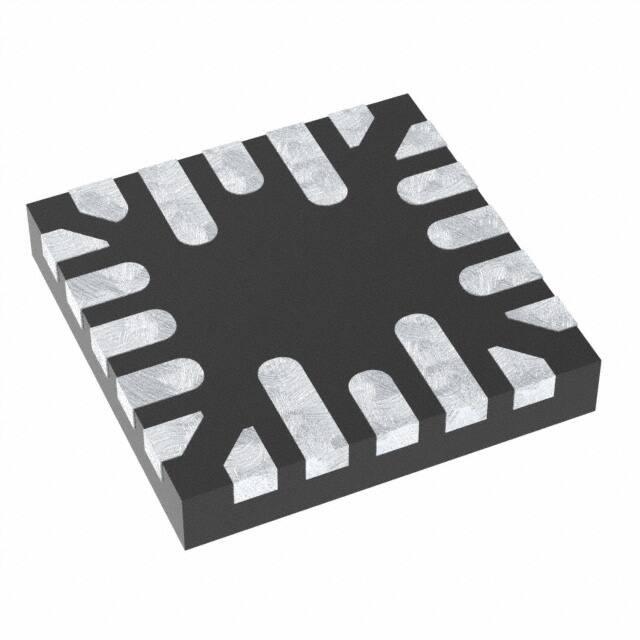




 工商网监
湘ICP备2023018690号
工商网监
湘ICP备2023018690号