LIS33DE
MEMS motion sensor 3-axis - ±2g/±8g smart digital output “nano” accelerometer
Features
■ ■ ■ ■ ■ ■ ■ ■ ■
2.16 V to 3.6 V supply voltage 1.8 V compatible IOs < 1 mW power consumption ± 2g/± 8g dynamically selectable full-scale I2C/SPI digital output interface Programmable interrupt generator Embedded self test 10000g high shock survivability ECOPACK® RoHS and “Green” compliant (see Section 8) The IC interface is manufactured using a CMOS process that allows to design a dedicated circuit which is trimmed to better match the sensing element characteristics. The LIS33DE has dynamically user selectable full scales of ±2g/±8g and it is capable of measuring accelerations with an output data rate of 100 Hz or 400 Hz. A self-test capability allows the user to check the functioning of the sensor in the final application. The device may be configured to generate inertial wake-up/free-fall interrupt signals when a programmable acceleration threshold is crossed at least in one of the three axis. Thresholds and timing of interrupt generator are programmable by the end user on the fly. The LIS33DE is available in plastic Thin Land Grid Array package (LGA) and it is designed to operate over an extended temperature range from -40°C to +85°C.
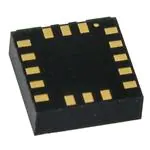
LGA 16 (3x3x1mm3)
Applications
■ ■ ■ ■
Portrait - landascape image rotation in mobile phones and PDA Motion activated user interfaces Gaming Motion triggered wake-up
Description
The LIS33DE is an ultra compact low-power three axis linear accelerometer belonging to the “nano” family of ST motion sensors. It includes a sensing element and an IC interface able to provide the measured acceleration to the external world through I2C/SPI serial interface. The sensing element is manufactured using a dedicated process developed by ST to produce inertial sensors and actuators in silicon. Table 1. Device summary
Temp range, ° C -40 to +85 -40 to +85
Order code LIS33DE LIS33DETR
Package LGA 16 LGA 16
Packing Tray Tape and reel
April 2009
Doc ID 15596 Rev 1
1/31
www.st.com 31
�Contents
LIS33DE
Contents
1 Block diagram and pin description . . . . . . . . . . . . . . . . . . . . . . . . . . . . . 5
1.1 1.2 Block diagram . . . . . . . . . . . . . . . . . . . . . . . . . . . . . . . . . . . . . . . . . . . . . . . 5 Pin description . . . . . . . . . . . . . . . . . . . . . . . . . . . . . . . . . . . . . . . . . . . . . . 5
2
Mechanical and electrical specifications . . . . . . . . . . . . . . . . . . . . . . . . 7
2.1 2.2 2.3 Mechanical characteristics . . . . . . . . . . . . . . . . . . . . . . . . . . . . . . . . . . . . . 7 Electrical characteristics . . . . . . . . . . . . . . . . . . . . . . . . . . . . . . . . . . . . . . . 8 Communication interface characteristics . . . . . . . . . . . . . . . . . . . . . . . . . . 9
2.3.1 2.3.2 SPI - serial peripheral interface . . . . . . . . . . . . . . . . . . . . . . . . . . . . . . . . 9 I2C - Inter IC control interface . . . . . . . . . . . . . . . . . . . . . . . . . . . . . . . . 10
2.4 2.5
Absolute maximum ratings . . . . . . . . . . . . . . . . . . . . . . . . . . . . . . . . . . . . 11 Terminology . . . . . . . . . . . . . . . . . . . . . . . . . . . . . . . . . . . . . . . . . . . . . . . 12
2.5.1 2.5.2 2.5.3 Sensitivity . . . . . . . . . . . . . . . . . . . . . . . . . . . . . . . . . . . . . . . . . . . . . . . . 12 Zero-g level . . . . . . . . . . . . . . . . . . . . . . . . . . . . . . . . . . . . . . . . . . . . . . 12 Self test . . . . . . . . . . . . . . . . . . . . . . . . . . . . . . . . . . . . . . . . . . . . . . . . . 12
3
Functionality . . . . . . . . . . . . . . . . . . . . . . . . . . . . . . . . . . . . . . . . . . . . . . 13
3.1 3.2 3.3 Sensing element . . . . . . . . . . . . . . . . . . . . . . . . . . . . . . . . . . . . . . . . . . . . 13 IC interface . . . . . . . . . . . . . . . . . . . . . . . . . . . . . . . . . . . . . . . . . . . . . . . . 13 Factory calibration . . . . . . . . . . . . . . . . . . . . . . . . . . . . . . . . . . . . . . . . . . 13
4
Application hints . . . . . . . . . . . . . . . . . . . . . . . . . . . . . . . . . . . . . . . . . . . 14
4.1 Soldering information . . . . . . . . . . . . . . . . . . . . . . . . . . . . . . . . . . . . . . . . 14
5
Digital interfaces . . . . . . . . . . . . . . . . . . . . . . . . . . . . . . . . . . . . . . . . . . . 15
5.1 5.2 I2C serial interface . . . . . . . . . . . . . . . . . . . . . . . . . . . . . . . . . . . . . . . . . . 15
5.1.1 I2C operation . . . . . . . . . . . . . . . . . . . . . . . . . . . . . . . . . . . . . . . . . . . . . 16
SPI bus interface . . . . . . . . . . . . . . . . . . . . . . . . . . . . . . . . . . . . . . . . . . . 17
5.2.1 5.2.2 5.2.3 SPI read . . . . . . . . . . . . . . . . . . . . . . . . . . . . . . . . . . . . . . . . . . . . . . . . . 18 SPI write . . . . . . . . . . . . . . . . . . . . . . . . . . . . . . . . . . . . . . . . . . . . . . . . 19 SPI read in 3-wires mode . . . . . . . . . . . . . . . . . . . . . . . . . . . . . . . . . . . 20
6
Register mapping . . . . . . . . . . . . . . . . . . . . . . . . . . . . . . . . . . . . . . . . . . 21
2/31
Doc ID 15596 Rev 1
�LIS33DE
Contents
7
Register description . . . . . . . . . . . . . . . . . . . . . . . . . . . . . . . . . . . . . . . . 22
7.1 7.2 7.3 7.4 7.5 7.6 7.7 7.8 7.9 7.10 7.11 CTRL_REG1 (20h) . . . . . . . . . . . . . . . . . . . . . . . . . . . . . . . . . . . . . . . . . . 22 CTRL_REG2 (21h) . . . . . . . . . . . . . . . . . . . . . . . . . . . . . . . . . . . . . . . . . . 23 CTRL_REG3 [Interrupt CTRL register] (22h) . . . . . . . . . . . . . . . . . . . . . . 23 STATUS_REG (27h) . . . . . . . . . . . . . . . . . . . . . . . . . . . . . . . . . . . . . . . . . 24 OUT_X (29h) . . . . . . . . . . . . . . . . . . . . . . . . . . . . . . . . . . . . . . . . . . . . . . 25 OUT_Y (2Bh) . . . . . . . . . . . . . . . . . . . . . . . . . . . . . . . . . . . . . . . . . . . . . . 25 OUT_Z (2Dh) . . . . . . . . . . . . . . . . . . . . . . . . . . . . . . . . . . . . . . . . . . . . . . 25 FF_WU_CFG (30h) . . . . . . . . . . . . . . . . . . . . . . . . . . . . . . . . . . . . . . . . . 25 FF_WU_SRC (31h) . . . . . . . . . . . . . . . . . . . . . . . . . . . . . . . . . . . . . . . . . 26 FF_WU_THS (32h) . . . . . . . . . . . . . . . . . . . . . . . . . . . . . . . . . . . . . . . . . 27 FF_WU_DURATION (33h) . . . . . . . . . . . . . . . . . . . . . . . . . . . . . . . . . . . . 27
8 9
Package information . . . . . . . . . . . . . . . . . . . . . . . . . . . . . . . . . . . . . . . . 28 Revision history . . . . . . . . . . . . . . . . . . . . . . . . . . . . . . . . . . . . . . . . . . . 29
Doc ID 15596 Rev 1
3/31
�List of tables
LIS33DE
List of tables
Table 1. Table 2. Table 3. Table 4. Table 5. Table 6. Table 7. Table 8. Table 9. Table 10. Table 11. Table 12. Table 13. Table 14. Table 15. Table 16. Table 17. Table 18. Table 19. Table 20. Table 21. Table 22. Table 23. Table 24. Table 25. Table 26. Table 27. Table 28. Table 29. Table 30. Table 31. Table 32. Table 33. Table 34. Table 35. Table 36. Device summary . . . . . . . . . . . . . . . . . . . . . . . . . . . . . . . . . . . . . . . . . . . . . . . . . . . . . . . . . . 1 Pin description . . . . . . . . . . . . . . . . . . . . . . . . . . . . . . . . . . . . . . . . . . . . . . . . . . . . . . . . . . . 7 Mechanical characteristics @ Vdd=2.5V . . . . . . . . . . . . . . . . . . . . . . . . . . . . . . . . . . . . . . . 8 Electrical characteristics @ Vdd=2.5V . . . . . . . . . . . . . . . . . . . . . . . . . . . . . . . . . . . . . . . . . 9 SPI slave timing values. . . . . . . . . . . . . . . . . . . . . . . . . . . . . . . . . . . . . . . . . . . . . . . . . . . . 10 I2C slave timing values . . . . . . . . . . . . . . . . . . . . . . . . . . . . . . . . . . . . . . . . . . . . . . . . . . . . 11 Absolute maximum ratings . . . . . . . . . . . . . . . . . . . . . . . . . . . . . . . . . . . . . . . . . . . . . . . . . 12 Serial interface pin description . . . . . . . . . . . . . . . . . . . . . . . . . . . . . . . . . . . . . . . . . . . . . . 16 Serial interface pin description . . . . . . . . . . . . . . . . . . . . . . . . . . . . . . . . . . . . . . . . . . . . . . 16 Transfer when Master is writing one byte to slave . . . . . . . . . . . . . . . . . . . . . . . . . . . . . . . 17 Transfer when Master is writing multiple bytes to slave:. . . . . . . . . . . . . . . . . . . . . . . . . . . 17 Transfer when Master is receiving (reading) one byte of data from slave: . . . . . . . . . . . . . 17 Transfer when Master is receiving (reading) one byte of data from slave . . . . . . . . . . . . . 17 Transfer when Master is receiving (reading) multiple bytes of data from slave . . . . . . . . . 18 Register address map. . . . . . . . . . . . . . . . . . . . . . . . . . . . . . . . . . . . . . . . . . . . . . . . . . . . . 22 CTRL_REG1 (20h) register . . . . . . . . . . . . . . . . . . . . . . . . . . . . . . . . . . . . . . . . . . . . . . . . 23 CTRL_REG1 (20h) register description . . . . . . . . . . . . . . . . . . . . . . . . . . . . . . . . . . . . . . . 23 CTRL_REG2 (21h) register . . . . . . . . . . . . . . . . . . . . . . . . . . . . . . . . . . . . . . . . . . . . . . . . 24 CTRL_REG2 (21h) register description . . . . . . . . . . . . . . . . . . . . . . . . . . . . . . . . . . . . . . . 24 CTRL_REG3 (22h) register . . . . . . . . . . . . . . . . . . . . . . . . . . . . . . . . . . . . . . . . . . . . . . . . 24 CTRL_REG3 (22h) register description . . . . . . . . . . . . . . . . . . . . . . . . . . . . . . . . . . . . . . . 24 Data signal on INT pad control bits. . . . . . . . . . . . . . . . . . . . . . . . . . . . . . . . . . . . . . . . . . . 25 STATUS_REG (27h) register . . . . . . . . . . . . . . . . . . . . . . . . . . . . . . . . . . . . . . . . . . . . . . . 25 STATUS_REG (27h) register description . . . . . . . . . . . . . . . . . . . . . . . . . . . . . . . . . . . . . . 25 OUT_X (29h) register . . . . . . . . . . . . . . . . . . . . . . . . . . . . . . . . . . . . . . . . . . . . . . . . . . . . . 26 OUT_Y (2Bh) register . . . . . . . . . . . . . . . . . . . . . . . . . . . . . . . . . . . . . . . . . . . . . . . . . . . . . 26 OUT_Z (2Dh) register . . . . . . . . . . . . . . . . . . . . . . . . . . . . . . . . . . . . . . . . . . . . . . . . . . . . . 26 FF_WU_CFG (30h) register . . . . . . . . . . . . . . . . . . . . . . . . . . . . . . . . . . . . . . . . . . . . . . . . 26 FF_WU_CFG (30h) register description . . . . . . . . . . . . . . . . . . . . . . . . . . . . . . . . . . . . . . . 26 FF_WU_SRC (31h) register . . . . . . . . . . . . . . . . . . . . . . . . . . . . . . . . . . . . . . . . . . . . . . . . 27 FF_WU_SRC (31h) register description . . . . . . . . . . . . . . . . . . . . . . . . . . . . . . . . . . . . . . . 27 FF_WU_THS (32h) register . . . . . . . . . . . . . . . . . . . . . . . . . . . . . . . . . . . . . . . . . . . . . . . . 28 FF_WU_THS (32h) register description . . . . . . . . . . . . . . . . . . . . . . . . . . . . . . . . . . . . . . . 28 FF_WU_DURATION (33h) register . . . . . . . . . . . . . . . . . . . . . . . . . . . . . . . . . . . . . . . . . . 28 FF_WU_DURATION (33h) register description . . . . . . . . . . . . . . . . . . . . . . . . . . . . . . . . . 28 Document revision history . . . . . . . . . . . . . . . . . . . . . . . . . . . . . . . . . . . . . . . . . . . . . . . . . 30
4/31
Doc ID 15596 Rev 1
�LIS33DE
List of figures
List of figures
Figure 1. Figure 2. Figure 3. Figure 4. Figure 5. Figure 6. Figure 7. Figure 8. Figure 9. Figure 10. Figure 11. Figure 12. Block diagram . . . . . . . . . . . . . . . . . . . . . . . . . . . . . . . . . . . . . . . . . . . . . . . . . . . . . . . . . . . . 6 Pin connection . . . . . . . . . . . . . . . . . . . . . . . . . . . . . . . . . . . . . . . . . . . . . . . . . . . . . . . . . . . 6 SPI slave timing diagram . . . . . . . . . . . . . . . . . . . . . . . . . . . . . . . . . . . . . . . . . . . . . . . . . . 10 I2C slave timing diagram . . . . . . . . . . . . . . . . . . . . . . . . . . . . . . . . . . . . . . . . . . . . . . . . . . 11 LIS33DE electrical connection . . . . . . . . . . . . . . . . . . . . . . . . . . . . . . . . . . . . . . . . . . . . . . 15 Read and write protocol . . . . . . . . . . . . . . . . . . . . . . . . . . . . . . . . . . . . . . . . . . . . . . . . . . . 18 SPI read protocol . . . . . . . . . . . . . . . . . . . . . . . . . . . . . . . . . . . . . . . . . . . . . . . . . . . . . . . . 19 Multiple bytes SPI read protocol (2 bytes example) . . . . . . . . . . . . . . . . . . . . . . . . . . . . . . 20 SPI write protocol . . . . . . . . . . . . . . . . . . . . . . . . . . . . . . . . . . . . . . . . . . . . . . . . . . . . . . . . 20 Multiple bytes SPI write protocol (2 bytes example) . . . . . . . . . . . . . . . . . . . . . . . . . . . . . . 20 SPI read protocol in 3-wires mode . . . . . . . . . . . . . . . . . . . . . . . . . . . . . . . . . . . . . . . . . . . 21 LGA 16: mechanical data and package dimensions. . . . . . . . . . . . . . . . . . . . . . . . . . . . . . 29
Doc ID 15596 Rev 1
5/31
�Block diagram and pin description
LIS33DE
1
1.1
Block diagram and pin description
Block diagram
Figure 1. Block diagram
X+ Y+ Z+
CHARGE AMPLIFIER
MUX C ONVERTER
CS
a
ZYX-
A/D
I2C CONTROL LOGIC SPI
SCL/SPC SDA/SDO/SDI SDO
SELF TEST
REFERENCE
TRIMMING CIRCUITS
CONTROL LOGIC CLOCK
&
INT
INTERRUPT GEN.
1.2
Pin description
Figure 2. Pin connection
Z
Pin 1 indicator
X
1
13
1
9 Y (TOP VIEW) (BOTTOM VIEW)
5
DIRECTION OF THE DETECTABLE ACCELERATIONS
6/31
Doc ID 15596 Rev 1
�LIS33DE Table 2.
Pin# 1 2 3 4 5 6
Block diagram and pin description Pin description
Name Vdd_IO NC NC SCL SPC GND SDA SDI SDO SDO CS Reserved Reserved INT GND GND Vdd Reserved GND Power supply for I/O pins Not connected Not connected I2C serial clock (SCL) SPI serial port clock (SPC) 0 V supply I2C serial data (SDA) SPI serial data input (SDI) 3-wire interface serial data output (SDO) SPI serial data output I2C less significant bit of the device address SPI enable I2C/SPI mode selection (1: I2C mode; 0: SPI enabled) Leave unconnected Connect to Gnd Inertial interrupt 0 V supply 0 V supply Power supply Connect to Vdd 0V supply Function
7 8 9 10 11 12 13 14 15 16
Doc ID 15596 Rev 1
7/31
�Mechanical and electrical specifications
LIS33DE
2
2.1
Mechanical and electrical specifications
Mechanical characteristics
T = 25°C unless otherwise noted
Table 3.
Symbol FS Dres So TCSO TyOff TCOff
Mechanical characteristics @ Vdd=2.5V (1)
Parameter Measurement range Device resolution Sensitivity Sensitivity change vs temperature Typical zero-g level offset accuracy(4) Zero-g level change vs temperature Test conditions FS bit set to 0 FS bit set to 1 FS bit set to 0 FS bit set to 0 FS bit set to 1 FS bit set to 0 FS bit set to 0 FS bit set to 1 Max delta from 25°C FS bit set to 0 STP bit used X axis 15 61
(3)
Min. ±2.0
Typ.(2) ±2.3 ±9.2 72 18 72 ±0.01 ±60 ±80 ±0.5
Max.
Unit g mg
21 83
mg/digit %/°C mg mg mg/°C
-3
-19
-32
LSb
Vst
Self test output change(5),(6),(7)
FS bit set to 0 STP bit used Y axis FS bit set to 0 STP bit used Z axis
3
19
32
LSb
-3
-19 ODR/2
-32
LSb Hz
BW Top Wh
System bandwidth(8) Operating temperature range Product weight -40
+85 20
°C mgram
1. The product is factory calibrated at 2.5 V. The device can be used from 2.16 V to 3.6 V. 2. Typical specifications are not guaranteed. 3. Verified by wafer level test and measurement of initial offset and sensitivity. 4. Typical zero-g level offset value after MSL3 preconditioning. 5. If STM bit is used, values change in sign for all axes. 6. Self Test output changes with the power supply. “Self Test Output Change” is defined as OUTPUT[LSb](Self-test bit on ctrl_reg1=1) -OUTPUT[LSb](Self-test bit on ctrl_reg1=0). 1LSb=4.6g/256 at 8bit representation, ±2.3g full-scale. 7. Output data reach 99% of final value after 3/ODR when enabling self-test mode due to device filtering. 8. ODR is Output Data Rate. Refer to Table 4 for specifications.
8/31
Doc ID 15596 Rev 1
�LIS33DE
Mechanical and electrical specifications
2.2
Electrical characteristics
T = 25°C unless otherwise noted
Table 4.
Symbol Vdd Vdd_IO Idd IddPdn VIH VIL VOH VOL
Electrical characteristics @ Vdd=2.5V (1)
Parameter Supply voltage I/O pins supply voltage Supply current Current consumption in power-down mode Digital high level Input voltage Digital low level input voltage High level output voltage Low level output voltage DR=0 100 Hz DR=1 400 ODR/2 3/ODR -40 +85 Hz s 0.9*Vdd _IO 0.1*Vdd _IO
(3)
Test conditions
Min. 2.16 1.71
Typ.(2) 2.5
Max. 3.6 Vdd+0.1
Unit V V mA µA V
T = 25°C, ODR=100 Hz T = 25°C 0.8*Vdd _IO
0.3 1
0.45 5
0.2*Vdd _IO
V V V
ODR BW Ton Top
Output data rate System bandwidth(4) Turn-on time
(5)
Operating temperature range
°C
1. The product is factory calibrated at 2.5V. The device can be used from 2.16V to 3.6V. 2. Typical specification are not guaranteed. 3. It is possible to remove Vdd maintaining Vdd_IO without blocking the communication busses, in this condition the measurement chain is powered off. 4. Filter cut-off frequency. 5. Time to obtain valid data after exiting Power-Down mode.
Doc ID 15596 Rev 1
9/31
�Mechanical and electrical specifications
LIS33DE
2.3
2.3.1
Communication interface characteristics
SPI - serial peripheral interface
Subject to general operating conditions for Vdd and top. Table 5.
Symbol tc(SPC) fc(SPC) tsu(CS) th(CS) tsu(SI) th(SI) tv(SO) th(SO) tdis(SO) SPI clock cycle SPI clock frequency CS setup time CS hold time SDI input setup time SDI input hold time SDO valid output time SDO output hold time SDO output disable time 6 50 5 8 5 15 50 ns
SPI slave timing values
Value(1) Parameter Min 100 10 Max ns MHz Unit
1. Values are guaranteed at 10 MHz clock frequency for SPI with both 4 and 3 wires, based on characterization results, not tested in production
Figure 3.
SPI slave timing diagram (a)
CS
(3)
(3)
tsu(CS)
tc(SPC)
th(CS)
(3)
SPC
(3)
tsu(SI)
th(SI)
MSB IN LSB IN (3)
SDI
(3)
tv(SO)
th(SO)
LSB OUT
tdis(SO)
(3)
SDO
(3)
MSB OUT
3. When no communication is on-going, data on CS, SPC, SDI and SDO are driven by internal pull-up resistors
a. Measurement points are done at 0.2·Vdd_IO and 0.8·Vdd_IO, for both Input and Output port
10/31
Doc ID 15596 Rev 1
�LIS33DE
Mechanical and electrical specifications
2.3.2
I2C - Inter IC control interface
Subject to general operating conditions for Vdd and top.
Table 6.
Symbol f(SCL) tw(SCLL) tw(SCLH) tsu(SDA) th(SDA)
I2C slave timing values
I2C standard mode(1) Parameter Min. SCL clock frequency SCL clock low time SCL clock high time SDA setup time SDA data hold time SDA and SCL rise time SDA and SCL fall time START condition hold time Repeated START condition setup time STOP condition setup time Bus free time between STOP and START condition 4 4.7 4 4.7 0 4.7 4.0 250 0.01 3.45 1000 300 Max. 100 Min. 0 1.3 µs 0.6 100 0.01 20 + 0.1Cb (2) 20 + 0.1Cb (2) 0.6 0.6 µs 0.6 1.3 0.9 300 ns 300 ns µs Max. 400 KHz I2C fast mode (1) Unit
tr(SDA) tr(SCL) tf(SDA) tf(SCL) th(ST) tsu(SR) tsu(SP) tw(SP:SR)
1. Data based on standard I2C protocol requirement, not tested in production 2. Cb = total capacitance of one bus line, in pF
Figure 4.
I2C slave timing diagram (b)
REPEATED START START tsu(SR)
SDA
tw(SP:SR)
START
tf(SDA)
tr(SDA)
tsu(SDA)
th(SDA) tsu(SP) STOP
SCL
th(ST)
tw(SCLL)
tw(SCLH)
tr(SCL)
tf(SCL)
b. Measurement points are done at 0.2·Vdd_IO and 0.8·Vdd_IO, for both ports
Doc ID 15596 Rev 1
11/31
�Mechanical and electrical specifications
LIS33DE
2.4
Absolute maximum ratings
Stresses above those listed as “Absolute maximum ratings” may cause permanent damage to the device. This is a stress rating only and functional operation of the device under these conditions is not implied. Exposure to maximum rating conditions for extended periods may affect device reliability. Table 7.
Symbol Vdd Vdd_IO Vin Supply voltage I/O pins supply voltage Input voltage on any control pin (CS, SCL/SPC, SDA/SDI/SDO) Acceleration (any axis, powered, Vdd=2.5V) 10000g for 0.1 ms 3000g for 0.5 ms AUNP TOP TSTG ESD Acceleration (any axis, unpowered) 10000g for 0.1 ms Operating temperature range Storage temperature range Electrostatic discharge protection -40 to +85 -40 to +125 0 - 2 (HBM) °C °C KV
Absolute maximum ratings
Ratings Maximum value -0.3 to 6 -0.3 to 6 -0.3 to Vdd_IO +0.3 3000g for 0.5 ms Unit V V V
APOW
Note:
Supply voltage on any pin should never exceed 6.0 V This is a Mechanical Shock sensitive device, improper handling can cause permanent damages to the part This is an ESD sensitive device, improper handling can cause permanent damages to the part
12/31
Doc ID 15596 Rev 1
�LIS33DE
Mechanical and electrical specifications
2.5
2.5.1
Terminology
Sensitivity
Sensitivity describes the gain of the sensor and can be determined e.g. by applying 1g acceleration to it. As the sensor can measure DC accelerations this can be done easily by pointing the axis of interest towards the center of the earth, noting the output value, rotating the sensor by 180 degrees (pointing to the sky) and noting the output value again. By doing so, ±1g acceleration is applied to the sensor. Subtracting the larger output value from the smaller one and dividing the result by 2, leads to the actual sensitivity of the sensor. This value changes very little over temperature and also time. The Sensitivity tolerance describes the range of sensitivities of a large population of sensors.
2.5.2
Zero-g level
Zero-g level Offset (TyOff) describes the deviation of an actual output signal from the ideal output signal if no acceleration is present. A sensor in a steady state on a horizontal surface measure 0g in X axis and 0g in Y axis whereas the Z axis measure 1g. The output is ideally in the middle of the dynamic range of the sensor (content of OUT registers 00h, data expressed as 2’s complement number). A deviation from ideal value in this case is called Zero-g offset. Offset is to some extent a result of stress to MEMS sensor and therefore the offset can slightly change after mounting the sensor onto a printed circuit board or exposing it to extensive mechanical stress. Offset changes little over temperature, see “Zero-g level change vs. temperature”. The Zero-g level tolerance (TyOff) describes the Standard Deviation of the range of Zero-g levels of a population of sensors.
2.5.3
Self test
Self Test allows to check the sensor functionality without moving it. The Self Test function is off when the self-test bit of CTRL_REG1 (control register 1) is programmed to ‘0‘. When the self-test bit of CTRL_REG1 is programmed to ‘1‘ an actuation force is applied to the sensor, simulating a definite input acceleration. In this case the sensor outputs exhibit a change in their DC levels which are related to the selected full scale through the device sensitivity. When self test is activated, the device output level is given by the algebraic sum of the signals produced by the acceleration acting on the sensor and by the electrostatic test-force. If the output signals change within the amplitude specified inside Table 3, then the sensor is working properly and the parameters of the interface chip are within the defined specifications.
Doc ID 15596 Rev 1
13/31
�Functionality
LIS33DE
3
Functionality
The LIS33DE is an ultracompact, low-power, digital output 3-axis linear accelerometer packaged in a LGA package. The complete device includes a sensing element and an IC interface able to take the information from the sensing element and to provide a signal to the external world through an I2C/SPI serial interface.
3.1
Sensing element
A proprietary process is used to create a surface micro-machined accelerometer. The technology allows to carry out suspended silicon structures which are attached to the substrate in a few points called anchors and are free to move in the direction of the sensed acceleration. To be compatible with the traditional packaging techniques a cap is placed on top of the sensing element to avoid blocking the moving parts during the moulding phase of the plastic encapsulation. When an acceleration is applied to the sensor the proof mass displaces from its nominal position, causing an imbalance in the capacitive half-bridge. This imbalance is measured using charge integration in response to a voltage pulse applied to the capacitor. At steady state the nominal value of the capacitors are few pF and when an acceleration is applied the maximum variation of the capacitive load is in fF range.
3.2
IC interface
The complete measurement chain is composed by a low-noise capacitive amplifier which converts the capacitive unbalancing of the MEMS sensor into an analog voltage that is finally available to the user by analog-to-digital converters. The acceleration data may be accessed through an I2C/SPI interface thus making the device particularly suitable for direct interfacing with a microcontroller. The LIS33DE features a data-ready signal (RDY) which indicates when a new set of measured acceleration data is available thus simplifying data synchronization in the digital system that uses the device. The LIS33DE may also be configured to generate an inertial Wake-Up and Free-Fall interrupt signal accordingly to a programmed acceleration event along the enabled axes.
3.3
Factory calibration
The IC interface is factory calibrated for sensitivity (So) and Zero-g level (TyOff). The trimming values are stored inside the device in a non volatile memory. Any time the device is turned on, the trimming parameters are downloaded into the registers to be used during the normal operation. This allows to use the device without further calibration.
14/31
Doc ID 15596 Rev 1
�LIS33DE
Application hints
4
Application hints
Figure 5. LIS33DE electrical connection
Vdd
10uF Vdd_IO
16
14
1
TOP VIEW
13
100nF
INT
5 6 8
9
SDA/SDI/SDO
SCL/SPC
SDO
GND
Digital signal from/to signal controller.Signal’s levels are defined by proper selection of Vdd_IO
The device core is supplied through Vdd line while the I/O pads are supplied through Vdd_IO line. Power supply decoupling capacitors (100 nF ceramic, 10 µF Al) should be placed as near as possible to the pin 14 of the device (common design practice). All the voltage and ground supplies must be present at the same time to have proper behavior of the IC (refer to Figure 5). It is possible to remove Vdd maintaining Vdd_IO without blocking the communication bus, in this condition the measurement chain is powered off. The functionality of the device and the measured acceleration data is selectable and accessible through the I2C/SPI interface.When using the I2C, CS must be tied high. The functions, the threshold and the timing of the interrupt pin (INT) can be completely programmed by the user through the I2C/SPI interface.
4.1
Soldering information
The LGA package is compliant with the ECOPACK®, RoHS and “Green” standard. It is qualified for soldering heat resistance according to JEDEC J-STD-020C. Leave “Pin 1 Indicator” unconnected during soldering. Land pattern and soldering recommendations are available at www.st.com/mems.
Doc ID 15596 Rev 1
CS
15/31
�Digital interfaces
LIS33DE
5
Digital interfaces
The registers embedded inside the LIS33DE may be accessed through both the I2C and SPI serial interfaces. The latter may be SW configured to operate either in 3-wire or 4-wire interface mode. The serial interfaces are mapped onto the same pads. To select/exploit the I2C interface, CS line must be tied high (i.e connected to Vdd_IO). Table 8. Serial interface pin description
Pin description SPI enable I2C/SPI mode selection (1: I2C mode; 0: SPI enabled) I2C serial clock (SCL) SPI serial port clock (SPC) I2C serial data (SDA) SPI serial data input (SDI) 3-wire interface serial data output (SDO) SPI serial data output (SDO)
Pin name CS SCL/SPC
SDA/SDI/SDO SDO
5.1
I2C serial interface
The LIS33DE I2C is a bus slave. The I2C is employed to write data into registers whose content can also be read back. The relevant I2C terminology is given in the table below. Table 9.
Term Transmitter Receiver Master Slave
Serial interface pin description
Description The device which sends data to the bus The device which receives data from the bus The device which initiates a transfer, generates clock signals and terminates a transfer The device addressed by the master
There are two signals associated with the I2C bus: the serial clock line (SCL) and the serial DAta line (SDA). The latter is a bidirectional line used for sending and receiving the data to/from the interface. Both the lines are connected to Vdd_IO through a pull-up resistor embedded inside the LIS33DE. When the bus is free both the lines are high. The I2C interface is compliant with fast mode (400 KHz) I2C standards as well as with the normal mode.
16/31
Doc ID 15596 Rev 1
�LIS33DE
Digital interfaces
5.1.1
I2C operation
The transaction on the bus is started through a START (ST) signal. A START condition is defined as a HIGH to LOW transition on the data line while the SCL line is held HIGH. After this has been transmitted by the master, the bus is considered busy. The next byte of data transmitted after the start condition contains the address of the slave in the first 7 bits and the eighth bit tells whether the Master is receiving data from the slave or transmitting data to the slave. When an address is sent, each device in the system compares the first seven bits after a start condition with its address. If they match, the device considers itself addressed by the Master. The Slave ADdress (SAD) associated to the LIS33DE is 001110xb. SDO pad can be used to modify less significant bit of the device address. If SDO pad is connected to voltage supply LSb is ‘1’ (address 0011101b) else if SDO pad is connected to ground LSb value is ‘0’ (address 0011100b). This solution permits to connect and address two different accelerometers to the same I2C lines. Data transfer with acknowledge is mandatory. The transmitter must release the SDA line during the acknowledge pulse. The receiver must then pull the data line LOW so that it remains stable low during the HIGH period of the acknowledge clock pulse. A receiver which has been addressed is obliged to generate an acknowledge after each byte of data has been received. The I2C embedded inside the LIS33DE behaves like a slave device and the following protocol must be adhered to. After the start condition (ST) a slave address is sent, once a slave acknowledge (SAK) has been returned, a 8-bit sub-address is transmitted: the 7 LSb represent the actual register address while the MSB enables address auto increment. If the MSb of the SUB field is 1, the SUB (register address) is automatically incremented to allow multiple data read/write. The slave address is completed with a Read/Write bit. If the bit is ‘1’ (Read), a repeated START (SR) condition is issued after the two sub-address bytes; if the bit is ‘0’ (Write) the Master will transmit to the slave with direction unchanged. Table 10.
Master Slave
Transfer when Master is writing one byte to slave
ST SAD + W SAK SUB SAK DATA SAK SP
Table 11.
Master Slave
Transfer when Master is writing multiple bytes to slave:
ST SAD + W SAK SUB SAK DATA SAK DATA SAK SP
Table 12.
Master Slave ST
Transfer when Master is receiving (reading) one byte of data from slave:
SAD + W SAK SUB SAK SR SAD + R SAK DATA NMAK SP
Table 13.
Master Slave ST
Transfer when Master is receiving (reading) one byte of data from slave
SAD + W SAK SUB SAK SR SAD + R SAK DATA NMAK SP
Doc ID 15596 Rev 1
17/31
�Digital interfaces Table 14.
Master Slave
LIS33DE
Transfer when Master is receiving (reading) multiple bytes of data from slave
ST SAD+W SAK SUB SAK SR SAD+R SAK DATA MAK DATA MAK DATA NMAK SP
Data are transmitted in byte format (DATA). Each data transfer contains 8 bits. The number of bytes transferred per transfer is unlimited. Data is transferred with the Most Significant bit (MSb) first. If a receiver can’t receive another complete byte of data until it has performed some other function, it can hold the clock line, SCL LOW to force the transmitter into a wait state. Data transfer only continues when the receiver is ready for another byte and releases the data line. If a slave receiver doesn’t acknowledge the slave address (i.e. it is not able to receive because it is performing some real time function) the data line must be left HIGH by the slave. The Master can then abort the transfer. A LOW to HIGH transition on the SDA line while the SCL line is HIGH is defined as a STOP condition. Each data transfer must be terminated by the generation of a STOP (SP) condition. In order to read multiple bytes, it is necessary to assert the most significant bit of the subaddress field. In other words, SUB(7) must be equal to 1 while SUB(6-0) represents the address of first register to be read. In the presented communication format MAK is master acknowledge and NMAK is No master acknowledge.
5.2
SPI bus interface
The LIS33DE SPI is a bus slave. The SPI allows to write and read the registers of the device. The Serial Interface interacts with the outside world with 4 wires: CS, SPC, SDI and SDO. Figure 6.
CS SPC SDI
RW MS AD5 AD4 AD3 AD2 AD1 AD0 DI7 DI6 DI5 DI4 DI3 DI2 DI1 DI0
Read and write protocol
SDO
DO7 DO6 DO5 DO4 DO3 DO2 DO1 DO0
CS is the Serial Port Enable and it is controlled by the SPI master. It goes low at the start of the transmission and goes back high at the end. SPC is the Serial Port Clock and it is controlled by the SPI master. It is stopped high when CS is high (no transmission). SDI and SDO are respectively the Serial Port Data Input and Output. Those lines are driven at the falling edge of SPC and should be captured at the rising edge of SPC. Both the read register and write register commands are completed in 16 clock pulses or in multiple of 8 in case of multiple bytes read/write. Bit duration is the time between two falling edges of SPC. The first bit (bit 0) starts at the first falling edge of SPC after the falling edge
18/31
Doc ID 15596 Rev 1
�LIS33DE
Digital interfaces of CS while the last bit (bit 15, bit 23, ...) starts at the last falling edge of SPC just before the rising edge of CS. bit 0: RW bit. When 0, the data DI(7:0) is written into the device. When 1, the data DO(7:0) from the device is read. In latter case, the chip will drives SDO at the start of bit 8. bit 1: MS bit. When 0, the address will remains unchanged in multiple read/write commands. When 1, the address is auto incremented in multiple read/write commands. bit 2-7: address AD(5:0). This is the address field of the indexed register. bit 8-15: data DI(7:0) (write mode). This is the data that is written into the device (MSb first). bit 8-15: data DO(7:0) (read mode). This is the data that is read from the device (MSb first). In multiple read/write commands further blocks of 8 clock periods are added. When MS bit is 0 the address used to read/write data remains the same for every block. When MS bit is 1 the address used to read/write data is incremented at every block. The function and the behavior of SDI and SDO remain unchanged.
5.2.1
SPI read
Figure 7. SPI read protocol
CS SPC SDI
RW MS AD5 AD4 AD3 AD2 AD1 AD0
SDO
DO7 DO6 DO5 DO4 DO3 DO2 DO1 DO0
The SPI read command is performed with 16 clock pulses. Multiple byte read command is performed adding blocks of 8 clock pulses at the previous one. bit 0: READ bit. The value is 1. bit 1: MS bit. When 0 do not increment address, when 1 increment address in multiple reading. bit 2-7: address AD(5:0). This is the address field of the indexed register. bit 8-15: data DO(7:0) (read mode). This is the data that is read from the device (MSb first). bit 16-... : data DO(...-8). Further data in multiple byte reading.
Doc ID 15596 Rev 1
19/31
�Digital interfaces Figure 8.
CS SPC SDI
RW MS AD5 AD4 AD3 AD2 AD1 AD0
LIS33DE Multiple bytes SPI read protocol (2 bytes example)
SDO
DO7 DO6 DO5 DO4 DO3 DO2 DO1 DO0 DO15 DO14 DO13 DO12 DO11 DO10 DO9 DO8
5.2.2
SPI write
Figure 9.
CS SPC SDI
RW MS AD5 AD4 AD3 AD2 AD1 AD0 DI7 DI6 DI5 DI4 DI3 DI2 DI1 DI0
SPI write protocol
The SPI Write command is performed with 16 clock pulses. Multiple byte write command is performed adding blocks of 8 clock pulses at the previous one. bit 0: WRITE bit. The value is 0. bit 1: MS bit. When 0 do not increment address, when 1 increment address in multiple writing. bit 2 -7: address AD(5:0). This is the address field of the indexed register. bit 8-15: data DI(7:0) (write mode). This is the data that is written inside the device (MSb first). bit 16-... : data DI(...-8). Further data in multiple byte writing. Figure 10. Multiple bytes SPI write protocol (2 bytes example)
CS SPC SDI
RW MS AD5 AD4 AD3 AD2 AD1 AD0 DI7 DI6 DI5 DI4 DI3 DI2 DI1 DI0 DI15 DI14 DI13 DI12 DI11 DI10 DI9 DI8
20/31
Doc ID 15596 Rev 1
�LIS33DE
Digital interfaces
5.2.3
SPI read in 3-wires mode
3-wires mode is entered by setting to 1 bit SIM (SPI Serial Interface Mode selection) in CTRL_REG2. Figure 11. SPI read protocol in 3-wires mode
CS SPC SDI/O
RW MS AD5 AD4 AD3 AD2 AD1 AD0 DO7 DO6 DO5 DO4 DO3 DO2 DO1 DO0
The SPI read command is performed with 16 clock pulses: bit 0: READ bit. The value is 1. bit 1: MS bit. When 0 do not increment address, when 1 increment address in multiple reading. bit 2-7: address AD(5:0). This is the address field of the indexed register. bit 8-15: data DO(7:0) (read mode). This is the data that is read from the device (MSb first). Multiple read command is also available in 3-wires mode.
Doc ID 15596 Rev 1
21/31
�Register mapping
LIS33DE
6
Register mapping
The table given below provides a listing of the 8 bit registers embedded in the device and the related address: Table 15. Register address map
Register address Name Reserved (do not modify) Ctrl_Reg1 Ctrl_Reg2 Ctrl_Reg3 Reserved (do not modify) Status_Reg -OutX -OutY -OutZ Reserved (do not modify) FF_WU_CFG FF_WU_SRC(ack) FF_WU_THS FF_WU_DURATION Reserved (do not modify) rw r rw rw r r r r r r r rw rw rw Type Hex 00-1F 20 21 22 23-26 27 28 29 2A 2B 2C 2D 2E-2F 30 31 32 33 34-3F 011 0000 00000000 011 0001 00000000 011 0010 00000010 011 0011 00000000 Reserved 010 0111 00000000 010 1000 010 1001 010 1010 010 1011 010 1100 010 1101 output Reserved output Not used output Not used Not used 010 0000 00000111 010 0001 00000000 010 0010 00000000 Reserved Binary Reserved Default Comment
Registers marked as Reserved must not be changed. The writing to those registers may cause permanent damages to the device. The content of the registers that are loaded at boot should not be changed. They contain the factory calibration values. Their content is automatically restored when the device is powered-up.
22/31
Doc ID 15596 Rev 1
�LIS33DE
Register description
7
Register description
The device contains a set of registers which are used to control its behavior and to retrieve acceleration data. The registers address, made of 7 bits, is used to identify them and to write the data through serial interface.
7.1
CTRL_REG1 (20h)
Table 16.
DR
CTRL_REG1 (20h) register
PD FS STP STM Zen Yen Xen
Table 17.
DR PD FS STP, STM Zen Yen Xen
CTRL_REG1 (20h) register description
Data rate selection. Default value: 0 (0: 100 Hz output data rate; 1: 400 Hz output data rate) Power down control. Default value: 0 (0: power down mode; 1: active mode) Full scale selection. Default value: 0 (refer to table 2 for typical full scale value) Self test enable. Default value: 0 (0: normal mode; 1: self test P, M enabled) Z axis enable. Default value: 1 (0: Z axis disabled; 1: Z axis enabled) Y axis enable. Default value: 1 (0: Y axis disabled; 1: Y axis enabled) X axis enable. Default value: 1 (0: X axis disabled; 1: X axis enabled)
DR bit allows to select the data rate at which acceleration samples are produced. The default value is ‘0’ which corresponds to a data-rate of 100 Hz. By changing the content of DR to ‘1’ the selected data-rate will be set equal to 400 Hz. PD bit allows to turn the device out of power-down mode. The device is in power-down mode when PD= ‘0’ (default value after boot). The device is in normal mode when PD is set to ‘1’. STP, STM bits are used to activate the self-test function. When the bit is set to one, an output change will occur to the device outputs (refer to Table 2 and 3 for specification) thus allowing to check the functionality of the whole measurement chain. Zen bit enables the generation of Data Ready signal for Z-axis measurement channel when set to ‘1’. The default value is ‘1’. Yen bit enables the generation of Data Ready signal for Y-axis measurement channel when set to ’1’. The default value is ’1’. Xen bit enables the generation of Data Ready signal for X-axis measurement channel when set to ’1’. The default value is ’1’.
Doc ID 15596 Rev 1
23/31
�Register description
LIS33DE
7.2
CTRL_REG2 (21h)
Table 18.
SIM
CTRL_REG2 (21h) register
BOOT 0(1) 0(1) 0(1) 0(1) 0(1) 0(1)
1. Bit to be kept to “0” for correct device functionality.
Table 19.
SIM BOOT
CTRL_REG2 (21h) register description
SPI serial interface mode selection. Default value: 0 (0: 4-wire interface; 1: 3-wire interface) Reboot memory content. Default value: 0 (0: normal mode; 1: reboot memory content)
SIM bit selects the SPI serial interface mode. When SIM is ‘0’ (default value) the 4-wire interface mode is selected. The data coming from the device are sent to SDO pad. In 3-wire interface mode output data are sent to SDA_SDI pad. BOOT bit is used to refresh the content of internal registers stored in the flash memory block. At the device power up the content of the flash memory block is transferred to the internal registers related to trimming functions to permit a good behavior of the device itself. If for any reason the content of trimming registers is changed it is sufficient to use this bit to restore correct values. When BOOT bit is set to ‘1’ the content of internal flash is copied inside corresponding internal registers and it is used to calibrate the device. These values are factory trimmed and they are different for every accelerometer. They permit a good behavior of the device and normally they have not to be changed. At the end of the boot process the BOOT bit is set again to ‘0’.
7.3
CTRL_REG3 [Interrupt CTRL register] (22h)
Table 20.
IHL
CTRL_REG3 (22h) register
0(1) 0(2) 0(2) 0(2) ICFG2 ICFG1 ICFG0
1. Bit to be kept to “0” for correct push-pull on Interrupt pad (INT). 2. Bit to be kept to “0” for correct device functionality.
Table 21.
IHL ICFG2ICFG0
CTRL_REG3 (22h) register description
Interrupt active high, low. Default value 0. (0: active high; 1: active low) Data signal on INT pad control bits. Default value 000. (see table below)
24/31
Doc ID 15596 Rev 1
�LIS33DE
Register description
Table 22.
ICFG2 0 0 1
Data signal on INT pad control bits
(1)
ICFG1(1) 0 0 0
ICFG0(1) 0 1 0
INT pad GND FF_WU Data ready
1. These are the allowed bit configurations. Each other configuration may cause incorrect device functionality.
7.4
STATUS_REG (27h)
Table 23.
ZXYOR
STATUS_REG (27h) register
ZOR YOR XOR ZYXDA ZDA YDA XDA
Table 24.
ZYXOR
STATUS_REG (27h) register description
X, Y and Z axis data overrun. Default value: 0 (0: no overrun has occurred; 1: new data has overwritten the previous one before it is read) Z axis data overrun. Default value: 0 (0: no overrun has occurred; 1: a new data for the Z-axis has overwritten the previous one) Y axis data overrun. Default value: 0 (0: no overrun has occurred; 1: a new data for the Y-axis has overwritten the previous one) X axis data overrun. Default value: 0 (0: no overrun has occurred; 1: a new data for the X-axis has overwritten the previous one) X, Y and Z axis new data available. Default value: 0 (0: a new set of data is not yet available; 1: a new set of data is available) Z axis new data available. Default value: 0 (0: a new data for the Z-axis is not yet available; 1: a new data for the Z-axis is available) Y axis new data available. Default value: 0 (0: a new data for the Y-axis is not yet available; 1: a new data for the Y-axis is available) X axis new data available. Default value: 0 (0: a new data for the X-axis is not yet available; 1: a new data for the X-axis is available)
ZOR
YOR
XOR ZYXDA ZDA
YDA
XDA
Doc ID 15596 Rev 1
25/31
�Register description
LIS33DE
7.5
OUT_X (29h)
Table 25.
XD7
OUT_X (29h) register
XD6 XD5 XD4 XD3 XD2 XD1 XD0
X axis output data expressed as 2’s complement number.
7.6
OUT_Y (2Bh)
Table 26.
YD7
OUT_Y (2Bh) register
YD6 YD5 YD4 YD3 YD2 YD1 YD0
Y axis output data expressed as 2’s complement number.
7.7
OUT_Z (2Dh)
Table 27.
ZD7
OUT_Z (2Dh) register
ZD6 ZD5 ZD4 ZD3 ZD2 ZD1 ZD0
Z axis output data expressed as 2’s complement number.
7.8
FF_WU_CFG (30h)
Table 28.
AOI
FF_WU_CFG (30h) register
LIR ZHIE ZLIE YHIE YLIE XHIE XLIE
Table 29.
AOI
FF_WU_CFG (30h) register description
And/or combination of interrupt events. Default value: 0 (0: OR combination of interrupt events; 1: AND combination of interrupt events) Latch Interrupt request into FF_WU_SRC reg with the FF_WU_SRC reg cleared by reading FF_WU_SRC reg. Default value: 0 (0: interrupt request not latched; 1: interrupt request latched) Enable interrupt generation on Z high event. Default value: 0 (0: disable interrupt request; 1: enable interrupt request on measured accel. value higher than preset threshold) Enable interrupt generation on Z low event. Default value: 0 (0: disable interrupt request; 1: enable interrupt request on measured accel. value lower than preset threshold)
LIR
ZHIE
ZLIE
26/31
Doc ID 15596 Rev 1
�LIS33DE Table 29.
YHIE
Register description FF_WU_CFG (30h) register description (continued)
Enable interrupt generation on Y high event. Default value: 0 (0: disable interrupt request; 1: enable interrupt request on measured accel. value higher than preset threshold) Enable interrupt generation on Y low event. Default value: 0 (0: disable interrupt request; 1: enable interrupt request on measured accel. value lower than preset threshold) Enable interrupt generation on X high event. Default value: 0 (0: disable interrupt request; 1: enable interrupt request on measured accel. value higher than preset threshold) Enable interrupt generation on X low event. Default value: 0 (0: disable interrupt request; 1: enable interrupt request on measured accel. value lower than preset threshold)
YLIE
XHIE
XLIE
7.9
FF_WU_SRC (31h)
Table 30.
--
FF_WU_SRC (31h) register
IA ZH ZL YH YL XH XL
Table 31.
IA ZH ZL YH YL XH XL
FF_WU_SRC (31h) register description
Interrupt active. Default value: 0 (0: no interrupt has been generated; 1: one or more interrupts have been generated) Z high. Default value: 0 (0: no interrupt, 1: ZH event has occurred) Z low. Default value: 0 (0: no interrupt; 1: ZL event has occurred) Y high. Default value: 0 (0: no interrupt, 1: YH event has occurred) Y Low. Default value: 0 (0: no interrupt, 1: YL event has occurred) X high. Default value: 0 (0: no interrupt, 1: XH event has occurred) X low. Default value: 0 (0: no interrupt, 1: XL event has occurred)
Free-fall and wake-up source register. Read only register. Reading at this address clears FF_WU_SRC register and the FF, WU interrupt and allows the refreshment of data in the FF_WU_SRC register if the latched option is chosen.
Doc ID 15596 Rev 1
27/31
�Register description
LIS33DE
7.10
FF_WU_THS (32h)
Table 32.
DCRM
FF_WU_THS (32h) register
THS6 THS5 THS4 THS3 THS2 THS1 THS0
Table 33.
DCRM
FF_WU_THS (32h) register description
Resetting mode selection. Default value: 0 (0: counter reset; 1: counter decremented) Free-fall / wake-up Threshold: default value: 000 0010
THS6, THS0
Most significant bit (DCRM) is used to select the resetting mode of the duration counter. If DCRM=0 counter is reset when the interrupt is no more active else if DCRM=1 duration counter is decremented.
7.11
FF_WU_DURATION (33h)
Table 34.
D7
FF_WU_DURATION (33h) register
D6 D5 D4 D3 D2 D1 D0
Table 35.
D7-D0
FF_WU_DURATION (33h) register description
Duration value. Default value: 0000 0000
Duration register for free-fall/wake-up interrupt. Duration step and maximum value depend on the ODR chosen. Step 2.5 msec, from 0 to 637.5 msec if ODR=400 Hz, else step 10 msec, from 0 to 2.55 sec when ODR=100 Hz. The counter used to implement duration function is blocked when LIR=1 in configuration register and the interrupt event is verified.
28/31
Doc ID 15596 Rev 1
�LIS33DE
Package information
8
Package information
In order to meet environmental requirements, ST offers these devices in different grades of ECOPACK® packages, depending on their level of environmental compliance. ECOPACK® specifications, grade definitions and product status are available at: www.st.com. ECOPACK is an ST trademark. Figure 12. LGA 16: mechanical data and package dimensions
Dimensions Ref.
A1 A2 A3 D1 E1 L1 L2 N1 N2 M P1 P2 T1 T2 d k 0.290 0.190 0.040 2.850 2.850 0.785 0.200 3.000 3.000 1.000 2.000 0.500 1.000 0.100 0.875 1.275 0.350 0.250 0.150 0.050
mm Min. Typ. Max.
1.000
inch Min. Typ.
0.0309 0.0079 3.150 0.1122 0.1181 0.1240 3.150 0.1122 0.1181 0.1240 1.060 2.060 0.0394 0.0417 0.0787 0.0811 0.0197 0.0394 0.160 0.0016 0.0039 0.0063 0.0344 0.0502 0.410 0.0114 0.0138 0.0161 0.310 0.0075 0.0098 0.0122 0.0059 0.0020
Max.
0.0394
Outline and mechanical data
LGA16 (3x3x1.0mm) Land Grid Array Package
7983231
Doc ID 15596 Rev 1
29/31
�Revision history
LIS33DE
9
Revision history
Table 36.
Date 17-Apr-2009
Document revision history
Revision 1 Initial release Changes
30/31
Doc ID 15596 Rev 1
�LIS33DE
Please Read Carefully:
Information in this document is provided solely in connection with ST products. STMicroelectronics NV and its subsidiaries (“ST”) reserve the right to make changes, corrections, modifications or improvements, to this document, and the products and services described herein at any time, without notice. All ST products are sold pursuant to ST’s terms and conditions of sale. Purchasers are solely responsible for the choice, selection and use of the ST products and services described herein, and ST assumes no liability whatsoever relating to the choice, selection or use of the ST products and services described herein. No license, express or implied, by estoppel or otherwise, to any intellectual property rights is granted under this document. If any part of this document refers to any third party products or services it shall not be deemed a license grant by ST for the use of such third party products or services, or any intellectual property contained therein or considered as a warranty covering the use in any manner whatsoever of such third party products or services or any intellectual property contained therein.
UNLESS OTHERWISE SET FORTH IN ST’S TERMS AND CONDITIONS OF SALE ST DISCLAIMS ANY EXPRESS OR IMPLIED WARRANTY WITH RESPECT TO THE USE AND/OR SALE OF ST PRODUCTS INCLUDING WITHOUT LIMITATION IMPLIED WARRANTIES OF MERCHANTABILITY, FITNESS FOR A PARTICULAR PURPOSE (AND THEIR EQUIVALENTS UNDER THE LAWS OF ANY JURISDICTION), OR INFRINGEMENT OF ANY PATENT, COPYRIGHT OR OTHER INTELLECTUAL PROPERTY RIGHT. UNLESS EXPRESSLY APPROVED IN WRITING BY AN AUTHORIZED ST REPRESENTATIVE, ST PRODUCTS ARE NOT RECOMMENDED, AUTHORIZED OR WARRANTED FOR USE IN MILITARY, AIR CRAFT, SPACE, LIFE SAVING, OR LIFE SUSTAINING APPLICATIONS, NOR IN PRODUCTS OR SYSTEMS WHERE FAILURE OR MALFUNCTION MAY RESULT IN PERSONAL INJURY, DEATH, OR SEVERE PROPERTY OR ENVIRONMENTAL DAMAGE. ST PRODUCTS WHICH ARE NOT SPECIFIED AS "AUTOMOTIVE GRADE" MAY ONLY BE USED IN AUTOMOTIVE APPLICATIONS AT USER’S OWN RISK.
Resale of ST products with provisions different from the statements and/or technical features set forth in this document shall immediately void any warranty granted by ST for the ST product or service described herein and shall not create or extend in any manner whatsoever, any liability of ST.
ST and the ST logo are trademarks or registered trademarks of ST in various countries. Information in this document supersedes and replaces all information previously supplied. The ST logo is a registered trademark of STMicroelectronics. All other names are the property of their respective owners.
© 2009 STMicroelectronics - All rights reserved STMicroelectronics group of companies Australia - Belgium - Brazil - Canada - China - Czech Republic - Finland - France - Germany - Hong Kong - India - Israel - Italy - Japan Malaysia - Malta - Morocco - Philippines - Singapore - Spain - Sweden - Switzerland - United Kingdom - United States of America www.st.com
Doc ID 15596 Rev 1
31/31
�









 工商网监
湘ICP备2023018690号
工商网监
湘ICP备2023018690号