ST4485EB
3.3 V powered, 15 kV ESD protected, up to 20 Mbps RS-485/
RS-422 transceiver
Datasheet - production data
Guaranteed high receiver output state for
floating inputs with no signal present
Allow up to 64 transceivers on the bus
Wide operating temperature range:
-40 to +105 °C
Applications
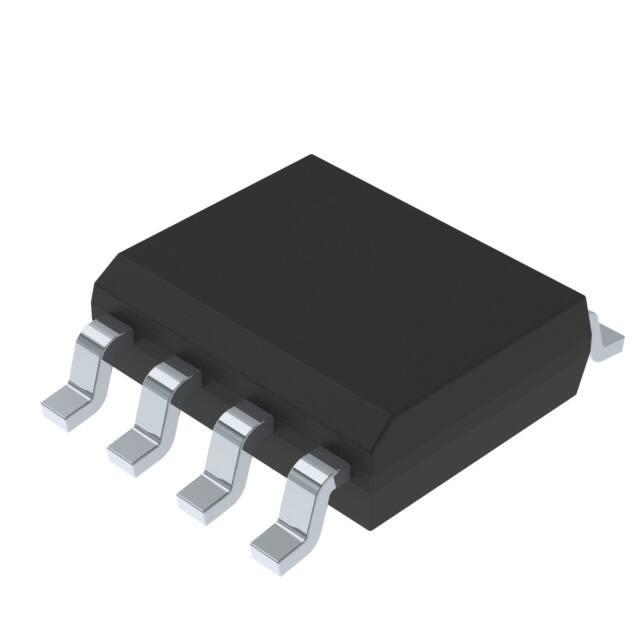
SO-8
Industrial systems control
Telecommunications
Features
Description
ESD protection
– ± 15 kV human body model
– ± 8 kV IEC 1000-4-2 contact discharge
The ST4485EB device is a ± 15 kV ESD
protected, 3.3 V low power transceiver for RS-485
and RS-422 communications. The device
contains one driver and one receiver in half
duplex configuration.
Operate from a single 3.3 V supply - no charge
pump required
Interoperable with 5 V logic
1 µA low current shutdown mode max.
The ST4485EB transmits and receives at
a guaranteed data rate of at least 20 Mbps.
All transmitter outputs and receiver inputs are
protected to ± 15 kV using “Human Body Model”.
Guaranteed 20 Mbps data rate
-7 to 12 V common mode input voltage range
Half duplex versions available
Industry standard 75176 pinout
Current limiting and thermal shutdown for
driver overload protection
The driver is short-circuit current limited and is
protected against excessive power dissipation by
thermal shutdown circuitry that places the driver
outputs into a high-impedance state.
Table 1. Device summary
Order code
Temperature range
Package
Packaging
ST4485EBDR
-40 to 105 °C
SO-8 (tape and reel)
2500 parts per reel
June 2017
This is information on a product in full production.
DocID025158 Rev 3
1/18
www.st.com
�Contents
ST4485EB
Contents
1
Pin configuration . . . . . . . . . . . . . . . . . . . . . . . . . . . . . . . . . . . . . . . . . . . . 3
2
Truth tables . . . . . . . . . . . . . . . . . . . . . . . . . . . . . . . . . . . . . . . . . . . . . . . . 4
3
Maximum ratings . . . . . . . . . . . . . . . . . . . . . . . . . . . . . . . . . . . . . . . . . . . . 5
4
Electrical characteristics . . . . . . . . . . . . . . . . . . . . . . . . . . . . . . . . . . . . . 6
5
Test circuits and typical characteristics . . . . . . . . . . . . . . . . . . . . . . . . . 9
6
Package mechanical data . . . . . . . . . . . . . . . . . . . . . . . . . . . . . . . . . . . . 14
7
Revision history . . . . . . . . . . . . . . . . . . . . . . . . . . . . . . . . . . . . . . . . . . . 17
2/18
DocID025158 Rev 3
�ST4485EB
1
Pin configuration
Pin configuration
Figure 1. Pin connections
�
9&&
�
�
%
'(
�
�
$
',
�
�
*1'
52
�
5(
5
'
&6�����
Table 2. Pin description
Pin n°
Symbol
Name and function
1
RO
Receiver output. If A > B by 200 mV, RO will be high; if A < B by 200 mV, RO will be low.
2
RE
Receiver output enable. RO is enabled when RE is low; RO is high impedance when RE
is high. If RE is high and DE is low, the device will enter a low power shutdown mode.
3
DE
Driver output enable. The driver outputs are enabled by bringing DE high. They are high
impedance when DE is low. If RE is high DE is low, the device will enter a low-power
shutdown mode. If the driver outputs are enabled, the part functions as line driver, while
they are high impedance, it functions as line receivers if RE is low.
4
DI
Driver input. A low on DI forces output A low and output B high. Similarly, a high on DI
forces output A high and output B low.
5
GND
6
A
Non-inverting receiver input and non-inverting driver output
7
B
Inverting receiver input and inverting driver output
8
VCC
Ground
Supply voltage: VCC = 3 V to 3.6 V
DocID025158 Rev 3
3/18
18
�Truth tables
2
ST4485EB
Truth tables
Table 3. Truth table (driver)
Inputs
Outputs
Mode
RE
DE
DI
B
A
X(1)
H
H
L
H
Normal
(1)
H
L
H
L
Normal
L
X(1)
Z
(2)
Z
(2)
Normal
L
(1)
Z
(2)
Z
(2)
Shutdown
X
L
H
X
1. X = don’t care.
2. Z = high impedance.
Table 4. Truth table (receiver)
Inputs
Output
Mode
RE
DE
A-B
RO
L
L
0.2 V
H
Normal
L
L
-0.2 V
L
Normal
L
L
Inputs open
H
Normal
Z(2)
Shutdown
H
L
(1)
X
1. X = don’t care.
2. Z = high impedance.
4/18
DocID025158 Rev 3
�ST4485EB
3
Maximum ratings
Maximum ratings
Table 5. Absolute maximum ratings(1)
Symbol
VCC
Parameter
Supply voltage
Value
Unit
7
V
VI
Control input voltage (RE, DE)
-0.3 to 7
V
VDI
Driver input voltage (DI)
-0.3 to 7
V
VDO
Driver output voltage (A, B)
± 14
V
VRI
Receiver input voltage (A, B)
± 14
V
VRO
Receiver output voltage (RO)
-0.3 to (VCC + 0.3)
V
1. Absolute maximum ratings are those values beyond which damage to the device may occur. Functional operation under
these condition is not implied.
Table 6. ESD performance: transmitter outputs, receiver inputs
Symbol
Parameter
Test conditions
Min.
Typ.
Max.
Unit
ESD
ESD protection voltage
Human body model
15
kV
ESD
ESD protection voltage
IEC-1000-4-2 contact discharge
8
kV
DocID025158 Rev 3
5/18
18
�Electrical characteristics
4
ST4485EB
Electrical characteristics
Table 7. Electrical characteristics (VCC = 3 V to 3.6 V, TA = -40 to 105 °C, unless otherwise
specified. Typical values are referred to TA = 25 °C)
Symbol
ISUPPLY
ISHDN
Parameter
VCC power supply current
Shutdown supply current
Test conditions
No load, DI = 0 V or VCC
Min.
Typ.
Max.
Unit
DE = VCC,
RE = 0 V or VCC
1.3
2.2
mA
DE = 0 V, RE = 0 V
1.2
1.9
mA
0.002
1
µA
DE = 0 V, RE = VCC, DI = 0 V or VCC
Table 8. Logic input electrical characteristics (VCC = 3 V to 3.6 V, TA = -40 to 105 °C, unless
otherwise specified. Typical values are referred to TA = 25 °C)
Symbol
Parameter
Test conditions
VIL
Input logic threshold low
DE, DI, RE
VIH
Input logic threshold high
DE, DI, RE
IIN1
Logic input current
DE, DI, RE
IIN2
Input current (A, B)
DE = 0 V, VCC = 0 or 3.6 V
Min.
Typ. Max. Unit
1.3
0.8
2
V
V
2.0
µA
VIN = 12 V
1
mA
VIN = -7 V
-0.8
mA
Table 9. Transmitter electrical characteristics (VCC = 3 V to 3.6 V, TA = -40 to 105 °C, unless
otherwise specified. Typical values are referred to TA = 25 °C)
Symbol
VOD
VOD
Differential drive output
Test conditions
Min.
RL= 100 (RS-422) (Figure 1)
2
V
RL= 54 (RS-485) (Figure 1)
1.5
V
RL= 60 (RS-485) (Figure 2)
1.5
V
Change in magnitude of driver differential
output voltage for complementary output RL= 54 or 100 (Figure 1)
states (1)
Typ.
Max.
Unit
0.2
V
Driver common mode output voltage
RL= 54 or 100 (Figure 1)
3
V
VOC
Change in magnitude of driver common
mode output voltage(1)
RL= 54 or 100 (Figure 1)
0.2
V
IOSD
Driver short-circuit output current
250
mA
VOC
1.
Parameter
VOD and VOC are the changes in VOD and VOC, respectively, when the DI input changes state.
6/18
DocID025158 Rev 3
�ST4485EB
Electrical characteristics
Table 10. Receiver electrical characteristics (VCC = 3 V to 3.6 V, TA = -40 to 105 °C, unless
otherwise specified. Typical values are referred to TA = 25 °C)
Symbol
Parameter
Test conditions
Min.
Typ.
Max.
Unit
0.2
V
Receiver differential
threshold voltage
VCM = -7 V to 12 V, DE = 0
VTH
Receiver input hysteresis
VCM = 0 V
VOH
Receiver output high
voltage
IOUT = -4 mA, VID = 200 mV
(Figure 8 and Figure 9)
VOL
Receiver output low
voltage
IOUT = 4 mA, VID = -200 mV, (Figure 3)
0.4
V
IOZR
3-state (high impedance)
output current at receiver
VCC = 3.6 V, VO = 0 V to VCC
1
µA
RRIN
Receiver input resistance
VCM = -7 V to 12 V
24
IOSR
Receiver short-circuit
current
VRO = 0 V to VCC
7
VTH
-0.2
70
mV
2
V
k
60
mA
Table 11. Driver switching characteristics (VCC = 3 V to 3.6 V, TA = -40 to 105 °C, unless otherwise
specified. Typical values are referred to TA = 25 °C)(1)
Symbol
Parameter
Test conditions
Min.
Typ.
Max.
Unit
DR
Maximum data rate
tDD
Differential output delay
RL= 60 , CL = 15 pF, (Figure 4 and
Figure 5)
18
30
ns
tTD
Differential output
transition time
RL= 60 , CL = 15 pF, (Figure 4 and
Figure 5)
12
20
ns
tPLH
tPHL
Propagation delay
RL= 27 , CL = 15 pF, (Figure 8 and
Figure 9)
18
30
ns
tPDS
|tPLH - tPHL| Propagation
delay skew(2)
RL= 27 , CL = 15 pF, (Figure 8 and
Figure 9)
2
5
ns
tPZL
Output enable time
RL= 110 , (Figure 10 and Figure 11)
19
35
ns
tPZH
Output enable time
RL= 110 , (Figure 6 and Figure 7)
30
50
ns
tPHZ
Output disable time
RL= 110 , (Figure 6 and Figure 7)
19
35
ns
tPLZ
Output disable time
RL= 110 (Figure 10 and Figure 11)
30
50
ns
20
Mbps
tSKEW
Differential output delay
skew
1
3
ns
tZH(SHDN)
Driver enable from
shutdown to output high
30
50
ns
tZL(SHDN)
Driver enable from
shutdown to output low
19
35
ns
1. The transceivers are put into shutdown by bring RE high and DE low. If the input are in state for less than 80 ns, the part
are guaranteed not to enter shutdown. If the inputs are in this state for at least 300 ns, the parts are guaranteed to have
entered shutdown.
2. Measured on |tPLH(A) - tPHL(A)| and |tPLH(B) - tPHL(B)|.
DocID025158 Rev 3
7/18
18
�Electrical characteristics
ST4485EB
Table 12. Receiver switching characteristics (VCC = 3 V to 3.6 V, TA = -40 to 105 °C, unless
otherwise specified. Typical values are referred to TA = 25 °C)(1)
Symbol
tPLH
tPHL
Parameter
Test conditions
Min.
Typ.
Max.
Unit
Propagation delay
VID = 0 V to 3 V, CL1 = 15 pF
(Figure 12 and Figure 13)
30
50
ns
|tPLH - tPHL| Propagation
delay skew
VID = 0 V to 3 V, CL1 = 15 pF
(Figure 12 and Figure 13)
1
3
ns
tPZL
Output enable time
CRL = 15 pF, (Figure 14 and Figure 18)
10
20
ns
tPZH
Output enable time
CRL = 15 pF, (Figure 14 and Figure 18)
10
20
ns
tPHZ
Output disable time
CRL = 15 pF, (Figure 14 and Figure 18)
10
20
ns
tPLZ
Output disable time
CRL = 15 pF, (Figure 14 and Figure 18)
10
20
ns
tZH(SHDN)
Receiver enable from
shutdown to output high
CRL = 15 pF, (Figure 14 and Figure 18)
10
20
ns
tZL(SHDN)
Receiver enable from
shutdown to output low
CRL = 15 pF, (Figure 14 and Figure 18)
20
40
µs
tRPDS
1. The transceivers are put into shutdown by bring RE high and DE low. If the input are in state for less than 80 ns, the part are
guaranteed not to enter shutdown. If the inputs are in this state for at least 300 ns, the parts are guaranteed to have entered
shutdown.
8/18
DocID025158 Rev 3
�ST4485EB
5
Test circuits and typical characteristics
Test circuits and typical characteristics
Figure 2. Driver and VOC test load
5/
'
�
92'
5/
9&&
�
92&
&6�����
Figure 3. Driver VOD with varying common mode voltage test load
9&0� ����WR�����9
'
92'
5/
9&&
&6�����9�
Figure 4. Receiver VOH and VOL test circuit
9,'
��9
5
92/
,2/
���
92+
,2+
���
&6�����
DocID025158 Rev 3
9/18
18
�Test circuits and typical characteristics
ST4485EB
Figure 5. Drive differential output delay transition time test circuit
,QSXW
'
287
&/
9&&
&/� ����S)
&6�����9�
Figure 6. Drive differential output delay transition time waveform
��9
,1
����9
����9
��9
W'2
W'2
���
287
��9
���
���
���
���
���
W7'
���9
W7'
&6�����
Figure 7. Drive enable and disable times test circuit
6�
��9�RU���9
287
'
&/� ����S)
&6�����9�
10/18
DocID025158 Rev 3
�ST4485EB
Test circuits and typical characteristics
Figure 8. Drive enable and disable times waveforms
��9
����9
,1
����9
��9
W3=+
W3+=
�����9
92+
920
287
��9
&6�����9�
Figure 9. Drive propagation time test circuit
920
6�
'
287
&/� ����S)
9&&
&6�����9�
Figure 10. Drive propagation time waveform
��9
,1
����9
����9
��9
W3/+
W3+/
92+










 工商网监
湘ICP备2023018690号
工商网监
湘ICP备2023018690号