STCMB1
TM PFC with X-cap discharge and LLC resonant combo controller
Datasheet - production data
Applications
Ac-dc adapter, open frame SMPS
SMPS for LED TV, desktop and all-in-one PC
Consumer and industrial SMPS compliant with
“Energy Using Product” directive (EuP) Lot 6,
DOE and European CoC ver. 5, Tier 2
SO20W
LED street lighting
Features
Common features
– SO20W package
– 800 V high voltage start-up with integrated
input voltage sensing
– Active input filter capacitor discharge
circuitry for reduced standby power
compliant with IEC 62368-1 and UL Demko
certified
– Independent debug mode for both
converters
PFC controller features
– Enhanced constant on-time PFC with input
voltage feedforward, THD optimizer
– Complete set of protections: ac brownin/out, inrush control, OVP, OCP, inductor
saturation, feedback disconnection
LLC controller features
– Proprietary timeshift control for improved
input ripple rejection and dynamic
response
– Half-bridge operation up to 750 kHz with
self-adjusting deadtime
– Complete set of protections: dc brown-out,
two-level OCP, hard switching prevention
(HSP) function for anti-capacitive mode
protection and safe start-up
– Synchronous burst mode operation with
PFC enhances light-load efficiency
January 2018
This is information on a product in full production.
DocID028958 Rev 4
1/59
www.st.com
�Contents
STCMB1
Contents
1
Description . . . . . . . . . . . . . . . . . . . . . . . . . . . . . . . . . . . . . . . . . . . . . . . . . 4
2
Block diagrams . . . . . . . . . . . . . . . . . . . . . . . . . . . . . . . . . . . . . . . . . . . . . 5
3
Pin connections and description . . . . . . . . . . . . . . . . . . . . . . . . . . . . . . . 6
4
Electrical ratings . . . . . . . . . . . . . . . . . . . . . . . . . . . . . . . . . . . . . . . . . . . 10
5
Thermal data . . . . . . . . . . . . . . . . . . . . . . . . . . . . . . . . . . . . . . . . . . . . . . 10
6
Electrical data . . . . . . . . . . . . . . . . . . . . . . . . . . . . . . . . . . . . . . . . . . . . . 11
7
Application information . . . . . . . . . . . . . . . . . . . . . . . . . . . . . . . . . . . . . 15
2/59
7.1
HV start-up . . . . . . . . . . . . . . . . . . . . . . . . . . . . . . . . . . . . . . . . . . . . . . . . 15
7.2
X-cap discharge . . . . . . . . . . . . . . . . . . . . . . . . . . . . . . . . . . . . . . . . . . . . 16
7.3
Ac brown-out protection . . . . . . . . . . . . . . . . . . . . . . . . . . . . . . . . . . . . . . 17
7.4
VCC pin . . . . . . . . . . . . . . . . . . . . . . . . . . . . . . . . . . . . . . . . . . . . . . . . . . 18
7.5
PFC section . . . . . . . . . . . . . . . . . . . . . . . . . . . . . . . . . . . . . . . . . . . . . . . 18
7.6
PFC: enhanced constant on-time control with THD optimizer . . . . . . . . . 18
7.7
PFC: error amplifier, regulation loop and VFF . . . . . . . . . . . . . . . . . . . . . . 23
7.8
PFC: CTON calculation . . . . . . . . . . . . . . . . . . . . . . . . . . . . . . . . . . . . . . . 24
7.9
PFC: light-load operation . . . . . . . . . . . . . . . . . . . . . . . . . . . . . . . . . . . . . 25
7.10
PFC: inductor current sensing on ground return and PFC OCP . . . . . . . 25
7.11
PFC: zero-current detector . . . . . . . . . . . . . . . . . . . . . . . . . . . . . . . . . . . . 26
7.12
Starter . . . . . . . . . . . . . . . . . . . . . . . . . . . . . . . . . . . . . . . . . . . . . . . . . . . . 26
7.13
PFC: Dynamic OVP and feedback failure protection (latched) . . . . . . . . 27
7.14
PFC gate driver . . . . . . . . . . . . . . . . . . . . . . . . . . . . . . . . . . . . . . . . . . . . 28
7.15
Resonant HB section . . . . . . . . . . . . . . . . . . . . . . . . . . . . . . . . . . . . . . . . 28
7.16
Dc brown-out function (HB enable and disable) . . . . . . . . . . . . . . . . . . . . 30
7.17
HB: timeshift control basic concept . . . . . . . . . . . . . . . . . . . . . . . . . . . . . 31
7.18
HB: oscillator . . . . . . . . . . . . . . . . . . . . . . . . . . . . . . . . . . . . . . . . . . . . . . 33
7.19
HB: Soft-start . . . . . . . . . . . . . . . . . . . . . . . . . . . . . . . . . . . . . . . . . . . . . . 35
7.20
HB: improved burst mode operation at light-load . . . . . . . . . . . . . . . . . . . 37
DocID028958 Rev 4
�STCMB1
Contents
7.21
HB: adaptive deadtime (ADT) . . . . . . . . . . . . . . . . . . . . . . . . . . . . . . . . . 38
7.22
HB: hard switching prevention (HSP) and anti-capacitive mode
protection (ACP) . . . . . . . . . . . . . . . . . . . . . . . . . . . . . . . . . . . . . . . . . . . . 41
7.23
HB: Smooth start-up function . . . . . . . . . . . . . . . . . . . . . . . . . . . . . . . . . . 43
7.24
HB: OCP management with internal digital delay and restart . . . . . . . . . 45
7.25
7.24.1
First OCP protection . . . . . . . . . . . . . . . . . . . . . . . . . . . . . . . . . . . . . . . 46
7.24.2
Second level OCP protection . . . . . . . . . . . . . . . . . . . . . . . . . . . . . . . . . 48
HB: high voltage bootstrap section and HB gate drivers
(HVG and LVG) . . . . . . . . . . . . . . . . . . . . . . . . . . . . . . . . . . . . . . . . . . . . 48
8
Debug modes . . . . . . . . . . . . . . . . . . . . . . . . . . . . . . . . . . . . . . . . . . . . . . 51
9
STCMB1 layout hints . . . . . . . . . . . . . . . . . . . . . . . . . . . . . . . . . . . . . . . 51
10
Typical application schematic . . . . . . . . . . . . . . . . . . . . . . . . . . . . . . . . 55
11
Reference . . . . . . . . . . . . . . . . . . . . . . . . . . . . . . . . . . . . . . . . . . . . . . . . . 56
12
Package information . . . . . . . . . . . . . . . . . . . . . . . . . . . . . . . . . . . . . . . . 56
12.1
13
SO20W package information . . . . . . . . . . . . . . . . . . . . . . . . . . . . . . . . . . 56
Revision history . . . . . . . . . . . . . . . . . . . . . . . . . . . . . . . . . . . . . . . . . . . 58
DocID028958 Rev 4
3/59
59
�Description
1
STCMB1
Description
The STCMB1 device embodies a transition mode (TM) PFC, a high voltage double-ended
controller for LLC resonant half-bridge, an 800 V-rated high voltage section and the glue
logic that supervises the operation of these three blocks.
The PFC section uses a proprietary constant on-time control methodology that does not
require a sinusoidal input reference, thereby reducing the system cost and external
component count.
It includes also a complete set of protections: a cycle-by-cycle overcurrent (OCP), an output
overvoltage (OVP), a feedback failure (FFP, latch-mode), an ac brown-out, boost inductor
saturation and inrush current detection both at the start-up and after mains sags or missing
cycles.
The half-bridge (HB) section provides two complementary outputs that drive the high-side
and low-side MOSFET 180° out-of-phase. The deadtime inserted between the turn-off of an
either switch and the turn-on of the other is automatically adjusted to ensure zero voltage
switching and higher efficiency from low to full load.
A proprietary control method, timeshift control - TSC, improves dynamic behavior and input
ripple rejection resulting in a cleaner output voltage.
At the light-load the IC can be forced to enter a controlled burst mode operation where both
the HB and the PFC work intermittently synchronized one to another. This helps to reduce
the average switching frequency, thus keeping converter input consumption as low as
possible.
At the start-up, in addition to the traditional soft-start based on the frequency-shift, a
proprietary hard switching prevention (HSP) function controls the half-bridge to prevent hard
switching in the initial cycles. Additionally, the HSP function prevents the converter from
working in or too close to the capacitive mode to ensure soft-switching.
The HB is provided with a two-level OCP. The first level is with the frequency shift and
delayed shutdown with an automatic restart. A fast shutdown with an automatic restart
occurs if this first-level protection cannot limit the primary current. Finally, the device
embeds the logic circuitry to coordinate the operation of the PFC, HB and HV start-up
generator; in particular: the power-on/off sequencing, X-capacitor discharge, fault handling
and synchronous burst mode operation. For the application debug purposes it is possible to
externally disable one section at a time and have the other section working standalone.
4/59
DocID028958 Rev 4
�STCMB1
2
Block diagrams
Block diagrams
Figure 1. STCMB1 block diagram
)7
)7�TUBSU�VQ
BOE
9�$"1�EJTDIBSHF
67-0�BOE�CJBT
�
NBOBHFNFOU
7#005
(%@1'$
*4&/@1'$
50/�'9
;$%
7$$
&OIBODFE
DPOTUBOU�0/� UJNF� �
5.�1'$�DPOUSPMMFS�
%JHJUBM �
DPOUSPM�VOJU
)JHI�WPMUBHF
SFTPOBOU�)#�
DPOUSPMMFS�XJUI�
UJNF �TIJGU�DPOUSPM�
$0.1
)7(
065
-7(
*4&/@)#
'#
(/%
45#:����$'�����$44���3'.*/����
".������
Figure 2. Typical system block diagram
1'$�13&�3&(6-"503
3&40/"/5�)"-'�#3*%(&
7PVUED
7JOBD
45$.#�
".������
DocID028958 Rev 4
5/59
59
�Pin connections and description
3
STCMB1
Pin connections and description
Figure 3. Pin connections, top view
)7
�
��
7#005
/�$�
�
��
)7(
065
'#
�
��
$0.1
�
��
/�$�
50/
�
��
-7(
;$%
�
��
7$$
$'
�
��
(%@1'$
$44
�
��
(/%
3'.*/
�
��
*4&/@)#
45#:
��
��
*4&/@1'$
".������
Table 1. Pin description
Pin
no.
Name
Function
1
HV
High voltage start-up generator / ac voltage sensing input. The pin, able to withstand 800 V, has
to be connected to the ac side of the input bridge via a pair of diodes (1N400x type) to sense
the ac input voltage.
If the voltage on the pin is higher than 20 V (typical value), an internal pull-up circuit charges the
capacitor connected between the VCC pin and GND. Initially the current is low for safety in
case of a shorted VCC, and then it goes to the normal level as far as the VCC pin reaches the
start-up threshold. To reduce the hold-up requirement on the VCC cap, the generator is turned
off when the half-bridge section starts up. In case of a fault that prevents the half-bridge from
starting up, the HV generator is shut down after a timeout of 80 ms.
The generator is re-enabled when the voltage on the VCC pin falls below the UVLO threshold.
In case of a latched shutdown, when the VCC cycles between the start-up threshold and the
UVLO threshold, the current is reduced to keep power dissipation low. The same occurs in
case of a restart after a fault to create a longer restart delay.
The pin is used also to sense the ac voltage, which is used by the input voltage feedforward
and the ac brown-out functions. When a brown-out condition is detected any latched protection
converging on the FB pin is cleared.
An internal logic circuit detects that the unit has been detached from the power line and
activates the high voltage start-up generator to discharge the X-capacitors of the EMI filter to
a safe level. This allows the unit to meet safety regulations (such as IEC 61010-1 or
IEC 62368-1) without using the traditional discharge resistor in parallel to the X-capacitor, thus
saving the associated power losses and enabling ultra-low consumption in standby conditions.
A series resistor between 3 k and 9 k has to be mandatorily inserted in series to the pin.
2,
17
N.C.
High voltage spacer. These pins are not internally connected to isolate the high voltage
sections and ease compliance with safety regulations (creepage distance) on the PCB.
6/59
DocID028958 Rev 4
�STCMB1
Pin connections and description
Table 1. Pin description (continued)
Pin
no.
Name
Function
3
FB
Being the pin uncommitted, its voltage is proportional to the instantaneous output voltage of the
PFC stage. Under steady state conditions the voltage on the pin sits at the internal reference of
the error amplifier (2.5 V). If the voltage exceeds the steady state value by 7% (e.g.: due to an
output voltage overshoot) switching is stopped until it gets back close to it.
If the FB voltage falls below 0.5 V, a failure of the output divider is assumed and both the PFC
stage and the half-bridge are latched off. The HV start-up generator is intermittently turned on
to keep the device supplied. To restart the device it is necessary to disconnect the unit from the
input source.
As the input voltage monitor for the half-bridge, the pin handles power-on and power-off
sequencing. As the device is turned on, the PFC stage starts first and the half-bridge is kept
disabled until the FB voltage exceeds 2.4 V. In case the voltage is already above 2.4 V as the
PFC starts, the half-bridge waits 0.2 ms before starting, so to have always consistent power-on
sequencing. The half-bridge is again inhibited as the voltage on the pin falls below 1.75 V
(dc brown-out).
4
COMP
To avoid an uncontrolled rise of the output voltage at the zero load, when the voltage on the pin
falls below 1 V (typical value) the gate driver output will be inhibited (burst mode operation).
5
TON
Maximum on-time of the PFC MOSFET. A resistor and a capacitor in parallel are connected
from this pin to ground. When the MOSFET of the PFC stage is ON an internal current
generator produces a ramp that, along with the voltage on the COMP pin, determines the turnoff instant of the MOSFET.
6
ZCD
Boost inductor's demagnetization sensing input. A negative-going edge triggers the PFC
MOSFET's turn-on. The pin can be connected to an auxiliary winding of the boost inductor
through a resistor or to the drain of the MOSFET via an RC series.
7
8
9
CF
Timing capacitor for HB oscillator. A capacitor connected from this pin to GND is charged by an
internal current generator programmed by the external network connected to the RFMIN pin. In
each half cycle the ramp starts as the tank current (sensed through the ISEN_HB pin) and the
applied square wave voltage has the same sign ( e.g.: ISEN_HB positive during the high-side
MOSFET on-time and ISEN_HB negative during low-side MOSFET on-time ). The ramp is
reset as a fixed peak value is reached. This also causes the HB to be toggled.
CSS
HB soft-start. This pin connects an external capacitor to GND and a resistor to the RFMIN pin
that set both the initial oscillator frequency and the time constant for the frequency shift that
occurs as the chip starts up (soft-start). An internal switch discharges this capacitor every time
the chip turns off (VCC < UVLO, FB < 1.75 V, ISEN_HB > 1.5 V) to make sure it will be softstarted next. Additionally the switch is activated when the voltage on the current sense pin
(ISEN) exceeds 0.8 V or when the converter is working in the capacitive mode operation. As
long as the voltage on the pin is lower than 0.3 V, the burst mode operation and second level
OCP protection are inhibited.
RFMIN
Timeshift setting. This pin provides an accurate 2 V reference, and a resistor connected from
this pin to GND defines a current that is used to set the maximum timeshift. To close the
feedback loop that regulates the converter output voltage by modulating the timeshift, the
phototransistor of an optocoupler will be connected to this pin through a resistor. The value of
this resistor will set the minimum timeshift. An R-C series connected from this pin to GND sets
the timeshift at the start-up to prevent an excessive energy inrush (soft-start).
DocID028958 Rev 4
7/59
59
�Pin connections and description
STCMB1
Table 1. Pin description (continued)
Pin
no.
10
Name
Function
STBY
Burst mode operation threshold for the HB. The pin senses some voltage related to the
feedback control, which is compared to an internal reference (1.25 V). If the voltage on the pin
is lower than the reference, the IC stops switching, enters an idle state and its quiescent current
is reduced. The chip restarts switching as the voltage exceeds the reference by
40 mV. Soft-start is not invoked. When the HB is stopped the PFC is stopped as well; while the
HB is switching the PFC stage is enabled and it switches or not depending on the level of the
COMP pin.
Tie the pin to RFMIN if the burst mode operation is not used.
An RC filter is mandatory, with R > 100 and C > 100 pF. Please note that the time constant of
the RC filter enters in the loop transfer function, when the pin is directly fed by the
phototransistor of the optocoupler.
11
The inductor current is sensed through a resistor RS on the current return side and the resulting
negative voltage is applied to this pin through a limiting resistor.
When the power MOSFET is turned on an internal comparator enables the PWM ramp to start
only when the voltage on the pin is lower than -25 mV (typical value), e.g.: when the inductor
current is slightly positive.
If the voltage on the pin goes below -0.5 V the internal overcurrent comparator is triggered and
terminates the conduction cycle of the external power MOSFET before the normal PWM circuit
does. In this way, the peak inductor current is limited at a maximum of 0.5/RS.
ISEN_PFC
A voltage on this pin higher than -25 mV (typical value) enables both power MOSFET's turn-on
when a cycle is initiated by the demagnetization sensing circuit and when it is initiated by the
internal starter. In this way, the unit stops during the current surges occurring at power up or
after a mains dip or a missing cycle and restarts switching only when the surge is over.
An RC filter is mandatory at the pin, R > 100 and C > 100 pF. The overall time constant
should give a negligible delay with respect to the typical operating frequencies of the PFC. The
value of the resistor also defines the effect of the THD optimizer (enhanced COT): THD is
usually optimized with a value between 100 and 300
12
Current sense input for the HB. The pin senses the resonant current through a sense resistor or
a capacitive divider for lossless sensing. If the voltage exceeds a 0.8 V threshold the soft-start
capacitor connected to the CSS pin is internally discharged: the frequency increases hence
limiting the power throughput. Under the output short-circuit, this normally results in a nearly
constant peak primary current. This condition is allowed for a maximum time internally set at 40
ms minimum. If the current keeps on building up despite this frequency increase, a second
comparator referenced to 1.5 V disables switching immediately. In both cases VCC is recycled
before restarting (see the HV pin). As long as the voltage on the CSS pin is lower than 0.3 V,
this second comparator is inhibited.
The pin is used also by the hard switching prevention (HSP) function. Do not short the pin to
ground; this would prevent the device from operating correctly.
An RC filter is recommended to reduce the noise level at the pin, with R > 50 and C > 100 pF.
The overall time constant should give a negligible delay with respect to the typical operating
frequencies of the LLC.
ISEN_HB
13
GND
Ground. Current return for signal parts of the IC, the PFC gate driver and the low-side gate
driver of the half-bridge. Keep the PCB trace that goes from this pin to the sources of the PFC
and the low-side MOSFETs separate from the trace that collects the grounding of the bias
components.
14
GD_PFC
PFC gate driver output. The totem pole output stage is able to drive power MOSFETs and
IGBTs. It is capable of a 0.6 A source current and a 0.8 A sink current (minimum values). The
pin is actively pulled to GND during UVLO.
8/59
DocID028958 Rev 4
�STCMB1
Pin connections and description
Table 1. Pin description (continued)
Pin
no.
Name
Function
15
VCC
Supply voltage of the signal part of the IC. An electrolytic capacitor of at least 22 µF (typ. value)
must be connected between the pin and GND. Sometimes a small bypass capacitor (0.1 µF
typ.) in parallel to the ELCAP might be useful to get a clean bias voltage for the signal part of
the IC.
16
LVG
Low-side gate drive output. The driver is capable of a 0.3 A source and a 0.8 A sink peak
current (minimum values) to drive the lower MOSFET of the half-bridge leg. The pin is actively
pulled to GND during UVLO.
18
OUT
High-side gate drive floating ground. Current return for the high-side gate drive current. Layout
carefully the connection of this pin to avoid too large spikes below ground.
19
HVG
High-side gate drive output. The driver is capable of a 0.3 A source and a 0.8 A sink peak
current (minimum values) to drive the upper MOSFET of the half-bridge leg. A resistor internally
connected to OUT ensures that the pin is not floating during UVLO.
20
BOOT
High-side gate drive floating supply voltage. The bootstrap capacitor connected between this
pin and OUT is fed by an internal synchronous bootstrap diode driven in phase with the lowside gate drive. This patented structure replaces the normally used external diode.
DocID028958 Rev 4
9/59
59
�Electrical ratings
4
STCMB1
Electrical ratings
Table 2. Absolute maximum ratings
Symbol
Pin no.
VHV
1
-
Parameter
Voltage range (referred to GND)
3, 5, 7, 8, 9, 10 Analog inputs and outputs voltage range
Value
Unit
-1 to 800
V
-0.3 to 3.6
V
-
4, 6
Analog inputs and outputs voltage range
-0.3 to 5.5
V
IZCD
6
Zero current detector input max. current
3
mA
IRFMIN
9
Maximum source current
2
mA
VISEN_PFC
11
Current sensing inputs voltage range
-3 to 3.6
V
VISEN_HB
12
Current sensing inputs voltage range
-3 to 5.5
V
VGD_PFC, VLVG
14, 16
-0.3 to VVCC
V
VVCC
15
IC supply voltage
-0.3 to 21
V
VOUT
18
Floating ground voltage
-3 up to a value included in the
range VBOOT -21 and VBOOT
V
dVOUT /dt
18
Floating ground max. slew rate
50
V/ns
VHVG
19
High-side (floating) gate driver
VOUT - 0.3 to VVBOOT + 0.3
V
VBOOT
20
Floating supply voltage (referred to GND)
-1 to 620
V
ESD HBM
5
18,19
1, 3 to 16, 20
Ground-referenced gate drivers
According to ANSI/ESDA/JEDEC
JS-001-2014
± 900
± 2000
V
Thermal data
Table 3. Thermal data
Symbol
Rth j-amb
Ptot
Tj
Tstg
10/59
Parameter
Value
Unit
Max. thermal resistance, junction to ambient
90
°C/W
Power dissipation at Tamb = 70 °C
0.6
W
Junction temperature operating range
-40 to 150
°C
Storage temperature
-55 to 150
°C
DocID028958 Rev 4
�STCMB1
6
Electrical data
Electrical data
Tj = -40 °C to +125 °C, VVCC = VVBOOT = 15 V(a), CF = 470 pF; RRFMIN = 22.5 k;
CHVG = CLVG = CGD_PFC = 1 nF, CTON = 470 pF unless otherwise specified.
Table 4. Electrical characteristics
Symbol
Parameter
Test condition
Min.
Typ.
Max.
Unit
10
-
20
V
15.5
16.5
17.5
V
9
9.5
10
V
VFB = 1 V
-
1.5
2.2
VFB = 2.5 V
-
3
4
Idle during burst mode
Tj = 25 °C
-
0.7
0.94
IC latched off
-
-
1.2
VFB = 1 V, GD_PFC only
-
2.8
3.6
VFB = 2.5 V, all drivers
-
4.5
6
800
-
-
V
10
18
25
V
1
1.5
2
V
VHV > VHVstart, VVCC < VVCC_SO
0.5
1
1.6
VHV > VHVstart, VVCC > VVCC_SO
5
8
11
3.5
4.5
5.5
-
20
24
µA
64
80
96
ms
IC supply voltage
VVCC
VVCCOn
VVCCOff
Operating range
After turn-on
Turn-on threshold
(1)
Turn-off threshold
(1)Voltage
Voltage rising
falling
Supply current
Iq
ICC
Quiescent current after turn-on
Operating supply current
at fsw = 75 kHz
mA
mA
High voltage start-up generator
VHV
Breakdown voltage
IHV < 100 µA
VHVstart
Start voltage (rising)
(1)I
VCC
VCC switchover threshold
-
VVCC_SO
IHV, ON
ON-state charge current
< 100 µA
IC latched off or restart after
overload timeout
IHV, OFF
Off-state leakage current
VHV = 400 V
TTOUT
Generator shutdown timeout
After VVCC exceeds VVCCOn
mA
IC debug functions
VZCD_D
VISEN_HB_D
PFC disable threshold
At turn-on, voltage rising
-
2.4
-
V
HB disable threshold
At turn-on, voltage rising
-
2.4
-
V
-
-
45
V
4.2
-
-
mA
X-capacitor discharge function
VHVmin
Peak residual voltage
IHV, DIS > 4.2 mA
IHV, DIS
Discharge current
VHV > 45 V
a. Adjust VVCC above VVCCOn before setting at 15 V.
DocID028958 Rev 4
11/59
59
�Electrical data
STCMB1
Table 4. Electrical characteristics (continued)
Symbol
Parameter
Test condition
Min.
Typ.
Max.
Unit
Peak voltage falling
LLC in continuous switching, no
burst mode. RHV series = 5.6 K
92
98
104
V
PFC - ac brown-out protection
(1)
VHVpk_BO
Brown-out threshold
(1)
VHVpk_BI
TDB
Brown-in threshold
Peak voltage rising
LLC in continuous switching, no
burst mode. RHV series = 5.6 K
106
113
120
V
Brown-out debounce time
-
32
40
48
ms
PFC - zero current detector
VZCDH
Upper clamp voltage
IZCD = 2.5 mA
2.8
3.3
-
V
VZCDL
Lower clamp voltage
IZCD = -2.5 mA
-0.3
-
0
V
VZCDA
Arming voltage
(1)Positive-going
-
0.5
-
V
VZCDT
Triggering voltage
(1)Negative-going
-
0.25
-
V
IZCDb
Input bias current
VZCD = 1 to 2.2 V
-
-
5
µA
VTON = 3 V, VHV_pk = 160 V dc
180
200
220
VTON = 3 V, VHV_pk = 320 V dc
640
800
960
edge
edge
PFC - maximum on-time
µA
ITON
Charge current
VTON
Linear operating range
-
0
-
3
V
VTON
On-time reference level
GD_PFC goes low
VCOMP = 3 V
-
2
-
V
RDSC
Discharge resistance
-
-
60
200
2.475
2.5
2.525
2.44
-
2.58
VFB = 0 to 3 V
-1
-0.2
1
ISOURCE = 20 µA
4.0
4.3
-
ISOURCE = 20 µA, Tj > °0
4.2
4.5
-
Max. sink/source current
VCOMP = 3 V, VFB = 2.3 V
150
200
-
µA
gm
Transconductance
VFB = Vref
160
200
240
µS
Ro
Output impedance
-
2
-
-
M
PFC - transconductance error amplifier
Vref
Internal voltage reference
IFB
Input bias current
VCOMPSAT
ICOMP
Upper clamp voltage
Tj = 25 °C
(1)10
V < VVCC < 21 V
V
µA
V
PFC - dynamic and static OVP protections
Tj = 25 °C
2.595 2.675 2.755
(1)10
2.568
-
2.782
2.47
2.55
2.63
V
40
50
65
µs
falling
0.9
1
1.1
V
rising
0.92
1.02
1.15
V
VFB_S
D_OVP threshold
VFB_R
Restart voltage after D_OVP
(1)
D_OVP debounce time
-
S_OVP threshold
(1)Voltage
Restart voltage after S_OVP
(1)Voltage
TDB
VCOMP_S
VCOMP_R
12/59
V < VVCC < 21 V
DocID028958 Rev 4
V
�STCMB1
Electrical data
Table 4. Electrical characteristics (continued)
Symbol
Parameter
Test condition
Min.
Typ.
Max.
Unit
0.42
0.46
0.5
V
40
50
65
µs
-
-
4.8
µA
-0.46
-0.5
-0.54
V
PFC - feedback failure protection (FFP)
VFB_D
TDB
Disable threshold
(1)
FFP debounce time
-
Voltage falling
PFC - current sensing comparators
Input bias current
VISEN_PFC = -0.5 V
VISEN_PFC
OCP threshold
(1)
td(H-L)
Delay to output
-
-
220
280
ns
ZCD anticipation level and THD
optimizer threshold
-
-
-25
-
mV
After VISEN_PFC > VISEN_PFC_Z
8
10
13
µs
IISEN_PFC
VISEN_PFC_Z
VCOMP = upper clamp
PFC - internal start-up timer
tSTART_DEL
Start-up delay
PFC - GATE DRIVER
VOL
Output low voltage
Isink = 100 mA
-
0.4
0.7
V
VOH
Output high voltage
Isource = 5 mA
14.7
14.9
-
V
tf
Voltage fall time
From 15 to 1.5 V
-
30
70
ns
tr
Voltage rise time
From 0 to 10 V
-
60
110
ns
UVLO saturation
VVCC = 0 to VVCCon, Isink = 1 mA
-
-
1.1
V
VLVG = HIGH
-
230
-
HB - high-side floating gate drive supply
RDS(on)
Synchronous bootstrap diode onresistance
HB - input voltage sensing (dc brown-out)
VFB_E
VFB_D
Enable voltage
(1)Voltage
rising
2.34
2.4
2.49
V
Disable voltage
(1)Voltage
falling
1.7
1.75
1.8
V
(1)V
STBY
> 1.34 V
1.44
1.5
1.56
(1)V
STBY
< 1.26 V
1.775
1.85
1.925
0
-
20
1.93
2
2.08
1.93
2
2.08
VSTBY = 2 V
RRFMIN = 5.15 k
49
50
51
RRFMIN = 22.5 k
8.5
9
9.5
RRFMIN = 5.15 k
2.1
2.25
2.4
HB - oscillator
VCFp
Ramp peak
VCFv
Ramp valley
(1)
VRFMIN
D
Voltage reference
Output duty cycle (HVG and
LVG)(2)
(1)
IRFMIN = -2 mA
V
mV
V
%
µs
TSH
Time-shift
fHB
Max. operating frequency
-
500
-
-
kHz
KM
Mirroring ratio ICF / IRFMIN
-
0.97
1
1.03
-
Timing resistor range
-
1
-
100
k
RRFMIN
DocID028958 Rev 4
13/59
59
�Electrical data
STCMB1
Table 4. Electrical characteristics (continued)
Symbol
Parameter
Test condition
Min.
Typ.
Max.
Unit
HB - adaptive deadtime function
TD_max
Maximum deadtime
-
0.7
-
-
µs
TD_min
Minimum deadtime
-
-
-
270
µs
Negative-going edge
-
-35
-
Positive-going edge
-
35
-
-1
-
1
nA
HB - zero-current comparator
VISEN_Z
Threshold voltage
mV
HB - overcurrent comparator and overload delays
IISEN_HB
VISEN_HB_x
VISEN_HB_dis
Input bias current
VISEN_HB = 0 to 1.4 V
Frequency shift threshold
(1)Voltage
rising
0.76
0.80
0.84
V
Immediate stop threshold
(1)Voltage
rising
1.42
1.5
1.58
V
HB - soft-start function
Ileak
R
TDISCH
VthHSP-SS
Open state current
VCSS = 2 V
-
-
0.5
µA
Discharge resistance
-
-
120
220
Css discharge duration
VISEN_HB > VISEN_HBx
-
6
-
µs
SS discharge enable (HSP)
(1)Voltage
1.77
1.85
1.94
V
-1
-
1
µA
1.26
1.3
1.34
V
30
40
50
mV
1.21
1.25
1.29
V
rising
HB - standby function
ISTBY
VH
VH,Hys
VL
VL,Hys
Input bias current
VSTBY = 1.3 V
VCFp change threshold
(1)Voltage
VH hysteresis
Voltage rising
Disable threshold
(1)Voltage
VL hysteresis
Voltage rising
30
45
60
mV
falling
falling
Low-side gate driver (voltages referred to GND)
VOL
Output low voltage
Isink = 50 mA
-
0.5
0.9
V
VOH
Output high voltage
Isource = 5 mA
14.7
14.9
-
V
tf
Voltage fall time
From 15 to 1.5 V
-
30
70
ns
tr
Voltage rise time
From 0 to 10 V
-
60
110
ns
UVLO saturation
VVCC = 0 to VVCCon, Isink = 1 mA
-
0.9
1.1
V
-
0.5
0.9
V
14.7
14.9
-
V
High-side gate driver (voltages referred to OUT)
VOL
Output low voltage
Isink = 50 mA
VOH
Output high voltage
VBOOT = VCC V, Isource = 5 mA
tf
Voltage fall time
From 15 to 1.5 V
-
30
70
ns
tr
Voltage rise time
From 0 to 10 V
-
60
110
ns
-
HVG-OUT pull-down
-
21
27
36
k
1. Parameters tracking each other.
2. DHVG + DLVG = 100%.
14/59
DocID028958 Rev 4
�STCMB1
Application information
7
Application information
7.1
HV start-up
The STCMB1 is equipped with internal HV start-up circuitry dedicated to supply the IC
during the initial start-up phase, before the self-supply winding is operating. An external
electrolytic capacitor connected to the VCC pin is charged by the HV start-up circuitry,
connected to the HV pin.
As soon as the voltage on the HV pin is higher than VHVstart (18 V typ.), the HV start-up
system turns on and the external VCC capacitor is charged up to the turn-on threshold
(VCCOn, 16.5 V typ.), then to guarantee a reliable start-up of the STCMB1, the HV start-up
system is turned off only after the half-bridge section starts up. In case of a fault that
prevents the half-bridge section from starting up, the HV start-up system is automatically
shut down after a timeout TTOUT = 80 ms.
Figure 4. System wakeup waveforms
If for any reason the self-supply circuitry cannot power the STCMB1 the HV start-up will be
reactivated once the VCC reaches the turn-off threshold (VVCCOff, 9.5 V typ.).
The HV start-up system performs an R-C charge of the VCC pin. A double time constant
depending on the voltage value on the VCC pin is implemented to prevent damaging in case
of shorts to GND of the VCC circuitry.
The HV startup generator is activated also after detection of the PFC feedback failure, ac
brown-out or X-cap discharge condition. Different values of the charging current (IHV,ON)
are supplied to the VCC pin according to the state, see Table 4: Electrical characteristics on
page 11.
DocID028958 Rev 4
15/59
59
�Application information
7.2
STCMB1
X-cap discharge
The compliance of consumer equipment with the safety regulation such as IEC 61010-1,
IEC 62368-1, and others, requires that, when the converter mains connector is removed
from the plug, the EMI filter capacitors connected across the line between the phase and the
neutral wires (the so called X-caps) have to be discharged bringing their voltage at a safe
level to avoid the user any risk of the electrical shock due to the energy stored in the
capacitors. This requirement is mandatory in case the total capacitance before the input
bridge exceeds 100 nF.
Figure 5. X-cap discharge operation
Typically this function is performed by means of a resistor in parallel but this method cannot
be applied in case the converter requires very low power consumption during the light-load
or no load operation, because the losses of the X-cap discharging resistor would be too
high.
To overcome this issue, enabling the user to design a high performance power supply the
STCMB1 device does this operation by means of the HV start-up system, allowing the
removal of the traditional X-cap discharge resistor. The STCMB1 internal circuits detect the
ac mains plug disconnection by sensing the voltage on the HV pin. After a detection time of
64 ms typical from the mains disconnection, the X-cap discharge operation is triggered and
the HV start-up system is turned on: a discharge current (4.2 mA minimum) is drawn from
the HV pin ensuring the X-cap discharge until the voltage on the HV pin falls below a safe
level (45 V maximum), within the regulation maximum discharging time. The current from
the HV pin will flow out from the VCC pin, to keep the IC correctly supplied until the end of
the discharge. An internal 15 V clamp is activated to limit the voltage on the VCC pin by
sinking the discharge current in excess of the IC consumption.
None additional component is needed by this function, totally embedded in the STCMB1.
16/59
DocID028958 Rev 4
�STCMB1
7.3
Application information
Ac brown-out protection
The STCMB1 device is equipped with brown-out protection to prevent the operation at too
low ac input voltage (typically when it falls below 70 V ac). When the brown-out protection is
activated, the PFC and HB sections are both turned off, the VCC start falling because no
more sustained by the on-board self-supply. When VCC reaches the turn-off threshold
(VVCCoff ), the HV start-up is turned on and VCC is charged up to VCCon. The HV start-up is
then turned off and VCC falls again toward VCCoff, since the switching activity is forbidden
by the brown-out protection. The charge and discharge of VCC goes on as long as the
abnormal ac mains condition lasts. The brown-out protection is deasserted when the ac
voltage goes above the brown-in threshold (typically 80 V ac).
In order to avoid unexpected intervention of AC brown-out protection in case of missing
cycles or short dips of the ac mains, a debounce time, TDB, has been introduced: in practice,
an AC brown-out condition has to last a time equal to TDB (32 ms, typ.) to stop the converter
operation.
To allow correct behavior of the brown-in and brown-out protections, accordingly to
the threshold values given in Table 4 on page 11, a resistor with value between 3 k
and 9 k, in series with the HV pin is mandatory.
The brown-in threshold has to be intended as the voltage at the HV pin right before the
adapter turn-on (first GDPFC pulse, in general), when the mains voltage is slowly increased.
In detail, before the brown-in, VCC is charged by the HV start-up generator and naturally
discharged. During the charge phase, the voltage at the HV pin is about the actual mains
voltage minus the drop on the series resistor. When VCC = VCCon, the HV start-up
generator is turned off, the voltage drop is reduced to zero and the voltage at the HV pin
becomes equal to the actual mains voltage. So, the converter turn-on by brown-in will occur
when the mains voltage is above the threshold and the charge phase of VCC is finished.
Conversely, because of the debounce time, the brown-out threshold has to be intended as
the last peak voltage at the HV pin at about one debounce time before the adapter turns off
(PFC and LLC simultaneously turn off, in general), when the mains voltage is slowly
decreased. Note that before the brown-out, the converter is working, so VCC is generated
on the board and the HV start-up generator is off; consequently, the voltage at the HV pin is
about the actual mains voltage. When the brown-out is triggered, the converter is turned off
and the VCC is naturally discharged up to VCCoff when the HV start-up generator is turned
on and the charge / discharge operation of VCC starts to maintain the protected condition.
Figure 6. Brown-in and brown-out operation
DocID028958 Rev 4
17/59
59
�Application information
7.4
STCMB1
VCC pin
This pin is the supply voltage of the IC. An electrolytic capacitor of at least 22 µF (typ. value)
must be connected between the pin and GND in order to sustain the voltage during the
start-up phase and supply the IC, before the self-supply circuitry from the half-bridge
transformer deliver enough voltage. Place also a ceramic capacitor (0.1 µF typ.) in parallel
to the electrolytic capacitor to bypass the high frequency noise to GND and supply the
STCMB1 device with a proper clean voltage.
The VCC voltage is used also to supply the MOSFET gate drivers, not having a dedicated
clamping, supplying the STCMB1 from the auxiliary (self-supply) winding from the resonant
transformer may need a small BJT voltage regulator to keep the supply voltage regulated
and avoid the aging of the gate oxide due to an excessive VCC, or limit transients that could
damage the IC as in case of dead shorts.
A typical VCC operating voltage is 12 - 13 V.
7.5
PFC section
The STCMB1 device implements a transition mode (TM) PFC section that uses a
proprietary “Constant On-Time” (COT) control methodology termed “Enhanced Constant
On-Time” (ECOT). Like the COT, this control mode does not require a sinusoidal input
reference, thereby reducing the system cost and external component count, while providing
a distortion of the input current at the same level as current mode control.
It includes also a complete set of protections: the cycle-by-cycle overcurrent (OCP), output
overvoltage (OVP), feedback failure (FFP), boost inductor saturation and inrush current
detection both at the start-up and after mains sags or missing cycles.
The output voltage (Vout) is controlled by mean of a transconductance error amplifier and
an accurate internal voltage reference; “Zero Current Detection” (ZCD) by sensing the
voltage on the auxiliary winding on the PFC inductor enables the TM operation.
The current sense on the return path allows continuous monitoring of the inductor current.
THD optimization is implemented too.
A “two-level” line voltage feedforward function helps to reduce the changes in the system
gain due to changes in input voltage.
7.6
PFC: enhanced constant on-time control with THD optimizer
TM-operated PFCs are characterized by good efficiency even if the large input current ripple
requires bigger EMI filters.
The COT is a common control technique where the turn-on of the power transistor in each
cycle is commanded when the current through the boost inductor falls to zero and the turnoff is commanded when the duration of the on-time has reached the value programmed by
the control loop. It is well-known that if this on-time is constant or even slowly varying during
each line cycle, the converter draws an ideally sinusoidal current from the line.
The combination of the TM operation and COT control is a very popular solution used in
several PFC controllers for output power up to 300 W. The block diagram and key
waveforms of the traditional approach are shown in Figure 7 and Figure 8 respectively.
18/59
DocID028958 Rev 4
�STCMB1
Application information
Figure 7. Conventional COT controlled PFC
-
7PVU
2
%
$JO
$P
7J O
���UP������7�BD
7 ;$%
;$%
4UBSUFS
73
%SJWFS
;$%
(%
*D
4 2
�
$
18.
48
3 2
�
73&'
7 (%
�
7"
�
7$0.1
$0.1
*/7
$DPNQ
7 3&'
".������7�
Since the slope of the inductor current during the on-time is proportional to the input voltage,
there is a perfect linear relation between the instantaneous AC voltage and the current
drawn by the circuit, which would ideally provide a perfect unity power factor and no
distortion when the on-time is kept constant along a line cycle.
Unfortunately, parasitic elements (essentially, the parasitic capacitance of the drain node,
Cdrain) cause a negative offset in the inductor current shape as can be seen in Figure 8. In
particular, the negative peak current ILvy can be calculated as follows:
Equation 1
I Lvy Vout Vin _ pk sin
Cdrain
L
Approximating the inductor current with a triangular waveshape, the commanded peak
current is:
Equation 2
I Lpk I Lvy
Vin _ pk sin
L
TON
and its average value in a switching cycle is:
Equation 3
IL
Vin _ pk sin
Cdrain
Cdrain
1
I Lvy I Lpk
TON Vin _ pk sin
Vout
L
L
2
2L
(x)
The last term “(x)” in Equation 3 is non-sinusoidal (constant) and causes distortion in the
input current.
DocID028958 Rev 4
19/59
59
�Application information
STCMB1
Figure 8. Conventional COT controlled TM PFC waveforms
The enhanced constant on-time (ECOT) control integrated in the STCMB1 is a proprietary
solution that outperforms the typical THD performance of the conventional COT control. The
idea is to cancel out the constant term “(x)” in Equation 3 with a corresponding positive term.
This can be done by delaying the instant start of the timer that sets the on-time until the
inductor current reaches a preset value ILth. In this way it is no longer the ON-time TON of
the power switch that is controlled (and kept constant) but the time TON_C defined as:
Equation 4
I Lpk I Lth
Vin _ pk sin
L
TON _ C
(y)
Of course, the on-time TON will no longer be constant as in the conventional COT:
Equation 5
TON TON _ C
20/59
I Lth I Lvy
Vin _ pk sin
DocID028958 Rev 4
L
�STCMB1
Application information
It is possible to prove that, when choosing:
Equation 6
I Lth Vout
Cdrain
L
the average value of the inductor current in a switching cycle will be:
Equation 7
IL
1
11
Cdrain
I Lvy I Lpk TON _ C
2
2 L
L
Vin _ pk sin (z)
The block diagram and the relevant waveforms of the ECOT-controlled TM PFC are shown
in Figure 9 and Figure 10.
On the one hand, a negative threshold is placed on the current sensing pin ISEN_PFC
(VISEN_PFC_Z = -25 mV, typ.): the on-time generator (ramp at pin TON) starts as the
(negative) voltage on the pin ISEN_PFC goes below VISEN_PFC_Z. This is equivalent to
having ILth = VISEN_PFC_Z/Rs, where Rs is the current sensing resistor.
On the other hand, when the threshold VISEN_PFC_Z is crossed by the rising signal on the
pin ISEN_PFC at the end of the off-time, an internal generator (Ios = 50 A typ.) is turned
on, which sources the current out of the pin ISEN_PFC. This becomes a positive offset
voltage on the pin itself, because of the external series resistor Ros (part of the RC filter of
the pin). In this way, the crossing of the threshold VISEN_PFC_Z by the negative-going signal
can be further delayed and the equivalent current threshold ILth set at:
Equation 8
I Lth
VISEN _ PFC _ Z I OS ROS
Rs
The value of the series resistor Ros can be adjusted to find the optimum ILth. As a starting
point, one can select Ros based on the theoretical compensation condition:
Equation 9
ROS
Rs Vout
Cdrain
VISEN _ PFC _ Z
L
I OS
Note in Figure 10 the effect of this offset in the region VISEN_PFC > VISENPFC_Z (green
portion of the inductor current waveform), compared to the unaffected waveform that would
occur with Ros = 0 (black portion of the same waveform in the previous cycle).
DocID028958 Rev 4
21/59
59
�Application information
STCMB1
Figure 9. Enhanced COT controlled TM PFC block diagram
;$%
(%
*4&/@1'$
�7�
����N7
'#
$0.1
".������
Figure 10. Enhanced COT controlled TM PFC waveforms
22/59
DocID028958 Rev 4
�STCMB1
7.7
Application information
PFC: error amplifier, regulation loop and VFF
The STCMB1 regulation loop keeps the output voltage regulated by means of a
transconductance amplifier having an internal 2.5 V reference and a typical gain bandwidth
product of 1 MHz. Its inverting input (FB, pin #3) has to be connected to the PFC bulk
capacitor via a resistor divider. Since the voltage on this pin is proportional to the PFC
output voltage, some other monitoring circuitries are connected to this pin. Because of its
high impedance, the FB pin has to be filtered locally by a ceramic capacitor to get a clean
and stable voltage. Typical filtering capacitor values are in the range from some nF up to few
ten nF.
The error amplifier output (COMP, pin #4), offset by -1 V, is then compared with the Ton
ramp signal by the PWM comparator. Thus, the PWM comparator stops the on-time when
VTON = VCOMP - 1 V. The error amplifier output can swing from 1 V (burst mode threshold)
up to 4.5 V (upper value).
The on-time generator delivers a constant current charging an external capacitor connected
to the Ton pin (#5) used to determine the MOSFET on-time each cycle.
To keep the maximum output power deliverable by the PFC almost constant with respect to
the ac input voltage, a two-level, discrete voltage feedforward (VFF) is integrated in the
STCMB1. The ac input voltage is monitored via the HV pin (#1) and the signal is fed into
a peak detector. This information is used to properly set the value of the current ITON
sourced by the TON pin during the normal operation to determine the on-time of the power
switch. The threshold aimed to select the proper value of the current ITON is set between
145 and 160 Vac_rms. The proper operation of the PFC, with the right ITON current, is
guaranteed below 145 Vac_rms and above 160 Vac_rms.
Whereas mains voltage rises are detected immediately, mains voltage drops are detected
after a latency of 16 ms.
Because of this latency, particular attention in the design of the application must be paid to
account for line transients that span across the mains ranges. To avoid that the half-bridge
shuts down due to the dc brown-out function being triggered (see Section 7.16: Dc brownout function (HB enable and disable) on page 30), the following relationship has to be
fulfilled:
s
m
6
1
>
T
U
O
k
l
u
b
O
V
Δ IL
C
Equation 10
D
A
where:
a)
Cbulk is the output capacitor of the PFC stage.
b)
VOUT is the maximum allowed output voltage drop (the difference between the
regulated output voltage VREG and the dc brown-out threshold
(280 V if VREG = 400 V).
c)
ILOAD = POUT/VREG is the output current delivered by the PFC stage and provided
to the downstream half-bridge.
DocID028958 Rev 4
23/59
59
�Application information
7.8
STCMB1
PFC: CTON calculation
Figure 11 shows how the PFC on-time is defined by the PWM comparator, as explained in
Section 7.7: PFC: error amplifier, regulation loop and VFF.
Figure 11. PFC on-time definition
*50/
�
18.�
7DPNQ����7
�
*50/
�
��
�
50�4�3�-"5$)
��
50/�
$50/�
".������7�
In detail, CTON must be larger than the maximum on-time TON_MAX required to carry the
maximum power demanded by the load of the PFC stage with the minimum specified ac
voltage. The TON_MAX is a known parameter once the power stage has been designed, in
fact:
n
i
m
k C
P A
L V
I
2
L
=
︳
X
A
M
N
TO
Equation 11
The maximum programmable on-time is achieved when the output of the error amplifier is
saturated high. This must occur even when the saturation voltage spreads at its minimum
value (VCOMPSAT_MIN = 4.2 V for a consumer temperature range design, 4 V for an
extended temperature range design).
Therefore, since during the on-time (GD_PFC high) the current generator ITON raises the
voltage V(TON) across the capacitor CTON, it is possible to find the minimum CTON value
according to the following relationship:
Equation 12
Since this relationship is referred to the minimum input voltage, the appropriate value of
ITON_MAX must be used: ITON = 200 µA (ITON_MAX = 220 µA) in US, Japan, or wide-range
mains applications, ITON = 800 µA (ITON_MAX = 960 µA) in European mains applications
(these value are reported in Table 4 on page 11).
24/59
DocID028958 Rev 4
�STCMB1
7.9
Application information
PFC: light-load operation
In case of the light-load operation the PFC can work in the burst mode in two ways:
1.
If the output of the error amplifier decreases to 1 V an internal comparator stops the
switching activity, independently by the HB stage. This burst mode is intended to be
used in case of the light-load operation at high mains, in case the burst mode of the HB
resonant stage is not used or has a threshold set at the very low load.
2.
If the HB resonant stage detects a light-load and begins working in the burst mode will
force the PFC working synchronized in the burst mode too. In detail, when the LLC
enters in the idle state of the burst mode, the last PFC pulse is reset, in its natural way,
by TON reaching COMP - 1 V. Conversely, when the LLC restarts switching, at the end
of the idle state, the first PFC pulse is delayed of about 10 s with respect to the first
LLC pulse. Further details in Section 7.20: HB: improved burst mode operation at lightload on page 37.
Note that the connection of an oscilloscope probes to the COMP pin, when the PFC is in the
deep burst mode, could modify the proper operation of the PFC.
7.10
PFC: inductor current sensing on ground return and PFC
OCP
Figure 12. PFC current sensing on ground
The STCMB1 implements the PFC current sensing on the ground return path, by means of
the ISEN_PFC pin. In this way the signal fed into that pin has the information of the current
level during the entire switching period, differently from other systems monitoring the current
during the PFC MOSFET on-time only.
Monitoring the current during the whole switching period allows safe handling of inductor
saturation conditions: an internal comparator enables the MOSFET to be turned on only if
the inductor has completed its demagnetization, not before. This mechanism prevents the
MOSFET from turning on with incomplete inductor demagnetization, for example following
a mains dip or during an inrush current charging the bulk capacitor. Both these situations
might result in very dangerous condition for the MOSFET because of the very low
impedance of a saturated coil.
DocID028958 Rev 4
25/59
59
�Application information
STCMB1
The PFC OCP is integrated on the ISEN_PFC pin too: it is equipped with an OCP
comparator, stopping the MOSFET conduction time in case the current reaches the
threshold VISEN_PFC (-0.5 V typ.), realizing a pulse-by-pulse current limiting.
Calculation of the sensing resistor can be done according to the following procedure:
1.
Calculate the maximum peak current in the PFC inductor/MOSFET/diode:
Equation 13
I L _ pk _ max I Lth
2.
Vin _ pk _ min
L
TON _ c _ max
Calculate the maximum sense resistor value:
Equation 14
Rs
VISEN _ PFC _ min
I L _ pk _ max
3.
Select the commercial value Rs, next to Rsx.
4.
Calculate the ILrms current:
Equation 15
I Lrms
5.
1
I L _ pk _ max I Lvy
6
Calculate the sensing resistor(s) power dissipation:
Equation 16
P = Rs ILrms
7.11
2
PFC: zero-current detector
The PFC embedded in the STCMB1 uses the ZCD pin as the boost inductor's
demagnetization sensing input. A negative-going edge triggers the PFC MOSFET's turn-on.
The pin is provided with two clamps to protect the pin from voltage above its rating, so it can
be connected to an auxiliary winding of the boost inductor through a resistor. A series
limiting resistor has to be provided to limit the current injected in the pin voltage clamps. The
demagnetization can also be sensed via an RC series connected to the MOSFET.
For debug purposes it is possible disable the PFC stage by pulling this pin over 2.4 V at the
start-up, thus allowing the half-bridge section to work standalone.
7.12
Starter
Because any transition mode PFC is basically a self-oscillating converter, using a selfgenerated signal for the MOSFET to turn-on, a starter signal is necessary to start the
operation at power-on or restart the operation after an idle state, when the ZCD signal is not
present.
The STCMB1 device is provided with an internal starter having a 10 s period and working
at wake-up, at the burst mode restart, after OVP or inrush current protection intervention.
26/59
DocID028958 Rev 4
�STCMB1
7.13
Application information
PFC: Dynamic OVP and feedback failure protection (latched)
The STCMB1 is equipped with PFC protections to prevent failures due to an excessive PFC
voltage.
The dynamic overvoltage protection (OVP) is non-latch protection dedicated to prevent an
excessive increasing of the PFC output voltage caused by load transients that may happen
because of the typically limited bandwidth of the PFC output voltage regulation loop. In this
case an internal comparator monitoring the PFC output voltage via the FB pin (#3) stops the
switching activity if the voltage at the pin reaches the threshold VFB_S (2.675 V typ.) and will
allow the restarting if the voltage on the pin decreases to VFB_R (2.55 V typ.).
An additional protection against overvoltages caused by a PFC loop failure (disconnection)
is also integrated in the STCMB1 device: in case the voltage on the FB pin (#3) drops to the
threshold VFB_D (0.45 V typ.) an internal comparator stops the switching activity of both
converters, latching the IC operation. The HV start-up is activated to keep the latch
condition. The latch condition will be cleared by unplugging the power supply from the
mains.
In case a latch protection is needed for other purposes as the LLC open loop or OTP it is
possible latch the whole STCMB1 by tie the FB pin to GND by an open collector or an open
drain transistor.
The mentioned protection thresholds are in tracking with the internal reference of the IC and
therefore will have a similar tolerance as the PFC error amplifier reference.
Figure 13. Dynamic OVP and feedback failure protection operating waveforms
In Figure 14 the waveforms in case of the Dynamic OVP and feedback failure protection
intervention have been captured. In case of the intervention of Dynamic OVP (left picture)
we can see a case of load disconnection: the error amplifier output starts decreasing but the
narrow bandwidth of the loop do not allow a fast response, in the meantime the PFC output
voltage has increased. The FB pin voltage has increased proportionally and when that
voltage has crossed the threshold the PFC has stopped the switching activity. We can also
see on the picture that the COMP pin level is well above the burst mode threshold and
therefore the stopping of switching activity is not due to the burst mode comparator. The
PFC restarts switching when the FB voltage decreases at 2.55 V. Considering the nominal
PFC output voltage we can calculate the Dynamic OVP threshold as:
VPFC_DOVP = VPFC • 1.06.
DocID028958 Rev 4
27/59
59
�Application information
STCMB1
In the left picture a feedback disconnection event has been captured: we can see that when
the FB pin drops below the threshold the converters stops switching and the HV start-up is
activated keeping the STCMB1 correctly powered to retain the latch condition. The latch
condition can be cleared by unplugging the ac mains voltage.
7.14
PFC gate driver
The GD_PFC gate driver has a DMOS structure driving the MOSFET gate. The current
capability is 0.3 A at the MOSFET turn-on and 0.7 A at turn-off, giving typical rise and fall
times of 60 ns and 30 ns respectively, so it is able to drive MOSFETs with suitable size for
high efficiency transition mode PFCs.
The driver has no any voltage clamping of the gate voltage thus the MOSFET will be driven
with a driving voltage at the VCC level. For this reason the VCC will have to be limited in all
operating or fault condition to a safe level, to avoid any premature aging or damaging of the
MOSFETs gate oxide.
Active pull-down circuitry prevents any undesired MOSFET turn-on that might occur in very
noisy environment and allows removing the typical gate-source resistance or using
a higher value.
7.15
Resonant HB section
The STCMB1 embeds an advanced double-ended controller specific for the resonant halfbridge topology. Its detailed block diagram is illustrated in Figure 7 on page 19.
Normally, in this converter the MOSFETs of the half-bridge leg are alternately switched on
and off (180 ° out-of-phase) for exactly the same time. This is commonly referred to as an
operation at “50% duty cycle”, although the real duty cycle, e.g.: the ratio of the on-time of
either switch to the switching period, is actually less than 50%. The reason is that there is
a deadtime TD inserted between the turn-off of either MOSFET and the turn-on of the other
one, where both MOSFETs are off. This deadtime is essential in order for the converter to
work correctly: it enables soft-switching and, then, the high frequency operation with high
efficiency and low EMI emissions.
28/59
DocID028958 Rev 4
�STCMB1
Application information
Figure 14. Block diagram of the HB resonant controller in the STCMB1
1'$�0�1�WPMU BHF
7DD
)�7�
3)
'#
--$�&/"#-&
�
345#:
����7
�
�����7
�
67
%&5&$5*0/
)7(
%3*7&3
�
7#005
��
)7(
065
-&7&4)*'5&3
%3*7*/(
-0(*$�8*5)
"%"15*7&
%&"%�5*.&
��7
7 DD�
-7(�%3*7&3
��
--$�5"/,
$*3$6*5
-7(
��
�
�
$#005�
��
45"/%#:
�
�
$0/530-0(*$
*4&/@%*4
�
2����4
3
$TT
��
��
�����7
3'NJO
4:/$)30/064
#005453"1�%*0%&
67-0
�
(/%
����7
;&30�$3044*/(�%&5&$5*0/
�
$"1"$*5*7&
.0%&
%&5&$5*0/
*4&/
�
0$1
�
����7
4:/$)
$'
�
04$*--"503
%*(*5"-�
%&-":
1'$@&/"#-&�%*4"#-&
45$.#�
".������
A special feature of this IC is that it is able to automatically adjust TD within a range so that
it best fits the transition time of the half-bridge midpoint (adaptive deadtime). This allows the
user to optimize the design of the resonant tank so that soft-switching can be achieved with
a lower level of reactive energy (e.g.: magnetizing current), hence optimizing efficiency
under a broader load range, from full to the light-load.
To perform converter's output voltage regulation the device is able to operate in different
modes, depending on the load conditions:
1.
2.
Variable frequency with 50% duty cycle at the heavy and medium load. A relaxation
oscillator (see Section 7.18: HB: oscillator on page 33 for more details) generates
a sawtooth, which MOSFETs' switching is locked to. The frequency of this waveform is
regulated by:
a)
A current that is modulated by the feedback circuitry (as in DFC systems)
b)
A control of the amount of time elapsing from a zero crossing of the tank current to
the next switching of the half-bridge (timeshift control - TSC)
Burst mode with no or a very light-load. When the load falls below a value, the
converter enters a controlled intermittent operation, where series of a few switching
cycles at a nearly fixed frequency (bursts) are spaced out by idle periods where both
MOSFETs are in off-state. A further load decrease will be translated into shorter bursts
and longer idle periods and then into a reduction of the average switching frequency.
DocID028958 Rev 4
29/59
59
�Application information
7.16
STCMB1
Dc brown-out function (HB enable and disable)
Figure 15. Dc brown-out block diagram
7$$ ��
1'$�0�1�WPMUBHF
3)
'#
�
3-
����7
--$�&/"#-&
�����7
45$.#�
".������
The dc brown-out is a function dedicated to manage the correct sequencing of the
converters at the power-on and shutdown. This function is necessary to ensure that the
resonant HB stage starts after the PFC has started up, and PFC output voltage is close to
the nominal level. The function also guarantees that at power-off the resonant HB stops the
operation at a precise input voltage level, thus allowing to properly manage the hold-up
requirements of the power supply. Actually, the PFC bulk capacitor acts as a reservoir
battery and powers the resonant stage when the ac mains disappears.
The function monitors the PFC output voltage on the FB pin and enables the resonant HB
stage operation as the pin voltage reaches 2.4 V (VFB_E typ. value). The resonant stage is
then stopped if the voltage on the FB pin drops to 1.75 V (VFB_D typ. value). The resonant
HB is re-enabled as the voltage on the FB pin rises again above the enable voltage
reference VFB_E.
Considering a PFC delivering a typical 390 V output voltage at nominal Vref, we can easily
calculate the resonant HB stage enable and disable voltages:
Equation 17
V PFC = 390V
V ref = 2.5V
V FB – E = 2.4V
V FB – D = 1.75V
V FB – E
V HB – Start = V PFC ------------------ = 374.4V
V ref
V FB – D
V HB – Stop = V PFC ------------------ = 273V
V ref
30/59
DocID028958 Rev 4
�STCMB1
Application information
The calculated voltage VHB_Stop will have to be guaranteed by the bulk capacitors after the
hold-up time and will be the minimum voltage at which the resonant HB converter will work,
and therefore it will be dimensioned according to that minimum voltage.
Since the PFC stage is typically designed at the minimum input voltage (and maximum
output load), a DC brown-out event could occur at heavy loads, when the input voltage is
between the minimum input voltage and the AC brown-out threshold. In fact, in this
condition, the PFC is limiting the power delivered and its output voltage could decrease up
to the DC brown-out threshold at which the LLC stage is turned off: VOUT will drop and VCC
will be discharged. As VCC reaches VCCon, the HV start-up is activated, VCC recharged
and operations restarted as VCC reaches VCCon.
To avoid the occurrence of a DC brown-out event before the AC brown-out, at the full load,
the PFC stage has to be designed at the ACBO threshold rather than at the minimum input
voltage.
7.17
HB: timeshift control basic concept
The TSC methodology consists in controlling the amount of time TSH elapsing from a zero
crossing of the tank current to the next toggling of the half-bridge, as shown in Figure 16.
The edge of the square wave voltage commanded at the end of TSH has the opposite sense
with respect to that of the current zero crossing that initiated TSH. This ensures that the tank
current lags behind the applied square wave voltage and, therefore, that the MOSFETs of
the half-bridge work with soft-switching. Figure 16 shows, for example,
a negative-going edge of the square wave voltage commanded after a positive-going zero
crossing of the tank current (highlighted in blue).
Figure 16. Concept of timeshift control and control variable (TSH) range
7JO
W)#
7JO��
7JO
W)#
7JO��
U
J3
5TX � �
*3QL
54)
U
U
*3Q L
J3
54)
7JO
7JO��
W)#
*3QLU
J3
U
U
54) �5TX � �
�
5TX � �
5TX � �
5TX
0QFSBUJPO BU�[FSP�MPBE
5TX
5TX
0QFSBUJPO BU�OPNJOBM MPBE
0QFSBUJPO BU�DBQBDJUJWF �NPEF�CPVOEBSZ
".������
Denoting with the phase shift of the tank current with respect to the applied square wave
voltage, Equation 18 relates the timeshift to operating frequency fsw:
H
w
1 fs
Φπ
π 2
=
TS
Equation 18
Under no load conditions, the operating frequency reaches the maximum value fswmax, the
switching period is Tswmin = 1/fswmax and the tank current is in quadrature to the voltage
( = / 2; Figure 16, left-hand side), so it is TSH = Tswmin / 4. On the opposite side, at the
boundary with the capacitive mode operation, when the current and voltage are in phase
DocID028958 Rev 4
31/59
59
�Application information
STCMB1
(Figure 16, right-hand side), it is = 0, the operating frequency reaches the critical value
fswcm, the switching period is Tswcm = 1/fswcm and TSH = Tswcm / 2.
Therefore, in a properly designed converter the range of TSH is included between Tswmin / 4
and Tswmax / 2, with Tswmax < Tswcm.
Conceptually, with TSC an inner loop is closed, and the outer loop that regulates the output
voltage provides the reference TSH for the inner loop. This is schematically illustrated in
Figure 17.
The feedback variable in the inner loop is the tank current iR, whose zero crossings are used
as the starting point for TSH, while the input quantity to the tank circuit is the applied square
wave voltage vHB. From the control point of view, converter's input voltage Vin can be seen
as a disturbance that affects the inverter block (the half-bridge leg that generates the square
wave voltage applied to the resonant tank).
Figure 17. Dual-loop structure of a resonant converter with TSC
7JO
0VUQVU�WPMUBHF�
SFHVMBUJPO�MPPQ
7SFG
�
F
�
(� K
WD
$PNQFOTBUFE
FSSPS�BN QMJGJFS
J
J'
HN
7� *
DPOWFSUFS
(.PE
54$�NPEVMBUPS
5%
(� K
WPVU
1PXFS�TUBHF
7JO
5%
WPVU
F�� K
"�TFDPOE�JOUFSOBM�MPPQ�
JT�JOUSPEVDFE
�BMJLF�
DVSSFOU�NPEF�DPOUSPM
5%
5JNF�TIJGU
% * 3QL�
*OWFSUFS
SFMBZ�� OPOMJOFBSJUZ
W)#
:J K
J3
3FTPOBOU�UBOL
��
".������
Since the tank circuit responds primarily to the first harmonic of the applied square wave
voltage vHB and negligibly to the higher order harmonics, the inner loop can be analyzed
using the describing function approach. The result of the stability analysis is that the loop is
absolutely stable as long as the control variable is included in the range:
(Tswmin / 4, Tswcm / 2).
The open-loop dynamic behavior of an LLC converter with TSC has been found to be that of
a low Q second-order system, that is, a system with two real, well separated poles.
Therefore, it is possible to use dominant pole approximation at frequencies below crossover
and, from the practical point of view, treat it as a first-order system.
32/59
DocID028958 Rev 4
�STCMB1
Application information
There is a number of benefits resulting from these properties, which can be summarized as
follows:
Converter dynamics is very close to that of a first-order system: frequency
compensation is considerably simpler (a standard type 2 compensation scheme can be
used for optimum results) and its natural response to perturbations is overdamped.
This makes the system less prone to those small subharmonic oscillations that can be
sometimes observed as a result of switching noise or when secondary synchronous
rectification is used.
Load transient is considerably improved: overshoots and undershoots are significantly
smaller, settling times significantly shorter.
Input ripple rejection is improved: because of the simpler dynamics, the low frequency
gain of the feedback loop can be considerably larger (at least 15 - 20 dB), with
a corresponding reduction of the residual 100/120 Hz ripple on the output voltage.
Hard switchings at the start-up are prevented: it's inherent in the control methodology
to ensure that the half-bridge toggles when the tank current has the right sign in order
for the MOSFETs to achieve soft-switching.
For more information on the methodology, please refer to Section 11: Reference on
page 56.
7.18
HB: oscillator
The oscillator is programmed externally by means of a capacitor (CF), connected from the
CF pin to ground, and the network connected to the RFmin pin. The capacitor CF is charged
with a constant current starting from zero up to a peak value (= 1.5 V in continuous
switching) and then quickly discharged, thus originating a triangular sawtooth. The network
connected to the RFmin defines the charging current for the CF.
The RFmin pin provides an accurate 2 V reference capable of sourcing up to 2 mA; the
current IR sourced by the pin is internally mirrored and output from the CF pin. The mirroring
ratio, KM is typically 1. Therefore, the higher IR is, the faster CF is charged. The simplified
block diagram of the oscillator is shown in Figure 18. The circuitry that locks and
synchronizes the actual set of the oscillator ramp to the zero crossing of the tank current,
sensed at the ISEN_HB pin, is not shown for the sake of simplicity.
Figure 18. Oscillator block diagram
$TT �
'30.�-0(*$
��7
�
3'NJO
344
�
, . ć*3
�
*3
�����$'
3 'NJO
3 'NBY
�
$44
����7
45$.#�
$'
�
.0/0�� � 5 %*4 ������OT
".������
DocID028958 Rev 4
33/59
59
�Application information
STCMB1
The network connected to the RFmin pin generally comprises three branches:
1.
A resistor RFmin connected between the pin and ground that determines the minimum
oscillator frequency
2.
A resistor RFmax connected between the pin and the collector of the (emitter-grounded)
phototransistor that transfers the feedback signal from the secondary side back to the
primary side; while in the operation, the phototransistor will modulate the current
through this branch - hence modulating the oscillator frequency - to perform output
voltage regulation; the value of RFmax determines the maximum oscillation frequency
when the phototransistor is fully saturated
3.
An R-C series circuit (CSS + RSS) connected between the pin and ground that enables
to set up a frequency shift at the start-up. Note that the contribution of this branch is
zero during the steady state operation.
Because of the time shift control implementation, the on-time of the half bridge is defined not
only by the oscillator ramp, but also by the time the current takes to arrive to zero from the
switched value, since the oscillator ramp is actually set by the signal at the ISEN_HB pin
crossing zero.
In the end, the oscillator frequency is always twice the half bridge frequency, being its period
given by the sum of the time the tank current, sensed at the ISEN_HB pin, takes from its
switched value to its zero crossing and the time length of the ramp, that is defined by the
external capacitor on the CF pin and by the current the control loop pulls from the RFMIN
pin.
From this point, we will refer to the switching frequency of the half-bridge, it being
understood that the oscillator frequency is always twice as much.
Figure 19. Oscillator waveforms and their relationship with gate-driving signals
34/59
DocID028958 Rev 4
�STCMB1
Application information
In spite of the time-shift control, the calculation of the oscillator components can be easily
done taking into account the limits of the operating frequency range of the converter, used
for the resonant converter calculation. Therefore, after fixing CF in the hundred pF or in the
nF range (consistent with the maximum source capability of the RFmin pin and trading this
off against the total consumption of the device), the value of RFmin and RFmax will be
selected so that the oscillator frequency is able to cover the entire range needed for
regulation, from the minimum value fmin (at minimum input voltage and maximum load) to
the maximum value fmax (at maximum input voltage and minimum load):
Equation 19
2V
Rfmin = --------------------3VC F f min
2V – V CEsat
Rfmax = ---------------------------------------------------------3VC F 2f max – fmin
VCEsat is the saturation voltage of the phototransistor.
The above RFmax formula has to be considered for calculation in case the resonant stage
does not need working in the burst mode, in that case the STBY pin (#10) will have to be
connected to the RFmin (pin #9).
If the burst mode has to be implemented Equation 20 has to be used.
Equation 20
1V
Rfmax BM = -----------------------------------------------------------4V C F 2f max – f min
7.19
HB: Soft-start
The soft-start function is simply realized by the addition of an R-C series circuit from the pin
9 (RFmin) to ground (see Figure 20, left). The middle point of the RC is also connected to
the pin 8 (CSS).
Initially, the capacitor CSS is totally discharged, so that the series resistor RSS is effectively
in parallel to RFmin and the resulting initial frequency is determined by RSS and RFmin only,
since the optocoupler's phototransistor is cut off (as long as the output voltage is not too far
away from the regulated value):
Equation 21
f start
1
3 CF RFmin // RSS
The CSS capacitor is progressively charged until its voltage reaches the reference voltage
(2 V) and, consequently, the current through the RSS goes to zero. This conventionally takes
5 times constants RSS · CSS however, the soft-start phase really ends when the output
voltage has got close to the regulated value and the feedback loop taken over, so that the
operating frequency is essentially determined by the current sunk by the optocoupler's
phototransistor.
DocID028958 Rev 4
35/59
59
�Application information
STCMB1
During this frequency sweep phase the operating frequency will decay following the
exponential charge of the CSS: then, it initially changes relatively quickly but the rate of the
change gets slower and slower. This counteracts the non-linear frequency dependence of
the tank circuit that makes the converter's input impedance change little as frequency is
away from resonance, and the change very quickly as frequency approaches resonance
frequency (see Figure 20, right).
Figure 20. Soft-start circuit (left) and input impedance vs. frequency curve in an LLC resonant
half-bridge (right)
As a result, the dc input current will smoothly increase, without peaks that might occur
because of the resonant tank transfer function, and the output voltage will reach the
regulated value with almost no overshoot.
Typically, the RSS and CSS will be selected based on the following relationships:
Equation 22
R SS
RFmin
3 10 3
; C SS
f start
R SS
1
f min
where fstart is recommended to be at least 4 times fmin. These criteria are quite empirical and
a workaround checking the waveforms and fine tuning of the RSS and CSS values might be
required.
It is recommended that the resonant current has no severe overshoots that might trigger the
OCP1 threshold (ISEN_HB 0.8 V) in the first half bridge pulses, because the proper
charge of the CSS would be negatively prevented.
Please note also that an internal switch will discharge the CSS capacitor every time the chip
turns off (VCC < UVLO, FB < 1.75 V, ISEN_HB > 1.5 V) to make sure it will be soft-started at
the following restart. Additionally, the switch is activated when the voltage on the current
sense pin (ISEN) exceeds 0.8 V or when the converter is working in the capacitive mode
operation.
As long as the voltage on the pin is lower than 0.3 V, the burst mode operation and second
level OCP protection are inhibited.
36/59
DocID028958 Rev 4
�STCMB1
7.20
Application information
HB: improved burst mode operation at light-load
Despite the optimization of the LLC tank circuit allowed by the adaptive deadtime function
and the anti-capacitive protection function (see Section 7.21: HB: adaptive deadtime
(ADT)), the latest requirements on energy saving are so demanding that a significant
optimization effort is still needed to fulfill them.
To reduce this effort, the STCMB1 device implements a novel concept of the burst mode
operation that significantly increases the amount of energy carried by the converter in each
switching cycle. As a result, the average values of the switching frequency and the residual
magnetizing current are dramatically reduced and light-load efficiency further boosted.
While output power decreases, switching frequency increases up to a programmed level
fmax; the maximum frequency value fmax is reached when the voltage on the STBY pin
equals the internal voltage threshold VL (1.25 V typ.). When VSTBY VL the STCMB1 enters
in idle state, its quiescent current consumption is reduced and the internal threshold is
shifted up to the restart value VL + Hys ( = 1.25 V + 40 mV).
In detail, the LLC is stopped as STBY goes below VL and restarted as STBY goes above VL
+ HYS. Furthermore, it is practically the master on the PFC whose the last pulse in the
switching packet is naturally stopped by TON = COMP - 1 V, while it is turned on with
a certain delay (10 s typ.) with respect to the first LLC pulse of the switching packet.
The novelty consists in an additional threshold located slightly over VH. When the voltage on
the STBY pin falls below this threshold the oscillator ramp peak value VCFp is increased.
This is clearly noticeable in the left side picture of Figure 21. In this way the average
switching frequency is reduced as long as voltage on the STBY pin remains between VH
and VL, and the converter efficiency is increased.
In other words, it is possible to obtain very short switching packets, but with a significant
energy content: so short that an inherent limit of having the LLC master on the PFC could be
highlighted. In fact, when the PFC is driven by the burst mode of the LLC, its loop is open
and its output voltage is defined by the energy transfer, from the mains to the bulk capacitor,
allowed by the length and the period of the switching packets. To overcome this problem, as
said, the last PFC pulse in the switching packet is reset by its natural mechanism (TON =
COMP - 1 V).
During the HB burst mode, the stop and restart are accurately controlled: the last cycle
before switching stoppage ends with a complete HVG pulse and the first cycle after
restarting is the LVG pulse (with half duration) to minimize the perturbations on the dc
voltage across the resonant capacitor Cr.
If the burst mode is not used connect the STBY pin (#10) to the RFmin (pin #9).
DocID028958 Rev 4
37/59
59
�Application information
STCMB1
Figure 21. Improved burst mode waveforms
7.21
HB: adaptive deadtime (ADT)
A deadtime TD is inserted between the turn-off of either switch and the turn-on of the
complementary one, where both switches are in the OFF state. This is essential to achieve
soft-switching: its value has to be larger than the time TT needed for the rail-to-rail swing of
the half-bridge leg midpoint (HB). This duration TT depends on the total parasitic
capacitance of the node HB (CHB) that has to be completely charged or depleted and on
the value of the resonant tank current during the transition.
With good approximation, the tank current during the transition time TT can be considered
constant and equal to the “switched current” IS, e.g.: the value of the tank current as the
transition begins. If CHB denotes the total parasitic capacitance of the half-bridge midpoint (it
includes the Coss of the MOSFETs, the transformer's primary winding parasitic capacitance,
plus other stray contributors), the condition for soft-switching is:
TD
≤
n
Vi
B
H S
C I
=
TT
Equation 23
which should be met under all operating conditions. This suggests that TD should be large
enough to always exceed TT, especially with maximum Vin and at no load, where IS is at
a minimum and TT at a maximum. However, fixing a too long deadtime may lead to losing
soft-switching too: in fact, the tank current must not change sign within the deadtime, which
could lead to turn-on either the MOSFET with a non-zero drain-to-source voltage or, even
worse, with the body diode of the other MOSFET conducting (see Section 7.22: HB: hard
switching prevention (HSP) and anti-capacitive mode protection (ACP) on page 41 for more
details). This might occur at the maximum load and minimum Vin, especially when the tank
circuit is designed for a low magnetizing current to optimize light-load efficiency. Additionally,
a too long deadtime might increase conduction losses in the body diodes and significantly
limit the operating frequency of the half-bridge.
A good approach is to automatically adjust TD so that it tracks TT, keeping TD TT under all
operating conditions. This is the objective of the adaptive deadtime function in the STCMB1.
Figure 23 shows the principle schematic and its key waveforms. An edge detector (the |d/dt|
block) senses that the node HB (connected to the OUT pin) is swinging from B+ to ground or
vice versa. The output of the |d/dt| block is high as long as the OUT pin is swinging and, as
38/59
DocID028958 Rev 4
�STCMB1
Application information
the transition is completed, the output goes low. A monostable circuit, sensitive to negativegoing edges, releases a pulse that marks the end of the deadtime.
The derivative of HB voltage needed for the ADT function is implemented sensing the signal
current flowing through both the intrinsic Cgd capacitor of the external power MOS and the
LVG pin.
The signal current (isource/sink) is proportional to the derivative of HB voltage and Cgd value:
B
d
g
d
g
t
V Hd
d
C
=
iC
=
k
n
i
s
/
e
c
r
u
o
is
Equation 24
In order to ensure the right behavior of the ADT function, this current signal has to fulfill the
following:
Equation 25
isource/sink > Sdiff (SdiffMAX 4 mA)
where Sdiff is the minimum current signal which can be detected by the edge detector.
Cgd is a function of drain-source voltage of the LVG power MOS and the HB voltage slope is
not constant but it depends on the value of the current flowing in the resonant tank.
Therefore, in view of obtain reliable derivative detection, the following relationship has to be
fulfilled at least at the end of HB transition:
Equation 26
The adaptive dead time generator gives a minimum dead time of 220 ns (max.) and a
maximum dead time of 700 ns (min.), depending on the slope of the half bridge node. The
actual minimum observable dead time is about 120 ns, defined and limited by the internal
propagation delay. If, for some reason, the end of the half bridge transition were not
detected, then the dead time would last indefinitely.
To avoid this stall condition, a timeout of about 1s on the dead time is applied: unless the
anti-capacitive protection mechanism is active (dead time made longer to let the current to
take the right sign), the turn-on of the MOSFET is forced at about 1 s from the turn-off of
the other.
According to Equation 26, a MOSFET with the small Crss and small switched tank current
could induce the unwanted generation of a minimum dead time to which a hard switch event
could be associated (MOSFET turns on before the end of the half bridge transition, but no
cross conduction). In these cases, a ceramic capacitor, up to 10 pF, between the drain of the
low side MOSFET and the LVG pin can solve this adaptive dead time generation issue. A
resistor, up to some k, in series with the added capacitor and a Schottky diode, for
instance the BAV21, between the LVG and GND, will made the solution more robust. The
ceramic capacitor has to be high voltage rating. Figure 22 shows the proposed solution.
DocID028958 Rev 4
39/59
59
�Application information
STCMB1
Figure 22. Adaptive dead time generation made more robust
Details of the adaptive dead time generator and its operation are given in the following.
The actual dead time TD that can be observed during the operation does not depend only
on the adjustment circuit of Figure 20 on page 36. This fact can be explained with the aid of
the oscilloscope picture shown in Figure 21 on page 38.
It shows a detailed view of the low-to-high transition of the half-bridge midpoint (waveform
labeled HB) along with the high-side gate drive (HVG) and the low-side gate drive (LVG).
Clearly, the comments that follow apply to the high-to-low transition as well.
There are three contributors to TD:
The turn-off delay tOFF of the power MOSFET, which depends on the input
characteristics of the specific MOSFET and the speed its gate is driven
The transition time TT the half-bridge midpoint takes for a rail-to-rail swing
The detection time tdet that elapses from the end of the half-bridge midpoint swing to
the gate drive signal of the other MOSFET going high; this includes the detection time
as well as the propagation delay along the downstream logic circuitry up to the driver
output.
It is important to point out that the value of TD_MIN specified in the electrical characteristics is
essentially tdet: therefore the minimum observable TD will always be longer. TD_MAX,
instead, is counted starting from the negative-going edge of the gate drive signal.
40/59
DocID028958 Rev 4
�STCMB1
Application information
Figure 23. Adaptive deadtime: principle schematic (left) and relevant timing diagrams (right)
Figure 24. Detail of deadtime during low-to-high transition of HB midpoint
Finally, it is worth stating that the adaptive deadtime function does not significantly increase
efficiency by itself. It is a degree of freedom that has to be exploited to this purpose when
designing the resonant tank. Essentially, it allows the use of a higher magnetizing
inductance in the transformer, which minimizes the magnetizing current and, then, the
conduction losses associated to it. Additionally, this may reduce the switched current IS to
the minimum required to achieve soft-switching, thus reducing turn-off switching losses in
MOSFETs. Efficiency at the medium and light-load will maximally benefit from this
optimization.
7.22
HB: hard switching prevention (HSP) and anti-capacitive
mode protection (ACP)
Resonant converters work in the capacitive mode when their switching frequency falls below
a critical value that depends on the loading conditions and the input-to-output voltage ratio.
They are especially prone to run into the capacitive mode when the input voltage is lower
than the minimum specified and/or the output is overloaded or short-circuited. Designing
a converter so that it never works in the capacitive mode, even under abnormal operating
conditions, is definitely possible but this might pose unacceptable design constraints in
some cases (e.g.: a transformer magnetizing current too big to comply with light-load
efficiency targets).
DocID028958 Rev 4
41/59
59
�Application information
STCMB1
The HSP and ACP functions in the STCMB1 help to prevent the severe drawbacks of the
capacitive mode operation, while enabling a design that needs to ensure the inductive mode
operation only in the specified operating range, neglecting abnormal operating conditions.
If the phase shift of the tank current approaches zero, which is indicative of the
impending capacitive mode operation, at some point the tank current will cross the zero
current band within the deadtime. Therefore, the ACP circuit will find an anomalous
condition and will extend the deadtime until the tank current changes the sign.
Additionally, the soft-start capacitor is discharged, so that the resulting frequency rise
pushes the operation away from that dangerous condition.
If the phase relationship reverses abruptly (which may happen in case of dead short at
the converter's output), the HSP will find it has the wrong sign and extend the duration
of that conduction cycle until the tank current changes the sign.
The HSP control method helps to avoid hard switching condition at MOSFET’s turning-on,
confirming the ISEN_HB sign is coherent with the driver is going to be turned-on. It checks
the sign of the ISEN_HB before the driver is turned-off. When the ramp of the oscillator
reaches the peak value VCFp, if the sign of the ISEN_HB signal is correct (positive with HS
on and LS off, negative with LS on and HS off), the driver currently active is turned off and
the deadtime starts. Otherwise, if the sign of the ISEN_HB is not correct the HSP acts
resetting the oscillator and letting the driver currently active on until the ISEN_HB sign
becomes correct.
The ACP (anti-capacitive mode protection) works monitoring the sign of the ISEN_HB
voltage signal at the end of the deadtime. If the sign on the ISEN_HB pin has not correct
polarity with respect to the driver is going to be turned-on (positive after LVG turn-off or
negative after HVG turn-off), a capacitive mode (CM) condition is asserted. Hence the
oscillator is reset and the drivers are kept off until the ISEN_HB sign returns to be consistent
with the proper HB operation, preventing the hard switching condition. During CM condition
the CSS capacitor is discharged, in this way increasing frequency as long as CM conditions
end.
The half-bridge current sign definition is resulting from the use of two comparators
monitoring the ISEN_HB signal. The sign of the current is considered positive when the
voltage on that pin exceeds -VISEN_Z, negative when it falls below VISEN_Z
(|VISEN_Z| = 20 mV typ.)
During the start-up, the CSS discharge is disabled as long as the CSS pin voltage reaches
1.85 V to prevent deadlock conditions. For the same reason, the CSS discharge is disabled
for about 50 s after that the HB exits from the idle state of the burst mode operation.
42/59
DocID028958 Rev 4
�STCMB1
Application information
Figure 25. ACP intervention
7.23
HB: Smooth start-up function
The timeshift control allows the prevention of any hard switching at the start-up: it's inherent
in the control methodology to ensure that the half-bridge toggles when the tank current has
the right sign in order for the MOSFETs to achieve soft-switching, which is not ensured by
the usual soft-start procedure.
Sweeping the operating frequency from an initial high value down to the point where the
control loop takes over, which is commonly referred to as soft-start, has a twofold benefit.
On the one hand, since the deliverable power depends inversely on frequency, it
progressively increases the converter's power capability, thus avoiding the excessive inrush
current. On the other hand, it makes the converter to initially work at frequencies higher than
the upper resonance frequency of the LLC tank circuit, which ensures the inductive mode
operation (e.g.: with the tank current lagging the square wave voltage generated by the halfbridge) and, therefore, soft-switching.
However, the last statement is true under a quasi-static approximation, e.g.: when the
operating point of the resonant tank is slowly varying around steady state condition. This
approximation is not correct during the very first switching cycles of the half-bridge, where
the initial conditions of the tank circuit can be away from those under steady state.
Therefore, hard switching is possible during the transient period needed to reach the slowly
varying steady state condition dictated by the soft-start action. A non-zero initial voltage on
the resonant capacitor Cr and transformer flux imbalance during the previously mentioned
transient period are the possible causes of hard switching in the initial cycles.
In high voltage half-bridge controllers it is customary to start switching activity by turning on
the low-side MOSFET for a preset time to pre-charge the bootstrap capacitor and ensure
proper driving of the high-side MOSFET since the first cycle. In traditional controllers,
normal switching starts right at the end of the pre-charge time, as shown in Figure 26.
DocID028958 Rev 4
43/59
59
�Application information
STCMB1
Figure 26. Start-up with traditional controllers
A non-zero initial voltage on the resonant capacitor may cause the very first turn-on of the
high-side MOSFET to occur with non-zero drain-to-source voltage while the body diode of
the low-side MOSFET is conducting, thus invoking its reverse recovery. More hard switching
cycles may follow. These events are few but potentially hazardous: they could cause both
MOSFETs destruction, should the resulting dV/dt across the low-side MOSFET exceed its
maximum rating. To understand the origin of transformer flux imbalance it is worth reminding
that normally the half-bridge is driven with the 50% duty cycle. This implies that, under
steady state conditions, the voltage across the resonant capacitor Cr has a dc component
equal to Vin/2.
Figure 27. STCMB1 start-up waveforms
Consequently, the transformer's primary winding is symmetrically driven by a ± Vin/2 square
wave.
At the start-up, however, the voltage across the Cr is often quite different from Vin/2 and it
takes some time for its dc component to reach this value. During this transient, the
transformer is not driven symmetrically in voltage and, then, with the 50% duty cycle there is
a significant V • s imbalance in two consecutive half-cycles. This causes a significant
difference in the up and down slopes of the tank current and, being the duration of the two
half-cycles the same, the current may not reverse in a switching half-cycle, as shown in the
44/59
DocID028958 Rev 4
�STCMB1
Application information
left-hand picture in Figure 12 on page 25. Once again, one MOSFET can be turned on while
the body diode of the other is conducting and this may happen for a few cycles.
This is automatically prevented with timeshift control. In fact, being the oscillator ramps
synchronized to the zero crossings of the tank current, a ramp in a half-cycle starts only after
the tank current has reversed in that half-cycle. As a result, the duty cycle of the initial cycles
is less than 50% until the dc voltage across the Cr reaches Vin/2, which eliminates the initial
V • s imbalance and ensures soft-switching. The picture of Figure 27 shows the start-up
waveforms of a resonant converter driven by the STCMB1.
7.24
HB: OCP management with internal digital delay and restart
In the STCMB1 the current sense input ISEN_HB pin senses the current flowing in the
resonant tank to perform two tasks:
1.
Primary overcurrent protection (OCP function)
2.
Hard switching cycle prevention
In this section the discussion is focused on the OCP function.
Unlike PWM controlled converters, where the energy flow is controlled by the duty cycle of
the primary switch (or switches), in a resonant HB the duty cycle is fixed and the energy flow
is controlled by its switching frequency. Thus, in resonant HB converters the most efficient
way to reduce an excessive current level is the increasing of the switching frequency.
In Figure 28 a couple of current sensing methods are illustrated that will be described here
following.
Figure 28. Current sensing techniques: a) with sense resistor, b) “lossless”, with capacitive shunt
B
C
* $S
$S
45$.#�
45$.#�
*4&/@)#
3'
3T
* $S
$T
*4&/@)#
3'
$'
3T
$S
$'
".������
In the circuit shown in Figure 28a, Rs is placed directly in series to the resonant tank. Its
value can be determined using Equation 27.
Equation 27
0.76V
R S = --------------------I RES pk
where IRES.pk is the maximum expected peak current flowing through the resonant capacitor
and the primary winding of the transformer, with the maximum load and the minimum input
voltage. The power dissipation in Rs can be approximately found with:
Equation 28
P D = 0.4I RES pk
DocID028958 Rev 4
45/59
59
�Application information
STCMB1
Differently, the proposed circuit shown in Figure 28b operates as a capacitive current
divider; Cs will be typically selected equal to Cr/100 or less and will be a low-loss type, and
the sense resistor Rs will be selected as:
Equation 29
0.76V
Cr
R S = --------------------- 1 + -------
I RES pk
Cs
With this solution the associated power dissipation will be reduced by a factor (1 + Cr / Cs).
This circuit is then recommended when the efficiency target is very high.
For proper operation of the LLC, the STCMB1 must sense the instantaneous tank
current for the proper operation of the hard switching prevention function. As shown
in Figure 25, an RC filter close to the ISEN_HB pin is recommended to reduce the
noise level on the pin, but the delay it introduces has to be negligible with respect to
the operating frequency of the LLC. As a rule of the thumb, the following can be
considered: time constant R • C should be no more than few hundred ns (400 ns)
when the LLC frequency is about 100 kHz.
Because the RC filter on the pin introduces a phase delay of the signal on the ISEN_HB pin
with respect to the current flowing in the resonant tank, it might happen that the anticapacitive mode protection do not reveal the incorrect situation because the protection does
not see the real phase among the voltage and current in the resonant tank. Therefore, with
longer time constants it is recommended that the converter operation close to the capacitive
mode boundary and during the short-circuit should be checked for possible hard switching
cycles.
The ISEN_HB pin, which is able to withstand also negative voltages, is internally connected
to the input of a first comparator, referenced to the VISENx (first level protection threshold for
frequency-shift, set at 0.8 V typ.), and to that of a second comparator referenced to the
VISENdis (second level protection threshold for immediate stop, set to 1.5 V typ.).
7.24.1
First OCP protection
If the voltage at the ISEN_HB pin exceeds the VISEN_HB_x (frequency shift threshold)
referenced at 0.8 V (typ.), a comparator is tripped causing the activation of the CSS
discharging the internal switch for 5 µs (OCP1 event). The discharge of the soft-start
capacitor quickly increases the oscillator frequency, limiting the energy transfer to the output
and reducing the peak resonant current. After the discharge time (5 s), if the overload is
still there, the switching frequency will decrease again and the resonant current will
increase. If the ISEN_HB pin voltage reaches the VISEN_HB_x again the operation described
above will be repeated. Under the overload condition, this operation results in a peak
primary current that periodically oscillates around the maximum value allowed by the sense
resistor on the ISEN_HB pin, the RS, above calculated in Equation 29.
This overcurrent protection is effective in limiting the primary-to-secondary energy flow in
case of overload. In spite of this, the output current through the secondary winding and
rectifiers under these conditions might be high enough to jeopardize converter's safety if
continuously flowing.
In order to prevent the converter damaging, the operation during the overload described
above will have limited duration; afterward the converter will have to be forced to work
intermittently, which brings the average output current to values such that the thermal stress
of the transformer and the rectifier is within safe limits.
46/59
DocID028958 Rev 4
�STCMB1
Application information
The operation of the converter in the overload is limited in time by a mechanism based on a
pair of internal counters: one is a modulo 128 cyclical counter, clocked by the switching
frequency of the LLC, and the other is a modulo 20 K counter, clocked by the internal
reference at about 1 MHz. The first OCP1 event (first time Visen_hb 800 mV, typ.) turns on
the two counters.
If a second OCP1 event occurs within 128 cycles of the LLC from the first OCP1 event, then
the cyclical counter is reset and restarted, while the modulo 20 K is left free running on its
clock.
If no OCP1 event occurs within 128 cycles of the LLC from the last OCP1 events, that is the
cyclical, the counter reaches its EoC, then the value of the modulo 20 K counter is
decreased of 32 and frozen.
The value of the modulo 20 K counter is decreased of 32 and frozen, each time the modulo
128 cyclical counter reaches its EoC (no OCP1 event within 128 cycles of the LLC from the
last EoC). When the value of the modulo 20 Kcounter reaches 0 (because of consecutive
decrements), the modulo 128 cyclical counter is reset and stopped.
Conversely, when an OCP1 event occurs while the modulo 20 K counter is frozen (OCP1
event occurring within 128 cycles of the LLC from the last EoC), its counting is restarted and
the modulo 128 cyclical counter is reset. When the modulo 20 K counter reaches its EoC, a
soft-stop procedure is activated (and the counters are reset and stopped).
The soft-stop procedure consists of a controlled turn-off of the LLC stage in 128 cycles: the
soft-start capacitor is completely discharged to increase the switching frequency so that the
energy in the resonant tank is minimized. After the shutdown, the adapter will be driven by
the natural discharge and recharge by the HVSU of the VCC pin. If the overload condition is
permanent, then the adapter will operate in the hiccup mode.
In practice, the modulo 20 K counter will reach its EoC in 20 ms (18 ms min.) in case of the
output short-circuit, if the latter does not trigger the OCP2, or when the overload is above a
certain current level and/or time length.
Waveforms of the converter operation at the first shutdown by the soft-stop procedure and
during the hiccup mode are given in Figure 29. Detailed operation is described below
Figure 29.
Figure 29. Hiccup mode operation during OVL and detail of current limiting
DocID028958 Rev 4
47/59
59
�Application information
7.24.2
STCMB1
1.
As the overload is applied (1, in the left picture), the OCP1 is triggered: the output
power is limited by the periodic discharge of the soft-start capacitor and the internal
counting system starts.
2.
In about 50 ms, the modulo 20 K counter reaches its EoC, triggering the soft-start
procedure (2, in the left picture): the CSS is completely discharged and the LLC
stopped after 128 cycles and VCC is naturally discharged.
3.
The STCMB1 remains in the OFF state until VCC drops to VCCoff: here, the HV startup generator is activated and charges VCC. As VCCon is reached, the STCMB1 will
restart operations via a soft-start procedure (CSS has been previously discharged).
4.
Because of the permanent overload, the OCP1 is triggered again and the above
sequence will be repeated: the soft-stop in about 50 ms (1, in the right picture), VCC
discharges (2, in the right picture), VCC recharges and the converter restarts (3, in the
right picture).
5.
The hiccup operation will last for the time the overload condition is kept. As it is
removed, the converter will restart the normal operation at the first VCC recharge after
the removal of the overload condition.
Second level OCP protection
In case of particularly severe dead shorts the current in the resonant tank can rise very
quickly to very high levels. In such cases it would be dangerous for the converters to wait
the timing set up by the procedure described above, so the STCMB1 is equipped with an
additional comparator referenced at 1.5 V (typ. level, VISEN_HB). In case of dead shorts if the
signal on the ISEN_HB pin reaches the VISEN_HB the converter is stopped immediately after
terminating the current cycle and the internal CSS discharging switch is forced continuously
on.
The resonant HB will restart the operation after the VCC has dropped below the VVCCOff, and
then risen to the VVCCON by the activation of the HV start-up as during normal power-on.
The converter operation will result in a continuous intermittent operation (hiccup mode) until
the fault is removed.
In order to prevent the intervention of this protection at the start-up due to any initial
transient or spike, this second level OCP protection is inhibited until the voltage on Css is
higher than 0.3 V.
7.25
HB: high voltage bootstrap section and HB gate drivers (HVG
and LVG)
The supply of the floating high-side section is obtained by means of bootstrap circuitry. This
solution normally requires a high voltage fast recovery diode to charge the bootstrap
capacitor CBOOT, as shown in Figure 30a. In the STCMB1 a patented integrated structure
replaces this external diode. It is realized by means of a high voltage DMOS, working in the
third quadrant and driven synchronously with the low-side driver (LVG), with a diode in
series to the source, as shown in Figure 30b.
The diode prevents any current can flow from the VBOOT pin back to VCC in case that the
supply is quickly turned off when the internal capacitor of the pump is not fully discharged.
To drive the synchronous DMOS it is necessary a voltage higher than the supply voltage
VCC. This voltage is obtained by means of an internal charge pump.
48/59
DocID028958 Rev 4
�STCMB1
Application information
The bootstrap structure introduces a voltage drop while recharging CBOOT (e.g.: when the
low-side driver is on), which increases with the operating frequency and with the size of the
external power MOS. It is the sum of the drop across the R(DS)ON and the forward drop
across the series diode. At low frequency this drop is very small and can be neglected but,
as the operating frequency increases, it must be taken into account. In fact, the drop
reduces the amplitude of the driving signal and can significantly increase the R(DS)ON of the
external high-side MOSFET and then its conductive loss.
Figure 30. Bootstrap supply: a) standard circuit; b) internal bootstrap synchronous
�)7�3"*-�
B
C
7#005
45$.#�
)7(
$#005
7$$
��
��
7#005
$#005
065
45$.#�
-7(
-7(
7$$
���������065
$7DD
(/%
".������
This concern applies to converters designed with a high resonance frequency (indicatively,
> 150 kHz), so that they run at high frequency also at the full load. Otherwise, the converter
will run at high frequency at the light-load, where the current flowing in the MOSFETs of the
half-bridge leg is low, so that, generally, a slight R(DS)ON rise is not an issue. However, it is
wise to check this point anyway and Equation 30 is useful to estimate the drop on the
bootstrap driver.
︶
n
o
e
g
r
︵
S
D
n
o
S
D
︶
VF
+
R
g
R
e
g
r
a
h
Ic
=
p
o
r
VD
︵
a
h
Q
Tc
=
VF
+
Equation 30
where Qg is the gate charge of the external power MOSFET, R(DS)on is the on-resistance of
the bootstrap DMOS (230 , typ.) and Tcharge is the on-time of the bootstrap driver, which
equals about a half switching period minus the deadtime TD. For example, using
a MOSFET with a total gate charge of 30 nC, the drop on the bootstrap driver is about 3 V at
a switching frequency of 200 kHz:
V
7
.
3
=
6
.
0
+
0
3
2
6
p
o
r
VD
0
1
3
9 .
0
0
1
0 6
30
1
5
.
2
=
Equation 31
A typical range of the bootstrap capacitor (Cboot) is from 100 to 470 nF.
If a significant drop on the bootstrap driver is an issue, an external ultrafast diode can be
used, thus saving the drop on the R(DS)ON of the internal DMOS. In this case it is also
recommended to add a small resistor (in the ten ) in series to the diode to prevent the
DocID028958 Rev 4
49/59
59
�Application information
STCMB1
bootstrap capacitor from being charged to a voltage exceeding the absolute maximum
rating (21 V), in case of significant negative spikes on the half-bridge midpoint when the
high-side MOSFET turns off.
Both high-side and low gate drivers have a DMOS structure driving the MOSFET gates. The
current capability is 0.3 A at the MOSFET turn-on and 0.6 A at turn off, giving typical rise
and fall times of 60 ns and 30 ns respectively.
Both drivers have pull-down circuitry active before the start-up to keep the MOSFETs safely
off against an unwanted turn-on due to the environment noise: the HVG has an internal pulldown resistor (27 k typ.) connected among the HVG and OUT pin, while the LVG driver
has active pull-down circuitry. Both them allow removing the typical gate-source resistance
or using a higher value.
It has to be noted that the drivers have no any voltage clamping of the gate voltage.
Therefore the MOSFETs will be driven with a driving voltage at the VCC level. For this
reason the VCC will have to be limited in all operating or fault condition to a safe level, to
avoid any premature aging or damaging of the MOSFETs gate oxide.
50/59
DocID028958 Rev 4
�STCMB1
8
Debug modes
Debug modes
For debugging purposes the STCMB1 has the possibility to disable one stage a time.
At power-on, when the VCC voltage reaches the turn-on threshold, the internal logic checks
the level of some signals at the pin, and can disable the PFC or the HB stage as detailed
here following:
9
If the device is turned on with the voltage on the pin ZCD > 2.4 V, the PFC section is
disabled so that the HB resonant stage can work standalone.
In this debug mode the STCMB1 must be supplied by a dc voltage connected to the
PFC bulk cap and by an external VCC > VVCCOn, because the HV start-up is disabled.
After the start-up, if the self-supply circuitry is working properly, the resonant stage can
work self-supplied and the external VCC can be removed.
The dc brown-out function is disabled; therefore the resonant stage can work also with
an input voltage much lower than the nominal PFC output. In this case any of the HB
stage protections could work because of the abnormal condition.
If the device is turned on with the voltage on the pin HISEN_HB > 2.4 V, the HB
resonant section is disabled so that the PFC resonant stage can work standalone.
The HV start-up in this case can work charging the VCC capacitor but an external VCC
voltage from a dc supply is necessary for powering the STCMB1 after the start-up
phase. All other protections like the brown-in, brown-out, OCP, Dynamic OVP, FFP are
enabled.
STCMB1 layout hints
The layout of any converter is a very important phase in the design process needing the
required attention by the engineers. Even if it the layout phase looks sometimes time
consuming, a good layout surely saves time during the functional debugging and the
qualification phases and increases the robustness against the susceptibility tests.
Additionally, a power supply circuit with a correct layout needs smaller EMI filters or
less filter stages, so it will allow a consistent saving of the BOM cost.
The STCMB1 does not need to follow any special layout instruction, just following the
general layout rules for any power converter have to be applied wisely, especially for the
ground connections. The main, basic hints are indicated here following; they can be
implemented even if a single side PCB is used.
1.
Keep power RTN separated by the signal RTN. Connect the return pins of the
component carrying the high current switched at high frequency such as the PFC
sense resistor, PFC MOSFET source, resonant capacitor, LLC low-side MOSFET
source as close as possible and converging on the latter. This point will be the RTN star
point. In case the half-bridge is far away from the PFC output bulk capacitor, this last
can be split in two capacitors located near the two stages, one capacitor close to the
PFC power section, the second one should be positioned close to the half-bridge
MOSFETs. This placement minimizes the differential mode noise produced by both
sections.
DocID028958 Rev 4
51/59
59
�STCMB1 layout hints
STCMB1
2.
Connect the pin #13 (GND) to the RTN star point making the connections as
short as possible and using a track width suitable to minimize its impedance
(larger than 1 mm). Keep this connection separated from any other GND connection,
especially if carrying high currents.
3.
PCB tracks carrying high dV/dt signals have to be as short as possible. This
minimizes the noise radiation that might affect high impedance points working with low
level signals. Therefore, the PCB tracks connected to the boost inductor, PFC
MOSFET drain, PFC rectifier and LLC resonant tank MOSFETs and transformer have
to be routed as short as possible and their width has to be at least 1.5 mm, in order to
minimize their parasitic inductance. Pay attention also to the insulation creepage
distance.
Figure 31. STCMB1 power section and RTN connections
,&&1�"4 �4)035�"4�1044*#-&
,&&1�"4 �4)035�"4�1044*#-&
BD
.*/*.*;&�-001�"3&"4
7JSNT
BD
$CVML
3TFOTF
3FTPOBOU�
USBGP
.*/*.*;&�-001�"3&"4
183�(/%
$S
45$.#�
183�(/%
�� (/%
$0//&$5�$S�50�-4�.04'&5�4
#:�"� 4)035�53"$,
,&&1�"4 �4)035�"4�1044*#-&
$0//&$5�-4�.04'&5�4
35/�45"3�10*/5�
50�$@#6-,�#: �"� 4)035�53"$,
108&3�"/%�4*(/"-� 3&563/�
.645�#&�$0//&$5&%�50�
5)*4�10*/5
".������
52/59
4.
Place the VCC filter capacitor (ceramic, 470 nF ÷ 1 µF) close to the STCMB1
connecting it to the VCC pin (pin #15) and to the GND (pin #13).
5.
Keep signal components as close as possible to the relevant pins. Connect the
components relevant to the FB (pin #3), COMP (pin #4), TON (pin #5) CF (pin #7), CSS
(pin #8) RFMIN (pin #9), STBY (pin #10) close to the GND pin of the STCMB1 (pin
#13). All components and traces connected to the mentioned pins have to be placed far
from traces and connections carrying signals with high dV/dt.
6.
The tracks relevant to the whole net of the pin #3 (FB) have to be as short as
possible and far from high dV/dt signal tracks. Because of its high impedance, the
pin could pick up noise affecting the PFC operation. If an additional circuit is needed to
pull-down the pin to latch the STCMB1 in case of OTP or the open loop, it has to be
placed close to the pin itself.
7.
Place the RC filtering components of the PFC and LLC current sensing as close
as possible to the relevant pins, ISEN_PFC and ISEN_HB. Filtering resistors in
series have to be placed nearby the pins as well. The filtering capacitors ground
connection have to be near to the pin #13 (GND), on the signal ground connection.
Components and traces connected to the mentioned pins have to be placed far from
traces and connections carrying signals with high dV/dt.
DocID028958 Rev 4
�STCMB1
STCMB1 layout hints
8.
Connect the RTN of signal components directly to the STCMB1 GND pin (pin
#13). RTN of signal components relevant to the pins FB (pin #3), COMP (pin #4), TON
(pin #5) CF (pin #7), CSS (pin #8) RFMIN (pin #9), STBY (pin #10) must not be
involved in any different return path, it must be kept separated. Use ground tracks width
more than 1 mm.
Figure 32. Control circuitry hints
BD
$CVML
7JSNT
3TFOTF
BD
183�(/%
3FTPOBOU
USBOTGPSNFS
$S
,&&1�"- -� 4*(/"- �
$0.10/&/54�$-04&�
50�$0/530--& 3
#005
'#
$0.1
)7(
50/�
'."9
$'
$@#005�$-04&�
50�45$.#��1*/T�
����"/%����
065
$44
7$$
3'NJO
45#:
"- -� 35/T�0'�4*(/"- �
$0.10/&/54�)"7&�
50�#&�$0//&$5&%�
50�45$.#��(/%�1*/
-7(
*4&/@
1'$
(/%
*4&/@
--$
7$$�'*-5 &3�$"1T�)"7&�50�
#&�$0//&$5&%�50�45$.#��
1*/T�����" /%����
".������
9.
Connect the feedback optocoupler emitter to the signal RTN, close to the GND
connection of oscillator components. Both optocoupler tracks have to be placed far
from traces and pins operating with high voltage and high dV/dt.
10. Connect heatsinks to Power GND close to each relevant MOSFET source.
Connect the PFC MOSFET heatsink to primary GND, close to the PFC MOSFET
source. Connect the half-bridge MOSFETs heatsink, if present, to primary GND too and
close to the LLC low-side MOSFET source. Never leave heatsinks floating.
11. Place an external copper band contacting the ferrite core of the boost inductor
and connect it to GND. Grounding the core of the PFC inductor decreases the EMI
(radiated noise) from the PFC inductor caused by the dV/dt; it improves the EMC
performance of the SMPS.
12. Place the bootstrap capacitor close to the pins #20 and #18 of STCMB1. Do not
place tracks relevant to the pins VBOOT, HVG an OUT close to signal pins or tracks,
especially CF and other oscillator pins may be affected by disturbances because such
pins operates with high voltage and high dV/dt. Furthermore,
a)
Minimum insulation distances of these tracks and relevant components, with
respect to other low voltage parts, have be checked too.
b)
If an external bootstrap diode is needed, please locate it close to the STCMB1
pins minimizing the length of the tracks.
DocID028958 Rev 4
53/59
59
�STCMB1 layout hints
STCMB1
13. It is better do avoid the HVG trace under the IC, between pin rows (see Figure 33).
This layout solution should be avoided because the high dV/dt of the HV traces might
affect the low signal pins. It is a better practice using a suitable SMT package for the
bootstrap capacitor and route the HVG track below, as on the right side. The IC and
MOSFETs positioning like in the sketch here below on the left should be avoided
because the trace length cannot be minimized.
Figure 33. Critical (left) and preferred (right) MOSFETs and Cboot routing and
placement
)4�.04'&5�
%�1BL�50���
-4�.04'&5
%�1BL�50���
)4�.04'&5
%�1BL�50���
-4�.04'&5
%�1BL�50���
)7(
)*()�E7�EU�
$CPPU
$CPPU
065�
)*()�E7�EU �
50 �"70*%
54/59
DocID028958 Rev 4
0,
".������
�$��
���/
�������7BD
�
�
$��
'
3��
��,
%��
�/����
�,�
3�
�3�
$��
�/
2�
#$���$
3��@.0%
$��
��O'��������7
$�
���/�9�
�
�
+�
.,%4��
������
��
�
3��
��,
3��
�,�
+19�
%�
4�.
�
3��
��,
3��
�,�
$�
�� '
3��
�,�
3��
�,�
$�
���/�9�
$��
��O'
3��
��3
%�
4�.
�
�
@
�
�
�
�
�
�
�
45#:
3' .*/
$44
$'
;$ %
50/� '."9
$0.1
'#
/$�
)7
���7
%��
..4;����#���'
$�
��/
��
�
�
6�
45$.#�
)4�
)& "54*/,
$��
���1 �
_
�
3�
�,�
*4&/@1'$
*4&/@)#
(/%
(%@1'$
7$$
-7(
/$�
065
)7(
7#005
3�
�3��
��
��
��
��
��
��
��
��
��
��
$�
����/� ������7
$��
�V'
3�
�3�
$��
���1
$��
���/
+19�
3��
��,
�
3��
��3
��
$�
�����7
%�
455) �-��
%�
..4;����#���'
���7
%��
�/����84
+19�
3��
�,�
3��
��3
3��
��3
3�
/5$��3��4���
%��
�/����84
2�
45'��/��.�
2�
#$���$
3��
���,
�
$�
��/
3��
��3
%��
3��
�/����84 �3�
�
�
�
�
��
-�
���������
%�
�/����
�
�
%�
(#6�+
$��
���1
3��
���3
3��
��3
3��
��3
'�������7
2�
45'�/��.�
$�
3��
��3
�����7
%�
4514�)���"
$��
��
2�
45'�/��.�
3��
�3�
$��
3��
���1'����7 ���3
3��
���,
%��
�/����84
3��
���,
%��
�/����84
3��
��,
3�
�.�
3�
�.�
3�
�.�
$��
�/ ��:�
$��
�/��:�
�
�
�
�
$��
����O'
$��
����O'
3��
��,
%��
4514��)��$'1
)4�
)&"5�4*/,
5�
���������
6�
4')���"��
�
�
$��
��/���
����7
�
�
�
_
-�
5#"
�
�
�
DocID028958 Rev 4
�
3��
���,
3��
���,
3��
�3�
3��
��,
$��
�� '
3��
6�
4&"��-
7DUSM
(/%
3��
���,
�
�
-%
0VU
7DD
3��
���,
3�
�,�
*TFOTF
$��
���1
�
$��
�� '
�
�
�
$��
$��
�� ' �
3��
��,
%��
(3&&/�-&%
".������
$��
���/
3��
��3
.,%4����������)5�#,
�
�
+�
���7� ����"
10
'�
'64&�5�"
STCMB1
Typical application schematic
Typical application schematic
Figure 34. Typical application schematic
55/59
59
�Reference
11
STCMB1
Reference
C. Adragna, “Time-shift control of LLC resonant converters”, Proc. of 29th PCIM Europe
International Exhibition and Conference, 2010, paper # 113, pp. 661 - 666, Nuremberg,
Germany.
12
Package information
In order to meet environmental requirements, ST offers these devices in different grades of
ECOPACK® packages, depending on their level of environmental compliance. ECOPACK
specifications, grade definitions and product status are available at: www.st.com.
ECOPACK is an ST trademark.
This package has a lead-free second level interconnect. The category of the second level
interconnect is marked on the package and on the inner box label, in compliance with
JEDEC Standard JESD97.
The maximum ratings related to soldering conditions are also marked on the inner box label.
12.1
SO20W package information
Figure 35. SO20W package outline
56/59
DocID028958 Rev 4
�STCMB1
Package information
Table 5. SO20W package mechanical data
Dimensions
Symbol
mm
inch
Min.
Typ.
Max.
Min.
Typ.
Max.
A
2.35
-
2.65
0.093
-
0.104
A1
0.10
-
0.30
0.004
-
0.012
B
0.33
-
0.51
0.013
-
0.200
C
0.23
-
0.32
0.009
-
0.013
D
12.60
-
13.00
0.496
-
0.512
E
7.40
-
7.60
0.291
-
0.299
e
-
1.27
-
-
0.050
-
H
10.00
-
10.65
0.394
-
0.419
h
0.25
-
0.75
0.010
-
0.030
L
0.40
-
1.27
0.016
-
0.050
k
0° (min.), 8° (max.)
DocID028958 Rev 4
57/59
59
�Revision history
13
STCMB1
Revision history
Table 6. Document revision history
58/59
Date
Revision
Changes
03-Feb-2016
1
Initial release.
15-Feb-2016
2
Updated document status to Datasheet - production
data on page 1.
20-Jun-2017
3
Updated Section : Features on page 1 (added “and UL
Demko certified”).
Updated Table 1 on page 6 (updated HV, TON, STBY,
ISEN_PFC, and ISEN_HB pins).
Updated Table 2 on page 10 (updated VOUT pin, added
ESD and ESD HBM rows).
Updated Table 4 on page 11 (updated Iq, VHVPK_BO,
VHVPK_BI, ITON, TD_MIN, VCOMPSAT, HVG-OUT pulldown, removed TOVL).
Updated Section 7 on page 15 (updated text, replaced
by new figures from Figure 7 on page 19 to Figure 11 on
page 24, Figure 19 on page 34, and Figure 20 on
page 36), added Section 7.19 on page 35.
Updated Section 9 on page 51 (updated text).
Minor modifications throughout document.
15-Jan-2018
4
Updated Table 4 on page 11 (updated max. limit of the
parameter IISEN_PFC).
Minor modifications throughout document.
DocID028958 Rev 4
�STCMB1
IMPORTANT NOTICE – PLEASE READ CAREFULLY
STMicroelectronics NV and its subsidiaries (“ST”) reserve the right to make changes, corrections, enhancements, modifications, and
improvements to ST products and/or to this document at any time without notice. Purchasers should obtain the latest relevant information on
ST products before placing orders. ST products are sold pursuant to ST’s terms and conditions of sale in place at the time of order
acknowledgement.
Purchasers are solely responsible for the choice, selection, and use of ST products and ST assumes no liability for application assistance or
the design of Purchasers’ products.
No license, express or implied, to any intellectual property right is granted by ST herein.
Resale of ST products with provisions different from the information set forth herein shall void any warranty granted by ST for such product.
ST and the ST logo are trademarks of ST. All other product or service names are the property of their respective owners.
Information in this document supersedes and replaces information previously supplied in any prior versions of this document.
© 2018 STMicroelectronics – All rights reserved
DocID028958 Rev 4
59/59
59
�






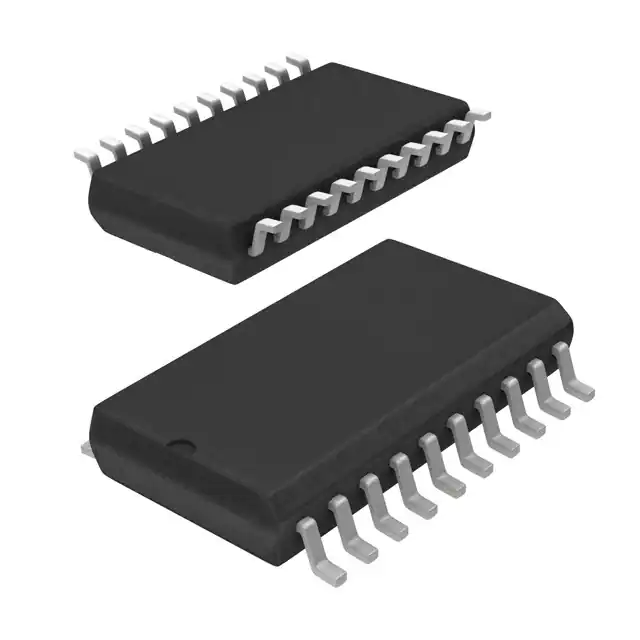




 工商网监
湘ICP备2023018690号
工商网监
湘ICP备2023018690号