STKNX
Datasheet
Miniature KNX transceiver with voltage regulators and microcontroller support
Features
•
•
•
•
•
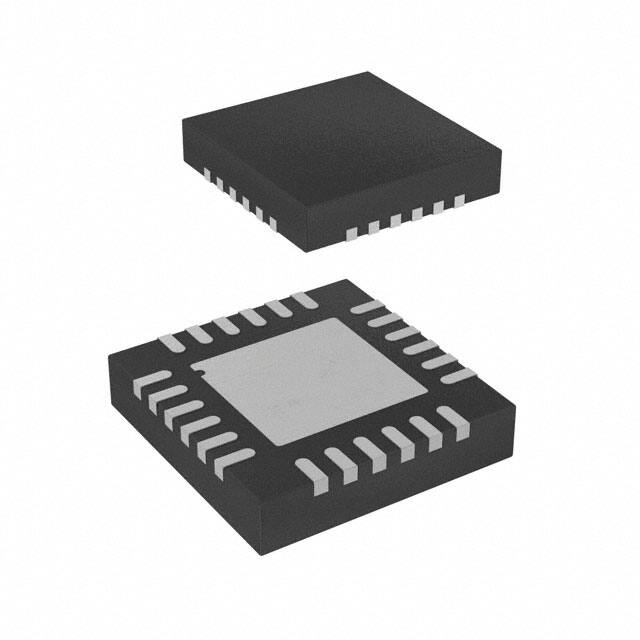
VFQFPN24 (4 x 4 x 1.0 mm, 0.5 mm
pitch)
•
•
•
•
Very thin fine pitch 4 x 4 mm VQFNPN24 package
KNX certified, KNX TP1-256 supported
Easy interface to microcontroller
Very small system solution
Two integrated voltage regulators for external use in application
–
Selectable 3.3 V / 5 V - 20 mA linear regulator
–
Adjustable 1 V to 12 V - 150 mA high- efficiency DC/DC step down
switching converter
KNX bus power extractor supporting bus current up to 30 mA
Adjustable KNX bus current slew rate dI/dt
No crystal required
Operating temperature range -40 °C to +85 °C
Applications
•
KNX twisted pair network (KNX TP1-256)
Description
The STKNX is a transceiver device for KNX TP communication. The small package
and few external components enable very compact KNX node design.
Product status link
STKNX
Product summary
Order code
Package
Packing
STKNX
STKNXTR
VFQFPN24
Tube
Product label
Tape & Reel
The simple interface to the microcontroller allows easy replacement of physical layer
discrete component implementations.
The STKNX device features two integrated voltage regulators for external use in the
application: the selectable 3.3 V / 5 V - 20 mA linear regulator and the adjustable 1 V
to 12 V - 150 mA high-efficiency DC/DC step down switching converter.
The integrated KNX bus power extractor supports bus current up to 30 mA to power
external devices and the STKNX transceiver's own power needs, while limiting the
bus current slew rate according to KNX specifications.
The STKNX ensures safe coupling to the bus and provides the bus monitoring
warning for the loss of bus power.
DS12399 - Rev 3 - May 2021
For further information contact your local STMicroelectronics sales office.
www.st.com
�STKNX
Typical application circuit and block diagram
1
Typical application circuit and block diagram
1.1
Typical application circuit
Figure 1. Typical application circuit, buck converter enabled, linear regulator supplied by impedance
modulator
DCDC
FB
DCDC
GND
DCDC
LX
DCDC_SS
DCDC
IN
VDDHV_PD
VDDHV
VREF
VFLT
VDD_REGIN
KNX_AC
VCCCORE
STKNX
VGATE
KNX_A
VCC_OK
R68
KNX_OK
CPH
KNX_TX
CPL
KNX_RX
VCC_SEL
Note:
DS12399 - Rev 3
KNX_B
KNX_B
VOUT range 1 V - 12 V.
VCORE selectable to 3.3 V / 5 V through VCC_SEL (3.3 V in the example).
page 2/27
�STKNX
Typical application circuit
Figure 2. Typical application circuit, buck converter enabled, linear regulator supplied by buck converter
DCDC
FB
DCDC
GND
DCDC
LX
DCDC_SS
DCDC
IN
VDDHV_PD
VDDHV
VREF
VFLT
VDD_REGIN
KNX_AC
VCCCORE
STKNX
KNX_A
VCC_OK
KNX_OK
R68
KNX_TX
CPH
KNX_RX
CPL
VCC_SEL
Note:
DS12399 - Rev 3
VGATE
KNX_B
KNX_B
The VOUT level needs to be compliant with VDD_REGIN recommended operating conditions.
VCORE selectable to 3.3 V / 5 V through VCC_SEL (3.3 V in the example).
page 3/27
�STKNX
Typical application circuit
Figure 3. Typical application circuit, buck converter disabled
DCDC
FB
DCDC
GND
DCDC
LX
DCDC_SS
DCDC
IN
VDDHV_PD
VDDHV
VREF
VFLT
VDD_REGIN
KNX_AC
VCCCORE
STKNX
VGATE
KNX_A
VCC_OK
KNX_OK
R68
KNX_TX
CPH
KNX_RX
CPL
VCC_SEL
Note:
DS12399 - Rev 3
KNX_B
KNX_B
VCORE selectable to 3.3 V / 5 V through VCC_SEL (3.3 V in the example).
page 4/27
�STKNX
Typical application circuit
Figure 4. Typical application circuit, linear regulator disabled
DCDC
FB
DCDC
GND
DCDC
LX
DCDC_SS
DCDC
IN
VDDHV_PD
VDDHV
VREF
VFLT
VDD_REGIN
KNX_AC
VCCCORE
STKNX
KNX_A
VCC_OK
KNX_OK
R68
KNX_TX
CPH
KNX_RX
CPL
VCC_SEL
Note:
VGATE
KNX_B
KNX_B
The VOUT level needs to be compliant with VCCCORE recommended operating conditions.
VCC_SEL needs to be set according to the VCCCORE level (3.3 V in the example).
Table 1. External components typical value
Reference
Type
Typ. value
Rating
Description
Capacitors
CPH
MLCC
100 nF
VRATED ≥ 50 V
Equalizer storage capacitor
CPL
MLCC
100 nF
VRATED ≥ 50 V
Equalizer storage capacitor
CGATE
MLCC or
electrolytic
10 µF - 47 µF
VRATED ≥ 10 V
CAC
MLCC
10 nF
VRATED ≥ 50 V
Bus AC coupling capacitor
CVDDHV
Electrolytic
≥ 100 µF
VRATED ≥ 35 V
Impedance modulator output bulk
capacitor
Impedance modulator storage capacitor
- see Table 7
- see Table 7
CFH
DS12399 - Rev 3
MLCC
47 nF
VRATED ≥ 35 V
Impedance modulator compensation
capacitor
page 5/27
�STKNX
Typical application circuit
Reference
Type
Typ. value
Rating
CFL
MLCC
47 nF
VRATED ≥ 35 V
Impedance modulator compensation
capacitor
CIN
MLCC
10 µF
VRATED ≥ 35 V
Buck converter input decoupling
capacitor
COUT
MLCC
22 µF
VRATED > VOUT
Buck converter output capacitor
CSS
MLCC
10 nF - 470 nF
VRATED ≥ 6.3 V
Buck converter soft-start time
programming capacitor - see Eq. (3)
CREF
MLCC
470 nF
VRATED ≥ 35 V
VREF decoupling capacitor
CCORE
MLCC
4.7 µF
VRATED ≥ 6.3 V
Linear regulator output capacitor
CFB1
MLCC
VRATED ≥ 16 V
Buck converter compensation capacitor
1/(2π * RFB1 * 28 kHz)
NM if RFB1 = 0 Ω
Description
Resistors
RDIS
Resistor
4.7 MΩ
-
Reverse polarity discharging resistor
RSH
Resistor
1 kΩ
-
Series resistor to CPH
RSL
Resistor
1 kΩ
-
Series resistor to CPL
RTX
Resistor
68 Ω
PDISS ≥ 1 W
RFB1
Resistor
RFB2
Resistor
(VOUT / 1 V - 1) * RFB2
0 Ω for VOUT = 1 V
10 kΩ typ. (< 100 kΩ)
NM for VOUT = 1 V
Tx current limiting resistor
-
Buck converter output voltage adjusting
resistor
-
Buck converter output voltage adjusting
resistor
Inductors
L
Power inductor
IR > 150 mA
33 µH
ISAT > 550 mA
Buck converter output inductor
Diodes
DS12399 - Rev 3
D1
Diode
LL4148 or equivalent
D2
TVS
SMAJ40CA or lower clamping
voltage
D3
Diode
LL4148 or equivalent
D4
Diode
LL4148 or equivalent
VBR > 50 V
Input diode (protection from reverse
VF (50 mA) < 1 V polarity connection)
VBR > 50 V
VF (50 mA) < 1 V
Transient voltage suppressor diode
Output diode
Optional KNX_AC clamping diode.
Recommended for noise immunity
VF (50 mA) < 1 V improvement in noisy environment.
VBR > 50 V
page 6/27
�STKNX
Block diagram
1.2
Block diagram
Figure 5. STKNX Block diagram
DS12399 - Rev 3
page 7/27
�STKNX
Pin connection and pin description
2
Pin connection and pin description
2.1
Pin connection
Figure 6. Pin connection (top view)
2.2
Pin description
Table 2. STKNX Pin description
Pin
Pin name
1
VDD_REGIN
2
KNX_AC
3
R68
4
KNX_B
5
CP_H
Equalization cap connection to KNX supply (KNX+)
6
CP_L
Equalization cap connection to KNX ground (KNX-)
7
VFLT
Impedance modulator compensation
8
VREF
Impedance modulator reference
9
VDDHV
10
DS12399 - Rev 3
Function
Linear regulator supply input. Short to VCCCORE to disable the linear regulator and supply VCCCORE
externally.
BUS AC-coupled sense for the Rx input and Tx feedback. DC biased to 9.7 V typ.
KNX transmitter output
Analog ground
VDDHV supply input and impedance modulator feedback
VDDHV_PD Impedance modulator power output
11
KNX_A
KNX power supply input (KNX+)
12
KNX_B
Analog ground
13
VGATE
Impedance modulator storage capacitor connection
page 8/27
�STKNX
Pin description
Pin
Pin name
14
DCDC_IN
Step down converter supply input. Short to ground or leave floating to disable the switching converter.
15
DCDC_LX
Step down converter switching output
16
Function
DCDC_GND Step down converter power ground
17
DCDC_SS
Step down converter soft-start programming pin
18
DCDC_FB
Step down converter feedback input. Sets output voltage (1 V - 12 V range) through the resistor divider.
19
VCC_OK
20
VCCCORE
21
KNX_OK
22
VCC_SEL
23
KNX_RX
Receiver CMOS digital output
24
KNX_TX
Transmitter digital input. Internally pulled down (6 µA typ.).
VCCCORE power good CMOS digital output
Linear regulator output (3.3 V / 5 V selectable). Supply voltage for digital I/O.
KNX bus power good CMOS digital output
Selects linear regulator output voltage. Internally pulled down (6 µA typ.).
Tie to VCCCORE to select 5 V. Short to ground or leave floating to select 3.3 V.
Connect to analog ground.
-
DS12399 - Rev 3
Exposed pad For thermal optimization, maximize the area of the ground layer on which the exposed pad is soldered
and provide good thermal connection with the bottom ground layer through vias.
page 9/27
�STKNX
Thermal characteristics
3
Thermal characteristics
Table 3. Thermal characteristics
DS12399 - Rev 3
Symbol
Parameter
Test condition
Value
Unit
TJ
Maximum operating junction temperature
-
110
°C
TAMB
Operating ambient temperature
-
-40 to 85
°C
TSTG
Storage temperature
-
-50 to 150
°C
RthJA
Thermal resistance junction to ambient,
steady state
35
°C/W
Mounted on a 2s2p PCB, with a dissipating surface
connected through vias on the bottom side of the
PCB.
page 10/27
�STKNX
Electrical specifications
4
Electrical specifications
4.1
Absolute maximum ratings
Table 4. Absolute maximum ratings
Symbol
Parameter
KNX_A
VDD_REGIN
VDDHV
VREF
Min.
Max.
Unit
KNX supply input
-0.3
45
V
Linear regulator supply input
-0.3
40
V
VDDHV supply input and impedance modulator
feedback
-0.3
40
V
Impedance modulator reference
-0.3
40
V
-0.3
0.3
V
KNX_B, DCDC_GND Variation between different ground pins
CP_H
Equalizing cap. high
-0.3
KNX_A + 0.3
V
CP_L
Equalizing cap. low
-0.3
KNX_A + 0.3
V
R68
KNX transmitter output
-0.3
KNX_A + 0.3
V
KNX_AC
BUS AC-coupled sense
-0.3
KNX_A + 0.3
V
VDDHV_PD
Impedance modulator power output
-0.3
KNX_A + 0.3
V
VGATE
Impedance modulator coupling cap.
Max. (-0.3,
KNX_A - 7.2)
KNX_A + 0.3
V
Linear reg. output. I/O supply.
-0.3
5.5
V
KNX_TX
Transmitter digital input
-0.3
Min. (5.5, VCCCORE + 0.3)
V
KNX_RX
Transmitter digital output
-0.3
Min. (5.5, VCCCORE + 0.3)
V
KNX_OK
KNX bus power good
-0.3
Min. (5.5, VCCCORE + 0.3)
V
VCC_SEL
3.3 V / 5 V selection for linear reg.
-0.3
Min. (5.5, VCCCORE + 0.3)
V
VCC_OK
VCCCORE power good
-0.3
Min. (5.5, VCCCORE + 0.3)
V
Impedance modulator compensation
-0.3
5.5
V
VCCCORE
VFLT
4.2
DCDC_IN
Step down converter input
-0.3
40
V
DCDC_LX
Step down converter switching node
-0.3
Min. (40, DCDC_IN + 0.3)
V
DCDC_FB
Step down converter feedback
-0.3
3.6
V
DCDC_SS
Step down converter soft-start programming pin
-0.3
3.6
V
Recommended operating conditions
Table 5. Recommended operating conditions
Symbol
Parameter
Min. Max. Unit
-
20
32
V
VCCCORE
I/O supply and linear reg. output
-
3
5.5
V
DCDC_IN
Step down converter input
-
13
32
V
VCC_SEL shorted to GND
6.8
32
V
KNX_A
KNX supply
VDD_REGIN Linear regulator supply input(2)
DS12399 - Rev 3
Test condition
input(1)
page 11/27
�STKNX
Electrical characteristics
Symbol
Parameter
Test condition
Min. Max. Unit
VCC_SEL shorted to
VCCCORE
8.5
32
V
Continuous output current from VDDHV pin(3)
-
-
30
mA
IREG
Continuous output current from VCCCORE pin(3)
-
-
20
mA
IDCDC
Continuous output current from DCDC switching converter (3)
-
-
150
mA
VDD_REGIN Linear regulator supply input(2)
IVDDHV_PD
1. Indicates DC value. With the active and equalization pulse bus voltage must be between 11 V and 45 V.
2. Short VDD_REGIN to VCCCORE to disable the internal linear regulator and provide VCCCORE voltage externally.
3. The maximum current capability refers to the voltage regulator only. The usable current capability can be limited by the KNX
bus current consumption specification.
4.3
Electrical characteristics
Table 6. Electrical characteristics
Parameters given for a device operating within the recommended operating conditions, unless otherwise specified. Typical
values are referred to TJ = 27 °C.
Symbol
Parameter
Conditions
Min.
Typ.
Max.
Unit
Power supply
DC supply voltage on KNX_A pin
Excluding active and equalization
pulse
20
-
32
V
Bus current consumption, no
load
V(KNX_A) = 32 V, no activity on
bus, no transmission, no external
load
-
1
-
mA
Bus current consumption, 30 mA
load
V(KNX_A) = 32 V, no activity on
bus, no transmission, 30 mA load
on VDDHV rail (including linear
regulator and switching converter)
-
31
-
mA
KNX_OKRIS
(VREF)
KNX_OK rising threshold
referred to VREF voltage
VREF rising
-
-
13.5
V
KNX_OKFALL
(VREF)
KNX_OK falling threshold
referred to VREF voltage
VREF falling
9.7
-
-
V
KNX_OKHYST
(VREF)
KNX_OK hysteresis referred to
VREF voltage
-
-
1.4
-
V
KNX_OKRIS
(KNX_A)
KNX_OK rising threshold
referred to KNX_A DC voltage
KNX_A rising slowly, VREF
settled
-
-
18.5
V
V(KNX_A)
I(KNX_A)
Impedance modulator
VDDHV drop
V(KNX_A) - V(VDDHV)
voltage drop
V(KNX_A) = 20 V DC
ILOAD = 5 mA
D3 = LL4148 or equivalent
-
-
6.5
V
VDDHV drop
V(KNX_A) - V(VDDHV)
voltage drop
V(KNX_A) = 20 V DC,
ILOAD = 30 mA,
D3 = LL4148 or equivalent
-
-
7.2
V
V(KNX_A) - V(REF)
voltage drop
V(KNX_A) = 20 V DC, VREF
settled
3
4.3
5
V
3
3.3
3.6
V
VCC_SEL shorted to VCCCORE
4.5
5
5.5
V
VCC_SEL shorted to GND
2.3
-
2.8
V
VREF drop
VCCCORE voltage and linear regulator
DS12399 - Rev 3
VCCCORE
Regulated voltage
VCC_OKRIS
VCC_OK rising threshold
VCC_SEL shorted to GND
page 12/27
�STKNX
Electrical characteristics
Symbol
Parameter
VCC_OKRIS
VCC_OK rising threshold
VCC_OKFALL
VCC_OK falling threshold
VCC_OKHYST
VCC_OK hysteresis
IVCCSEL
VCCSEL internal pull- down
current
Conditions
Min.
Typ.
Max.
Unit
VCC_SEL shorted to VCCCORE
3.3
-
4
V
VCC_SEL shorted to GND
2.0
-
2.5
V
VCC_SEL shorted to VCCCORE
2.9
-
3.6
V
VCC_SEL shorted to GND
-
0.3
-
V
VCC_SEL shorted to VCCCORE
-
0.4
-
V
-
-
6
-
µA
Programmable DC-DC switching converter
VIN
Input voltage at DCDC_IN pin
-
13
-
32
V
VOUT
Output voltage adjusting range
-
1
-
12
V
VFB
Feedback voltage reference
-
0.9
1
1.1
V
UVLORIS
Undervoltage lockout rising
threshold on VIN voltage
VIN rising
9
10
11
V
UVLOFALL
Undervoltage lockout falling
threshold on VIN voltage
VIN falling
5.4
6
6.6
V
UVLOHYST
Undervoltage lockout hysteresis
on VIN voltage
-
-
4
-
V
ILIM
High side MOSFET current limit
-
325
650
975
mA
-
50
-
mV
-
1.9
-
-
1.2
-
110
140
-
°C
VOUT_RIP
Output voltage ripple
13 V < VIN < 32 V
3.3 V < VOUT < 12 V
IOUT = 5 mA ~ 150 mA
COUT = 22 µF
RDS(ON)
High side MOSFET on
resistance
MLCC(1)
-
Low side MOSFET on resistance temperature(2)
Ω
OTP
Overtemperature protection
Junction
OVPRIS
Overvoltage protection rising
threshold on FB
FB voltage rising
1.1
1.25
1.4
V
OVPFALL
Overvoltage protection falling
threshold on FB
FB voltage falling
0.95
1.1
1.25
V
ISS
Current sourced from SS pin
During soft-start
-
2.5
-
µA
Transmitter
RDS(ON)
Tx MOSFET on resistance
-
-
5
-
Ω
IKNX_TX
KNX_TX internal pull- down
current
-
-
6
-
µA
VCCCORE = 3.3 V
0.7
-
-
VCCCORE = 5 V
1.2
-
-
-
-
2.2
-
-
3
VCCCORE = 3.3 V
ISUNK = 300 µA
0
-
0.4
V
VCCCORE = 5 V
ISUNK = 400 µA
0
-
0.4
V
Digital I/Os
VIL
Maximum voltage level that will
be interpreted as a logic 0
VIH
Minimum voltagelevel that will be VCCCORE = 3.3 V
interpreted as a logic 1
VCCCORE = 5 V
VOL
DS12399 - Rev 3
Logic low output level
V
V
page 13/27
�STKNX
Electrical characteristics
Symbol
VOH
Parameter
Logic high output level
Conditions
Min.
Typ.
Max.
Unit
VCCCORE = 3.3 V,
ISOURCED = 300 µA
VCCCORE
- 0.5
-
VCCCORE
V
VCCCORE = 5 V,
ISOURCED = 400 µA
VCCCORE
- 0.5
-
VCCCORE
V
1. Not tested in production. Guaranteed by design.
2. Not tested in production. Based on characterization.
DS12399 - Rev 3
page 14/27
�STKNX
Device description
5
Device description
The STKNX is a transceiver device for twisted pair communication, following the KNX twisted pair standard (KNX
TP1-256). Detailed information on the KNX bus can be found in the KNX standards and on the KNX website
(www.knx.org).
The STKNX is composed of two main functional blocks: the bus interface and the voltage regulators.
•
The bus interface consists of the transmitter, receiver and impedance modulator
•
The voltage regulators block consists of an adjustable output voltage step down switching converter with
integrated power MOSFETs and a 3.3 V / 5 V programmable linear regulator
Figure 7. KNX bus voltage and corresponding digital signals
VBUS
Veq
DC level
Vact
Active pulse
t
Equalization pulse
Logic 0
35
Logic 1
69
104
104
KNX_RX
KNX_TX
(if transmitting)
5.1
Bus interface
The bus interface connects the STKNX to the KNX bus for transmitting, receiving and extracting power.
Through the bus interface, the STKNX supports
•
Interfacing a microcontroller with the KNX bus, translating signals between the logic level domain and KNX
bus domain
•
Extracting power from the bus to supply the STKNX itself, the microcontroller and application devices
The KNX standard specifies a bit period of 104 µs. It defines the logic 1 as the idle state of the bus (DC voltage
level between 21 V and 32 V), the logic 0 (also called active pulse) as a voltage drop of the bus.
The active pulse is generated by the transmitter. Ideally, the drop has a rectangular shape, a depth between 6 V
and 9 V and a duration of 35 µs. Each active pulse is followed by an equalization phase of 69 µs typical duration,
which consists in an overshoot of the bus voltage above the DC level, followed by an exponential decay.
See the KNX Twisted Pair Standard (KNX TP1-256) for more detailed information.
DS12399 - Rev 3
page 15/27
�STKNX
Voltage regulators
5.1.1
Transmitter
The transmitter converts logic level signals received at the KNX_TX pin to analog signals on the KNX bus. To
transmit a logic 1 (equivalent to transmitter in idle state), the KNX_TX pin has to be kept low for 104 µs. To
transmit a logic 0, the KNX_TX has to be forced high for 35 µs (active pulse) and then low for 69 µs.
During the active pulse, the transmitter forces a voltage drop of 7.5 V typ. on the KNX bus, by sinking current
through the R68 pin.
5.1.2
Receiver
The receiver detects the beginning and the end of the active pulse and provides a logic level output on the
KNX_RX pin. The KNX_RX pin is high during the active pulse, low during the equalization phase and idle state.
The detection threshold for the start of the active pulse is 0.6 V typ. below the bus DC voltage.
5.1.3
Impedance modulator
The KNX standard allows a bus voltage ranging from 21 V to 32 V (DC component). The bus provides supply
for the STKNX and is the communication medium. During transmission, a -10.5 V / +13 V AC component can be
superimposed to the DC component mentioned above.
Moreover, the KNX standard specifies that each module connected to the bus has to show a controlled
impedance and to limit the bus load current slope dI/dt, while not transmitting.
The impedance modulator purpose is to extract power from the KNX bus in order to supply STKNX integrated
voltage converters and the application on the KNX module, while ensuring compliance to KNX impedance
specifications.
In particular, impedance modulator:
•
Extracts a stable power rail (VDDHV) from the KNX bus DC level
•
Smooths any load change applied at its output, limiting dI/dt on the bus current
•
Controls the impedance of the bus device during the active pulse and the equalization pulse according to
KNX standard requirements
Since the current drawn from the bus must change very slowly, abrupt load current steps from the load applied to
the STKNX have to be absorbed by the large filter capacitor on VDDHV rail (CVDDHV on Figure 1), which should
be sized accordingly.
The bus current slope limit is controlled through CGATE (Figure 1).
CGATE = 47 µF sets a slope lower than 0.5 mA/ms, compliant to the KNX requirement for fan in model up to the
10 mA bus load.
For a higher fan in, it can be useful to set a higher current slope limit, in order to manage wider load changes
minimizing the CVDDHV value. That can be done by reducing the CGATE value proportionally to the desired
slope limit increase.
Table 7 shows recommended CGATE and CVDDHV values for the minimum and maximum fan in.
Table 7. Recommended CGATE and CVDDHV vs. fan-in
5.2
Fan in
Recommended CGATE
Recommended minimum CVDDHV
10 mA
47 µF
100 µF
30 mA
10 µF - 47 µF
220 µF
Voltage regulators
The STKNX features two integrated voltage regulators for external use in the application:
•
a linear regulator with 3.3 V or 5 V selectable output voltage, 20 mA current capability
•
a step down switching converter with 1 V - 12 V adjustable output voltage, 150 mA current capability.
5.2.1
3.3 V / 5 V linear regulator
The linear regulator converts the input voltage on the VDD_REGIN pin to 3.3 V or 5 V output on the VCCCORE
pin. The output voltage level is selectable by the VCCSEL pin.
DS12399 - Rev 3
page 16/27
�STKNX
Voltage regulators
•
•
VCCSEL tied to GND → VCCCORE = 3.3 V
VCCSEL tied to VCCCORE → VCCCORE = 5 V
VCCSEL should not be changed when STKNX is operational.
The output current capability is 20 mA. A 4.7 µF capacitor or higher is required between VCCCORE and KNX_B
for stability.
VCCCORE is also the supply input for STKNX digital I/Os. The linear regulator can be disabled by shorting
VCCCORE to VDD_REGIN; in that case VCCCORE voltage to supply I/Os has to be provided externally and
VCCSEL has to be configured according to the voltage level (3.3 V or 5 V).
5.2.2
Buck converter
The STKNX integrates a high-efficiency low-consumption buck switching converter.
The switching converter is supplied from the DCDC_IN pin, connected to VDDHV rail in the typical application.
When voltage at the DCDC_IN pin is lower than UVLO, the switching converter is disabled.
Buck converter output voltage is adjustable between 1 V and 12 V by means of an external resistor divider on the
DCDC_FB pin, according to the following expression:
Vout = 1V ⋅ 1 + RFB1/RFB2
(1)
Where RFB1 and RFB2 are the upper and lower resistor of the divider respectively (see Figure 1). The RFB2
typical value is 10 kΩ (RFB2 values higher than 100 kΩ should be avoided).
To set VOUT = 1 V, RFB1 should be 0 Ω and RFB2 not mounted.
In the usual case of the low ESR ceramic capacitor as the output capacitor for the converter, it is recommended to
add an external feedforward compensation capacitor CFB1 in parallel to RFB1, for VOUT > 1 V.
The CFB1 default value can be calculated according to the following expression:
CFB1 =
1
2π ⋅ RFB1 ⋅ 28kHz
(2)
The buck converter can deliver a continuous output current up to 150 mA, however the maximum current
capability will not always be usable. In fact, at the application level, the KNX bus current consumption must stay
within the KNX specification.
The buck converter implements soft-start to prevent a high inrush current at start-up. Soft-start time TSS is
programmable through the external capacitor CSS between the DCDC_SS pin and GND, according to the
following expression:
where ISS is 2.5 µA typ.
C
TSS = 1V ⋅ SS
ISS
(3)
The buck converter features a full set of protections, which includes overtemperature protection (OTP),
overcurrent protection (OCP) and overvoltage protection (OVP).
DS12399 - Rev 3
page 17/27
�STKNX
Layout recommendations
6
Layout recommendations
PCB layout is an important part of DC-DC switching converter design. A poor board layout can compromise
important parameters of the DC-DC converter such as efficiency, output voltage ripple, line and load regulation
and stability.
Good layout for the STKNX can be implemented by following the few simple design rules listed in this section.
These rules have been applied to the STKNX routed area on the STKNX evaluation board (EVALKITSTKNX),
where only the TOP and BOTTOM layers have been used from the four available, so it can be transposed
on a low cost 2-layer PCB. It is then easy to implement the rules on a final KNX product. The source files of
EVALKITSTKNX PCB layout are available for download from www.st.com.
Figure 8. STKNX area routed using top and bottom layers only
Refer to Figure 9 and Figure 10 below for the recommendations described below:
•
Place CIN (C13) close to the STKNX and connect it between pins VIN and DCDC_GND directly on top layer
(DCDC_LX trace crosses between CIN pads)
•
Connect COUT (C24) to DCDC_GND directly on top layer
•
Keep the following power loops short:
–
CIN → DCDC_IN → DCDC_LX → L1 → COUT → CIN (green)
–
COUT → DCDC_GND → DCDC_LX → L1 → COUT (red)
–
CIN → DCDC_IN → DCDC_GND → CIN (purple)
•
Use properly sized traces or shapes for power paths (DCDC_IN, DCDC_GND, VDCDC, LX)
–
Keep FB/Feedback and SS/Soft-Start components (Rfbx, Cfb1, Css) away from switching / noisy node
(DCDC_LX), shielding with quiet nets (DCDC_GND in the image) is recommended (black)
–
Connect DCDC_GND pin (16) and KNX_B pins (4 and 12) to the exposed pad shape below the IC, as
shown in Figure 10, to ensure ground consistency
–
Place several GND vias on STKNX package exposed pad (x9 in EVALKITSTKNX).
DS12399 - Rev 3
page 18/27
�STKNX
Layout recommendations
Figure 9. Layout recommendations description
Figure 10. Layout recommendations application
DS12399 - Rev 3
page 19/27
�STKNX
Package information
7
Package information
In order to meet environmental requirements, ST offers these devices in different grades of ECOPACK packages,
depending on their level of environmental compliance. ECOPACK specifications, grade definitions and product
status are available at: www.st.com. ECOPACK is an ST trademark.
7.1
VFQFPN 4 x 4 x 1.0 24 pitch 0.5 package information
Figure 11. VFQFPN 4 x 4 x 1.0 24 pitch 0.5 package outline
DS12399 - Rev 3
page 20/27
�STKNX
VFQFPN 4 x 4 x 1.0 24 pitch 0.5 package information
Table 8. VFQFPN 4 x 4 x 1.0 24 pitch 0.5 package mechanical data
Symbol
DS12399 - Rev 3
Dimensions [mm]
Min.
Nom.
Max.
A
0.80
-
1.00
A1
0.00
-
0.05
A2
-
0.65
-
A3
-
0.20
-
b
0.20
0.25
0.30
D
3.9
4.0
4.1
D2
2.7
2.8
2.9
e
-
0.5
-
E
3.9
4.0
4.1
E2
2.7
2.8
2.9
L
0.30
0.35
0.40
k
0.20
-
-
N
-
24
-
Symbol
Tolerance of form and position [mm]
aaa
0.15
bbb
0.10
ccc
0.10
ddd
0.05
eee
0.08
fff
0.10
page 21/27
�STKNX
VFQFPN 4 x 4 x 1.0 24 pitch 0.5 package information
Figure 12. Suggested footprint
DS12399 - Rev 3
page 22/27
�STKNX
Revision history
Table 9. Document revision history
Date
Version
08-Feb-2018
1
Changes
Initial release.
Throughout document:
06-Dec-2020
2
- layout and template changes
- minor text edits
Added Section 6 Layout recommendations
20-May-2021
DS12399 - Rev 3
3
Change to Equation 1 in Section 5.2.2
page 23/27
�STKNX
Contents
Contents
1
2
Typical application circuit and block diagram . . . . . . . . . . . . . . . . . . . . . . . . . . . . . . . . . . . . . . 2
1.1
Typical application circuit . . . . . . . . . . . . . . . . . . . . . . . . . . . . . . . . . . . . . . . . . . . . . . . . . . . . . . . . 2
1.2
Block diagram . . . . . . . . . . . . . . . . . . . . . . . . . . . . . . . . . . . . . . . . . . . . . . . . . . . . . . . . . . . . . . . . . 7
Pin connection and pin description . . . . . . . . . . . . . . . . . . . . . . . . . . . . . . . . . . . . . . . . . . . . . . . . 8
2.1
Pin connection . . . . . . . . . . . . . . . . . . . . . . . . . . . . . . . . . . . . . . . . . . . . . . . . . . . . . . . . . . . . . . . . . 8
2.2
Pin description . . . . . . . . . . . . . . . . . . . . . . . . . . . . . . . . . . . . . . . . . . . . . . . . . . . . . . . . . . . . . . . . . 8
3
Thermal characteristics . . . . . . . . . . . . . . . . . . . . . . . . . . . . . . . . . . . . . . . . . . . . . . . . . . . . . . . . . . .10
4
Electrical specifications . . . . . . . . . . . . . . . . . . . . . . . . . . . . . . . . . . . . . . . . . . . . . . . . . . . . . . . . . .11
5
4.1
Absolute maximum ratings. . . . . . . . . . . . . . . . . . . . . . . . . . . . . . . . . . . . . . . . . . . . . . . . . . . . . . 11
4.2
Recommended operating conditions . . . . . . . . . . . . . . . . . . . . . . . . . . . . . . . . . . . . . . . . . . . . . 11
4.3
Electrical characteristics. . . . . . . . . . . . . . . . . . . . . . . . . . . . . . . . . . . . . . . . . . . . . . . . . . . . . . . . 12
Device description. . . . . . . . . . . . . . . . . . . . . . . . . . . . . . . . . . . . . . . . . . . . . . . . . . . . . . . . . . . . . . . .15
5.1
5.2
Bus interface . . . . . . . . . . . . . . . . . . . . . . . . . . . . . . . . . . . . . . . . . . . . . . . . . . . . . . . . . . . . . . . . . 15
5.1.1
Transmitter . . . . . . . . . . . . . . . . . . . . . . . . . . . . . . . . . . . . . . . . . . . . . . . . . . . . . . . . . . . . 16
5.1.2
Receiver . . . . . . . . . . . . . . . . . . . . . . . . . . . . . . . . . . . . . . . . . . . . . . . . . . . . . . . . . . . . . . 16
5.1.3
Impedance modulator . . . . . . . . . . . . . . . . . . . . . . . . . . . . . . . . . . . . . . . . . . . . . . . . . . . . 16
Voltage regulators . . . . . . . . . . . . . . . . . . . . . . . . . . . . . . . . . . . . . . . . . . . . . . . . . . . . . . . . . . . . . 16
5.2.1
3.3 V / 5 V linear regulator. . . . . . . . . . . . . . . . . . . . . . . . . . . . . . . . . . . . . . . . . . . . . . . . . 16
5.2.2
Buck converter . . . . . . . . . . . . . . . . . . . . . . . . . . . . . . . . . . . . . . . . . . . . . . . . . . . . . . . . . 17
6
Layout recommendations . . . . . . . . . . . . . . . . . . . . . . . . . . . . . . . . . . . . . . . . . . . . . . . . . . . . . . . . .18
7
Package information. . . . . . . . . . . . . . . . . . . . . . . . . . . . . . . . . . . . . . . . . . . . . . . . . . . . . . . . . . . . . .20
7.1
VFQFPN 4 x 4 x 1.0 24 pitch 0.5 package information. . . . . . . . . . . . . . . . . . . . . . . . . . . . . . . 20
Revision history . . . . . . . . . . . . . . . . . . . . . . . . . . . . . . . . . . . . . . . . . . . . . . . . . . . . . . . . . . . . . . . . . . . . . . .23
DS12399 - Rev 3
page 24/27
�STKNX
List of figures
List of figures
Figure 1.
Figure 2.
Figure 3.
Figure 4.
Figure 5.
Figure 6.
Figure 7.
Figure 8.
Figure 9.
Figure 10.
Figure 11.
Figure 12.
DS12399 - Rev 3
Typical application circuit, buck converter enabled, linear regulator supplied by impedance modulator .
Typical application circuit, buck converter enabled, linear regulator supplied by buck converter . . . . . .
Typical application circuit, buck converter disabled . . . . . . . . . . . . . . . . . . . . . . . . . . . . . . . . . . . .
Typical application circuit, linear regulator disabled . . . . . . . . . . . . . . . . . . . . . . . . . . . . . . . . . . . .
STKNX Block diagram . . . . . . . . . . . . . . . . . . . . . . . . . . . . . . . . . . . . . . . . . . . . . . . . . . . . . . . .
Pin connection (top view) . . . . . . . . . . . . . . . . . . . . . . . . . . . . . . . . . . . . . . . . . . . . . . . . . . . . . .
KNX bus voltage and corresponding digital signals . . . . . . . . . . . . . . . . . . . . . . . . . . . . . . . . . . . .
STKNX area routed using top and bottom layers only . . . . . . . . . . . . . . . . . . . . . . . . . . . . . . . . . .
Layout recommendations description. . . . . . . . . . . . . . . . . . . . . . . . . . . . . . . . . . . . . . . . . . . . . .
Layout recommendations application. . . . . . . . . . . . . . . . . . . . . . . . . . . . . . . . . . . . . . . . . . . . . .
VFQFPN 4 x 4 x 1.0 24 pitch 0.5 package outline . . . . . . . . . . . . . . . . . . . . . . . . . . . . . . . . . . . . .
Suggested footprint . . . . . . . . . . . . . . . . . . . . . . . . . . . . . . . . . . . . . . . . . . . . . . . . . . . . . . . . . .
.
.
.
.
.
.
.
.
.
.
.
.
.
.
.
.
.
.
.
.
.
.
.
.
.
.
.
.
.
.
.
.
.
.
.
.
.
.
.
.
.
.
.
.
.
.
.
.
.
.
.
.
.
.
.
.
.
.
.
.
.
.
.
.
.
.
.
.
.
.
.
.
. 2
. 3
. 4
. 5
. 7
. 8
15
18
19
19
20
22
page 25/27
�STKNX
List of tables
List of tables
Table 1.
Table 2.
Table 3.
Table 4.
Table 5.
Table 6.
Table 7.
Table 8.
Table 9.
External components typical value . . . . . . . . . . . . . . . . . .
STKNX Pin description . . . . . . . . . . . . . . . . . . . . . . . . . .
Thermal characteristics. . . . . . . . . . . . . . . . . . . . . . . . . .
Absolute maximum ratings . . . . . . . . . . . . . . . . . . . . . . .
Recommended operating conditions. . . . . . . . . . . . . . . . .
Electrical characteristics . . . . . . . . . . . . . . . . . . . . . . . . .
Recommended CGATE and CVDDHV vs. fan-in . . . . . . . .
VFQFPN 4 x 4 x 1.0 24 pitch 0.5 package mechanical data .
Document revision history . . . . . . . . . . . . . . . . . . . . . . . .
DS12399 - Rev 3
.
.
.
.
.
.
.
.
.
.
.
.
.
.
.
.
.
.
.
.
.
.
.
.
.
.
.
.
.
.
.
.
.
.
.
.
.
.
.
.
.
.
.
.
.
.
.
.
.
.
.
.
.
.
.
.
.
.
.
.
.
.
.
.
.
.
.
.
.
.
.
.
.
.
.
.
.
.
.
.
.
.
.
.
.
.
.
.
.
.
.
.
.
.
.
.
.
.
.
.
.
.
.
.
.
.
.
.
.
.
.
.
.
.
.
.
.
.
.
.
.
.
.
.
.
.
.
.
.
.
.
.
.
.
.
.
.
.
.
.
.
.
.
.
.
.
.
.
.
.
.
.
.
.
.
.
.
.
.
.
.
.
.
.
.
.
.
.
.
.
.
.
.
.
.
.
.
.
.
.
.
.
.
.
.
.
.
.
.
.
.
.
.
.
.
.
.
.
.
.
.
.
.
.
.
.
.
.
.
.
.
.
.
.
.
.
.
.
.
.
.
.
.
.
.
.
.
.
.
.
.
.
.
.
.
.
.
.
.
.
.
.
.
.
.
.
.
.
.
.
.
.
.
.
.
.
.
.
.
.
.
.
.
.
.
.
.
.
.
.
.
.
.
.
.
.
.
.
.
.
.
.
.
.
.
.
.
.
.
.
.
.
.
.
.
.
.
.
.
.
.
.
.
.
.
.
.
.
.
.
.
.
.
.
.
.
.
.
.
.
.
.
.
.
.
.
.
.
.
.
.
.
.
. 5
. 8
10
11
11
12
16
21
23
page 26/27
�STKNX
IMPORTANT NOTICE – PLEASE READ CAREFULLY
STMicroelectronics NV and its subsidiaries (“ST”) reserve the right to make changes, corrections, enhancements, modifications, and improvements to ST
products and/or to this document at any time without notice. Purchasers should obtain the latest relevant information on ST products before placing orders. ST
products are sold pursuant to ST’s terms and conditions of sale in place at the time of order acknowledgement.
Purchasers are solely responsible for the choice, selection, and use of ST products and ST assumes no liability for application assistance or the design of
Purchasers’ products.
No license, express or implied, to any intellectual property right is granted by ST herein.
Resale of ST products with provisions different from the information set forth herein shall void any warranty granted by ST for such product.
ST and the ST logo are trademarks of ST. For additional information about ST trademarks, please refer to www.st.com/trademarks. All other product or service
names are the property of their respective owners.
Information in this document supersedes and replaces information previously supplied in any prior versions of this document.
© 2021 STMicroelectronics – All rights reserved
DS12399 - Rev 3
page 27/27
�










 工商网监
湘ICP备2023018690号
工商网监
湘ICP备2023018690号