STM32F412xE STM32F412xG
Arm®-Cortex®-M4 32b MCU+FPU, 125 DMIPS, 1MB Flash,
256KB RAM, USB OTG FS, 17 TIMs, 1 ADC, 17 comm. interfaces
Datasheet - production data
Features
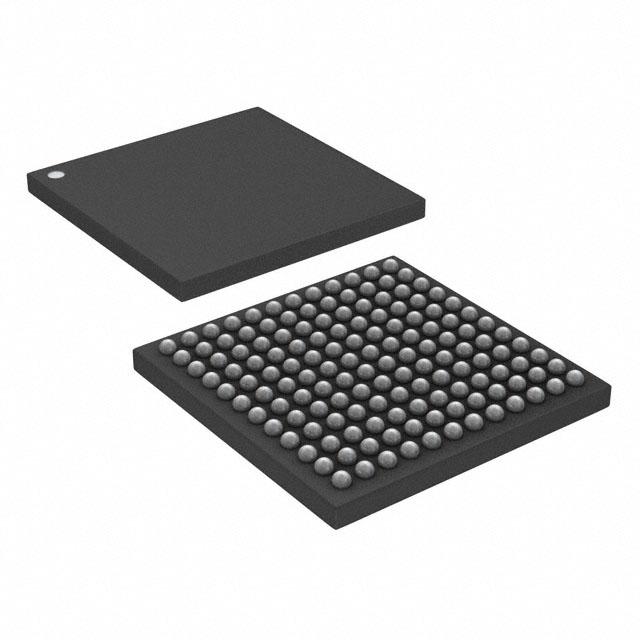
UFBGA
• Dynamic Efficiency Line with BAM (Batch
Acquisition Mode)
®
®
• Core: Arm 32-bit Cortex -M4 CPU with FPU,
Adaptive real-time accelerator (ART
Accelerator™) allowing 0-wait state execution
from Flash memory, frequency up to 100 MHz,
memory protection unit,
125 DMIPS/1.25 DMIPS/MHz (Dhrystone 2.1),
and DSP instructions
• Memories
– Up to 1 Mbyte of Flash memory
– 256 Kbyte of SRAM
– Flexible external static memory controller
with up to 16-bit data bus: SRAM, PSRAM,
NOR Flash memory
– Dual mode Quad-SPI interface
• LCD parallel interface, 8080/6800 modes
• Clock, reset and supply management
– 1.7 V to 3.6 V application supply and I/Os
– POR, PDR, PVD and BOR
– 4-to-26 MHz crystal oscillator
– Internal 16 MHz factory-trimmed RC
– 32 kHz oscillator for RTC with calibration
– Internal 32 kHz RC with calibration
• Power consumption
– Run: 112 µA/MHz (peripheral off)
– Stop (Flash in Stop mode, fast wakeup
time): 50 µA Typ @ 25 °C; 75 µA max
@25 °C
– Stop (Flash in Deep power down mode,
slow wakeup time): down to 18 µA @
25 °C; 40 µA max @25 °C
– Standby: 2.4 µA @25 °C / 1.7 V without
RTC; 12 µA @85 °C @1.7 V
– VBAT supply for RTC: 1 µA @25 °C
• 1×12-bit, 2.4 MSPS ADC: up to 16 channels
LQFP64 (10x10mm)
WLCSP64
UFQFPN48
(3.623x3.651mm) LQFP100 (14x14mm) (7x7 mm)
LQFP144 (20x20mm)
UFBGA100
(7x7mm)
UFBGA144
(10x10mm)
• Up to 17 timers: up to twelve 16-bit timers, two
32-bit timers up to 100 MHz each with up to
four IC/OC/PWM or pulse counter and
quadrature (incremental) encoder input, two
watchdog timers (independent and window),
one SysTick timer
• Debug mode
– Serial wire debug (SWD) & JTAG
– Cortex®-M4 Embedded Trace Macrocell™
• Up to 114 I/O ports with interrupt capability
– Up to 109 fast I/Os up to 100 MHz
– Up to 114 five V-tolerant I/Os
• Up to 17 communication interfaces
– Up to 4x I2C interfaces (SMBus/PMBus)
– Up to 4 USARTs (2 x 12.5 Mbit/s,
2 x 6.25 Mbit/s), ISO 7816 interface, LIN,
IrDA, modem control)
– Up to 5 SPI/I2Ss (up to 50 Mbit/s, SPI or
I2S audio protocol), out of which 2 muxed
full-duplex I2S interfaces
– SDIO interface (SD/MMC/eMMC)
– Advanced connectivity: USB 2.0 full-speed
device/host/OTG controller with PHY
– 2x CAN (2.0B Active)
• True random number generator
• CRC calculation unit
• 96-bit unique ID
• RTC: subsecond accuracy, hardware calendar
®
• All packages are ECOPACK 2
Table 1. Device summary
Reference
Part number
• 2x digital filters for sigma delta modulator,
4x PDM interfaces, stereo microphone support
STM32F412xE
STM32F412CE, STM32F412RE, STM32F412VE,
STM32F412ZE
• General-purpose DMA: 16-stream DMA
STM32F412xG
STM32F412CG, STM32F412RG, STM32F412VG,
STM32F412ZG
March 2023
This is information on a product in full production.
DS11139 Rev 8
1/205
www.st.com
�Contents
STM32F412xE/G
Contents
1
Introduction . . . . . . . . . . . . . . . . . . . . . . . . . . . . . . . . . . . . . . . . . . . . . . . 11
2
Description . . . . . . . . . . . . . . . . . . . . . . . . . . . . . . . . . . . . . . . . . . . . . . . . 12
2.1
3
Functional overview . . . . . . . . . . . . . . . . . . . . . . . . . . . . . . . . . . . . . . . . 18
3.1
Arm® Cortex®-M4 with FPU core with embedded Flash and SRAM . . . . 18
3.2
Adaptive real-time memory accelerator (ART Accelerator™) . . . . . . . . . 18
3.3
Batch Acquisition mode (BAM) . . . . . . . . . . . . . . . . . . . . . . . . . . . . . . . . . 18
3.4
Memory protection unit . . . . . . . . . . . . . . . . . . . . . . . . . . . . . . . . . . . . . . . 19
3.5
Embedded Flash memory . . . . . . . . . . . . . . . . . . . . . . . . . . . . . . . . . . . . 19
3.6
One-time programmable bytes . . . . . . . . . . . . . . . . . . . . . . . . . . . . . . . . . 19
3.7
CRC (cyclic redundancy check) calculation unit . . . . . . . . . . . . . . . . . . . 19
3.8
Embedded SRAM . . . . . . . . . . . . . . . . . . . . . . . . . . . . . . . . . . . . . . . . . . . 20
3.9
Multi-AHB bus matrix . . . . . . . . . . . . . . . . . . . . . . . . . . . . . . . . . . . . . . . . 20
3.10
DMA controller (DMA) . . . . . . . . . . . . . . . . . . . . . . . . . . . . . . . . . . . . . . . 20
3.11
Flexible static memory controller (FSMC) . . . . . . . . . . . . . . . . . . . . . . . . 21
3.12
Quad-SPI memory interface (QUAD-SPI) . . . . . . . . . . . . . . . . . . . . . . . . 21
3.13
Nested vectored interrupt controller (NVIC) . . . . . . . . . . . . . . . . . . . . . . . 22
3.14
External interrupt/event controller (EXTI) . . . . . . . . . . . . . . . . . . . . . . . . . 22
3.15
Clocks and startup . . . . . . . . . . . . . . . . . . . . . . . . . . . . . . . . . . . . . . . . . . 22
3.16
Boot modes . . . . . . . . . . . . . . . . . . . . . . . . . . . . . . . . . . . . . . . . . . . . . . . 23
3.17
Power supply schemes . . . . . . . . . . . . . . . . . . . . . . . . . . . . . . . . . . . . . . 23
3.18
Power supply supervisor . . . . . . . . . . . . . . . . . . . . . . . . . . . . . . . . . . . . . 25
3.19
2/205
Compatibility with STM32F4 series . . . . . . . . . . . . . . . . . . . . . . . . . . . . . 15
3.18.1
Internal reset ON . . . . . . . . . . . . . . . . . . . . . . . . . . . . . . . . . . . . . . . . . . 25
3.18.2
Internal reset OFF . . . . . . . . . . . . . . . . . . . . . . . . . . . . . . . . . . . . . . . . . 25
Voltage regulator . . . . . . . . . . . . . . . . . . . . . . . . . . . . . . . . . . . . . . . . . . . 26
3.19.1
Regulator ON . . . . . . . . . . . . . . . . . . . . . . . . . . . . . . . . . . . . . . . . . . . . . 26
3.19.2
Regulator OFF . . . . . . . . . . . . . . . . . . . . . . . . . . . . . . . . . . . . . . . . . . . . 27
3.19.3
Regulator ON/OFF and internal reset ON/OFF availability . . . . . . . . . . 30
3.20
Real-time clock (RTC) and backup registers . . . . . . . . . . . . . . . . . . . . . . 30
3.21
Low-power modes . . . . . . . . . . . . . . . . . . . . . . . . . . . . . . . . . . . . . . . . . . 31
DS11139 Rev 8
�STM32F412xE/G
Contents
3.22
VBAT operation . . . . . . . . . . . . . . . . . . . . . . . . . . . . . . . . . . . . . . . . . . . . . 31
3.23
Timers and watchdogs . . . . . . . . . . . . . . . . . . . . . . . . . . . . . . . . . . . . . . . 32
4
3.23.1
Advanced-control timers (TIM1, TIM8) . . . . . . . . . . . . . . . . . . . . . . . . . 34
3.23.2
General-purpose timers (TIMx) . . . . . . . . . . . . . . . . . . . . . . . . . . . . . . . 34
3.23.3
Basic timer (TIM6, TIM7) . . . . . . . . . . . . . . . . . . . . . . . . . . . . . . . . . . . . 34
3.23.4
Independent watchdog . . . . . . . . . . . . . . . . . . . . . . . . . . . . . . . . . . . . . 35
3.23.5
Window watchdog . . . . . . . . . . . . . . . . . . . . . . . . . . . . . . . . . . . . . . . . . 35
3.23.6
SysTick timer . . . . . . . . . . . . . . . . . . . . . . . . . . . . . . . . . . . . . . . . . . . . . 35
3.24
Inter-integrated circuit interface (I2C) . . . . . . . . . . . . . . . . . . . . . . . . . . . . 35
3.25
Universal synchronous/asynchronous receiver transmitters (USART) . . 36
3.26
Serial peripheral interface (SPI) . . . . . . . . . . . . . . . . . . . . . . . . . . . . . . . . 36
3.27
Inter-integrated sound (I2S) . . . . . . . . . . . . . . . . . . . . . . . . . . . . . . . . . . . 37
3.28
Audio PLL (PLLI2S) . . . . . . . . . . . . . . . . . . . . . . . . . . . . . . . . . . . . . . . . . 37
3.29
Digital filter for sigma-delta modulators (DFSDM) . . . . . . . . . . . . . . . . . . 37
3.30
Secure digital input/output interface (SDIO) . . . . . . . . . . . . . . . . . . . . . . . 39
3.31
Controller area network (bxCAN) . . . . . . . . . . . . . . . . . . . . . . . . . . . . . . . 39
3.32
Universal serial bus on-the-go full-speed (USB_OTG_FS) . . . . . . . . . . . 39
3.33
Random number generator (RNG) . . . . . . . . . . . . . . . . . . . . . . . . . . . . . . 40
3.34
General-purpose input/outputs (GPIOs) . . . . . . . . . . . . . . . . . . . . . . . . . . 40
3.35
Analog-to-digital converter (ADC) . . . . . . . . . . . . . . . . . . . . . . . . . . . . . . 40
3.36
Temperature sensor . . . . . . . . . . . . . . . . . . . . . . . . . . . . . . . . . . . . . . . . . 40
3.37
Serial wire JTAG debug port (SWJ-DP) . . . . . . . . . . . . . . . . . . . . . . . . . . 40
3.38
Embedded Trace Macrocell™ . . . . . . . . . . . . . . . . . . . . . . . . . . . . . . . . . 41
Pinouts and pin description . . . . . . . . . . . . . . . . . . . . . . . . . . . . . . . . . . 42
4.1
WLSCP64 pinout description . . . . . . . . . . . . . . . . . . . . . . . . . . . . . . . . . . 42
4.2
UFQFPN48 pinout description . . . . . . . . . . . . . . . . . . . . . . . . . . . . . . . . . 43
4.3
LQFP64 pinout description . . . . . . . . . . . . . . . . . . . . . . . . . . . . . . . . . . . . 44
4.4
LQFP100 pinout description . . . . . . . . . . . . . . . . . . . . . . . . . . . . . . . . . . . 45
4.5
LQFP144 pinout description . . . . . . . . . . . . . . . . . . . . . . . . . . . . . . . . . . . 46
4.6
UFBGA100 pinout description . . . . . . . . . . . . . . . . . . . . . . . . . . . . . . . . . 47
4.7
UFBGA144 pinout description . . . . . . . . . . . . . . . . . . . . . . . . . . . . . . . . . 48
4.8
Pin definition . . . . . . . . . . . . . . . . . . . . . . . . . . . . . . . . . . . . . . . . . . . . . . . 48
DS11139 Rev 8
3/205
5
�Contents
STM32F412xE/G
5
Memory mapping . . . . . . . . . . . . . . . . . . . . . . . . . . . . . . . . . . . . . . . . . . . 73
6
Electrical characteristics . . . . . . . . . . . . . . . . . . . . . . . . . . . . . . . . . . . . 77
6.1
4/205
Parameter conditions . . . . . . . . . . . . . . . . . . . . . . . . . . . . . . . . . . . . . . . . 77
6.1.1
Minimum and maximum values . . . . . . . . . . . . . . . . . . . . . . . . . . . . . . . 77
6.1.2
Typical values . . . . . . . . . . . . . . . . . . . . . . . . . . . . . . . . . . . . . . . . . . . . 77
6.1.3
Typical curves . . . . . . . . . . . . . . . . . . . . . . . . . . . . . . . . . . . . . . . . . . . . 77
6.1.4
Loading capacitor . . . . . . . . . . . . . . . . . . . . . . . . . . . . . . . . . . . . . . . . . 77
6.1.5
Pin input voltage . . . . . . . . . . . . . . . . . . . . . . . . . . . . . . . . . . . . . . . . . . 77
6.1.6
Power supply scheme . . . . . . . . . . . . . . . . . . . . . . . . . . . . . . . . . . . . . . 78
6.1.7
Current consumption measurement . . . . . . . . . . . . . . . . . . . . . . . . . . . 79
6.2
Absolute maximum ratings . . . . . . . . . . . . . . . . . . . . . . . . . . . . . . . . . . . . 79
6.3
Operating conditions . . . . . . . . . . . . . . . . . . . . . . . . . . . . . . . . . . . . . . . . 81
6.3.1
General operating conditions . . . . . . . . . . . . . . . . . . . . . . . . . . . . . . . . . 81
6.3.2
VCAP_1/VCAP_2 external capacitors . . . . . . . . . . . . . . . . . . . . . . . . . . 84
6.3.3
Operating conditions at power-up/power-down (regulator ON) . . . . . . . 84
6.3.4
Operating conditions at power-up / power-down (regulator OFF) . . . . . 85
6.3.5
Embedded reset and power control block characteristics . . . . . . . . . . . 85
6.3.6
Supply current characteristics . . . . . . . . . . . . . . . . . . . . . . . . . . . . . . . . 86
6.3.7
Wakeup time from low-power modes . . . . . . . . . . . . . . . . . . . . . . . . . . 104
6.3.8
External clock source characteristics . . . . . . . . . . . . . . . . . . . . . . . . . . 106
6.3.9
Internal clock source characteristics . . . . . . . . . . . . . . . . . . . . . . . . . . 110
6.3.10
PLL characteristics . . . . . . . . . . . . . . . . . . . . . . . . . . . . . . . . . . . . . . . . 112
6.3.11
PLL spread spectrum clock generation (SSCG) characteristics . . . . . 114
6.3.12
Memory characteristics . . . . . . . . . . . . . . . . . . . . . . . . . . . . . . . . . . . . 116
6.3.13
EMC characteristics . . . . . . . . . . . . . . . . . . . . . . . . . . . . . . . . . . . . . . . 118
6.3.14
Absolute maximum ratings (electrical sensitivity) . . . . . . . . . . . . . . . . 120
6.3.15
I/O current injection characteristics . . . . . . . . . . . . . . . . . . . . . . . . . . . 121
6.3.16
I/O port characteristics . . . . . . . . . . . . . . . . . . . . . . . . . . . . . . . . . . . . . 122
6.3.17
NRST pin characteristics . . . . . . . . . . . . . . . . . . . . . . . . . . . . . . . . . . . 126
6.3.18
TIM timer characteristics . . . . . . . . . . . . . . . . . . . . . . . . . . . . . . . . . . . 127
6.3.19
Communications interfaces . . . . . . . . . . . . . . . . . . . . . . . . . . . . . . . . . 128
6.3.20
12-bit ADC characteristics . . . . . . . . . . . . . . . . . . . . . . . . . . . . . . . . . . 140
6.3.21
Temperature sensor characteristics . . . . . . . . . . . . . . . . . . . . . . . . . . . 146
6.3.22
VBAT monitoring characteristics . . . . . . . . . . . . . . . . . . . . . . . . . . . . . . 147
6.3.23
Embedded reference voltage . . . . . . . . . . . . . . . . . . . . . . . . . . . . . . . . 147
6.3.24
DFSDM characteristics . . . . . . . . . . . . . . . . . . . . . . . . . . . . . . . . . . . . 148
DS11139 Rev 8
�STM32F412xE/G
7
Contents
6.3.25
FSMC characteristics . . . . . . . . . . . . . . . . . . . . . . . . . . . . . . . . . . . . . . 149
6.3.26
SD/SDIO MMC/eMMC card host interface (SDIO) characteristics . . . 163
6.3.27
RTC characteristics . . . . . . . . . . . . . . . . . . . . . . . . . . . . . . . . . . . . . . . 165
Package information . . . . . . . . . . . . . . . . . . . . . . . . . . . . . . . . . . . . . . . 166
7.1
WLCSP64 package information . . . . . . . . . . . . . . . . . . . . . . . . . . . . . . . 166
7.2
UFQFPN48 package information . . . . . . . . . . . . . . . . . . . . . . . . . . . . . . 169
7.3
LQFP64 package information . . . . . . . . . . . . . . . . . . . . . . . . . . . . . . . . . 172
7.4
LQFP100 package information . . . . . . . . . . . . . . . . . . . . . . . . . . . . . . . . 176
7.5
LQFP144 package information . . . . . . . . . . . . . . . . . . . . . . . . . . . . . . . . 180
7.6
UFBGA100 package information . . . . . . . . . . . . . . . . . . . . . . . . . . . . . . 185
7.7
UFBGA144 package information . . . . . . . . . . . . . . . . . . . . . . . . . . . . . . 189
7.8
Package term definition . . . . . . . . . . . . . . . . . . . . . . . . . . . . . . . . . . . . . 192
7.9
Thermal characteristics . . . . . . . . . . . . . . . . . . . . . . . . . . . . . . . . . . . . . 193
7.9.1
8
Reference document . . . . . . . . . . . . . . . . . . . . . . . . . . . . . . . . . . . . . . 193
Ordering information . . . . . . . . . . . . . . . . . . . . . . . . . . . . . . . . . . . . . . 194
Appendix A Recommendations when using the internal reset OFF . . . . . . . . 195
Appendix B Application block diagrams . . . . . . . . . . . . . . . . . . . . . . . . . . . . . . 196
9
B.1
USB OTG full speed (FS) interface solutions . . . . . . . . . . . . . . . . . . . . . 196
B.2
Sensor Hub application example. . . . . . . . . . . . . . . . . . . . . . . . . . . . . . . 198
B.3
Display application example . . . . . . . . . . . . . . . . . . . . . . . . . . . . . . . . . . 199
Important security notice . . . . . . . . . . . . . . . . . . . . . . . . . . . . . . . . . . . 200
Revision history . . . . . . . . . . . . . . . . . . . . . . . . . . . . . . . . . . . . . . . . . . . . . . . . . . . 201
DS11139 Rev 8
5/205
5
�List of tables
STM32F412xE/G
List of tables
Table 1.
Table 2.
Table 3.
Table 4.
Table 5.
Table 6.
Table 7.
Table 8.
Table 9.
Table 10.
Table 11.
Table 12.
Table 13.
Table 14.
Table 15.
Table 16.
Table 17.
Table 18.
Table 19.
Table 20.
Table 21.
Table 22.
Table 23.
Table 24.
Table 25.
Table 26.
Table 27.
Table 28.
Table 29.
Table 30.
Table 31.
Table 32.
Table 33.
Table 34.
Table 35.
Table 36.
Table 37.
Table 38.
Table 39.
Table 40.
Table 41.
6/205
Device summary . . . . . . . . . . . . . . . . . . . . . . . . . . . . . . . . . . . . . . . . . . . . . . . . . . . . . . . . . . 1
STM32F412xE/G features and peripheral counts . . . . . . . . . . . . . . . . . . . . . . . . . . . . . . . 14
Embedded bootloader interfaces . . . . . . . . . . . . . . . . . . . . . . . . . . . . . . . . . . . . . . . . . . . . 23
Regulator ON/OFF and internal power supply supervisor availability. . . . . . . . . . . . . . . . . 30
Timer feature comparison . . . . . . . . . . . . . . . . . . . . . . . . . . . . . . . . . . . . . . . . . . . . . . . . . . 33
Comparison of I2C analog and digital filters . . . . . . . . . . . . . . . . . . . . . . . . . . . . . . . . . . . . 35
USART feature comparison . . . . . . . . . . . . . . . . . . . . . . . . . . . . . . . . . . . . . . . . . . . . . . . . 36
Legend/abbreviations used in the pinout table . . . . . . . . . . . . . . . . . . . . . . . . . . . . . . . . . . 48
STM32F412xE/G pin definition . . . . . . . . . . . . . . . . . . . . . . . . . . . . . . . . . . . . . . . . . . . . . . 49
FSMC pin definition . . . . . . . . . . . . . . . . . . . . . . . . . . . . . . . . . . . . . . . . . . . . . . . . . . . . . . 63
STM32F412xE/G alternate functions . . . . . . . . . . . . . . . . . . . . . . . . . . . . . . . . . . . . . . . . . 66
STM32F412xE/G register boundary addresses . . . . . . . . . . . . . . . . . . . . . . . . . . . . . . . . . 74
Voltage characteristics . . . . . . . . . . . . . . . . . . . . . . . . . . . . . . . . . . . . . . . . . . . . . . . . . . . . 79
Current characteristics . . . . . . . . . . . . . . . . . . . . . . . . . . . . . . . . . . . . . . . . . . . . . . . . . . . . 80
Thermal characteristics. . . . . . . . . . . . . . . . . . . . . . . . . . . . . . . . . . . . . . . . . . . . . . . . . . . . 80
General operating conditions . . . . . . . . . . . . . . . . . . . . . . . . . . . . . . . . . . . . . . . . . . . . . . . 81
Features depending on the operating power supply range . . . . . . . . . . . . . . . . . . . . . . . . 83
VCAP_1/VCAP_2 operating conditions . . . . . . . . . . . . . . . . . . . . . . . . . . . . . . . . . . . . . . . 84
Operating conditions at power-up / power-down (regulator ON) . . . . . . . . . . . . . . . . . . . . 84
Operating conditions at power-up / power-down (regulator OFF). . . . . . . . . . . . . . . . . . . . 85
Embedded reset and power control block characteristics. . . . . . . . . . . . . . . . . . . . . . . . . . 85
Typical and maximum current consumption, code with data processing (ART
accelerator disabled) running from SRAM - VDD = 1.7 V . . . . . . . . . . . . . . . . . . . . . . . . . . 87
Typical and maximum current consumption, code with data processing (ART
accelerator disabled) running from SRAM - VDD = 3.6 V . . . . . . . . . . . . . . . . . . . . . . . . . . 88
Typical and maximum current consumption in run mode, code with data processing
(ART accelerator enabled except prefetch) running from Flash memory- VDD = 1.7 V . . . 89
Typical and maximum current consumption in run mode, code with data processing
(ART accelerator enabled except prefetch) running from Flash memory - VDD = 3.6 V . . 90
Typical and maximum current consumption in run mode, code with data processing
(ART accelerator disabled) running from Flash memory - VDD = 3.6 V. . . . . . . . . . . . . . . 91
Typical and maximum current consumption in run mode, code with data processing
(ART accelerator disabled) running from Flash memory - VDD = 1.7 V. . . . . . . . . . . . . . . 92
Typical and maximum current consumption in run mode, code with data processing
(ART accelerator enabled with prefetch) running from Flash memory - VDD = 3.6 V . . . . . 93
Typical and maximum current consumption in Sleep mode - VDD = 3.6 V . . . . . . . . . . . . . 94
Typical and maximum current consumption in Sleep mode - VDD = 1.7 V . . . . . . . . . . . . . 95
Typical and maximum current consumptions in Stop mode - VDD = 1.7 V . . . . . . . . . . . . . 96
Typical and maximum current consumption in Stop mode - VDD=3.6 V. . . . . . . . . . . . . . . 96
Typical and maximum current consumption in Standby mode - VDD= 1.7 V . . . . . . . . . . . 96
Typical and maximum current consumption in Standby mode - VDD= 3.6 V . . . . . . . . . . . 97
Typical and maximum current consumptions in VBAT mode. . . . . . . . . . . . . . . . . . . . . . . . 97
Switching output I/O current consumption . . . . . . . . . . . . . . . . . . . . . . . . . . . . . . . . . . . . 100
Peripheral current consumption . . . . . . . . . . . . . . . . . . . . . . . . . . . . . . . . . . . . . . . . . . . . 101
Low-power mode wakeup timings(1) . . . . . . . . . . . . . . . . . . . . . . . . . . . . . . . . . . . . . . . . . 105
High-speed external user clock characteristics. . . . . . . . . . . . . . . . . . . . . . . . . . . . . . . . . 106
Low-speed external user clock characteristics . . . . . . . . . . . . . . . . . . . . . . . . . . . . . . . . . 107
HSE 4-26 MHz oscillator characteristics. . . . . . . . . . . . . . . . . . . . . . . . . . . . . . . . . . . . . . 108
DS11139 Rev 8
�STM32F412xE/G
Table 42.
Table 43.
Table 44.
Table 45.
Table 46.
Table 47.
Table 48.
Table 49.
Table 50.
Table 51.
Table 52.
Table 53.
Table 54.
Table 55.
Table 56.
Table 57.
Table 58.
Table 59.
Table 60.
Table 61.
Table 62.
Table 63.
Table 64.
Table 65.
Table 66.
Table 67.
Table 68.
Table 69.
Table 70.
Table 71.
Table 72.
Table 73.
Table 74.
Table 75.
Table 76.
Table 77.
Table 78.
Table 79.
Table 80.
Table 81.
Table 82.
Table 83.
Table 84.
Table 85.
Table 86.
Table 87.
Table 88.
Table 89.
Table 90.
List of tables
LSE oscillator characteristics (fLSE = 32.768 kHz) . . . . . . . . . . . . . . . . . . . . . . . . . . . . . . 109
HSI oscillator characteristics . . . . . . . . . . . . . . . . . . . . . . . . . . . . . . . . . . . . . . . . . . . . . . 110
LSI oscillator characteristics . . . . . . . . . . . . . . . . . . . . . . . . . . . . . . . . . . . . . . . . . . . . . . 111
Main PLL characteristics. . . . . . . . . . . . . . . . . . . . . . . . . . . . . . . . . . . . . . . . . . . . . . . . . . 112
PLLI2S (audio PLL) characteristics . . . . . . . . . . . . . . . . . . . . . . . . . . . . . . . . . . . . . . . . . 113
SSCG parameter constraints . . . . . . . . . . . . . . . . . . . . . . . . . . . . . . . . . . . . . . . . . . . . . . 114
Flash memory characteristics . . . . . . . . . . . . . . . . . . . . . . . . . . . . . . . . . . . . . . . . . . . . . . 116
Flash memory programming . . . . . . . . . . . . . . . . . . . . . . . . . . . . . . . . . . . . . . . . . . . . . . . 116
Flash memory programming with VPP voltage . . . . . . . . . . . . . . . . . . . . . . . . . . . . . . . . . 117
Flash memory endurance and data retention . . . . . . . . . . . . . . . . . . . . . . . . . . . . . . . . . . 117
EMS characteristics for LQFP144 package . . . . . . . . . . . . . . . . . . . . . . . . . . . . . . . . . . . 118
EMI characteristics for LQFP144 . . . . . . . . . . . . . . . . . . . . . . . . . . . . . . . . . . . . . . . . . . . 119
ESD absolute maximum ratings . . . . . . . . . . . . . . . . . . . . . . . . . . . . . . . . . . . . . . . . . . . . 120
Electrical sensitivities . . . . . . . . . . . . . . . . . . . . . . . . . . . . . . . . . . . . . . . . . . . . . . . . . . . . 120
I/O current injection susceptibility . . . . . . . . . . . . . . . . . . . . . . . . . . . . . . . . . . . . . . . . . . . 121
I/O static characteristics . . . . . . . . . . . . . . . . . . . . . . . . . . . . . . . . . . . . . . . . . . . . . . . . . . 122
Output voltage characteristics . . . . . . . . . . . . . . . . . . . . . . . . . . . . . . . . . . . . . . . . . . . . . 124
I/O AC characteristics . . . . . . . . . . . . . . . . . . . . . . . . . . . . . . . . . . . . . . . . . . . . . . . . . . . . 125
NRST pin characteristics . . . . . . . . . . . . . . . . . . . . . . . . . . . . . . . . . . . . . . . . . . . . . . . . . 126
TIMx characteristics . . . . . . . . . . . . . . . . . . . . . . . . . . . . . . . . . . . . . . . . . . . . . . . . . . . . . 127
I2C characteristics. . . . . . . . . . . . . . . . . . . . . . . . . . . . . . . . . . . . . . . . . . . . . . . . . . . . . . . 128
SCL frequency (fPCLK1= 50 MHz, VDD = VDD_I2C = 3.3 V) . . . . . . . . . . . . . . . . . . . . . . . . 129
FMPI2C characteristics . . . . . . . . . . . . . . . . . . . . . . . . . . . . . . . . . . . . . . . . . . . . . . . . . . . 130
SPI dynamic characteristics . . . . . . . . . . . . . . . . . . . . . . . . . . . . . . . . . . . . . . . . . . . . . . . 132
I2S dynamic characteristics . . . . . . . . . . . . . . . . . . . . . . . . . . . . . . . . . . . . . . . . . . . . . . . 135
QSPI dynamic characteristics in SDR mode. . . . . . . . . . . . . . . . . . . . . . . . . . . . . . . . . . . 137
QSPI dynamic characteristics in DDR mode . . . . . . . . . . . . . . . . . . . . . . . . . . . . . . . . . . 137
USB OTG FS startup time . . . . . . . . . . . . . . . . . . . . . . . . . . . . . . . . . . . . . . . . . . . . . . . . 138
USB OTG FS DC electrical characteristics. . . . . . . . . . . . . . . . . . . . . . . . . . . . . . . . . . . . 138
USB OTG FS electrical characteristics . . . . . . . . . . . . . . . . . . . . . . . . . . . . . . . . . . . . . . . 139
ADC characteristics . . . . . . . . . . . . . . . . . . . . . . . . . . . . . . . . . . . . . . . . . . . . . . . . . . . . . 140
ADC accuracy at fADC = 18 MHz . . . . . . . . . . . . . . . . . . . . . . . . . . . . . . . . . . . . . . . . . . . 141
ADC accuracy at fADC = 30 MHz . . . . . . . . . . . . . . . . . . . . . . . . . . . . . . . . . . . . . . . . . . . 142
ADC accuracy at fADC = 36 MHz . . . . . . . . . . . . . . . . . . . . . . . . . . . . . . . . . . . . . . . . . . . 142
ADC dynamic accuracy at fADC = 18 MHz - limited test conditions . . . . . . . . . . . . . . . . . 142
ADC dynamic accuracy at fADC = 36 MHz - limited test conditions . . . . . . . . . . . . . . . . . 142
Temperature sensor characteristics . . . . . . . . . . . . . . . . . . . . . . . . . . . . . . . . . . . . . . . . . 146
Temperature sensor calibration values. . . . . . . . . . . . . . . . . . . . . . . . . . . . . . . . . . . . . . . 146
VBAT monitoring characteristics . . . . . . . . . . . . . . . . . . . . . . . . . . . . . . . . . . . . . . . . . . . . 147
Embedded internal reference voltage . . . . . . . . . . . . . . . . . . . . . . . . . . . . . . . . . . . . . . . . 147
Internal reference voltage calibration values . . . . . . . . . . . . . . . . . . . . . . . . . . . . . . . . . . 147
DFSDM characteristics . . . . . . . . . . . . . . . . . . . . . . . . . . . . . . . . . . . . . . . . . . . . . . . . . . . 148
Asynchronous non-multiplexed SRAM/PSRAM/NOR read timings . . . . . . . . . . . . . . . . . . . . . . . . . . . . . . . . . . . . . . . . . . . . . . . . . . . . . . . . . . . 151
Asynchronous non-multiplexed SRAM/PSRAM/NOR read NWAIT timings . . . . . . . . . . . . . . . . . . . . . . . . . . . . . . . . . . . . . . . . . . . . . . . . . . . . . . . . . 151
Asynchronous non-multiplexed SRAM/PSRAM/NOR write timings . . . . . . . . . . . . . . . . . 152
Asynchronous non-multiplexed SRAM/PSRAM/NOR write NWAIT timings . . . . . . . . . . . . . . . . . . . . . . . . . . . . . . . . . . . . . . . . . . . . . . . . . . . . . . . . . 153
Asynchronous multiplexed PSRAM/NOR read timings. . . . . . . . . . . . . . . . . . . . . . . . . . . 154
Asynchronous multiplexed PSRAM/NOR read-NWAIT timings . . . . . . . . . . . . . . . . . . . . 154
Asynchronous multiplexed PSRAM/NOR write timings . . . . . . . . . . . . . . . . . . . . . . . . . . 156
DS11139 Rev 8
7/205
8
�List of tables
Table 91.
Table 92.
Table 93.
Table 94.
Table 95.
Table 96.
Table 97.
Table 98.
Table 99.
Table 100.
Table 101.
Table 102.
Table 103.
Table 104.
Table 105.
Table 106.
Table 107.
Table 108.
Table 109.
Table 110.
Table 111.
Table 112.
8/205
STM32F412xE/G
Asynchronous multiplexed PSRAM/NOR write-NWAIT timings . . . . . . . . . . . . . . . . . . . . 156
Synchronous multiplexed NOR/PSRAM read timings . . . . . . . . . . . . . . . . . . . . . . . . . . . 158
Synchronous multiplexed PSRAM write timings . . . . . . . . . . . . . . . . . . . . . . . . . . . . . . . . 160
Synchronous non-multiplexed NOR/PSRAM read timings . . . . . . . . . . . . . . . . . . . . . . . . 161
Synchronous non-multiplexed PSRAM write timings . . . . . . . . . . . . . . . . . . . . . . . . . . . . 163
Dynamic characteristics: SD / MMC characteristics . . . . . . . . . . . . . . . . . . . . . . . . . . . . . 164
Dynamic characteristics: eMMC characteristics VDD = 1.7 V to 1.9 V. . . . . . . . . . . . . . . 165
RTC characteristics . . . . . . . . . . . . . . . . . . . . . . . . . . . . . . . . . . . . . . . . . . . . . . . . . . . . . 165
WLCSP64 - Mechanical data . . . . . . . . . . . . . . . . . . . . . . . . . . . . . . . . . . . . . . . . . . . . . . 167
WLCSP64 recommended PCB design rules (0.4 mm pitch) . . . . . . . . . . . . . . . . . . . . . . 168
UFQFPN48 – Mechanical data . . . . . . . . . . . . . . . . . . . . . . . . . . . . . . . . . . . . . . . . . . . . . 170
LQFP64 - Mechanical data . . . . . . . . . . . . . . . . . . . . . . . . . . . . . . . . . . . . . . . . . . . . . . . . 173
LQFP100 - Mechanical data . . . . . . . . . . . . . . . . . . . . . . . . . . . . . . . . . . . . . . . . . . . . . . . 177
LQFP144 - Mechanical data . . . . . . . . . . . . . . . . . . . . . . . . . . . . . . . . . . . . . . . . . . . . . . . 181
UFBGA100 - Mechanical data . . . . . . . . . . . . . . . . . . . . . . . . . . . . . . . . . . . . . . . . . . . . . 186
UFBGA100 - Example of PCB design rules (0.5 mm pitch BGA) . . . . . . . . . . . . . . . . . . . 187
UFBGA144 - Mechanical data . . . . . . . . . . . . . . . . . . . . . . . . . . . . . . . . . . . . . . . . . . . . . 190
UFBGA144 - Example of PCB design rules (0.80 mm pitch BGA) . . . . . . . . . . . . . . . . . . 191
Term definition . . . . . . . . . . . . . . . . . . . . . . . . . . . . . . . . . . . . . . . . . . . . . . . . . . . . . . . . . 192
Package thermal characteristics . . . . . . . . . . . . . . . . . . . . . . . . . . . . . . . . . . . . . . . . . . . . 193
Ordering information scheme . . . . . . . . . . . . . . . . . . . . . . . . . . . . . . . . . . . . . . . . . . . . . . 194
Document revision history . . . . . . . . . . . . . . . . . . . . . . . . . . . . . . . . . . . . . . . . . . . . . . . . 201
DS11139 Rev 8
�STM32F412xE/G
List of figures
List of figures
Figure 1.
Figure 2.
Figure 3.
Figure 4.
Figure 5.
Figure 6.
Figure 7.
Figure 8.
Figure 9.
Figure 10.
Figure 11.
Figure 12.
Figure 13.
Figure 14.
Figure 15.
Figure 16.
Figure 17.
Figure 18.
Figure 19.
Figure 20.
Figure 21.
Figure 22.
Figure 23.
Figure 24.
Figure 25.
Figure 26.
Figure 27.
Figure 28.
Figure 29.
Figure 30.
Figure 31.
Figure 32.
Figure 33.
Figure 34.
Figure 35.
Figure 36.
Figure 37.
Figure 38.
Figure 39.
Figure 40.
Figure 41.
Figure 42.
Figure 43.
Figure 44.
Compatible board design for LQFP100 package . . . . . . . . . . . . . . . . . . . . . . . . . . . . . . . . 15
Compatible board design for LQFP64 package . . . . . . . . . . . . . . . . . . . . . . . . . . . . . . . . . 16
Compatible board design for LQFP144 package . . . . . . . . . . . . . . . . . . . . . . . . . . . . . . . . 16
STM32F412xE/G block diagram. . . . . . . . . . . . . . . . . . . . . . . . . . . . . . . . . . . . . . . . . . . . . 17
Multi-AHB matrix . . . . . . . . . . . . . . . . . . . . . . . . . . . . . . . . . . . . . . . . . . . . . . . . . . . . . . . . . 20
VDDUSB connected to an external independent power supply . . . . . . . . . . . . . . . . . . . . . 24
Power supply supervisor interconnection with internal reset OFF . . . . . . . . . . . . . . . . . . . 26
Regulator OFF . . . . . . . . . . . . . . . . . . . . . . . . . . . . . . . . . . . . . . . . . . . . . . . . . . . . . . . . . . 28
Startup in regulator OFF: slow VDD slope
power-down reset risen after VCAP_1/VCAP_2 stabilization . . . . . . . . . . . . . . . . . . . . . . . . . 29
Startup in regulator OFF mode: fast VDD slope
power-down reset risen before VCAP_1/VCAP_2 stabilization. . . . . . . . . . . . . . . . . . . . . . . . 29
STM32F412xE/G WLCSP64 pinout . . . . . . . . . . . . . . . . . . . . . . . . . . . . . . . . . . . . . . . . . . 42
STM32F412xE/G UFQFPN48 pinout . . . . . . . . . . . . . . . . . . . . . . . . . . . . . . . . . . . . . . . . . 43
STM32F412xE/G LQFP64 pinout . . . . . . . . . . . . . . . . . . . . . . . . . . . . . . . . . . . . . . . . . . . . 44
STM32F412xE/G LQFP100 pinout . . . . . . . . . . . . . . . . . . . . . . . . . . . . . . . . . . . . . . . . . . . 45
STM32F412xE/G LQFP144 pinout . . . . . . . . . . . . . . . . . . . . . . . . . . . . . . . . . . . . . . . . . . . 46
STM32F412xE/G UFBGA100 pinout . . . . . . . . . . . . . . . . . . . . . . . . . . . . . . . . . . . . . . . . . 47
STM32F412xE/G UFBGA144 pinout . . . . . . . . . . . . . . . . . . . . . . . . . . . . . . . . . . . . . . . . . 48
Memory map . . . . . . . . . . . . . . . . . . . . . . . . . . . . . . . . . . . . . . . . . . . . . . . . . . . . . . . . . . . . 73
Pin loading conditions . . . . . . . . . . . . . . . . . . . . . . . . . . . . . . . . . . . . . . . . . . . . . . . . . . . . . 77
Input voltage measurement . . . . . . . . . . . . . . . . . . . . . . . . . . . . . . . . . . . . . . . . . . . . . . . . 77
Power supply scheme. . . . . . . . . . . . . . . . . . . . . . . . . . . . . . . . . . . . . . . . . . . . . . . . . . . . . 78
Current consumption measurement scheme . . . . . . . . . . . . . . . . . . . . . . . . . . . . . . . . . . . 79
External capacitor CEXT . . . . . . . . . . . . . . . . . . . . . . . . . . . . . . . . . . . . . . . . . . . . . . . . . . . 84
Typical VBAT current consumption (LSE and RTC ON/LSE oscillator
“low power” mode selection) . . . . . . . . . . . . . . . . . . . . . . . . . . . . . . . . . . . . . . . . . . . . . . . 98
Typical VBAT current consumption (LSE and RTC ON/LSE oscillator
“high drive” mode selection) . . . . . . . . . . . . . . . . . . . . . . . . . . . . . . . . . . . . . . . . . . . . . . . 98
Low-power mode wakeup . . . . . . . . . . . . . . . . . . . . . . . . . . . . . . . . . . . . . . . . . . . . . . . . . 104
High-speed external clock source AC timing diagram . . . . . . . . . . . . . . . . . . . . . . . . . . . 107
Low-speed external clock source AC timing diagram . . . . . . . . . . . . . . . . . . . . . . . . . . . . 108
Typical application with an 8 MHz crystal . . . . . . . . . . . . . . . . . . . . . . . . . . . . . . . . . . . . . 109
Typical application with a 32.768 kHz crystal . . . . . . . . . . . . . . . . . . . . . . . . . . . . . . . . . . 110
ACCHSI versus temperature . . . . . . . . . . . . . . . . . . . . . . . . . . . . . . . . . . . . . . . . . . . . . . . 111
ACCLSI versus temperature . . . . . . . . . . . . . . . . . . . . . . . . . . . . . . . . . . . . . . . . . . . . . . . 111
PLL output clock waveforms in center spread mode . . . . . . . . . . . . . . . . . . . . . . . . . . . . 115
PLL output clock waveforms in down spread mode . . . . . . . . . . . . . . . . . . . . . . . . . . . . . 115
FT/TC I/O input characteristics . . . . . . . . . . . . . . . . . . . . . . . . . . . . . . . . . . . . . . . . . . . . . 123
I/O AC characteristics definition . . . . . . . . . . . . . . . . . . . . . . . . . . . . . . . . . . . . . . . . . . . . 126
Recommended NRST pin protection . . . . . . . . . . . . . . . . . . . . . . . . . . . . . . . . . . . . . . . . 127
I2C bus AC waveforms and measurement circuit . . . . . . . . . . . . . . . . . . . . . . . . . . . . . . . 129
FMPI2C timing diagram and measurement circuit . . . . . . . . . . . . . . . . . . . . . . . . . . . . . . 131
SPI timing diagram - slave mode and CPHA = 0 . . . . . . . . . . . . . . . . . . . . . . . . . . . . . . . 133
SPI timing diagram - slave mode and CPHA = 1(1) . . . . . . . . . . . . . . . . . . . . . . . . . . . . . 134
SPI timing diagram - master mode(1) . . . . . . . . . . . . . . . . . . . . . . . . . . . . . . . . . . . . . . . . 134
I2S slave timing diagram (Philips protocol)(1) . . . . . . . . . . . . . . . . . . . . . . . . . . . . . . . . . . 136
I2S master timing diagram (Philips protocol)(1) . . . . . . . . . . . . . . . . . . . . . . . . . . . . . . . . . 136
DS11139 Rev 8
9/205
10
�List of figures
Figure 45.
Figure 46.
Figure 47.
Figure 48.
Figure 49.
Figure 50.
Figure 51.
Figure 52.
Figure 53.
Figure 54.
Figure 55.
Figure 56.
Figure 57.
Figure 58.
Figure 59.
Figure 60.
Figure 61.
Figure 62.
Figure 63.
Figure 64.
Figure 65.
Figure 66.
Figure 67.
Figure 68.
Figure 69.
Figure 70.
Figure 71.
Figure 72.
Figure 73.
Figure 74.
Figure 75.
Figure 76.
Figure 77.
Figure 78.
Figure 79.
Figure 80.
Figure 81.
Figure 82.
Figure 83.
Figure 84.
Figure 85.
Figure 86.
Figure 87.
10/205
STM32F412xE/G
USB OTG FS timings: definition of data signal rise and fall time . . . . . . . . . . . . . . . . . . . 139
ADC accuracy characteristics . . . . . . . . . . . . . . . . . . . . . . . . . . . . . . . . . . . . . . . . . . . . . . 143
Typical connection diagram using the ADC . . . . . . . . . . . . . . . . . . . . . . . . . . . . . . . . . . . 144
Power supply and reference decoupling (VREF+ not connected to VDDA). . . . . . . . . . . . . 145
Power supply and reference decoupling (VREF+ connected to VDDA). . . . . . . . . . . . . . . . 146
Asynchronous non-multiplexed SRAM/PSRAM/NOR read waveforms . . . . . . . . . . . . . . 150
Asynchronous non-multiplexed SRAM/PSRAM/NOR write waveforms . . . . . . . . . . . . . . 152
Asynchronous multiplexed PSRAM/NOR read waveforms. . . . . . . . . . . . . . . . . . . . . . . . 153
Asynchronous multiplexed PSRAM/NOR write waveforms . . . . . . . . . . . . . . . . . . . . . . . 155
Synchronous multiplexed NOR/PSRAM read timings . . . . . . . . . . . . . . . . . . . . . . . . . . . 157
Synchronous multiplexed PSRAM write timings . . . . . . . . . . . . . . . . . . . . . . . . . . . . . . . . 159
Synchronous non-multiplexed NOR/PSRAM read timings . . . . . . . . . . . . . . . . . . . . . . . . 161
Synchronous non-multiplexed PSRAM write timings . . . . . . . . . . . . . . . . . . . . . . . . . . . . 162
SDIO high-speed mode . . . . . . . . . . . . . . . . . . . . . . . . . . . . . . . . . . . . . . . . . . . . . . . . . . 164
SD default mode . . . . . . . . . . . . . . . . . . . . . . . . . . . . . . . . . . . . . . . . . . . . . . . . . . . . . . . . 164
WLCSP64 - Outline . . . . . . . . . . . . . . . . . . . . . . . . . . . . . . . . . . . . . . . . . . . . . . . . . . . . . 166
WLCSP64 - Footprint example . . . . . . . . . . . . . . . . . . . . . . . . . . . . . . . . . . . . . . . . . . . . . 167
WLCSP64 marking example (package top view) . . . . . . . . . . . . . . . . . . . . . . . . . . . . . . . 168
UFQFPN48 – Outline . . . . . . . . . . . . . . . . . . . . . . . . . . . . . . . . . . . . . . . . . . . . . . . . . . . . 169
UFQFPN48 – Footprint example . . . . . . . . . . . . . . . . . . . . . . . . . . . . . . . . . . . . . . . . . . . 170
UFQFPN48 marking example (package top view) . . . . . . . . . . . . . . . . . . . . . . . . . . . . . . 171
LQFP64 - Outline(15) . . . . . . . . . . . . . . . . . . . . . . . . . . . . . . . . . . . . . . . . . . . . . . . . . . . . . 172
LQFP64 - Footprint example . . . . . . . . . . . . . . . . . . . . . . . . . . . . . . . . . . . . . . . . . . . . . . 174
LQFP64 marking example (package top view) . . . . . . . . . . . . . . . . . . . . . . . . . . . . . . . . 175
LQFP100 - Outline(15) . . . . . . . . . . . . . . . . . . . . . . . . . . . . . . . . . . . . . . . . . . . . . . . . . . . . 176
LQFP100 - Footprint example . . . . . . . . . . . . . . . . . . . . . . . . . . . . . . . . . . . . . . . . . . . . . 178
LQFP100 marking example (package top view) . . . . . . . . . . . . . . . . . . . . . . . . . . . . . . . 179
LQFP144 - Outline(15) . . . . . . . . . . . . . . . . . . . . . . . . . . . . . . . . . . . . . . . . . . . . . . . . . . . . 180
LQFP144 - Footprint example . . . . . . . . . . . . . . . . . . . . . . . . . . . . . . . . . . . . . . . . . . . . . 183
LQFP144 marking example (package top view) . . . . . . . . . . . . . . . . . . . . . . . . . . . . . . . 184
UFBGA100 - Outline(13) . . . . . . . . . . . . . . . . . . . . . . . . . . . . . . . . . . . . . . . . . . . . . . . . . . 185
UFBGA100 - Footprint example . . . . . . . . . . . . . . . . . . . . . . . . . . . . . . . . . . . . . . . . . . . . 187
UFBGA100 marking example (package top view) . . . . . . . . . . . . . . . . . . . . . . . . . . . . . . 188
UFBGA144 - Outline(13) . . . . . . . . . . . . . . . . . . . . . . . . . . . . . . . . . . . . . . . . . . . . . . . . . . 189
UFBGA144 - Footprint example . . . . . . . . . . . . . . . . . . . . . . . . . . . . . . . . . . . . . . . . . . . . 191
UFBGA144 marking example (package top view) . . . . . . . . . . . . . . . . . . . . . . . . . . . . . . 192
USB controller configured as peripheral-only and used in Full speed mode . . . . . . . . . . 196
USB peripheral-only Full speed mode with direct connection
for VBUS sense . . . . . . . . . . . . . . . . . . . . . . . . . . . . . . . . . . . . . . . . . . . . . . . . . . . . . . . . 196
USB peripheral-only Full speed mode, VBUS detection using GPIO . . . . . . . . . . . . . . . . 197
USB controller configured as host-only and used in full speed mode. . . . . . . . . . . . . . . . 197
USB controller configured in dual mode and used in full speed mode . . . . . . . . . . . . . . . 198
Sensor Hub application example . . . . . . . . . . . . . . . . . . . . . . . . . . . . . . . . . . . . . . . . . . . 198
Display application example . . . . . . . . . . . . . . . . . . . . . . . . . . . . . . . . . . . . . . . . . . . . . . . 199
DS11139 Rev 8
�STM32F412xE/G
1
Introduction
Introduction
This datasheet provides the description of the STM32F412xE/G microcontrollers.
This document should be read in conjunction with the reference manual RM0402
“STM32F412 advanced Arm®-based 32-bit MCUs. The reference manual is available from
the STMicroelectronics website www.st.com.
For information on the Arm®(a) Cortex®-M4 core, refer to the Cortex®-M4 technical
reference manual, available from the www.arm.com website.
a. Arm is a registered trademark of Arm Limited (or its subsidiaries) in the US and/or elsewhere.
DS11139 Rev 8
11/205
41
�Description
2
STM32F412xE/G
Description
STM32F412XE/G devices are based on the high-performance Arm® Cortex® -M4 32-bit
RISC core operating at a frequency of up to 100 MHz. Their Cortex®-M4 core features a
Floating point unit (FPU) single precision which supports all Arm single-precision dataprocessing instructions and data types. It also implements a full set of DSP instructions and
a memory protection unit (MPU) which enhances application security.
STM32F412XE/G devices belong to the STM32 Dynamic Efficiency™ product line (with
products combining power efficiency, performance and integration) while adding a new
innovative feature called Batch Acquisition Mode (BAM) allowing even more power
consumption saving during data batching.
STM32F412XE/G devices incorporate high-speed embedded memories (up to 1 Mbyte of
Flash memory, 256 Kbytes of SRAM), and an extensive range of enhanced I/Os and
peripherals connected to two APB buses, three AHB buses and a 32-bit multi-AHB bus
matrix.
All devices offer one 12-bit ADC, a low-power RTC, twelve general-purpose 16-bit timers,
two PWM timers for motor control and two general-purpose 32-bit timers.
They also feature standard and advanced communication interfaces:
- Up to four I2Cs, including one I2C supporting Fast-Mode Plus
- Five SPIs
- Five I2Ss of which two are full duplex. To achieve audio class accuracy, the I2S peripherals
can be clocked via a dedicated internal audio PLL, or via an external clock to allow
synchronization.
- Four USARTs
- An SDIO/MMC interface
- A USB 2.0 OTG full-speed interface
- Two CANs.
In addition, STM32F412xE/G devices embed advanced peripherals:
- A flexible static memory controller interface (FSMC)
- A Quad-SPI memory interface
- A digital filter for sigma modulator (DFSDM), two filters, up to four inputs, and support of
microphone MEMs.
STM32F412xE/G devices are offered in 7 packages ranging from 48 to 144 pins. The set of
available peripherals depends on the selected package.
The STM32F412xE/G operates in the -40 to +125 °C temperature range from a 1.7 (PDR
OFF) to 3.6 V power supply. A comprehensive set of power-saving modes allows the design
of low-power applications.
12/205
DS11139 Rev 8
�STM32F412xE/G
Description
These features make the STM32F412xE/G microcontrollers suitable for a wide range of
applications:
- Motor drive and application control
- Medical equipment
- Industrial applications: PLC, inverters, circuit breakers
- Printers, and scanners
- Alarm systems, video intercom, and HVAC
- Home audio appliances
- Mobile phone sensor hub
- Wearable devices
- Connected objects
- Wifi modules
DS11139 Rev 8
13/205
41
�Description
STM32F412xE/G
Table 2. STM32F412xE/G features and peripheral counts
Peripherals
STM32F412xE
STM32F412xG
512
1024
Flash memory (Kbyte)
SRAM
(Kbyte)
System
256
FSMC memory
controller(1)
-
Quad-SPI memory
interface
1
-
-
1
-
Generalpurpose
10
Advancedcontrol
2
Basic
2
Random number generator
1
Timers
SPI/ I2S
3
2CFMP
USART
Comm.
interfaces
SDIO/MMC
1
4
(2)
4(2)
4
1
Yes
1
No
CAN
LCD parallel interface
Data bus size
GPIOs
12-bit ADC
Number of channels
2
2
2
2
3
4
3
4
-
8
36
50
16
81
114
10
16
8
36
50
10
16
81
114
16
100 MHz
1.7 to 3.6 V
Ambient temperatures: -40 to +85 °C / -40 to +105 °C/ -40 to +125 °C
Junction temperature: -40 to +130 °C
UFQ
LQFP64
FPN48 WLCSP64
UFBGA
100
LQFP100
UFBGA
LQFP64
UFQ
144
WLCSP
FPN48
LQFP144
64
1. The FSMC can also be used to interface most graphic LCD controllers.
2. Limited application for the USART3 since RX is not available for the UFQFPN48.
14/205
-
1
Operating voltage
Package
1
Yes
1
No
2
Maximum CPU frequency
Operating temperatures
4
1
USB/OTG FS
Dual power rail
Number of digital Filters for
Sigma-delta modulator
Number of channels
1
5/5 (2 full duplex)
I2C
I
1
DS11139 Rev 8
UFBGA
UFBGA
100
144
LQFP100 LQFP144
�STM32F412xE/G
Compatibility with STM32F4 series
The STM32F412xE/G are fully software and feature compatible with the STM32F4 series
(STM32F42x, STM32F401, STM32F43x, STM32F41x, STM32F405 and STM32F407)
The STM32F412xE/G can be used as drop-in replacement of the other STM32F4 products
but some slight changes have to be done on the PCB board.
Figure 1. Compatible board design for LQFP100 package
PB11 not available anymore
Replaced by V CAP_1
58
57
56
55
54
53
52
51
41
42
43
44
45
46
47
48
49
50
PD11
PD10
PD9
PD8
PB15
PB14
PB13
PB12
PE10
PE11
PE12
PE13
PE14
PE15
PB10
VCAP_1
VSS
VDD
58
57
56
55
54
53
52
51
41
42
43
44
45
46
47
48
49
50
STM32F405/STM32F415 line
STM32F407/STM32F417 line
STM32F427/STM32F437 line
STM32F429/STM32F439 line
STM32F401xx
STM32F411xx
STM32F412xx
STM32F446xx
PE10
PE11
PE12
PE13
PE14
PE15
PB10
PB11
VCAP_1
VDD
2.1
Description
PD11
PD10
PD9
PD8
PB15
PB14
PB13
PB12
VSS VDD
VSS VDD
MSv37802V2
DS11139 Rev 8
15/205
41
�Description
STM32F412xE/G
Figure 2. Compatible board design for LQFP64 package
STM32F401xx
STM32F410xx
STM32F411xx
STM32F412xx
STM32F446xx
PC12
PC11
PC10
PA15
PA14
PC12
PC11
PC10
PA15
PA14
670��)����670��)����OLQH
VDD
VCAP_2
PA13
PA12
PA11
PA10
PA9
PA8
PC9
PC8
PC7
PC6
PB15
PB14
PB13
PB12
VDD
VSS
53 525150 49
48
47
46
45
44
43
42
41
40
39
38
37
3%���QRW�DYDLODEOH�DQ\PRUH��
36
5HSODFHG�E\�9CAP_1
35
34
33
28 2930 3132
VDD
VSS
PA13
PA12
PA11
PA10
PA9
PA8
PC9
PC8
PC7
PC6
PB15
PB14
PB13
PB12
VDD
VSS
PB2
PB10
VCAP_1
VSS
VDD
PB2
PB10
PB11
VCAP_1
VDD
53 525150 49
48
47
46
45
44
43
42
41
40
39
38
37
36
35
34
33
28 2930 3132
VCAP_1 increased to 4.7 μf
(65����RU�EHORZ����
VSS
V S S V DD
VDD
MSv37803V2
Figure 3. Compatible board design for LQFP144 package
STM32F405/STM32F415 line
STM32F407/STM32F417 line
STM32F427/STM32F437 line
STM32F429/STM32F439 line
PD1
PD0
PC12
PC11
PC10
PA15
PA14
115
114
113
112
111
110
109
115
114
113
112
111
110
109
PD1
PD0
PC12
PC11
PC10
PA15
PA14
STM32F412xx
STM32F446xx
108
107
106
105
104
103
102
101
100
99
98
97
96
95
94
93
VDD
VSS
VCAP_2
PA13
PA12
PA11
PA10
PA9
PA8
PC9
PC8
PC7
PC6
VDD
VSS
PG8
Separate USB power rail.
Connected to VDD if a different
power supply for the USB is not
required.
108
107
106
105
104
103
102
101
100
99
98
97
96
95
94
93
VDD
VSS
VCAP_2
PA13
PA12
PA11
PA10
PA9
PA8
PC9
PC8
PC7
PC6
VDD_USB
VSS
PG8
MSv39446V1
16/205
DS11139 Rev 8
�STM32F412xE/G
Description
Figure 4. STM32F412xE/G block diagram
ETM
FSMC
NOR Flash,
SRAM, PSRAM
AHB3
MPU/FPU
I-BUS
ARM Cortex-M4
Cortex-M4
100 MHz
CLK, NE[3:0], A[25:0],
D[16:0], NOEN, NWEN,
NBL[1:0], NWAIT
CLK, CSA, CSB, D[7:0]
Quad-SPI
NVIC
256 KB SRAM1
D-BUS
S-BUS
ACCEL/
CACHE
JTAG & SW
AHB bus-matrix 6S4M
JTRST, JTDI,
JTCK/SWCLK
JTDO/SWD, JTDO
TRACECLK
TRACED[3:0]
Up to 1MB Flash
memory
RNG
FIFO
PA[15:0]
GPIO PORT A
GPIO PORT B
AHB1 100 MHz
8 Streams
DMA1
PB[15:0]
FIFO
8 Streams
DMA2
VDD
FIFO
@VDDA
USB
OTG FS
Power managmt
Voltage
regulator
3.3 to 1.2 V
POR
reset
GPIO PORT C
Int
GPIO PORT D
PE[15:0]
GPIO PORT E
VDDA, VSSA
NRST
PVD
@VDDA
@VDD
XTAL OSC
4- 16MHz
GPIO PORT G
PH[1:0]
GPIO PORT H
Reset &
clock
M AN
AGT
control
OSC_IN
OSC_OUT
WDG 32K
PWR
interface
VBAT = 1.8 to 3.6 V
@V
PCLK
HCLK
APB2CLK
APB1CLK
AHB2PCLK
AHB1PCLK
PG[15:0]
VDD= 1.8 to 3.6 V
VSS
VCAP_1, VCAP_2
Supply
supervision
POR/PDR
BOR
PLL1-PLL2
PD[15:0]
D+
DSCL, SDA, INT, ID, VBUS
@VDD
RC HS
RC L S
PC[15:0]
@VDDUSB
@VDD
PHY
AHB2 100MHz
BAT
LS
LS
XTAL 32 kHz
RTC
AWU
Backup register
OSC32_IN
OSC32_OUT
ALARM_OUT
STAMP1
CRC
DMA2
EXT IT. WKUP
D[7:0]
CMD,CK as AF
SDIO/MMC
32b
4 channels as AF
TIM3
32b
4 channels as AF
DMA1
AHB/
APB2
FIFO
112 AF
TIM2
AHB/
APB1
TIM4
32b
4 channels as AF
TIM5
32b
4 channels as AF
TIM1 / PWM
16b
TIM12
16b
2 channels as AF
4 PWM, 3 PWM,
ETR, BKIN as AF
TIM8 / PWM
16b
TIM13
16b
1 channels as AF
TIM14
16b
2 channels as AF
16b
TIM9
1 channel as AF
APB1 50 MHz (max)
4 PWM, 3 PWM,
ETR, BKIN as AF
TIM10
16b
WWDG
1 channel as AF
TIM11
RX, TX, SCK,
CTS, RTS as AF
smcard
irDA
USART6
16 analog inputs
16b
TIMER7
16b
irDA
SPI2/I2S2
SPI3/I2S3
1 channels as AF
RX, TX, SCK,
CTS, RTS as AF
RX, TX, SCK,
CTS, RTS as AF
MOSI, MISO, SCK,
NSS/WS, MCK as AF
MOSI, MISO, SCK,
NSS/WS, MCK as AF
SPI1/I2S1
I2C1/SMBUS
SCL, SDA, SMBA as AF
SPI4/I2S4
I2C2/SMBUS
SCL, SDA, SMBA as AF
I2C3/SMBUS
SCL, SDA, SMBA as AF
I2CFMP1/SMBUS
SCL, SDA, SMBA as AF
SPI5/I2S5
CKIN[3:0], DATIN[3:0],
CKOUT
VDDREF_ADC
TIMER6
irDA
smcard
DFSDM
U
S AR T 2 Msensor
Bps
Temperature
ADC1
FIFO
MOSI, MISO,
SCK, NSS/WS as AF
MOSI, MISO,
SCK, NSS/WS as AF
USART1
irDA
USART2
USART3
2
MOSI, MISO,
SCK, NSS/WS as AF
APB2 100 MHz
RX, TX, SCK,
CTS, RTS as AF
smcard
16b
smcard
IF
CAN1
TX, RX
CAN2
TX, RX
@VDDA
MSv37275V3
1. The timers connected to APB2 are clocked from TIMxCLK up to 100 MHz, while the timers connected to APB1 are clocked
from TIMxCLK up to 50 MHz.
DS11139 Rev 8
17/205
41
�Functional overview
STM32F412xE/G
3
Functional overview
3.1
Arm® Cortex®-M4 with FPU core with embedded Flash and
SRAM
The Arm® Cortex®-M4 with FPU processor is the latest generation of Arm processors for
embedded systems. It was developed to provide a low-cost platform that meets the needs of
MCU implementation, with a reduced pin count and low-power consumption, while
delivering outstanding computational performance and an advanced response to interrupts.
The Arm® Cortex®-M4 with FPU 32-bit RISC processor features exceptional codeefficiency, delivering the high-performance expected from an Arm core in the memory size
usually associated with 8- and 16-bit devices.
The processor supports a set of DSP instructions which allow efficient signal processing and
complex algorithm execution.
Its single precision FPU (floating point unit) speeds up software development by using
metalanguage development tools, while avoiding saturation.
The STM32F412xE/G devices are compatible with all Arm tools and software.
Figure 4 shows the general block diagram of the STM32F412xE/G.
Note:
Cortex®-M4 with FPU is binary compatible with Cortex®-M3.
3.2
Adaptive real-time memory accelerator (ART Accelerator™)
The ART Accelerator™ is a memory accelerator which is optimized for STM32 industrystandard Arm® Cortex®-M4 with FPU processors. It balances the inherent performance
advantage of the Arm® Cortex®-M4 with FPU over Flash memory technologies, which
normally requires the processor to wait for the Flash memory at higher frequencies.
To release the processor full 125 DMIPS performance at this frequency, the accelerator
implements an instruction prefetch queue and branch cache, which increases program
execution speed from the 128-bit Flash memory. Based on CoreMark benchmark, the
performance achieved thanks to the ART Accelerator is equivalent to 0 wait state program
execution from Flash memory at a CPU frequency up to 100 MHz.
3.3
Batch Acquisition mode (BAM)
The Batch acquisition mode allows enhanced power efficiency during data batching. It
enables data acquisition through any communication peripherals directly to memory using
the DMA in reduced power consumption as well as data processing while the rest of the
system is in low-power mode (including the flash and ART). For example in an audio
system, a smart combination of PDM audio sample acquisition and processing from the
DFSDM directly to RAM (flash and ART™ stopped) with the DMA using BAM followed by
some very short processing from flash allows to drastically reduce the power consumption
of the application. A dedicated application note (AN4515) describes how to implement the
STM32F412xE/G BAM to allow the best power efficiency.
18/205
DS11139 Rev 8
�STM32F412xE/G
3.4
Functional overview
Memory protection unit
The memory protection unit (MPU) is used to manage the CPU accesses to memory to
prevent one task to accidentally corrupt the memory or resources used by any other active
task. This memory area is organized into up to 8 protected areas that can in turn be divided
up into 8 subareas. The protection area sizes are between 32 byte and the whole 4 Gbyte of
addressable memory.
The MPU is especially helpful for applications where some critical or certified code has to be
protected against the misbehavior of other tasks. It is usually managed by an RTOS (realtime operating system). If a program accesses a memory location that is prohibited by the
MPU, the RTOS can detect it and take action. In an RTOS environment, the kernel can
dynamically update the MPU area setting, based on the process to be executed.
The MPU is optional and can be bypassed for applications that do not need it.
3.5
Embedded Flash memory
The devices embed up to 1 Mbyte of Flash memory available for storing programs and data.
The Flash user area can be protected against reading by an entrusted code (Read
Protection, RDP) with different protection levels.
The flash user sectors can also be individually protected against write operation.
Furthermore the proprietary readout protection (PCROP) can also individually protect the
flash user sectors against D-bus read accesses.
(Additional information can be found in the product reference manual).
To optimize the power consumption the Flash memory can also be switched off in Run or in
Sleep mode (see Section 3.21: Low-power modes).
Two modes are available: Flash in Stop mode or in DeepSleep mode (trade off between
power saving and startup time.
Before disabling the Flash, the code must be executed from the internal RAM.
3.6
One-time programmable bytes
A one-time programmable area is available with16 OTP blocks of 32 bytes. Each block can
be individually locked
(Additional information can be found in the product reference manual)
3.7
CRC (cyclic redundancy check) calculation unit
The CRC (cyclic redundancy check) calculation unit is used to get a CRC code from a 32-bit
data word and a fixed generator polynomial.
Among other applications, CRC-based techniques are used to verify data transmission or
storage integrity. In the scope of the EN/IEC 60335-1 standard, they offer a means of
verifying the Flash memory integrity. The CRC calculation unit helps compute a software
signature during runtime, to be compared with a reference signature generated at link-time
and stored at a given memory location.
DS11139 Rev 8
19/205
41
�Functional overview
3.8
STM32F412xE/G
Embedded SRAM
All devices embed 256 Kbyte of system SRAM which can be accessed (read/write) at CPU
clock speed with 0 wait states
3.9
Multi-AHB bus matrix
The 32-bit multi-AHB bus matrix interconnects all the masters (CPU, DMAs) and the slaves
(Flash memory, RAM, AHB and APB peripherals) and ensures a seamless and efficient
operation even when several high-speed peripherals work simultaneously.
Figure 5. Multi-AHB matrix
S1
S3
S4
DMA_P2
DMA_MEM2
DMA_MEM1
DMA_PI
S-bus
S2
GP
DMA2
GP
DMA1
S5
M0 ICODE
M1 DCODE
Bus matrix-S
ACCEL
S0
D-bus
I-bus
ARM
Cortex-M4
Flash
Up to 1MB
M2
SRAM1
256 KB
M3
AHB
periph. 1
APB1
M4
AHB
periph. 2
APB2
M5
FSMC external
MemCtrl/
QuadSPI
MSv37276V1
3.10
DMA controller (DMA)
The devices feature two general-purpose dual-port DMAs (DMA1 and DMA2) with 8
streams each. They are able to manage memory-to-memory, peripheral-to-memory and
memory-to-peripheral transfers. They feature dedicated FIFOs for APB/AHB peripherals,
support burst transfer and are designed to provide the maximum peripheral bandwidth
(AHB/APB).
The two DMA controllers support circular buffer management, so that no specific code is
needed when the controller reaches the end of the buffer. The two DMA controllers also
have a double buffering feature, which automates the use and switching of two memory
buffers without requiring any special code.
Each stream is connected to dedicated hardware DMA requests, with support for software
trigger on each stream. Configuration is made by software and transfer sizes between
source and destination are independent.
20/205
DS11139 Rev 8
�STM32F412xE/G
Functional overview
The DMA can be used with the main peripherals:
3.11
•
SPI and I2S
•
I2C and I2CFMP
•
USART
•
General-purpose, basic and advanced-control timers TIMx
•
SD/SDIO/MMC/eMMC host interface
•
Quad-SPI
•
ADC
•
Digital Filter for sigma-delta modulator (DFSDM) with a separate stream for each filter.
Flexible static memory controller (FSMC)
The Flexible static memory controller (FSMC) includes a NOR/PSRAM memory controller. It
features four Chip Select outputs supporting the following modes: SRAM, PSRAM and NOR
Flash memory.
The main functions are:
•
8-,16-bit data bus width
•
Write FIFO
•
Maximum FSMC_CLK frequency for synchronous accesses is 90 MHz.
LCD parallel interface
The FSMC can be configured to interface seamlessly with most graphic LCD controllers. It
supports the Intel 8080 and Motorola 6800 modes, and is flexible enough to adapt to
specific LCD interfaces. This LCD parallel interface capability makes it easy to build costeffective graphic applications using LCD modules with embedded controllers or high
performance solutions using external controllers with dedicated acceleration.
3.12
Quad-SPI memory interface (QUAD-SPI)
All devices embed a Quad-SPI memory interface, which is a specialized communication
interface targeting single, dual or quad-SPI Flash memories. It can work in direct mode
through registers, external Flash status register polling mode and memory mapped mode.
Up to 256 Mbyte of external Flash memory are mapped. They can be accessed in 8, 16 or
32-bit mode. Code execution is also supported. The opcode and the frame format are fully
programmable. Communication can be performed either in single data rate or dual data
rate.
DS11139 Rev 8
21/205
41
�Functional overview
3.13
STM32F412xE/G
Nested vectored interrupt controller (NVIC)
The devices embed a nested vectored interrupt controller able to manage 16 priority levels,
and handle up to 81 maskable interrupt channels plus the 16 interrupt lines of the
Cortex®-M4 with FPU.
•
Closely coupled NVIC gives low-latency interrupt processing
•
Interrupt entry vector table address passed directly to the core
•
Allows early processing of interrupts
•
Processing of late arriving, higher-priority interrupts
•
Support tail chaining
•
Processor state automatically saved
•
Interrupt entry restored on interrupt exit with no instruction overhead
This hardware block provides flexible interrupt management features with minimum interrupt
latency.
3.14
External interrupt/event controller (EXTI)
The external interrupt/event controller consists of 21 edge-detector lines used to generate
interrupt/event requests. Each line can be independently configured to select the trigger
event (rising edge, falling edge, both) and can be masked independently. A pending register
maintains the status of the interrupt requests. The EXTI can detect an external line with a
pulse width shorter than the Internal APB2 clock period. Up to 114 GPIOs can be connected
to the 16 external interrupt lines.
3.15
Clocks and startup
On reset the 16 MHz internal RC oscillator is selected as the default CPU clock. The
16 MHz internal RC oscillator is factory-trimmed to offer 1% accuracy at 25 °C. The
application can then select as system clock either the RC oscillator or an external 4-26 MHz
clock source. This clock can be monitored for failure. If a failure is detected, the system
automatically switches back to the internal RC oscillator and a software interrupt is
generated (if enabled). This clock source is input to a PLL thus allowing to increase the
frequency up to 100 MHz. Similarly, full interrupt management of the PLL clock entry is
available when necessary (for example if an indirectly used external oscillator fails).
Several prescalers allow the configuration of the three AHB buses, the high-speed APB
(APB2) and the low-speed APB (APB1) domains. The maximum frequency of the three AHB
buses and high-speed APB domains is 100 MHz. The maximum allowed frequency of the
low-speed APB domain is 50 MHz.
The devices embed a dedicated PLL (PLLI2S) which allows to achieve audio class
performance. In this case, the I2S master clock can generate all standard sampling
frequencies from 8 kHz to 192 kHz.
22/205
DS11139 Rev 8
�STM32F412xE/G
3.16
Functional overview
Boot modes
At startup, boot pins are used to select one out of three boot options:
•
Boot from user Flash memory
•
Boot from system memory
•
Boot from embedded SRAM
The boot loader is located in system memory. It is used to reprogram the Flash memory by
using one of the interface listed in the Table 3 or the USB OTG FS in device mode through
DFU (device firmware upgrade).
Table 3. Embedded bootloader interfaces
Package
USART1 USART2 USART3 I2C1
PA9/
PD6/
PB11/
PB6/
PA10
PD5
PB10
PB7
SPI3
I2C2
PF0/
PF1
I2C3
PA8/
PB4
I2C
FMP1
PB14/
PB15
SPI1
PA4/
PA5/
PA6/
PA7
PA15/
PC10/
PC11/
PC12
SPI4
PE11/ CAN2 USB
PE12/ PB5/ PA11
PE13/ PB13 /P12
PE14
UFQFPN48
Y
-
-
Y
-
Y
Y
Y
-
-
Y
Y
WLCSP64
Y
-
-
Y
-
Y
Y
Y
Y
-
Y
Y
LQFP64
Y
-
-
Y
-
Y
Y
Y
Y
-
Y
Y
LQFP100
Y
Y
-
Y
-
Y
Y
Y
Y
Y
Y
Y
LQFP144
Y
Y
Y
Y
Y
Y
Y
Y
Y
Y
Y
Y
UFBGA100
Y
Y
Y
Y
-
Y
Y
Y
Y
Y
Y
Y
UFBGA144
Y
Y
Y
Y
Y
Y
Y
Y
Y
Y
Y
Y
For more detailed information on the bootloader, refer to Application Note: AN2606,
STM32™ microcontroller system memory boot mode.
3.17
Note:
Power supply schemes
•
VDD = 1.7 to 3.6 V: external power supply for I/Os with the internal supervisor
(POR/PDR) disabled, provided externally through VDD pins. Requires the use of an
external power supply supervisor connected to the VDD and NRST pins.
•
VSSA, VDDA = 1.7 to 3.6 V: external analog power supplies for ADC, Reset blocks, RCs
and PLL. VDDA and VSSA must be connected to VDD and VSS, respectively, with
decoupling technique.
The VDD/VDDA minimum value of 1.7 V is obtained with the use of an external power supply
supervisor (refer to Section 3.18.2: Internal reset OFF). Refer to Table 4: Regulator ON/OFF
and internal power supply supervisor availability to identify the packages supporting this
option.
•
VBAT = 1.65 to 3.6 V: power supply for RTC, external clock 32 kHz oscillator and
backup registers (through power switch) when VDD is not present.
•
VDDUSB can be connected either to VDD or an external independent power supply (3.0
to 3.6 V) for USB transceivers.
For example, when device is powered at 1.8 V, an independent power supply 3.3V can
be connected to VDDUSB. When the VDDUSB is connected to a separated power supply,
DS11139 Rev 8
23/205
41
�Functional overview
STM32F412xE/G
it is independent from VDD or VDDA but it must be the last supply to be provided and the
first to disappear.
The following conditions VDDUSB must be respected:
–
During power-on phase (VDD < VDD_MIN), VDDUSB should be always lower than
VDD
–
During power-down phase (VDD < VDD_MIN), VDDUSB should be always lower than
VDD
–
VDDUSB rising and falling time rate specifications must be respected.
–
In operating mode phase, VDDUSB could be lower or higher than VDD:
– If USB is used, the associated GPIOs powered by VDDUSB are operating
between VDDUSB_MIN and VDDUSB_MAX.
– If USB is not used, the associated GPIOs powered by VDDUSB are operating
between VDD_MIN and VDD_MAX.
Figure 6. VDDUSB connected to an external independent power supply
VDDUSB_MAX
USB functional area
VDDUSB
VDDUSB_MIN
USB non
functional
area
VDD = VDDA
Power-on
Operating mode
USB non
functional
area
VDD_MIN
Power-down
time
MS37590V1
24/205
DS11139 Rev 8
�STM32F412xE/G
Functional overview
3.18
Power supply supervisor
3.18.1
Internal reset ON
This feature is available for VDD operating voltage range 1.8 V to 3.6 V.
On packages embedding the PDR_ON pin, the power supply supervisor is enabled by
holding PDR_ON high. On the other package, the power supply supervisor is always
enabled.
The device has an integrated power-on reset (POR) / power-down reset (PDR) circuitry
coupled with a Brownout reset (BOR) circuitry. At power-on, POR is always active, and
ensures proper operation starting from 1.8 V. After the 1.8 V POR threshold level is
reached, the option byte loading process starts, either to confirm or modify default
thresholds, or to disable BOR permanently. Three BOR thresholds are available through
option bytes.
The device remains in reset mode when VDD is below a specified threshold, VPOR/PDR or
VBOR, without the need for an external reset circuit.
The device also features an embedded programmable voltage detector (PVD) that monitors
the VDD/VDDA power supply and compares it to the VPVD threshold. An interrupt can be
generated when VDD/VDDA drops below the VPVD threshold and/or when VDD/VDDA is
higher than the VPVD threshold. The interrupt service routine can then generate a warning
message and/or put the MCU into a safe state. The PVD is enabled by software.
3.18.2
Internal reset OFF
This feature is available only on packages featuring the PDR_ON pin. The internal power-on
reset (POR) / power-down reset (PDR) circuitry is disabled by setting the PDR_ON pin to
low.
An external power supply supervisor should monitor VDD and should set the device in reset
mode when VDD is below 1.7 V. NRST should be connected to this external power supply
supervisor. Refer to Figure 7: Power supply supervisor interconnection with internal reset
OFF.
DS11139 Rev 8
25/205
41
�Functional overview
STM32F412xE/G
Figure 7. Power supply supervisor interconnection with internal reset OFF(1)
VDD
External VDD power supply supervisor
Ext. reset controller active when
VDD < 1.7 V
NRST
PDR_ON
VDD
MSv34975V1
1. The PRD_ON pin is available only on WLCSP64, UFBGA100, UFBGA144 and LQFP144 packages.
A comprehensive set of power-saving mode allows to design low-power applications.
When the internal reset is OFF, the following integrated features are no longer supported:
3.19
•
The integrated power-on reset (POR) / power-down reset (PDR) circuitry is disabled.
•
The brownout reset (BOR) circuitry must be disabled.
•
The embedded programmable voltage detector (PVD) is disabled.
•
VBAT functionality is no more available and VBAT pin should be connected to VDD.
Voltage regulator
The regulator has three operating modes:
3.19.1
–
Main regulator mode (MR)
–
Low power regulator (LPR)
–
Power-down
Regulator ON
On packages embedding the BYPASS_REG pin, the regulator is enabled by holding
BYPASS_REG low. The WLCSP64 is available in two versions, one with the regulator
internally enabled and one with the regulator internally disabled. On all other packages, the
regulator is always enabled.
26/205
DS11139 Rev 8
�STM32F412xE/G
Functional overview
There are three power modes configured by software when the regulator is ON:
•
MR is used in the nominal regulation mode (With different voltage scaling in Run mode)
In Main regulator mode (MR mode), different voltage scaling are provided to reach the
best compromise between maximum frequency and dynamic power consumption.
•
LPR is used in the Stop mode
The LP regulator mode is configured by software when entering Stop mode.
•
Power-down is used in Standby mode.
The Power-down mode is activated only when entering in Standby mode. The regulator
output is in high impedance and the kernel circuitry is powered down, inducing zero
consumption. The contents of the registers and SRAM are lost.
Depending on the package, one or two external ceramic capacitors should be connected on
the VCAP_1 and VCAP_2 pins. The VCAP_2 pin is only available for the 100 pins and 144 pins
packages.
All packages have the regulator ON feature.
3.19.2
Regulator OFF
The regulator is disabled by holding BYPASS_REG pin high.
This feature is available only on UFBGA100 and UFBGA144 packages, which feature the
BYPASS_REG pin. The WLCSP64 is available in two versions, one with a fixed enabled
regulator and one with a fixed disabled regulator (see Table 4: Regulator ON/OFF and
internal power supply supervisor availability and Section 8: Ordering information). The
regulator OFF mode allows to supply externally a V12 voltage source through VCAP_1 and
VCAP_2 pins.
Since the internal voltage scaling is not managed internally, the external voltage value must
be aligned with the targeted maximum frequency.
The two 2.2 µF ceramic capacitors should be replaced by two 100 nF decoupling
capacitors.
When the regulator is OFF, there is no more internal monitoring on V12. An external power
supply supervisor should be used to monitor the V12 of the logic power domain. PA0 pin
should be used for this purpose, and act as power-on reset on V12 power domain.
In regulator OFF mode, the following features are no more supported:
•
PA0 cannot be used as a GPIO pin since it allows to reset a part of the V12 logic power
domain which is not reset by the NRST pin.
•
As long as PA0 is kept low, the debug mode cannot be used under power-on reset. As
a consequence, PA0 and NRST pins must be managed separately if the debug
connection under reset or pre-reset is required.
DS11139 Rev 8
27/205
41
�Functional overview
STM32F412xE/G
Figure 8. Regulator OFF
V12
External VCAP_1/2 power
Application reset
supply supervisor
Ext. reset controller active signal (optional)
when VCAP_1/2 < Min V12
VDD
PA0
VDD
NRST
BYPASS_REG
V12
VCAP_1
VCAP_2
ai18498V3
The following conditions must be respected:
Note:
28/205
•
VDD should always be higher than VCAP_1 and VCAP_2 to avoid current injection
between power domains.
•
If the time for VCAP_1 and VCAP_2 to reach V12 minimum value is faster than the time for
VDD to reach 1.7 V, then PA0 should be kept low to cover both conditions: until VCAP_1
and VCAP_2 reach V12 minimum value and until VDD reaches 1.7 V (see Figure 9).
•
Otherwise, if the time for VCAP_1 and VCAP_2 to reach V12 minimum value is slower
than the time for VDD to reach 1.7 V, then PA0 could be asserted low externally (see
Figure 10).
•
If VCAP_1 and VCAP_2 go below V12 minimum value and VDD is higher than 1.7 V, then a
reset must be asserted on PA0 pin.
The minimum value of V12 depends on the maximum frequency targeted in the application.
DS11139 Rev 8
�STM32F412xE/G
Functional overview
Figure 9. Startup in regulator OFF: slow VDD slope
power-down reset risen after VCAP_1/VCAP_2 stabilization
VDD
PDR = 1.7 V
V12
Min V12
VCAP_1/VCAP_2
time
NRST
PA0
time
MSv31179V2
1. This figure is valid whatever the internal reset mode (ON or OFF).
Figure 10. Startup in regulator OFF mode: fast VDD slope
power-down reset risen before VCAP_1/VCAP_2 stabilization
VDD
PDR = 1.7 V
VCAP_1/VCAP_2
V12
Min V12
time
NRST
PA0 asserted externally
time
MSv31180V1
1. This figure is valid whatever the internal reset mode (ON or OFF).
DS11139 Rev 8
29/205
41
�Functional overview
3.19.3
STM32F412xE/G
Regulator ON/OFF and internal reset ON/OFF availability
Table 4. Regulator ON/OFF and internal power supply supervisor availability
Package
Regulator ON
Regulator OFF
Power supply
supervisor ON
Power supply
supervisor OFF
UFQFPN48
Yes
No
Yes
No
WLCSP64
Yes
No
Yes
PDR_ON set to VDD
Yes
PDR_ON set to VSS
WLCSP64
option P(1)
No
Yes
Yes
PDR_ON set to VDD
Yes
PDR_ON set to VSS
LQFP64
Yes
No
Yes
No
LQFP100
Yes
No
Yes
No
LQFP144
Yes
No
Yes
PDR_ON set to VDD
Yes
PDR_ON set to VSS
UFBGA100
Yes
Yes
BYPASS_REG set to BYPASS_REG set to
VSS
VDD
UFBGA144
Yes
Yes
BYPASS_REG set to BYPASS_REG set to
VSS
VDD
1. Refer to Section 8: Ordering information.
3.20
Real-time clock (RTC) and backup registers
The backup domain includes:
•
The real-time clock (RTC)
•
20 backup registers
The real-time clock (RTC) is an independent BCD timer/counter. Dedicated registers contain
the second, minute, hour (in 12/24 hour), week day, date, month, year, in BCD (binarycoded decimal) format. Correction for 28, 29 (leap year), 30, and 31 day of the month are
performed automatically. The RTC features a reference clock detection, a more precise
second source clock (50 or 60 Hz) can be used to enhance the calendar precision. The RTC
provides a programmable alarm and programmable periodic interrupts with wakeup from
Stop and Standby modes. The sub-seconds value is also available in binary format.
It is clocked by a 32.768 kHz external crystal, resonator or oscillator, the internal low-power
RC oscillator or the high-speed external clock divided by 128. The internal low-speed RC
has a typical frequency of 32 kHz. The RTC can be calibrated using an external 512 Hz
output to compensate for any natural quartz deviation.
Two alarm registers are used to generate an alarm at a specific time and calendar fields can
be independently masked for alarm comparison. To generate a periodic interrupt, a 16-bit
programmable binary auto-reload downcounter with programmable resolution is available
and allows automatic wakeup and periodic alarms from every 120 µs to every 36 hours.
A 20-bit prescaler is used for the time base clock. It is by default configured to generate a
time base of 1 second from a clock at 32.768 kHz.
The backup registers are 32-bit registers used to store 80 byte of user application data
when VDD power is not present. Backup registers are not reset by a system, a power reset,
30/205
DS11139 Rev 8
�STM32F412xE/G
Functional overview
or when the device wakes up from the Standby mode (see Section 3.21: Low-power
modes).
Additional 32-bit registers contain the programmable alarm subseconds, seconds, minutes,
hours, day, and date.
The RTC and backup registers are supplied through a switch that is powered either from the
VDD supply when present or from the VBAT pin.
3.21
Low-power modes
The devices support three low-power modes to achieve the best compromise between low
power consumption, short startup time and available wakeup sources:
•
Sleep mode
In Sleep mode, only the CPU is stopped. All peripherals continue to operate and can
wake up the CPU when an interrupt/event occurs.
To further reduce the power consumption, the Flash memory can be switched off
before entering in Sleep mode. Note that this requires a code execution from the RAM.
•
Stop mode
The Stop mode achieves the lowest power consumption while retaining the contents of
SRAM and registers. All clocks in the 1.2 V domain are stopped, the PLL, the HSI RC
and the HSE crystal oscillators are disabled. The voltage regulator can also be put
either in normal or in low-power mode.
The device can be woken up from the Stop mode by any of the EXTI line (the EXTI line
source can be one of the 16 external lines, the PVD output, the RTC alarm/ wakeup/
tamper/ time stamp events).
•
Standby mode
The Standby mode is used to achieve the lowest power consumption. The internal
voltage regulator is switched off so that the entire 1.2 V domain is powered off. The
PLL, the HSI RC and the HSE crystal oscillators are also switched off. After entering
Standby mode, the SRAM and register contents are lost except for registers in the
backup domain when selected.
The device exits the Standby mode when an external reset (NRST pin), an IWDG reset,
a rising edge on one of the WKUP pins, or an RTC alarm/ wakeup/ tamper/time stamp
event occurs.
Standby mode is not supported when the embedded voltage regulator is bypassed and
the 1.2 V domain is controlled by an external power.
3.22
VBAT operation
The VBAT pin allows to power the device VBAT domain from an external battery, an external
super-capacitor, or from VDD when no external battery and an external super-capacitor are
present.
VBAT operation is activated when VDD is not present.
The VBAT pin supplies the RTC and the backup registers.
Note:
When the microcontroller is supplied from VBAT, external interrupts and RTC alarm/events
do not exit it from VBAT operation. When PDR_ON pin is not connected to VDD (internal
DS11139 Rev 8
31/205
41
�Functional overview
STM32F412xE/G
Reset OFF), the VBAT functionality is no more available and VBAT pin should be connected
to VDD.
3.23
Timers and watchdogs
The devices embed two advanced-control timer, ten general-purpose timers, two basic
timers, two watchdog timers and one SysTick timer.
All timer counters can be frozen in debug mode.
Table 5 compares the features of the advanced-control and general-purpose timers.
32/205
DS11139 Rev 8
�STM32F412xE/G
Functional overview
Table 5. Timer feature comparison
Timer
type
Advance
d-control
Counter Counter Prescaler
Timer
resolution
type
factor
TIM1,
TIM8
TIM2,
TIM5
TIM3,
TIM4
TIM9
16-bit
Any
Up,
integer
Down, between 1
Up/down
and
65536
Yes
4
Yes
100
100
32-bit
Any
Up,
integer
Down, between 1
Up/down
and
65536
Yes
4
No
50
100
16-bit
Any
Up,
integer
Down, between 1
Up/down
and
65536
Yes
4
No
50
100
16-bit
Up
Any
integer
between 1
and
65536
No
2
No
100
100
Up
Any
integer
between 1
and
65536
No
1
No
100
100
Up
Any
integer
between 1
and
65536
No
2
No
50
100
Up
Any
integer
between 1
and
65536
No
1
No
50
100
Up
Any
integer
between 1
and
65536
Yes
0
No
50
100
General
purpose
TIM10,
TIM11
TIM12
TIM13,
TIM14
Basic
timers
TIM6,
TIM7
Max.
Max.
DMA
Capture/
Complemen- interface timer
request
compare
tary output
clock
clock
generation channels
(MHz) (MHz)
16-bit
16-bit
16-bit
16-bit
DS11139 Rev 8
33/205
41
�Functional overview
3.23.1
STM32F412xE/G
Advanced-control timers (TIM1, TIM8)
The advanced-control timers (TIM1/8) can be seen as three-phase PWM generator
multiplexed on 4 independent channels. They have complementary PWM outputs with
programmable inserted dead times. They can also be considered as complete generalpurpose timers. Their 4 independent channels can be used for:
•
Input capture
•
Output compare
•
PWM generation (edge- or center-aligned modes)
•
One-pulse mode output
If configured as standard 16-bit timers, they have the same features as the general-purpose
TIMx timers. If configured as a 16-bit PWM generator, they have full modulation capability
(0-100%).
The advanced-control timers can work together with the TIMx timers via the Timer Link
feature for synchronization or event chaining.
TIM1 and TIM8 support independent DMA request generation.
3.23.2
General-purpose timers (TIMx)
There are ten synchronizable general-purpose timers embedded in the STM32F412xE/G
(see Table 5 for differences).
•
TIM2, TIM3, TIM4, TIM5
The STM32F412xE/G devices include 4 full-featured general-purpose timers: TIM2.
TIM3, TIM4 and TIM5. TIM2 and TIM5 timers are based on a 32-bit auto-reload
up/downcounter and a 16-bit prescaler while TIM3 and TIM4 timers are based on a 16bit auto-reload up/downcounter plus a 16-bit prescaler. They all features four
independent channels for input capture/output compare, PWM or one-pulse mode
output. This gives up to 15 input capture/output compare/PWMs
TIM2. TIM3, TIM4 and TIM5 general-purpose timers can operate together or in
conjunction with the other general-purpose timers and TIM1 advanced-control timer via
the Timer Link feature for synchronization or event chaining.
Any of these general-purpose timers can be used to generate PWM output.
TIM2. TIM3, TIM4 and TIM5 channels have independent DMA request generation.
They are capable of handling quadrature (incremental) encoder signals and the digital
outputs from 1 to 4 hall-effect sensors.
•
TIM9, TIM10, TIM11, TIM12, TIM13 and TIM14
These timers are based on a 16-bit auto-reload upcounter and a 16-bit prescaler.
TIM10, TIM11, TIM13 and TIM14 feature one independent channel, whereas TIM9 and
TIM12 have two independent channels for input capture/output compare, PWM or onepulse mode output. They can be synchronized with TIM2. TIM3, TIM4 and TIM5 fullfeatured general-purpose timers or used as simple time bases.
3.23.3
Basic timer (TIM6, TIM7)
TIM6 and TIM7 timers are basic 16-bit timers. They support independent DMA request
generation.
34/205
DS11139 Rev 8
�STM32F412xE/G
3.23.4
Functional overview
Independent watchdog
The independent watchdog is based on a 12-bit downcounter and 8-bit prescaler. It is
clocked from an independent 32 kHz internal RC and as it operates independently from the
main clock, it can operate in Stop and Standby modes. It can be used either as a watchdog
to reset the device when a problem occurs, or as a free-running timer for application timeout
management. It is hardware- or software-configurable through the option bytes.
3.23.5
Window watchdog
The window watchdog is based on a 7-bit downcounter that can be set as free-running. It
can be used as a watchdog to reset the device when a problem occurs. It is clocked from
the main clock. It has an early warning interrupt capability and the counter can be frozen in
debug mode.
3.23.6
SysTick timer
This timer is dedicated to real-time operating systems, but could also be used as a standard
downcounter. It features:
3.24
•
A 24-bit downcounter
•
Autoreload capability
•
Maskable system interrupt generation when the counter reaches 0
•
Programmable clock source.
Inter-integrated circuit interface (I2C)
The devices feature up to four I2C bus interfaces which can operate in multimaster and
slave modes:
•
One I2C interface supports the Standard mode (up to 100 kHz), Fast-mode (up to
400 kHz) modes and Fast-mode plus (up to 1 MHz).
•
Three I2C interfaces support the Standard mode (up to 100 KHz) and the Fast mode
(up to 400 KHz). Their frequency can be increased up to 1 MHz. For more details on
the complete solution, refer to the nearest STMicroelectronics sales office.
All I2C interfaces features 7/10-bit addressing mode and 7-bit addressing mode (as slave)
and embed a hardware CRC generation/verification.
They can be served by DMA and they support SMBus 2.0/PMBus.
The devices also include programmable analog and digital noise filters (see Table 6).
Table 6. Comparison of I2C analog and digital filters
Pulse width of
suppressed spikes
Analog filter
Digital filter
≥ 50 ns
Programmable length from 1 to 15 I2C peripheral clocks
DS11139 Rev 8
35/205
41
�Functional overview
3.25
STM32F412xE/G
Universal synchronous/asynchronous receiver transmitters
(USART)
The devices embed four universal synchronous/asynchronous receiver transmitters
(USART1, USART2, USART3 and USART6).
These four interfaces provide asynchronous communication, IrDA SIR ENDEC support,
multiprocessor communication mode, single-wire half-duplex communication mode and
have LIN Master/Slave capability. USART1 and USART6 interfaces are able to
communicate at speeds of up to 12.5 Mbit/s. USART2 and USART3 interfaces
communicate at up to 6.25 bit/s.
All USART interfaces provide hardware management of the CTS and RTS signals, Smart
Card mode (ISO 7816 compliant) and SPI-like communication capability. All interfaces can
be served by the DMA controller.
Table 7. USART feature comparison
Max. baud
Max. baud
USART Standard Modem
SPI
Smartcard rate in Mbit/s rate in Mbit/s
APB
LIN
irDA
name
features (RTS/CTS)
master
(ISO 7816) (oversampling (oversampling mapping
by 16)
by 8)
USART1
X
X
X
X
X
X
6.25
12.5
APB2
(max.
100 MHz)
USART2
X
X
X
X
X
X
3.12
6.25
APB1
(max.
50 MHz)
(1)
X
X
X
X
X
X
3.12
6.25
APB1
(max.
50 MHz)
USART6
X
X
X
X
X
X
6.25
12.5
APB2
(max.
100 MHz)
USART3
1. The RX is not available for the UFQFPN48 package.
3.26
Serial peripheral interface (SPI)
The devices feature five SPIs in slave and master modes in full-duplex and simplex
communication modes. SPI1, SPI4 and SPI5 can communicate at up to 50 Mbit/s, SPI2 and
SPI3 can communicate at up to 25 Mbit/s. The 3-bit prescaler gives 8 master mode
frequencies and the frame is configurable to 8 bits or 16 bits. The hardware CRC
generation/verification supports basic SD Card/MMC modes. All SPIs can be served by the
DMA controller.
The SPI interfaces can be configured to operate in TI mode for communications in master
mode and slave mode.
36/205
DS11139 Rev 8
�STM32F412xE/G
3.27
Functional overview
Inter-integrated sound (I2S)
Five standard I2S interfaces (multiplexed with SPI1 to SPI5) are available. They can be
operated in master or slave mode, in simplex communication mode, and full duplex mode
for I2S2 and I2S3. All I2S interfaces can be configured to operate with a 16-/32-bit resolution
as an input or output channel. I2Sx audio sampling frequencies from 8 kHz up to 192 kHz
are supported. When either or both of the I2S interfaces is/are configured in master mode,
the master clock can be output to the external DAC/CODEC at 256 times the sampling
frequency.
All I2Sx interfaces can be served by the DMA controller.
3.28
Audio PLL (PLLI2S)
The devices feature an additional dedicated PLL for audio I2S applications. It allows to
achieve error-free I2S sampling clock accuracy without compromising on the CPU
performance, while using USB peripherals.
Different sources can be selected for the I2S master clock of the APB1 and the I2S master
clock of the APB2. This gives the flexibility to work with two different audio sampling
frequencies. The different possible sources are the main PLL, the PLLI2S, HSE or HSI
clocks or an external clock provided through a pin (external PLL or Codec output)
The PLLI2S configuration can be modified to manage an I2S sample rate change without
disabling the main PLL (PLL) used for CPU, USB and Ethernet interfaces.
The audio PLL can be programmed with very low error to obtain sampling rates ranging
from 8 KHz to 192 KHz.
3.29
Digital filter for sigma-delta modulators (DFSDM)
The device embeds one DFSDM with 2 digital filters modules and 4 external input serial
channels (transceivers) or alternately 2 internal parallel inputs support.
The amount of filters defines the number of conversions which can be performed
simultaneously.
The DFSDM peripheral is dedicated to interface the external Σ∆ modulators to
microcontroller and then to perform digital filtering of the received data streams (which
represent analog value on Σ∆ modulators inputs). DFSDM can also interface PDM (Pulse
Density Modulation) microphones and perform PDM to PCM conversion and filtering in
hardware. DFSDM features optional parallel data stream inputs from microcontrollers
memory (through DMA/CPU transfers into DFSDM).
DFSDM transceivers support several serial interface formats (to support various Σ∆
modulators). DFSDM digital filter modules perform digital processing according user
selected filter parameters with up to 24-bit final ADC resolution.
DS11139 Rev 8
37/205
41
�Functional overview
STM32F412xE/G
The DFSDM peripheral supports:
•
•
4 multiplexed input digital serial channels:
–
configurable SPI interface to connect various SD modulator(s)
–
configurable Manchester coded 1 wire interface support
–
PDM (Pulse Density Modulation) microphone input support
–
maximum input clock frequency up to 20 MHz (10 MHz for Manchester coding)
–
clock output for SD modulator(s): 0...20 MHz
alternative inputs from 4 internal digital parallel channels (up to 16 bit input resolution):
–
•
2 digital filter modules with adjustable digital signal processing:
–
Sincx filter: filter order/type (1...5), oversampling ratio (up to 1...1024)
–
integrator: oversampling ratio (1...256)
•
up to 24-bit output data resolution, signed output data format
•
automatic data offset correction (offset stored in register by user)
•
continuous or single conversion
•
start-of-conversion triggered by
•
•
38/205
internal sources: device memory data streams (DMA)
–
software trigger
–
internal timers
–
external events
–
start-of-conversion synchronously with first digital filter module (DFSDM1FLT0)
analog watchdog feature:
–
low value and high value data threshold registers
–
dedicated configurable Sincx digital filter (order = 1...3, oversampling ratio = 1...32
–
input from digital output data or from selected input digital serial channels
–
continuous monitoring independently from standard conversion
short circuit detector to detect saturated analog input values (bottom and top range):
–
up to 8-bit counter to detect 1...256 consecutive 0’s or 1’s on serial data stream
–
monitoring continuously each input serial channel
•
break signal generation on analog watchdog event or on short circuit detector event
•
extremes detector:
–
storage of minimum and maximum values of final conversion data
–
refreshed by software
•
DMA capability to read the final conversion data
•
interrupts: end of conversion, overrun, analog watchdog, short circuit input serial
channel clock absence
•
“regulator” or injected” conversions:
–
“regular” conversions can be requested at any time or even in continuous mode
without having any impact on the timing of “injected” conversions
–
“injected” conversions for precise timing and with high conversion priority.
DS11139 Rev 8
�STM32F412xE/G
3.30
Functional overview
Secure digital input/output interface (SDIO)
An SD/SDIO/MMC host interface is available, that supports MultiMediaCard System
Specification Version 4.2 in three different databus modes: 1-bit (default), 4-bit and 8-bit.
The interface allows data transfer at up to 50 MHz, and is compliant with the SD Memory
Card Specification Version 2.0.
The SDIO Card Specification Version 2.0 is also supported with two different databus
modes: 1-bit (default) and 4-bit.
The current version supports only one SD/SDIO/MMC4.2 card at any one time and a stack
of MMC4.1 or previous.
In addition to SD/SDIO/MMC/eMMC, this interface is fully compliant with the CE-ATA digital
protocol Rev1.1.
3.31
Controller area network (bxCAN)
The two CANs are compliant with the 2.0A and B (active) specifications with a bitrate up to 1
Mbit/s. They can receive and transmit standard frames with 11-bit identifiers as well as
extended frames with 29-bit identifiers. Each CAN has three transmit mailboxes, two receive
FIFOS with 3 stages and 28 shared scalable filter banks (all of them can be used even if one
CAN is used). 256 byte of SRAM are allocated for each CAN.
3.32
Universal serial bus on-the-go full-speed (USB_OTG_FS)
The devices embed an USB OTG full-speed device/host/OTG peripheral with integrated
transceivers. The USB OTG FS peripheral is compliant with the USB 2.0 specification and
with the OTG 1.0 specification. It has software-configurable endpoint setting and supports
suspend/resume. The USB OTG full-speed controller requires a dedicated 48 MHz clock
that is generated by a PLL connected to the HSE oscillator. The Battery Charging Detection
(BCD) can detect and identify the type of port, it is connected to (standard USB or charger).
The type of charging is also detected: Dedicated Charging Port (DCP), Charging
Downstream Port (CDP) and Standard Downstream Port (SDP). Some packages provide a
dedicated USB power rail allowing a different supply for the USB and for the rest of the chip.
For instance the chip can be powered with the minimum specified supply and the USB
running at the level defined by the standard. The major features are:
•
Combined Rx and Tx FIFO size of 320 × 35 bits with dynamic FIFO sizing
•
Supports the session request protocol (SRP) and host negotiation protocol (HNP)
•
6 bidirectional endpoints
•
12 host channels with periodic OUT support
•
HNP/SNP/IP inside (no need for any external resistor)
•
For OTG/Host modes, a power switch is needed in case bus-powered devices are
connected
•
Link power management (LPM)
•
Battery charging detection (BCD) supporting DCP, CDP, and SDP (battery charging
specification revision 1.2)
DS11139 Rev 8
39/205
41
�Functional overview
3.33
STM32F412xE/G
Random number generator (RNG)
All devices embed an RNG that delivers 32-bit random numbers generated by an integrated
analog circuit.
3.34
General-purpose input/outputs (GPIOs)
Each of the GPIO pins can be configured by software as output (push-pull or open-drain,
with or without pull-up or pull-down), as input (floating, with or without pull-up or pull-down)
or as peripheral alternate function. Most of the GPIO pins are shared with digital or analog
alternate functions. All GPIOs are high-current-capable and have speed selection to better
manage internal noise, power consumption and electromagnetic emission.
The I/O configuration can be locked if needed by following a specific sequence in order to
avoid spurious writing to the I/Os registers.
Fast I/O handling allowing maximum I/O toggling up to 100 MHz.
3.35
Analog-to-digital converter (ADC)
One 12-bit analog-to-digital converter is embedded and shares up to 16 external channels,
performing conversions in the single-shot or scan mode. In scan mode, automatic
conversion is performed on a selected group of analog inputs.
The ADC can be served by the DMA controller. An analog watchdog feature allows very
precise monitoring of the converted voltage of one, some or all selected channels. An
interrupt is generated when the converted voltage is outside the programmed thresholds.
To synchronize A/D conversion and timers, the ADCs could be triggered by any of TIM1,
TIM2, TIM3, TIM4 or TIM5 timer.
3.36
Temperature sensor
The temperature sensor has to generate a voltage that varies linearly with temperature. The
conversion range is between 1.7 V and 3.6 V. The temperature sensor is internally
connected to the ADC_IN18 input channel which is used to convert the sensor output
voltage into a digital value. Refer to the reference manual for additional information.
As the offset of the temperature sensor varies from chip to chip due to process variation, the
internal temperature sensor is mainly suitable for applications that detect temperature
changes instead of absolute temperatures. If an accurate temperature reading is needed,
then an external temperature sensor part should be used.
3.37
Serial wire JTAG debug port (SWJ-DP)
The Arm SWJ-DP interface is embedded, and is a combined JTAG and serial wire debug
port that enables either a serial wire debug or a JTAG probe to be connected to the target.
Debug is performed using 2 pins only instead of 5 required by the JTAG (JTAG pins could
be re-use as GPIO with alternate function): the JTAG TMS and TCK pins are shared with
SWDIO and SWCLK, respectively, and a specific sequence on the TMS pin is used to
switch between JTAG-DP and SW-DP.
40/205
DS11139 Rev 8
�STM32F412xE/G
3.38
Functional overview
Embedded Trace Macrocell™
The Arm Embedded Trace Macrocell provides a greater visibility of the instruction and data
flow inside the CPU core by streaming compressed data at a very high rate from the
STM32F412xE/G through a small number of ETM pins to an external hardware trace port
analyzer (TPA) device. The TPA is connected to a host computer using any high-speed
channel available. Real-time instruction and data flow activity can be recorded and then
formatted for display on the host computer that runs the debugger software. TPA hardware
is commercially available from common development tool vendors.
The Embedded Trace Macrocell operates with third party debugger software tools.
DS11139 Rev 8
41/205
41
�Pinouts and pin description
STM32F412xE/G
4
Pinouts and pin description
4.1
WLSCP64 pinout description
Figure 11. STM32F412xE/G WLCSP64 pinout
8
7
6
5
4
3
2
1
A
VDD
VSS
PB7
PB3
PD2
PC12
PA15
VDD
B
PC13
VBAT
PB9
PB6
PB4
PC11
PA14
VSS
PDR_ON
PB8
PB5
PC10
PA13
PA12
C
PC14PC15OSC32_IN OSC32_OUT
D
PH0 OSC_IN
NRST
PC3
PC0
BOOT0
PA11
PA10
PA9
E
PH1 OSC_OUT
PC2
PA0
PA7
PC4
PA8
PC9
PC7
F
PC1
VDDA/
VREF+
PA3
PA5
PB1
PC8
PB15
PC6
G
VSSA/
VREF-
PA1
PA4
PC5
PB2
PB12
PB13
PB14
H
PA2
VDD
PA6
PB0
PB10
VCAP_1
VSS
VDD
MSv37280V2
1. The above figure shows the package bump side.
42/205
DS11139 Rev 8
�STM32F412xE/G
UFQFPN48 pinout description
PA15
PA14
PB5
41
PB3
43 42
PB4
44
PB6
PC13
PC14-OSC32_IN
45
PB7
PB9
46
BOOT0
VSS
48
1
47
VBAT
PB8
VDD
Figure 12. STM32F412xE/G UFQFPN48 pinout
40
39
38
37
36
PC15-OSC32_OUT
4
33
PA12
PH0-OSC_IN
5
32
PA11
PH0-OSC_OUT
6
31
PA10
NRST
7
30
PA9
VSSA/VREF-
8
29
PA8
VDDA/VREF+
9
28
PB15
PA0
10
27
PB14
PA1
11
26
PB13
PA2
12
13
14
15
16
17
18
19
20
21 22
23
25
24
PB12
PB0
PB1
PB2
PB10
VSS
VDD
PA13
PA7
VSS
34
PA6
35
3
PA5
2
PA4
VDD
PA3
UFQFPN48
VCAP_1
4.2
Pinouts and pin description
MS31150V3
1. The above figure shows the package top view.
DS11139 Rev 8
43/205
72
�Pinouts and pin description
4.3
STM32F412xE/G
LQFP64 pinout description
VBAT
PC13
PC14-OSC32_IN
VSS
64 63 62 61 60 59 58 57 56 55 54 53 52 51 50 49
48
1
47
2
46
3
45
4
44
5
43
6
42
7
41
8
LQFP64
40
9
39
10
38
11
37
12
36
13
35
14
34
15
33
16
17 18 19 20 21 22 23 24 25 26 27 28 29 30 31 32
VDD
VSS
PA13
PA12
PA11
PA10
PA9
PA8
PC9
PC8
PC7
PC6
PB15
PB14
PB13
PB12
PA3
VSS
VDD
PA4
PA5
PA6
PA7
PC4
PC5
PB0
PB1
PB2
PB10
VCAP_1
VSS
VDD
PC15-OSC32_OUT
PH0-OSC_IN
PH1-OSC_OUT
NRST
PC0
PC1
PC2
PC3
VSSA/VREFVDDA/VREF+
PA0
PA1
PA2
PB9
PB8
BOOT0
PB7
PB6
PB5
PB4
PB3
PD2
PC12
PC11
PC10
PA15
PA14
VDD
Figure 13. STM32F412xE/G LQFP64 pinout
MS31149V3
1. The above figure shows the package top view.
44/205
DS11139 Rev 8
�STM32F412xE/G
LQFP100 pinout description
100
99
98
97
96
95
94
93
92
91
90
89
88
87
86
85
84
83
82
81
80
79
78
77
76
VDD
VSS
PE1
PE0
PB9
PB8
BOOT0
PB7
PB6
PB5
PB4
PB3
PD7
PD6
PD5
PD4
PD3
PD2
PD1
PD0
PC12
PC11
PC10
PA15
PA14
Figure 14. STM32F412xE/G LQFP100 pinout
1
2
3
4
5
6
7
8
9
10
11
12
13
14
15
16
17
18
19
20
21
22
23
24
25
LQFP100
75
74
73
72
71
70
69
68
67
66
65
64
63
62
61
60
59
58
57
56
55
54
53
52
51
VDD
VSS
VCAP_2
PA13
PA12
PA11
PA10
PA9
PA8
PC9
PC8
PC7
PC6
PD15
PD14
PD13
PD12
PD11
PD10
PD9
PD8
PB15
PB14
PB13
PB12
26
27
28
29
30
31
32
33
34
35
36
37
38
39
40
41
42
43
44
45
46
47
48
49
50
PE2
PE3
PE4
PE5
PE6
VBAT
PC13
PC14-OSC32_IN
PC15-OSC32_OUT
VSS
VDD
PH0-OSC_IN
PH1-OSC_OUT
NRST
PC0
PC1
PC2
PC3
VDD
VSSA/VREFVREF+
VDDA
PA0
PA1
PA2
PA3
VSS
VDD
PA4
PA5
PA6
PA7
PC4
PC5
PB0
PB1
PB2
PE7
PE8
PE9
PE10
PE11
PE12
PE13
PE14
PE15
PB10
VCAP_1
VSS
VDD
4.4
Pinouts and pin description
MS31151V4
1. The above figure shows the package top view.
DS11139 Rev 8
45/205
72
�Pinouts and pin description
4.5
STM32F412xE/G
LQFP144 pinout description
VDD
PDR_ON
PE1
PE0
PB9
PB8
BOOT0
PB7
PB6
PB5
PB4
PB3
PG15
VDD
VSS
PG14
PG13
PG12
PG11
PG10
PG9
PD7
PD6
VDD
VSS
PD5
PD4
PD3
PD2
PD1
PD0
PC12
PC11
PC10
PA15
PA14
144
143
142
141
140
139
138
137
136
135
134
133
132
131
130
129
128
127
126
125
124
123
122
121
120
119
118
117
116
115
114
113
112
111
110
109
Figure 15. STM32F412xE/G LQFP144 pinout
PE2
PE3
PE4
PE5
1
2
3
4
108
VDD
107
VSS
106
VCAP_2
105
PA13
PE6
5
104
PA12
VBAT
6
103
PA11
PC13
7
PC14-OSC32_IN
8
102
101
PA10
PA9
PC15-OSC32_OUT
9
100
PA8
PF0
10
99
PC9
PF1
11
PF2
12
98
97
PC8
PC7
PF3
13
96
PC6
PF4
14
95
VDDUSB
PF5
15
94
VSS
VSS
16
93
PG8
VDD
17
92
PG7
PF6
18
91
PG6
PF7
19
90
PG5
PF8
20
89
PG4
PF9
21
88
PG3
PF10
22
87
PG2
PH0 - OSC_IN
23
86
PD15
PH1 - OSC_OUT
24
85
PD14
NRST
25
84
VDD
PC0
26
83
VSS
PC1
27
82
PD13
PC2
28
81
PD12
PC3
29
80
PD11
VDD
30
79
PD10
VSSA/VREF-
31
78
PD9
VREF+
32
77
PD8
VDDA
33
76
PB15
PA0
34
75
PB14
PA1
35
74
PB13
PA2
36
73
PB12
37
38
39
40
41
42
43
44
45
46
47
48
49
50
51
52
53
54
55
56
57
58
59
60
61
62
63
64
65
66
67
68
69
70
71
72
PA3
VSS
VDD
PA4
PA5
PA6
PA7
PC4
PC5
PB0
PB1
PB2
PF11
PF12
VSS
VDD
PF13
PF14
PF15
PG0
PG1
PE7
PE8
PE9
VSS
VDD
PE10
PE11
PE12
PE13
PE14
PE15
PB10
PB11
VCAP_1
VDD
LQFP144
MSv37281V3
1. The above figure shows the package top view.
46/205
DS11139 Rev 8
�STM32F412xE/G
4.6
Pinouts and pin description
UFBGA100 pinout description
Figure 16. STM32F412xE/G UFBGA100 pinout
1
2
3
A
PE3
PE1
PB8
B
PE4
PE2
C
PC13
7
8
9
10
11
12
PD5
PB4
PB3
PA15
PA14
PA13
PA12
PD6
PD4
PD3
PD1
PC12
PC10
PA11
PD2
PD0
PC11
VCAP
_2
PA10
VSS
PA9
PA8
PC9
BYPASS
_REG
PC8
PC7
PC6
VSS
VSS
VSS
PH1OSC_
OUT
VDD
VDD
VDD
H
PC0
NRST
PDR
_ON
PD15
PD14
PD13
J
VSSA
PC1
PC2
PD12
PD11
PD10
K
VREF-
PC3
PA2
PA5
PC4
L
VREF+
PA0
PA3
PA6
PC5
PB2
M
VDDA
PA1
PA4
PA7
PB0
PB1
D
E
F
G
4
5
6
BOOT0
PD7
PB9
PB7
PB6
PE5
PE0
VDD
PB5
PC14OSC32
_IN
PE6
PC15OSC32
_OUT
VBAT
PH0OSC_
IN
PD9
PB11
PB15
PB14
PB13
PE8
PE10
PE12
PB10
VCAP
_1
PB12
PE7
PE9
PE11
PE13
PE14
PE15
MSv37282V1
1. The above figure shows the package top view.
DS11139 Rev 8
47/205
72
�Pinouts and pin description
4.7
STM32F412xE/G
UFBGA144 pinout description
Figure 17. STM32F412xE/G UFBGA144 pinout
1
2
3
4
5
6
7
8
9
10
11
12
A
PC13
PE3
PE2
PE1
PE0
PB4
PB3
PD6
PD7
PA15
PA14
PA13
B
PC14OSC32_IN
PE4
PE5
PE6
PB9
PB5
PG15
PG12
PD5
PC11
PC10
PA12
C
PC15OSC32_OUT
VBAT
PF0
PF1
PB8
PB6
PG14
PG11
PD4
PC12
VDDUSB
PA11
D
PH0 OSC_IN
VSS
VDD
PF2
BOOT0
PB7
PG13
PG10
PD3
PD1
PA10
PA9
E
PH1 OSC_OUT
PF3
PF4
PF5
PDR_ON
VSS
VSS
PG9
PD2
PD0
PC9
PA8
F
NRST
PF7
PF6
VDD
VDD
VDD
VDD
VDD
VDD
VDD
PC8
PC7
G
PF10
PF9
PF8
VSS
VDD
VDD
VDD
VSS
VCAP_2
VSS
PG8
PC6
H
PC0
PC1
PC2
PC3
BYPASS_
REG
VSS
VCAP_1
PE11
PD11
PG7
PG6
PG5
J
VSSA
PA0
PA4
PC4
PB2
PG1
PE10
PE12
PD10
PG4
PG3
PG2
K
VREF-
PA1
PA5
PC5
PF13
PG0
PE9
PE13
PD9
PD13
PD14
PD15
L
VREF+
PA2
PA6
PB0
PF12
PF15
PE8
PE14
PD8
PD12
PB14
PB15
M
VDDA
PA3
PA7
PB1
PF11
PF14
PE7
PE15
PB10
PB11
PB12
PB13
MSv37283V2
1. The above figure shows the package top view.
4.8
Pin definition
Table 8. Legend/abbreviations used in the pinout table
Name
Pin name
Pin type
I/O structure
Notes
48/205
Abbreviation
Definition
Unless otherwise specified in brackets below the pin name, the pin function during and after
reset is the same as the actual pin name
S
Supply pin
I
Input only pin
I/O
Input/ output pin
FT
5 V tolerant I/O
TC
Standard 3.3 V I/O
B
Dedicated BOOT0 pin
NRST
Bidirectional reset pin with embedded weak pull-up resistor
Unless otherwise specified by a note, all I/Os are set as floating inputs during and after reset
DS11139 Rev 8
�STM32F412xE/G
Pinouts and pin description
Table 8. Legend/abbreviations used in the pinout table (continued)
Name
Abbreviation
Definition
Alternate
functions
Functions selected through GPIOx_AFR registers
Additional
functions
Functions directly selected/enabled through peripheral registers
Table 9. STM32F412xE/G pin definition
LQFP144
UFBGA144
UFBGA100
LQFP100
WLCSP64
LQFP64
UFQFPN48
Pin Number
Pin name
I/O
(function Pin
Notes
type structure
after
(1)
reset)
Alternate functions
Additional
functions
-
-
-
-
1
B2
A3
1
PE2
I/O
FT
-
TRACECLK,
SPI4_SCK/I2S4_CK,
SPI5_SCK/I2S5_CK,
QUADSPI_BK1_IO2,
FSMC_A23,
EVENTOUT
-
-
-
2
A1
A2
2
PE3
I/O
FT
-
TRACED0, FSMC_A19,
EVENTOUT
-
-
TRACED1,
SPI4_NSS/I2S4_WS,
SPI5_NSS/I2S5_WS,
DFSDM1_DATIN3,
FSMC_A20,
EVENTOUT
-
-
TRACED2, TIM9_CH1,
SPI4_MISO,
SPI5_MISO,
DFSDM1_CKIN3,
FSMC_A21,
EVENTOUT
-
-
TRACED3, TIM9_CH2,
SPI4_MOSI/I2S4_SD,
SPI5_MOSI/I2S5_SD,
FSMC_A22,
EVENTOUT
-
-
-
-
-
-
-
3
4
B1
C2
B2
B3
3
4
PE4
I/O
PE5
I/O
FT
FT
-
-
-
5
D2
B4
5
PE6
I/O
FT
1
1
B7
6
E2
C2
6
VBAT
S
-
-
-
VBAT
EVENTOUT
TAMP_1
EVENTOUT
OSC32_IN
2
2
B8
7
C1
A1
7
PC13
I/O
FT
(2)(3)
3
3
C8
8
D1
B1
8
PC14OSC32_IN
I/O
FT
(2)(3)(4)
DS11139 Rev 8
49/205
72
�Pinouts and pin description
STM32F412xE/G
Table 9. STM32F412xE/G pin definition (continued)
Pin Number
UFQFPN48
LQFP64
WLCSP64
LQFP100
UFBGA100
UFBGA144
LQFP144
Pin name
I/O
(function Pin
Notes
type structure
after
(1)
reset)
4
4
C7
9
E1
C1
9
PC15OSC32_
OUT
I/O
FT
(2)(4)
EVENTOUT
OSC32_
OUT
-
-
-
-
-
C3
10
PF0
I/O
FT
-
I2C2_SDA, FSMC_A0,
EVENTOUT
-
-
-
-
-
-
C4
11
PF1
I/O
FT
-
I2C2_SCL, FSMC_A1,
EVENTOUT
-
-
-
-
-
-
D4
12
PF2
I/O
FT
-
I2C2_SMBA, FSMC_A2,
EVENTOUT
-
-
-
-
-
-
E2
13
PF3
I/O
FT
-
TIM5_CH1, FSMC_A3,
EVENTOUT
-
-
-
-
-
-
E3
14
PF4
I/O
FT
-
TIM5_CH2, FSMC_A4,
EVENTOUT
-
-
-
-
-
-
E4
15
PF5
I/O
FT
-
TIM5_CH3, FSMC_A5,
EVENTOUT
-
-
-
-
10
F2
D2
16
VSS
S
-
-
-
-
-
-
-
11
G2
D3
17
VDD
S
-
-
-
-
-
-
-
-
-
F3
18
PF6
I/O
FT
-
TRACED0, TIM10_CH1,
QUADSPI_BK1_IO3,
EVENTOUT
-
-
-
-
-
-
F2
19
PF7
I/O
FT
-
TRACED1, TIM11_CH1,
QUADSPI_BK1_IO2,
EVENTOUT
-
-
-
-
-
-
G3
20
PF8
I/O
FT
-
TIM13_CH1,
QUADSPI_BK1_IO0,
EVENTOUT
-
-
-
-
-
-
G2
21
PF9
I/O
FT
-
TIM14_CH1,
QUADSPI_BK1_IO1,
EVENTOUT
-
-
-
-
-
-
G1
22
PF10
I/O
FT
-
TIM1_ETR, TIM5_CH4,
EVENTOUT
-
5
5
D8
12
F1
D1
23
PH0 OSC_IN
I/O
FT
(4)
EVENTOUT
OSC_IN
6
6
E8
13
G1
E1
24
PH1 OSC_OUT
I/O
FT
(4)
EVENTOUT
OSC_OUT
7
7
D7
14
H2
F1
25
NRST
I/O
RST
-
-
NRST
50/205
DS11139 Rev 8
Alternate functions
Additional
functions
�STM32F412xE/G
Pinouts and pin description
Table 9. STM32F412xE/G pin definition (continued)
Pin Number
UFQFPN48
LQFP64
WLCSP64
LQFP100
UFBGA100
UFBGA144
LQFP144
Pin name
I/O
(function Pin
Notes
type structure
after
(1)
reset)
-
8
D5
15
H1
H1
26
PC0
I/O
FT
-
EVENTOUT
ADC1_10,
WKUP2
-
9
F8
16
J2
H2
27
PC1
I/O
FT
-
EVENTOUT
ADC1_11,
WKUP3
ADC1_12
Alternate functions
Additional
functions
-
10 E7
17
J3
H3
28
PC2
I/O
FT
-
SPI2_MISO,
I2S2ext_SD,
DFSDM1_CKOUT,
FSMC_NWE,
EVENTOUT
-
11
D6
18
K2
H4
29
PC3
I/O
FT
-
SPI2_MOSI/I2S2_SD,
FSMC_A0, EVENTOUT
ADC1_13
-
-
-
19
-
-
30
VDD
S
-
-
-
-
20
-
-
31
VSSA/
VREF-
S
-
-
-
-
8
12 G8
-
-
-
-
J1
J1
-
VSSA
S
-
-
-
-
-
-
-
-
K1
K1
-
VREF-
S
-
-
-
-
9
13
F7
-
-
-
-
VDDA/
VREF+
S
-
-
-
-
-
-
-
21
L1
L1
32
VREF+
S
-
-
-
-
-
-
-
22
M1
M1
33
VDDA
S
-
-
-
-
-
TIM2_CH1/TIM2_ETR,
TIM5_CH1, TIM8_ETR,
USART2_CTS,
EVENTOUT
ADC1_0,
WKUP1
-
TIM2_CH2, TIM5_CH2,
SPI4_MOSI/I2S4_SD,
USART2_RTS,
QUADSPI_BK1_IO3,
EVENTOUT
ADC1_1
-
TIM2_CH3, TIM5_CH3,
TIM9_CH1, I2S2_CKIN,
USART2_TX,
FSMC_D4/FSMC_DA4,
EVENTOUT
ADC1_2
10
11
12
14 E6
15 G7
16 H8
23
24
25
L2
M2
K3
J2
K2
L2
34
35
36
PA0
PA1
PA2
I/O
I/O
I/O
FT
FT
FT
DS11139 Rev 8
51/205
72
�Pinouts and pin description
STM32F412xE/G
Table 9. STM32F412xE/G pin definition (continued)
LQFP144
UFBGA144
UFBGA100
LQFP100
WLCSP64
LQFP64
UFQFPN48
Pin Number
Pin name
I/O
(function Pin
Notes
type structure
after
(1)
reset)
Alternate functions
Additional
functions
ADC1_3
13
17
F6
26
L3
M2
37
PA3
I/O
FT
-
TIM2_CH4, TIM5_CH4,
TIM9_CH2, I2S2_MCK,
USART2_RX,
FSMC_D5/FSMC_DA5,
EVENTOUT
-
18
-
27
-
G4
38
VSS
S
-
-
-
-
-
-
-
-
E3
H5
-
BYPASS_
REG
I
FT
-
-
-
28
-
F4
39
VDD
S
-
-
-
-
-
SPI1_NSS/I2S1_WS,
SPI3_NSS/I2S3_WS,
USART2_CK,
DFSDM1_DATIN1,
FSMC_D6/FSMC_DA6,
EVENTOUT
ADC1_4
-
TIM2_CH1/TIM2_ETR,
TIM8_CH1N,
SPI1_SCK/I2S1_CK,
DFSDM1_CKIN1,
FSMC_D7/FSMC_DA7,
EVENTOUT
ADC1_5
-
TIM1_BKIN, TIM3_CH1,
TIM8_BKIN,
SPI1_MISO, I2S2_MCK,
TIM13_CH1,
QUADSPI_BK2_IO0,
SDIO_CMD,
EVENTOUT
ADC1_6
-
TIM1_CH1N,
TIM3_CH2,
TIM8_CH1N,
SPI1_MOSI/I2S1_SD,
TIM14_CH1,
QUADSPI_BK2_IO1,
EVENTOUT
ADC1_7
-
I2S1_MCK,
QUADSPI_BK2_IO2,
FSMC_NE4,
EVENTOUT
ADC1_14
-
14
15
16
17
-
19 H7
20 G6
21
F5
22 H6
23 E5
24 E4
52/205
29
30
31
32
33
M3
K4
L4
M4
K5
J3
K3
L3
M3
J4
40
41
42
43
44
PA4
PA5
PA6
PA7
PC4
I/O
I/O
I/O
I/O
I/O
FT
FT
FT
FT
FT
DS11139 Rev 8
�STM32F412xE/G
Pinouts and pin description
Table 9. STM32F412xE/G pin definition (continued)
-
18
25 G5
26 H5
34
35
L5
M5
K4
L4
LQFP144
UFBGA144
UFBGA100
LQFP100
WLCSP64
LQFP64
UFQFPN48
Pin Number
45
46
Pin name
I/O
(function Pin
Notes
type structure
after
(1)
reset)
PC5
PB0
I/O
I/O
FT
FT
Alternate functions
Additional
functions
-
I2CFMP1_SMBA,
USART3_RX,
QUADSPI_BK2_IO3,
FSMC_NOE,
EVENTOUT
ADC1_15
-
TIM1_CH2N,
TIM3_CH3,
TIM8_CH2N,
SPI5_SCK/I2S5_CK,
EVENTOUT
ADC1_8
ADC1_9
19
27
F4
36
M6
M4
47
PB1
I/O
FT
-
TIM1_CH3N,
TIM3_CH4,
TIM8_CH3N,
SPI5_NSS/I2S5_WS,
DFSDM1_DATIN0,
QUADSPI_CLK,
EVENTOUT
20
28 G4
37
L6
J5
48
PB2
I/O
FT
-
DFSDM1_CKIN0,
QUADSPI_CLK,
EVENTOUT
BOOT1
-
-
-
-
-
M5
49
PF11
I/O
FT
-
TIM8_ETR, EVENTOUT
-
-
-
-
-
-
L5
50
PF12
I/O
FT
-
TIM8_BKIN, FSMC_A6,
EVENTOUT
-
-
-
-
-
-
-
51
VSS
S
-
-
-
-
-
-
-
-
-
G5
52
VDD
S
-
-
-
-
-
-
-
-
-
K5
53
PF13
I/O
FT
-
I2CFMP1_SMBA,
FSMC_A7, EVENTOUT
-
-
-
-
-
-
M6
54
PF14
I/O
FT
-
I2CFMP1_SCL,
FSMC_A8, EVENTOUT
-
-
-
-
-
-
L6
55
PF15
I/O
FT
-
I2CFMP1_SDA,
FSMC_A9, EVENTOUT
-
-
-
-
-
-
K6
56
PG0
I/O
FT
-
CAN1_RX, FSMC_A10,
EVENTOUT
-
-
-
-
-
-
J6
57
PG1
I/O
FT
-
CAN1_TX, FSMC_A11,
EVENTOUT
-
DS11139 Rev 8
53/205
72
�Pinouts and pin description
STM32F412xE/G
Table 9. STM32F412xE/G pin definition (continued)
-
-
-
-
-
-
38
39
M7
L7
M7
L7
LQFP144
UFBGA144
UFBGA100
LQFP100
WLCSP64
LQFP64
UFQFPN48
Pin Number
58
59
Pin name
I/O
(function Pin
Notes
type structure
after
(1)
reset)
PE7
PE8
I/O
I/O
FT
FT
Alternate functions
Additional
functions
-
TIM1_ETR,
DFSDM1_DATIN2,
QUADSPI_BK2_IO0,
FSMC_D4/FSMC_DA4,
EVENTOUT
-
-
TIM1_CH1N,
DFSDM1_CKIN2,
QUADSPI_BK2_IO1,
FSMC_D5/FSMC_DA5,
EVENTOUT
-
-
-
-
-
40
M8
K7
60
PE9
I/O
FT
-
TIM1_CH1,
DFSDM1_CKOUT,
QUADSPI_BK2_IO2,
FSMC_D6/FSMC_DA6,
EVENTOUT
-
-
-
-
-
-
61
VSS
S
-
-
-
-
-
-
-
-
-
G6
62
VDD
S
-
-
-
-
-
TIM1_CH2N,
QUADSPI_BK2_IO3,
FSMC_D7/FSMC_DA7,
EVENTOUT
-
-
TIM1_CH2,
SPI4_NSS/I2S4_WS,
SPI5_NSS/I2S5_WS,
FSMC_D8/FSMC_DA8,
EVENTOUT
-
-
TIM1_CH3N,
SPI4_SCK/I2S4_CK,
SPI5_SCK/I2S5_CK,
FSMC_D9/FSMC_DA9,
EVENTOUT
-
-
TIM1_CH3, SPI4_MISO,
SPI5_MISO,
FSMC_D10/FSMC_DA1
0, EVENTOUT
-
-
TIM1_CH4,
SPI4_MOSI/I2S4_SD,
SPI5_MOSI/I2S5_SD,
FSMC_D11/FSMC_DA1
1, EVENTOUT
-
-
-
-
-
-
-
-
-
-
-
54/205
-
-
-
-
-
41
42
43
44
45
L8
M9
L9
M10
M11
J7
H8
J8
K8
L8
63
64
65
66
67
PE10
PE11
PE12
PE13
PE14
I/O
I/O
I/O
I/O
I/O
FT
FT
FT
FT
FT
DS11139 Rev 8
�STM32F412xE/G
Pinouts and pin description
Table 9. STM32F412xE/G pin definition (continued)
UFQFPN48
LQFP64
WLCSP64
LQFP100
UFBGA100
UFBGA144
LQFP144
Pin Number
-
-
-
46
M12
M8
68
21
-
29 H4
-
-
47
L10
M9
69
Pin name
I/O
(function Pin
Notes
type structure
after
(1)
reset)
PE15
PB10
I/O
I/O
FT
FT
Alternate functions
Additional
functions
-
TIM1_BKIN,
FSMC_D12/FSMC_DA1
2, EVENTOUT
-
-
TIM2_CH3, I2C2_SCL,
SPI2_SCK/I2S2_CK,
I2S3_MCK,
USART3_TX,
I2CFMP1_SCL,
SDIO_D7, EVENTOUT
-
-
-
K9
M10
70
PB11
I/O
FT
-
TIM2_CH4, I2C2_SDA,
I2S2_CKIN,
USART3_RX,
EVENTOUT
22
30 H3
48
L11
H7
71
VCAP_1
S
-
-
-
-
23
31 H2
49
F12
H6
-
VSS
S
-
-
-
-
24
32 H1
50
G12
G7
72
VDD
S
-
-
-
-
-
TIM1_BKIN,
I2C2_SMBA,
SPI2_NSS/I2S2_WS,
SPI4_NSS/I2S4_WS,
SPI3_SCK/I2S3_CK,
USART3_CK,
CAN2_RX,
DFSDM1_DATIN1,
FSMC_D13/FSMC_DA1
3, EVENTOUT
-
-
TIM1_CH1N,
I2CFMP1_SMBA,
SPI2_SCK/I2S2_CK,
SPI4_SCK/I2S4_CK,
USART3_CTS,
CAN2_TX,
DFSDM1_CKIN1,
EVENTOUT
-
25
26
33 G3
34 G2
51
52
L12
K12
M11
M12
73
74
PB12
PB13
I/O
I/O
FT
FT
DS11139 Rev 8
55/205
72
�Pinouts and pin description
STM32F412xE/G
Table 9. STM32F412xE/G pin definition (continued)
27
28
35 G1
36
F2
53
54
K11
K10
L11
L12
LQFP144
UFBGA144
UFBGA100
LQFP100
WLCSP64
LQFP64
UFQFPN48
Pin Number
75
76
Pin name
I/O
(function Pin
Notes
type structure
after
(1)
reset)
PB14
PB15
I/O
I/O
FT
FT
Alternate functions
Additional
functions
-
TIM1_CH2N,
TIM8_CH2N,
I2CFMP1_SDA,
SPI2_MISO,
I2S2ext_SD,
USART3_RTS,
DFSDM1_DATIN2,
TIM12_CH1,
FSMC_D0/FSMC_DA0,
SDIO_D6, EVENTOUT
-
-
RTC_50Hz,
TIM1_CH3N,
TIM8_CH3N,
I2CFMP1_SCL,
SPI2_MOSI/I2S2_SD,
DFSDM1_CKIN2,
TIM12_CH2, SDIO_CK,
EVENTOUT
-
-
-
-
-
55
-
L9
77
PD8
I/O
FT
-
USART3_TX,
FSMC_D13/
FSMC_DA13,
EVENTOUT
-
-
-
56
K8
K9
78
PD9
I/O
FT
-
USART3_RX,
FSMC_D14/FSMC_DA1
4, EVENTOUT
-
-
-
-
57
J12
J9
79
PD10
I/O
FT
-
USART3_CK,
FSMC_D15/FSMC_DA1
5, EVENTOUT
-
-
I2CFMP1_SMBA,
USART3_CTS,
QUADSPI_BK1_IO0,
FSMC_A16,
EVENTOUT
-
-
TIM4_CH1,
I2CFMP1_SCL,
USART3_RTS,
QUADSPI_BK1_IO1,
FSMC_A17,
EVENTOUT
-
-
-
-
-
56/205
-
-
58
59
J11
J10
H9
L10
80
81
PD11
PD12
I/O
I/O
FT
FT
DS11139 Rev 8
�STM32F412xE/G
Pinouts and pin description
Table 9. STM32F412xE/G pin definition (continued)
LQFP144
UFBGA144
UFBGA100
LQFP100
WLCSP64
LQFP64
UFQFPN48
Pin Number
Pin name
I/O
(function Pin
Notes
type structure
after
(1)
reset)
Alternate functions
Additional
functions
-
-
-
-
60
H12
K10
82
PD13
I/O
FT
-
TIM4_CH2,
I2CFMP1_SDA,
QUADSPI_BK1_IO3,
FSMC_A18,
EVENTOUT
-
-
-
-
-
G8
83
VSS
S
-
-
-
-
-
-
-
-
-
F8
84
VDD
S
-
-
-
-
-
TIM4_CH3,
I2CFMP1_SCL,
FSMC_D0/FSMC_DA0,
EVENTOUT
-
-
-
-
-
61
H11
K11
85
PD14
I/O
FT
-
-
-
62
H10
K12
86
PD15
I/O
FT
-
TIM4_CH4,
I2CFMP1_SDA,
FSMC_D1/FSMC_DA1,
EVENTOUT
-
-
-
-
-
J12
87
PG2
I/O
FT
-
FSMC_A12,
EVENTOUT
-
-
-
-
-
-
J11
88
PG3
I/O
FT
-
FSMC_A13,
EVENTOUT
-
-
-
-
-
-
J10
89
PG4
I/O
FT
-
FSMC_A14,
EVENTOUT
-
-
-
-
-
-
H12
90
PG5
I/O
FT
-
FSMC_A15,
EVENTOUT
-
-
-
-
-
-
H11
91
PG6
I/O
FT
-
QUADSPI_BK1_NCS,
EVENTOUT
-
-
-
-
-
-
H10
92
PG7
I/O
FT
-
USART6_CK,
EVENTOUT
-
-
-
-
-
-
G11
93
PG8
I/O
FT
-
USART6_RTS,
EVENTOUT
-
-
-
-
-
-
-
94
VSS
S
-
-
-
-
-
-
-
-
-
F10
-
VDD
S
-
-
-
-
-
-
C11
95
VDDUSB
S
-
-
-
-
DS11139 Rev 8
57/205
72
�Pinouts and pin description
STM32F412xE/G
Table 9. STM32F412xE/G pin definition (continued)
-
-
-
-
29
30
31
37
F1
38 E1
39
F3
40 E2
41 E3
42 D1
43 D2
58/205
63
64
65
66
67
68
69
E12
E11
E10
D12
D11
D10
C12
G12
F12
F11
E11
LQFP144
UFBGA144
UFBGA100
LQFP100
WLCSP64
LQFP64
UFQFPN48
Pin Number
96
97
98
99
E12 100
D12 101
D11
102
Pin name
I/O
(function Pin
Notes
type structure
after
(1)
reset)
PC6
PC7
PC8
PC9
PA8
PA9
PA10
I/O
I/O
I/O
I/O
I/O
I/O
I/O
FT
FT
FT
FT
FT
FT
FT
DS11139 Rev 8
Alternate functions
Additional
functions
-
TIM3_CH1, TIM8_CH1,
I2CFMP1_SCL,
I2S2_MCK,
DFSDM1_CKIN3,
USART6_TX,
FSMC_D1/FSMC_DA1,
SDIO_D6, EVENTOUT
-
-
TIM3_CH2, TIM8_CH2,
I2CFMP1_SDA,
SPI2_SCK/I2S2_CK,
I2S3_MCK,
USART6_RX,
DFSDM1_DATIN3,
SDIO_D7, EVENTOUT
-
-
TIM3_CH3, TIM8_CH3,
USART6_CK,
QUADSPI_BK1_IO2,
SDIO_D0, EVENTOUT
-
-
MCO_2, TIM3_CH4,
TIM8_CH4, I2C3_SDA,
I2S2_CKIN,
QUADSPI_BK1_IO0,
SDIO_D1, EVENTOUT
-
-
MCO_1, TIM1_CH1,
I2C3_SCL,
USART1_CK,
USB_FS_SOF,
SDIO_D1, EVENTOUT
-
-
TIM1_CH2,
I2C3_SMBA,
USART1_TX,
USB_FS_VBUS,
SDIO_D2, EVENTOUT
-
-
TIM1_CH3,
SPI5_MOSI/I2S5_SD,
USART1_RX,
USB_FS_ID,
EVENTOUT
-
�STM32F412xE/G
Pinouts and pin description
Table 9. STM32F412xE/G pin definition (continued)
32
44 D3
70
B12
LQFP144
UFBGA144
UFBGA100
LQFP100
WLCSP64
LQFP64
UFQFPN48
Pin Number
C12 103
Pin name
I/O
(function Pin
Notes
type structure
after
(1)
reset)
PA11
I/O
FT
Alternate functions
Additional
functions
-
TIM1_CH4, SPI4_MISO,
USART1_CTS,
USART6_TX,
CAN1_RX,
USB_FS_DM,
EVENTOUT
-
-
33
45 C1
71
A12
B12 104
PA12
I/O
FT
-
TIM1_ETR, SPI5_MISO,
USART1_RTS,
USART6_RX,
CAN1_TX,
USB_FS_DP,
EVENTOUT
34
46 C2
72
A11
A12 105
PA13
I/O
FT
-
JTMS-SWDIO,
EVENTOUT
-
73
C11
G9
VCAP_2
S
-
-
-
-
G10 107
VSS
S
-
-
-
-
-
-
-
106
35
47 B1
74
F11
36
48
-
75
G11
-
-
VDD
S
-
-
-
-
-
-
A1
-
-
F9
108
VDD
S
-
-
-
-
76
A10
A11
109
PA14
I/O
FT
-
JTCK-SWCLK,
EVENTOUT
-
-
JTDI,
TIM2_CH1/TIM2_ETR,
SPI1_NSS/I2S1_WS,
SPI3_NSS/I2S3_WS,
USART1_TX,
EVENTOUT
-
-
SPI3_SCK/I2S3_CK,
USART3_TX,
QUADSPI_BK1_IO1,
SDIO_D2, EVENTOUT
-
-
I2S3ext_SD,
SPI3_MISO,
USART3_RX,
QUADSPI_BK2_NCS,
FSMC_D2/FSMC_DA2,
SDIO_D3, EVENTOUT
-
37
38
-
-
49 B2
50 A2
51 C3
52 B3
77
78
79
A9
B11
C10
A10
B11
B10
110
111
112
PA15
PC10
PC11
I/O
I/O
I/O
FT
FT
FT
DS11139 Rev 8
59/205
72
�Pinouts and pin description
STM32F412xE/G
Table 9. STM32F412xE/G pin definition (continued)
-
53 A3
LQFP144
UFBGA144
UFBGA100
LQFP100
WLCSP64
LQFP64
UFQFPN48
Pin Number
Pin name
I/O
(function Pin
Notes
type structure
after
(1)
reset)
Alternate functions
Additional
functions
-
80
B10
C10
113
PC12
I/O
FT
-
SPI3_MOSI/I2S3_SD,
USART3_CK,
FSMC_D3/FSMC_DA3,
SDIO_CK, EVENTOUT
-
-
-
81
C9
E10
114
PD0
I/O
FT
-
CAN1_RX,
FSMC_D2/FSMC_DA2,
EVENTOUT
-
-
-
-
82
B9
D10
115
PD1
I/O
FT
-
CAN1_TX,
FSMC_D3/FSMC_DA3,
EVENTOUT
-
-
TIM3_ETR,
FSMC_NWE,
SDIO_CMD,
EVENTOUT
-
-
TRACED1,
SPI2_SCK/I2S2_CK,
DFSDM1_DATIN0,
USART2_CTS,
QUADSPI_CLK,
FSMC_CLK,
EVENTOUT
-
-
-
-
54 A4
-
-
83
84
C8
B8
E9
D9
116
117
PD2
PD3
I/O
I/O
FT
FT
-
-
-
85
B7
C9
118
PD4
I/O
FT
-
DFSDM1_CKIN0,
USART2_RTS,
FSMC_NOE,
EVENTOUT
-
-
-
86
A6
B9
119
PD5
I/O
FT
-
USART2_TX,
FSMC_NWE,
EVENTOUT
-
-
-
-
-
-
E7
120
VSS
S
-
-
-
-
-
-
-
-
-
F7
121
VDD
S
-
-
-
-
-
SPI3_MOSI/I2S3_SD,
DFSDM1_DATIN1,
USART2_RX,
FSMC_NWAIT,
EVENTOUT
-
-
DFSDM1_CKIN1,
USART2_CK,
FSMC_NE1,
EVENTOUT
-
-
-
-
-
60/205
-
-
87
88
B6
A5
A8
A9
122
123
PD6
PD7
I/O
I/O
FT
FT
DS11139 Rev 8
�STM32F412xE/G
Pinouts and pin description
Table 9. STM32F412xE/G pin definition (continued)
LQFP144
UFBGA144
UFBGA100
LQFP100
WLCSP64
LQFP64
UFQFPN48
Pin Number
Pin name
I/O
(function Pin
Notes
type structure
after
(1)
reset)
Alternate functions
Additional
functions
-
-
-
-
-
-
E8
124
PG9
I/O
FT
-
USART6_RX,
QUADSPI_BK2_IO2,
FSMC_NE2,
EVENTOUT
-
-
-
-
-
D8
125
PG10
I/O
FT
-
FSMC_NE3,
EVENTOUT
-
-
-
-
-
-
C8
126
PG11
I/O
FT
-
CAN2_RX, EVENTOUT
-
-
-
-
-
-
B8
127
PG12
I/O
FT
-
USART6_RTS,
CAN2_TX, FSMC_NE4,
EVENTOUT
-
-
TRACED2,
USART6_CTS,
FSMC_A24,
EVENTOUT
-
-
-
-
-
-
-
D7
128
PG13
I/O
FT
-
-
-
-
-
C7
129
PG14
I/O
FT
-
TRACED3,
USART6_TX,
QUADSPI_BK2_IO3,
FSMC_A25,
EVENTOUT
-
-
-
-
-
-
130
VSS
S
-
-
-
-
-
-
-
-
-
F6
131
VDD
S
-
-
-
-
-
-
-
-
-
B7
132
PG15
I/O
FT
-
USART6_CTS,
EVENTOUT
-
-
JTDO-SWO,
TIM2_CH2,
I2CFMP1_SDA,
SPI1_SCK/I2S1_CK,
SPI3_SCK/I2S3_CK,
USART1_RX,
I2C2_SDA, EVENTOUT
-
-
JTRST, TIM3_CH1,
SPI1_MISO,
SPI3_MISO,
I2S3ext_SD, I2C3_SDA,
SDIO_D0, EVENTOUT
-
39
40
55 A5
56 B4
89
90
A8
A7
A7
A6
133
134
PB3
PB4
I/O
I/O
FT
FT
DS11139 Rev 8
61/205
72
�Pinouts and pin description
STM32F412xE/G
Table 9. STM32F412xE/G pin definition (continued)
41
57 C4
91
C5
B6
LQFP144
UFBGA144
UFBGA100
LQFP100
WLCSP64
LQFP64
UFQFPN48
Pin Number
135
Pin name
I/O
(function Pin
Notes
type structure
after
(1)
reset)
PB5
I/O
FT
Alternate functions
Additional
functions
-
TIM3_CH2,
I2C1_SMBA,
SPI1_MOSI/I2S1_SD,
SPI3_MOSI/I2S3_SD,
CAN2_RX, SDIO_D3,
EVENTOUT
-
-
42
58 B5
92
B5
C6
136
PB6
I/O
FT
-
TIM4_CH1, I2C1_SCL,
USART1_TX,
CAN2_TX,
QUADSPI_BK1_NCS,
SDIO_D0, EVENTOUT
43
59 A6
93
B4
D6
137
PB7
I/O
FT
-
TIM4_CH2, I2C1_SDA,
USART1_RX,
FSMC_NL, EVENTOUT
-
44
60 D4
94
A4
D5
138
BOOT0
I
B
-
-
VPP
-
TIM4_CH3,
TIM10_CH1, I2C1_SCL,
SPI5_MOSI/I2S5_SD,
CAN1_RX, I2C3_SDA,
SDIO_D4, EVENTOUT
-
-
45
46
61 C5
62 B6
95
A3
C5
139
PB8
I/O
FT
96
B3
B5
140
PB9
I/O
FT
-
TIM4_CH4,
TIM11_CH1, I2C1_SDA,
SPI2_NSS/I2S2_WS,
CAN1_TX, I2C2_SDA,
SDIO_D5, EVENTOUT
-
-
-
97
C3
A5
141
PE0
I/O
FT
-
TIM4_ETR,
FSMC_NBL0,
EVENTOUT
-
-
-
-
98
A2
A4
142
PE1
I/O
FT
-
FSMC_NBL1,
EVENTOUT
-
99
D3
E6
-
VSS
S
-
-
-
-
-
H3
E5
143
PDR_ON
I
FT
-
-
-
C4
F5
144
VDD
S
-
-
-
-
47
48
63 A7
-
C6
64 A8 100
1. Function availability depends on the chosen device.
2. PC13, PC14 and PC15 are supplied through the power switch. Since the switch only sinks a limited amount of current
(3 mA), the use of GPIOs PC13 to PC15 in output mode is limited:
- The speed should not exceed 2 MHz with a maximum load of 30 pF.
- These I/Os must not be used as a current source (e.g. to drive an LED).
62/205
DS11139 Rev 8
�STM32F412xE/G
Pinouts and pin description
3. Main function after the first backup domain power-up. Later on, it depends on the contents of the RTC registers even after
reset (because these registers are not reset by the main reset). For details on how to manage these I/Os, refer to the RTC
register description sections in the STM32F412xE/Greference manual.
4. FT = 5 V tolerant except when in analog mode or oscillator mode (for PC14, PC15, PH0 and PH1).
Table 10. FSMC pin definition
FSMC
Pins
64 pins
100 pins
144 pins
A23
-
Yes
Yes
A19
A19
-
Yes
Yes
PE4
A20
A20
-
Yes
Yes
PE5
A21
A21
-
Yes
Yes
PE6
A22
A22
-
Yes
Yes
PF0
A0
-
-
-
Yes
PF1
A1
-
-
-
Yes
PF2
A2
-
-
-
Yes
PF3
A3
-
-
-
Yes
PF4
A4
-
-
-
Yes
PF5
A5
-
-
-
Yes
PC2
NWE
NWE
Yes
Yes
Yes
PC3
A0
-
Yes
Yes
Yes
PA2
D4
DA4
Yes
Yes
Yes
PA3
D5
DA5
Yes
Yes
Yes
PA4
D6
DA6
Yes
Yes
Yes
PA5
D7
DA7
Yes
Yes
Yes
PC4
NE4
NE4
Yes
Yes
Yes
PC5
NOE
NOE
Yes
Yes
Yes
PF12
A6
-
-
-
Yes
PF13
A7
-
-
-
Yes
PF14
A8
-
-
-
Yes
PF15
A9
-
-
-
Yes
PG0
A10
-
-
-
Yes
PG1
A11
-
-
-
Yes
PE7
D4
DA4
-
Yes
Yes
PE8
D5
DA5
-
Yes
Yes
PE9
D6
DA6
-
Yes
Yes
LCD/NOR/PSR
AM/SRAM
NOR/PSRAM
Mux
PE2
A23
PE3
DS11139 Rev 8
63/205
72
�Pinouts and pin description
STM32F412xE/G
Table 10. FSMC pin definition
FSMC
Pins
64/205
64 pins
100 pins
144 pins
DA7
-
Yes
Yes
D8
DA8
-
Yes
Yes
PE12
D9
DA9
-
Yes
Yes
PE13
D10
DA10
-
Yes
Yes
PE14
D11
DA11
-
Yes
Yes
PE15
D12
DA12
-
Yes
Yes
PB12
D13
DA13
Yes
Yes
Yes
PB14
D0
DA0
Yes
Yes
Yes
PD8
D13
DA13
-
-
Yes
PD9
D14
DA14
-
Yes
Yes
PD10
D15
DA15
-
Yes
Yes
PD11
A16
A16
-
Yes
Yes
PD12
A17
A17
-
Yes
Yes
PD13
A18
A18
-
Yes
Yes
PD14
D0
DA0
-
Yes
Yes
PD15
D1
DA1
-
Yes
Yes
PG2
A12
-
-
-
Yes
PG3
A13
-
-
-
Yes
PG4
A14
-
-
-
Yes
PG5
A15
-
-
-
Yes
PC6
D1
DA1
Yes
Yes
Yes
PC11
D2
DA2
Yes
Yes
Yes
PC12
D3
DA3
Yes
Yes
Yes
PD0
D2
DA2
-
Yes
Yes
PD1
D3
DA3
-
Yes
Yes
PD2
NWE
NWE
Yes
Yes
Yes
PD3
CLK
CLK
-
Yes
Yes
PD4
NOE
NOE
-
Yes
Yes
PD5
NWE
NEW
-
Yes
Yes
PD6
NWAIT
NWAIT
-
Yes
Yes
PD7
NE1
NE1
-
Yes
Yes
PG9
NE2
NE2
-
-
Yes
PG10
NE3
NE3
-
-
Yes
LCD/NOR/PSR
AM/SRAM
NOR/PSRAM
Mux
PE10
D7
PE11
DS11139 Rev 8
�STM32F412xE/G
Pinouts and pin description
Table 10. FSMC pin definition
FSMC
Pins
64 pins
100 pins
144 pins
A24
-
-
Yes
A25
A25
-
-
Yes
PB7
NL
NL
Yes
Yes
Yes
PE0
NBL0
NBL0
-
Yes
Yes
PE1
NBL1
NBL1
-
Yes
Yes
LCD/NOR/PSR
AM/SRAM
NOR/PSRAM
Mux
PG12
A24
PG14
DS11139 Rev 8
65/205
72
�AF0
AF2
AF3
AF4
AF5
AF6
AF7
AF8
AF9
AF10
AF12
AF15
SYS_AF
TIM1/
TIM2
TIM3/
TIM4/
TIM5
TIM8/
TIM9/
TIM10/
TIM11
I2C1/
I2C2/
I2C3/
I2CFMP1
SPI1/I2S1/
SPI2/I2S2/
SPI3/I2S3/
SPI4/I2S4
SPI2/I2S2/SPI3
/I2S3/SPI4/
I2S4/SPI5/I2S5
/DFSDM1
SPI3/I2S3/
USART1/
USART2/
USART3
DFSDM1/
USART3/
USART6/
CAN1
I2C2/I2C3/
I2CFMP1/
CAN1/CAN2
/TIM12/
TIM13/TIM14
/QUADSPI
DFSDM1/
QUADSPI/
FSMC
/OTG1_FS
FSMC /SDIO
SYS_AF
PA0
-
TIM2_CH1/
TIM2_ETR
TIM5_CH1
TIM8_ETR
-
-
-
USART2_CTS
-
-
-
-
EVENTOUT
PA1
-
TIM2_CH2
TIM5_CH2
-
-
SPI4_MOSI/I
2S4_SD
-
USART2_RTS
-
QUADSPI_
BK1_IO3
-
-
EVENTOUT
PA2
-
TIM2_CH3
TIM5_CH3
TIM9_CH1
-
I2S2_CKIN
-
USART2_TX
-
-
-
FSMC_D4
EVENTOUT
PA3
-
TIM2_CH4
TIM5_CH4
TIM9_CH2
-
I2S2_MCK
-
USART2_RX
-
-
-
FSMC_D5
EVENTOUT
PA4
-
-
-
-
-
SPI1_NSS/I2
S1_WS
SPI3_NSS/
I2S3_WS
USART2_CK
DFSDM1_
DATIN1
-
-
FSMC_D6
EVENTOUT
PA5
-
TIM2_CH1/
TIM2_ETR
-
TIM8_CH1N
-
SPI1_SCK/
I2S1_CK
-
-
DFSDM1_
CKIN1
-
-
FSMC_D7
EVENTOUT
PA6
-
TIM1_BKIN
TIM3_CH1
TIM8_BKIN
-
SPI1_MISO
I2S2_MCK
-
-
TIM13_
CH1
QUADSPI_
BK2_IO0
SDIO_CMD
EVENTOUT
PA7
-
TIM1_CH1N
TIM3_CH2
TIM8_CH1N
-
SPI1_MOSI/I
2S1_SD
-
-
-
TIM14_
CH1
QUADSPI_
BK2_IO1
-
EVENTOUT
PA8
MCO_1
TIM1_CH1
-
-
I2C3_SCL
-
-
USART1_CK
-
-
USB_FS_
SOF
SDIO_D1
EVENTOUT
PA9
-
TIM1_CH2
-
-
I2C3_
SMBA
-
-
USART1_TX
-
-
USB_FS_
VBUS
SDIO_D2
EVENTOUT
PA10
-
TIM1_CH3
-
-
-
-
SPI5_MOSI/
I2S5_SD
USART1_RX
-
-
USB_FS_ID
-
EVENTOUT
PA11
-
TIM1_CH4
-
-
-
-
SPI4_MISO
USART1_CTS
USART6_
TX
CAN1_RX
USB_FS_DM
-
EVENTOUT
PA12
-
TIM1_ETR
-
-
-
-
SPI5_MISO
USART1_RTS
USART6_
RX
CAN1_TX
USB_FS_DP
-
EVENTOUT
PA13
JTMSSWDIO
-
-
-
-
-
-
-
-
-
-
-
EVENTOUT
PA14
JTCKSWCLK
-
-
-
-
-
-
-
-
-
-
-
EVENTOUT
PA15
JTDI
TIM2_CH1/
TIM2_ETR
-
-
-
SPI1_NSS/
I2S1_WS
SPI3_NSS/
I2S3_WS
USART1_TX
-
-
-
-
EVENTOUT
Port
Port A
DS11139 Rev 8
STM32F412xE/G
AF1
Pinouts and pin description
66/205
Table 11. STM32F412xE/G alternate functions
�AF0
AF2
AF3
AF4
AF5
AF6
AF7
AF8
AF9
AF10
AF12
AF15
SYS_AF
TIM1/
TIM2
TIM3/
TIM4/
TIM5
TIM8/
TIM9/
TIM10/
TIM11
I2C1/
I2C2/
I2C3/
I2CFMP1
SPI1/I2S1/
SPI2/I2S2/
SPI3/I2S3/
SPI4/I2S4
SPI2/I2S2/SPI3
/I2S3/SPI4/
I2S4/SPI5/I2S5
/DFSDM1
SPI3/I2S3/
USART1/
USART2/
USART3
DFSDM1/
USART3/
USART6/
CAN1
I2C2/I2C3/
I2CFMP1/
CAN1/CAN2
/TIM12/
TIM13/TIM14
/QUADSPI
DFSDM1/
QUADSPI/
FSMC
/OTG1_FS
FSMC /SDIO
SYS_AF
PB0
-
TIM1_CH2N
TIM3_CH3
TIM8_CH2N
-
-
SPI5_SCK/
I2S5_CK
-
-
-
-
-
EVENTOUT
PB1
-
TIM1_CH3N
TIM3_CH4
TIM8_CH3N
-
-
SPI5_NSS/
I2S5_WS
-
DFSDM1_
DATIN0
QUADSPI_
CLK
-
-
EVENTOUT
PB2
-
-
-
-
-
-
DFSDM1_
CKIN0
-
-
QUADSPI_
CLK
-
-
EVENTOUT
PB3
JTDOSWO
TIM2_CH2
I2CFMP1_
SDA
SPI1_SCK/I2
S1_CK
SPI3_SCK/
I2S3_CK
USART1_RX
-
I2C2_SDA
-
-
EVENTOUT
PB4
JTRST
-
TIM3_CH1
-
-
SPI1_MISO
SPI3_MISO
I2S3ext_
SD
-
I2C3_SDA
-
SDIO_D0
EVENTOUT
PB5
-
-
TIM3_CH2
-
I2C1_SMBA
SPI1_MOSI/I
2S1_SD
SPI3_MOSI/
I2S3_SD
-
-
CAN2_RX
-
SDIO_D3
EVENTOUT
PB6
-
-
TIM4_CH1
-
I2C1_SCL
-
-
USART1_TX
-
CAN2_TX
QUADSPI_
BK1_NCS
SDIO_D0
EVENTOUT
PB7
-
-
TIM4_CH2
-
I2C1_SDA
-
-
USART1_RX
-
-
-
FSMC_NL
EVENTOUT
PB8
-
-
TIM4_CH3
TIM10_CH1
I2C1_SCL
-
SPI5_MOSI/I2S
5_SD
-
CAN1_RX
I2C3_SDA
-
SDIO_D4
EVENTOUT
PB9
-
-
TIM4_CH4
TIM11_CH1
I2C1_SDA
SPI2_NSS/
I2S2_WS
-
-
CAN1_TX
I2C2_SDA
-
SDIO_D5
EVENTOUT
PB10
-
TIM2_CH3
-
-
I2C2_SCL
SPI2_SCK/
I2S2_CK
I2S3_MCK
USART3_TX
-
I2CFMP1_
SCL
-
SDIO_D7
EVENTOUT
PB11
-
TIM2_CH4
-
-
I2C2_SDA
I2S2_CKIN
-
USART3_RX
-
-
-
-
EVENTOUT
PB12
-
TIM1_BKIN
-
-
I2C2_SMBA
SPI2_NSS/
I2S2_WS
SPI4_NSS/
I2S4_WS
SPI3_SCK/
I2S3_CK
USART3_
CK
CAN2_RX
DFSDM1_
DATIN1
FSMC_D13/F
SMC_DA13
EVENTOUT
PB13
-
TIM1_CH1N
-
-
I2CFMP1_
SMBA
SPI2_SCK/
I2S2_CK
SPI4_SCK/
I2S4_CK
-
USART3_
CTS
CAN2_TX
DFSDM1_
CKIN1
-
EVENTOUT
PB14
-
TIM1_CH2N
-
TIM8_CH2N
I2CFMP1_
SDA
SPI2_MISO
I2S2ext_SD
USART3_
RTS
DFSDM1_
DATIN2
TIM12_CH1
FSMC_D0
SDIO_D6
EVENTOUT
PB15
RTC_
50Hz
TIM1_CH3N
-
TIM8_CH3N
I2CFMP1_
SCL
SPI2_MOSI/I
2S2_SD
-
-
DFSDM1_
CKIN2
TIM12_CH2
-
SDIO_CK
EVENTOUT
DS11139 Rev 8
Port B
Port
67/205
Pinouts and pin description
AF1
STM32F412xE/G
Table 11. STM32F412xE/G alternate functions (continued)
�AF0
AF2
AF3
AF4
AF5
AF6
AF7
AF8
AF9
AF10
AF12
AF15
SYS_AF
TIM1/
TIM2
TIM3/
TIM4/
TIM5
TIM8/
TIM9/
TIM10/
TIM11
I2C1/
I2C2/
I2C3/
I2CFMP1
SPI1/I2S1/
SPI2/I2S2/
SPI3/I2S3/
SPI4/I2S4
SPI2/I2S2/SPI3
/I2S3/SPI4/
I2S4/SPI5/I2S5
/DFSDM1
SPI3/I2S3/
USART1/
USART2/
USART3
DFSDM1/
USART3/
USART6/
CAN1
I2C2/I2C3/
I2CFMP1/
CAN1/CAN2
/TIM12/
TIM13/TIM14
/QUADSPI
DFSDM1/
QUADSPI/
FSMC
/OTG1_FS
FSMC /SDIO
SYS_AF
PC0
-
-
-
-
-
-
-
-
-
-
-
-
EVENTOUT
PC1
-
-
-
-
-
-
-
-
-
-
-
-
EVENTOUT
PC2
-
-
-
-
-
SPI2_MISO
I2S2ext_SD
-
DFSDM1_
CKOUT
-
-
FSMC_NWE
EVENTOUT
PC3
-
-
-
-
-
SPI2_MOSI/I
2S2_SD
-
-
-
-
-
FSMC_A0
EVENTOUT
PC4
-
-
-
-
-
I2S1_MCK
-
-
-
-
QUADSPI_
BK2_IO2
FSMC_NE4
EVENTOUT
PC5
-
-
-
-
I2CFMP1_
SMBA
-
-
USART3_RX
-
-
QUADSPI_
BK2_IO3
FSMC_NOE
EVENTOUT
PC6
-
-
TIM3_CH1
TIM8_CH1
I2CFMP1_
SCL
I2S2_MCK
DFSDM1_
CKIN3
-
USART6_
TX
-
FSMC_D1
SDIO_D6
EVENTOUT
PC7
-
-
TIM3_CH2
TIM8_CH2
I2CFMP1_
SDA
SPI2_SCK/
I2S2_CK
I2S3_MCK
-
USART6_
RX
-
DFSDM1_
DATIN3
SDIO_D7
EVENTOUT
PC8
-
-
TIM3_CH3
TIM8_CH3
-
-
-
-
USART6_
CK
QUADSPI_
BK1_IO2
-
SDIO_D0
EVENTOUT
PC9
MCO_2
-
TIM3_CH4
TIM8_CH4
I2C3_SDA
I2S2_CKIN
-
-
-
QUADSPI_
BK1_IO0
-
SDIO_D1
EVENTOUT
PC10
-
-
-
-
-
-
SPI3_SCK/
I2S3_CK
USART3_TX
-
QUADSPI_
BK1_IO1
-
SDIO_D2
EVENTOUT
PC11
-
-
-
-
-
I2S3ext_SD
SPI3_MISO
USART3_RX
-
QUADSPI_
BK2_NCS
FSMC_D2
SDIO_D3
EVENTOUT
PC12
-
-
-
-
-
-
SPI3_MOSI/
I2S3_SD
USART3_CK
-
-
FSMC_D3
SDIO_CK
EVENTOUT
PC13
-
-
-
-
-
-
-
-
-
-
-
-
EVENTOUT
PC14
-
-
-
-
-
-
-
-
-
-
-
-
EVENTOUT
PC15
-
-
-
-
-
-
-
-
-
-
-
-
EVENTOUT
DS11139 Rev 8
Port C
Port
STM32F412xE/G
AF1
Pinouts and pin description
68/205
Table 11. STM32F412xE/G alternate functions (continued)
�AF0
AF1
AF2
AF3
AF4
AF5
AF6
AF7
AF8
AF9
AF10
AF12
AF15
SYS_AF
TIM1/
TIM2
TIM3/
TIM4/
TIM5
TIM8/
TIM9/
TIM10/
TIM11
I2C1/
I2C2/
I2C3/
I2CFMP1
SPI1/I2S1/
SPI2/I2S2/
SPI3/I2S3/
SPI4/I2S4
SPI2/I2S2/SPI3
/I2S3/SPI4/
I2S4/SPI5/I2S5
/DFSDM1
SPI3/I2S3/
USART1/
USART2/
USART3
DFSDM1/
USART3/
USART6/
CAN1
I2C2/I2C3/
I2CFMP1/
CAN1/CAN2
/TIM12/
TIM13/TIM14
/QUADSPI
DFSDM1/
QUADSPI/
FSMC
/OTG1_FS
FSMC /SDIO
SYS_AF
PD0
-
-
-
-
-
-
-
-
-
CAN1_RX
-
FSMC_D2/FS
MC_DA2
EVENTOUT
PD1
-
-
-
-
-
-
-
-
-
CAN1_TX
-
FSMC_D3/FS
MC_DA3
EVENTOUT
PD2
-
-
TIM3_ETR
-
-
-
-
-
-
-
FSMC_NWE
SDIO_CMD
EVENTOUT
DFSDM1_
DATIN0
USART2_
CTS
-
QUADSPI_
CLK
-
FSMC_CLK
EVENTOUT
Port
Port D
DS11139 Rev 8
TRACED1
-
-
-
-
PD4
-
-
-
-
-
-
DFSDM1_
CKIN0
USART2_
RTS
-
-
-
FSMC_NOE
EVENTOUT
PD5
-
-
-
-
-
-
-
USART2_TX
-
-
-
FSMC_NWE
EVENTOUT
PD6
-
-
-
-
-
SPI3_MOSI/I
2S3_SD
DFSDM1_
DATIN1
USART2_RX
-
-
-
FSMC_
NWAIT
EVENTOUT
PD7
-
-
-
-
-
-
DFSDM1_
CKIN1
USART2_CK
-
-
-
FSMC_NE1
EVENTOUT
PD8
-
-
-
-
-
-
-
USART3_TX
-
-
-
FSMC_D13/
FSMC_DA13
EVENTOUT
PD9
-
-
-
-
-
-
-
USART3_RX
-
-
-
FSMC_D14/
FSMC_DA14
EVENTOUT
PD10
-
-
-
-
-
-
-
USART3_CK
-
-
-
FSMC_D15/
FSMC_DA15
EVENTOUT
PD11
-
-
-
-
I2CFMP1_
SMBA
-
-
USART3_
CTS
-
QUADSPI_
BK1_IO0
-
FSMC_A16
EVENTOUT
PD12
-
-
TIM4_CH1
-
I2CFMP1_
SCL
USART3_
RTS
-
QUADSPI_
BK1_IO1
-
FSMC_A17
EVENTOUT
PD13
-
-
TIM4_CH2
-
I2CFMP1_
SDA
-
-
-
-
QUADSPI_
BK1_IO3
-
FSMC_A18
EVENTOUT
PD14
-
-
TIM4_CH3
-
I2CFMP1_
SCL
-
-
-
-
-
-
FSMC_D0/
FSMC_DA0
EVENTOUT
PD15
-
-
TIM4_CH4
-
I2CFMP1_
SDA
-
-
-
-
-
-
FSMC_D1/
FSMC_DA1
EVENTOUT
Pinouts and pin description
69/205
PD3
SPI2_SCK/
I2S2_CK
STM32F412xE/G
Table 11. STM32F412xE/G alternate functions (continued)
�AF0
AF2
AF3
AF4
AF5
AF6
AF7
AF8
AF9
AF10
AF12
AF15
SYS_AF
TIM1/
TIM2
TIM3/
TIM4/
TIM5
TIM8/
TIM9/
TIM10/
TIM11
I2C1/
I2C2/
I2C3/
I2CFMP1
SPI1/I2S1/
SPI2/I2S2/
SPI3/I2S3/
SPI4/I2S4
SPI2/I2S2/SPI3
/I2S3/SPI4/
I2S4/SPI5/I2S5
/DFSDM1
SPI3/I2S3/
USART1/
USART2/
USART3
DFSDM1/
USART3/
USART6/
CAN1
I2C2/I2C3/
I2CFMP1/
CAN1/CAN2
/TIM12/
TIM13/TIM14
/QUADSPI
DFSDM1/
QUADSPI/
FSMC
/OTG1_FS
FSMC /SDIO
SYS_AF
PE0
-
-
TIM4_ETR
-
-
-
-
-
-
-
-
FSMC_NBL0
EVENTOUT
PE1
-
-
-
-
-
-
-
-
-
-
-
FSMC_NBL1
EVENTOUT
PE2
TRACECL
K
-
-
-
-
SPI4_SCK/
I2S4_CK
SPI5_SCK/
I2S5_CK
-
-
QUADSPI_
BK1_IO2
-
FSMC_A23
EVENTOUT
PE3
TRACED0
-
-
-
-
-
-
-
-
-
-
FSMC_A19
EVENTOUT
PE4
TRACED1
-
-
-
-
SPI4_NSS/
I2S4_WS
SPI5_NSS/
I2S5_WS
-
DFSDM1_
DATIN3
-
-
FSMC_A20
EVENTOUT
PE5
TRACED2
-
-
TIM9_CH1
-
SPI4_MISO
SPI5_MISO
-
DFSDM1_
CKIN3
-
-
FSMC_A21
EVENTOUT
PE6
TRACED3
-
-
TIM9_CH2
-
SPI4_MOSI/I
2S4_SD
SPI5_MOSI/
I2S5_SD
-
-
-
-
FSMC_A22
EVENTOUT
PE7
-
TIM1_ETR
-
-
-
-
DFSDM1_
DATIN2
-
-
-
QUADSPI_
BK2_IO0
FSMC_D4/
FSMC_DA4
EVENTOUT
PE8
-
TIM1_CH1N
-
-
-
-
DFSDM1_
CKIN2
-
-
-
QUADSPI_
BK2_IO1
FSMC_D5/
FSMC_DA5
EVENTOUT
PE9
-
TIM1_CH1
-
-
-
-
DFSDM1_
CKOUT
-
-
-
QUADSPI_
BK2_IO2
FSMC_D6/
FSMC_DA6
EVENTOUT
PE10
-
TIM1_CH2N
-
-
-
-
-
-
-
-
QUADSPI_
BK2_IO3
FSMC_D7/
FSMC_DA7
EVENTOUT
PE11
-
TIM1_CH2
-
-
-
SPI4_NSS/
I2S4_WS
SPI5_NSS/
I2S5_WS
-
-
-
FSMC_D8/
FSMC_DA8
EVENTOUT
PE12
-
TIM1_CH3N
-
-
-
SPI4_SCK/
I2S4_CK
SPI5_SCK/
I2S5_CK
-
-
-
-
FSMC_D9/
FSMC_DA9
EVENTOUT
PE13
-
TIM1_CH3
-
-
-
SPI4_MISO
SPI5_MISO
-
-
-
-
FSMC_D10/
FSMC_DA10
EVENTOUT
PE14
-
TIM1_CH4
-
-
-
SPI4_MOSI/I
2S4_SD
SPI5_MOSI/
I2S5_SD
-
-
-
-
FSMC_D11/
FSMC_DA11
EVENTOUT
PE15
-
TIM1_BKIN
-
-
-
-
-
-
-
-
-
FSMC_D12/
FSMC_DA12
EVENTOUT
Port
Port E
DS11139 Rev 8
STM32F412xE/G
AF1
Pinouts and pin description
70/205
Table 11. STM32F412xE/G alternate functions (continued)
�AF0
AF1
AF2
AF3
AF4
AF5
AF6
AF7
AF8
AF9
AF10
AF12
AF15
SYS_AF
TIM1/
TIM2
TIM3/
TIM4/
TIM5
TIM8/
TIM9/
TIM10/
TIM11
I2C1/
I2C2/
I2C3/
I2CFMP1
SPI1/I2S1/
SPI2/I2S2/
SPI3/I2S3/
SPI4/I2S4
SPI2/I2S2/SPI3
/I2S3/SPI4/
I2S4/SPI5/I2S5
/DFSDM1
SPI3/I2S3/
USART1/
USART2/
USART3
DFSDM1/
USART3/
USART6/
CAN1
I2C2/I2C3/
I2CFMP1/
CAN1/CAN2
/TIM12/
TIM13/TIM14
/QUADSPI
DFSDM1/
QUADSPI/
FSMC
/OTG1_FS
FSMC /SDIO
SYS_AF
PF0
-
-
-
-
I2C2_SDA
-
-
-
-
-
-
FSMC_A0
EVENTOUT
PF1
-
-
-
-
I2C2_SCL
-
-
-
-
-
-
FSMC_A1
EVENTOUT
PF2
-
-
-
-
I2C2_SMBA
-
-
-
-
-
-
FSMC_A2
EVENTOUT
PF3
-
-
TIM5_CH1
-
-
-
-
-
-
-
-
FSMC_A3
EVENTOUT
PF4
-
-
TIM5_CH2
-
-
-
-
-
-
-
-
FSMC_A4
EVENTOUT
PF5
-
-
TIM5_CH3
-
-
-
-
-
-
-
-
FSMC_A5
EVENTOUT
-
-
EVENTOUT
DS11139 Rev 8
Port F
Port
TRACED0
-
-
TIM10_CH1
-
-
-
-
-
PF7
TRACED1
-
-
TIM11_CH1
-
-
-
-
-
QUADSPI_
BK1_IO2
-
-
EVENTOUT
PF8
-
-
-
-
-
-
-
-
-
TIM13_CH1
QUADSPI_
BK1_IO0
-
EVENTOUT
PF9
-
-
-
-
-
-
-
-
-
TIM14_CH1
QUADSPI_
BK1_IO1
-
EVENTOUT
PF10
-
TIM1_ETR
TIM5_CH4
-
-
-
-
-
-
-
-
-
EVENTOUT
PF11
-
-
-
TIM8_ETR
-
-
-
-
-
-
-
-
EVENTOUT
PF12
-
-
-
TIM8_BKIN
-
-
-
-
-
-
-
FSMC_A6
EVENTOUT
PF13
-
-
-
-
I2CFMP1_
SMBA
-
-
-
-
-
-
FSMC_A7
EVENTOUT
PF14
-
-
-
-
I2CFMP1_
SCL
-
-
-
-
-
-
FSMC_A8
EVENTOUT
PF15
-
-
-
-
I2CFMP1_
SDA
-
-
-
-
-
-
FSMC_A9
EVENTOUT
71/205
Pinouts and pin description
PF6
QUADSPI_
BK1_IO3
STM32F412xE/G
Table 11. STM32F412xE/G alternate functions (continued)
�AF0
AF2
AF3
AF4
AF5
AF6
AF7
AF8
AF9
AF10
AF12
AF15
SYS_AF
TIM1/
TIM2
TIM3/
TIM4/
TIM5
TIM8/
TIM9/
TIM10/
TIM11
I2C1/
I2C2/
I2C3/
I2CFMP1
SPI1/I2S1/
SPI2/I2S2/
SPI3/I2S3/
SPI4/I2S4
SPI2/I2S2/SPI3
/I2S3/SPI4/
I2S4/SPI5/I2S5
/DFSDM1
SPI3/I2S3/
USART1/
USART2/
USART3
DFSDM1/
USART3/
USART6/
CAN1
I2C2/I2C3/
I2CFMP1/
CAN1/CAN2
/TIM12/
TIM13/TIM14
/QUADSPI
DFSDM1/
QUADSPI/
FSMC
/OTG1_FS
FSMC /SDIO
SYS_AF
PG0
-
-
-
-
-
-
-
-
-
CAN1_RX
-
FSMC_A10
EVENTOUT
PG1
-
-
-
-
-
-
-
-
-
CAN1_TX
-
FSMC_A11
EVENTOUT
PG2
-
-
-
-
-
-
-
-
-
-
-
FSMC_A12
EVENTOUT
PG3
-
-
-
-
-
-
-
-
-
-
-
FSMC_A13
EVENTOUT
PG4
-
-
-
-
-
-
-
-
-
-
-
FSMC_A14
EVENTOUT
PG5
-
-
-
-
-
-
-
-
-
-
-
FSMC_A15
EVENTOUT
PG6
-
-
-
-
-
-
-
-
-
-
QUADSPI_
BK1_NCS
-
EVENTOUT
PG7
-
-
-
-
-
-
-
-
USART6_
CK
-
-
-
EVENTOUT
PG8
-
-
-
-
-
-
-
-
USART6_
RTS
-
-
-
EVENTOUT
PG9
-
-
-
-
-
-
-
-
USART6_
RX
QUADSPI_
BK2_IO2
-
FSMC_NE2
EVENTOUT
PG10
-
-
-
-
-
-
-
-
-
-
-
FSMC_NE3
EVENTOUT
PG11
-
-
-
-
-
-
-
-
-
CAN2_RX
-
-
EVENTOUT
PG12
-
-
-
-
-
-
-
-
USART6_
RTS
CAN2_TX
-
FSMC_NE4
EVENTOUT
PG13
TRACED2
-
-
-
-
-
-
-
USART6_
CTS
-
-
FSMC_A24
EVENTOUT
PG14
TRACED3
-
-
-
-
-
-
-
USART6_
TX
QUADSPI_
BK2_IO3
-
FSMC_A25
EVENTOUT
PG15
-
-
-
-
-
-
-
-
USART6_
CTS
-
-
-
EVENTOUT
PH0
-
-
-
-
-
-
-
-
-
-
-
-
EVENTOUT
PH1
-
-
-
-
-
-
-
-
-
-
-
-
EVENTOUT
Port H
DS11139 Rev 8
Port G
Port
STM32F412xE/G
AF1
Pinouts and pin description
72/205
Table 11. STM32F412xE/G alternate functions (continued)
�STM32F412xE/G
5
Memory mapping
Memory mapping
The memory map is shown in Figure 18.
Figure 18. Memory map
Reserved
Cortex -M4 internal
peripherals
Reserved
0xE010 0000 - 0xFFFF FFFF
0xE000 0000 - 0xE00F FFFF
0xA000 2000 – 0DFFF FFF
0xA000 1FFF
AHB3
0x6000 0000
0x5FFF FFFF
AHB2
Reserved
0xFFFF FFFF
512-Mbyte
block 7
internal
Peripherals
0x5000 0000
0x4002 6800 - 0x4FFF FFFF
0x4002 67FF
AHB1
0xE000 0000
0xDFFF FFFF
512-Mbyte
block 6
Not used
0xC000 0000
0xBFFF FFFF
Reserved
Reserved
0x4002 0000
0x4001 7400 - 0x4001 FFFF
0x4001 63FF
0xA000 2000
0xA000 1FFF
FSMC
and
QuadSPI
0x6000 0000
0x5FFF FFFF
APB2
512-Mbyte
block 2
Peripherals
0x4000 0000
0x3FFF FFFF
512-Mbyte
block 1
Peripherals
0x2000 0000
0x1FFF FFFF
512-Mbyte
block 0
Peripherals
0x0000 0000
Reserved
0x2004 0000 - 0x3FFF FFFF
SRAM (256 KB aliased
by bit-banding)
0x2000 0000 - 0x2003 FFFF
Reserved
Option bytes
Reserved
0x1FFF C008 - 0x1FFF FFFF
0x4001 0000
0x4000 7400 - 0x4000 FFFF
0x4000 73FF
0x1FFF C000 - 0x1FFF C007
0x1FFF 7A10 - 0x1FFF BFFF
Reserved
OTP area + lock
System memory
0x1FFF 7800 - 0x1FFF 7A0F
0x1FFF 0000 - 0x1FFF 77FF
Reserved
Flash memory
0x0800 0000 - 0x080F FFFF
0x0808 0000 - 0x1FFE FFFF
APB1
0x0010 0000 - 0x07FF FFFF
Reserved
Aliased to Flash, system,
memory or SRAM depending, 0x0000 0000 - 0x000F FFFF
on the BOOT pins
0x4000 0000
DS11139 Rev 8
MSv37284V4
73/205
76
�Memory mapping
STM32F412xE/G
Table 12. STM32F412xE/G register boundary addresses
Bus
®
Cortex -M4
AHB3
AHB2
AHB1
74/205
Boundary address
Peripheral
0xE010 0000 - 0xFFFF FFFF
Reserved
0xE000 0000 - 0xE00F FFFF
Cortex-M4 internal peripherals
0xA000 2000 - 0xDFFF FFFF
Reserved
0xA000 1000 - 0xA000 1FFF
QuadSPI control register
0xA000 0000 - 0xA000 0FFF
FSMC control register
0x9000 0000 - 0x9FFF FFFF
QUADSPI
0x7000 0000 - 0x08FFF FFFF
Reserved
0x6000 0000 - 0x6FFF FFFF
FSMC
0x5006 0C00 - 0x5FFF FFFF
Reserved
0x5006 0800 0x5006 0BFF
RNG
0x5004 000- 0x5006 07FF
Reserved
0x5000 0000 - 0x5003 FFFF
USB OTG FS
0x4002 6800 - 0x4FFF FFFF
Reserved
0x4002 6400 - 0x4002 67FF
DMA2
0x4002 6000 - 0x4002 63FF
DMA1
0x4002 5000 - 0x4002 4FFF
Reserved
0x4002 3C00 - 0x4002 3FFF
Flash interface register
0x4002 3800 - 0x4002 3BFF
RCC
0x4002 3400 - 0x4002 37FF
Reserved
0x4002 3000 - 0x4002 33FF
CRC
0x4002 2000 - 0x4002 2FFF
Reserved
0x4002 1C00 - 0x4002 1FFF
GPIOH
0x4002 1800 - 0x4002 1BFF
GPIOG
0x4002 1400 - 0x4002 17FF
GPIOF
0x4002 1000 - 0x4002 13FF
GPIOE
0x4002 0C00 - 0x4002 0FFF
GPIOD
0x4002 0800 - 0x4002 0BFF
GPIOC
0x4002 0400 - 0x4002 07FF
GPIOB
0x4002 0000 - 0x4002 03FF
GPIOA
DS11139 Rev 8
�STM32F412xE/G
Memory mapping
Table 12. STM32F412xE/G register boundary addresses (continued)
Bus
APB2
Boundary address
Peripheral
0x4001 6400- 0x4001 FFFF
Reserved
0x4001 6000 - 0x4001 63FF
DFSDM1
0x4001 5400 - 0x4001 5FFF
Reserved
0x4001 5000 - 0x4001 53FF
SPI5/I2S5
0x4001 4800 - 0x4001 4BFF
TIM11
0x4001 4400 - 0x4001 47FF
TIM10
0x4001 4000 - 0x4001 43FF
TIM9
0x4001 3C00 - 0x4001 3FFF
EXTI
0x4001 3800 - 0x4001 3BFF
SYSCFG
0x4001 3400 - 0x4001 37FF
SPI4/I2S4
0x4001 3000 - 0x4001 33FF
SPI1/I2S1
0x4001 2C00 - 0x4001 2FFF
SDIO
0x4001 2400 - 0x4001 2BFF
Reserved
0x4001 2000 - 0x4001 23FF
ADC1
0x4001 1800 - 0x4001 1FFF
Reserved
0x4001 1400 - 0x4001 17FF
USART6
0x4001 1000 - 0x4001 13FF
USART1
0x4001 0800 - 0x4001 0FFF
Reserved
0x4001 0400 - 0x4001 07FF
TIM8
0x4001 0000 - 0x4001 03FF
TIM1
0x4000 7400 - 0x4000 FFFF
Reserved
DS11139 Rev 8
75/205
76
�Memory mapping
STM32F412xE/G
Table 12. STM32F412xE/G register boundary addresses (continued)
Bus
APB1
76/205
Boundary address
Peripheral
0x4000 7000 - 0x4000 73FF
PWR
0x4000 6C00 - 0x4000 6FFF
Reserved
0x4000 6800- 0x4000 6BFF
CAN2
0x4000 6400- 0x4000 67FF
CAN1
0x4000 6000- 0x4000 63FF
I2CFMP1
0x4000 5C00 - 0x4000 5FFF
I2C3
0x4000 5800 - 0x4000 5BFF
I2C2
0x4000 5400 - 0x4000 57FF
I2C1
0x4000 4C00 - 0x4000 53FF
Reserved
0x4000 4800 - 0x4000 4BFF
USART3
0x4000 4400 - 0x4000 47FF
USART2
0x4000 4000 - 0x4000 43FF
I2S3ext
0x4000 3C00 - 0x4000 3FFF
SPI3 / I2S3
0x4000 3800 - 0x4000 3BFF
SPI2 / I2S2
0x4000 3400 - 0x4000 37FF
I2S2ext
0x4000 3000 - 0x4000 33FF
IWDG
0x4000 2C00 - 0x4000 2FFF
WWDG
0x4000 2800 - 0x4000 2BFF
RTC & BKP Registers
0x4000 2400 - 0x4000 27FF
Reserved
0x4000 2000 - 0x4000 23FF
TIM14
0x4000 1C00 - 0x4000 1FFF
TIM13
0x4000 1800 - 0x4000 1BFF
TIM12
0x4000 1400 - 0x4000 17FF
TIM7
0x4000 1000 - 0x4000 13FF
TIM6
0x4000 0C00 - 0x4000 0FFF
TIM5
0x4000 0800 - 0x4000 0BFF
TIM4
0x4000 0400 - 0x4000 07FF
TIM3
0x4000 0000 - 0x4000 03FF
TIM2
DS11139 Rev 8
�STM32F412xE/G
Electrical characteristics
6
Electrical characteristics
6.1
Parameter conditions
Unless otherwise specified, all voltages are referenced to VSS.
6.1.1
Minimum and maximum values
Unless otherwise specified the minimum and maximum values are guaranteed in the worst
conditions of ambient temperature, supply voltage and frequencies by tests in production on
100% of the devices with an ambient temperature at TA = 25 °C and TA = TAmax (given by
the selected temperature range).
Data based on characterization results, design simulation and/or technology characteristics
are indicated in the table footnotes and are not tested in production. Based on
characterization, the minimum and maximum values refer to sample tests and represent the
mean value plus or minus three times the standard deviation (mean ±3 σ).
6.1.2
Typical values
Unless otherwise specified, typical data are based on TA = 25 °C, VDD = 3.3 V (for the
1.7 V ≤VDD ≤3.6 V voltage range). They are given only as design guidelines and are not
tested.
Typical ADC accuracy values are determined by characterization of a batch of samples from
a standard diffusion lot over the full temperature range, where 95% of the devices have an
error less than or equal to the value indicated (mean ±2 σ).
6.1.3
Typical curves
Unless otherwise specified, all typical curves are given only as design guidelines and are
not tested.
6.1.4
Loading capacitor
The loading conditions used for pin parameter measurement are shown in Figure 19.
6.1.5
Pin input voltage
The input voltage measurement on a pin of the device is described in Figure 20.
Figure 19. Pin loading conditions
Figure 20. Input voltage measurement
MCU pin
MCU pin
C = 50 pF
VIN
MS19011V2
DS11139 Rev 8
MS19010V2
77/205
165
�Electrical characteristics
6.1.6
STM32F412xE/G
Power supply scheme
Figure 21. Power supply scheme
VBAT
VBAT =
1.65 to 3.6V
GPIOs
IN
2 × 2.2 μF
VDD
1/2/...11/12
11 × 100 nF
+ 1 × 4.7 μF
VDD_USB
VCAP_1
VCAP_2
VSS
1/2/...11/12
IO
Logic
Kernel logic
(CPU, digital
& RAM)
Voltage
regulator
BYPASS_REG
100 nF
+ 1 μF
PDR_ON
VDD
Flash memory
OTG
FS
PHY
VDDUSB
Reset
controller
VDDA
VREF
100 nF
+ 1 μF
Level shifter
OUT
VDD
Backup circuitry
(OSC32K,RTC,
Wakeup logic
Backup registers)
Power
switch
100 nF
+ 1 μF
VREF+
VREF-
ADC
Analog:
RCs,
PLL,..
VSSA
MSv39022V2
1. To connect PDR_ON pin, refer to Section: Power supply supervisor.
2. The 4.7 µF ceramic capacitor must be connected to one of the VDD pin.
3. VCAP_2 pad is only available on 100-pin and 144-pin packages.
4. VDDA=VDD and VSSA=VSS.
5. VDDUSB is a dedicated independent USB power supply for the on-chip full-speed OTG PHY module and
associated DP/DM GPIOs. VDDUSB value does not depend on the VDD and VDDA values, but it must be the
last supply to be provided and the first to disappear.
Caution:
78/205
Each power supply pair (for example VDD/VSS, VDDA/VSSA) must be decoupled with filtering
ceramic capacitors as shown above. These capacitors must be placed as close as possible
to, or below, the appropriate pins on the underside of the PCB to ensure good operation of
the device. It is not recommended to remove filtering capacitors to reduce PCB size or cost.
This might cause incorrect operation of the device.
DS11139 Rev 8
�STM32F412xE/G
6.1.7
Electrical characteristics
Current consumption measurement
Figure 22. Current consumption measurement scheme
IDD_VBAT
VBAT
IDD
VDD
VDDA
ai14126
6.2
Absolute maximum ratings
Stresses above the absolute maximum ratings listed in Table 13: Voltage characteristics,
Table 14: Current characteristics, and Table 15: Thermal characteristics may cause
permanent damage to the device. These are stress ratings only and functional operation of
the device at these conditions is not implied. Exposure to maximum rating conditions for
extended periods may affect device reliability.
Table 13. Voltage characteristics
Symbol
VDD–VSS
VIN
Ratings
Min
Max
–0.3
4.0
Input voltage on FT and TC pins(2)
VSS–0.3
VDD+4.0
Input voltage on any other pin
VSS–0.3
4.0
VSS
9.0
Variations between different VDD power pins
-
50
Variations between all the different ground pins
-
50
External main supply voltage (including VDDA, VDD,
VDDUSB and VBAT)(1)
Input voltage for BOOT0
|ΔVDDx|
|VSSX −VSS|
VESD(HBM)
Electrostatic discharge voltage (human body model)
Unit
V
mV
see Section 6.3.14:
Absolute maximum
ratings (electrical
sensitivity)
1. All main power (VDD, VDDA, VDDUSB) and ground (VSS, VSSA) pins must always be connected to the
external power supply, in the permitted range.
2. VIN maximum value must always be respected. Refer to Table 14 for the values of the maximum allowed
injected current.
DS11139 Rev 8
79/205
165
�Electrical characteristics
STM32F412xE/G
Table 14. Current characteristics
Symbol
Ratings
Max.
ΣIVDD
Total current into sum of all VDD_x power lines (source)(1)
160
Σ IVSS
(1)
-160
Σ IVDDUSB
Total current out of sum of all VSS_x ground lines (sink)
Total current into VDDUSB power lines (source)
25
IVDD
Maximum current into each VDD_x power line (source)(1)
100
IVSS
(1)
-100
IIO
Maximum current out of each VSS_x ground line (sink)
Output current sunk by any I/O and control pin
25
Output current sourced by any I/O and control pin
-25
Total output current sunk by sum of all I/O and control pins
ΣIIO
ΣIINJ(PIN)
(2)
Injected current on FT and TC pins
mA
120
Total output current sunk by sum of all USB I/Os
Total output current sourced by sum of all I/Os and control
IINJ(PIN) (3)
Unit
25
pins(2)
-120
(4)
–5/+0
Injected current on NRST and B pins (4)
Total injected current (sum of all I/O and control pins)(5)
±25
1. All main power (VDD, VDDA, VDDUSB) and ground (VSS, VSSA) pins must always be connected to the external power supply,
in the permitted range.
2. This current consumption must be correctly distributed over all I/Os and control pins.
3. Negative injection disturbs the analog performance of the device. See note in Section 6.3.20: 12-bit ADC characteristics.
4. Positive injection is not possible on these I/Os and does not occur for input voltages lower than the specified maximum
value.
5. When several inputs are submitted to a current injection, the maximum ΣIINJ(PIN) is the absolute sum of the positive and
negative injected currents (instantaneous values).
Table 15. Thermal characteristics
Symbol
TSTG
TJ
TLEAD
Ratings
Storage temperature range
Maximum junction temperature
Maximum lead temperature during soldering
(WLCSP64, LQFP64/100/144, UFQFPN48,
UFBGA100/144)
Value
Unit
–65 to +150
130
°C
see note
(1)
1. Compliant with JEDEC Std J-STD-020D (for small body, Sn-Pb or Pb assembly), the ST ECOPACK®
7191395 specification, and the European directive on Restrictions on Hazardous Substances (ROHS
directive 2011/65/EU, July 2011).
80/205
DS11139 Rev 8
�STM32F412xE/G
Electrical characteristics
6.3
Operating conditions
6.3.1
General operating conditions
Table 16. General operating conditions
Symbol
fHCLK
Parameter
Internal AHB clock frequency
Conditions
Min
Typ
Max
Power Scale3: Regulator ON,
VOS[1:0] bits in PWR_CR register = 0x01
0
-
64
Power Scale2: Regulator ON,
VOS[1:0] bits in PWR_CR register = 0x10
0
-
84
Power Scale1: Regulator ON,
VOS[1:0] bits in PWR_CR register = 0x11
0
-
100
Unit
MHz
fPCLK1
Internal APB1 clock
frequency
-
0
-
50
MHz
fPCLK2
Internal APB2 clock
frequency
-
0
-
100
MHz
Standard operating voltage
-
1.7(1)
-
3.6
V
1.7(1)
-
2.4
VDD
VDDA(2)(3)
VDDUSB
VBAT
Analog operating voltage
(ADC limited to 1.2 M
samples)
Analog operating voltage
(ADC limited to 2.4 M
samples)
Must be the same potential as VDD(4)
USB supply voltage
USB not used
(supply voltage for PA11 and
USB used(5)
PA12 pins)
Backup operating voltage
-
V
2.4
-
3.6
1.7
3.3
3.6
3.0
-
3.6
1.65
-
3.6
V
V
VOS[1:0] bits in PWR_CR register = 0x01
1.08(6) 1.14 1.20(6)
Max frequency 64 MHz
V12
V12
VIN
Regulator ON: 1.2 V
internal voltage on
VCAP_1/VCAP_2 pins
Regulator OFF: 1.2 V
external voltage must be
supplied on
VCAP_1/VCAP_2 pins
VOS[1:0] bits in PWR_CR register = 0x10
1.20(6) 1.26 1.32(6)
Max frequency 84 MHz
VOS[1:0] bits in PWR_CR register = 0x11
Max frequency 100 MHz
1.26
1.32
1.38
Max frequency 64 MHz
1.10
1.14
1.20
Max frequency 84 MHz
1.20
1.26
1.32
Max frequency 100 MHz
1.26
1.32
1.38
-0.3
-
5.5
-0.3
-
5.2
0
-
9
Input voltage on RST, FT and 2 V ≤ VDD ≤ 3.6 V
TC pins(7)
VDD ≤ 2 V
Input voltage on BOOT0 pin
-
DS11139 Rev 8
V
V
V
81/205
165
�Electrical characteristics
STM32F412xE/G
Table 16. General operating conditions (continued)
Symbol
PD
PD
TA
TJ
Parameter
Power dissipation at
TA = 85°C for range 6 or
TA = 105°C for range 7(8)
Power dissipation at
TA = 125 °C for range 3(8)
Conditions
Min
Typ
Max
UFQFPN48
-
-
625
WLCSP64
-
-
392
LQFP64
-
-
425
LQFP100
-
-
465
LQFP144
-
-
571
UFBGA100
-
-
351
UFBGA144
-
-
416
UFQFPN48
-
-
156
WLCSP64
-
-
98
LQFP64
-
-
106
LQFP100
-
-
116
LQFP144
-
-
142
UFBGA100
-
-
88
UFBGA144
-
-
104
-40
-
85
-40
-
105
Ambient temperature for
range 6
Maximum power dissipation
Ambient temperature for
range 7
Maximum power dissipation
-40
-
105
Low power dissipation(9)
-40
-
125
Ambient temperature for
range 3
Maximum power dissipation
-40
-
110
Low power dissipation
-40
-
130
Range 6
-40
-
105
Range 7
-40
-
125
Range 3
-40
-
130
Junction temperature range
Low power
dissipation(9)
(9)
1. VDD/VDDA minimum value of 1.7 V with the use of an external power supply supervisor (refer to Section 3.18.2: Internal
reset OFF).
2. When the ADC is used, refer to Table 72: ADC characteristics.
3. If VREF+ pin is present, it must respect the following condition: VDDA-VREF+ < 1.2 V.
4. It is recommended to power VDD and VDDA from the same source. A maximum difference of 300 mV between VDD and
VDDA can be tolerated during power-up and power-down operation.
5. Only the DM (PA11) and DP (PA12) pads are supplied through VDDUSB. For application where the VBUS (PA9) is directly
connected to the chip, a minimum VDD supply of 2.7V is required.
(some application examples are shown in appendix B)
6. Guaranteed by test in production
7. To sustain a voltage higher than VDD+0.3, the internal Pull-up and Pull-Down resistors must be disabled
8. If TA is lower, higher PD values are allowed as long as TJ does not exceed TJmax.
9. In low power dissipation state, TA can be extended to this range as long as TJ does not exceed TJmax.
82/205
DS11139 Rev 8
Unit
mW
°C
�STM32F412xE/G
Electrical characteristics
Table 17. Features depending on the operating power supply range
Operating
power
supply
range
ADC
operation
VDD =1.7 to
2.1 V(4)
Conversion
time up to
1.2 Msps
VDD = 2.1 to
2.4 V
Conversion
time up to
1.2 Msps
VDD = 2.4 to
2.7 V
Conversion
time up to
2.4 Msps
VDD = 2.7 to
3.6 V(6)
Conversion
time up to
2.4 Msps
Maximum
Flash
memory
access
frequency
with no wait
states
(fFlashmax)
Maximum Flash
memory access
frequency with
wait states (1)(2)
I/O operation
Clock output
frequency on
I/O pins(3)
Possible
Flash
memory
operations
100 MHz with 6
wait states
– No I/O
up to 30 MHz
compensation
8-bit erase
and program
operations
only
18 MHz
100 MHz with 5
wait states
– No I/O
up to 30 MHz
compensation
16-bit erase
and program
operations
24 MHz
100 MHz with 4
wait states
– I/O
compensation up to 50 MHz
works
16-bit erase
and program
operations
100 MHz with 3
wait states
– up to
100 MHz
when VDD =
– I/O
3.0 to 3.6 V
compensation
– up to
works
50 MHz
when VDD =
2.7 to 3.0 V
32-bit erase
and program
operations
(5)
16 MHz
30 MHz
1. Applicable only when the code is executed from Flash memory. When the code is executed from RAM, no wait state is
required.
2. Thanks to the ART accelerator and the 128-bit Flash memory, the number of wait states given here does not impact the
execution speed from Flash memory since the ART accelerator allows to achieve a performance equivalent to 0 wait state
program execution.
3. Refer to Table 59: I/O AC characteristics for frequencies vs. external load.
4. VDD/VDDA minimum value of 1.7 V, with the use of an external power supply supervisor (refer to Section 3.18.2: Internal
reset OFF).
5. Prefetch available over the complete VDD supply range.
6. The voltage range for the USB full speed embedded PHY can drop down to 2.7 V. However the electrical characteristics of
D- and D+ pins will be degraded between 2.7 and 3 V.
DS11139 Rev 8
83/205
165
�Electrical characteristics
6.3.2
STM32F412xE/G
VCAP_1/VCAP_2 external capacitors
Stabilization for the main regulator is achieved by connecting the external capacitor CEXT to
the VCAP_1 and VCAP_2 pins. For packages supporting only 1 VCAP pin, the 2 CEXT
capacitors are replaced by a single capacitor.
CEXT is specified in Table 18.
Figure 23. External capacitor CEXT
&
(65
5�/HDN
06�����9�
1. Legend: ESR is the equivalent series resistance.
Table 18. VCAP_1/VCAP_2 operating conditions(1)
Symbol
Parameter
Conditions
CEXT
Capacitance of external capacitor with the pins
VCAP_1 and VCAP_2 available
2.2 µF
ESR
ESR of external capacitor with the pins VCAP_1 and
VCAP_2 available
2.4 V, the compensation cell should be used.
Figure 36. I/O AC characteristics definition
90%
10%
50%
50%
90%
10%
EXTERNAL
OUTPUT
ON CL
tr(IO)out
tf(IO)out
T
Maximum frequency is achieved if (tr + tf��������7�DQG�LI�WKH�GXW\�F\FOH�LV����������
ZKHQ�ORDGHG�E\�&L�VSHFLILHG�LQ�WKH�WDEOH�³�I/O AC characteristics”.
ai14131d
6.3.17
NRST pin characteristics
The NRST pin input driver uses CMOS technology. It is connected to a permanent pull-up
resistor, RPU (see Table 57).
Unless otherwise specified, the parameters given in Table 60 are derived from tests
performed under the ambient temperature and VDD supply voltage conditions summarized
in Table 16. Refer to Table 57: I/O static characteristics for the values of VIH and VIL for
NRST pin.
Table 60. NRST pin characteristics
Symbol
Parameter
Conditions
Min
Typ
Max
Unit
RPU
Weak pull-up equivalent
resistor(1)
VIN = VSS
30
40
50
kΩ
VF(NRST)(2)
NRST Input filtered pulse
-
-
-
100
ns
VDD > 2.7 V
300
-
-
ns
Internal Reset
source
20
-
-
µs
VNF(NRST)(2) NRST Input not filtered pulse
TNRST_OUT
Generated reset pulse duration
1. The pull-up is designed with a true resistance in series with a switchable PMOS. This PMOS contribution to the series
resistance must be minimum (~10% order).
2. Guaranteed by design, not tested in production.
126/205
DS11139 Rev 8
�STM32F412xE/G
Electrical characteristics
Figure 37. Recommended NRST pin protection
VDD
External
reset circuit (1)
RPU
NRST (2)
Internal Reset
Filter
0.1 μF
STM32F
ai14132c
1. The reset network protects the device against parasitic resets.
2. The user must ensure that the level on the NRST pin can go below the VIL(NRST) max level specified in
Table 60. Otherwise the reset is not taken into account by the device.
6.3.18
TIM timer characteristics
The parameters given in Table 61 are guaranteed by design.
Refer to Section 6.3.16: I/O port characteristics for details on the input/output alternate
function characteristics (output compare, input capture, external clock, PWM output).
Table 61. TIMx characteristics(1)(2)
Symbol
tres(TIM)
Conditions(3)
Min
Max
Unit
AHB/APBx prescaler=1
or 2 or 4, fTIMxCLK =
100 MHz
1
-
tTIMxCLK
11.9
-
ns
1
-
tTIMxCLK
11.9
-
ns
Parameter
Timer resolution time
AHB/APBx prescaler>4,
fTIMxCLK = 100 MHz
fEXT
ResTIM
tCOUNTER
Timer external clock
frequency on CH1 to CH4 f
TIMxCLK = 100 MHz
0
fTIMxCLK/2
MHz
0
50
MHz
Timer resolution
-
16/32
bit
0.0119
780
µs
-
65536 ×
65536
tTIMxCLK
-
51.1
S
16-bit counter clock
period when internal clock fTIMxCLK = 100 MHz
is selected
Maximum possible count
tMAX_COUNT
with 32-bit counter
fTIMxCLK = 100 MHz
1. TIMx is used as a general term to refer to the TIM1 to TIM11 timers.
2. Guaranteed by design, not tested in production.
3. The maximum timer frequency on APB1 is 50 MHz and on APB2 is up to 100 MHz, by setting the TIMPRE
bit in the RCC_DCKCFGR register, if APBx prescaler is 1 or 2 or 4, then TIMxCLK = HCKL, otherwise
TIMxCLK >= 4x PCLKx.
DS11139 Rev 8
127/205
165
�Electrical characteristics
6.3.19
STM32F412xE/G
Communications interfaces
I2C interface characteristics
The I2C interface meets the requirements of the standard I2C communication protocol with
the following restrictions: the I/O pins SDA and SCL are mapped to are not “true” opendrain. When configured as open-drain, the PMOS connected between the I/O pin and VDD is
disabled, but is still present.
The I2C characteristics are described in Table 62. Refer also to Section 6.3.16: I/O port
characteristics for more details on the input/output alternate function characteristics (SDA
and SCL).
The I2C bus interface supports standard mode (up to 100 kHz) and fast mode (up to 400
kHz). The I2C bus frequency can be increased up to 1 MHz. For more details about the
complete solution, contact your local ST sales representative.
Table 62. I2C characteristics
Symbol
Standard mode
I2C(1)(2)
Parameter
Fast mode I2C(1)(2)
Unit
Min
Max
Min
Max
tw(SCLL)
SCL clock low time
4.7
-
1.3
-
tw(SCLH)
SCL clock high time
4.0
-
0.6
-
tsu(SDA)
SDA setup time
250
-
100
-
0
900(4)
µs
th(SDA)
SDA data hold time
0
3450(3)
tr(SDA)
tr(SCL)
SDA and SCL rise time
-
1000
-
300
tf(SDA)
tf(SCL)
SDA and SCL fall time
-
300
-
300
th(STA)
Start condition hold time
4.0
-
0.6
-
tsu(STA)
Repeated Start condition
setup time
4.7
-
0.6
-
tsu(STO)
Stop condition setup time
4.0
-
0.6
-
µs
tw(STO:STA)
Stop to Start condition time
(bus free)
4.7
-
1.3
-
µs
tSP
Pulse width of the spikes
that are suppressed by the
analog filter for standard fast
mode
-
-
50
120(5)
ns
Cb
Capacitive load for each bus
line
-
400
-
400
pF
ns
µs
1. Guaranteed by design, not tested in production.
2. fPCLK1 must be at least 2 MHz to achieve standard mode I2C frequencies. It must be at least 4 MHz to
achieve fast mode I2C frequencies, and a multiple of 10 MHz to reach the 400 kHz maximum I2C fast mode
clock.
3. The device must internally provide a hold time of at least 300 ns for the SDA signal in order to bridge the
undefined region of the falling edge of SCL.
128/205
DS11139 Rev 8
�STM32F412xE/G
Electrical characteristics
4. The maximum data hold time has only to be met if the interface does not stretch the low period of SCL
signal.
5. The minimum width of the spikes filtered by the analog filter is above tSP (max)
Figure 38. I2C bus AC waveforms and measurement circuit
VDD_I2C
VDD_I2C
RP
RP
STM32Fxx
RS
SDA
I²C bus
RS
SCL
START REPEATED
START
START
tsu(STA)
SDA
tf(SDA)
tr(SDA)
th(STA)
tsu(SDA)
tw(SCLH)
tw(STO:STA)
STOP
th(SDA)
SCL
tr(SCL)
tw(SCLL)
tf(SCL)
tsu(STO)
MSv43011V1
1. RS = series protection resistor.
2. RP = external pull-up resistor.
3. VDD_I2C is the I2C bus power supply.
Table 63. SCL frequency (fPCLK1= 50 MHz, VDD = VDD_I2C = 3.3 V)(1)(2)
I2C_CCR value
fSCL (kHz)
RP = 4.7 kΩ
400
0x8019
300
0x8021
200
0x8032
100
0x0096
50
0x012C
20
0x02EE
2
1. RP = External pull-up resistance, fSCL = I C speed
2. For speeds around 200 kHz, the tolerance on the achieved speed is of ±5%. For other speed ranges, the
tolerance on the achieved speed is ±2%. These variations depend on the accuracy of the external
components used to design the application.
DS11139 Rev 8
129/205
165
�Electrical characteristics
STM32F412xE/G
FMPI2C characteristics
The following table presents FMPI2C characteristics.
Refer also to Section 6.3.16: I/O port characteristics for more details on the input/output
function characteristics (SDA and SCL).
Table 64. FMPI2C characteristics(1)
Standard mode
Fast mode
Fast+ mode
Parameter
Unit
Min
Max
Min
Max
Min
Max
2
-
8
-
18
-
fFMPI2CC
FMPI2CCLK frequency
tw(SCLL)
SCL clock low time
4.7
-
1.3
-
0.5
-
tw(SCLH)
SCL clock high time
4.0
-
0.6
-
0.26
-
tsu(SDA)
SDA setup time
0.25
-
0.10
-
0.05
-
tH(SDA)
SDA data hold time
0
-
0
-
0
-
-
3.45
-
0.9
-
0.45
tv(SDA,ACK) Data, ACK valid time
tr(SDA)
tr(SCL)
SDA and SCL rise time
-
1.0
-
0.30
-
0.12
tf(SDA)
tf(SCL)
SDA and SCL fall time
-
0.30
-
0.30
-
0.12
th(STA)
Start condition hold time
4
-
0.6
-
0.26
-
tsu(STA)
Repeated Start condition
setup time
4.7
-
0.6
-
0.26
-
tsu(STO)
Stop condition setup time
4
-
0.6
-
0.26
-
4.7
-
1.3
-
0.5
-
tSP
Pulse width of the spikes that
are suppressed by the
analog filter for standard and
fast mode
-
-
0.05
0.1
0.05
0.1
Cb
Capacitive load for each bus
Line
-
400
-
400
-
550(2)
tw(STO:STA)
Stop to Start condition time
(bus free)
1. Based on characterization results, not tested in production.
2. Can be limited. Maximum supported value can be retrieved by referring to the following formulas:
tr(SDA/SCL) = 0.8473 x Rp x Cload
Rp(min) = (VDD -VOL(max)) / IOL(max)
130/205
DS11139 Rev 8
µs
pF
�STM32F412xE/G
Electrical characteristics
Figure 39. FMPI2C timing diagram and measurement circuit
VDD_I2C
VDD_I2C
RP
RP
STM32Fxx
RS
SDA
I²C bus
RS
SCL
START REPEATED
START
START
tsu(STA)
SDA
tf(SDA)
tr(SDA)
th(STA)
tsu(SDA)
tw(SCLH)
STOP
th(SDA)
tw(STO:STA)
SCL
tw(SCLL)
tr(SCL)
tf(SCL)
tsu(STO)
MSv43012V1
DS11139 Rev 8
131/205
165
�Electrical characteristics
STM32F412xE/G
SPI interface characteristics
Unless otherwise specified, the parameters given in Table 65 for the SPI interface are
derived from tests performed under the ambient temperature, fPCLKx frequency and VDD
supply voltage conditions summarized in Table 16, with the following configuration:
•
Output speed is set to OSPEEDRy[1:0] = 10
•
Capacitive load C = 30 pF
•
Measurement points are done at CMOS levels: 0.5VDD
Refer to Section 6.3.16: I/O port characteristics for more details on the input/output alternate
function characteristics (NSS, SCK, MOSI, MISO for SPI).
Table 65. SPI dynamic characteristics(1)
Symbol
fSCK
1/tc(SCK)
Duty(SCK)
Parameter
SPI clock frequency
Conditions
Min
Typ
Max
Master full duplex/receiver mode,
2.7 V < VDD < 3.6 V
SPI1/4/5
-
-
50
Master transmitter mode
1.7 V < VDD < 3.6 V
SPI1/4/5
-
-
50
Master mode
1.7 V < VDD < 3.6 V
SPI1/2/3/4/5
-
-
25
Slave transmitter/full duplex mode
2.7 V < VDD < 3.6 V
SPI1//4/5
-
-
50
Slave transmitter/full duplex mode
1.7 V < VDD < 3.6 V
SPI1/4/5
-
-
35(2)
Slave receiver mode,
1.7 V < VDD < 3.6 V
SPI1/4/5
-
-
50
Slave mode,
1.7 V < VDD < 3.6 V
SPI2/3
-
-
25
30
50
70
%
Duty cycle of SPI clock
Slave mode
frequency
Unit
MHz
tw(SCKH)
tw(SCKL)
SCK high and low time
Master mode, SPI presc = 2
TPCLK−1.5
TPCLK
TPCLK
+1.5
ns
tsu(NSS)
NSS setup time
Slave mode, SPI presc = 2
3TPCLK
-
-
ns
th(NSS)
NSS hold time
Slave mode, SPI presc = 2
2TPCLK
-
-
ns
Master mode
4.5
-
-
ns
Slave mode
1.5
-
-
ns
Master mode
5
-
-
ns
Slave mode
0.5
-
-
ns
tsu(MI)
tsu(SI)
th(MI)
th(SI)
132/205
Data input setup time
Data input hold time
DS11139 Rev 8
�STM32F412xE/G
Electrical characteristics
Table 65. SPI dynamic characteristics(1) (continued)
Symbol
Parameter
Conditions
Min
Typ
Max
Unit
ta(SO)
Data output access time Slave mode
7
-
21
ns
tdis(SO)
Data output disable time Slave mode
5
-
12
ns
Slave mode (after enable edge),
2.7 V < VDD < 3.6 V
-
7.5
9
ns
Slave mode (after enable edge),
1.7 V < VDD < 3.6 V
-
7.5
14
ns
tv(SO)
Data output valid time
th(SO)
Data output hold time
Slave mode (after enable edge),
1.7 V < VDD < 3.6 V
5.5
-
-
ns
tv(MO)
Data output valid time
Master mode (after enable edge)
-
3
8
ns
Master mode (after enable edge)
2
-
-
ns
th(MO)
Data output hold time
1. Guaranteed by characterization, not tested in production.
2. Maximum frequency in Slave transmitter mode is determined by the sum of tv(SO) and tsu(MI) which has to fit
into SCK low or high phase preceding the SCK sampling edge. This value can be achieved when the SPI
communicates with a master having tsu(MI) = 0 while Duty(SCK) = 50%
Figure 40. SPI timing diagram - slave mode and CPHA = 0
NSS input
tc(SCK)
SCK input
tsu(NSS)
th(NSS)
tw(SCKH)
tr(SCK)
CPHA=0
CPOL=0
CPHA=0
CPOL=1
ta(SO)
tw(SCKL)
MISO output
tv(SO)
First bit OUT
th(SO)
Next bits OUT
tf(SCK)
tdis(SO)
Last bit OUT
th(SI)
tsu(SI)
MOSI input
First bit IN
Next bits IN
Last bit IN
MSv41658V1
DS11139 Rev 8
133/205
165
�Electrical characteristics
STM32F412xE/G
Figure 41. SPI timing diagram - slave mode and CPHA = 1(1)
NSS input
tc(SCK)
tsu(NSS)
tw(SCKH)
ta(SO)
tw(SCKL)
tf(SCK)
th(NSS)
SCK input
CPHA=1
CPOL=0
CPHA=1
CPOL=1
MISO output
tv(SO)
th(SO)
First bit OUT
tsu(SI)
Next bits OUT
tdis(SO)
Last bit OUT
th(SI)
First bit IN
MOSI input
tr(SCK)
Next bits IN
Last bit IN
MSv41659V1
Figure 42. SPI timing diagram - master mode(1)
High
NSS input
SCK Output
SCK Output
tc(SCK)
CPHA=0
CPOL=0
CPHA=0
CPOL=1
CPHA=1
CPOL=0
CPHA=1
CPOL=1
tsu(MI)
MISO
INPUT
tw(SCKH)
tw(SCKL)
MSB IN
tr(SCK)
tf(SCK)
BIT6 IN
LSB IN
th(MI)
MOSI
OUTPUT
MSB OUT
tv(MO)
BIT1 OUT
LSB OUT
th(MO)
ai14136c
134/205
DS11139 Rev 8
�STM32F412xE/G
Electrical characteristics
I2S interface characteristics
Unless otherwise specified, the parameters given in Table 66 for the I2S interface are
derived from tests performed under the ambient temperature, fPCLKx frequency and VDD
supply voltage conditions summarized in Table 16, with the following configuration:
•
Output speed is set to OSPEEDRy[1:0] = 10
•
Capacitive load C = 30 pF
•
Measurement points are done at CMOS levels: 0.5VDD
Refer to Section 6.3.16: I/O port characteristics for more details on the input/output alternate
function characteristics (CK, SD, WS).
Table 66. I2S dynamic characteristics(1)
Symbol
Parameter
fMCK
I2S Main clock output
fCK
I2S clock frequency
DCK
Conditions
Min
Max
Unit
256x8K
256xFs(2)
MHz
Master data: 32 bits
-
64xFs
Slave data: 32 bits
-
64xFs
30
70
-
I2S clock frequency duty cycle Slave receiver
tv(WS)
WS valid time
Master mode
-
5
th(WS)
WS hold time
Master mode
0
-
tsu(WS)
WS setup time
Slave mode
2
-
th(WS)
WS hold time
Slave mode
0.5
-
Master receiver
0
-
Slave receiver
2
-
Master receiver
0
-
Slave receiver
2.5
-
Slave transmitter (after enable edge)
-
15
Master transmitter (after enable edge)
-
2.5
Slave transmitter (after enable edge)
6
-
Master transmitter (after enable edge)
0
-
tsu(SD_MR)
tsu(SD_SR)
th(SD_MR)
th(SD_SR)
tv(SD_ST)
tv(SD_MT)
th(SD_ST)
th(SD_MT)
Data input setup time
Data input hold time
Data output valid time
Data output hold time
MHz
%
ns
1. Guaranteed by characterization, not tested in production.
2. The maximum value of 256xFs is 50 MHz (APB1 maximum frequency).
Note:
Refer to the I2S section of RM0402 reference manual for more details on the sampling
frequency (FS).
fMCK, fCK, and DCK values reflect only the digital peripheral behavior. The values of these
parameters might be slightly impacted by the source clock precision. DCK depends mainly
on the value of ODD bit. The digital contribution leads to a minimum value of
(I2SDIV/(2*I2SDIV+ODD) and a maximum value of (I2SDIV+ODD)/(2*I2SDIV+ODD). FS
maximum value is supported for each mode/condition.
DS11139 Rev 8
135/205
165
�Electrical characteristics
STM32F412xE/G
Figure 43. I2S slave timing diagram (Philips protocol)(1)
tc(CK)
CK Input
CPOL = 0
CPOL = 1
tw(CKH)
th(WS)
tw(CKL)
WS input
tv(SD_ST)
tsu(WS)
SDtransmit
LSB transmit(2)
MSB transmit
Bitn transmit
tsu(SD_SR)
LSB receive(2)
SDreceive
th(SD_ST)
LSB transmit
th(SD_SR)
MSB receive
Bitn receive
LSB receive
ai14881b
1. LSB transmit/receive of the previously transmitted byte. No LSB transmit/receive is sent before the first
byte.
Figure 44. I2S master timing diagram (Philips protocol)(1)
tf(CK)
tr(CK)
CK output
tc(CK)
CPOL = 0
tw(CKH)
CPOL = 1
tv(WS)
th(WS)
tw(CKL)
WS output
tv(SD_MT)
SDtransmit
LSB transmit(2)
MSB transmit
SDreceive
LSB
LSB transmit
th(SD_MR)
tsu(SD_MR)
receive(2)
Bitn transmit
th(SD_MT)
MSB receive
Bitn receive
LSB receive
ai14884b
1. LSB transmit/receive of the previously transmitted byte. No LSB transmit/receive is sent before the first
byte.
136/205
DS11139 Rev 8
�STM32F412xE/G
Electrical characteristics
QSPI interface characteristics
Unless otherwise specified, the parameters given in the following tables for QSPI are
derived from tests performed under the ambient temperature, fAHB frequency and VDD
supply voltage conditions summarized in Table 16, with the following configuration:
•
Output speed is set to OSPEEDRy[1:0] = 11
•
Capacitive load C=20pF
•
Measurement points are done at CMOS levels: 0.5VDD
Refer to Section 6.3.16: I/O port characteristics for more details on the input/output alternate
function characteristics.
Table 67. QSPI dynamic characteristics in SDR mode(1)
Symbol
fSCK
1/tc(SCK)
tw(CKH)
Parameter
QSPI clock
frequency
Conditions
Min
Typ
Max
Write mode
1.71 V≤VDD≤3.6 V
Cload = 15 pF
-
-
80
Read mode
2.7 V