STM8L151C2/K2/G2/F2
STM8L151C3/K3/G3/F3
8-bit ultra-low-power MCU, up to 8 KB Flash, up to 256 bytes data
EEPROM, RTC, timers, USART, I2C, SPI, ADC, comparators
Datasheet - production data
Features
• Operating conditions
– Operating power supply: 1.65 to 3.6 V
(without BOR), 1.8 to 3.6 V (with BOR)
– Temperature range: -40 to 85 or 125 °C
• Low power features
– 5 low-power modes: Wait, Low power run,
Low-power wait, Active-halt with RTC, Halt
– Ultra-low leakage per I/0: 50 nA
– Fast wakeup from Halt: 5 µs
• Advanced STM8 core
– Harvard architecture and 3-stage pipeline
– Max freq: 16 MHz, 16 CISC MIPS peak
– Up to 40 external interrupt sources
• Reset and supply management
– Low-power, ultra safe BOR reset with 5
selectable thresholds
– Ultra-low power POR/PDR
– Programmable voltage detector (PVD)
• Clock management
– 32 kHz and 1-16 MHz crystal oscillators
– Internal 16 MHz factory-trimmed RC
– Internal 38 kHz low consumption RC
– Clock security system
LQFP48 (7x7 mm)
TSSOP20 (6.4x4.4 mm)
UFQFPN32 (5x5 mm)
UFQFPN28 (4x4 mm) UFQFPN20 (3x3 mm)
• DMA
– 4 channels supporting ADC, SPI, I2C,
USART, timers
– 1 channel for memory-to-memory
• 12-bit ADC up to 1 Msps/28 channels
– Temp. sensor and internal ref. voltage
• 2 ultra-low-power comparators
– 1 with fixed threshold and 1 rail to rail
– Wakeup capability
• Timers
– Two 16-bit timers with 2 channels (IC, OC,
PWM), quadrature encoder (TIM2, TIM3)
– One 8-bit timer with 7-bit prescaler (TIM4)
– 1 Window and 1 independent watchdog
– Beeper timer with 1, 2 or 4 kHz frequencies
• Low power RTC
– BCD calendar with alarm interrupt
– Digital calibration with +/- 0.5 ppm accuracy
– LSE security system
– Auto-wakeup from Halt w/ periodic interrupt
• Communication interfaces
– One synchronous serial interface (SPI)
– Fast I2C 400 kHz
– One USART
• Memories
– Up to 8 Kbyte of Flash program memory
plus 256 byte of data EEPROM with ECC
– Flexible write/read protection modes
– 1 Kbyte of RAM
• Up to 20 capacitive sensing channels
supporting touchkey, proximity touch, linear
touch, and rotary touch sensors
• Up to 41 I/Os, all mappable on interrupt vectors
• Development support
– Fast on-chip programming and nonintrusive debugging with SWIM
– Bootloader using USART
• 96-bit unique ID
July 2018
This is information on a product in full production.
DS7204 Rev 11
1/123
www.st.com
�Contents
STM8L151x2, STM8L151x3
Contents
1
Introduction . . . . . . . . . . . . . . . . . . . . . . . . . . . . . . . . . . . . . . . . . . . . . . . . 9
2
Description . . . . . . . . . . . . . . . . . . . . . . . . . . . . . . . . . . . . . . . . . . . . . . . . 11
3
2.1
Device overview . . . . . . . . . . . . . . . . . . . . . . . . . . . . . . . . . . . . . . . . . . . . 12
2.2
Ultra-low-power continuum . . . . . . . . . . . . . . . . . . . . . . . . . . . . . . . . . . . . 13
Functional overview . . . . . . . . . . . . . . . . . . . . . . . . . . . . . . . . . . . . . . . . 14
3.1
Low-power modes . . . . . . . . . . . . . . . . . . . . . . . . . . . . . . . . . . . . . . . . . . 15
3.2
Central processing unit STM8 . . . . . . . . . . . . . . . . . . . . . . . . . . . . . . . . . 15
3.3
3.2.1
Advanced STM8 Core . . . . . . . . . . . . . . . . . . . . . . . . . . . . . . . . . . . . . . 15
3.2.2
Interrupt controller . . . . . . . . . . . . . . . . . . . . . . . . . . . . . . . . . . . . . . . . . 16
Reset and supply management . . . . . . . . . . . . . . . . . . . . . . . . . . . . . . . . 17
3.3.1
Power supply scheme . . . . . . . . . . . . . . . . . . . . . . . . . . . . . . . . . . . . . . 17
3.3.2
Power supply supervisor . . . . . . . . . . . . . . . . . . . . . . . . . . . . . . . . . . . . 17
3.3.3
Voltage regulator . . . . . . . . . . . . . . . . . . . . . . . . . . . . . . . . . . . . . . . . . . 17
3.4
Clock management . . . . . . . . . . . . . . . . . . . . . . . . . . . . . . . . . . . . . . . . . 18
3.5
Low power real-time clock . . . . . . . . . . . . . . . . . . . . . . . . . . . . . . . . . . . . 19
3.6
Memories . . . . . . . . . . . . . . . . . . . . . . . . . . . . . . . . . . . . . . . . . . . . . . . . . 20
3.7
DMA . . . . . . . . . . . . . . . . . . . . . . . . . . . . . . . . . . . . . . . . . . . . . . . . . . . . . 20
3.8
Analog-to-digital converter . . . . . . . . . . . . . . . . . . . . . . . . . . . . . . . . . . . . 20
3.9
Ultra-low-power comparators . . . . . . . . . . . . . . . . . . . . . . . . . . . . . . . . . . 20
3.10
System configuration controller and routing interface . . . . . . . . . . . . . . . 21
3.11
Touch sensing . . . . . . . . . . . . . . . . . . . . . . . . . . . . . . . . . . . . . . . . . . . . . 21
3.12
Timers . . . . . . . . . . . . . . . . . . . . . . . . . . . . . . . . . . . . . . . . . . . . . . . . . . . 21
3.13
3.12.1
16-bit general purpose timers . . . . . . . . . . . . . . . . . . . . . . . . . . . . . . . . 22
3.12.2
8-bit basic timer . . . . . . . . . . . . . . . . . . . . . . . . . . . . . . . . . . . . . . . . . . . 22
Watchdog timers . . . . . . . . . . . . . . . . . . . . . . . . . . . . . . . . . . . . . . . . . . . 22
3.13.1
Window watchdog timer . . . . . . . . . . . . . . . . . . . . . . . . . . . . . . . . . . . . . 22
3.13.2
Independent watchdog timer . . . . . . . . . . . . . . . . . . . . . . . . . . . . . . . . . 22
3.14
Beeper . . . . . . . . . . . . . . . . . . . . . . . . . . . . . . . . . . . . . . . . . . . . . . . . . . . 22
3.15
Communication interfaces . . . . . . . . . . . . . . . . . . . . . . . . . . . . . . . . . . . . 23
3.15.1
2/123
SPI . . . . . . . . . . . . . . . . . . . . . . . . . . . . . . . . . . . . . . . . . . . . . . . . . . . . . 23
DS7204 Rev 11
�STM8L151x2, STM8L151x3
4
3.15.2
I²C . . . . . . . . . . . . . . . . . . . . . . . . . . . . . . . . . . . . . . . . . . . . . . . . . . . . . 23
3.15.3
USART . . . . . . . . . . . . . . . . . . . . . . . . . . . . . . . . . . . . . . . . . . . . . . . . . . 23
3.16
Infrared (IR) interface . . . . . . . . . . . . . . . . . . . . . . . . . . . . . . . . . . . . . . . . 23
3.17
Development support . . . . . . . . . . . . . . . . . . . . . . . . . . . . . . . . . . . . . . . . 24
Pinout and pin description . . . . . . . . . . . . . . . . . . . . . . . . . . . . . . . . . . . 25
4.1
5
Contents
System configuration options . . . . . . . . . . . . . . . . . . . . . . . . . . . . . . . . . . 31
Memory and register map . . . . . . . . . . . . . . . . . . . . . . . . . . . . . . . . . . . . 32
5.1
Memory mapping . . . . . . . . . . . . . . . . . . . . . . . . . . . . . . . . . . . . . . . . . . . 32
5.2
Register map . . . . . . . . . . . . . . . . . . . . . . . . . . . . . . . . . . . . . . . . . . . . . . 33
6
Interrupt vector mapping . . . . . . . . . . . . . . . . . . . . . . . . . . . . . . . . . . . . 48
7
Option bytes . . . . . . . . . . . . . . . . . . . . . . . . . . . . . . . . . . . . . . . . . . . . . . 50
8
Unique ID . . . . . . . . . . . . . . . . . . . . . . . . . . . . . . . . . . . . . . . . . . . . . . . . . 53
9
Electrical parameters . . . . . . . . . . . . . . . . . . . . . . . . . . . . . . . . . . . . . . . 54
9.1
Parameter conditions . . . . . . . . . . . . . . . . . . . . . . . . . . . . . . . . . . . . . . . . 54
9.1.1
Minimum and maximum values . . . . . . . . . . . . . . . . . . . . . . . . . . . . . . . 54
9.1.2
Typical values . . . . . . . . . . . . . . . . . . . . . . . . . . . . . . . . . . . . . . . . . . . . 54
9.1.3
Typical curves . . . . . . . . . . . . . . . . . . . . . . . . . . . . . . . . . . . . . . . . . . . . 54
9.1.4
Loading capacitor . . . . . . . . . . . . . . . . . . . . . . . . . . . . . . . . . . . . . . . . . 54
9.1.5
Pin input voltage . . . . . . . . . . . . . . . . . . . . . . . . . . . . . . . . . . . . . . . . . . 55
9.2
Absolute maximum ratings . . . . . . . . . . . . . . . . . . . . . . . . . . . . . . . . . . . . 55
9.3
Operating conditions . . . . . . . . . . . . . . . . . . . . . . . . . . . . . . . . . . . . . . . . 57
9.3.1
General operating conditions . . . . . . . . . . . . . . . . . . . . . . . . . . . . . . . . . 57
9.3.2
Embedded reset and power control block characteristics . . . . . . . . . . . 58
9.3.3
Supply current characteristics . . . . . . . . . . . . . . . . . . . . . . . . . . . . . . . . 59
9.3.4
Clock and timing characteristics . . . . . . . . . . . . . . . . . . . . . . . . . . . . . . 72
9.3.5
Memory characteristics . . . . . . . . . . . . . . . . . . . . . . . . . . . . . . . . . . . . . 78
9.3.6
I/O current injection characteristics . . . . . . . . . . . . . . . . . . . . . . . . . . . . 79
9.3.7
I/O port pin characteristics . . . . . . . . . . . . . . . . . . . . . . . . . . . . . . . . . . . 79
9.3.8
Communication interfaces . . . . . . . . . . . . . . . . . . . . . . . . . . . . . . . . . . . 87
9.3.9
Embedded reference voltage . . . . . . . . . . . . . . . . . . . . . . . . . . . . . . . . . 92
9.3.10
Temperature sensor . . . . . . . . . . . . . . . . . . . . . . . . . . . . . . . . . . . . . . . . 93
DS7204 Rev 11
3/123
4
�Contents
10
STM8L151x2, STM8L151x3
9.3.11
Comparator characteristics . . . . . . . . . . . . . . . . . . . . . . . . . . . . . . . . . . 93
9.3.12
12-bit ADC1 characteristics . . . . . . . . . . . . . . . . . . . . . . . . . . . . . . . . . . 95
9.3.13
EMC characteristics . . . . . . . . . . . . . . . . . . . . . . . . . . . . . . . . . . . . . . . 100
Package information . . . . . . . . . . . . . . . . . . . . . . . . . . . . . . . . . . . . . . . 103
10.1
ECOPACK . . . . . . . . . . . . . . . . . . . . . . . . . . . . . . . . . . . . . . . . . . . . . . . 103
10.2
LQFP48 package information . . . . . . . . . . . . . . . . . . . . . . . . . . . . . . . . . 103
10.3
UFQFPN32 package information . . . . . . . . . . . . . . . . . . . . . . . . . . . . . . 106
10.4
UFQFPN28 package information . . . . . . . . . . . . . . . . . . . . . . . . . . . . . . 109
10.5
UFQFPN20 package information . . . . . . . . . . . . . . . . . . . . . . . . . . . . . . .112
10.6
TSSOP20 package information . . . . . . . . . . . . . . . . . . . . . . . . . . . . . . . .115
10.7
Thermal characteristics . . . . . . . . . . . . . . . . . . . . . . . . . . . . . . . . . . . . . .118
11
Part numbering . . . . . . . . . . . . . . . . . . . . . . . . . . . . . . . . . . . . . . . . . . . 119
12
Revision history . . . . . . . . . . . . . . . . . . . . . . . . . . . . . . . . . . . . . . . . . . 120
4/123
DS7204 Rev 11
�STM8L151x2, STM8L151x3
List of tables
List of tables
Table 1.
Table 2.
Table 3.
Table 4.
Table 5.
Table 6.
Table 7.
Table 8.
Table 9.
Table 10.
Table 11.
Table 12.
Table 13.
Table 14.
Table 15.
Table 16.
Table 17.
Table 18.
Table 19.
Table 20.
Table 21.
Table 22.
Table 23.
Table 24.
Table 25.
Table 26.
Table 27.
Table 28.
Table 29.
Table 30.
Table 31.
Table 32.
Table 33.
Table 34.
Table 35.
Table 36.
Table 37.
Table 38.
Table 39.
Table 40.
Table 41.
Table 42.
Table 43.
Table 44.
Table 45.
Table 46.
Table 47.
Low-density STM8L151x2/3 low power device features and peripheral counts . . . . . . . . . 12
Timer feature comparison . . . . . . . . . . . . . . . . . . . . . . . . . . . . . . . . . . . . . . . . . . . . . . . . . . 21
Legend/abbreviation for table 4 . . . . . . . . . . . . . . . . . . . . . . . . . . . . . . . . . . . . . . . . . . . . . 27
Low-density STM8L151x2/3 pin description . . . . . . . . . . . . . . . . . . . . . . . . . . . . . . . . . . . . 27
Flash and RAM boundary addresses . . . . . . . . . . . . . . . . . . . . . . . . . . . . . . . . . . . . . . . . . 33
Factory conversion registers. . . . . . . . . . . . . . . . . . . . . . . . . . . . . . . . . . . . . . . . . . . . . . . . 33
I/O port hardware register map . . . . . . . . . . . . . . . . . . . . . . . . . . . . . . . . . . . . . . . . . . . . . . 33
General hardware register map . . . . . . . . . . . . . . . . . . . . . . . . . . . . . . . . . . . . . . . . . . . . . 34
CPU/SWIM/debug module/interrupt controller registers . . . . . . . . . . . . . . . . . . . . . . . . . . . 46
Interrupt mapping . . . . . . . . . . . . . . . . . . . . . . . . . . . . . . . . . . . . . . . . . . . . . . . . . . . . . . . . 48
Option byte addresses . . . . . . . . . . . . . . . . . . . . . . . . . . . . . . . . . . . . . . . . . . . . . . . . . . . . 50
Option byte description . . . . . . . . . . . . . . . . . . . . . . . . . . . . . . . . . . . . . . . . . . . . . . . . . . . . 51
Unique ID registers (96 bits) . . . . . . . . . . . . . . . . . . . . . . . . . . . . . . . . . . . . . . . . . . . . . . . . 53
Voltage characteristics . . . . . . . . . . . . . . . . . . . . . . . . . . . . . . . . . . . . . . . . . . . . . . . . . . . . 55
Current characteristics . . . . . . . . . . . . . . . . . . . . . . . . . . . . . . . . . . . . . . . . . . . . . . . . . . . . 56
Thermal characteristics. . . . . . . . . . . . . . . . . . . . . . . . . . . . . . . . . . . . . . . . . . . . . . . . . . . . 56
General operating conditions . . . . . . . . . . . . . . . . . . . . . . . . . . . . . . . . . . . . . . . . . . . . . . . 57
Embedded reset and power control block characteristics. . . . . . . . . . . . . . . . . . . . . . . . . . 58
Total current consumption in Run mode . . . . . . . . . . . . . . . . . . . . . . . . . . . . . . . . . . . . . . . 60
Total current consumption in Wait mode . . . . . . . . . . . . . . . . . . . . . . . . . . . . . . . . . . . . . . 62
Total current consumption and timing in Low power run mode
at VDD = 1.65 V to 3.6 V . . . . . . . . . . . . . . . . . . . . . . . . . . . . . . . . . . . . . . . . . . . . . . . . . . 65
Total current consumption in Low power wait mode at VDD = 1.65 V to 3.6 V . . . . . . . . . 67
Total current consumption and timing in Active-halt mode at VDD = 1.65 V to 3.6 V. . . . . 69
Typical current consumption in Active-halt mode, RTC clocked by LSE external crystal . . 69
Total current consumption and timing in Halt mode at VDD = 1.65 to 3.6 V . . . . . . . . . . . 70
Peripheral current consumption . . . . . . . . . . . . . . . . . . . . . . . . . . . . . . . . . . . . . . . . . . . . . 71
Current consumption under external reset . . . . . . . . . . . . . . . . . . . . . . . . . . . . . . . . . . . . . 72
HSE external clock characteristics . . . . . . . . . . . . . . . . . . . . . . . . . . . . . . . . . . . . . . . . . . . 72
LSE external clock characteristics . . . . . . . . . . . . . . . . . . . . . . . . . . . . . . . . . . . . . . . . . . . 72
HSE oscillator characteristics . . . . . . . . . . . . . . . . . . . . . . . . . . . . . . . . . . . . . . . . . . . . . . . 73
LSE oscillator characteristics . . . . . . . . . . . . . . . . . . . . . . . . . . . . . . . . . . . . . . . . . . . . . . . 74
HSI oscillator characteristics. . . . . . . . . . . . . . . . . . . . . . . . . . . . . . . . . . . . . . . . . . . . . . . . 75
LSI oscillator characteristics . . . . . . . . . . . . . . . . . . . . . . . . . . . . . . . . . . . . . . . . . . . . . . . . 76
RAM and hardware registers . . . . . . . . . . . . . . . . . . . . . . . . . . . . . . . . . . . . . . . . . . . . . . . 78
Flash program and data EEPROM memory . . . . . . . . . . . . . . . . . . . . . . . . . . . . . . . . . . . . 78
I/O current injection susceptibility . . . . . . . . . . . . . . . . . . . . . . . . . . . . . . . . . . . . . . . . . . . . 79
I/O static characteristics . . . . . . . . . . . . . . . . . . . . . . . . . . . . . . . . . . . . . . . . . . . . . . . . . . . 80
Output driving current (high sink ports). . . . . . . . . . . . . . . . . . . . . . . . . . . . . . . . . . . . . . . . 83
Output driving current (true open drain ports). . . . . . . . . . . . . . . . . . . . . . . . . . . . . . . . . . . 83
Output driving current (PA0 with high sink LED driver capability). . . . . . . . . . . . . . . . . . . . 83
NRST pin characteristics . . . . . . . . . . . . . . . . . . . . . . . . . . . . . . . . . . . . . . . . . . . . . . . . . . 85
SPI1 characteristics . . . . . . . . . . . . . . . . . . . . . . . . . . . . . . . . . . . . . . . . . . . . . . . . . . . . . . 87
I2C characteristics . . . . . . . . . . . . . . . . . . . . . . . . . . . . . . . . . . . . . . . . . . . . . . . . . . . . . . . 90
Reference voltage characteristics. . . . . . . . . . . . . . . . . . . . . . . . . . . . . . . . . . . . . . . . . . . . 92
TS characteristics . . . . . . . . . . . . . . . . . . . . . . . . . . . . . . . . . . . . . . . . . . . . . . . . . . . . . . . . 93
Comparator 1 characteristics . . . . . . . . . . . . . . . . . . . . . . . . . . . . . . . . . . . . . . . . . . . . . . . 93
Comparator 2 characteristics . . . . . . . . . . . . . . . . . . . . . . . . . . . . . . . . . . . . . . . . . . . . . . . 94
DS7204 Rev 11
5/123
6
�List of tables
Table 48.
Table 49.
Table 50.
Table 51.
Table 52.
Table 53.
Table 54.
Table 55.
Table 56.
Table 57.
Table 58.
Table 59.
Table 60.
Table 61.
Table 62.
Table 63.
Table 64.
6/123
STM8L151x2, STM8L151x3
ADC1 characteristics . . . . . . . . . . . . . . . . . . . . . . . . . . . . . . . . . . . . . . . . . . . . . . . . . . . . . 95
ADC1 accuracy with VDDA = 3.3 V to 2.5 V. . . . . . . . . . . . . . . . . . . . . . . . . . . . . . . . . . . . 97
ADC1 accuracy with VDDA = 2.4 V to 3.6 V. . . . . . . . . . . . . . . . . . . . . . . . . . . . . . . . . . . . 97
ADC1 accuracy with VDDA = VREF+ = 1.8 V to 2.4 V. . . . . . . . . . . . . . . . . . . . . . . . . . . . 97
RAIN max for fADC = 16 MHz . . . . . . . . . . . . . . . . . . . . . . . . . . . . . . . . . . . . . . . . . . . . . . . 100
EMS data . . . . . . . . . . . . . . . . . . . . . . . . . . . . . . . . . . . . . . . . . . . . . . . . . . . . . . . . . . . . . 101
EMI data . . . . . . . . . . . . . . . . . . . . . . . . . . . . . . . . . . . . . . . . . . . . . . . . . . . . . . . . . . . . . 101
ESD absolute maximum ratings . . . . . . . . . . . . . . . . . . . . . . . . . . . . . . . . . . . . . . . . . . . . 102
Electrical sensitivities . . . . . . . . . . . . . . . . . . . . . . . . . . . . . . . . . . . . . . . . . . . . . . . . . . . . 102
LQFP48 - 48-pin, 7 x 7 mm low-profile quad flat package
mechanical data . . . . . . . . . . . . . . . . . . . . . . . . . . . . . . . . . . . . . . . . . . . . . . . . . . . . . . . . 104
UFQFPN32 - 32-pin, 5x5 mm, 0.5 mm pitch ultra thin fine pitch quad flat
package mechanical data . . . . . . . . . . . . . . . . . . . . . . . . . . . . . . . . . . . . . . . . . . . . . . . . . 107
UFQFPN28 - 28-lead, 7x7 mm, 0.5 mm pitch, ultra thin fine pitch quad flat
package mechanical data . . . . . . . . . . . . . . . . . . . . . . . . . . . . . . . . . . . . . . . . . . . . . . . . . 109
UFQFPN20 - 20-lead, 3x3 mm, 0.5 mm pitch, ultra thin fine pitch quad flat
package mechanical data . . . . . . . . . . . . . . . . . . . . . . . . . . . . . . . . . . . . . . . . . . . . . . . . . 113
TSSOP20 – 20-lead thin shrink small outline, 6.5 x 4.4 mm, 0.65 mm pitch,
package mechanical data . . . . . . . . . . . . . . . . . . . . . . . . . . . . . . . . . . . . . . . . . . . . . . . . . 115
Thermal characteristics. . . . . . . . . . . . . . . . . . . . . . . . . . . . . . . . . . . . . . . . . . . . . . . . . . . 118
Low-density STM8L151x2/3 ordering information scheme. . . . . . . . . . . . . . . . . . . . . . . . 119
Document revision history . . . . . . . . . . . . . . . . . . . . . . . . . . . . . . . . . . . . . . . . . . . . . . . . 120
DS7204 Rev 11
�STM8L151x2, STM8L151x3
List of figures
List of figures
Figure 1.
Figure 2.
Figure 3.
Figure 4.
Figure 5.
Figure 6.
Figure 7.
Figure 8.
Figure 9.
Figure 10.
Figure 11.
Figure 12.
Figure 13.
Figure 14.
Figure 15.
Figure 16.
Figure 17.
Figure 18.
Figure 19.
Figure 20.
Figure 21.
Figure 22.
Figure 23.
Figure 24.
Figure 25.
Figure 26.
Figure 27.
Figure 28.
Figure 29.
Figure 30.
Figure 31.
Figure 32.
Figure 33.
Figure 34.
Figure 35.
Figure 36.
Figure 37.
Figure 38.
Figure 39.
Figure 40.
Figure 41.
Figure 42.
Figure 43.
Figure 44.
Figure 45.
Low-density STM8L151x2/3 device block diagram . . . . . . . . . . . . . . . . . . . . . . . . . . . . . . 14
Low-density STM8L151x2/3 clock tree diagram . . . . . . . . . . . . . . . . . . . . . . . . . . . . . . . . . 19
STM8L151Cx LQFP48 package pinout . . . . . . . . . . . . . . . . . . . . . . . . . . . . . . . . . . . . . . . 25
STM8L151Kx UFQFPN32 package pinout . . . . . . . . . . . . . . . . . . . . . . . . . . . . . . . . . . . . . 25
STM8L151Gx UFQFPN28 package pinout . . . . . . . . . . . . . . . . . . . . . . . . . . . . . . . . . . . . 26
STM8L151Fx UFQFPN20 package pinout . . . . . . . . . . . . . . . . . . . . . . . . . . . . . . . . . . . . . 26
STM8L151Fx TSSOP20 package pinout . . . . . . . . . . . . . . . . . . . . . . . . . . . . . . . . . . . . . . 26
Memory map . . . . . . . . . . . . . . . . . . . . . . . . . . . . . . . . . . . . . . . . . . . . . . . . . . . . . . . . . . . 32
Pin loading conditions . . . . . . . . . . . . . . . . . . . . . . . . . . . . . . . . . . . . . . . . . . . . . . . . . . . . . 54
Pin input voltage . . . . . . . . . . . . . . . . . . . . . . . . . . . . . . . . . . . . . . . . . . . . . . . . . . . . . . . . . 55
POR/BOR thresholds . . . . . . . . . . . . . . . . . . . . . . . . . . . . . . . . . . . . . . . . . . . . . . . . . . . . . 59
Typ. IDD(RUN) vs. VDD, fCPU = 16 MHz . . . . . . . . . . . . . . . . . . . . . . . . . . . . . . . . . . . . . 61
Typ. IDD(Wait) vs. VDD, fCPU = 16 MHz 1). . . . . . . . . . . . . . . . . . . . . . . . . . . . . . . . . . . . 64
Typ. IDD(LPR) vs. VDD (LSI clock source) . . . . . . . . . . . . . . . . . . . . . . . . . . . . . . . . . . . . 66
Typ. IDD(LPW) vs. VDD (LSI clock source) . . . . . . . . . . . . . . . . . . . . . . . . . . . . . . . . . . . . 68
HSE oscillator circuit diagram . . . . . . . . . . . . . . . . . . . . . . . . . . . . . . . . . . . . . . . . . . . . . . . 73
LSE oscillator circuit diagram . . . . . . . . . . . . . . . . . . . . . . . . . . . . . . . . . . . . . . . . . . . . . . . 75
Typical HSI frequency vs VDD. . . . . . . . . . . . . . . . . . . . . . . . . . . . . . . . . . . . . . . . . . . . . . . 76
Typical LSI frequency vs. VDD . . . . . . . . . . . . . . . . . . . . . . . . . . . . . . . . . . . . . . . . . . . . . 77
Typical VIL and VIH vs VDD (high sink I/Os) . . . . . . . . . . . . . . . . . . . . . . . . . . . . . . . . . . . 81
Typical VIL and VIH vs VDD (true open drain I/Os) . . . . . . . . . . . . . . . . . . . . . . . . . . . . . . 81
Typical pull-up resistance RPU vs VDD with VIN=VSS . . . . . . . . . . . . . . . . . . . . . . . . . . . . 82
Typical pull-up current Ipu vs VDD with VIN=VSS . . . . . . . . . . . . . . . . . . . . . . . . . . . . . . . . 82
Typ. VOL @ VDD = 3.0 V (high sink ports) . . . . . . . . . . . . . . . . . . . . . . . . . . . . . . . . . . . . 84
Typ. VOL @ VDD = 1.8 V (high sink ports) . . . . . . . . . . . . . . . . . . . . . . . . . . . . . . . . . . . . 84
Typ. VOL @ VDD = 3.0 V (true open drain ports) . . . . . . . . . . . . . . . . . . . . . . . . . . . . . . . 84
Typ. VOL @ VDD = 1.8 V (true open drain ports) . . . . . . . . . . . . . . . . . . . . . . . . . . . . . . . 84
Typ. VDD - VOH @ VDD = 3.0 V (high sink ports) . . . . . . . . . . . . . . . . . . . . . . . . . . . . . . . 84
Typ. VDD - VOH @ VDD = 1.8 V (high sink ports) . . . . . . . . . . . . . . . . . . . . . . . . . . . . . . . 84
Typical NRST pull-up resistance RPU vs VDD . . . . . . . . . . . . . . . . . . . . . . . . . . . . . . . . . . 85
Typical NRST pull-up current Ipu vs VDD . . . . . . . . . . . . . . . . . . . . . . . . . . . . . . . . . . . . . . 86
Recommended NRST pin configuration . . . . . . . . . . . . . . . . . . . . . . . . . . . . . . . . . . . . . . . 86
SPI1 timing diagram - slave mode and CPHA=0 . . . . . . . . . . . . . . . . . . . . . . . . . . . . . . . . 88
SPI1 timing diagram - slave mode and CPHA=1(1) . . . . . . . . . . . . . . . . . . . . . . . . . . . . . . 88
SPI1 timing diagram - master mode(1) . . . . . . . . . . . . . . . . . . . . . . . . . . . . . . . . . . . . . . . . 89
Typical application with I2C bus and timing diagram 1) . . . . . . . . . . . . . . . . . . . . . . . . . . . 91
ADC1 accuracy characteristics . . . . . . . . . . . . . . . . . . . . . . . . . . . . . . . . . . . . . . . . . . . . . . 98
Typical connection diagram using the ADC1 . . . . . . . . . . . . . . . . . . . . . . . . . . . . . . . . . . . 98
Power supply and reference decoupling (VREF+ not connected to VDDA). . . . . . . . . . . . . . 99
Power supply and reference decoupling (VREF+ connected to VDDA) . . . . . . . . . . . . . . . 99
Max. dynamic current consumption on VREF+ supply pin during ADC
conversion . . . . . . . . . . . . . . . . . . . . . . . . . . . . . . . . . . . . . . . . . . . . . . . . . . . . . . . . . . . . 100
LQFP48 - 48-pin, 7 x 7 mm low-profile quad flat package outline . . . . . . . . . . . . . . . . . . 103
LQFP48 - 48-pin, 7 x 7 mm low-profile quad flat package
recommended footprint . . . . . . . . . . . . . . . . . . . . . . . . . . . . . . . . . . . . . . . . . . . . . . . . . . . 105
LQFP48 marking example (package top view) . . . . . . . . . . . . . . . . . . . . . . . . . . . . . . . . . 105
UFQFPN32 - 32-pin, 5x5 mm, 0.5 mm pitch ultra thin fine pitch quad flat
package outline. . . . . . . . . . . . . . . . . . . . . . . . . . . . . . . . . . . . . . . . . . . . . . . . . . . . . . . . . 106
DS7204 Rev 11
7/123
8
�List of figures
Figure 46.
Figure 47.
Figure 48.
Figure 49.
Figure 50.
Figure 51.
Figure 52.
Figure 53.
Figure 54.
Figure 55.
Figure 56.
8/123
STM8L151x2, STM8L151x3
UFQFPN32 - 32-pin, 5x5 mm, 0.5 mm pitch ultra thin fine pitch quad flat
package recommended footprint . . . . . . . . . . . . . . . . . . . . . . . . . . . . . . . . . . . . . . . . . . . 107
UFQFPN32 marking example (package top view) . . . . . . . . . . . . . . . . . . . . . . . . . . . . . . 108
UFQFPN28 - 28-lead, 7x7 mm, 0.5 mm pitch, ultra thin fine pitch quad flat
package outline. . . . . . . . . . . . . . . . . . . . . . . . . . . . . . . . . . . . . . . . . . . . . . . . . . . . . . . . . 109
UFQFPN28 - 28-lead, 7x7 mm, 0.5 mm pitch, ultra thin fine pitch quad flat
package recommended footprint . . . . . . . . . . . . . . . . . . . . . . . . . . . . . . . . . . . . . . . . . . . 110
UFQFPN28 marking example (package top view) . . . . . . . . . . . . . . . . . . . . . . . . . . . . . . 111
UFQFPN20 - 20-lead, 3x3 mm, 0.5 mm pitch, ultra thin fine pitch quad flat
package outline. . . . . . . . . . . . . . . . . . . . . . . . . . . . . . . . . . . . . . . . . . . . . . . . . . . . . . . . . 112
UFQFPN20 - 20-lead, 3x3 mm, 0.5 mm pitch, ultra thin fine pitch quad flat
package recommended footprint . . . . . . . . . . . . . . . . . . . . . . . . . . . . . . . . . . . . . . . . . . . 113
UFQFPN20 marking example (package top view) . . . . . . . . . . . . . . . . . . . . . . . . . . . . . . 114
TSSOP20 – 20-lead thin shrink small outline, 6.5 x 4.4 mm, 0.65 mm pitch,
package outline. . . . . . . . . . . . . . . . . . . . . . . . . . . . . . . . . . . . . . . . . . . . . . . . . . . . . . . . . 115
TSSOP20 – 20-lead thin shrink small outline, 6.5 x 4.4 mm, 0.65 mm pitch,
package footprint . . . . . . . . . . . . . . . . . . . . . . . . . . . . . . . . . . . . . . . . . . . . . . . . . . . . . . . 116
TSSOP20 marking example (package top view) . . . . . . . . . . . . . . . . . . . . . . . . . . . . . . . 117
DS7204 Rev 11
�STM8L151x2, STM8L151x3
1
Introduction
Introduction
This document describes the features, pinout, mechanical data and ordering information for
the low-density STM8L151x2/3 devices: STM8L151x2 and STM8L151x3 microcontrollers
with a Flash memory density of up to 8 Kbyte.
For further details on the STMicroelectronics ultra-low-power family please refer to
Section 2.2: Ultra-low-power continuum on page 13.
For detailed information on device operation and registers, refer to the reference manual
(RM0031).
For information on to the Flash program memory and data EEPROM, refer to the
programming manual (PM0054).
For information on the debug module and SWIM (single wire interface module), refer to the
STM8 SWIM communication protocol and debug module user manual (UM0470).
For information on the STM8 core, refer to the STM8 CPU programming manual (PM0044).
Low-density devices provide the following benefits:
•
Integrated system
–
•
•
•
Up to 8 Kbyte of low-density embedded Flash program memory
–
256 byte of data EEPROM
–
1 Kbyte of RAM
–
Internal high-speed and low-power low speed RC.
–
Embedded reset
Ultra-low-power consumption
–
1 µA in Active-halt mode
–
Clock gated system and optimized power management
–
Capability to execute from RAM for Low power wait mode and Low power run
mode
Advanced features
–
Up to 16 MIPS at 16 MHz CPU clock frequency
–
Direct memory access (DMA) for memory-to-memory or peripheral-to-memory
access.
Short development cycles
–
Application scalability across a common family product architecture with
compatible pinout, memory map and modular peripherals.
–
Wide choice of development tools
DS7204 Rev 11
9/123
49
�Introduction
STM8L151x2, STM8L151x3
STM8L ultra-low-power microcontrollers can operate either from 1.8 to 3.6 V (down to
1.65 V at power-down) or from 1.65 to 3.6 V. They are available in the -40 to +85 °C and -40
to +125 °C temperature ranges.
These features make the STM8L ultra-low-power microcontroller families suitable for a wide
range of applications:
•
Medical and hand-held equipment
•
Application control and user interface
•
PC peripherals, gaming, GPS and sport equipment
•
Alarm systems, wired and wireless sensors
•
Metering
The devices are offered in five different packages from 20 to 48 pins. Different sets of
peripherals are included depending on the device. Refer to Section 3 for an overview of the
complete range of peripherals proposed in this family.
All STM8L ultra-low-power products are based on the same architecture with the same
memory mapping and a coherent pinout.
Figure 1 shows the block diagram of the STM8L low-density family.
10/123
DS7204 Rev 11
�STM8L151x2, STM8L151x3
2
Description
Description
The low-density STM8L151x2/3 ultra-low-power devices feature an enhanced STM8 CPU
core providing increased processing power (up to 16 MIPS at 16 MHz) while maintaining the
advantages of a CISC architecture with improved code density, a 24-bit linear addressing
space and an optimized architecture for low power operations.
The family includes an integrated debug module with a hardware interface (SWIM) which
allows non-intrusive in-application debugging and ultrafast Flash programming.
All low-density STM8L151x2/3 microcontrollers feature embedded data EEPROM and lowpower low-voltage single-supply program Flash memory.
The devices incorporate an extensive range of enhanced I/Os and peripherals, a 12-bit
ADC, two comparators, a real-time clock, two 16-bit timers, one 8-bit timer, as well as
standard communication interfaces such as an SPI, an I2C interface, and one USART. The
modular design of the peripheral set allows the same peripherals to be found in different ST
microcontroller families including 32-bit families. This makes any transition to a different
family very easy, and simplified even more by the use of a common set of development
tools.
DS7204 Rev 11
11/123
49
�Description
2.1
STM8L151x2, STM8L151x3
Device overview
Table 1. Low-density STM8L151x2/3 low power device features and peripheral counts
Features
STM8L151F3 STM8L151G3
Flash (Kbyte)
STM8L151K3/
STM8L151K2/
STM8L151F2 STM8L151G2
STM8L151C3
STM8L151C2
8
4
Data EEPROM
(byte)
256
RAM (Kbyte)
1
Basic
1
(8-bit)
General
purpose
2
(16-bit)
Timers
SPI
Commun
-ication
I2C
interfaces
USART
1
1
1
(1)
GPIOs
18
12-bit synchronized
ADC (number of
channels)
1
(10)
26
(1)
1
(18)
30(2)/41(1)(2)
18 (1)
26 (1)
30(2)/41(1)(2)
1
(23/28)(3)
1
(10)
1
(18)
1
(23/28)(3)
Comparators
(COMP1/COMP2)
Others
2
RTC, window watchdog, independent watchdog,
16-MHz and 38-kHz internal RC, 1- to 16-MHz and 32-kHz external oscillator
CPU frequency
16 MHz
1.8 to 3.6 V (down to 1.65 V at power-down) with BOR
1.65 to 3.6 V without BOR
Operating voltage
Operating
temperature
Packages
− 40 to +85 °C / − 40 to +125 °C
TSSOP20
UFQFPN20
UFQFPN28
UFQFPN32
LQFP48
TSSOP20
UFQFPN20
UFQFPN28
UFQFPN32
LQFP48
1. The number of GPIOs given in this table includes the NRST/PA1 pin but the application can use the NRST/PA1 pin as
general purpose output only (PA1).
2. 26 GPIOs in the STM8L151K3 and 40 GPIOs in the STM8L151C3.
3. 22 channels in the STM8L151K3 and 28 channels in the STM8L151C3.
12/123
DS7204 Rev 11
�STM8L151x2, STM8L151x3
2.2
Description
Ultra-low-power continuum
The ultra-low-power low-density STM8L151x2/3 devices are fully pin-to-pin, software and
feature compatible. Besides the full compatibility within the family, the devices are part of
STMicroelectronics microcontrollers ultra-low-power strategy which also includes
STM8L101xx and STM8L15xxx. The STM8L and STM32L families allow a continuum of
performance, peripherals, system architecture, and features.
They are all based on STMicroelectronics 0.13 µm ultra-low leakage process.
Note:
The STM8L151xx and STM8L152xx are pin-to-pin compatible with STM8L101xx devices.
Performance
All families incorporate highly energy-efficient cores with both Harvard architecture and
pipelined execution: advanced STM8 core for STM8L families and ARM® Cortex®-M3 core
for STM32L family. In addition specific care for the design architecture has been taken to
optimize the mA/DMIPS and mA/MHz ratios.
This allows the ultra-low-power performance to range from 5 up to 33.3 DMIPs.
Shared peripherals
STM8L151xx/152xx and STM8L15xxx share identical peripherals which ensure a very easy
migration from one family to another:
•
Analog peripherals: ADC1 and comparators COMP1/COMP2
•
Digital peripherals: RTC and some communication interfaces
Common system strategy
To offer flexibility and optimize performance, the STM8L151xx/152xx and STM8L15xxx
devices use a common architecture:
•
Same power supply range from 1.8 to 3.6 V, down to 1.65 V at power down
•
Architecture optimized to reach ultra-low consumption both in low power modes and
Run mode
•
Fast startup strategy from low power modes
•
Flexible system clock
•
Ultra-safe reset: same reset strategy for both STM8L15x and STM32L15xxx including
power-on reset, power-down reset, brownout reset and programmable voltage
detector.
Features
ST ultra-low-power continuum also lies in feature compatibility:
•
More than 10 packages with pin count from 20 to 100 pins and size down to 3 x 3 mm
•
Memory density ranging from 4 to 128 Kbyte
DS7204 Rev 11
13/123
49
�Functional overview
3
STM8L151x2, STM8L151x3
Functional overview
Figure 1. Low-density STM8L151x2/3 device block diagram
OSC_IN,
OSC_OUT
@VDD
1-16 MHz oscillator
Clock
controller
and CSS
16 MHz internal RC
OSC32_IN,
OSC32_OUT
VDD18
32 kHz oscillator
VOLT. REG.
Clocks
to core and
peripherals
38 kHz internal RC
RESET
Interrupt controller
Debug module
(SWIM)
2 channels
16-bit Timer 3 (2)
A d d r es s , c o n t r ol an d d at a b u s es
16-bit Timer 2 (2)
8-bit Timer 4 (2)
IR_TIM
Infrared interface
DMA1 (4 channels)
SCL, SDA,
SMB
SPI1_MOSI, SPI1_MISO,
SPI1_SCK, SPI1_NSS
USART1_RX, USART1_TX,
USART1_CK
V
DDA,
V
SSA
ADC1_INx
V
DDREF
V
SSREF
I²C1
SPI1
USART1
@V /V
DDA SSA
COMP1_INP
COMP2_INP
COMP2_INM
PVD_IN
up to
8-Kbyte
Program memory
256-byte
Data EEPROM
1-Kbyte RAM
Port A
PA[7:0]
Port B
PB[7:0]
Port C
PC[7:0]
Port D
PD[7:0]
Port E
PE[7:0]
Port F
PF0
12-bit ADC1
Beeper
Temp sensor
RTC
VREFINT out
NRST
BOR
PVD
2 channels
V DD=1.65 V
to 3.6 V
V SS
POR/PDR
STM8 Core
SWIM
Power
BEEP
ALARM, CALIB,
IWDG
Internal reference
voltage
(38 kHz clock)
WWDG
COMP 1
COMP 2
MS18275V2
1. Legend:
ADC: Analog-to-digital converter
BOR: Brownout reset
DMA: Direct memory access
I²C: Inter-integrated circuit multi master interface
IWDG: Independent watchdog
POR/PDR: Power on reset / power down reset
RTC: Real-time clock
SPI: Serial peripheral interface
SWIM: Single wire interface module
USART: Universal synchronous asynchronous receiver transmitter
WWDG: Window watchdog
2. There is no TIM1 on STM8L151x2, STM8L151x3 devices.
14/123
DS7204 Rev 11
�STM8L151x2, STM8L151x3
3.1
Functional overview
Low-power modes
The low-density STM8L151x2/3 devices support five low power modes to achieve the best
compromise between low power consumption, short startup time and available wakeup
sources:
•
Wait mode: The CPU clock is stopped, but selected peripherals keep running. An
internal or external interrupt or a Reset can be used to exit the microcontroller from
Wait mode (WFE or WFI mode). Wait consumption: refer to Table 20.
•
Low power run mode: The CPU and the selected peripherals are running. Execution
is done from RAM with a low speed oscillator (LSI or LSE). Flash and data EEPROM
are stopped and the voltage regulator is configured in ultra-low-power mode. The
microcontroller enters Low power run mode by software and can exit from this mode by
software or by a reset.
All interrupts must be masked. They cannot be used to exit the microcontroller from this
mode. Low power run mode consumption: refer to Table 21.
•
Low power wait mode: This mode is entered when executing a Wait for event in Low
power run mode. It is similar to Low power run mode except that the CPU clock is
stopped. The wakeup from this mode is triggered by a Reset or by an internal or
external event (peripheral event generated by the timers, serial interfaces, DMA
controller (DMA1), comparators and I/O ports). When the wakeup is triggered by an
event, the system goes back to Low power run mode.
All interrupts must be masked. They cannot be used to exit the microcontroller from this
mode. Low power wait mode consumption: refer to Table 22.
•
Active-halt mode: CPU and peripheral clocks are stopped, except RTC. The wakeup
can be triggered by RTC interrupts, external interrupts or reset. Active-halt
consumption: refer to Table 23 and Table 24.
•
Halt mode: CPU and peripheral clocks are stopped, the device remains powered on.
The RAM content is preserved. The wakeup is triggered by an external interrupt or
reset. A few peripherals have also a wakeup from Halt capability. Switching off the
internal reference voltage reduces power consumption. Through software configuration
it is also possible to wake up the device without waiting for the internal reference
voltage wakeup time to have a fast wakeup time of 5 µs. Halt consumption: refer to
Table 25.
3.2
Central processing unit STM8
3.2.1
Advanced STM8 Core
The 8-bit STM8 core is designed for code efficiency and performance with an Harvard
architecture and a 3-stage pipeline.
It contains 6 internal registers which are directly addressable in each execution context, 20
addressing modes including indexed indirect and relative addressing, and 80 instructions.
DS7204 Rev 11
15/123
49
�Functional overview
STM8L151x2, STM8L151x3
Architecture and registers
•
Harvard architecture
•
3-stage pipeline
•
32-bit wide program memory bus - single cycle fetching most instructions
•
X and Y 16-bit index registers - enabling indexed addressing modes with or without
offset and read-modify-write type data manipulations
•
8-bit accumulator
•
24-bit program counter - 16 Mbyte linear memory space
•
16-bit stack pointer - access to a 64 Kbyte level stack
•
8-bit condition code register - 7 condition flags for the result of the last instruction
Addressing
•
20 addressing modes
•
Indexed indirect addressing mode for lookup tables located anywhere in the address
space
•
Stack pointer relative addressing mode for local variables and parameter passing
Instruction set
3.2.2
•
80 instructions with 2-byte average instruction size
•
Standard data movement and logic/arithmetic functions
•
8-bit by 8-bit multiplication
•
16-bit by 8-bit and 16-bit by 16-bit division
•
Bit manipulation
•
Data transfer between stack and accumulator (push/pop) with direct stack access
•
Data transfer using the X and Y registers or direct memory-to-memory transfers
Interrupt controller
The low-density STM8L151x2/3 feature a nested vectored interrupt controller:
16/123
•
Nested interrupts with 3 software priority levels
•
32 interrupt vectors with hardware priority
•
Up to 40 external interrupt sources on 11 vectors
•
Trap and reset interrupts
DS7204 Rev 11
�STM8L151x2, STM8L151x3
Functional overview
3.3
Reset and supply management
3.3.1
Power supply scheme
The device requires a 1.65 V to 3.6 V operating supply voltage (VDD). The external power
supply pins must be connected as follows:
•
VSS1; VDD1 = 1.8 to 3.6 V, down to 1.65 V at power down: external power supply for
I/Os and for the internal regulator. Provided externally through VDD1 pins, the
corresponding ground pin is VSS1.
•
VSSA; VDDA = 1.8 to 3.6 V, down to 1.65 V at power down: external power supplies for
analog peripherals (minimum voltage to be applied to VDDA is 1.8 V when the ADC1 is
used). VDDA and VSSA must be connected to VDD1 and VSS1, respectively.
•
VSS2; VDD2 = 1.8 to 3.6 V, down to 1.65 V at power down: external power supplies for
I/Os. VDD2 and VSS2 must be connected to VDD1 and VSS1, respectively.
•
VREF+; VREF- (for ADC1): external reference voltage for ADC1. Must be provided
externally through VREF+ and VREF- pin.
3.3.2
Power supply supervisor
The device has an integrated ZEROPOWER power-on reset (POR)/power-down reset
(PDR), coupled with a brownout reset (BOR) circuitry. At power-on, BOR is always active,
and ensures proper operation starting from 1.8 V. After the 1.8 V BOR threshold is reached,
the option byte loading process starts, either to confirm or modify default thresholds, or to
disable BOR permanently (in which case, the VDD min value at power down is 1.65 V).
Five BOR thresholds are available through option bytes, starting from 1.8 V to 3 V. To
reduce the power consumption in Halt mode, it is possible to automatically switch off the
internal reference voltage (and consequently the BOR) in Halt mode. The device remains
under reset when VDD is below a specified threshold, VPOR/PDR or VBOR, without the need
for any external reset circuit.
The device features an embedded programmable voltage detector (PVD) that monitors the
VDD/VDDA power supply and compares it to the VPVD threshold. This PVD offers 7 different
levels between 1.85 V and 3.05 V, chosen by software, with a step around 200 mV. An
interrupt can be generated when VDD/VDDA drops below the VPVD threshold and/or when
VDD/VDDA is higher than the VPVD threshold. The interrupt service routine can then generate
a warning message and/or put the MCU into a safe state. The PVD is enabled by software.
3.3.3
Voltage regulator
The low-density STM8L151x2/3 embeds an internal voltage regulator for generating the 1.8
V power supply for the core and peripherals.
This regulator has two different modes:
•
Main voltage regulator mode (MVR) for Run, Wait for interrupt (WFI) and Wait for event
(WFE) modes.
•
Low power voltage regulator mode (LPVR) for Halt, Active-halt, Low power run and
Low power wait modes.
When entering Halt or Active-halt modes, the system automatically switches from the MVR
to the LPVR in order to reduce current consumption.
DS7204 Rev 11
17/123
49
�Functional overview
3.4
STM8L151x2, STM8L151x3
Clock management
The clock controller distributes the system clock (SYSCLK) coming from different oscillators
to the core and the peripherals. It also manages clock gating for low power modes and
ensures clock robustness.
Features
18/123
•
Clock prescaler: to get the best compromise between speed and current consumption
the clock frequency to the CPU and peripherals can be adjusted by a programmable
prescaler
•
Safe clock switching: Clock sources can be changed safely on the fly in run mode
through a configuration register.
•
Clock management: To reduce power consumption, the clock controller can stop the
clock to the core, individual peripherals or memory.
•
System clock sources: 4 different clock sources can be used to drive the system
clock:
–
1-16 MHz High speed external crystal (HSE)
–
16 MHz High speed internal RC oscillator (HSI)
–
32.768 kHz Low speed external crystal (LSE)
–
38 kHz Low speed internal RC (LSI)
•
RTC clock sources: the above four sources can be chosen to clock the RTC whatever
the system clock.
•
Startup clock: After reset, the microcontroller restarts by default with an internal
2 MHz clock (HSI/8). The prescaler ratio and clock source can be changed by the
application program as soon as the code execution starts.
•
Clock security system (CSS): This feature can be enabled by software. If a HSE
clock failure occurs, the system clock is automatically switched to HSI.
•
Configurable main clock output (CCO): This outputs an external clock for use by the
application.
DS7204 Rev 11
�STM8L151x2, STM8L151x3
Functional overview
Figure 2. Low-density STM8L151x2/3 clock tree diagram
SWIM[3:0]
OSC_OUT
OSC_IN
HSE OSC
1-16 MHz
HSE
HSI
HSI RC
1-16 MHz
LSI
SYSCLK
prescaler
/1;2;4;8;16;32;64
LSE
SYSCLK to core and
memory
PCLK to
peripherals
Peripheral
Clock
enable (13 bits)
LSE
BEEPCLK
to
BEEP
CLKBEEPSEL[1:0]
LSI
LSI RC
38 kHz
IWDGCLK
to
IWDG
RTCSEL[3:0]
RTC
prescaler
/1;2;4;8;16;32;64
LSE OSC
OSC32_OUT
OSC32_IN
32.768 kHz
Configurable
clock output
CCO
RTCCLK
HSI
LSI
HSE
LSE
CCO
prescaler
/1;2;4;8;16;32;64
CCOSEL[3:0]
3.5
to
RTC
MS18281V2
Low power real-time clock
The real-time clock (RTC) is an independent binary coded decimal (BCD) timer/counter.
Six byte locations contain the second, minute, hour (12/24 hour), week day, date, month,
year, in BCD (binary coded decimal) format. Correction for 28, 29 (leap year), 30, and 31
day months are made automatically.
It provides a programmable alarm and programmable periodic interrupts with wakeup from
Halt capability.
•
Periodic wakeup time using the 32.768 kHz LSE with the lowest resolution (of 61 µs) is
from min. 122 µs to max. 3.9 s. With a different resolution, the wakeup time can reach
36 hours
•
Periodic alarms based on the calendar can also be generated from every second to
every year
DS7204 Rev 11
19/123
49
�Functional overview
3.6
STM8L151x2, STM8L151x3
Memories
The low-density STM8L151x2/3 devices have the following main features:
•
Up to 1 Kbyte of RAM
•
The non-volatile memory is divided into three arrays:
–
Up to 8 Kbyte of low-density embedded Flash program memory
–
256 byte of data EEPROM
–
Option bytes.
The EEPROM embeds the error correction code (ECC) feature.
The option byte protects part of the Flash program memory from write and readout piracy.
3.7
DMA
A 4-channel direct memory access controller (DMA1) offers a memory-to-memory and
peripherals-from/to-memory transfer capability. The 4 channels are shared between the
following IPs with DMA capability: ADC1, I2C1, SPI1, USART1, the three Timers.
3.8
Analog-to-digital converter
•
12-bit analog-to-digital converter (ADC1) with 25 channels (including 1 fast channel),
temperature sensor and internal reference voltage
•
Conversion time down to 1 µs with fSYSCLK= 16 MHz
•
Programmable resolution
•
Programmable sampling time
•
Single and continuous mode of conversion
•
Scan capability: automatic conversion performed on a selected group of analog inputs
•
Analog watchdog
•
Triggered by timer
Note:
ADC1 can be served by DMA1.
3.9
Ultra-low-power comparators
The low-density STM8L151x2/3 embed two comparators (COMP1 and COMP2) sharing the
same current bias and voltage reference. The voltage reference can be internal or external
(coming from an I/O).
•
One comparator with fixed threshold (COMP1).
•
One comparator rail to rail with fast or slow mode (COMP2). The threshold can be one
of the following:
–
External I/O
–
Internal reference voltage or internal reference voltage sub multiple (1/4, 1/2, 3/4)
The two comparators can be used together to offer a window function. They can wake up
from Halt mode.
20/123
DS7204 Rev 11
�STM8L151x2, STM8L151x3
3.10
Functional overview
System configuration controller and routing interface
The system configuration controller provides the capability to remap some alternate
functions on different I/O ports. TIM4 and ADC1 DMA channels can also be remapped.
The highly flexible routing interface controls the routing of internal analog signals to ADC1,
COMP1, COMP2, and the internal reference voltage VREFINT. It also provides a set of
registers for efficiently managing the charge transfer acquisition sequence (Section 3.11:
Touch sensing).
3.11
Touch sensing
Low-density STM8L151x2/3 devices provide a simple solution for adding capacitive sensing
functionality to any application. Capacitive sensing technology is able to detect finger
presence near an electrode which is protected from direct touch by a dielectric (example,
glass, plastic). The capacitive variation introduced by a finger (or any conductive object) is
measured using a proven implementation based on a surface charge transfer acquisition
principle. It consists of charging the electrode capacitance and then transferring a part of the
accumulated charges into a sampling capacitor until the voltage across this capacitor has
reached a specific threshold. In low-density STM8L15xxx devices, the acquisition sequence
is managed either by software or by hardware and it involves analog I/O groups, the routing
interface, and timers.Reliable touch sensing solutions can be quickly and easily
implemented using the free STM8 Touch Sensing Library.
3.12
Timers
Low-density STM8L151x2/3devices contain two 16-bit general purpose timers (TIM2 and
TIM3) and one 8-bit basic timer (TIM4).
All the timers can be served by DMA1.
Table 2 compares the features of the advanced control, general-purpose and basic timers.
Table 2. Timer feature comparison
Timer
Counter Counter
resolution
type
TIM2
16-bit
up/down
TIM3
TIM4
Prescaler factor
DMA1
request
generation
Any power of 2
from 1 to 128
Capture/compare
channels
2
Yes
8-bit
up
Complementary
outputs
Any power of 2
from 1 to 32768
DS7204 Rev 11
None
0
21/123
49
�Functional overview
3.12.1
3.12.2
STM8L151x2, STM8L151x3
16-bit general purpose timers
•
16-bit autoreload (AR) up/down-counter
•
7-bit prescaler adjustable to fixed power of 2 ratios (1…128)
•
2 individually configurable capture/compare channels
•
PWM mode
•
Interrupt capability on various events (capture, compare, overflow, break, trigger)
•
Synchronization with other timers or external signals (external clock, reset, trigger and
enable)
8-bit basic timer
The 8-bit timer consists of an 8-bit up auto-reload counter driven by a programmable
prescaler. It can be used for timebase generation with interrupt generation on timer
overflow.
3.13
Watchdog timers
The watchdog system is based on two independent timers providing maximum security to
the applications.
3.13.1
Window watchdog timer
The window watchdog (WWDG) is used to detect the occurrence of a software fault, usually
generated by external interferences or by unexpected logical conditions, which cause the
application program to abandon its normal sequence.
3.13.2
Independent watchdog timer
The independent watchdog peripheral (IWDG) can be used to resolve processor
malfunctions due to hardware or software failures.
It is clocked by the internal LSI RC clock source, and thus stays active even in case of a
CPU clock failure.
3.14
Beeper
The beeper function outputs a signal on the BEEP pin for sound generation. The signal is in
the range of 1, 2 or 4 kHz.
22/123
DS7204 Rev 11
�STM8L151x2, STM8L151x3
Functional overview
3.15
Communication interfaces
3.15.1
SPI
The serial peripheral interface (SPI1) provides half/ full duplex synchronous serial
communication with external devices.
•
Maximum speed: 8 Mbit/s (fSYSCLK/2) both for master and slave
•
Full duplex synchronous transfers
•
Simplex synchronous transfers on 2 lines with a possible bidirectional data line
•
Master or slave operation - selectable by hardware or software
•
Hardware CRC calculation
•
Slave/master selection input pin
Note:
SPI1 can be served by the DMA1 Controller.
3.15.2
I²C
The I2C bus interface (I2C1) provides multi-master capability, and controls all I²C busspecific sequencing, protocol, arbitration and timing.
•
Master, slave and multi-master capability
•
Standard mode up to 100 kHz and fast speed modes up to 400 kHz.
•
7-bit and 10-bit addressing modes.
•
SMBus 2.0 and PMBus support
•
Hardware CRC calculation
Note:
I2C1 can be served by the DMA1 Controller.
3.15.3
USART
The USART interface (USART1) allows full duplex, asynchronous communications with
external devices requiring an industry standard NRZ asynchronous serial data format. It
offers a very wide range of baud rates.
•
1 Mbit/s full duplex SCI
•
SPI1 emulation
•
High precision baud rate generator
•
SmartCard emulation
•
IrDA SIR encoder decoder
•
Single wire half duplex mode
Note:
USART1 can be served by the DMA1 Controller.
3.16
Infrared (IR) interface
The low-density STM8L151x2/3 devices contain an infrared interface which can be used
with an IR LED for remote control functions. Two timer output compare channels are used to
generate the infrared remote control signals.
DS7204 Rev 11
23/123
49
�Functional overview
3.17
STM8L151x2, STM8L151x3
Development support
Development tools
Development tools for the STM8 microcontrollers include:
•
The STice emulation system offering tracing and code profiling
•
The STVD high-level language debugger including C compiler, assembler and
integrated development environment
•
The STVP Flash programming software
The STM8 also comes with starter kits, evaluation boards and low-cost in-circuit
debugging/programming tools.
Single wire data interface (SWIM) and debug module
The debug module with its single wire data interface (SWIM) permits non-intrusive real-time
in-circuit debugging and fast memory programming.
The single-wire interface is used for direct access to the debugging module and memory
programming. The interface can be activated in all device operation modes.
The non-intrusive debugging module features a performance close to a full-featured
emulator. Beside memory and peripherals, CPU operation can also be monitored in realtime by means of shadow registers.
Bootloader
The low-density STM8L151x2/3 ultra-low-power devices feature a built-in bootloader (see
UM0560: STM8 bootloader user manual).
The bootloader is used to download application software into the device memories,
including RAM, program and data memory, using standard serial interfaces. It is a
complementary solution to programming via the SWIM debugging interface.
24/123
DS7204 Rev 11
�STM8L151x2, STM8L151x3
Pinout and pin description
PE7
PE6
PC7
PC6
PC5
PC4
PC3
PC2
VSSIO
VDDIO
PC1
PC0
Figure 3. STM8L151Cx LQFP48 package pinout
48 47 46 45 44 43 42
PA0
NRST/PA1
PA2
PA3
PA4
PA5
PA6
PA7
VSS1 / V SSA /VREFV DD
V DDA
V REF+
41 40 39 38 37
1
36
2
35
3
34
4
33
5
32
6
31
7
30
8
29
9
28
10
27
11
12
26
25
PD7
PD6
PD5
PD4
PF0
PB7
PB6
PB5
PB4
PB3
PB2
PB1
16 17 18 19 20 21 22 23 24
PE0
PE1
PE2
PE3
PE4
PE5
PD0
PD1
PD2
PD3
PB0
13 14 15
NC
MSv60427
PA0
PC6
PC5
PC4
PC3
PC2
PC1
PC0
Figure 4. STM8L151Kx UFQFPN32 package pinout
32 31 30 29 28 27 26 25
NRST/PA1
PA2
PA3
PA4
PA5
PA6
VSS1
VDD1
1
24
2
23
3
4
22
21
5
20
6
19
18
7
8
9
10 11 12 13 14 15 16
17
PD7
PD6
PD5
PD4
PB7
PB6
PB5
PB4
PD0
PD1
PD2
PD3
PB0
PB1
PB2
PB3
4
Pinout and pin description
MS18277V1
DS7204 Rev 11
25/123
49
�Pinout and pin description
STM8L151x2, STM8L151x3
PC6
PC4
PC3
PC2
PC1
28
PC5
PA0
Figure 5. STM8L151Gx UFQFPN28 package pinout
27
26
25
24
23
22
19
PB7
PA4
4
18
PB6
PA5
5
17
PB5
6
16
PB4
7
15
PB3
VSS1/VSSA/VREFVDD1/VDDA/VREF+
8
9
10
11
12
13
14
PB2
3
PB0
PD4
PA3
PB1
20
PD3
PC0
2
PD2
21
PA2
PD1
1
PD0
NRST/PA1
ai18250b
PA0
PC6
PC5
PC4
PC1
Figure 6. STM8L151Fx UFQFPN20 package pinout
20 19 18 17
NRST / PA1
PA2
16
PC0
PB7
1
15
2
14
PA3
3
13
VSS/VSSA/VREFVDD/VDDA/VREF+
4
12
PB6
PB5
11
PB4
5
8
9
10
PB2
PB3
7
PD0
PB0
PB1
6
MS18279V1
Figure 7. STM8L151Fx TSSOP20 package pinout
PC5
PC6
PA0
NRST / PA1
PA2
PA3
VSS/VSSA/VREFVDD/VDDA/VREF+
PD0
PB0
PC4
PC1
1
20
2
19
3
18
4
17
5
16
6
15
7
14
8
13
9
12
PC0
PB7
PB6
PB5
PB4
PB3
PB2
10
11
PB1
MS18280V1
26/123
DS7204 Rev 11
�STM8L151x2, STM8L151x3
Pinout and pin description
Table 3. Legend/abbreviation for table 4
Type
I= input, O = output, S = power supply
Output
HS = high sink/source (20 mA)
FT
Five-volt tolerant
Level
Port and control Input
configuration
Output
float = floating, wpu = weak pull-up
T = true open drain, OD = open drain, PP = push pull
Bold X (pin state after reset release).
Unless otherwise specified, the pin state is the same during the reset phase (i.e.
“under reset”) and after internal reset release (i.e. at reset state).
Reset state
Table 4. Low-density STM8L151x2/3 pin description
UFQFPN28
UFQFPN20
TSSOP20
Type
I/O level
floating
wpu
Ext. interrupt
High sink/source
OD
PP
Main function
(after reset)
Output
UFQFPN32
Input
LQFP48
Pin number
2
1
1
1
4 NRST/PA1(1)
I/O
-
-
X
-
HS
-
X Reset
PA1
3
2
2
2
PA2/OSC_IN/
5 [USART_TX](2)/
[SPI_MISO] (2)
I/O
-
X
X
X
HS
X
X Port A2
HSE oscillator input /
[USART transmit] / [SPI
master in- slave out] /
4
3
3
3
PA3/OSC_OUT/[USA
6 RT_RX](2)/[SPI_MOSI I/O
](2)
-
X
X
X
HS
X
X Port A3
HSE oscillator output /
[USART receive]/ [SPI
master out/slave in]/
-
PA4/TIM2_BKIN/
[TIM2_ETR](2)
ADC1_IN2/
COMP1_INP
X Port A4
Timer 2 - break input /
[Timer 2 - external
trigger] /ADC1 input 2/
Comparator1 positive
input
-
PA5/TIM3_BKIN/
[TIM3_ETR](2)/
ADC1_IN1/
COMP1_INP
X Port A5
Timer 3 - break input /
[Timer 3 - external
trigger] /ADC1input 1/
Comparator1 positive
input
I/O
-
X
X
X
HS
X
X Port A6
ADC1- trigger
/ADC1input 0/
Comparator1 positive
input
I/O
-
X
X
X
HS
X
X Port A7
5
6
4
5
4
5
Pin name
7
6
-
-
PA6/ADC1_TRIG/
- ADC1_IN0/
COMP1_INP
8
-
-
-
- PA7
24 13 12
7
PB0(3)/TIM2_CH1/
10 ADC1_IN18/
COMP1_INP
I/O
I/O
I/O
-
-
-
X
X
X
X
X
X
X
X
X
DS7204 Rev 11
HS
HS
HS
X
X
X
X Port B0
Default alternate
function
Timer 2 - channel 1 /
ADC1_IN18/
Comparator1 positive
input
27/123
49
�Pinout and pin description
STM8L151x2, STM8L151x3
Table 4. Low-density STM8L151x2/3 pin description (continued)
25 14 13
26 15 14
8
PB1/TIM3_CH1/
11 ADC1_IN17/
COMP1_INP
9
PB2/ TIM2_CH2/
12 ADC1_IN16/
COMP1_INP
PB3/TIM2_ETR/
ADC1_IN15/RTC_AL
27 16 15 10 13
ARM(4)/
COMP1_INP
PB4(3)/SPI1_NSS/
28 17 16 11 14 ADC1_IN14/
COMP1_INP
PB5/SPI_SCK/
29 18 17 12 15 /ADC1_IN13/
COMP1_INP
PB6/SPI1_MOSI/
30 19 18 13 16 ADC1_IN12/
COMP1_INP
I/O
I/O
I/O
I/O
I/O
I/O
-
-
-
-
-
-
PB7/SPI1_MISO/
31 20 19 14 17 ADC1_IN11/
COMP1_INP
I/O
37 25 21 15 18 PC0/I2C_SDA
I/O FT
38 26 22 16 19 PC1/I2C_SCL
41 27 23
42 28 24
28/123
-
I/O FT
-
PC2/USART_RX/ADC
- 1_IN6/
I/O
COMP1_INP
-
PC3/USART_TX/
ADC1_IN5/
COMP1_INP/
COMP2_INM
I/O
-
-
X
X
X
X
X
X
X
X
X
X
X
X
X
X
X
X
X
X
X
X
X
X
X
X
X
X
X
HS
HS
HS
HS
HS
HS
HS
X
X
X
X
X
X
X
Main function
(after reset)
PP
OD
High sink/source
Output
Ext. interrupt
wpu
floating
I/O level
Pin name
Type
Input
TSSOP20
UFQFPN20
UFQFPN28
UFQFPN32
LQFP48
Pin number
Default alternate
function
X Port B1
Timer 3 - channel1/
ADC1_IN17/
Comparator1 positive
input
X Port B2
Timer 2 - channel2
ADC1_IN16/
Comparator1 positive
input
X Port B3
Timer 2 - external
trigger / ADC1_IN15 /
RTC_ALARM
(4)/Comparator1
positive input
X Port B4
SPI master/slave select
/ ADC1_IN14/
Comparator1 positive
input
X Port B5
[SPI clock] /
ADC1_IN13/
Comparator 1 positive
input
X Port B6
SPI master out/
slave in / ADC1_IN12/
Comparator1 positive
input
X Port B7
SPI1 master in-slave
out/ ADC1_IN11/
Comparator1 positive
input
X
T(5)
Port C0
I2C data
X
(5)
Port C1
I2C clock
X
X
DS7204 Rev 11
T
HS
HS
X
X
X Port C2
USART receive /
ADC1_IN6/
Comparator1 positive
input
X Port C3
USART transmit /
ADC1_IN5/
Comparator1 positive
input/Comparator 2
negative input
�STM8L151x2, STM8L151x3
Pinout and pin description
Table 4. Low-density STM8L151x2/3 pin description (continued)
PC4/USART_CK]/
I2C_SMB/CCO/
43 29 25 17 20 ADC1_IN4/
COMP1_INP/
COMP2_INM
I/O
-
X
X
X
HS
44 30 26 18
PC5/OSC32_IN
/[SPI1_NSS](2)/
1
[USART_TX](2)/
TIM2_CH1(6)
45 31 27 19
PC6/OSC32_OUT/
[SPI_SCK](2)/
2
[USART_RX](2)/
TIM2_CH2(6)
46
-
PC7/ADC1_IN3/
- COMP1_INP/
COMP2_INM
6
PD0/TIM3_CH2/
[ADC1_TRIG](2)/
9 ADC1_IN22/
COMP1_INP/
COMP2_INP
9
-
PD1/TIM3_ETR/
ADC1_IN21/
COMP1_INP/
COMP2_INP
22 11 10
-
-
23 12 11
-
PD3/ADC1_IN19/
- RTC_CALIB(7)/
COMP1_INP
I/O
-
X
X
X
HS
33 21 20
-
-
PD4/ADC1_IN10/
COMP1_INP
I/O
-
X
X
X
HS
20
-
9
21 10
-
8
PD2/ADC1_IN20/
COMP1_INP
I/O
I/O
I/O
I/O
-
-
-
-
X
X
X
X
X
X
X
X
X
X
X
X
HS
HS
HS
HS
X
X
X
X
X
Main function
(after reset)
PP
OD
High sink/source
Output
Ext. interrupt
wpu
floating
I/O level
Pin name
Type
Input
TSSOP20
UFQFPN20
UFQFPN28
UFQFPN32
LQFP48
Pin number
Default alternate
function
X Port C4
USART synchronous
clock / I2C1_SMB /
Configurable clock
output / ADC1_IN4/
Comparator1 positive
input/Comparator 2
negative input
X Port C5
LSE oscillator input /
[SPI master/slave
select] / [USART
transmit]/
Timer 2 -channel 1(6)
X Port C6
LSE oscillator output /
[SPI clock] / [USART
receive]/
Timer 2 -channel 2(6)
X Port C7
ADC1_IN3/
Comparator1 positive
input/Comparator 2
negative input
X Port D0
Timer 3 - channel 2 /
[ADC1_Trigger] /
ADC1_IN22/
Comparator1 positive
input/Comparator 2
positive input
I/O
-
X
X
X
HS
X
X Port D1
Timer 3 - external
trigger / ADC1_IN21/
Comparator1 positive
input/Comparator 2
positive input
I/O
-
X
X
X
HS
X
X Port D2
ADC1_IN20/
Comparator1 positive
input
X
X Port D3
ADC1_IN19/
RTC calibration(7)/
Comparator1 positive
input
X
X Port D4
ADC1_IN10/
Comparator1 positive
input
DS7204 Rev 11
29/123
49
�Pinout and pin description
STM8L151x2, STM8L151x3
Table 4. Low-density STM8L151x2/3 pin description (continued)
High sink/source
OD
PP
Main function
(after reset)
Ext. interrupt
-
wpu
I/O level
I/O
floating
Type
PD5/ ADC1_IN9/
COMP1_INP
X
X
X
HS
X
X Port D5
TSSOP20
Pin name
Output
UFQFPN20
34 22
Input
UFQFPN28
UFQFPN32
LQFP48
Pin number
-
-
-
I/O
-
X
X
X
HS
Default alternate
function
ADC1_IN9/
Comparator1 positive
input
X
X Port D6
ADC1_IN8 / RTC
calibration/
Comparator1 positive
input
35 23
-
-
PD6/ADC1_IN8/
- RTC_CALIB/
COMP1_INP
36 24
-
-
PD7 /ADC1_IN7/
- RTC_ALARM/
COMP1_INP
I/O
-
X
X
X
HS
X
X Port D7
ADC1_IN7/RTC alarm/
Comparator1 positive
input
14
-
-
-
- PE0
I/O
-
X
X
X
HS
X
X Port E0
-
15
-
-
-
- PE1
I/O
-
X
X
X
HS
X
X Port E1
-
16
-
-
-
- PE2
I/O
-
X
X
X
HS
X
X Port E2
-
17
-
-
-
- PE3/ADC1_IN26
I/O
-
X
X
X
HS
X
X Port E3
ADC1_IN26
18
-
-
-
- PE4/ADC1_IN27
I/O
-
X
X
X
HS
X
X Port E4
ADC1_IN27
I/O
-
X
X
X
HS
X
X Port E5
ADC1_IN23/
Comparator 1 positive
input/Comparator 2
positive input
19
-
-
-
PE5/ADC1_IN23/
- COMP1_INP/
COMP2_INP
47
-
-
-
- PE6/PVD_IN
I/O
-
X
X
X
HS
X
X Port E6
PVD_IN
48
-
-
-
- PE7/ADC1_IN25
I/O
-
X
X
X
HS
X
X Port E7
ADC1_IN25
32
-
-
-
- PF0/ADC1_IN24
I/O
-
X
X
X
HS
X
X Port F0
ADC1_IN24
10
-
-
-
- VDD
S
-
-
-
-
-
-
- Digital supply voltage
-
8
7
5
8 VDD /VDDA / VREF+
S
-
-
-
-
-
-
-
9
7
6
4
7 VSS / VREF- / VSSA
S
-
-
-
-
-
-
Ground voltage / ADC1 negative
- voltage reference / Analog ground
voltage
11
-
-
-
- VDDA
S
-
-
-
-
-
-
- Analog supply voltage
12
-
-
-
- VREF+
S
-
-
-
-
-
-
-
13
-
-
-
- Reserved
-
-
-
-
-
-
-
- Pin not connected
30/123
DS7204 Rev 11
Digital supply voltage /
ADC1 positive voltage reference
ADC1 positive voltage
reference
�STM8L151x2, STM8L151x3
Pinout and pin description
Table 4. Low-density STM8L151x2/3 pin description (continued)
1
32 28 20
PA0(8)/[USART_CK](2)
/
3
I/O
SWIM/BEEP/IR_TIM
X
X
X
HS
Main function
(after reset)
PP
OD
High sink/source
Output
Ext. interrupt
wpu
floating
I/O level
Pin name
Type
Input
TSSOP20
UFQFPN20
UFQFPN28
LQFP48
UFQFPN32
Pin number
(9)
X
X Port A0
(9)
Default alternate
function
[USART1 synchronous
clock](2) / SWIM input
and output /
Beep output / Infrared
Timer output
40
-
-
-
- VSSIO
S
-
-
-
-
-
-
- I/O ground voltage
39
-
-
-
- VDDIO
S
-
-
-
-
-
-
- I/O supply voltage
1. At power-up, the PA1/NRST pin is a reset input pin with pull-up. To be used as a general purpose pin (PA1), it can be
configured only as output open-drain or push-pull, not as a general purpose input. Refer to Section Configuring NRST/PA1
pin as general purpose output in the STM8L15xxx and STM8L16xxx reference manual (RM0031).
2. [ ] Alternate function remapping option (if the same alternate function is shown twice, it indicates an exclusive choice not a
duplication of the function).
3. A pull-up is applied to PB0 and PB4 during the reset phase. These two pins are input floating after reset release.
4. 20-pin and 28-pin packages only.
5. In the open-drain output column, ‘T’ defines a true open-drain I/O (P-buffer and protection diode to VDD are not
implemented).
6. 20-pin packages only.
7. 28-pin packages only
8. The PA0 pin is in input pull-up during the reset phase and after reset release.
9. High Sink LED driver capability available on PA0.
Note:
The slope control of all GPIO pins, except true open drain pins, can be programmed. By
default, the slope control is limited to 2 MHz.
4.1
System configuration options
As shown in Table 4: Low-density STM8L151x2/3 pin description, some alternate functions
can be remapped on different I/O ports by programming one of the two remapping registers
described in the “Routing interface (RI) and system configuration controller” section in the
STM8L15xxx and STM8L16xxx reference manual (RM0031).
DS7204 Rev 11
31/123
49
�Memory and register map
STM8L151x2, STM8L151x3
5
Memory and register map
5.1
Memory mapping
The memory map is shown in Figure 8.
Figure 8. Memory map
0x00 5000
0x00 0000
0x00 03FF
0x00 0400
0x00 1FFF
0x00 1000
0x00 10FF
0x00 1100
GPIO ports
RAM ( Up to 1 Kbyte)
including
Stack (512 bytes)
0x00 487F
0x00 4880
0x00 4909
0x00 4910
0x00 4911
0x00 4912
0x00 4925
0x00 4926
0x00 4931
0x00 4932
0x00 4FFF
0x00 5000
DMA1
0x00 50A0
Data EEPROM
(256 Bytes)
0x00 7FFF
0x00 8000
0x00 80FF
0x00 8100
0x00 9FFF
ITC-EXT1
0x00 50A6
WFE
0x00 50AA
ITC-EXT1
0x00 50A9
Reserved
0x00 50B0
RST
0x00 50B2
PWR
0x00 50B4
Option bytes
Reserved
0x00 50C0
CLK
0x00 50D1
Reserved
Reserved
0x00 50D3
WWDG
VREFINT_Factory_CONV
TS_Factory_CONV_V90
Reserved
Unique ID
0x00 50D5
Reserved
0x00 50E0
0x00 50E3
IWDG
Reserved
0x00 50F0
0x00 50F4
BEEP
Reserved
0x00 5040
Reserved
0x00 5191
0x00 5200
RTC
Reserved
SPI1
0x00 5208
Reserved
0x00 5210
I2C1
0x00 521F
Reserved
Reserved
0x00 5230
0x00 523B
Boot ROM
(2 Kbytes)
0x00 5250
0x00 5267
USART1
Reserved
TIM2
Reserved
0x00 5280
TIM3
Reserved
0x00 7EFF
0x00 7F00
Reserved
SYSCFG
GPIO and peripheral registers
0x00 67FF
0x00 6800
Flash
0x00 5055
0x00 509D
0x00 5457
0x00 5458
0x00 5FFF
0x00 6000
Reserved
0x00 5050
0x00 5070
Reserved
Reserved
0x00 47FF
0x00 4800
0x00 501E
0x00 5297
Reserved
0x00 52E0
CPU/SWIM/Debug/ITC
Registers
0x00 52EA
0x00 52FF
TIM4
Reserved
IRTIM
0x00 5317
Reserved
Reset and interrupt vectors
0x00 5340
0x00 53C8
0x00 5430
Low density
Flash program memory
(up to 8 Kbytes)
ADC1
Reserved
RI
0x00 5440
COMP1/COMP2
0x00 5445
0x00 5450
0x00 5457
Reserved
RI
MS18274V2
1. Table 5 lists the boundary addresses for each memory size. The top of the stack is at the RAM end
address.
2. The VREFINT_Factory_CONV byte represents the LSB of the VREFINT 12-bit ADC1 conversion result. The
32/123
DS7204 Rev 11
�STM8L151x2, STM8L151x3
Memory and register map
MSB have a fixed value: 0x6.
3. The TS_Factory_CONV_V90 byte represents the LSB of the V90 12-bit ADC1 conversion result. The MSB
have a fixed value: 0x3.
4. Refer to Table 8 for an overview of hardware register mapping, to Table 7 for details on I/O port hardware
registers, and to Table 9 for information on CPU/SWIM/debug module controller registers.
Table 5. Flash and RAM boundary addresses
Memory area
Size
Start address
End address
RAM
1 Kbyte
0x00 0000
0x00 03FF
8 Kbyte
0x00 8000
0x00 9FFF
4 Kbyte
0x00 8000
0x00 8FFF
Flash program memory
5.2
Register map
Table 6. Factory conversion registers
Address
Block
Register label
Register name
Reset
status
0x00 4910
-
VREFINT_Factory_
CONV
Value of the internal reference voltage
measured during the factory phase
0xXX
0x00 4911
-
TS_Factory_CONV_
V90
Value of the temperature sensor output
voltage measured during the factory
phase
0xXX
Table 7. I/O port hardware register map
Register label
Register name
Reset
status
0x00 5000
PA_ODR
Port A data output latch register
0x00
0x00 5001
PA_IDR
Port A input pin value register
0xXX
PA_DDR
Port A data direction register
0x00
0x00 5003
PA_CR1
Port A control register 1
0x01
0x00 5004
PA_CR2
Port A control register 2
0x00
0x00 5005
PB_ODR
Port B data output latch register
0x00
0x00 5006
PB_IDR
Port B input pin value register
0xXX
PB_DDR
Port B data direction register
0x00
0x00 5008
PB_CR1
Port B control register 1
0x00
0x00 5009
PB_CR2
Port B control register 2
0x00
Address
0x00 5002
0x00 5007
Block
Port A
Port B
DS7204 Rev 11
33/123
49
�Memory and register map
STM8L151x2, STM8L151x3
Table 7. I/O port hardware register map (continued)
Register label
Register name
Reset
status
0x00 500A
PC_ODR
Port C data output latch register
0x00
0x00 500B
PC_IDR
Port C input pin value register
0xXX
PC_DDR
Port C data direction register
0x00
0x00 500D
PC_CR1
Port C control register 1
0x00
0x00 500E
PC_CR2
Port C control register 2
0x00
0x00 500F
PD_ODR
Port D data output latch register
0x00
0x00 5010
PD_IDR
Port D input pin value register
0xXX
PD_DDR
Port D data direction register
0x00
0x00 5012
PD_CR1
Port D control register 1
0x00
0x00 5013
PD_CR2
Port D control register 2
0x00
0x00 5014
PE_ODR
Port E data output latch register
0x00
0x00 5015
PE_IDR
Port E input pin value register
0xXX
PE_DDR
Port E data direction register
0x00
0x00 5017
PE_CR1
Port E control register 1
0x00
0x00 5018
PE_CR2
Port E control register 2
0x00
0x00 5019
PF_ODR
Port F data output latch register
0x00
0x00 501A
PF_IDR
Port F input pin value register
0xXX
PF_DDR
Port F data direction register
0x00
0x00 501C
PF_CR1
Port F control register 1
0x00
0x00 501D
PF_CR2
Port F control register 2
0x00
Address
0x00 500C
0x00 5011
0x00 5016
0x00 501B
Block
Port C
Port D
Port E
Port F
Table 8. General hardware register map
Address
Block
Register label
0x00 502E
to
0x00 5049
Register name
Reset status
Reserved area (44 byte)
0x00 5050
FLASH_CR1
Flash control register 1
0x00
0x00 5051
FLASH_CR2
Flash control register 2
0x00
0x00 5052
FLASH _PUKR
Flash program memory unprotection key
register
0x00
0x00 5053
FLASH _DUKR
Flash data EEPROM unprotection key
register
0x00
0x00 5054
FLASH _IAPSR
Flash in-application programming status
register
0x00
Flash
34/123
DS7204 Rev 11
�STM8L151x2, STM8L151x3
Memory and register map
Table 8. General hardware register map (continued)
Address
Block
Register label
0x00 5055
to
0x00 506F
Register name
Reset status
Reserved area (27 byte)
0x00 5070
DMA1_GCSR
DMA1 global configuration & status register
0xFC
0x00 5071
DMA1_GIR1
DMA1 global interrupt register 1
0x00
0x00 5072
to
0x00 5074
Reserved area (3 byte)
0x00 5075
DMA1_C0CR
DMA1 channel 0 configuration register
0x00
0x00 5076
DMA1_C0SPR
DMA1 channel 0 status & priority register
0x00
0x00 5077
DMA1_C0NDTR
DMA1 number of data to transfer register
(channel 0)
0x00
0x00 5078
DMA1_C0PARH
DMA1 peripheral address high register
(channel 0)
0x52
0x00 5079
DMA1_C0PARL
DMA1 peripheral address low register
(channel 0)
0x00
0x00 507A
Reserved area (1 byte)
DMA1
0x00 507B
DMA1_C0M0ARH
DMA1 memory 0 address high register
(channel 0)
0x00
0x00 507C
DMA1_C0M0ARL
DMA1 memory 0 address low register
(channel 0)
0x00
0x00 507D
to
0x00 507E
Reserved area (2 byte)
0x00 507F
DMA1_C1CR
DMA1 channel 1 configuration register
0x00
0x00 5080
DMA1_C1SPR
DMA1 channel 1 status & priority register
0x00
0x00 5081
DMA1_C1NDTR
DMA1 number of data to transfer register
(channel 1)
0x00
0x00 5082
DMA1_C1PARH
DMA1 peripheral address high register
(channel 1)
0x52
0x00 5083
DMA1_C1PARL
DMA1 peripheral address low register
(channel 1)
0x00
DS7204 Rev 11
35/123
49
�Memory and register map
STM8L151x2, STM8L151x3
Table 8. General hardware register map (continued)
Address
Block
Register label
0x00 5084
Register name
Reset status
Reserved area (1 byte)
0x00 5085
DMA1_C1M0ARH
DMA1 memory 0 address high register
(channel 1)
0x00
0x00 5086
DMA1_C1M0ARL
DMA1 memory 0 address low register
(channel 1)
0x00
0x00 5087
0x00 5088
Reserved area (2 byte)
0x00 5089
DMA1_C2CR
DMA1 channel 2 configuration register
0x00
0x00 508A
DMA1_C2SPR
DMA1 channel 2 status & priority register
0x00
0x00 508B
DMA1_C2NDTR
DMA1 number of data to transfer register
(channel 2)
0x00
0x00 508C
DMA1_C2PARH
DMA1 peripheral address high register
(channel 2)
0x52
0x00 508D
DMA1_C2PARL
DMA1 peripheral address low register
(channel 2)
0x00
0x00 508E
Reserved area (1 byte)
0x00 508F
0x00 5090
DMA1
DMA1_C2M0ARH
DMA1 memory 0 address high register
(channel 2)
0x00
DMA1_C2M0ARL
DMA1 memory 0 address low register
(channel 2)
0x00
0x00 5091
0x00 5092
Reserved area (2 byte)
0x00 5093
DMA1_C3CR
DMA1 channel 3 configuration register
0x00
0x00 5094
DMA1_C3SPR
DMA1 channel 3 status & priority register
0x00
0x00 5095
DMA1_C3NDTR
DMA1 number of data to transfer register
(channel 3)
0x00
0x00 5096
DMA1_C3PARH_
C3M1ARH
DMA1 peripheral address high register
(channel 3)
0x40
0x00 5097
DMA1_C3PARL_
C3M1ARL
DMA1 peripheral address low register
(channel 3)
0x00
0x00 5098
DMA_C3M0EAR
DMA channel 3 memory 0 extended
address register
0x00
0x00 5099
DMA1_C3M0ARH
DMA1 memory 0 address high register
(channel 3)
0x00
0x00 509A
DMA1_C3M0ARL
DMA1 memory 0 address low register
(channel 3)
0x00
0x00 509B
to
0x00 509C
36/123
Reserved area (3 byte)
DS7204 Rev 11
�STM8L151x2, STM8L151x3
Memory and register map
Table 8. General hardware register map (continued)
Address
Block
Register label
Register name
Reset status
SYSCFG_RMPCR3
Remapping register 3
0x00
SYSCFG_RMPCR1
Remapping register 1
0x00 509F
SYSCFG_RMPCR2
Remapping register 2
0x00
0x00 50A0
EXTI_CR1
External interrupt control register 1
0x00
0x00 50A1
EXTI_CR2
External interrupt control register 2
0x00
EXTI_CR3
External interrupt control register 3
0x00
0x00 50A3
EXTI_SR1
External interrupt status register 1
0x00
0x00 50A4
EXTI_SR2
External interrupt status register 2
0x00
0x00 50A5
EXTI_CONF1
External interrupt port select register 1
0x00
0x00 50A6
WFE_CR1
WFE control register 1
0x00
WFE_CR2
WFE control register 2
0x00
0x00 50A8
WFE_CR3
WFE control register 3
0x00
0x00 50A9
WFE_CR4
WFE control register 4
0x00
EXTI_CR4
External interrupt control register 4
0x00
EXTI_CONF2
External interrupt port select register 2
0x00
0x00 509D
0x0C
0x00 509E
SYSCFG
0x00 50A2
0x2C(1)
ITC - EXTI
0x00 50A7
WFE
0x00 50AA
ITC - EXTI
0x00 50AB
0x00 50A9
to
0x00 50AF
Reserved area (7 byte)
0x00 50B0
RST_CR
Reset control register
0x00
RST_SR
Reset status register
0x01
PWR_CSR1
Power control and status register 1
0x00
PWR_CSR2
Power control and status register 2
0x00
RST
0x00 50B1
0x00 50B2
PWR
0x00 50B3
0x00 50B4
to
0x00 50BF
Reserved area (12 byte)
DS7204 Rev 11
37/123
49
�Memory and register map
STM8L151x2, STM8L151x3
Table 8. General hardware register map (continued)
Address
Register label
Register name
Reset status
0x00 50C0
CLK_CKDIVR
CLK clock master divider register
0x03
0x00 50C1
CLK_CRTCR
CLK clock RTC register
0x00(2)
0x00 50C2
CLK_ICKCR
CLK internal clock control register
0x11
0x00 50C3
CLK_PCKENR1
CLK peripheral clock gating register 1
0x00
0x00 50C4
CLK_PCKENR2
CLK peripheral clock gating register 2
0x00
0x00 50C5
CLK_CCOR
CLK configurable clock control register
0x00
0x00 50C6
CLK_ECKCR
CLK external clock control register
0x00
0x00 50C7
CLK_SCSR
CLK system clock status register
0x01
CLK_SWR
CLK system clock switch register
0x01
0x00 50C9
CLK_SWCR
CLK clock switch control register
0xX0
0x00 50CA
CLK_CSSR
CLK clock security system register
0x00
0x00 50CB
CLK_CBEEPR
CLK clock BEEP register
0x00
0x00 50CC
CLK_HSICALR
CLK HSI calibration register
0xXX
0x00 50CD
CLK_HSITRIMR
CLK HSI clock calibration trimming register
0x00
0x00 50CE
CLK_HSIUNLCKR
CLK HSI unlock register
0x00
0x00 50CF
CLK_REGCSR
CLK main regulator control status register
0bxx11 100X
0x00 50D0
CLK_PCKENR3
CLK peripheral clock gating register 3
0x00
0x00 50C8
Block
CLK
0x00 50D1
to
0x00 50D2
Reserved area (2 byte)
0x00 50D3
WWDG_CR
WWDG control register
0x7F
WWDG_WR
WWDR window register
0x7F
WWDG
0x00 50D4
0x00 50D5
to
00 50DF
Reserved area (11 byte)
0x00 50E0
0x00 50E1
IWDG
0x00 50E2
IWDG_KR
IWDG key register
0x01
IWDG_PR
IWDG prescaler register
0x00
IWDG_RLR
IWDG reload register
0xFF
0x00 50E3
to
0x00 50EF
Reserved area (13 byte)
0x00 50F0
0x00 50F1
0x00 50F2
0x00 50F3
0x00 50F4
to
0x00 513F
38/123
BEEP_CSR1
BEEP
BEEP control/status register 1
0x00
Reserved area (2 byte)
BEEP_CSR2
BEEP control/status register 2
Reserved area (76 byte)
DS7204 Rev 11
0x1F
�STM8L151x2, STM8L151x3
Memory and register map
Table 8. General hardware register map (continued)
Address
Block
Register label
Register name
Reset status
0x00 5140
RTC_TR1
RTC time register 1
0x00
0x00 5141
RTC_TR2
RTC time register 2
0x00
0x00 5142
RTC_TR3
RTC time register 3
0x00
0x00 5143
Reserved area (1 byte)
0x00 5144
RTC_DR1
RTC date register 1
0x01
0x00 5145
RTC_DR2
RTC date register 2
0x21
0x00 5146
RTC_DR3
RTC date register 3
0x00
0x00 5147
Reserved area (1 byte)
0x00 5148
RTC_CR1
RTC control register 1
0x00(2)
0x00 5149
RTC_CR2
RTC control register 2
0x00(2)
0x00 514A
RTC_CR3
RTC control register 3
0x00(2)
0x00 514B
Reserved area (1 byte)
0x00 514C
RTC_ISR1
RTC initialization and status register 1
0x01
0x00 514D
RTC_ISR2
RTC initialization and Status register 2
0x00
0x00 514E
0x00 514F
Reserved area (2 byte)
0x00 5150
0x00 5151
0x00 5152
RTC
RTC_SPRERH
RTC synchronous prescaler register high
0x00(2)
RTC_SPRERL
RTC synchronous prescaler register low
0xFF(2)
RTC_APRER
RTC asynchronous prescaler register
0x7F(2)
0x00 5153
Reserved area (1 byte)
0x00 5154
RTC_WUTRH
RTC wakeup timer register high
0xFF(2)
0x00 5155
RTC_WUTRL
RTC wakeup timer register low
0xFF(2)
0x00 5156
Reserved area (1 byte)
0x00 5157
RTC_SSRL
RTC subsecond register low
0x00
0x00 5158
RTC_SSRH
RTC subsecond register high
0x00
0x00 5159
RTC_WPR
RTC write protection register
0x00
0x00 5158
RTC_SSRH
RTC subsecond register high
0x00
0x00 5159
RTC_WPR
RTC write protection register
0x00
0x00 515A
RTC_SHIFTRH
RTC shift register high
0x00
0x00 515B
RTC_SHIFTRL
RTC shift register low
0x00
0x00 515C
RTC_ALRMAR1
RTC alarm A register 1
0x00(2)
0x00 515D
RTC_ALRMAR2
RTC alarm A register 2
0x00(2)
0x00 515E
RTC_ALRMAR3
RTC alarm A register 3
0x00(2)
0x00 515F
RTC_ALRMAR4
RTC alarm A register 4
0x00(2)
DS7204 Rev 11
39/123
49
�Memory and register map
STM8L151x2, STM8L151x3
Table 8. General hardware register map (continued)
Address
Block
Register label
0x00 5160
to
0x00 5163
Register name
Reset status
Reserved area (4 byte)
0x00 5164
RTC_ALRMASSRH
RTC alarm A subsecond register high
0x00(2)
0x00 5165
RTC_ALRMASSRL
RTC alarm A subsecond register low
0x00(2)
0x00 5166
RTC_ALRMASSMS
KR
RTC alarm A masking register
0x00(2)
0x00 5167
to
0x00 5169
Reserved area (3 byte)
RTC
0x00 516A
RTC_CALRH
RTC calibration register high
0x00(2)
0x00 516B
RTC_CALRL
RTC calibration register low
0x00(2)
0x00 516C
to
0x00 518F
Reserved area (36 byte)
0x00 5190
CSSLSE_CSR
0x00 5191
to
0x00 51FF
RTC CSS on LSE control and status
register
0x00(2)
Reserved area (111 byte)
0x00 5200
SPI1_CR1
SPI1 control register 1
0x00
0x00 5201
SPI1_CR2
SPI1 control register 2
0x00
0x00 5202
SPI1_ICR
SPI1 interrupt control register
0x00
SPI1_SR
SPI1 status register
0x02
0x00 5204
SPI1_DR
SPI1 data register
0x00
0x00 5205
SPI1_CRCPR
SPI1 CRC polynomial register
0x07
0x00 5206
SPI1_RXCRCR
SPI1 Rx CRC register
0x00
0x00 5207
SPI1_TXCRCR
SPI1 Tx CRC register
0x00
0x00 5203
SPI1
0x00 5208
to
0x00 520F
40/123
Reserved area (8 byte)
DS7204 Rev 11
�STM8L151x2, STM8L151x3
Memory and register map
Table 8. General hardware register map (continued)
Address
Register label
Register name
Reset status
0x00 5210
I2C1_CR1
I2C1 control register 1
0x00
0x00 5211
I2C1_CR2
I2C1 control register 2
0x00
0x00 5212
I2C1_FREQR
I2C1 frequency register
0x00
0x00 5213
I2C1_OARL
I2C1 own address register low
0x00
0x00 5214
I2C1_OARH
I2C1 own address register high
0x00
0x00 5215
I2C1_OAR2
I2C1 own address register for dual mode
0x00
0x00 5216
I2C1_DR
I2C1 data register
0x00
I2C1_SR1
I2C1 status register 1
0x00
0x00 5218
I2C1_SR2
I2C1 status register 2
0x00
0x00 5219
I2C1_SR3
I2C1 status register 3
0x0X
0x00 521A
I2C1_ITR
I2C1 interrupt control register
0x00
0x00 521B
I2C1_CCRL
I2C1 clock control register low
0x00
0x00 521C
I2C1_CCRH
I2C1 clock control register high
0x00
0x00 521D
I2C1_TRISER
I2C1 TRISE register
0x02
0x00 521E
I2C1_PECR
I2C1 packet error checking register
0x00
0x00 5217
Block
I2C1
0x00 521F
to
0x00 522F
Reserved area (17 byte)
0x00 5230
USART1_SR
USART1 status register
0xC0
0x00 5231
USART1_DR
USART1 data register
0xXX
0x00 5232
USART1_BRR1
USART1 baud rate register 1
0x00
0x00 5233
USART1_BRR2
USART1 baud rate register 2
0x00
0x00 5234
USART1_CR1
USART1 control register 1
0x00
USART1_CR2
USART1 control register 2
0x00
0x00 5236
USART1_CR3
USART1 control register 3
0x00
0x00 5237
USART1_CR4
USART1 control register 4
0x00
0x00 5238
USART1_CR5
USART1 control register 5
0x00
0x00 5239
USART1_GTR
USART1 guard time register
0x00
0x00 523A
USART1_PSCR
USART1 prescaler register
0x00
0x00 5235
0x00 523B
to
0x00 524F
USART1
Reserved area (21 byte)
DS7204 Rev 11
41/123
49
�Memory and register map
STM8L151x2, STM8L151x3
Table 8. General hardware register map (continued)
Address
Register label
Register name
Reset status
0x00 5250
TIM2_CR1
TIM2 control register 1
0x00
0x00 5251
TIM2_CR2
TIM2 control register 2
0x00
0x00 5252
TIM2_SMCR
TIM2 Slave mode control register
0x00
0x00 5253
TIM2_ETR
TIM2 external trigger register
0x00
0x00 5254
TIM2_DER
TIM2 DMA1 request enable register
0x00
0x00 5255
TIM2_IER
TIM2 interrupt enable register
0x00
0x00 5256
TIM2_SR1
TIM2 status register 1
0x00
0x00 5257
TIM2_SR2
TIM2 status register 2
0x00
0x00 5258
TIM2_EGR
TIM2 event generation register
0x00
0x00 5259
TIM2_CCMR1
TIM2 capture/compare mode register 1
0x00
0x00 525A
TIM2_CCMR2
TIM2 capture/compare mode register 2
0x00
TIM2_CCER1
TIM2 capture/compare enable register 1
0x00
0x00 525C
TIM2_CNTRH
TIM2 counter high
0x00
0x00 525D
TIM2_CNTRL
TIM2 counter low
0x00
0x00 525E
TIM2_PSCR
TIM2 prescaler register
0x00
0x00 525F
TIM2_ARRH
TIM2 auto-reload register high
0xFF
0x00 5260
TIM2_ARRL
TIM2 auto-reload register low
0xFF
0x00 5261
TIM2_CCR1H
TIM2 capture/compare register 1 high
0x00
0x00 5262
TIM2_CCR1L
TIM2 capture/compare register 1 low
0x00
0x00 5263
TIM2_CCR2H
TIM2 capture/compare register 2 high
0x00
0x00 5264
TIM2_CCR2L
TIM2 capture/compare register 2 low
0x00
0x00 5265
TIM2_BKR
TIM2 break register
0x00
0x00 5266
TIM2_OISR
TIM2 output idle state register
0x00
0x00 525B
0x00 5267
to
0x00 527F
42/123
Block
TIM2
Reserved area (25 byte)
DS7204 Rev 11
�STM8L151x2, STM8L151x3
Memory and register map
Table 8. General hardware register map (continued)
Address
Register label
Register name
Reset status
0x00 5280
TIM3_CR1
TIM3 control register 1
0x00
0x00 5281
TIM3_CR2
TIM3 control register 2
0x00
0x00 5282
TIM3_SMCR
TIM3 Slave mode control register
0x00
0x00 5283
TIM3_ETR
TIM3 external trigger register
0x00
0x00 5284
TIM3_DER
TIM3 DMA1 request enable register
0x00
0x00 5285
TIM3_IER
TIM3 interrupt enable register
0x00
0x00 5286
TIM3_SR1
TIM3 status register 1
0x00
0x00 5287
TIM3_SR2
TIM3 status register 2
0x00
0x00 5288
TIM3_EGR
TIM3 event generation register
0x00
0x00 5289
TIM3_CCMR1
TIM3 Capture/Compare mode register 1
0x00
0x00 528A
TIM3_CCMR2
TIM3 Capture/Compare mode register 2
0x00
TIM3_CCER1
TIM3 Capture/Compare enable register 1
0x00
0x00 528C
TIM3_CNTRH
TIM3 counter high
0x00
0x00 528D
TIM3_CNTRL
TIM3 counter low
0x00
0x00 528E
TIM3_PSCR
TIM3 prescaler register
0x00
0x00 528F
TIM3_ARRH
TIM3 Auto-reload register high
0xFF
0x00 5290
TIM3_ARRL
TIM3 Auto-reload register low
0xFF
0x00 5291
TIM3_CCR1H
TIM3 Capture/Compare register 1 high
0x00
0x00 5292
TIM3_CCR1L
TIM3 Capture/Compare register 1 low
0x00
0x00 5293
TIM3_CCR2H
TIM3 Capture/Compare register 2 high
0x00
0x00 5294
TIM3_CCR2L
TIM3 Capture/Compare register 2 low
0x00
0x00 5295
TIM3_BKR
TIM3 break register
0x00
0x00 5296
TIM3_OISR
TIM3 output idle state register
0x00
0x00 528B
0x00 5297
to
0x00 52DF
Block
TIM3
Reserved area (72 byte)
DS7204 Rev 11
43/123
49
�Memory and register map
STM8L151x2, STM8L151x3
Table 8. General hardware register map (continued)
Address
Block
Register label
Register name
Reset status
0x00 52E0
TIM4_CR1
TIM4 control register 1
0x00
0x00 52E1
TIM4_CR2
TIM4 control register 2
0x00
0x00 52E2
TIM4_SMCR
TIM4 Slave mode control register
0x00
0x00 52E3
TIM4_DER
TIM4 DMA1 request enable register
0x00
TIM4_IER
TIM4 Interrupt enable register
0x00
0x00 52E5
TIM4_SR1
TIM4 status register 1
0x00
0x00 52E6
TIM4_EGR
TIM4 Event generation register
0x00
0x00 52E7
TIM4_CNTR
TIM4 counter
0x00
0x00 52E8
TIM4_PSCR
TIM4 prescaler register
0x00
0x00 52E9
TIM4_ARR
TIM4 Auto-reload register
0x00
0x00 52E4
TIM4
0x00 52EA
to
0x00 52FE
0x00 52FF
Reserved area (21 byte)
IRTIM
IR_CR
Infrared control register
0x00 5317
to
0x00 533F
0x00
Reserved area (41 byte)
0x00 5340
ADC1_CR1
ADC1 configuration register 1
0x00
0x00 5341
ADC1_CR2
ADC1 configuration register 2
0x00
0x00 5342
ADC1_CR3
ADC1 configuration register 3
0x1F
0x00 5343
ADC1_SR
ADC1 status register
0x00
0x00 5344
ADC1_DRH
ADC1 data register high
0x00
0x00 5345
ADC1_DRL
ADC1 data register low
0x00
0x00 5346
ADC1_HTRH
ADC1 high threshold register high
0x0F
0x00 5347
ADC1_HTRL
ADC1 high threshold register low
0xFF
ADC1_LTRH
ADC1 low threshold register high
0x00
0x00 5349
ADC1_LTRL
ADC1 low threshold register low
0x00
0x00 534A
ADC1_SQR1
ADC1 channel sequence 1 register
0x00
0x00 534B
ADC1_SQR2
ADC1 channel sequence 2 register
0x00
0x00 534C
ADC1_SQR3
ADC1 channel sequence 3 register
0x00
0x00 534D
ADC1_SQR4
ADC1 channel sequence 4 register
0x00
0x00 534E
ADC1_TRIGR1
ADC1 trigger disable 1
0x00
0x00 534F
ADC1_TRIGR2
ADC1 trigger disable 2
0x00
0x00 5350
ADC1_TRIGR3
ADC1 trigger disable 3
0x00
0x00 5351
ADC1_TRIGR4
ADC1 trigger disable 4
0x00
0x00 5348
ADC1
44/123
DS7204 Rev 11
�STM8L151x2, STM8L151x3
Memory and register map
Table 8. General hardware register map (continued)
Address
Block
Register label
Register name
0x00 53C8
to
0x00 542F
Reserved area (104 byte)
0x00 5430
Reserved area (1 byte)
Reset status
0x00
0x00 5431
RI_ICR1
RI timer input capture routing register 1
0x00
0x00 5432
RI_ICR2
RI timer input capture routing register 2
0x00
0x00 5433
RI_IOIR1
RI I/O input register 1
0xXX
0x00 5434
RI_IOIR2
RI I/O input register 2
0xXX
0x00 5435
RI_IOIR3
RI I/O input register 3
0xXX
0x00 5436
RI_IOCMR1
RI I/O control mode register 1
0x00
RI_IOCMR2
RI I/O control mode register 2
0x00
0x00 5438
RI_IOCMR3
RI I/O control mode register 3
0x00
0x00 5439
RI_IOSR1
RI I/O switch register 1
0x00
0x00 543A
RI_IOSR2
RI I/O switch register 2
0x00
0x00 543B
RI_IOSR3
RI I/O switch register 3
0x00
0x00 543C
RI_IOGCR
RI I/O group control register
0xFF
0x00 543D
RI_ASCR1
RI analog switch register 1
0x00
0x00 543E
RI_ASCR2
RI analog switch register 2
0x00
0x00 543F
RI_RCR
RI resistor control register
0x00
0x00 5440
COMP_CSR1
Comparator control and status register 1
0x00
COMP_CSR2
Comparator control and status register 2
0x00
COMP_CSR3
Comparator control and status register 3
0x00
0x00 5443
COMP_CSR4
Comparator control and status register 4
0x00
0x00 5444
COMP_CSR5
Comparator control and status register 5
0x00
0x00 5437
RI
0x00 5441
0x00 5442
COMP1/
COMP2
0x00 5445
to
0x00 544F
Reserved area (11 byte)
0x00 5450
RI_CR
RI I/O control register
0x00
0x00 5451
RI_MASKR1
RI I/O mask register 1
0x00
0x00 5452
RI_MASKR2
RI I/O mask register 2
0x00
RI_MASKR3
RI I/O mask register 3
0x00
0x00 5454
RI_MASKR4
RI I/O mask register 4
0x00
0x00 5455
RI_IOIR4
RI I/O input register 4
0xXX
0x00 5456
RI_IOCMR4
RI I/O control mode register 4
0x00
0x00 5457
RI_IOSR4
RI I/O switch register 4
0x00
0x00 5453
RI
1. For device in 20-pin packages
2. These registers are not impacted by a system reset. They are reset at power-on.
DS7204 Rev 11
45/123
49
�Memory and register map
STM8L151x2, STM8L151x3
Table 9. CPU/SWIM/debug module/interrupt controller registers
Register Label
Register Name
Reset
Status
0x00 7F00
A
Accumulator
0x00
0x00 7F01
PCE
Program counter extended
0x00
0x00 7F02
PCH
Program counter high
0x00
0x00 7F03
PCL
Program counter low
0x00
XH
X index register high
0x00
XL
X index register low
0x00
0x00 7F06
YH
Y index register high
0x00
0x00 7F07
YL
Y index register low
0x00
0x00 7F08
SPH
Stack pointer high
0x03
0x00 7F09
SPL
Stack pointer low
0xFF
0x00 7F0A
CCR
Condition code register
0x28
Address
Block
0x00 7F04
0x00 7F05
0x00 7F0B to
0x00 7F5F
(1)
CPU
Reserved area (85 byte)
CPU
0x00 7F60
CFG_GCR
Global configuration register
0x00
0x00 7F70
ITC_SPR1
Interrupt Software priority register 1
0xFF
0x00 7F71
ITC_SPR2
Interrupt Software priority register 2
0xFF
0x00 7F72
ITC_SPR3
Interrupt Software priority register 3
0xFF
ITC_SPR4
Interrupt Software priority register 4
0xFF
0x00 7F74
ITC_SPR5
Interrupt Software priority register 5
0xFF
0x00 7F75
ITC_SPR6
Interrupt Software priority register 6
0xFF
0x00 7F76
ITC_SPR7
Interrupt Software priority register 7
0xFF
0x00 7F77
ITC_SPR8
Interrupt Software priority register 8
0xFF
0x00 7F73
ITC-SPR
0x00 7F78
to
0x00 7F79
0x00 7F80
0x00 7F81
to
0x00 7F8F
46/123
Reserved area (2 byte)
SWIM
SWIM_CSR
SWIM control status register
Reserved area (15 byte)
DS7204 Rev 11
0x00
�STM8L151x2, STM8L151x3
Memory and register map
Table 9. CPU/SWIM/debug module/interrupt controller registers (continued)
Register Label
Register Name
Reset
Status
0x00 7F90
DM_BK1RE
DM breakpoint 1 register extended byte
0xFF
0x00 7F91
DM_BK1RH
DM breakpoint 1 register high byte
0xFF
0x00 7F92
DM_BK1RL
DM breakpoint 1 register low byte
0xFF
0x00 7F93
DM_BK2RE
DM breakpoint 2 register extended byte
0xFF
0x00 7F94
DM_BK2RH
DM breakpoint 2 register high byte
0xFF
DM_BK2RL
DM breakpoint 2 register low byte
0xFF
0x00 7F96
DM_CR1
DM Debug module control register 1
0x00
0x00 7F97
DM_CR2
DM Debug module control register 2
0x00
0x00 7F98
DM_CSR1
DM Debug module control/status register 1
0x10
0x00 7F99
DM_CSR2
DM Debug module control/status register 2
0x00
0x00 7F9A
DM_ENFCTR
DM enable function register
0xFF
Address
0x00 7F95
Block
DM
0x00 7F9B
to
0x00 7F9F
Reserved area (5 byte)
1. Accessible by debug module only
DS7204 Rev 11
47/123
49
�Interrupt vector mapping
6
STM8L151x2, STM8L151x3
Interrupt vector mapping
Table 10. Interrupt mapping
Wakeup
from Halt
mode
Wakeup
from
Active-halt
mode
Wakeup
from Wait
(WFI
mode)
Wakeup
from Wait
(WFE
mode)(1)
Vector
address
Yes
Yes
Yes
Yes
0x00 8000
Software interrupt
-
-
-
-
0x00 8004
TLI(2)
External top level interrupt
-
-
-
-
0x00 8008
1
FLASH
FLASH end of programing/
write attempted to
protected page interrupt
-
-
Yes
Yes
0x00 800C
2
DMA1 0/1
DMA1 channels 0/1 half
transaction/transaction
complete interrupt
-
-
Yes
Yes
0x00 8010
3
DMA1 2/3
DMA1 channels 2/3 half
transaction/transaction
complete interrupt
-
-
Yes
Yes
0x00 8014
4
RTC
RTC alarm A/
wakeup/tamper 1/
tamper 2/tamper 3
Yes
Yes
Yes
Yes
0x00 8018
5
EXTIE/
PVD
External interrupt port E
PVD interrupt
Yes
Yes
Yes
Yes
0x00 801C
6
EXTIB
External interrupt port B
Yes
Yes
Yes
Yes
0x00 8020
7
EXTID
External interrupt port D
Yes
Yes
Yes
Yes
0x00 8024
8
EXTI0
External interrupt 0
Yes
Yes
Yes
Yes
0x00 8028
9
EXTI1
External interrupt 1
Yes
Yes
Yes
Yes
0x00 802C
10
EXTI2
External interrupt 2
Yes
Yes
Yes
Yes
0x00 8030
11
EXTI3
External interrupt 3
Yes
Yes
Yes
Yes
0x00 8034
12
EXTI4
External interrupt 4
Yes
Yes
Yes
Yes
0x00 8038
13
EXTI5
External interrupt 5
Yes
Yes
Yes
Yes
0x00 803C
14
EXTI6
External interrupt 6
Yes
Yes
Yes
Yes
0x00 8040
15
EXTI7
External interrupt 7
Yes
Yes
Yes
Yes
0x00 8044
IRQ
No.
Source
block
-
RESET
-
TRAP
0
Description
Reset
16
Reserved
17
CLK
18
COMP1/
COMP2/
ADC1
48/123
CLK system clock switch/
CSS interrupt
COMP1 interrupt
COMP2 interrupt
ACD1 end of conversion/
analog watchdog/
overrun interrupt
0x00 8048
-
-
Yes
Yes
0x00 804C
Yes
Yes
Yes
Yes
0x00 8050
DS7204 Rev 11
�STM8L151x2, STM8L151x3
Interrupt vector mapping
Table 10. Interrupt mapping (continued)
Wakeup
from Halt
mode
Wakeup
from
Active-halt
mode
Wakeup
from Wait
(WFI
mode)
Wakeup
from Wait
(WFE
mode)(1)
Vector
address
TIM2 update/overflow/
trigger/break interrupt
-
-
Yes
Yes
0x00 8054
TIM2
TIM2 capture/
compare interrupt
-
-
Yes
Yes
0x00 8058
21
TIM3
TIM3 update/overflow/
trigger/break interrupt
-
-
Yes
Yes
0x00 805C
22
TIM3
TIM3 capture/
compare interrupt
-
-
Yes
Yes
0x00 8060
23
RI
RI trigger interrupt
-
-
Yes
-
0x00 8064
IRQ
No.
Source
block
19
TIM2
20
Description
24
Reserved
0x00 8068
25
TIM4
TIM4 update/overflow/
trigger interrupt
-
-
Yes
Yes
0x00 806C
26
SPI1
SPI1 TX buffer empty/
RX buffer not empty/
error/wakeup interrupt
Yes
Yes
Yes
Yes
0x00 8070
USART1
USART1 transmit data
register empty/
transmission complete
interrupt
-
-
Yes
Yes
0x00 8074
28
USART1
USART1 received data
ready/overrun error/
idle line detected/parity
error/global error interrupt
-
-
Yes
Yes
0x00 8078
29
I2C1
Yes
Yes
Yes
Yes
0x00 807C
27
I2C1 interrupt(3)
1. The Low power wait mode is entered when executing a WFE instruction in Low power run mode. In WFE mode, the
interrupt is served if it has been previously enabled. After processing the interrupt, the processor goes back to WFE mode.
When the interrupt is configured as a wakeup event, the CPU wakes up and resumes processing.
2. The TLI interrupt is the logic OR between TIM2 overflow interrupt, and TIM4 overflow interrupts.
3. The device is woken up from Halt or Active-halt mode only when the address received matches the interface address.
DS7204 Rev 11
49/123
49
�Option bytes
7
STM8L151x2, STM8L151x3
Option bytes
Option bytes contain configurations for device hardware features as well as the memory
protection of the device. They are stored in a dedicated memory block.
All option bytes can be modified in ICP mode (with SWIM) by accessing the EEPROM
address. See Table 11 for details on option byte addresses.
The option bytes can also be modified ‘on the fly’ by the application in IAP mode, except for
the ROP and UBC values which can only be taken into account when they are modified in
ICP mode (with the SWIM).
Refer to the STM8L15x Flash programming manual (PM0054) and STM8 SWIM and Debug
Manual (UM0470) for information on SWIM programming procedures.
Table 11. Option byte addresses
Addr.
Option name
Option
byte
No.
Option bits
7
6
5
4
3
2
1
0
Factory
default
setting
0x00 4800
Read-out
protection
(ROP)
OPT0
ROP[7:0]
0xAA
0x00 4802
UBC (User
Boot code size)
OPT1
UBC[7:0]
0x00
0x00 4807
Reserved
Independent
watchdog
option
OPT3
[3:0]
Reserved
Number of
stabilization
0x00 4809 clock cycles for
HSE and LSE
oscillators
OPT4
Reserved
Brownout reset
(BOR)
OPT5
[3:0]
Reserved
Bootloader
option bytes
(OPTBL)
OPTBL
[15:0]
0x00 4808
0x00 480A
0x00 480B
0x00 480C
50/123
0x00
WWDG WWDG IWDG
_HALT _HW _HALT
LSECNT[1:0]
BOR_TH
IWDG
_HW
HSECNT[1:0]
BOR_
ON
0x00
0x00
0x01
0x00
OPTBL[15:0]
0x00
DS7204 Rev 11
�STM8L151x2, STM8L151x3
Option bytes
Table 12. Option byte description
Option
byte
Option description
No.
OPT0
ROP[7:0] Memory readout protection (ROP)
0xAA: Disable readout protection (write access via SWIM protocol)
Refer to Readout protection section in the STM8L15x and STM8L16x reference manual (RM0031).
OPT1
UBC[7:0] Size of the user boot code area
0x00: UBC is not protected.
0x01: Page 0 is write protected.
0x02: Page 0 and 1 reserved for the UBC and write protected. It covers only the interrupt vectors.
0x03: Page 0 to 2 reserved for UBC and write protected.
0x7F to 0xFF - All 128 pages reserved for UBC and write protected.
The protection of the memory area not protected by the UBC is enabled through the MASS keys.
Refer to User boot code section in the STM8L15x and STM8L16x reference manual (RM0031).
OPT2
Reserved
IWDG_HW: Independent watchdog
0: Independent watchdog activated by software
1: Independent watchdog activated by hardware
IWDG_HALT: Independent window watchdog off on Halt/Active-halt
0: Independent watchdog continues running in Halt/Active-halt mode
1: Independent watchdog stopped in Halt/Active-halt mode
OPT3
WWDG_HW: Window watchdog
0: Window watchdog activated by software
1: Window watchdog activated by hardware
WWDG_HALT: Window window watchdog reset on Halt/Active-halt
0: Window watchdog stopped in Halt mode
1: Window watchdog generates a reset when MCU enters Halt mode
HSECNT: Number of HSE oscillator stabilization clock cycles
0x00 - 1 clock cycle
0x01 - 16 clock cycles
0x10 - 512 clock cycles
0x11 - 4096 clock cycles
OPT4
LSECNT: Number of LSE oscillator stabilization clock cycles
0x00 - 1 clock cycle
0x01 - 16 clock cycles
0x10 - 512 clock cycles
0x11 - 4096 clock cycles
Refer to Table 31: LSE oscillator characteristics on page 74.
DS7204 Rev 11
51/123
52
�Option bytes
STM8L151x2, STM8L151x3
Table 12. Option byte description (continued)
Option
byte
Option description
No.
OPT5
BOR_ON:
0: Brownout reset off
1: Brownout reset on
BOR_TH[3:1]: Brownout reset thresholds. Refer to Table 22 for details on the thresholds according to
the value of BOR_TH bits.
OPTBL
52/123
OPTBL[15:0]:
This option is checked by the boot ROM code after reset. Depending on
content of addresses 00 480B, 00 480C and 0x8000 (reset vector) the
CPU jumps to the bootloader or to the reset vector.
Refer to the UM0560 bootloader user manual for more details.
DS7204 Rev 11
�STM8L151x2, STM8L151x3
8
Unique ID
Unique ID
STM8 devices feature a 96-bit unique device identifier which provides a reference number
that is unique for any device and in any context. The 96 bits of the identifier can never be
altered by the user.
The unique device identifier can be read in single bytes and may then be concatenated
using a custom algorithm.
The unique device identifier is ideally suited:
•
For use as serial numbers
•
For use as security keys to increase the code security in the program memory while
using and combining this unique ID with software cryptographic primitives and
protocols before programming the internal memory.
•
To activate secure boot processes
Table 13. Unique ID registers (96 bits)
Address
0x4926
0x4927
0x4928
Content
description
Unique ID bits
7
6
5
4
3
1
0
U_ID[7:0]
X co-ordinate on
the wafer
U_ID[15:8]
U_ID[23:16]
0x4929
Y co-ordinate on
the wafer
0x492A
Wafer number
U_ID[39:32]
U_ID[31:24]
0x492B
U_ID[47:40]
0x492C
U_ID[55:48]
0x492D
U_ID[63:56]
0x492E
2
Lot number
U_ID[71:64]
0x492F
U_ID[79:72]
0x4930
U_ID[87:80]
0x4931
U_ID[95:88]
DS7204 Rev 11
53/123
53
�Electrical parameters
STM8L151x2, STM8L151x3
9
Electrical parameters
9.1
Parameter conditions
Unless otherwise specified, all voltages are referred to VSS.
9.1.1
Minimum and maximum values
Unless otherwise specified the minimum and maximum values are guaranteed in the worst
conditions of ambient temperature, supply voltage and frequencies by tests in production on
100% of the devices with an ambient temperature at TA= 25 °C and TA = TA max (given by
the selected temperature range).
Data based on characterization results, design simulation and/or technology characteristics
is indicated in the table footnotes and are not tested in production. Based on
characterization, the minimum and maximum values refer to sample tests and represent the
mean value plus or minus three times the standard deviation (mean±3Σ).
9.1.2
Typical values
Unless otherwise specified, typical data is based on TA = 25 °C, VDD = 3 V. It is given only as
design guidelines and is not tested.
Typical ADC1 accuracy values are determined by characterization of a batch of samples
from a standard diffusion lot over the full temperature range, where 95% of the devices have
an error less than or equal to the value indicated (mean±2Σ).
9.1.3
Typical curves
Unless otherwise specified, all typical curves are given only as design guidelines and are
not tested.
9.1.4
Loading capacitor
The loading conditions used for pin parameter measurement are shown in Figure 9.
Figure 9. Pin loading conditions
STM8AL PIN
50 pF
MSv37774V1
54/123
DS7204 Rev 11
�STM8L151x2, STM8L151x3
9.1.5
Electrical parameters
Pin input voltage
The input voltage measurement on a pin of the device is described in Figure 10.
Figure 10. Pin input voltage
STM8S PIN
VIN
MSv37775V1
9.2
Absolute maximum ratings
Stresses above the absolute maximum ratings listed in Table 14: Voltage characteristics,
Table 15: Current characteristics, and Table 16: Thermal characteristics may cause
permanent damage to the device. These are stress ratings only and functional operation of
the device at these conditions is not implied. Exposure to maximum rating conditions for
extended periods may affect device reliability.
Device mission profile (application conditions) is compliant with JEDEC JESD47
Qualification Standard, extended mission profiles are available on demand.
Table 14. Voltage characteristics
Symbol
Ratings
Min
Max
Unit
VDD- VSS
External supply voltage (including VDD,
VDDA, and VDDIO)(1)
- 0.3
4.0
V
Input voltage on true open-drain pins
(PC0 and PC1)
VSS - 0.3
VDD + 4.0
Input voltage on any other pin
VSS - 0.3
4.0
VIN(2)
VESD
Electrostatic discharge voltage
see Absolute maximum
ratings (electrical sensitivity)
on page 102
V
-
1. All power (VDD, VDDA, VDDIO) and ground (VSS, VSSA, VSSIO) pins must always be connected to the
external power supply.
2. VIN maximum must always be respected. Refer to Table 15. for maximum allowed injected current values.
DS7204 Rev 11
55/123
102
�Electrical parameters
STM8L151x2, STM8L151x3
Table 15. Current characteristics
Symbol
Ratings
Max.
IVDD
Total current into VDD power line (source)
80
IVSS
Total current out of VSS ground line (sink)
80
Output current sunk by IR_TIM pin (with high sink LED driver
capability)
80
Output current sunk by any other I/O and control pin
25
IIO
Output current sourced by any I/Os and control pin
IINJ(PIN)
ΣIINJ(PIN)
1.
Unit
mA
- 25
Injected current on true open-drain pins (PC0 and PC1)(1)
- 5 / +0
Injected current on 3.6 V tolerant pins (1)
- 5 / +0
Injected current on any other pin (1)
- 5 / +5
Total injected current (sum of all I/O and control pins) (2)
± 25
mA
mA
A positive injection is induced by VIN>VDD while a negative injection is induced by VIN 85 °C is valid only for devices with suffix 3 temperature range.
3. Timer 2 clock enabled and counter running
4. Oscillator bypassed (LSEBYP = 1 in CLK_ECKCR). When configured for external crystal, the LSE consumption
(IDD LSE) must be added. Refer to Table 31
DS7204 Rev 11
65/123
102
�Electrical parameters
STM8L151x2, STM8L151x3
Figure 14. Typ. IDD(LPR) vs. VDD (LSI clock source)
18
16
-40° C
IDD(LPR)LSI [μA]
14
25° C
12
85° C
10
8
6
4
2
0
1.8
2.1
2.6
3.1
3.6
VDD [V]
ai18216b
66/123
DS7204 Rev 11
�STM8L151x2, STM8L151x3
Electrical parameters
In the following table, data is based on characterization results, unless otherwise specified.
Table 22. Total current consumption in Low power wait mode at VDD = 1.65 V to 3.6 V
Symbol
Conditions(1)(2)
Parameter
Typ Max Unit
TA = -40 °C to 25 °C
all peripherals OFF
LSI RC osc.
(at 38 kHz)
with TIM2 active(3)
IDD(LPW)
Supply current in
Low power wait
mode
all peripherals OFF
LSE external
clock(4)
(32.768 kHz)
with TIM2 active
(3)
3
3.3
TA = 55 °C
3.3
3.6
TA = 85 °C
4.4
5
TA = 105 °C
6.7
8
TA = 125 °C
11
14
TA = -40 °C to 25 °C
3.4
3.7
TA = 55 °C
3.7
4
TA = 85 °C
4.8
5.4
TA = 105 °C
7
8.3
TA = 125 °C
11.3 14.5
TA = -40 °C to 25 °C
2.35
TA = 55 °C
2.42 2.82
TA = 85 °C
3.10 3.71
TA = 105 °C
4.36
5.7
TA = 125 °C
7.20
11
TA = -40 °C to 25 °C
2.46 2.75
TA = 55 °C
2.50 2.81
TA = 85 °C
3.16 3.82
TA = 105 °C
4.51
5.9
TA = 125 °C
7.28
11
2.7
μA
1. No floating I/Os.
2. TA > 85 °C is valid only for devices with suffix 3 temperature range.
3. Timer 2 clock enabled and counter is running.
4. Oscillator bypassed (LSEBYP = 1 in CLK_ECKCR). When configured for external crystal, the LSE consumption
(IDD LSE) must be added. Refer to Table 31.
DS7204 Rev 11
67/123
102
�Electrical parameters
STM8L151x2, STM8L151x3
Figure 15. Typ. IDD(LPW) vs. VDD (LSI clock source)
16.00
14.00
-40°C
IDD(LPW)L SI [μA]
12.00
25°C
10.00
85°C
8.00
6.00
4.00
2.00
0.00
1.8
2.1
2.6
3.1
3.6
VDD [V]
ai18217b
68/123
DS7204 Rev 11
�STM8L151x2, STM8L151x3
Electrical parameters
In the following table, data is based on characterization results, unless otherwise specified.
Table 23. Total current consumption and timing in Active-halt mode at VDD = 1.65 V to 3.6 V
Symbol
Conditions (1)(2)
Parameter
Typ
Max
TA = -40 °C to 25 °C
0.9
2.1
TA = 55 °C
1.2
3
TA = 85 °C
1.5
3.4
TA = 105 °C
2.6
6.6
TA = 125 °C
5.1
12
TA = -40 °C to 25 °C
0.5
1.2
TA = 55 °C
0.62
1.4
TA = 85 °C
0.88
2.1
TA = 105 °C
2.1
4.85
TA = 125 °C
4.8
11
-
-
2.4
-
mA
Wakeup time from
tWU_HSI(AH)(4)(5) Active-halt mode to
Run mode (using HSI)
-
-
4.7
7
μs
Wakeup time from
Active-halt mode to
Run mode (using LSI)
-
-
150
-
μs
LSI RC (at 38 kHz)
IDD(AH)
Supply current in
Active-halt mode
LSE external clock (32.768
kHz) (3)
IDD(WUFAH)
tWU_LSI(AH)(4)
(5)
Supply current during
wakeup time from
Active-halt mode
(using HSI)
Unit
μA
1. No floating I/O, unless otherwise specified.
2. TA > 85 °C is valid only for devices with suffix 3 temperature range.
3. Oscillator bypassed (LSEBYP = 1 in CLK_ECKCR). When configured for external crystal, the LSE consumption
(IDD LSE) must be added. Refer to Table 31
4. Wakeup time until start of interrupt vector fetch.
The first word of interrupt routine is fetched 4 CPU cycles after tWU.
5. ULP=0 or ULP=1 and FWU=1 in the PWR_CSR2 register.
Table 24. Typical current consumption in Active-halt mode, RTC clocked by LSE
external crystal
Symbol
Condition(1)
Parameter
VDD = 1.8 V
IDD(AH) (2)
Supply current in Active-halt
mode
VDD = 3 V
VDD = 3.6 V
Typ
LSE
1.15
LSE/32(3)
1.05
LSE
1.30
LSE/32(3)
1.20
LSE
1.45
LSE/32(3)
1.35
Unit
µA
1. No floating I/O, unless otherwise specified.
2. Based on measurements on bench with 32.768 kHz external crystal oscillator.
3. RTC clock is LSE divided by 32.
DS7204 Rev 11
69/123
102
�Electrical parameters
STM8L151x2, STM8L151x3
In the following table, data is based on characterization results, unless otherwise specified.
Table 25. Total current consumption and timing in Halt mode at VDD = 1.65 to 3.6 V
Symbol
Condition(1)(2)
Parameter
Typ
Max
350
1400(3)
580
2000
1160
2800(3)
2560
6700(3)
TA = 125 °C
4.4
13(3)
µA
TA = -40 °C to 25 °C
IDD(Halt)
TA = 55 °C
Supply current in Halt mode
(Ultra-low-power ULP bit =1 in TA = 85 °C
the PWR_CSR2 register)
TA = 105 °C
Unit
nA
IDD(WUHalt)
Supply current during wakeup
time from Halt mode (using
HSI)
-
2.4
-
mA
tWU_HSI(Halt)(4)(5)
Wakeup time from Halt to Run
mode (using HSI)
-
4.7
7
µs
tWU_LSI(Halt) (4)(5)
Wakeup time from Halt mode
to Run mode (using LSI)
-
150
-
µs
1. TA = -40 to 125 °C, no floating I/O, unless otherwise specified.
2. TA > 85 °C is valid only for devices with suffix 3 temperature range.
3. Tested in production.
4. ULP=0 or ULP=1 and FWU=1 in the PWR_CSR2 register.
5. Wakeup time until start of interrupt vector fetch.
The first word of interrupt routine is fetched 4 CPU cycles after tWU.
70/123
DS7204 Rev 11
�STM8L151x2, STM8L151x3
Electrical parameters
Current consumption of on-chip peripherals
Table 26. Peripheral current consumption
Symbol
Typ.
Parameter
VDD = 3.0 V
Unit
IDD(TIM2)
TIM2 supply current (1)
8
IDD(TIM3)
TIM3 supply current (1)
8
IDD(TIM4)
TIM4 timer supply current (1)
3
USART1 supply current (2)
6
IDD(SPI1)
SPI1 supply current (2)
3
IDD(I2C1)
I2C1 supply current (2)
5
IDD(DMA1)
DMA1 supply current(2)
3
IDD(WWDG)
WWDG supply current(2)
2
Peripherals ON(3)
38
µA/MHz
ADC1 supply current(4)
1500
µA
IDD(COMP1)
Comparator 1 supply current(5)
0.160
IDD(COMP2)
Comparator 2 supply current(5)
IDD(USART1)
µA/MHz
IDD(ALL)
IDD(ADC1)
IDD(PVD/BOR)
IDD(BOR)
IDD(IDWDG)
Slow mode
2
Fast mode
5
Power voltage detector and brownout Reset unit supply
current (6)
Brownout Reset unit supply current
(6)
2.6
µA
2.4
including LSI supply
current
0.45
excluding LSI
supply current
0.05
Independent watchdog supply current
1. Data based on a differential IDD measurement between all peripherals OFF and a timer counter running at 16 MHz. The
CPU is in Wait mode in both cases. No IC/OC programmed, no I/O pins toggling. Not tested in production.
2. Data based on a differential IDD measurement between the on-chip peripheral in reset configuration and not clocked and
the on-chip peripheral when clocked and not kept under reset. The CPU is in Wait mode in both cases. No I/O pins toggling.
Not tested in production.
3. Peripherals listed above the IDD(ALL) parameter ON: TIM2, TIM3, TIM4, USART1, SPI1, I2C1, DMA1, WWDG.
4. Data based on a differential IDD measurement between ADC1 in reset configuration and continuous ADC1 conversion.
5. Data based on a differential IDD measurement between COMP1 or COMP2 in reset configuration and COMP1 or COMP2
enabled with static inputs. Supply current of internal reference voltage excluded.
6. Including supply current of internal reference voltage.
DS7204 Rev 11
71/123
102
�Electrical parameters
STM8L151x2, STM8L151x3
Table 27. Current consumption under external reset
Symbol
IDD(RST)
Parameter
Conditions
Supply current under
external reset (1)
Typ
VDD = 1.8 V
48
VDD = 3 V
76
VDD = 3.6 V
91
All pins are externally
tied to VDD
Unit
µA
1. All pins except PA0, PB0 and PB4 are floating under reset. PA0, PB0 and PB4 are configured with pull-up under reset.
9.3.4
Clock and timing characteristics
HSE external clock (HSEBYP = 1 in CLK_ECKCR)
Subject to general operating conditions for VDD and TA.
Table 28. HSE external clock characteristics
Symbol
Parameter
Conditions
fHSE_ext
External clock source
frequency(1)
VHSEH
OSC_IN input pin high level
voltage
VHSEL
OSC_IN input pin low level
voltage
-
Min
Typ
Max
Unit
1
-
16
MHz
0.7 x VDD
-
VDD
V
Cin(HSE)
ILEAK_HSE
VSS
-
0.3 x VDD
-
-
2.6
-
pF
VSS < VIN < VDD
-
-
±1
µA
OSC_IN input
capacitance(1)
OSC_IN input leakage
current
1. Guaranteed by design.
LSE external clock (LSEBYP=1 in CLK_ECKCR)
Subject to general operating conditions for VDD and TA.
Table 29. LSE external clock characteristics
Symbol
Parameter
Min
Typ
Max
Unit
-
32.768
-
kHz
fLSE_ext
External clock source frequency(1)
VLSEH(2)
OSC32_IN input pin high level voltage
0.7 x VDD
-
VDD
VLSEL(2)
OSC32_IN input pin low level voltage
VSS
-
0.3 x VDD
Cin(LSE)
OSC32_IN input capacitance(1)
-
0.6
-
pF
ILEAK_LSE
OSC32_IN input leakage current
-
-
±1
µA
V
1. Guaranteed by design.
2. Guaranteed by characterization results.
72/123
DS7204 Rev 11
�STM8L151x2, STM8L151x3
Electrical parameters
HSE crystal/ceramic resonator oscillator
The HSE clock can be supplied with a 1 to 16 MHz crystal/ceramic resonator oscillator. All
the information given in this paragraph is based on characterization results with specified
typical external components. In the application, the resonator and the load capacitors have
to be placed as close as possible to the oscillator pins in order to minimize output distortion
and startup stabilization time. Refer to the crystal resonator manufacturer for more details
(frequency, package, accuracy...).
Table 30. HSE oscillator characteristics
Symbol
Conditions
Min
Typ
Max
Unit
High speed external oscillator
frequency
-
1
-
16
MHz
RF
Feedback resistor
-
-
200
-
kΩ
C(1)
Recommended load capacitance (2)
-
-
20
-
pF
C = 20 pF,
fOSC = 16 MHz
-
-
2.5 (startup)
0.7 (stabilized)(3)
fHSE
IDD(HSE)
gm
Parameter
HSE oscillator power consumption
-
-
2.5 (startup)
0.46 (stabilized)(3)
-
3.5(3)
-
-
mA/V
VDD is stabilized
-
1
-
ms
Oscillator transconductance
tSU(HSE)(4) Startup time
mA
C = 10 pF,
fOSC =16 MHz
1. C=CL1=CL2 is approximately equivalent to 2 x crystal CLOAD.
2. The oscillator selection can be optimized in terms of supply current using a high quality resonator with small Rm value.
Refer to crystal manufacturer for more details
3. Guaranteed by design.
4. tSU(HSE) is the startup time measured from the moment it is enabled (by software) to a stabilized 16 MHz oscillation. This
value is measured for a standard crystal resonator and it can vary significantly with the crystal manufacturer.
Figure 16. HSE oscillator circuit diagram
Rm
fHSE to core
Lm
CO
Cm
RF
CL1
OSCIN
gm
Resonator
Resonator
CL2
Consumption
control
OSCOUT
STM8
MS36490V3
DS7204 Rev 11
73/123
102
�Electrical parameters
STM8L151x2, STM8L151x3
HSE oscillator critical gm formula
g mcrit = ( 2 × Π × f HSE ) 2 × R m ( 2Co + C )
2
Rm: Motional resistance (see crystal specification), Lm: Motional inductance (see crystal specification),
Cm: Motional capacitance (see crystal specification), Co: Shunt capacitance (see crystal specification),
CL1=CL2=C: Grounded external capacitance
gm >> gmcrit
LSE crystal/ceramic resonator oscillator
The LSE clock can be supplied with a 32.768 kHz crystal/ceramic resonator oscillator. All
the information given in this paragraph is based on characterization results with specified
typical external components. In the application, the resonator and the load capacitors have
to be placed as close as possible to the oscillator pins in order to minimize output distortion
and startup stabilization time. Refer to the crystal resonator manufacturer for more details
(frequency, package, accuracy...).
Table 31. LSE oscillator characteristics
Symbol
Parameter
fLSE
Low speed external oscillator
frequency
RF
Feedback resistor
C(1)
Recommended load capacitance (2)
IDD(LSE)
gm
Conditions
Min
Typ
Max
Unit
-
-
32.768
-
kHz
ΔV = 200 mV
-
1.2
-
MΩ
-
-
8
-
pF
-
-
-
1.4(3)
µA
VDD = 1.8 V
-
450
-
VDD = 3 V
-
600
-
VDD = 3.6 V
-
750
-
-
3(3)
-
-
µA/V
VDD is stabilized
-
1
-
s
LSE oscillator power consumption
Oscillator transconductance
tSU(LSE)(4) Startup time
nA
1. C=CL1=CL2 is approximately equivalent to 2 x crystal CLOAD.
2. The oscillator selection can be optimized in terms of supply current using a high quality resonator with a
small Rm value. Refer to crystal manufacturer for more details.
3. Guaranteed by design.
4.
74/123
tSU(LSE) is the startup time measured from the moment it is enabled (by software) to a stabilized
32.768 kHz oscillation. This value is measured for a standard crystal resonator and it can vary significantly
with the crystal manufacturer.
DS7204 Rev 11
�STM8L151x2, STM8L151x3
Electrical parameters
Figure 17. LSE oscillator circuit diagram
Rm
fLSE
Lm
CO
RF
CL1
Cm
OSCIN
gm
Resonator
Consumption
control
Resonator
OSCOUT
CL2
STM8
MSv37776V1
Internal clock sources
Subject to general operating conditions for VDD, and TA.
High speed internal RC oscillator (HSI)
In the following table, data is based on characterization results, not tested in production,
unless otherwise specified.
Table 32. HSI oscillator characteristics
Symbol
fHSI
ACCHSI
Conditions(1)(2)
Parameter
Frequency
Accuracy of HSI
oscillator (factory
calibrated)
Min
Typ
-
VDD = 3.0 V
Max
Unit
MHz
16
-
VDD = 3.0 V, TA = 25 °C
-1
(3)
-
1(3)
%
VDD = 3.0 V, 0 °C ≤TA ≤ 55 °C
-1.5
-
1.5
%
VDD = 3.0 V, -10 °C ≤TA ≤ 70 °C
-2
-
2
%
VDD = 3.0 V, -10 °C ≤TA ≤ 85 °C
-2.5
-
2
%
VDD = 3.0 V, -10 °C ≤TA ≤ 125 °C
-4.5
-
2
%
1.65 V ≤VDD ≤ 3.6 V,
-40 °C ≤TA ≤ 125 °C
-4.5
-
3
%
Trimming code ≠ multiple of 16
-
0.4
0.7
%
± 1.5
%
TRIM
HSI user trimming
step(4)
Trimming code = multiple of 16
-
tsu(HSI)
HSI oscillator setup
time (wakeup time)
-
-
3.7
6(5)
µs
IDD(HSI)
HSI oscillator power
consumption
-
-
100
140(5)
µA
1. VDD = 3.0 V, TA = -40 to 125 °C unless otherwise specified.
2. TA > 85 °C is valid only for devices with suffix 3 temperature range.
3. Tested in production.
4. The trimming step differs depending on the trimming code. It is usually negative on the codes which are multiples of 16
(0x00, 0x10, 0x20, 0x30...0xE0). Refer to the AN3101 “STM8L15x internal RC oscillator calibration” application note for
more details.
5. Guaranteed by design.
DS7204 Rev 11
75/123
102
�Electrical parameters
STM8L151x2, STM8L151x3
Figure 18. Typical HSI frequency vs VDD
18.0
17.5
HSI frequency [MHz]
17.0
16.5
16.0
15.5
15.0
-40°C
14.5
25°C
14.0
85°C
13.5
13.0
1.8 1.95
2.1
2.25
2.4
2.55
2.7
2.85
3
3.15
3.3 3.45
3.6
VDD [V]
ai18218c
Low speed internal RC oscillator (LSI)
In the following table, data is based on characterization results, not tested in production.
Table 33. LSI oscillator characteristics
Symbol
fLSI
Parameter (1)
Conditions(1)
Min
Typ
Max
Unit
-
26
38
56
kHz
-
-
200(2)
µs
-12
-
11
%
Frequency
tsu(LSI)
LSI oscillator wakeup time
IDD(LSI)
LSI oscillator frequency
drift(3)
0 °C ≤TA ≤ 85 °C
1. VDD = 1.65 V to 3.6 V, TA = -40 to 125 °C unless otherwise specified.
2. Guaranteed by design.
3. This is a deviation for an individual part, once the initial frequency has been measured.
76/123
DS7204 Rev 11
�STM8L151x2, STM8L151x3
Electrical parameters
Figure 19. Typical LSI frequency vs. VDD
45
43
LSI frequency [kHz]
41
39
37
35
33
-40°C
31
25°C
85°C
29
27
25
1.8
2.1
2.6
3.1
3.6
VDD [V]
ai18219b
DS7204 Rev 11
77/123
102
�Electrical parameters
9.3.5
STM8L151x2, STM8L151x3
Memory characteristics
TA = -40 to 125 °C unless otherwise specified.
Table 34. RAM and hardware registers
Symbol
Parameter
Conditions
Min
Typ
Max
Unit
VRM
Data retention mode (1)
Halt mode (or Reset)
1.65
-
-
V
1. Minimum supply voltage without losing data stored in RAM (in Halt mode or under Reset) or in hardware
registers (only in Halt mode). Guaranteed by characterization results.
Flash memory
Table 35. Flash program and data EEPROM memory
Symbol
VDD
tprog
Iprog
tRET(2)
Parameter
Conditions
Min
Typ
fSYSCLK = 16 MHz
1.65
Programming time for 1 or 64 bytes (block)
erase/write cycles (on programmed byte)
-
Programming time for 1 to 64 bytes (block)
write cycles (on erased byte)
(1)
Unit
-
3.6
V
-
6
-
ms
-
-
3
-
ms
TA=+25 °C, VDD = 3.0 V
-
0.7
-
TA=+25 °C, VDD = 1.8 V
-
0.7
-
Data retention (program memory) after 10000
erase/write cycles at TA= –40 to +85 °C
(3 and 6 suffix)
TRET = +85 °C
30(1)
-
-
Data retention (program memory) after 10000
erase/write cycles at TA= –40 to +125 °C
(3 suffix)
TRET = +125 °C
5(1)
-
-
Operating voltage
(all modes, read/write/erase)
Programming/ erasing consumption
mA
years
Data retention (data memory) after 300000
erase/write cycles at TA= –40 to +85 °C
(3 and 6 suffix)
TRET = +85 °C
30(1)
-
-
Data retention (data memory) after 300000
erase/write cycles at TA= –40 to +125 °C
(3 suffix)
TRET = +125 °C
5(1)
-
-
TA = –40 to +85 °C
(3 and 6 suffix),
TA = –40 to +105 °C
(3 suffix) or
TA = –40 to +125 °C
(3 suffix)
10(1)
-
-
-
-
Erase/write cycles (program memory)
NRW (3)
Max
Erase/write cycles (data memory)
300(1)
(4)
kcycles
1. Guaranteed by characterization results.
2. Conforming to JEDEC JESD22a117
3. The physical granularity of the memory is 4 bytes, so cycling is performed on 4 bytes even when a write/erase operation
addresses a single byte.
4. Data based on characterization performed on the whole data memory.
78/123
DS7204 Rev 11
�STM8L151x2, STM8L151x3
9.3.6
Electrical parameters
I/O current injection characteristics
As a general rule, current injection to the I/O pins, due to external voltage below VSS or
above VDD (for standard pins) should be avoided during normal product operation.
However, in order to give an indication of the robustness of the microcontroller in cases
when abnormal injection accidentally happens, susceptibility tests are performed on a
sample basis during device characterization.
Functional susceptibility to I/O current injection
While a simple application is executed on the device, the device is stressed by injecting
current into the I/O pins programmed in floating input mode. While current is injected into
the I/O pin, one at a time, the device is checked for functional failures.
The failure is indicated by an out of range parameter: ADC1 error, out of spec current
injection on adjacent pins or other functional failure (for example reset, oscillator frequency
deviation, etc.).
The test results are given in the following table.
Table 36. I/O current injection susceptibility
Functional susceptibility
Symbol
IINJ
9.3.7
Description
Negative
injection
Positive
injection
Injected current on true open-drain pins (PC0 and
PC1)
-5
+0
Injected current on all five-volt tolerant pins
-5
+0
Injected current on all 3.6 V tolerant pins
-5
+0
Injected current on any other pin
-5
+5
Unit
mA
I/O port pin characteristics
General characteristics
Subject to general operating conditions for VDD and TA unless otherwise specified. All
unused pins must be kept at a fixed voltage: using the output mode of the I/O for example or
an external pull-up or pull-down resistor.
DS7204 Rev 11
79/123
102
�Electrical parameters
STM8L151x2, STM8L151x3
Table 37. I/O static characteristics
Symbol
VIL
Conditions(1)
Min
Typ
Max
Input voltage on true open-drain
pins (PC0 and PC1)
VSS-0.3
-
0.3 x VDD
Input voltage on any other pin
VSS-0.3
-
0.3 x VDD
-
5.2
-
5.5
0.70 x VDD
-
VDD+0.3
I/Os
-
200
-
True open drain I/Os
-
200
-
VSS≤VIN≤VDD
High sink I/Os
-
-
50 (5)
VSS≤VIN≤VDD
True open drain I/Os
-
-
200(5)
VSS≤VIN≤VDD
PA0 with high sink LED driver
capability
-
-
200(5)
30
45
60
kΩ
-
5
-
pF
Parameter
(2)
Input low level voltage
Input voltage on true open-drain
pins (PC0 and PC1)
with VDD < 2 V
VIH
Input high level voltage (2)
Input voltage on true open-drain
pins (PC0 and PC1)
with VDD ≥ 2 V
Input voltage on any other pin
Vhys
Ilkg
Schmitt trigger voltage
hysteresis (3)
Input leakage current (4)
RPU
Weak pull-up equivalent
resistor(2)(6)
CIO
I/O pin capacitance
0.70 x VDD
V
V
mV
VIN=VSS
-
1. VDD = 3.0 V, TA = -40 to 125 °C unless otherwise specified.
2. Guaranteed by characterization results.
3. Hysteresis voltage between Schmitt trigger switching levels. Based on characterization results, not tested.
4. The max. value may be exceeded if negative current is injected on adjacent pins.
5. Not tested in production.
6. RPU pull-up equivalent resistor based on a resistive transistor (corresponding IPU current characteristics described in
Figure 23).
80/123
Unit
DS7204 Rev 11
nA
�STM8L151x2, STM8L151x3
Electrical parameters
Figure 20. Typical VIL and VIH vs VDD (high sink I/Os)
3
-40°C
25°C
2.5
85°C
VIL and VIH [V]
2
1.5
1
0.5
0
1.8
2.1
2.6
3.1
3.6
VDD [V]
ai18220c
Figure 21. Typical VIL and VIH vs VDD (true open drain I/Os)
3
-40°C
25°C
2.5
VIL and VIH [V]
85°C
2
1.5
1
0.5
0
1.8
2.1
2.6
VDD [V]
3.1
3.6
ai18221b
DS7204 Rev 11
81/123
102
�Electrical parameters
STM8L151x2, STM8L151x3
Figure 22. Typical pull-up resistance RPU vs VDD with VIN=VSS
60
-40°C
55
25°C
Pull-up resistance [kΩ]
85°C
50
45
40
35
30
1.8
2
2.2
2.4
2.6
2.8
3
3.2
3.4
3.6
VDD [V]
ai18222b
Figure 23. Typical pull-up current Ipu vs VDD with VIN=VSS
120
-40°C
25°C
100
Pull-up current [μA]
85°C
80
60
40
20
0
1.8
1.95 2.1
2.25 2.4
2.55 2.7
2.85
3
3.15 3.3
3.45 3.6
VDD [V]
ai18223b
82/123
DS7204 Rev 11
�STM8L151x2, STM8L151x3
Electrical parameters
Output driving current
Subject to general operating conditions for VDD and TA unless otherwise specified.
Table 38. Output driving current (high sink ports)
I/O
Symbol
Type
Output low level voltage for an I/O pin
High sink
VOL (1)
Parameter
VOH (2) Output high level voltage for an I/O pin
Conditions
Min
Max
Unit
IIO = +2 mA,
VDD = 3.0 V
-
0.45
V
IIO = +2 mA,
VDD = 1.8 V
-
0.45
V
IIO = +10 mA,
VDD = 3.0 V
-
0.7
V
IIO = -2 mA,
VDD = 3.0 V
VDD-0.45
-
V
IIO = -1 mA,
VDD = 1.8 V
VDD-0.45
-
V
IIO = -10 mA,
VDD = 3.0 V
VDD-0.7
-
V
1. The IIO current sunk must always respect the absolute maximum rating specified in Table 15 and the sum
of IIO (I/O ports and control pins) must not exceed IVSS.
2. The IIO current sourced must always respect the absolute maximum rating specified in Table 15 and the
sum of IIO (I/O ports and control pins) must not exceed IVDD.
Table 39. Output driving current (true open drain ports)
Open drain
I/O
Symbol
Type
VOL (1)
Parameter
Output low level voltage for an I/O pin
Conditions
Min
Max
IIO = +3 mA,
VDD = 3.0 V
-
0.45
IIO = +1 mA,
VDD = 1.8 V
-
Unit
V
0.45
1. The IIO current sunk must always respect the absolute maximum rating specified in Table 15 and the sum
of IIO (I/O ports and control pins) must not exceed IVSS.
Table 40. Output driving current (PA0 with high sink LED driver capability)
IR
I/O
Symbol
Type
VOL (1)
Parameter
Output low level voltage for an I/O pin
Conditions
Min
Max
Unit
IIO = +20 mA,
VDD = 2.0 V
-
0.45
V
1. The IIO current sunk must always respect the absolute maximum rating specified in Table 15 and the sum
of IIO (I/O ports and control pins) must not exceed IVSS.
DS7204 Rev 11
83/123
102
�Electrical parameters
STM8L151x2, STM8L151x3
Figure 24. Typ. VOL @ VDD = 3.0 V (high sink
ports)
Figure 25. Typ. VOL @ VDD = 1.8 V (high sink
ports)
1
0.7
-40°C
25°C
90°C
130°C
0.5
0.6
-40°C
25°C
90°C
130°C
0.5
VOL [V]
VOL [V]
0.75
0.25
0.4
0.3
0.2
0.1
0
0
2
4
6
8
10
12
14
16
18
20
0
IOL [mA]
0
1
2
3
4
5
6
7
8
IOL [mA]
ai18226
ai18227
Figure 26. Typ. VOL @ VDD = 3.0 V (true open
drain ports)
Figure 27. Typ. VOL @ VDD = 1.8 V (true open
drain ports)
0.5
0.5
-40°C
25°C
90°C
130°C
VOL [V]
0.3
0.4
-40°C
25°C
90°C
130°C
0.3
VOL [V]
0.4
0.2
0.2
0.1
0.1
0
0
0
1
2
3
4
5
6
7
0
1
2
3
IOL [mA]
4
5
6
7
IOL [mA]
ai18229
ai18228
Figure 28. Typ. VDD - VOH @ VDD = 3.0 V (high
sink ports)
Figure 29. Typ. VDD - VOH @ VDD = 1.8 V (high
sink ports)
2
0.5
1.75
-40°C
25°C
90°C
130°C
1.25
-40°C
25°C
90°C
130°C
0.4
VDD - VOH [V]
VDD - VOH [V]
1.5
1
0.75
0.3
0.2
0.5
0.25
0.1
0
0
2
4
6
8
10
12
14
16
18
20
0
IOH [mA]
0
1
2
3
4
5
6
7
I OH [mA]
ai12830
84/123
ai18231
DS7204 Rev 11
�STM8L151x2, STM8L151x3
Electrical parameters
NRST pin
Subject to general operating conditions for VDD and TA unless otherwise specified.
Table 41. NRST pin characteristics
Symbol
Parameter
Conditions
Min
Typ
Max
VIL(NRST)
NRST input low level voltage (1)
-
VSS
-
0.8
VIH(NRST)
NRST input high level voltage (1)
-
1.4
-
VDD
IOL = 2 mA
for 2.7 V ≤VDD ≤ 3.6 V
-
-
IOL = 1.5 mA
for VDD < 2.7 V
-
VOL(NRST)
VHYST
RPU(NRST)
NRST output low level voltage (1)
NRST input hysteresis(3)
(1)
V
0.4
-
10%VDD
-
NRST pull-up equivalent resistor
Unit
(2)
-
-
mV
-
30
45
60
kΩ
VF(NRST)
NRST input filtered pulse (3)
-
-
-
50
VNF(NRST)
NRST input not filtered pulse (3)
-
300
-
-
ns
1. Guaranteed by characterization results.
2. 200 mV min.
3. Guaranteed by design.
Figure 30. Typical NRST pull-up resistance RPU vs VDD
60
-40°C
Pull-up resistance [kΩ]
55
25°C
85°C
50
45
40
35
30
1.8
2
2.2
2.4
2.6
2.8
VDD [V]
3
3.2
3.4
3.6
ai18224b
DS7204 Rev 11
85/123
102
�Electrical parameters
STM8L151x2, STM8L151x3
Figure 31. Typical NRST pull-up current Ipu vs VDD
120
-40°C
100
25°C
Pull-up current [μA]
85°C
80
60
40
20
0
1.8
1.95 2.1
2.25 2.4
2.55 2.7
2.85
3
3.15 3.3
3.45 3.6
VDD [V]
ai18225b
The reset network shown in Figure 32 protects the device against parasitic resets. The user
must ensure that the level on the NRST pin can go below the VIL(NRST) max. level specified
in Table 41. Otherwise the reset is not taken into account internally.
For power consumption sensitive applications, the external reset capacitor value can be
reduced to limit the charge/discharge current. If the NRST signal is used to reset the
external circuitry, attention must be paid to the charge/discharge time of the external
capacitor to fulfill the external devices reset timing conditions. The minimum recommended
capacity is 10 nF.
Figure 32. Recommended NRST pin configuration
VDD
RPU
External
reset
circuit
N RST
Filter
Internal reset
STM8
(Optional)
0.1 uF
MS34928V1
86/123
DS7204 Rev 11
�STM8L151x2, STM8L151x3
9.3.8
Electrical parameters
Communication interfaces
SPI1 - Serial peripheral interface
Unless otherwise specified, the parameters given in Table 42 are derived from tests
performed under ambient temperature, fSYSCLK frequency and VDD supply voltage
conditions summarized in Section 9.3.1. Refer to I/O port characteristics for more details on
the input/output alternate function characteristics (NSS, SCK, MOSI, MISO).
Table 42. SPI1 characteristics
Symbol
Conditions(1)
Min
Max
Master mode
0
8
Slave mode
0
8
SPI1 clock rise and fall
time
Capacitive load: C = 30 pF
-
30
tsu(NSS)(2)
NSS setup time
Slave mode
4 x 1/fSYSCLK
-
th(NSS)(2)
NSS hold time
Slave mode
80
-
SCK high and low time
Master mode,
fMASTER = 8 MHz, fSCK= 4 MHz
105
145
Master mode
30
-
Slave mode
3
-
Master mode
15
-
Slave mode
0
-
fSCK
1/tc(SCK)
tr(SCK)
tf(SCK)
Parameter
SPI1 clock frequency
(2)
tw(SCKH)
tw(SCKL)(2)
tsu(MI) (2)
tsu(SI)(2)
Data input setup time
th(MI) (2)
th(SI)(2)
Data input hold time
Data output access time
Slave mode
-
3x 1/fSYSCLK
tdis(SO)(2)(4)
30
-
Data output disable time
Slave mode
(2)
Data output valid time
Slave mode (after enable edge)
-
60
tv(MO)(2)
Data output valid time
Master mode (after enable
edge)
-
20
Slave mode (after enable edge)
15
-
Master mode (after enable
edge)
1
-
th(SO)(2)
th(MO)(2)
Data output hold time
MHz
ns
ta(SO)(2)(3)
tv(SO)
Unit
1. Parameters are given by selecting 10 MHz I/O output frequency.
2. Values based on design simulation and/or characterization results.
3. Min time is for the minimum time to drive the output and max time is for the maximum time to validate the data.
4. Min time is for the minimum time to invalidate the output and max time is for the maximum time to put the data in Hi-Z.
DS7204 Rev 11
87/123
102
�Electrical parameters
STM8L151x2, STM8L151x3
Figure 33. SPI1 timing diagram - slave mode and CPHA=0
Figure 34. SPI1 timing diagram - slave mode and CPHA=1(1)
1. Measurement points are done at CMOS levels: 0.3VDD and 0.7VDD.
88/123
DS7204 Rev 11
�STM8L151x2, STM8L151x3
Electrical parameters
Figure 35. SPI1 timing diagram - master mode(1)
High
NSS input
SCK Output
CPHA= 0
CPOL=0
SCK Output
tc(SCK)
CPHA=1
CPOL=0
CPHA= 0
CPOL=1
CPHA=1
CPOL=1
tsu(MI)
MISO
INP UT
tw(SCKH)
tw(SCKL)
MS BIN
tr(SCK)
tf(SCK)
BI T6 IN
LSB IN
th(MI)
MOSI
OUTPUT
M SB OUT
B I T1 OUT
tv(MO)
LSB OUT
th(MO)
ai14136V2
1. Measurement points are done at CMOS levels: 0.3VDD and 0.7VDD.
DS7204 Rev 11
89/123
102
�Electrical parameters
STM8L151x2, STM8L151x3
I2C - Inter IC control interface
Subject to general operating conditions for VDD, fSYSCLK, and TA unless otherwise specified.
The STM8L I2C interface (I2C1) meets the requirements of the Standard I2C communication
protocol described in the following table with the restriction mentioned below:
Refer to I/O port characteristics for more details on the input/output alternate function
characteristics (SDA and SCL).
Table 43. I2C characteristics
Symbol
Parameter
Standard mode
I2C
Fast mode I2C(1)
Min(2)
Max (2)
Min (2)
Max (2)
Unit
tw(SCLL)
SCL clock low time
4.7
-
1.3
-
tw(SCLH)
SCL clock high time
4.0
-
0.6
-
tsu(SDA)
SDA setup time
250
-
100
-
th(SDA)
SDA data hold time
0
-
0
900
tr(SDA)
tr(SCL)
SDA and SCL rise time
-
1000
-
300
tf(SDA)
tf(SCL)
SDA and SCL fall time
-
300
-
300
th(STA)
START condition hold time
4.0
-
0.6
-
tsu(STA)
Repeated START condition setup
time
4.7
-
0.6
-
tsu(STO)
STOP condition setup time
4.0
-
0.6
-
μs
STOP to START condition time (bus
free)
4.7
-
1.3
-
μs
-
400
-
400
pF
tw(STO:STA)
Cb
Capacitive load for each bus line
1. fSYSCLK must be at least equal to 8 MHz to achieve max fast I2C speed (400 kHz).
2. Data based on standard I2C protocol requirement, not tested in production.
Note:
90/123
For speeds around 200 kHz, the achieved speed can have a± 5% tolerance
For other speed ranges, the achieved speed can have a± 2% tolerance
The above variations depend on the accuracy of the external components used.
DS7204 Rev 11
μs
ns
μs
�STM8L151x2, STM8L151x3
Electrical parameters
Figure 36. Typical application with I2C bus and timing diagram 1)
VDD
VDD
4.7kΩ
4.7kΩ
I2C BUS
100Ω
100Ω
SDA
SCL
STM8L
Repeated start
Start
tsu(STA)
tw(STO:STA)
Start
SDA
tf(SDA)
tr(SDA)
Stop
tsu(SDA) th(SDA)
SCL
th(STA) tw(SCLH) tw(SCLL)
tr(SCL)
tf(SCL)
tsu(STO)
MS32620V2
1. Measurement points are done at CMOS levels: 0.3 x VDD and 0.7 x VDD
DS7204 Rev 11
91/123
102
�Electrical parameters
9.3.9
STM8L151x2, STM8L151x3
Embedded reference voltage
In the following table, data is based on characterization results, not tested in production,
unless otherwise specified.
Table 44. Reference voltage characteristics
Symbol
Conditions
Min
Typ
Max.
Unit
-
-
1.4
-
µA
-
-
5
10
µs
Internal reference voltage buffer
consumption (used for ADC1)
-
-
13.5
25
µA
Reference voltage output
-
1.202(3)
1.224
1.242(3)
V
Internal reference voltage low
power buffer consumption (used
for comparators or output)
-
-
730
1200
nA
IREFOUT(2)
Buffer output current(4)
-
-
-
1
µA
CREFOUT
Reference voltage output load
-
-
-
50
pF
tVREFINT
Internal reference voltage startup
time
-
-
2
3
ms
tBUFEN(2)
Internal reference voltage buffer
startup time once enabled (1)
-
-
-
10
µs
Accuracy of VREFINT stored in the
VREFINT_Factory_CONV byte(5)
-
-
-
±5
mV
Stability of VREFINT over
temperature
-40 °C ≤TA ≤ 125 °C
-
20
50
ppm/°C
Stability of VREFINT over
temperature
0 °C ≤TA ≤ 50 °C
-
-
20
ppm/°C
-
-
-
TBD
ppm
IREFINT
Parameter
Internal reference voltage
consumption
ADC1 sampling time when
TS_VREFINT(1)(2) reading the internal reference
voltage
IBUF(2)
VREFINT out
ILPBUF(2)
ACCVREFINT
STABVREFINT
STABVREFINT
Stability of VREFINT after 1000
hours
1. Defined when ADC1 output reaches its final value ±1/2LSB
2. Guaranteed by design.
3. Tested in production at VDD = 3 V ±10 mV.
4. To guaranty less than 1% VREFOUT deviation.
5. Measured at VDD = 3 V ±10 mV. This value takes into account VDD accuracy and ADC1 conversion accuracy.
92/123
DS7204 Rev 11
�STM8L151x2, STM8L151x3
9.3.10
Electrical parameters
Temperature sensor
In the following table, data is based on characterization results, not tested in production,
unless otherwise specified.
Table 45. TS characteristics
Symbol
Parameter
Min
Typ
Max.
Unit
V90(1)
Sensor reference voltage at 90°C ±5 °C,
0.580
0.597
0.614
V
-
±1
±2
°C
TL
VSENSOR linearity with temperature
(2)
Average slope
1.59
1.62
1.65
mV/°C
IDD(TEMP)(2)
Consumption
-
3.4
6
µA
TSTART(2)(3)
Temperature sensor startup time
-
-
10
µs
TS_TEMP(2)
ADC1 sampling time when reading the
temperature sensor
10
-
-
µs
Avg_slope
1. Tested in production at VDD = 3 V ±10 mV. The 8 LSB of the V90 ADC1 conversion result are stored in the
TS_Factory_CONV_V90 byte.
2. Guaranteed by design.
3. Defined for ADC1 output reaching its final value ±1/2LSB.
9.3.11
Comparator characteristics
In the following table, data is guaranteed by design, not tested in production, unless
otherwise specified.
Table 46. Comparator 1 characteristics
Min
Typ
Max(1)
Unit
Analog supply voltage
1.65
-
3.6
V
Temperature range
-40
-
125
°C
R400K
R400K value
300
400
500
R10K
R10K value
7.5
10
12.5
Comparator 1 input voltage range
0.6
-
VDDA
1.202
1.224
1.242
Comparator startup time
-
7
10
Propagation delay(3)
-
3
10
Voffset
Comparator offset error
-
±3
±10
mV
ICOMP1
consumption(4)
-
160
260
nA
Symbol
VDDA
TA
VIN
VREFINT
tSTART
td
Parameter
kΩ
Internal reference voltage(2)
Current
V
µs
1. Guaranteed by characterization results.
2. Tested in production at VDD = 3 V ±10 mV.
3. The delay is characterized for 100 mV input step with 10 mV overdrive on the inverting input, the noninverting input set to the reference.
4. Comparator consumption only. Internal reference voltage not included.
DS7204 Rev 11
93/123
102
�Electrical parameters
STM8L151x2, STM8L151x3
In the following table, data is guaranteed by design, not tested in production.
Table 47. Comparator 2 characteristics
Conditions
Min
Typ
Max(1)
Unit
Analog supply voltage
-
1.65
-
3.6
V
TA
Temperature range
-
-40
-
125
°C
VIN
Comparator 2 input voltage range
-
0
-
VDDA
V
Fast mode
-
15
20
Slow mode
-
20
25
1.65 V ≤VDDA ≤2.7 V
-
1.8
3.5
2.7 V ≤VDDA ≤3.6 V
-
2.5
6
1.65 V ≤VDDA ≤2.7 V
-
0.8
2
2.7 V ≤VDDA ≤3.6 V
-
1.2
4
-
-
±4
±20
Fast mode
-
3.5
5
Slow mode
-
0.5
2
Symbol
VDDA
Parameter
tSTART
Comparator startup time
td slow
Propagation delay in slow
mode(2)
td fast
Propagation delay in fast mode(2)
Voffset
Comparator offset error
ICOMP2
Current consumption(3)
µs
µA
1. Guaranteed by characterization results.
2. The delay is characterized for 100 mV input step with 10 mV overdrive on the inverting input, the noninverting input set to the reference.
3. Comparator consumption only. Internal reference voltage not included.
94/123
mV
DS7204 Rev 11
�STM8L151x2, STM8L151x3
9.3.12
Electrical parameters
12-bit ADC1 characteristics
In the following table, data is guaranteed by design, not tested in production.
Table 48. ADC1 characteristics
Symbol
Parameter
VDDA
Analog supply voltage
VREF+
Reference supply
voltage
VREF-
Conditions
Min
Typ
Max
Unit
-
1.8
-
3.6
V
2.4 V ≤VDDA≤ 3.6 V
2.4
-
VDDA
V
1.8 V ≤VDDA≤ 2.4 V
VDDA
V
Lower reference voltage
-
VSSA
V
IVDDA
Current on the VDDA
input pin
-
-
-
-
IVREF+
Current on the VREF+
input pin
1000
1450
µA
700
(peak)(1)
µA
450
(average)(1)
µA
400
-
-
VAIN
Conversion voltage
range
-
0(2)
-
VREF+
V
TA
Temperature range
-
-40
-
125
°C
on PF0 fast channel
-
-
50(3)
kΩ
on all other channels
-
-
on PF0 fast channel
-
RAIN
CADC1
fADC1
fCONV
External resistance on
VAIN
Internal sample and hold
capacitor
ADC1 sampling clock
frequency
16
pF
on all other channels
-
-
2.4 V≤VDDA≤3.6 V
without zooming
0.320
-
16
MHz
1.8 V≤VDDA≤2.4 V
with zooming
0.320
-
8
MHz
VAIN on PF0 fast
channel
-
-
1(4)(5)
MHz
VAIN on all other
channels
-
-
760(4)(5)
kHz
12-bit conversion rate
fTRIG
External trigger
frequency
-
-
-
tconv
1/fADC1
tLAT
External trigger latency
-
-
-
3.5
1/fSYSCLK
DS7204 Rev 11
95/123
102
�Electrical parameters
STM8L151x2, STM8L151x3
Table 48. ADC1 characteristics (continued)
Symbol
tS
Parameter
Sampling time
tconv
12-bit conversion time
tWKUP
Wakeup time from OFF
state
tIDLE(6)
tVREFINT
Time before a new
conversion
Internal reference
voltage startup time
Conditions
Min
Typ
Max
Unit
VAIN on PF0 fast
channel
VDDA < 2.4 V
0.43(4)(5)
-
-
µs
VAIN on PF0 fast
channel
2.4 V ≤VDDA≤ 3.6 V
0.22(4)(5)
-
-
µs
VAIN on slow channels
VDDA < 2.4 V
0.86(4)(5)
-
-
µs
VAIN on slow channels
2.4 V ≤VDDA≤ 3.6 V
0.41(4)(5)
-
-
µs
-
12 + tS
1/fADC1
16 MHz
1(4)
µs
-
-
-
3
µs
TA = +25 °C
-
-
1(7)
s
TA = +70 °C
-
-
20(7)
ms
ms
ms
TA = +125 °C
-
-
2(7)
-
-
-
refer to
Table 44
1. The current consumption through VREF is composed of two parameters:
- one constant (max 300 µA)
- one variable (max 400 µA), only during sampling time + 2 first conversion pulses.
So, peak consumption is 300+400 = 700 µA and average consumption is 300 + [(4 sampling + 2) /16] x 400 = 450 µA at
1Msps
2. VREF- or VDDA must be tied to ground.
3. Guaranteed by design.
4. Minimum sampling and conversion time is reached for maximum Rext = 0.5 kΩ.
5. Value obtained for continuous conversion on fast channel.
6. The time between 2 conversions, or between ADC1 ON and the first conversion must be lower than tIDLE.
7. The tIDLE maximum value is ∞ on the “Z” revision code of the device.
96/123
DS7204 Rev 11
�STM8L151x2, STM8L151x3
Electrical parameters
In the following three tables, data is guaranteed by characterization result, not tested in
production.
Table 49. ADC1 accuracy with VDDA = 3.3 V to 2.5 V
Symbol
Parameter
Conditions
Typ
Max
1
1.6
Differential non linearity fADC1 = 8 MHz
1
1.6
fADC1 = 4 MHz
1
1.5
fADC1 = 16 MHz
1.2
2
fADC1 = 8 MHz
1.2
1.8
fADC1 = 4 MHz
1.2
1.7
fADC1 = 16 MHz
2.2
3.0
fADC1 = 8 MHz
1.8
2.5
fADC1 = 4 MHz
1.8
2.3
fADC1 = 16 MHz
1.5
2
fADC1 = 8 MHz
1
1.5
fADC1 = 4 MHz
0.7
1.2
fADC1 = 16 MHz
DNL
INL
Integral non linearity
TUE
Total unadjusted error
Offset
Offset error
Unit
LSB
LSB
fADC1 = 16 MHz
Gain
Gain error
fADC1 = 8 MHz
1
1.5
fADC1 = 4 MHz
Table 50. ADC1 accuracy with VDDA = 2.4 V to 3.6 V
Symbol
Parameter
Typ
Max
Unit
1
2
LSB
1.7
3
LSB
DNL
Differential non linearity
INL
Integral non linearity
TUE
Total unadjusted error
2
4
LSB
Offset
Offset error
1
2
LSB
Gain
Gain error
1.5
3
LSB
Table 51. ADC1 accuracy with VDDA = VREF+ = 1.8 V to 2.4 V
Symbol
Parameter
Typ
Max
Unit
DNL
Differential non linearity
1
2
LSB
INL
Integral non linearity
2
3
LSB
TUE
Total unadjusted error
3
5
LSB
Offset
Offset error
2
3
LSB
Gain
Gain error
2
3
LSB
DS7204 Rev 11
97/123
102
�Electrical parameters
STM8L151x2, STM8L151x3
Figure 37. ADC1 accuracy characteristics
V
V
[1LSBIDEAL = REF+ (or DDA depending on package)]
4096
4096
EG
(1) Example of an actual transfer curve
(2) The ideal transfer curve
(3) End point correlation line
4095
4094
4093
(2)
ET
7
(1)
6
5
4
ET=Total Unadjusted Error: maximum deviation
between the actual and the ideal transfer curves.
EO=Offset Error: deviation between the first actual
transition and the first ideal one.
EG=Gain Error: deviation between the last ideal
transition and the last actual one.
ED=Differential Linearity Error: maximum deviation
between actual steps and the ideal one.
EL=Integral Linearity Error: maximum deviation
between any actual transition and the end point
correlation line.
(3)
EO
EL
3
ED
2
1 LSBIDEAL
1
0
1
VSSA
2
3
4
5
6
7
4093 4094 4095 4096
VDDA
ai14395b
Figure 38. Typical connection diagram using the ADC1
STM8
VDD
Sample and hold ADC
converter
VT
0.6V
(1)
RAIN
VAIN
RADC
AINx
VT
0.6V
Cparasitic (2)
12-bit
converter
CADC(1)
I L± 50nA
ai17090f
1. Refer to Table 48 for the values of RAIN and CADC1.
2. Cparasitic represents the capacitance of the PCB (dependent on soldering and PCB layout quality) plus the
pad capacitance (roughly 7 pF). A high Cparasitic value will downgrade conversion accuracy. To remedy
this, fADC1 should be reduced.
General PCB design guidelines
Power supply decoupling should be performed as shown in Figure 39 or Figure 40,
depending on whether VREF+ is connected to VDDA or not. Good quality ceramic 10 nF
capacitors should be used. They should be placed as close as possible to the chip.
98/123
DS7204 Rev 11
�STM8L151x2, STM8L151x3
Electrical parameters
Figure 39. Power supply and reference decoupling (VREF+ not connected to VDDA)
STM8L
VREF+
External
reference
1 μF // 10 nF
VDDA
Supply
1 μF // 10 nF
VSSA/VREF-
ai17031c
Figure 40. Power supply and reference decoupling (VREF+ connected to VDDA)
STM8L
VREF+/VDDA
Supply
1 μF // 10 nF
VREF-/VSSA
ai17032d
DS7204 Rev 11
99/123
102
�Electrical parameters
STM8L151x2, STM8L151x3
Figure 41. Max. dynamic current consumption on VREF+ supply pin during ADC
conversion
Conversion (12 cycles)
Sampling (n cycles)
ADC clock
Iref+
700μA
300μA
MS18181V2
Table 52. RAIN max for fADC = 16 MHz
RAIN max (kohm)
tS
(cycles)
tS
(µs)
Slow channels
Fast channels
2.4 V < VDDA < 3.6 V 1.8 V < VDDA < 2.4 V 2.4 V < VDDA < 3.3 V
1.8 V < VDDA < 2.4 V
4
0.25
Not allowed
Not allowed
0.7
Not allowed
9
0.5625
0.8
Not allowed
2.0
1.0
16
1
2.0
0.8
4.0
3.0
24
1.5
3.0
1.8
6.0
4.5
48
3
6.8
4.0
15.0
10.0
96
6
15.0
10.0
30.0
20.0
192
12
32.0
25.0
50.0
40.0
384
24
50.0
50.0
50.0
50.0
9.3.13
EMC characteristics
Susceptibility tests are performed on a sample basis during product characterization.
Functional EMS (electromagnetic susceptibility)
Based on a simple running application on the product (toggling 2 LEDs through I/O ports),
the product is stressed by two electromagnetic events until a failure occurs (indicated by the
LEDs).
100/123
•
ESD: Electrostatic discharge (positive and negative) is applied on all pins of the device
until a functional disturbance occurs. This test conforms with the IEC 61000 standard.
•
FTB: A burst of fast transient voltage (positive and negative) is applied to VDD and VSS
through a 100 pF capacitor, until a functional disturbance occurs. This test conforms
with the IEC 61000 standard.
DS7204 Rev 11
�STM8L151x2, STM8L151x3
Electrical parameters
A device reset allows normal operations to be resumed. The test results are given in the
table below based on the EMS levels and classes defined in application note AN1709.
Designing hardened software to avoid noise problems
EMC characterization and optimization are performed at component level with a typical
application environment and simplified MCU software. It should be noted that good EMC
performance is highly dependent on the user application and the software in particular.
Therefore it is recommended that the user applies EMC software optimization and
prequalification tests in relation with the EMC level requested for his application.
Prequalification trials
Most of the common failures (unexpected reset and program counter corruption) can be
reproduced by manually forcing a low state on the NRST pin or the Oscillator pins for 1
second.
To complete these trials, ESD stress can be applied directly on the device, over the range of
specification values. When unexpected behavior is detected, the software can be hardened
to prevent unrecoverable errors occurring (see application note AN1015).
Table 53. EMS data
Symbol
Parameter
Level/
Class
Conditions
VFESD
VDD = 3.3 V, TA = +25 °C,
Voltage limits to be applied on
any I/O pin to induce a functional fCPU= 16 MHz,
disturbance
conforms to IEC 61000
VEFTB
Fast transient voltage burst limits
VDD = 3.3 V, TA = +25 °C,
to be applied through 100 pF on
Using HSI
fCPU = 16 MHz,
VDD and VSS pins to induce a
conforms to IEC 61000
Using HSE
functional disturbance
2B
4A
2B
Electromagnetic interference (EMI)
Based on a simple application running on the product (toggling 2 LEDs through the I/O
ports), the product is monitored in terms of emission. This emission test is in line with the
norm IEC61967-2 which specifies the board and the loading of each pin.
Table 54. EMI data (1)
Symbol
SEMI
Parameter
Peak level
Conditions
VDD = 3.6 V,
TA = +25 °C,
LQFP48
conforming to
IEC61967-2
Monitored
frequency band
Max vs.
Unit
16 MHz
0.1 MHz to 30 MHz
-3
30 MHz to 130 MHz
9
130 MHz to 1 GHz
4
SAE EMI Level
2
dBμV
-
1. Not tested in production.
DS7204 Rev 11
101/123
102
�Electrical parameters
STM8L151x2, STM8L151x3
Absolute maximum ratings (electrical sensitivity)
Based on two different tests (ESD and LU) using specific measurement methods, the
product is stressed in order to determine its performance in terms of electrical sensitivity.
For more details, refer to the application note AN1181.
Electrostatic discharge (ESD)
Electrostatic discharges (a positive then a negative pulse separated by 1 second) are
applied to the pins of each sample according to each pin combination. The sample size
depends on the number of supply pins in the device (3 parts*(n+1) supply pin). Two models
can be simulated: human body model and charge device model. This test conforms to the
JESD22-A114A/A115A standard.
Table 55. ESD absolute maximum ratings
Symbol
VESD(HBM)
VESD(CDM)
Ratings
Conditions
Electrostatic discharge voltage
(human body model)
Electrostatic discharge voltage
(charge device model)
Maximum
value (1)
Unit
2000
TA = +25 °C
V
500
1. Guaranteed by characterization results.
Static latch-up
•
LU: 3 complementary static tests are required on 6 parts to assess the latch-up
performance. A supply overvoltage (applied to each power supply pin) and a current
injection (applied to each input, output and configurable I/O pin) are performed on each
sample. This test conforms to the EIA/JESD 78 IC latch-up standard. For more details,
refer to the application note AN1181.
Table 56. Electrical sensitivities
Symbol
LU
102/123
Parameter
Static latch-up class
DS7204 Rev 11
Class
II
�STM8L151x2, STM8L151x3
Package information
10
Package information
10.1
ECOPACK
In order to meet environmental requirements, ST offers these devices in different grades of
ECOPACK® packages, depending on their level of environmental compliance. ECOPACK®
specifications, grade definitions and product status are available at: www.st.com.
ECOPACK® is an ST trademark.
LQFP48 package information
Figure 42. LQFP48 - 48-pin, 7 x 7 mm low-profile quad flat package outline
SEATING
PLANE
C
c
A1
A
A2
0.25 mm
GAUGE PLANE
ccc C
K
D
A1
L
D1
L1
D3
36
25
37
24
48
PIN 1
IDENTIFICATION
E
E1
b
E3
10.2
13
1
12
e
5B_ME_V2
1. Drawing is not to scale.
DS7204 Rev 11
103/123
119
�Package information
STM8L151x2, STM8L151x3
Table 57. LQFP48 - 48-pin, 7 x 7 mm low-profile quad flat package
mechanical data
inches(1)
millimeters
Symbol
Min
Typ
Max
Min
Typ
Max
A
-
-
1.600
-
-
0.0630
A1
0.050
-
0.150
0.0020
-
0.0059
A2
1.350
1.400
1.450
0.0531
0.0551
0.0571
b
0.170
0.220
0.270
0.0067
0.0087
0.0106
c
0.090
-
0.200
0.0035
-
0.0079
D
8.800
9.000
9.200
0.3465
0.3543
0.3622
D1
6.800
7.000
7.200
0.2677
0.2756
0.2835
D3
-
5.500
-
-
0.2165
-
E
8.800
9.000
9.200
0.3465
0.3543
0.3622
E1
6.800
7.000
7.200
0.2677
0.2756
0.2835
E3
-
5.500
-
-
0.2165
-
e
-
0.500
-
-
0.0197
-
L
0.450
0.600
0.750
0.0177
0.0236
0.0295
L1
-
1.000
-
-
0.0394
-
k
0°
3.5°
7°
0°
3.5°
7°
ccc
-
-
0.080
-
-
0.0031
1. Values in inches are converted from mm and rounded to 4 decimal digits.
104/123
DS7204 Rev 11
�STM8L151x2, STM8L151x3
Package information
Figure 43. LQFP48 - 48-pin, 7 x 7 mm low-profile quad flat package
recommended footprint
0.50
1.20
36
9.70
0.30
25
37
24
0.20
7.30
5.80
7.30
48
13
12
1
1.20
5.80
9.70
ai14911d
1. Dimensions are expressed in millimeters.
Device marking
The following figure gives an example of topside marking orientation versus pin 1 identifier
location.
Other optional marking or inset/upset marks, which depend on supply chain operations, are
not indicated below.
Figure 44. LQFP48 marking example (package top view)
Product
(1)
identification
8L151
C3T6
Date code
Standard ST logo
Y
WW
Revision code
Pin 1 identifier
R
MS37777V1
1. Parts marked as “ES”, “E” or accompanied by an Engineering Sample notification letter, are not yet
DS7204 Rev 11
105/123
119
�Package information
STM8L151x2, STM8L151x3
qualified and therefore not yet ready to be used in production and any consequences deriving from such
usage will not be at ST charge. In no event, ST will be liable for any customer usage of these engineering
samples in production. ST Quality has to be contacted prior to any decision to use these Engineering
Samples to run qualification activity.
10.3
UFQFPN32 package information
Figure 45. UFQFPN32 - 32-pin, 5x5 mm, 0.5 mm pitch ultra thin fine pitch quad flat
package outline
D
A
e
D1
A1
A2
ddd C
C
SEATING
PLANE
b
e
E2
b
E1 E
1
L
32
PIN 1 Identifier
D2
L
A0B8_ME_V2
1. Drawing is not to scale.
106/123
DS7204 Rev 11
�STM8L151x2, STM8L151x3
Package information
Table 58. UFQFPN32 - 32-pin, 5x5 mm, 0.5 mm pitch ultra thin fine pitch quad flat
package mechanical data
inches(1)
millimeters
Symbol
Min
Typ
Max
Min
Typ
Max
A
0.500
0.550
0.600
0.0197
0.0217
0.0236
A1
0.000
0.020
0.050
0.0000
0.0008
0.0020
A3
-
0.152
-
-
0.0060
-
b
0.180
0.230
0.280
0.0071
0.0091
0.0110
D
4.900
5.000
5.100
0.1929
0.1969
0.2008
D1
3.400
3.500
3.600
0.1339
0.1378
0.1417
D2
3.400
3.500
3.600
0.1339
0.1378
0.1417
E
4.900
5.000
5.100
0.1929
0.1969
0.2008
E1
3.400
3.500
3.600
0.1339
0.1378
0.1417
E2
3.400
3.500
3.600
0.1339
0.1378
0.1417
e
-
0.500
-
-
0.0197
-
L
0.300
0.400
0.500
0.0118
0.0157
0.0197
ddd
-
-
0.080
-
-
0.0031
1. Values in inches are converted from mm and rounded to 4 decimal digits.
Figure 46. UFQFPN32 - 32-pin, 5x5 mm, 0.5 mm pitch ultra thin fine pitch quad flat
package recommended footprint
5.30
3.80
25
32
1
0.60
24
3.45
3.80
5.30
3.45
0.50
0.30
8
17
16
9
3.80
0.75
A0B8_FP_V2
1. Dimensions are expressed in millimeters.
DS7204 Rev 11
107/123
119
�Package information
STM8L151x2, STM8L151x3
Device marking
The following figure gives an example of topside marking orientation versus pin 1 identifier
location.
Other optional marking or inset/upset marks, which depend on supply chain operations, are
not indicated below.
Figure 47. UFQFPN32 marking example (package top view)
Product
(1)
identification
L151K33
Date code
Y
WW
Standard ST logo
Revision code
R
Dot (pin 1)
MS37778V1
1. Parts marked as “ES”, “E” or accompanied by an Engineering Sample notification letter, are not yet
qualified and therefore not yet ready to be used in production and any consequences deriving from such
usage will not be at ST charge. In no event, ST will be liable for any customer usage of these engineering
samples in production. ST Quality has to be contacted prior to any decision to use these Engineering
Samples to run qualification activity.
108/123
DS7204 Rev 11
�STM8L151x2, STM8L151x3
10.4
Package information
UFQFPN28 package information
Figure 48. UFQFPN28 - 28-lead, 7x7 mm, 0.5 mm pitch, ultra thin fine pitch quad flat
package outline
Detail Y
D
E
D
D1
E1
Detail Z
A0B0_ME_V5
1. Drawing is not to scale.
Table 59. UFQFPN28 - 28-lead, 7x7 mm, 0.5 mm pitch, ultra thin fine pitch quad flat
package mechanical data(1)
millimeters
inches
Symbol
Min
Typ
Max
Min
Typ
Max
A
0.500
0.550
0.600
0.0197
0.0217
0.0236
A1
-
0.000
0.050
-
0.0000
0.0020
D
3.900
4.000
4.100
0.1535
0.1575
0.1614
D1
2.900
3.000
3.100
0.1142
0.1181
0.1220
E
3.900
4.000
4.100
0.1535
0.1575
0.1614
E1
2.900
3.000
3.100
0.1142
0.1181
0.1220
L
0.300
0.400
0.500
0.0118
0.0157
0.0197
L1
0.250
0.350
0.450
0.0098
0.0138
0.0177
T
-
0.152
-
-
0.0060
-
b
0.200
0.250
0.300
0.0079
0.0098
0.0118
e
-
0.500
-
-
0.0197
-
DS7204 Rev 11
109/123
119
�Package information
STM8L151x2, STM8L151x3
1. Values in inches are converted from mm and rounded to 4 decimal digits.
Figure 49. UFQFPN28 - 28-lead, 7x7 mm, 0.5 mm pitch, ultra thin fine pitch quad flat
package recommended footprint
����
����
����
����
����
����
����
����
����
����
1. Dimensions are expressed in millimeters.
110/123
DS7204 Rev 11
!�"�?&0?6�
�STM8L151x2, STM8L151x3
Package information
Device marking
The following figure gives an example of topside marking orientation versus pin 1 identifier
location.
Other optional marking or inset/upset marks, which depend on supply chain operations, are
not indicated below.
Figure 50. UFQFPN28 marking example (package top view)
Product
(1)
identification
151G36
Revision code
Date code
Y
WW
R
Dot (pin 1)
MS37780V1
1. Parts marked as “ES”, “E” or accompanied by an Engineering Sample notification letter, are not yet
qualified and therefore not yet ready to be used in production and any consequences deriving from such
usage will not be at ST charge. In no event, ST will be liable for any customer usage of these engineering
samples in production. ST Quality has to be contacted prior to any decision to use these Engineering
Samples to run qualification activity.
DS7204 Rev 11
111/123
119
�Package information
10.5
STM8L151x2, STM8L151x3
UFQFPN20 package information
Figure 51. UFQFPN20 - 20-lead, 3x3 mm, 0.5 mm pitch, ultra thin fine pitch quad flat
package outline
D
E
Pin 1
TOP VIEW
D
D1
e
L3
L1
ddd
L2
10
5
A3
e
b
E1
1
E
15
20
16
L5
A1
A
BOTTOM VIEW
SIDE VIEW
A0A5_ME_V4
1. Drawing is not to scale.
112/123
DS7204 Rev 11
�STM8L151x2, STM8L151x3
Package information
Table 60. UFQFPN20 - 20-lead, 3x3 mm, 0.5 mm pitch, ultra thin fine pitch quad flat
package mechanical data
inches(1)
millimeters
Symbol
Min
Typ
Max
Min
Typ
Max
A
0.500
0.550
0.600
0.0197
0.0217
0.0236
A1
0.000
0.020
0.050
0.0000
0.0008
0.0020
A3
-
0.152
-
-
0.060
-
D
2.900
3.000
3.100
0.1142
0.1181
0.1220
D1
-
2.000
-
-
0.0790
-
E
2.900
3.000
3.100
0.1142
0.1181
0.1220
E1
-
2.000
-
-
0.0790
-
L1
0.500
0.550
0.600
0.0197
0.0217
0.0236
L2
0.300
0.350
0.400
0.0118
0.0138
0.0157
L3
-
0.200
-
-
0.0079
-
L5
-
0.150
-
-
0.0059
-
b
0.180
0.250
0.300
0.0071
0.0098
0.0118
e
-
0.500
-
-
0.0197
-
ddd
-
-
0.050
-
-
0.0020
1. Values in inches are converted from mm and rounded to 4 decimal digits.
Figure 52. UFQFPN20 - 20-lead, 3x3 mm, 0.5 mm pitch, ultra thin fine pitch quad flat
package recommended footprint
A0A5_FP_V2
1. Dimensions are expressed in millimeters.
DS7204 Rev 11
113/123
119
�Package information
STM8L151x2, STM8L151x3
Device marking
The following figure gives an example of topside marking orientation versus pin 1 identifier
location.
Other optional marking or inset/upset marks, which depend on supply chain operations, are
not indicated below.
Figure 53. UFQFPN20 marking example (package top view)
Product
(1)
identification
L526
Date code
Y
WW
Revision code
R
Dot (pin 1)
MS37779V1
1. Parts marked as “ES”, “E” or accompanied by an Engineering Sample notification letter, are not yet
qualified and therefore not yet ready to be used in production and any consequences deriving from such
usage will not be at ST charge. In no event, ST will be liable for any customer usage of these engineering
samples in production. ST Quality has to be contacted prior to any decision to use these Engineering
Samples to run qualification activity.
114/123
DS7204 Rev 11
�STM8L151x2, STM8L151x3
10.6
Package information
TSSOP20 package information
Figure 54. TSSOP20 – 20-lead thin shrink small outline, 6.5 x 4.4 mm, 0.65 mm pitch,
package outline
D
20
11
c
E1 E
1
SEATING
PLANE
C
0.25 mm
GAUGE PLANE
10
PIN 1
IDENTIFICATION
k
aaa C
A1
A
A2
b
L
L1
e
YA_ME_V3
1. Drawing is not to scale.
Table 61. TSSOP20 – 20-lead thin shrink small outline, 6.5 x 4.4 mm, 0.65 mm pitch,
package mechanical data
inches(1)
millimeters
Symbol
Min.
Typ.
Max.
Min.
Typ.
Max.
A
-
-
1.200
-
-
0.0472
A1
0.050
-
0.150
0.0020
-
0.0059
A2
0.800
1.000
1.050
0.0315
0.0394
0.0413
b
0.190
-
0.300
0.0075
-
0.0118
c
0.090
-
0.200
0.0035
-
0.0079
D
6.400
6.500
6.600
0.2520
0.2559
0.2598
E
6.200
6.400
6.600
0.2441
0.2520
0.2598
E1
4.300
4.400
4.500
0.1693
0.1732
0.1772
e
-
0.650
-
-
0.0256
-
L
0.450
0.600
0.750
0.0177
0.0236
0.0295
L1
-
1.000
-
-
0.0394
-
DS7204 Rev 11
115/123
119
�Package information
STM8L151x2, STM8L151x3
Table 61. TSSOP20 – 20-lead thin shrink small outline, 6.5 x 4.4 mm, 0.65 mm pitch,
package mechanical data (continued)
inches(1)
millimeters
Symbol
Min.
Typ.
Max.
Min.
Typ.
Max.
k
0°
-
8°
0°
-
8°
aaa
-
-
0.100
-
-
0.0039
1. Values in inches are converted from mm and rounded to four decimal digits.
Figure 55. TSSOP20 – 20-lead thin shrink small outline, 6.5 x 4.4 mm, 0.65 mm pitch,
package footprint
0.25
6.25
20
11
1.35
0.25
7.10 4.40
1.35
1
10
0.40
1. Dimensions are expressed in millimeters.
116/123
DS7204 Rev 11
0.65
YA_FP_V1
�STM8L151x2, STM8L151x3
Package information
Device marking
The following figure gives an example of topside marking orientation versus pin 1 identifier
location.
Other optional marking or inset/upset marks, which depend on supply chain operations, are
not indicated below.
Figure 56. TSSOP20 marking example (package top view)
Standard ST logo
Product
(1)
identification
8L151F3P3
Date code
Pin 1 identifier
Y
WW
Revision code
R
MS37781V1
1. Parts marked as “ES”, “E” or accompanied by an Engineering Sample notification letter, are not yet
qualified and therefore not yet ready to be used in production and any consequences deriving from such
usage will not be at ST charge. In no event, ST will be liable for any customer usage of these engineering
samples in production. ST Quality has to be contacted prior to any decision to use these Engineering
Samples to run qualification activity.
DS7204 Rev 11
117/123
119
�Package information
10.7
STM8L151x2, STM8L151x3
Thermal characteristics
The maximum chip junction temperature (TJmax) must never exceed the values given in
Table 17: General operating conditions on page 57.
The maximum chip-junction temperature, TJmax, in degree Celsius, may be calculated using
the following equation:
TJmax = TAmax + (PDmax x ΘJA)
Where:
•
TAmax is the maximum ambient temperature in ° C
•
ΘJA is the package junction-to-ambient thermal resistance in ° C/W
•
PDmax is the sum of PINTmax and PI/Omax (PDmax = PINTmax + PI/Omax)
•
PINTmax is the product of IDD and VDD, expressed in Watts. This is the maximum chip
internal power.
•
PI/Omax represents the maximum power dissipation on output pins
Where:
PI/Omax = Σ (VOL*IOL) + Σ((VDD-VOH)*I OH),
taking into account the actual VOL/IOL and VOH/IOH of the I/Os at low and high level in
the application.
Table 62. Thermal characteristics(1)
Symbol
Parameter
Value
Unit
ΘJA
Thermal resistance junction-ambient
LQFP 48- 7 x 7 mm
65
°C/W
ΘJA
Thermal resistance junction-ambient
UFQFPN 32 - 5 x 5 mm
38
°C/W
ΘJA
Thermal resistance junction-ambient
UFQFPN28 - 4 x 4 mm
80
°C/W
ΘJA
Thermal resistance junction-ambient
UFQFPN20 - 3 x 3 mm
102
°C/W
ΘJA
Thermal resistance junction-ambient
TSSOP20
110
°C/W
1. Thermal resistances are based on JEDEC JESD51-2 with 4-layer PCB in a natural convection
environment.
118/123
DS7204 Rev 11
�STM8L151x2, STM8L151x3
11
Part numbering
Part numbering
For a list of available options (memory, package, and so on) or for further information on any
aspect of this device, please contact your nearest ST sales office.
Table 63. Low-density STM8L151x2/3 ordering information scheme
Example:
STM8
L
151
K
3
U
3 TR
Device family
STM8 = 8-bit microcontroller
Product type
L = Low power
Sub-family
151 = ultra-low power
Pin count
C = 48 pins
K = 32 pins
G = 28 pins
F = 20 pins
Program memory size
3 = 8 Kbyte of Flash memory
2 = 4 Kbyte of Flash memory
Package
U = UFQFPN
T = LQFP
P = TSSOP
Temperature range
3 = –40 to 125 °C
6 = –40 to 85 °C
Packing
No character = tray or tube
TR = tape and reel
DS7204 Rev 11
119/123
119
�Revision history
12
STM8L151x2, STM8L151x3
Revision history
Table 64. Document revision history
Date
Revision
08-Jun-2011
1
Initial release
2
Modified Figure: Memory map.
Modified OPT1 description in Table: Option byte
addresses.
Modified tprog in Table: Flash program and data
EEPROM memory.
Modified Figure: Recommended NRST pin
configuration.
Modified L2 in Figure: UFQFPN20 - 20-lead, 3x3 mm,
0.5 mm pitch, ultra thin fine pitch quad flat package
outline.
Replaced PM0051 with PM0054 and UM0320 with
UM0470.
3
Added part number STM8L151C2.
Updated the captions of Figure 3 and Figure 4.
Table: Low-density STM8L151x2/3 pin description:
updated OD column of NRST/PA1 pin.
Figure: UFQFPN32 - 32-pin, 5x5 mm, 0.5 mm pitch ultra
thin fine pitch quad flat package outline: removed the
line over A1.
Figure Recommended UFQFPN28 footprint
(dimensions in mm): updated title.
Table: TSSOP20 - 20-pin thin shrink small outline
package mechanical data: updated title.
4
Added “I/O level” in Table: Legend/abbreviation for
table 4 and Table: Low-density STM8L151x2/3 pin
description.
Updated Figure: UFQFPN20 - 20-lead ultra thin fine
pitch quad flat package outline (3x3).
Updated Figure: SPI1 timing diagram - master mode.
Updated Table: Voltage characteristics and Table: I/O
static characteristics.
5
Updated Table: UFQFPN20 - 20-lead ultra thin fine pitch
quad flat package (3x3) package mechanical data,
added notes on Table: TSSOP20 - 20-pin thin shrink
small outline package mechanical data.
Changed reset value of SYSCFG_RMPCR1 register on
Table: General hardware register map.
Updated Table: Low-density STM8L151x2/3 pin
description and Table: Embedded reset and power
control block characteristics.
02-Sep-2011
09-Feb-2012
06-Jul-2012
11-Apr-2014
120/123
Changes
DS7204 Rev 11
�STM8L151x2, STM8L151x3
Revision history
Table 64. Document revision history (continued)
Date
18-Dec-2014
08-Apr-2015
01-Oct-2016
12-May-2017
Revision
Changes
6
Updated Section: UFQFPN20 package information.
Replaced “ultralow power” occurrences with “ultra-lowpower”, and “Low density” with “low-density” where
applicable.
7
Added:
– Figure 44: LQFP48 marking example (package top
view),
– Figure 47: UFQFPN32 marking example (package top
view),
– Figure 50: UFQFPN28 marking example (package top
view),
– Figure 53: UFQFPN20 marking example (package top
view),
– Figure 56: TSSOP20 marking example (package top
view).
Updated:
– Table 63: Low-density STM8L151x2/3 ordering
information scheme.
Moved Section 10.7: Thermal characteristics to
Section 10: Package information.
8
In Table 4: Low-density STM8L151x2/3 pin description
row corresponding to pin names PD6/ADC1_IN8 /
RTC_CALIB/COMP1_INP, inserted pin number 35 in
LQFP48 column.
9
Updated:
– Figure 51: UFQFPN20 - 20-lead, 3x3 mm, 0.5 mm
pitch, ultra thin fine pitch quad flat package outline
– Table 60: UFQFPN20 - 20-lead, 3x3 mm, 0.5 mm
pitch, ultra thin fine pitch quad flat package
mechanical data
– Table 45: TS characteristics
– Section 9.2: Absolute maximum ratings
– Updated all document’s footnotes from “Data
guaranteed by design, not tested in production” (or
similar) to “Guaranteed by design” and “Data based
on characterization results, not tested in production.”
(or similar) to “Guaranteed by design.”
– Section : Device marking on page 105
– Section : Device marking on page 108
– Section : Device marking on page 111
– Section : Device marking on page 114
– Section : Device marking on page 117
DS7204 Rev 11
121/123
122
�Revision history
STM8L151x2, STM8L151x3
Table 64. Document revision history (continued)
Date
122/123
Revision
Changes
16-Mar-2018
10
Updated
– Table 18: Embedded reset and power control block
characteristics
– Figure 16: HSE oscillator circuit diagram
– Figure 40: Power supply and reference decoupling
(VREF+ connected to VDDA)
20-Jul-2018
11
Updated:
– Figure 3: STM8L151Cx LQFP48 package pinout
– Table 4: Low-density STM8L151x2/3 pin description
DS7204 Rev 11
�STM8L151x2, STM8L151x3
IMPORTANT NOTICE – PLEASE READ CAREFULLY
STMicroelectronics NV and its subsidiaries (“ST”) reserve the right to make changes, corrections, enhancements, modifications, and
improvements to ST products and/or to this document at any time without notice. Purchasers should obtain the latest relevant information on
ST products before placing orders. ST products are sold pursuant to ST’s terms and conditions of sale in place at the time of order
acknowledgement.
Purchasers are solely responsible for the choice, selection, and use of ST products and ST assumes no liability for application assistance or
the design of Purchasers’ products.
No license, express or implied, to any intellectual property right is granted by ST herein.
Resale of ST products with provisions different from the information set forth herein shall void any warranty granted by ST for such product.
ST and the ST logo are trademarks of ST. All other product or service names are the property of their respective owners.
Information in this document supersedes and replaces information previously supplied in any prior versions of this document.
© 2018 STMicroelectronics – All rights reserved
DS7204 Rev 11
123/123
123
�






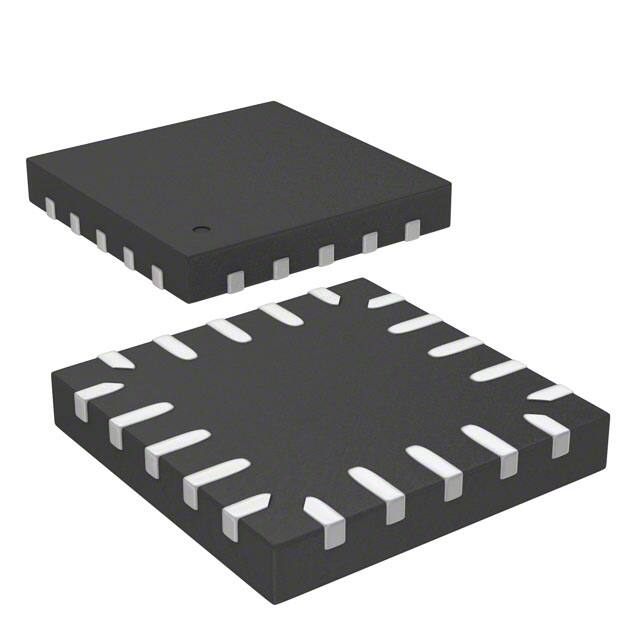




 工商网监
湘ICP备2023018690号
工商网监
湘ICP备2023018690号