®
STTA212S
TURBOSWITCH ™ ULTRA-FAST HIGH VOLTAGE DIODE
MAIN PRODUCT CHARACTERISTICS IF(AV) VRRM trr (typ) VF (max) 2A 1200V 65ns 1.5V
FEATURES AND BENEFITS SPECIFIC TO THE FOLLOWING OPERATIONS: SNUBBING OR CLAMPING, DEMAGHETIZATION ANDRECTIFICATION ULTRA-FAST AND SOFT RECOVERY VERY LOW OVERALL POWER LOSSES IN BOTH THE DIODE AND THE COMPANION TRANSISTOR HIGH FREQUENCY OPERATION HIGH REVERSE VOLTAGE CAPABILITY DESCRIPTION TURBOSWITCH 1200V drastically cuts losses in all high voltage operations which require extremely fast, soft and noise-free power diodes. Due to their optimized switching performances they aloso highly decrease power losses in any associated switching IGBT or MOSFET in all ”freewheel mode” operations and is particulary ABSOLUTE RATINGS (limiting values) Symbol VRRM VRSM IF(RMS) IFRM IFSM T stg Tj Parameter Repetitive peak reverse voltage Non repetitive peak reverse voltage RMS forward current Repetitive peak forward current Surge non repetitive forward current Storage temperature range Maximum operating junction temperature tp = 5µs F=5kHz square tp = 10ms sinusoidal Value 1200 1200 10 20 25 - 65 to + 150 125 Unit V V A A A °C °C suitable and efficient in motor control circuitries, or in primary of SMPS as snubber, clamping or demagnetizingdiodes secondary of SMPS as high voltage rectifier diodes. They are also suitable for the secondary of SMPS as high voltage rectifier diodes.
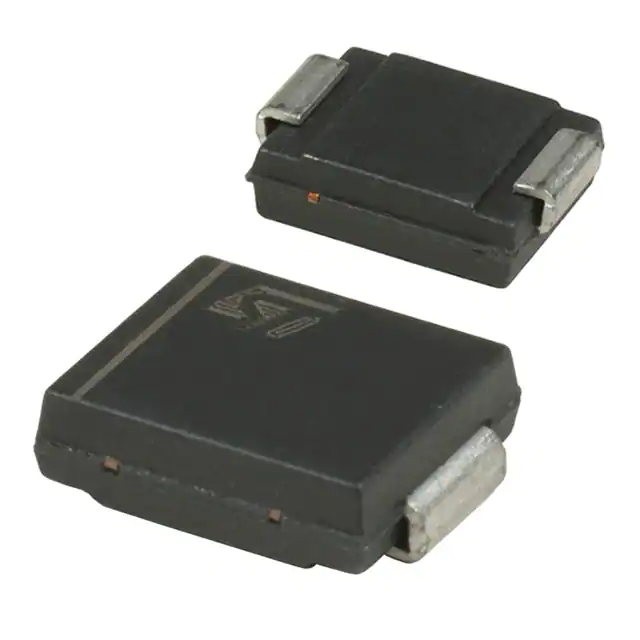
SMC
TURBOSWITCH is a trademark of STMicroelectronics
November 1999 - Ed: 4A
1/8
�STTA212S
THERMAL AND POWER DATA Symbol Rth(j-I) P1 Pmax Parameter Junction to lead thermal resistance Conduction power dissipation Total power dissipation Pmax = P1 + P3 (P3 = 10% P1) IF(AV) = 1.5A δ = 0.5 Tlead= 72°C Tlead= 67°C Test conditions Value 21 2.5 2.8 Unit °C/W W W
STATIC ELECTRICAL CHARACTERISTICS Symbol VF * IR
**
Parameter Forward voltage drop Reverse leakage current Threshold voltage Dynamic resistance
* tp = 380 µs, δ < 2% ** tp = 5 ms , δ < 2%
Test Conditions IF = 2A VR = 0.8 x VRRM Ip < 3.IAV Tj = 25°C Tj = 125 °C Tj = 25°C Tj = 125 °C Tj = 125 °C
Min
Typ 1.1 150
Max 1.65 1.5 20 400 1.15 175
Unit V µA V mΩ
Vto rd
Test pulses :
To evaluate the maximum conduction losses use the following equation : P = Vto x IF(AV) + rd x IF2(RMS) DYNAMIC ELECTRICAL CHARACTERISTICS TURN-OFF SWITCHING Symbol trr Parameter Reverse recovery time Maximum recovery current Softness factor Test conditions Tj = 25°C Irr = 0.25A IF = 0.5 A IR = 1A IF = 1 A dIF/dt =-50A/µs VR = 30V Tj = 125 °C VR = 600V dIF/dt = -16 A/µs dIF/dt = -50 A/µs Tj = 125 °C VR = 600V dIF/dt = -50 A/µs IF = 2A 3.6 6.0 IF = 2A 0.9 / Min Typ 65 115 A Max Unit ns
IRM
S factor
TURN-ON SWITCHING Symbol t fr VFp Parameter Forward recovery time Peak forward voltage Test conditions Tj = 25°C IF = 2 A dIF/dt = 16 A/µs measured at 1.1 × VFmax Min Typ Max 900 35 Unit ns V
2/8
�STTA212S
Fig. 1: Conduction losses versus average current. Fig. 2: Forward voltage drop versus forward current (maximum values).
IFM(A)
δ=0.1 δ=0.2 δ=0.5
P1(W) 3.0 2.5 2.0 1.5 1.0 0.5 IF(av) (A) 0.0 0.0 0.2 0.4 0.6 0.8 1.0 1.2 1.4 1.6 1.8 2.0
5E+1
δ=1
Tj=125°C
1E+1
1E+0
1E-1 VFM(V) 1E-2 0 1 2 3 4 5
Fig. 3: Variation of thermal impedance junction to ambient versus pulse duration (epoxy printed circuit board FR4, e(Cu)=35µm, S(Cu)=1cm2).
Zth(j-a)(°C/W) 100
Fig. 4: Peak reverse recovery current versus dIF/dt (90% confidence).
IRM(A) 20
VR=600V Tj=125°C IF=2*IF(av)
15
10
10
IF=IF(av)
5
tp(s) 1 1E-2 1E-1 1E+0 1E+1 1E+2 5E+2
dIF/dt(A/ µs)
0 0 20 40 60 80 100 120 140 160 180 200
Fig. 5: Softness factor (tb/ta) versus dIF/dt (typical values).
Fig. 6: Reverse recovery time versus dIF/dt (90% confidence).
trr(ns) 400
S factor 1.20
IF
很抱歉,暂时无法提供与“STTA212S”相匹配的价格&库存,您可以联系我们找货
免费人工找货