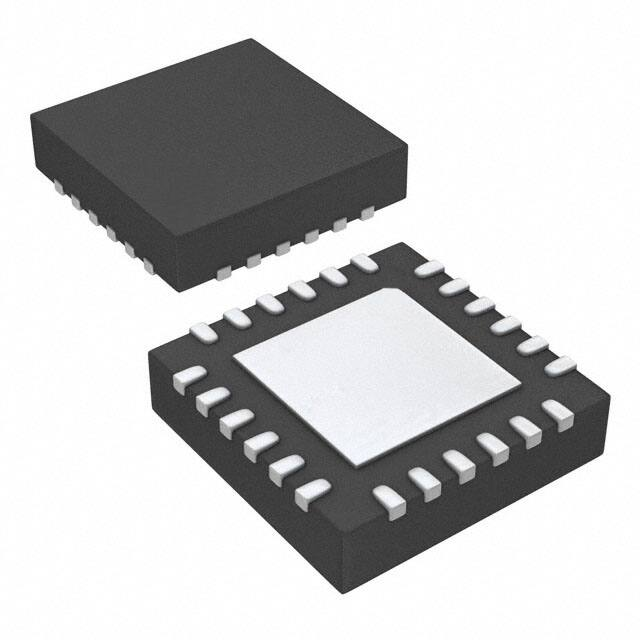
STw4102
Dual USB/wall adapter Li-ion battery charger with gas gauge
Features
Constant current constant voltage (CCCV)
linear charger
■
Common or separate USB/wall adapter inputs
■
Fast charge current control up to 1 A for wall
adapter and up to 500 mA for USB
■
Support for currents higher than 1 A using
external components
■
Programmable charge voltage (4.1 V, 4.2 V,
4.3 V, 4.35 V) with 1% accuracy
■
Thermal regulation
■
Trickle charge mode at low battery voltage
■
Wall adapter voltage up to 16 V
■
Battery overvoltage protection at 4.7 V
■
Gas gauge with 13-bit AD converter
u
d
o
Pin connections
(top view)
r
P
e
t
e
l
o
bs
O
)
s
(
t
c
Battery voltage monitor with 7-12 bit AD
converter
I2C interface for device monitoring and control
■
Charge status output pin
■
Power detection output pin
■
Programmable watchdog security timer
■
4.7 V LDO regulator (with external power
MOSFET)
r
P
e
t
e
l
o
s
Applications
b
O
■
Cellular phones (GSM, CDMA, WCDMA),
PDA, MP3 players, cordless phones
■
Digital camera, USB appliances, bluetooth
devices, portable navigation devices
Description
The STw4102 is a standalone constant current
constant voltage (CCCV) linear charger
specifically designed for Li-ion batteries.
March 2008
24 23 22 21 20 19
1
2
18
17
3
16
4
15
5
14
6
13
7
u
d
o
■
MAIN
VOUT
USBPWR
DRIVER
LDODRV
LDOFB
VIO
SCL
SDA
RESETN
STDBY
C32KHZ
8 9 10 11 12
ISET
CVREF
GND
CVIS
ICG+
ICG-
■
)
s
(
ct
QFN 24
(Plastic micropackage)
PWRDETECTN
TEST
EOCHG
BATTSENSE
BATT
SENSE
■
The STw4102 offers dual charging capability
using separate inputs for USB cable and wall
adapter, or a single input that accepts both.
The STw4102 also offers programmable fast
charge current using an external resistor. A
thermal regulation circuit limits the charge current
against the die high power dissipation or high
ambient temperature. An end of charge output pin
indicates the charge termination when the fast
charge current drops below 10% of the
programmed current value.
The STw4102 includes an accurate gas gauge
based on a 13-bit AD converter. An external
resistor is used between battery and ground to
sense a charge/discharge current. With a typical
30 mΩ resistor, current can be up to 2.5 A.
Rev 2
1/34
www.st.com
34
�Contents
STw4102
Contents
1
Block diagram . . . . . . . . . . . . . . . . . . . . . . . . . . . . . . . . . . . . . . . . . . . . . . 4
2
Pin assignment . . . . . . . . . . . . . . . . . . . . . . . . . . . . . . . . . . . . . . . . . . . . . 5
3
Absolute maximum ratings and operating conditions . . . . . . . . . . . . . 6
4
Electrical characteristics . . . . . . . . . . . . . . . . . . . . . . . . . . . . . . . . . . . . . 7
)
s
(
ct
Typical performance curves . . . . . . . . . . . . . . . . . . . . . . . . . . . . . . . . . . . . . . . . . 11
5
6
Charge from USB or wall adapter . . . . . . . . . . . . . . . . . . . . . . . . . . . . . . 14
5.2
Charge currents higher than 1 Amp . . . . . . . . . . . . . . . . . . . . . . . . . . . . . 15
5.3
Using LDO regulator to supply telephone from wall adapter . . . . . . . . . . 16
t
e
l
o
s
b
O
Battery charger . . . . . . . . . . . . . . . . . . . . . . . . . . . . . . . . . . . . . . . . . . . . 17
6.1
Charge cycle . . . . . . . . . . . . . . . . . . . . . . . . . . . . . . . . . . . . . . . . . . . . . . 17
6.2
Trickle charge . . . . . . . . . . . . . . . . . . . . . . . . . . . . . . . . . . . . . . . . . . . . . . 18
6.3
Charging from a wall adapter . . . . . . . . . . . . . . . . . . . . . . . . . . . . . . . . . . 18
6.4
Charging from a USB port . . . . . . . . . . . . . . . . . . . . . . . . . . . . . . . . . . . . 19
6.5
Charging using external power devices . . . . . . . . . . . . . . . . . . . . . . . . . . 19
)
(s
t
c
u
d
o
r
P
e
let
so
b
O
8
r
P
e
5.1
6.6
7
u
d
o
Application schematics . . . . . . . . . . . . . . . . . . . . . . . . . . . . . . . . . . . . . 14
Charge mode summary . . . . . . . . . . . . . . . . . . . . . . . . . . . . . . . . . . . . . . 19
6.7
Watchdog timer . . . . . . . . . . . . . . . . . . . . . . . . . . . . . . . . . . . . . . . . . . . . 20
6.8
Thermal regulation . . . . . . . . . . . . . . . . . . . . . . . . . . . . . . . . . . . . . . . . . . 20
Low drop-out regulator . . . . . . . . . . . . . . . . . . . . . . . . . . . . . . . . . . . . . . 21
Battery monitoring . . . . . . . . . . . . . . . . . . . . . . . . . . . . . . . . . . . . . . . . . 22
8.1
Gas gauge . . . . . . . . . . . . . . . . . . . . . . . . . . . . . . . . . . . . . . . . . . . . . . . . 22
8.2
Battery voltage monitoring . . . . . . . . . . . . . . . . . . . . . . . . . . . . . . . . . . . . 23
9
Factory OTP options . . . . . . . . . . . . . . . . . . . . . . . . . . . . . . . . . . . . . . . . 24
10
I2C interface . . . . . . . . . . . . . . . . . . . . . . . . . . . . . . . . . . . . . . . . . . . . . . . 25
10.1
2/34
Read and write operations . . . . . . . . . . . . . . . . . . . . . . . . . . . . . . . . . . . . 25
�STw4102
Contents
10.2
Register mapping . . . . . . . . . . . . . . . . . . . . . . . . . . . . . . . . . . . . . . . . . . . 26
11
Package information . . . . . . . . . . . . . . . . . . . . . . . . . . . . . . . . . . . . . . . . 31
12
Ordering information . . . . . . . . . . . . . . . . . . . . . . . . . . . . . . . . . . . . . . . 33
13
Revision history . . . . . . . . . . . . . . . . . . . . . . . . . . . . . . . . . . . . . . . . . . . 33
)
s
(
ct
u
d
o
r
P
e
t
e
l
o
)
(s
s
b
O
t
c
u
d
o
r
P
e
t
e
l
o
s
b
O
3/34
�Block diagram
1
STw4102
Block diagram
Figure 1.
Internal block diagram
DRIVER
Main Power Device (max 1A)
MAIN
USBPWR
VOUT
USB Power Device (max 500mA)
)
s
(
ct
Thermal regulation
Driver
Main
adapter
Detect
u
d
o
Pr
Current Sense
Voltage
Current
Regulation
USB
Detect
PWRDETECTN
)
(s
EOCHG
t
c
u
d
o
r
so
let
b
O
LDO
LDODRV
Voltage Sense
BATTSENSE
Trickle threshold
Trickle current
Charge Voltage
Charge current
Main supply
LDO driver 4.7V
CC/CV
configuration
Current defined by
external resistor
ISET
Internal
Supply
CVIS
Battery Monitoring
LDOFB
STDBY
Power On
Reset
Charge Control
Registers
24 bit accumulator
Control registers
VIO
SCL
SDA
RESETN
C32KHZ
AD converter
12 bits + sign bit
I2C interface
Control
Registers
AD converter
7-12 bits
GND
4/34
BATT
Vref
CVREF
P
e
e
t
e
ol
s
b
O
CC/CV
Sense ressitor
SENSE
Battery voltage
TEST
ICG+
ICG-
�STw4102
2
Pin assignment
Pin assignment
P
Table 1.
Pin descriptions
Pin #
Pin name
Type
1
MAIN
Supply
2
VOUT
O_A
3
USBPWR
Supply
4
DRIVER
O_A
Driver for external power switch (PMOS or PNP)
5
LDODRV
O_A
LDO power PMOS driver
6
LDOFB
I_A
LDO feedback regulation
7
ISET
O_A
Resistor to program the main charge current
8
CVREF
I_A
Bypass capacitor for internal voltage reference
9
GND
Ground
10
CVIS
I_A
Bypass capacitor for internal supply
11
ICG+
I_A
Gas gauge sense resistor
12
ICG-
I_A
Gas gauge sense resistor
13
C32KHZ
I_D
14
STDBY
I_D
15
RESETN
I_D
16
SDA
17
SCL
19
VIO
Pr
Main power input from wall adapter or USB charger
Power path output
Power supply from USB cable
u
d
o
r
P
e
Analog and digital ground
t
e
l
o
s
b
O
External 32kHz clock input
Gas gauge standby input (active low)
Digital register reset (active low)
IO_D
I2C serial data.
I_D
I2C serial clock.
Supply
)
s
(
ct
Supply for I/O
SENSE
I_A
BATT
Supply
Battery power voltage
21
BATTSENSE
I_A
Battery sense voltage
22
EOCHG
OD
End of charge output status. Pulled low when the fast
charge current is above 10% of its programmed
maximum value.
23
TEST
I_D
Reserved pin for factory test. To be connected to
ground.
24
PWRDETECTN
OD
Main or USB plug-in detection. Pulled low when power
is detected, open when no power is detected.
20
e
t
e
ol
s
b
O
s
(
t
c
u
d
o
18
)-
Function
Sense resistor input to regulate the charge current
In this table, the following conventions are used:
I: Input
O: Output
I/O: Bidirectional
OD: Open Drain
A: Analog
D: Digital
5/34
�Absolute maximum ratings and operating conditions
3
STw4102
Absolute maximum ratings and operating conditions
Table 2.
Absolute maximum ratings (AMR)
Symbol
VMAIN
Parameter
Maximum supply voltage on MAIN input
Value
Unit
20
V
VCC
Voltage on EOCHG, LDODRV, DRIVER pins
-0.3 to VMAIN
V
VUSB
Maximum supply voltage on USBPWR input
7
V
Vbatt
Maximum voltage on BATT, BATTSENSE, PWRDETECTN
7
V
VIO
Maximum supply voltage on VIO pin
7
V
VDD
Voltage on I/O pins (SCL, SDA, RESETN, C32KHZ,
STDBY)
Pd
Tstg
self-limited
Maximum current from SENSE to BATT
r
P
e
Storage temperature
let
Maximum junction temperature
Tj
Rthja
ESD
Thermal resistance
V
u
d
o
Power dissipation
Isense
)
s
(
ct
-0.3 to VIO
junction-ambient(1)
o
s
b
Electrostatic discharge (HBM human body
model)(2)
1
A
-55 to 150
°C
150
°C
45
° C/W
2
kV
O
)
1. Package's exposed pad is soldered to a copper pad on the PCB with multiple vias to the ground plane.
2. Human body model: 100 pF discharged through a 1.5 kΩ resistor between two pins of the device, done for
all couples of pin combinations with other pins floating.
Table 3.
s
(
t
c
Operating conditions
Symbol
Value
Unit
4.25 to 16
V
16
V
Operating supply voltage on USBPWR
4.25 to 5.5
V
VIO
Operating supply voltage on VIO
1.45 to 3.0
V
Vbatt
Max voltage on BATT, BATTSENSE, PWRDETECTN
5.0
V
Vout
Max voltage on VOUT
BATT +0.7
V
Toper
Operating free air temperature range
-30 to 85
°C
Vmain
Operating supply voltage on MAIN
VCC
Maximum voltage on EOCHG
e
t
e
ol
Pr
VUSB
s
b
O
6/34
u
d
o
Parameter
�STw4102
Electrical characteristics
4
Electrical characteristics
Table 4.
CC/CV charger - Voper= 5V, Vbatt= 3.6V, Tamb = -30°C to 85° C (unless otherwise
specified)
Symbol
Parameter
Conditions
Min
Typ
Max
Unit
Supply (Voper from MAIN or USB)
Icharger
Main or USB input operating current
2
ISTBY
USBPWR input standby current
Charge off
40
µA
Ibatt_sense
BSENSE input current
No charge
1
µA
Ibatt
BATT input current
No charge
25
µA
POR_IS+
Power ON reset threshold+
CVIS internal supply
2.2
2.3
2.4
V
POR_IS-
Power ON reset threshold-
CVIS internal supply
2.1
2.2
2.3
V
+1
%
Vcharge_acc
Output voltage accuracy
Tamb= 0°C to 85° C
Rpower
Power path resistance
MAIN to BATT
Batteryovv
Static battery overvoltage detection
Batteryovv_hyst
Static battery overvoltage hysteresis
Current regulation
)
(s
t
c
u
t
e
l
o
s
b
O
)
s
(
ct
u
d
o
r
P
e
Voltage regulation
mA
-1
4.55
Ω
0.6
4.7
4.8
100
V
mV
Vbatt< Vtrickle
Standard configuration
Factory OTP option
30
60
60
120
100
180
mA
mA
Standard configuration
2.8
2.9
3.0
V
Itrickle
Trickle charge current
Vtrickle
Trickle to fast charge threshold
Vtrickle_hyst
Trickle to fast charge threshold hysteresis
Icharge
Main charge current range
Internal path
100
1000
mA
Main charge current accuracy
Icharge> 500mA
-15
+15
%
o
s
b
100
USB charge current
REG_CHG0[7..6]:
00
01
10
11
mA
mA
mA
mA
EOCHGith
End of charge threshold
% of current setting
10
%
EOCHGith_hys
End of charge threshold hysteresis
% of current setting
5
%
Tregulation
Regulated junction temperature
125
°C
Tsoftstart
Soft start from trickle to fast charge
100
µs
od
e
t
e
l
Icharge_acc
IUSB
Pr
O
100
30
60
200
400
0
mV
500
7/34
�Electrical characteristics
Table 4.
STw4102
CC/CV charger - Voper= 5V, Vbatt= 3.6V, Tamb = -30°C to 85° C (unless otherwise
specified) (continued)
Symbol
Parameter
Conditions
Min
Typ
Max
Unit
0.5
7.5
15
30
1
15
30
60
1.5
22.5
45
90
min
min
min
min
2.4
2.5
2.6
Watchdog
twatchdog
REG_WDOG[2,1]:
00
01
10
11
Watchdog duration
Input/output pins
Vcharger_det
Main charger supply voltage detection
Vcharger_det_hys
Main charger supply voltage detection
hysterisis
VUSB_det
USB supply voltage detection
VUSB_det_hys
USB supply voltage detection hysteresis
Volpowerdetect
POWERDETECTN output capability
Isink= 10mA
VolEOCHG
EOCHG output capability
Isink= 10mA
Isink= 20mA
Idrv_sink
Driver sink current
Table 5.
e
t
e
l
Pr
o
s
b
(If option enabled)
Parameter
O
)
s
(
t
c
LDOV
LDO regulated output voltage
LDOpower_th
LDO power turn off threshold
u
d
o
r
P
e
Conditions
Including line and load
regulation (up to 1A),
Vmain > 6V
LDOpower_th_hys LDO power turn off threshold hysterisis
let
LDOPSRR
o
s
b
8/34
u
d
o
2.5
2.6
100
V
mV
V
mV
0.45
V
0.5
1.1
V
V
60
mA
LDO - Vmain= 6V, Tamb = -30°C to 85° C (unless otherwise specified)
Symbol
O
ct
100
2.4
(s)
LDO power supply rejection ratio
Up to 20kHz
Min
Typ
Max
Unit
4.47
4.7
4.93
V
6.8
7.2
7.5
V
0.7
V
50
dB
�STw4102
Table 6.
Electrical characteristics
Battery monitor - Vbatt= 3.6V, Tamb = -30°C to 85° C (unless otherwise specified)
Symbol
Parameter
Conditions
Min
Typ
Max
Unit
POR_IS2+
Power ON reset threshold+
CVIS internal supply
2.6
2.7
2.8
V
POR_IS2-
Power ON reset threshold-
CVIS internal supply
2.5
2.6
2.7
V
Gas gauge A/D converter
Vos_gg
Input offset voltage
40
Vin_gg
Input voltage range
Idd_gg
Current consumption
Ipdn_gg
Current consumption in off mode
Iin
Input current for ICG+ and ICG-
LSBgg
AD converter granularity (LSB value)
12 bits + 1 sign bit
AccTamb_gg
Accuracy at ambient temperature
External resistor at 1%
No calibration
µV
-80
+80
mV
CG_ENA=1
90
µA
CG_ENA=0
1
µA
500
nA
23.5
Vin_mon
Input voltage range
BATT voltage
Idd_mon
Current consumption
ADPOWERON=1
Ipdn_mon
Current consumption in off mode
ADPOWERON=0
LSBmon
AD converter granularity (LSB value)
AccTamb_mon Accuracy at ambient temperature
o
s
b
let
s
(
t
c
3
1
%
5
190
No calibration
V
µA
1
O
)
7 bits
12 bits
µV
u
d
o
r
P
e
Battery voltage A/D converter
)
s
(
ct
µA
45.4
1.42
mV
mV
3
%
Digital I/O pins (SCL, SDA, STDBY, C32KHZ, RESETN)
u
d
o
Vil
Input pin low voltage
Vih
Input pin high voltage
Vol
SDA output pin low voltage
e
t
e
ol
Pr
Isink= 3mA
0
0.3 x VIO
V
0.7 x VIO
VIO
V
0.2 x VIO
V
s
b
O
9/34
�Electrical characteristics
Table 7.
STw4102
I2C timing - VIO= 2.8V, Tamb = -30°C to 85° C (unless otherwise specified)
Symbol
Parameter
Conditions
Min
Typ
Max
Unit
400
kHz
Fscl
SCL clock frequency
thd,sta
Hold time (repeated) START condition
0.6
µs
tlow
LOW period of the SCL clock
1.3
µs
thigh
HIGH period of the SCL clock
0.6
µs
tsu,dat
Setup time for repeated START condition
0.6
µs
thd,dat
Data hold time
tr
0
0.9
us
Rise time of both SDA and SCL signals
20+
0.1Cb
300
ns
tf
Fall time of both SDA and SCL signals
20+
0.1Cb
300
ns
tsu,sto
Setup time for STOP condition
Cb
Capacitive load for each bus line
Figure 2.
e
t
e
ol
I2C timing diagram
Vih
SDA
tf
Vil
)
(s
thd,sta
SCL
t
e
l
o
10/34
ct
u
d
o
r
P
e
s
b
O
0.6
tlow
u
d
o
tr
Pr
s
b
O
tsu,dat thigh
thd,dat
tsu,sta
)
s
(
ct
µs
400
pF
�STw4102
Electrical characteristics
Typical performance curves
Charger voltage vs. charge current Figure 4.
(Main charge, 4.2V and 1A settings)
4.5
4.5
4.0
4.0
3.5
3.5
3.0
3.0
Vbatt (V)
Vbatt (V)
Figure 3.
2.5
2.0
Charger voltage vs. charge current
(USB charge, 4.2V setting)
Ich=200mA
2.5
2.0
1.5
1.5
1.0
1.0
0.5
0.5
0
200
400
600
800
1000
0
1200
100
200
Charge current vs. temperature
(charge from MAIN, 1A setting)
Figure 6.
1.2
0.6
t
c
u
od
0.0
-50
-25
0
e
t
e
ol
Figure 7.
s
b
O
Pr
25
50
500
75
o
r
P
e
t
e
ol
Ich=400mA
400
Iusb (mA)
)
(s
0.8
0.2
400
Charge current vs. temperature
(charge from USBPWR)
s
b
O
500
1.0
0.4
300
Iusb (mA)
Icharge (mA)
Figure 5.
)
s
(
ct
du
0.0
0.0
Icharge (A)
Ich=400mA
300
Ich=200mA
200
100
100
125
Temp (°C)
0
-50
-25
0
25
50
Temp (°C)
75
100
125
Charge voltage vs. temperature
(4.2V nominal setting)
4.24
4.23
Vcharge (V)
4.22
4.21
4.20
4.19
4.18
4.17
4.16
-50
-25
0
25
50
75
100
125
Temp (°C)
11/34
�Electrical characteristics
USB standby input current vs.
temperature (charge disabled)
Figure 9.
60
60
50
50
40
40
Ibat (µA)
Iusb (µA)
Figure 8.
STw4102
30
30
20
20
10
10
0
-50
-25
0
25
50
75
100
0
-50
125
Battery standby current vs
temperature (no MAIN, no
USBPWR, gas gauge disabled)
-25
0
Temp (°C)
s
(
t
c
0.8
Pr
u
d
o
25
50
75
100
125
s
b
O
5.0
4.9
LDOv (V)
4.8
Vmain=6V
4.6
Vmain=5V
4.5
4.4
0
500
1000
LDOi (mA)
12/34
4.7
4.5
-50
-25
0
25
50
Temp (°C)
Figure 12. LDO output voltage vs. output
current
4.7
r
P
e
4.6
Temp (°C)
e
t
e
ol
LDOv (V)
Twatchdog
)-
1.0
125
s
b
O
4.8
0
u
d
o
100
t
e
l
o
4.9
1.2
75
Figure 11. LDO output voltage vs. temperature
(10 mA output current)
1.4
-25
50
Temp (°C)
Figure 10. Watchdog period vs. temperature
(normalized to value at 25°C)
0.6
-50
25
)
s
(
ct
1500
75
100
125
�STw4102
Electrical characteristics
Figure 13. Waveforms at USB plug-in
Vusb
Vbatt
Ibatt
)
s
(
ct
50µs/div
u
d
o
Figure 14. Switching from USB charge to main Figure 15. Switching from main charge to USB
charge
charge
r
P
e
t
e
l
o
Vmain
)-
Vbatt
s
(
t
c
Ibatt
du
e
t
e
ol
100µs/div
s
b
O
Vmain
Vbatt
Ibatt
10ms/div
o
r
P
s
b
O
13/34
�Application schematics
STw4102
5
Application schematics
5.1
Charge from USB or wall adapter
The MAIN input is used with either a wall adapter or a USB charger. The charge current can
be programmed to 100 mA or 500 mA max for use with a USB 2.0 port, or programmed to
the value set by the Rset resistor for use with a wall adapter or a dedicated USB charger.
The USBPWR input is used only for charging from a USB port (100 mA or 500 mA max).
Figure 16. Charge using internal power devices
from wall adapter
or USB port/charger
DRIVER
MAIN
from USB port only
USBPWR
STw4102
C5
r
P
e
BATT
to power
management
t
e
l
o
PWRDETECTN
bs
O
)
CVREF
du
IO voltage
s
b
O
14/34
o
r
P
Table 8.
Reset
ISET
Rset
CVIS
s
(
t
c
C2
C3
BATTSENSE
Indicator LED
EOCHG
u
d
o
SENSE
battery voltage
e
t
e
ol
)
s
(
ct
VOUT
C4
LDODRV
LDOFB
C32KHZ
STDBY
VIO
ICG+
SCL
SDA
RESETN
ICG-
C1
32kHz
StandBy
Rcg
GND
TEST
External component list
Name
Typ. value
Tolerance
Comments
Rset
12k to 120k
1%
Main charge current setting
Rcg
30mΩ
1%
Gas gauge sense resistor
C1
1µF
Internal supply decoupling capacitor
C2
1µF
Internal voltage reference decoupling capacitor
C3
0.1 to 22µF
When the battery is removed, a capacitor of at least
15µF is required for low ripple on the battery line.
C4
0.1 to 1µF
MAIN input decoupling capacitor
C5
0.1 to 1µF
USBPWR input decoupling capacitor
�STw4102
5.2
Application schematics
Charge currents higher than 1 Amp
One-time programming (OTP) options offer the ability to use an external power device or an
external sense resistor to handle charge currents higher than 1 A from the wall adapter.
These OTP options are set by STMicroelectronics at factory level.
Figure 17. Charge using external power devices
D1
M1
T1
DRIVER
MAIN
)
s
(
ct
VOUT
Rs
u
d
o
USBPWR
STw4102
SENSE
r
P
e
battery voltage
to power
management
t
e
l
o
PWRDETECTN
BATTSENSE
bs
Indicator LED
CVREF
du
IO voltage
e
t
e
l
O
o
s
b
o
r
P
Table 9.
Reset
Rset
CVIS
C1
s
(
t
c
C2
ISET
O
)
EOCHG
C3
BATT
LDODRV
LDOFB
C32KHZ
STDBY
VIO
ICG+
SCL
SDA
RESETN
ICG-
32kHz
StandBy
Rcg
GND
TEST
Component list for external power devices
Name
Typ. value
Tolerance
Comments
Rset
8k to 12k
1%
Main charge current setting
Rs
200mΩ
1%
External current sense resistor
T1 or
M1 + D1
STT818B
STS2DPFS20V
PNP transistor
PMOS transistor with Schottky diode
15/34
�Application schematics
5.3
STw4102
Using LDO regulator to supply telephone from wall adapter
The regulator with external power PMOS (M1) supplies the telephone while the battery is
discharged or unplugged. When the charger is unplugged, the phone is supplied by the
battery through Power MOS M2. A Schottky diode (D1) avoids reverse current.
Figure 18. Charge power path and regulator
DRIVER
MAIN
VOUT
C4
USBPWR
STw4102
)
s
(
ct
SENSE
Battery voltage
BATT
u
d
o
C3
to power
management
PWRDETECTN
BATTSENSE
r
P
e
Indicator LED
ISET
EOCHG
C2
LDODRV
LDOFB
IO voltage
)-
VIO
so
b
O
SCL
SDA
RESETN
s
(
t
c
Reset
let
CVREF
CVIS
C32KHZ
STDBY
Rset
C1
32kHz
StandBy
ICG+
Rcg
ICGGND
TEST
u
d
o
M1
r
P
e
D1
let
o
s
b
M2
Co >= 15uF
To phone
O
Table 10.
16/34
Component list for LDO regulator
Name
Typ. value
Tolerance
Comments
M1 + D1
STS2DPFS20V
M2
STT5PF20V
PMOS transistor
Co
10µF to 22µF
An output capacitor Co of at least 10µF is required.
C4
Co
An input capacitor C4 equal to or larger than Co is
required on MAIN input.
PMOS transistor with Schottky diode
�STw4102
Battery charger
6
Battery charger
6.1
Charge cycle
The charge cycle is initiated when the presence of a power source on either the MAIN or
USBPWR inputs is detected (the PWRDETECTN pin goes low), while the charger is
enabled by the CHG_ENA bit of the REG_CHG1 control register. If both supplies are
connected, the MAIN input path is selected.
The EOCHG output pin is driven low as the charge begins. If the battery voltage is lower
than the trickle threshold, the charge cycle begins in trickle mode with a low current (default
value: 60 mA) until the battery voltage reaches the trickle voltage threshold (default value:
2.9 V). Once the battery voltage rises above this threshold, the charger enters into fast
charge mode where the programmed charge current Icharge or IUSB is supplied to the
battery.
)
s
(
ct
u
d
o
When the battery voltage approaches the programmable charge voltage (4.10V, 4.20V,
4.30V or 4.35V), the charger enters into a constant voltage charging mode and the charging
current decreases. When the current level reaches the end-of charge level (10% of Icharge),
the EOCHG status pin is switched off (open) to indicate that the battery is almost fully
charged, and the charger enters maintenance mode.
r
P
e
t
e
l
o
In maintenance mode, the charger continues to monitor the battery voltage to maintain the
battery voltage level. The maintenance mode lasts until the charge is stopped by clearing
the CHG_ENA bit in the REG_CHG1 control register, or by removing the power source
(PWRDETECTN is opened).
)
(s
Figure 19. Charge flow (simplified)
s
b
O
t
c
u
Charge Off
EOCH OPEN (LED OFF)
d
o
r
Power detected (PWRDETECTN LOW)
P
e
s
b
O
t
e
l
o
Power removed (PWRDETECTN OPEN)
Charge Stopped
EOCH OPEN (LED OFF)
Trickle charge
60mA
EOCH LOW (LED ON)
Vbatt < 2.8v
Vbatt > 2.9v
CCCV charge
EOCH LOW (LED ON)
Icharge > 15%
Battery overvoltage
or Watchdog event
Icharge < 10%
Maintenance charge
EOCH OPEN (LED OFF)
CCCV is still ON
Battery overvoltage
or Watchdog event
17/34
�Battery charger
6.2
STw4102
Trickle charge
The trickle charge mode is enabled when the battery voltage Vbatt is lower than the trickle
voltage threshold Vtrickle. An internal current source charges the battery. When Vbatt is
above Vtrickle, the trickle current generator is off and the battery is charged using the
constant current method.
The trickle voltage threshold and trickle current are defined by OTP configuration bits and
are factory set to 2.9 V and 60 mA by default. Other values are possible, see Section 9:
Factory OTP options on page 24.
6.3
Charging from a wall adapter
)
s
(
ct
The MAIN input is used for charging from a wall adapter or a dedicated USB charger. The
SEL_DC_USB bit (bit 5 of register REG_CHG0) must be set to 0. The fast charge current is
defined by the external resistor Rset connected to the ISET pin, and can be set up to 1 A.
u
d
o
The value of the fast charge current is given by the following formula:
r
P
e
Icharge = 12000 / Rset
In the constant voltage mode, the charger output voltage is regulated with 1% accuracy. The
charger output voltage is programmable using the REG_CHG0 register, bits 3 and 4 (see
Table 11).
Table 11.
Charger output voltage
REG_CHG0[4]
1
od
1
r
P
e
Vcharge
0
4.10V +/-1%
t
c
u
0
s
b
O
REG_CHG0[3]
)
(s
0
t
e
l
o
1
4.20V +/-1%
0
4.30V +/-1%
1
4.35V +/-1%
Figure 20. Main charge mode
so
let
b
O
Ibatt
Vbatt
Battery Voltage
Vcharge
Charge current
Icharge
(defined by Rset)
Flag end of
charge (10% Icharge)
Vtrickle (2.9v)
Itrickle (60mA)
Trickle
charge
Fast charge
Constant current
18/34
Maintenance
charge
Constant voltage
�STw4102
6.4
Battery charger
Charging from a USB port
The MAIN or USBPWR input can be used to charge from a USB 2.0 port. When using the
MAIN input, bit SEL_DC_USB (bit 5 of register REG_CHG0) must be set to 1. Charging
from a USB port is similar to charging from a wall adapter, except the fast charge current
IUSB is set internally and depends on bits 6 and 7 of the control register REG_CHG0.
Table 12.
6.5
USB charge current
REG_CHG0[7]
REG_CHG0[6]
IUSB (typ)
0
0
60mA (100 mA max)
0
1
200mA
1
0
400mA (500 mA max)
1
1
off
Charging using external power devices
)
s
(
ct
u
d
o
r
P
e
To support charge currents higher than 1 A from the main supply adapter, the STw4102
provides the option to use an external power device and sense resistor. This OTP option is
factory set.
t
e
l
o
s
b
O
The STw4102 driver is able to drive an external PNP (STT818B or equivalent) or a PMOS
plus Schottky diode (STS2DPFS20V or equivalent). The driver maximum sink current is
60 mA.
)
(s
The external current sensing device is usually a 200 mΩ shunt resistor. With this resistor
value, the trickle and USB charge currents are close to the nominal values.
6.6
t
c
Charge modeu
summary
d
o
r
P
e
t
e
ol
Table 13 summarizes the different charge modes.
Table 13.
s
b
O
Vbatt
Charge modes
MAIN
detected
USBPWR CHG_ENA SEL_DC_USB
detected
bit
bit
Charge
x
x
0
x
Charge disabled
0
0
1
x
No charge
under
1
x
Vtrickle
1
x
0
-
1
1
Trickle charge from USBPWR
1
0
Fast charge from MAIN input,
current set by Rset
1
1
Fast charge from MAIN input,
current set by USB_ICHG bits
1
x
Fast charge from USBPWR input,
current set by USB_ICHG bits
x
above
Vtrickle
0
Trickle charge from MAIN
1
19/34
�Battery charger
6.7
STw4102
Watchdog timer
When the fast charge is active, a watchdog timer starts to prevent damage on the battery.
The system controller refreshes the watchdog periodically in order let the charge continue.
When the watchdog time elapses, the charge is stopped.
When the charge starts in trickle mode, to allow the battery to be charged although the
system controller is not running, the watchdog is disabled. However, if for any reason the
charger goes from fast charge mode to trickle mode, then the watchdog is not disabled to
protect against battery failure.
Watchdog timing can be 1 minute, 15 minutes, 30 minutes or 60 minutes. It is programmable
through the I2C interface. The watchdog can be reset by the I2C interface (bit WDOG_RST)
or by unplugging the charger (PWRDETECTN goes to low). The watchdog can also be
enabled and disabled through the I2C interface.
)
s
(
ct
In the standard configuration, the default state at powerup is watchdog enabled and the
timing is one minute.
6.8
u
d
o
r
P
e
Thermal regulation
t
e
l
o
A thermal regulation circuit limits the charge current in case of high power dissipation due to
high input voltage or high ambient temperature. The charge current is progressively reduced
to maintain the die temperature in a safe area. This allows to charge the battery with the
highest possible current depending on the operating conditions, and protects the device
against any damage.
)
(s
t
c
u
d
o
r
P
e
t
e
l
o
s
b
O
20/34
s
b
O
�STw4102
7
Low drop-out regulator
Low drop-out regulator
The purpose of the low drop-out regulator (LDO) is to supply the phone directly from the wall
adapter when the battery is low or not present. When the wall adapter is present, MOSFET
is off and the phone supply is regulated at 4.7 V minus the drop voltage across D1. When
the MAIN pin is not connected, MOSFET M2 is on (the gate is pulled down) and the D1
diode avoids any reverse current. The LDO output current is limited by The M1 MOSFET
and D1 diode current capabilities. An output capacitor Co of at least 15 µF is required. The
schematics are illustrated in Figure 21.
When the battery is fully discharged, the regulator can charge the battery from the main
supply and at the same time supply the phone, which avoids waiting for the battery to be
charged up to the minimum operating voltage before using the phone.
)
s
(
ct
Figure 21. Regulator
u
d
o
Wall adapter power supply
t
e
l
o
Main supply
LDODRV
M1
LDO 4.7V
LDOFB
D1
)M2
r
P
e
s
b
O
Battery power supply
s
(
t
c
Co >= 15uF
u
d
o
To phone
r
P
e
When the main supply is above the low dropout threshold LDOpower_th (about 7.2 V), then
the LDO is turned off to protect the external PMOS against high power dissipation as shown
in Figure 22. LDOpower_th hysteresis is around 0.7 V. By default, this protection feature is
enabled, but can be disabled at factory level by OTP.
s
b
O
t
e
l
o
Figure 22. Supply voltage
Main supply voltage
7.2V
6.5V
4.7V
Main detect
ON
ON
21/34
�Battery monitoring
STw4102
8
Battery monitoring
8.1
Gas gauge
The gas gauge is designed to monitor the battery capacity. A current sensing resistor
(typically of 30 mΩ) is needed between the negative terminal of the battery and the ground.
The sensing resistor voltage drop is input to a 13-bit integrating AD converter. When a
conversion cycle is completed, depending on the output sign, the result is forwarded to the
charge or discharge 24-bit accumulator, and the number of conversions is incremented in a
12-bit counter.
One accumulator accumulates current flowing into the battery during charging and the other
accumulates discharge current during system operation. The remaining battery charge is
given by the difference between the charge and discharge accumulators.
)
s
(
ct
u
d
o
Figure 23. Gas gauge block diagram
r
P
e
12 bits Counter
t
e
l
o
)-
s
(
t
c
e
t
e
ol
s
b
O
Pr
u
d
o
ICG+
ICG-
s
b
O
From 2’s
to binary
13
Conv_data
registers
24
Charge
registers
24
Discharge
registers
24 bit max
Charge
accumulator
AD converter
12 bits + sign bit
Conv_number
registers
Discharge
accumulator
sign
Σ
EOC
cg_clock
cg_enable
Control logic
cg_calibration
32kHz
Control
registers
The Digital Base Band (DBB) can control, enable and read gas gauge data through I2C
control registers. The DBB can read the value of the most recent conversion in two’s
complement format by reading the CONVDATA registers.
The RD_REQ bit enables the transfer of the charge/discharge accumulators and conversion
counter register. The transfer can take up to eight 32 kHz cycles, therefore a delay of
22/34
�STw4102
Battery monitoring
approximately 250 microseconds must be respected between the time the RD_REQ bit is
set and the actual register reading. The RD_REQ bit is automatically cleared after the
transfer.
A high value written to the RST_CHRG, RST_DCHRG or RST_COUNTER bits of the
control register resets respectively the charge accumulator, discharge accumulator or
conversion counter. If these bits are set together with the RD_REQ bit, then the reset occurs
after the transfer to the charge, discharge or conversion counter register respectively. The
RST_CHRG, RST_DCHRG or RST_COUNTER bits are automatically cleared after the
reset.
The differential inputs are scaled to the full range of the AD converter, introducing a small
offset error. A high value written to the CG_CAL bit of the control register connects the
inputs of the AD converter together, allowing the DBB to measure the digital offset error.
Using this measurement, the gas gauge can be calibrated to reduce the offset error.
)
s
(
ct
The conversion cycle of a 12-bit plus 1 sign-bit AD converter is 213 (8192) clock cycles.
Using the 32.768kHz RTC clock, the conversion cycle time is 250 ms. The LSB value is
23.54 µV, which corresponds to a current of 784.7 µA with a typical 30 mΩ sense resistor.
Given a 250 ms conversion cycle time, this LSB value corresponds to a charge of 54.5 nAh.
Under these conditions, the 24-bit accumulator has a capacity of 914 mAh.
u
d
o
r
P
e
The gas gauge system is disabled when the battery voltage is below the Power On Reset
threshold (2.7 V), or when the RESETN pin is driven low (CG_ENA bit default value is 0).
t
e
l
o
During normal operation, either the STDBY pin or the CG_ENA bit can be used to disable
the gas gauge function. When the STDBY pin is low, the gas gauge is disabled without
waiting for the end of the current conversion. When the CG_ENA bit is low, the current
gauge is disabled at the end of the current conversion.
s
b
O
8.2
)
s
(
Battery voltage monitoring
t
c
u
d
o
r
P
e
t
e
ol
The battery voltage can be measured by means of a 7- or 12-bit A/D converter. This function
is enabled and configured using the following bits of the ADCTRL register:
s
b
O
●
The ADPOWERON bit enables battery voltage monitoring.
●
The ADRESOLUTION bit allows to select 7- or 12-bit conversion.
●
The ONSTATE bit is set when the ADC converter is ready.
●
The ADSTART bit starts a conversion; it is automatically cleared after writing.
●
The ADRUN bit indicates that a conversion is in progress. The result is available when
the ADRUN bit goes low, and it can be read in the ADDATA registers.
A high value written to the ADCAL bit of the control register connects the input of the A/D
converter to ground, allowing the DBB to measure the digital offset error. Using this
measurement, the AD converter can be calibrated to reduce the offset error.
The conversion cycle of a 7 (12) bit conversion is 28=256 (213=8192) clock cycles. Using the
32.768kHz RTC clock, the conversion cycle time is 7.8 (250) ms. LSB value is 45 (1.4) mV.
When the battery voltage falls below the Power On Reset threshold, or when the RESETN
input is driven low, the battery voltage monitoring function is disabled.
23/34
�Factory OTP options
9
STw4102
Factory OTP options
Table 14 summarizes the one-time programming (OTP) options offered by
STMicroelectronics to customize the STw4102 at factory level.
Table 14.
Factory OTP options
Option
Configuration bits
Value
TRICKLE current (wall adapter OTP_TC=0 (default)
charge only)
OTP_TC=1
TRICKLE threshold voltage
OTP_TV1, OTP_TV0 :
00
01
10
11 (default)
MAIN input mode at powerup
OTP_SEL_DC_USB=0 (default)
OTP_SEL_DC_USB=1
Watchdog state at powerup
OTP_WD_ENA=0
OTP_WD_ENA=1 (default)
Watchdog period at powerup
OTP_WD_TIME1, OTP_WD_TIME0 :
00 (default)
01
10
11
)
(s
t
c
u
Sense resistor
d
o
r
LDO overvoltage protection
P
e
let
O
I2C ID address
s
b
O
)
s
(
ct
u
d
o
r
P
e
t
e
l
o
Power switch
o
s
b
60 mA
120 mA
2.3 V
2.5 V
2.7 V
2.9 V
Wall adapter mode
USB mode
Disabled
Enabled
1 min
15 min
30 min
60 min
OPT_IEPD=0 (default)
OPT_IEPD=1
Internal
External
OPT_IERSENSE=0 (default)
OPT_IERSENSE=1
Internal
External
OPT_LDOEXT_PRO=0
OPT_LDOEXT_PRO=1 (default)
Disabled
Enabled
OTP_ID2, OTP_ID1, OTP_ID0 :
000 (default)
001
010
011
100
101
110
111
70h
71h
72h
73h
74h
75h
76h
77h
For any option request other than the standard configuration (default values), contact
STMicroelectronics to get a specific order code.
24/34
�I2C interface
STw4102
10
I2C interface
10.1
Read and write operations
The I2C interface is used to control the charging and the gas gauge system. It is compatible
with the I2C specification of Philips (version 2.1). It is a slave serial interface with a serial
data line (SDA) and a serial clock line (SCL):
SCL: input clock used to shift data
SDA: input/output bi-directional data transfers
A filter rejects the potential spikes on the bus data line to preserve data integrity. The bidirectional data line supports transfers up to 400 kbit/s (fast-mode). The data is shifted into
and from the chip on the SDA line, MSB first.
)
s
(
ct
The first bit must be high (START), followed by the Device ID and Read/Write control bit (see
Table 15). The AddrID0 to AddrID2 bits are factory programmable, their default ID value is
70h (AddrID0 = AddrID1 = AddrID2 = 0). Then, the STw4102 sends an acknowledge at the
end of the 8-bit transmission.
u
d
o
r
P
e
The next 8 bits correspond to the address register, followed by another acknowledge.
Table 16 shows the address register format.
t
e
l
o
The data field is sent last. It can be composed of several 8-bit data registers, each followed
by an acknowledge. Table 17 shows the data register format.
s
b
O
The STw4102 supports byte read, word read, block read, and byte write operations. The
transmission protocol is summarized in Figure 24 and Figure 25.
Table 15.
b7
b6
1
1
Table 16.
1
b4
b3
b2
b1
b0
0
AddrID2
AddrID1
AddrID0
R/W
b6
b5
b4
b3
b2
b1
b0
RegAddr6
RegAddr5
RegAddr4
RegAddr3
RegAddr2
RegAddr1
RegAddr0
t
e
l
o
O
ct
u
d
o
r
P
e
RegAddr7
bs
b5
Address register format
b7
Table 17.
)
(s
Device ID and R/W bit format
r
Data register format
b7
b6
b5
b4
b3
b2
b1
b0
DATA7
DATA6
DATA5
DATA4
DATA3
DATA2
DATA1
DATA0
Figure 24. Byte, word and block read operation
Master
Start Device id W
7 bits
Slave
A Reg address A
8bits
Restart Device id
Start bit = SDAfalling when SCL=1
Stop bit = SDArising when SCL=1
Restart bit = start after a start
Acknowledge = SDA force low during a SCL clock
7 bits
R
A
Reg data
8bits
A
Reg data A
Reg data
8bits
8bits
address
n+1
address
n+2
A/A
Stop
25/34
�I2C interface
STw4102
Figure 25. Byte write operation
Start Device id W
7 bits
A Reg address A
8bits
Reg data
A
Stop
8bits
Start bit = SDAfalling when SCL=1
Stop bit = SDArising when SCL=1
Restart bit = start after a start
10.2
Register mapping
The mapping of all registers is shown in Table 18. Individual register descriptions are shown
in Table 19 to Table 35. Power-up values are set at power startup, or at reset (RESETN pin
falling edge). Charge and discharge internal accumulators are not affected by RESETN.
Table 18.
Description
t
e
l
o
REG_CHG0
0
Charge control and status
REG_CHG1
1
Charge enable
REG_WDOG
2
REG_CG
3
)-
4
t(s
REG_CHARGE_MID
s
b
O
Watchdog control
Gas gauge control
Gas gauge charge data, bits 0-7
5
Gas gauge charge data, bits 8-15
6
Gas gauge charge data, bits 16-23
7
Gas gauge discharge data, bits 0-7
REG_DISCHARGE_MID
8
Gas gauge discharge data, bits 8-15
c
u
d
REG_CHARGE_HIGH
REG_DISCHARGE_LOW
o
r
P
REG_DISCHARGE_HIGH
9
Gas gauge discharge data, bits 16-23
REG_CONVDATA_LOW
16
Gas gauge AD converter data, bits 0-7
REG_CONVDATA_HIGH
17
Gas gauge AD converter data, bits 8-12
REG_CONVNUMBER_LOW
18
Number of conversions, bits 0-7
REG_CONVNUMBER_HIGH
19
Number of conversions, bits 8-11
REG_ADCTRL
20
Battery voltage monitor control
REG_ADDATA_LOW
21
Battery voltage monitor AD converter data, bits 0-7
REG_ADDATA_HIGH
22
Battery voltage monitor AD converter data, bits 8-10
e
t
e
l
26/34
r
P
e
Address
(dec.)
REG_CHARGE_LOW
O
u
d
o
Register mapping
Name
o
s
b
)
s
(
ct
�I2C interface
STw4102
Table 19.
REG_CHG0. address 0 (00h)
Pos.
Type
Powerup
CHARGERUN
0
R
0
0: Charge is below 10% of fast charge current.
1: Charge is above 10% of fast charge current.
MAINDETECT
1
R
0
Main input voltage detection.
USBDETECT
2
R
0
USB input voltage detection.
[4,3]
R/W
00
Charge voltage
00=4.1V, 01=4.2V, 10=4.3V, 11=4.35V.
5
R/W
0
Wall adapter/USB selection for MAIN input
0: charge current set by Rset resistor
1: charge current set by USB_ICHG bits
[7,6]
R/W
00
USB charge current
00=60mA, 01=200mA, 10=400mA, 11=off.
Name
VCHG
SEL_DC_USB
USB_ICHG
Table 20.
u
d
o
r
P
e
Pos.
Type
Powerup
CHG_ENA
0
R/W
1
0: Charger disabled.
1: Charger enabled.
Reserved
[3,1]
R/W
0
Reserved bits, to be set to zero.
0
0: no effect.
1: force EOCHG low independently of charge
state.
0
0: Internal supply from Main or USB input when
available and charge enabled.
1: Internal supply always from Battery.
FORCECHARGER
UN
Unused
ete
)
(s
4
ct
u
d
o
SEL_IS
Pr
Table 21.
s
b
O
)
s
(
ct
REG_CHG1. address 1 (01h)
Name
ol
Description
5
[7,6]
R/W
R/W
t
e
l
o
Description
s
b
O
R/W
REG_WDOG. address 2 (02h)
Pos.
Type
Powerup
0
R/W
1
0: Watchdog disabled.
1: Watchdog enabled.
WDOG_TIME
[2,1]
R/W
00
00=1 minute, 01=15 minutes, 10=30 minutes,
11=60 minutes.
WDOG_RST
3
R/W
0
0: No effect.
1: Reset watchdog. Bit clear after watchdog reset.
[5,4]
R/W
0
Reserved bits, to be set to zero
WDOG_INT
6
R
x
1: Watchdog is elapsed.
Unused
7
R/W
Name
WDOG_EN
Reserved
Description
27/34
�I2C interface
STw4102
Table 22.
REG_CG. address 3 (03h)
Pos.
Type
Powerup
CG_ENA
0
R/W
0
0: Gas gauge disabled. Charge/discharge
accumulators are reset.
1: Gas gauge enabled.
RST_CHRG
1
R/W
0
0: No effect.
1: Resets the charge accumulator. This bit auto
clears after the charge register is reset.
RST_DCHRG
2
R/W
0
0: No effect.
1: Resets the discharge accumulator. This bit auto
clears after the discharge register is reset.
0
0: No effect.
1: Resets the counter conversion. This bit auto
clears after the counter register is reset.
0
0: No effect.
1: Transfers the 24 bit charge/discharge
accumulators and the conversion counter to the
charge/discharge and conversion number
registers. This bit auto clears after the transfer.
Name
RST_COUNTER
RD_REQ
3
4
5
R/W
CG_EOC
6
R
Unused
7
let
Table 24.
Name
DATA[15..8]
Table 25.
28/34
Set high at the end of a conversion. Cleared after
read.
s
b
O
R/W
Pos.
Type
Powerup
[7..0]
R
00
Description
Current charge data.
REG_CHARGE_MID. address 5 (05h)
Pos.
Type
Powerup
[7..0]
R
00
Description
Current charge data.
REG_CHARGE_HIGH. address 6 (06h)
Type
Powerup
DATA[23..16]
[7..0]
R
00
DATA[7..0]
t
e
l
o
0
Pos.
Name
r
P
e
0
Name
Table 26.
u
d
o
0: No effect.
1: Allows to calibrate AD converter.
t
c
u
od
r
P
e
DATA[7..0]
)
(s
)
s
(
ct
REG_CHARGE_LOW. address 4 (04h)
Name
b
O
R/W
CG_CAL
Table 23.
so
R/W
Description
Description
Current charge data.
REG_DISCHARGE_LOW. address 7 (07h)
Pos.
Type
Powerup
[7..0]
R
00
Description
Current discharge data.
�I2C interface
STw4102
Table 27.
REG_DISCHARGE_MID. address 8 (08h)
Name
DATA[15..8]
Table 28.
Powerup
[7..0]
R
00
Pos.
Type
Powerup
DATA[23..16]
[7..0]
R
00
Pos.
Type
Powerup
[7..0]
R
00
Pos.
Type
Powerup
DATA[12..8]
[4..0]
R
0
Not used
[7..5]
R
Current discharge data.
DATA[7..0]
u
d
o
AD converter data.
r
P
e
t
e
l
o
Description
AD converter data.
s
b
O
0
)-
Pos.
Type
Powerup
[7..0]
R
0
s
(
t
c
u
d
o
Description
Number of conversions.
REG_CONVNUMBER_HIGH. address 19 (13h)
Pr
Pos.
Type
Powerup
DATA[11..8]
[3..0]
R
0
Number of conversions.
Reserved
[7..4]
R
x
Reserved bits.
Name
e
t
e
l
)
s
(
ct
Description
REG_CONVNUMBER_LOW. address 18 (12h)
Name
Table 32.
Description
REG_CONVDATA_HIGH. address 17 (11h)
Name
Table 31.
Current discharge data.
REG_CONVDATA_LOW. address 16 (10h)
DATA[7..0]
Table 30.
Description
REG_DISCHARGE_HIGH. address 9 (09h)
Name
b
O
Type
Name
Table 29.
so
Pos.
Description
29/34
�I2C interface
STw4102
Table 33.
REG_ADCTRL. address 20 (14h)
Pos.
Type
Powerup
ADPOWERON
0
R/W
0
0: Allows ADC shutdown.
1: Enables ADC operation.
ONSTATE
1
R
0
0: ADC is not ready for operation.
1: ADC is ready for operation.
ADSTART
2
R/W
0
0: No effect.
1: Allows to start a conversion. Cleared upon
writing.
ADRUN
3
R
0
0: An AD conversion is not running.
1: An AD conversion is running.
Name
ADRESOLUTION
4
R/W
0
ADCAL
5
R/W
0
0: No effect.
1: Allows to calibrate AD converter.
[7,6]
R
0
Table 34.
DATA[7..0]
DATA[6..0]
Table 35.
ete
30/34
[7..0]
[6..0]
R
)
s
(
ct
bs
-O
00
Pos.
Type
Powerup
[3..0]
R
0
[7..4]
R
0
du
o
r
P
Not used
Type
Description
AD converter data in 12 bit mode.
AD converter data in 7 bit mode (bit7=0).
REG_ADDATA_HIGH. address 22 (16h)
Name
DATA[11..8]
Pos.
Powerup
u
d
o
r
P
e
t
e
l
o
REG_ADDATA_LOW. address 21 (15h)
Name
b
O
)
s
(
ct
0: 7 bits.
1: 12 bits.
Not used
l
o
s
Description
Description
AD converter data in 12-bit mode (0 in 7-bit
mode).
�STw4102
11
Package information
Package information
In order to meet environmental requirements, STMicroelectronics offers these devices in
ECOPACK® packages. These packages have a lead-free second level interconnect. The
category of second level interconnect is marked on the package and on the inner box label,
in compliance with JEDEC Standard JESD97. The maximum ratings related to soldering
conditions are also marked on the inner box label. ECOPACK is an STMicroelectronics
trademark. ECOPACK specifications are available at: www.st.com.
Table 36.
QFN24 package mechanical data
Dimensions
Ref.
Millimeters
Typ.
Min.
Max.
A
0.80
1.00
A1
0.00
0.05
A2
0.65
D
4.00
D1
3.75
E
4.00
E1
3.75
)
(s
0.42
R
du
e
N
ete
Nd
s
b
O
ol
ct
P
0.17
o
r
P
Typ.
0.80
Θ
)
s
(
ct
Inches
Min.
u
d
o
Max.
r
P
e
t
e
l
o
s
b
O
12°
0.24
0.60
0.13
0.23
0.30
0.50
0.18
0.30
0.50
24.00
6.00
Ne
6.00
L
0.40
b
Q
0.20
0.45
D2
2.10
1.95
2.25
E2
2.10
1.95
2.25
31/34
�Package information
STw4102
Figure 26. QFN24 package mechanical drawing
)
s
(
ct
u
d
o
r
P
e
t
e
l
o
)
(s
t
c
u
d
o
r
Figure 27. QFN24 footprint
P
e
t
e
l
o
s
b
O
32/34
s
b
O
�STw4102
12
Ordering information
Ordering information
Table 37.
Order code
Order code(1)
Temperature range
Package
Packaging
Marking
STw4102IQT
-30° C, +85° C
QFN24
Tape & reel
W4102I
1. Order code for parts with standard configuration. Contact STMicroelectronics to get order codes for parts
with specific configurations.
13
)
s
(
ct
Revision history
Table 38.
u
d
o
Document revision history
Date
Revision
Changes
17-Mar-2008
1
Initial release (preliminary data).
20-Mar-2008
2
Document status promoted from preliminary data to datasheet.
r
P
e
t
e
l
o
)
(s
s
b
O
t
c
u
d
o
r
P
e
t
e
l
o
s
b
O
33/34
�STw4102
)
s
(
ct
Please Read Carefully:
u
d
o
Information in this document is provided solely in connection with ST products. STMicroelectronics NV and its subsidiaries (“ST”) reserve the
right to make changes, corrections, modifications or improvements, to this document, and the products and services described herein at any
time, without notice.
r
P
e
All ST products are sold pursuant to ST’s terms and conditions of sale.
Purchasers are solely responsible for the choice, selection and use of the ST products and services described herein, and ST assumes no
liability whatsoever relating to the choice, selection or use of the ST products and services described herein.
t
e
l
o
No license, express or implied, by estoppel or otherwise, to any intellectual property rights is granted under this document. If any part of this
document refers to any third party products or services it shall not be deemed a license grant by ST for the use of such third party products
or services, or any intellectual property contained therein or considered as a warranty covering the use in any manner whatsoever of such
third party products or services or any intellectual property contained therein.
)
(s
s
b
O
UNLESS OTHERWISE SET FORTH IN ST’S TERMS AND CONDITIONS OF SALE ST DISCLAIMS ANY EXPRESS OR IMPLIED
WARRANTY WITH RESPECT TO THE USE AND/OR SALE OF ST PRODUCTS INCLUDING WITHOUT LIMITATION IMPLIED
WARRANTIES OF MERCHANTABILITY, FITNESS FOR A PARTICULAR PURPOSE (AND THEIR EQUIVALENTS UNDER THE LAWS
OF ANY JURISDICTION), OR INFRINGEMENT OF ANY PATENT, COPYRIGHT OR OTHER INTELLECTUAL PROPERTY RIGHT.
t
c
u
UNLESS EXPRESSLY APPROVED IN WRITING BY AN AUTHORIZED ST REPRESENTATIVE, ST PRODUCTS ARE NOT
RECOMMENDED, AUTHORIZED OR WARRANTED FOR USE IN MILITARY, AIR CRAFT, SPACE, LIFE SAVING, OR LIFE SUSTAINING
APPLICATIONS, NOR IN PRODUCTS OR SYSTEMS WHERE FAILURE OR MALFUNCTION MAY RESULT IN PERSONAL INJURY,
DEATH, OR SEVERE PROPERTY OR ENVIRONMENTAL DAMAGE. ST PRODUCTS WHICH ARE NOT SPECIFIED AS "AUTOMOTIVE
GRADE" MAY ONLY BE USED IN AUTOMOTIVE APPLICATIONS AT USER’S OWN RISK.
d
o
r
P
e
t
e
l
o
Resale of ST products with provisions different from the statements and/or technical features set forth in this document shall immediately void
any warranty granted by ST for the ST product or service described herein and shall not create or extend in any manner whatsoever, any
liability of ST.
s
b
O
ST and the ST logo are trademarks or registered trademarks of ST in various countries.
Information in this document supersedes and replaces all information previously supplied.
The ST logo is a registered trademark of STMicroelectronics. All other names are the property of their respective owners.
© 2008 STMicroelectronics - All rights reserved
STMicroelectronics group of companies
Australia - Belgium - Brazil - Canada - China - Czech Republic - Finland - France - Germany - Hong Kong - India - Israel - Italy - Japan Malaysia - Malta - Morocco - Singapore - Spain - Sweden - Switzerland - United Kingdom - United States of America
www.st.com
34/34
�