TS3021, TS3021A
Rail-to-rail 1.8 V high-speed comparator
Datasheet - production data
Related products
TS3022 for a dual comparator with similar
performances
TS3011 for a high-speed comparator
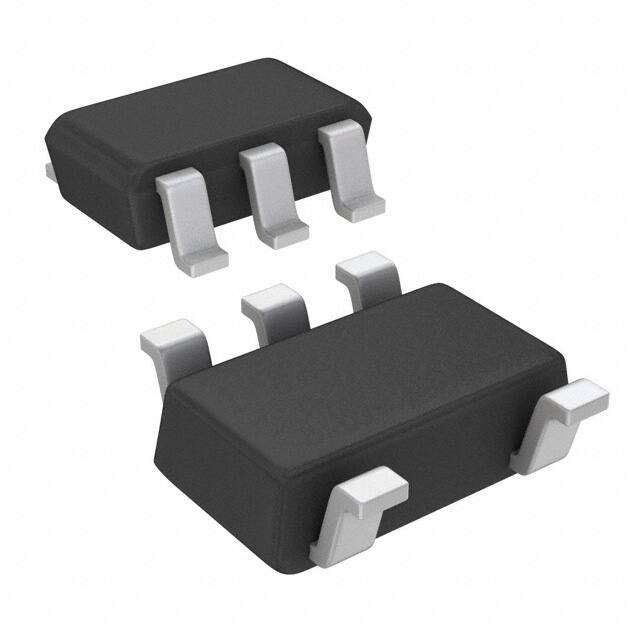
SOT23-5/SC70-5
Applications
Telecom
Instrumentation
Signal conditioning
High-speed sampling systems
Portable communication systems
Pin connections (top view)
OUT
1
Vcc-
2
5
+
IN+
3
Vcc+
4
IN-
Description
Features
Propagation delay: 38 ns
Low current consumption: 73 µA
Rail-to-rail inputs
Push-pull outputs
Supply operation from 1.8 to 5 V
Wide temperature range: -40 °C to 125 °C
High ESD tolerance: 5 kV HBM, 300 V MM
Latch-up immunity: 200 mA
SMD packages
Automotive qualification
July 2016
The TS3021 single comparator features highspeed response time with rail-to-rail inputs. With
a supply voltage specified from 2 to 5 V, this
comparator can operate over a wide temperature
range: -40 °C to 125 °C.
The TS3021 comparator offers micropower
consumption as low as a few tens of
microamperes thus providing an excellent ratio of
power consumption current versus response
time.
The TS3021 includes push-pull outputs and is
available in small packages (SOT23-5 and
SC70-5).
DocID12485 Rev 8
This is information on a product in full production.
1/20
www.st.com
�Contents
TS3021, TS3021A
Contents
1
Absolute maximum ratings and operating conditions ................. 3
2
Electrical characteristics ................................................................ 4
3
4
Electrical characteristic curves .................................................... 10
Package information ..................................................................... 15
5
6
2/20
4.1
SOT23-5 package information ........................................................ 16
4.2
SC70-5 (or SOT323-5) package information ................................... 17
Ordering information..................................................................... 18
Revision history ............................................................................ 19
DocID12485 Rev 8
�TS3021, TS3021A
1
Absolute maximum ratings and operating
conditions
Absolute maximum ratings and operating conditions
Table 1: Absolute maximum ratings (AMR)
Symbol
Parameter
Value
VCC
Supply voltage, VCC = (VCC+) - (VCC-) (1)
5.5
VID
Differential input voltage (2)
±5
VIN
Input voltage range
Rthja
Thermal resistance junction-to-ambient (3)
Unit
V
(VCC-) - 0.3 to (VCC+) + 0.3
SOT23-5
250
SC70-5
205
SOT23-5
81
SC70-5
172
°C/W
Thermal resistance junction-to-case (3)
Rthjc
Tstg
Storage temperature
-65 to 150
Tj
Junction temperature
150
Lead temperature (soldering 10 s)
260
TLEAD
HBM: human body model
(4)
5000
MM: machine model (5)
ESD
°C
300
(6)
CDM: charged device model
Latch-up immunity
V
1500
200
mA
Notes:
(1)All
voltage values, except the differential voltage are referenced to (VCC-)
(2)The
magnitude of the input and output voltages must never exceed the supply rail ±0.3 V
(3)Short
circuits can cause excessive heating. These values are typical
(4)Human
body model: a 100 pF capacitor is charged to the specified voltage, then discharged through a 1.5 kΩ
resistor between two pins of the device. This is done for all couples of connected pin combinations while the other
pins are floating.
(5)Machine
model: a 200 pF capacitor is charged to the specified voltage, then discharged directly between two
pins of the device with no external series resistor (internal resistor < 5 Ω). This is done for all couples of connected
pin combinations while the other pins are floating.
(6)Charged
device model: all pins and the package are charged together to the specified voltage and then
discharged directly to the ground through only one pin. This is done for all pins.
Table 2: Operating conditions
Symbol
Parameter
0 °C < Tamb < 125 °C
VCC
Vicm
Toper
Supply voltage
Common mode input
voltage range
Value
1.8 to 5
-40 °C < Tamb < 125°C
2 to 5
-40 °C < Tamb < 85 °C
(VCC- ) - 0.2 to (VCC+) + 0.2
85 °C < Tamb < 125 °C
(VCC- ) to (VCC+)
Operating temperature range
DocID12485 Rev 8
Unit
V
-40 to 125
°C
3/20
�Electrical characteristics
2
TS3021, TS3021A
Electrical characteristics
Table 3: Electrical characteristics at VCC = 2 V, Tamb = 25 ° C, and full Vicm range
(unless otherwise specified)
Symbol
VIO
ΔVio/ΔT
IIO
IIB
Test conditions (1)
Parameter
Input offset voltage
Input offset voltage drift
Input offset current (2)
Input bias current
(2)
Min.
Typ.
Max.
TS3021A
0.5
2
TS3021
0.5
6
-40 °C < Tamb < 125 °C, TS3021A
4
-40 °C < Tamb < 125 °C, TS3021
7
-40 °C < Tamb < 125 °C
3
20
Tamb
1
20
-40 °C < Tamb < 125 °C
100
Tamb
86
-40 °C < Tamb < 125 °C
Supply current
73
No load, output high, Vicm = 0 V,
-40 °C < Tamb < 125 °C
Short-circuit current
VOH
Output voltage high
VOL
Output voltage low
No load, output low, Vicm = 0 V
84
9
Sink
10
Isource = 1 mA
1.88
-40 °C < Tamb < 125 °C
1.80
Isink = 1 mA
0 < Vicm < 2 V
SVR
Supply voltage rejection
∆Vcc = 2 to 5 V
TPLH
Propagation delay, low to
high output level (3)
TPHL
Propagation delay, high to
low output level (4)
60
105
V
100
67
58
mV
dB
73
Vicm = 0 V, f = 10 kHz,
CL = 50 pF, overdrive = 100 mV
38
60
Vicm = 0 V, f = 10 kHz,
CL = 50 pF, overdrive = 20 mV
48
75
Vicm = 0 V, f = 10 kHz,
CL = 50 pF, overdrive = 100 mV
40
60
Vicm = 0 V, f = 10 kHz,
CL = 50 pF, overdrive = 20 mV
49
75
ns
Fall time
f = 10 kHz, CL = 50 pF,
RL = 10 kΩ, overdrive = 100 mV
8
TR
Rise time
f = 10 kHz, CL = 50 pF,
RL = 10 kΩ, overdrive = 100 mV
9
DocID12485 Rev 8
µA
mA
150
TF
4/20
90
1.92
-40 °C < Tamb < 125 °C
Common mode rejection
ratio
nA
125
Source
CMRR
µV/°C
115
No load, output low, Vicm = 0 V,
-40 °C < Tamb < 125 °C
ISC
mV
300
No load, output high, Vicm = 0 V
ICC
160
Unit
�TS3021, TS3021A
Electrical characteristics
Notes:
(1)All
values over the temperature range are guaranteed through correlation and simulation. No production test is performed at the
temperature range limits
(2)Maximum
values include unavoidable inaccuracies of the industrial tests
(3)Response
time is measured 10%/90% of the final output value with the following conditions: inverting input voltage (IN-) = Vicm
and non-inverting input voltage (IN+) moving from Vicm - 100 mV to Vicm + overdrive.
(4)Response
time is measured 10%/90% of the final output value with the following conditions: Inverting input voltage (IN-) = Vicm
and non-inverting input voltage (IN+) moving from Vicm + 100 mV to Vicm - overdrive.
DocID12485 Rev 8
5/20
�Electrical characteristics
TS3021, TS3021A
Table 4: Electrical characteristics at VCC = 3.3 V, Tamb = 25 ° C, and full Vicm range
(unless otherwise specified)
Symbol
VIO
ΔVio/ΔT
IIO
IIB
Test conditions (1)
Parameter
Input offset voltage
Input offset voltage drift
Input offset current (2)
Input bias current
(2)
Min.
Typ.
Max.
TS3021A
0.5
2
TS3021
0.5
6
-40 °C < Tamb < 125 °C, TS3021A
4
-40 °C < Tamb < 125 °C, TS3021
7
-40 °C < Tamb < 125 °C
3
20
Tamb
1
20
-40 °C < Tamb < 125 °C
100
Tamb
86
-40 °C < Tamb < 125 °C
Supply current
75
No load, output high, Vicm = 0 V,
-40 °C < Tamb < 125 °C
Short-circuit current
VOH
Output voltage high
VOL
Output voltage low
No load, output low, Vicm = 0 V
86
26
Sink
24
Isource = 1 mA
3.20
-40 °C < Tamb < 125 °C
3.10
Isink = 1 mA
0 < Vicm < 3.3 V
SVR
Supply voltage rejection
∆Vcc = 2 to 5 V
TPLH
TPHL
Propagation delay, low to
high output level (3)
Propagation delay, high to
low output level (4)
40
110
V
80
75
58
mV
dB
73
Vicm = 0 V, f = 10 kHz,
CL = 50 pF, overdrive = 100 mV
39
65
Vicm = 0 V, f = 10 kHz,
CL = 50 pF, overdrive = 20 mV
50
85
Vicm = 0 V, f = 10 kHz,
CL = 50 pF, overdrive = 100 mV
41
65
Vicm = 0 V, f = 10 kHz,
CL = 50 pF, overdrive = 20 mV
51
ns
Fall time
f = 10 kHz, CL = 50 pF,
RL = 10 kΩ, overdrive = 100 mV
5
TR
Rise time
f = 10 kHz, CL = 50 pF,
RL = 10 kΩ, overdrive = 100 mV
7
DocID12485 Rev 8
µA
mA
150
TF
6/20
90
3.25
-40 °C < Tamb < 125 °C
Common mode rejection
ratio
nA
125
Source
CMRR
µV/°C
120
No load, output low, Vicm = 0 V,
-40 °C < Tamb < 125 °C
ISC
mV
300
No load, output high, Vicm = 0 V
ICC
160
Unit
80
�TS3021, TS3021A
Electrical characteristics
Notes:
(1)All
values over the temperature range are guaranteed through correlation and simulation. No production test is performed at the
temperature range limits
(2)Maximum
values include unavoidable inaccuracies of the industrial tests
(3)Response
time is measured 10%/90% of the final output value with the following conditions: inverting input voltage (IN-) = Vicm
and non-inverting input voltage (IN+) moving from Vicm - 100 mV to Vicm + overdrive.
(4)Response
time is measured 10%/90% of the final output value with the following conditions: Inverting input voltage (IN-) = Vicm
and non-inverting input voltage (IN+) moving from Vicm + 100 mV to Vicm - overdrive.
DocID12485 Rev 8
7/20
�Electrical characteristics
TS3021, TS3021A
Table 5: Electrical characteristics at VCC = 5 V, Tamb = 25 ° C, and full Vicm range
(unless otherwise specified)
Symbol
VIO
ΔVio/ΔT
IIO
IIB
Test conditions (1)
Parameter
Input offset voltage
Input offset voltage drift
Input offset current (2)
Input bias current
(2)
Min.
Typ.
Max.
TS3021A
0.5
2
TS3021
0.5
6
-40 °C < Tamb < 125 °C, TS3021A
4
-40 °C < Tamb < 125 °C, TS3021
7
-40 °C < Tamb < 125 °C
3
20
Tamb
1
20
-40 °C < Tamb < 125 °C
100
Tamb
86
-40 °C < Tamb < 125 °C
Supply current
77
No load, output high, Vicm = 0 V,
-40 °C < Tamb < 125 °C
Short-circuit current
VOH
Output voltage high
VOL
Output voltage low
No load, output low, Vicm = 0 V
89
51
Sink
40
Isource = 4 mA
4.80
-40 °C < Tamb < 125 °C
4.70
Isink = 4 mA
0 < Vicm < 5 V
SVR
Supply voltage rejection
∆Vcc = 2 to 5 V
TPLH
TPHL
Propagation delay, low to
high output level (3)
Propagation delay, high to
low output level (4)
130
115
V
180
79
58
mV
dB
73
Vicm = 0 V, f = 10 kHz,
CL = 50 pF, overdrive = 100 mV
42
75
Vicm = 0 V, f = 10 kHz,
CL = 50 pF, overdrive = 20 mV
54
105
Vicm = 0 V, f = 10 kHz, CL = 50
pF, overdrive = 100 mV
45
75
Vicm = 0 V, f = 10 kHz, CL = 50
pF, overdrive = 20 mV
55
ns
Fall time
f = 10 kHz, CL = 50 pF, RL = 10
kΩ, overdrive = 100 mV
4
TR
Rise time
f = 10 kHz, CL = 50 pF, RL = 10
kΩ, overdrive = 100 mV
4
DocID12485 Rev 8
µA
mA
250
TF
8/20
95
4.84
-40 °C < Tamb < 125 °C
Common mode rejection
ratio
nA
135
Source
CMRR
µV/°C
125
No load, output low, Vicm = 0 V,
-40 °C < Tamb < 125 °C
ISC
mV
300
No load, output high, Vicm = 0 V
ICC
160
Unit
95
�TS3021, TS3021A
Electrical characteristics
Notes:
(1)All
values over the temperature range are guaranteed through correlation and simulation. No production test is performed at the
temperature range limits
(2)Maximum
values include unavoidable inaccuracies of the industrial tests
(3)Response
time is measured 10%/90% of the final output value with the following conditions: inverting input voltage (IN-) = Vicm
and non-inverting input voltage (IN+) moving from Vicm - 100 mV to Vicm + overdrive.
(4)Response
time is measured 10%/90% of the final output value with the following conditions: Inverting input voltage (IN-) = Vicm
and non-inverting input voltage (IN+) moving from Vicm + 100 mV to Vicm - overdrive.
DocID12485 Rev 8
9/20
�Electrical characteristic curves
3
TS3021, TS3021A
Electrical characteristic curves
Figure 1: Current consumption vs. supply voltage
(Vicm = 0 V, output high)
115
VICM= 0V
output HIGH
84
Figure 2: Current consumption vs. supply voltage
(Vicm = Vcc output high)
-40oC
80
110
72
ICC (µ A)
ICC (µ A)
-40oC
105
76
+25oC
+125oC
68
100
+25oC
95
64
+125oC
90
60
1.8
2.2
2.6
3.0
3.4
3.8
VCC (V)
4.2
4.6
85
1.8
5.0
Figure 3: Current consumption vs. supply voltage
(Vicm = 0 V, output low)
2.2
2.6
3.0
3.4
3.8
VCC (V)
4.2
4.6
5.0
Figure 4: Current consumption vs. supply voltage
(Vicm = Vcc output low)
104
100
VICM= 0V
output LOW
96
100
VICM=VCC
output LOW
-40oC
96
92
-40oC
92
ICC (µ A)
88
ICC (µ A)
VICM=VCC
output HIGH
o
+25 C
84
+25oC
88
84
80
80
76
+125oC
72
1.8
2.2
2.6
3.0
3.4
3.8
VCC (V)
+125oC
76
4.2
4.6
1.8
5.0
Figure 5: Output voltage vs. source current, Vcc = 2 V
2.2
2.6
3.0
3.4
3.8
VCC (V)
4.2
4.6
5.0
Figure 6: Output voltage vs. sink current, Vcc = 2 V
2.0
0.5
1.9
0.4
-40oC
1.7
1.6
VOUT (V)
VOUT (V)
1.8
o
+25 C
10/20
0.3
+25oC
-40oC
o
+125 C
1.3
0.0
+125oC
0.2
1.5
1.4
VCC= 2V
output LOW
0.1
VCC= 2V
output HIGH
0.5
1.0
1.5
2.0 2.5 3.0
ISOURCE (mA)
3.5
4.0
4.5
5.0
0.0
0.0
DocID12485 Rev 8
0.5
1.0
1.5
2.0
2.5 3.0
ISINK (mA)
3.5
4.0
4.5
5.0
�TS3021, TS3021A
Electrical characteristic curves
Figure 7: Output voltage vs. source current, Vcc = 3.3 V
Figure 8: Output voltage vs. sink current, Vcc = 3.3 V
3.30
0.30
3.25
0.20
3.15
VOUT (V)
VOUT (V)
3.20
3.10
+25oC
+125oC
0.15
+25oC
0.10
3.05
-40oC
o
+125 C
VCC= 3.3V
output HIGH
3.00
2.95
0.0
0.5
1.0
1.5
2.0 2.5 3.0
ISOURCE (mA)
3.5
0.05
4.0
4.5
0.00
0.0
5.0
Figure 9: Output voltage vs. source current, Vcc = 5 V
0.5
1.0
1.5
2.0
2.5 3.0
ISINK (mA)
3.5
4.0
4.5
5.0
Figure 10: Output voltage vs. sink current, Vcc = 5 V
5.00
0.25
4.95
4.90
4.85
VCC= 5V
output LOW
0.20
-40oC
VOUT (V)
VOUT (V)
VCC= 3.3V
output LOW
0.25
-40oC
+25oC
+125oC
0.15
+25oC
0.10
-40oC
4.80
0.05
VCC= 5V
output HIGH
4.75
0.0
0.5
1.0
+125oC
1.5
2.0 2.5 3.0
ISOURCE (mA)
3.5
4.0
4.5
0.00
0.0
5.0
Figure 11: Input offset voltage vs. temperature and
common mode voltage
1.0
1.5
2.0
2.5 3.0
ISINK (mA)
3.5
4.0
4.5
5.0
Figure 12: Input bias current vs. temperature and input
voltage
100
1.4
VCC = 5V
50
1.2
VCC= 5V
VICM= 0V
0
1.0
IIN-125oC
IIN+125oC
-50
VVICM= 0V
IIB(nA)
Vio (mV)
0.5
0.8
0.6
-100
-150
IIN- 25oC
IIN+25oC
-200
VICM= 5V
0.4
-250
0.2
0.0
-60
IIN--40oC
IIN+-40oC
-300
-40
-20
0
20 40 60 80
Temperature ( C)
100 120 140
-350
-100 -80
-60
-40
-20
0
20
40
60
80
100
VIN(mV)
DocID12485 Rev 8
11/20
�Electrical characteristic curves
TS3021, TS3021A
Figure 13: Current consumption vs. commutation
frequency
Figure 14: Propagation delay (HL) vs. overdrive at
Vcc = 2 V, Vicm = 0 V
100
600
500
VICM= 0V
CLOAD= 50pF
T= 125oC
TPHL
70
TP(nS)
VCC= 3.3V
300
VCC= 2V
200
TPHL
80
VCC= 5V
400
ICC(µA)
VCC= 2V
VICM= 0V
90
TPHL
T= 25oC
T= -40oC
60
50
40
100
30
0
10k
100k
Frequency (Hz)
20
1M
Figure 15: Propagation delay (HL) vs. overdrive at
Vcc = 2 V, Vicm = Vcc
TPHL
40
50 60 70
VOV(mV)
80
90 100 110
70
T= 125oC
TPHL
TPHL
T= 25oC
T= -40oC
50
VCC= 2V
VICM= 0V
TPLH
80
60
T= 125oC
70
TPLH
TPLH
T= 25oC
T= -40oC
60
50
40
40
30
30
0
10
20
30
40
50 60 70
VOV(mV)
80
20
90 100 110
Figure 17: Propagation delay (LH) vs. overdrive at
Vcc = 2 V, Vicm = Vcc
o
T= 125 C
70
TPLH
TPLH
o
T= 25 C
o
60
T= -40 C
TP (nS)
TPLH
80
T= 125oC
30
50 60 70
VOV(mV)
80
90 100 110
80
90 100 110
VCC= 3.3V
VICM= 0V
TPHL
TPHL
T= -40oC
60
30
40
50 60 70
VOV(mV)
T= 25oC
70
40
30
40
TPHL
50
20
30
80
40
10
20
90
50
0
10
100
VCC= 2V
VICM= VCC
90
0
Figure 18: Propagation delay (HL) vs. overdrive at
Vcc = 3.3 V, Vicm = 0 V
100
12/20
30
90
TP (nS)
TP (nS)
80
20
20
100
VCC= 2V
VICM= VCC
90
20
10
Figure 16: Propagation delay (LH) vs. overdrive at
Vcc = 2 V, Vicm = 0 V
100
TP (nS)
0
20
0
DocID12485 Rev 8
10
20
30
40
50 60 70
VOV(mV)
80
90 100 110
�TS3021, TS3021A
Electrical characteristic curves
Figure 19: Propagation delay (HL) vs. overdrive at
Vcc = 3.3 V, Vicm = Vcc
Figure 20: Propagation delay (LH) vs. overdrive at
Vcc = 3.3 V, Vicm = 0 V
100
120
VCC= 3.3V
VICM= VCC
90
TPHL
T= 125oC
TP(nS)
70
TPHL
100
TPHL
o
T= 25 C
TP(nS)
80
o
T= -40 C
60
50
TPLH
80
T = 125oC
TPLH
TPLH
T = 25oC
70
T = -40oC
60
40
30
30
0
10
20
30
40
50 60 70
VOV(mV)
80
20
90 100 110
Figure 21: Propagation delay (LH) vs. overdrive at
Vcc = 3.3 V, Vicm = Vcc
TPLH
TPLH
T = 25 C
o
T = -40 C
60
40
50 60 70
VOV(mV)
80
90 100 110
VCC= 5V
VICM= 0V
T= 125oC
TPHL
80
TPLH
o
30
TPHL
90
T = 125oC
70
50
TPHL
T= 25oC
T= -40oC
70
60
50
40
40
30
20
20
100
TP (nS)
80
10
110
VCC= 3.3V
VICM= VCC
90
0
Figure 22: Propagation delay (HL) vs. overdrive at
Vcc = 5 V, Vicm = 0 V
100
TP (nS)
90
50
40
20
VCC= 3.3V
VICM= 0V
110
30
0
10
20
30
40
50 60 70
VOV(mV)
80
20
90 100 110
0
10
20
30
40
50 60 70
VOV(mV)
80
90 100 110
Figure 24: Propagation delay (LH) vs. overdrive at
Vcc = 5 V, Vicm = 0 V
Figure 23: Propagation delay (HL) vs. overdrive at
Vcc = 5 V, Vicm = Vcc
120
110
100
TPHL
o
T= 125 C
TP (nS)
80
100
TPHL
T= 25oC
T= -40oC
70
60
50
T = 125oC
80
TPLH
TPLH
T = 25oC
70
T = -40oC
60
50
40
40
30
30
20
TPLH
90
TPHL
TP (nS)
90
VCC= 5V
VICM= 0V
110
VCC= 5V
VICM= VCC
0
10
20
30
40
50 60 70
VOV(mV)
80
90 100 110
20
0
DocID12485 Rev 8
10
20
30
40
50 60 70
VOV(mV)
80
90 100 110
13/20
�Electrical characteristic curves
TS3021, TS3021A
Figure 26: Propagation delay vs. temperature,
Vcc = 5 V, overdrive = 100 mV
Figure 25: Propagation delay (LH) vs. overdrive at
Vcc = 5 V, Vicm = Vcc
100
TPLH
T = 125oC
70
60
VCC= 5V
VOV = 100 mV
55
TPLH
TPLH
T = 25oC
T = -40oC
60
TP (nS)
TP (nS)
80
65
VCC= 5V
VICM= VCC
90
50
50
45
40
40
30
35
TPLH
VVICM= 0V
30
-40
-20
20
0
10
20
30
40
50 60 70
VOV(mV)
80
90 100 110
0
TPHL
VICM= 0V
20
40
60
Temperature(°C)
Figure 27: Propagation delay vs. common mode voltage, Vcc = 5 V
70
TP (nS)
60
TPLH
VOV= 20mV
TPHL
VOV= 20mV
50
40
30
TPLH
VOV= 100mV
TPHL
VOV= 100mV
VCC = 5V
Temp.= 25°C
20
-0.5 0.0 0.5 1.0 1.5 2.0 2.5 3.0 3.5 4.0 4.5 5.0 5.5
VICM(mV)
14/20
DocID12485 Rev 8
TPLH
VICM= 5V
80
TPHL
VICM= 5V
100
120
�TS3021, TS3021A
4
Package information
Package information
In order to meet environmental requirements, ST offers these devices in different grades of
ECOPACK® packages, depending on their level of environmental compliance. ECOPACK ®
specifications, grade definitions and product status are available at: www.st.com.
ECOPACK® is an ST trademark.
DocID12485 Rev 8
15/20
�Package information
4.1
TS3021, TS3021A
SOT23-5 package information
Figure 28: SOT23-5 package outline
Table 6: SOT23-5 mechanical data
Dimensions
Ref.
A
Millimeters
Min.
Typ.
Max.
Min.
Typ.
Max.
0.90
1.20
1.45
0.035
0.047
0.057
A1
16/20
Inches
0.15
0.006
A2
0.90
1.05
1.30
0.035
0.041
0.051
B
0.35
0.40
0.50
0.014
0.016
0.020
C
0.09
0.15
0.20
0.004
0.006
0.008
D
2.80
2.90
3.00
0.110
0.114
0.118
D1
1.90
0.075
e
0.95
0.037
E
2.60
2.80
3.00
0.102
0.110
0.118
F
1.50
1.60
1.75
0.059
0.063
0.069
L
0.10
0.35
0.60
0.004
0.014
0.024
K
0 degrees
10 degrees
0 degrees
DocID12485 Rev 8
10 degrees
�TS3021, TS3021A
4.2
Package information
SC70-5 (or SOT323-5) package information
Figure 29: SC70-5 (or SOT323-5) package outline
SIDE VIEW
DIMENSIONS IN MM
GAUGE PLANE
COPLANAR LEADS
SEATING PLANE
TOP VIEW
Table 7: SC70-5 (or SOT323-5) mechanical data
Dimensions
Ref.
Millimeters
Min.
A
Typ.
0.80
A1
Inches
Max.
Min.
1.10
0.032
Typ.
0.043
0.10
A2
0.80
b
0.90
Max.
0.004
1.00
0.032
0.035
0.15
0.30
0.006
0.012
c
0.10
0.22
0.004
0.009
D
1.80
2.00
2.20
0.071
0.079
0.087
E
1.80
2.10
2.40
0.071
0.083
0.094
E1
1.15
1.25
1.35
0.045
0.049
0.053
e
0.65
0.025
e1
1.30
0.051
L
0.26
<
0°
0.36
0.46
0.010
8°
0°
DocID12485 Rev 8
0.014
0.039
0.018
8°
17/20
�Ordering information
5
TS3021, TS3021A
Ordering information
Table 8: Order codes
Order code
Temperature range
TS3021ILT
TS3021IYLT (1)
TS3021ICT
TS3021AILT
Package
Packaging
K520
SOT23-5
-40 to 125 °C
SC70-5
SOT23-5
Marking
Tape and reel
K529
K52
K522
Notes:
(1)Qualified
and characterized according to AEC Q100 and Q003 or equivalent, advanced screening according
to AEC Q001 and Q 002 or equivalent.
18/20
DocID12485 Rev 8
�TS3021, TS3021A
6
Revision history
Revision history
Table 9: Document revision history
Date
Revision
01-Jun-2006
1
Changes
Initial release
Dual version added
Pinout of single TS3021 corrected
Modified temperature range for input common mode
voltage
01-Sep-2006
2
22-Feb-2007
3
Addition of MiniSO-8 package for dual version
4
Marking corrected for SO-8 package
Thermal resistance values corrected in AMR table
Notes on ESD added in AMR table
5
Dual version (TS3022) removed
ESD tolerance modified in Table 1: Absolute maximum
ratings
Made the following changes in Table 3:
– modified Vio typical value and maximum limits
– modified Iib typical value
– modified Icc typical values and corrected maximum
limits
– modified Isc typical values
– modified Voh and Vol typical values
– modified CMRR and SVR typical values
– modified TPhl and TPlh typical values
All curves modified
6
Features: added “automotive qualification”; added
Related products.
Table 1 and Table 2: Vdd and Vcc replaced by (Vcc-)
and (Vcc+) respectively.
Table 3, Table 4, and Table 5: replaced ∆Vio symbol
with ∆Vio/∆T.
Table 6 and Table 7: minor update (added angle
dimensions to “inches” columns).
Table 8: added automotive order code
7
Table 3, Table 4, and Table 5: updated Vio parameter
Table 6: small "rounding-off modifications to inches
parameter
Table 8: added order code TS3021AILT
8
Added new part number TS3021A
Updated document layout
Table 3, Table 4, and Table 5: updated VIO test
conditions and values.
17-Oct-2007
04-Dec-2008
03-Jan-2013
02-Jun-2015
07-Jul-2016
DocID12485 Rev 8
19/20
�TS3021, TS3021A
IMPORTANT NOTICE – PLEASE READ CAREFULLY
STMicroelectronics NV and its subsidiaries (“ST”) reserve the right to make changes, corrections, enhancements, modifications, and
improvements to ST products and/or to this document at any time without notice. Purchasers should obtain the latest relevant information on ST
products before placing orders. ST products are sold pursuant to ST’s terms and conditions of sale in place at the time of order
acknowledgement.
Purchasers are solely responsible for the choice, selection, and use of ST products and ST assumes no liability for application assistance or the
design of Purchasers’ products.
No license, express or implied, to any intellectual property right is granted by ST herein.
Resale of ST products with provisions different from the information set forth herein shall void any warranty granted by ST for such product.
ST and the ST logo are trademarks of ST. All other product or service names are the property of their respective owners.
Information in this document supersedes and replaces information previously supplied in any prior versions of this document.
© 2016 STMicroelectronics – All rights reserved
20/20
DocID12485 Rev 8
�










 工商网监
湘ICP备2023018690号
工商网监
湘ICP备2023018690号