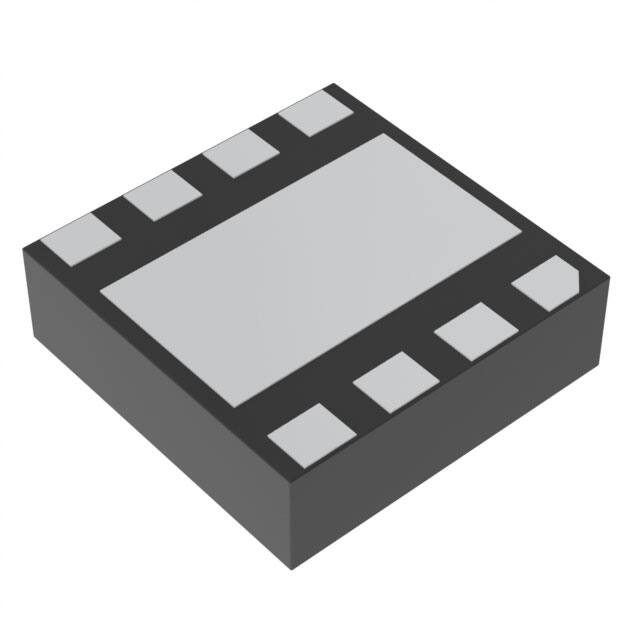
XC6192
Series
Power saving Push Button Load switch
ETR33010-003
■GENERAL DESCRIPTION
The XC6192 series are the Push Button load switch with functions best suitable for battery operated devices.
The built-in high side switch is turned on by the Push Button (Turning off is also possible on the XC6192A type.) and turned off by
the "L" level signal into the SHDN pin from the MCU or the like.
In addition to these functions, this IC is equipped with output capacitor inrush current limiting function and short-circuit protection
function, realizing an intelligent load switch.
The high side switch is turned on and latched by inputting "L" signal from the Push Button of the device to the SW pin.
It is possible to shut down (OFF) by inputting a 1-pulse signal of "H" level from the MCU or the like to the SHDN pin. This realizes
a main switch of battery operated devices easily. (*1)
The leak current at shutdown is so small, which is 10nA(TYP.), that this IC will contribute to reducing the discharge of the battery
and making shelf life longer of the devices after shipping as well as functioning as a main switch.
For the A type, it is possible to turn off forcibly in case of emergency by Push Button signal. This enables a freezed device to be
turned off. For the B type, turn-off is available only with SHDN pin.
The output capacitor inrush current limiting function suppresses excessive current that occurs when the switch is turned on,
preventing it from going into a brownout state.
The output short-circuit protection function detects the voltage drop due to the short circuit and turns off the power supply line by
force. The "L" signal on the SW pin by Push button makes the device recover.
The power good function is used to properly adjust the timing of turning on the DC/DC regulator or other system on the rear stage.
Please be sure to complete the preparation for shutting down safely before inputting the signal to SHDN pin from the MCU or the likes.
VOUT may not start up completely if the load current is 350uA (DC) or more at starting up due to the output capacitor inrush current limiting
function. Please design so that the started up load current is less than 350uA (DC) or the output on the rear stage is enabled by using the PG pin.
(*1)
(*2)
■FEATURES
■APPLICATIONS
●Wearable devices
●Wireless headphones / Earphones
●Mobile devices
●Various applications equipped with buttons
●Various applications equipped with mechanical switches
●The devices with waterproof function.
Input Voltage Range
Stand-by Current
Quiescent Current
Output Current
Turn-On Delay Time(TOND)
Turn-Off Method
:
:
:
:
:
:
■TYPICAL APPLICATION CIRCUIT
2.5V ~ 6.0V
0.01μA (TYP.) / Turn-Off state
0.45μA (TYP.) / Turn-On state
400mA (VIN=2.5V, Ta=25℃)
0.5s, 1.0s, 3.0s or 5s
Type A ・By inputting “H” voltage to
the SHDN pin.
・By inputting “L” voltage
during the TOFFD to the SW pin.
Type B
Battery
CIN=0.1μF
VOUT
VIN
VDD
CL=0.1μF
XC6192
R2
PG
VOUT
PMIC or LDO
or
DC/DC
Other
R1
R4
VIN
EN
SBD
TEST
VSS
SW
I/O
SHDN
I/O
MCU
Turn-Off Delay Time(TOFFD)
Added function
:
:
Protective function
:
Output capacitor inrush current limit function
:
:
Output circuit short protection
Output capacitor discharge function
-40℃ ~ 85℃
USP-8B06
R3
Push Button
Operating Ambient Temperature
■TIMING CHART (XC6192xxxxxR-G)
TOND
TOND
・By inputting “H” voltage to
the SHDN pin.
3s, 5s, 10s or 15s
Power Good function (the PG pin)
Forced shutdown function (the SHDN pin)
Package
TOND
TOFFD
TOFFD
TOND
TOND
VIN
SW
Type A - VOUT
Type B - VOUT
Type A - PG
Type B - PG
SHDN
Type A
CL Inrush Current
Type B
CL Inrush Current
1/25
�XC6192 Series
■BLOCK DIAGRAM
XC6192A
VIN
VOUT
PM2
SW
SW Circuit
PM1
R1
R2
VREF
POR
NM2
Type Select
From SHDN Circuit
OSC
SHDN
Turn-On Delay
Counter
VREF2
POR2
PG
Inrush Current Limit
Short Circuit Protect
Turn-Off Delay
Counter
NM1
Gate Slope
To various circuit
SHDN Circuit
R3
From SHDN Circuit
TEST Circuit
VSS
XC6192B
VIN
VOUT
PM2
SW
SW Circuit
PM1
R1
R2
VREF
POR
NM2
Type Select
From SHDN Circuit
VREF2
POR2
Turn-On Delay
Counter
Turn-Off Delay
Counter
SHDN Circuit
PG
Inrush Current Limit
Short Circuit Protect
OSC
SHDN
Gate Slope
To various circuit
R3
NM1
From SHDN Circuit
TEST Circuit
VSS
* Diodes inside the circuit are an ESD protection diodes and a parasitic diodes.
2/25
TEST
TEST
�XC6192
Series
■PRODUCT CLASSIFICATION
●Ordering Information
XC6192①②③④⑤⑥-⑦(*1)
DESIGNATOR
DESCRIPTION
Turn-On delay time
②
Turn-Off delay time
③④
⑤⑥-⑦
(*2)
Package and Taping Type
DESCRIPTION
A
Turn-on: By the SW pin
Shut-down: By the SW pin or the SHDN pin
B
Turn-on: By the SW pin
Shut-down: By the SHDN pin
A
0.5s.
1
1s.
option(*2)
3
3s.
option(*2)
5
5s.
option(*2)
TYPE
①
(*1)
SYMBOL
NN
No “Turn-Off delay time" function.
Applies to XC6192B only
03
3s.
05
5s.
10
10s.
15
15s. option(*2)
ER-G
option(*2)
USP-8B06 (5,000pcs/Reel)
The “-G” suffix denotes Halogen and Antimony free as well as being fully EU RoHS compliant.
For option products, please contact your local Torex sales office or representative.
●Selection Guide
Parts No.
Turn-On Delay Time (s)
XC6192AA05ER-G
XC6192AA10ER-G
XC6192BANNER-G
Turn-Off Delay Time (s)
Package
5s
0.5s
10s
USP-8B06
Not applicable
3/25
�XC6192 Series
■PIN CONFIGURATION
1 VIN
VOUT 8
SHDN 7
2 N.C
TEST 6
3 SW
VSS 5
4 PG
USP-8B06
(BOTTOM VIEW)
*The dissipation pad for the USP-8B06 package should be solder-plated in recommended mount pattern and metal masking so
as to enhance mounting strength and heat release.
When taking out a potential of the heat-sink, connect with VSS pin (#5 pin).
■PIN ASSIGNMENT
PIN NUMBER
USP-8B06
PIN NAME
FUNCTION
1
VIN
Power Supply Input
2
N.C
No connection pin
(The N.C pin should be connected the VSS pin.)
3
SW
Push Button Signal input pin
4
PG
Power Good Status Output
5
VSS
Ground Pin
6
TEST
The TEST pin must be connected the VSS pin.
7
SHDN
Forced Shutdown pin
8
VOUT
Output pin
■PIN FUNCTIOS ASSIGNMENT
PIN NAME
SIGNAL
L
Active
SW (*3)
H
Keep the current state
OPEN
Undefined State (*1)
L
Keep the current state
H
OPEN
Shut down
Undefined State (*1)
Low impedance
VOUT < VRUSH(*2)
High impedance
VOUT ≥ VRUSH(*2)
SHDN(*3)
PG
STATUS
(*1)
Please do not leave the SW pin and the SHDN pin open. Each should have a certain voltage
(*2)
Please refer to electrical characteristics.
(*3)
Please refer to notes on use.
4/25
�XC6192
Series
■ABSOLUTE MAXIMUM RATINGS
PARAMETER
SYMBOL
RATINGS
VIN Pin Voltage
VIN
-0.3 ~ +6.5
VOUT Pin Voltage
VOUT
-0.3 ~ VIN+0.3 or
UNITS
+6.5(*1)
V
V
VOUT Pin Output Current
IOUT
470
mA
SW Pin Voltage
VSW
-0.3 ~ +6.5
V
SHDN Pin Voltage
VSHDN
-0.3 ~ +6.5
V
PG Pin Voltage
VPG
-0.3 ~ +6.5
V
TEST Pin Voltage
Power Dissipation
(Ta=25℃)
USP-8B06
(DAF)
VTEST
-0.3 ~ VIN+0.3 or
+6.5(*1)
V
Pd
1800 (High heat dissipation board)(*2)
mW
Operating Ambient Temperature
Topr
-40 ~ +85
℃
Storage Temperature
Tstg
-55 ~ +125
℃
Each rating voltage is based on the VSS
(*1)
Either of lower one, VIN+0.3V or +6.5V, is applicable.
(*2)
The power dissipation figure shown is PCB mounted and is for reference only.
The mounting condition is please refer to PACKAGING INFORMATION.
5/25
�XC6192 Series
■ELECTRICAL CHARACTERISTICS
Ta=25℃
XC6192 Series
PARAMETER
SYMBOL
CONDITIONS
MIN
TYP
MAX
UNIT
CIRCUIT
2.5
-
6.0
V
(1)
-0.10
0.01
0.10
μA
(1)
Input Voltage Range
VIN
Stand-by Current
ISTB
VIN=6.0V, VSW=VIN
IOP
Turn-Off states, VIN=6.0V, VSW=0V,
-
48
100
μA
(1)
IQ
Turn-On keeps, VIN=6.0V, VSW=VIN
-
0.45
1.30
μA
(1)
0.35
0.50
0.65
0.70
1.00
1.30
s
(1)
2.10
3.00
3.90
3.50
5.00
6.50
2.1
3.0
3.9
3.5
5.0
6.5
s
(1)
7.0
10.0
13.0
10.5
15.0
19.5
V
(1)
V
(1)
(*1)
Operation Current
(*2)
Quiescent Current
(*3)
XC6192xAxx VIN=3.7V,
Change the VSW from VIN to 0V.
XC6192x1xx VIN=3.7V,
Turn-On Delay Time(*4)(*9)
TOND
Change the VSW from VIN to 0V.
XC6192x3xx VIN=3.7V,
Change the VSW from VIN to 0V.
XC6192x5xx VIN=3.7V,
Change the VSW from VIN to 0V.
XC6192Ax03 VIN=3.7V,
Change the VSW from VIN to 0V.
XC6192Ax05 VIN=3.7V,
Turn-Off Delay Time(*5)(*6) (*9)
TOFFD
Change the VSW from VIN to 0V.
XC6192Ax10 VIN=3.7V,
Change the VSW from VIN to 0V.
XC6192Ax15 VIN=3.7V,
Change the VSW from VIN to 0V.
Inrush Current Limit Voltage
VRUSH
VOUT condition
Short Circuit Detect Voltage
VSHORT
VOUT condition
VIN -
VIN -
VIN -
0.23
0.13
0.05
VIN -
VIN -
VIN -
0.98
0.66
0.32
Turn-On states, VIN=2.5V
Pre-driver On Resistor
RONP
(1)
63
105
139
Ω
(1)
Turn-On states, VIN=2.5V
0.40
0.59
0.78
Ω
(1)
Turn-On states, VIN=3.7V
0.28
0.45
0.59
Ω
(1)
Turn-On states, VIN=6.0V
0.20
0.34
0.49
Ω
(1)
Turn-On states, VIN=3.7V
Turn-On states, VIN=6.0V
Main Driver On Resistor
RON
(1)
Unless otherwise stated, VSS common, VIN=6.0V, VSW=6.0V, VSHDN=0V, VPG=Open, IOUT=0mA, CIN=0.1μF, CL=0.1μF
(*1)
Self-supply current when VOUT is in the Turn-off state and VIN level is input into the VSW pin.
(*2)
Self-supply current when VOUT is in the Turn-off state and “L” level is input into the VSW pin.
(*3)
Self-supply current when VOUT is in the Turn-on state and VIN level is input into the VSW pin.
(*4)
Time from SW pin “L” level until VOUT pin ”H” level(*7) pin in the Turn-off state.
(*5)
Time from SW pin “L” level until VOUT pin ”L” level(*8) pin in the Turn-on state.
(*6)
Type B does not have this function.
(*9)
Electrical characteristics are characteristics before mounting on PCB. Refer to the Usage Cautions.
SW Pin Voltage
0V
SW Pin Voltage
0V
(*7) VOUT pin ”H” Level : VRUSH
VOUT Pin Voltage
0V
(*8) VOUT pin ”L” Level: VIN x 0.1
0V
Fig1. VOUT pin “H” Voltage
6/25
VOUT Pin Voltage
Fig2. VOUT pin “L” Voltage
�XC6192
Series
■ELECTRICAL CHARACTERISTICS
Ta=25℃
XC6192 Series
PARAMETER
SYMBOL
SW pin "H" Voltage
CONDITIONS
MIN
TYP
MAX
UNIT
CIRCUIT
VSWH
1.1
-
6.0
V
(1)
SW pin "L" Voltage
VSWL
0
-
0.4
V
(1)
SW pin "H" Current
ISWH
VSW=6.0V
-0.10
0.01
0.10
μA
(1)
SW pin "L" Current
ISWL
VSW=0V
-0.10
0.01
0.10
μA
(1)
SHDN pin "H" Voltage
VSHDNH
1.1
-
6.0
V
(1)
SHDN pin "L" Voltage
VSHDNL
0
-
0.4
V
(1)
SHDN pin "H" Current
ISHDNH
VSHDN=6.0V
-0.10
0.01
0.10
μA
(1)
SHDN pin "L" Current
ISHDNL
VSHDN=0V
-0.10
0.01
0.10
μA
(1)
PG pin Output Current
IPG
Turn-Off States, VIN=2.5V, VPG=0.3V
1
-
-
mA
(1)
PG pin Leak Current
IPGL
Turn-On states, VIN=6.0V, VPG=6.0V
-0.10
0.01
0.10
μA
(1)
CL Discharge Current
IDCG
Turn-Off States, VIN=2.5V, VOUT=0.3V
1
-
-
mA
(1)
Unless otherwise stated, VSS common, VIN=6.0V, VSW=6.0V, VSHDN=0V, VPG=Open, IOUT=0mA, CIN=0.1μF, CL=0.1μF
■TEST CIRCUITS
Test Circuit (1)
Probe
Probe
A
A
SW
A
SHDN
V
V
V
A
VOUT
VIN
XC6192
VSS
A
PG
V
V
7/25
�XC6192 Series
■TYPICAL APPLICATION CIRCUIT
Battery
CIN=0.1μF
VOUT
VIN
VDD
CL=0.1μF
XC6192
R2
PG
VOUT
PMIC or LDO
or
DC/DC
Other
R1
R4
VIN
EN
SBD
TEST
VSS
SW
I/O
SHDN
I/O
R3
Push Button
【Typical Examples】
VALUE
MANUFACTURER
PRODUCT NUMBER
VF = 0.37V
0.1μF/10V (Ceramic)
TOREX
XBS013V1DR-G
CIN
CL
0.1μF/10V (Ceramic)
R1
R2
R3
200kΩ
200kΩ
20kΩ
R4
200kΩ
SBD(*1)
(*1)
Please select freely according to the threshold of the MCU's I/O.
8/25
MCU
�XC6192
Series
■OPERATIONAL EXPLANATION
The XC6192 series A type fixes VOUT at “H” voltage (same level as the VIN pin voltage) when “L” voltage is input the required
time into the SW pin, and shuts down VOUT (same level as GND) when “L” voltage is subsequently input the required time into
the SW pin, thereby realizing alternating ON/OFF control(*1). Two shutdown methods are available: inputting “H” voltage into the
SHDN pin, and inputting “L” voltage the required time into the SW pin.
Alternating ON/OFF control on this IC is a system that alternates between VOUT “H” voltage and shutdown each time “L” voltage is input
the required time into the SW pin.
(*1)
The B type fixes VOUT at “H” voltage when “L” voltage is input the required time into the SW pin. After VOUT is fixed at “H”
voltage, the signal is not accepted if “L” voltage is subsequently input into the SW pin. The shutdown method is inputting “H”
voltage into the SHDN pin.
As protective functions, the XC6192 series is equipped with a rush current prevention circuit and a short-circuit protection circuit.
VIN
VOUT
PM2
SW
SW Circuit
PM1
R1
R2
VREF
POR
NM2
Type Select
From SHDN Circuit
Turn-On Delay
Counter
OSC
PG
VREF2
POR2
Inrush Current Limit
Short Circuit Protect
Turn-Off Delay
Counter
SHDN
R3
NM1
Gate Slope
To various circuit
SHDN Circuit
From SHDN Circuit
TEST
TEST Circuit
VSS
Fig.1 XC6192A Block diagram
Battery
CIN=0.1μF
VOUT
VIN
VDD
CL=0.1μF
XC6192
R2
PG
VOUT
PMIC or LDO
or
DC/DC
Other
R1
R4
VIN
EN
SBD
TEST
VSS
SW
I/O
SHDN
I/O
MCU
R3
Push Button
Fig.2 XC6192 Series Typical application circuit
9/25
�XC6192 Series
■OPERATIONAL EXPLANATION (Continued)
[Turn-On sequence: Fig.3]
On the XC6192 series, when “L” voltage is input for the duration TOND into the SW pin with VOUT fixed at “L” voltage, the Pch
pre-driver transistor PM1 (Fig.1) turns ON and VOUT starts to rise. If the SW pin is switched from “L” voltage to “H” voltage while
VOUT is rising by PM1, VOUT will change to the shutdown state.
When the VOUT pin voltage reaches Inrush Current Limit Voltage (VRUSH: refer to Electrical Characteristics), the main driver
transistor PM2 (Fig.1) turns ON, and VOUT is fixed at “H” voltage even if the SW pin voltage changes to “H” voltage.
When the VOUT pin voltage reaches VRUSH, the Nch transistor NM1 that is connected to the PG pin (Fig.1) turns OFF and the
PG pin changes to high impedance.
These operations suppress rush current to the capacitor that is connected to the VOUT pin and allow the input power supply to
maintain stability. In addition, by connecting the PG pin to the Enable pin of the device that follows the XC6192 series,
malfunctioning of that device is prevented. (Fig.2)
TOND
SW Pin Voltage
Inrush Current Limit Voltage
VOUT Pin Voltage
PG Pin Voltage
Inrush Current
Fig.3 Turn-On sequence
10/25
TOND
�XC6192
Series
■OPERATIONAL EXPLANATION (Continued)
[Shutdown sequence: Fig.4]
On the XC6192 series, when one pulse of “H” voltage (at least 1ms as a guideline) is input into the SDHN pin with VOUT fixed at
“H” voltage, VOUT changes to the shutdown state and the IC enters the standby state.
SHDN pin Voltage
VOUT Pin Voltage
PG Pin Voltage
Fig.4 shutdown sequence
[Turn-Off sequence: Fig.5]
On the A type, when “L” voltage is input into the SW pin for the duration TOFFD with VOUT fixed at “H” voltage, VOUT shuts down.
After shutdown, returning the SW pin to “H” voltage reduces the supply current to the standby current while holding the IC’s
logic.
The B type does not have this function.
TOFFD
SW Pin Voltage
VOUT Pin Voltage
PG Pin Voltage
Fig.5 Turn-Off sequence
11/25
�XC6192 Series
■OPERATIONAL EXPLANATION (Continued)
[Operation after Turn-On: Fig. 6]
On the A type, when “L” voltage is input into the SW pin for the duration TOND and VOUT is fixed at “H” voltage, and then “L”
voltage is input into the SW pin for the duration TOFFD, the Turn-Off sequence cannot be initiated. To initiate the Turn-Off
sequence, “H” voltage must be input into the SW pin, and then “L” voltage must again be input for the duration TOFFD.
The B type does not have a Turn-Off sequence by SW pin.
TOND
TOFFD
TOFFD
SW Pin Voltage
Inrush Current Limit Voltage
VOUT Pin Voltage
PG Pin Voltage
Fig.6 Operation after Turn-On.
[Operation after Turn-Off:Fig.7]
On the A type, when “L” voltage is input into the SW pin for the duration TOFFD and VOUT is shut down, and then “L” voltage is
input into the SW pin for the duration TOND, the Turn-On sequence cannot be initiated.
To initiate the Turn-On sequence, “H” voltage must be input into the SW pin, and then “L” voltage must again be input for the
duration TOND.
The B type does not have a Turn-Off sequence by SW pin.
TOFFD
TOND
SW Pin Voltage
VOUT Pin Voltage
PG Pin Voltage
Fig.7 Operation after Turn-Off.
12/25
TOND
�XC6192
Series
■OPERATIONAL EXPLANATION (Continued)
[Operation after shutdown: Fig. 8]
On the XC6192 series, in order to initiate the Turn-On sequence after “H” voltage is input into the SHDN pin and VOUT is shut
down, “H” voltage must be input into the SW pin and then “L” voltage must again be input for the duration TOND.
TOND
TOND
SHDN pin Voltage
SW Pin Voltage
VOUT Pin Voltage
PG Pin Voltage
Fig.8 Operation after shutdown.
13/25
�XC6192 Series
■OPERATIONAL EXPLANATION (Continued)
[Inrush current limit and output short circuit protection:Fig.9 ]
The XC6192 series has a function that limits rush current and a circuit that shuts down the output when an output short-circuit
is detected.
During the time until the VOUT pin voltage reaches VRUSH during the Turn-On sequence, only PM1 turns ON, and therefore the
voltage rises through the Pre-driver On Resistor (RONP: refer to the Electrical Characteristics).
When the VOUT pin voltage reaches VRUSH or more, PM2 turns ON and rush current limiting is released.
The rush current at the instant when PM1 turns ON is calculated using the following equation.
Inrush Current = VIN / RONP (A)
In addition, during the time until the VOUT pin voltage reaches VRUSH by means of the rush current limiting function, the load
current while VOUT rises must be set to less than the value given by the equation below.
Start-up Load Current < (VIN – VRUSH (Max.)) / RONP (A)
Example: 4.2V – 4.15V / 135 Ohms = 0.359mA;
Note this very low 0.359mA is used to charge the output capacitors. If startup load current exceeds this, the output current will
pass thru PM1 only, and have a 135 ohm resistor creating a voltage drop. If it’s noticed that VOUT is significantly below VIN,
please ensure start-up load current is NOT exceeded.
If the VOUT pin voltage drops below the Short Circuit Detect Voltage (VSHORT: refer to the Electrical Characteristics) after the
Turn-On sequence, a short-circuit is detected and PM1 and PM2 are latched in the OFF state, causing VOUT to shut down. The
relation between the output current (ISHORT) and VSHORT when a short circuit occurs is given by the equation below.
ISHORT = (VIN - VSHORT) / RON (A)
The equation for the maximum output current is as follows.
IOUT (Min.) = (VIN - VSHORT (Max.)) / RON (Max.) (A)
Inrush Current Limit
operation
Correct operation
Short Circuit
operation
TOND
SW Pin Voltage
Inrush Current Limit Voltage
VOUT Pin Voltage
Short Circuit Detect Voltage
PG Pin Voltage
Inrush Current
(CL Charge Current)
Short Current
Output Current
Fig.9 Output capacitor inrush current limit and output short circuit protection
14/25
�XC6192
Series
■OPERATIONAL EXPLANATION (Continued)
[SW pin]
When “L” voltage is input into the SW pin for the duration TOND with the IC in the standby state, the pin fixes VOUT at “H”
voltage.
On the A type, when VOUT is fixed at “H” voltage, “L” voltage can be input for the duration TOFFD to shut down VOUT.
[SHDN pin]
This pin shuts down VOUT when one pulse of “H” voltage (1ms or more as a guideline) is input into the SHDN pin with VOUT
fixed at “H” voltage.
[PG pin]
NM1 and R2 (Fig.1) are connected to the PG pin.
NM1 is an Nch MOSFET and is synchronized with the GATE signal of PM2, so NM1 turns OFF when PM2 turns ON.
[VOUT pin]
PM1, PM2, and R1 (Fig.1), and R2 (Fig.1) and the CL discharge transistor NM2 (Fig.1) are connected to the output pin.
PM1 is a Pch MOSFET, and is effective in preventing rush current.
PM2 is a Pch MOSFET and functions as the main driver.
NM2 is an Nch MOSFET, and is synchronized with the GATE signal of PM1. Therefore, when PM1 turns ON, NM2 turns OFF.
[SW Circuit]
This circuit transmits the signal input into the SW pin to the internal circuitry.
[SHDN Circuit]
This circuit transmits the signal input into the SHDN pin to the internal circuitry.
[VREF & POR]
This circuit supplies the internal circuit reference voltage and is a reset circuit that is input into the logic circuitry.
[Type Select]
This circuit selects the product type.
[Turn-On Delay Counter]
This circuit count-controls the time until VOUT is fixed at “H” voltage after “L” voltage is input into the SW pin.
During the time until the count is completed, the counter circuit can be returned to the initial state by inputting “H” voltage into
the SW pin.
[Turn-Off Delay Counter]
This circuit only operates on the A type.
When VOUT is fixed at “H” voltage, this circuit count-controls the time from input of “L” voltage into the SW pin until VOUT shuts
down
During the time until the count is completed, the counter circuit can be returned to the initial state by inputting “H” voltage into
the SW pin.
[VREF2 & POR2]
This circuit sets the initial state of the VOUT pin.
The circuit is set so that VOUT is in the shutdown state when the power is turned on, so there is no need to input “H” voltage into
the SHDN pin after power is supply to shut down the output.
[Inrush Current Limit]
This circuit limits rush current until the VOUT pin voltage reaches VRUSH.
[Short Circuit Protect]
This circuit outputs a shutdown signal if the VOUT pin voltage reaches VSHORT.
[Gate Slope]
After the VOUT pin voltage reaches VRUSH, this circuit gradually changes the GATE voltage of PM2 from “H” voltage to “L”
voltage.
15/25
�XC6192 Series
■NOTES ON USE
1)
For temporary, transitional voltage drop or voltage rising phenomenon. The IC is liable to malfunction should the ratings be
exceeded.
2)
Please use this IC within the specified operating ranges.
3)
In some cases, power supply noise may cause malfunctioning of the internal counter circuit. Sufficiently reinforce the VIN,
VOUT, and GND lines, and connect 0.1μF or higher capacitors near the IC between VIN and GND (VSS), and between VOUT
and GND (VSS).
4)
Turn-On Delay Time characteristics and Turn-Off Delay Time characteristics are increased when using a capacitor larger
than 0.1 μF for CL connected to VOUT - GND (VSS). Sufficiently test actual operation before use.
5)
When “L” level is input into the SW pin, Operation Current flows. Sufficiently test actual operation before designing
peripheral circuits.
6)
The SW pin and SHDN pin are connected to the gate of a CMOS inverter. If a voltage lower than the VIN pin voltage or a
voltage higher than the VSS pin voltage is input into each pin, the flow-through current of the CMOS inverter may appear as
supply current.
7)
If an intermediate voltage between “L” voltage and “H” voltage is input into the SW pin or SHDN pin, starting and stopping
of the IC may become unstable. Sufficiently test peripheral components and other parts to ensure that an intermediate
voltage between “L” voltage and “H” voltage is not continuously input for an excessive time into the SW pin and SHDN pin.
8)
The TEST pin must be connected to GND (VSS).
9)
When using for an application other than a push-button application, please design the timing to include deviations and test
sufficiently with the actual device before use.
10) The USP-8B06 is a thin surface-mount package. Therefore, distortion of the board during PCB mounting may be
transmitted to the IC chip, which may affect Turn-On Delay Time characteristics and Turn-Off Delay Time characteristics.
Sufficiently test actual operation before use.
11) Torex places an importance on improving our products and their reliability.
We request that users incorporate fail-safe designs and post-aging protection treatment when using Torex products in their
systems.
16/25
�XC6192
Series
■TYPICAL PERFORMANCE CHARACTERISTICS
(1) Standby Current vs. Input Voltage
(2) Standby Current vs. Ambient Temperature
XC6192 Series
Ta=85℃
0.15
Ta=25℃
Ta=-40℃
0.10
0.05
0
2
1
0.20
Standby Current : IST B [μA]
Standby Current : IST B [μA]
0.20
0.00
XC6192 Series
Turn-Off State, V SW=V IN
CIN=0.1uF, CL=0.1uF
3
4
5
0.15
0.10
0.05
0.00
6
-50
-25
Input Voltage : V IN [V]
Ta=25℃
0.80
Ta=-40℃
0.60
0.40
0.20
0.00
2.5
3.0
3.5
4.0
1.40
Quiescent Current : IQ [μA]
Quiescent Current : IQ [μA]
1.00
4.5
5.0
5.5
0.60
0.40
0.20
-50
-25
Ta=25℃
Ta=-40℃
30.00
3.5
4.0
4.5
5.0
Input Voltage : V IN [V]
25
50
XC6192 Series
60.00
Operation Current : IOP [μA]
Operation Current : IOP [μA]
Ta=85℃
3.0
0
75
100
125
(6) Operation Current vs. Ambient Temperature
Turn-Off State, V SW=0V
CIN=0.1uF, CL=0.1uF
2.5
Turn-On State
V IN=6V, V SW =V IN
CIN=0.1uF, CL=0.1uF
Ambient Temperature : Ta [℃]
40.00
20.00
125
0.80
XC6192 Series
50.00
100
1.00
0.00
6.0
(5) Operation Current vs. Input Voltage
60.00
75
1.20
Input Voltage : V IN [V]
70.00
50
XC6192 Series
Turn-On State, V SW=V IN
CIN=0.1uF, CL=0.1uF
Ta=85℃
25
(4) Quiecent Current vs. Ambient Temperature
XC6192 Series
1.20
0
Ambient Temperature : Ta [℃]
(3) Quiecent Current vs. Input Voltage
1.40
Turn-Off State
V IN=6V, V SW =V IN
CIN=0.1uF, CL=0.1uF
5.5
6.0
Turn-Off State
V IN=6V, V SW =0V
CIN=0.1uF, CL=0.1uF
55.00
50.00
45.00
40.00
35.00
30.00
-50
-25
0
25
50
75
100
125
Ambient Temperature : Ta [℃]
17/25
�XC6192 Series
■TYPICAL PERFORMANCE CHARACTERISTICS (Continued)
(7) Turn-On Delay Time vs. Ambient Temperature
XC6192xAxx
0.55
0.50
0.45
0.40
-50
-25
0
25
75
100
125
2.70
0
25
50
75
100
Ambient Temperature : Ta [℃]
18/25
0.90
0.80
-50
-25
0
25
50
75
100
XC6192x5xx
V IN=3.7V, V SW =VIN->0V
CIN=0.1uF, CL=0.1uF
3.00
-25
1.00
XC6192x3xx
3.30
-50
1.10
Ambient Temperature : Ta [℃]
6.00
Turn-On Delay Time: TOND [s]
Turn-On Delay Time: TOND [s]
50
V IN=3.7V, V SW =VIN->0V
CIN=0.1uF, CL=0.1uF
Ambient Temperature : Ta [℃]
3.60
2.40
1.20
Turn-On Delay Time: TOND [s]
Turn-On Delay Time: TOND [s]
0.60
XC6192x1xx
V IN=3.7V, V SW =VIN->0V
CIN=0.1uF, CL=0.1uF
125
125
V IN=3.7V, V SW =VIN->0V
CIN=0.1uF, CL=0.1uF
5.50
5.00
4.50
4.00
-50
-25
0
25
50
75
100
Ambient Temperature : Ta [℃]
125
�XC6192
Series
■TYPICAL PERFORMANCE CHARACTERISTICS (Continued)
(8) Turn-Off Delay Time vs. Ambient Temperature
XC6192Ax03
3.30
3.00
2.70
2.40
-50
-25
0
25
75
100
125
4.50
4.00
-50
-25
0
25
50
75
100
XC6192Ax15
V IN=3.7V, V SW =VIN->0V
CIN=0.1uF, CL=0.1uF
10.00
9.00
-25
5.00
XC6192Ax10
11.00
-50
5.50
Ambient Temperature : Ta [℃]
18.00
Turn-Off Delay Time: TOFFD [s]
Turn-Off Delay Time: TOFFD [s]
50
V IN=3.7V, V SW =VIN->0V
CIN=0.1uF, CL=0.1uF
Ambient Temperature : Ta [℃]
12.00
8.00
6.00
Turn-Off Delay Time: TOFFD [s]
Turn-Off Delay Time: TOFFD [s]
3.60
XC6192Ax05
V IN=3.7V, V SW =VIN->0V
CIN=0.1uF, CL=0.1uF
0
25
50
75
100
125
Ambient Temperature : Ta [℃]
125
V IN=3.7V, V SW =VIN->0V
CIN=0.1uF, CL=0.1uF
16.50
15.00
13.50
12.00
-50
-25
0
25
50
75
100
125
Ambient Temperature : Ta [℃]
(9) Pre-driver On Resistor vs. Ambient Temperature
XC6192 Series
Pre-driver On Resistor: RONP [Ω]
110.00
V IN=3.7V
CIN=0.1uF, CL=0.1uF
105.00
100.00
95.00
90.00
85.00
80.00
-50
-25
0
25
50
75
100
125
Ambient Temperature : Ta [℃]
19/25
�XC6192 Series
■TYPICAL PERFORMANCE CHARACTERISTICS (Continued)
(10) Main driver On Resistor vs. Ambient Temperature
XC6192 Series
0.70
0.60
0.50
-50
-25
0
25
50
75
100
125
Ambient Temperature : Ta [℃]
Turn-On State, V IN=6.0V
CIN=0.1uF, CL=0.1uF
Main driver On Resistor: RON [Ω]
0.40
0.35
0.30
0.25
-50
-25
0
25
50
75
100
Ambient Temperature : Ta [℃]
20/25
0.53
0.45
0.38
0.30
-50
-25
0
25
50
75
100
Ambient Temperature : Ta [℃]
XC6192 Series
0.45
Turn-On State, V IN=3.7V
CIN=0.1uF, CL=0.1uF
0.60
Main driver On Resistor: RON [Ω]
Main driver On Resistor: RON [Ω]
0.80
0.40
XC6192 Series
Turn-On State, V IN=2.5V
CIN=0.1uF, CL=0.1uF
125
125
�XC6192
Series
■TYPICAL PERFORMANCE CHARACTERISTICS (Continued)
(11) SW pin "H" "L" Voltage vs. Ambient Temperature
XC6192 Series
0.85
VSW "L" Voltage
0.80
0.75
0.70
0.65
0.60
0.55
0.50
-50
-25
0
25
50
75
100
125
XC6192 Series
0.90
V IN=3.7V
CIN=0.1uF, CL=0.1uF
VSW "H" Voltage
0.85
VSW "L" Voltage
0.80
0.75
0.70
0.65
0.60
0.55
0.50
-50
-25
0
25
50
75
100
125
Ambient Temperature : Ta [℃]
Ambient Temperature : Ta [℃]
SW pin "H" "L" Voltage: V SW [V]
0.90
VSW "H" Voltage
SW pin "H" "L" Voltage: V SW [V]
SW pin "H" "L" Voltage: V SW [V]
0.90
XC6192 Series
V IN=2.5V
CIN=0.1uF, CL=0.1uF
V IN=6.0V
CIN=0.1uF, CL=0.1uF
VSW "H" Voltage
0.85
VSW "L" Voltage
0.80
0.75
0.70
0.65
0.60
0.55
0.50
-50
-25
0
25
50
75
100
125
Ambient Temperature : Ta [℃]
21/25
�XC6192 Series
■TYPICAL PERFORMANCE CHARACTERISTICS (Continued)
(12) SHDN pin "H" "L" Voltage vs. Ambient Temperature
XC6192 Series
VSHDN "L" Voltage
0.80
0.75
0.70
0.65
0.60
0.55
0.50
0.90
VSHDN "H" Voltage
0.85
-50
-25
0
25
50
75
100
125
SHDN pin "H" "L" Voltage: V SHDN [V]
SHDN pin "H" "L" Voltage: V SHDN [V]
0.90
XC6192 Series
V IN=2.5V
CIN=0.1uF, CL=0.1uF
V IN=3.7V
CIN=0.1uF, CL=0.1uF
VSHDN "H" Voltage
0.85
VSHDN "L" Voltage
0.80
0.75
0.70
0.65
0.60
0.55
0.50
-50
-25
Ambient Temperature : Ta [℃]
0
25
50
75
100
125
Ambient Temperature : Ta [℃]
(13) PG pin Output Current vs. Ambient Temperature
XC6192 Series
VSHDN "H" Voltage
0.80
0.75
0.70
0.65
0.60
0.55
0.50
-50
-25
0
25
50
75
100
125
Ambient Temperature : Ta [℃]
XC6192 Series
CL Discharge Current: IDCG [mA]
2.20
Turn-Off State,
V IN=2.5V, V OUT =0.3V
CIN=0.1uF, CL=0.1uF
2.10
2.00
1.90
1.80
1.70
1.60
-50
-25
0
25
50
75
100
Ambient Temperature : Ta [℃]
22/25
Turn-Off State,
V IN=2.5V, V PG=0.3V
CIN=0.1uF, CL=0.1uF
2.10
2.00
1.90
1.80
1.70
1.60
1.50
-50
-25
0
25
50
75
100
Ambient Temperature : Ta [℃]
(14) CL Discharge Current vs. Ambient Temperature
1.50
2.20
VSHDN "H" Voltage
0.85
PG pin Output Current: IPG [mA]
SHDN pin "H" "L" Voltage: V SHDN [V]
0.90
XC6192 Series
V IN=6.0V
CIN=0.1uF, CL=0.1uF
125
125
�XC6192
Series
■PACKAGING INFORMATION
For the latest package information go to, www.torexsemi.com/technical-support/packages
PACKAGE
USP-8B06
OUTLINE / LAND PATTERN
USP-8B06 PKG
THERMAL CHARACTERISTICS
High heat
dissipation Board
USP-8B06 Power Dissipation
23/25
�XC6192 Series
■MARKING RULE
① represents product series.
MARK
PRODUCT SERIE
2
XC6192******-G
② represents Type and Turn-On delay time.
MARK
Type
Turn-On delay time
0
0.5s
1
1.0s
A
2
3.0s
3
5.0s
4
0.5s
5
1.0s
B
6
3.0s
7
5.0s
③ represents Turn-Off delay time.
MARK
Turn-Off delay time
A
B
C
D
0
3s
5s
10s
15s
-
PRODUCT SERIE
XC6192**03**-G
XC6192**05**-G
XC6192**10**-G
XC6192**15**-G
XC6192B*NN**-G
④,⑤ represents production lot number
01~09, 0A~0Z, 11~9Z, A1~A9, AA~AZ, B1~ZZ in order.
(G, I, J, O, Q, W excluded)
* No character inversion used.
24/25
PRODUCT SERIE
XC6192AA****-G
XC6192A1****-G
XC6192A3****-G
XC6192A5****-G
XC6192BA****-G
XC6192B1****-G
XC6192B3****-G
XC6192B5****-G
�XC6192
Series
1.
The product and product specifications contained herein are subject to change without notice to
improve performance characteristics. Consult us, or our representatives before use, to confirm that
the information in this datasheet is up to date.
2.
The information in this datasheet is intended to illustrate the operation and characteristics of our
products. We neither make warranties or representations with respect to the accuracy or
completeness of the information contained in this datasheet nor grant any license to any intellectual
property rights of ours or any third party concerning with the information in this datasheet.
3.
Applicable export control laws and regulations should be complied and the procedures required by
such laws and regulations should also be followed, when the product or any information contained in
this datasheet is exported.
4.
The product is neither intended nor warranted for use in equipment of systems which require
extremely high levels of quality and/or reliability and/or a malfunction or failure which may cause loss
of human life, bodily injury, serious property damage including but not limited to devices or
equipment used in 1) nuclear facilities, 2) aerospace industry, 3) medical facilities, 4) automobile
industry and other transportation industry and 5) safety devices and safety equipment to control
combustions and explosions. Do not use the product for the above use unless agreed by us in
writing in advance.
5.
Although we make continuous efforts to improve the quality and reliability of our products;
nevertheless Semiconductors are likely to fail with a certain probability. So in order to prevent
personal injury and/or property damage resulting from such failure, customers are required to
incorporate adequate safety measures in their designs, such as system fail safes, redundancy and
fire prevention features.
6.
Our products are not designed to be Radiation-resistant.
7.
Please use the product listed in this datasheet within the specified ranges.
8.
We assume no responsibility for damage or loss due to abnormal use.
9.
All rights reserved. No part of this datasheet may be copied or reproduced unless agreed by Torex
Semiconductor Ltd in writing in advance.
TOREX SEMICONDUCTOR LTD.
25/25
�