USER GUIDE | UG:016
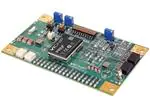
VI Chip® Remote-Sense PRM™ Evaluation Board
(For use with PCB part numbers 39537 and 38693)
Ankur Patel
Applications Engineer
Contents Page
Introduction 1
Features 4
Board Description
5
General Components
6
Test Points Description
8
Sockets Description
9
Introduction
The remote-sense PRM evaluation boards described in this document are designed to use with the
PRM family of PRM regulators and demonstrate the benefits of the Factorized Power Architecture™.
These evaluation boards are not designed for installation in end‑user equipment. The system
demonstrates the use of a PRM (the pre-regulator module) and a VTM™ (the current multiplier or the
voltage‑transformation module) for general laboratory evaluation only.
Schematic 10
Assembly Drawings
12
Bill of Materials
14
VTM™ Evaluation Boards
17
Recommended
Test Equipment
18
Push-Pin Heat
Sink Installation
18
Line and
Load Connections
19
Board Operating Modes
19
Remote-Sense Operating
Mode using PRM™:
Local Sensing
(Single Ended)
21
Remote-Sense Operating Mode
using PRM™ and VTM™:
Non-Isolated
Remote Sensing
(Differential Sensing)
22
Child Operating
Mode (Arrays)
25
Paralleling 26
Conclusion 26
IMPORTANT NOTICE:
Be sure to read this design guide manual thoroughly before using this product. Pay attention
to all cautions and warnings.
This user guide is not comprehensive and is not substitute for common sense and good
practice. For example:
nn
When testing electronic product always use approved safety glasses.
nn
Provide a strain relief for wires and place the system on the bench in such a way as to prevent
accidental displacement from bench top.
nn
Remove the power and use caution when connecting and disconnecting test probes and interface
lines to avoid unintentional short circuits and contact with hot surfaces.
nn
Never use a jumper in place of the fuse. Replace the fuse only with its equivalent type and rating.
nn
Never attempt to disconnect the evaluation board from a VTM evaluation board while power is
applied. This system is not designed to demonstrate the hot-plug capability.
UG:016
Page 1
�The remote‑sense PRM™ evaluation board can be used to demonstrate a standalone buck-boost
regulator or in conjunction with a VTM™ evaluation board to enable evaluation of a Factorized Power
Architecture™ (FPA™) system. There are many combinations possible using PRM and VTM evaluation
boards, but the focus in this user guide is using one PRM evaluation board and one VTM evaluation
board, with a brief overview of how to parallel boards.
In remote-sense operation the internal regulation circuitry is disabled and an external control loop and
current sensor maintain regulation. This affords flexibility in the design of both voltage and current
compensation loops to optimize performance in the end application. The remote-sense PRM module
evaluation board can be used to configure the PRM in local-sense mode or in non-isolated remote‑sense
mode depending on the application.
Table 1
Evaluation board numbers
and their ratings
Remote‑Sense PRM
Part Number
(PS10)
PRM48BF480T600A00
PRM48BF480T400B00
PRM48BH480T200B00
Evaluation Board
Number
Description
Input
Voltage
(V)
Output
Voltage
(V)
Output
Power
(W)
PRD48BF480T600A00
Full-Chip
Remote‑Sense
PRM
Evaluation
Board
38 – 55
5 – 55
600
PRD48BF480T400B00
Full-Chip
Remote‑Sense
PRM
Evaluation
Board
38 – 55
5 – 55
400
PRD48BH480T200B00
Half‑Chip
Remote‑Sense
PRM
Evaluation
Board
38 – 55
5 – 55
200
Refer to the specific PRM data sheet for detail ratings of the device. It is important to remain within the
device limits when testing.
These boards make it convenient to evaluate the performance of Vicor PRM products. All evaluation
boards include sockets to allow easy "plug and play" insertion and removal of through‑hole
components and wires while providing Kelvin voltage measurements test points of all pins of the PRM.
Evaluation boards are designed to simplify testing of the product by providing test points and sockets
for easy connection to standard test equipment, lugs for input/output connections, connectors to allow
easy insertion and removal of the PRM evaluation board and VTM evaluation board.
Please note that not all evaluation board part numbers have been listed here. Full-chip and half-chip PRMs of different
output power level may be using common full-chip and half-chip evaluation boards. Design-specific components
have been arranged in table 6 based on PRM output power level. It is recommended that the user should, first, find
out which PRM part number is mounted on evaluation board. Second, please refer to appropriate data sheet for pin
functions of PRM and modes of operation. Third, follow the appropriate section of the user guide to use the PRM
evaluation board in specific modes of operation.
UG:016
Page 2
�Considerations for Remote-Sense-Only PRM™
This board is designed to accomodate different types of PRMs. Therefore, certain circuitry on the board
is not populated and there are additional considerations for using remote-sense-only PRMs.
The remote-sense PRM evaluation board does not operate in default switch S10 setting which has all
switches in the OFF position. Switch at position 1 must remain in the OFF position. Putting switch at
position 1 in the ON position could short the TM pin which would cause damage. Switch at position
6 must remain in the OFF position as well. Please see appropriate section for switch setting and
mode of operation.
The silkscreen may not match the pin names for remote-sense PRM. Following table maps pin names of
the remote-sense PRM to silkscreen and standard PRM.
Table 2
Remote-Sense PRM
PRM
Silkscreen on the Board
PR
SHARE/CONTROL NODE
SH/CN
PC
ENABLE
EN
TM
TRIM
TRIM
NC
NC
TP20
NC
NC
TP19
NC
AL
AL
VC
VC
VC
RE
REF/REF_EN
RE
SG
SGND
SG
IF
IFB
IFB
VS
VAUX
VAUX
NC
VT
VT
Contents
All remote-sense PRM evaluation boards arrive with the following contents.
(The user guide can be downloaded from www.vicorpower.com)
nn
1x remote-sense PRM evaluation board
nn
1x VI Chip® push pin heat sink
nn
2x VI Chip push pins for heat sink installation
nn
2x VI Chip push pin heat sink grounding clips
nn
1x hardware kit
nn
1x through-hole aluminum-electrolytic input capacitor (CIN)
nn
1x through‑hole resistor for default compensation (R28)
nn
1x through‑hole capacitor for default compensation (C20)
nn
2x jumpers
UG:016
Page 3
�Features
1. Input and output lugs for source and load connections.
2. Input fuse (appropriately rated).
3. Input filtering and sockets to place through-hole input aluminum-electrolytic capacitor for
source decoupling.
4. Output filtering and sockets to place through-hole output aluminum-electrolytic capacitor.
5. Switch for enabling and disabling the PRM™ through the ENABLE pin.
6. Open drain MOSFET for enabling and disabling the PRM using external source.
7. Mode selection switch for remote-sense PRM configurations.
8. Trim control selection. (Not applied)
9. Adaptive-loop control selection. (Not applied)
10. Output current sensing for output current measurement and current feedback in
remote-sense operation.
11. Sockets and circuits to optimize the external control circuits in remote-sense operation.
12. Voltage reference to trim pot for adjusting output voltage set point in remote-sense operation.
13. Dual-output connectors for transferring the power and signal connections to
downstream VTM™ evaluation board.
14. Oscilloscope probe jack for making accurate output voltage measurements.
15. Dual paralleling connectors for PC, PR and SG signal connections to other PRM evaluation board.
16. Kelvin voltage test points and sockets for all pins of PRM.
17. Test points for current sensing and AC signal injection (RS mode).
18. Provision for installing the heat sink.
UG:016
Page 4
�Board Description
The following section provides a detailed description of the evaluation board components, test
points and sockets.
Figure 1
Board description
[a]
[a]
Figure 2
Power/signal connectors pinout
(front view)
[a]
Not populated for remote-sense PRM™ evaluation boards.
–OUT
10
VC
8
–OUT +OUT +OUT
6
4
2
–S
10
9
–OUT
7
VC
5
3
1
–OUT +OUT +OUT
9
+S
J13
Power/Signal Connector
V T M_–IN
4
2
8
6
7
5
3
1
V _T M V _PC V _IM
J10
Signal Connector
UG:016
Page 5
�General Components
1. Remote-sense PRM™ (PS10).
2. Input lugs: Sized for #10 hardware. Use these for making connection to the input source.
This board does not contain reverse polarity protection. Check for proper polarity before applying
the power.
3. Input fuse (F10): Appropriately rated.
4. Input filtering: Input capacitor (CIN) and filtering (inductor and ceramic capacitors) allows for
stable operation with most input sources. Sockets can be used for easy installation of aluminumelectrolytic input capacitor. It is recommended to place the 22µF, 100V input electrolytic capacitor
in the sockets at the input of the PRM.
5. Enable/Disable switch (S11) and FET switch: When actuator is in top position towards “ON” text
on the board, the ENABLE pin will be open and PRM device will be enabled. When actuator is in
bottom position towards “OFF” text on the board, the ENABLE pin will be connected to SGND and
PRM device will be disabled. When switch S11 is ON, open drain FET can be selected to control the
ENABLE pin using external source.
6. Header-jumper for Adaptive-Loop control (P10): Provides the option to select and enable
Adaptive‑Loop control.
Note: Not populated for remote-sense PRM evaluation boards.
7. Header-jumper for trim control (P11): Provides the option to select and enable the trim control.
Note: Not populated for remote-sense PRM bvaluation boards.
8. Operating Mode selection switch (S10): For selecting one of the following operating modes:
a. Child Operation (used in PRM paralleling)
b. Remote sense: Local sensing (single ended)
c. Remote sense: Non-isolated remote sensing (differential)
9. Output lugs: Sized for #10 hardware. Use these lugs to connect the output directly to the load.
UG:016
Page 6
�General Components (Cont.)
10. Signal connector (J10): Used to transfer VTM PC, IM, TM, –IN and Output Sense signals between
the PRM™ and VTM™ boards. TM pin of VTM provides feedback to VT pin of PRM to enable
temperature compensation in adaptive-loop operation of PRM and VTM.
11. Power/Signal connector (J13): Used to transfer power (+OUT/–OUT) and VC to downstream VTM
board when used.
12. Output oscilloscope probe Jack (J14): Used for making the accurate scope measurements of
the output voltage (i.e., ripple). Remove scope grounding lead and insert probe directly into jack
ensuring a good connection between the jack and the probe ground barrel. Do not attempt to
install while power is applied. May not be compatible with all scope probes.
13. Output capacitor (COUT) and output filtering (inductor and ceramic capacitors): Helps to
minimize the switching ripple of the output voltage. Sockets can be used for easy installation of
aluminum‑electrolytic output capacitor.
14. High-side current-sense resistor and current-sense IC (R25 and U10): Current-sense shunt
monitors the output current and IC provides the feedback to the IFB pin for constant-current limit
protection in remote-sense operation. Gain is programed using resistor R26. Constant-current limit
is set at ~10% above the rated output current of the PRM on all boards.
15. Voltage sense and error amplifier: Dual op-amp provides the voltage sensing and error amplifier
function. It can be configured for local voltage sensing at the PRM output or a differential amplifier
to allow for non-isolated remote sensing at the VTM output or load in remote-sense operation.
Sockets are providedfor compensation components.
16. Voltage reference and output voltage trim pot (R44) for external voltage control loop:
remote‑sense operation trim pot adjusts the output voltage by increasing and decreasing the
error amplifier reference voltage (VREF). Turn clockwise to increase the output voltage and
counterclockwise to decrease the output voltage. Sockets can be used for easy installation of
soft‑start ceramic capacitor.
17. Dual paralleling wire to board connectors (J17 and J18): Used for transferring signal pins (PC,
PR and SG) in parallel operation from one board to other board. Provides simple strip and insert
option. Accepts 18-24AWG solid wires. Spring-loaded contact will grab solid wire with no need for
soldering. Connection requires for parallel regulator operation are grouped together.
18. Push-pin heat sink and grounding clip mounting holes: Use these holes for installing the
optional push-pin heat sink and grounding clips included with the board. Use of the heat sink with
fan is highly recommended for appropriate cooling of the PRM module.
UG:016
Page 7
�Test Points Description
Each test point has a socket which accepts 0.015 – 0.025 inch diameter leads for easy installation of solid wires
and through-hole components. All the test points are brought out to the edge of the board to allow for easy
measurement and/or connection to the user’s external circuitry. All test points are labeled and routed to the edge
of the board. Each test point is accompanied with an adjacent socket for adding a test lead or to facilitate wiring to
external circuitry.
Table 3
Test points description
Note: for RS PRM, silkscreen
may not match pin name.
See section: Considerations for
remote‑sense-only PRM
Reference
Designator
Functional
Name
TP30
TP33
+IN
–IN
Input voltage test points provide Kelvin connection to input pins of the
PRM™. Use these test points for measuring the input voltage of the PRM to
avoid error due to interconnect losses.
TP31
TP32
+OUT
–OUT
Output voltage test points provide Kelvin connection to output pins of the
PRM. Use these test points for measuring the output voltage of the PRM to
avoid error due to interconnect losses.
TP34
TP21
TP22
SG
Signal Ground (SG) test points are the ground reference for all control circuitry
and signal pins of the PRM.
TP28
TP29
CS+
CS–
Used to measure the output current of the PRM across shunt resistor R25.
TP35
TP36
IM
SG
Used to measure the output of current sense IC with reference to SG.
TP10
PR
Used to measure the PR signal of the PRM with reference to SG test point.
TP11
NC
No connect. For internal use only.
TP12
TM
Used to measure the TM signal of the PRM with reference to SG test point.
TP13
VS
Used to measure the VS signal of the PRM with reference to SG test point.
TP14
RE
Used to measure the RE signal of the PRM with reference to SG.
TP15
NC
No connect. For internal use only.
TP16
PC
Used to measure the PC signal with reference to SG.
TP17
VC
Used to measure the VC signal with reference to SG.
TP18
IF
TP43
TP44
VREF
TP19
TP20
NC
TP37
TP38
TP23
TP24
Functional Description
Used to measure the IF signal of the PRM with external constant-current circuit
with reference to SG in remote-sense operation.
Used to measure the voltage-reference signal of the error amplifier with
reference to SG in remote-sense operation.
No connect. For internal use only.
Can be used to inject the isolated signal of network analyzer for bode plot
measurement to measure the stability in remote-sense operation.
VG
SG
Can be used to connect function generator to control the open drain MOSFET
in ENABLE control.
TP39
TP41
Not applied.
TP40
TP42
Not applied.
UG:016
Page 8
�Sockets Description
Each socket accepts 0.015 – 0.025 inch diameter leads for easy installation of solid wires and through-hole
components for use with external circuit and test equipment.
Table 4
Sockets description
Reference
Designator
Functional
Name
H57
H58
Input Capacitor
(CIN)
Sockets are used for easy installation of through-hole 100V-rated
aluminum‑electrolytic capacitor.
H32
H33
Output
Capacitor
(COUT)
Sockets are used for easy installation of through-hole 100V-rated
aluminum-electrolytic capacitor.
Ensure proper polarity with short leads while installing.
H49
H53
Not applied.
H50
H54
Not applied.
H41
H43
Compensation
Capacitor
(C20)
Used for easy installation of through-hole compensation capacitor C20
in feedback path of error amplifier. Default through-hole 4700pF capacitor is
added in the box. Used only with remote-sense operation.
H42
H44
Compensation
Resistor
(R28)
Used for easy installation of the through-hole compensation resistor R28 in
feedback path of the error amplifier. Default through-hole 20kΩ resistor is
added in the box. Used only with remote-sense operation.
H39
H40
Integrator
Capacitor
(C19)
Used for easy installation of through-hole compensation capacitor C19.
H47
H48
Differential
Input Resistor
(R33)
Used for easy installation of through-hole resistor R33 for non-isolated
differential sensing in remote-sense operation.
H51
H52
Differential
Input Resistor
(R41)
Used for easy installation of through-hole resistor R41 for non-isolated
differential sensing in remote-sense operation.
H55
H56
Soft-Start
Capacitor
(C24)
H46
H45
H30
H31
Functional Description
Used for easy installation of the through-hole capacitor on top of default
0.1µF to soft start the PRM output voltage in remote-sense operation.
Used to insert wires to hook up the network analyzer measuring probes to
measure stability in remote-sense operation.
CS+
CS–
Used to insert test leads to measure the voltage across R25.
UG:016
Page 9
�
UG:016
J15
J11
H26
TP24
TP23
H23
TP62
TP61
G
SG
Q10
SOT23_3
F10
C16
2220
C15
2220
PIN
i
ON/OFF CONTROL
R21
0603
PIN
i
TP66
TP65
D
S
2220
C17
L10
1206
R24
1 S11
2
3
H58
H57
TP58
Cin
TP55
TP53
TP51
TP49
2220
H35
TP33
H22
TP47
C25
TP30
H28
NC2
NC1
PR
NC3
TM
PC
H15
TP13
TP21
R12
0603
TM
H16
TP14
SG
R13
0603
VS
H17
TP15
R14
0603
RE
H34
PRM2_HALF_JLEAD
-IN
+IN
NC2
NC1
PR
NC3
TM
PC
GND
TP34
SG
SG
TP60
SG
HS10
PRM
TP17
VC
NC4
IF
RE
VS
PS10
TP22
R16
0603
PC
H11
-OUT
+OUT
H10
TP16
R15
0603
NC4
H18
SIGNAL PIN TEST POINTS AND FIXED RESISTORS
TP12
R11
0603
NC3
TP45
TP11
R10
0603
PR
PIN
TP56
i
TP10
H14
TP18
H36
H29
TP36
TP35
H37
-OUT
H38
IMON
TP59
TP32
2220
C26
1206
R22
SG
V OUT
V-
+IN
V+
RG
-IN
TSOT23_6
U10
2512
6
5
4
TP68
H31
TP29
VCC
0603
VCC
C18
SG
POUT
i
R26
1206
L11
1206
R23
1210
C11
C13
TP26
C14
TP27
TP25
2
9
-OUT
-OUT
10
3
7
VC
5
+SENSE
4
2
4
6
8
10
2
4
6
8
10
7
VC_OUT
1
3
5
7
9
J13
1
3
5
7
9
J10
6
9
9
+S
-S
10
-SENSE
8
7
8
TP64
J16
J12
VTM_-IN
4
2
J14
5
3
1
V_TM V_PC V_IM
6
-OUT
TP63
VTM_-IN
10
CHILD
REMOTE SENSE (Differential)
LOCAL SENSE (Single Ended)
CONNECTOR FRONT VIEW
5
3
1
-OUT +OUT +OUT
-OUT +OUT +OUT
6
4
2
H33
VC
8
H32
VTM_TM
VTM_PC
VTM_IM
H24
1
1210 1210 1210 Cout
C12
POUT
i
H27
VS
H25
NC4
IF
MODE SELECT
PRM_+OUT
PR
RE
i +S
i -S
S10
SW_21910MST
i POUT
LOCAL SENSE_+
i POUT
+SENSE_B
-SENSE_B
VTM_TM
-SENSE
+SENSE
ON
20
19
18
17
16
15
14
13
12
11
TM
SG
EAO
IMON
REF_EN_B
CURRENT SENSE AMPLIFIER
1
2
3
TP67
R25
TP28
VC_OUT
R20
0603
NC2
POUT
H30
i
R19
0603
TP20
NC1
H20
TP57
PRM_+OUT
VC
NC4
IF
RE
VS
TP31
TP54
TP52
TP50
TP48
TP19
H19
R18
0603
IF
H21
TP46
R17
0603
VC
H12
Figure 3a
Remote-sense PRM
evaluation board schematic
1
2
3
4
5
6
7
8
9
10
H13
Schematic
Schematic for half-chip and full-chip remote-sense PRM™ evaluation board is same.
Page 10
�SG
SGND
TRIM POT
EXT TRIM
R46
0603
PR
PC
SG
P11
2
4
6
T P72
CN 6_DIGIKEY_95278
1
3
5
CO NN3PIN
J17
CONN3PIN
J18
TRIM/TM CONTROL SELECT
R3 5
0603
R4 0
SIGNALS FOR PARALLELING
H54
R3 8
1206
T P70
T P42
T P40
T P71
3
2
1
H50
3
2
1
T P69
TM
EXT AL
SGND
AL POT
H53
R3 7
1206
T P74
T P41
T P39
H49
T P73
SG
T P75
P10
2
4
6
NC3
T P76
CN6_DIGIK EY_95278
1
3
5
AL/NC CONTROL SELECT
R3 4
0603
R3 9
Note: Components for TRIM and AL controls are not applied.
REF_ EN_ B
EAO
0603
C23
H43
U12
SG
R4 5
1206
R4 4
1
1206
C19
R4 3
1206
SG
3
2
U11A
SO8
R28
1206
H42
H40
H56
1206
C24
H55
1206
C22
H44
VREF
T P43
T P44
R36
1206
1206
R3 2
SG
VOLTAGE SENSE AND ERROR AMPLIFIER
7
6
5
U11B
R42
1206
R31
1206
REMOTE SENSE CONTROL CIRCUITRY
VOLTAGE REFERENCE
SG
SOT 23_3
C21
0603
VCC
C20
1206
H41
H39
2
OUT
1
IN
G ND
UG:016
3
8
4
ADAPTIVE LOOP CONTROL CIRCUITRY
H51
R41
1206
R3 3
1206
R2 9
H47 1206
R2 7
1206
T P37
H52
H48
H46
T P38
-SENSE_B
+SENSE_ B
R3 0
1206
IMON
LOCA L SENSE_+
H45
Schematic (Cont.)
Figure 3b
Remote-sense PRM
evaluation board schematic
Page 11
�PS10
U10
C18
R15
R13
R18
R14
R17
R22
HS10
PF43
PF44
H56
PF46
R23
J13
J14
PF49
H33
H36
H27
H25
H24
H11
H17
H34
H12
H16
H18
H13
H21
H10
H22
H15
H14
H19
C17
H57
TP44
H44
H56
H43
H40
FID02
R28
C20
C19
H42
H41
H39
J10
H31
PF46
R23
J13
L11
H32
J14
H36
UG:016
H27
H25
PF16
PF17
J16
TP27
H24
PF15
TP26
PF14
TP25
H11
H17
PF13
TP17
PF12
TP14
H34
H12
PF11
TP34
PF10
TP18
H16
H18
PF09
TP13
PF08
TP15
PF07
H21
H13
H10
TP16
PF06
TP21
PF05
TP10
H15
H22
PF04
TP12
PF03
TP22
H14
H19
PF02
TP11
TP20
PF01
FID01
TP19
J18
R46
J17
J15
H20
TP33
PF42
PF49
TP32
H35
H33
C14
C13
C12
C11
PF19
PF18
H29
PF38
R26
PF45
R25
PF20
TP27
TP26
TP25
TP43
H55
R36
TP29
R22
PS10
PF44
U10
PF37
PF48
H58
C16
C15
C18
PF43
R24
L10
R29
H30
PF22
F10
TP24
H26
R15
R13
R18
R14
R17
PF39
PF40
R32
TP28
R10
R16
R12
R19
R20
R11
PF36
PF35
J12
C21
TP37
R27
TP35
Q10
PF23
S11
R21
TP23
H23
R30
PF31
TP38
HS10
PF47
C24
H38
H45
PF32
P11
H37
P10
TP17
TP14
PF33
PF50
H28
U11
R33
PF30
H48
H51
R41
PF29
R31
TP36
H52
J16
PF17
PF28
C22
R42
TP30
PF16
PF15
R43
H46 H47
H50
R35
PF14
R45
R44
S10
PF27
PF13
PF12
TP34
PF11
TP18
PF10
TP13
PF09
TP15
PF08
TP21
PF07
TP10
TP16
TP12
TP22
TP11
TP19
TP20
PF06
PF34
TP41
PF05
U12
PF26
TP39
R34
PF04
C23
R38
PF24
PF25
PF03
TP40
R37
H53
PF02
PF01
R40
TP42
J11
H49
R39
H54
J17
J18
R46
H20
TP33
PF42
C14
C13
C11
C12
H58
H32
PF19
H35
FID01
TP31
H43
H44
R28
C20
J10
H41
C19
H42
PF38
PF48
J15
PF41
L11
PF18
Figure 4b
Top view: full-chip evaluation
board assembly drawing
H29
R26
PF45
R25
PF20
TP44
TP43
H55
H40
U11
R32
H39
R29
PF39
PF40
FID02
PF37
TP32
H57
C17
L10
C16
R27
PF36
PF35
C21
R36
J12
PF41
H26
R24
C15
TP37
PF47
TP31
Q10
PF22
R10
R16
R12
R19
R20
R11
R30
PF32
TP38
S11
R21
PF23
TP24
F10
TP23
H23
H45
PF33
C22
P11
PF31
P10
H28
R33
PF30
H48
H51
R41
PF29
R31
TP29 H31
H52
C24
PF28
TP36 H38
R42
TP30
PF50
R43
PF34
R35
S10
PF27
H46 H47
TP41
TP39
R34
PF26
R45
R44
TP28 H30
R38
PF24
PF25
U12
C23
TP35 H37
R37
H53
R40
TP40 H50
J11
H49
R39
TP42
Figure 4a
Top view: half-chip evaluation
board assembly drawing
H54
Assembly Drawings
Page 12
�Assembly Drawings (Cont.)
Figure 4c
Bottom view:
half-chip / full-chip evaluation
board assembly drawing
TP73
TP69
TP70
TP74
TP61
TP63
TP72
TP76
TP71
TP75
TP65
TP68
TP67
TP57
C25
C26
TP66
TP59
TP56
TP58
TP64
TP62
TP46
TP48
TP54
TP50
TP60
TP52
TP49
TP45
TP51
TP47
UG:016
TP55
TP53
Page 13
�Bill of Materials
Following table describes the most common components of of full-chip and half-chip remote‑sense PRM™
evaluation boards.
Table 5
Common components
Reference
Designator
Description
ManuFacturer
Part Number
TDK
Corp. of America
C3225X7R2A225KT5LOU
C11, C12, C13,
C14
CAP X7R 2.2µF 10% 100V 1210 .102
MAX HT
C15, C16, C17
CAP X7R 4.7µF 20% 100V 2220
TDK
C5750X7R2A475M
C18, C21, C23
CAP X7R 0.01µF 10% 100V 0603
MURATA
GRM188R72A103KA01J
AVX CORP
SR155C472KAR
C20* not applied–
CAP X7R 4700pF 10% 50V RADIAL
use sockets
C24
CAP X7R 0.10µF 10% 100V 1206
AVX CORP
12061C104KATMA
CIN
CAP ALEL 22µF 20% 100V RADIAL
8 X 11.5
PANASONIC
EEU-FC2A220
F10
H10 to H58
J10, J13
Design specific – see Table 6
PIN RECPT 0.015/0.025 DIA 0667 SER TH MILL-MAX MFG CORP
CONN 10 PINS 2.54MM PITCH DUAL
ROW SM HO
0667-0-57-15-30-27-10-0
GCT
BG225-10-A-N-A
J14
JACK VERTICAL MECH THRU HOLE
TEKTRONIX
131-5031-00
J17, J18
CONN 3 POS WIRE TO BOARD SMD
AVX CORP
478-6170-2-ND
OMRON
ELECTRONICS
XJ8A-0211
VISHAY/DALE
IHLP2525CZERR10M01
JUMPER_HEADER
L10, L11
JUMPER SOCKET XJ8A
IND 0.1µH 20% 32.5A 2525
P10, P11
Not applied
PCB
Design specific – see Table 6
PS10
Design specific – see Table 6
ON
SEMICONDUCTOR
2N7002LT1G
RES 10kΩ 1/10W 1% 0603
KOA SPEER
RK73H1J1002FTD
RES 0Ω JUMPER 2A 1206
KOA SPEER
RK73Z2BTTD
RES 1Ω 1/4W 5% 1206
KOA SPEER
RK73B2BTTE1R0J
Q10
FET 2N7002 SOT-23
R21
R22
R23, R24
R25
Manufacturer
Design specific – see Table 6
UG:016
Page 14
�Bill of Materials (Cont.)
Following table describes the most common components of of full-chip and half-chip remote‑sense PRM™
evaluation boards.
Table 5 (Cont.)
Common components
Reference
Designator
R26
R28* not applied–
use sockets
Description
ManuFacturer
Part Number
Manufacturer
Design specific – see Table 6 – Remote-Sense Operation – set the constant-current limit
RES 20kΩ 1/4W 1% AXIAL
KOA SPEER
R29
RES 54.9kΩ 1/4W 1% SMD 1206
KOA SPEER
RK73H2BTTE5492F
R30
RES 20Ω 1/4W 1% 1206
KOA SPEER
RK73H2BTTD20R0F
RES 1.27kΩ 1/4W 1% SMD 1206
KOA SPEER
RK73H2BTTE1271F
R31, R42
R34
Not applied
R35
R36
MF1/4DCT52R2002F
Not applied
RES 1kΩ 1/4W 1% 1206
KOA SPEER
R39, R40
RK73H2BTTE1001F
Not applied
R43
RES 10kΩ 1/4W 1% 1206
KOA SPEER
RK73H2BTTE1002F
R44
RES TRIM POT 10kΩ 1/2W 10% TH
COPAL ELECTRONIC
CT94EY103
R45
RE 1kΩ 1/4W 1% SMD 1206
KOA SPEER
RK73H2BTTE1001F
R46
RES 1Ω 1/10W 1% 0603
PANASONIC
ERJ-3RQF1R0V
S10
MECH SMD 10-POS DIP SWITCH
CTS
ELECTROCOMPONENTS
219-10MSTRF
S11
SW TOGGLE SPDT 1 POS SMD
C&K
COMPONENTS
GT11MSCBE
TP10 to TP44
TEST POINT, SURFACE MOUNT
KEYSTONE
5017
U10
IC HV I SENSE LMP8645HV TSOT-6
NATIONAL
SEMICONDUCTOR
LMP8645HVMKE/NOPB
U11
IC DUAL OPAMP LM6142AIM 8PIN SO
NATIONAL
SEMICONDUCTOR
LM6142AIMNOPB
U12
IC VREF 1.25V REF3312 SOT23 3
TI
REF3312AIDBZT
Please note that R28 and C20 are through-hole default compensation components required for
remote‑sense operation.
UG:016
Page 15
�Bill of Materials (Cont.)
Following table describes the most common components of all four versions of PRM™ evaluation boards.
Table 6
Board-specific components
Reference
Designator
Description
Manufacturer
ManuFacturer
Part Number
Board-Specific Components
Evaluation board number: PRD48BF480T400B00
PS10
REMOTE SENSE PRM FULL CHIP 400W
R26
RES 215kΩ 1/4W 1% 1206
R25
RES I SENSE 5mΩ 1W 1% 2512
F10
FUSE 20A 125VAC FAST 10.1X3.1 SMD
PCB
SNGLTD PCB FULL PRM CONFIG CB
PS10
REMOTE-SENSE PRM HALF CHIP 200W
R26
RES 215kΩ 1/4W 1% 1206
R25
RES I SENSE 10mΩ 3W 1% 2512
F10
LITTLE FUSE 10A R451010.MRL
PCB
SNGLTD PCB HALF PRM CONFIG CB
VICOR
PRM48BF480T400B00
KOA SPEER
RK73H2BTTE2153F
VISHAY
WSL25125L000FEA
LITTELFUSE
0456020.ER
VICOR
39573
Evaluation board number: PRD48BH480T200B00
VICOR
PRM48BH480T200B00
KOA SPEER
RK73H2BTTE2153F
BOURNS
CRA2512-FZ-R010ELF
LITTELFUSE
0451010.MRL
VICOR
38693
Evaluation board number: PRD48BF480T600A00
PS10
REMOTE-SENSE PRM FULL CHIP 600W
VICOR
PRM48BF480T600A00
R26
RES 178kΩ 1/4W 1% 1206
KOA SPEER
RK73H2BTTE1783F
R25
RES I SENSE 4mΩ 1W 1% 2512
PANASONIC
ERJM1WSF4M0U
F10
FUSE 25A 125VAC FAST 10.1X3.1 SMD
LITTELFUSE
0456025.ER
PCB
SNGLTD PCB FULL PRM CONFIG CB
VICOR
39573
UG:016
Page 16
�VTM™ Evaluation Boards
The remote-sense PRM™ evaluation board is designed to work with all types of VTM evaluation
boards to facilitate testing of virtually any PRM/VTM combination. The VTM evaluation board contains
dual connectors designed to mate with J10 and J13 on PRM evaluation board. The additional signal
connector is used to transfer VTM signal pins, as well as S+ and S– signals between boards. The S+
and S– signals are tied to the VTM output using local-sense resistors and can be used for implementing
non-isolated remote sense as described in a later section. Board also provides the ability to inject an
AC signal for measuring the loop response and break the isolation for non-isolated remote sense
using PRM and VTM.
Figure 5
VTM evaluation board
Figure 6
VTM evaluation board
connector pinout (front view)
VTM –IN
NC
VS–
+IN
+IN
–IN
VC
–IN
IM-VTM
TM-VTM NC
PC-VTM
VS+
+IN
+IN
–IN
VC
–IN
VTM Evaluation Board
Signal Connector
VTM Evaluation Board
Power / Signal Connector
UG:016
Page 17
�Figure 7
Remote‑sense PRM
evaluation board
connection to
VTM evaluation board
Recommended Test Equipment
The following is a list of recommended test equipment.
1. DC power supply: 0 – 80V, 600W minimum
2. Load: Rated appropriately based on output voltage, current and power requirements.
3. Digital multi-meters (DMMs)
4. Oscilloscope + probes
5. Function generator (for external enable/disable and trim control)
6. Auxiliary bench voltage supply (for external trim and AL control)
7. Network analyzer
8. Interconnect wires, cables and fastening hardware.
9. Calibrated input and output shunts, appropriately rated (for efficiency measurements)
10. Trim pot screwdriver
11. Fan
12. Data sheets of requisite PRM™ and VTM™ device used.
13. Safety glasses
14. Thin-bladed tool for wire extraction from paralleling connectors
(AVX part number: 06-9276-7001-01-000)
Push-Pin Heat Sink Installation
Each PRM and VTM evaluation board comes with its own heat sink and push pins for installation. Before
testing, it is highly recommended that heat sinks be installed in the appropriate location for each board.
When installing the push-pin heat sink, use caution not to exceed the maximum compressive on the
device listed in the data sheet.
UG:016
Page 18
�Line and Load Connections
nn
Make sure that input power supply is OFF.
nn
Connect the input power supply positive lead to the +IN input lug of the evaluation board.
nn
Connect the input power supply return lead to the –IN input lug of the evaluation board.
nn
Connect the output lug +OUT to the positive terminal of the electronic load.
nn
Connect the output lug –OUT to the return terminal of the electronic load.
nn
Verify proper polarity of the connections.
nn
Place the input capacitance 22µF, 100V.
nn
Turn the FAN ON.
nn
Have the latest version of the data sheet.
Board Operating Modes
Remote-sense PRM™ evaluation board supports both adaptive-loop and remote-sense configurations.
Therefore, operating mode selection switch S10 is provided on the board for selection of the following
operating modes:
nn
Remote sense: local sensing (single ended)
nn
Remote sense: non-isolated remote sense (differential)
nn
Child (for array operation)
Figure 8
Mode-select switch
VCC
REF_EN_B
VTM_TM
i POUT
LOCAL SENSE_+
i POUT
+SENSE_B
–SENSE_ B
IMON
ON
S10
SW_21910MST
1
2
3
4
5
6
7
8
9
10
SG
20
19
18
17
16
15
14
13
12
11
EAO
–SENSE
+SENSE
TM
PR
i -S
PRM_+OUT
IF
NC4
RE
VS
UG:016
i +S
Page 19
�Figure 9
Switch configuration
ON
OFF
LOCAL SENSE (Single Ended) using PRM
ON
OFF
REMOTE SENSE (Differential) using PRM and VTM
ON
OFF
CHILD using PRM
Postion
number
1
2
3
4
5
6
7
8
9
10
Figure 9 provides the illustration for how to configure the switch for each operating mode.
Common Features in All Modes of Operation
nn
On / off control to enable and disable the PRM™ in the presence of input power.
nnUsing switch S11 or
nnOpen drain MOSFET using external circuitry or function generator
nn
Input filtering (inductor and ceramic capacitors)
nn
Output filtering (inductor and ceramic capacitors)
nn
Sockets for easy installation of input and output electrolytic capacitor
nn
Test points for current sensing
nn
Kelvin test points for measurement of input voltage, output voltage and all signal pins of the PRM.
nn
Sockets for each test point for easy installation of through-hole components and solid wires to
facilitate the wiring to external circuitry and test equipment.
Figure 10
ON / OFF control
T P65
PC
D
H23
1 S11
2
3
G
Q10
SOT 23_3
R2 1
0603
S
T P23
T P24
T P66
SG
H26
ON / OFF CONTROL
UG:016
Page 20
�Remote-Sense Operating Mode using PRM™: Local Sensing (Single Ended)
Mode select switch S10 setting: keep the switch S10 setting at all positions as shown in
following illustration.
Figure 11
Local sensing
(single ended)
ON
OFF
Postion
number
LOCAL SENSE (Single Ended)
1
2
3
4
5
6
7
8
9
10
The following table describes the switch configuration.
Table 7
Switch configuration in
local sensing
Switch
Position
Number
Figure 12
Remote sense: local-sensing
(single-ended) control circuitry
BLUE highlight =
Pre-installed component
GREEN highlight =
user-installed component
ON / OFF Connection
1
OFF
TM pin must be left open. This switch position cannot be put in the ON position.
2
ON
PR pin is connected to output of external error amplifier.
3
ON
IF pin is connected to output of external current-sense amplifier to set
constant-current limit.
4
ON
RE pin is connected to input of the external voltage reference circuit to generate voltage
reference for external error amplifier.
5
ON
VS pin is connected to power VCC of the op-amp and current-sense IC.
6
OFF
NC pin must be left open. This switch position cannot be put in the ON position.
7
ON
PRM +OUT pin is connected to local sense (single ended) of the
remote-sense control circuitry.
8
either
9
OFF
See next remote-sense operation.
10
OFF
See next remote-sense operation.
H 39
Preinstalled component
and connections
H 43
H 41
H 40
1206
C19
H 42
OPEN
1206
C22
VCC
SG
OPEN
1206
R32
1
4
3
U11A
SO8
5
7
2
VREF
R36
1206
1K
R29
H 47 1206
54.9K
R31
1206
1.27K
SG
C21
0603
8
To PR through S10
TP38
H 45
H 46
R28
1206
20K
C20
1206
4.7nF
6
H 51
AC signal
injection
IMON
OPEN TP37
User installed
component
EAO
R27
1206
H 44
H 48
R33 OPEN
1206
H 52
U11B
R41 OPEN
1206
R30
1206
20Ω
To PRM +OUT
through S10
LOCAL SENSE_+
+SENSE_B
-SENSE_B
R42
1206
1.27K
SG
In this configuration, PRM operates in remote sense. PRM module output voltage is sensed through
divider formed by R29 and R31. U11B is configured as buffer as shown in Figure 11 and provides the
sense voltage to error amplifier U11A. R33, R41 and R27 are left open, reserved for differential sensing
and current sensing. R29 is set to limit the upper trim range based on a maximum reference voltage
of 1.25V. Note that by default compensation components are not installed and required for operation.
Default compensation components are provided with the board as described in a later section.
UG:016
Page 21
�Remote-Sense Operating Mode using PRM™ and VTM™:
Non-Isolated Remote Sensing (Differential Sensing)
Mode select switch S10 setting: keep the switch S10 setting at all positions as shown in the
following illustration.
Figure 13
Remote sense (differential)
ON
OFF
REMOTE SENSE (Differential)
Postion
1
number
2
3
4
5
6
7
8
9
10
Note: To use this configuration, the VTM isolation must be broken by tying VTM –IN and VTM –OUT together.
The following table describes the switch configuration.
Table 8
Switch configuration in
differential sensing
Switch
Position
Number
Figure 14
Remote sense: non-isolated
remote-sensing (differential)
control circuitry
BLUE highlight =
Pre-installed component
GREEN highlight =
user-installed component
ON / OFF Connection
1
OFF
TM pin must be left open. This switch position cannot be put in the ON position.
2
ON
PR pin is connected to output of external error amplifier.
3
ON
IF pin is connected to output of external current-sense amplifier to set the
constant-current limit.
4
ON
RE pin is connected to input of the external voltage reference circuit to generate voltage
reference for external error amplifier.
5
ON
VS pin is connected to power VCC of the op-amp and current sense IC.
6
OFF
NC pin must be left open. This switch position cannot be put in the ON position.
7
OFF
PRM +OUT pin is NOT connected to local sense (single ended) of the
remote‑sense control circuitry.
8
either
9
ON
VTM +OUT (+SENSE) pin is connected to positive input (+SENSE_B) of the differential buffer
of remote-sense control circuitry.
10
ON
VTM –OUT (–SENSE) pin is connected to negative input (–SENSE_B) of the
differential buffer of remote-sense control circuitry.
H 39
Preinstalled component
and connections
H 43
H 41
H 40
1206
C19
H 42
OPEN TP37
User installed
component
OPEN
1206
C22
VCC
SG
OPEN
1206
R32
1
4
3
U11A
SO8
VREF
R36
1206
1K
H 45
6
H 51
R33
1206
U11B
R41
1206
H 48
R30
1206
LOCAL SENSE_+
+SENSE_B
To VTM ouput (+S/–S)
through S10 and J10
H 52
-SENSE_B
R42
1206
1.27K
SG
5
7
2
R29
H 47 1206
R31
1206
1.27K
SG
C21
0603
8
To PR through S10
IMON
TP38
H 46
R28
1206
20K
C20
1206
4.7nF
EAO
R27
1206
H 44
UG:016
Page 22
�In this configuration, the PRM™ and VTM™ evaluation boards are connected together to form a
PRM / VTM pair and regulation is performed at the VTM module output. The +SENSE and –SENSE
connections are made at the VTM output through connector J10. This is a non-isolated configuration
and therefore the VTM isolation must be broken by tying the VTM –OUT and VTM –IN pins together.
The VTM evaluation board has provisions for easily breaking the isolation. U11B is configured as a
differential amplifier with gain set for appropriate output voltage. R33 and R41 set the gain. POT R44
can be used to set the required voltage at the VTM output. Maximum output voltage can be set for
maximum 1.25V reference voltage. R33 and R41 is calculated using following equation.
RR33 = RR41 =
VOUT_SET(MAX) • 1.27kΩ
(1)
1.25V
Where:
VOUT_SET(MAX) is the maximum VTM output trim voltage
Please note that R33 and R41 are not populated by default. Sockets can be used to populate
through‑hole resistors R33 and R41.
In order to configure the evaluation boards for non-isolated remote sense the following
steps must be taken:
1.
Connect the PRM and VTM evaluation boards together
2.
Configure the operating mode switch as described
3.
Break the isolation by connecting VTM –IN and –OUT together
4.
Calculate and install the appropropriate differential sense resistors (R33 and R41)
5.
Install compensation components C20 and R28
Remote-Sense Compensation Components
By default, compensation components are not populated, and are required for operation. Please note
that board comes with default through-hole compensation components C20 and R28 that can be used
to get a baseline for remote-sense operation. Sockets can be used for easy installation of C20 and R28.
These components are not optimized and will have low bandwidth response. Transient response can be
improved by adjusting the compensation components as outlined in the PRM datasheet.
It is recommended to use a network analyzer to measure the closed-loop frequency response when
adjusting compensation. The PRM and VTM boards provide test points which can be used to inject the
network analyzer AC signal and measure the closed-loop response.
For PRM remote‑sense mode (single ended local sense), test points TP37/TP38 and H46/H45 are in
series between the PRM +OUT and the voltage-sense resistors and should be used.
For PRM-VTM remote-sense mode (differential sense) test points are provided on the VTM board in
series with the +S connections (Labeled “AC SIG INJ +/–“) and should be used.
UG:016
Page 23
�Trim and Soft-Start Adjustment in Remote-Sense Operation
Trim and soft-start adjustment in remote-sense operation is set by the reference voltage network shown
below. The PRM™ evaluation board is normally configured for a 20 – 55V trim range. Trim POT R44 is
used to trim the output voltage in remote-sense operation.
The slew rate of the output voltage during start up may be controlled by controlling the rate‑of‑rise
of the voltage at VREF node. This can be achieved using soft-start capacitance C24. By default,
C24 is populated with 0.1µF ceramic capacitance. Sockets H55 and H56 can be used for installation
of additional through-hole soft-start capacitance. It is not recommended to extend the soft
start beyond 10ms.
Figure 15
Voltage-reference circuit
H55
REF_EN_B
OUT 2
1
IN
3
0603
TP43
R44
C24
R45
1206
GND
C23
VREF
R43
1206
U12
1206
SOT23_3
TP44
SGND
H56
VOLTAGE REFERENCE
Current Limit Adjustment in Remote-Sense Operation
In remote-sense operation, current feedback is provided externally. The current limit set point is a
function of the current-sense amplifier gain, the shunt resistor and the internal current-limit threshold of
PRM. Full-chip PRM evaluation board has 5mΩ current shunt whereas half-chip PRM evaluation board
has 10mΩ current shunt. The IFB current limit threshold is fixed at 2.0V. The gain of the current-sense
amplifier can be changed per Equation 2 in order to adjust the current limit. Resistor R26 set the gain of
the current-sense amplifier. R25 is the current shunt.
GCS =
VIFB_IL
(2)
ILIMIT_SET • RR25
By default, R26 is installed for the current limit approximately 10% above rated output current.
The current-limit set point can be changed by adjusting the value of R26 and appropriately setting the
gain of the current-sense IC.
UG:016
Page 24
�Child Operating Mode (Arrays)
Mode select switch S10 setting: keep the switch S10 setting at all positions as shown in the
following illustration.
Figure 16
Child
ON
OFF
Postion
number
CHILD
1
2
3
4
5
6
7
8
9
10
Child operation is required for constructing arrays of parallel devices as described in the next section.
Switch all the positions to OFF, except position #3. Child PRMs receive their control signal (PR) from an
external remote‑sense circuit. Switch at position #3 is on to enable the constant output current limit.
External remote-sense circuit controls the array of voltage.
UG:016
Page 25
�Paralleling
The paralleling and current-sharing capability of the devices can be demonstrated by stacking multiple
evaluation board and interconnecting the inputs and outputs with standoffs of sufficient current
rating to create a parallel array. See Figure 17 below. One board should be configured normally for
remote‑sense operation and placed on top for easy access to control circuitry. The remaining PRMs
should be configured as children and placed underneath.
When paralleling PRMs, the PC, PR and SG pins should be connected together. Dual paralleling wire to
board connectors (J17 and J18) are used for transferring signal pins (PC, PR and SG) in parallel operation
from board to board. These connectors provide simple strip and insert option and accept 18-24 AWG
solid wires. PR and SG wires can be twisted to minimize noise pick-up. Note that when using J17 and
J18, SG pins will be connected together through an on board 1Ω series resistors to decouple
signal grounds.
VTM™ boards can also be connected in parallel to create high power PRM-VTM arrays. VTM input
and outputs need to be connected in parallel using same size standoffs. Each VTM requires a VC signal
from a PRM in order to start and it is recommended to connect one PRM VC to one VTM VC using the
connector J13 when possible. If needed a single PRM VC can be used to drive up to two VTMs (will
require additional off board connections).
Figure 17
Paralleling of PRM
evaluation board
Top - Parent
Bottom - Children
Interconnect
signals
Conclusion
The PRM™ evaluation board is a flexible tool which allows users to implement and perform basic
testing on various configurations, including PRM-VTM™ module combinations. This user guide covers
some basic topics; however, it cannot describe every scenario. If additional information required, please
contact Vicor Applications Engineering.
UG:016
Page 26
�Limitation of Warranties
Information in this document is believed to be accurate and reliable. HOWEVER, THIS INFORMATION
IS PROVIDED “AS IS” AND WITHOUT ANY WARRANTIES, EXPRESSED OR IMPLIED, AS TO THE
ACCURACY OR COMPLETENESS OF SUCH INFORMATION. VICOR SHALL HAVE NO LIABILITY FOR THE
CONSEQUENCES OF USE OF SUCH INFORMATION. IN NO EVENT SHALL VICOR BE LIABLE FOR ANY
INDIRECT, INCIDENTAL, PUNITIVE, SPECIAL OR CONSEQUENTIAL DAMAGES (INCLUDING, WITHOUT
LIMITATION, LOST PROFITS OR SAVINGS, BUSINESS INTERRUPTION, COSTS RELATED TO THE REMOVAL
OR REPLACEMENT OF ANY PRODUCTS OR REWORK CHARGES).
Vicor reserves the right to make changes to information published in this document, at any time
and without notice. You should verify that this document and information is current. This document
supersedes and replaces all prior versions of this publication.
All guidance and content herein are for illustrative purposes only. Vicor makes no representation or
warranty that the products and/or services described herein will be suitable for the specified use without
further testing or modification. You are responsible for the design and operation of your applications
and products using Vicor products, and Vicor accepts no liability for any assistance with applications or
customer product design. It is your sole responsibility to determine whether the Vicor product is suitable
and fit for your applications and products, and to implement adequate design, testing and operating
safeguards for your planned application(s) and use(s).
VICOR PRODUCTS ARE NOT DESIGNED, AUTHORIZED OR WARRANTED FOR USE IN LIFE SUPPORT,
LIFE-CRITICAL OR SAFETY-CRITICAL SYSTEMS OR EQUIPMENT. VICOR PRODUCTS ARE NOT CERTIFIED
TO MEET ISO 13485 FOR USE IN MEDICAL EQUIPMENT NOR ISO/TS16949 FOR USE IN AUTOMOTIVE
APPLICATIONS OR OTHER SIMILAR MEDICAL AND AUTOMOTIVE STANDARDS. VICOR DISCLAIMS
ANY AND ALL LIABILITY FOR INCLUSION AND/OR USE OF VICOR PRODUCTS IN SUCH EQUIPMENT OR
APPLICATIONS AND THEREFORE SUCH INCLUSION AND/OR USE IS AT YOUR OWN RISK.
Terms of Sale
The purchase and sale of Vicor products is subject to the Vicor Corporation Terms and Conditions of Sale
which are available at: (http://www.vicorpower.com/termsconditionswarranty)
Export Control
This document as well as the item(s) described herein may be subject to export control regulations.
Export may require a prior authorization from U.S. export authorities.
Contact Us: http://www.vicorpower.com/contact-us
Vicor Corporation
25 Frontage Road
Andover, MA, USA 01810
Tel: 800-735-6200
Fax: 978-475-6715
www.vicorpower.com
email
Customer Service: custserv@vicorpower.com
Technical Support: apps@vicorpower.com
©2018 – 2020 Vicor Corporation. All rights reserved. The Vicor name is a registered trademark of Vicor Corporation.
All other trademarks, product names, logos and brands are property of their respective owners.
11/20
Rev 1.4
Page 27
�