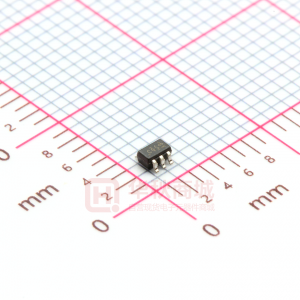
Si1922EDH
Vishay Siliconix
Dual N-Channel 20 V (D-S) MOSFET
PRODUCT SUMMARY
VDS (V) 20 RDS(on) () 0.198 at VGS = 4.5 V 0.225 at VGS = 2.5 V 0.263 at VGS = 1.8 V ID (A)a 1.3a 1.3a 1.3a 0.9 nC Qg (Typ.)
FEATURES
• Halogen-free According to IEC 61249-2-21 Definition • TrenchFET® Power MOSFET • 100 % Rg Tested • Typical ESD Protection 2100 V HBM • Compliant to RoHS Directive 2002/95/EC
APPLICATIONS
SOT-363 SC-70 (6-LEADS)
S1 1 6 D1 Marking Code YY G1 2 5 G2 CG XX
G1 1k G2 1k
• Load Switch for Portable Applications
D1 D2
D2
3
4
S2
Lot Traceability and Date Code Part # Code
Top View Ordering Information: Si1922EDH-T1-GE3 (Lead (Pb)-free and Halogen-free)
S1 S2
ABSOLUTE MAXIMUM RATINGS (TA = 25 °C, unless otherwise noted)
Parameter Drain-Source Voltage Gate-Source Voltage TC = 25 °C Continuous Drain Current (TJ = 150 °C) TC = 70 °C TA = 25 °C TA = 70 °C Pulsed Drain Current Continuous Source-Drain Diode Current TC = 25 °C TA = 25 °C TC = 25 °C Maximum Power Dissipation TC = 70 °C TA = 25 °C TA = 70 °C Operating Junction and Storage Temperature Range TJ, Tstg PD IDM IS ID Symbol VDS VGS Limit 20 ±8 1.3a 1.3a 1.3a, b, c 1.2b, c 4 1.0 0.61b, c 1.25 0.8 0.74b, c 0.47b, c - 55 to 150 °C W A Unit V
THERMAL RESISTANCE RATINGS
Parameter Maximum Junction-to-Ambient
b, d
Symbol t5s Steady State RthJA RthJF
Typical 130 80
Maximum 170 100
Unit °C/W
Maximum Junction-to-Foot (Drain) Notes: a. Package limited. b. Surface mounted on 1" x 1" FR4 board. c. t = 5 s. d. Maximum under steady state conditions is 220 °C/W. Document Number: 67192 S10-2766-Rev. A, 29-Nov-10
www.vishay.com 1
�Si1922EDH
Vishay Siliconix
SPECIFICATIONS (TJ = 25 °C, unless otherwise noted)
Parameter Static Drain-Source Breakdown Voltage VDS Temperature Coefficient VGS(th) Temperature Coefficient Gate-Source Threshold Voltage Gate-Source Leakage Zero Gate Voltage Drain Current On-State Drain Currenta Drain-Source On-State Resistancea Forward Transconductancea Dynamicb Total Gate Charge Gate-Source Charge Gate-Drain Charge Gate Resistance Turn-On Delay Time Rise Time Turn-Off Delay Time Fall Time Turn-on Delay Time Rise Time Turn-Off Delay Time Fall Time Drain-Source Body Diode Characteristics Continuous Source-Drain Diode Current Pulse Diode Forward Current Body Diode Voltage Body Diode Reverse Recovery Time Body Diode Reverse Recovery Charge Reverse Recovery Fall Time Reverse Recovery Rise Time IS ISM VSD trr Qrr ta tb IF = 1.2 A, dI/dt = 100 A/µs, TJ = 25 °C IS = 1.2 A, VGS = 0 V 0.8 9 2 5 4 TC = 25 °C 1 4 1.2 18 4 A V ns nC ns Qg Qgs Qgd Rg td(on) tr td(off) tf td(on) tr td(off) tr VDD = 10 V, RL = 8.3 ID 1.2 A, VGEN = 8 V, Rg = 1 VDD = 10 V, RL = 8.3 ID 1.2 A, VGEN = 4.5 V, Rg = 1 f = 1 MHz 0.4 VDS = 10 V, VGS = 8 V, ID = 1.5 A VDS = 10 V, VGS = 4.5 V, ID = 1.5 A 1.6 0.9 0.1 0.2 1.9 43 80 480 220 22 46 645 215 3.8 65 120 720 330 33 70 968 323 ns k 2.5 1.8 nC VDS VDS/TJ VGS(th)/TJ VGS(th) IGSS IDSS ID(on) RDS(on) gfs VGS = 0 V, ID = 250 µA ID = 250 µA VDS = VGS, ID = 250 µA VDS = 0 V, VGS = ± 8 V VDS = 0 V, VGS = ± 4.5 V VDS = 20 V, VGS = 0 V VDS = 20 V, VGS = 0 V, TJ = 55 °C VDS 5 V, VGS = 4.5 V VGS = 4.5 V, ID = 1 A VGS = 2.5 V, ID = 1 A VGS = 1.8 V, ID = 0.2 A VDS = 4 V, ID = 1.5 A 4 0.165 0.187 0.210 4 0.198 0.225 0.263 S 0.4 20 20 - 2.3 1 ± 25 1 1 10 V mV/°C V µA µA A Symbol Test Conditions Min. Typ. Max. Unit
Notes: a. Pulse test; pulse width 300 µs, duty cycle 2 %. b. Guaranteed by design, not subject to production testing.
Stresses beyond those listed under “Absolute Maximum Ratings” may cause permanent damage to the device. These are stress ratings only, and functional operation of the device at these or any other conditions beyond those indicated in the operational sections of the specifications is not implied. Exposure to absolute maximum rating conditions for extended periods may affect device reliability.
www.vishay.com 2
Document Number: 67192 S10-2766-Rev. A, 29-Nov-10
�Si1922EDH
Vishay Siliconix
TYPICAL CHARACTERISTICS (25 °C, unless otherwise noted)
0.5 10-3 10-4 0.4 IG - Gate Current (mA) IG - Gate Current (A) 10-5 10-6 10-7 10-8 10-9 0 0 3 6 9 12 15 10-10 0 3 6 9 12 15 VGS - Gate-to-Source Voltage (V) VGS - Gate-to-Source Voltage (V) TJ = 150 °C
0.3 TJ = 25 °C 0.2
TJ = 25 °C
0.1
Gate Current vs. Gate-to-Source Voltage
4 1.0
Gate Current vs. Gate-to-Source Voltage
V GS = 5 V thru 2 V 3
ID - Drain Current (A) ID - Drain Current (A)
0.8
V GS = 1.5 V 2
0.6 T C = 25 °C 0.4 T C = 125 °C 0.2
1 V GS = 1 V 0 0.0 0.0 0.0
T C = - 55 °C 0.3 0.6 0.9 1.2 1.5
0.5
1.0
1.5
2.0
VDS - Drain-to-Source Voltage (V)
VGS - Gate-to-Source Voltage (V)
Output Characteristics
0.25 8
Transfer Characteristics
RDS(on) - On-Resistance (Ω)
0.22
V GS = 1.8 V
VGS - Gate-to-Source Voltage (V)
ID = 1.5 A 6 V DS = 10 V V DS = 5 V 4 V DS = 16 V
0.19
V GS = 2.5 V
V GS = 4.5 V 0.16
2
0.13 0 1 2
ID - Drain Current (A)
3
4
0 0.0
0.5
1.0
1.5
2.0
Qg - Total Gate Charge (nC)
On-Resistance vs. Drain Current
Gate Charge
Document Number: 67192 S10-2766-Rev. A, 29-Nov-10
www.vishay.com 3
�Si1922EDH
Vishay Siliconix
TYPICAL CHARACTERISTICS (25 °C, unless otherwise noted)
1.7 ID = 1 A 1.5
RDS(on) - On-Resistance
100
V GS = 2.5 V 1.3 V GS = 4.5 V 1.1
IS - Source Current (A)
T J = 150 °C T J = 25 °C 10
(Normalized)
0.9
0.7 - 50
1 - 25 0 25 50 75 100 125 150 0.0 0.3 0.6 0.9 1.2 1.5
TJ - Junction Temperature (°C)
VSD - Source-to-Drain Voltage (V)
On-Resistance vs. Junction Temperature
0.4 ID = 1 A
RDS(on) - On-Resistance (Ω)
Source-Drain Diode Forward Voltage
0.80
0.3 T J = 125 °C
VGS(th) (V)
0.65 ID = 250 μA
0.2
0.50
T J = 25 °C
0.1
0.35
0.0 1 2 3 4 5
0.20 - 50
- 25
0
25
50
75
100
125
150
VGS - Gate-to-Source Voltage (V)
TJ - Temperature (°C)
On-Resistance vs. Gate-to-Source Voltage
5
Threshold Voltage
10 Limited by RDS(on)*
4 ID - Drain Current (A)
100 μs 1 1 ms 10 ms 0.1 100 ms 1 s, 10 s DC BVDSS Limited
Power (W)
3
2
1
TA = 25 °C Single Pulse
0 0.01 0.1 1 Time (s) 10 100 600
0.01 0.1
1
10
100
Single Pulse Power, Junction-to-Ambient
VDS - Drain-to-Source Voltage (V) * VGS > minimum VGS at which RDS(on) is specified
Safe Operating Area, Junction-to-Ambient
www.vishay.com 4
Document Number: 67192 S10-2766-Rev. A, 29-Nov-10
�Si1922EDH
Vishay Siliconix
TYPICAL CHARACTERISTICS (25 °C, unless otherwise noted)
2.4
1.8
ID - Drain Current (A)
Package Limited 1.2
0.6
0.0 0 25 50 75 100 125 150
TC - Case Temperature (°C)
Current Derating*
1.5 0.75
1.2
0.60
Power (W)
0.6
Power (W)
0.9
0.45
0.30
0.3
0.15
0.0 0 25 50 75 100 125 150
0.00 0 25 50 75 100 125 150
TF - Case Temperature (°C)
TA - Ambient Temperature (°C)
Power, Junction-to-Foot
Power, Junction-to-Ambient
* The power dissipation PD is based on TJ(max) = 150 °C, using junction-to-case thermal resistance, and is more useful in settling the upper dissipation limit for cases where additional heatsinking is used. It is used to determine the current rating, when this rating falls below the package limit.
Document Number: 67192 S10-2766-Rev. A, 29-Nov-10
www.vishay.com 5
�Si1922EDH
Vishay Siliconix
TYPICAL CHARACTERISTICS (25 °C, unless otherwise noted)
2 1 Normalized Effective Transient Thermal Impedance Duty Cycle = 0.5
0.2
Notes:
0.1 0.1 0.05
t1 t2 1. Duty Cycle, D = t1 t2 P DM
0.02 Single Pulse 0.01 10 -4 10 -3 10 -2 10 -1 1
2. Per Unit Base = R thJA = 170 °C/W 3. T JM - TA = PDMZthJA(t) 4. Surface Mounted
10
100
600
Square Wave Pulse Duration (s)
Normalized Thermal Transient Impedance, Junction-to-Ambient
2 1 Duty Cycle = 0.5
Normalized Effective Transient Thermal Impedance
0.2 0.1 0.1 0.05
0.02 Single Pulse
0.01 10-4
10-3
10-2
10-1
1
10
Square Wave Pulse Duration (s)
Normalized Thermal Transient Impedance, Junction-to-Foot
Vishay Siliconix maintains worldwide manufacturing capability. Products may be manufactured at one of several qualified locations. Reliability data for Silicon Technology and Package Reliability represent a composite of all qualified locations. For related documents such as package/tape drawings, part marking, and reliability data, see www.vishay.com/ppg?67192.
www.vishay.com 6
Document Number: 67192 S10-2766-Rev. A, 29-Nov-10
�Package Information
Vishay Siliconix
SC 70:
6 LEADS
MILLIMETERS
6 5 4 E1 E 1 2 3 -Be e1 D -Ac A2 A L A1 b
INCHES Min
0.035 – 0.031 0.006 0.004 0.071 0.071 0.045
Dim A A1 A2 b c D E E1 e e1 L
Min
0.90 – 0.80 0.15 0.10 1.80 1.80 1.15
Nom
– – – – – 2.00 2.10 1.25 0.65BSC
Max
1.10 0.10 1.00 0.30 0.25 2.20 2.40 1.35
Nom
– – – – – 0.079 0.083 0.049 0.026BSC
Max
0.043 0.004 0.039 0.012 0.010 0.087 0.094 0.053
1.20 0.10
1.30 0.20 7_Nom
1.40 0.30
0.047 0.004
0.051 0.008 7_Nom
0.055 0.012
ECN: S-03946—Rev. B, 09-Jul-01 DWG: 5550
Document Number: 71154 06-Jul-01
www.vishay.com
1
�AN816
Vishay Siliconix
Dual-Channel LITTLE FOOTR 6-Pin SC-70 MOSFET Copper Leadframe Version Recommended Pad Pattern and Thermal Performance
INTRODUCTION
26 (mil)
87 (mil)
The new dual 6-pin SC-70 package with a copper leadframe enables improved on-resistance values and enhanced thermal performance as compared to the existing 3-pin and 6-pin packages with Alloy 42 leadframes. These devices are intended for small to medium load applications where a miniaturized package is required. Devices in this package come in a range of on-resistance values, in n-channel and p-channel versions. This technical note discusses pin-outs, package outlines, pad patterns, evaluation board layout, and thermal performance for the dual-channel version.
6
5
4
96 (mil) 71 (mil) 48 (mil) 23 (mil) 1 2 3 61 (mil)
PIN-OUT
Figure 1 shows the pin-out description and Pin 1 identification for the dual-channel SC-70 device in the 6-pin configuration. Both n-and p-channel devices are available in this package – the drawing example below illustrates the p-channel device.
SOT-363 SC-70 (6-LEADS)
S1 G1 D2 1 6 5 D1 G2 S2
0.0 (mil)
8 (mil) 26 (mil) 16 (mil)
FIGURE 2.
SC-70 (6 leads) Dual
EVALUATION BOARD FOR THE DUALCHANNEL SC70-6
The 6-pin SC-70 evaluation board (EVB) shown in Figure 3 measures 0.6 in. by 0.5 in. The copper pad traces are the same as described in the previous section, Basic Pad Patterns. The board allows for examination from the outer pins to the 6-pin DIP connections, permitting test sockets to be used in evaluation testing. The thermal performance of the dual 6-pin SC-70 has been measured on the EVB, comparing both the copper and Alloy 42 leadframes. This test was then repeated using the 1-inch2 PCB with dual-side copper coating. A helpful way of displaying the thermal performance of the 6-pin SC-70 dual copper leadframe is to compare it to the traditional Alloy 42 version.
2
3
4
Top View
FIGURE 1.
For package dimensions see outline drawing SC-70 (6-Leads) (http://www.vishay.com/doc?71154)
BASIC PAD PATTERNS
See Application Note 826, Recommended Minimum Pad Patterns With Outline Drawing Access for Vishay Siliconix MOSFETs, (http://www.vishay.com/doc?72286) for the SC-70 6-pin basic pad layout and dimensions. This pad pattern is sufficient for the low-power applications for which this package is intended. Increasing the drain pad pattern (Figure 2) yields a reduction in thermal resistance and is a preferred footprint.
Document Number: 71405 12-Dec-03
www.vishay.com
1
�AN816
Vishay Siliconix
Front of Board SC70-6 Back of Board SC70-6
S1 G1 D2
D1 G2 S2
SC70−6 DUAL
FIGURE 3.
vishay.com
THERMAL PERFORMANCE
Junction-to-Foot Thermal Resistance (the Package Performance) Thermal performance for the dual SC-70 6-pin package is measured as junction-to-foot thermal resistance, in which the “foot” is the drain lead of the device as it connects with the body. The junction-to-foot thermal resistance for this device is typically 80_C/W, with a maximum thermal resistance of approximately 100_C/W. This data compares favorably with another compact, dual-channel package – the dual TSOP-6 – which features a typical thermal resistance of 75_C/W and a maximum of 90_C/W.
COOPER LEADFRAME
Room Ambient 25 _C
PD + T J(max) * T A Rq JA
Elevated Ambient 60 _C
PD + T J(max) * T A Rq JA
o o P D + 150 Co* 25 C 224 C W
o o P D + 150 Co* 60 C 224 C W
P D + 558 mW
P D + 402 mW
Although they are intended for low-power applications, devices in the 6-pin SC-70 dual-channel configuration will handle power dissipation in excess of 0.5 W.
TESTING
Power Dissipation The typical RθJA for the dual-channel 6-pin SC-70 with a copper leadframe is 224_C/W steady-state, compared to 413_C/W for the Alloy 42 version. All figures are based on the 1-inch2 FR4 test board. The following example shows how the thermal resistance impacts power dissipation for the dual 6-pin SC-70 package at varying ambient temperatures. To further aid the comparison of copper and Alloy 42 leadframes, Figures 4 and 5 illustrate the dual-channel 6-pin SC-70 thermal performance on two different board sizes and pad patterns. The measured steady-state values of RθJA for the dual 6-pin SC-70 with varying leadframes are as follows:
LITTLE FOOT 6-PIN SC-70
Alloy 42
1) Minimum recommended pad pattern on the EVB board (see Figure 3). 518_C/W 413_C/W
Copper
344_C/W 224_C/W
Alloy 42 Leadframe
2) Industry standard PCB with maximum copper both sides.
1-inch2
ALLOY 42 LEADFRAME
Room Ambient 25 _C
PD + T J(max) * T A Rq JA
Elevated Ambient 60 _C
PD + T J(max) * T A Rq JA
The results indicate that designers can reduce thermal resistance (θJA) by 34% simply by using the copper leadframe device as opposed to the Alloy 42 version. In this example, a 174_C/W reduction was achieved without an increase in board area. If an increase in board size is feasible, a further 120_C/W reduction can be obtained by utilizing a 1-inch2. PCB area. The Dual copper leadframe versions have the following suffix: Dual: Compl.: Si19xxEDH Si15xxEDH
Document Number: 71405 12-Dec-03
o o P D + 150 Co* 25 C 413 C W
o o P D + 150 Co* 60 C 413 C W
P D + 303 mW
www.vishay.com
P D + 218 mW
2
�AN816
Vishay Siliconix
500
500
400 Thermal Resistance (C/W) Thermal Resistance (C/W)
400
300 Alloy 42
300 Alloy 42
200
200
100
Copper
100 Copper
0 10-5 10-4 10-3 10-2 10-1 1 10 100 1000 Time (Secs)
0 10-5 10-4 10-3 10-2 10-1 1 10 100 1000 Time (Secs)
FIGURE 4.
Dual SC70-6 Thermal Performance on EVB
FIGURE 5.
Dual SC70-6 Comparison on 1-inch2 PCB
Document Number: 71405 12-Dec-03
www.vishay.com
3
�Application Note 826
Vishay Siliconix
RECOMMENDED MINIMUM PADS FOR SC-70: 6-Lead
0.067 (1.702)
(2.438)
0.016 (0.406)
0.026 (0.648)
0.010 (0.241)
Recommended Minimum Pads Dimensions in Inches/(mm)
Return to Index
Return to Index
APPLICATION NOTE
www.vishay.com 18
(1.143)
0.096
0.045
(0.648)
0.026
Document Number: 72602 Revision: 21-Jan-08
�Legal Disclaimer Notice
Vishay
Disclaimer
ALL PRODUCT, PRODUCT SPECIFICATIONS AND DATA ARE SUBJECT TO CHANGE WITHOUT NOTICE TO IMPROVE RELIABILITY, FUNCTION OR DESIGN OR OTHERWISE. Vishay Intertechnology, Inc., its affiliates, agents, and employees, and all persons acting on its or their behalf (collectively, “Vishay”), disclaim any and all liability for any errors, inaccuracies or incompleteness contained in any datasheet or in any other disclosure relating to any product. Vishay makes no warranty, representation or guarantee regarding the suitability of the products for any particular purpose or the continuing production of any product. To the maximum extent permitted by applicable law, Vishay disclaims (i) any and all liability arising out of the application or use of any product, (ii) any and all liability, including without limitation special, consequential or incidental damages, and (iii) any and all implied warranties, including warranties of fitness for particular purpose, non-infringement and merchantability. Statements regarding the suitability of products for certain types of applications are based on Vishay’s knowledge of typical requirements that are often placed on Vishay products in generic applications. Such statements are not binding statements about the suitability of products for a particular application. It is the customer’s responsibility to validate that a particular product with the properties described in the product specification is suitable for use in a particular application. Parameters provided in datasheets and/or specifications may vary in different applications and performance may vary over time. All operating parameters, including typical parameters, must be validated for each customer application by the customer’s technical experts. Product specifications do not expand or otherwise modify Vishay’s terms and conditions of purchase, including but not limited to the warranty expressed therein. Except as expressly indicated in writing, Vishay products are not designed for use in medical, life-saving, or life-sustaining applications or for any other application in which the failure of the Vishay product could result in personal injury or death. Customers using or selling Vishay products not expressly indicated for use in such applications do so at their own risk and agree to fully indemnify and hold Vishay and its distributors harmless from and against any and all claims, liabilities, expenses and damages arising or resulting in connection with such use or sale, including attorneys fees, even if such claim alleges that Vishay or its distributor was negligent regarding the design or manufacture of the part. Please contact authorized Vishay personnel to obtain written terms and conditions regarding products designed for such applications. No license, express or implied, by estoppel or otherwise, to any intellectual property rights is granted by this document or by any conduct of Vishay. Product names and markings noted herein may be trademarks of their respective owners.
Document Number: 91000 Revision: 11-Mar-11
www.vishay.com 1
�