0
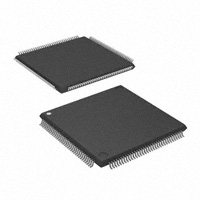
XA2C256 CoolRunner-II
Automotive CPLD
R
DS555 (v1.2) June 22, 2009
0
0
Product Specification
Features
-
•
AEC-Q100 device qualification and full PPAP support
available in both I-grade and extended temperature
Q-grade
WARNING: Programming temperature range of
TA = 0°C to +70°C.
•
Guaranteed to meet full electrical specifications over
TA = –40°C to +105°C with TJ Maximum = +125°C
(Q-grade)
Optimized for 1.8V systems
Industry’s best 0.18 micron CMOS CPLD
- Optimized architecture for effective logic synthesis.
Refer to the CoolRunner™-II family data sheet for
architecture description.
- Multi-voltage I/O operation — 1.5V to 3.3V
Available in multiple package options
- 100-pin VQFP with 80 user I/O
- 144-pin TQFP with 118 user I/O
- Pb-free only for all packages
Advanced system features
- Fastest in system programming
·
1.8V ISP using IEEE 1532 (JTAG) interface
- IEEE1149.1 JTAG Boundary Scan Test
- Optional Schmitt-trigger input (per pin)
- Unsurpassed low power management
·
DataGATE enable (DGE) signal control
- Two separate I/O banks
- RealDigital 100% CMOS product term generation
- Flexible clocking modes
·
Optional DualEDGE triggered registers
·
Clock divider (divide by 2, 4, 6, 8, 10, 12, 14, 16)
·
CoolCLOCK
- Global signal options with macrocell control
·
Multiple global clocks with phase selection per
macrocell
·
Multiple global output enables
·
Global set/reset
- Advanced design security
- PLA architecture
·
Superior pinout retention
·
100% product term routability across function
block
- Open-drain output option for Wired-OR and LED
drive
- Optional bus-hold, 3-state or weak pull-up on
selected I/O pins
- Optional configurable grounds on unused I/Os
- Mixed I/O voltages compatible with 1.5V, 1.8V,
2.5V, and 3.3V logic levels
•
•
•
•
Hot pluggable
Description
The CoolRunner-II Automotive 256-macrocell device is
designed for both high performance and low power applications. This lends power savings to high-end communication
equipment and high speed to battery operated devices. Due
to the low power stand-by and dynamic operation, overall
system reliability is improved.
This device consists of sixteen Function Blocks inter-connected by a low power Advanced Interconnect Matrix (AIM).
The AIM feeds 40 true and complement inputs to each
Function Block. The Function Blocks consist of a 40 by 56
P-term PLA and 16 macrocells which contain numerous
configuration bits that allow for combinational or registered
modes of operation.
Additionally, these registers can be globally reset or preset
and configured as a D or T flip-flop or as a D latch. There
are also multiple clock signals, both global and local product
term types, configured on a per macrocell basis. Output pin
configurations include slew rate limit, bus hold, pull-up,
open drain and programmable grounds. A Schmitt-trigger
input is available on a per input pin basis. In addition to storing macrocell output states, the macrocell registers may be
configured as “direct input” registers to store signals directly
from input pins.
Clocking is available on a global or Function Block basis.
Three global clocks are available for all Function Blocks as a
synchronous clock source. Macrocell registers can be individually configured to power up to the zero or one state. A
global set/reset control line is also available to asynchronously set or reset selected registers during operation.
Additional local clock, synchronous clock-enable, asynchronous set/reset and output enable signals can be formed
using product terms on a per-macrocell or per-Function
Block basis.
A DualEDGE flip-flop feature is also available on a per macrocell basis. This feature allows high performance synchronous operation based on lower frequency clocking to help
reduce the total power consumption of the device.
Circuitry has also been included to divide one externally
supplied global clock (GCK2) by eight different selections.
This yields divide by even and odd clock frequencies.
© 2006–2009 Xilinx, Inc. XILINX, the Xilinx logo, Virtex, Spartan, ISE, and other designated brands included herein are trademarks of Xilinx in the United States and other
countries. All other trademarks are the property of their respective owners.
DS555 (v1.2) June 22, 2009
Product Specification
www.xilinx.com
1
�R
XA2C256 CoolRunner-II Automotive CPLD
The use of the clock divide (division by 2) and DualEDGE
flip-flop gives the resultant CoolCLOCK feature.
DataGATE is a method to selectively disable inputs of the
CPLD that are not of interest during certain points in time.
By mapping a signal to the DataGATE function, lower power
can be achieved due to reduction in signal switching.
Another feature that eases voltage translation is I/O banking. Two I/O banks are available on the CoolRunner-II Automotive 256-macrocell device that permit easy interfacing to
3.3V, 2.5V, 1.8V, and 1.5V devices.
The CoolRunner-II Automotive 256-macrocell CPLD is I/O
compatible with various I/O standards (see Table 1). This
device is also 1.5V I/O compatible with the use of Schmitttrigger inputs.
Due to this technology, Xilinx CoolRunner-II Automotive
CPLDs achieve both high-performance and low power operation.
Supported I/O Standards
The CoolRunner-II Automotive 256-macrocell device features LVCMOS and LVTTL I/O implementations. See
Table 1 for I/O standard voltages. The LVTTL I/O standard is
a general-purpose EIA/JEDEC standard for 3.3V applications that use an LVTTL input buffer and Push-Pull output
buffer. The LVCMOS standard is used in 3.3V, 2.5V, 1.8V
applications. CoolRunner-II Automotive CPLDs are also
1.5V I/O compatible with the use of Schmitt-trigger inputs.
Table 1: I/O Standards for XA2C256
IOSTANDARD Attribute
RealDigital Design Technology
Xilinx® CoolRunner-II Automotive CPLDs are fabricated on
a 0.18 micron process technology which is derived from
leading edge FPGA product development. CoolRunner-II
Automotive CPLDs employ RealDigital, a design technique
that makes use of CMOS technology in both the fabrication
and design methodology. RealDigital design technology
employs a cascade of CMOS gates to implement sum of
products instead of traditional sense amplifier methodology.
Output VCCIO
Input VCCIO
LVTTL
3.3
3.3
LVCMOS33
3.3
3.3
LVCMOS25
2.5
2.5
1.8
1.8
1.5
1.5
LVCMOS18
LVCMOS15
(1)
(1) LVCMOS15 requires Schmitt-trigger inputs.
ICC (mA)
75
50
25
0
0
50
100
150
Frequency (MHz)
DS555_01_092106
Figure 1: ICC vs Frequency
Table 2: ICC vs Frequency (LVCMOS 1.8V TA = 25°C)(1)
Frequency (MHz)
Typical ICC (mA)
0
30
50
70
100
120
150
0.021
11.68
19.40
27.01
38.18
45.54
56.32
Notes:
1. 16-bit up/down, resettable binary counter (one counter per function block).
DS555 (v1.2) June 22, 2009
Product Specification
www.xilinx.com
2
�R
XA2C256 CoolRunner-II Automotive CPLD
Absolute Maximum Ratings
Symbol
Description
Value
Units
VCC
Supply voltage relative to ground
–0.5 to 2.0
V
VCCIO
Supply voltage for output drivers
–0.5 to 4.0
V
VJTAG(2)
JTAG input voltage limits
–0.5 to 4.0
V
VCCAUX
JTAG input supply voltage
–0.5 to 4.0
V
VIN(1)
Input voltage relative to ground
–0.5 to 4.0
V
VTS(1)
Voltage applied to 3-state output
–0.5 to 4.0
V
TSTG(3)
Storage Temperature (ambient)
–65 to +150
°C
+125
°C
TJ
Junction Temperature
Notes:
1. Maximum DC undershoot below GND must be limited to either 0.5V or 10 mA, whichever is easiest to achieve. During transitions,
the device pins may undershoot to –2.0v or overshoot to +4.5V, provided this over or undershoot lasts less than 10 ns and with the
forcing current being limited to 200 mA.
2. Valid over commercial temperature range.
3. For soldering guidelines and thermal considerations, see the Device Package User Guide. For Pb-free packages, see XAPP427.
Recommended Operating Conditions
Symbol
VCC
VCCIO
VCCAUX
Parameter
Min
Max
Units
Industrial TA = –40°C to +85°C
1.7
1.9
V
Q-Grade TA = –40°C to +105°C
TJ Maximum = +125°C
1.7
1.9
V
Supply voltage for output drivers @ 3.3V operation
3.0
3.6
V
Supply voltage for output drivers @ 2.5V operation
2.3
2.7
V
Supply voltage for output drivers @ 1.8V operation
1.7
1.9
V
Supply voltage for output drivers @ 1.5V operation
1.4
1.6
V
JTAG programming
1.7
3.6
V
Supply voltage for internal logic and
input buffers
DC Electrical Characteristics (Over Recommended Operating Conditions)
Symbol
Parameter
Test Conditions
Typical
Max.
Units
ICCSB
Standby current Industrial
VCC = 1.9V, VCCIO = 3.6V
54
300
μA
ICCSB
Standby current Q-grade
VCC = 1.9V, VCCIO = 3.6V
54
2.5
mA
ICC
Dynamic current
f = 1 MHz
-
3.0
mA
f = 50 MHz
-
30
mA
CJTAG
JTAG input capacitance
f = 1 MHz
-
10
pF
CCLK
Global clock input capacitance
f = 1 MHz
-
12
pF
CIO
I/O capacitance
f = 1 MHz
-
10
pF
IIL
(2)
Input leakage current
VIN = 0V or VCCIO to 3.9V
-
±10
μA
(2)
I/O High-Z leakage
VIN = 0V or VCCIO to 3.9V
-
±10
μA
IIH
Notes:
1. 16-bit up/down, resettable binary counter (one counter per function block) tested at VCC= VCCIO = 1.9V
DS555 (v1.2) June 22, 2009
Product Specification
www.xilinx.com
3
�R
XA2C256 CoolRunner-II Automotive CPLD
LVCMOS 3.3V and LVTTL 3.3V DC Voltage Specifications
Symbol
Parameter
Test Conditions
Min.
Max.
Units
VCCIO
Input source voltage
-
3.0
3.6
V
VIH
High level input voltage
-
2
3.9
V
VIL
Low level input voltage
-
–0.3
0.8
V
VOH
High level output voltage,
Industrial grade
IOH = –8 mA, VCCIO = 3V
VCCIO – 0.4V
-
V
IOH = –0.1 mA, VCCIO = 3V
VCCIO – 0.2V
-
V
IOH = –4 mA, VCCIO = 3V
VCCIO – 0.4V
-
V
IOH = –0.1 mA, VCCIO = 3V
VCCIO – 0.2V
-
V
IOL = 8 mA, VCCIO = 3V
-
0.4
V
IOL = 0.1 mA, VCCIO = 3V
-
0.2
V
IOL = 4 mA, VCCIO = 3V
-
0.4
V
IOL = 0.1 mA, VCCIO = 3V
-
0.2
V
High level output voltage,
Q-grade
VOL
High level output voltage,
Industrial grade
High level output voltage,
Q-grade
LVCMOS 2.5V DC Voltage Specifications
Symbol
VCCIO
Parameter
Test Conditions
Min.
Max.
Units
-
2.3
2.7
V
Input source voltage
0.3(1)
VIH
High level input voltage
-
1.7
VIL
Low level input voltage
-
–0.3
0.7
V
VOH
High level output voltage,
Industrial grade
IOH = –8 mA, VCCIO = 2.3V
VCCIO – 0.4V
-
V
IOH = –0.1 mA, VCCIO = 2.3V
VCCIO – 0.2V
-
V
IOH = –4 mA, VCCIO = 2.3V
VCCIO – 0.4V
-
V
IOH = –0.1 mA, VCCIO = 2.3V
VCCIO – 0.2V
-
V
IOL = 8 mA, VCCIO = 2.3V
-
0.4
V
IOL = 0.1 mA, VCCIO = 2.3V
-
0.2
V
IOL = 4 mA, VCCIO = 2.3V
-
0.4
V
IOL = 0.1 mA, VCCIO = 2.3V
-
0.2
V
High level output voltage, Q-grade
VOL
High level output voltage,
Industrial grade
High level output voltage, Q-grade
VCCIO +
V
1. The VIH Max value represents the JEDEC specification for LVCMOS25. The CoolRunner-II input buffer can tolerate up
to 3.9V without physical damage.
LVCMOS 1.8V DC Voltage Specifications
Symbol
Parameter
Test Conditions
Min.
Max.
Units
VCCIO
Input source voltage
-
1.7
1.9
V
VIH
High level input voltage
-
0.65 x VCCIO
VCCIO + 0.3(1)
V
VIL
Low level input voltage
-
–0.3
0.35 x VCCIO
V
VOH
High level output voltage,
Industrial grade
IOH = –8 mA, VCCIO = 1.7V
VCCIO – 0.45
-
V
IOH = –0.1 mA, VCCIO = 1.7V
VCCIO – 0.2
-
V
IOH = –4 mA, VCCIO = 1.7V
VCCIO – 0.45
-
V
IOH = –0.1 mA, VCCIO = 1.7V
VCCIO – 0.2
-
V
High level output voltage, Q-grade
DS555 (v1.2) June 22, 2009
Product Specification
www.xilinx.com
4
�R
XA2C256 CoolRunner-II Automotive CPLD
Symbol
VOL
Parameter
Test Conditions
Min.
Max.
Units
High level output voltage, Industrial
grade
IOL = 8 mA, VCCIO = 1.7V
-
0.45
V
IOL = 0.1 mA, VCCIO = 1.7V
-
0.2
V
IOL = 4 mA, VCCIO = 1.7V
-
0.45
V
IOL = 0.1 mA, VCCIO = 1.7V
-
0.2
V
High level output voltage, Q-grade
1. The VIH Max value represents the JEDEC specification for LVCMOS18. The CoolRunner-II input buffer can tolerate up
to 3.9V without physical damage.
LVCMOS 1.5V DC Voltage Specifications(1)
Symbol
Parameter
Test Conditions
Min.
Max.
Units
VCCIO
Input source voltage
-
1.4
1.6
V
VT+
Input hysteresis threshold voltage
-
0.5 x VCCIO
0.8 x VCCIO
V
-
0.2 x VCCIO
0.5 x VCCIO
V
IOH = –8 mA, VCCIO = 1.4V
VCCIO – 0.45
-
V
IOH = –0.1 mA, VCCIO = 1.4V
VCCIO – 0.2
-
V
IOH = –4 mA, VCCIO = 1.4V
VCCIO – 0.45
-
V
IOH = –0.1 mA, VCCIO = 1.4V
VCCIO – 0.2
-
V
IOL = 8 mA, VCCIO = 1.4V
-
0.4
V
IOL = 0.1 mA, VCCIO = 1.4V
-
0.2
V
IOL = 4 mA, VCCIO = 1.4V
-
0.4
V
IOL = 0.1 mA, VCCIO = 1.4V
-
0.2
V
Test Conditions
Min.
Max.
Units
VTVOH
High level output voltage,
Industrial grade
High level output voltage, Q-grade
VOL
High level output voltage,
Industrial grade
High level output voltage, Q-grade
Notes:
1. Hysteresis used on 1.5V inputs.
Schmitt Trigger Input DC Voltage Specifications
Symbol
Parameter
VCCIO
Input source voltage
-
1.4
3.9
V
VT+
Input hysteresis threshold voltage
-
0.5 x VCCIO
0.8 x VCCIO
V
-
0.2 x VCCIO
0.5 x VCCIO
V
VT-
AC Electrical Characteristics Over Recommended Operating Conditions
-7
Symbol
Parameter
-8
Min.
Max.
Min.
Max.
Units
TPD1
Propagation delay single p-term
-
7.0
-
7.0
ns
TPD2
Propagation delay OR array
-
7.5
-
7.5
ns
TSUD
Direct input register clock setup time
3.0
-
3.0
-
ns
TSU1
Setup time (single p-term)
2.8
-
3.4
-
ns
TSU2
Setup time (OR array)
3.3
-
3.9
-
ns
THD
Direct input register hold time
0
-
0.4
-
ns
TH
P-term hold time
0
-
0.4
-
ns
TCO
Clock to output
-
6.0
-
6.0
ns
DS555 (v1.2) June 22, 2009
Product Specification
www.xilinx.com
5
�R
XA2C256 CoolRunner-II Automotive CPLD
-7
Symbol
FTOGGLE
(1)
Parameter
-8
Min.
Max.
Min.
Max.
Units
Internal toggle rate
-
300
-
300
MHz
FSYSTEM1
(2)
Maximum system frequency
-
152
-
139
MHz
FSYSTEM2
(2)
Maximum system frequency
-
141
-
130
MHz
FEXT1
(3)
Maximum external frequency
-
114
-
106
MHz
FEXT2
(3)
Maximum external frequency
-
108
-
101
MHz
TPSUD
Direct input register p-term clock setup time
1.7
-
2.0
-
ns
TPSU1
P-term clock setup time (single p-term)
1.5
-
1.9
-
ns
TPSU2
P-term clock setup time (OR array)
2.0
-
2.4
-
ns
TPHD
Direct input register p-term clock hold time
1.2
-
1.8
-
ns
TPH
P-term clock hold
1.0
-
1.3
-
ns
TPCO
P-term clock to output
-
7.3
8.4
ns
TOE/TOD
Global OE to output enable/disable
-
7.0
-
7.0
ns
TPOE/TPOD
P-term OE to output enable/disable
-
8.0
-
9.1
ns
TMOE/TMOD
Macrocell driven OE to output enable/disable
-
9.9
-
9.9
ns
TPAO
P-term set/reset to output valid
-
8.1
-
8.6
ns
TAO
Global set/reset to output valid
-
7.6
-
7.6
ns
TSUEC
Register clock enable setup time
3.1
-
3.5
-
ns
THEC
Register clock enable hold time
0.0
-
0.0
-
ns
TCW
Global clock pulse width High or Low
1.6
-
1.6
-
ns
TPCW
P-term pulse width High or Low
7.5
-
7.5
-
ns
TAPRPW
Asynchronous preset/reset pulse width (High or Low)
7.5
-
7.5
-
ns
TDGSU
Set-up before DataGATE latch assertion
0.0
-
0.0
-
ns
TDGH
Hold to DataGATE latch assertion
6.0
-
6.0
-
ns
TDGR
DataGATE recovery to new data
-
9.0
-
9.3
ns
TDGW
DataGATE low pulse width
3.5
-
3.5
-
ns
TCDRSU
CDRST setup time before falling edge GCLK2
2.0
-
2.0
-
ns
Hold time CDRST after falling edge GCLK2
0.0
-
0.0
-
ns
-
150
-
150
μs
TCDRH
TCONFIG
(4)
Configuration time
Notes:
1. FTOGGLE is the maximum clock frequency to which a T flip-flop can reliably toggle (see the CoolRunner-II Automotive CPLD family
data sheet for more information).
2. FSYSTEM1 (1/TCYCLE) is the internal operating frequency for a device fully populated with one 16-bit counter through one p-term per
macrocell while FSYSTEM2 is through the OR array.
3. FEXT1 (1/TSU1+TCO) is the maximum external frequency using one p-term while FEXT2 is through the OR array.
4. Typical configuration current during TCONFIG is approximately 7.7 mA.
DS555 (v1.2) June 22, 2009
Product Specification
www.xilinx.com
6
�R
XA2C256 CoolRunner-II Automotive CPLD
(
Internal Timing Parameters
-7
Parameter(2)
Symbol
-8
Min.
Max.
Min.
Max.
Units
Buffer Delays
TIN
Input buffer delay
-
2.6
-
2.6
ns
TDIN
Direct data register input delay
-
3.9
-
3.3
ns
TGCK
Global Clock buffer delay
-
2.7
-
2.7
ns
TGSR
Global set/reset buffer delay
-
3.5
-
4.1
ns
TGTS
Global 3-state buffer delay
-
3.0
-
3.0
ns
TOUT
Output buffer delay
-
2.6
-
2.6
ns
TEN
Output buffer enable/disable delay
-
4.0
-
4.0
ns
TCT
Control term delay
-
1.4
-
2.5
ns
TLOGI1
Single P-term delay adder
-
1.1
-
1.1
ns
TLOGI2
Multiple P-term delay adder
-
0.5
-
0.5
ns
TPDI
Input to output valid
-
0.7
-
0.7
ns
TLDI
Setup before clock (transparent latch)
-
2.5
-
2.5
ns
TSUI
Setup before clock
1.8
-
2.4
-
ns
THI
Hold after clock
0.0
-
0.0
-
ns
TECSU
Enable clock setup time
1.8
-
1.1
-
ns
TECHO
Enable clock hold time
0.0
-
0.0
-
ns
TCOI
Clock to output valid
-
0.7
-
0.7
ns
TAOI
Set/reset to output valid
-
1.5
-
0.9
ns
TF
Feedback delay
-
3.0
-
3.0
ns
TOEM
Macrocell to global OE delay
-
2.5
-
2.5
ns
P-term Delays
Macrocell Delay
Feedback Delays
I/O Standard Time Adder Delays 1.5V CMOS
THYS15
Hysteresis input adder
-
4.0
-
4.0
ns
TOUT15
Output adder
-
1.0
-
1.0
ns
TSLEW15
Output slew rate adder
-
5.0
-
5.0
ns
I/O Standard Time Adder Delays 1.8V CMOS
THYS18
Hysteresis input adder
-
3.0
-
3.0
ns
TOUT18
Output adder
-
0.0
-
0.0
ns
TSLEW
Output slew rate adder
-
4.0
-
4.0
ns
DS555 (v1.2) June 22, 2009
Product Specification
www.xilinx.com
7
�R
XA2C256 CoolRunner-II Automotive CPLD
Internal Timing Parameters (Continued)
-7
Parameter(2)
Symbol
-8
Min.
Max.
Min.
Max.
Units
I/O Standard Time Adder Delays 2.5V CMOS
TIN25
Standard input adder
-
0.7
-
0.7
ns
THYS25
Hysteresis input adder
-
3.0
-
3.0
ns
TOUT25
Output adder
-
1.0
-
1.0
ns
TSLEW25
Output slew rate adder
-
4.0
-
4.0
ns
I/O Standard Time Adder Delays 3.3V CMOS/TTL
TIN33
Standard input adder
-
0.7
-
0.7
ns
THYS33
Hysteresis input adder
-
3.0
-
3.0
ns
TOUT33
Output adder
-
1.6
-
1.6
ns
TSLEW33
Output slew rate adder
-
4.0
-
4.0
ns
Notes:
1. 1.5 ns input pin signal rise/fall.
Switching Characteristics
AC Test Circuit
VCC
VCC = VCCIO = 1.8V, T = 25oC
5.5
R1
Device
Under Test
5.0
Test Point
R2
CL
TPD2 (ns)
4.5
R1
R2
CL
268Ω
235Ω
35 pF
LVCMOS33
275Ω
275Ω
35 pF
LVCMOS25
188Ω
188Ω
35pF
LVCMOS18
112.5Ω
112.5Ω
35pF
LVCMOS15
150Ω
150Ω
35pF
Output Type
LVTTL33
4.0
3.5
CL includes test fixtures and probe capacitance.
3.0
1
2
4
8
16
1.5 nsec maximum rise/fall times on inputs.
DS ACT 08 14 02
Figure 3: AC Load Circuit
Number of Outputs Switching
DS092_02_092302
Figure 2: Derating Curve for TPD
DS555 (v1.2) June 22, 2009
Product Specification
www.xilinx.com
8
�R
XA2C256 CoolRunner-II Automotive CPLD
3.3V
60
IO (Output Current mA)
50
2.5V
40
1.8V
Iol
30
20
1.5V
10
0
0
.5
1.0
1.5
2.0
VO (Output Volts)
2.5
3.0
3.5
XC256_VoIo_all_020703
Figure 4: Typical I/V Curve for XA2C256
DS555 (v1.2) June 22, 2009
Product Specification
www.xilinx.com
9
�R
XA2C256 CoolRunner-II Automotive CPLD
Pin Descriptions (Continued)
11
Pin Descriptions
Function Block
Macrocell
VQG100
TQG144
I/O Bank
Function Block
Macrocell
VQG100
TQG144
I/O Bank
1
1
-
-
2
3
1
-
136
2
1
2
-
-
2
3
2
-
135
2
1(GSR)
3
99
143
2
3
3
-
134
2
1
4
-
142
2
3
4
-
-
2
1
5
-
-
2
3
5
93
133
2
1
6
97
140
2
3
6
1
7
-
-
-
3
7
-
-
-
1
8
-
-
-
3
8
-
-
-
1
9
-
-
-
3
9
-
-
-
1
10
-
-
-
3
10
-
-
-
1
11
-
-
-
3
11
-
-
-
1
12
96
139
2
3
12
92
-
2
1
13
95
138
2
3
13
-
-
2
1
14
94
137
2
3
14
91
132
2
1
15
-
-
2
3
15
-
-
2
1
16
-
-
2
3
16
90
131
2
2(GTS2)
1
1
2
2
4
1
8
11
2
2
2
-
-
2
4
2
9
12
2
2(GTS3)
3
2
3
2
4
3
10
13
2
2
4
-
4
2
4
4
-
14
2
2(GTS0)
5
3
5
2
4
5
11
15
2
2
6
-
-
2
4
6
12
16
2
2
7
-
-
-
4
7
-
-
-
2
8
-
-
-
4
8
-
-
-
2
9
-
-
-
4
9
-
-
-
2
10
-
-
-
4
10
-
-
-
2
11
-
-
-
4
11
-
-
-
2(GTS1)
12
4
6
2
4
12
-
17
2
2
13
-
7
2
4
13
13
-
2
2
14
6
9
2
4
14
-
18
2
2
15
7
10
2
4
15
-
-
2
2
16
-
-
2
4
16
-
-
2
DS555 (v1.2) June 22, 2009
Product Specification
2
www.xilinx.com
10
�R
XA2C256 CoolRunner-II Automotive CPLD
Pin Descriptions (Continued)
Pin Descriptions (Continued)
Function Block
Macrocell
VQG100
TQG144
I/O Bank
Function Block
Macrocell
VQG100
TQG144
I/O Bank
5
1
-
-
1
7
1
-
-
1
5
2
-
33
1
7
2
-
-
1
5
3
-
-
1
7
3
-
-
1
5(GCK1)
4
23
32
1
7
4
-
-
1
5
5
31
1
7
5
19
26
1
5(GCK0)
6
22
30
1
7
6
18
25
1
5
7
-
-
-
7
7
-
-
-
5
8
-
-
-
7
8
-
-
-
5
9
-
-
-
7
9
-
-
-
5
10
-
-
-
7
10
-
-
-
5
11
-
-
-
7
11
17
24
1
5
12
-
-
1
7
12
16
23
1
5
13
-
-
1
7
13
15
22
1
5
14
-
28
1
7
14
14
21
1
5
15
-
-
1
7
15
-
20
1
5
16
-
-
1
7
16
-
19
1
6
1
-
34
1
8
1
-
44
1
6 (CDRST)
2
24
35
1
8
2
-
45
1
6
3
-
-
1
8
3
-
46
1
6(GCK2)
4
27
38
1
8
4
-
-
1
6
5
-
-
1
8
5
-
48
1
6
6
-
-
1
8
6
32
49
1
6
7
-
-
-
8
7
-
-
-
6
8
-
-
-
8
8
-
-
-
6
9
-
-
-
8
9
-
-
-
6
10
-
-
-
8
10
-
-
-
6
11
-
-
-
8
11
33
50
1
6(DGE)
12
28
39
1
8
12
34
51
1
6
13
-
40
1
8
13
35
52
1
6
14
29
41
1
8
14
36
-
1
6
15
-
42
1
8
15
37
-
1
6
16
30
43
1
8
16
-
-
1
DS555 (v1.2) June 22, 2009
Product Specification
www.xilinx.com
11
�R
XA2C256 CoolRunner-II Automotive CPLD
Pin Descriptions (Continued)
Pin Descriptions (Continued)
Function Block
Macrocell
VQG100
TQG144
I/O Bank
Function Block
Macrocell
VQG100
TQG144
I/O Bank
9
1
78
112
2
11
1
-
-
2
9
2
79
113
2
11
2
-
-
2
9
3
-
-
2
11
3
-
-
2
9
4
80
114
2
11
4
-
-
2
9
5
2
11
5
-
120
2
9
6
81
115
2
11
6
-
121
2
9
7
-
-
-
11
7
-
-
-
9
8
-
-
-
11
8
-
-
-
9
9
-
-
-
11
9
-
-
-
9
10
-
-
-
11
10
-
-
-
9
11
-
-
2
11
11
85
124
2
9
12
82
116
2
11
12
86
125
2
9
13
-
117
2
11
13
87
126
2
9
14
-
118
2
11
14
89
128
2
9
15
-
119
2
11
15
-
129
2
9
16
-
-
2
11
16
-
130
2
10
1
77
111
2
12
1
-
-
2
10
2
76
110
2
12
2
-
100
2
10
3
74
107
2
12
3
-
-
2
10
4
73
106
2
12
4
-
-
2
10
5
72
105
2
12
5
-
-
2
10
6
71
104
2
12
6
-
-
2
10
7
-
-
-
12
7
-
-
-
10
8
-
-
-
12
8
-
-
-
10
9
-
-
-
12
9
-
-
-
10
10
-
-
-
12
10
-
-
-
10
11
2
12
11
68
98
2
10
12
70
103
2
12
12
-
97
2
10
13
-
-
2
12
13
67
96
2
10
14
-
102
2
12
14
66
95
2
10
15
-
-
2
12
15
65
94
2
10
16
-
101
2
12
16
-
-
2
DS555 (v1.2) June 22, 2009
Product Specification
www.xilinx.com
12
�R
XA2C256 CoolRunner-II Automotive CPLD
Pin Descriptions (Continued)
Pin Descriptions (Continued)
Function Block
Macrocell
VQG100
TQG144
I/O Bank
Function Block
Macrocell
VQG100
TQG144
I/O Bank
13
1
-
75
1
15
1
-
-
1
13
2
53
76
1
15
2
-
83
1
13
3
-
77
1
15
3
-
-
1
13
4
54
-
1
15
4
-
-
1
13
5
-
78
1
15
5
-
-
1
13
6
55
79
1
15
6
-
-
1
13
7
-
-
-
15
7
-
-
-
13
8
-
-
-
15
8
-
-
-
13
9
-
-
-
15
9
-
-
-
13
10
-
-
-
15
10
-
-
-
13
11
-
-
-
15
11
58
85
1
13
12
-
80
1
15
12
59
86
1
13
13
56
81
1
15
13
60
87
1
13
14
-
82
1
15
14
61
88
1
13
15
-
-
1
15
15
63
91
1
13
16
-
-
1
15
16
64
92
1
14
1
52
74
1
16
1
-
-
1
14
2
-
71
1
16
2
-
-
1
14
3
50
70
1
16
3
-
-
1
14
4
-
69
1
16
4
-
-
1
14
5
49
-
1
16
5
43
60
1
14
6
-
68
1
16
6
42
59
1
14
7
-
-
-
16
7
-
-
-
14
8
-
-
-
16
8
-
-
-
14
9
-
-
-
16
9
-
-
-
14
10
-
-
-
16
10
-
-
-
14
11
-
-
-
16
11
41
58
1
14
12
-
-
1
16
12
40
57
1
14
13
-
66
1
16
13
39
56
1
14
14
46
64
1
16
14
-
-
1
14
15
44
-
1
16
15
-
54
1
14
16
-
61
1
16
16
-
53
1
Notes:
1. GTS = global output enable, GSR = global reset/set, GCK =
global clock, CDRST = clock divide reset, DGE = DataGATE
enable.
2. GTS, GSR and GCK pins can be used for general purpose
I/O.
DS555 (v1.2) June 22, 2009
Product Specification
www.xilinx.com
13
�R
XA2C256 CoolRunner-II Automotive CPLD
XA2C256 JTAG, Power/Ground, No Connect Pins and Total User I/O
Pin Type
VQG100
TQG144
TCK
48
67
TDI
45
63
TDO
83
122
TMS
47
65
VCCAUX (JTAG supply voltage)
5
8
26, 57
1, 37, 84
Power Bank 1 I/O (VCCIO1)
20, 38, 51
27, 55, 73, 93
Power Bank 2 I/O (VCCIO2)
88, 98
109, 127, 141
21, 25, 31, 62, 69, 75, 84,
100
29, 36, 47, 62, 72, 89, 90, 99,
108, 123, 144
No connects
-
-
Total user I/O
80
118
Power internal (VCC)
Ground
Ordering Information
Part Number
Pin/Ball
Spacing
θJC
θJA
(C/Watt) (C/Watt)
Package Type
Industrial
(I)(1)
Package Body
Dimensions
I/O
Hi-T (Q)
XA2C256-7VQG100I
0.5mm
43.1
10.9
Very Thin Quad Flat
Pack; Pb-free
14mm x 14mm
80
I
XA2C256-8VQG100Q
0.5mm
43.1
10.9
Very Thin Quad Flat
Pack; Pb-free
14mm x 14mm
80
Q
XA2C256-7TQG144I
0.5mm
37.2
7.2
Thin Quad Flat Pack;
Pb-free
20mm x 20mm
118
I
XA2C256-8TQG144Q
0.5mm
37.2
7.2
Thin Quad Flat Pack;
Pb-free
20mm x 20mm
118
Q
Notes:
1. I = Industrial (TA = –40°C to +85°C); Q = Automotive (TA = –40°C to +105°C with TJ Maximum = +125°C).
Pb-Free Example: XA2C256
-7 TQ
G
144
I
Device
Speed Grade
Package Type
Pb-Free
Number of Pins
Temperature Range
DS555 (v1.2) June 22, 2009
Product Specification
www.xilinx.com
14
�R
XA2C256 CoolRunner-II Automotive CPLD
Device Part Marking
R
Device Type
Package
Speed
Operating Range
XA2Cxxx
TQG144
7I
This line not
related to device
part number
Part Marking for all non chip scale packages
Figure 5: Sample Package with Part Marking
DS555 (v1.2) June 22, 2009
Product Specification
www.xilinx.com
15
�R
VCCIO2
I/O
I/O
I/O
I/O
I/O
I/O
I/O
I/O
I/O
VCCIO2
I/O
I/O
I/O
GND
TDO
I/O
I/O
I/O
I/O
I/O
I/O
I/O
75
74
73
72
71
70
69
68
67
66
65
64
63
62
61
60
59
58
57
56
55
54
53
52
51
VQG100
Top View
26
27
28
29
30
31
32
33
34
35
36
37
38
39
40
41
42
43
44
45
46
47
48
49
50
1
2
3
4
5
6
7
8
9
10
11
12
13
14
15
16
17
18
19
20
21
22
23
24
25
GND
I/O
I/O
I/O
I/O
I/O
GND
I/O
I/O
I/O
I/O
I/O
I/O
GND
I/O
I/O
I/O
I/O
VCC
I/O
I/O
I/O
I/O
I/O
VCCIO1
VCC
I/O(2)
I/O(5)
I/O
I/O
GND
I/O
I/O
I/O
I/O
I/O
I/O
VCCIO1
I/O
I/O
I/O
I/O
I/O
I/O
TDI
I/O
TMS
TCK
I/O
I/O
I/O(1)
I/O(1)
I/O(1)
I/O(1)
VAUX
I/O
I/O
I/O
I/O
I/O
I/O
I/O
I/O
I/O
I/O
I/O
I/O
I/O
I/O
VCCIO1
GND
I/O(2)
I/O(2)
I/O(4)
GND
100
99
98
97
96
95
94
93
92
91
90
89
88
87
86
85
84
83
82
81
80
79
78
77
76
GND
I/O(3)
XA2C256 CoolRunner-II Automotive CPLD
(1) - Global Output Enable
(2) - Global Clock
(3) - Global Set/Reset
(4) - Clock Divide Reset
(5) - Data Gate
Figure 6: VQG100 Very Thin Quad Flat Pack
DS555 (v1.2) June 22, 2009
Product Specification
www.xilinx.com
16
�R
144
143
142
141
140
139
138
137
136
135
134
133
132
131
130
129
128
127
126
125
124
123
122
121
120
119
118
117
116
115
114
113
112
111
110
109
GND
I/O(3)
I/O
VCCIO2
I/O
I/O
I/O
I/O
I/O
I/O
I/O
I/O
I/O
I/O
I/O
I/O
I/O
VCCIO2
I/O
I/O
I/O
GND
TDO
I/O
I/O
I/O
I/O
I/O
I/O
I/O
I/O
I/O
I/O
I/O
I/O
VCCIO2
XA2C256 CoolRunner-II Automotive CPLD
VCC
I/O(1)
I/O(1)
I/O
I/O(1)
I/O(1)
I/O
VAUX
I/O
I/O
I/O
I/O
I/O
I/O
I/O
I/O
I/O
I/O
I/O
I/O
I/O
I/O
I/O
I/O
I/O
I/O
108
107
106
105
104
103
102
101
100
99
98
97
96
95
94
93
92
91
90
89
88
87
86
85
84
83
82
81
80
79
78
77
76
75
74
73
TQG144
Top View
GND
I/O
I/O
I/O
I/O
I/O
I/O
I/O
I/O
GND
I/O
I/O
I/O
I/O
I/O
VCCIO1
I/O
I/O
GND
GND
I/O
I/O
I/O
I/O
VCC
I/O
I/O
I/O
I/O
I/O
I/O
I/O
I/O
I/O
I/O
VCCIO1
VCCIO1
I/O
I/O
I/O
I/O
I/O
I/O
GND
TDI
I/O
TMS
I/O
TCK
I/O
I/O
I/O
I/O
GND
VCC
I/O(2)
I/O(5)
I/O
I/O
I/O
I/O
I/O
I/O
I/O
GND
I/O
I/O
I/O
I/O
I/O
I/O
I/O
37
38
39
40
41
42
43
44
45
46
47
48
49
50
51
52
53
54
55
56
57
58
59
60
61
62
63
64
65
66
67
68
69
70
71
72
VCCIO1
I/O
GND
I/O(2)
I/O
I/O(2)
I/O
I/O
I/O(4)
GND
1
2
3
4
5
6
7
8
9
10
11
12
13
14
15
16
17
18
19
20
21
22
23
24
25
26
27
28
29
30
31
32
33
34
35
36
(1) - Global Output Enable
(2) - Global Clock
(3) - Global Set/Reset
(4) - Clock Divide Reset
(5) - DataGATE Enable
Figure 7: TQG144 Thin Quad Flat Pack
CoolRunner-II Automotive Requirements and Recommendations
Requirements
The following requirements are for all automotive applications:
1. Use a monotonic, fast ramp power supply to power up
CoolRunner-II. A VCC ramp time of less than 1 ms is
required.
2. Do not float I/O pins during device operation. Floating
I/O pins can increase ICC as input buffers will draw
1–2 mA per floating input. In addition, when I/O pins are
floated, noise can propagate to the center of the CPLD.
DS555 (v1.2) June 22, 2009
Product Specification
I/O pins should be appropriately terminated with bushold or pull-up. Unused I/Os can also be configured as
CGND (programmable GND).
3. Do not drive I/O pins without VCC/VCCIO powered.
4. Sink current when driving LEDs. Because all Xilinx
CPLDs have N-channel pull-down transistors on
outputs, it is required that an LED anode is sourced
through a resistor externally to VCC. Consequently, this
will give the brightest solution.
www.xilinx.com
17
�R
XA2C256 CoolRunner-II Automotive CPLD
5. Avoid pull-down resistors. Always use external pull-up
resistors if external termination is required. This is
because the CoolRunner-II Automotive CPLD, which
includes some I/O driving circuits beyond the input and
output buffers, may have contention with external pulldown resistors, and, consequently, the I/O will not
switch as expected.
6. Do not drive I/Os pins above the VCCIO assigned to its
I/O bank.
a. The current flow can go into VCCIO and affect a user
voltage regulator.
b.
c.
It can also increase undesired leakage current
associated with the device.
If done for too long, it can reduce the life of the
device.
7. Do not rely on the I/O states before the CPLD
configures. During power up, the CPLD I/Os may be
affected by internal or external signals.
8. Use a voltage regulator which can provide sufficient
current during device power up. As a rule of thumb, the
regulator needs to provide at least three times the peak
current while powering up a CPLD in order to guarantee
the CPLD can configure successfully.
9. Ensure external JTAG terminations for TMS, TCK, TDI,
TDO should comply with the IEEE 1149.1. All Xilinx
CPLDs have internal weak pull-ups on TDI, TMS, and
TCK.
10. Attach all CPLD VCC and GND pins in order to have
necessary power and ground supplies around the
CPLD.
11. Decouple all VCC and VCCIO pins with capacitors of
0.01 μF and 0.1 μF closest to the pins for each
VCC/VCCIO-GND pair.
12. Configure I/Os properly. CoolRunner-II Automotive
CPLDs have I/O banks; therefore, signals must be
assigned to appropriate banks (LVCMOS33,
LVCMOS18 …).
Recommendations
1. Use strict synchronous design (only one clocking event)
if possible. A synchronous system is more robust than
an asynchronous one.
2. Include JTAG stakes on the PCB. JTAG stakes can be
used to test the part on the PCB. They add benefit in
reprogramming part on the PCB, inspecting chip
internals with INTEST, identifying stuck pins, and
inspecting programming patterns (if not secured).
3. CoolRunner-II Automotive CPLDs work with any power
sequence, but it is preferable to power the VCCI (internal
VCC) before the VCCIO for the applications in which any
glitches from device I/Os are unwanted.
4. Do not disregard report file warnings. Software
identifies potential problems when compiling, so the
report file is worth inspecting to see exactly how your
design is mapped onto the logic.
5. Understand the Timing Report. This report file provides
a speed summary along with warnings. Read the timing
file (*.tim) carefully. Analyze key signal chains to
determine limits to given clock(s) based on logic
analysis.
6. Review Fitter Report equations. Equations can be
shown in ABEL-like format, or can also be displayed in
Verilog or VHDL formats. The Fitter Report also
includes switch settings that are very informative of
other device behaviors.
7. Let design software define pinouts if possible. Xilinx
CPLD software works best when it selects the I/O pins
and manages resources for users. It can spread signals
around and improve pin-locking. If users must define
pins, plan resources in advance.
8. Perform a post-fit simulation for all speeds to identify
any possible problems (such as race conditions) that
might occur when fast-speed silicon is used instead of
slow-speed silicon.
9. Distribute SSOs (Simultaneously Switching Outputs)
evenly around the CPLD to reduce switching noise.
10. Terminate high speed outputs to eliminate noise caused
by very fast rising/falling edges.
The following recommendations are for all automotive applications.
Additional Information
Additional information is available for the following CoolRunner-II topics:
•
•
•
•
•
•
XAPP784: Bulletproof CPLD Design Practices
XAPP375: Timing Model
XAPP376: Logic Engine
XAPP378: Advanced Features
XAPP382: I/O Characteristics
XAPP389: Powering CoolRunner-II
•
XAPP399: Assigning VREF Pins
DS555 (v1.2) June 22, 2009
Product Specification
These and other application notes can be accessed at:
CoolRunner-II Documentation
Package specifications can be accessed at:
Device Packages
www.xilinx.com
18
�R
XA2C256 CoolRunner-II Automotive CPLD
Revision History
The following table shows the revision history for this document.
Date
Version
Revision
10/31/06
1.0
Initial Xilinx release.
05/05/07
1.1
Change to VIH specification for 3.3V, 2.5V and 1.8V LVCMOS.
06/22/09
1.2
Updated Figure 7.
Notice of Disclaimer
THE XILINX HARDWARE FPGA AND CPLD DEVICES REFERRED TO HEREIN (“PRODUCTS”) ARE SUBJECT TO THE
TERMS AND CONDITIONS OF THE XILINX LIMITED WARRANTY WHICH CAN BE VIEWED AT
http://www.xilinx.com/warranty.htm. THIS LIMITED WARRANTY DOES NOT EXTEND TO ANY USE OF PRODUCTS IN
AN APPLICATION OR ENVIRONMENT THAT IS NOT WITHIN THE SPECIFICATIONS STATED IN THE XILINX DATA
SHEET. ALL SPECIFICATIONS ARE SUBJECT TO CHANGE WITHOUT NOTICE. PRODUCTS ARE NOT DESIGNED OR
INTENDED TO BE FAIL-SAFE OR FOR USE IN ANY APPLICATION REQUIRING FAIL-SAFE PERFORMANCE, SUCH AS
LIFE-SUPPORT OR SAFETY DEVICES OR SYSTEMS, OR ANY OTHER APPLICATION THAT INVOKES THE
POTENTIAL RISKS OF DEATH, PERSONAL INJURY, OR PROPERTY OR ENVIRONMENTAL DAMAGE (“CRITICAL
APPLICATIONS”). USE OF PRODUCTS IN CRITICAL APPLICATIONS IS AT THE SOLE RISK OF CUSTOMER, SUBJECT
TO APPLICABLE LAWS AND REGULATIONS.
Automotive Applications Disclaimer
XILINX PRODUCTS ARE NOT DESIGNED OR INTENDED TO BE FAIL-SAFE, OR FOR USE IN ANY APPLICATION
REQUIRING FAIL-SAFE PERFORMANCE, SUCH AS APPLICATIONS RELATED TO: (I) THE DEPLOYMENT OF
AIRBAGS, (II) CONTROL OF A VEHICLE, UNLESS THERE IS A FAIL-SAFE OR REDUNDANCY FEATURE (WHICH
DOES NOT INCLUDE USE OF SOFTWARE IN THE XILINX DEVICE TO IMPLEMENT THE REDUNDANCY) AND A
WARNING SIGNAL UPON FAILURE TO THE OPERATOR, OR (III) USES THAT COULD LEAD TO DEATH OR PERSONAL
INJURY. CUSTOMER ASSUMES THE SOLE RISK AND LIABILITY OF ANY USE OF XILINX PRODUCTS IN SUCH
APPLICATIONS.
DS555 (v1.2) June 22, 2009
Product Specification
www.xilinx.com
19
�