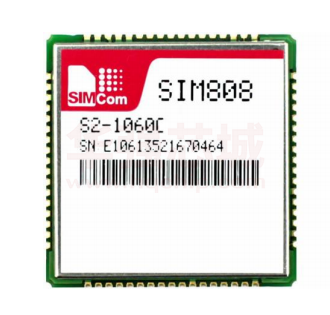
SIM808_Hardware Design_V1.03
�Smart Machine Smart Decision
Document Title
SIM808_Hardware_Design_V1.03
Version
1.03
Date
2016-06-30
Status
Release
Document Control ID
SIM808_Hardware Design
General Notes
SIMCom offers this information as a service to its customers, to support application and engineering efforts that
use the products designed by SIMCom. The information provided is based upon requirements specifically
provided to SIMCom by the customers. SIMCom has not undertaken any independent search for additional
relevant information, including any information that may be in the customer’s possession. Furthermore, system
validation of this product designed by SIMCom within a larger electronic system remains the responsibility of the
customer or the customer’s system integrator. All specifications supplied herein are subject to change.
Copyright
This document contains proprietary technical information which is the property of SIMCom Limited, copying of
this document and giving it to others and the using or communication of the contents thereof, are forbidden
without express authority. Offenders are liable to the payment of damages. All rights reserved in the event of grant
of a patent or the registration of a utility model or design. All specification supplied herein are subject to change
without notice at any time.
Copyright © Shanghai SIMCom Wireless Solutions Ltd. 2015
SIM808_Hardware Design_V1.03
2
2016.06.30
�Smart Machine Smart Decision
Contents
Contents .................................................................................................................................................................... 3
Version History ........................................................................................................................................................ 9
1
Introduction..................................................................................................................................................... 10
2
SIM808 Overview ........................................................................................................................................... 10
2.1
SIM808 Key Features ............................................................................................................................. 10
2.2
Operating Modes .................................................................................................................................... 14
2.3
SIM808 Functional Diagram .................................................................................................................. 15
3
Package Information ...................................................................................................................................... 16
3.1
Pin out Diagram ...................................................................................................................................... 16
3.2
Pin Description ....................................................................................................................................... 17
3.3
Package Dimensions ............................................................................................................................... 19
4
Application Interface ...................................................................................................................................... 21
4.1
Power Supply.......................................................................................................................................... 21
4.1.1 Power Supply Pin ................................................................................................................................ 23
4.1.2 Monitoring Power Supply ................................................................................................................... 23
4.2
Power on/off SIM808 ............................................................................................................................. 23
4.2.1 Power on SIM808 ............................................................................................................................... 23
4.2.2 Power off SIM808 ............................................................................................................................... 25
4.2.3 Reset Function..................................................................................................................................... 26
4.3
Power Saving Mode................................................................................................................................ 27
4.3.1 Functionality Mode ............................................................................................................................. 28
4.3.2 Sleep Mode (AT+CSCLK=1) ............................................................................................................. 28
4.3.3 Wake Up SIM808 from Sleep Mode (AT+CSCLK=1) ...................................................................... 28
4.4
Charging Interface .................................................................................................................................. 29
4.4.1 Battery Pack Characteristics................................................................................................................ 29
4.4.2 Recommended Battery Pack ............................................................................................................... 29
4.4.3 Implemented Charging Technique ...................................................................................................... 30
4.4.4 Operating Modes during Charging ...................................................................................................... 30
4.4.5 Charger Requirements ......................................................................................................................... 31
4.5
RTC Backup ........................................................................................................................................... 31
4.6
Serial Port and USB Interface ................................................................................................................ 33
4.6.1 Function of Serial Port ........................................................................................................................ 33
4.6.2 Serial Port ............................................................................................................................................ 34
4.6.3 USB Interface ...................................................................................................................................... 36
4.6.4 Software Upgrade and Debug ............................................................................................................. 37
4.7
RI Behaviors ........................................................................................................................................... 37
4.8
Audio Interfaces ..................................................................................................................................... 38
4.8.1 Speaker Interface Configuration ......................................................................................................... 39
4.8.2 Microphone Interfaces Configuration ................................................................................................. 40
4.8.3 Audio Electronic Characteristics ......................................................................................................... 40
4.8.4 TDD .................................................................................................................................................... 40
4.9
SIM Card Interface ................................................................................................................................. 41
SIM808_Hardware Design_V1.03
3
2016.06.30
�Smart Machine Smart Decision
4.9.1 SIM Card Application ......................................................................................................................... 41
4.9.2 SIM Card Design Consideration ......................................................................................................... 42
4.9.3 Design Considerations for SIM Card Holder ...................................................................................... 42
4.10
PCM Interface ........................................................................................................................................ 44
4.10.1
PCM Interface .................................................................................................................................. 45
4.11
Keypad Interface .................................................................................................................................... 45
4.12
I2C Bus ................................................................................................................................................... 47
4.13
General Purpose Input/Output (GPIO) ................................................................................................... 47
4.14
ADC........................................................................................................................................................ 48
4.15
PWM ...................................................................................................................................................... 48
4.16
Network Status Indication ...................................................................................................................... 49
4.17
Operating Status Indication .................................................................................................................... 50
4.18
RF Synchronization Signal ..................................................................................................................... 50
4.19
Bluetooth ................................................................................................................................................ 51
4.20
GNSS ...................................................................................................................................................... 51
4.20.1
GNSS Overview .............................................................................................................................. 51
4.20.2
GNSS Operating Modes .................................................................................................................. 52
4.20.3
1PPS Output..................................................................................................................................... 52
4.21
Antenna Interface ................................................................................................................................... 52
4.21.1
GSM Antenna Interface ................................................................................................................... 53
4.21.2
Bluetooth Antenna Interface ............................................................................................................ 54
4.21.3
GNSS Antenna Interface ................................................................................................................. 54
5
PCB Layout ..................................................................................................................................................... 56
5.1
Pin Assignment ....................................................................................................................................... 56
5.2
Principle of PCB Layout......................................................................................................................... 56
5.2.1 Antenna Interface ................................................................................................................................ 56
5.2.2. Power Supply ...................................................................................................................................... 56
5.2.3 SIM Card Interface .............................................................................................................................. 56
5.2.4 Audio Interface.................................................................................................................................... 57
5.2.5 Others .................................................................................................................................................. 57
5.3
Recommended PCB Layout ................................................................................................................... 57
6
Electrical, Reliability and Radio Characteristics ......................................................................................... 58
6.1
Absolute Maximum Ratings ................................................................................................................... 58
6.2
Recommended Operating Conditions ..................................................................................................... 58
6.3
Digital Interface Characteristics ............................................................................................................. 58
6.4
SIM Card Interface Characteristics ........................................................................................................ 59
6.5
SIM_VDD Characteristics ...................................................................................................................... 59
6.6
VDD_EXT Characteristics ..................................................................................................................... 59
6.7
VRTC Characteristics ............................................................................................................................. 59
6.8
Current Consumption (VBAT = 4V, GNSS engine is powered down) ................................................... 60
6.9
Electro-Static Discharge ......................................................................................................................... 61
6.10
Radio Characteristics .............................................................................................................................. 61
6.10.1
Module RF Output Power ................................................................................................................ 61
6.10.2
Module RF Receive Sensitivity ....................................................................................................... 63
6.10.3
Module Operating Frequencies ........................................................................................................ 63
7
Manufacturing ................................................................................................................................................ 64
7.1
Top and Bottom View of SIM808........................................................................................................... 64
SIM808_Hardware Design_V1.03
4
2016.06.30
�Smart Machine Smart Decision
7.2
7.3
7.4
Typical Solder Reflow Profile ................................................................................................................ 64
The Moisture Sensitivity Level .............................................................................................................. 65
Baking Requirements ............................................................................................................................. 65
Appendix ................................................................................................................................................................ 66
I.
Related Documents ................................................................................................................................. 66
II.
Terms and Abbreviations ........................................................................................................................ 67
III.
Safety Caution ........................................................................................................................................ 69
SIM808_Hardware Design_V1.03
5
2016.06.30
�Smart Machine Smart Decision
Table Index
TABLE 1: SIM808 GSM/GPRS ENGINE KEY FEATURES ......................................................................................... 10
TABLE 2: GNSS ENGINE PERFORMANCE ................................................................................................................ 12
TABLE 3: BT ENGINE PERFORMANCE ..................................................................................................................... 12
TABLE 4: CODING SCHEMES AND MAXIMUM NET DATA RATES OVER AIR INTERFACE ............................ 13
TABLE 5: OVERVIEW OF OPERATING MODES ........................................................................................................ 14
TABLE 6: PIN DESCRIPTION ....................................................................................................................................... 17
TABLE 7: RECOMMENDED ZENER DIODE .............................................................................................................. 21
TABLE 8: ELECTRONIC CHARACTERISTIC OF THE RESET PIN .......................................................................... 27
TABLE 9: THE CURRENT CONSUMPTION OF FUNCTION MODES (AT+CSCLK=1) .......................................... 28
TABLE 10: SPECIFICATION OF RECOMMENDED BATTERY PACK ...................................................................... 29
TABLE 11: SERIAL PORT AND USB PIN DEFINITION ............................................................................................. 33
TABLE 12: SERIAL PORT CHARACTERISTICS ......................................................................................................... 33
TABLE 13: VCHG CHARACTERISTICS ...................................................................................................................... 36
TABLE 14: RI BEHAVIOUR ........................................................................................................................................... 37
TABLE 15: AUDIO INTERFACE DEFINITION ............................................................................................................ 38
TABLE 16: MICROPHONE INPUT CHARACTERISTICS........................................................................................... 40
TABLE 17: AUDIO OUTPUT CHARACTERISTICS .................................................................................................... 40
TABLE 18: SIM PIN DEFINITION................................................................................................................................. 41
TABLE 19: PIN DESCRIPTION (MOLEX SIM CARD HOLDER) .............................................................................. 43
TABLE 20: PIN DESCRIPTION (AMPHENOL SIM CARD HOLDER)....................................................................... 44
TABLE 21: PCM PIN DEFINITION ............................................................................................................................... 44
TABLE 22: PCM PIN SPECIFICATION ......................................................................................................................... 45
TABLE 23: PIN DEFINITION OF THE KEYPAD INTERFACE................................................................................... 46
TABLE 24: PIN DEFINITION OF THE I2C ................................................................................................................... 47
TABLE 25: PIN DEFINITION OF THE GPIO ................................................................................................................ 47
TABLE 26: PIN DEFINITION OF THE ADC ................................................................................................................. 48
TABLE 27: ADC SPECIFICATION ................................................................................................................................ 48
TABLE 28: PIN DEFINITION OF THE PWM ............................................................................................................... 48
TABLE 29: BUZZER OUTPUT CHARACTERISTICS ................................................................................................. 49
TABLE 30: PIN DEFINITION OF THE NETLIGHT ..................................................................................................... 49
TABLE 31: STATUS OF THE NETLIGHT PIN.............................................................................................................. 49
TABLE 32: PIN DEFINITION OF THE STATUS ........................................................................................................... 50
TABLE 33: DEFINITION OF THE RF_SYNC PIN........................................................................................................ 50
TABLE 34: AT COMMANDS FOR GNSS FUNCTION ................................................................................................. 52
TABLE 35: ABSOLUTE MAXIMUM RATINGS ........................................................................................................... 58
TABLE 36: RECOMMENDED OPERATING CONDITIONS ....................................................................................... 58
TABLE 37: DIGITAL INTERFACE CHARACTERISTICS ........................................................................................... 58
TABLE 38: SIM CARD INTERFACE CHARACTERISTICS ........................................................................................ 59
TABLE 39: SIM_VDD CHARACTERISTICS ................................................................................................................ 59
TABLE 40: VDD_EXT CHARACTERISTICS ............................................................................................................... 59
TABLE 41: VRTC CHARACTERISTICS ....................................................................................................................... 59
TABLE 42: GSM CURRENT CONSUMPTION*............................................................................................................ 60
TABLE 43: THE ESD CHARACTERISTICS (TEMPERATURE: 25℃, HUMIDITY: 45 %) ....................................... 61
TABLE 44: SIM808 GSM 900 AND GSM 850 CONDUCTED RF OUTPUT POWER ................................................ 61
TABLE 45: SIM808 DCS 1800 AND PCS 1900 CONDUCTED RF OUTPUT POWER ............................................... 62
TABLE 46: SIM808 CONDUCTED RF RECEIVE SENSITIVITY ............................................................................... 63
TABLE 47: SIM808 OPERATING FREQUENCIES....................................................................................................... 63
SIM808_Hardware Design_V1.03
6
2016.06.30
�Smart Machine Smart Decision
TABLE 48: MOISTURE CLASSIFICATION LEVEL AND FLOOR LIFE ................................................................... 65
TABLE 49: BAKING REQUIREMENTS ....................................................................................................................... 65
TABLE 50: RELATED DOCUMENTS ........................................................................................................................... 66
TABLE 51: TERMS AND ABBREVIATIONS ................................................................................................................ 67
TABLE 52: SAFETY CAUTION ..................................................................................................................................... 69
Figure Index
FIGURE 1:SIM808 FUNCTIONAL DIAGRAM.......................................................................................................... 15
FIGURE 2: SIM808 PIN OUT DIAGRAM (TOP VIEW) ............................................................................................... 16
FIGURE 3:DIMENSIONS OF SIM808(UNIT: MM) .............................................................................................. 19
FIGURE 4: RECOMMENDED PCB FOOTPRINT OUTLINE(UNIT: MM) ............................................................ 20
FIGURE 5: REFERENCE CIRCUIT OF THE VBAT INPUT......................................................................................... 21
FIGURE 6: REFERENCE CIRCUIT OF THE LDO POWER SUPPLY ......................................................................... 22
FIGURE 7: REFERENCE CIRCUIT OF THE DC-DC POWER SUPPLY ..................................................................... 22
FIGURE 8: VBAT VOLTAGE DROP DURING TRANSMIT BURST ........................................................................... 22
FIGURE 9: THE MINIMAL VBAT VOLTAGE REQUIREMENT AT VBAT DROP .................................................... 23
FIGURE 10: POWERED ON/DOWN MODULE USING TRANSISTOR ..................................................................... 23
FIGURE 11:POWERED ON/DOWN MODULE USING BUTTON .............................................................................. 24
FIGURE 12: TIMING OF POWER ON MODULE ......................................................................................................... 24
FIGURE 13: TIMING OF POWER ON MODULE ......................................................................................................... 25
FIGURE 14: TIMING OF POWER OFF SIM808 BY PWRKEY ................................................................................... 25
FIGURE 15: RESET CIRCUIT ........................................................................................................................................ 27
FIGURE 16: RESET TIMING SEQUENCE.................................................................................................................... 27
FIGURE 17: SIM808 WITH BATTERY CHARGER AND PACK CONNECTION....................................................... 29
FIGURE 18: RTC SUPPLY FROM CAPACITOR........................................................................................................... 31
FIGURE 19: RTC SUPPLY FROM NON-CHARGEABLE BATTERY ......................................................................... 31
FIGURE 20: RTC SUPPLY FROM RECHARGEABLE BATTERY .............................................................................. 32
FIGURE 21: CONNECTION OF THE SERIAL PORT................................................................................................... 34
FIGURE 22: LEVEL CONVERTING BY RESISTOR.................................................................................................... 35
FIGURE 23: ISOLATION CIRCUIT BY DIODES ......................................................................................................... 35
FIGURE 24: TX LEVEL CONVERTING BY TRANSISTOR ........................................................................................ 35
FIGURE 25: RX LEVEL CONVERTING BY TRANSISTOR ....................................................................................... 36
FIGURE 26: USB REFERENCE CIRCUIT .................................................................................................................... 36
FIGURE 27: RI BEHAVIOUR OF VOICE CALLING AS A RECEIVER ...................................................................... 37
FIGURE 28: RI BEHAVIOUR OF DATA CALLING AS A RECEIVER ........................................................................ 38
FIGURE 29: RI BEHAVIOUR OF URC OR RECEIVE SMS ........................................................................................ 38
FIGURE 30: RI BEHAVIOUR AS A CALLER ............................................................................................................... 38
FIGURE 31: SPEAKER REFERENCE CIRCUIT .......................................................................................................... 39
FIGURE 32 : SPEAKER WITH AMPLIFIER REFERENCE CIRCUIT ........................................................................ 39
FIGURE 33: MICROPHONE REFERENCE CIRCUIT .................................................................................................. 40
FIGURE 34: REFERENCE CIRCUIT OF THE 8-PIN SIM CARD HOLDER............................................................... 41
FIGURE 35: REFERENCE CIRCUIT OF THE 6-PIN SIM CARD HOLDER............................................................... 42
FIGURE 36: MOLEX 91228 SIM CARD HOLDER ...................................................................................................... 43
FIGURE 37: AMPHENOL C707 10M006 512 2 SIM CARD HOLDER........................................................................ 44
FIGURE 38: PCM REFERENCE CIRCUIT .................................................................................................................... 45
FIGURE 39: TRADITIONAL KEYPAD REFERENCE CIRCUIT................................................................................. 46
FIGURE 40: ENHANCE THE ESD PERFORMANCE OF KEYPAD CIRCUIT........................................................... 46
FIGURE 41: GPIO HTIMINGH HSEQUENCEHS .................................................................................................................... 48
FIGURE 42: REFERENCE CIRCUIT OF PWM DRIVE BUZZER ............................................................................... 49
SIM808_Hardware Design_V1.03
7
2016.06.30
�Smart Machine Smart Decision
FIGURE 43: REFERENCE CIRCUIT OF NETLIGHT .................................................................................................. 50
FIGURE 44: RF_SYNC SIGNAL DURING TRANSMIT BURST ................................................................................ 51
FIGURE 45: GSM ANTENNA MATCHING CIRCUIT ................................................................................................. 53
FIGURE 46: GSM SIMPLE ANTENNA MATCHING CIRCUIT .................................................................................. 54
FIGURE 47: BLUETOOTH ANTENNA MATCHING CIRCUIT .................................................................................. 54
FIGURE 48: GNSS PASSIVE ANTENNA MATCHING CIRCUIT ............................................................................... 55
FIGURE 49: GNSS ACTIVE ANTENNA MATCHING CIRCUIT................................................................................. 55
FIGURE 50: PCB LAYOUT PINOUT EXAMPLE ......................................................................................................... 57
FIGURE 51: TOP AND BOTTOM VIEW OF SIM808 ................................................................................................... 64
FIGURE 52: TYPICAL SOLDER REFLOW PROFILE ................................................................................................. 64
SIM808_Hardware Design_V1.03
8
2016.06.30
�Smart Machine Smart Decision
Version History
Date
Version
Description of change
Author
2014-03-27
1.00
Origin
ShengWu.Sun
Xuegang.Wang
2014-09-09
1.01
Normalize the pin name,
Add Appendix Multiplexing Function
Add BT Performance
2015-04-09
1.02
Update the GPIO Multiplexing function,
Add related information about the Multiplexing of SD card
2016-06-30
1.03
SIM808_Hardware Design_V1.03
Update the GNSS AT command
Delete the CSD functions
Delete the automatic power off function related to
temperature
8
Xiujing.xiao
Lili.teng
Xiuyu.zhang
Hailin.yang
Xiuyu.zhang
2016.06.30
�Smart Machine Smart Decision
1
Introduction
This document describes SIM808 hardware interface in great detail. This document can help user to quickly
understand SIM808 interface specifications, electrical and mechanical details. With the help of this document and
other SIM808 application notes, user guide, users can use SIM808 to design various applications quickly.
2
SIM808 Overview
Designed for global market, SIM808 is integrated with a high performance GSM/GPRS engine, a GNSS engine
and a BT engine. SIM808 is a quad-band GSM/GPRS module that works on frequencies GSM 850MHz, EGSM
900MHz, DCS 1800MHz and PCS 1900MHz. SIM808 features GPRS multi-slot class 12/ class 10 (optional) and
supports the GPRS coding schemes CS-1, CS-2, CS-3 and CS-4. The GNSS solution offers best-in-class
acquisition and tracing sensitivity, Time-To-First-Fix (TTFF) and accuracy.
With a tiny configuration of 24*24*2.6mm, SIM808 can meet almost all space requirements in users’ applications,
such as M2M, smart phone, PDA, tracker and other mobile devices.
SIM808 has 68 SMT pads, which provide all hardware interfaces between the module and customers’ boards.
Support 4*4keypads by default
One full modem serial port(UART interface)
One USB, which support debug and firmware upgrading.
Audio channels which include a microphone input and a receiver output.
One SIM card interface.
Charging interface.
Programmable general purpose input and output (GPIO).
Support Bluetooth function.
Support GNSS function.
Support two PWMs and two ADCs.
PCM interface.
SIM808 is designed with power saving technique so that the current consumption is as low as 1.2mA in sleep
mode (with GNSS engine powered down).
SIM808 integrates TCP/IP protocol and extended TCP/IP AT commands which are very useful for data transfer
applications. For details about TCP/IP applications, please refer to document [2].
2.1
SIM808 Key Features
Table 1: SIM808 GSM/GPRS engine key features
Feature
Implementation
Power supply
3.4V ~ 4.4V
Power saving
Typical power consumption in sleep mode is 1.07 mA ( BS-PA-MFRMS=9 )
Charging
Supports charging control for Li-ion battery
SIM808_Hardware Design_V1.03
10
2016.06.30
�Smart Machine Smart Decision
SIM808 Quad-band: GSM 850, EGSM 900, DCS 1800, PCS 1900. SIM808
can search the 4 frequency bands automatically. The frequency bands also
can be set by AT command “AT+CBAND”. For details, please refer to
document [1].
Compliant to GSM Phase 2/2+
Transmitting power
Class 4 (2W) at GSM 850 and EGSM 900
Class 1 (1W) at DCS 1800 and PCS 1900
GPRS connectivity
GPRS multi-slot class 12(default)
GPRS multi-slot class 1~12 (optional)
Temperature range
Normal operation: -40℃ ~ +85℃
Storage temperature -45℃~ +90℃
Data GPRS
GPRS data downlink transfer: max. 85.6 kbps
GPRS data uplink transfer: max. 85.6 kbps
Coding scheme: CS-1, CS-2, CS-3 and CS-4
PAP protocol for PPP connect
Integrate the TCP/IP protocol.
Support Packet Broadcast Control Channel (PBCCH)
USSD
Unstructured Supplementary Services Data (USSD) support
SMS
MT, MO, CB, Text and PDU mode
SMS storage: SIM card
SIM interface
Support SIM card: 1.8V, 3V
External antenna
Antenna pad
Audio features
Speech codec modes:
Half Rate (ETS 06.20)
Full Rate (ETS 06.10)
Enhanced Full Rate (ETS 06.50 / 06.60 / 06.80)
Adaptive multi rate (AMR)
Echo Cancellation
Noise Suppression
Frequency bands
Serial port and
USB interface
Serial port:
Full modem interface with status and control lines, unbalanced,
asynchronous.
1200bps to 460800bps.
Can be used for sending AT commands or transmitting data stream.
Support RTS/CTS hardware handshake and software ON/OFF flow control.
Multiplex ability according to GSM 07.10 Multiplexer Protocol.
Autobauding supports baud rate from 1200 bps to 115200bps.
USB interface:
Can be used for debugging and firmware upgrading.
Phonebook management
Support phonebook types: SM, FD, LD, RC, ON, MC.
SIM application toolkit
GSM 11.14 Release 99
Real time clock
Support RTC
Alarm function
Can be set by AT command
Physical characteristics
Size: 24*24*2.6mm
Weight: 3.3g
Firmware upgrade
Firmware upgrading by serial port or USB interface (recommend to use USB).
SIM808_Hardware Design_V1.03
11
2016.06.30
�Smart Machine Smart Decision
Table 2: GNSS engine Performance
Performance
Parameter
Description
Horizontal Position
Accuracy(1)
Autonomous
很抱歉,暂时无法提供与“SIM808”相匹配的价格&库存,您可以联系我们找货
免费人工找货