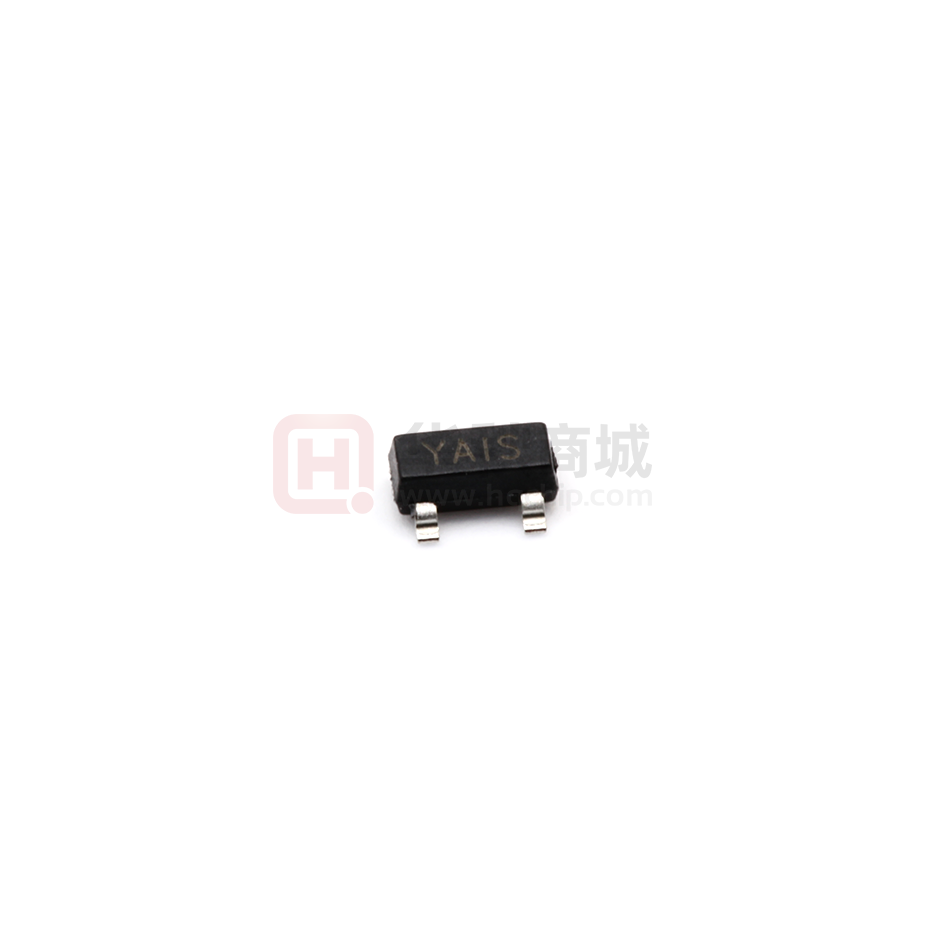
XB431-TL SOT23-3
1 Features
2 Applications
•
•
•
•
•
•
•
•
1
•
•
•
•
•
•
Low-Voltage Operation, VREF = 1.24 V
Adjustable Output Voltage, VO = VREF to 6 V
Reference Voltage Tolerances at 25°C
– 0.5% for XB431-TL
– 1% for XB431-TL
– 1.5% for XB431-TL
Typical Temperature Drift
– 4 mV (0°C to 70°C)
– 6 mV (–40°C to 85°C)
– 11 mV (–40°C to 125°C)
Low Operational Cathode Current, 80 µA Typ
0.25-Ω Typical Output Impedance
Ultra-Small SC-70 Package Offers 40% Smaller
Footprint Than SOT-23-3
See XB431-TL for:
– Wider VKA (1.24 V to 18 V) and IK (80 mA)
– Additional SOT-89 Package
– Multiple Pinouts for SOT-23-3 and SOT-89
Packages
On Products Compliant to MIL-PRF-38535,
All Parameters Are Tested Unless Otherwise
Noted. On All Other Products, Production
Processing Does Not Necessarily Include Testing
of All Parameters.
Adjustable Voltage and Current Referencing
Secondary Side Regulation in Flyback SMPSs
Zener Replacement
Voltage Monitoring
Comparator with Integrated Reference
3 Description
The XB431 device is a low-voltage
3-terminaladjustable voltage reference withspecified
thermalstability over applicable industrialand
commercialtemperature ranges. Output voltagecan
be set to anyvalue between VREF (1.24 V)and 6
V with twoexternal resistors (see Figure20).
These devicesoperate from a lower voltage(1.24 V)
than the widelyused XB431 shunt-regulator
references.
When used with an optocoupler, the XB431 device
is an ideal voltage reference in isolated feedback
circuits for 3-V to 3.3-V switching-mode power
supplies. These devices have a typical output
impedance of 0.25 Ω. Active output circuitry provides
a very sharp turn-on characteristic, making them
excellent replacements for low-voltage Zener diodes
in many applications, including on-board regulation
and adjustable power supplies.
4 Device Information(1)
PART NUMBER
XB431x
PACKAGE (PIN)
BODY SIZE (NOM)
SOT-23 (3)
2.90 mm x 1.30 mm
SOT-23 (5)
2.90 mm x 1.60 mm
SC70 (6)
2.00 mm x 1.25 mm
TO-92 (3)
4.30 mm × 4.30 mm
SOIC (8)
4.90 mm x 3.90 mm
(1) For all available packages, see the orderable addendum at
the end of the data sheet.
4 Simplified Schematic
VO
Input
IK
VREF
1
�XB431-TL SOT23-3
6 Pin Configuration and Functions
DBV (SOT-23-5) PACKAGE
(TOP VIEW)
D (SOIC) PACKAGE
(TOP VIEW)
CATHODE
ANODE
ANODE
NC
1
8
2
7
3
6
4
5
REF
ANODE
ANODE
NC
NC 1
∗ 2
CATHODE 3
ANODE
ANODE
4
REF
REF
1
CATHODE
2
3
DCK (SC-70) PACKAGE
(TOP VIEW)
CATHODE
CATHODE
NC
REF
ANODE
2
5
1
6
2
5
3
4
LP (TO-92/TO-226) PACKAGE
(TOP VIEW)
ANODE
NC
NC
CATHODE
ANODE
REF
REF
1
ANODE
NC − No internal connection
∗ For XB431: NC − No internal connection
∗ For XB431: Pin 2 is attached to Substrate and
must be connected to ANODE or left open.
PK (SOT-89) PACKAGE
(TOP VIEW)
3
DBZ (SOT-23-3) PACKAGE
(TOP VIEW)
NC − No internal connection
Pin Functions
PIN
NAME
TYPE
DESCRIPTION
DBZ
DBV
PK
D
LP
DCK
CATHODE
2
3
3
1
1
1
I/O
REF
1
4
1
8
3
3
I
Threshold relative to common anode
ANODE
3
5
2
2, 3, 6, 7
2
6
O
Common pin, normally connected to ground
NC
—
1
—
4, 5
—
2, 4, 5
I
No Internal Connection
*
—
2
—
—
—
—
I
Substrate Connection
2
Shunt Current/Voltage input
�XB431-TL SOT23-3
7 Specifications
7.1 Absolute Maximum Ratings
over operating free-air temperature range (unless otherwise noted) (1)
MIN
VKA
Cathode voltage (2)
IK
Continuous cathode current range
Iref
Reference current range
(1)
(2)
Storage temperature range
UNIT
7
V
–20
20
mA
–0.05
3
mA
150
°C
150
°C
Operating virtual junction temperature
Tstg
MAX
–65
Stresses beyond those listed under Absolute Maximum Ratings may cause permanent damage to the device. These are stress ratings
only, and functional operation of the device at these or any other conditions beyond those indicated under Recommended Operating
Conditions is not implied. Exposure to absolute-maximum-rated conditions for extended periods may affect device reliability.
Voltage values are with respect to the anode terminal, unless otherwise noted.
7.2 ESD Ratings
PARAMETER
V(ESD)
(1)
(2)
Electrostatic
discharge
DEFINITION
VALUE
Human body model (HBM), per ANSI/ESDA/JEDEC JS-001, all pins (1)
±2000
Charged device model (CDM), per JEDEC specification JESD22-C101, all pins (2)
±1000
UNIT
V
JEDEC document JEP155 states that 500-V HBM allows safe manufacturing with a standard ESD control process.
JEDEC document JEP157 states that 250-V CDM allows safe manufacturing with a standard ESD control process.
7.3 Thermal Information
XB431x
THERMAL METRIC (1)
DCK
D
PK
DBV
DBZ
LP
6 PINS
8 PINS
3 PINS
5 PINS
3 PINS
3 PINS
RθJA
Junction-to-ambient thermal resistance
87
97
52
206
206
140
RθJC(top)
Junction-to-case (top) thermal resistance
259
39
9
131
76
55
(1)
UNIT
°C/W
For more information about traditional and new thermal metrics, see the IC Package Thermal Metrics application report (SPRA953).
7.4 Recommended Operating Conditions
over operating free-air temperature range (unless otherwise noted)
MIN
MAX
VKA
Cathode voltage
VREF
6
V
IK
Cathode current
0.1
15
mA
TA
Operating free-air temperature range
–40
125
°C
XB431
3
UNIT
�XB431-TL SOT23-3
7.5 Electrical Characteristics for XB431
at 25°C free-air temperature (unless otherwise noted)
PARAMETER
XB431
TEST CONDITIONS
TA = 25°C
VREF
VKA = VREF,
IK = 10 mA
Reference voltage
TA = full range (1)
(see Figure 19)
XB431
MIN
TYP
MAX
1.222
1.24
1.258
1.21
1.27
1.202
1.278
1.194
VREF(dev)
DVREF
VREF deviation over full temperature
range (2)
VKA = VREF, IK = 10 mA (1)
(see Figure 19)
XB431
UNIT
V
1.286
4
12
6
20
11
31
mV
Ratio of VREF change in cathode
voltage change
VKA = VREF to 6 V, IK = 10 mA
(see Figure 20)
–1.5
–2.7
mV/V
Iref
Reference terminal current
IK = 10 mA, R1 = 10 kΩ,
R2 = open
(see Figure 20)
0.15
0.5
µA
0.3
Iref deviation over full temperature
range (2)
IK = 10 mA, R1 = 10 kΩ,
R2 = open (1)
(see Figure 20)
0.05
Iref(dev)
XB431
0.1
0.4
0.15
0.5
XB431
DVKA
IK(min)
Minimum cathode current for
regulation
VKA = VREF (see Figure 19)
IK(off)
Off-state cathode current
VREF = 0, VKA = 6 V (see Figure 21)
|zKA|
Dynamic impedance (3)
VKA = VREF, f ≤ 1 kHz, IK = 0.1 mA to 15 mA
(see Figure 19)
(1)
(2)
55
80
55
100
0.001
0.1
µA
0.25
0.4
Ω
µA
Full temperature ranges are –40°C to 125°C for XB431 –40°C to 85°C for XB431 and 0°C to 70°C for XB431
The deviation parameters VREF(dev) and Iref(dev) are defined as the differences between the maximum and minimum values obtained over
the rated temperature range. The average full-range temperature coefficient of the reference input voltage, αVREF, is defined as:
VREF(dev )
æ
ö
6
ç
÷ ´ 10
ppm ö è VREF (TA = 25°C ) ø
æ
aVREF ç
÷=
DTA
è °C ø
where ΔTA is the rated operating free-air temperature range of the device.
αVREF can be positive or negative, depending on whether minimum VREF or maximum VREF, respectively, occurs at the lower
temperature.
(3)
µA
DVKA
The dynamic impedance is defined as zka =
DIK
spacer
When the device is operating with two external resistors (see Figure 20), the total dynamic impedance of the circuit is defined as:
z ka
¢=
DV
DI
»
z ka
æ
è
´ ç1 +
R1 ö
÷
R2 ø
4
�XB431-TL SOT23-3
7.6 Electrical Characteristics for XB431
at 25°C free-air temperature (unless otherwise noted)
PARAMETER
XB431
TEST CONDITIONS
TA = 25°C
VREF
VKA = VREF,
IK = 10 mA
Reference voltage
TA = full range (1)
(see Figure 19)
XB431
MIN
TYP
MAX
1.228
1.24
1.252
1.221
1.259
1.215
1.265
1.209
VREF(dev)
DVREF
VREF deviation over full
temperature range (2)
VKA = VREF, IK = 10 mA (1)
(see Figure 19)
XB431
UNIT
V
1.271
4
12
6
20
11
31
mV
Ratio of VREF change in cathode
voltage change
VKA = VREF to 6 V, IK = 10 mA
(see Figure 20)
–1.5
–2.7
mV/V
Iref
Reference terminal current
IK = 10 mA, R1 = 10 kΩ,
R2 = open
(see Figure 20)
0.15
0.5
µA
0.05
0.3
Iref(dev)
Iref deviation over full temperature IK = 10 mA, R1 = 10 kΩ,
range (2)
R2 = open (1) (see Figure 20)
0.1
0.4
0.15
0.5
DVKA
XB431
IK(min)
Minimum cathode current for
regulation
VKA = VREF (see Figure 19)
IK(off)
Off-state cathode current
VREF = 0, VKA = 6 V (see Figure 21)
|zKA|
Dynamic impedance (3)
VKA = VREF, f ≤ 1 kHz, IK = 0.1 mA to 15 mA
(see Figure 19)
(1)
(2)
XB431
55
80
55
100
0.001
0.1
µA
0.25
0.4
Ω
µA
Full temperature ranges are –40°C to 125°C for XB431–40°C to 85°C for XB431 and 0°C to 70°C for XB431.
The deviation parameters VREF(dev) and Iref(dev) are defined as the differences between the maximum and minimum values obtained over
the rated temperature range. The average full-range temperature coefficient of the reference input voltage, αVREF, is defined as:
VREF(dev )
æ
ö
6
ç
÷ ´ 10
ppm ö è VREF (TA = 25°C ) ø
æ
aVREF ç
÷=
DTA
è °C ø
where ΔTA is the rated operating free-air temperature range of the device.
αVREF can be positive or negative, depending on whether minimum VREF or maximum VREF, respectively, occurs at the lower
temperature.
(3)
µA
DVKA
The dynamic impedance is defined as zka =
DIK
spacer
When the device is operating with two external resistors (see Figure 20), the total dynamic impedance of the circuit is defined as:
z ka
¢=
DV
DI
»
z ka
æ
è
´ ç1 +
R1 ö
÷
R2 ø
5
�XB431-TL SOT23-3
7.7 Electrical Characteristics for XB431
at 25°C free-air temperature (unless otherwise noted)
PARAMETER
XB431
TEST CONDITIONS
TA = 25°C
VREF
VKA = VREF,
IK = 10 mA
Reference voltage
TA = full range (1)
(see Figure 19)
XB431
MIN
TYP
MAX
1.234
1.24
1.246
1.227
1.253
1.224
1.259
1.221
VREF(dev)
DVREF
VREF deviation over full temperature
range (2)
VKA = VREF , IK = 10 mA (1)
(see Figure 19)
Ratio of VREF change in cathode
voltage change
VKA = VREF to 6 V, IK = 10 mA
(see Figure 20)
Iref
Reference terminal current
IK = 10 mA, R1 = 10 kΩ,
R2 = open
(see Figure 20)
Iref(dev)
Iref deviation over full temperature
range (2)
IK = 10 mA, R1 = 10 kΩ,
R2 = open (3)
(see Figure 20)
DVKA
XB431
XB431
IK(min)
Minimum cathode current for
regulation
VKA = VREF (see Figure 19)
IK(off)
Off-state cathode current
VREF = 0, VKA = 6 V (see Figure 21)
|zKA|
Dynamic impedance (4)
VKA = VREF, f ≤ 1 kHz, IK = 0.1 mA to 15 mA
(see Figure 19)
(1)
(2)
(3)
(4)
UNIT
V
1.265
4
12
6
20
11
31
–1.5
–2.7
mV/V
0.1
0.5
µA
0.05
0.3
0.1
0.4
0.15
0.5
55
100
µA
0.001
0.1
µA
0.25
0.4
Ω
mV
µA
Full temperature ranges are –40°C to 125°C for XB431, –40°C to 85°C for XB431, and 0°C to 70°C for XB431.
The deviation parameters VREF(dev) and Iref(dev) are defined as the differences between the maximum and minimum values obtained over
the rated temperature range. The average full-range temperature coefficient of the reference input voltage, αVREF, is defined as:
VREF(dev )
æ
ö
6
ç
÷ ´ 10
ppm ö è VREF (TA = 25°C ) ø
æ
aVREF ç
÷=
DTA
è °C ø
where ΔTA is the rated operating free-air temperature range of the device.
αVREF can be positive or negative, depending on whether minimum VREF or maximum VREF, respectively, occurs at the lower
temperature.
Full temperature ranges are –40°C to 125°C for XB431, –40°C to 85°C for XB431, and 0°C to 70°C for XB431.
DVKA
The dynamic impedance is defined as zka =
DIK
spacer
When the device is operating with two external resistors (see Figure 20), the total dynamic impedance of the circuit is defined as:
z ka
¢=
DV
DI
»
z ka
æ
è
´ ç1 +
R1 ö
÷
R2 ø
6
�XB431-TL SOT23-3
7.8 Typical Characteristics
Operation of the device at these or any other conditions beyond those indicated in the Recommended Operating Conditions
table are not implied.
250
1.254
IK = 10 mA
R1 = 10 kΩ
R2 = Open
IK = 10 mA
I ref − Reference Input Current − nA
V ref − Reference Voltage − V
1.252
1.250
1.248
1.246
1.244
1.242
1.240
1.238
− 50
− 25
0
25
50
75
100
125
200
150
100
50
− 50
150
TJ − Junction Temperature − °C
0
25
50
75 100 125
TJ − Junction Temperature − °C
150
Figure 2. Reference Input Current vs
Junction Temperature (for XB431)
Figure 1. Reference Voltage vs
Junction Temperature
15
250
VKA = VREF
TA = 25°C
IK = 10 mA
R1 = 10 kΩ
R2 = Open
230
210
10
I K − Cathode Current − mA
I ref − Reference Input Current − nA
− 25
190
170
150
130
110
90
5
0
−5
−10
70
50
−50
−25
0
25
50
75
100
125
−15
−1
150
TJ − Junction Temperature − °C
250
200
1.5
VKA = VREF
TA = 25°C
150
I K − Cathode Current − µ A
Ik(min)
0
0.5
1
VKA − Cathode Voltage − V
Figure 4. Cathode Current vs
Cathode Voltage
Figure 3. Reference Input Current vs
Junction Temperature (for XB431)
120
115
110
105
100
95
90
85
80
75
70
65
60
55
-40
−0.5
100
50
0
−50
− 100
− 150
− 200
-20
0
20
40
60
80
Temperature (qC)
100
120
140
− 250
−1
Figure 5. Minimum Cathode Current vs Temperature
− 0.5
0
0.5
1
VKA − Cathode Voltage − V
Figure 6. Cathode Current vs
Cathode Voltage
7
1.5
�XB431-TL SOT23-3
Typical Characteristics (continued)
Operation of the device at these or any other conditions beyond those indicated in the Recommended Operating Conditions
table are not implied.
3000
VKA = 5 V
VREF = 0
I K(off) − Off-State Cathode Current − nA
I K(off) − Off-State Cathode Current − nA
40
30
20
10
0
− 50
−25
0
25
50
75
100
125
VKA = 6 V
VREF = 0
2500
2000
1500
1000
500
0
−50
150
−25
Figure 7. Off-State Cathode Current vs
Junction Temperature (for XB431)
∆V ref/ ∆V KA − Ratio of Delta Reference Voltage
to Delta Cathode Voltage − mV/V
∆V ref/ ∆V KA − Ratio of Delta Reference Voltage
to Delta Cathode Voltage − mV/V
50
75
100
125
150
0.0
0
− 0.1
− 0.2
− 0.3
− 0.4
− 0.5
− 0.6
− 0.8
− 50
25
Figure 8. Off-State Cathode Current vs
Junction Temperature (for XB431)
0
− 0.7
0
TJ − Junction Temperature − °C
TJ − Junction Temperature − °C
IK = 10 mA
∆VKA = VREF to 6 V
− 25
0
25
50
75
100
125
150
TJ − Junction Temperature − °C
−0.1
IK = 10 mA
∆VKA = VREF to 6 V
−0.2
−0.3
−0.4
−0.5
−0.6
−0.7
−0.8
−0.9
−1
−1.0
−50
−25
0
25
50
75
100
125
150
TJ − Junction Temperature − °C
Figure 9. Ratio of Delta Reference Voltage to
Delta Cathode Voltage vs
Junction Temperature (for XB431)
Figure 10. Ratio of Delta Reference Voltage to
Delta Cathode Voltage vs
Junction Temperature (for XB431)
8
�XB431-TL SOT23-3
Typical Characteristics (continued)
Operation of the device at these or any other conditions beyond those indicated in the Recommended Operating Conditions
table are not implied.
0.025
V ref − %
Percentage Change in Vref
IK = 1 mA
% Change (avg)
−0.025
% Change (3δ )
−0.05
−0.075
−0.1
% Change (−3δ)
−0.125
0
10
20
30
40
50
60
Operating Life at 55°C − kh‡
‡
Extrapolated from life-test data taken at 125°C; the activation energy assumed
is 0.7 eV.
Figure 11. Percentage Change in VREF vs
Operating Life at 55°C
Vn − Equivalent Input Noise Voltage − nV/ Hz
3V
VKA = VREF
IK = 1 mA
TA = 25°C
1 kΩ
300
+
750 Ω
470 µF
2200 µF
+
250
XB431
TLE2027
+
_
TP
820 Ω
160 kΩ
160 Ω
200
TEST CIRCUIT FOR EQUIVALENT INPUT NOISE VOLTAGE
150
10
100
1k
10k
100k
f − Frequency − Hz
Figure 12. Equivalent Input Noise Voltage
9
�XB431-TL SOT23-3
Typical Characteristics (continued)
Operation of the device at these or any other conditions beyond those indicated in the Recommended Operating Conditions
table are not implied.
EQUIVALENT INPUT NOISE VOLTAGE
OVER A 10-s PERIOD
Vn − Equivalent Input Noise Voltage − µ V
10
f = 0.1 Hz to 10 Hz
IK = 1 mA
TA = 25°C
8
6
4
2
0
−2
−4
−6
−8
−10
0
2
4
6
8
10
t − Time − s
3V
1 kΩ
+
470 µF
750 Ω
0.47 µF
2200 µF
+
820 Ω
TLV431
XB431
TLE2027
10 kΩ
+
_
10 kΩ
TLE2027
+
_
2.2 µF
+
1 µF
160 kΩ
CRO 1 MΩ
33 kΩ
16 Ω
0.1 µF
33 kΩ
TEST CIRCUIT FOR 0.1-Hz TO 10-Hz EQUIVALENT NOISE VOLTAGE
Figure 13. Equivalent Noise Voltage
over a 10s Period
10
TP
�XB431-TL SOT23-3
Typical Characteristics (continued)
Operation of the device at these or any other conditions beyond those indicated in the Recommended Operating Conditions
table are not implied.
80
0°
IK = 10 mA
TA = 25°C
70
36°
60
72°
50
108°
40
144°
30
180°
Phase Shift
A V − Small-Signal Voltage Gain/Phase Margin − dB
SMALL-SIGNAL VOLTAGE GAIN/PHASE MARGIN
vs
FREQUENCY µF
Output
IK
6.8 kΩ
180 Ω
10
5V
4.3 kΩ
20
10
GND
0
−10
−20
100
TEST CIRCUIT FOR VOLTAGE GAIN
AND PHASE MARGIN
1k
10k
100k
1M
f − Frequency − Hz
Figure 14. Voltage Gain and Phase Margin
REFERENCE IMPEDANCE
vs
FREQUENCY
100
|z ka | − Reference Impedance − Ω
IK = 0.1 mA to 15 mA
TA = 25°C
100 Ω
Output
10
IK
100 Ω
1
−
+
GND
0.1
TEST CIRCUIT FOR REFERENCE IMPEDANCE
0.01
1k
10k
100k
1M
10M
f − Frequency − Hz
Figure 15. Reference Impedance vs Frequency
11
�XB431-TL SOT23-3
Typical Characteristics (continued)
Operation of the device at these or any other conditions beyond those indicated in the Recommended Operating Conditions
table are not implied.
PULSE RESPONSE 1
3.5
3
Input and Output Voltage − V
R = 18 kΩ
TA = 25°C
Input
18 kΩ
Output
2.5
Ik
2
1.5
Pulse
Generator
f = 100 kHz
Output
50 Ω
1
GND
0.5
0
TEST CIRCUIT FOR PULSE RESPONSE 1
− 0.5
0
1
2
3
4
5
6
7
8
t − Time − µs
Figure 16. Pulse Response 1
PULSE RESPONSE 2
3.5
3
Input and Output Voltage − V
R = 1.8 kΩ
TA = 25°C
Input
1.8 kΩ
Output
2.5
IK
2
1.5
Pulse
Generator
f = 100 kHz
Output
50 Ω
1
GND
0.5
0
TEST CIRCUIT FOR PULSE RESPONSE 2
− 0.5
0
1
2
3
4
5
6
7
8
t − Time − µs
Figure 17. Pulse Response 2
12
�XB431-TL SOT23-3
Typical Characteristics (continued)
Operation of the device at these or any other conditions beyond those indicated in the Recommended Operating Conditions
table are not implied.
STABILITY BOUNDARY CONDITION ‡
(forXB431)
STABILITY BOUNDARY CONDITION ‡
(forXB431)
15
15
TA = 25°C
IK = 15 mA Max
VKA = VREF
12
9
Stable
Stable
VKA = 2 V
6
VKA = 3 V
3
0.1
1
TA = 25°C
IK = 15 mA MAX
For VKA = VREF ,
Stable for CL = 1 pF to 10k nF
0
0.001
10
CL − Load Capacitance − µF
0.01
0.1
1
CL − Load Capacitance − µF
150 Ω
150 Ω
IK
IK
+
CL
Unstable
6
VKA = 3 V
0.01
VKA = 2 V
9
3
0
0.001
Stable
Stable
I K − Cathode Current − mA
I K − Cathode Current − mA
12
−
R1 = 10 kΩ
CL
Vbat
R2
+
−
Vbat
TEST CIRCUIT FOR VKA = 2 V, 3 V
TEST CIRCUIT FOR VKA = VREF
‡
The areas under the curves represent conditions that may cause the device to oscillate. For VKA = 2-V and 3-V
curves, R2 and Vbat were adjusted to establish the initial VKA and IK conditions with CL = 0. Vbat and CL then were
adjusted to determine the ranges of stability.
Figure 18. Stability Boundary Conditions
13
10
�XB431-TL SOT23-3
8 Parameter Measurement Information
VO
Input
IK
VREF
Figure 19. Test Circuit for VKA = VREF, VO = VKA = VREF
xxx
xxx
xxx
Input
VO
IK
R1
R2
Iref
VREF
Figure 20. Test Circuit for VKA > VREF, VO = VKA = VREF × (1 + R1/R2) + Iref × R1
xxx
xxx
xxx
Input
VO
IK(off)
Figure 21. Test Circuit for IK(off)
14
�XB431-TL SOT23-3
9 Detailed Description
9.1 Overview
XB431 is a low power counterpart to XB431, having lower reference voltage (1.24 V vs 2.5 V) for lower voltage
adjustability and lower minimum cathode current (Ik(min)=100 µA vs 1 mA). Like XB431, XB431 is used in
conjunction with it's key components to behave as a single voltage reference, error amplifier, voltage clamp or
comparator with integrated reference.
XB431 can be operated and adjusted to cathode voltages from 1.24V to 6V, making this part optimum for a
wide range of end equipments in industrial, auto, telecom & computing. In order for this device to behave as a
shunt regulator or error amplifier, > 100 µA (Imin(max)) must be supplied in to the cathode pin. Under this
condition, feedback can be applied from the Cathode and Ref pins to create a replica of the internal reference
voltage.
Various reference voltage options can be purchased with initial tolerances (at 25°C) of 0.5%, 1%, and 1.5%.
These reference options are denoted by B (0.5%), A (1.0%) and blank (1.5%) after the XB431.
The XB431 devices are characterized for operation from 0°C to 70°C, the XB431 devices are
characterized for operation from –40°C to 85°C, and the XB431 devices are characterized for operation from
–40°C to 125°C.
9.2 Functional Block Diagram
CATHODE
+
REF
_
Vref
ANODE
9.3 Feature Description
XB431 consists of an internal reference and amplifier that outputs a sink current base on the difference between
the reference pin and the virtual internal pin. The sink current is produced by an internal darlington pair.
When operated with enough voltage headroom (≥ 1.24 V) and cathode current (Ika), XB431 forces the
reference pin to 1.24 V. However, the reference pin can not be left floating, as it needs Iref ≥ 0.5 µA (please see
the Functional Block Diagram). This is because the reference pin is driven into an npn, which needs base current
in order operate properly.
When feedback is applied from the Cathode and Reference pins, XB431 behaves as a Zener diode, regulating
to a constant voltage dependent on current being supplied into the cathode. This is due to the internal amplifier
and reference entering the proper operating regions. The same amount of current needed in the above feedback
situation must be applied to this device in open loop, servo or error amplifying implementations in order for it to
be in the proper linear region giving XB431 enough gain.
Unlike many linear regulators, XB431 is internally compensated to be stable without an output capacitor
between the cathode and anode. However, if it is desired to use an output capacitor Figure 18 can be used as a
guide to assist in choosing the correct capacitor to maintain stability.
15
�XB431-TL SOT23-3
9.4 Device Functional Modes
9.4.1 Open Loop (Comparator)
When the cathode/output voltage or current of XB431 is not being fed back to the reference/input pin in any
form, this device is operating in open loop. With proper cathode current (Ika) applied to this device, XB431 will
have the characteristics shown in Figure 6. With such high gain in this configuration, XB431 is typically used as
a comparator. With the reference integrated makes XB431 the preferred choice when users are trying to
monitor a certain level of a single signal.
9.4.2 Closed Loop
When the cathode/output voltage or current of XB431 is being fed back to the reference/input pin in any form,
this device is operating in closed loop. The majority of applications involving XB431 use it in this manner to
regulate a fixed voltage or current. The feedback enables this device to behave as an error amplifier, computing
a portion of the output voltage and adjusting it to maintain the desired regulation. This is done by relating the
output voltage back to the reference pin in a manner to make it equal to the internal reference voltage, which can
be accomplished via resistive or direct feedback.
16
�XB431-TL SOT23-3
10 Applications and Implementation
10.1 Application Information
Figure 22 shows the XB431 used in a 3.3-V isolated flyback supply. Output voltage VO
can be as low as reference voltage VREF (1.24 V ± 1%). The output of the regulator, plus the forward voltage
drop of the optocoupler LED (1.24 + 1.4 = 2.64 V), determine the minimum voltage that can be regulated in an
isolated supply configuration. Regulated voltage as low as 2.7 Vdc is possible in the topology shown in
Figure 22.
The 431 family of devices are prevalent in these applications, being designers go to choice for secondary side
regulation. Due to this prevalence, this section will further go on to explain operation and design in both states of
XB431 that this application will see, open loop (Comparator + Vref) & closed loop (Shunt Regulator).
Further information about system stability and using a XB431 device for compensation can be found in the
application note Compensation Design With XB431 for UCC28600, SLUA671.
~
VI
120 V
−
+
P
~
VO
3.3 V
P
P
Gate Drive
VCC
Controller
VFB
XB431
Current
Sense
GND
P
P
P
P
Figure 22. Flyback With Isolation Using XB431
as Voltage Reference and Error Amplifier
17
�XB431-TL SOT23-3
10.2 Typical Applications
10.2.1 Comparator with Integrated Reference (Open Loop)
Vsup
Rsup
Vout
CATHODE
R1
VIN
RIN
REF
VL
+
R2
1.24 V
ANODE
Figure 23. Comparator Application Schematic
10.2.1.1 Design Requirements
For this design example, use the parameters listed in Table 1 as the input parameters.
Table 1. Design Parameters
DESIGN PARAMETER
EXAMPLE VALUE
Input Voltage Range
0 V to 5 V
Input Resistance
10 kΩ
Supply Voltage
5V
Cathode Current (Ik)
500 µA
Output Voltage Level
~1 V - Vsup
Logic Input Thresholds VIH/VIL
VL
10.2.1.2 Detailed Design Procedure
When using XB431 as a comparator with reference, determine the following:
• Input voltage range
• Reference voltage accuracy
• Output logic input high and low level thresholds
• Current source resistance
10.2.1.2.1 Basic Operation
In the configuration shown in Figure 23 XB431 will behave as a comparator, comparing the Vref pin voltage to
the internal virtual reference voltage. When provided a proper cathode current (Ik), XB431 will have enough
open loop gain to provide a quick response. With the XB431 max Operating Current (Imin) being 100 uA and
up to 150 uA over temperature, operation below that could result in low gain, leading to a slow response.
18
�XB431-TL SOT23-3
10.2.1.2.2 Overdrive
Slow or inaccurate responses can also occur when the reference pin is not provided enough overdrive voltage.
This is the amount of voltage that is higher than the internal virtual reference. The internal virtual reference
voltage will be within the range of 1.24V ±(0.5%, 1.0% or 1.5%) depending on which version is being used.
The more overdrive voltage provided, the faster the XB431 will respond. This can be seen in figures Figure 24
and Figure 25, where it displays the output responses to various input voltages.
For applications where XB431 is being used as a comparator, it is best to set the trip point to greater than the
positive expected error (i.e. +1.0% for the A version). For fast response, setting the trip point to > 10% of the
internal Vref should suffice.
For minimal voltage drop or difference from Vin to the ref pin, it is recommended to use an input resistor < 10 kΩ
to provide Iref.
10.2.1.2.3 Output Voltage and Logic Input Level
In order for XB431 to properly be used as a comparator, the logic output must be readable by the recieving
logic device. This is accomplished by knowing the input high and low level threshold voltage levels, typically
denoted by VIH & VIL.
As seen in Figure 24, XB431
output low level voltage in open-loop/comparator mode is ~1 V, which is
sufficient for some 3.3V supplied logic. However, would not work for 2.5 V and 1.8 V supplied logic. In order to
accommodate this a resistive divider can be tied to the output to attenuate the output voltage to a voltage legible
to the receiving low voltage logic device.
XB431
output high voltage is approximately Vsup due to TLV431 being open-collector. If Vsup is much higher
than the receiving logic's maximum input voltage tolerance, the output must be attenuated to accommodate the
outgoing logic's reliability.
When using a resistive divider on the output, be sure to make the sum of the resistive divider (R1 & R2 in
Figure 23) is much greater than Rsup in order to not interfere with XB431 ability to pull close to Vsup when
turning off.
10.2.1.2.3.1 Input Resistance
XB431 requires an input resistance in this application in order to source the reference current (Iref) needed from
this device to be in the proper operating regions while turning on. The actual voltage seen at the ref pin will be
Vref=Vin-Iref*Rin. Since Iref can be as high as 0.5 µA it is recommended to use a resistance small enough that will
mitigate the error that Iref creates from Vin.
12
11
10
9
8
7
6
5
4
3
2
1
0
-1
-2
-0.4
10
Vin~1.24V (+/-5%)
Vo(Vin=1.18V)
Vo(Vin=1.24V)
Vo(Vin=1.30V)
9
Vo(Vin=5.0V)
Vin=5.0V
8
7
6
Voltage (V)
Voltage (V)
10.2.1.3 Application Curves
5
4
3
2
1
0
-1
-0.2
0
0.2
0.4
Time (ms)
0.6
-2
-0.4
0.8
D001
Figure 24. Output Response with Small Overdrive Voltages
19
-0.2
0
0.2
0.4
Time (ms)
0.6
0.8
D001
Figure 25. Output Response with Large Overdrive Voltage
�XB431-TL SOT23-3
10.2.2 Shunt Regulator/Reference
VSUP
RSUP
VO = ( 1 +
R1
0.1%
CATHODE
REF
Vr ef
R1
) Vref
R2
R2
0.1%
XB431
TL431
ANODE
CL
Figure 26. Shunt Regulator Schematic
10.2.2.1 Design Requirements
For this design example, use the parameters listed in Table 2 as the input parameters.
Table 2. Design Parameters
DESIGN PARAMETER
EXAMPLE VALUE
Reference Initial Accuracy
1.0%
Supply Voltage
6V
Cathode Current (Ik)
1 mA
Output Voltage Level
1.24 V - 6 V
Load Capacitance
100 nF
Feedback Resistor Values and Accuracy (R1 & R2)
10 kΩ
10.2.2.2 Detailed Design Procedure
When using XB431 as a Shunt Regulator, determine the following:
• Input voltage range
• Temperature range
• Total accuracy
• Cathode current
• Reference initial accuracy
• Output capacitance
10.2.2.2.1
Programming Output/Cathode Voltage
In order to program the cathode voltage to a regulated voltage a resistive bridge must be shunted between the
cathode and anode pins with the mid point tied to the reference pin. This can be seen in Figure 26, with R1 & R2
being the resistive bridge. The cathode/output voltage in the shunt regulator configuration can be approximated
by the equation shown in Figure 26. The cathode voltage can be more accuratel determined by taking in to
account the cathode current:
VO=(1+R1/R2)*Vref–Iref*R1
In order for this equation to be valid, XB431 must be fully biased so that it has enough open loop gain to
mitigate any gain error. This can be done by meeting the Imin spec denoted in Recommended Operating
Conditions table.
20
�XB431-TL SOT23-3
10.2.2.2.2 Total Accuracy
When programming the output above unity gain (Vka=Vref), XB431 is susceptible to other errors that may effect
the overall accuracy beyond Vref. These errors include:
•
•
•
•
R1 and R2 accuracies
VI(dev) - Change in reference voltage over temperature
ΔVref / ΔVKA - Change in reference voltage to the change in cathode voltage
|zKA| - Dynamic impedance, causing a change in cathode voltage with cathode current
Worst case cathode voltage can be determined taking all of the variables in to account. Application note
SLVA445 assists designers in setting the shunt voltage to achieve optimum accuracy for this device.
10.2.2.2.3 Stability
Though XB431 is stable with no capacitive load, the device that receives the shunt regulator's output voltage
could present a capacitive load that is within the XB431 region of stability, shown in Figure 18. Also, designers
may use capacitive loads to improve the transient response or for power supply decoupling.
Voltage (V)
10.2.2.3 Application Curves
6.5
6
5.5
5
4.5
4
3.5
3
2.5
2
1.5
1
0.5
0
-0.5
-1
Vsup
Vka=Vref
R1=10k: & R2=10k:
0
1
2
3
4
5
Time (Ps)
6
7
Figure 27. XB431 Start-up Response
21
8
9
D001
�XB431-TL SOT23-3
11 Power Supply Recommendations
When using XB431 as a Linear Regulator to supply a load, designers will typically use a bypass capacitor on
the output/cathode pin. When doing this, be sure that the capacitance is within the stability criteria shown in
Figure 18.
In order to not exceed the maximum cathode current, be sure that the supply voltage is current limited. Also, be
sure to limit the current being driven into the Ref pin, as not to exceed it's absolute maximum rating.
For applications shunting high currents, pay attention to the cathode and anode trace lengths, adjusting the width
of the traces to have the proper current density.
12 Layout
12.1 Layout Guidelines
Place decoupling capacitors as close to the device as possible. Use appropriate widths for traces when shunting
high currents to avoid excessive voltage drops.
12.2 Layout Example
DBZ
(TOP VIEW)
Rref
Vin
REF
1
Rsup
Vsup
ANODE
3
CATHODE
2
CL
GND
Figure 28. DBZ Layout Example
22
GND
�XB431-TL SOT23-3
23
22
�