IS32FL3265A
HIGH-VOLTAGE, 18-CHANNEL LED DRIVER
March 2020
GENERAL DESCRIPTION
FEATURES
The IS32FL3265A is an LED driver with 18 high voltage
(40V) constant current channels. Each channel can be
pulse width modulated (PWM) by 8 bits for smooth LED
brightness control. In addition, each channel has an 8-bit
output current control register which allows fine tuning of
the channel current for rich RGB color mixing, e.g., a
pure white color LED application. The maximum output
current of each channel is designed to be 60mA, which
can be adjusted by one 32 steps global control register.
Proprietary algorithms are used in the IS32FL3265A to
minimize audible noise caused by the MLCC decoupling
capacitors. All registers can be programmed via 1MHz
I2C compatible interface.
The IS32FL3265A can be configured to a minimum
current consumption mode by either pulling the SDB pin
low or by using the software shutdown feature.
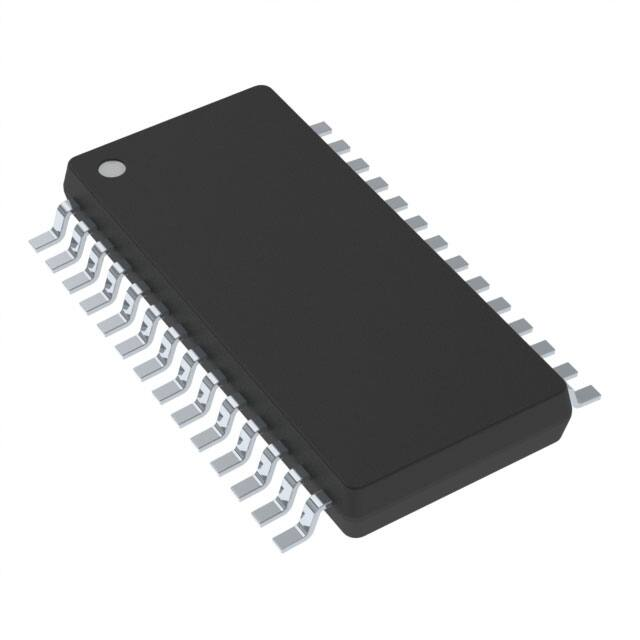
The IS32FL3265A is available in eTSSOP-28 package. It
operates from 2.7V to 5.5V over the temperature range
of -40°C to +125°C.
APPLICATIONS
Car display panel
Ambient lighting
Roof lighting
Functional lighting
Lumissil Microsystems – www.lumissil.com
Rev.A, 01/02/2020
3V to 5.5V operating supply
Output current capability and number of outputs:
60mA × 18 outputs, tolerance voltage 40V
1MHz I2C with automatic address increment
Programmable H/L logic: 1.4V/0.4V, 2.4V/0.6V
Accurate color rendition
- 32 steps global current adjust
- 8-bit dot correction for each channel
- 8-bit PWM for each channel
Selectable PWM method (200Hz or 25kHz)
256-Step
group
blink
with
frequency
programmable from 24Hz to 10.66s and duty
cycle from 0% to 99.6%
Clock IO pin for multi-chip synchronization
Fault report (open detect/thermal roll off /thermal
shutdown)
Thermal roll-off programmable set point
SDB rising edge resets I2C interface
EMI reduction technology
- Spread spectrum
- Selectable 9 phase delay
Operating temperature range, -40°C ~ +125°C
Package: eTSSOP-28
AEC-Q100 Qualified
Current accuracy (All output on)
- Bit to bit: < ±6%
- Device to device: < ±6%
1
�IS32FL3265A
TYPICAL APPLICATION CIRCUIT
Figure 1
Typical Application Circuit
Note 1: VCC pin should not be higher than 5.5V, VLED+ can be higher than VCC.
Note 2: VIH is the high level voltage for IS32FL3265A’s SDA, SCL and INTB, which is usually same as VCC pin and VCC of Micro Controller, e.g.
if VCC of Micro Controller is 3.3V, VCC(IS32FL3265A)=VIH=3.3V,if VCC of Micro Controller is 5V, VCC(IS32FL3265A)=VIH=5V, but
VCC(IS32FL3265A) should not be lower than 3V.
2
Note 3: These resistors are for offloading the thermal dissipation (I R) away from the IS32FL3265A.
Note 4: The maximum global output current is set by external resistor, RISET. Please refer to the application information in RISET section.
Note 5: The IC and LED string should be placed far away from any local antenna in order to prevent EMI contamination.
Lumissil Microsystems – www.lumissil.com
Rev.A, 01/02/2020
2
�IS32FL3265A
TYPICAL APPLICATION CIRCUIT (CONTINUED)
VCC
VIO
100kΩ
2kΩ
ADDR1
ADDR2
ADDR2
SDA
ADDR1
SCL
ADDR2
ADDR1
ADDR2
2kΩ
SDA
SCL
Micro
Controller
ADDR1
INTB
SDB
SDA
SDA
SDA
SDA
SDA
SDA
SDA
SCL
SCL
SCL
SCL
SCL
SCL
SCL
INTB
INTB
INTB
INTB
INTB
INTB
INTB
SDB
SDB
SDB
SDB
SDB
SDB
SDB
100kΩ
CLKIO
VCC
CLKIO
Master
VCC
CLKIO
CLKIO
Slave 1
VCC
CLKIO
ADDR2
ADDR2
ADDR1
ADDR1
CLKIO
Slave 2
VCC
CLKIO
ADDR2
SDA
CLKIO
ADDR2
ADDR1
SCL
ADDR1
SDA
SDA
SDA
SDA
SDA
SDA
SDA
SDA
SCL
SCL
SCL
SCL
SCL
SCL
SCL
SCL
INTB
INTB
INTB
INTB
INTB
INTB
INTB
INTB
SDB
SDB
SDB
SDB
SDB
SDB
SDB
SDB
Slave 4
Figure 2
Slave 5
Slave 3
Slave 6
Slave 7
Typical Application Circuit (Eight Device Synchronization)
Note 6: One system should contain only one master, all slave parts should be configured as slave mode before the master is configured as
master mode. Master or slave mode is specified by the Configuration Register. The master will output a master clock (CLKIO), and all the other
devices configured as slaves will synchronize their CLKIO inputs to the master clock.
Lumissil Microsystems – www.lumissil.com
Rev.A, 01/02/2020
3
�IS32FL3265A
PIN CONFIGURATION
Package
Pin Configuration (Top View)
eTSSOP-28
ADDR1
1
28
VCC
ADDR2
2
27
CLKIO
SDA
3
26
SDB
SCL
4
25
ISET
INTB
5
24
GND
OUT1
6
23
OUT18
OUT2
7
22
OUT17
OUT3
8
21
OUT16
OUT4
9
20
OUT15
OUT5
10
19
OUT14
OUT6
11
18
OUT13
OUT7
12
17
OUT12
OUT8
13
16
OUT11
OUT9
14
15
OUT10
PIN DESCRIPTION
No.
Pin
Description
1
ADDR1
I2C address setting pin.
2
ADDR2
I2C address setting pin.
3
SDA
I2C serial data.
4
SCL
I2C serial clock.
5
INTB
Interrupt output pin. Register 14h can set the function
of the INTB pin and active low when the interrupt event
happens. Can be NC (float) if interrupt function is not
used.
6~23
OUT1~OUT18
Output LED current sink channels 1~18.
24
GND
GND pin for control logic.
25
ISET
Input terminal used to connect an external resistor.
This regulates the global output current.
26
SDB
Shutdown the chip when pulled low.
27
CLKIO
Cascade connection pin.
28
VCC
Power supply.
Thermal Pad
Need to connect to GND.
Lumissil Microsystems – www.lumissil.com
Rev.A, 01/02/2020
4
�IS32FL3265A
ORDERING INFORMATION
Automotive Range: -40°C to +125°C
Order Part No.
Package
QTY
IS32FL3265A-ZLA3-TR
eTSSOP-28, Lead-free
2500
Copyright © 2020 Lumissil Microsystems. All rights reserved. Lumissil Microsystems reserves the right to make changes to this specification and its
products at any time without notice. Lumissil Microsystems assumes no liability arising out of the application or use of any information, products or
services described herein. Customers are advised to obtain the latest version of this device specification before relying on any published information and
before placing orders for products.
Lumissil Microsystems does not recommend the use of any of its products in life support applications where the failure or malfunction of the product can
reasonably be expected to cause failure of the life support system or to significantly affect its safety or effectiveness. Products are not authorized for use
in such applications unless Lumissil Microsystems receives written assurance to its satisfaction, that:
a.) the risk of injury or damage has been minimized;
b.) the user assume all such risks; and
c.) potential liability of Lumissil Microsystems is adequately protected under the circumstances
Lumissil Microsystems – www.lumissil.com
Rev.A, 01/02/2020
5
�IS32FL3265A
ABSOLUTE MAXIMUM RATINGS
Supply voltage, VCC
Voltage at SCL, SDA, SDB, INTB, CLKIO, ADDR1, ADDR2
Voltage at OUT1 to OUT36
Maximum junction temperature, TJMAX
Storage temperature range, TSTG
Operating temperature range, TA=TJ
Package thermal resistance, junction to ambient (4 layer
standard test PCB based on JESD 51-2A), θJA
-0.3V ~ +6.0V
-0.3V ~ VCC+0.3V
40V
+150°C
-65°C ~ +150°C
-40°C ~ +150°C
33.8°C/W
Package thermal resistance, junction to thermal PAD (4 layer
standard test PCB based on JESD 51-2A), θJP
11.08°C/W
ESD (HBM)
ESD (CDM)
±2kV
±750V
Note 7: Stresses beyond those listed under “Absolute Maximum Ratings” may cause permanent damage to the device. These are stress
ratings only and functional operation of the device at these or any other condition beyond those indicated in the operational sections of the
specifications is not implied. Exposure to absolute maximum rating conditions for extended periods may affect device reliability.
ELECTRICAL CHARACTERISTICS
VCC= 5V, TA= TJ = -40°C ~ +125°C, Typical values are at TJ = 25°C, unless otherwise noted.
Symbol
VCC
Parameter
Condition
Supply voltage
RISET= 6.8kΩ, GCC= 0x20, Scaling=
0xFF, PWM= 0xFF, VOUT= 0.8V (Note 8)
Output current
RISET= 20kΩ, GCC= 0x20,
Scaling= 0xFF, PWM= 0xFF
∆IMAT
IOUT mismatch (bit to bit)
∆IOUT
VHR
ICC
ISD
Typ.
3
Maximum output current
IOUT
Min.
Max.
Unit
5.5
V
60
20.4
21.8
mA
RISET= 20kΩ, GCC= 0x20, Scaling=
0xFF, PWM= 0xFF (Note 9)
±2
±6
%
IOUT accuracy (device to
device)
RISET= 20kΩ, GCC= 0x20, Scaling=
0xFF, PWM= 0xFF (Note 10)
±2
±6
%
Headroom voltage
RISET= 20kΩ, GCC= 0x20,
Scaling= 0xFF, PWM= 0xFF
0.3
0.5
V
RISET= 20kΩ, GCC= 0xFF,
Scaling= 0xFF, PWM= 0
7.5
9
mA
VCC= 3.6V, RISET= 20kΩ, GCC= 0xFF,
Scaling= 0xFF, PWM= 0
7.2
8.5
mA
RISET= 20kΩ, VSDB= 0V
or software shutdown
4
20
μA
VCC= 3.6V, RISET= 20kΩ, VSDB= 0V or
software shutdown
1
12
μA
1.02
V
Quiescent power supply
current
Shutdown current
19
mA
VISET
ISET voltage
RISET= 20kΩ, GCC= 0x20,
Scaling= 0xFF, PWM= 0xFF
0.98
1.0
VOD
OUTx pin open detect
threshold
RISET=20kΩ, GCC= 0x20, Scaling= 0xFF,
PWM=0xFF, measured at OUTx
100
150
IOZ
Output leakage current
VSDB= 0V or software shutdown,
VOUT= 40V
fOUT
PWM frequency of output
Frequency setting=25kHz
TSD
Thermal shutdown
165
°C
TSD_HYS
Thermal shutdown
hysteresis
20
°C
Lumissil Microsystems – www.lumissil.com
Rev.A, 01/02/2020
22
25
mV
1
μA
28
kHz
6
�IS32FL3265A
ELECTRICAL CHARACTERISTICS (CONTINUED)
VCC= 5V, TA= TJ = -40°C ~ +125°C, Typical values are at TJ = 25°C, unless otherwise noted.
Symbol
Parameter
Condition
Min.
Typ.
Max.
Unit
0.4
V
Logic Electrical Characteristics (SDA, SCL, ADDR1, ADDR2, SDB, CLKIO)
VIL
Logic “0” input voltage
VCC= 2.7V~5.5V, LGC=0
VIH
Logic “1” input voltage
VCC= 2.7V~5.5V, LGC=0
VIL
Logic “0” input voltage
VCC= 2.7V~5.5V, LGC=1
VIH
Logic “1” input voltage
VCC= 2.7V~5.5V, LGC=1
VOH
H level of CLKIO pin output
IOH= -8mA
voltage
VCC-0.4V
VCC
V
VOL
L level of CLKIO pin output
IOL= 8mA
voltage
0
0.4
V
1.4
V
0.6
2.4
V
V
IIL
Logic “0” input current
VINPUT= 0V (Note 11)
5
nA
IIH
Logic “1” input current
VINPUT= VCC (Note 11)
5
nA
DIGITAL INPUT SWITCHING CHARACTERISTICS (NOTE 11)
Symbol
Parameter
fSCL
Serial-clock frequency
tBUF
Bus free time between a STOP and a START
condition
Fast Mode
Min.
Typ.
Fast Mode Plus
Max. Min.
Typ.
Max.
Units
-
400
-
1000 kHz
1.3
-
0.5
-
μs
tHD, STA Hold time (repeated) START condition
0.6
-
0.26
-
μs
tSU, STA Repeated START condition setup time
0.6
-
0.26
-
μs
tSU, STO STOP condition setup time
0.6
-
0.26
-
μs
tHD, DAT Data hold time
-
-
-
-
μs
tSU, DAT Data setup time
100
-
50
-
ns
tLOW
SCL clock low period
1.3
-
0.5
-
μs
tHIGH
SCL clock high period
0.7
-
0.26
-
μs
tR
Rise time of both SDA and SCL signals,
receiving
-
300
-
120
ns
tF
Fall time of both SDA and SCL signals,
receiving
-
300
-
120
ns
Note 8: The recommended minimum value of RISET is 6.8kΩ.
Note 9: IOUT mismatch (bit to bit) is calculated:
I MAT
(
1
~
18
)
I
n
OUTn
1 100%
I OUT1 I OUT 2 ... I OUT18
18
Note 10: IOUT accuracy (device to device) is calculated:
IOUT
IOUT1 IOUT 2 ... I OUT18
IOUT ( IDEAL) )
(
18
100%
IOUT ( IDEAL)
Where IOUT(IDEAL)= 20.4mA (RISET= 20kΩ, GCC= 0x20, Scaling= 0xFF, PWM= 0xFF).
Note 11: Guaranteed by design.
Lumissil Microsystems – www.lumissil.com
Rev.A, 01/02/2020
7
�IS32FL3265A
DETAILED DESCRIPTION
I2C INTERFACE
The IS32FL3265A uses a serial bus, which conforms to
the I2C protocol, to control the chip’s functions with two
wires: SCL and SDA. The IS32FL3265A has a 7-bit
slave address (A7:A1), followed by the R/W bit, A0. Set
A0 to “0” for a write command and set A0 to “1” for a
read command. The value of bits A1 and A2 are
decided by the connection of the ADDR1/2 pins. The
complete slave address is:
Table 1 Slave Address:
ADDR2 ADDR1
GND
GND
GND
GND
SCL
SCL
SCL
SCL
SDA
SDA
SDA
SDA
VCC
VCC
VCC
VCC
GND
SCL
SDA
VCC
GND
SCL
SDA
VCC
GND
SCL
SDA
VCC
GND
SCL
SDA
VCC
A7:A5
A4:A3
A2:A1
100
00
00
00
00
01
01
01
01
10
10
10
10
11
11
11
11
00
01
10
11
00
01
10
11
00
01
10
11
00
01
10
11
A0
The 8-bit chip address is sent next, most significant bit
first. Each address bit must be stable while the SCL
level is high.
After the last bit of the chip address is sent, the master
checks for the IS32FL3265A’s acknowledge. The
master releases the SDA line high (through a pull-up
resistor). Then the master sends an SCL pulse. If the
IS32FL3265A has received the address correctly, then
it holds the SDA line low during the SCL pulse. If the
SDA line is not low, then the master should send a
“STOP” signal (discussed later) and abort the transfer.
Following acknowledge of IS32FL3265A, the register
address byte is sent, most significant bit first.
IS32FL3265A must generate another acknowledge
indicating that the register address has been received.
0/1
ADDR1/2 connected to GND, (A2:A1)/(A4:A3)=00;
ADDR1/2 connected to VCC, (A2:A1)/(A4:A3)=11;
ADDR1/2 connected to SCL, (A2:A1)/(A4:A3)=01;
ADDR1/2 connected to SDA, (A2:A1)/(A4:A3)=10;
The SCL line is uni-directional. The SDA line is
bi-directional (open-drain) with a pull-up resistor
(typically 2kΩ). The maximum clock frequency
specified by the I2C standard is 1MHz (Fast-mode
plus). In this discussion, the master is the
microcontroller and the slave is the IS32FL3265A.
The timing diagram for the I2C is shown in Figure 3.
The SDA is latched in on the stable high level of the
SCL. When there is no interface activity, the SDA line
should be held high.
The “START” signal is generated by lowering the SDA
signal while the SCL signal is high. The start signal will
Lumissil Microsystems – www.lumissil.com
Rev.A, 01/02/2020
alert all devices attached to the I2C bus to check the
incoming address against their own chip address.
Then 8-bit of data byte are sent next, most significant
bit first. Each data bit should be valid while the SCL
level is stable high. After the data byte is sent, the
IS32FL3265A must generate another acknowledge to
indicate that the data was received.
The “STOP” signal ends the transfer. To signal “STOP”,
the SDA signal goes high while the SCL signal is high.
ADDRESS AUTO INCREMENT
To write multiple bytes of data into IS32FL3265A, load
the address of the data register that the first data byte
is intended for. During the IS32FL3265A acknowledge
of receiving the data byte, the internal address pointer
will increment by one. The next data byte sent to
IS32FL3265A will be placed in the new address, and
so on. The auto increment of the address will continue
as long as data continues to be written to
IS32FL3265A (Figure 6).
READING OPERATION
All of the registers can be read (Table 2).
To read the register, after I2C start condition, the bus
master must send the IS32FL3265A device address
____
with the R/W bit set to “0”, followed by the register
address which determines which register is accessed.
Then restart I2C, the bus master should send the
____
IS32FL3265A device address with the R/W bit set to
“1”. Data from the register defined by the command
byte is then sent from the IS32FL3265A to the master
(Figure 7).
8
�IS32FL3265A
Figure 3
Interface Timing
Figure 4
Figure 5
Figure 6
Bit Transfer
Writing to IS32FL3265A (Typical)
Writing to IS32FL3265A (Automatic Address Increment)
Figure 7
Lumissil Microsystems – www.lumissil.com
Rev.A, 01/02/2020
Reading from IS32FL3265A
9
�IS32FL3265A
REGISTER DEFINITIONS
Table 2 Register Function
Address
Name
Function
Table
Default
R/W
00h
Configuration Register
Power control register
3
0000 0000
R/W
01h
Global Current Control Register
Control Global DC current
4
0011 1111
R/W
Scaling Register
Control each channel’s DC
current
5
1111 1111
R/W
Open Detect Enable Register
Open detect enable
6
0000 0011
R/W
LED Open Status Register
(Read Only)
Open information
7
0000 0000
R
18h
Temperature Sensor Register
Temperature information
8
0000 0000
R/W
19h
Spread Spectrum Register
Spread spectrum control
register
9
0000 0000
R/W
1Ah~1Ch
DC PWM Register
Disable PWM function
10
0000 0000
R/W
1Dh~1Eh
Phase Delay and Clock Phase
Register
Phase Delay and Clock Phase
11
0000 0000
R/W
1Fh~30h
PWM Register
Channel [18:1] PWM register
byte
12
0000 0000
R/W
31h~33h
Blinking Enable Register
Enable Blinking state for each
LED
13
0000 0000
R/W
34h
Blinking Frequency Register
Blinking frequency setting
14
0000 0000
R/W
35h
Blinking Duty Cycle Register
Blinking duty cycle setting
15
0000 0000
R/W
36h
Scaling Update Register
Update the scaling registers
-
0000 0000
R/W
37h
Update Register
Update the PWM and blinking
registers
-
0000 0000
W
3Fh
Reset Register
Reset all registers
-
0000 0000
R/W
02h~13h
14h
15h~17h
Table 3 00h Configuration Register
Bit
D7
Name
-
Default
0
D6
D5
D4 D3
LGC CM PFS
0
0
0
D2:D1
D0
-
SYNC
SSD
0
00
0
The Configuration Register sets high/low logic, current
multiplier, PWM frequency, synchronization mode and
software shutdown mode for the IS32FL3265A.
When SSD bit is “0”, the IS32FL3265A is in software
shutdown mode. For normal operation the SSD bit
should be set to “1”.
SYNC bits configure the device into Master or Slave
mode. The CLKIO pin has an internal weak pulldown
resistor. When the SYNC bits are “10”, the CLKIO pin
is configured as the master and will output a clock
signal for distribution to the slave configured devices.
To be configured as a slave device and accept an
external clock input the slave device’s SYNC bits must
be set to “11”. The CLKIO clock is only used
synchronizing the blink function, and CLKIO frequency
is same as blinking setting from 24Hz to 10.66s. There
Lumissil Microsystems – www.lumissil.com
Rev.A, 01/02/2020
should only be one master and all other CLKIO
connected devices should first be configured in slave
mode before the master is configured as master mode.
The PFS bit sets the operating PWM frequency, default
PWM frequency is 25kHz, when PFS is set to “1”, the
PWM frequency will change to 200Hz.
CM bit is a current multiplier of all output’s current.
When CM= “0”, IOUT(MAX) follow the formula below or
refer to RISET section in Application Information.
I OUT
( MAX )
x
V ISET
R ISET
(1)
x = 408, VISET = 1V.
When CM= “1”, the output current will become 1/8 of
above setting, which is:
I OUT
( MAX
)
x V ISET
8 R ISET
(1)
x = 408, VISET = 1V.
For applications of IOUT(MAX)=6mA~60mA, CM should be
set to “0”.
10
�IS32FL3265A
For applications of IOUT(MAX)=0~7.5mA, recommend to
set CM to “1” to ensure good ∆IMAT and ∆IOUT.
When LGC bit is set to “1”, the high/low logic will
change to 2.4V/0.6V.
SSD
0
1
Software Shutdown Control
Software shutdown
Normal operation
SYNC
00/11
10
11
Master or slave
no function, CLKIO pull-low
Master and CLKIO has square wave output,
CLKIO frequency is same as blinking
frequency
Slave and CLKIO is clock input
PFS
0
1
PWM frequency setting
25kHz
200Hz
CM
0
1
Current multiplier
6~60mA
1~10mA
LGC
0
1
H/L logic
1.4V/0.4V
2.4V/0.6V
Bit
D7:D6
D5:D0
Name
-
GCC
Default
00
11 1111
GCC and SL control the IOUT as shown in Formula (2).
( MAX )
GCC
SL
32
256
(2)
If GCC ≤ 31(’01 1111’),
GCC
5
D [n ] 2 n
(3)
n0
If GCC ≥ 32 (’10 0000’), GCC=32.
Where IOUT(MAX) is the maximum output current decided
by RISET (Check RISET section for more information)
The IOUT of each channel is set by the SL bits of LED
Scaling Register (02h~13h). Please refer to the detail
information in Table 5.
If GCC=0x05, SL=0xFF, GCC ≤ 31 so GCC=5,
I OUT I OUT
Bit
D7:D0
Name
SL[7:0]
Default
1111 1111
Each output has 8 bits to modulate DC current in 256
steps.
The value of the SL Registers scales the IOUT current
of each output channel.
IOUT computed by Formula (2):
I OUT I OUT
( MAX )
GCC
SL
32
256
(2)
Where IOUT(MAX) is the maximum output current set by
RISET. GCC (D5~D0) are the global current setting bits.
SL D7~D0=0xFF is the default value, resulting in no
LED current, for LEDs to function need to program
these bits to a value from 0x01 to 0xFF.
Scaling Registers 02h~13h must be updated by writing
to the Scaling Update Register 36h. For DC mode
(PWM disabled), each register will be updated
immediately when it is written. For PWM mode, each
register will be updated at the PWM falling edge,
except not on the first PWM cycle.
Table 6 14h Open Detect Enable Register
Table 4 01h Global Current Control Register
I OUT I OUT
Table 5 02h~13h Scaling Register
( MAX )
5
255
32 256
Bit
D7:D2
D1
D0
Name
-
ODF
ODE
Default
00000
0
0
ODE enables Open LED detection and stores this
open information in LED Open status registers
15h~17h. The open information will continue updating
until detection is disabled by writing “0” to ODE. Writing
a “1” to ODF bit enables reporting of the open
information on the INTB pin. When ODF is “1”, any
detected open LED condition on OUT1~OUT18 will
cause the INTB pin to go logic low.
ODE
0
1
Open Detect Enable
Detect disable
Detect enable
ODF
0
1
Open Report Enable
Report disable
Report enable
(2)
If GCC=0x2F, SL=0xFF, GCC ≥ 32 so GCC=32,
I OUT I OUT
( MAX )
255
256
Lumissil Microsystems – www.lumissil.com
Rev.A, 01/02/2020
(2)
11
�IS32FL3265A
Table 7-1 15h LED Open Status Register 1
Bit
D7
D6:D4
D3
D2:D0
Name
-
OP[6:4]
-
OP[3:1]
Default
0
000
0
000
Table 7-2 16h LED Open Status Register 2
Bit
D7
D6:D4
D3
D2:D0
Name
-
OP[12:10]
-
OP[9:7]
Default
0
000
0
000
Table 7-2 17h LED Open Status Register 3
Bit
D7
D6:D4
D3
D2:D0
Name
-
OP[18:16]
-
OP[15:13]
Default
0
000
0
000
Open status registers 15h~17h are updated if there is
an open LED condition and if bit ODE of register 14h
was set to “1”. Register 15h~17h will be cleared upon
reading the register.
Open Information of OUT18:OUT1
No LED open detected
LED open detected
OPx
0
1
D7
D6
D5
Name TSDDE TRDE TSDF
Default
0
0
0
D4 D3:D2 D1:D0
TF TROF
0
TS
00
00
01
10
11
TS
00
01
10
11
TSDF
0
1
Thermal Shutdown Flag
No thermal shutdown happens
Thermal shutdown happens
TRDE
0
Thermal roll off Detect Enable
Disable the thermal roll off detect,
thermal roll off information will not store
in TF
Enable the thermal roll off detect,
thermal roll off information stored in TF
1
TSDDE
0
1
Thermal Shutdown Detect Enable
Disable thermal shutdown detect,
thermal shutdown information will not be
stored in TSDF
Enable thermal shutdown detect thermal
shutdown information will be stored in
TSDF
Bit
D7:D5
D4
D3:D2
D1:D0
Name
-
SSP
RNG
CLT
Default
000
0
00
00
This register enable the spread spectrum function,
adjust the cycle time and range.
00
This register stores the temperature point of the IC.
When TF=1, the IC die temperature has exceeded the
temperature point. When thermal shutdown happens,
the TSDF will set to “1” to flag the thermal shutdown
has occurred.
Write 18h with C0h to enable read back if die
temperature has or has not exceeded the set point.
TROF
Temperature Flag
Set point not reached
Reached the set point
Table 9 19h Spread Spectrum Register
Table 8 18h Temperature Status Register
Bit
TF
0
1
Percentage of output current before
thermal shutdown happens
100%
75%
55%
30%
SSP
0
1
Spread Spectrum Enable
Disable
Enable
CLT
00
01
10
11
Spread Spectrum Cycle Time
1980μs
1200μs
820μs
660μs
RNG
00
01
10
11
Spread Spectrum Range
±5%
±15%
±24%
±34%
Temperature Point, Thermal roll-off start
point
140°C
120°C
100°C
90°C
Lumissil Microsystems – www.lumissil.com
Rev.A, 01/02/2020
12
�IS32FL3265A
Table 10-1 1Ah DC PWM Register(PWM=256/256)
Table 12 1Fh-30h PWM Register
Bit
D7
D6:D4
D3
D2:D0
Bit
D7:D0
Name
-
DP[6:4]
-
DP[3:1]
Name
PWM
Default
0
000
0
000
Default
0000 0000
Table 10-2 1Bh DC PWM Register(PWM=256/256)
Bit
D7
D6:D4
D3
D2:D0
Name
-
DP[12:10]
-
DP[9:7]
Default
0
000
0
000
Each OUTx has 1 byte to modulate the PWM duty
cycle in 256 steps.
The value of the PWM Registers decides the average
current of each OUTx LED noted ILED.
ILED computed by Formula (4):
Table 10-3 1Ch DC PWM Register(PWM=256/256)
Bit
D7
D6:D4
D3
D2:D0
Name
-
DP[18:16]
-
DP[15:13]
Default
0
000
0
000
I LED
PWM
I OUT
256
(4)
7
When DPx bit is set to 1, the associated OUTx PWM
will become 256/256, the OUTx current is a DC value,
not PWM controlled.
DPx
0
1
DC PWM command of OUT18:OUT1
PWM decided by Registers 1Fh-30h
no PWM, DC output
Table 11-1 1Dh Phase Delay and Clock Phase
Register
n 0
I OUT I OUT
( MAX )
(5)
GCC
SL
32
256
(2)
Where IOUT(MAX) is the maximum output current decided
by RISET, GCC is the global current setting (GCC), and
SL is the 8-bit scaling of each output.
For example, if the data in OUT1 PWM register is
“0000 0100”, then the associated PWM is the fourth
step (4/256).
Table 13-1 31h Blinking Enable Register
Bit
D7
D6:D4
D3:D1
D0
Bit
D7
D6:D4
D3
D2:D0
Name
-
PS[3:1]
-
PDE
Name
-
BP[6:4]
-
BP[3:1]
Default
0
000
000
0
Default
0
000
0
000
Table 11-2 1Eh Phase Delay and Clock Phase
Register
Bit
D7
D6:D4
D3
D2:D0
Name
-
PS[9:7]
-
PS[6:4]
Default
0
000
0
000
IS32FL3265A features a 9 phase delay function
enabled by PDE bit.
PDE
0
1
Phase Delay Enable
Phase delay disable
Phase delay enable
PSx
0
Phase select
OUTx x2 Phase delay 0 degree, PS1 is for
OUT1 &OUT2, PS2 is for OUT3 & OUT4…
OUTx x2 Phase delay 180 degree, PS1 is for
OUT1 &OUT2, PS2 is for OUT3 & OUT4…
1
PWM D[n] 2 n
Lumissil Microsystems – www.lumissil.com
Rev.A, 01/02/2020
Table 13-2 32h Blinking Enable Register
Bit
D7
D6:D4
D3
D2:D0
Name
-
BP[12:10]
-
BP[9:7]
Default
0
000
0
000
Table 13-3 33h Blinking Enable Register
Bit
D7
D6:D4
D3
D2:D0
Name
-
BP[18:16]
-
BP[15:13]
Default
0
000
0
000
The Blinking Enable Registers store the Blinking mode
enable bit of each OUTx channel. The data sent to the
registers will be stored in temporary registers only, a
write operation of “0000 0000” value to the Update
Blinking Register (37h) is required to update it.
BPx
0
1
Blinking Enable Bit
PWM Mode
Blinking Mode
13
�IS32FL3265A
Table 14 34h Blinking Frequency Register
Bit
D7:D0
Name
BLF
Default
0000 0000
The Blinking Frequency Register stores the blinking
frequency of the outputs. The blinking period is
controlled through 256 linear steps from 00h (41ms,
frequency 24Hz) to FFh (10.66s). Blinking frequency is
computed by:
Blinking frequency (Hz) = 24/(BLF[7:0] + 1)
The data sent to the Blinking Frequency Register will
be stored in temporary bits, a write operation of “0000
0000” value to the Update Register (37h) is required to
update it.
Table 15 35h Blinking Duty Cycle Register
Bit
D7:D0
Name
BLD
Default
0000 0000
36h Scaling Update Register
A Write of 00h to the Scaling Update Register is
required to update the Scaling Registers (02h~13h)
values.
37h Update Register
A Write of 00h to Update Register is required to update
the PWM Registers and Blinking Frequency Register/
Blinking Duty Cycle Register (1Fh~30h, 34h~35h)
values.
3Fh Reset Register
A write of 0xAE to the Reset Register will reset all the
IS32FL3265A registers to their default values. On
initial power-up, the IS32FL3265A registers are reset
to their default values for a blank display. A write of “1”
to the SSD bit in the Configuration Register 00h is
required to enable the IS32FL3265A since the SSD
default value is “0” or software shutdown.
The Blinking Duty Cycle Register stores blinking duty
cycle information (ON/OFF ratio in %). The blinking
duty cycle can be linearly programmed from 0%
(BLD=0x00) to 99.6% (BLD=0xFF). Blinking duty cycle
computed by:
Blinking duty cycle = BLD[7:0] / 256
The data sent to the Blinking Duty Cycle Register will
be stored in temporary bits, a write operation of “0000
0000” value to the Update Register (37h) is required to
update it.
Lumissil Microsystems – www.lumissil.com
Rev.A, 01/02/2020
14
�IS32FL3265A
APPLICATION INFORMATION
RISET
The
maximum
output
current
IOUT(MAX)
of
OUT1~OUT18 can be adjusted by external resistor,
RISET, as described in Formula (1).
I OUT
( MAX )
x
V ISET
R ISET
(1)
x = 408, VISET = 1V.
Registers can also be referred to as white balance
registers.
PWM CONTROL
The 18 PWM Registers (1Fh~30h) can modulate the
average LED brightness of each 18 channels with 256
steps. For example, if the data in OUT1 PWM register
is “0000 0100”, then the associated PWM is the fourth
step (4/256).
The max IOUT result is based on register setting as
below (CM is D5 of Configuration Register (00h)):
Continuously updating new values to the PWM
registers will modulate the brightness of the LEDs to
achieve a breathing effect.
When CM= “0”, GCC= 0x20, Scaling= 0xFF, PWM=
0xFF
PWM FREQUENCY SELECT
The recommended minimum value of RISET is 6.8kΩ.
When RISET=20kΩ, IOUT(MAX)=20.4mA.
When RISET=6.8kΩ, IOUT(MAX)=60mA.
When CM= “1”, GCC= 0x20, Scaling= 0xFF, PWM=
0xFF
The output current will become 1/8 of above setting,
which is:
I OUT
( MAX )
x V ISET
8 R ISET
(1)
x = 408, VISET = 1V.
When RISET=20kΩ, IOUT(MAX)=2.55mA.
The IS32FL3265A output channels operate with a
default 8 bit PWM resolution and a PWM frequency of
200Hz or 25kHz (register selectable). Because all the
OUTx channels are synchronized, the DC power
supply mau experience large instantaneous current
surges when the OUTx channels turn ON. These
current surges will generate an AC ripple on the power
supply which cause stress to the decoupling capacitors.
When the AC ripple is applied to a monolithic ceramic
capacitor chip (MLCC) it will expand and contract
causing the PCB to flex and generate audible hum in
the PWM frequency range. To avoid this hum, there
are many countermeasures, such as selecting the
capacitor type and value which will not cause the PCB
to flex and contract.
RISET should be close to pin 25 and the ground side
should connected to a nearby GND plane.
An additional option for avoiding audible hum is to set
the
IS32FL3265A’s
output
PWM
frequency
above/below the audible range. The Control Register
(00h) can be used to set the switching frequency to
200Hz or 25kHz, to avoid the audible range.
CURRENT SETTING
OPEN DETECT FUNCTION
The maximum output current is set by the external
resistor RISET. The current of each output can be
adjusted with the SL 8 bits of LED Scaling Register
(02h~13h).
IS32FL3265A has open detect bit for each LED.
When RISET=6.8kΩ, IOUT(MAX)=7.5mA.
Some applications may require the IOUT of each
channel to be adjusted independently. For example, if
OUT1 drives 1 LED and OUT2 drives 2 parallel LEDs,
and they should have the same average current of
10mA, we can set RISET=20kΩ for IOUT of 20.4mA,
and configure the following registers 01h=0x20 (GCC=
32), 02h=0x80 (Scaling OUT1), and 03h=0xFF
(Scaling OUT2). The result is OUT1 sinks 10mA and
OUT2 sinks 20.4mA which will be shared by the two
LEDs in parallel (10mA each).
Another example, for an RGB LED, OUT1 is Red,
OUT2 is Green and OUT 3 is Blue, with the same GCC
(01h) SL (02h~13h) bits and PWM value, the LED may
looks a pinkish, or not so white. In this case, the SL
bits can be used to adjust the current of the RGB
IOUTx to create a pure white color. These Scaling
Lumissil Microsystems – www.lumissil.com
Rev.A, 01/02/2020
By setting the ODE bit of Open Detect Enable Register
(14h) from “0” to “1” (store open information), the LED
Open Register will store the open LED information so
the MCU can read LED status from registers 95h~97h.
The open information will continue updating until ODE
is set to “0”. The ODF bit can be set to “1” to enable
reporting of open LED information on the INTB pin.
When ODF is “0”, the open LED information will not be
reported on the INTB pin. When ODF is “1”, any OUTx
with a detected open LED will cause the INTB pin to go
logic LOW.
The Global Current Control Register (01h) needs to set
to a value in the range of 0x10~0x48 in order to
correctly detect an open LED.
SPREAD SPECTRUM FUNCTION
PWM current switching of LED outputs can be
particularly troublesome Electromagnetic Interference
(EMI) is of concern. To optimize EMI performance, the
15
�IS32FL3265A
IS32FL3265A spread spectrum function can be
enabled. By setting the RNG bit of the Spread
Spectrum Register (19h), a Spread Spectrum range
can be selected from ±5% /±15% /±24% /±34%.
Spread spectrum can spread the total electromagnetic
emitting energy into a wider frequency range that
significantly lowers the peak radiated energy. With
spread spectrum enabled and proper PCB layout, it is
possible to pass EMI tests which were previously
difficult to pass.
chip and the capacitor ground should be well
connected to the GND plane.
Thermal Consideration
The over temperature of the chip may result in
deterioration of the properties of the chip.
The maximum IC junction temperature should be
restricted to 150°C under normal operating conditions.
The maximum power dissipation can be calculated
using the following equation:
SHUTDOWN MODE
Shutdown mode can be used as a means of reducing
power consumption. During shutdown mode all
registers retain their data.
Software Shutdown
By setting the SSD bit of the Control Register (00h) to
“0”, the IS32FL3265A will operate in software
shutdown mode. When the IS32FL3265A is in
software shutdown, all current sources are switched off,
so the LEDs are OFF but all registers remain
accessible. Typical current consumption is 3μA
(VCC=5V). The default SSD value on power up is “0”,
for normal operation the SSD needs to be written with
a “1”.
p D ( MAX
If the VCC supply drops below 1.75V but remains
above 0.1V while the SDB pin is pulled low, all
Function Registers must be re-initialized before the
SDB pin is pulled high.
LAYOUT
The IS32FL3265A consumes lots of power so proper
PCB layout will help improve itsreliability. Below are
basic PCB layout factors to consider.
Power Supply Lines
When designing the PCB layout, the first step to
consider is the power supply traces and GND
connection. High current traces, digital and analog
supply traces and GND traces should be separated to
avoid noise contamination from the switching digital
block from affecting the analog block.
At least one 0.1μF capacitor, if possible in parallel with
a 1μF capacitor is recommended to connect from the
power supply pin of the chip directly to ground. To be
effective, these capacitors must be placed close to the
Lumissil Microsystems – www.lumissil.com
Rev.A, 01/02/2020
T J (max) T A
JA
For example, when TA=25°C
PD ( MAX )
150 C 25 C
3.7W
33 .8C / W
Figure 8, shows the power derating of the
IS32FL3265A on a JEDEC boards (in accordance with
JESD 51-5 and JESD 51-7) standing in still air.
4
3.5
Power Dissipation (W)
The IS32FL3265A exits shutdown when the SDB pin is
pulled high. The rising edge of SDB pin will reset the
I2C module, but all the register information is retained.
During hardware shutdown the registers are
accessible.
Where PD(MAX) is the maximum allowable power
dissipation, TJ(MAX) is the maximum allowable junction
temperature, TA is ambient temperature of the device
Hardware Shutdown
The IS32FL3265A enters hardware shutdown when
the SDB pin is pulled low. All current sources are
disabled during hardware shutdown, typical the current
consumption is 3μA (VCC=5V).
)
eTSSOP-28
3
2.5
2
1.5
1
0.5
0
-40
-20
0
20
40
60
80
100
120
140 150
Temperature (°C)
Figure 8
Dissipation Curve
The thermal pad of IS32FL3265A should connect to a
large copper GND net (preferably double sided PCB).
Use 9 or 16 vias to connect the GND copper area
directly under the IC thermal pad with a copper pad on
the opposite layer (2 layer PCB). The grounded copper
area should be as large area as possible to help
distribute the thermal energy from the IS32FL3265A.
Current Rating Example
For RISET=20kΩ (IOUT(MAX)=20.4mA), the current rating
for each net is as follows:
• VCC pin maximum current (ICC) is 10mA when
VCC=5V, the total OUTx current can as much as
20.4mA×18=367.2mA, the recommended trace width
for VCC pin: 0.20mm~0.3mm, recommend trace width
for VLED+ net: 0.30mm~0.5mm,
16
�IS32FL3265A
• Output pins=20.4mA, recommend trace width is
0.2mm~0.254mm
• All other pins